Tag: See It, Hear It, Feel It

  • Visiting a shrine to the Wyeths in Brandywine, reading a rare manual at the Library Company, and other art to admire this weekend

    Visiting a shrine to the Wyeths in Brandywine, reading a rare manual at the Library Company, and other art to admire this weekend

    A shrine to the Wyeths opens at Brandywine

    There’s plenty of and about Betsy Wyeth’s potent aesthetic in “By Design: The Worlds of Betsy James Wyeth,” currently on view at the Brandywine Museum of Art. In her adaptive reuse of early American buildings in Maine and the Brandywine — in everything she touched, really — Wyeth’s design sense is specific and immediately recognizable: a cool, austere echo of Shaker and other American vernacular styles.

    The show’s star is Brinton’s Mill, the Chadds Ford complex of 18th-century (and later) structures that, with Betsy’s extensive renovations, became the distinctive place where she and her husband, the artist Andrew Wyeth, lived and worked. The shrine is now open to visitors for the first time.

    But to take the full measure of Betsy Wyeth, you will want to read the show catalog of the same name (Rizzoli Electa, $65). Here, in a series of essays and reminiscences, Wyeth emerges as a shrewd businesswoman and impresaria — mastermind of a “generally understood, unified Andrew Wyeth brand,” as Wyeth curator and administrator William L. Coleman puts it in the opening essay.

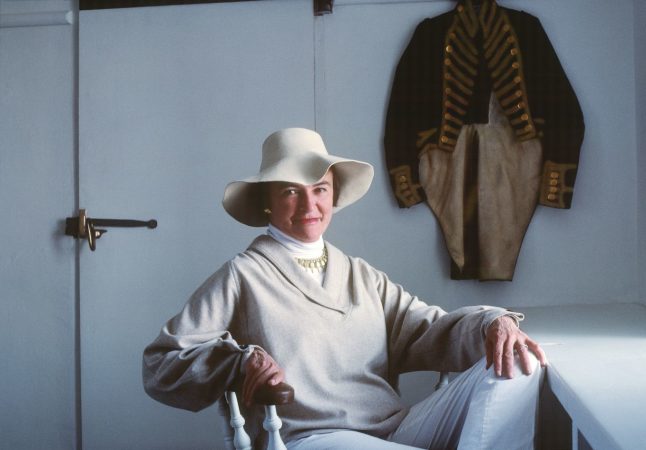
    As you’d expect, the book is filled with illustrations: Andrew Wyeth paintings, striking photos of the craggy Brandywine and Maine landscapes, and structures that make up the familial Wyeth visual language, as well as images of Betsy, always formidable.
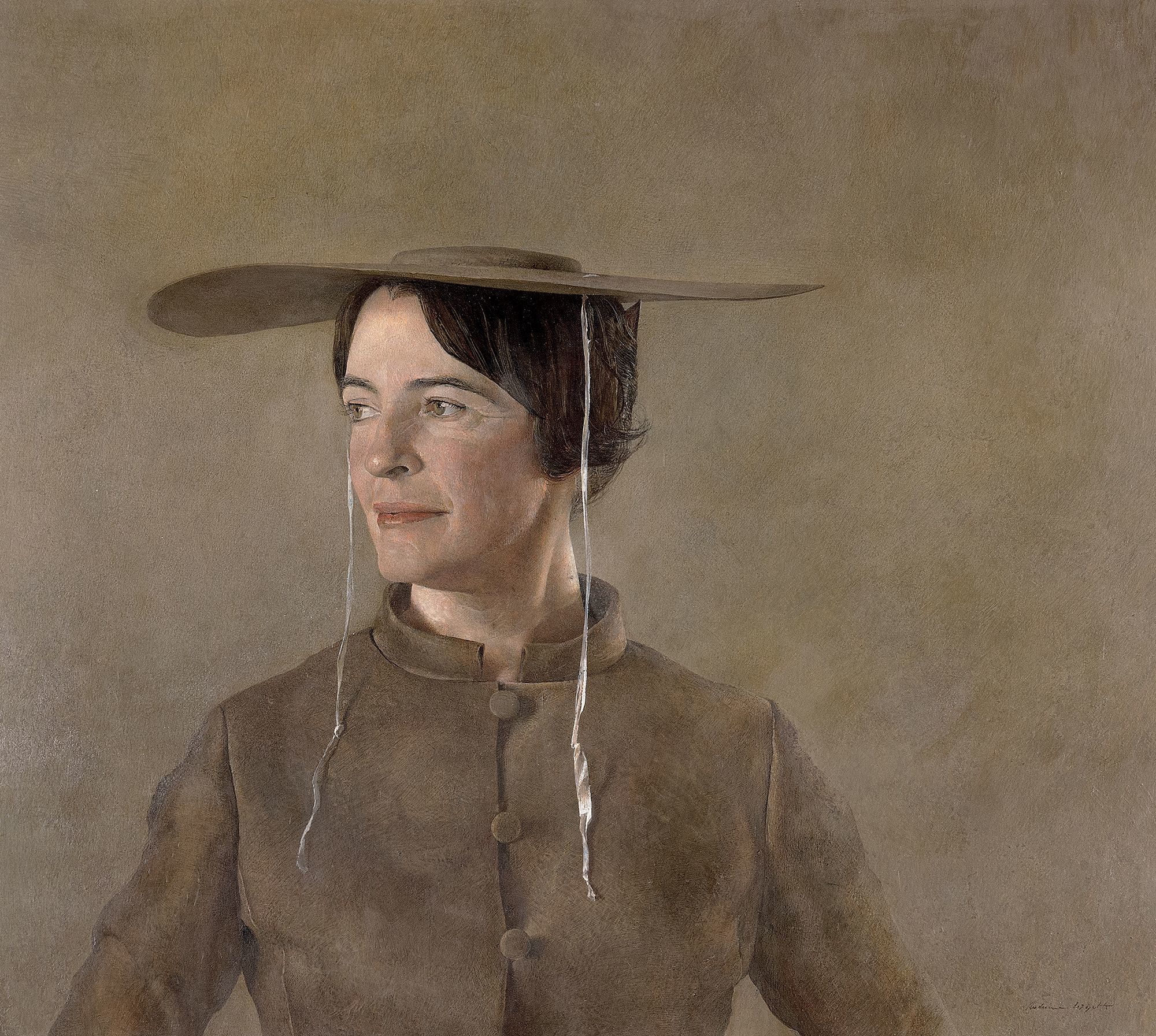
    Andrew Wyeth’s “Maga’s Daughter,” from 1966.Andrew Wyeth (1917 – 2009), Maga's Daughter, 1966, egg tempera on panel, 26 ½ × 30 ¼ in. Wyeth Foundation for American Art Collection, P5008. © 2026 Wyeth Foundation for American Art/Artists Rights Society (ARS), New York

    Perhaps the sharpest image, though, comes in written form, from author David Michaelis on the partnership between Betsy and Andrew.

    We already knew that she handled just about everything that needed doing in order to free her husband to paint. But what Michaelis beautifully details is how deeply involved she was in the art itself — giving titles to his work and exerting influence over the color, composition, and subject matter.

    In many ways, Betsy spent her life creating the aesthetic for which Andrew is known.

    She urged him to simplify, to take things out of paintings he wanted to include.

    “You’re going to ruin it,” he would protest.

    Then, Michaelis wrote, he would go off and do exactly as she said.

    “By Design: The Worlds of Betsy James Wyeth” is on view at the Brandywine Museum of Art, 1 Hoffman’s Mill Road in Chadds Ford, through Jan. 10. Related exhibitions are running at the Farnsworth Art Museum in Rockland, Maine, through Dec. 31; and at Colby College Museum of Art in Waterville, Maine, through Nov. 2. brandywine.org/museum

    — Peter Dobrin

    A portal to Black girlhood in a Library Company artifact

    Nearly every Friday night when I was a child, my mother washed my hair, conditioned it, sectioned it into four parts, and let it dry overnight.

    The next morning, we’d take our places next to the kitchen stove and turn the channel to Soul Train on our small black-and-white TV. Mommy oiled my scalp again then, with a fiery iron comb that had the tiniest teeth, she straightened each section of my hair; making my tresses sizzle. Sometimes the comb would kiss my ear. When she was done, I had shiny shoulder-length hair with a flip on the bottom.

    I don’t remember when she first told me about Sarah Breedlove, also known as Madam C.J. Walker. But by the time I was 10, I knew, without a shadow of a doubt, that because of her, Black women everywhere knew how to press hair. Her haircare business made her the first Black woman millionaire during the early 1900s at the dawn of the Harlem Renaissance.
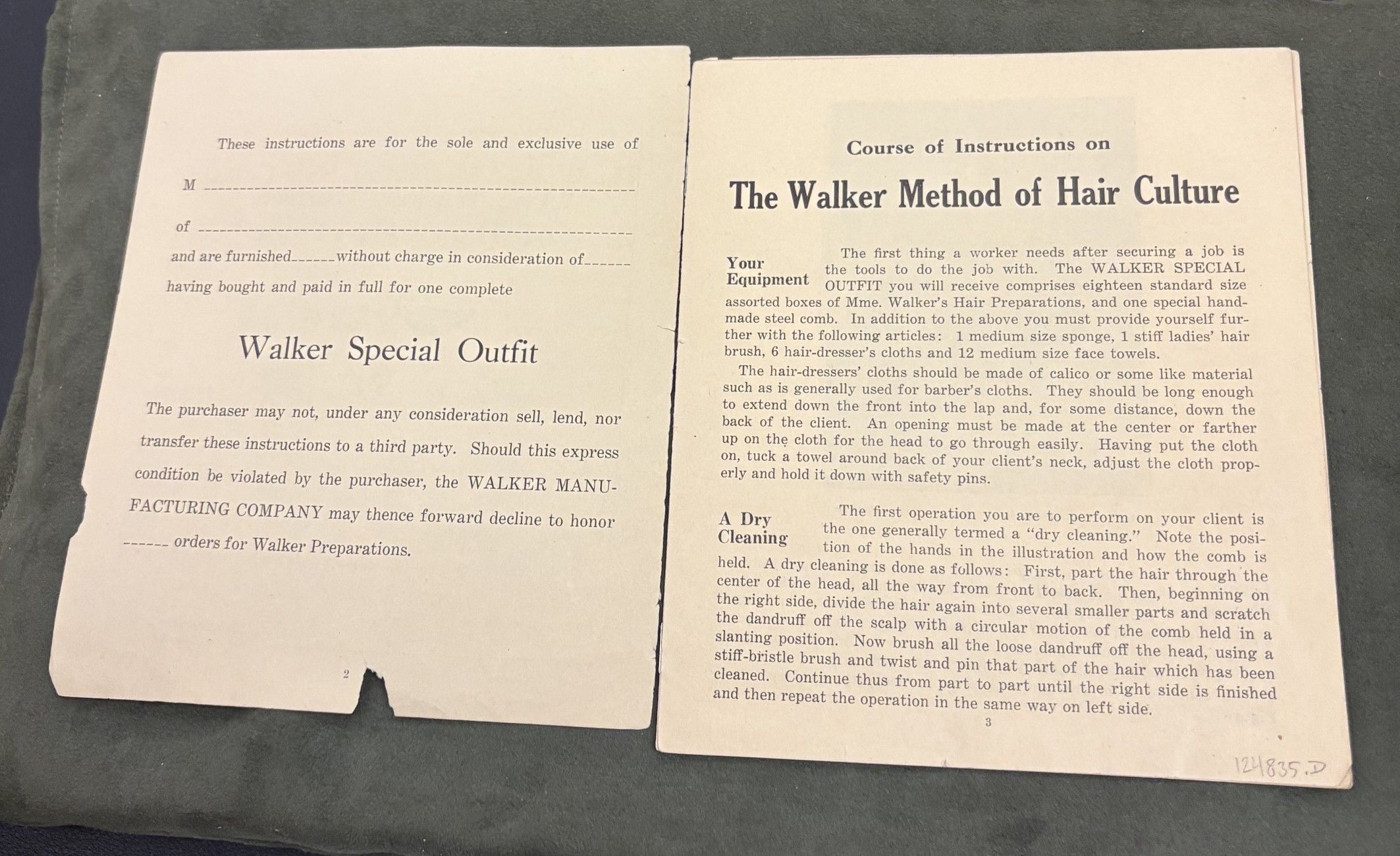
    The first page of this early 1900s pamphlet explaining Madam CJ Walker’s Walker Method to salon owners.The Library Company of Philadelphia

    Walker trained hundreds, possibly thousands, of Black women on how to use the hot comb in a technique she called the Walker Method. Black salons practicing the method became staples in Black neighborhoods and raised many Black women entrepreneurs.

    The Library Company of Philadelphia recently purchased one of the original pamphlets describing the Walker Method, step-by-step, and what was included in the Walker Special Outfit, the all-inclusive entrepreneurial kit. That included a stiff hair brush, face towels, Walker’s specially formulated conditioning concoction, a smock — that Walker refers to as a hairdresser’s cloth — and, of course, a handmade steel comb.

    After a thorough shampoo and conditioning, the hairdressing is applied and each section of the hair is methodically straightened.

    Just reading these instructions brought me back to my girlhood, before chemical relaxers, weaves, and extensions became the norm.
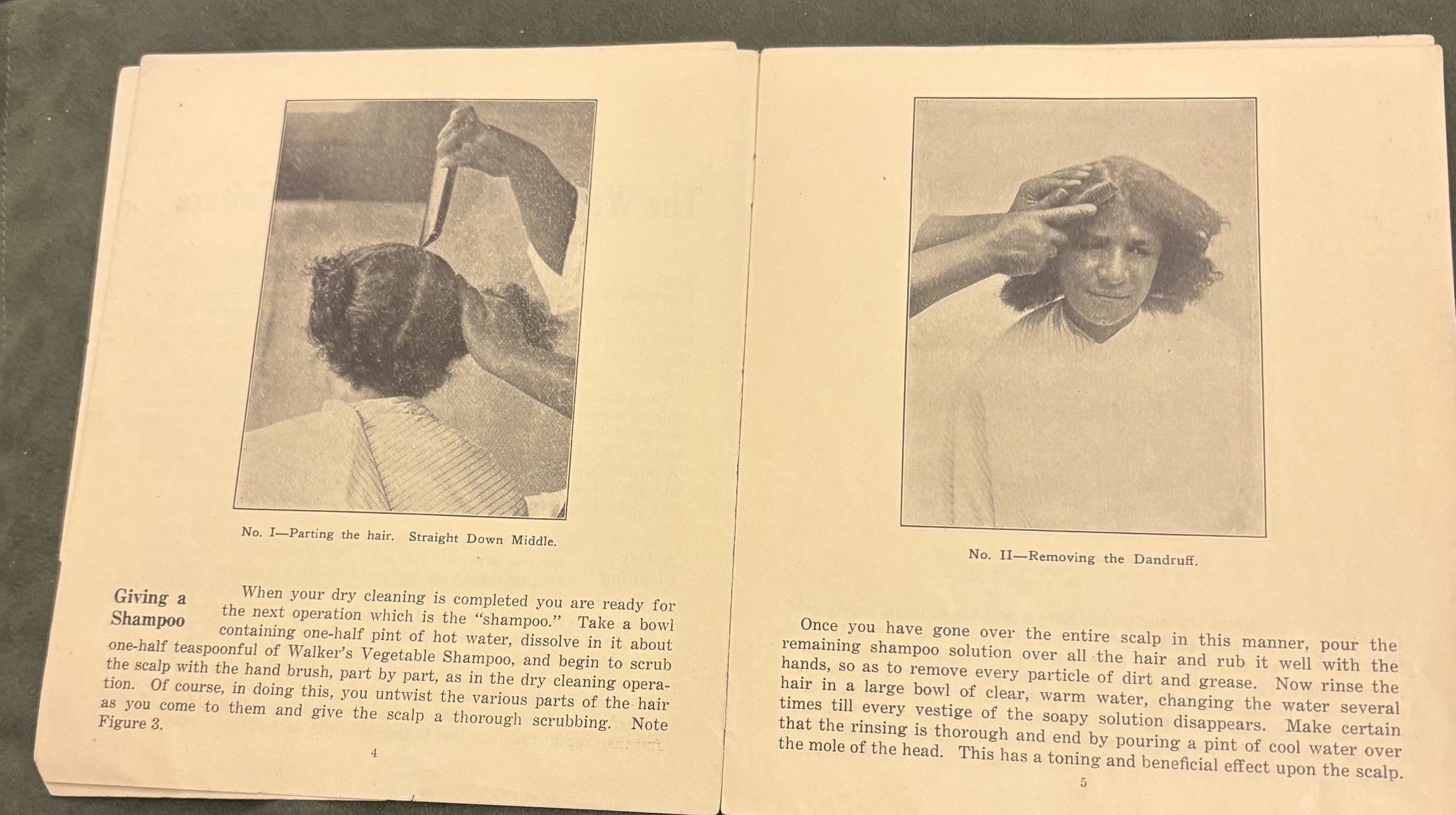
    Step-by-step instructions of how to do Madam CJ Walker’s Walker Method to salon owners. The pamphlet was given to Black salon owners in the early 1900s.The Library Company of Philadelphia

    Wynn Eakins, the Library Company of Philadelphia’s African Americana subject specialist, acquired the pamphlet earlier this year, paying a few thousand dollars for it.

    Like her, I believe it was worth every penny.

    Getting my hair pressed every week wasn’t just my introduction to a beauty regimen, it was how I bonded with my mother and other Black women.

    Funny thing is, I took for granted that Black women always knew how to do press hair. For better or worse, this skill is in our DNA. The Walker Method pamphlet reminded me of a time when pressing hair was new technology and it’s a reminder that every American experience has a history that’s worth saving and remembering.

    The Library Company of Philadelphia is located at 1314 Locust St., librarycompany.org

    — Elizabeth Wellington

    A Bicentennial logo makes a nostalgic comeback during the Semiquincentennial
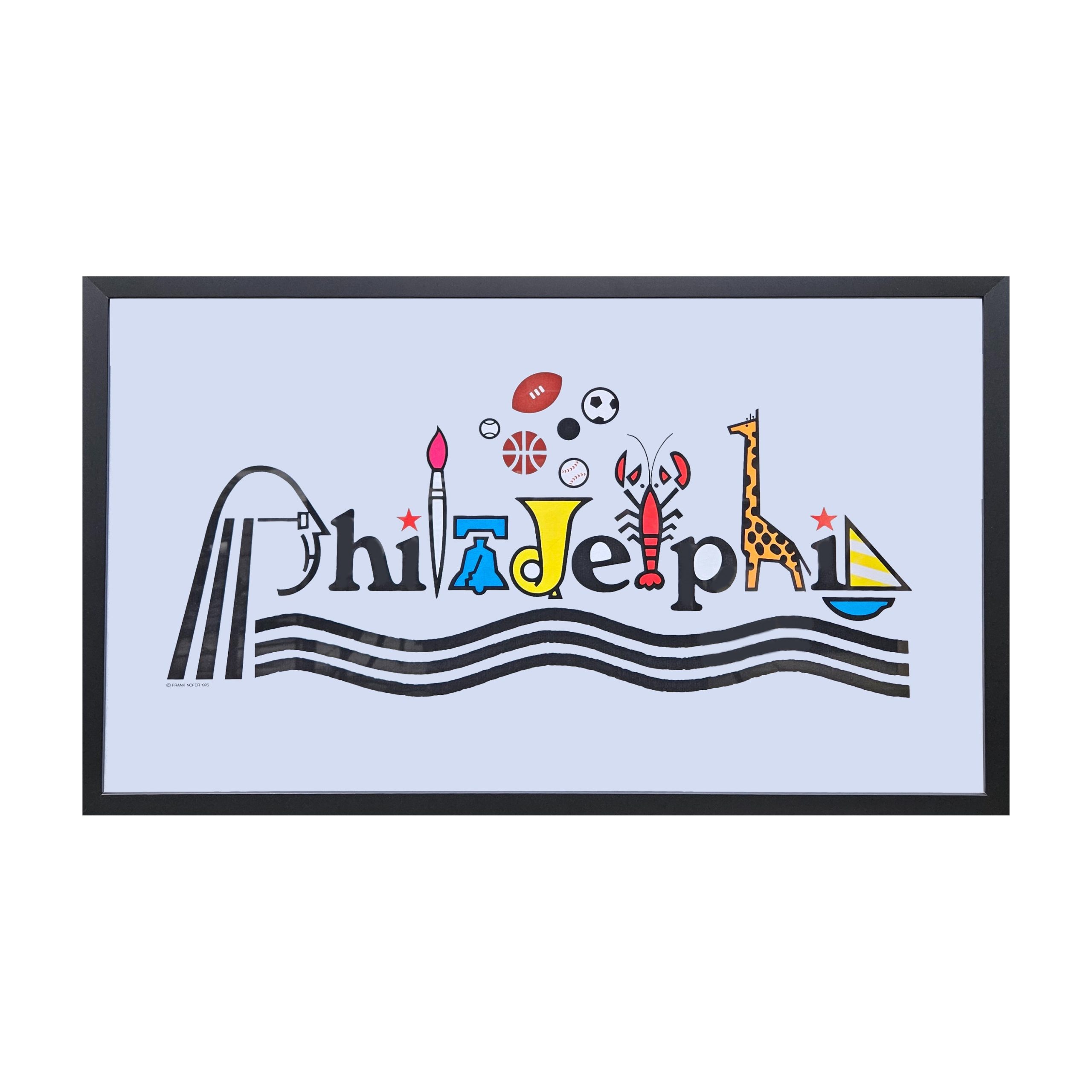
    A vintage print of the logo that was sold by Sales by Helen in 2023.Courtesy of Sales by Helen

    How much has Philly changed from the Bicentennial to the Semiquincentennial? Not much, by the looks of the 1976 Bicentennial logo.

    Created by Philadelphia graphic designer and watercolor painter Frank Nofer, the logo features several iconic symbols of Philadelphia standing in for the letters in the city’s name. After copyrighting, Nofer’s logo was printed on seemingly infinite pieces of merchandise, from T-shirts to mugs to ashtrays.

    There are historic references, like Benjamin Franklin and the Liberty Bell. The logo also features a paintbrush and tuba to represent the city’s arts scene, sports balls for our athletic passion, a giraffe for the zoo, and a sailboat for the rivers on either side of Philly.

    There is one outdated reference: a lobster as the second “l,” a reference to the now-closed seafood restaurant Bookbinder’s. The Old City spot, which shut down in 2009, was world famous for its oysters and lobster. Though it may not be relevant to 2026 Philadelphia, that little lobster is sure to spark nostalgia for anyone who lived in the area before the 2010s.
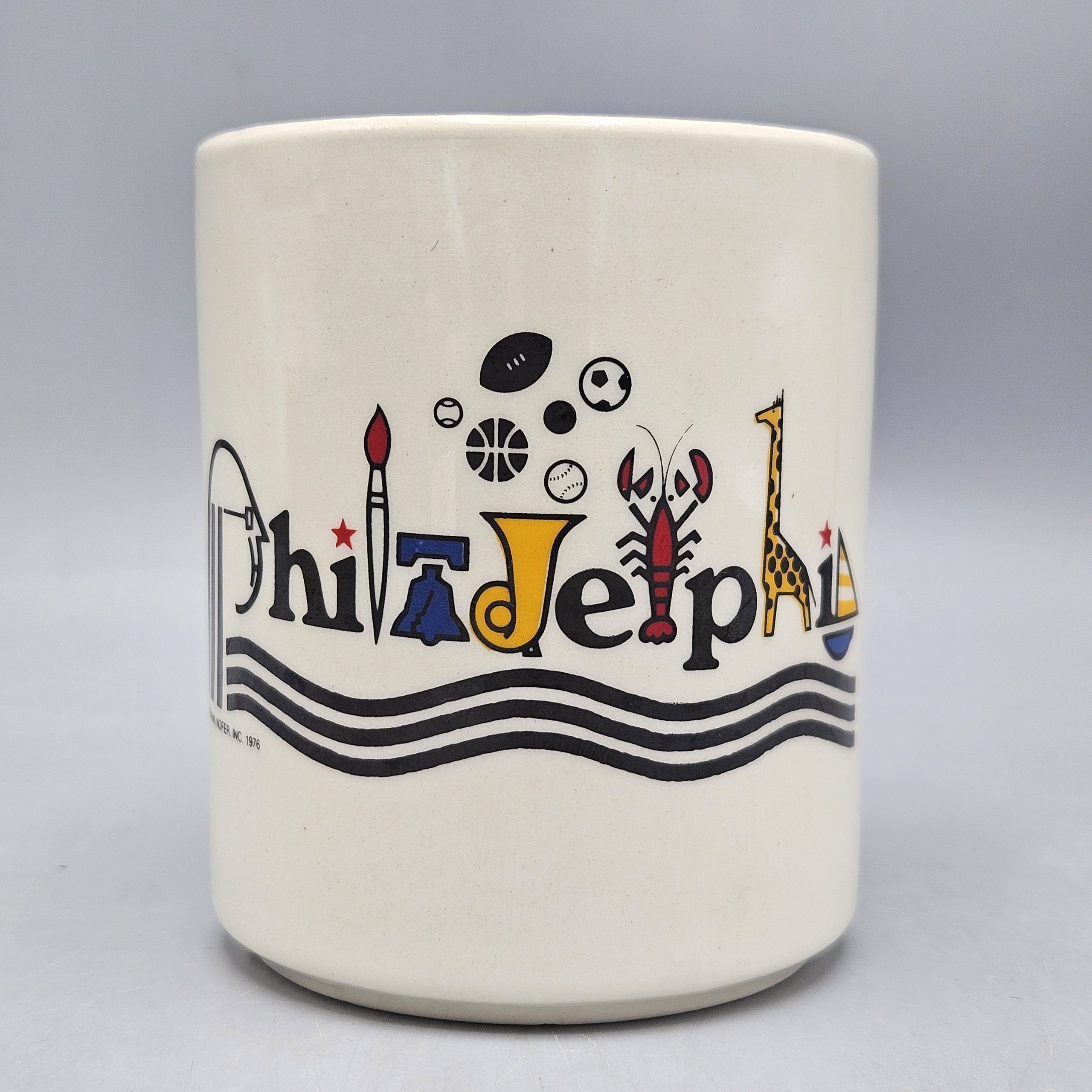
    Frank Nofer’s “Philadelphia” logo featured on a mug, one of many pieces of merchandise.Courtesy of Sales by Helen

    Now, 50 years later, merchandise featuring the logo is no longer sold anew. But vintage pieces have been popping up on eBay (which is where I saw it). Per the comments on a Facebook post from someone who purchased a Nofer “Philadelphia” T-shirt on eBay, several people have held onto their merchandise, praising the design.

    The logo feels timeless, while also maintaining the funky nature of the 1970s. If you have a piece from 50 years ago, I say hold onto it — whether to admire it, or to make a pretty penny from it online.

    — Morgan Ritter
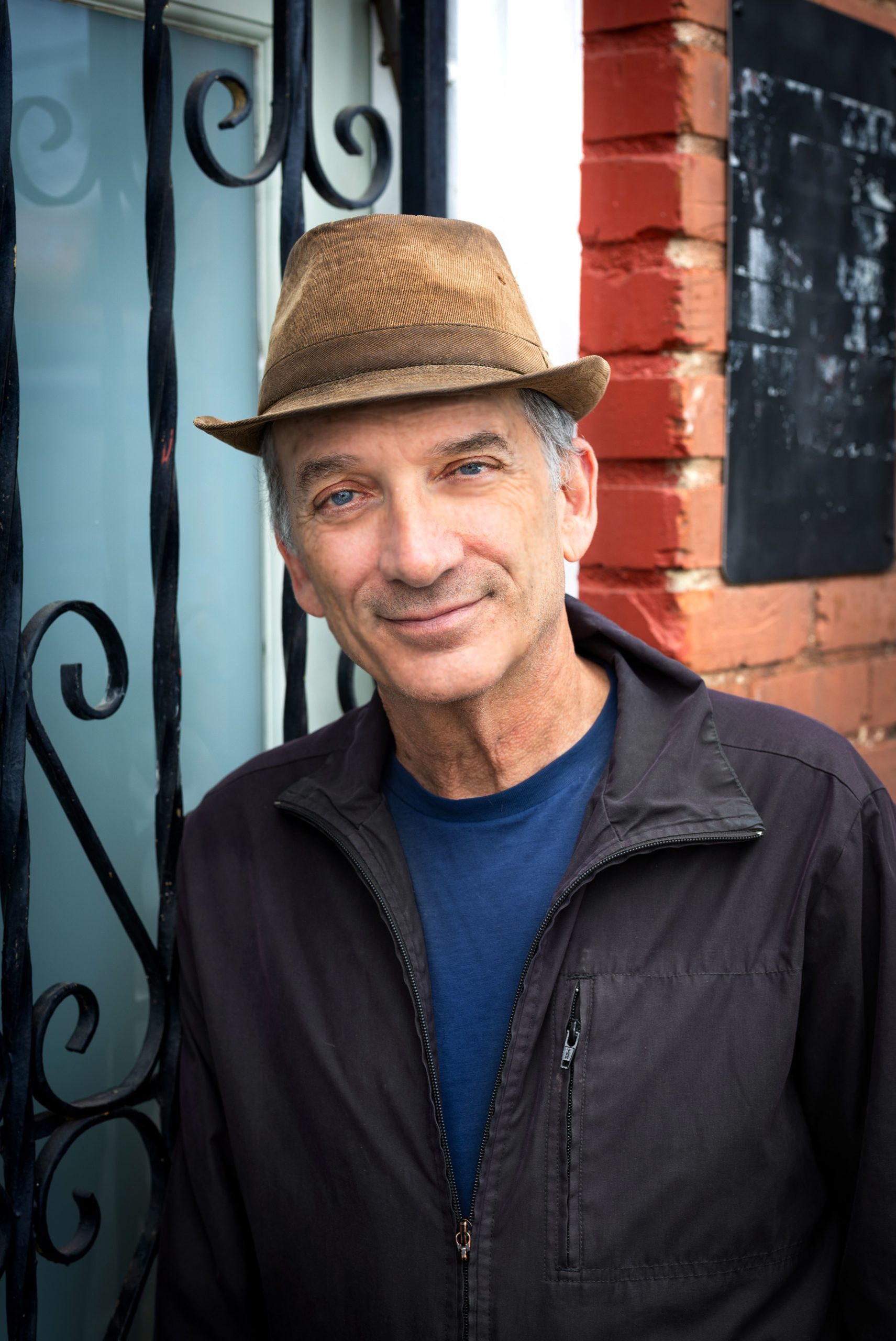
    Ben Vaughn. His new song with Deer Tick is “Imitation Wood Grain.” Vaughn’s just-announced album “Magnetic East: The Deer Tick Sessions” is due on Yep Roc Records in October.Shana Cassidy

    A vintage Ben Vaughn brings back the romance of “the South Jersey pines”

    Back in the 1990s, Camden County rocker Ben Vaughn specialized in producing veteran artists whose greatness the music-loving public needed to be reminded of, like rockabilly eccentric Charlie Feathers and soul music songwriter Arthur Alexander.

    Vaughn, the radio host of the syndicated The Many Moods of Ben Vaughn, which broadcasts from “parts unknown” and airs locally on WXPN-FM (88.5), tells tales of his encounter with such legends on his Straight From the Hat podcast.

    Now, Vaughn is getting the elder statesman treatment himself. Back in 2019, Providence, R.I., rock band Deer Tick did a cover version of Vaughn’s 1990 song “Too Sensitive for This World,” featuring John Hiatt whistling in the background.

    The band’s fandom has resulted in a friendship and playing shows together, and now a forthcoming Ben Vaughn album called Magnetic East: The Deer Tick Sessions due out Oct. 30 on Yep Roc Records.

    This week, “Imitation Wood Grain,” the first track from the album was released.

    “Inspired by a visit to the thrift store, it’s probably [the] most nostalgic song I’ve ever written,” Vaughn wrote in a Facebook post. It’s also vintage Vaughn; a clever, well-crafted ironic-yet-not-ironic song that meshes with Deer Tick’s own bemused sensibility (and features Vanessa Carlton on backing vocals).

    Kitschy details in the lyrics — the sight of an old clock radio or a fake wood-paneled hotel hallway — do the Proustian job of bringing back memories of the romance of cruising through “the South Jersey pines” in the good old days, “when you were mine.”

    Listen below.

    — Dan DeLuca
  • See it, hear it, feel it: All the Philly art we loved this week

    See it, hear it, feel it: All the Philly art we loved this week

    A different kind of bookstore opens on Pine St.

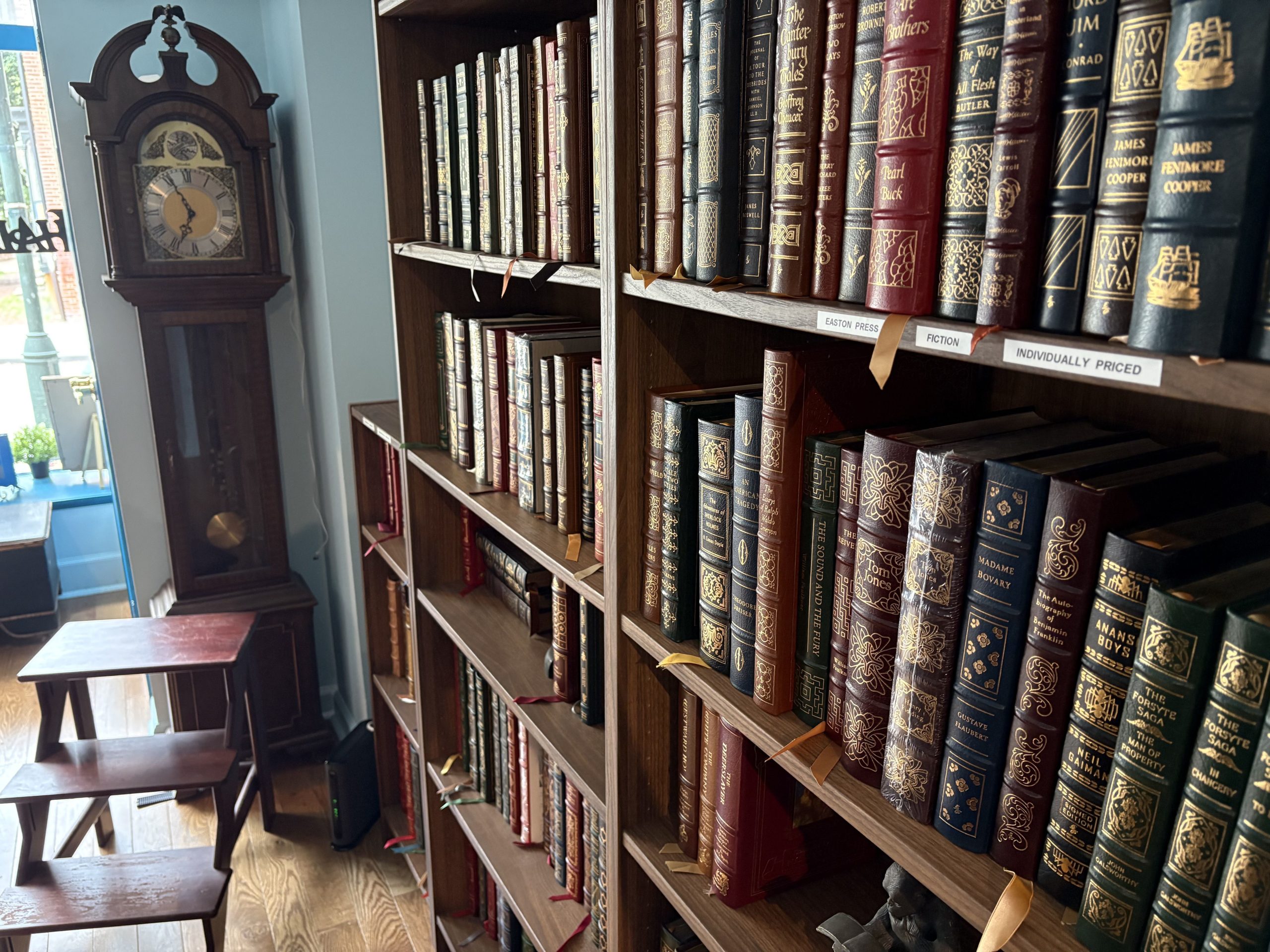
    It looks like the antiquarian bookstore of your dreams: a cozy corner storefront, the shelves lined with leather-bound and gilt-edged books. A poetic name is painted on the front window in retro gold letters: Whales & Windmills.

    But this new shop in the 1200 block of Pine Street isn’t quite what it seems. The books are old, and surely beautiful. Owner Yaoguang Jiang, however, was aiming for something more specific when she opened the doors in May.

    While the volumes in the front room look decidedly 19th century, many in fact are reprints from the middle or late 20th century — books like The Scarlet Letter or The Great Gatsby in handsome Franklin Library editions, or an Easton Press reprint of The Canterbury Tales.

    Inside of Whales & Windmills, the bookstore at 1220 Pine St.Peter Dobrin

    “What I’m really trying to be is something between a rare bookstore and a used bookstore,” says Jiang.

    Antiquarian book dealers may charge hundreds or thousands of dollars for first or early editions of certain titles. But these later editions at Whales & Windmills, while often beautifully bound and embellished with illustrations, might go for $15 to $30 (sometimes more, sometimes less).

    “I don’t want to sell super-rare books because it’s counter to my purpose, which is to get people to read books,” says Jiang, a former Penn neuroscience research associate.

    Among the many authors currently represented in the shop’s fancy-binding front room are John Galsworthy, James Fenimore Cooper, Pearl Buck, and Louisa May Alcott.

    In another room there are traditional used-bookstore paperbacks and hardcovers by Alice Munro, Jane Austen, Saul Bellow, and many others, some for $2 or $3 each.

    “We want to be on the one hand curative, selective, but on the other hand approachable. So we want books that are pretty and have another 50 years of shelf life, but not cost-prohibitive,” says Jiang.

    Her own favorites?

    “Shakespeare is pretty high on the list.”

    On her Instagram, she admits to an N. C. Wyeth obsession.

    About the bookstore’s name, Jiang says the idea came from a joke her husband made involving Moby-Dick and Don Quixote.

    “In the beginning when I started the online business and had zero followers, those were the only two books I could reliably sell.”

    The name Whales & Windmills carries another kind of literary resonance.

    “It’s in the theme of Pride and Prejudice, Sense and Sensibility — but whimsical.”

    It sends the message that the shop deals in classic literature, “but we don’t take ourselves too seriously.”

    Whales & Windmills, 1220 Pine St., is open Friday through Monday, 11 a.m. to 7 p.m. instagram.com/whalesandwindmills

    — Peter Dobrin

    An artifact from a little known colonial-era massacre

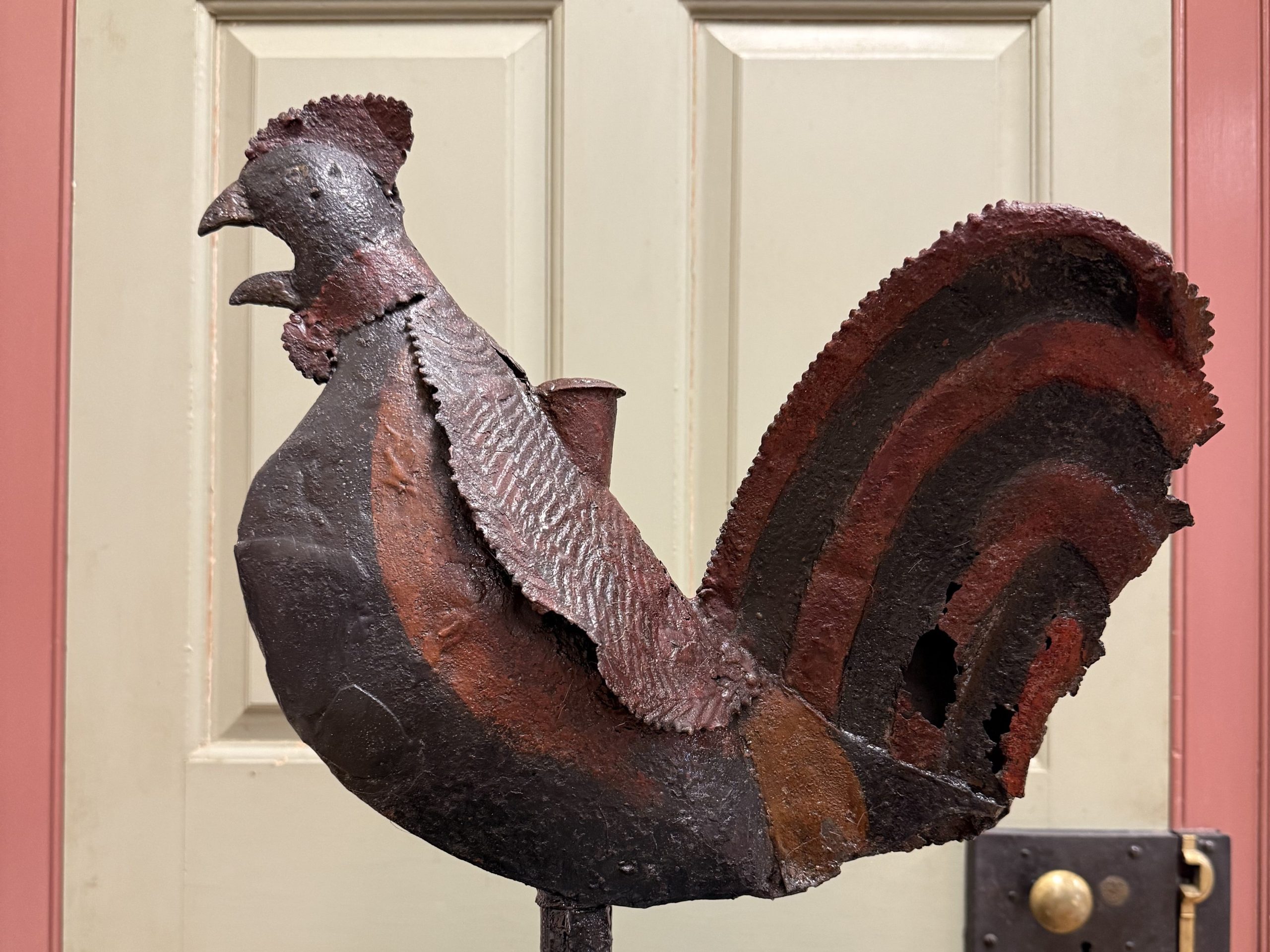
    A centuries-old rooster-shaped weather vane greets visitors at the Historic Germantown Visitor Center’s new rotating exhibit, “Rebellion and Remembrance in Freedom’s Backyard.” Its metallic feathers are worn from age. Just below the bird’s comb is a scratch that Historic Germantown’s executive director Tuomi Forrest surmises has been repaired.

    It’s how the scratch came to be that I find chilling.

    The weather vane was once on top of Germantown Presbyterian Church. It was damaged during the Paxton Boys’ Massacres in 1763 amid the turmoil of the French and Indian War. It is a part of Historic Germantown exhibit honoring America’s 250th birthday.Kaila Temple

    Historians suggest it came from rocks, stones, or perhaps even gunshots lobbed at the Germantown Reform Church on Market Square by the Paxton Boys, a violent group of revolutionaries who wanted to wipe Indigenous people from Pennsylvania.

    In December 1763, a mob of settlers from Paxtang Township, about 100 miles northwest of Philadelphia, murdered 20 unarmed Susquehannock Indians in Lancaster County. A month later, hundreds of these “Paxton Boys” marched toward Philadelphia to harass and kill more Indigenous peoples. Ben Franklin halted the march just outside of Germantown.

    The weather vane is part of a rotating exhibit examining Germantown’s place in the Revolutionary War. But it’s also a visceral reminder that when hate goes unchecked and is allowed to linger, it can be explosive.

    The Historic Germantown Visitor Center is located at 5501 Germantown Ave. “Rebellion and Remembrance in Freedom’s Backyard” runs through December.

    — Elizabeth Wellington

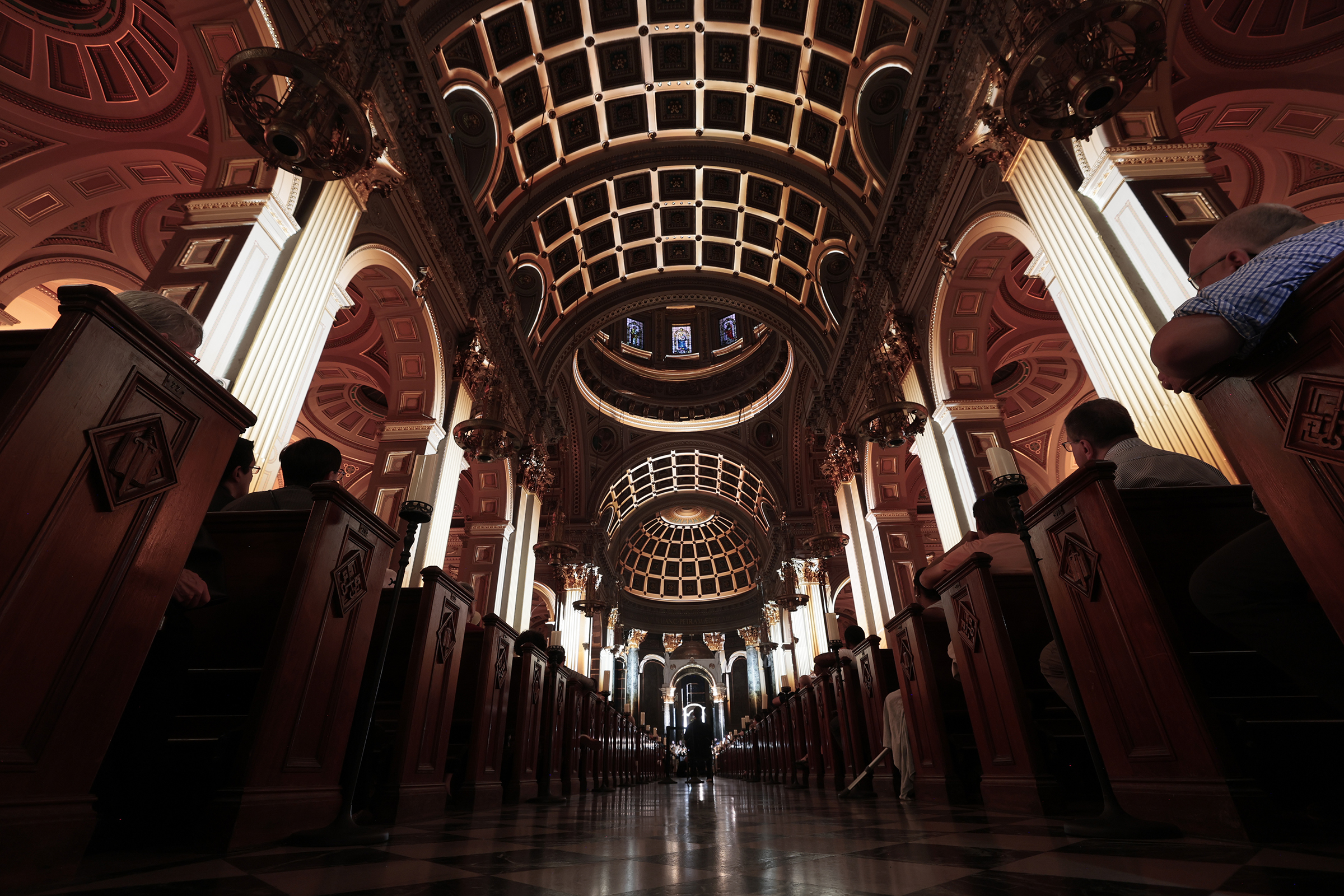
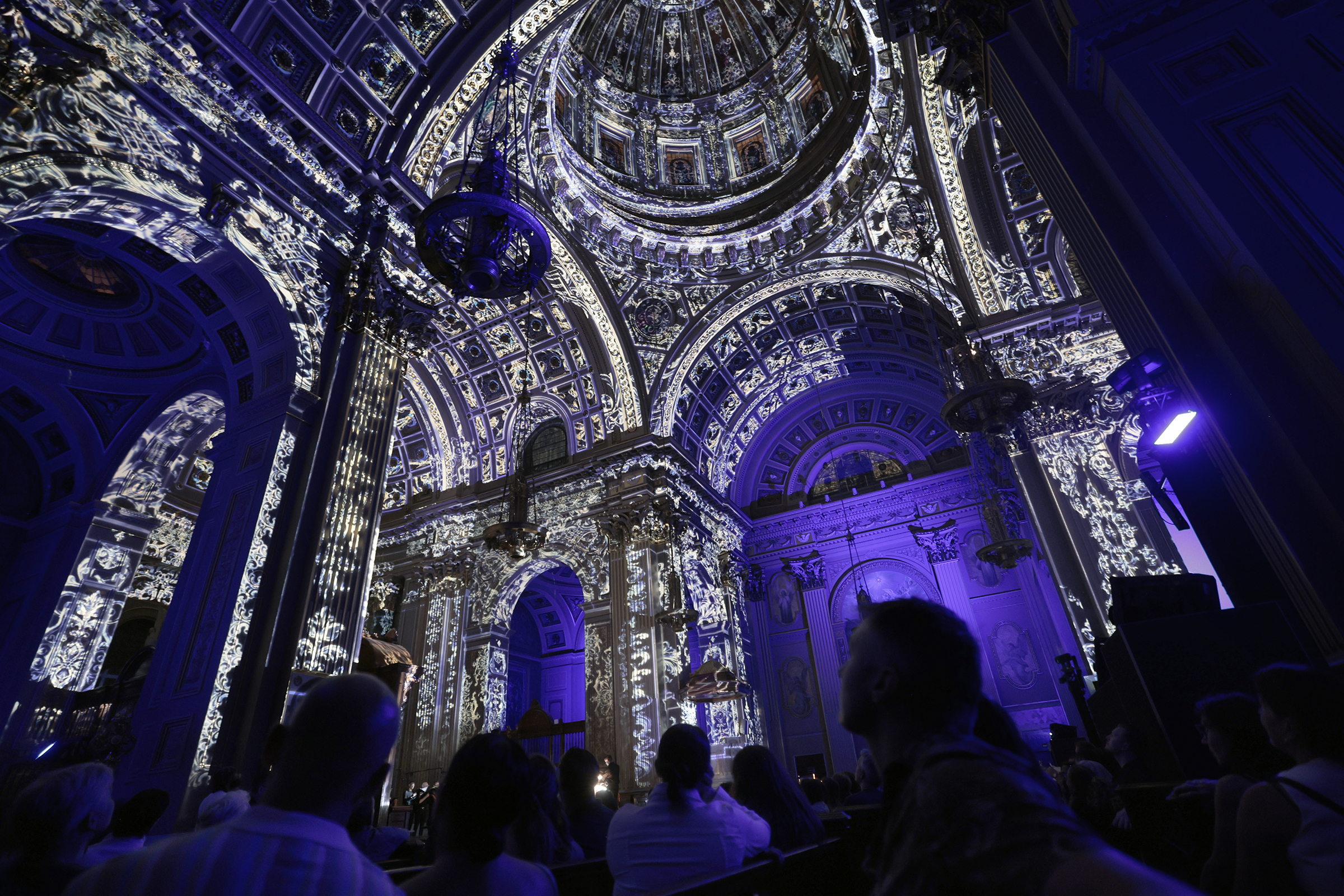
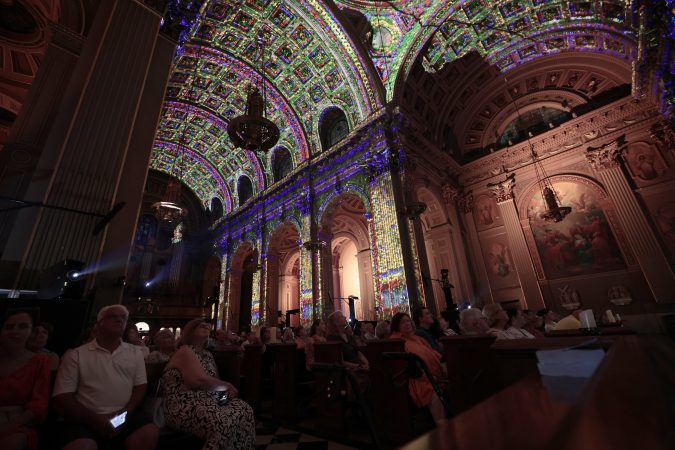
    The opening night performance of “Luminiscence Philadelphia: An Immersive Celebration of Light, Music and Story” lights up the interior of the Cathedral Basilica of SS. Peter and Paul in Philadelphia on June 11, 2026.Elizabeth Robertson / Staff Photographer

    Step inside Philly’s dazzling ‘Luminiscence’ experience

    At “Luminiscence Philadelphia,” time, history, and music converge inside the Cathedral Basilica of SS. Peter and Paul.

    The church’s barrel arches, Corinthian columns, and copper dome are bathed in atmospheric hues and kaleidoscope imagery. Its walls transform into a singular canvas, filled with dreamscapes that stretch from the altar to its entrance doors.

    Across the 45-minute show, produced by Banijay Americas Live, there are scenes of a glimmering palace, a starlit sky, a garden of falling blossoms, and angels resting in the heavens — all reminiscent of Italian Renaissance paintings.

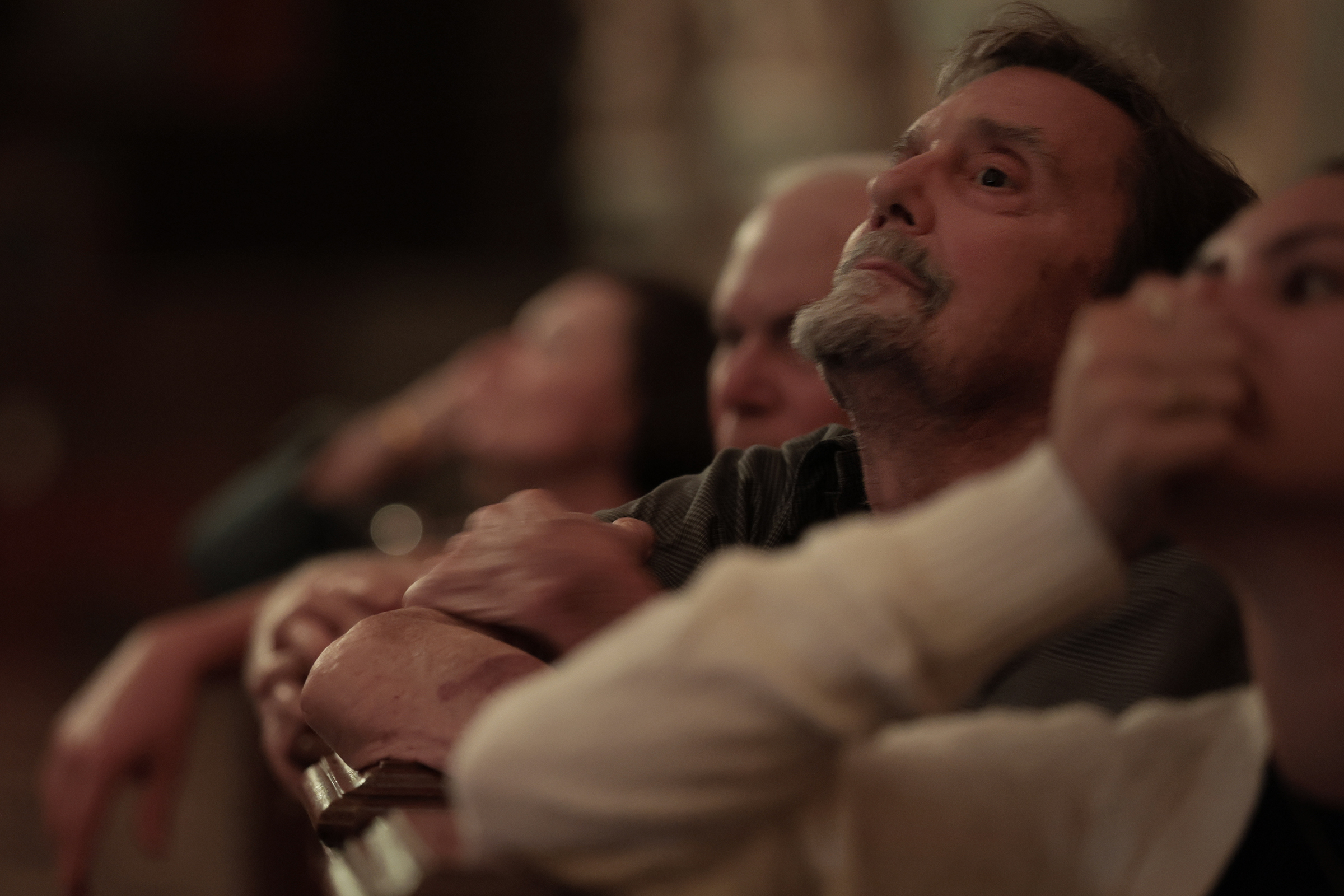
    Joseph Blanch of Havertown watches the opening night performance of “Luminiscence Philadelphia: An Immersive Celebration of Light, Music and Story” at the Cathedral Basilica of SS. Peter and Paul in Philadelphia on Thursday, June 11, 2026.Elizabeth Robertson / Staff Photographer

    Each vista is shaped by 25 high-definition projectors and 360-degree video mapping. As viewers lift their heads from the church’s pews, they are struck by a full panorama of colors, elevated by a blend of orchestral works.

    Beethoven’s “Ode to Joy” and Claude Debussy’s “The Sunken Cathedral” blare from the church’s sound system, while human silhouettes walk along the walls. Their shadowy presence adds to the show’s visual depth.

    The opening night performance of “Luminiscence Philadelphia: An Immersive Celebration of Light, Music and Story” lights up the interior of the Cathedral Basilica of SS. Peter and Paul in Philadelphia on June 11, 2026.Elizabeth Robertson / Staff Photographer

    On select nights, there are live choir and orchestra performances. Yet, even with prerecorded music, the experience is still deeply immersive. The narration, however, can be distracting. It’s difficult to make out what’s being said, other than references to the church’s formation and the nation’s 250th celebration.

    But what’s clear is Luminiscence’s allure. It’s an audio-visual experience that aims to enliven basilicas and cathedrals, with respect to their religious significance and architectural wonder. And with its unfurling inside the mother church of the Archdiocese of Philadelphia, it successfully melds these distinct worlds – the sacred and the luminary.

    “Luminiscence,” the Cathedral Basilica of SS. Peter and Paul on 1723 Race St., is open most Wednesday to Sunday nights into August. luminiscence.com/philadelphia

    — Earl Hopkins

    What is the true value of a dollar?

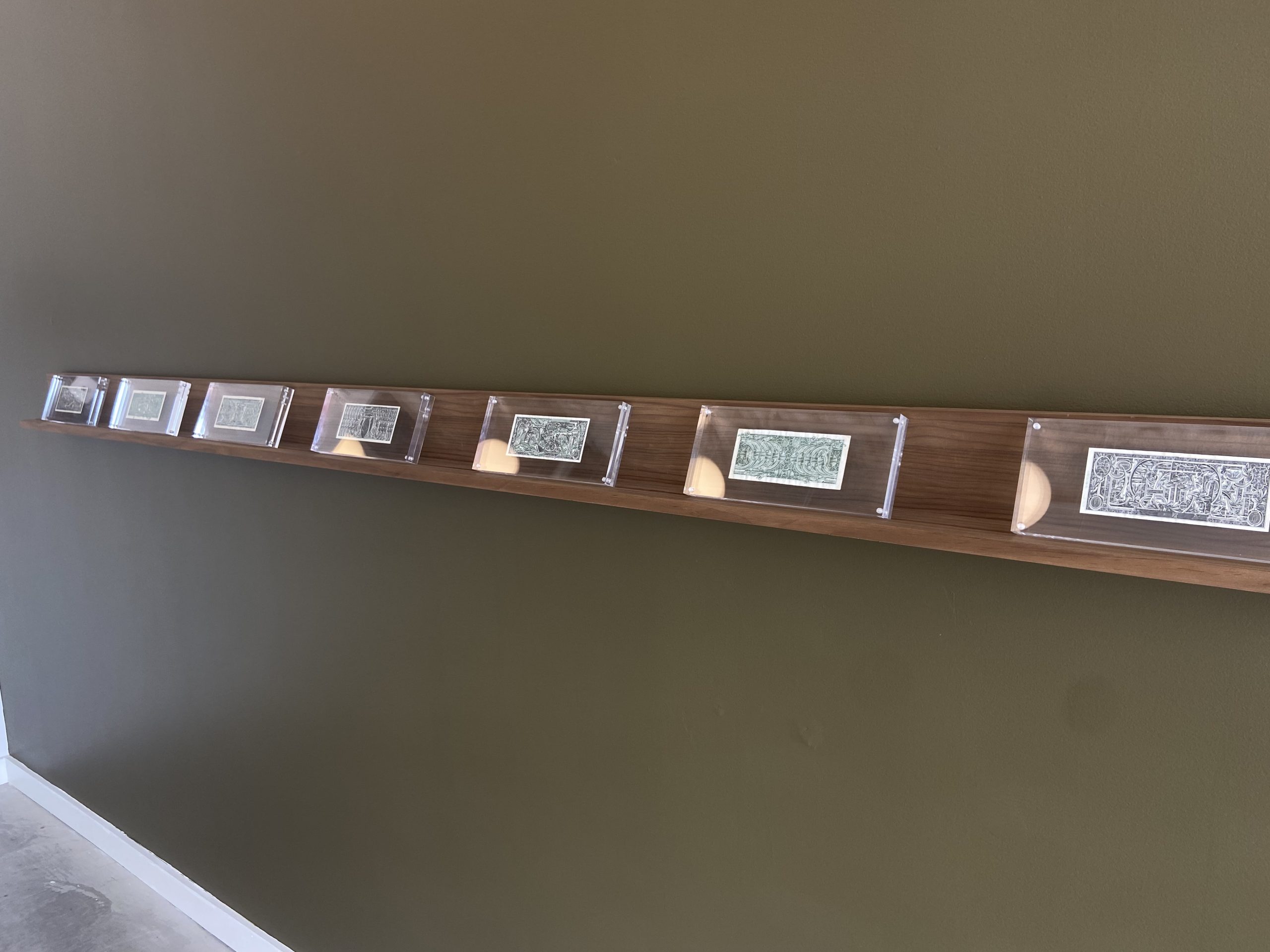
    A wall of artist Kaitlin Pomerantz’s “Rewilded Dollars,” featuring reworked collage designs.Morgan Ritter

    A U.S. dollar today doesn’t just represent currency. Artist Kaitlin Pomerantz shows that it also represents centuries of capitalism overriding the importance of the planet.

    Pomerantz’s new exhibit “(de)growth” in Studio 105 at Ray Philly exhibits the dollar bill in a more ecological fashion. On one wall of the exhibit hang several dollar bills that look normal from afar, but up close, are completely reworked.

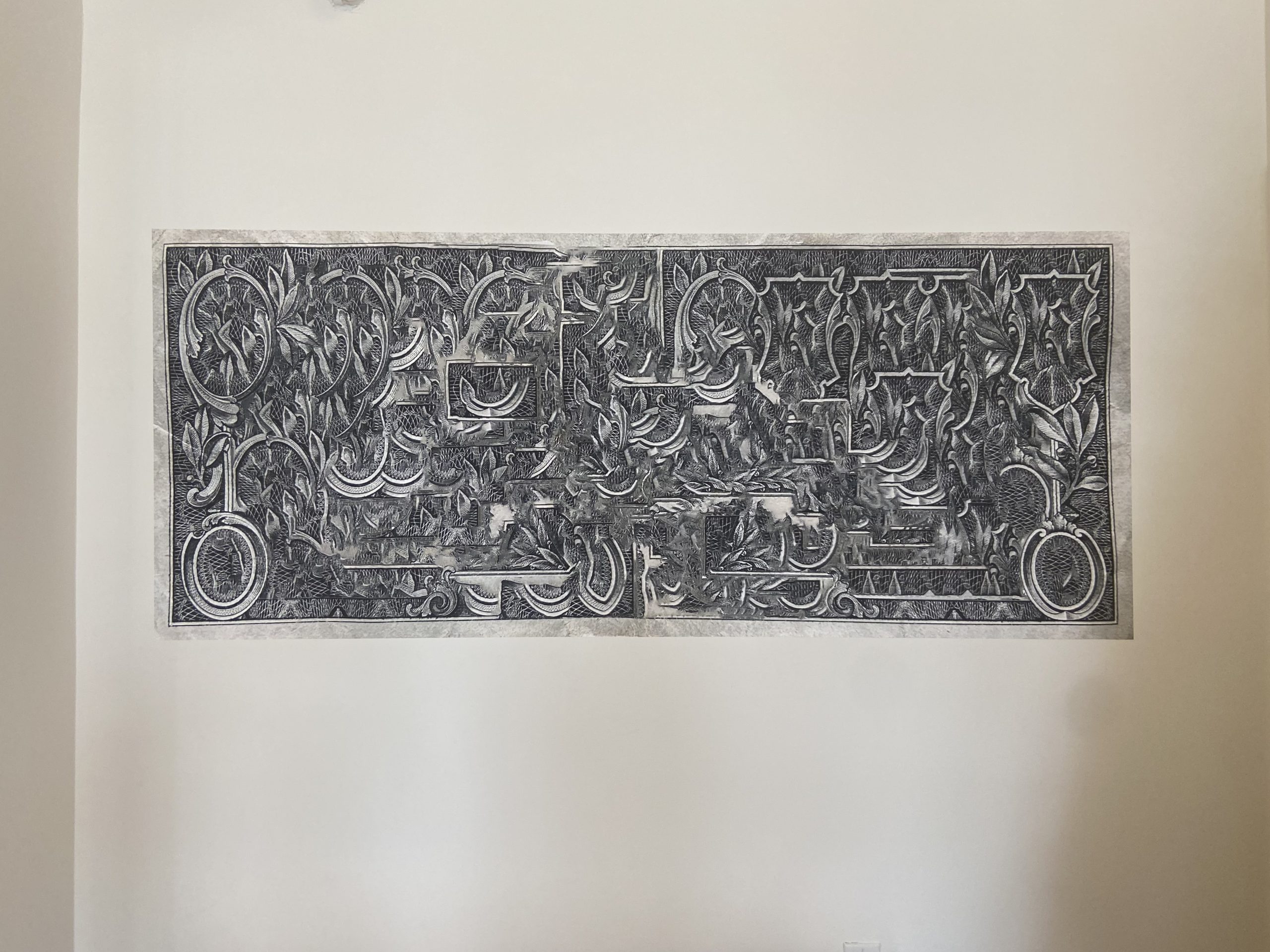
    A large prototype of artist Kaitlin Pomerantz’s “Rewilded Dollar” hangs at the entrance of the exhibit. It is a digital collage on adhesive vinyl.Morgan Ritter

    Pomerantz eliminated any symbols of political power from the dollar bill, cutting them up and collaging them to highlight the environmental aspects that exist on the dollar bill. Rather than the ecosystem being taken over by capitalism, “(de)growth“ imagines a world where nature reclaims itself.

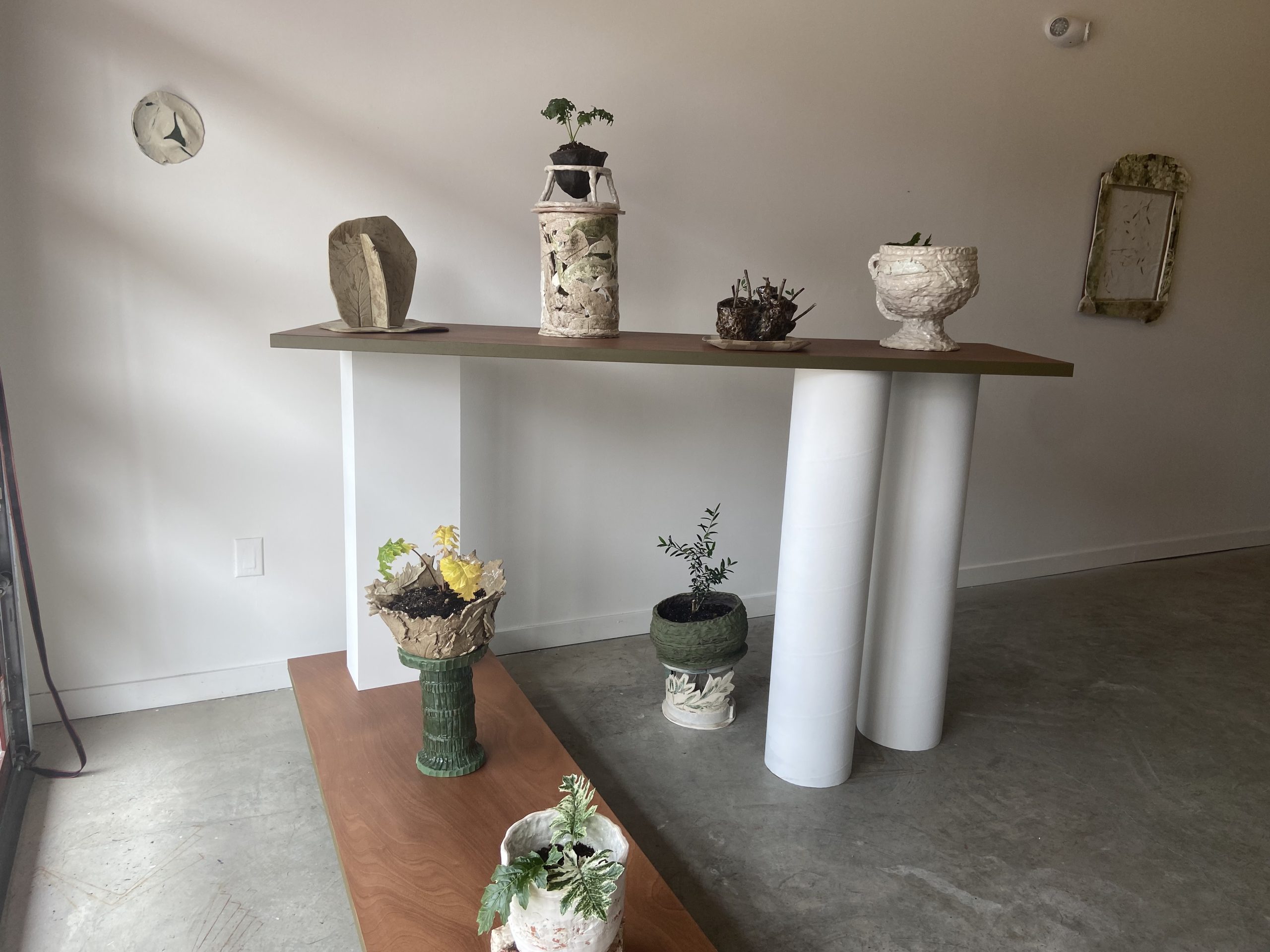
    Included in the exhibit are living plant installations placed in deliberately fractured ceramic pots, showing the damage we have already done to the environment, but that it can still regrow.

    A collection of ceramics and living plant installations, representing artist Kaitlin Pomerantz’s emphasis on the importance of ecological growth.Morgan Ritter

    It was nice to walk around the exhibit, imagining a world where the U.S. government places emphasis on protecting the environment and valuing the natural world around us. That being said, feelings of melancholy soon followed, remembering how damaging the ecological impact from capitalism has been.

    Pomerantz powerfully calls out how political domination has caused government powers to lose sight of what’s really important.

    It’s easy not to think about the meaning behind the design of the dollar bill. Pomerantz’s vision of changing it to be centered around the planet offers an almost optimistic perspective of what could be valued someday if oppressive systems are dismantled.

    “(de)growth” by Kaitlin Pomerantz, is on view through Aug. 2 at Studio 105 at Ray Philly, open Wednesday through Sunday from noon-6 p.m.

    — Morgan Ritter

    An earlier version of the article had an incorrect name of the exhibition at Ray Philly. It is called “(de)growth.”

  • See it, hear it, feel it: All the Philly art we loved this week

    See it, hear it, feel it: All the Philly art we loved this week

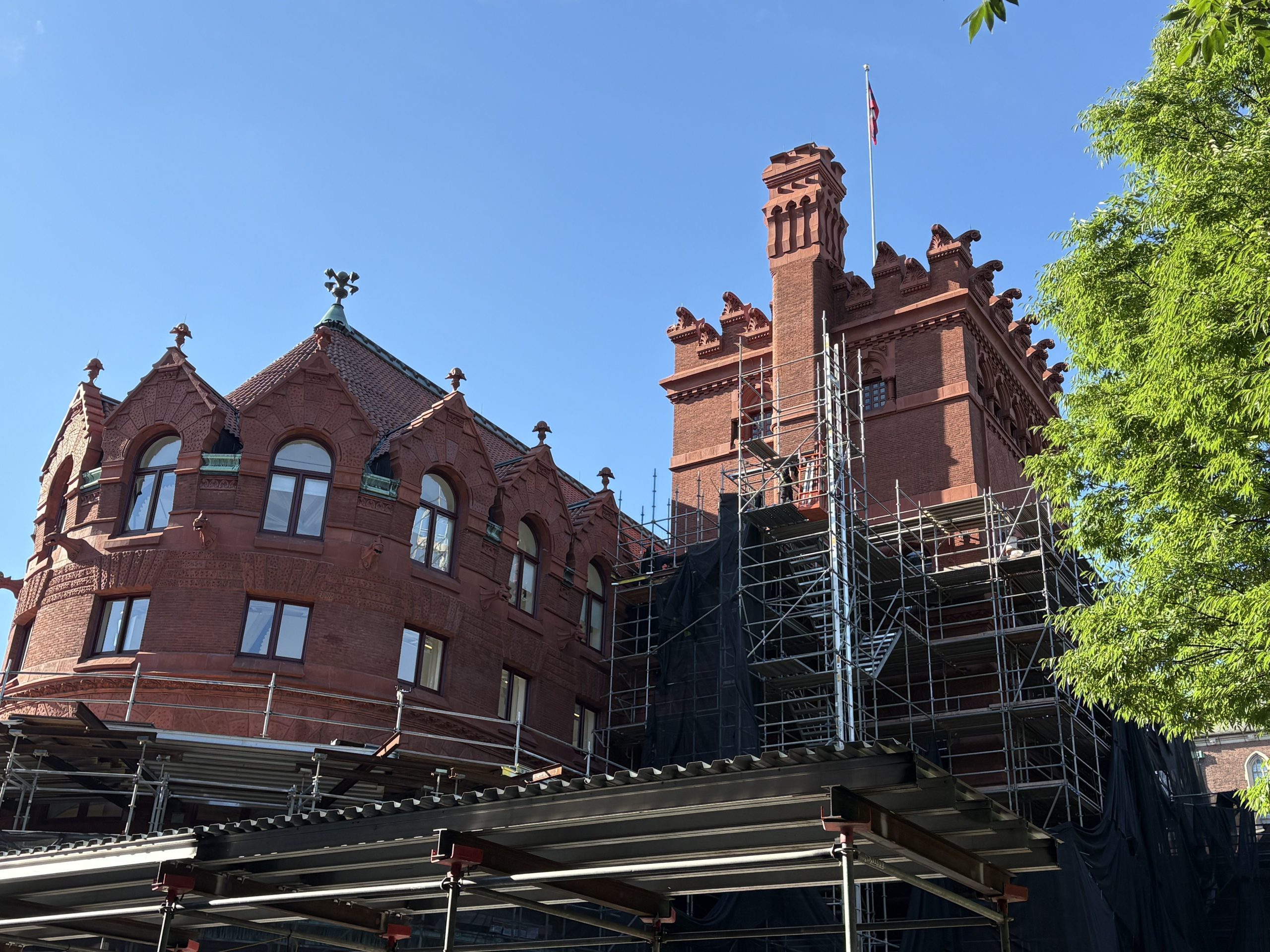
    An 1891 building that looks like a castle, a cathedral, and a factory

    The Anne and Jerome Fisher Fine Arts Library on 34th Street near Walnut hasn’t quite been itself lately, cloaked in a metallic web of scaffolding. But it will soon reemerge after an exterior restoration and promises to be as striking as ever.

    Dedicated in 1891, the building has had frequent updates.

    “There was a significant [restoration] project done in the 1980s that Venturi’s firm led. It finished around the 100th anniversary of the building in 1991, and that really brought the building back,” said Mark Kocent, Penn’s university architect, referring to the Philadelphia practice then called Venturi, Scott Brown and Associates.

    The Anne and Jerome Fisher Fine Arts Library, designed by Frank Furness, at the University of Pennsylvania, July 8, 2026. The exterior of the building from 1891 is being restored.Peter Dobrin

    “This is coming back 35 years later and saying, ‘OK, it’s a building that you need to continue to reinvest in.’”

    If Penn’s campus is a kind of museum of architectural eras and styles, Frank Furness’s exuberant piece of distinctly Philadelphia Victoriana hits the eye as a masterpiece. Highly ornamented and rendered in deep red-orange tones, the building in one section suggests a castle, a cathedral in another, and, on yet another side, a factory.

    The current restoration project, whose principal architect is Vitetta, has a price tag of $16.5 million, and includes attention to the brick and terra cotta plus cleaning of masonry; repairing of the roof; replacing some windows and repainting of windows and doors; and adding lightning protection.

    “So really, just kind of tightening the envelope of the building,” said Kocent.

    The project began last April and is expected to wrap up this fall.

    Penn’s core campus in West Philadelphia has close to 200 buildings totaling around 17 million square feet, says Kocent, and the university conducts ongoing assessments to determine which structures need work.

    Among other recent notable restorations was a $87.4 million project at College Hall finished in 2025, and a $238 million renovation of the Quadrangle Dormitories along Spruce Street and Woodland Walk now nearing completion.

    The Furness library building, though, is a favorite of Kocent’s, because of its detail and character, but also for a more personal reason: He was once a student at the school himself.

    “It was kind of wonderful to have studios in there back in the day where as an architecture student you could go there in the evening at sunset and you’d see the sun setting on the west side of the building, and then after pulling an all-nighter, you’d watch the sun come up on the east side.”

    The Fisher Fine Arts Library is at 220 S. 34th St. within the University of Pennsylvania campus.

    — Peter Dobrin

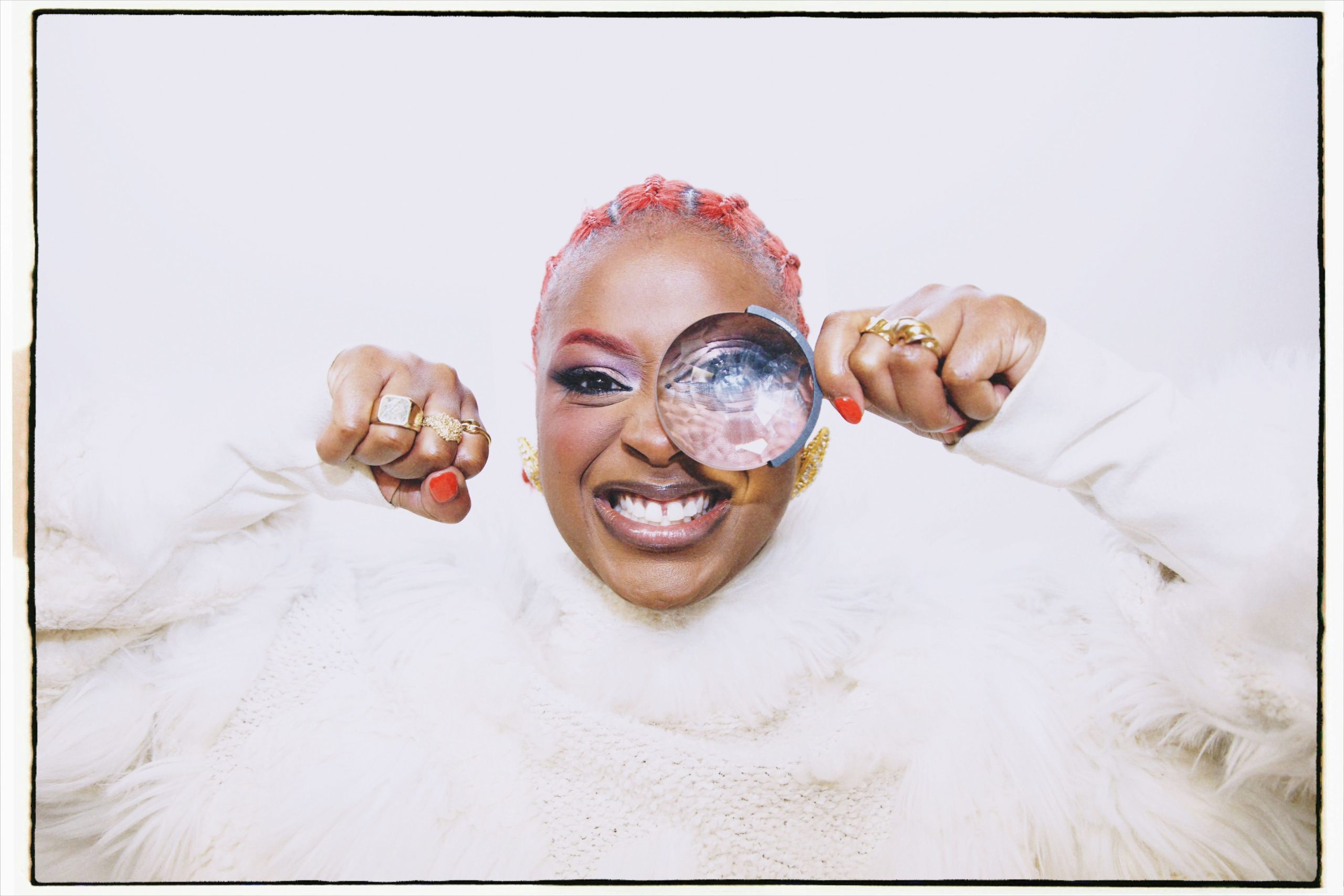
    Tierra Whack’s new video is for “Candle Wax” from her new mixtape “Whack’s Museum.”PhobyMo

    Tierra Whack is back!

    Tierra Whack always leaves you wanting more.

    The Philly rapper and singer first garnered attention with her 2018 mixtape Whack World. That 15-song, 15-minute debut revealed her to be one of the most imaginative minds in hip-hop.

    Since then, Whack has sometimes frustrated fans with her limited output — there’s been just one full-length album since. 2024’s World Wide Whack stretched her stylistically into alt-R&B and pop but didn’t entirely sate the appetite of fans awestruck by her wicked wit and rhythmic command.

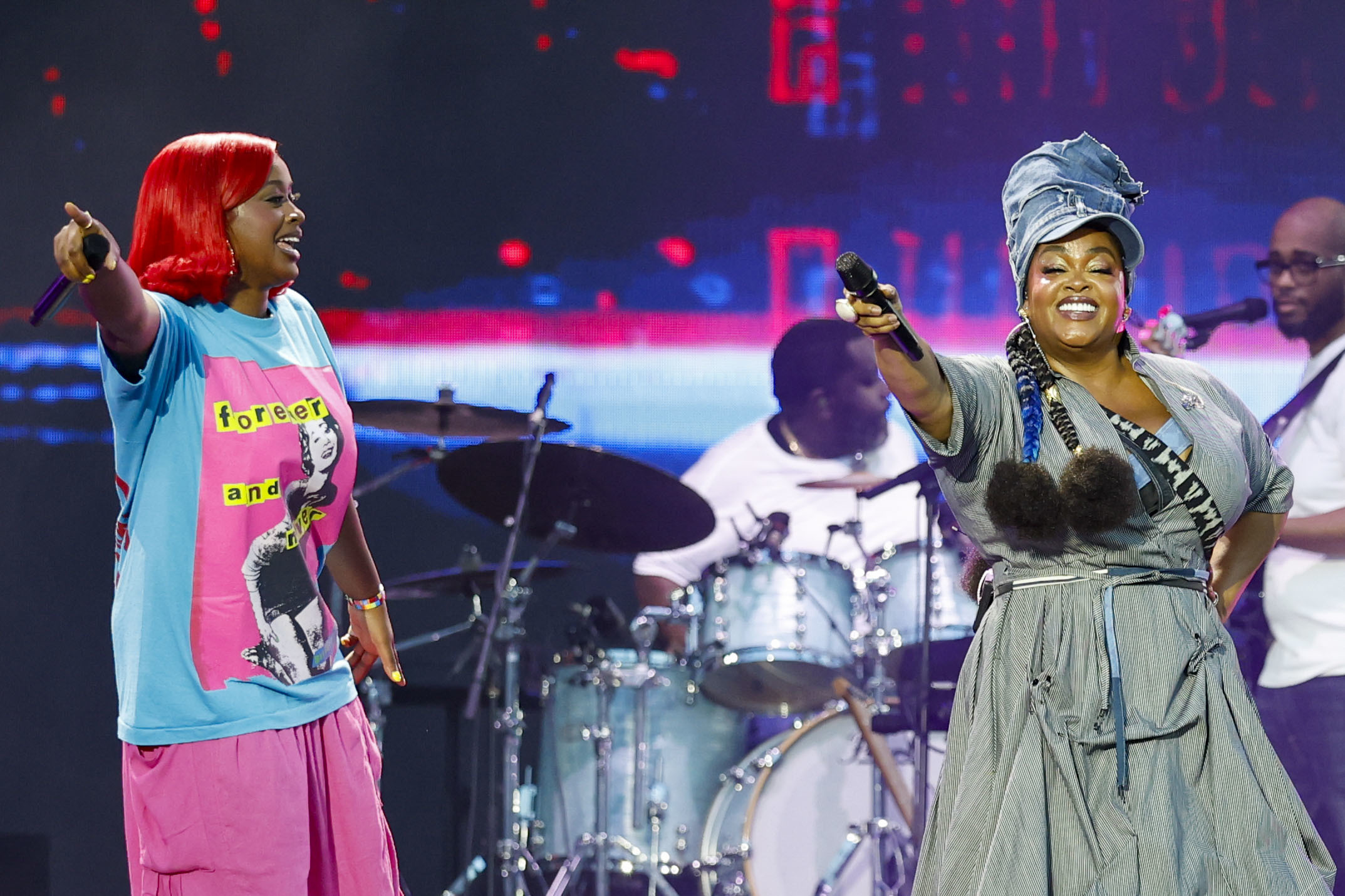
    Whack — who was a standout star of the July 4 One Philly: Unity Concert for America in its pre-rain delay phase when she joined Jill Scott for “Norf Side” — finally does serve up the pure hip-hop her enthusiasts have been jonesing for, on Whack’s Museum.

    “They said I should rap more,” she says on the opening “Whack Job,” which like much of Whack’s Museum, is a team-up with Kansas City producer Conductor Williams. “I’m the goat, show me who to go at,” she raps. “Shouldn’t have to say it, you should already know that.”

    Tierra Whack (left) and Jill Scott on stage at One Philly: Unity Concert for America on the Benjamin Franklin Parkway, on Saturday, July 4, 2026, in Philadelphia.Yong Kim / Staff Photographer

    Whack puts her abundant skills, predilection for puns, and interior rhyming on dazzling display throughout Whack’s Museum, which is typically concise and economical, with 12 songs clocking in less than half an hour and none lasting more than 3 minutes.

    The mixtape was released on Juneteenth along with a video for “Siren” that featured visual nods to Allen Iverson and the Eagles, and a second also-filmed-in-Philly video for “Candle Wax” was released this week. On Saturday, she’ll perform in New York at the Family Style Food Festival at Pier 36.

    “Whack’s Museum” is now available for streaming on music services.

    — Dan DeLuca
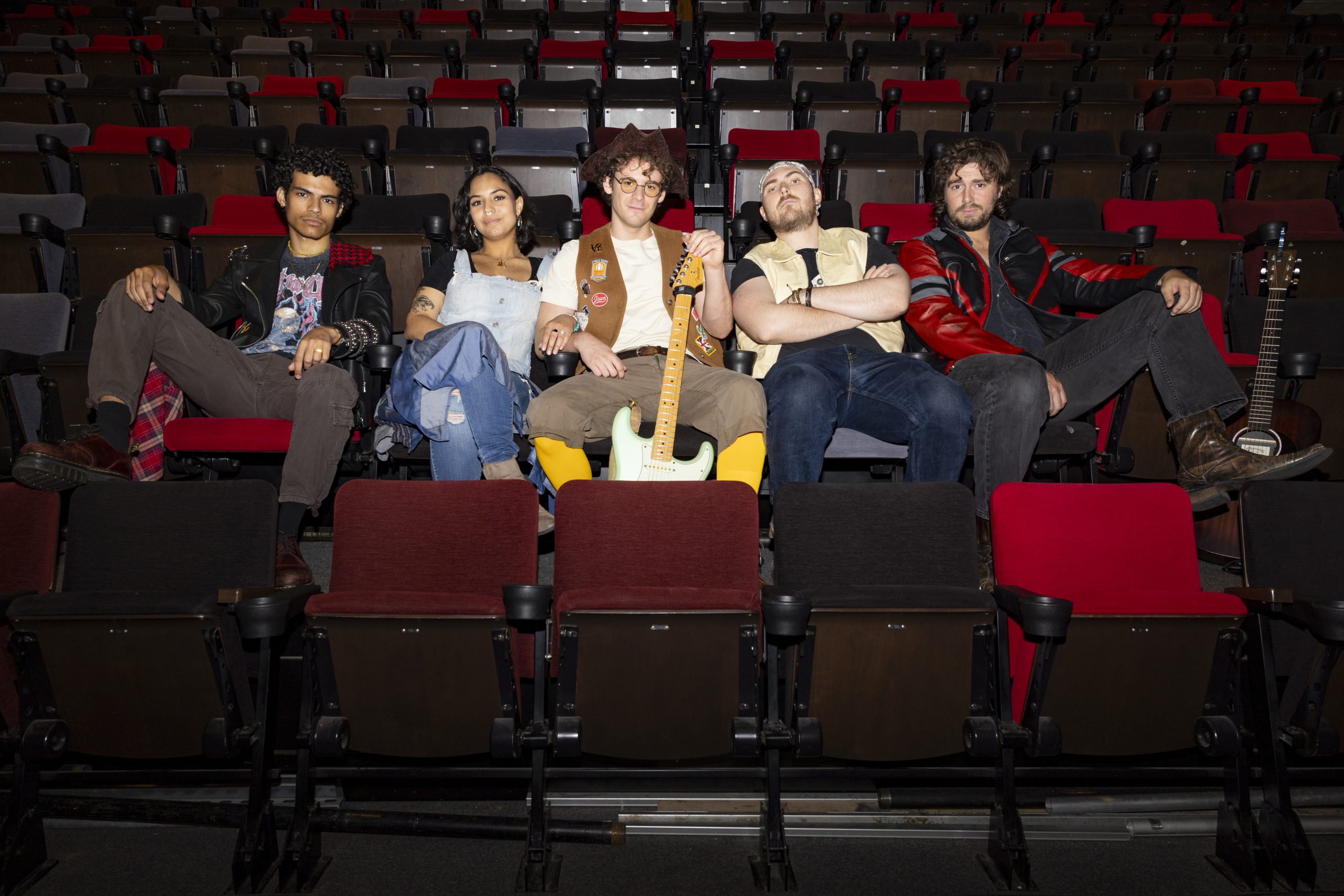
    A young Ben Franklin electrifies the stage

    It’s hard to imagine Ben Franklin as anything other than the balding middle-aged man we see on the $100 bill. It’s even harder to imagine him with an electric guitar in his hands — until now.

    The new musical The Sound of America imagines the story of Franklin’s younger days but with a twist: He starts a band with his buddies and discovers the electric guitar through a lightning strike.

    Kohl Pilgrim, the actor bringing Ben Franklin’s rock ‘n’ roll persona to life, poses for a portrait at FringeArts during a dress rehearsal for “The Sound of America” musical on Wednesday, June 24, 2026.Aidan T. Gallo / Staff Photographer

    As fame and fortune twist his morals, he finds himself abandoning his wife and bestie, and led down a dangerous path by a manipulative British lord (with a Shrek-like Scottish accent). Will Ben be able to come back to his roots, or is the power of electric rock ‘n’ roll too enticing to give up?

    The show plays at the Delaware River-side FringeArts, fittingly right under the Benjamin Franklin Bridge, through the month of July.

    With only two curtains separating the theater from the Fringe Bar, the show is an intimate musical experience.

    The cast of “The Sound of America” sit for a portrait during a dress rehearsal at FringeArts on Wednesday, June 24, 2026.Aidan T. Gallo / Staff Photographer

    It had all of the musical elements I know and love; it felt like I was at one of my dad’s band’s dive bar gigs (which was precisely the feel creators Randall Lane and Todd Schwartz were going for).

    The cast, led by Temple graduate Kohl Pilgrim, delivered their songs with ease, blending beautiful vocal harmonies and playing guitar at the same time (witchcraft, to me). Their chemistry was palpable, feeling like they never ran out of energy, even after the 2-hour show had ended.

    Amid all the America 250 brouhaha, I have found it hard to find a history-related event that didn’t bore me to sleep. While this show may not be entirely historically accurate, this energetic yet flawed portrayal of a young Founding Father was endlessly entertaining, giving us a gritty Philly-style performance that I’ll never forget.

    “The Sound of America” runs through Aug. 1 at FringeArts, 140 N. Christopher Columbus Blvd. Tickets start at $60. soundofamericamusical.com, 215-413-1318, or by email at hello@fringearts.com.

    — Morgan Ritter

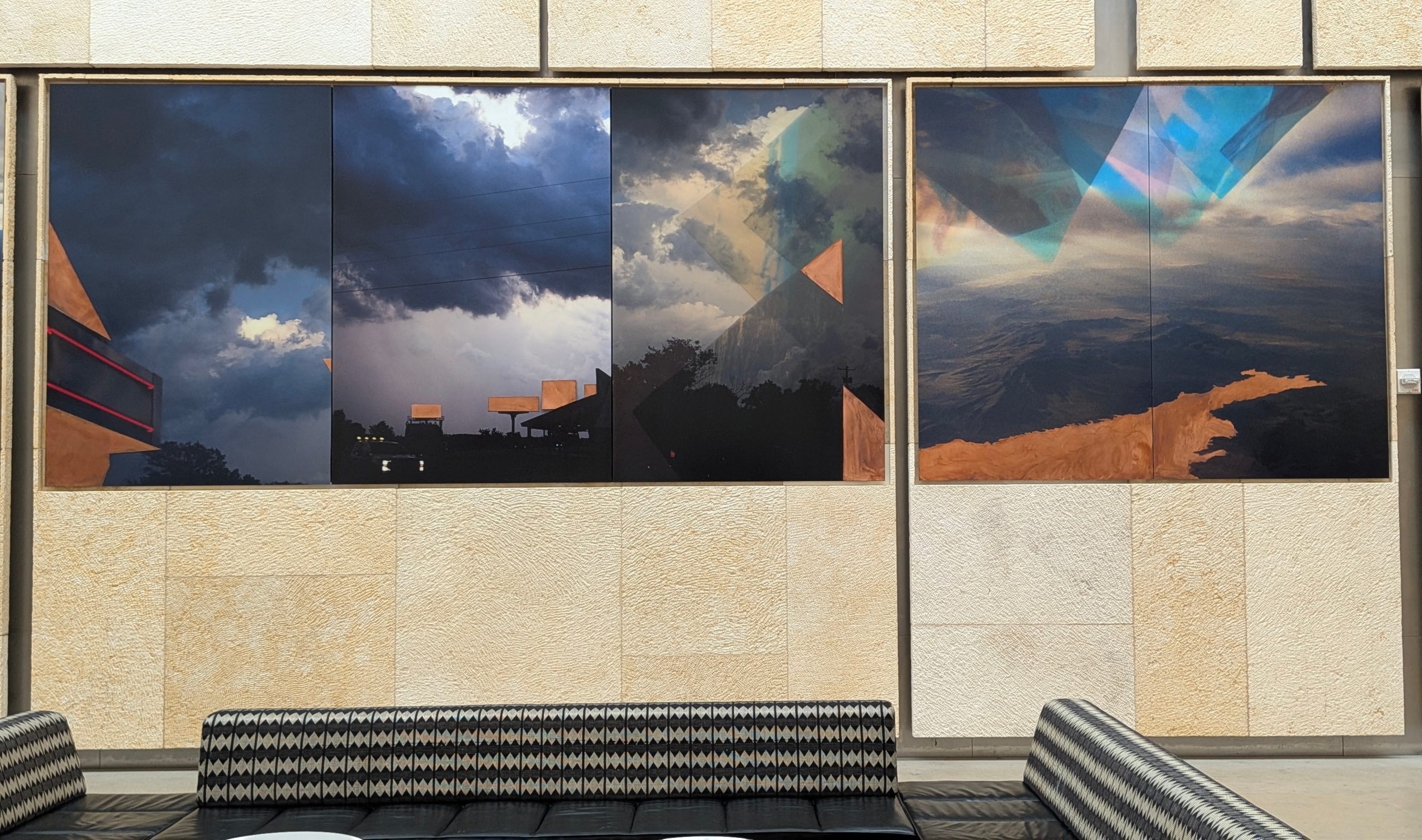
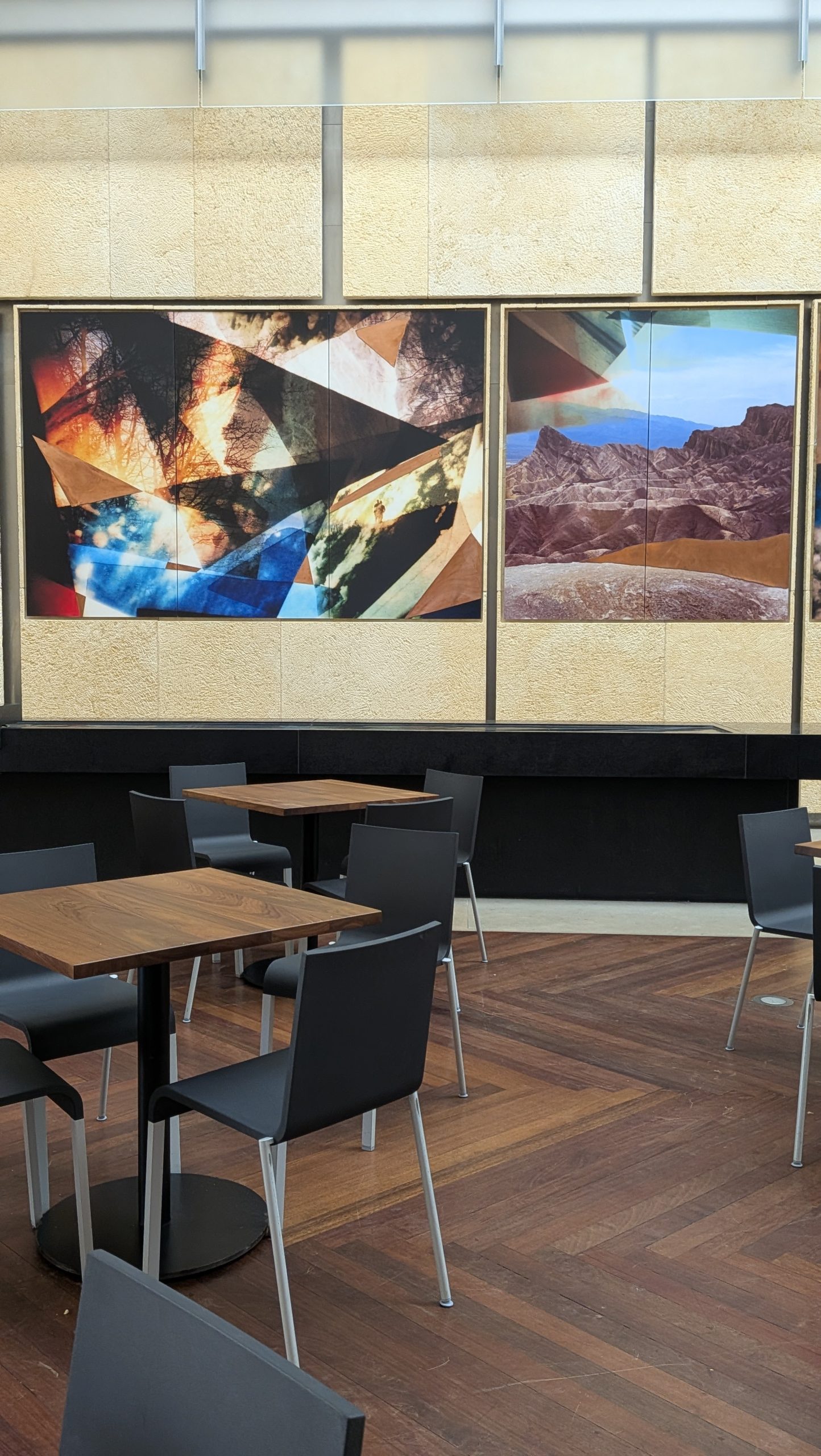
    A section of the 11-panel work titled “Red Metal Dust” by artist Sky Hopinka. The artwork is on display at the Barnes Foundation’s Annenberg Court through January.Bedatri D. Choudhury

    Copper landscapes and America 250

    I have long admired Sky Hopinka’s films — last year’s Powwow People was one of the best of the year. I went to the “Red Metal Dust” exhibit at the Barnes Foundation expecting to see the Native American filmmaker’s video work but was pleasantly surprised when I got to the Foundation’s Annenberg Court.

    Photographs of sweeping landscapes make up 11 panels that flank one side of the walls. Hopinka uses photo prints of different transparencies to recreate the terrain of Tahlequah, Okla., which, Hopinka said to the arts publication Brooklyn Rail, is “one of the bigger towns in the Cherokee Nation.”

    Mountains blend into tree tops, sunsets blend into the day sky, clouds bleed into buildings, human beings form little shadows, and billboards stand against the sky. Pieces of copper glisten in part of the image. It is at once one landscape continuing through the length of 11 panels, and also a different world contained within each panel.

    “Red Metal Dust” is the Ho-Chunk way of describing copper— “naming the material not as a monument but as a remainder,” the program note says. The copper on the panels is not treated with wax and will, through the course of the exhibit, change color from oxidizing. What gleams in orange in the afternoon light today may turn greenish in a few days, changing how we see and perceive the landscapes in front of us.

    A section of the 11-panel work titled “Red Metal Dust” by artist Sky Hopinka. The artwork is on display at the Barnes Foundation’s Annenberg Court through January 2027.Bedatri D. Choudhury

    Hopinka’s work has always focused on Indigenous lands and people’s relationship to them. “Red Metal Dust,” created to commemorate the American nation’s 250th anniversary, centers on land that has been cared for by Native Americans for tens of thousands of years before the land got called a nation. It shows us what remains and reminds us what got taken away. It bears witness to aging and change and instead of looking at the country as one chunk of a land mass, “Red Metal Dust” gives us pause to stop and look at the many layers of disruption and repair that lie beneath what meets us in the eye. It is a reminder that this land was a nation of its own people who are way older than its 250 years of history.

    “Red Metal Dust” runs through Jan. 18 at the Annenberg Court, Barnes Foundation, 2025 Benjamin Franklin Pkwy. barnesfoundation.org

    — Bedatri D. Choudhury

  • See it, hear it, feel it: All the Philly art we loved this week

    See it, hear it, feel it: All the Philly art we loved this week

    Finding America at Woodmere’s ‘Arc of Promise’

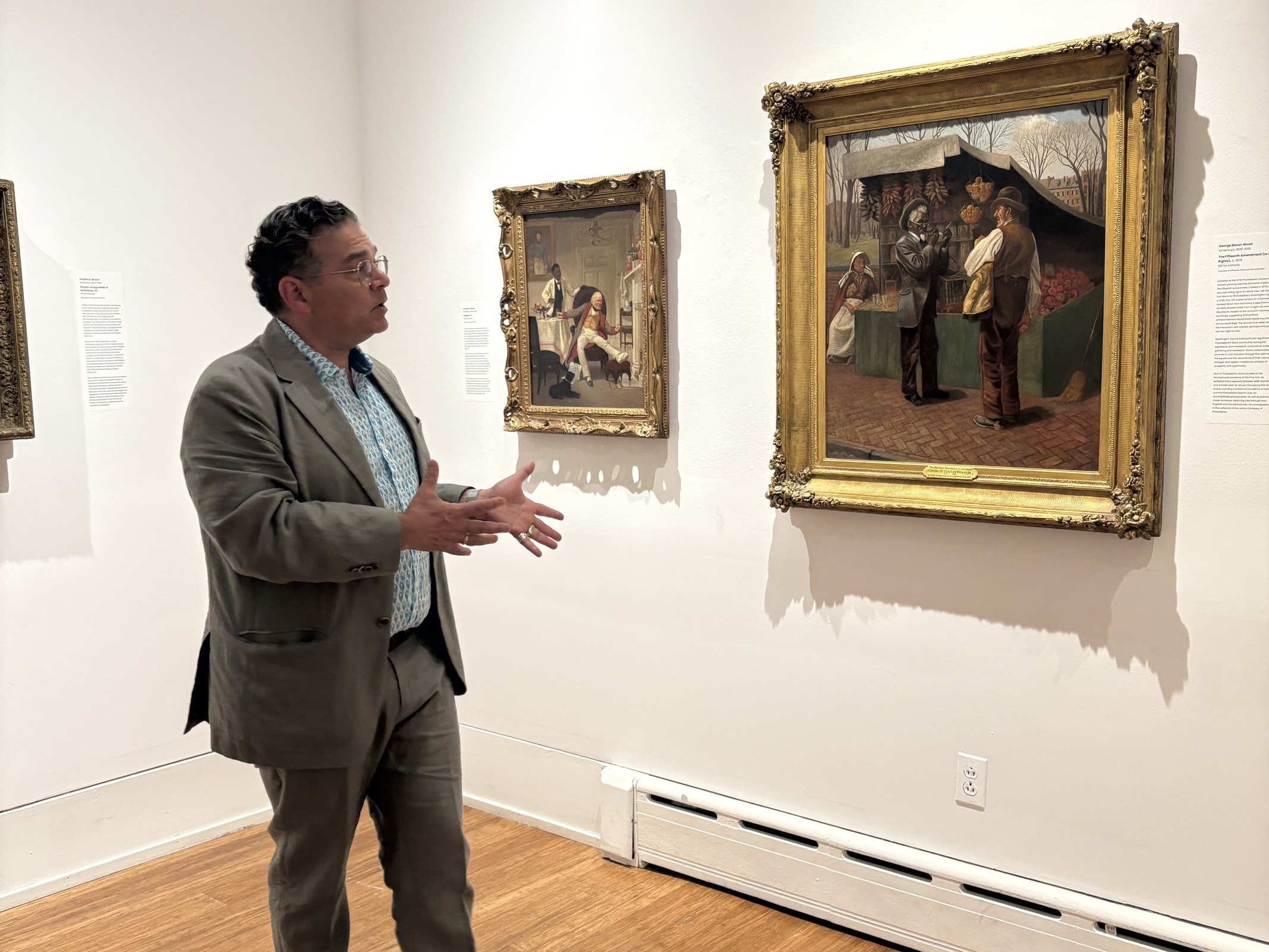
    Last week, Woodmere director William R. Valerio stood in front of six vibrant works in Woodmere’s Charles Knox Smith Hall’s Antonelli Gallery.

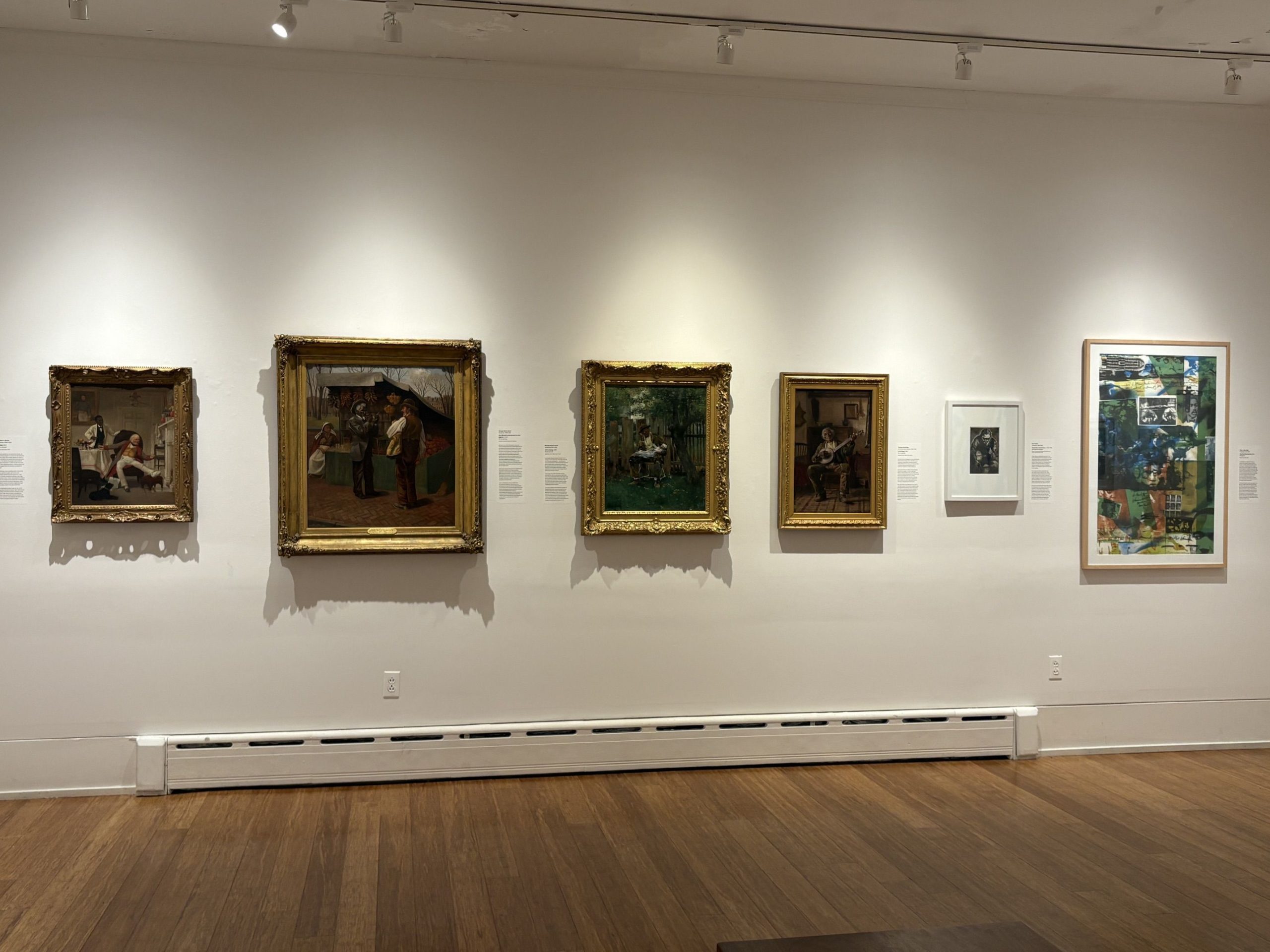
    Behind him were two works by Philadelphia painters Francis Coates Jones and Thomas Hovenden, both depicting an elderly Black person named Sam, who lived in the Germantown/Chestnut Hill area, enjoying moments in nature. Another work, a Dox Thrash etching of a man holding a banjo, suggests he’s more than an entertainer; he’s also an introspective thinker.

    Woodmere director William R. Valerio discusses the “Arc of Promise” exhibition, featuring the work of Philadelphia artists who portray Black people with humanity. A number of the works are from the Civil War era.Elizabeth Wellington

    Contemporary artist Allan L. Edmond’s lithograph, America’s Bicentennial, features luminaries Frederick Douglass, Martin Luther King, and Barack Obama alongside scenes of African American struggle and achievement.

    What if America in the 19th century — when many of these works were made — embraced Black men’s humanity? Valerio asked, sparking my own questions.

    What if we came to terms with how unfair treatment of women, minorities, and immigrants in the past impacted our lives today?

    Would America be a different place?

    These questions find answers in every nook, cranny, and inch of Woodmere’s “Arc of Promise” exhibit. Each painting, ceramic, map, or mixed media collage speaks to how Philly artists — from the 17th century through today — envisioned the idea of America.

    From left to right, “Untitled,” 1874; by Charles V. Brown; Francis Coates Jones; “The Fifteenth Amendment (or Civil Rights), George Bacon Wood, 1875; “Left in Charge,” 1882; Thomas Hovenden, “I’s So Happy,” 1882; Dox Thrash, “Played Out” c. 1937; “American Bicentennial,” Allan L. Edmunds. These photos show the humanity of Black men during an era when art didn’t portray them as such.Elizabeth Wellington

    Many — including Barbara Bullock’s seminal sculpture honoring the life of Trayvon Martin and the charcoal works of the late Peter Paone — are a part of Woodmere’s vast permanent collection.

    But there are also several important works on loan including protest photography by Harvey Finkle and a mixed-media necklace by Teri Hislop, a member of the Lenape Nation of Pennsylvania. Henry Bermudez’s Miss America, completed in 2019, offers a layered vision of America through migration, mythology, and identity. It sits next to sculptor Hiram Powers’ “America,” in which 19th-century America is depicted as a Greek goddess.

    There is a lot of pomp, circumstance, and sparkle in this lively retrospective. The must-see gallery, however, is the Schnader Gallery Hall because it includes a pristine collection of refurbished American landscapes by local 19th-century artists Frederic Edwin Church and James Hamilton featuring many a Schuylkill waterfall. Think of this gallery as a place to retreat after a bustling Fourth of July weekend.

    “Arc of Promise” takes its name from watercolor artist Jerry Pinkney, a longtime friend of the Woodmere who used the term as a way to speak to an America of unfolding potential, despite its past unequal treatment of Black people, immigrants, and women.

    “Arc of Promise” runs through Nov. 2, 2026, Woodmere’s Smith Hall is located at 9201 Germantown Ave.

    — Elizabeth Wellington

    Actor John Clarence Stewart as the titular character in “Basil Biggs” at the Wilma Theater.REC Philly

    Excavating history with ‘Basil Biggs’

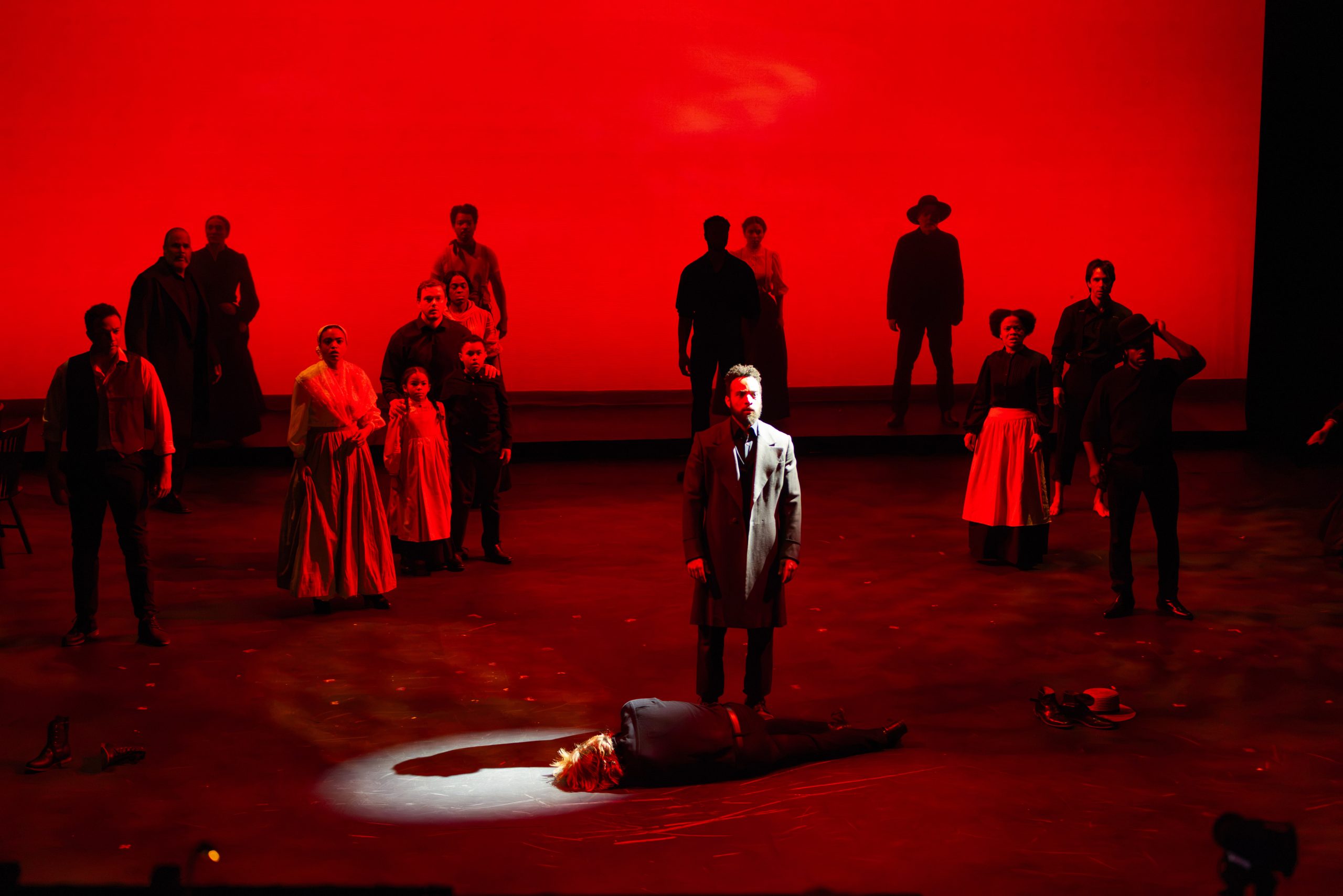
    There is something so powerful about seeing someone grapple with their personal experience of American history. As Semiquincentennial fanfare reached a fever pitch in Philadelphia, this workshop of a developing play by actor/playwright Anna Deavere Smith was a deeply moving performance about her great-great-grandfather, Basil Biggs, a conductor on the Underground Railroad. Smith learned of him in an episode of Finding Your Roots; even then, she knew his story was worthy of a play, though she didn’t start writing until a decade later.

    Biggs was a veterinarian and farmer in Gettysburg during the Civil War, a free Black man who helped fugitives escape slavery and who buried the tens of thousands of soldiers who died in the war’s bloodiest battle. The Biggs family house still stands today, and Smith visited the grounds, as well as the Adams County Historical Society, while she researched the time period. There was little historical documentation about her family, so this work is narrative speculation, based on her research of the time period, much like groundbreaking scholar Saidiya Hartman’s critical fabulation: In the absence of records about African Americans, visionaries use archival materials to imagine the lives of those largely erased from written memory.

    Smith crafted a riveting world that showcased fierce resilience, disarming humor, and profound empathy during a painfully divided time. The story is fueled by original music from actor/violinist Edward W. Hardy. It was an honor to experience one of the earliest presentations of this play, which will likely grow into a major production. It’s the kind of honest work about this nation’s bloody, conflicted history that feels like essential viewing for anyone who calls themself a patriot.

    “Basil Biggs” ran June 26-28 at the Wilma Theater as part of ArtPhilly’s What Now: 2026 festival.

    — Rosa Cartagena

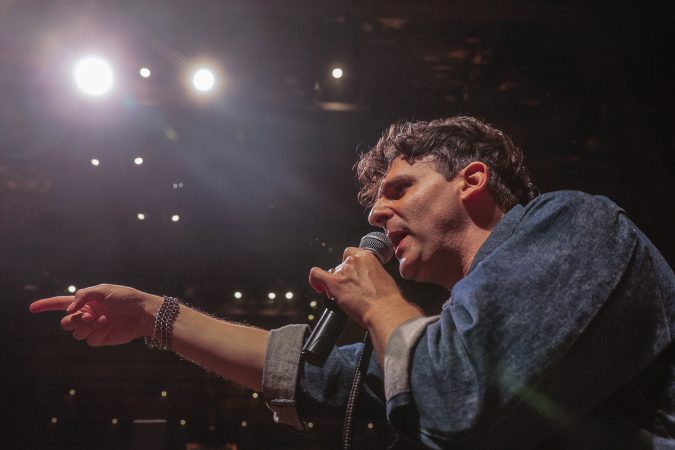
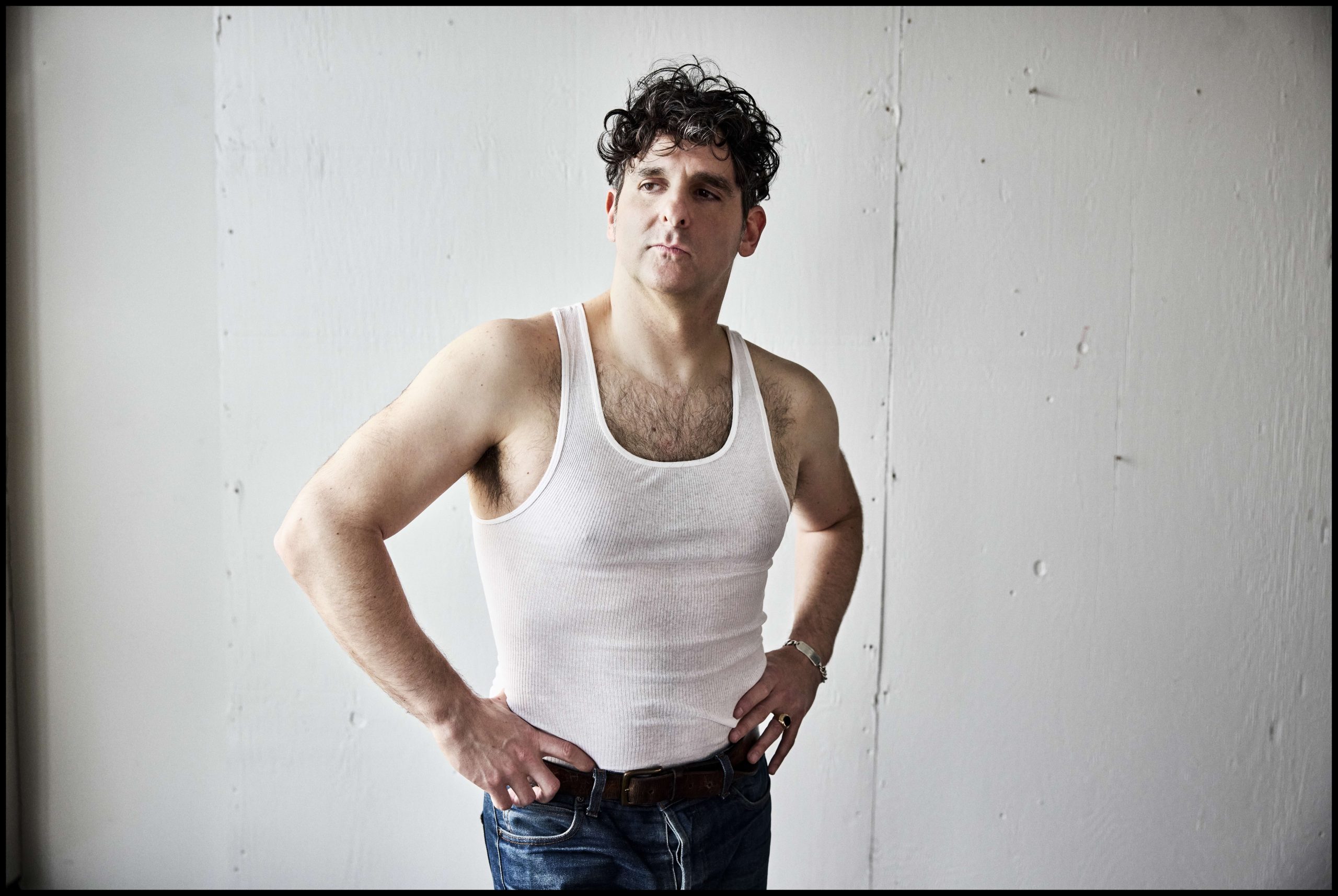
    Adam Weiner of Low Cut Connie. The band’s new album is “Livin’ in the U.S.A.”Danny Clinch

    Romping, stomping, piano-pounding resistance with Low Cut Connie

    Adam Weiner of Low Cut Connie has stressed that the band’s eighth studio album, whose release is timed to America’s 250th birthday, is an act of resistance.

    Shortly after becoming one of the first artists to cancel at the Kennedy Center after the Trump administration’s takeover of the D.C. institution in early 2025, Weiner recorded what became the title song.

    As he explains in an explanatory note that accompanies the album, it addresses “the atrocity of ICE, authoritarianism, racism” and led to a full set of songs “about the times we are living through in America 2026.”

    But while Weiner’s political stance is unequivocal — “I made this album to say f— you to this regime, to the brutality, and inhumanity of our tech leaders,” he writes — his music is much more subtle.

    Many of the titles like “Oh Yeah” and “Get Down” on Livin in the USA are essentially party songs: romping, stomping, piano-pounding, and saxophone-wailing celebrations of diversity and sexuality that aren’t the slightest bit preachy or pedantic.

    Singing a gospel of self-liberation, Weiner is accompanied by the touring LCC band, which includes singer Amanda “Rocky” Bullwinkel,” guitarist-sax player Kelsey Cork, and drummer Jarae Lewis. Occasionally, as in the grinding “Human Condition,” the songs are overt in their condemnation of life during Trump time, which he likens to “living in a house of detention.”

    But in general, he heeds lessons learned from favorite albums like Bruce Springsteen’s Born in the USA and Sly and the Family Stone’s There’s a Riot Goin’ On. When delivering a heavy message, always keep the groove going and the rock rolling.

    “Just because the world is collapsing,” Weiner writes in his Livin album note, “doesn’t mean we can’t go skinny dipping this weekend.” “Can’t Be Wrong” is perhaps the most grabby earworm in a tight, 10-song set whose energy never flags. In that song, the prospect of “gettin’ naked in the afternoon, or maybe later underneath the moon” leads to an obvious conclusion: “Oh babe, you know it can’t be wrong.”

    “Livin in the USA” releases July 3

    — Dan DeLuca
    Remembering LGBTQ+ activists

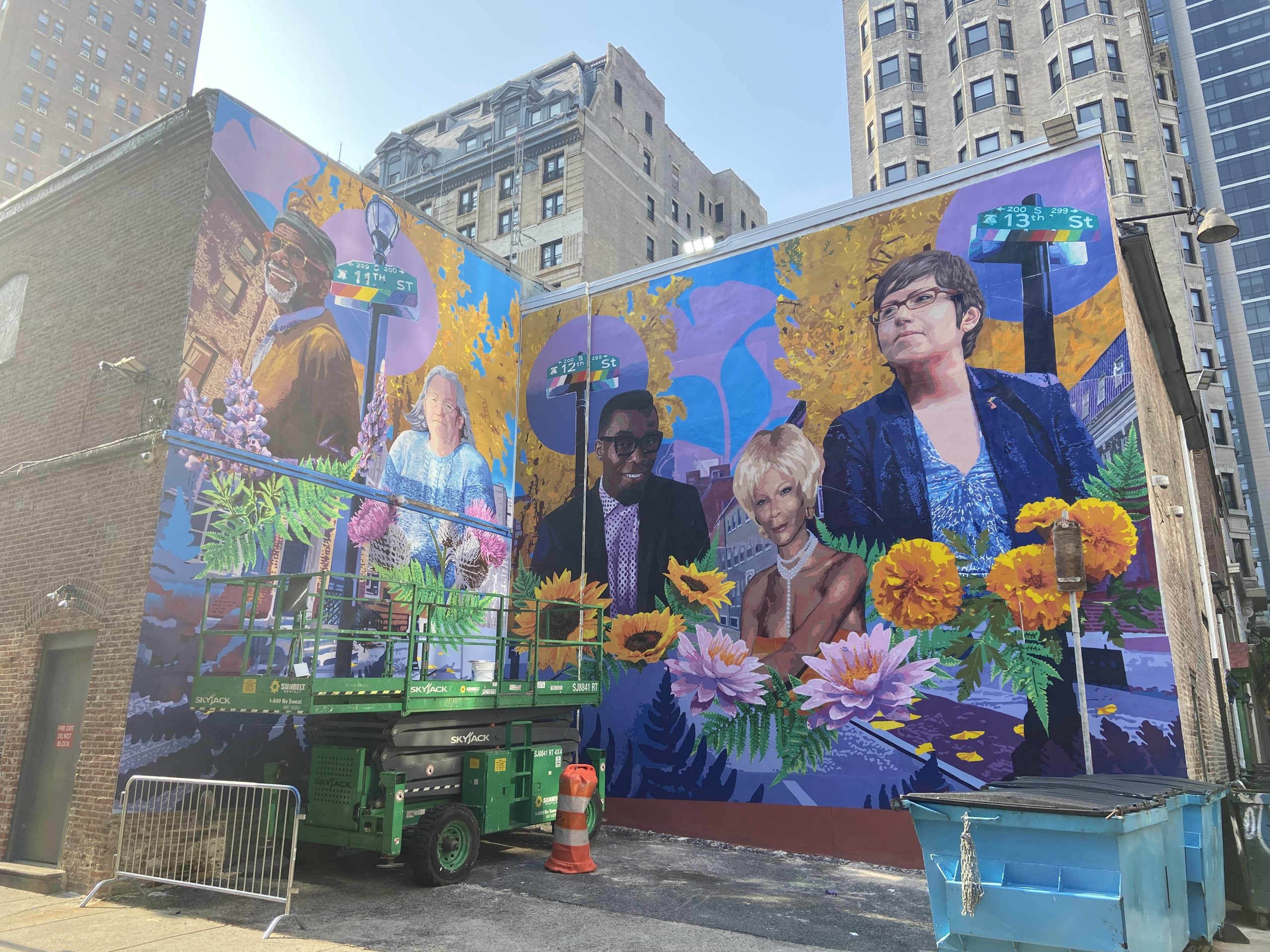
    Resting in peace can also mean resting in pride and power. A new Gayborhood mural provides a tribute that does exactly that.

    In Pride, In Power, In Memory is located on the side of Voyeur Nightclub at 1221 James St., a prominent spot amid Philadelphia’s queer nightlife.

    The mural is located outside of Voyeur Nightclub in Philadelphia’s Gayborhood.Morgan Ritter

    Painted by artist Santiago Galeas, the mural displays portraits of Gloria Casarez, Michael S. Hinson Jr., Tyrone Smith, Nizah Morris, and Dawn Munro; all LGBTQ+ activists who called Philadelphia home.

    Each figure is accompanied by a flower symbolizing the person’s life and identity; Casarez’s portrait is adorned by Mexican marigolds, for example, as a nod to her heritage. The faces were all drawn referencing photos of them looking hopeful and optimistic.

    The mural is strikingly bright, with vivid shades of purple and yellow illuminating the portraits.

    These trailblazers pursued several kinds of activism in their lives, including AIDS awareness, trans rights, and community organization to rally for queer rights. Without them, the status of Philadelphia’s acceptance of the queer community may have looked completely different today.

    “In Pride, In Power, In Memory” is located on the side of Voyeur Nightclub at 1221 James St.

    — Morgan Ritter

  • See it, hear it, feel it: All the Philly art we loved this week

    See it, hear it, feel it: All the Philly art we loved this week

    A flowery union at the PMA

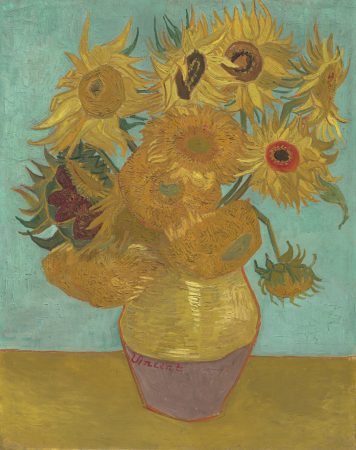
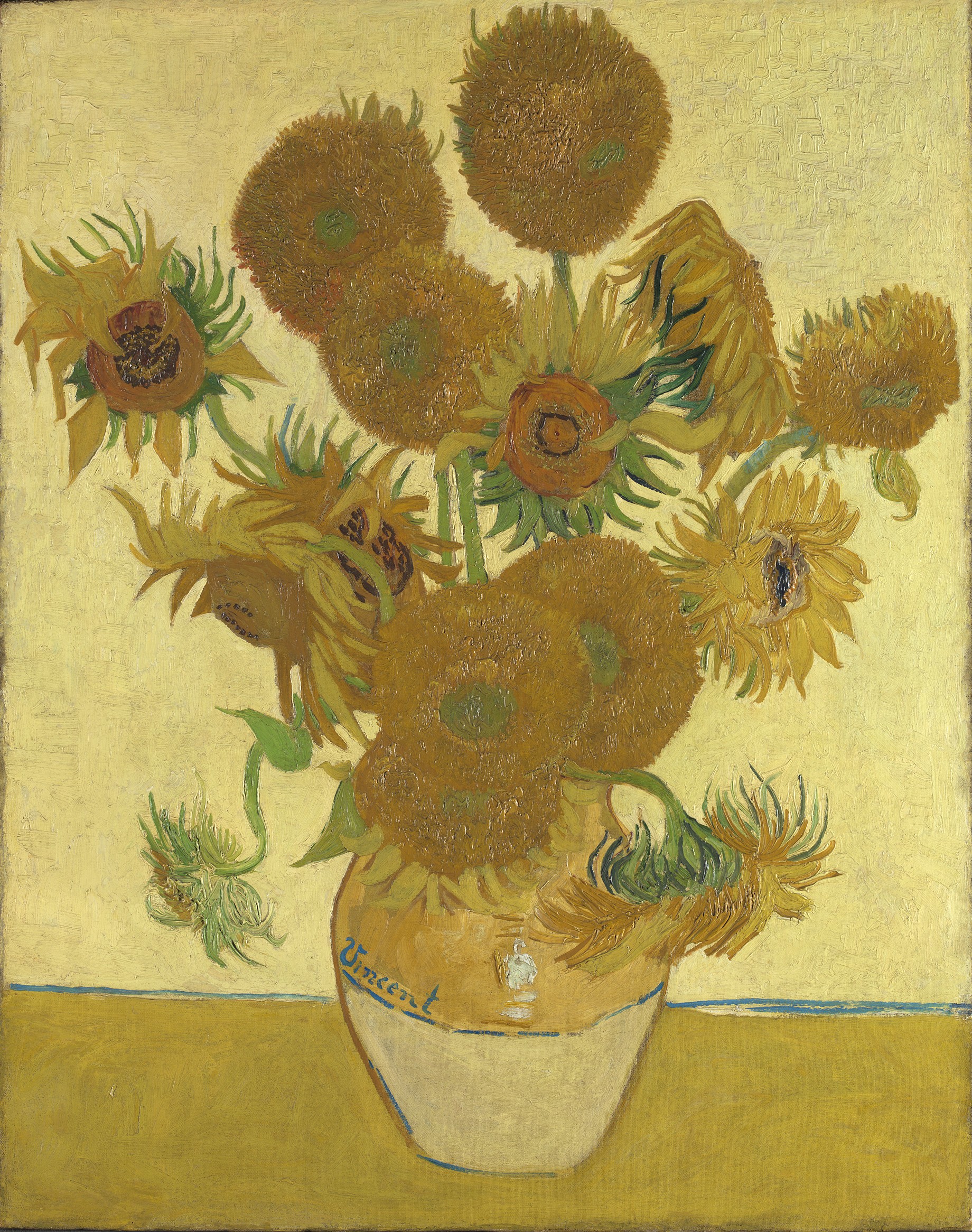
    There’s a rare reunion at the Philadelphia Museum of Art this year: Two of Vincent van Gogh’s famous sunflower paintings are on view side by side. Only five large-scale paintings comprise his Sunflowers series, scattered over three continents. But now, Philadelphia gets a chance to see two together.

    For the first time in its history, Sunflowers (1888), from the collection of London’s National Gallery, has traveled across the Atlantic for its United States premiere alongside the PMA’s own Sunflowers (1889). The London artwork shows the sunflowers on a pale yellow background while Philadelphia’s features a soft blue; both exemplify the artist’s desire to create what he described as “a symphony of blue and yellow.”

    It’s a historic display of signature works by a world-famous artist who sadly never achieved critical acclaim during his lifetime. But, all of that aside, these are simply two marvelous paintings to see.

    “Sunflowers” (1888), Vincent van Gogh. Courtauld Fund, The National Gallery.

    Photo: © The National Gallery, LondonThe National Gallery Photographic Department

    Their charm isn’t solely in the pretty subject matter; it’s all about the texture. Thick globs of paint in various shades of yellow give the appearance of a not-quite-settled image, enchanting the viewer with dynamic motion that can only be experienced up close. Each bloom has its own stylistic personality as the paint takes on an almost sculptural presence. Both paintings create a mesmerizing display — pictures truly don’t do it justice.

    “Van Gogh’s Sunflowers: A Symphony in Blue and Yellow” is on view through Oct. 11 at the Philadelphia Museum of Art, 2600 Benjamin Franklin Pkwy, Philadelphia, 215-763-8100 or philamuseum.org.

    — Rosa Cartagena

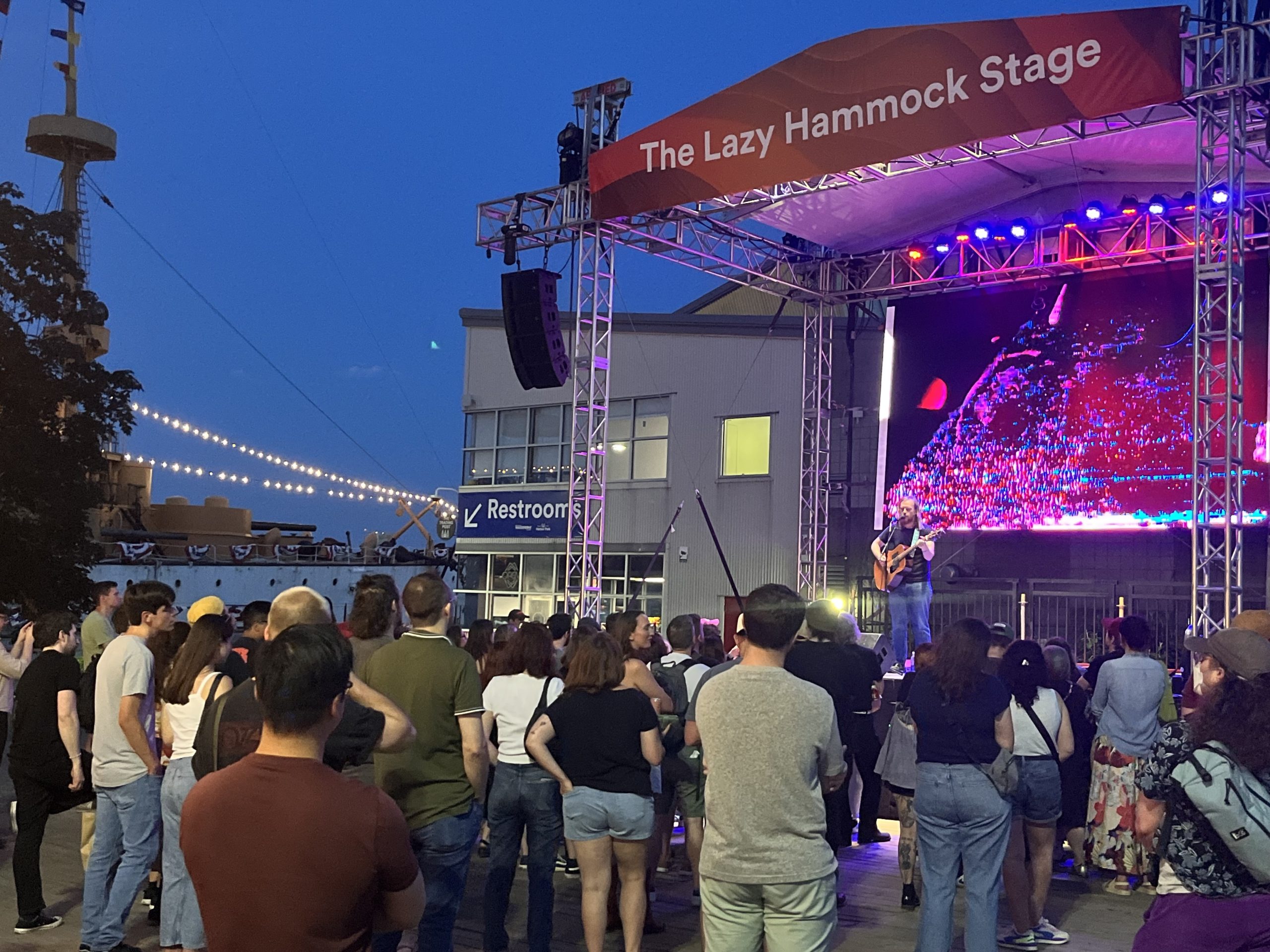
    Kevin Devine performs at Spruce Street Harbor Park on June 25, 2026.Emily Bloch

    Kevin Devine at Spruce Street Harbor Park

    Some of the best shows of the summer can be enjoyed for free, from a picnic table, with a Tecate in hand.

    On Thursday night, I attended Kevin Devine’s free show at Spruce Street Harbor Park, where he was joined by openers Shannen Moser and Abi Reimold. It was the first of Devine’s short two-weekend tour through non-traditional spaces across the Northeast, including mostly house shows and an arcade.

    For about an hour, Devine played — just him and his acoustic guitar — a stretch of old and new songs from his repertoire that dates back over two decades. Currently, Devine’s 11th LP is in the works. It will have distinct Philly ties, being recorded at Will Yip’s Memory Music Studios and produced by Steph Marziano, one of Hayley Williams’ longtime collaborators who cut her teeth in Philly’s music scene.

    But back to Thursday night’s show. It was one of an impressive series of free shows at Spruce Street Harbor Park programmed by 4333 Collective.

    Upcoming shows under the waterfront breeze include Oso Oso, Pissed Jeans, Iron Chic, and more. Here’s a list of all the free shows.

    — Emily Bloch

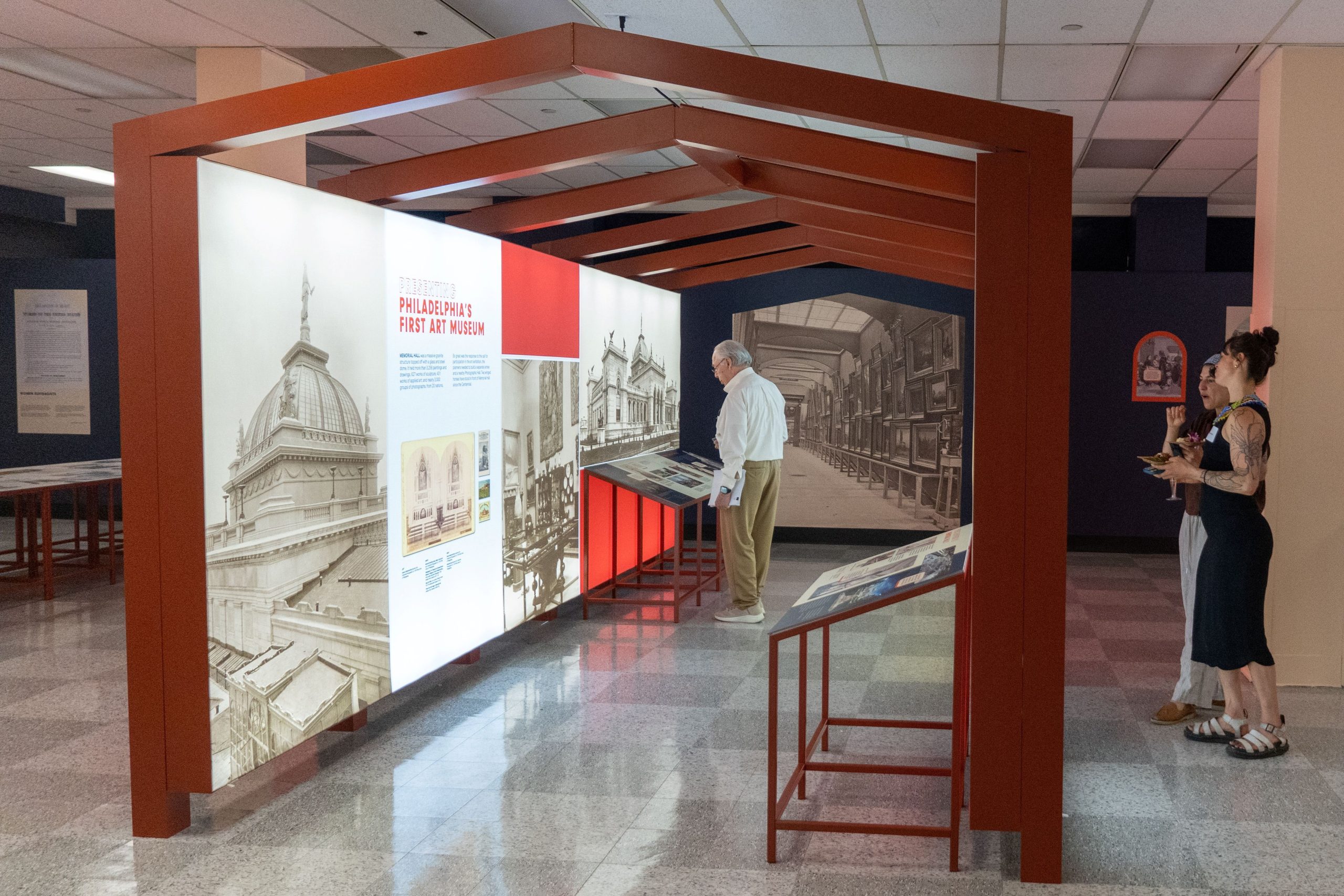
    An exhibit on Memorial Hall at “Revist: 1876,” a recreation of the Centennial Exhibition at the Fairmount Park Grounds in 1876. Before Memorial Hall was turned into the Please Touch Museum, it was the first site of the Philadelphia Museum of Art.Leo Manning for Center City District

    The first telephone, at the Lits Building

    Before the Please Touch Museum was the go-to hangout spot for our city’s adventurous toddlers, it housed the first Philadelphia Museum of Art.

    The 70,000-square-foot Beaux Arts building was originally built to showcase the work of late-19th-century American artists — including Philadelphia’s own Thomas Eakins — for the Centennial Exposition of 1876.

    The five-month 100th birthday party for America is also known as the first World’s Fair on American soil.

    The history of Memorial Hall is told in one of four pavilions featured in “Revisit 1876,” the 8,000-square-foot exhibition located in the ground floor of the Lits Building, produced by the nonprofit arm of the Center City District Foundation.

    The exhibit aims to connect present-day Philly with the innovations that were introduced at the fair 150 years ago, said Paul Levy, the foundation’s executive director.

    And they do a pretty good job.

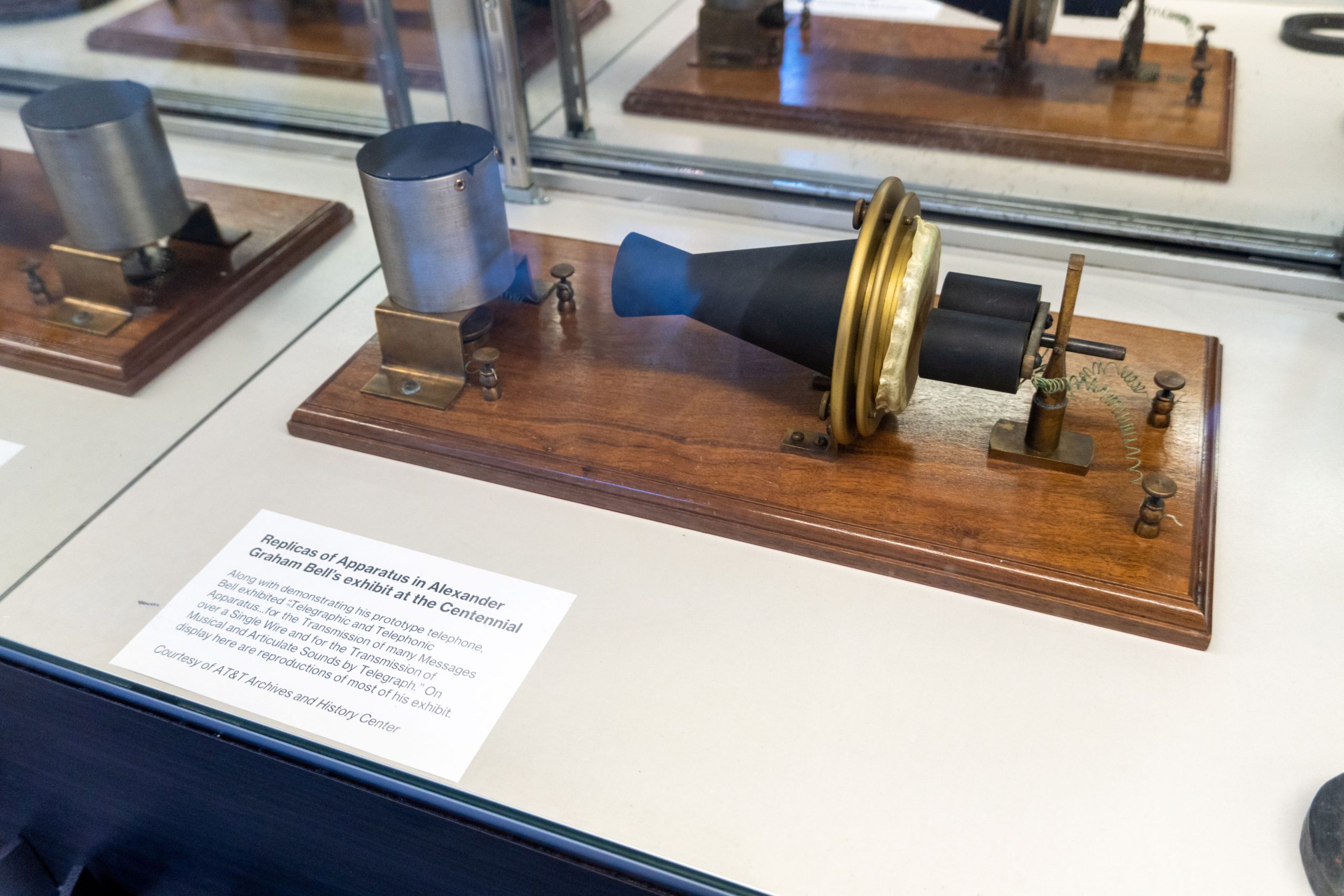
    A replica of Alexander Bell’s first telephone that was shown for the first time for the 1876 Centennial Exhibition in Fairmount Park. The replica is on exhibit at “Revisit: 1876” in the Lits Building, 701 Market St. Entrance is on Eighth Street.Leo Manning for the Center City District

    Silhouettes of women in corseted dresses and twirling umbrellas and dandy men in top hats greet visitors. Behind the sales counter is the replica of the first telephone that Alexander Graham Bell brought to the Centennial. Also behind the glass counter is a 3-foot terra-cotta model of the Statue of Liberty made by the original sculptor Frédéric Auguste Bartholdi.

    There is even Centennial merch, including puzzles and wallets, all in pristine condition.

    My favorite part is the flyover video from Independence Hall to Memorial Hall. It’s layered with historic photos connecting 2026 to 1876. In other words, the 2026 flyover includes our majestic City Hall. In 1876, it was an active construction site. (Construction started in 1871 and wasn’t finished until 1901.)

    In addition to Memorial Hall, there are exhibits on Machinery Hall, Horticultural Hall, and the Main Building. A special section spotlights how the former enslaved abolitionist Frederick Douglass was prevented from speaking at the event and how Ben Franklin’s great-granddaughter Elizabeth Duane Gillespie fought to have women included.

    “Revisit 1876” is open through December. The Lits Building is at 701 Market St. (Entrance is on the Eighth Street side). Admission is free.

    — Elizabeth Wellington

  • See it, hear it, feel it: All the Philly art we loved this week

    See it, hear it, feel it: All the Philly art we loved this week

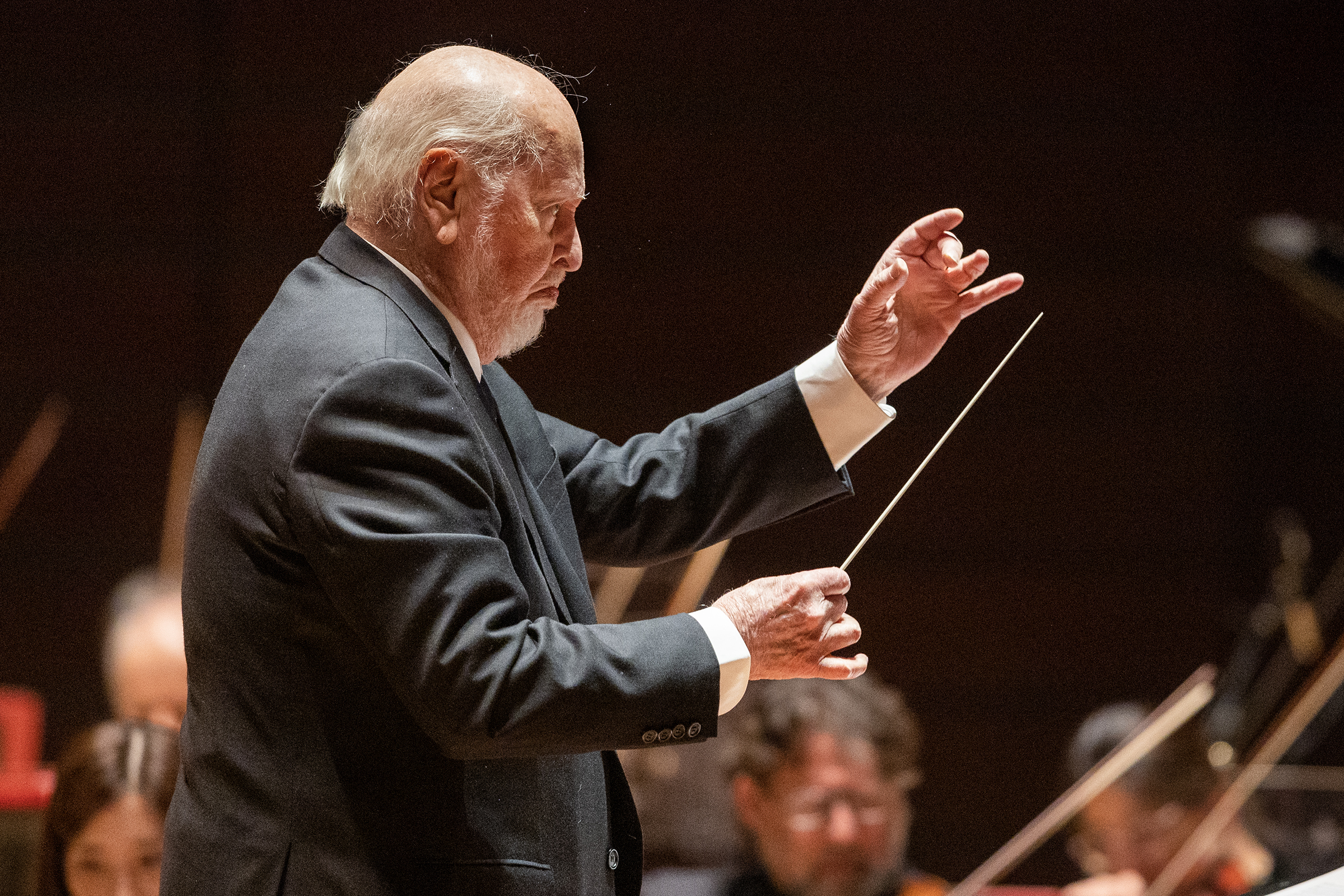
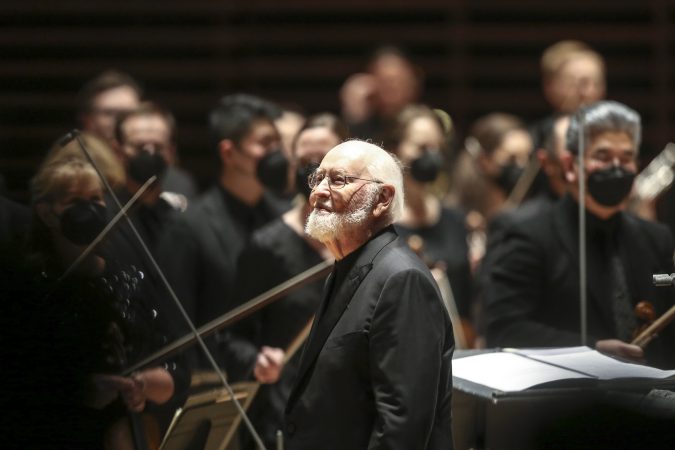
    Searching for meaning with the 94-year-old John Williams in “Disclosure Day”

    There’s plenty of wonder and foreboding in John Williams’ score to Disclosure Day. Anyone hoping for Williams the bellicose, or Williams the painter of twinkling stars that make us look to the Beyond, will find him here.

    But what’s fascinating about the orchestral-vocal soundscape of Williams’ and Steven Spielberg’s 30th collaboration is its subtlety. The composer always was more nuanced than he’s generally given credit for being, and here is something unusually introspective.

    Williams, 94, has been praised for his understatement in the score (released June 12). The soundtrack titles are listed in lowercase letters with ellipses and names like so many perfumes: “unseen …”, “believe …”, “empathy …”

    John Williams conducting the Philadelphia Orchestra at the Kimmel Center, Feb. 20, 2024.Charles Fox / Staff Photographer

    But as Spielberg has said:

    “Disclosure Day is probably the most restrained score he has ever written for one of our collaborations — at least until it is not.”

    As always, Williams — whose film and concert hall music have become a staple at the Philadelphia Orchestra — makes you feel things you can’t put into words. What is a memory if not ineffable, as the music in a so-titled track shows? The narrative progression of “caught…” from poignant oboe and bassoon, to mysterious celesta, to chilling strings and a heart-pounding race, make the track a piece in itself. It’s as good as any concert overture.

    There’s no big signature melody or sweeping gesture à la E.T. anywhere in this music. What it does offer is something perhaps better suited to the times: a score that gives listeners the space to search for meaning in a world of ambiguity.

    “Disclosure Day” is playing in theaters across the country. John Williams’ soundtrack is available on all streaming services.

    — Peter Dobrin

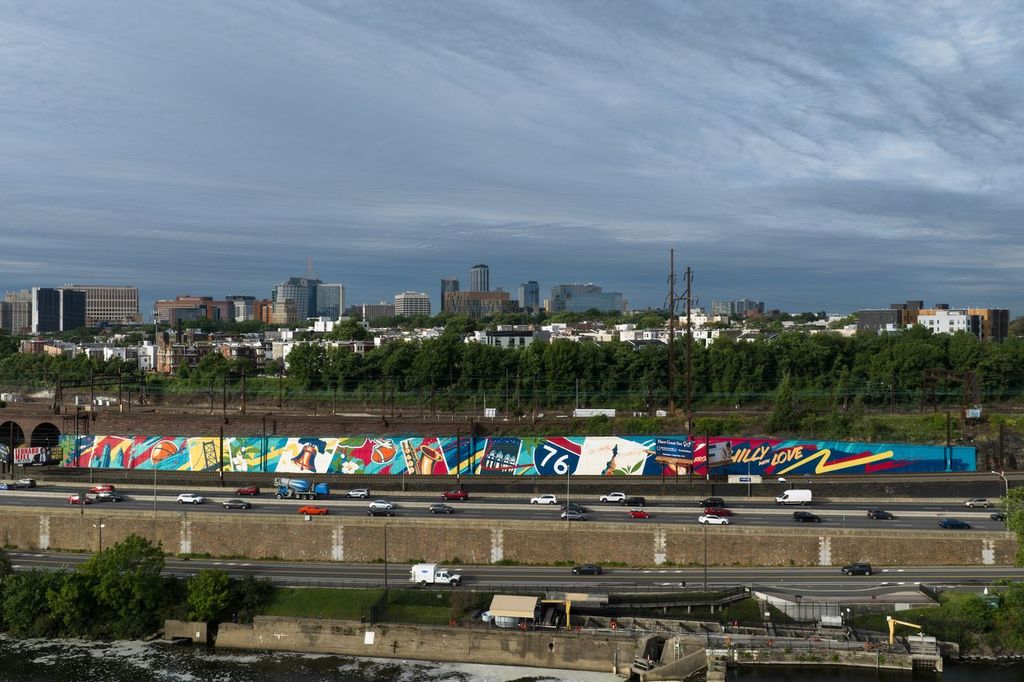
    The mural “One Philly, a United City, With Love” overlooks I-76, using bright colors to reflect the highlights of the city.Steve Weinik

    A burst of color on I-76

    I think most everyone can agree that our highways could use a touch more color. A new mural overlooking the Schuylkill Expressway now provides 16,000 square feet of it.

    One Philly, a United City, With Love stands over part of I-76, paying homage to the city ahead of the country’s 250th anniversary. It was commissioned by the City of Philadelphia as part of “Gateways to Philadelphia,” an anti-graffiti and highway beautification initiative headed by Mayor Cherelle L. Parker’s Office of Clean and Green Initiatives, the Pennsylvania Horticultural Society, and Mural Arts Philadelphia.

    The mural took by artist Carlos Lopez Rosa, a Philly resident, two months to paint. There are depictions of the Benjamin Franklin Bridge, an eagle’s talons holding a football (Go Birds!), the Liberty Bell, an I-76 road sign, and the William Penn City Hall statue. There are arts-focused elements, too, like a blaring saxophone that reflects the city’s vibrant music scene.

    Highways can often feel lifeless, simply a means of getting from point A to B. But if you’re ever traveling along the I-76, be sure to glance up and be reminded of the vividness of Philly.

    “One Philly, a United City, With Love” mural can be seen on I-76 at Spring Garden Street.

    — Morgan Ritter

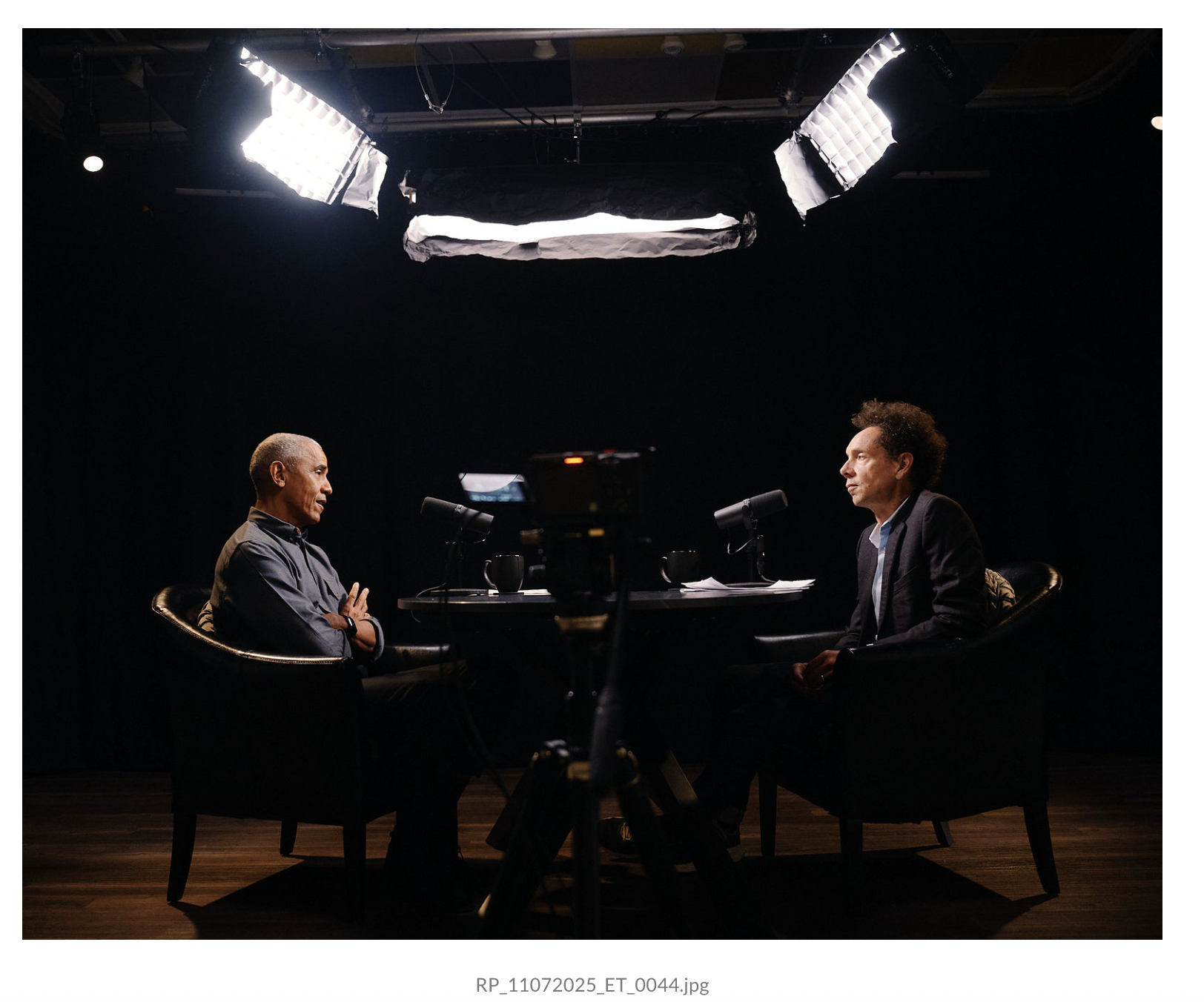
    America’s Reconstruction story with a little dose of Philly history, narrated by Malcolm Gladwell and Barack Obama

    As I listened to the History Channel’s eight-part podcast Reconstruction: The Unfinished Promise hosted by Malcolm Gladwell and featuring special commentary by former President Barack Obama, I was amazed to learn of the political progress African Americans made in the 12 years after the Civil War.

    The founding of Alabama State University by nine formally enslaved men, the rise of the Black politicians like Florida Sen. Emanuel Fortune, the oratorical genius of Frederick Douglass, even the unfortunate demise of the Freedman’s Savings and Trust Company are fascinating pieces of American history rarely taught in school.

    Former President Barack Obama and Malcolm Gladwell recording “Reconstruction: The Unfinished Promise.”Kirby Dixon/Audible

    I found myself most interested in the firsthand accounts of Addie Brown, a Black woman born free in Philadelphia in the 1840s, who found herself in Connecticut during Reconstruction working as a domestic. There, she formed a friendship and romantic relationship with Rebecca Primus, the daughter of the Black family for whom she worked.

    The podcast draws from archives, letters, diaries, court records, eyewitness testimonies, and the work of some of America’s most accomplished scholars and storytellers, including Jelani Cobb, Kellie Carter Jackson, and Ashley C. Ford

    Archival letters, according to historians, provide details about how women’s careers were limited by their sex, how they were forced into marriages, and followed social mores that simply did not serve them.

    Salamishah Tillet, Pulitzer Prize-winning critic for the New York Times, distinguished professor of Africana Studies and Creative Writing at Rutgers University-Newark, and University of Pennsylvania graduate and former professor, also makes a brief appearance.

    Tillet explains how the 1915 film Birth of a Nation was used to defend Jim Crow, the laws based on racial segregation put in place to undo the progress formerly enslaved people made during Reconstruction.

    Cover art for “Reconstruction: The Unfinished Promise,” an eight-episode history lesson about how the 12-year period just after the Civil War impacted the America. It’s narrated by Malcolm Gladwell with guest narration by former President Barack Obama.Audible

    Both Gladwell and Obama repeatedly make the same point: The end of Reconstruction is proof that North won the war, but the South won the peace. Meaning, in order to appease Southern Dixiecrats, America was forced to abandon its attempts of creating a truly multiracial society.

    “The Reconstruction Era was a brief but pivotal and turbulent chapter in our nation’s history,” Obama said in a news release. “One that is often overlooked even though its consequences are still felt today.”

    In light of today’s political climate in which politicians are again trying to undo progress made by our country’s most marginalized, Reconstruction: The Unfinished Promise must be listened to, studied, and shared.

    “Reconstruction: The Unfinished Promise” is available on Audible. It was produced in collaboration with Barack and Michelle Obama’s Higher Ground, Malcolm Gladwell’s Pushkin Industries, and Audible.

    — Elizabeth Wellington

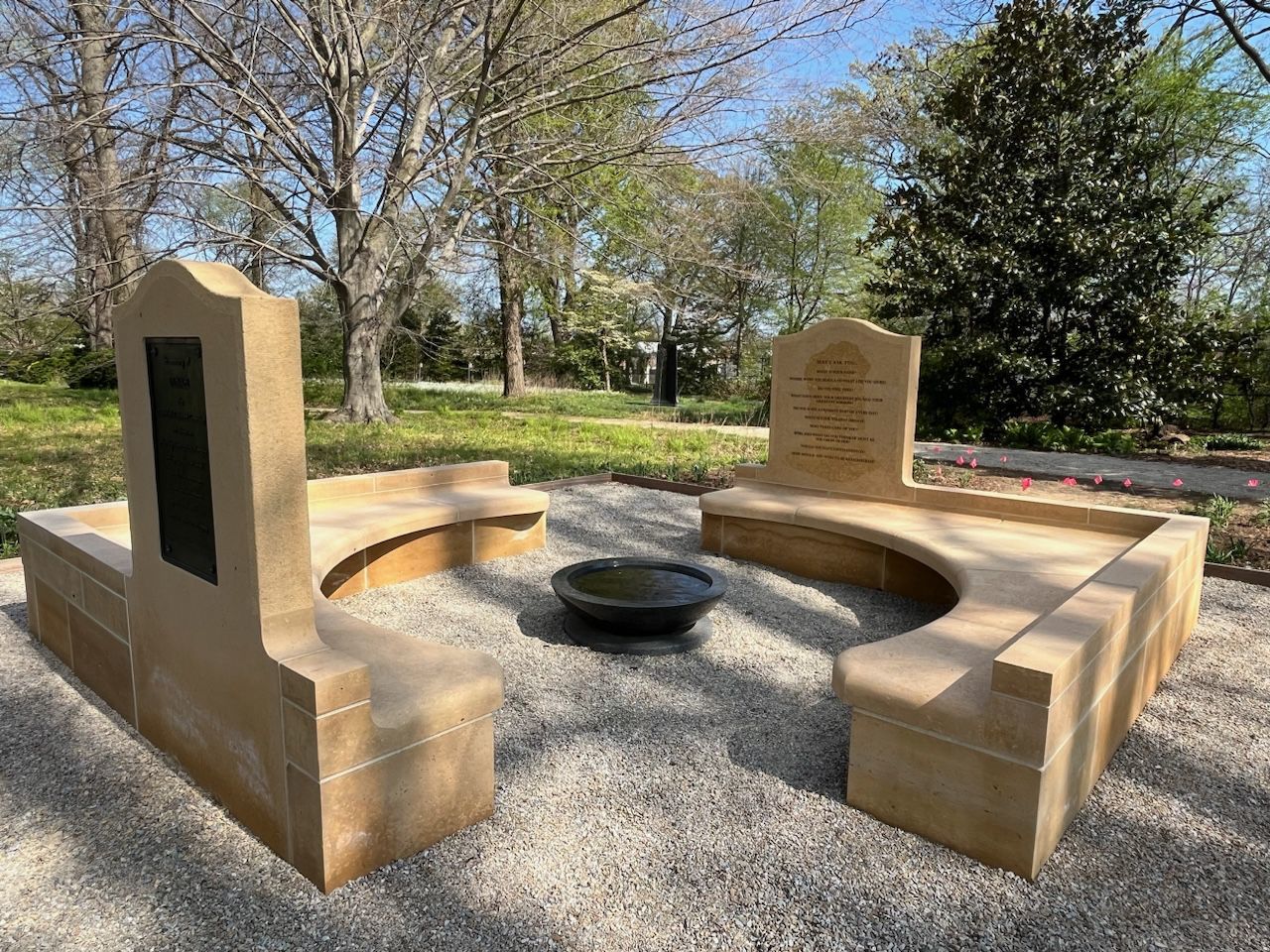
    The memorial to Dinah by Philadelphia sculptor Karyn Olivier at the Stenton Museum at 4601 N. 18th St.Courtesy of Stenton Mansion

    Remembering Dinah at Stenton Museum

    On a humid day, just hours before a downpour, five Black women in brightly colored colonial-era gowns took the stage on the grounds of Stenton Museum in Germantown. That afternoon, they were all called Dinah as each actor represented the historical figure at different ages throughout her lifetime.

    In the winter of 1777, an enslaved woman named Dinah saved the Stenton mansion from British soldiers who planned to burn it down. History has only remembered her with one name. In recent years, Black artists have continued to examine her story.

    In this play by Philadelphia poet Trapeta B. Mayson (who codirected alongside fellow poet Yolanda Wisher), Dinah was revived in a lyrical portrayal that presented a fuller picture of the brave woman who rescued her enslavers’ home during wartime, demanded freedom, and received emancipation.

    On the night of the show, with a neighboring home blasting dance music that occasionally distracted the audience, the ensemble delivered an ambitious and compelling performance full of profound emotion.

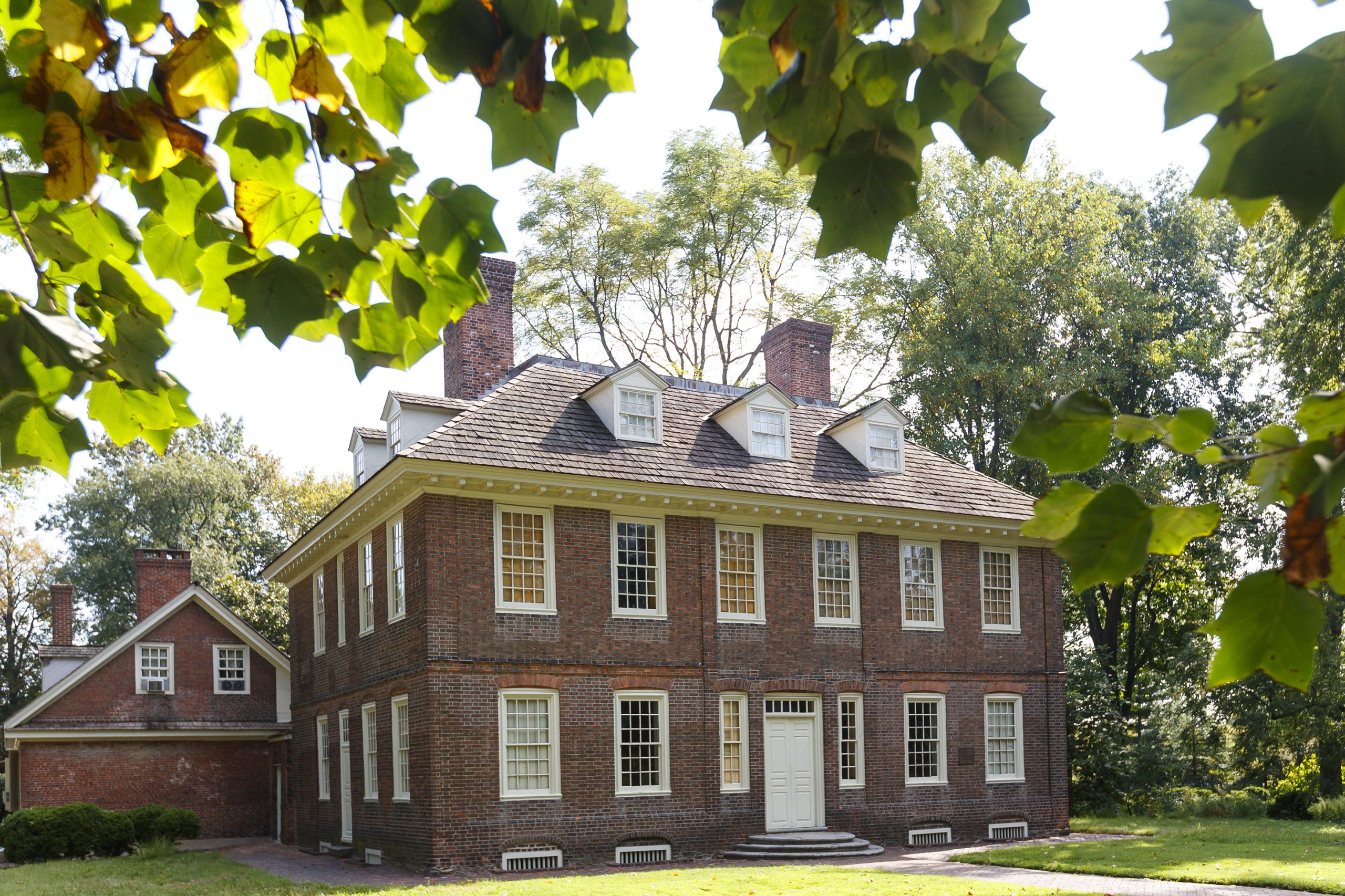
    The exterior of Stenton Museum, 4601 N. 18th St., in Germantown.MICHAEL BRYANT / Staff Photographer

    It was powerful to see their interpretation of Dinah as the actors walked on the same ground she did some 250 years ago. Mayson has said it’s just the first chapter of this project — part of ArtPhilly’s ongoing What Now festival — and I look forward to seeing future iterations as she continues to develop it.

    Though it was just a one-day performance, Stenton Museum and its surrounding gardens are open to the public.

    Permanently on view is the memorial to Dinah, from Philadelphia sculptor Karyn Olivier, with a stone tablet listing questions she wished she could ask: What was your wildest dream? How did freedom feel? Did you ever wish you had let it burn?

    The Stenton Museum is at 4601 N. 18th St., stenton.org

    — Rosa Cartagena

  • See it, hear it, feel it: All the Philly art we loved this week

    See it, hear it, feel it: All the Philly art we loved this week

    Ringing freedom

    My dream of ringing the Liberty Bell has (sort of) been achieved.

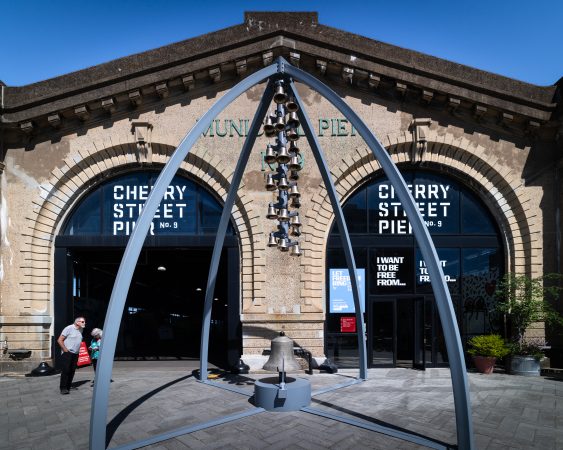
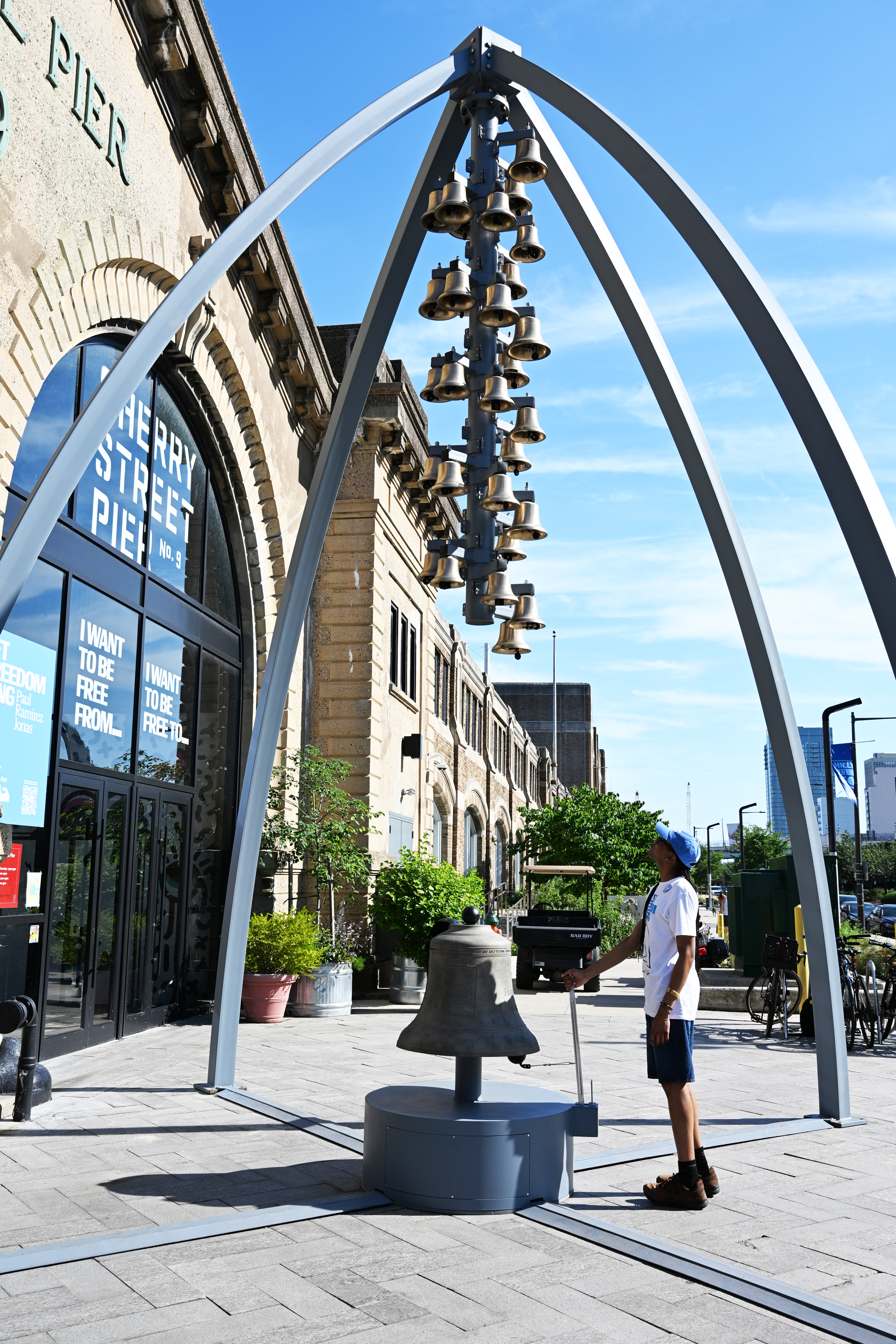
    Just in time for America’s 250th anniversary, a 600-pound Liberty Bell look-alike has popped up on Cherry Street Pier. The exhibit titled “Let Freedom Ring” by artist Paul Ramírez Jonas features a lever in front of the bell that allows passersby to ring it, resounding a bright gong sound.

    That’s not all; a spiral of 32 smaller bells hang overhead. Together, in tings and gongs, they play “My Country ‘Tis of Thee” every 15 minutes on the hour but the very last note is left out. This final note is meant to be rung from the bigger bell using the lever by onlookers, allowing them to be a part of the exhibit.

    The display allows participants to ring the bell and finish the rendition of “My Country ‘Tis of Thee.”Julia Perciasepe

    The most moving part for me were the inscriptions on the big bell itself. Engraved on either side of the bell, one says “I want to be free from …” and the other “I want to be free to …” These simple open-ended statements invite Philadelphians to question what freedom means to them in today’s American society.

    It got me thinking about this country, where freedom is meant to be a founding principle. How much freedom do we really have, especially across diverse identities?

    Let Freedom Ring runs through Sept. 27 at Cherry Street Pier, 121 N. Christopher Columbus Blvd. associationforpublicart.org

    — Morgan Ritter

    Philly anti-folk hero Adam Brodsky’s new album is “American Epitaph.”S. Elfie

    The return of a Philly anti-folk hero

    “I believe what Woody sang: ‘All you fascists bound to lose,’” Adam Brodsky sings on American Epitaph, his first album in over two decades. “But he didn’t give a time, and man that’s sure something we could use.”

    Recorded at Retro City Studios in Philadelphia with producer Matt Muir, American Epitaph is a protest album divided into stripped-down tracks with Brodsky on guitar and Butch Ross on organ, and a full band presentation with backing by guitarist Jesse Lundy, drummer Alec Meltzer, and Chris Bixler on bass.

    Songs like “Achy Breaky America” and “New World Order” are unapologetically confrontational in their politics, aiming to inspire a fighting spirit. A need to speak to the moment led Brodsky to return to recording and performing after a long layoff.

    “Though long thought to be retired or eaten by a bear,” Brodsky writes in the liner notes, “truth is, Adam has been pried off the couch by the disappointing reemergence of fascism.”

    And while Brodsky is the first to admit that his songs might not have the power to effect political change, on American Epitaph he aims to keep standing firmly in resistance to injustice and keeping faith in himself. “Singin’ songs and marching may not change my country,” he sings. “But I still do it every day, so my country don’t change me.”

    — Dan DeLuca
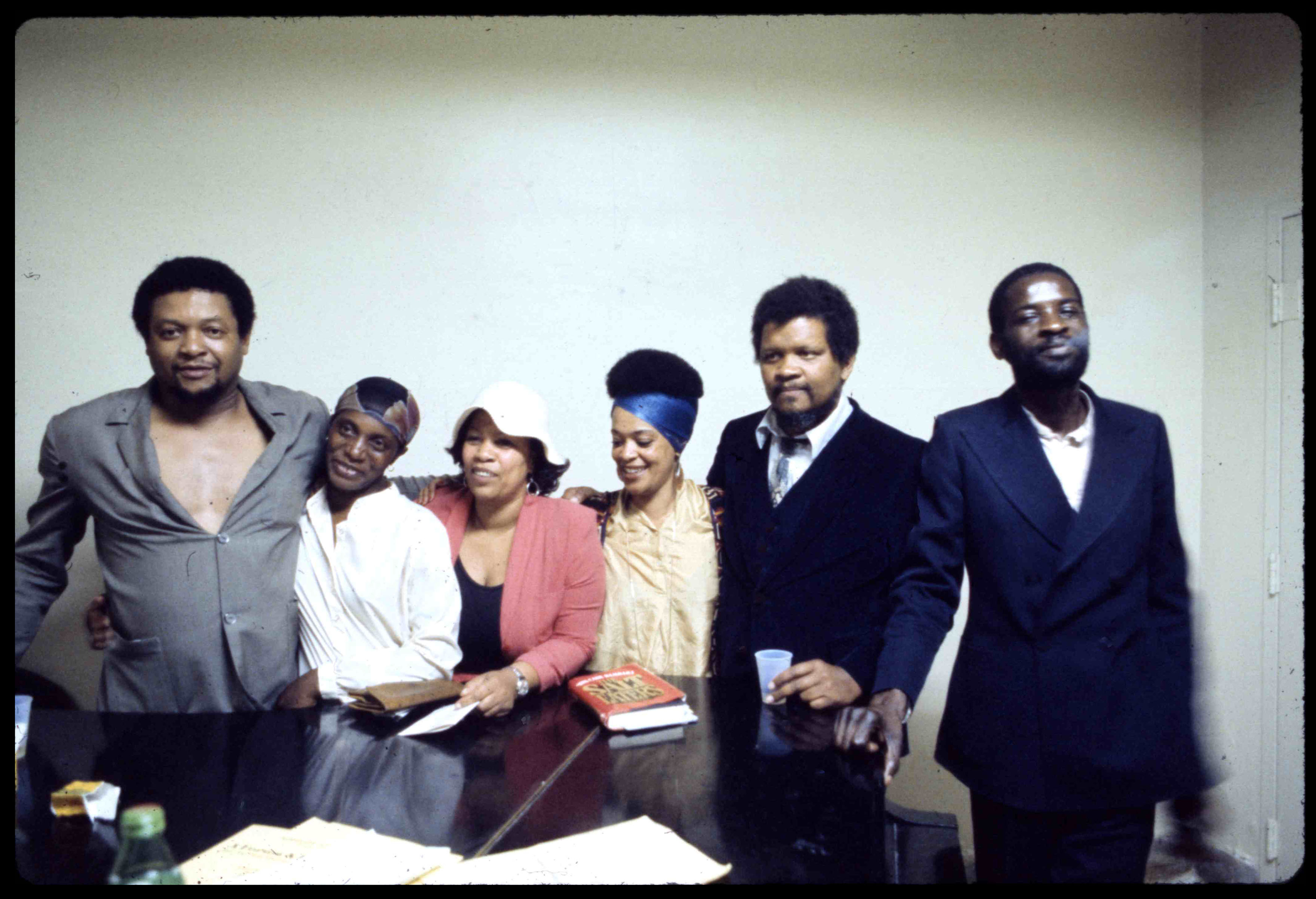
    Portrait of, from left, American poet Quincy Troupe, literary executor and writer Gloria Karefa-Smart (sister of author James Baldwin), authors Toni Morrison and Toni Cade Bambara (1939 – 1995), poet Ishmael Reed, and Nigerian critic and journalist Chinweizu Ibekwe at an unspecified event, 1972.Anthony Barboza / Getty Images

    A Philly legend on film

    Toni Cade Bambara was a legend. But more importantly, she was a Philly legend.

    Born and raised in Harlem, having studied theater in Florence and Paris, she taught in Atlanta before moving to the city in 1986. The Black Woman, an anthology she edited, published in 1970. That collection of writing is largely credited for introducing readers to the likes of Alice Walker, Audre Lorde, and Nikki Giovanni. Bambara was a filmmaker, academic, and activist but she was also a world builder; she built worlds with her ideas and then invited people to partake and wander in them. Wander and wonder.

    After reading her 1980 novel Salt Eaters in college, I wrote out her words “All cocoons are temporary and disappear” on a piece of paper that I stuck above my writing desk.

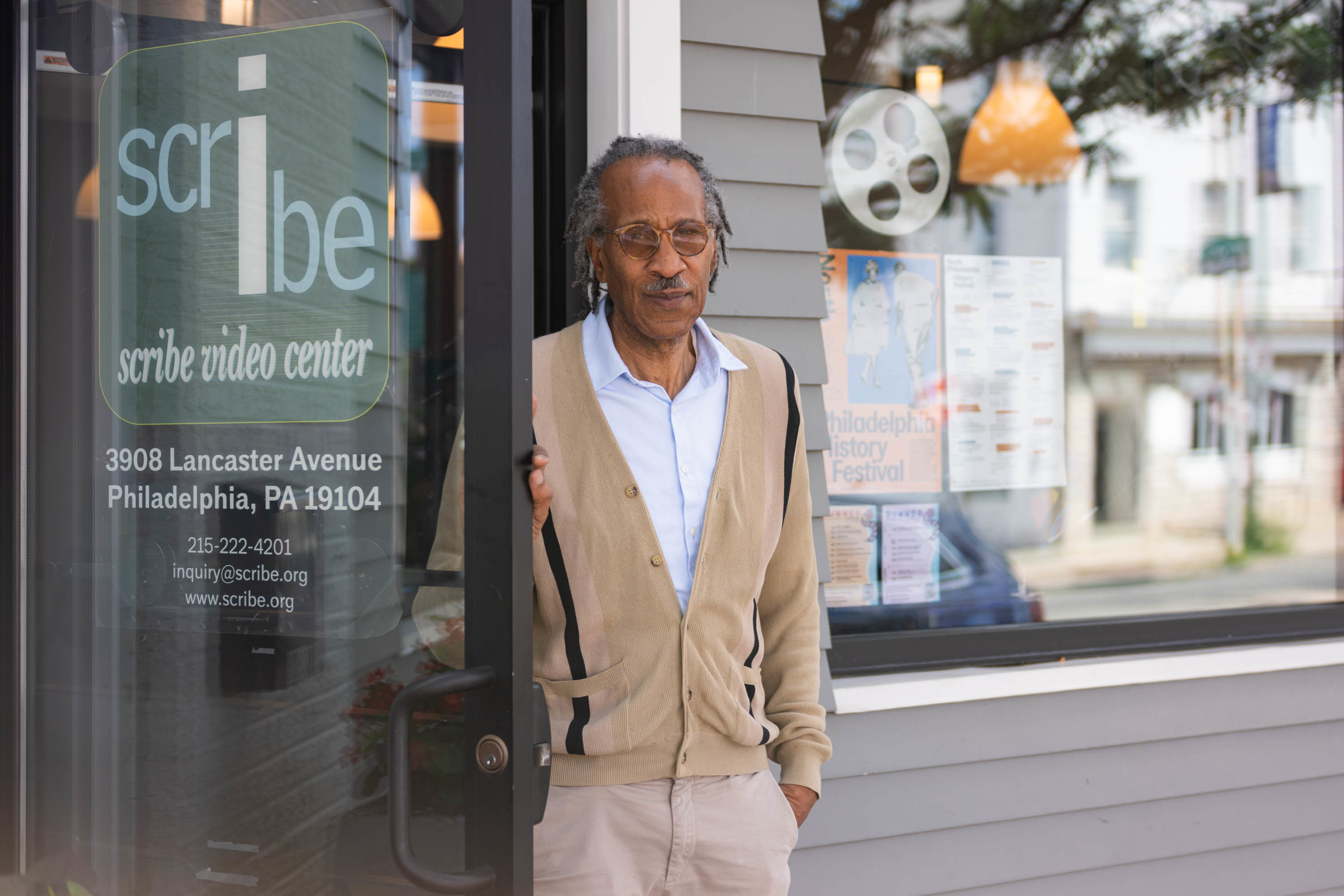
    In Philadelphia, Bambara made friends with another Philly legend: Louis Massiah, the founder of West Philly’s Scribe Video Center. Together, Massiah and Bambara made the 1986 documentary, The Bombing of Osage Avenue, about the MOVE bombing, and then 1996’s W.E.B. Du Bois: A Biography in Four Voices.

    Documentary filmmaker and principal organizer of the North Philadelphia History Festival Louis Massiah poses for a portrait at Scribe Video Center in West Philadelphia on Wednesday, July 23, 2025.Kaiden J. Yu / Staff Photographer

    Thirty years after Bambara’s death in 1995, Massiah’s film TCB — The Toni Cade Bambara School of Organizing premiered at the BlackStar Festival. The documentary is structured like a syllabus and is a lesson in organizing, creating, and living from Bambara herself. It chronicles her life, tells us what she can still teach us today, and brings together the galaxy of legends she called friends: Toni Morrison, Nikki Finney, Sonia Sánchez.

    TCB plays as part of cinéSPEAK’s Under the Stars Film Festival on June 19 under the open night sky in Clark Park, not too far from Scribe, where Bambara and Massiah together wrote stories that continue to teach us about the many fault lines running through our world and lives.

    “TCB — The Toni Cade Bambara School of Organizing” plays June 19, 9 p.m., at Clark Park, 4300-4398 Baltimore Ave., cinespeak.eventive.org

    — Bedatri D. Choudhury

    Ahmir “Questlove” Thompson plays the drums during The Roots Picnic at the Mann in Fairmount Park on Sunday, June 2, 2024.Elizabeth Robertson / Staff Photographer

    Questlove gives Earth, Wind & Fire its flowers

    I learned how to do the two-step to Earth, Wind & Fire’s hits like “September,” “Groove Tonight,” and “Shining Star.” In Afro-puffs and bell-bottoms trimmed in 1970s rickrack, my dance moves were clumsy. In my family’s white tiled kitchen, I practiced as the familiar voices of lead singers Philip Bailey and Maurice White crooned from my mom’s AM radio. Earth, Wind & Fire was like McDonald’s French fries and Sesame Street. I loved them.

    So when Ahmir “Questlove” Thompson’s trippy documentary on the R&B group that I fondly call “the elements” aired on HBO recently, I tuned in.

    I was pleased with what I saw. The two-hour Earth, Wind & Fire (To Be Celestial vs That’s the Weight of the World) was more than a nostalgic look back; it was an insightful look at the life of founder Maurice White. White was anything but transparent to the world, except when he was making music. That is where he put his emotion. That is why the band’s music spoke to us.

    White meditated. He had faith and mantras. He poured what he learned into the making of iconic tunes.

    Through interviews with living bandmates, Thompson, who directed the film, gives us a peek into White’s childhood. We see White fall, get up, and fall again, and spend way too much money on the group’s spacey costumes. White was fearless and Earth, Wind & Fire, iconic. And my feet moved — and still do — with syncopated joy.

    “Earth, Wind & Fire (To Be Celestial vs That’s the Weight of the World)” is streaming on HBO.

    — Elizabeth Wellington

  • See it, hear it, feel it: All the Philly art we loved this week

    See it, hear it, feel it: All the Philly art we loved this week

    A very Philly charm bracelet

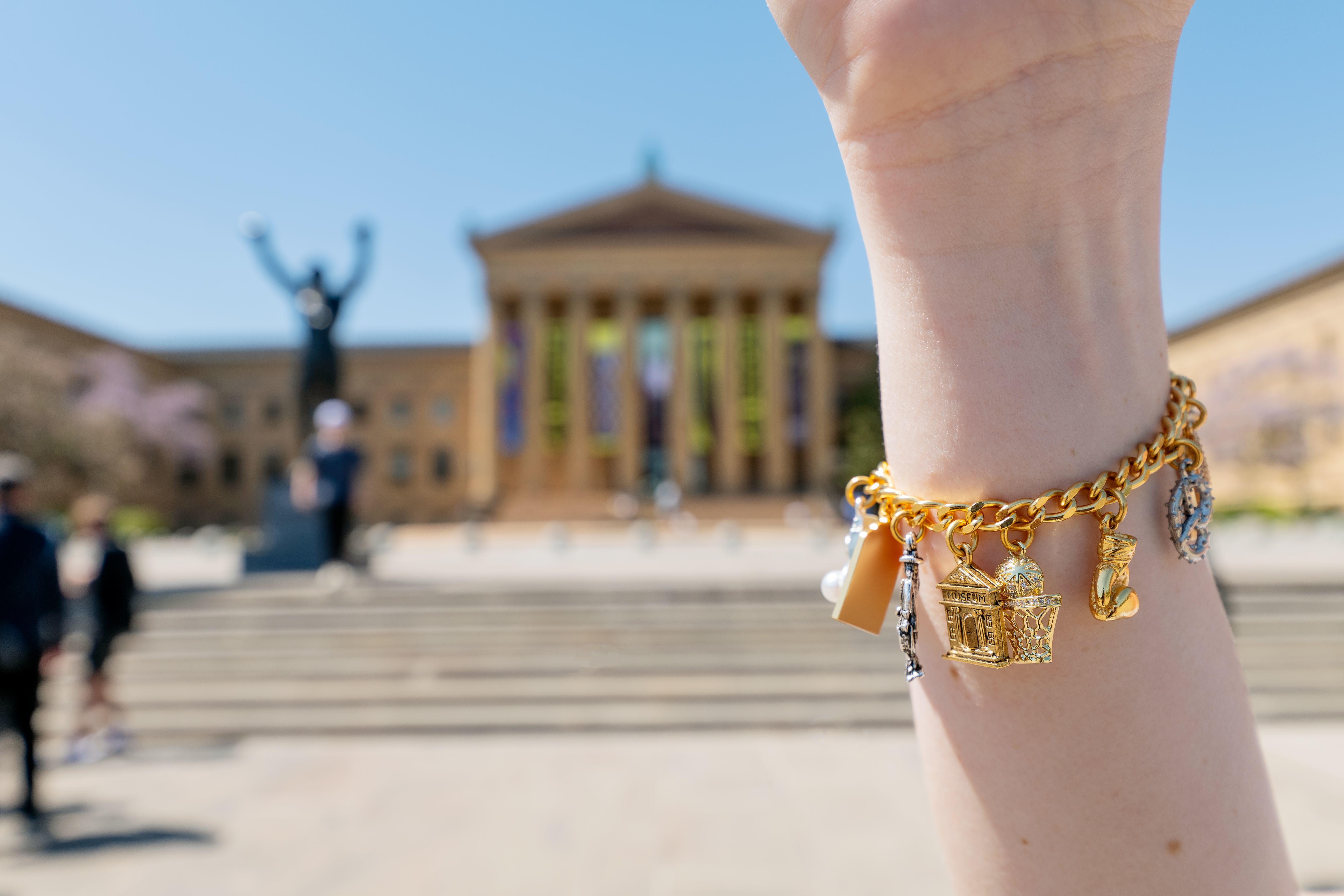
    My John Wind charm bracelet featuring a salty soft pretzel, the LOVE statue, and a nattily dressed William Penn is one of my favorite pieces of Philly-centric jewelry.

    In honor of our nation’s 250th birthday, Wind is giving the charms some more brotherly love. A proud Philadelphian, Wind has partnered with the Philadelphia Visitor Center for a six-piece commemorative jewelry collection featuring four necklaces, one bracelet, and a key chain/bag fob.

    A commemorative John Wind charm bracelet available at the Philadelphia Visitor Center in honor of America’s 250th birthday.Nicole Vassallo for the Philadelphia Visitor Center

    The soft pretzel, the LOVE statue, and William Penn remain a part of the jeweled tableau, and Wind has added a few knickknacks to the Semiquincentennial mix, like a boxing glove as a shout-out to Rocky; a soccer ball for World Cup afficionados, a star with red, white, and blue stripes for patriots, and a Liberty Bell.

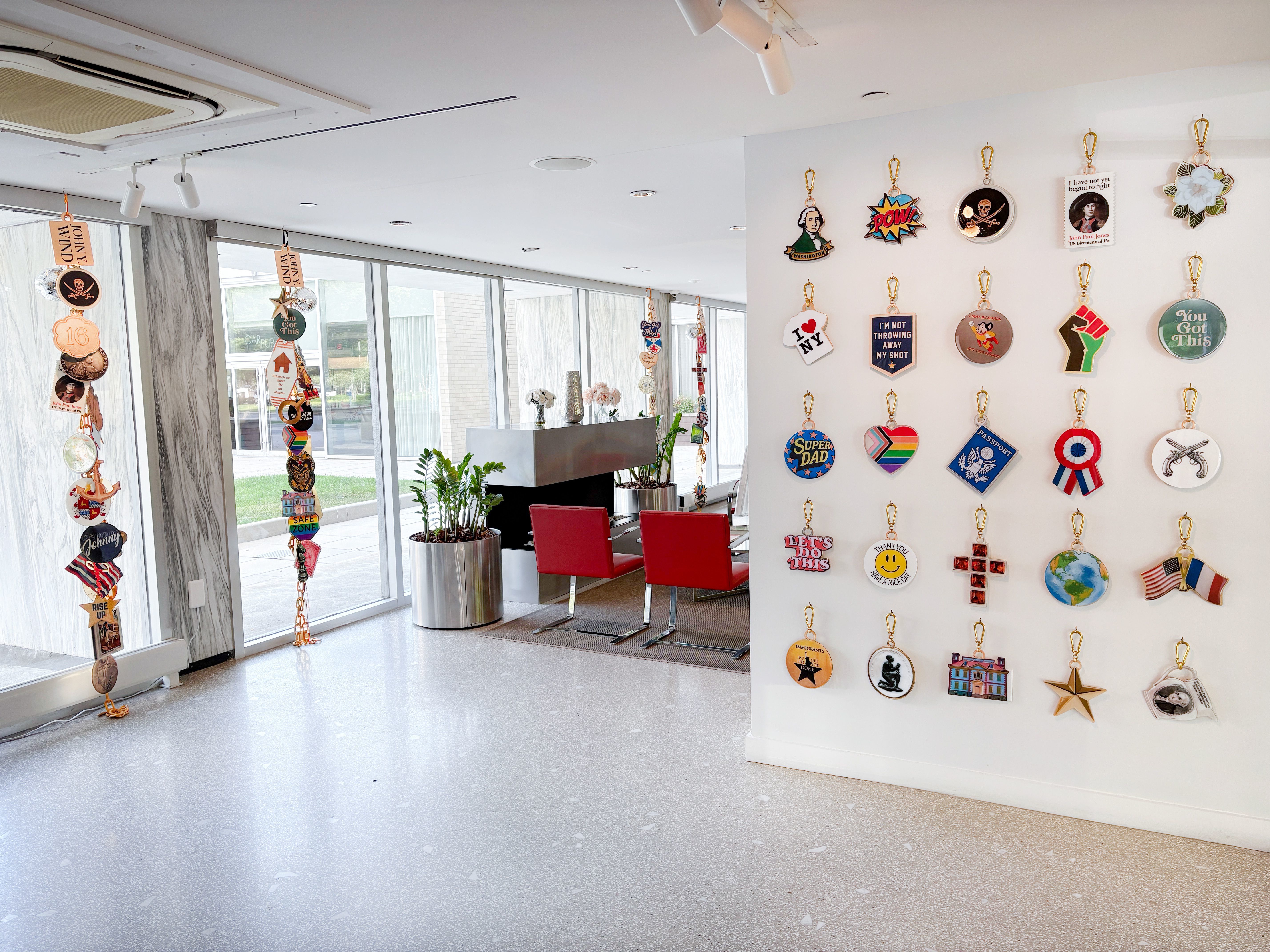
    Wind, who has been making charm jewelry since he started his business in the 1980s, has turned some of his tiny amulets into giant pieces of public art.

    John Wind’s exhibition at Park Towne Place, a collaboration between the Philadelphia artist and InLiquid.John Wind

    Earlier in the week, Wind unveiled an installation of Philadelphia, patriotic, and social justice charms as wall art at Park Towne Place. The show, “Charm Offensive @ Reilly Memorial” will be up through Oct. 6. It is a joint project between Wind, InLiquid Art, and Park Towne Place. All of the wall charms are for sale at $150 each.

    The John Wind x Philadelphia Visitor Center Collection is available at select Philadelphia Visitor Center locations and at johnwind.com. Prices range from $48 for the key chain/bag fob to $108 for the necklace.

    — Elizabeth Wellington

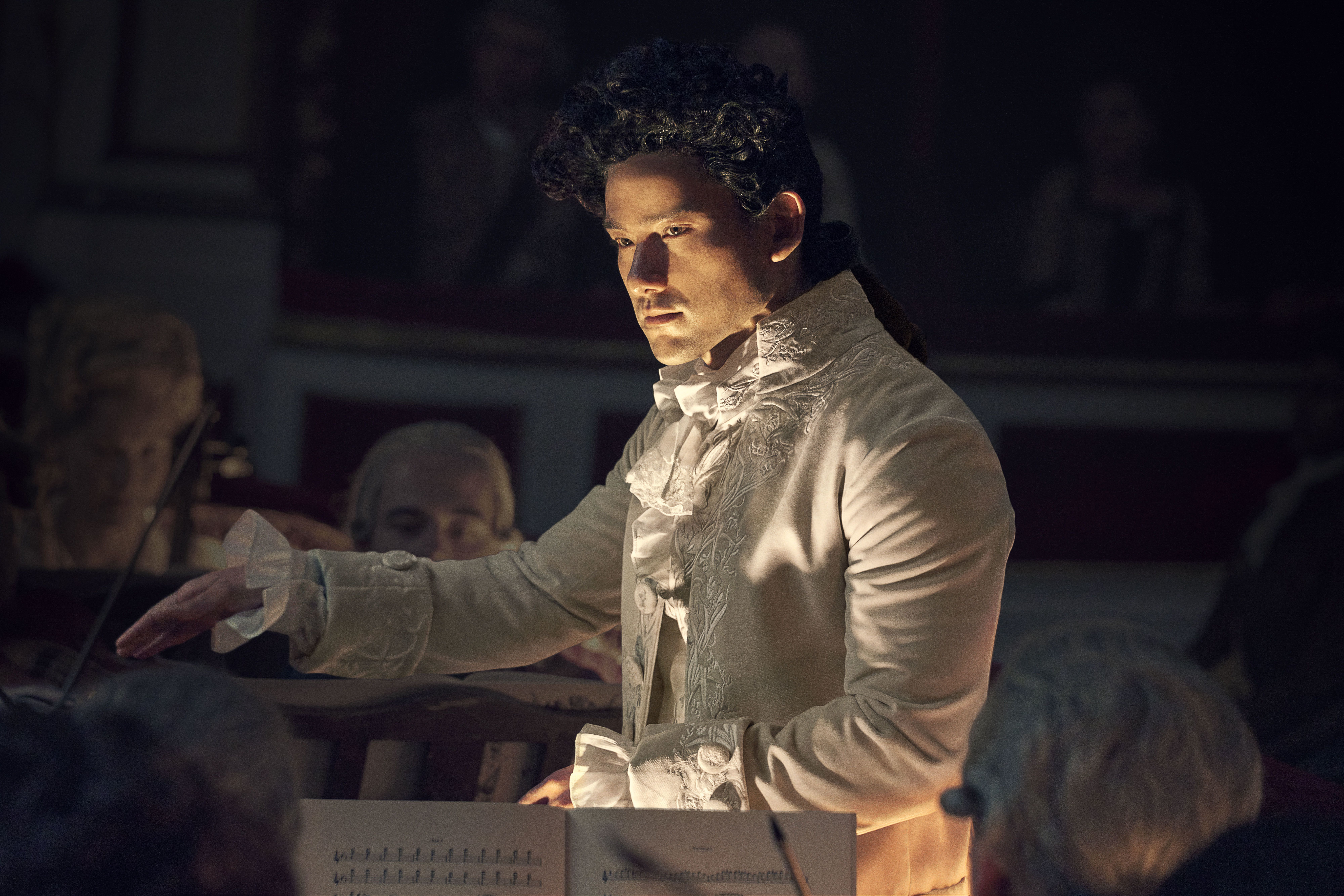
    Will Sharpe as Mozart in “Amadeus,” the miniseries on Starz.Courtesy Starz

    A new, hunky ‘Amadeus’

    We’ll leave the notes on Amadeus, now streaming on Starz, to the film and TV critics — mostly. The miniseries based on Peter Shaffer’s play about Mozart and his less-than-genius jealous rival Antonio Salieri doesn’t have half the atmosphere or humor of the 1984 Milos Forman film.

    That said, a hunky Mozart (Will Sharpe) seems like the update our age demands.

    But we can offer a few notes on, well, the notes — the ones written by Mozart. Snippets of his music woven through the show last only a few seconds each, leaving a thirst to hear the rest of the musical works in recordings.

    Mozart wrote only two piano concertos in minor keys, and one of them, the dark D Minor, K. 466, is heard in the opening credits. Annie Fischer’s 1959 recording with Adrian Boult and the Philharmonia Orchestra is exactly the storm you want.

    Three pieces flicker by in Amadeus in the scene where Mozart’s wife, Constanze, shares Mozart’s scores with Salieri — The Sinfonia Concertante for Violin, Viola and Orchestra, ‘Gran Partita’ Serenade, and the Symphony No. 25. Each one of such beauty and invention there’s no mystery about why Salieri was undone by envy. A fun recording rabbit hole awaits listeners in each: the discovery that a particular interpretation can fundamentally alter the character of a piece.

    A number of Mozart piano sonatas find their way into the miniseries, and Walter Gieseking’s recordings of crystalline tone and exquisite phrasing explain the kind of truths that are revealed when a composer finds his or her ideal interpreter. A form of genius, really.

    “Amadeus” is streaming on Starz.

    — Peter Dobrin

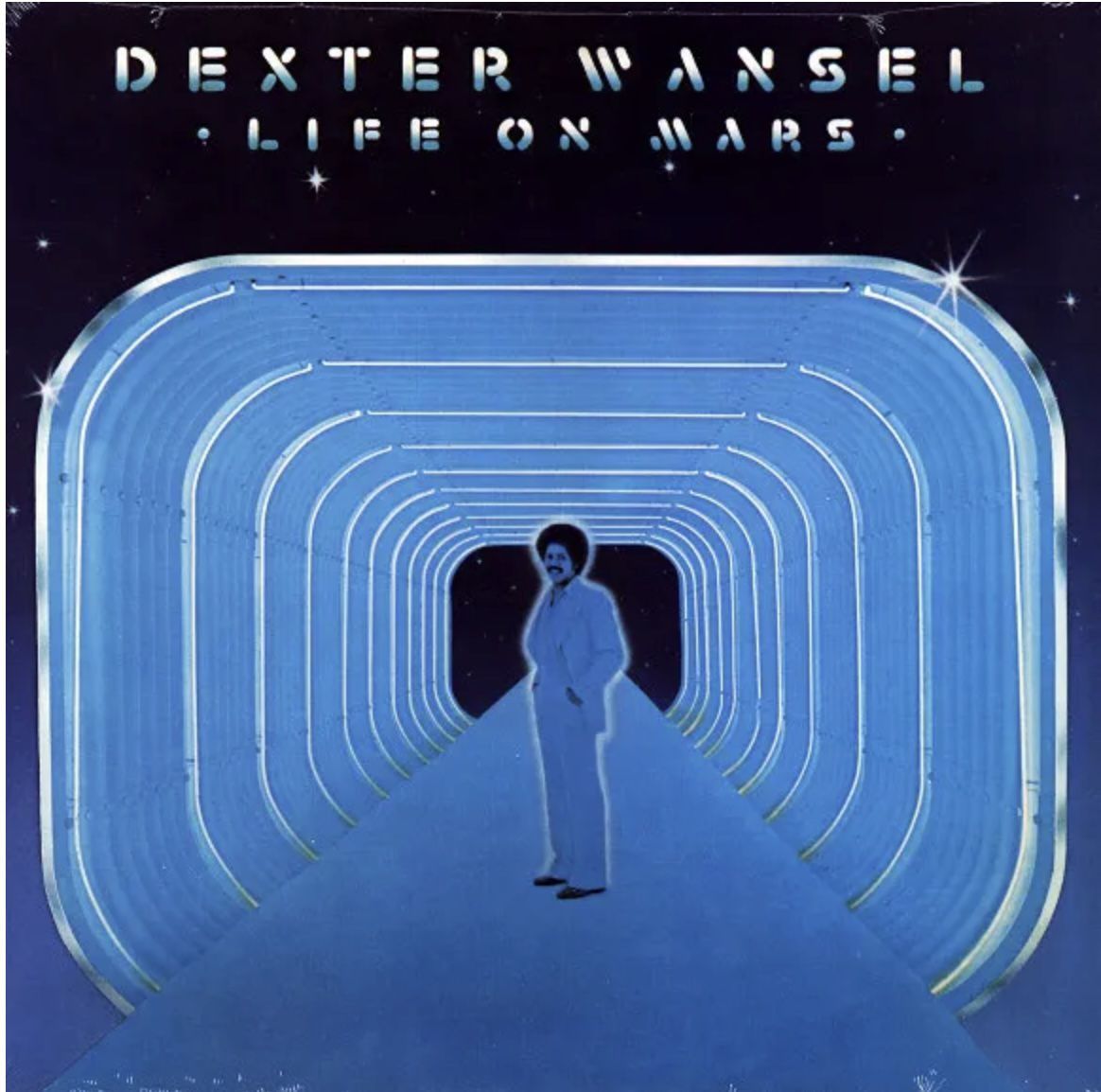
    The cover image to Dexter Wansel’s 1976 album “Life on Mars.”Philadelphia International Records

    Remembering a Philly jazz legend

    Dexter Wansel was the player par excellence during the latter stage of Philadelphia International Records run of excellence in the late 1970s and 1980s. He wrote and produced for the Jacksons, Patti LaBelle, Teddy Pendergrass, the Jones Girls, and more.

    As Kenny Gamble and Leon Huff said in a statement after Wansel’s death on May 31 at 75, he “brought a new age sound” to PIR. “Dexter’s synthesizer and keyboard sounds were iconic.”

    As great a behind-the-scenes player as he was, Wansel was also a solo artist whose music pushed PIR forward, blending old school R&B with futuristic sounds and the kinds of sci-fi adventures that were au courant in the ’70s, with the work of artists like David Bowie and George Clinton.

    Wansel’s 1976 space-funk album Life on Mars is the place to start looking into his legacy. It was partly inspired by Bowie’s 1971 song “Life on Mars,” but Wansel’s track of the same name is a different song. His use of the ARP 2600 synth was innovative, and Wansel expanded the interstellar theme with song titles like “Stargazer” and “Rings of Saturn.”

    But the album, which points forward the silky soul Quiet Storm format, remains connected to funky, earthly pleasures and structured songwriting. “One Million Miles from the Ground” is actually about lovemaking, not planet exploring. Life on Mars also opens with a tribute to Gamble, Wansel’s PIR employer, with a horn-powered instrumental called “A Prophet Named K.G.”

    On June 24, as part of Art Philly, DJ-producer King Britt will honor Wansel and Life on Mars with a live performance at Johnny Brenda’s as part of his weeklong “Blacktronika: Philadelphia Now and Then” event series. The Blacktronika Icon Award that was planned to be presented to Wansel at the show will be given posthumously.

    “Blacktronika: Philadelphia Now and Then” at Johnny Brenda’s, 1201 N. Frankford Ave., June 23-29. johnnybrendas.com

    — Dan DeLuca
    A hotel full of art

    I know where the cool kids were Wednesday night — crowding into Yowie for the launch of Elsewhere, an art fair produced by Blah Blah Gallery and hosted within the rooms of the boutique hotel.

    The premise: a blend of Philly and international artists taking over hotel rooms and inviting guests into their suites. The result was three floors of contemporary art curated by some of today’s most exciting, thoughtful, and sustainable artists and galleries from around the world.
    Qualeasha Wood in her apartment in Philly in 2023 after making the move from New York City.Alejandro A. Alvarez / Staff Photographer

    There’s something extremely approachable and exciting about getting to hear about art while sitting on a couch with a gallery curator, sipping white wine together, being greeted by a piece of pop art inside a bathroom shower, or a Tadashi Adamson sculpture of toast with eyes staged on the hotel room’s kitchen counter.

    I also spotted pieces by Philly-tied textile artist Qualeasha Wood in the hallway of an area on the second floor curated by DARLA out of New York. We love to see it.

    Elsewhere Fair closed June 6.

    — Emily Bloch

    Tina Fey as Kate, Marco Calvani center) as Claude, and Colman Domingo as Danny in Season 2 of “The Four Seasons.”Emily V. Aragones/Netflix

    Shore laughs

    It’s always a good time when Philly stars collab for big projects, and that’s especially true with Tina Fey and Colman Domingo in the second season of their Netflix comedy, The Four Seasons. As a cocreator and writer of the show, Fey decided that the show’s cast of vacationing couples should take a trip to the Jersey Shore, where she used to visit for many summers as a kid.

    Those two episodes — filmed in Ocean Grove and Point Pleasant Beach — are some of the funniest in the season, and offer a chance for Fey’s and Domingo’s characters (Kate and Danny) to bond as they dream of opening a B&B.

    One part that really had me cackling was when Will Forte, who plays Fey’s husband, makes a beach friend. Kate knows he’s been searching for a guy friend to talk sports or play games. There’s a moment when Kate and Danny see the two dudes talking and they start making fun of what topics they might be discussing (the Mets, TV sales, Gatorade flavors?) and then the camera cuts to the guys, who are actually talking about deep trauma and grief.

    It’s a sweet and authentic portrayal of the Shore that feels like an excellent way to start the summer. There are so many laughs in this season I’d argue it might be better than the first. Plus, not to give anything away, but there’s even a brief trip to Philadelphia in the final episode, complete with a Wawa shout-out.

    “The Four Seasons” is streaming on Netflix.

    — Rosa Cartagena