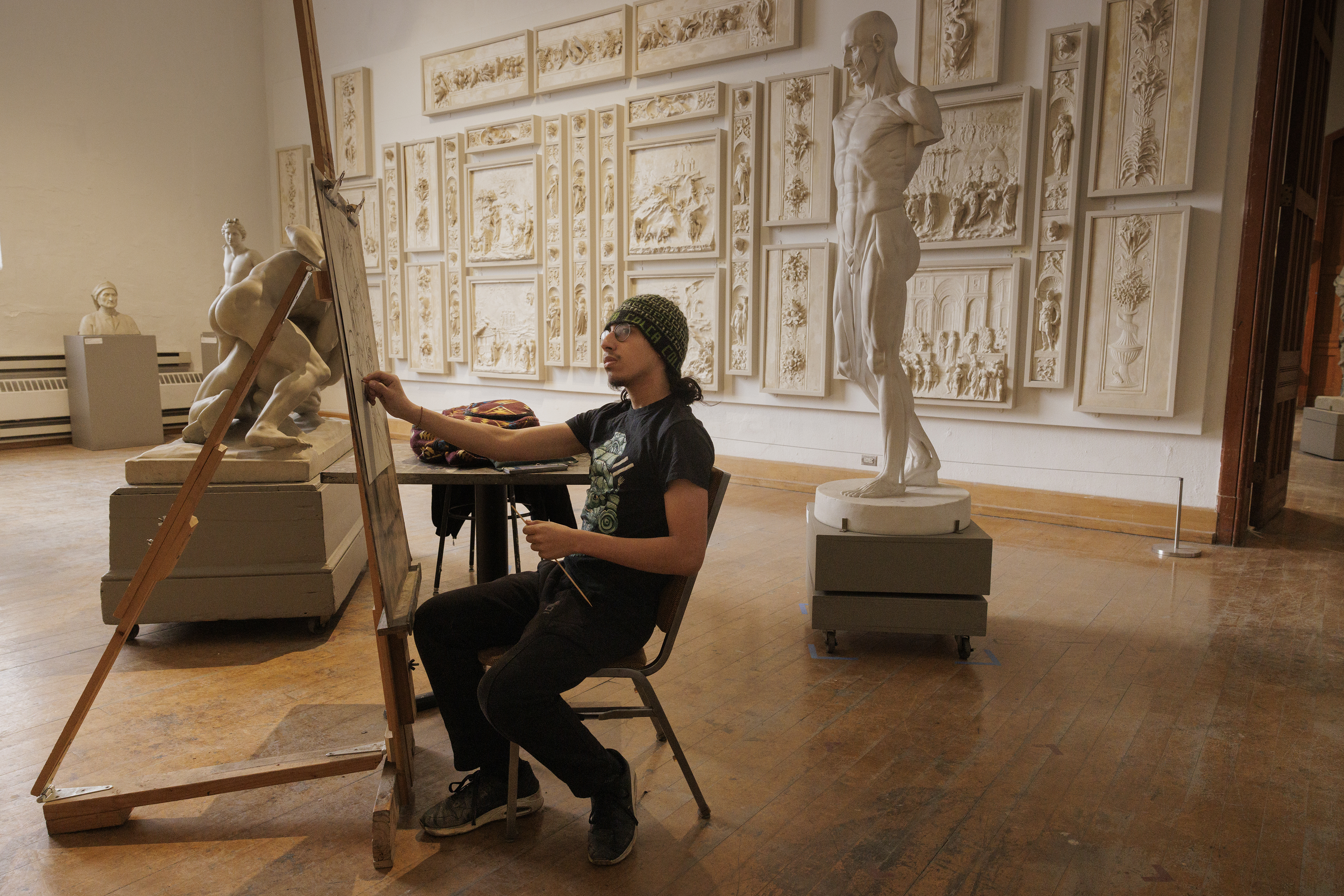
The historic Cast Hall at the Pennsylvania Academy of the Fine Arts isn’t typically open to the public because it’s a working studio reserved for PAFA students, but I recently had the chance to walk through the sun-drenched rooms and it was such a special experience.
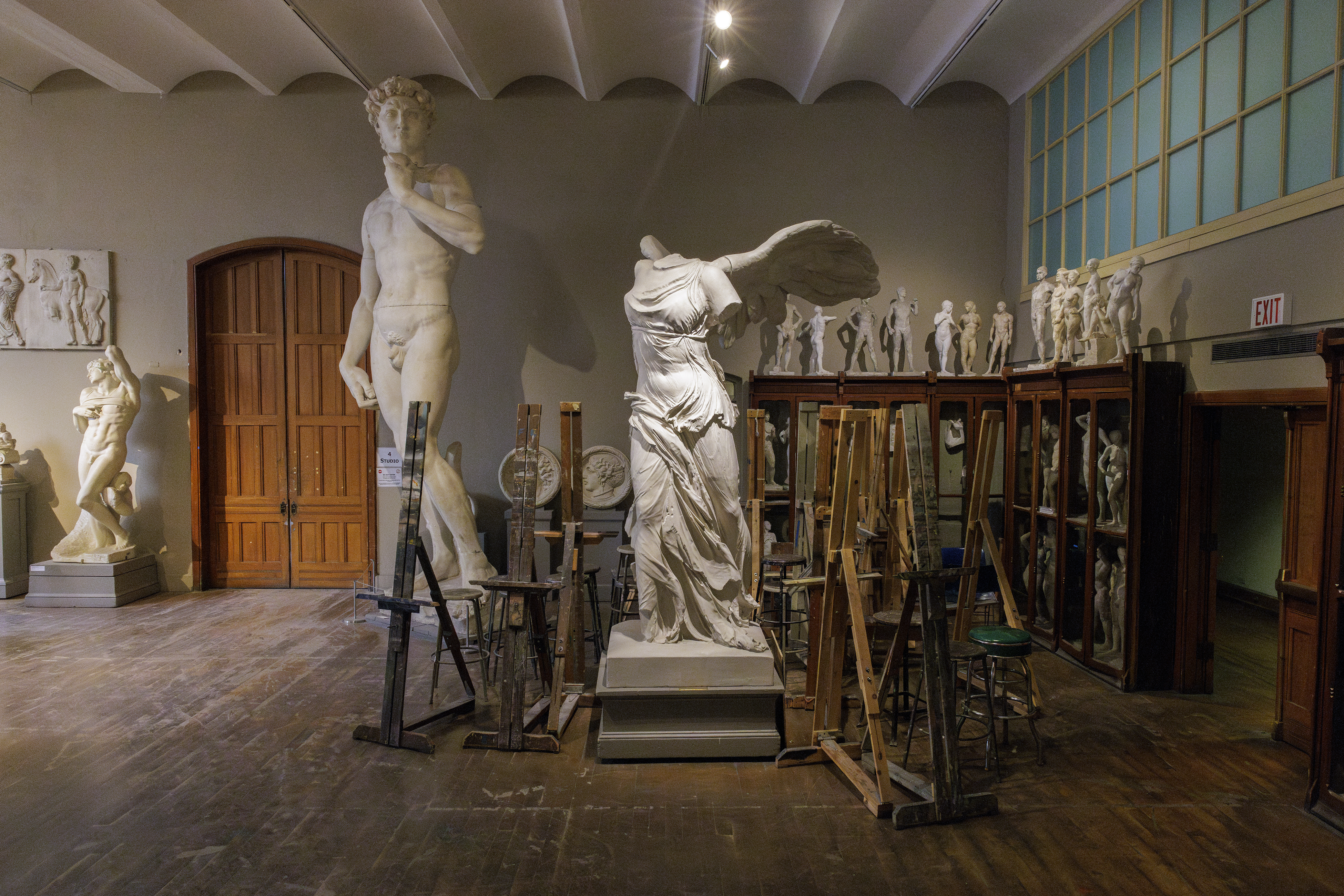
Inside, you are surrounded by legends: rare plaster casts, modeled after prominent ancient Greek and Roman sculptures. The 19th-century replicas are astounding to see up close and altogether. The hall is full of so many gems, some that tower above you, and others safely encased in cabinets; it holds more than 120 casts, which students draw as they learn their artistic fundamentals.
Many are familiar classics, like the larger-than-life replica of Michelangelo’s David, weighing 3,000 pounds, and The Nike of Samothrace, the winged but headless deity that visitors to the Louvre (where the original work resides) might recall.
The hall is slightly reminiscent of the sculpture gallery of Mr. Darcy’s house in Pride and Prejudice (the Keira Knightley version, obviously), but much less polished, with easels strewn about — a delightful reminder that it’s still an active space of creation for burgeoning artists seeking inspiration.
A larger-than-life replica of Michelangelo’s “David” is among the treasures in Cast Hall at the Pennsylvania Academy of the Arts.Alejandro A. Alvarez / Staff Photographer
Thankfully, the Cast Hall isn’t entirely off-limits any more: This season, PAFA is opening the illustrious hall to the public for the first time in its history. As part of its new Fridays After 5 event series for the holidays, PAFA will invite visitors inside the Cast Hall on select nights in November and December, featuring artmaking activities, bites from local restaurants, and admission to see the monumental “Nation of Artists” exhibit.
PAFA hosts Fridays After 5 events on Nov. 27, Dec. 4, and Dec. 18 at the Historical Landmark Building, 118-128 N. Broad St., Philadelphia, 215-972-7600 or pafa.org.
— Rosa Cartagena
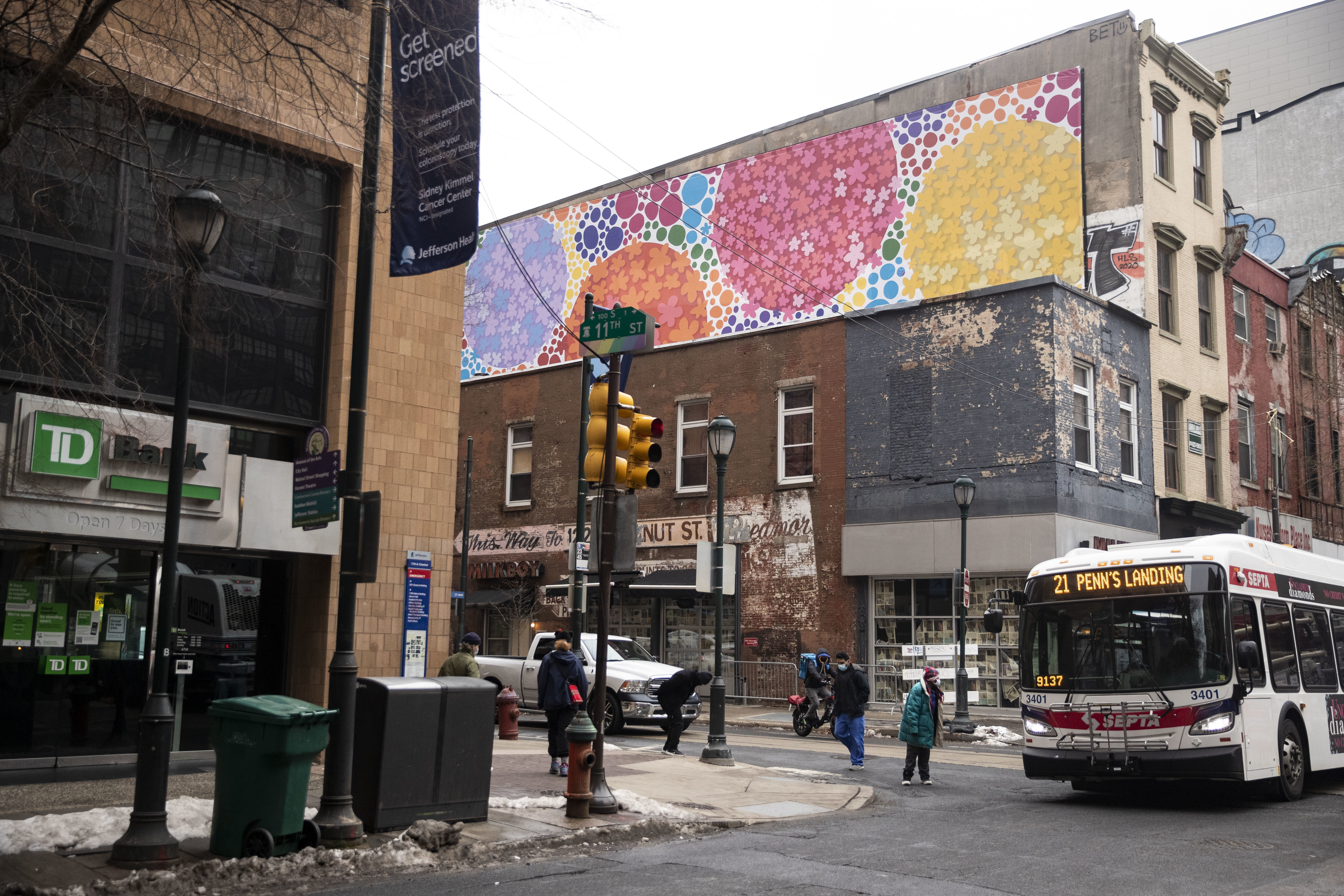
Michele Tremblay and Polly Apfelbaum’s mural “Floating Dogwood,” seen near the corner of 11th and Chestnut Streets on Feb. 9, 2021.MONICA HERNDON / Staff Photographer
A bouquet of a mural in Center City
In 2017, artist Michele Tremblay was in Center City’s Thomas Jefferson University Hospital, receiving treatment for leukemia. Her friend Christina Morin Graham visited her often and noticed Tremblay staring out of her window on the third floor oncology ward and looking at a dreary wall.
Outside on the street level, loud crowds popped in and out of the bars that line the street. Inside the hospital, patients like Tremblay took on a fight against a deadly disease aided by very little cheer. Since flowers were not allowed in the oncology ward, Morin Graham couldn’t even take flowers to lighten up her friend’s days even by a little.
Once out of the hospital, still weak and frail, Tremblay decided to paint a gift for those who, like her, looked out of their windows in the hospital, only to be greeted by a blank and ugly wall. She decided to paint a mural on the wall above MilkBoy, right across the oncology ward windows, on Morin Graham’s insistence. Tremblay decided to collaborate with artist Polly Apfelbaum on a mural that she hoped would add some joy to patients looking out while receiving cancer treatment.
The result was Floating Dogwood, a cluster of colorful circles filled with flowers that stands defiant in its brightness against the blank grayness of the wall behind it.
Tremblay died two years later, in 2022.
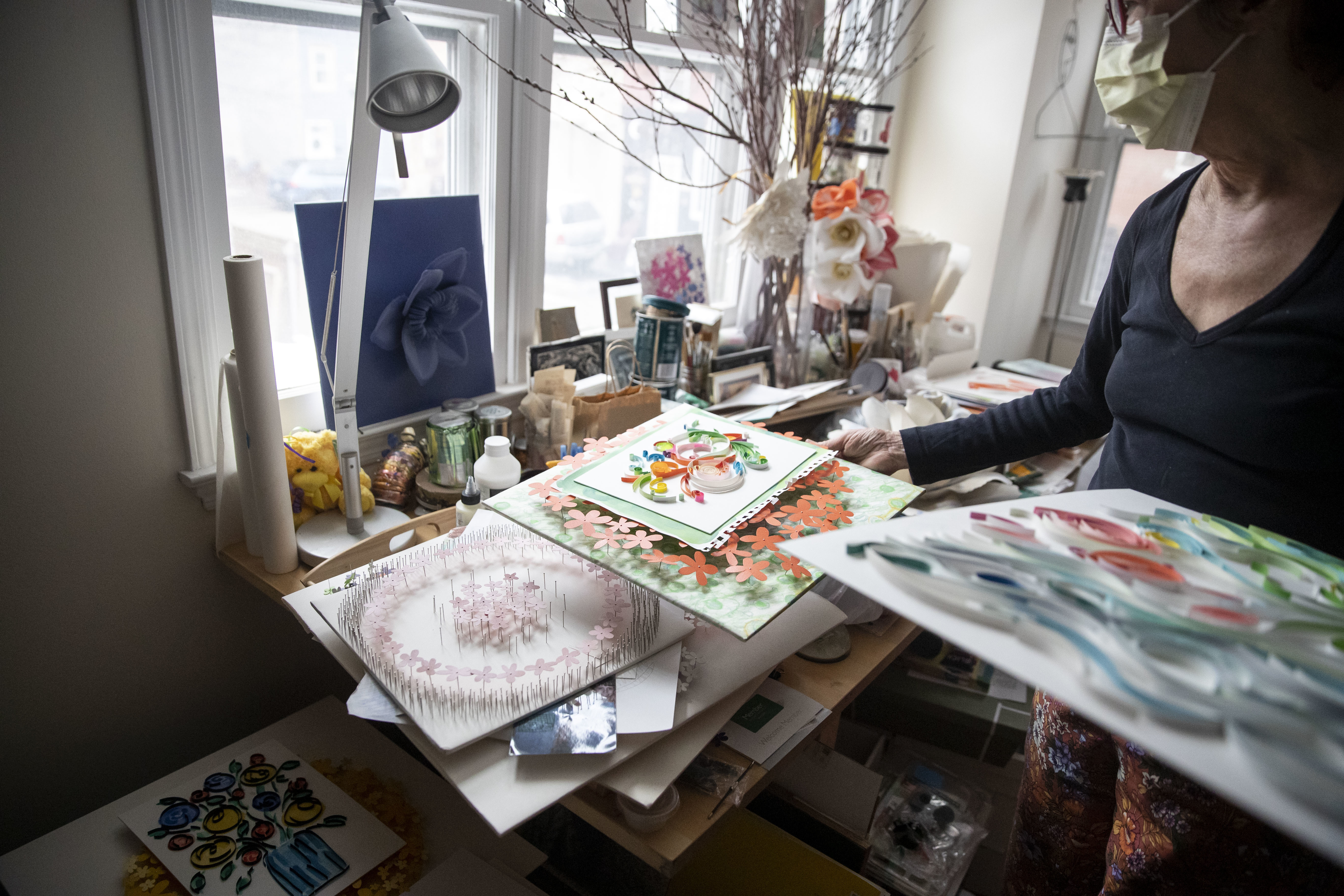
Michele Tremblay talks about some of her pieces at her home in Philadelphia on Feb. 9, 2021. Tremblay and Polly Apfelbaum created a mural, “Floating Dogwood,” that can be seen from inside Jefferson Hospital, where Tremblay was a patient.MONICA HERNDON / Staff Photographer
Jane Golden, the founder and former artistic director of Mural Arts, told me this story last summer, which I retold a friend while walking to a bar on Chestnut Street last week.
I thought of Tremblay whose art continues to touch lives of strangers she’ll never meet. And of the people inside the hospital, praying that they can all soon be out and be surrounded by real flowers in the comfort of their homes.
“Floating Dogwood” is situated at 1102 Chestnut St.
— Bedatri D. Choudhury
Philly fashion history featuring special top hats
Events spotlighting Philadelphia’s rich fashion history are among my favorites to cover because they lay out our nation’s story in a sartorial timeline of rich fabrics, lace, bustles, and top hats.
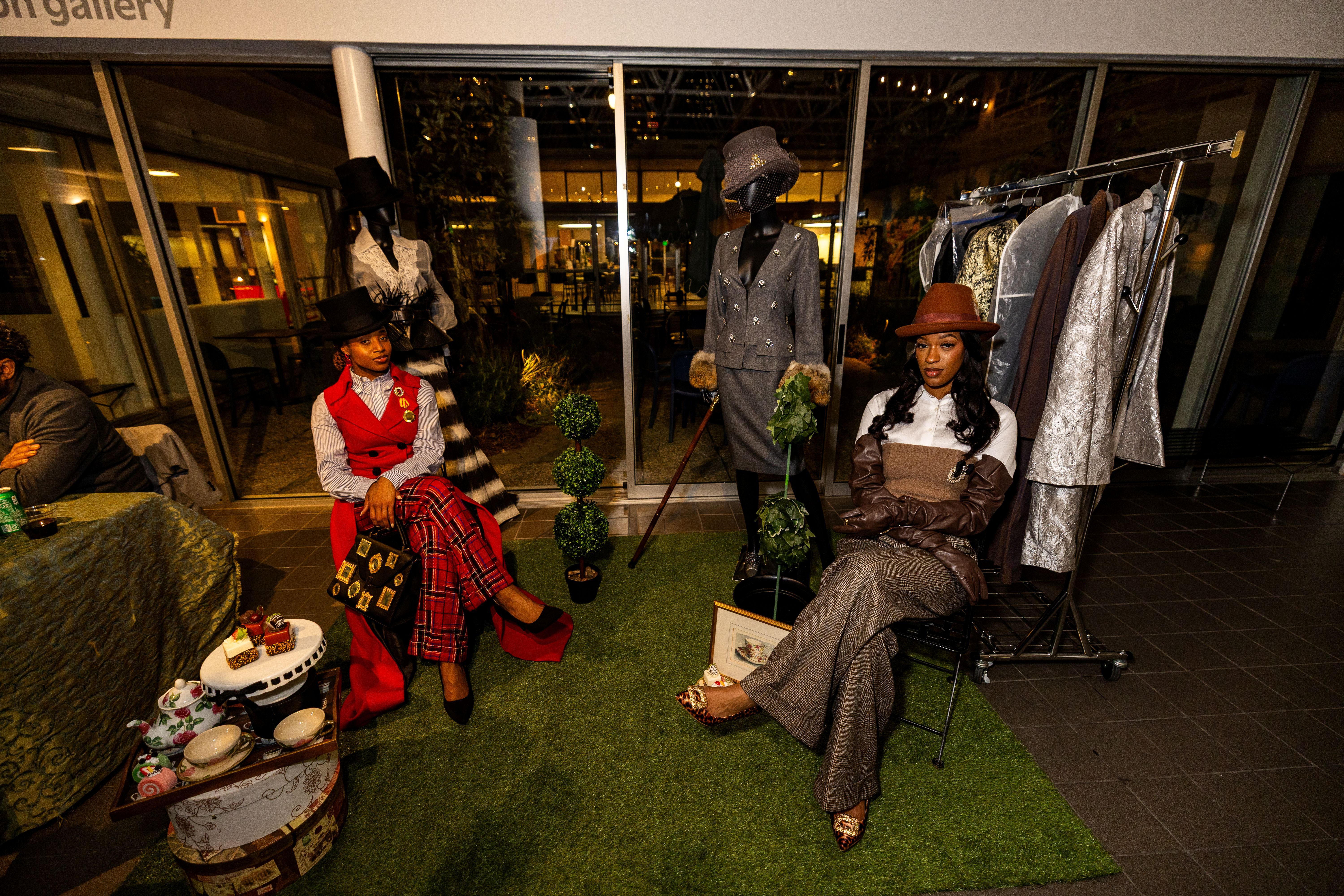
Kevin Love’s collection of corseted coats, tailored jackets, and top hats inspired by the African American elite of 19th-century Philadelphia.Anthony Toscario
The exhibition, sponsored and held at Moore College of Art and Design, was a contemporary nod to Philly’s fashion past.
Five designers showed their collections: Kevin Love unveiled a group of corseted dresses, tailored jackets, and top hats inspired by the African American elite of 19th-century Philadelphia.
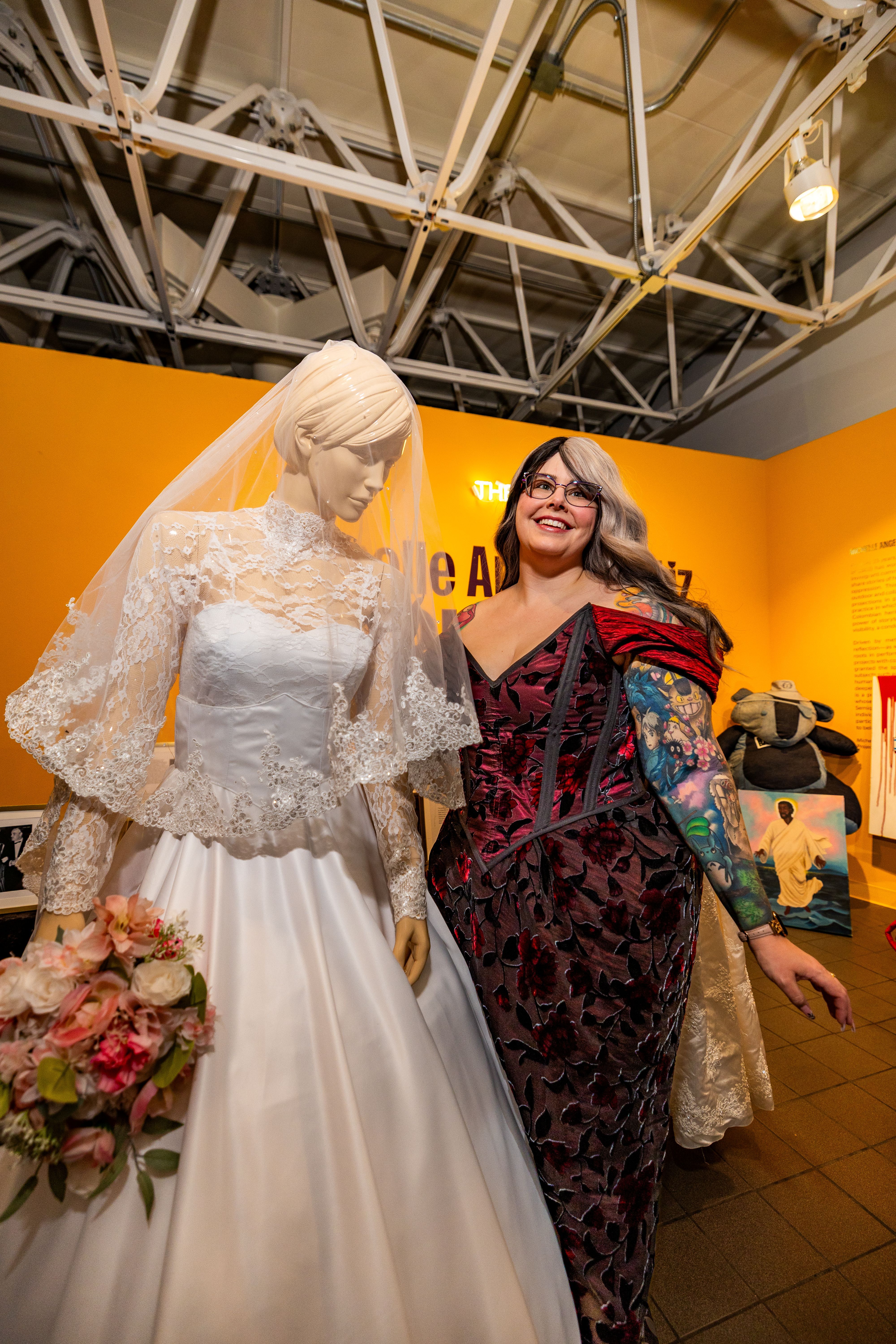
Katelyn Law Sarver with a wedding gown she designed inspired by Princess Grace Kelly. Spencer was one of half dozen creators who presented collections inspired by historical eras at a Moore College event sponsored by the Philadelphia chapter of Fashion Group International.Anthony Toscario
Katelyn Law Sarver — a Virginia-based designer who debuted her evening wear at Philly Fashion Week — exhibited wedding and red carpet gowns fit for Princess Grace Kelly of Monaco, overflowing with 1950s bell skirts and glamour.
Conrad Booker did tassels, glitter, and ’70s punk and disco. While Philly based labels Jeantrix and Blue Bamboo celebrated hip-hop and Neo Soul with graffiti-covered streetwear.
“FGI Philadelphia created The Eras of Fashion to celebrate and spotlight the impact of Philadelphia’s design community on pop-culture,” said Laura Mazurek, a spokeswoman for the Philadelphia’s FGI chapter. The exhibit was a one-night-only affair that attracted the fashion glitterati for three hours of networking and noshing.
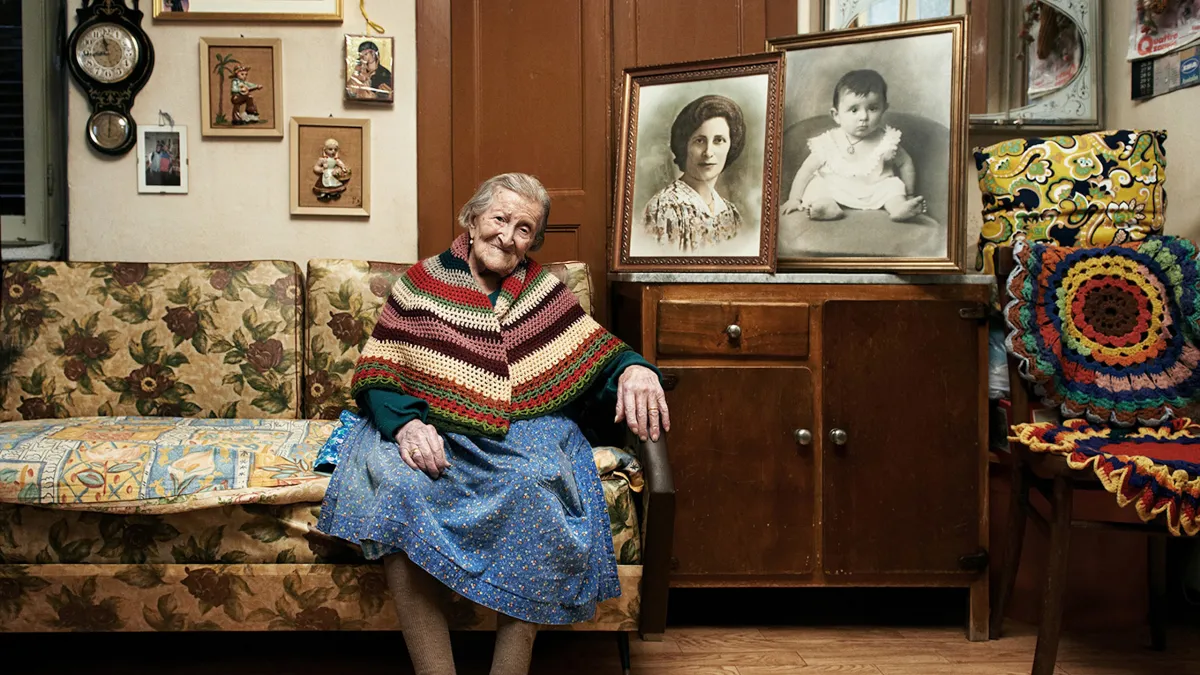
For 10 years, filmmaker Sam Green decided to meet each person who held the Guinness Book of World Records’ title of oldest person alive. The film he initially wanted to make would go from one oldest person to another, but the film he ended up with, The Oldest Person in the World, becomes so much more.
Green’s son Atlas is born and Green is diagnosed with multiple myeloma during the making of this film, which he started shortly after his brother’s death from suicide. What emerges is an endearing meditation on life and mortality. The oldest person in the world, he says, is someone you only meet by chance and not know for long, and in that liminal time, they make you see a glimpse of a future you may not get to see for yourself.
When Green goes to film the birthday party for Susannah Mushatt Jones’ 114th birthday in Brooklyn, she falls asleep right by her cake and doesn’t wake up for the celebrations. Green travels the world meeting the oldest people, all speaking in different shades of lucidity, while we witness Atlas growing up. The film ultimately becomes a fascinating timekeeper. It reminds us simultaneously of the time we have left on this earth and the time we are constantly and inevitably losing.
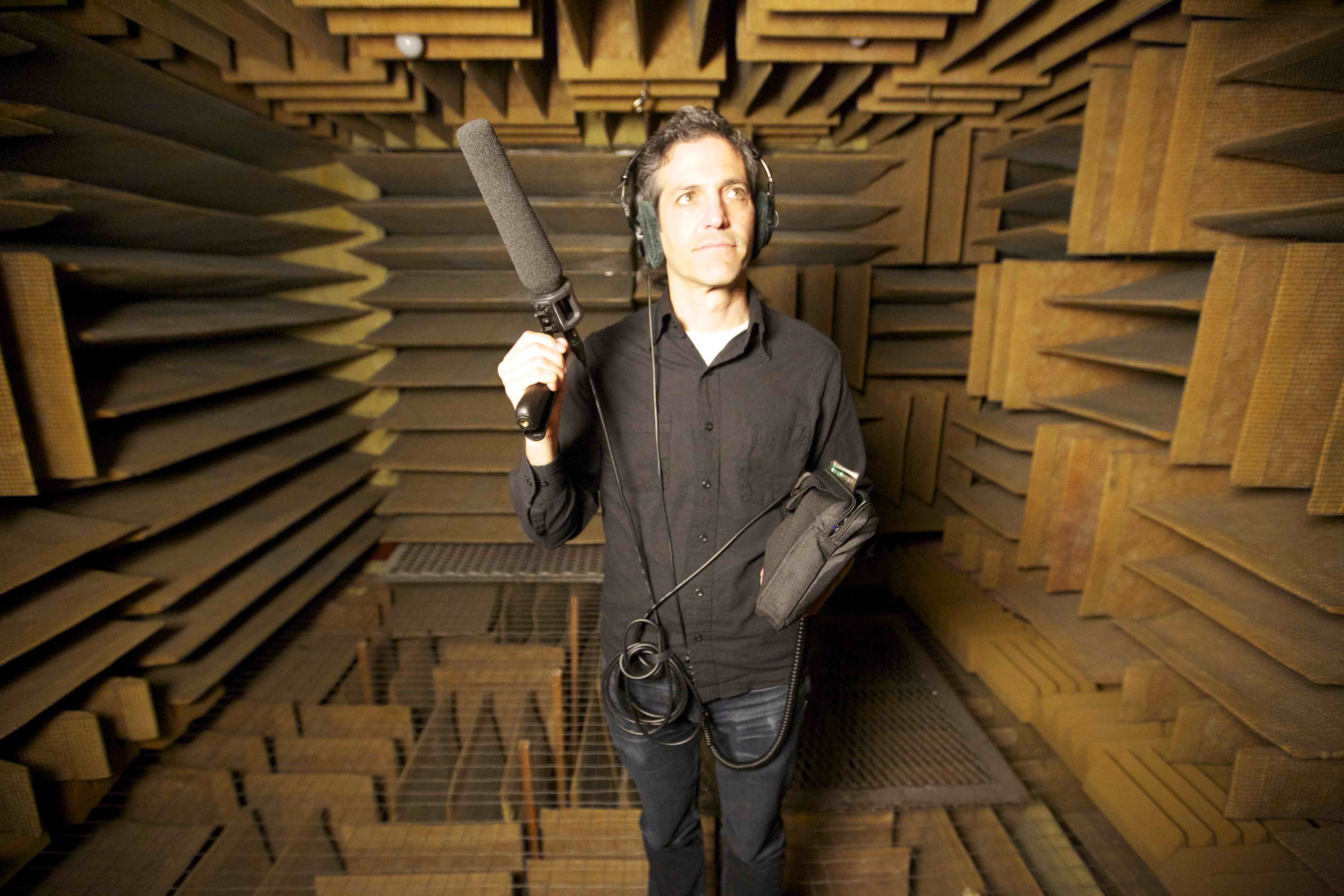
Sam Green records the sounds that make up our “soundworld” for “32 Sounds.”Sam Green
Green, whose32 Soundsis one of my favorite documentary experiences (for those who have witnessed it, it’s more than just a film), is a filmmaker with a distinct style that doesn’t shy away from testing the limits of what a documentary can do. Oldest Person’s next Philadelphia screening is programmed by Yoni Brook, another filmmaker whose work I really admire. You may know him for working on Philly DA, on which he was the cinematographer and producer. Last year’s Holding Liat, on which Brook is a producer, is also a great and urgent watch.
“The Oldest Person in the World” plays Nov. 17, 7 p.m., Pen and Pencil Club, 1522 Latimer St., Phila. penandpencil.org. Free and open to public.
— Bedatri D. Choudhury
Wesley Stace and his band the English UK play an afternoon show at 118 North in Wayne on Saturday.Ilya Mirman
A stylish new film noir-ish album from Wesley Stace
Wesley Stace became an American citizen this past July, having already been a Philadelphia citizen for 16 years.
So the Hastings, England-born songwriter, novelist, and “Cabinet of Wonders” impresario thought it was about time that his music started to absorb the sounds of the city he lives in.
That impact is felt on One Last Heist, Stace’s new album on Pravda Records that was recorded at Pete Rydberg’s Studio 1935 at the Bok Building in South Philly. Stace has a reputation as a folk-rock wordsmith who released over a dozen albums as John Wesley Harding — the title of a 1967 Bob Dylan album — before he started using his given name on Self-Titled in 2013.
But with 2021’s Late Style, Stace started setting his barbed, witty, and narratively sophisticated songs in more posh and polished settings, more suitable for a dinner jacket than a denim one. The musical breadth of that project was limited because it was largely recorded remotely during the pandemic.
On One Last Heist, Stace follows through with a record that swings more than any he’s ever made. The influence of Philly jazz organ greats such as Jimmy Smith and Shirley Scott is apparent, as is Stace’s abundant affection for the lushly orchestrated recordings on the CTI label, which he has been spinning in his guest DJ appearances at 48 Record Bar in Old City.
With the aid of veteran musicians like drummer Stephane San Juan (who’s played with Caetano Veloso and David Byrne) as well as longtime collaborator David Nagler, One Last Heist has a stylish film noir feel and the élan to pull off a subtle protest song such “I Say a Lot of Things,” as a Brazilian samba.
On Saturday, Stace and his backing band the English UK play a show on the Main Line in Wayne at the particularly civilized hour of 4 p.m. He can also be seen playing in a side gig on Dec. 10-11 fronting New Jersey power-pop garage rock band the Smithereens in Red Bank, N.J., and his next multigenre all-star “Cabinet of Wonders” variety show is at City Winery New York on Jan. 10.
Wesley Stace & the English UK at 4 p.m., at 118 North, 118 North Wayne Ave., Wayne, 118NorthWayne.com.
— Dan DeLuca
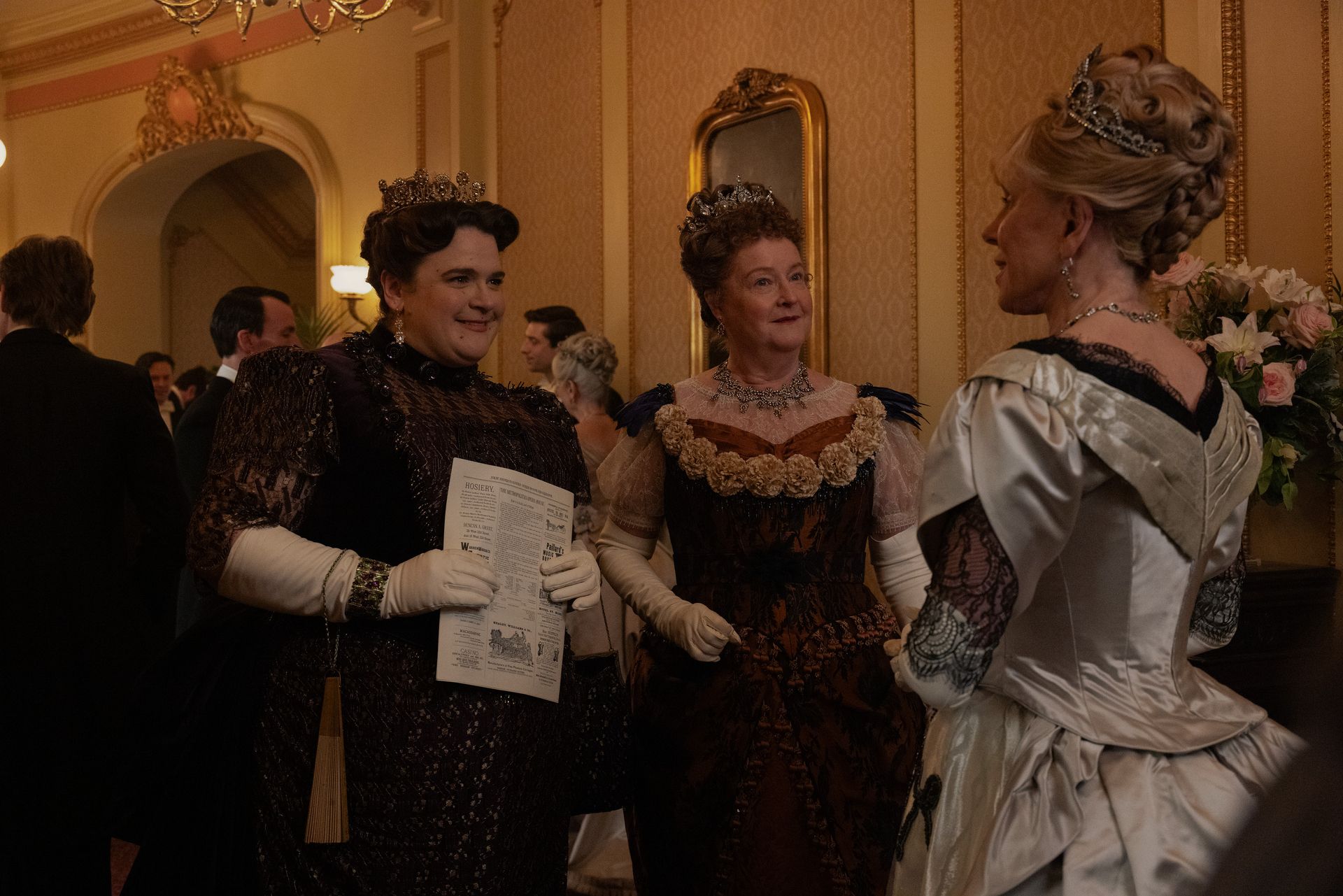
From left: Bonnie Milligan as Louisa Knapp Curtis of the Philadelphia Curtis family as the first editor of Ladies’ Home Journal; Marceline Hugot as Mrs. Foster; and Christine Baranski as Mrs. Agnes Van Rhijn in HBO’s “The Gilded Age.”HBO
‘The Gilded Age’ and its Philadelphia connections
HBO’s extravagant serial The Gilded Age is back. And I’m thrilled.
I tune in to Julian Fellowes’ New York City dripping in late-19th-century diamonds, tiaras, and white tie affairs each Sunday to marvel at the floor-length floral gowns, the elegant updos, the witty dialogue — that Mrs. Van Rhijn (Christine Baranski) doesn’t suffer fools — and forbidden dalliances.
But I also watch The Gilded Age because there’s always a chance a historical figure from Philly shows up at a fictional character’s home for tea. That’s thanks to Philadelphia native, Emory University professor, and former director of African American History at the Library Company, Erica Armstrong Dunbar.
Dunbar serves as the co-executive producer and historical consultant of The Gilded Age.
In Season 4, episode 2, the featured Philly figure was Louisa Knapp Curtis, the first editor of Ladies’ Home Journal and wife of publisher Cyrus Curtis (for whom the Curtis Building at Sixth and Market is named.)
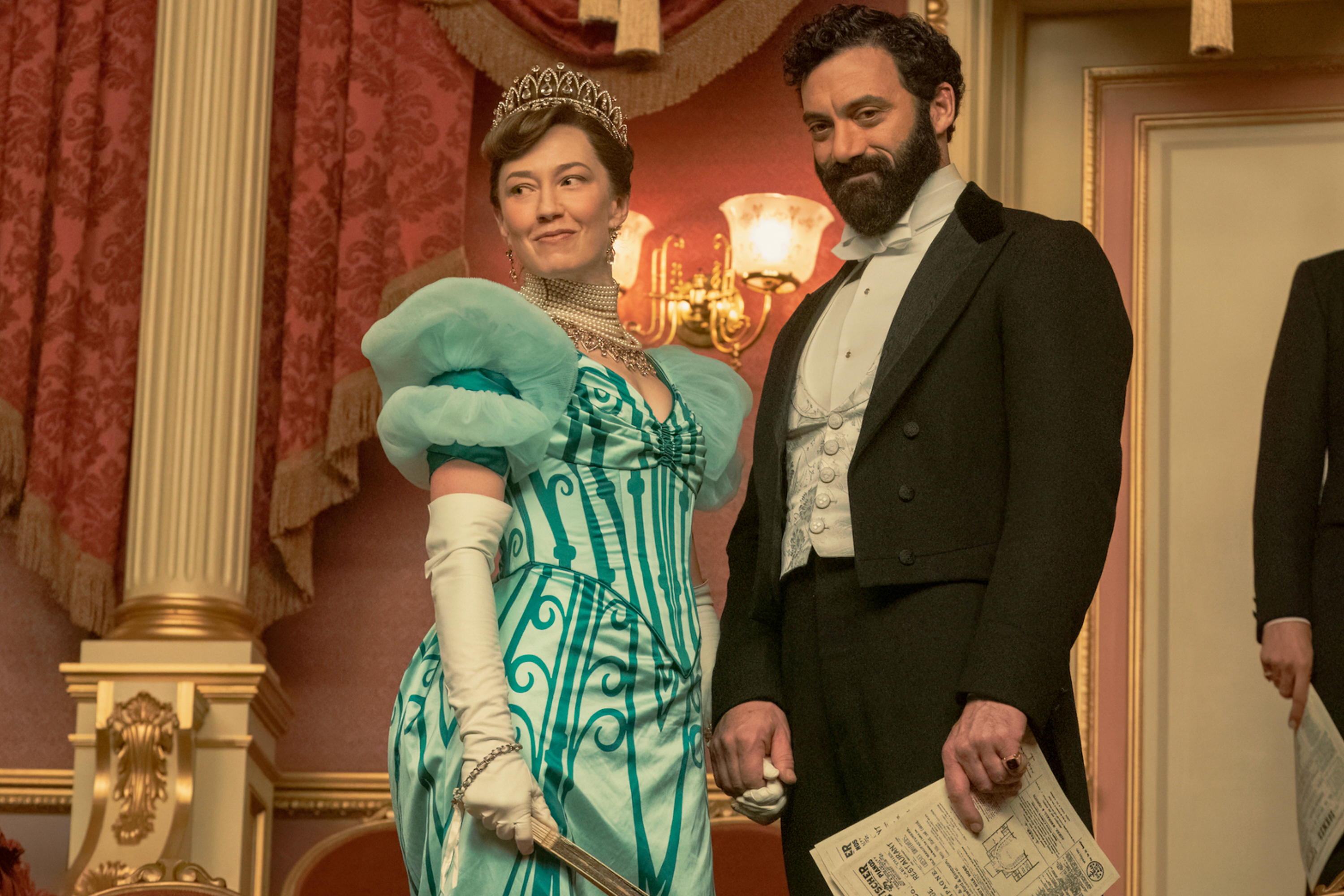
This image released by HBO Max shows Carrie Coon, left, and Morgan Spector in a scene from “The Gilded Age.” (HBO Max via AP)Uncredited
In 1876, Cyrus Curtis founded the weekly farm and family newspaper the Tribune and Farmer in Philadelphia. The magazine carried advertisements geared for women, but the articles weren’t that great, at least according to Louisa Knapp Curtis. Louisa convinced her husband that she should write a woman’s column. It was so successful that in 1883, Cyrus Curtis centered it in his women’s magazine Ladies’ Home Journal, which also featured recipes, fashion, and eventually articles on suffrage. In 1903, Ladies’ Home Journal became the first American magazine to reach a million subscribers.
But I’m getting ahead of myself.
Sunday’s episode of The Gilded Age isset in 1886. In it, Mrs. Knapp Curtis (Bonnie Milligan) travels from Philadelphia to Mrs. Van Rhijn’s Fifth Avenue mansion to cover her preparations for President Grover Cleveland’s visit. (White tablecloths are the only option for a United States president’s visit.)
Things are going well until, well, they aren’t. And by the end of the episode, we are left wondering if Mrs. Knapp Curtis will return to Philadelphia with an article about President Cleveland’s visit to Mrs. Van Rhijn’s home — or will Mrs. Knapp Curtis end up filing a story about a presidential dinner held at a different Fifth Avenue mansion.
“The Gilded Age” airs Sunday nights at 9 p.m. on HBO.
— Elizabeth Wellington
Victoria Monét’s striking performance
Victoria Monét poses for a portrait in New York on Wednesday, Sept. 9, 2026. (Photo by Andy Kropa/Invision/AP)Andy Kropa
Victoria Monét has all the ingredients of an R&B star. She has the voice to carry a love ballad, enchanting dance moves, and the ability to float between breezy bubble gum hits, foot-stomping anthems, and sleek soulful cuts without slippage.
The Grammy-winning artist’s brilliance was center stage at the Met on Thursday night for her “Frequency of Love” tour.
She wore a silk dress with elbow-length gloves, a look reminiscent of Josephine Baker at the height of her powers. Monét opened with “All I Need,” an ode to daughter Hazel and the intro to her sophomore album, Frequency of Love. She followed up with another heartfelt record “Come Back to You” from her October release. Although the material is still fresh, even for her most boisterous fans in the audience on Thursday, the singer had the crowd within her grip before the stage curtains were peeled.
The curtains then opened, revealing a glowing platform with her band and background dancers holding firm until Monét reached the top of cascading steps. She glided down to perform “Cadillac (A Pimp’s Anthem)” in a shimmering sequin dress, exuding the elegance of the roaring twenties. She also floated between eras in her own discography.
Monét performed familiar favorites like “Ass Like That,” “Experience,” and “On My Mama” before transitioning to newer album cuts like “Head to Toe,” “Almost,” and “See You in My Dreams.” She broke up the setlist with dance breaks, including a steamy one between her and a backup dancer that drew audible awes from the crowd.
The show was a savory balance of Monét’s new and familiar works, paired with striking dance sequences and high production value, as evidenced by the cinematic videos of Monét that flashed onto the stage during her outfit changes. The brief vignettes were insights into the artist’s life as a mother and a romantic whose aim is to enjoy the fruits of life, without letting outside forces soil the life she’s built. If the energy at the Met was any indication, it appears that there’s a lot of admiration and love for Monét to enjoy for awhile.
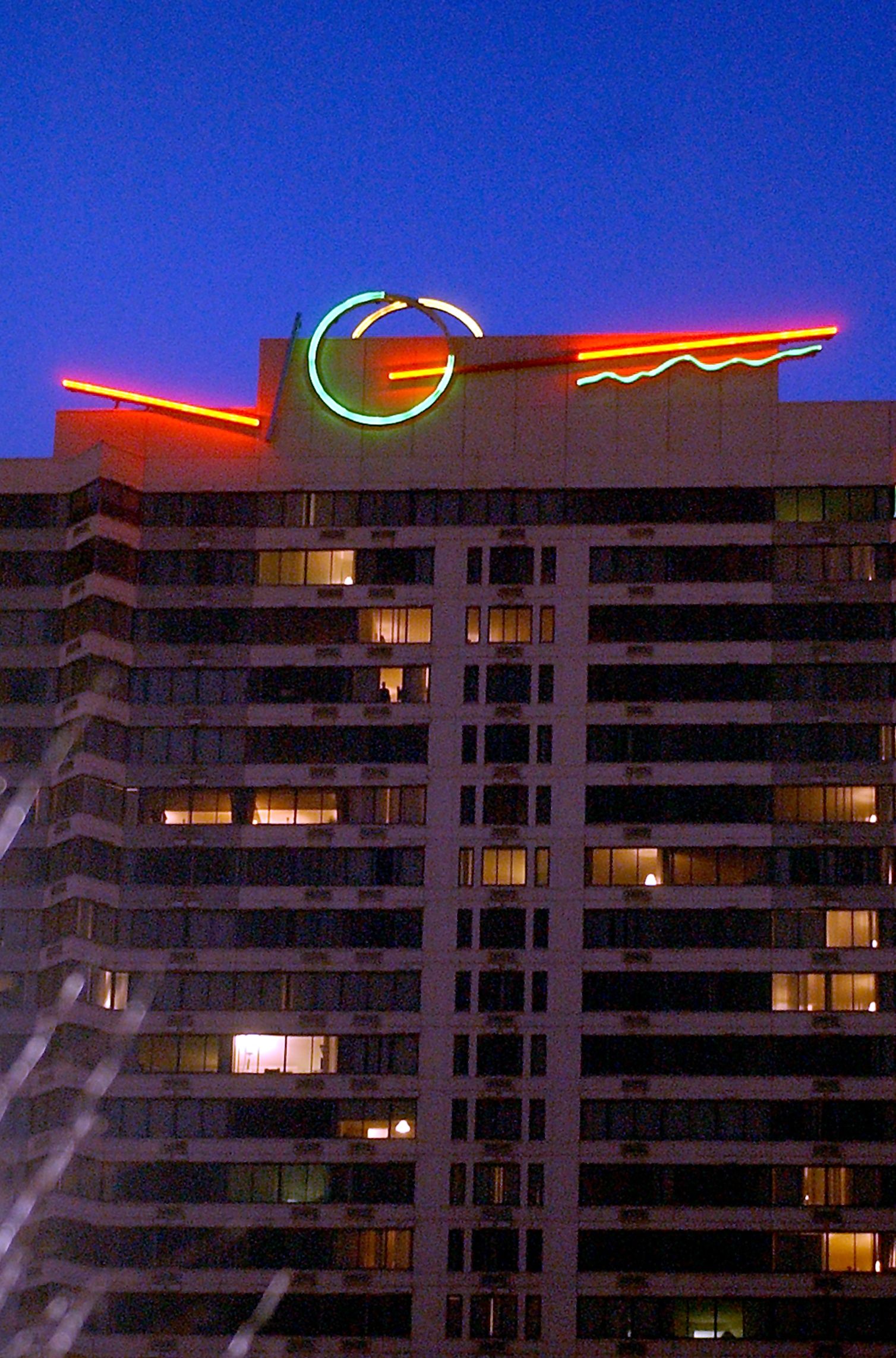
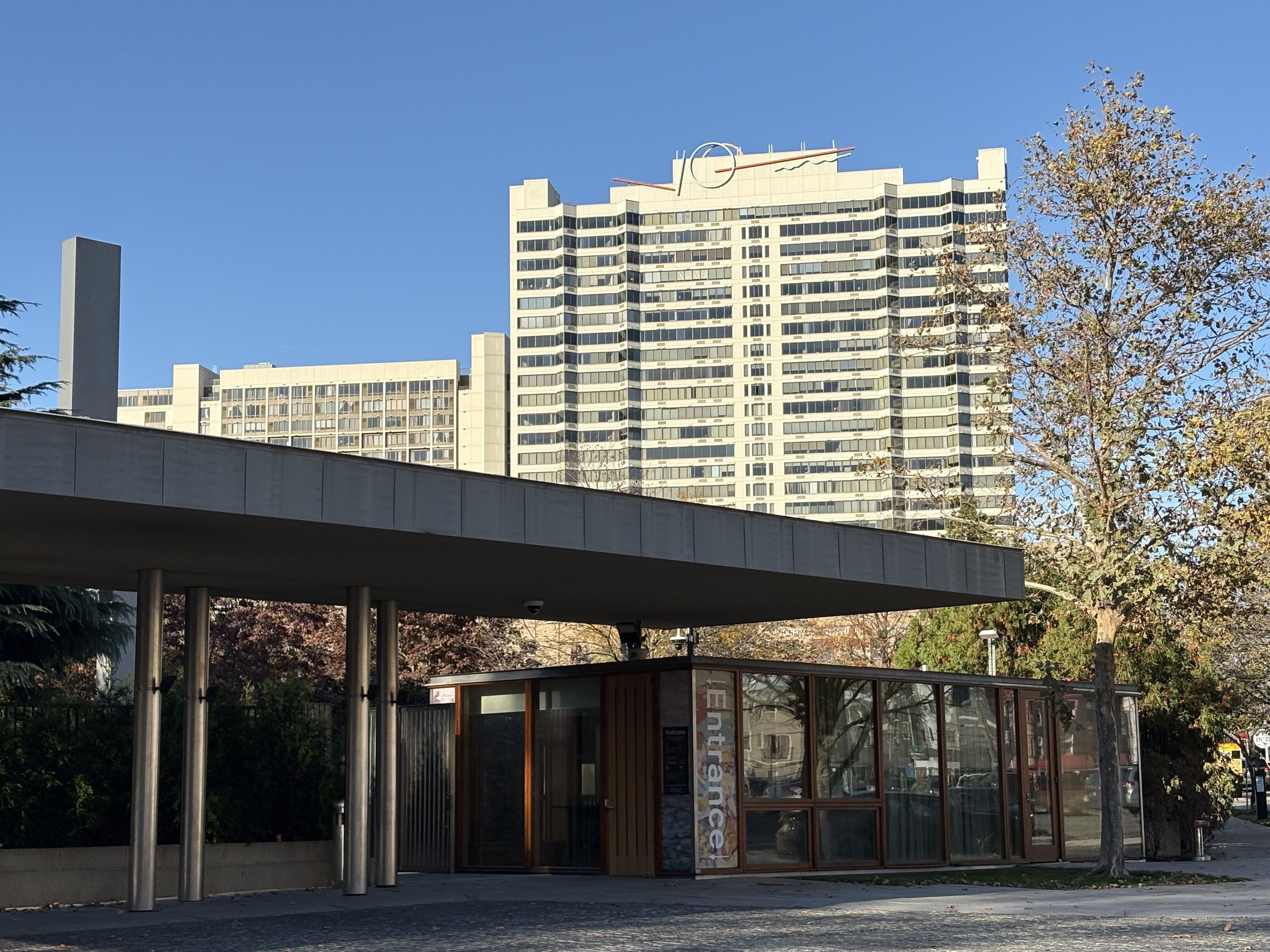
The colorful circles, squiggle, and lines of Stephen Antonakos’ sculpture hovering in the sky just north of Center City are still discernible. But the piece’s essence, its wow factor, is in its medium — neon — and that feature has long been gone.
Once a seemingly impromptu scribble in the dark sky, Neons for Buttonwood had its off switch flipped more than a decade ago.
Now, though, the sculpture’s fans are working to bring it back. A committee of residents of CityView Condominiums, on whose south tower the piece is perched, is seeking the money required for its restoration and relighting. About $100,000 has been raised toward a goal of $750,000, says Lynda Orfanelli, cochair with Sonja Eveslage of the Relight the Sky Committee.
“I feel like it’s starting to happen,” said Orfanelli during a recent rooftop visit to see the sculpture, “but what we really need is that one big donor who has confidence in us, and that’ll give [other potential donors] a feeling like, ‘Yes, let’s get on this train.’”
“Neons for Buttonwood” by Stephen Antonakos is seen atop the south tower of CityView Condominiums, with the Barnes Foundation in the foreground, on Nov. 10. The neon sculpture hasn’t been illuminated since 2015, but a group is raising money for its restoration.Peter Dobrin
Neons for Buttonwood sits atop a privately owned building, yet it is among Philadelphia’s most visible and recognizable pieces of public art. It may be little-remembered now, but in 1990, when the sculpture was first lit on what was then Korman Suites at Buttonwood Square, the city’s nighttime skyline was considerably less dazzling.
There was no coordinated effort to bathe building ensembles emerald when something was on the line for the Eagles or render them in cobalt or pink on other occasions.
“The reason we turned it off initially was because the pope was coming to town [in 2015], and we had been spending a lot of money doing repairs,” said Orfanelli, “and it was only partially lit. So we decided to turn it off rather than embarrass the building.”
The sculpture remained off until last year, when it was discovered that while the smaller checkmark facing east could still illuminate, no other part would. The neon tubing was removed because parts of it were breaking off.
The back of “Neons for Buttonwood” by Stephen Antonakos can be partially seen on the roof of the south tower of CityView Condominiums, Nov. 10, 2026.Peter Dobrin
Planning a comeback for the 111-foot-long work required clearing a few hurdles.
The city’s Percent for Art program, which originally shepherded the sculpture, was contacted for approval since the restoration calls for using LED technology instead of the original neon.
The Greek American artist Antonakos — who died in 2013 and whose works are in the collections of major museums — was noted as a pioneering exponent of neon, and so Orfanelli and Eveslage paid a visit to his widow, Naomi Antonakos, in New York, for her blessing.
“Her reaction initially was, ‘My husband was a neon artist,’ and we said, ‘If he was alive today he’d probably be using LED,’” said Orfanelli. “And then she spoke to art consultants that she still deals with, and she got back to us and said, ‘OK.’”
The new LED won’t change colors as other building lighting elements in the city do, and will remain true to the original colors chosen by the artist.
As fundraising proceeds, leaders have a chance to piggyback onto another project. The repainting phase could happen while the building is putting up scaffolding for unrelated maintenance work expected next year — if the next $50,000-$100,000 can be found by then. Installation of the LED elements would happen when the rest of the money is raised.
It’s not lost on the committee that when Neons for Buttonwood is restored and relit, there will be one major group of Philadelphians who won’t be able to look out of their windows at night to see it: the building’s residents themselves.
“That was exactly our point in calling it ‘Relight the Sky,’” said Orfanelli, “because it’s for everybody else.”
For more information and to donate to the project: relightthesky.org.
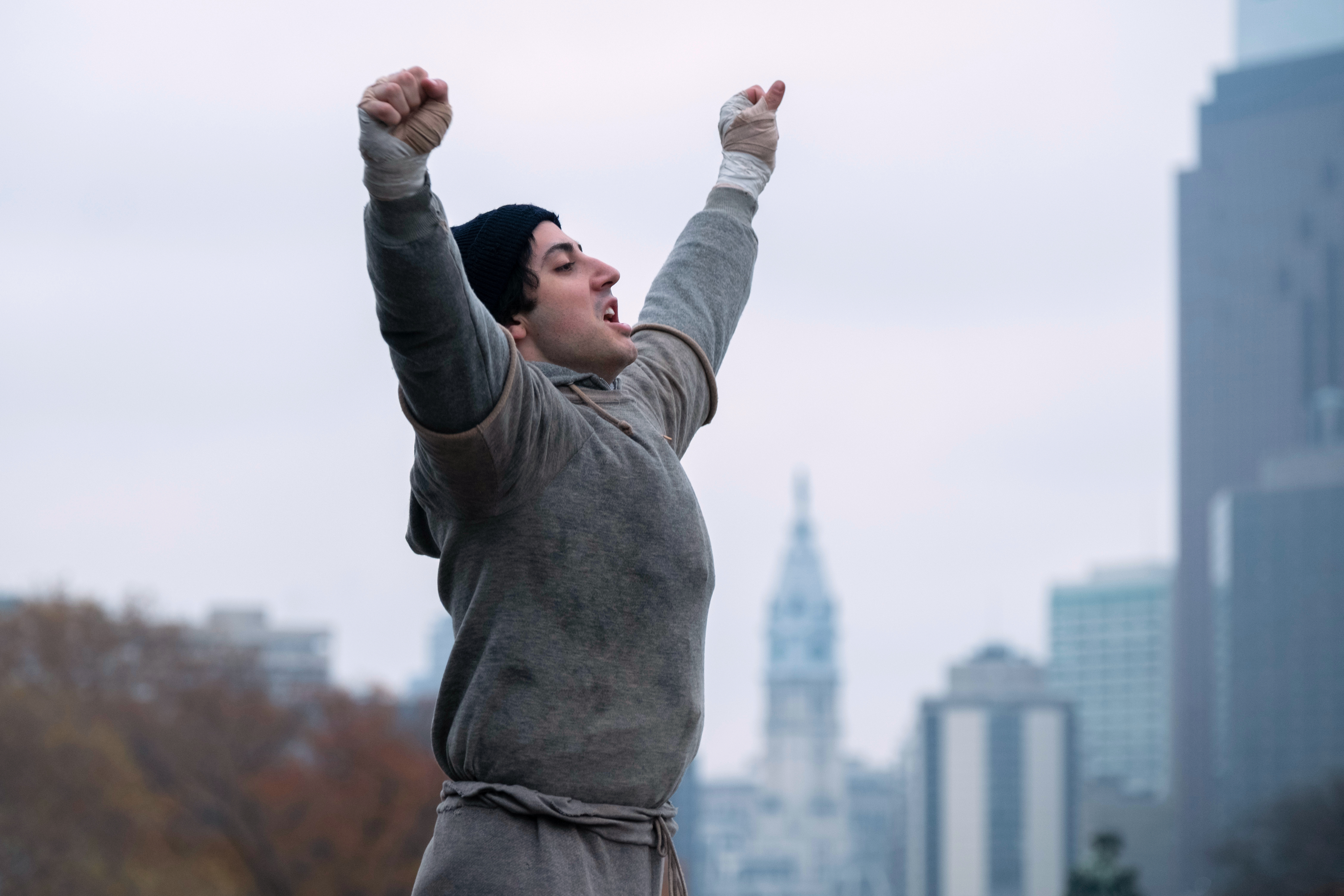
This image released by Amazon MGM Studios shows Anthony Ippolito as Sylvester Stallone in a scene from “I Play Rocky.” (Claire Folger/Amazon MGM Studios via AP)Claire Folger
Few Hollywood films reflect the spirit of Philadelphia as much as Sylvester Stallone’s 1976 classic, Rocky. The film follows Rocky Balboa, a little-known boxer from Kensington who’s offered a chance to fight for the world heavyweight title.
His training regimen is anything but sophisticated. He downs a half-dozen raw eggs in the morning, then punches slabs of frozen beef until his knuckles bleed. Yet, the “Italian Stallion” lasts until the final bell with Carl Weathers, who played undisputed champion Apollo Creed.
Now, that’s a blue-collar Philadelphian.
Earlier this week, I watched an early screening of I Play Rocky, a retelling of Stallone’s fight to make and star in the now 50-year-old film. I went in thinking I knew everything about Stallone’s journey but left the Philadelphia Film Society Center with a greater sense of the actor’s brilliance and Rocky’s connection to the city.
The film, directed by Peter Farrelly, chronicles a young Stallone as he ventures from the streets of New York City to the offices of Hollywood producers Irwin Winkler and Robert Chartoff, with the script for Rocky in his hands. No matter the dollar amount they threw at him, Stallone was firm in his convictions. Stallone, who wrote the 90-page script in three days, was determined to star in the film.
He had to play Rocky.
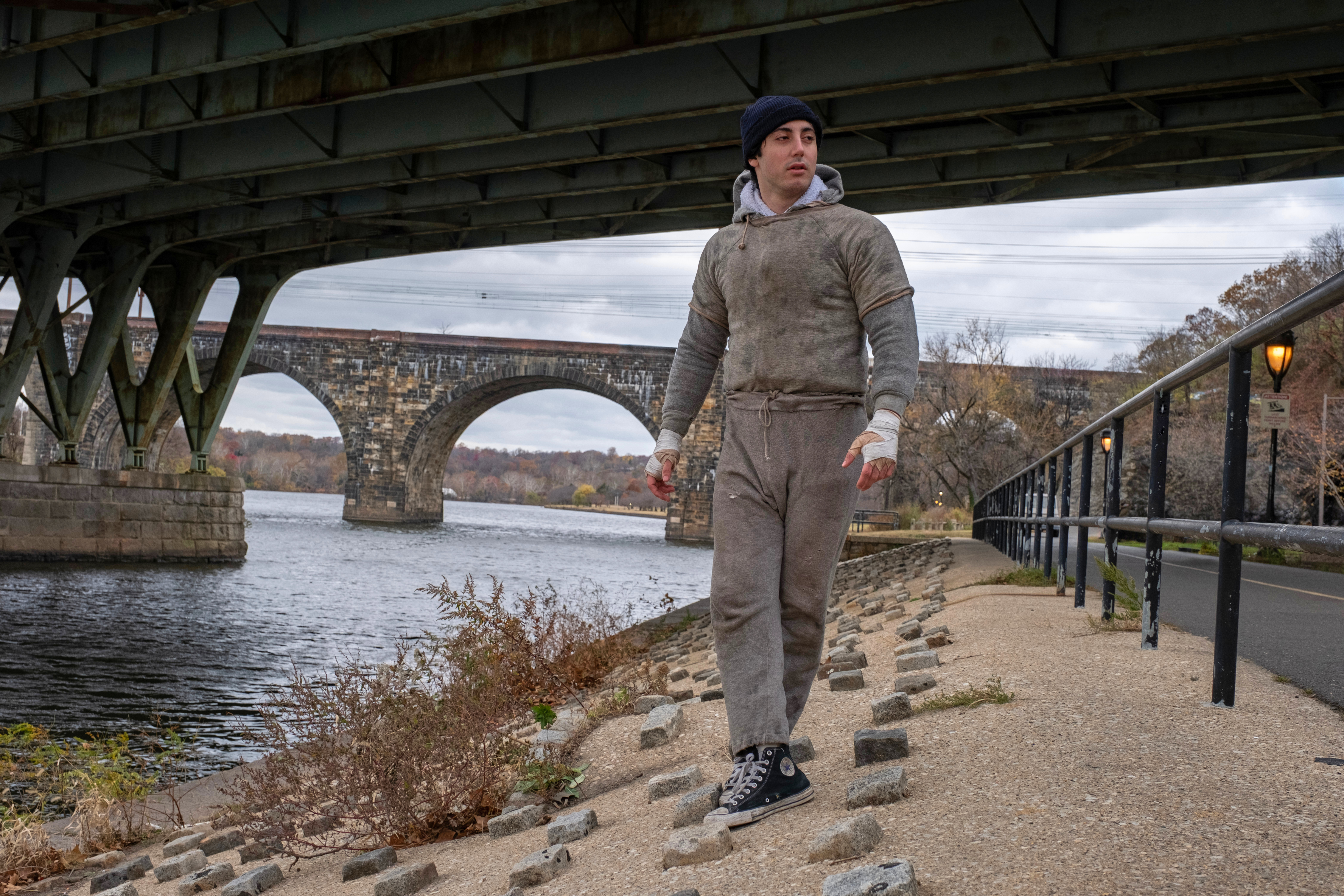
This image released by Amazon MGM Studios shows Anthony Ippolito as Sylvester Stallone in a scene from “I Play Rocky.” (Claire Folger/Amazon MGM Studios via AP)Claire Folger
Actor Anthony Ippolito, who took on dual roles as Stallone and Balboa, captured the legendary actor’s fiery ambition, along with his physicality and distinct voice. The more I watched, the more I was immersed in his portrayal. I didn’t see an impersonator on screen, I saw the man who would later become one of Hollywood’s most bankable stars.
Among the film’s highlights were the reenactment of now-iconic scenes from the original film — most notably Stallone’s training montage. Ippolito, like Stallone, runs to the top of the Philadelphia Museum of Art steps, raising his arms in a triumphant pose.
It’s an image that’s been immortalized in bronze, with the Rocky statue now standing at the top of those stairs, overlooking the city that’s embraced the fictional character as its own.
— Earl Hopkins
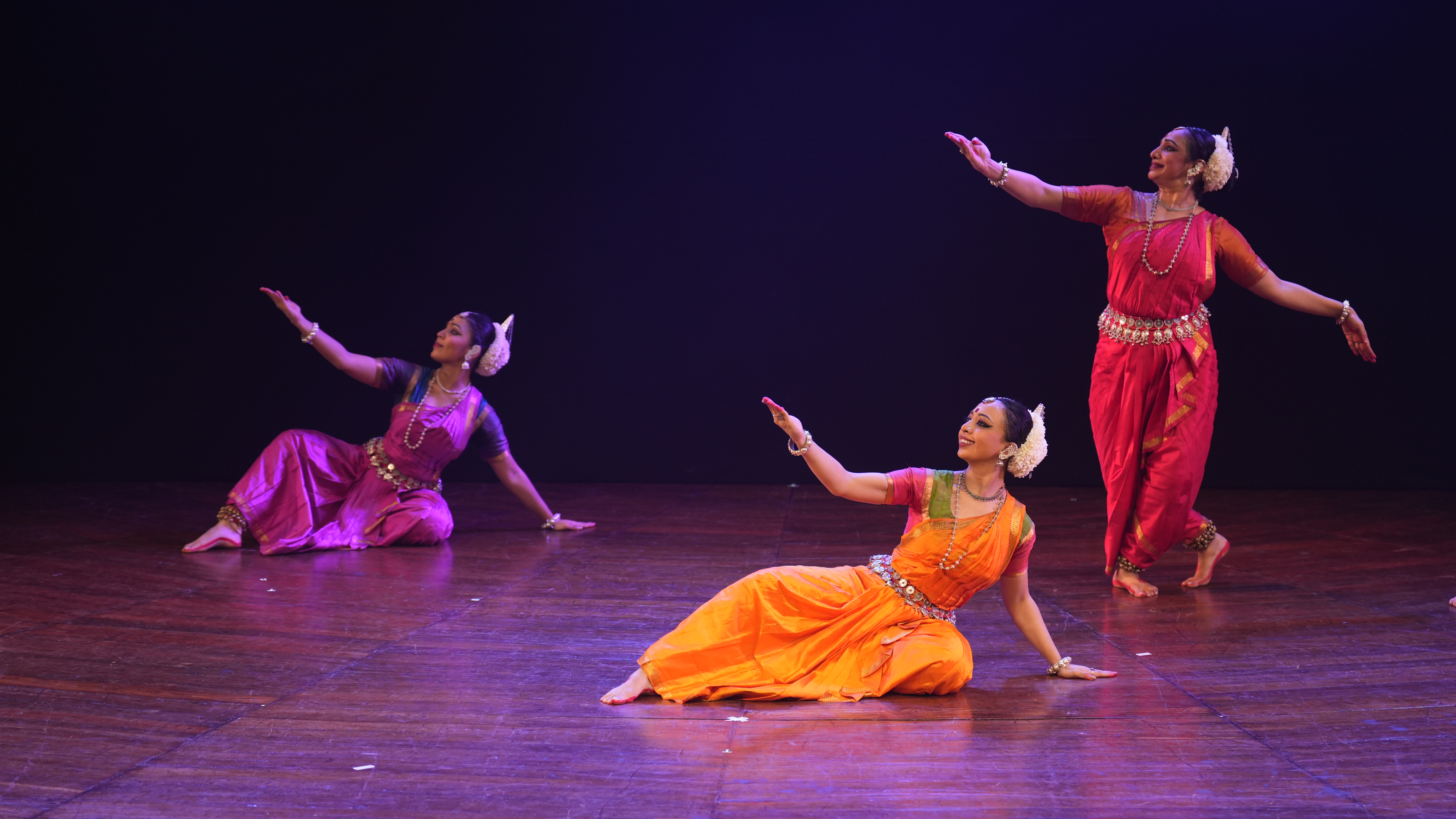
Nrityagram dancers Namaha Mazoomdar and Anoushka Rahman are a part of the troupe performing “KHANKHANĀ” at Zellerbach Theatre.Rajesh Krishna
A 2,000-year-old dance form comes to Penn Live Arts
Long before I decided to be a journalist, I wanted to be an Indian classical dancer. At the age of 4, I started dancing Odissi, a centuries-old dance form originating from the eastern Indian state of Orissa. It is one of the most beautiful dance forms (for me, anyway) and I am in awe every time I see Odissi dancers take the stage in their silk costumes, wearing crown-like headdresses that symbolize the spire of the Jagannath Puri temple in Orissa.
And of all Odissi dancers in the world, the ones in the Nrityagram ensemble are arguably the most masterful in technique and otherworldly form.
Led by choreographer Surupa Sen, the Nrityagram dancers are presenting “KHANKHANĀ,” named onomatopoeically after the sound of dancing feet, in the city this week. Sen takes the centuries-old devotional dance (women would dance it inside the temple and young men dressed as women would dance a more acrobatic version outside) and infuses a wonderful modernity into the themes while remaining steadfast in her devotion to the ancient form of the dance with its distinct tribhangi (where the dancer bends at the neck, knees, and torso) and chauka (a more geometric square-like stance) postures.
Since it’s a form I danced for years, I am 100% biased but anyone who watches Sen’s troupe move around like water on a beautifully-lit stage will agree on the exquisite beauty inherent in the form of Odissi.
It is an honor to witness art forms that are older than anyone we know, an oddly grounding experience that soothes us in the knowledge that art will outlive us all, bringing delight and wonder to generations as long as time exists. It is an exhilarating feeling and there is absolutely no better way of heralding the festival of lights, Diwali, than witnessing and feeling this for yourself.
The Nrityagram ensemble’s final performance of “KHANKHANĀ” is Nov. 7, 3 p.m., Zellerbach Theatre, 3680 Walnut St., pennlivearts.org
When I went to check out the “Noguchi to Asawa: Designing Postwar America” exhibition at the Barnes Foundation last weekend, I knew I was going to see furniture designed by George Nakashima (created in his New Hope workshop) and Isamu Noguchi, as well as Ruth Asawa’s sensual hanging wire mesh sculptures.
What I didn’t expect to see on display were some of the most innovative and visually dazzling album and book covers in music and publishing history, including artwork for LPs by Dave Brubeck, Charles Mingus, and the Philadelphia Orchestra, and well as book jackets for Mario Puzo and Truman Capote.
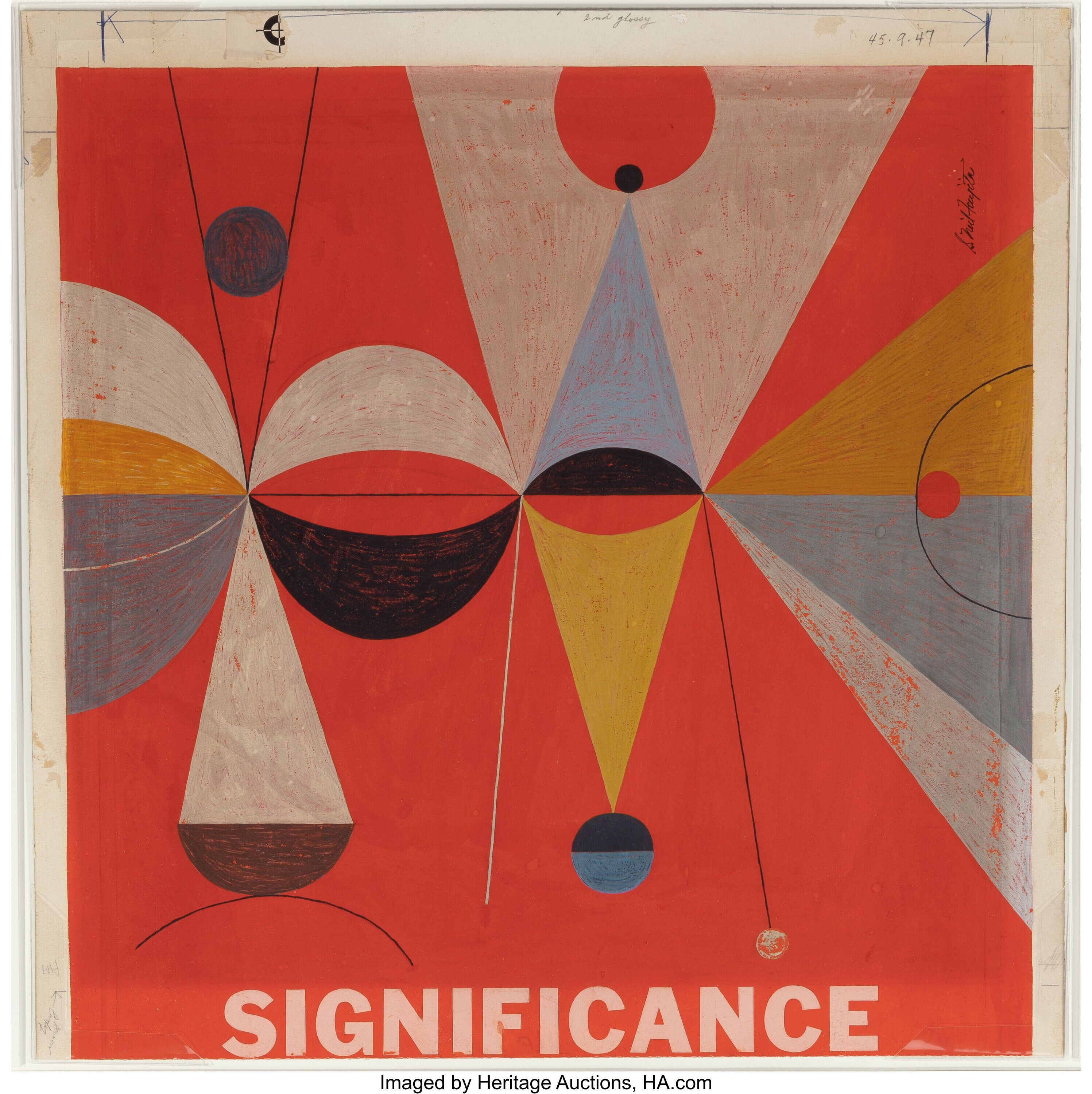
Those are all the work of S. Neil Fujita, the Hawaiian-born designer of Japanese descent who — like the other artists in the exhibition, which also includes the work of sculptor Leo Amino and fiber artist Kay Sekimachi — was interned during World War II. He was sent to the Heart Mountain Relocation Center in Wyoming, where he worked as the art director of the camp newspaper, copies of which are on hand in the Barnes’ galleries.
Fujita enlisted in the U.S. Army where he served in a segregated unit that saw action in Italy and France, and later worked as a translator in Okinawa. After graduating from Chouinard Art Institute in Los Angeles, he moved to Philadelphia to work for the design firm N.W. Ayer & Son, where his work was noticed by Willam Golden at Columbia Records.
That prestigious label felt it was losing a design race to Blue Note Records, known for moody covers for albums by artists like Miles Davis and Sonny Rollins. Fujita responded by creating a visual language that featured his own abstract painting and drawings filled with geometric shapes that seemed to move on the page, capturing the improvisational energy of the music.
Along with Significance, a stunning poster for a United Aircraft Corporation advertisement, “Noguchi to Asawa” includes Fujita’s covers for Dave Brubeck’s 1959 Time Out (the first jazz album to sell 1 million copies), as well as Charles Mingus’ Mingus Ah Um, from that same year.
The Philadelphia Orchestra conducted by Eugene Ormandy’s Dello Joio: Vincent from 1958 is on display as well as albums by Glenn Gould and Johnny Eaton and His Princetonians. Fujita’s simple, attention-grabbing book covers for Puzo’s The Godfather — whose puppet strings design was so powerful that it was also used for Francis Ford Coppola’s film — and Capote’s In Cold Blood are also included.
“Noguchi to Asawa: Designing Postwar America” is on view though Jan. 10 at the Barnes Foundation, 2025 Benjamin Franklin Parkway. barnesfoundation.org
— Dan DeLuca
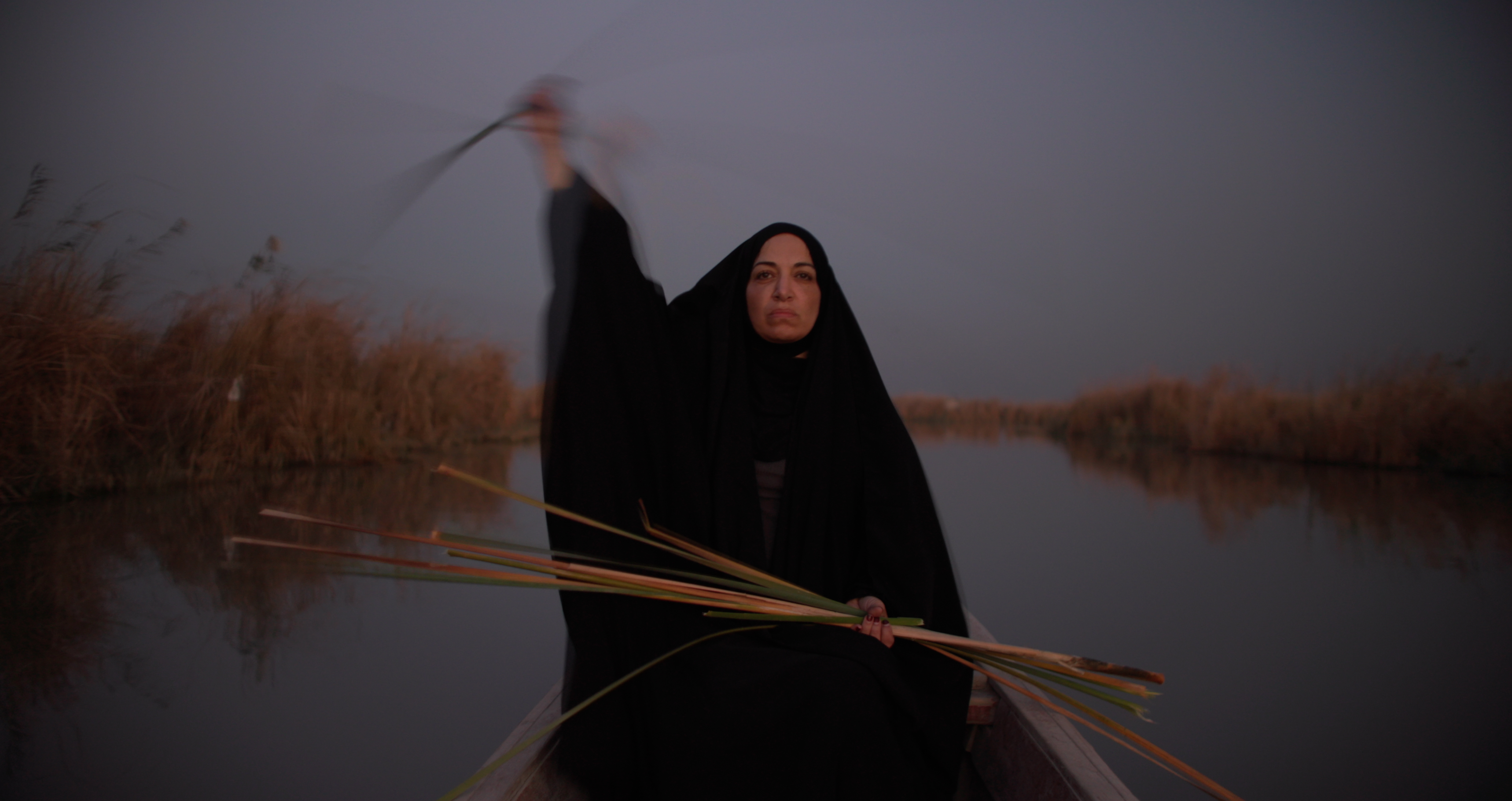
Still from Sama Alshaibi’s 2023 video work, “iihya’ – إحياء (Revival),” on view at Twelve Gates Arts gallery in Old City as part of the exhibit “Extended Constellations” through Jan. 16, 2027.Courtesy of the artist
An artist examines war at Twelve Gates Arts
Artist Sama Alshaibi has returned home to Iraq only a handful of times during her life in political exile; her Iraqi Palestinian family were refugees after the 1949 Palestine War, then exiled during the Iraq-Iran War in the 1980s, eventually moving to the U.S. when she was a teenager.
Now based in Arizona, Alshaibi has dedicated her career to examining war, displacement, and the environment through photography and video. One of her projects, Iihya’ (Revival), is on view in the small-but-fascinating Old City gallery Twelve Gates Arts, which spotlights South Asian and West Asian artists. The exhibit “Extended Constellations” includes work by Alshaibi, Carrie Mae Weems, and Lali Khalid.
During one of Alshaibi’s rare visits to Iraq, she filmed this video project in the Mesopotamian Marshes, not far from where she was born in Basra, where war and resource extraction has left the land damaged and in drought. The artist appears in the video herself, wearing a hijab and walking barefoot on the dry, cracked land, completely alone, almost like she’s on the surface of another planet.
Her camera splits into a mirror view evoking a kaleidoscope that renders the landscape beautiful, mysterious, and mythical. She takes a boat through some of the remaining waterways, with the lens capturing the residents and the ecosystem around her for a mesmerizing journey.
In certain moments, the horizon line disappears and the reflection of the water and sky merge, like worlds colliding. The video then goes in reverse, like the artist is trying to go back in time to restore the land’s richness. It’s a captivating and mournful meditation on what has been lost and what the future could hold. Worth watching on repeat.
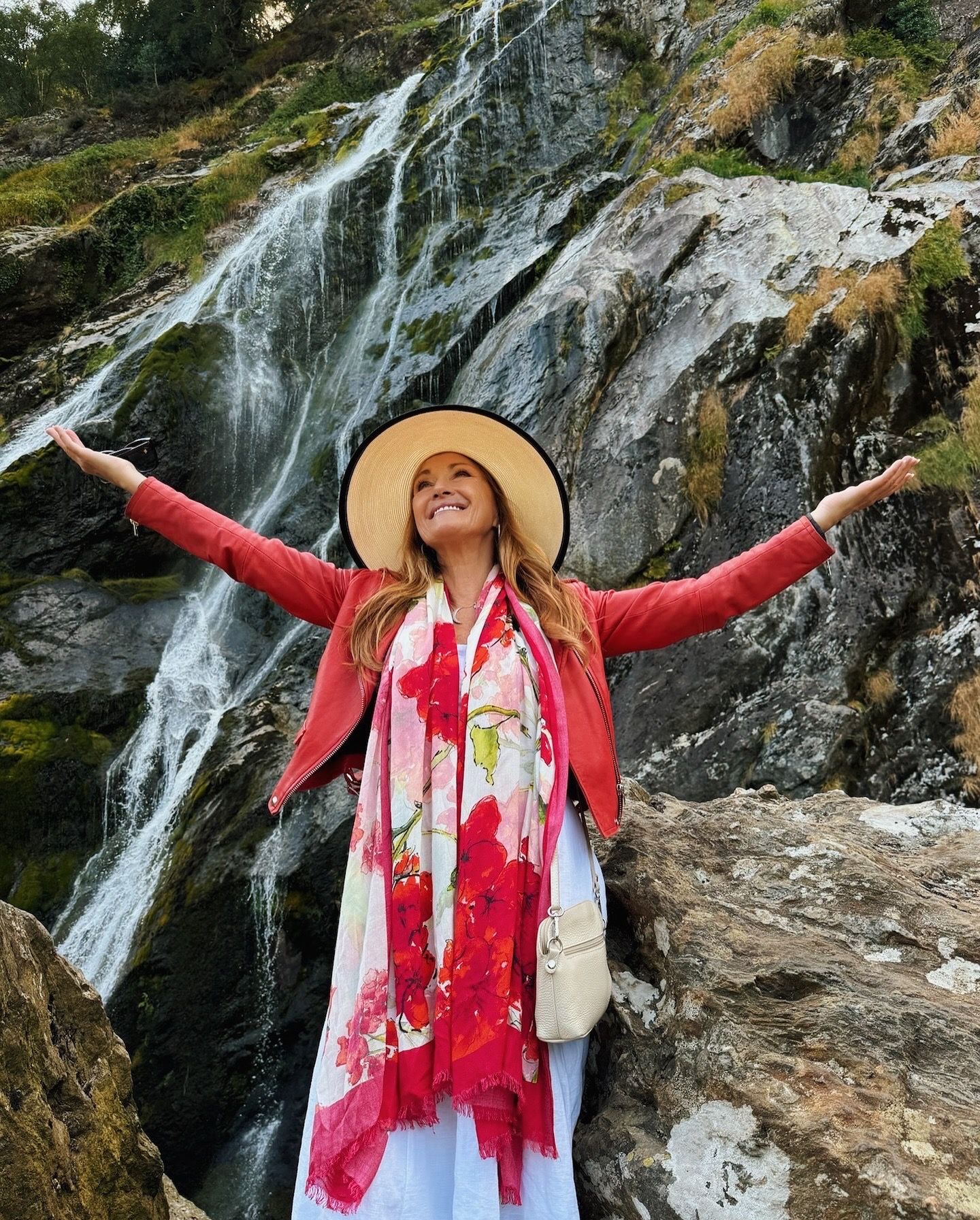
As the winds blow colder, I’m trying to hold on to summer florals. A Hawaiian shirt at Thanksgiving wouldn’t work, at least at my family’s persnickety Thanksgiving table. But a silk scarf over a navy blue turtleneck and slacks? That would fit in just fine.
Hence my attraction to actress Jane Seymour’s collection of blooming scarves. The popping petals on these bold silk canvasses — especially the floppy rainbow-hued petals on “Poppies and Butterflies” — promise to warm my heart when nature abandons it as she always does in the winter.
An image of Jane Seymour wearing a silk scarf. Jane Seymour will appear at Marlyn Schiff Saturday from noon to 4 p.m.Jane Seymour
This Saturday, Seymour will be in Haverford at the popular accessories haunt Marlyn Schiff from noon to 4 p.m. Known for her starring role in the 1990s pioneer drama Dr. Quinn Medicine Woman, Seymour will be on hand meeting customers, selling scarves, and helping us ease into the cold weather months with a stylish dash of summers gone by.
Marlyn Schiff, 15 Haverford Station Road, Haverford. Seymour will appear at the meet and greet from noon to 4 p.m.
N. C. Wyeth’s panoramic mural Apotheosis of the Family, long hidden from view, left viewers astonished after reappearing for public consumption in Wilmington this past December.
There’s another N. C. Wyeth monster mural in the area, though it is little known.
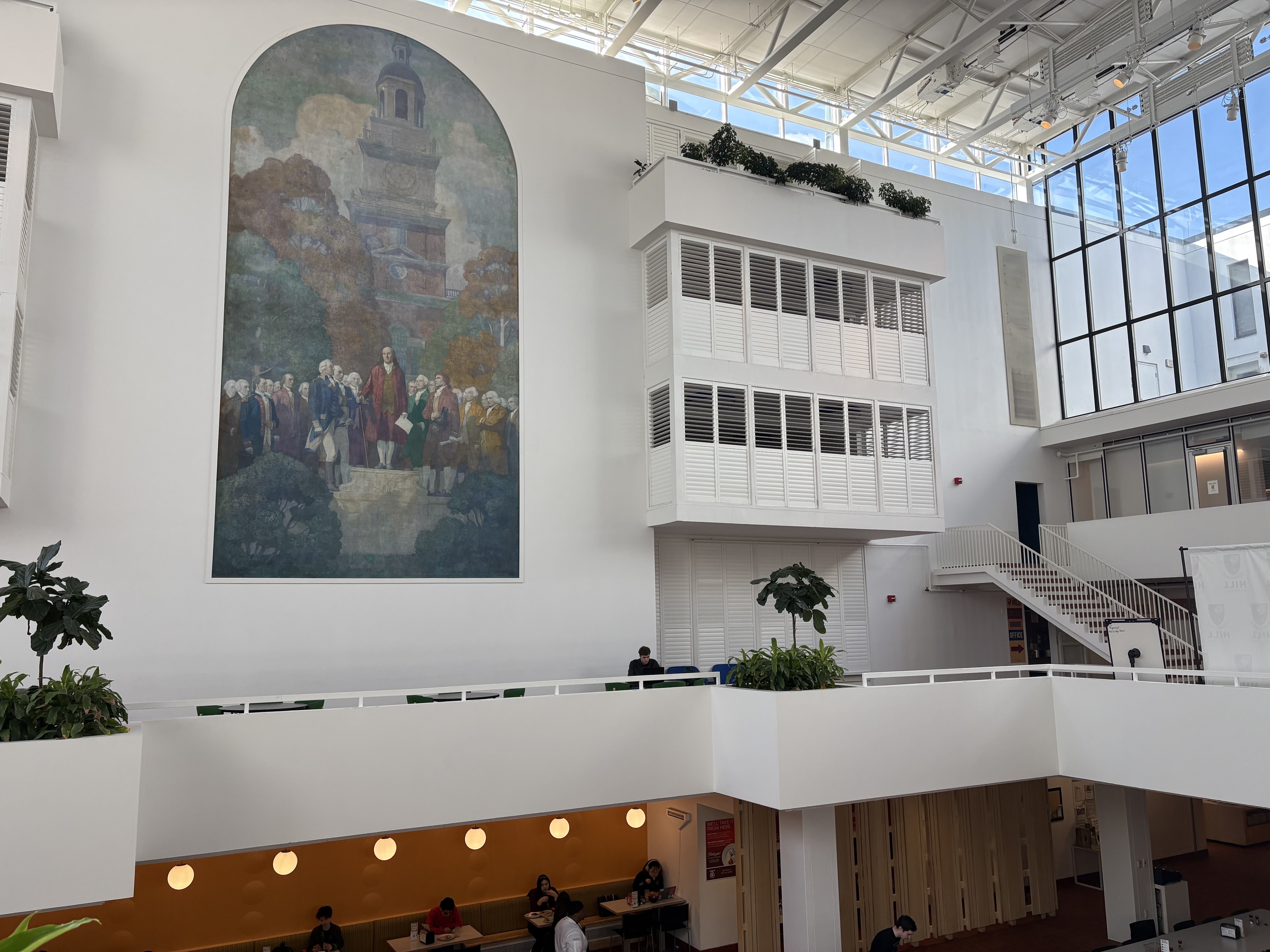
This one, An Apotheosis of Franklin, is at Penn, hung in the airy atrium of Hill College House near 34th and Walnut Streets.
Not as large as its Wilmington cousin, it is still, at 16 feet long and 30 feet high, impressive both in scale and for its ceremonial, even worshipful, tone. Here Franklin stands on a pedestal near Independence Hall, surrounded by Founding Fathers Thomas Jefferson, George Washington, John Adams, and others.
“Having Independence Hall in the background, rising up like this in the format like a big church window, emphasizes that identification we have with Independence as the birthplace of our national religion of democracy,” says Penn art history professor Gwendolyn DuBois Shaw.
The visual vocabulary — heroism framed by puffy white clouds and trees and rendered in a particular palette of colors — gives it a specifically N. C. Wyeth look.
“An Apotheosis of Franklin” by N. C. Wyeth, 1926, oil on burlap. The mural hangs in the University of Pennsylvania’s Hill College House.Jamie Alvarez/University of Pennsylvania Art Collection
“It feels to me like so many of his illustrations for Scribner’s [Classics book series], creating these historical scenes that are both mythical and fictionalized,” said Shaw.
The piece may be monumental in scale, but it is also hidden — at least to non-Penn art lovers. Visitors to Hill aren’t welcome; access to the dorm building is restricted.
But there’s a significant runner-up experience available. A half-size reproduction of An Apotheosis of Franklin is on view nearby in Penn’s Arthur Ross Gallery through Dec. 13 as part of the exhibition “At Liberty: Life in the City of Brotherly Love During the Early Republic.”
An Apotheosis of Franklin is one of more than 9,000 works of art owned by Penn. In addition to the outdoor sculpture visible on school grounds, the university has pieces distributed across about 130 spots around campus.
“We have a campus loan program, so artworks are available to faculty and staff for their offices. I’d like to say that not having a fine arts museum allows us to be a little more nimble,” said Lynn Smith Dolby, director of the Penn Art Collection.
“There are so many kind of secret artworks on campus,” said Shaw, “I always marvel when I go into a colleague’s office or something and they have a piece from the collection that I had no idea we had.”
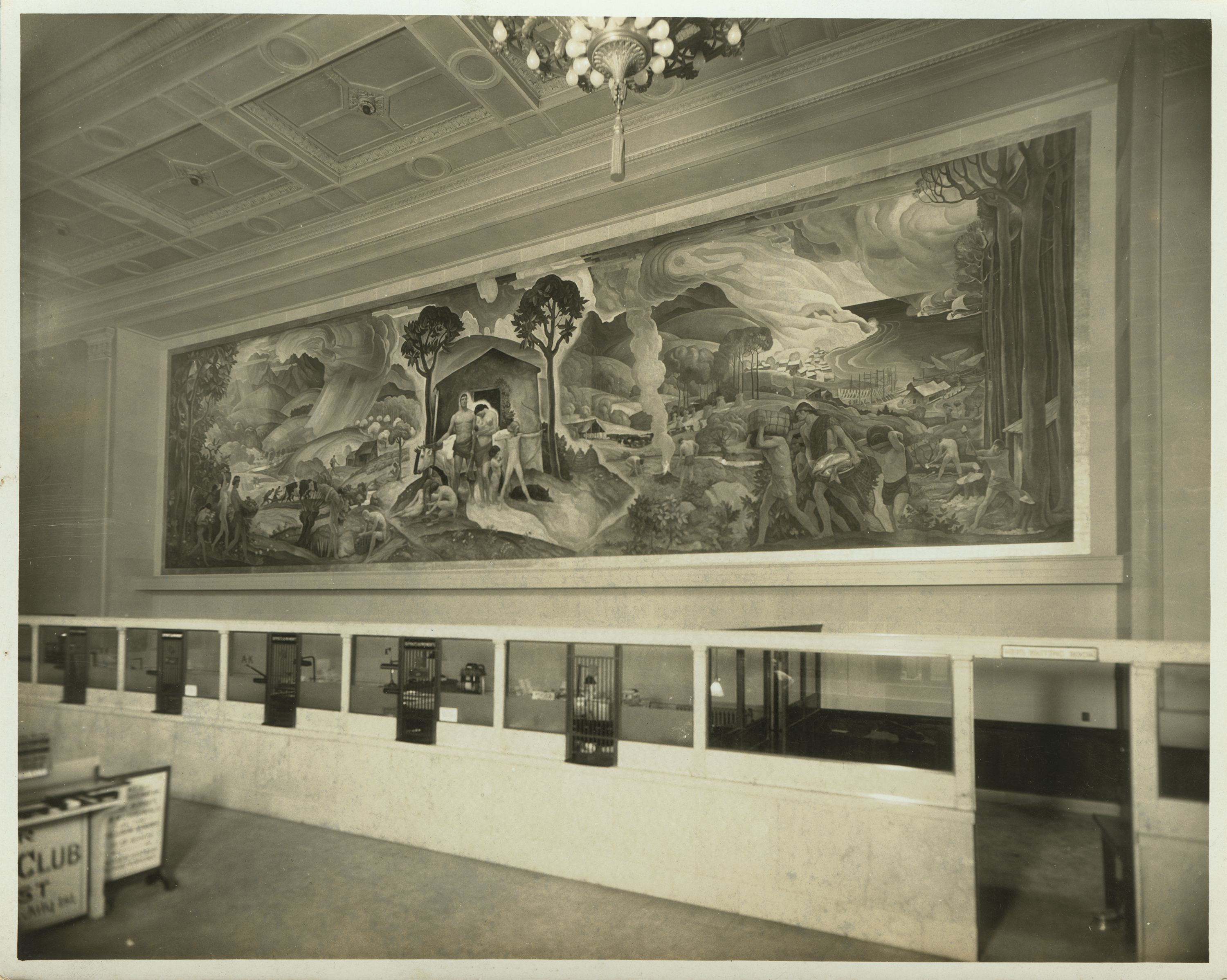
“Apotheosis of the Family” mural installed at Wilmington Savings Fund Society, Ninth and Market Streets, Wilmington, Delaware, circa 1932.Sanborn Studio, Wilmington, DE
An Apotheosis of Franklin, from 1926, was — like Apotheosis of the Family — commissioned to embellish a bank. It passed from New York’s Franklin Savings Bank to Independence Hall Association, and was conserved and installed at Penn in 1978 and gifted to the university in 1990.
Placing it was a challenge.
“It’s hard for me to think of another wall on campus that could accommodate something of this size,” said Smith Dolby.
It is one of many works on campus interpreting the various dimensions of Franklin, Penn’s primary founder. Wyeth said that his own lens looked past Franklin the printer, Franklin the scientist, and so on, to focus on Franklin the patriot and statesman.
This Apotheosis catches a view very much in contrast to the more beneficent, ribald, or portly portraits of Franklin frequently drawn in both image and prose.
Squinting, might one even think Franklin by Wyeth vaguely handsome?
Shaw is willing to go this far:
“He does look quite heroic.”
“At Liberty: Life in the City of Brotherly Love During the Early Republic” runs through Dec. 13, Arthur Ross Gallery (in the Fisher Fine Arts Library Building), University of Pennsylvania, 220 S. 34th Street, Phila. arthurrossgallery.org
Check out what art our other reporters are raving about here.
South Philly-born artist Moe Brooker and his magical playground of a city
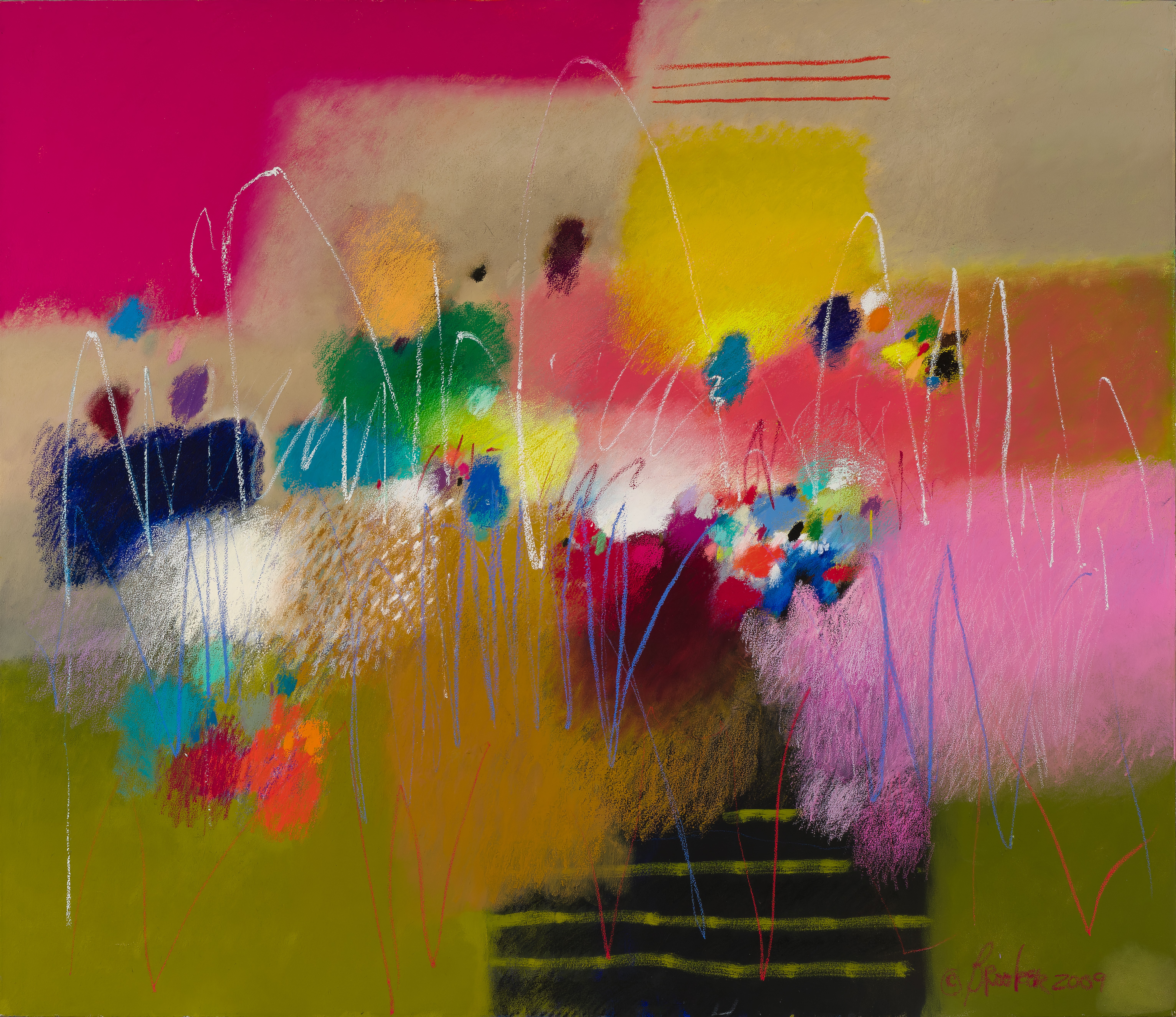
Colors explode in a series of abstract shapes on the white walls of the Kuch Gallery at Woodmere’s Smith Hall. The popping hues on canvass are part of the melodious exhibition “Listen With Your Eyes: A Moe Brooker Retrospective,” featuring more than 40 pieces by Brooker, a South Philly native, PAFA graduate, respected art professor, and renowned artist.
“Listen With Your Eyes” is Woodmere’s homage to Brooker, who died in 2022 at age 81. The exhibition — more than 20 years in the making — is the first-ever retrospective show dedicated solely to Brooker’s work and features his paintings, sculptures, weavings, and sketchbooks. It covers Brooker’s early realism in the 1970s through the 2000s, when his pieces evolved in size and became dreamier in style.
Moe Brooker’s “Listen With Your Eyes,” 2009. Mixed media and oil on canvas, 60 x 72 in.courtesy of Musa Brooker and Misha Brooker
His canvases are visual renditions of the jazz and classical music he loved so much. He uses the brightest hues in the palette; some pieces even appear psychedelic. Some are down right funky. All are synesthetic. It’s clear when Brooker heard music, he saw colors, and he was able to manifest what he saw in his mind’s eye as a tableau of intentional strokes.
One painting, also called “Listen With Your Eyes,” is my favorite of the bunch. It’s a whimsical mix of pastels punctuated with neon crescendos. A yellow globe rises from a garden of smaller cloudy circles of blue, purple, and brown, like a lazy sun on a hot summer’s morning.
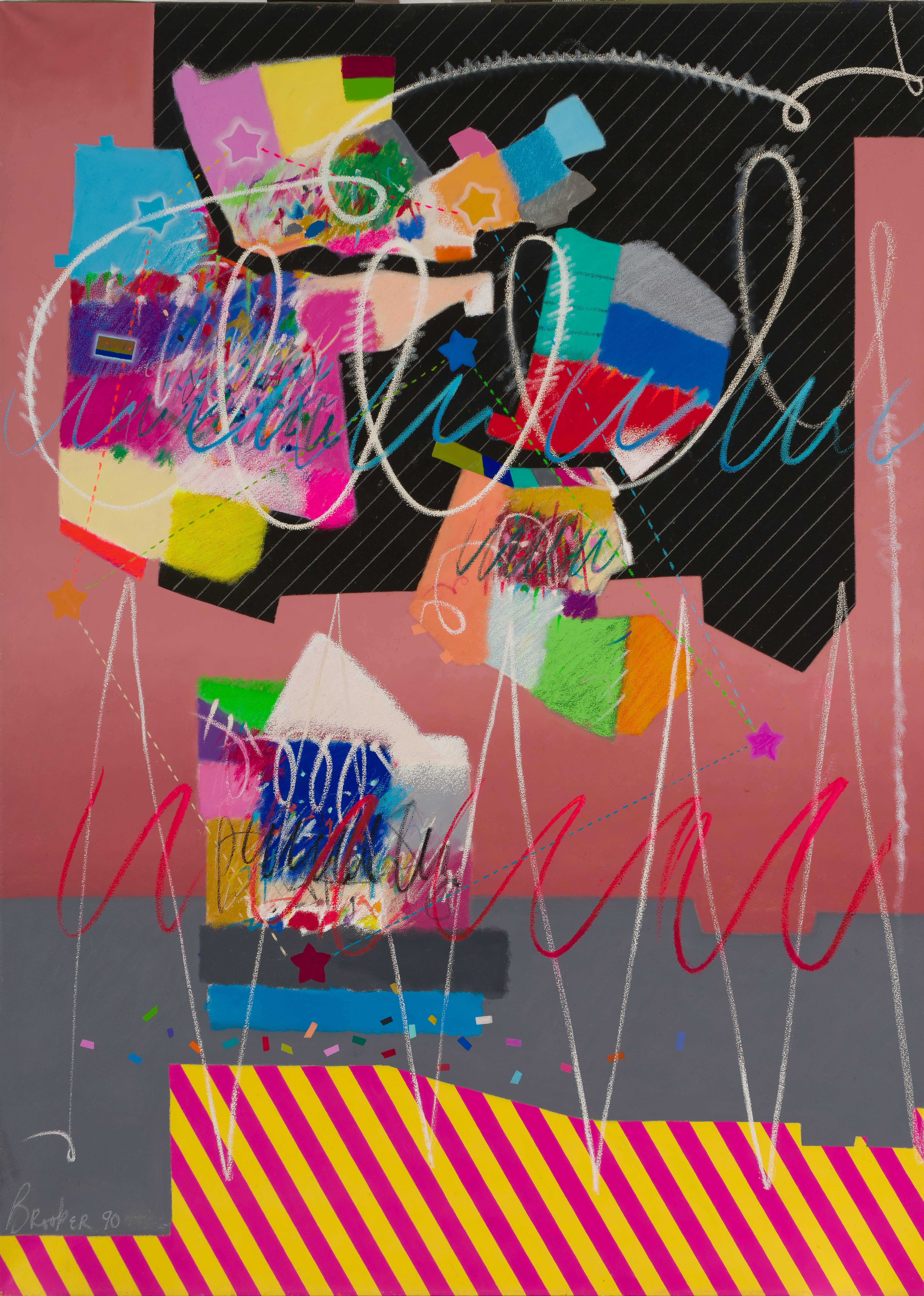
Moe Brooker’s “In the Measure of Every Part,” 1990. Oil on canvas with paint stick, 72 x 54 in.courtesy of Musa Booker and Misha Booker
Brooker’s work is not just musical; he weaves in the Philly landscape in such a way that I know he saw his city as a magical playground. In the Measure of Every Part is a fun house, a collage of concrete shapes, a harmony of colors doused in rhythm and blues.
In this way, Brooker saw Philly in 2009 much like I see Philly today.
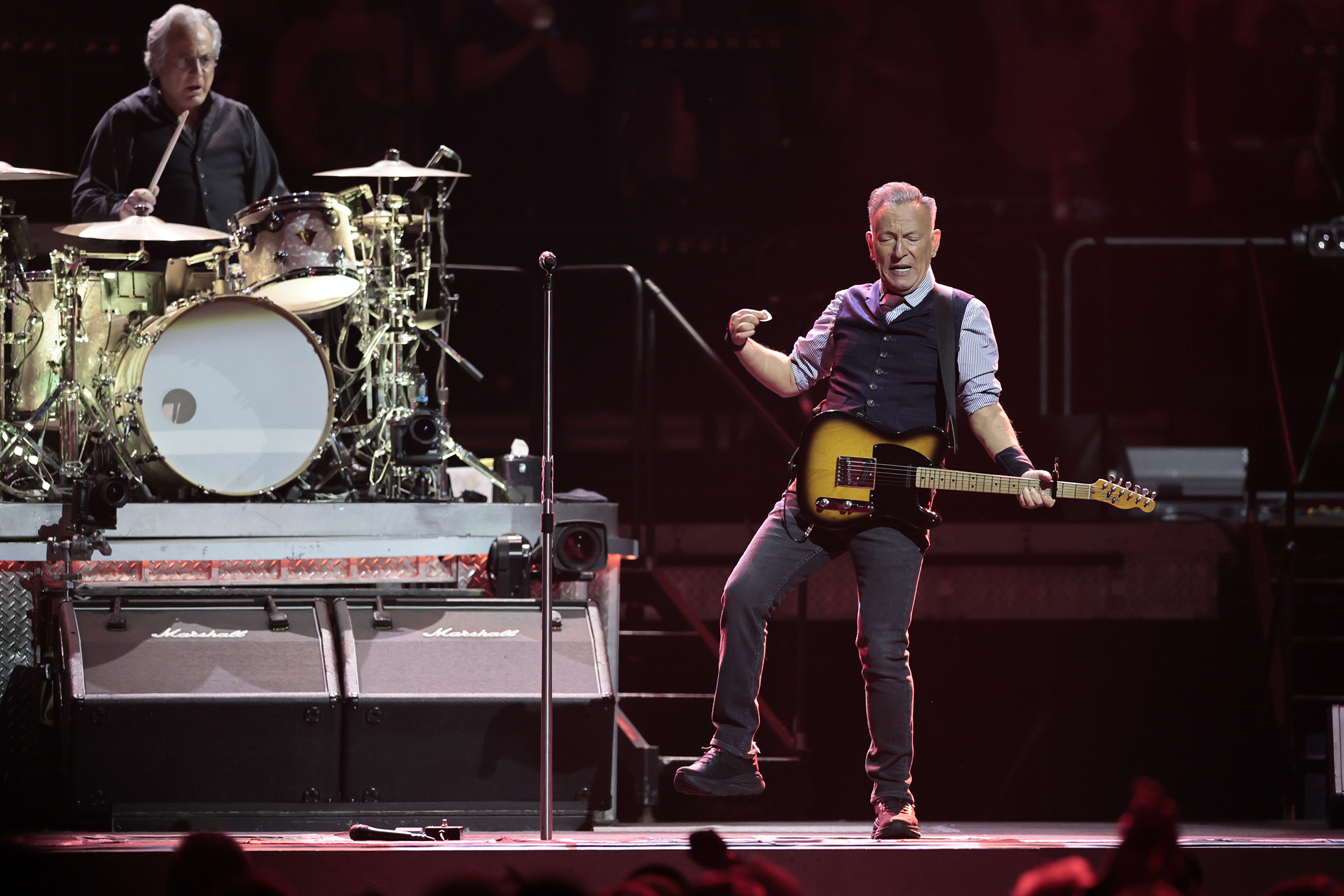
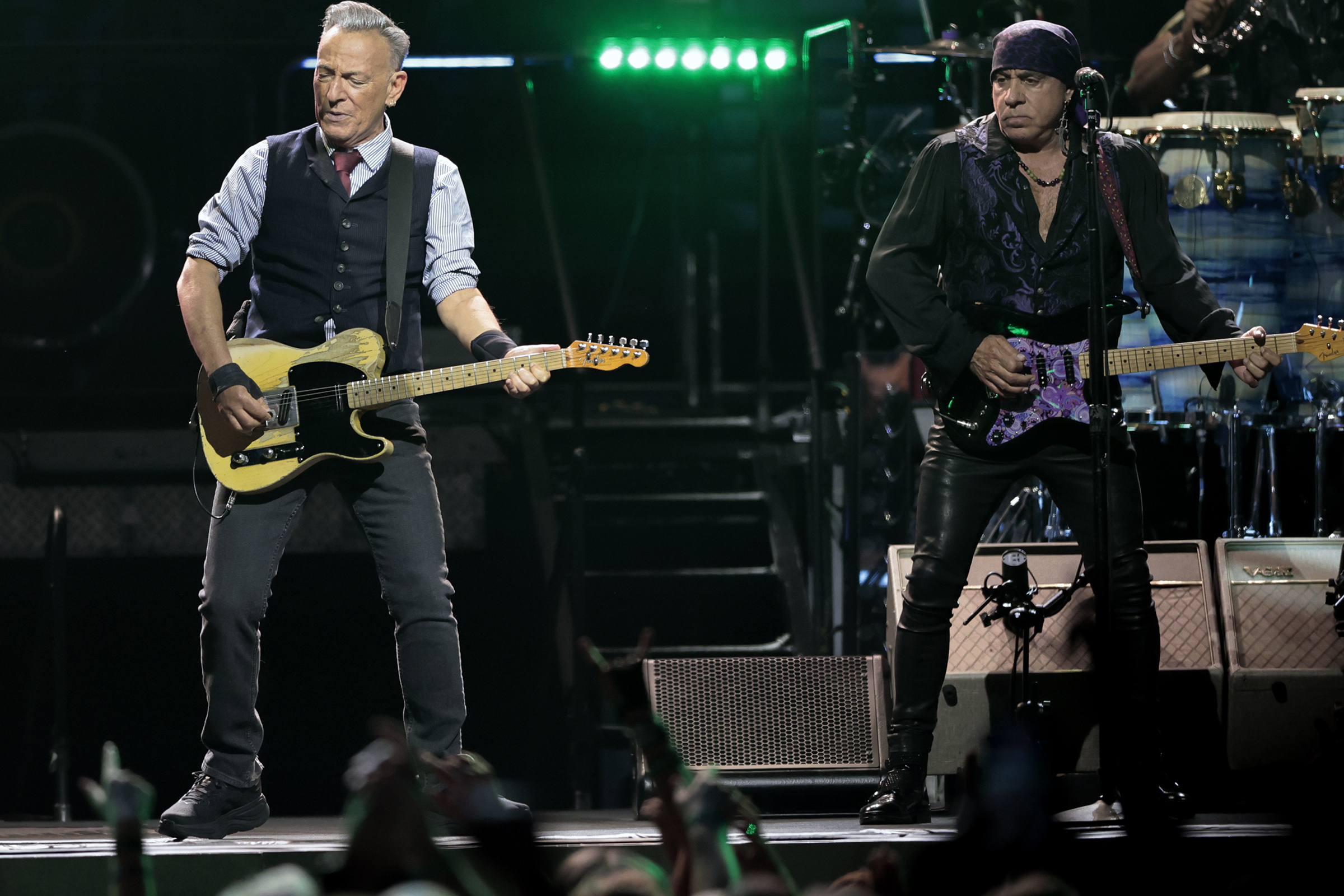
Bruce Springsteen and members of the E Street band perform during their “Land of Hope & Dreams” tour stop at Xfinity Mobile Arena in Philadelphia on May 30, 2026.Elizabeth Robertson / Staff Photographer
Springsteen’s Philly concert film is finally complete
The encore has arrived.
When word got out that Bruce Springsteen was releasing a YouTube concert film of his May 30 show with the E Street Band at Xfinity Mobile Arena, titled Land of Hope and Dreams American Tour (Philadelphia Freedom Cut), I naturally assumed the whole thing was going to be made available at once.
That was incorrect.
Instead, Springsteen chose to divvy it up in four parts, releasing the show, in which he was explicit in his criticism of President Donald Trump, as each chunk was finished by in-house E Street filmmaker Thom Zimny.
The release of the show in sections was in the spirit of the tour itself, which was quickly pulled together after Springsteen wrote “Streets of Minneapolis” in response to the killing of Alex Pretti and Renee Good by ICE agents last winter.
“The whole thing, the pop-up tour, was about immediacy and being in this moment, providing something that I felt an audience, my audience, could use in this moment,” Springsteen told Rolling Stone.
It also had the advantage of not needing to be consumed in one three-hour stretch, instead breaking down the marathon Springsteen experience into four easily consumable streaming episodes.
Now, seven weeks after the release of the first seven songs — starting with a rousing anti-Trump speech and a emphatic version of Edwin Starr’s “War” — the last of those came out this week.
The final section keeps up the protest theme.
Springsteen opens by shouting out the Pennsylvania Immigrant coalition before launching into the immigrant song “American Land,” in which he raises a fist and sings “the hands that built this country, we’re always trying to keep out.”
And, before Bob Dylan’s “Chimes of Freedom,” late civil rights leader John Lewis’ concept of “good trouble” is evoked as Springsteen urges his fans to “say something, do something, sing something” if they’re feeling angry or hopeless at the state of American affairs in 2026.
But the final 38-minute section also contains the celebratory parts of the show: the rousing, house-lights-up catharsis of “Born to Run,” the crowd pleasing “Dancing in the Dark,” and the horn-happy soul strut of “Tenth Avenue Freeze Out.” Plus, there are lots of crowd shots of Springsteen fans getting loosey-goosey on a Saturday night.
If you were there, look for yourself.
The concert film as a whole is a moving snapshot of Springsteen at 76, a still electrifying performer leading a band that’s steadfastly backed him for a half century. And as much as the “Land of Hope and Dreams” show is pointedly political, it is just as much about the bond between Springsteen, his fellow musicians, and their audience.
That deeply felt bond, in Philadelphia’s case, goes back to the Main Point in Bryn Mawr in 1973, a date that he notes before thanking his audience “for a lifetime.”
— Dan DeLuca
Jilly from Philly and her fire fits
It’s been a busy year for North Philly star Jill Scott. She released her first album in more than a decade in February, embarked on a world tour, and more recently appeared in Netflix’s Why Did I Get Married Again?, the third installment of Tyler Perry’s rom-com series.
Now almost 20 years since her acting debut in the series’ first movie (Why Did I Get Married?), Scott revisits the role of Sheila, the sweet and strong woman subjected to downright awful and fatphobic treatment from her (now ex) husband.
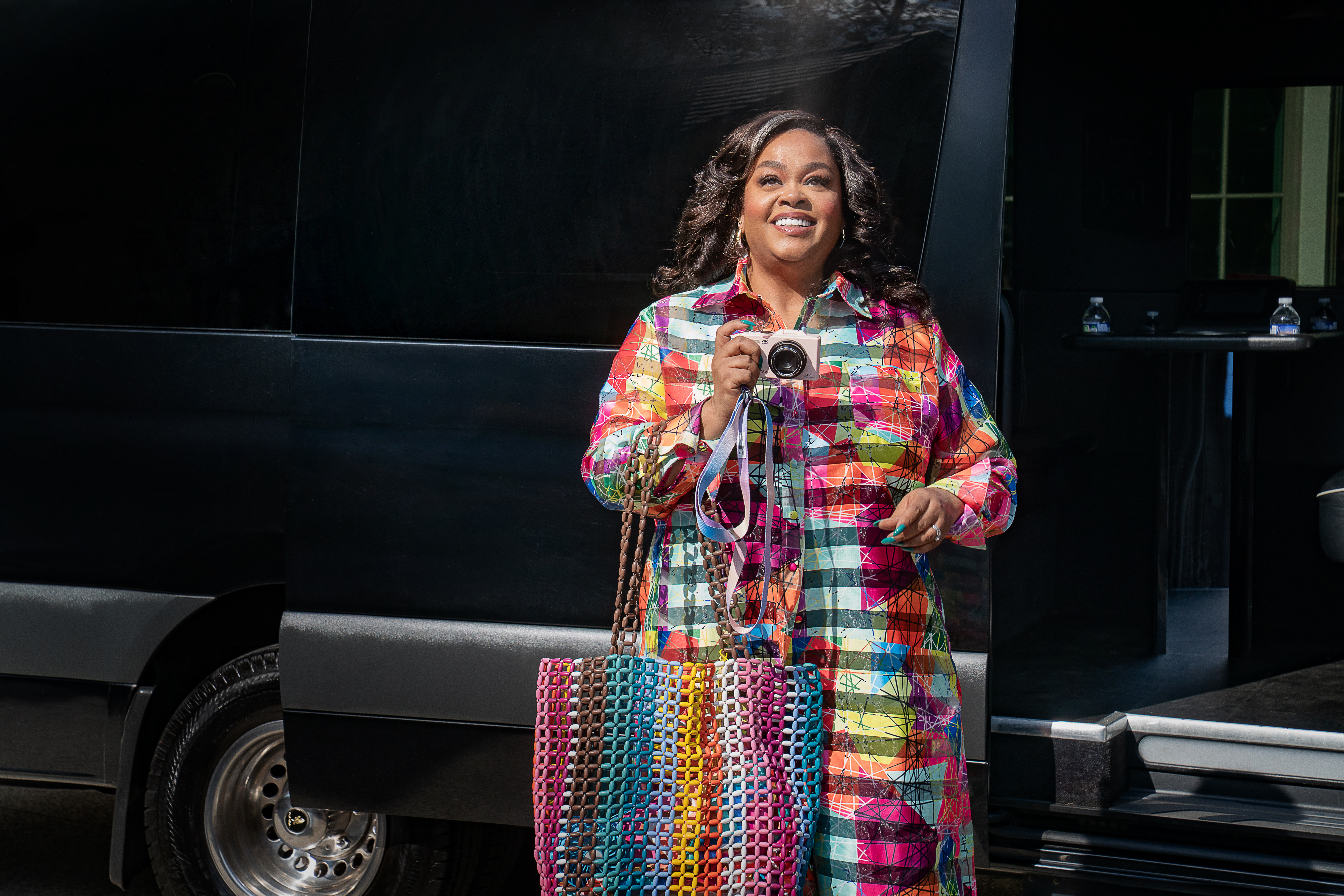
Jill Scott as Sheila in “Why Did I Get Married Again?”CHIP BERGMANN
Over the course of the trilogy, Sheila gains confidence and thankfully sheds the frumpy old clothes of her past. The new film sees Scott’s character shine in a stunningly chic wardrobe with eye-catching accessories and flattering silhouettes that perfectly hug her curves (shout out to costume designer Raiyonda Vereen). Shrinking, shy Sheila is gone; in her place is a seductive and stylish woman who could easily walk a runway, with some of Scott’s undeniable star-power surfacing. It’s wonderful to see plus-size fashion get the spotlight here with pieces like a leopard print and black lace negligee and a bright-colored striped button-down dress with a matching tote bag. I’d definitely line up to buy that clothing line.
Plus, since it’s Halloween, I’ve got to share a spooky movie rec: the zombie classic Night of the Living Dead. Filmed and set outside of Pittsburgh, George A. Romero’s legendary horror film isn’t just creepy (and pretty gory), it’s also a fascinating social critique of 1968. Its sequel, Dawn of the Dead (1978), made the top 25 in The Inquirer’s ranking of the 50 best Philly movies.
“Why Did I Get Married Again?” is streaming on Netflix; “Night of the Living Dead” is streaming on multiple platforms, including YouTube, Prime Video, and HBO Max.
A secret Philly connection in the season’s hottest documentary
I saw You Can See Everything in a packed theater at the Ritz Five on Monday night and it was one of the most delightful moviegoing experiences I can remember — we all gasped, groaned, and laughed together.
In the documentary, Nathan Fielder (of Nathan for You and The Rehearsal) moved in with Theranos’ famed founder and fraudster Elizabeth Holmes in her home during the final days before she went to prison. Their time together is delightful and confounding. It may become the most talked about movie of the year — not because it will be the most-seen movie, but because everyone I know who has seen it cannot stop talking about it.
But there are great movies that come out all the time — why would I write a Philly-specific blurb for this one? Well, I can’t really tell you. Or, I don’t want to because it would serve as a major spoiler.
I will say: There’s a major Philly-area connection. Go see it in a packed theater.
“You Can See Everything” is playing in theaters across the region.
A Bryn Mawr author’s bestselling novel is getting the Amy Poehler treatment
Kate Myers’ best-selling novel, Excavations, is a window into the drama, sizzling romances, and deep-rooted deception of the archaeological world.
The story follows four women who travel to Greece to uncover historical finds at the ancient site of the original Olympics. They soon discover an object buried in the dusty terrain that reveals the significant role women played in early athletic competition. But the most compelling element, for me anyway, was the secret deals transpiring behind the scenes.
Myers, a Bryn Mawr native and University of Pennsylvania graduate, was inspired by an archaeological trip to Greece in 2008. The long hours and sweltering heat convinced her archaeology wasn’t necessarily the career for her, but the experience fueled her appetite for travel and storytelling.
After shopping the manuscript for seven years, Myers landed a deal with HarperCollins Publishers, and the book was released in 2023. The bestseller caught the attention of Amy Poehler and Parks and Recreation co-creator Michael Schur, who adapted the novel into a new Peacock series, Dig. All 10 episodes premiere Nov. 23.
Admittedly, I don’t read much fiction. My growing book collection is far more steeped in self-help books and biographical works. The stacks of books wedged on the shelves of my entertainment center are proof my interests stray far from a title like Excavations. Yet, I couldn’t put the book down for more than five minutes. I was hooked.
I don’t know much about archaeology, but I was fully immersed into the world Myers built from the opening chapters. It’s a credit to her ability to shape these characters, and cohesively weave each of their plot lines into one singular story. It was a true page turner, and I think the episodic nature of the chapters and the audible laughs the story generated, are prime for a project helmed by the likes of Poehler and Schur.
Along with my excitement for the series, Myers’ book is making me reconsider my stance on fiction. It’s inspired me to step outside my comfort zone, as Myers has done throughout her career in entertainment and media. Her journey as an author, and now co-executive producer of a Peacock series, is proof of the power of conviction. Excavations was a leap of faith worth making, and in one month viewers will see her story take on a new form.
— Earl Hopkins
For Camden-native and journalist Trymaine Lee, the root of the Black vote is in Philadelphia
America Amended, Pulitzer Prize-winning journalist Trymaine Lee’s docuseries exploring what America’s constitutional rights mean in the everyday lives of its Black citizens, is overflowing with Philadelphia-based brilliance.
The first episode, “Philadelphia: Does the Ballot Equal Power?,” streaming now on The Root’s YouTube Channel, studies the 15th Amendment, the Reconstruction-era addition to the Constitution guaranteeing Black men the right to vote. Because, according to Carolyn C. Cavaness, pastor of Mother Bethel A.M.E. Church, Philadelphia was the nation’s center of Black power in the 19th century.
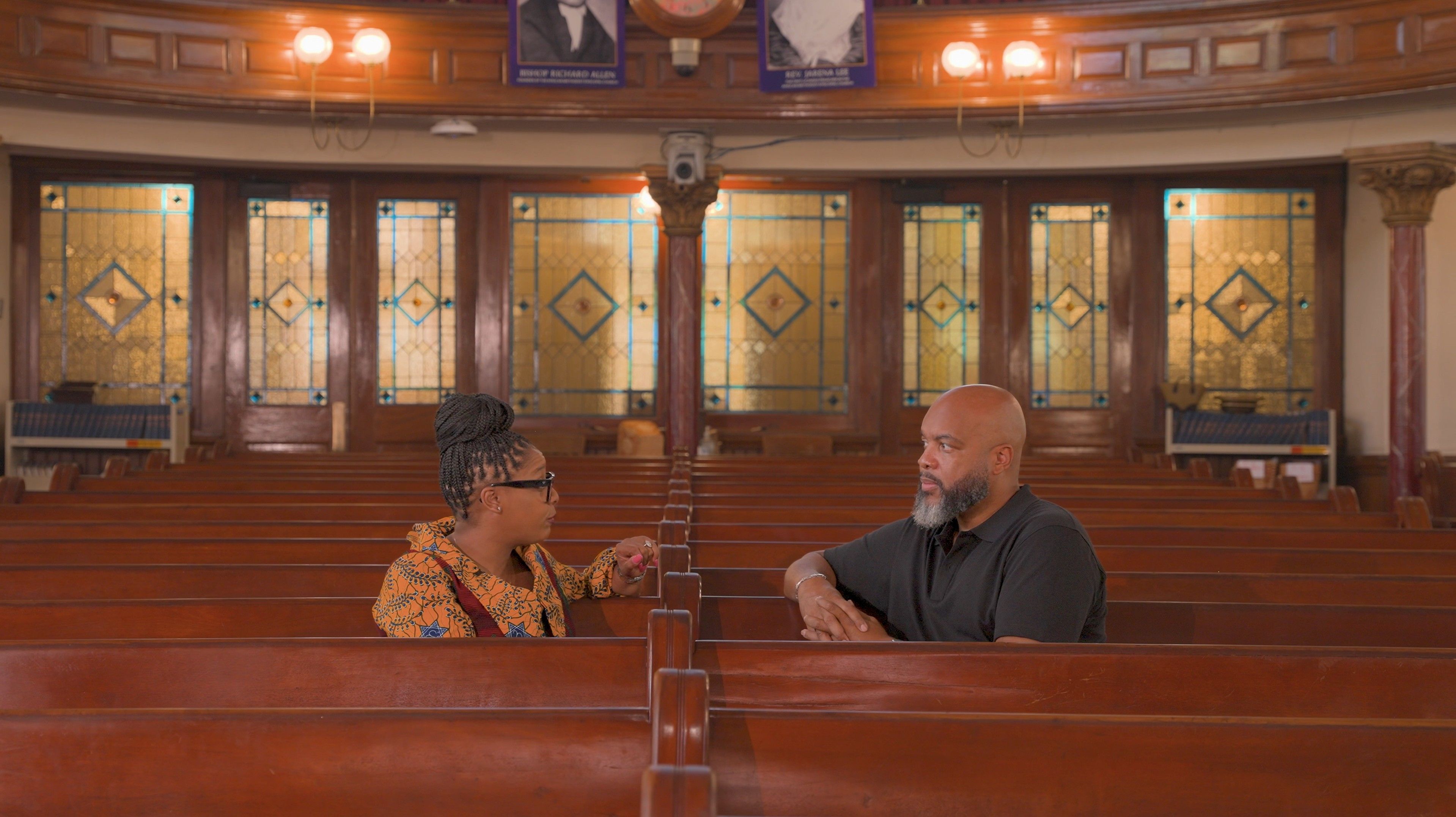
Mother Bethel pastor Carolyn C. Cavaness talks to Pulitzer Prize-winning journalist and Camden native Trymaine Lee about the 15th Amendment and it’s relation to Philadelphia. The conversation is featured in the first episode of “America Amended,” a six-part docuseries produced by The Root and Watering Hole Media.The Root/Watering Hole Media
It was also in Philadelphia that activist and educator Octavius C. Catto was murdered in 1871 for encouraging Black men to vote, despite the ratification of the 15th Amendment the previous year. His death made him an early martyr for Black voting rights.
It’s a history we should all take care to remember in the weeks before the midterm elections.
Episodes drop each Sunday through Nov. 14.
In addition to Philadelphia, other major American cities including Detroit, Atlanta, Milwaukee, Houston, and Jackson, Miss., have their own episode. Each city focuses on a particular amendment like the 19th, which prohibited denying voting rights based on sex, and the 13th, which abolished slavery. Sunday’s episode focuses on Atlanta and the Second Amendment right to bear arms.
Lee, a Camden native and author of A Thousand Ways to Die: The True Cost of Violence on Black Life in America, is an earnest journalist. He’s well-versed in history, clearly knowing the answers to questions before he asks, yet he inquires in such a way we see he’s still learning. It’s what makes the conversations so engaging.
Camden native Trymaine Lee is the host of a six-part docuseries for The Root and Watering Hole Media, “America Amended,” exploring what America’s constitutional rights mean in the everyday lives of its Black citizens.The Root/Watering Hole Media
Temple University’s director of the Center for Anti-Racism Timothy Welbeck chats with Lee in front of the Constitution Center. Narrative strategist for 1838 Black Metropolis Joi’ C. Weathers is pensive at Catto’s South Philly mural. State Rep. Andre D. Carroll is thoughtful in his Germantown office.
Their message is clear: The right to vote drives their activism in Philadelphia.
Lee reminds us why it’s imperative Black folks exercise our hard-fought constitutional right, instead of chastising those who chose not to. By the end of the 15-minute episode, we understand why Philly is at the center of Black people’s storied history at the ballot. We are also gently reminded what the world might possibly look like if Black people lose the vote.
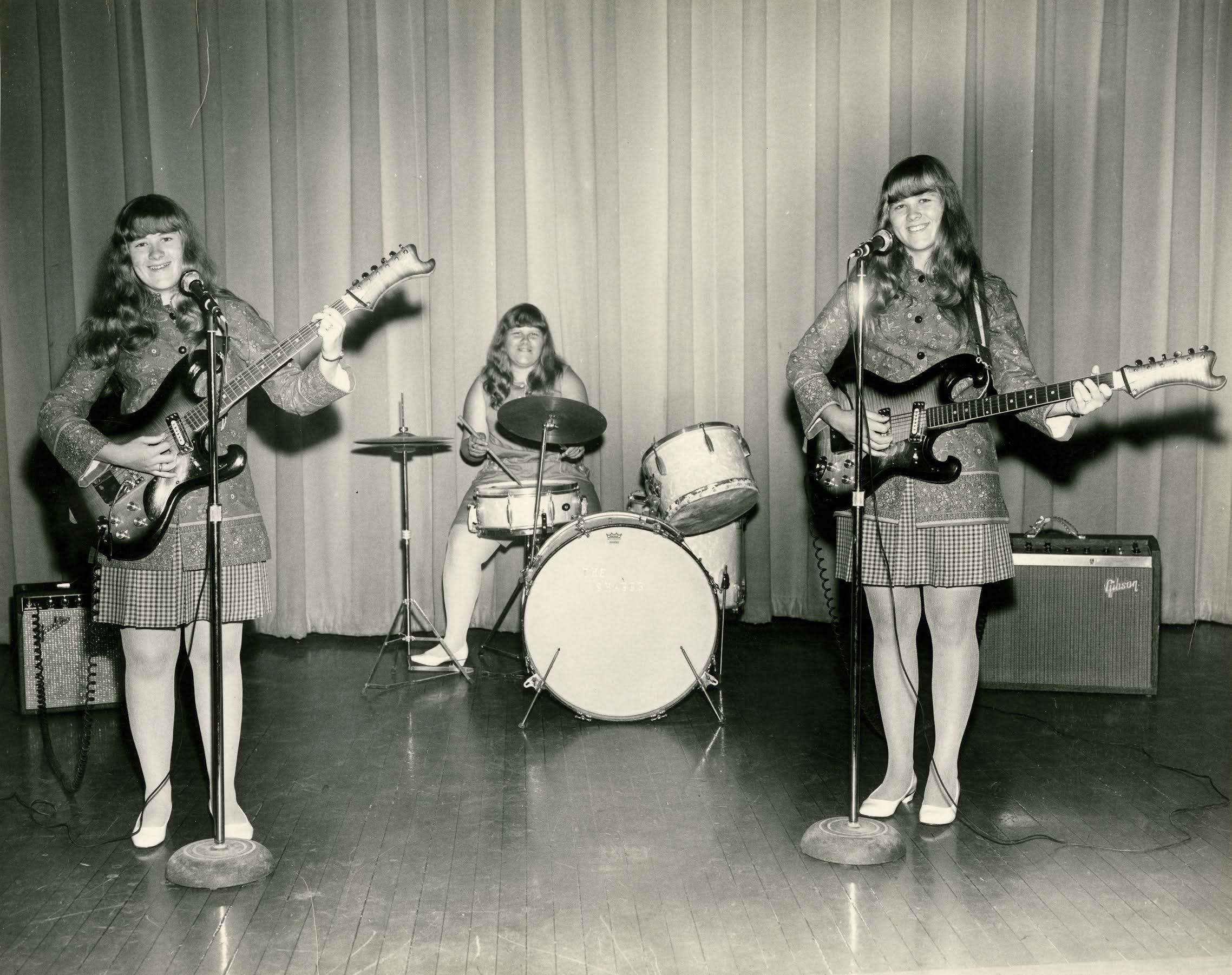
A still image from the documentary “We Are The Shaggs,” which screens at the Philadelphia Film Festival this weekend.We Are The Shaggs / Courtesy of Bob Merlis
Two picks for the final weekend of Philadelphia Film Festival
It’s the final weekend of the Philadelphia Film Festival, and with it comes a last chance to catch two music-related movies with widely varied subject matter that tell equally compelling stories.
First up screening on Saturday, Oct. 24, is Once Upon A Time In Harlem, the documentary whose direction is credited to the late William Greaves and his son David, whose daughter Liana is a producer. The film chronicles a 1972 gathering at the home of the great jazz composer and bandleader Duke Ellington that reunited many key figures of the Harlem Renaissance, the Black cultural and intellectual movement of the 1920s and 1930s
The elder Greaves, who died in 2014, shot footage of the cocktail party but never found a satisfying use for it. Now, David Greaves has revisited the footage, which features a staggering number of luminaries looking back on one of the most important cultural movements of the 20th century.
They include writer Richard Bruce Nugent, poet Arna Bontemps, and musicians Noble Sissle and Eubie Blake, who quips that “being here with all these intelligentsias, I’m afraid to open my mouth!”
The second music-centric doc is We Are The Shaggs, which tells the story of the love ‘em or hate ‘em trio of Dot, Helen, and Betty Wiggin. Their father, Austin, forced them to form a band to fulfill a prophecy from his mother that he would one day have daughters who played in a famous band.
The Shaggs’ 1969 album, Philosophy of the World, both has been derided for its rank amateurism and revered as a exemplar of intuitive Outsider Music by super fans such as Kurt Cobain and Frank Zappa, who helped spawn a cult of the Shaggs.
And along with director Ken Kwapis’ humanizing of the Wiggins, that gets to the crux of the movie: The question of how it gets decided what music and culture is good (and bad), and who gets to make that decision.
“Once Upon A Time In Harlem” screens at Film Society East, 125 S. 2nd St. at 11:45 a.m. on Saturday, Oct. 24. “We Are the Shaggs” screens at 9:15 p.m. at Film Society Bourse, 400 Ranstead St., filmadelphia.org.
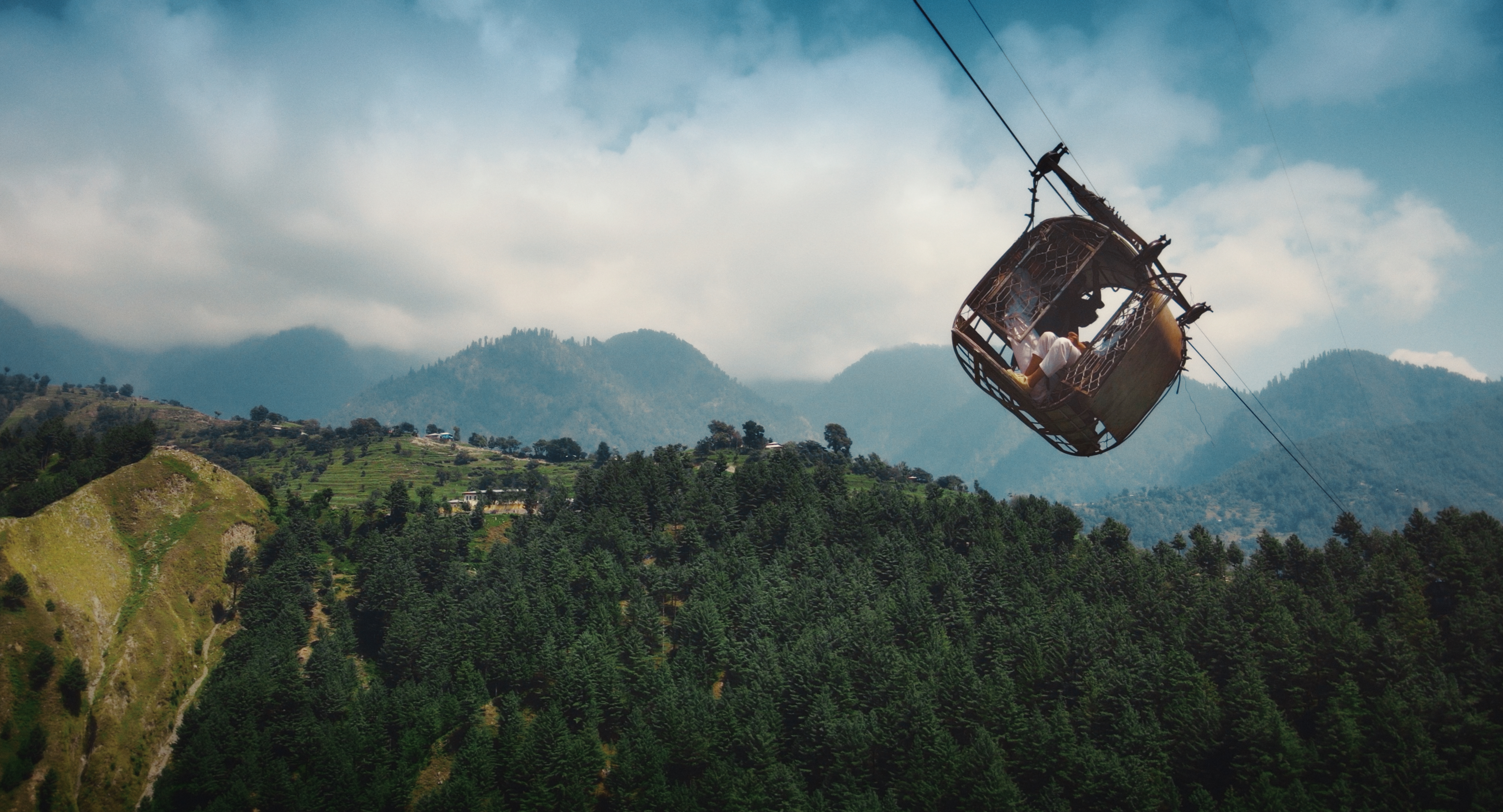
In 2023, the only way kids could get to school in a part of Pakistan’s Allai Valley was in a rickety cable car. That was until one car got stuck midair, high above a gaping valley, and then a cable snapped.
Lives held together only by faith and prayers were broadcast live while the government scurried to save the children and two men inside the dangling car.
I remember watching the news and being both amazed and nervous in 2003. When Hanging by a Wire, Mo Naqvi’s documentary on the incident and the rescue efforts, premiered at Sundance earlier this year, l was curious how the filmmaker would relate a story that had already been heavily documented through news and social media. More importantly, I was intrigued if he’d be able to maintain that anxiety in his audiences, most of whom already knew how things ended that day.
And yes, he did. The documentary made me hold on to my seat, look away, bite my nails, and both cheer and jeer loudly. So many stories from South Asia get huddled together under the canopy of Bollywood, and it’s such a joy to be witnessing a time where festivals are making space for stories that lie beyond the song and dance of it all.
Ultimately, it’s a story of human resilience and the ingenuity with which people approach problem-solving as a community. It’ll also help you love your morning commute a bit more.
“Hanging by a Wire” plays Sunday, Oct. 25, 3:15 p.m., at Film Society Bourse. filmadelphia.org
— Bedatri D. Choudhury
The Wilma Theater’s filmed production of “Horsegirl & Cowdaddy” is available to stream online through Nov. 1. JOHANNA AUSTIN
A world premiere, viewed from home
“Don’t you want more?”
That’s what a well-intentioned, patronizing character named Bethel (Ni-Ni) repeatedly asks Horsegirl (Samora de la Brisa), a trans woman living in a small Pennsylvania town, in the play Horsegirl & Cowdaddy. The implication: Everyone under the LGBTQ+ umbrella would rather be in urban areas with larger queer and trans communities than call a rural town home.
At its core, this work by Philadelphia playwright DJ Hills is an ode to queer people who want to stay in their bucolic communities and remain true to themselves.
“There’s a present-day myth that trans people can only find happiness in metro areas and cities,” actor de la Brisa told The Inquirer last month. “We are everywhere. We exist in multitudes.”
Horsegirl & Cowdaddy had its world premiere at the Wilma Theater and the Cowdaddy in question, played by artistic director Lindsay Smiling, is the gruff, endearing, and devoted father. His love for Horsegirl never falters after she came out as trans, a fact that shocks Bethel, an ambitious teacher who begins dating her.
There’s so much tender love in this play as de la Brisa and Smiling deliver beautiful chemistry. Ni-Ni’s presence throws their relationship off-balance, but neither father nor lover will prevent Horsegirl from becoming who she wants to be. In this case, it’s a literal horse (which is where the play gets gleefully strange, in the best way).
The Philadelphia stage has run concluded, but the digital production is available to stream on Watch Wilma through Nov. 1. Horsegirl & Cowdaddy will next appear at New York’s Soho Rep (Feb. 20 to March 21).
— Rosa Cartagena
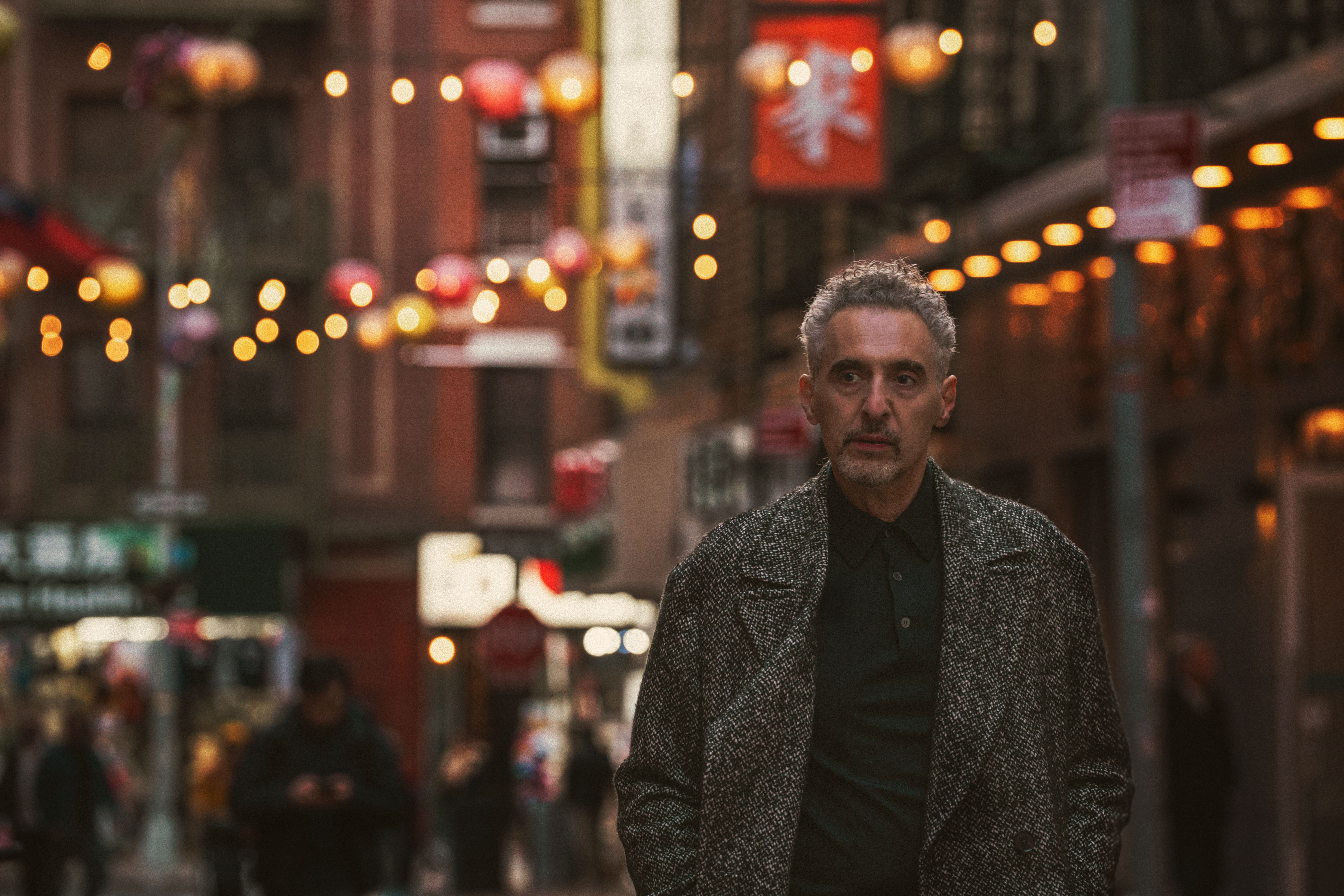
John Turturro stars in Noah Segan’s “The Only Living Pickpocket in New York.” The crime thriller kicked off the 35th annual Philadelphia Film Festival.Courtesy of Jon Pack
A fantastic Philadelphia Film Festival opener
After weeks of anticipation, opening night at the 35th annual Philadelphia Film Festival was just as I envisioned. Multiple lines of people wrapped around the Philadelphia Film Society Center on Thursday night for Noah Segan’s latest, The Only Living Pickpocket in New York.
The film follows John Turturro’s Henry Lehman, an aging criminal whose kleptomania is spurred by survival and his willingness to care for those around him, especially wife Rosie (played by Karina Arroyave), whose unexplained sickness has affected her speech and motor skills.
Turturro’s portrayal is rich with emotional depth. I could recognize his pain, hurt, and regret. I also saw the moment his intuition and survival instincts kick in, when he is cornered by impending danger or failure, largely stirred by the cocky crypto bro Dylan (Will Price), who chases down Turturro’s character for stealing a prized possession.
His riveting performance was rivaled only by Tatiana Maslany, who played estranged daughter Kelly.
At times, Segan’s film loses its steam from inconsistent pacing and occasionally choppy dialogue. But The Only Living Pickpocket in New York was a great way to kick off the 35th rendition of the annual festival. Nights like these remind me of the magic of movie-making, and I’m excited to see what other mainstream releases, independent films, documentaries, international features, and Philly-based projects are slated to play through Oct. 25.
“The Only Living Pickpocket in New York”is playing in area theaters.
Maybe you’re looking out over a lake while sipping coffee on the porch of a country house, or wistfully reliving the smell of a particular fall day of your youth.
Music often triggers specific associations, and while they’re different in each of us, there’s no denying that the music of Alexis Ffrench is resonating beyond the notes. The 56-year-old British pianist, composer, and producer boasts more than a billion streams.
“With collaborations spanning classical, pop, film, fashion, and sport, Alexis is quite simply redefining the boundaries of classical music and its role in contemporary culture,” his website bio says.
But his latest album, 24, released Friday, might bring back memories for fans of another artist who personified an age. Once upon a time, George Winston similarly bridged classical and other genres with the easygoing attitude of a guy who just casually sat down at the piano to channel a chill mood or gauzy realm where life was better.
Ffrench occupies a fairly narrow emotional range in the album’s 24 tracks; nothing is going to break the spell of a mellow, golden day tinged by a sparkling keyboard and occasional gentle instrumentals. Sameness is a virtue in this world.
It’s probably not a soundscape for classical purists. These listeners have their own phases-in-life associations to draw on anyway — the instantaneous summoning of, say, a certain feeling of the 1970s upon hearing the Poulenc Concerto for Two Pianos and Orchestra. But for many others, 24 is likely an equally powerful time-marker, either to a time before, or the today that will someday be looked back on as a personal golden age.
— Peter Dobrin
DJ Jazzy Jeff (left) and Will Smith (front, right) perform at One Philly: Unity Concert for America on the Benjamin Franklin Parkway on July 5, 2026, in Philadelphia.
A Fresh Prince and Jazzy Jeff seasonal classic
The fast-approach of Halloween and the announcement of Will Smith’s new TV series, 215, have gotten me all nostalgic and revisiting some classics.
I love holiday-themed hip-hop records, and there are few odes that hit the mark as much as DJ Jazzy Jeff & the Fresh Prince’s “A Nightmare on My Street.”
Looking back, the 1988 record is all camp. Will Smith’s lyrics are aimed at the teenage audience that crept into the movie theaters to see Robert England’s Freddy Krueger in the classic horror that inspired the song.
“I said, ”Yo, Fred, I think you’ve got me all wrong. I ain’t partners with nobody with nails that long,” Smith rapped. The DJ Jazzy Jeff-produced beat, which interpolates the title track of the 1984 film, A Nightmare on Elm Street, and Smith’s playful story about escaping Freddy’s razor sharp clutches has an inescapable charm.
Every time I hear it, I’m reminded of the nights my friends and I circled my neighborhood with makeshift costumes, then came back to my parents’ house with buckets of sweets as Wes Craven’s Scream played from the VCR. That’s the true sign of a classic, and DJ Jazzy Jeff, whose real name is Jeffrey Townes, and Will Smith have many of them — from songs like Summertime to shows like The Fresh Prince of Bel-Air.
As you can tell, I’m all for nostalgia. And I think the series will give viewers insight into Smith and Townes’ brotherhood, their musical and entertainment ventures, and a snapshot of life in what feels like a now-distant era of Philadelphia.
— Earl Hopkins
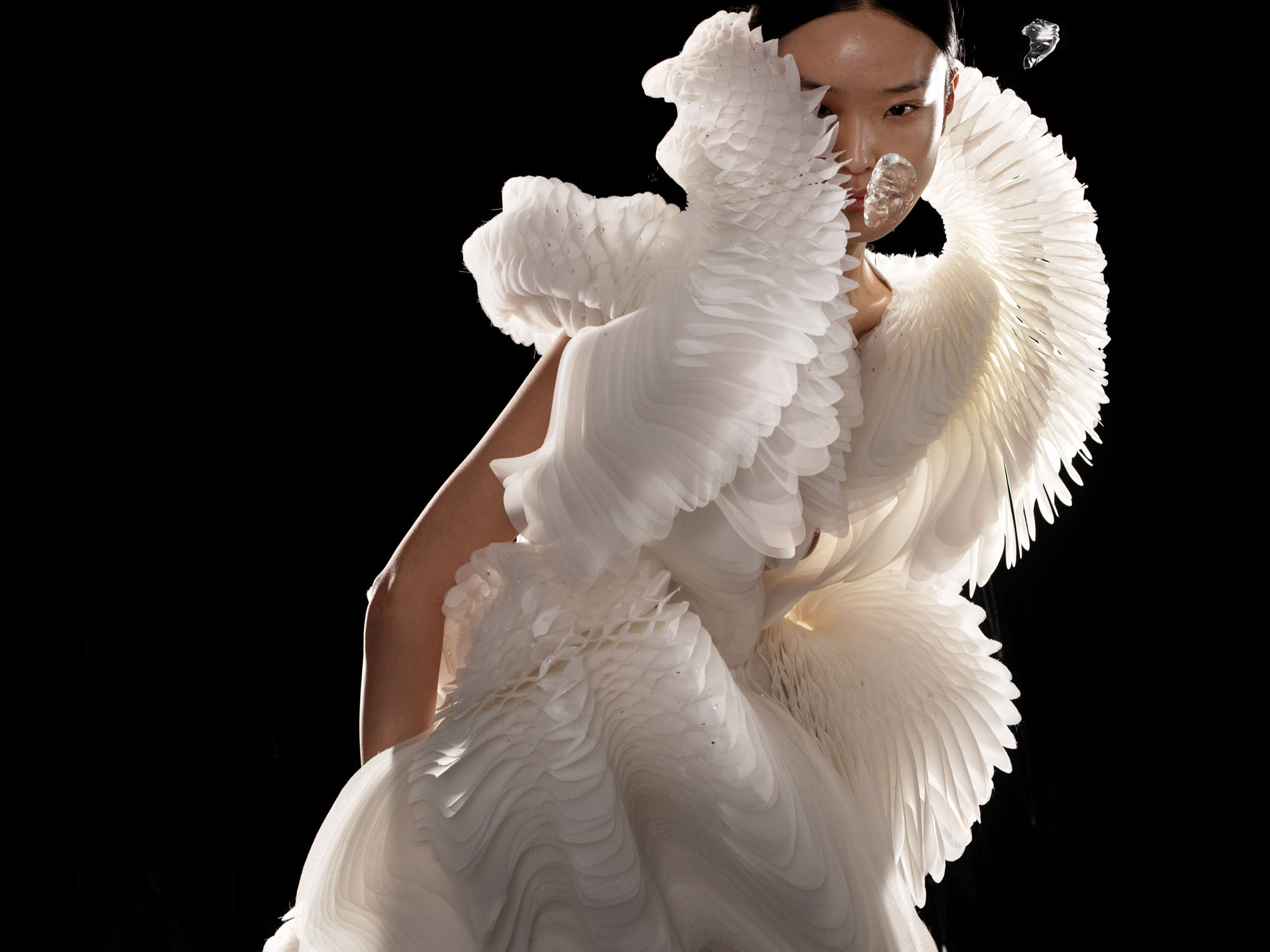
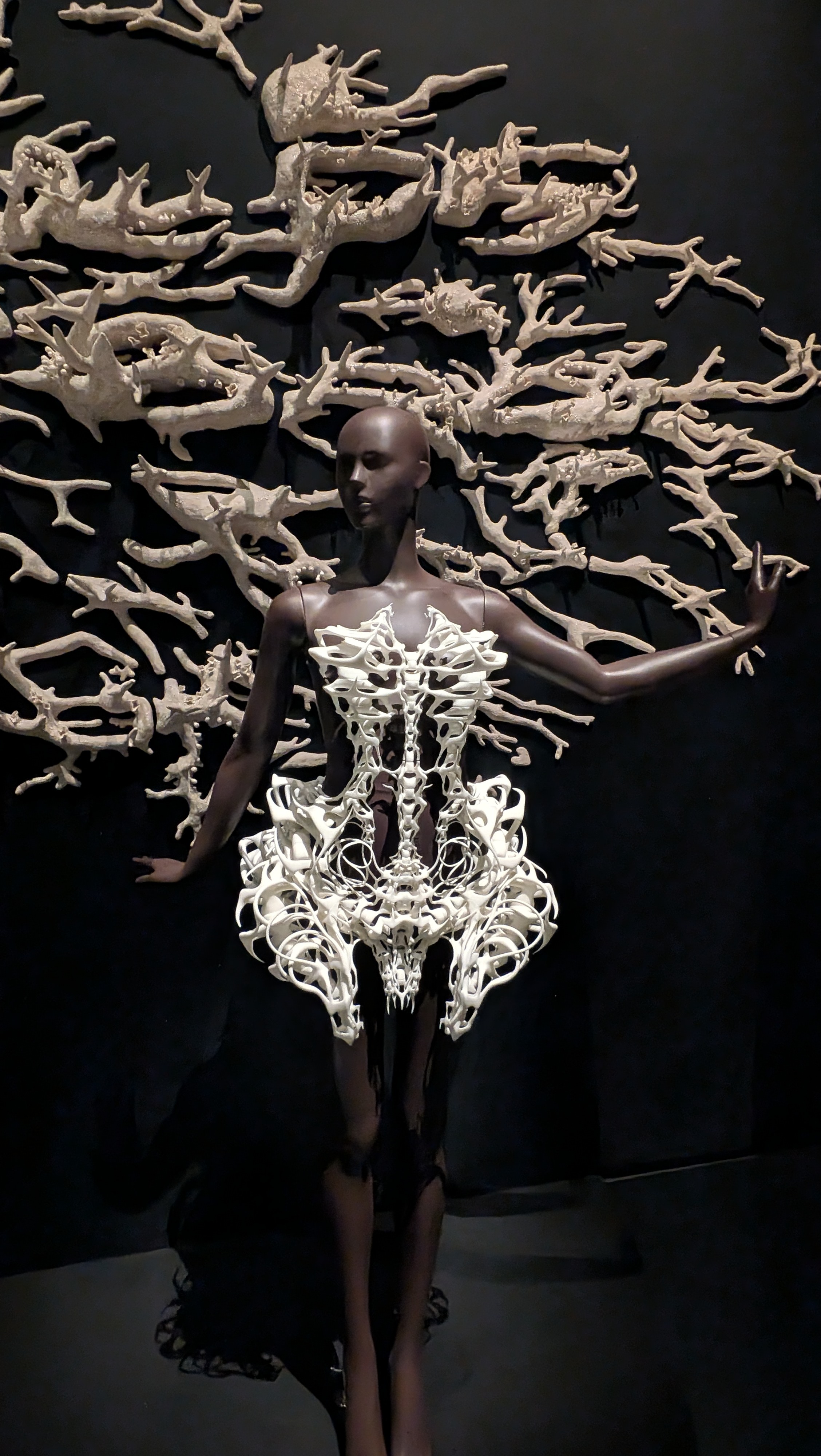
Iris van Herpen. “Skeleton” Dress, from the “Capriole” collection, 2011. 3D-printed polyamide using selective laser sintering. Collaborator: Isaïe Bloch. From Brooklyn Museum’s “Iris van Herpen: Sculpting the Senses” show, through Dec. 6, 2026.Bedatri D. Choudhury
Echoes of Eakins
Philadelphia’s Thomas Eakins was an ardent student of human anatomy. Stories abound of him attending classes and surgical demonstrations at Jefferson Medical College. The result of his acute observation is particularly evident in paintings like The Gross Clinic and The Agnew Clinic. On a visit to the Brooklyn Museum recently, I found a surprising echo of Eakins in the ongoing “Iris van Herpen: Sculpting the Senses” show.
What could possibly connect an early-20th-century artist and a 42-year-old Dutch fashion designer? It’s their shared interest in human anatomy. Van Herpen is obsessed with the body, the skeleton, the nervous system and the many ways in which these interact with nature outside of our bodies.
The Skeleton Dress from 2011 with its 3D printed corset resembling the rib cage and the pelvic girdle is at once exquisite and slightly eerie, much like Eakins’ 1878’s Horse Skeleton, a plaster relief he made as part of his deep study of the animal body.
The museum describes the dress as “halfway between fashion and sculpture” and informs us through gallery notes that it was made in collaboration with Belgian architect Isaïe Bloch. The result is a painstakingly detailed, wearable art with flowing contours that look too fragile to touch, let alone wear.
The whole exhibition is an exercise in constant wonder and awe, well worth the train ride from Eakins’ beloved hometown.
“Iris van Herpen: Sculpting the Senses” through Dec. 6. Brooklyn Museum, 200 Eastern Pkwy., Brooklyn, N.Y. brooklynmuseum.org
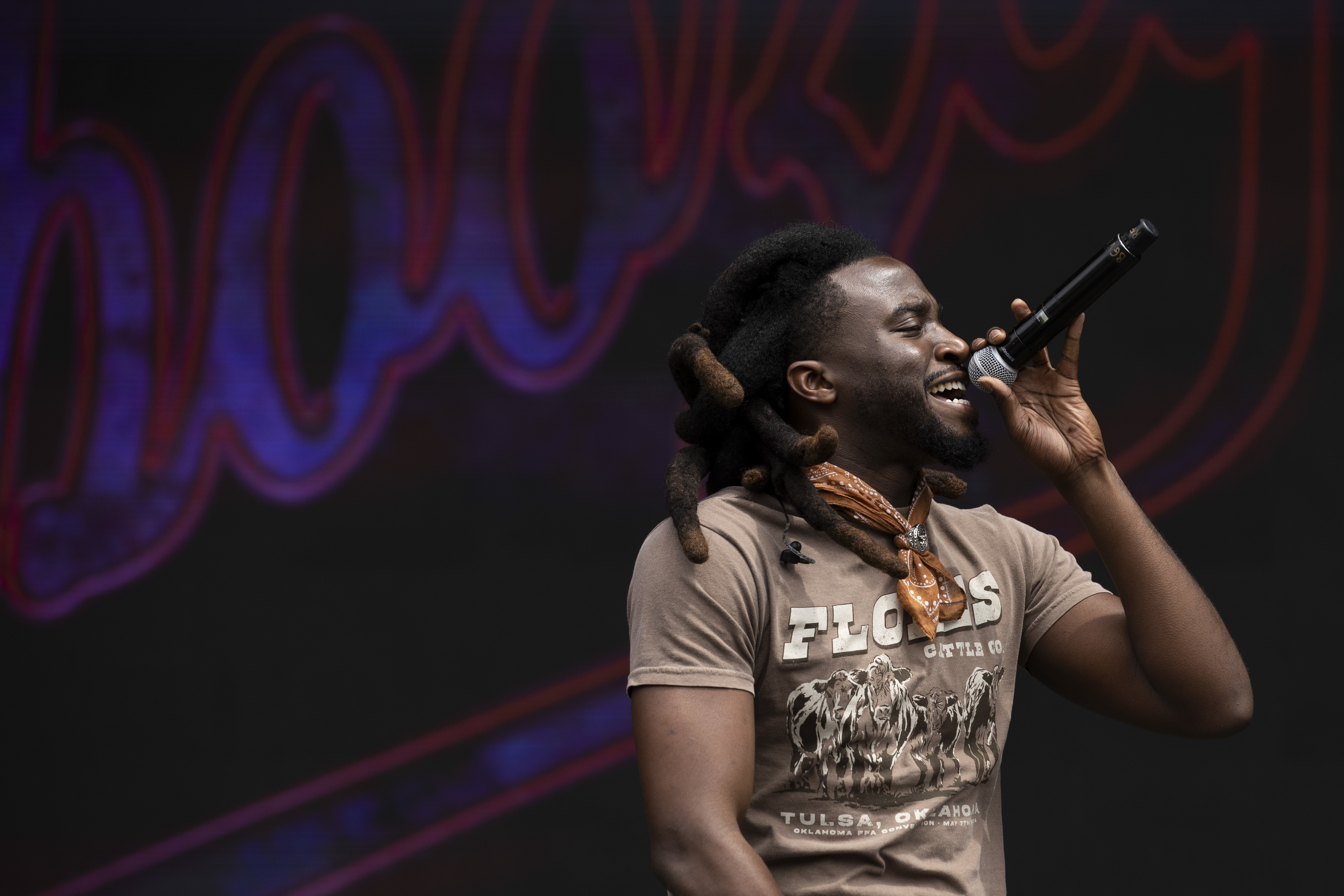
Shaboozey make both kinds of music: country & western.
That’s a Blues Brothers joke, but it’s also spot on when it comes to the artist born Collins Obinna Chibueze, particularly when it comes to the Virginia-raised rapper and singer’s 2026 release, The Outlaw Cherie Lee & Other Western Tales. That’s his ambitious, cinematic, and loaded-with-guests album that’s the follow-up to Where I’ve Been, Isn’t Where I’m Going, the 2024 breakthrough that made him a star.
That album, of course, included “A Bar Song (Tipsy)” that, along with Lil Nas X’s “Old Town Road” and Ella Langley’s current world-dominating “Choosin’ Texas,” is one of the biggest country mega hits of the past decade.
Shaboozey performs during The Roots Picnic at the Mann Center in Philadelphia on Sunday, June 2, 2024.Monica Herndon / Staff Photographer
To his credit, Shaboozey followed that breakout success with “Tipsy,” and multiple contributions to Beyoncé’s Cowboy Carter by swinging for the fences with Cherie Lee, a horse opera of an album that tells a story about a woman who sets out to avenge her father’s death and makes some bad relationship choices that put her own life in peril.
To tell the tale that plays like a Black cowboy spaghetti western by way of Sergio Leone and Quentin Tarantino, Shaboozey enlists a stellar cast.
That includes Teyana Taylor, Jamie Foxx, Leon Bridges, Sam Elliot, Gunna, Kehlani, and Orville Peck on a set of songs that lean into Old West gunfighter tropes while mixing country, hip-hop, and film score flourishes.
When Shaboozey brings this shoot ‘em saga to Philadelphia with his “Outlaws Never Die Tour” — which is playing the Highmark Mann, where he made his local debut at The Roots Picnic in 2024 — he surely won’t have all those big name costars with him.
Or maybe he will, on screen.
The tour will include “cinematic pre-shot visuals that unfold throughout the performance, complementing the songs and immersing audiences in the world of the album,” so this show promises to be not just a concert but also a night at the movies.
Shaboozey’s “Outlaws Never Die Tour” at the Highmark Mann, 5201 Parkside Ave., at 8 p.m. Tuesday. Highmarkmann.com
— Dan DeLuca
An intersection of colorful art in Kensington
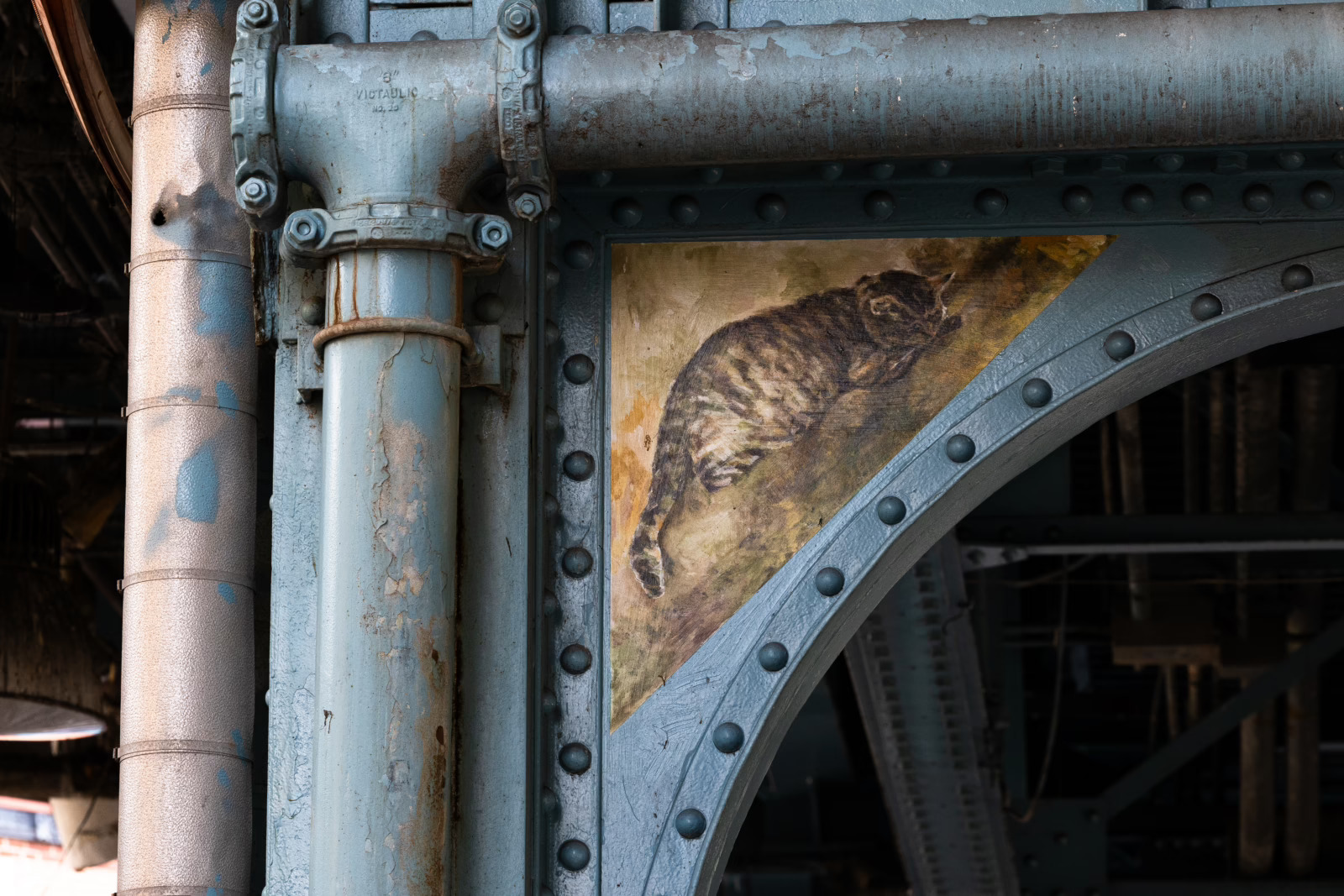
The best art always seems to emerge from the most unexpected places. Like the gusset plates seen throughout the length of the Kensington Avenue underbridge. These triangular metal pieces connect the horizontal and vertical beams of the SEPTA Metro track.
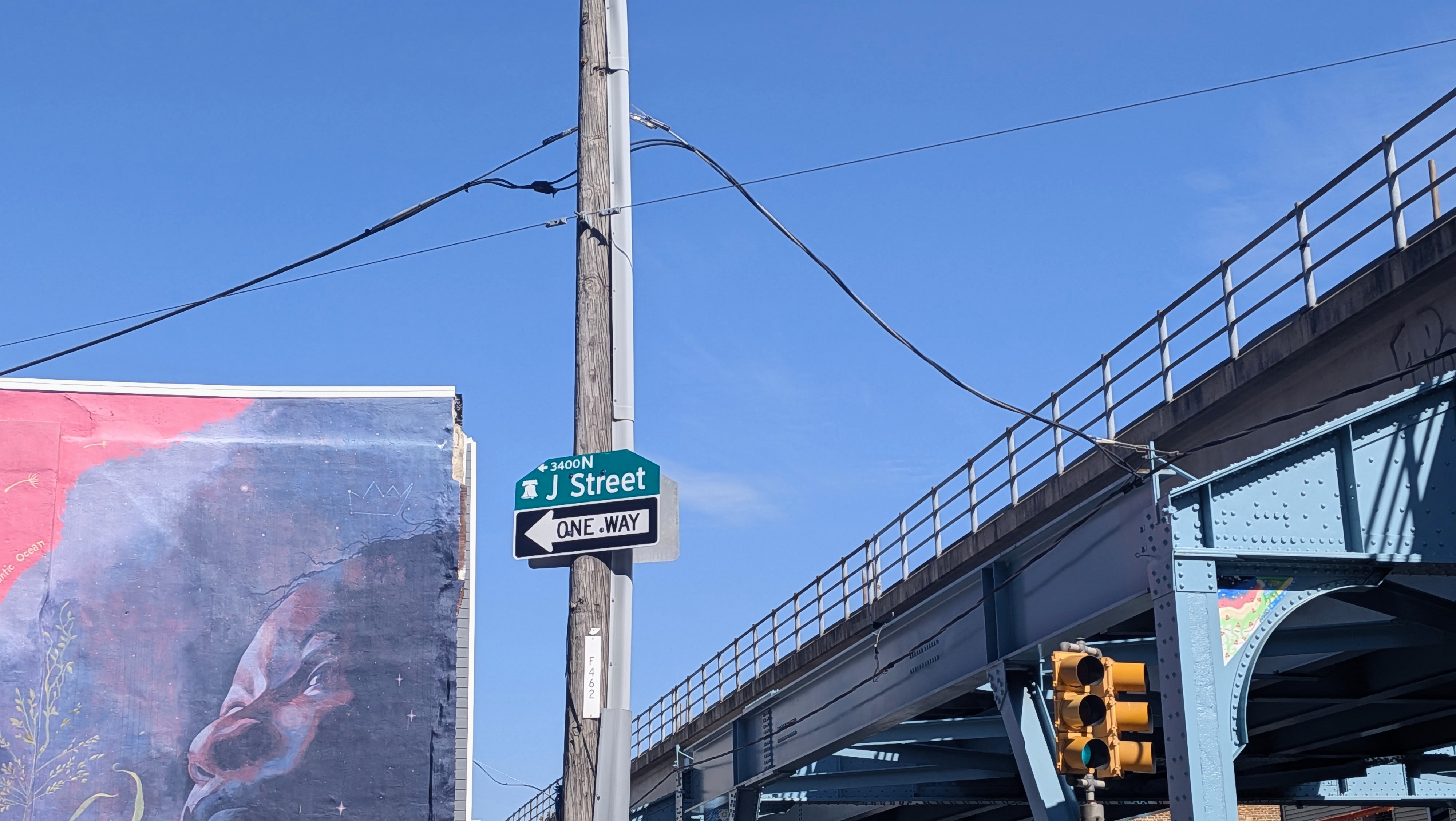
After getting my order of the excellent yuzu ginger cider from Càphê Roasters, I looked up on my way to the L. The afternoon sun fell on the avenue and lit up the art on each little triangle of metal. The artwork — dragons, cats, Pride flags, flowers, monkeys — is part of Mural Arts’ “Heart of Kensington Creates” initiative. Each piece — there are more than 400 peeping out from the bridge from Huntingdon to Tioga — has been drawn by Kensington residents.
The Kensington Avenue mural “The Future Is Worth fhe Fight Just Hold on & You Will See” on the left stands side by side with the little triangle of art on the structure supporting the SEPTA Metro track. That art was created as part of Murat Arts’ “Heart of Kensington Creates” initiative. Photo taken on Oct. 1, 2026.Bedatri D. Choudhury
Right outside Càphê Roasters, at the intersection of J Street and Kensington Avenue, a little triangular sea of blue, red, yellow, and green peeps out from under the bridge. Right beside it, a mural called The Future Is Worth the Fight Just Hold on & You Will See by artists Jess X. Snow and Frisly Soberanis lights up a wall in its swathe of purple and pink.
A little street corner witnessing a conversation between artwork before the rush of the L took over the moment.
— Bedatri D. Choudhury
Dainty fine china fit for a president
Fine china is one of the most utilitarian pieces of artwork a person can own. It’s delicate and sturdy like the familial connections that use and enjoy it.
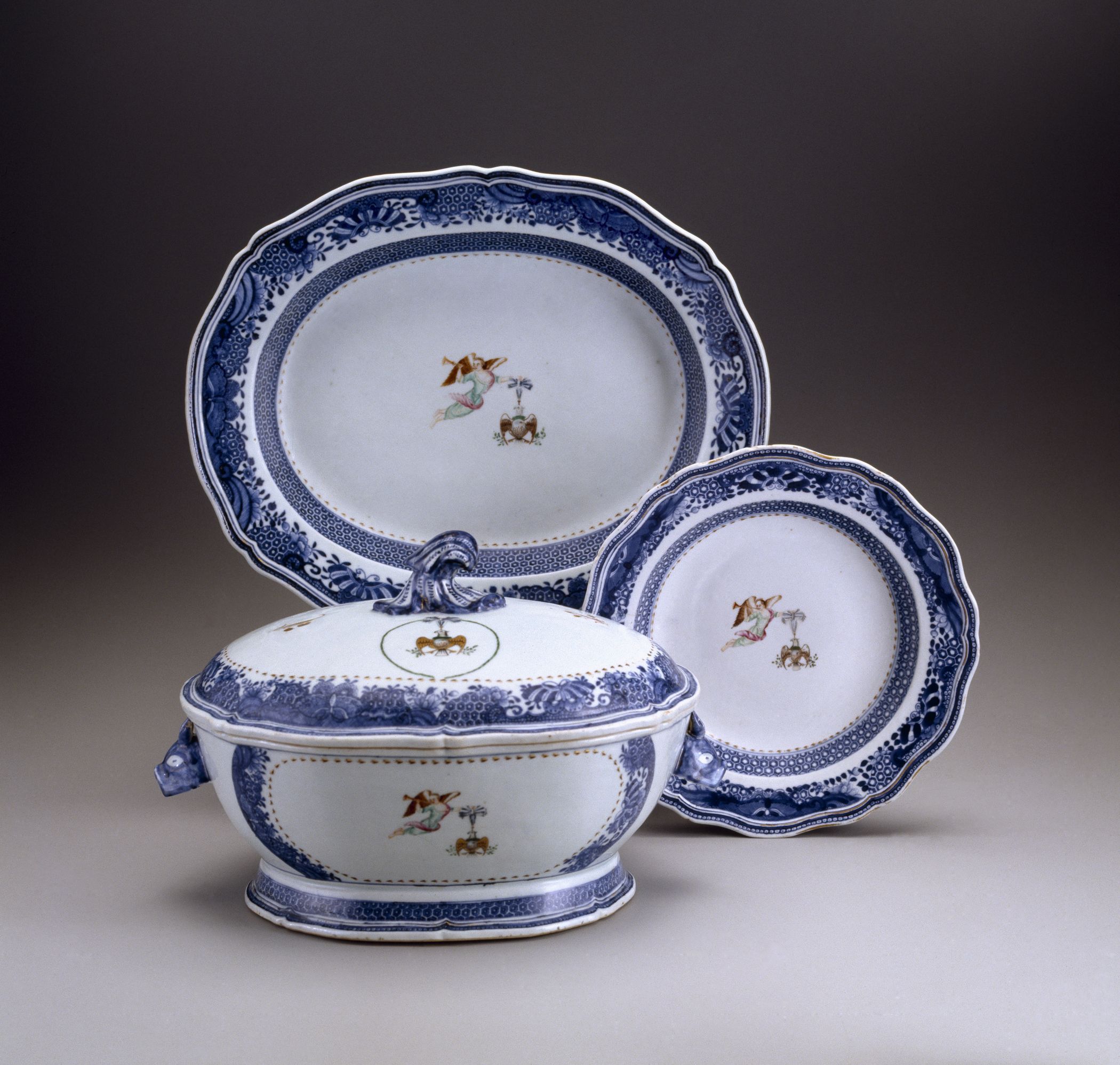
Winterthur Museum, Garden & Library offers a peak at a famous family’s fine china: George Washington’s. Several pieces from his 302-piece set called “The Society of Cincinnati” are on display at the Delaware museum. The Society of Cincinnati was an elite organization of Revolutionary War officers of which Washington was the first president general.
The president and his family used this very set of china while living at the President’s House at Sixth and Market.
Three pieces — a tureen, platter, and plate — are on display at Winterthur Museum, Garden & Library as a part of George Washington’s china collection.Winterthur Museum, Garden & Library
Each piece features a blue border with the Society of Cincinnati’s emblem: a winged figure blowing a trumpet.
What an interesting way for war and art to come together.
With 74 pieces in its collection, Winterthur has the largest number of surviving pieces, acquired by the Delaware estate’s owner Henry Francis du Pont in the early 20th century.
Visitors to Winterthur can view the porcelain works of art in two places in the museum: the Du Pont Dining Room and on the fifth floor in China Hall.
We can only imagine how many slices of cherry pie were served on these dainty plates.
Winterthur Museum, Garden & Library is located at 5105 Kennett Pike, Wilmington. Hours are Tuesday-Sunday 10 a.m. to 5 p.m.