Tag: Scott Perry

  • With control of Congress on the line, Pa. Republicans head to Trump’s midterm convention in Dallas

    With control of Congress on the line, Pa. Republicans head to Trump’s midterm convention in Dallas

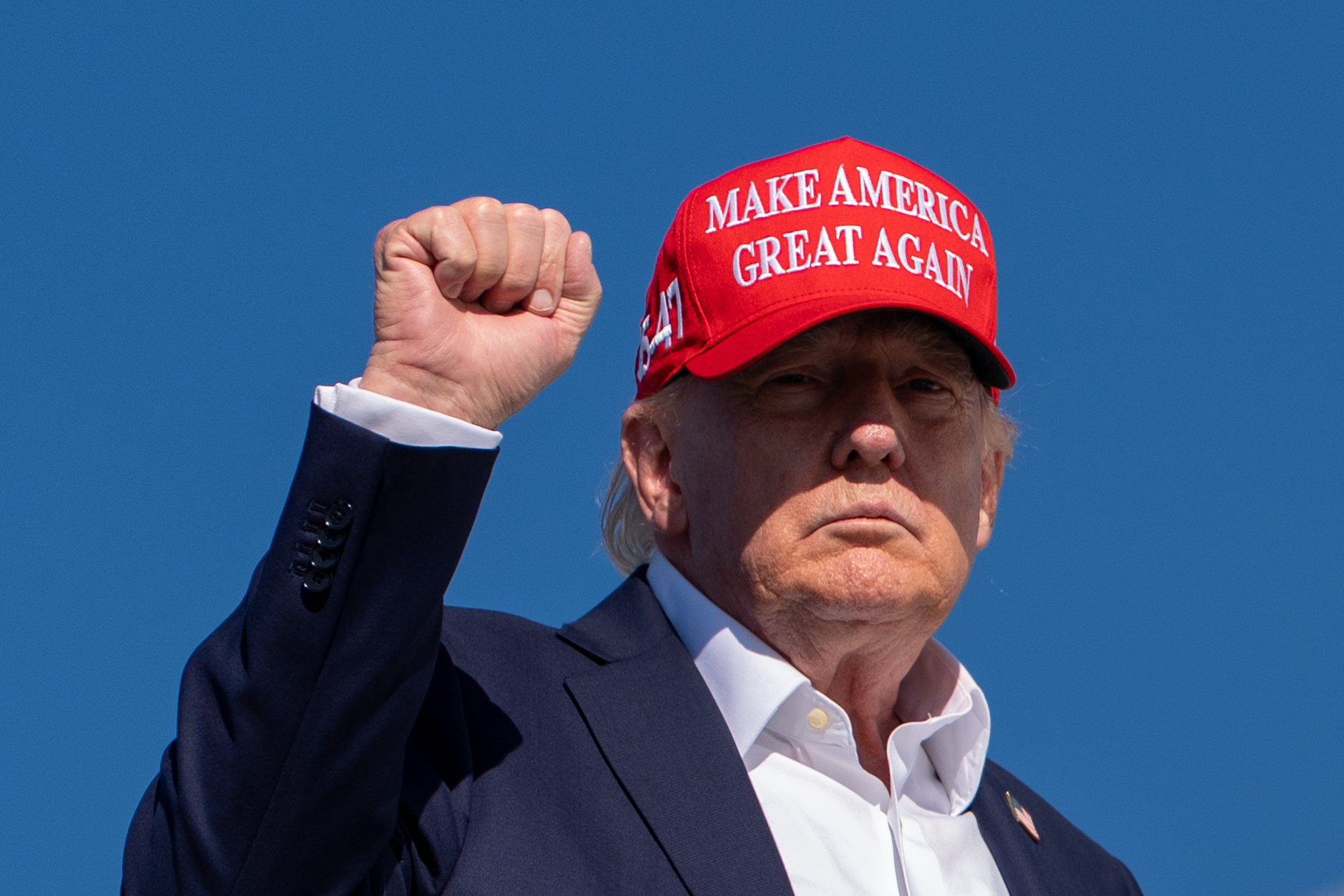
    Key figures in Pennsylvania Republican politics — including the state’s top elected federal GOP official and several lawmakers in the middle of heated reelection campaigns — will participate in their party’s first-of-its-kind midterm convention this week in Dallas.

    The gathering, spurred and heavily promoted by President Donald Trump, arrives as Republicans look to defend their control of Congress this fall amid difficult circumstances. Trump’s approval ratings, including on key issues such as the economy and the war in Iran, have sunk, including in Pennsylvania.

    And Democratic challengers, some of whom have outraised their Republican opponents, have waged aggressive campaigns.

    After Trump successfully won the White House and ushered in a wave of downballot Republican wins just two years ago, the convention — described as “Trump-a-palooza” by Republican National Committee chairman Joe Gruters — is aimed at energizing the base at a critical time.

    Pennsylvanians, representing a swing state that has been key to Trump’s success in the past, will play a role.

    U.S. Sen. Dave McCormick (R., Pa.) and a pair of House lawmakers in competitive districts — U.S. Reps. Ryan Mackenzie (R., Lehigh) and Rob Bresnahan (R., Luzerne) — are among the more than 100 scheduled speakers over two days, starting Wednesday.

    Their speaking slots were among the first to be announced. Underscoring the Keystone State’s role in keeping the House Republican majority, only the host state of Texas had more representatives on the initial list of elected officials scheduled to address the crowd.

    The Pennsylvania Republican Party, meanwhile, has orchestrated a “full slate” of 55 delegates and alternate delegates.

    “The Republican Party of Pennsylvania is excited and honored to be a part of the first ever RNC Midterm Convention in Dallas,” spokesperson James Markley said in a statement. “It will be a tremendous opportunity to hear from everyday Americans about how this administration has changed their lives for the better.”

    The state party had not provided the names of the delegates as of Tuesday, though the list is expected to include party activists and other elected officials. State party leaders had encouraged Pennsylvanians to attend the gathering.

    Democrats, who see the president’s lagging approval ratings as a key to their success in the midterms, were quick to blast Pennsylvania Republicans for attending. Their response includes plans to send a small group of House Democrats, including U.S. Rep. Madeleine Dean (D., Montgomery), to Dallas to push back against the GOP messaging.

    “While swing seat House Republicans try to hide from their record of raising costs on working families, gutting Medicaid to fund tax breaks for billionaire donors and supporting a reckless war of choice in Iran, House Democrats will be present to hold them accountable,” House Minority Leader Hakeem Jeffries, the New York Democrat in line to become House speaker if his party wins the majority, said in a statement.

    Fitzpatrick skips as other Pa. Republicans take center stage

    Four of Pennsylvania’s 10 Republican-held U.S. House seats are considered key battlegrounds as the GOP looks to maintain its four-seat advantage nationwide.

    Of those, only U.S. Rep. Brian Fitzpatrick (R., Bucks) has distanced himself from parts of Trump’s agenda and is not planning on attending the convention.

    Mackenzie and Bresnahan, on the other hand, will be among the featured speakers, and U.S. Rep. Scott Perry (R., York) will attend.

    Perry, a close Trump ally, has routinely won reelection in a Harrisburg-based district but is running this year against Democrat Janelle Stelson, a former local television anchor who nearly defeated him two years ago.

    Freshmen Mackenzie and Bresnahan were elected to Congress in 2024 after they each defeated incumbent Democrats by less than 2 percentage points. Local, state, and national Democrats have rallied behind their challengers — union leader and retired firefighter Bob Brooks in the Lehigh Valley, and Scranton Mayor Paige Cognetti in the district that covers the northeast corner of the state.

    Bresnahan campaign spokesperson Samantha Bullock said the lawmaker was “excited to bring NEPA to the national stage because these are the people driving his work in Washington.”

    Mackenzie, in a statement that referenced his work to bring federal funds to his district and support areas like local healthcare and tax relief, said he was “looking forward to talking to the people of the Lehigh Valley, the Poconos, and the entire nation about these accomplishments, and how we can build on them in the years ahead.”

    Brooks said Mackenzie was “flying to Dallas to kiss the ring of Donald Trump and his party bosses.”

    “This is exactly why people are fed up with a broken Washington that isn’t working for working people,” Brooks said in a statement.

    Mackenzie’s campaign has similarly criticized Brooks for campaigning with national Democrats — calling an event Brooks had with Jeffries in July a sign that “establishment backers” were trying to “bail him out.”

    The convention will feature six hours of programming each night.

    Topics that speakers will highlight include the elements of Trump’s signature One Big Beautiful Bill Act, which Republicans have rebranded as the Working Families Tax Cuts Act.

    Supporters have applauded the law’s extension of Trump’s 2017 tax cuts and its litany of other features, such as investment accounts for children. Democrats and other critics have pointed to the law’s cuts to Supplemental Nutrition Assistance Program (SNAP) and Medicaid spending, among other measures.

    The convention speakers will also touch on the president’s enhanced border control measures and his push for election changes such as universal voter ID, according to an outline of the agenda.

    A “candidate showcase” that will highlight “key candidates in target districts” and contrast them with their “extreme” opponents is set for Wednesday night. And an “opposition contrast” to “[deliver] the night’s sharpest partisan case against the extreme liberal Democrats” is slated for Thursday night, according to the agenda.

    Besides Trump, the members of his administration scheduled to speak include Vice President JD Vance, U.S. Attorney General Todd Blanche, Centers for Medicare and Medicaid Services Administrator Mehmet Oz, and Health and Human Services Secretary Robert F. Kennedy Jr., who has engaged in a war of words with Pennsylvania Gov. Josh Shapiro over the state’s measles outbreak.

    National Republicans have described the convention as a way to energize voters in a tough election year.

    Two years after winning Pennsylvania for the second time in 2024, Trump had an approval rating of 39% and a disapproval rating of 58% among likely voters in the state last month, according to an Inquirer/New York Times/Siena University poll.

    The poll found that 51% of likely voters said they were more likely to vote for a Democrat for Congress and 53% said they would want to see the House flip to Democratic control, though the poll did not ask about specific congressional races.
  • Key Pennsylvania races to watch in the midterm elections this November

    Key Pennsylvania races to watch in the midterm elections this November

    In the country’s premier battleground state, Pennsylvania Democrats believe they’re in striking distance of a tidal-wave victories that would dramatically shift the balance of power in both Washington and Harrisburg.

    For the first time in decades, the party could take full control of the legislature. That would give Democratic Gov. Josh Shapiro — seeking reelection with a wide polling gap on his Republican challenger Stacy Garrity — significantly more power to shape the direction of the state as he potentially pursues a White House bid in 2028.

    Democrats also see a chance to flip four congressional seats and take control of the U.S. House. Republicans, meanwhile, are prioritizing defending the Pennsylvania seats with their House majority on the line as President Donald Trump, who won the state just two years ago, sinks in popularity.

    The path for power in Washington in the high-stakes midterms runs through Pennsylvania and its results will be closely watched as both parties prepare for a presidential race in two years when the state promises to play a pivotal role.

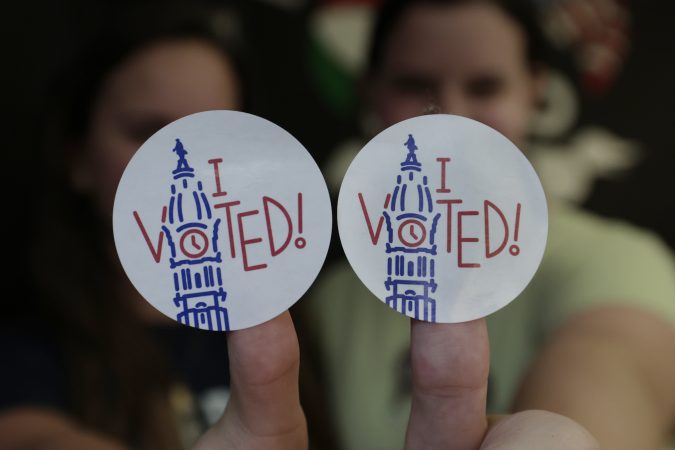
    Voters across Pennsylvania will head to the polls in November to cast their ballots for races that will decide the balance of power in the state and nation.

    Here are the races to watch and how to vote.

    Shapiro’s November could dictate his 2028

    Shapiro, widely viewed as a likely contender for the 2028 presidency, has big ambitions this fall when he’ll stand for reelection against Garrity, the state’s treasurer.

    More than just securing his own reelection, Shapiro hopes to run up the margin and carry downballot Democrats across the finish line.

    Another double-digits win and a string of coattail victories would be a show of strength about his ability to perform in a key swing state that his party lost in the last presidential election. In a presidential primary, Shapiro could use that result to make an argument that he’s a strong general election candidate who can boost the Democratic brand.

    Two months out from the election, all signs point to a Shapiro win. He holds a historically large campaign war chest and a commanding 55-39% lead in the race against Garrity, according to a recent Philadelphia Inquirer/New York Times/Siena University poll.

    Garrity, who has been endorsed by Trump, broke the record in 2024 for the most number of votes received by a candidate running for state-level office in Pennsylvania. But support from the national GOP establishment has been limited, and as she faces off against a formidable incumbent, the question is: Can she overcome her stark cash disadvantage and low name recognition to become the state’s first female governor?

    Will Republicans hold on in competitive congressional seats?

    There are four U.S. House districts in the eastern portion of Pennsylvania, targeted by both parties as must wins. In each, the Republican incumbents are seeking to fend off highly financed challengers amid deep frustration among voters with the leader of their party that could translate into a wave of Democratic victories down ballot.

    1st Congressional District: Five-term Republican U.S. Rep. Brian Fitzpatrick faces a challenge from Bucks County Commissioner Bob Harvie in the district, which covers all of Bucks County and a portion of Montgomery. Fitzpatrick, a moderate who has survived previous blue waves, has maintained a fundraising advantage on Harvie unlike the other swing-district incumbents.

    7th Congressional District: Freshman Republican U.S. Rep. Ryan Mackenzie narrowly flipped the Lehigh Valley district two years ago and is widely seen as one of most vulnerable incumbents in Congress. He’s facing a challenge Democrat Bob Brooks, a retired firefighter and union leader whose blue-collar campaign has attracted support across the party’s ideological spectrum with endorsements from Shapiro and U.S. Sen. Bernie Sanders.

    8th Congressional District: Freshman Republican U.S. Rep. Rob Bresnahan ousted a six-term incumbent in this district centered in former President Joe Biden’s hometown of Scranton two years ago. But as he faces a tough challenge from Scranton Mayor Paige Cognetti, Bresnahan has faced scrutiny over his stock trades and his vote to cut Medicaid — to pay for Trump’s tax cuts — despite a promise to protect the program.

    10th Congressional District: Republican U.S. Rep. Scott Perry, a close ally of Trump, faces a November rematch against Democrat Janelle Stelson, a former TV anchor, in the Harrisburg area district. Stelson has consistently outraised Perry after narrowly losing in 2024.

    In addition to these four races both national parties have targeted, Shapiro has argued that the 9th Congressional District, where Democrat Rachel Wallace is taking on incumbent GOP U.S. Rep. Dan Meuser, is flippable — despite the strong GOP lean in the district, which stretches from Berks County to the New York state border. The district is home to two warehouses that ICE was planning to convert into detention centers before abandoning the plan after a backlash from residents.

    Will Democrats flip the Pennsylvania Senate?

    In Harrisburg, Democrats hold an extremely narrow majority in the state House, but the Pennsylvania state Senate has been under Republican control for more than 30 years.

    This year, Shapiro wants to flip the chamber and win a trifecta to push forward his key priorities, such as codifying abortion access, raising the state’s minimum wage, and increasing funding for transit.

    Republicans currently hold 27 of the chamber’s 50 seats. Democrats, who currently hold 23 seats, need to win at least two additional seats and the governor’s office to win control of the chamber with the lieutenant governor as a tiebreaking vote.

    The seats, drawn advantageously for Republicans, have been stubbornly resistant to political change for decades.

    But this year a blue wave could usher in Democratic pickups in Philadelphia suburbs and the Lehigh Valley.

    Races to watch include:

    • Bucks County’s 6th District, where Republican incumbent State Sen. Frank Farry faces a challenge from Democrat Eileen Hartnett Albillar.
    • Montgomery County’s 24th District, where incumbent Republican State Sen. Tracy Pennycuick is up for reelection against Democrat Chris Thomas.
    • Bucks and Lehigh County’s 16th District, which will see a rematch race between incumbent Republican State Sen. Jarrett Coleman and Democrat Mark Pinsley, the Lehigh County controller.

    What are the important dates to know?

    Election Day is Nov. 3.

    The deadline to register to vote is Oct. 19. You must be at least 18 years old, a resident of Pennsylvania and a citizen of the United States to vote. You can register online, by mail, at your county elections office, or at one of several other government buildings.

    You can check your voter registration on the Department of State’s website.

    Pennsylvanians can vote by mail with no excuse required. To apply, fill out an application by mail, online, or in-person and send it into your county election office. Applications must be received by Oct. 27 at 5 p.m. and the completed mail ballot must be received — not just postmarked — by 8 p.m. on Election Day.

    An application and mail ballot can be completed in one visit at an election office, essentially functioning as early voting.

    Staff writer Fallon Roth contributed to this article.