Tag: Scott Perry

  • Tangled up in blue | PA 2026 Newsletter

    Tangled up in blue | PA 2026 Newsletter

    📅 It’s 3 days after Election Day.

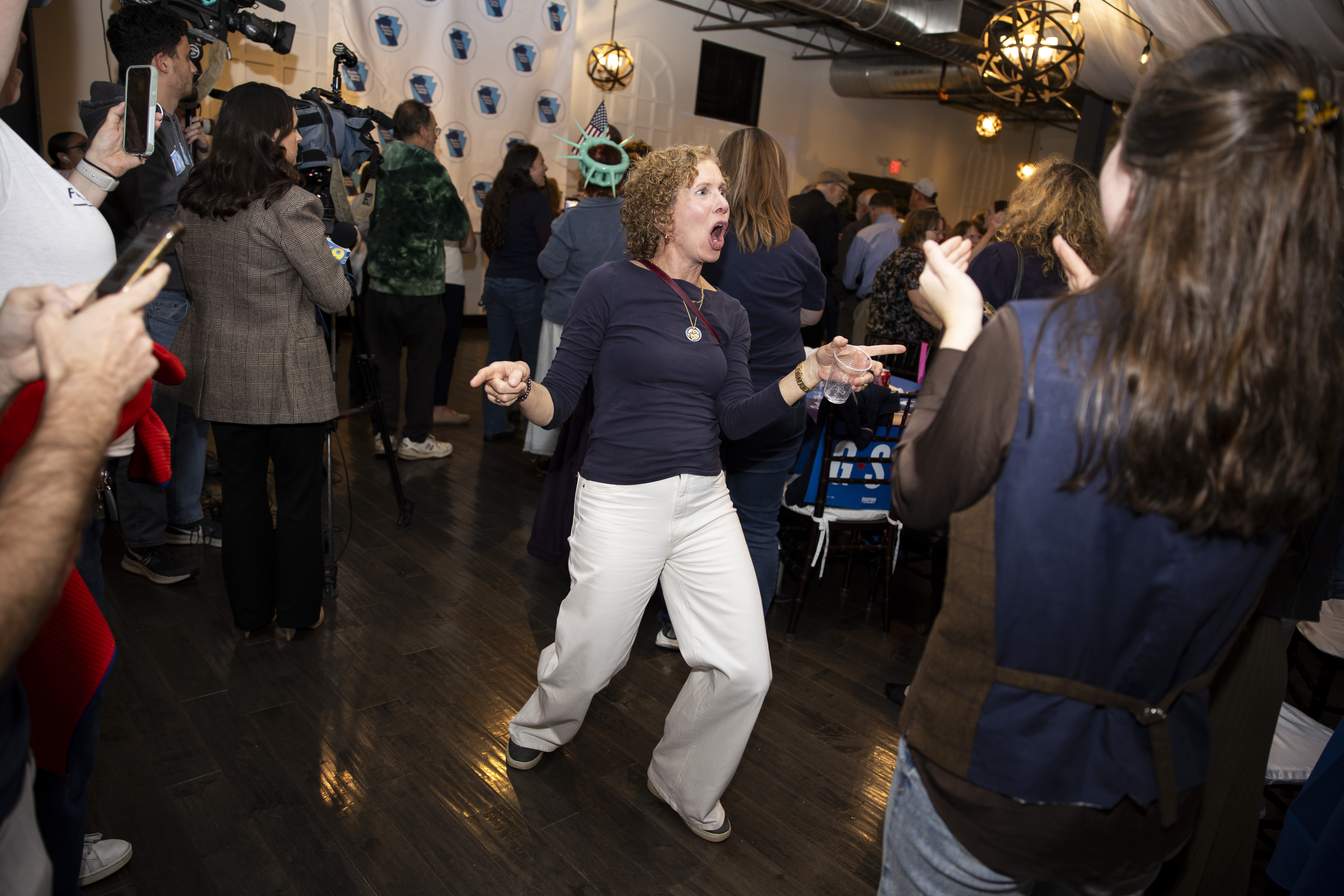
    A crowd of boisterous Democrats in a Newtown event hall screamed with joy on Tuesday night when the blue wave washed over races in South Carolina, Georgia, and Texas.

    Those states are hundreds of miles away.

    So can you imagine how loud supporters — full of adrenaline and pizza — roared when their homegrown Bucks County Democrat, Bob Harvie, walked in and declared victory over Republican incumbent Rep. Brian Fitzpatrick in one of the toughest races this cycle?

    🎤 I’m Fallon Roth, The Inquirer’s suburban politics reporter, bringing you our final PA 2026 newsletter, and I can personally tell you the answer to that question is: very loud.

    I’ve spent the better part of the past year covering the 1st Congressional District race in Bucks County, and on Tuesday night, Harvie achieved something no one else has — defeating Fitzpatrick, a five-term incumbent.

    And when January comes, Harvie will be the first Democrat to represent Bucks County in Congress since 2011.

    But that’s hardly the only win Democrats notched in Tuesday’s “blue tsunami.” Key seat flips in Bucks County helped expand Democrats’ majority in the state House and won the party’s control of the state Senate, delivering a Democratic trifecta for Gov. Josh Shapiro (who coasted to reelection) for the first time since 1993.

    In this edition:

    🗳️ Complete control: Democrats score a trifecta in Harrisburg for the first time since 1993, giving Shapiro a lot more power.

    🗳️ Staying put: Philly’s Rep. Brendan Boyle won’t seek Sen. John Fetterman’s seat in 2028 as he prepares to take a House chairmanship instead.

    🗳️ Big swing: Bucks County Democrats tried for years to unseat Brian Fitzpatrick. Here’s how Bob Harvie finally did.

    — Fallon Roth, Sam Janesch, Gillian McGoldrick, Michelle Baruchman (pa2026@inquirer.com)

    If someone forwarded you this email, sign up for free here.

    The latest

    Data dive

    Every precinct in the 1st Congressional District shifted toward Democrats Tuesday in comparison to 2024.
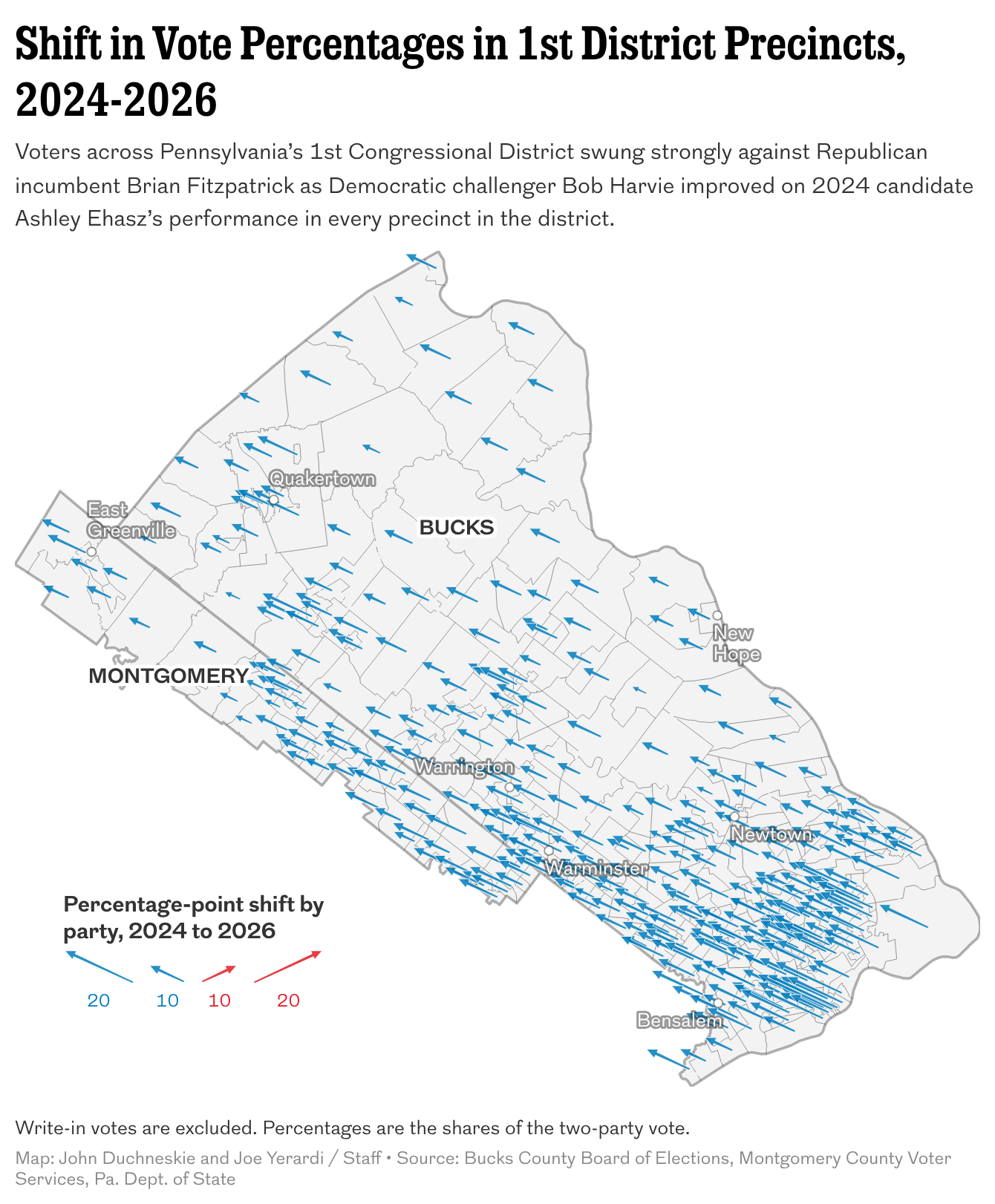
    Every single one.

    Shift in vote percentages in 1st district precincts 2024-2026.John Duchneskie

    Harvie significantly improved on the performance of Ashley Ehasz, the party’s 2024 nominee, in a year when Fitzpatrick comfortably won reelection by 10 points even as the district went for Democrat Kamala Harris in the presidential race.

    The district covers all of Bucks County and a portion of Montgomery County. Harvie saw his highest vote margins in a precinct in Solebury Township, New Hope Borough, a precinct slightly north of Horsham in Montco, and in a precinct in Falls Township, Harvie’s stomping grounds.
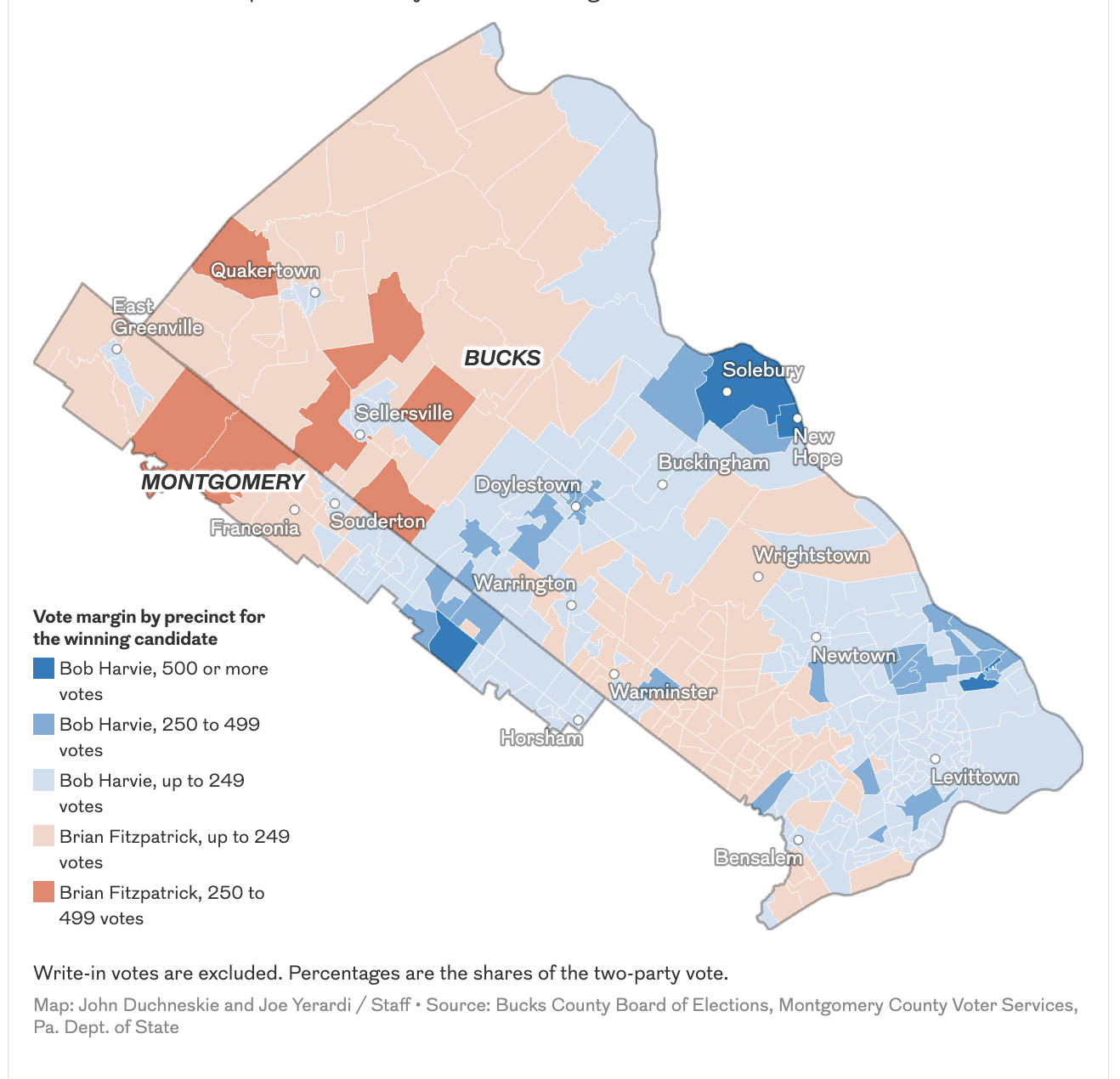
    Bob Harvie received about 52.7% of the two-party vote in his 2026 election victory over Republican incumbent Brian Fitzpatrick in Pennsylvania’s 1st Congressional District.John Duchneskie

    Most of Lower Bucks — a populous part of the county where both candidates are from — went blue, as did most of Central Bucks and the district’s portion of Montgomery County.

    Upper Bucks, a more rural part of the county, leaned red and Fitzpatrick had his largest precinct win margin in a part of Hilltown Township.

    Campaign Scrapple

    • Culture clash: Our colleague Al Lubrano caught an exchange between two voters in Carlisle in the 10th District. Republican Robert House, 57, a beekeeper who said he owns 175 firearms, said he voted for Republican Rep. Scott Perry because he “agrees with the Bible” and opposes abortion. That prompted Adrienne Cedro, a 21-year-old college student, to say she voted to oust Perry and anyone “who’s against the rights of women, LGBTQ, and trans people.”
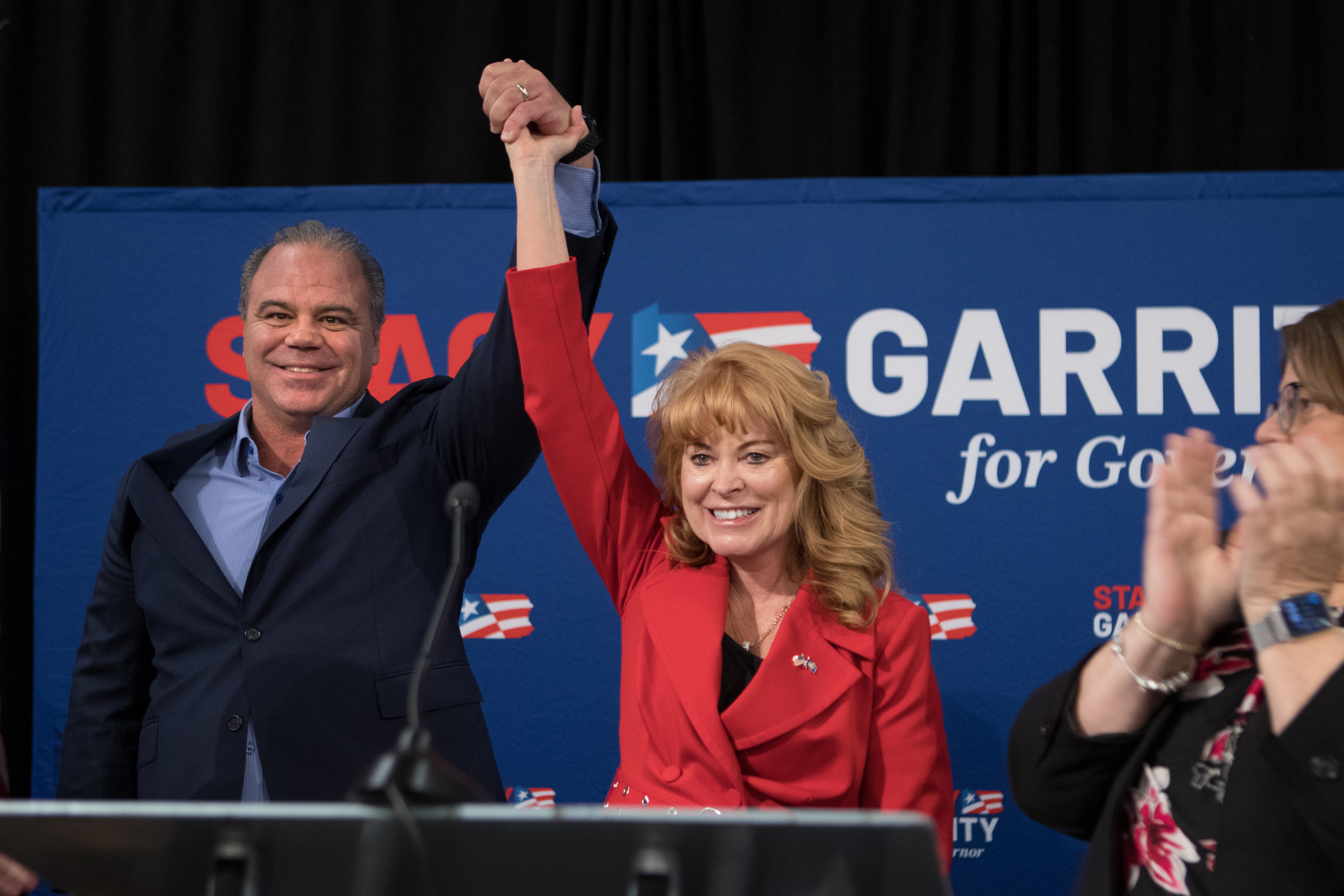
    • Name that tune: After Republican gubernatorial nominee Stacy Garrity concluded her concession speech Tuesday, she walked off to Fleetwood Mac’s “Don’t Stop” — a song famously associated with Democrat Bill Clinton’s 1992 presidential campaign. Shapiro, for his part, walked off the stage from his reelection victory speech to Tom Petty’s “I Won’t Back Down,” previously associated with George W. Bush’s 2000 presidential campaign until Petty’s team demanded Bush stop using it.

    📸 Behind the scenes snapshot
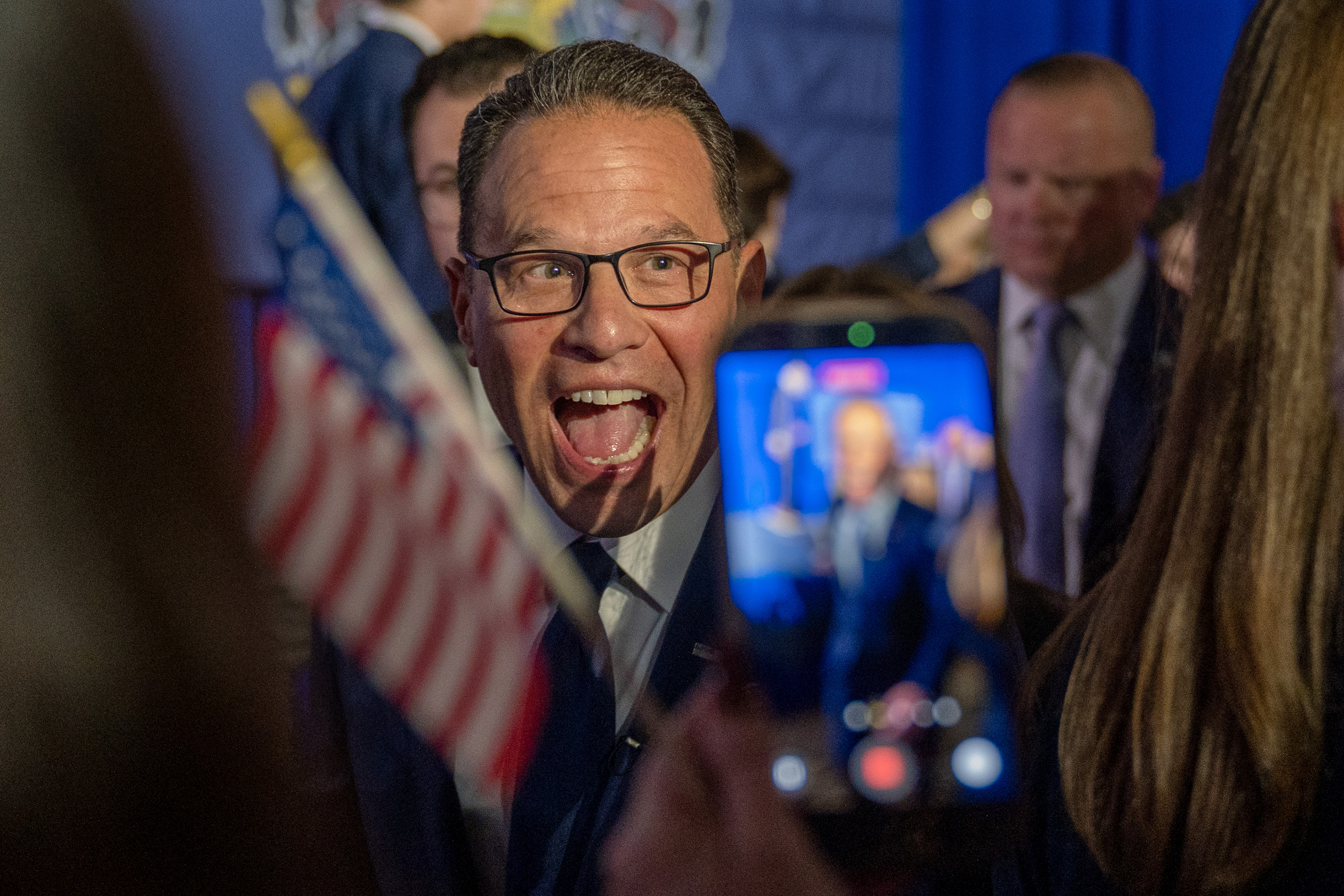
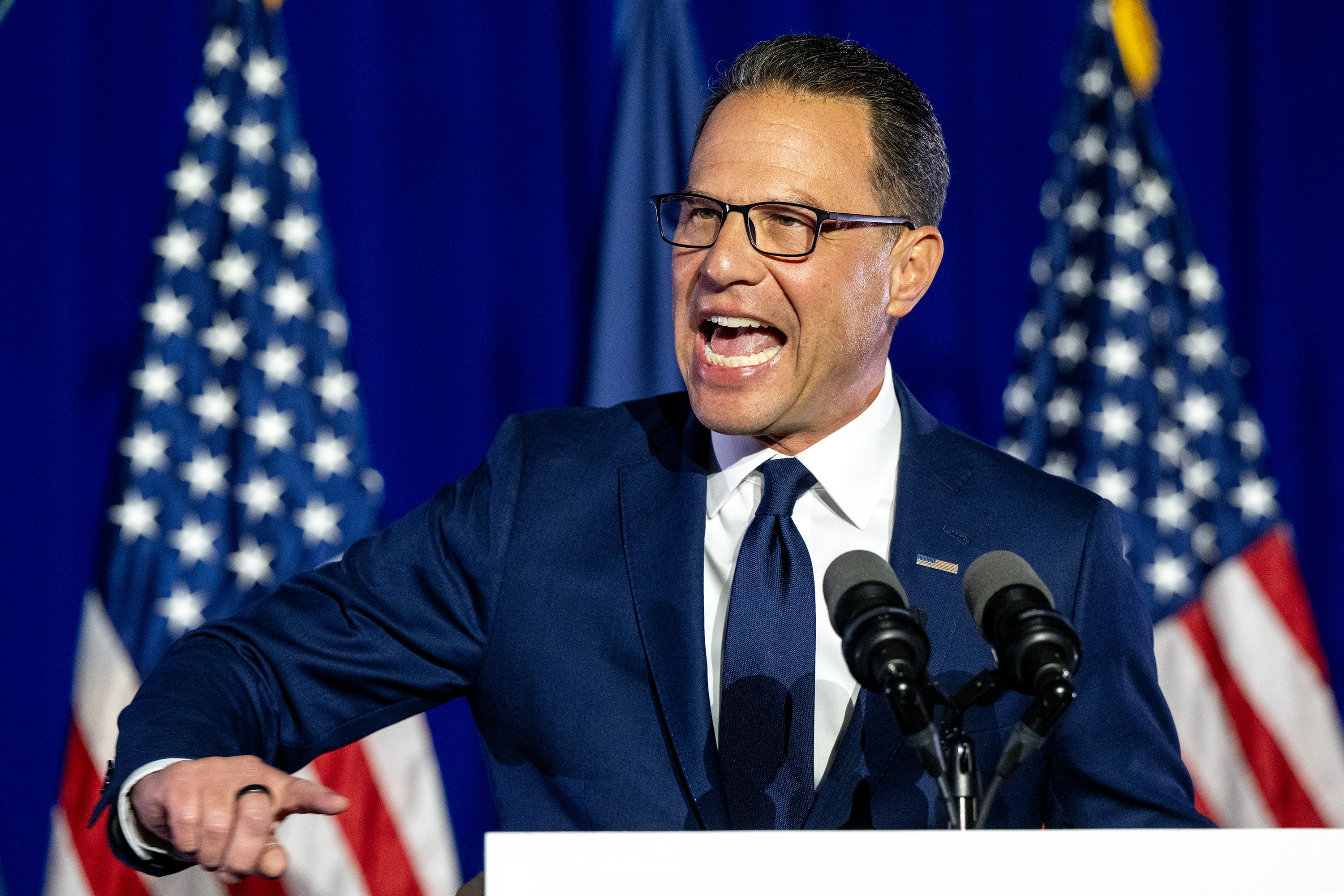
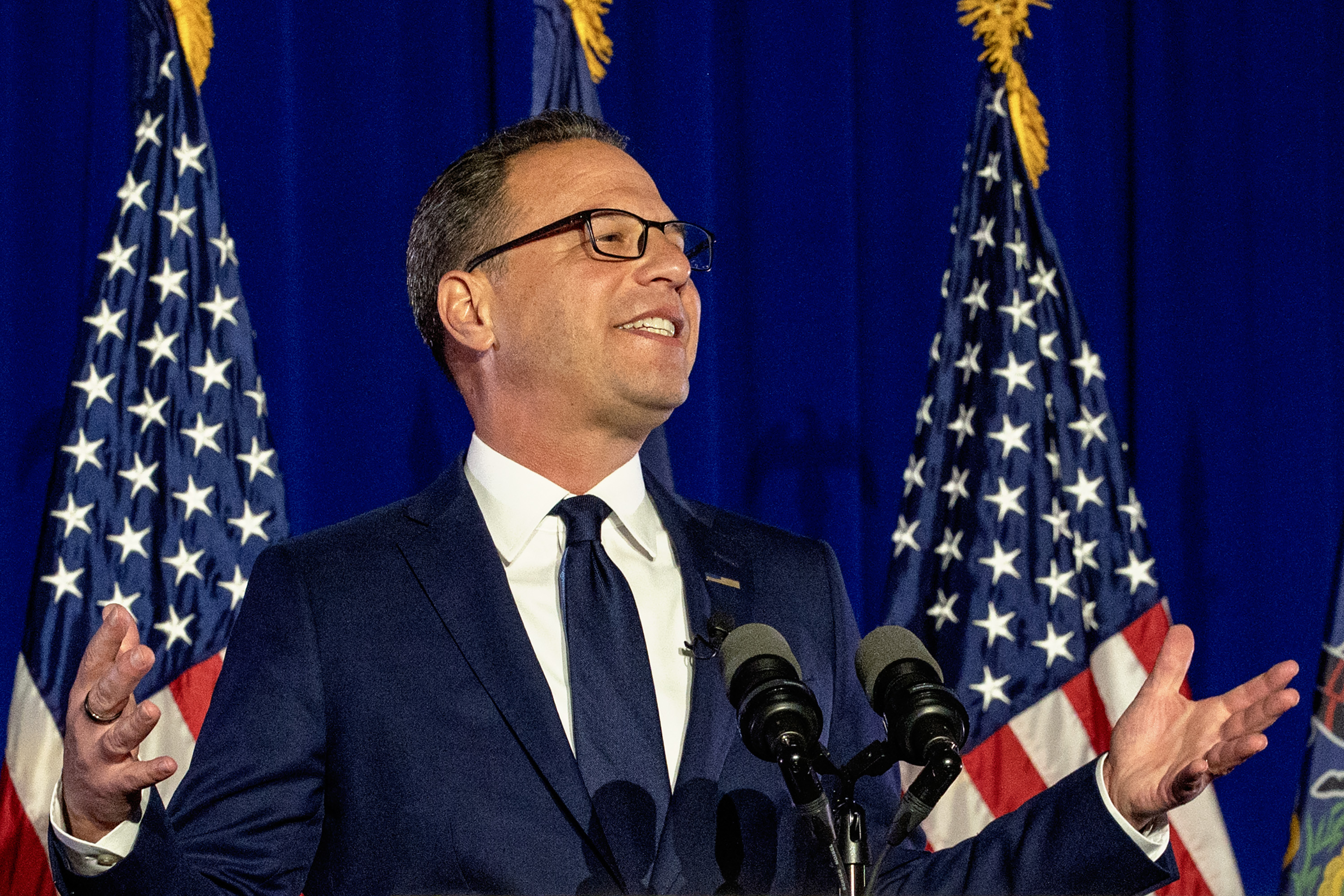
    Gov. Josh Shapiro greets supporters after making his victory speech at his Election Night party in Camp Hill, Tuesday Nov. 3, 2026.Tom Gralish / Staff Photographer

    Rarely do we get to see Shapiro giddy or animated, but our photographer Tom Gralish was able to capture him authentically gleeful on Tuesday evening at his reelection party in Camp Hill. Shapiro went on to bring a similar excitement about Pennsylvania Democrats’ major wins to national network news, as he boasted about his own role in Tuesday’s “bluenami.”

    👀 What we’re watching

    The historic midterm results didn’t just answer massive lingering questions about the limits of Trump’s enduring stranglehold on American politics. It raised countless others — transforming the range of possibilities for the rest of Trump’s time in the White House and far beyond it.

    How will Democrats unite — or butt heads — as they wield their new majorities in Congress amid their own ideological battles? How will Republicans, both in Pennsylvania and Washington, handle the repudiation of a president who’s molded their party in his image over a decade?

    By mid-2027, we’ll also likely — finally — get answers to critical questions about 2028.

    Will Josh Shapiro launch a long-rumored campaign? And, if so, how will his record in the nation’s largest swing state match up against what’s almost certainly going to be a huge field of other Democratic governors, senators and outsiders?

    The other big prize on the 2028 ballot for both parties will be John Fetterman’s seat in the U.S. Senate. Fetterman’s decisions about his own future are a mystery that may not be answered any time soon.

    But Democrats who’ve been promising for months to oust him are already preparing to run (check out our coverage of Rep. Chris Deluzio here) or deciding against it (Rep. Brendan Boyle is taking his talents to the Budget Committee chairmanship).

    Quote of the week
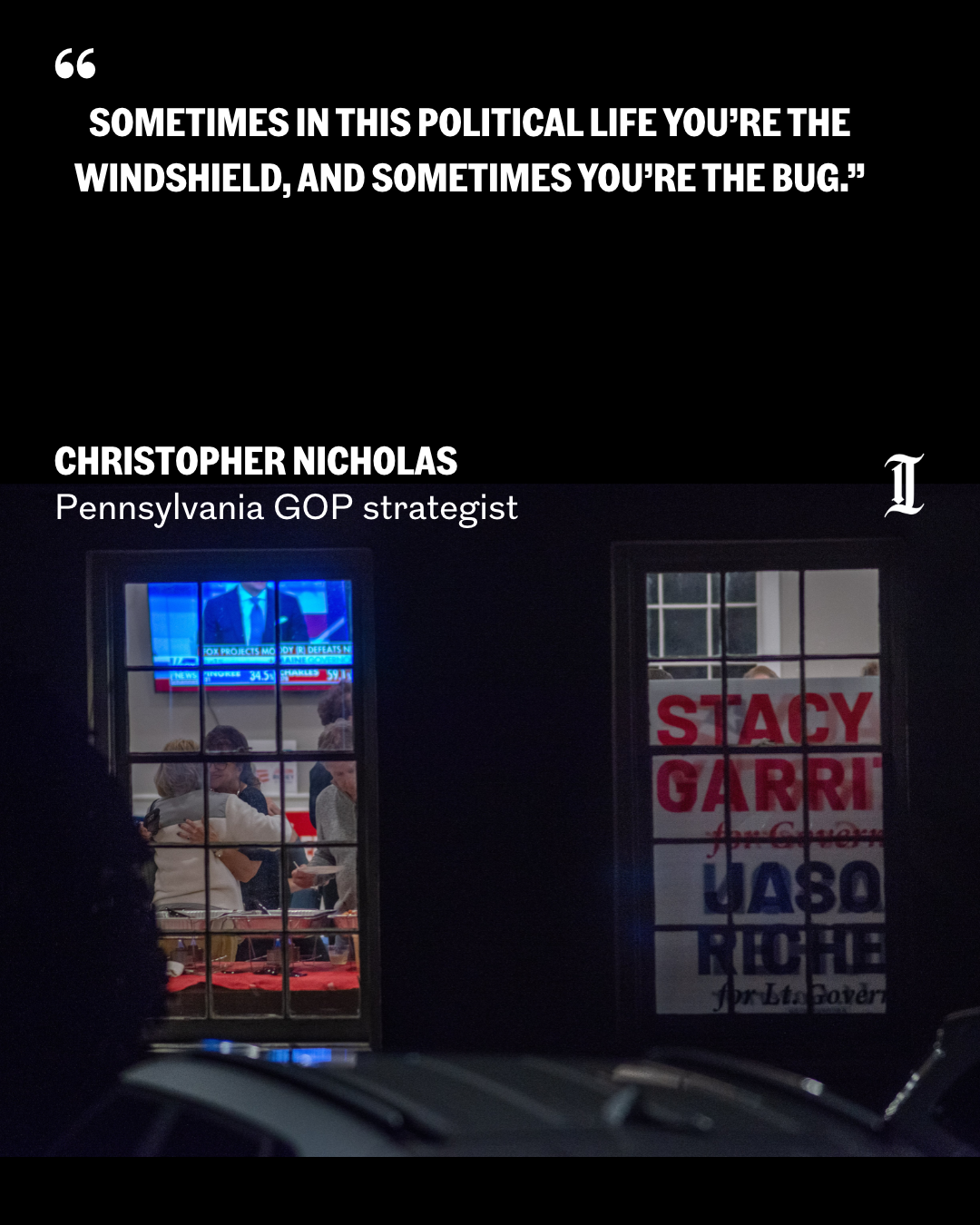
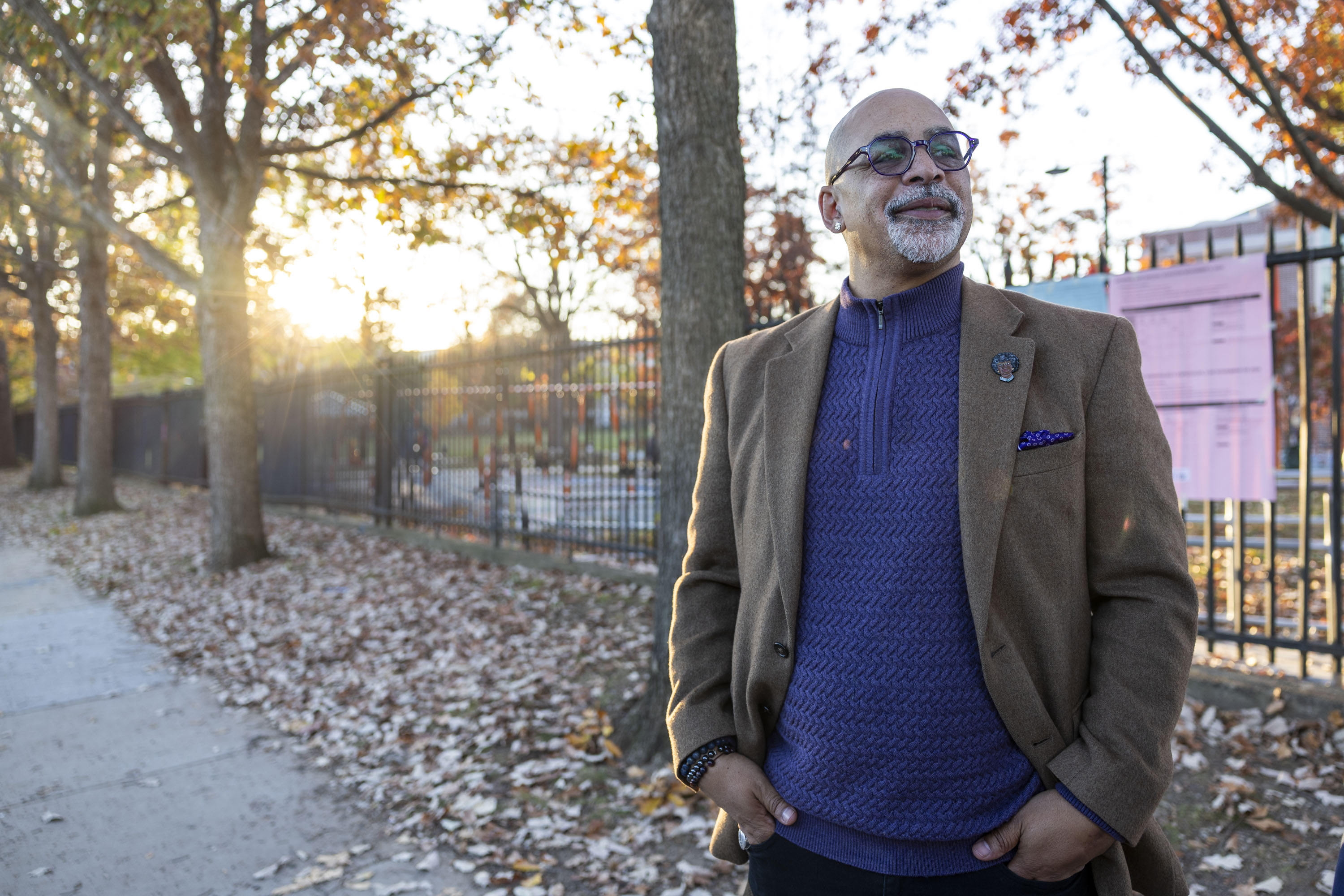
    Christopher Nicholas, a GOP consult, described the reality for Pa. Republicans.William Thomas Cain / For The Inquirer

    Nicholas, a veteran strategist who grew up in Bucks County, captured the reality for Republicans after their wipeout across the state and country.

    It happens.

    Democrats were the bug just two years ago when they lost every statewide race and two congressional seats. But this year, they were the windshield, and Republicans went splat.

    The contrast in mood between the two parties was stark.

    Harvie held his election night party at a massive wedding venue while Fitzpatrick watched in private and Bucks County Republicans kept a small watch party closed to the media. And up in Wyoming County, the AP called Garrity’s loss a minute after polls closed, as people were still filtering into her party.

    👋 Thank you for following along on our journey through the homestretch of this chaotic, exciting, and unpredictable midterm cycle. This may be our last PA 2026 newsletter, but you can always find our in-depth reporting here.

    And see you in 2028? 😎

    By submitting your written, visual, and/or audio contributions, you agree to The Inquirer’s Terms of Use, including the grant of rights in Section 10.
  • Gov. Shapiro’s victory positions him as a formidable national force | Editorial

    Gov. Shapiro’s victory positions him as a formidable national force | Editorial

    Thanks to deep discontent with Donald Trump’s presidency, the midterm campaign was fought on strange new political battlegrounds such as Texas, Kansas, and Alaska, until recently reliable Republican strongholds. At the same time, the top contest in the perennial political battleground of Pennsylvania was uncharacteristically predictable. And that is in no small part owing to broad public support for Gov. Josh Shapiro.

    The can-do Democratic governor won a second term Tuesday, defeating Republican state Treasurer Stacy Garrity by more than 20 percentage points. He also helped lead the state’s Democrats to an impressive string of victories in more closely contested congressional and legislative races, assisting the party’s decisive takeover of the U.S. House of Representatives and securing its first majority in the Pennsylvania Senate in this century.

    With the benefit of Shapiro’s political and financial backing, Democrats ousted incumbent Republicans in four congressional districts, including political survivor Brian Fitzpatrick in Bucks County and Trump stalwart Scott Perry in Central Pennsylvania, and gained enough legislative seats to control both chambers of the General Assembly.

    Shapiro’s coattails thereby contributed to a crucial check on Trump’s power while putting the Democrat in an unusually strong position to work his will as governor and launch a widely expected campaign for president. The result looked a lot like the resounding gubernatorial reelection with which Chris Christie hoped to catapult himself into the White House from neighboring New Jersey a decade ago — minus the retaliatory political interference with interstate travel.

    Tuesday’s result inherently affirms Shapiro’s pan-partisan appeal in a purple state. What he does with a rare legislative majority in Harrisburg could boost his reputation for commonsense competence and concrete accomplishments in an era of poisonous politics and bad government.

    Shapiro did have the advantage (not for the first time) of a less-than-formidable Republican opponent, one who aligned herself all too closely with Trump and gambling interests. And he and other Pennsylvania Democrats clearly caught a national wave of frustration and disillusionment with Trump. But the governor also reaped the benefits of a broadly orderly and ethical administration focused on making the state more livable and “getting stuff done,” epitomized by the rapid rebuilding of I-95 in Northeast Philadelphia after a tanker fire triggered its collapse.

    The governor, moreover, is a skilled communicator who isn’t afraid to answer difficult questions or frequent corners of the state that are politically and geographically distant from his Democratic base and suburban Philadelphia roots. The dividends are evident not just in his approval rating and vote tally, but also in the number of voters who appreciate him despite differences of opinion. He offers a compelling alternative to a president who has made himself an avatar of destruction, corruption, and polarization.

    The anti-Trump mood of the country, however, will only encourage Democrats to crowd into the presidential primary campaign in a 2028 cycle that will look like it’s theirs to win or lose. A moderate by ideology and temperament, Shapiro would have to compete with fellow Democrats whose positions and personae are more suited to channeling the id of the party’s progressive, power-starved base. He would also be blazing a trail as a Jewish American at a time of deep division over U.S. support for Israel’s hard-line government.

    That said, the last successful Democratic nominee for president was also a centrist from Pennsylvania, one who didn’t enjoy Shapiro’s relative youth and energy. Now the governor has an opportunity to “get even more stuff done” in the state capital, as he put it, with plans to increase the minimum wage, encourage more housing construction, fund mass transit and education, regulate data centers, and codify abortion and LGBTQ+ rights.

    It’s an ambitious, public-spirited agenda and a potentially heartening counterpoint to the administration and party Americans just resoundingly rejected.

  • For Trump, the midterms delivered what Congress wouldn’t: accountability | Editorial

    For Trump, the midterms delivered what Congress wouldn’t: accountability | Editorial

    The better angels won — again.

    Just when it seemed all hope was lost, the American people on Election Day 2026 rejected the hatred, fear, and division sown by Donald Trump over the past decade. Empathy, compassion, and shared national identity triumphed over chaos, corruption, cruelty, and incompetence.

    Somewhere, Abraham Lincoln is smiling.

    Trump pleaded with Americans to pretend he was on the ballot. And they did, bigly.

    Across the country — in red states and blue — voters backed Democrats, who took control of the House, Senate, and multiple governors’ mansions, including Pennsylvania. Gov. Josh Shapiro and Democrats now apparently command Harrisburg.

    The midterm election was a massive and complete rebuke of Trump and all his anger, hate, greed, and costly policies.

    Despite relentless efforts by the president and his enablers to alter the election outcome — through mid-decade gerrymandering, legal threats, voter suppression, money-for-vote offers, and baseless and exhausting claims of voter fraud — Americans peacefully waited in line, quietly mailed in their ballots, and carried out their civic duty.

    The result was a resounding denunciation of everything Trump has said and done over the past two years. Americans are tired and fed up with his war, pocket lining, tariffs, cruel and senseless immigration enforcement, wasteful and often illegal Washington construction projects, selling out of allies, attacks on science and research, and trampling of the rule of law.

    The proof was in the ballot box.

    Turnout was huge, underscoring the power of one person, one vote to make a difference.

    Democrats won Senate races in deep-red states like Texas, South Carolina, Iowa, and Kansas, where they have not been competitive for decades. The romp is not over, as Senate races in Mississippi and Alaska remain up for grabs.

    The results were historic, signaling Americans still appreciate the benefits of diversity over racism, misogyny, and hate. Abdul El-Sayed (D., Mich.) withstood vile attacks by Trump, JD Vance, and others to become the first Muslim elected to the U.S. Senate, while Chris Pappas of New Hampshire became the first openly gay man elected to the Senate.

    Meanwhile, Gina Hinojosa will be the first Latina governor in Texas and first Democrat to win that office since 1990. In Georgia, Keisha Lance Bottoms beat billionaire Rick Jackson to become the first Black female governor in U.S. history. And Deb Haaland in New Mexico became the first Native American elected governor in the U.S.
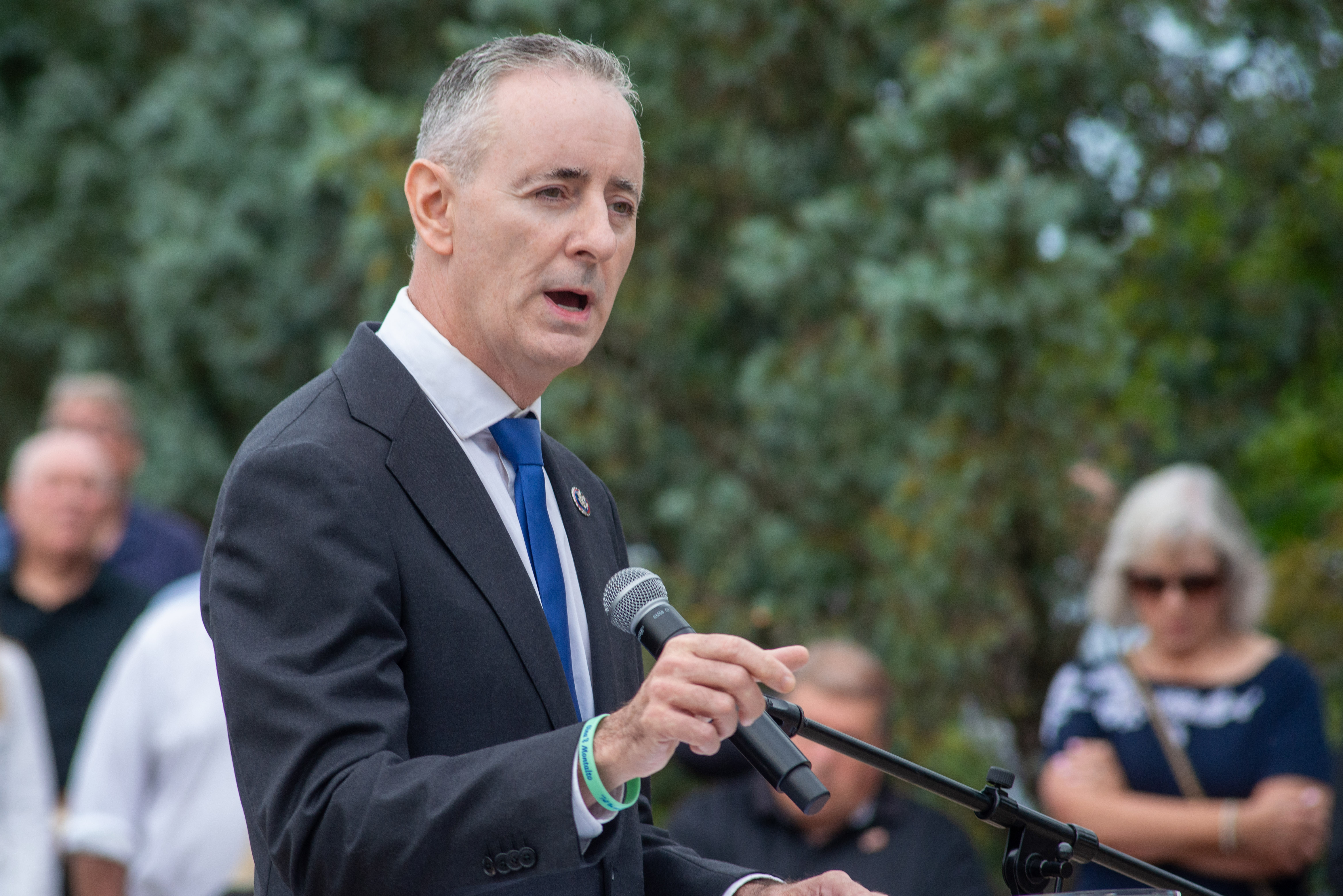
    Gina Hinojosa, the Democratic nominee for governor of Texas, and James Talarico, the Democratic candidate for U.S. Senate in Texas, at a campaign rally in San Antonio, Texas, Nov. 1.Tamir Kalifa

    The Democratic candidates were outspent in nearly every race, yet they overcame relentless attack ads filled with lies, fear, racism, xenophobia, Islamophobia, and hate.

    Trump tried to energize his base with rallies in red states filled with profanity, antisemitic tropes, baseless threats of jihadists and communists, and a strange obsession with men’s physiques. But the MAGA magic dust was not enough to distract from $6-a-gallon diesel.

    In the end, a parade of Trump-backed sycophants, phonies, hacks, and incompetents were thrown out of office or rejected, including Ken Paxton in Texas, Vivek Ramaswamy in Ohio, Darline Graham in South Carolina, Susan Collins in Maine, and Scott Perry in Pennsylvania.

    Many of the Republican losers backed Trump’s war, tariffs, and tax cuts for the rich that have resulted in higher prices, interest rates, and inflation. The GOP enablers shrugged as Trump enriched himself, his family, friends, and corporations while the president’s policies hurt farmers, senior citizens, minimum wage workers, and recent college graduates.

    Democrats won by such wide margins in nearly every competitive race that Trump meekly said he would accept the results. Even for the man who cried election fraud almost daily and sicced the U.S. Department of Justice on election officials, the mandate from voters was too big to rig.

    For one night at least, millions of voters beat billions of dollars. Billionaires, big corporations, and law firms that shamelessly cozied up to Trump endured a well-deserved shellacking. But the threat of oligarchs remains and must be confronted.

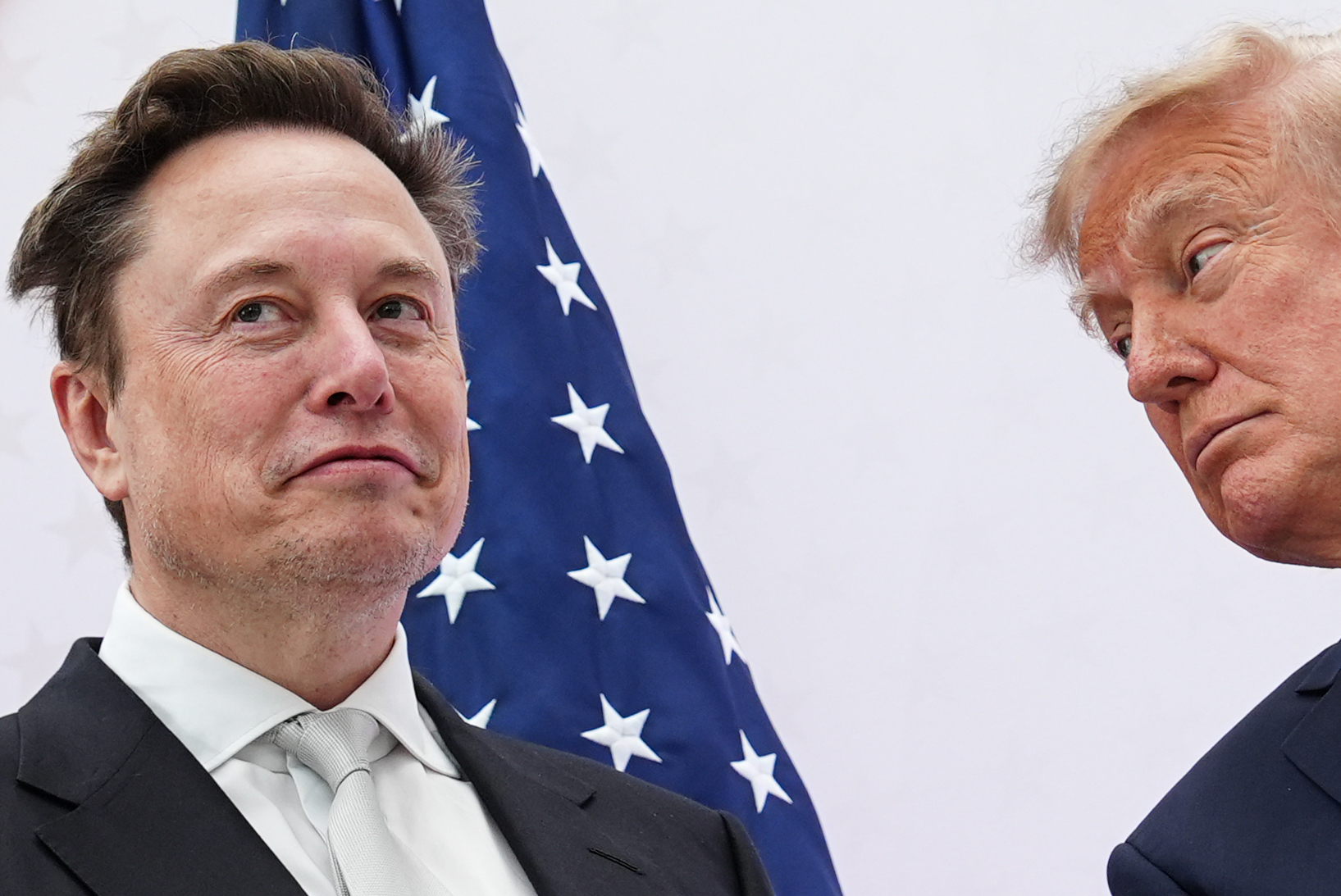
    President Donald Trump, right, presents the National Medal of Science to Elon Musk at the U.S. Institute of Peace, in October.Julia Demaree Nikhinson

    We the people trounced trillionaire Elon Musk, who poured nearly half a billion dollars of his highly government-aided fortune into backing losers in Texas and beyond. Musk remains a foreign and domestic policy danger, with the power to meddle in wars and elections while spreading his toxic hate and racist ideology on social media. Not to mention his destruction of government operations during his brief and failed tenure running the dubiously legal Department of Government Efficiency.

    Democrats would be wise to use their newfound power to put a stop to the flood of money corrupting politics. Democrats must also focus on the needs of average voters and not special interests.

    Voters have given Democrats a golden opportunity to remake the party, rebuild the country, and stop Trump’s madness and corruption.

    Democrats must use their newfound power to work to lower prices, restore healthcare cuts, end the Iran war, regulate artificial intelligence, rein in data centers, release all of the Epstein files, tame the deficit, tax the ultra-rich, pass real immigration reform, invest in research, undo gerrymandering, back Ukraine, confront climate change, stop the deportation cruelty, and investigate Trump’s self-dealing.

    The list is long, and the damage is great.

    But the voters have spoken. They rejected the wannabe king and demanded the American Experiment continue.

    Hopefully, this marks the beginning of the end for MAGA.

    Trump, increasingly incoherent, remains a danger. But after a decade of dragging the country and the world through hell, he is officially a lame duck.

    It took some longer to realize that Trump ain’t making America great.

    Now it’s time for the better angels to get to work.

  • ‘Blue tsunami’ sweeps from Harrisburg to Washington in a historic repudiation of Trump and the GOP

    ‘Blue tsunami’ sweeps from Harrisburg to Washington in a historic repudiation of Trump and the GOP

    Voters across the country, in a stunning display of dissatisfaction with President Donald Trump, threw their support behind Democrats in historic fashion on Tuesday, delivering the opposition party widespread control from Harrisburg to Washington after lifting Trump’s GOP to power just two years ago.

    The decisive wins were up and down the ballot, with strategists on both sides of the aisle declaring a “blue tsunami.” Democrats won control of both chambers of Congress, including a clean sweep of four battleground districts in Pennsylvania. Republican stalwarts like U.S. Reps. Brian Fitzpatrick and Scott Perry went down. New Jersey looks poised to send only one Republican to Washington.

    The party flipped at least seven seats in the U.S. Senate, including in states long seen as deep-red territory such as South Carolina and Kansas, securing a commanding majority that was unthinkable just a few months ago.

    In Pennsylvania, Gov. Josh Shapiro did not just win reelection, as was telegraphed in polls. Unofficial returns showed that, as of Wednesday night, he was leading his GOP opponent by more than 20 percentage points, and he was ahead in 10 counties that Trump won in 2024.

    And Democrats, for the first time in more than 30 years, won a trifecta in Harrisburg, meaning they will have control of the state House, the state Senate, and the governor’s mansion.

    Even those smaller, local races broke Democrats’ way. In Bucks County’s closely watched 6th State Senate District, where issues like data centers and inflation drove the campaign, Democrat Eileen Hartnett Albillar, the county clerk of courts and a social worker by trade, toppled Republican State Sen. Frank Farry.

    “Sometimes in this political life you’re the windshield, and sometimes you’re the bug,” said Christopher Nicholas, a veteran GOP strategist. “Pennsylvania voters have totally reversed what they did in 2024.”

    Gov. Josh Shapiro delivers his victory speech at his Election Night party in Camp Hill, Tuesday Nov. 3, 2026.Tom Gralish / Staff Photographer

    Now, Democrats — looking toward a new political order once they are sworn into office in January — must find a way to govern amid deep fractures within their own party.

    “We’re going to have a lot of serious conversations after today to see about what this big tent actually means,” State Rep. Chris Rabb, a democratic socialist who was elected to represent a large swath of Philadelphia in Congress, said Tuesday.

    A clear rebuke of the president

    Neil Makhija, a Montgomery County commissioner who stumped for Democrats across the state, compared the results to 2006, when the party won back power with George W. Bush in the White House as voters rejected an unpopular war.

    “Back then, I remember feeling stunned that we were winning states we weren’t supposed to win,” Makhija said. “This kind of election expands people’s view of what’s possible.”

    Democrats this week romped to victory in U.S. House races and were expected to best Republicans by about 13 percentage points nationally, according to the New York Times. That would be the most significant across-the-board congressional win by either party in at least 50 years.

    Republican U.S. Rep. Jeff Van Drew, a South Jersey institution who lost on Tuesday, compared the results to the post-Watergate wave of 1974 that ousted Republicans from power.

    “It was not only a normal wave election,” Van Drew said after conceding. “What I said all along was, ‘I’ll be fine as long as it isn’t Watergate.’ And it kind of is a Watergate, where it’s larger than life and just swept people along with it who weren’t necessarily doing anything wrong.”

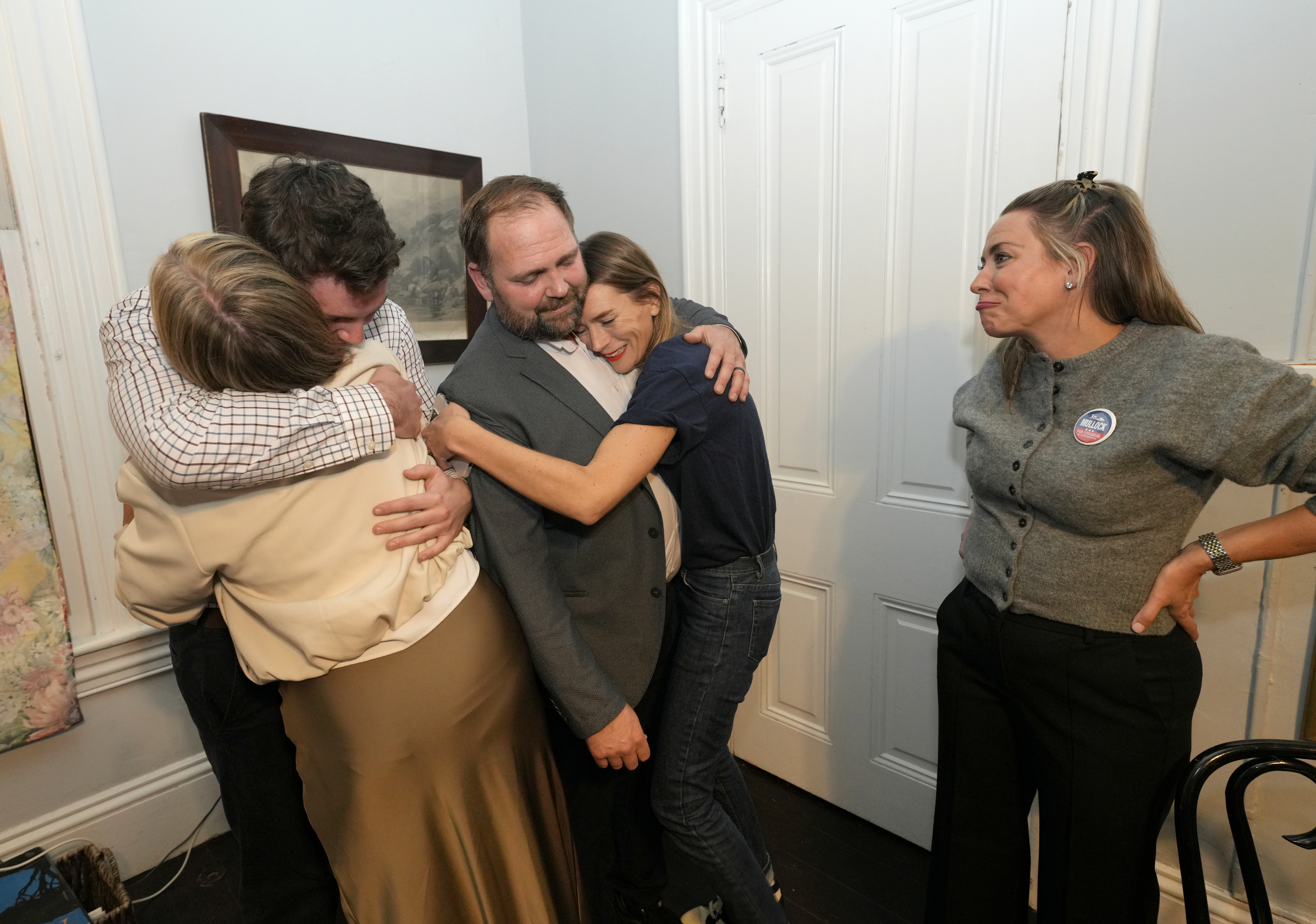
    Democratic congressional candidate and Cape May Mayor Zack Mullock, celebrates with his team after receiving a call from Congressman Jeff Van Drew who conceded the race, Tuesday, Nov. 3, 2026.Tim Hawk / For The Inquirer

    Strategists said the results showed that voters are fed up with the party in power, even those who just two years ago cast a ballot for the president.

    Samuel Chen, a GOP strategist, said voters often feel a sense of regret in midterm elections if they don’t feel they are getting what they bargained for.

    But amid rising inflation and the unpopular war in Iran, the dissatisfaction ran deeper. Even some Trump voters, Chen said, “felt a sense of betrayal.”

    “They didn’t want forever wars, they didn’t want prices to go back up, and they did,” Chen said. “And the president is saying ‘the economy is not that bad, suck it up.’”

    Those factors even sank Republicans who tried to distance themselves from Trump. Fitzpatrick, of Bucks County, is seen as one of the most independent members of Congress. He has voted against the White House and the GOP more than any of his colleagues.

    Members of both parties said the race between Fitzpatrick and Democrat Bob Harvie to represent Pennsylvania’s 1st District was a canary in the coal mine for Republicans. If he fell, it would mean many others would, too.

    “We saw him as the hardest to beat,” Democratic strategist Anthony Campisi said.

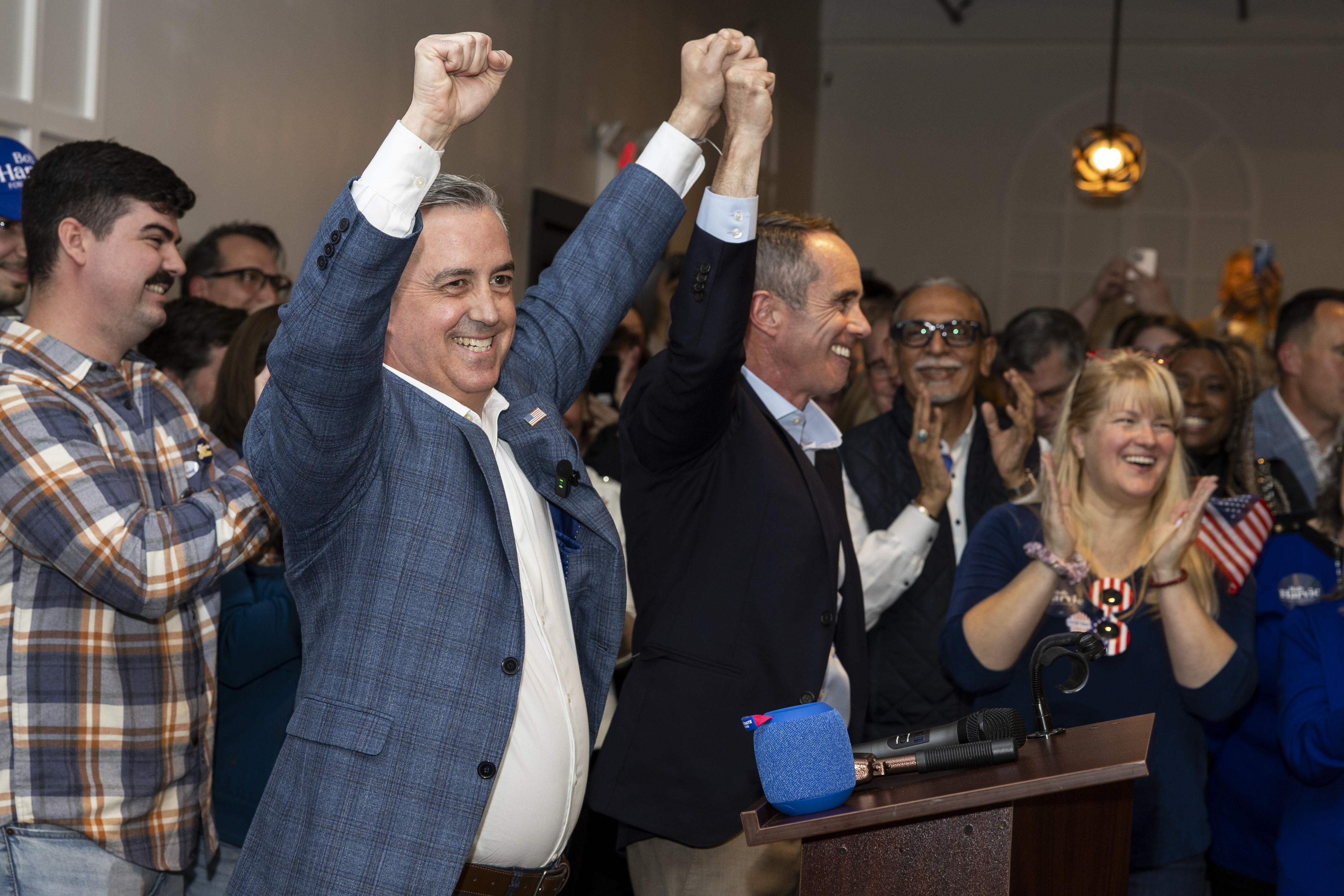
    Pennsylvania First Congressional District Candidate Bob Harvie celebrates with State Sen. Steve Santarsiero at his election night party at Rafters on Tuesday, Nov. 3, 2026 in Newtown, Pa.Monica Herndon / Staff Photographer

    But disaffection with the president appeared too much for even the most bipartisan member of Congress to overcome.

    “When the president is talking about the reflecting pool instead of the cost of living the night before the election,” Campisi said, “it’s kind of like an allegory.”

    A still-divided Democratic Party

    The euphoria among Democrats on Wednesday in some ways masked the deep ideological fissures within the party.

    Nowhere were those divides laid bare more than in Michigan, where Democrat Abdul El-Sayed, a progressive and a staunch critic of Israel, won a bitter race in the swing state against Republican Mike Rogers. That was despite a last-minute defection by U.S. Rep. Haley Stevens, whom El-Sayed beat in the Democratic primary and who announced this week that she would vote for Rogers, saying that El-Sayed had not adequately defended Israel and American Jews.

    The conflict in the Middle East drove substantial tension between the progressive wing of the party and more establishment-aligned Democrats during the primary season. That includes in the race to represent Philadelphia’s 3rd Congressional District, and those disagreements over whether the United States should continue to arm Israel amid its military campaign in Gaza are not likely to disappear.

    State Rep. Chris Rabb stops by at Kingsessing Recreation Center to talk with poll workers and voters on Election Day in Philadelphia, Pa., on Tuesday, Nov. 3, 2026.Tyger Williams / Staff Photographer

    Rabb, a longtime state representative who has been critical of both the Republican Party and the Democratic establishment, endorsed El-Sayed and campaigned for him in Michigan. The longtime state representative from Northwest Philly, who was elected on Tuesday to become Philadelphia’s first democratic socialist in Congress, will now govern alongside Democrats — including from his own state — who have a wildly different worldview.

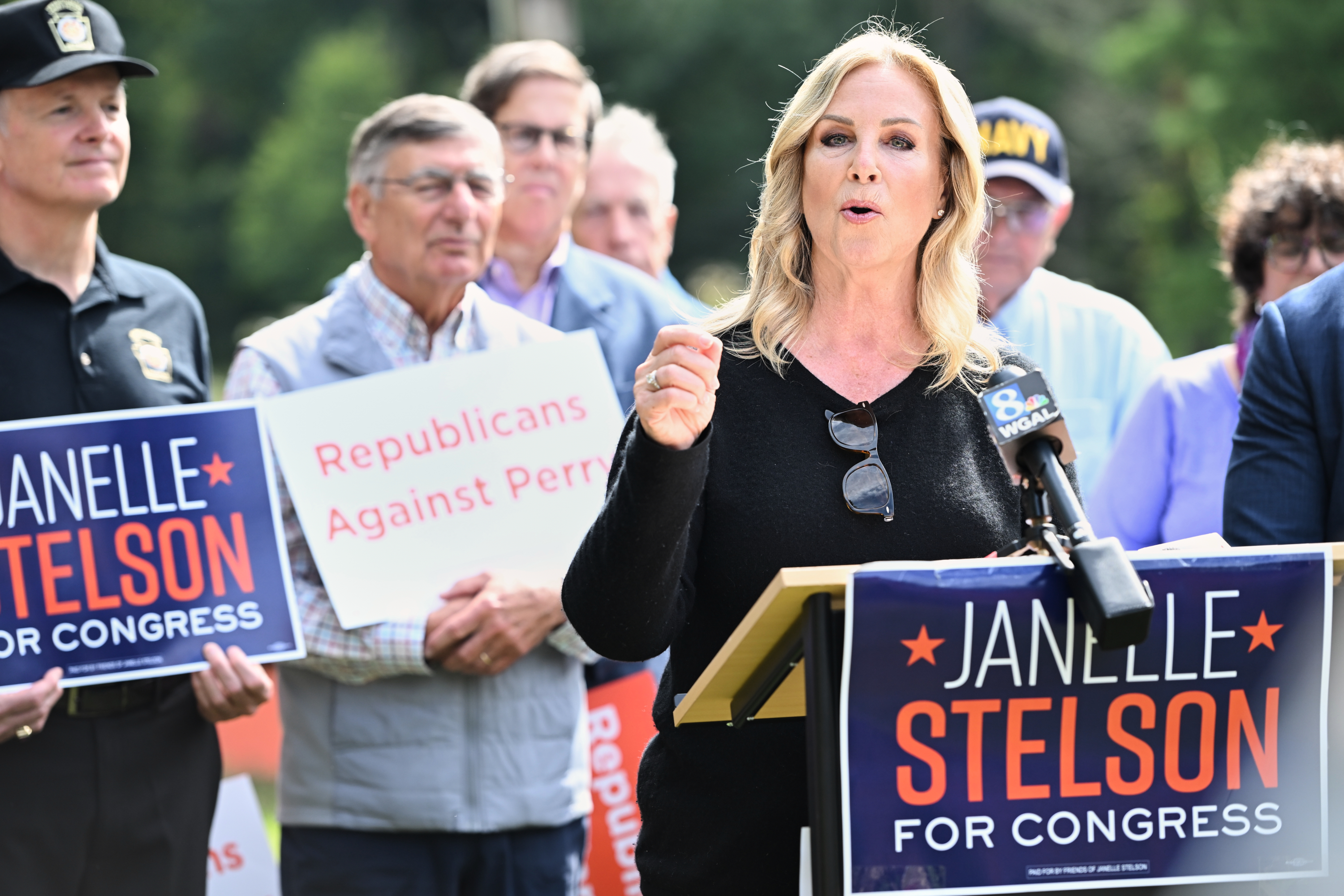
    For example, Janelle Stelson, the former TV anchor who brought down the Trump-aligned Perry, campaigned as a political moderate and a defender of Israel who does not support a “Medicare for All”-style healthcare system.

    And in New Jersey, Cape May Mayor Zack Mullock, who beat Van Drew, said he won because he ran as a pragmatist willing to work across the aisle who could appeal to independents and Republicans.

    “What you’re seeing on the national level, some of the socialist kind of things?” Mullock said. “If you look at Cape May, it’s not Leningrad.”

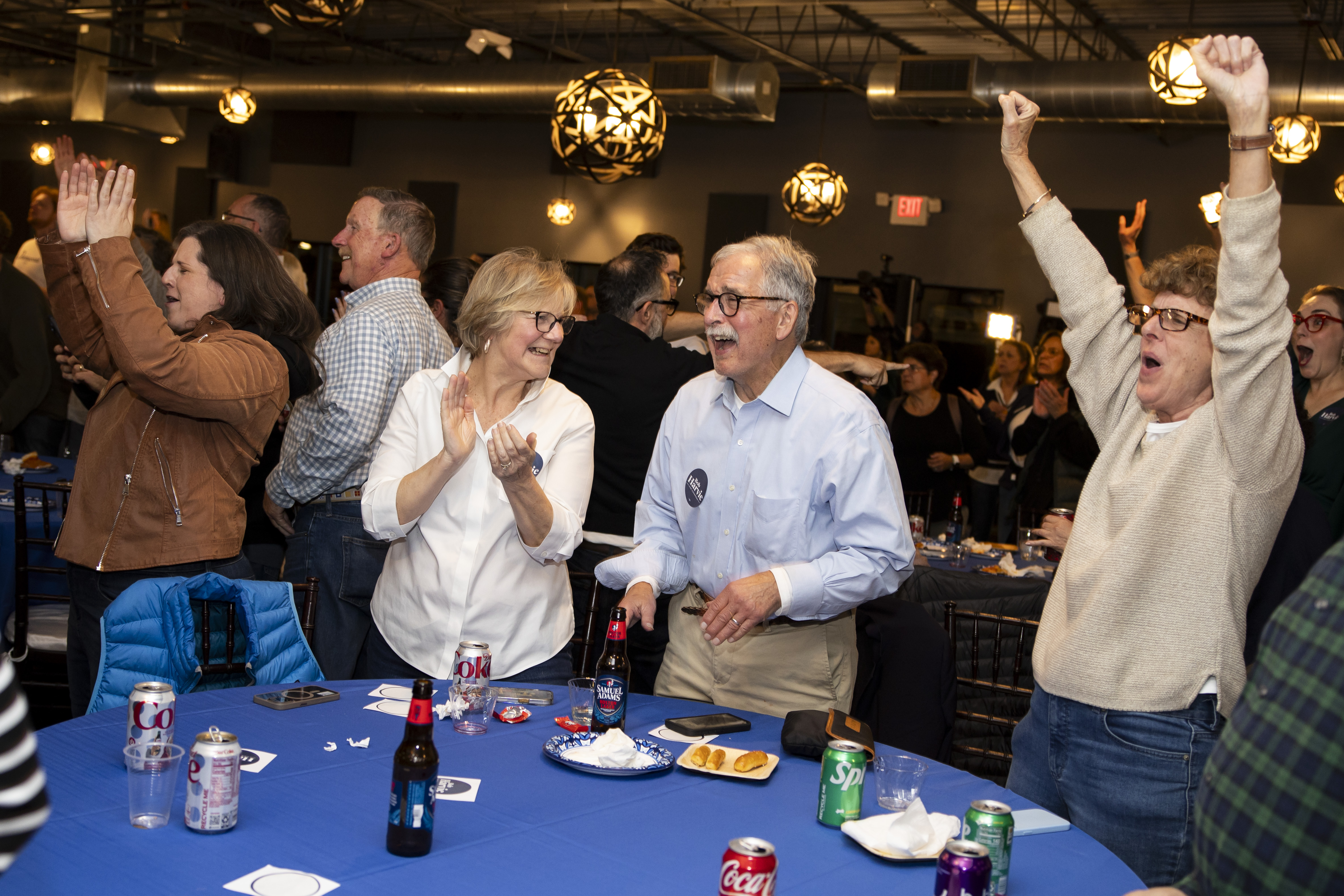
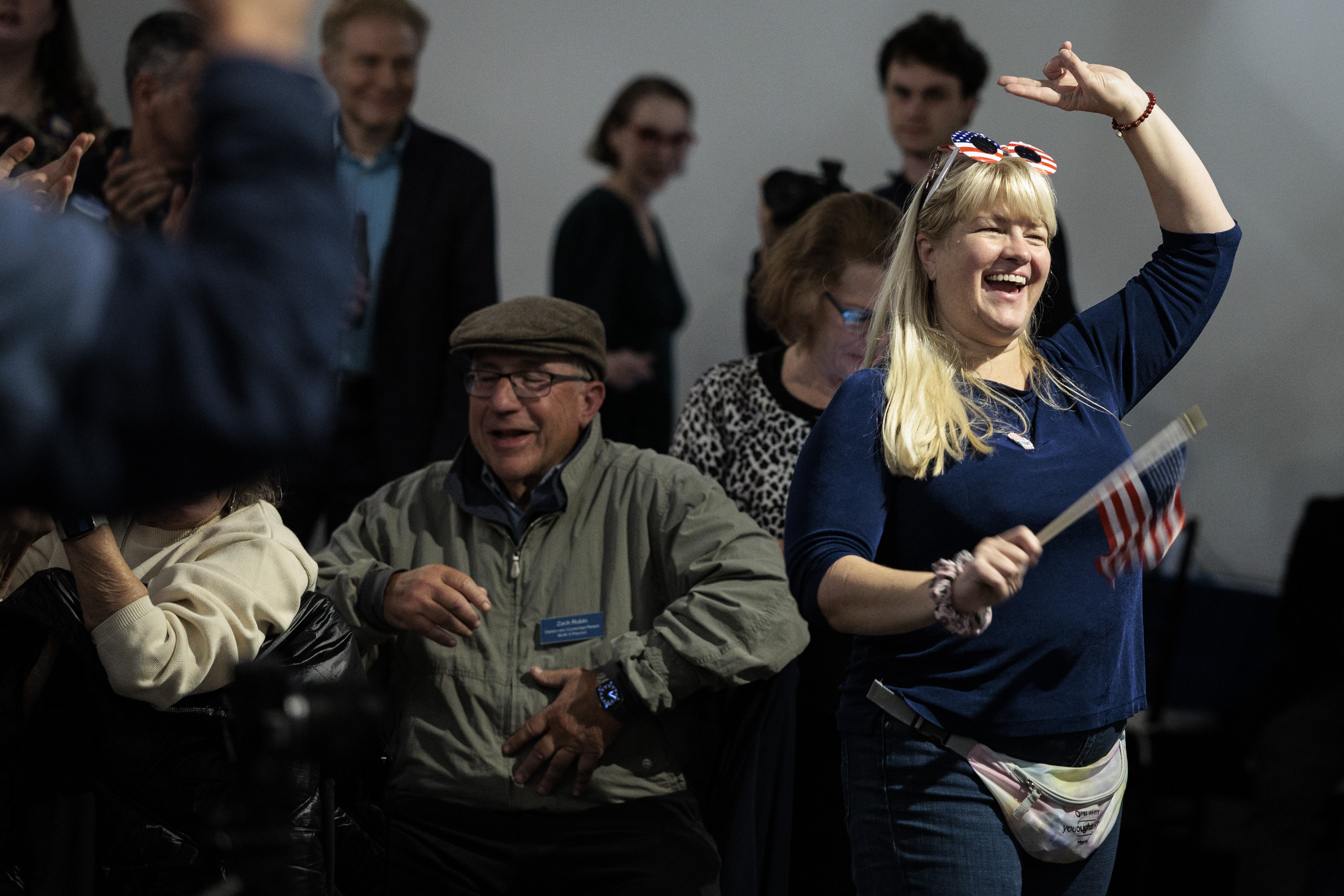
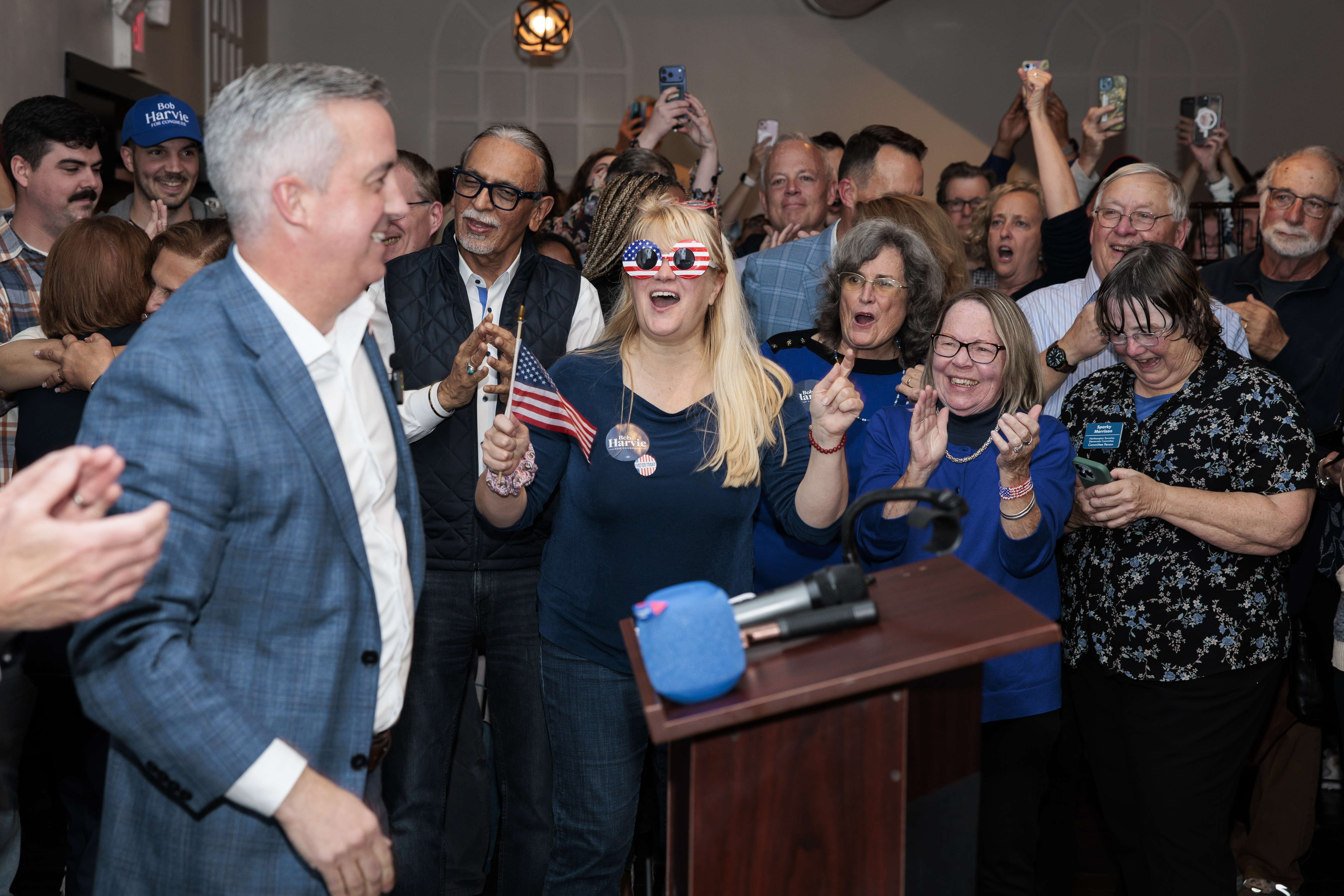
    Michelle Leiby, of Langhorne, cheers as early Bucks County results are announced during Bob Harvie’s election night party at Rafters on Tuesday, Nov. 3, 2026 in Newtown, Pa.Monica Herndon / Staff Photographer

    But Rabb said Tuesday that an El-Sayed win in purple Michigan amid other progressive gains would demonstrate not just that leftist candidates are winning in deep-blue districts, but that “there is a hue and cry for transformational change across the country.”

    Those divides will also no doubt be present in Harrisburg, where far-left state representatives could grow frustrated with Democratic senators who have a history of centrist ideologies and bipartisan dealings.

    Still, the party said it is unified in its day-one priorities for the Democratic trifecta: Shapiro has said he will sign legislation to raise the state minimum wage, which has been a Democratic priority for decades.

    Rabb and others of his political ilk said they agree that would make a material difference for a large swath of Pennsylvanians, including those in Philadelphia, the poorest big city in the nation.

    Makhija said that Democrats were delivered a mandate to focus on improving the cost of living for Americans, and that intraparty debate over the best ways to achieve that goal are healthy.

    “We can have debates over whether this healthcare policy is going to be more effective vs. another,” he said. “But as long as we are having that debate and trying to do something that helps people, the voters will recognize that and appreciate that we are on their side.”

    Staff writers Amy S. Rosenberg, Aliya Schneider, Fallon Roth, Sam Janesch, and Sean Collins Walsh contributed to this article.

  • Democrats flip six seats in Pa. and N.J., winning back the U.S. House in blue wave

    Democrats flip six seats in Pa. and N.J., winning back the U.S. House in blue wave

    Democrats in Pennsylvania and across the country racked up generational victories on Tuesday in a stunning display of dissatisfaction with President Donald Trump — flipping four U.S. House seats in what amounted to a clean sweep of competitive Keystone State races, as well as downballot races that put the party in control in both Washington and Harrisburg.

    The decisive wins left strategists on both sides of the aisle declaring the midterms a “blue tsunami” that not only reversed Republican gains from 2024 but changed the realm of political possibilities for Democrats.

    Two of the ousted GOP incumbents in Pennsylvania won their seats with Trump’s help just two years ago. The other two, including U.S. Rep. Brian Fitzpatrick in Bucks County, were longtime Republican lawmakers with long tenures and distinct political brands.

    The Pennsylvania results — along with Democratic wins in New Jersey — will help put the party in control of the House for the first time in four years and for the remaining years of Trump’s presidency.

    And the party racked up Senate wins in longtime Republican states across the country — flipping seats in Kansas, Texas, and South Carolina — to build solid majorities in both chambers.

    It was the second time in the last decade that an uprising against Trump’s unpopularity led to Democrats gaining four seats in Pennsylvania’s House delegation, with the first happening in the 2018 midterms.

    This year, it also came as Democratic Gov. Josh Shapiro — who handily defeated Republican challenger Stacy Garrity on Tuesday — used his campaign and popularity as a boon to downballot Democrats.

    Unlike the 2018 midterm backlash against Trump, Democrats in Pennsylvania didn’t just win open seats that Republicans had vacated. They unseated incumbents in each of the races this year — a particularly challenging feat in modern politics when elected officials run for reelection with substantial resources and name identification.

    “Sometimes in this political life you’re the windshield, and sometimes you’re the bug,” said Christopher Nicholas, a veteran GOP strategist. “Pennsylvania voters have totally reversed what they did in 2024.”

    Across the river, Democrats also flipped two U.S. House seats in New Jersey, including a shocking upset in which Cape May Mayor Zack Mullock ousted four-term U.S. Rep. Jeff Van Drew in South Jersey’s 2nd District.

    “It was not only a normal wave election,” Van Drew said after conceding. “What I said all along was, ‘I’ll be fine as long as it isn’t Watergate.’ And it kind of is a Watergate, where it’s larger-than-life and just swept people along with it who weren’t necessarily doing anything wrong.”

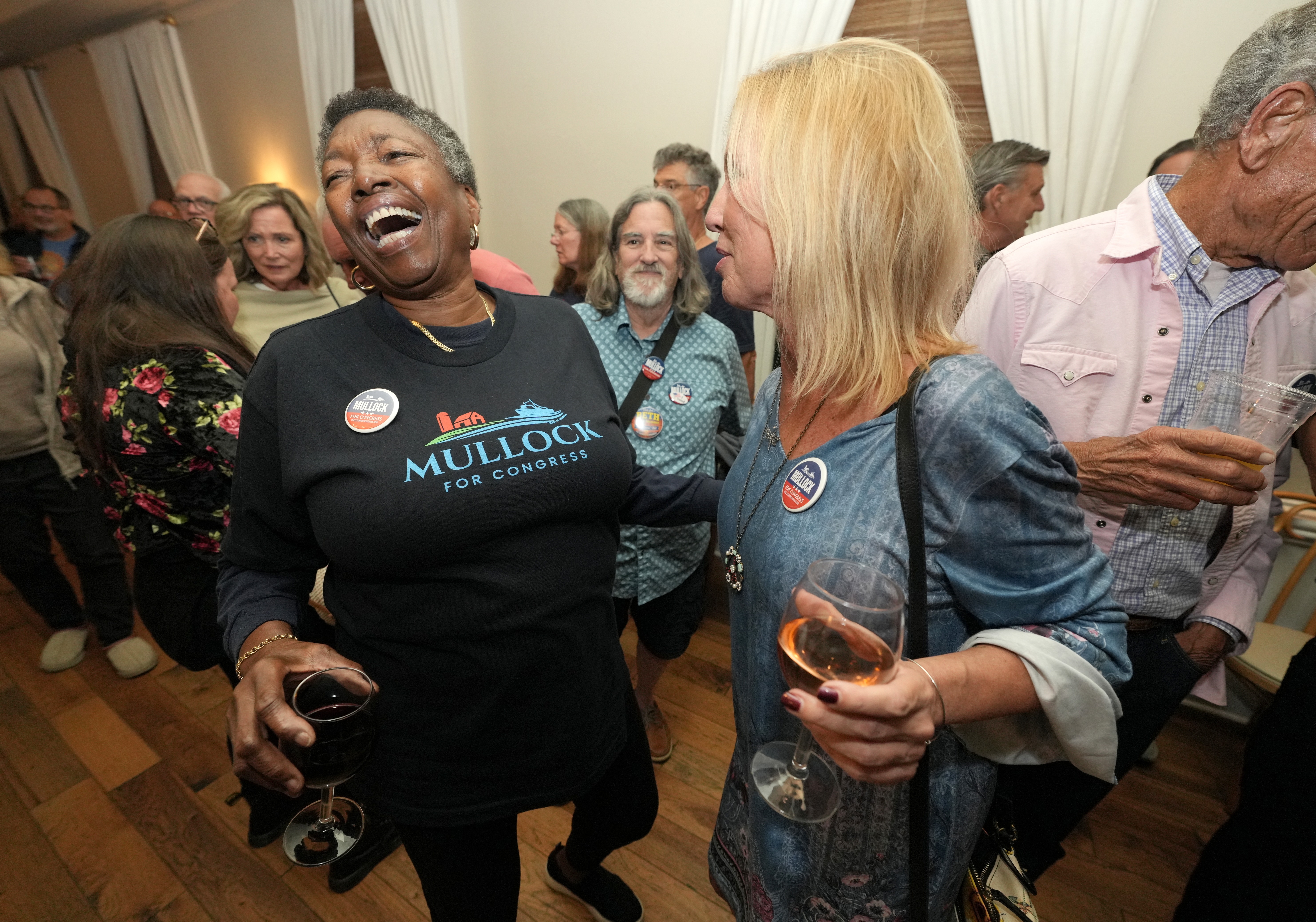
    Julia Hankerson (left), from Woodbine, and Amelia May, from North Cape May, dance during an election night party for Democratic congressional candidate and Cape May Mayor Zack Mullock at the Chalfonte Hotel in Cape May.Tim Hawk / For The Inquirer

    Fitzpatrick’s loss to Democrat Bob Harvie in Bucks County was perhaps the most monumental of those outcomes, and it means that Democrats had ousted the last House Republican in the Philadelphia suburbs. Fitzpatrick had repeatedly survived blue waves and entered the race with a massive cash advantage.

    “We’re turning it away from the negative, from the ugly, from the heartless, from the ignorant, from those who would take us backward and who would divide us and make us fight each other,” Harvie said. “And instead we are turning toward the America that we have always wanted to be and have been at brief times in our past.”

    A late surge of momentum behind Harvie meant millions of dollars in ad support from national Democrats and repeated voter turnout efforts headlined by Shapiro and other prominent party members.

    Fitzpatrick’s astounding $11.9 million in campaign spending in the campaign through Oct. 22, which was the last available public report, was ultimately more than he spent in his last three campaigns combined. He still saw millions of dollars more spent on his behalf from national Republican groups and even Trump’s super PAC.

    In his race and another around Harrisburg, Democrats worked to capitalize on the especially challenging moment for Republicans to attack lawmakers who repeatedly managed to win close elections in the past.

    Fitzpatrick’s loss was in part fueled by former supporters who, this year, decided to cast their ballot for Harvie.

    Julie Marshall, 61, a Democrat, has previously voted for Fitzpatrick, but the final straw for the Levittown resident was when she repeatedly called his congressional office but could not get in direct contact with him.

    She cited gas prices, housing, education, and healthcare among the issues that had left her frustrated with the state of the country, adding that Fitzpatrick hasn’t done enough to hold Trump and his contemporaries accountable.

    “Something’s gotta be done,” she said. “We can’t keep doing this.”

    Other voters were motivated by the economy. Democrat Dennis Bridges cast an enthusiastic vote for Harvie at Central Bucks High School South on Tuesday to, in his view, correct the course of a federal government that has veered wildly off track.

    “Healthcare was the big one, the gas, the war,” the 75-year-old Chalfont resident said of his concerns this year. “And then the corruption. It seems like no matter what, [Trump is] getting away with all kinds of corruption.”

    Attendees cheer as other Democratic winners are announced during Bob Harvie’s election night party at Rafters in Newtown.Monica Herndon / Staff Photographer

    Neil Makhija, a Montgomery County commissioner who stumped for Democrats across the state, compared the results to 2006, when the party won back power with George W. Bush in the White House as voters rejected an unpopular war. Among the losses that year: Fitzpatrick’s brother, then-U.S. Rep. Mike Fitzpatrick, in the seat that would later change hands within the family.

    “Back then, I remember feeling stunned that we were winning states we weren’t supposed to win,” Makhija said. “This kind of election expands people’s view of what’s possible.”

    Every precinct in the district shifted toward Democrats compared to 2024, a sign of how widespread the backlash to Trump was.

    (function(){function e(){window.addEventListener(`message`,function(e){if(e.data[`datawrapper-height`]!==void 0){var t=document.querySelectorAll(`iframe`);for(var n in e.data[`datawrapper-height`])for(var r=0,i;i=t[r];r++)if(i.contentWindow===e.source){var a=e.data[`datawrapper-height`][n]+`px`;i.style.height=a}}})}e()})();

    Fitzpatrick offered his concession Wednesday morning. He did not reference Trump or the wider backlash to his party, but he said that it was “not the ending we had hoped or envisioned” as he talked about transcending party lines.

    “But when I look back on all we have built, the extraordinary coalition of people we have brought together, and the countless people we have come to know as partners, friends, and family, I am overwhelmed not by what is ending, but by all we have been fortunate to experience together,” Fitzpatrick said in the statement.

    U.S. Rep. Scott Perry, one of Trump’s staunchest allies in Washington and the former leader of the far-right House Freedom Caucus, had won seven times in the 10th Congressional District that now encompasses all of Dauphin and parts of York and Cumberland Counties. The district morphed and became more competitive during Perry’s time in office, with the Republican winning by just 1 percentage point in 2024.

    In a rematch this year with Democrat Janelle Stelson, the challenger hammered Perry over rising gas prices due to the war in Iran and what she called his too-extreme platform for the district.

    Meghan Getz, 42, an elementary school art teacher, supported Stelson and said of the Democrat, “Her core values, like supporting food stamps and Medicaid, are just better than Perry’s.”

    The two other districts — one in the Lehigh Valley and another in the Northeast corner of the state — saw the largest influx of campaign spending as both parties saw opportunities in key battlegrounds.

    In the 7th Congressional District, union leader and retired Bethlehem firefighter Bob Brooks defeated U.S. Rep. Ryan Mackenzie. In the 8th District, Scranton Mayor Paige Cognetti won against U.S. Rep. Rob Bresnahan.

    Carlene Flynn, 74, hasn’t seen much change in the city since Cognetti became mayor in 2020, but was hoping Tuesday that she would replace Bresnahan because of the Republican’s alignment with Trump.

    “We just watched Bresnahan vote for everything that Trump wanted,” said Flynn, as nearly every voter passing by greeted her by name.

    As Democrats looked to rebound after a disastrous 2024 effort, all four races were not only defined by Trump but also hinged on critical recruitment efforts to secure what the party considered the best possible candidates.

    Harvie is a twice-elected Bucks County commissioner. Stelson is a well-known former local television anchor who came within a hair of defeating Perry in a GOP-friendly year in 2024.

    Attendees cheer for 1st Congressional District winner Bob Harvie at his election night party at Rafters in Newtown.Monica Herndon / Staff Photographer

    Cognetti focused on her history in local politics and anti-corruption work that meshed with a top attack line against her opponent.

    And Brooks leaned into his working class background — a clear attempt to recapture voters who drifted toward Trump — and his experience around the political process as a well-connected advocate for emergency responders.

    “D.C. is going to hear this message loud and clear when Bob Brooks gets to town,” Brooks said while declaring victory in Bethlehem, surrounded by union leaders and supporters wearing plastic firefighter hats with his campaign logo. “We aren’t going down there to try and piece things back together where they were before. We’re going down to shake up the status quo, fight for working people, stop the bulls— and build something better from the ashes.”

    While Brooks emphasized his union support, one key ally said his and other victories around the country leaned on Latino voters who swung toward Trump in 2024 but had become enraged by his immigration enforcement and policies that raised prices.

    “Latinos decided this election,” said Allentown Mayor Matt Tuerk, the first Latino mayor of the majority-Latino city, which is Pennsylvania’s third largest. “We saw significant turnout in Allentown. … We supported candidates that rejected Republican policies and have done harm to our families [and] that have raised prices.”

    Kevin Black, 66, a retired teacher from Macungie, cast his vote for Brooks because he was turned off by Mackenzie’s negative ads and is concerned with the economy.

    “I can go either way. I used to vote with Republicans a lot. The past few years now, I’ve been switching around,” he said.

    Republicans in all four races launched attacks at the newcomers while defending their records and, in some cases, distancing themselves from the leader of their party.

    “There’s been plenty of examples of where we’ve pushed back on the administration,” Bresnahan said last week at the end of a debate — a notable move in a region that voted more for Trump than any of the other competitive districts.

    Those late rhetorical efforts came after Bresnahan and Mackenzie had largely stood by Trump and his policies. Each of them spoke at the Republican midterm convention he convened in September. They also welcomed support from House Republican leaders, though Trump didn’t appear in the state for a campaign event in the final stretch.

    But in all four of the districts, Trump’s approval ratings had sunk dramatically, according to an Inquirer/New York Times/Siena University poll conducted in recent weeks. Democrats also had the edge over their opponents on nearly every policy issue that the survey asked about — such as cost of living and corruption.

    By the time voters went to the polls on Tuesday, one major nonpartisan ratings agency had moved all of the races — which had started as toss-ups or “leans Republican” in the summer — to “leans Democratic.”

    Michelle Leiby, of Langhorne, cheers as early Bucks County results are announced during Bob Harvie’s election night party at Rafters in Newtown.Monica Herndon / Staff Photographer

    The picture was similar across the country, with Democrats projected to easily retake the House and also the Senate. When Trump took office nearly two years ago, that level of a blue wave seemed far out of reach.

    Samuel Chen, an Allentown-based GOP strategist, said voters often feel a sense of regret in midterm elections if they don’t feel like they’re getting what they bargained for.

    But amid rising inflation and the unpopular war in Iran, the dissatisfaction ran deeper. Even some Trump voters, Chen said, “felt a sense of betrayal.”

    “They didn’t want forever wars, they didn’t want prices to go back up, and they did,” Chen said. “And the president is saying ‘the economy is not that bad, suck it up.’”

    Philadelphia-based Democratic strategist Anthony Campisi said disaffection with the president appeared too much for even Fitzpatrick, who was the most bipartisan member of Congress and was considered the toughest challenge for Democrats, to overcome.

    “When the president is talking about the Reflecting Pool instead of the cost of living the night before the election,” Campisi said, “it’s kind of like an allegory.”

    Staff writers Aliya Schneider, Dugan Arnett, Al Lubrano, Dana Munro, and Jesse Bunch contributed to this article.

    This story was updated to include a statement from Fitzpatrick.

  • Trump again looms large among Pa. and N.J. voters, with Congress and a governor’s chair at stake

    Trump again looms large among Pa. and N.J. voters, with Congress and a governor’s chair at stake

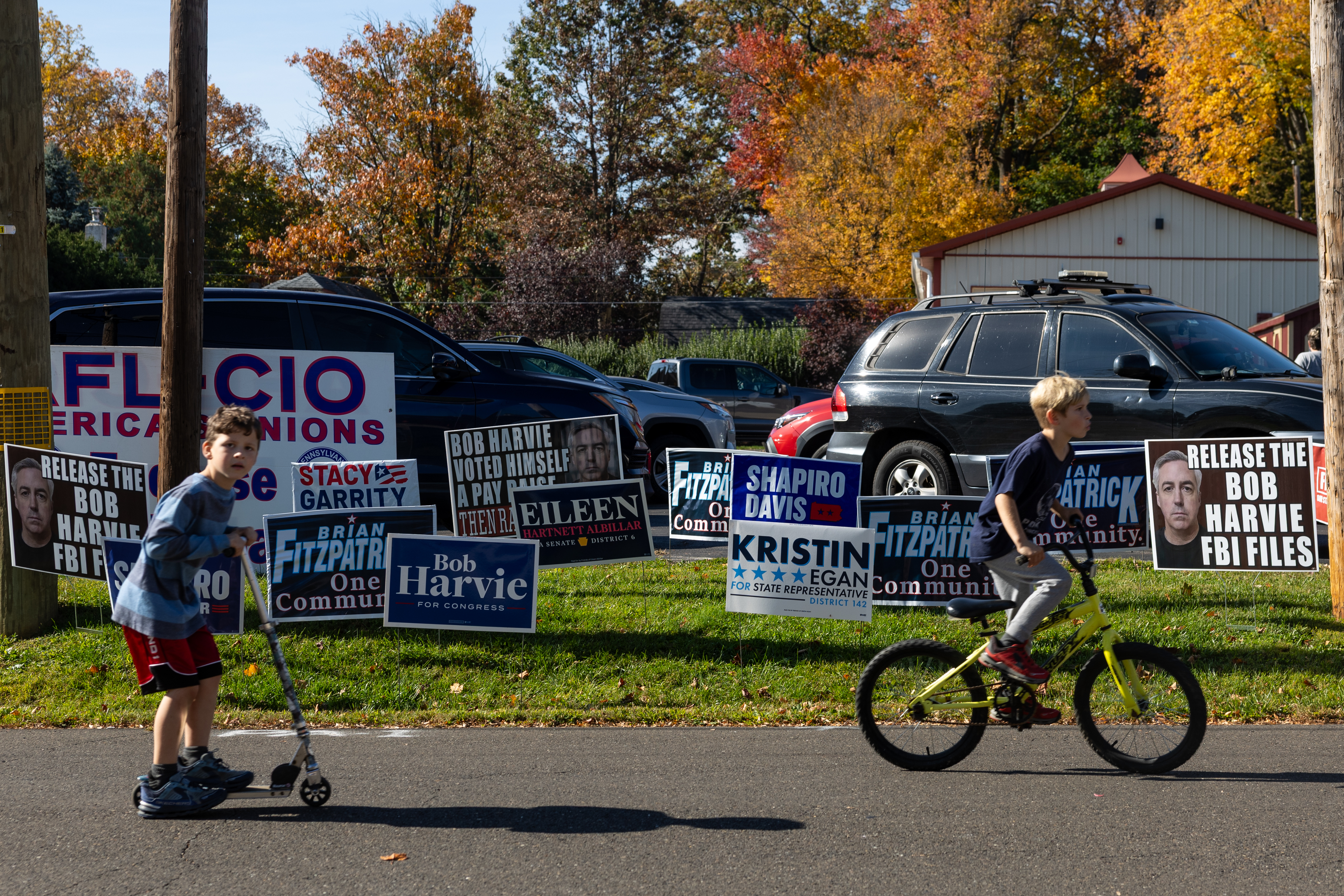
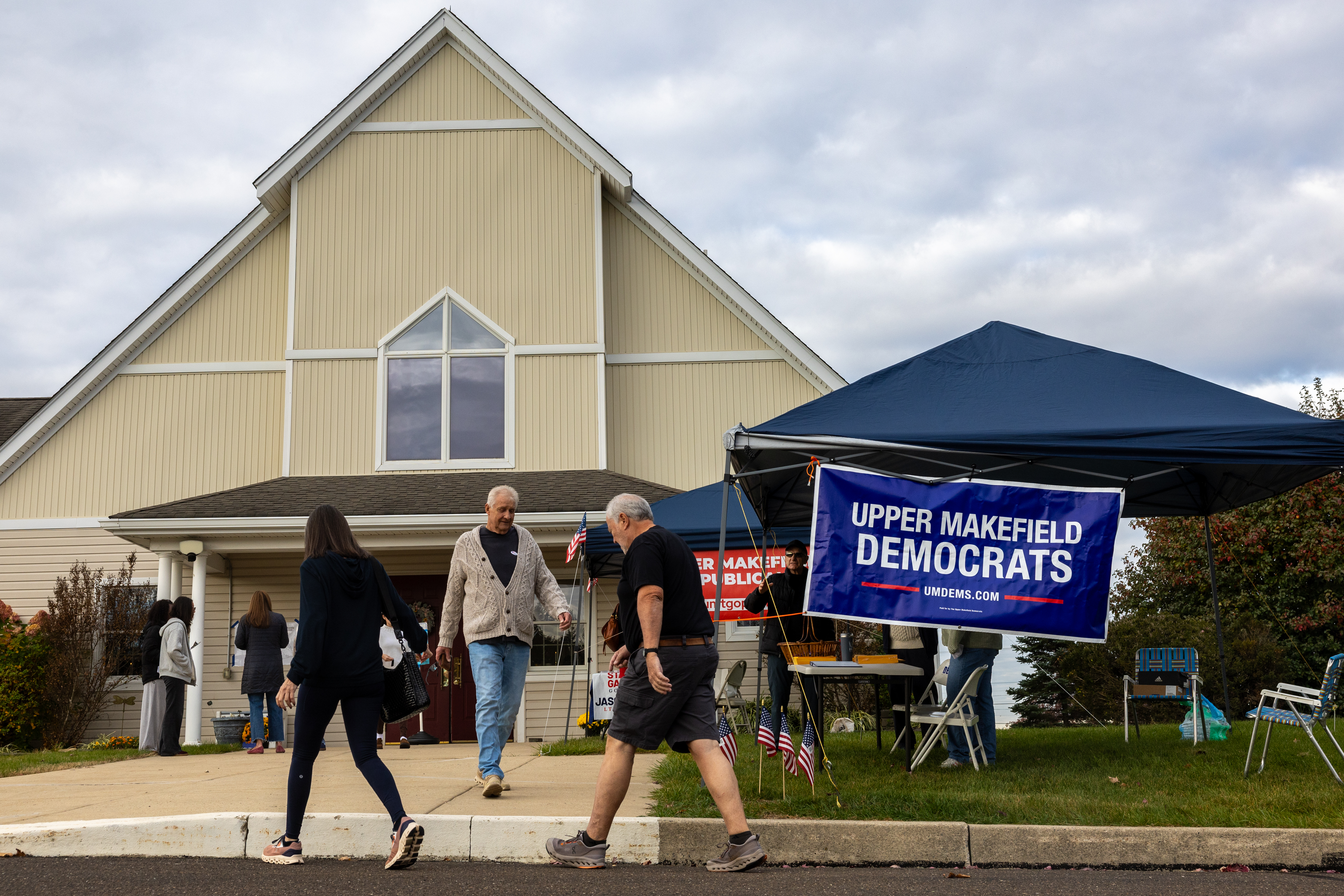
    By the time polls opened just after daybreak on what turned out to be a magnificent Election Day with the weather evoking a spring primary, the sunlight had turned the foliage on the treetops to fire.

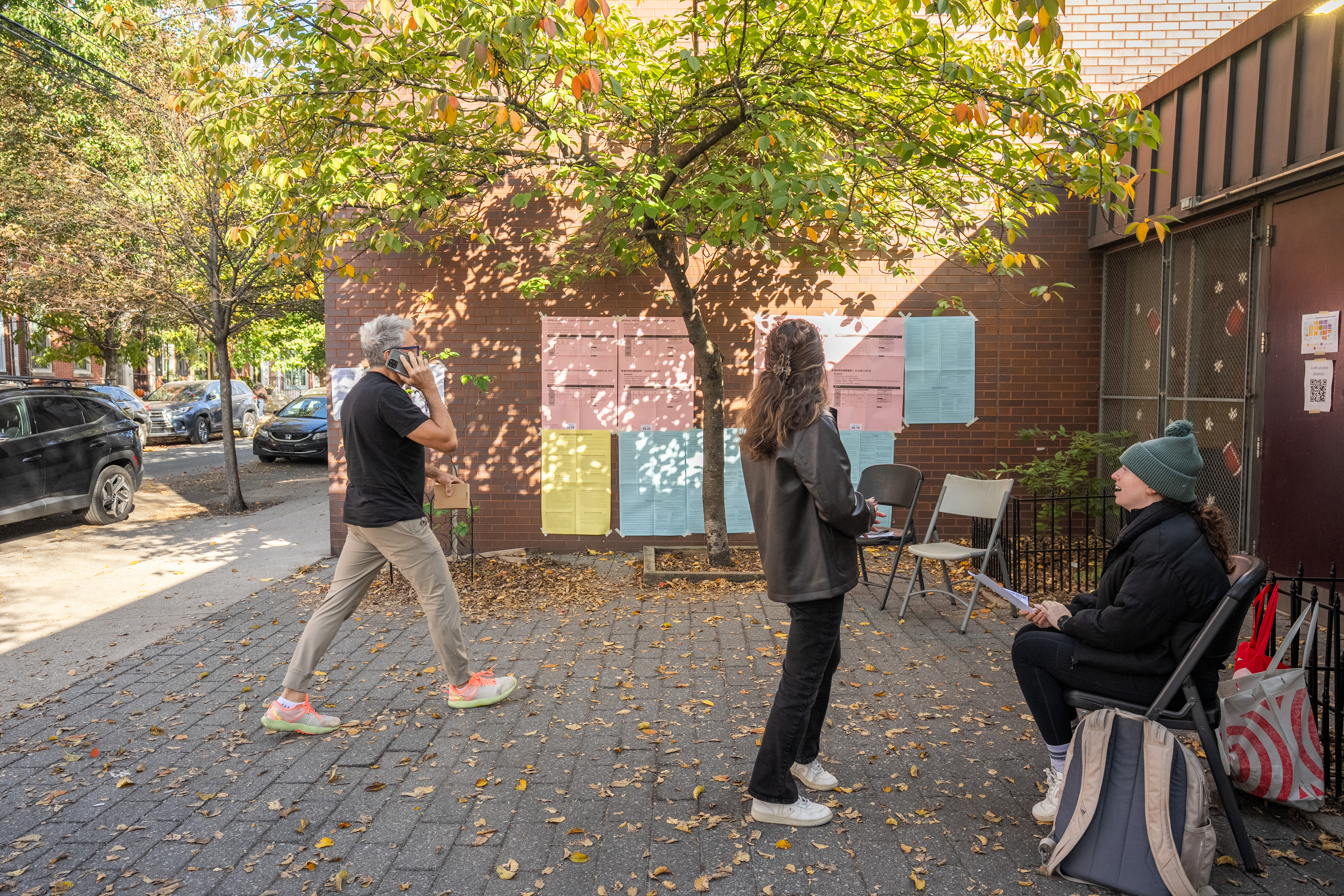
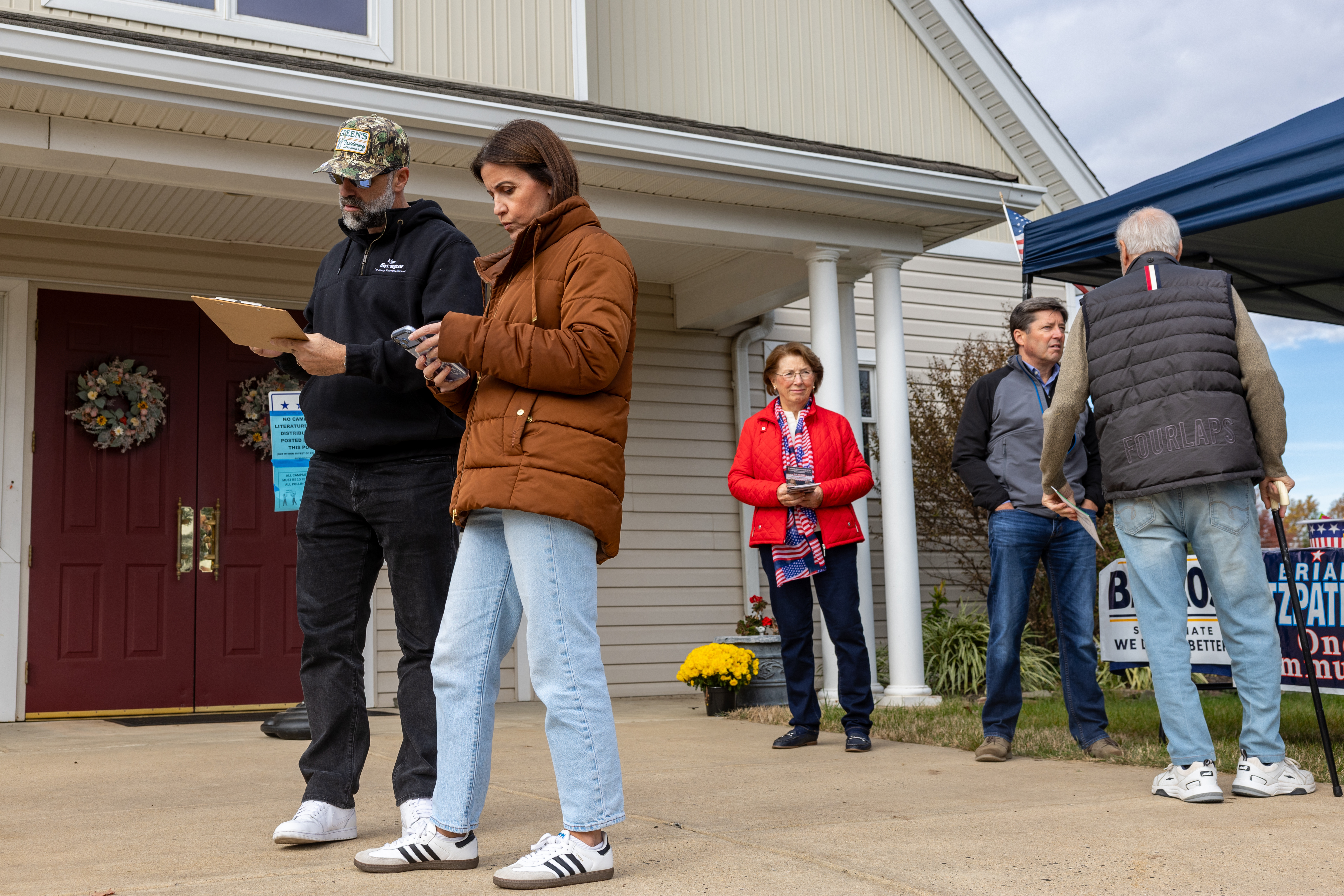
    Whether that somehow lit a fire among those who voted was arguable, but a certain energy was evident at the polls as voters cast ballots that potentially could change the balance of power in the U.S. House and the Pennsylvania Senate.

    Of several congressional seats considered up for grabs, the race in solid purple Bucks County between GOP incumbent U.S. Rep. Brian Fitzpatrick and Democratic challenger Bob Harvie was among the most closely watched in the nation as talk of a Democratic “blue wave” had been building.

    Voters in one of the nation’s most important swing states also were deciding on whether to return Democratic Gov. Josh Shapiro to Harrisburg in his race against Republican nominee Stacy Garrity. However, polls suggested strongly they already had decided, and the results affirmed that perception.

    Even so, and without hot races occurring in the Philadelphia and Allegheny County population centers, turnout in Pennsylvania likely would exceed 50%, said Lauren Cristella, executive director of the nonpartisan Committee of Seventy. That would be more than respectable for a midterm election.

    She added that everything appeared to have gone smoothly, and the federal monitors had not raised any issues.

    Voters interviewed spoke passionately about their top issues — the state of the economy; ICE; the war with Iran; AI data centers; and of course, he who was not on the ballot, President Donald Trump.

    After watching a steady stream of voter traffic at her Drexel Hill, Delaware County polling place, Democratic greeter Risa DeSilva-King, 43, remarked: “I think we have Trump to thank for that.”

    Trump was on the minds of voters throughout the region. Outside Margate’s city hall, Bill Grutzmacher, 73, a retired Philadelphia police officer, said he remained a steadfast Trump supporter. “I like Donald Trump because he supports Israel and supports law and order,” he said.

    Debra Fitzgerald, 67, voting in Shapiro’s hometown of Abington Township, didn’t quite agree. “This administration’s appalling,” she said.

    “Trump looms over this entire midterm,” said Ashley Koning, director of the Rutgers University Eagleton Institute Center for Public Interest Polling. “But he isn’t on the ballot the way he is in a presidential year, and that distinction matters.”

    It could matter particularly for the fortunes of Republican Jeff Van Drew in New Jersey’s 2nd Congressional District. Once heavily favored, his race against Democratic Cape May Mayor Zack Mullock tightened.

    On the Pennsylvania side, in addition to the Fitzpatrick race, Democrats had high hopes for taking three other seats in Pennsylvania, including the one held by Trump loyalist Scott Perry, being challenged by Democrat Janelle Stelson.

    At Monaghan Presbyterian Church in Dillsburg, York County, near Perry’s home, by 7:15 a.m. Tuesday, the parking lot was as full as it would be for a Sunday morning service as voters crammed into the brick sanctuary.

    Turnout was ultra-brisk in Scranton, where incumbent Republican U.S. Rep. Rob Bresnahan was in a tight race with Scranton’s Democratic mayor, Paige Cognetti.

    With the popular Shapiro leading the ticket, Pennsylvania Democrats believed they had a shot at taking control of the state Senate for the first time in decades. Shapiro was expected to win overwhelmingly, a possible prelude to a run for the presidency in 2028.

    Voters generally viewed him favorably, but not without at least a few reservations. Millie Grieve, 19, a Democrat voting in Swarthmore in her first federal election, voted for him although she says she disagrees with some of his policy positions, including on AI data centers. She felt he was a better choice than “someone who’s just going to be one of Trump’s lackeys.”

    In Northeast Philly, Audrey Lamping voted for Shapiro, saying, “I like him, and he’s doing a good job.”

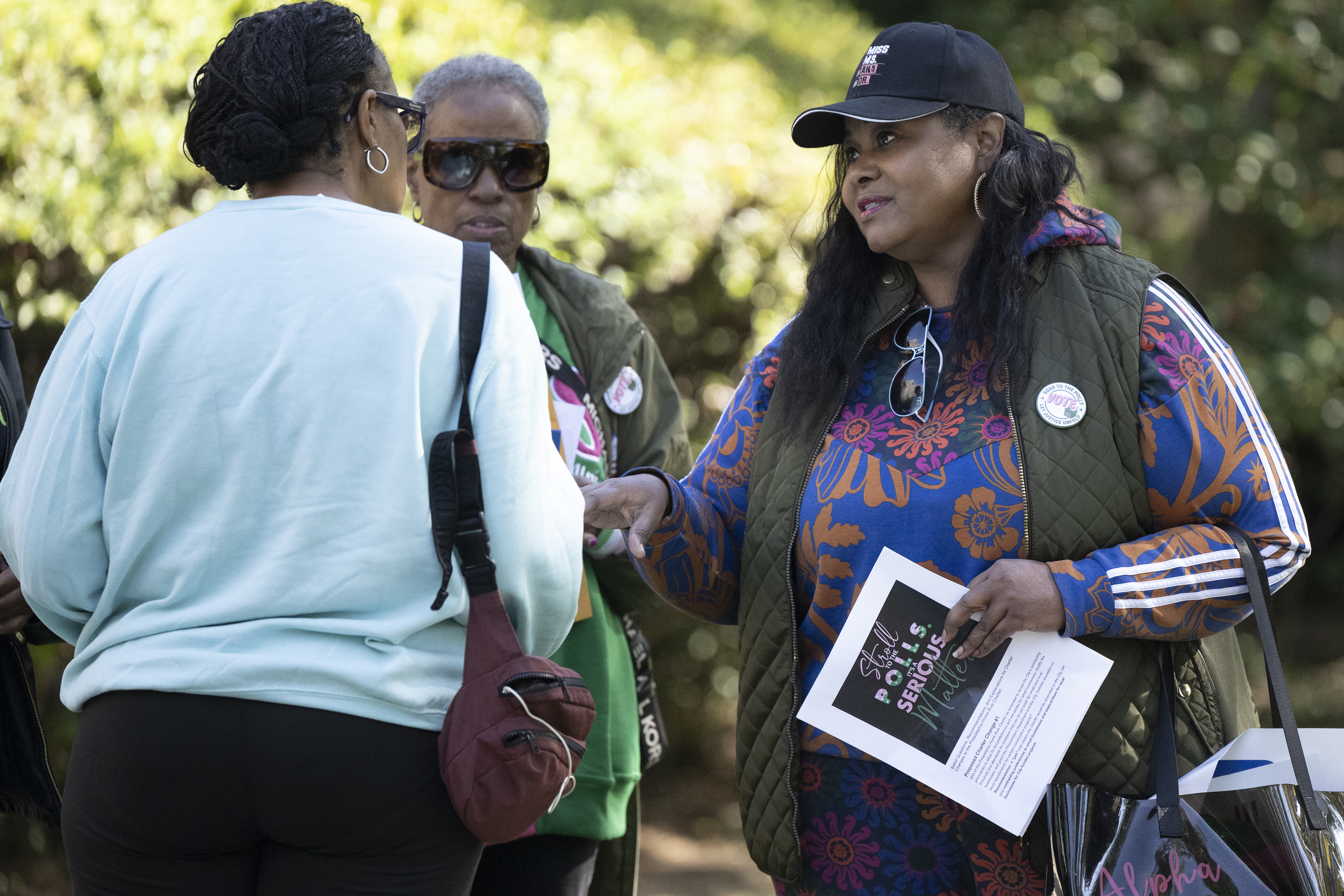
    Alpha Kappa Alpha Sorority members Muriel Moseley, left, and Alisa Rhodes assist voters by providing last-minute information at the 34th Ward polling place, located at the African Episcopal Church of St. Thomas, on Election Day, Tuesday, Nov. 3, 2026, in Philadelphia.Jose F. Moreno / Staff Photographer

    At the Erma Volunteer Fire Co. in Cape May County, voting was brisk as the sun began to set. Mike Lawrence, 81, said he was “not interested” in talk about a blue wave and predicted it would stop before it hit deep South Jersey.

    “I’m voting straight Republican,” said Lawrence, who owned a driving school before retiring. “Van Drew, I just think he does a good, good job. You know, he follows up.”

    Voters had their share of complaints about partisanship and divisions.

    And in that tense Bucks County race, voters said they were absolutely fed up — with the ads.

    The commercials — and mailers and text messages — have been flowing nonstop, they said.

    “They’re coming in every hour, just about,” said Sue Sutter, 73, a retired registered Republican from Penndel, of the political text messages she has received. She deletes them and reports them as spam, she says, “but they come in the mail, too.”

    “They’re killing too many trees.”

    Some voters decried the negative nature of some ads.

    “I think it’s disgusting and obnoxious how many millions of dollars are spent on this,” said Kathy Johnson, 71, a wealth adviser from Middletown Township and an independent. “And it gets worse and worse.”

    Fitzpatrick was on pace to spend more on advertising in this race than in his last three campaigns combined, The Inquirer reported last month. At the time, Harvie was approaching $1 million in spending.

    The result? In Bucks County, it’s all been difficult to avoid — and not just for those on the receiving end.

    Said Gary Ray Caton, 76, a pastor from Langhorne, “Every time we see the mail person he’s cursing up a storm because he’s got to deliver it all.”

    Whether the ad blitz had any effect on the outcome would be impossible to measure.

    “I’m done with Fitzpatrick,” said Kathy Johnson, 71, a wealth adviser from Middletown Township. “And I’m willing to give Harvie a chance.”

    “I dislike Fitzpatrick with a passion … but I would not put Harvie in,” said Gary Ray Caton, 76, a pastor from Langhorne. “I have no choice. We cannot lose Congress.”

    Anthony Falk, 26, of Perkasie, is a former Marine reservist, and hoped Fitzpatrick would help end the Iran war if he held on.

    Voting at Lincoln University in Chester County, student Carl Richardson, 21, had a decidedly nonpartisan perspective to offer.

    “It’s a blessing to vote,” he said. “We’re the generation of the future.”

    Staff writers Dugan Arnett, Jesse Bunch, Nate File, Kristen A. Graham, Zoe Greenberg, Sam Janesch, Jillian Kramer, Dana Munro, Sarah Nicell, Jess Rohan, Denali Sagner, Henry Savage, Brooke Schultz, and Vinny Vella contributed to this article.

  • Former TV anchor Janelle Stelson defeats Trump ally Scott Perry in tense central Pa. congressional rematch

    Former TV anchor Janelle Stelson defeats Trump ally Scott Perry in tense central Pa. congressional rematch

    Democrat Janelle Stelson defeated Republican U.S. Rep. Scott Perry in their rematch to represent the Harrisburg-based 10th District congressional seat, the Associated Press projected Tuesday.

    Stelson, a former TV anchor with name recognition in the district, managed to overtake Perry in the swing district as voters expressed their frustration with President Donald Trump at the polls, after losing to the GOP incumbent in 2024 by just over 1 percentage point.

    As suburban voters moved further toward the Democratic Party, Perry, who was first elected to Congress in 2012, struggled to hold on. Gov. Josh Shapiro, who won the district during his 2022 campaign, endorsed and campaigned with Stelson in the summer and fall to boost her campaign.

    “Forgive me,” Stelson said Tuesday night at her victory party in Hershey. “I’m kind of in shock.” Once she regained her composure, Stelson said that people ask what her first job will be. “One of the things I say is, ‘End the war in Iran.’”

    The crowed roared its approval.

    The 10th Congressional District covers Dauphin County as well as parts of York and Cumberland counties. And in a district the president won just two years ago, his job approval rating among voters sunk to 43%, with 55% disapproving, according to the recent Inquirer/NYT/Siena poll.

    Meghan Getz, a 42-year-old elementary school teacher from Dillsburg, pointed to Perry’s vote for Trump’s signature One Big Beautiful Bill Act, which cut funding for Medicaid and food assistance to pay for tax breaks, when she cast her ballot for Stelson.

    “Her core values, like supporting food stamps and Medicaid, are just better than Perry’s,” said Getz, an elementary school art teacher. “I just really feel like we need more Democratic people in Congress to change it and stop.”

    Other voters in the tight race appreciated the incumbent’s close association with the president.

    “Perry is with Trump on things like tariffs, which are the only way to get manufacturing back, and the jobs that come with it. Trump cares more about jobs than Stelson, or any other Democrat,” said Michael Phipps, a 75-year-old retired mechanic from Dillsburg.

    (function () {window.addEventListener(‘message’, function (e) { var message = e.data; var els = document.querySelectorAll(‘iframe[src*=”‘ + message.id + ‘”]’); els.forEach(function(el) { el.style.height = message.height + ‘px’; }); }, false); })();

    This year’s rematch added an additional layer of bitterness between the candidates who traded insults and allegations.

    Perry accused Stelson of harboring inside her campaign an immigrant who authorities say was in the country illegally. Although the Nigerian man was found with campaign materials from Stelson at the time of his police arrest, she said he was not a volunteer or staff member and denounced illegal entry into the U.S. during Perry and Stelson’s congressional debate.

    Meanwhile, Stelson painted Perry, a close ally of Donald Trump, as an election denier. Perry led the effort to contest Pennsylvania’s electoral votes within hours of the Capitol riot on Jan. 6, 2021 and was investigated by the select House committee for his alleged role in helping craft Trump’s strategy to stay in office despite his 2020 loss. The second time around, voters bought her depiction of Perry.

    (function () {window.addEventListener(‘message’, function (e) { var message = e.data; var els = document.querySelectorAll(‘iframe[src*=”‘ + message.id + ‘”]’); els.forEach(function(el) { el.style.height = message.height + ‘px’; }); }, false); })();

    “I mean he tried to overthrow the government, then asked for a pardon,” said David Koppenhoffer, a 79-year-old Democrat from Harrisburg. “He doesn’t belong in Congress. He belongs in jail.”

    Stelson also framed the stakes of the election around cost-of-living concerns, blaming Perry, a close ally of Trump, for his support of the war in Iran that she and experts have said led to a spike in oil costs throughout the summer and fall. Voters, in the Inquirer/NYT/Siena poll conducted in October, said the economy and cost-of-living concerns were their top priorities, and in a heavily-suburban district, gas prices were front and center.

    Jess Troutman, a 40-year-old Dillsburg Democrat, pointed to these issues as her reason for backing Shapiro and Stelson Tuesday. “Shapiro and Stelson are cohesive in moving in a direction people want to be going toward,” Troutman said. “A lot of us are struggling to afford day-to-day things, and can’t continue this way.”

  • Democrats project confidence while GOP braces for possible midterm losses in Pa. and New Jersey

    Democrats project confidence while GOP braces for possible midterm losses in Pa. and New Jersey

    Two years after President Donald Trump won a record number of votes in Pennsylvania and Republicans swept statewide races, the party entered Tuesday bracing for very different results.

    The president’s cratering approval ratings amid widespread concerns around affordability, corruption, and the war in Iran have fueled Democratic optimism for months.

    And in the lead-up to Tuesday’s election, Democrats look poised to win back two congressional seats they lost in 2024 and potentially flip two others with popular Gov. Josh Shapiro at the top of the ticket. They even have a shot at winning control of the state Senate for the first time in three decades.

    Republicans have pushed back — defending their records, attacking their opponents and, in some cases, distancing themselves from the historically unpopular president.

    But even in the final hours of the more than yearlong campaigns, Democrats were projecting confidence on Monday in ways they hadn’t in previous years which yielded a “blue wave.”

    “The path to the majority in the House of Representatives runs right through Pennsylvania, and right through Pennsylvania One,” U.S. Rep. Suzan DelBene (D., Wash.), the national leader of House Democrats’ efforts to win control of the chamber, said during an event with Democrat Bob Harvie in Bucks County.

    Harvie is locked in a neck-and-neck race against Republican U.S. Rep. Brian Fitzpatrick in the 1st Congressional District, which covers Bucks and a sliver of Montgomery County.

    The Democratic Congressional Campaign Committee, which DelBene chairs, and other national Democratic groups steered significant resources toward Harvie’s candidacy in the final month of the campaign.

    And Shapiro, a likely White House contender after Tuesday, provided consistent support, making multiple visits to the district, including a Saturday rally.

    Stumping with DelBene and former Chicago Mayor Rahm Emanuel — another potential 2028 presidential candidate — on Monday in Lower Bucks County, Harvie said his mindset in the home stretch was to keep running “like you’re behind.”

    “It’s one of those things you’re getting toward the goal that you’ve been fighting for,” Harvie said.

    Fitzpatrick has handily defeated Democratic challengers in the last decade in a district where his late brother once served and where he’s built a brand as one of the few moderate, anti-Trump Republicans left in the country.

    In interviews in recent days and throughout his campaign, he’s repeatedly stressed his independence even as national Republican leaders — including Trump’s super PAC — have combined to spend millions to push him over the finish line.

    U.S. Rep Brian Fitzpatrick speaks during the Garden of Reflection remembrance ceremonies on Sept. 11 in Yardley. The Garden of Reflection is Pennsylvania’s official state memorial honoring all 2,973 victims of the September 11 terrorist attacks, with a special tribute to 18 local residents from Bucks County.William Thomas Cain / For The Inquirer

    The Republican incumbent held no major public events in the district on Monday and a judge rejected his lawsuit seeking to disqualify a member of the Bucks County election board over her connections with Harvie.

    Fitzpatrick’s family has held the seat for most of the past two decades, except for a four-year period between 2007 and 2011. That could change after Tuesday.

    Larry Sabato’s Crystal Ball, a major nonpartisan elections forecaster based at the University of Virginia, moved the district from “toss-up” to “leans Democratic.”

    Each of the other three swing districts in Pennsylvania that could help decide control of the U.S. House on Tuesday were also rated “leans Democratic” by the forecaster and by the Cook Political Report, another widely cited ratings report.

    In the Lehigh Valley-based 7th and Scranton-based 8th Congressional Districts, freshmen Republican U.S. Reps. Ryan Mackenzie and Rob Bresnahan were looking for second terms in districts they flipped in 2024. In the Harrisburg-based 10th Congressional District, GOP U.S. Rep. Scott Perry, a staunch Trump ally, was hoping to fend off a challenge from the same Democrat who nearly beat him two years ago.

    Reilly Richardson, spokesperson for the National Republican Congressional Committee, said in a statement that the GOP nominees were in a “strong position” because they “successfully fought for the priorities the American people elected them to enact.”

    “Voters in Pennsylvania have a clear choice: While Republicans are running commonsense, battle-tested incumbents who have delivered results for their communities, Democrats have nominated radicals whose far-left, high-cost, tax-and-spend agenda would be a disaster for working families,” Richardson said.

    Shapiro’s final push

    In their bid for the governorship, Republicans were set to spend their final night before Election Day with a rally in Bucks County, the county that could decide control of the state Senate in addition to Fitzpatrick’s race.

    Joining GOP nominee Stacy Garrity in Newtown were all of the state’s Republican heavy hitters — U.S. Sen. Dave McCormick, Attorney General Dave Sunday, Auditor General Tim DeFoor, Pennsylvania Republican Party Chairman Greg Rothman and more.

    Garrity brushed off her double-digit polling deficit on the eve of the election.

    “The most important message of tonight,” she said to a crowd of about 170 people Monday, “we will win this race.”

    Stacy Garrity and Jason Richey hold up their arms in Harrisburg on Feb. 7. The state Republican Party endorsed the two in their quest for the governor’s mansion.Kalim A. Bhatti / For The Inquirer

    Shapiro, who has led Garrity by significant margins in every poll, finished a statewide bus tour with a pair of events in Montgomery County, where the governor resides and first launched his political career.

    During his bus tour, Shapiro stumped in the four big congressional races and for candidates further down the ballot. The Democrat has sought to elevate state Senate candidates in particular, aiming to win control of all three branches in Harrisburg for the first time in three decades. At the top of the agenda if he secures it: Raising Pennsylvania’s minimum wage, codifying abortion rights, and increasing funding for mass transit, he said at a rally in Lower Merion on Monday.

    “I’m fighting hard across this commonwealth to win that trifecta, so that we can do good for other people,” Shapiro said.

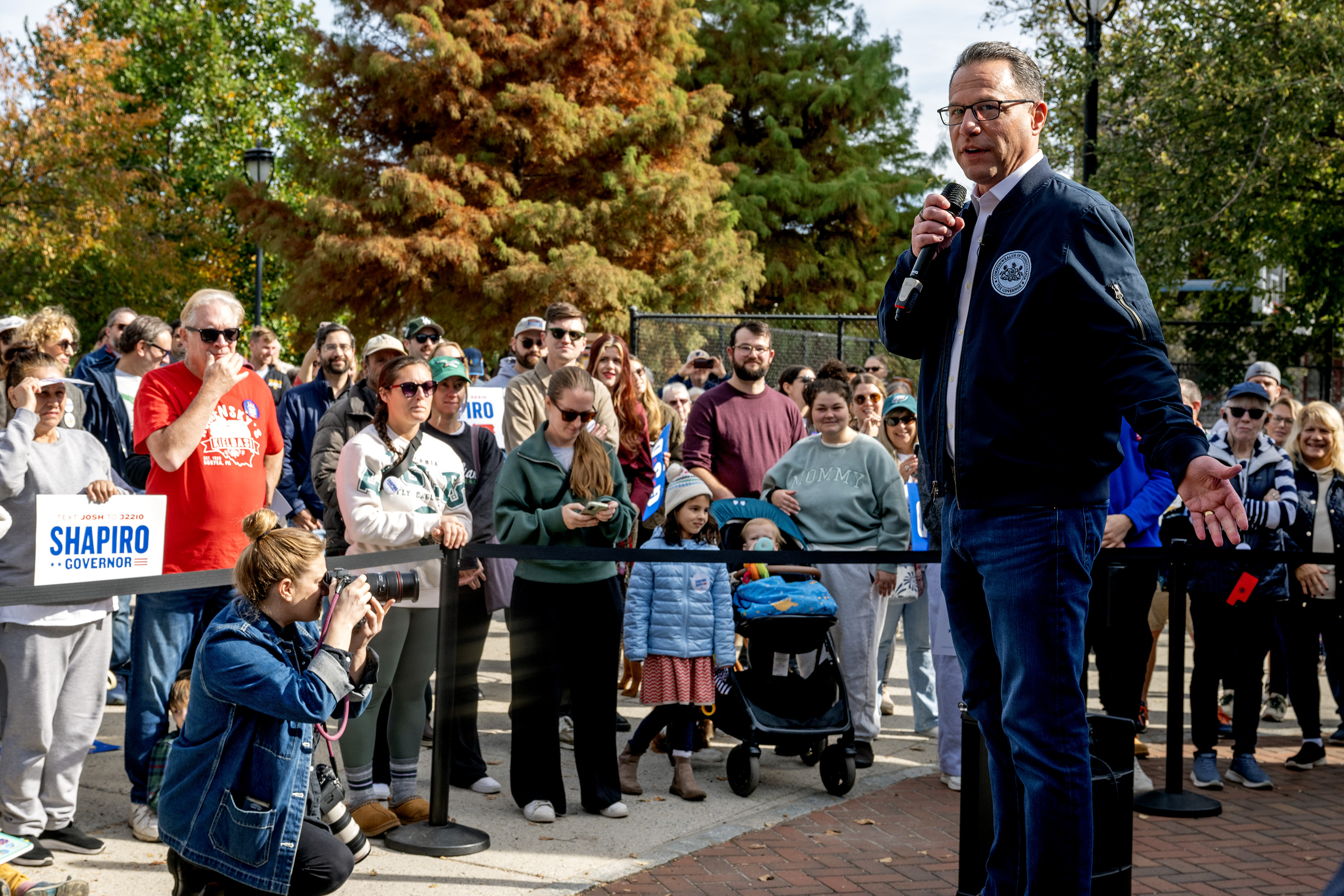
    Gov. Josh Shapiro at a campaign event Sunday in Dickinson Square Park in South Philadelphia.Tom Gralish / Staff Photographer

    The final campaign swing also made clear that more than just the immediate races were on the line for Shapiro.

    “OK, Mr. President,” Scott Anthony Romano, a 61-year-old Belmont Hills resident said at Shapiro’s rally, temporarily interrupting the governor’s speech. “He’s going to be our next president,” Romano said.

    Shapiro, who has dismissed questions about a potential 2028 presidential run, quickly brushed the suggestion off on the eve of his likely reelection.

    “All right, let’s ease up here. My wife’s here. I don’t want her hearing that kind of stuff,” Shapiro said, before returning to his story.

    Sherrill’s pitch in New Jersey

    Across the river, Democrats led by New Jersey Gov. Mikie Sherrill were making their final push on Monday in an area that underscored Democrats’ expanding hopes on Tuesday.

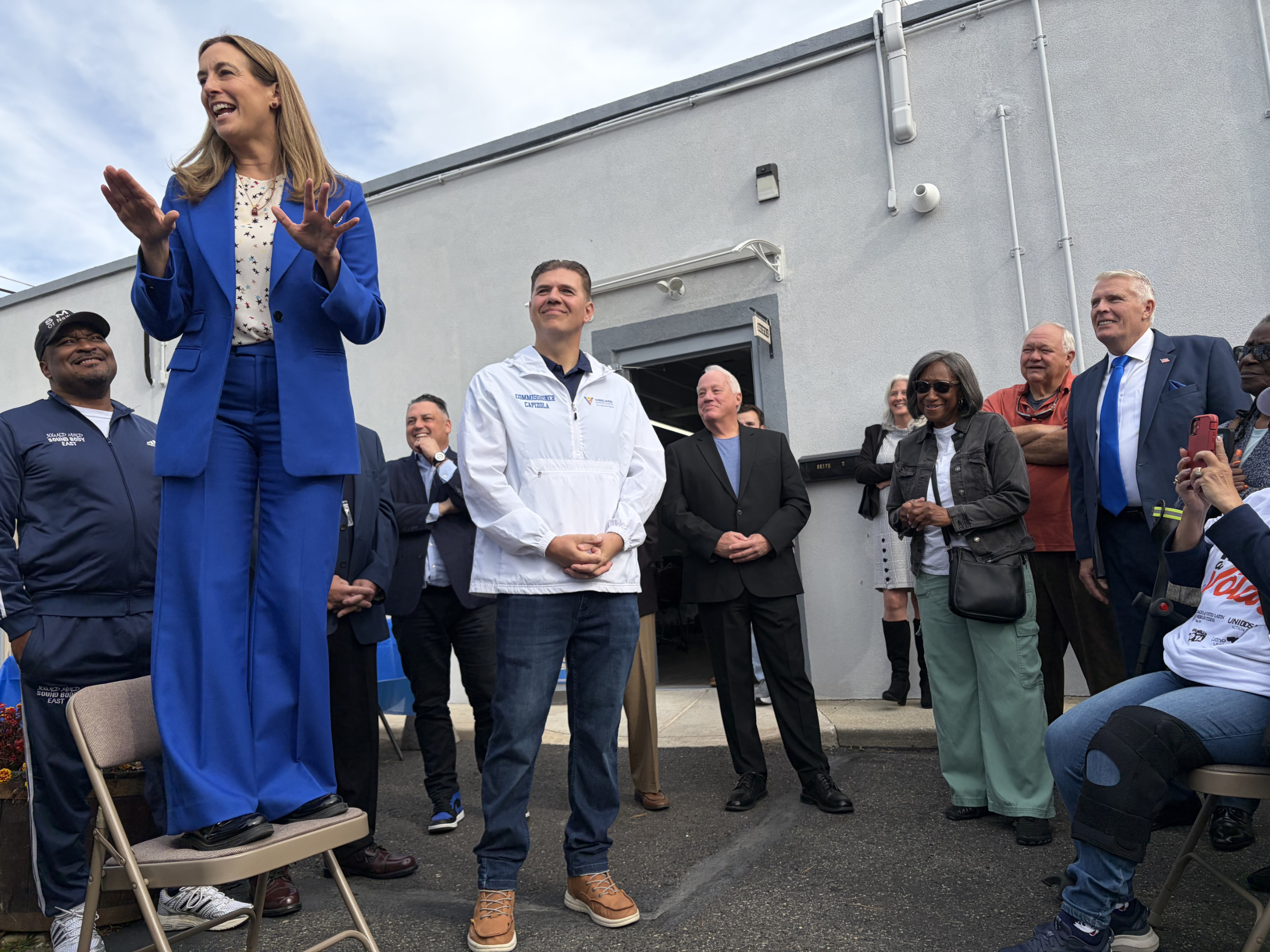
    Cumberland County Democrats were bursting with excitement as Sherrill made an appearance at their Vineland headquarters in support of congressional candidate Zack Mullock, the Cape May mayor challenging Republican U.S. Rep. Jeff Van Drew.

    Democrats have spent most of 2026 targeting GOP Rep. Tom Kean Jr. in the state’s 7th Congressional District. Sherrill rallied with Kean’s Democratic challenger Rebecca Bennett in Union County Monday evening, alongside U.S. Sens. Cory Booker and Andy Kim.

    New Jersey Gov. Mikie Sherrill campaigns in Vineland to support House candidate Zach Mullock on Monday.Aliya Schneider / Staff

    National Republicans ultimately redirected resources intended to reelect Kean while Democrats spent the end of the campaign rallying for Mullock — including with visits from U.S. Sens. Cory Booker and Andy Kim, as well as DNC Chair Ken Martin.

    “The governor doesn’t usually come to Vineland, especially the night before election night, so we are super thrilled about that,” said Carlos Mercado, a Democratic state committee member and legislative chair for the New Jersey State Firefighter Mutual Benevolent Association.

    While Pennsylvania Democrats claimed their races were the keys to control the U.S. House for the final years of Trump’s term, Sherrill made the same case in South Jersey.

    “That’s why we need Zack,” she said after criticizing Trump’s decision to purchase diesel from Russia and his administration’s impact on rising costs. “Because I mean, I almost feel like it’s because he’s a Democrat in New Jersey, and we know what we’re doing here. We got the vision, but it’s also because the path to the majority for the House of Representatives runs right through New Jersey.”

    Staff writer Denali Sagner contributed to this article.

  • Tuesday is Election Day in Pennsylvania. Here’s what we’re watching.

    Tuesday is Election Day in Pennsylvania. Here’s what we’re watching.

    With the governor’s race expected to be a reelection rout for Gov. Josh Shapiro, all eyes Tuesday will be fixed on four swing congressional districts that Democrats appear poised to flip and thereby win control of the U.S. House.

    The path to power in Washington runs straight through the Philly suburbs — not to mention who controls Harrisburg.

    For the first time in decades, Pennsylvania Democrats could also take full control of the legislature. That would give Shapiro — expected to easily cruise by Republican challenger Stacy Garrity — significantly more power to shape the direction of the state as he inches closer to announcing a 2028 presidential run.

    Democrats — with momentum of a favorable national environment at their backs — have been on offense over the final weeks of the campaign, just two years after Republicans swept all statewide races on President Donald Trump’s coattails.

    But the association with Trump isn’t helping this year.

    Republicans are defending a pair of congressional districts they flipped in 2024 and two more seats that have been in GOP hands for more than a decade.

    All in-person voting and mail ballots must be completed and submitted by 8 p.m.

    Here are the races to watch and how to vote.

    Gov. Josh Shapiro at a campaign event Sunday in Dickinson Square Park in South Philadelphia.Tom Gralish / Staff Photographer

    Shapiro’s November could dictate his 2028

    Shapiro, widely viewed as a likely contender for the 2028 presidency, has big ambitions Tuesday.

    More than just securing his own reelection against Garrity, the state’s treasurer, Shapiro hopes to run up the margin and carry down-ballot Democrats across the finish line.

    Another decisive win and a string of coattail victories would be a show of strength about his ability to perform in a key swing state that his party lost in the last presidential election. In a presidential primary, Shapiro could use that result to make an argument that he’s a strong general election candidate who can boost the Democratic brand.

    Barring a shocking surprise, Shapiro should easily emerge victorious Tuesday.

    Expect the race to be called early in the night based on Shapiro’s commanding lead in the polls. Pollster after pollster has found the governor leading by double digits (including The Inquirer and our partners at The New York Times and Siena University).

    He holds a historically large campaign war chest and astounding approval levels for a divided state.

    State Treasurer and Republican candidate for governor Stacy Garrity is seen on a big screen as she speaks to supporters before the arrival of President Donald Trump at Mack Trucks in Macungie on June 23. Trump did not mention Garrity when he later spoke to the crowd in the Lehigh Valley.Tom Gralish / Staff Photographer

    Garrity, who has been endorsed by Trump, broke the record in 2024 for the most number of votes received by a candidate running for state-level office in Pennsylvania. But support from the national GOP establishment has been limited, though her campaign said she saw a cash bounce after the Oct. 7 gubernatorial debate.

    As she faces off against a formidable incumbent, the question is: Was it all too little, too late?

    Will the blue wave hit Pa.? And will it reach Bucks County?

    There are four U.S. House districts in the eastern portion of Pennsylvania, targeted by both parties as must wins. In each, the Republican incumbents are seeking to fend off highly financed challengers amid deep frustration among voters with the leader of their party.

    Shapiro, the most popular Democrat in Pennsylvania, campaigned with each of the swing-district nominees in the final days before Election Day, while House Speaker Mike Johnson sought to boost the GOP incumbents.

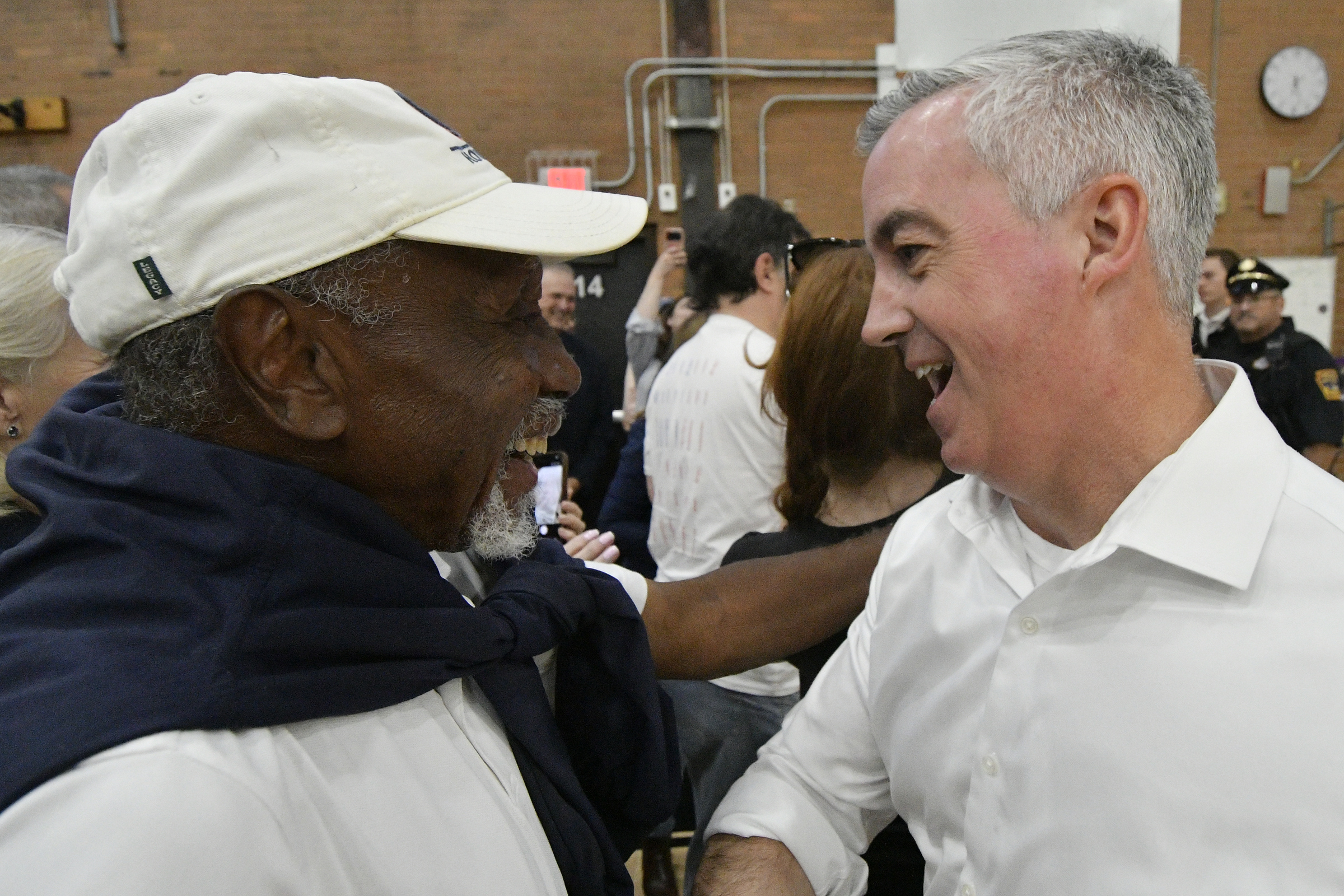
    Clyde W. Waite of Newtown greets Democratic congressional candidate Bob Harvie after House Democratic Leader Hakeem Jeffries and Pennsylvania Gov. Josh Shapiro held a rally for him at Charles Boehm Middle School in Yardley in October. Bastiaan Slabbers/ For the Inquirer

    1st Congressional District: Five-term Republican U.S. Rep. Brian Fitzpatrick faces a tough challenge from Bucks County Commissioner Bob Harvie in the district, which covers all of Bucks County and a portion of Montgomery County. But Fitzpatrick, a moderate who has survived previous blue waves, was trailing Harvie in the most recent Inquirer/NYT/Siena poll — a sign that the independent brand Fitzpatrick has aimed to build may be wearing thin. The race is now considered a toss-up by The Cook Political Report, a nonpartisan rating group.

    7th Congressional District: Freshman Republican U.S. Rep. Ryan Mackenzie narrowly flipped the Lehigh Valley district two years ago but is now widely seen as one of most vulnerable incumbents in Congress. He’s facing a formidable challenge from Democrat Bob Brooks, a retired firefighter and union leader whose blue-collar campaign has attracted support across the party’s ideological spectrum with endorsements from Shapiro and U.S. Sen. Bernie Sanders. Brooks is leading in the recent Inquirer/NYT/Siena poll, and multiple ratings groups now project the seat to flip for Democrats.

    President Donald Trump brings 7th District U.S. Rep. Ryan Mackenzie (right) to the stage as he travels to the Lehigh Valley to visit Mack Trucks in Macungie on June 23.Tom Gralish / Staff Photographer

    8th Congressional District: Freshman Republican U.S. Rep. Rob Bresnahan ousted a six-term incumbent in this district centered in former President Joe Biden’s hometown of Scranton two years ago. But as he faces a tough challenge from Scranton Mayor Paige Cognetti, Bresnahan has faced scrutiny over his stock trades and his vote to cut Medicaid — to pay for Trump’s tax cuts — despite a promise to protect the program. Cognetti led Bresnahan in the recent Inquirer/NYT/Siena poll, and especially over who voters trust most to tackle matters of corruption. The seat is considered a likely Democratic flip by multiple ratings groups.

    10th Congressional District: Republican U.S. Rep. Scott Perry, a close ally of Trump, faces a Tuesday rematch against Democrat Janelle Stelson, a former TV anchor, in the Harrisburg area district. Stelson consistently outraised Perry after narrowly losing in 2024, but the recent Inquirer/NYT/Siena poll show voters deadlocked over who they prefer to represent them. Still, many forecasters expect the seat to flip to Democrats.

    In addition to these four races both national parties have targeted, Shapiro has argued that the 9th Congressional District, where Democrat Rachel Wallace is taking on incumbent GOP U.S. Rep. Dan Meuser, is flippable — despite the strong GOP lean in the district, which stretches from Berks County to the New York state border. The district is home to two warehouses that Immigration and Customs Enforcement was planning to convert into detention centers before abandoning the plan after a backlash from residents.

    Eileen Hartnett Albillar (center) is challenging State Sen. Frank Farry in Bucks County’s 6th District.Hartnett Albillar Campaign

    Will Democrats flip the Pennsylvania Senate?

    In Harrisburg, Democrats hold an extremely narrow majority in the state House, but the Pennsylvania state Senate has been under Republican control for more than 30 years.

    This year, Shapiro wants to flip the chamber and win a trifecta to push forward his key priorities, such as codifying abortion access, raising the state’s minimum wage, and increasing funding for transit. Republicans currently hold 27 of the chamber’s 50 seats. Democrats, who currently hold 23 seats, need to win at least two additional seats and the governor’s office to win control of the chamber with the lieutenant governor as a tiebreaking vote.

    From left: Dan Laughlin (R., Erie), Frank Farry (R., Bucks) and Nick Pisciottano (D., Allegheny) during a ceremonial meeting of the Pennsylvania Senate on May 5 at the National Constitution Center.Tom Gralish / Staff Photographer

    The seats, drawn advantageously for Republicans, have been stubbornly resistant to political change for decades.

    But this year a blue wave could usher in Democratic pickups in Philadelphia suburbs and the Lehigh Valley.

    Races to watch include:

    • Bucks County’s 6th District, where Republican incumbent State Sen. Frank Farry faces a challenge from Democrat Eileen Hartnett Albillar.
    • Montgomery County’s 24th District, where incumbent Republican State Sen. Tracy Pennycuick is up for reelection against Democrat Chris Thomas.
    • Bucks and Lehigh County’s 16th District, which will see a rematch race between incumbent Republican State Sen. Jarrett Coleman and Democrat Mark Pinsley, the Lehigh County controller.

    How can I vote?

    Voters can cast a ballot in person at their designated polling site. The Department of State has a link on its website to find the location nearest you.

    Pennsylvanians can also vote by mail with no excuse required, but time is running out to return yours.

    Completed mail ballots must be received — not just postmarked — by 8 p.m. on Election Day. Check your county’s election office to find a drop box near you.

    An application and mail ballot can be also completed in one visit at an election office Tuesday.

  • On Tuesday, the country may once again look to Pennsylvania | Mike Newall

    On Tuesday, the country may once again look to Pennsylvania | Mike Newall

    Every Sunday, Mike Newall brings you an inside look at a story defining Philly this week and a preview of what’s coming in the week ahead.

    Okay, Pennsylvania. We got our extra hour of sleep — the longest weekend until the very end of the century. Now, it’s time to “save the republic,” according to Gov. Josh Shapiro.

    Once again, the balance of power in Washington could hang on a few key Keystone State counties. We got this. Right, Pennsylvania?

    Here’s the basic state of play: Democrats need a net gain of three seats to win back control of Congress. They can win them in four nationally watched Pennsylvania swing districts. Gov. Josh Shapiro leads by double digits. Trump is sinking like a stone in the Schuylkill. The economy. War in Iran. Surging gas prices. Surging inflation. The desperation feels real, the anger urgent.

    In Pennsylvania, where we’ve been bombarded with more than $121 million in ads, polls are mainly within the margin of error. Ready the cold pizza and warm beer. It could be a long night on Tuesday.

    Fear not. We got you. First, don’t be a crumb bum. Vote! Just type your address into this exceptionally handy Inquirer 2026 midterms Voter’s Guide. It has everything you need to know to cast your ballot without a hitch.

    Inquirer political reporters Fallon Roth and Sam Janesch have been pounding the pavement of Pennsylvania battlegrounds for months. They’re here to cut through the noise and tell us all we need to channel our inner Steve Kornacki (khakis optional).

    Mike: Hey guys! So what’s your white board look like right now?

    Sam: So many more races are in play. The map has expanded across all these Republican areas over just the last month.

    Mike: All eyes on Bucks County where five-term Republican U.S. Rep. Brian Fitzpatrick is narrowly losing in polls to Democratic county commissioner Bob Harvie.

    Sam: Fitzpatrick is the moderate, least-Trumpy house Republican trying to hold on in the worst political environment of the Trump Era.

    Fallon: All of our political rating agencies and forecasters are saying it’s a toss-up. If Bob Harvie is able to pull off a win, that would be monumental for Democrats. A Democrat has not represented Bucks County since 2011. It would be the last of the four collar counties to flip blue.

    Mike: Things have gotten particularly nasty in the Harrisburg-area race where Republican U.S. Rep. Scott Perry and Democrat Janelle Stelson remain tied.

    Sam: One of the biggest Trump supporters in Congress, Perry, is trying to skate through again after Democrats thought they had him on the ropes a few years ago in Harrisburg.

    Mike: Rumors of Trump’s demise have long abounded.

    Sam: It really is all about Trump, and this is maybe the last major election where that is going to be true. It’s all about his staying power. How it actually plays out, which districts they win and lose and how big Shapiro likely wins by, will determine a lot about what democrats do in the next two years, and who they nominate in 2028.

    Fallon: It just reinforces that Pennsylvania is always going to be so important politically, no matter what happens.

    Video of the Week

    Inside Zitner's new chocolate factory
    Video: Inside Zitner’s new chocolate factory

    Zitner’s Fine Confections is back! The century-old Philly candy company — famed for its cream-filled chocolate Easter eggs — missed last year’s holiday season after it shuttered its North Philly plant. Inquirer food reporter Michael Klein recently visited Zitner’s shiny new Montgomery County factory, where humming production lines crank out 220 eggs a minute. The candy could hit shelves before Christmas.

    A look ahead: midterms edition

    The Justice Department plans to dispatch 1,000 election monitors nationwide Tuesday, including to polling stations in Philadelphia, Allegheny, Luzerne, and Lehigh Counties. The monitors may observe and take notes but cannot interfere with voting, according to a letter obtained by the Inquirer.

    Read Inquirer alum, Jeremy Roebuck, who now covers the Justice Department for the Washington Post, on the Trump administration’s frenetic planning to protest an election that hasn’t even happened yet.

    Philly’s dry spell could end by the end of next week with potentially “prolific” rainfall. But no worries, Election Day forecasts call for a balmy 69 degrees in Philadelphia.

    And in a bit of unrelated, but equally consequential news, Philly will celebrate the 50th anniversary of the release of Rocky next week with events at the Philadelphia Visitor Center and the Art Museum steps.

    In honor of the pending milestone, I asked John Giordano, former owner of P & F Giordano Fruit and Produce and a teenage fruit vendor back in 1976, of his memories of the day an unknown actor named Sylvester Stallone showed up in the Italian Market to film the movie’s now iconic training montage.

    “There were always people filming down on Ninth Street,” he said, with a laugh. “It was really low budget, like a single camera on the back of a van. We were just working in the store, and like, ‘there’s another guy making a movie.’ Now I must have seen that movie a hundred times.”

    One more thing: ‘The mini-Rocky statue of her time’

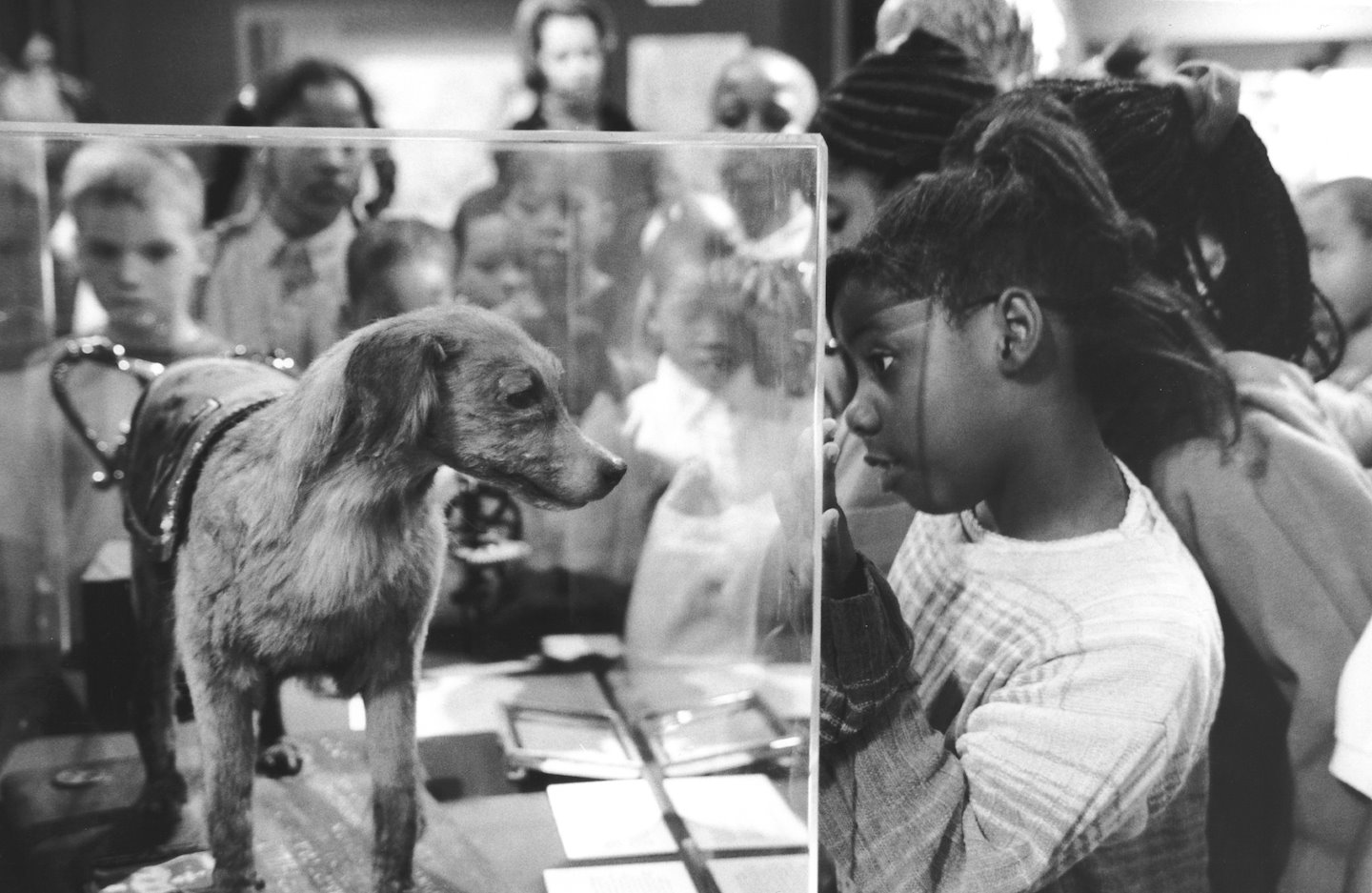
    A taxidermy of Philly the war dog, a hero of World War I, was displayed for years at the Atwater Kent Museum.Courtesy of the Atwater Kent Collection of Drexel University (Custom Credit)

    Her name was Philly. And she was said to be the greatest war dog of them all. Her origins remain a mystery. By 1917, the pint-sized stray with a scruffy coat and devilish grin rambled into the training camp of “Philadelphia’s Own” — a famed World War I Army unit made up of local raw recruits.

    When the Doughboys shipped off to war, a sergeant smuggled the beloved mascot in a shirtsleeve.

    Philly excelled at war. On the blood-soaked Western Front, she earned a reputation as a fierce sentry. She was wounded. Poison gas and some shrapnel in the tail. Pinned with makeshift “Purple Hearts,” she returned to duty. She was a comfort to the men. Tired of her heroics, Germans placed a 50 Deutsche mark bounty on her head.

    At war’s end, she marched in Washington with the troops. President Woodrow Wilson cheered the “Heroine of the Trenches.”

    Living out her life in Frankford, she enjoyed meals of lamb liver at unit reunions, before dying peacefully of old age in 1932. Her owner, an old sergeant, buried her in his driveway until the 315th raised funds for a taxidermist to preserve and mount her. For years, Philly was displayed behind glass at the 315th’s division headquarters on Wissahickon Avenue, and then the Atwater Kent Museum. She has been wrapped in Mylar in storage at the Pennsylvania Academy of Fine Arts since the museum shuttered in 2018.

    Recently, Michael Shepherd, an associate director of the Atwater Kent Collection, received an unexpected call from a national institution wanting temporarily display the old war dog (he doesn’t want to say which yet). This week, Shepherd will consult researchers at Drexel University’s Materials Characterization Core lab, about testing taxidermy for hazardous chemicals, like arsenic, once used by taxidermists. His fingers are crossed.

    “She was like the mini-Rocky statue of her time,” he said. “She meant something to people. She was a hero and she deserves to be honored.”