Tag: Rochelle Bilal

  • Philly City Council is reluctant to abolish the sheriff’s office, even after a $20 million scandal

    Philly City Council is reluctant to abolish the sheriff’s office, even after a $20 million scandal

    After a top aide to Philadelphia Sheriff Rochelle Bilal confirmed in court last month that her scandal-plagued office had been sitting on nearly $20 million meant for public coffers, reformers renewed calls to abolish her position.

    But for City Council, which has the power to initiate such a change, eliminating the antiquated sheriff’s office is not on the agenda.

    The Inquirer attempted to contact all 17 Council members last week, and five said they opposed or were skeptical of proposals to eliminate the sheriff’s office — a long-troubled holdover from before Philadelphia’s city and county governments merged in 1854. The modern iteration of the office has limited law enforcement powers but controls the flow of vast sums of city money.

    Six Council members acknowledged they may be open to a conversation about abolishing the office at some point — and some said that the missing money was a sign the office’s internal changes are not working. Six declined to comment or did not respond to inquiries.

    And though all the Council members who responded to The Inquirer expressed dismay over the recently located $20 million, as the city’s schools and other agencies are in desperate need of funds, none clearly stated they were in favor of eliminating the sheriff’s office.

    Most important, Council President Kenyatta Johnson — a staunch supporter of Bilal and who controls the flow of city legislation — objected to the notion that the sheriff’s office should be abolished with its tasks folded into other branches of government, as has been proposed by the good-government group Committee of Seventy and a state oversight board, the Pennsylvania Intergovernmental Cooperation Authority.

    “It’s an independent body, and so right off the top, I know I don’t support abolishing it,” Johnson told reporters last week. “But it probably is due for some reforms to make sure that particular office operates in a more efficient and transparent manner.”
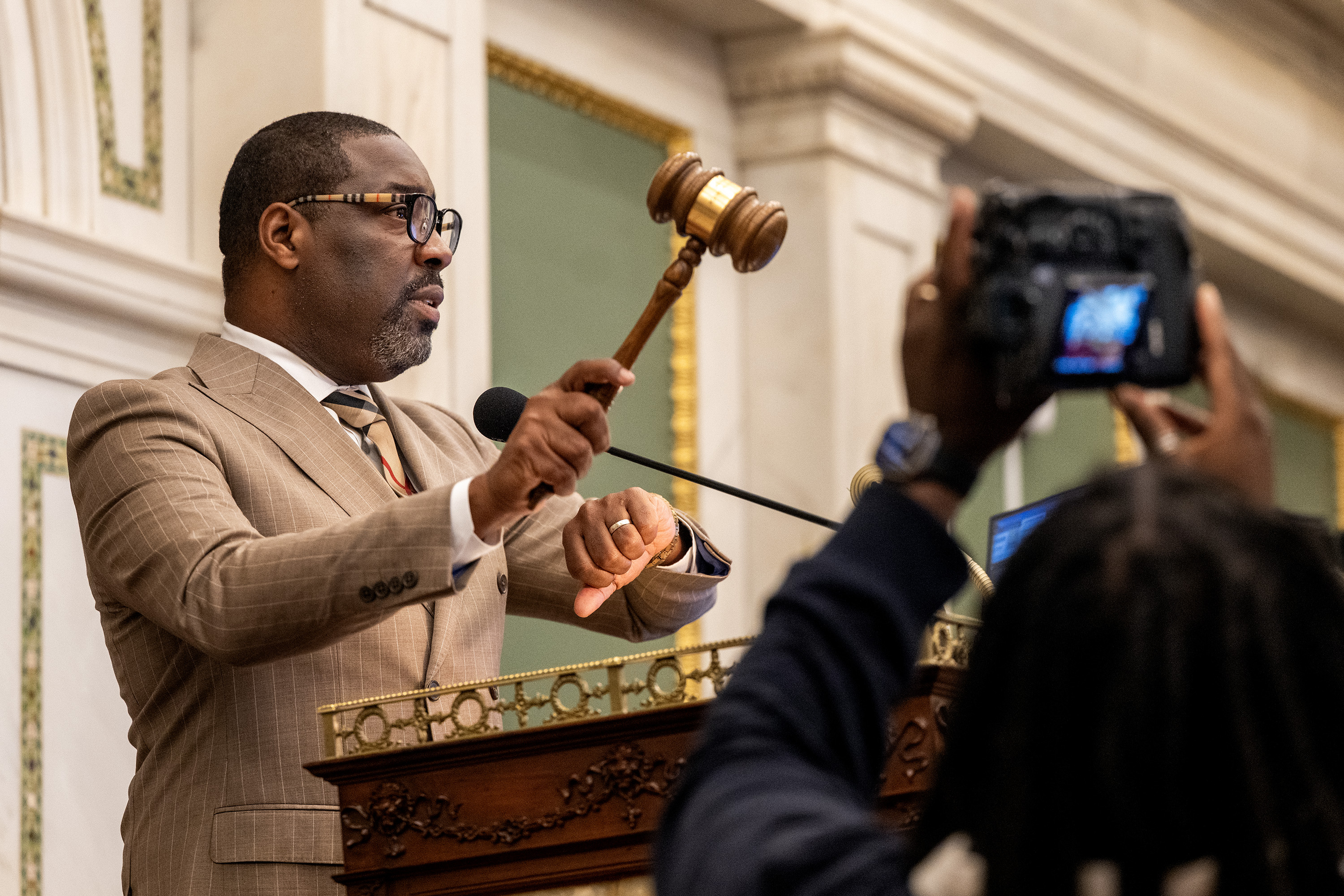
    President Kenyatta Johnson checks his watch and gavels City Council into session Thursday, Sept. 17, 2026.Tom Gralish / Staff Photographer

    Anti-corruption advocates have for generations called for the elimination of independently elected “row offices” like the sheriff and register of wills. Led by officials elected in races often determined by party politics, the offices tend to operate with less oversight over hiring and awarding contracts than regular city agencies. The city’s previous five sheriffs have seen corruption or sexual harassment scandals unfold during their tenures.

    “We should get rid of it, and turn [the office’s tasks] over to a highly competent technocrat working with the mayor and Council,” State Rep. Jared Solomon (D., Philadelphia) said in an interview. “The office has been plagued with corruption and incompetence and mismanagement for all of modern history.”

    The discovery that the sheriff’s office had failed to transfer $20 million — mostly proceeds from delinquent property auctions owed to the city to cover unpaid taxes and other costs — should be a wake-up call, he said.

    “At a moment in time when my constituents can’t afford their prescription drugs or figure out how to put food on the table or pay their gas bill, she lost $20 million,” said Solomon, who represents parts of Northeast Philadelphia.

    Johnson said Council would examine what happened with the missing money, which came to light as the result of judicial hearings into the office’s operations.

    “We will be taking a close look at that $20 million and why it wasn’t distributed to Philadelphia,” Johnson said, “and so our team would take a deeper dive to get answers regarding that particular issue, and then go from there.”

    But he declined to commit to holding a public hearing on it, a common mechanism for Council members to demand accountability.

    Council has squabbled with the mayor’s administration over much smaller sums. Lawmakers have recently bemoaned a $1.4 million cut to the Mural Arts Philadelphia program, and they are currently locked in a tense behind-the-scenes battle with Parker over $2 million in funding for the Philadelphia Activities Fund, which Council members dole out to community groups.

    For Lauren Cristella, president of watchdog group Committee of Seventy, Council’s response to the multimillion-dollar discovery in the sheriff’s office falls short.

    “Council is the only group that can provide a long-term solution for these issues, and we welcome their efforts to solve this problem for the people of Philadelphia,” she said. “This office has been in dire need of reform for over 40 years. From failing to perform the most basic duties to misplacing millions of dollars, self-dealing, and secret slush funds, the same problems repeat regardless of who is elected.”

    Bilal and her spokesperson, Teresa Lundy, did not respond to questions about the missing money and Council’s response.

    Shortly after she won the Democratic primary in 2019, Bilal told The Inquirer she was open to the possibility of eventually abolishing her own office. But Lundy, Bilal’s campaign manager at the time, interrupted the interview to say that was not on the table.

    “No, right now,” Bilal said then, “but if there’s a situation where we need to evaluate that in order to save the city money … then we will have that conversation.”

    ‘Every decision is political’

    The sheriff’s office is responsible for serving warrants, transporting prisoners, providing courthouse security, and auctioning off tax-delinquent or foreclosed real estate. Critics assert most of these functions could be handled by the city’s police force or court administrators, without an elected leader.

    To eliminate the sheriff’s office, Council would have to approve an amendment to the Philadelphia Home Rule Charter that would go before voters in a ballot question.

    The Inquirer’s survey of Council members revealed that is not likely to happen any time soon.

    Vehicle of the Office of the Sheriff for the City and County of Philadelphia April 28, 2026.Tom Gralish / Staff Photographer

    Four members — Johnson, Mark Squilla, Cindy Bass, and Jim Harrity — clearly stated they opposed doing away with the office.

    A fifth, progressive Councilmember Kendra Brooks, said that without “clear answers” on how the city could carry out the office’s functions, she is “not sure the calls for abolition are the right move.”

    “Philadelphians should make decisions about the office and will get to weigh in next year,” when Bilal is up for reelection, she said. (Bilal will face a challenge from corporate security consultant Jennifer Vrana in the Democratic primary in May. Other candidates may join the race.)

    Four Council members — Nicolas O’Rourke, Jamie Gauthier, Nina Ahmad, and Isaiah Thomas — said they were open to discussing the possibility of eliminating the office. Thomas said the discussion would have to be about eliminating all the city’s row offices, not just the sheriff. Ahmad said: “Everything’s on the table.”

    Two other members — Rue Landau and Mike Driscoll — did not rule out the possibility, but said they need more information. Landau wants Council to examine the office’s structure and functions in the next city budget cycle, if not sooner, a staffer said. And Driscoll said he first wants to see what happens in the court case, which stems from a lawsuit over the office’s alleged failure to transfer deeds following sheriff’s sales.

    “Depending on how that plays out, perhaps City Council needs to get involved,” he said.

    The other six members gave noncommittal answers or did not comment.

    Councilmember Quetcy Lozada said she was not prepared to discuss the possibility of abolishing the office. Majority Leader Katherine Gilmore Richardson said she hopes intervention by the courts would result in a “better management process.” (Bilal this summer agreed to independent oversight of her real estate division, but is now seeking to block any outside supervision.)

    Councilmember Anthony Phillips declined to comment. Councilmembers Brian O’Neill and Curtis Jones Jr. did not respond to requests for comment. An attempt to reach Councilmember Jeffery Young Jr. was unsuccessful.
    The Philadelphia Council members inside the caucus inside City Hall in Philadelphia, Pa. on Thursday, June 11, 2026.Aidan T. Gallo / Staff Photographer

    Former Councilmember William J. Green IV said he is not surprised the current Council remains uninterested in eliminating the office.

    When he introduced a bill in 2010 to eliminate the sheriff’s office, Green said, he was inundated with calls from Democratic ward leaders who told him the issue was a nonstarter due to an unwritten agreement in local politics.

    To appease the city’s various political factions, the local Democratic Party often employs blunt racial math, such as setting aside slots for white and Black candidates when deciding judicial election nominations.

    Green said he learned a similar logic applied to row offices, explaining why some politicians are protective of the current arrangement. Black officials, he says he was told, controlled the sheriff’s office, while white officials ruled the register of wills office, another relic of the city’s now-defunct county government that lives on as a pool of patronage jobs.

    “There was definite racial politics involved in each office and who was expected to be the nominee,” Green, who is white, said in an interview. “The bill went absolutely nowhere.”

    Green said he is not surprised little has changed since.

    “I think you can find among most elected leaders in Philadelphia a lack of core convictions or guiding principles, and so every decision is political,” Green said.
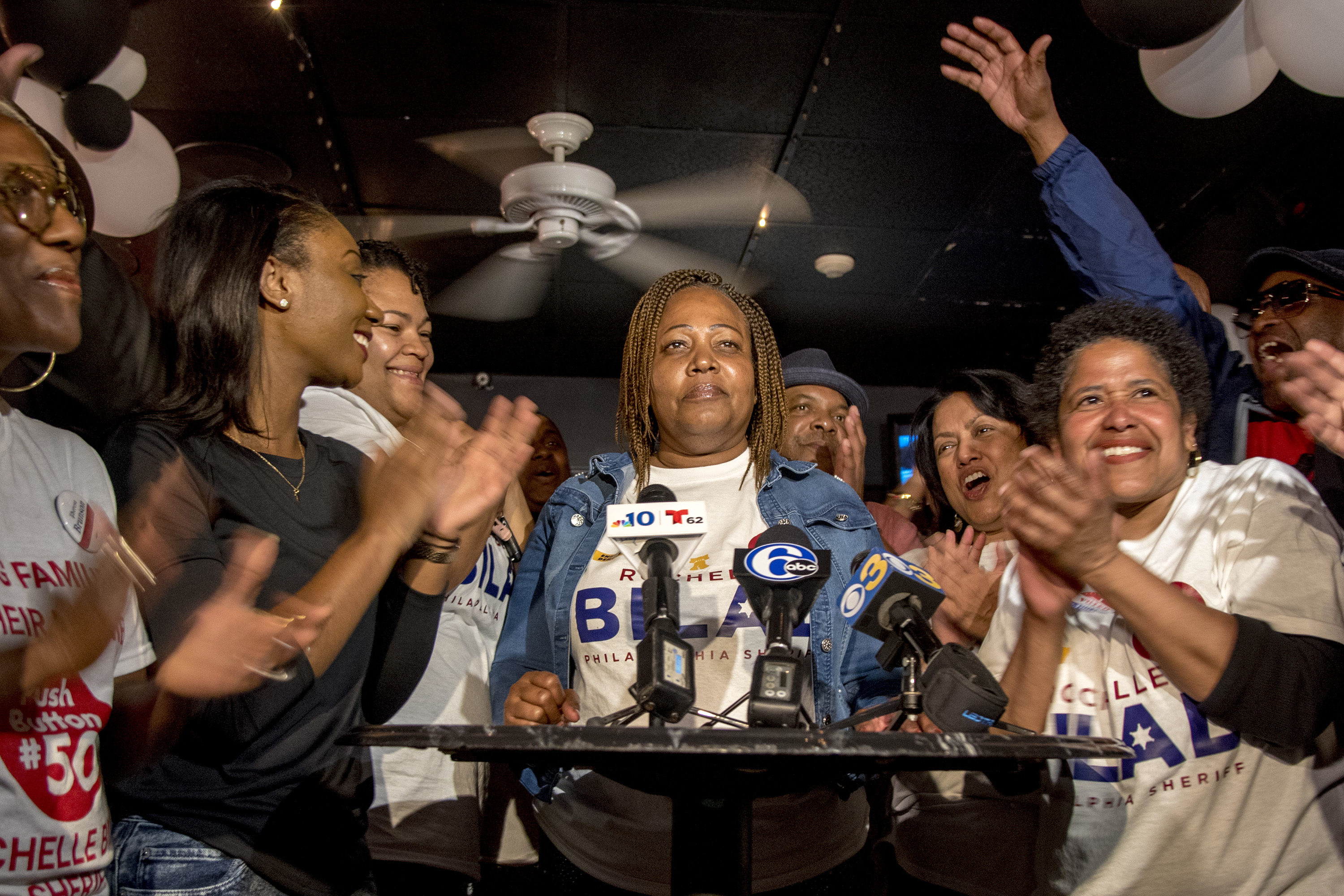
    Rochelle Bilal is surrounded by supporters as she wins the Democratic primary for sheriff May 21, 2019.TOM GRALISH / Staff Photographer

    Bilal, the city’s first Black female sheriff, burst onto the political scene in 2019, when she shockingly dethroned Sheriff Jewell Williams, whom multiple women had accused of sexual harassment, and two other candidates in a crowded Democratic primary.

    She ran that year without the Democratic City Committee’s blessing and with endorsements from anti-establishment progressives, including the activist group Reclaim Philadelphia and District Attorney Larry Krasner.

    Most ward leaders stood by Williams in the 2019 election, party chair Bob Brady said at the time. But in 2023, when Bilal was already facing accusations of mismanagement, the party endorsed Bilal for reelection.

    Before running for office, Bilal was a 27-year veteran of the Philadelphia Police Department and a former leader of the Guardian Civic League, an organization for Black officers.

    Nearly two centuries of reform

    The dispute over the sheriff and Philadelphia’s other elected row offices stems from a 172-year-old effort to fully combine the city and county of Philadelphia.

    Prior to 1854, the City of Philadelphia, which then was composed only of modern-day Center City, was one of dozens of local governments with separate jurisdictions across the county. The fragmented townships and boroughs lacked a unified police force, driving public safety concerns after a series of riots erupted targeting Black people and Catholic immigrants.

    That year, Harrisburg approved the Act of Consolidation for Philadelphia, merging the city, county, and other local governments into a single entity. But the sheriff and a string of other county row officers were carved out of the merger.

    The debate over Philly’s parallel governments raged for decades, with the focus shifting to corruption. Party-backed candidates for these obscure offices typically cruised to victory, often doling out jobs in return for political endorsements.

    The enactment of Philadelphia’s 1952 Home Rule Charter and state legislation in the 1950s and ’60s brought a new wave of reform, legally placing most elected row offices under city control, and transforming several more — including the coroner and prothonotary — into appointed positions. The city now had the power to abolish most of the remaining row offices via referendum and fold their duties and staff into other departments.

    But Council has never voted to initiate such a referendum for the sheriff and register of wills.

    In 2008, Mayor Michael A. Nutter proposed eliminating the sheriff’s office, the register of wills, and the clerk of quarter sessions, another row office relic that auditors found had lost track of millions in mishandled bail, fines, and court fees.

    (Mayors can propose legislation and use their bully pulpit to encourage Council to adopt it. Ultimately, Council has the power to approve a Home Rule Charter amendment eliminating the sheriff’s office and send it to the voters. Mayor Cherelle L. Parker has not proposed eliminating any row offices.)

    Nutter succeeded in doing away with only the clerk of quarter sessions.

    In 2025, the Pennsylvania Intergovernmental Cooperation Authority, the state-appointed board that oversees the city’s finances, called for both Philadelphia’s sheriff’s office and register of wills to be axed.

    There are procedural differences between the two. Under state law, Philadelphia cannot unilaterally dissolve the register of wills office without state authorizing legislation, while the city has final say over the sheriff’s office.

    ‘We’re looking into it’

    The revelations about missing money and records have spilled out of Common Pleas Court hearings over the last six weeks.

    Real estate investors who bought foreclosed or tax-delinquent properties at sheriff sale — but never received a deed — filed suit, leading Judge Paula Patrick to issue a May order demanding Bilal explain the chronic delays.

    After a tense first hearing in August, Bilal agreed to allow independent oversight of her real estate division, but reneged on the deal weeks later.
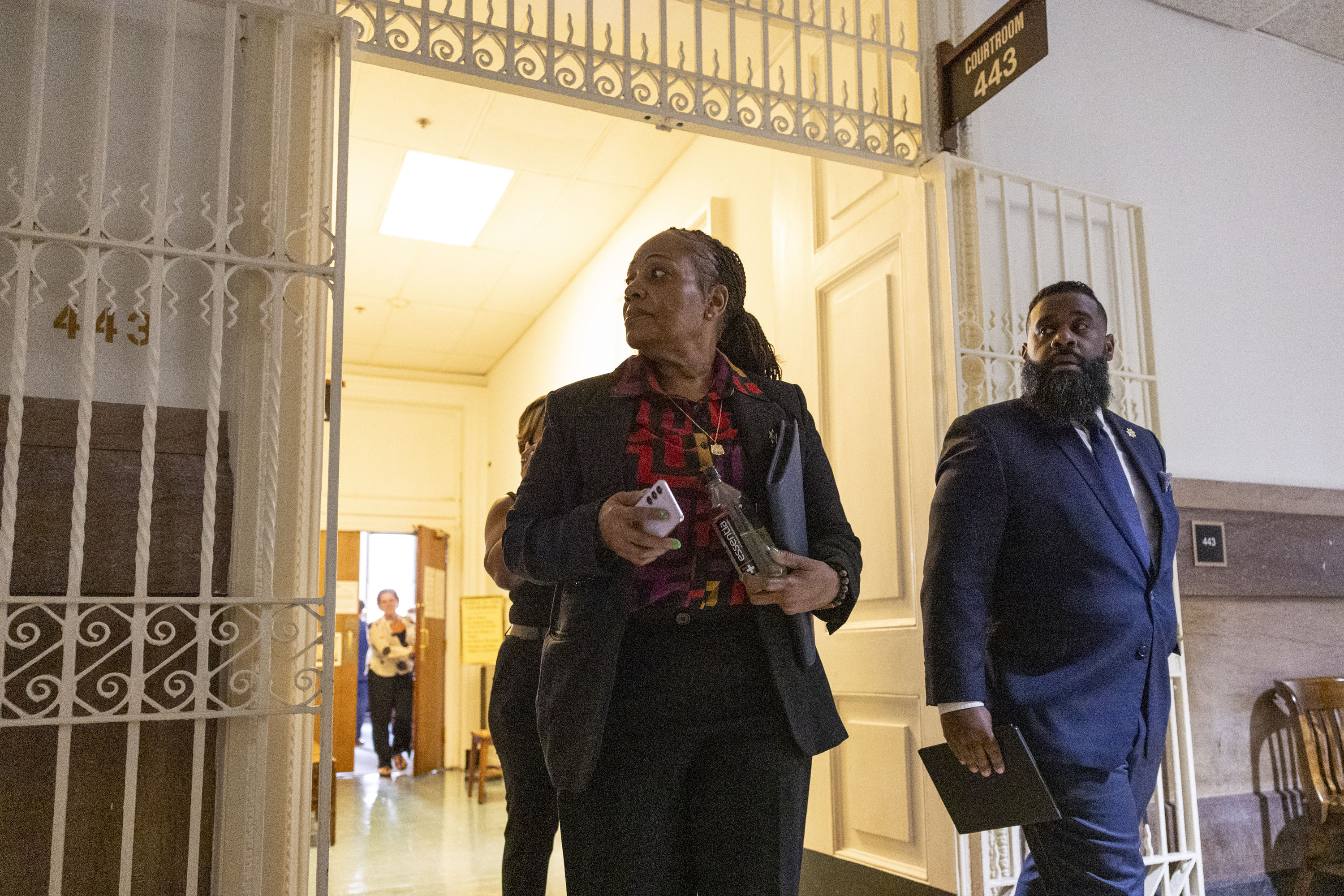
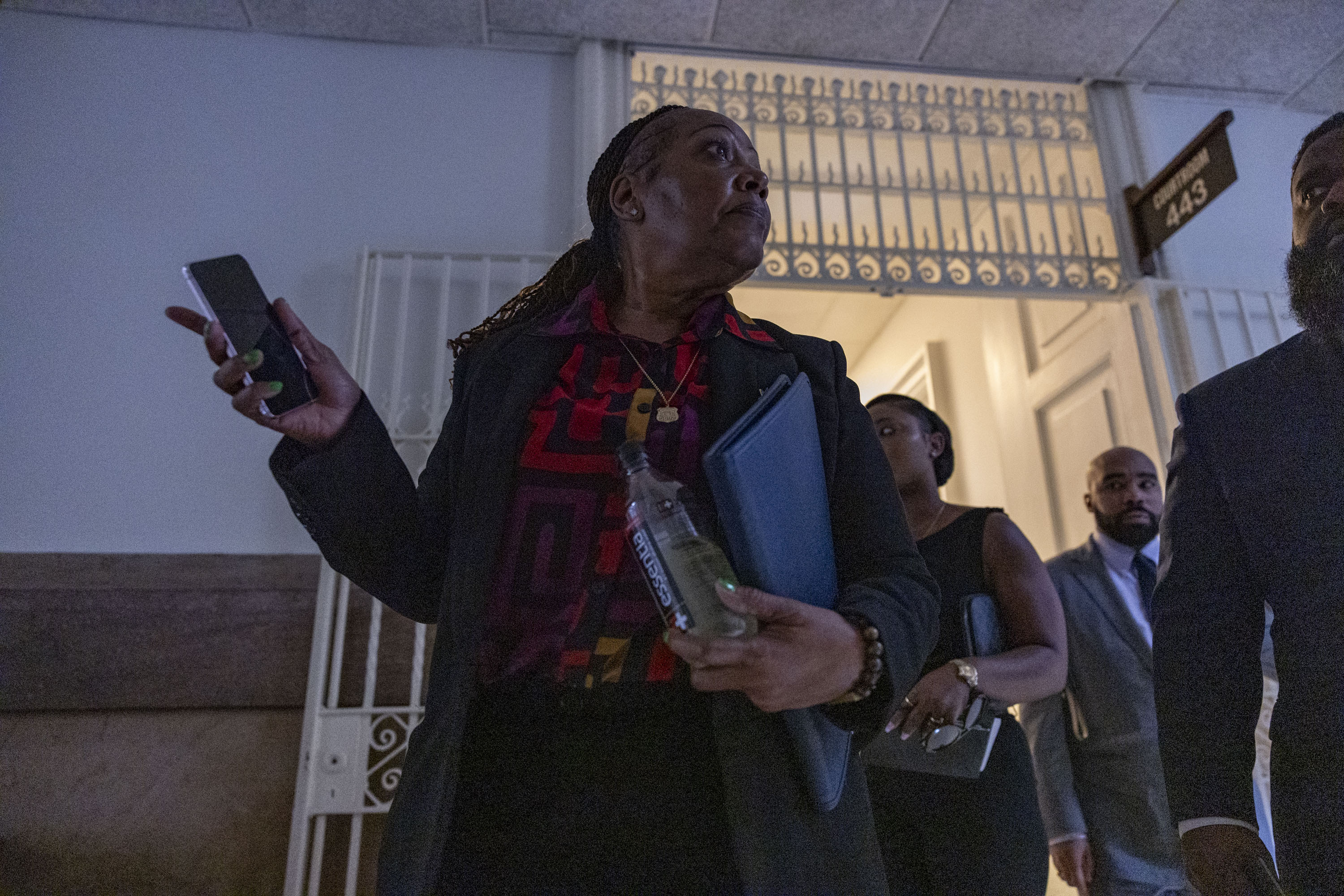
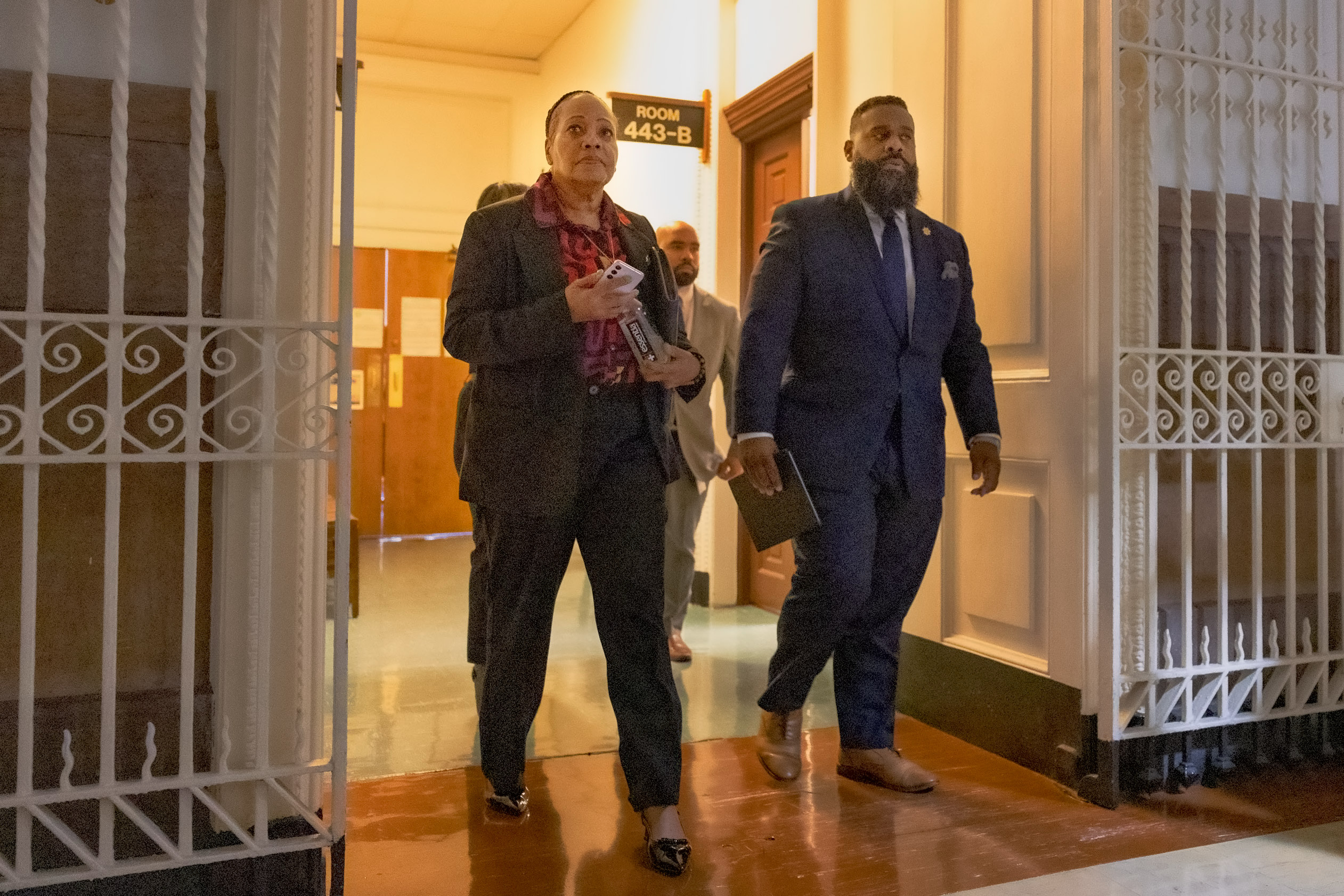
    Sheriff Rochelle Bilal is seen exiting the courtroom at City Hall during a break on Wednesday, Aug. 26, 2026, in Philadelphia.Tyger Williams / Staff Photographer

    In September, a deputy undersheriff testified that the backlog had been cleared and that Bilal’s office was auditing revenues linked to the stalled sales for any lingering discrepancies. Under questioning from the judge, the deputy revealed that the audit had already uncovered $20 million from sales in just the last year that should have gone to the city.

    Instead, the money had been stuck in limbo in several sheriff’s office bank accounts. The deputy said that it was disbursed to the city after this discovery, and that the office was reviewing earlier years for other unclaimed funds.

    Parker told NBC10 that week that she had not been briefed on the millions owed to the city. Asked last week about the money, the mayor’s spokesperson, Joe Grace, said: “We’re looking into it.” He declined to answer questions or make anyone available in the treasurer’s office for an interview.

    Some Council members have questioned Bilal’s management in the past, including her office’s handling of millions more in fee revenue that the city controller in 2022 said was meant to flow into city coffers. The Inquirer reported Bilal had instead diverted the money into an off-budget bank account ex-staffers called a “slush fund” that paid for mascot costumes, DJs, and a $600,000 ad campaign, among other discretionary expenses. Bilal has also drawn two prior court orders linked to chronic understaffing and security lapses in the court facilities her office patrols.

    Additionally, Bilal’s office delayed the collection of an estimated $35 million in tax revenue because it failed to auction off tax-delinquent properties between 2021 and 2024 as a result of a contract dispute involving an online auction company.

    Parker, during her first budget address in March 2024, described that money as “dollars that could have been invested in classrooms and in rec centers or on building affordable homes.”

    This year, Bilal returned to Council, seeking to increase her office’s budget by more than 50%. (Ultimately, Council approved only a fraction of that, a $146,000 funding increase, bringing her office’s budget to $35.8 million.) She was greeted with enthusiasm by several lawmakers, who thanked her for her work.
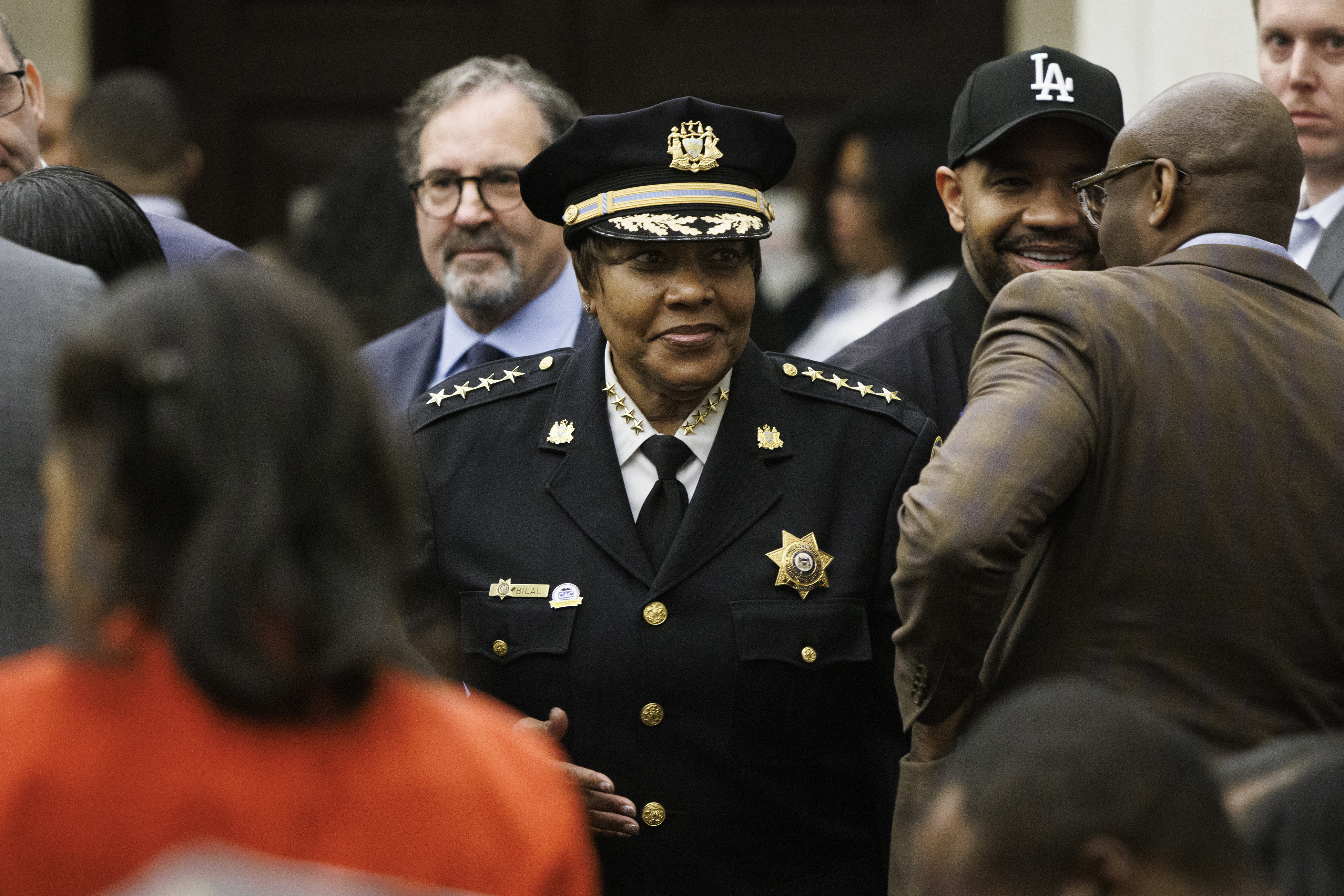
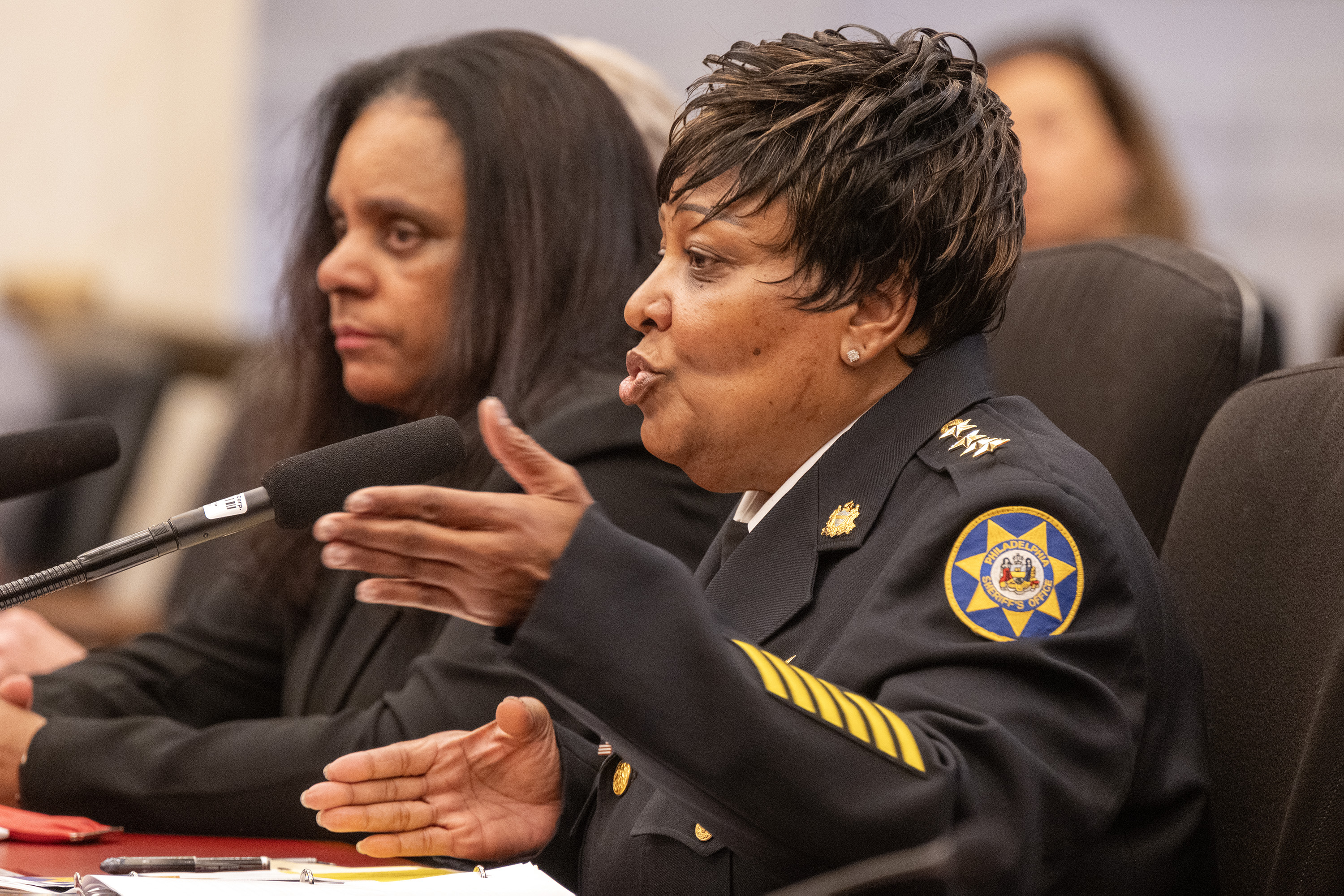
    Sheriff Rochelle Bilal during the mayor’s budget address, Philadelphia City Hall, March 12, 2026.Alejandro A. Alvarez / Staff Photographer

    ‘We’ve seen all the criticism’

    The sheriff enjoys close political relationships with many of the Democrats on Council, and some have fiercely defended her.

    In March, during Women’s History Month, Council members heralded Bilal for her leadership, and she accepted an honorary resolution on behalf of the women in her office.

    “We’ve seen all the criticism,” Bass, a longtime ally of Bilal’s, said as she presented the citation. “And let’s be clear, accountability is essential, but the challenges facing the sheriff’s office did not begin with Sheriff Bilal.”

    But the $20 million revelation seems to have altered the conversation. Over the last two weeks, a handful of members pointed to the news as a sign that the sheriff’s internal reforms had not taken hold.

    “That’s money that was supposed to go to the city, and we’re in a financial bind right now,” Harrity said. “They need to get their act together.”

    Brooks said it is clear that the office’s revenue collection and distribution issues are “systemic,” and she encouraged Bilal to work with the courts to establish independent oversight — a move that Bilal now publicly opposes.

    And Gauthier said that she was particularly “surprised” by the finding given that Bilal has repeatedly asked Council to increase her office’s yearly budget.

    “We need to understand why that happened, how that happened, and we need to understand that before we’re in another conversation about millions of dollars being needed,” Gauthier said.

    But it is largely up to Johnson whether that understanding happens in public or behind closed doors.

    Gilmore Richardson — the Democratic majority leader who has in the past sharply criticized city departments that have misspent or lost track of taxpayer dollars — said that she called Johnson shortly after learning of the undisbursed money. She said she trusts that “he’ll be working to ensure that we can adequately address this.”

    Solomon, who has been a rare vocal supporter of abolishing the office, said that despite the reform’s lack of popularity on Council, he is heartened that some members said they are open to the conversation.

    “You seem to be seeing a growing number of folks — and maybe it’s after the $20 million marker — who seem to be saying, ‘Let’s figure out a path forward,’” Solomon said. “Other municipalities do this. They function with efficiency, and the sheriff is effective, and they’re not losing $20 million.”
  • Council members would rather boycott Starbucks than hold accountable the sheriff who misled them | Shackamaxon

    This week’s edition of Shackamaxon asks why City Council won’t hold Sheriff Bilal accountable, explores the Philadelphia Police Department’s continued inaction on traffic safety, offers a compromise for student SEPTA fares, and provides an update on historic preservation.

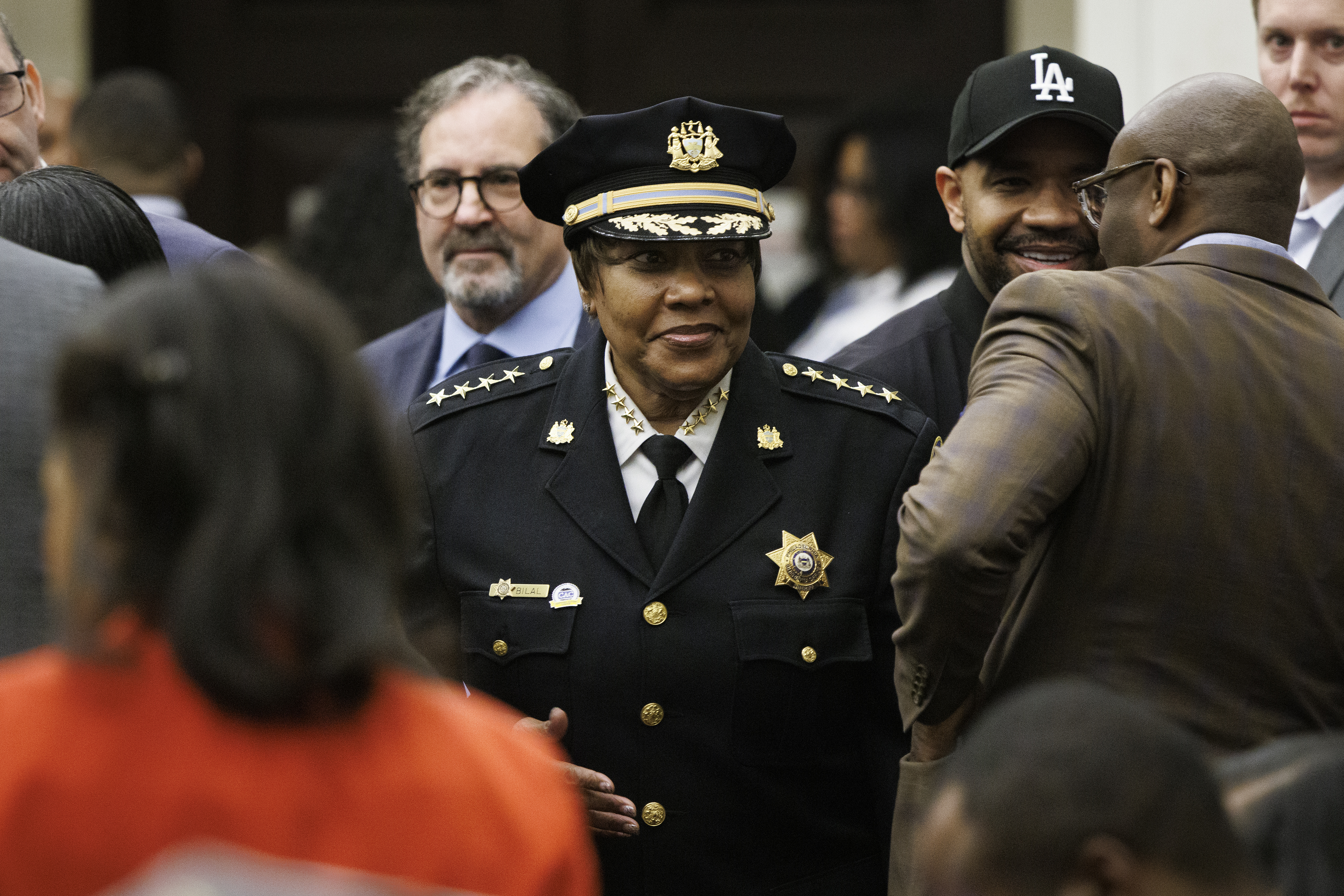
    Sheriff Rochelle Bilal during the mayor’s budget address at City Hall in March.

    Council’s choice

    Philadelphia Sheriff Rochelle Bilal continues to embarrass the city. Most recently, she reneged on her agreement to accept court-appointed oversight of her office, while a top deputy announced that roughly $20 million worth of taxpayer dollars had been hiding in the department’s couch cushions.

    All of this comes just months after Inquirer reporting showed that Bilal had misled City Council during her budget hearing, claiming deed processing was moving full steam ahead despite significant evidence that things were stuck.

    Given these circumstances, you might think Council would act, hold fact-finding hearings, and even consider abolishing the office. Instead, their focus is on something completely different, namely Starbucks workers’ unionization effort. Council wants everyone to know it supports boycotting the coffee chain until a contract agreement is reached.

    It is one thing for members to signal their support for organized labor, but Council could have done so by signing a letter. Instead, where people get their coffee became the biggest issue of the day during last week’s Council hearing, which included an anti-Starbucks rally. The Seattle-based chain itself is no longer thriving. The company just closed 250 stores nationwide, including three in the Philadelphia area.

    This level of attention was particularly galling when paired with Council’s inaction over Bilal, which is an issue they can actually do something about. Instead, the city’s lawmakers have been virtually silent.

    Beating up on big out-of-town corporations is easy; fixing systemic issues in city government is hard. It is clear what the current crop of Council members prefers to do.

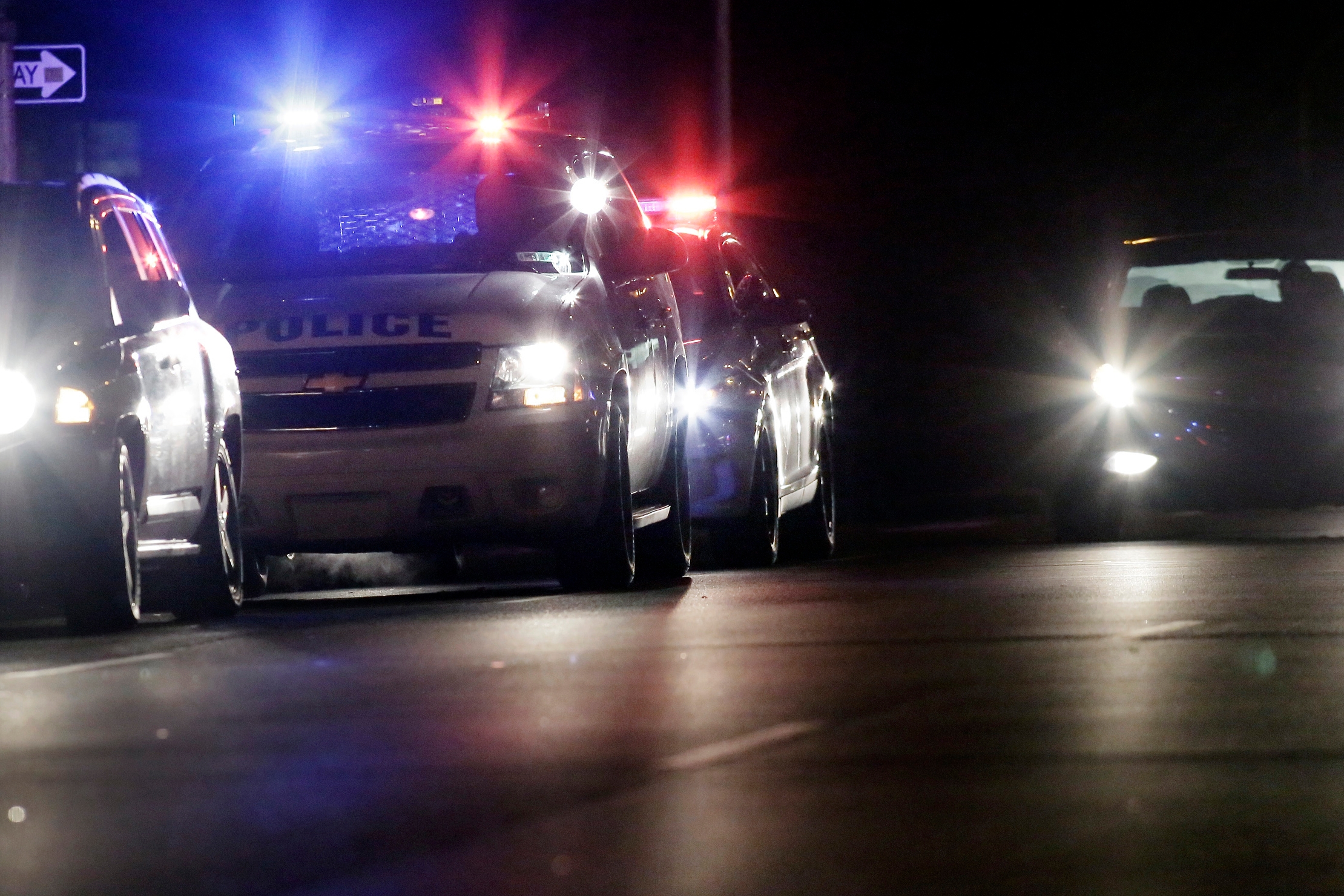
    A Philadelphia police officer makes a car stop on the 4400 block of Chestnut Street just after midnight in December 2014.ELIZABETH ROBERTSON / Staff Photographer

    Stalled stops

    In August, after a Philadelphia police officer left a struggling man to die in the street, I joined others in criticizing the department’s decision to deprioritize traffic enforcement. Unfortunately, it doesn’t seem like anything has changed. When a cyclist was struck by a hit-and-run driver near Jefferson Einstein Hospital on North Broad Street on Sunday, police apparently failed to arrive at all. I wish I could say I was surprised, but this inaction is par for the course.

    Walk or drive here long enough, and you’ll find multiple examples of motorists executing blatantly illegal maneuvers on the city’s streets, only for the police who witness it to do nothing at all. The numbers confirm it: Traffic citations have decreased by 90% since 2000.

    Policing experts I’ve talked to suggest this strategy is a kind of risk avoidance. In an era when cops fear potential “social media moments,” doubling or tripling the number of stops could double or triple the number of bad headlines police brass are forced to explain.

    It is safer, from a public relations standpoint, to simply respond to calls rather than engage in “proactive policing.” This, however, is the wrong mindset. What’s needed is for police to do their jobs, including traffic stops, with poise and professionalism.

    Beyond the impact on traffic safety, there’s also evidence that traffic enforcement helps to reduce other forms of crime. Policing experts pointed to the U.S. Department of Justice’s “Data-Driven Approaches to Crime and Traffic Safety” program, which is built on the idea that “traffic law enforcement not only prevents accident fatalities and injuries, but also provides an opportunity to identify fugitives, stolen merchandise, illegal weapons, and stolen cars … the more vehicle stops an agency conducts, the more likely it is to identify persons wanted by the police.”

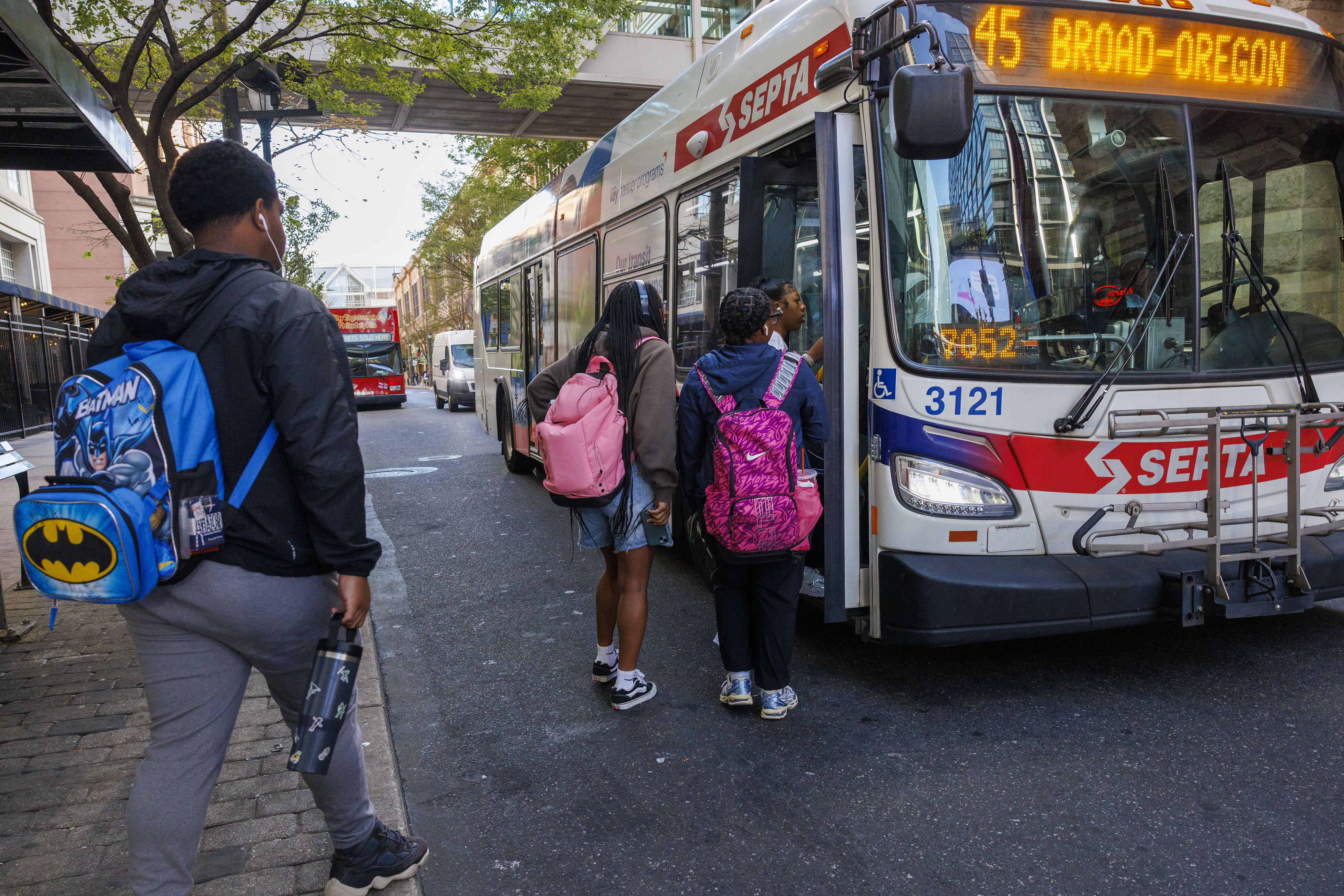
    Students making their way south board a SEPTA Route 45 bus as they commute to school in September 2025.Alejandro A. Alvarez / Staff Photographer

    Earned privilege

    On Tuesday, City Council’s transportation committee held a hearing to explore expanding free student access to SEPTA’s TransPass+, which currently does not work after 8 p.m. or on weekends. There was widespread agreement that something should be done.

    While we had to pay for our school tokens back when I attended Central, they were similarly restrictive. Paying full price to get home from work or engage in weekend extracurricular activities is a pain when the only people interested in hiring you pay just $7 an hour. Expanding access could help get more students to broaden their horizons, which would enrich both them and the city.

    There were, however, two major concerns noted before Council. One is how to pay for this expanded access, which could cost tens of millions of dollars. The other is the behavior of some students. Councilmember Curtis Jones Jr. mentioned the crowds that have mobbed Dilworth Plaza, while others brought up the inexplicable failure of many students to tap their fare cards on their way to and from school, which reduces SEPTA’s ability to get reimbursed by the state.

    Councilmember Anthony Phillips, citing his own experience working with young people, suggested limiting the expansion to only students who are enrolled in extracurricular activities, while Jones suggested turning off the benefit for students who have misbehaved. Although these ideas are well-intentioned, they also sound like a headache to administer.

    There may be a way to overcome these obstacles, in part by tying them together. A key part of growing up is earning privileges. In that spirit, SEPTA and the school district could extend transit access if students start tapping their cards at an acceptable rate. This would cut down on turnstile jumping, offer some of the accountability Jones and Phillips were looking for, and create a pathway to expanded access.

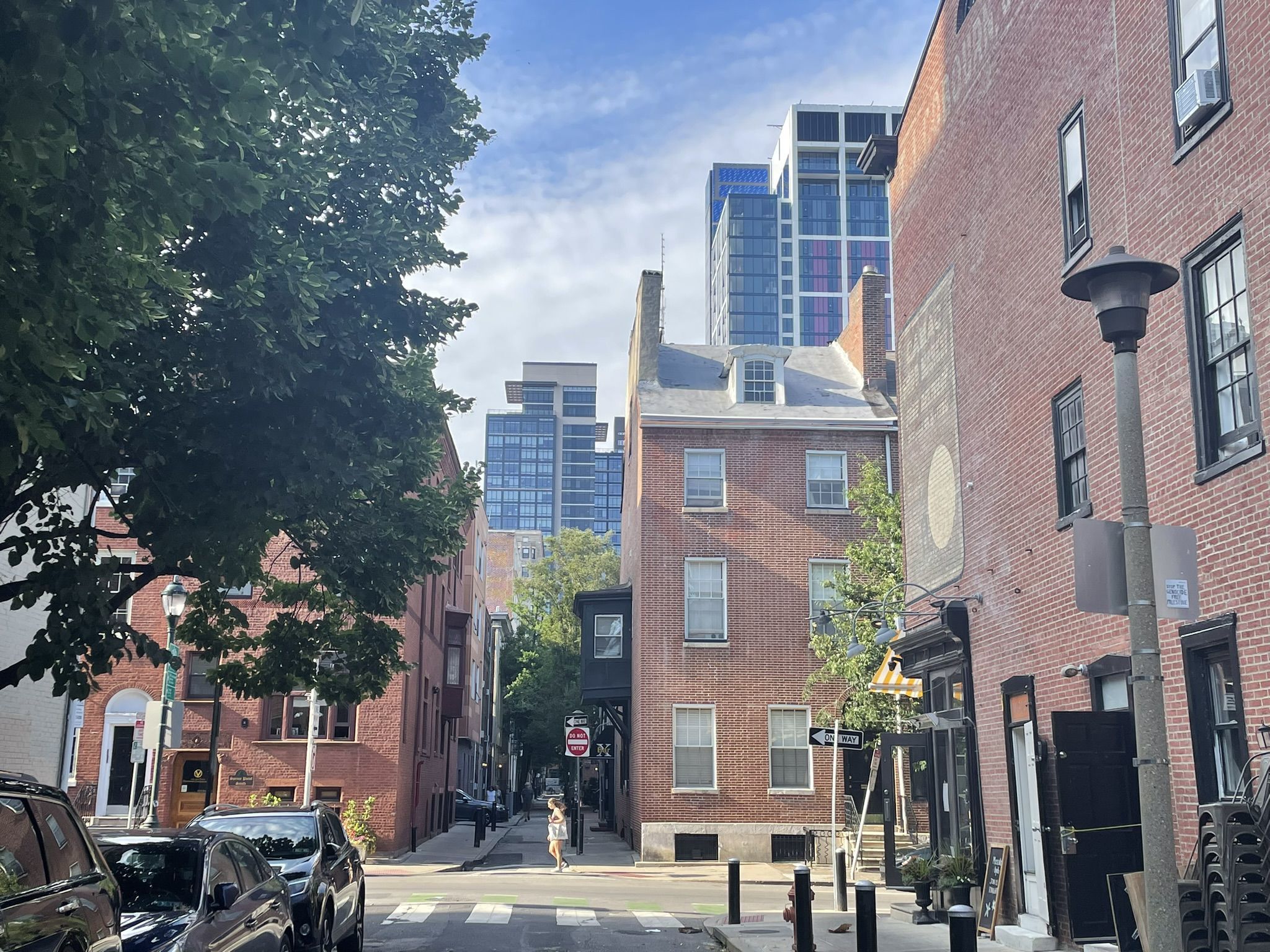
    The Washington Square West neighborhood has accommodated all types of buildings, from elegant townhouses to modern high-rise towers.Inga Saffron

    Historic ruling

    Last week, I wrote that Common Pleas Court Judge Christopher Hall seemed skeptical of the case for the Washington Square West Historic District. That observation was confirmed by this week’s decision, which once again revoked the Philadelphia Historical Commission’s decision to create the city’s largest and most extensive preservation zone.

    I share the Preservation Alliance’s appreciation for great architecture and our city’s history. At the same time, the revocation of this district should not come as a surprise. As Hall’s order notes, 85% of residents opposed the designation during the commission’s hearing, and in many cases, properties were included simply due to their location, with no other justification listed.

    It turns out that infringing on homeowners’ ability to renovate their own property according to their own wishes requires more than good intentions.

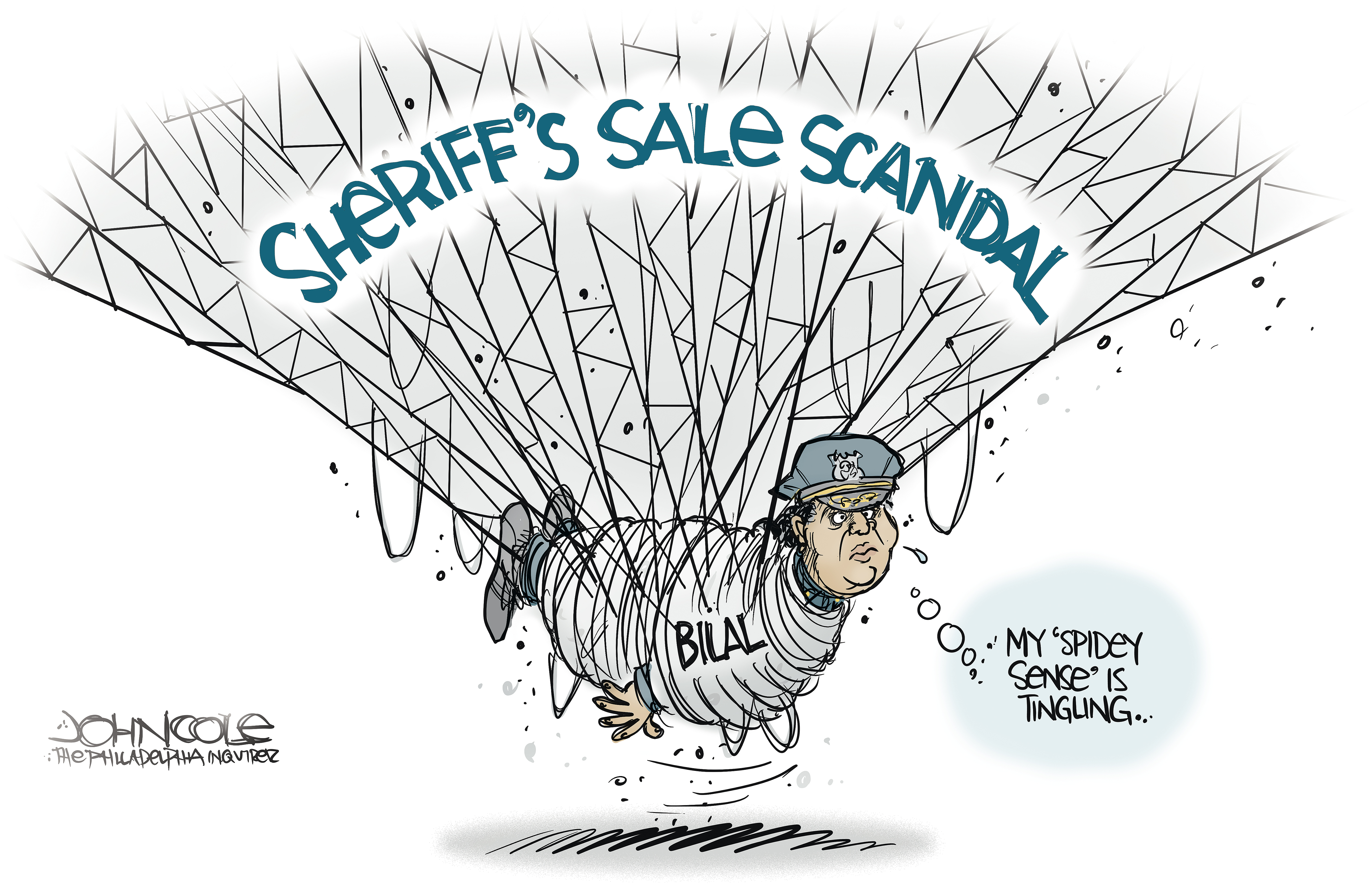
  • Paging Peter Parker | Editorial Cartoon

    Paging Peter Parker | Editorial Cartoon

    John Cole spent 18 years as editorial cartoonist for The (Scranton) Times-Tribune, and now draws for various statesnewsroom.com sites.

  • Philly sheriff’s office reneges on court-supervision deal, tells judge it found $20 million in city money

    Philly sheriff’s office reneges on court-supervision deal, tells judge it found $20 million in city money

    A top aide to Philadelphia Sheriff Rochelle Bilal revealed in court that an internal audit had recently uncovered $20 million in undisbursed money — including tax revenue and utility payments that should have gone into city coffers.

    The stunning disclosure of misplaced sheriff-sale proceeds — which amount to more than half the office’s annual budget — came during a two-day hearing as Bilal and her staff sought to back out of a judge’s plan to appoint an independent supervisor to monitor the office’s troubled process.

    That tentative deal, struck after an August hearing before Common Pleas Court Judge Paula Patrick, was meant to resolve years of delays in issuing deeds and distributing sale proceeds.

    But Patrick, supervisor of the court’s commerce division, ordered Bilal and her deputies back into her courtroom on Wednesday after the sheriff’s office reneged on the agreement.

    The judge insisted that Bilal be in the room before the hearing began.

    “You need to have your client here,” the judge told Jonathan Rardin, a lawyer the city retained to represent Bilal. “She needs to be here to get started.”

    Bilal then walked in and took a seat behind the defense table without speaking.

    Steven Wakefield, a new deputy undersheriff hired in June to streamline the office’s property auctions, testified Wednesday morning that he had already fixed many of the operational issues that had caused the backlog.

    Under questioning from the judge, Wakefield also detailed the discovery that “checks had not been written” for some $20 million in sales proceeds, including uncollected property taxes and water bills that are meant to be recouped through sheriff sales.

    “A lot of that was money that was supposed to go to the city,” Wakefield said.

    The money was found during an audit that so far has gone only as far back as August 2025. Wakefield did not provide an explanation for why the money had remained in the sheriff’s office, but said it was recently transferred to the city.

    New procedures in the office allow executive staff to track when checks are written, he said.

    “We have much more robust information,” Wakefield said.

    Patrick appeared stunned by the revelation.

    “Twenty million dollars is a lot of money,” the judge said. Wakefield agreed.

    Patrick also questioned why Wakefield had not included that information in the records she had ordered the sheriff’s office to produce over the summer, including a list of every sheriff sale since Bilal took office in 2020 and how the money was distributed.

    On Wednesday afternoon, Bilal took the stand for the first time, testifying that she had not known about the backlog of unprocessed deeds until “2024 or 2025,” when she started receiving emails from real estate agents and City Council members about deeds not being recorded.

    “It was like Spidey senses. I’m getting more than one,” Bilal said of the emails. “Then every week.”

    The Inquirer first reported on the problem in July 2024, based on an analysis of city property records. Bilal’s staff initially denied there was a deed backlog, then weeks later said they would take corrective action. Yet the delays continued, and in some cases got worse, with banks, real estate agents, and investors saying as recently as May 2026 they have waited more than a year after auctions to receive their deeds.

    Bilal has repeatedly provided inaccurate information about sheriff sales and her office’s finances, including telling City Council in April that post-auction delays had been resolved.

    But under oath in court, Bilal said she agreed with Rardin’s assessment that the sheriff’s office had not been fulfilling its obligations until recently.

    “That’s what I’m starting to find out, yes,” Bilal said.

    While Bilal campaigned as a reformer in 2019, she testified she had only a rudimentary understanding of what the job entailed when she took office. She said she spent an extended amount of time interviewing staff to “figure out what the sheriff’s office actually does.”

    Now more than halfway into her second term, Bilal blamed the ongoing problems on chronic underfunding from City Hall, poor decisions by managers under her, antiquated technology, and staffers who struggled to handle the new office software that went live in 2024.

    Bilal’s testimony continued Thursday morning. Asked whether she would permit an outside compliance examiner to come into the office, she refused to answer the question.

    “We are in compliance,” Bilal said. “We got control of this.”

    A deal collapses

    This week’s hearing was not supposed to happen.

    Judge Patrick, frustrated with an onslaught of litigation over sheriff sales, ordered the August hearing at which Bilal’s staff was required to demonstrate why a “special master” or someone with similar expertise in real estate should not be brought in to temporarily oversee the auctions.

    That hearing was cut short after Bilal’s staff said it would allow the monitoring and report back to the court in six months. “It’s better that we come together, and make an agreement,” Bilal told reporters at the time.

    But Daniel Bernheim, the lawyer representing plaintiff JSB Property Group, whose March lawsuit over deed delays triggered the legal showdown, said in an interview Tuesday that Bilal’s legal team went silent after Patrick submitted a draft of a stipulated order that called for appointing a team to evaluate the office’s practices.

    Bernheim said Rardin then told him he could not reach “the key decision makers” in the office.

    “The ‘key decision maker,’” Bernheim said, “is the sheriff.”

    Then, Bernheim said, the sheriff’s office submitted what he described as “ludicrous” changes to Patrick’s proposal, including, according to Bernheim: requiring 48 hours’ notice for the independent supervisor to interview any sheriff’s office employee; removing the word comprehensive before review; and automatically terminating the supervision after six months regardless of the results.

    What happened?

    It is unclear why the sheriff’s office changed direction.

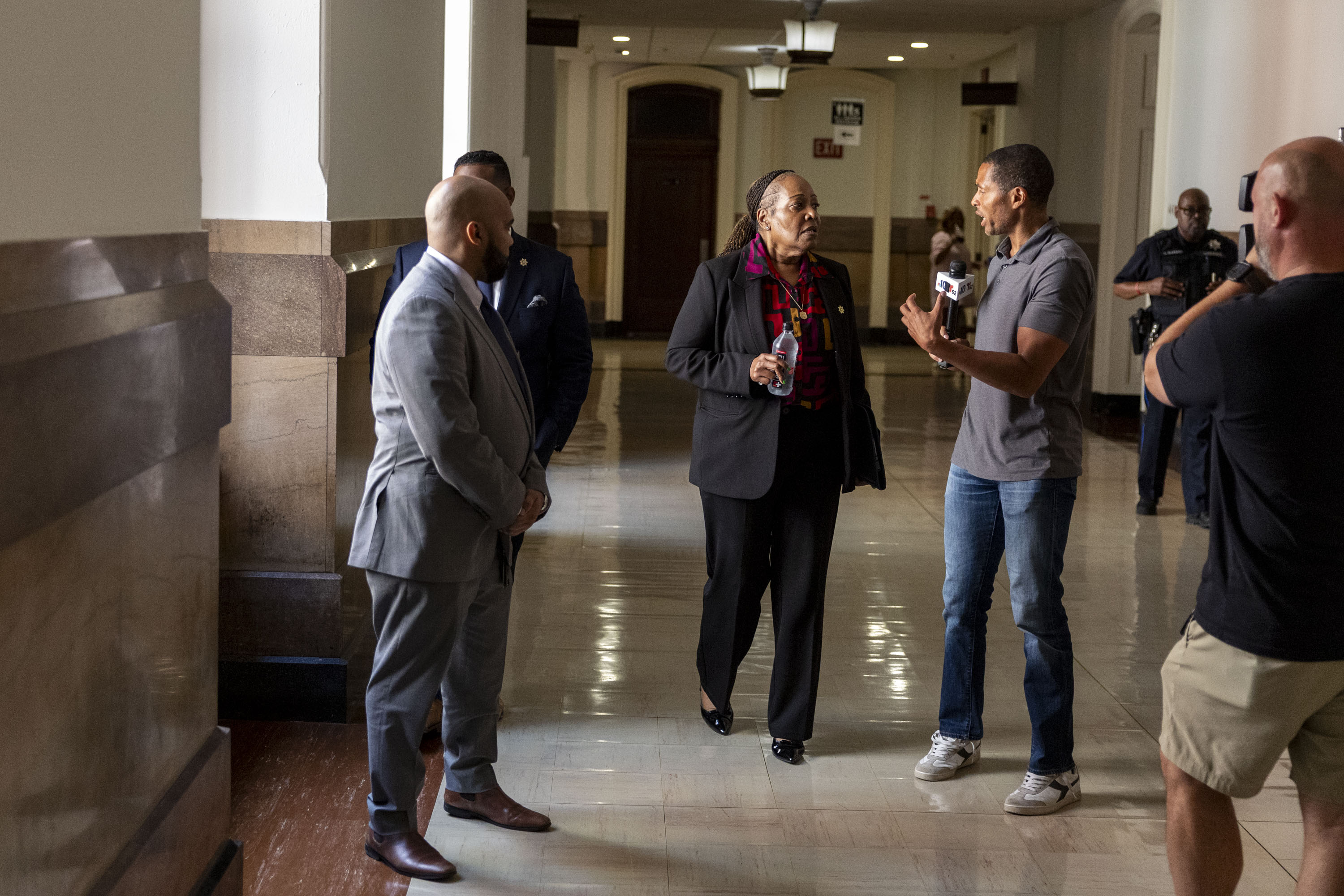
    Bilal did not respond to questions Wednesday during a break in the court proceedings. Standing near the defense table, she pointed her phone at an Inquirer reporter’s face and appeared to take a photograph. Her staff then formed a barricade around her.

    On Tuesday, Rardin submitted a memo arguing that Patrick had overstepped her authority. He wrote that the 2003 consent order at the center of the case — which requires the sheriff to issue deeds within 40 days from settlement — does not apply to Bilal because it had been brought against a previous sheriff, John Green, who was later imprisoned on federal bribery charges.

    Even if the order did apply to Bilal, Rardin wrote, the court’s legal authority was limited to holding her in contempt, not “open-ended structural oversight.”

    On the stand Wednesday, Wakefield told Patrick that sheriff-sale proceeds are now being distributed and deeds issued within weeks of settlement. He said the office has reorganized its workforce and is crafting new regulations for auctioning properties that will remain in place for future sheriffs.

    “I have personally signed hundreds and hundreds of deeds,” Wakefield said.

    Much of Wakefield’s and Bilal’s testimony over two days involved past practices in the sheriff’s office, as they guided attorneys through reams of financial and personnel records.

    At one point, Bernheim questioned why a sworn deputy sergeant was needed to, in Wakefield’s term, “babysit” staffers in the real estate division to make sure they were doing their jobs.

    “If we could trust everyone to do their job 100%,” Wakefield said, “we wouldn’t be here today.”

    “Amen to that,” Patrick responded.

    At the conclusion of the hearing Thursday, the judge said would take the new testimony under advisement and issue a ruling shortly.

  • Will a pedestrian death move Philadelphia police to step up traffic enforcement? | Shackamaxon

    Will a pedestrian death move Philadelphia police to step up traffic enforcement? | Shackamaxon

    This week’s edition of Shackamaxon looks at a crackdown on “smoke shops,” the Philadelphia police’s handling of traffic citations, how Harrisburg deadlines can be leveraged to fund transit, and what City Council forgot to talk about in its first session after returning from summer break.

    Up in smoke?

    An increasingly common frustration has been expressed across Philadelphia over the rise of what are known as “smoke shops,” which have proliferated in the city’s commercial corridors. Ostensibly operating as grocery stores, they are often locations where illegal drugs and drug paraphernalia are sold. They tend to operate late into the night and attract the ire of both residents and other business owners.

    That’s why it was refreshing to see someone make a substantive move to shut them down. State Rep. Amen Brown, whose district includes parts of West Philadelphia and Logan Square, has put together an initiative he’s called Operation Breezy. Working with both city and state law enforcement, and relying on the support of members of the community, Brown’s efforts have already shuttered 13 of the establishments.

    Brown’s approach uses confidential informants, many of whom come from the community itself. He told me that one of the now-closed shops had roughly 40 pounds of marijuana on the premises, the outlets routinely sell out-of-state cigarettes, and that firearms have been seized as part of the efforts. Residents who would like to help can send an email to OperationBreezy@gmail.com or a message to the effort’s Instagram page, @operationbreezy.

    Brown said he’d like to do more to stop the smoke shops, but that the best option requires action at the local level. Rather than enacting a broad-based curfew for all businesses, he’d prefer to target just the smoke shops. He says that might be possible by imposing restrictions on the operating hours of grocery stores that are smaller than 300 square feet. That’s a size below which, officials say, legitimate uses for a storefront become impractical.

    Official inaction

    Philadelphians were rightly outraged at the actions of a police officer who, in August, left a struggling pedestrian lying in the street, where he was later killed in a hit-and-run. Commissioner Kevin J. Bethel said he was “disgusted” by the patrolman’s behavior. City officials announced their intent to fire the officer. That’s the right call, even if the city’s cop-friendly arbitration process leads to 85% of officers getting their jobs back after alleged misconduct.

    Still, I couldn’t help wondering whether this incident is a natural outgrowth of the department’s policies. The Philadelphia police simply do not seem to take enforcing traffic laws seriously enough. Traffic citations have plunged over the last few decades. In the 1990s, officers regularly issued roughly half a million tickets per year. In 2023, about 45,000 tickets were handed out. These days, we celebrate an increase of a few thousand citations, even as overall stops remain at a fraction of the total pedestrian safety experts say is needed. Commissioner Bethel has said that enforcing traffic violations is a lesser priority.

    While many officers blame the city’s Driving Equality Law for this decline, that measure does not prevent officers from enforcing moving violations, which are the most dangerous offenses. Failing to do so is a choice the department has made on its own. The result of this lack of enforcement, traffic safety experts say, has been an increase in reckless and aggressive driving.

    Given that a city controller report called Philadelphia’s streets the most dangerous of any major U.S. city, this lack of prioritization must change. While speed cameras and other forms of automated enforcement have made a difference along high-traffic corridors like Roosevelt Boulevard and Broad Street, they can only enforce certain offenses in certain locations. Reckless driving is an issue almost everywhere.

    It is impossible to know what went through the mind of the officer who left Eugene Beauford in the street. The department has declined to publish his name, let alone make him available for an interview. But perhaps this horrific incident will prompt police brass to rethink the department’s strategy for enforcing traffic laws.

    Skill game shutdown

    Next month, Pennsylvania’s so-called games of skill will need to be unplugged. Oct. 13 marks the last day of the grace period the state Supreme Court gave the General Assembly to devise a taxation and regulatory scheme for the machines, devices that resemble slot machines and which are currently banned under state law. For years, legislators have debated where the machines can operate, and whether they should pay the same tax rate as existing slot machines.

    By pure coincidence, there’s another big deadline approaching: the authorization period for the state-appointed SEPTA prosecutor. I’d like to propose a potential compromise for both issues. Harrisburg should extend the SEPTA prosecutor’s authority by three years, agree to Gov. Josh Shapiro’s proposed shift in sales tax revenue to support public transit, and pay for it by legalizing skill games and taxing them at the same rate as slot machines. They should also pass regulations limiting the placement of the machines and creating penalties for owners who allow children to use them.

    Given District Attorney Larry Krasner’s recent struggles, extending the SEPTA prosecutor should be less politically contentious now than it was in years past. Lawmakers can also point to the significant decline in fare evasion and violent crime on the transit system over the last few years as justification.

    For Philadelphia lawmakers who may be reluctant to place limits on the authority of Krasner, who has been overwhelmingly elected by their constituents three times, that kind of middle ground can provide fiscal peace of mind for SEPTA, which has been subject to financial uncertainty for three years. While Democrats seem to be pinning their hopes for approving more state funding for SEPTA on winning control of the state Senate during this fall’s elections, that is hardly guaranteed. If a deal can be reached ahead of time, it reduces the risk of a collapse. It also does not preclude additional action next year.

    Finally, the need to act on skill games is clear. As it stands, it will be difficult for the commonwealth to shut down every location that houses the machines. We don’t even know how many exist. I am not a fan of these devices, which have a negative impact on the communities that host them. Regulation will make it easier to mitigate that damage and ensure Pennsylvanians see some benefit from the funds that flow through them.

    Council comeback

    After its three-month summer hiatus, City Council is back in session. All eyes on the second floor of City Hall will be trained on how Mayor Cherelle L. Parker will respond to a series of potentially contentious legislative proposals — from Councilmember Jamie Gauthier’s bill to stop burning trash to Councilmember Isaiah Thomas’ efforts to stop at least part of the school closure plan.

    Then there’s the matter of those city officials who deserve additional scrutiny, in particular Krasner and Sheriff Rochelle Bilal. Krasner has been referred for prosecution by a federal judge, while Bilal misled Council during her budget hearing earlier this year.

    City Council should hold investigatory hearings into both officials. Residents deserve better from their leaders than what both Krasner and Bilal have shown.

  • Anti-ICE activists question why Philly police showed up at their meeting. The department is investigating.

    Anti-ICE activists question why Philly police showed up at their meeting. The department is investigating.

    The Rev. Jay Bergen was at the sign-in table inside the Friends Center, where No ICE Philly was holding its regular public meeting last week, when a police civil affairs officer appeared.

    Bergen asked what was happening, and said the officer responded, “We’re just here to make sure everyone’s safe.”

    The activist group was preparing to serve cake, to celebrate its one-year anniversary.

    Bergen, who leads No ICE Philly, was concerned that the officer brought his gun into the Center City facility, which includes a Quaker meetinghouse. The pastor escorted the officer down the hall to the door, explaining that he could attend the public meeting if he wished ― then noticed a second civil affairs officer outside.

    The two officers stayed there, watching, for the duration of the three-hour gathering, Bergen said, their presence leaving those inside feeling confused, intimidated, and surveilled.

    “Who gave the order, and what was the goal?” Bergen asked in an interview. “Why are we more of a threat than ICE agents are? … It’s another instance of the Philadelphia police being interested in targeting Philadelphians instead of protecting Philadelphians.”

    The police department said in a statement last week that “the Sept. 9 event was identified as a scheduled protest.” Civil affairs officers routinely attend demonstrations as part of their duty to public safety and the First Amendment, and “their presence was not specific to No ICE Philly,” the statement said.

    But on Monday, Staff Inspector Frank Palumbo, who oversees the civil affairs unit, said he would open an investigation into the matter.

    Palumbo said he did not know why an officer would have entered the Friends Center. That would be outside department policy, he said, unless there was a disturbance inside.

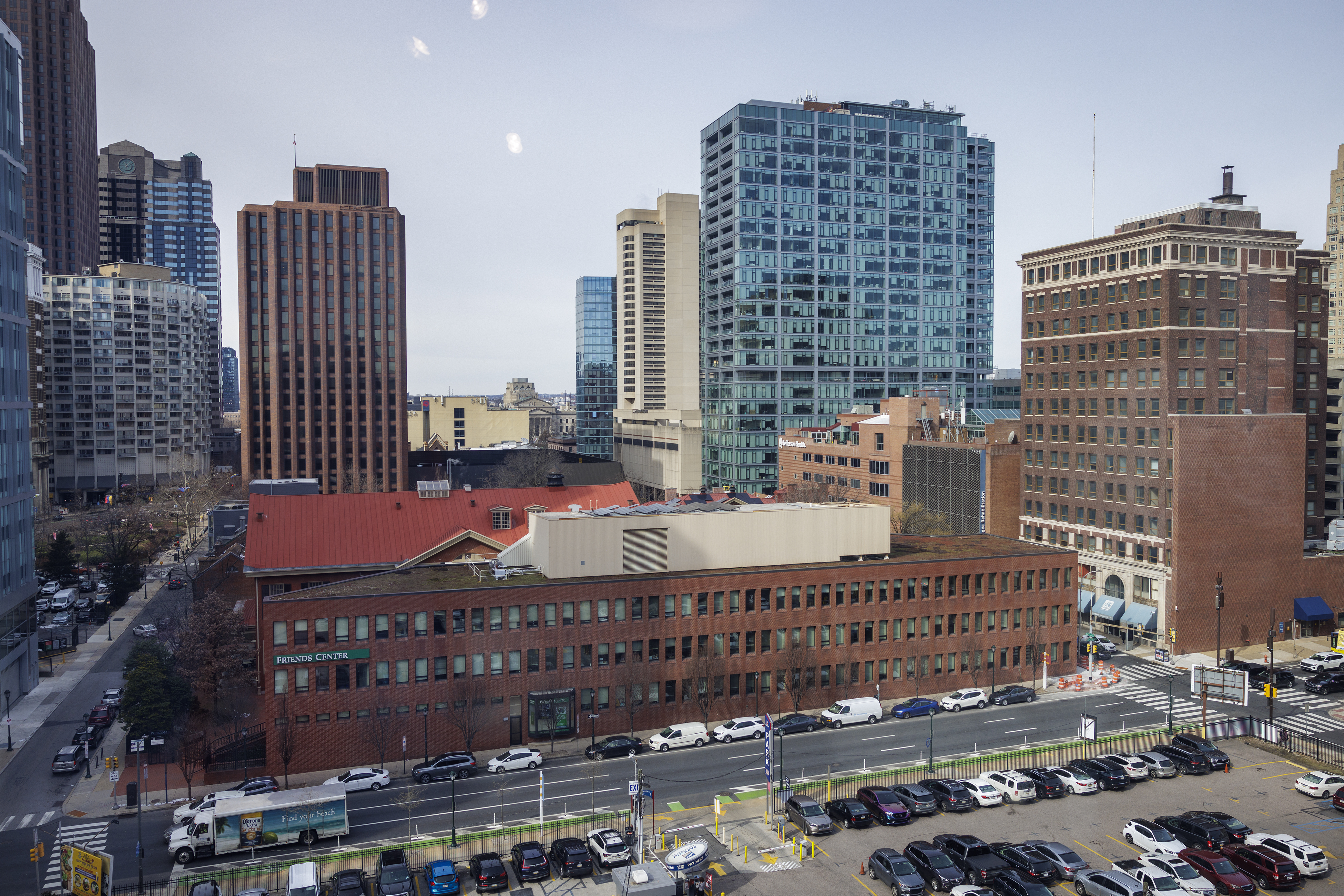
    The Friends Center at 15th and Cherry Streets.Alejandro A. Alvarez / Staff Photographer

    If the group had gathered outdoors, Palumbo said, the department would have sent more officers ― including some in uniform. It did not do so, he said, because “there was no indication whatsoever that there would be destruction of property, violence, or anything that would even result in civil disorder.”

    He added, “This will not continue to occur.”

    Civil affairs units are specialized teams of officers designed to act as neutral liaisons between sides during what might be contentious protests, labor actions, or big public gatherings. Like other officers, they always carry their guns while on duty.

    In Philadelphia, the police department says, civil affairs officers operate in a diplomatic and impartial capacity to ensure that constitutional rights are protected for all. The officers prioritize protection of life and property while preventing vandalism, assaults, or other illegal acts not covered by First Amendment rights, the department says.

    Niles Wilson of the Center for Policing Equity, a California-based research and reform group, said a key question of any investigation into the matter should be why the officers were at the meeting at all.

    “What intelligence did the police department have that would either lead these officers to do this, or were these officers acting on their own?” he asked. “That needs to be answered.”

    The stakes reach beyond any particular meeting, he said.

    A civil affairs unit is an asset, one that can help “towards transparency and building trust between the police department and the community,” Wilson said. But “anytime the public trust is lost in that service, then it disrupts public safety everywhere.”

    Philadelphia civil affairs officers are commonly present at demonstrations led by No ICE Philly, which in the last year has emerged as perhaps the boldest and most visible of the city’s pro-immigrant organizations.

    Its members and supporters have been cited or arrested by different police agencies as they carried out peaceful civil disobedience, including attempting to block federal government vehicles from exiting the U.S. Immigration and Customs Enforcement office in Center City.

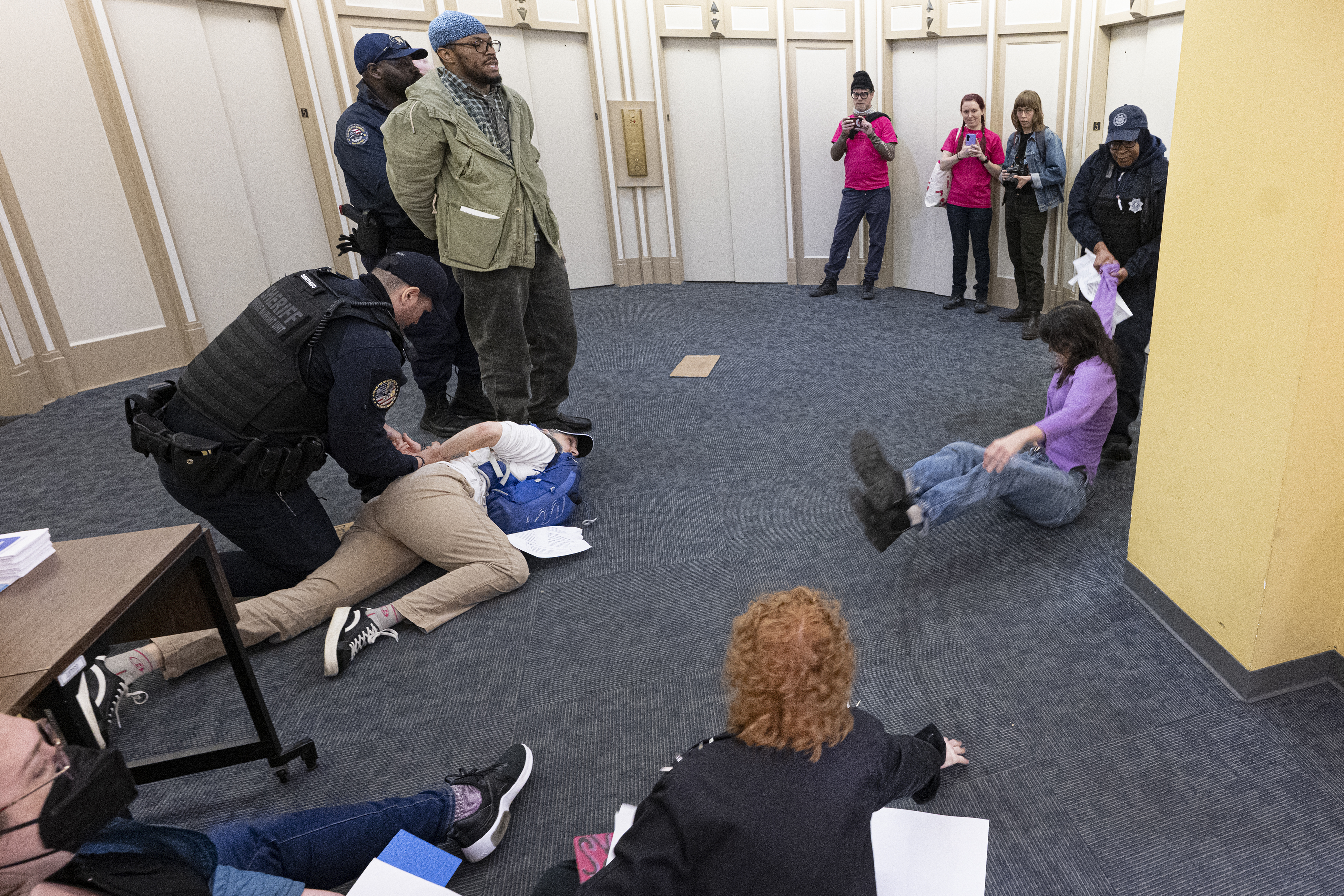
    In one chaotic scene this year, activists were handcuffed and physically removed from the foyer area at the Philadelphia Sheriff’s Office, where they staged a sit-in to demand that Sheriff Rochelle Bilal help stop ICE arrests at the Criminal Justice Center. No ICE Philly holds a weekly “noise demonstration” outside ICE headquarters at Eighth and Cherry Streets, banging drums and blowing whistles to raise awareness and disrupt the work of agents inside.

    No ICE Philly activists and supporters are handcuffed and taken into custody at a sit-in outside the office of Sheriff Rochelle Bilal in April 2026.Jose F. Moreno / Staff Photographer

    The Sept. 9 gathering, however, was a regular meeting, generally held twice a month, open to all, and advertised in advance on social media. Other meetings have drawn far more people than the 60 or so present at this one, organizers said, which made the police presence puzzling.

    “It felt kind of like a threat, like, ‘We’re watching,’” said Em Auerbach, a group member who attended. “It made people feel on edge.”

    As the meeting was ending, Auerbach said, one of the officers approached a Friends Center employee at the front desk and asked: “Are you good? Do you need anything?”

    The worker answered that she was fine, Auerbach said.

    No ICE Philly members waited for the employee to finish her work, and then everyone left together, Auerbach said.

    “It was weird,” Auerbach said of the officers’ presence. “I think they were there to intimidate us. … Unless there was a threat against our group, I don’t think this was a good use of taxpayer funds.”

    Bergen described at one point asking the officers, “‘Why are you surveilling us?’ They said, ‘We’re not surveilling.’ I said, ‘That’s what a body camera is for.’”

    The pastor said that as people entered the meeting, they said the police officers had asked who they were and why they were there.

    Palumbo said if that happened, it would fall outside department policy, that even at combative street demonstrations people generally are not asked their names “unless it is necessary to determine who they are for the purposes of an investigation. This was not an investigation.”

    Palumbo said the relationship between the police and No ICE Philly has been cordial. He estimated that police have cited protesters twice in the last year, issuing citations with $100 penalties that are similar to parking tickets.

    Those citations, he said, are “the most extreme police enforcement we’ve ever done with this group.”

    Correction: This story has been updated to correct the pronouns used by Rev. Jay Bergen and Em Auerbach.

  • Sheriff Rochelle Bilal’s new undersheriff has resigned just three months into the job

    Sheriff Rochelle Bilal’s new undersheriff has resigned just three months into the job

    Philadelphia Sheriff Rochelle Bilal’s new second-in-command has left the job — three months after he arrived.

    Undersheriff George Gossett Jr., whom Bilal hired in June as part of what she had described as a major “reorganization and modernization” initiative, confirmed Monday that he had resigned from the job effective last Friday.

    Gossett said through a spokesperson that he is “excited to pursue opportunities in the private sector” but provided no other explanation for his short tenure.

    Bilal’s office has been hit with three court orders since 2024 seeking to correct alleged mismanagement, most recently in May over delays in processing deeds of properties won at auction.

    Gossett, a Roxborough-based lawyer and former assistant district attorney, was tapped in June at an annual salary of $185,000, weeks after a Common Pleas Court judge ordered Bilal to fix the sheriff sale process or face consequences.

    According to a news release Bilal issued that month, Gossett was to “oversee daily operations, strategic planning initiatives, personnel management, and operational coordination across the agency.”

    “This reorganization is about building a stronger organization for the future,” Bilal said at the time.

    It is unclear where that plan now stands, with the new undersheriff having already departed.

    Gossett is the fourth undersheriff to serve Bilal since she took office in 2020. Bilal and her spokesperson, Teresa Lundy, declined to provide any details about why her top deputy would leave so soon after taking the job.

    Sources in the office said that the pair did not see eye-to-eye, and that Gossett was said to have made a remark about Bilal’s “anger management” issues, which may have escalated the situation.

    Separately, Bilal last week fired Mark Wilson, the office’s codirector of real estate. Wilson declined to comment.

    Gossett’s predecessors also had rocky terms in the sheriff’s office.

    In August 2020, seven months into the job, Undersheriff Sommer Miller resigned after she said she faced retaliation for reporting alleged theft in the advertising department, unauthorized spending of public funds, and instances of extreme sexual harassment. She later claimed in a whistleblower lawsuit that Bilal had been “reading and monitoring her emails in real time.”

    Miller’s replacement, Undersheriff Curtis Douglas, left in May 2021, about a week after reports that Bilal’s office had botched a contract meant to move sheriff sales to an online platform. A spokesperson at the time described Douglas’ departure as a planned retirement.

    In May 2026, Undersheriff Tariq El-Shabazz, a criminal defense attorney who came to personally oversee the handling of deeds related to sheriff sales, also retired. He left one day after the most recent court order dropped.

    Under Bilal, who was elected as a reformer in 2019, sales of foreclosed and tax-delinquent properties have been mired in post-auction delays, with winning bidders waiting a year or more to get their deeds.

    Many auctions were halted altogether between 2021 and 2024. Court security and inmate transportation, two other key functions of the office, have also been recurring problems, with judges saying they have felt unsafe.

    In addition to Gossett, Bilal recently hired William A. Brownlee Sr. as part of the office restructuring earlier this year.

    Brownlee, a West Philadelphia pastor, a motivational speaker, a real estate investor, and an entrepreneur with a checkered financial history, has previously described himself on his website and social media as the office’s “Deputy Chief Financial Officer.” His website has since gone dark, and Bilal’s office said Brownlee currently serves as project manager. Payroll records show he is being paid $95,000 a year.

    Another new hire, Steven A. Wakefield, is a former Philadelphia Law Department attorney serving as Bilal’s deputy undersheriff in charge of deed compliance. He is being paid $120,000 a year.

    Wakefield took the stand last month and told Common Pleas Court Judge Paula Patrick, supervisor of the court’s commerce division, that the office had previously misplaced records and lost track of the distribution of some auction proceeds. Wakefield blamed the situation on a since-terminated employee who allegedly concealed the problem from Bilal.

    Bilal did not testify at the hearing. Her city-appointed lawyer had filed a motion seeking to keep her off the stand, saying the sheriff had “limited personal knowledge” of how sheriff sales work.

    Wakefield said he had enacted operational reforms, speeding the deed issuance process while largely clearing out a backlog of deeds from earlier sales.

    Even so, Patrick took the rare step of imposing six months of outside supervision of sheriff sales.

    That independent monitor has yet to be appointed.

  • The sheriff’s office doesn’t need a babysitter; it needs to be abolished | Shackamaxon

    The sheriff’s office doesn’t need a babysitter; it needs to be abolished | Shackamaxon

    This week’s edition of Shackamaxon covers data centers, property assessments, and more woes at the Philadelphia Sheriff’s Office.

    Jason Kelce with Liquid Death mascot Murder Man in an ad for the canned water and Garage Beer.Garage Beer

    Sports data center

    Former Eagles offensive lineman Jason Kelce seems to be more omnipresent in retirement than he was during his career. Most recently, he filmed a commercial for Garage Beer and Liquid Death that asked Americans to send him their urine to supply data centers.

    While conjuring a negative image of yellow liquid in a cup is probably an unwise strategy for someone who co-owns a light beer company, Kelce’s commercial had another major problem — data centers don’t actually use as much water as public perception suggests.

    In fact, the biggest threat to U.S. water supplies is something far more mundane: alfalfa farming.

    Across the arid Western states, farmers are using vast amounts of water to irrigate their fields, which are then used to feed cows for the beef industry. A single acre of alfalfa uses 1.6 million to 2.5 million gallons of water. In Utah, feed farming uses over half the state’s water supply. Meanwhile, the data centers themselves increasingly rely on closed-loop systems. The water used as coolant gets purified and reused, reducing their own need.

    The confusion over water use is emblematic of the general debate over the centers, which is rife with hard-to-vet claims. And shifting public opinion has left politicians in both parties flat-footed and scrambling to react.

    Gov. Josh Shapiro, the ever-Ambitious Abingtonian, issued his own response to the situation. Much of what Shapiro said is reasonable. He wants tech companies to pay for their own power and contribute to community benefits agreements, and to respect the Pennsylvania Constitution’s guarantee of clean air and pure water. Some of it is less sensible, specifically his commitment to local control.

    Local control sounds great in theory: Why shouldn’t communities have the final say over how they are developed? In practice, however, it is shortsighted. There are two reasons for this.

    One, the impact of data centers is regional, not local. If opponents are correct about the impact on water and electricity bills, this impact will exist no matter where the centers operate. Given the PJM grid Pennsylvanians rely on spans multiple states, there is no plausible pathway for local communities to insulate themselves from rising energy demand by blocking data center proposals.

    Two, not every community can afford to say no. Take the bankrupt city of Chester, for example. From its efforts to sell the Chester Water Authority to its role as host for the Reworld Trash Incinerator, financial considerations already play a big role in that city’s policymaking. By handing control to local authorities, the governor is ensuring cities like Chester will disproportionately play host to data centers.

    For those who believe they will have a strong negative impact on quality of life, how is that possibly fair?

    Instead, what is needed is federal, regional, or at least statewide coordination.

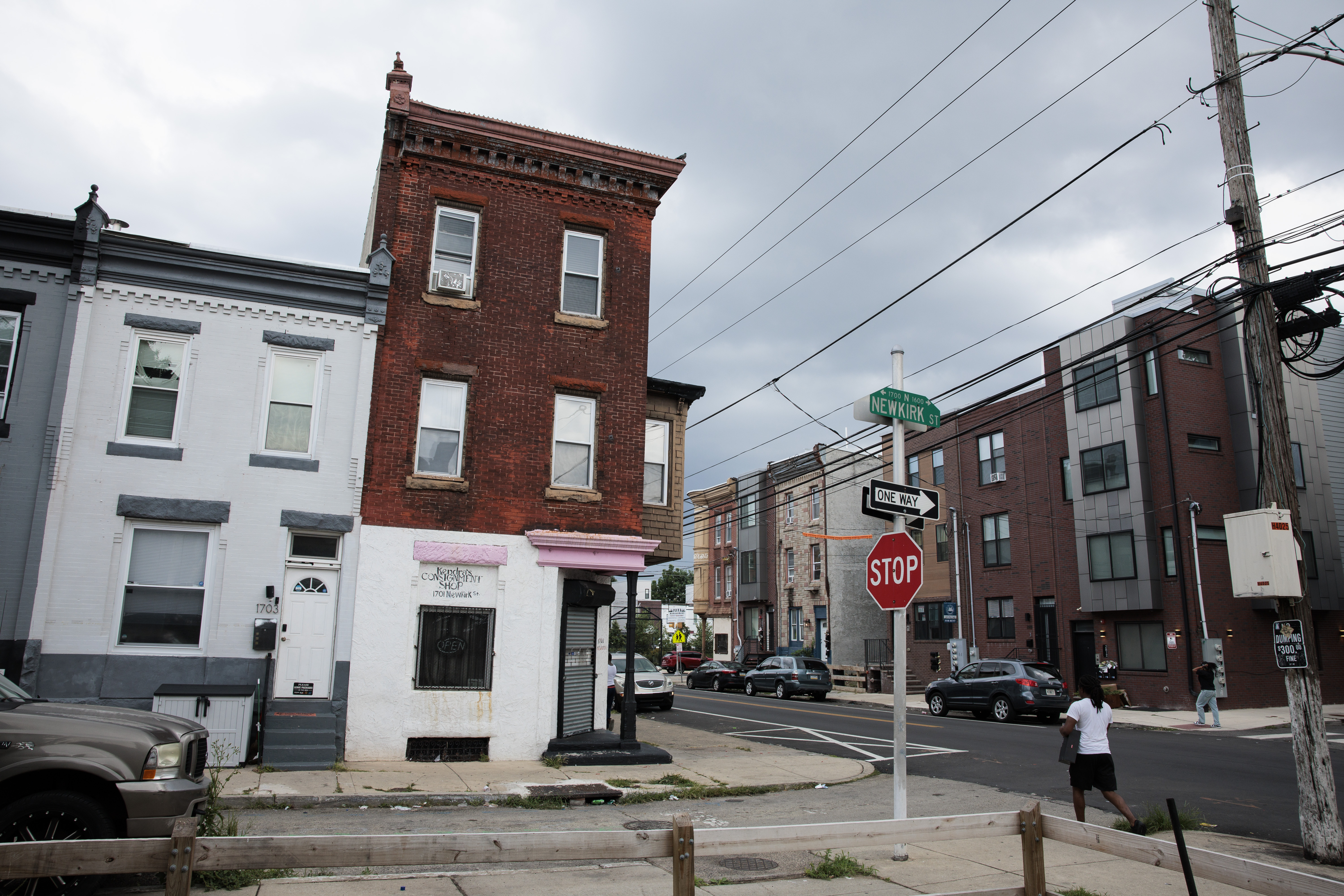
    The 1700 block of North Newkirk Street on Aug. 20. On this block in Strawberry Mansion, some homeowners saw their property assessments double.Monica Herndon / Staff Photographer

    Fair value

    Over in Allegheny County, home to Pittsburgh and many of its suburbs, the courts have ordered local officials to begin a full property reassessment, which must be completed by 2032. Pennsylvania is unique in not requiring regular reassessment.

    Pittsburgh’s values were last set in 2012, but more than a third of the state’s counties haven’t been reassessed since the 20th century. This leads to wildly out-of-whack and unfair tax bills for some residents.

    Of course, Philadelphians can tell you that regular reassessment is not a panacea for discontent. The city’s most recent valuations have set off a firestorm of consternation, especially given how many lower-income areas saw big increases. It doesn’t help matters that the neighborhoods Cherelle L. Parker used to represent on City Council, and powered her election as mayor, saw some of the smallest boosts in valuation.

    As tempting a story as the mayor favoring her core supporters while squeezing the city’s poorest neighborhoods may be, that is not an accurate assessment.

    Given the massive decrease in shootings and consistent efforts to clean and green the city, it is not surprising to see increased demand for neighborhoods like Kensington, Grays Ferry, and Fairhill. While there is still a long way to go on public safety, higher valuations are a sign of progress.

    It also should remind Council members that their theory that development drives property appreciation is faulty. Many of the neighborhoods with higher appreciation have seen little to no new development. In Northern Liberties/Fishtown, one of the city’s hot spots for new construction, values increased by just 1.7%.

    Additionally, the city has a powerful tool for protecting low-income homeowners: the homestead exemption. While the city’s stated property tax rate is 0.013998, owner-occupants pay a much lower rate. For a home valued at the city’s median of $260,000, the total tax bill is $2,239.68, or 0.008614. In Fairhill, where the median home value is $80,000, the homestead exemption eliminates the total tax liability for many residents. Boosting the exemption from $100,000 to $110,000 or $120,000 would ensure more low-income homeowners are protected from rising tax bills.

    Sheriff Rochelle Bilal is seen exiting a courtroom at City Hall on Wednesday.Tyger Williams / Staff Photographer

    Bilal’s babysitter

    Mayor Parker wouldn’t do it. City Council wouldn’t, either. Accountability for the Philadelphia Sheriff’s Office instead came from Common Pleas Court Judge Paula A. Patrick.

    After listening to a list of excuses and promises, it was clear Patrick had her fill of incompetence. The beleaguered department, which had been ordered to produce a specific set of documents months ago, suddenly released thousands of pages the night before the hearing.

    Instead of putting officials before the court with direct knowledge of why a backlog in processing property deeds began, Sheriff Rochelle Bilal instead sent Steven Wakefield, a deputy undersheriff who was hired just two months ago. Wakefield was tasked with testifying about past events he was not privy to, despite repeated warnings from the judge.

    As for Bilal herself, she claims to have “limited personal knowledge of the underlying facts.”

    Issuing deeds is one of the core functions of her job, but apparently the sheriff had no idea what was going on. Instead, Wakefield tried to scapegoat a former employee named Melissa Simpson, who had apparently been handling the entire process on her own without oversight from anyone.

    This testimony led to an agreement in which Bilal will have to identify someone to oversee deed sales for six months. A babysitter, essentially.

    While it is good to see someone holding the sheriff accountable for once, a temporary babysitter is only a partial solution. The office should be abolished.

    Sadly, that seems unlikely. Bilal may struggle to perform her day job, but she has thrived at building up political allies. She has been invited to news conferences by District Attorney Larry Krasner, remains a political player after her years running the Guardian Civic League, and faces next to no criticism from City Council. She was even honored by the Phillies as a “hometown hero.”

    Troublingly, Bilal does not even seem to have an opponent in next year’s elections, despite the continued public mismanagement of her office. That, at least, should change.

    Perhaps the Ambitious Abingtonian can find a Perspicacious Philadelphian willing to take on the challenge of replacing Bilal.

  • Philly judge imposes six months of outside supervision for sheriff’s auctions

    Philly judge imposes six months of outside supervision for sheriff’s auctions

    A Philadelphia judge on Wednesday took the rare step of imposing six months of outside supervision of sheriff sales after years of dysfunction in processing deeds and distributing money from the auctions.

    The decision came after a hearing in City Hall in which a top aide to Sheriff Rochelle Bilal acknowledged withholding thousands of pages of documents the judge had previously requested.

    Common Pleas Court Judge Paula Patrick grilled representatives of Bilal’s office over the surprise revelation, which followed a Monday Inquirer report noting that many of the requested records were missing.

    “My order,” the judge said, “was very specific.”

    Patrick, supervisor of the court’s commerce division, had requested the documents in May and scheduled Wednesday’s hearing following years of complaints about chronic delays in processing deeds and distributing funds from sheriff sales.

    Since at least mid-2024, winning bidders at property auctions have been paying the sheriff, then waiting a year or more for the office to process deeds of sale.

    The courts have been bombarded with petitions for those deeds, which prompted Patrick to take action. She required Bilal to produce, among other things, “a detailed accounting of all sales proceeds received and disbursed” since she took office in January 2020.

    In July, the office submitted thousands of pages of records to an official court docket along with a statement indicating it had resolved many of the deed delays and complied with all terms of the order.

    When The Inquirer asked Friday why none of the submitted records detailed sale revenues distributed after 2023, Bilal and her staff declined to comment.

    Bilal’s representatives admitted in the hearing Wednesday that the records were not submitted.

    On Tuesday afternoon, following the publication of The Inquirer’s report, an attorney for Bilal dropped in excess of 5,000 pages of sales records into the court docket.

    Steven Wakefield, a former city tax attorney appointed in June as deputy undersheriff to clean up the troubled sheriff sale process, said in the hearing that his initial representation to the court, based on assurances from staff that all sales had been pulled, “was not accurate.”

    Wakefield said that after the news organization’s inquiry Friday morning, he immediately followed up with staffers about the missing post-2023 sales records.

    “They said, ‘Oh, yeah, we didn’t do that,’” Wakefield recounted.

    It was unclear Wednesday whether all the records from that time period would ever be turned over.

    “Some of the information the court asked for did not exist,” said Jonathan Rardin, an attorney appointed by the city to represent Bilal.

    Later Wednesday afternoon, Bilal’s staff agreed to allow an outside person or group to monitor how auctions are conducted, then report back to the court in six months. The judge did not name the overseer or say when the outside supervision would begin.

    “This is in essence exactly what we were asking for,” said Daniel Bernheim, a lawyer for JSB Property Group, a real estate investment company that filed a lawsuit in March alleging that Bilal had breached the terms of a 2003 consent order requiring the office to issue deeds within 40 days of settlement.

    Bernheim said Patrick’s order will “have somebody independently come in, take a hard look at what’s going on, ask a lot of the questions that still need to be asked, and make recommendations.”

    Bilal, in civilian dress, sat before the judge silently during the hearing and did not respond when asked by an Inquirer reporter for comment.

    After the hearing, Bilal told a group of reporters that she supported the court supervision.

    “It’s better that we come together and make an agreement so we can continue working together and moving forward,” she said. “That’s all it is.”

    Bilal’s attorney had filed a last-minute motion on Friday seeking to protect the sheriff from having to testify at the hearing, writing that it involved “matters outside her unique personal knowledge.” Patrick denied the motion. But, in the end, Bilal was not called to testify.

    The hearing offered other insights into the sheriff’s office, which has struggled in recent years to perform many of its core functions under Bilal.

    Wakefield blamed the deed delays on a single person: Melissa Simpson, Bilal’s former director of real estate. He said Simpson had been manually filing documents and became overwhelmed when auctions picked up in the aftermath of the pandemic.

    In a certification filed last month, Wakefield claimed Bilal was not even aware of the deed backlog.

    “Simpson was telling everyone it was fine,” Wakefield said Wednesday. “One person can’t do the whole job.”

    Simpson could not be reached for comment. But three current sheriff’s office employees, who were not authorized to speak publicly, disputed that Simpson was solely to blame for the problem.

    Even when more staffers were hired, Wakefield said, the office could process only 40 or 50 deeds a day at most.

    Wakefield also said the slow pace of deed filings was eclipsed by even more serious problems with the issuance of legally mandated distribution sheets, which detail how money from each auction is divided.

    “The distribution backlog is worse than the deed backlog,” he said. “There was a period of time where distribution sheets were not being uploaded.”

    Even so, Wakefield presented a picture of an office that has now been reformed. He said it was moving to automate large parts of the deed process.

    However, he acknowledged that despite his July statement to the court that the outstanding backlog had been cleared, there are still some that must be processed.

    Wakefield told the judge that a recently hired staffer, William A. Brownlee Sr., is conducting an audit to find any sales that were inadvertently passed over.

    One real estate agent told The Inquirer last week that he was still waiting on deeds from auctions that occurred in late 2024.

  • Judge rejects Philly Sheriff Rochelle Bilal’s last-minute attempt to avoid court testimony

    Philadelphia Sheriff Rochelle Bilal made an unsuccessful, last-ditch attempt to avoid facing a city judge about major problems in her office, arguing through an attorney that she has “limited personal knowledge” of the real estate transactions she oversees.

    Jonathan Rardin, a lawyer the city retained to represent Bilal, wrote in a motion filed Friday afternoon that the embattled sheriff should not have to testify before Common Pleas Court Judge Paula Patrick at Wednesday’s hearing on sheriff sales because it would involve “matters outside her unique personal knowledge.”

    On Tuesday morning, Patrick rejected Bilal’s request for a protective order to shield her from testifying, writing that “Bilal and any other relevant parties shall appear” on Wednesday morning and “be expected to testify if necessary.”

    Patrick, supervisor of the court’s commerce division, scheduled the hearing in May, as winning bidders at sheriff sales continued to flood the courts with petitions seeking their deeds. As The Inquirer first reported in July 2024, Bilal’s office had not been issuing the deeds for a year or more after the auctions, leaving neglected homes unable to be renovated, rented, or resold.

    An attorney who represents real estate investors recently filed a lawsuit arguing that Bilal had breached the terms of a 2003 consent order requiring the office to issue deeds within 40 days of settlement. Patrick responded by ordering Bilal’s office to demonstrate at a public hearing that it was not in violation of the decree.

    Wednesday’s hearing will help decide whether Patrick will appoint a “special master,” a title agent, or some other third-party expert in real estate to administer sheriff sales in Philadelphia — arguably the most important function of Bilal’s office.

    Bilal’s lawyer had already successfully pushed back the hearing, which originally had been set for July 27, by arguing the sheriff had an unavoidable scheduling conflict due to “a previously scheduled vacation.” That request to delay the hearing did not mention that Bilal hoped to completely avoid testifying, and at the time, Rardin wrote that her “presence in this matter is necessary.”

    Yet last week’s motion argued instead that the sheriff’s knowledge is “limited to the information provided to her by her staff” and that she should not have to personally testify at all.

    “Requiring Sheriff Bilal to appear and testify regarding events and administrative practices that are not within her unique personal knowledge would impose an unreasonable burden and oppression” under the state’s rules of civil procedure “and would divert a high public official from the discharge of her official duties …,” Rardin wrote.

    Daniel Bernheim, the lawyer for a property group whose March lawsuit triggered Patrick’s court order, said Monday evening that Bilal’s attempt to avoid testimony was a “disappointing response by an elected official.” On Tuesday, Bernheim — himself an elected commissioner in Lower Merion Township — filed a response to her motion that sought to force Bilal to testify in court.

    “[T]he sheriff seeks to avoid answering questions based upon a series of cases which have no relevance whatsoever with the present proceedings and a claim of immunity from testifying which does not exist,” Bernheim wrote.

    In April, Bilal claimed at a City Council budget hearing that most post-auction delays had been resolved. She blamed any ongoing delays in issuing deeds on buyers who did not submit required forms or fees.

    But after Patrick filed her court order in May, Bilal’s office within 48 hours processed 277 deeds, some attached to auctions that had taken place more than a year ago. The office filed more paperwork in two days than it had in the prior three months.