Tag: Rochelle Bilal

  • Philly sheriff’s office reneges on court-supervision deal, tells judge it found $20 million in city money

    Philly sheriff’s office reneges on court-supervision deal, tells judge it found $20 million in city money

    A top aide to Philadelphia Sheriff Rochelle Bilal revealed in court that an internal audit had recently uncovered $20 million in undisbursed money — including tax revenue and utility payments that should have gone into city coffers.

    The stunning disclosure of misplaced sheriff-sale proceeds — which amount to more than half the office’s annual budget — came during a two-day hearing as Bilal and her staff sought to back out of a judge’s plan to appoint an independent supervisor to monitor the office’s troubled process.

    That tentative deal, struck after an August hearing before Common Pleas Court Judge Paula Patrick, was meant to resolve years of delays in issuing deeds and distributing sale proceeds.

    But Patrick, supervisor of the court’s commerce division, ordered Bilal and her deputies back into her courtroom on Wednesday after the sheriff’s office reneged on the agreement.

    The judge insisted that Bilal be in the room before the hearing began.

    “You need to have your client here,” the judge told Jonathan Rardin, a lawyer the city retained to represent Bilal. “She needs to be here to get started.”

    Bilal then walked in and took a seat behind the defense table without speaking.

    Steven Wakefield, a new deputy undersheriff hired in June to streamline the office’s property auctions, testified Wednesday morning that he had already fixed many of the operational issues that had caused the backlog.

    Under questioning from the judge, Wakefield also detailed the discovery that “checks had not been written” for some $20 million in sales proceeds, including uncollected property taxes and water bills that are meant to be recouped through sheriff sales.

    “A lot of that was money that was supposed to go to the city,” Wakefield said.

    The money was found during an audit that so far has gone only as far back as August 2025. Wakefield did not provide an explanation for why the money had remained in the sheriff’s office, but said it was recently transferred to the city.

    New procedures in the office allow executive staff to track when checks are written, he said.

    “We have much more robust information,” Wakefield said.

    Patrick appeared stunned by the revelation.

    “Twenty million dollars is a lot of money,” the judge said. Wakefield agreed.

    Patrick also questioned why Wakefield had not included that information in the records she had ordered the sheriff’s office to produce over the summer, including a list of every sheriff sale since Bilal took office in 2020 and how the money was distributed.

    On Wednesday afternoon, Bilal took the stand for the first time, testifying that she had not known about the backlog of unprocessed deeds until “2024 or 2025,” when she started receiving emails from real estate agents and City Council members about deeds not being recorded.

    “It was like Spidey senses. I’m getting more than one,” Bilal said of the emails. “Then every week.”

    The Inquirer first reported on the problem in July 2024, based on an analysis of city property records. Bilal’s staff initially denied there was a deed backlog, then weeks later said they would take corrective action. Yet the delays continued, and in some cases got worse, with banks, real estate agents, and investors saying as recently as May 2026 they have waited more than a year after auctions to receive their deeds.

    Bilal has repeatedly provided inaccurate information about sheriff sales and her office’s finances, including telling City Council in April that post-auction delays had been resolved.

    But under oath in court, Bilal said she agreed with Rardin’s assessment that the sheriff’s office had not been fulfilling its obligations until recently.

    “That’s what I’m starting to find out, yes,” Bilal said.

    While Bilal campaigned as a reformer in 2019, she testified she had only a rudimentary understanding of what the job entailed when she took office. She said she spent an extended amount of time interviewing staff to “figure out what the sheriff’s office actually does.”

    Now more than halfway into her second term, Bilal blamed the ongoing problems on chronic underfunding from City Hall, poor decisions by managers under her, antiquated technology, and staffers who struggled to handle the new office software that went live in 2024.

    Bilal’s testimony continued Thursday morning. Asked whether she would permit an outside compliance examiner to come into the office, she refused to answer the question.

    “We are in compliance,” Bilal said. “We got control of this.”

    A deal collapses

    This week’s hearing was not supposed to happen.

    Judge Patrick, frustrated with an onslaught of litigation over sheriff sales, ordered the August hearing at which Bilal’s staff was required to demonstrate why a “special master” or someone with similar expertise in real estate should not be brought in to temporarily oversee the auctions.

    That hearing was cut short after Bilal’s staff said it would allow the monitoring and report back to the court in six months. “It’s better that we come together, and make an agreement,” Bilal told reporters at the time.

    But Daniel Bernheim, the lawyer representing plaintiff JSB Property Group, whose March lawsuit over deed delays triggered the legal showdown, said in an interview Tuesday that Bilal’s legal team went silent after Patrick submitted a draft of a stipulated order that called for appointing a team to evaluate the office’s practices.

    Bernheim said Rardin then told him he could not reach “the key decision makers” in the office.

    “The ‘key decision maker,’” Bernheim said, “is the sheriff.”

    Then, Bernheim said, the sheriff’s office submitted what he described as “ludicrous” changes to Patrick’s proposal, including, according to Bernheim: requiring 48 hours’ notice for the independent supervisor to interview any sheriff’s office employee; removing the word comprehensive before review; and automatically terminating the supervision after six months regardless of the results.

    What happened?

    It is unclear why the sheriff’s office changed direction.

    Bilal did not respond to questions Wednesday during a break in the court proceedings. Standing near the defense table, she pointed her phone at an Inquirer reporter’s face and appeared to take a photograph. Her staff then formed a barricade around her.

    On Tuesday, Rardin submitted a memo arguing that Patrick had overstepped her authority. He wrote that the 2003 consent order at the center of the case — which requires the sheriff to issue deeds within 40 days from settlement — does not apply to Bilal because it had been brought against a previous sheriff, John Green, who was later imprisoned on federal bribery charges.

    Even if the order did apply to Bilal, Rardin wrote, the court’s legal authority was limited to holding her in contempt, not “open-ended structural oversight.”

    On the stand Wednesday, Wakefield told Patrick that sheriff-sale proceeds are now being distributed and deeds issued within weeks of settlement. He said the office has reorganized its workforce and is crafting new regulations for auctioning properties that will remain in place for future sheriffs.

    “I have personally signed hundreds and hundreds of deeds,” Wakefield said.

    Much of Wakefield’s and Bilal’s testimony over two days involved past practices in the sheriff’s office, as they guided attorneys through reams of financial and personnel records.

    At one point, Bernheim questioned why a sworn deputy sergeant was needed to, in Wakefield’s term, “babysit” staffers in the real estate division to make sure they were doing their jobs.

    “If we could trust everyone to do their job 100%,” Wakefield said, “we wouldn’t be here today.”

    “Amen to that,” Patrick responded.

    At the conclusion of the hearing Thursday, the judge said would take the new testimony under advisement and issue a ruling shortly.
  • Will a pedestrian death move Philadelphia police to step up traffic enforcement? | Shackamaxon

    Will a pedestrian death move Philadelphia police to step up traffic enforcement? | Shackamaxon

    This week’s edition of Shackamaxon looks at a crackdown on “smoke shops,” the Philadelphia police’s handling of traffic citations, how Harrisburg deadlines can be leveraged to fund transit, and what City Council forgot to talk about in its first session after returning from summer break.

    Up in smoke?

    An increasingly common frustration has been expressed across Philadelphia over the rise of what are known as “smoke shops,” which have proliferated in the city’s commercial corridors. Ostensibly operating as grocery stores, they are often locations where illegal drugs and drug paraphernalia are sold. They tend to operate late into the night and attract the ire of both residents and other business owners.

    That’s why it was refreshing to see someone make a substantive move to shut them down. State Rep. Amen Brown, whose district includes parts of West Philadelphia and Logan Square, has put together an initiative he’s called Operation Breezy. Working with both city and state law enforcement, and relying on the support of members of the community, Brown’s efforts have already shuttered 13 of the establishments.

    Brown’s approach uses confidential informants, many of whom come from the community itself. He told me that one of the now-closed shops had roughly 40 pounds of marijuana on the premises, the outlets routinely sell out-of-state cigarettes, and that firearms have been seized as part of the efforts. Residents who would like to help can send an email to OperationBreezy@gmail.com or a message to the effort’s Instagram page, @operationbreezy.

    Brown said he’d like to do more to stop the smoke shops, but that the best option requires action at the local level. Rather than enacting a broad-based curfew for all businesses, he’d prefer to target just the smoke shops. He says that might be possible by imposing restrictions on the operating hours of grocery stores that are smaller than 300 square feet. That’s a size below which, officials say, legitimate uses for a storefront become impractical.

    Official inaction

    Philadelphians were rightly outraged at the actions of a police officer who, in August, left a struggling pedestrian lying in the street, where he was later killed in a hit-and-run. Commissioner Kevin J. Bethel said he was “disgusted” by the patrolman’s behavior. City officials announced their intent to fire the officer. That’s the right call, even if the city’s cop-friendly arbitration process leads to 85% of officers getting their jobs back after alleged misconduct.

    Still, I couldn’t help wondering whether this incident is a natural outgrowth of the department’s policies. The Philadelphia police simply do not seem to take enforcing traffic laws seriously enough. Traffic citations have plunged over the last few decades. In the 1990s, officers regularly issued roughly half a million tickets per year. In 2023, about 45,000 tickets were handed out. These days, we celebrate an increase of a few thousand citations, even as overall stops remain at a fraction of the total pedestrian safety experts say is needed. Commissioner Bethel has said that enforcing traffic violations is a lesser priority.

    While many officers blame the city’s Driving Equality Law for this decline, that measure does not prevent officers from enforcing moving violations, which are the most dangerous offenses. Failing to do so is a choice the department has made on its own. The result of this lack of enforcement, traffic safety experts say, has been an increase in reckless and aggressive driving.

    Given that a city controller report called Philadelphia’s streets the most dangerous of any major U.S. city, this lack of prioritization must change. While speed cameras and other forms of automated enforcement have made a difference along high-traffic corridors like Roosevelt Boulevard and Broad Street, they can only enforce certain offenses in certain locations. Reckless driving is an issue almost everywhere.

    It is impossible to know what went through the mind of the officer who left Eugene Beauford in the street. The department has declined to publish his name, let alone make him available for an interview. But perhaps this horrific incident will prompt police brass to rethink the department’s strategy for enforcing traffic laws.

    Skill game shutdown

    Next month, Pennsylvania’s so-called games of skill will need to be unplugged. Oct. 13 marks the last day of the grace period the state Supreme Court gave the General Assembly to devise a taxation and regulatory scheme for the machines, devices that resemble slot machines and which are currently banned under state law. For years, legislators have debated where the machines can operate, and whether they should pay the same tax rate as existing slot machines.

    By pure coincidence, there’s another big deadline approaching: the authorization period for the state-appointed SEPTA prosecutor. I’d like to propose a potential compromise for both issues. Harrisburg should extend the SEPTA prosecutor’s authority by three years, agree to Gov. Josh Shapiro’s proposed shift in sales tax revenue to support public transit, and pay for it by legalizing skill games and taxing them at the same rate as slot machines. They should also pass regulations limiting the placement of the machines and creating penalties for owners who allow children to use them.

    Given District Attorney Larry Krasner’s recent struggles, extending the SEPTA prosecutor should be less politically contentious now than it was in years past. Lawmakers can also point to the significant decline in fare evasion and violent crime on the transit system over the last few years as justification.

    For Philadelphia lawmakers who may be reluctant to place limits on the authority of Krasner, who has been overwhelmingly elected by their constituents three times, that kind of middle ground can provide fiscal peace of mind for SEPTA, which has been subject to financial uncertainty for three years. While Democrats seem to be pinning their hopes for approving more state funding for SEPTA on winning control of the state Senate during this fall’s elections, that is hardly guaranteed. If a deal can be reached ahead of time, it reduces the risk of a collapse. It also does not preclude additional action next year.

    Finally, the need to act on skill games is clear. As it stands, it will be difficult for the commonwealth to shut down every location that houses the machines. We don’t even know how many exist. I am not a fan of these devices, which have a negative impact on the communities that host them. Regulation will make it easier to mitigate that damage and ensure Pennsylvanians see some benefit from the funds that flow through them.

    Council comeback

    After its three-month summer hiatus, City Council is back in session. All eyes on the second floor of City Hall will be trained on how Mayor Cherelle L. Parker will respond to a series of potentially contentious legislative proposals — from Councilmember Jamie Gauthier’s bill to stop burning trash to Councilmember Isaiah Thomas’ efforts to stop at least part of the school closure plan.

    Then there’s the matter of those city officials who deserve additional scrutiny, in particular Krasner and Sheriff Rochelle Bilal. Krasner has been referred for prosecution by a federal judge, while Bilal misled Council during her budget hearing earlier this year.

    City Council should hold investigatory hearings into both officials. Residents deserve better from their leaders than what both Krasner and Bilal have shown.

  • Anti-ICE activists question why Philly police showed up at their meeting. The department is investigating.

    Anti-ICE activists question why Philly police showed up at their meeting. The department is investigating.

    The Rev. Jay Bergen was at the sign-in table inside the Friends Center, where No ICE Philly was holding its regular public meeting last week, when a police civil affairs officer appeared.

    Bergen asked what was happening, and said the officer responded, “We’re just here to make sure everyone’s safe.”

    The activist group was preparing to serve cake, to celebrate its one-year anniversary.

    Bergen, who leads No ICE Philly, was concerned that the officer brought his gun into the Center City facility, which includes a Quaker meetinghouse. The pastor escorted the officer down the hall to the door, explaining that he could attend the public meeting if he wished ― then noticed a second civil affairs officer outside.

    The two officers stayed there, watching, for the duration of the three-hour gathering, Bergen said, their presence leaving those inside feeling confused, intimidated, and surveilled.

    “Who gave the order, and what was the goal?” Bergen asked in an interview. “Why are we more of a threat than ICE agents are? … It’s another instance of the Philadelphia police being interested in targeting Philadelphians instead of protecting Philadelphians.”

    The police department said in a statement last week that “the Sept. 9 event was identified as a scheduled protest.” Civil affairs officers routinely attend demonstrations as part of their duty to public safety and the First Amendment, and “their presence was not specific to No ICE Philly,” the statement said.

    But on Monday, Staff Inspector Frank Palumbo, who oversees the civil affairs unit, said he would open an investigation into the matter.

    Palumbo said he did not know why an officer would have entered the Friends Center. That would be outside department policy, he said, unless there was a disturbance inside.

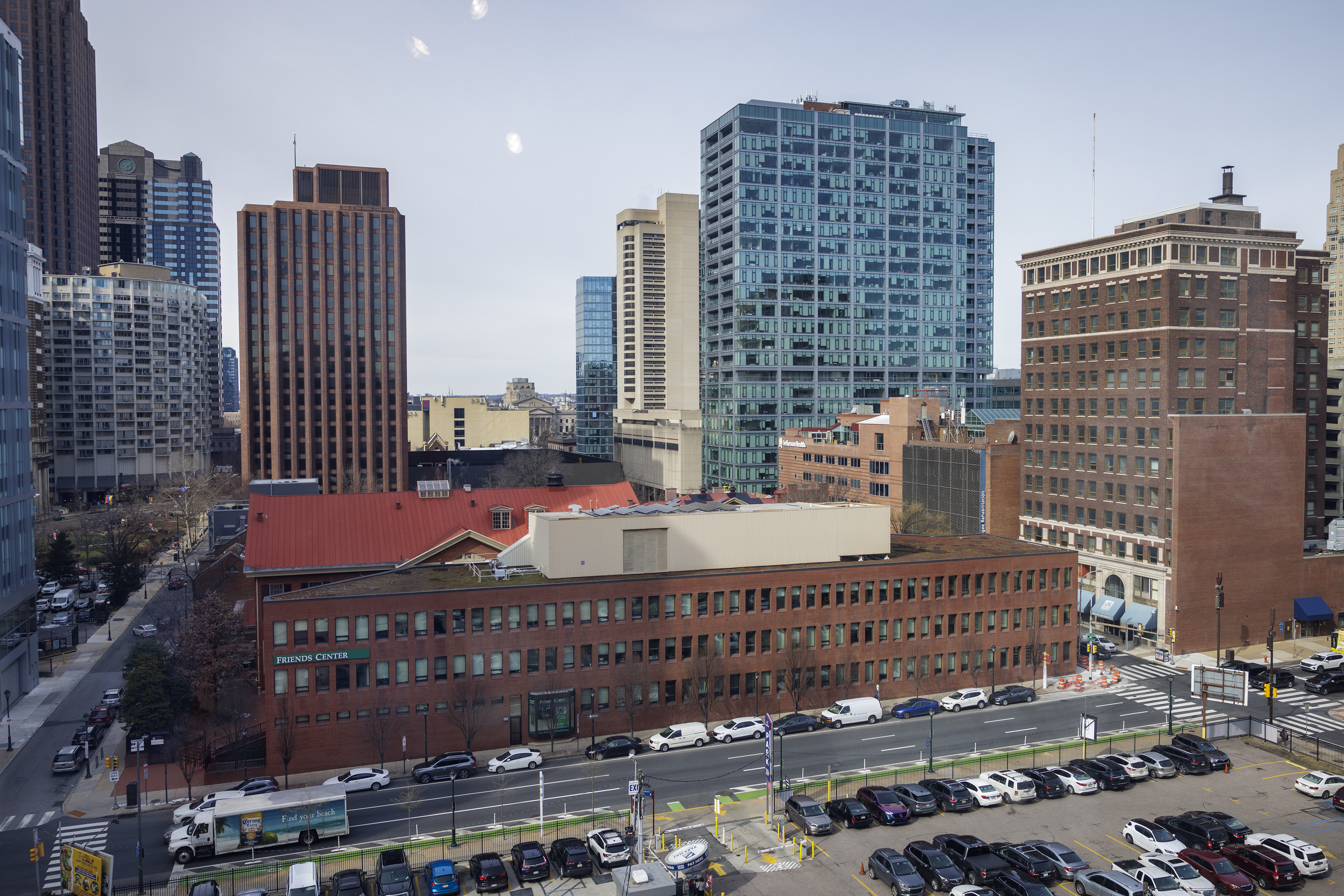
    The Friends Center at 15th and Cherry Streets.Alejandro A. Alvarez / Staff Photographer

    If the group had gathered outdoors, Palumbo said, the department would have sent more officers ― including some in uniform. It did not do so, he said, because “there was no indication whatsoever that there would be destruction of property, violence, or anything that would even result in civil disorder.”

    He added, “This will not continue to occur.”

    Civil affairs units are specialized teams of officers designed to act as neutral liaisons between sides during what might be contentious protests, labor actions, or big public gatherings. Like other officers, they always carry their guns while on duty.

    In Philadelphia, the police department says, civil affairs officers operate in a diplomatic and impartial capacity to ensure that constitutional rights are protected for all. The officers prioritize protection of life and property while preventing vandalism, assaults, or other illegal acts not covered by First Amendment rights, the department says.

    Niles Wilson of the Center for Policing Equity, a California-based research and reform group, said a key question of any investigation into the matter should be why the officers were at the meeting at all.

    “What intelligence did the police department have that would either lead these officers to do this, or were these officers acting on their own?” he asked. “That needs to be answered.”

    The stakes reach beyond any particular meeting, he said.

    A civil affairs unit is an asset, one that can help “towards transparency and building trust between the police department and the community,” Wilson said. But “anytime the public trust is lost in that service, then it disrupts public safety everywhere.”

    Philadelphia civil affairs officers are commonly present at demonstrations led by No ICE Philly, which in the last year has emerged as perhaps the boldest and most visible of the city’s pro-immigrant organizations.

    Its members and supporters have been cited or arrested by different police agencies as they carried out peaceful civil disobedience, including attempting to block federal government vehicles from exiting the U.S. Immigration and Customs Enforcement office in Center City.

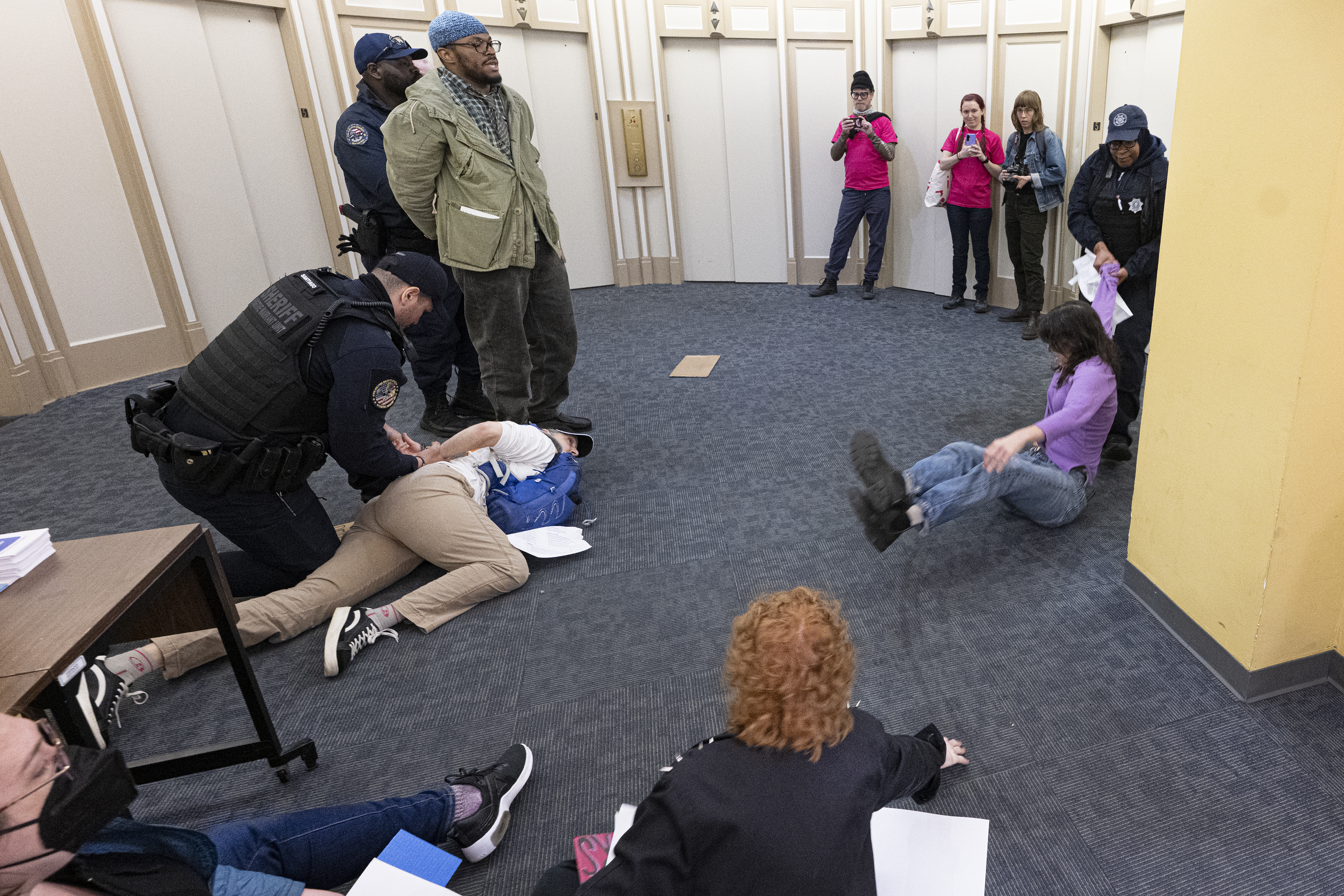
    In one chaotic scene this year, activists were handcuffed and physically removed from the foyer area at the Philadelphia Sheriff’s Office, where they staged a sit-in to demand that Sheriff Rochelle Bilal help stop ICE arrests at the Criminal Justice Center. No ICE Philly holds a weekly “noise demonstration” outside ICE headquarters at Eighth and Cherry Streets, banging drums and blowing whistles to raise awareness and disrupt the work of agents inside.

    No ICE Philly activists and supporters are handcuffed and taken into custody at a sit-in outside the office of Sheriff Rochelle Bilal in April 2026.Jose F. Moreno / Staff Photographer

    The Sept. 9 gathering, however, was a regular meeting, generally held twice a month, open to all, and advertised in advance on social media. Other meetings have drawn far more people than the 60 or so present at this one, organizers said, which made the police presence puzzling.

    “It felt kind of like a threat, like, ‘We’re watching,’” said Em Auerbach, a group member who attended. “It made people feel on edge.”

    As the meeting was ending, Auerbach said, one of the officers approached a Friends Center employee at the front desk and asked: “Are you good? Do you need anything?”

    The worker answered that she was fine, Auerbach said.

    No ICE Philly members waited for the employee to finish her work, and then everyone left together, Auerbach said.

    “It was weird,” Auerbach said of the officers’ presence. “I think they were there to intimidate us. … Unless there was a threat against our group, I don’t think this was a good use of taxpayer funds.”

    Bergen described at one point asking the officers, “‘Why are you surveilling us?’ They said, ‘We’re not surveilling.’ I said, ‘That’s what a body camera is for.’”

    The pastor said that as people entered the meeting, they said the police officers had asked who they were and why they were there.

    Palumbo said if that happened, it would fall outside department policy, that even at combative street demonstrations people generally are not asked their names “unless it is necessary to determine who they are for the purposes of an investigation. This was not an investigation.”

    Palumbo said the relationship between the police and No ICE Philly has been cordial. He estimated that police have cited protesters twice in the last year, issuing citations with $100 penalties that are similar to parking tickets.

    Those citations, he said, are “the most extreme police enforcement we’ve ever done with this group.”

    Correction: This story has been updated to correct the pronouns used by Rev. Jay Bergen and Em Auerbach.

  • Sheriff Rochelle Bilal’s new undersheriff has resigned just three months into the job

    Sheriff Rochelle Bilal’s new undersheriff has resigned just three months into the job

    Philadelphia Sheriff Rochelle Bilal’s new second-in-command has left the job — three months after he arrived.

    Undersheriff George Gossett Jr., whom Bilal hired in June as part of what she had described as a major “reorganization and modernization” initiative, confirmed Monday that he had resigned from the job effective last Friday.

    Gossett said through a spokesperson that he is “excited to pursue opportunities in the private sector” but provided no other explanation for his short tenure.

    Bilal’s office has been hit with three court orders since 2024 seeking to correct alleged mismanagement, most recently in May over delays in processing deeds of properties won at auction.

    Gossett, a Roxborough-based lawyer and former assistant district attorney, was tapped in June at an annual salary of $185,000, weeks after a Common Pleas Court judge ordered Bilal to fix the sheriff sale process or face consequences.

    According to a news release Bilal issued that month, Gossett was to “oversee daily operations, strategic planning initiatives, personnel management, and operational coordination across the agency.”

    “This reorganization is about building a stronger organization for the future,” Bilal said at the time.

    It is unclear where that plan now stands, with the new undersheriff having already departed.

    Gossett is the fourth undersheriff to serve Bilal since she took office in 2020. Bilal and her spokesperson, Teresa Lundy, declined to provide any details about why her top deputy would leave so soon after taking the job.

    Sources in the office said that the pair did not see eye-to-eye, and that Gossett was said to have made a remark about Bilal’s “anger management” issues, which may have escalated the situation.

    Separately, Bilal last week fired Mark Wilson, the office’s codirector of real estate. Wilson declined to comment.

    Gossett’s predecessors also had rocky terms in the sheriff’s office.

    In August 2020, seven months into the job, Undersheriff Sommer Miller resigned after she said she faced retaliation for reporting alleged theft in the advertising department, unauthorized spending of public funds, and instances of extreme sexual harassment. She later claimed in a whistleblower lawsuit that Bilal had been “reading and monitoring her emails in real time.”

    Miller’s replacement, Undersheriff Curtis Douglas, left in May 2021, about a week after reports that Bilal’s office had botched a contract meant to move sheriff sales to an online platform. A spokesperson at the time described Douglas’ departure as a planned retirement.

    In May 2026, Undersheriff Tariq El-Shabazz, a criminal defense attorney who came to personally oversee the handling of deeds related to sheriff sales, also retired. He left one day after the most recent court order dropped.

    Under Bilal, who was elected as a reformer in 2019, sales of foreclosed and tax-delinquent properties have been mired in post-auction delays, with winning bidders waiting a year or more to get their deeds.

    Many auctions were halted altogether between 2021 and 2024. Court security and inmate transportation, two other key functions of the office, have also been recurring problems, with judges saying they have felt unsafe.

    In addition to Gossett, Bilal recently hired William A. Brownlee Sr. as part of the office restructuring earlier this year.

    Brownlee, a West Philadelphia pastor, a motivational speaker, a real estate investor, and an entrepreneur with a checkered financial history, has previously described himself on his website and social media as the office’s “Deputy Chief Financial Officer.” His website has since gone dark, and Bilal’s office said Brownlee currently serves as project manager. Payroll records show he is being paid $95,000 a year.

    Another new hire, Steven A. Wakefield, is a former Philadelphia Law Department attorney serving as Bilal’s deputy undersheriff in charge of deed compliance. He is being paid $120,000 a year.

    Wakefield took the stand last month and told Common Pleas Court Judge Paula Patrick, supervisor of the court’s commerce division, that the office had previously misplaced records and lost track of the distribution of some auction proceeds. Wakefield blamed the situation on a since-terminated employee who allegedly concealed the problem from Bilal.

    Bilal did not testify at the hearing. Her city-appointed lawyer had filed a motion seeking to keep her off the stand, saying the sheriff had “limited personal knowledge” of how sheriff sales work.

    Wakefield said he had enacted operational reforms, speeding the deed issuance process while largely clearing out a backlog of deeds from earlier sales.

    Even so, Patrick took the rare step of imposing six months of outside supervision of sheriff sales.

    That independent monitor has yet to be appointed.

  • The sheriff’s office doesn’t need a babysitter; it needs to be abolished | Shackamaxon

    The sheriff’s office doesn’t need a babysitter; it needs to be abolished | Shackamaxon

    This week’s edition of Shackamaxon covers data centers, property assessments, and more woes at the Philadelphia Sheriff’s Office.

    Jason Kelce with Liquid Death mascot Murder Man in an ad for the canned water and Garage Beer.Garage Beer

    Sports data center

    Former Eagles offensive lineman Jason Kelce seems to be more omnipresent in retirement than he was during his career. Most recently, he filmed a commercial for Garage Beer and Liquid Death that asked Americans to send him their urine to supply data centers.

    While conjuring a negative image of yellow liquid in a cup is probably an unwise strategy for someone who co-owns a light beer company, Kelce’s commercial had another major problem — data centers don’t actually use as much water as public perception suggests.

    In fact, the biggest threat to U.S. water supplies is something far more mundane: alfalfa farming.

    Across the arid Western states, farmers are using vast amounts of water to irrigate their fields, which are then used to feed cows for the beef industry. A single acre of alfalfa uses 1.6 million to 2.5 million gallons of water. In Utah, feed farming uses over half the state’s water supply. Meanwhile, the data centers themselves increasingly rely on closed-loop systems. The water used as coolant gets purified and reused, reducing their own need.

    The confusion over water use is emblematic of the general debate over the centers, which is rife with hard-to-vet claims. And shifting public opinion has left politicians in both parties flat-footed and scrambling to react.

    Gov. Josh Shapiro, the ever-Ambitious Abingtonian, issued his own response to the situation. Much of what Shapiro said is reasonable. He wants tech companies to pay for their own power and contribute to community benefits agreements, and to respect the Pennsylvania Constitution’s guarantee of clean air and pure water. Some of it is less sensible, specifically his commitment to local control.

    Local control sounds great in theory: Why shouldn’t communities have the final say over how they are developed? In practice, however, it is shortsighted. There are two reasons for this.

    One, the impact of data centers is regional, not local. If opponents are correct about the impact on water and electricity bills, this impact will exist no matter where the centers operate. Given the PJM grid Pennsylvanians rely on spans multiple states, there is no plausible pathway for local communities to insulate themselves from rising energy demand by blocking data center proposals.

    Two, not every community can afford to say no. Take the bankrupt city of Chester, for example. From its efforts to sell the Chester Water Authority to its role as host for the Reworld Trash Incinerator, financial considerations already play a big role in that city’s policymaking. By handing control to local authorities, the governor is ensuring cities like Chester will disproportionately play host to data centers.

    For those who believe they will have a strong negative impact on quality of life, how is that possibly fair?

    Instead, what is needed is federal, regional, or at least statewide coordination.

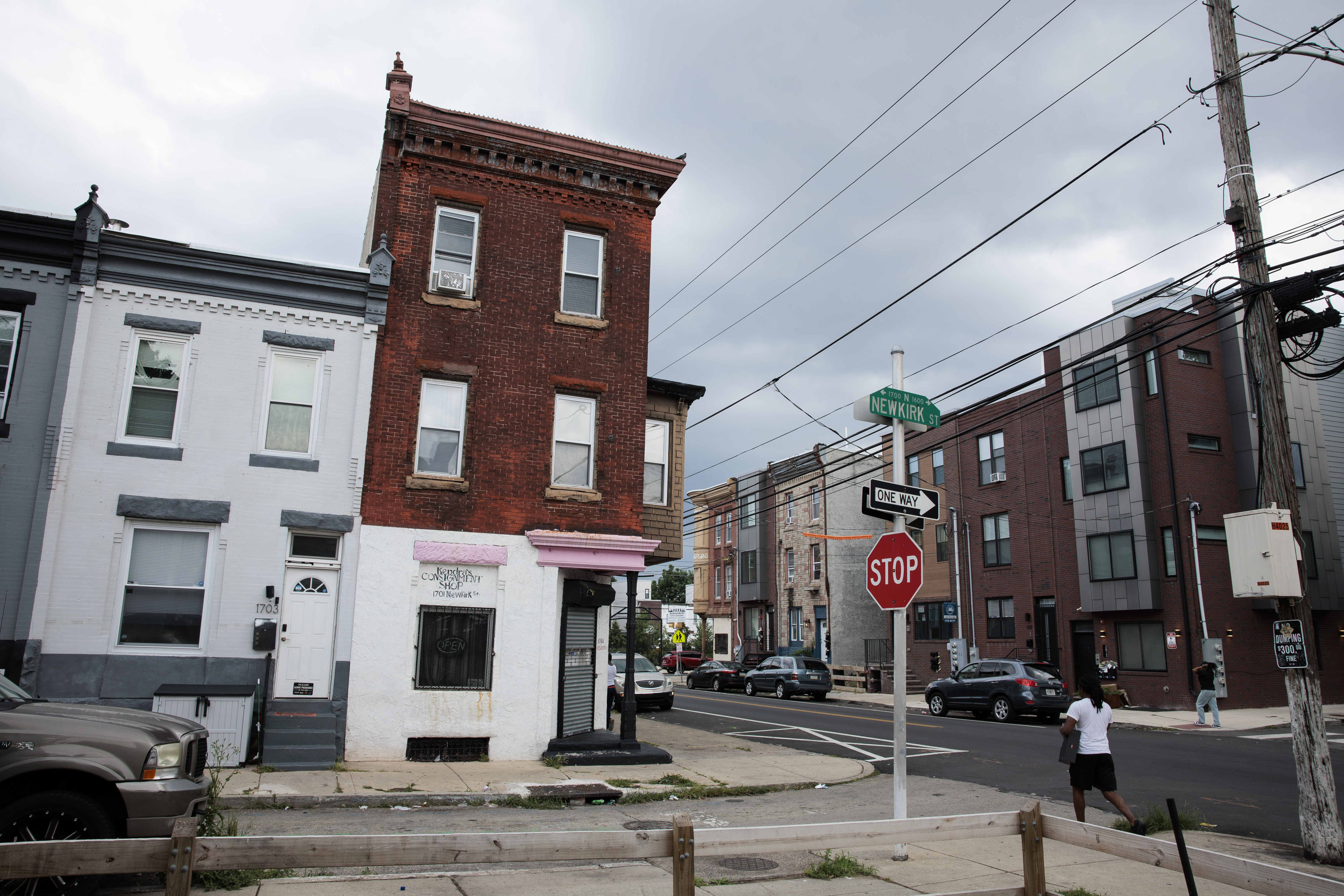
    The 1700 block of North Newkirk Street on Aug. 20. On this block in Strawberry Mansion, some homeowners saw their property assessments double.Monica Herndon / Staff Photographer

    Fair value

    Over in Allegheny County, home to Pittsburgh and many of its suburbs, the courts have ordered local officials to begin a full property reassessment, which must be completed by 2032. Pennsylvania is unique in not requiring regular reassessment.

    Pittsburgh’s values were last set in 2012, but more than a third of the state’s counties haven’t been reassessed since the 20th century. This leads to wildly out-of-whack and unfair tax bills for some residents.

    Of course, Philadelphians can tell you that regular reassessment is not a panacea for discontent. The city’s most recent valuations have set off a firestorm of consternation, especially given how many lower-income areas saw big increases. It doesn’t help matters that the neighborhoods Cherelle L. Parker used to represent on City Council, and powered her election as mayor, saw some of the smallest boosts in valuation.

    As tempting a story as the mayor favoring her core supporters while squeezing the city’s poorest neighborhoods may be, that is not an accurate assessment.

    Given the massive decrease in shootings and consistent efforts to clean and green the city, it is not surprising to see increased demand for neighborhoods like Kensington, Grays Ferry, and Fairhill. While there is still a long way to go on public safety, higher valuations are a sign of progress.

    It also should remind Council members that their theory that development drives property appreciation is faulty. Many of the neighborhoods with higher appreciation have seen little to no new development. In Northern Liberties/Fishtown, one of the city’s hot spots for new construction, values increased by just 1.7%.

    Additionally, the city has a powerful tool for protecting low-income homeowners: the homestead exemption. While the city’s stated property tax rate is 0.013998, owner-occupants pay a much lower rate. For a home valued at the city’s median of $260,000, the total tax bill is $2,239.68, or 0.008614. In Fairhill, where the median home value is $80,000, the homestead exemption eliminates the total tax liability for many residents. Boosting the exemption from $100,000 to $110,000 or $120,000 would ensure more low-income homeowners are protected from rising tax bills.

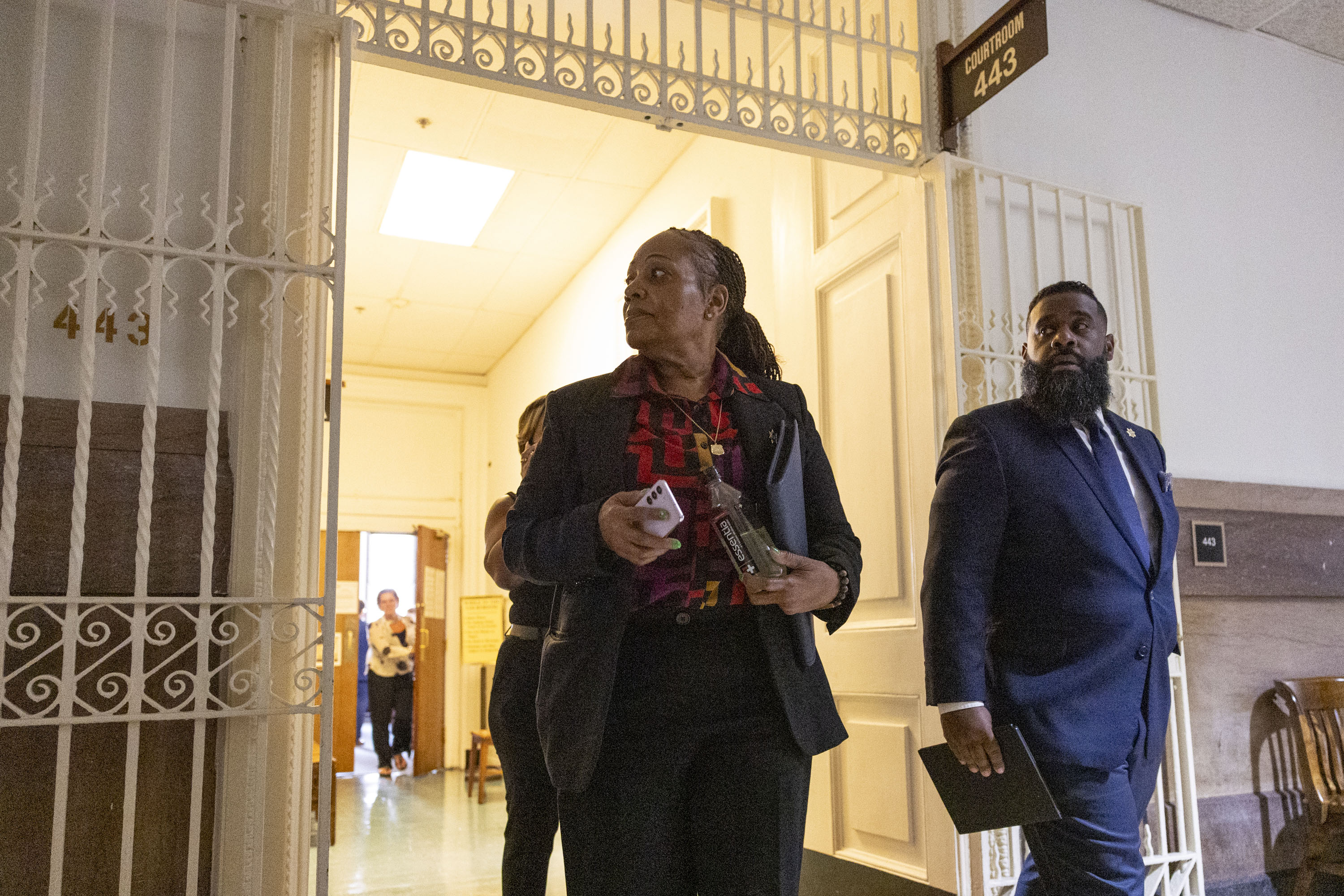
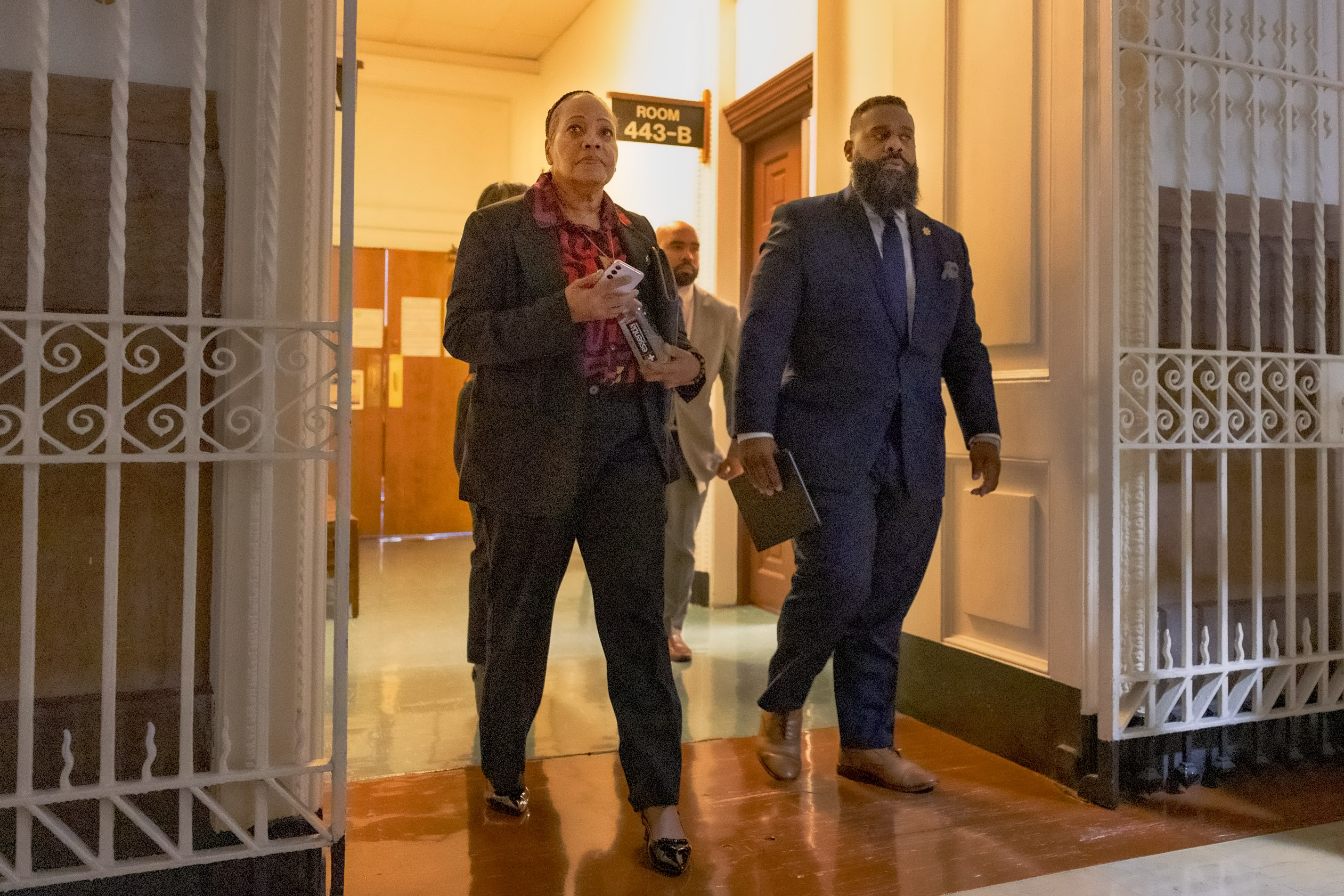
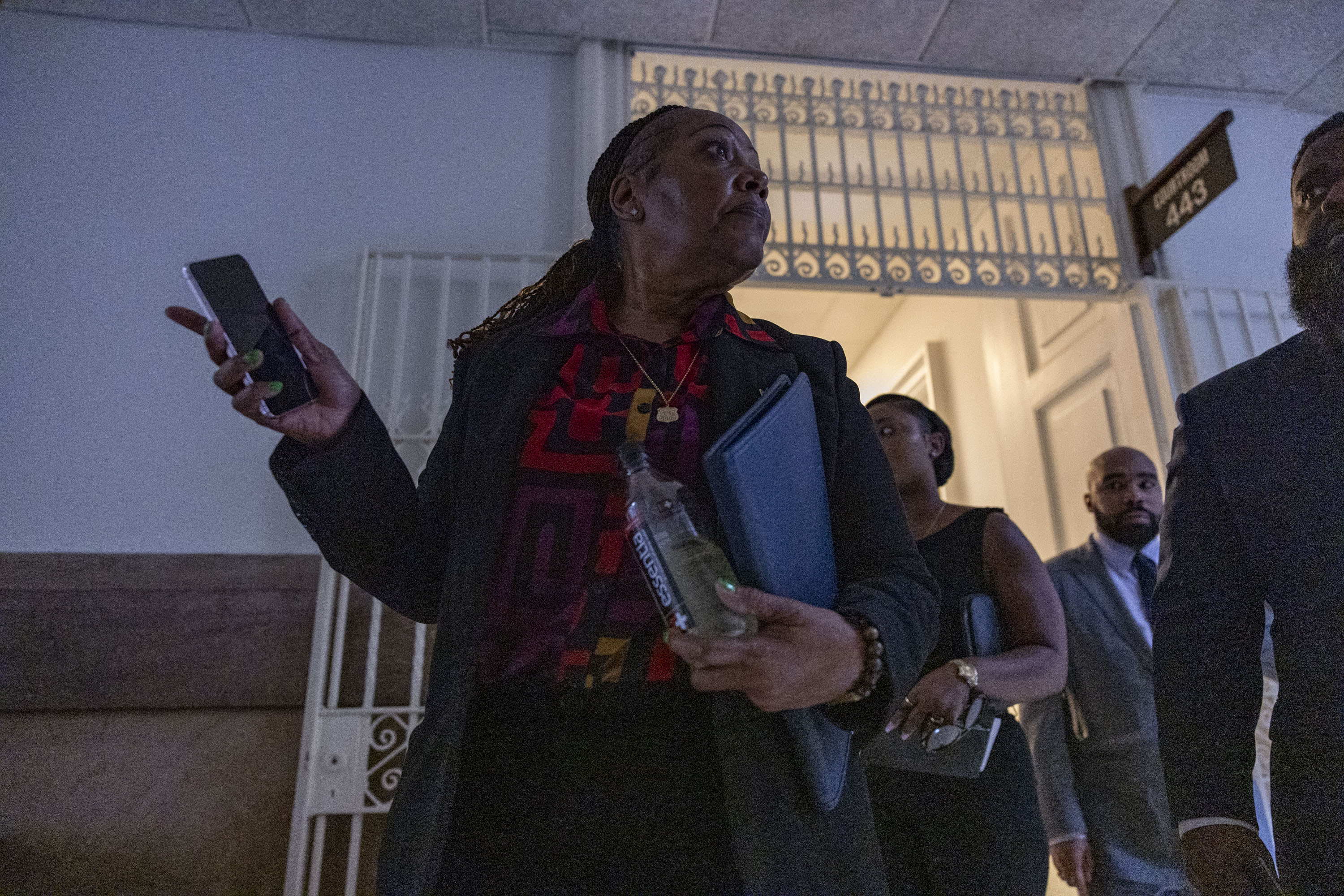
    Sheriff Rochelle Bilal is seen exiting a courtroom at City Hall on Wednesday.Tyger Williams / Staff Photographer

    Bilal’s babysitter

    Mayor Parker wouldn’t do it. City Council wouldn’t, either. Accountability for the Philadelphia Sheriff’s Office instead came from Common Pleas Court Judge Paula A. Patrick.

    After listening to a list of excuses and promises, it was clear Patrick had her fill of incompetence. The beleaguered department, which had been ordered to produce a specific set of documents months ago, suddenly released thousands of pages the night before the hearing.

    Instead of putting officials before the court with direct knowledge of why a backlog in processing property deeds began, Sheriff Rochelle Bilal instead sent Steven Wakefield, a deputy undersheriff who was hired just two months ago. Wakefield was tasked with testifying about past events he was not privy to, despite repeated warnings from the judge.

    As for Bilal herself, she claims to have “limited personal knowledge of the underlying facts.”

    Issuing deeds is one of the core functions of her job, but apparently the sheriff had no idea what was going on. Instead, Wakefield tried to scapegoat a former employee named Melissa Simpson, who had apparently been handling the entire process on her own without oversight from anyone.

    This testimony led to an agreement in which Bilal will have to identify someone to oversee deed sales for six months. A babysitter, essentially.

    While it is good to see someone holding the sheriff accountable for once, a temporary babysitter is only a partial solution. The office should be abolished.

    Sadly, that seems unlikely. Bilal may struggle to perform her day job, but she has thrived at building up political allies. She has been invited to news conferences by District Attorney Larry Krasner, remains a political player after her years running the Guardian Civic League, and faces next to no criticism from City Council. She was even honored by the Phillies as a “hometown hero.”

    Troublingly, Bilal does not even seem to have an opponent in next year’s elections, despite the continued public mismanagement of her office. That, at least, should change.

    Perhaps the Ambitious Abingtonian can find a Perspicacious Philadelphian willing to take on the challenge of replacing Bilal.

  • Philly judge imposes six months of outside supervision for sheriff’s auctions

    Philly judge imposes six months of outside supervision for sheriff’s auctions

    A Philadelphia judge on Wednesday took the rare step of imposing six months of outside supervision of sheriff sales after years of dysfunction in processing deeds and distributing money from the auctions.

    The decision came after a hearing in City Hall in which a top aide to Sheriff Rochelle Bilal acknowledged withholding thousands of pages of documents the judge had previously requested.

    Common Pleas Court Judge Paula Patrick grilled representatives of Bilal’s office over the surprise revelation, which followed a Monday Inquirer report noting that many of the requested records were missing.

    “My order,” the judge said, “was very specific.”

    Patrick, supervisor of the court’s commerce division, had requested the documents in May and scheduled Wednesday’s hearing following years of complaints about chronic delays in processing deeds and distributing funds from sheriff sales.

    Since at least mid-2024, winning bidders at property auctions have been paying the sheriff, then waiting a year or more for the office to process deeds of sale.

    The courts have been bombarded with petitions for those deeds, which prompted Patrick to take action. She required Bilal to produce, among other things, “a detailed accounting of all sales proceeds received and disbursed” since she took office in January 2020.

    In July, the office submitted thousands of pages of records to an official court docket along with a statement indicating it had resolved many of the deed delays and complied with all terms of the order.

    When The Inquirer asked Friday why none of the submitted records detailed sale revenues distributed after 2023, Bilal and her staff declined to comment.

    Bilal’s representatives admitted in the hearing Wednesday that the records were not submitted.

    On Tuesday afternoon, following the publication of The Inquirer’s report, an attorney for Bilal dropped in excess of 5,000 pages of sales records into the court docket.

    Steven Wakefield, a former city tax attorney appointed in June as deputy undersheriff to clean up the troubled sheriff sale process, said in the hearing that his initial representation to the court, based on assurances from staff that all sales had been pulled, “was not accurate.”

    Wakefield said that after the news organization’s inquiry Friday morning, he immediately followed up with staffers about the missing post-2023 sales records.

    “They said, ‘Oh, yeah, we didn’t do that,’” Wakefield recounted.

    It was unclear Wednesday whether all the records from that time period would ever be turned over.

    “Some of the information the court asked for did not exist,” said Jonathan Rardin, an attorney appointed by the city to represent Bilal.

    Later Wednesday afternoon, Bilal’s staff agreed to allow an outside person or group to monitor how auctions are conducted, then report back to the court in six months. The judge did not name the overseer or say when the outside supervision would begin.

    “This is in essence exactly what we were asking for,” said Daniel Bernheim, a lawyer for JSB Property Group, a real estate investment company that filed a lawsuit in March alleging that Bilal had breached the terms of a 2003 consent order requiring the office to issue deeds within 40 days of settlement.

    Bernheim said Patrick’s order will “have somebody independently come in, take a hard look at what’s going on, ask a lot of the questions that still need to be asked, and make recommendations.”

    Bilal, in civilian dress, sat before the judge silently during the hearing and did not respond when asked by an Inquirer reporter for comment.

    After the hearing, Bilal told a group of reporters that she supported the court supervision.

    “It’s better that we come together and make an agreement so we can continue working together and moving forward,” she said. “That’s all it is.”

    Bilal’s attorney had filed a last-minute motion on Friday seeking to protect the sheriff from having to testify at the hearing, writing that it involved “matters outside her unique personal knowledge.” Patrick denied the motion. But, in the end, Bilal was not called to testify.

    The hearing offered other insights into the sheriff’s office, which has struggled in recent years to perform many of its core functions under Bilal.

    Wakefield blamed the deed delays on a single person: Melissa Simpson, Bilal’s former director of real estate. He said Simpson had been manually filing documents and became overwhelmed when auctions picked up in the aftermath of the pandemic.

    In a certification filed last month, Wakefield claimed Bilal was not even aware of the deed backlog.

    “Simpson was telling everyone it was fine,” Wakefield said Wednesday. “One person can’t do the whole job.”

    Simpson could not be reached for comment. But three current sheriff’s office employees, who were not authorized to speak publicly, disputed that Simpson was solely to blame for the problem.

    Even when more staffers were hired, Wakefield said, the office could process only 40 or 50 deeds a day at most.

    Wakefield also said the slow pace of deed filings was eclipsed by even more serious problems with the issuance of legally mandated distribution sheets, which detail how money from each auction is divided.

    “The distribution backlog is worse than the deed backlog,” he said. “There was a period of time where distribution sheets were not being uploaded.”

    Even so, Wakefield presented a picture of an office that has now been reformed. He said it was moving to automate large parts of the deed process.

    However, he acknowledged that despite his July statement to the court that the outstanding backlog had been cleared, there are still some that must be processed.

    Wakefield told the judge that a recently hired staffer, William A. Brownlee Sr., is conducting an audit to find any sales that were inadvertently passed over.

    One real estate agent told The Inquirer last week that he was still waiting on deeds from auctions that occurred in late 2024.

  • Judge rejects Philly Sheriff Rochelle Bilal’s last-minute attempt to avoid court testimony

    Judge rejects Philly Sheriff Rochelle Bilal’s last-minute attempt to avoid court testimony

    Philadelphia Sheriff Rochelle Bilal made an unsuccessful, last-ditch attempt to avoid facing a city judge about major problems in her office, arguing through an attorney that she has “limited personal knowledge” of the real estate transactions she oversees.

    Jonathan Rardin, a lawyer the city retained to represent Bilal, wrote in a motion filed Friday afternoon that the embattled sheriff should not have to testify before Common Pleas Court Judge Paula Patrick at Wednesday’s hearing on sheriff sales because it would involve “matters outside her unique personal knowledge.”

    On Tuesday morning, Patrick rejected Bilal’s request for a protective order to shield her from testifying, writing that “Bilal and any other relevant parties shall appear” on Wednesday morning and “be expected to testify if necessary.”

    Patrick, supervisor of the court’s commerce division, scheduled the hearing in May, as winning bidders at sheriff sales continued to flood the courts with petitions seeking their deeds. As The Inquirer first reported in July 2024, Bilal’s office had not been issuing the deeds for a year or more after the auctions, leaving neglected homes unable to be renovated, rented, or resold.

    An attorney who represents real estate investors recently filed a lawsuit arguing that Bilal had breached the terms of a 2003 consent order requiring the office to issue deeds within 40 days of settlement. Patrick responded by ordering Bilal’s office to demonstrate at a public hearing that it was not in violation of the decree.

    Wednesday’s hearing will help decide whether Patrick will appoint a “special master,” a title agent, or some other third-party expert in real estate to administer sheriff sales in Philadelphia — arguably the most important function of Bilal’s office.

    Bilal’s lawyer had already successfully pushed back the hearing, which originally had been set for July 27, by arguing the sheriff had an unavoidable scheduling conflict due to “a previously scheduled vacation.” That request to delay the hearing did not mention that Bilal hoped to completely avoid testifying, and at the time, Rardin wrote that her “presence in this matter is necessary.”

    Yet last week’s motion argued instead that the sheriff’s knowledge is “limited to the information provided to her by her staff” and that she should not have to personally testify at all.

    “Requiring Sheriff Bilal to appear and testify regarding events and administrative practices that are not within her unique personal knowledge would impose an unreasonable burden and oppression” under the state’s rules of civil procedure “and would divert a high public official from the discharge of her official duties …,” Rardin wrote.

    Daniel Bernheim, the lawyer for a property group whose March lawsuit triggered Patrick’s court order, said Monday evening that Bilal’s attempt to avoid testimony was a “disappointing response by an elected official.” On Tuesday, Bernheim — himself an elected commissioner in Lower Merion Township — filed a response to her motion that sought to force Bilal to testify in court.

    “[T]he sheriff seeks to avoid answering questions based upon a series of cases which have no relevance whatsoever with the present proceedings and a claim of immunity from testifying which does not exist,” Bernheim wrote.

    In April, Bilal claimed at a City Council budget hearing that most post-auction delays had been resolved. She blamed any ongoing delays in issuing deeds on buyers who did not submit required forms or fees.

    But after Patrick filed her court order in May, Bilal’s office within 48 hours processed 277 deeds, some attached to auctions that had taken place more than a year ago. The office filed more paperwork in two days than it had in the prior three months.

  • After six years of chaos in Philly Sheriff’s Office, Rochelle Bilal must answer to judges

    After six years of chaos in Philly Sheriff’s Office, Rochelle Bilal must answer to judges

    Since being sworn-in as Philadelphia’s sheriff in January 2020, Rochelle Bilal has brought new levels of dysfunction to an office with a history of corruption and scandal going back to the mid-19th century.

    Tax revenue plummeted, court security incidents soared, and millions of dollars in public money have been diverted into an office slush fund.

    City Hall has ignored the mounting problems for the last six years. But this week Bilal must face a judge who could limit her ability to auction off foreclosed properties — arguably the office’s most important function.

    Bilal, a former police officer and self-described reformer, is due to appear Wednesday before Common Pleas Court Judge Paula Patrick to explain why the judge should not appoint a “special master” or some other expert to fix major delays in processing deeds after sheriff sales.

    Buyers have been waiting a year or longer after auction to receive their deeds, leaving the properties in a state of limbo that can invite squatters and contribute to blight. Without a deed, the foreclosed homes cannot be renovated, rented, or resold.

    The Inquirer first reported on that problem in July 2024. An analysis of more recent financial records shows that the office has also earned millions of dollars in interest from property auctions. That is because the proceeds of the sales are sitting for long periods in TD Bank accounts the Philadelphia Sheriff’s Office controls, rather than being used to quickly settle old tax and utility liens.

    Bilal’s office initially claimed the deed process was working as intended, saying through a spokesperson in 2024 that there was no “widespread delay” in recording deeds. With complaints continuing, she told City Council at an April budget hearing that it was the buyers who were responsible for the delays.

    Neither statement was true.

    In May, with buyers still petitioning the courts for their deeds, Judge Patrick, who is supervisor of the court’s commerce division, filed an order demanding that Bilal address the “ongoing harm” caused by the chronic backlog and submit extensive documentation pertaining to the handling of sheriff sales and related funds since she took office.

    The court order said Bilal’s office appears not to be “timely performing its essential, nondiscretionary, ministerial duties, which are mandated by law.”

    The sheriff snapped into action.

    Within 48 hours of Patrick’s court order, Bilal’s office processed 277 deeds — filing more paperwork in two days than it had in the prior three months.

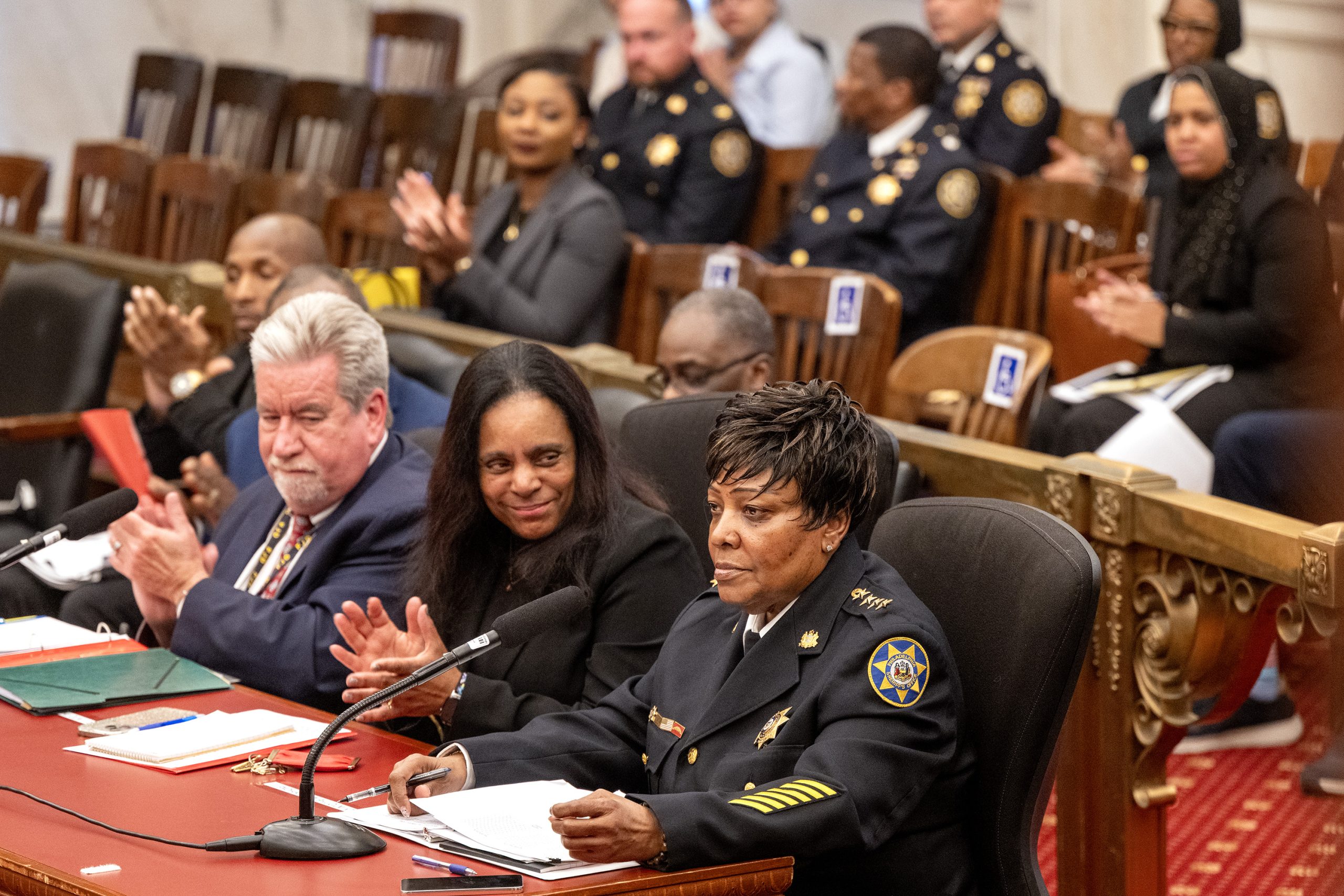
    Sheriff Rochelle Bilal (right) is applauded as she testifies in City Council during a budget hearing in April. She claimed the deed-delay problem had been resolved.Tom Gralish / Staff Photographer

    Last month, the office filed a response to the court order providing a new explanation for the delays: Bilal didn’t know about them.

    Steven Wakefield, a newly hired attorney who serves as Bilal’s deputy undersheriff, blamed the problem on a former director of deeds who was “doing the work of multiple people” after the office switched software vendors in 2023, requiring some functions to be performed manually.

    “The former director did not inform the sheriff of the backlog,” Wakefield wrote in a certification filed with the court on July 13.

    The certification does not say when Bilal first became aware of the delays or why she remained in the dark while her then-undersheriff, Tariq El-Shabazz, was signing the deeds.

    In a recent op-ed in City & State Pennsylvania, Bilal wrote that she was making “practical, measurable improvements designed to increase transparency, accountability and customer service.”

    “I have never shied away from constructive scrutiny from the media, watchdog organizations and the public,” she wrote.

    She declined to answer questions for this article.

    An expensive problem

    Cleaning up the deed mess has not been cheap.

    Among thousand of pages of records Bilal’s staff submitted to the court last month is a check log showing that the office, beginning in March, paid more than $4.5 million from the proceeds of mortgage foreclosure sales to the Corporation Service Co., or CSC, a Utah-based financial services corporation.

    Check memos describe the payments, equivalent to more than 10% of the office’s annual budget, as “deed processing fees.”

    Wakefield’s certification to the court claimed that all deeds have been issued through June. He attributed the turnaround partially to new hires and the integration of the office’s Tyler Technologies software — a system that went live two years ago — but made no mention of the money paid to CSC.

    “There is no further backlog of deeds to be issued,” he wrote.

    Real estate agents, investors, and attorneys interviewed by The Inquirer in recent weeks said deeds are, in fact, being processed more quickly after the court order.

    But the backlog has not been fully cleared.

    “That is 100% incorrect,” Edward Levin, a real estate agent, said of Wakefield’s statement to the court.

    Levin, whose firm resells homes following mortgage foreclosures, is still waiting on a handful of deeds from sheriff sales that took place in late 2024 and early 2025. They are supposed to be transferred within 40 days of settlement under state law.

    Homes have fallen into disrepair in recent years because Bilal’s staff has taken so long to transfer the deeds. Levin does not know what to tell new buyers who are under contract to purchase the properties.

    “I go to the properties once a week and I have to hear complaints from neighbors,” said Levin, who has dealt with squatters, overgrown lawns, and broken windows. “The people living next door to these properties get screwed the most.”

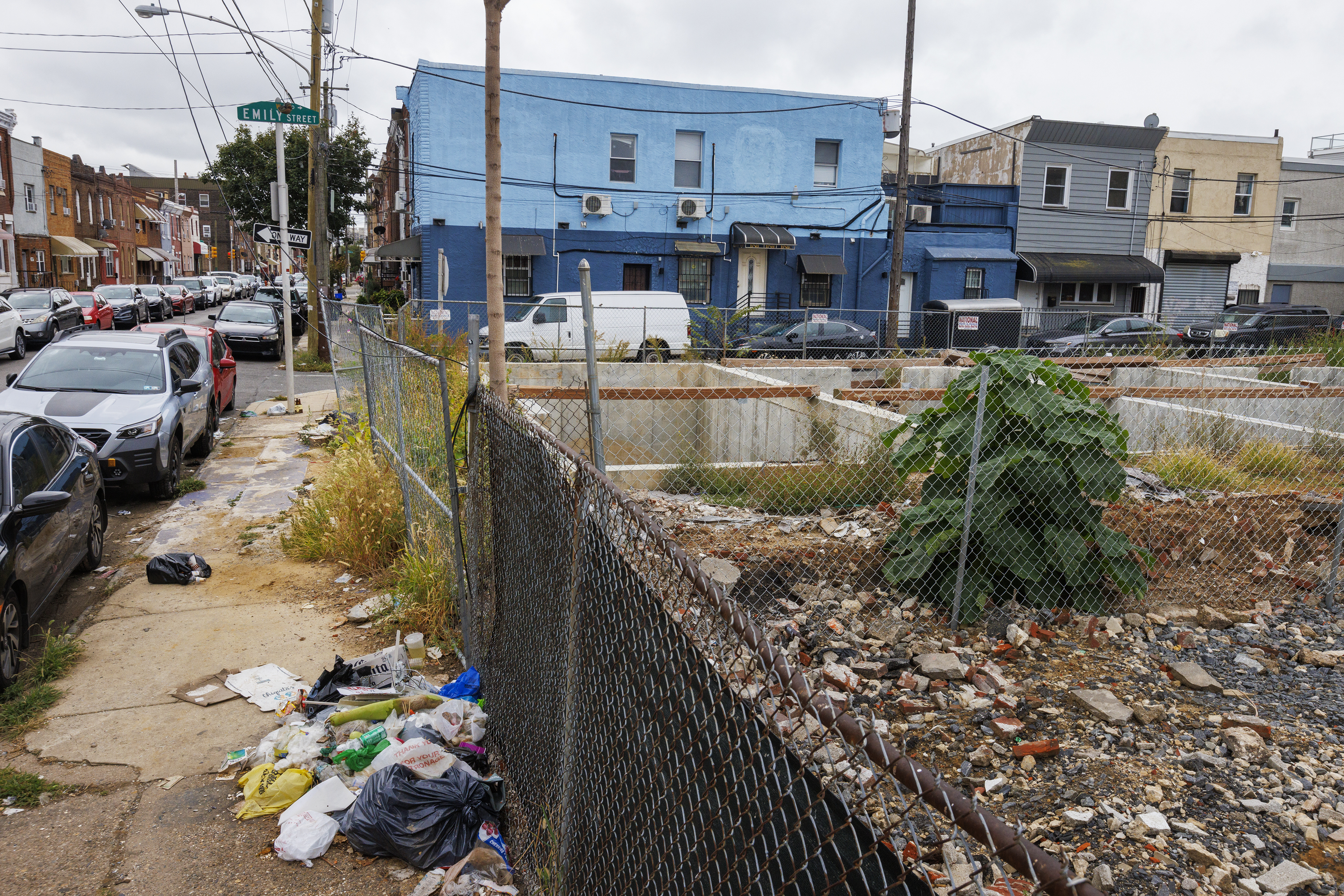
    An unfinished construction site along 900 block of Emily Street in September 2024 shows what can happen when foreclosed properties remain between owners for long periods. New owners can’t take possession of properties after auction until the sheriff’s office processes the deeds.Alejandro A. Alvarez / Staff Photographer

    Mary Jo Potts, a foreclosure specialist at Elfant Wissahickon Realtors who resells those properties, said last week that she has seen a recent influx of deeds from the sheriff’s office.

    But Potts and other real estate agents are still dealing with another problem: The sheriff’s office is taking even longer to distribute the proceeds from auctions to settle tax and utility liens on the properties.

    Even with a deed in hand, the homes still cannot be resold without a clear title.

    “To me, that’s not getting any better,” Potts said.

    Financial records obtained by The Inquirer through a Right-to-Know request show that tens of millions of dollars began flowing into the sheriff’s coffers after auctions resumed for tax-delinquent properties in July 2024.

    But the money trickled out much more slowly.

    Twenty-two TD Bank checking accounts managed by the sheriff’s office contained a combined $39 million at the end of May 2024. By last August, that sum had swollen to $130 million.

    The majority flowed into a business account earmarked for money from mortgage foreclosure sales. The combined sums are so large, statements show the office generated more than $3 million in interest between 2024 and 2025.

    After all liens have been settled, any excess funds are owed to the former homeowner.

    David Denenberg, an attorney who seeks to collect those funds, said Bilal’s system for distributing the proceeds of sales is worse than ever. He questioned the propriety of the office generating millions of dollars in interest by holding onto the funds.

    “They’re making money on other people’s money,” Denenberg said. “They should be helping you, if you’re the purchaser or the one who lost their home. You shouldn’t have to flood the courts with this litigation.”

    David Bogdan, a probate attorney in Delaware County, said he spent nearly two years trying to obtain about $26,000 in excess funds from a 2022 mortgage-foreclosure sale. The money was owed to the estate of the former homeowner, who had died.

    “They just refused to pay,” Bogdan said. “There is no defense whatsoever. You have to return that money. It’s not yours.”

    Bogdan, who filed his claim in July 2024, said he contacted the office at least a half dozen times over more than a year, getting either no response or new excuses for the delay. He ended up having to hire a second attorney, Denenberg, to take the sheriff’s office to court.

    “They’re failing to do their basic duties,” said Bogdan, who in May finally received the funds owed to his clients. “It’s just torture dealing with them.”

    Among the other records Bilal submitted to the court in July is a list of about 16,000 unique properties that had been ordered to sheriff sale since Bilal took office, worth a combined $1.2 billion, based on city tax assessments.

    Only about 6,500 of those properties were ever successfully sold, according to the records, and many were repeatedly held back from the auction block, sometimes due to repayment or court orders, and sometimes for more opaque reasons.

    While the new filings shed some light on the scale of the sheriff’s real estate operations, they do not appear to be the full disclosure requested by the court, which included “a detailed accounting of all sales proceeds received and disbursed” by the sheriff from 2020 to now.

    None of the submitted records list any money distributed for sales later than 2023, and the sheets include numerous payments or credits that are missing dates or descriptions.

    Daniel Bernheim, the lawyer for a property group whose March lawsuit triggered the court order, said he has been unable to follow the money based on the records the office has provided so far.

    “It shouldn’t be like Where’s Waldo? It should be set forward clearly,” said Bernheim, who is also a township commissioner in Lower Merion. “I don’t know how you could function internally in the sheriff’s office if that information is not readily available.”

    Lauren Cristella, president and CEO of the good-government group Committee of 70, said the court should require new oversight.

    “The court should appoint a special master who will not just execute deeds but also process lien and utility payments so Philadelphians get what they’re owed without having to sue for it,” Cristella said.

    Bilal named ‘Hometown Hero’

    Both the Committee of 70 and the Pennsylvania Intergovernmental Cooperation Authority, Philadelphia’s fiscal watchdog, have called for the sheriff’s office to be abolished.

    In addition to the operational issues, Bilal has been mired in one mini-scandal after another since she took office: the cover-up of an inspector’s “stolen” city-leased vehicle; a bungled arrest of a suspect that led to a fatal accident; fake AI-generated headlines touting her performance; a top aide violating city ethics rules; an employee in the office who shot himself in the leg before a budget hearing.

    But despite that — and years of complaints from the public — both City Council and the mayor’s office have offered nearly universal praise for Bilal.

    “Give our sheriff a huge round of applause,” Mayor Cherelle L. Parker said during her first budget address in March 2024, as Bilal’s botched sheriff-sale contract with an online auction firm was costing the city and the school district an estimated $35 million in uncollected tax revenue.

    “I just want to thank you for your hard work and your dedication and working in partnership with members of Council and the city of Philadelphia,” Council President Kenyatta Johnson told Bilal at a budget hearing for her office the following month.

    By then, Bilal had been diverting millions of dollars in service-fee revenue — public money Philly’s Home Rule Charter says should be remitted to the city’s general fund — into an internal office account that is used for “discretionary” purchases, including $40,000 in branded merchandise, a $9,000 office mascot, and a $6,600 party at Chickie’s and Pete’s.

    “The city of Philadelphia works because you all work,” Councilmember Cindy Bass told Bilal at a budget hearing this April. It was at that hearing that Bilal falsely told Council that the problems with deeds had been fixed.

    Last week, the Phillies ushered Bilal onto the field at Citizens Bank Park and honored her as a “Hometown Hero.” She swung an honorary bat.

  • House Judiciary Committee issues subpoena to Philly DA Larry Krasner, demands immigration records

    House Judiciary Committee issues subpoena to Philly DA Larry Krasner, demands immigration records

    The House Judiciary Committee subpoenaed Philadelphia District Attorney Larry Krasner on Wednesday, ordering him to turn over documents related to his office’s handling of immigration matters and criticizing what it called the prosecutor’s “pro-illegal-alien policies.”

    The Republican-led Congressional committee said in a letter that it sent the subpoena after Krasner, a Democrat, promised but failed to provide materials that were requested in May.

    The committee, in a letter signed by Rep. Jim Jordan (R., Ohio), its chair, accused Krasner of declining to prosecute or under-prosecuting foreign nationals so that they could avoid consequences connected to their immigration status. The committee said it was asserting its authority to try to end sanctuary-city policies in cities including Philadelphia.

    In response, Krasner called the subpoena “yet another step in authoritarian efforts to do dirt in the dark” and to put pressure on state prosecutors.

    “We have always complied with the law and will continue to do that,” Krasner said Wednesday. “That makes us different from [President Donald] Trump, who spends all day, every day, violating the law of the U.S. Constitution ― and morality.“

    Krasner and the House committee have sparred since May, when the panel accused top city law enforcement officials of shielding criminal immigrants through sanctuary policies and demanded that they quickly turn over a trove of related records and correspondence.

    That represented an escalation by Trump-allied Republicans in their criticism of Philadelphia government on rules concerning undocumented residents, particularly around limiting city cooperation with U.S. Immigration and Customs Enforcement.

    In April, City Council approved high-profile “ICE Out” legislation aimed at restricting immigration enforcement in Philadelphia, putting the city at the forefront of local resistance to Trump’s deportation campaign. The Trump administration challenged part of that package of bills, and this month a federal judge ruled that the city could not prevent ICE agents from concealing their identities.

    In May, in letters to Krasner, Police Commissioner Kevin Bethel, and Sheriff Rochelle Bilal, the Judiciary Committee accused each of hindering federal immigration enforcement. Each letter sought up to six years of immigration communications between their agencies and immigration officials and, in the sheriff’s case, with activist groups including No ICE Philly, Juntos, Asian Americans United, and others.

    The Trump administration has clashed with cities and states that embrace sanctuary policies, contending they are hurting Americans and threatening to cut their federal funding. Philadelphia has long been among the targets.

    Krasner had responded by telling the committee, which said it was conducting oversight of state and local jurisdictions that it believes endanger Americans by not assisting immigration agents, that such policing powers belong to the city.

    “The legal errors are unsurprising,” Krasner wrote to Jordan and to Rep. Tom McClintock (R., Calif.), chair of the subcommittee on immigration, noting that neither had passed the bar. “The factual errors are also unsurprising, given your histories of adhering to wholly repudiated, counterfactual and unscientific election denialism, climate change denialism, and the like.”

    Krasner wrote that he needed time to address each of the committee’s allegations and requests, and was working to hire a lawyer who would be in touch soon.

    In July, Krasner wrote the committee and encouraged it to “question me in public so all Americans are able to see who is telling the truth.”

    The committee’s “fear of such a public airing only makes clearer your lack of real purpose and your complicity in peddling lies,” such as, he said, that local and state prosecutors “rather than President Trump’s ill-conceived deportation actions are responsible for criminals going free.”

    Immigrants are far less likely to commit and be arrested for crimes than U.S. citizens, Krasner noted. But the small number of immigrants who commit serious crimes are being deported by ICE before they can stand trial and be sentenced, given “a ‘get out of jail free’ card and a plane ride to another country, a country where they will never face American justice.”

    The committee told Krasner on Wednesday that time to provide the requested records had run out. Its subpoena directs him to turn over the materials by July 29.

    “Although you may disagree about the need to reform federal law to end sanctuary policies … you cannot seriously contend that the committee lacks the authority to do so,” the committee wrote, adding that Congress may amend statutes “to ensure that prosecutors cannot circumvent immigration law and allow aliens to escape accountability for their crimes.”

  • Philly’s Sheriff announced new top officials but kept their names secret. They have years of financial problems.

    Philly’s Sheriff announced new top officials but kept their names secret. They have years of financial problems.

    Philadelphia Sheriff Rochelle Bilal announced last week that she has appointed new top officials to fix a series of financial issues, including the dysfunctional sheriff’s sale process. She just won’t say who the people are.

    The Inquirer has learned that two individuals she has tapped for those roles have each lost their own properties in a sheriff’s sale and faced other serious financial issues.

    George Gossett Jr., a Roxborough-based lawyer and former assistant district attorney with close ties to State Sen. Sharif Street (D., Philadelphia), confirmed this week that he will be Bilal’s next undersheriff, charged with overseeing sheriff’s sales.

    Gossett replaces Tariq El-Shabazz, who retired from his $200,000-a-year position as undersheriff in May on the same day Bilal was hit with a court order demanding she fix a sheriff’s sale system that has left winning bidders waiting a year or more to get their deeds.

    As undersheriff, Gossett will serve as Bilal’s top legal adviser and second in command of the 380-person office as it seeks to shore up the sheriff’s sale process, personally signing off on deeds.

    Yet at a foreclosure sale just two months ago, Bilal’s office auctioned off a North Philadelphia rowhouse that Gossett owned. The sale followed years of missed mortgage payments, liens over unpaid utility bills and other costs, and building citations from the city, court and property records show.

    Gossett, who previously worked in the Philadelphia Register of Wills Office, said in a statement Tuesday that the foreclosure on his Nicetown rental property “gives me firsthand knowledge of the sheriff’s office’s operations, which I will bring to bear in my new role.”

    “As a lifelong Philadelphian, I’m honored to serve as undersheriff,” Gossett said. “I believe that my experience in law enforcement, as a small businessman and as an attorney in private practice will be an asset to the sheriff as we seek to improve public safety and ensure an orderly sheriff’s sale process.”

    Bilal’s news release last week said that her unnamed undersheriff would “oversee daily operations, strategic planning initiatives, personnel management, and operational coordination across the agency.”

    The sheriff has also hired William Brownlee Sr., a West Philadelphia pastor whose recently updated website describes him as “Deputy Chief Financial Officer and Project Manager for the Philadelphia Sheriff’s Office.”

    Besides being a pastor, Brownlee has been a motivational speaker, real estate investor, and serial entrepreneur who has dabbled in everything from childcare to credit repair.

    He also has a 15-year paper trail of serious financial troubles.

    Three years ago, while pastor at the Emmanuel Christian Center in West Philadelphia, he made national news for selling off the church’s stained glass windows for $6,000 — unaware they were 118-year-old Tiffany glass worth hundreds of thousands of dollars.

    The money was meant to fund part of a multimillion-dollar renovation project of the building, but ended with lenders selling off the boarded-up church earlier this year to satisfy millions in unpaid debts.

    Brownlee is also behind several failed business ventures that resulted in the pastor declaring personal bankruptcy three times.

    In 2023, he filed a petition to legally change his name for what he said were “spiritual reasons,” according to a court filing, only to have the request denied after a lender he owed more than $600,000 opposed the change.

    “It is believed,” an attorney for the lender wrote, “that petitioner seeks a name change for the purpose of evading creditors.”

    He has lost two properties at sheriff’s sale to private lenders, most recently in 2024. And in a November 2025 bankruptcy filing, Brownlee disclosed liabilities totaling $5.3 million, including nearly $1.5 million owed to the IRS.

    A Philadelphia judge also held him in contempt of court last year for not responding to a Wisconsin bank’s attempts to collect $89,000 following an out-of-state judgment against him.

    Brownlee, in an email Wednesday, disputed the amount of back taxes he owed and said he had sought to change his name because his father’s debts and other records were being confused with his due to the similarity of their names.

    “I do not deny that I have experienced serious financial hardship,” he wrote. “However, the story of that hardship is not simply a story of irresponsibility or evasion. Much of it occurred during and after two major marital breakdowns, including divorce proceedings around 2015 and a later separation and divorce process between 2022 and 2024. Those seasons caused significant personal, financial, and organizational disruption.”

    In November 2021, Bilal’s spokesperson and former campaign manager Teresa Lundy promoted Brownlee’s network of businesses, known as Divine Services, in a Metro Philadelphia column.

    She wrote that Brownlee’s companies offered “childcare, beauty supplies, hair styling, estheticians and related services, financial services, credit repair, interior design, event planning, real estate development and management, photography, and entertainment.”

    Neither Bilal nor Lundy would comment this week on Gossett’s or Brownlee’s hiring dates, why they were selected, their salaries, or why the office has yet to officially release their names.

    Lundy said in an email that the office’s “reorganization plan extends beyond personnel; it is a holistic approach for better delivery of services to the residents of Philadelphia.”

    Still holding the deed

    In the early 2000s, Gossett began purchasing several dilapidated properties across Philadelphia, including one at sheriff’s sale.

    He later sold most of these properties. However, in 2007, Gossett took out a $50,000 mortgage on a three-story rowhouse on North 18th Street in the city’s Nicetown section that he purchased for $8,500 in 2004.

    Inspectors cited it as an unlicensed rental in 2012. In 2020, the city again cited Gossett because residents were living in the house despite its lack of a heating system, a permanent kitchen, or a certificate of occupancy, according to city records.

    That same year, Deutsche Bank went to court to file the first of three suits to foreclose on the property, listing a $45,000 default. Gossett was able to come up with enough money to stave off foreclosure, but the property was declared vacant by inspectors in 2024, according to city records.

    “Unfortunately, after many years of ownership, my company was unable to make that rental property work financially,” Gossett said of the rowhouse. “After I walked away from it, squatters began living there. My efforts to remove the squatters were hindered by the COVID pandemic.”

    In March 2025, Deutsche Bank filed suit against Gossett again, securing a $78,000 judgment against him. In April 2026, Bilal’s office sold the property to the bank for about $58,000, according to court records.

    Gossett still maintains technical possession of the building today because the deed has not yet been processed by Bilal’s office. A city lien for the costs of sealing the vacant property is still marked as active.

    Gossett also runs a company called Urban Owl Construction Group, which does home repair and other services. He has faced three small-claims suits by Urban Owl clients who said the company did sloppy work or skipped out on promised repairs completely. Gossett noted that he won two of the cases and a third was settled.

    He said he will continue running Urban Owl while serving as undersheriff. He is also currently doing criminal defense work in Philadelphia, but said he would transfer those cases to other attorneys to avoid potential conflicts.

    El-Shabazz, Bilal’s previous undersheriff, was fined $16,000 by the city’s ethics board in 2023 after he acknowledged operating a private legal practice representing criminal defendants who were being prosecuted by the Philadelphia District Attorney’s Office, in violation of city ethics rules.

    Lundy and El-Shabazz initially denied he was doing criminal defense work in the city, but weeks later he agreed to pay the fine.

    Sheriff Rochelle Bilal (right) is applauded as she testifies in City Council during a budget hearing April 28, 2026. She’s brought in new top officials to overhaul the office, but won’t say who they are or how much they’re paid.Tom Gralish / Staff Photographer

    Gossett, who attended Central High School with Street, was previously hired for a job in Orphans Court under Register of Wills Tracey Gordon.

    He left Orphans Court in 2024 after Gordon was defeated by John Sabatina Jr., whose office indicated in internal records that Gossett had been hired on Street’s recommendation. (Gordon also now works for Bilal as a sheriff’s sales service representative, according to city payroll records.)

    Street later hired Gossett for a state job as a legislative aide from February 2024 to September 2024, and the lawyer later served as campaign treasurer during Street’s unsuccessful congressional run this year.

    Although Bilal declined to confirm Gossett’s ascension to undersheriff, Street sent The Inquirer a statement praising his hiring.

    “George, a former assistant district attorney, is an experienced and highly qualified attorney who I’ve known since high school,” he wrote. “I’m proud of his return to public service with another law enforcement agency and believe he will serve the people of Philadelphia well in his new role.”

    Under water

    Brownlee’s first experience with sheriff sales came after he defaulted on a loan linked to a business called Divine Styles Salon, which was auctioned off in 2017.

    Later, as Brownlee’s failed redevelopment of Emmanuel Christian Center was unfolding, Brownlee was also underwater on a $600,000 mortgage he had taken out from lender Univest to finance the construction of a business called Divine Daycare at a property he owned on 52nd Street.

    Univest sought a judgment against him in 2023, and the property was sold off at a foreclosure sale in 2024.

    In April of this year, about a month after the conclusion of his most recent bankruptcy case, Brownlee appeared with both Street and Bilal at her office’s Autism Awareness and Neurodiversity Resource Fair.

    At that time, he was described as the chair of the “Honorary Deputy Sheriff Coalition.” But he told The Inquirer this week he had since been formally hired as a project manager “based on my professional experience in banking, real estate, leadership, ministry administration, and project coordination.” He describes himself on Instagram as “deputy CFO.”

    Bilal’s new hires will have to move fast to comply with the judicial order.

    By mid-July, Bilal’s staff must file a list of all sheriff’s sales since she took office in January 2020, along with detailed financial records, and names of all staffers or contractors who worked on sheriff’s sales during that time. She also will be required to show a plan for streamlining the process.

    Two weeks later, Bilal or a representative must appear at a public hearing before a judge to explain why a special master, a title agent, or someone with similar expertise in real estate should not be brought in to oversee the auctions.