A Gladwyne-based senior services organization is planning to build an independent living community on an estate in Radnor Township, a move the group says is necessary as demand for senior living services rises in the region.
Waverly Senior Services presented an early proposal to Radnor Township’s planning commission on Aug. 3 for a large senior living facility at 452 S. Roberts Rd., a historic estate owned by the Haverford School.
The proposal includes 208 multifamily housing units across 15 buildings, 16 twin homes, and a handful of administrative buildings, including a maintenance building and a welcome house.
Waverly Senior Services, a nonprofit organization, is in the process of purchasing the 43-acre property, which the Haverford School acquired in 2022.
Waverly operates Waverly Heights, a life care residence in Gladwyne, as well as in-home healthcare and personalized care management services.
Tom Garvin, Waverly’s president and CEO, told the Radnor planning commission that the organization is seeing “unprecedented demand” for life care facilities as baby boomers age and their housing and care needs change.
“There’s a woeful lack of senior housing across the country to serve that sort of bubble that’s coming in the population,” Garvin said.
The number of U.S. residents 65 and older grew nearly five times faster than the total population between 1920 and 2020, according to the U.S. Census Bureau.
More than 560,000 senior housing units will be needed to meet the demand for older adult housing, according to market research firm NIC MAP. Under current development rates, only 191,000 will be built.
Waverly currently serves around 365 residents, the vast majority of whom are local, Garvin said.
The Radnor site would primarily be home to independent living, with some additional care for residents who need it as they age in place. It will not be a skilled nursing facility.
Waverly representatives said that they are early in theprocess — they will still need to finalize the land sale and secure township approval — and that it could be three to five years before shovels hit the ground. However, Garvin said, the organization felt it had to jump on the opportunity in a region where it is difficult to find open space to develop.
“This opportunity for a piece of property that’s 43 acres, zoned institutional, in our primary market area is one we just couldn’t pass up,” he said.
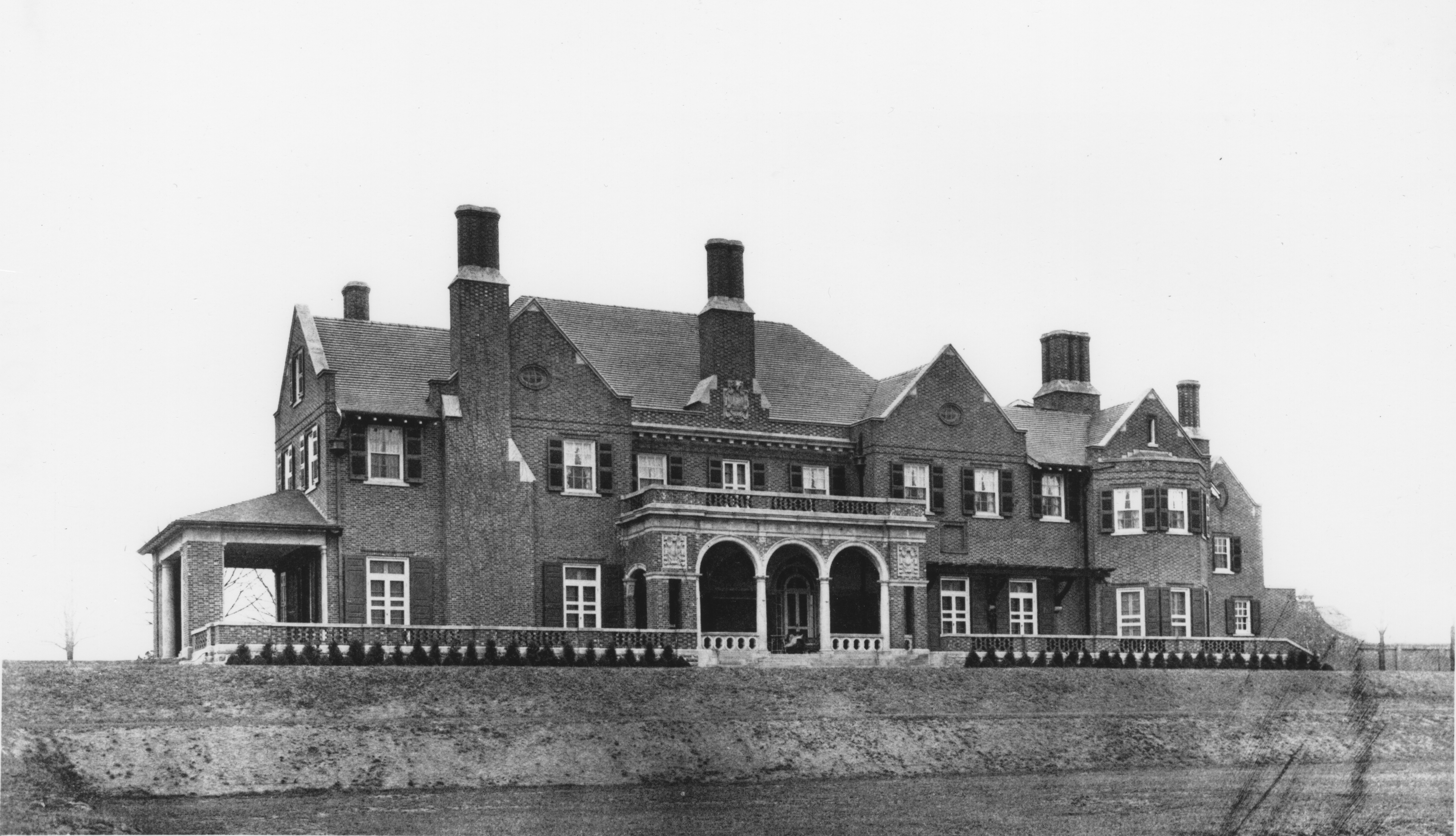
The property is home to the Glencoe estate, built in 1907 for Thomas McKean Jr., and purchased by Samuel Robinson, founder of Acme Markets, in 1925, according to the Radnor Historical Society. In 1960, Robinson left the estate to Presbyterian Children’s Village, an orphanage run by a local Presbyterian group. The orphanage transitioned over time to become a residential treatment program for children with emotional and behavioral challenges, and in 2019 became Gemma Services after a merger with Silver Springs-Martin Luther School. Gemma Services is building a new campus in Plymouth Meeting.
The Haverford School purchased the property in 2022from Gemma Services for $19.88 million and said at the time that it did not have a specific plan for the site.
Waverly’s early proposal involved retaining the historic mansion and knocking down its dormitory buildings, which are in “poor shape,” said Marc Heil, Waverly’s vice president of campus development.
Heil said any new construction would “have that Main Line flair to it” and would not be “commercial looking.”
Planning commission members expressed an openness to having the site developed, but raised concerns about the early plans.
Commission member Stephen Varenhorst called the plan “chaotic” and “random” and encouraged the organization to reconsider its approach. Lane Vines, the commission’s chair, said he hoped more of the historic property could be retained.
Residents expressed concern about increased traffic in the quiet neighborhood, stormwater management, and a potential increase in ambulance traffic, especially if an EMS station is placed on the site, a possibility.
Waverly officials said they will submit plans to the planning commission, which will issue a recommendation to the Radnor Township commissioners, who will ultimatelyvote on whether to approve the project. Representatives from Waverly said the organization may also seek additional zoning reliefif they pursue renovations outside of the property’s institutional zoning classification, which would require a separate approval process through the zoning hearing board.
This suburban content is produced with support from the Leslie Miller and Richard Worley Foundation and The Lenfest Institute for Journalism. Editorial content is created independently of the project donors. Gifts to support The Inquirer’s high-impact journalism can be made at inquirer.com/donate. A list of Lenfest Institute donors can be found at lenfestinstitute.org/supporters.
The former Cabrini University campus has undergone a more than $100 million, Villanova-fueled rebirth, and students will begin attending classes and living there this month.
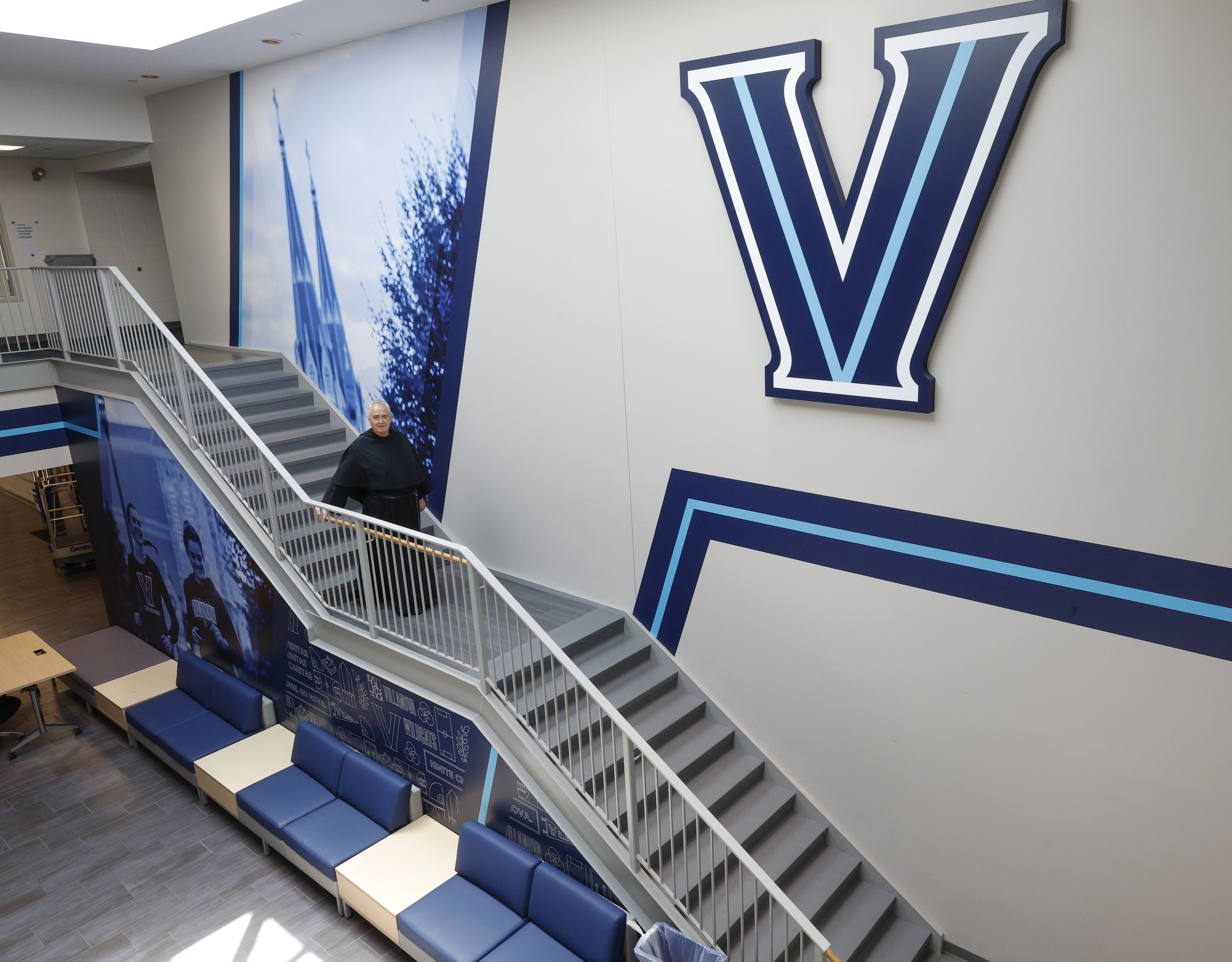
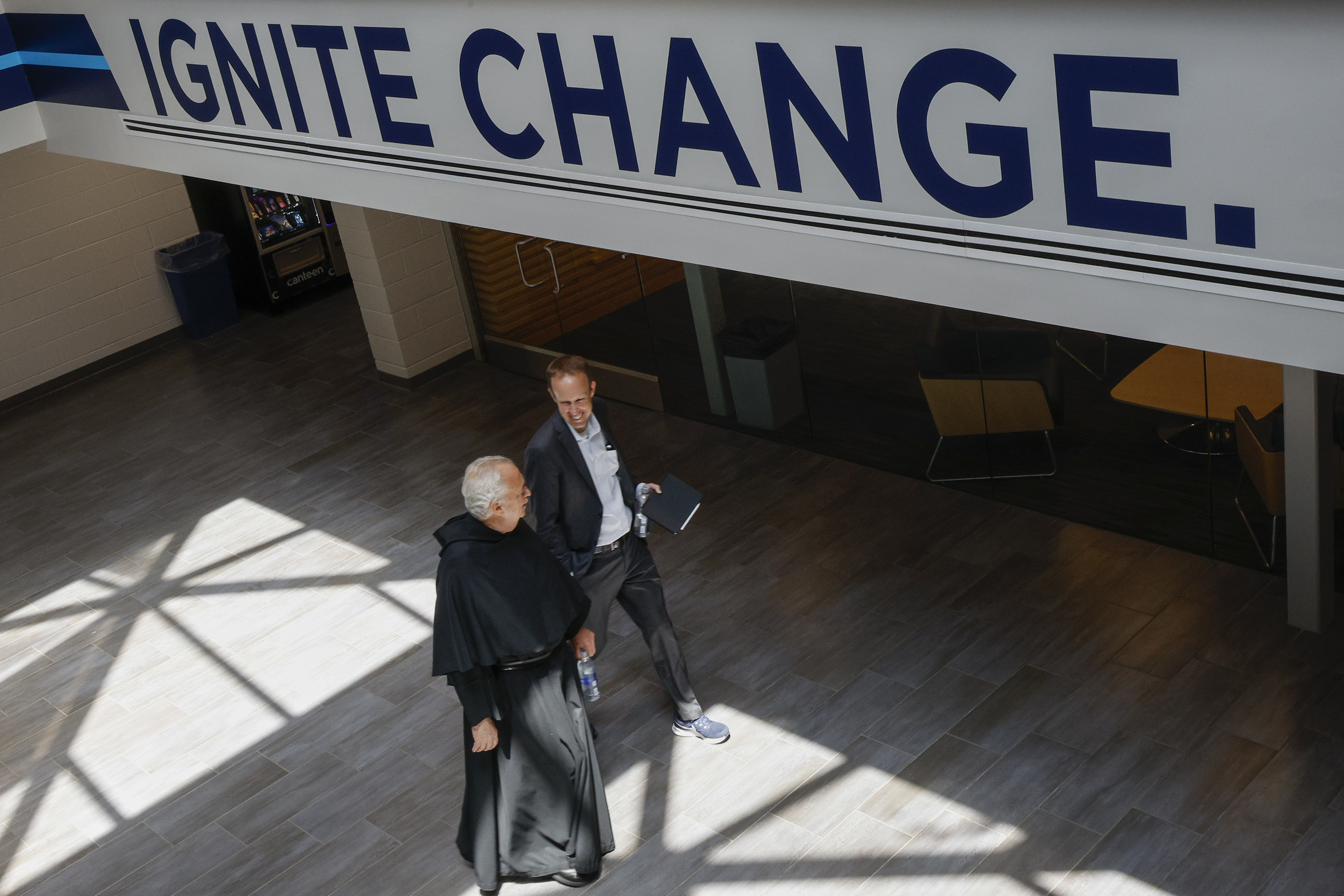
Large signature blue and white V’s for Villanova University are everywhere. “Ignite Change. Go Nova,” says a wall in the student recreation center. Beds in the residence halls now have navy blue sheets, and many of the buildings have been renamed to honor Villanova’s Augustinian heritage.
The Radnor campus once in dire need of maintenance sports a fresh look, including new light poles, landscaping, painting, furniture, boilers, roof repairs, a running fountain, pickleball courts, and restored architectural flourishes, in addition to upgraded educational technology for classrooms.
The university removed dead trees, installed firepits on the campus green, and connected the two campuses’ phone and internet systems.
Villanova President Rev. Peter M. Donohue walks down the stairs at the Dixon Center, which has been covered in Villanova signage and colors. Steven M. Falk / For The Inquirer
It is all part of Villanova’s effort to make the 112-acre campus that it acquired from the shuttered Cabrini look and feel decidedly Villanovan. The campus has been closed for the last two years as the planning and upgrades took place.
“It’s always been a beautiful campus, but it looks very Villanova now,” said Kelly Tuzio, assistant director of Villanova’s graduate nursing program, who worked at Cabrini from 2005 to 2011.
“You can feel the change,” she said, helping to ready the Iadarola Center, the building she works in, for the opening. “Everything is just done to perfection.”
Some things remain largely untouched, like the signature statue of Mother Cabrini on the green and the Mansion, Cabrini’s former administrative building, which is on the National Historic Register. It was renamed Montefalco Hall. Masses will continue to be celebrated in the chapel: Cabrini was a Catholic university, as is Villanova.
Villanova University purchased the nearby campus of the now shuttered Cabrini University two years ago and has had the site closed for remodeling. But this fall, students will live and study there. Steven M. Falk / For The Inquirer
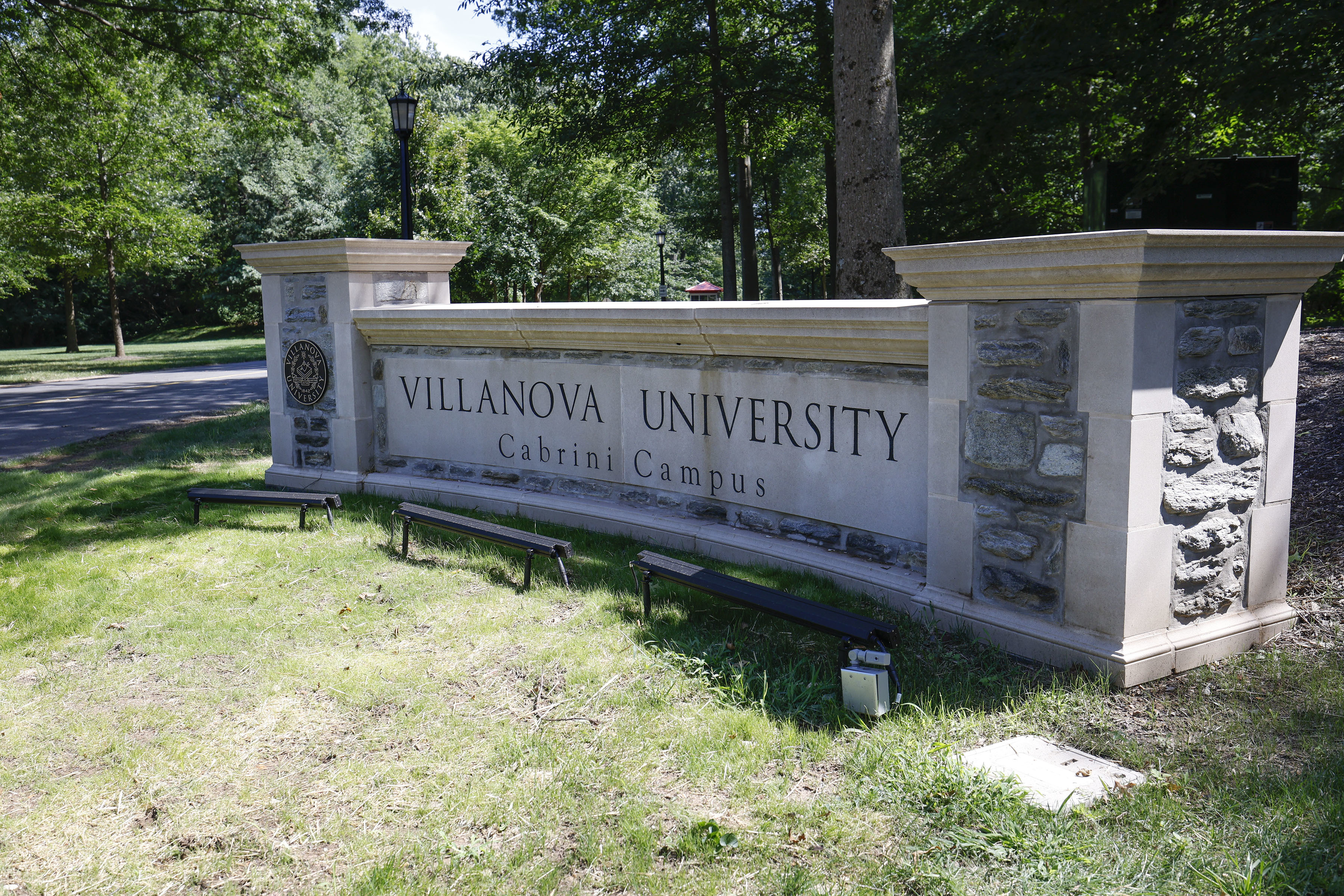
And signs at the entrance to campus say: Villanova University, Cabrini Campus — a nod to Villanova’s larger promise to retain Cabrini’s legacy.
A new era of growth
The acquisition of the campus, which officially opens for fall classes Aug. 24, marks an era of new growth for Villanova.
As many other colleges have lost enrollment in recent years, Villanova plans to grow its undergraduate student body, now at about 7,000, to 8,000 over the next four years, said the Rev. Peter M. Donohue, Villanova’s president. That growth started this year with about 250 additional freshmen. And the school plans to maintain its selectivity; it admitted just 29% of applicants for this fall’s class and saw more than a 10% surge in applications over the last year.
Villanova, which has a 260-acre main campus, will expand 43% in size with the addition of Cabrini.The university’s acquisition of Rosemont College — which will be complete in 2028 — will add 58 acres, increasing Villanova’s total to 430 acres.
The Cabrini campus will house five academic departments: psychological and brain sciences, graduate nursing, education and counseling, ethics, and part of communication. About 75 faculty — 10% of the total — will be based there.
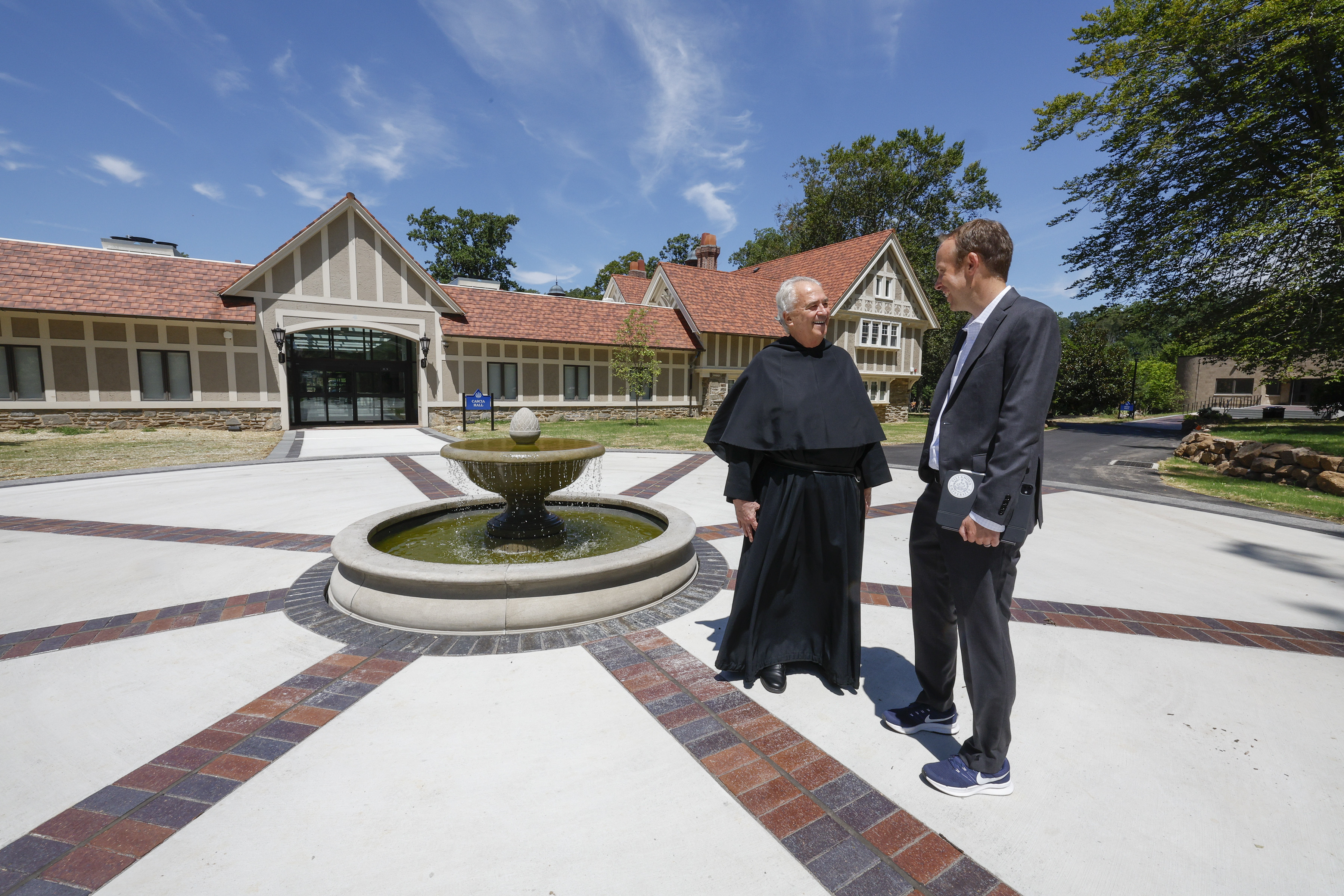
Villanova University President the Rev. Peter M. Donohue left, and Timothy Hoffman, vice provost for finance and administration, stand in front of a newly installed fountain outside Cascia Hall, which received a lot of renovations inside and out. It houses the student center. Steven M. Falk / For The Inquirer
About 900 sophomores — roughly half of those enrolled at Villanova — will live on the campus, expanding the percentage of undergraduates who live on Villanova’s campuses to more than 80%.
In addition, more than 2,000 undergraduate and graduate students — about a fifth of Villanova’s overall student population — will take classes at the Cabrini campus in the fall, said Timothy Hoffman, vice provost for finance and administration.
“I’m just excited to see life again on the campus,” said Michelle Filling-Brown, formerly dean of academic affairs at Cabrini and now associate vice provost for the integrated student experience at Villanova.
She has been designing themed living and learning communities for the new Cabrini campus.
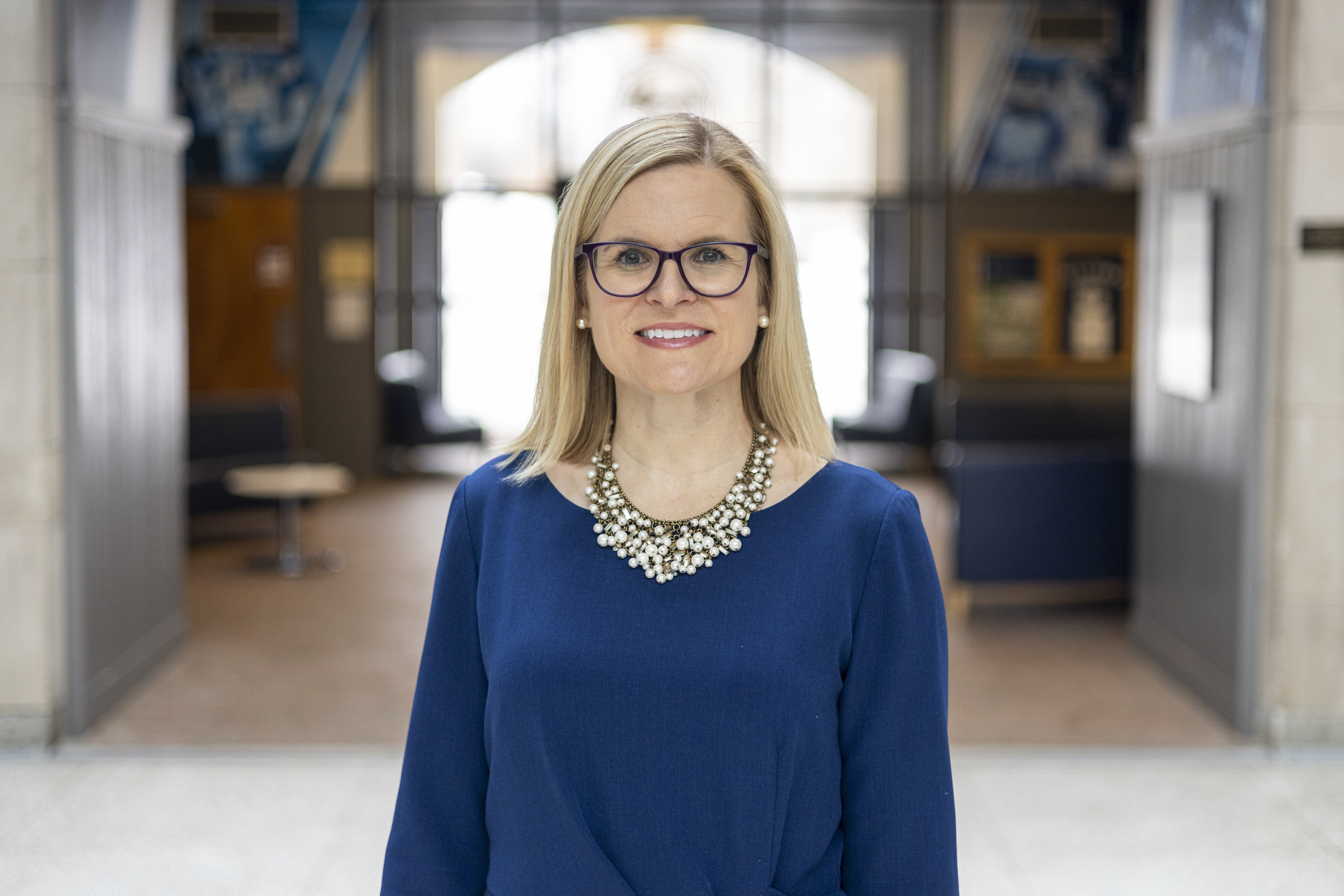
Michelle Filling-Brown, a former top administrator at Cabrini, now works at Villanova.Tyger Williams / Staff Photographer
Started in 1957, Cabrini was the only college founded by Sister Francesca Cabrini’s Missionary Sisters of the Sacred Heart. The university announced in 2023 it would shut the next year and Villanova would take it over, giving students and employees a year to find a new runway. The decision came as enrollment plummeted, finances tightened, and deferred campus maintenance mounted.
Donohue said Villanova has not yet made specific plans for Rosemont.
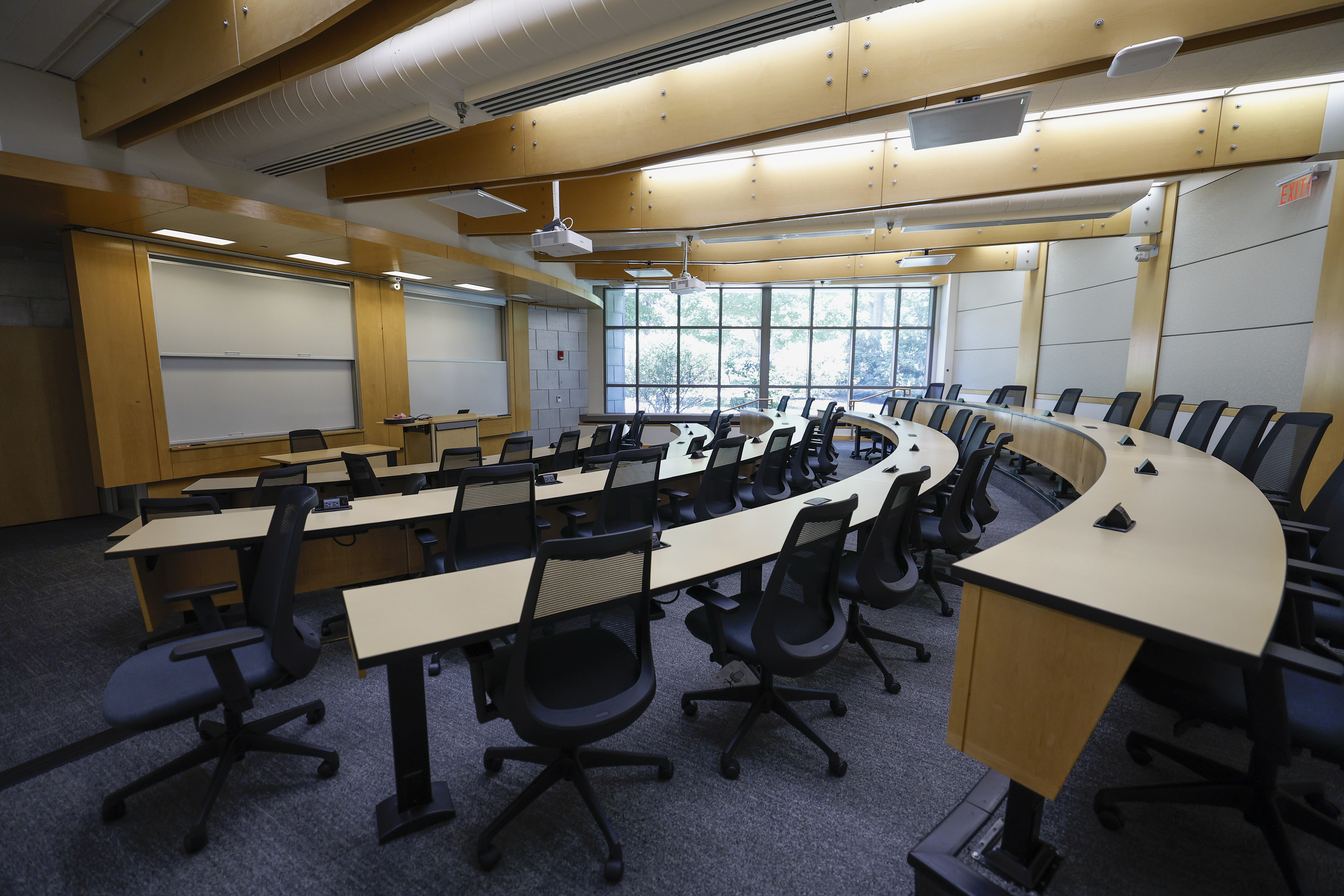
A classroom with new educational technology at the Iadorala CenterSteven M. Falk / For The Inquirer
Before beginning renovations, Villanova invited Cabrini alumni to collect memorabilia, Donohue said. The school also donated truckloads of old furniture and materials that it did not plan to use to nonprofits.
A $170 million-plus investment
The university has invested more than $170 million into the Cabrini purchase, including the $70 million it paid to close out Cabrini’s debt and acquire its land, buildings, and assets, and more than $100 million on renovations. Donohue said it will take just four years for the school to recover that money through the operation of the campus.
The university was able to keep $15 million of Cabrini’s $42 million endowment, the school said.
Though the campus has not officially opened yet, a few students have begun to move in. Last Tuesday, a group of young staff members huddled in a room, planning grand-opening activities. Others unpacked and organized nursing equipment.
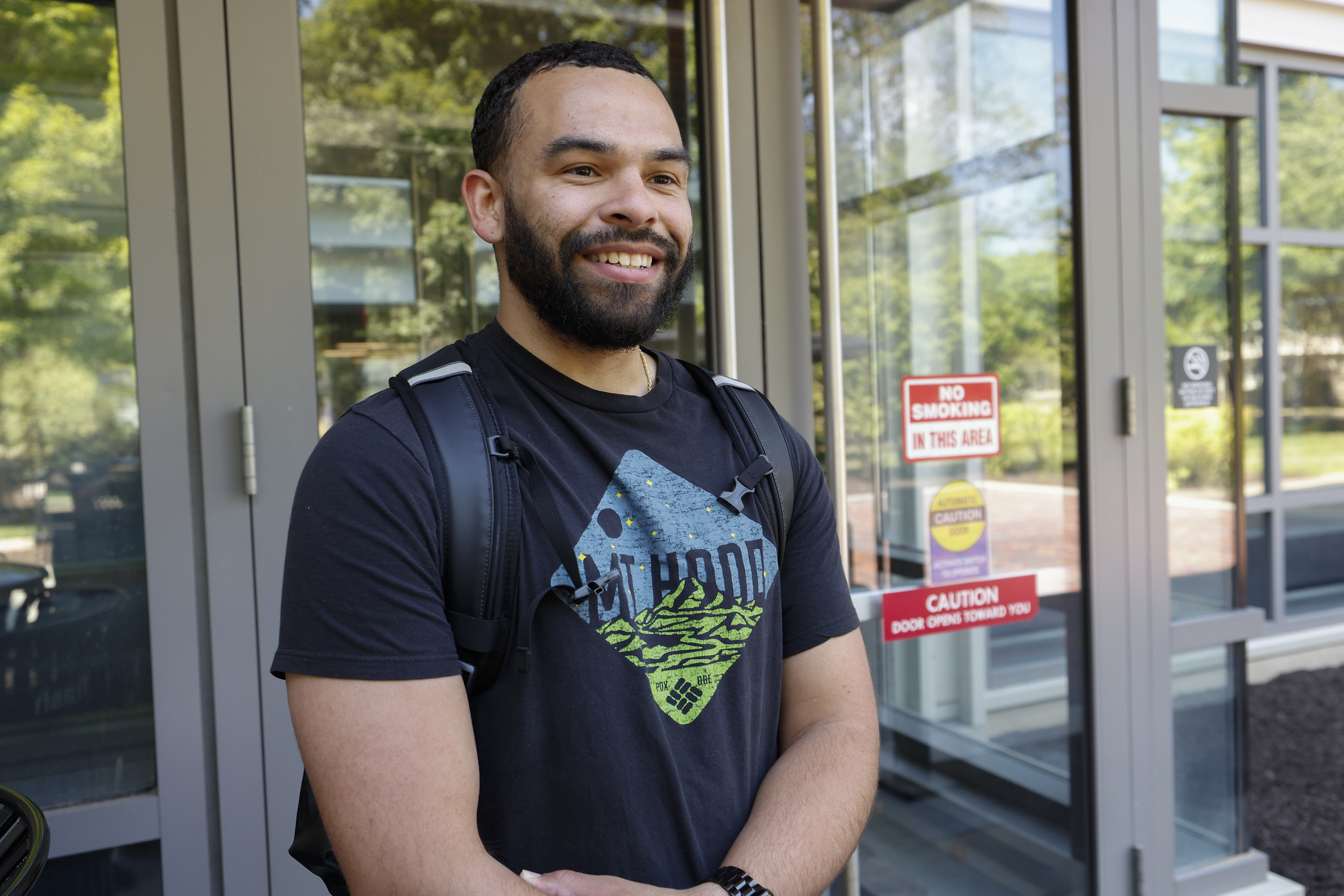
Graduate student Curtis Wesley stops by the Iadarola Center where he will study this fall.Steven M. Falk / For The Inquirer
Curtis Wesley, 26, an incoming graduate student in the nurse anesthesia program, strolled out of the building where his classes will be.
“I just wanted to come and check it out,” said Wesley, who is from Kansas. “I was excited to see all the new technology.”
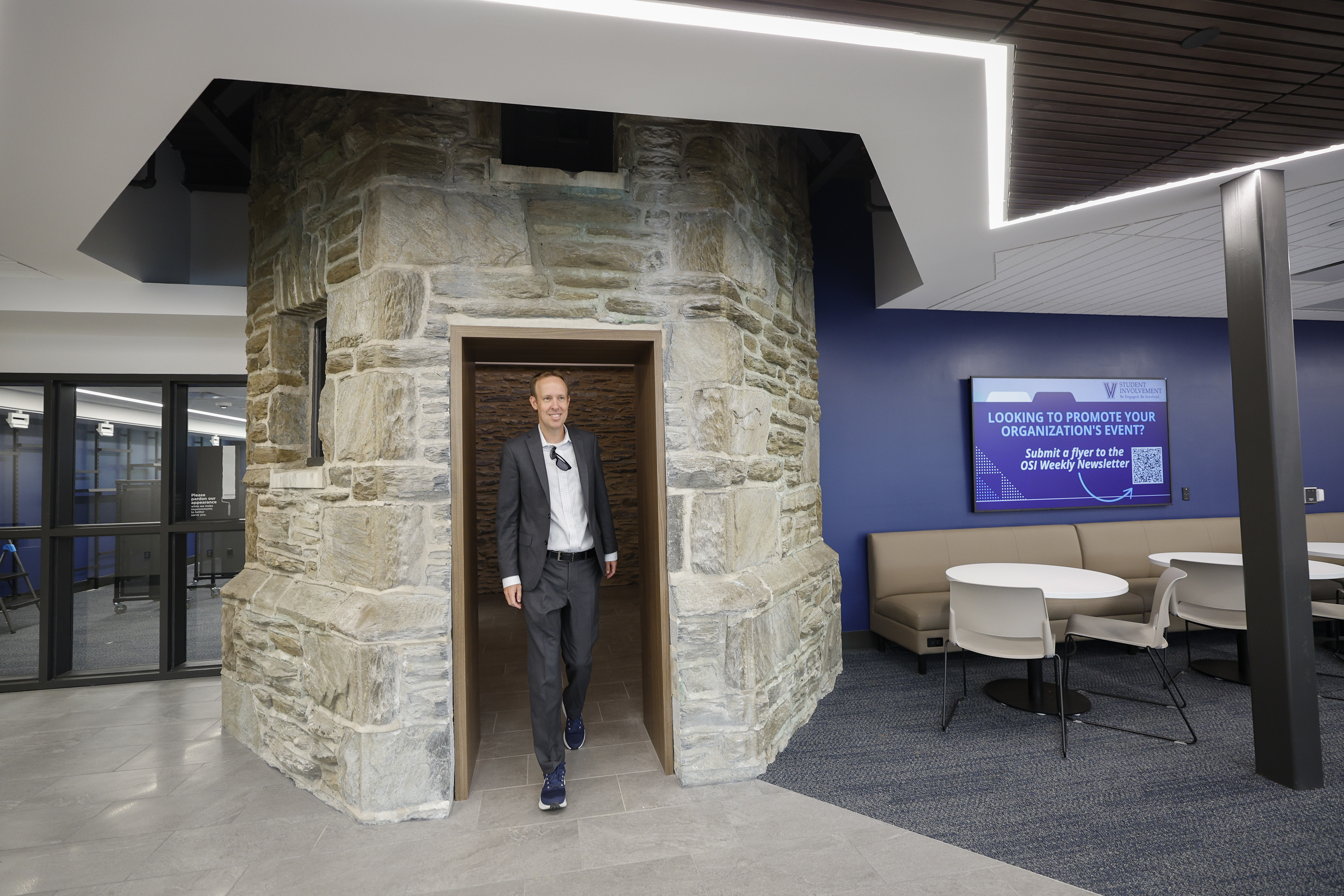
Timothy Hoffman, vice provost for finance and administration, emerges from the stone-walled turret leading to what will be a Villanova apparel shop. The turret was uncovered during remodeling at Cascia Hall. Steven M. Falk / For The Inquirer
One of the buildings that received the most renovation was the former Grace Hall, now Cascia Hall, home to the student center. The building used to be a stable house for the Woodcrest Mansion. Over the years, Cabrini put up drywall and turned much of it into office space.
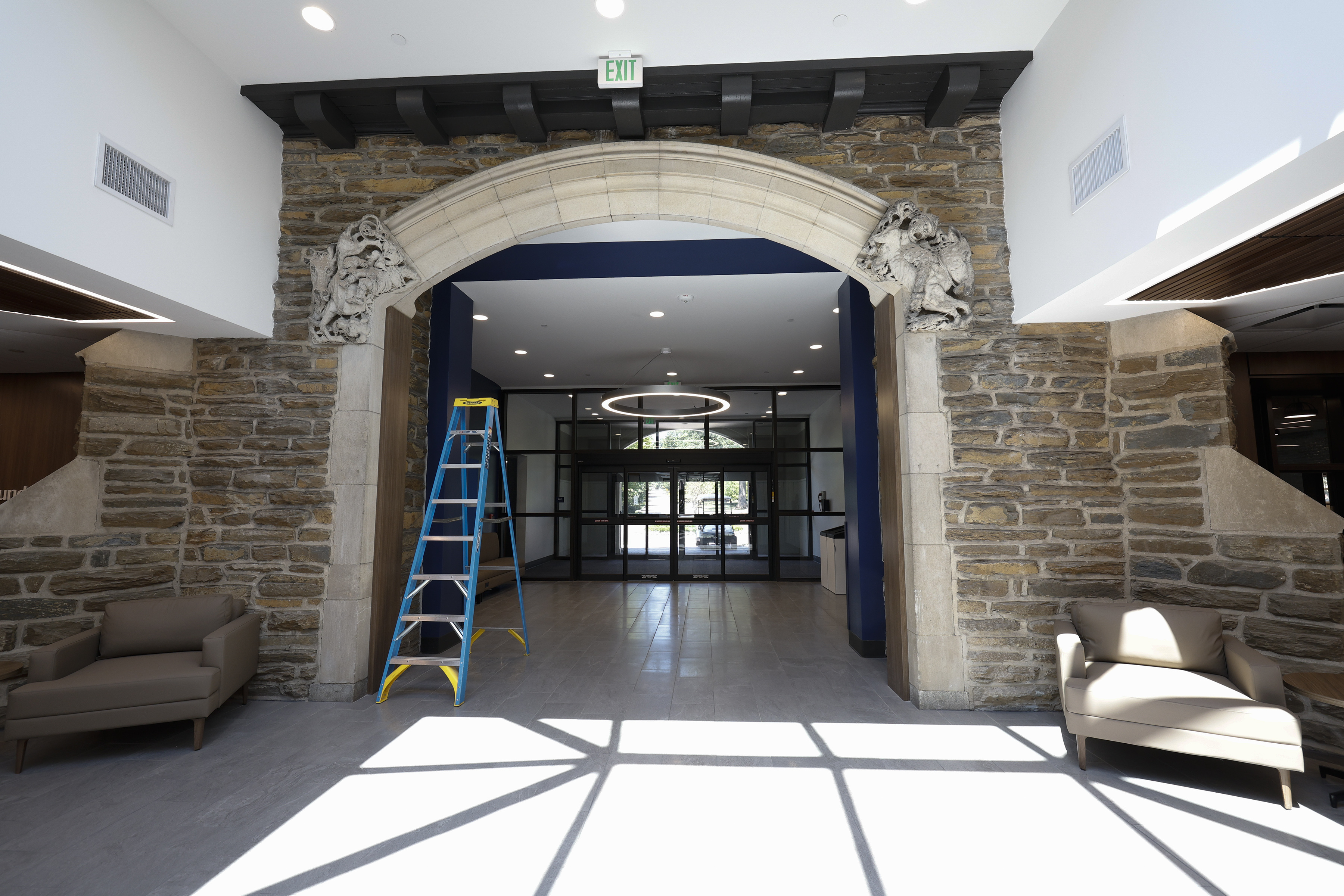
Villanova knocked those walls down and uncovered architectural flourishes including gargoyle-like stone carvings and a cavernous, stone-walled turret with a wooden-framed doorway, leading to what will be a Villanova apparel shop.
Renovations at Cascia Hall uncovered some architectural flourishes, including these stone carved gargoyles. Steven M. Falk / For The Inquirer
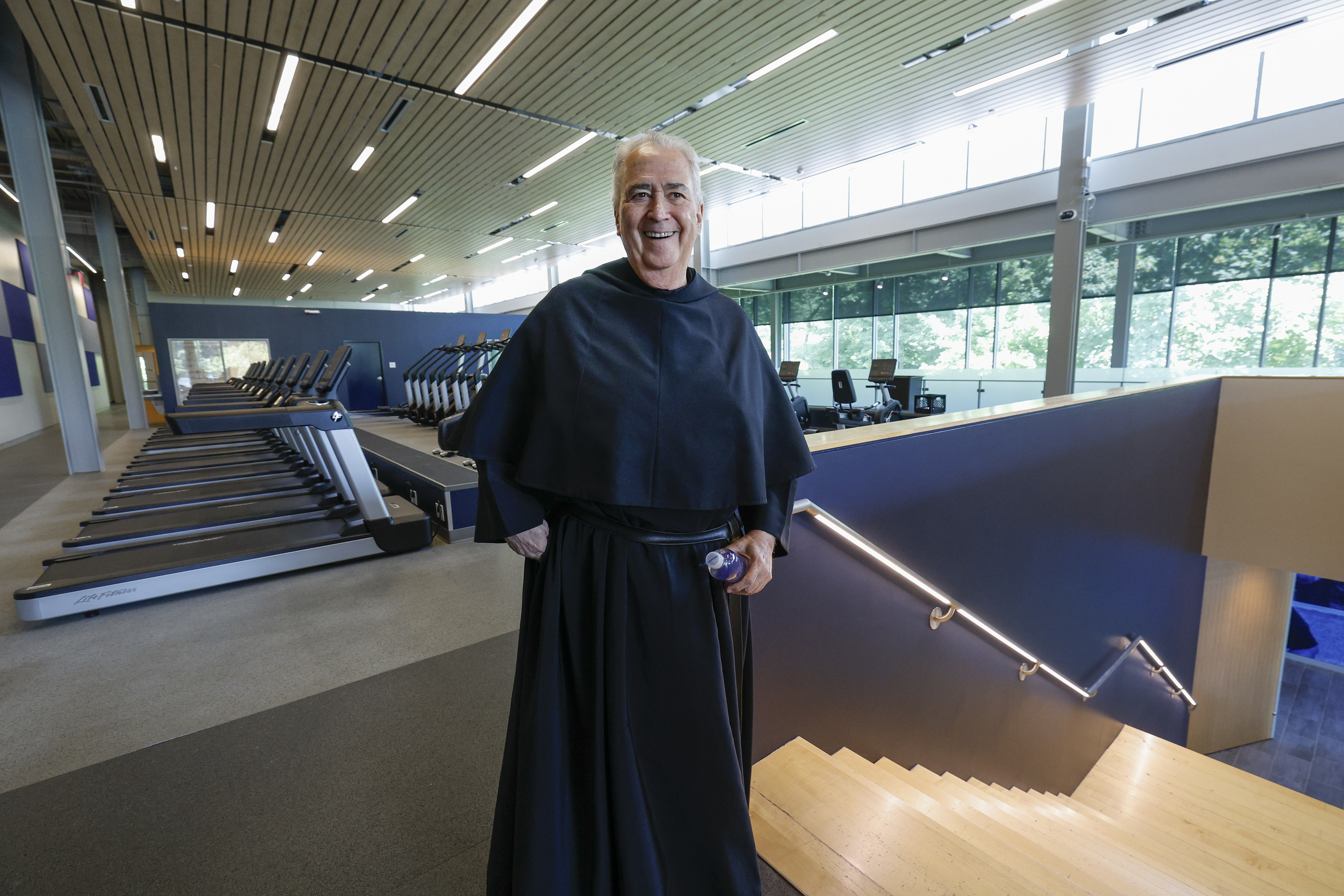
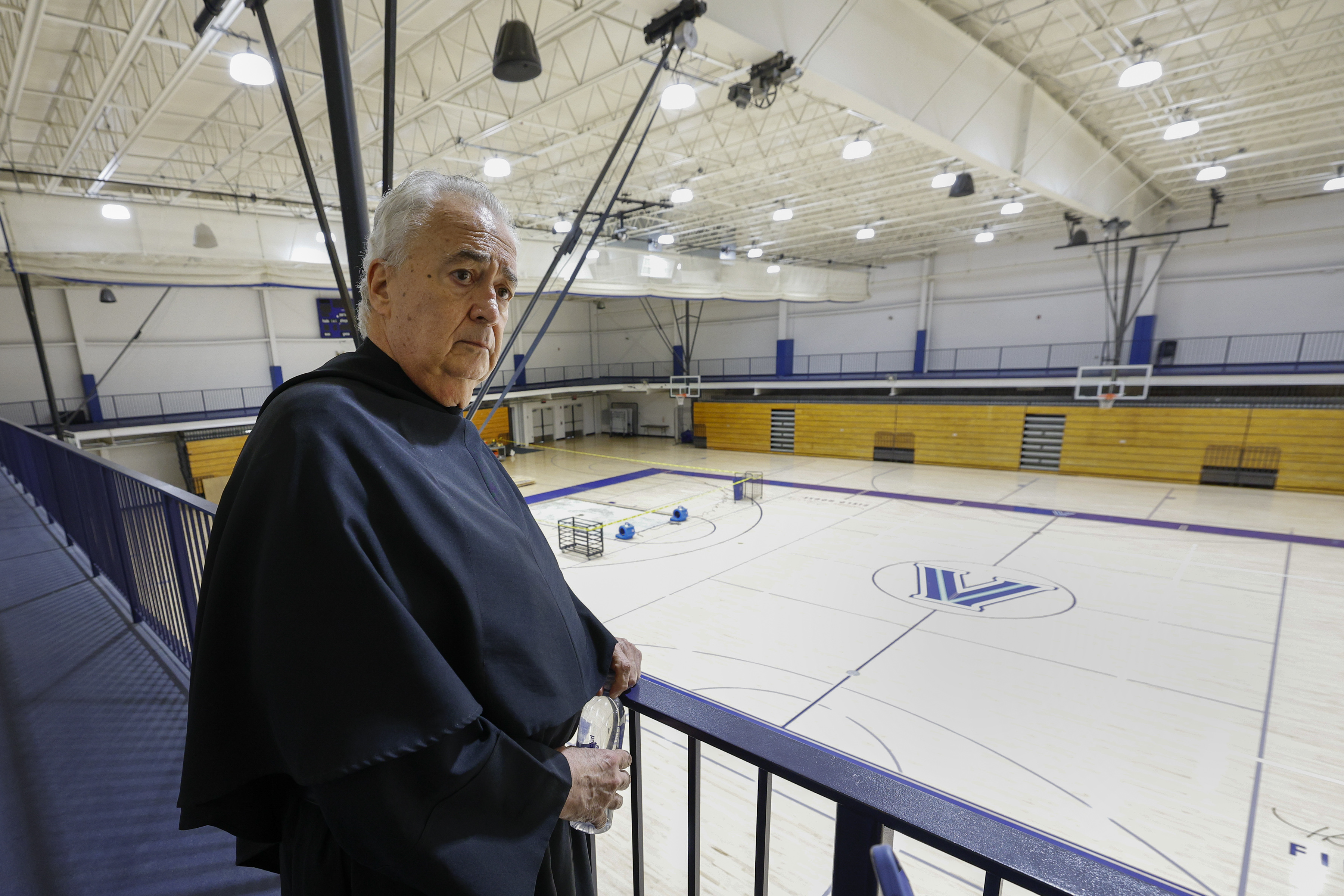
The Dixon Center will remain an athletic facility, but now the basketball court has a large V in the center and the smoothie bar will offer treats such as the Brunson, named after Villanova Wildcats basketball star-turned-New York Knicks standout Jalen Brunson, and the Father Peter Power, honoring the university president.
Donohue couldn’t name the ingredients in his new signature drink.
“I didn’t know it existed,” he said.
The facility, which also got new cardio equipment and reupholstered weight benches, will be used for non-varsity sports recreation.
Villanova President the Rev. Peter M. Donohue overlooks the basketball court at the Dixon Center. Steven M. Falk / For The Inquirer
“Our intramural basketball activity goes into the wee hours because we’re limited in our number of courts, so we are delighted to have this space,” Hoffman said.
The Iadarola Center, Cabrini’s former science building, includes a new nursing simulation facility that Cabrini had recently finished. But Villanova added upgrades, including a vivarium for psychology department research and more space for the brain science program. The former Cabrini library has been converted into student study space.
‘Many more dorm options’
Seven residence halls will house students, including two that had been closed amid Cabrini’s enrollment decline. One of them had a malfunctioning boiler — not anymore.
Sophomores were given the choice of living at Cabrini. Villanova ran tours of the campus for students last academic year. Those who chose Cabrini said they were attracted to the renovated dorms and larger room configurations that allow them to live with several roommates and share a bathroom. Options on main campus for sophomores are largely limited to doubles with a large bathroom shared by an entire floor or wing.
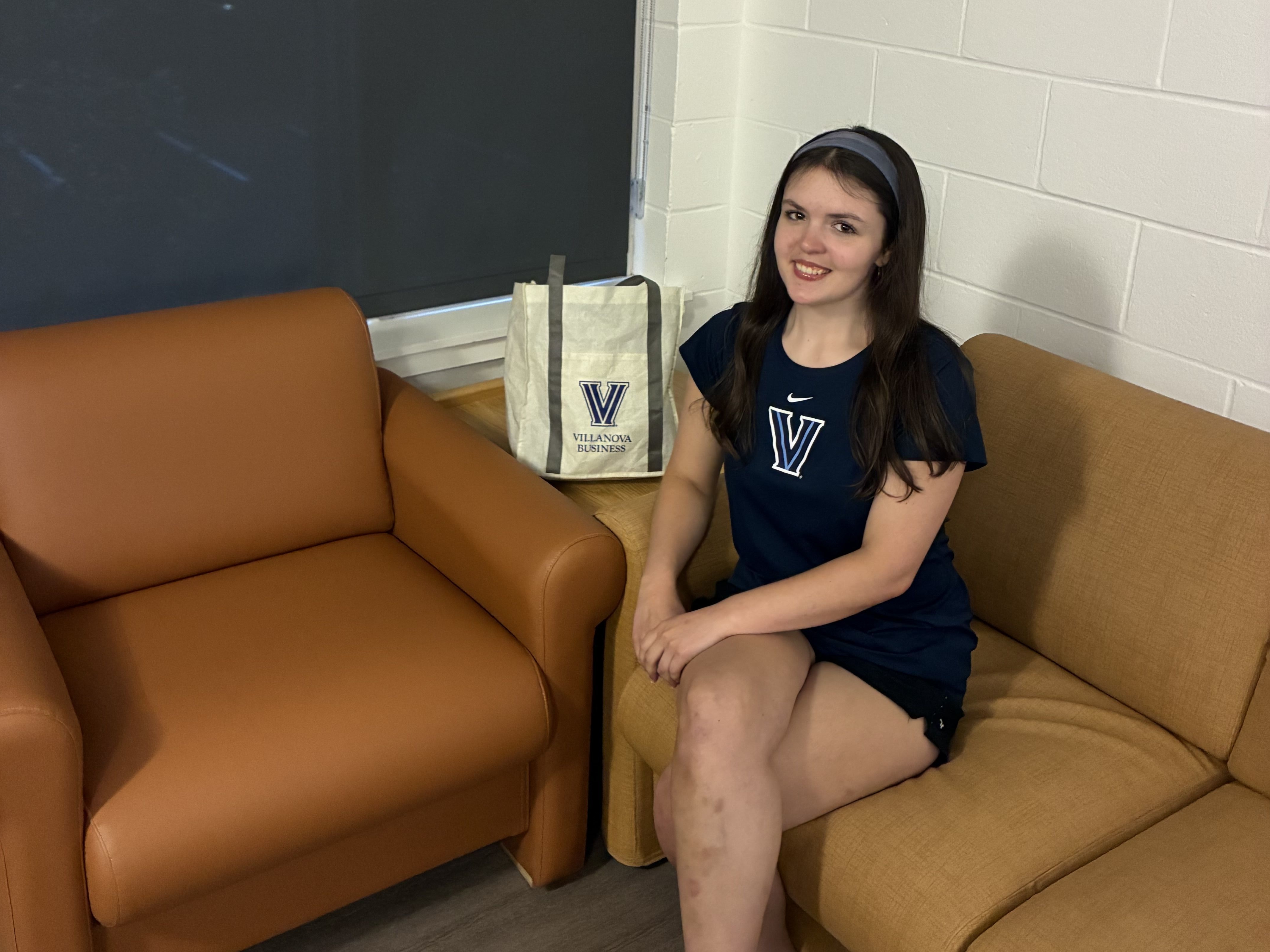
Villanova University sophomore Molly Dunphy-Culp has moved into her new apartment on the Cabrini campus.Courtesy of Molly Dunphy-Culp
“With Cabrini, there are so many more dorm options,” said Molly Dunphy-Culp, 19, a sophomore who was born in Boston and grew up in Abington.
She will be sharing an apartment in Lecceto Hall with three classmates.
She acknowledged that she will have to take the shuttle to main campus for classes, but said the short ride will be worth it. Dunphy-Culp also has a job on Cabrini as a recreation center supervisor — another plus for living there.
About half the students on campus will be allowed to have cars. Sophomores do not have that option on main campus.
“Two of my close friends are both going to have cars on campus,” said Ella Hayman, 19, a sophomore from just outside Boston. “This will give us a little more freedom we didn’t have last year. That was a big motivation.”
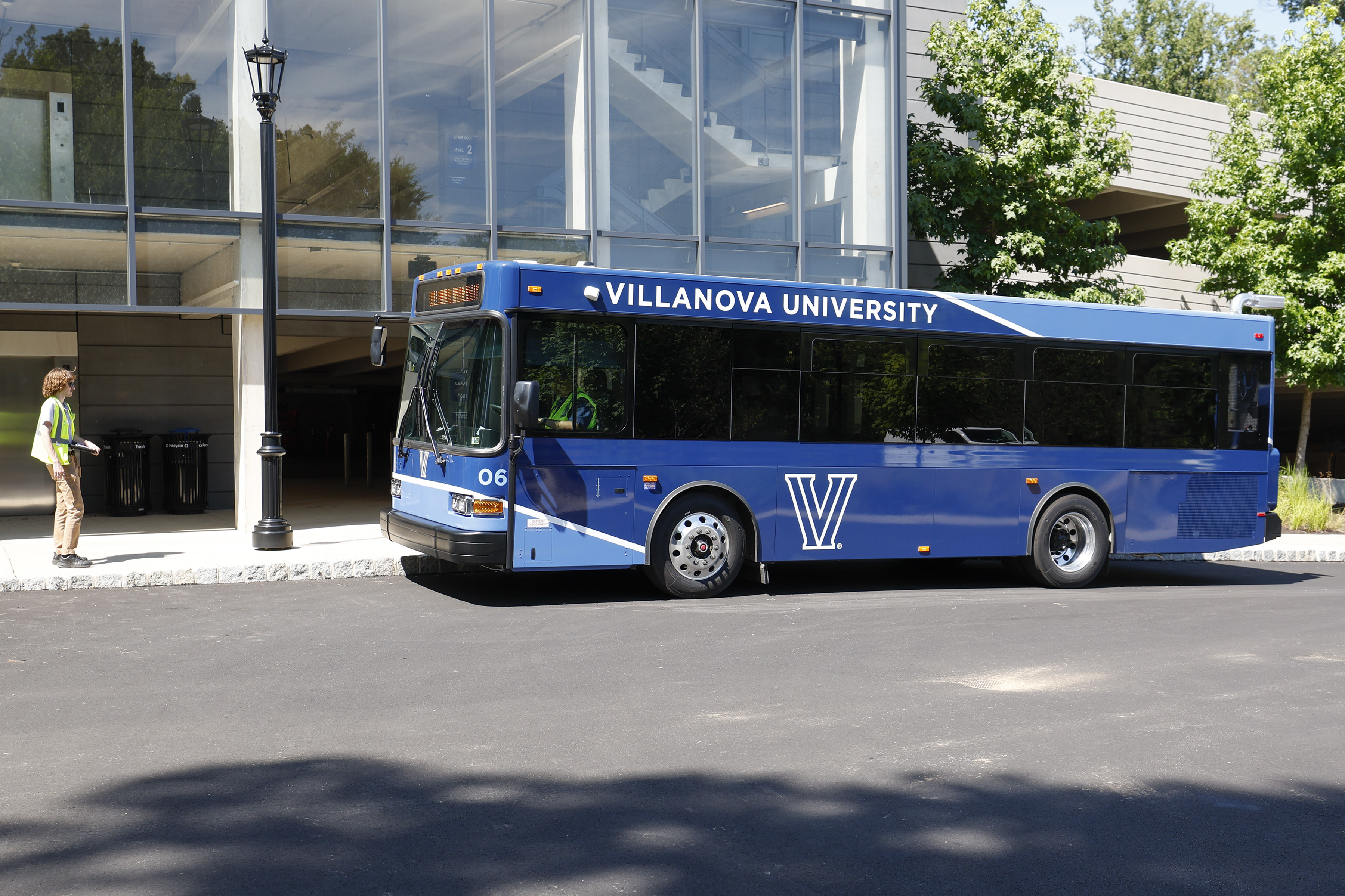
Shuttle buses including this one will transport students between Villanova’s main campus and the Cabrini campus 1.9 miles away. Steven M. Falk / For The Inquirer
Thirteen shuttle buses will transport students between the two campuses, which are 1.9 miles apart — a seven- to 12-minute ride, Hoffman said. A team of Villanova employees over the last couple of years visited five universities with multiple campuses, including Lehigh and George Washington, to learn how best to integrate them. They looked closely at models for a shuttle system that would keep students informed of where and when buses would be arriving and departing, Hoffman said.
Among new dining options on the campus is the restaurant-style Table 1842, named for Villanova’s founding year, where students can order off a menu. It is located in the former Founder’s Hall, now Bellesini Hall, which also was heavily renovated, including the installation of a new entrance that leads directly into dining facilities so people do not have to climb as many steps.
Bellesini has become the third-largest classroom building at Villanova. Some of the nearly 30 classrooms on the Cabrini campus had to be expanded to accommodate slightly larger class sizes, Hoffman said. Cabrini’s classes were 12 to 14, and Villanova starts at 16, Hoffman said.
Villanova University President the Rev. Peter M. Donohue left, and Timothy Hoffman, vice provost for finance and administration, walk through the Dixon Center. Steven M. Falk / For The Inquirer
Some improvements are still to come, including renovations to the former Mansion, which will be costly, and a nature trail, Donohue said.
Villanova named Francesca and Xavier Halls for Mother Cabrini and is continuing Cabrini’s Center for Immigration; Villanova converted it to the Mother Cabrini Institute on Immigration. Villanova also launched an elementary education major in honor of Cabrini’s former program.
Preserving a legacy
“They had a strong desire to make sure some of their legacy lasted, and we wanted to protect that,” Donohue said.
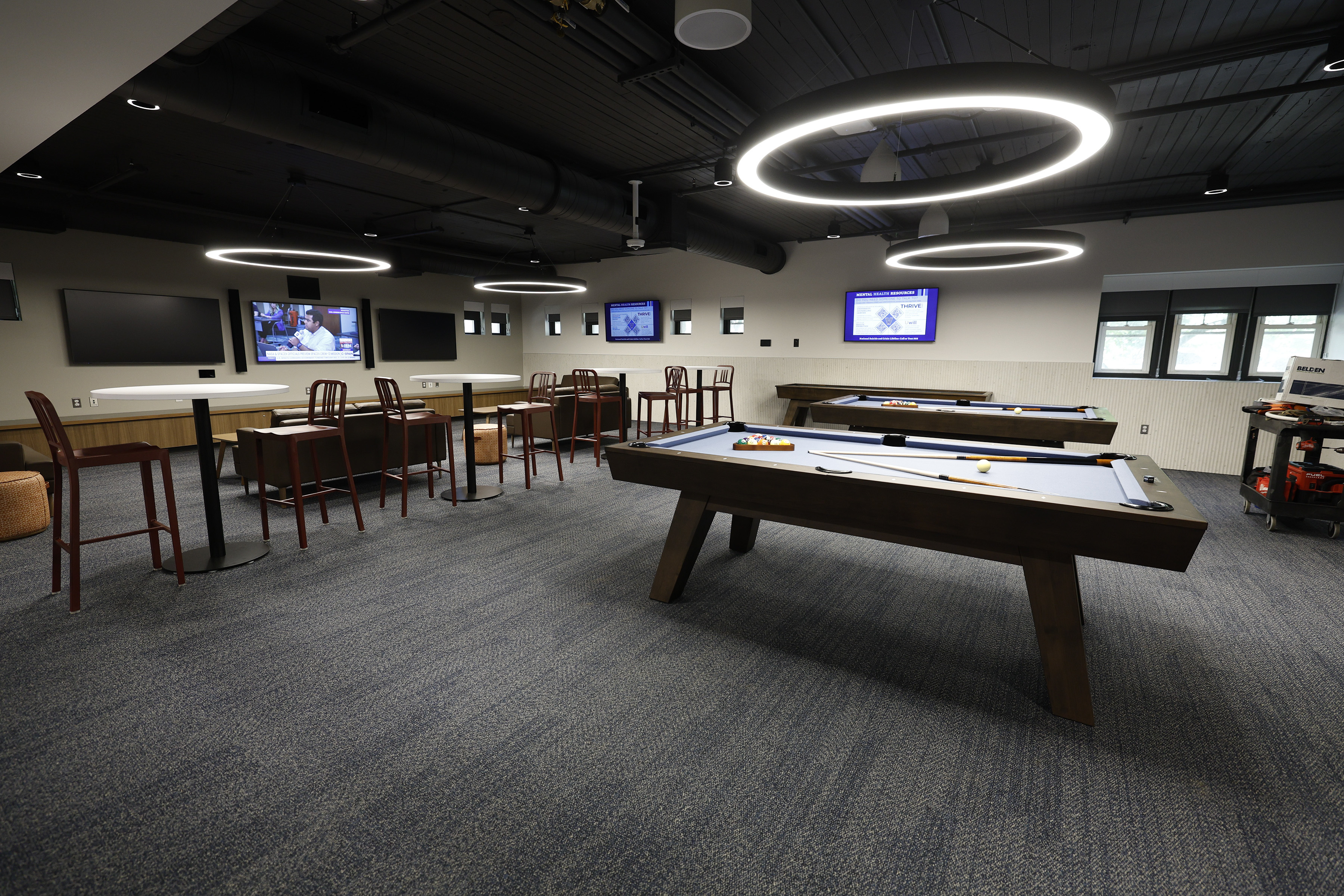
The game room at Cascia HallSteven M. Falk / For The Inquirer
Coincidentally, there is a stained glass window of St. Augustine — namesake of Villanova’s founding order — in Cabrini’s chapel and a stained glass window of Mother Cabrini in Villanova’s Corr Hall chapel.
Filling-Brown, the former Cabrini administrator now at Villanova, said it seems meant to be.
“It’s beyond my wildest dreams for the campus,” Filling-Brown said. “It’s the best outcome to see Catholic higher education continue on that campus.”
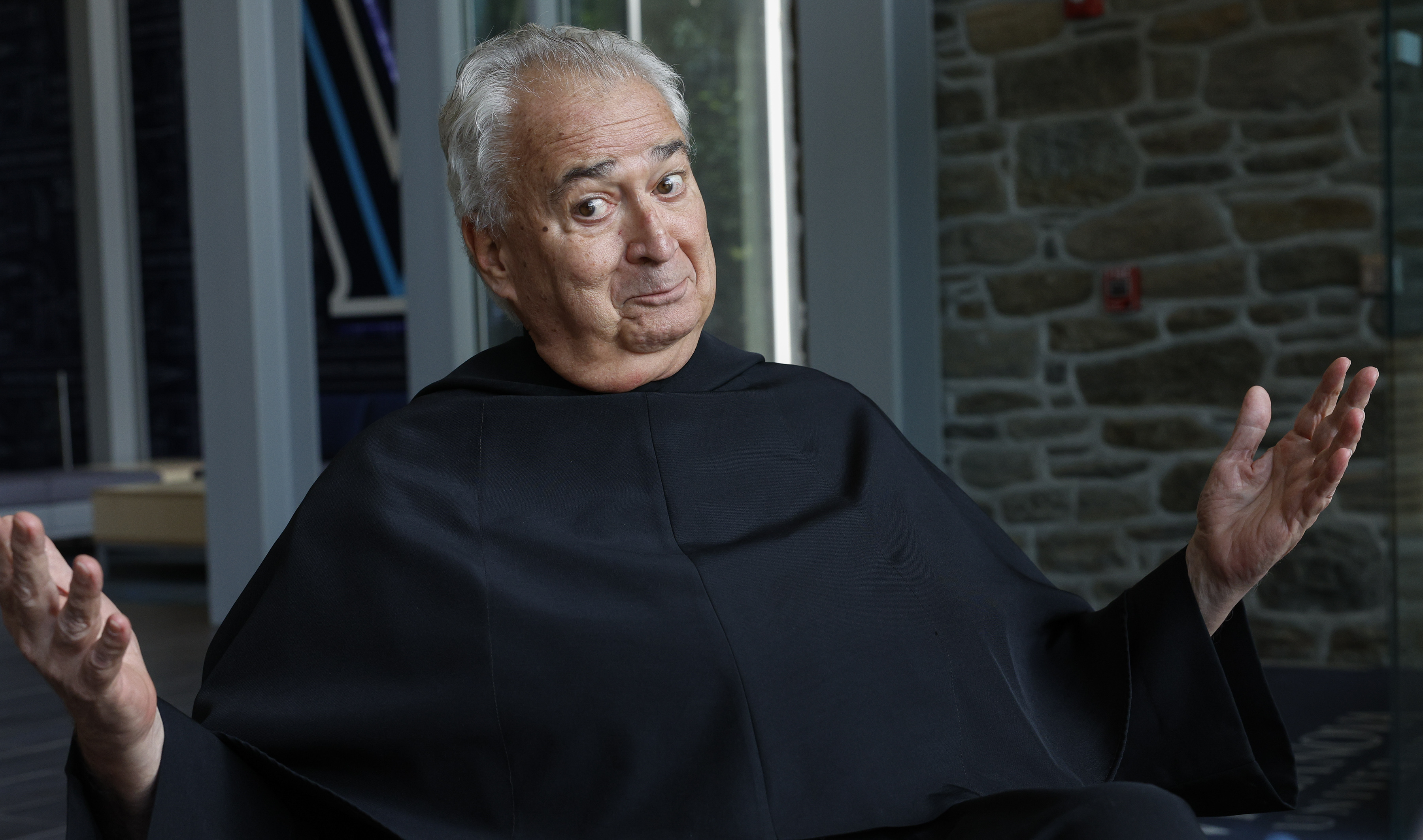
Villanova President the Rev. Peter M. Donohue discusses all it took to remodel the Cabrini campus. Steven M. Falk / For The Inquirer
Radnor’s 333 Belrose shut down in June 2025 for what was billed as a six- or seven-month renovation.
But when the January target came and went, chef Ross Essner said, regulars would show up at the door to ask the same two questions: “First, they wanted to know when we would reopen and then, ‘Will the nachos return?’”
The answers: late June, and yes.
The Main Line mainstay, which opened off King of Prussia Road in the St. Davids section in 1999, reopened in late June after an extensive renovation that rearranged its dining rooms and enlarged the bar.
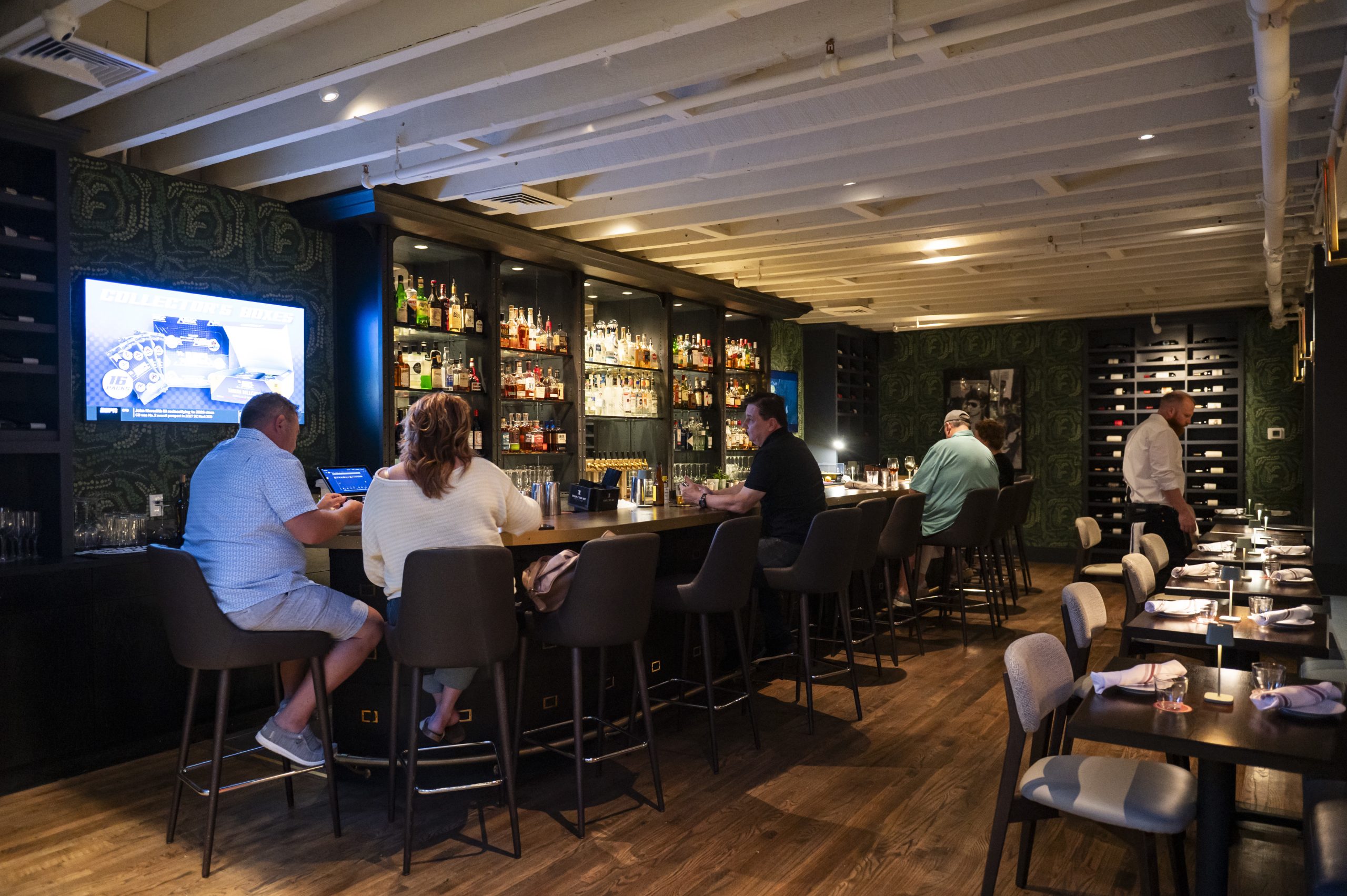
Capano Management, which acquired the property in December 2022, initially expected the work to take only a few months. But early in the project, Essner said, designer Barbara Gisel of Haverford proposed flipping the layout, turning the dining room into a larger, dark-toned bar with 13 seats, a backlit wall of spirits, and a poster of Keith Richards, while converting the old bar into a bright dining room. “It ended up opening the whole space,” Essner said. “Now the bar is the focal point when you walk in.”
That dining room, boasting a vaulted, paneled ceiling, white millwork, and divided-light windows, and a checkerboard wood floor, has the feel of an updated country house. Woven chairs, pale tabletops, sculptural floral chandeliers, and contemporary artwork modernize the historic shell without hiding its character. The patio spills out from the bar through full-length doors.
Customers dine at the bar inside 333 Belrose in St. Davids on Thursday, July 23, 2026.Allie Ippolito / For The Inquirer
The 3,870-square-foot building was once used as a stable where lore holds that George Washington once watered his horse.
Essner, also Capano’s director of hospitality, described the menu as American food with occasional international influences. “Our goal isn’t Michelin stars or accolades,” he said. “The food is approachable. Nothing too cerebral, nothing too crazy. We want to be good enough for the neighborhood every day, but also nice enough that you can come here to celebrate something.”
Entrées ($29 to $46) include goat-cheese gnocchi with short rib and horseradish cream, steak frites, black cod with mashed potatoes, a cowboy pork chop, and a long-bone short rib. Desserts include crème brûlée, peanut-butter mousse with chocolate ganache, and a warm skillet cookie with coffee-toffee ice cream.
Shellfish cobb salad at 333 Belrose.Allie Ippolito / For The Inquirer
And yes, the nachos are back. Layered with black beans, house-made lime and chipotle cremas, pickled jalapeños, cheddar, Colby Jack, guacamole, pico de gallo, tomatillo salsa, a Cooper Sharp sauce infused with peppers, and cotija, they remain one of the restaurant’s signatures. They were landing on table after table during a recent dinner service. “We would never take this off,” Essner said.
The company, which also owns such Delaware restaurants as Columbus Inn and Charcoal Pit, views Belrose as a long-term investment rather than a project expected to produce an immediate return, Essner said. “The goal is to be here for the next 20 years.”
333 Belrose, 333 Belrose Lane, St. Davids. Hours: 5 to 9 p.m. Tuesday to Saturday.
A previous edition of this article misstated chef Ross Essner’s title.
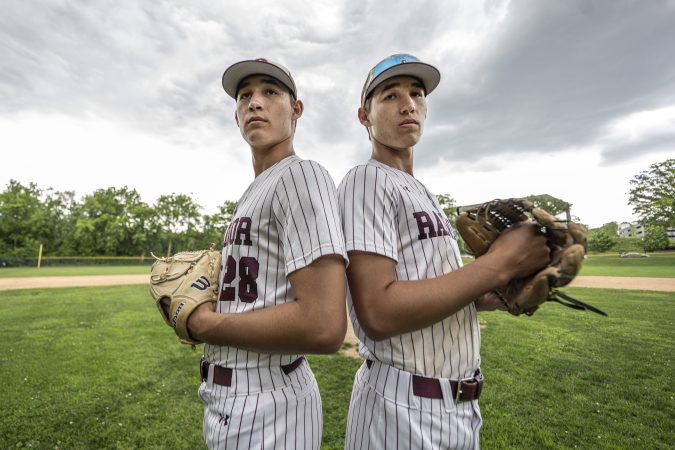
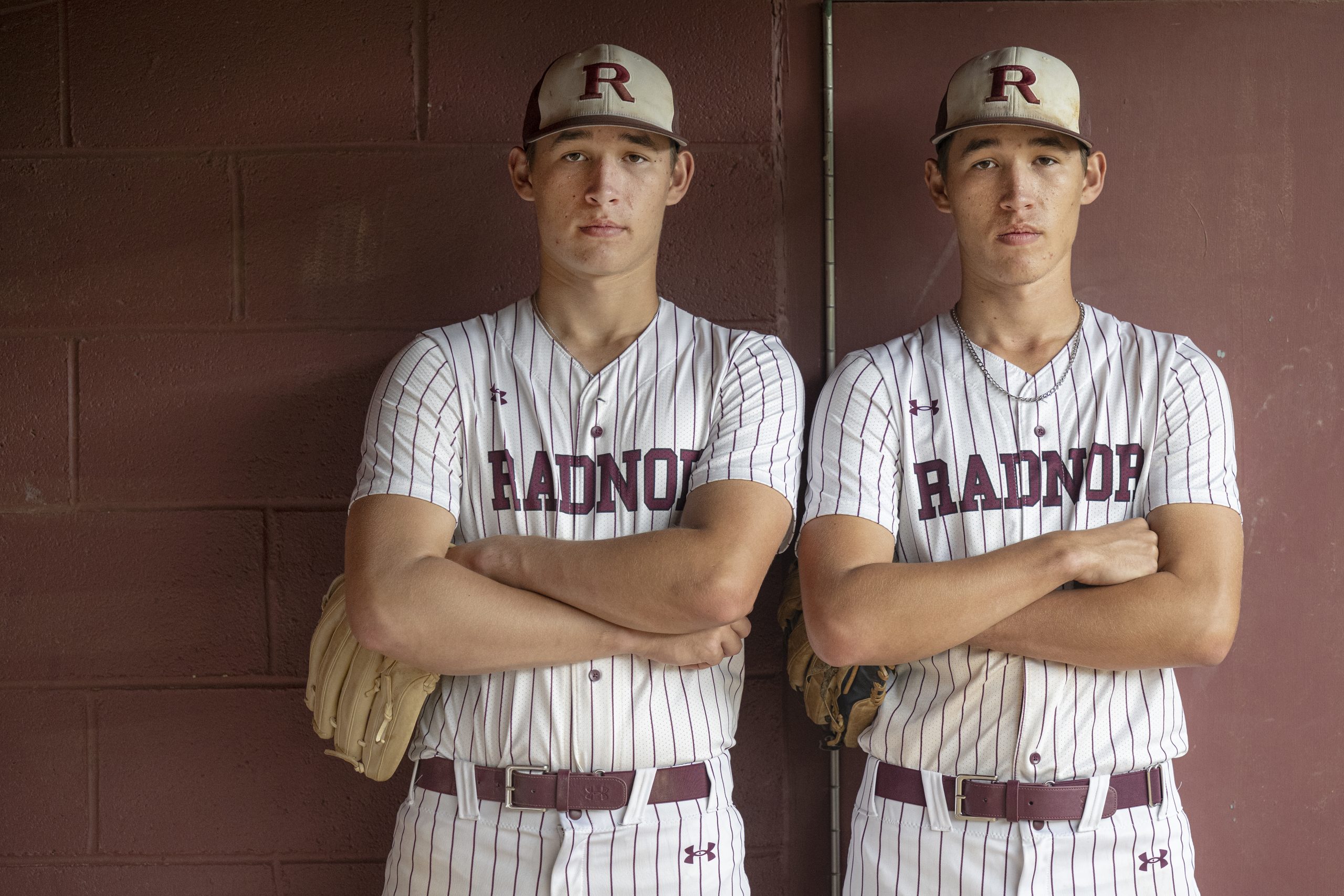
Twins Blake and Austin Havertine used to spill out of their father Gary’s car at a local park in Radnor and break out into a pitch-and-catch game. One would pitch and the other would catch, and then they would switch. For young teenagers, they threw the ball pretty hard, too.
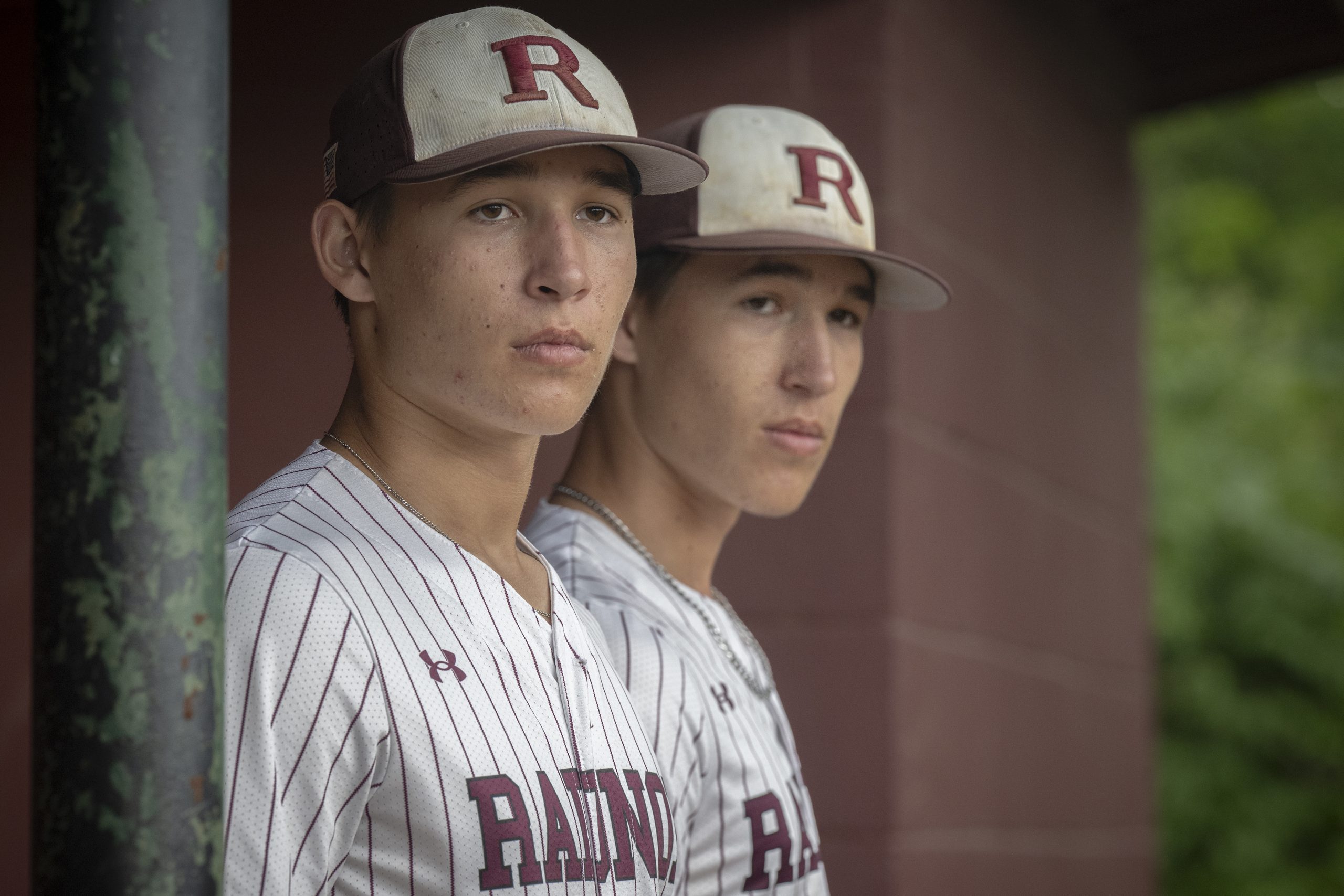
And sometimes umpires had to go by the color of their cleats to tell them apart. As they got a little older, their difference in height and width helped. Blake, younger by a minute, is slightly taller than his 6-foot-2, 210-pound older Austin, who was always thicker than his younger sibling.
Wherever they went, whatever they did, they did it together. Soccer, basketball, football, and baseball — when it came to sports, the Havertine twins were inseparable.
What they also did together was leave an indelible legacy for Radnor baseball that may never be surpassed by a pair of brother pitchers, winning a combined 30 games, throwing a combined 290 innings, and striking out a combined 402.
Austin carried the bulk of that load, winning a career school-record 22 games, striking out a career school-record 327, and throwing a career school-record 220 innings, while Blake over the last three years tossed 70 innings, won eight starts and struck out 75.
When Radnor captured the 2025 PIAA District 1 Class 5A championship, it was Austin who tossed the final pitch, a pop out that fell into Blake’s glove. Austin throws in the mid-90s, Blake in the high-80s to low-90s, with his special slurve ball, he calls it (a combination curveball and slider).
Now, for the first time in their lives, , they will be going their separate ways. Austin is heading to Lehigh on a baseball scholarship, and Blake will be going to Franklin & Marshall to play for the baseball team.
There are distinct differences between the brothers. For example, Blake says they are identical twins; Austin says they are fraternal (They’re fraternal). Though he’s only a minute older, Austin carries himself like he’s older by a few years, while Blake is more the needler of the two, teasing Austin if he spikes a pitch or makes a mistake.
Twin pitchers Austin and Blake Havertine helped Radnor to a 2025 PIAA District 1 Class 5A championship.Jose F. Moreno / Staff Photographer
They are best friends. Austin carries a slightly serious tone about him, while Blake is more on the jovial side. They don’t usually argue, say their father, Gary, and Radnor coach Mark Jordan.
“I’ve coached a ton of brothers and sisters, and a few twins in my time, and they would go at it like cats and dogs,” said Jordan, who just finished the eighth year of his second stint as baseball coach at Radnor and his 14th season overall. “I never saw Austin and Blake fight. I mean really fight. I go way back to coaching them in seventh grade at Wayne Junior Legion. You could tell even then that Austin was special, and he was our ace as soon as he started his freshman year. And Blake keeps improving. His best baseball is still ahead of him.
“But in six years of coaching them, that’s legion and high school, they never were at odds with one another. They may bust on each other a little, and Austin always supported Blake. They were captains this year for us and simply in tune with each other. It is kind of weird as twins, they are best friends, and you rarely see that. They leave an amazing legacy at Radnor. I’m always going to miss their commitment to the area and to the school, and this is a time when kids are bouncing from school to school, at the high school level and at the college level. They enjoyed where they were. … These guys grew up in Radnor, stayed in Radnor, and pitched and won in Radnor.”
Jordan says Major League Baseball has called about Daniel Kellis, a 6-foot-5, 230-pound right-handed pitcher/outfielder who threw 10 innings this season and is committed to Wake Forest. Kellis is projected to go in the 14th or 15th round, and Austin may get drafted in the late teens, though he seems committed to Lehigh.
The twins still have two months together pitching against grown men for the Wayne club in the Delco League. They’re soaking it in before leaving for college.
“It is great having a twin,” Blake said. “We do push ourselves, we always have. Austin was our ace freshman year, but he always supported and encouraged me..
“I think what I will miss the most is not having someone by me all the time, which we have done our whole lives. We still have the summer in the Delco League together, and then we’re gone.”
There may be an hour’s distance between Lehigh and Franklin & Marshall. But the twins are a FaceTime call or a text away. Gary and Betsy Havertine come from large families, where each was one of five siblings.
Austin Havertine is heading to Lehigh, while Blake Havertine will attend Franklin & Marshall College.Jose F. Moreno / Staff Photographer
“We have good friends of ours who asked us one time how our boys get along, because they had twins, and I remember telling them, ‘Great,’” Gary said. “They were curious because their twins constantly fought. I never saw them get into a fight, which is crazy for two boys. When they leave, it won’t be easy for them, and it won’t be easy for me and my wife. They’ve always been around the last 18 years. They were apart for a couple of tournaments, but for the most part, they were always together. [This] step in their lives will be good.”
Austin agreed. This will be Austin’s second year in the Delco League and Blake’s first. They will be tested, and it will certainly help prepare them for college hitters.
The Radnor season did not end the way the Havertine twins or the Raptors wanted. Radnor was knocked out in the second round of the PIAA District 1 Class 5A playoffs by eventual district runner-up West Chester Rustin. Jordan traditionally has his seniors address the team after their final game, sharing their experiences and gratitude.
It was the most emotional Jordan ever saw the usually stoic Austin. He referred to his teammates as his “brothers,” and talked about how memorable his four years at Radnor was.
“I always remember the bonds we created, and it’s the last time I ever played with Blake,” Austin said. “We’re going our different ways in August, but we do have the summer together. It won’t be easy saying goodbye to him, because we have always been together. I know there is a minute between us, but I look out for him. We bust on each other, and every time I pitch, if there is one small detail I do wrong, he’ll be the first one to tell me, ‘You suck at this!’ I may miss hearing that.”
At a school board policy committee meeting Tuesday, administrators presented updated regulations around bullying and harassment, including that using artificial intelligence to create or share “sexualized, indecent, demeaning or intimate content involving another person” was prohibited.
But more changes are possible, administrators said Tuesday. Scott Hand, the district’s director of technology innovation and instructional design, said Radnor “will be engaging outside professionals beginning this summer into fall” to review its policies and practices.
Some board members also suggested the district retain outside help to be ready for another incident.
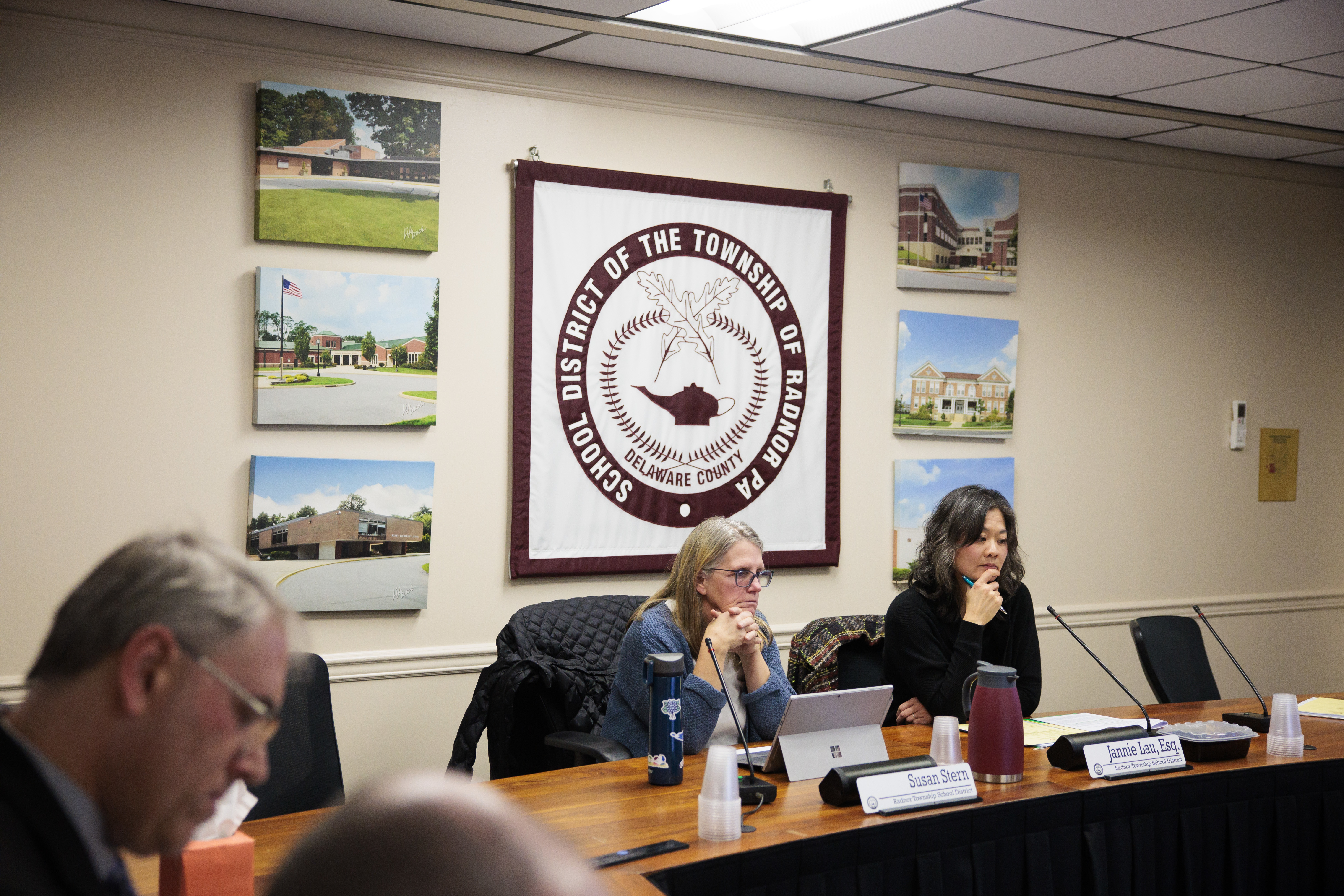
“The statistics say, something like this will happen again,” said Susan Stern, who asked administrators to consider hiring “a resource we could have on hand.”
“We’re going to work really hard to educate our kids that it doesn’t happen here in Radnor, but our best response is to be prepared,” Stern said.
Schools have increasingly been forced to grapple with deepfakes as students use generative AI to manipulate photos of their peers — sometimes with tools that can convert clothed photos into naked ones. Pennsylvania has criminalized explicit AI-generated images as child sexual abuse material, and another measure advancing in Harrisburg would require schools to immediately notify law enforcement about AI incidents.
Radnor drew intense criticism from some victims’ parents for its handling of the deepfakes, which came to light in December and resulted in a student being charged with harassment.
District officials said no images were ever discovered. But parents said the district had failed to adequately investigate boys’ reports of pornographic videos and downplayed the incident in community messages, further harming victims.
Parents also accused the district of failing to initiate a Title IX harassment investigation, arguing it was wrong to characterize the incident as “off-campus.”
Radnor parents are organizing a panel discussion Thursday in King of Prussia, with deepfake victims from Radnor and Lancaster Country Day School, advocates, and state officials, including Attorney General Dave Sunday, describing risks and how schools can better respond.
The rules presented to Radnor’s policy committee Tuesday specify that the district has authority over off-campus behavior when it “materially and substantially disrupts the operations of the school” — a common legal standard.
Jannie Lau, the committee’s chair, said that given how online kids are, any online harassment would seem to meet that threshold.
“That’s my takeaway — it would be extremely rare for this conduct to happen, and for us to come to the conclusion it doesn’t impact our operations,” Lau said.
Lau said the district should consider hiring an outside law firm to conduct future Title IX investigations, to ensure more impartiality.
“It’s just human nature — you don’t want to bite the hand that feeds you,” Lau said, noting that a district solicitor might have an interest in siding with the district, to avoid jeopardizing that relationship.
In comments Tuesday, Audrey Greenberg, a parent of one of the victims, said she appreciated the rule changes, but that they didn’t go far enough. If a student reports AI-generated sexual content, she said, the district’s Title IX coordinator and central administrators should be notified immediately.
She also said the description of “off-campus” behavior was too vague — saying deepfakes harm students’ attendance, friendships, and mental health — and argued that the rules wouldn’t prevent a poor administrative response.
“It was so painful to get those emails calling the event rumors and speculation, when a crime occurred,” Greenberg said, referring to messages from Superintendent Ken Batchelor, including one that described the deepfakes as images made “to move and dance.”
“For crying out loud, this is pornographic material,” Greenberg said.
Stern, the board member, said earlier in the meeting that Radnor would be dealing with the fallout for a long time.
“I don’t think that there’s anyone in this district who will ever hear the words ‘generative AI’ again, and not feel a little tug,” she said. “We had children who were harmed.”