Northeast Philly native Zach Posnan was teaching middle-school math and science in Kensington when the pandemic hit. Along with everyone else, Posnan got swept up in the sourdough craze.
Unlike everyone else, he never let go.
“Since I was using ratios in my baking and also teaching ratios to sixth graders, I’d bring my computer to where I was rolling out dough and putting all the ingredients together and use baking in my examples,” he said.
When restrictions lifted and in-person classes resumed, he started bringing his loaves to school and serving breakfast in class.
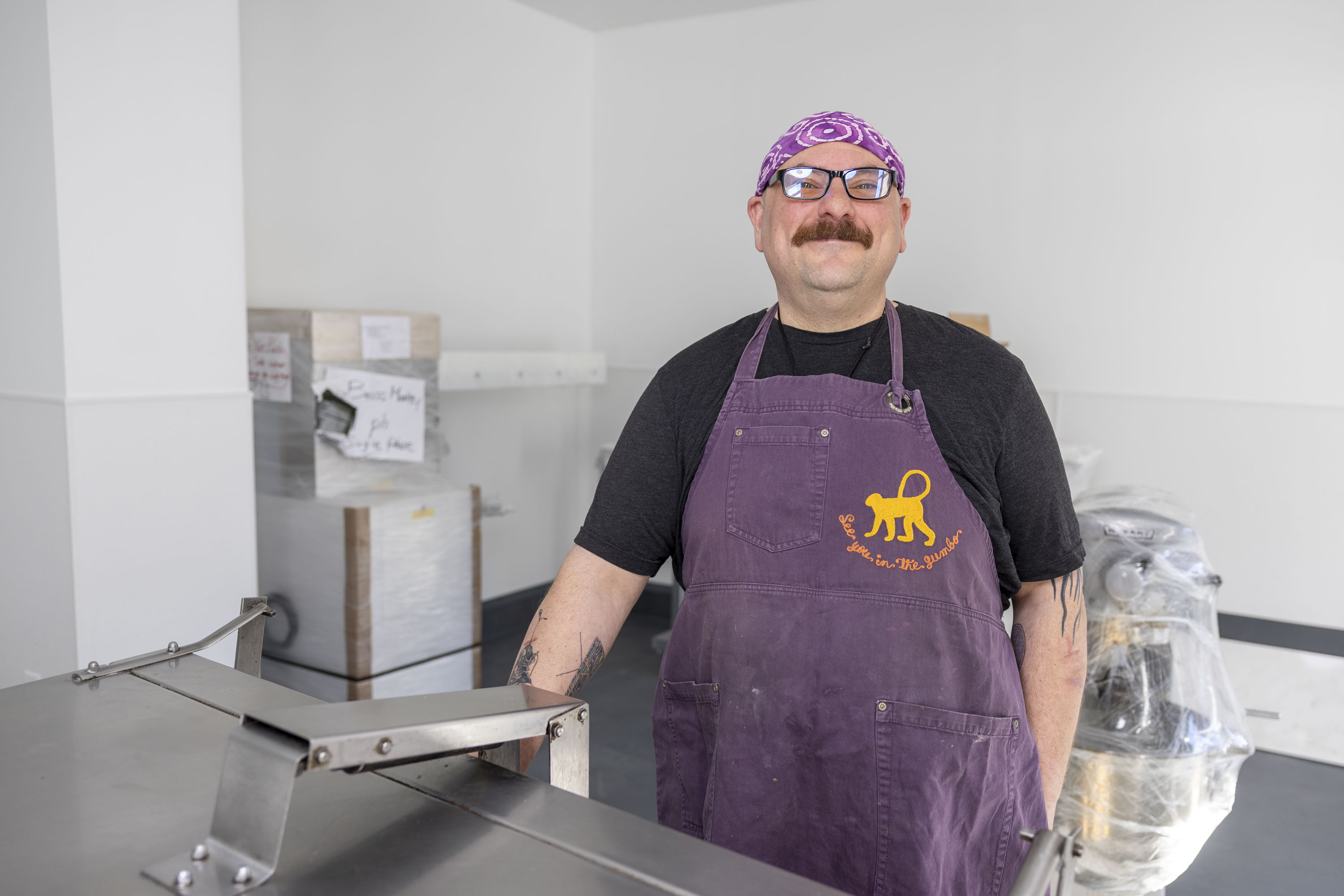
Zach Posnan, Owner of Brass Monkey Bread, poses for a portrait in his new space where he will setup his bakery on Tuesday, Nov. 17, 2026, in Philadelphia, Pa.Tyger Williams / Staff Photographer
This hobby eventually turned into a business:Brass Monkey Bread. For the last four years, Posnan, 45, has been one of Philly’s hardest-working pop-up bakers, setting up his bright purple-clothed table several days a weekat cafes and markets all across town, including Breezy’s Deli and Market on Washington Avenue, Ellie and Bird Coffee in Port Richmond, Riverwards in Fishtown, Bodie in Fairmount, and several others. Posnan’s bagels, sourdough loaves, and tomato pies (easily some of the best in the city) sell out practically instantly.
At last, that table is heading into retirement. Posnan has the keys to a brick-and-mortar bakery at 1439 S. 20th St. in Point Breeze, at 20th and Dickinson.
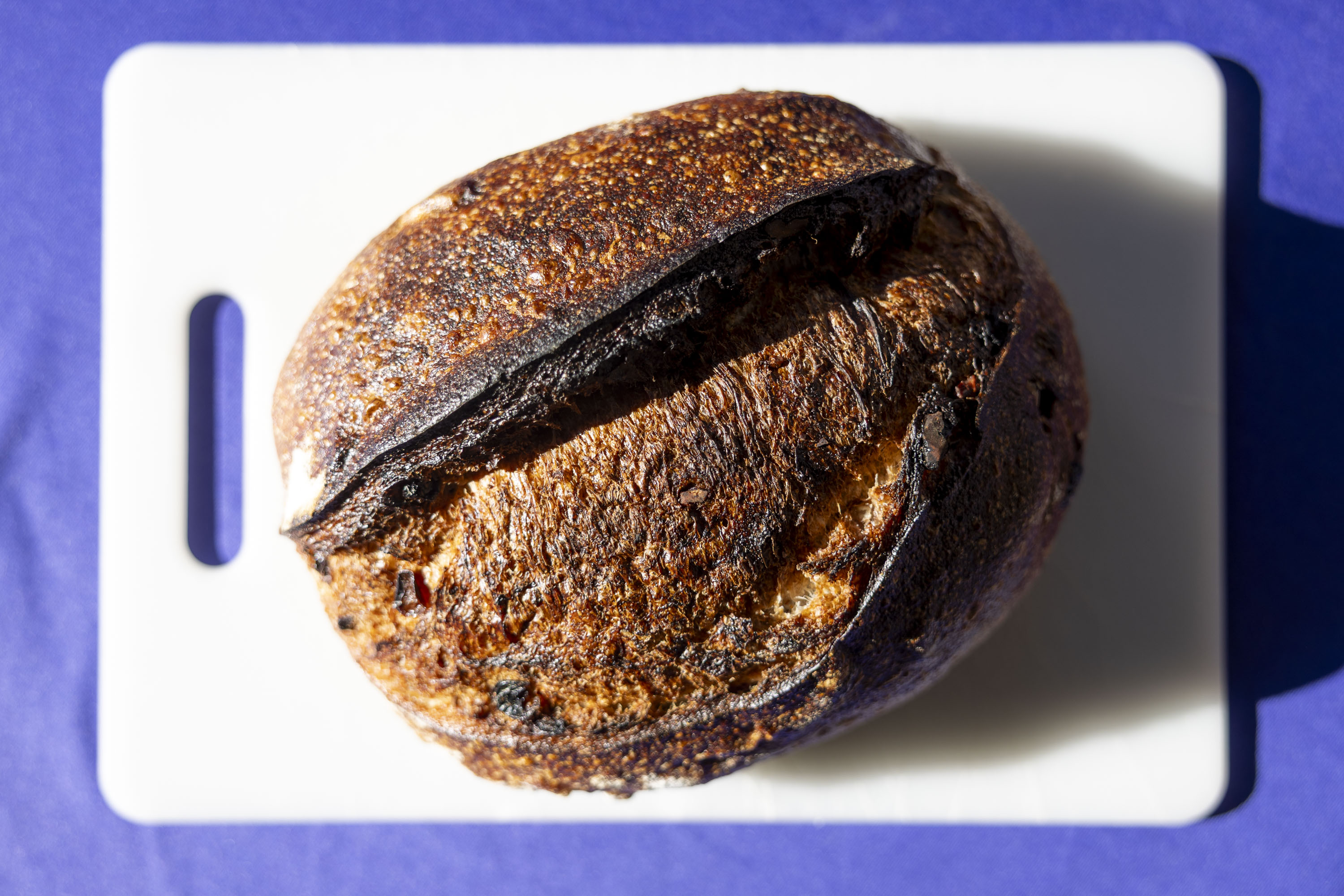
The Cranberry and Walnut Sourdough made by Zach Psnan from Brass Monkey Bread on Tuesday, Nov. 17, 2026, in Philadelphia, Pa.Tyger Williams / Staff Photographer
Posnan, who grew up in Elkins Park from age 7, moved to South Philly in 2009. Until recently, he was an award-winning teacher — he received a Lindback award for distinguished teachers in 2023 for his work at Conwell Middle School in Kensington.
“I miss working with the kids, but I don’t miss all the other stuff,” he said, referencing bureaucratic challenges. “At some point, I will start doing classes at the bakery for both adults and kids.”
Posnan signed the lease on Brass Monkey’s 1,400-square-foot space in March, but gutting the long-empty storefront — a former hoagie shop — was a long process. He received the keys last week and projects it will take six months to fully outfit the space.
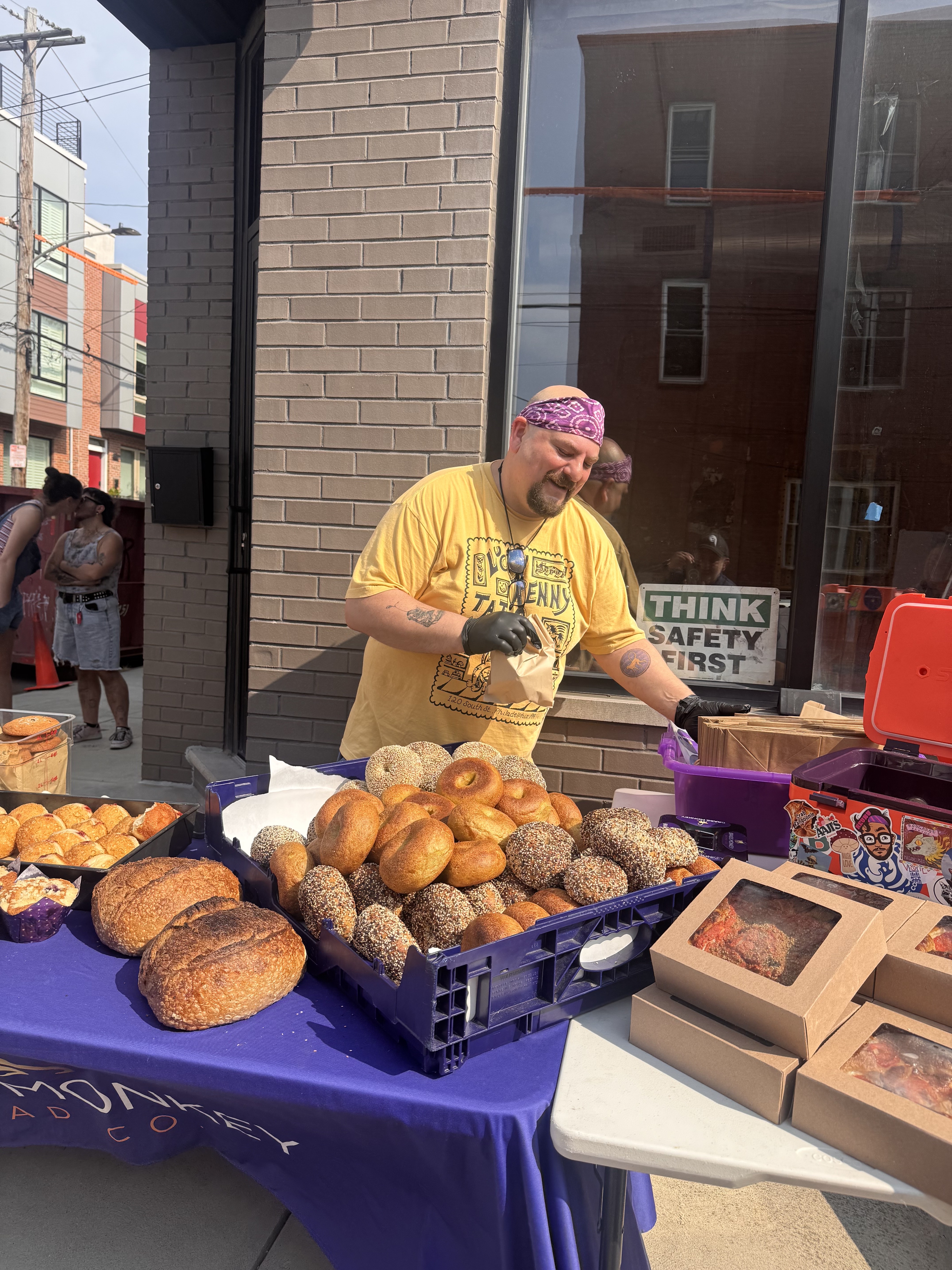
Baker Zach Posnan at one of his pop ups.courtesy of Brass Monkey Bread
Funding for the brick-and-mortarhas come from two sources so far: a GoFundMe, and a Kickstarter-esque fundraiser that Posnan calls “100 Little Monkeys” for individuals who invest $1,000 to receive perks like merchandise and free breakfast for a year.
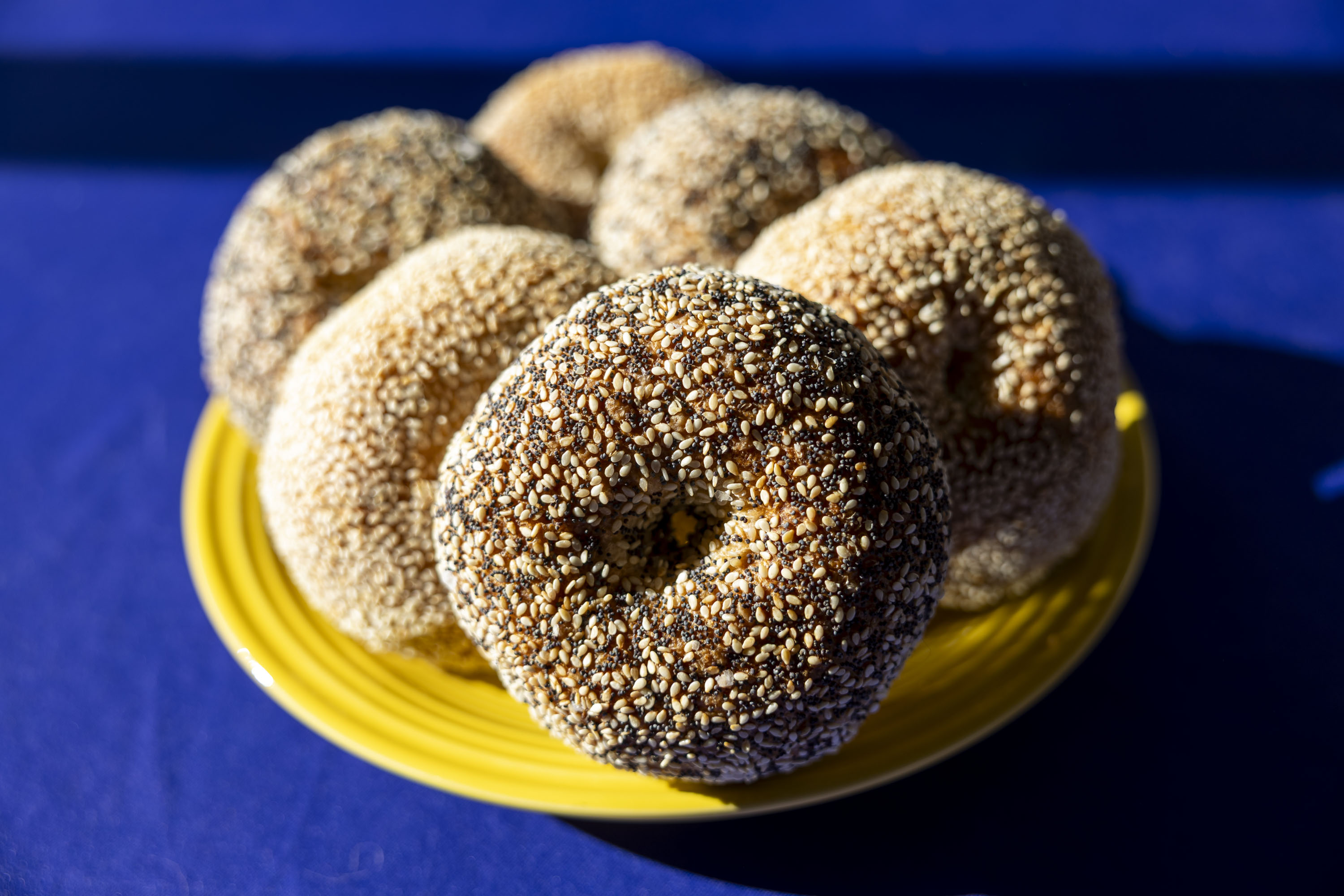
He anticipates the futuremenu will include his tomato pie, sourdough loaves, soft pretzels, babka, muffins, and his distinctbagels, in flavors like curry and “something” — coated in sesame, poppy, and flaky salt. (“It’s not quite everything but it’s definitely not nothing,” he said.) There will also be a coffee program, sandwiches, and wholesale bread for restaurants.
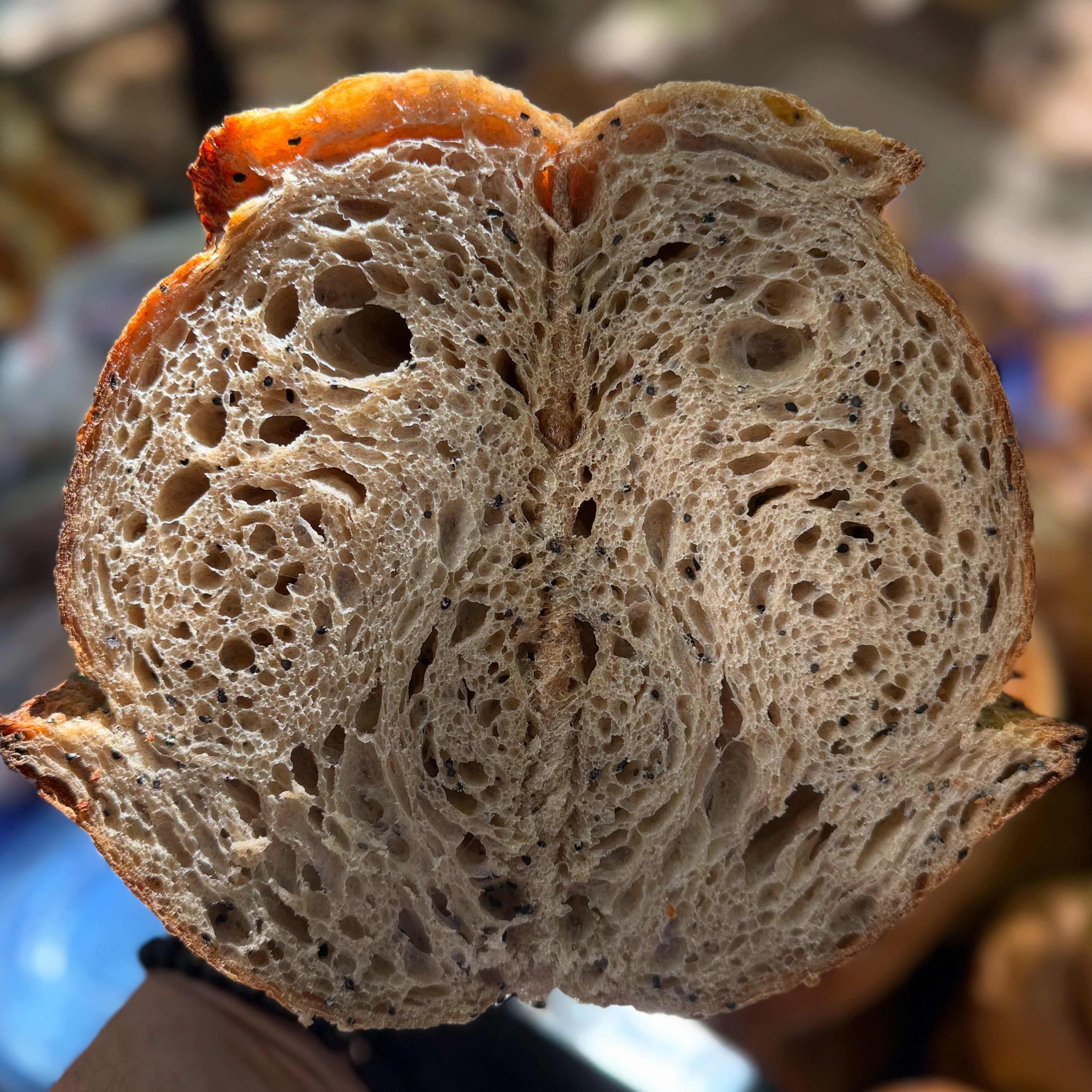
The interior of a loaf of sourdough from Brass Monkey Bread.courtesy of Brass Monkey Bread
Posnan hopes the bakery will become a community space. “I worked with the underserved in Philadelphia for eight years, and I’m going to do a lot of things there that I’m going to transfer here.”
One such thing will be the hygiene closet he kept in his former classroom that was filled with “tampons, pads, deodorant, toothbrushes, toothpaste, cologne, and anything the kids might want or need for personal hygiene. It was there for the whole school,” he said. “They could just come in, take what they needed, and my only rule was that they could not disturb my class.”
The bakery’s name comes from the expression, “cold enough to freeze the balls off a brass monkey” — something of an occupational hazard for Posnan, given he has spent most of the last few years vending outside.
He will soon wind down his pop-up schedule to once a week as he works on the bakery. Which means, for a time, those crusty breads and airy, focaccia-like tomato pies will become even more rare.
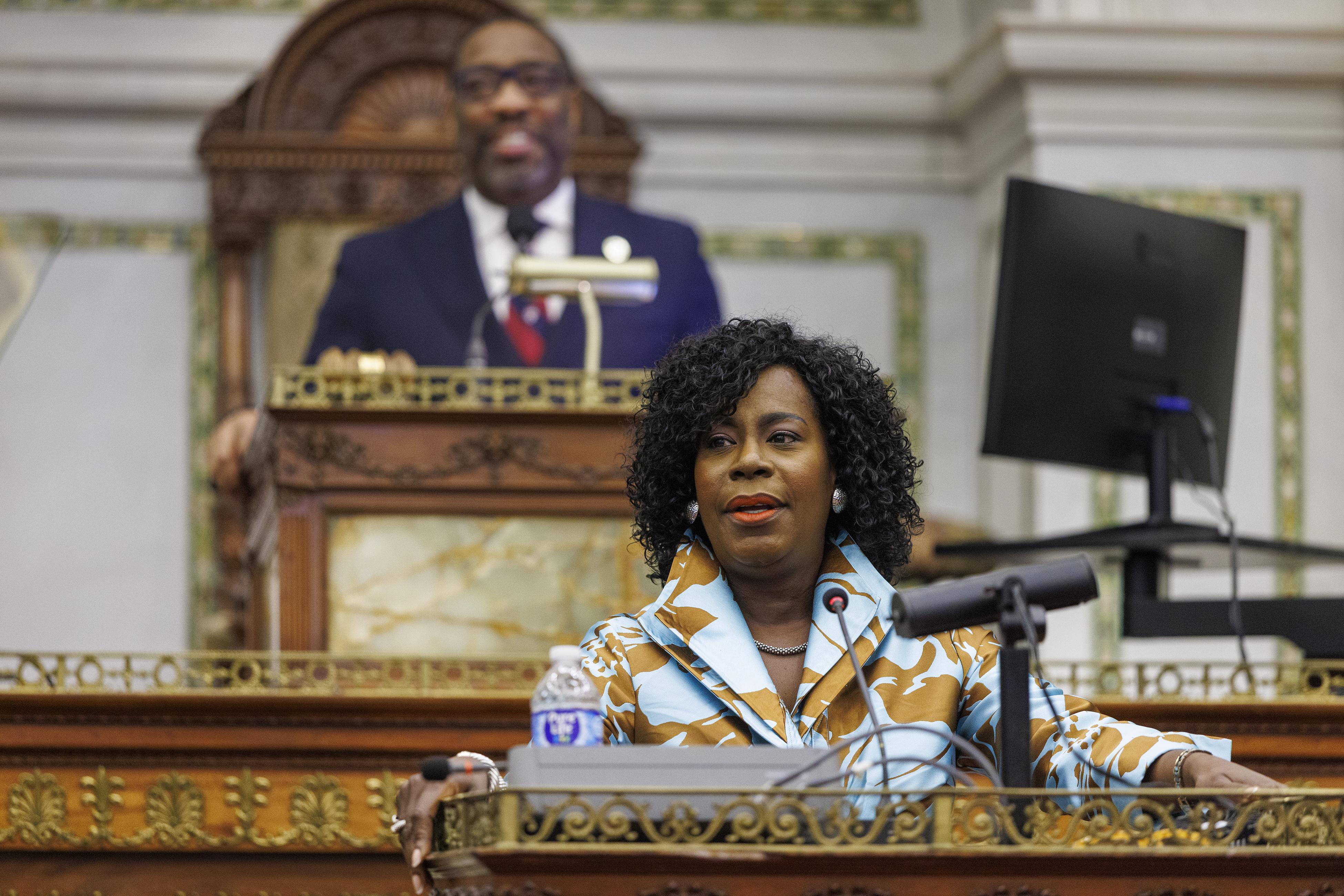
Philadelphia City Council bowed to community pressure and paused consideration of a zoning bill backed by Mayor Cherelle L. Parker that would add modest amounts of residential capacity to neighborhood commercial corridors.
The bill is part of Parker’s push to add 30,000 new homes to the city. It would allow properties with zoning that mostly applies to corner stores — known as CMX-1 — to host additional apartments, with the number depending on a building’s size. Most properties zoned this way would be able to add only one unit.
The bill would allow property owners to add ground-floor units where commercial demand is low, so half the building doesn’t sit empty, and to add more apartments above larger commercial buildings where possible.
But a group called the RCO Matters Network submitted a letter of protest to City Council in advance of Thursday’s meeting and spoke against the proposal during the public comment session. Registered Community Groups (RCOs) are the officially acknowledged neighborhood groups that take part in zoning matters.
“This is not a minor procedural change,” the group’s letter read. “The RCO process exists to ensure that Philadelphia’s communities [have a voice] — especially those that have historically been most vulnerable to displacement and gentrification.”
Currently, if property owners want to add an apartment to a CMX-1 zoned property, they have to request a variance from the Zoning Board of Adjustment, which necessitates a meeting with the local RCO beforehand.
At the zoning board hearing, the RCO’s opinion is considered but not determinative.
The letter opposing Parker’s bill is signed by a variety of community groups, predominantly from majority Black neighborhoods. These include Concerned Citizens of Point Breeze, the Cobbs Creek Area Residents RCO, and Winfield Residents Association, among others.
Parker’s bill has already faced pushback from within City Council. In October, Brian O’Neill, a Republican who represents the Far Northeast, and Cindy Bass, a Democrat who represents much of the Northwest, exempted their districts from the legislation.
The Planning Commission noted that O’Neill and Bass’s districts are on the outskirts of the city and aren’t as dominated by the dense development patterns seen in other parts of Philadelphia.
With larger lots and commercial buildings, the commission framed their exemptions as justified, but opponents of Parker’s bill argue those carve-outs should be emulated elsewhere.
“These bills [from O’Neill and Bass] are there to protect the communities in their districts,” Tinamarie Russell of the North Central Philadelphia Susquehanna CDC said during public comment at City Council. “But my question is: Why shouldn’t every Philadelphia neighborhood receive the same consideration?”
The Parker administration declined to comment on City Council’s decision to delay a vote on the legislation. Council President Kenyatta Johnson, who had the bill introduced, did not respond to a request for comment.
In addition to pausing the legislation, the RCO Matters Network called for a 45-day review period and a meeting with policymakers.
They also demanded that “the final version of this legislation preserve the RCO process and the voice of the voters — for every neighborhood, in every district, across this city,” the letter reads.
State Rep. Chris Rabb officially won the 3rd Congressional District on Tuesday to succeed retiring U.S. Rep. Dwight Evans and become the first democratic socialist to represent Philadelphia in Congress.
Rabb, 56, of East Mount Airy, is a progressive who emerged from a tightly contested primary that challenged the city’s longstanding Democratic establishment.
In one of the bluest congressional districts in the country, he did not face a Republican in Tuesday’s election. Dennis Mahoney, a humanitarian aid worker from South Philadelphia, appeared on the ballot as an independent candidate.
During a stop at West Philadelphia High School on election night, Rabb said he was excited to see the broader level of enthusiasm among young people for this election, and how they have organized to get out the vote for races all over, not just his own.
“That is a beautiful expression of participatory democracy and the collective power of young people to change the world,” he said.
(function () {window.addEventListener(‘message’, function (e) { var message = e.data; var els = document.querySelectorAll(‘iframe[src*=”‘ + message.id + ‘”]’); els.forEach(function(el) { el.style.height = message.height + ‘px’; }); }, false); })();
Rabb won the May primary against State Sen. Sharif Street and physician Ala Stanford by performing well in Northwest Philadelphia, home to a dense pocket of pro-establishment Black voters, and wards that often support progressives. The district covers the western half of the city and South Philadelphia.
After securing the nomination, Rabb spent much of the rest of the year supporting progressive candidates as they tallied primary wins in other states. Tuesday’s results will measure the expanding footprint of the party’s leftist bloc, and will determine which lawmakers Rabb will join on Capitol Hill, including U.S. Rep. Alexandria Ocasio-Cortez and Michigan U.S. Sen.-elect Abdul El-Sayed.
(function () {window.addEventListener(‘message’, function (e) { var message = e.data; var els = document.querySelectorAll(‘iframe[src*=”‘ + message.id + ‘”]’); els.forEach(function(el) { el.style.height = message.height + ‘px’; }); }, false); })();
The Michigan race was cited by Kristina Wagers, a 32-year-old voter in Point Breeze who cast her ballot for Rabb Tuesday.
“I’m hoping that a lot of more left-leaning, younger folks get into Pennsylvania politics like Abdul El-Sayed,” she said. “We need people not afraid to make change instead of going with the establishment.”
For Leticia Marteleto and Fernando Lara, dual citizens of the United States and Brazil, the recent elections in Brazil rejecting the right wing were a motivator to vote in the Pennsylvania election.
“It’s not just about this country, but I think it is a broader movement at this point,” said Marteleto, 54 and a professor at the University of Pennsylvania.
Both were enthusiastic about Rabb’s progressive platform and saw Gov. Josh Shapiro as too centrist, though they both voted for him.
“We need to fight for progressive policies and not accommodate so easily,” said Lara, 56.
Staff writers Nate File, Henry Savage, and Zoe Greenberg contributed to this article.
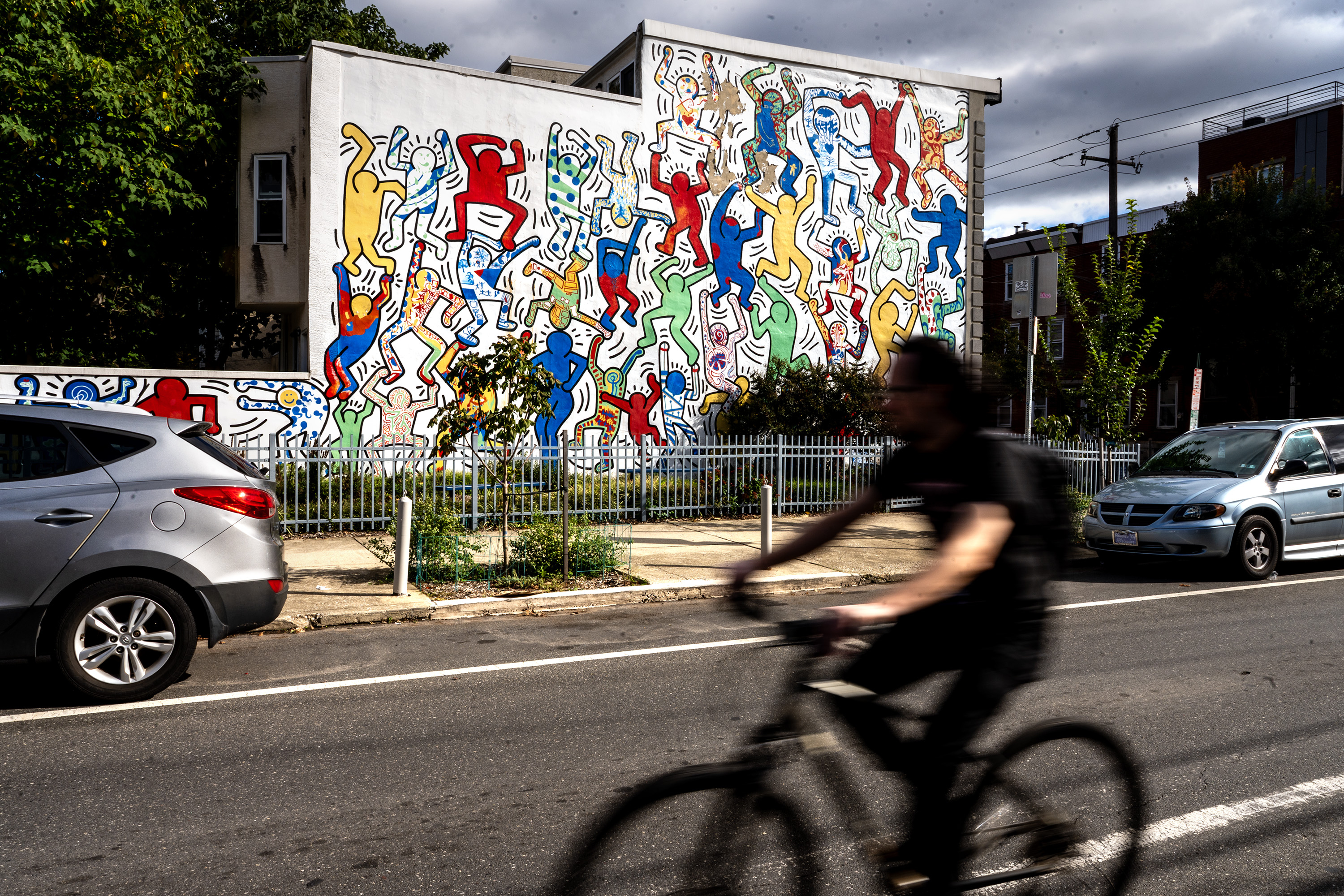
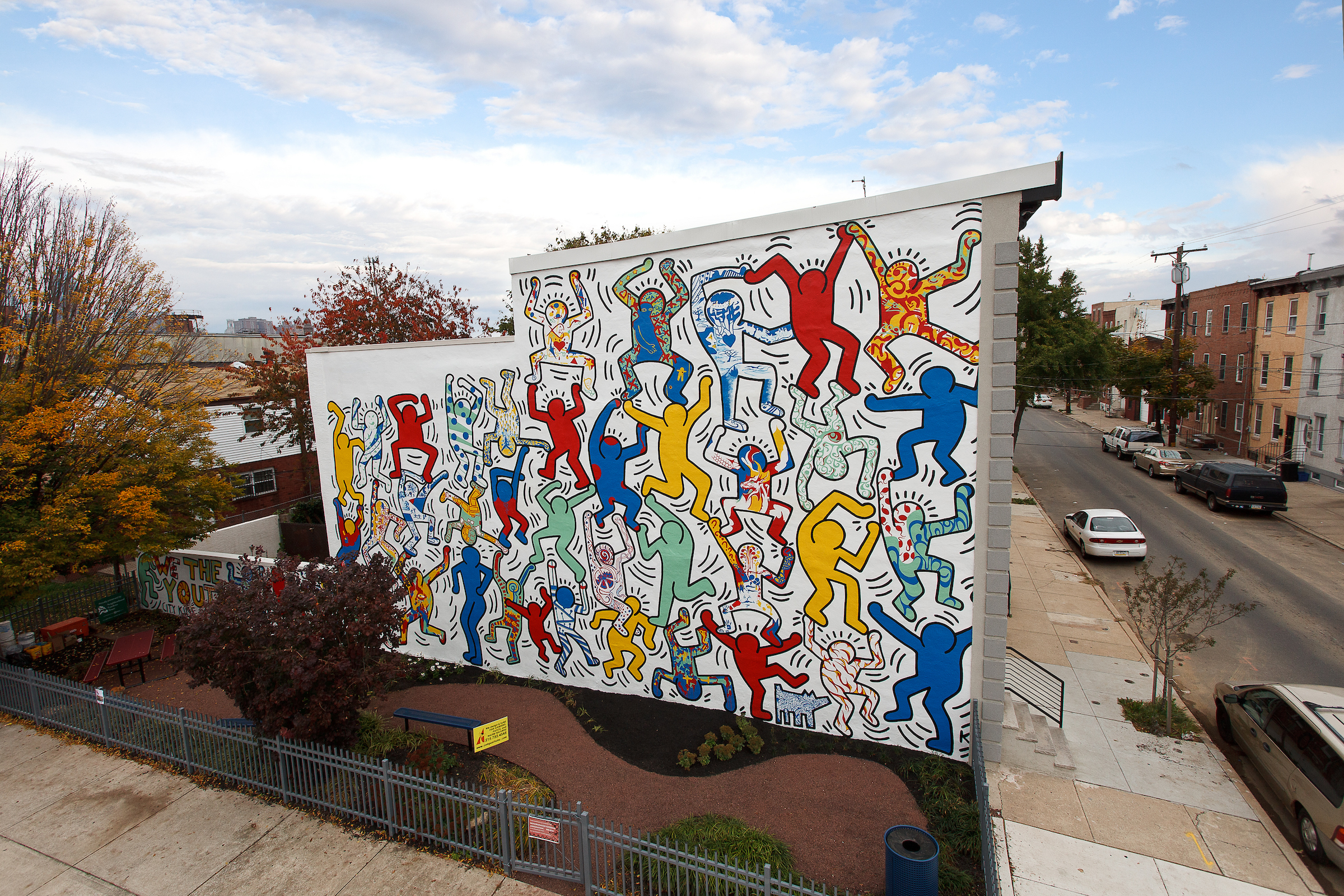
Keith Haring’s famed 1987 mural We the Youth, the artist’s only collaborative mural that still stands in its original location, is now an officially designated historical place.
At a public meeting on Friday, the Philadelphia Historical Commission voted unanimously to add the Point Breeze mural, on a rowhouse at 22nd and Ellsworth Streets, to the city’s Register of Historic Places.
With this designation, the building’s owner, listed as “2147 Ellsworth LLC” in city records, will not be allowed to remove or alter the appearance of the mural without the Historic Commission’s review.
It’s the fifth mural in Philadelphia to be an officially designated and protected landmark, and only the first outdoor mural to be so.
The other designated murals are The Dream Garden inside the Curtis Center, the New Deal-era murals inside the Family Court building, the frescoed ceiling at Old City’s St. Augustine’s Roman Catholic Church, and Iron Plantation Near Southwark inside the Southwark Station Post Office in South Philly.
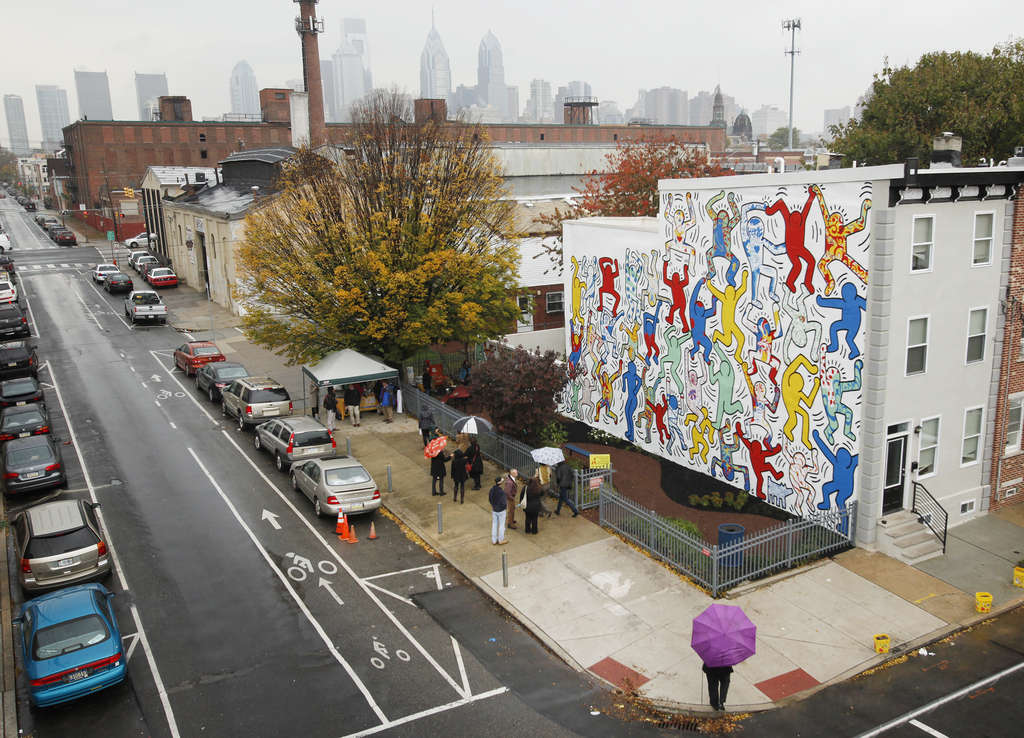
“We the Youth” in 2013, shown at 22nd and Ellsworth Streets, with a small park next to it.
“To finally see the community here stand for the recognition of this unique piece of collaborative work is particularly meaningful,” Simon Castets, executive director of the Keith Haring Foundation, said after the decision, citing Haring’s connection to Philadelphia and the foundation’s mission to preserve the artist’s local works.
Haring, a native of Reading, was one of the defining artists of the 20th century and known for his bold drawings and colorful graffiti-style paintings. He died in 1990, at age 31, due to AIDS-related complications.
In 1987, Haring and a group of 14 Philly and New York students collaborated on We the Youth to commemorate the bicentennial of the U.S. Constitution.
The mural features vibrant figures dancing across the facade of a three-bedroom rowhouse. In 2013, Mural Arts Philadelphia undertook a massive restoration of the mural, located on a shared wall at 2147 and 2149 Ellsworth Streets.
Friday’s decision comes after months of advocacy from the Haring Foundation, Mural Arts, and the Neighborhood Gardens Trust, which collectively oversee the mural’s upkeep.
The three parties have pushed for the mural’s historical protection because of the mural’s artistic and cultural significance to Point Breeze.
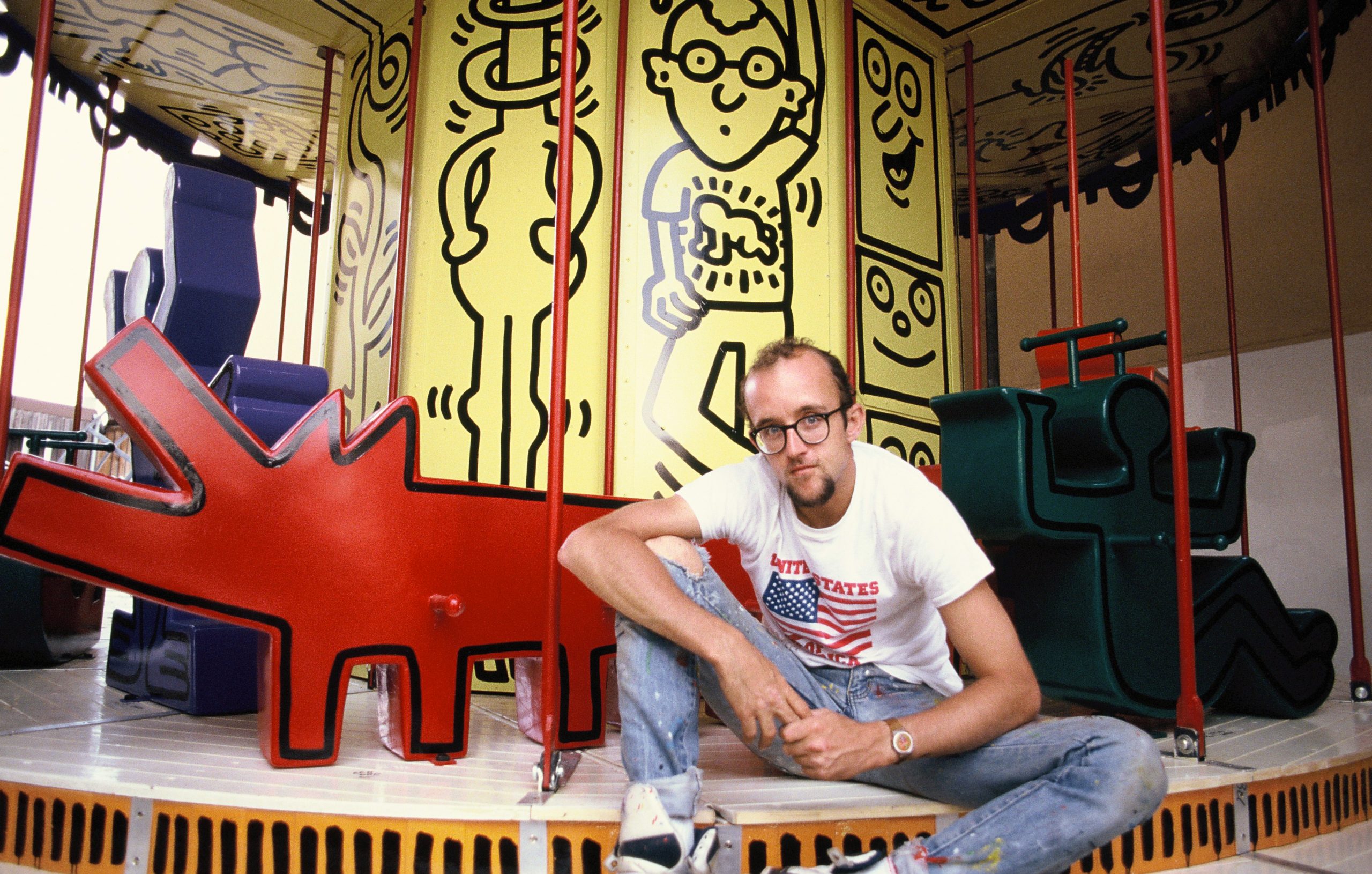
Keith Haring with a painted carousel he created for a German art park in 1987.
“This is an amazing moment, and I’m so proud of our city,” Mural Arts founder and former CEO Jane Golden said. Ahead of the vote, she said, “I thought, ‘Philly, you have to come through.’ And the city did. It was beautiful. It underscores why public art matters.”
The meeting largely drew support from Point Breeze residents and other community members, including those wearing shirts with Haring’s signature figurines.
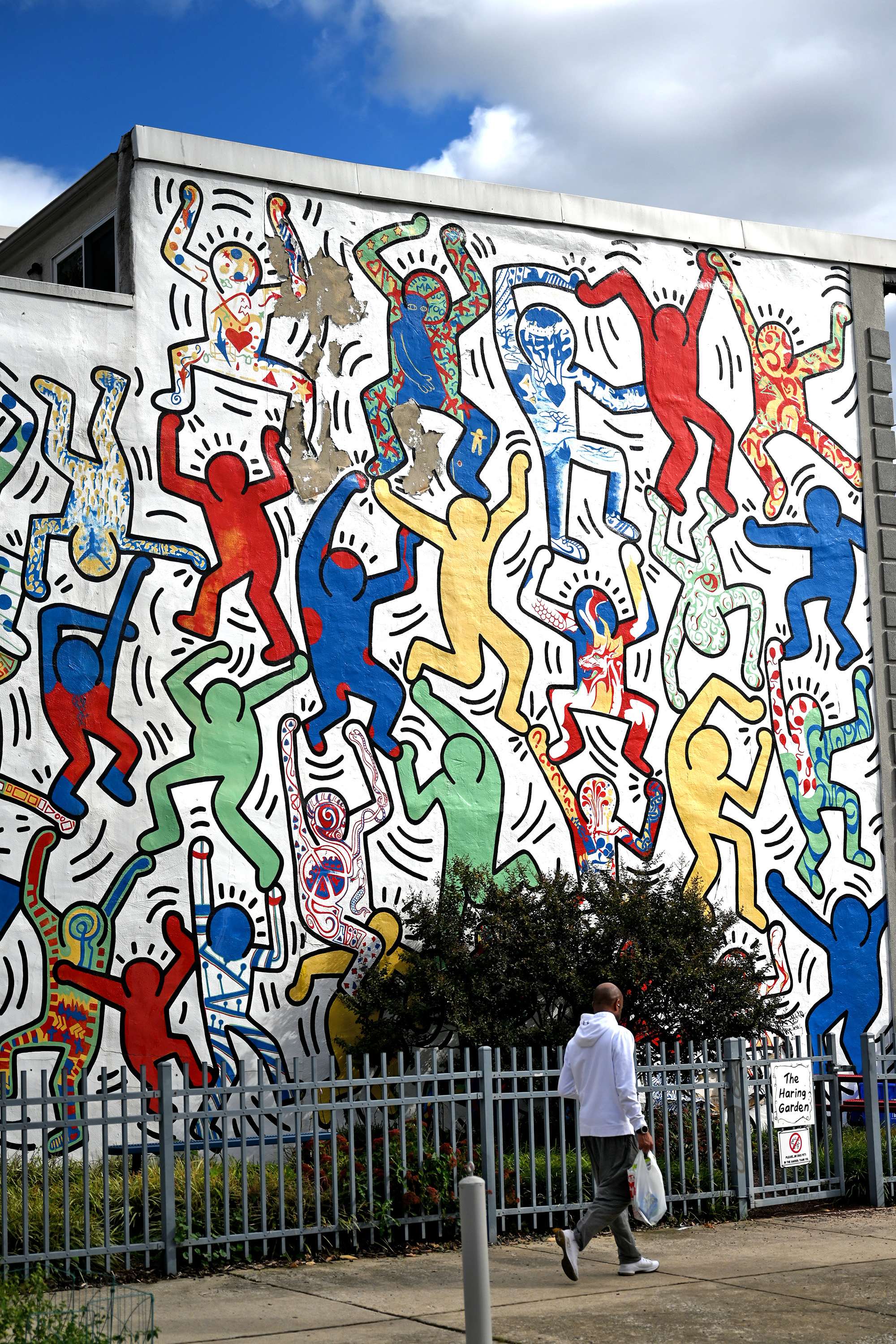
Oct. 12, 2026 photo of the 1987 mural “We the Youth” created by Keith Haring in Point Breeze. It is the only collaborative public mural by the pop artist remaining intact and on its original site. In Oct. 2026 it was designated a Registered Historic Place by the Philadelphia Historical Commission.Tom Gralish / Staff Photographer
However, prior to the vote, attorney Sean Whalen, who represents 2147 Ellsworth LLC, spoke out against the designation, citing the extensive preservation efforts needed to maintain the mural in its current state and location. He said he supported a “methodology that is feasible.” But under the bounds of this designation, these efforts, he said, are not “logistically capable.”
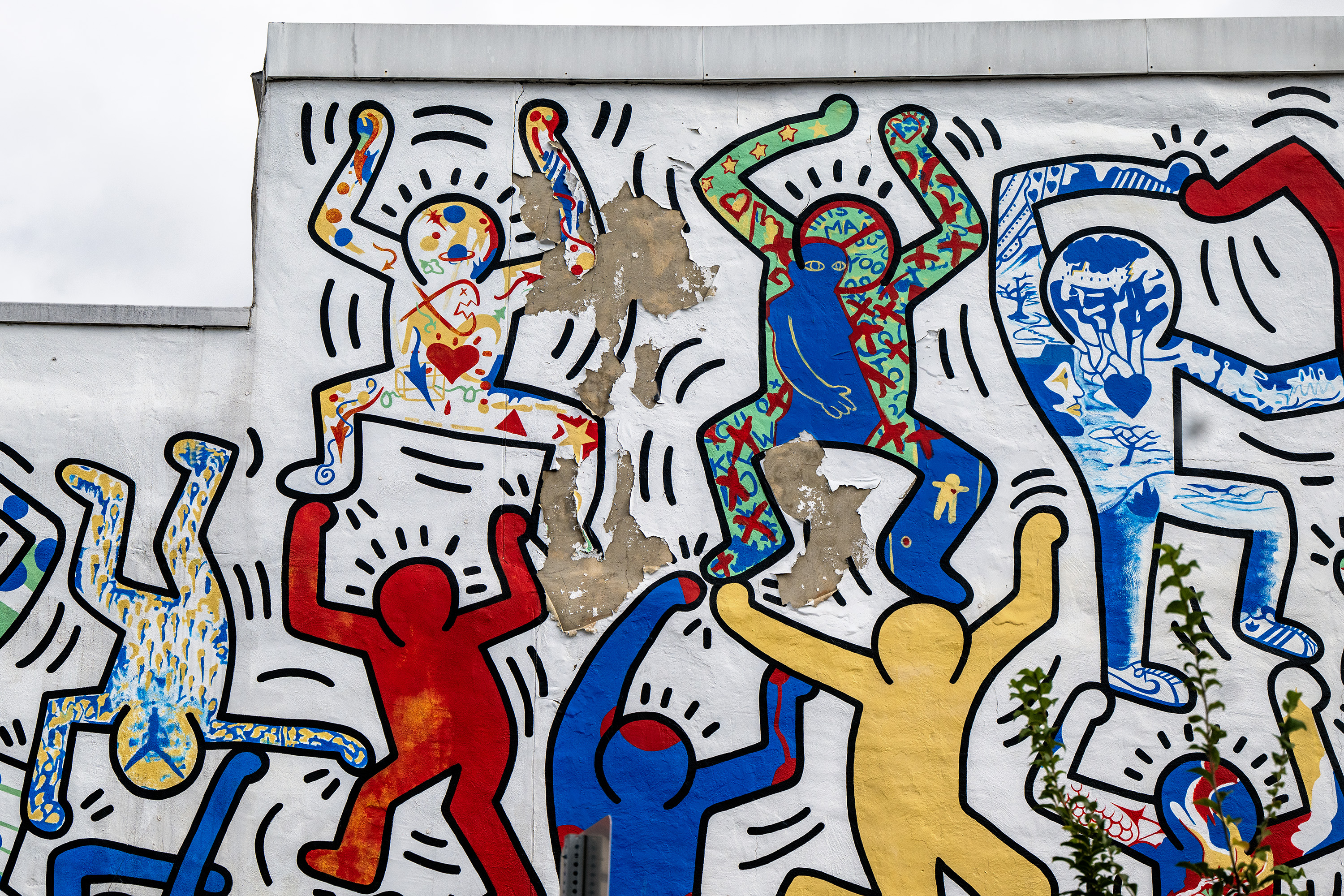
Whalen and Ori Feibush, the propertymanager at 2147 Ellsworth LLC, pointed to the structural infirmities of the wall on which the mural is placed, saying the mural has delaminated from the underlying salmon brick.
“We are not talking about a wall that is failing. We are talking about a failed wall,” Whalen said.
Feibush shared a video showing the back of the mural that he recorded last week with a scope camera. As a result of a poor “stucco and plaster connection,” he said, there aregaps between the mural and its support wall.
“There is absolutely no portion of the mural that is attached to the plaster in the brick wall.It is 100% freestanding,” saidFeibush who, with Whalen, suggested the removal and reinstallation of the mural as the best step forward.
Oct. 12, 2026 detail of the 1987 mural “We the Youth” created by Keith Haring in Point Breeze. It is the only collaborative public mural by the pop artist remaining intact and on its original site. In Oct. 2026, it was designated a Registered Historic Place by the Philadelphia Historical Commission.Tom Gralish / Staff Photographer
Throughout the hour-and-a-half-long discussion, commissioners Zachary Frankel, Emily Cooperman, Robert Thomas, and others agreed that the damage to the mural and shared party wall is common among decades-old properties and that there are viable options for preservation.
“There are many possibilities,” Cooperman said regarding the next steps in the mural’s preservation.
Current Mural Arts executive director Emily Mello said she and others will work diligently with community partners to ensure this newly designated historical marker and piece of Haring’s legacy remains a “cultural memory” that never fades.
“It may take a lot of resources,” Mello said. But the advocacy of the community members who are most impacted by the mural will anchor this initiative.
Philadelphians can expect to see fewer children darting through water geysers in front of City Hall and paddling around the pond at Sister Cities Park in the coming decades.
The city and suburbs are losing their populations of kids, and fast.
Between 2010 and 2025,Philadelphia’s number of residents under 18 dropped by 31,038, to 312,490 children in 2025 — a decline ofabout 9%, according to an Inquirer analysis of Census Bureau data. That trend is even more dramatic for children under 5, whose population fell 12%. Those are notable shifts when compared with the city’s overall population gain of about 3%.
This is not unique to Philly. In the last 15 years, nearlyevery major U.S. city has lost residents under 18, said Katie Martin, who directs research on Philadelphia trends and public opinion for Pew Charitable Trusts. And elsewhere in the Philadelphia region, every suburban county has seen its number of children decline during that span. The trend has the potential to become a big workforce and financial problem if it does not turn around.
Demography expertssay surveyrespondents often cite the climbing cost of living and political concerns as reasons for not having kids. Beyond logistics, people in the Philadelphian area say, the decision to not have children is driven by a desire for freedom and flexibility.
“I feel like I wouldn’t have been able to do and experiment as much … if I had been responsible for other human lives,” said Maureen Ferguson, 44, of Souderton, Montgomery County, who has never looked back on her choice to not have kids, filling her life with artistic endeavors like music, theater, illustration, and stand-up comedy.
The population and societal trends driving Philly’s drop in kids
A confluence of changes in population trends is helping demographers piece together what is driving the drop in kids.
For one, a reduction in teen pregnancies and births is changing the landscape. Teen births in Philadelphia fell from 3,072 in 2010 to 809 in 2025, according to data Martin and Pew sourced from the state.
“That has been a huge change,” Martin said. “Not just in Philadelphia, but something you’re seeing nationwide.”
It is a component of a larger trend of having children later in life, she said, which usually leads to each family having fewer children overall.
The pandemic may have contributed as well, as the data show a particularly sharp decline in the number of children in the city between 2020 and 2023.
The counties around Philly have likewise seen notable drops in their populations of children. Between 2010 and 2025, declines in the number of children ranged from 3% in Montgomery County to 12.7% in Bucks County.
Finances have been a recurring theme, Martin said. In a survey Pew conducted last year in Philly, both women and families rated their financial situation as worse than during the pandemic.
(function(){function e(){window.addEventListener(`message`,function(e){if(e.data[`datawrapper-height`]!==void 0){var t=document.querySelectorAll(`iframe`);for(var n in e.data[`datawrapper-height`])for(var r=0,i;i=t[r];r++)if(i.contentWindow===e.source){var a=e.data[`datawrapper-height`][n]+`px`;i.style.height=a}}})}e()})();
Rising housing and childcare costs are likely contributing to the trend in Philly and beyond, said Genevieve Diebold, a senior planning data specialist with the Delaware Valley Regional Planning Commission. She added that fertility rates started decreasing meaningfully following the Great Recession of 2007-09.
Costs are certainly one thing that have deterred Avery Walker, 32, who lives in Point Breeze.
“I know how expensive children are,” she said. “They are a drain on all of your resources — mentally, emotionally, physically, financially — and I would have to give up a lot.”
Prioritizing freedom and flexibility
For Walker and othersThe Inquirer interviewed who do not have kids and do not plan to, the reasoning runs deeper thancost. It comesfrom a desire to live spontaneously and prioritize hobbies, health, and relationships with partners and friends.
Walker, who works in supply chain, likes living on her own schedule, sleeping in, traveling, trying new restaurants, and attending concerts and does not want to give up or modify how she does those things in the ways she likely would need to if she had kids, she said.
Jennifer Gamba, a 48-year-old paralegal in Fairmount, has been married to her husband for about 14 years. They never had strong feelings one way or another about having kids, Gamba said. Over time, the biological door began to close, and that was OK with them.
“It just wasn’t really something we prioritized,” she said.
Maintaining a good relationship with her husband, managing her rheumatoid arthritis, running marathons, and exploring national parks took precedence over kids.
“I think you have to be all in, and I don’t know that I am all in,” Gamba said. “I think I could do it, but it might not have been the best version of me.”
For Kelley Galloway, a 38-year-old real estate agent in Fishtown, finances and politics are factors. The idea of raising children, especially girls, in this political and economic climate is scary, she said. But those issues just reaffirmed the decision she had made long ago.
Throughout her adulthood, Galloway has focused her energy on buying a home, creating a dinner club for women in Philly, advancing in her career, and traveling.
“I went to three concerts this week, and none of them were planned,” Galloway said. “That’s something I could never do if I had children, and that’s why I moved to the city. I wanted to be able to enjoy my life and experience things.”
Jessica Hawk, 57, always knew she didn’t want kids. She never liked playing with dolls as a child, preferring instead to play manager or teacher.
“Whatever that maternal thing is that drives you to have a child, that is missing in me,” Hawk said.
The retired English teacher in Glassboro, Gloucester County, has one million TikTok followers for her videos about education, but she started receiving attention from a different faction about six years ago when she began posting about being happily child-free. Her videos were seen around the world and resulted in her doing interviews for Russian and German media, she said.
“I had so many women in my DMs saying to me, ‘I wish I could forgo having children but, in my culture or in my family or in my religion, I don’t have a choice,’” Hawk said.
She spoke out, she said, to help women who don’t want kids understand just how many like-minded others are out there.
What does this trend mean for the region’s future?
This population shift could become even more stark, and eventuallyspell major issues for the city and the suburbs.
Foreign-born residents have been driving the region’s population growth in recent years. Since those residents tend to have more children than people born in the United States, the immigrant population may be mitigating the drop in young residents and masking what would be an even more dramatic decline, said Letícia J. Marteleto, a sociology professor at the University of Pennsylvania.
But that balance may be short-lived as President Donald Trump’s administration continues its dramatic efforts to curb immigration.
An uneven distribution ofyounger and older residents could compromise bedrock systems designed to keep people financially secure and physically healthy into old age.
Social Security and Medicare rely on contributions from those in the workforce. If there are fewer young people paying into the system and more older people extracting from it, it is increasingly difficult to cover each older resident.
“The whole thing becomes very expensive,” Marteleto said.
The healthcare system, she said, would become similarly imbalanced, an especially acute problem in a place that dubs itself a city of “eds and meds.”
Those dire consequences are a long ways away, she said, but, at this point, it is hard to imagine the population trends turning around without significant government intervention like affordable childcare, housing, and healthcare.
“If we don’t do the necessary things to provide women with the right circumstances for wanting to have more children,” Marteleto said, “we are going to keep getting what we are getting.”
Correction: Philadelphia’s population change was previously misstated. Population grew by 3%.
For nearly 40 years, Keith Haring’s We the Youth has been a highlight in Philadelphia’s Point Breeze neighborhood.
The vibrant figures dancing across the facade of a three-bedroom rowhouse at 22nd and Ellsworth Streets is the only collaborative Haring mural that remains intact in its original location.
Now it’s one step closer to being added to the city’s Register of Historic Places. On Wednesday, an advisory group of the Philadelphia Historical Commission unanimously approved its nomination to be included.
If approved at next month’s Philadelphia Historical Commission meeting, the mural will be added to the Philadelphia Register of Historic Places. That would make it the first outdoor mural to be an officially designated and protected landmark in the city’s history. It’ll be only the fifth mural to be designated as such, after The Dream Garden inside the Curtis Center, the New Deal-era murals inside the Family Court building, the frescoed ceiling at Old City’s St. Augustine’s Roman Catholic Church, and Iron Plantation Near Southwark inside the Southwark Station Post Office in South Philly.
Keith Haring, who died in 1990, with his painted carousel. MUST CREDIT: Sabina Sarnitz/Luna Luna/Keith Haring Foundation/Artestar
Haring, the Reading, Pa., native, whose bold drawings and vivacious paintings meld the worlds of graffiti and contemporary art, became one of the defining artists of his generation. He died in 1990, at age 31, due to AIDS-related complications.
In 1987, Haring and a group of 14 Philly and New York students collaborated on We the Youth to commemorate the bicentennial of the U.S. Constitution.
In 2013, Mural Arts Philadelphia undertook a massive restoration of the Haring mural, located on a shared party wall at 2147 and 2149 Ellsworth Streets. In recent months, organizations have advocated for the designation of the pop artist’s mural.
During Wednesday’s meeting, the nomination was presented by Alex Till, a historic preservation planner for the City of Philadelphia, who referenced designation criteria A and E because of the mural’s artistic and cultural significance.
“We the Youth” sits at 22nd and Ellsworth Streets, with a small park next to it. Photo from 2013.
According to the City of Philadelphia website, criteria A is considered for “significant character, interest, or value as part of the development, heritage, or cultural characteristics of the City, Commonwealth, or Nation or be associated with the life of a person significant in the past.” Criteria E is for the work of a “designer, architect, landscape architect or designer, or engineer whose work has significantly influenced the historical, architectural, economic, social, or cultural development of the City, Commonwealth, or Nation,” according to the website.
Till was joined by Mural Arts Philadelphia founder and former leader Jane Golden; Jenny Greenberg, executive director of the Neighborhood Gardens Trust; and Simon Castets, executive director of the Keith Haring Foundation.
Golden said the mural is a part of the “unique fabric of Philadelphia.”
“There are few opportunities to preserve history while it is still physically present and still connected to our city and our community. This is the moment,” Golden said.
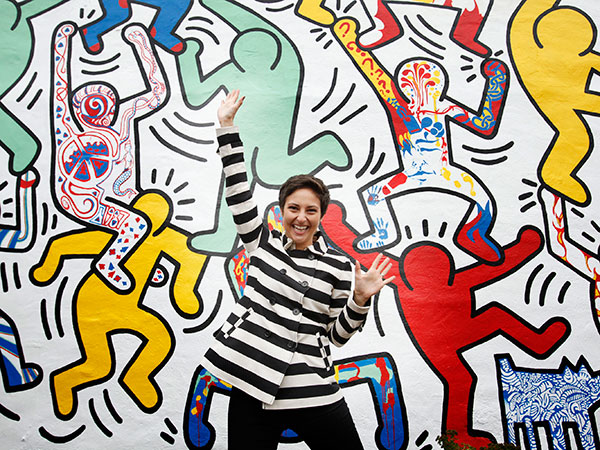
Erica Bryant mimics a Keith Haring figure. “We the Youth,” a Keith Haring mural created in 1987 at 22nd and Ellsworth Streets, has been restored by artists from the Mural Arts Program. Photo from 2013. ( MICHAEL S. WIRTZ / Staff Photographer )Michael S. Wirtz / Staff Photographer
Greenberg said amid the ongoing threat of development and gentrification in this city, it is almost rare to find a mural that has been at the same site for 40 years. And this is why historical designation is necessary.
“The mural’s location reflects Haring’s commitment to making art accessible to the public, regardless of socioeconomic status, and to engaging young people as creative partners,” she said.
The advisory group, comprising architects, historians, and preservation experts, agreed that the mural meets the criteria. After nearly an hour of deliberation, including comments from Philadelphia residents who tuned into the Zoom meeting, the group approved the nomination and recommended it to the commission for next month’s meeting.
The commission will vote Oct. 9. If approved, We the Youth would be the city’s first designated mural in over four years.
A potential historic designation will not affect the larger property and will be restricted to the mural and the wall it is painted on. The building’s owner will be required to maintain the structural integrity of the wall and commit to set obligations, with Mural Arts making any necessary restorations to the mural itself.
If the mural is designated, the building’s owner, listed as “2147 Ellsworth LLC” in city records, will not be allowed to remove or alter the appearance of the mural without the Historic Commission’s review.
While speakers were impassioned by the possibility of historical designation, 2147 Ellsworth LLC manager Ori Feibush, serving as a representative at Wednesday’s committee meeting, opposed the nomination.
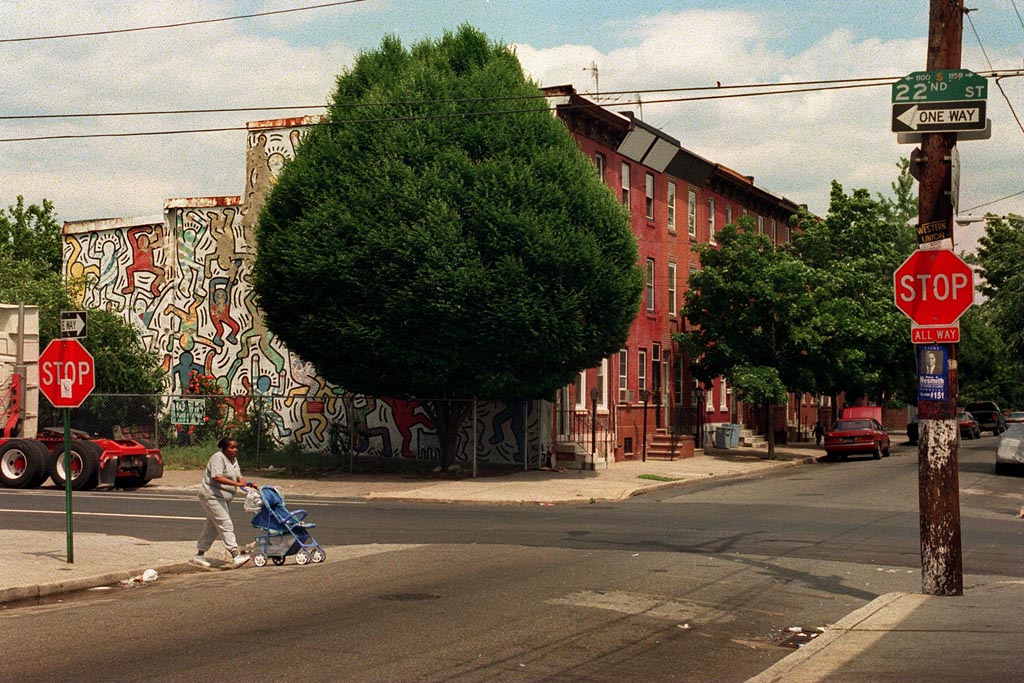
Kutztown, Pa., native Keith Haring came back to Philadelphia at the height of his worldwide popularity in 1987 and painted a mural at 22nd & Ellsworth Streets with the help of neighborhood kids from the Brandywine Workshop. This photo, from May 27, 1999, shows the mural before restoration. (Tom Gralish/Staff photographer)
Feibush warned that the designation would impede the building’s renovation efforts, which may require the demolition of the rowhouse’s interior, based on analysis from engineers. Since purchasing the property eight years ago, Feibush said his company has worked diligently to reduce water infiltration and minimize movement to “preserve the mural.”
Despite years of efforts, he said, the mural has delaminated from the underlying salmon brick and is in a fragile condition.
“The removal and, ultimately, reinstallation of the mural here is the only path to create something that can be here long term,” Feibush said.
By gaining historical designation, he said, there will be temporary plans made to preserve the site, rather than long-term fixes that will ensure the mural lasts “another 100 years,” rather than the five to seven he projects.
“We the Youth,” a Keith Haring mural painted in 1987 at 22nd and Ellsworth Streets, was restored to its original vibrancy in 2013 by the Philadelphia Mural Arts Program. [File Photo]
“This mural we hope will forever be at this location, but the only way this location could have a mural is without a designation,” he said.
Committee member Jeff Cohen was one of several who questioned whether historical designation and preservation could happen simultaneously. He and his fellow member Elizabeth Milroy agreed that both methods should be carefully studied and explored before next month’s commission meeting, ensuring that all scenarios are properly vetted and that all attendees’ views are considered.
The committee then opened the meeting to the public. Several Point Breeze residents, many of whom live within walking distance of the mural, supported the historical designation.
An earlier version of the article misstated the murals included in the Philadelphia Register of Historic Places. It has been updated to include the frescoed ceiling at St. Augustine’s Roman Catholic Church in Old City.
This fall’s restaurant openings reflect an industry hedging its bets: established operators expanding into the suburbs and repurposing familiar spaces, and newcomers pursuing narrowly drawn concepts built around omakase, caviar, Korean barbecue, cocktails, and live-fire cooking.
I count about five dozen restaurants in the region’s pipeline, with Italian concepts (no surprise), all-day service, and experience-driven dining recurring throughout the list. In addition to 60 restaurants opening between now and late December, two other restaurants are expanding: Lovat Square in Chestnut Hill is adding dinners and Palm Vintage across from City Hall is adding nighttime sushi service.
By comparison, last year’s fall roundup covered 53 restaurants. All of those opened except for three that are now a full year behind schedule: Adda in Fishtown is shooting for October, Ayat near Rittenhouse Square is aiming for November, and Brunch Bulls in Point Breeze is targeted for December. (Although this year has seen its share of closings, especially among longstanding restaurants, each of last fall’s restaurants is still open.)
Brand new and notable
Aogami (4343 Main St.): Underground sushi is coming to Manayunk as chef Tom LoMonte joins chef Moon Krapukthong to offer a 16-course omakase in a 20-seat BYOB setting beneath Krapukthong’s Yanako and neighboring Chabaa Thai Bistro, starting Sept. 25. LoMonte — a veteran of Zama, Izakaya by Yanaga, Pod, and Yanaga Kappo Izakaya — will lead the omakases at 6 p.m. Fridays and Saturdays; reserved sushi-bar seatings will run Wednesdays, Thursdays, and Sundays alongside hand rolls and à la carte service. LoMonte describes the atmosphere as energetic and less formal than typical omakase counters. Upstairs, Yanako will continue serving rolls, sushi platters, udon, tempura, and yakitori.
The Buttery (1099 Germantown Ave.): Malvern-based bakery and cafe the Buttery is preparing a Philadelphia location at Piazza Alta in Northern Liberties, near Scusi and Terra Grill. It recently opened a Bryn Mawr location and expanded its original Malvern operation into dinner service with Neapolitan pizza and shareable plates. An opening date has not yet been shared.
Nick & Nora’s Oyster Dive (560 Stokes Rd., Medford): Michael and Jeniphur Pasquarello (La Chinesca, Piccolina) are bringing a raw bar and American kitchen to a corner space with a large deck at Ironstone Village. The broader menu will include steak frites, burgers, fish, vegetables, and small plates, says Michael Pasquarello, who hopes to open in 60 to 90 days.
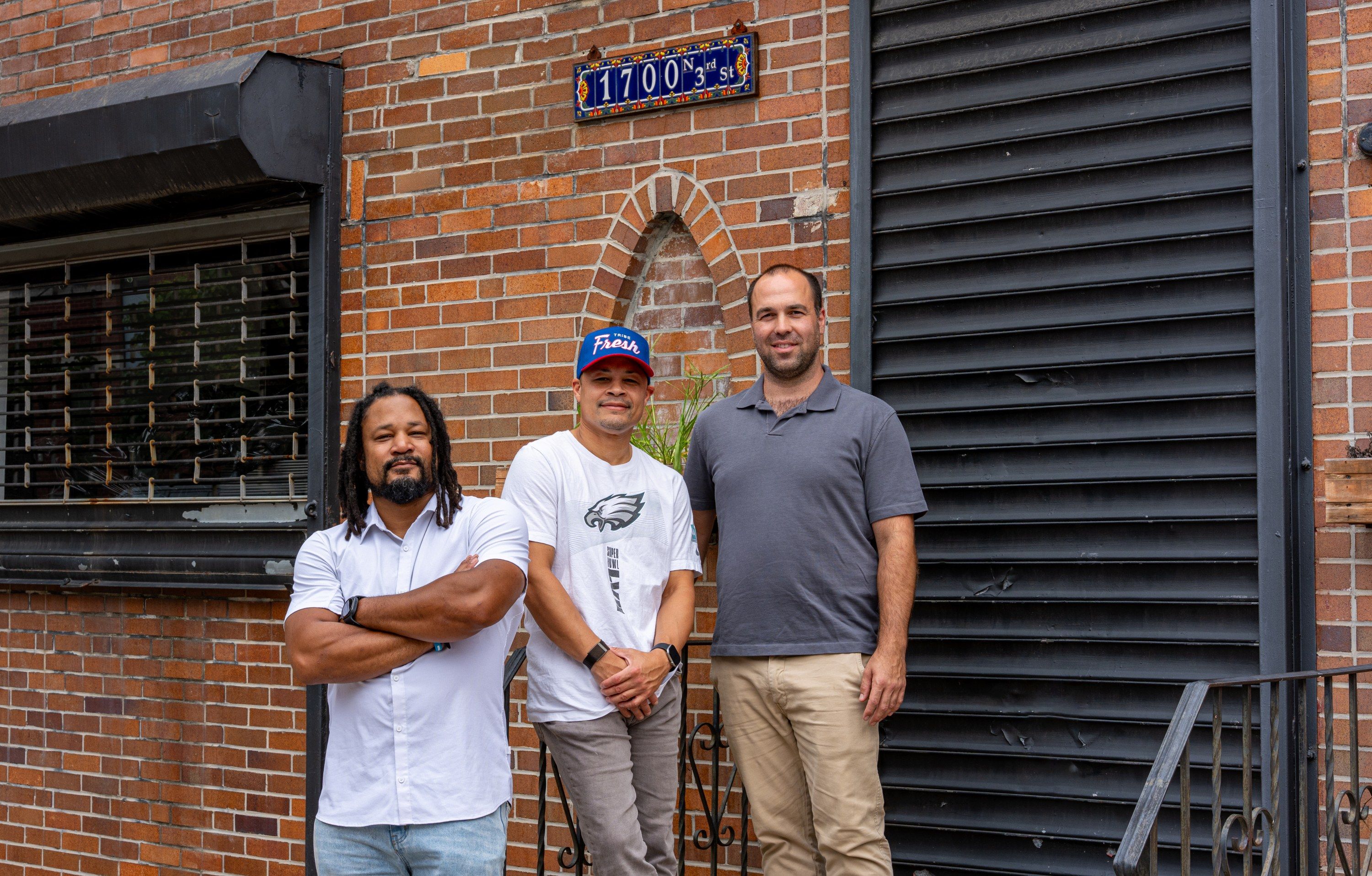
Chef Chaz Brown (left) is partnered with his brother Clifford Brown (center) and John Skeele in Rumblefish, 1700 N. Third St.Mike Prince
Rumblefish(1700 N. Third St.): Chef Chaz Brown is targeting November for this 900-square-foot, fast-casual Caribbean fish-fry restaurant at Third Street and Cecil B. Moore Avenue. Brown — a Trinidadian American chef whose resumé includes Nobu, Le Bec-Fin, Fatty Crab, and television’s Top Chef — will focus on invasive species such as lionfish, snakehead, green crab, and Chesapeake Bay blue catfish when available. (The catfish turned heads at the recent Oxtail Exchange at Forman Arts Initiative.) Brown uses gluten-free corn flour with Trinidadian spice blends and serves the fish on po’boy-style rolls baked by Angelo’s Bakery in Conshohocken. The mostly takeout operation will have counter seating, a 25-seat covered patio, slaws, fries, sea-moss drinks, and Solo Kola Champagne.
Pennsylvania suburbs
Alessandro’s Enoteca (915 W. Lancaster Ave., Bryn Mawr): Alex Fiorello’s third restaurant will bring a bar-focused Italian concept to the former Enoteca Tredici space in Bryn Mawr Village in mid-to-late October. Fiorello and culinary director Matt Arcomone, whose resumé includes Osteria, Vetri, and Palladino’s, are planning house-made pastas, wood-fired pizzas, live-fire cooking, and dry-aged meats. It’s intended to have a stronger evening and bar scene than Fiorello’s Wayne restaurants.
Bruzi (281 Montgomery Ave., Bala Cynwyd): Two couples with Calabrian roots plan to open this Southern Italian restaurant in the former Aldar Bistro in late fall. Expect house-made pastas and Calabrian dishes such as fusilli with slow-cooked meat sauce, baked lamb, and grilled tuna, plus cocktails and an opening list of about 100 Italian wines.
Capperini (137 S. Easton Rd., Glenside): Eastern Montco will get an upscale Italian-Mediterranean destination with a liquor license from Ilya Vorobey and partners including members of the team behind Capri in Queen Village. Vorobey is aiming for October or November.
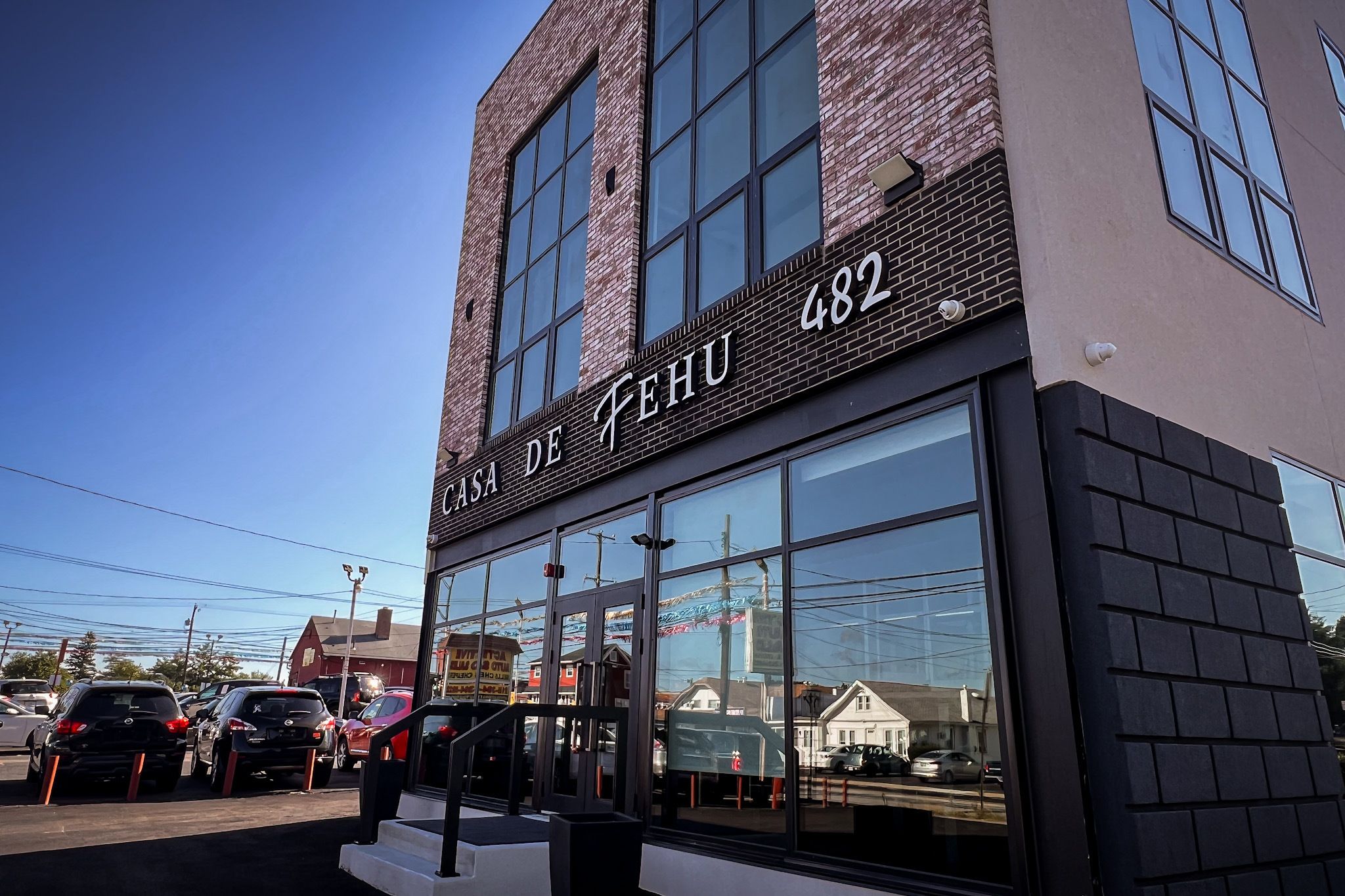
Casa de Fehu, 482 Jacksonville Rd., Hatboro.Michael Klein / Staff
Casa de Fehu (482 Jacksonville Rd., Hatboro): Hatboro couple Anthony Shalamov and Anastasia De Roy are developing this polished restaurant with European-inspired cooking and an upscale atmosphere, possibly with a tie-in to a local brewery that would allow alcoholic drinks. Shalamov is targeting an October soft opening.
Cecilia (266 E. Fourth St., Bridgeport): The team behind Blue Bell Inn and the Copper Crow is just about ready to open this contemporary American bar-restaurant in the extensively renovated former Taphouse 23. The roomy property includes a large patio and a wood-burning oven. The menu emphasizes familiar American dishes, positioning this as an all-purpose neighborhood destination.
Donatelli’s (1 Washington Ave., Newtown): Restaurateur Habib Troudi, who owns Panache and Ristorante Castelloin Blue Bell, is behind a top-to-bottom overhaul of the former Rocco’s at the Brick in downtown Newtown. He said he is hoping to open the Italian steakhouse in October.
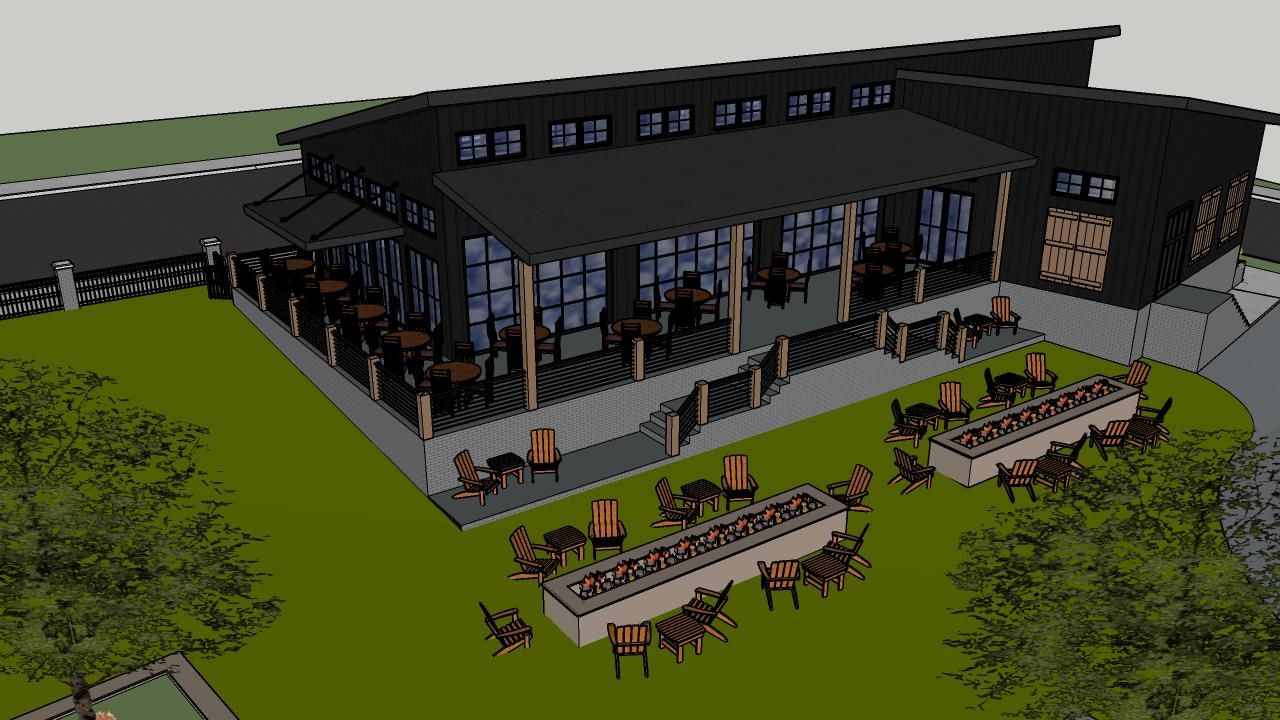
Rendering of the Garden by Pieri Winery, 127 E. Elm St., in Conshohocken.Courtesy of Christina Pieri
The Garden by Pieri Winery (127 E. Elm St., Conshohocken): Winery owner Christina Pieri and restaurateur Brian Pieri (StoneRose, Bar Lucca, Cerdo) are targeting a mid-October opening of their year-round indoor-outdoor restaurant beside the Schuylkill River Trail, an offshoot of Christina’s Coopersburg winery. A wood-fired kitchen will serve seasonal American food, including brick-oven pizzas, focaccia sandwiches, salads, steaks, and fish, at lunch and dinner Tuesday through Sunday. The property will include a covered patio, fire tables, a turf area, and pickleball and bocce courts.
The Hungry Hub (11 S. Orange St., Media): Media native Cassidy Moretti and her mother, Glenda, are taking over the former Rivalry Cafe with a family-run breakfast and lunch operation. The Hungry Hub also plans later hours and a late-night menu, broadening its role beyond that of a conventional daytime cafe. An Oct. 1 opening has been announced.
The Iron Oven (58 S. York Rd., Hatboro): Alex Nalbandian’s Southampton bar-restaurant — known for an expansive American menu, cocktails, craft beer, brunch, and dishes ranging from wings and burgers to flatbreads and entrees — is adding a second location in eastern Montco: the former Ross & Co. He’s aiming at November.
Lazy Dog(160 N. Gulph Rd., King of Prussia): The California-based bar, known for Rocky Mountain lodge imagery and a broad American menu, is targeting late 2026 at the King of Prussia Mall.
Luna (129 E. Butler Ave., Ambler): FineLine Hospitality, which recently opened Academy Grill in Fort Washington, is behind a stylish revamp of Dettera in downtown Ambler. Chef Marie Lavizzo-Mourey will base her menu on the 20-plus countries bordering the Mediterranean. The project is on track for fall.
Martini & Roz(523 W. Lancaster Ave., Wayne): Fearless Restaurants is turning Wayne’s former Bertucci’s into an ambitious, 300-seat Southern Italian restaurant named for founder Marty Grims’ parents, Martin and Roslyn. Menu will include crudo, oysters, steaks and chops, wood-fired pizzas, house-made pastas, and charcuterie. It will feature two open kitchens, a cheese cave, a tasting counter, and extensive outdoor seating.
Maru (2922 Conestoga Rd., Glenmoore): David Backhus and the team behind the former Oori restaurants are in the early days of a fast-casual Korean-inspired restaurant at their former Collective Coffee & Bakery. Think Korean fried chicken sandwiches, wings, and tenders, supplemented by mochi doughnuts and specialty Collective coffee.
Nudy’s Cafe (122 Park Ave., Willow Grove): Prolific suburban breakfast-and-lunch operator Ray Nudy hopes for late September for his latest diner, across from Marshalls in Willow Grove.
Old Friend (166 E. Lancaster Ave., Wayne): Childhood friends Larry Kagan and Chas McFeely are behind this contemporary American grill, with former Fork executive chef Sam Henzy leading the kitchen. The 86-seat restaurant will center on live-fire cooking in a Josper oven, with dry-aged fish, poultry, and larger proteins intended for sharing. Its compact wine list will be closely tied to the food. A late-fall opening is planned in the Apartments at Wayne Station.
Opus (201 Birch St., Kennett Square): Square Roots Collective will open this 125-seat New American restaurant Sept. 11 in the former temporary home of Hank’s Place, next to the Artelo hotel. Executive chef Matthew Anderson, formerly of Longwood Gardens and Winterthur, plans seasonal dishes, such as Kennett Square mushroom bisque, butternut squash agnolotti, herb gnocchi, and dayboat scallops. The two-story space includes a cocktail lounge, terraces, and work by local artists. Profits will support community projects and nonprofits.
Salt (840 W. Lancaster Ave., Devon): Rich Kim of North Wales’ acclaimed Salt predicts late December for his redevelopment of Devon’s former La Jonquille and Shiraz property into a second Korean barbecue concept, followed in 2027 by Yugo, a carousel sushi restaurant, upstairs.
The Still on State (18 W. State St., Doylestown): Only days open at the Doylestown Inn, this Irish pub-inspired bar/restaurant fills the former Hattery Stove & Still space; it’s paired with an on-site microdistillery called the Tilted Brim.
Taco Heart (120 Coulter Ave., Ardmore): Nano Wheedan is bringing his South Philadelphia breakfast-taco shop to the Ardmore Farmers Market, its first expansion beyond its East Passyunk-area home. Expect Austin-style flour tortillas and breakfast tacos built around eggs, potatoes, beans, bacon, brisket, and house salsas. Opening is set for Oct. 5.
Top Dog Cocktails (110 E. State St., Kennett Square, and 2012 Frankford Ave., Fishtown): Ken Smuckler’s cocktail company plans two vinyl listening rooms this fall inspired by Japanese jazz kissas. Kennett Square’s 750-square-foot space partners with local music venue Kennett Flash, while Fishtown’s 350-square-foot flagship — arguably the neighborhood’s smallest bar — will feature a 15-seat bar, two-turntable DJ station, and retail.
Tusk (50 N. Main St., Doylestown): Mike and Joy Grafenstine, owners of Roberts Block in Glenside and Bonnet Lane Family Restaurant in Abington, are taking over the former Water’s Edge wine bar, combining the martini-and-wine-bar airs of Roberts Block with approachable upscale American comfort food. Target is October.
Vintner’s Table (24 Cricket Ave., Ardmore): Andrea and Marco Folino, behind Kutztown’s Folino Estate Winery, are opening a third location of their Italian-inspired wine bar, salumeria, and lifestyle boutique in downtown Ardmore in October.
New Jersey suburbs
Akira 70 Omakase (249 Marlton Pike, Cherry Hill): Ming “Frank” Zheng is expanding his Japanese holdings — he owns Akira Sushi in Voorhees and Moorestown — with an omakase experience in a former fur salon.
Banjara Indian Bistro (687-689 Berlin-Cross Keys Rd., Sicklerville): Vaneet Chopra, whose family operates Cross Culture in Haddonfield and previously ran Banjara in Chestnut Hill, is bringing the Banjara name to Sicklerville; its dine-in starts Thursday.
Freckled Jawn Brewing(1003 N. Evergreen Ave., Woodbury): Woodbury residents John Wagner and Colleen Gibson are taking over the former Eight & Sand Beer Co., which closed in June after 10 years. Targeting the first week of October, the brewery will introduce new branding and a fresh lineup of approachable beers, emphasizing natural and locally sourced ingredients when possible.
Irishtown Steaks (155 S. Burlington St., Gloucester City): Donkey’s Placealumnus Dave Murphy is targeting Halloween for his steak shop, joining recent Gloucester City entries Lillo’s and Pudge’s Pub. Murphy will use rolls from Boaggio’s, which has a bakery in town.
Penny’s Bagels (212 Kings Highway East, Haddonfield): Chris Fetfatzes and the Happy Monday Hospitality Group (Wine Dive, Grace & Proper) are developing this long-delayed bagel shop in downtown Haddonfield, now with an October target.
Pizzeria Cusumano (872 Haddon Ave., Collingswood): Announced back in September 2021, this passion project from South Jersey’s Sal Cusumano is finally about to start offering his Roman-inspired squares and neo-New York rounds, but “I don’t want to box myself into a certain style.” Cusumano, a third-generation pizzaiolo, is planning a small shop with limited seating. This week, he said it will open in October for sure.
Philadelphia
Adda (1700 Frankford Ave.): New York’s Unapologetic Foods — behind Dhamaka, Semma, and the original Adda — is bringing its energetic Indian cooking to Fishtown, across from the 19125 post office. Expect regional dishes in an informal setting, continuing the restaurant group’s practice of pushing beyond familiar Indian American standards. Originally expected in fall 2025, the Philadelphia location is now targeting an October opening.
Ayat (2021 Sansom St.): Abdul Elenani’s New York-based Palestinian restaurant — first announced in spring 2024 — is looking at a November opening in the former Roxy Theater near Rittenhouse Square. Ayat is known for generous portions of mansaf, maklouba, mezze, grilled meats, and other homestyle Palestinian dishes.
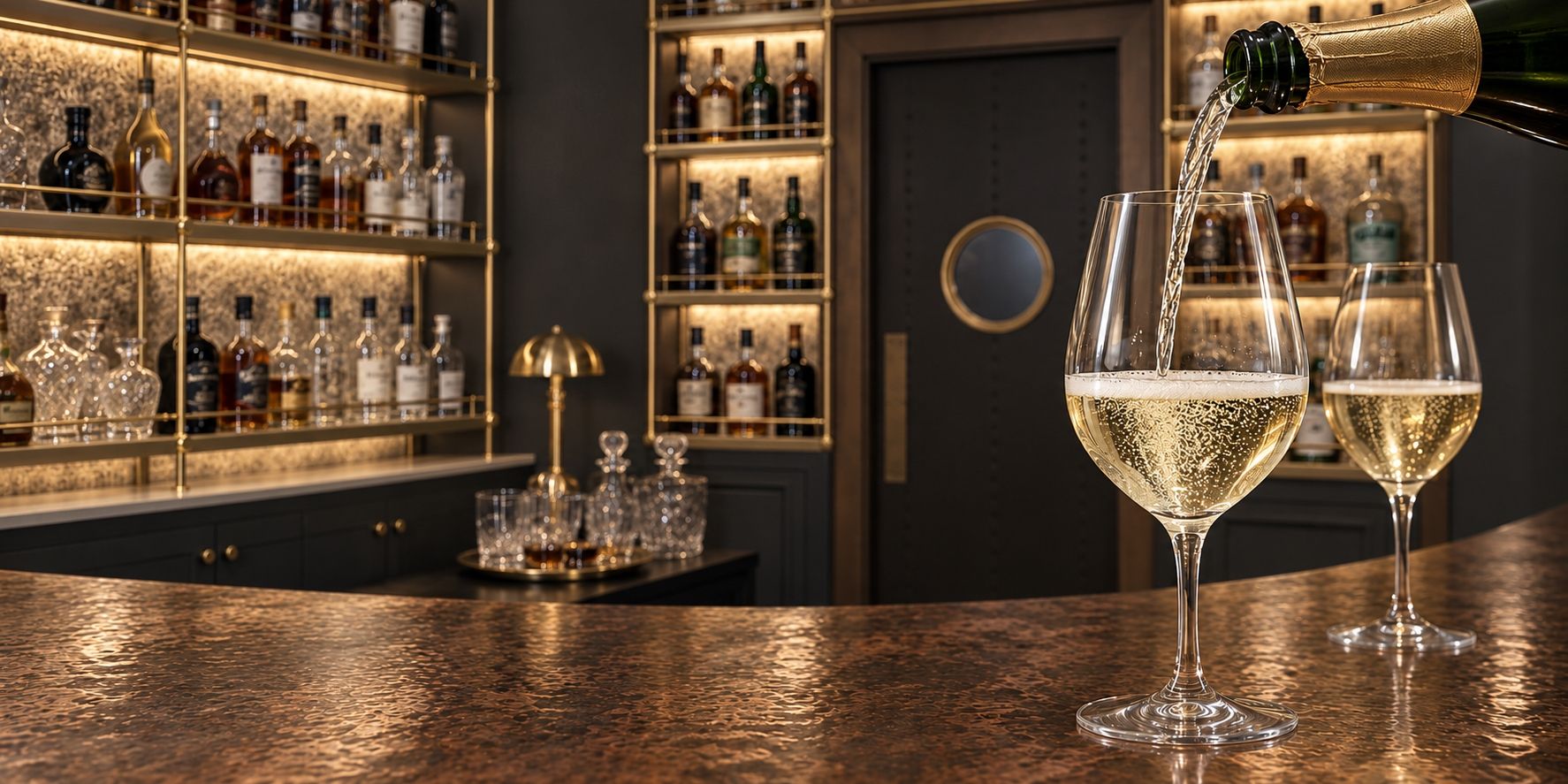
The bar at Bar Caviar, 256 S. 16th St.Kenneth Schutz
Bar Caviar (256 S. 16th St.): Opening in early October in the Dwight D Hotel in Rittenhouse, this bar will pair caviar and seafood with 50 varieties of Champagne and a full wine program in a setting that’s more neighborhood than hushed luxury lounge. Executive chef Greg Vassos’ contemporary American menu, informed by classical French technique and Japanese precision, will feature raw-bar selections, caviar-focused dishes, and seasonal small plates. The restaurant also will operate Parallel, a caviar program emphasizing careful sourcing and extended maturation. In 2027, Vassos plans to follow with Fall Line, a Mid-Atlantic-focused tasting-menu restaurant.
Brunch Bulls (1638 W. Passyunk Ave.): Brothers Derrick “Dee” Long and Jarrick “Jakk” Long are behind this all-day brunch/dinner/dessert restaurant in Point Breeze. They say they’ll be open by December.
Call Your Mother (262 S. 19th St., 1500 Frankford Ave., 12th and Sansom Streets): The lively, Washington-based “Jew-ish” bagel chain is making a three-location push into Philadelphia, starting this week with its Fishtown debut. Menu includes bagel sandwiches, schmears, latkes, coffee, and deli-inspired specials.
Carolyn’s Modern Vietnamese (2015 Walnut St.): This week, chef Carolyn Nguyen opens her deeply personal successor to Revolution Taco, which she co-owned in the space for a decade. Her menu brings together her family’s Vietnamese cooking, the seafood boils and Southern food of her Louisiana childhood, French culinary technique, and the freewheeling flavor combinations that defined her earlier ventures. The 33-seat restaurant serves dinner, and alcohol, in a spare, contemporary dining room.
Corte (1175 Ludlow St.):Corio partners Ryan Mulholland, chef David Feola, and James Smith are taking over the former Mulherin’s Pizzeria at East Market, between Iron Hill Brewery and Mi Vida. Feola will lead a menu built around house-made pastas plus proteins, vegetables, and small plates cooked in the large Mugnaini wood-burning oven. Mulholland will oversee daily operations and oversee an Old World-leaning wine list and cocktails inspired partly by forgotten recipes from century-old books. The dark-wood, earth-toned restaurant is targeting a fall opening.
DiDi (3748 Lancaster Ave.): DanDan owners Kevin and Catherina “Cat” Huang say they are “within a month or two” of opening their fast-casual pan-Asian concept at the Triad apartment building in Powelton Village. DiDi will join Kabobeesh, Karak Cha House, Shibam Coffee, Two Locals Brewing, and other businesses in the growing complex at 38th and Lancaster.
Divers Club (733 S. Fourth St.): Queen Village is in line to get a neighborhood wine bar from Susan Freeman, Chris Fetfatzes, and Heather Annechiarico (Grace & Proper, Wine Dive) in a former hair salon that sits on the same stretch as Famous 4th Street, Southwark, Ambra, and Fitz on 4th. Fetfatzes describes the mood as “dark, scrappy, and European — somewhere between a Paris backstreet wine bar and a graffitied Berlin hangout.”
Eggcetera Haus (625 S. Sixth St.): Husband-and-wife team Rey Tamaka and Vina Kencana soon will turn the former Redcrest Kitchen into an all-day bar-restaurant. Tamaka, previously the chef at an Old City brunch restaurant, plans breakfast, lunch, and dinner, moving from specialty coffee and morning dishes into pastas, steaks, cocktails, and comfort food at night. The couple expects daily service, giving the Queen Village-Bella Vista border another full-day neighborhood option.
Field Day (923 N. Second St.): James Beard Award-winning bartender and author Danny Childs and his wife, Katie, have a fall opening targeted for their casual regional cocktail bar in Northern Liberties, next to Cescaphe Ballroom. Childs’ drinks will use locally farmed, foraged, and fermented ingredients. Executive chef Melissa McGrath, known for her work at the idled Sweet Amalia Market & Kitchen, will offer Pennsylvania Dutch-inspired snacks, sandwiches, and tomato pies. Highballs, house-made sodas, boozy gelati, and walk-in seating will help keep the mood informal.
Habibi Supper Club (1515 E. Passyunk Ave.): Miled Finianos is giving his itinerant Lebanese dinner series a permanent home on East Passyunk — possibly by the end of year — serving late breakfast and lunch before he offers ticketed, multicourse suppers.
HYO (1222 Walnut St.): Nightlife veteran Justin Jordan plans an October opening for this Korean tabletop barbecue restaurant behind Hearsay, his indoor-outdoor sidewalk bar and listening lounge. Guests will enter HYO through a phone booth inside Hearsay. The restaurant is part of Jordan’s multilevel entertainment complex, which also includes Celine and the forthcoming Chancellor Room event space and karaoke lounge.
Jean (161 W. Girard Ave.): Emmett chef Evan Snyder and partner Julian van der Tak are going upstairs with a 15-seat tasting menu restaurant opening this fall. Snyder and chef de cuisine Antonio Pizzo will prepare a 12-course menu centered on a 7-foot wood-burning hearth, drawing on Algeria, Tunisia, coastal Morocco, and the southern Mediterranean for culinary influences. A tagine will roast throughout dinner before being served family-style.
Kato (1832 Frankford Ave.): Mei Meichef-owner Jay Ho is taking over the former Izakaya Fishtown space for a restaurant inspired by his Taiwanese father and the food Ho grew up eating. Influences from Korean, Thai, and Vietnamese cooking will broaden the menu. Ho, who hopes to open in late fall, plans to retain the front bar while replacing the rear sushi counter with additional seating that can double as a private dining area.
Lovat Square(184 E. Evergreen Ave.): Former Four Seasons sommelier Damien Graef and journalist Robyn Semien opened this Chestnut Hill wine shop and tasting room in February, offering small-production bottles, wines by the glass, and light fare. The couple, who also own Brooklyn’s Bibber & Bell wine shop, will debut a full dinner menu by the end of September.
Macaluso’s (3101 S. 13th St.): Realtor Joel Gruenke and restaurateur Mark D’Andrea, long-ago roommates at Valley Forge Military Academy, are looking at an early October opening of this white-tablecloth Italian restaurant at 13th Street and Packer Avenue, near the sports complex. D’Andrea’s family owns RoadHouse in Staten Island, N.Y. Gruenke says the moderately priced menu will stick to traditional Italian cooking and offer a full bar. Parking will be available across the street.
Mylar Bar (1636-38 S. Ninth St.): Hospitality veterans Liv Arterbridge and Gina Piccari are turning the former Dino’s Party Center into a festive neighborhood bar inspired by the building’s history. They promise something nostalgic, playful, and deliberately unserious. Drinks will include martinis, punches, classics, and draft beer. Chef Colin White, formerly of Sally and Emmett, will oversee shareable “party snacks,” larger plates, and desserts available late.
Nippy’s on South (1312 South St.): Nurse and first-time restaurateur Nikia Peterson has purchased the former Ms. Tootsie’s building for an ambitious restaurant and bar. Peterson plans a polished setting with seafood towers, steaks, Asian and Caribbean influences, a substantial happy hour, and weekend brunch. The project will revive a prominent South Street property that had remained closed since restaurateur KeVen Parker’s death in 2021.
O’Morrey’s (1720 Sansom St.): Chefs Biff Gottehrer and Kenjiro Omori are developing a cocktail bar on the former site of Genji, the Japanese restaurant created by Omori’s father. The name is a cheeky rendering of the Omori family name. Plans call for a comfortable neighborhood bar in the spirit of the Ripplewood, where both chefs work, with cocktails and a serious food component. Their second joint project, Tako Taco, is months away at the former Bing Bing Dim Sum in South Philadelphia.
Palm Vintage (1414 S. Penn Square): Houston Yang and Mike Beja, who opened this day-to-night cafe and cocktail bar across from City Hall in the Residences at the Ritz-Carlton, are close to expanding into a nighttime scene with cocktails, sushi, oysters, caviar, and light food in a lush, tropical-inspired room meant to offer an escape from Center City.
Panco (2300 S. Croskey St.): Chef Ryo Igarashi, whose background includes Tokio Global and Maru Global (noted for its takoyaki balls), is behind a corner shop in West Passyunk whose menu will focus on Japanese cutlets. He says it’s opening soon.
Philly Curio (2240 Frankford Ave.): Tattoo Arts Convention founder Troy Timpel is creating an intimate Kensington restaurant-bar around his private collection of curiosities (think tribal masks, skeletal displays, taxidermy, and glass-topped tables containing preserved animals). Inspired partly by Savannah’s Alligator Soul, Timpel has discussed a Cajun-Creole menu with small plates and unconventional proteins such as rattlesnake. Drinks are expected to include cocktails, wine, bottled beer, and limited drafts. Target is November.
Philly Po’Boy (102 W. Berks St.): Brothers Chris and Greg Lynch are bringing a taste of New Orleans to the storefront beneath the Berks station of the Market-Frankford Line. Chris spent years cooking in New Orleans, while Greg’s Philadelphia background includes Starr Restaurants and LMNO. Plans call for classic powdered-sugar-dusted beignets, gumbo, and a mix of classic and specialty po’boys like fried shrimp, oysters and roast beef “debris,” plus fries, Creole potato salad, and café au lait from coffee roasted by Applied Arts in New Orleans.
Santé Social(1546 E. Passyunk Ave.): Sommelier Daniel Solway is giving his roving dinner series a permanent home across from the Singing Fountain. The approximately 30-seat space will function less like a conventional restaurant than a flexible hospitality venue, hosting wine dinners, tastings, classes, collaborations, private events, and some walk-in service. Cocktails are being developed with Danny Childs of Slow Drinks and Field Day, while changing chefs and collaborators may shape the food programming.
Somedays Bakery (1601 Walnut St.): Hand-laminated croissants are the foundation of this Queens-rooted bakery, which deals in sandwiches, salads, soft serve, and coffee. It’s targeting the end of the month.
Thalassa (918 N. 28th St.): Matt Maltepes is looking at late October or early November for his Greek-inspired cafe in Fairmount that will serve baklava, croissants, and house-made ice cream in flavors that change weekly. Savory offerings will include small plates such as feta grilled cheese with honey, avocado toast, and bagels with cream cheese. The drinks menu will feature European-style coffee preparations, including frappes and Freddo espresso.
Looking ahead
Two major projects are now on the docket for January, as the owners don’t want to compete with the holiday-season madness:the Pelican Club, Stephen Starr’s flashy Greek-themed restaurant taking shape in the former Devon Seafood Grill on Rittenhouse Square, and the yet-to-be-named “punk French” restaurantthat chefs Justin Bogle and Arthur Cavaliere are creating at the former Winnie’s Manayunk.
The long-closed Mermaid Bar in Mount Airy will retain its name under the new ownership of pizzaiolo Dan Gutter and business partner Alex Carbonell of Circles & Squares and Pizza Plus. The project, announced earlier this year, is aiming at a summer 2027 rollout.
There are few Spanish bar snacks as satisfying — or so hotlydebated — as a properly made tortilla Española.
If you’re lingering in the hot southern cities of Andalusia, where the iconic potato-and-onion omelet is typically served room temperature or cold, the eggs are fully set.
“But from Madrid north to Basque Country, it’s traditionally made to order and served warm and custardy,” says Patrick Iselin, 50, the co-owner of BAR ilu, who spent half his childhood in Spain and now splits time between Philadelphia and the Madrid apartment once owned by his grandmother, Iluminada “Ilu” Prellezo Inchausti.
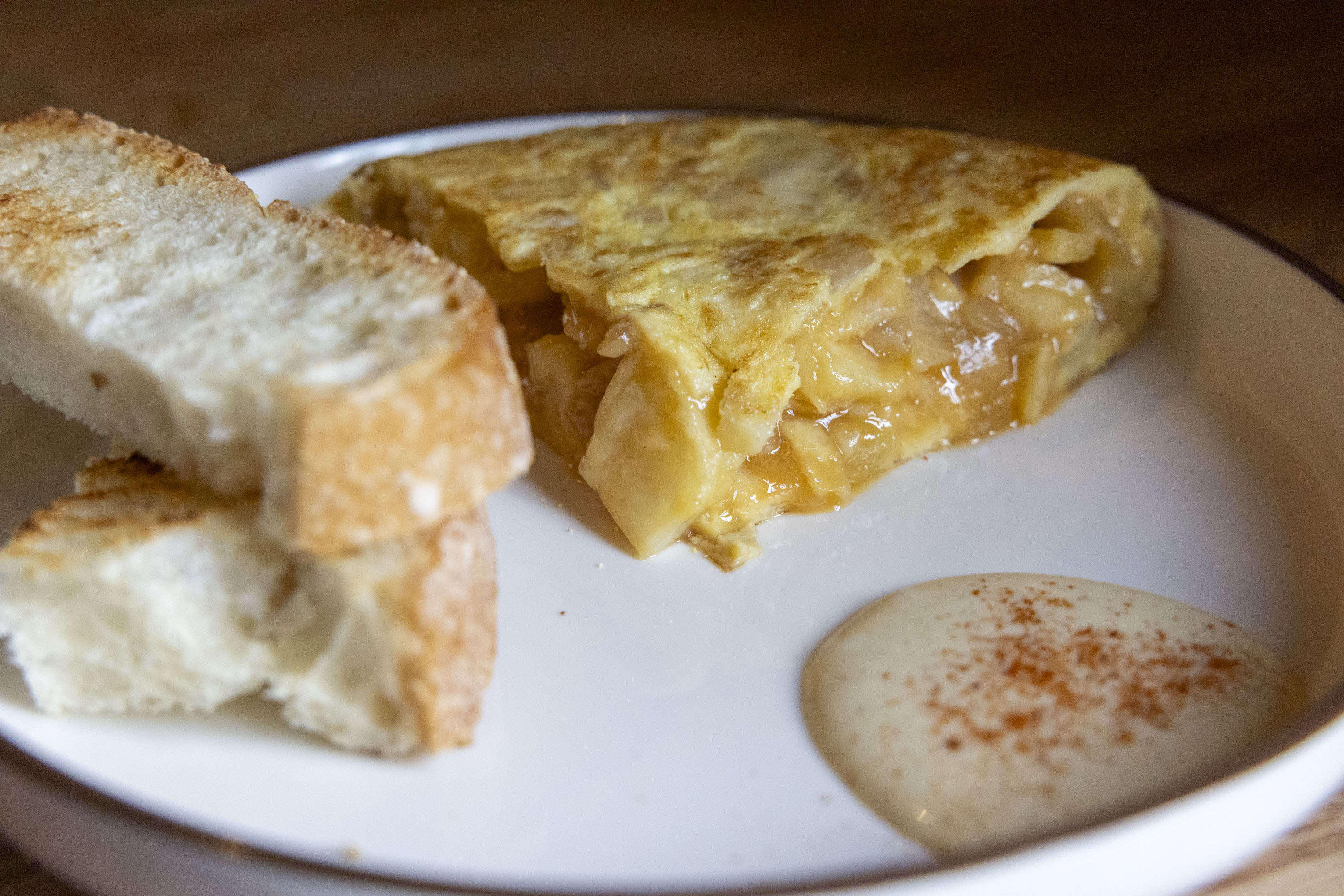
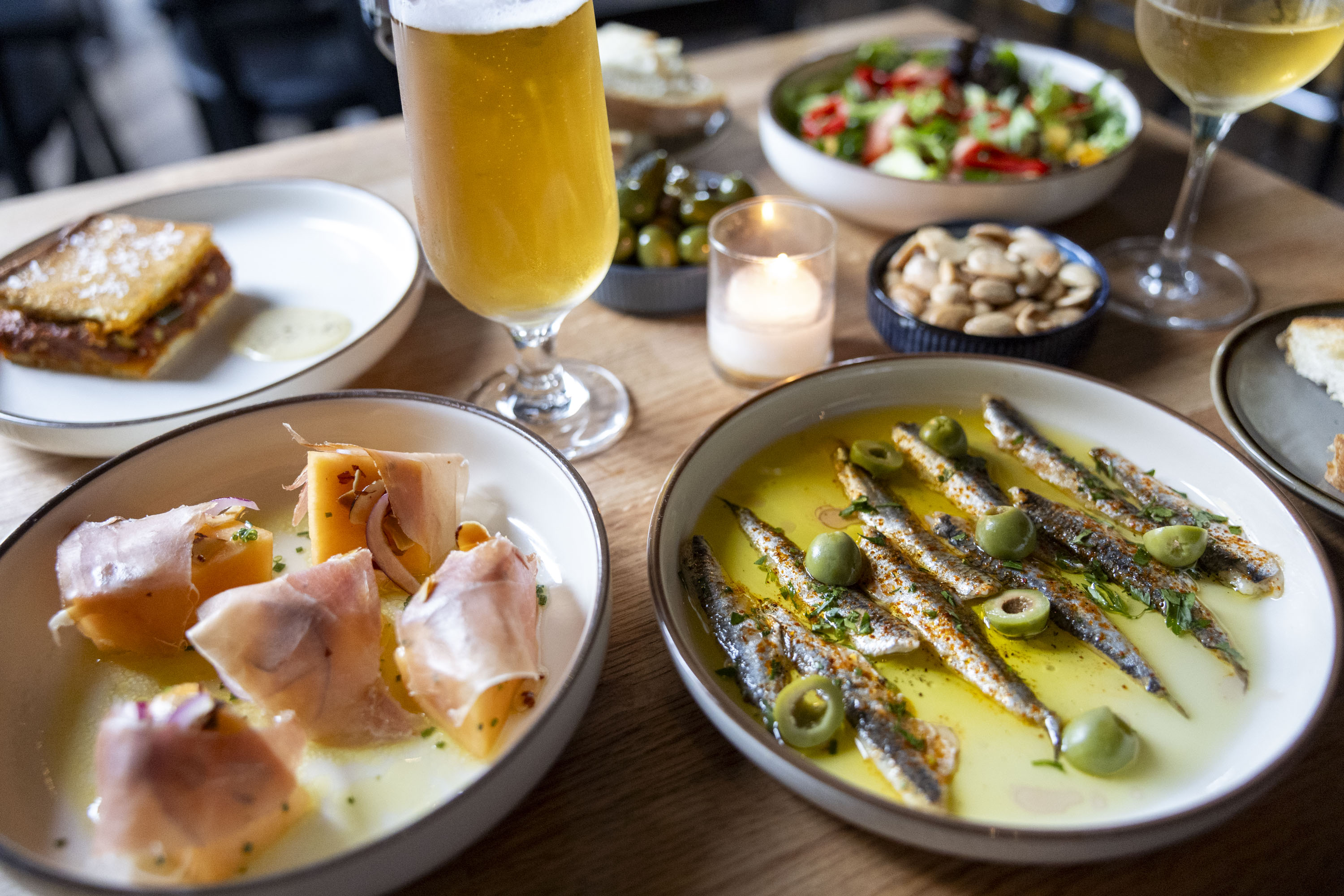
So it follows thatthe eponymousnew cornerbar at Dauphin and Martha Streets — which happen to share the 40th parallel north with Madrid — serves its tortilla Española with a loose and edgy Kensington flair: “runny af,” as noted on the menu. Served as a wedge, with olive oil-fried potato chunks and sweet onion laces bulging from its glossy middle, a warm forkful of this eggy wonder is as transporting as it gets.
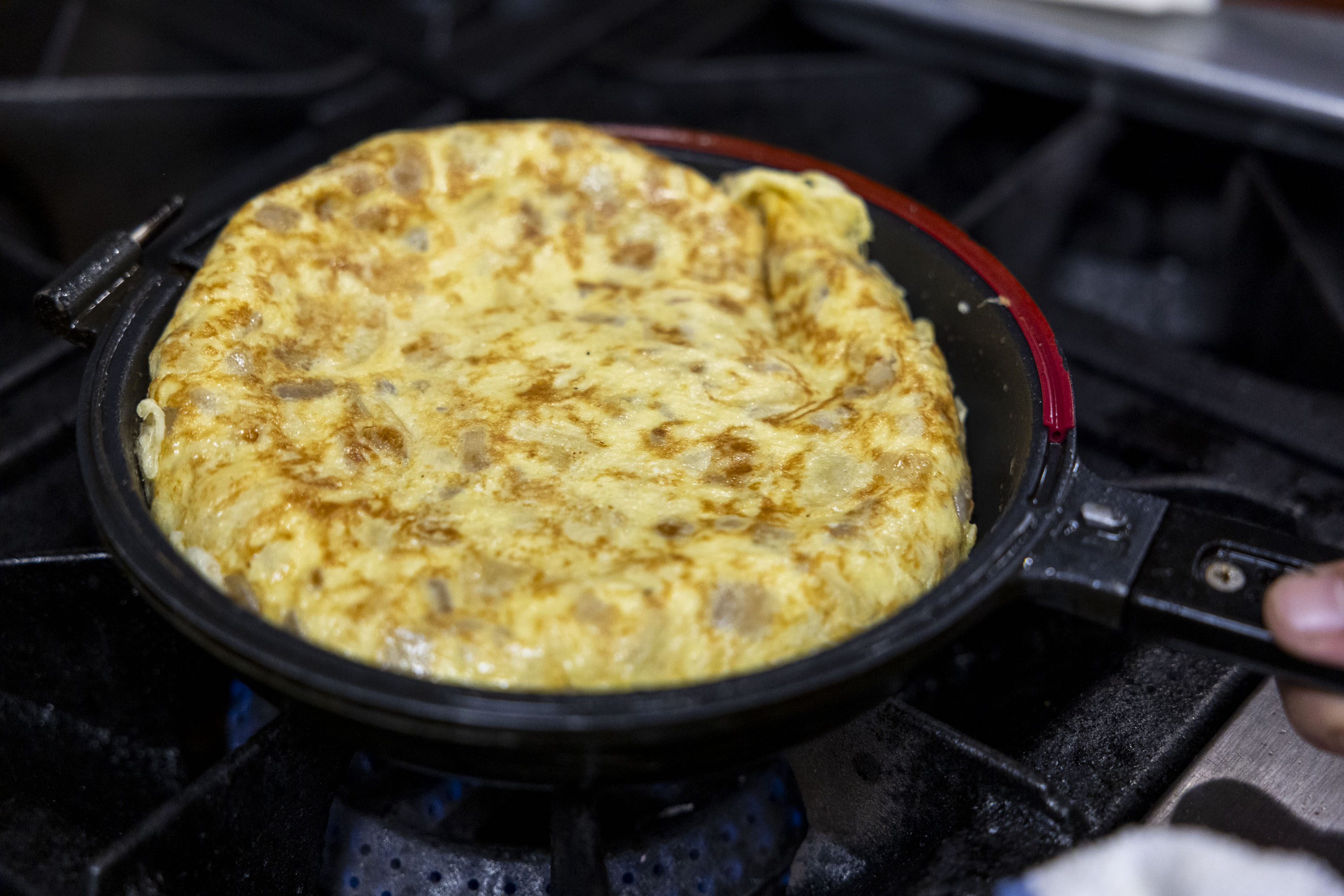
Andrew Butler, chef de cuisine at BAR ilu, making the tortilla Espanola.Tyger Williams / Staff PhotographerThe tortilla Espanola at BAR ilu.Tyger Williams / Staff Photographer
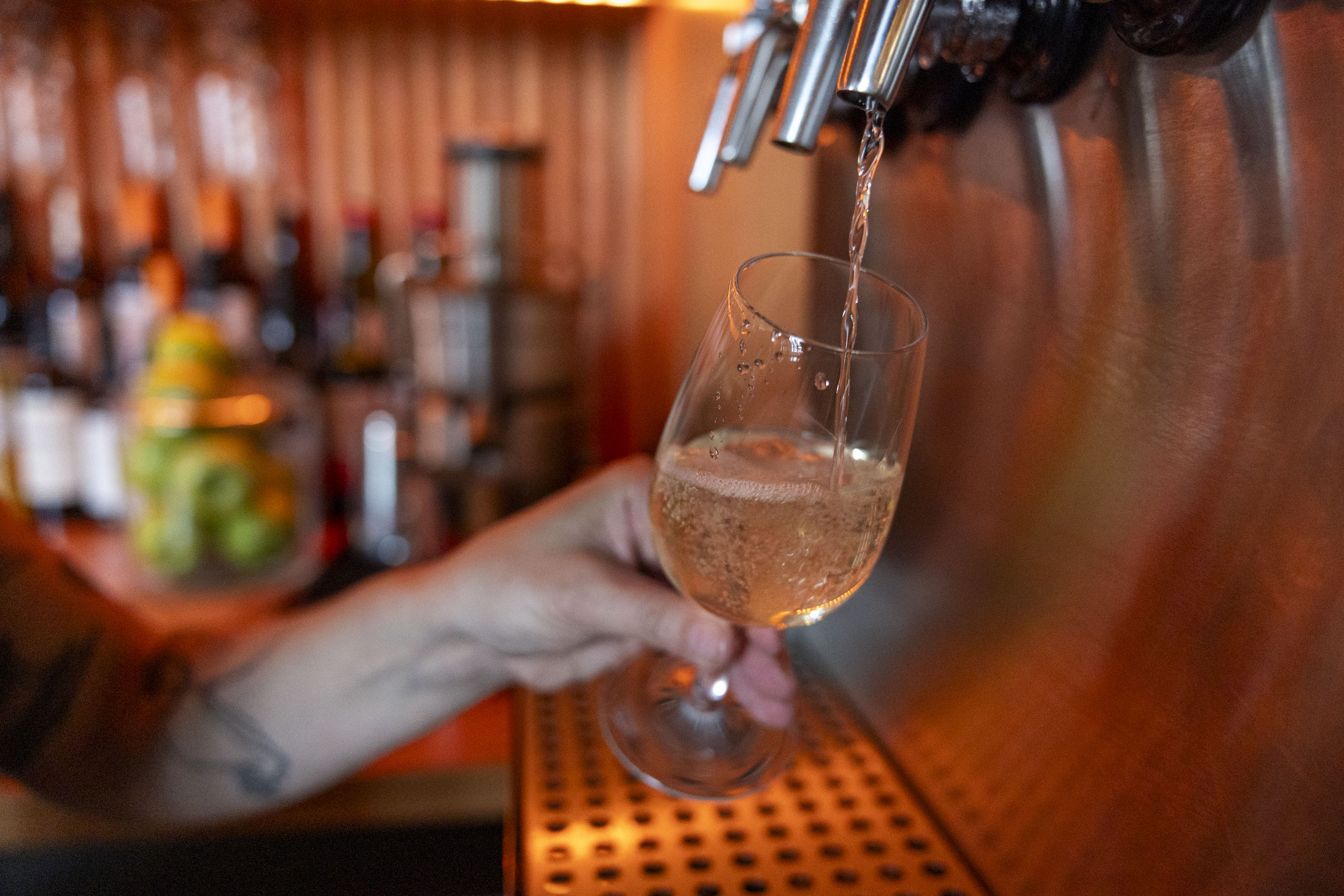
Wash it down with a bracingly crisp glass of La Gitana Manzanilla sherry on draft, plus a fistful of crunchy Marcona almonds, a forkful of tangy boquerones, and a crock of olives warmed with orange zest and herbs, and it’s hard to deny that BAR ilu is an appealing development for this rapidly changing corner of Kensington. It is perhaps also a little dissonant for those who know the neighborhood history. Thisstylish Euro concept, complete with its undulating circular bar and foam-topped glasses of vermouth, haslanded in a space previously occupied by the Old Philadelphia Bar, one of the last unreconstructed dive bars from what co-owner Scott Coudriet calls Kensington’s “pre-hip-storic” days.
Coudriet, who owns Fishtown’s Lloyd Whiskey Bar, is also partnered with Iselin at nearby Cormorant bar. Their other partners in ilu are Salvatore D’Amato and Jason Evenchik, whose Vintage Syndicate hospitality group operates Vintage, Starbolt, Time, Bar, three Garage locations, and the Goat Rittenhouse.
This veteran team is keenly aware of the sensitive dynamics of change at longstanding bars. That’s why Iselin was adamant about keeping prices reasonable for Kensington locals — no more than $14 a plate, and $16 for distinctive cocktails that would easily cost a few dollars more in Center City — while building this tribute to Spain in his adopted city.
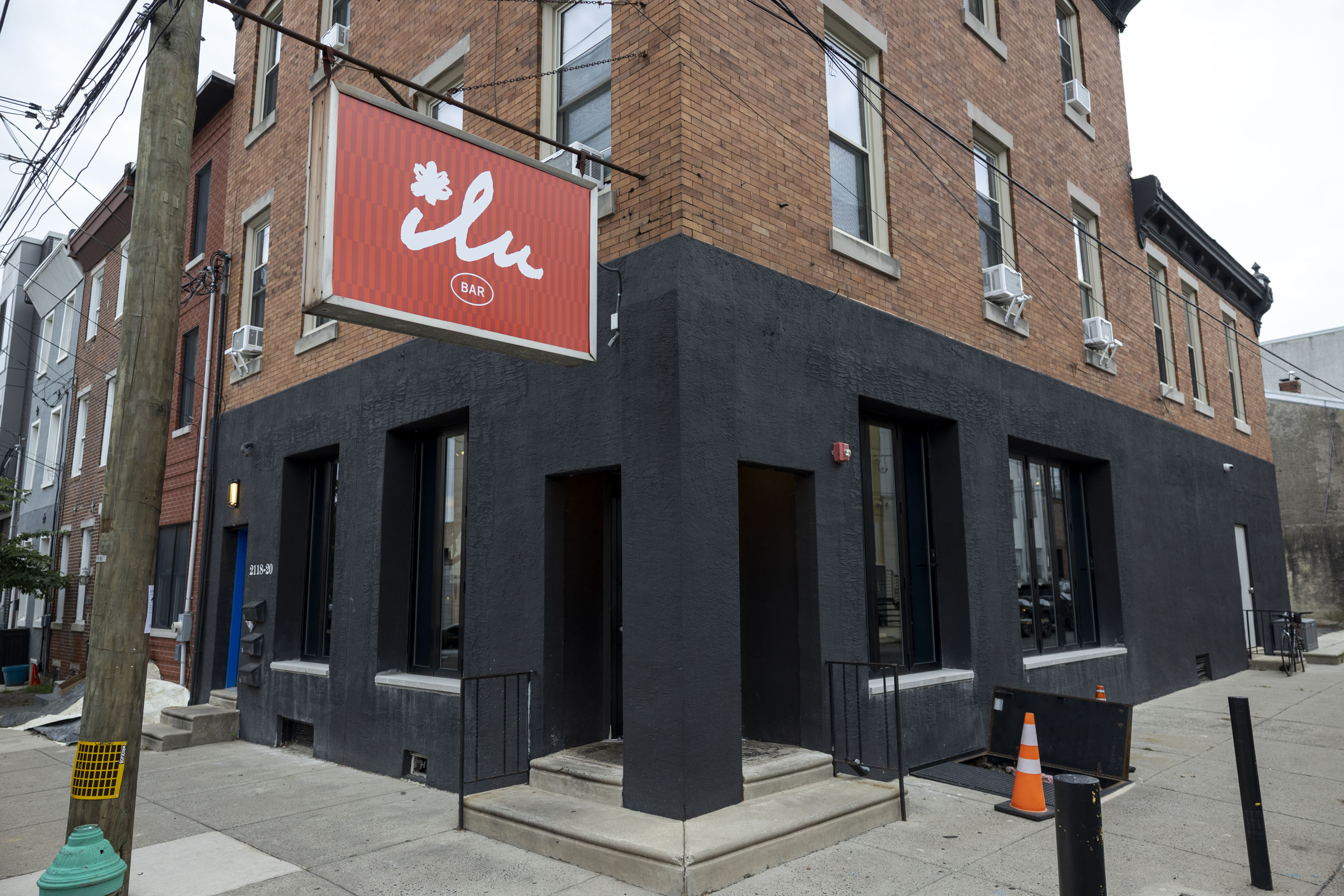
The outside of BAR ilu on Thursday, Aug. 20, 2026, in Philadelphia.Tyger Williams / Staff PhotographerThe back bar area at BAR ilu on Thursday, Aug. 20, 2026, in Philadelphia.Tyger Williams / Staff Photographer
Iselin wanted to craft this 40-seater with as few clichés as possible (no hanging hams, no toro horns, no sangria), but rather the feel of a modern tapas bar he might frequent in Madrid today. He had no idea he was also tapping into the latest evolutionary trend for the Philadelphia bar.
Twenty years ago, the smoky old taverns of yore were being replaced by the gastropub movement of the early aughts, where local craft beers flowed and house charcuterie and pickle programs anchored ambitious seasonal menus that gave a cool new vibe to the neighborhood restaurant. In some cases, they helped redefine the neighborhoods themselves.
Philly’s bar scene is now officially in its grazing phase, with curated drink menus centered around culinary cocktails, natural wines, and nonalcoholic drinks with food offerings often so limited that a hungry fellow like me might need to order three-quarters of the menu to make a meal. Supérette, the charming French wine bar beside East Passyunk’s Singing Fountain, captured this development perfectly in 2025. Owners Chloé Grigri and Vincent Stipo described these snack-centric bars as a “generational thing” for 30-somethings who want a stylish place to hang for in-between meals with friends without committing to an entire evening.
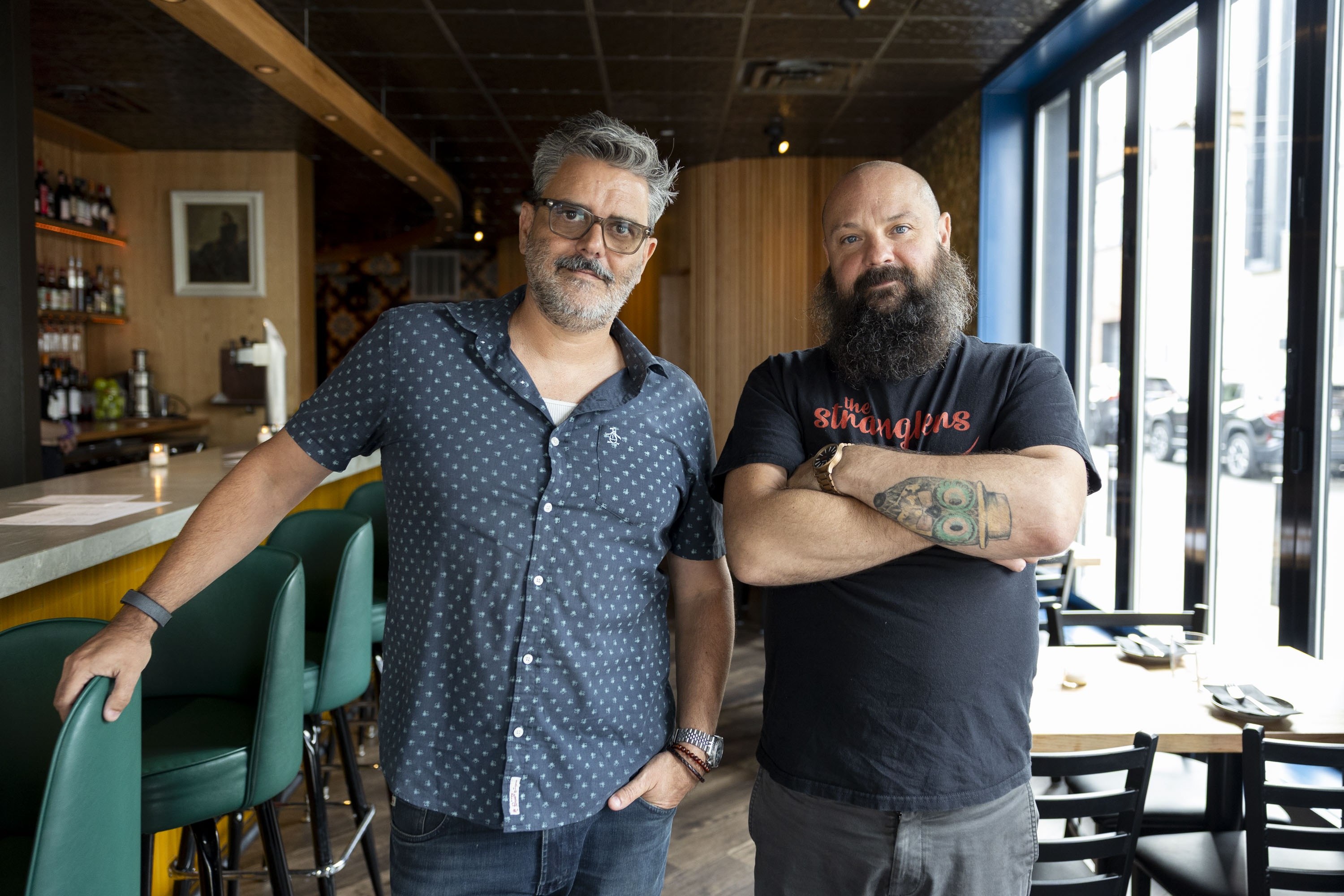
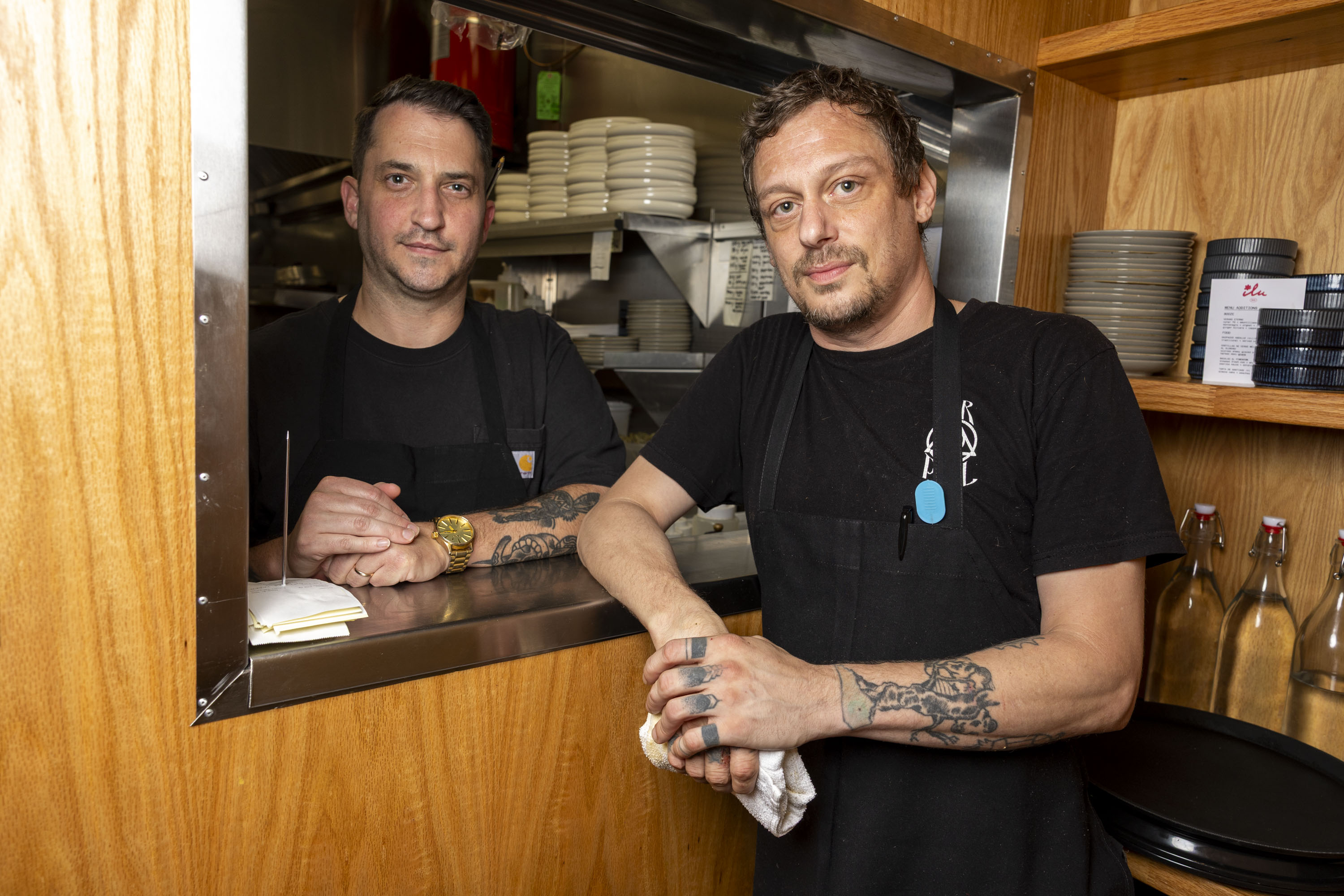
Co-owners Patrick Iselin and Scott Coudriet of BAR ilu, pose for a portrait together on Thursday, Aug. 20, 2026, in Philadelphia.Tyger Williams / Staff PhotographerThe La Gitana Manzanilla Sherry at BAR ilu on Thursday, Aug. 20, 2026, in Philadelphia.Tyger Williams / Staff Photographer
A similar approach is at work through a Japanese lens at Almanac, the cutting-edge Japanese cocktail bar (with Wagyu hot dogs and kombu-cured celery sticks) above the omakase room at Ogawa. The food menu at Chris Kearse’s new cocktail bar in Washington Square West, Known Associates, lists only a dozen items, counting the cool ranch freeze-dried peas. Same with the recently opened Lillian’s Bar in Point Breeze.As Chris Fetfatzes told me about Grace & Proper, the Portuguese-inspired bar with “tasca” nibbles he debuted in 2022, this template — a distinctive drink program bolstered by a small menu that can be produced with limited service and light kitchen investment (i.e. no hood) — makes perfect business sense in the post-COVID era.
Of course, the Spanish have been doing this for centuries with tapas, a light-bite evening repast that reflects their cultural preference for a larger meal earlier in the day. And yes, Amada has been serving tapas here for 20 years, but always alongsidea much broader menu with large plates and paellas.
Considering all the new small-plate projects that have come online recently, including Bar Cicci, Ellen Yin’s all-day aperitivo bar, Philadelphians may have finally embraced the concept on its own snacky terms.
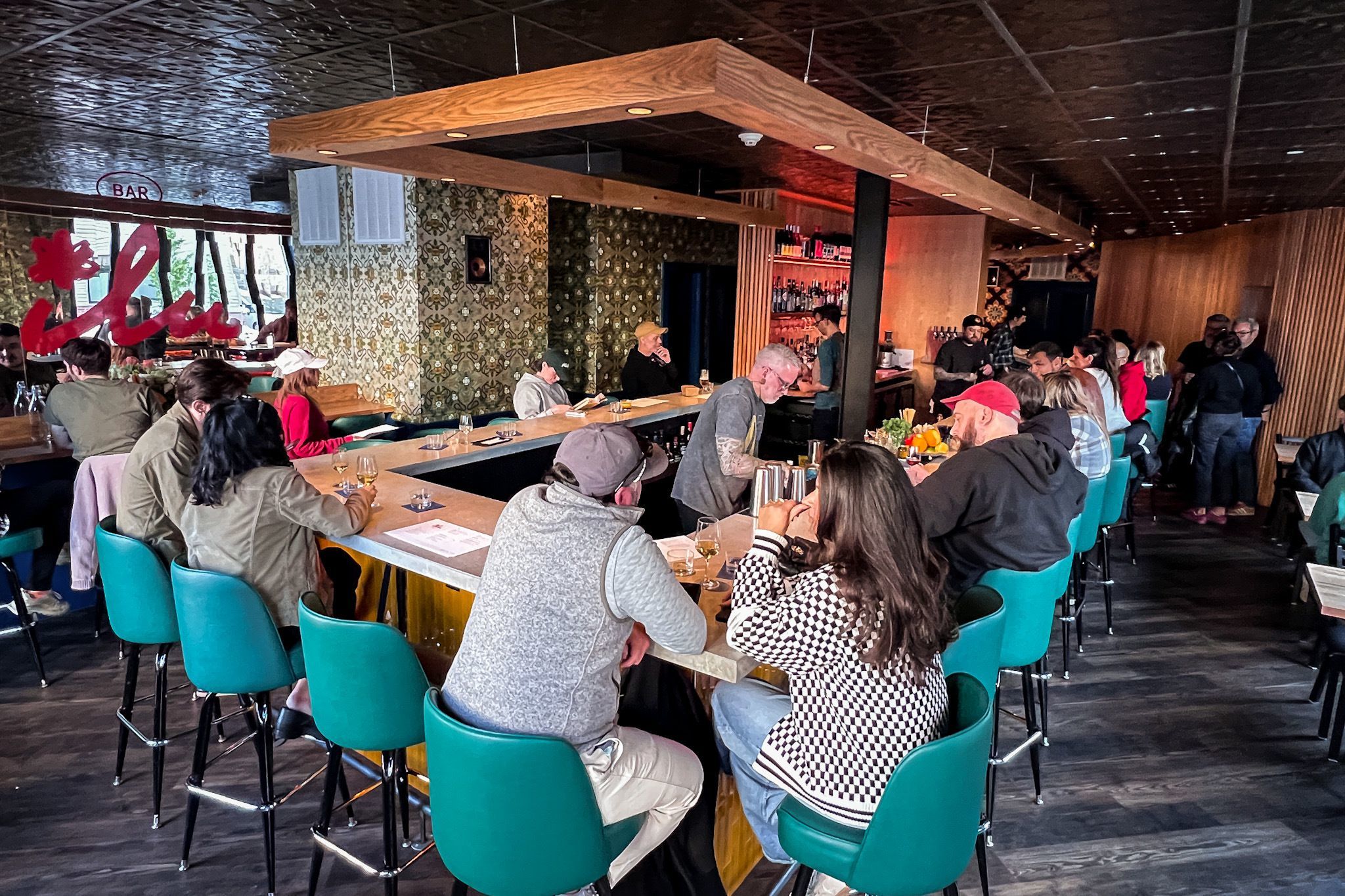
The front bar at BAR ilu, 2118 E. Dauphin St.Michael Klein / StaffThe various plates including The Boquerones, Melon with Ham, the Tuna Empanada, Tomato Salad, Almonds, and Olives at BAR ilu on Thursday, Aug. 20, 2026, in Philadelphia.Tyger Williams / Staff Photographer
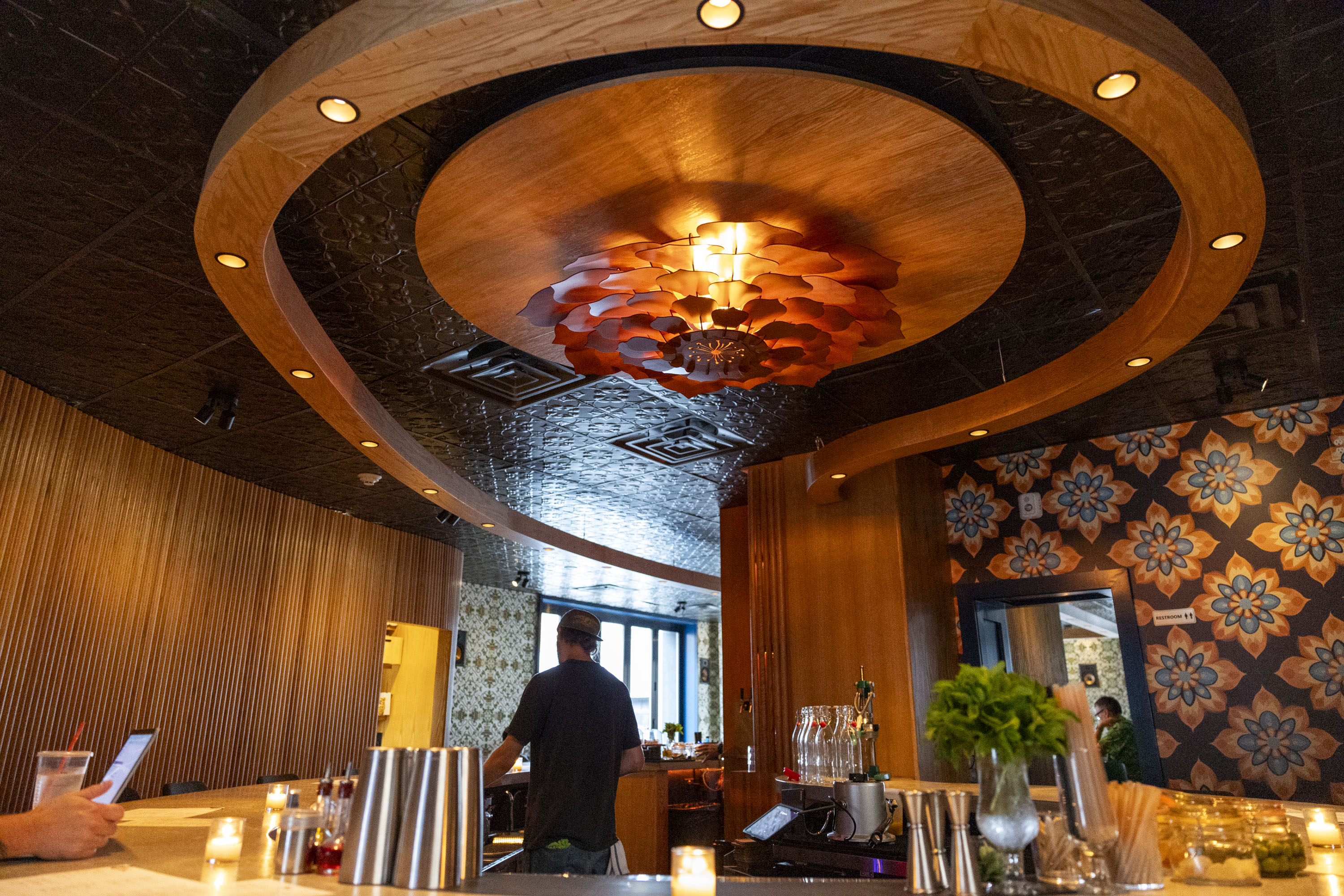
BAR ilu has a slightly more substantial food menu than most.And part of its appeal is the natural ease with which it blends a Kenzo vibe (seethe mismatched thrifter style of its floral-print wallpaper, black tin ceiling, and teal barstools) with an inventive drink program and classic Spanish plates lightly updated by chef Andrew Butler.
Fig leaf oil adds a shade of coconut-vanilla to a familiar pairing of juicy cantaloupe with shaved serrano ham. Smoked olive oil brings a whiff of earthiness to ripe summer tomatoes with cucumbers and piquillo peppers. A juicy burger topped with Manchego cheese, pickled red onions, and aioli firmly anchors the menu with one can’t-miss comfort option that even the least Spanish-inclined customer will embrace.
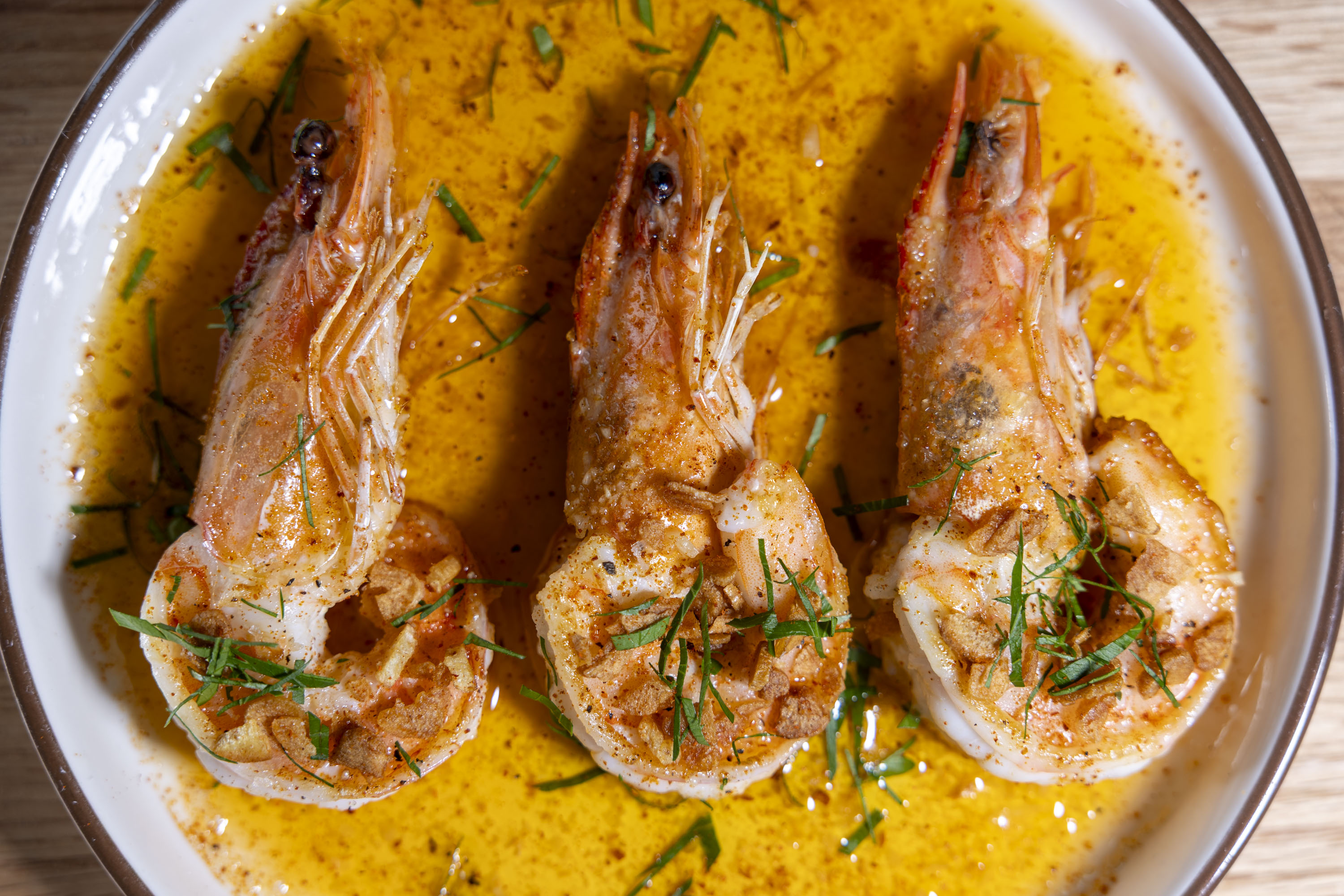
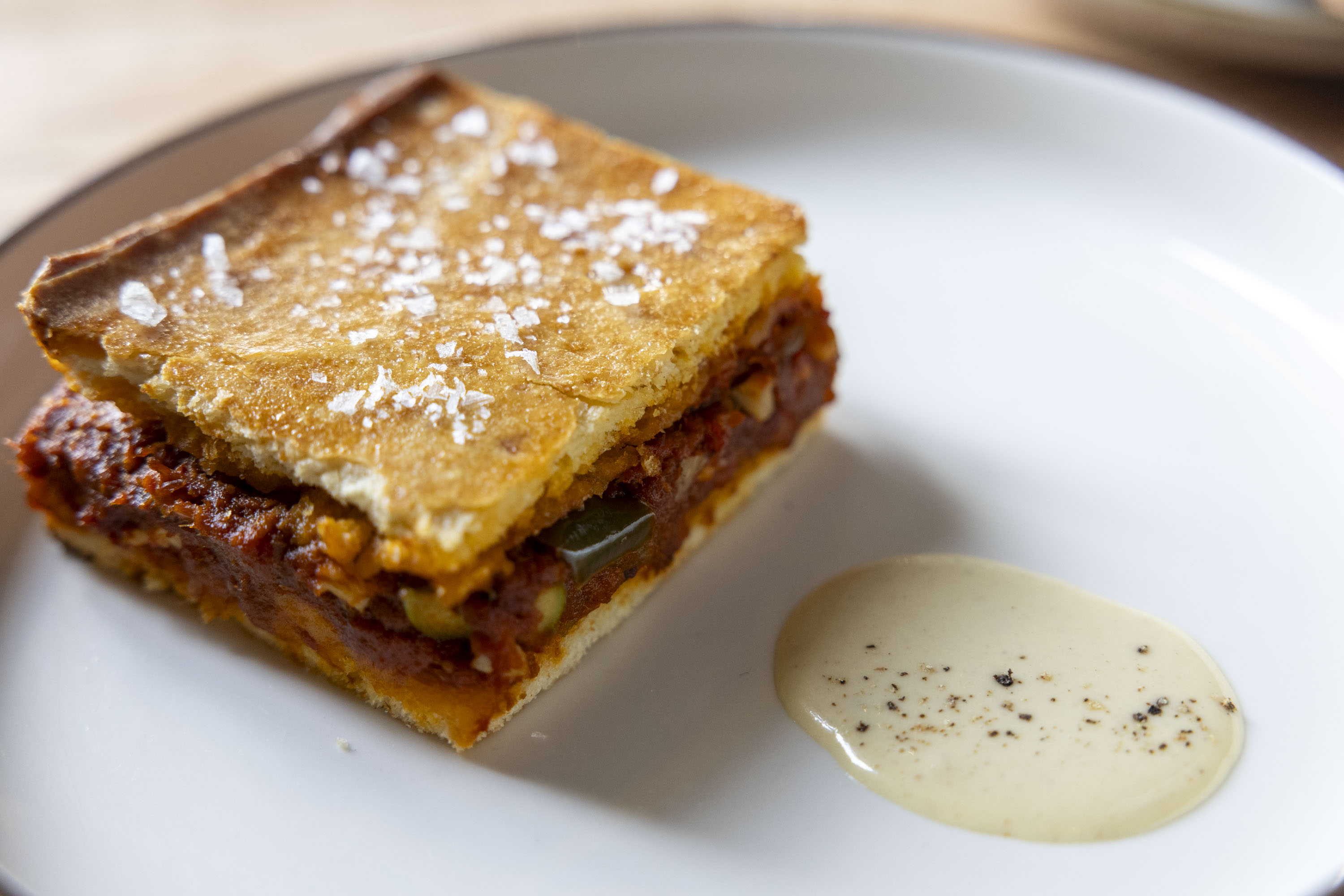
But the Spanish flavors, both on the plate and in the glasses, are what have me hooked. Aside from the tortilla, there’s a double-crusted Galician-style empanada stuffed with tuna and cooked-down tomate frito. Plump head-on gambas al ajillo take on a flicker of chili oilheat. Crisp spheres of perfectly fried croquetas harbor lusciously creamy béchamel centers flecked with serrano ham or, my favorite, salty flakes of bacalao.
A Tuna Empanada at BAR ilu on Thursday, Aug. 20, 2026, in Philadelphia.Tyger Williams / Staff PhotographerPat Szoke, culinary director, and Andrew Butler, chef de cuisine, at BAR ilu.Tyger Williams / Staff Photographer
There were a few misfires. The patatas bravas were pale and lacking crisp. The flattened confit artichoke heart was mushy. The seared mushrooms were oversalted. But these were minor complaints compared to winners like the crusty bocadillo sandwich overstuffed with paprika-fried baby squid drizzled with lemony aioli and more tomate frito. Along with some tiny olives stuffed with briny anchovy, every morsel seemed deliberately calibrated to stoke a thirst.
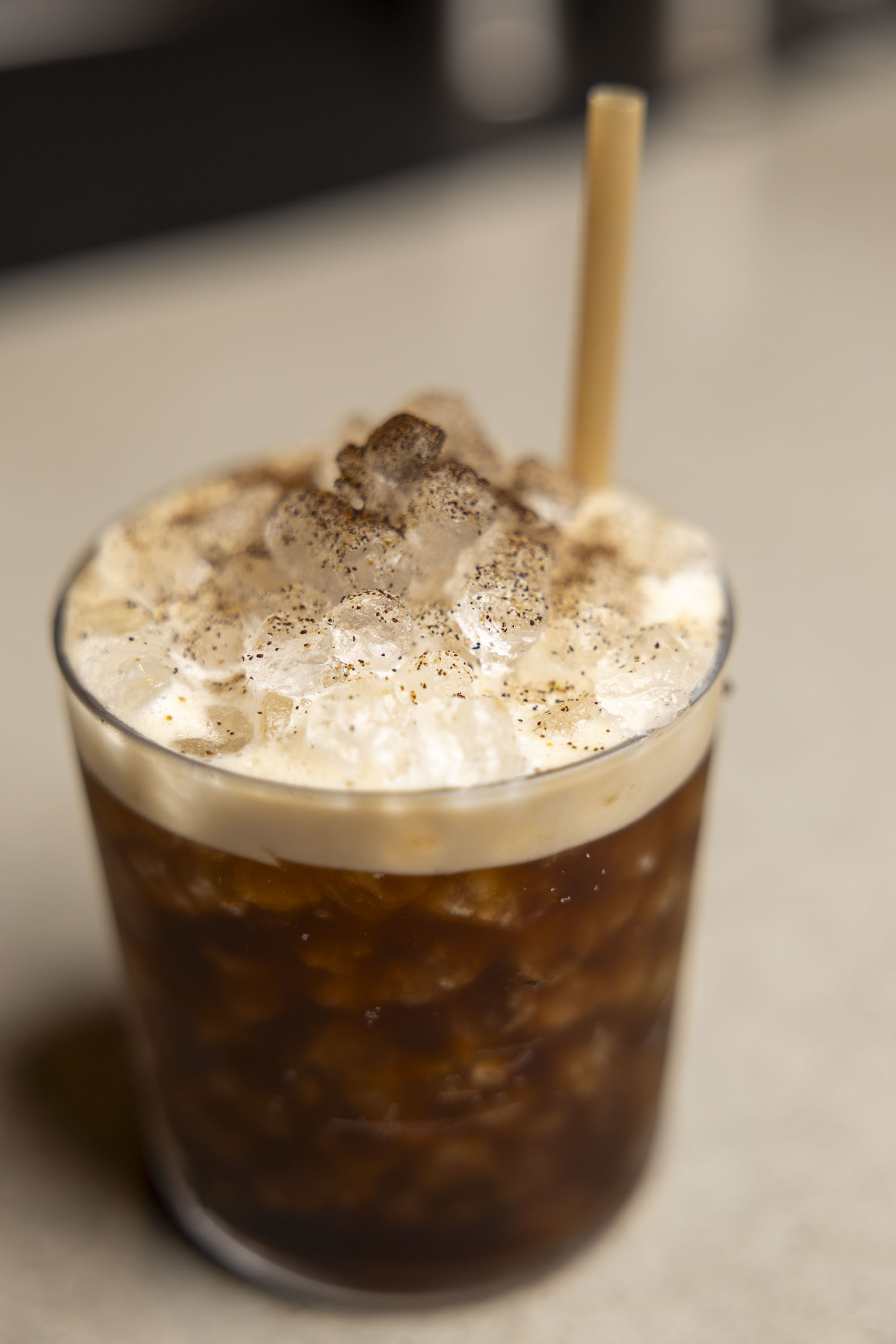
I especially enjoyed BAR ilu’screative approach to sherry and vermouth, both in cocktails and poured neat. A crisp Manzanilla, already one of my favorite predinner quaffs in summer, added a bracing dryness to Cynar amaro and gin for Remember the Alimony. Vanilla-scented Licor 43 from Spain pairs with chilled Cafe Bustelo for a carajillo whose pebble ice is dusted with coffee-orange powder, and is now one of my top five coffee cocktails in the city.
The Carajillo at BAR ilu on Thursday, Aug. 20, 2026, in Philadelphia.Tyger Williams / Staff Photographer
The Fire Drill is a refreshing tropical blast of passion fruit swirling in mezcal smoke, with an herbal whiff of Lo-Fi gentian amaro to counter the fruity sweetness. A whole Granny Smith apple is juiced to order forthe simpleBooze & Juice, paired with the spirit of your choice (make it mezcal).
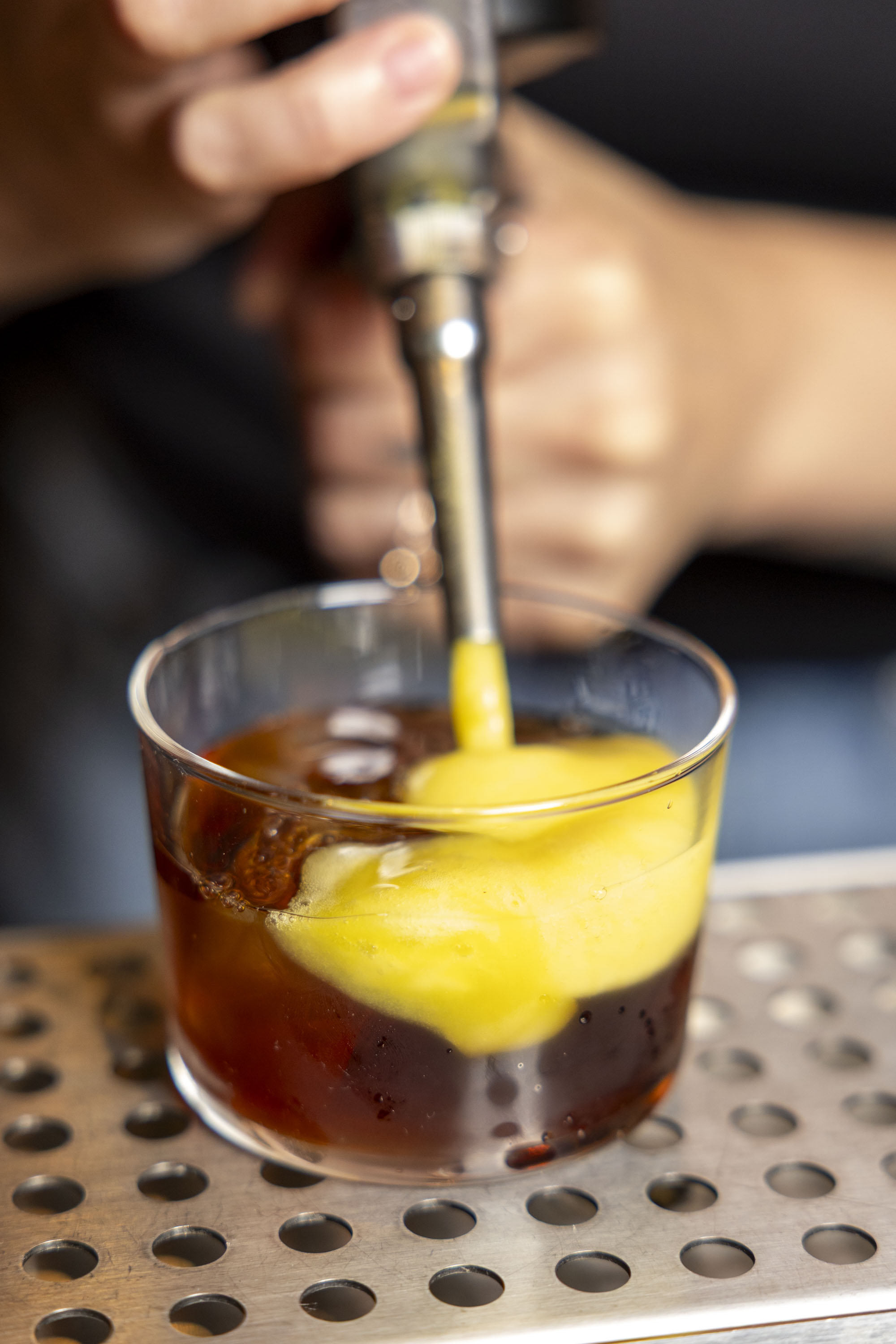
Meanwhile, unless you order a glass of dark, sweet-tangy Pedro Ximenez to cap your meal, try the Barquero vermut on draft and top it with orange foam, a combo that tastes like flat Coke dolloped with an orange-creamsicle cloud. There is actual dessert here, too: a perfectly fine almond cake with macerated peaches and cream. But that foamed vermouth was satisfyingly herbal, sweet, and mysterious — and one of the best things I drank all summer.
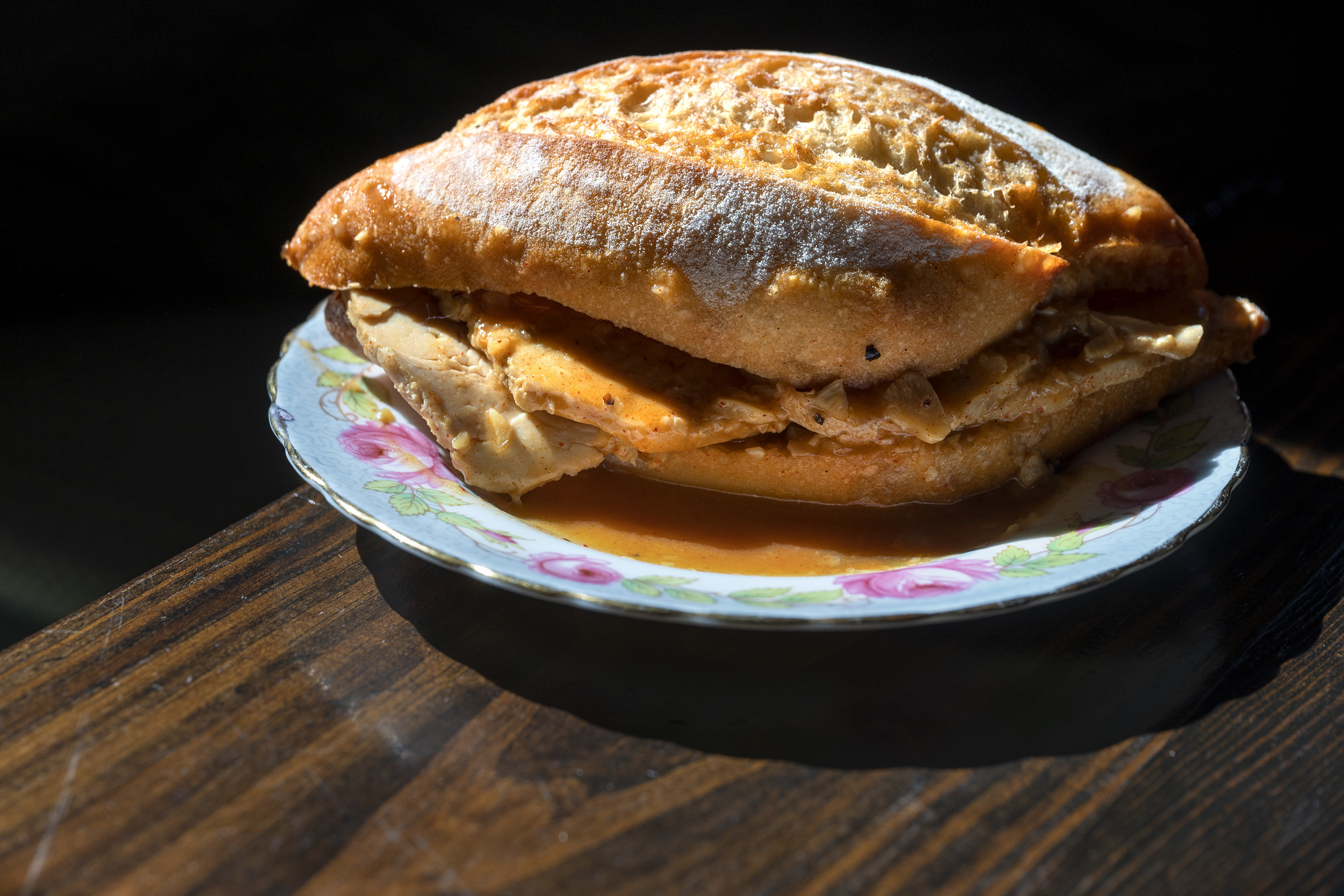
The Vermouth with Orange foam at BAR ilu on Thursday, Aug. 20, 2026, in Philadelphia.Tyger Williams / Staff PhotographerThe Bifana sandwich as served at Grace & Proper in Queen Village Wednesday, Mar. 8, 2023.Tom Gralish / Staff Photographer
Grace & Proper
If BAR ilu represents a modern interpretation of tapas culture in Philly, the vintage vibes at Grace & Proper’s Italian Market space reflect a different take on Iberian bar culture, this one influenced by the Portuguese roots of co-owner Chris Fetfatzes’ family.
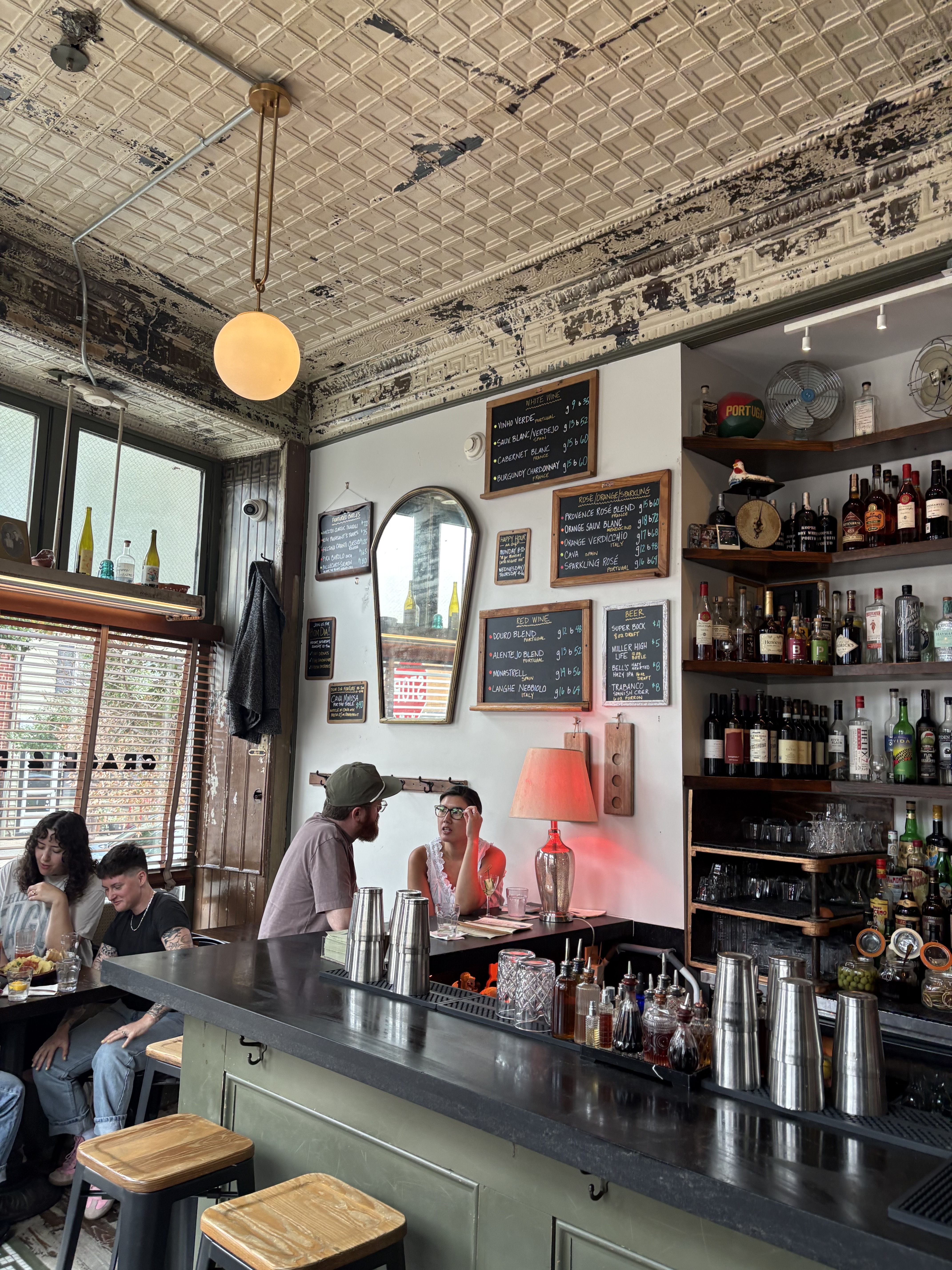
Fetfatzes, his wife, Heather Annechiarico, and their Happy Monday Hospitality partner Susan Freeman, who also own Wine Dive and Sonnys Cocktail Joint, leaned into the antique charm of the distressed tin ceiling, tiled floor, and exposed brick walls that wereuncovered during renovations of the old pharmacy (and Italian deli) that once occupied this corner space at Eighth and Carpenter. Fetfatzes was hoping to create the cocktail counterpart to Fountain Porter, the 14-year-old craft beer destination in East Passyunk known for its $7 burgers and pickles that, perhaps, helped mark the beginning of the minimalist-nibble bar.
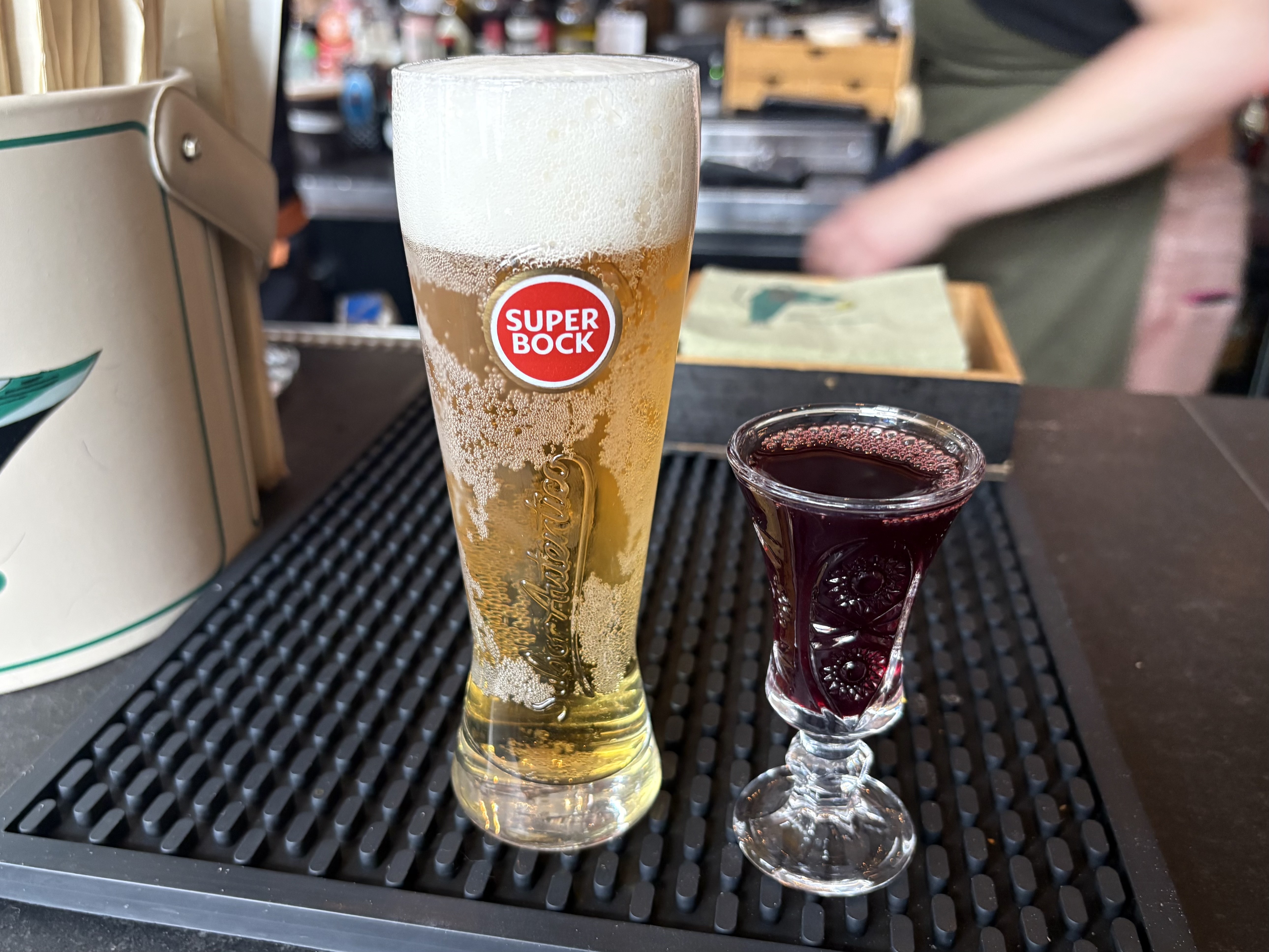
Given Grace & Proper’s compact space, with just 15 barstools and 26 table seats sidled into window banquettes (plus 30 more outside in fair weather), it’s amazing how its 200-bottle collection of amari, vermouths, ports, whiskeys, Madeiras, sherries, agave spirits, and indie Euro wines somehow fits into the tall shelves behind the bar. If you’re a fan of funky Asturian cider, there’s a proper porrón carafe to stream it directly into your mouth from an arm’s length away, ideally while watching Premier League or MLS soccer. Or try the Philly-Portugal Lisbon Wide hybrid, a draft of Super Bock Portuguese lager paired with a shot of ginjinha, a house-made cordial steeped from Morello sour cherries harvestedin Northeast Philadelphia.
The Lisbon Wide is Grace & Proper’s Portuguese twist on a Citywide, pairing Super Bock beer with housemade Ginjinha sour cherry liqueur.Craig LaBan / StaffThe Meat & Chips at Grace and Proper on Thursday, Aug. 3, 2023.Allie Ippolito / Staff Photographer
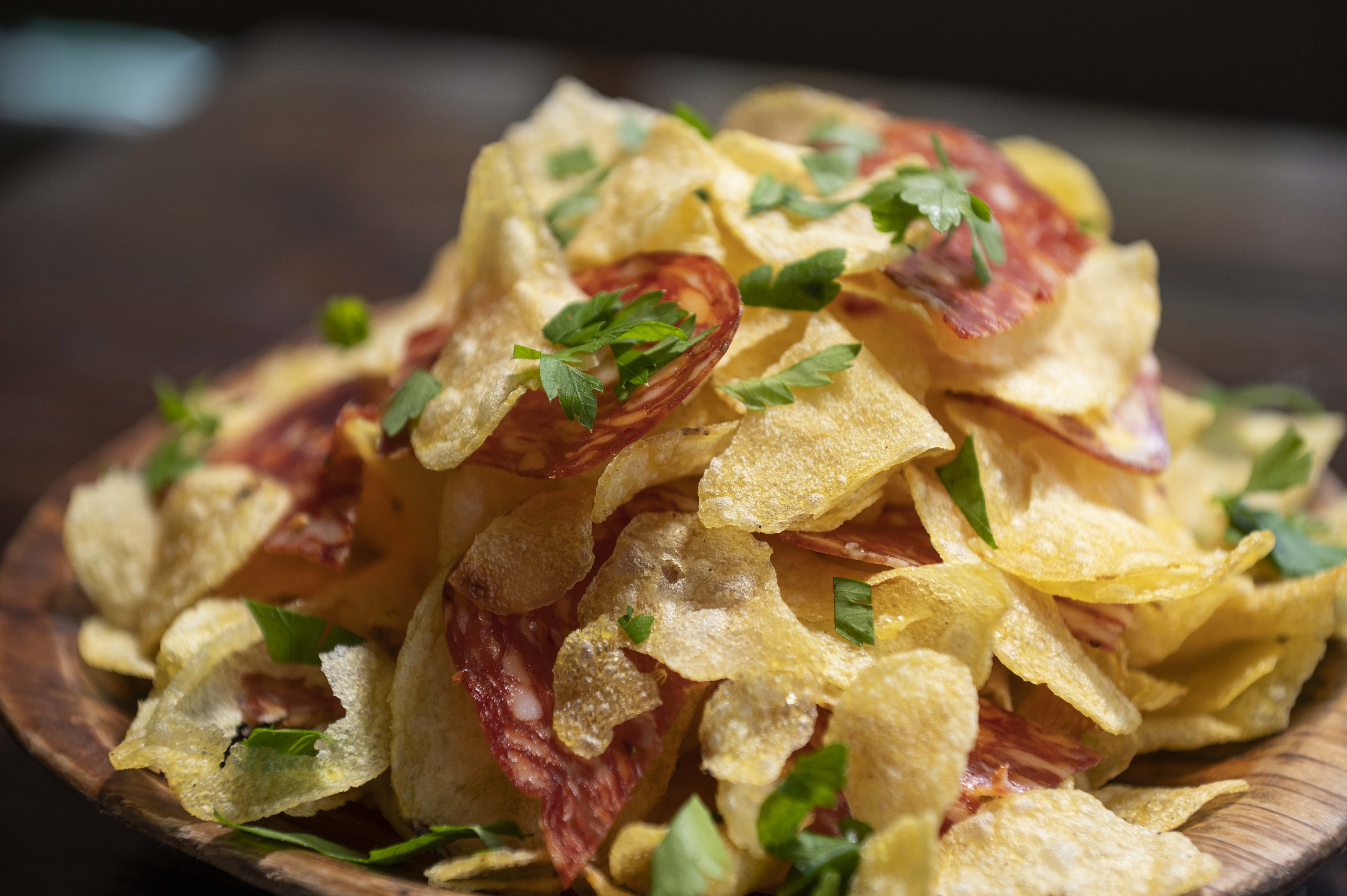
Grace & Proper doesn’t post a food menu online, but it’s substantial enough to anchor your table for a couple hours of snacking, from an irresistible pile of truffled potato chips feathered with spicy Calabrese salami to soulful onion soup infused with port and lardo, a crock of white bean stew with kale and breadcrumbs, piri piri-spiked Buffalo chicken dip, and sweet-tart-smoky bacon-wrapped prunes with black garlic aioli.
I didn’t care for the overly firm meatballs and their unbalanced blackberry romesco or, for that matter, the presentation of cheeses as crumbled nuggets. But these are all quibbles. Because there is really a single essential reason to visit Grace & Proper: the bifana, a classic sandwich of wine-marinated roast pork on a molete roll from Teixeira’s Bakery in Newark that comes perched over a paprika-orange pool of zesty gravy. Equal parts lemony, garlicky, winey, and scented with bay, that roasted pork essence is so good, the gravy is also offered as a chaser to the Piggy Backshot (oloroso sherry and Armagnac).
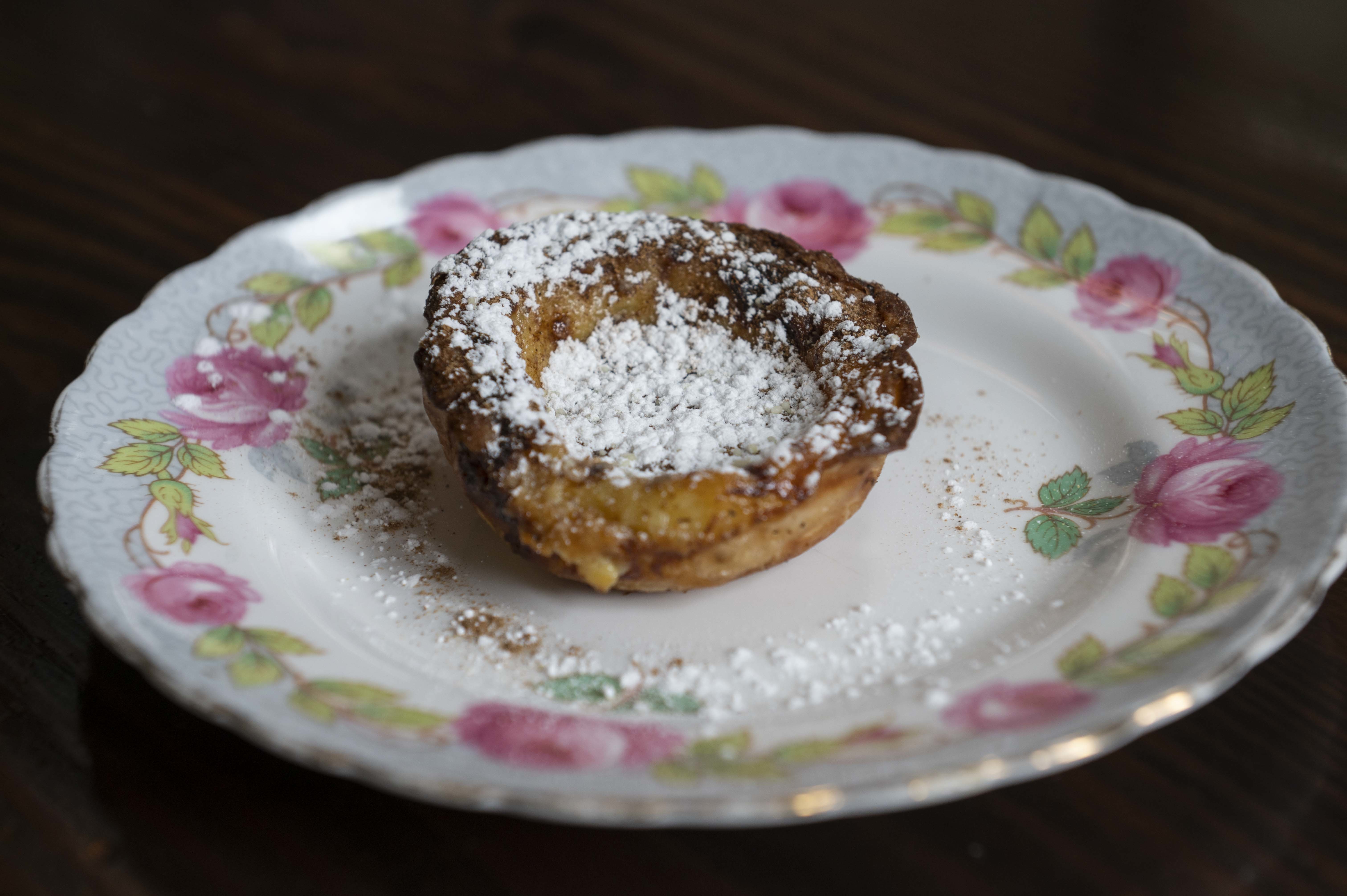
All you’ll need after that is a custardy sweet pastel de nata (also baked by Teixera’s, according to G&P’s recipe) and what might well be the best crema-topped shot of espresso at any bar in Philly. Grace & Proper is one of the precious few that actually adds fresh-pulled coffee to its espresso martinis, but I still prefer this coffee solo. I value the energy boost because, in these days of no-commitment sip-and-nibble bars, I’ve still got places to go.
The Pastéis de Nata at Grace and Proper on Thursday, Aug. 3, 2023.Allie Ippolito / Staff PhotographerVintage details of the former pharmacy and Italian deli have been preserved to add character to the bar at Grace & Proper.Craig LaBan / Staff
Menu available 4 to 11 p.m. Sunday, Tuesday through Thursday; 4 p.m. to midnight Friday and Saturday. Bar is open 4 p.m. to midnight Sunday, Tuesday, Wednesday; 4 p.m. to 1 a.m. Thursday through Saturday.
Plates, $4-$14.
Dining room is wheelchair accessible via a ramp off rear of building off Martha Street. Bathrooms are not accessible.
Not ideal for gluten-free diners, aside from some small snacks.
Menu highlights: croquetas (ham and bacalao); anchovy-stuffed olives; serrano ham and chips; tortilla Española; ham and melon; cheeseburger; gambas al ajillo.
Drinks: Cocktails built around sherry and vermouth are the most distinctive opening move, while straight fortified wines on draft, including La Gitana Manzanilla or Barquero vermut with orange foam, are also highlights. There are also 10 affordable Spanish wines by the glass.
Menu served 4 p.m. till midnight Monday, Wednesday, Thursday; noon to midnight Friday through Sunday. Bar is open till 1 a.m. on Friday and Saturday.
Plates, $7-$15.
Not wheelchair accessible.
About 40% of the menu is gluten-free or can be modified.
Menu highlights: bifana; bacon-wrapped plums; salami and truffled chips; Porto lardo onion soup; pasteis de nata.
Drinks: The vast 200-bottle collection is a sipper’s delight, from amari to fortified wines, extensive whiskies, and a surprising agave spirits collection. Don’t miss creative cocktails made with the company’s new house-distilled spirits, including a Chartreuse-inspired “Green Monk” or the ginjinha cordial, steeped from Northeast Philly sour cherries, served in the Lisbon Wide as a sidecar to a draft of Super Bock.
If you spent the summer out of town (or off the grid), you may have missed a busy few months on the restaurant scene. Philadelphia-area newcomers include a Milan-inspired aperitivo bar in Rittenhouse, Japanese barbecue on the Main Line, and two corner bars in Point Breeze.
Here are 12 noteworthy restaurants that opened in the last few months.
Academy Grill (424 S. Bethlehem Pike, Fort Washington): This white-tablecloth restaurant in the former Cantina Feliz near Germantown Academy serves house-made pastas, seafood, steaks, and contemporary American dishes in a polished, decidedly grown-up setting.
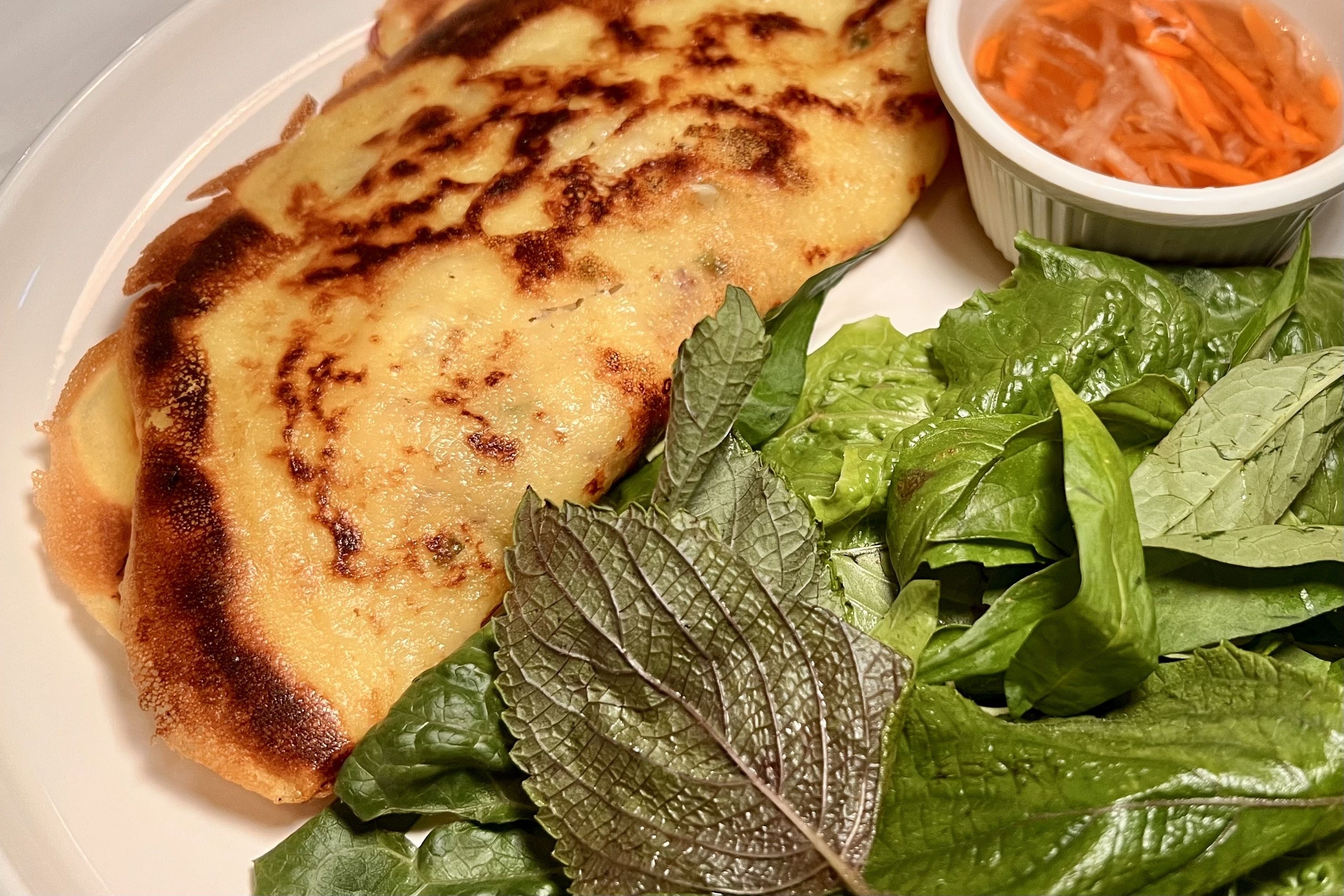
Bánh xèo at Anh Em, 1252 S. 21st St.Michael Klein / Staff
Anh Em (1252 S. 21st St.): Pho, bánh xèo, and 24 local beers meet at Anh Em, a Vietnamese bar-restaurant at 21st and Titan Streets in Point Breeze from Victor Nguyen and Anna Huynh. Nguyen draws on dishes the husband-and-wife team grew up eating, while the 20-seat bar gives the neighborhood spot an unusually deep commitment to locally brewed beer.
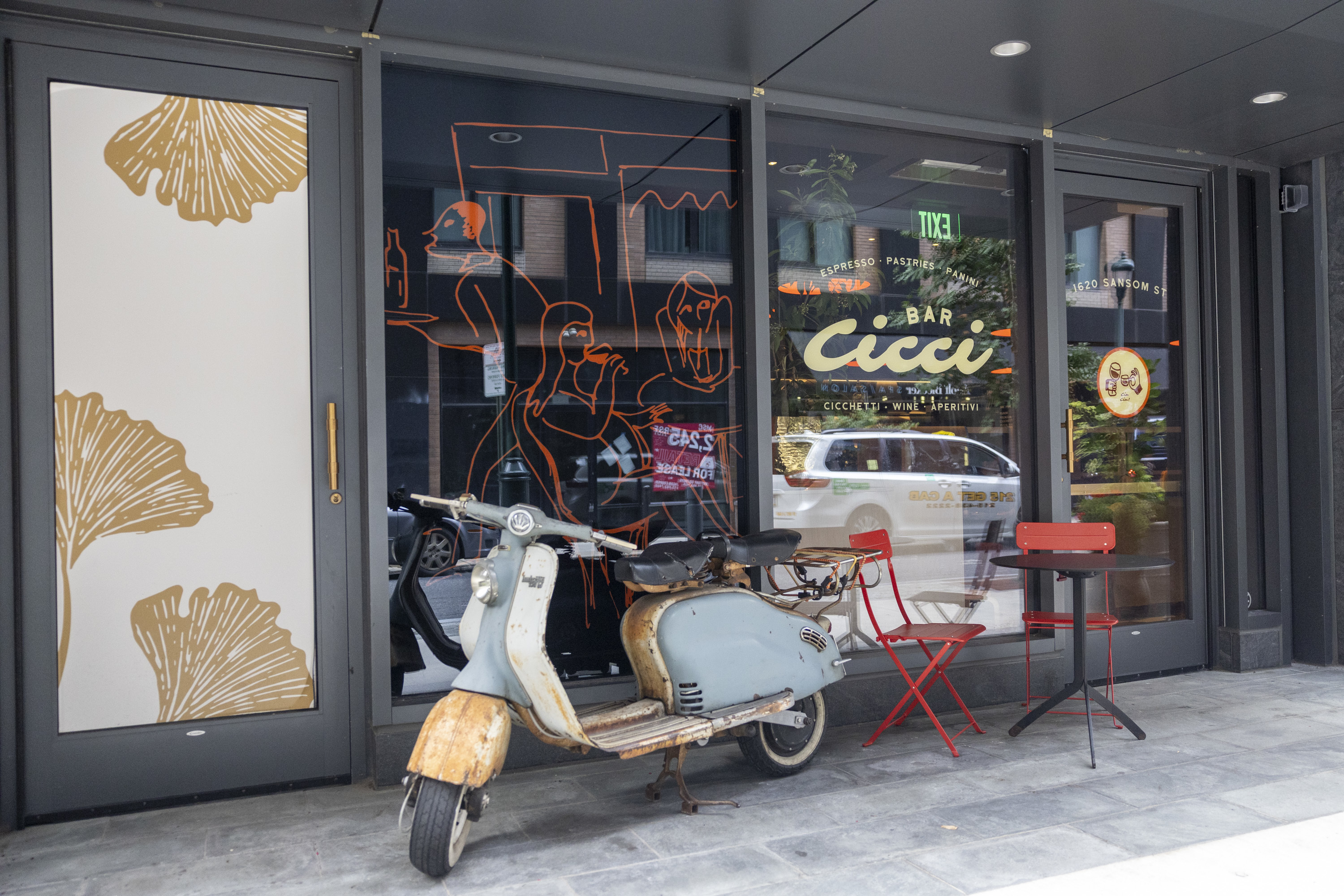
Bar Cicci (1620 Sansom St.): Ellen Yin’s 30-seat, Milan-inspired spot starts with espresso and Italian pastries, moves into sandwiches at lunch, then shifts to spritzes, wine, cicchetti, and small plates at night. The Rittenhouse newcomer is High Street Hospitality’s take on northern Italy’s all-day aperitivo culture.
Bluebird Distilling in Phoenixville.Photos courtesy of Ed Newton
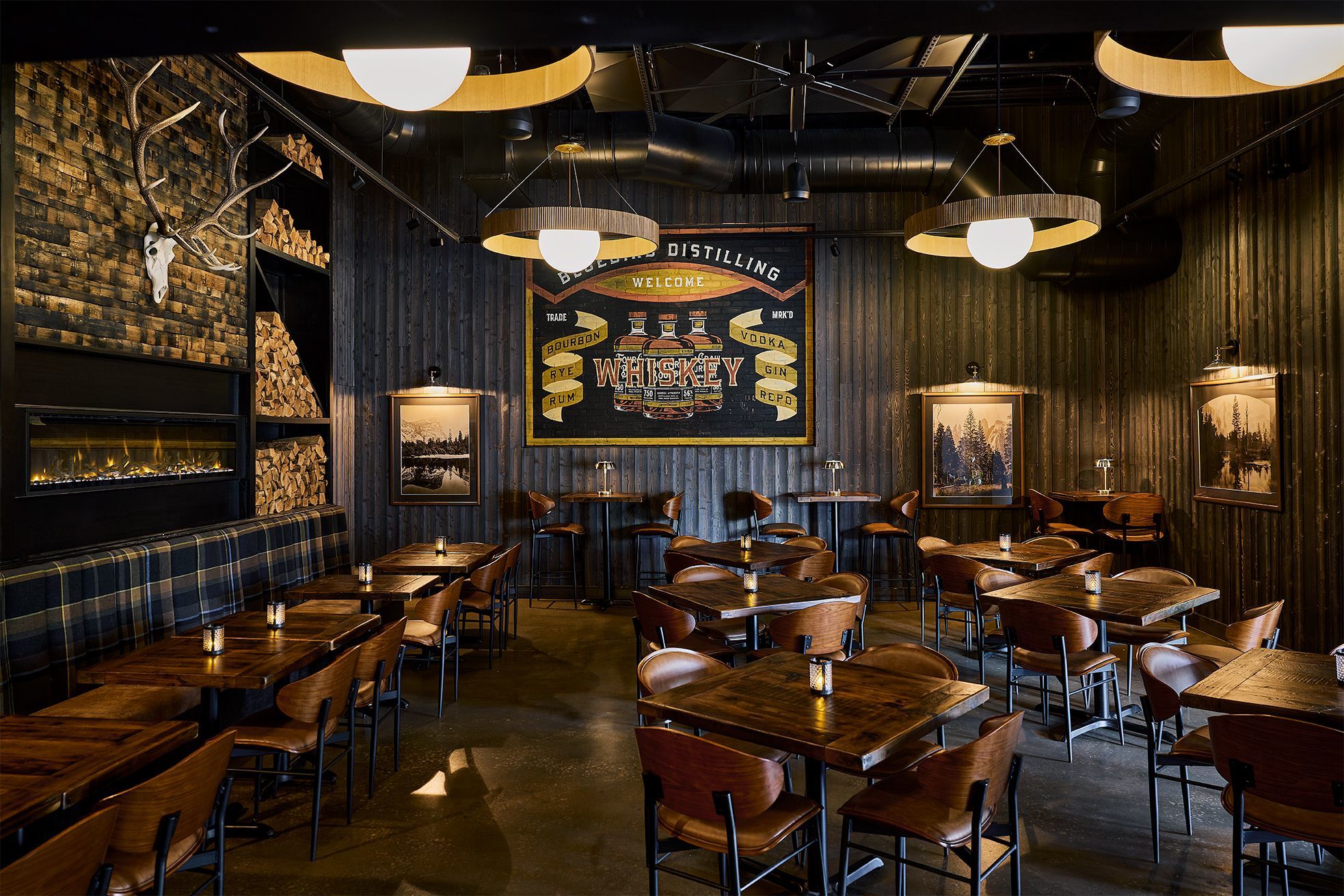
Bluebird Distilling & Dough House (100 Bridge St., Phoenixville): A $2.2 million investment turned Bluebird’s Bridge Street distillery into a full-fledged restaurant. Executive chef Devon Migeot, whose resumé includes Zahav and Laser Wolf, centers the expanded food program on naturally fermented neo-Neapolitan pizzas, house-baked breads, shareable plates, and, naturally, Bluebird cocktails.
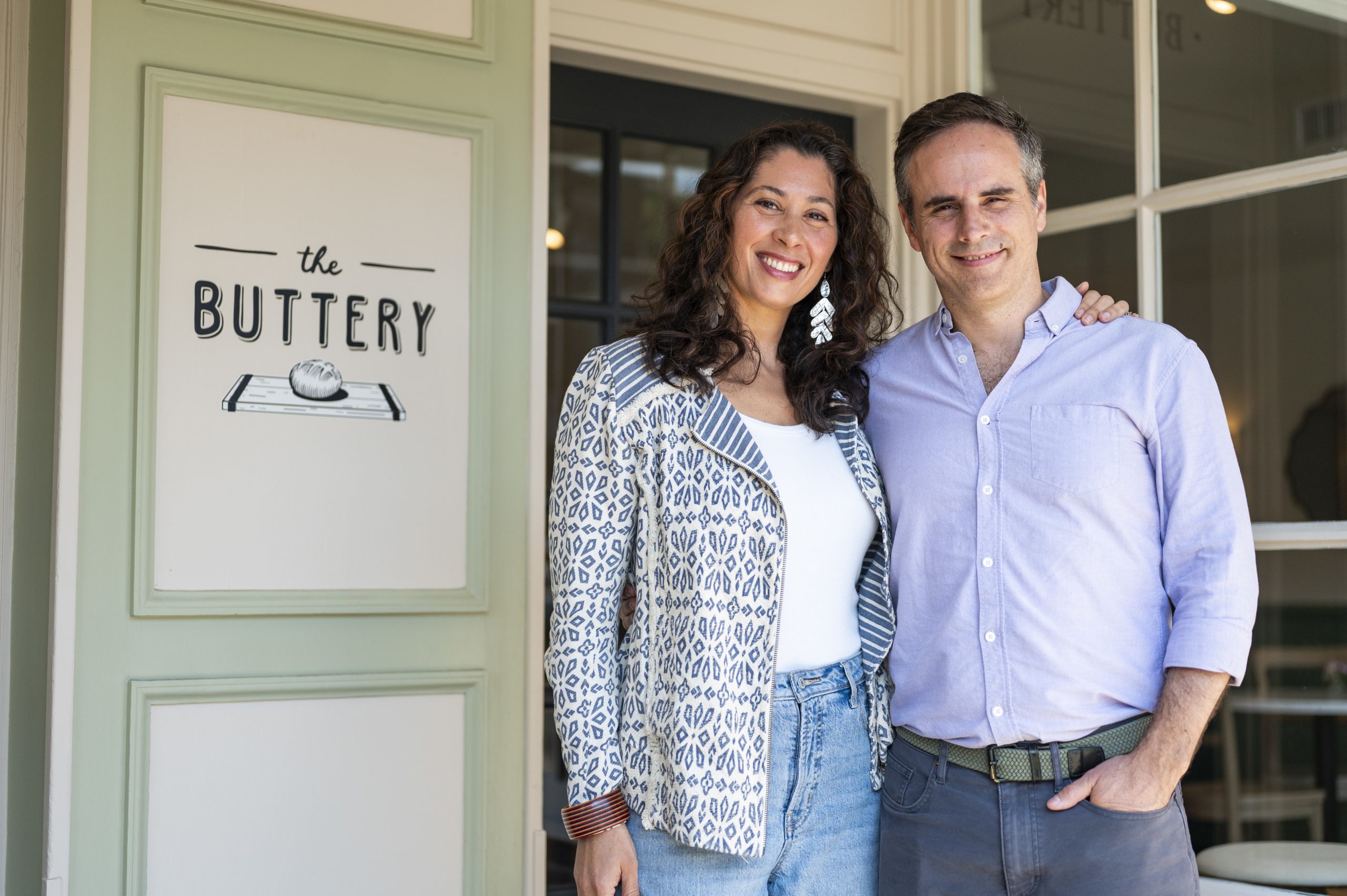
Silenia and John Rhoads, owners of the Buttery in Bryn Mawr.
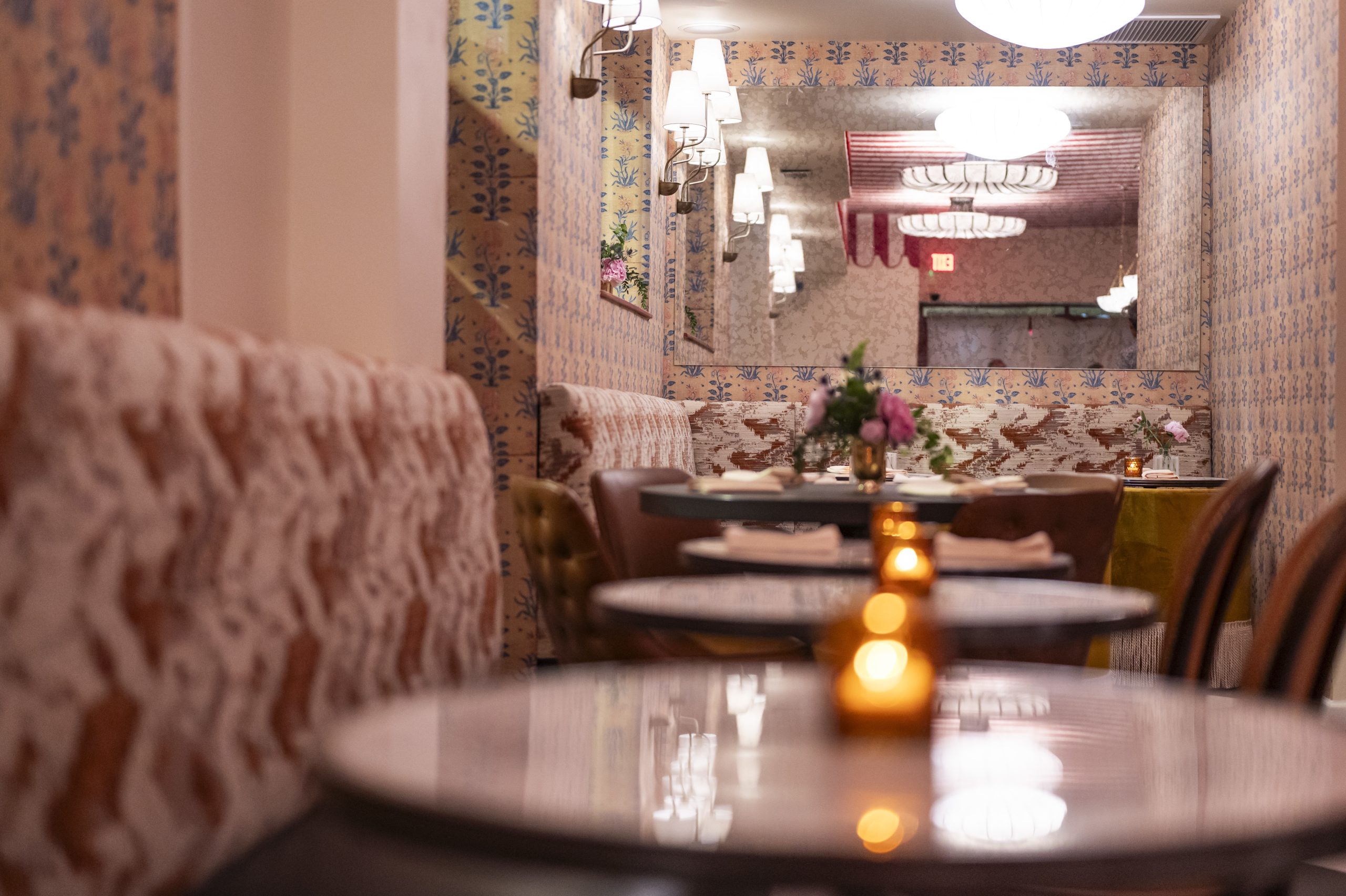
The Buttery (836 W. Lancaster Ave., Bryn Mawr): John and Silenia Rhoads’ third location is an 82-seat bakery-cafe on Lancaster Avenue, where the Malvern-incepted operation’s sourdough breads and house-made pastries share the menu with breakfast dishes, sandwiches, and seasonal fare from its all-day scratch kitchen.
Known Associates at 10th and Spruce Streets.
Known Associates ( 941 Spruce St.): Chef Christopher Kearse’s Washington Square West cocktail bar does not treat the food as an afterthought. The former Varga Bar at 10th and Spruce is a 40-seat room where cocktails accompany a concise, European-influenced menu of a dozen savory dishes.
Lillian’s at 19th and Mifflin Streets.Monica Herndon / Staff Photographer
Lillian’s (1900 S. 19th St.): Even the chef isn’t permanent at Sam Ahern’s parlorlike cocktail bar/bistro at 19th and Mifflin Streets, whose kitchen rotates among guest chefs. The residency model gives each cook a temporary restaurant within the restaurant — and gives this Point Breeze newcomer an ever-changing menu.
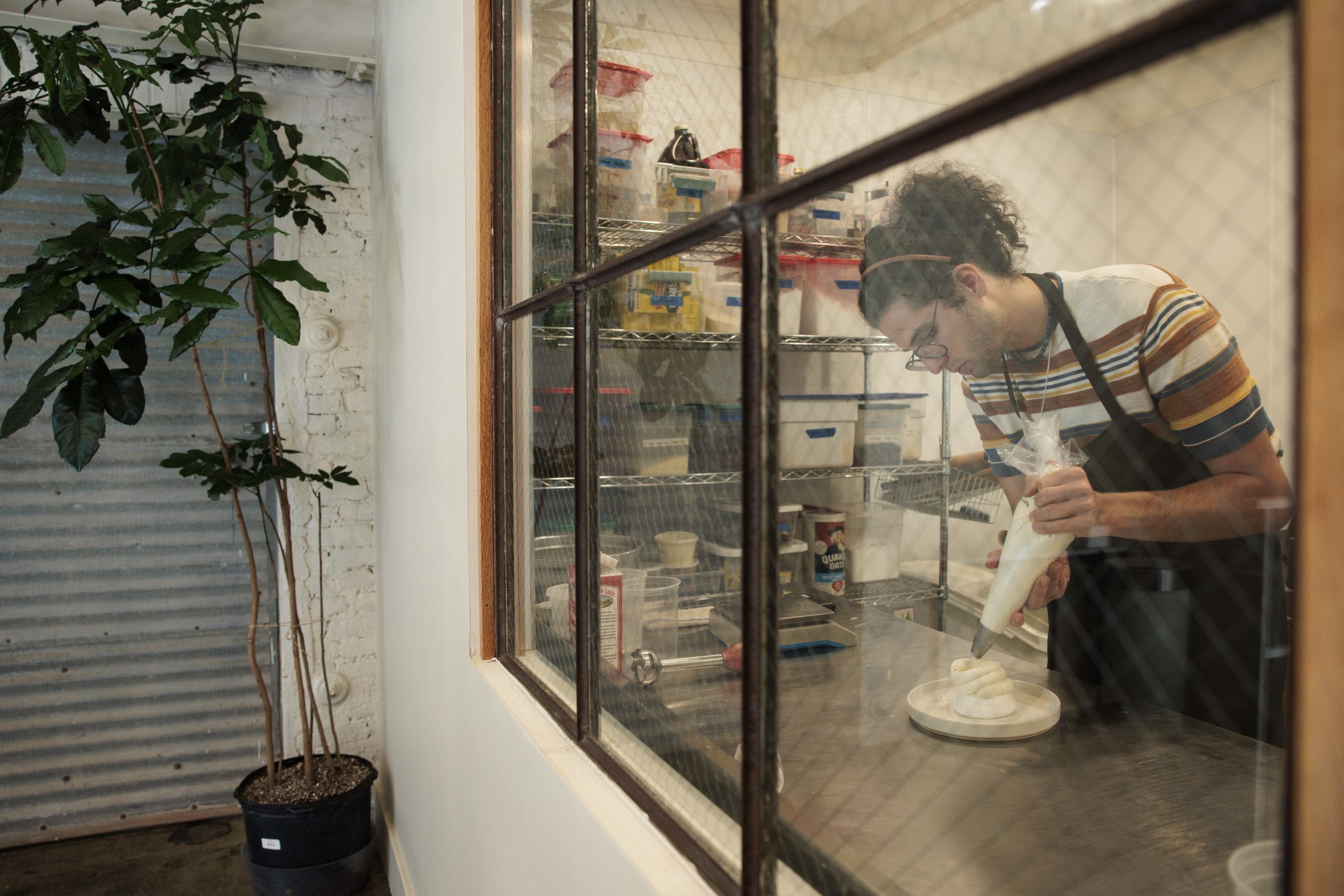
Saif Manna works on a pavlova at Manna Bakery.Monica Herndon / Staff Photographer
Manna Bakery (110 W. Berks St.): Five years and countless farmers market appearances later, Saif Manna’s Temple dorm room project has moved into the former Essen Bakery in Kensington. Manna draws on his Palestinian heritage for Levantine pastries and savory dishes in a comfy cafe setting.
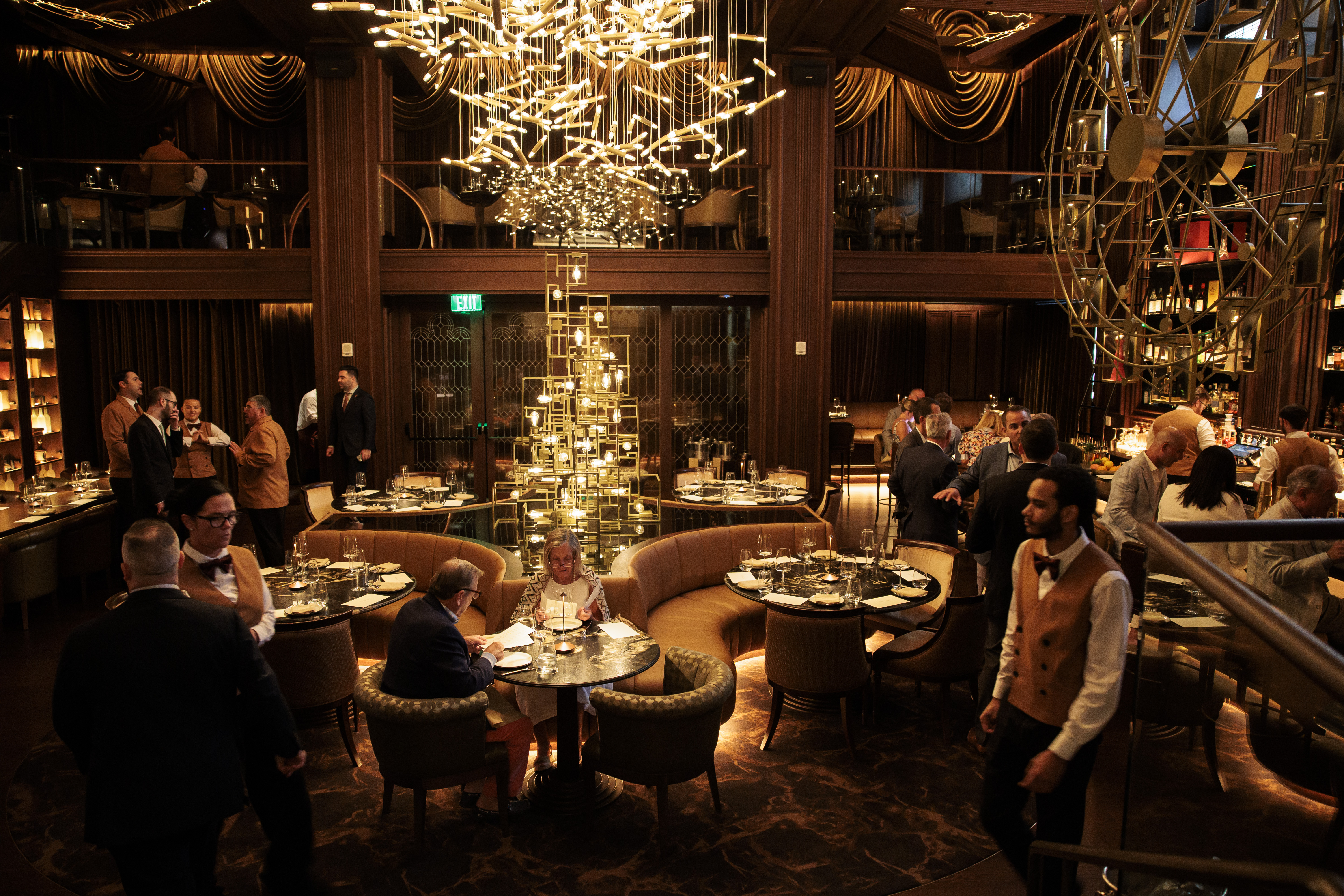
Mr. Edison in the Bellevue Hotel.Monica Herndon / Staff Photographer
Mr. Edison (1400 Walnut St.): There’s a Ferris wheel carrying liquor behind the bar at Mr. Edison, which gives some idea of the production. Veteran restaurateur Jeffrey Chodorow’s Philadelphia debut is a theatrical Bellevue supper club where chef Matt Levin’s cooking shares a two-story room with live music, dramatic lighting, and plenty of visual spectacle.
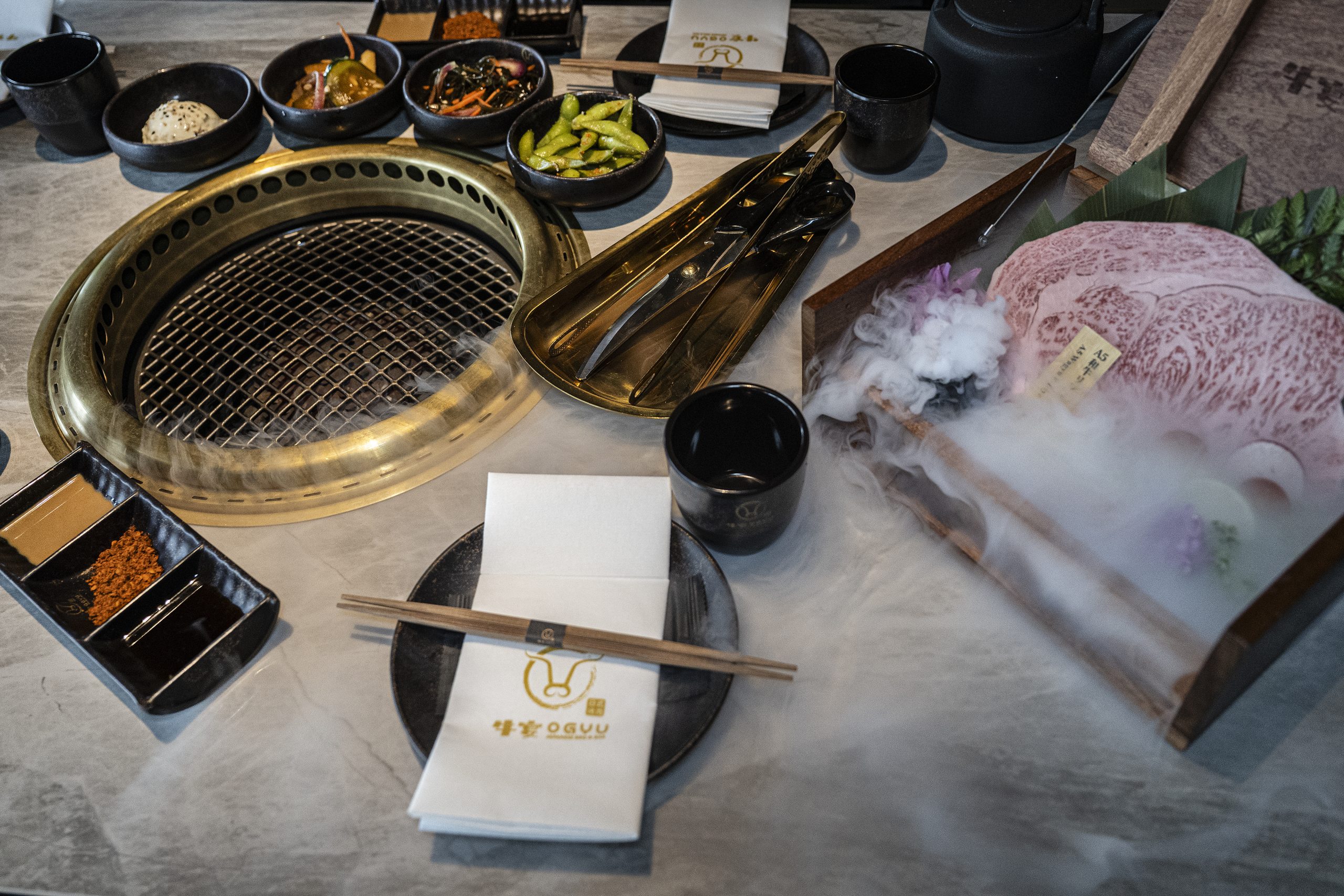
Ogyu Japanese BBQ in Ardmore.
Ogyu Japanese BBQ (60 Greenfield Ave., Ardmore): Sam Li turned Ardmore’s former Iron Hill Brewery into a sprawling yakiniku restaurant built around the grill at each table. Diners cook wagyu and other meats themselves — or enlist a server — choosing among fixed-price packages and à la carte options in a dramatically remodeled space with private dining rooms and a full bar.
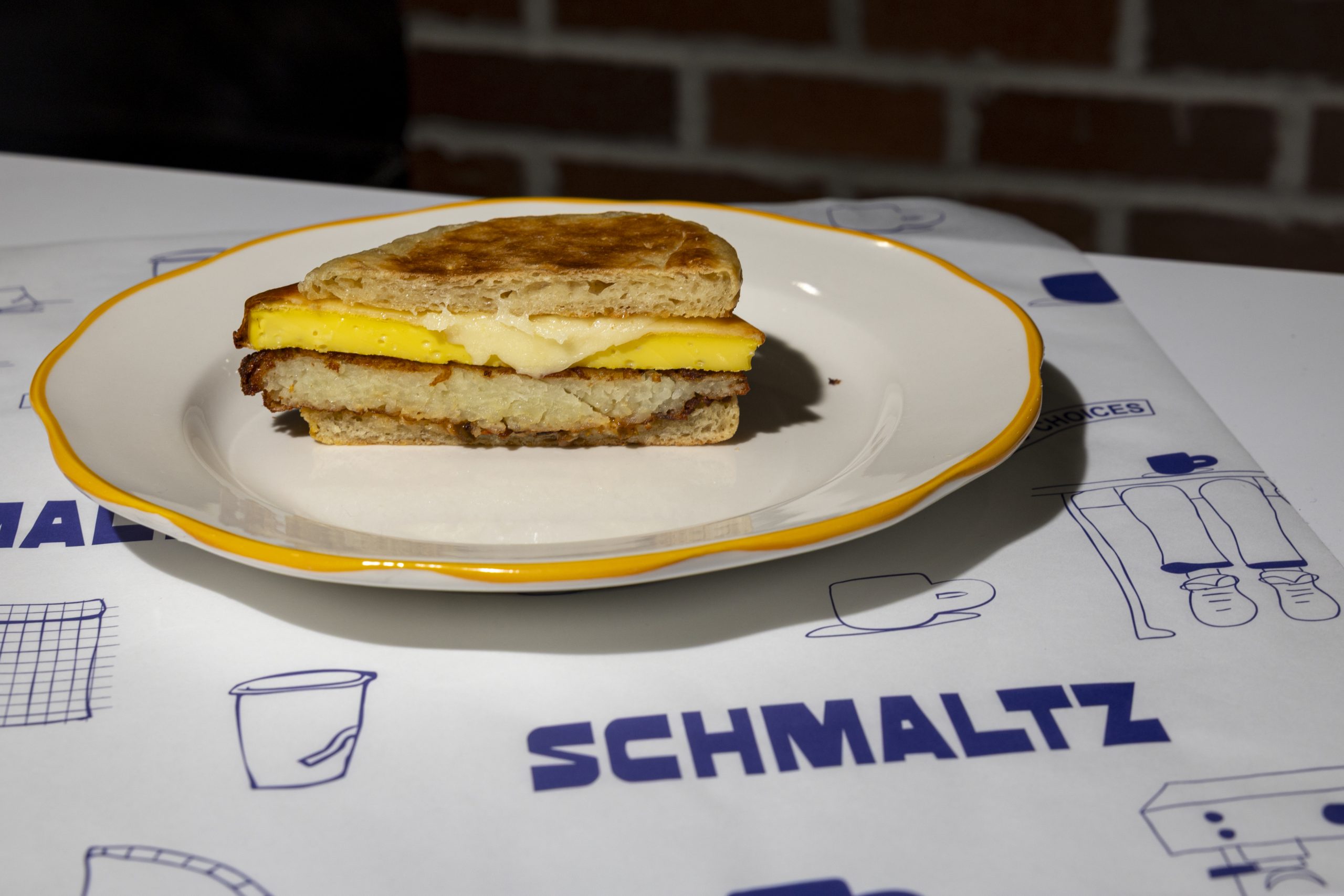
The latke, egg, and cheese sandwich at Schmaltz.
Schmaltz (1300 S. 18th St.): This Jewish-inspired breakfast-and-lunch cafe serves latkes, cheese blintzes, egg sandwiches — and no bagels. Jeremy Asch and Abby Armstrong opened the Point Breeze corner spot with chef Sam Chertock, whose deliberately compact menu includes latke, egg, and cheese sandwiches on house-baked English muffins.
Outdoor dining at Soufiane at the Morris.Elizabeth Robertson / Staff Photographer
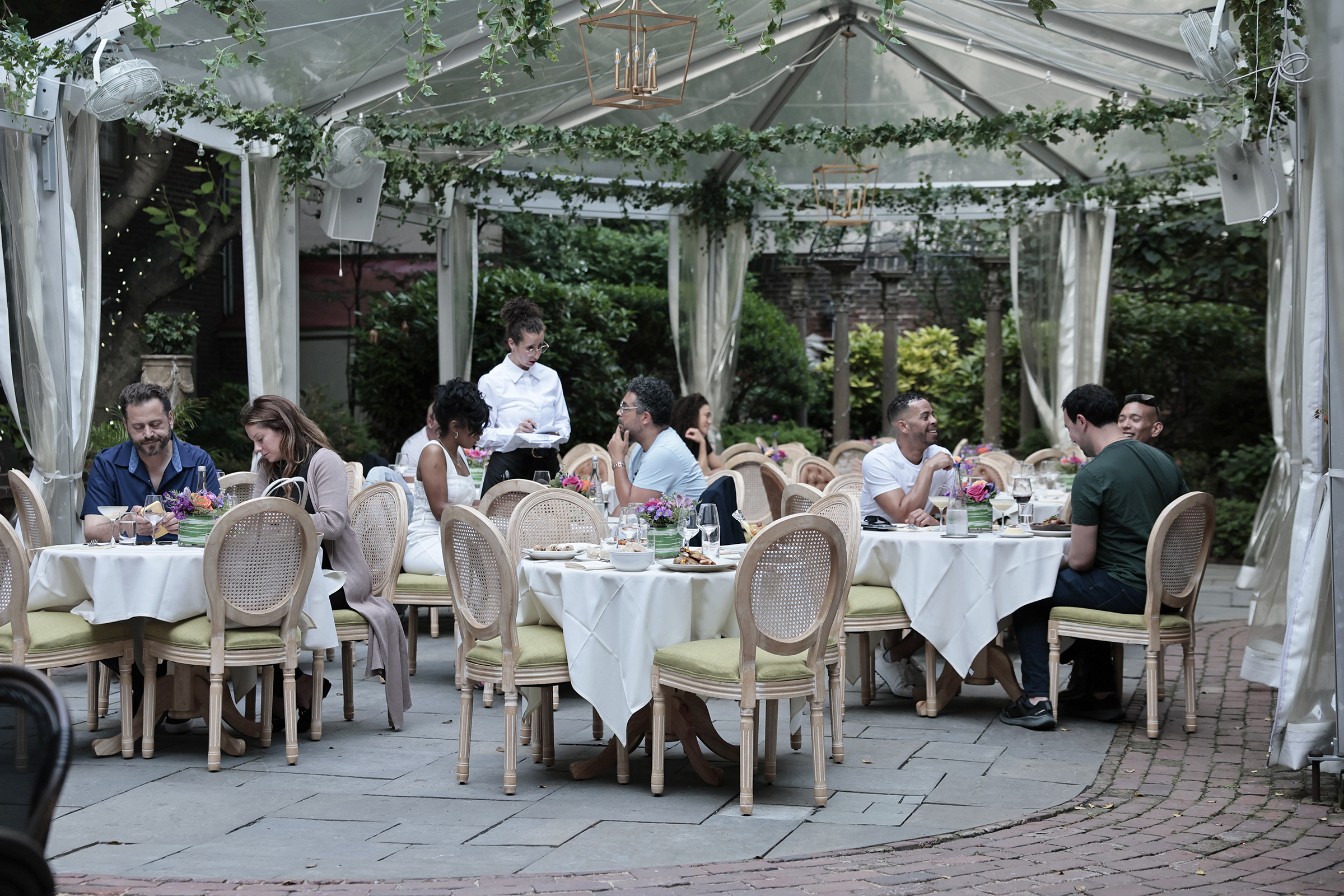
Soufiane at the Morris (225 S. Eighth St.): The 1787 Morris House provides a peaceful backdrop for Soufiane Boutliliss’ French-Moroccan cooking, served in a secluded stone courtyard shaded by magnolias and dogwoods in Washington Square West. This is the second restaurant from the Moroccan-raised Boutliliss and husband Christophe Mathon of Sofi Corner Cafe.
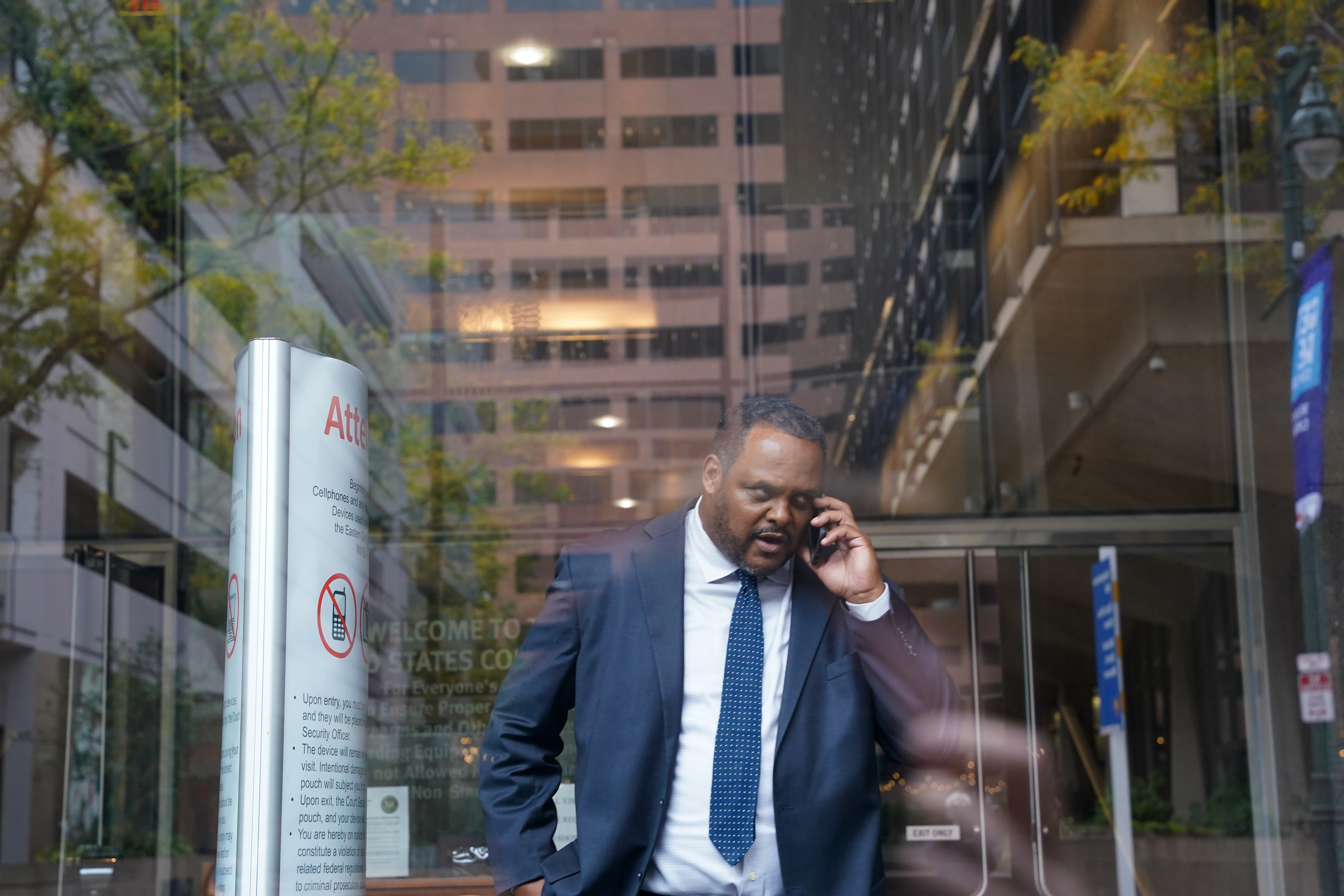
Eleven years ago, Carlton Williams was, to some, a symbol of government dysfunction.
He was leading the troubled Philadelphia Department of Licenses and Inspections, an agency engulfed in controversy over safety lapses and staffing issues following the deadly 2013 Market Street building collapse. The city controller called on Williams to resign, and Jim Kenney, then a candidate for mayor, promised that he’d get rid of him.
And yet Williams remained.
In July, he was named Philadelphia’s managing director, one of the most powerful positions in city government, second only to the mayor. He is assuming responsibility for L&I again, plus dozens of other agencies and thousands of employees who carry out the day-to-day operations that make the city run.
It is perhaps an improbable outcome for a longtime city employee who absorbed a level of scrutiny that could have easily ended his career.
But Williams proved durable, cycling through leadership positions across several departments while establishing himself as a City Hall insider. He has politically powerful allies and a reputation among City Council members as someone who will quickly act on their needs. That goes a long way with 17 politicians who value responsiveness and omnipresence, traits that they did not see in Williams’ predecessor, Adam K. Thiel.
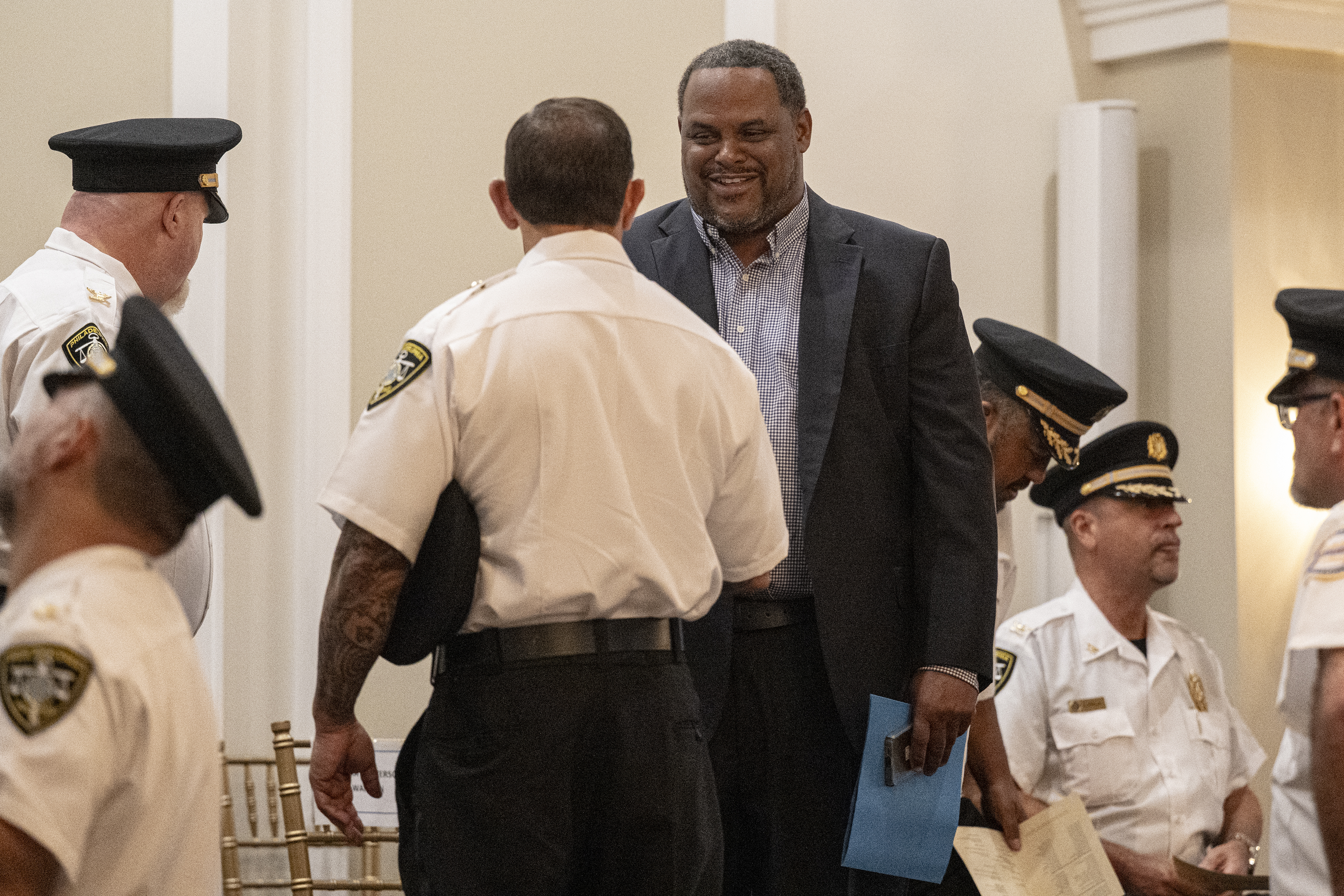
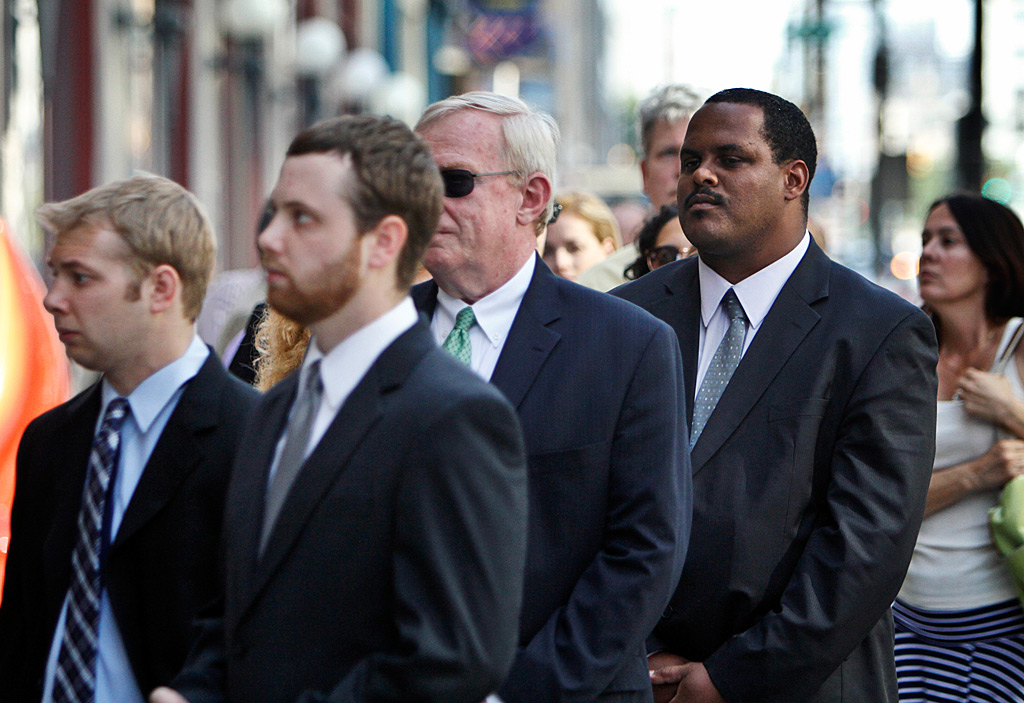
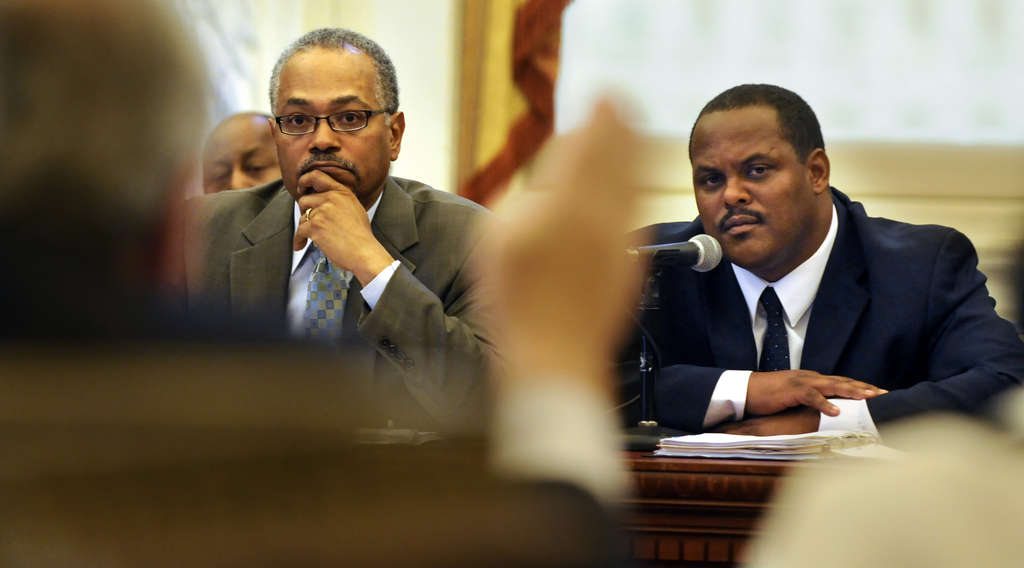
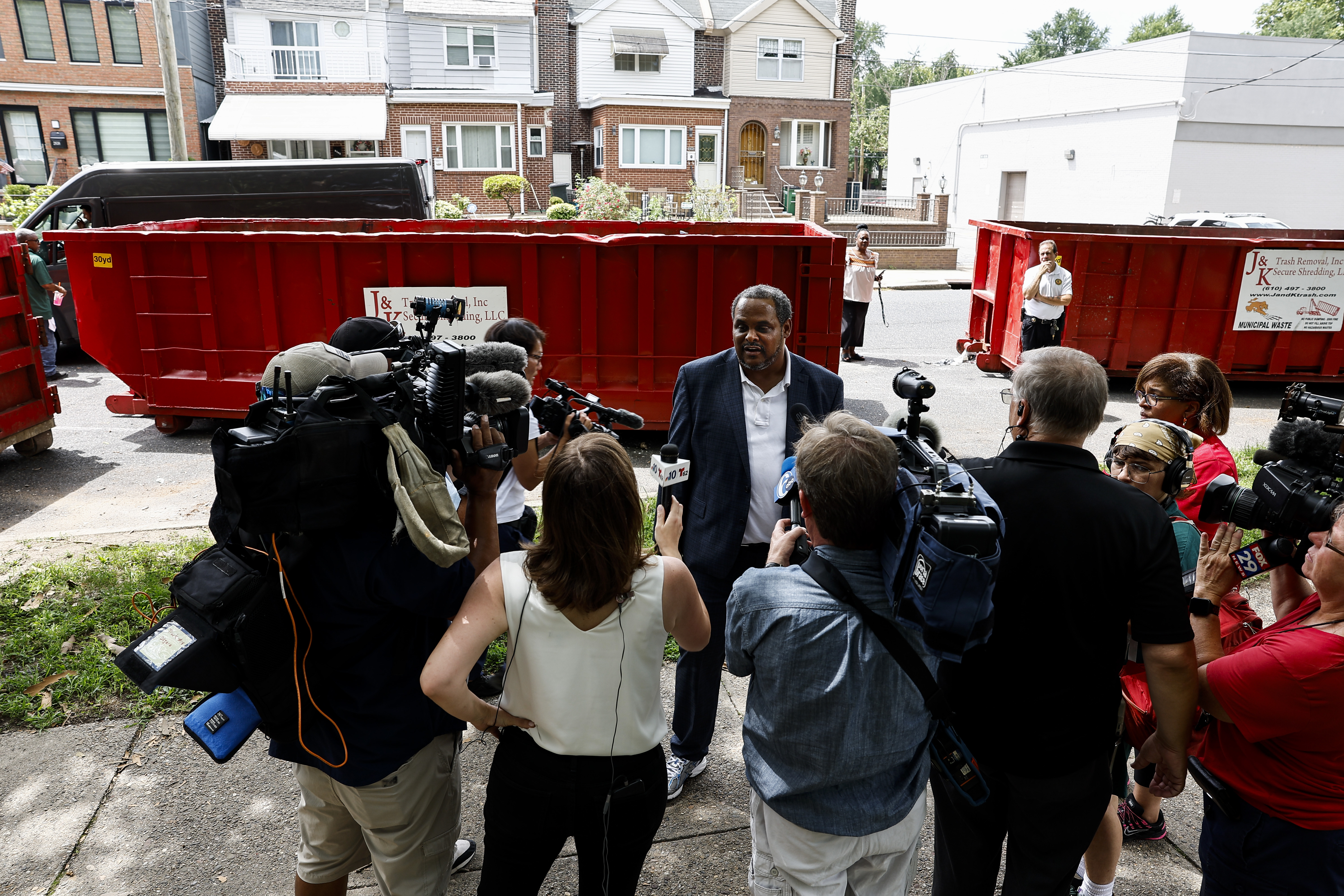
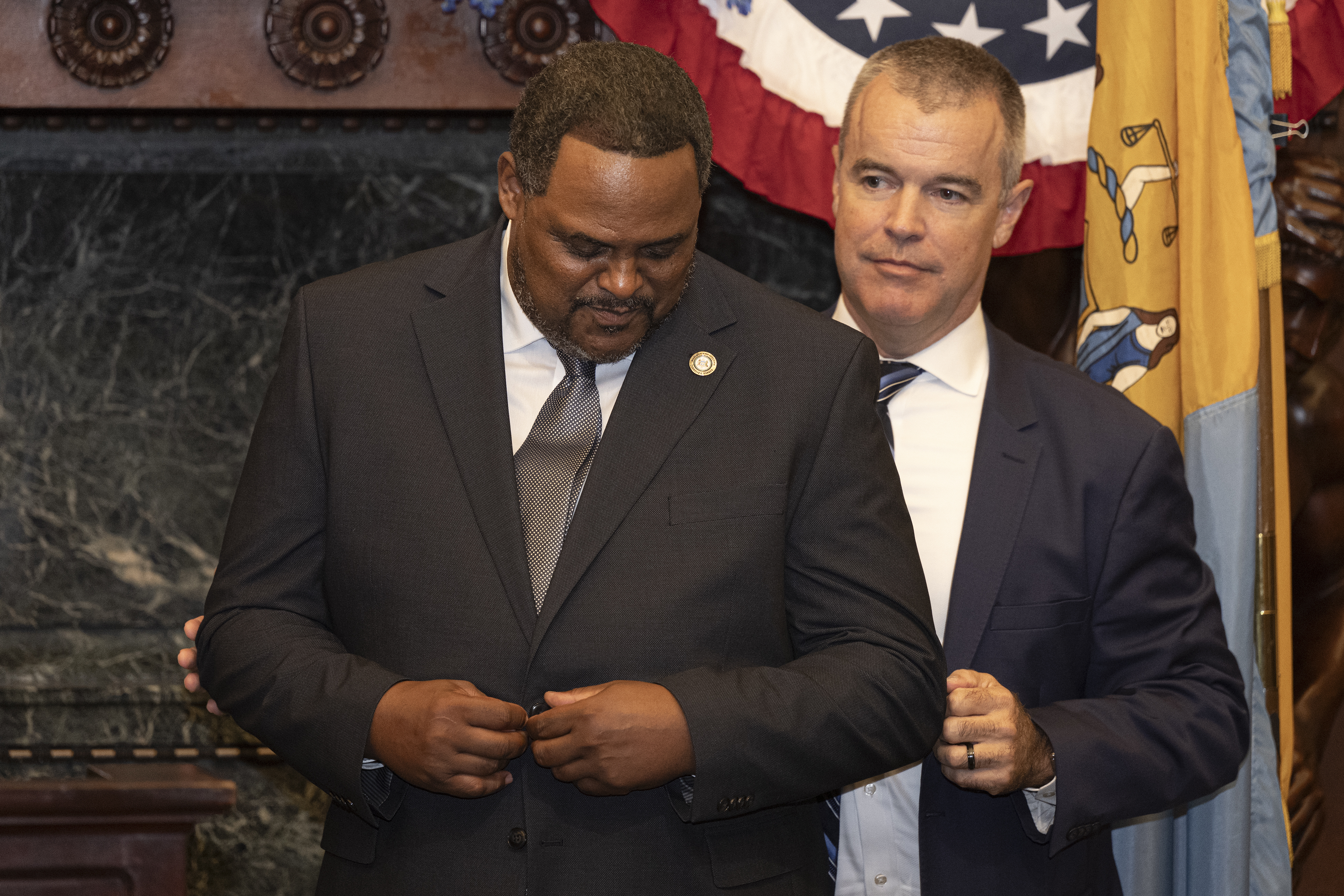
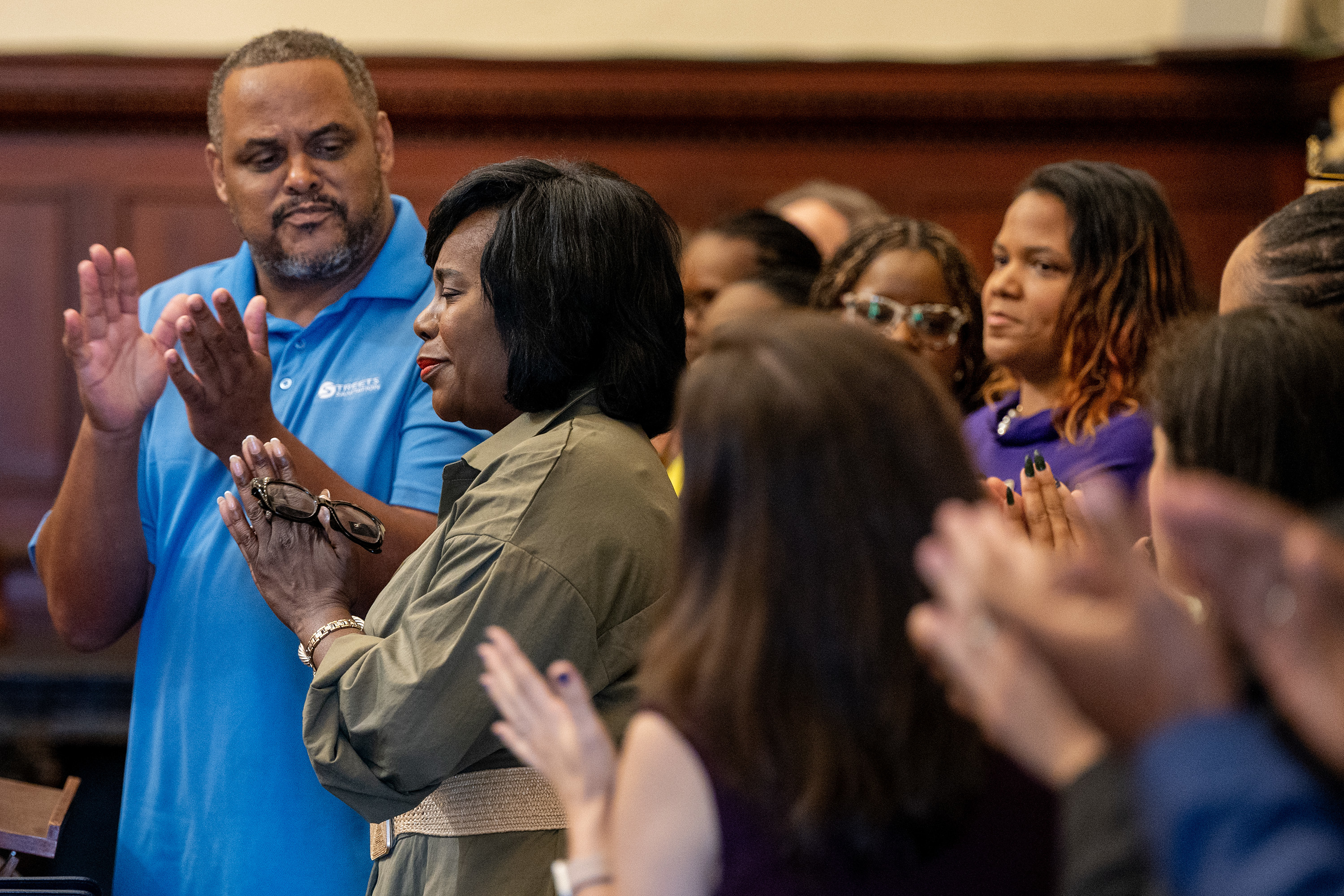
Newly appointed Managing Director Carlton Williams interacts with city officials during a correctional officer graduation ceremony at FOP Lodge 5 in Philadelphia on Friday.Jose F. Moreno / Staff Photographer
Perhaps most importantly for Williams’ ascent: he is all-in on Mayor Cherelle L. Parker.
The ties between Parker, 53, and Williams, 57, stretch back to their childhoods in Northwest Philly — he played football for the Oak Lane Wildcats, and she was a cheerleader. The team remains a part of both of their identities: Williams has led the Oak Lane Youth Association for 20 years, and the mayor often says proudly that she is a “Wildcat for life.”
Later in life, both found allies in the storied Northwest Coalition, a powerful political family. Williams said that he has known for 20 years that Parker would one day sit atop City Hall. And he most recently led Parker’s Office of Clean and Green Initiatives, overseeing the implementation of some of her key campaign promises.
“I’m bringing the ‘One Philly’ brand to the managing director’s office,” Williams said in an interview, echoing the mayor’s oft-used slogan. “Not to say it wasn’t being done under my predecessor. But I want to make sure it’s completely aligned with the mayor’s goals, because I believe in that vision.”
New Philadelphia Managing Director Carlton Williams speaks at the podium after being announced by Philadelphia Mayor Cherelle L. Parker during a July 28 news conference at City Hall.Jose F. Moreno / Staff Photographer
His appointment as managing director marks a new stage for the Parker administration that has seen significant turnover at its highest levels. And it is indicative of what Parker values in her inner circle: vast institutional knowledge and loyalty.
For the mayor, trust in Williams’ ability to operate within the bureaucracy and advance her priorities may outweigh his mixed record of management.
“Whenever we had a crisis of any kind in this city, he has been on my speed dial,” Parker said when she announced Williams’ appointment last month. “No matter who’s been leading, I’ve always called him for his counsel.”
Overseeing ‘a very broken’ L&I
Parker’s bet on Williams would have seemed almost unimaginable a decade ago.
A year after Williams was appointed to lead L&I, an excavator demolishing a wall on Market Street in Center City toppled the building onto an adjacent Salvation Army store, killing six people and injuring a dozen more. The inspector responsible for the demolition project died by suicide a week later.
Calls for reform abounded and questions swirled about whether the city’s agencies were responsible. There were multiple investigations launched and commissions convened to probe the disaster, and within days, Council members were pressing Williams to institute reforms that would bolster safety on private construction sites.
In response, Williams sought to hire more inspectors, increase their training, raise demolition standards, and create new specialized units within L&I.
Today, he says the collapse on Market Street was “one of the saddest moments” of his time in government.
“You have to lead through some tough challenges when you’re a leader,” he said. “You don’t get to pick and choose when you lead.”
In this June 2013 file photo, then-Philadelphia Commissioner of the Department of Licenses and Inspections Carlton Williams (second from right) waits in line to attend a memorial service for Anne Bryan, who was among the victims of the Market Street building collapse.JOSEPH KACZMAREK / Associated Press
By fall 2015, then-City Controller Alan Butkovitz was calling on Williams to be fired. He said at the time that L&I had long been troubled, but that his office’s audit of the agency found that Williams had not made enough improvements.
In this 2013 photo, then-Deputy Mayor Everett Gillison (left) and then-Commissioner of Licenses and Inspections Carlton Williams listen to members of City Council during a hearing.TOM GRALISH / Staff Photographer
Butkovitz now says that he blames former Mayor Michael Nutter instead, and that Williams was “caught between the mayor and me.” He said Williams had promised to provide the controller’s office with documents to assist in an audit, and then did not.
“I took it out on Carlton Williams at the time,” Butkovitz said.“His inclination was to cooperate with me, but at the time, it looked to me like duplicity. And I don’t think it was. I think he was overridden by higher authority.”
Nutter did not respond to a request for comment.
Estelle Richman, a former Philadelphia managing director who has held a variety of roles in local, state and federal government, said L&I is “one of the most difficult city departments.” She noted that past agency leaders have been pushed out, fired, indicted, and jailed.
“We can go back and say ‘maybe [Williams] should have done this or that,’ but the reality is it was a very broken department,” she said. “I think he did more to try to get it restabilized and back on track than any other commissioner at that time could have done.”
‘You have to be accessible’
Before taking the helm at L&I, Williams was a career bureaucrat.
Born in North Philly and raised in West Oak Lane, Williams started with the city at age 19, working in Fairmount Park as one of the first-ever members of the Philadelphia Ranger Corps. The program paid for part of his tuition to attend Temple University and marked his foray into public service.
Jeffrey Montague, who led the Philadelphia Ranger Corp. and has been a mentor to Williams for decades, said that at a young age, Williams showed potential.
“He didn’t try to fit in. He always stood out on his own independence,” Montague said. “He wasn’t trying to fit into a crowd.”
After working as a ranger, Williams spent three years running a Harrisburg youth program for AmeriCorps — the first and last time Williams lived outside the city.
He returned to Philadelphia to work for the Parks and Recreation Department, rising to become a deputy commissioner in both the recreation and streets departments.
Then came the four-year stint leading L&I, and when Kenney took office in 2016, he moved Williams back to his old job as a deputy in the streets and sanitation department.
But it didn’t last. Five months after Kenney took office, the streets commissioner was arrested for assault. Williams ascended to the role, and suddenly, the person who Kenney said he wouldn’t retain to lead L&I was in charge of one of Philadelphia’s most visible departments, overseeing transportation and sanitation operations citywide.
Carlton Williams, then the director of the Office of Clean and Green Initiatives, speaks during a news conference at Bigler and South 15th Streets on July 7, 2025.Monica Herndon / Staff Photographer
It was there where Williams solidified himself as a City Hall fixture. He said that as an administration staffer,he has “one primary that I listen to” — the mayor — but he has always tried to be attentive to Council.
That may be a key difference between Williams and Thiel, his predecessor. Thiel was the former fire commissioner and a nationally recognized expert in emergency management who was seen as a skilled behind-the-scenes operator.
But Council members said thatThiel did not foster close relationships with members of the city’s legislative body who are often conduits between residents and the mayor’s administration.
In addition, Thiel was often absent during major events in the city and he was frequently on leave — he joined the Army Reserve eight months into his tenure, and held several jobs outside city government, including as a consultant and professor.
That was a departure from prior administrations, when the managing director was often the public face of city operations.
On several occasions during the Parker administration, it was Williams who was in the spotlight. As director of the Office of Clean and Green Initiatives, he played a key coordinating role during the eight-day municipal worker strike that halted city services — most visibly, trash pickup.
And he oversaw the city’s response to a severe winter storm earlier this year that left much of the city encased in ice, despite weather emergencies typically falling under the managing director’s purview.
New Philadelphia Managing Director Carlton Williams (left) stands near the former director, Adam Thiel, before an introduction by Philadelphia Mayor Cherelle L. Parker during a July 28 news conference at City Hall.Jose F. Moreno / Staff Photographer
City Councilmember Anthony Phillips, whose district includes Northwest Philadelphia, said that prior to Thiel’s resignation, members of Council were “gravely concerned” about his frequent leave.Some members said that, in Thiel’s absence, Williams was their primary contact among Parker’s top staff.
“You can’t get certain things done and you can’t expect an efficient and effective city when you’re not present,” Phillips said. “Carlton is going to be the complete opposite of that.”
Williams said that his role as managing director is his only job aside from volunteering.
“It’s a full-time, 24-hour, seven-day-a-week job,” he said. “You have to be accessible.”
Williams’ coziness with elected officials has also drawn criticism.
A former city employee who previously worked for Williams said his relationships with Council amount to a “favor machine.” The staffer spoke on the condition of anonymity in order to preserve relationships.
“There is this cycle of Council getting calls from constituents, like ‘there’s a pothole,’ and then they get it fixed, and that’s the main work,” the former staffer said. “It’s not actually setting up systems that are solving the problems. It’s reacting to them.”
But Williams said some of his proudest achievements have resulted in systemic change: he led the installation of some of the first spraygrounds in the city, overhauled the recycling program, had BigBelly trash cans placed throughout Philadelphia, and started the annual Philly Spring Cleanup.
“He is probably one of the most well-prepared managing directors that the city has had,” Richman said. “He knows not only how operations work within the city departments, he knows the political structure of the city. And I believe a managing director has to know both.”
John Dougherty, the former leader of the politically powerful Local 98 of the International Brotherhood of Electrical Workers, and his ally, ex-Councilmember Bobby Henon, were on trial for bribery and other corruption charges. Prosecutors accused Henon of taking official actions as a Council member at Dougherty’s behest in exchange for a salaried, no-show job with the union.
One of the schemes prosecutors presented during the trial focused on efforts by union officials in 2015 to halt the installation of an MRI machine at the Children’s Hospital of Philadelphia, a project that was being completed with nonunion labor. Williams, at the time, was at the helm of L&I.
Department of Streets Commissioner Carlton Williams exits federal court on Oct. 12, 2021, after testifying in the John Dougherty and Bobby Henon bribery trial.Thomas Hengge / Staff Photographer
During the 2021 trial, Williams was called to testify. He told the jury that Henon called him in August 2015 to report that an unlicensed contractor was working at CHOP, and that he dispatched an inspector to investigate.
The inspector, Williams testified, issued a stop-work order on the construction of the MRI machine. But he insisted that he did not direct the inspector to do so, and told the jury that responding to complaints from Council members was a routine part of his job.
Ultimately, L&I reversed the stop-work order, and the MRI machine was built.
Prosecutors said Dougherty paid Henon to be his “man on the inside” in City Hall and used the episode at CHOP to establish evidence of a corrupt agreement between the two.
“You heard what happened,” Assistant U.S. Attorney Frank Costello told the jury during closing arguments. “Henon contacted Carlton Williams, Carlton Williams sent inspectors out and they issued orders — they issued orders to shut the job down.”
But defense attorneys said one public official asking another to take action doesn’t constitute a crime.
“Carlton Williams was the recipient of information just passed on to him about the MRI and the unlicensed contractor,” said defense attorney Brian McMonagle. “That ain’t a crime.”
During the 2023 mayoral campaign, when a half-dozen Democrats could have plausibly won the party’s nomination, Williams nearly left the city.
He said he got a job as the public works director in San Francisco, but before he accepted, Parker won the primary election. Williams decided to stay.
“I wanted to work for Cherelle Parker,” he said. “I believed in her vision.”
Mayor Cherelle L. Parker is applauded by members of her administration at City Hall on July 9, 2025, hours after reaching a tentative contract agreement with District Council 33 leaders overnight, ending the workers’ strike. At left is Carlton Williams, director of the Office of Clean and Green Initiatives. Chief Deputy Mayor Sinceré Harris is behind the mayor at right.Tom Gralish / Staff Photographer
Parker took office in 2024 and created a new role: director of the Office of Clean and Green Initiatives. Williams would carry out her campaign promise to rid the city of its “Filthadelphia” moniker by implementing twice-weekly trash collection, an expansion of illegal dumping enforcement, and a biannual citywide program to clean every block.
As managing director, Williams’ portfolio will grow substantially. He will be responsible for the city’s response to public health and homelessness, as well as overseeing large agencies like the fire department and the prisons.
He will also coordinate the city’s strategies in Kensington, the beleaguered neighborhood and the site of an open-air drug market that the Parker administration has spent more than two years working to shut down. Williams said there is inherent pressure that comes with being responsible for addressing such long-entrenched issues.
“But I work best under pressure, and so I take that as a badge of honor,” he said.
Williams said he intends to prioritize communication with residents because they “understand that everything can’t get fixed at one time.”
“But at least we can say what needs to be done, when it’s going to [be] fixed, what’s the timeline,” he said. “I manage through the eyes of everyday citizens. I want what they want.”