Tag: Phoenixville

  • Access to high school sports in Pa. depends on where you live, a new report finds. Here’s a breakdown.

    Access to high school sports in Pa. depends on where you live, a new report finds. Here’s a breakdown.

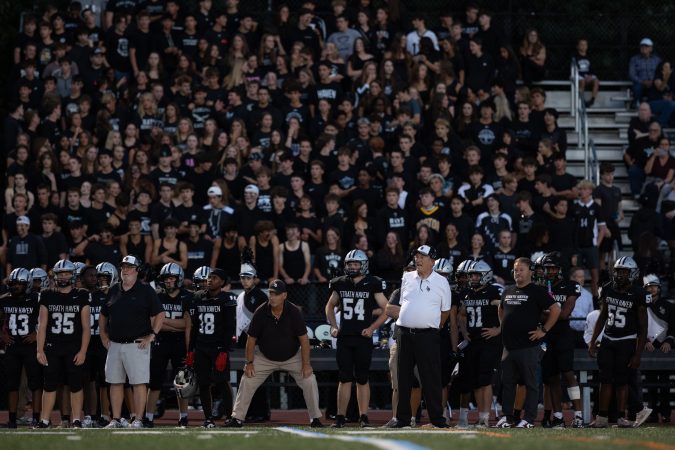
    More than 30% of high school students in the affluent Radnor and Wallingford-Swarthmore districts played sports in the 2024-25 school year.

    In the Philadelphia school district, less than 10% of high school students did.

    The disparities are part of a pattern, with fewer students playing sports in lesser-resourced urban schools, according to Research for Action, a Philadelphia-based educational research organization that released a report Thursday analyzing high school sports participation rates across Pennsylvania.

    The report, which looked at sports as another barometer of opportunities available to students, found participation varies widely — as does school spending on sports programs.

    It also found a link between funding and sports participation, with more students on average playing in higher-spending districts.

    “The degree to which a student may have access to school athletics really depends on what district they’re in,” said Maja Pehrson, the report’s lead author.

    Here’s what the report found — and what questions it raises about access to high school sports in Pennsylvania.

    There are big differences in sports participation rates

    Participation in school sports “hasn’t really been looked at very much,” Pehrson said. Research for Action analyzed data that school districts and charter schools are required to report to the Pennsylvania Department of Education on athletic opportunities.

    The report found participation rates in the 2024-25 school year ranging from 5% in some school districts, to a handful of districts with rates above 40%.

    Topping the list locally were Jenkintown School District, at 35%, and Springfield Township School District in Montgomery County at 34%; followed by Radnor and New Hope school districts, at 31%; Wallingford-Swarthmore, at 30%; West Chester, at 28%; and Upper Dublin, at 27% — all majority white, relatively affluent districts.

    Below the Philadelphia school district’s 9.6% rate were Upper Darby, at 9%; William Penn and Norristown, at 8%; and Chester-Upland, at 6% — all districts that are majority non-white and high-poverty.

    Overall, large, urban districts tended to have the lowest participation rates, meaning “almost half of Pennsylvania high school students are enrolled in districts where the likelihood of participating in a school athletics team is relatively low,” the report said.

    Those “very low” participation districts — with 5% to 17% of students participating — also offered fewer sports per 1,000 students than high-participation districts, the report found.

    Naima DeBrest, a spokesperson for the Philadelphia district, said the district had expanded athletic opportunities in recent years “by introducing new sports such as girls wrestling and girls flag football” and creating intramural programs at the elementary and middle school levels.

    Despite “common challenges” faced by urban districts, “the district remains committed to expanding access to high-quality athletic opportunities and ensuring students have meaningful opportunities to participate in sports that support their academic success, well-being, and overall development,” DeBrest said, noting that the district’s rate is comparable to other urban districts.

    <iframe title="Sports Participation and Athletics Spending Among Local School Districts" aria-label="Table" id="datawrapper-chart-dyc1W" src="https://datawrapper.dwcdn.net/dyc1W/1/" scrolling="no" frameborder="0" style="width: 0; min-width: 100% !important; border: none;" height="971" data-external="1"></iframe><script type="text/javascript">(function(){function e(){window.addEventListener(`message`,function(e){if(e.data[`datawrapper-height`]!==void 0){var t=document.querySelectorAll(`iframe`);for(var n in e.data[`datawrapper-height`])for(var r=0,i;i=t[r];r++)if(i.contentWindow===e.source){var a=e.data[`datawrapper-height`][n]+`px`;i.style.height=a}}})}e()})();</script>

    There are also big gaps in spending

    The report found a relationship between money and sports participation rates. Among the 10% of school districts deemed most underfunded by a state formula calculating what schools need to adequately educate students, more than half had “very low” sports participation rates, while more than two-thirds had “very low” or “low” participation, according to the report.

    And looking at what districts spend on athletics, it varied widely, the report found. Districts with “very low” participation reported spending an average of $409 per high school student on athletics, while “very high” participation districts — with 28.2% to 61.6% of students participation — spent an average of $939 per student.

    Locally, the Jenkintown, West Chester, Phoenixville, and Colonial school districts reported spending more than $1,100 per high school student on athletics, compared with $145 per high school student in Philadelphia.

    The report noted that those figures don’t fully reflect spending on school sports. Many districts didn’t report any spending on athletic facilities, for instance; Pehrson said it was likely hard for schools to calculate how much of their overall facilities spending was tied to athletics.

    The data also don’t reflect any activities fees paid by students.

    Charters have lower participation rates — but in line with Philly

    Statewide, brick-and-mortar charter schools, which are publicly funded but independently run, reported lower rates of sports participation. On average, 8.4% of charter high school students participated in sports, compared with 18.1% in district schools. (Cyber charter schools reported no participation; charter students who participate in district programs are counted by districts.)

    Rather than a difference between the charter and district sectors, however, the gap could largely be a product of school district conditions, the report said. Half the state’s charter high schools are located in Philadelphia, where the charter sports participation rates largely mirror the district’s, the report said.
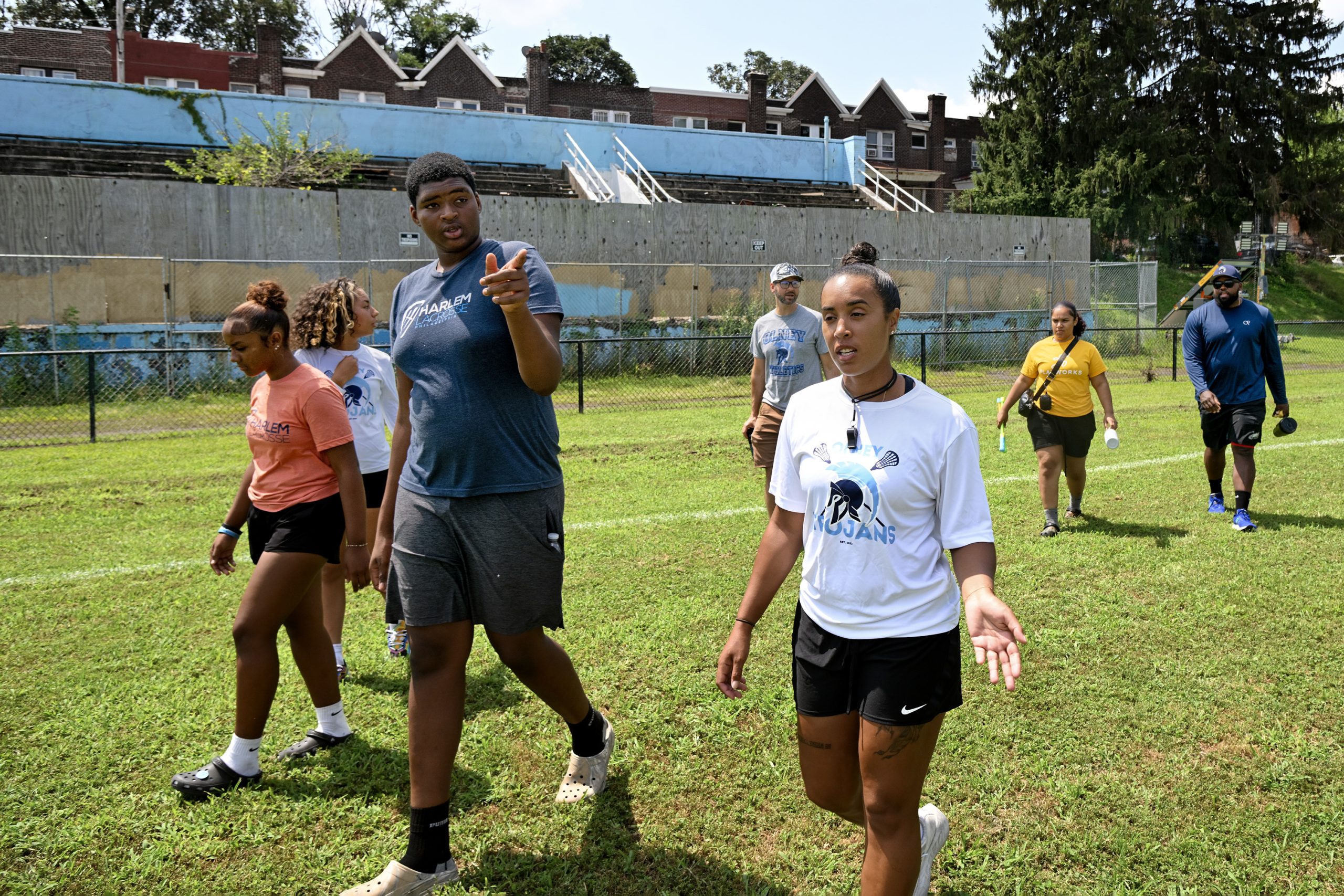
    In front of their boarded up dilapidated stadium, Olney High School athletes Cindi Lizardo (from left), Emma Blanco, Sidi Traore; and principal Michael Roth, coach Siena Childs, recent graduate Ysis Rivera, and athletic director Jorge Gonzalez point out the deplorable condition the sports facilities are in July 24, 2025. Olney High School, which spent a decade under charter management, was turned back over to the Philadelphia school district in 2022.Tom Gralish / Staff Photographer

    Gender gaps persist

    Boys participated in sports in 2024-25 at a higher rate than girls — at an average rate of 20.3% compared with 15.8%, the report found.

    And those gaps persisted across different types of school districts, the report found. For instance, in districts with “very low” overall sports participation, 14% of boys participated, compared with 10% of girls. In districts with “moderate” participation, 24% of boys participated, compared with 19% of girls. And in “very high” participation districts, 35% of boys participated, compared with 30% of girls.

    What’s driving the disparities?

    The report found that access to high school sports in Pennsylvania “is not evenly distributed and is strongly shaped by structural conditions.”

    “Districts with fewer athletic opportunities are more likely to be urban districts with large high schools and more students of color, and they tend to offer a narrower range of teams and spend less per student on athletics, limiting the extent to which students can engage,” the report said.

    But district funding alone isn’t responsible for disparities, the report noted. The gender gap, for instance, is found in well-funded and poorly funded districts.

    The pattern of higher-spending districts seeing more participation “doesn’t line up neatly for every district,” Pehrson said, noting that the data can’t fully answer questions about what’s driving differences in participation.

    Other possible factors could include transportation and sports outside of schools, Pehrson said.

    DeBrest, the Philadelphia spokesperson, noted that urban districts may also have limited athletic facilities, and practice space “and the need for some students to balance academics, work, or family responsibilities.”

    Pehrson hopes the findings prompt more investigation into the availability of school sports, which “are a key part of students’ educational opportunities,” Pehrson said — from boosting physical and mental health, to promoting social-emotional skills and building community.

    “There are clear disparities in terms of sports opportunities students are having,” Pehrson said. “Why is that, and how can we move forward and try to figure out these differences?”

    Editor’s note: This story has been updated to reflect that Jenkintown and Springfield Township were the local districts with the highest sports participation rates.

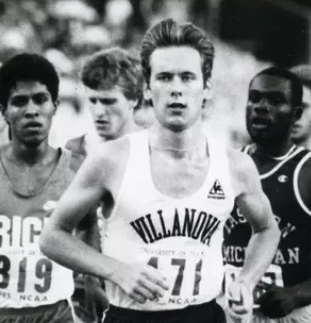
  • Gerry O’Reilly, Villanova track Hall of Famer, Irish Olympian, and Vanguard executive, has died at 61

    Gerry O’Reilly, Villanova track Hall of Famer, Irish Olympian, and Vanguard executive, has died at 61

    Gerry O’Reilly, 61, of Chester Springs, Hall of Fame middle distance track star at Villanova University, 1988 Irish Olympian in the 1,500-meter run, longtime executive at the Vanguard Group Inc., mentor, and role model, died Thursday, June 11, at Phoenixville Hospital after an earlier sudden cardiac event.

    Born and reared in Dunboyne, County Meath, Ireland, Mr. O’Reilly earned a track scholarship to Villanova in 1983 and joined a dozen other Irish athletes in what became known as the school’s Irish Pipeline to the Main Line. He went on to run cross-country and indoor and outdoor track, win seven Big East Conference championships, and hold the Big East outdoor record in the 1,500 for 37 years.

    He ran the 1,500- and 3,000-meter runs, the mile, and the distance medley relay at Villanova, and was named All-America four times. He won six national collegiate championships, was named outstanding performer at the 1986 Big East Indoor Championships, and was inducted into the Penn Relays Wall of Fame in 2007 and the Villanova Varsity Club Hall of Fame in 2009.

    “Without exaggeration, those were four of the best years of my life,” Mr. O’Reilly told Dave Thomas on the Belmont Plateau Hall of Fame podcast. Villanova “kind of set me up both athletically and academically for the rest of my life.”

    Marcus O’Sullivan, former Villanova teammate and countryman, now director of track and field and cross-country at Villanova, said Mr. O’Reilly “had a steadfast moral compass that guided him in his life, and in doing so it had an intoxicating influence on others. … We all need a person like Gerry O’Reilly in our lives.”

    After college, Mr. O’Reilly competed in the international Millrose Games in New York, the 1987 World Championships, the 1989 World Indoor Championships, and for Ireland in what is now the World Athletics Championships. At the 1988 Summer Olympics in Seoul, South Korea, he made it to the semifinals of the 1,500.

    Irish Olympic team officials called him “an exceptional athlete” and praised his “genuine commitment to helping the next generation.” They said: “Once an Olympian, always an Olympian.”

    Irish marathon Olympian John Treacy told the Irish Times: “Gerry was a smashing runner and just the nicest guy, great for staying in contact and communicating with other Irish runners over the years.”

    Mr. O’Reilly ran miles at night after school in the rural Irish fields and lanes, and joined the Dunboyne Athletic Club when he was 9.
    Villanova University

    Mr. O’Reilly was also inducted into the Belmont Plateau Hall of Fame in 2025 and recently honored by his hometown Dunboyne Athletic Club.

    He earned a bachelor’s degree in economics in 1987, joined Vanguard in 1992 and the trading desk in 1994, and worked as an investment leader and portfolio manager. He was a mentor, colleagues said in a tribute, “who made immeasurable contributions to several of Vanguard’s flagship index funds.”

    He served on corporate panels and lectured at leadership development events. Colleagues called him “riveting and influential” and “a giant in every sense except ego.” One said: “You could tell he truly cared about the markets and about doing things right.”

    A friend said: “Great athlete, great person.”

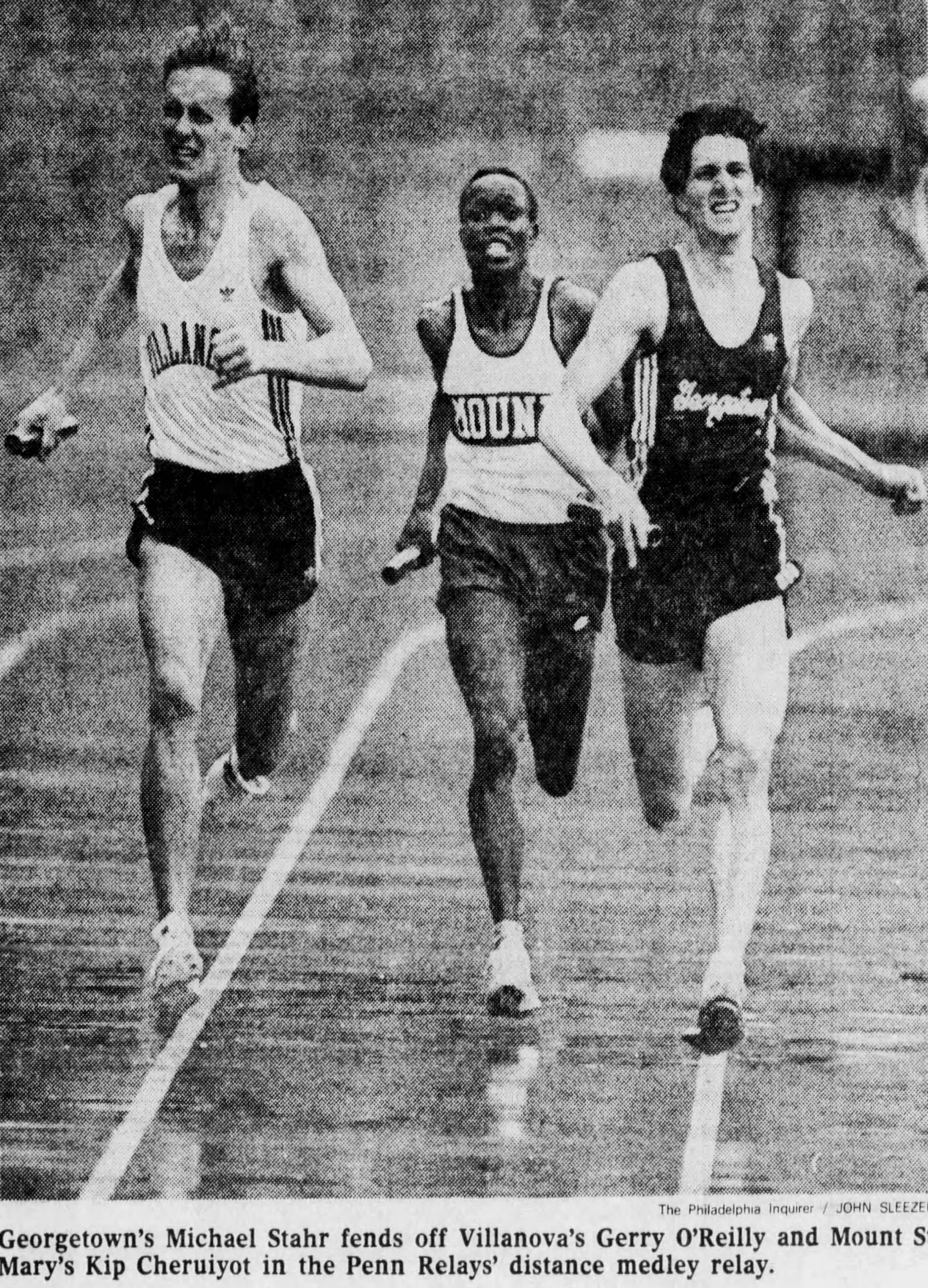
    This photo and a story about Mr. O’Reilly (left) appeared in The Inquirer in 1987.Newspapers.com

    Gerard Christopher O’Reilly was born July 1, 1964. He was the oldest of six children and excelled at cross-country, track, soccer, and other sports.

    He ran miles at night after school in the rural Irish fields and lanes, joined the Dunboyne Athletic Club when he was 9, and was inspired, he said later, by Irishman Eamonn Coghlan’s fourth-place finish in the 1,500 at the 1976 Summer Olympics. Mr. O’Reilly went on to win the 1983 Irish Junior 1,500 championship.

    He met fellow track star Melody Sye, and they married in 1992 and had a daughter, Meghan, and sons Keelan, Jack, and Conor. They divorced later.

    “Despite all his trophies and merits,” Mr. O’Reilly’s family said in a tribute, “he always remained humble and would say being a dad to his four kids was his proudest accomplishment.”

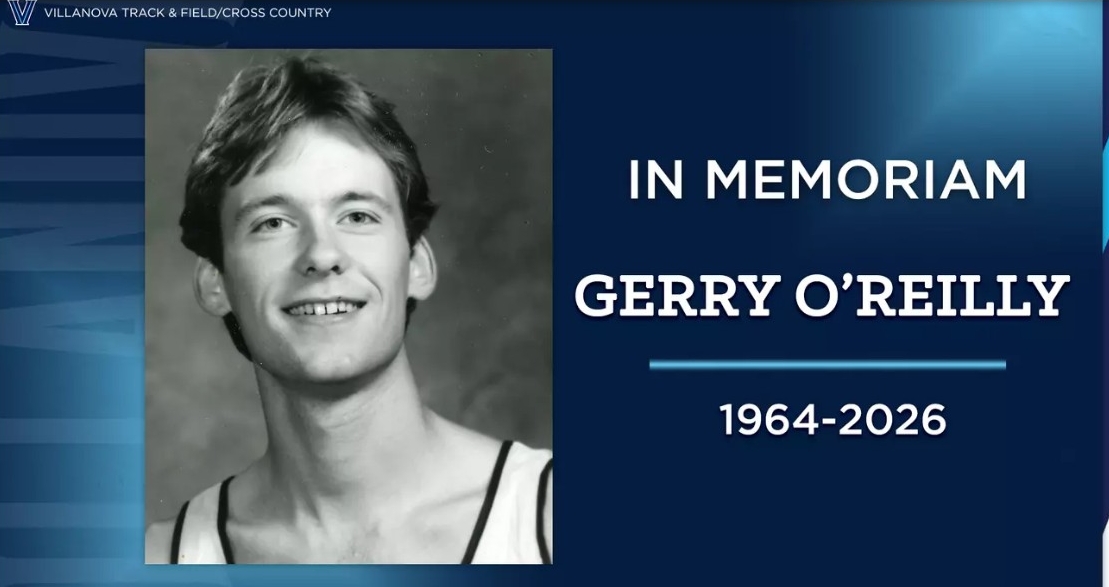
    Villanova honored Mr. O’Reilly online.Villanova University

    Mr. O’Reilly was an avid bicyclist, and he spent many weekends on long rides and at Eagles games on Sundays. He liked poker, hikes with his dog, Bear, and watching sports with his family.

    “Most of all,” his family said, “he simply enjoyed cracking jokes, sharing stories, and spending time with his friends and family.”

    In addition to his children and former wife, Mr. O’Reilly is survived by three sisters, two brothers, and other relatives. “His final gift,” his family said, “was saving multiple lives through organ donation.”

    Services were held earlier.

    Donations in his name may be made to the American Heart Association, 7272 Greenville Ave., Dallas, Texas 75231; Special Olympics, 2600 Virginia Ave. N.W., 11th Floor, Washington, D.C. 20037; and the American Cancer Society, Box 6704, Hagerstown, Md. 21741.

  • Trailer for biopic ‘I Play Rocky’ shows iconic Philly scenes

    Trailer for biopic ‘I Play Rocky’ shows iconic Philly scenes

    How did Sylvester Stallone make and star in Rocky? Well, he had to put up a fight.

    The trailer for the forthcoming biopic I Play Rocky has officially been released by Amazon MGM Studios. The film follows a young Sylvester Stallone, played by Anthony Ippolito, on his harrowing journey pitching and filming his Oscar-winning movie.

    Scenes from the trailer show the many hardships that went into making the movie, including Stallone convincing the producers to breaking his hand while filming the meat-punching scenes.

    Filming took place from October to December 2025, in Los Angeles, New Jersey, and Philadelphia, according to USA Production News. The filmmakers created their own version of the iconic run up the museum steps, filmed at the Philadelphia Museum of Art, and filming was also seen taking place in Kensington.

    Ippolito is best known for portraying Al Pacino in the Paramount+ miniseries The Offer, another biographical production about the making of a film — in this case, The Godfather. The I Play Rocky trailer shows the rising actor looking nearly identical to Stallone, with the thick, deep voice to match.

    Other main roles include AnnaSophia Robb as Stallone’s wife, Sasha Czack; Matt Dillon as Stallone’s father, Frank Stallone Sr.; and Stephan James as Carl Weathers, who played Apollo Creed in the Rocky franchise.

    Peter Farrelly, born in Phoenixville, Chester County, directed the film. He is best known for directing and cowriting the 2018 comedy-drama film Green Book, which won the Oscar for Best Picture.

    The real-life Sylvester Stallone is not involved in the production.

    I Play Rocky is set to have a select theaters release on Nov. 6, according to Deadline. This will gear up the movie to be eligible for awards season.

  • Amtrak and three counties are teaming up to restore passenger trains between Reading and Philly

    Amtrak and three counties are teaming up to restore passenger trains between Reading and Philly

    Amtrak and the Schuylkill River Passenger Rail Authority agreed Wednesday to work together to revive passenger train service between Philadelphia and Reading after an absence of 45 years.

    Federal Railroad Administration officials designated the route as one of 60 intercity rail corridors to be developed in part with start-up funds from the 2021 bipartisan infrastructure law.

    Intermediate stops are planned for Pottstown and Phoenixville.

    The agreement is a step forward, committing Amtrak to complete formal ridership forecasts and revenue estimates and to determine likely costs to operate and maintain the route.

    That is the second step of the four required before passenger service can restart.

    “We’ll rocket through Step 2,” said Thomas Frawley, executive director of the Schuylkill River Passenger Rail Authority, because of Amtrak’s commitment to the project. “We’re excited and optimistic.”

    Berks, Chester, and Montgomery Counties created the rail authority in 2022 to take advantage of Washington’s interest in establishing intercity passenger service.

    Amtrak will handle the next stage of work, estimated at $4.8 million. Federal officials have approved the budget, but the money needs to be obligated before the bipartisan infrastructure bill expires Sept. 30, Frawley said.

    Congress is discussing reauthorization of a new surface transportation law, and future funding of the rail corridor program is uncertain despite bipartisan support.

    After the business plan in Step 2, the Philadelphia-Reading line would require preliminary engineering, final design and engineering, and some construction.

    Ever since rail service along the route ended in 1981, people have been trying to figure out a way to bring back the trains.

    Other proposals fell by the wayside, including the state’s 1990s Schuylkill Valley Metro plan to build an electric-powered commuter service on the route. It was estimated at $2 billion. In 2003, Gov. Ed Rendell canceled the effort amid funding concerns.

    By contrast, the SRPRA plan is projected to cost about $100 million.

    Backers say the SRPRA plan has advantages that could pay off. For one, the partnership with Amtrak and the national passenger railroad’s interest in running the line.

    “We look forward to the opportunity to reconnect communities like Reading to the Northeast Corridor and beyond, to support their economic and community development,” Nicole Bucich, Amtrak’s vice president of planning and state partnerships, said in a statement.

    Another: Norfolk Southern owns and hauls freight on existing rails with diesel locomotives — no need for a massive project to build tracks or a system of overhead wires to power passenger trains.

    “They’re running trains today on the railroad, and it’s in very good condition,” Frawley said. “We’re not talking about a greenfield project.”

    The Northeast Corridor itself is an advantage, too, Frawley said, giving more people access to Philadelphia’s 30th Street Station to Boston, New York, Washington, and points between.

    “It can have a powerful synergistic effect” on the regional economy, he said.

  • In the national debate around affordability, the politics are personal for Chester County’s U.S. Rep. Chrissy Houlahan

    In the national debate around affordability, the politics are personal for Chester County’s U.S. Rep. Chrissy Houlahan

    In the back of a classroom where she had just read to 20 attentive preschool kids, U.S. Rep. Chrissy Houlahan was concerned about what the staff of the West Chester YMCA was telling her.

    Nearly a third of the families who rely on the facility’s childcare programs — in the richest county in Pennsylvania, and one of the wealthiest in the country — receive financial assistance to cover the $1,900 monthly cost, the staffers said.

    Houlahan, a Democrat who is soft-spoken when she is not grilling President Donald Trump’s cabinet secretaries or House Speaker Mike Johnson (R., La.) on Capitol Hill, asked about the income qualifications for financial aid. At a certain point, the YMCA staff told her, some parents have a disincentive to earn more, lest they become disqualified and then stuck with a higher bill.

    “It’s terrible, no matter how you do the math,” Houlahan said a few hours later at a Malvern restaurant, relaying the story to her daughter, Molly Rosa Houlahan, and daughter-in-law, Kristen Rosa Houlahan.

    The YMCA’s fee was about the same amount the couple were paying for their 18-month-old, Lucy. With another child due in September, it is also an amount they still are unsure how to afford twice over.

    “We’re very fortunate in our jobs, and we’re both trying to get promotions in order to be able to afford a second daycare,” said Molly Rosa Houlahan, 33, a local theater director and producer. “But we are not in that position yet. I don’t totally know what will happen when this second child arrives.”

    From childcare to healthcare, groceries to gas prices, affordability concerns have remained top of mind for Americans this year — dominating discussions on Capitol Hill ahead of the high-stakes midterm elections.

    Republicans, who control Congress and the White House, say they have made real progress in raising wages and lowering costs. They marked the first anniversary of Trump’s One Big Beautiful Bill Act — since rebranded by Republicans as the Working Families Tax Cut Act — this month by celebrating the law’s more generous tax refunds and other benefits, like new investment savings accounts for children under 18.

    Democrats have pointed to the bill’s simultaneous cuts to Medicaid spending and food assistance for low-income families. They say Trump signaled he has no interest in lowering costs when he refused to sign a bipartisan housing bill and said he doesn’t “think about Americans’ financial situation” when handling the war in Iran.

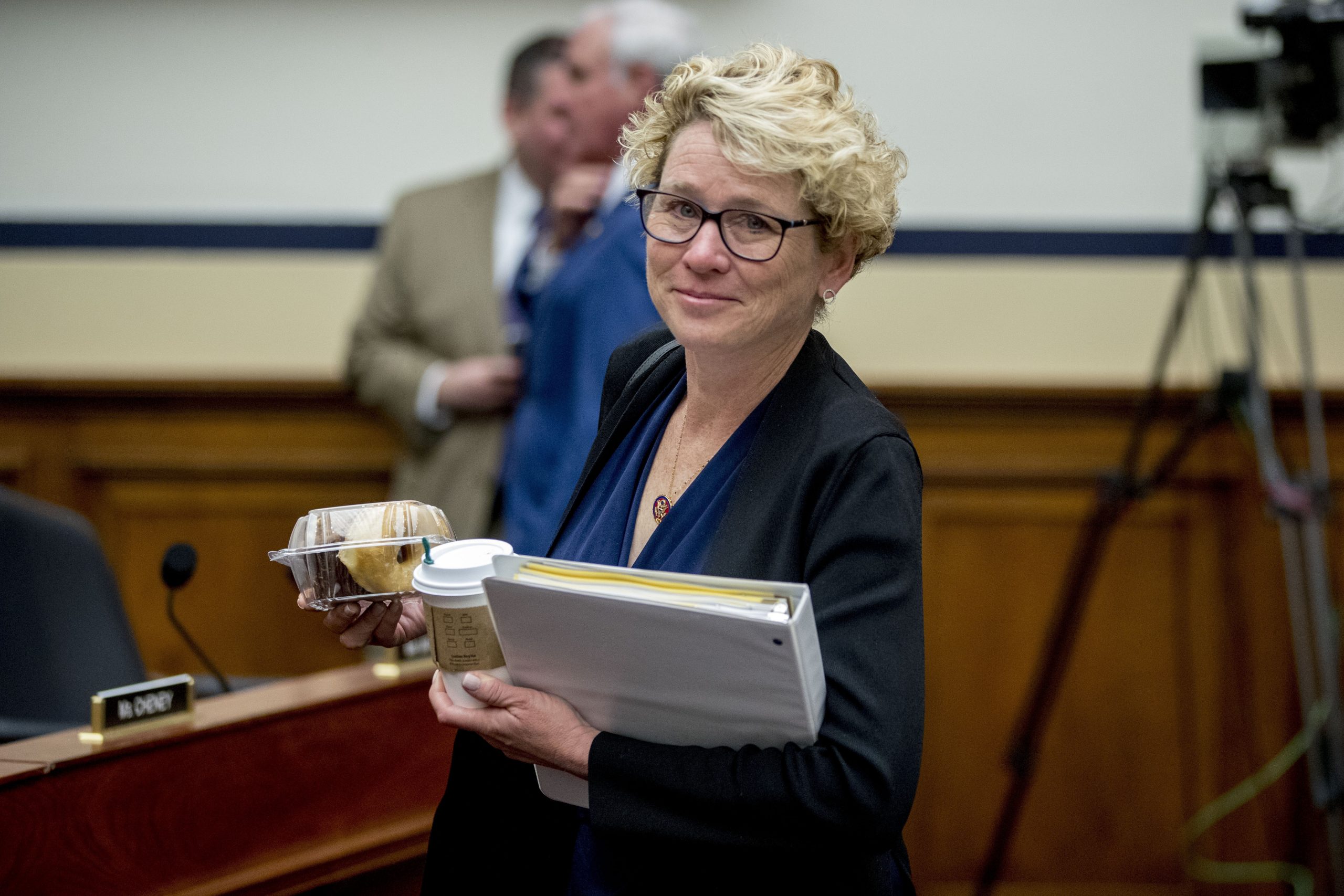
    In this 2019 file photo, U.S. Rep. Chrissy Houlahan (D., Pa.) arrives for a House Armed Services Committee budget hearing for the Departments of the Army and Air Force on Capitol Hill in Washington.Andrew Harnik

    Houlahan, who has represented most of Chester and Berks Counties since 2019, routinely highlights the broader scope of cost-of-living issues alongside her colleagues. She has taken a leading role among centrist House Democrats to help craft a detailed “affordability agenda.”

    Whether her party can advance any of those policies in Washington, even if it wins control of one or both chambers of Congress in November, remains an open question as Trump remains in office and the International Monetary Fund warns of a worsening global economy.

    But as the fight drags out, it has also become increasingly personal for Houlahan and her family.

    In addition to occasionally helping fill the gaps in their granddaughter’s care, Houlahan and her husband’s own home in Devon, Chester County, has transformed into a version of a so-called sandwich generation household within the last year. The couple’s other adult daughter, her husband, and both of Houlahan’s parents, who are 80 and 84, have all moved in.

    The underlying circumstances for the multigenerational home, as they would be for any family, are various and personal. And Houlahan emphasized across multiple interviews that she is fortunate to have the means to welcome her family under her roof. (Houlahan is an Air Force veteran and a former executive at the athletic apparel company AND1. Her husband, Bart, is a partner at an investment research firm.)

    But the larger realities — like skyrocketing costs for childcare and senior living — have also now played a role in her own life. Her mother has a Parkinson’s diagnosis, and her parents were unable to find a one-floor living space that was affordable and fit their other needs as they looked to move closer to their family.

    “We’re having these conversations, and you know people all over our community are having these conversations,” she said. “It’s an acute issue for families in our area: How do you balance all of this?”

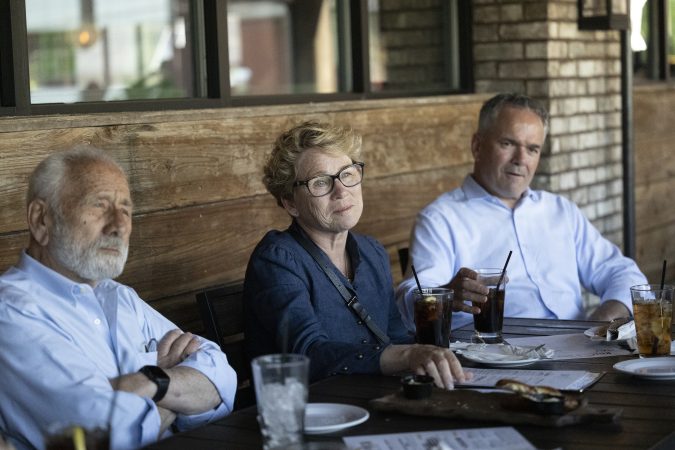
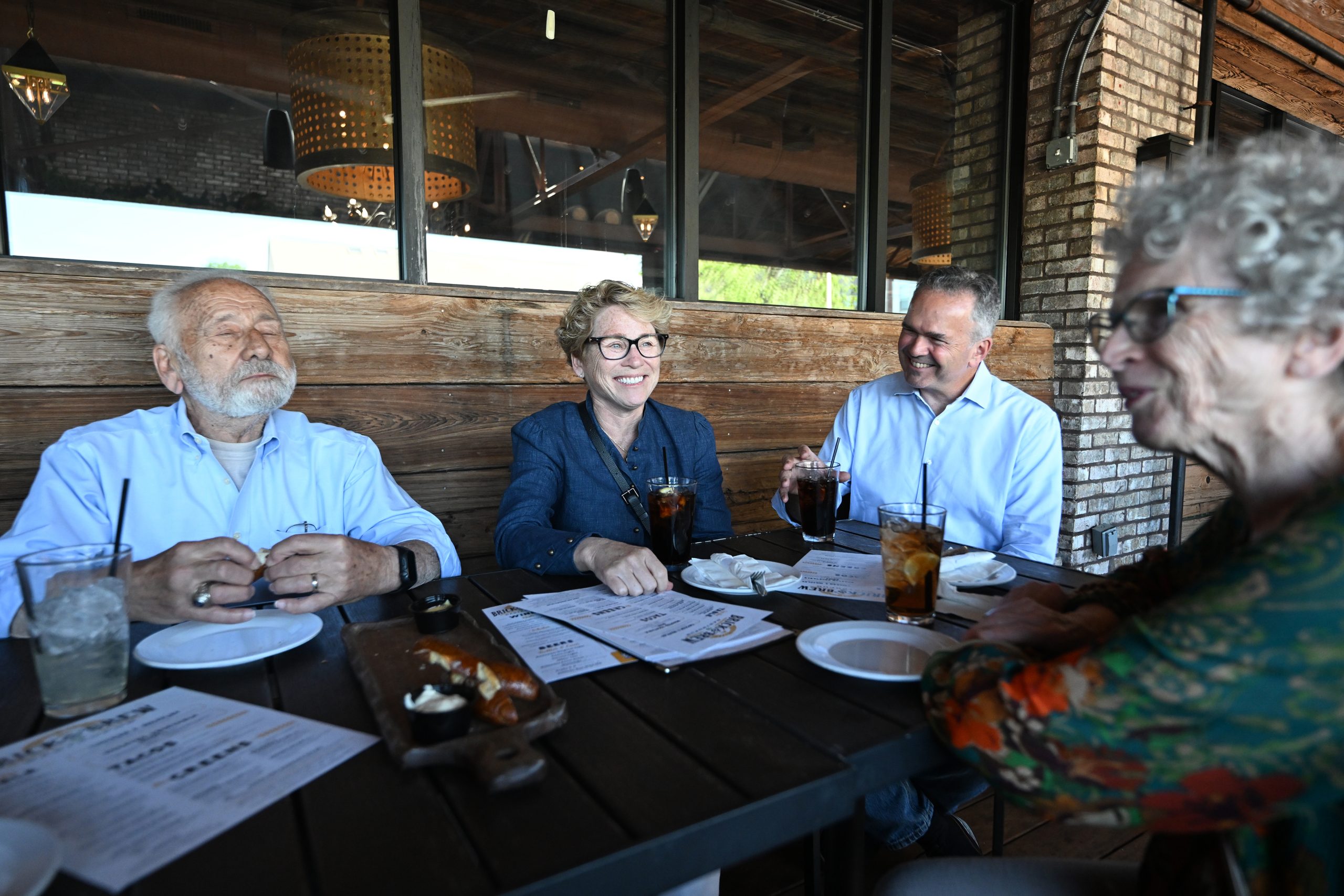
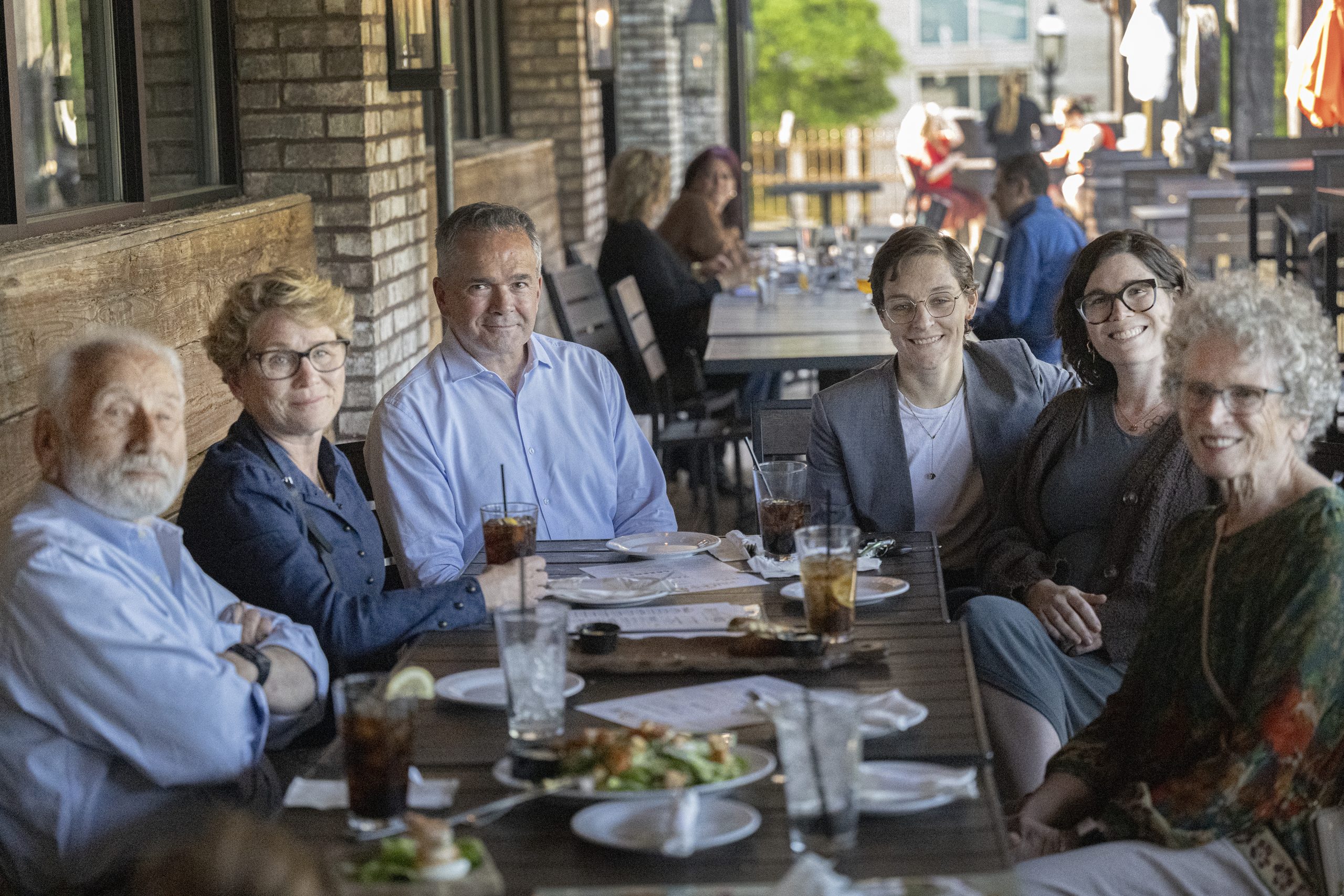
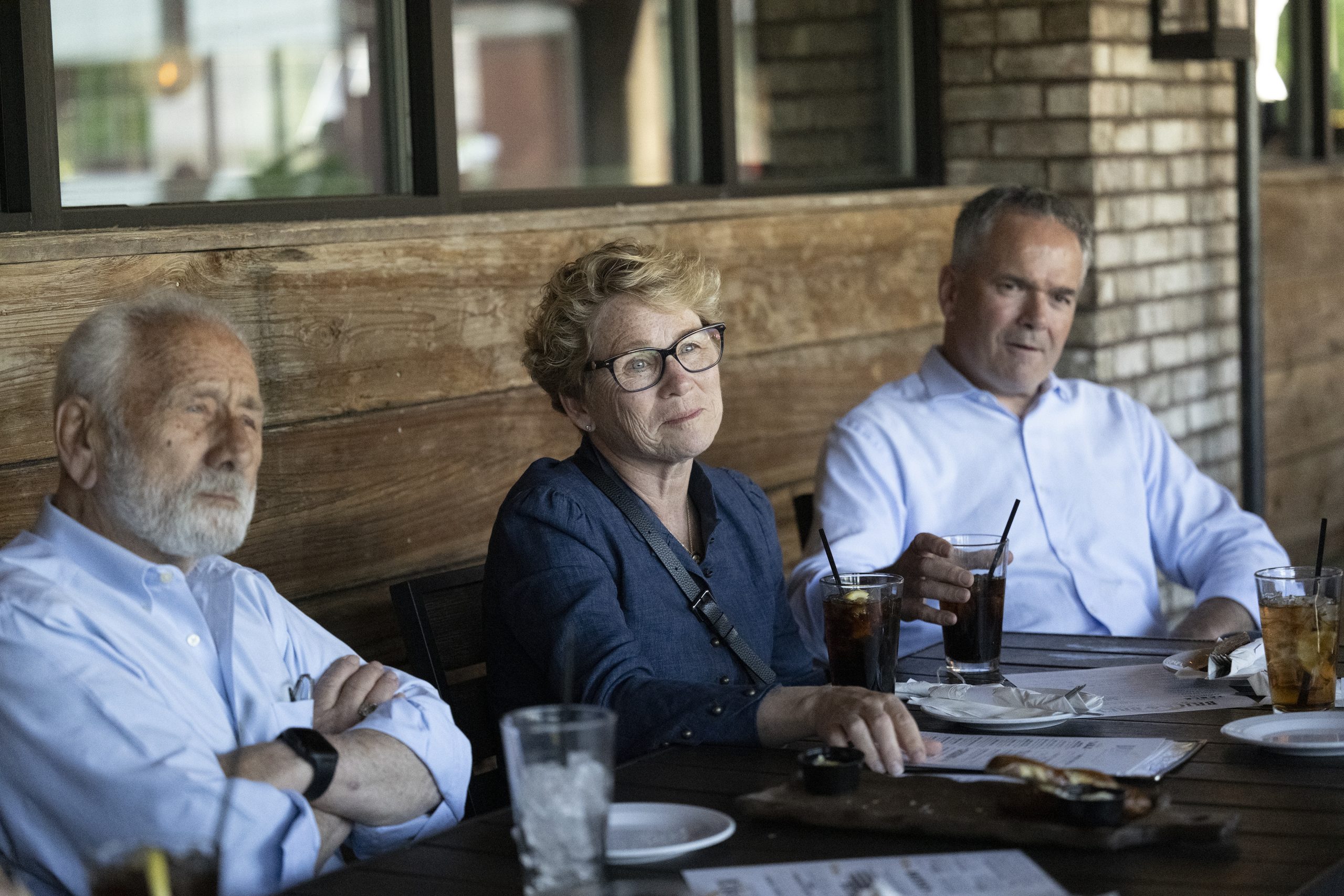
    U.S. Rep. Chrissy Houlahan (center) has dinner with her family at Brick & Brew in Malvern, including her father, Andy Jampoler (left), her husband, Bart Houlahan, and her mother, Suzy Jampoler.Jose F. Moreno / Staff Photographer

    ‘A big balancing act’

    Houlahan has shared parts of her family’s story as she has traveled her district this year — prioritizing events and meetings that aim for a deeper understanding of an affordability crisis that has not spared her home county, where the median household income is about $131,000, or 40% more than the statewide average.

    On back-to-back days this spring, that meant a focus on the kinds of childcare and senior-care issues she has become familiar with.

    “We call it ‘from zero to Edna,’” Laura Schoefield-Pierson, executive director of the YMCA of Greater Brandywine, said of the facility’s programs aimed at all ages, from infants to seniors.

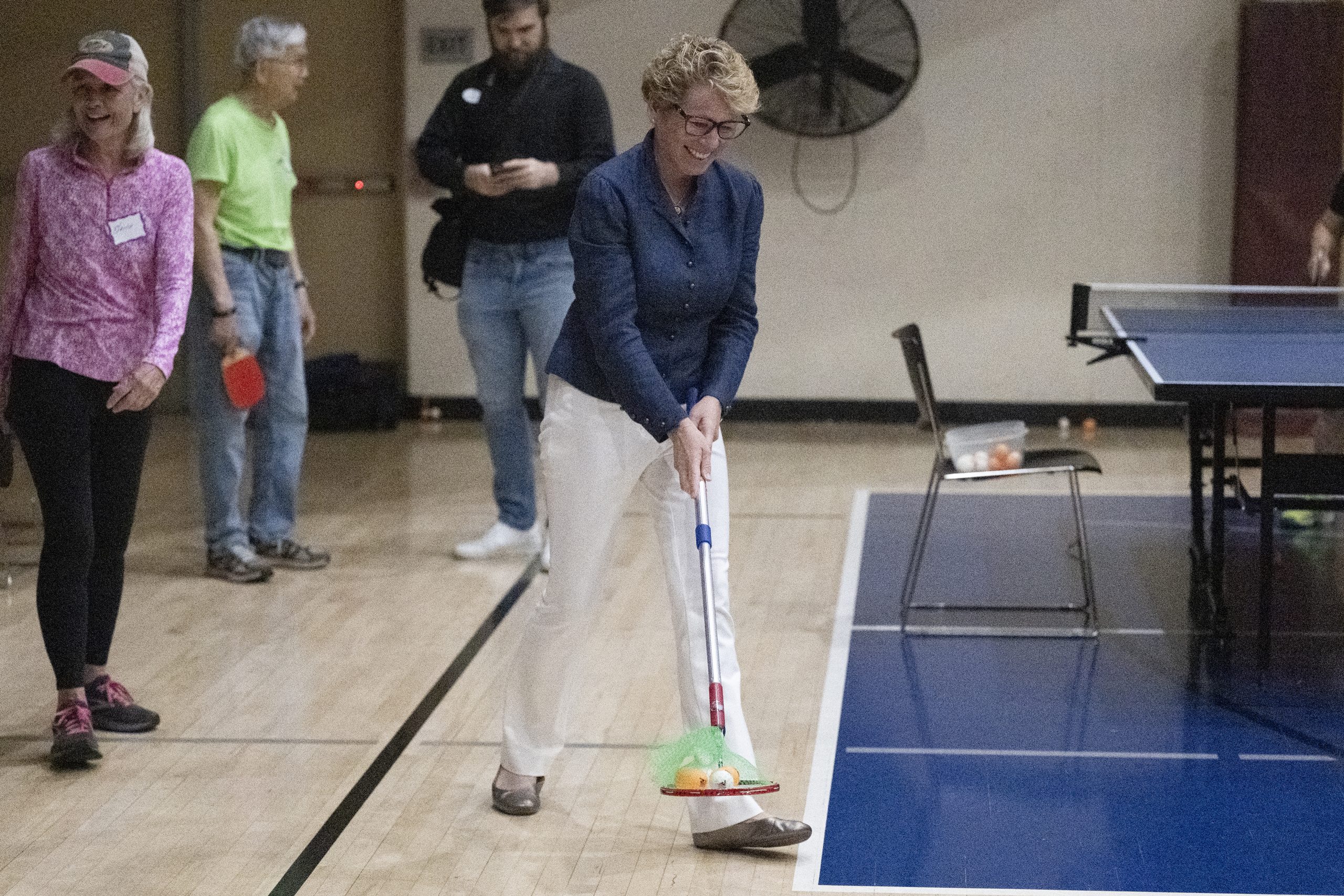
    Walking Houlahan through the pre-K classes and a gym with a dozen seniors playing table tennis, Schoefield-Pierson spoke about the organization’s exercise programs aimed at offsetting symptoms of Alzheimer’s or Parkinson’s, and about the complexities of providing assistance for families with young children.

    In addition to the “many children” whose care is subsidized through the state’s Child Care Works program — set for families earning 200% or less of the federal poverty level, or $66,000 for a family of four — others receive aid through the YMCA, Schoefield-Pierson said. The facility’s fundraising goal this year is $237,000, she said. On the day of Houlahan’s visit, Schoefield-Pierson said “the kiddos” were writing thank-you notes to donors.

    U.S. Rep. Chrissy Houlahan (D., Pa.) interacts with teachers and children at a childcare center at the YMCA in West Chester.Jose F. Moreno / Staff Photographer

    Though the U.S. Department of Health and Human Services recommends childcare should not exceed 7% of household income, Houlahan said she was surprised to learn a family would have to earn $327,000 to meet that benchmark at the YMCA for one child.

    Nationally, the average annual cost of childcare in 2024 was $13,128, an increase of 29% over the previous five years and far exceeding the national recommendation for the average household’s budget.

    “It’s crazy how much healthcare and childcare plays into your family planning,” said Helena Cordoba, a 35-year-old mother of two who said at a roundtable hosted by Houlahan that she had been hoping to grow her family.

    A Colombian immigrant who owns Café Com Leite in Phoenixville, Cordoba said she thought she had been living the American dream. But a recent miscarriage and the rising costs of both childcare and healthcare, which she does not currently have, have made her rethink her family’s plans.

    “I never thought I was going to say, ‘Maybe the miscarriage is a blessing.’ That thought on its own is very saddening,” Cordoba said. “I don’t know if we were going to be able to afford another baby. Our life would have been completely turned upside down.”

    Others voiced similar struggles while Houlahan sympathized and shared her daughter’s own experience with a $2,000 monthly daycare bill.

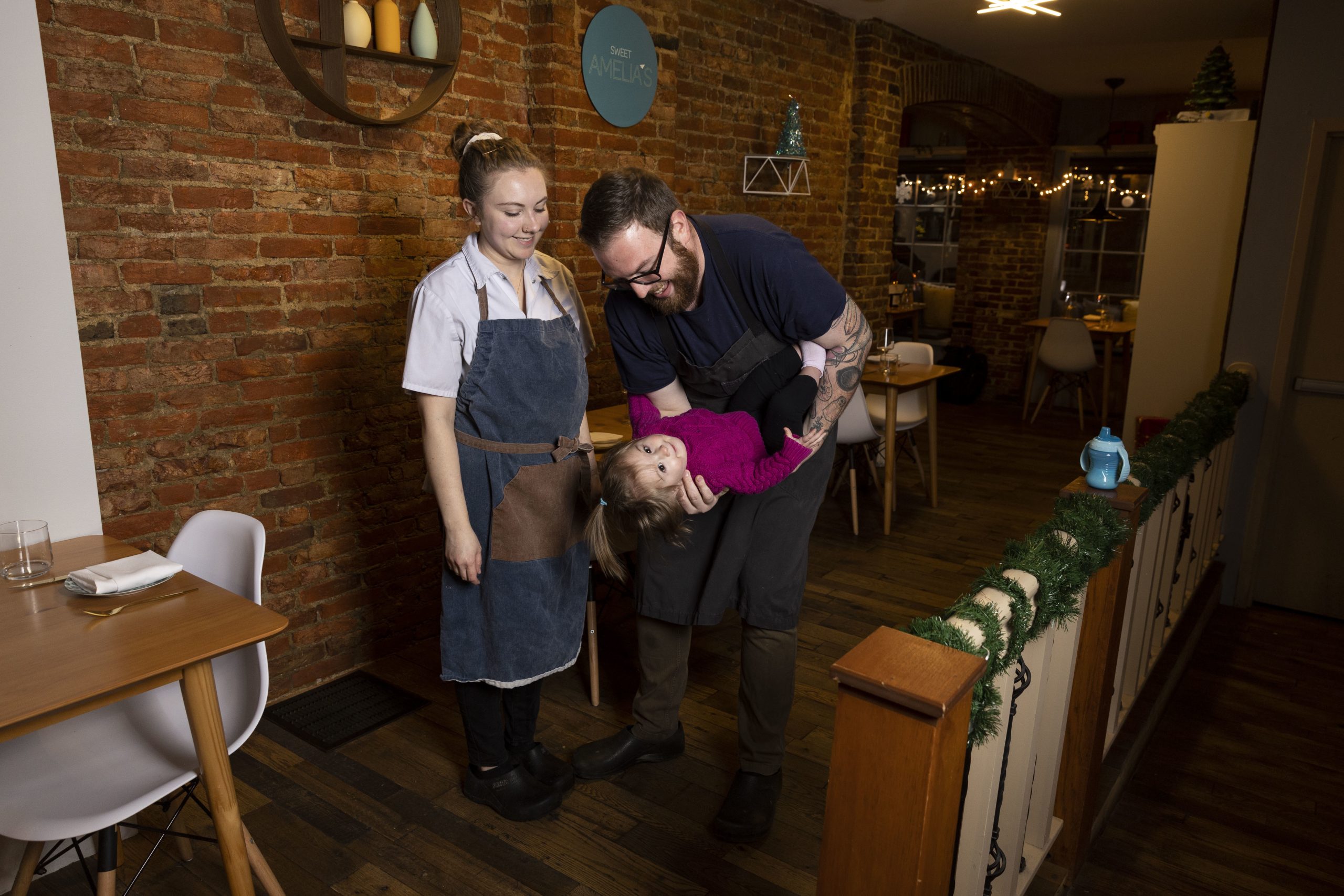
    Karessa, Amelia, and Zack Hathaway, pictured here in 2023, at Sweet Amelia’s in Kennett Square.Monica Herndon / Staff Photographer

    Zack Hathaway, who owns the restaurant Sweet Amelia’s in Kennett Square with his wife, Karessa, said their business “makes just enough” to cover the $700 to $800 weekly cost for their babysitter amid a demanding restaurant schedule. Thomas Smith, who works at the Cleveland-Cliffs steel plate production facility in Coatesville, said he makes too much to qualify for subsidies for his grandchildren but still struggles to cover the cost.

    “It’s like a big balancing act to be able to put your kids in a place that you want to feel comfortable with them being and with being able to afford it,” said Amarte Grove, another Cleveland-Cliffs employee and a father of five daughters.

    In another tour focused on the other end of the age spectrum, Houlahan peppered staffers at Brandywine Valley Active Aging in Downingtown about their work to offer free meals, housing services, and activities to about 120 seniors daily.

    According to the organization, Chester County’s homeless population has decreased in recent years — from 916 in 2023 to 747 in 2025. But the percentage of that population that is over 60 has increased from 9% in 2023 to 14% in 2026. About 45 older adults in the county were homeless as of early May, according to the organization, which works alongside other independent and government groups to connect seniors with stable housing.

    “It is really difficult to live in Chester County,” said Jen Manthey, BVAA’s director of information and assistance. “It takes a long time for them to get out of homelessness, partly because it takes a long time for us to build the trust with them and get that rapport — that they trust what we’re saying, and there aren’t $400 room rentals out there that we’re just hiding from you.”

    U.S. Rep. Chrissy Houlahan (D. Pa.) visits with senior citizens at the YMCA in West Chester. She shares the burden of the “sandwich generation” caring for her elderly parents, opening her home to her adult daughter and son-in-law, and helping to care for her other daughter’s toddler.Jose F. Moreno / Staff Photographer

    Nick Popov, BVAA’s chief operating officer, said demand remains high for the 5,000 free lunches the organization provides every month to individuals age 60 and older. The cost for those meals is reimbursed through the Pennsylvania Department of Aging, though the organization raises most of its funding in total, he said.

    “The services are out there. We’re doing everything we can to provide them,” Popov said. “But it’s always a struggle to kind of balance the bottom line between our goals and what we can actually affordably accomplish.”

    Houlahan’s parents said they had never expected to move in with their daughter. Even as they looked to move closer to their family and could not find a spot that fit their financial and physical needs, it took some convincing, mostly from their son-in-law, Bart Houlahan.

    “It was an inspiration that permits us to enter old age — serious old age, not just the kid stuff right now — with greater confidence that our health will be sustained,” said Andy Jampoler, Houlahan’s father, a Holocaust survivor born in German-occupied Poland in 1942.

    U.S. Rep. Chrissy Houlahan poses at a family during dinner at Brick & Brew in Malvern, including her father, Andy Jampoler (left), her husband, Bart Houlahan, daughter Molly Rosa Houlahan, daughter-in-law Kristen Rosa Houlahan, and Houlahan’s mother, Suzy Jampoler.Jose F. Moreno / Staff Photographer

    Turning experience into policy

    In May, Houlahan introduced legislation that would require the federal government to collect data on the sandwich generation, a step she said is critical to creating better policies for an “undervalued role in the nation’s economy.”

    It would require at least one federal survey to ask whether individuals provide unpaid care to both children and older adults. U.S. Sen. Andy Kim (D., N.J.), who has two young sons and cares for his father with Alzheimer’s, sponsored a companion bill in the Senate.

    Sen. Andy Kim (D., N.J.) poses with his family and Vice President Kamala Harris after taking the ceremonial oath of office in the old Senate chamber on Jan. 3, 2025, in Washington.Steven M. Falk / Staff Photographer

    Houlahan is also the chair of an “economic growth and cost of living” working group within the New Democrat Coalition, a group of self-described centrist Democrats that includes about half of the entire caucus. The group rolled out an “affordability agenda” earlier this year that is considered a framework for how Democrats would tackle housing, healthcare, energy, paid family leave, and much more if they win control of the House.

    U.S. Rep. Brad Schneider (D., Ill.), chair of the New Democrat Coalition, credited Houlahan for her leadership with the agenda, describing her as having a “quiet wisdom that focuses on the core of a problem” while bringing her own life experience to the work.

    “Everyone’s experience is unique, but her experience shares many of the aspects of what people across the country are facing,” Schneider said. “The sandwich generation, taking care of kids and parents, for whatever circumstance, while at the same time seeing the cost of just everyday living … is putting a burden on families.”

    Houlahan said she has been aggravated by the pace of progress in Washington, including Trump’s decision to not sign the bipartisan 21st Century ROAD to Housing Act in an attempt to force a vote on stricter voter-ID laws.

    The legislation aims to incentivize housing construction, restrict large investors from buying single-family homes, help families with home repairs, and more. The president reiterated Friday that he would not sign it, allowing the bill to become law without his signature.

    In her Capitol Hill office about an hour after Trump canceled that bill signing late last month, Houlahan described the president as “so obtuse that he can’t see in front of him that this is something that the people want.” After spending much of the last year calling out Johnson, the House speaker, for not standing up to Trump, she said there should be “counterinsurgents” and an “uprising” in the Republican Party.

    At the same time, she expressed some hope. The housing bill may have been a rare moment of bipartisanship, but it was also a sign that Congress can still act on affordability even before the end of the year, she said.

    “We don’t have time, for all of this stuff, to wait until somebody else is in charge,” Houlahan said. “We can do this ourselves.”

    U.S. Rep. Chrissy Houlahan (D., Pa.) sits between her father, Andy Jampoler, and her husband, Bart Houlahan, at Brick & Brew in Malvern. Houlahan’s parents recently moved in with her. Jose F. Moreno / Staff Photographer
  • Philly area’s housing market is ‘weird’ right now, agents say

    Philly area’s housing market is ‘weird’ right now, agents say

    Brenda Beiser knows firsthand how difficult buying a home in the Philadelphia area can be. She’s not only a Redfin real estate agent, but she’s also an empty nester who wanted to downsize.

    Her six-bedroom house in Mount Airy sold right away when she put it on the market in May. But she decided not to buy a replacement.

    “I went for a rental because I didn’t really want to compete with everyone who’s trying to get into a smaller house,” Beiser said. “A lot of people who are in their 60s and would have traditionally downsized into a smaller house just aren’t doing it. They can’t find a place to go.”

    Brenda Beiser, a Redfin real estate agent in the Philadelphia area, decided not to buy another home when she sold her Mount Airy house, because she didn’t want to enter the region’s competitive housing market.Courtesy of Brenda Beiser

    The Philadelphia region has a housing supply problem, just like large swaths of the country, and that’s impeding both repeat and first-time buyers. Inventory is particularly low across the Northeastern United States, where construction has not kept up with demand. In the beginning of this year, Zillow predicted that the Philadelphia metropolitan area would be one of the country’s 10 most-competitive housing markets of 2026.

    Home supply, however, has also ticked up a bit in the region compared with last year, and homes are staying on the market a bit longer before they sell. For the four weeks ending June 21, the region was in the top five markets with the highest annual increase in new home listings, according to a Redfin analysis of the 50 most-populous metropolitan areas.

    “The market’s encouraging,” said Jake Markovitz, president of the board of directors for the Greater Philadelphia Association of Realtors. “It’s certainly more balanced than it has been the last four, five years.”

    Erin Thompson, CEO of the Montgomeryville office with Keller Williams and leader of the Erin Thompson Team, agrees. She said buying and selling is “ebbing and flowing but trending toward a more stabilized market.”

    “Although I feel like I’ve said that twice in the recent past, and then it’s gone bonkers,” she said.

    The region’s market is a mixed bag.

    Some homes are sitting for a while, and some owners are at risk of selling properties for less than they bought them for a few years ago. Other homes have inspired five or more buyers to compete against each other, hiking up prices, said Markovitz, an associate broker with the Karrie Gavin Group at Elfant Wissahickon Realtors.

    This Graduate Hospital home went under contract last month a few weeks after it was listed for sale.Courtesy of Jake Markovitz

    “As an example, I’m seeing more inventory in Chestnut Hill than I have in a long time, which is giving buyers a little bit of power,” he said. But if the right property hits the market, it will go fast.

    He’s seen the same happen in neighborhoods such as Graduate Hospital and Fishtown.

    Because of strong demand for homes in the region, “I just don’t think we’ll see any major shift in prices coming down,” he said.

    ‘Weird’

    Markovitz and Thompson both used the same word to describe the recent real estate market: weird.

    They said housing activity isn’t always following time-tested rules.

    Philadelphia homes that sat on the market for months last fall, typically a busy season, suddenly went under contract in the winter, typically a slow one.

    A house that sits on the market for 30 days that a buyer thinks can be theirs at a lower price can suddenly attract two other buyers at the same time. And now they all need to be ready to pay more.

    Housing markets have always been hyperlocal, with buyer demand varying from neighborhood to neighborhood and block to block. But now, “it’s almost like a property-by-property basis,” even for comparable homes, Thompson said.

    Owners bound by ‘golden handcuffs’

    Even with recent upticks in home listings, the region’s housing supply is nowhere near enough to meet demand.

    “Most people are anticipating this year will continue to be a little tough,” Thompson said, “and then next year we’ll start to see some more inventory.”

    Markovitz said homeowners who bought properties five years ago with 3% or 4% mortgage interest rates are still experiencing “some sticker shock” from current rates, which lately have been averaging about 6.5% for a 30-year, fixed-rate mortgage.

    “Those people, even if they’re ready to leave, are kind of bound by their golden handcuffs,” not wanting to sell and then have to buy a home at a higher interest rate, he said.

    But for many homeowners, “the reality of the market has set in a little bit,” he said. “Where people were sort of hoping, wishing that rates would come back down, they’re not.” And life events such as births, deaths, and job moves mean that people need to sell their homes.

    This recently sold Graduate Hospital home has skyline views from the roof deck.Courtesy of Jake Markovitz

    And buyers show up to purchase them.

    Thompson said she was nervous when she listed a Phoenixville home for sale during Memorial Day weekend, when many homebuyers might be traveling. But a lot of people came to see it, and the seller ended up with seven offers and a final price that was well over what they expected.

    Buyers, however, aren’t accepting just anything. They are more selective and less likely than in past years to skip home inspections. If sellers want to get the highest price, they have to prepare their properties for sale, agents said.

    Homes, and especially kitchens and bathrooms, need to be up-to-date, and central air-conditioning is a plus, said Annette Collier, owner and real estate broker at Able Real Estate, based in West Philadelphia.

    “That’s what buyers are looking for, and I don’t think they’re willing to settle,” said Collier, who works in the city and surrounding areas. “I find that less buyers want to do any renovations. Most buyers want a move-in-ready situation.”

    Homebuyers want updated kitchens, like this one in a Graduate Hospital home that recently sold.Courtesy of Jake Markovitz

    And sellers need to be realistic about how much they can get for their home.

    “If you overprice by even just a little bit,” Thompson said, “you’ll end up sitting.”

    Buyers ‘ready to pounce’

    Generally speaking, buyers now have more time to make decisions than they did last year, since homes are staying on the market longer.

    But, in some submarkets, especially in Philadelphia’s collar counties, “there’s so much demand that certain houses are just going to fly off the shelves,” said Beiser, who works in Philadelphia and surrounding areas.

    “I have some buyers in the suburbs, and they‘ve kind of stopped looking because it’s too challenging,” she said.

    This home in Upper Merion Township is listed for sale for $699,900 by agent Erin Thompson.Jacob Schroeder, Left Bank Real Estate Photo Services

    Beiser has been working with a couple with children who live in Philadelphia but want to move to the suburbs. Each spring for the last three years, her clients make a plan to try to find their next home. But every year, they decide that continuing to live in the city is more convenient than facing competitive markets in which they’re expected to skip home inspections to win a property, Beiser said.

    Thompson has seen a growing trend of frustrated buyers putting in offers above the asking price even when they’re not facing direct competition. One client recently went under contract on a Fishtown home they had immediately put an offer on.

    “They came in aggressive, because they’d just lost out on a house, and they’d been looking for a while,” she said. “You have these buyers who are scarred and tired, so they’re coming in more aggressive.”

    Thompson tells buyers to make sure they’re as prepared as possible before starting their home search.

    “You have to be ready to pounce the second [a home] comes to the market,” she said.

    This home on the market in Upper Merion Township spans more than 2,800 square feet and has three bedrooms.Jacob Schroeder, Left Bank Real Estate Photo Services
  • Phoenixville’s Bluebird Distilling combines alcohol and artisanal dough making in new $2.2M expansion

    Phoenixville’s Bluebird Distilling combines alcohol and artisanal dough making in new $2.2M expansion

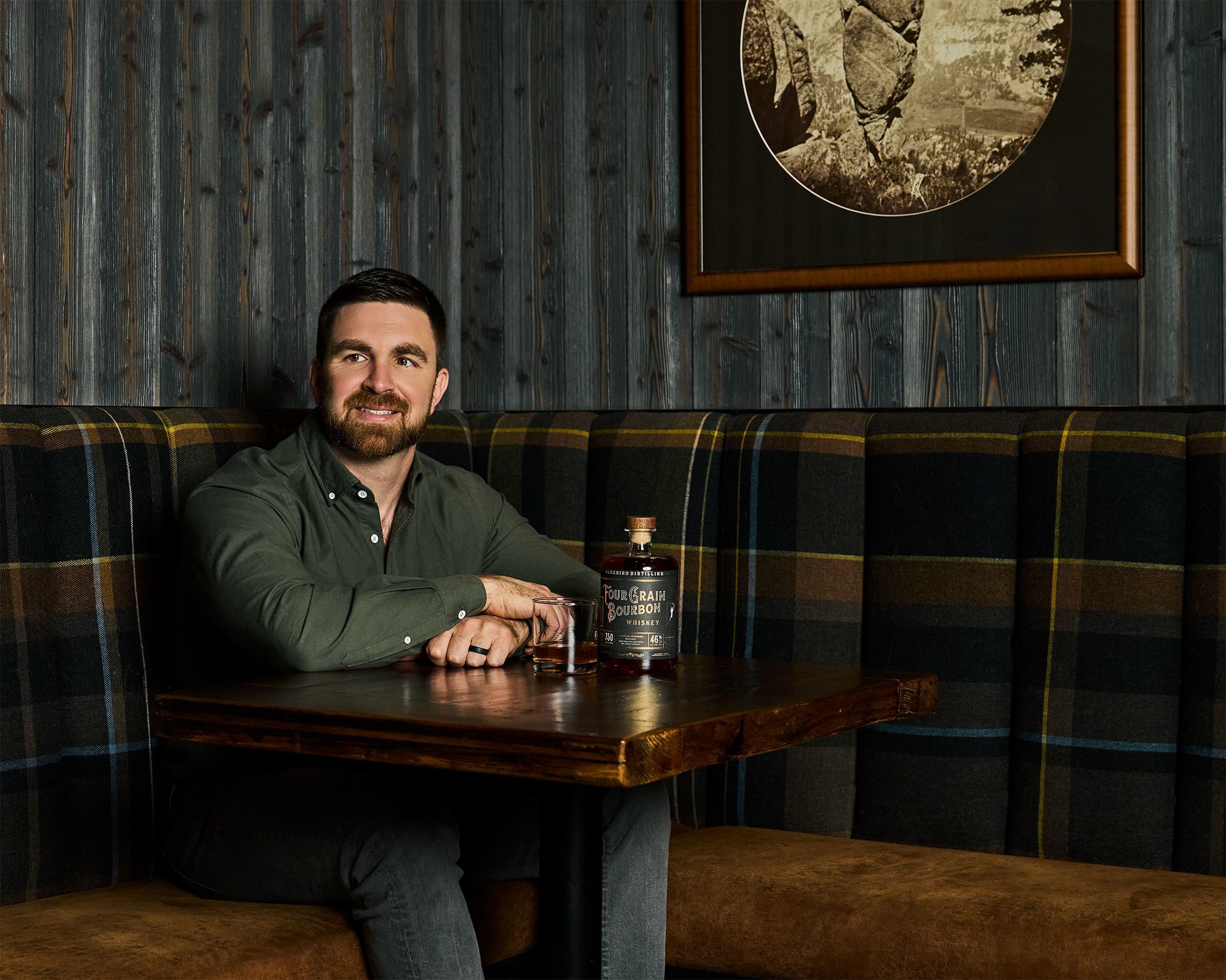
    When Jared Adkins gets interested in something, he goes all in. That’s how he ended up learning about distilling, opening Bluebird Distilling in Phoenixville roughly a decade ago. Then, he became infatuated with pizza dough.

    It’s led to an expansion of the business: Bluebird Distilling & Dough House, which will open its doors officially on Tuesday.

    The $2.2 million renovation adds a whole new component to the cocktail bar, which will now offer a “neo-Neapolitan” — a modern, Americanized take on the classic — pizzeria and restaurant. Changes also have expanded the bar itself, added to the dining room, and enhanced the retail and bottle shop.

    Adding food was something Adkins, Bluebird’s owner and master distiller, didn’t initially anticipate when they opened the distillery in 2015. But in 2022, he started to get the itch. He considered a full-scale restaurant, and began the early planning for one. But then there was just something about pizza dough that caught his attention.

    He signed himself up for pizza school, and spent three days in Washington, D.C., learning from chefs about the art of pizza making.

    “There was like a light bulb that went off,” he said. “We’re already doing so much fermenting that just seemed the natural next step to get into dough making.”

    Bluebird Distilling founder and master distiller Jared Adkins. The expansion has been a year in the making, a longer consideration for Adkins.Photos courtesy of Ed Newton

    As he threw himself into dough-making a few years ago, he connected with pizzaiolo Gregorio Fierro to learn the basics. That helped get his vision off the ground, as he began designing what the kitchen would look like.

    Devon Migeot is joining as executive chef to bring the menu to fruition every night. Migeot spent roughly a decade working as sous chef at Philadelphia’s Zahav and Laser Wolf, plus Tresini in Ambler, and as chef du cuisine at Rosalie in Wayne.

    Together, they’ll offer pizza made with 100% Petra stone-ground Italian flour, milled from 100% Italian wheat, with no preservatives or additives. The business will have house-baked breads, plus shareable small plates. Offerings will include ricotta gnudi with sweet corn, brown butter, and scallions; meatballs with beef, pork, gravy, and Parmesan; beets and burrata; chicory salad; a snacking plate of meats and cheeses; and more.
    The decision to expand into food comes at a particularly salient time, Adkins said. The industry as a whole has been seeing a decrease in people drinking.

    “It’s kind of perfect timing that it’s going to fill a niche where maybe people aren’t coming in solely just for drinks anymore as much, but now [we’re] giving another artisan aspect of having pizza, or something that we’re really putting a lot of time in, to craft the best,” he said.

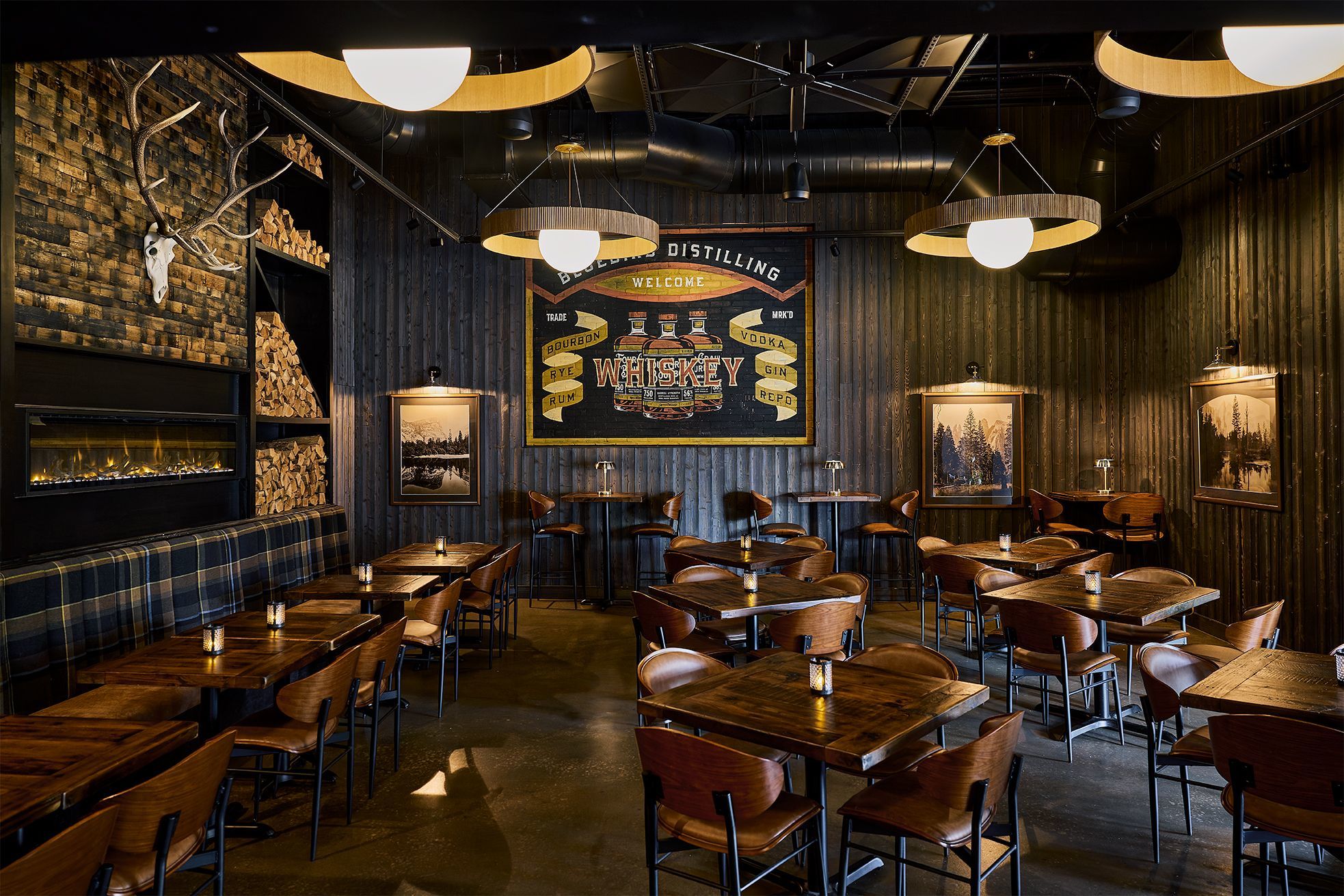
    A look at the expanded cocktail bar, part of the distillery’s larger renovation.Photos courtesy of Ed Newton

    The distillery will still, of course, honor its roots with its spirits and cocktails. It’ll feature old favorites, such as Bluebird (a vodka, blueberry, lime, and mint mix) and the Phoenixville Old Fashioned.

    But new additions will join too. Customers can try the Huntsman, which will feature French cigar bourbon, morel-infused vermouth, tobacco bitters, and stave smoke; or the Rum Ham, a pancetta fat-washed Bluebird dark rum along with burnt pineapple syrup, and tiki bitters; or Off the Vine, a “garden-inspired” martini composed of Juniperus Gin, basil, lemon, agave nectar, Aleppo pepper, and “clarified” tomato.

    The renovation also came with some aesthetic changes. In 2015, they led with a steampunk vibe, Adkins said. They refreshed the interior, using a Japanese-style charred wood that resembles the inside of a barrel.

    A transformed Bluebird Distilling will open July 7 after a $2.2 million renovation has expanded founder Jared Adkins’ vision. The space adds a new neo-Neapolitan pizzeria and restaurant, plus a reimagined cocktail bar, dining room, and retail and bottle shop.Photos courtesy of Ed Newton

    The outside patio is now enclosed, featuring a “huge” rectangular bar, which can seat up to 30 people. Adkins described the bar area as light and airy, where it feels communal and social. It feels more “upper casual” than “too-serious speakeasy.” Surrounded by windows, it feels like you’re sitting on the street, in the middle of the action, he said.

    When customers are ready for dinner, they can head back to the lounge, which curates a masculine, Western style.

    And the kitchen, where customers get to enjoy watching the whole process unfold, embraces that steampunk essence with barrels hanging from the ceiling.

    “I feel like as you walk through the area, you’re getting two or three different experiences all at once,” he said.

    The bar was open through renovations, but operating with 50% of the facility for the last seven or so months, and maintaining about 80% of their normal crowds. It took some ingenuity, he said.


    As they look at the new chapter, it feels like starting all over again, he said.

    “I think it fills a gap on one side for us there, of now we have something else that we can present to our customers for an overall experience,” he said. “That’s what we’re going for the most. We’re giving our cocktail experience, our spirits experience, and now a dough side of it.”

    This suburban content is produced with support from the Leslie Miller and Richard Worley Foundation and The Lenfest Institute for Journalism. Editorial content is created independently of the project donors. Gifts to support The Inquirer’s high-impact journalism can be made at inquirer.com/donate. A list of Lenfest Institute donors can be found at lenfestinstitute.org/supporters.

  • Philly’s queen of Gay Bingo hangs up her heels after 30 years and $5 million raised for AIDS research

    Philly’s queen of Gay Bingo hangs up her heels after 30 years and $5 million raised for AIDS research

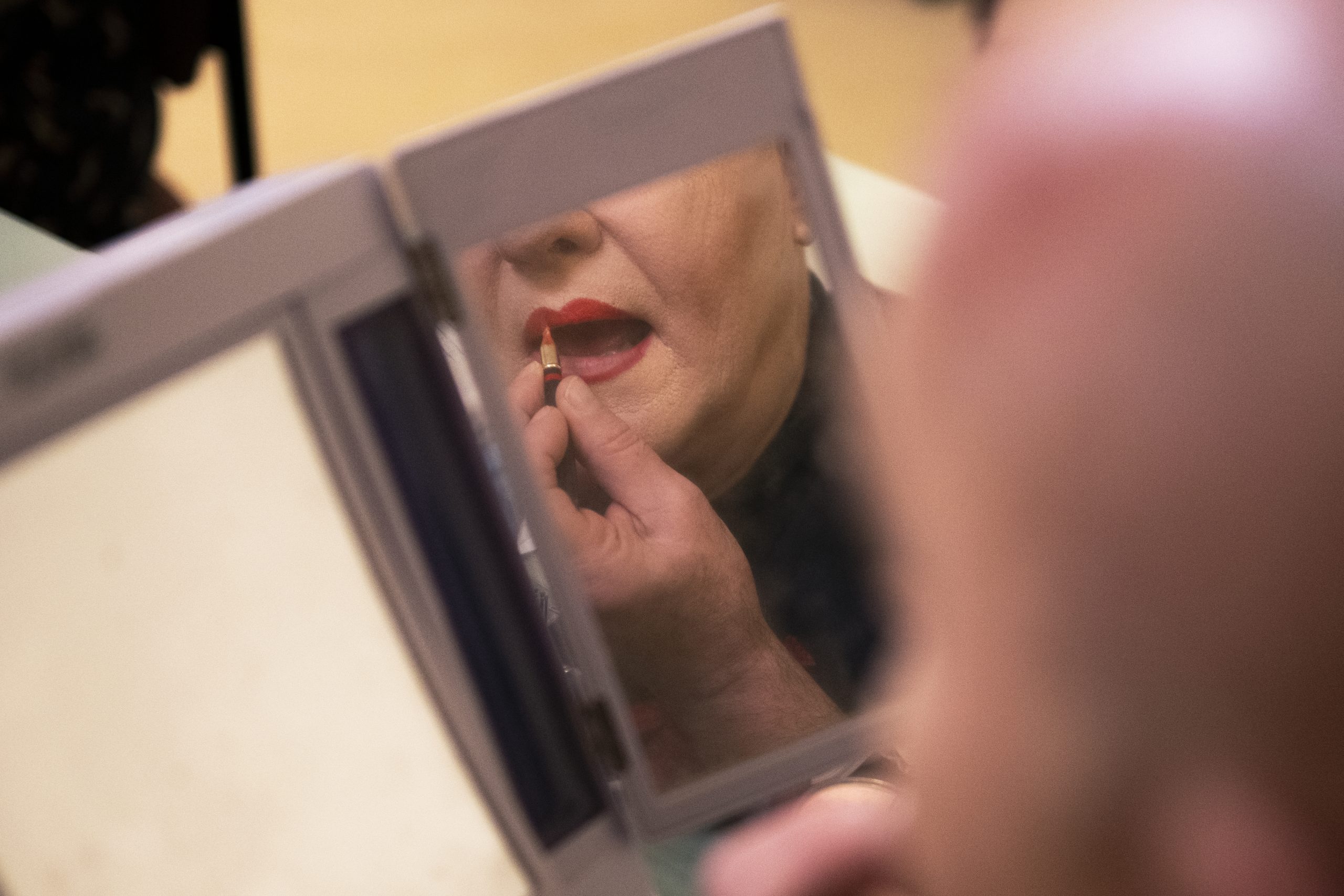
    The legendary redheaded drag queen Carlota Ttendant donned a baby-blue Eva Gabor-inspired gown — its plunging neckline revealing tasteful chest hair — and sensible black heels.

    At 65, arthritis stifles her strut in stilettos.

    “Drag is a young girl’s game,” she said.

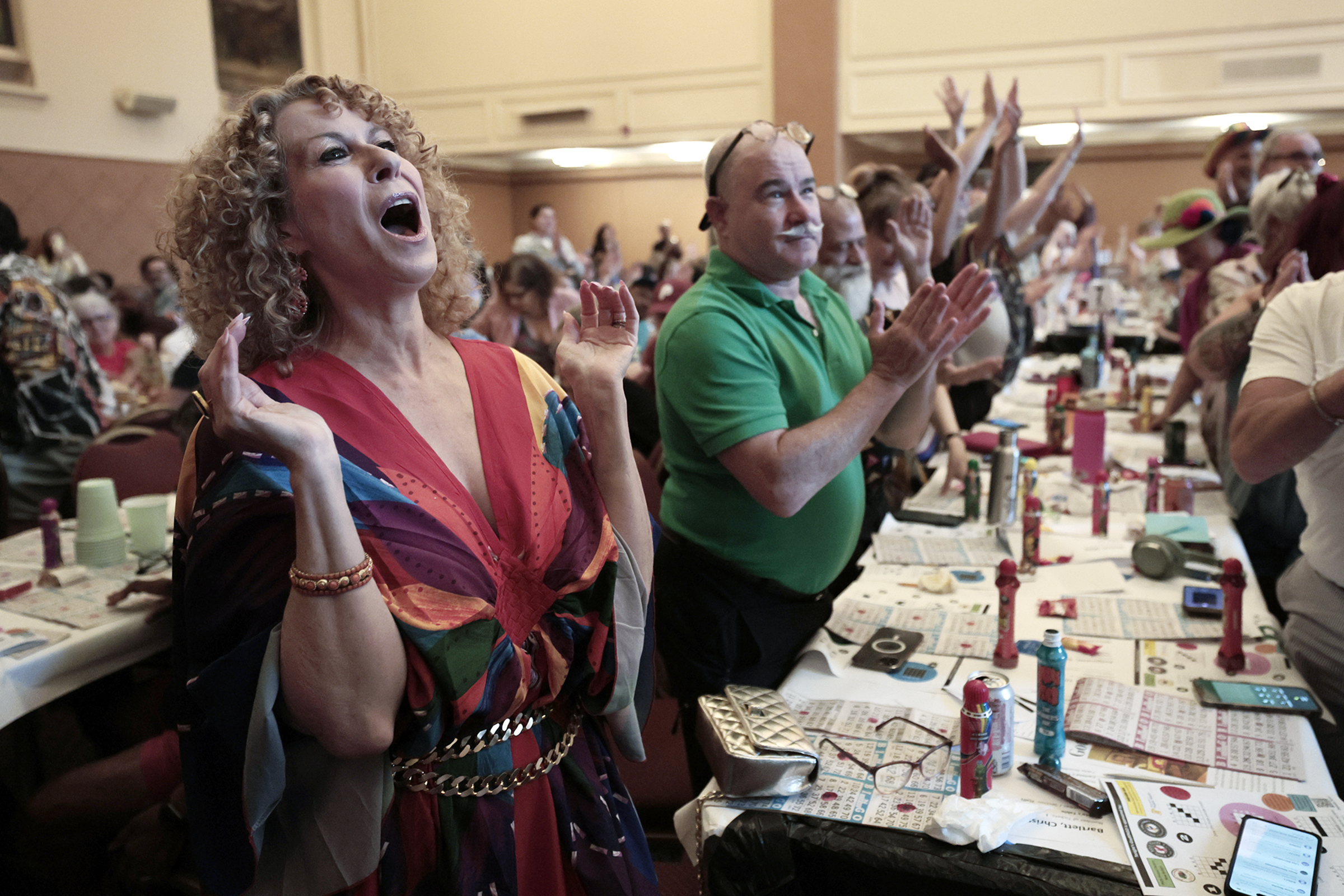
    This was her swan song. At the close of its 30th season this Pride Month, the man behind the makeup, Michael Byrne, hung up his heels and bid adieu to his drag persona and his longtime gig hosting Gay Bingo, the camp, irreverent, slightly profane, and undoubtedly silly monthly HIV/AIDS fundraiser.

    “I know it’s time,” Byrne said. And, “I’m excited to never wear Spanx ever again.”

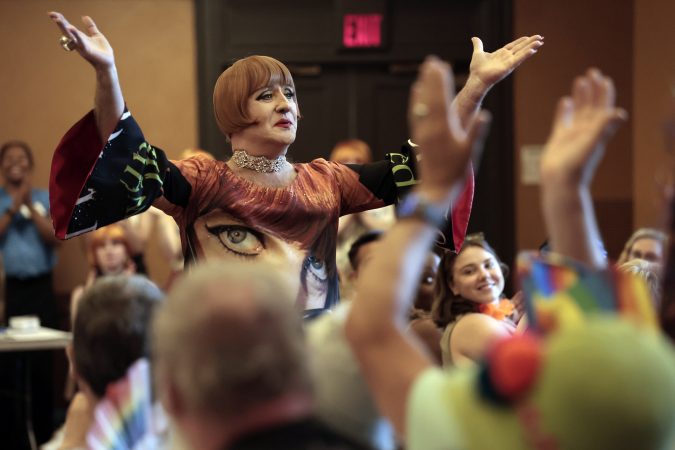
    Across three decades, Carlota Ttendant has called hundreds of games and elicited endless laughs, all while raising millions for people living with HIV/AIDS across the Delaware Valley. She helped steer a community through crisis, providing a respite to those experiencing immense loss and stigma. Even as medicine has advanced and HIV/AIDS has become manageable, she’s crafted a safe space for queer Philadelphians. For one night each month, she’s been an entertainer and an equalizer, responsible for uniting people — gay and straight, from Haddonfield to Phoenixville — around a common goal.

    And since Carlota came into Byrne’s life, she’s taught him to lead with courage, practice gratitude, and be unabashedly unafraid. He’s gone from being the “worst waiter ever” and selling cosmetics, to being a performer, licensed clinical social worker counseling older LGBTQ+ folks through their own next phases of life, and president of Philly AIDS Thrift’s board.

    “None of it would have been possible without all of you,” Carlota told the 400-person crowd — the biggest turnout in years — at her last Gay Bingo on June 13 in the basement ballroom at Congregation Rodeph Shalom. “In the ’90s there was horror happening, and today there is horror happening.

    “But please, let’s do some laughing,” Carlota said.

    “Let’s play bingo!”

    Michael Byrne, as his drag persona Carlota Ttendant, during Gay Bingo on Saturday, May 9, 2026, at Congregation Rodeph Shalom in Philadelphia.Joe Lamberti / For The Inquirer

    Act I

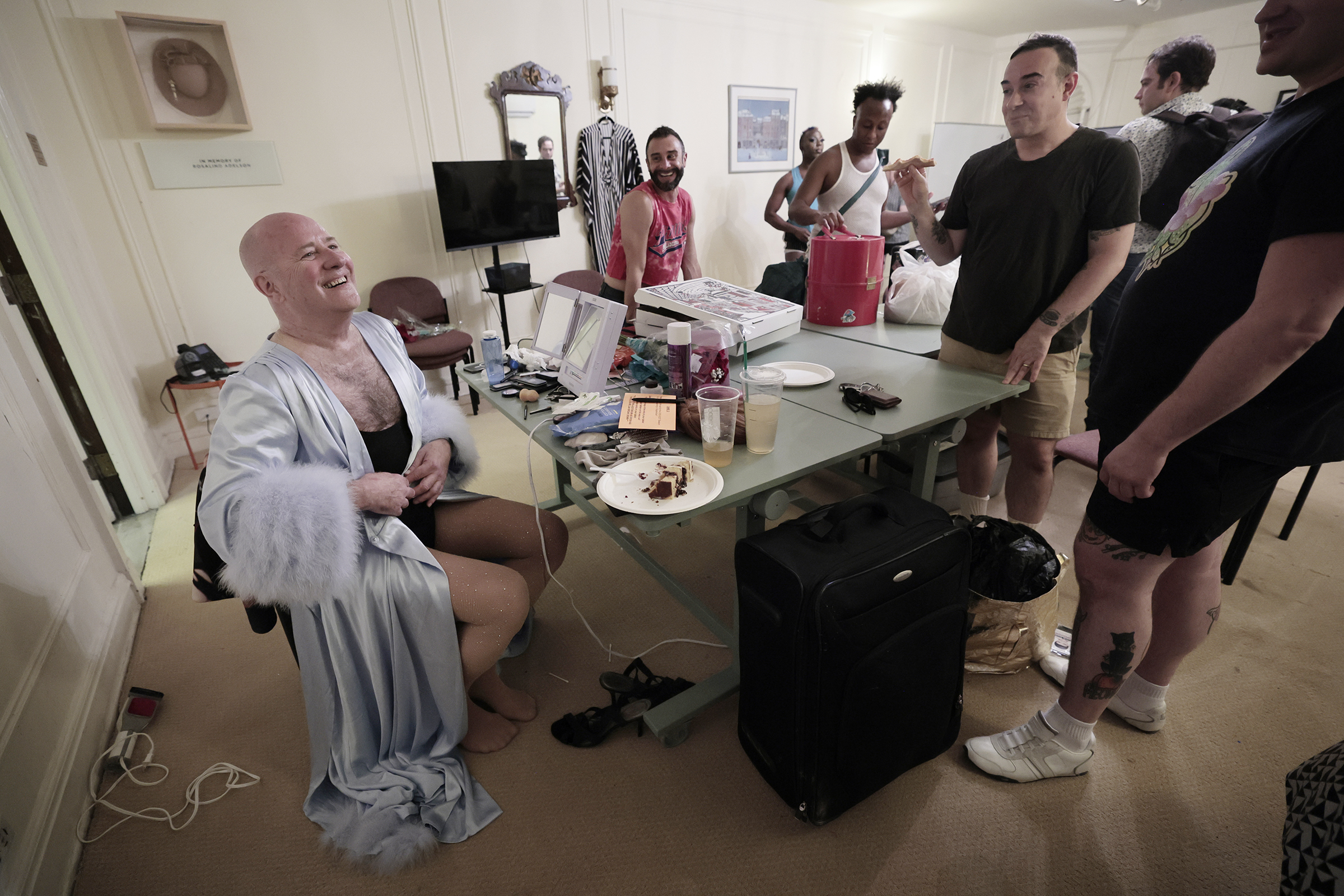
    Like so many Saturdays before, Byrne, on June 13, slathered his face with foundation, carved out his cheeks, deepened his eyes, and painted on his red lip. There was haze — from the dusting of loose setting powder, bronzer, and blush — and musk — from sweat and heat and hairspray — in a Rodeph Shalom classroom, which moonlights as a bridal suite and a boudoir for the Bingo Verifying Divas or BVDs. At 10 minutes till curtain, he futzed with his press-on nails, shimmied into a mod swing dress, straightened the back seams of his tights, and dabbed on some glitter. With each gender-bending step, he transformed into his “twin sister,” Carlota.

    Michael Byrne transforms into his drag persona Carlota Tendant ahead of Gay Bingo on May 9 at Congregation Rodeph Shalom in Philadelphia.Joe Lamberti / For The Inquirer

    Like all classy ladies, Carlota’s exact age is lost to time. In the 1990s, Byrne was organizing a fundraiser for Big Mess Theatre, an avant-garde troupe that he helped establish as the spinning axis of Philadelphia’s alternative performance scene, complete with vaudeville acts, an oompah orchestra, and live auction with a striptease routine. Byrne was to host and make his drag debut, and Carlota Ttendant (read as car lot attendant) was conjured up over bourbon and blackjack. (He learned, years later, that there was a ’60s stripper at the famed Trocadero Theatre with the same name.)

    Byrne never aimed to create a perfect, feminine illusion with Carlota. He left his chest unshaven and unstuffed, but short, thrifted dresses showed off his long and feminine legs. Carlota’s makeup was an extension of the exaggerated theater paint Byrne, who has been on stages since he was 10, knew; cheap wigs hid his sideburns. Nothing could mask his deep, raspy, anything-but-ladylike voice.

    Carlota Ttendant (Michael Byrne) (at left) laughs with friends and fellow performers after Carlota’s final evening cohosting Gay Bingo at Congregation Rodeph Shalom in Philadelphia on June 13. Elizabeth Robertson / Staff Photographer
    Michael Byrne transforms into his drag persona Carlota Ttendant ahead of Gay Bingo on May 9 at Congregation Rodeph Shalom in Philadelphia.Joe Lamberti / For The Inquirer

    Carlota could be bossy and profane but never vulgar; she could poke fun at audiences without being cruel. She became the “drag queen you could bring your grandma to,” Byrne said.

    Around the time Carlota came to be, the number of new AIDS diagnoses and deaths peaked in Philadelphia. In 1992, new AIDS cases surpassed 1,500; in 1994, AIDS deaths topped 900, according to city data.

    (function(){function e(){window.addEventListener(`message`,function(e){if(e.data[`datawrapper-height`]!==void 0){var t=document.querySelectorAll(`iframe`);for(var n in e.data[`datawrapper-height`])for(var r=0,i;i=t[r];r++)if(i.contentWindow===e.source){var a=e.data[`datawrapper-height`][n]+`px`;i.style.height=a}}})}e()})();

    Misinformation about the disease, which strips the body of its natural defenses and leaves it vulnerable to life-threatening infections and ailments, was rampant. People alienated gay men, wrongly fearing HIV/AIDS could be transmitted through a handshake, a hug, or across a dinner table, The Inquirer and Philadelphia Daily News wrote. Diagnostic testing took weeks; what rudimentary treatments were available sometimes made people sicker; and HIV often progressed to AIDS within a few years.

    “It was not unusual to have people dying every month,” said Kevin Burns, who as a case manager with the nonprofit ActionAIDS (now called Action Wellness) connected clients to hospice care. Burns later served as Action Wellness’ executive director.

    The need for resources was rife, and in 1996, Philly’s nonprofit AIDS Fund set out to supplement the money it made from its annual AIDS Walk, according to Sandra Thompson, former chair of its board of directors. An article in City Paper about an irreverent bingo-drag night sweeping Seattle — which, by one report in the Seattle Times, raised $10,000 a night — caught the attention of Mark “Chumley” Singer, then a fledgling events producer, who pitched the idea to the AIDS Fund. (The fund folded in 2024 due to the decrease in new AIDS cases, and turned ownership of Gay Bingo over to Action Wellness.)

    Singer recalled thinking at the time: “I’ve been doing sad, mopey, candlelight vigil fundraisers. … Why can’t we raise money and have fun?”

    Singer and Byrne had never met before the latter was tapped to host Gay Bingo, but their chemistry was kismet.

    “There was never a show where we weren’t having more fun than everybody,” said Singer, who cohosted until the early aughts. Byrne and Singer left Gay Bingo around that time, but Byrne later returned.

    Byrne remembers the magic of those early years of Gay Bingo. He remembers when 600 seats would sell out in 10 minutes, and he remembers doing his glittered red lip from the floor of the Gershman Y’s mirrored dance studio. He remembers two-show Saturdays and how six hours in heels would make him catatonic on Sunday. He remembers riffing with and ribbing Singer and the laughs their off-color jokes and mild profanity elicited. He remembers the constant movement of the bold and bawdy BVDs, on Rollerblades, or the electricity when O-69 was called and hundreds stood up, shaking and shouting with the fervor of their libidos.

    But Byrne also remembers the solemn moments: the steelworker who told a documentarian about watching his bodybuilder son become emaciated; the families who sponsored games on the anniversary of their loved one’s death; the pharmacist who learned all he could about HIV drugs; Byrne’s own friends who were infected.

    “Our community was in crisis,” Byrne said, “while we focused on it, we also focused on being fun and laughing.

    “And we all needed that at that point.”

    Act II

    The “Rainbow Bombshell” Gay Bingo on June 13 doubled as a Pride extravaganza and an homage to all things Carlota. Her first outfit of the night was crafted from a promotional banner from her years hosting the Philadelphia Orchestra’s Halloween Concert. Alongside her, the BVDs dressed as Big Mess-era Carlota, Norma Kamali-inspired Carlota, Phillies Carlota, and fuzzy caftan-wearing Carlota. Attendees, ushers, volunteers, and even the American Sign Language interpreter wore that signature red bob — wigs that Action Wellness bought in bulk. One wore a T-shirt that read, “Dibs on the ginger.”

    In the dressing room, Tess Tickle (Paul Struck) kisses Carlota Ttendant (Michael Byrne) on the head after Rainbow Bombshell Gay Bingo at Congregation Rodeph Shalom in Philadelphia on Saturday, June 13, 2026. “I love him” said Struck as he walked out of the dressing room.Elizabeth Robertson / Staff Photographer
    Carlota Ttendant (Michael Byrne) puts on a favorite crystal ring and fake nails before cohosting Rainbow Bombshell Gay Bingo on June 13. Elizabeth Robertson / Staff Photographer

    “Are we ready to win some money?” Carlota said, hyping up the crowd before the first of 12 rounds of bingo. Councilmember Rue Landau, the Philadelphia City Council’s first openly LGBTQ+ member, called the first game:

    I-28.

    I-26.

    G-52.

    B-14.

    O-63.

    B-3.

    “Bingo!” someone cried out, as the audience let out an audible wave of disappointment, exasperation, and defeat, and the BVDs rushed over to authenticate.

    “Did you just get bingo, girl?” Carlota wisecracked.

    For 30 years, these Gay Bingo players have pledged each month to “keep on playing Gay Bingo until this crisis is over.” And today, HIV/AIDS deaths and new diagnoses have stagnated, according to the most recently available health department data, and drug cocktails have made it so people with HIV can live long, healthy lives and may never pass the disease onto others or have their illness advance to AIDS. Preventative medications, like PrEP, can also dramatically decrease the risk of becoming infected.

    Michael Byrne, as his drag persona Carlota Ttendant, on May 9 at Congregation Rodeph Shalom in Philadelphia.Joe Lamberti / For The Inquirer

    But there are still obstacles to ending the epidemic. HIV/AIDS disproportionately affects Black and brown communities and low-income people who experience barriers to healthcare, according to Action Wellness executive director Mary Evelyn Torres. The geographic disparities are also stark: Current drug regimens may be readily available in well-resourced countries, like the United States, but access is scarce in the world’s vulnerable pockets. These problems have only been exacerbated by President Donald Trump’s proposed cuts to domestic and foreign HIV/AIDS programs. The withdrawal of American dollars overseas, United Nations officials warned, could lead to more than 4 million AIDS-related deaths and 6 million more HIV infections by 2029.

    (function(){function e(){window.addEventListener(`message`,function(e){if(e.data[`datawrapper-height`]!==void 0){var t=document.querySelectorAll(`iframe`);for(var n in e.data[`datawrapper-height`])for(var r=0,i;i=t[r];r++)if(i.contentWindow===e.source){var a=e.data[`datawrapper-height`][n]+`px`;i.style.height=a}}})}e()})();

    Meanwhile, the Trump administration and state legislatures are attempting to roll back protections for LGBTQ+ people. In Philadelphia, Pride celebrations this month in the Gayborhood were disrupted after Philadelphia police pushed and confronted revelers using what some have called outsized and aggressive crowd-control tactics, although Police Commissioner Kevin Bethel said his department’s actions had nothing to do with Pride. City Council has since announced it will hold public hearings to examine the police response.

    “We’ve come a long way, but there’s still work to be done,” Torres said, “and that work is being threatened by this administration.”

    As the epidemic has changed, so has Gay Bingo: The money raised — more than $5 million since its inception — now goes toward Action Wellness’ social services and programming. The BVDs ditched their roller skates at the Gershman Y (because of the new, carpeted venue). Tickets cost $50-$60, compared to $10-$12 in May 1996, and these days, attendance averages between 150 and 200 a month.

    Drag has evolved, too. Spending centuries on the periphery as proto-punk-beatniks and after-midnight acts, queens disrupted and challenged the mainstream with wit and wonder. Then, the exploding popularity of RuPaul’s Drag Race, a drag reality-TV competition, seismically changed the culture, snubbing scrappiness for silicon and kitsch for couture. The show ushered drag into the zeitgeist: Its lingo became commonplace and its contestants turned into social media stars, with businesses, makeup brands, books, and podcasts, as the art form continues to face political bans and threats nationwide.

    The show “has taken everything to a whole other planet,” Byrne said, “and that’s amazing and that’s really great.

    “That’s also not what I do.”

    Carlota was never concerned with “affecting female mannerisms” or “trying to be this woman or this drag queen,” Singer said. To Byrne, she’s come to embody the fiercest, most unafraid, and righteous versions of himself. But “Michael was never far from Carlota,” Singer said.

    Janie Lopez of Philadelphia cheers for her friend Carlota Ttendant during Gay Bingo at Congregation Rodeph Shalom.Elizabeth Robertson / Staff Photographer

    To those who know Byrne, Carlota’s come to represent someone purer and more singular, a testament to what joyful resistance and defiant resilience can achieve amid tragedy. Her ingenuity and authenticity have made her synonymous with Gay Bingo, according to Action Wellness event planner and cohost Tim Johnson (otherwise known as Stella D’Oro); her playfulness is what’s engaging, Burns said; the safe space she’s cultivated for the queer community is what keeps people coming back season after season, said regulars Cat Johnson, 47, and Katie Dickerson, 38, of Roxborough.

    “It’s going to be really different without Carlota,” Johnson said. “No one’s going to fill her shoes, but I think that the vibe and the energy is going to live on.”

    “It’s a lot easier to raise money when everyone is having fun,” said Amber Schlesman, 38, of Point Breeze, who’s been coming to Gay Bingo since its Gershman Y days. “And for the shoes, I’m guessing it’s a size 12.”

    All those shoes will be donated to Philly AIDS Thrift soon enough, Byrne said.

    Epilogue

    Byrne’s voice cracked as he thought of the people who made Carlota’s run possible: the AIDS Fund organizers, Singer, the original cast of BVDs, the volunteers, those who came back monthly, the victims, their families. Many sent her off June 13 with a trove of well wishes, notes that read, “thanks for the memories,” and “so proud of all you’ve done.” They told her, “I love you,” and “hang up those high heels, baby.”

    At the end of the night, Byrne’s best friend gifted him a throw pillow.

    “Don’t be a lady,” it said. “Be a legend.”

    Michael Byrne transforms into his drag persona Carlota Ttendant ahead of Gay Bingo on Saturday, May 9, 2026, at Congregation Rodeph Shalom in Philadelphia.Joe Lamberti / For The Inquirer
  • Where to watch Fourth of July fireworks in Philly, the suburbs, South Jersey, and the Shore

    Where to watch Fourth of July fireworks in Philly, the suburbs, South Jersey, and the Shore

    This Fourth of July will be unlike any in recent memory. As the nation marks its 250th anniversary, Philadelphia and the surrounding region are packed with celebrations — and fireworks displays. From the city and suburbs to South Jersey and the Shore, there are dozens of opportunities to catch a show.

    Whether you’re staying in Philadelphia, heading to the suburbs, or spending the holiday down the Shore, here’s where to find Fourth of July fireworks across the region.

    Fireworks in Philadelphia

    Fireworks after the San Diego Padres and Philadelphia Phillies game at Citizens Bank Park on July 2, 2025.Elizabeth Robertson / Staff Photographer

    Fireworks in Bucks County

    Fireworks in Chester County

    Fireworks in Delaware County

    Fireworks in Montgomery County

    Fireworks in Allentown

    Fireworks in South Jersey

    A view of Atlantic City’s fireworks from the Marina. (Courtesy of the Casino Reinvestment Development Authority)

    Fireworks at the Jersey Shore

  • The USA Table Tennis Pennsylvania Open is coming to Phoenixville this month, with rankings and cash prizes — and community — up for grabs

    The USA Table Tennis Pennsylvania Open is coming to Phoenixville this month, with rankings and cash prizes — and community — up for grabs

    For Deepak Gupta, playing Ping-Pong is something of living out a childhood dream for him.

    Later this month, he’ll be taking that dream to the next level, as he makes his tournament debut at the USA Table Tennis Pennsylvania Open in Phoenixville.

    “I’ve never met two people who play the same … they have a unique style of playing, and every player has strengths and weaknesses, the way they spin the ball, the way they serve,” he said. “I’m looking forward to playing against more people whom I’ve never met, so that’ll be challenging.”

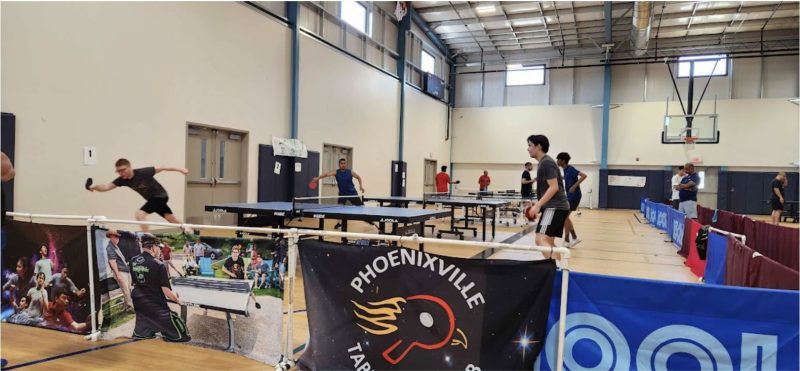
    Gupta, 52, will be among the 40 to 50 players from the region competing; the tournament has six events and will be held at the Phoenixville Recreation Center.

    Players will compete in women’s singles, juniors, over 40, the open, or skill-capped events. On the line: cash prizes, trophies, and national ratings points.

    It’s the fourth time the Phoenixville Table Tennis Club, established in 2009, is holding a USA Table Tennis tournament, and its second Pennsylvania Open.

    “We do have a lot of lower-level players participating in those events, and one, it gives them the opportunity to win trophy and money, but two, it gives them the opportunity to continue to compete … and get better in their games,” said Nick Flor, organizer and one of the founders of the Phoenixville club. “Say you come across your archnemesis that you play at the club in the tournament. … It’s going to give you that drive to learn to beat them, to learn to get better.”

    Gupta will be playing in the “under 1200″ event, for beginner to intermediate players whose rating is below 1200. A rating represents their skill level and determines where a player is seeded in an event. Low-level players would be rated around 900 or 1000, while high-level players approach 3000, Flor said. As players win matches and tournaments, up goes their rating. The tournament will have several events split by rating level.

    Players will also be competing for ranking points as part of the USA Table Tennis’ system. Depending on how many tournaments players win, they earn points. Top-point earners are considered for the Olympics, or the sport’s World Cup.

    Aside from rankings, players are drawn to the community the sport has given them.

    Serving up community

    Gupta loved the game passionately as a child, but it faded into the background after high school. Some 30 years later, he started playing against a couple of friends in the basement. He found out about the Phoenixville club, which meets twice a week at the recreation center, hosts a smattering of smaller tournaments and competitions, and provides support for new players. But it wasn’t enough; he ended up opening his own club in Exton, called Exton Table Tennis.

    The club is run by friends, for friends, he said. Before he started playing table tennis a few years ago, he had few of them. He met other parents in school groups, but those social interactions were limited to talking about their kids.

    “Once I started playing table tennis with some of the other dads, we started getting to know each other more as individuals and more as friends,” he said, “and then taking that spirit and … expanding it to a community.”

    Flor, 53, caught the bug in high school, when he’d play with his friends in the senior lounge. They started playing before and after school. They were “terrible,” Flor recalls. But they kept playing, deciding to enter a tournament. They got crushed and had the experience he’s seen in many players: the shock and awe at the level of gameplay, of technique, and skill it takes. The group began going to a club in Pottstown, getting tutelage from an older gentleman, and eventually opened their own club, he said.

    He’s seen the sport change over time, fluctuating in popularity. They see surges around the Olympics, and during the colder months. Marty Supreme drummed up excitement among players but didn’t seem to inspire a new generation. (Forrest Gump has probably done more for the sport, he noted.)

    A game for all

    Flor’s love of Ping-Pong has seeped into his marriage, as he slowly turned his wife, Janel Flor, into a convert. Now the two are evenly matched.

    It’s been a journey for Janel, whose first experience was in the place that makes or breaks anyone’s love of sport: gym class. It put her off table tennis for years. She was supportive of her husband but felt it was “kind of a dumb sport.” But, ever persistent, he coaxed her into a lesson. About a month later, she felt it sink in and sent the ball exactly where she wanted it to go. She was hooked.

    She was not very competitive until she was able to beat Nick. “Once I could do that,” she said, “I was like, you know what, I actually really like this game.”

    It’s been her goal to get more women into the game and to have fun doing it.

    “My goal is always to help build confidence and help get them playing, so that they’re not overthinking everything,” she said.

    Janel, 50, will compete in the women’s event in the upcoming tournament, against roughly six others. She has gotten over some of the initial fears of tournament play but said she still gets butterflies when she steps up to the table.

    Despite those butterflies, it’s often an encouraging, but still competitive, game, she said.

    For Gupta, it’s a game where people of all ages, genders, and abilities can thrive. The clubs welcome kids, whom they have watched level up over time.

    “Table tennis is one game where it evens everything out. It doesn’t matter,” he said. “If you have skills, you can become really good, that’s one thing that I really love about this game. … I think now I’m finally trying to live my childhood dream, and I hope other kids can enjoy the same passion that I had as a child.”

    This suburban content is produced with support from the Leslie Miller and Richard Worley Foundation and The Lenfest Institute for Journalism. Editorial content is created independently of the project donors. Gifts to support The Inquirer’s high-impact journalism can be made at inquirer.com/donate. A list of Lenfest Institute donors can be found at lenfestinstitute.org/supporters.