Tag: Philly First

  • Was the World Cup good for Philly’s economy? The early signs are in

    Was the World Cup good for Philly’s economy? The early signs are in

    Prior to the kickoff of the World Cup, the organizers of the city’s events projected the soccer tournament would bring $770 million to Pennsylvania in gross revenue.

    Yet, George Diemer, a sports economist at Temple University, said those in his field tend to be skeptical of pre-event projections. Organizers “have an incentive to blow the numbers up,” he said.

    Midway through the tournament, the Economy League of Greater Philadelphia estimated that $30 million to $90 million would actually stay in the city. The economists factored in metrics such as leakage, when a share of money spent goes to national organizations instead of staying local. The current analysis, done after the tourists have left, leans “toward the lower end of that range,” said Saloni Tandon, director of research and analytics at the Economy League, the region’s independent civic think tank.

    “Even if it goes up, it feels like our estimation is likely to stay in the tens of millions, rather than cross into the range of hundreds of millions,” said Tandon.

    The cleat-kicked dirt is still settling, and Tandon said conclusions will continue to change as more data comes to light. The city is looking for a consultant to craft a postmortem analysis on the year’s largest events’ economic impact.

    Here is what we know so far.

    Hotels and short-term rentals made more money

    Center City hotels made out well, as almost 410,000 fans from more than 190 countries flocked to Philadelphia to watch the six matches at Lincoln Financial Field.

    The Philadelphia Convention & Visitors Bureau data say on the dates of the six soccer Philadelphia matches, hotels saw a 50.3% increase in revenue compared to those same dates in 2025.

    Using that data, however, Tandon calculated that Center City hotel occupancy on the game days increased around 3% — modest gains. Much of that revenue increase was thanks to higher per-night pricing by the hotels due to the special event.

    A 3% occupancy increase doesn’t validate “a massive spike in terms of tourism,” Tandon said.

    Ethan Conner-Ross, executive vice president of consultancy firm Econsult Solutions Inc., noted that hotels may have lost some business to short-term rentals, with “people finding a different way to stay based on their needs,” he said.

    An Airbnb spokesperson said the World Cup was the biggest hosting event in the company’s history in all host cities.

    For short-term rentals in Philadelphia, revenue reached $38.3 million over the tournament window — up 25% from the same period last year, according to AirDNA, a research company that tracks the short-term rental market.

    But that gain was almost purely pricing — with $7.5 million of the $7.8 million increase coming from higher rates. Translation: hosts drove revenue by increasing prices rather than filling more nights. Occupancy dropped in 12 out of 16 host cities compared to the same period last year, including Philadelphia, as supply outpaced demand.

    Fans wait outside SEPTA’s NRG Station near the stadium following Ivory Coast’s victory over Ecuador on Sunday, June 14, 2026.Michelle Myers

    How SEPTA, PHL, and rideshare handled more travelers

    Hosting a large sports event can strain local infrastructure as tourists crowd public transit and other services, leaving high costs of building infrastructure or congestion for locals.

    Diemer pointed out that it took Montreal 30 years to pay off its debt from hosting the 1976 Olympics.

    Since the six World Cup matches in Philly were spaced out over June and July, Diemer said that helped diffuse the costs.

    “I think it was successful,” said Diemer of the decision to ”spread out the games so it won’t be overloading the local infrastructure.”

    SEPTA, for example, saw manageable bumps in ridership over the summer. On June 19, the day of the Brazil vs. Haiti match, SEPTA recorded the second-highest event ridership ever on the B line. (The first was after the Eagles won the NFC Championship in January 2025.)

    Travelers took advantage of public transit to get to and from the airport, as well. On the two days sandwiching a match, ridership on the Airport Regional Rail line typically increased at least 20%.

    At Philadelphia International Airport (PHL), international arrivals were up 8.3% in June year-over-year.

    Spokesperson Heather Redfern said that in a usual summer, PHL is typically a big outbound and connecting market to other destinations. This summer, there were more inbound passengers coming to Philadelphia from countries playing games in the city. In addition, many travelers, notably Scottish fans and Czech fans, took advantage of unique nonstop routes through PHL on the way to games in other cities.

    “We focused on delivering an experience for those passengers that made them fond of Philadelphia and want to come back and visit,” said Redfern, “From this perspective, we are very happy.”

    Despite some rideshare restrictions surrounding the FIFA Fan Festival in Lemon Hill, Uber drivers transported tens of thousands of fans to and from the festival and the stadium complex, according to Jazmin Kay, head of public affairs for Pennsylvania at Uber.

    Prior to the tournament, Uber onboarded more drivers and maximized earning opportunities for them: one way was creating an event-rider surcharge near venues, with 100% of those surcharges paid directly to drivers.

    For Lyft, on days when Philadelphia hosted a World Cup game, rides to bars increased by 18% compared to their typical average on the same day of the week. On June 19, rides to bars were 49% above average.

    Soccer fans watch Ecuador take on the Ivory Coast during a World Cup soccer watch party at Brauhaus Schmitz on Sunday, June 14, 2026.Yong Kim / Staff Photographer

    Where soccer fans ate and drank

    Philly’s fan festival saw 575,304 attendees, and bars nearby, like the Black Taxi, saw greater foot traffic and a boost in sales.

    For other Philadelphia restaurants, outcomes seem more mixed.

    On four of the six World Cup game dates, local restaurants that use reservation site OpenTable saw an increase in seated diners, according to OpenTable data. The biggest gain was 22% on June 25, and of the two dates when reservations decreased, June 14 was the worst with a 44% decline.

    At Reading Terminal Market, soccer fans helped drive a 13% year-over-year increase in June foot traffic. On June 19, the market saw more than 30,000 customers, setting a five-year record for Friday visitation.

    “Our prepared food merchants — especially if you are in the pretzel, cheesesteak, pizza, or burger business — had a great month,” said Annie Allman, CEO of Reading Terminal Market.

    Still, Allman noted that there was a drop in the number of loyal local customers that shopped at the market’s butchers, fishmongers, and grocers, “as they chose to stay home to avoid the crowds.”

    A longer-term reputation boost for Philly?

    It’s tricky to untangle the effects of the World Cup from tourism spending driven by other coinciding large events, such as the July Fourth celebrations for America’s 250th birthday.

    Additionally, not all impacts will be observed within the short period of the tournament. Some benefits, like an improvement of Philly’s reputation or publicity on an international stage, could be realized later on.

    “But it’s definitely in a mix of assets that affect how people think about Philadelphia,” Conner-Ross said, “and that contributes to those decisions that happen down the line.”
  • Bayada Home Health Care’s new CEO Bryony Winn wants to provide higher levels of care at home

    Bayada Home Health Care’s new CEO Bryony Winn wants to provide higher levels of care at home

    Bryony Winn became the CEO of Pennsauken-based Bayada Home Health Care in March after a career at two big Blue Cross health insurers and at the consulting firm McKinsey & Co.

    Those experiences, she says, prepared her to take the reins at one of the nation’s largest home health companies at a time when Bayada is wants to increase the intensity of its home care offerings — and get insurers to pay for it.

    “Hospitals are full,” and patients want to be at home, said Winn in an interview this month at Bayada’s headquarters in Pennsauken.

    The company, whose founder Mark Baiada converted it to a nonprofit in 2019, operates in 22 states and five additional countries, employs 44,000 people, and had $2.2 billion in revenue last year.

    Winn, Bayada’s first non-family CEO, grew up in Zimbabwe and went to college in South Africa. “Being around so many challenges and so much opportunity every day in the developing world, I always had a sense that I wanted to do things that made lives healthier,” she said.

    When she came to the United States in 2009 to work as a consultant in Chicago, it struck her how specialized and disconnected healthcare is here. “In the developing world, there’s not enough trained people, so it’s a much more connected system around patients and humans,” she said.

    The Inquirer spoke with Winn about the importance of taking care of people at home as the nation’s healthcare providers come under increasing financial strain. Questions and answers have been lightly edited for length and clarity.

    How did your jobs at McKinsey and at Blue Cross of North Carolina and Elevance Health prepare you to lead one of the nation’s largest home healthcare companies?

    I learned a lot about the U.S. healthcare system and became more and more convinced that this lack of connection was driving unsustainable cost, and I still think it’s driving unsustainable cost. Pre-COVID, I used to say affordability is the greatest healthcare crisis of our time. Then COVID really was for a while, and I think we’re back to that now. The quality of care here is amazing if you have a really rare form of cancer. I’d prefer for it to be treated in some of the amazing institutions here than anywhere else in the world. But if you are just a typical person, and especially an aging person here with two or three chronic conditions, you are pushed from pillar to post across a system who doesn’t ever see you as a human being.

    (function(){function e(){window.addEventListener(`message`,function(e){if(e.data[`datawrapper-height`]!==void 0){var t=document.querySelectorAll(`iframe`);for(var n in e.data[`datawrapper-height`])for(var r=0,i;i=t[r];r++)if(i.contentWindow===e.source){var a=e.data[`datawrapper-height`][n]+`px`;i.style.height=a}}})}e()})();

    What do you think you can accomplish at Bayada, which was founded more than 50 years ago, to address that connectivity issue?

    What I can bring to it is really understanding the place of home health in the entire healthcare ecosystem. This is the place where clients and patients want to be; they want to be in their homes. And so the question I’m asking is not what are the kinds of conditions that should be addressed at home, but rather flip that on its head and say, what are the kinds of capabilities you need in the home to be able to address things for clients who want to be there?

    What’s happening now that makes it so important to solve this problem?

    For two decades in healthcare, we’ve been talking about people aging into Medicare. Ten thousand people a day aging into Medicare. Now 10,000 people a day are 20 years older. They’re aging into 85 every day. Because it’s not a change in insurance, it doesn’t generate the same conversation. But it’s a huge change in health status. We now have all of these seniors with two or three chronic conditions, and with a decent chunk of life expectancy still. The delivery system really needs to shift in how we care for these folks.

    What has to change?

    One thing that’s needed is a collection of multiple services in the home. Very rarely do you need just skilled nursing. You need skilled nursing and a home health aide and potentially wound care. That requires care management, a much more connected ecosystem, versus what is today much more a siloed set of services. The second thing is we just need more intense care at home. We have done this quite successfully, and we’re doing it even more now around NICU babies [in partnership with Children’s Hospital of Philadelphia and insurers Highmark and Independence Blue Cross].

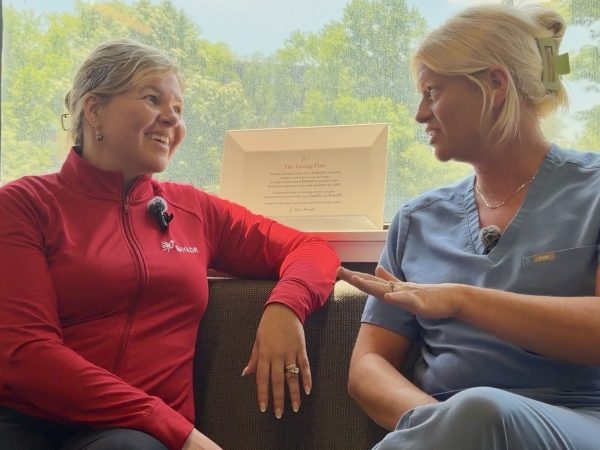
    Bryony Winn, who became Bayada’s CEO in March, said her background in health insurance will help the nonprofit expand by finding ways to get paid for new services.Bayada Home Health Care
    Do you see Bayada playing a broader role in health systems’ hospital at home programs?

    I do. We can serve higher-intensity patients at home with more complex care needs, and we do a lot of this today. We’re just not really paid for it, or it’s not the service that we’re meant to provide. So it’s really, how can we more sustainably do this high-intensity work at home? That’s a shift for us. Our clients want it. Wound care at home is hard. It’s one of the biggest reasons for readmission back into the hospital after post-acute discharge. How we can build really strong clinically evidence-based wound care capabilities is one of the big pieces that we’re looking at in this elderly population.

    Providing more intensive care has higher costs. How do you convince insurers to pay more, especially given the prevalence of Medicare and Medicaid in home health?

    There is not a ton of wiggle room, but this is where my background helps. I’ve worked on the payer side for a long time. They truly care about affordability and quality as well, and so it’s really working together to say how does what we need for our caregivers, clinicians, and ultimately clients map with what you can afford, and how do we build this together? I’m not sure home health has ever had those conversations as intently as we need to have them now. It’s a very fragmented industry. Hospitals have been having these more strategic conversations with health insurers for decades.

    Editor’s note: The caption with the main photograph has been updated to correct the name of the person Winn is speaking with. It’s Lillian Floyd, a nurse with Bayada’s Camden County Visits unit.

  • How PECO is Tackling Energy Affordability on Three Fronts

    How PECO is Tackling Energy Affordability on Three Fronts

    Rising energy costs have become a mounting burden for families across Southeastern Pennsylvania. For an average family of four, even the smallest increase on a monthly energy bill can force difficult tradeoffs between, for instance, groceries and keeping the air conditioning on.

    That creeping financial instability is the problem PECO is addressing through the Exelon Promise, an all-of-the-above approach to affordability designed by Exelon, PECO’s parent company, to keep bills manageable through three connected strategies: immediate relief, near-term cost protection, and long-term policy reform. “The Exelon Promise has to be felt in a very immediate and tangible way,” Doug Oliver, PECO’s senior vice president of governmental, regulatory, and external affairs, said. For customers, that means the plan must translate into meaningful support now.

    While PECO doesn’t produce energy or set supply rates, it is responsible for the infrastructure that delivers energy to customers in Southeastern Pennsylvania. Now, as rising costs put pressure on household budgets, the company is expanding its role in addressing energy insecurity and finding creative ways to make sure that anyone who needs help knows where to find it.

    Finding solutions today

    For PECO, delivering on the strategies in the Exelon Promise begins with providing immediate solutions for struggling customers.

    Established energy assistance programs are critical to the mission. The company connects more than 140,000 customers with energy assistance annually and delivers more than $200 million in support to households across its service area. That support took on several forms, depending on a household’s income, needs, and eligibility.


    For customers with a household income at or below 150% of the annual federal poverty level (FPL), for instance, PECO’s Customer Assistance Program (CAP) limits monthly bills at a percentage of household income. A qualifying family of four earning less than $4,125 per month might owe only a fraction of a $200 bill.

    For customers who need support but do not qualify for CAP, Exelon provided another form of relief through its Customer Relief Fund, which offered direct grants to qualifying customers. Since August 2025, the $12.5 million fund has supported more than 9,000 customers in Southeastern Pennsylvania. The PECO-specific program closed after available funds were fully allocated due to strong customer demand, but according to Oliver, it succeeded in its goal “to get more protection for more people.”

    That same philosophy extends beyond direct financial assistance. PECO also works to connect customers with community organizations like the United Way, which can help them apply to federally-funded programs like the Low Income Home Energy Assistance Program (LIHEAP). The company provides detailed application guidance and hosts virtual and in-person enrollment sessions for those who need support applying to energy assistance programs.

    “We’re actively meeting customers where they are,” Oliver said. “We’re out in our communities talking to people and connecting them to our programs in the short term.”

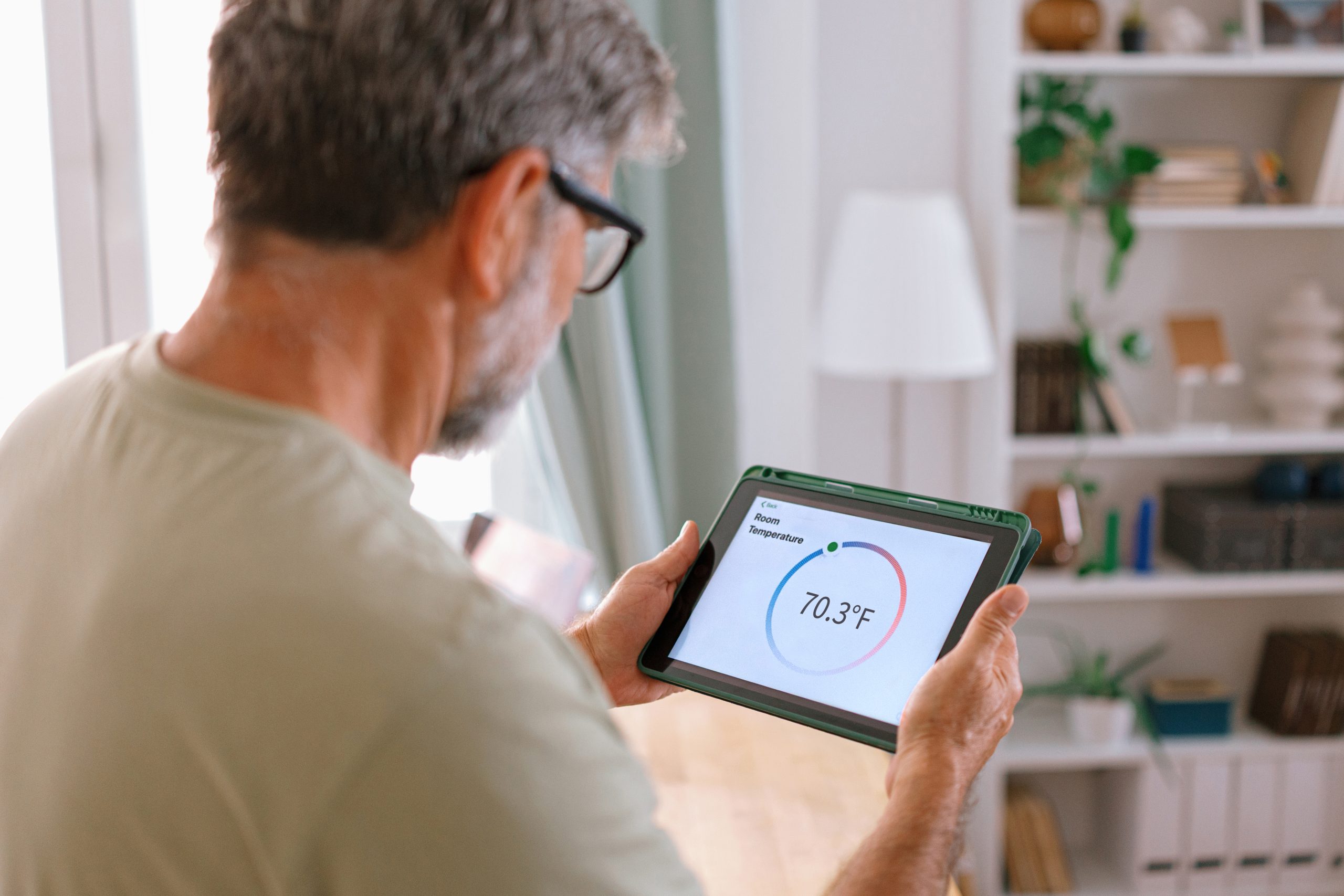
    Still, Oliver said, the most immediate month-to-month tool for lowering energy bills is reducing energy use by adjusting thermostats, weatherizing homes through utility-sponsored programs like the Low Income Usage Reduction Program (LIURP), and participating in energy efficiency programs that can help customers use less energy without sacrificing comfort. “The biggest saving comes from a kilowatt you don’t use,” said Oliver.

    Smart thermostats and other energy-efficiency tools can help customers monitor usage and lower monthly bills without sacrificing comfort.Getty Images

    Protecting customers from future costs

    While immediate resources can help customers manage their bills today, PECO’s affordability strategy also depends on protecting customers from costs that could emerge in the future, especially as new large-scale users connect to the grid.

    One likely pressure point is the rise of data centers. According to Oliver, there are more than a dozen data centers in development that, once built, could require nearly as much power as PECO’s entire current customer base. Some estimates forecast that peak energy demand will increase by more than 30 gigawatts by 2030, primarily driven by data centers.

    As part of the Exelon Promise, PECO is engaging large users, including data center developers, in contracts designed to ensure they pay their fair share. These agreements stipulate, among other conditions, that customers will not be responsible for grid upgrade costs if a proposed data center is never built. Instead, data centers and other large energy users would be expected to cover the costs created by their own demand. “We don’t want to make investments and then the data center doesn’t come to fruition,” Oliver said.

    Pennsylvania’s energy future

    The efforts above are designed to address affordability on short- and medium-term timelines — from the next monthly bill to the next few years of grid growth. But for Oliver and his team, keeping energy affordable over the long term will also require confronting the supply constraints driving up costs for customers. Because Pennsylvania utilities like PECO are currently restricted from building or owning their own power generation, they cannot directly add supply when demand rises. Instead, PECO must largely work through power generators, suppliers, and policymakers. That is why the company is also pushing for policy changes in Harrisburg that would protect consumers and give PECO more tools to respond when power supply falls short of demand.

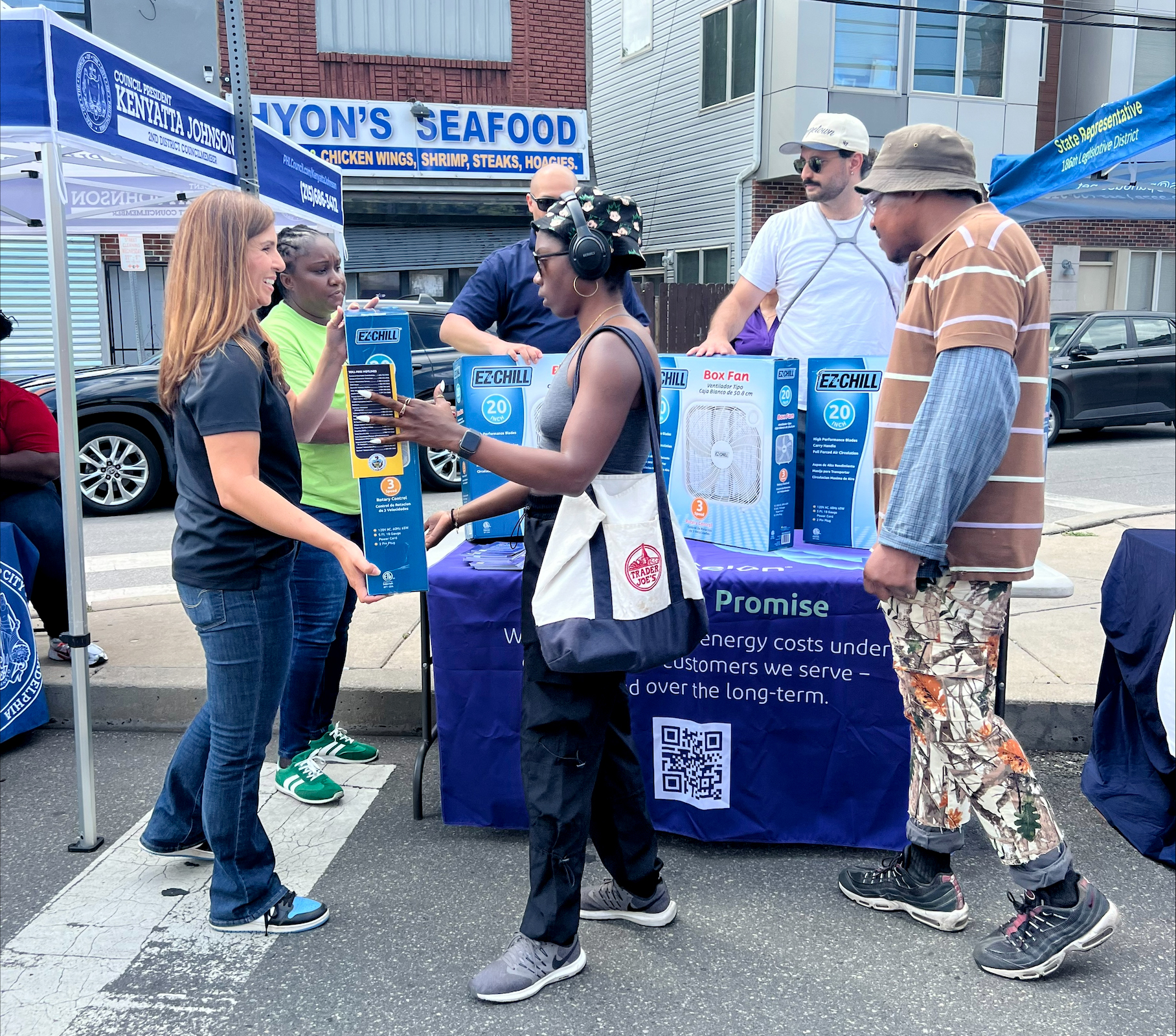
    PECO employees distribute free fans and share energy assistance resources during the company’s annual Summer Fan Distribution Program.Courtesy PECO

    One focus is Pennsylvania’s competitive retail power market. PECO is advocating for two recently introduced bills, HB 2131 and SB 312, that would reshape how customers are served by third-party electricity suppliers. The retail market was originally intended to lower electricity prices through competition by allowing customers to select their power supplier. In practice, however, some contracts begin at competitive introductory rates then become increasingly expensive after those rates expire. Some suppliers have also been found to use deceptive marketing practices and target vulnerable populations.

    According to PECO, residential customers on competitive supply paid about 65% more in 2025 than they would have under default service. The proposed bills would return customers to PECO’s default service once their contracts with third-party suppliers end, unless a customer opts back in. The goal, Oliver said, is to prevent customers from being rolled into higher post-contract rates without fully understanding the change. “When we buy it, we buy it at the [lowest] cost, and we pass it through,” he said.

    PECO is also advocating for changes to the Electricity Generation Customer Choice and Competition Act, a 1996 law that bars Pennsylvania utilities from generating power themselves. Prior to the law, Pennsylvania’s utility companies both generated and distributed electricity through vertical integration, and Pennsylvania had some of the highest energy rates in the country. It was thought that prices would come down once private companies could build power plants based on demand in the retail power market. But nearly three decades later, rising demand and insufficient supply have exposed limits to that model.

    Two proposed bills, HB 1272 and SB 897, would roll back part of this restriction, allowing utilities like PECO to build or contract for energy generation if competitive markets fail to deliver enough power to the grid. “The biggest driver of bill increases in the last year and a half has been supply inadequacy,” Oliver said. “Utility-owned generation isn’t the only solution, but someone has to put a shovel in the ground to save our customers money.”

    For PECO, these policy efforts are part of the same affordability strategy as bill assistance, customer outreach, and cost protections for large energy users. The goal is not only to help customers weather the current moment, but to change the conditions that are making energy more expensive in the first place.

    Using every tool in the box

    Even as supply costs have driven up utility bills, Oliver said PECO has worked to keep its operating costs at or below inflation. According to Exelon, that operational discipline has saved customers $580 million system-wide over the past decade.

    For PECO, operational efficiency is another part of the affordability strategy set by the Exelon Promise. Immediate assistance helps more families keep their homes warm in winter and cool in summer. Agreements with new large-scale energy users can help protect customers from bearing the infrastructure costs associated with serving data center developers. And long-term policy changes could help secure the region’s energy future. “We have to be visible in all three swim lanes,” said Oliver, referring to PECO’s three-part approach. “That’s our commitment to all of our customers in the Exelon footprint and to all 2.1 million customers that we have here in southeastern Pennsylvania.”

  • How Jefferson is Deepening its Community Ties to Improve Health Outcomes

    How Jefferson is Deepening its Community Ties to Improve Health Outcomes

    From the Poconos to Cherry Hill, Jefferson has become a familiar presence. As the largest academic health system in the Greater Philadelphia region, the nonprofit institution sees millions of patients each year across its 33 hospitals and more than 700 care sites spanning Pennsylvania and New Jersey. That reach, said Keith Leaphart, the executive vice president and Humana chief health equity and community impact officer at Jefferson, gives the organization a particular responsibility to its communities.

    “We are the primary safety net system here,” Leaphart, who also serves as vice chair of The Inquirer’s board of directors, said. “We’re serving a lot of people who are uninsured and underinsured, and we’re not turning them away.”

    Jefferson’s 2025 Community Impact Report, “Driven to Improve Lives,” explains how the anchor institution is using its unique model as an integrated health system that includes a university and a not-for-profit health plan to address the region’s needs. The report highlights more than $2.7 billion in community funding, including investments in access to care, health professionals’ education, and community-based services. It also offers a road map for Jefferson’s community partnerships and initiatives: building trust through neighborhood partnerships, expanding access to nutritious food, creating pathways into healthcare careers, and preparing the next generation of providers to meet people where they are. “At Jefferson, we believe our responsibility goes far beyond the walls of our hospitals,” Jefferson CEO Dr. Joseph Cacchione said.


    Building Bridges to Bring Healthcare to All

    Jefferson’s 2025 Community Impact Report that approach through investments in initiatives like the Community Health Worker Academy, a paid job-training program for new healthcare professionals who help their neighbors navigate health and social services.

    The program is an example of how Jefferson has been intentional about mobilizing health workers who come from the same communities that they serve and are often able to speak with patients in their preferred languages. Empowering community members to provide care creates a powerful access point for residents who may not otherwise connect with care systems. Community health workers also help build trust between their neighbors and health institutions.

    Similarly, Jefferson’s Inspire Network, which launched last November, partners with faith-based organizations across the region to empower faith leaders to help their congregants better understand the healthcare system. “When someone gets sick or they need care, they’re often going to a community of faith and asking for prayers and support and comfort and meal trains,” Leaphart, the Jefferson leader, said. By teaming up with faith leaders, Jefferson can help them meet their congregations’ needs directly. The health system also invites faith leaders to its quarterly Partners in Purpose events to foster relationships and collaborate on their work together. To date, Jefferson has partnered with more than 150 faith-based organizations to offer health services like screenings. The organization also hosts family-friendly events like Night at the Zoo, an annual visit to the Philadelphia Zoo that provides residents with access to affordable health options. Last year’s occasion drew 4,000 residents.

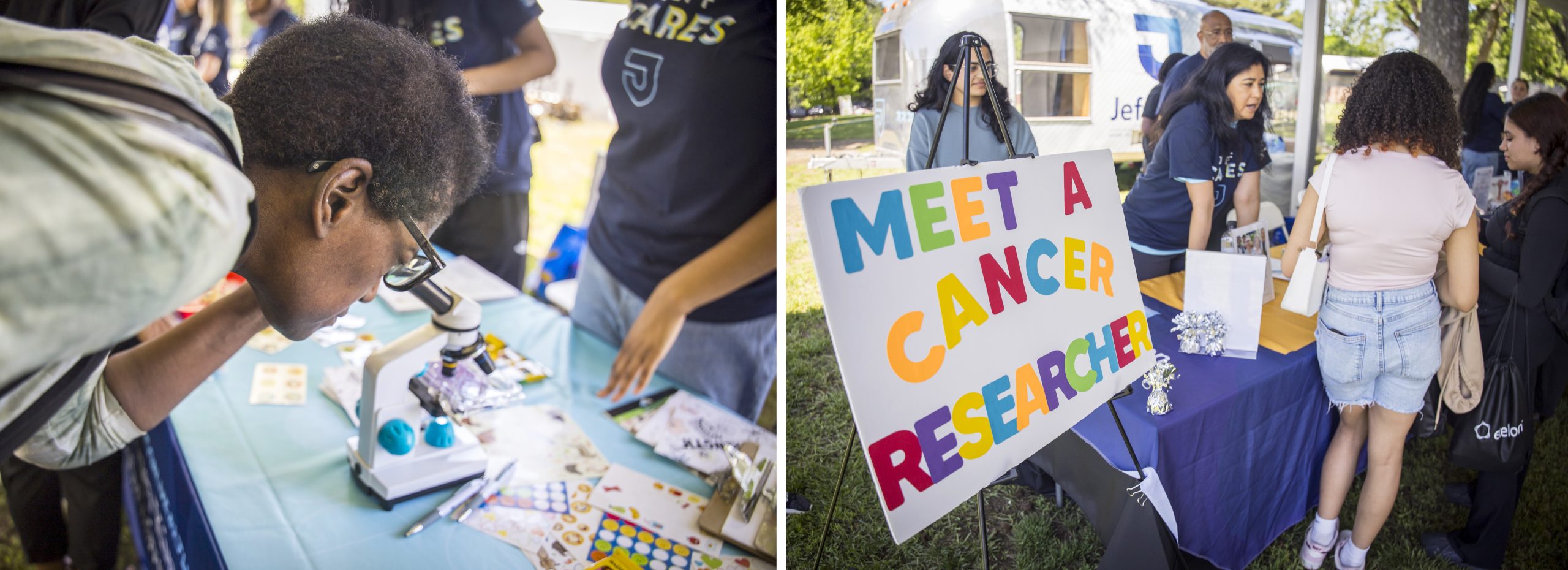
    To build on the success of partnerships like these and create opportunities for future collaborations, Jefferson recently launched a community engagement request form through which workers with community-based organizations can request a JeffCARES team visit to their place of worship or social event to provide free screenings and other health services.

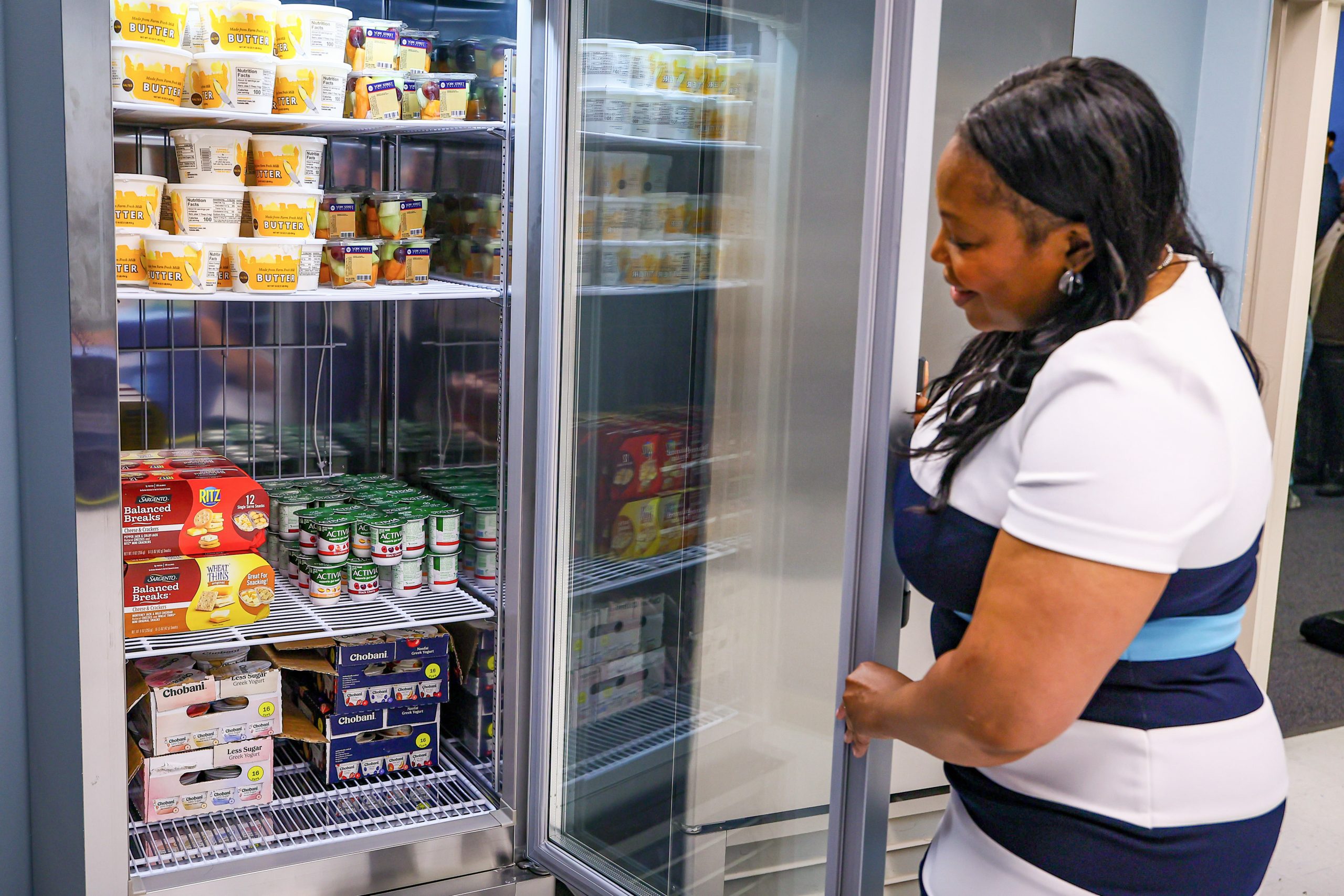
    Cortney Reed, Jefferson Health’s director of Community Engagement, at the JeffCARES Community Food Pantry, which offers fresh food and recipes to support healthy eating, at Jefferson Einstein Philadelphia Hospital.Courtesy Jefferson Health

    A Recipe for Expanding Food Access

    Jefferson’s community-impact report also shines a light on the work the organization is doing to increase access to healthy meals in the Philadelphia region, where more than 600,000 people experience food insecurity. The health system partners with food banks like Philabundance and Second Harvest Food Bank of the Lehigh Valley and Northeast Pennsylvania and runs a number of community pantries, volunteer programs, and initiatives, including custom meal plans that support cancer patients undergoing treatment in Willow Grove.

    One highlight from the report is the JeffCARES Community Food Pantry, the first Philabundance food pantry located within a hospital. It opened in April 2025 at Jefferson Einstein Philadelphia Hospital in North Philadelphia. “Philabundance has been a valued partner of ours for many years, but establishing a hospital-based site was something our community truly needed,” Dixie James, the president of Jefferson Health’s Central Region and the chair of the Philabundance Board of Directors, said.

    In addition to fresh dairy products, meat, and shelf-stable items, the pantry provides recipes for nutritious meals tailored to support a variety of health conditions, including diabetes. The pantry is open to patients, community members, and Jefferson colleagues.

    “Access to safe, healthy, nutritious foods, [and] fresh produce is something that we know is directly connected to overall better health. If you’re able to eat healthy, you’re going to have better health in general. We want to be at the center of that,” Leaphart said. “That doesn’t happen without partnerships.” Jefferson serves around 150 meals per week to families and has distributed about 6,700 bags of food so far this year.

    Jefferson’s $2.7 billion investment in community impact expands access to care and inspires future healthcare professionals through education and a school speaker series.Courtesy Jefferson Health

    Careers That Grow With Community Partnerships

    Another important part of Jefferson’s community-impact work, as detailed by the report, is career development. “One of the things that we’ve been really intentional about is building out pathway programs and pipeline programs for young people to be exposed really, really early to careers in medicine,” Leaphart said. The organization, which is the region’s largest employer with 65,000 employees, is getting kids interested in the healthcare industry by inviting staffers to visit classrooms to talk about their careers as Jefferson School Speakers.

    Jefferson has more than 20 programs across the enterprise engaging students from elementary to high school in career exploration, as well as pipeline initiatives with reputable workforce development organizations. Jefferson also runs dedicated programs for high school and college students through partnerships with educational institutions. “One that we’re really excited about is the Jefferson Workforce Development Program, a partnership between the School District of Philadelphia, North Philadelphia’s Esperanza College, and Jefferson Health,” Leaphart said. The program offers free training to high school students interested in careers as patient care technicians or medical assistants.

    Students who successfully complete the training are qualified to enter the healthcare industry as entry-level workers. Since launching the program last April, Jefferson has hired 27 students who earned their certification in the course.

    Community partnerships are also emphasized within Jefferson’s own academic institution. Students at Thomas Jefferson University, for instance, are encouraged to actively volunteer in the community. “Volunteering is core to everything that we do,” Susan Aldridge, Ph.D., the president of Thomas Jefferson University, said. “When you start here at Jefferson as an undergraduate student, within your first week, you’re volunteering in the local community, which is really unique and reflects the culture of our institution.”

    Many medical students with Sidney Kimmel Medical College volunteer with the student-run program JeffHOPE, through which they work alongside physicians to provide health screenings to vulnerable populations through a network of free drop-in clinics at homeless shelters — yet another example of how Jefferson is committed to expanding access to care. To date this year, Jefferson has hired 1,308 Thomas Jefferson University graduates.

    Community-First Leadership

    For Jefferson, improving access to health and education extends beyond hospital campuses and care sites into schools, shelters, food pantries, houses of worship, and community events — places where people feel comfortable and are already seeking support.

    “As a leading academic health system, we have both the reach and the obligation to improve health across entire communities — by expanding access, investing in people, and partnering in ways that create lasting impact,” Cacchione said. As the report makes clear, Jefferson’s mission to improve lives depends on building the partnerships, pathways, and trust that help communities thrive.


    Chloé Pantazi-Wolber is a writer and editor. Her work has appeared in Business Insider, Philadelphia magazine, The Rooted Journal, Travel Bulletin, The Paris Review, and more.

  • At Jefferson Health, a High-Tech, High-Touch Vision of Care

    At Jefferson Health, a High-Tech, High-Touch Vision of Care

    For Dr. Baligh Yehia, transforming health care starts with a simple idea: access should feel effortless. As president of Jefferson Health, one of the nation’s largest academic health systems, Yehia is rethinking what access means and focusing on helping patients move through every step of their care journey seamlessly.

    Jefferson Health is building a model that goes beyond traditional sites of care to meet people where they are — whether that’s through virtual visits, community-based programs, or care delivered directly in the home. The goal isn’t just about convenience; it’s also about confidence: reducing uncertainty, easing anxiety, and making care feel more human. Patients can now connect with oncology teams within 48 hours of a concerning diagnosis. Virtual care accounts for a significant share of visits, expanding Jefferson’s reach well beyond its campuses. And, programs like Telestroke and Teleneurology are bringing specialized care into underserved communities in real time.

    For Yehia, leadership in health care today demands a redesign of the experience. “Every person is different. Every community is different,” he said. “If we’re serious about access, we have to design care around that reality.” At Jefferson, that philosophy shows up in a powerful commitment: put people first, and build everything else around them.

    How do you define true access to health care?

    Access to health care today is about far more than getting an appointment. It’s about how easily people can find care, understand it, and move through it. That includes virtual visits, in-person care, home-based services, follow-up support, and connections to medications and specialists.

    True access is coordinated. It’s personalized. And it meets people where they are: in their lives, not just in our system.

    Jefferson is creating as many “front doors” as possible for patients. What does that look like in practice?

    At Jefferson, we think every interaction is a front door to better health, whether it’s an ER visit, urgent care, primary care, a community health screening, mobile unit, or one of our education programs. The goal is simple: make it as easy as possible for people to get the care they need, when and how they want it.

    We’ve invested heavily in virtual care, because it expands access in meaningful ways. For example, our virtual primary care program has expanded rapidly and now represents about 10% of appointments. It enables patients to connect quickly while still maintaining the trusted relationship with their care team. And when you pair that with programs like Teleneurology and Telestroke, which deliver neurological evaluations via secure video technology, you can deliver world-class specialty care to communities that otherwise wouldn’t have access. We’re able to support local communities with expert care through a combination of in-person and virtual care. That’s powerful.


    The Same Day/Next Day Cancer Care program allows patients to see an oncology clinician at Sidney Kimmel Comprehensive Cancer Center via telehealth in 48 hours or less. Why does being able to make an appointment quickly matter?

    Because it removes one of the hardest parts of care: uncertainty. When someone hears the word “cancer,” time slows down, and all too often, patients need quick interventions. This program addresses that. Within 48 hours, patients are connected to an oncology team and a path forward.

    It’s about acting quickly but also about giving people reassurance, clarity, and a sense of control at a moment when they need it most. It’s about access to peace of mind.

    How do you compete with new companies offering medications online?

    It’s true: there are more options than ever for accessing medications online, but not all are rooted in coordinated, comprehensive care. At Jefferson Health, we believe access must be paired with expertise, safety, and a relationship you can trust.

    Patients aren’t just accessing a service; they’re entering a system designed around their needs. That’s what we can offer, and it’s fundamental to who we are.

    What are some of the most effective ways Jefferson is serving diverse communities throughout Philadelphia?

    This is fundamental to how we think about access. It starts with communication, ensuring every patient can engage with their care in a way that feels clear, comfortable, and personal. We’ve expanded translation services to support more than 200 languages, allowing patients and caregivers to connect more easily with their care teams. But access goes beyond language. It’s also about understanding people in the context of their lives, their families, their cultures, and what matters most to them. That’s what it means to truly live out our first value to “put people first.”

    We’ve also made significant investments in the communities we serve, including $2.7 billion in community benefits. That includes expanding health literacy, supporting community health workers, and partnerships in the neighborhoods we serve. Our community health workers are trusted voices who help connect people to screenings, healthy food, and preventive care, and help them navigate a system that can often feel complex.

    Ultimately, this is about building trust and improving outcomes at the community level. When we understand what matters most to someone — whether it’s staying healthy to dance at a child’s wedding or simply maintaining independence — we can better support them in achieving their goals.

    Jefferson recently launched a systemwide artificial intelligence strategy aimed at reclaiming more than 10 million hours of clinician time by 2028. How is Jefferson using AI without losing the human touch?

    AI should give clinicians something back: time. Today, too much of their day is spent on administrative work: filling out forms, documenting in the electronic health record, and communicating with insurance companies. If we can use AI to reduce that burden, we enable them to be more present with patients and with each other.

    Joe Cacchione, Jefferson CEO, and I talk a lot about the importance of being high-tech and high-touch. Technology should enhance the connection, not replace it.

    What’s one thing you wish people knew about Jefferson Health that they may not know?

    Jefferson Health combines deeply compassionate, personalized care close to home with some of the most advanced therapies and innovations in medicine today. While many people know us for our community connection, they may not realize just how cutting-edge our care truly is.

    For example, our Neurorestoration program is leading the way in innovative treatments like vagus nerve stimulation (VNS) therapy, offering new hope to patients with complex neurological conditions. We are also pioneering breakthroughs in transplant care, including performing North America’s first living-donor RAPID liver transplant — a novel, staged approach that expands access to lifesaving transplantation for patients who previously had limited options.

    As an academic health system, we provide patients access to hundreds of clinical trials, giving them early access to therapies that are shaping the future of medicine and improving outcomes every day.

    Whether it’s heart and vascular care, neurology, oncology, women’s health, rehabilitation, transplant, or beyond, our teams bring together expertise, innovation, and humanity to deliver exceptional care at every stage of life.

    How do you lead in an era of rapid change?

    Leadership today is less about having all the answers and more about setting direction.

    I often think of it as being a compass rather than a map. A map tells you exactly where you’re going and how to get there through predictable steps. However, all too often, the path isn’t clear. You have to be the compass that moves your team in the right direction, while staying grounded in your values: put people first, do the right thing, and pursue excellence. You can guide teams through uncertainty with clarity and confidence.

    When you think about the culture you’re building at Jefferson Health, what do you prioritize?

    At Jefferson, our most important asset is our people, period. Not our buildings or our technology, but the individuals who care deeply about their work and about each other. That shared commitment shows up in how we serve our patients every day, and it drives our focus on putting people first. That mindset extends to how we lead. It’s about doing the right thing consistently, whether that’s a small, everyday action or supporting someone at an important moment in their career.


    PHILLY QUICK ROUND

    I feel most like a Philadelphian when… I am walking or running along the Schuylkill and past the Art Museum. You move through so many of the city’s most iconic symbols — the river, Boathouse Row, the Rocky statue — and you can feel the energy and history of Philadelphia all at once.

    On a day off, you’ll find me… spending time outside gardening, grabbing a coffee, or walking our standard poodle, Buzz.

    What I love most about Philly is… its grit. It can be mistaken for toughness, but to me, it’s really a deep sense of pride and commitment Philadelphians have to the city and to each other.

    What does being a changemaker in Philadelphia mean? It means making a tangible difference: strengthening communities, expanding opportunity, and finding ways to give back. At its core, it’s about improving lives and helping move the city forward.


    Lucy Danziger is a journalist, an author, and the former editor-in-chief of Self Magazine, Women’s Sports & Fitness, and The Beet.

  • Penn launches $18 million facility to advance RNA technology’s role in health, agriculture

    Penn launches $18 million facility to advance RNA technology’s role in health, agriculture

    Inside Philadelphia’s new RNA manufacturing hub, scientists are working to create vaccines for fish, precision pesticides, and treatments to protect plants from extreme heat.

    The recently launched biofoundry at the University of Pennsylvania aims to expand biotechnological capabilities in the United States, funded by an $18 million federal grant. The National Science Foundation has invested in five such facilities nationally, each focused on a specific biological material.

    The term foundry traditionally refers to a factory where metal is melted and shaped into desired forms. Expanding the concept, Penn’s NSF AIRFoundry now offers a one-stop facility for designing and building RNA technology.

    All products under development involve ribonucleic acid, or RNA, a key molecule in living cells. Some consider it the cousin of the better-known molecule, DNA. Both can carry the genetic instructions for life.

    The facility opened in March at One uCity Square in University City. It builds upon Penn’s success with the 2023 Nobel Prize-winning development of an mRNA platform that led to the first COVID-19 vaccine.

    “We need to democratize this technology,” said Daeyeon Lee, a Penn professor of chemical and biomolecular engineering who serves as the foundry’s director.

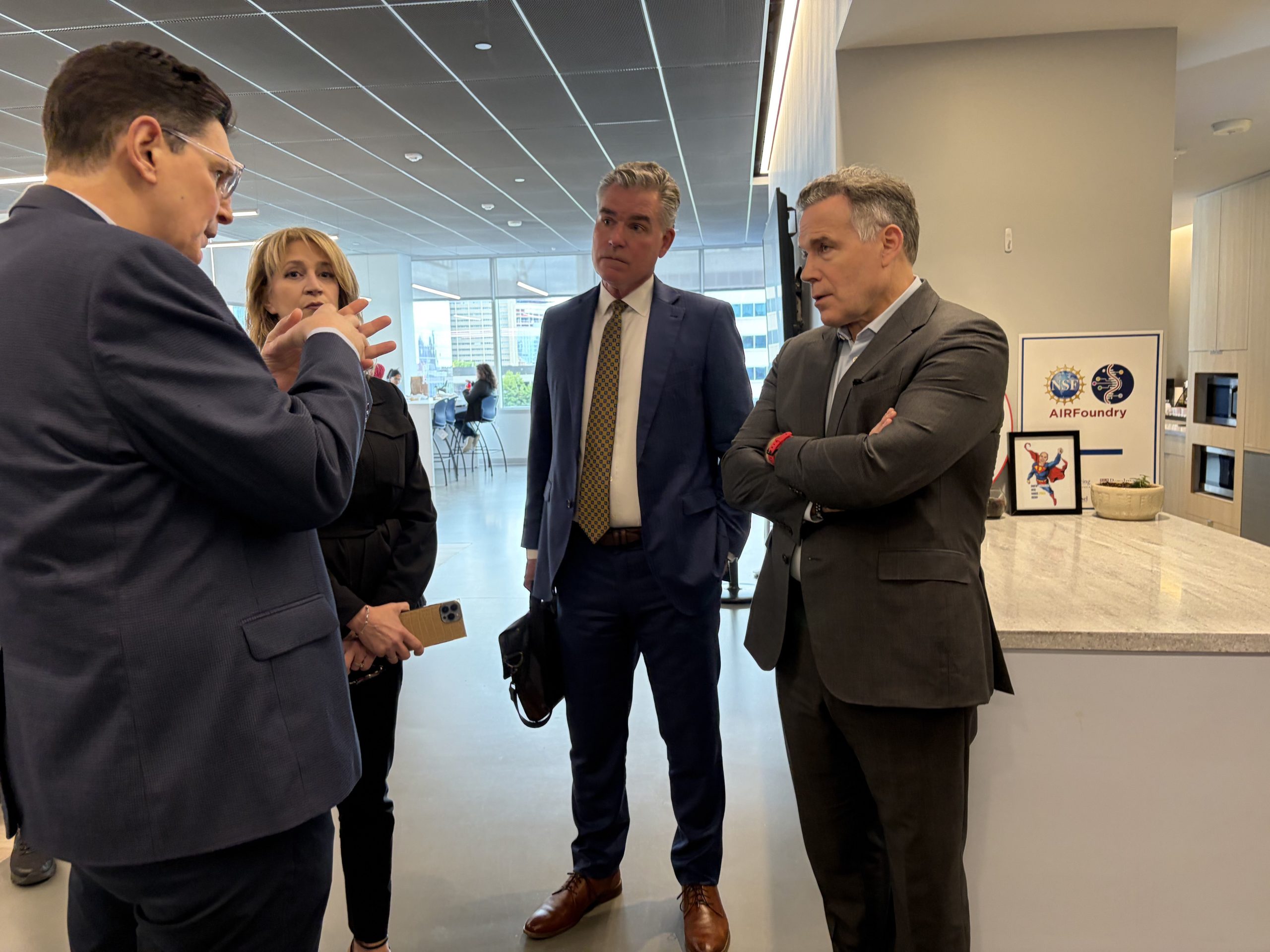
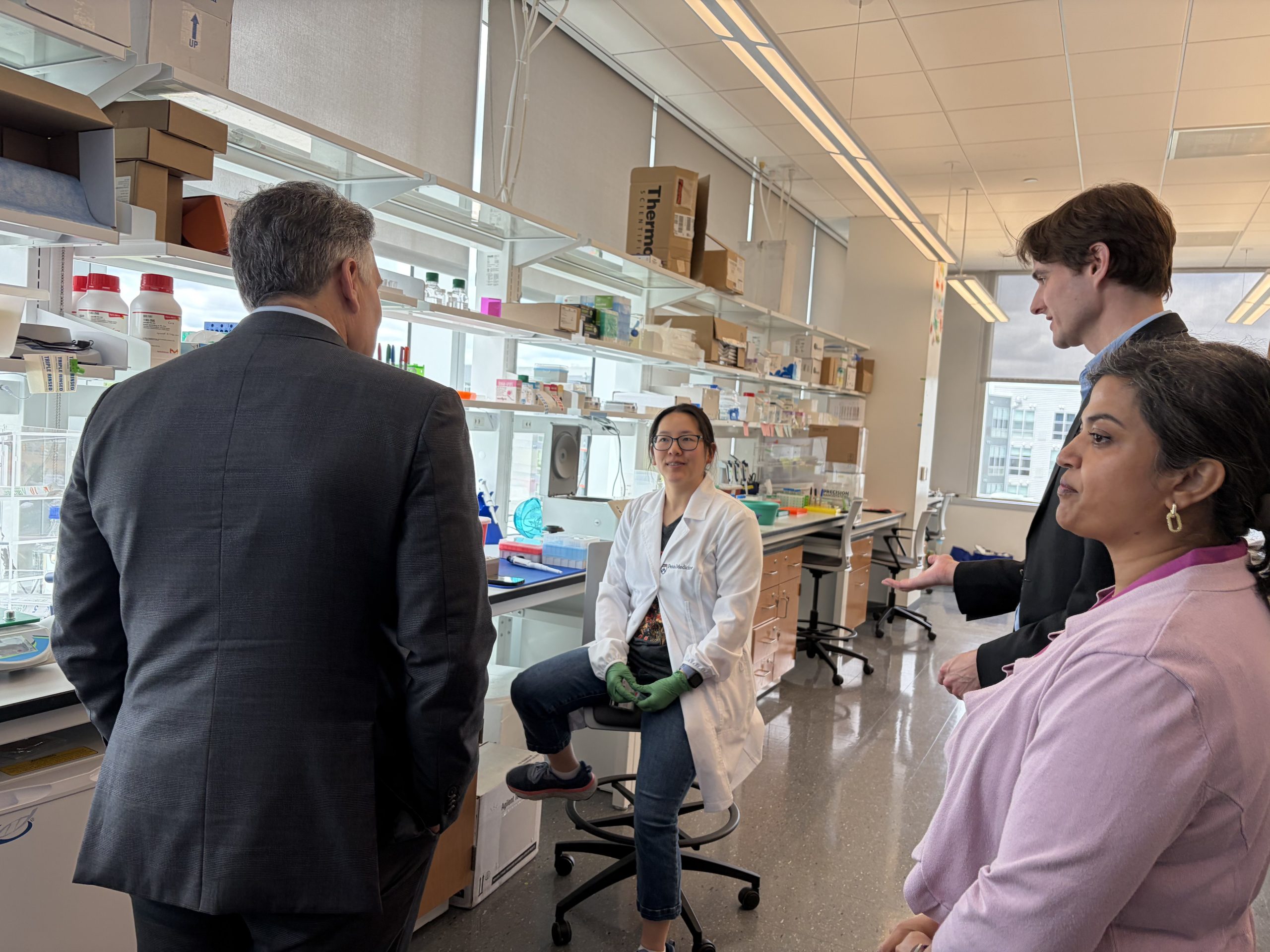
    Penn Engineering professor George Pappas speaks with Sen. Dave McCormick about the AIRFoundry.Kayla Yup / Staff

    AIRFoundry stands for Artificial Intelligence-driven RNA BioFoundry. Scientists hope AI will help them automate aspects of the design and manufacturing process, serving as a resource for researchers and commercial companies across the world.

    Penn’s mRNA work has continued to advance, even as Health and Human Services Secretary Robert F. Kennedy Jr. last year slashed $500 million designated for mRNA vaccine development.

    A longtime anti-vaccine activist, Kennedy has claimed the technology is unsafe and ineffective, despite scientific evidence finding the vaccines to be highly safe and beneficial.

    Now the foundry seeks to expand RNA’s applications in healthcare, agriculture and beyond.

    Lee compared the technology to a hammer — good for certain things, but not everything.

    “Our students and postdocs that get trained right now are going to be sort of the first generation of people to think about RNA as a tool for whatever problem they’re trying to solve,” Lee said.

    An AIRFoundry scientist describes her work in the facility.Kayla Yup / Staff

    A foundry for RNA

    In the mRNA COVID-19 vaccines, injected mRNA provides the instructions for cells to build a harmless fragment of the viral protein. That trains the body to recognize and fight a future infection.

    Compared to traditional vaccines that use live or inactivated pathogens, mRNA vaccines can be produced more rapidly — useful in a pandemic.

    One of the Nobel laureates behind that effort, Penn scientist Drew Weissman, has operated a smaller scale version of the facility, mainly to make mRNA for his lab and collaborators. The foundry’s launch marked an expansion beyond Penn.

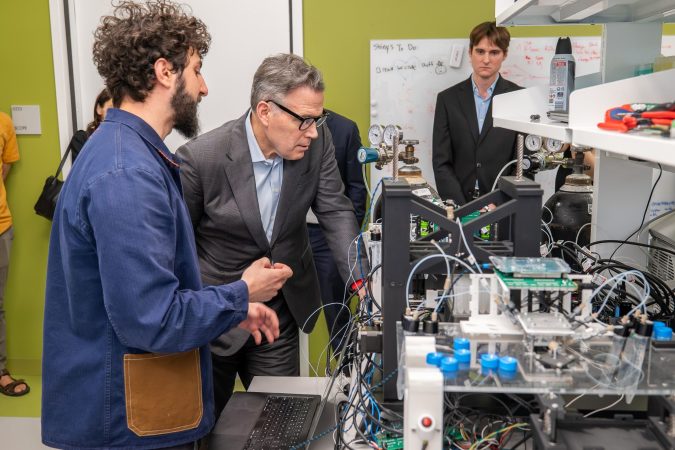
    Its sterile instruments and busy lab benches were on display last month as students and faculty walked through the manufacturing process.

    “It takes special facilities and skills to make RNA and associated materials,” Lee said.

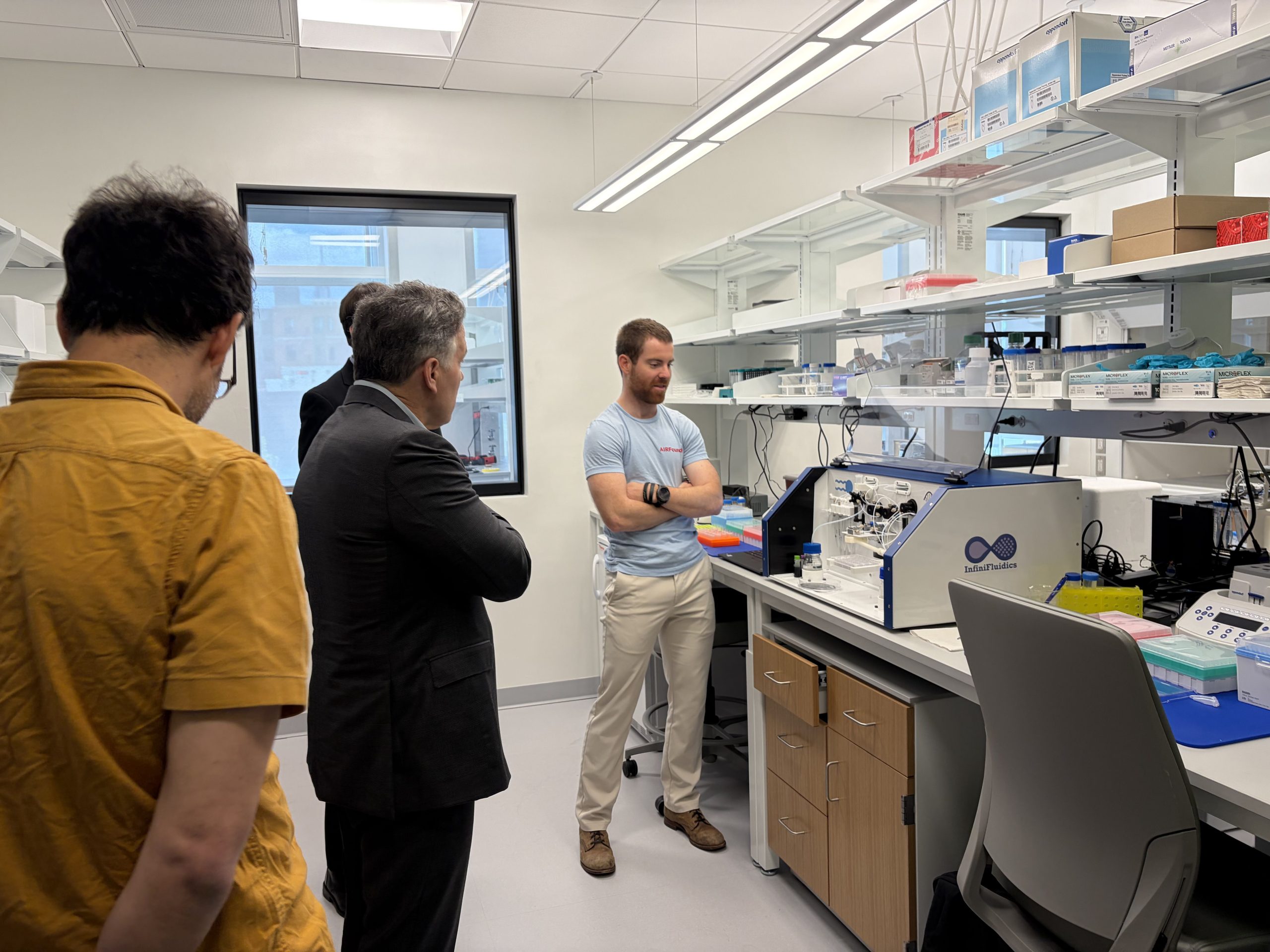
    Owen Land, an engineer at Infinifluidics (a Penn spinout), spoke about a device used to automate part of the process of creating liquid nanoparticles (a delivery vehicle for RNA).Kayla Yup / Staff

    So far, Penn’s facility has operated on a “fee-for-service” basis, where collaborators request a specific RNA technology and the foundry builds it.

    But its scientists hope to incorporate AI to help with synthesizing all the current knowledge, best practices and databases.

    They also want to reach a point where users can come to the physical facility and use the instruments themselves.

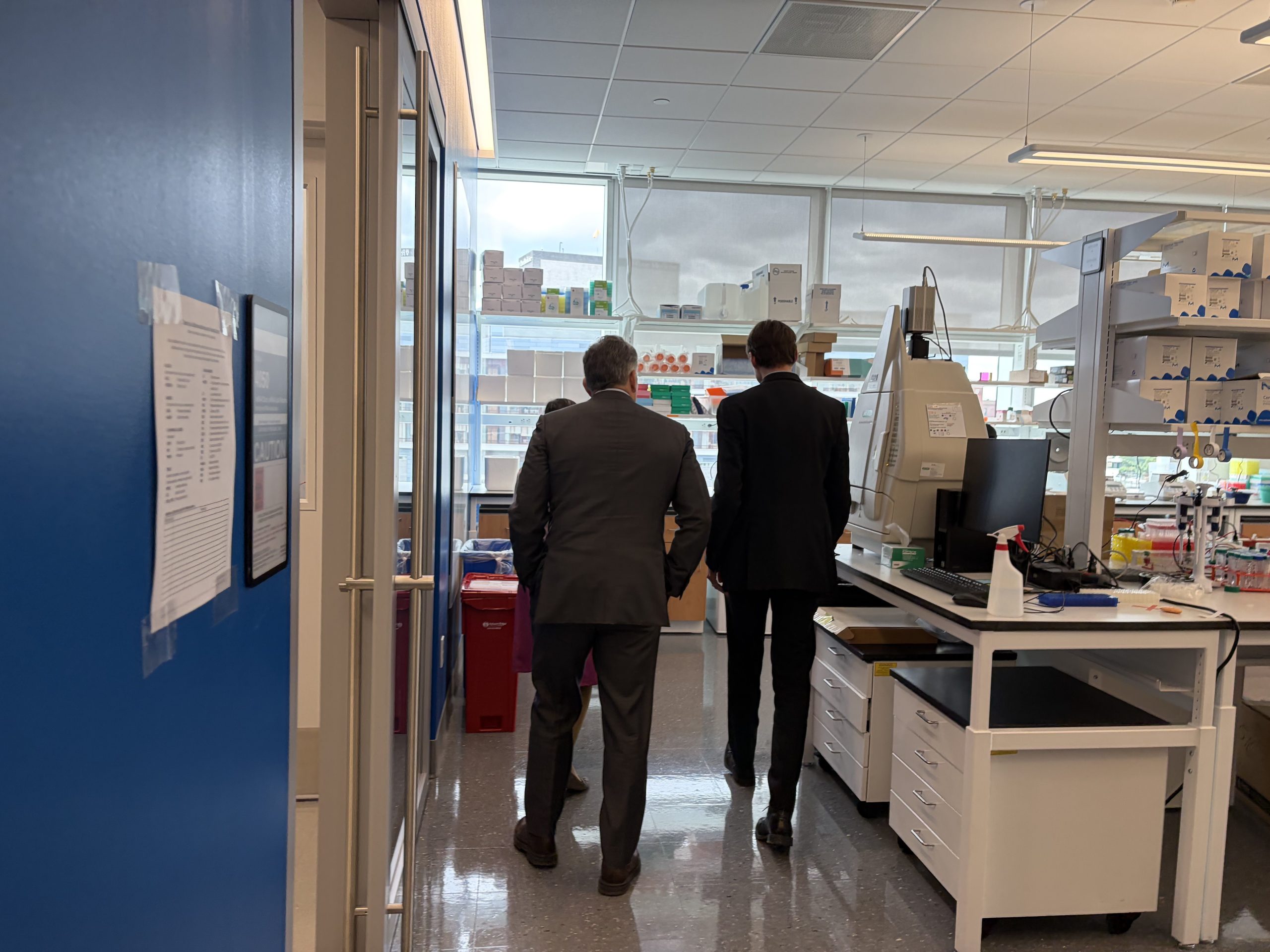
    Sen. McCormick toured the AIRFoundry in May.Kayla Yup / Staff

    The federal grant, which started in September 2024, supports the foundry for six years. Lee hopes it will eventually become self-sustaining through the services they provide.

    Projects underway include working on vaccines to keep fish healthy.

    Another collaborator is developing ways to deliver RNA into plants to benefit the agriculture industry. For example, designing RNA molecules that carry instructions for producing a heat shock protein could protect plants from high temperatures. The plant would produce the protein and theoretically have greater resilience against extreme heat.

    The molecule degrades over time, making its effects temporary. So if used during the summer months, the RNA could be gone by the time harvest rolls around.

    This transient quality could also make RNA useful for pest control, in lieu of chemical-based pesticides, Lee said.

    “We want to interact with everyone that’s interested in using RNA technology,” he said.