Tag: Philly First

  • Why Claire Borelli Embraces Change

    Why Claire Borelli Embraces Change

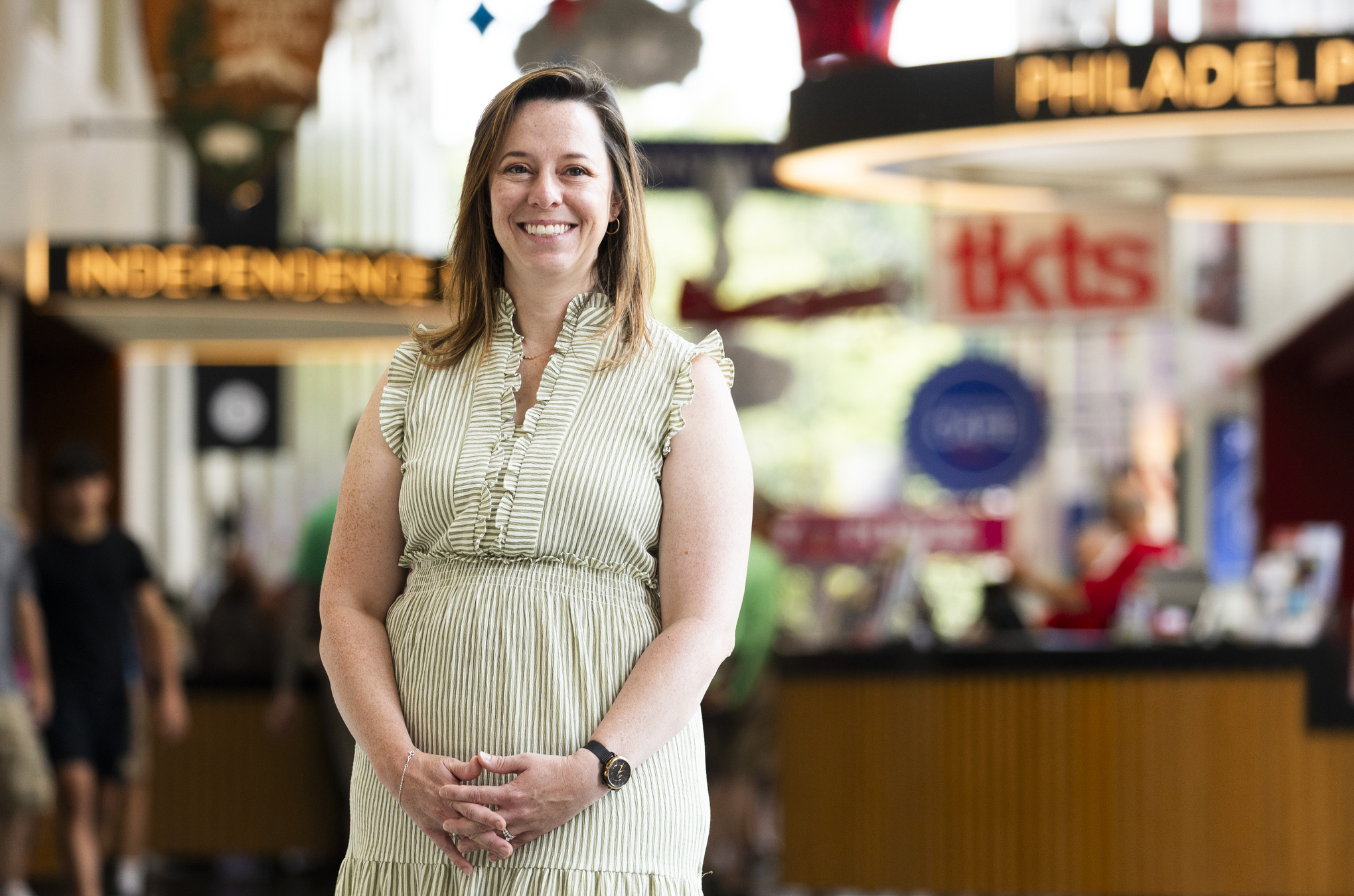
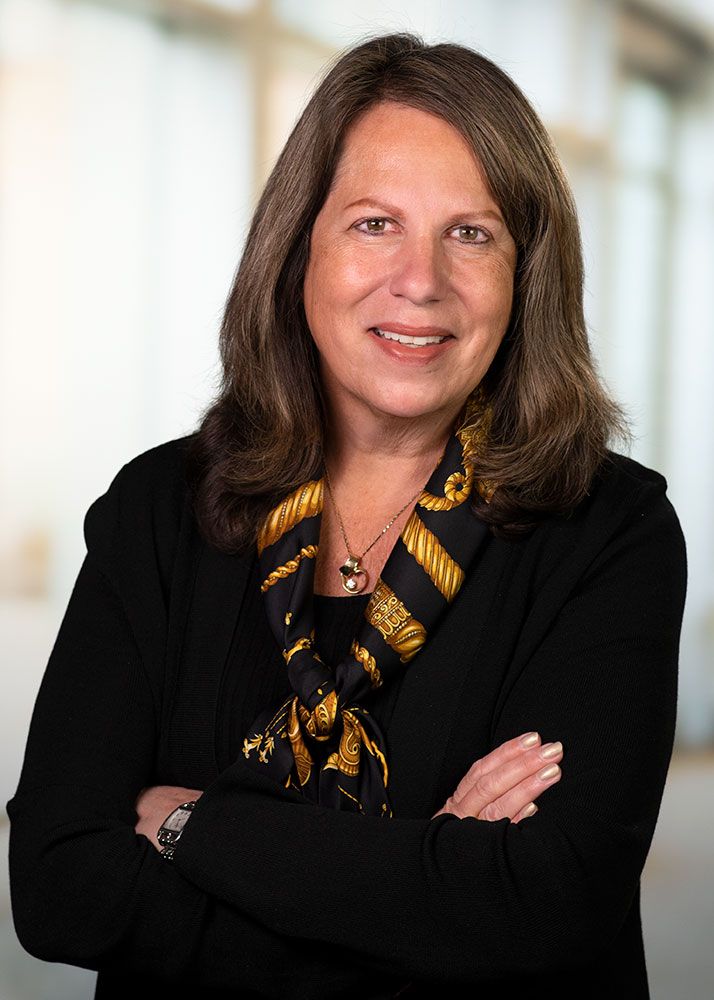
    For Claire Borelli, the future of work isn’t a choice between technology and humanity, but an effort to bring the two together. A native Philadelphian and an enormous Eagles fan, Borelli is the senior executive vice president and chief people officer at the retirement services provider TIAA. She is helping lead the organization’s 13,000 employees through one of the most consequential shifts facing today’s workforce: the rise of artificial intelligence. Drawing on three decades of experience in HR, Borelli is a champion of an employee-first approach to AI adoption. She believes technology should be used to augment human capabilities and that change is an opportunity for growth. Her philosophy is simple: Welcome change while valuing the humanity at the heart of the workplace.

    What does it mean to be a changemaker?

    The first thing it means, and this is much easier said than done, is being okay with change. I’ve always been energized by change because it creates opportunities to make things better. I’ve been fortunate to have a platform to help drive that change and, more importantly, help others see the possibilities that come with it.

    You are the driving force behind TIAA’s ELEVATE program, an internal workforce development initiative that gives employees dedicated space to build new skills, connect with peers and leaders, and actively manage their professional paths within the company. Did something in your own career inspire this mission?

    My career changed because I said yes to something I wasn’t ready for. I didn’t set out to work in HR, but at Merrill Lynch, I was asked to help build an employee service center and rethink how HR operated. I had no HR background. I was way over my skis, and it scared me.

    But I learned to take risks, trust the process, and give an opportunity a chance, even when it isn’t what [I] imagined for [myself]. That stretch assignment gave me new skills, relationships, and exposure, and ultimately launched my HR career. That’s what I love about ELEVATE: creating those unexpected opportunities for others, especially in the age of AI, when roles may shift and employees can take advantage of expanding their skill sets to prepare for an AI-powered future.


    Was there a moment that shifted your thinking about AI?

    My oldest son changed how I think about AI. Two years ago, when my CEO asked me to help lead our AI transformation, I was intimidated. My son said, “Mom, imagine having someone in your office 24/7 who knows more than you do and can help with anything: recruiting, compensation, talent. And yes, they’re smarter than you.” That visual stuck. AI wasn’t going to replace me; it can make me better.

    That’s the message I share with our people. Some jobs will disappear, new ones will emerge, but many will simply get better. If AI gives someone 30% of their time back, that’s 30% they can devote to a new project, skill, or opportunity. The challenge now is reimagining how we put that capacity and our people to work.

    TIAA has emphasized an employee-first approach to AI adoption. How did the organization put that into practice?

    What built trust wasn’t just talking about an employee-first AI strategy. It was putting action behind it. We knew AI would change roles, and in many cases, expand them. We doubled down on internal hiring and strategically paused most external hiring. Rather than immediately going to market and backfilling, we asked our leaders to consider if AI could take on the work or if it made sense to expand the scope of an existing internal role.

    We told managers: before you look outside, look at our existing talent first. There were skeptics initially, but it worked. Year over year, we saw a 67% increase in internal hiring. That sent a powerful message to our associates: as AI changes work, we’re investing in you, not leaving you behind.

    Which leadership traits do you believe will matter most over the next decade as AI automates more routine work?

    AI is changing the landscape. When I was growing up, knowledge was power. If you knew your subject and were sharp, you were good to go. That won’t be enough in the future. As AI takes on more technical and routine work, traits like empathy, innovation, emotional intelligence, and strong communication skills will become even more valuable.

    Think about an architect designing something for Philadelphia. Technical knowledge will still matter, but AI can increasingly support that expertise. What becomes more important is understanding the context: What is Philadelphia’s history? What does its art and culture tell us? How do its neighborhoods and politics shape what people need? And how can you think differently to solve for those needs?

    That’s what we need to teach the next generation: not simply what to know, but how to think, connect, and understand people. You can’t always get those nuances from data. Sometimes you need to have coffee with someone, walk a neighborhood, or understand what motivates people. That humanity, and the relationships that come with connecting to others, will be essential to success in an AI-powered world.

    You report directly to CEO Thasunda Brown Duckett and serve on TIAA’s executive committee. What have you learned about leadership by working alongside her?

    Thasunda is a force, probably the most inspirational leader I’ve ever worked with. What sets her apart is that she truly leads with people and culture in mind. Technology and products can be replicated; people are the real differentiator, and she walks that talk.

    She’s also a rare combination of visionary and operator. She can set a bold vision and get into the details to make it happen. She’s taught me the importance of connecting with people personally, understanding what motivates them, finding purpose, and having fun at work.

    You’ve said trust accelerates decision-making and collaboration, especially during periods of rapid change. What are some practical ways leaders can build that trust?

    Trust starts with transparency, communication, and active listening. Leaders need to explain what they’re doing and why, but also create opportunities to hear what people are saying and then be clear about what they can and can’t change.

    At TIAA, we heard that employees at some of our smaller office locations weren’t feeling as connected as those in bigger hub offices. We introduced site leaders who could listen, communicate, and bring people together. Engagement scores rose significantly, by nine percentage points in Philadelphia. It reinforced for me that trust isn’t just about communicating early; it’s about listening intentionally and showing people that you’ve heard them.

    How do you strike a balance between empathy and accountability when making tough organization-wide decisions or delivering news that may affect employees’ lives?

    People may forget what you told them, but they remember how you told them. As a leader, especially in HR, you sometimes have to make difficult decisions that are right for the organization.

    The key is to be clear about the decision and the why, transparent and timely in communicating it, and empathetic in how you deliver it. The same applies to tough feedback: holding someone accountable and telling them what isn’t working early, honestly, and with care is ultimately an act of respect.

    If you could give one piece of advice to a young professional, what would it be?

    Take risks. Don’t assume your career has to follow a straight line. The sideways moves and unexpected opportunities often teach you the most and make you more versatile.

    I’m a Type-A person; I like a plan, so I had to learn this myself. Every career “swerve” adds something to your toolkit. And in an AI-driven world, that range of experiences, perspectives, and human judgment will only become more valuable.

    You raised five kids while building a C-suite career. What advice would you give to other parents on how to manage big jobs and big families? Any secrets to keeping everything and everyone on track?

    There’s no such thing as balance. At any given moment, work or family is going to get more of you, and you have to be okay with that.

    I’ve been fortunate to have a true partner in my husband, especially raising five kids (now ages 42 down to 29). But the biggest lesson is to be present where you are. If you skip the staff meeting for the soccer game, be at the soccer game. If you stay for the meeting, be at the meeting. Shut down the voice telling you that you should be somewhere else.

    Our CEO Thasunda says life is like a diversified portfolio: how you invest your time will shift. Stop trying to give everything 100% at once.


    PHILLY QUICK ROUND

    Favorite Philadelphia neighborhood? Rittenhouse is great to walk to and have dinner, but I just love the neighborhood where my two younger children live, which is Queen Village. I just love the historic feeling of it.

    Favorite place to celebrate an Eagles win? Lincoln Financial Field, unless it’s an away game, and then it’s in my home. I like all the cooking and all that family time.

    What do you cook for a game? Every Sunday game is a pot of gravy. We’re Italian!

    Favorite local restaurant or hidden gem? I love The Saloon. Their appetizers are fabulous. They have the long hots, poblanos, and fabulous steaks there. Just open the menu, and I’ve ordered them all.

    Which Philadelphian past or present do you most admire? Can I say Rocky? I’m kidding. I admired Kobe Bryant, for sure. I think about how driven and Type-A he was. And in his later life, he became more like a coach to his daughters and really inspiring.

    Personal motto or mantra? It’s “This too shall pass.” Because no matter how good life is, we always have moments that take us out. It’s important to remember that those moments pass.

    What are you most grateful for right now? I’m pretty happy about LeBron James coming to the Sixers!


    Lucy Danziger is a journalist, an author, and the former editor-in-chief of Self Magazine, Women’s Sports & Fitness, and The Beet.
  • Penn’s $520 million renovation of David Rittenhouse Lab is one of Philly’s largest construction projects

    Penn’s $520 million renovation of David Rittenhouse Lab is one of Philly’s largest construction projects

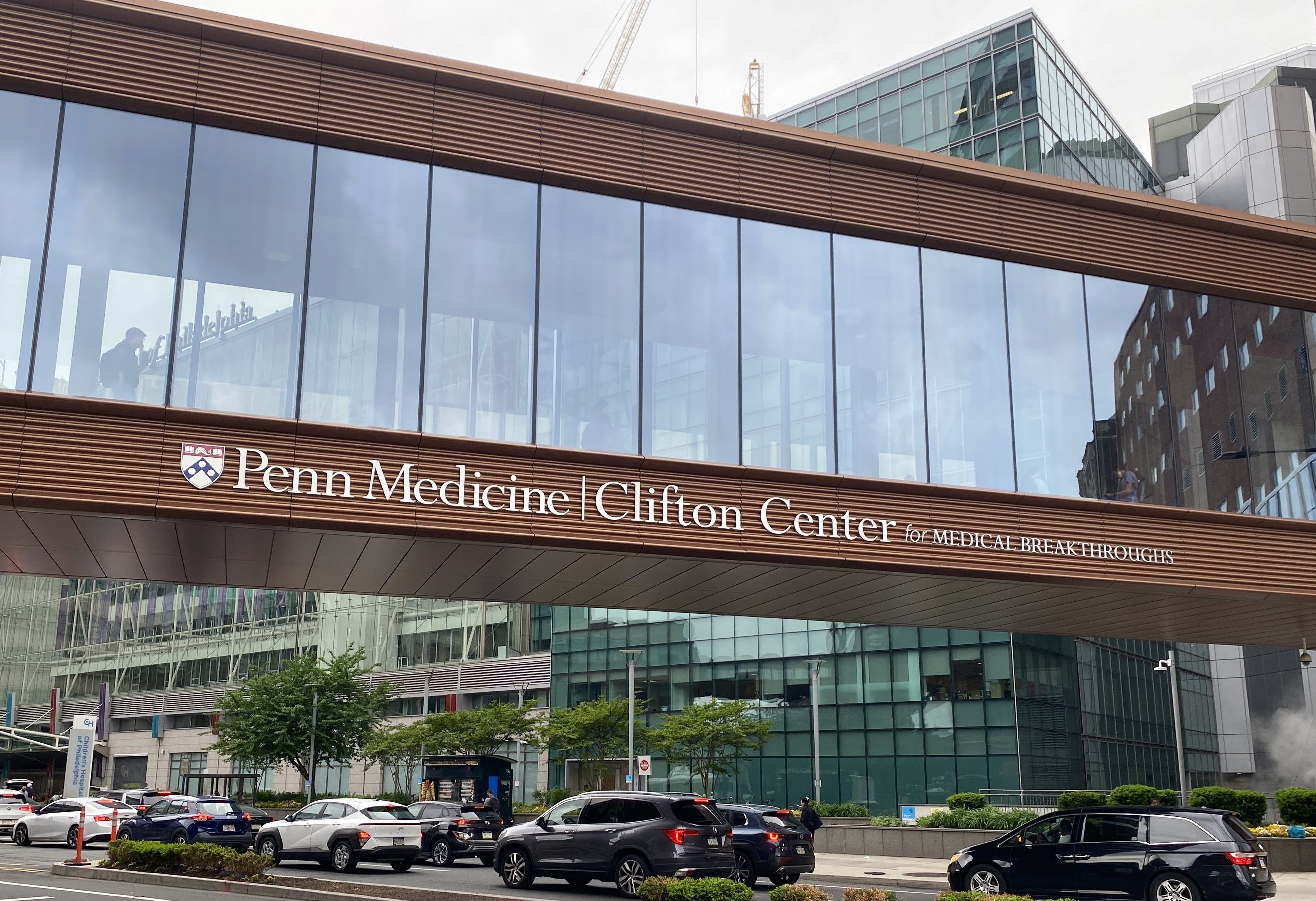
    As real estate development in Philadelphia slows, the most expensive project on the horizon is a state-of-the-art laboratory and classroom building set to replace a mid-century structure that lacks central air-conditioning.

    The $520 million redevelopment of the David Rittenhouse Laboratory at 209 S. 33rd St. will raze two-thirds of the existing structure.

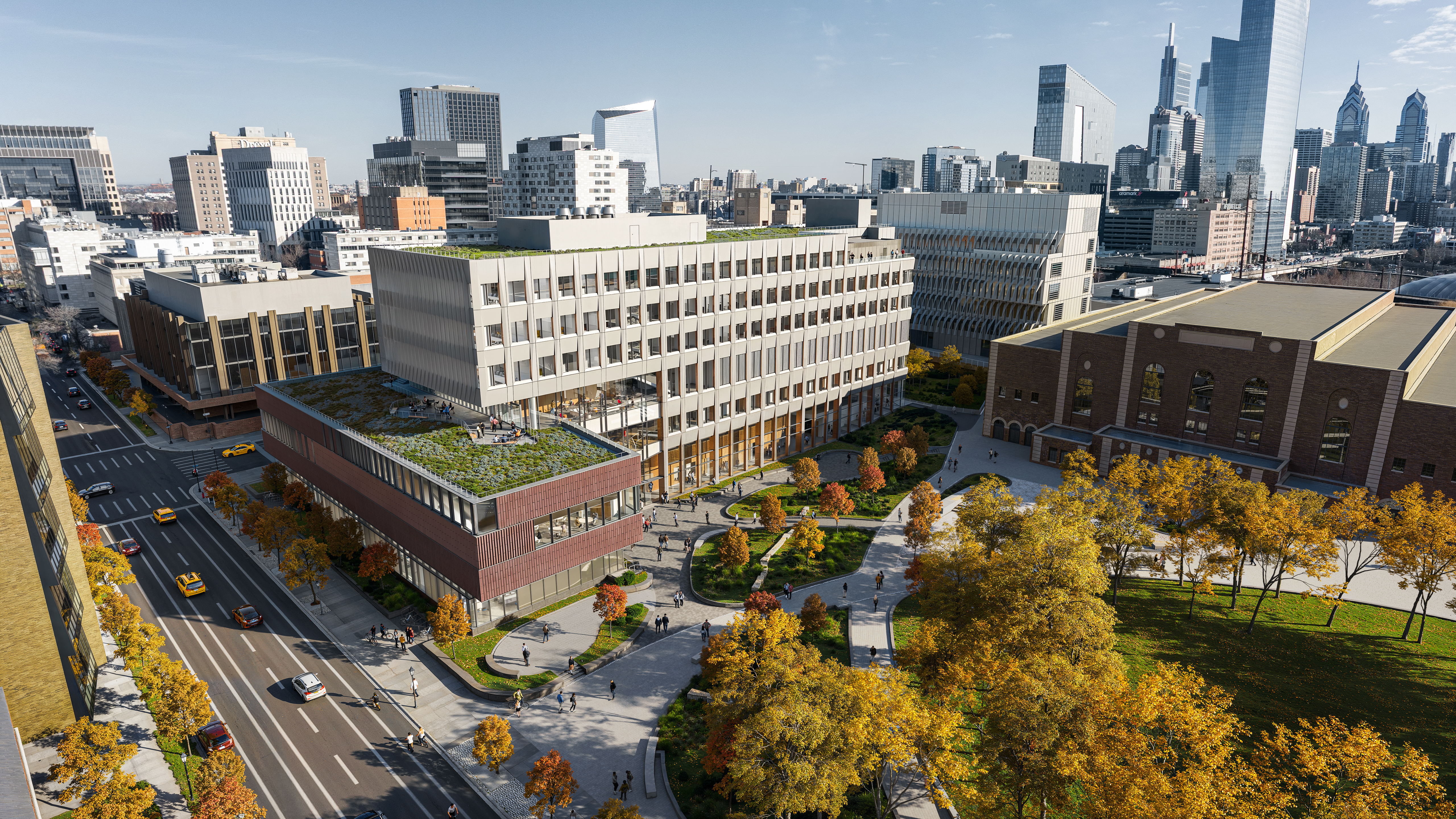
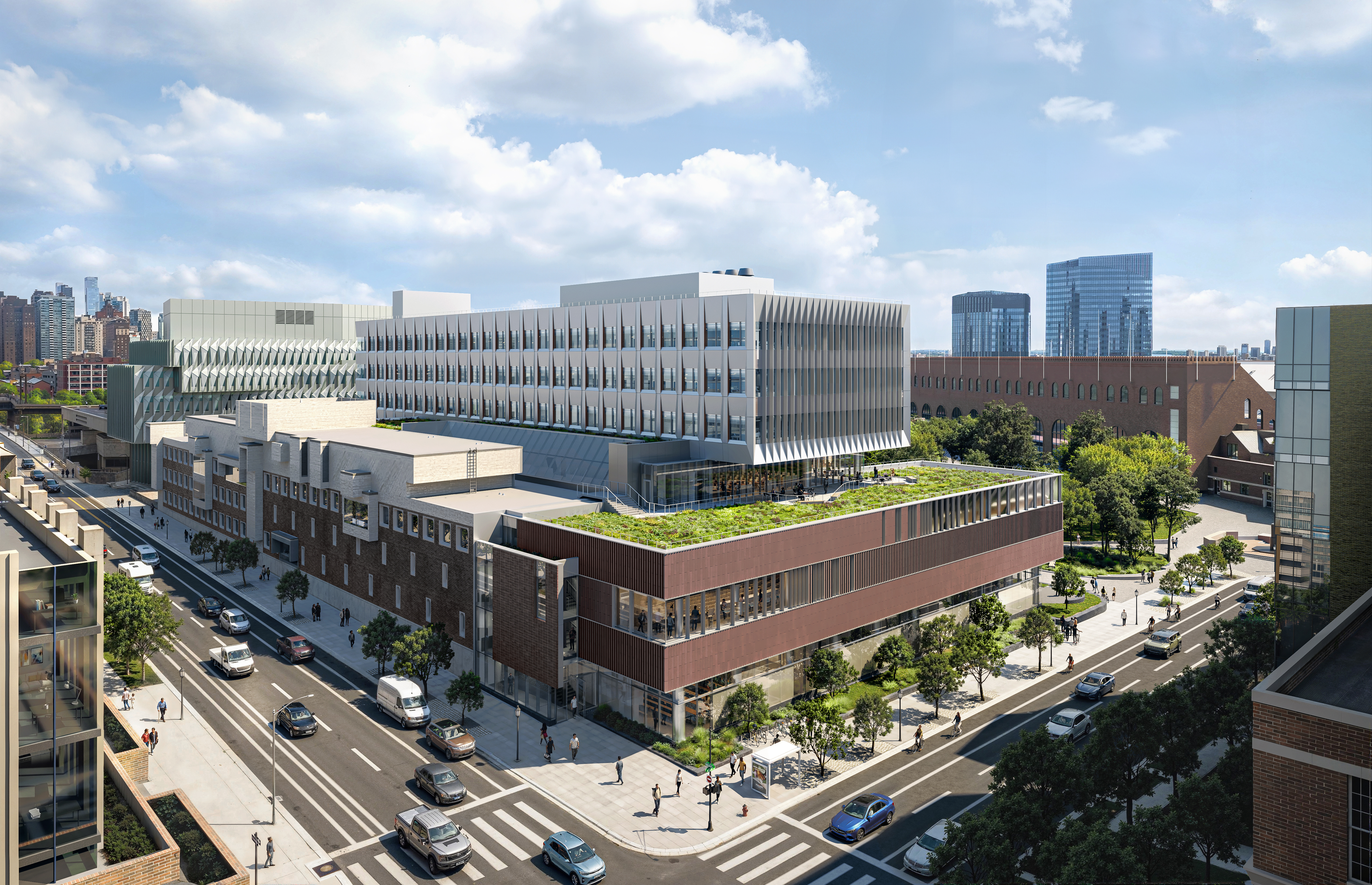
    A seven-story, 325,000-square-foot replacement, dubbed the Penn Discovery Commons, will be built in its place.

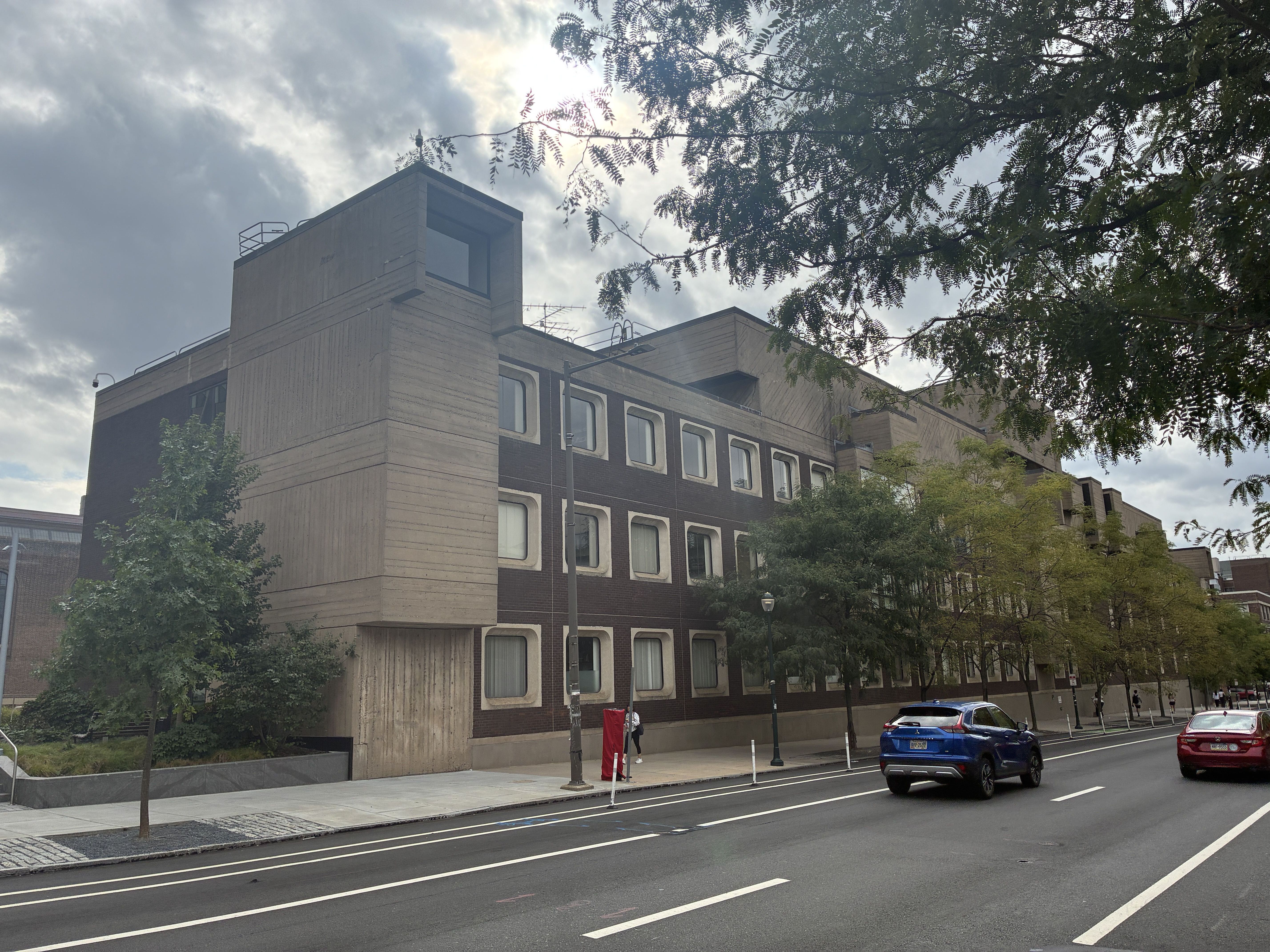
    The David Rittenhouse Laboratory has housed the math and the physics and astronomy departments since 1954. While the building has been the setting for multiple Nobel and Breakthrough Prize discoveries, university leaders now consider it outmoded.

    “Those young, amazing experimenters are doing their work in this terrible, dilapidated old building that’s just not fit for purpose,” said Mark Trodden, dean of the School of Arts & Sciences, who has had an office in the building for over 17 years.

    Penn has been considering replacing the existing Rittenhouse Lab building for 10 years, with the Daily Pennsylvanian first reporting on redevelopment plans in 2024. The new structure is designed by Los Angeles-based CO Architects, which is known for West Coast eds and meds designs, along with local partner Ewing Cole.

    The project comes amid a challenging time in higher education, as Penn and other universities have faced funding cuts from the Trump administration. Last year, the West Philadelphia Ivy League school instituted a hiring freeze and other economies as a result.

    Penn is still moving forward with a variety of major real estate projects from a new wrestling facility to a new theater addition to the Annenberg Center for Performing Arts.

    But the new Penn Discovery Commons — and its more than half-billion dollar price tag — is the largest single project in the university’s pipeline and for the city in the coming years.

    It eclipses the $450 million TerraPower Isotopes factory at the Bellwether District in South Philadelphia. The only larger project in Philadelphia is the Children’s Hospital of Philadelphia’s $2.5 billion new patient tower, which will be completed in 2028.

    Why a new building is needed

    David Rittenhouse Laboratory was built in phases, with the core constructed in 1954. It was Penn’s first new development on its main campus since the Great Depression and was seen as a sign of the university’s dedication to the city.

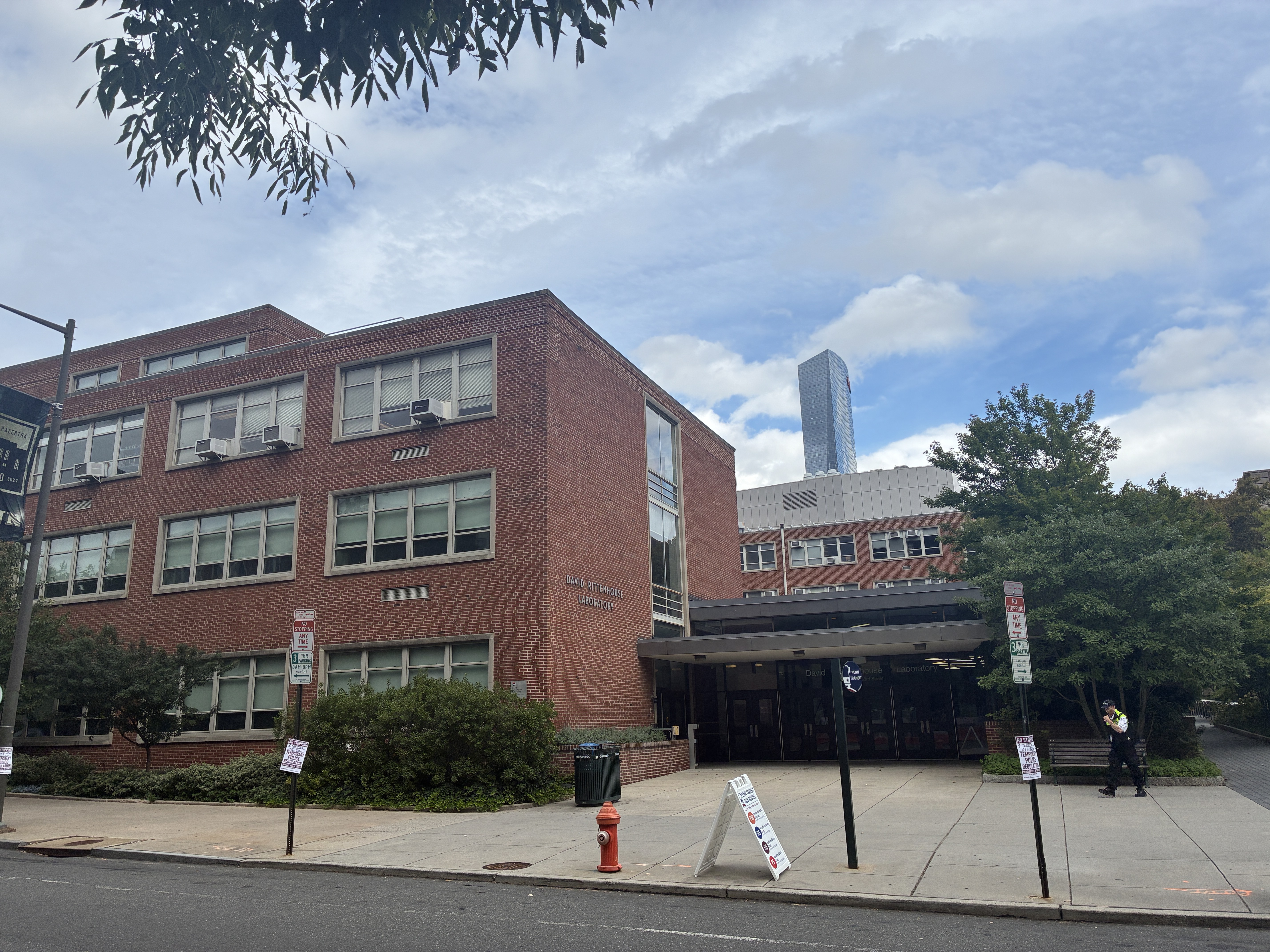
    The original redbrick 1954 building predates central air-conditioning and is cooled by window units.

    The redbrick portion of the existing building will be demolished.Jake Blumgart

    “It’s temperature control doesn’t work,” Trodden said. “The laboratories do not have the right structure or capabilities to do modern science. It’s just a very inhospitable place to work.”

    Penn looked into renovating this portion of the existing building, but it rivaled the cost of new construction. So the redbrick portion with the David Rittenhouse Labs’ current main entrance on 33rd Street will be demolished.

    “Many buildings built post World War II, particularly with government funding, were built relatively quickly, and they aren’t as durable,” said Mark Kocent, Penn’s university architect. “A lot of universities like us have these buildings from the 1950s and 1960s that were not well built.”

    An expansion followed in 1967, which features the space-age addition that fronts much of the block of Walnut Street between 33rd and 32nd Streets. It was designed by Carroll, Grisdale & Van Alen, a renowned modernist firm that also designed the Pennsylvania State Office Building at 1400 Spring Garden St.

    That over 80,000-square-foot portion of the David Rittenhouse Labs, built with cast-in-place concrete and brown brick, will remain and become part of the new Penn Discovery Commons.

    The 1967 expansion, seen here, will be incorporated into the new building.Jake Blumgart

    The decision to keep this architecturally distinct piece of the building will save money and reduce the project’s environmental impact.

    “The most sustainable building is an existing building, and so we evaluated this pretty carefully and [decided to preserve part of the existing building] both due to cost and sustainability and less time to tear everything down and rebuild,” Kocent said.

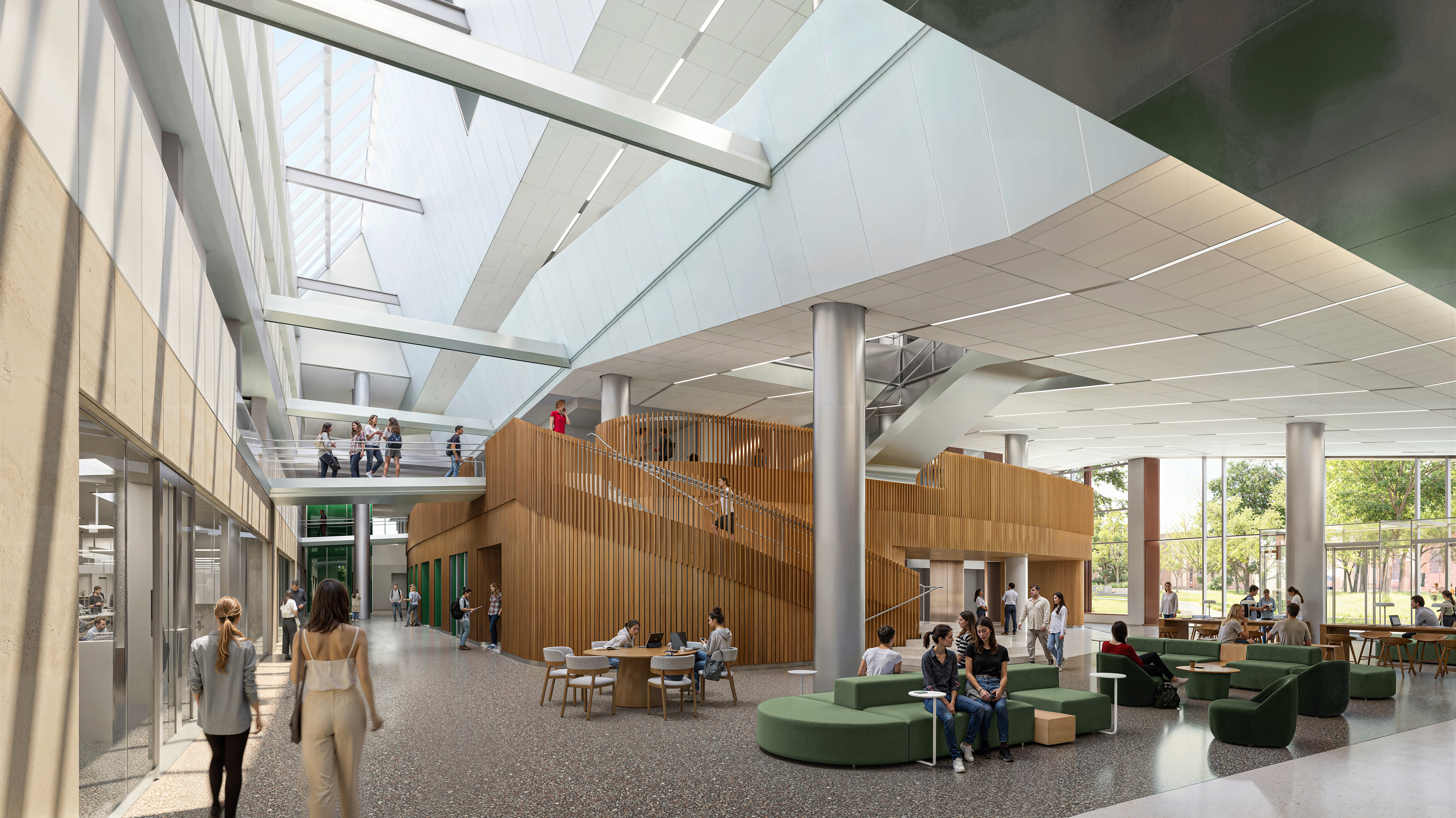
    Discovery Commons’ redesign also adds natural light and replaces confusing-to-navigate hallways. It will include features like a green roof, stormwater management, and increased energy efficiency.

    The new building will have 15% more research laboratory space than the current structure, and 57% more space devoted to classrooms and teaching labs.

    This interior rendering of the new building planned by Penn shows all the natural light that the new design will allow, in contrast with the existing David Rittenhouse Lab.CO Architects

    The university plans to add space for socializing outside the classroom, with the hope of fostering the kind of spontaneous interactions that spur creativity and collaboration.

    “There is this idea of scientists as the lone genius that sits in their lab or office and dreams up these wonderful ideas,” Trodden said. “Most of modern science looks nothing like that at all.”

    What’s now one floor of public space will become three stories, dubbed The Nexus, which will serve as the main entrance and a connection between the research and academic sections of the new building.

    Kocent, who trained under renowned Penn architecture professors Denise Scott Brown and Robert Venturi, says that encouraging socialization and unstructured interaction is in keeping with their ideas.

    “Denise would often say the next Nobel Prize wasn’t necessarily going to be figured out at the lab bench; it was going to be figured out at the coffee shop at the end of the hallway,” Kocent said.

    Faculty concerns about research disruption

    The seven-story Vagelos Laboratory for Energy Science and Technology just to the east, which features similar environmentally conscious design, opened in 2024. It is 112,500 square feet and cost $173.5 million to build (or $1,540 a square foot).

    Replacement of the Rittenhouse lab will cost $1,600 a square foot. Penn’s development team says that prices haven’t spiked dramatically — despite the current inflationary environment — because the preservation of the 1967-portion of the building is helping to manage costs.

    The cost is also held down because the Penn Discovery Commons contains a lot of classroom space, which is cheaper to build.

    The university plans to begin relocating the building’s tenants at the end of next year, with demolition beginning in spring 2028. Construction would take about three years, with the goal of Penn Discovery Commons being open by Sept. 1, 2031.

    A rendering of the new lab, looking to the northeast. None of the preserved Walnut Street-facing facade can be seen here.Co Architects

    The Daily Pennsylvanian reported earlier this year that some faculty based out of the David Rittenhouse Laboratory worry that relocating their lab space twice in four years could “decimate research.”

    Trodden says that he understands the faculty’s concerns and that the university is committed to taking care of their needs.

    “Everyone is rightly anxious about how this will work in practice,” he said, “but there’s a lot of thought going into it, and a lot of care being taken about individual people’s research needs, and the needs of departments.”

  • How Independence Blue Cross has Built a Legacy of Volunteerism

    How Independence Blue Cross has Built a Legacy of Volunteerism

    At Independence Blue Cross, serving the community is more than a corporate value. It’s part of the company’s identity as a leading corporate citizen and hometown health insurer for almost 90 years. This comes to life every day through the work of the IBX Blue Crew program, which supports hundreds of nonprofits serving the Philadelphia region.

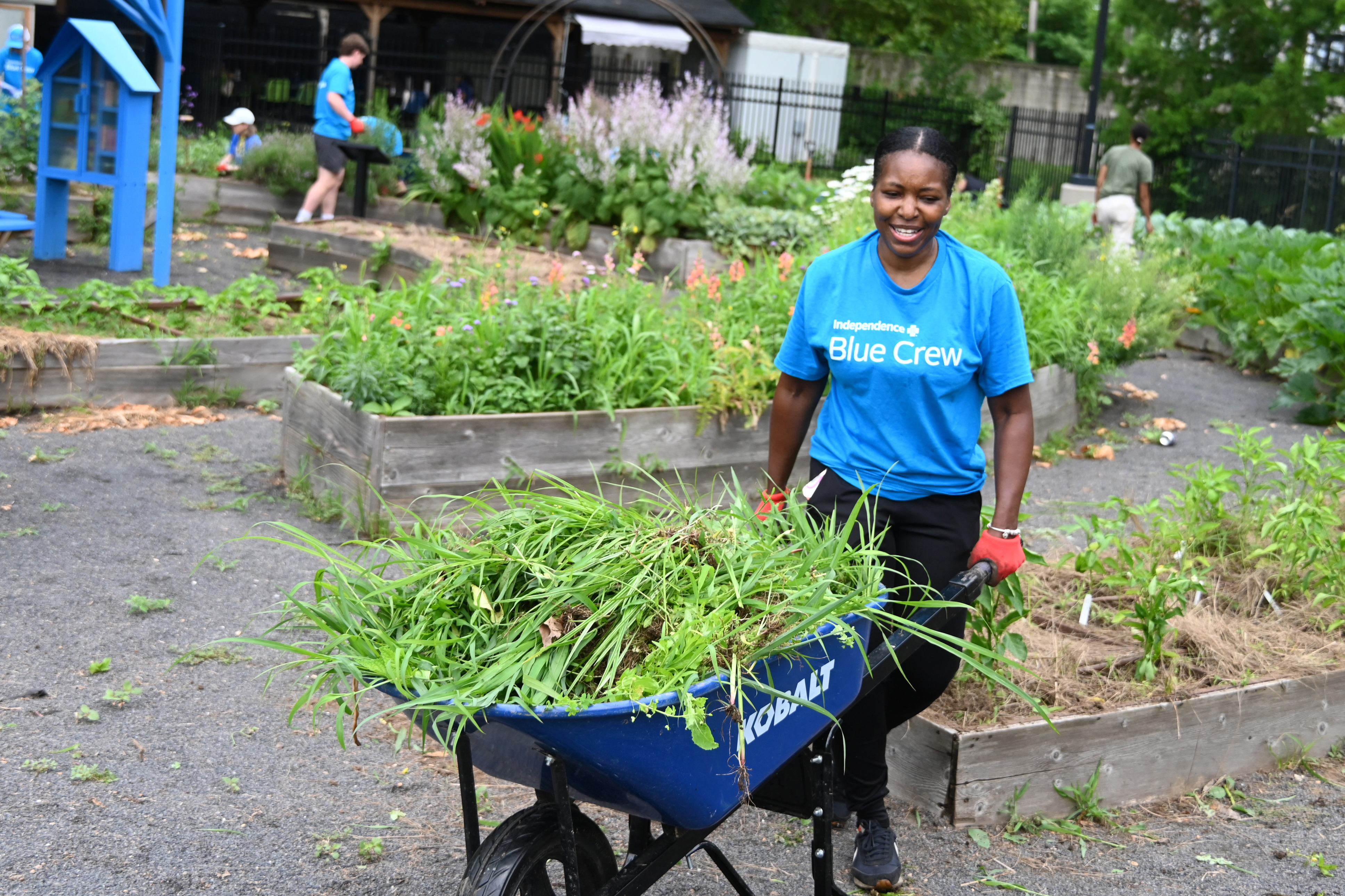
    Now in its 25th year, the Blue Crew has become a model for corporate volunteerism in the area. What began as an idea from a small group of IBX employees in 2001 has evolved into a cornerstone of the company’s culture and community engagement strategy, with participants collectively dedicating thousands of hours each year to volunteer efforts, from cleaning green spaces to providing food, clothing, and school supplies to those in need.

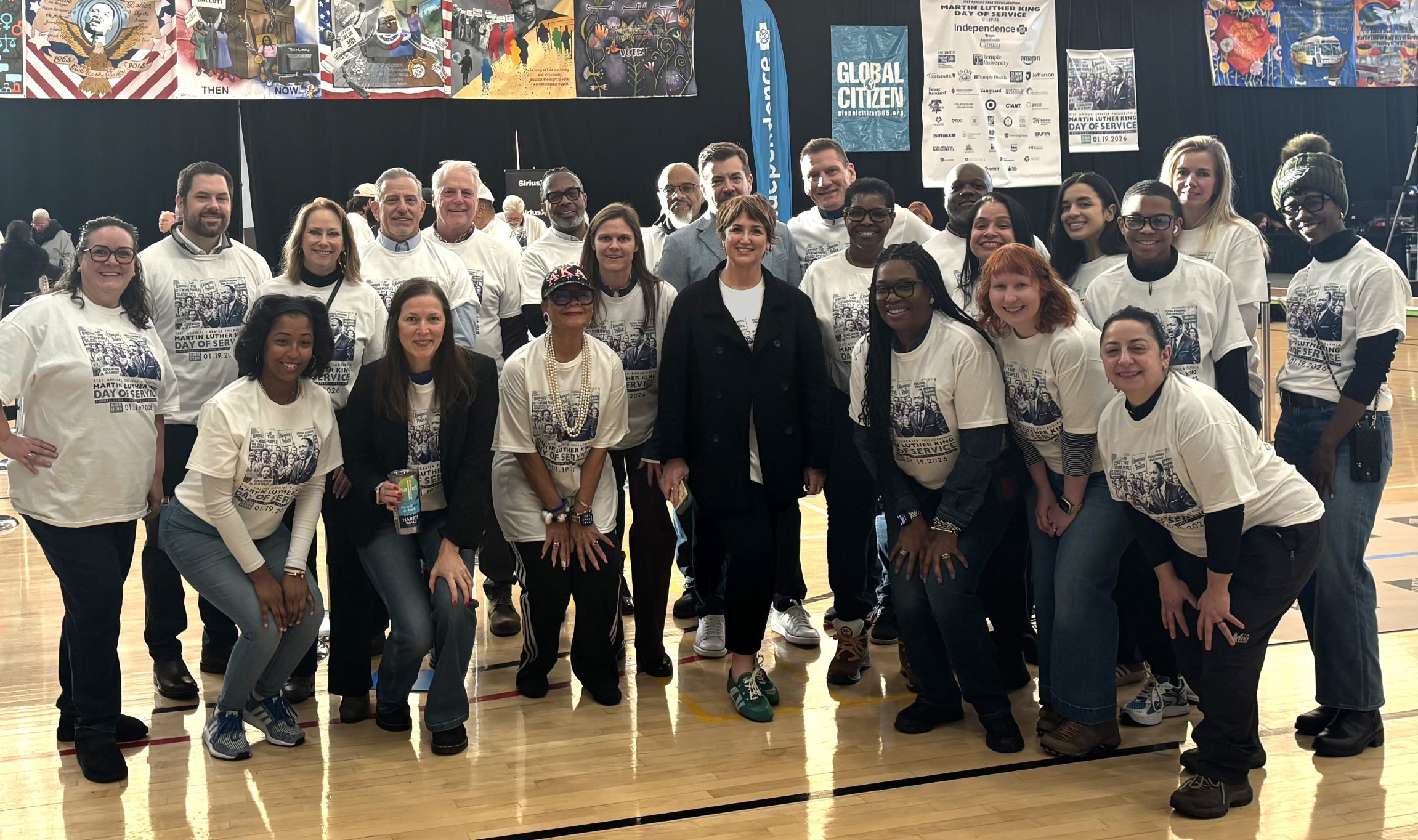
    IBX President and CEO Kelly Munson with the Blue Crew at the annual Greater Philadelphia Martin Luther King Jr. Day of Service.Courtesy Independence Blue Cross

    “The Blue Crew reflects the best of Independence Blue Cross. For 25 years, our associates have invested their time and talents to strengthen communities across our region. In the first half of 2026 alone, Blue Crew volunteers contributed nearly 10,000 service hours to 272 charities and nonprofits, doubling the number of hours volunteered at this point last year,” Kelly Munson, Independence Health Group president and CEO, said. “Giving back is part of our culture, and we’re proud to stand alongside our neighbors as partners in building healthier, stronger communities.”

    A Record Year to Ring in a Quarter-Century of Service

    As the Blue Crew celebrates a milestone anniversary, IBX is doubling down on its community-focused efforts to make 2026 a record year for engagement and impact. Led by a call from Munson for employees to increase their community engagement, participation in the Blue Crew continues to grow. “We’ve encouraged employees across the organization to join us in giving back in ways both big and small because every associate’s contribution is valued,” Steve Fera said. Fera is IBX’s executive vice president of public affairs, president of government markets, and the executive sponsor of the Blue Crew. “The response has been tremendous, and it’s inspiring to see so many colleagues stepping up to make a difference in the communities we serve.”


    “Through June 30, 2026, we’ve seen more than 1,400 volunteers engaged and the impact is significant,” Marie Gillespie, IBX’s community affairs programs manager, said. Last year, Blue Crew members logged approximately 13,000 volunteer hours, Gillespie said, noting that they’re on track to double that figure by the end of 2026.

    This year, the Blue Crew also held one of its largest volunteer events since 2019. In March, the program teamed up with the Pennsylvania Horticultural Society, a longtime partner of IBX, to send 100 employees to work in the PHS Community Farm at Norristown Farm Park. Blue Crew members planted, mulched, and constructed raised beds on the 3.5-acre farm, which uses sustainable agricultural practices. The fresh produce harvested is donated to food pantries and community-based partners, like PHS’s Food As Medicine program, which provides food and nutrition education to individuals who are experiencing food insecurity.

    The Blue Crew has longstanding relationships with other nonprofit organizations focused on similar concerns, including MANNA, which provides medically appropriate meals to individuals with serious illnesses, and the Share Food Program, Philadelphia’s leading food bank. “Food insecurity is closely tied to health and well-being,” Gillespie said, adding that there’s an increasing need to address the issue in our region, where it affects more than 600,000 people.

    Blue Crew volunteers worked on another special project this year through their partnership with Cradles to Crayons, a nonprofit tackling children’s clothing insecurity that also provides kids with school supplies. For the organization’s annual Backpack-A-Thon, which equips kids with volunteer-packed backpacks containing back-to-school essentials, IBX associates wrote more than 5,000 cards sharing encouraging words about the upcoming school year. Beyond this initiative, the Blue Crew regularly sends volunteers to Cradles to Crayons’ Giving Factory to sort through donated clothing, footwear, diapers, and other staples before they’re distributed to families.

    Partnerships Driven by Purpose

    For IBX, many volunteer partnerships focus on the social and community factors that influence health, including access to nutritious food, stable housing, and support services. Successful partnerships with nonprofits and community partners are central to the Blue Crew’s mission.

    In particular, IBX’s two-decade-plus relationship with Ronald McDonald House Philadelphia, which provides lodging for families with children receiving medical care in the area, shows how partnering around a shared goal can drive lasting impact.

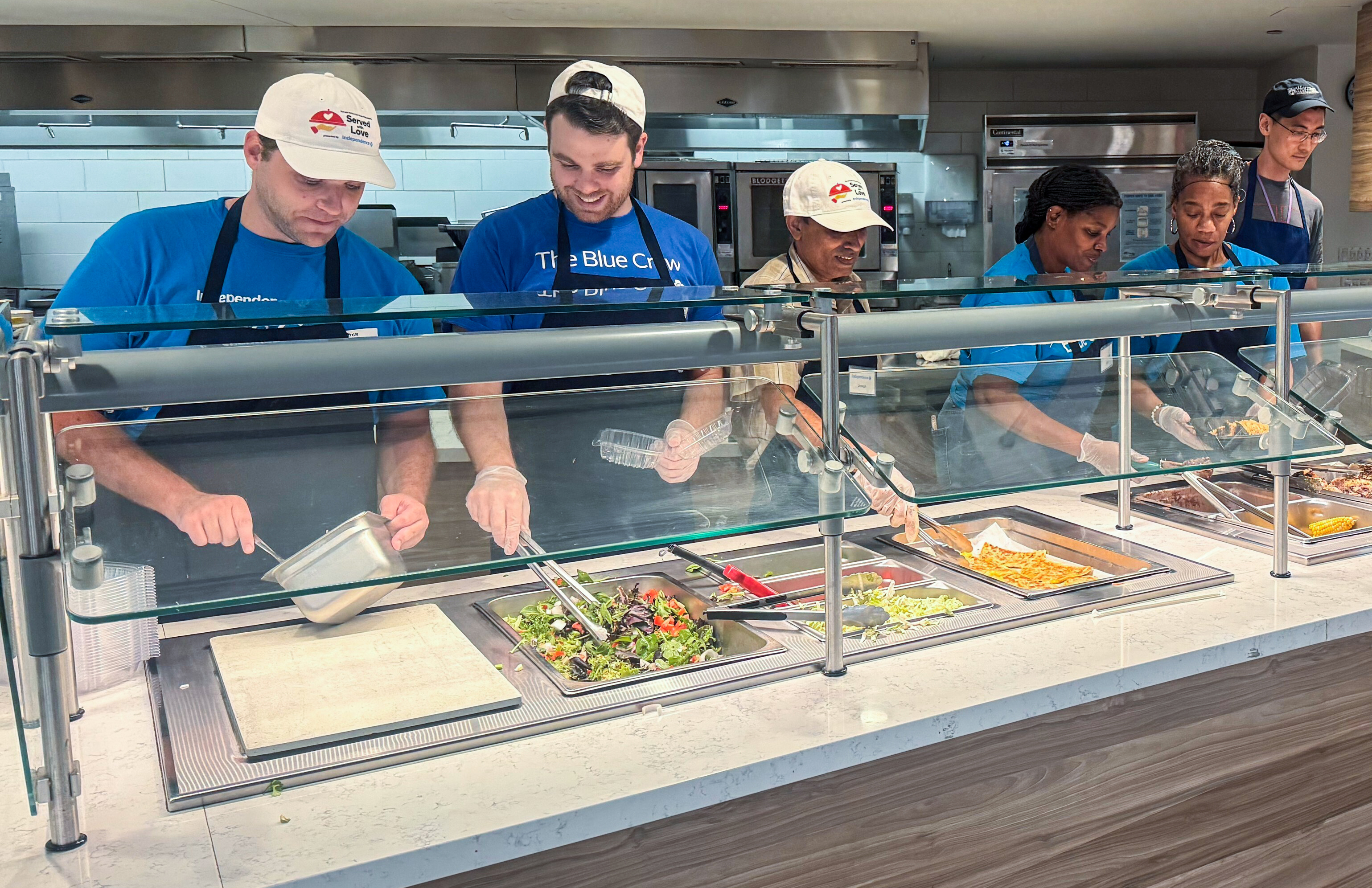
    Blue Crew volunteers help serve healthy, nutritious meals at the Ronald McDonald House hot bar.Courtesy Independence Blue Cross

    While the Blue Crew assists with several RMH projects, it’s been instrumental to the charitable organization’s Served With Love program, regularly sending volunteers to prepare and serve chef-made breakfasts and dinners to families at RMH’s Philadelphia locations. “Through the Served With Love program, we work hand-in-hand with our friends at Ronald McDonald House to provide comfort and nourishment for families so they can focus on their children’s health,” Fera said. “Last year, the Blue Crew dedicated nearly 400 hours in support of RMH families.”

    The Blue Crew became involved with the initiative in its early days and eventually helped scale the meal-service operation to feed three times as many people. “As our program has evolved, the Blue Crew has adapted and helped us evolve in how we provide dinners and breakfasts to our families,” Susan Campbell, the CEO of Ronald McDonald House Philadelphia, said. “IBX employees assisted with logistics, like determining how many volunteers would be needed per shift, creating instruction sheets for the kitchen’s new commercial equipment, and marketing the program to other corporate volunteer groups,” she said.

    The IBX group has been “essential” to Served With Love’s success, Campbell said. “When we look at how much it would cost for us to run our Ronald McDonald House without volunteers, it would be unfeasible to provide these meals in the ways that we do.” The executive added that the Blue Crew is “a great example of what other companies can create” as they look for ways to engage their employees with the community and with each other, especially as more people work remotely.

    Engaging Employees Around Community

    Like many IBX employees, James Angelo Christopher, a clinical care quality coordinator, joined the Blue Crew when he started working at IBX to connect with colleagues while giving back. A member since 2014, he’s contributed thousands of volunteer hours as one of the Blue Crew’s most involved participants, regularly dedicating time to initiatives like Big Brothers Big Sisters, through which he mentored a student from third through eighth grade. He has also regularly served Thanksgiving and Christmas meals at the Philadelphia Senior Citizen Center.

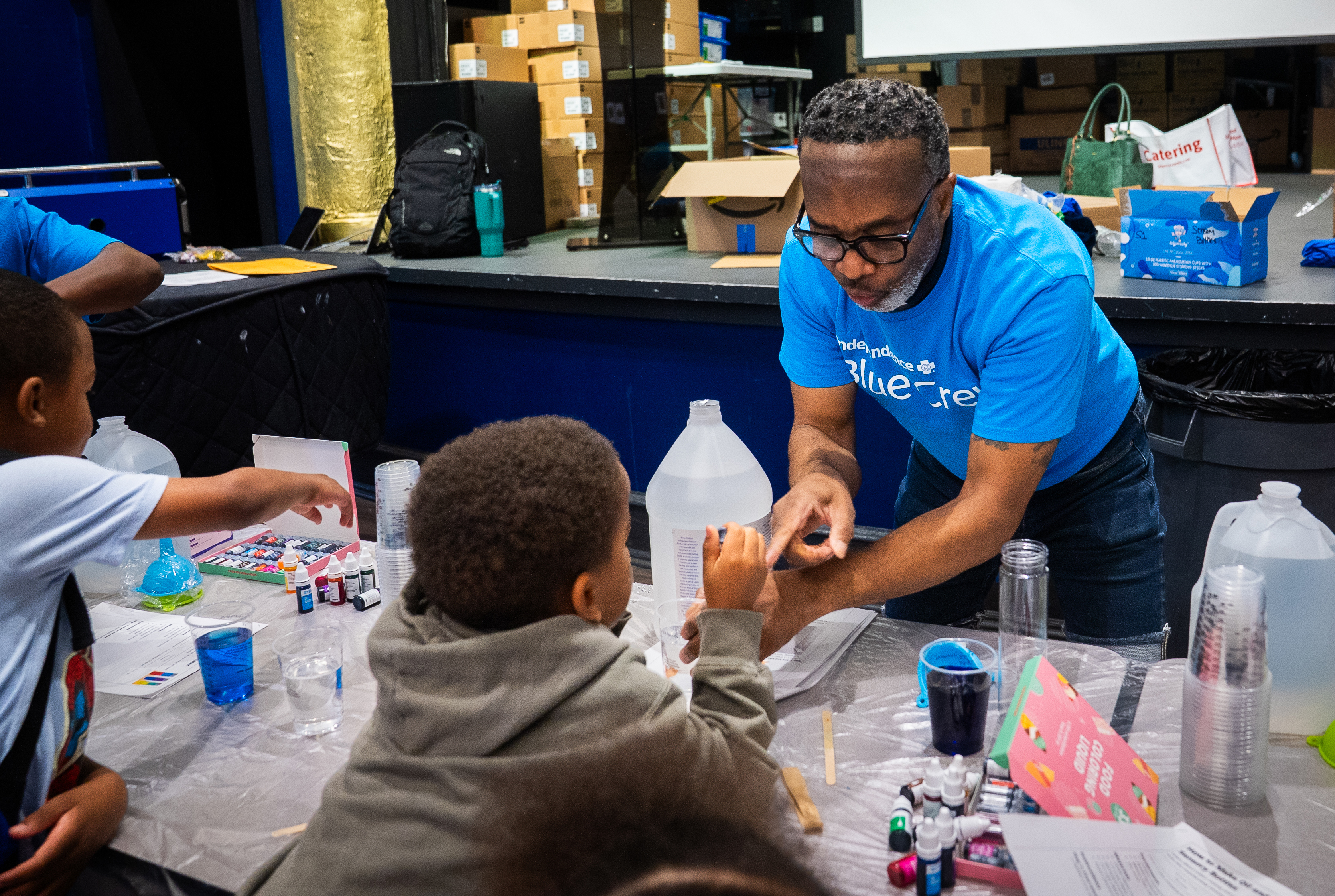
    Blue Crew’s James Angelo Christopher, a clinical care quality coordinator, volunteers at the Boys & Girls Club.Courtesy Independence Blue Cross

    Over the years, Christopher said he has met colleagues through the Blue Crew whom he wouldn’t otherwise have met. In recent years, he’s also seen more new employees become engaged in the program. “Volunteer participation has grown tremendously based on word-of-mouth,” he said, adding that IBX staff members are often inspired to join after seeing the Blue Crew in their own communities.

    IBX makes it easy for employees to turn their passion for service into action. In addition to coordinating hundreds of volunteer opportunities each year, the company provides paid volunteer time, matches charitable donations through Blue Crew Gives, and supports employee volunteerism through its Dollars for Doers program. In 2025 alone, more than $1 million was donated to over 800 nonprofits through employee contributions and IBX matching gifts.

    Inspiring the Next Generation of Volunteers

    IBX’s commitment to volunteerism seeks to inspire those at the company and beyond to make an impact, including the next generation.

    Blue Crew employees are encouraged to bring family members to certain volunteer events, like park cleanups in partnership with the Fairmount Park Conservancy, which IBX regularly supports. “It’s important for people to be able to bring a friend or a family member and be able to have that be part of the experience,” Gillespie said, noting that some of the most rewarding Blue Crew projects she’s worked on have allowed her to teach kids about volunteering.

    Looking ahead, IBX plans to build on the Blue Crew’s legacy of service. “I hope that 25 years from now, [the Blue Crew] continues to be one of the defining programs of IBX’s mission and that it is still a central part of our culture and our purpose as a company,” Fera said. “It’s a program about neighbors helping neighbors. That’s what makes the program so special.”


    A History of Impact

    For generations, Independence Blue Cross has invested in the health and well-being of the Philadelphia region through community partnerships, charitable giving, volunteerism, and public health initiatives. This investment reflects IBX’s longstanding commitment to building healthier communities and strengthening the region it proudly calls home.

    Learn more at ibx.com/corporatecitizenship.


    Chloé Pantazi-Wolber is a writer and editor. Her work has appeared in Business Insider, Philadelphia magazine, The Rooted Journal, Travel Bulletin, The Paris Review, and more.

  • Amy’s Pastelillos won a partnership with the Sixers worth $250,000. Here’s what it’s doing

    Amy’s Pastelillos won a partnership with the Sixers worth $250,000. Here’s what it’s doing

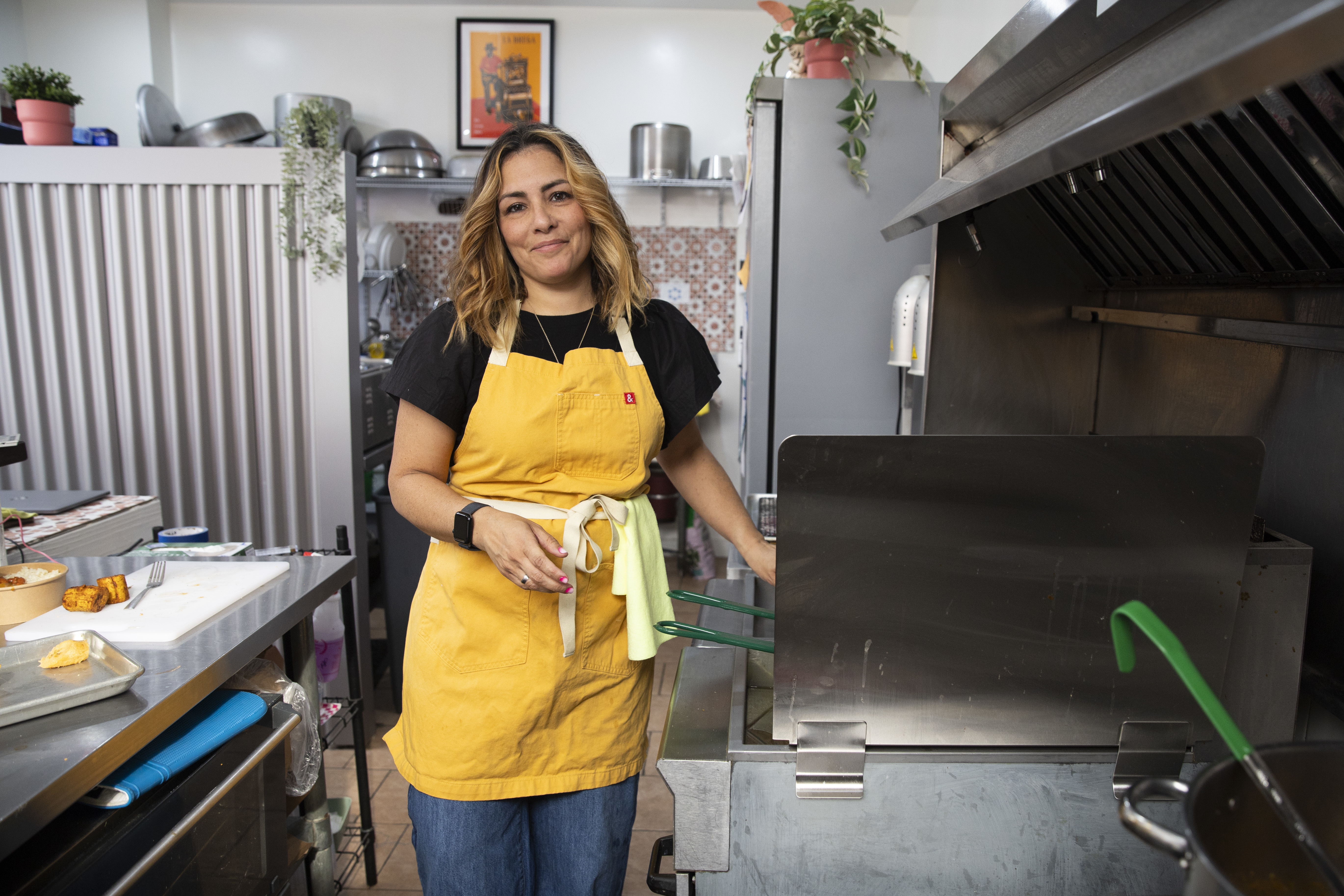
    Every week, Amaryllis “Amy” Rivera-Nassar hand-shapes and deep-fries around 2,000 pastelillos at her Fishtown takeout joint, Amy’s Pastelillos.

    Rivera-Nassar opened the bright pink storefront at 2001 Memphis St. in 2024 after spending years as the neighborhood’s “pastelillo lady,” selling the Puerto Rican turnovers — filled with classic chicken stew, guava BBQ pork, and truffled mushrooms, among others — via pop-ups. But 2026 is the year things really started to click.

    Amy’s landed a spot on The Inquirer’s The 76 at the end of 2025, and in February, the store saw a surge in business surrounding Bad Bunny’s Super Bowl LX performance.

    The only hitch: Rivera-Nassar says she’s running out of room to keep up. Her kitchen barely has enough space for two burners, two fries, a pair of fridges, and an oven.

    “It’s like a little tiny shoebox. We do so much with so little,” Rivera-Nassar said.

    Luckily, Rivera-Nassar now has a big team in her corner: This week, the Philadelphia 76ers and Bank of America announced that Amy’s Pastelillos won the Enrich Program competition, making the takeout shop an official Sixers partner for the upcoming NBA season.

    A spread of dishes including pastelillos at Amy’s Pastelillos, now an official partner of the Philadelphia 76ers for the 2026-27 NBA season.Monica Herndon / Staff Photographer

    The prize package is valued at approximately $250,000, and includes a year of marketing support, business consulting, and strategic networking from both Bank of America and the Sixers. As an official partner, Amy’s Pastelillos brand will be promoted to 76ers fans through a mix of TV, social media, and radio ads, plus appearances.

    The opportunity, Rivera-Nassar said, couldn’t have come at a better time.

    “I had been spending all year trying to secure support and funding for my business, and had been getting constant ‘nos,’” she said. “I just can’t believe that we won.”

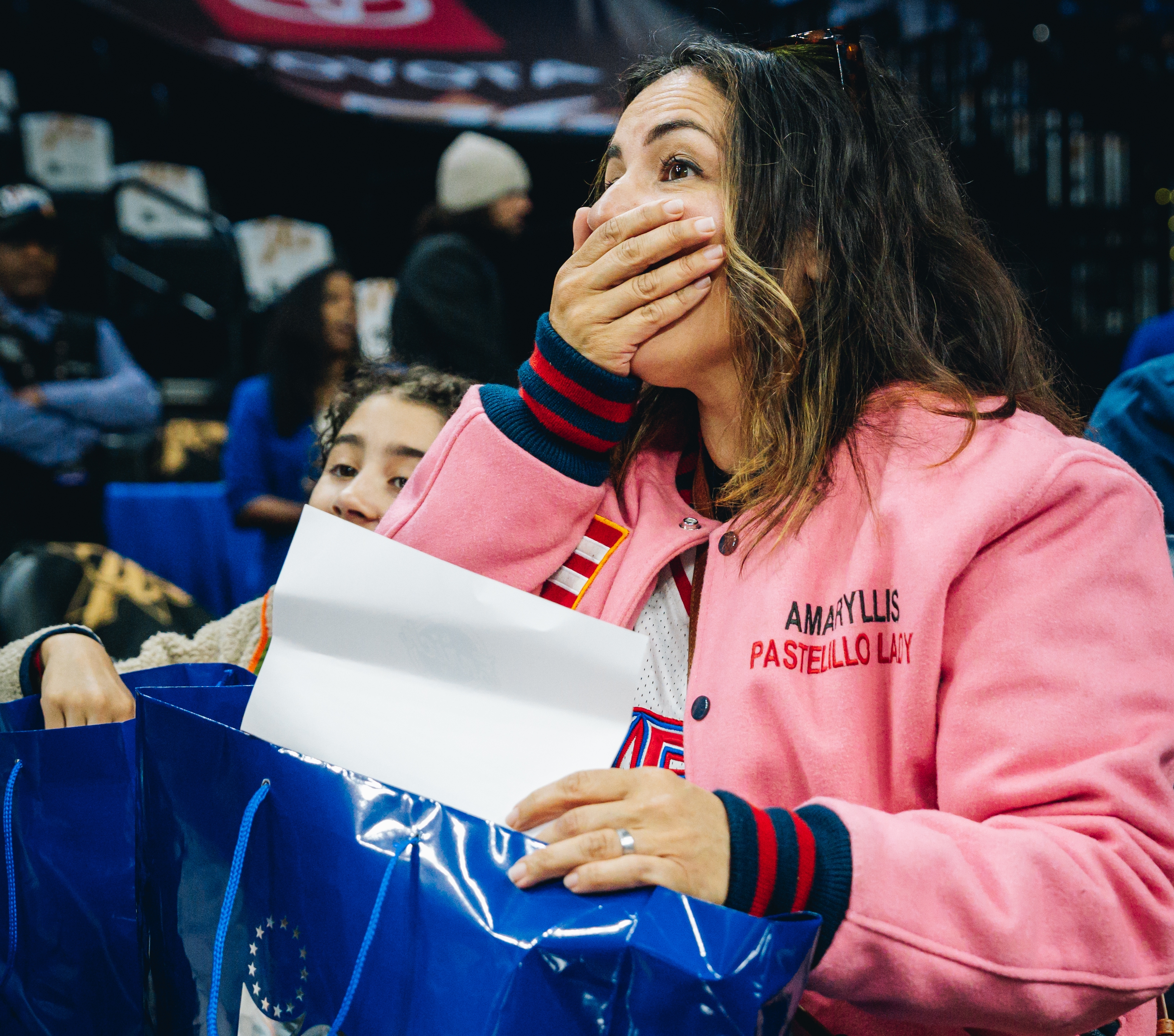
    Amaryllis “Amy” Rivera-Nassar, owner of Amy’s Pastelillos, found out her business was an Enrich Program winner during Game 4 of the Sixers playoff series against the Boston Celtics at the Xfinity Mobile Arena.Courtesy Philadelphia 76ers

    Bank of America and the Sixers started the Enrich Program during the 2020-21 basketball season as a way to uplift small, local, and underrepresented business owners in and around Philly. Previous winners include East Falls coffee shop Thunder Mug Cafe and the late Charisse McGill’s Lokal Artisan Foods, the brand behind the popular French toast bites stands previously located at Spruce Street Harbor Park and the Christmas Village.

    The program is competitive: 175 businesses applied earlier this spring, a Sixers spokesperson said via email. After submitting an application detailing their growth plans, selected business owners must pitch Bank of America and Sixers executives. Enrich’s two other finalists, the Northern Liberties gift shop Laser Philly and the popular Kensington gelato shop Cloud Cups, also received $10,000 cash prizes.

    “Amy’s story stood out to us,” the Sixers spokesperson said. “Her vision extends beyond the restaurant itself — she is passionate about creating a space where Philadelphians can experience and connect with Puerto Rican culture and community. That combination of entrepreneurial growth [and] cultural purpose … made Amy’s journey one we were excited to support.”

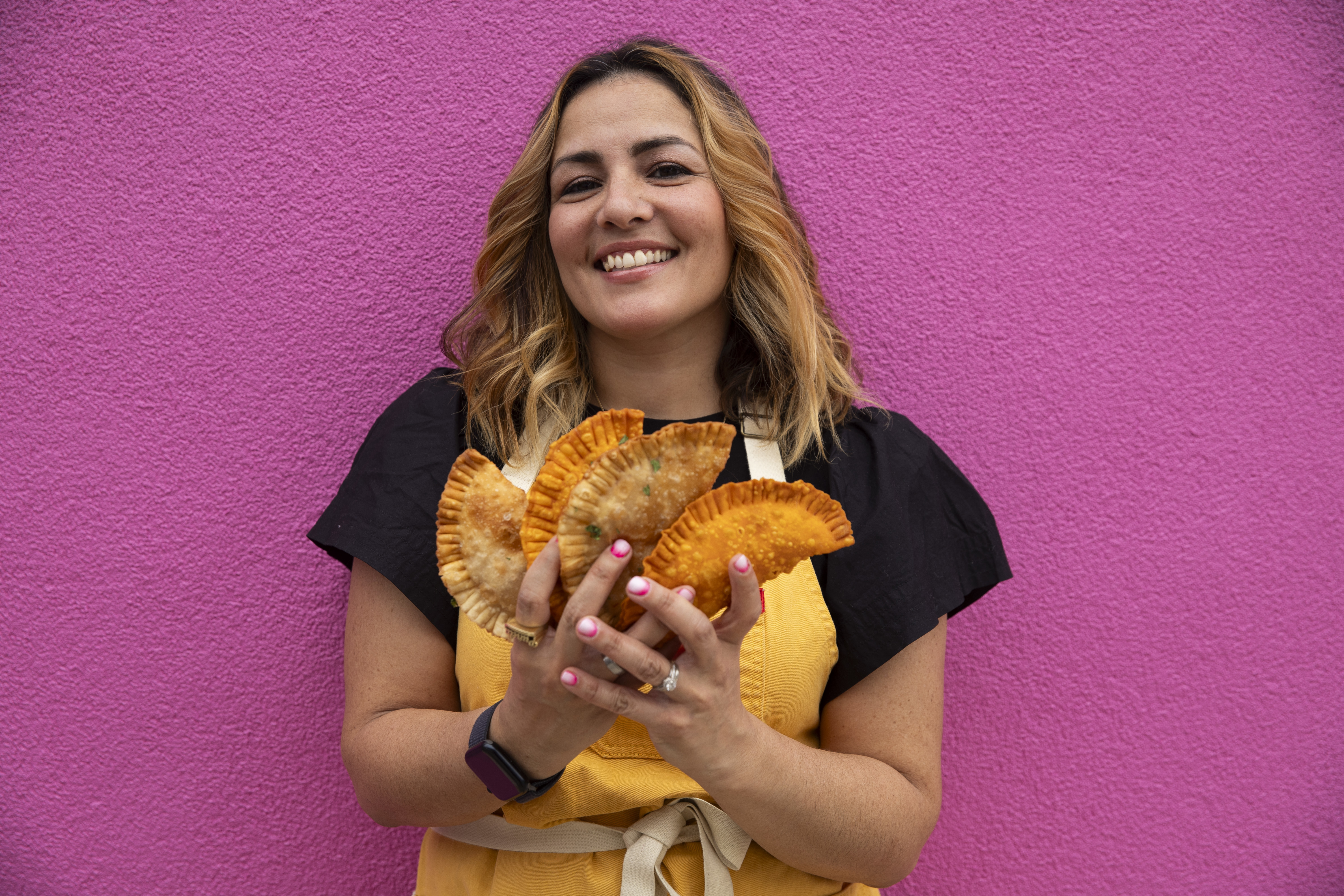
    Amaryllis “Amy” Rivera-Nassar holds three pastelillos from the menu outside her restaurant, Amy’s Pastelillos. She estimates the storefront sells just under 2,000 Puerto Rican turnovers per week.Monica Herndon / Staff Photographer

    Rivera-Nassar attributes at least some of Amy’s lasting boom to the power of Bad Bunny’s halftime show, which catapulted Puerto Rican culture into the mainstream.

    “We did 700 pastelillos in two hours for just Super Bowl parties alone,” she said. “But the aftermath was super-exciting. A lot of people were like, ‘Oooh, Puerto Rican food’ and really wanted to explore the culture.”

    Rivera-Nassar believes the support from Bank of America and the added visibility from the Sixers can help Amy’s expand to a larger off-site prep kitchen — even if she can’t bear to leave her bright pink storefront.

    “I’m attached. It’s my baby,” she said, at the same time acknowledging that, space-wise, “we’ve hit our ceiling.”

    Amaryllis “Amy” Rivera-Nassar works in the kitchen at Amy’s Pastelillos. Now an Enrich Program winner, Rivera-Nassar is hoping to expand to a larger, off-site prep facility.Monica Herndon / Staff Photographer

    Rivera-Nassar is most excited to see her business’ name in lights inside the Xfinity Mobile Arena. She learned about winning the Enrich prize while sitting courtside with her 10-year-old daughter at Game 4 of the Sixers playoff series against the Boston Celtics.

    “I was already overwhelmed by the fact that Tyrese Maxey and [V.J.] Edgecomb were right in front of us. And then the Sixers reps came out and congratulated me,” Rivera-Nassar said. “I was floored.”

  • Jalen Hurts donated $600,000 for AC at Philadelphia’s largest high school

    Jalen Hurts donated $600,000 for AC at Philadelphia’s largest high school

    Jalen Hurts was watching morning TV three years ago when he saw something that stopped him in his tracks.

    “I was very blown away by school not being canceled for snow, not for a hurricane or tropical storm, but for lack of AC,” the Eagles star quarterback said Tuesday.

    So Hurts went about doing something to fix that.

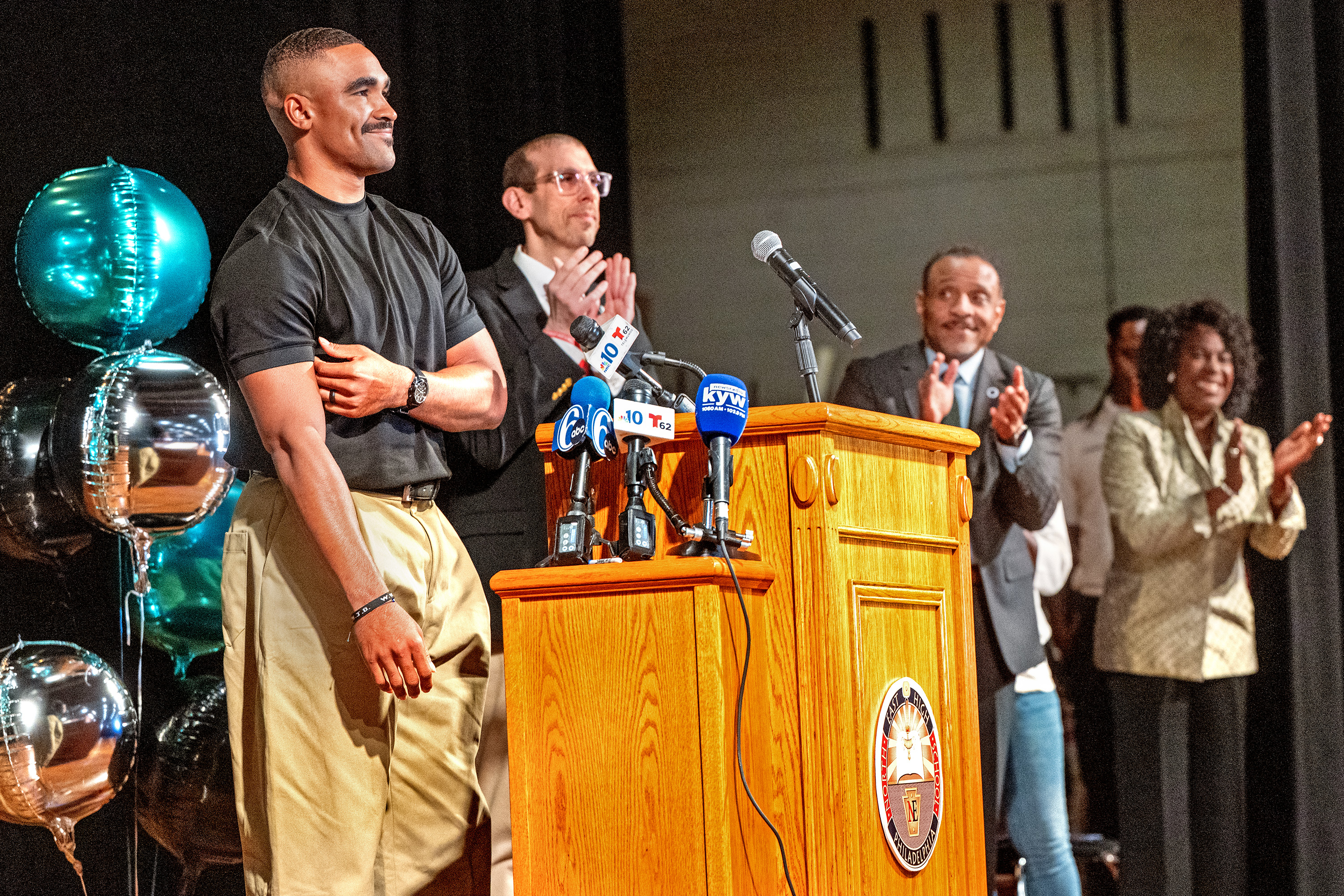
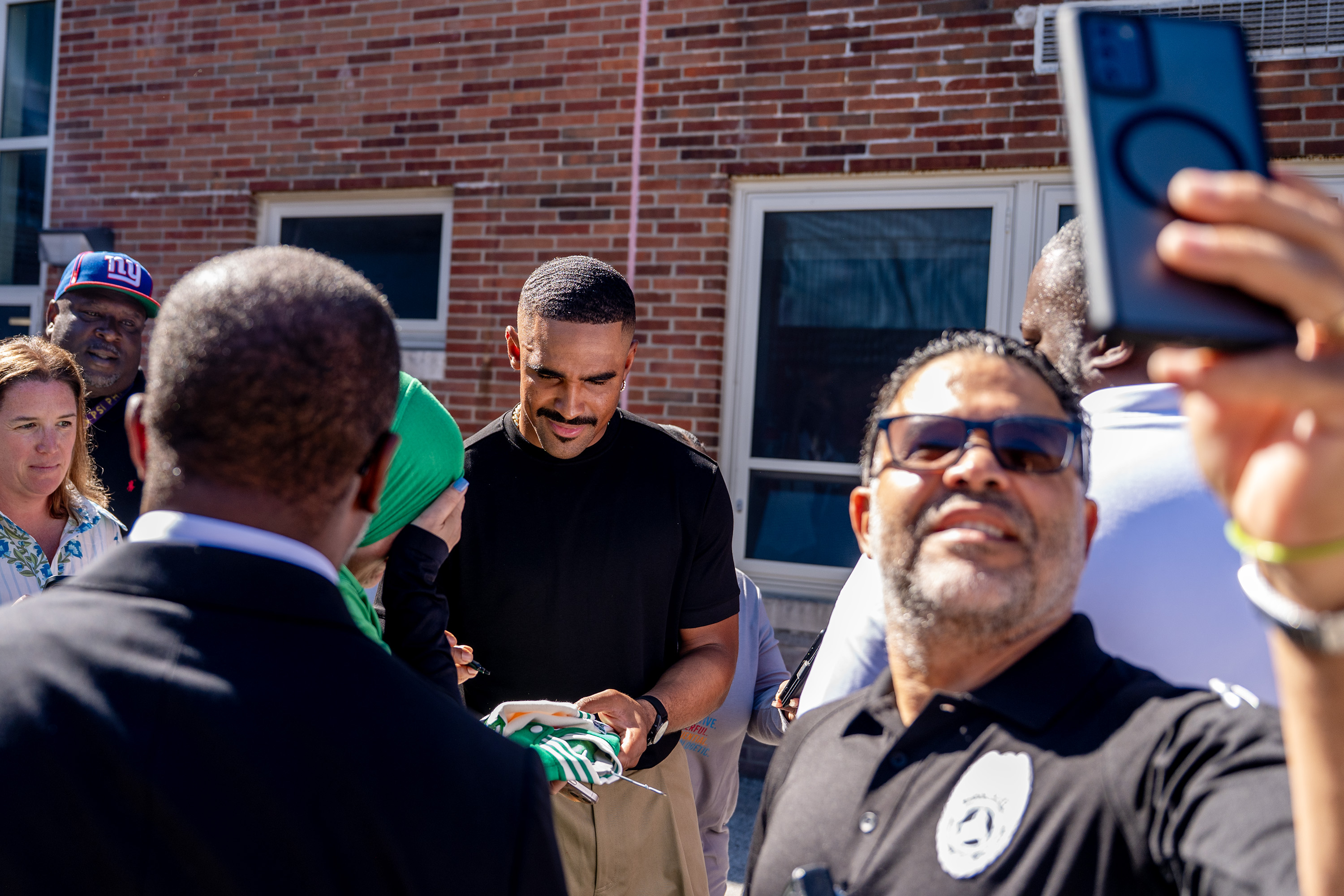
    On Tuesday, he stood on Northeast High’s stage to announce his foundation was putting up $600,000 to air-condition the school’s auditorium.

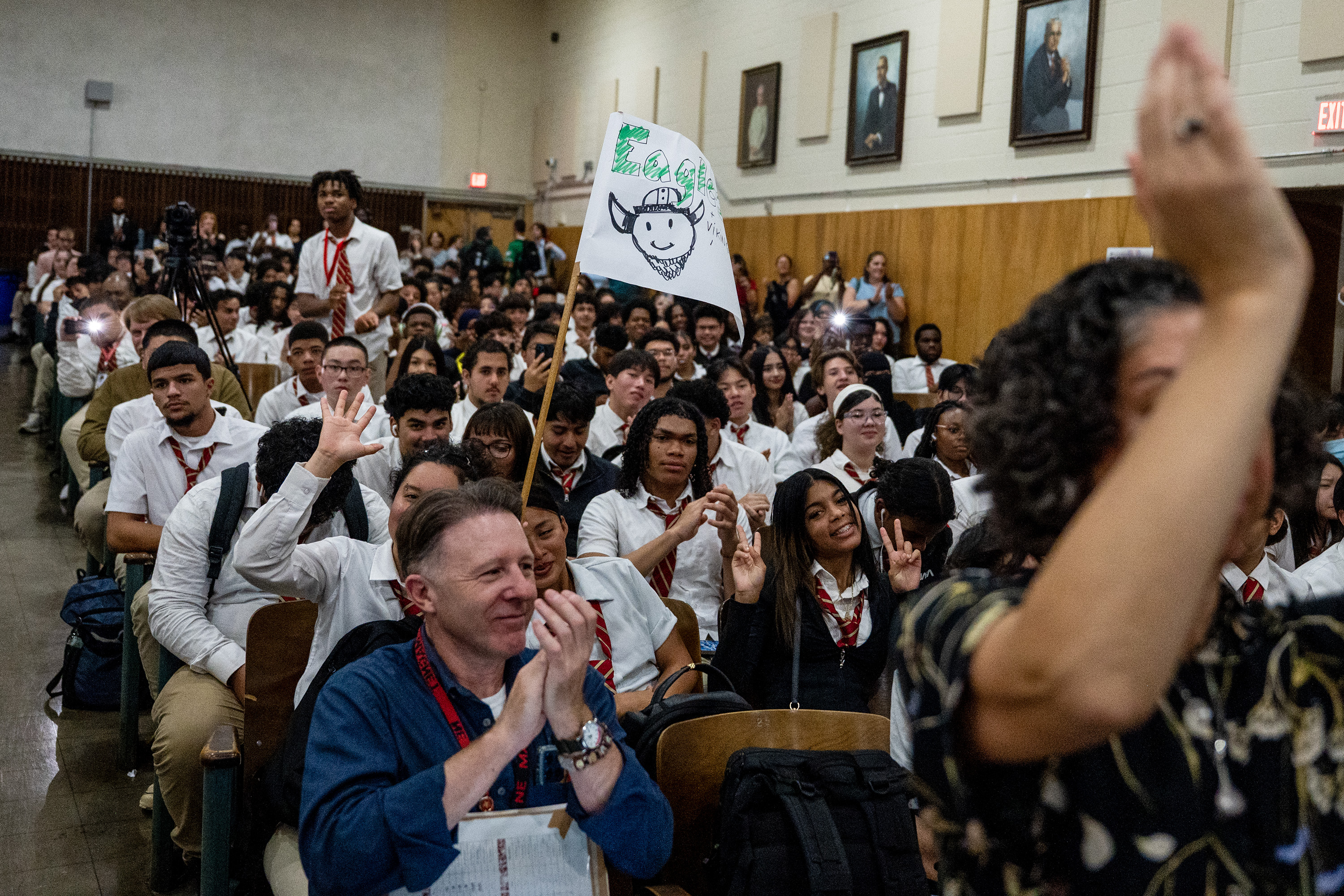
    The timing was good: Although temperatures were in the high 60s when Hurts made his announcement, it was sweltering in the auditorium, with more than 1,000 students, teachers, and dignitaries in the room. Sweat ran down the faces of members of the marching band toting heavy instruments and cheerleaders in long-sleeved uniforms. Mayor Cherelle L. Parker cooled herself with a small personal fan.

    When Hurts watched that TV spot, about half of the district’s schools were not air-conditioned. Hurts’ largesse has helped get the number down, but 52 schools — about a quarter of district buildings — still lack air-conditioning.

    Hurts, on Tuesday, said he wanted to move the needle more for Philadelphia schools.

    “Let’s get it to zero,” Hurts said of the number of schools without air-conditioning. “I want to get it to zero.”

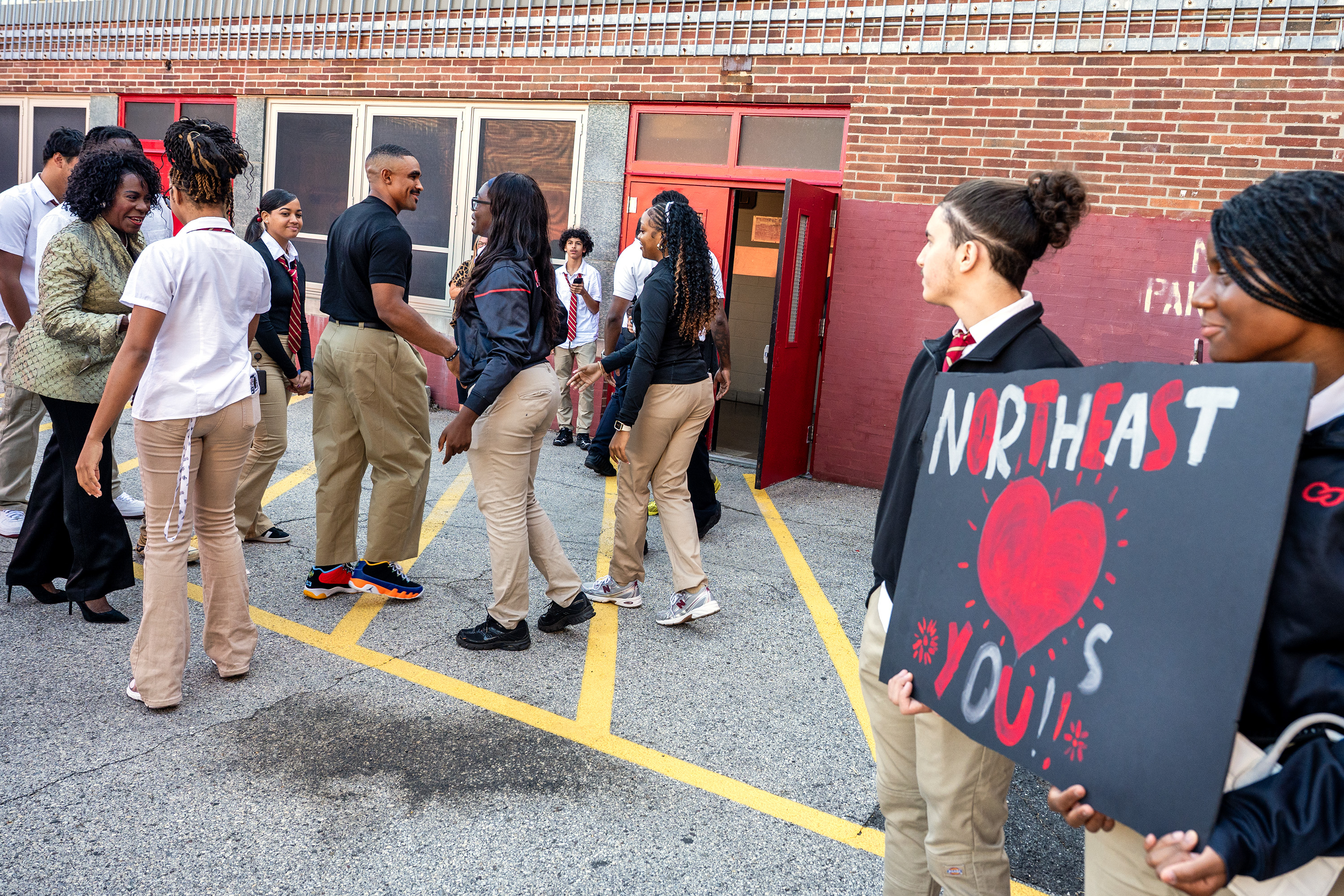
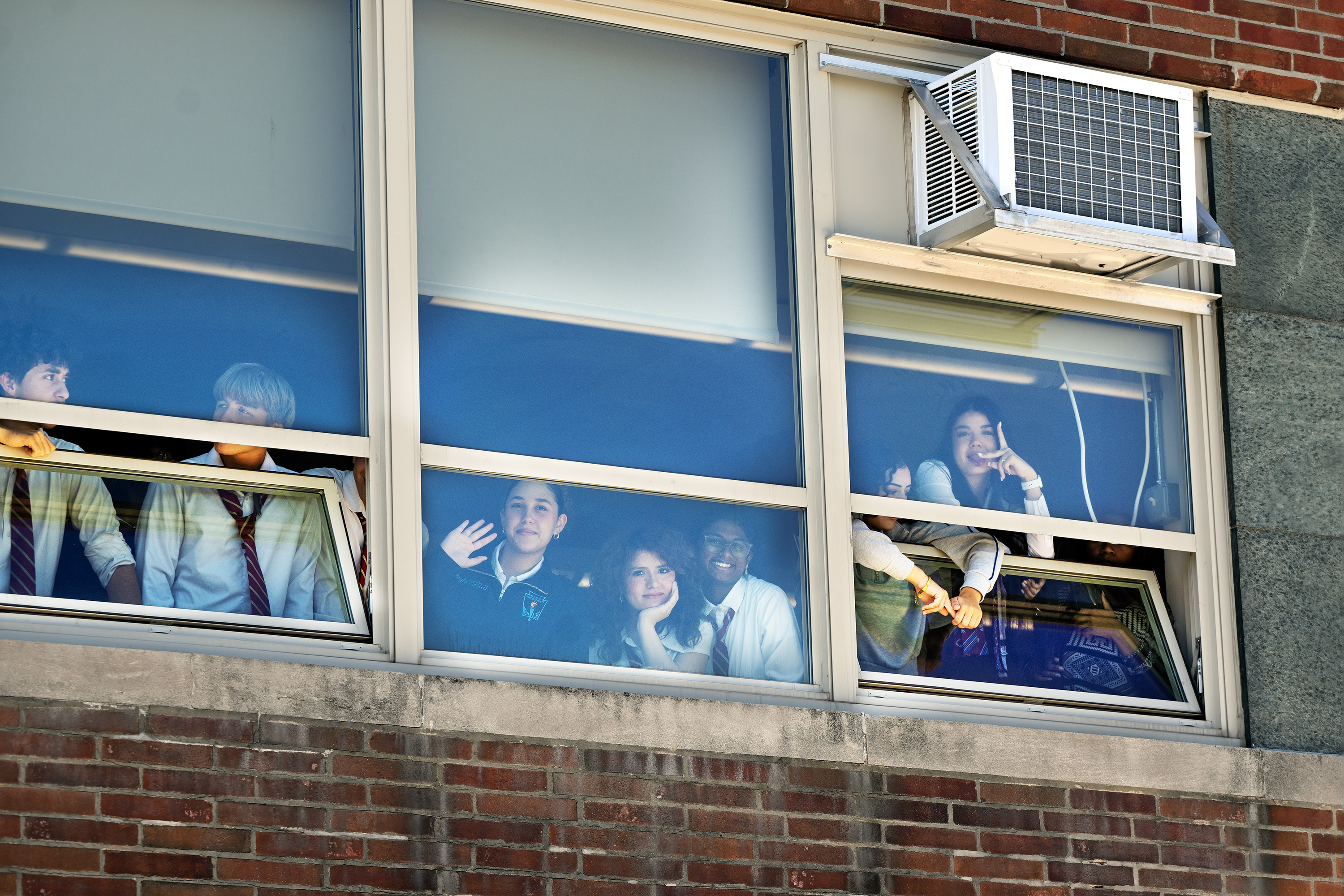
    Northeast High School watch from their classroom – with a window air conditioning unit – as Eagles quarterback Jalen Hurts leaves Tuesday, Sept. 15, 2026 following his appearance there to give the school $600k for an a new cooling system.Tom Gralish / Staff Photographer

    Asked why he was turning his attention to city schools, Hurts said he was influenced by his educator parents and the people who made a way for him.

    “It’s about service and showing up for those around you,” the quarterback said.

    Northeast High had window units cooling classrooms prior to Hurts’ announcement, but the auditorium, a hub of the school and the community, was tough to use in the spring and summer months, said Andrew Lukov, the school’s principal.

    “This changes everything for us,” Lukov said.

    A beaming Parker, who made sure to lead the adoring Northeast crowd in an E-A-G-L-E-S chant, spelled correctly, led the crowd in giving Hurts a standing ovation.

    “Jalen, on behalf of the entire city of Philadelphia, we say thank you for your gift,” Parker said. “You will have an impact on more than the 3,400 students who attend this school on a daily basis. You’ve also done something even more important: You’ve used your time, your treasure, and your celebrity to assist a constituency who will never be able to walk in your shoes.”

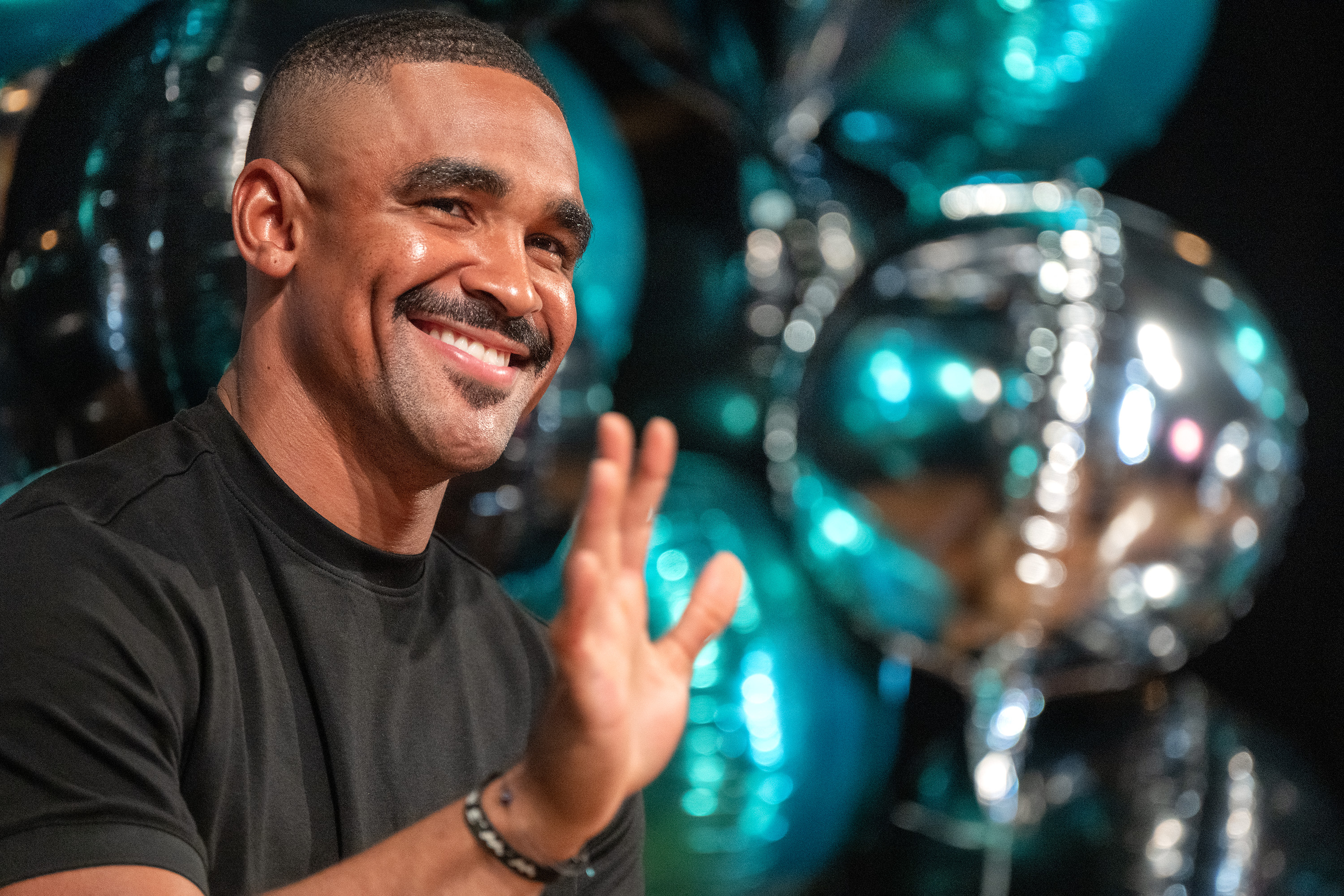
    Eagles quarterback Jalen Hurts as he appears at a rally in the auditorium at Northeast High School Tuesday, Sept. 15, 2026 to give the school $600k for an air conditioning system. With him onstage in the auditorium Northeast principal Andrew Lukov, School Superintendent Tony B. Watlington, Sr. and Mayor Cherelle L. Parker.Tom Gralish / Staff Photographer

    It feels a little surreal that a major space in an important school lacks adequate climate control in the United States, said Mekhriyona Ilkhomova, a Northeast senior whose speech earned a broad smile and a hands-over-heart gesture from Hurts.

    Hurts’ donation matters, not just because of the money but because of who he is, said Ilkhomova, a standout student and athlete.

    “It reminds us students of what we can become,” she said, “and what we can give back after becoming.”

    The state of the cool

    District officials had promised the entire system would be air-conditioned by 2027; the system appears off track to reach that goal.

    While Northeast is getting an upgrade, 52 schools lack air-conditioning.

    When temperatures are forecast to hit 85 degrees or higher by noon, those 52 schools are dismissed early. If the weather forecast calls for temperatures of 85 or higher before 9 a.m., those schools are closed for in-person instruction and remote learning days are called.

    That means unequal experiences, with students in some schools not missing instructional time when it’s hot, and those in a quarter of schools subject to interrupted schedules.

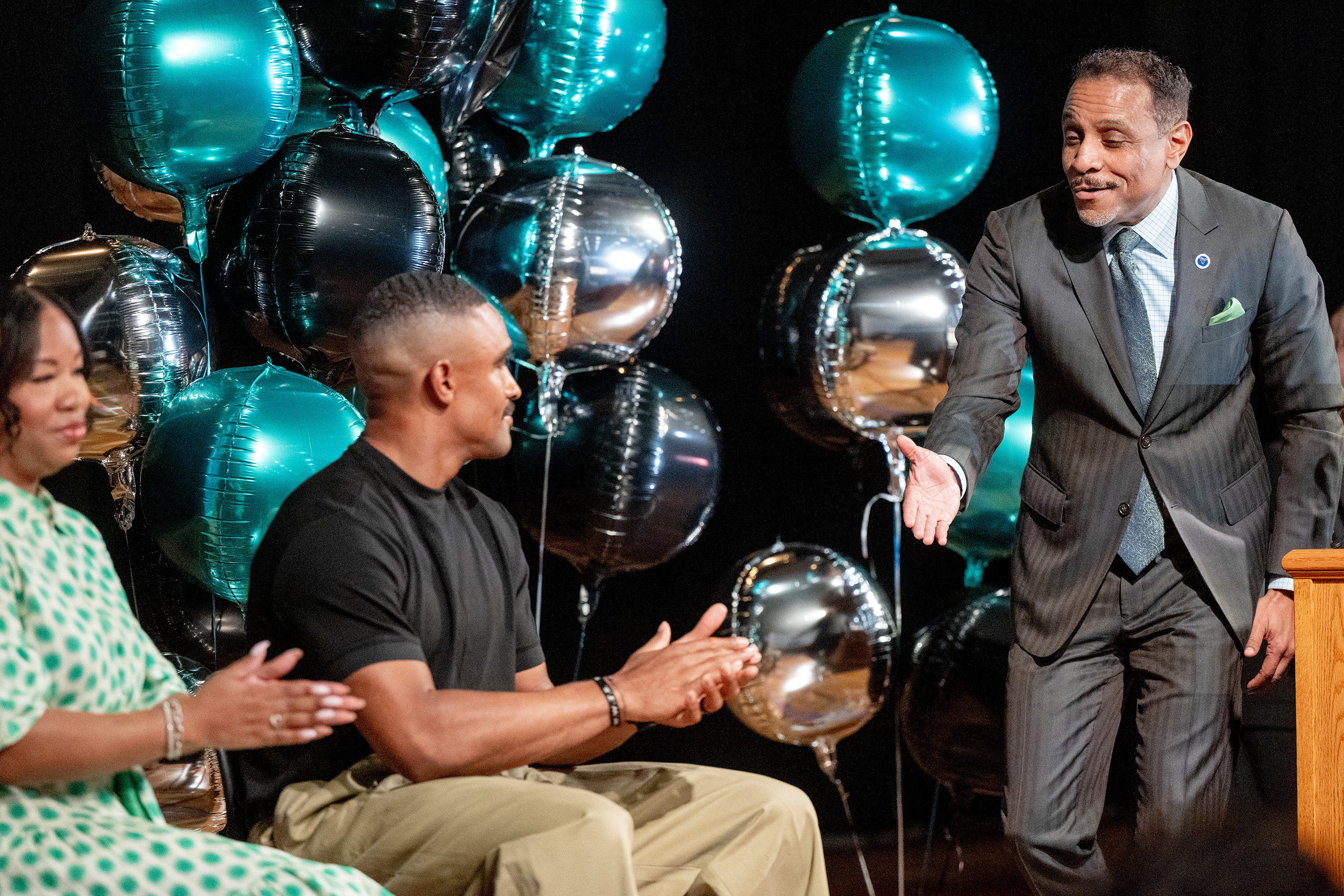
    School Superintendent Tony B. Watlington, Sr. (right) greets Eagles quarterback Jalen Hurts as he appears at a rally in the auditorium at Northeast High School Tuesday, Sept. 15, 2026 to give the school $600k for an air conditioning system. At left is Kathryn Epps, president & CEO, The Fund for the School District of PhiladelphiaTom Gralish / Staff Photographer

    Four weeks into a new school year, Philadelphia has had two heat-interrupted days at the 52 schools.

    Cooling the remainder of the 52 schools is not as simple as buying air-conditioning units: Many old buildings lack adequate electrical systems to support whole-school cooling.

    Those projects are complicated.

    An HVAC project at Kensington High went awry this summer, triggering asbestos issues that forced students and staff to relocate for the rest of the calendar year.

  • The Temple Alumni Behind Philly’s Big Summer

    The Temple Alumni Behind Philly’s Big Summer

    This summer, Philadelphia threw a 250th birthday party and invited the world.

    In the weeks surrounding Independence Day, Philadelphia welcomed visitors to major sporting events — including six FIFA World Cup matches at Lincoln Financial Field and the MLB All-Star Game at Citizens Bank Park — and bolstered the city’s annual traditions, including the Wawa Welcome America festival, which served as the centerpiece of its semiquincentennial celebrations.

    Putting on the country’s largest Fourth of July party was a labor of love, requiring the vision and hard work of thousands of people behind the scenes, many of whom were Temple University Owls. The passion for the city they demonstrated in their roles can be traced back to their roots on North Broad Street, where they developed the skills and connections that prepared them for moments like this.

    “It’s Temple alumni who drive and run this city behind the scenes,” said Jacki Mowery, Phambassador program director at the Philadelphia Visitor Center Corporation. “The positive outcomes from this summer all tie back to what we experienced and learned at Temple.”

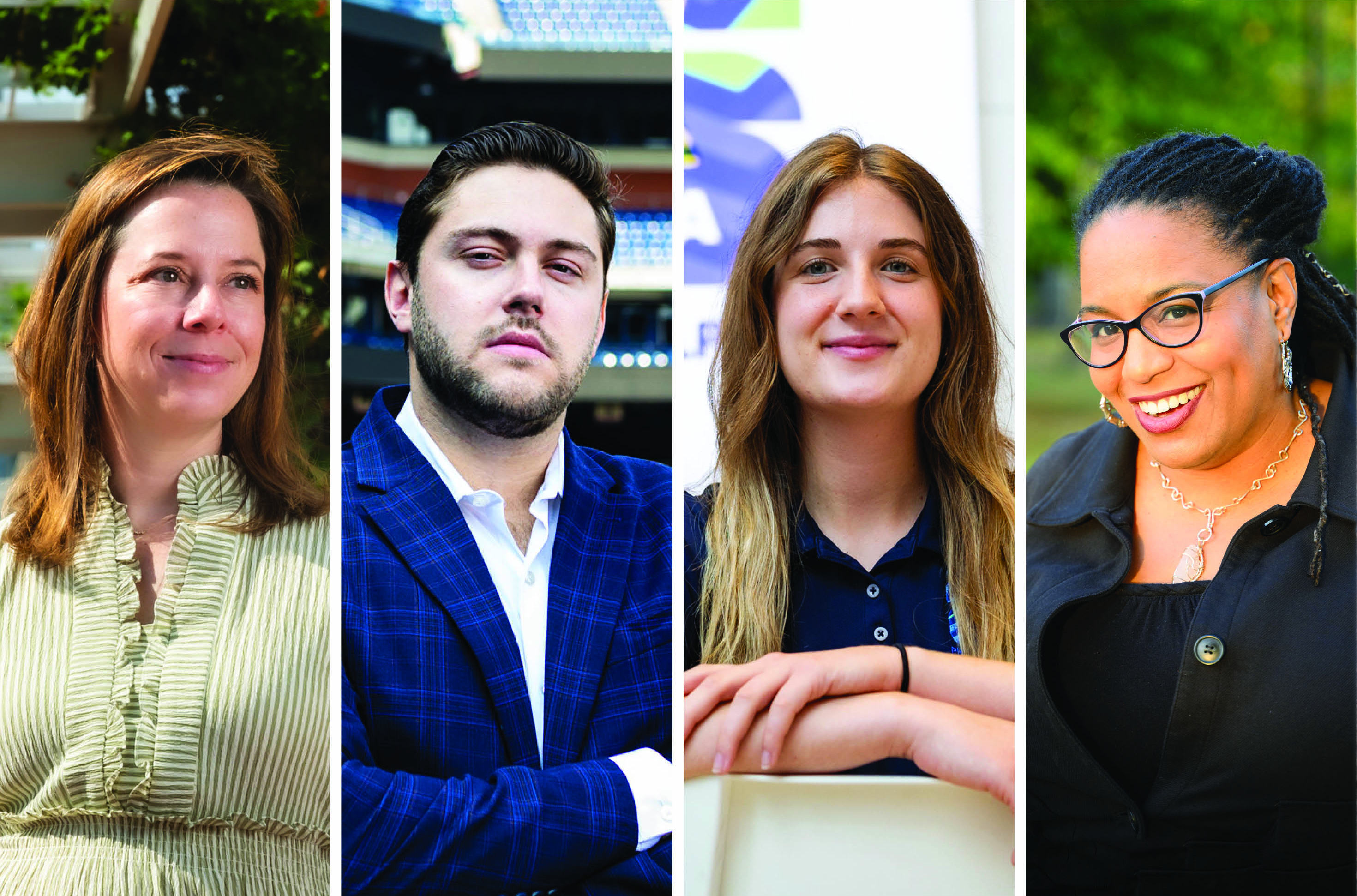
    Here’s how Mowery and three other Owls made Philly shine for the celebration of the century.


    Jacki Mowery

    Phambassador Program Director, Philadelphia Visitor Center


    As Phambassador program director at the Philadelphia Visitor Center Corporation, Jacki Mowery recruited more than 10,000 volunteers (including Temple students) to serve as stewards of the city by showcasing the best of Philly to visitors this summer. She structured the program and spearheaded activations, beautification projects, and celebrations in preparation for Philadelphia’s moment on the global stage.

    “My job has been to keep engagement going and to keep people excited, energized, and ramping up that love for Philly, which comes very naturally to me because I’ve always loved this city,” said Mowery, who majored in history as an undergraduate. She later returned to Temple for a second master’s degree in travel and tourism at the School of Sport, Tourism and Hospitality Management. Her graduate capstone project focused on how Philly can be known for food beyond cheesesteaks.

    Before joining the Visitor Center, Mowery worked in international education, managing study abroad programs at Temple and elsewhere. She once helped Philadelphians discover the world. Now, she helps the world discover Philadelphia. “I’ve gotten the chance to explore the world, but I always came back to Philadelphia and found the world here,” she said.


    Sean McClatchy

    Account Executive, Service & Retention, Philadelphia Phillies


    “Baseball is about as American as it gets,” said Sean McClatchy, an account executive with the Phillies’ season ticket sales and service team, graduate of Temple’s School of Sport, Tourism and Hospitality Management, and lifelong Phillies fan.

    McClatchy manages relationships with more than 350 clients and played a key role in ticket fulfillment for the 2026 MLB All-Star Game, coordinating VIP ticketing for the organization’s executives, partners, and business leaders while ensuring guests enjoyed a seamless game-day experience.

    He attributes his career opportunity with the Phillies to the resources offered to him at Temple. “I got this job because a guest speaker from the Phillies came to my class and I talked her ear off,” he said. “Here I am, eight years later.”

    For McClatchy, working for the Phillies is about more than baseball. “It’s become like family,” he said. “To work for the team I grew up rooting for in the city I love is pretty close to living the dream.”


    Whitney Constable

    Volunteer Program Coordinator, Philadelphia Soccer 2026


    Whitney Constable, volunteer program coordinator of Philadelphia Soccer, thrives behind the scenes where careful planning creates unforgettable experiences for fans. This summer, she managed the daily operations of more than 750 host city volunteers who welcomed people to FIFA Fan Fest and greeted them as they entered Lincoln Financial Field before World Cup games.

    “As someone who grew up in this region and attended Temple, it was special to play a part in welcoming international fans to share the love of soccer while showcasing Philadelphia’s history and culture at the same time,” said Constable.

    A graduate of the School of Sport, Tourism and Hospitality Management, Constable studied event and entertainment management with a concentration in tourism and hospitality. Through internships and contract work with Wawa Welcome America, Philadelphia’s Thanksgiving Day Parade, and the Pennsylvania Horticultural Society’s Flower Show, she gained the hands-on experience that prepared her for large-scale event operations.

    She hopes Philly left a lasting impression on visitors. “I wanted people to leave remembering not only the matches they attended, but also the kindness and hospitality they experienced here,” she said.


    Zorita Dorsey

    Festival Director, Wawa Welcome America


    After building a career behind some of the nation’s biggest live events — including managing entertainment at Walt Disney World, coordinating scripts for Miss America’s Outstanding Teen Pageant, and overseeing transportation for six consecutive Super Bowls — Zorita Dorsey was tapped to lead Wawa Welcome America in 2022.

    This year, as the Fourth of July tradition took on greater significance, the College of Liberal Arts grad was the driving force behind the signature event. At the same time, she served as producer of the Commonwealth Concert Series, helping bring marquee performances and civic celebrations to communities across Pennsylvania.

    Dorsey has remained closely connected to her alma mater throughout her career and will join Temple as an instructor this fall. “Temple shaped me into who I am,” said Dorsey. “I have always wanted to give back to the university that gave so much to me.”

    Read more about how Temple powers events and hospitality in Philly.

  • Better communication skills and ethical use of AI: How NBME’s new CEO sees the future of medicine

    Better communication skills and ethical use of AI: How NBME’s new CEO sees the future of medicine

    The National Board of Medical Examiners has named Suzanne Anderson the next CEO of the Philadelphia-based nonprofit that develops exams for medical licensing.

    She will succeed Peter Katsufrakis, who has led the organization since 2017, the board announced Monday.

    Anderson, who starts in October, will help steer the organization as the skills and competencies needed to practice medicine evolve. The organization creates the United States Medical Licensing Examination and other tests for medical students and resident physicians.

    Anderson anticipates greater emphasis on communication skills, the ethical use of AI, and what happens outside of the clinic setting.

    “Without having these assessments that ensure that people are developing the skills that they need, we wouldn’t have as high-quality a workforce as what we want in healthcare,” Anderson said.

    Anderson most recently served as regional president of SSM Health Wisconsin, a not-for-profit health system. She has also been involved in the National Board of Medical Examiners for the last 20 years, chairing the board and volunteering on committees.

    The Inquirer spoke to Anderson about the future of medicine in an interview lightly edited for length and clarity.

    What is your vision as the incoming CEO?

    My entire career, I’ve been really focused on the patient experience, quality and safety, and effective operations. The priorities for NBME will be to continue to innovate — because things are changing so rapidly — in order to continue to meet the needs of health professionals.

    That’ll mean focusing on competencies in addition to medical knowledge. Things like critical reasoning, communication, professionalism, and other competencies ensure that we have high-quality healthcare professionals.

    How have the exams evolved?

    Communication skills, as an example, are something that NBME is focused on and has new assessments to address. The goal is to help people have better communication with their patients and families.

    There are specific components of communication skills, in terms of creating a connection to the individual that you’re communicating with and communicating clearly in language that everyone can understand. It’s empathy.

    Are there any other trends that you’re seeing in how future doctors are tested and trained?

    One obvious trend is how AI will inform the development and assessment of skills. NBME has focused a lot on how we can use AI to support the human actions involved in providing human-centric care, as well as on the ethical use of AI.

    When professionals are presented with information from AI, how do they evaluate it critically and ensure that they’re getting the right information to support particular circumstances? And then, also, how can NBME use AI to help streamline the examination development process?

    What does the future of medicine look like?

    The future of medicine is going to be highly collaborative, with health professionals across all disciplines working together to meet people’s needs. There’ll also be more focus on what happens in the home.

    How do we help professionals work with patients outside of the normal office setting or hospital setting? You see it on the consumer side with wearables and having much more information at your fingertips that can help support the care that’s provided to you in more formal settings.

    How do you feel about becoming the next CEO?

    It’s an organization that is already performing at a very high level, and I’m just excited to be able to continue to help advance the mission.

  • Ex-Philly Fed chair is back at Wharton and on a quest to save the world financial system

    Ex-Philly Fed chair is back at Wharton and on a quest to save the world financial system

    U.S. borrowing is at record levels, interest rates are up, and Social Security is running low on cash. Yet new Federal Reserve Chairman Kevin Warsh has offered investors little information on whether the Fed will boost interest rates and fight inflation, or cut rates to feed growth.

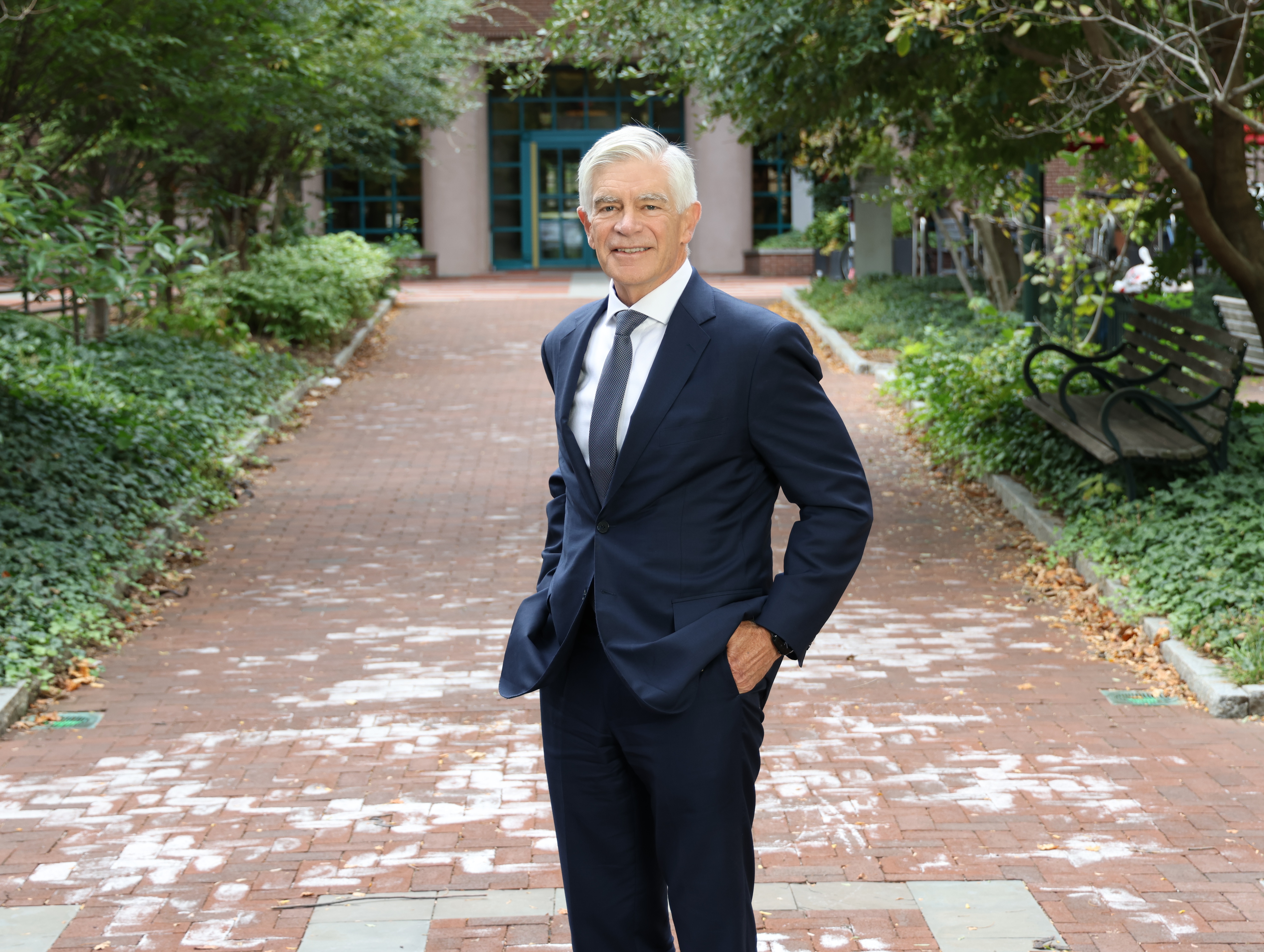
    As a past president of the Philadelphia Federal Reserve Bank, Patrick Harker sat in and sometimes voted at Fed Open Market Committee meetings that decided interest rate targets under Warsh’s predecessors from 2015 to 2025. He says it’s important for Fed leaders to speak clearly.

    An engineering Ph.D. who grew up in blue-collar Gloucester City, Harker spent the previous 15 years, first as dean of the Wharton business school at University of Pennsylvania, then as president of the University of Delaware, before he was chosen to run the Philly Fed by the search committee he headed after others declined the job.

    Harker finished his second five-year Fed term in June 2025 and reported back to Wharton the next day as a professor. He says he has been putting what he learned there to use.

    This interview has been edited for clarity and brevity.

    How did you align while you were with the Fed?

    People at the Fed asked: Was I a hawk, leaning toward higher rates to fight inflation? Or a dove, leaning toward lower rates to support jobs? I’m an eagle, loyal to this country. I’m for doing what the economy requires.

    I’m where the vast majority of Americans are: They’re sick of ideology. It gets us nowhere. It drives countries to ruin. That’s never been us.

    We are a pragmatic people. Let’s do reasonable stuff.

    Are you worried digital finance will spin out of control?

    My particular interest is around operational risks caused by technology. Those come in different flavors:

    • Concentration risk: Just a few key firms — Amazon, Microsoft — providing a lot of the financial infrastructure.
    • Model risk: Everyone using the same AI models. Some of my colleagues have found that if AI models set prices, they will collude [to illegally boost prices at consumers’ expense]. They will do the same with loans.
    • Fraud risk: Faster payments equals faster fraud.
    • Market risk, credit risk, and operational risk: We are looking down into the bowels of the systems moving the money and at cyber hygiene.
    Will hedge funds’ use of insurance companies to make risky private credit loans fuel the next financial crisis?

    If you pull one thread, will it start to fall apart? At the Fed, I was a bank supervisor. I worried about it. I still worry.

    It’s not big enough yet to threaten the system [as mortgage losses did in 2008]. But the ‘private’ asset risks eventually all filter back to the regulated institutions.

    I said that at a dinner of people in the private credit industry. They said, ‘We know what we are doing!’ They do; the first people in always know what they are doing.

    But there’s only so much talent. And now you have people on the fringe taking bigger and bigger risks. And again all hell will break loose, and everyone will have to deal with it. It will go beyond the skill set of the industry.

    At the Fed you wrote about radical changes in the workforce. Will AI kill jobs? Do we still need immigrants?

    You know Jevons Paradox? Technology puts people out of work, then becomes so cheap, demand for that technology explodes, and so do the jobs providing it.

    Will AI improve productivity? It better. Our birth rate is not replacing ourselves. Our immigration policy has flatlined.

    It’s the most basic rule of economics: If you want more output, you either get more workers, or better machines.

    I’m more worried that in the United States, we are really bad at helping people make transitions to new kinds of work. A kid will figure it out. But if you’re 40 or 50, what do we do with you? No one cares; you can understand their anger.

    Can Congress fix Social Security and the deficit?

    I’m less worried about Social Security because politicians know they can’t get reelected without solving the problem.

    With the deficit, they keep kicking the can down the road. It really depends on healthcare, a very large part of the U.S. budget. Economists are starting to talk about the Fed losing the ability to set rates [because it is too busy] keeping Treasury’s financing costs down. When debt gets too high, you can’t avert default.

    After the Supreme Court said the president can’t fire Fed officials, you wrote about the Fed’s ‘fragility’ on LinkedIn. How did readers respond?

    A lot of people want the Fed to be independent.

    Fed independence is not a slam dunk. And the Fed’s independence is only around monetary policy. Congress is free to change the bank regulations.

    So you have to earn that independence every day. And you have to defy the administration sometimes because it’s the right thing to do.

    I worry about the new chair [Kevin Warsh, who has promised to comment less than his predecessors]. The Fed needs to communicate more. Very clearly.

    In this country, we’ve all gone into our own herds, we don’t listen to the other side. But if there’s a vacuum in communications, someone else will fill it with their narrative instead of yours.

    You protect credibility the institution built over decades by explaining yourself.

    What can you make happen now that you’re back at Penn?

    I’m a tenured faculty member. I put together an MBA class. I’m publishing academic journal articles on fraud in payment systems. I had to dust off my quantitative brain.

    I’m director of academic engagement for Penn Washington. We work with faculty, bringing fact-based, objective content like Kent Smetters’ Penn Wharton Budget Project and Olivia Mitchell’s work on pensions and Social Security to Washington. They aren’t lobbying. They don’t tell anyone what to do. You want to do this; here’s what it costs.

    And I’m joining Itay Goldstein at the Wharton Future of Finance initiative.

    Patrick Harker outside the Wharton School, 2026.The Wharton School
    Billionaire investor Marc Rowan is at the center of your interests. He led a fight to change Penn’s leaders; he backed the Wharton Budget Project, and his Apollo led the private-equity charge into private-credit and insurance.

    What motivates him I’m not sure, but he loves this place. His father died when he was here, and the school stepped up with financial aid, he doesn’t forget that.

    What do you miss about the Fed?

    One of the great privileges of the Fed, when you go to the Open Market Committee, there’s no personal electronics. For two days you have nothing to do but seriously think about what everyone else is saying.

    Even if you disagree, it’s in a very professional way. To the public, Washington can look like a big food fight. But at places like the Fed, there are people seriously dedicated to their job.

    Are you worried for your grandchildren?

    There is hope. People worry everything’s gone nuts; we’re leaving the young people with a giant bill. And a political system that is seemingly broken.

    People peddling crazy ideas understand the brain very well: Push these panic buttons. But to quote [former President Richard] Nixon, there is a silent majority who want to have a better life. Not to fight culture wars.

  • Aramark forged a partnership with Penn Medicine for more affordable employee health benefits

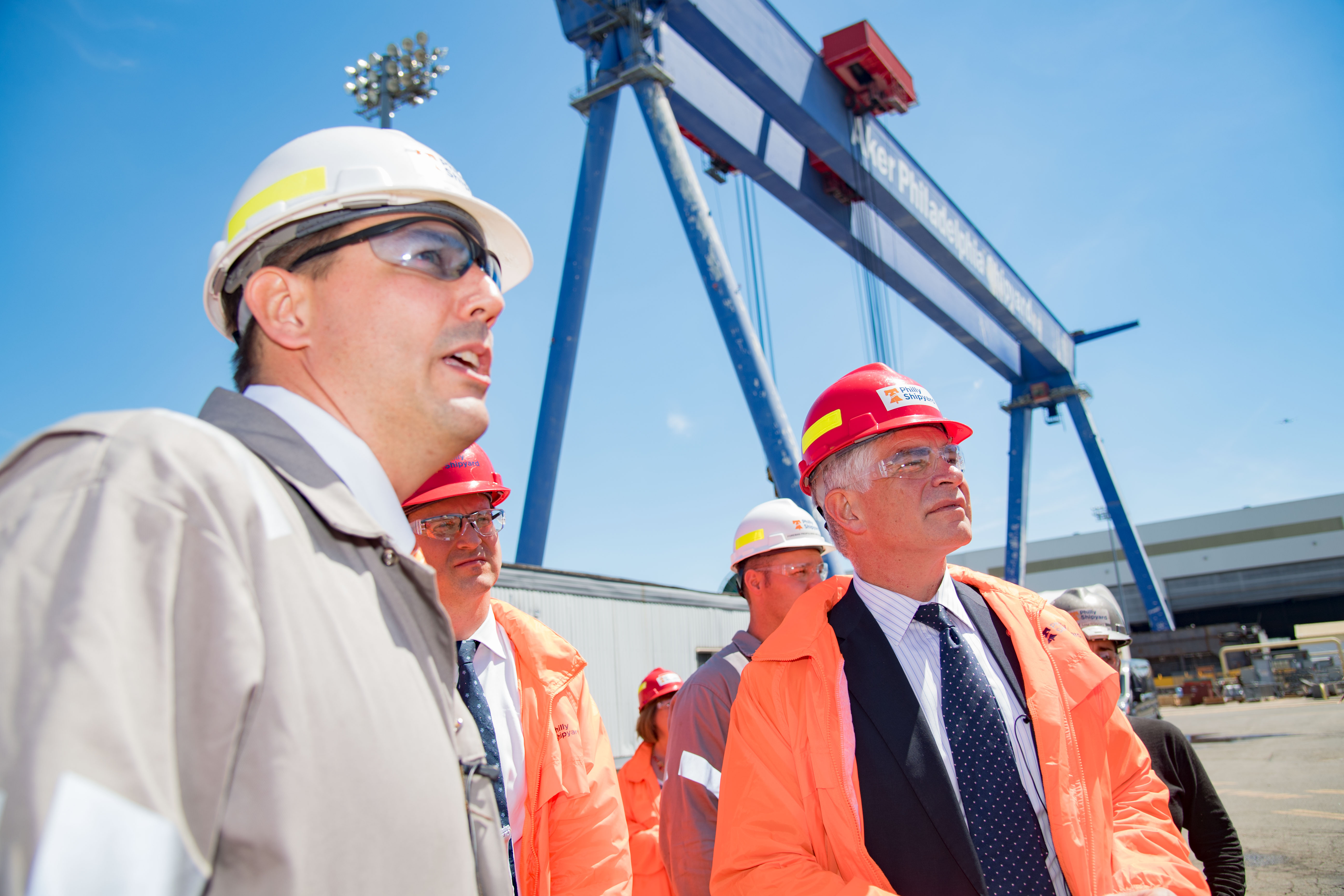
    Aramark and the University of Pennsylvania Health System launched a partnership this year to offer the food service giant’s Philadelphia-area employees healthcare in a test of a new model for reducing costs.

    Aramark employees who choose the benefit option, called the Penn Medicine Premier Plan, face no deductibles and lower copays when they and their dependents use Penn doctors and facilities.

    The move by Aramark into what is called direct contracting comes as employers are contending with years of surging healthcare costs. It’s an example of experimentation designed to slow spending growth in spending and perhaps improve quality, experts said.

    “We certainly would like to save money on the model, but its primary focus is to make benefits more affordable” by getting lower prices than it would get by going through an insurer, said James Startare, Aramark’s vice president for benefits.

    The model is called direct contracting because Aramark negotiated prices and other terms of the contract directly with Penn, instead of relying on an insurer to negotiate prices.

    It’s Penn’s first such contract and the first large-scale direct contract in the Philadelphia region. Aramark talked with other systems in the area, but Penn emerged as the partner willing to enter into the experimental contract. Penn described the deal as a multiyear contract ultimately expected to roll over from year to year.

    Aramark didn’t provide details on savings, but its goal was to negotiate prices that are lower than those it would pay though a benefits administrator, such as Aetna.

    By eliminating deductibles that function as a barrier to care, the plan is expected to encourage primary care visits. This could reduce long-term costs by catching patients’ health problems early.

    For health systems like Penn, such contracts offer a chance to increase market share, streamline payments, and hone their ability to manage the health of a population.

    The Penn Medicine Premier Plan features no deductibles and lower copays when Aramark employees and their dependents use Penn doctors and facilities. Harold Brubaker / Staff

    Aramark’s move into direct contracting

    Penn is Aramark’s third major direct contracting partner.

    Employers, even those like Aramark that are self-insured, typically rely on an insurer’s negotiated prices.

    With the new direct contract, an Aetna administrative unit still processes the claims for Aramark, and patients who go outside Penn for care use the Aetna network.

    Aramark launched its first such contract in 2024 in Dallas and expanded to Chicago last year, each time getting a strong employee enrollment, though it took two years in Chicago, Startare said.

    In the Philadelphia region, 35% of eligible employees (those who work 30-plus hours a week on average) have chosen the Penn plan, which took effect Jan. 1, Startare said. That amounts to 800 employees.

    Coincidentally, the health contract started at the same time as Aramark’s contract to manage food and other services at Penn Medicine facilities, but the two deals were not linked.

    Employees who were moving to Aramark with the food services contract were worried about losing their Penn benefits, said Megan Lieberman, a patient services manager at Chester County Hospital who was among those who became an Aramark employee.

    But the Penn Premier Plan was very similar to what they were used to. “It was definitely a huge relief to know that we got to hang on to those benefits,” Lieberman said.

    A separate contract covers pediatric services at Children’s Hospital of Philadelphia for Aramark employees and their families.

    Next year, Aramark plans to take direct contracting into central New Jersey, but did not name the system it’s using there.

    What’s in it for Penn

    The Aramark contract is an opportunity to focus on “chronic disease management, preventive care, cancer screenings, things like that” for a specific group of 1,400 patients who are motivated to stay within the Penn system, said Mark Angelo, Penn’s chief medical officer for population health.

    A key goal is to reduce the deductibles, copays, and prior authorizations that can slow access to preventive care. The model is designed to take care of people before they end up in high-cost places like the emergency department or hospital, Angelo said.

    Keeping more patients within Penn is expected to result in savings because of better care coordination and fewer repeated tests, Angelo said. Penn Premier plan members can seek care outside of Penn, but it will cost them more out-of-pocket.

    As it is, the typical Penn patient also uses other health systems for some services, said Roy Schwartz, Penn’s vice president for payer strategy.

    “Sometimes it’s the right choice, sometimes it can fragment their care,” Schwartz said. “There should be savings just simply coming from having integrated, coordinated care at a place like Penn.”

    Penn does not yet have much of its own data on Aramark employees, but indications from Aramark are that the plan’s members were using more Penn services in the first six months, Schwartz said. “It was not just patients who were using Penn anyway for pretty much everything.”

    Penn and Aramark officials plan to meet regularly to review results and consider modifications. “We’re hoping this works out well for everybody because we’d love to do some more of these,” Schwartz said.

    Momentum behind direct contracting

    Employers nationally have long contracted directly with doctors and health systems for specific procedures, like joint replacements, cancer care, and heart surgery. For years, they’ve also paid directly for primary care through on-site clinics.

    Aramark’s move to an all-encompassing healthcare plan with a single provider fits into a newer trend gaining momentum nationally. Investors have created platforms like Cost Plus Wellness, Mishe Health, Nomi, and Transcarent to help health systems implement direct contracts.

    Northwell Health, a major health system in New York and Connecticut, started a for-profit subsidiary called Northwell Direct and now has more than 70 contracts that cover more than 300,000 people.

    Northwell Direct’s biggest contract covers 100,000 building service workers in the New York area and their dependents. It took effect this year and is expected to save 20% in the first year.

    Big savings to start are not guaranteed.

    “They may not go into it with a lower cost, but they’re going to go into it with better access, better quality for their employees, and what they’re finding is eventually those lower costs will come,” said Jenny Goins, chief of staff at the National Alliance of Healthcare Purchaser Coalitions.

    The Washington nonprofit is putting together a direct contracting advisory council to help more employers to do what Aramark is doing, Goins said.

    The model is not expected to replace traditional coverage anytime soon in the Philadelphia region.

    “It is not for everyone, and it does take effort and coordination on the part of the employer,” said Tom Belmont, CEO of the Greater Philadelphia Business Coalition on Health. “Also, some health systems are ready for the discussion, while others are not.”

  • Meet the South Jersey business making food carts for Jersey Shore vendors and Disney World

    Meet the South Jersey business making food carts for Jersey Shore vendors and Disney World

    In a country-industrial stretch of Hammonton halfway between Philadelphia and Atlantic City sits a concrete-block maze of machine shops, where workers have built thousands of stainless-steel hot-sandwich and coffee carts and catering trucks.

    This is the one-story home of Custom Mobile Food Equipment, which for 74 years has built these customized portable kitchen-storefronts of varying sizes, and kept them on the road with extra helpings of customer support. They roll onto Jersey Shore boardwalks and Center City street corners, at weeklong public festivals and private events across America, and in fancy resorts and on military bases abroad.

    It’s a South Jersey fixture, with Camden roots and deep Philly ties.

    “We started small,” with hot dog carts cut to fit, not block, city sidewalks, said Custom vice president David Kyle. He said his family helped Philadelphia officials write the city’s street vendor ordinances, and made sure the carts fit.

    Custom has outlasted food fashions and changes in the ways workers lunch. Kyle said he’s confident the enterprise will outlast recent inflation, global competition, and import tariffs: “A lot of our business is repeat business, and the big names we go after,” he said during a tour of the plant. “People rely on us to turn out a product that will last.”

    From pony-cart produce to theme-park fixture

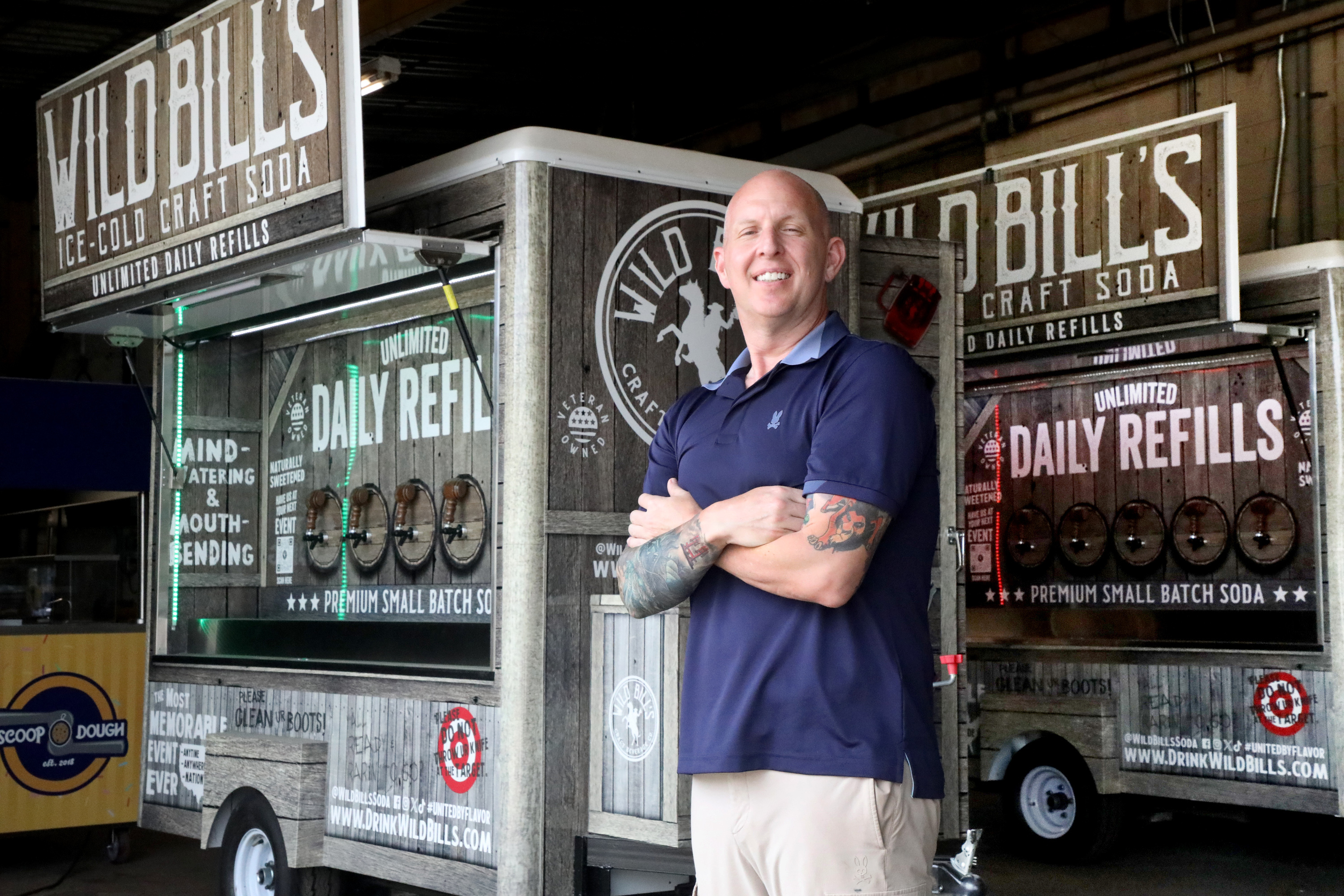
    Lehigh Valley-based Wild Bill’s Craft Beverage Co. serves its old-fashioned sodas from kegs mounted in Custom vehicles of several sizes. They sell drinks at crowded motorcycle rallies in Gettysburg and Sturgis, S.D., the Ohio State Fair, the Great State of Maine Air Show in Brunswick, San Diego Comic-Con, and Schuylkill regattas.

    “These are high-end, unique stands. We have 60 of them. We add a couple a year,” said Wild Bill’s chief executive, Mike Quilty. “One of our franchisees in Utah just drove one of Custom’s self-propelled Ford barrel wagons to Vancouver.”

    To make trips like that, the equipment has to be built well, Quilty said, noting Custom’s “unlimited support” for when technical issues arise, which doesn’t require buying a service contract.

    Custom’s late founder, William Sikora, developed the catering truck in the early 1950s as a kitchen on wheels installed on a Detroit-made chassis. Sikora as a grade-school kid in Camden had sold vegetables from a pony-drawn cart, then opened a grocery. He bought apartment buildings and diners, and became a top officer of First Peoples Bank.

    Walking room to room past heavy presses and cutters on the Hammonton shop floor, Sikora’s grandson Kyle said 40 workers build more than 100 pieces of equipment a year — food trucks, trailers, catering wagons, specialty equipment with kitchen-sized stoves, refrigerators, freezers.

    “We’ve sold to Disney World and SeaWorld, Sesame Place, and U.S. bases in Japan,” Kyle said on a muggy midsummer morning as room fans, metal-forming machinery, and new-cart test motors whirred. “We have 18 projects going right now.”

    Custom built 32 commercial kitchens on caster wheels for Carnival Cruise Line’s Calypso Lagoon in the Bahamas, which opened last year, with rounded bull-nose counters instead of sharp industrial edges to accommodate peak work flow.

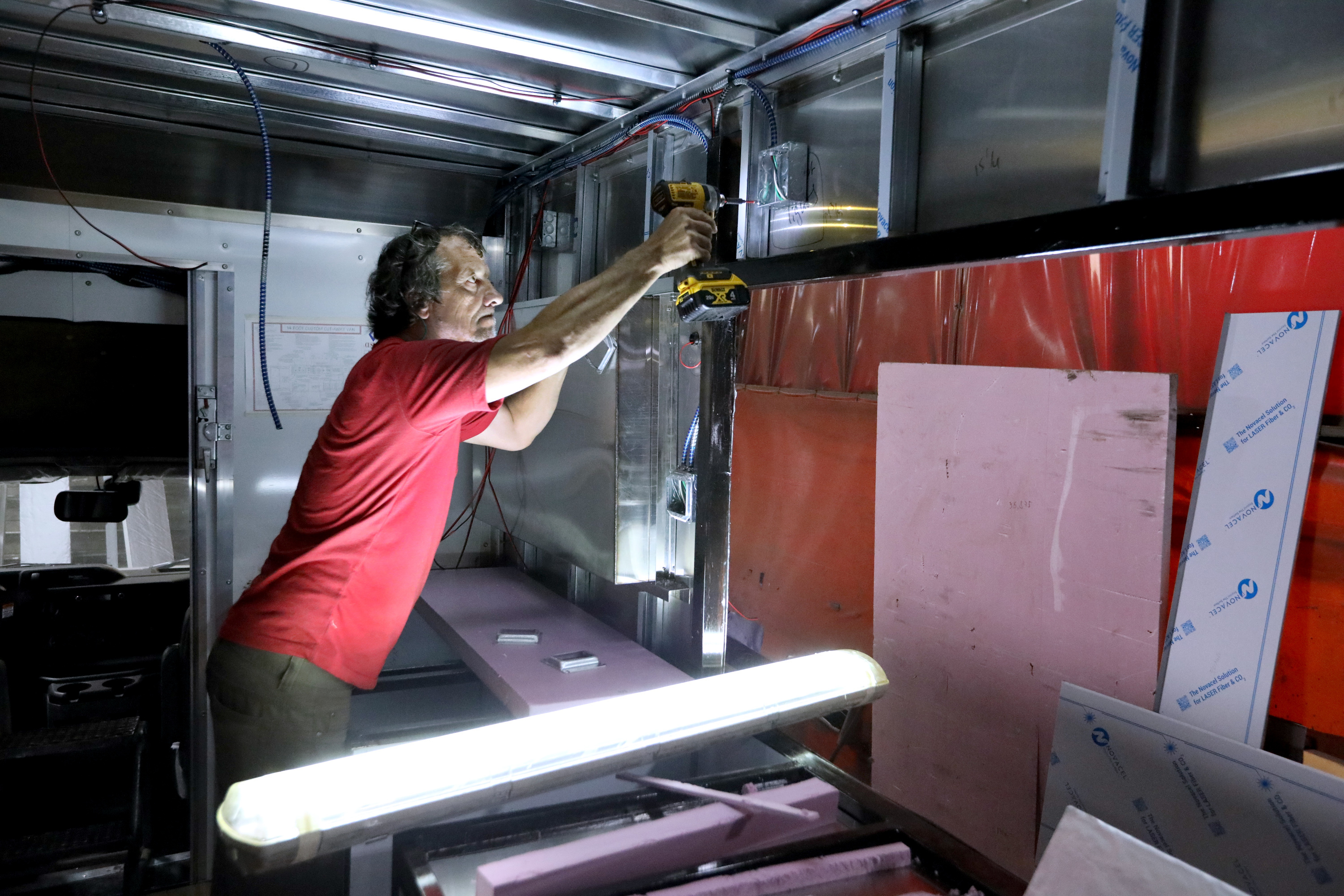
    Paul McIlvaine, an electrician, works on the interior of a Chickie & Pete’s food cart at Custom Mobile Food Equipment, in Hammonton, Tuesday, July 21, 2026.Vernon Ogrodnek / For The Inquirer

    How much does it cost to launch a kitchen cart?

    Today, Custom’s basic Model 525 carts retail for around $6,500. For that sum, plus storage, food, fuel, and licensing costs, “you’re in business serving food,” said Kyle.

    “It’s rewarding, you get to meet so many kinds of people,” he added.

    New catering trucks start at more than $125,000, like a high-end camper.

    All the carts and trucks are built from stainless steel sides, stamped with Custom’s distinctive elongated-diamond pattern over tubular steel framing. The company uses multiple steel suppliers, including Allegheny Ludlum Steel Corp. in Pittsburgh. It was harder to find domestic steel when the U.S. auto industry demand was stronger, Kyle said. But now materials costs are much higher, often in response to higher tariffs.

    “We try to use built-in-USA [materials], but some stuff you cannot get here,” Kyle said. Robertshaw Controls, for example, makes the only burner controls that fit Custom’s standards. They moved the operation to Mexico from Texas, so Custom now imports them.

    Cart metal is just one inflating cost vendors face, said Christian Subashi, second-generation owner of Loudogs hot-dog carts in Sea Isle City. Refrigerators were 50% cheaper before last year’s new tariffs, he said, and sausage prices have “gone through the roof.”

    Kyle said his company’s hot-dog cart price “has gone up $1,000 or $2,000 in 10 years,” lower than the general inflation rate. “We have to absorb some. It’s how you do business,” he said. He’s confident steel prices will stabilize eventually.

    The future of food carts

    The company has no plans to automate, Kyle said. “All our products are custom built — handmade and hand-fabricated. No two carts are exactly alike,” he said, noting that the company also retrofits and rehabs units as needed. “They can last forever.”

    “Our pricing is more, but it lasts longer than assembly-line stuff coming in from Mexico or China at low cost.”

    One once-robust market that has all but evaporated is carts for vendors who work construction sites. Custom employed over 100 during the building boom of the late 1990s. The company built a catering truck a day, on average, back then; now it’s closer to one a week.

    “Wawa and DoorDash are delivering deli trays to jobs sites now. And Wawa has built out so many stores in their area, guys can just leave the job and run to Wawa. So that business is down for us,” said Kyle.

    The focus now is on larger orders that can be built more efficiently. Plus it’s gotten harder, Kyle said, to hire skilled craftsmen.

    Local buyers of carts and trucks include Shore ice cream and water-ice vendors, as well as the food vendors that sell at breweries, thanks to the New Jersey’s restrictions on breweries serving food

    But Custom is also very much “a national brand,” said James Evans, who runs the food-truck division for Ocean City-based Manco & Manco Pizza, including eight Phillies stadium locations.

    Like Custom, Manco is a third-generation South Jersey business, and Evans said he wouldn’t have gone anywhere else to build stadium-ready trailers. The two firms cut a deal last February for Custom to build an initial “food truck you can drive, available for private parties, corporate functions, MLB events, anywhere we can take a truck.”

    The first was delivered in July, with four propane-fueled Baker’s Pride deck ovens “to cook our pizzas to Manco standards.”

    Custom faces a string of manufacturing challenges with any order, Kyle said.

    But from Manco’s perspective the passage of his project from plan to delivery “was seamless,” said Evans.

    “As we morph into their larger trucks, we will add wings and tenders,” he said. “If everything in business and life went that easy, it’d be great.”