Tag: Philadelphia Parking Authority

  • Philadelphia protesters demanded PPA stop leasing parking spaces to ICE

    Philadelphia protesters demanded PPA stop leasing parking spaces to ICE

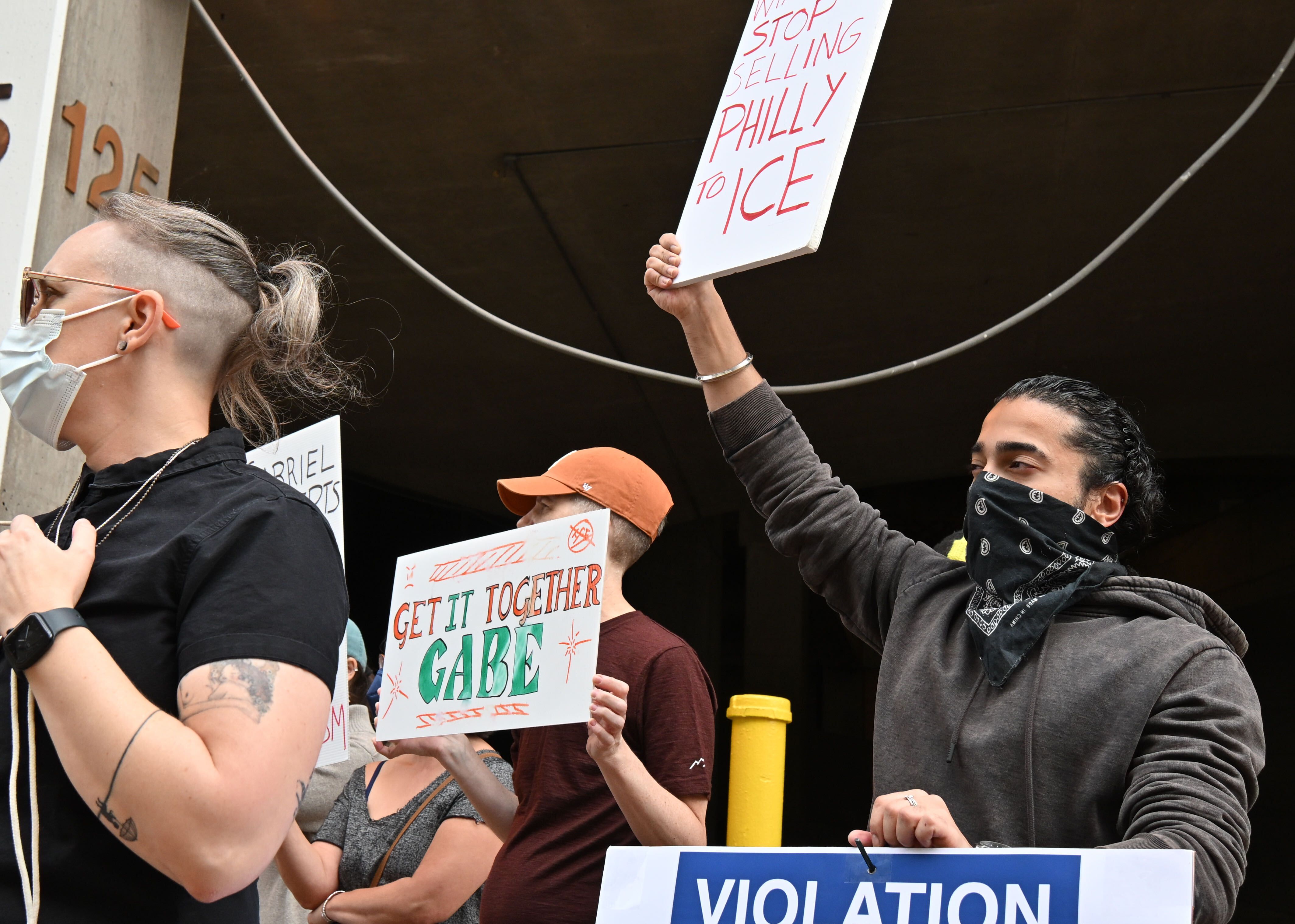
    About two dozen No ICE Philly activists gathered Saturday outside a parking garage in Old City, demanding the Philadelphia Parking Authority end an arrangement with Immigration and Customs Enforcement.

    At issue are 16 parking passes at the federally owned garage on Second Street, which is managed by the PPA. The group sang protest songs, held signs, and passed out informational flyers that resembled oversized PPA parking tickets.

    “Who doesn’t know what these things look like, you know?” said one activist handing out flyers.

    Group organizer Jay Bergen said the rally is meant to pressure the PPA — and to let people know that ICE is using the parking garage.

    “It’s scary that you could be parking downtown, and unbeknownst to you, parking next to an ICE agent,” Bergen said.

    Bergen, a 34-year old pastor at the Germantown Mennonite Church, pointed to public records showing a $53,520 contract that allows “for parking of government vehicles for ICE Homeland Security investigations” at the garage.

    That contract was set to expire at the end of September, but another one, beginning in October and running through at least next September, gives Department of Homeland Security “16 leased parking spaces,” records show. ICE is part of DHS.

    PPA spokesperson Martin O’Rourke declined to comment on the contracts.
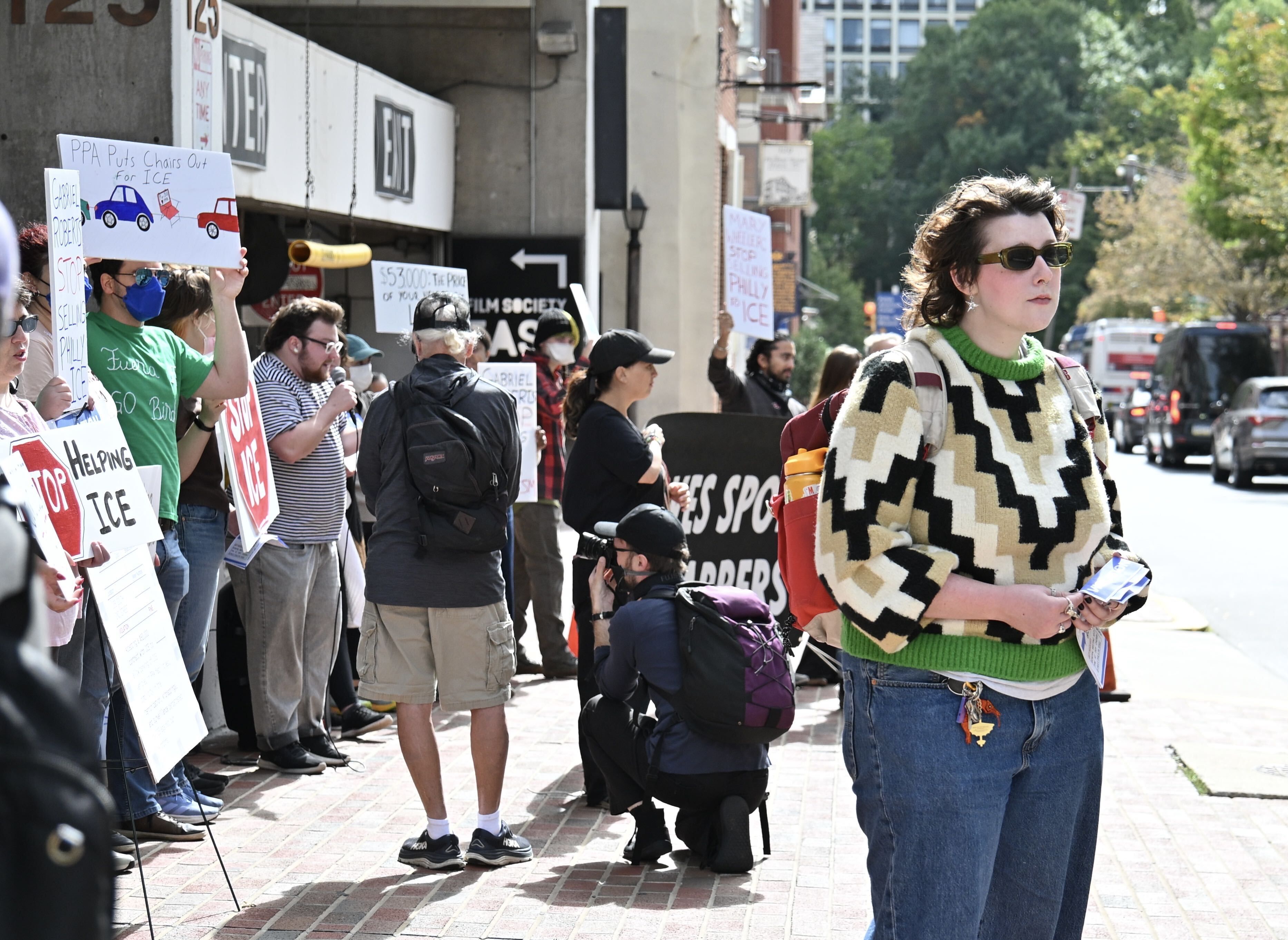
    An activist holds “violations” resembling PPA parking tickets to pass out to people, while a crowd gathers to demand the PPA stop leasing parking spaces to ICE.Brett Sholtis

    Bergen said the group opposes ICE for “kidnappings” of immigrants and others, including people who have lived legally in the community for decades. One recent example is a 30-year-old nurse from Delaware County, who was arrested while taking her son to Disneyland.

    Bergen said most people detained by ICE did nothing wrong. Some had minor lapses in paperwork or had been convicted of summary or misdemeanor crimes.

    “Their goal is terror. It’s not public safety in any meaningful way,” Bergen said.

    The local ICE field office did not respond to a request for comment Saturday.

    At the rally, protester Akarsh Balaji said that the amount of money PPA makes on the contracts is “less than what they spend every year on salt to de-ice the streets.”

    Balaji said he’s seen ICE harass his Puerto Rican neighbors in West Kensington. Puerto Ricans are Americans — so is Balaji, who is of Indian ethnicity — but that doesn’t seem to matter, he said.

    “Nobody should have to live in fear, or be told that they’re harmful to society,” Balaji said.

    Balaji said he got involved with the group in February after feeling a need to do something, “and be part of a movement that is so much bigger than I was.”

    No ICE Philly has been active since ICE ramped up activities under the Trump administration last year. In January, protesters blocked vehicle access to a Center City garage used by ICE. In March, nearly a dozen protesters were arrested while blocking the garage.

    “We want to make it as difficult as possible for ICE to do its job,” Bergen said.

    In Philly, ICE has faced obstacles from residents and elected officials. In April, the city adopted some of the nation’s most aggressive polices aimed at restricting ICE. The legislation took effect in July but the federal Department of Justice sued the city over some of its directives.

    Bergen said ICE has changed its tactics since early this year, when its Operation Metro Surge in Minnesota — and the killings, captured on video, of U.S. citizens Renee Nicole Good and Alex Pretti — led to overwhelming public opposition to the agency.

    “But the fear has not gone down. I heard this week about someone whose mother is afraid to go to doctor’s appointments, because she’s afraid ICE might grab her,” Bergen said.
  • A pub owner, a viral crossing guard, and an ASMR comedian will judge Saturday’s Parallel Parking Championship

    A pub owner, a viral crossing guard, and an ASMR comedian will judge Saturday’s Parallel Parking Championship

    Things are starting to line up like a perfectly positioned side-view mirror for the first Philadelphia Parallel Parking Association (PPPA) Championship Saturday, with final details about the event being released this week.

    Fifteen drivers, each of whom claims to be the best parallel parker in the city, will go bumper-to-bumper in a series of challenges from 1 to 4 p.m. at Headhouse Plaza in Society Hill to determine who’s telling the truth and who’s full of hot air.

    The competition is being held by the PPPA with the South Street Headhouse District serving as co-presenter. Formed this year, the PPPA is a semi-silly group created by self-proclaimed Commissioner Adam Wodka of South Philly that takes the art of parallel parking very seriously. Its executive board is made up of seven of Wodka’s friends.

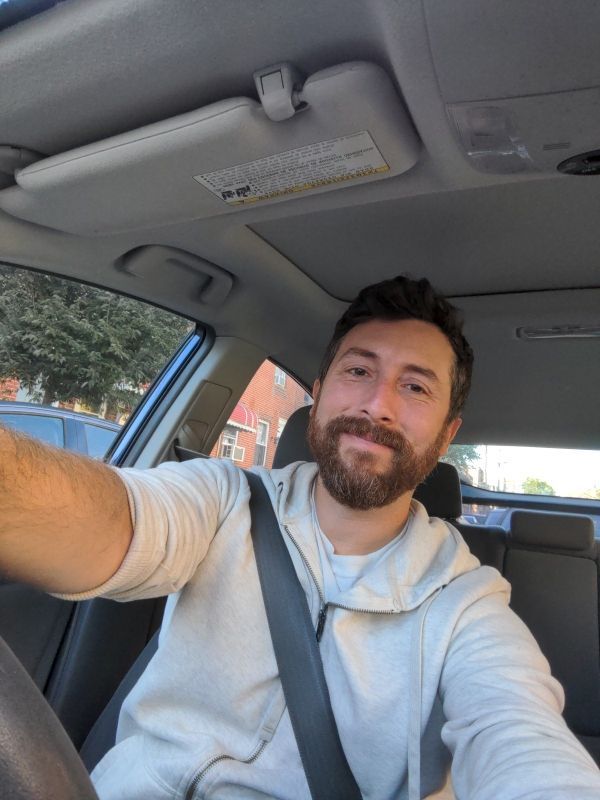
    Philadelphia Parallel Parking Association Commissioner Adam Wodka behind the wheel.

    Despite similarities in their logos, the PPPA is not associated the Philadelphia Parking Authority (PPA).

    Earlier this month, Marisa Magnatta from WMMR’s Preston and Steve Show was announced as the event’s emcee and on Tuesday, the PPPA revealed its three local celebrity judges.

    Among them is Fergus Carey, the longtime owner of Fergie’s Pub and several other drinking establishments across the city, who’s generally known in Philly by just one name, Fergie, because around here he only needs one, like Cher.

    Someone fairly new to the Philly limelight who came onto our screens and into hearts this spring is also serving as a judge — crossing guard Jamele Ransom. In May, Ransom gave an animated interview to NBC10 about witnessing a carjacked truck crash into a playground and he gave that interview while actively eating a soft-serve vanilla ice cream cone the entire time. The clip quickly went viral, with people hailing Ransom as a Philly “legend” and “hero.”

    Rounding out the trio of judges is comedian and social media influencer Betsy Kenney, whose ASMR videos, which are spoken with a strong Philly accent and feature sounds like the soft crushing of wooder ice, have been wildly popular online.

    Elevator Machine Room will DJ the event and comedian Rebekah Rickards will serve as “The Ref.”

    Just shy of 900 people entered the competition in the month applications were open, according to Wodka, with many submitting videos in which they illustrated their skills or told tales of their parallel parking prowess. Ten contestants were chosen by the PPPA and the remaining five were voted on by the public.

    Many of the drivers are going by nicknames like “Pirate One Shot” and “Missy Parks Good.” One competitor, Mary Zheng, was a contestant on Survivor, and another, who’s going by the name “Dark Transit,” is a SEPTA bus driver. Some filmed their video applications on the street or in their car, and at least one guy, “Joe Cocomo” of South Philly, appears to have filmed his lying in bed.

    “I’ve been parallel parking since I was 8 years old,” Cocomo said in his application video, which is posted to the PPPA’s Instagram page along with those of the other finalists.

    The contenders hail from neighborhoods across Philadelphia, from Uptown to South Philly and from Eastwick to West Mount Airy, and they range in age from folks in their 20s to people in their 70s. (There was a 90-year-old finalist but she recently backed out.)

    Contestants are required to use their own vehicles and will compete in three categories:

    1. One shot: Get closest to the curb in one attempt.
    2. Tight squeeze: With 18 inches of clearance, park closest to the curb using the least amount of moves.
    3. Under duress: Park as fast as you can while faced with distractions.

    The judges will score each contestant on a 10-point scale based on speed, competency, proximity to the curb, and flair. The three drivers with the highest scores will move on to the final round, a “pure show me what you got,” where one will be crowned best parallel parker in Philadelphia 2026, according to Wodka.

    Initially, the PPPA was going to allow backup cameras in the competition, but it has since reversed that decision.

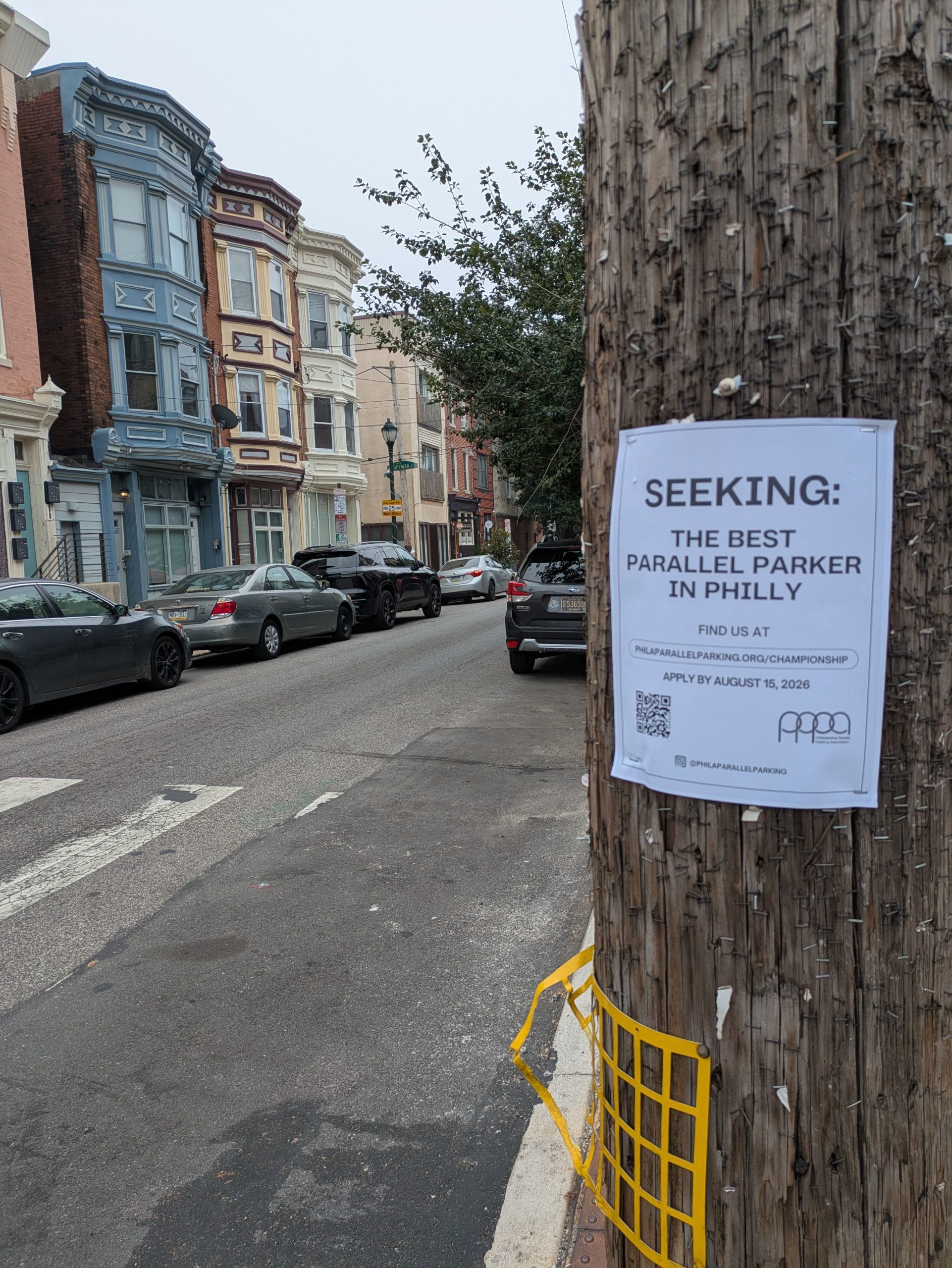
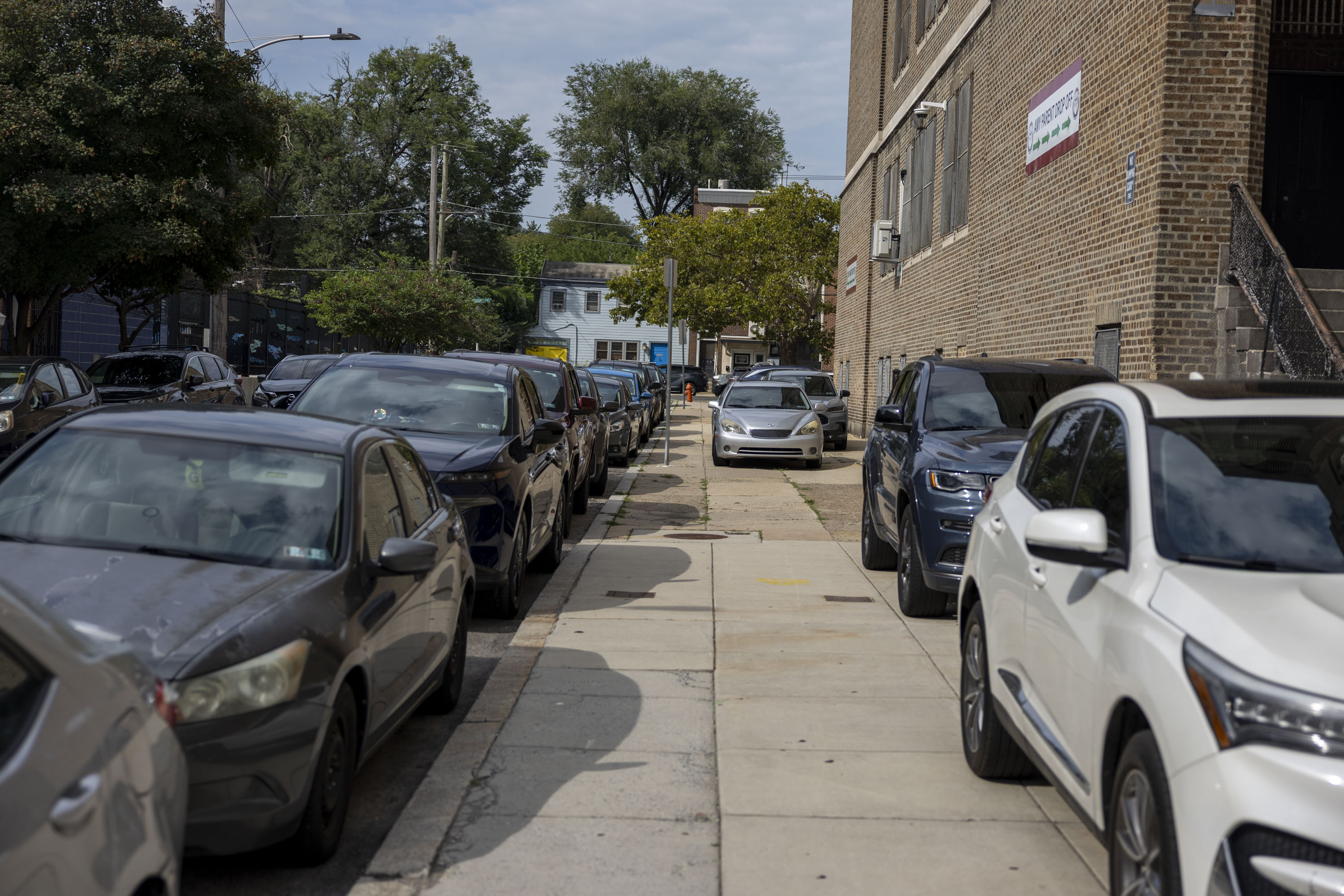
    A sign advertising the 2026 Philadelphia Parallel Parking Association Championship is affixed to a pole across from some fine examples of parallel parking in the city.

    “While going through the contestant applications, so many people took pride in calling out that they don’t need it or use it that we decided for someone to be the Best Parallel Parker in Philadelphia it should be earned through the grit of doing it old-school,” Wodka said via email.

    Saturday’s competition will also feature a parallel parking practice for kids, merchandise, and the debut of the PPPA’s mascot, Parallel Pete, who is an orange traffic cone.

    The winner of the PPPA Championship will receive best parallel parker in Philadelphia bragging rights for a year, a trophy that will include a piece of a curb, and $76 to cover their next parking ticket.

  • Fewer people are running red lights, PPA says

    Fewer people are running red lights, PPA says

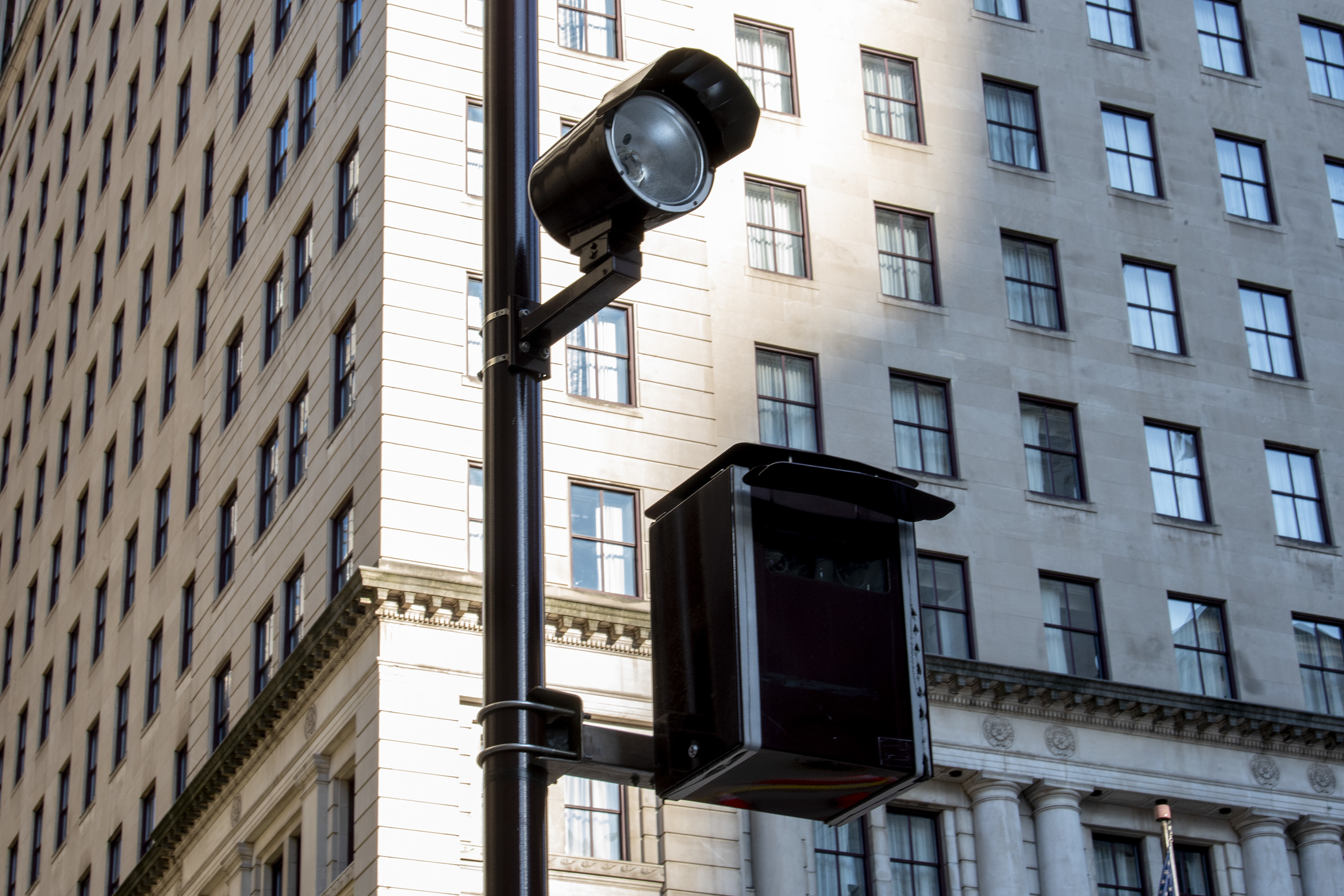
    Automated red-light enforcement cameras caught up to 17.4% fewer violations this year than in 2025, according to the Philadelphia Parking Authority’s annual report to the state legislature.

    Those cameras have been on guard in the city since 2005, but the program will expire next July, unless legislators renew the law that authorized them.

    “The numbers speak for themselves, and our hope is that they see the benefit of it,” said Gabe Roberts, interim executive director of the PPA.

    Recorded violations citywide declined from 340,931 in fiscal year 2025 to 338,979 in fiscal year 2026 — a decrease of 0.58%

    However, four new intersections were added at different points during this fiscal year. For the PPA, the fiscal year runs from April 1 through March 31.

    Excluding those four intersections, violations at existing program locations declined by 17.4%. Compared with 2024, they dropped 10.4%.

    “The way we measure success is through consistent enforcement, demonstrated changes in behavior, fewer people running red lights, and safer streets,” Roberts said.

    The red-light program has proved its worth, he said.

    New locations

    Over the 21 years of red-light cameras in the city, violations have trended down overall, Roberts said, though when a new location is added, tickets spike at first before leveling off and declining.

    As of March 31, PPA was operating 160 cameras at 38 locations.

    The newest locations are: 20th Street and John F. Kennedy Boulevard; Front Street and Hunting Park Avenue; Kelly Drive and Eakins Oval; and 58th Street and Baltimore Avenue.

    Cameras there led to 50,589 warning notices and violations.

    When a red-light camera is installed, there is a 45-day grace period when violators get a warning before tickets start. The fine is $100 per offense, but no points are assessed to a driver’s license.

    There has been continued demand for red-light cameras in the city. PPA received requests for coverage of 19 intersections from the Philadelphia Office of Transportation and Infrastructure and City Council members through March 31.

    Intersections are evaluated on the basis of crash statistics and a fresh traffic study that includes observations of violation levels there.

    Also considered: sight lines, driveways, trees, wires, crosswalk visibility, and the condition of the surrounding infrastructure.

    Usually an intersection gets some upgrades when red-light cameras are installed — new sidewalk accessibility ramps, new signal boxes, better lighting, more visible crosswalks, or the like, said deputy PPA director Corrine O’Connor.

    “You’re not going to put cameras in and have old infrastructure out there,” said O’Connor, who is in charge of automated enforcement programs. “It’s an opportunity to make it better and safer.”

    PPA says it typically takes one to two years to complete an intersection.

    Speed cameras

    In addition to the red-light program, PPA operates automated speed enforcement cameras.

    Speed cameras were first installed on Roosevelt Boulevard in 2020 on a trial basis and more were added in the next two years. State lawmakers made the program permanent in 2023 and gave Philadelphia permission to add them on up to five more dangerous corridors.

    Broad Street, for instance, now has 31 speed cameras spread over 13 miles. They began operating last September.

    New speed cameras went live on portions of Route 13 in North and West Philadelphia on Aug. 31.

  • PPA voided more than 23,000 tickets due to missing street sign

    PPA voided more than 23,000 tickets due to missing street sign

    Enforcement cameras on Broad Street in Philadelphia caught about 800,000 motorists speeding in the first six months they were operating.

    But the Philadelphia Parking Authority had to throw out 23,195 tickets and refund $1.25 million in fines — all because of a missing street sign at one spot.

    A speed camera covering the southbound lanes in the 6500 block of North Broad Street operated for several months earlier this year without a required sign telling motorists that it was operating, PPA said last week in its annual speed-camera report.

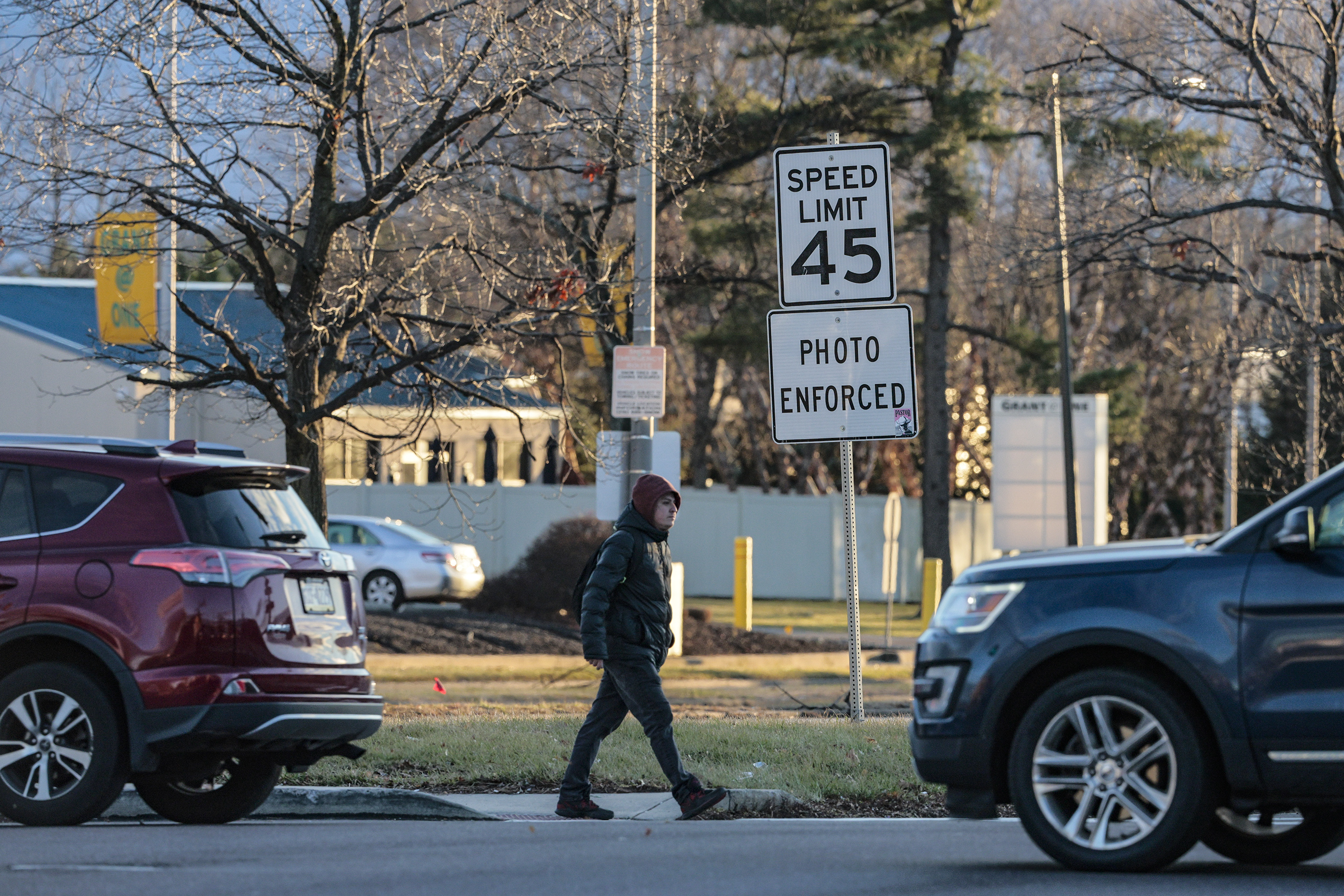
    A construction crew dug up the sidewalk on the block, knocking down the curbside sign that says the speed limit is 25 mph and is “photo enforced,” said Corinne O’Connor, deputy executive director of the parking authority.

    “We did the right thing,” O’Connor said. The violation notices were canceled because, she said, motorists did not have proper notice of the speed limit and the presence of enforcement cameras at Broad Street and 65th Avenue. State law requires those signs at camera locations.

    Broad Street, also designated State Route 611, has 31 speed cameras at 15 locations spread out between Philadelphia’s northern and southern city limits. They began operating last September.

    Drivers who travel more than 11 mph over the posted speed limit will eventually be ticketed, with fines starting at $100 and rising to $150 for those driving more than 30 mph over the limit.

    A PPA staff member doing a regular check reported the signs near 65th Street missing in mid-January, but it took weeks to correct. Officials did not realize the cameras hadn’t been turned off, and did so on April 22, PPA said. The signs were replaced April 29.

    O’Connor said the delay was due in part to ongoing construction and red tape required to get utility clearance to install a new pole with signs.

    While the signs were missing, the cameras at that location clocked 23,195 speeding vehicles and issued violation notices.

    Before the cameras were turned off, the PPA had processed $1.25 million in payments for 12,214 of the tickets. The money is being refunded, PPA said.

    PPA spokesperson Marty O’Rourke said the drivers cited “were still speeding,” but the violations were annulled because the notification requirement of the law was not met. The tickets could have been canceled if a recipient appealed based on the missing signs.

    O’Rourke said it was a “proactive decision” to cancel them.

    Speed cameras were first installed on Roosevelt Boulevard in 2020 on a trial basis and more were added in the next two years.

    Speeding has dropped 95% on the roadway, based on the declining number of violations issued since the first month cameras were operating there, PPA said.

    A state law enacted in 2023 made the Roosevelt Boulevard speed cameras permanent and authorized Philadelphia to designate five more dangerous corridors on which to use the technology.

    Cameras were deployed last fall on Broad Street and recently on portions of U.S. Route 13 in North and West Philadelphia.

  • Broad Street enforcement cameras have caught nearly 800,000 speeders, new report says

    Speed enforcement cameras along Broad Street seem to have nudged drivers to slow down. Violations have dropped 67% from October 2025 through March 2026, according to the first available data from the Philadelphia Parking Authority.

    Broad Street, also designated State Route 611, has 31 speed cameras spread over 13 miles between Philadelphia’s northern and southern city limits. They began operating last September.

    Since then, PPA has issued warnings or violations to nearly 800,000 speeders.

    In October 2025, the Broad Street cameras issued 213,057 formal warnings to people who drove 11 or more miles per hour above the 25 mph limit.

    Fines began the next month. In March, 70,498 fines were handed out based on speed-camera readings.

    (function(){function e(){window.addEventListener(`message`,function(e){if(e.data[`datawrapper-height`]!==void 0){var t=document.querySelectorAll(`iframe`);for(var n in e.data[`datawrapper-height`])for(var r=0,i;i=t[r];r++)if(i.contentWindow===e.source){var a=e.data[`datawrapper-height`][n]+`px`;i.style.height=a}}})}e()})();

    “Fewer people are speeding, and that means fewer people seriously injured or killed on Philadelphia roadways,” Gabe Roberts, interim executive director of the PPA, said in an interview.

    “That’s the goal and it’s how we measure the program’s success. We feel very good about where it stands today,“ Roberts said.

    Drivers who travel more than 11 mph over the posted speed limit will eventually be ticketed, with fines starting at $100 and rising to $150 for those driving more than 30 mph over.

    (function() {
    var l2 = function() {
    new pym.Parent(‘speed-camera-map2’,
    ‘https://media.inquirer.com/storage/inquirer/projects/innovation/arcgis_iframe/speed-camera-map2.html’);
    };
    if (typeof(pym) === ‘undefined’) {
    var h = document.getElementsByTagName(‘head’)[0],
    s = document.createElement(‘script’);
    s.type = ‘text/javascript’;
    s.src = ‘https://pym.nprapps.org/pym.v1.min.js’;
    s.onload = l2;
    h.appendChild(s);
    } else {
    l2();
    }
    })();

    When speed cameras were placed on Broad Street, some suburban commuters had concerns they were being targeted. PPA’s numbers found 59% of speeders lived in Philadelphia zip codes.

    Speed cameras were first installed on Roosevelt Boulevard in 2020 on a trial basis and more were added in the next two years.

    Speeding has dropped 95% on the roadway, based on the declining number of violations issued since the first month cameras were operating there, PPA said.

    A state law enacted in 2023 made the Roosevelt Boulevard speed cameras permanent and authorized Philadelphia to designate five more dangerous corridors on which to use the technology.

    The use of speed cameras continues to grow in Philadelphia.

    On Monday, people found speeding by newly installed cameras on portions of Route 13 began to receive formal warnings.

    The Route 13 corridor — identified by the city as a particularly dangerous stretch of road — spans Baltimore Avenue in West Philadelphia, Hunting Park Avenue in North Philadelphia, and Roosevelt Boulevard in the Northeast before leaving the city by way of Frankford Avenue.

    The first set of cameras along Route 13, in the Northeast, began issuing warnings in June, and there are not enough data to report from the corridor, officials said.

    PPA also operates cameras to enforce school-zone speed limits at five elementary schools in the city. Those were installed in the spring and by law had to be shut down in the summer when school was not in session. Roberts said that the school zones will be assessed more fully in next year’s annual report.