Tag: Philadelphia Parking Authority

  • Competition was tight at the first Philadelphia Parallel Parking Association Championship

    Competition was tight at the first Philadelphia Parallel Parking Association Championship

    There was no curbing Philadelphians’ enthusiasm at the first Philadelphia Parallel Parking Association (PPPA) Championship at Headhouse Plaza in Society Hill on Saturday, as hundreds of revved-up spectators gathered to watch 14 competitors put themselves into a tight spot.

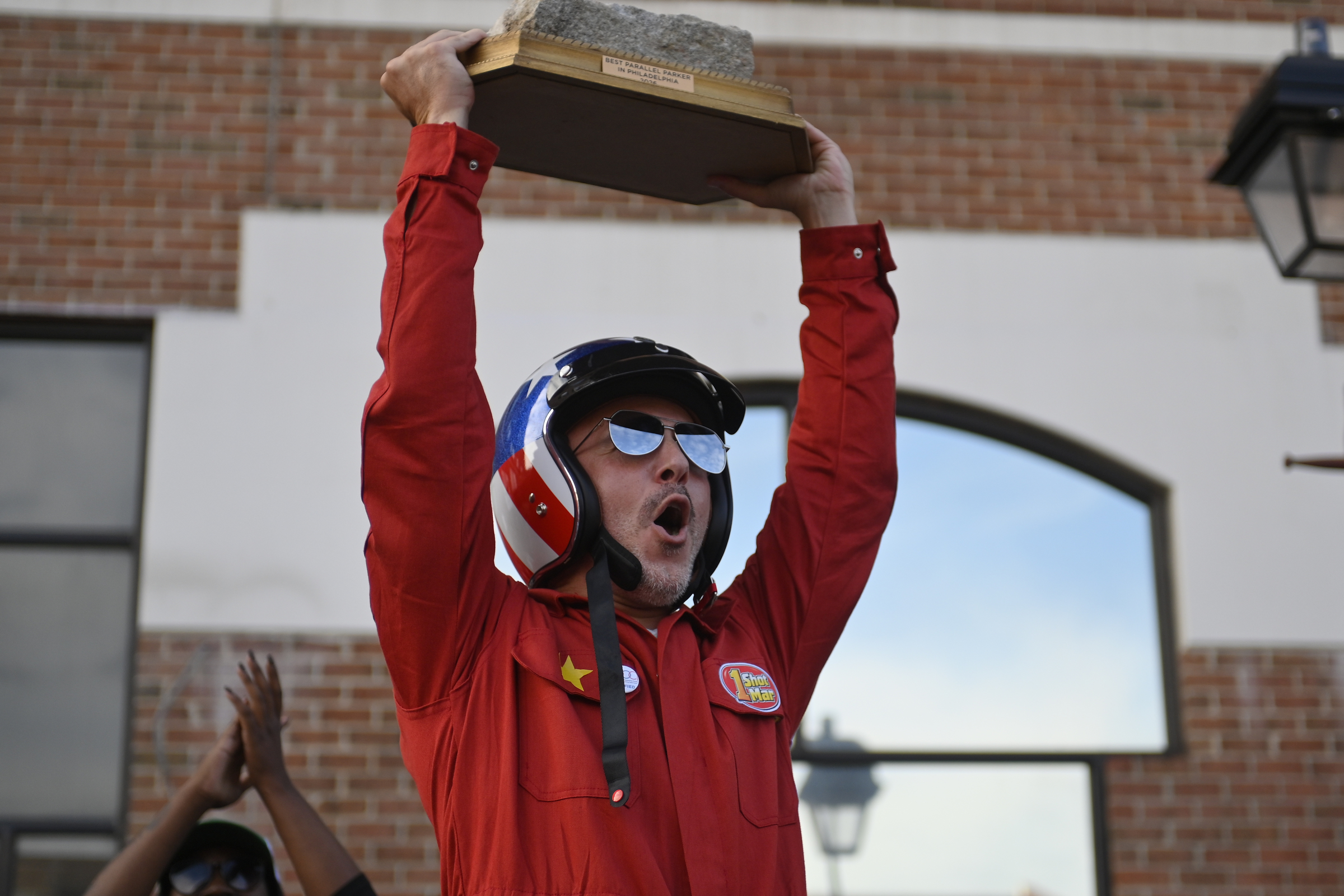
    After several rounds, one of which involved dodging things like a spontaneous Eagles fan celebration and a snow-shoveling citizen using a folding chair for savesies, Mario “One-Shot Mar” Zucca of West Mount Airy was crowned the Best Parallel Parker in Philadelphia.

    “Total bliss,” Zucca said, of the feeling that washed over him when he won the title. “It was amazing.”
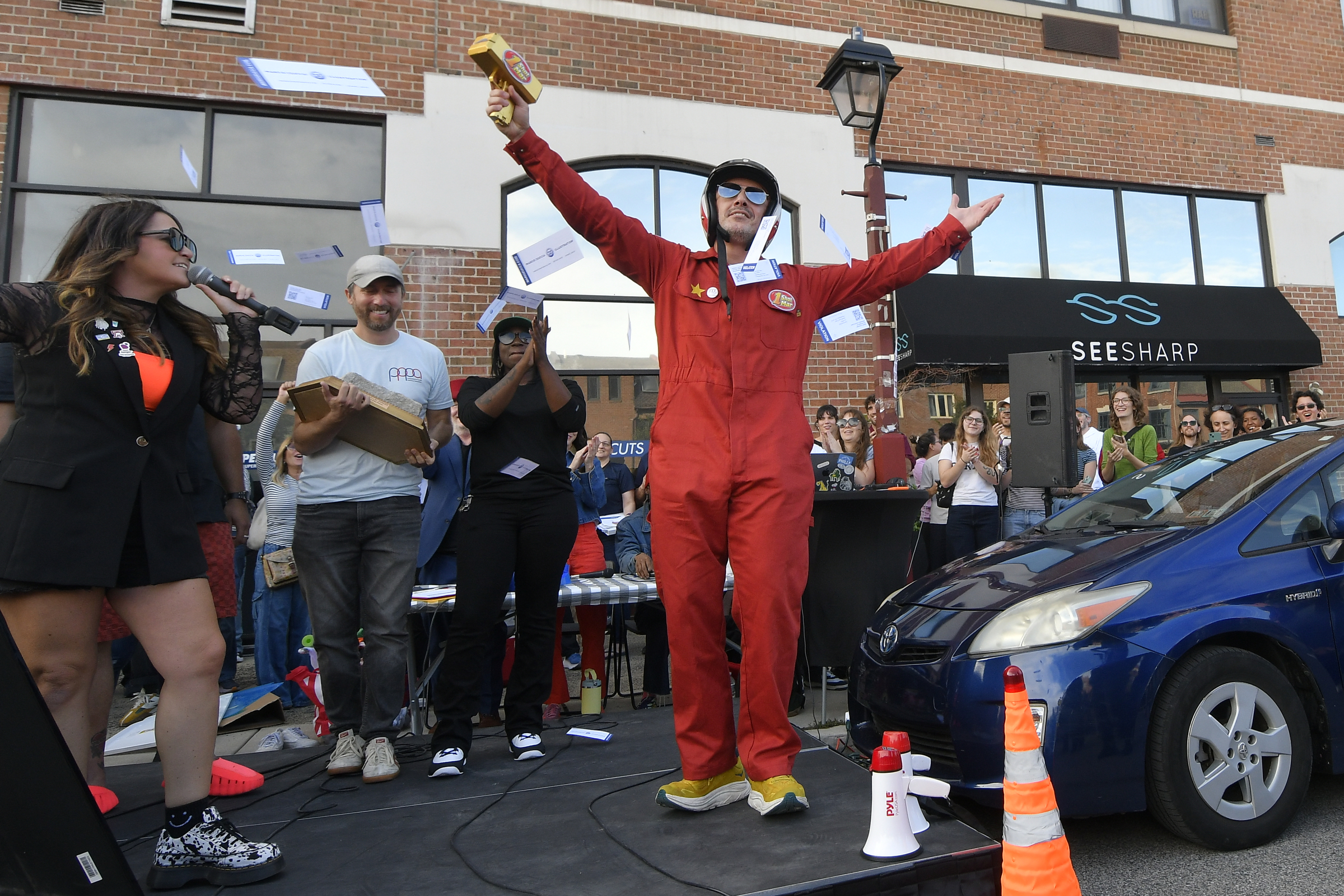
    Mario Zucca wins the first Parallel Parking Championship at Headhouse Plaza.Bastiaan Slabbers/ For the Inquirer

    While his win had a lot to do with skill, it also had a lot to do with flair. Zucca, who is an artist and illustrator, donned a red stuntman suit and, just prior to competing in the final round, opened up the hatchback of his 2012 Mazda and out popped a bunch of balloons, including a gold “1,” which remained tied to his car as he parked. After revealing the balloons, he then ran up and down the crowd with a money gun shooting fake Philadelphia Parking Authority (PPA) traffic tickets with his nickname on it into the audience.

    For winning the title, Zucca received bragging rights for a year, a trophy with a piece of a curb on it, and $76 to pay for his next parking ticket.
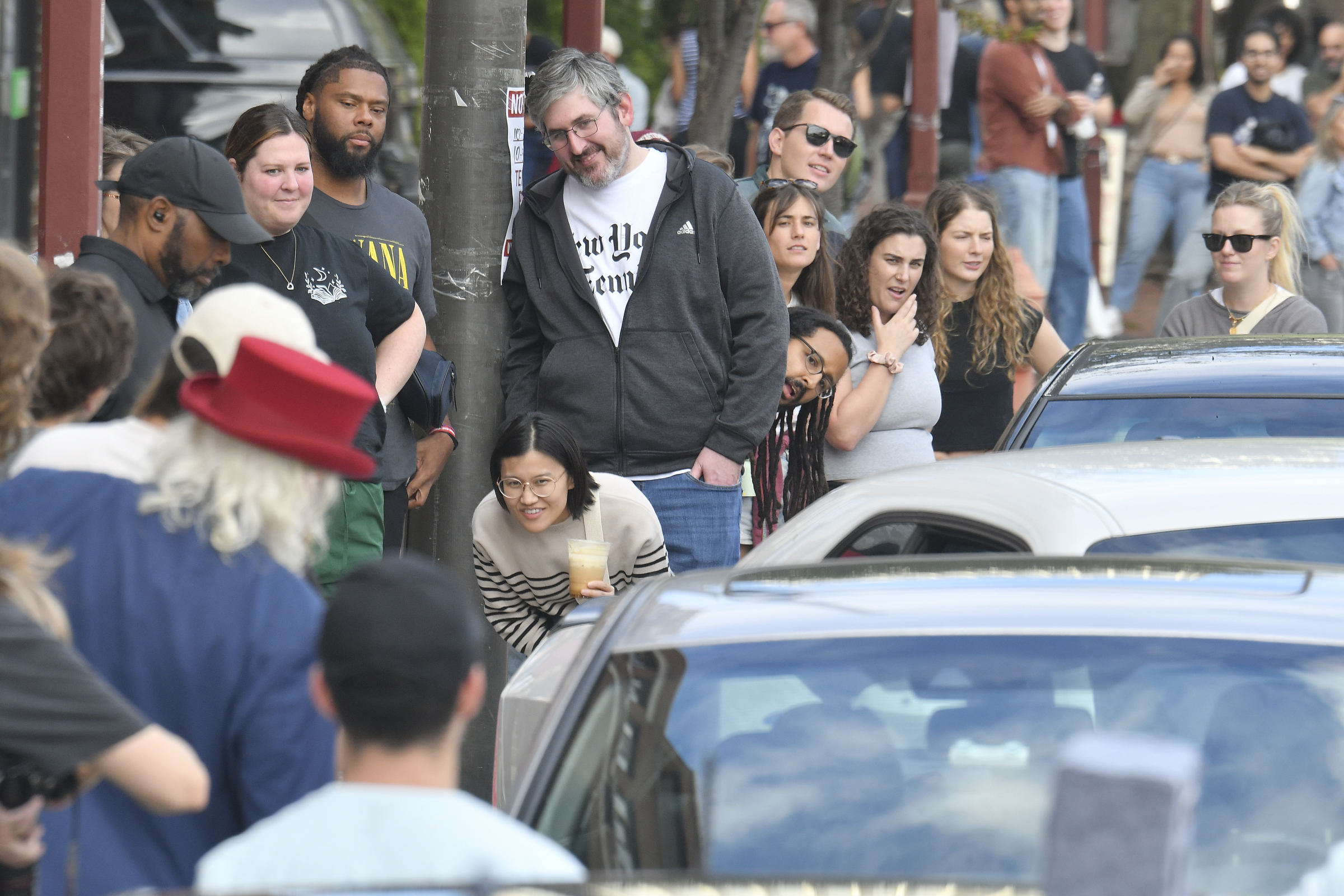
    The crowd looks on as drivers compete in the first Parallel Parking Championship at Headhouse Plaza on Saturday.Bastiaan Slabbers/ For the Inquirer

    Adam Wodka, self-appointed commissioner of the newly formed PPPA, which is not affiliated with the PPA, also made a surprise announcement at the start of the championship that the PPA had reached out to him and promised to give the top three finalists free parking in any Center City garage for the month of October.

    Rounding out the finalists were LaTasha “Tasha” Hall of Northeast Philly, a heavy equipment operator who works at the Delaware River Port Authority, and Shafir “Pirate One Shot” Mondal of Norris Square, whose dad owns Mondal Driving School.

    Mondal, who outfitted his car with decals from the manga series One Piece and wore a Monkey D. Luffy hat, said even though he didn’t win, the experience was worth it.
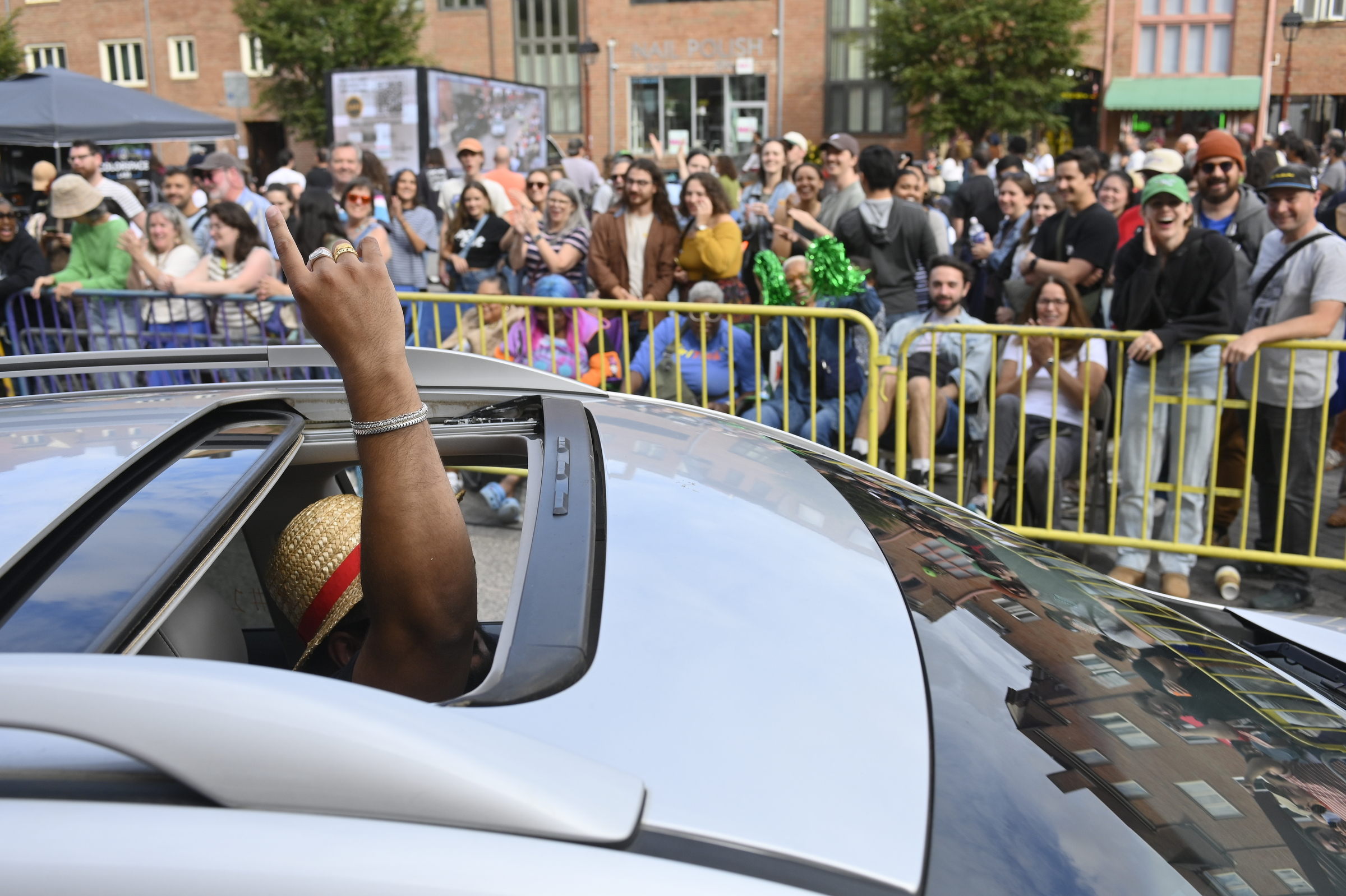
    The crowd reacts as Shafir “Pirate One Shot” Mondal sticks his hands through the sunroof of his car after competing in the first Philadelphia Parallel Parking Championship at Headhouse Plaza Saturday. Bastiaan Slabbers/ For the Inquirer

    “I feel great. I loved the energy that people had for parallel parking and the love they had for Philadelphians,” he said.

    Nearly 900 people applied for the first PPPA Championship, which Wodka created earlier this year to promote excellence in parallel parking. Ten finalists were chosen by PPPA’s executive board, which is made up of seven of Wodka’s friends, and five were chosen by a popular vote online.

    In classic Philly fashion, one of the competitors didn’t show up (he’s probably still circling the block looking for a space) and most of those who did participate didn’t use their turn signals.
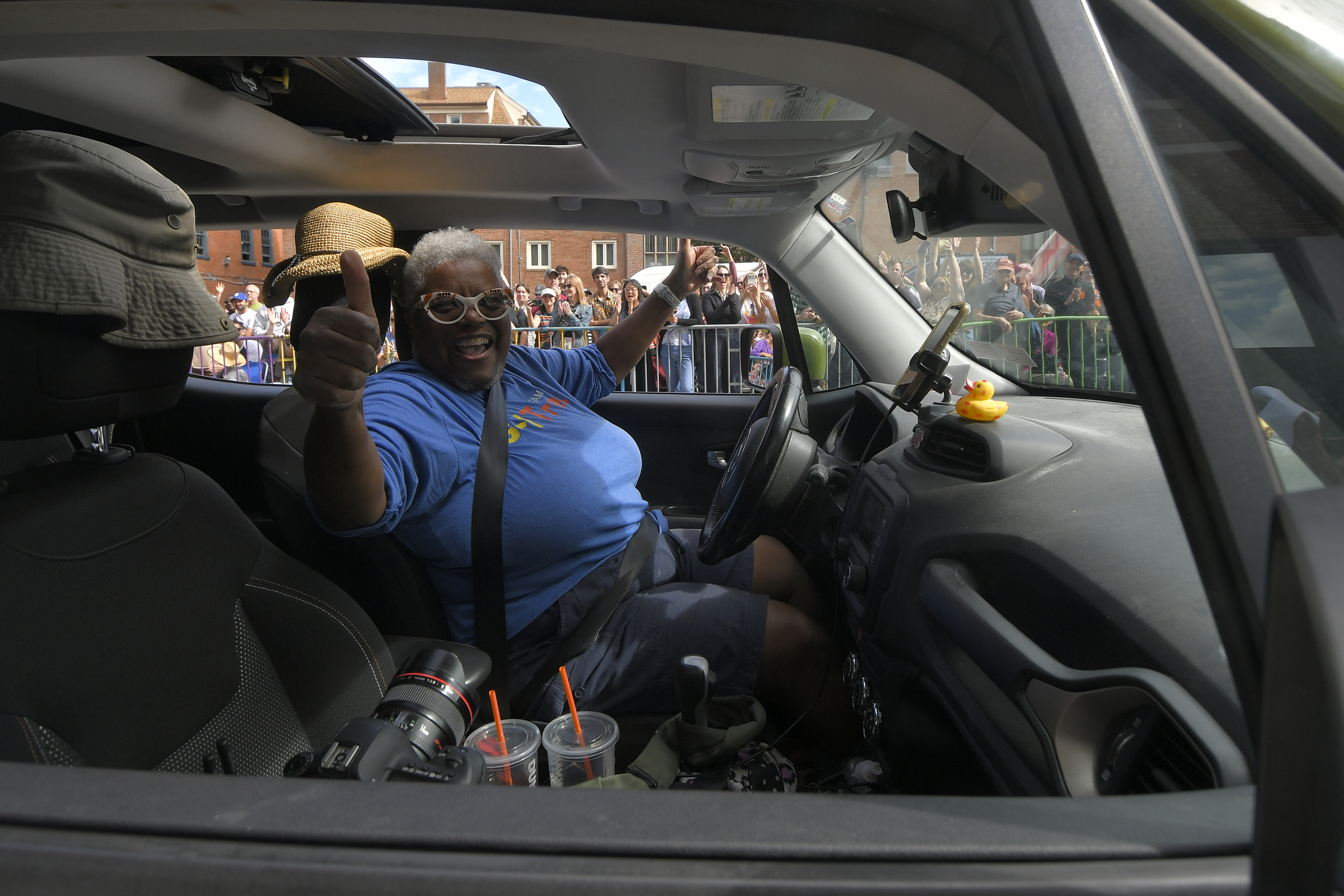
    Cynthia Malachi White, aka “Cynthia Strawberry,” of Mount Airy, competes in the first-ever Philadelphia Parallel Parking Championship at Headhouse Plaza on Saturday.Bastiaan Slabbers/ For the Inquirer

    As DJ Elevator Machine Room pumped music about cars and emcee Marisa Magnatta and referee Rebekah Rickards pumped up the crowd, competitors faced off in their own vehicles without using their backup cameras in three separate categories:

    1. One shot: Get closest to the curb in one attempt.
    2. Tight squeeze: With 18 inches of clearance, park closest to the curb using the least amount of moves.
    3. Under duress: Park as fast as you can while faced with distractions.

    The tight squeeze category was definitely the most challenging, with many competitors giving more than just a light tap to the cars in front and behind them. Those vehicles were owned by Wodka and his partner, who offered them up as a sacrifice.

    Under duress was a crowd-favorite category in which drivers had to try to ignore any number of things they might encounter on a Philly road, including a Mummers parade, a spontaneous fan celebration, a trash can fire, Philly Elmo and his drum line, a Ben Franklin impersonator, and, of course, a woman with a folding chair and a serious case of the savesies.
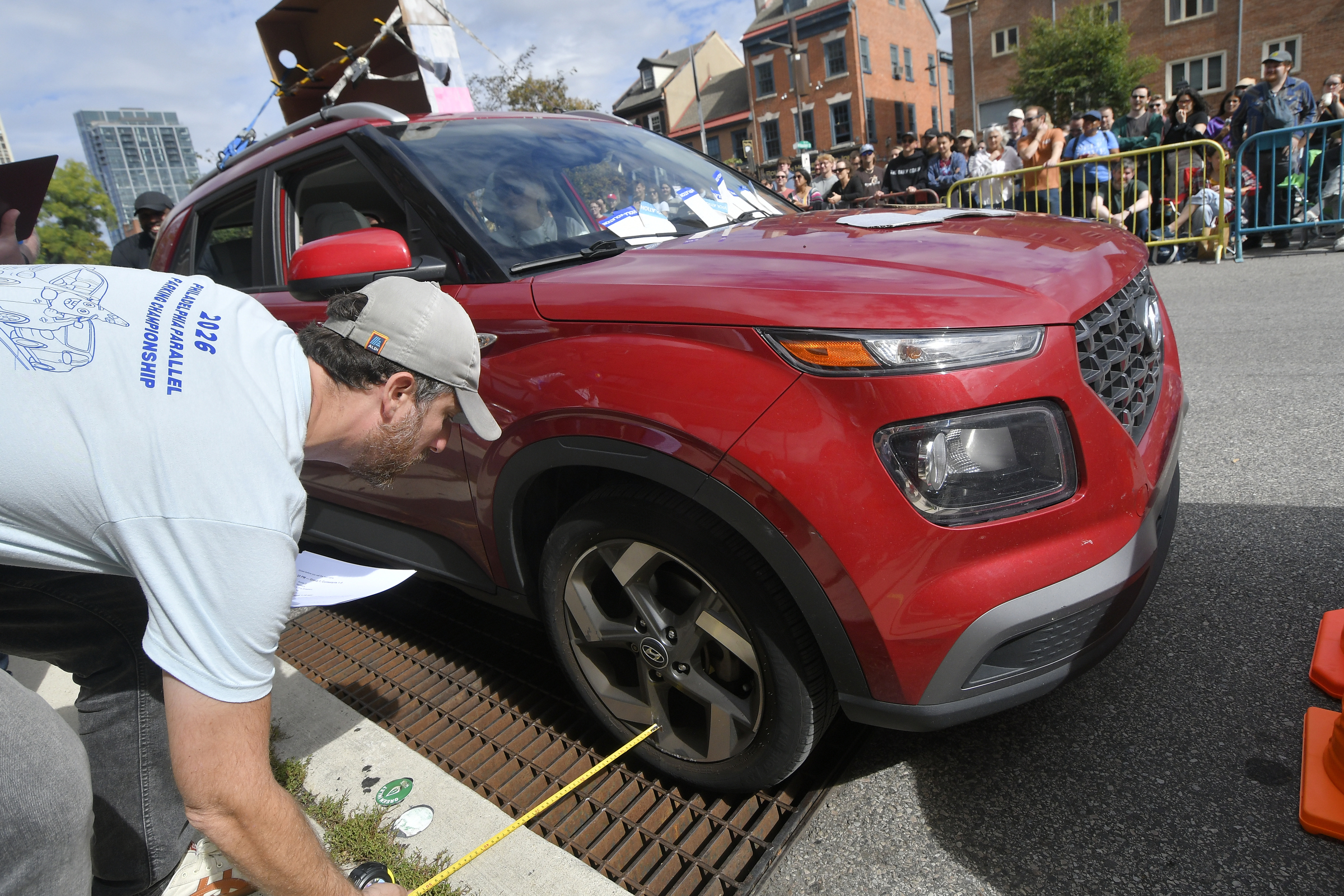
    Philadelphia Parallel Parking Association Commissioner Adam Wodka measures a competitor’s distance from the curb during the PPPA Championship Saturday. Bastiaan Slabbers/ For the Inquirer

    Competitors were given points based on their closeness to the curb and how many moves they made. The three judges — pub owner Fergus “Fergie” Carey, viral crossing guard Jamele Ransom, and comedian and social media influencer Betsy Kenney — were also able to hand out three points every round to whomever they chose to influence the scores. The top three scorers then went on to the final round, where the winner was chosen by the judges.

    “I always say parking is made worse with an audience and this is one hell of an audience,” Carey said.

    The crowd of backseat drivers came with kids, dogs, and posters, and residents around the plaza came out on their balconies and rooftops to watch the spectacle.

    Philadelphia’s newest mascot also made his debut at the event. Parallel Pete is a giant orange traffic cone with fuzzy dice, rearview mirrors, and an unsettlingly anxious face.

    Proceeds from a merchandise table went to Families for Safe Streets Greater Philadelphia, a program of the Bicycle Coalition of Greater Philadelphia.
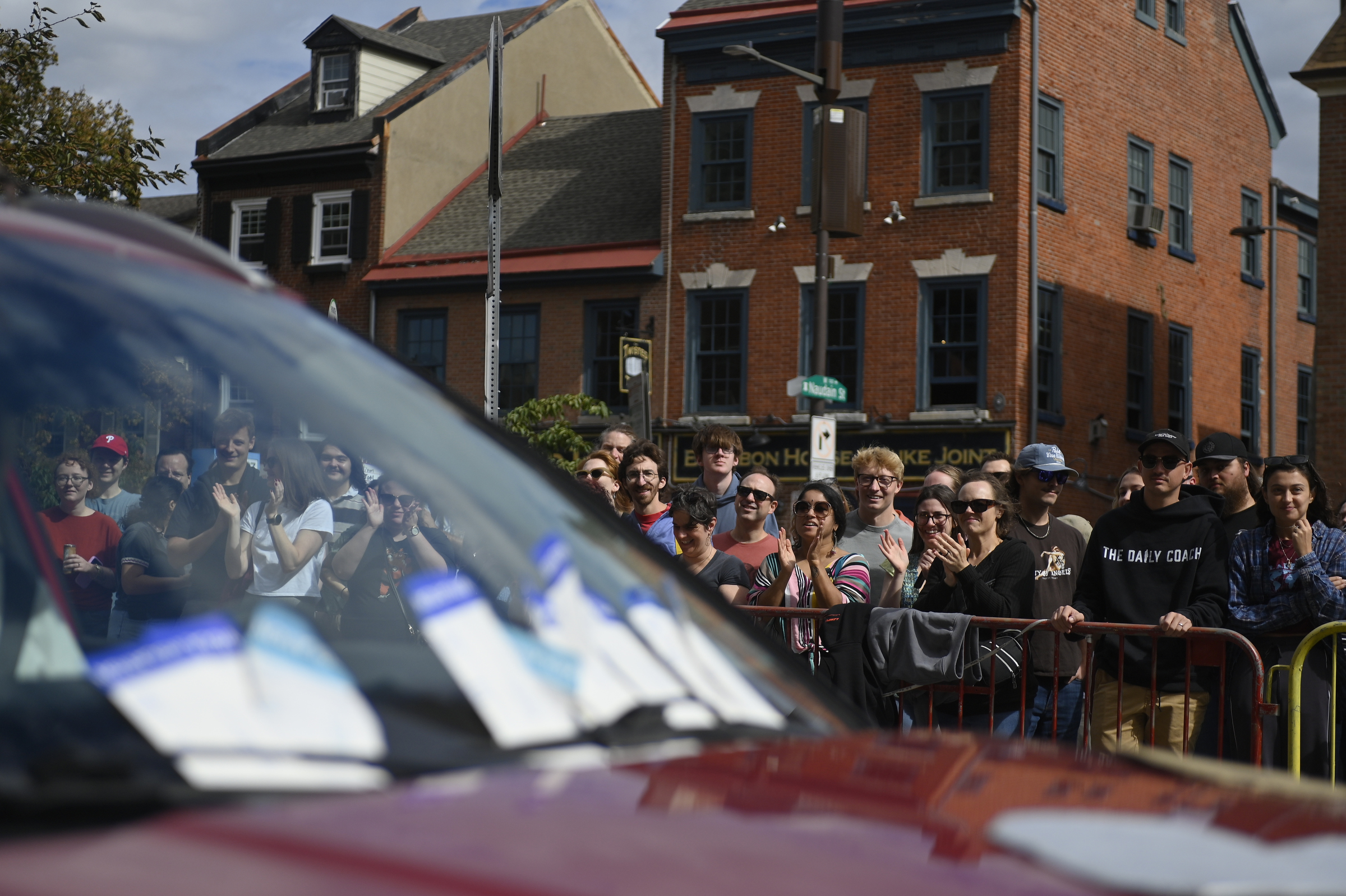
    The crowd reacts as a driver who has papered their windshield in parking tickets competes in the Philadelphia Parallel Parking Association Championship on Saturday at Headhouse Plaza. Bastiaan Slabbers/ For the Inquirer

    While he made no promises, Wodka said he’d love nothing more than to have the championship become an annual event.

    “I love the energy. I love that people had fun with it,” he said. “It’s tough out there and we all have stuff going on, so it was really great for a few hours to just celebrate and be silly and have fun.”
  • Philadelphia protesters demanded PPA stop leasing parking spaces to ICE

    Philadelphia protesters demanded PPA stop leasing parking spaces to ICE

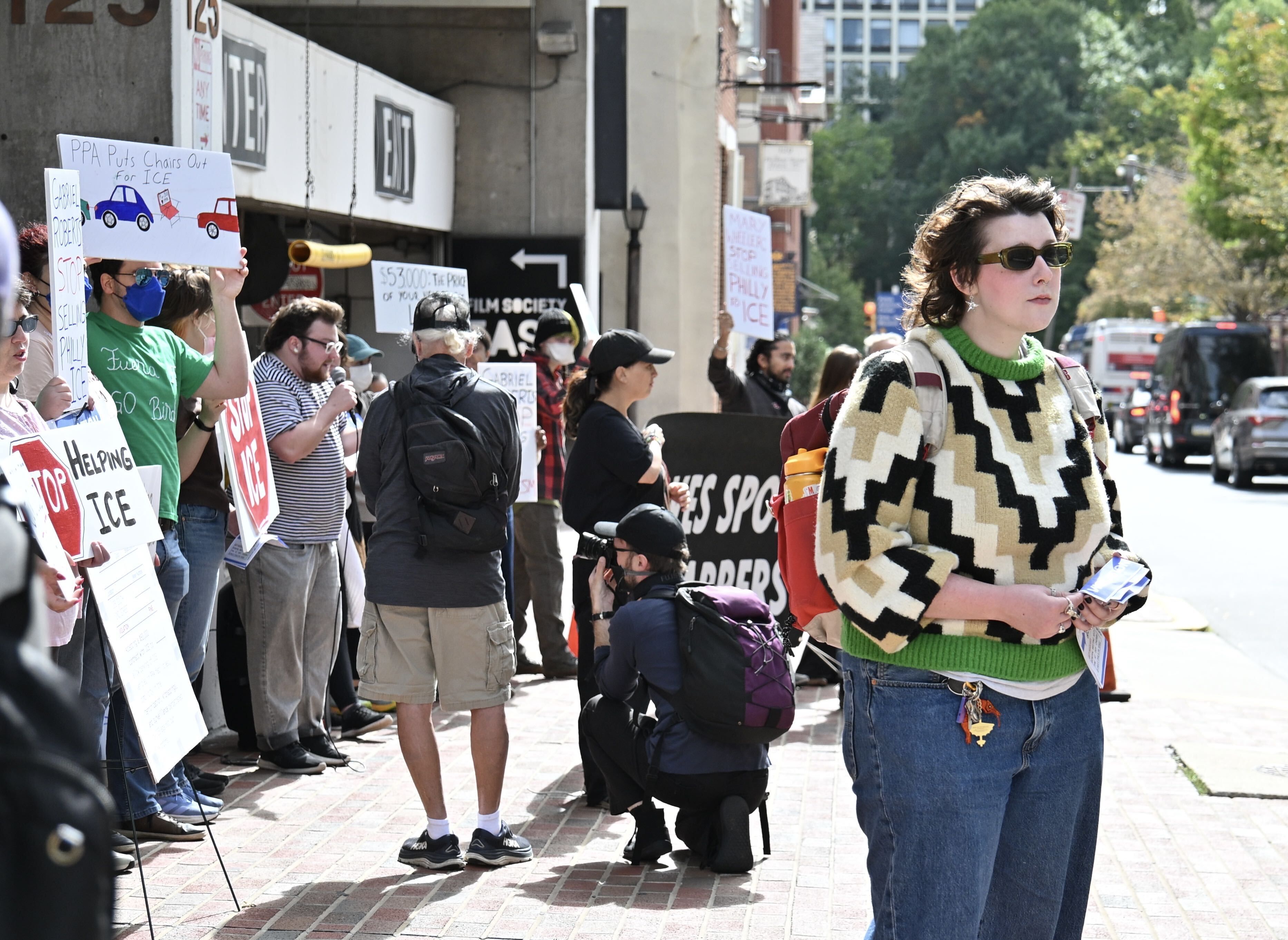
    About two dozen No ICE Philly activists gathered Saturday outside a parking garage in Old City, demanding the Philadelphia Parking Authority end an arrangement with Immigration and Customs Enforcement.

    At issue are 16 parking passes at the federally owned garage on Second Street, which is managed by the PPA. The group sang protest songs, held signs, and passed out informational flyers that resembled oversized PPA parking tickets.

    “Who doesn’t know what these things look like, you know?” said one activist handing out flyers.

    Group organizer Jay Bergen said the rally is meant to pressure the PPA — and to let people know that ICE is using the parking garage.

    “It’s scary that you could be parking downtown, and unbeknownst to you, parking next to an ICE agent,” Bergen said.

    Bergen, a 34-year old pastor at the Germantown Mennonite Church, pointed to public records showing a $53,520 contract that allows “for parking of government vehicles for ICE Homeland Security investigations” at the garage.

    That contract was set to expire at the end of September, but another one, beginning in October and running through at least next September, gives Department of Homeland Security “16 leased parking spaces,” records show. ICE is part of DHS.

    PPA spokesperson Martin O’Rourke declined to comment on the contracts.

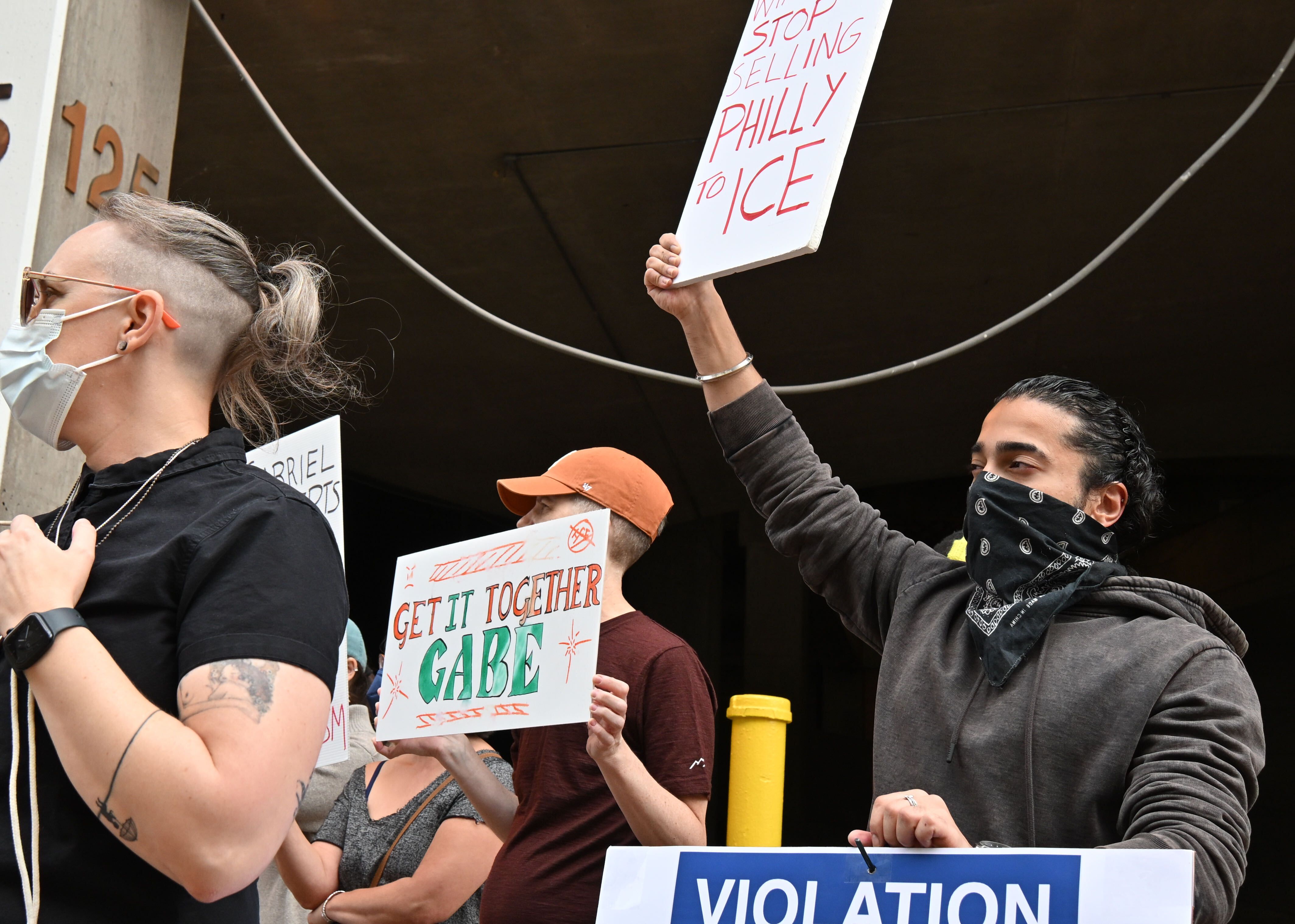
    An activist holds “violations” resembling PPA parking tickets to pass out to people, while a crowd gathers to demand the PPA stop leasing parking spaces to ICE.Brett Sholtis

    Bergen said the group opposes ICE for “kidnappings” of immigrants and others, including people who have lived legally in the community for decades. One recent example is a 30-year-old nurse from Delaware County, who was arrested while taking her son to Disneyland.

    Bergen said most people detained by ICE did nothing wrong. Some had minor lapses in paperwork or had been convicted of summary or misdemeanor crimes.

    “Their goal is terror. It’s not public safety in any meaningful way,” Bergen said.

    The local ICE field office did not respond to a request for comment Saturday.

    At the rally, protester Akarsh Balaji said that the amount of money PPA makes on the contracts is “less than what they spend every year on salt to de-ice the streets.”

    Balaji said he’s seen ICE harass his Puerto Rican neighbors in West Kensington. Puerto Ricans are Americans — so is Balaji, who is of Indian ethnicity — but that doesn’t seem to matter, he said.

    “Nobody should have to live in fear, or be told that they’re harmful to society,” Balaji said.

    Balaji said he got involved with the group in February after feeling a need to do something, “and be part of a movement that is so much bigger than I was.”

    No ICE Philly has been active since ICE ramped up activities under the Trump administration last year. In January, protesters blocked vehicle access to a Center City garage used by ICE. In March, nearly a dozen protesters were arrested while blocking the garage.

    “We want to make it as difficult as possible for ICE to do its job,” Bergen said.

    In Philly, ICE has faced obstacles from residents and elected officials. In April, the city adopted some of the nation’s most aggressive polices aimed at restricting ICE. The legislation took effect in July but the federal Department of Justice sued the city over some of its directives.

    Bergen said ICE has changed its tactics since early this year, when its Operation Metro Surge in Minnesota — and the killings, captured on video, of U.S. citizens Renee Nicole Good and Alex Pretti — led to overwhelming public opposition to the agency.

    “But the fear has not gone down. I heard this week about someone whose mother is afraid to go to doctor’s appointments, because she’s afraid ICE might grab her,” Bergen said.

  • A pub owner, a viral crossing guard, and an ASMR comedian will judge Saturday’s Parallel Parking Championship

    A pub owner, a viral crossing guard, and an ASMR comedian will judge Saturday’s Parallel Parking Championship

    Things are starting to line up like a perfectly positioned side-view mirror for the first Philadelphia Parallel Parking Association (PPPA) Championship Saturday, with final details about the event being released this week.

    Fifteen drivers, each of whom claims to be the best parallel parker in the city, will go bumper-to-bumper in a series of challenges from 1 to 4 p.m. at Headhouse Plaza in Society Hill to determine who’s telling the truth and who’s full of hot air.

    The competition is being held by the PPPA with the South Street Headhouse District serving as co-presenter. Formed this year, the PPPA is a semi-silly group created by self-proclaimed Commissioner Adam Wodka of South Philly that takes the art of parallel parking very seriously. Its executive board is made up of seven of Wodka’s friends.

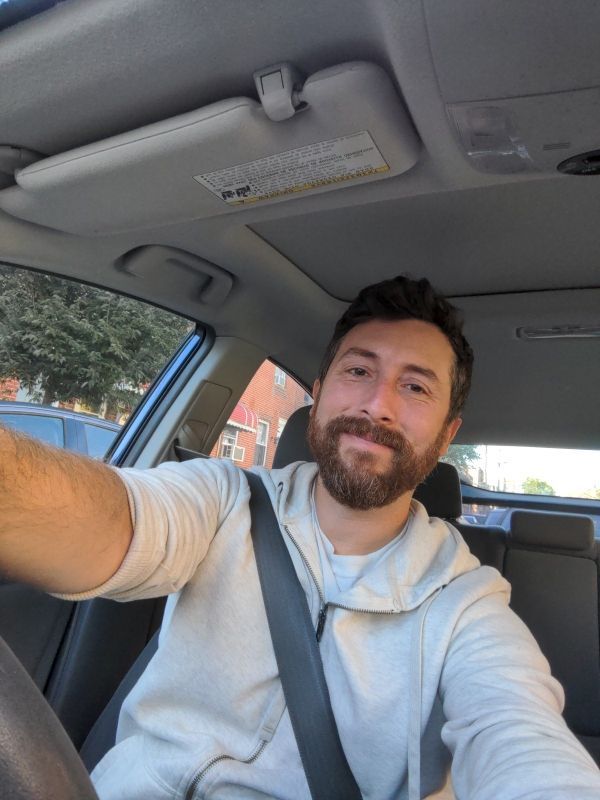
    Philadelphia Parallel Parking Association Commissioner Adam Wodka behind the wheel.Courtesy of Adam Wodka

    Despite similarities in their logos, the PPPA is not associated the Philadelphia Parking Authority (PPA).

    Earlier this month, Marisa Magnatta from WMMR’s Preston and Steve Show was announced as the event’s emcee and on Tuesday, the PPPA revealed its three local celebrity judges.

    Among them is Fergus Carey, the longtime owner of Fergie’s Pub and several other drinking establishments across the city, who’s generally known in Philly by just one name, Fergie, because around here he only needs one, like Cher.

    Someone fairly new to the Philly limelight who came onto our screens and into hearts this spring is also serving as a judge — crossing guard Jamele Ransom. In May, Ransom gave an animated interview to NBC10 about witnessing a carjacked truck crash into a playground and he gave that interview while actively eating a soft-serve vanilla ice cream cone the entire time. The clip quickly went viral, with people hailing Ransom as a Philly “legend” and “hero.”

    Rounding out the trio of judges is comedian and social media influencer Betsy Kenney, whose ASMR videos, which are spoken with a strong Philly accent and feature sounds like the soft crushing of wooder ice, have been wildly popular online.

    Elevator Machine Room will DJ the event and comedian Rebekah Rickards will serve as “The Ref.”

    Just shy of 900 people entered the competition in the month applications were open, according to Wodka, with many submitting videos in which they illustrated their skills or told tales of their parallel parking prowess. Ten contestants were chosen by the PPPA and the remaining five were voted on by the public.

    Many of the drivers are going by nicknames like “Pirate One Shot” and “Missy Parks Good.” One competitor, Mary Zheng, was a contestant on Survivor, and another, who’s going by the name “Dark Transit,” is a SEPTA bus driver. Some filmed their video applications on the street or in their car, and at least one guy, “Joe Cocomo” of South Philly, appears to have filmed his lying in bed.

    “I’ve been parallel parking since I was 8 years old,” Cocomo said in his application video, which is posted to the PPPA’s Instagram page along with those of the other finalists.

    The contenders hail from neighborhoods across Philadelphia, from Uptown to South Philly and from Eastwick to West Mount Airy, and they range in age from folks in their 20s to people in their 70s. (There was a 90-year-old finalist but she recently backed out.)

    Contestants are required to use their own vehicles and will compete in three categories:

    1. One shot: Get closest to the curb in one attempt.
    2. Tight squeeze: With 18 inches of clearance, park closest to the curb using the least amount of moves.
    3. Under duress: Park as fast as you can while faced with distractions.

    The judges will score each contestant on a 10-point scale based on speed, competency, proximity to the curb, and flair. The three drivers with the highest scores will move on to the final round, a “pure show me what you got,” where one will be crowned best parallel parker in Philadelphia 2026, according to Wodka.

    Initially, the PPPA was going to allow backup cameras in the competition, but it has since reversed that decision.

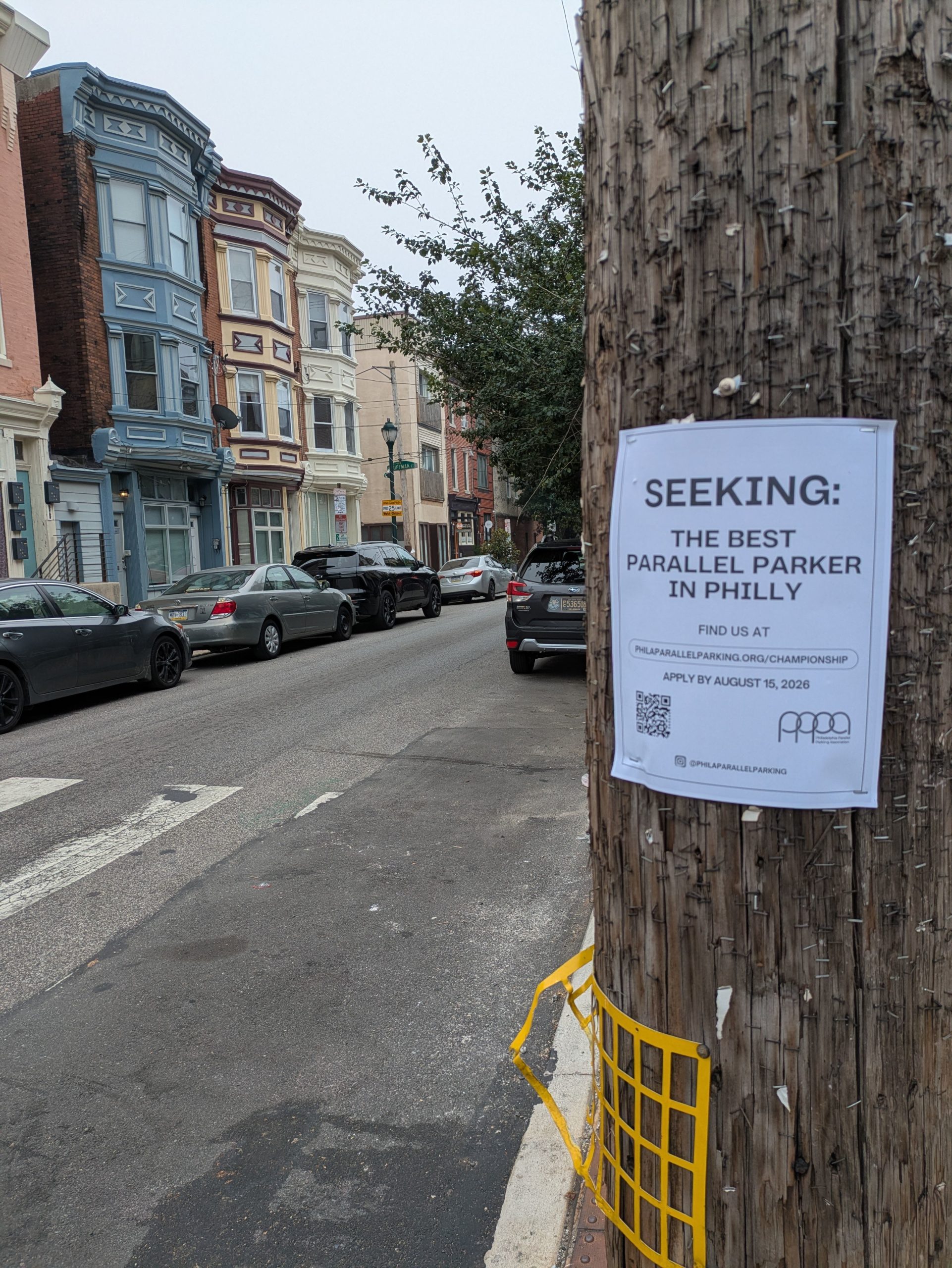
    A sign advertising the 2026 Philadelphia Parallel Parking Association Championship is affixed to a pole across from some fine examples of parallel parking in the city.Courtesy of Adam Wodka

    “While going through the contestant applications, so many people took pride in calling out that they don’t need it or use it that we decided for someone to be the Best Parallel Parker in Philadelphia it should be earned through the grit of doing it old-school,” Wodka said via email.

    Saturday’s competition will also feature a parallel parking practice for kids, merchandise, and the debut of the PPPA’s mascot, Parallel Pete, who is an orange traffic cone.

    The winner of the PPPA Championship will receive best parallel parker in Philadelphia bragging rights for a year, a trophy that will include a piece of a curb, and $76 to cover their next parking ticket.

  • Fewer people are running red lights, PPA says

    Fewer people are running red lights, PPA says

    Automated red-light enforcement cameras caught up to 17.4% fewer violations this year than in 2025, according to the Philadelphia Parking Authority’s annual report to the state legislature.

    Those cameras have been on guard in the city since 2005, but the program will expire next July, unless legislators renew the law that authorized them.

    “The numbers speak for themselves, and our hope is that they see the benefit of it,” said Gabe Roberts, interim executive director of the PPA.

    Recorded violations citywide declined from 340,931 in fiscal year 2025 to 338,979 in fiscal year 2026 — a decrease of 0.58%

    However, four new intersections were added at different points during this fiscal year. For the PPA, the fiscal year runs from April 1 through March 31.

    Excluding those four intersections, violations at existing program locations declined by 17.4%. Compared with 2024, they dropped 10.4%.

    “The way we measure success is through consistent enforcement, demonstrated changes in behavior, fewer people running red lights, and safer streets,” Roberts said.

    The red-light program has proved its worth, he said.

    New locations

    Over the 21 years of red-light cameras in the city, violations have trended down overall, Roberts said, though when a new location is added, tickets spike at first before leveling off and declining.

    As of March 31, PPA was operating 160 cameras at 38 locations.

    The newest locations are: 20th Street and John F. Kennedy Boulevard; Front Street and Hunting Park Avenue; Kelly Drive and Eakins Oval; and 58th Street and Baltimore Avenue.

    Cameras there led to 50,589 warning notices and violations.

    When a red-light camera is installed, there is a 45-day grace period when violators get a warning before tickets start. The fine is $100 per offense, but no points are assessed to a driver’s license.

    There has been continued demand for red-light cameras in the city. PPA received requests for coverage of 19 intersections from the Philadelphia Office of Transportation and Infrastructure and City Council members through March 31.

    Intersections are evaluated on the basis of crash statistics and a fresh traffic study that includes observations of violation levels there.

    Also considered: sight lines, driveways, trees, wires, crosswalk visibility, and the condition of the surrounding infrastructure.

    Usually an intersection gets some upgrades when red-light cameras are installed — new sidewalk accessibility ramps, new signal boxes, better lighting, more visible crosswalks, or the like, said deputy PPA director Corrine O’Connor.

    “You’re not going to put cameras in and have old infrastructure out there,” said O’Connor, who is in charge of automated enforcement programs. “It’s an opportunity to make it better and safer.”

    PPA says it typically takes one to two years to complete an intersection.

    Speed cameras

    In addition to the red-light program, PPA operates automated speed enforcement cameras.

    Speed cameras were first installed on Roosevelt Boulevard in 2020 on a trial basis and more were added in the next two years. State lawmakers made the program permanent in 2023 and gave Philadelphia permission to add them on up to five more dangerous corridors.

    Broad Street, for instance, now has 31 speed cameras spread over 13 miles. They began operating last September.

    New speed cameras went live on portions of Route 13 in North and West Philadelphia on Aug. 31.

  • PPA voided more than 23,000 tickets due to missing street sign

    PPA voided more than 23,000 tickets due to missing street sign

    Enforcement cameras on Broad Street in Philadelphia caught about 800,000 motorists speeding in the first six months they were operating.

    But the Philadelphia Parking Authority had to throw out 23,195 tickets and refund $1.25 million in fines — all because of a missing street sign at one spot.

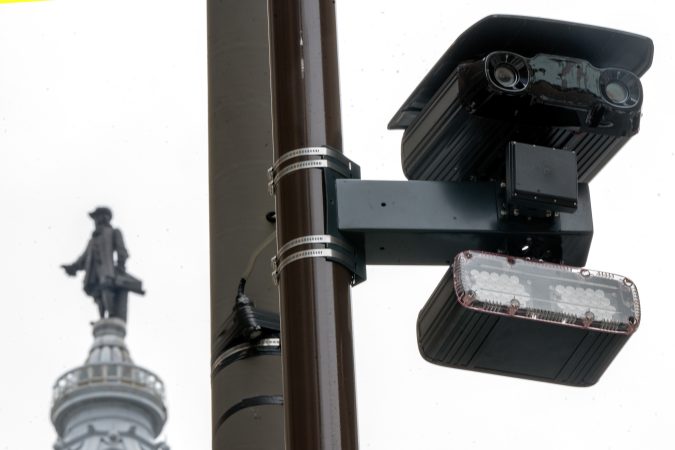
    A speed camera covering the southbound lanes in the 6500 block of North Broad Street operated for several months earlier this year without a required sign telling motorists that it was operating, PPA said last week in its annual speed-camera report.

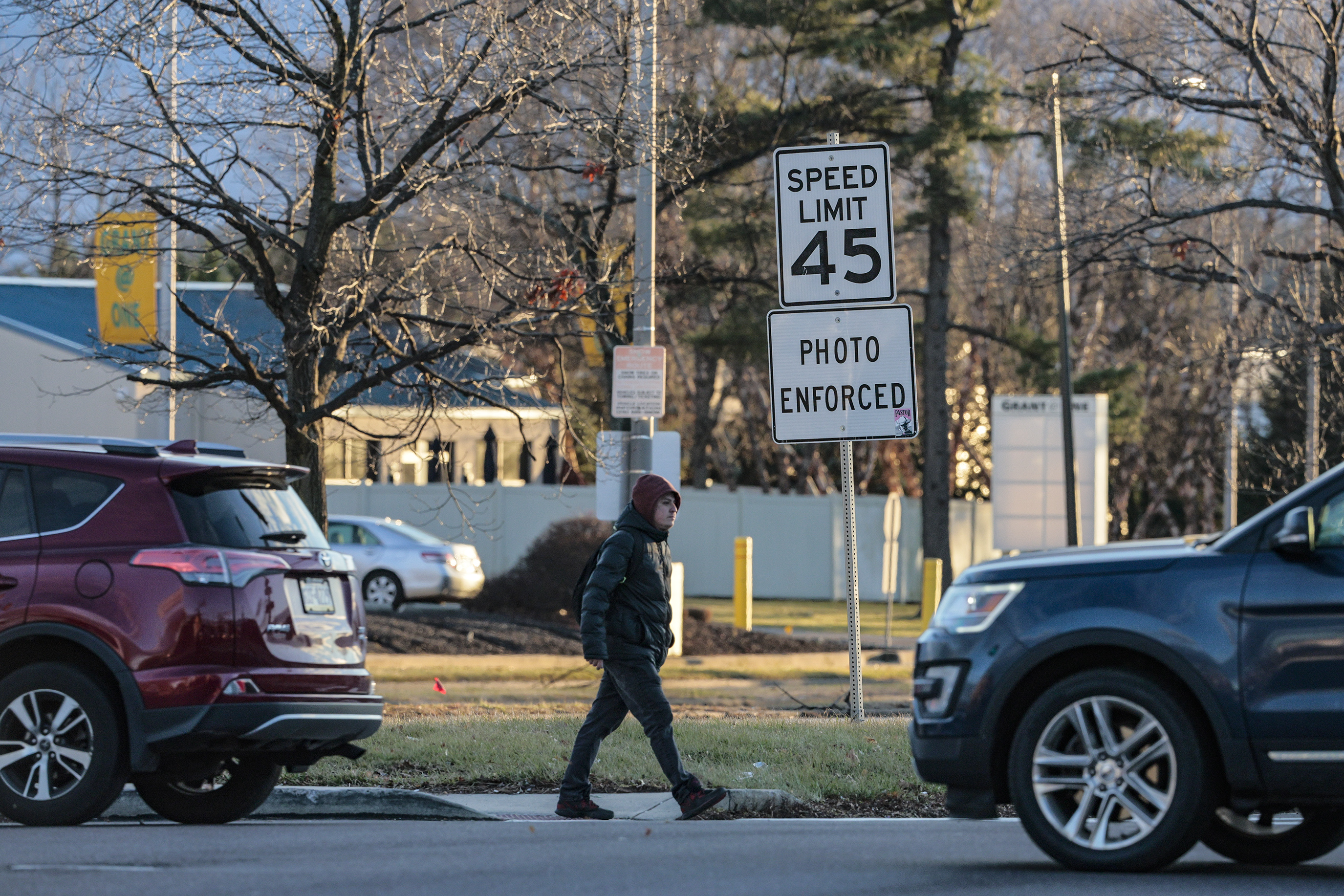
    A construction crew dug up the sidewalk on the block, knocking down the curbside sign that says the speed limit is 25 mph and is “photo enforced,” said Corinne O’Connor, deputy executive director of the parking authority.

    “We did the right thing,” O’Connor said. The violation notices were canceled because, she said, motorists did not have proper notice of the speed limit and the presence of enforcement cameras at Broad Street and 65th Avenue. State law requires those signs at camera locations.

    Broad Street, also designated State Route 611, has 31 speed cameras at 15 locations spread out between Philadelphia’s northern and southern city limits. They began operating last September.

    Drivers who travel more than 11 mph over the posted speed limit will eventually be ticketed, with fines starting at $100 and rising to $150 for those driving more than 30 mph over the limit.

    A PPA staff member doing a regular check reported the signs near 65th Street missing in mid-January, but it took weeks to correct. Officials did not realize the cameras hadn’t been turned off, and did so on April 22, PPA said. The signs were replaced April 29.

    O’Connor said the delay was due in part to ongoing construction and red tape required to get utility clearance to install a new pole with signs.

    While the signs were missing, the cameras at that location clocked 23,195 speeding vehicles and issued violation notices.

    Before the cameras were turned off, the PPA had processed $1.25 million in payments for 12,214 of the tickets. The money is being refunded, PPA said.

    PPA spokesperson Marty O’Rourke said the drivers cited “were still speeding,” but the violations were annulled because the notification requirement of the law was not met. The tickets could have been canceled if a recipient appealed based on the missing signs.

    O’Rourke said it was a “proactive decision” to cancel them.

    Speed cameras were first installed on Roosevelt Boulevard in 2020 on a trial basis and more were added in the next two years.

    Speeding has dropped 95% on the roadway, based on the declining number of violations issued since the first month cameras were operating there, PPA said.

    A state law enacted in 2023 made the Roosevelt Boulevard speed cameras permanent and authorized Philadelphia to designate five more dangerous corridors on which to use the technology.

    Cameras were deployed last fall on Broad Street and recently on portions of U.S. Route 13 in North and West Philadelphia.

  • Broad Street enforcement cameras have caught nearly 800,000 speeders, new report says

    Broad Street enforcement cameras have caught nearly 800,000 speeders, new report says

    Speed enforcement cameras along Broad Street seem to have nudged drivers to slow down. Violations have dropped 67% from October 2025 through March 2026, according to the first available data from the Philadelphia Parking Authority.

    Broad Street, also designated State Route 611, has 31 speed cameras spread over 13 miles between Philadelphia’s northern and southern city limits. They began operating last September.

    Since then, PPA has issued warnings or violations to nearly 800,000 speeders.

    In October 2025, the Broad Street cameras issued 213,057 formal warnings to people who drove 11 or more miles per hour above the 25 mph limit.

    Fines began the next month. In March, 70,498 fines were handed out based on speed-camera readings.

    (function(){function e(){window.addEventListener(`message`,function(e){if(e.data[`datawrapper-height`]!==void 0){var t=document.querySelectorAll(`iframe`);for(var n in e.data[`datawrapper-height`])for(var r=0,i;i=t[r];r++)if(i.contentWindow===e.source){var a=e.data[`datawrapper-height`][n]+`px`;i.style.height=a}}})}e()})();

    “Fewer people are speeding, and that means fewer people seriously injured or killed on Philadelphia roadways,” Gabe Roberts, interim executive director of the PPA, said in an interview.

    “That’s the goal and it’s how we measure the program’s success. We feel very good about where it stands today,“ Roberts said.

    Drivers who travel more than 11 mph over the posted speed limit will eventually be ticketed, with fines starting at $100 and rising to $150 for those driving more than 30 mph over.

    (function() {
    var l2 = function() {
    new pym.Parent(‘speed-camera-map2’,
    ‘https://media.inquirer.com/storage/inquirer/projects/innovation/arcgis_iframe/speed-camera-map2.html’);
    };
    if (typeof(pym) === ‘undefined’) {
    var h = document.getElementsByTagName(‘head’)[0],
    s = document.createElement(‘script’);
    s.type = ‘text/javascript’;
    s.src = ‘https://pym.nprapps.org/pym.v1.min.js’;
    s.onload = l2;
    h.appendChild(s);
    } else {
    l2();
    }
    })();

    When speed cameras were placed on Broad Street, some suburban commuters had concerns they were being targeted. PPA’s numbers found 59% of speeders lived in Philadelphia zip codes.

    Speed cameras were first installed on Roosevelt Boulevard in 2020 on a trial basis and more were added in the next two years.

    Speeding has dropped 95% on the roadway, based on the declining number of violations issued since the first month cameras were operating there, PPA said.

    A state law enacted in 2023 made the Roosevelt Boulevard speed cameras permanent and authorized Philadelphia to designate five more dangerous corridors on which to use the technology.

    The use of speed cameras continues to grow in Philadelphia.

    On Monday, people found speeding by newly installed cameras on portions of Route 13 began to receive formal warnings.

    The Route 13 corridor — identified by the city as a particularly dangerous stretch of road — spans Baltimore Avenue in West Philadelphia, Hunting Park Avenue in North Philadelphia, and Roosevelt Boulevard in the Northeast before leaving the city by way of Frankford Avenue.

    The first set of cameras along Route 13, in the Northeast, began issuing warnings in June, and there are not enough data to report from the corridor, officials said.

    PPA also operates cameras to enforce school-zone speed limits at five elementary schools in the city. Those were installed in the spring and by law had to be shut down in the summer when school was not in session. Roberts said that the school zones will be assessed more fully in next year’s annual report.

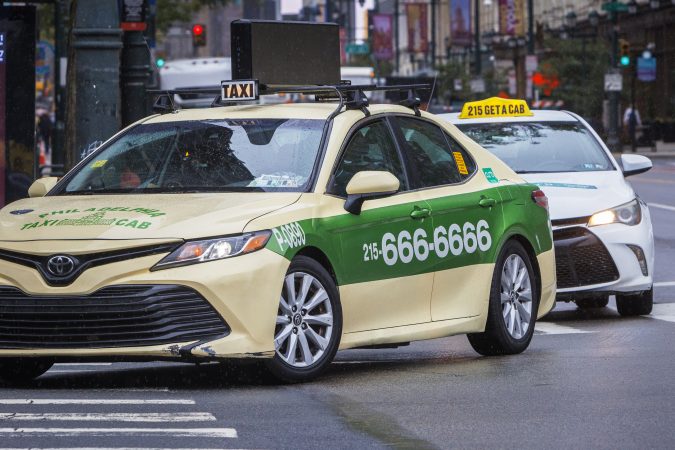
  • Philadelphia’s taxi fleet is shrinking. This app is helping keep cabs alive in Boston and beyond.

    Philadelphia’s taxi fleet is shrinking. This app is helping keep cabs alive in Boston and beyond.

    Uber and Lyft helped flatten the taxicab industry. Now they are joining forces.

    Last month, Boston became the latest city where drivers of licensed taxicabs can respond to rideshare trip requests, using apps that are integrated with the Uber and Lyft platforms.

    But don’t expect to see this change in Philadelphia, even as the city’s taxi business continues its free fall.

    Curb, the leading app company for cabs, and Uber petitioned the Philadelphia Parking Authority, which regulates taxis in the city, to allow coordination of rides on a pilot basis but eventually withdrew the proposal.

    Pennsylvania law strictly separates licensed cabs and transportation network companies like Uber, said Christine Kirlin, deputy general counsel for the PPA and former head of its Taxi and Limo Division.

    “It was a handful of regulations that just couldn’t be integrated,” Kirlin said, adding that state law would need changes for it to work.

    For instance, she said, taxi fares in the city are set by the PPA and cab operators are not allowed to flex prices, as rideshare companies do during periods of high demand. Drivers also need a commercial license, and taxi vehicles are subject to safety inspections — and regulatory fees — that rideshare is not.

    In other cities, referrals from rideshare companies account for 30% to 60% of total taxi trips, said Dorel Tamam, vice president for mobile business at Curb.

    He is in charge of Curb Flow, an open API platform that aggregates available rides from multiple sources, including Uber and Lyft, direct hails from taxi apps, fleet dispatches, and taxi ranks.

    “This program is helping actually reduce idle time, increase the overall trips, giving drivers the add-on opportunity to earn more,” Tamam said.

    Curb Flow is being used in 17 U.S. cities, including Newark, N.J.; Seattle; Los Angeles; New York; Reno, Nev.; and Charlotte, N.C.

    Philly’s taxi nosedive

    The taxi business has been declining in Philadelphia for more than a decade, coinciding with the arrival of Uber and Lyft in the city. Pandemic restrictions also hurt.

    Taxi rides dropped 88% from 2015 to 2025, PPA data show.

    (function(){function e(){window.addEventListener(`message`,function(e){if(e.data[`datawrapper-height`]!==void 0){var t=document.querySelectorAll(`iframe`);for(var n in e.data[`datawrapper-height`])for(var r=0,i;i=t[r];r++)if(i.contentWindow===e.source){var a=e.data[`datawrapper-height`][n]+`px`;i.style.height=a}}})}e()})();

    Fewer cabs are available. In 2010, a monthly average of 1,600 taxis were on the road. In 2025, there were 674, reflecting a 58% drop.

    As of June, 633 taxis were active in the city, suggesting a continued decline.

    “Things have not really improved. There’s less people out there driving,” said Ron Blount, president of the Taxi Workers Alliance, who believes the number could be even smaller.

    “A lot of drivers do both taxis and [rideshare] switching back and forth, trying to make it work,” Blount said.

    He said that Curb Flow would lead to more trips for drivers here, but that it was unclear how much their net incomes would improve.

    And the average sales price for a taxi medallion, a license required for each cab to operate in the city, fell to an average of $12,857 last year.

    The average price was just over $500,000 during several months of 2014, according to PPA numbers.

    “We really hope one day to bring it to Philadelphia,” said Tamam, the company vice president in charge of Curb Flow. ”We’re open to further collaboration with the regulators.”

  • Business owners near the FIFA Fan Festival prepared for crowds. Not all saw them.

    Business owners near the FIFA Fan Festival prepared for crowds. Not all saw them.

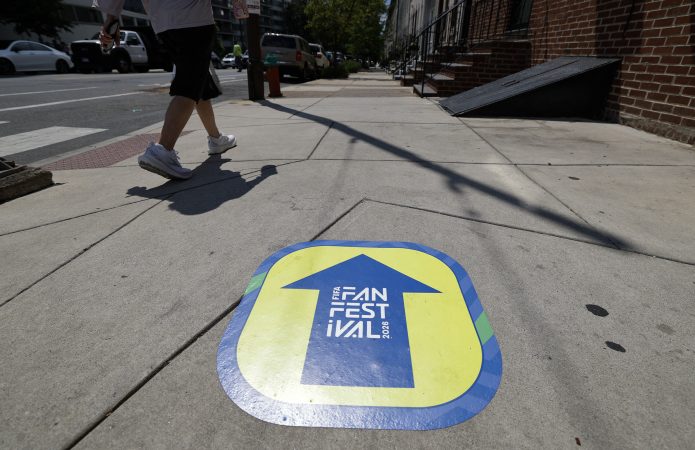
    Yolanda Welch, owner of All Day Hoagies, walked down West Girard Avenue to grab lunch. It was just a couple hours before the start of another World Cup match in Philly, but near the FIFA Fan Festival, Brewerytown’s main drag was nearly empty.

    “Normally, I’m not able to do this,” Welch said, as the lunchtime rush usually keeps her too busy to leave her post.

    She had free time on Thursday, she said, because the regular midday crowd had thinned ever since the FIFA Fan Festival arrived at Lemon Hill, about a half-mile away.

    City officials have estimated that hundreds of thousands of people have flocked to the monthlong World Cup watch party, which started in mid-June and is set to run through mid-July. But last week some Brewerytown business owners said they had yet to reap the benefits.

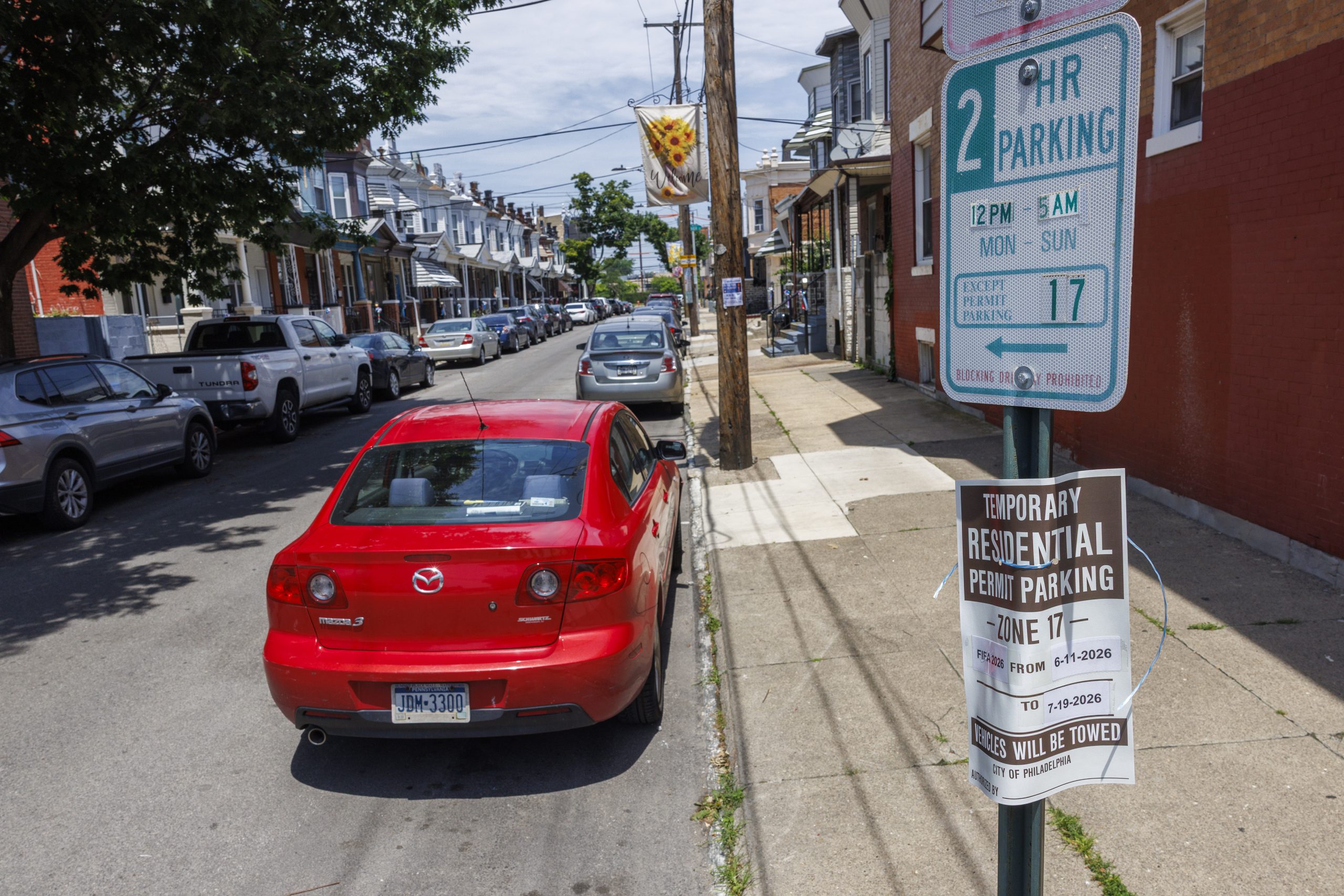
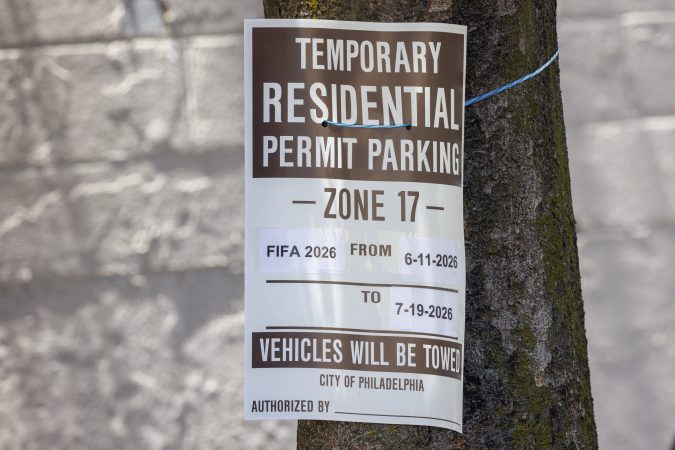
    In nearby Fairmount, some bar managers said they had seen a soccer-fueled boost in business. But several other neighborhood shop owners said they were only breaking even, with the slight increase in tourist traffic offset by a sharp drop in regular customers. Parking restrictions and street closures have kept many locals away, business owners said.

    Temporary parking restrictions near the FIFA Fan Festival are keeping some customers away, said local business owners.Alejandro A. Alvarez / Staff Photographer

    A World Cup let-down for some in Brewerytown

    Many Philadelphia business owners said they had high expectations for the World Cup: Some near the Fan Festival stocked up on inventory and even hired extra staff.

    “I ordered all kinds of soccer stuff to put in ice cream,” said Welch, who owns the hoagie shop and I Scream for Ice Cream. “I bought a whole [World Cup] banner.”

    As of Thursday, Welch said she hadn’t seen enough soccer fans to justify putting out the merchandise or unfurling the banner, which still sat in her car.

    Business is down precipitously at All Day Hoagies, which usually goes through 200 rolls a day. Since the World Cup began, the number has dropped to 125 or fewer.

    Across the street, AJ Kim, front-of-house manager at Baby’s Kusina + Market, hired two extra employees to run food ahead of the festival.

    “We were prepared for a huge crowd,” Kim said. “But it wasn’t much at all.”

    Like other business owners, Kim said the temporary parking rules have confused regular customers, and stories of residents being ticketed and towed are scaring many patrons away. According to Kim, a Baby’s chef was among those erroneously ticketed by the Philadelphia Parking Authority, despite displaying the required temporary permits.

    Every night, a handful of people cancel their Baby’s reservations, saying they are worried about parking, Kim said. Staff has tried to dispel misinformation on social media, and lends temporary parking passes to diners, but uncertainty remains.

    Some spots see steady business

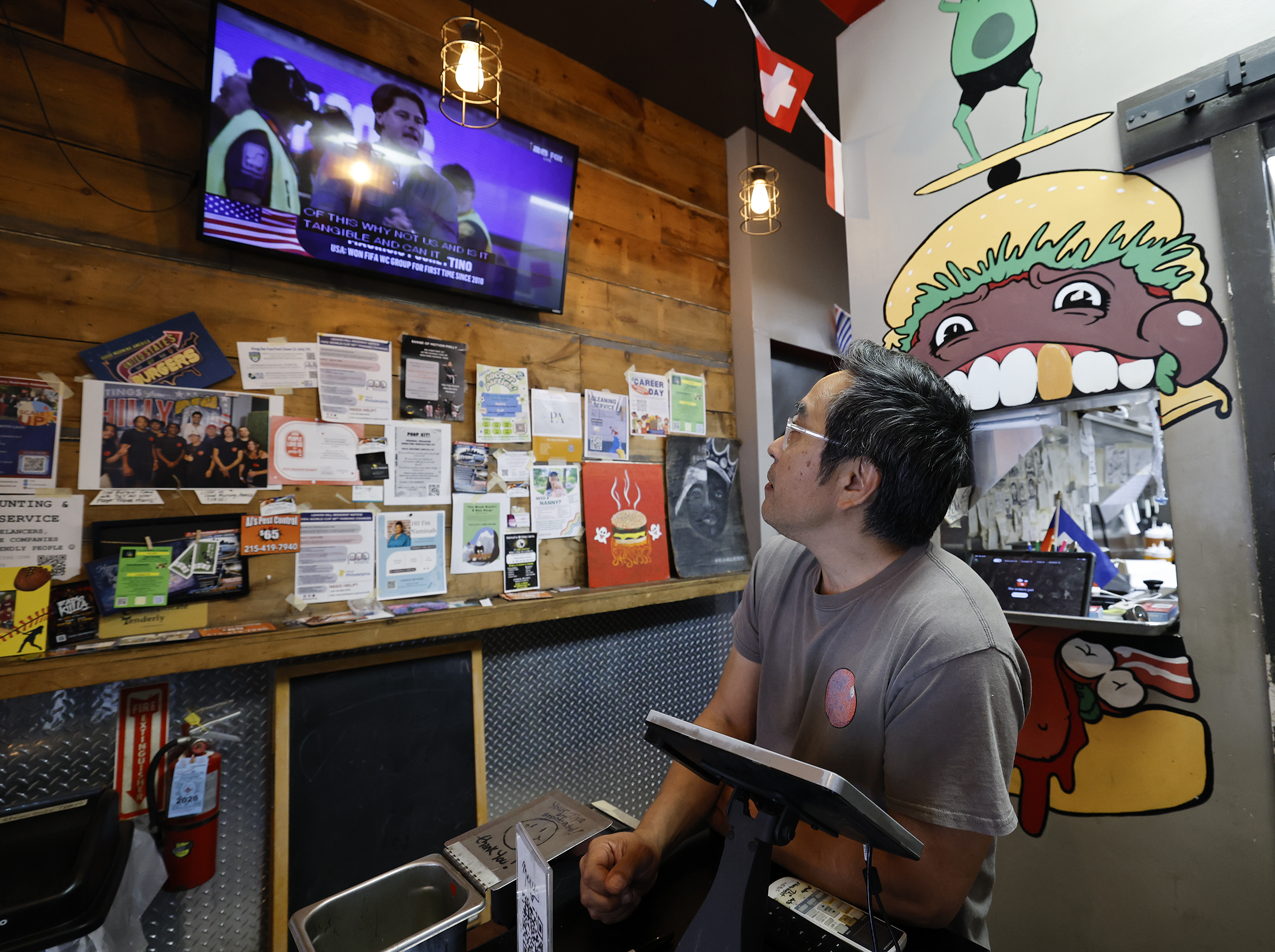
    Josh Kim, owner of Spot Gourmet Burgers, watches World Cup programming from his Brewerytown burger joint. Yong Kim / Staff Photographer

    Some businesses are faring better than others, even if they aren’t seeing crowds of soccer fans every day.

    Josh Kim, owner of Spot Gourmet Burgers in Brewerytown, said international tourists have made special trips to his restaurant for one thing: American cuisine.

    “When people go to Italy, they want pasta and pizza,” Josh Kim said. “When they come to America, they want burgers.”

    June 19 was a particularly busy day for him: After the Brazil-Haiti match in South Philly, Spot’s sold 200 burgers in less than an hour, he said.

    But no other recent days have been as lucrative, and Josh Kim said he worries it could take a while for regular customers to return to Girard Avenue once the World Cup games — and the restrictions — are over.

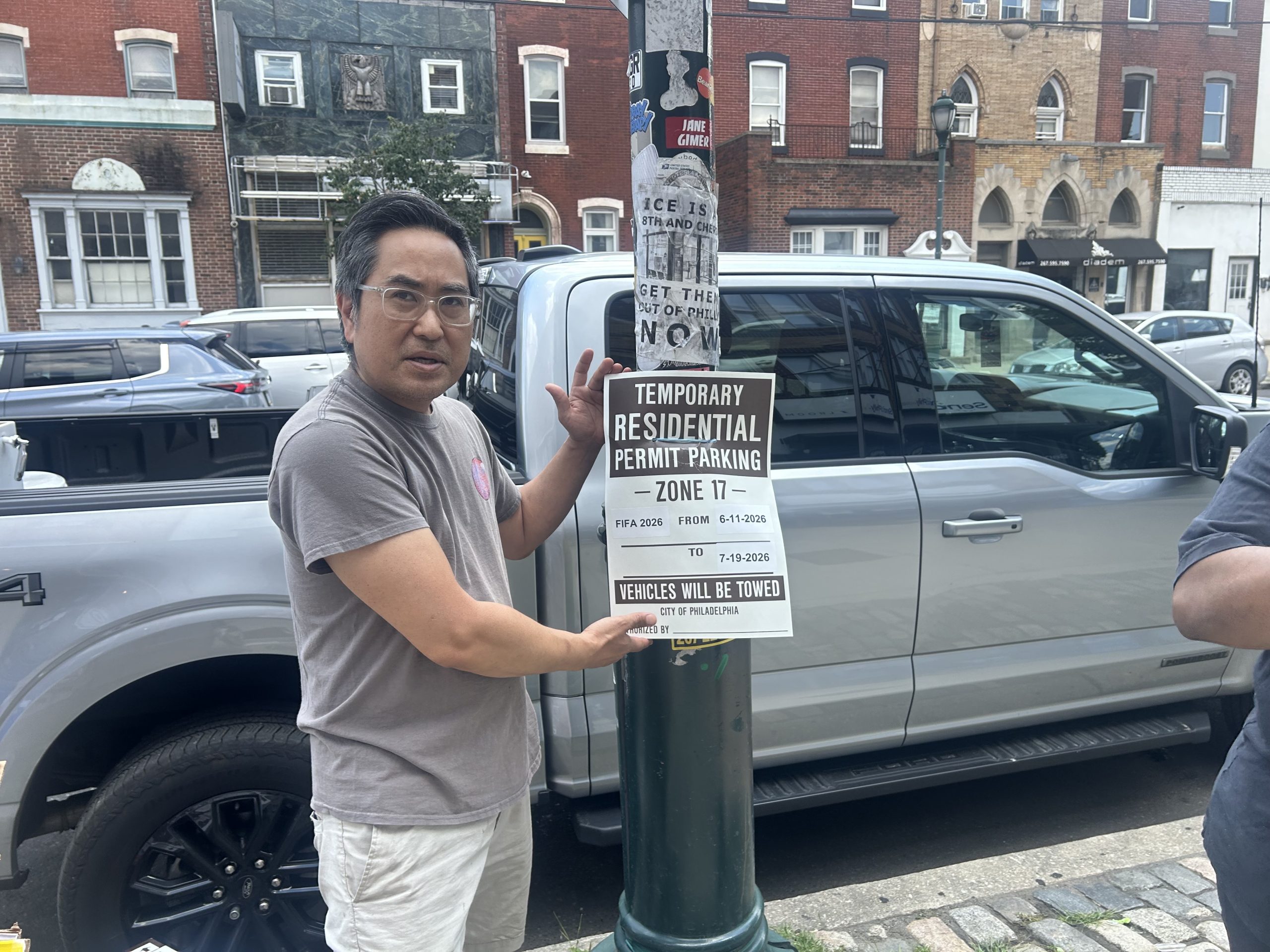
    Josh Kim, owner of Spot Gourmet Burgers, points out a temporary residential parking permit sign on Girard Avenue. He said parking confusion has hurt business in the neighborhood during the FIFA Fan Festival.Erin McCarthy/Staff

    “Consumers are habitual,” Josh Kim said. “If [they] break that habit, they no longer think about going to Girard Avenue. … They’ll go up Ridge.”

    On Boathouse Row, across the street from the Fan Festival, Cosmic Café and Ciderhouse has seen steady business, manager Sachael Sciarretta said. About 30% of the cafe’s regulars drive there, and he said he hasn’t seen them since the festival began. But business from soccer fans has made up for the loss.

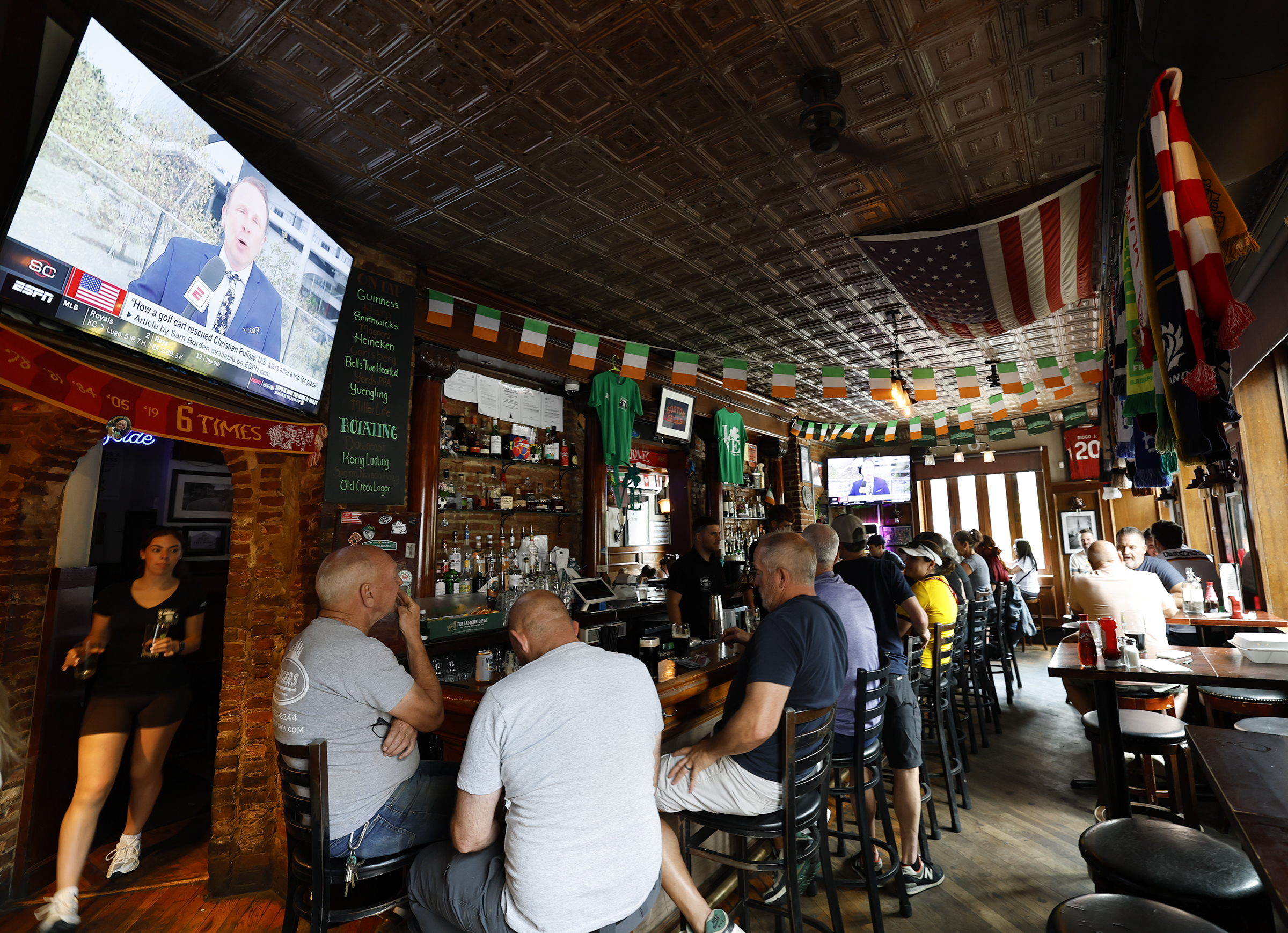
    Fairmount bars and restaurants seem to have been among the biggest World Cup winners. On Thursday afternoon at the Black Taxi, an Irish pub a few blocks from the festival, almost every seat was filled — several by customers donning soccer jerseys.

    Regulars and soccer fans eat and drink at the Black Taxi Irish Pub in Fairmount on Thursday, June 25.Yong Kim / Staff Photographer

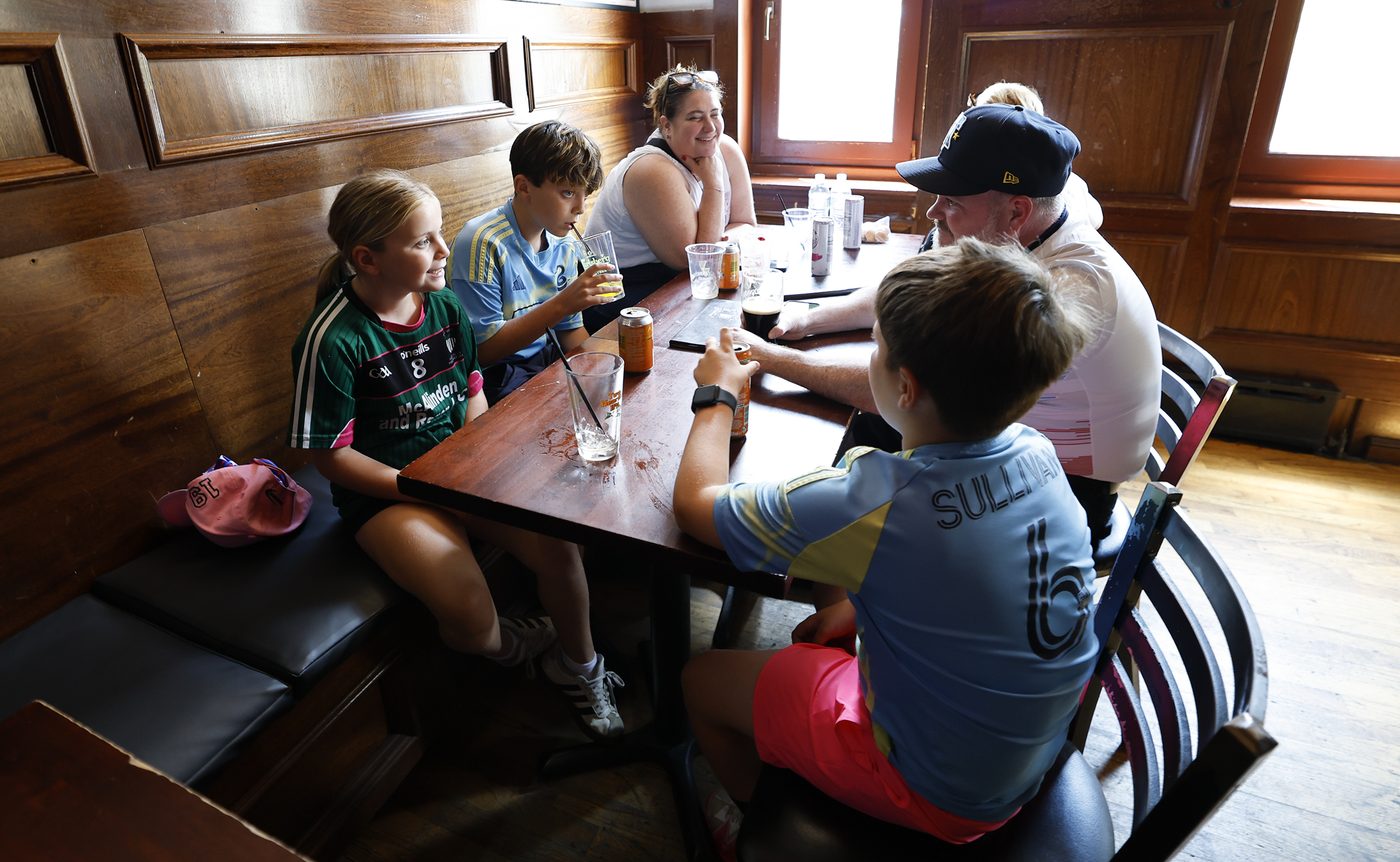
    “Foot traffic has been great, and the neighborhood is buzzing,” said manager Neil McKernan, who estimated that sales are up 30%.

    In the dining room, the Trainor family enjoyed a meal before walking to the Fan Festival to watch the 4 p.m. match between Curacao and Ivory Coast.

    It was the first time that Kelly Trainor, 42, of Glenside, had been to the Fairmount watering hole, and she brought along her three young children.

    “We can’t afford tickets to the game,” Trainor said. “So this is the next best thing.”

    The Trainor family, of Glenside, enjoyed refreshments at the Black Taxi before attending the FIFA Fan Festival.Yong Kim / Staff Photographer

    Back in Brewerytown, where the business corridor was quiet, some owners said they wished they could have been more involved in the festivities. Josh Kim, of Spot Gourmet Burgers, said perhaps organizers could have allowed local restaurateurs to sell from food trucks outside the fan entrance.

    “If we were able to activate this corridor, it would have been a lot different,” Kim said.

    “Why didn’t they work with the local businesses so we could make the money?” added Welch, of All Day Hoagies. “Because we ain’t making none.”

  • Speed cameras on Frankford Avenue will begin issuing fines

    Speed cameras on Frankford Avenue will begin issuing fines

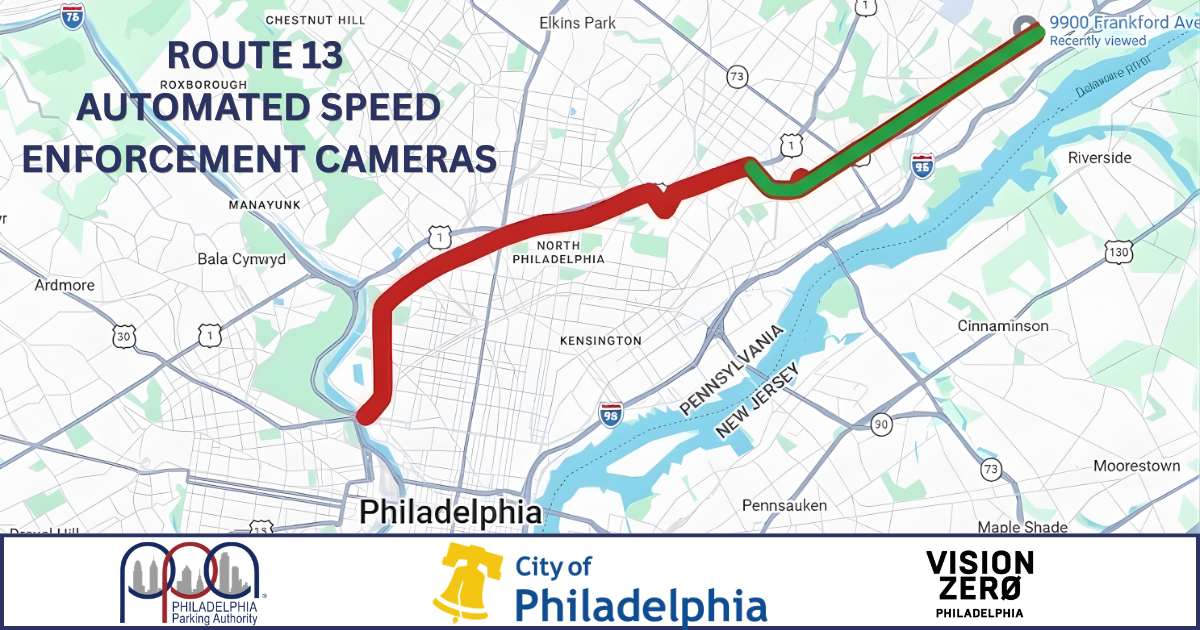
    Starting Friday, drivers traveling 36 mph or faster on Frankford Avenue in Northeast Philadelphia will face a minimum $100 fine.

    Ten new speed-enforcement cameras were activated on April 13, initiating a 60-day warning period which brought mailed warnings to violators of the road’s 25 mph speed limit.

    “Speed cameras are a tremendous tool that helps save lives,” said Gabe Roberts, acting executive director of the Philadelphia Parking Authority, in an emailed statement.

    There are three tiers of penalties for speeding on the 4.5-mile stretch of U.S. Route 13 that are now going into effect.

    Fines are $100 for traveling 11-19 mph over the speed limit; $125 for going 20-29 mph over; and $150 for speeding by 30 or more mph.

    Tickets are mailed to the registered owner of the vehicle speeding. No points — PennDOT’s method of recording driving violations — are added to the motorist’s driver’s license.

    The cameras are placed at 9900 Frankford Ave.; 8300 Frankford Ave.; 7000 Frankford Ave.; 6400 Frankford Ave.; 3100 Levick St.; and 2100 Robbins St.

    Automated speed enforcement cameras went live Monday April 13 on the portion of U.S. Route 13 shown in green. Philadelphia Parking Authority will install cameras on the rest of the corridor in July 2026.City of Philadelphia

    Speed-enforcement cameras were first piloted in Philadelphia on Roosevelt Boulevard in June 2020, with 32 automated cameras placed along the highway previously considered the most dangerous road in the city.

    According to the Philadelphia Parking Authority, speed violations have since decreased on the boulevard by more than 90%, and there has been a 50% reduction in pedestrian-involved crashes.

    There are now a total of 80 speed cameras operating throughout the city, with additional cameras installed on Broad Street and nearby five school zone locations.

  • PPA tickets and tows Fairmount residents with Fan Festival parking permits

    PPA tickets and tows Fairmount residents with Fan Festival parking permits

    Justin Siebel woke up on Sunday to drive with his wife to the Pocono Raceway and enjoy the NASCAR Cup Series, a two-hour drive from their Fairmount home.

    But when he walked to where he had parked his car a few days prior, near Harper Street, a block from the FIFA Fan Festival, the vehicle was gone.

    Though Siebel had registered for special permit parking with the Philadelphia Parking Authority that allows residents to park in the neighborhood during the festival, his car was ticketed and towed to a South Philly tow yard.

    “My wife and I did the right things, we registered our vehicles with PPA, and still came out to my car and it wasn’t there,” Siebel said.

    Fairmount residents have been taking to social media to share accounts of parking tickets despite having registered for special permits. Since the fan festival started last week, residents have expressed concern over the city’s management of road closures, parking restrictions, and communication.

    The PPA issued nearly 2,500 tickets for illegal parking in the festival parking enforcement zone over the weekend, with 173 of those tickets written in error to residents with valid parking permits, said Gabe Roberts, the agency’s acting executive director. PPA’s internal system has flagged these tickets for cancellation and will continue to flag wrongfully issued parking tickets by “cross-checking them with our existing residential parking permit holder lists,” Roberts said.

    Residents who have permits and were wrongfully ticketed will receive a cancellation notice by mail, the PPA said.

    “The PPA utilizes a daily internal accuracy control mechanism that identifies and cancels any FanFest Enforcement Zone ticket written in error for vehicles with valid residential parking permits or Lemon Hill permits,” a PPA spokesperson said. “Any vehicle towed in error will also have its violation canceled and all fees refunded. The PPA apologizes for any inconvenience.”

    Most ticketed residents will simply have their ticket canceled, Roberts said. But four residents with valid parking permits had their vehicles towed, and later returned with no fees.

    However, Siebel’s was not returned, and he needed to call PPA to locate his car, then call the tow yard in South Philly about picking it up. Siebel said he was initially told it would cost $238 to drive out of the tow yard, but his fees were waived upon arriving and he was able to freely leave with his car.

    “It did cost me an Uber and an afternoon to retrieve. But I recommend that anyone else stay calm and use humor. Everyone in Philly has a sense of humor,” Siebel said.

    Residents can contact the PPA with questions or to confirm that their ticket has been canceled by calling 215-683-9421 or 215-683-9677 or by emailing engageppa@philapark.org.