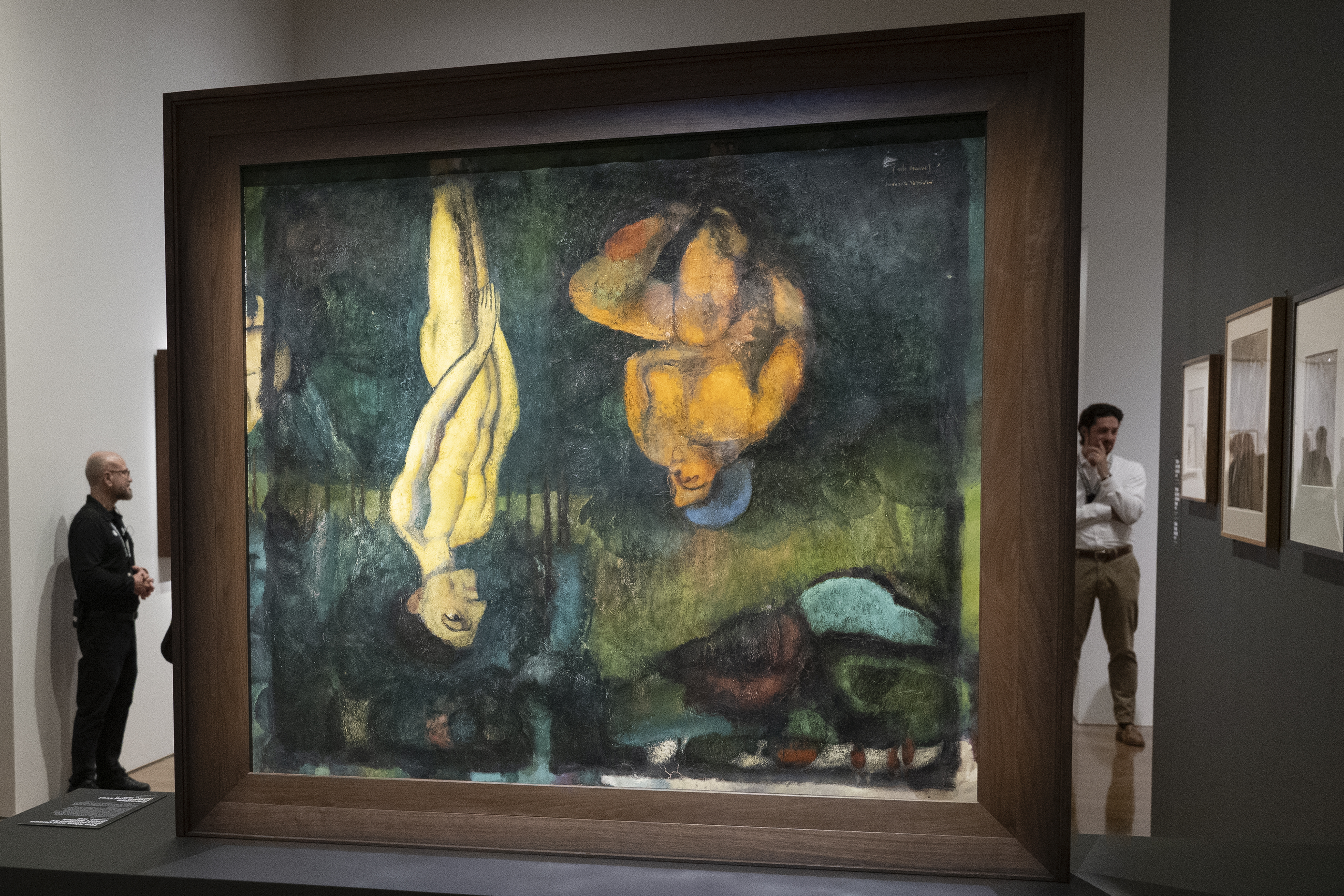
After opening to fanfare at New York’s Museum of Modern Art, the long-awaited Marcel Duchamp retrospective lands at the Philadelphia Museum of Art this weekend.
“Marcel Duchamp,” running through Jan. 31, 2027, marks the first major U.S. retrospective of his work in more than 50 years, with some 300 paintings, sculptures, prints, photographs, and ready-mades (a term Duchamp invented to describe manufactured objects, like a divisive urinal titled Fountain, that he bought, altered slightly, and put on display to rankle and humble the stuffy art world).
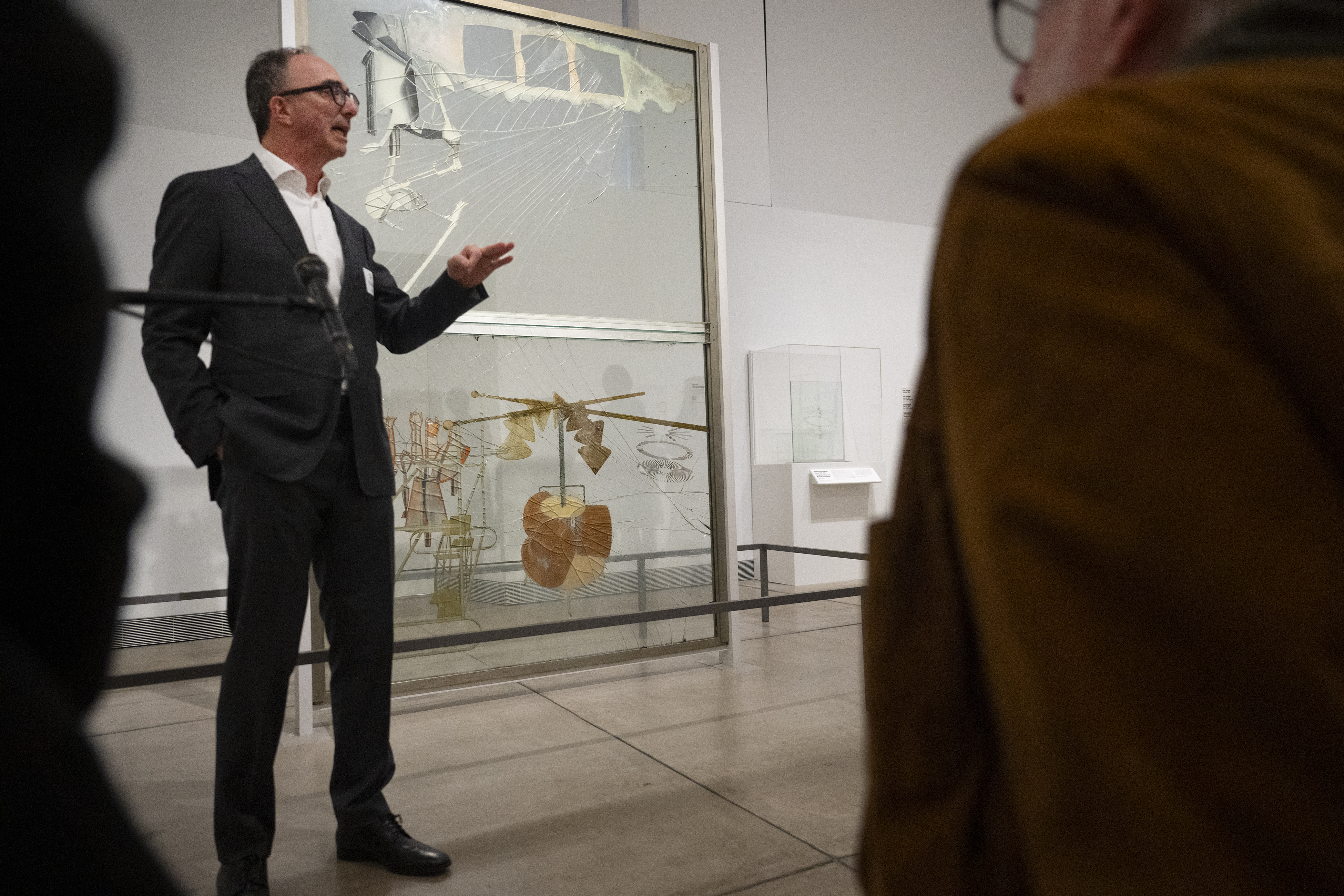
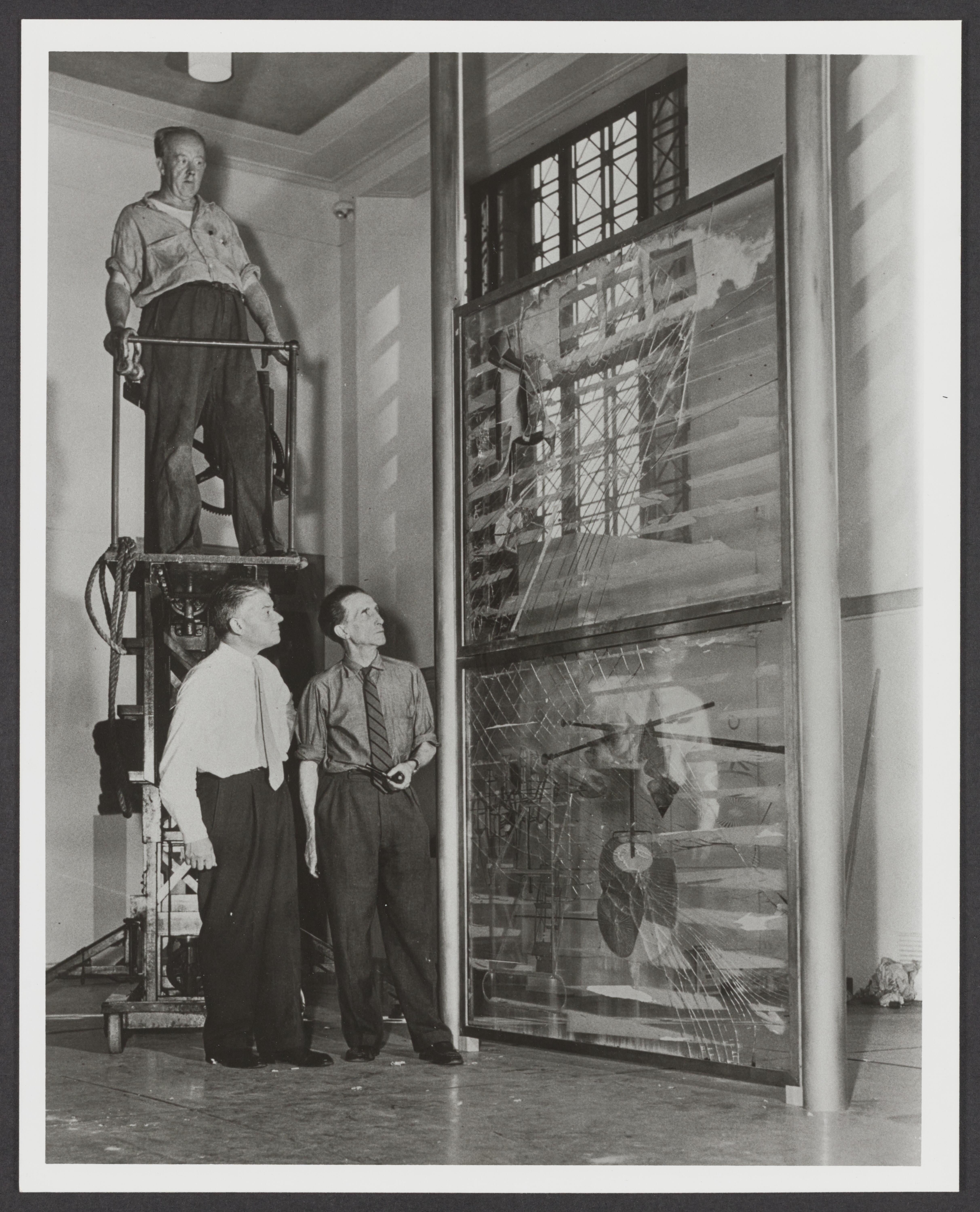
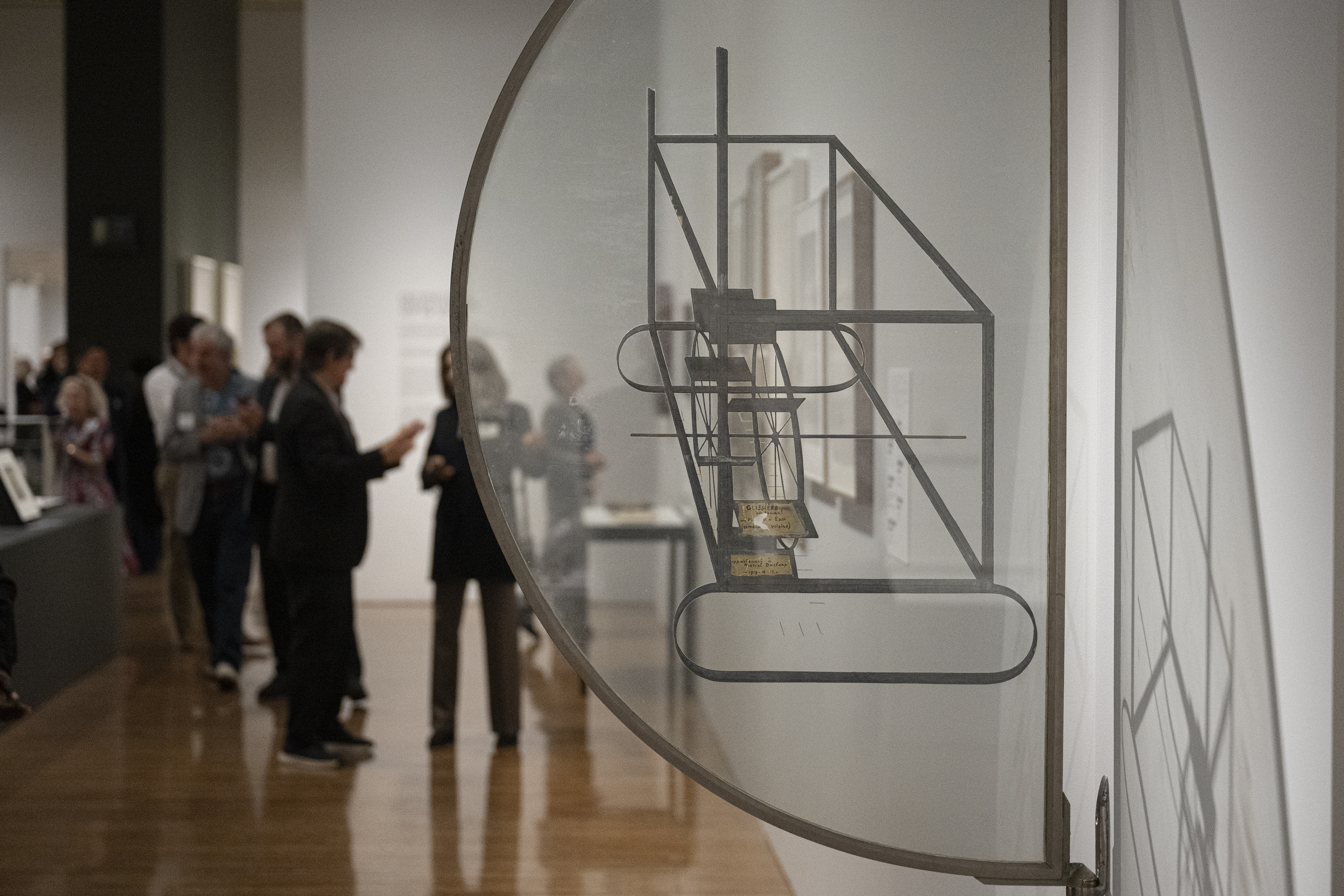
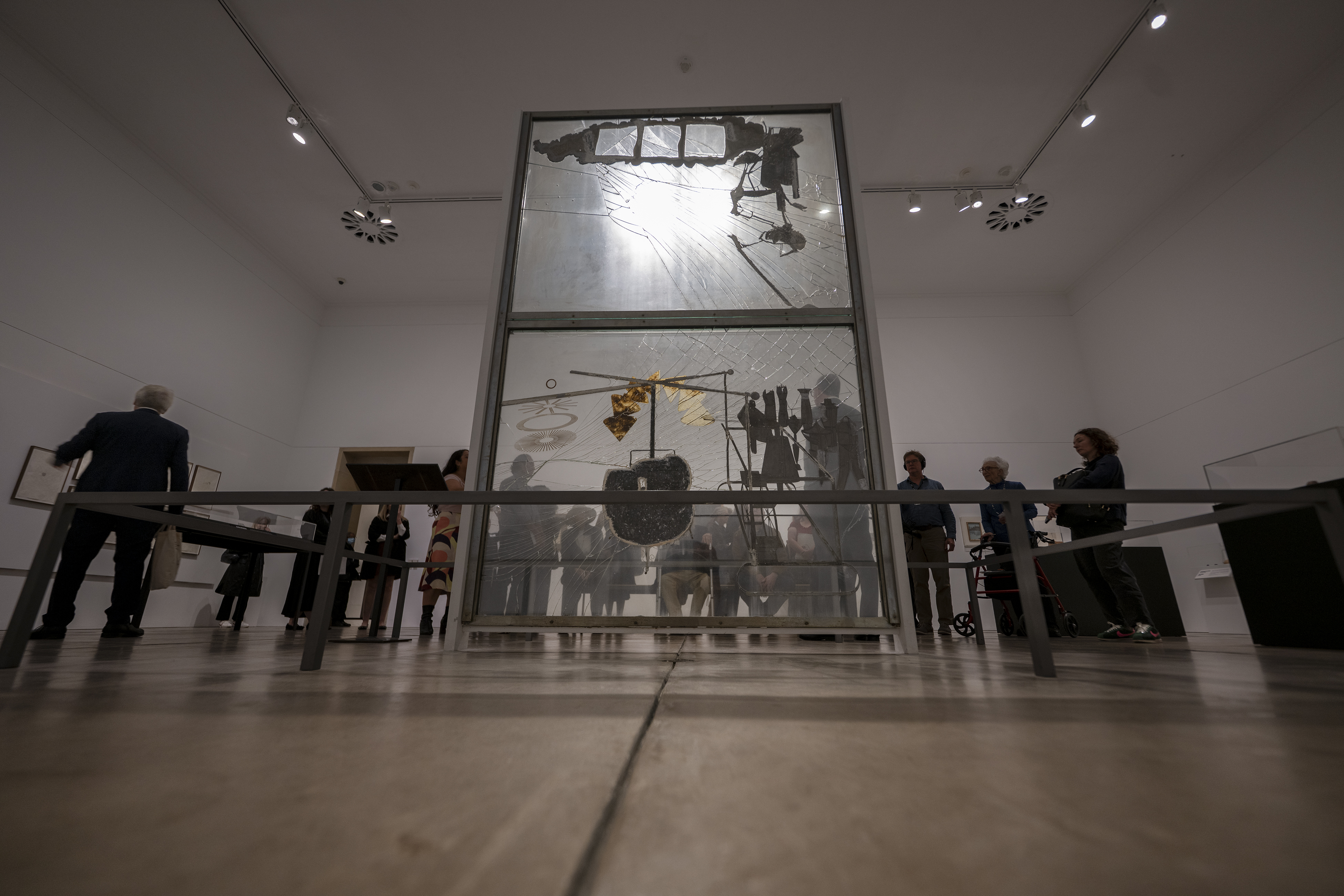
The Philadelphia iteration features exclusive artworks that can only be viewed at the museum, including the radical, abstract glass piece, The Bride Stripped Bare by Her Bachelors, Even (1915-1923), also called The Large Glass, which Duchamp installed himself in 1954.
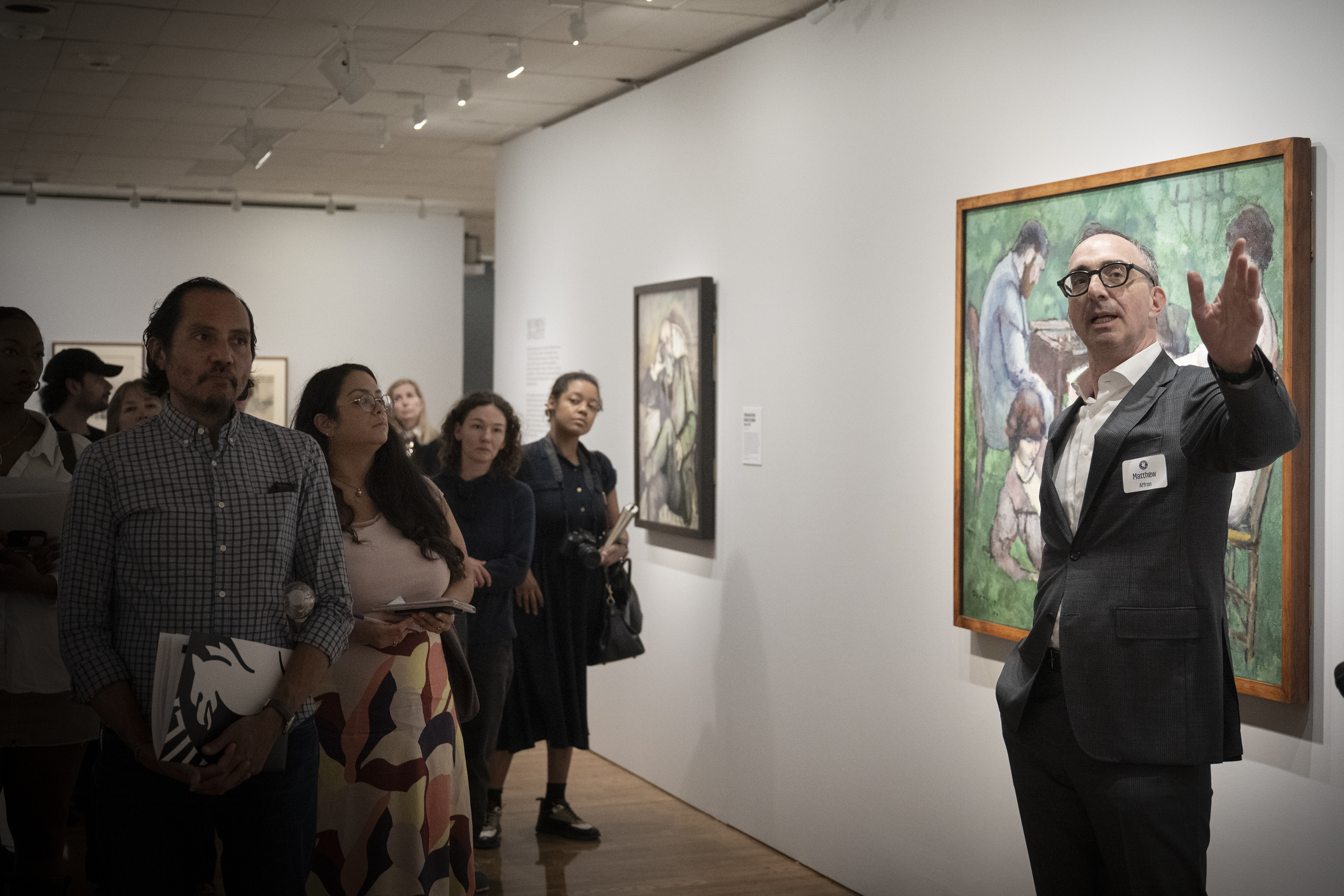
Matthew Affron, curator of modern art at the Philadelphia Museum of Art, explains Marcel Duchamp’s “The Bride Stripped Bare by Her Bachelors, Even,” commonly known as “The Large Glass,” during the Marcel Duchamp exhibition at the museum in Philadelphia on Thursday, Oct. 8, 2026.Jose F. Moreno / Staff Photographer
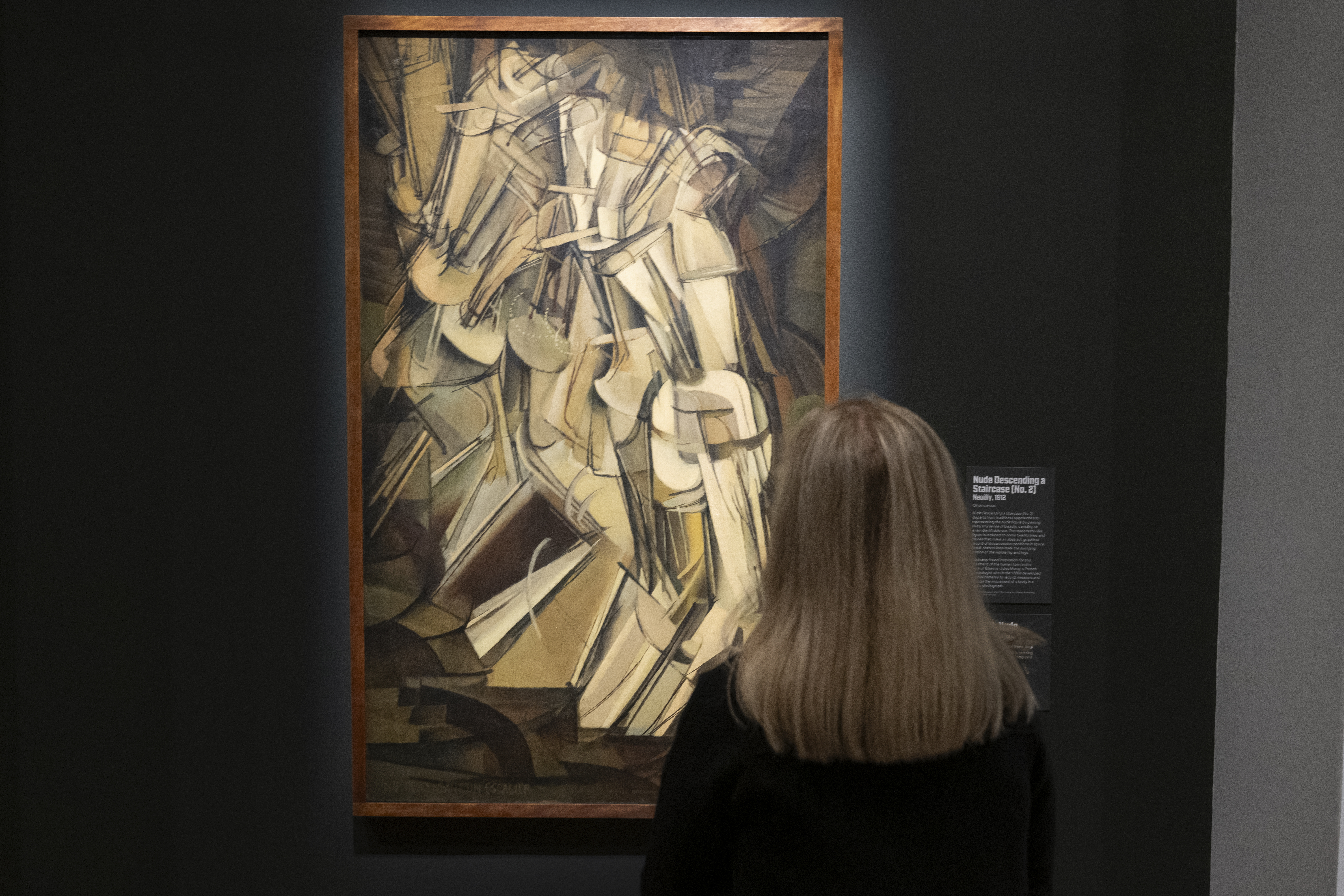
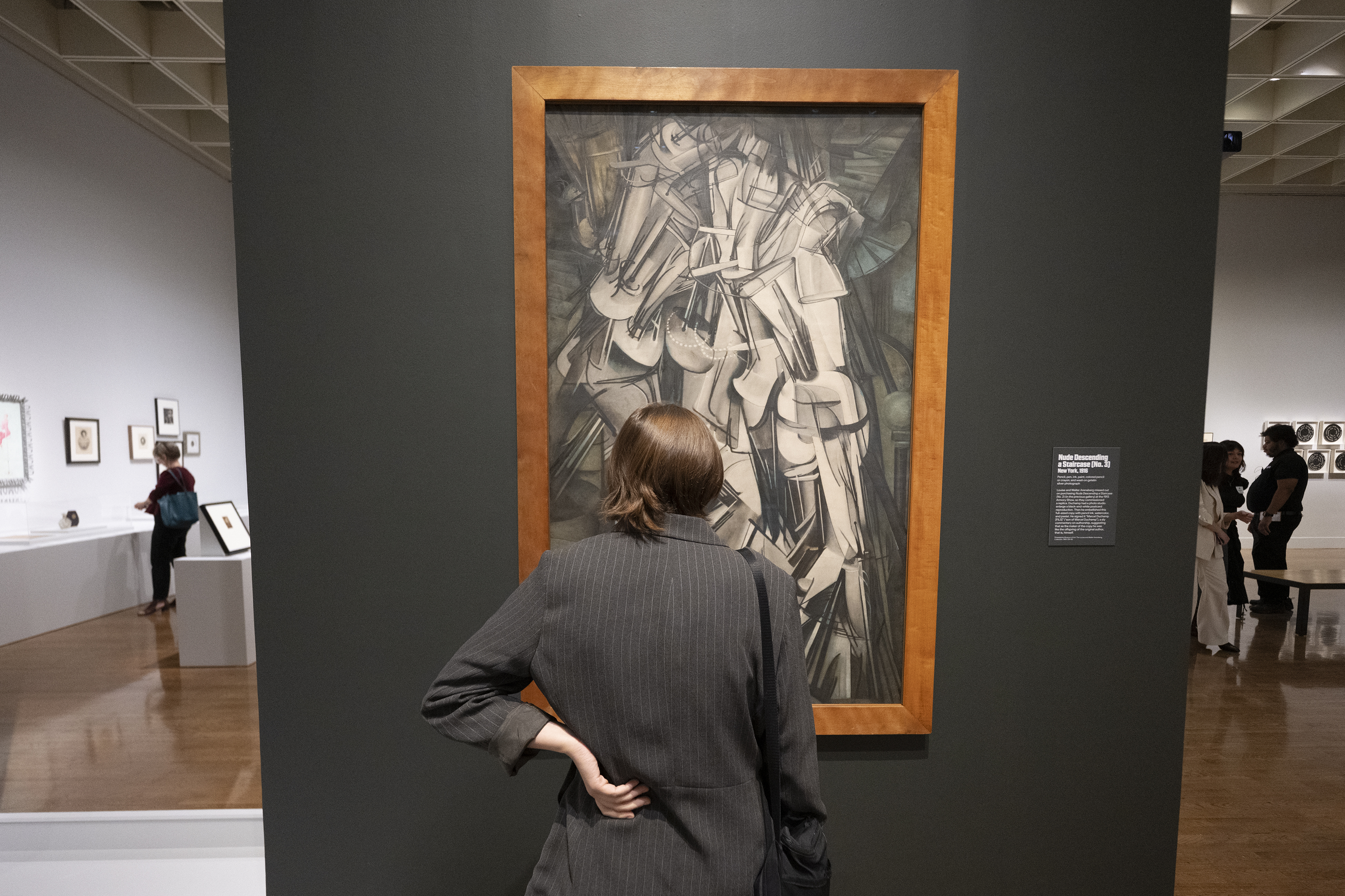
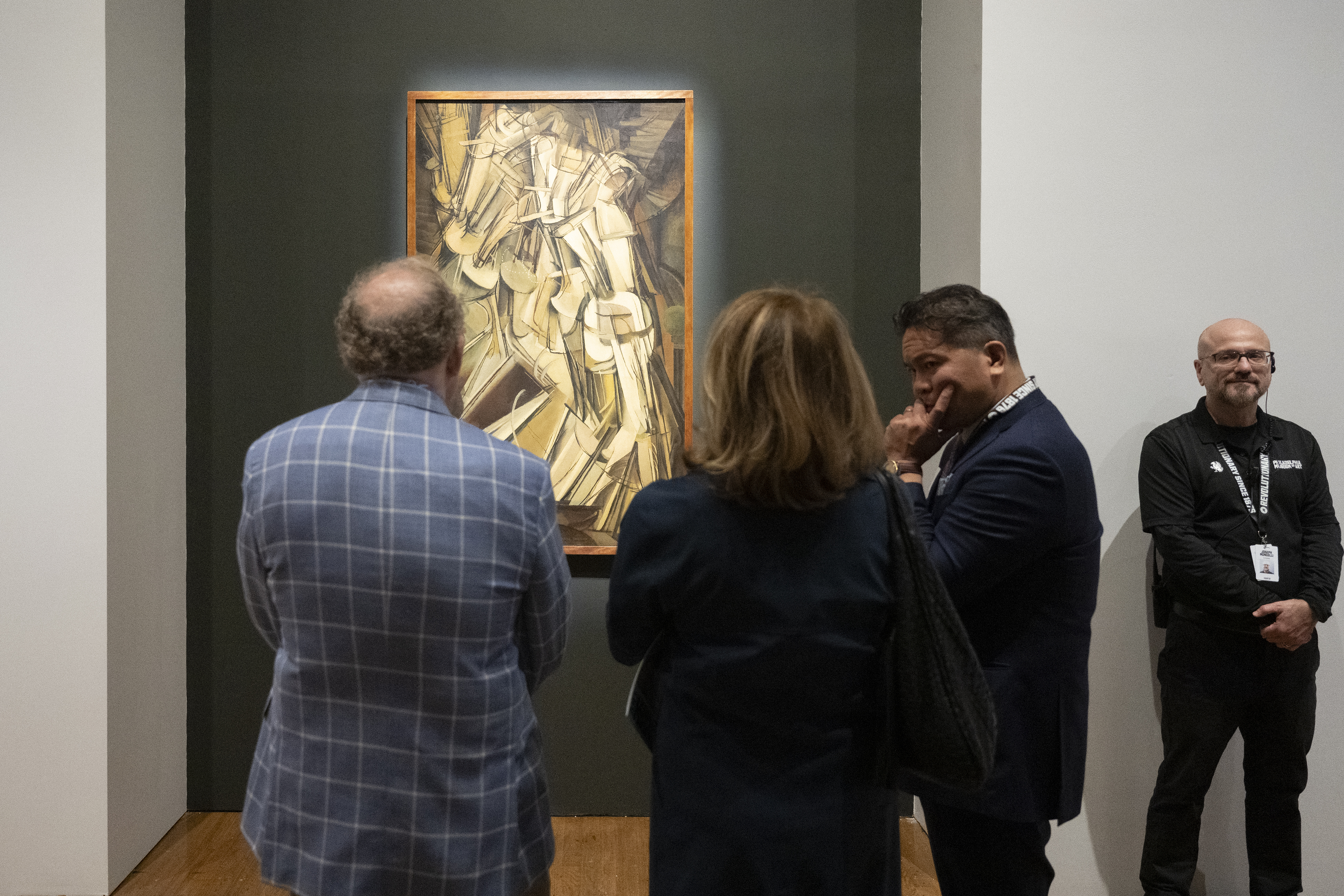
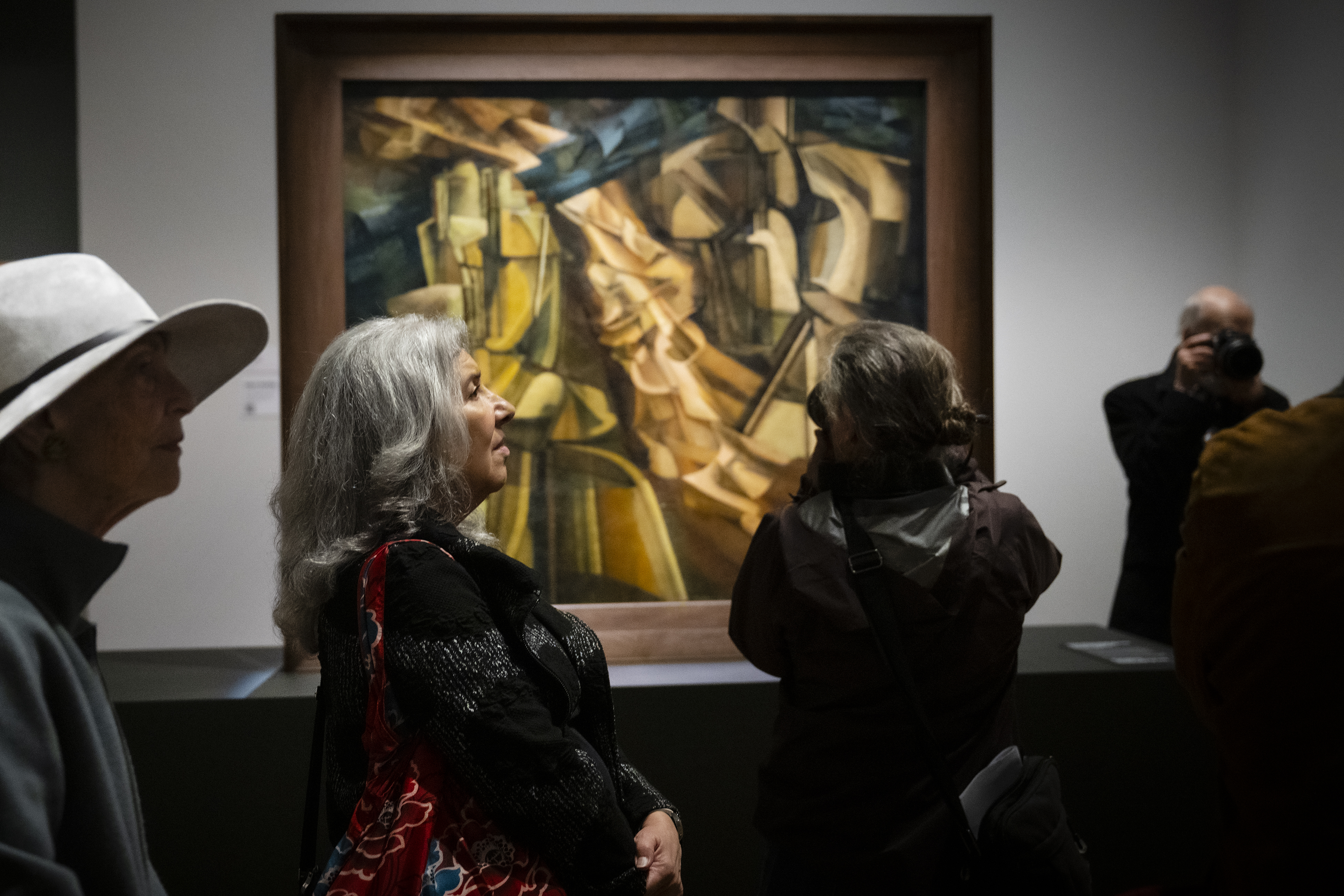
The chronological show starts much like any other; at the beginning of the artist’s career as he learned through experimenting with watercolors, etchings, and oil painting, like his groundbreaking cubist work from 1912, Nude Descending a Staircase (No. 2) — the museum also presents a rare display of versions one and three. But the exhibition quickly transforms into a more eccentric display, which curators and fans alike dub “Duchampian.”
“Chronology seems like a very simple, straightforward logic for an exhibition, but as with all things Duchampian, what seems normal actually becomes very strange,” said exhibit co-organizer Michelle Kuo, MoMA’s chief curator-at-large and publisher, at the Art Museum’s press preview on Thursday.
Duchamp’s many eras of reinvention fuel the Alice in Wonderland-like journey from traditional to unconventional as the viewer descends into his perplexing, cerebral artistic expressions that gleefully defy expectations. Subversive and playful, these works include the trippy film Anemic Cinema and machines that evoke optical illusions, like 1920’s Rotary Glass Plates and 1925’s Rotary Demisphere. Spirals appear frequently, like the moving projection above the exhibit’s entryway inviting audiences inside a whimsical portal.
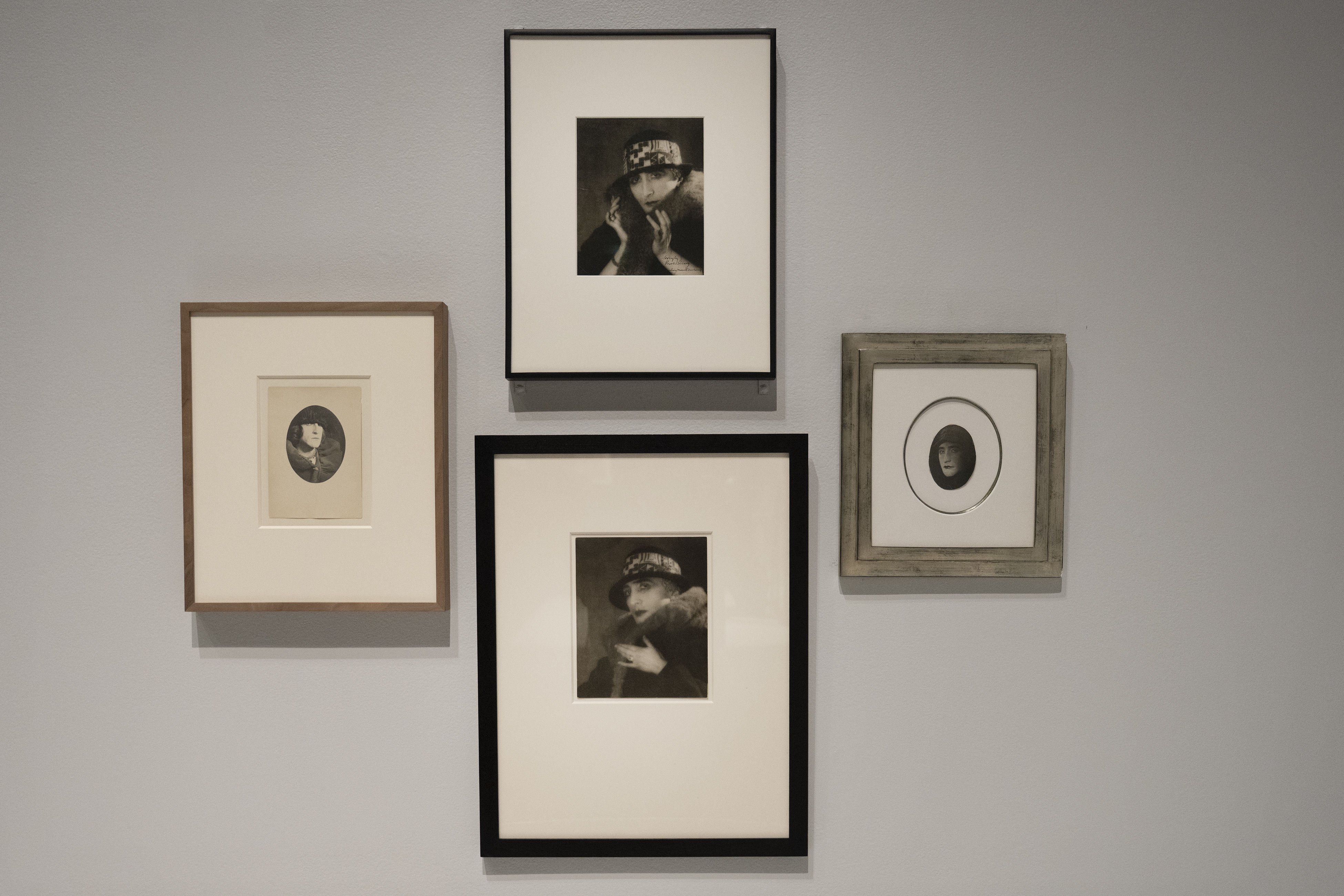
A series of silver gelatin portrait photographs of Marcel Duchamp is displayed as part of the exhibition at the Philadelphia Museum of Art in Philadelphia on Thursday, Oct. 8, 2026.Jose F. Moreno / Staff Photographer
There’s much rich cleverness to explore, like the artist’s female alter ego, Rrose Sélavy, a punny name that in French sounds like, “Eros, c’est la vie,” loosely meaning “eroticism, that’s life.” Several portraits feature Duchamp in drag as Rrose, photographed in the early 1920s by South Philadelphia-born surrealist Man Ray.
The following gallery, though, is where patrons are “supposed to start getting a little bit dizzy,” said Matthew Affron, the Muriel and Philip Berman curator of modern art at the museum, on the press tour.
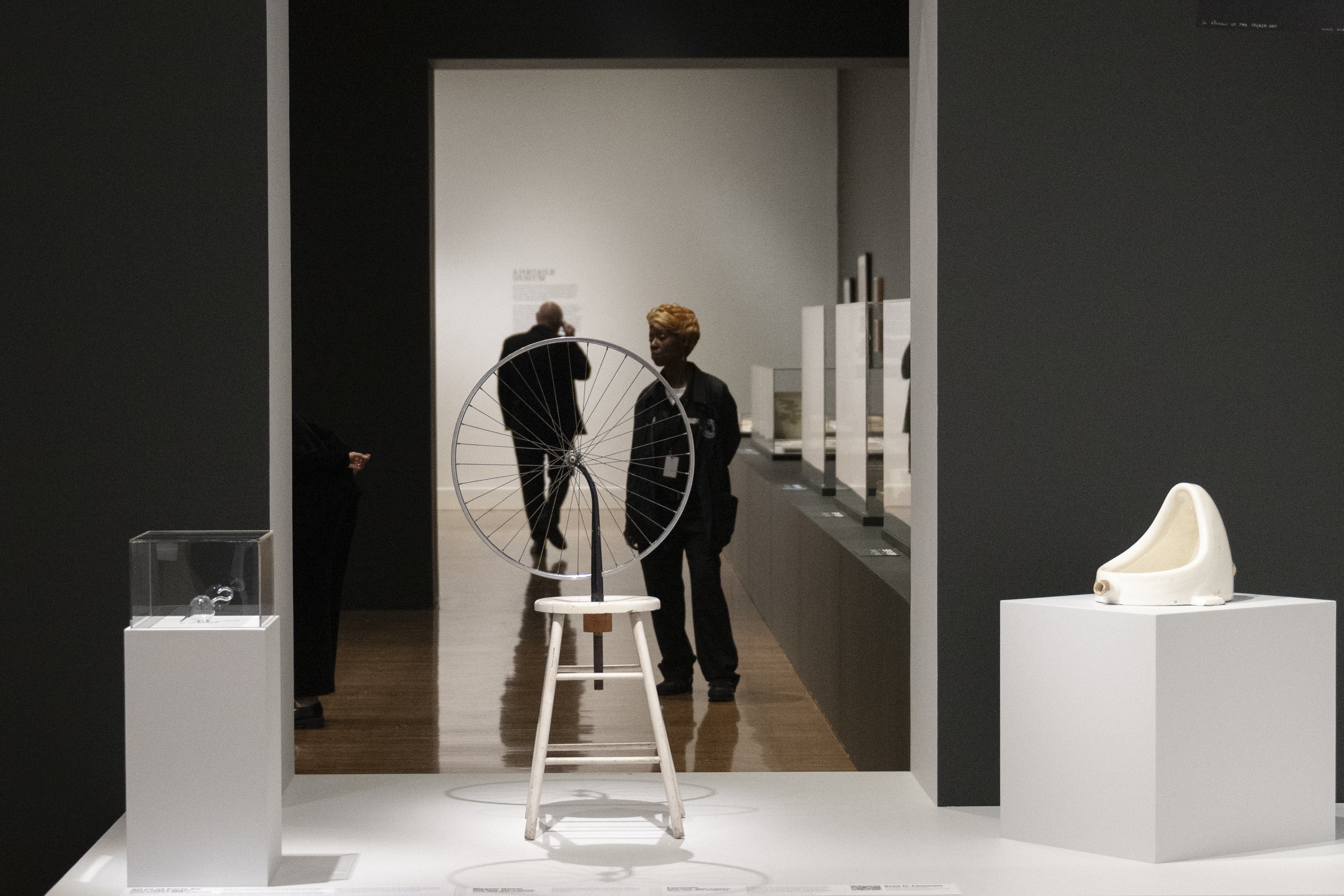
Museum staff stand near the Marcel Duchamp exhibition at the Philadelphia Museum of Art in Philadelphia on Thursday, Oct. 8, 2026.Jose F. Moreno / Staff Photographer
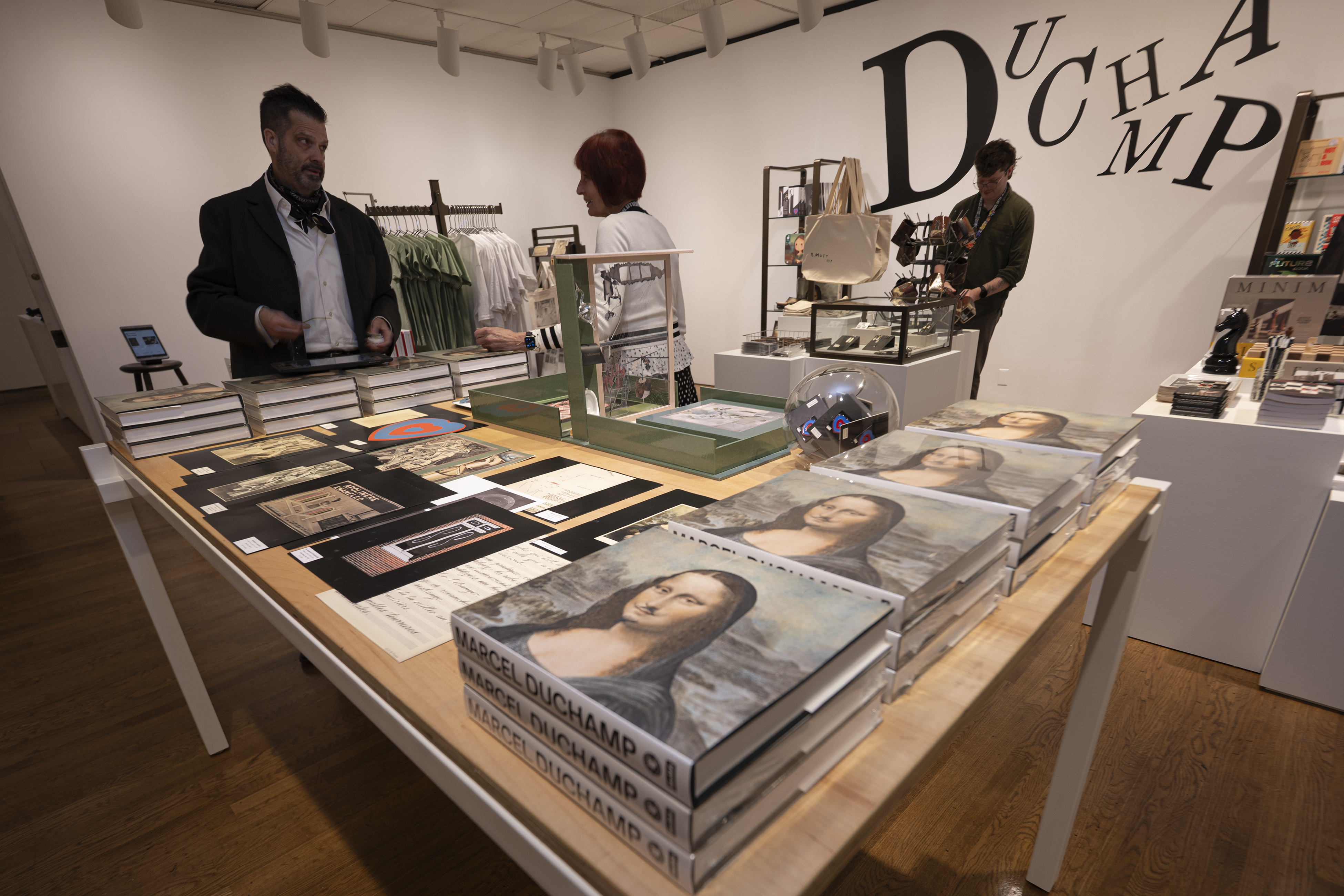
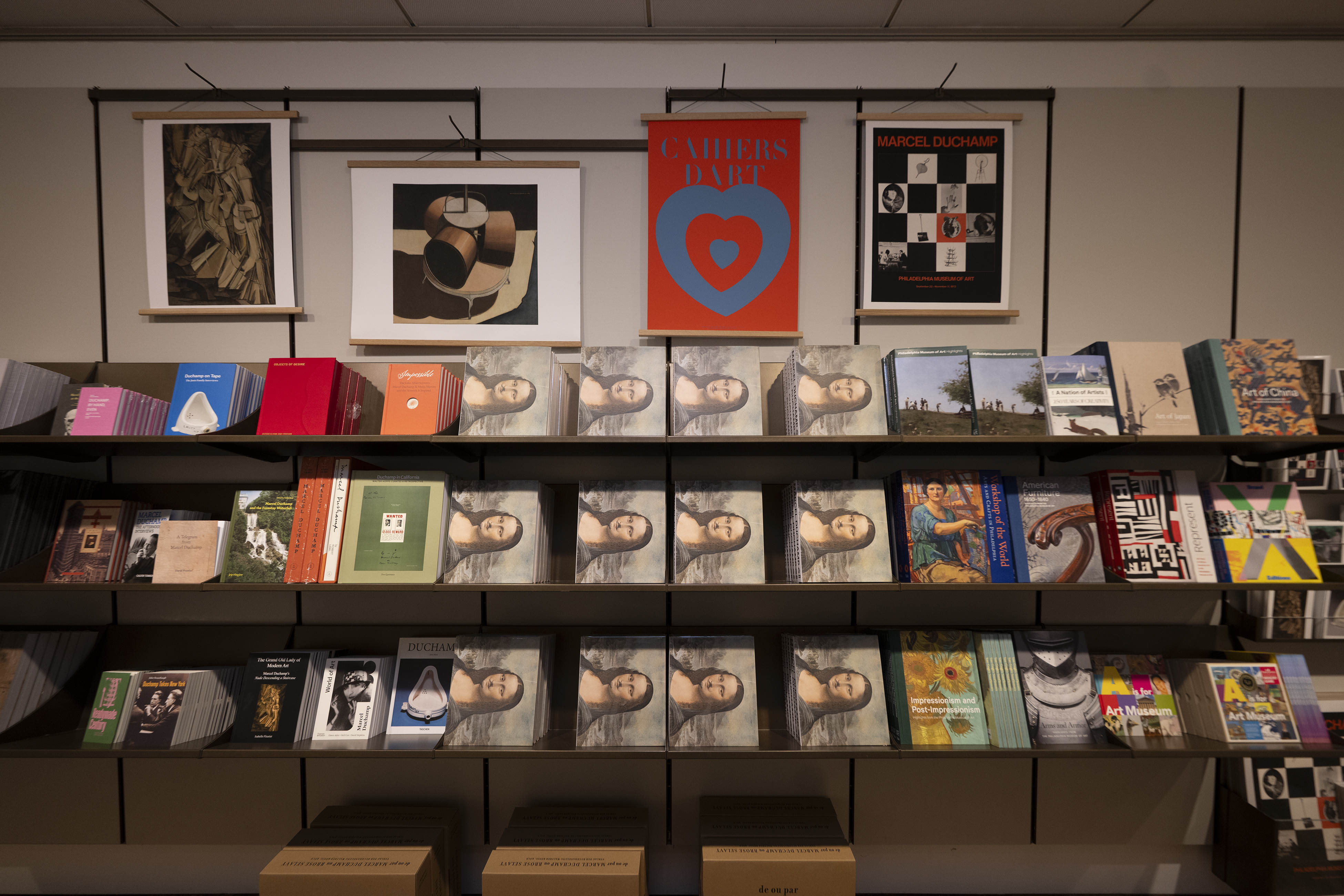
Multiple urinals, snow shovels, bottle racks, and replicas of L.H.O.O.Q. (Duchamp’s mustachioed rendition of Mona Lisa) underscore the power of repetition in the ready-made genre. His boîte-en-valise works are miniature versions of artworks he made previously, serving as portable museums that he made as he moved to the U.S. to escape the war in France.
Museums, though, were not keen on his modernist inventions for much of his career, and that contentious relationship is also examined at the Art Museum.
“It’s an interesting paradox that Marcel Duchamp didn’t really like visiting museums. He was suspicious of their authority. He thought they gave too much weight to what is already in the past,” said Affron.
“At the same time, he knew that he needed the institution of the museum to take care of the legacy of his work, so that future generations — us — could evaluate it.”
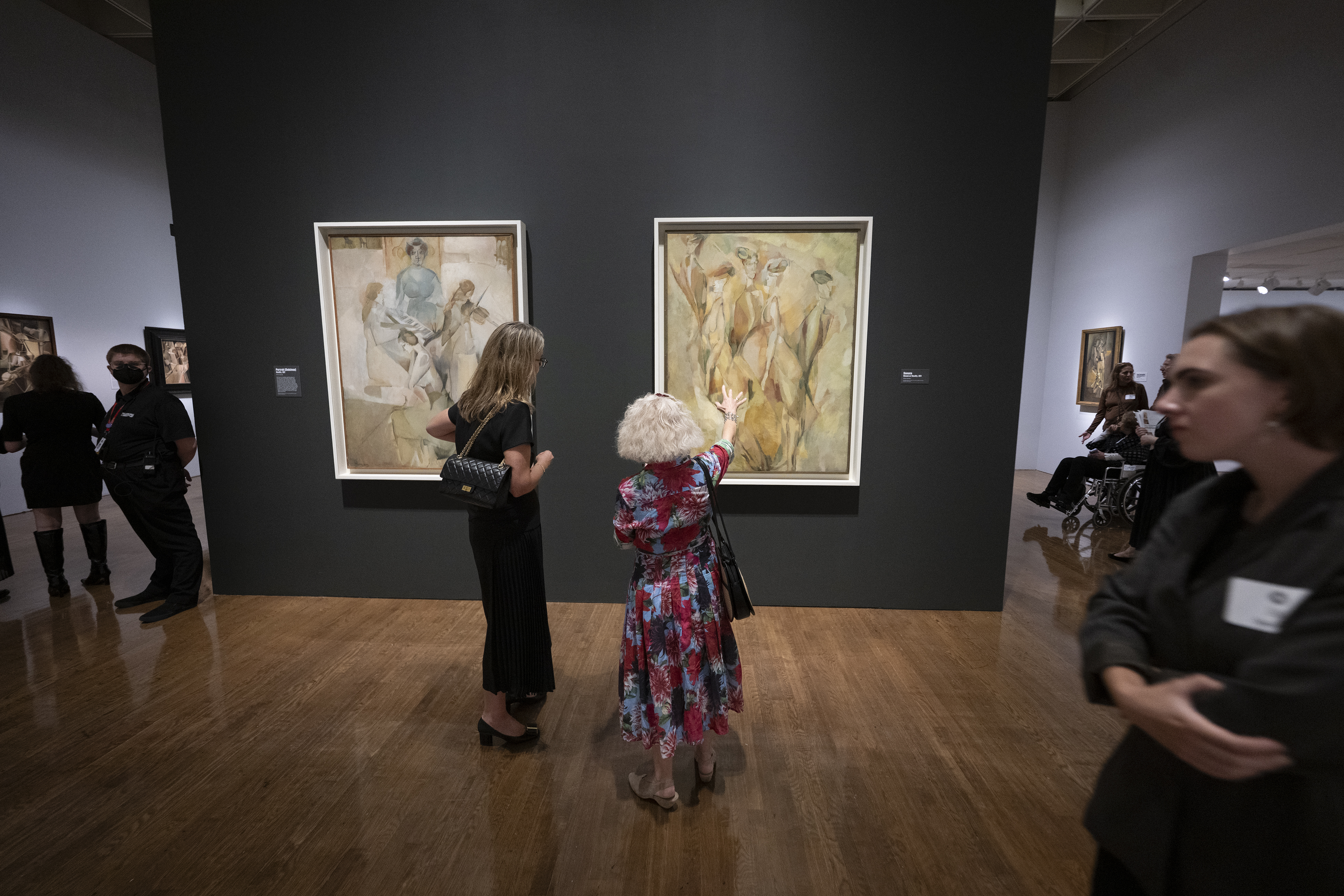
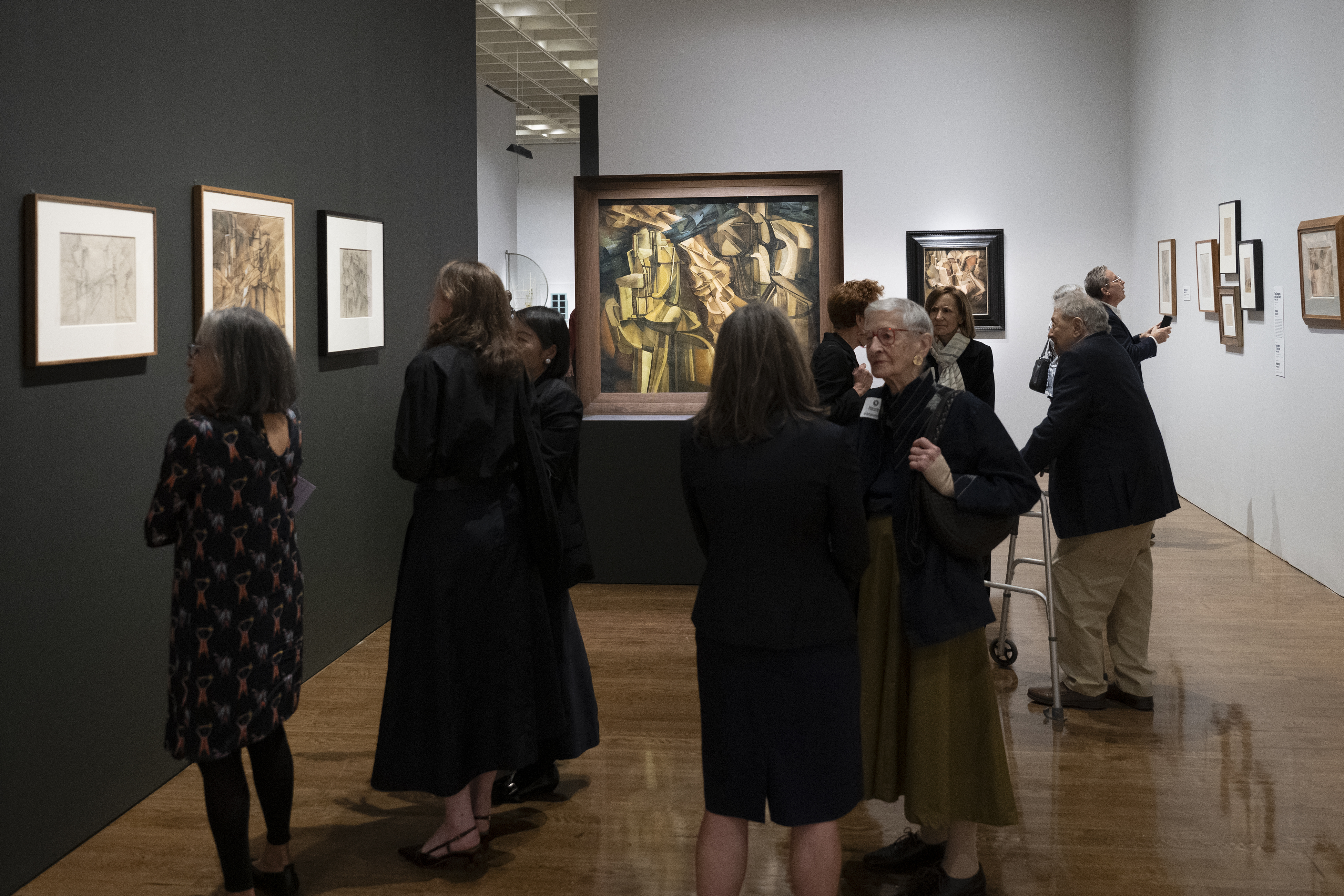
Lo Drexelius takes a close look at Marcel Duchamp’s “Nude Descending a Staircase” on exhibit at the Philadelphia Museum of Art in Philadelphia on Thursday, Oct. 8, 2026.Jose F. Moreno / Staff PhotographerBooks and other art-related items are displayed in the Marcel Duchamp exhibition shop at the Philadelphia Museum of Art in Philadelphia on Thursday, Oct. 8, 2026.Jose F. Moreno / Staff PhotographerBooks and other art-related items are displayed in the Marcel Duchamp exhibition shop at the Philadelphia Museum of Art in Philadelphia on Thursday, Oct. 8, 2026.Jose F. Moreno / Staff PhotographerArt visitors take a close look at the work of Marcel Duchamp on exhibit at the Philadelphia Museum of Art in Philadelphia on Thursday, Oct. 8, 2026.Jose F. Moreno / Staff PhotographerArt visitors take a close look at the work of Marcel Duchamp on exhibit at the Philadelphia Museum of Art in Philadelphia on Thursday, Oct. 8, 2026.Jose F. Moreno / Staff PhotographerArt visitors take a close look at the work of Marcel Duchamp on exhibit at the Philadelphia Museum of Art in Philadelphia on Thursday, Oct. 8, 2026.Jose F. Moreno / Staff PhotographerArt visitors take a close look at the work of Marcel Duchamp on exhibit at the Philadelphia Museum of Art in Philadelphia on Thursday, Oct. 8, 2026.Jose F. Moreno / Staff PhotographerMuseum staff stand near the Marcel Duchamp exhibition at the Philadelphia Museum of Art in Philadelphia on Thursday, Oct. 8, 2026.Jose F. Moreno / Staff PhotographerMarcel Duchamp’s “Paradise (Adam and Eve),” painted in 1910-1911, is shown on display at the Philadelphia Museum of Art in Philadelphia on Thursday, Oct. 8, 2026. Philadelphia Museum of ArtJose F. Moreno / Staff PhotographerMatthew Affron, curator of modern art at the Philadelphia Museum of Art, gives a tour of the Marcel Duchamp exhibition at the museum in Philadelphia on Thursday, Oct. 8, 2026.Jose F. Moreno / Staff PhotographerA series of silver gelatin portrait photographs of Marcel Duchamp is displayed as part of the exhibition at the Philadelphia Museum of Art in Philadelphia on Thursday, Oct. 8, 2026.Jose F. Moreno / Staff PhotographerArt visitors look at the work of Marcel Duchamp on exhibit at the Philadelphia Museum of Art in Philadelphia on Thursday, Oct. 8, 2026.Jose F. Moreno / Staff PhotographerMatthew Affron, curator of modern art at the Philadelphia Museum of Art, explains Marcel Duchamp’s “The Bride Stripped Bare by Her Bachelors, Even,” commonly known as “The Large Glass,” during the Marcel Duchamp exhibition at the museum in Philadelphia on Thursday, Oct. 8, 2026.Jose F. Moreno / Staff Photographer
Maybe the most important thing to keep in mind for visitors is that the exhibit pathway, fittingly, requires a counterintuitive detour after the show-specific gift shop.
Philadelphia art fans who are familiar with the museum’s Duchamp gallery in the North Wing already know this, but newcomers might need a bit more guidance to reach galleries 281-283, where two unmissable, immovable artworks are on view: The Large Glass and Étant donnés, an assemblage that Duchamp created secretly toward the end of his life, when the art world believed he had retired from artmaking to pursue his passion for chess.
(Chess serves as another essential element here, as visitors can play casual games on the East Balcony during the exhibit run; in January, the museum will host a chess tournament with Philadelphia champion Jennifer Shahade.)
Étant donnés is in a small, dark, nondescript gallery where it hides behind large wooden doors under a brick arch, visible only through two peepholes. A naked woman lies on a bed of grass, legs splayed, holding a gas lamp in one hand as her head is obscured. Artist Jasper Johns once called it “the strangest work of art in any museum.”
It’s just one example of Duchamp’s undeniable, groundbreaking weirdness — part of a body of work that curators tried to avoid over-interpreting for contemporary audiences.
“I’m not trying to unriddle all the riddles,” Affron said.
“Marcel Duchamp” runs through Jan. 31, 2027, at the Philadelphia Museum of Art, 2600 Benjamin Franklin Pkwy., Philadelphia, 215-763-8100 or philamuseum.org.
Saddle up, folks! In case you haven’t heard, the city’s biggest rodeo is coming back to town.
On Saturday, 8 Seconds Rodeo returns to the Liacouras Center, where some of the nation’s top bull riders and barrel racers will compete for big prize money.
As a former Texan who’s attended some of the oldest rodeos in the country, I can assure you 8 Seconds Rodeo is unlike any other rodeo I’ve experienced. I was there for its Philly debut last year, and the atmosphere was electric. Hip-hop blared through the arena as fans jumped from their seats, phones in hand, to capture the bull riding and barrel racing. It was exactly what founder Ivan McClellan envisioned: an “unapologetically Black rodeo” that welcomed anyone with an appreciation for Western tradition.
But there’s plenty more happening this weekend, from a Chinatown night market to a major new art exhibition.
Marcel Duchamp exhibition to open at PMA this Saturday
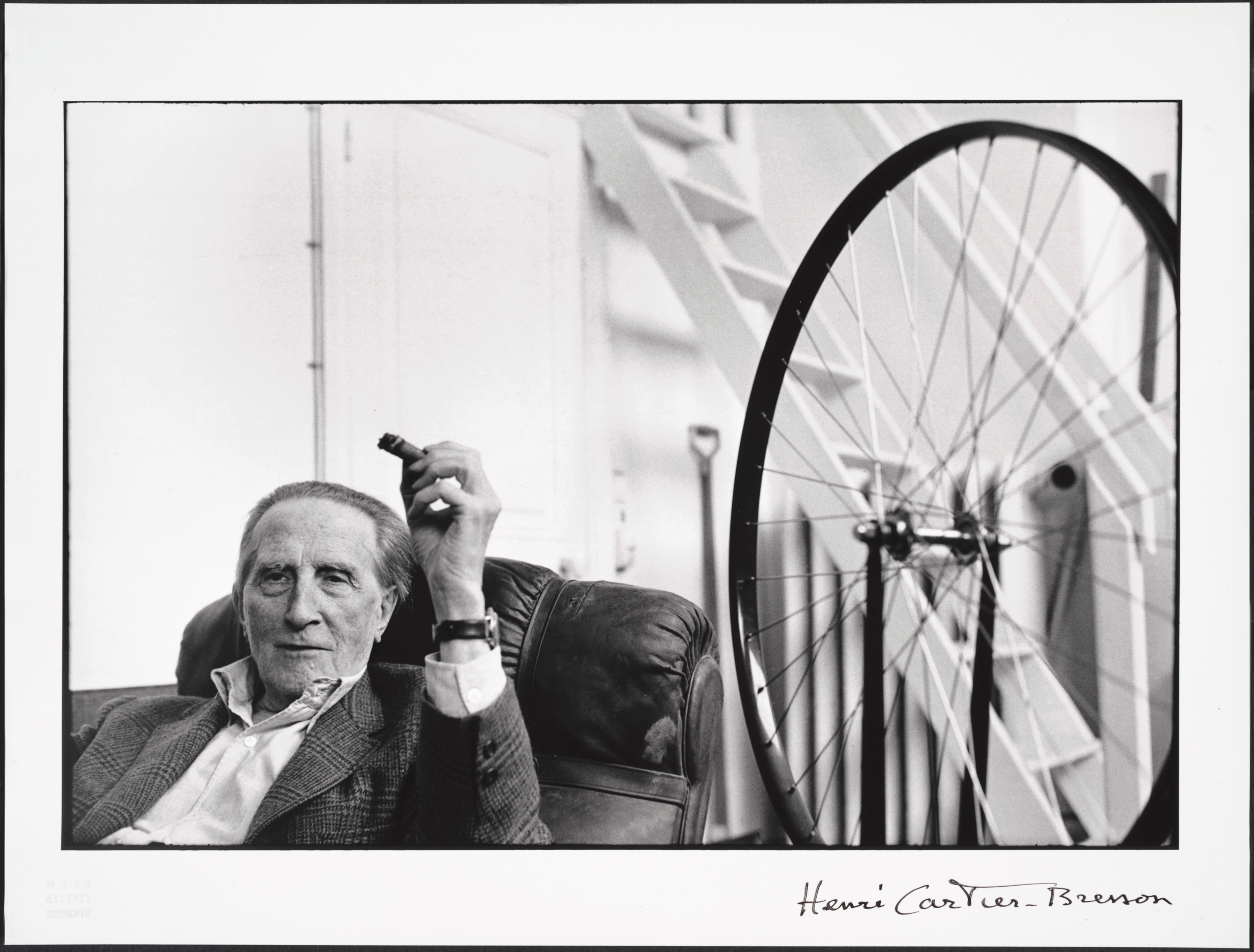
Marcel Duchamp in a 1968 photo by Henri Cartier-Bresson. Gelatin silver photograph. MUST CREDIT: Henri Cartier-Bresson/Cathy Carver/Promised Gift of Barbara and Aaron Levine/Hirshhorn Museum and Sculpture Garden
One of modern art’s most influential artists is getting the spotlight at the Philadelphia Museum of Art.
A major new exhibition opening Saturday brings together some of Marcel Duchamp’s most celebrated works, including “Nude Descending a Staircase (No. 2),” “The Bride Stripped Bare by Her Bachelors, Even,” and “Fountain.”
The exhibition comes to Philly after a stop at New York’s Museum of Modern Art and runs through Jan. 31, 2027.
What happens when 12 Philly chefs go looking for their perfect culinary match? We’re about to find out.
The Inquirer’s new Love at First Bite series puts local chefs in reality TV-style dating pods to find their ideal cooking partners. Once paired up, they’ll work together to create a dish for The Inquirer Food Fest, where they’ll compete for the title of Love at First Bite.
You can follow the matchmaking, kitchen experiments, and inevitable culinary chemistry in new episodes released twice a week.
And here’s the best part: You can actually taste the results. The Inquirer Food Fest returns to the Fillmore on Nov. 14, with dishes from the chef collaborations and plenty more to sample.
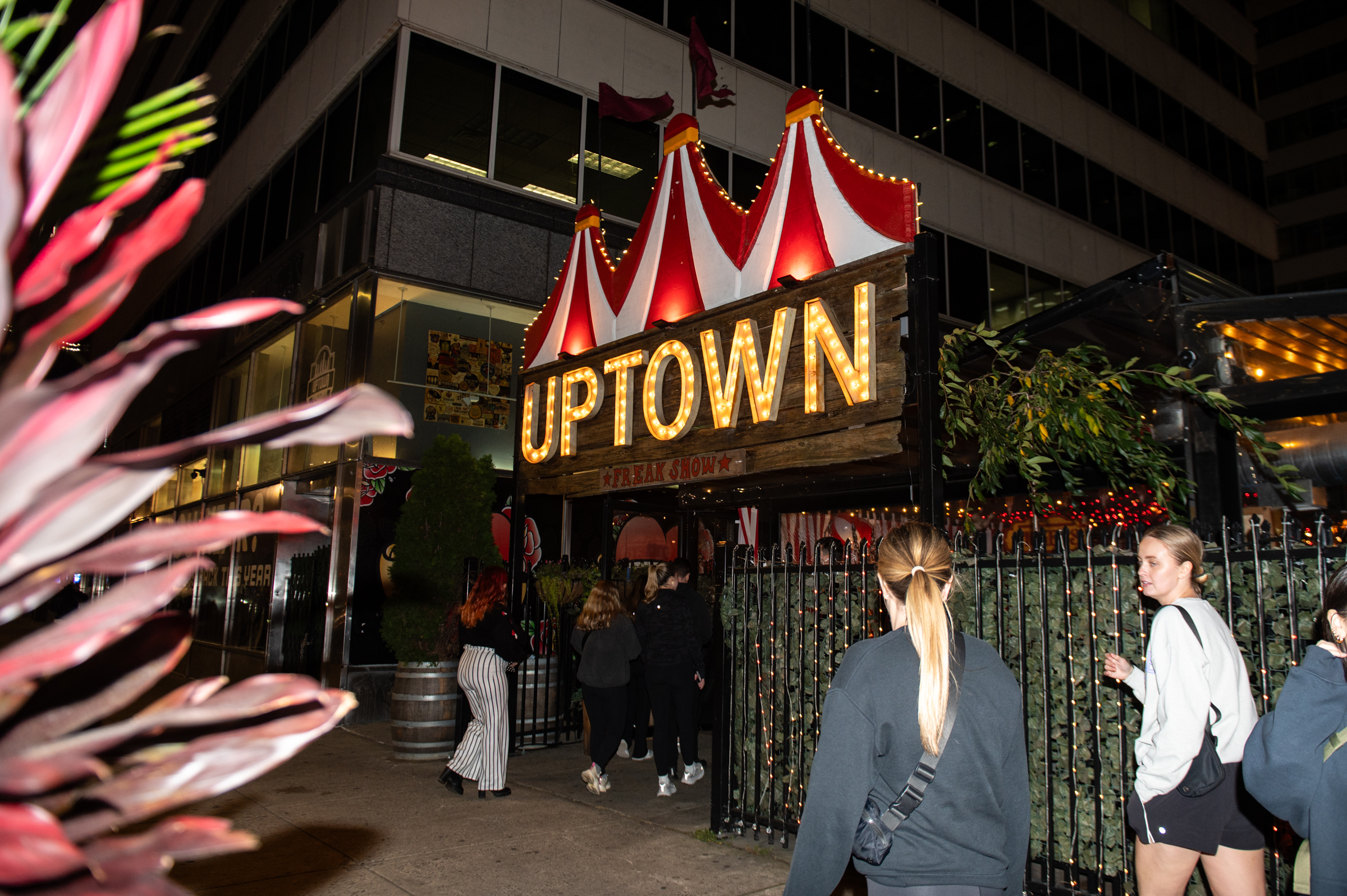
Walkers complete their route to Uptown Beer Garden near City Hall with the Philadelphia Chapter of Lunge Run Club during their weekly meetup for singles on Wednesday, Oct. 16, 2024 in Philadelphia, Pa. The viral NYC-based run club is targeted toward singles looking to meet new people.Erin Blewett / For The Inquirer
🎨 Open Studios at Bok: Ever wondered what’s happening behind the doors of South Philly’s former vocational school? On Friday, Bok opens all nine floors for an evening of art, live performances, shopping, and late-night snacks for Open Studios at Bok.
🐉 Come celebrate historic Chinatown: The annual YèShì Chinatown Night Market, which features live performances, arts, crafts, and pay-as-you-go food, is back to celebrate Chinatown’s rich history and culture.
🎃 Halloween arrives at Uptown Beer Garden:Uptown Beer Garden is getting into the spooky spirit with cobweb-covered tombstones bearing the names of late celebrities and a menu of Halloween-inspired specialty cocktails.
🍻 Parks on Tap’s final stop: Head to South Philly for the final Parks on Tap, the traveling attraction for lovers of community and craft brews. The final round of drafts will be served in Columbus Square Park through Sunday.
📅 My calendar picks this week: OURfest 2026, Made in Philadelphia Market at Dilworth Park, Salsa and Bachata Night. Here’s our full list for the week.
8 Seconds Rodeo returns for a second run in North Philly
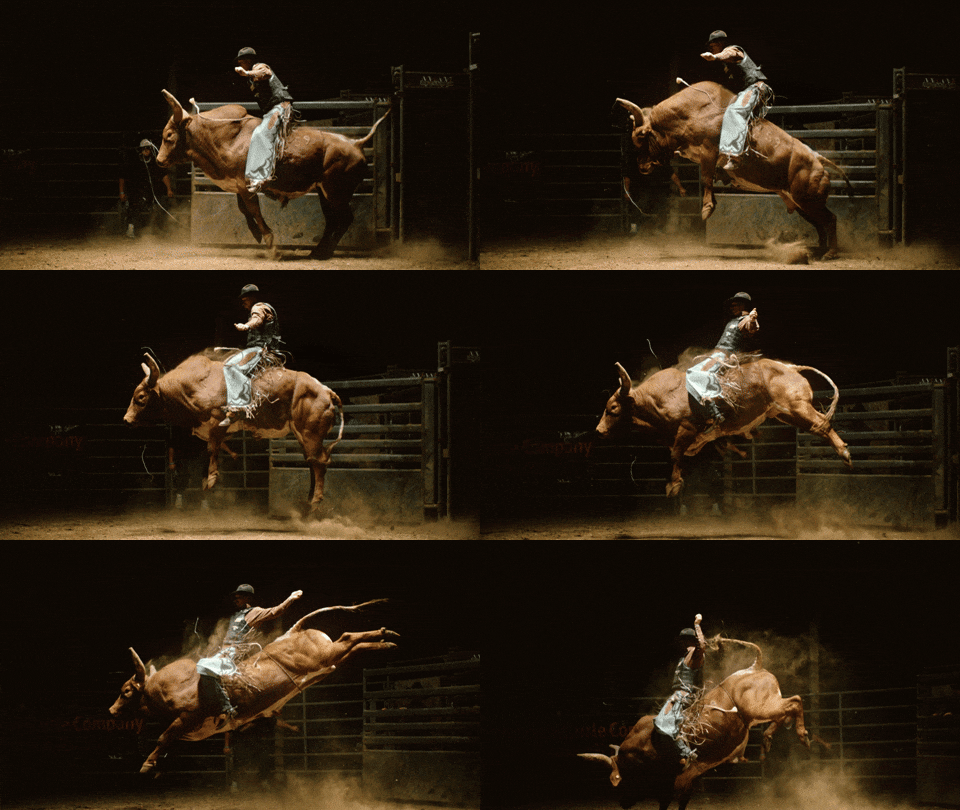
Bareback rider Patrick Liddell hangs on during the event at the 8 Seconds Rodeo in the Liacouras Center in Philadelphia on Saturday, Oct. 11, 2025.
Here are some more details for my top pick, the 8 Seconds Rodeo.
The all-Black rodeo, which made its regional debut in October 2025, returns to North Philly this Saturday for a second run at the Liacouras Center.
The world’s top bull riders, barrel racers, fiery mutton busters, and bareback horsemen will compete for $150,000 in prize money.
The event, founded by Portland native and Chester County resident Ivan McClellan, looks to attract more than 7,700 attendees for a “rock concert-like production.”
North Philly’s DJ Diamond Kutz will curate the music and 2 million pounds of dirt and dozens of livestock will be transported to the arena.
Doors open at 3 p.m. and the competitions begin at 7 p.m.
Limited tickets are available on ticketmaster.com and resale sites like TickPick, SeatGeek, Vivid Seats, and others.
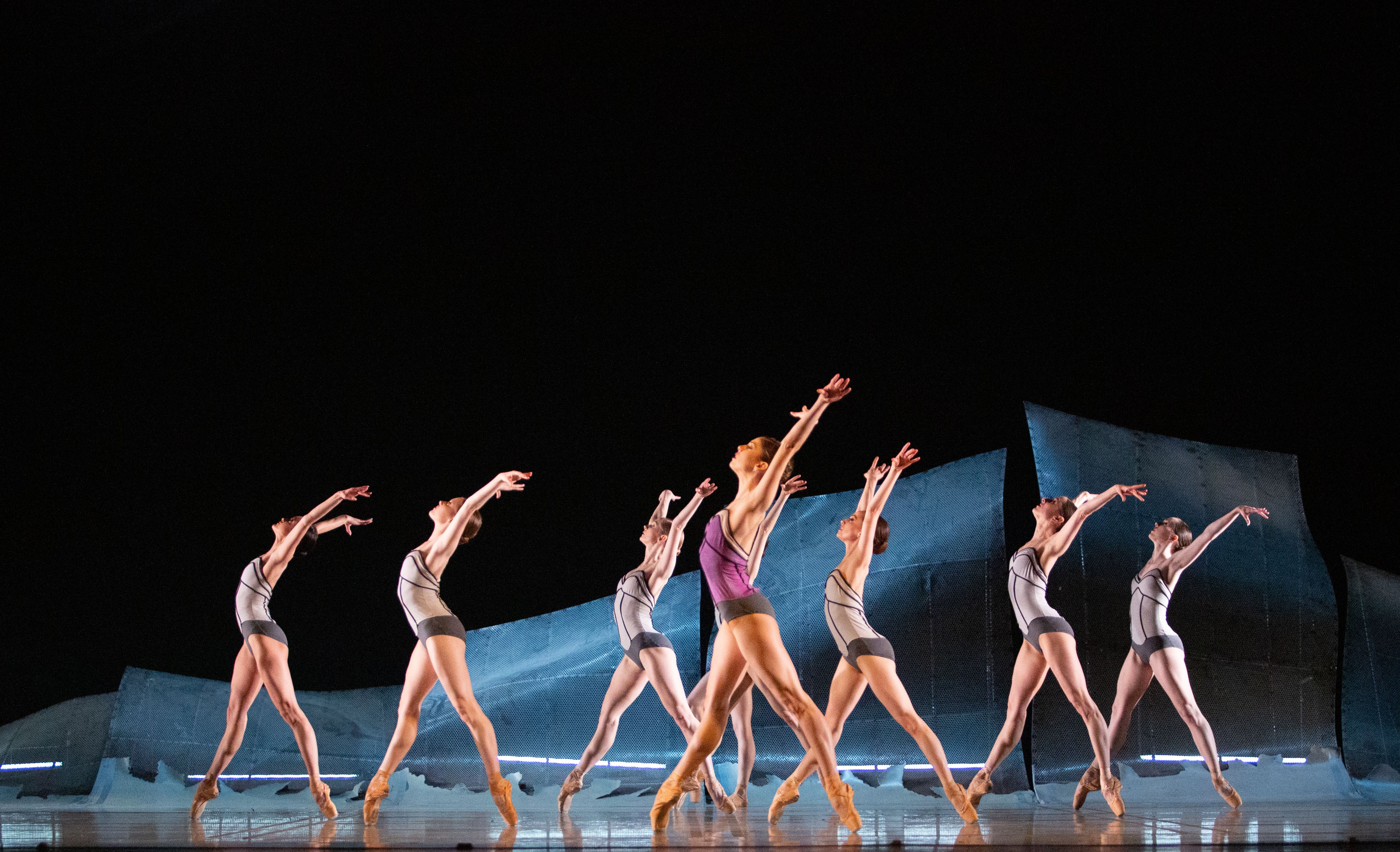
Pennsylvania Ballet dancers Dayesi Torriente and Sterling Baca in Christopher Wheeldon’s “DGV.”Alexander Iziliaev / Philadelphia Ballet
🎭 Liberation at Suzanne Roberts Theatre: The Pulitzer Prize- and Tony Award-winning play, Liberation, makes its Philadelphia premiere on Friday. The memory play, written by Bess Wohl, follows a group of six luminaries in their pursuit of freedom. The play runs through Oct. 25.
🩰 American ballet, music, and history: After opening the doors of its new home last month, Philadelphia Ballet opens the 2026-27 season with a performance at the Academy of Music. The company will present Stars and Stripes Forever, offering a mix of rich American movement, music, and history.
⚗️ An exhibition on alchemy: Science History Institute’s new exhibition, Fire and Gold: The Art of Alchemy (1450-1850), explores the medieval science and philosophy that later led to the advent of chemistry. The exhibition will display a collection of early alchemical art, rare books, and oil paintings from the Renaissance and Enlightenment periods.
🖼️ Big ideas in miniature form: Small Favors – 20th Annual Miniature Exhibition returns to The Clay Studio. This year’s display will feature nearly 400 small artworks located in four-inch cubes. The exhibition opens Thursday and runs through Jan. 3, 2027.
Staffer picks
Here’s a list of the best concerts this weekend.
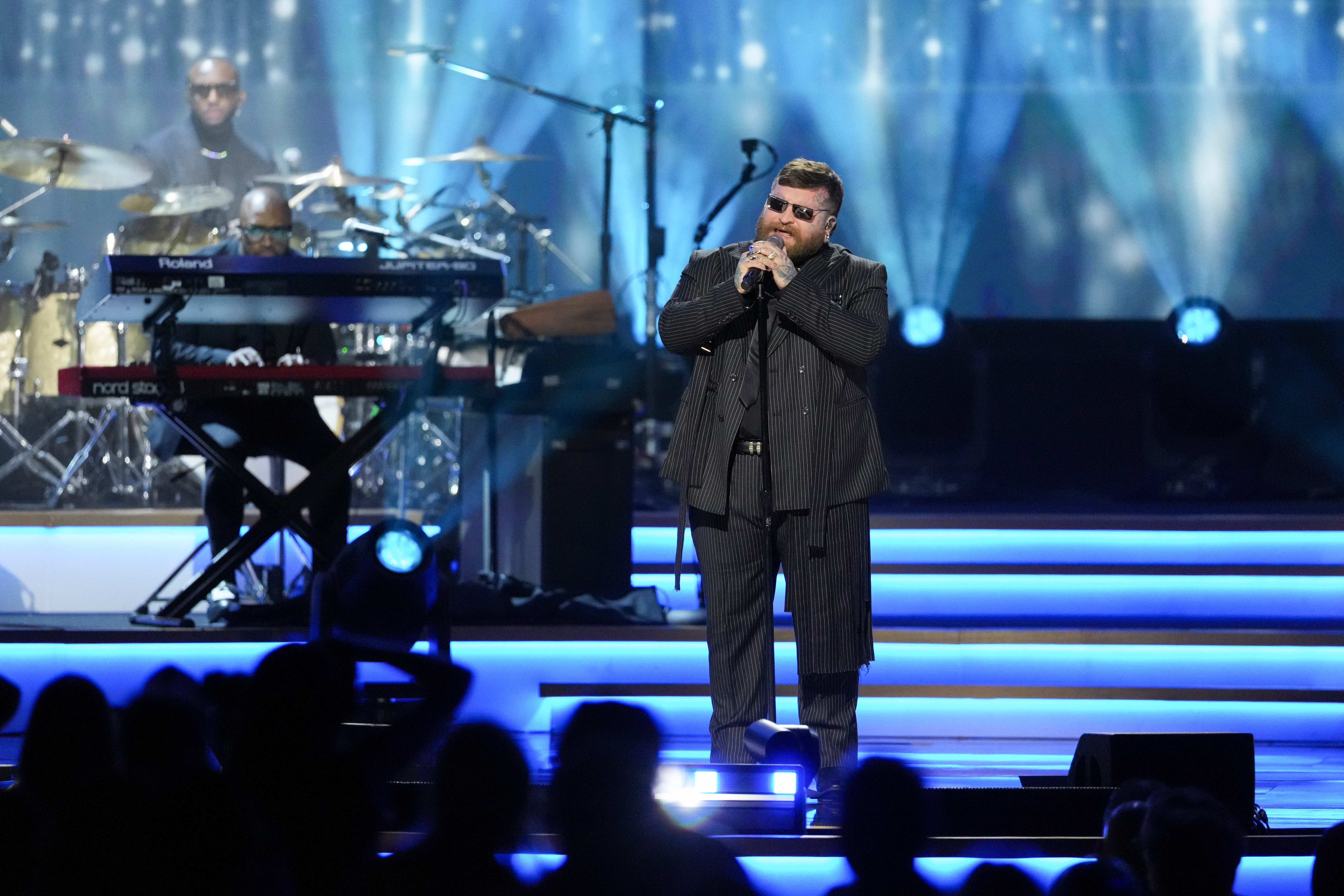
Teddy Swims performs “Without You” during MusiCares Person of the Year honoring Mariah Carey on Friday, Jan. 30, 2026, in Los Angeles. (AP Photo/Chris Pizzello)Chris Pizzello
🎤 Thursday: Electro-composer Bayonne, who initially released music under his birth name, Roger Sellers, stops into MilkBoy on Thursday night. He will be joined by fellow electronic artist Bad Snacks.
🎸 Friday: English rock band Basement, who released its fifth album Wired in May, ventures across the pond to perform at the Fillmore Philadelphia.
🔊 Saturday: Booming baritone Teddy Swims, whose music melds soul, R&B, and pop, is taking the stage at Xfinity Mobile Arena as part of his “The UGLY Tour.”
🕺🏽 Sunday: Legendary guitarist Jubu Smith, with support from singer Deron Irons, performs at City Winery Philadelphia to pay tribute to iconic soul man, Frankie Beverly.
❓Pop quiz
What’s the oldest rodeo in the world?
A) Cowtown Rodeo in Pilesgrove, N.J.
B) Payson Pro Rodeo in Payson, Ariz.
C) The Prescott Rodeo in Prescott, Ariz.
D) West of the Pecos Rodeo in Pecos, Texas
Here’s the answer to last week’s question: Where did the Please Touch Museum originally open its doors? Answer: Academy of Natural Sciences
Now, I have a question for you
Every week, I tell you how to spend your time in Philly. This week, I want to know how you’d spend your money.
If you had just $50 to spend on a Saturday night in Philly, what would you do? Where would you eat? What would you see? Would you spend it all in one place or stretch it across a whole night?
Email me your ideal $50 Saturday night. I might share some of my favorite answers in a future newsletter.
See you out there!
– Earl Hopkins
By submitting your written, visual, and/or audio contributions, you agree to The Inquirer’s Terms of Use, including the grant of rights in Section 10.
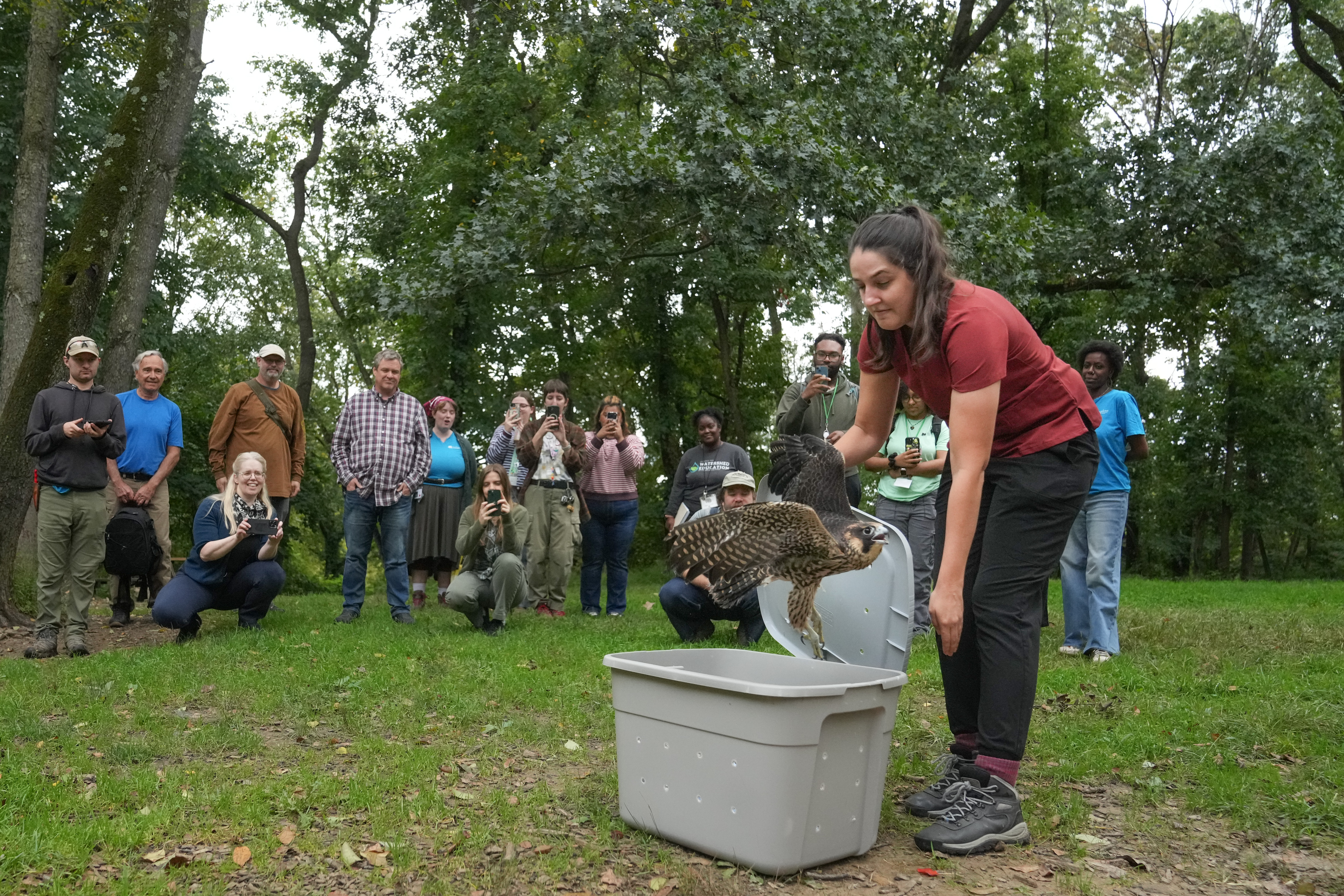
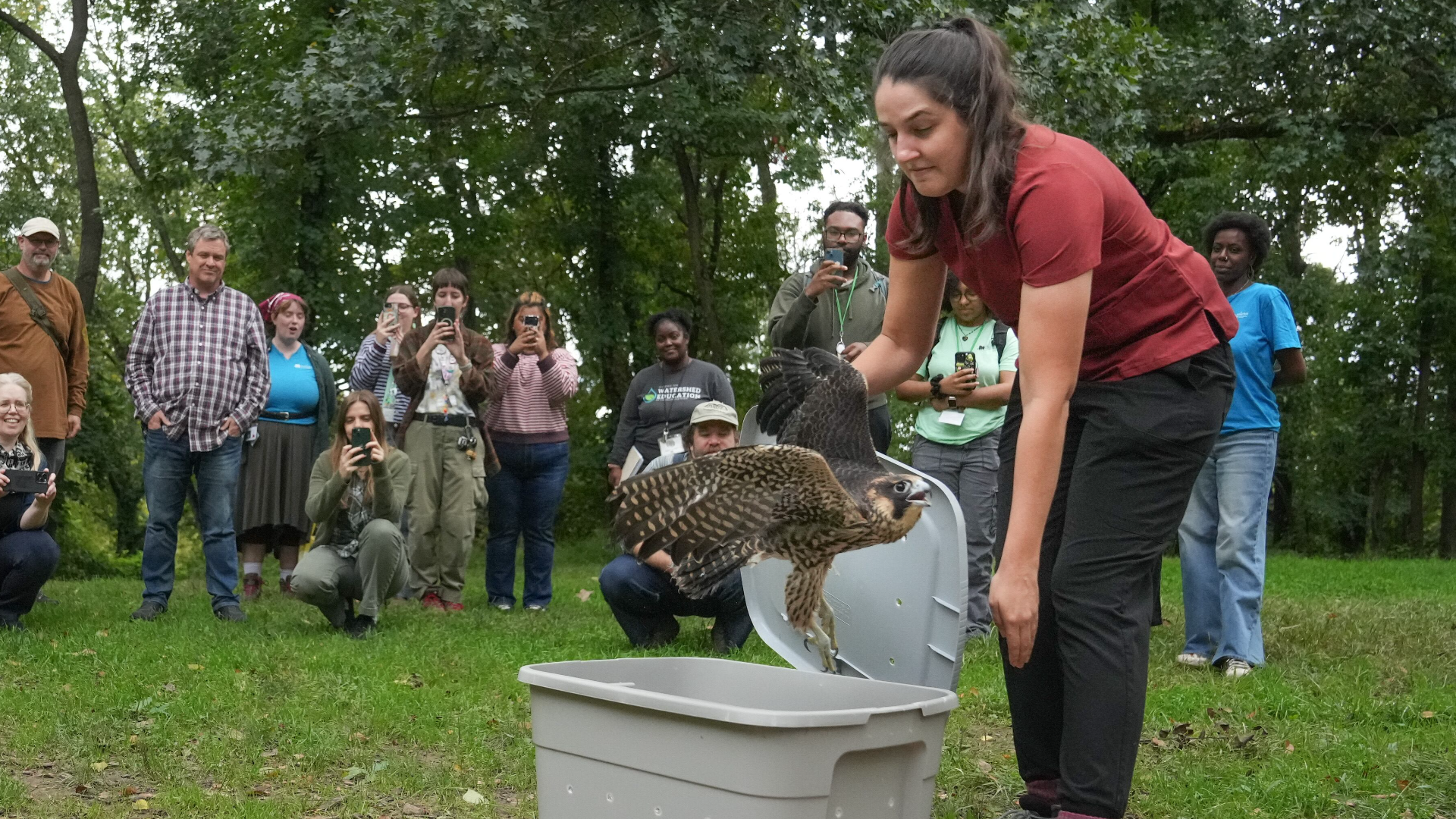
A gray plastic tote shook outside the Schuylkill Center for Environmental Education every few minutes Tuesday afternoon, proof that patient 718 was ready to fly.
A crowd gathered on the lawn beside it, adjusting shutter speeds to capture the world’s fastest animal. Just after 1 p.m., Sydney Glisan, director of the center’s wildlife clinic, unfastened the bungee cord, removed the lid, and offered the male peregrine falcon a few words of encouragement.
“All right, buddy,” Glisan said. “Today’s the day.”
Video: Peregrine falcon released into the wild after healing from lead poisoning
Like a feathered fighter jet, the bird burst from the tote and bolted for the big trees in Roxborough, letting out a few raucous shrieks as it disappeared.
Patient 718 — animals are rarely named at the Schuylkill Center — arrived thin and sickly on June 4, suffering from high levels of lead poisoning. The bird was found near the entrance of the Philadelphia Museum of Art earlier that day, far below the nest its parents built there.
“He was just kind of sitting there,” Glisan said of 718.
A sibling, who had lower levels of lead poisoning, was also discovered at the museum the same day. That falcon, also a male, was treated at the clinic and released into the wild on July 1.
Glisan said most raptors in the region would test positive for lead, but 718’s levels were “off the charts.” Lead can be found in the soil, she said, from bullets, lead-poisoned prey, and even fishing gear.
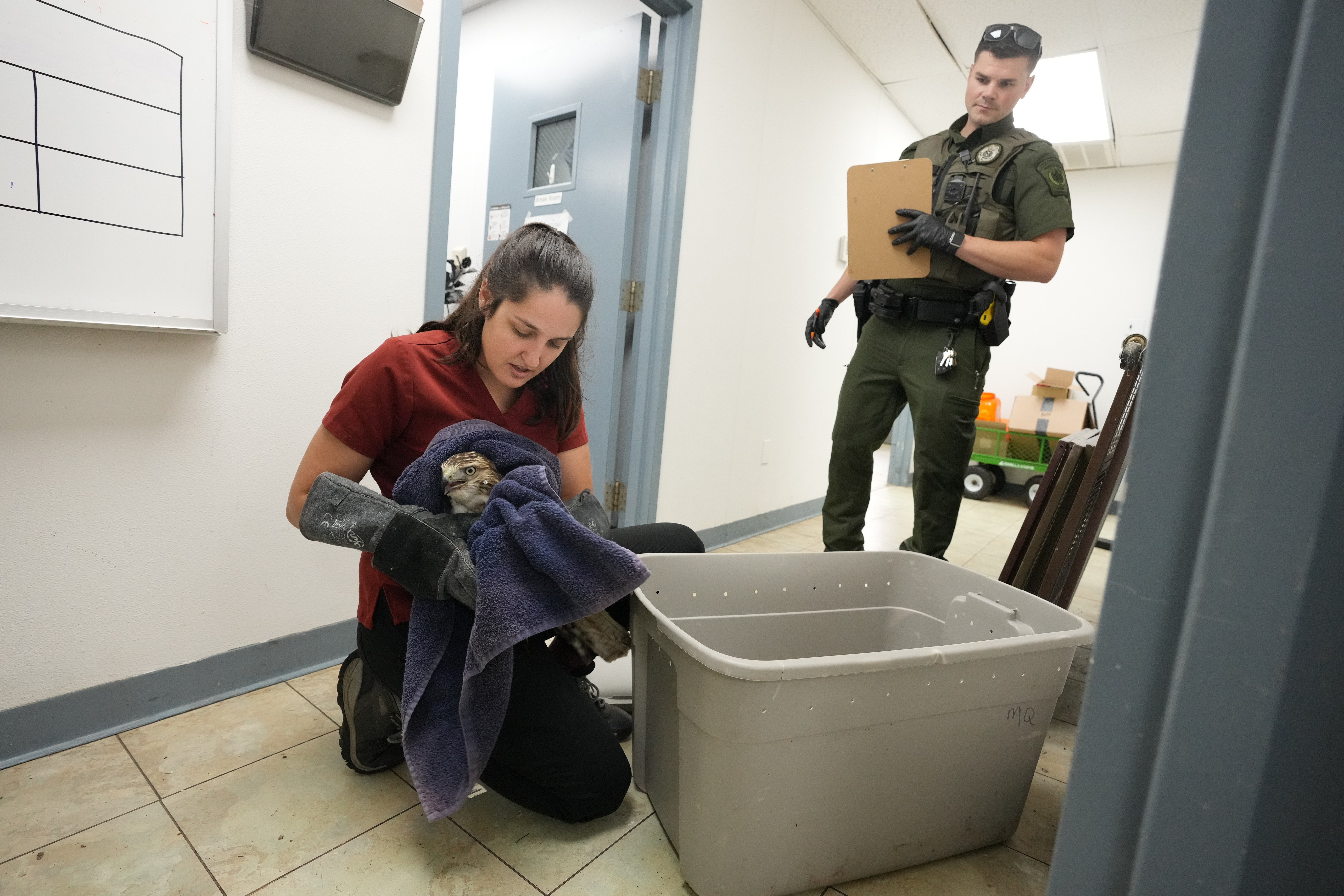
At the clinic, 718 received chelation therapy, where a medication binds to the lead in the bloodstream and is then passed by the bird. The falcon received four rounds of chelation over the summer, with recovery breaks.
“It’s hard on the body,” Glisan said, “but he was a real trouper.”
After chelation, the falcon was taken to an aviary, where he practiced flying through an obstacle course that included pool noodles. He aced the test.
“It was fascinating,” she said. “They move so fast.”
Peregrines mostly hunt other birds from high perches and can reach speeds of over 200 mph when dive-bombing on prey.
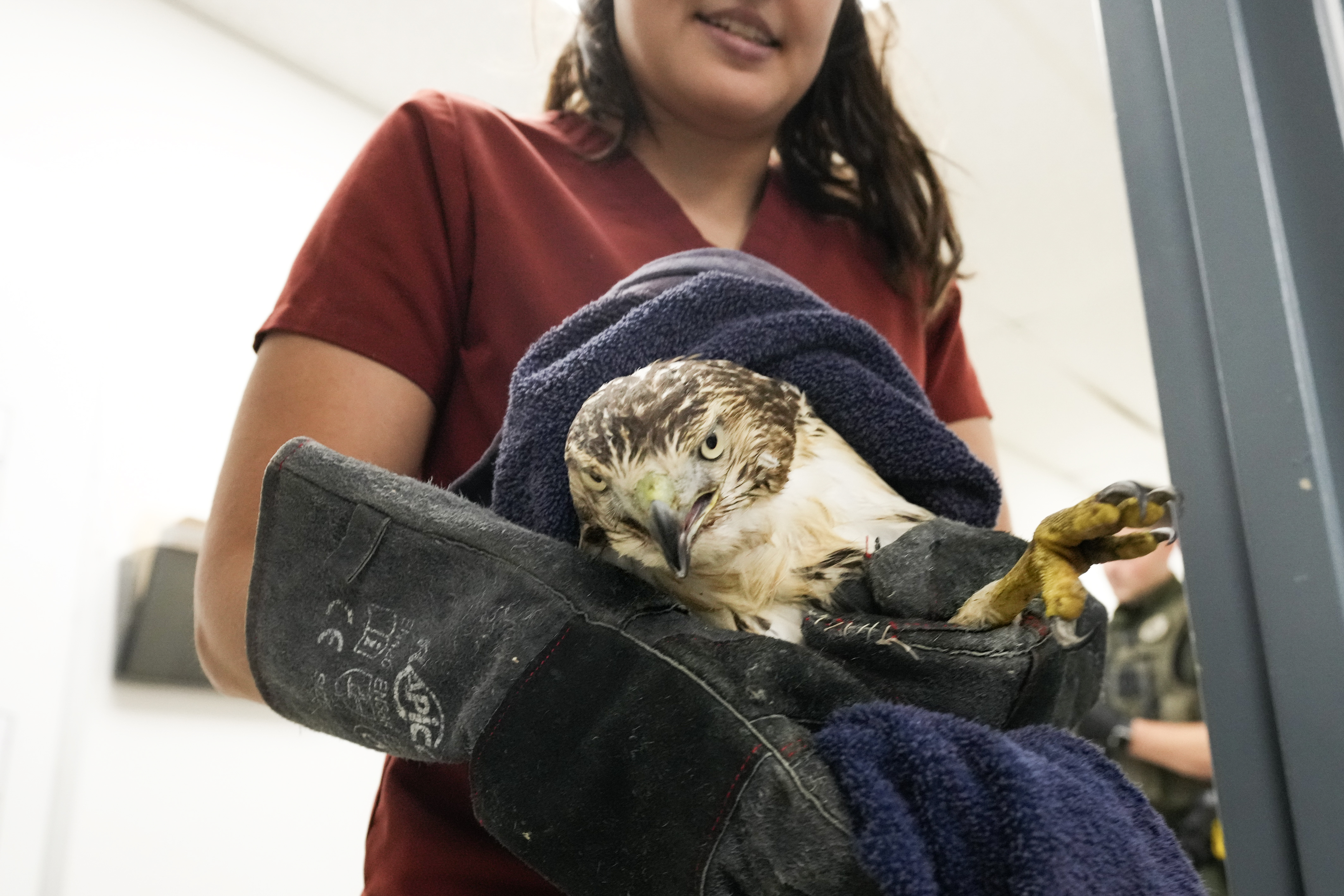
Sydney Glisan, director of the wildlife clinic at the Schuylkill Center for Environmental Education, cares for a red-tailed hawk who was brought into the clinic on Tuesday.Jessica Griffin / Staff Photographer
Glisan said 718 would probably find his own territory and not return to the art museum. She said there are at least three active peregrine nests in Philadelphia, including one at City Hall.
Sydney Glisan, director of the wildlife clinic at The Schuylkill Center for Environmental Education, cares for a red-tailed hawk who was brought into the clinic Tuesday.Jessica Griffin / Staff Photographer
As of Tuesday afternoon, the Schuylkill Center has treated 1,775 animals this year, including numerous species of birds, gray squirrels, and rabbits. More were coming in by the minute, including a red-tailed hawk with an injured talon and a baby squirrel that tangled with a dog.
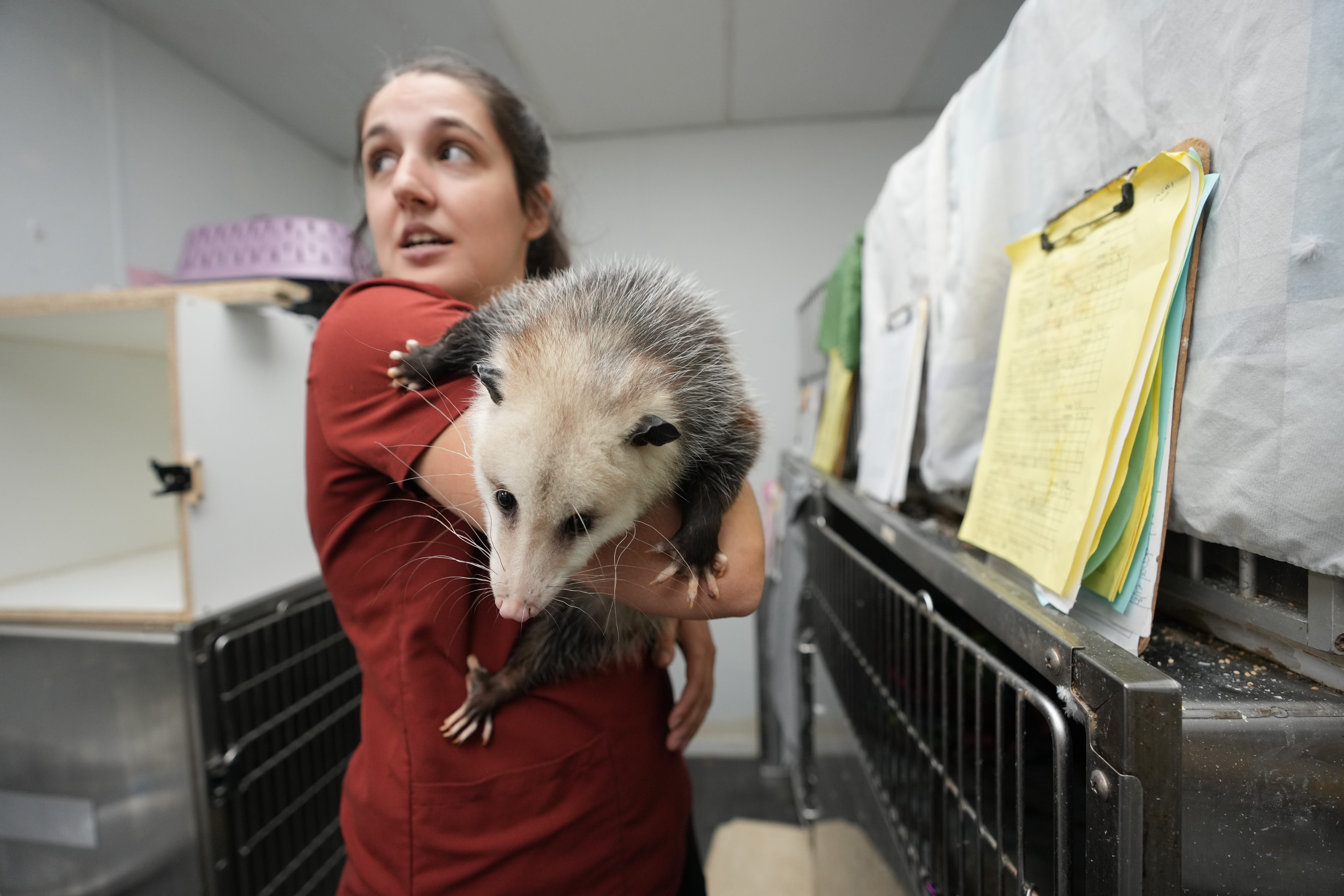
Many animals that come in don’t survive long, Glisan said, and some, like Buttercup, the mostly blind-but-friendly opossum with frostbitten ears, are unable to be released due to their injuries. They are used for education and, on occasion, cuddling.
“I do love you, Butter,” Glisan said, cradling the opossum.
Sydney Glisan, director of the wildlife clinic at The Schuylkill Center for Environmental Education, shown here with Buttercup, the mostly blind-but-friendly opossuma who is a permanent resident at the clinic.Jessica Griffin / Staff Photographer
Erin Mooney, the Schuylkill Center’s executive director, said the facility does not charge to take in and treat animals. She also said the center needs a new clinic building because theirs is 31 years old, and too small.
While the Schuylkill Center receives money from outside agencies on occasion, Mooney said they rely heavily on donors.
“In order for the work at the clinic and the Schuylkill Center itself to continue, we need people to give,” Mooney said.
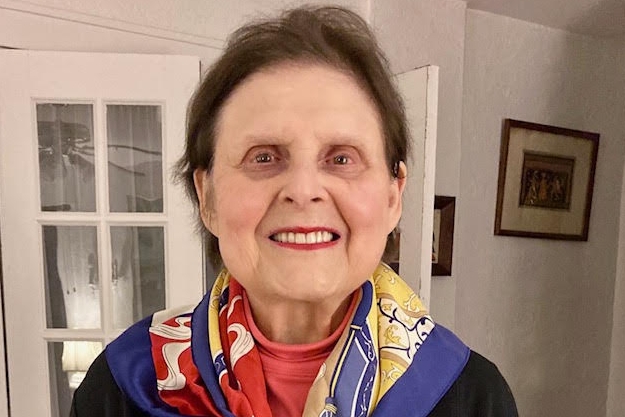
Lenora D. Wolfgang, 91, of Philadelphia, French professor emeritus at Lehigh University, literary researcher, author, teacher, mentor, and artist, died Thursday, May 14, of heart failure at her home near the Philadelphia Museum of Art.
Professor Wolfgang, or, as many of her Lehigh students and colleagues called her, Madame Wolfgang, planned to study art in Paris after high school and live as a painter. But, she told her family, she became so enthralled by the French language at Philadelphia High School for Girls that she curbed her art aspirations, earned three degrees in French at the University of Pennsylvania, and taught French and French literature at Lehigh for 26 years.
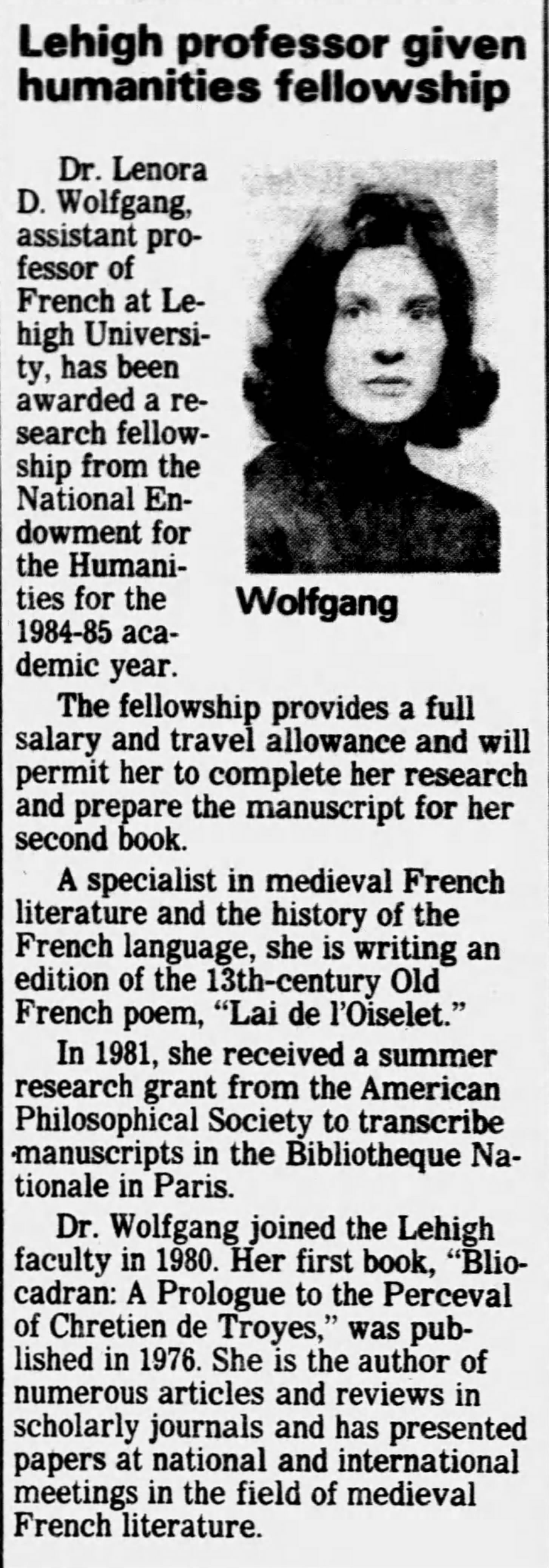
Inspired by professors at Penn, she became an expert in medieval French language and literature, and her doctoral dissertation and first book were an analysis of an 800-verse prologue to a 13th-century French poem. She studied in France on a Fulbright Scholarship in 1956 and ’57, and in Spain on a grant from the American Council of Learned Societies in 1978.
She wrote two books on French poetry, served research fellowships with the National Endowment for the Humanities in the 1980s and ’90s, and earned a grant from the American Philosophical Society in 1981 to transcribe manuscripts at the National Library in Paris. In 1990, reviewers at Penn’s French Forum journal said her second book, also on 13th-century French poetry, “provides the modern scholar with a standard text and thorough apparatus that will serve current and future generations well.”
This photo and story about Professor Wolfgang appeared in the Morning Call of Allentown in 1984.Newspapers.com
She belonged to many academic language and literature organizations, and was a student adviser and faculty committee member at Lehigh. In tributes, former colleagues called her “a true mentor” and “a real mensch.” One said: “It was clear that I had an ally in Lenora and that she wanted me to succeed.”
A former student said she was “a good friend and sounding board” in a 2025 interview with the Lehigh alumni relations department. “She was always ready to help, share her knowledge,” a former colleague said, “and always did it with tact and unselfishness.”
Professor Wolfgang earned bachelor’s and master’s degrees, and a doctorate in French at Penn. She taught French classes at Temple and Rutgers Universities, Penn, and high schools in Philadelphia before joining Lehigh’s Department of Modern Languages and Literature in 1980.
She commuted three hours round trip to Lehigh, in Bethlehem, Pa., from West Philadelphia three days a week and was promoted from assistant professor to associate professor in 1986, then to full professor in 1989. She retired from Lehigh in 2006.
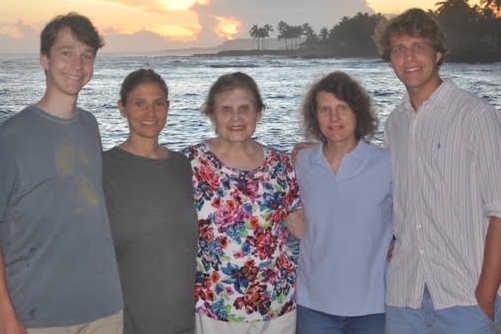
Professor Wolfgang (center) traveled the world and enjoyed hosting dinner parties with family, friends, and academic colleagues. Courtesy of the family
After Lehigh, Professor Wolfgang taught continuing education classes about French playwright Molière and other topics to adults at the Osher Lifelong Learning Institute at Temple. After the COVID-19 pandemic lockdown ended, she returned to the institute briefly as a student.
Professor Wolfgang was adept at painting as a girl in West Philadelphia and won several art competitions, and later showed her photography at Penn’s Faculty Club. “She was a natural talent,” her family said in a tribute.
Lenora Divida Poden was born Sept. 25, 1934, in Philadelphia. Her parents emigrated from Poland and Romania, and her mother leftthe family when Professor Wolfgang was in junior high school.
She and her father had to hide their Jewish heritage and alter their last name to minimize antisemitic attacks. “Yet Lenora overcame these challenges,” her family said, “excelled academically, and rose to the top of her academic field.”
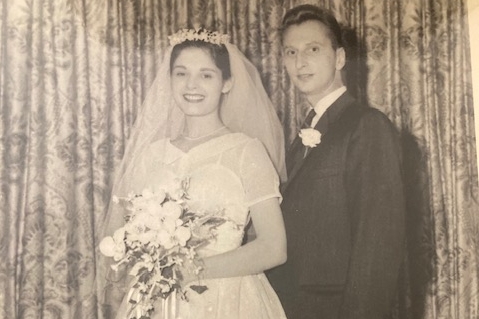
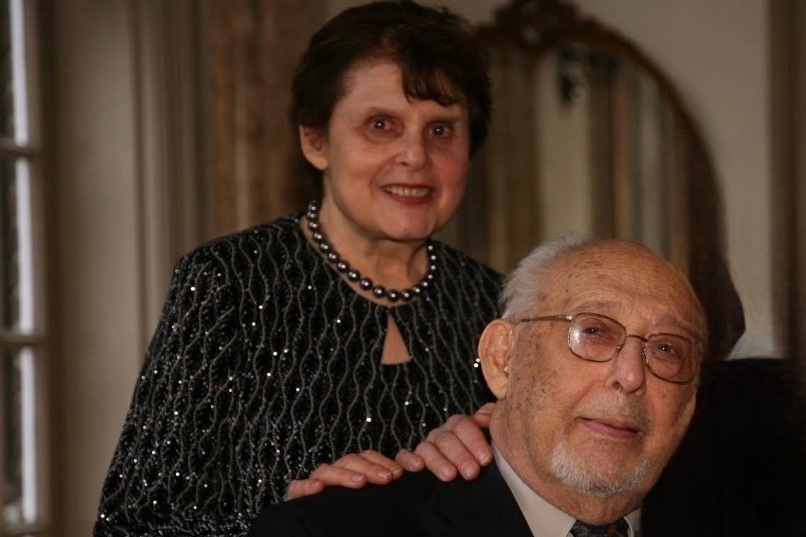
Professor Wolfgang married her first husband, Marvin Wolfgang (above), in 1957, and her second husband, Leon Salganicoff (below), in 2010.Courtesy of the family
An exceptional student, she was valedictorian of both her 1952 senior high school class at Girls’ High and her 1956 senior undergraduate class at Penn’s College for Women. She married Marvin Wolfgang, a professor at Penn, in 1957, and they had daughters Karen and Nina, and lived in University City.
In 1977, The Inquirer featured their house in a photo spread about its French-inspired Gothic style of architecture. Professor Wolfgang said: “Perhaps that is one reason I feel so very much at home.”
After her husband died in 1998, she married Leon Salganicoff, a professor emeritus at Temple, in 2010. He died in 2011.
Professor Wolfgang was an avid reader. She traveled the world, listened to classical music, and enjoyed hosting dinner parties with friends and academic colleagues.
Professor Wolfgang (left) doted on her family and sent personalized birthday cards. Courtesy of the family
She almost went to law school in the 1970s before gaining her full-time teaching position at Lehigh. She doted on her family, sent personalized birthday cards, and kept in touch with teachers, colleagues, former students, and friends even after they parted.
“She was brilliant,” a longtime friend said in a tribute, “and she was fun.” Her family said: “Everyone loved her.”
In addition to her daughters, Professor Wolfgang is survived by two grandsons, a great-grandson, and other relatives. A brother died earlier.
A private celebration of her life was held earlier.
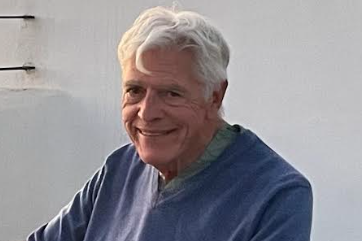
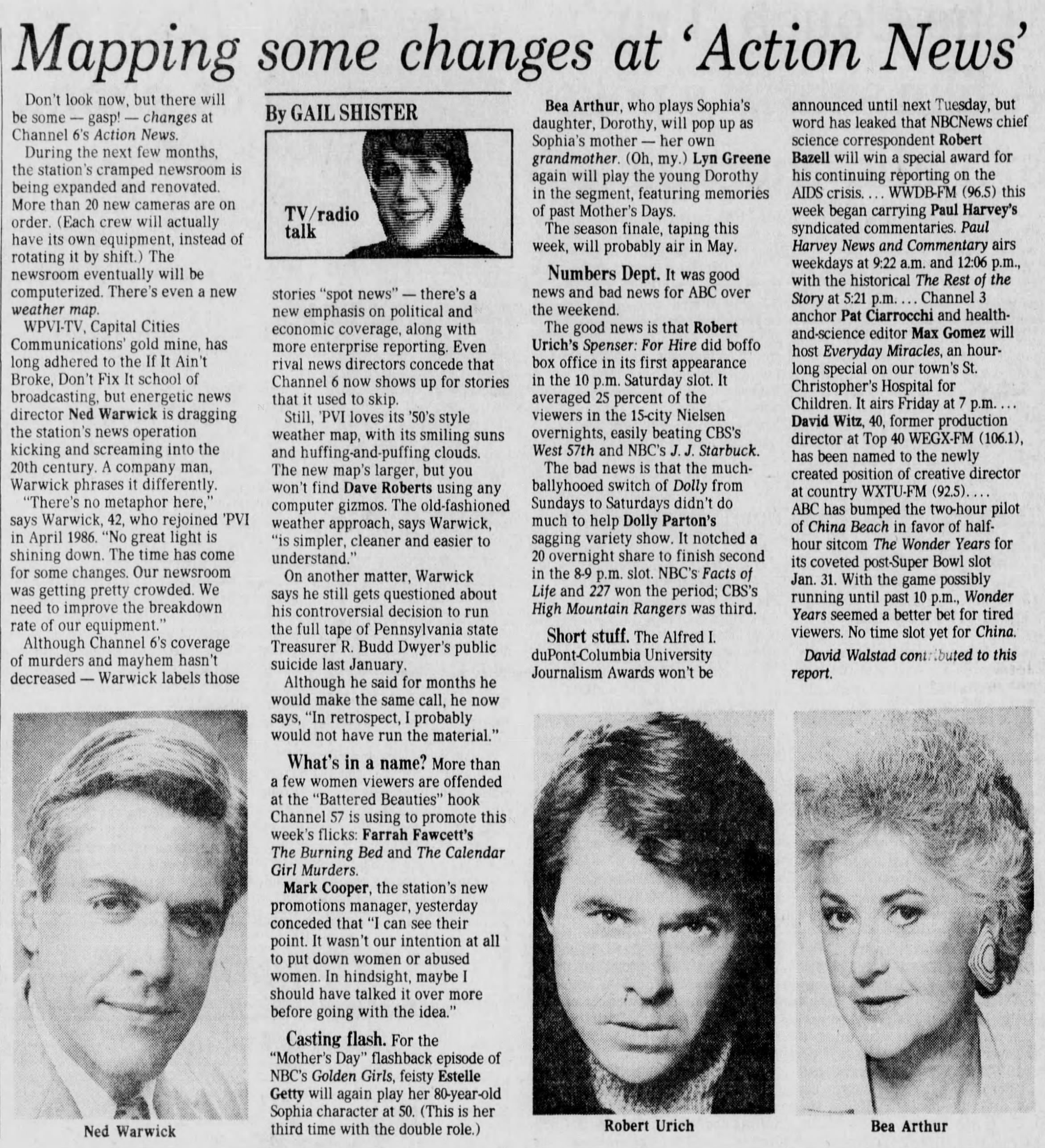
Ned Warwick, 81, of Philadelphia, former foreign correspondent and foreign, national, and Pennsylvania editor for The Inquirer, former news director for WPVI-TV (Channel 6) and international news director for ABC-TV, former reporter at the Bulletin, mentor, sailor, pilot, and die-hard Phillies fan, died Monday, Sept. 14, of complications from Parkinson’s disease at his home near the Philadelphia Museum of Art.
Born in Philadelphia and reared in Germantown and Mount Airy, Mr. Warwick graduated from Chestnut Hill Academy and attended Temple University. He knew he wanted to be a newsman when he was 16, his wife, Joan, said, and he spent much of his free time reading newspapers in the high school library.
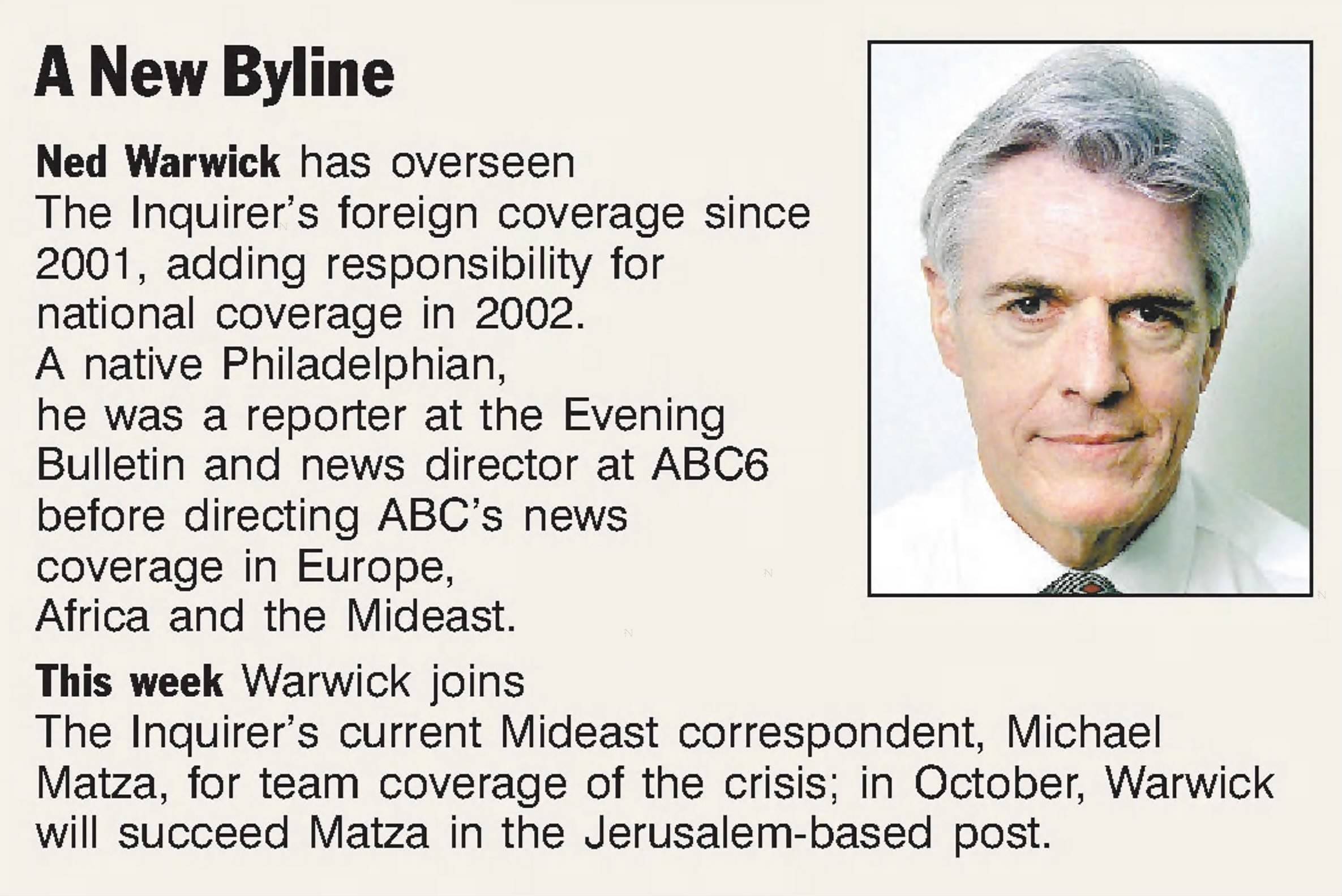
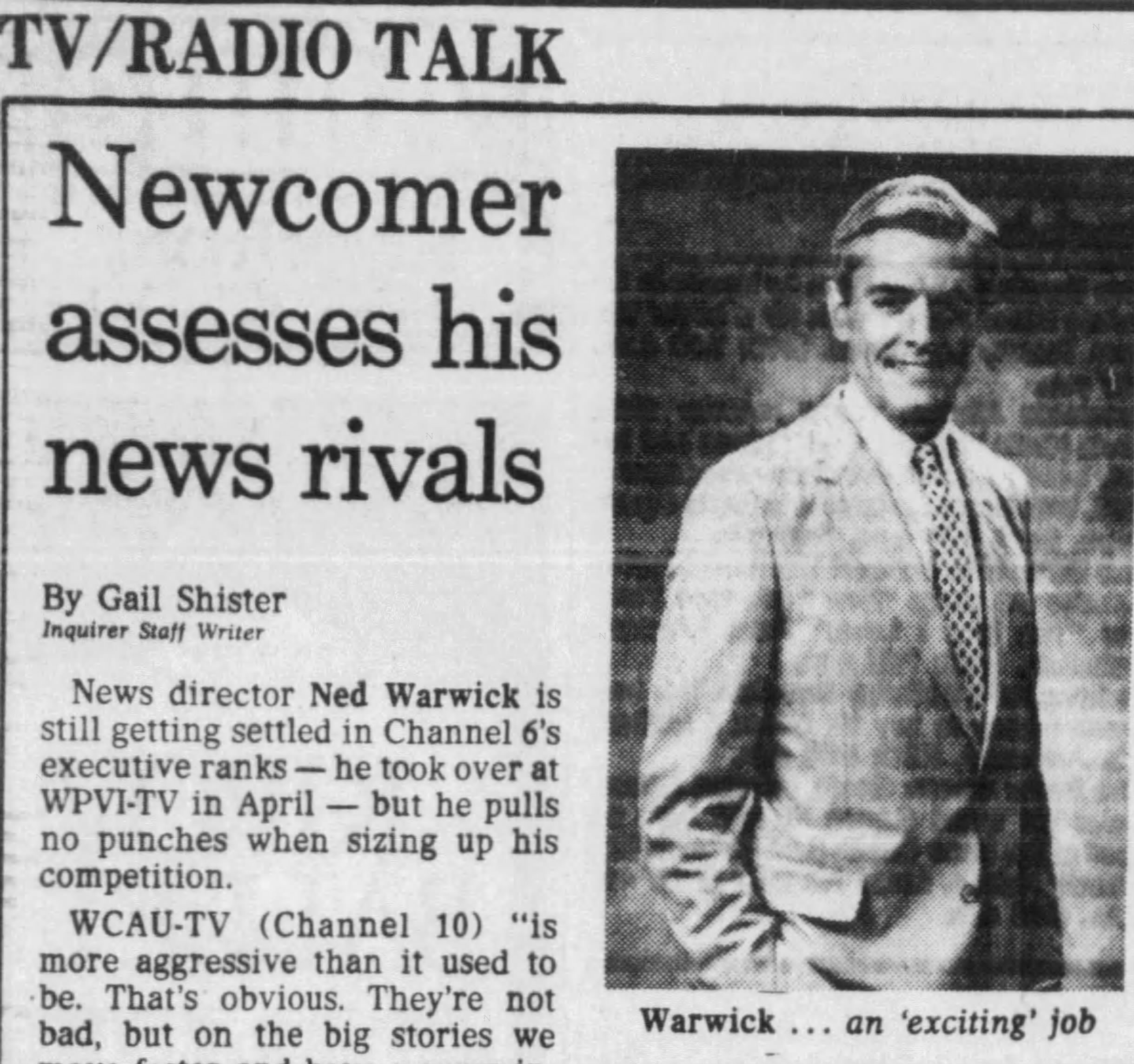
He went on to work as a young city-side reporter for the Bulletin from 1969 to 1974 and a veteran editor and reporter for The Inquirer from 2001 to 2008. For TV, he was a news writer and assignment editor at WPVI from 1975 to 1981, news director at WTVD in Durham, N.C., from 1981 to 1986, and back as news director at WPVI from 1986 to 1990.
Regarding the transition from print to TV work, he told Inquirer TV columnist Gail Shister in 1977: “The TV reporter’s job is more difficult because they have to be journalists and performers. It is in fact easier for a TV reporter to move over to print than vice versa.”
Mr. Warwick became a foreign correspondent for The Inquirer in 2006.Newspapers.com
From 1990 to 1995, Mr. Warwick was based in London as ABC’s director of news operations for Europe, Africa, and the Middle East. He worked with celebrated anchorman Peter Jennings, supervised dozens of other international TV types, and directed coverage of many of the world’s top stories.
Actually, he told The Inquirer as he left for London, he did not expect the job to be much different from covering news in Philadelphia. “You can gather news around the corner or across the border,” he said. “But the essential business of newsgathering still remains the same. You’ve still got to get the story.”
He nearly became the story in 1992 when he got pinned down in a gun battle while traveling in Somalia. “He always wanted to be a newsman and travel the world,” his wife said, “and he did. He loved the news. He loved ABC.”
At The Inquirer, Mr. Warwick was the foreign and national editor for five years and a foreign correspondent in Jerusalem during and after the 2006 Lebanon war. He returned to Philadelphia in 2007 to be deputy business editor and Pennsylvania editor for a year.
The Inquirer covered Mr. Warwick’s return to WPVI-TV in 1986. Newspapers,com
“He was a good listener and could manage a reporter’s needs,” former Inquirer staff writer Miriam Hill said. Former Inquirer staff writer Sally Downey said: “He was a very classy guy.”
In 2006, his byline appeared in The Inquirer over dozens of war zone stories from Gaza City, Bethlehem, Acre, Ramallah, Huwwara, Turmus Aya, and elsewhere in the Middle East. On Oct. 17, 2006, he opened his story from Kafr Qalil with: “The sharp heat of summer lingers on the stony hills of the West Bank, and the pale olives are still ripening on the trees, thirsting for just a little of the fall rains that won’t come for a few more weeks.”
“He was a lyrical writer,” Hill said. Former Inquirer editor William K. Marimow called his style “fluid” and “very solid.”
Mr. Warwick also reported on the royal family from London and reviewed books for The Inquirer. He worked briefly as an editor at large with Bloomberg News after leaving the paper in 2008 and retired in 2010.
Out of the office, Mr. Warwick was a sailor and a pilot. Courtesy of the family
He mentored others wherever he worked and with the Rittenhouse Writers’ Group, and completed a first draft of his own book. “His mind was always crafting a story, seeing a story, or preparing to tell one in a way that made everyone near him want to listen,” said his daughter Katie Bishop.
“No matter what was going on,” said Nathan Gorenstein, a former colleague at The Inquirer, “he was a good human.”
Out of the office, Mr. Warwick was a sailor and a pilot. In 1986, when he was news director at WPVI, Shister asked him whether flying an airplane or directing a newsroom was more challenging. “Clearly,” he said, “if you don’t pay attention in either business, you’re going to crash.”
He cheered openly for the Phillies even during the lean years and continued to follow them closely after becoming ill. “One of the first things he would ask in the morning,” his wife said, “is who won the game.”
Edward Ramsey Warwick was born May 19, 1945. The oldest of three children, he was the great-grandson of former Mayor Charles Warwick. He left Temple and earned a bachelor’s degree in history at the University of the South in Sewanee, Tenn., in 1969.
Mr. Warwick’s local TV work was covered in The Inquirer in 1988. Newspapers.com
He married Polly Price, and they had a daughter, Katie. After a divorce, he married Gayle Roth, and they had daughters Megan and Eliza.
“He always made us feel like having three daughters was his greatest joy in life,” his daughter Megan Osborne said. “He taught us to throw a ball and let us braid his hair.”
After a divorce, he married Joan Hunter, and they enjoyed museums, the theater, and the orchestra. They traveled the world together. He was a longtime runner and a fashionista, and studied Buddhism.
He lived with Parkinson’s disease for eight years. But he refused to quit city living for the suburbs, his wife said, and he never lost his sense of humor and zest for life.
Mr. Warwick was a longtime runner and a fashionista, and studied Buddhism. Courtesy of the family
“Dad was a giant of a man in every sense of the word,” his daughter Eliza said. His wife said: “He never, ever complained. He made me a better person.”
In addition to wife, daughters, and former wives, Mr. Warwick is survived by four grandchildren, a sister, a brother, and other relatives.
A memorial service is to be from noon to 4 p.m. Saturday, Nov. 14, at the Germantown Cricket Club, 411 Manheim St., Philadelphia, Pa. 19144.
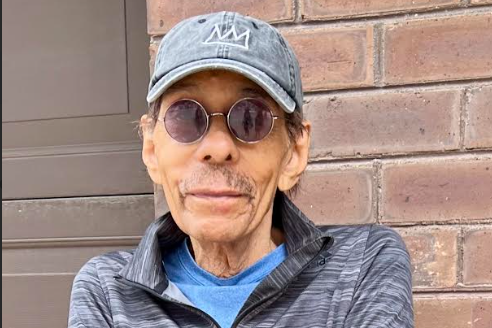
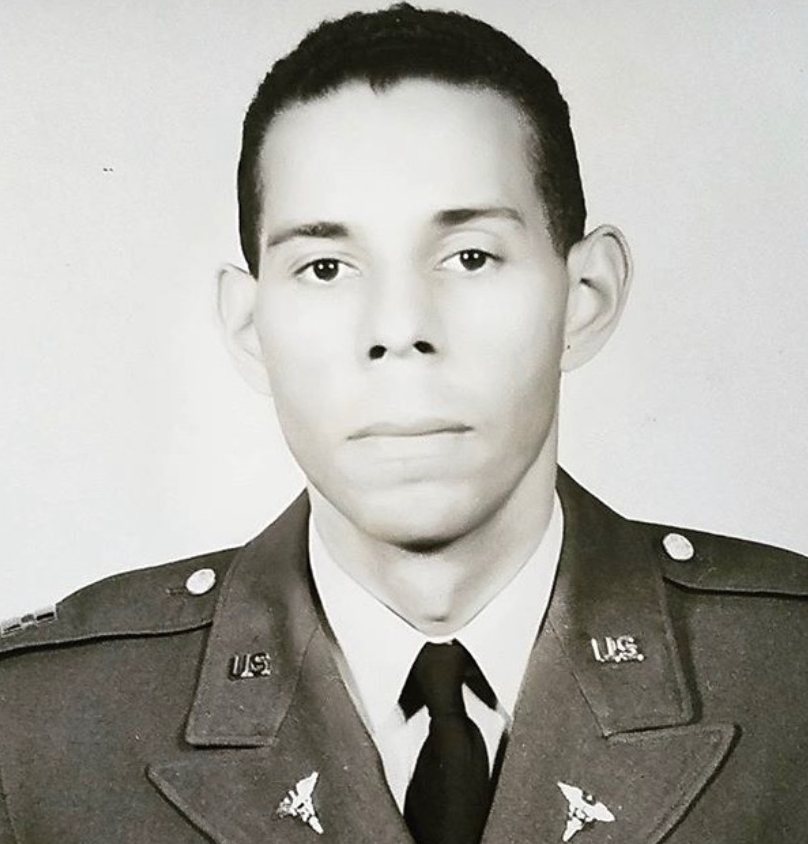
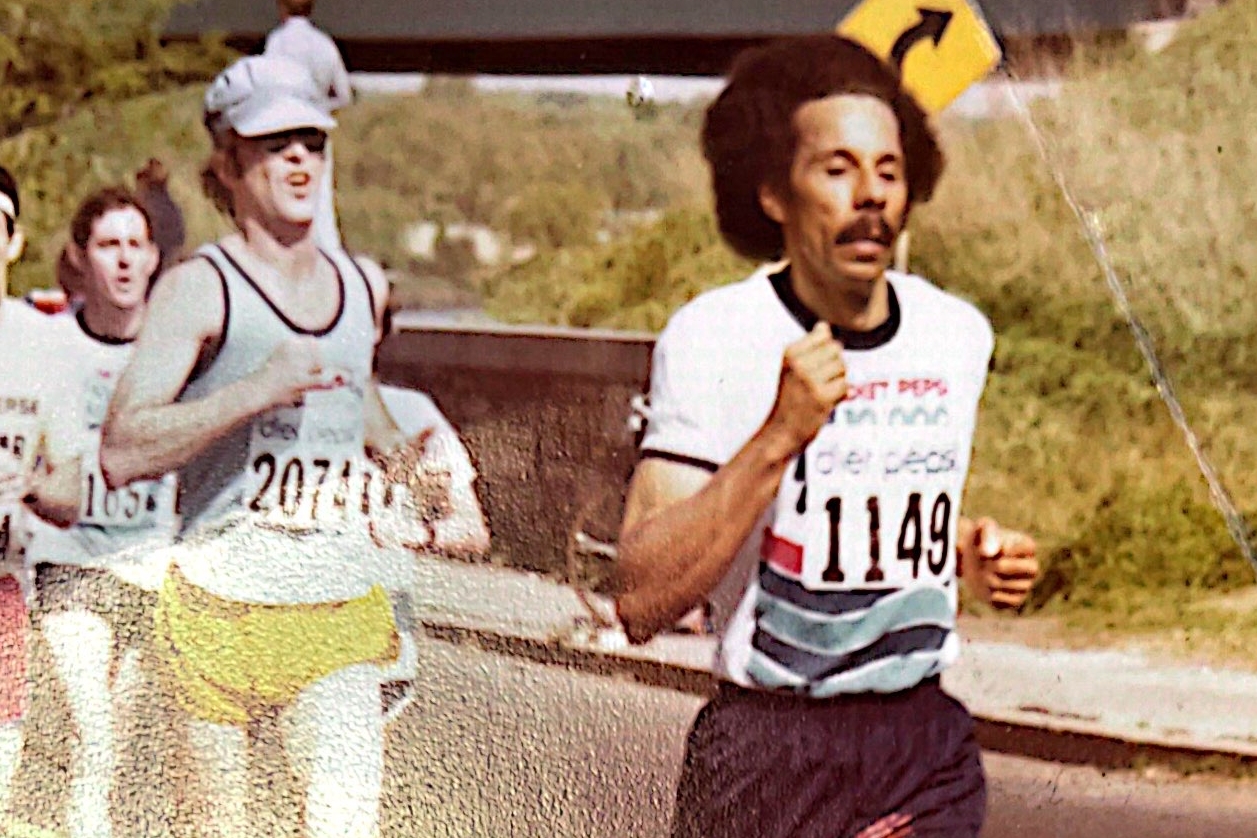
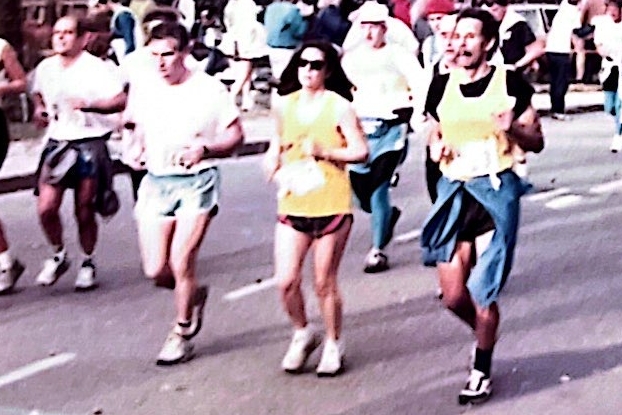
William Johnson Jr., 95, of Philadelphia, a former Army dentist in France who later practiced for more than 40 years in Northwest Philadelphia, and a star distance runner at Norristown Area High School, the Penn Relays, and elsewhere, died Wednesday, Aug. 26, of congestive heart failure at his home near the Philadelphia Museum of Art.
Dr. Johnson grew up in Norristown, was part of his high school’s meet-winning mile and two-mile relay teams, and enlisted in the Army after graduating from New York University in the 1950s. His mother, Mary, wanted him to be a doctor. So, after she died when he was 6, he went on to earn a dental degree at Meharry Medical College in Nashville.
He spent five years as an Army dentist in France in the 1960s, reveled in the sophisticated social and cultural atmosphere in Paris at the time, and set up his own practice in the 1970s for what he saw were underserved communities around Chew Avenue and Slocum Street. He and his family lived above the first-floor office, and his son, Bill, and daughter, Jacqueline, both worked with him for a time.
“When we were young, he would tell us to stop running when he had patients,” his daughter said. His son processed X-rays and did other chores in the back room. “On Saturdays,” he said, “the office would be full of people of color. That’s how much he was needed.”
Dr. Johnson was an Army dentist in France. Courtesy of the family
Dr. Johnson finally retired in 2014, at 83. Even then, his wife, Liz, said, “his loyal patients were reluctant to see him retire.”
Away from his patients, Dr. Johnson was a dedicated runner who rarely missed a daily workout. Wednesdays were half days at the office, so he saved his most grueling runs of the week for then.
“He wore a ski mask sometimes when it was cold,” his son said, “and when he was done it would be covered with ice.”
He won mile relay, two-mile relay, and other long distance races in high school in the 1940s, ran for the college team at NYU, and later finished first in masters division races at the Penn Relays. He was a longtime member of the Freedom Striders running club and most often ran in the lead pack in the Broad Street Run and other big road races.
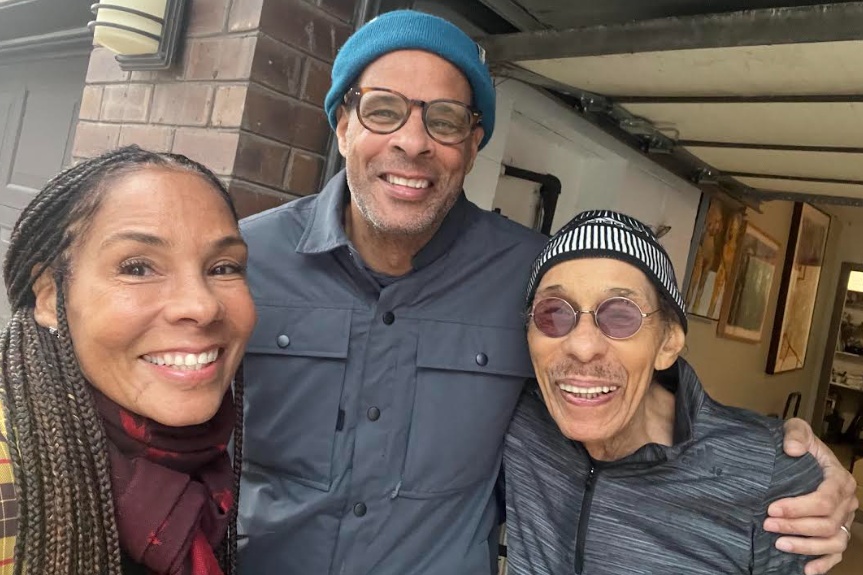
Dr. Johnson (right) doted on his daughter, Jacqueline, and son, Bill.Courtesy of the family
He was also an amateur historian who loved to hash over stories about the old days in Philadelphia and Norristown. “He was analytical and liked to laugh,” his son said. “He was a model for me about the value of hard work and being humble.”
William Johnson Jr. was born Feb. 24, 1931, in Norristown. He lived with his father, William Sr., sister Jean, and brother Eddie after his mother died, and developed what his children called a “deep sense of family, independence, and faith.”
He played football as well as track in high school, joined the Alpha Phi Alpha fraternity at NYU, and worked in the New York garment district to make money. He enlisted in the Army after graduation to attend dental school.
He met Susie Jeffries in Tennessee while at Meharry, and they married, lived in Orléans, France, and moved to Philadelphia after he left the Army. They had two children. They divorced later.
Dr. Johnson and his wife, Liz, were both dedicated runners. Courtesy of the family
In the 1990s, Dr. Johnson moved to the Art Museum area and married Liz Goldberg, also a dedicated runner. He and his wife traveled the world together, and she called him “an exuberant and colorful spirit” who “brought energy and joy to those around him.”
Dr. Johnson was interested in fashion, especially Ralph Lauren, and he and his daughter shopped together frequently. He liked music, French food, art shows, and gardening.
His son said: “A lot of people have told me: ‘Your dad was the best.’”
In addition to his wife, children, and former wife, Dr. Johnson is survived by four grandchildren and other relatives. His sister and brother died earlier.
Private services were held earlier.
Donations in his name may be made to Meharry Medical College, 1005 Dr. D.B. Todd Jr. Blvd., Nashville, Tenn. 37208.
Dr. Johnson, right above and below, enjoyed time with his family. Courtesy of the family
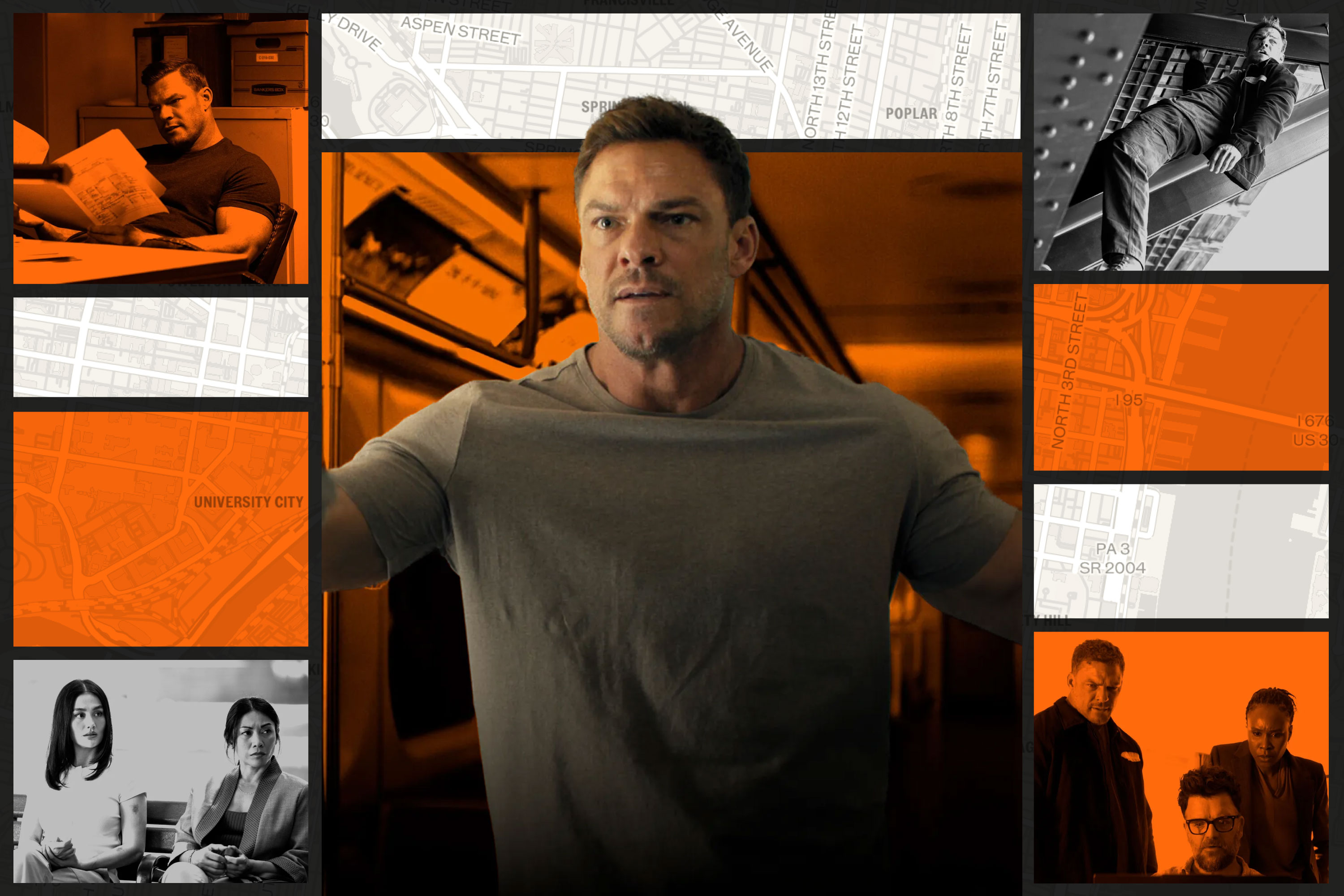
Vigilante Jack Reacher's shadowy dealings spilled out across Philadelphia for the Reacher’s fourth season, which is now available in full on Amazon Prime. Starring actor Alan Ritchson as the hulking retired Army investigator, the series was spotted filming around town in 2025.
Based on Lee Child's 2009 novel Gone Tomorrow, the fourth season of Reacher has its titular character facing off against he CIA, federal agents, and international mercenaries following a woman's suicide. And while much of the on-screen action appears to have been filmed elsewhere — namely Toronto, which looks a lot like Philly, but with space — the City of Brotherly Love does show up quite a bit.
Here, we've rounded up all the Philly spots we could identify in season four. Check out the map below for where Reacher and his cohorts went in the city.
story continues after advertisement
Loading…
Seen in episode 1
City Hall
Michael Bryant / Staff Photographer
Reacher's fourth season immediately sets the scene with a shot of the William Penn statue atop City Hall as a nightscape of Center City shines in the background.
Seen in episode 1
Uptown Beer Garden
Erin Blewett / For The Inquirer
We catch our first glimpse of our hero, Jack Reacher (Alan Ritchson), as he exits Uptown Beer Garden, walking out of the establishment silently with a beer in hand.
Seen in episode 1
LOVE Park
Michael Bryant / Staff Photographer
Reacher speaks for the first time this season, ordering a "wiz wit" from a nondescript food truck in Love Park.
Seen in episode 1
Avenue of the Arts
Jessica Griffin / Staff Photographer
Here, Reacher strolls down the sidewalk on the west side of Broad Street, chomping on his cheesesteak. Canonically, it is just after 2 a.m., and the street is deserted as he descends into the Walnut-Locust entrance of the B line, which runs along Broad Street.
Seen in episode 1
Walnut-Locust Station
Alejandro A. Alvarez / Staff Photographer
As he enjoys his cheesesteak, Jack Reacher (Alan Ritchson) heads down into the Broad Street Line at this Center City station. Several interior shots of the station are shown, including one in which a rat munches on a hot dog.
Seen in episode 1
Benjamin Franklin Bridge
Thomas Hengge / Staff Photographer
Philly is shown off in all its nocturnal glory in episodes one, and seven with a low-light shot of Center City from the Ben Franklin Bridge. Episode five features a skyline shot from the bridge, showing the One Water Street Apartments building.
Seen in episode 1
Benjamin Franklin Parkway
Tom Gralish / Staff Photographer
For the first time in the season's first episode, the sun rises on Philadelphia. And it does so in this stunning aerial shot showcasing many of the Ben Franklin Parkway's gems — Logan Circle, the Philadelphia Museum of Art, the works.
Seen in episode 1
Parkway Central Library
Tom Gralish / Staff Photographer
We get a great glimpse of the exterior of the Parkway Central Library before heading inside, where Jack Reacher (Alan Ritchson) and Jacob Merrick (Christopher Rodriguez-Marquette) do research on Congressman John Sampson (Marc Blucas), a North Carolina representative who is launching a presidential bid.
Seen in episode 1
Parc
Courtesy of HughE Dillon
Parc briefly plays host to Reacher, Lila Hoth (Agnez Mo), and Jacob Merrick (Christopher Rodriguez-Marquette) as the trio settles in at an outdoor table to evade police.
Seen in episode 3
Walt Whitman Bridge
Tom Gralish / Staff Photographer
Reacher and his cohorts travel back into Philly via this bridge after escaping Washington, D.C. In the background, the old Southwark Generating Station is clearly visible.
Seen in episode 3
Schuylkill Expressway
Tom Gralish / Staff Photographer
As Reacher and his crew traverse Philly at night, the action leads to a shot of the west end of Center City near 30th Street Station from the Schuylkill Expressway.
Seen in episode 3
Schuylkill Expressway
Monica Herndon / Staff Photographer
Here, we get another nightscape shot of Philly's skyline, again from I-76 near 30th Street Station looking east. In the foreground, Locust on the Park is lit up green and is featured prominently.
Seen in episode 4
Benjamin Franklin Parkway
Monica Herndon / Staff Photographer
The Philly skline is again featured in a sprawling shot from the Parkway. In the lower left, the Parkway House is visible.
Seen in episode 4
City Branch tunnel
Ed Hille / Staff Photographer
Fresh off a victory over some goons following a battle in the subway, Reacher makes his way back above ground here as he evades police.
Seen in episode 5
Philadelphia’s Magic Gardens
Margo Reed / Staff Photographer
While on the run from the police, Reacher and Tamara take refuge here, only narrowly avoiding capture in the Gardens' maze-like interior.
Seen in episode 5
The Rail Park
Yong Kim / Staff Photographer
Reacher and Tamara continue to evade capture, cutting through the Rail Park before dangling from its side to hide.
Seen in episode 6
12th and Market Streets
Alejandro A. Alvarez / Staff Photographer
Reacher and Tamara's mugshots appear on a screen at the corner of 12th and Market, which they see after passing by the Hard Rock Cafe.
Seen in episode 6
Italian Market
Alejandro A. Alvarez / Staff Photographer
Yet another Philly skyline shot, but this time from South Philly. If you look closely, you can see St. Paul Parish, as well as the seating area for the Di Bruno Bros. 9th Street Bottle Shop.
Seen in episode 7
56th and Market Streets
Kate McCann / Staff Photographer
This skyline shot looks east along the Market-Frankford El line, with one of Steve Powers' "A Love Letter For You" murals clearly visible.
Seen in episode 7
Highmark Mann Center for the Performing Arts
Jessica Griffin / Staff Photographer
The Mann becomes a plot point as a potential demonstration site for a toxin being sold on the dark web thanks to an orchestral concert of movie scores.
Seen in episode 8
Schuylkill Expressway
Tamara, Reacher, and Jacob travel along I-76 in South Philly, with a clear view of Kindy's Christmas Factory Outlet in the background. Reacher and his cohorts continue their journey on I-76, getting off at exit 349 and crossing over Packer Avenue. If you squint, you can just make out the Chickie's & Pete's sign in the background.
Seen in episode 8
Philadelphia Museum of Art
Tom Gralish / Staff Photographer
We get another aerial shot of the Parkway zooming into City Hall, but this time the camera travels over the roof of the Philadelphia Museum of Art. The building's bronze winged horses and griffins are the stars of the shot.
Seen in episode 8
45th and Market Streets
The season closes out on, you guessed it, an aerial shot of Center City. This one looks east from West Philadelphia as Reacher rides the subway to parts unknown, Drexel University's Vidas Field barely visible to the left.
story continues after advertisement
That was every location we could spot in this season of Reacher. Explore the map of all locations featured. Tap onHover overa pin to learn more.
Staff Contributors
Design and Development: Garland Fordice and Sam Morris
Rocky Balboa started his new era at the top of the Art Museum steps Friday.
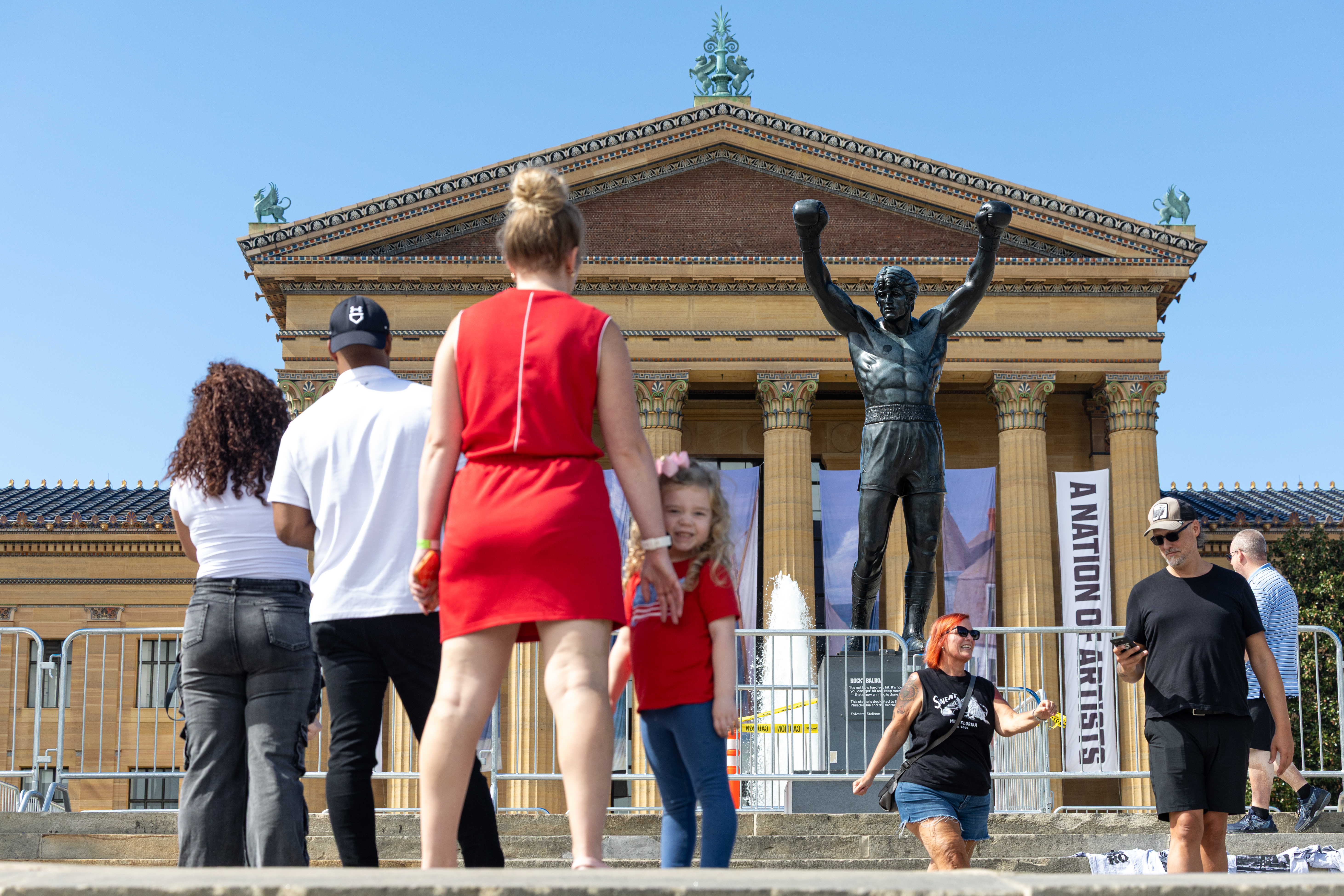
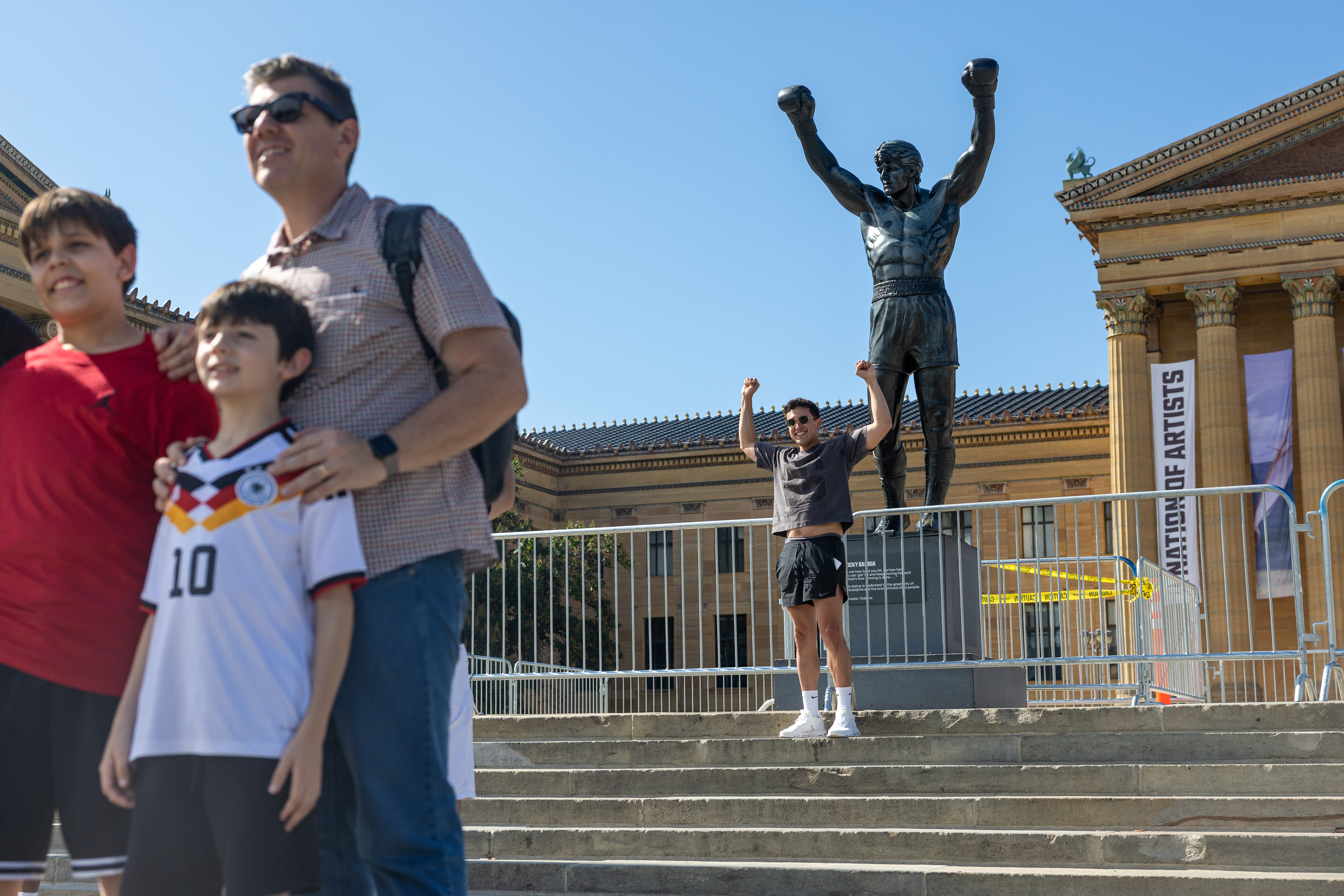
City crews officially began the installation of the 8-foot-6-inch Rocky statue, which is slated to be completed over the next two weeks and cost roughly $150,000 to install, according to Creative Philadelphia, the city arts office behind the proposal. The statue should be fully installed by the end of September.
Access to the fictional Philly boxer will be closed off to the public for the duration of the work. However, the bronze Italian Stallion will still be visible from behind barricades — tourists just won’t be able to touch him.
Visitors take photos in front of the Rocky statue while a fence surrounds the statue before its installation begins in Philadelphia on Friday. Access to the statue at the top of the Philadelphia Museum of Art steps will be temporarily closed for the duration of the work. Rocky will remain visible throughout construction, but will be secured behind barricades limiting access.Aidan T. Gallo / Staff Photographer
The statue, commissioned by Sylvester Stallone for Rocky III, in which it also appeared, depicts the famous moment in the first Rocky where Stallone thrusts his fists in the air as he takes in the city skyline after a rigorous training montage. An estimated four million tourists visit the statue each year to reenact the moment that inspired fans globally.
Since 2006, the statue has sat at the bottom of the Art Museum steps. Before that, Rocky moved between the museum and the South Philly stadium complex at least six different times since the statue was originally revealed in 1981.
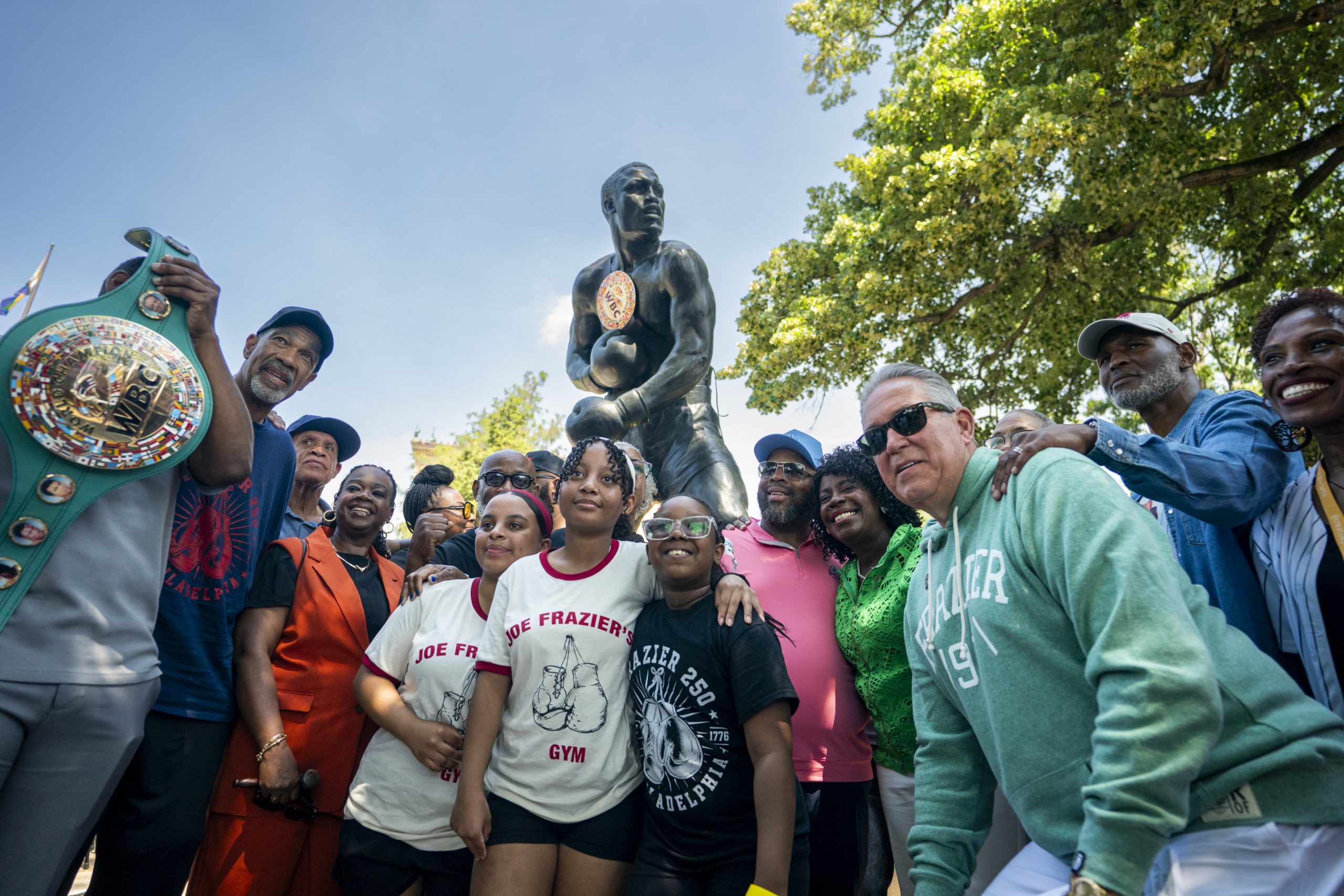
The original statue will be placed on a pedestal around 14 feet back from the edge of the top step, next to where Rocky shoe prints are embedded into the walkway. At the bottom of the steps, where the bronze Balboa had been since 2006, now sits a statue of real-life Philly boxing legend “Smokin’” Joe Frazier.
Mayor Cherelle L. Parker, Frazier family members, boxers, and other dignitaries unveil the new home for its statue of heavyweight boxing champion Joe Frazier on June 29. The statue is installed at the base of the steps of the Philadelphia Museum of Art where a statue of fictional boxer Rocky Balboa once stood.
Placing Rocky at the top of the steps is contentious, though. In an Inquirer survey last fall, 46% of respondents said there shouldn’t be a Rocky statue at the top of the steps, but rather it shouldstay at the bottom where it had been for more than a decade. One out of five respondents said the city shouldn’t have a Rocky statue at all. Even when the statue was revealed more than 40 years ago, some local officials called it “unnecessarily strident.”
Still, that doesn’t stop the millions of people who visit the Art Museum steps just for a glimpse of the bronze boxer. Soon, they’ll be doing it again at the same spot as the movie scene.
Staff writer Nick Vadala contributed to this article.
Thora Jacobson, 77, of Philadelphia, award-winning former chief executive officer at the Fleisher Art Memorial, former executive director at the Philadelphia Art Alliance, former director of design review for Mural Arts Philadelphia, former chief operating officer for Philagrafika, former chair of the Philadelphia Art Commission, onetime adjunct instructor at Drexel University, independent curator, artist, mentor, Mummers Parade judge, and much more, died suddenly Sunday, Aug. 2, at her home. The exact cause of her death has not been determined.
Born and reared in Ridley Park, Delaware County, Ms. Jacobson became interested in art education, administration, and conservation at Trinity Washington College in Washington in the 1960s. She settled in South Philadelphia after college in the 1970s and spent the next 50 years organizing, promoting, and inspiring local artists and art organizations.
“Philadelphia richly deserves to be known as a place that honors its own,” she told The Inquirer in 2006.
She joined Fleisher in 1972, rose to CEO in 1983, and left in 2006 to work over the next two decades at Philagrafika, Mural Arts Philadelphia, the Philadelphia Art Alliance, and elsewhere. During her 34 years at Fleisher, she developed its Center for Works on Paper, the Community Partnerships in the Arts program, and the Challenge series juried competition.
She also oversaw three capital campaigns and told The Inquirer that her priority was “seeing connections and possibilities between and among artists, institutions, and their constituencies.” A colleague said on Facebook: “To many of us she was Fleisher.”
John Ittmann, former curator at the Philadelphia Museum of Art, told The Inquirer in 2006: “Thora is a real firecracker. She has a wonderful type of energy that is really infectious.”
Ms. Jacobson was also chair of the Philadelphia Art Commission for a decade, interim director of operations for the Asian Arts Initiative, vice president of the Philadelphia Volunteer Lawyers for the Arts, trustee of the National Guild of Community Arts Education,member of the American Swedish Historical Museum,and, most recently, a visual arts management consultant.
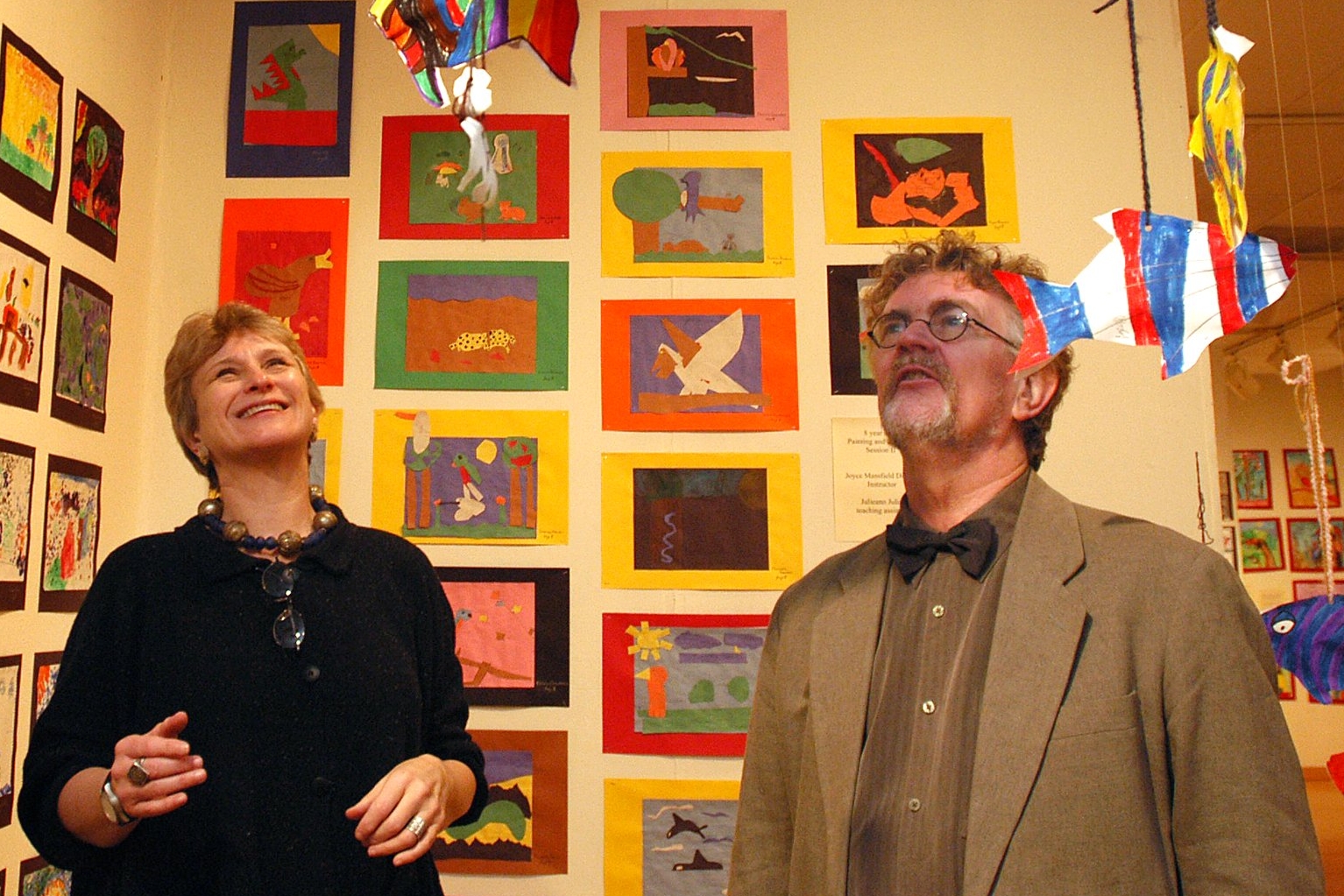
Ms. Jacobson and fellow curator Warren Angle admire an exhibition at the Fleisher Art Memorial in 2002. April Saul / Staff Photographer
“Thora was kind and clear,” colleagues at Social Impact Studios said on Facebook, “but firm as she pushed us to keep tweaking things until they were as strong as they could be.”
She was an adjunct instructor at Drexel University from 2010 to 2014 and led research projects at Drexel and the University of Pennsylvania on social impacts of art in Philadelphia neighborhoods. Her first job out of college was coordinator of the student center at the Art Museum.
She curated and juried shows, and wrote forwards and essays for art books and catalogs. She drew in her spare time and judged the Mummers Parade for years.
She was featured in The Inquirer and Daily News, and appeared in the 1992 TV art documentary Monuments in Love. In 2006, she earned the Visionary Woman Award from Moore College of Art and Design, and was honored for lifetime achievement by Tri-State Artists Equity.
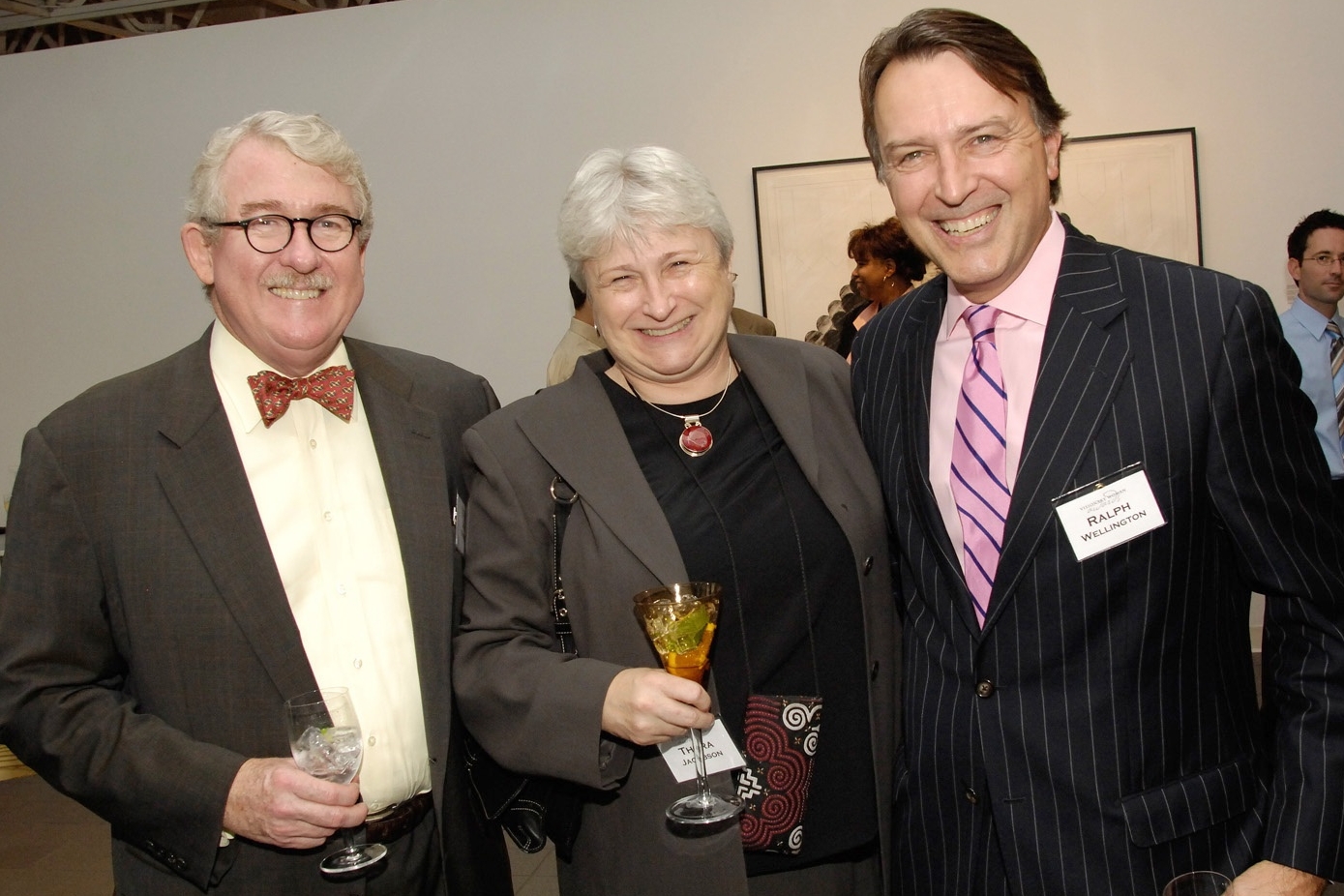
Ms. Jacobson, standing between Jim Straw, to the left, and Ralph Wellington to her right, earned the Visionary Woman Award from Moore College of Art & Design in 2006.Gary Horn Photography
“She’s really respected throughout the arts community in Philadelphia,” Happy Fernandez, then president of Moore, said in 2006. Anne d’Harnoncourt, then director of the Art Museum, said Ms. Jacobson’s “impact has been enormous.”
William Valerio, director and CEO of the Woodmere museum, said: “Thora was a towering figure in the arts of Philadelphia, a builder of institutions whose accomplishments are lasting.”
Thora Elizabeth Jacobson was born Feb. 19, 1949, in Ridley Park. She was the youngest of three children; her father died when she was 3. She played field hockey in high school, was fascinated by words and language, and graduated from the old Holy Child Academy in Sharon Hill.
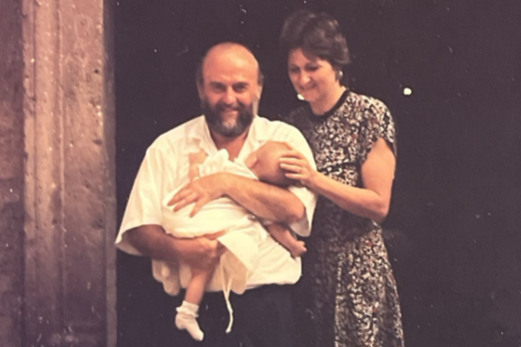
She met her husband, Antonio Sorgini, when he was taking classes at Fleisher, and they married in 1980 and had a son, Antongiulio. Her husband died in May.
Ms. Jacobson, her husband, Antonio Sorgini, and their son, Antongiulio, lived in South Philadelphia.Courtesy of the family
Ms. Jacobson was a talented seamstress and baker. She did humorous impersonations, collected art, and enjoyed working with young people.
Friends noted her “many kindnesses” and “decades-long advocacy for artists and the cultural community” in online tributes. Woodmere’s Valerio said: “She was both a strong voice and a warm friend to many.”
Her son said: “She had a sharp wit and relished cheerful banter among friends and colleagues. Above all, she took the work of mentorship very seriously.”
In addition to her son, Ms. Jacobson is survived by a sister and other relatives. A brother died earlier.
Friends noted Ms. Jacobson’s “many kindnesses” and “decades-long advocacy for artists and the cultural community.”Courtesy of the family
A celebration of her life is to be held later.
Donations in her name may be made to the Fleisher Art Memorial, 719 Catharine St., Philadelphia, Pa. 19147; and Mural Arts Philadelphia, 1727-29 Mount Vernon St., Philadelphia, Pa. 19130.
Ms. Jacobson was a talented seamstress and baker. Mark Garvin, / Philadelphia Museum of Art
Thomas White is a control room operator at a Philadelphia plant working with chillers and steam boilers to provide heat and air-conditioning for Jefferson Health and Thomas Jefferson University. When he started his job some 18 years ago, he and many of his coworkers had served in the U.S. Navy.
That shared experience was an advantage, he says, because they all came with the same training. The Navy used steam-driven ships.
“You just had to learn where things were because you already knew what they did, you knew how to do it, spoke the language,” he said.
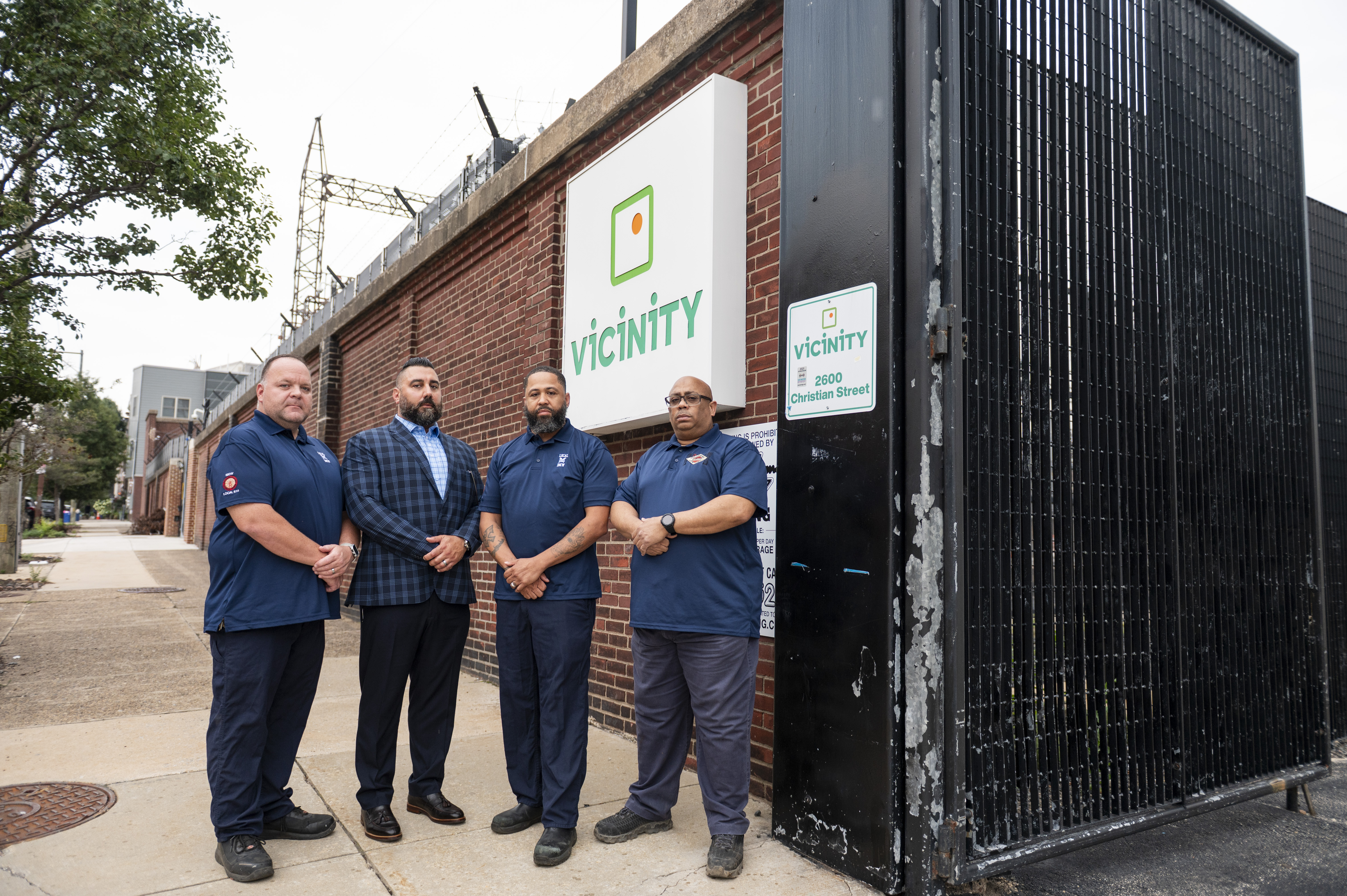
White and his colleagues work around-the-clock shifts for Vicinity Energy, operating a system that generates steam and electricity to provide customers with heat, air-conditioning, and chilled water. In Philadelphia, Vicinity serves hundreds of buildings, includingTwo Liberty Place, Thomas Jefferson University Hospital, and the Philadelphia Museum of Art, as well as the University of Pennsylvania, which buys over half the steam Vicinity sells in Philadelphia.
Since he’s been on the job, White says the Navy-veteran hiring pool has shrunk, as the Navy moved away from steam and toward diesel and gas turbines. Now hires come from refineries shutting down or trash plants, and they need training.
“There’s just a few of us older guys that are left over to try to pass this institutional knowledge down,” said White, who is a member of IBEW Local 614, along with 56 other Philadelphia employees of Vicinity. They do this training on their own time, White said, so they don’t get paid for it.
Their union is negotiating a new contract and could go on strike if they can’t reach a deal. They want raises, better short-term disability pay, a safer workplace, and compensation for the time they spend training new hires. Their current agreement expired in March.
“Vicinity Energy is committed to bargaining in good faith and believe those discussions belong at the bargaining table, not in the media,” a spokesperson for the company said in a statement. “Throughout this process, the safety of our employees, customers, and the communities we serve remains our top priority, and we remain committed to safe, reliable operations.”
The steam plant workers voted to authorize a strike on Saturday if their union calls for it, with 77% participating in the vote, and 97% voting yes.
If they do walk off the job, they’d be closely following in the footsteps of IBEW Local 614’s Peco employees, who recently went on strike before reaching a contract deal last month. A strike authorization vote doesn’t guarantee a strike will happen but can be used as leverage in bargaining.
The union has alleged that a Vicinity supervisor threatened to “discharge” workers who strike, according to an unfair labor practice charge filed with the National Labor Relations Board earlier this month. Vicinity did not comment on the charge.
The union is still bargaining in good faith, president Larry Anastasi said.
Steam plants require human operators, so a strike could be very disruptive for steam-powered buildings across the city. Given that, Anastasi said, it’s important “that we do everything in our power” to keep a strike from happening.
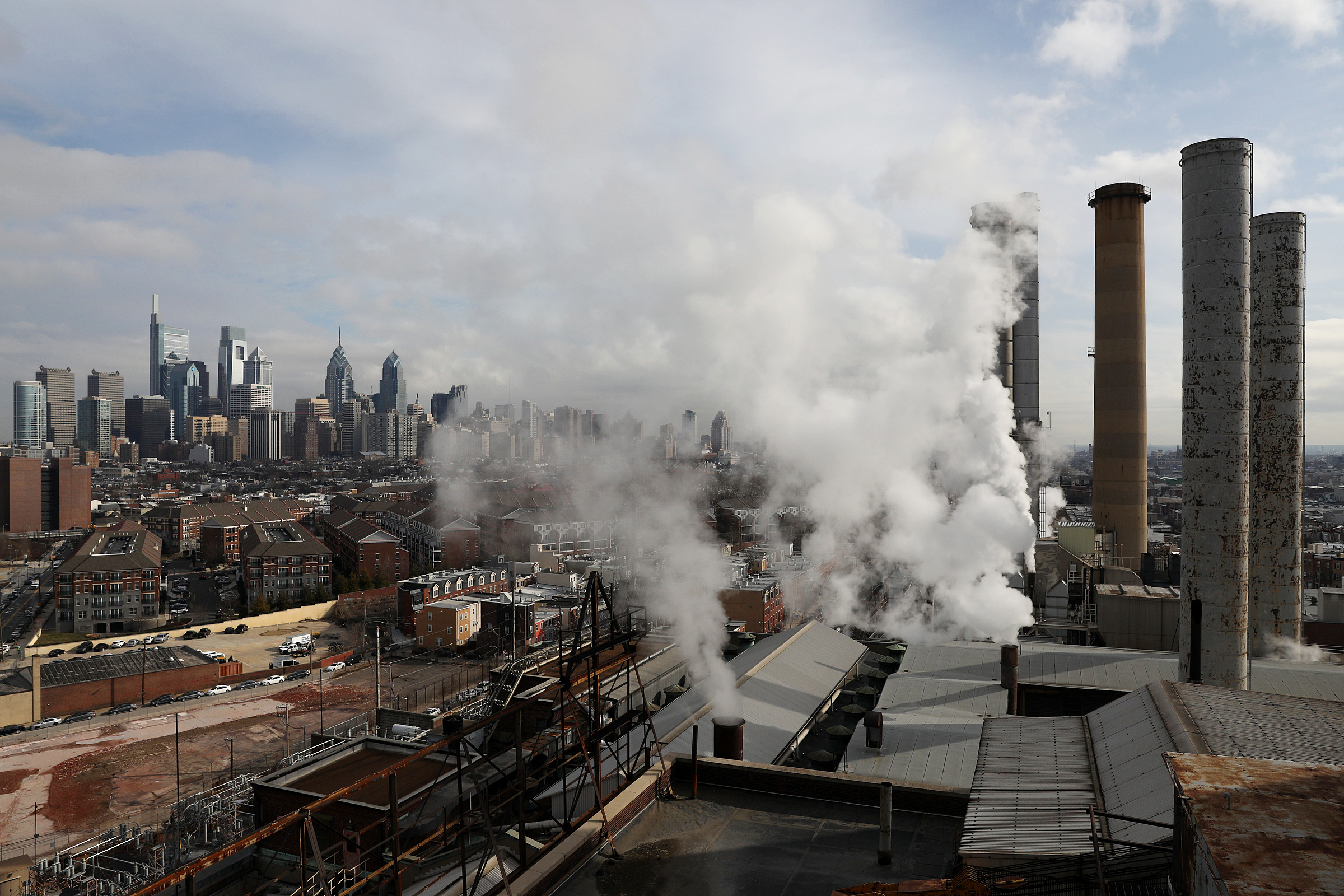
The Vicinity Energy cogeneration plant is pictured in Philadelphia’s Grays Ferry section in 2020. The plant, originally opened by Philadelphia Electric, produces electricity and steam for heating Center City buildings.Tim Tai / Staff Photographer
“Because it’s so old, I think people forgot its value,” Anastasi said.
Veolia Energy bought the system in 2007. Vicinity’s parent company, private-equity firm Antin Infrastructure Partners, bought it from Veolia in 2019 as part of a larger deal valued at $1.25 billion. At the time, the company committed to $50 million in capital spending over five years in Philadelphia.
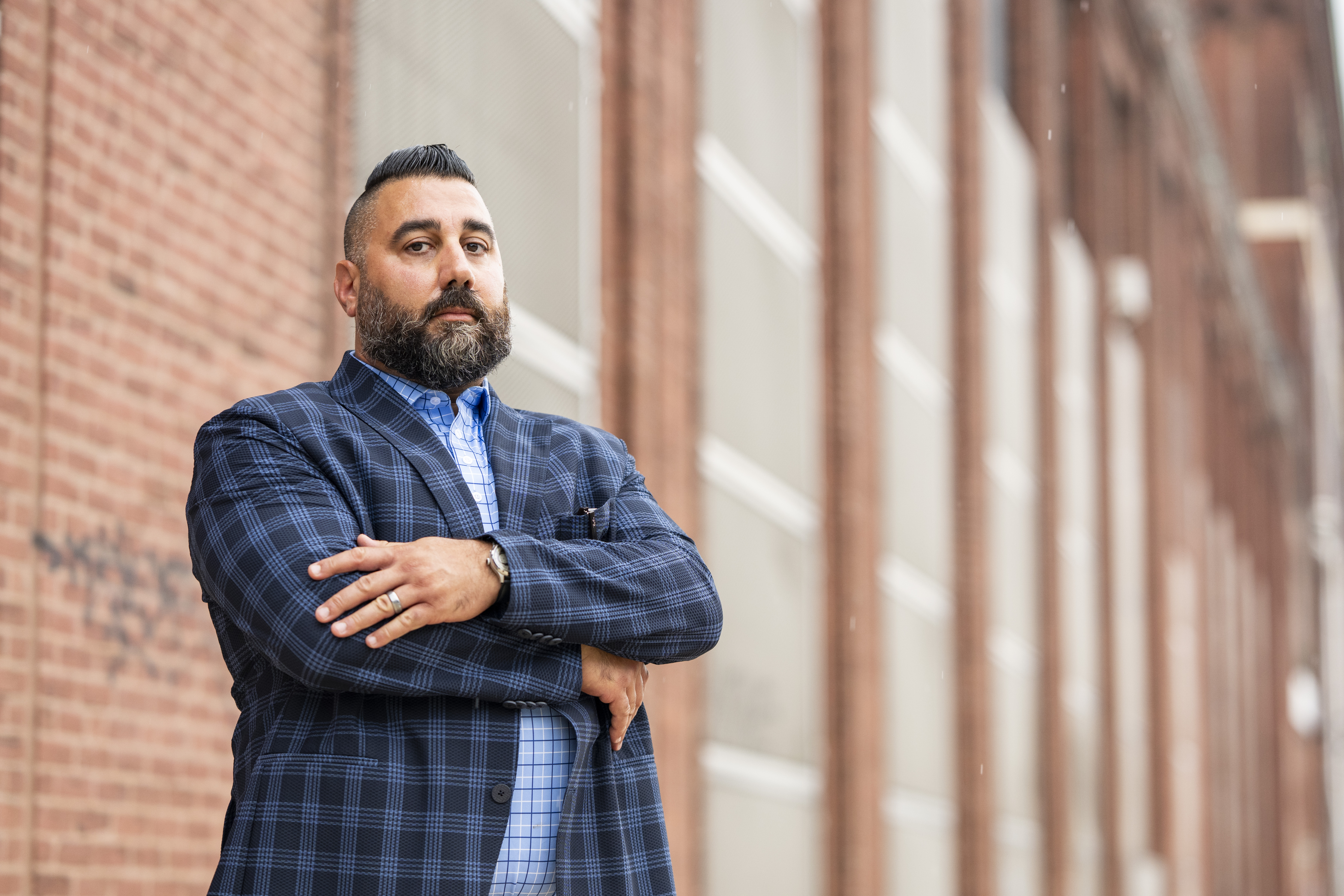
Larry Anastasi, president of IBEW Local 614. The union leader also represents Peco employees who reached a new contract with the company in July. Allie Ippolito / For The Inquirer
Boston-based Vicinity manages some 41 miles of underground pipe infrastructure in Philadelphia, according to the company’s website. The business services 400 buildings in Philadelphia, and its main plant is in Grays Ferry, at 2600 Christian St.
Vicinity’s Philadelphia business brought in over $99 million in revenue last year but reported a net loss of $11 million in 2025 after paying for fuel, operating expenses, and other costs.
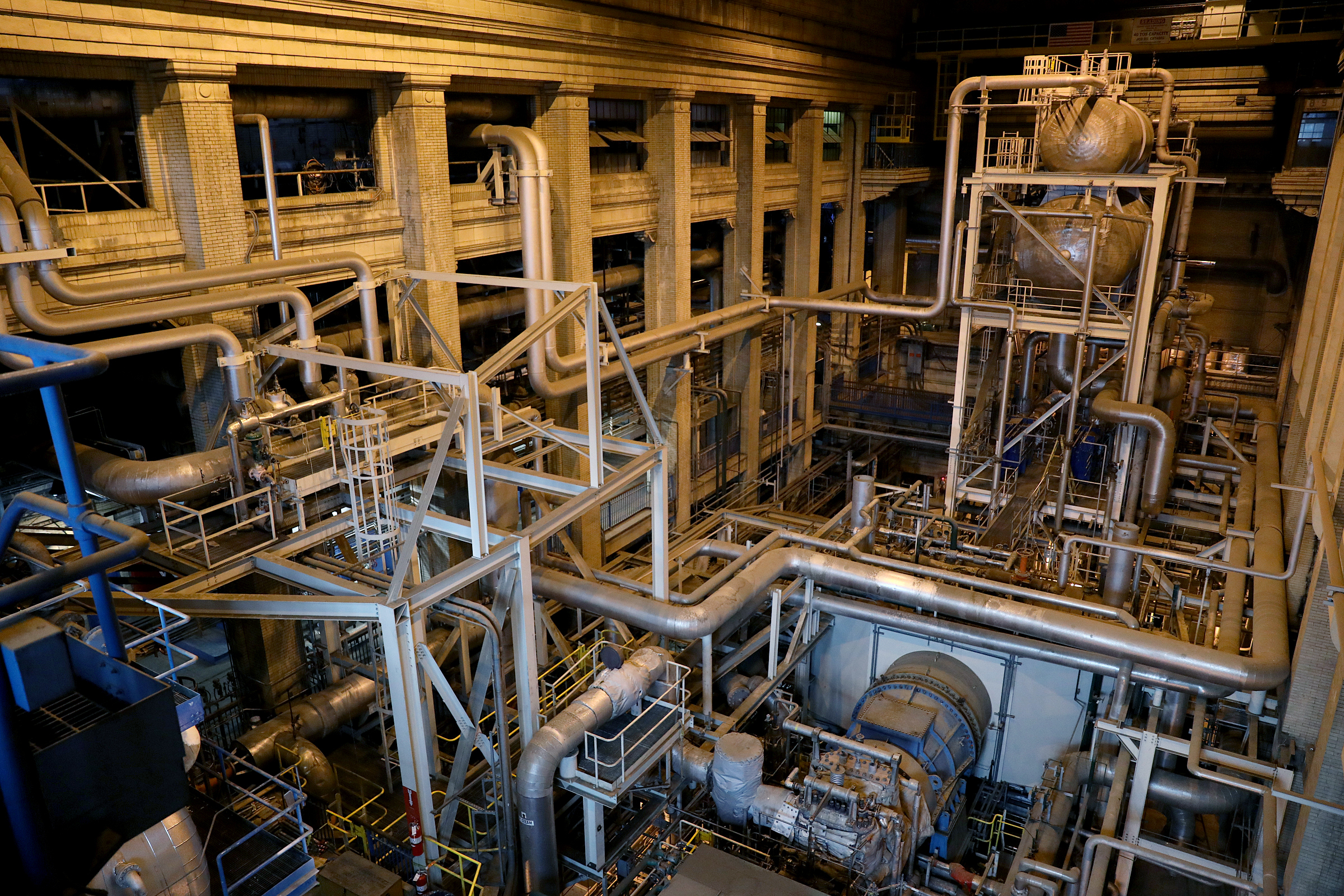
The turbine hall is pictured inside the Vicinity Energy plant in Philadelphia’s Grays Ferry section in 2020. Tim Tai / Staff Photographer
What do workers want?
After months of negotiations, it’s hard to keep morale up among workers, said Kenneth Gordy, a union shop steward and control room operator. Gordy said he feels workers are underpaid for the highly skilled and dangerous work they do.
Operators typically clock in for 12-hour shifts beginning at 6 a.m. or 6 p.m. They get two weekends off per month.
Operators earn roughly around $50 an hour, said Anastasi. He said “substandard” wages and benefits have led to turnover.
“We want our wages to reflect the knowledge, the level, the skills, the things that we do. We’re not asking for extraordinary things,” White said.
Union members also want fully funded short-term disability. They used to be able to get 100% pay during short-term disability years ago, but they now get around 60% during such leave, Anastasi said.
“Guys are using their bodies in this plant. We’re beating ourselves up,” said Sean Finnegan, an auxiliary operator who maintains equipment.
The workers also want their employer to make repairs to the plants where they work, citing unsafe conditions such as asbestos, as well as standing water in work areas, Anastasi said. Part of the ceiling was falling down in one area recently, White recalled.
“A new private equity firm takes over, and none of the repairs get made,” Anastasi said.
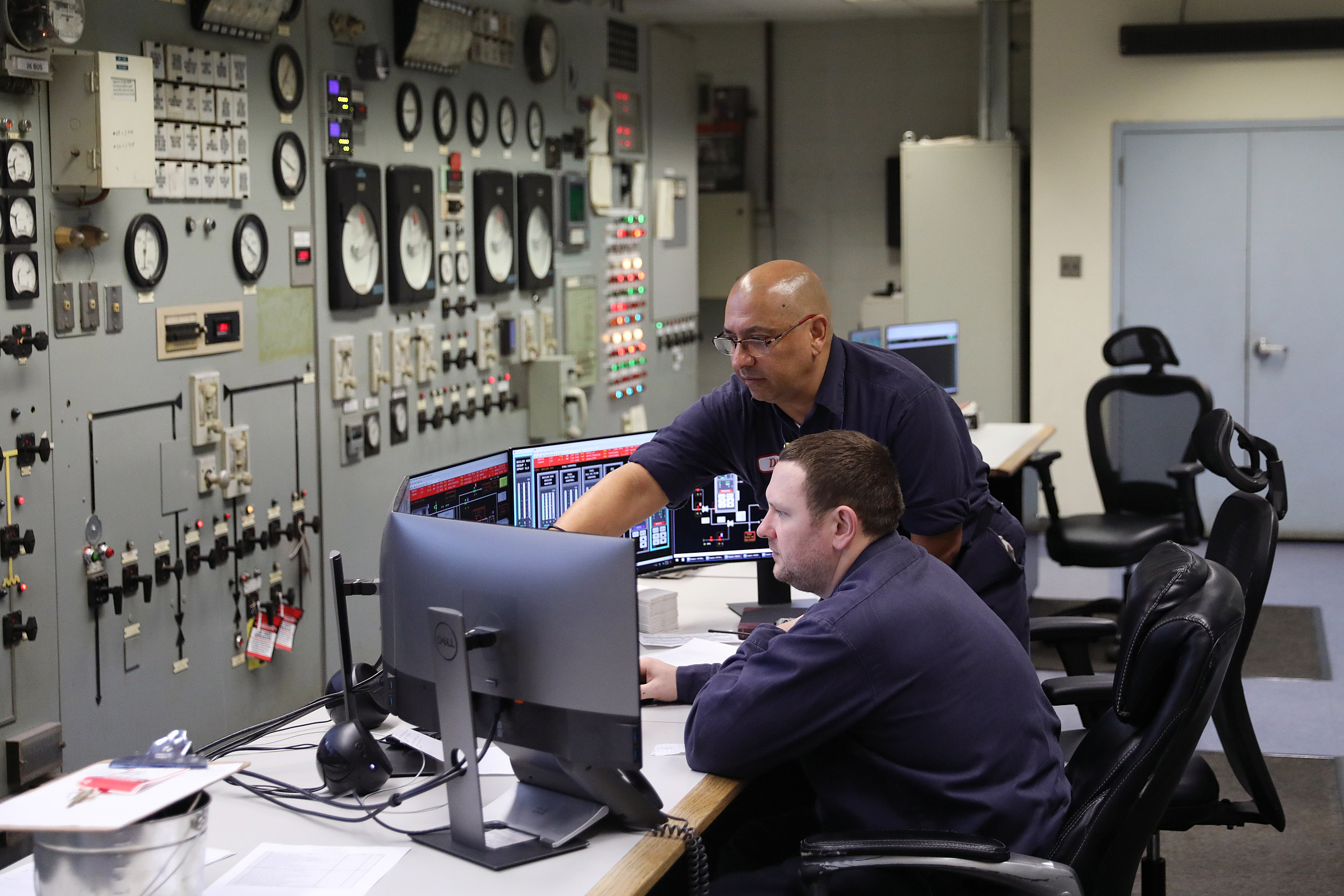
Control room operators work at the Vicinity Energy cogeneration plant in Philadelphia’s Grays Ferry section in 2020. Tim Tai / Staff Photographer
Anastasi also wants to improve retirement benefits for the Vicinity workers. He wants their employer to contribute to the union’s annuity program, so workers can get monthly payments upon retirement.
Anastasi is coming off a retirement win for his union’s Peco members, who clawed back pensions in their recent contract with the energy company. The union heralded the deal as a “historic contract victory.”
The steam plant workers’ most recent bargaining session was Aug. 3. The next session has yet to be scheduled, the union said Thursday.