Tag: Philadelphia Museum of Art

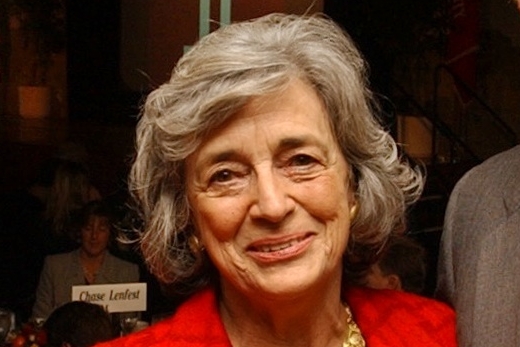
  • Janet Klein, celebrated longtime historic preservationist and philanthropist, has died at 96

    Janet Klein, celebrated longtime historic preservationist and philanthropist, has died at 96

    Janet Klein, 96, of Rydal, Montgomery County, former member of the Philadelphia Historical Commission, historic program director for the Fairmount Park Commission, regional project coordinator for the National Trust for Historic Preservation, chair of the Pennsylvania Historical and Museum Commission, volunteer, and philanthropist, died Tuesday, Aug. 4, of age-associated decline at her home.

    Born in Philadelphia, Mrs. Klein earned degrees at Philadelphia High School for Girls and the University of Pennsylvania. She and her husband, Lewis, traveled the world after they married in 1952, and she told The Inquirer in 1973 that she became interested in local historic preservation after returning from abroad in 1964.

    “I felt something was lacking here,” she said. “There was no pride nor a thorough knowledge of what we really have in Philadelphia to share with visitors.”

    So she joined the Philadelphia Museum of Art’s tour guide program, rose to chair of guides for the Fairmount Park house tours, and conducted hundreds of tours for thousands of visitors to the eight historic houses in the park. “The guides,” she said in 1973, “can’t help but sense that somehow they have passed on to the visitors the continuing life of historic Philadelphia.”

    Eventually, Mrs. Klein became historic program director for the Fairmount Park Commission, was appointed to the Philadelphia Historical Commission by then-Mayor Wilson Goode in the 1980s, and served as chair of the Pennsylvania Historical and Museum Commission from 1997 to 2003. Friends called her “formidable” and compared her to the Energizer Bunny.

    Keen to spark public interest in historic sites, Mrs. Klein forged partnerships between site officials and schools, community groups, businesses, and the media. In 1997, she oversaw filmmakers as they shot scenes for the movie Beloved at the Landis Valley Museum in Manheim Township.

    She appeared often in The Inquirer and said in 1989: “We often find that people who live just around the corner from a house museum don’t know it existed.”

    At Fairmount Park, she redefined the commission’s operating procedures and enlisted students as volunteers at its public mansions. At the city historical commission, she led walking tours of Old City and helped determine the historic designation of the old Lit Bros. building, the Boyd Theatre, the Dilworth house, and other significant structures.
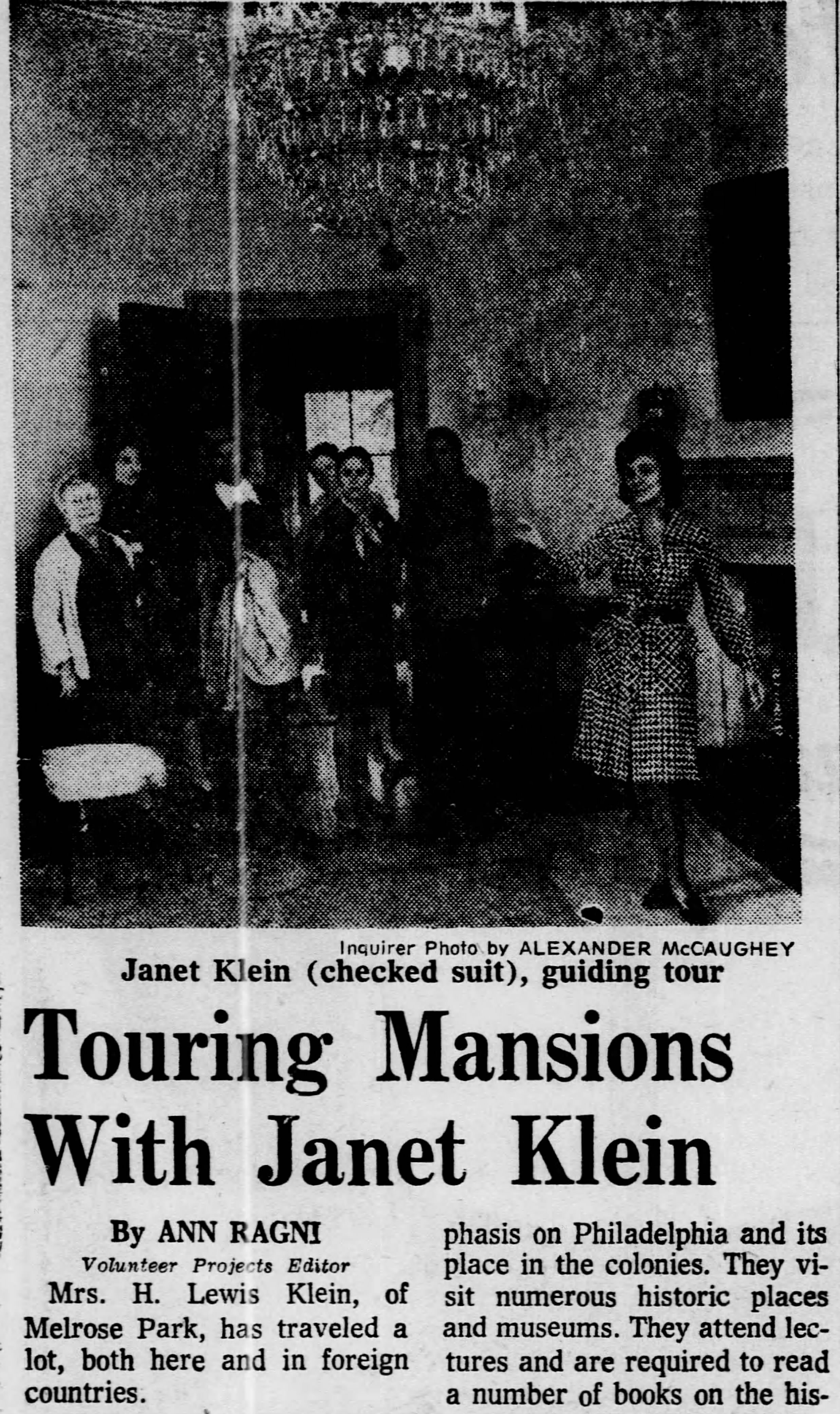
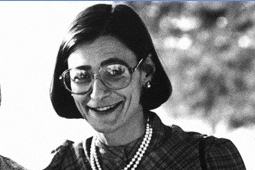
    This story and photo of Mrs. Klein (right) was published in The Inquirer in 1973.Newspapers.com

    With the state historical and museum commission, she erected historical markers across the state, helped designate the Art Museum as a Commonwealth Treasure in 2002, and directed the commission’s public relations, tourist promotions, and preservation efforts.

    “History doesn’t have to be dead,” she said in 1998. “Historical markers represent the people and their interests. They are a way for young people to learn about their heritage and gain a personal respect for the past.”

    She also led the Comprehensive Historic Assistance Program for the National Trust for Historic Preservation in the 1980s, helped create the Liberty Trail near Independence Hall, and directed the restoration of the first historic home in the Lukens National Historic District of Coatesville.

    She served on the board of visitors at Temple University’s Ambler campus and Klein College of Media and Communications, on the collections committee at the Union League, and as a guide at the Winterthur Museum in Delaware. She was active with the Pennsylvania Department of Conservation and Natural Resources, the Museum Council of Philadelphia, and other groups.
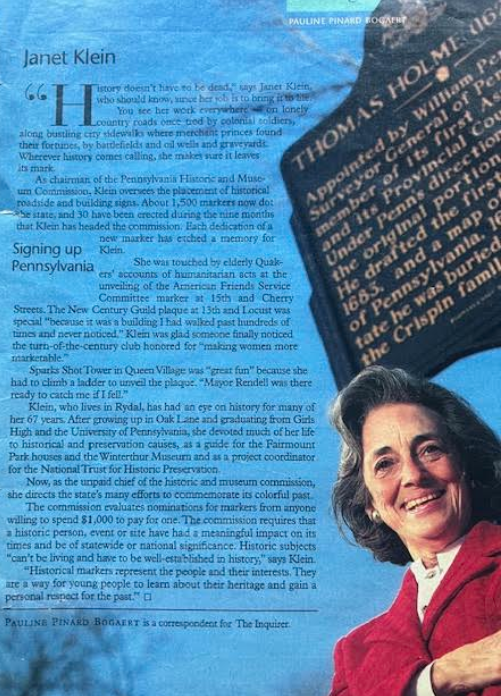
    This story and photo of Mrs. Klein appeared in The Inquirer in 1998.Temple University

    She was honored for her service by the Women’s Center of Montgomery County in 1999 and by the Preservation Alliance for Greater Philadelphia in 2001, and was named a Distinguished Daughter of Pennsylvania in 2000. In 2018, she earned an award for service and philanthropy from Coatesville’s National Iron and Steel Heritage Museum.

    As philanthropists, Mrs. Klein and her husband supported what became, named after them, the Klein College at Temple, the National Association of Television Program Executives, the Police Athletic League, the American Heart Association, and other organizations dedicated to education, healthcare, youth development, and social service. They created the Janet and Lew Klein Making A Difference Award for the Pennsylvania Association of Broadcasters and donated his professional papers to Temple.

    “She was an inspirational community leader,” said David Boardman, dean of Temple’s Klein College, “who inspired others through her generosity, her brilliance, and her warmth.”

    Janet Surman was born March 3, 1930. She grew up in Oak Lane and earned a bachelor’s degree at Penn.
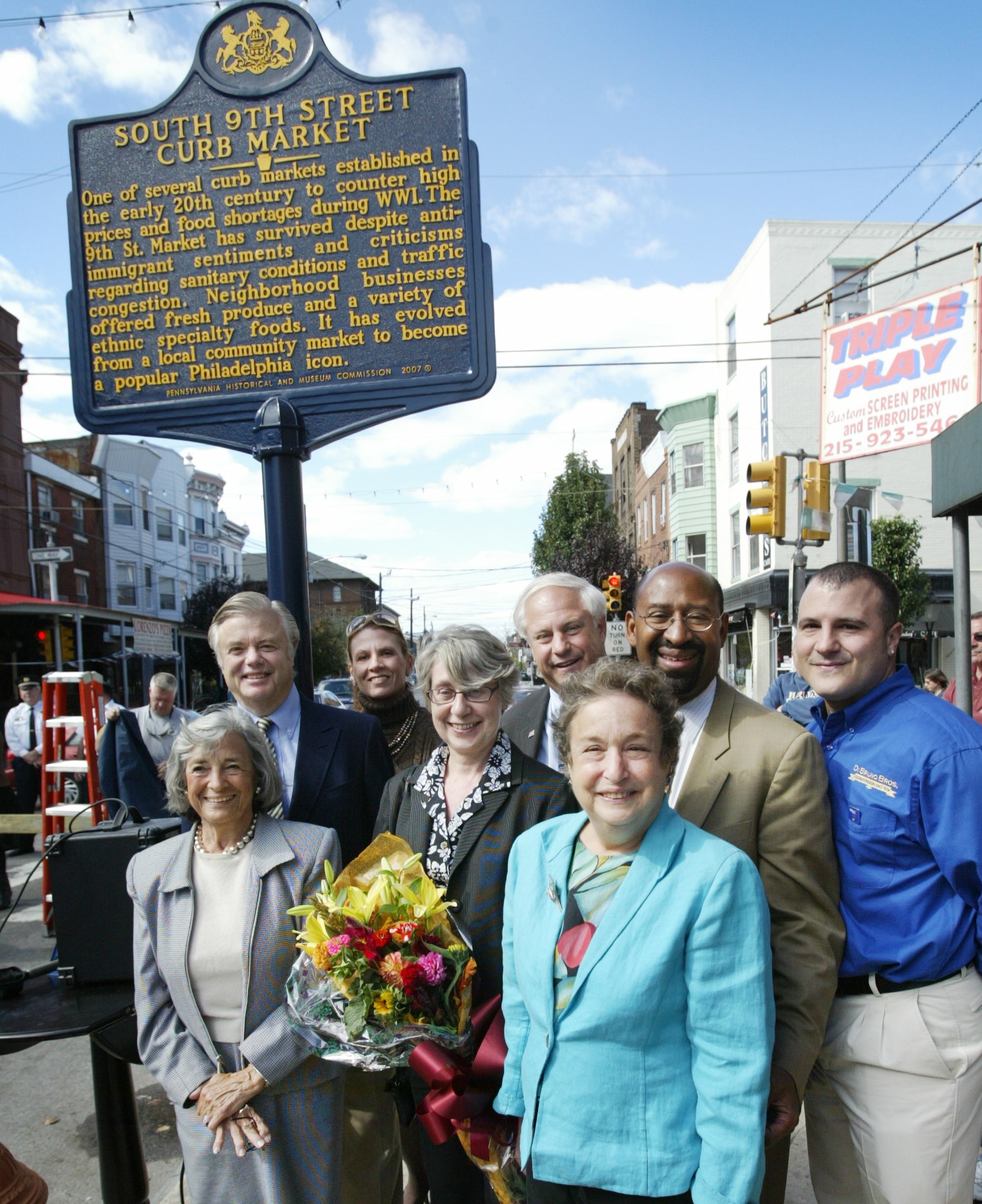
    Mrs. Klein (left) appeared with others in 2007 to celebrate a historical marker at the corner of 9th and Christian Streets.Alejandro A. Alvarez / Staff Photographer

    She met Lewis Klein in college, and they married in 1952. They had a son, Stephen, and a daughter, Ellen, and lived in Melrose Park and Rydal. Her husband, a pioneering TV broadcaster and cofounder of Gateway Communications, died in 2019.

    Mrs. Klein and her husband traveled the world for decades and attended dozens of galas and fundraising events. She enjoyed gardening, was an avid reader, and liked to play Scrabble.

    In 1993, Inquirer columnist Clark DeLeon called her “a wonderful, funny, vivacious lady.” Temple’s Boardman said: “She was truly one of the best human beings I’ve ever had the privilege to know.”

    In addition to her children, Mrs. Klein is survived by a granddaughter, two great-grandchildren, and other relatives.

    A celebration of her life is to be held later.

    Donations in her name may be made to the Abington Police Athletic League, 1166 Old York Rd., Abington, Pa. 19001.
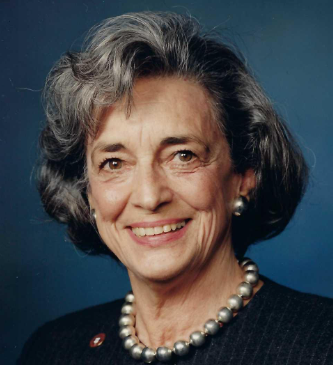
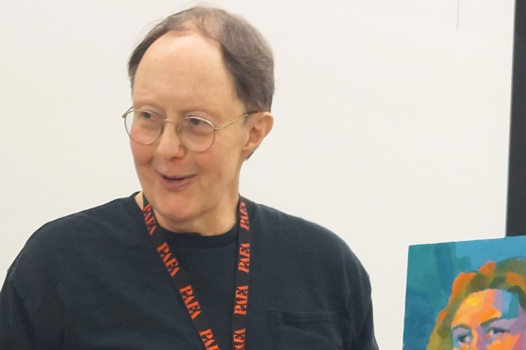
    Mrs. Klein grew up in Oak Lane and earned a bachelor’s degree at Penn. Courtesy of the family
  • Albert Gury, popular painter and award-winning professor of art education, has died at 74

    Albert Gury, popular painter and award-winning professor of art education, has died at 74

    Albert Gury, 74, of Philadelphia, lifelong painter, former chair of the painting department at the Pennsylvania Academy of the Fine Arts, award-winning lecturer at the old University of the Arts and other institutions, author, mentor, community advocate, and cat rescuer, died Thursday, June 25, after a long illness at the Hospital of the University of Pennsylvania.

    Born in Peoria, Ill., Professor Gury came to Philadelphia in the early 1970s after a professor at St. Louis University advised him to enroll at the Pennsylvania Academy of the Fine Arts. He did, and he never left.

    He earned a four-year certificate in painting at PAFA in 1976 and, starting in 1980, taught painting, drawing, figure drawing, anatomy, art history, and art education at PAFA. He was chair of the painting department from 2000 to 2022 and creator of several innovative art education programs.

    He painted portraits of young gun violence victims for PAFA’s Lost Dreams on Canvas exhibit and founded and directed the academy’s popular after-school free art program for high school students in 1994. In 2026, he earned a community recognition award from the Philadelphia School District.

    “This is a way for us to reach out to the community and really try to do something beneficial,” Professor Gury told The Inquirer in 2005. “We train them as if they are college freshmen, not high school kids. It raises the bar on the quality of their work.”

    Professor Gury also lectured for decades at University of the Arts, the Fleisher Art Memorial, the Barnes Foundation, and elsewhere. He instructed students at Jefferson Medical College on anatomy, consulted for the city’s mural arts program, and ran art seminars and painting workshops regionally and in Scotland and Croatia.

    He earned a master teacher’s award from University of the Arts and a master’s degree in fine arts at the University of Delaware in 1992. Former students called him “unfailingly caring, and supportive, and smart,” and “very generous in sharing his wealth of knowledge” in online tributes. One said: “What a great example to us all.”

    In a tribute, PAFA officials said: “We remember Al not only for what he taught but for how he taught: with patience, conviction, humor, discipline, and an open heart.”

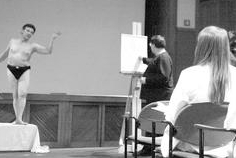
    Professor Gury (center) draws and explains the nature of the human form to students at Jefferson Medical College in 2007.

    In the studio, Professor Gury painted colorful figures, landscapes, still life, and portraits. His portrait Alice of Dunk’s Ferry hangs in historic Christ Church in Old City, and he showed at the Philadelphia Museum of Art, the F.A.N. Gallery on Arch Street, the National Academy of Design in New York, the U.S. Capitol in Washington, and elsewhere.

    He especially enjoyed painting abstract landscapes, he said in a 2014 video, because “they are pure.” He told the Daily News in 2000: “I like to paint the things I love. I like the intimacy of small paintings. I move the paint around and put together elements in nature even if they don’t exist that way. I like to imagine things rather than just paint what is in front of me. Sometimes it becomes a little surreal.”

    In 2000, critic Anne R. Fabbri said in the Daily News that many of Professor Gury’s paintings are “united by his layered brushwork, tonal depths, and the creative act that transforms color, line, and composition into a life-enhancing work of art.” He was honored by the Philadelphia Sketch Club in 2017.

    Professor Gury wrote three textbooks: Alla Prima: A Contemporary Guide to Traditional Direct Painting in 2009, Color for Painters: A Guide to Traditions and Practice in 2010, and Foundations of Drawing: A Practical Guide to Art History, Tools, Techniques, and Styles in 2017. He also contributed articles about painting and art to magazines and museum publications around the world, and was a contributing editor for the international journal Per Contra.

    In his neighborhood, Professor Gury advocated for better housing and fostered rescue cats in his home. He volunteered at the Philadelphia Animal Welfare Society and was named its 2015 volunteer of the year. The group renamed its kitten maternity ward after him.

    “We are searching for words to express just how extraordinary Al was, what a profound difference he made, and how much we loved and appreciated him,” colleagues at PAWS said in a tribute. “We hope he knew what an immense impact he made, and how much better and more beautiful the world is because of him.”

    Albert Francis Gury was born Oct. 23, 1951. A family friend introduced him to painting when he was young, and he spent many days roaming the galleries at the Art Institute of Chicago while his father worked downtown.

    He earned a bachelor’s degree in fine arts at St. Louis University in 1973 and won scholarships, grants, and honors as both a student and a professor at PAFA. He collected quilts and rare books on art.

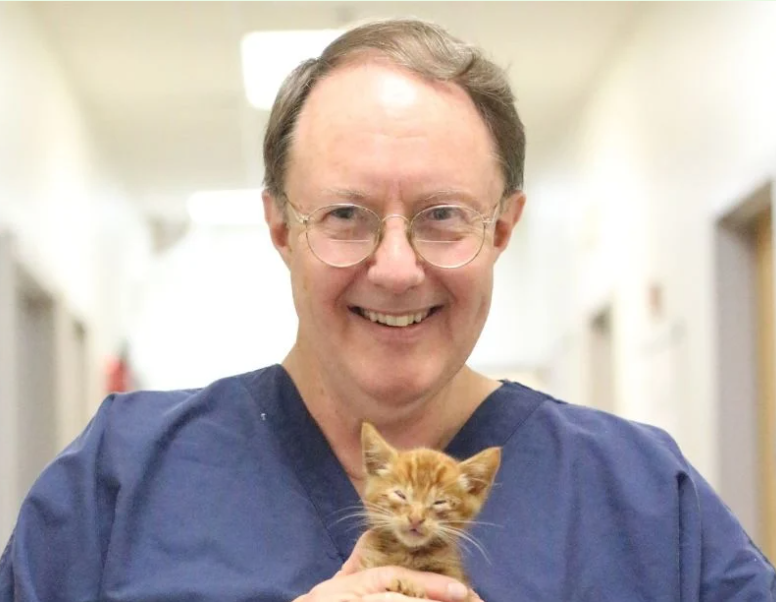
    Professor Gury loved animals, especially cats.Philadelphia Animal Welfare Society

    In 2018, his apartment building on Chestnut Street burned down in an early-morning fire. Several of his cats and parakeets perished, and much of his artwork was lost. “The whole thing is just tragic,” he told The Inquirer then.

    Friends called him “a classic caregiver” and a “protector of the underdog.” Longtime friend and colleague Reza Ghanad said: “If you were feeling down, he would pick you up.”

    Friend and colleague Morgan Hobbs said: “He noticed students who could have gone unnoticed without him. He had a special gift for that.”

    Professor Gury is survived by several relatives.

    His ashes are interred at Christ Church Burial Ground. A celebration of his life is to be held later.

    Donations in his name may be made to the Philadelphia Animal Welfare Society, 100 N. Second St., Philadelphia, Pa. 19106.

    Much of Professor Gury’s work features color and shape. Al Gury
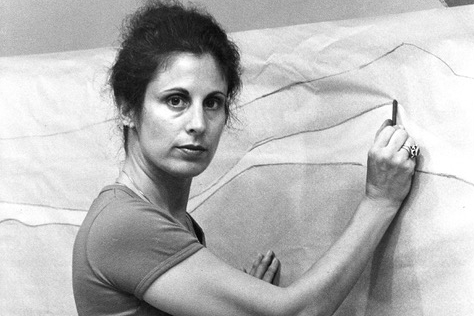
  • Barbara Gillette Price, prolific painter, fine arts teacher, and former president of Moore College of Art and Design, has died at 87

    Barbara Gillette Price, prolific painter, fine arts teacher, and former president of Moore College of Art and Design, has died at 87

    Barbara Gillette Price, 87, formerly of Philadelphia, celebrated painter and designer, former president of Moore College of Art and Design, former dean of Cranbrook Academy of Art in Michigan, former vice president for academic affairs at the Maryland Institute College of Art in Baltimore, fine arts teacher, mentor, and role model, died Friday, April 24, of age-associated decline at a hospital in Granada, Spain.

    A lifelong artist and longtime educator, Ms. Gillette Price liked to skip her high school classes in the 1950s and wander around the galleries at the Philadelphia Museum of Art. In sixth grade, she told The Inquirer in 1994, her artistic talent drew attention from the teacher when her drawing of a female form was all too accurate.

    She took Saturday classes at Temple University’s Tyler School of Art and the Fleisher Art Memorial when she was young, and earned a scholarship to the old Philadelphia Museum School of Art. She married artist Melville Price in 1957, moved to Tuscaloosa, Ala., in 1958, and earned bachelor’s and master’s degrees in fine arts at the University of Alabama.

    She joined Cranbrook Academy of Art in 1978, the Maryland Institute College of Art in 1982, and Moore in 1994. At each stop, she renovated nearby old buildings into studios and galleries, expanded curriculum, and invigorated students with international and innovative programs.

    At Moore, she increased enrollment, established a career center, and personally refurbished her three-story studio on North Second Street into a gallery where students exhibited their work and handled logistics and publicity. She also forged working relationships with the Philadelphia School District and other art institutions, supervised an advertising campaign for female artists, and served as a role model for working artists in academia.

    “That’s why I think my presence at Moore is a good thing,” she told The Inquirer in 1994.

    In 1998, Rochelle Levy, then chair of Moore’s board of trustees, said: “Barbara has really been our ambassador out there. She has set an incredible role model for the students as a woman artist.”

    Ms. Gillette Price left Moore in 1998, moved to Spain in 2000, taught art to primary school students, and continued to create and show her work. “Her commitment to arts education helped shape generations of creative thinkers,” former colleagues at Moore said in a tribute. “Her legacy lives on through the institutions she helped strengthen, the students she inspired, and the vibrant body of artistic work she leaves behind.”

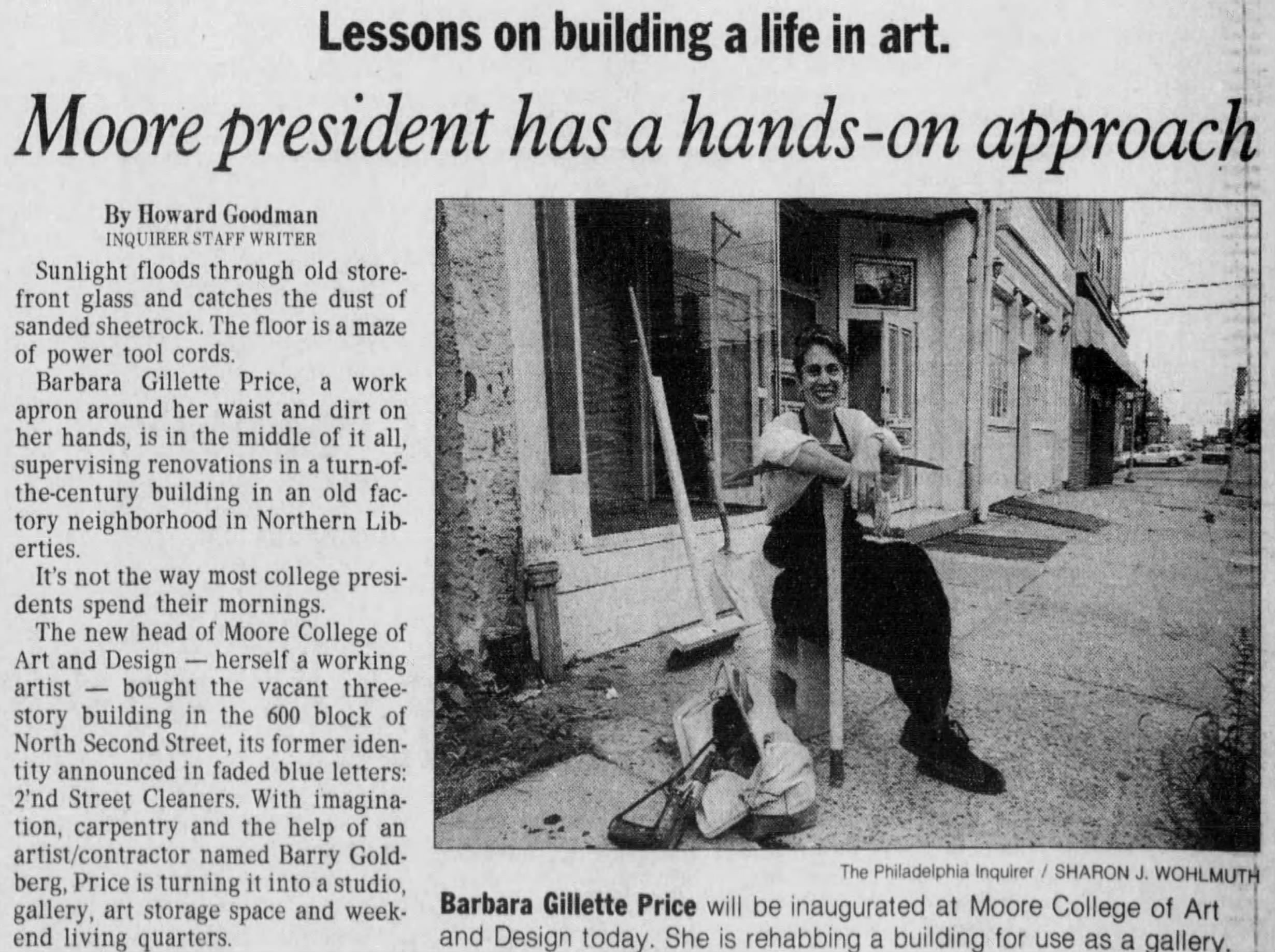
    Ms. Gillette Price was featured in The Inquirer when she joined Moore in 1994.Newspapers.com

    As an artist, Ms. Gillette Price was a colorist and inspired by what she called her “labyrinth of imagination.” She expressed herself often in themes and collages, and was adept at abstract and figurative works on canvas, paper, wood, silk, and other textiles.

    One critic said her work “is of an inherent elegance that emerges from excellent craftsmanship and an intelligent narrative.”

    She showed in dozens of solo and group exhibitions in Spain, Philadelphia, Maryland, Michigan, Washington, and elsewhere, and liked to work in the gallery as well as her studio. She painted about nature, light, woman’s perspectives, isolation and fear during the COVID-19 pandemic, and other topics.

    “I seek to make the ordinary extraordinary,” she said on her website, barbaragilletteprice.com. “I am inspired by images I accumulate as I travel and view the world about me. This takes the form of remembered landscapes, figurative compositions, and subtle political statements.”

    She was active in the Civil Rights Movement in Alabama in the 1960s, worked with the Woman’s Caucus for Art in Washington in the 1970s, and taught ceramics, painting, and drawing at the old Corcoran School of Art and Design in Washington and elsewhere. She belonged to the College Art Association and was on boards at the National Association of Schools of Art and Design, the Philadelphia Art Commission, and other organizations.

    She earned grants for her painting and wrote essays and white papers about art. In one paper, she said: “The arts are the humanizing element in the education of the citizens of the 21st century.”

    Barbara Amelia Gillette was born June 26, 1938, in Philadelphia. She and her family spent many summers in Atlantic City, and she graduated from Philadelphia High School for Girls.

    She took piano lessons, attended Saturday concerts at the Philadelphia Orchestra for years, and hung out with high school boyfriend Edward Cutler and others at jazz clubs and the Gilded Cage coffee shop.

    Melville Price died in 1970, and she reconnected with Edward Cutler. They married, had a daughter, Michelle, and lived in Washington. They divorced later, and he died earlier.

    “I consider my mother’s greatest achievement to be the way she showed up as a parent,” her daughter said. “Her artistic legacy can be found in her paintings, drawings, textiles, and exhibitions. Her personal legacy lives on in the people she inspired, mentored, encouraged, and welcomed into her life.”

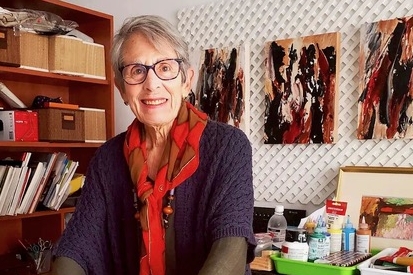
    Ms. Gillette Price created in the galleries as well as her studio.Barbara Gillette Price

    In addition to her daughter, Ms. Gillette Price is survived by a son-in-law, Eric Maroldo, and other relatives. A sister died earlier.

    Services were held earlier.

    Donations in her name may be made to Alhama Street Animal Protection in Granada, Spain.

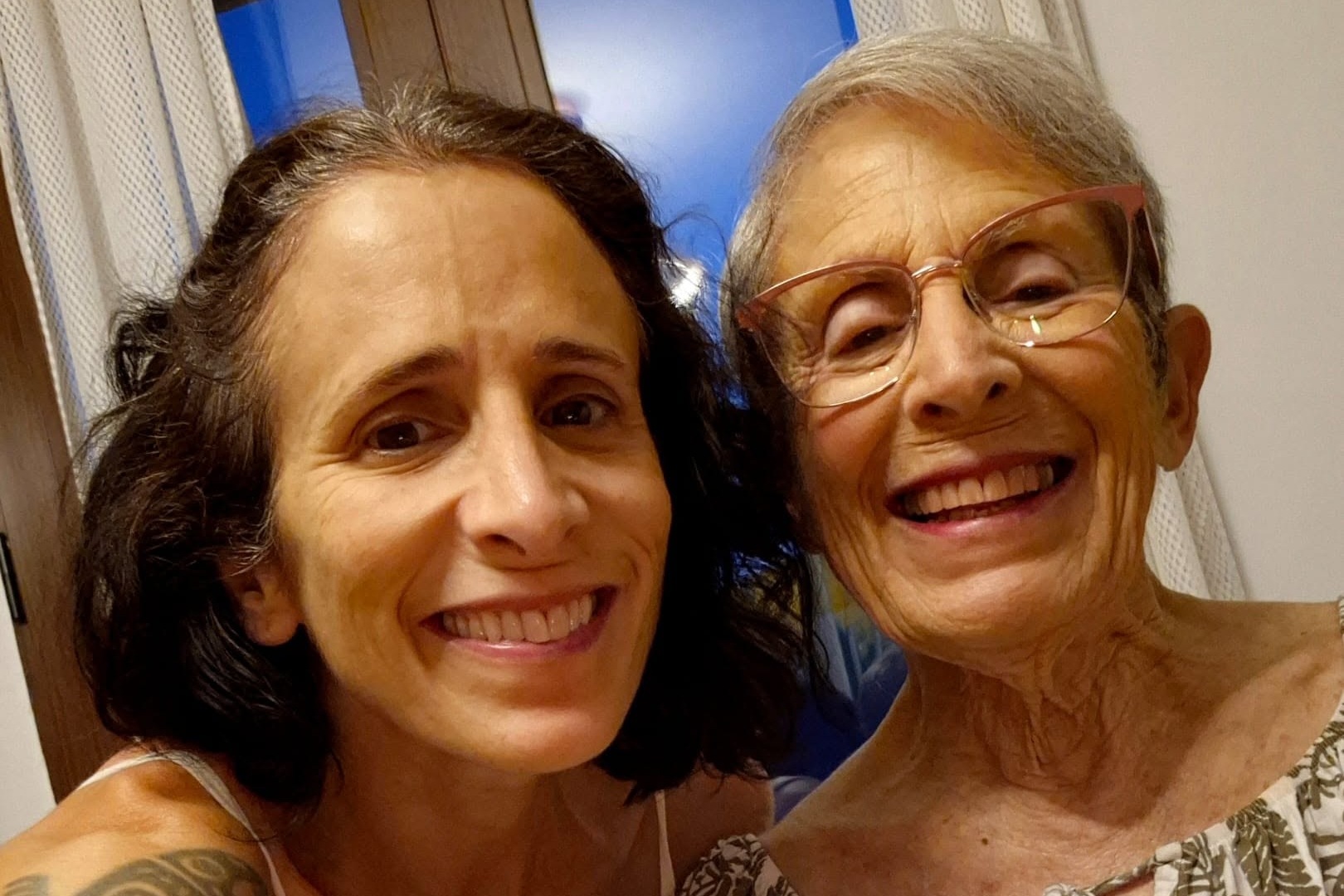
    Ms. Gillette Price (right) and her daughter, Michelle, were close. Courtesy of the family
  • Keith A. Morrison, celebrated artist and former Temple dean, has died at 84

    Keith A. Morrison, celebrated artist and former Temple dean, has died at 84

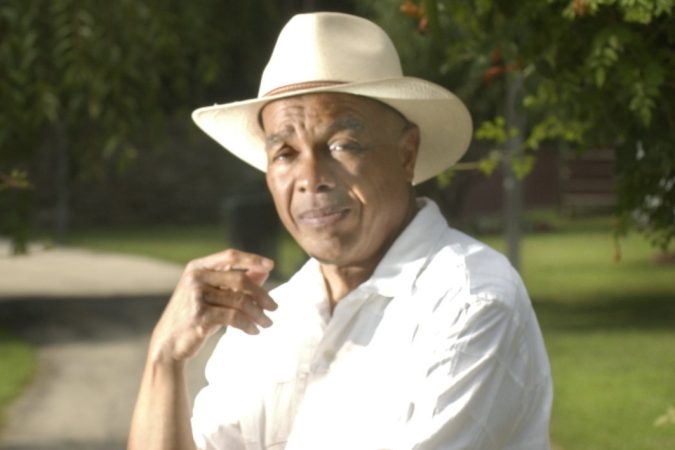
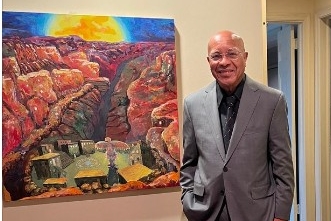
    Keith A. Morrison, 84, of Meadowbrook, Montgomery County, celebrated artist, professor of painting emeritus and former dean at Temple University’s Tyler School of Art and Architecture, curator, critic, consultant, writer, and lecturer, died Monday, June 1, of cancer at Fox Chase Cancer Center.

    Born in Jamaica, Dean Morrison left the Caribbean island for the School of the Art Institute of Chicago when he was 17 and earned bachelor’s and master’s degrees in fine arts and art education. He went on to teach college art classes in Nashville, Chicago, and College Park, Md., and, in addition to Temple, serve as dean at San Francisco State University, the University of Maryland, and the old San Francisco Art Institute.

    He was the first Black academic dean of art in a predominantly white American school in 1993 at the San Francisco Art Institute and joined Temple as dean of its art school in 2005. He became a professor of painting at Temple in 2008 and retired in 2018 as professor emeritus.

    As head of the Temple art school for three years, Dean Morrison hired staff, expanded degree programs, and coordinated popular activities with the school’s affiliated art programs in Europe and Japan. In an online tribute, former colleagues at Temple called him a “dedicated advocate for artists and arts organizations.”

    Earlier, he was associate dean of architecture and art at the University of Illinois, art department chair at DePaul University in Chicago, and associate professor of art at Fisk University in Nashville. He lectured around the world and was a visiting scholar at Sichuan Fine Arts Institute in China and the University of Michigan.

    “He was very serious, very thinking,” said his wife, Susan C. Alunan. “People said he was present and insightful, even life-changing.”

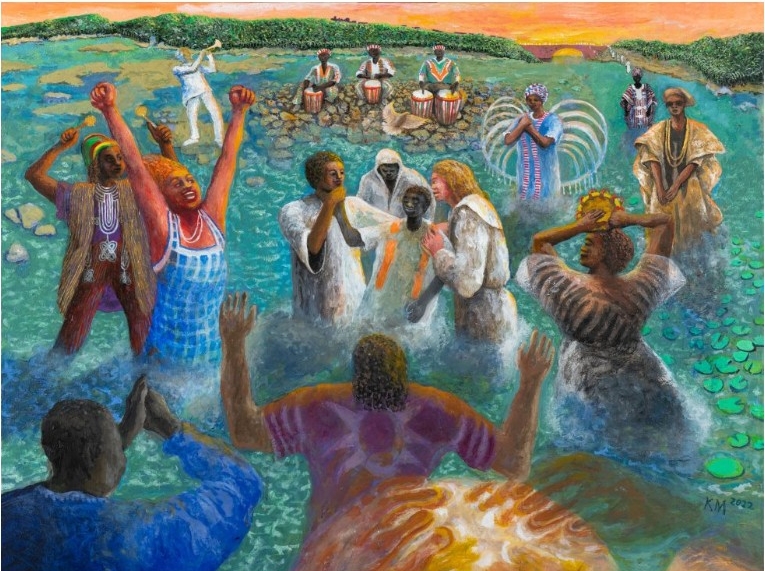
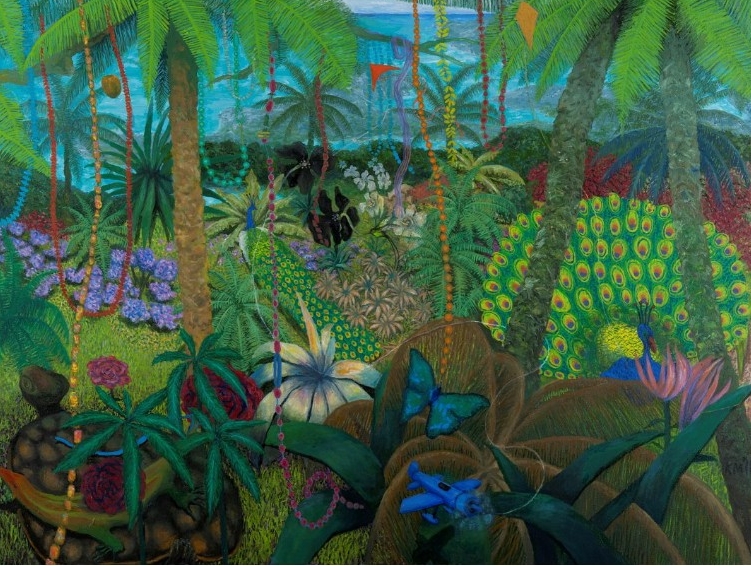
    As an artist, Dean Morrison was inspired by his Afro-Caribbean heritage, his childhood memories of lush Jamaican landscapes, and his multicultural experiences in Europe, Cuba, Mexico, and elsewhere. He worked in watercolors, oils, acrylic, and prints, and created memorable abstract, figurative, and surreal images.

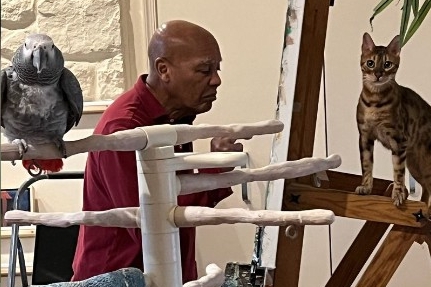
    Many of his paintings feature landscapes, people, plants, and animals, often including Scout, his African gray parrot. His images, he told colleagues, were “more intuitive than intellectualized.”

    Dean Morrison worked most often at his home studio in Meadowbrook. His parrot, Scout (left), sometimes appeared in his work. Susan C. Alunan

    Friends and colleagues called his paintings “unique and moving” and “magical in content and accessible by all who encounter them.” Allan Edmunds, founder of Brandywine Workshop and Archives, said on Facebook: “His art connects and shares hidden stories and myths that helped shape his creative vision of multiculturalism as a global reality.”

    Dean Morrison’s work appears on the covers of books and magazines, and in hundreds of solo and group shows around the world. It resides in collections at the Philadelphia Museum of Art, the Pennsylvania Academy of the Fine Arts, the National Gallery of Art and the Smithsonian American Art Museum in Washington, and other galleries.

    Colleagues at the David C. Driskell Center at the University of Maryland said in a tribute: “Morrison’s vivid, imaginative paintings — filled with brilliant color, history, mythology, and fantasy — speak to African diasporic experience as well as Morrison’s unique sense of humor and narrative composition.”

    As a writer, he pioneered Pan-African art criticism and was, in his own words, a Black critic “interested in art from a Black person’s perspective.” He was a visiting editor at the New Art Examiner in Chicago, and his reviews, interviews, and general observations appeared in the Washington Post, museum catalogs, and other publications.

    His book Art in Washington and Its Afro-American Presence: 1940-1970 was published in 1985 and serves as a text at art schools. In 2004, Renée Ater wrote a 128-page monograph called Keith Morrison.

    As a curator, Dean Morrison supervised exhibitions in the United States, Jamaica, and Cuba. He represented the United States and Jamaica at international art exhibitions, and was active with Brandywine Workshop and the Washington Project for the Arts.

    He earned lifetime achievement awards from Howard University and Brandywine Workshop, and was named a Jamaican Commander in the Order of Distinction in 2017 for “outstanding and important services to Jamaica.”

    “My mood is always happy,” Dean Morrison said in a 2008 interview with the University of Delaware’s UDaily. “You can paint anything you want. It does not have to be because you yourself feel that way.”

    This is Dean Morrison’s “In the Rivers of Babylon.”Keith A. Morrison
    This is Dean Morrison’s “Scenes From Childhood.”Keith A. Morrison

    Keith Anthony Morrison was born May 20, 1942, in Linstead, Jamaica. He ran track in high school and took drawing classes at the Jamaica School of Arts and Crafts.

    He learned about the School of the Art Institute of Chicago after high school and worked as a disc jockey and sound effects man for a Jamaican radio station to earn money to travel to the United States. He earned his bachelor’s degree at the University of Chicago in 1963 and his master’s degree at the Art Institute of Chicago in 1965.

    He had a son, Ron, a daughter, Melinda, and, after a divorce, married Alunan in 2003 and welcomed her children into his family. His daughter and former wife died earlier.

    Dean Morrison studied Aristotle and earned a Fulbright Senior Scholar grant. He enjoyed classical music and jazz, and he and his wife traveled the world together.

    Dean Morrison “had a great imagination and sense of humor,” his wife said.Susan C. Alunan

    He played tennis and ran, and lived in Chicago, Washington, and San Francisco before settling in Meadowbrook. “He had a great imagination and sense of humor,” his wife said. “He was a fun guy.”

    In addition to his wife and son, Dean Morrison is survived by a brother and other relatives.

    A celebration of his life is to be held later. Brandywine Workshop and Archives has scheduled a showing of his work from 6 to 8 p.m. on Thursday, Aug. 6.

  • Ida Schmertz, pioneering women’s activist, political innovator, and former American Express senior vice president, has died at 91

    Ida Schmertz, pioneering women’s activist, political innovator, and former American Express senior vice president, has died at 91

    Ida Schmertz, 91, formerly of Jenkintown, pioneering women’s activist, international relations innovator, presidential appointee, first female senior vice president at American Express, volunteer, mentor, and role model, died Thursday, July 2, of organ failure at New York Presbyterian Hospital.

    Born in Amsterdam, Ms. Schmertz and her family made their way to Philadelphia and then Jenkintown at the start of World War II in 1940, and she became a trailblazing American powerhouse in civil and women’s rights, international relations, corporate management, and healthcare.

    She earned a bachelor’s degree in political science and a master’s degree in international relations, and did everything but write a dissertation for a doctorate in international relations and Soviet studies. She was founding codirector in 1971 of the groundbreaking Center for American Women and Politics at Rutgers University, founding cochair in 1994 of the International Business Incubator and Training Center in Russia, and founding chair of the board of trustees for the Romanian-American Foundation in Bucharest in 1994.

    Wherever she was, Ms. Schmertz championed research, education, and public engagement. She helped organize the first national conference of women in political office for the Center for American Women and Politics in 1972, and later provided professional services to small businesses and startups in Russia, especially those owned by women.

    “I have empathy for people,” Ms. Schmertz told a colleague at the Romanian-American Foundation in a 2018 video interview. “I’ve always felt badly for people who are hurt or poor or unfortunate or don’t have access to something.”

    Ms. Schmertz was interested in voluntary foreign service, gun reform, and U.S.-China relations, and she lectured and appeared on TV shows and in dozens of newspapers. She worked with New York Gov. Hugh Carey on statewide initiatives of all kinds in the 1970s and was appointed by President Bill Clinton to head the Romanian-American Enterprise Fund in 1994.

    In the 1950s and ’60s, she worked for the Democratic National Committee, the CIA, and the American Association of University Women. She spoke English, Dutch, Russian, and French, and served as a guide at the State Department’s first U.S. promotional exhibition in Moscow in 1959.

    She lobbied for fair elections in South Africa in the 1990s, and pressed New York lawmakers to support the state’s medical aid in dying act until it recently passed. Colleagues praised her “vision, energy, and grit” and “integrity and long-term commitment” in online tributes.

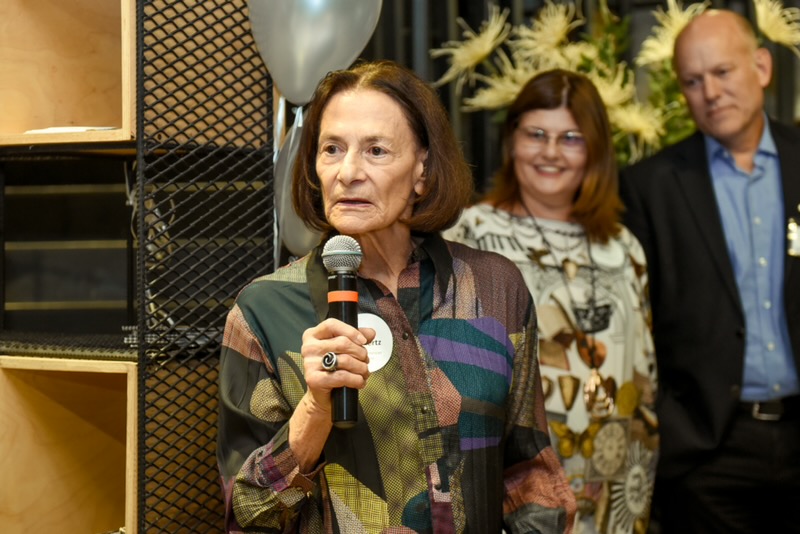
    From 1979 to 1992, Ms. Schmertz was the first woman to supervise corporate strategy and philanthropy at American Express in New York.Courtesy of the family

    One colleague said: “I feel so fortunate to have known her.”

    Colleagues at the Romanian-American Foundation said in a tribute: “She helped shape not just an organization but a picture of what philanthropy in Romania could be: transparent, accountable, built on partnership, and dedicated to creating opportunity for all Romanians.”

    From 1979 to 1992, Ms. Schmertz was the first woman to supervise corporate strategy and philanthropy at American Express in New York. She was also an honorary director of the Women’s Economic Roundtable and a former director at Prudential Financial Inc.

    “She was extraordinary, formidable, deeply caring, and exceptionally committed to the people and causes that she believed in,” her daughter, Lexy, said. “Her hobby was her job, learning and exploring.”

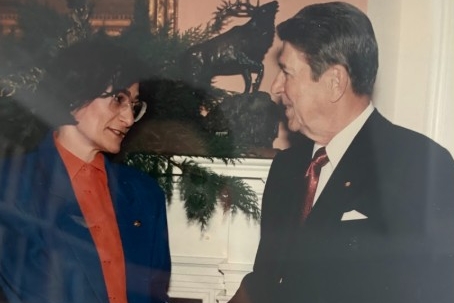
    Ms. Schmertz worked with President Ronald Reagan and many other political notables. Courtesy of the family

    Ida Frederieke Schaap was born Feb. 24, 1935. Her family traveled from the Netherlands to Indonesia in 1939 and then to the United States to escape the war.

    She was the first Jewish student to enroll in the old Stevens School for Girls in Germantown in 1940, was elected president of the student council and captain of the field hockey team, and graduated in 1952. She earned her bachelor’s degree at Wellesley College in Massachusetts in 1956 and her master’s degree at Columbia University in 1960.

    She also studied French political science at Sorbonne University in Paris and Russian at Middlebury College in Vermont. She married Herbert Schmertz in 1962 in Philadelphia, and they had a son, Anthony, and a daughter, Lexy. They divorced in 1976, and he died in 2018.

    Ms. Schmertz was tough and direct, her family said, intelligent and loving. She liked to read and travel, and was an engaging conversationalist.

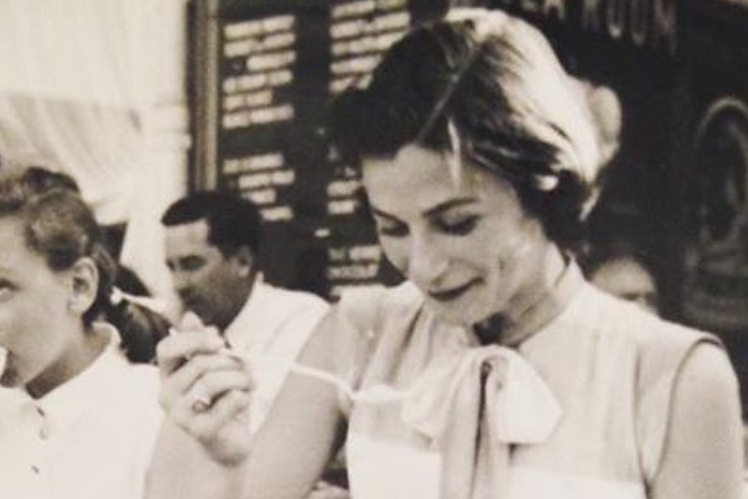
    Ms. Schmertz was a summer camp counselor for underserved children as a teen, loved cats, and supported the Philadelphia Museum of Art.Courtesy of the family

    She lived in Washington after college, moved to New York in the 1970s, and hosted friends and colleagues from around the world in her Upper West Side apartment. She doted on her four grandsons and took them to museums and hockey games. “She met them where they were,” her daughter said.

    She was a summer camp counselor for underserved children as a teen, loved cats, and supported the Philadelphia Museum of Art. For 30 years, she lived with chronic lymphocytic leukemia.

    “She was compassionate and caring,” her daughter said. Her son said: “She was devoted to her family.”

    In addition to her children and grandsons, Ms. Schmertz is survived by two sisters and other relatives.

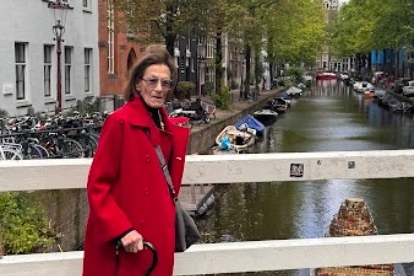
    Ms. Schmertz visited Amsterdam in May.Courtesy of the family

    A private memorial service is to be held later.

    Donations in her name may be made to Compassion & Choices, Box 485, Etna, N.H. 03750.

  • Garrett Brown, who made Rocky’s run up the Philadelphia Museum of Art steps possible, is the subject of a new documentary

    Garrett Brown, who made Rocky’s run up the Philadelphia Museum of Art steps possible, is the subject of a new documentary

    What is common to the Rocky run sequence up the Philadelphia Museum of Art steps, the hedge maze scene in The Shining, aerial shots of football games, and underwater footage of Olympic swimmers?

    They were all made possible thanks to the same Philadelphia-area inventor.

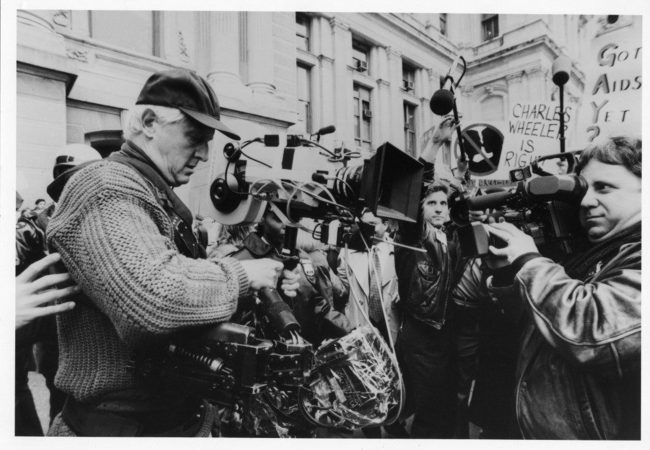
    Oscar-winning cinematographer Garrett Brown invented several camera systems, most notably the Steadicam, a wearable camera rig that allows for stable running shots without any shakiness. That creation, introduced in 1975, revolutionized filmmaking, and now the Philadelphia native’s story is the subject of a documentary Thank You, Mr. Brown.

    “He’s a really smart, wise individual, but also just a very humble down-to-earth guy who is very open about daring things and making sure he’s a part of the community,” said director Andrew Schwartz, a longtime friend of Brown’s.

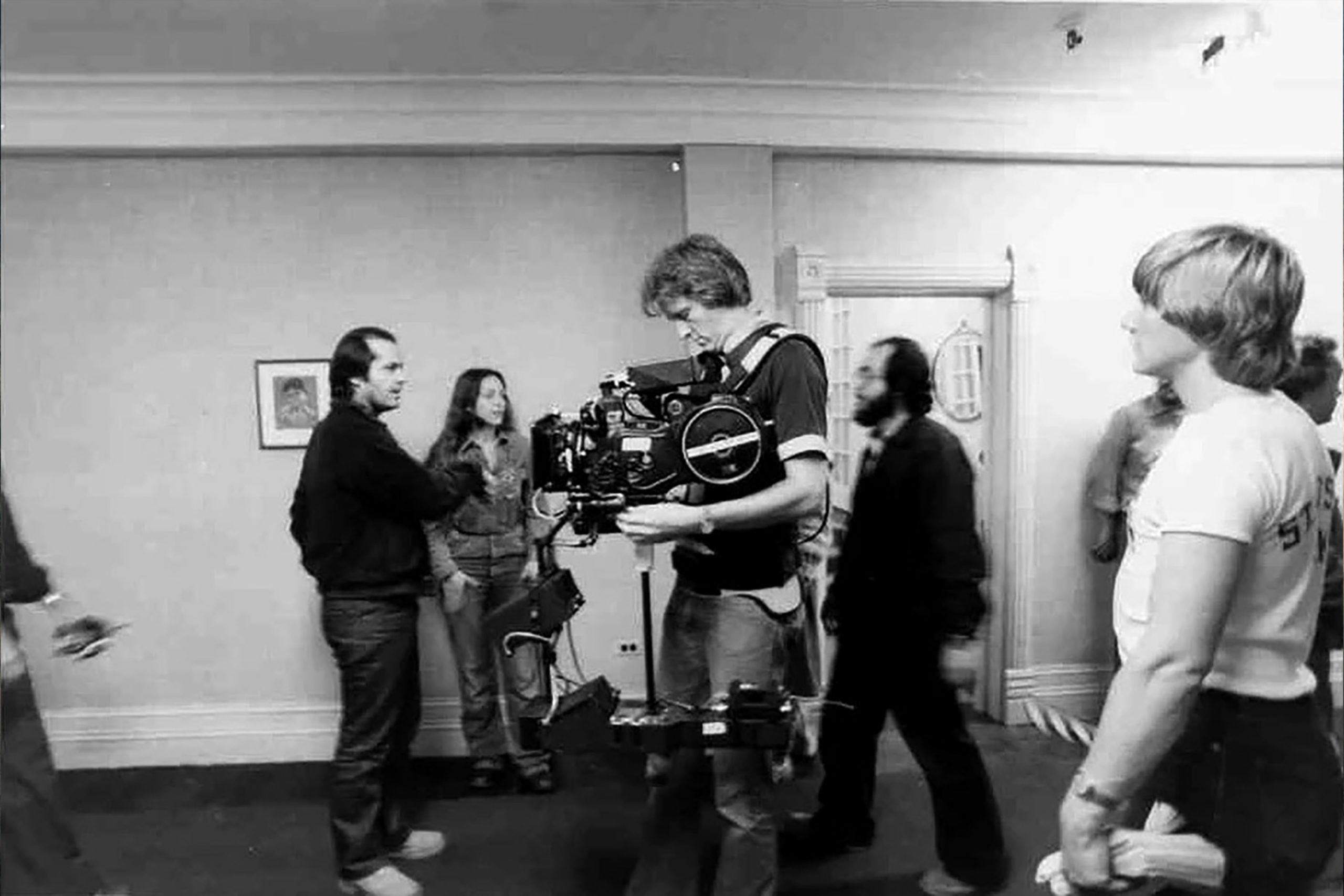
    Garrett Brown on set of “The Shining” (1980).Courtesy of Garrett Brown

    The two met when Schwartz started teaching at Steadicam workshops around two decades ago in Yellow Springs in Chester County. Brown was always present, he said.

    The documentary, currently being filmed in Philadelphia and produced by EBE Productions, includes interviews with Brown and other filmmakers, actors, sports broadcasters, and camera operators.

    This includes cinematographer Larry McConkey, best known for shooting the three-minute single shot of the Copacabana in Goodfellas. Francis Ford Coppola, who worked with Brown on One From the Heart, serves as an executive producer.

    “[Coppola] doesn’t normally do that for a lot of people and I think it just goes to demonstrate the type of relationship Garrett has fostered in the film industry and with people he worked with,” Schwartz said. “Knowing Francis’ career, this is another guy who’s really paved his own path in his own way and has demonstrated that same daringness and persistence toward his ideas with a somewhat relentless nature.”

    Brown, 84, was born in Long Branch, N.J., grew up in Haverford, and lives in the Philadelphia area. He was a folk singer until a friend gifted him a Bolex camera. Before long, Brown decided he wanted to work in the movie business and create something that had never been made before.

    “He basically locked himself in a motel room trying to figure out how to get a camera to be steady,” said William Forbes, one of the film’s producers. After creating a multitude of prototypes, Brown finally landed on something special.

    And that’s how the Steadicam was born.

    One of the earliest Steadicam shots is a demo reel of Brown’s wife, Ellen Shire, running up and down the steps of the Philadelphia Museum of Art, which convinced Rocky filmmaker, John G. Avildsen, to use Brown’s new contraption. The Shining followed, and Brown’s career got its jump start.

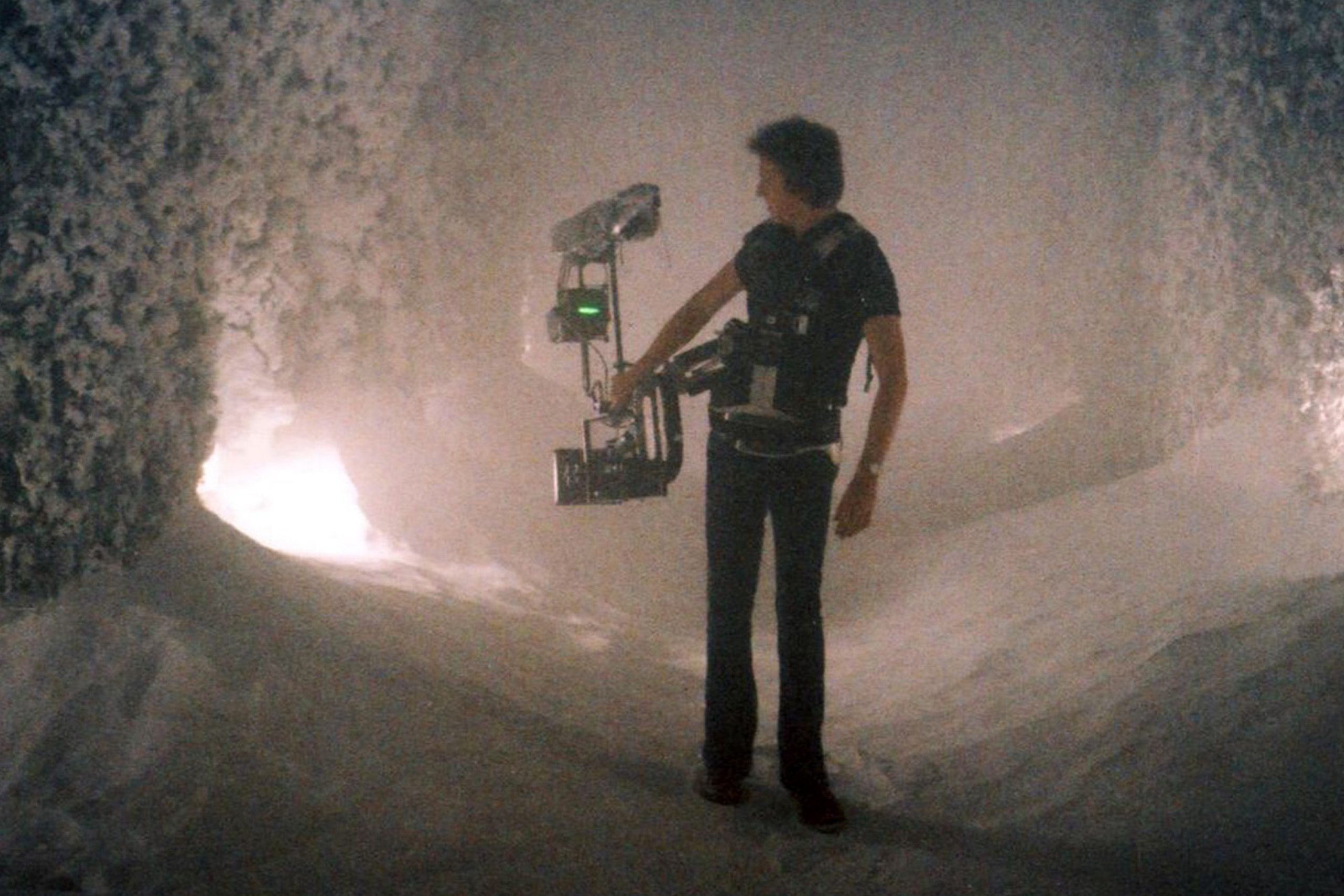
    Garrett Brown filming the hedge maze chase scene in “The Shining” (1980).Courtesy of Garrett Brown

    The Steadicam stabilizes a shot through three main components: the vest, the arm, and the sled. The vest is what the camera operator wears and the arm is what is attached to the vest. It allows the operator to move the camera around. The camera sits atop the pole-like “sled” and all of these come together to absorb the shock as the camera operator runs.

    “Everyone we talk to echoes the same sentiment, which is that there’s a before-Steadicam and an after-Steadicam when it comes to filmmaking and sports broadcasting,” said Forbes. “You can see the imprint of [Brown’s inventions] on all these new technologies that come out, from legacy movies like Avatar or smaller things like the GoPro, and all these little things that people are trying to be able to have new visual language in film.”

    Brown has patented several key camera systems that have been revolutionary in the world of sports broadcasting. The SkyCam, for example, shoots football games from above; the DiveCam tracks divers; and the MobyCam tracks Olympic swimmers underwater as they move across the pool.

    Michael Phelps, Forbes said, wouldn’t have won his gold medals if it weren’t for the MobyCam. The camera tracking “was able to show his fingertips touching just before another guy, which gave him his eight gold medals,” referring to Phelps’ historic sweep at the 2008 Beijing Olympic Games.

    Brown founded the Steadicam Operators Association in 1988, through which he and other camera operators teach workshops on using the machinery, working with new operators, and finding ways to alter the technology.

    More than 50 years after introducing the Steadicam, Brown is still not done tinkering with it.

    Garrett Brown being interviewed for “Thank You, Mr. Brown.”Courtesy of EBE Productions

    “We’ve made incredible movies that we tell each other on screen even through sports that we watch,” said Schwartz. “Garrett very much brought us closer to communicating that way with the tools he made.”

    A lot of Brown’s story, he said, “is one thing to the next and an evolution that was somewhat accidental at times because he was just going on an adventure. I hope people are inspired by his story as much as they are educated by it.”

    A release date for Thank You, Mr. Brown is yet to be announced.

  • Trailer for biopic ‘I Play Rocky’ shows iconic Philly scenes

    Trailer for biopic ‘I Play Rocky’ shows iconic Philly scenes

    How did Sylvester Stallone make and star in Rocky? Well, he had to put up a fight.

    The trailer for the forthcoming biopic I Play Rocky has officially been released by Amazon MGM Studios. The film follows a young Sylvester Stallone, played by Anthony Ippolito, on his harrowing journey pitching and filming his Oscar-winning movie.

    Scenes from the trailer show the many hardships that went into making the movie, including Stallone convincing the producers to breaking his hand while filming the meat-punching scenes.

    Filming took place from October to December 2025, in Los Angeles, New Jersey, and Philadelphia, according to USA Production News. The filmmakers created their own version of the iconic run up the museum steps, filmed at the Philadelphia Museum of Art, and filming was also seen taking place in Kensington.

    Ippolito is best known for portraying Al Pacino in the Paramount+ miniseries The Offer, another biographical production about the making of a film — in this case, The Godfather. The I Play Rocky trailer shows the rising actor looking nearly identical to Stallone, with the thick, deep voice to match.

    Other main roles include AnnaSophia Robb as Stallone’s wife, Sasha Czack; Matt Dillon as Stallone’s father, Frank Stallone Sr.; and Stephan James as Carl Weathers, who played Apollo Creed in the Rocky franchise.

    Peter Farrelly, born in Phoenixville, Chester County, directed the film. He is best known for directing and cowriting the 2018 comedy-drama film Green Book, which won the Oscar for Best Picture.

    The real-life Sylvester Stallone is not involved in the production.

    I Play Rocky is set to have a select theaters release on Nov. 6, according to Deadline. This will gear up the movie to be eligible for awards season.

  • Rocky Balboa always represented the best of Philly. The city is finally loving him back.

    Rocky Balboa always represented the best of Philly. The city is finally loving him back.

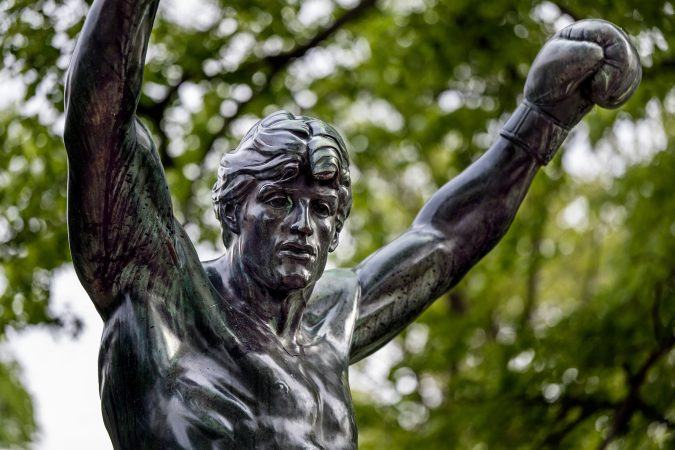
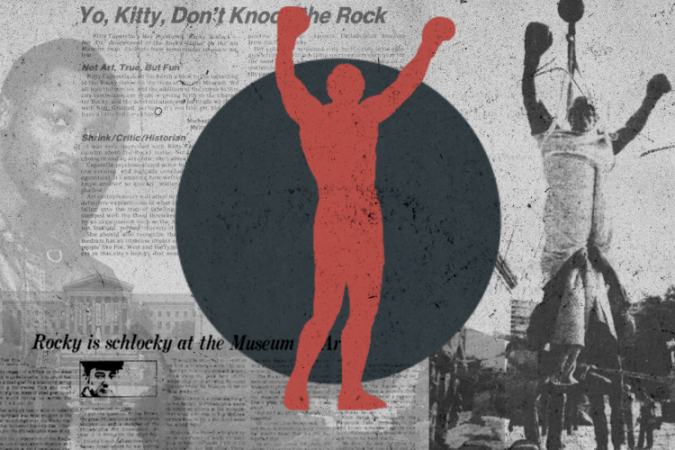
    Controversy has long dogged Philly’s Rocky statues — controversy that on the surface is about what the statues represent and where they belong, but is really about class, commercialism, and community. But now, argues columnist Mike Sielski, the Rocky Exhibit at the Philadelphia Art Museum is a sign that the city has finally fully embraced the statue’s popular power and meaning. The big question is: Do you agree?

  • Mayor Parker defends decision to host July 4th Parkway concert despite dangerous heat and high price tag

    Mayor Parker defends decision to host July 4th Parkway concert despite dangerous heat and high price tag

    Mayor Cherelle L. Parker on Wednesday defended the city’s upcoming July Fourth concert, a seven-hour outdoor spectacle featuring performances from Christina Aguilera, Jill Scott, The Roots, and more, amid concerns over the nearly 100-degree forecast and revelations that the event will cost taxpayers millions more than in years past.

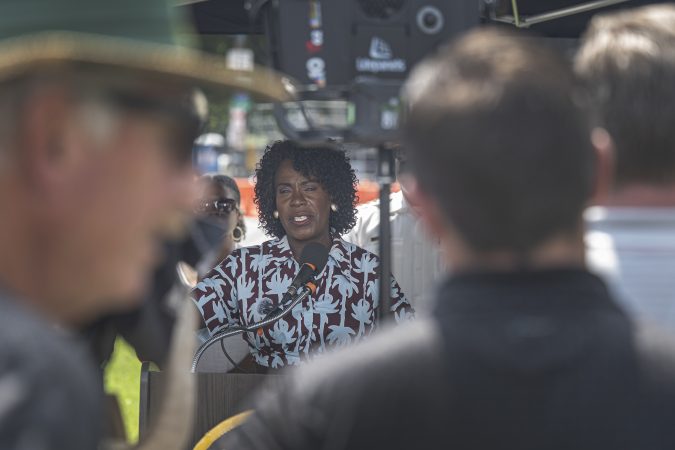
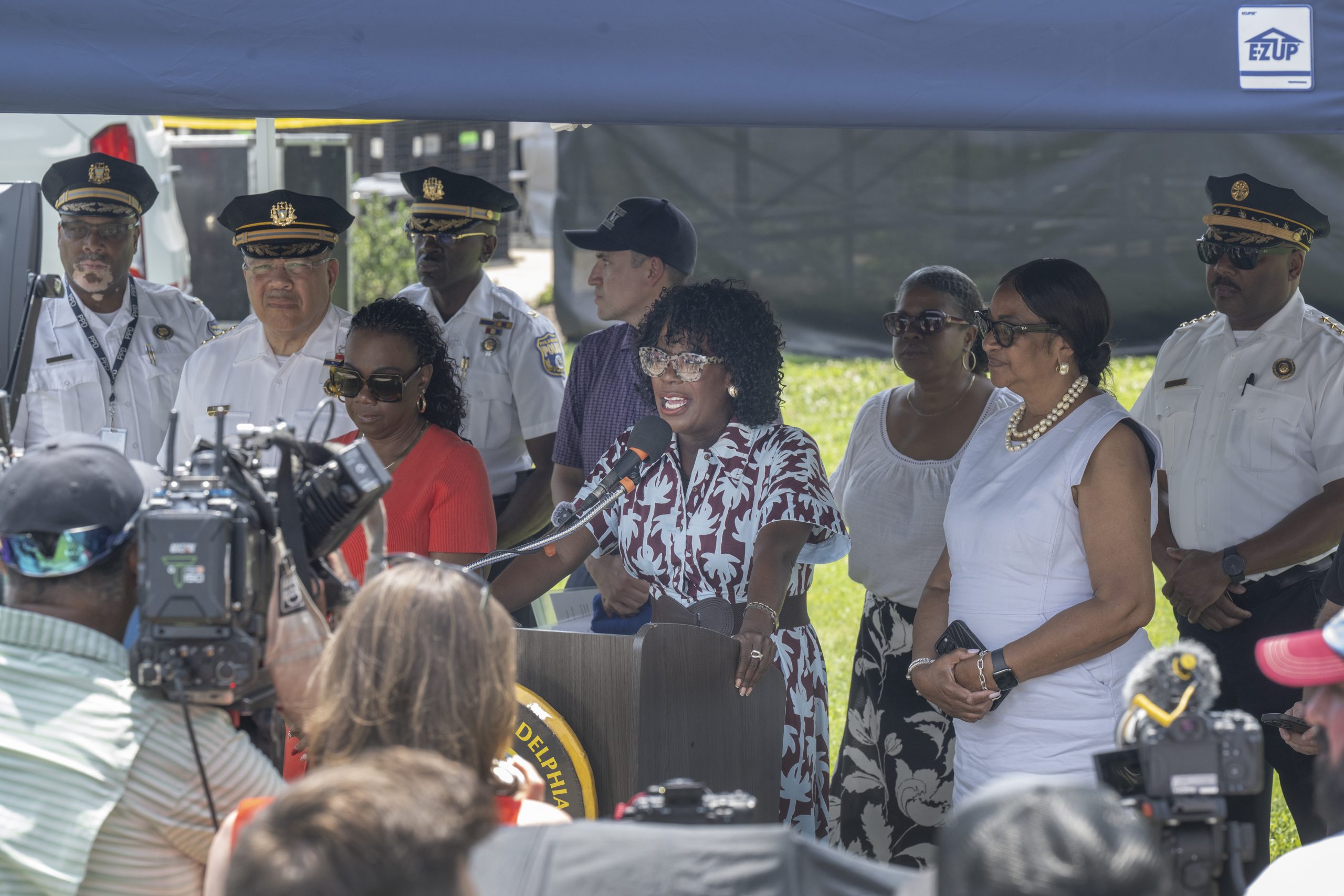
    The city has dealt with high temperatures before and has battle-tested personnel and protocols prepared for the evening, Parker told reporters at a news conference in front of the stage at the foot of the Philadelphia Museum of Art steps.

    She also addressed the detractors head on.

    “I do not apologize to anyone about making sure that the city of Philadelphia, as the sixth-largest city in the nation, the birthplace of democracy, we were going to have a celebration that is fitting to and for our historical significance and prominence,” Parker said. “One that could be seen, respected, and honored, not just in our city and commonwealth and nation but in the world.”

    Parker described the concert as the largest July Fourth concert in the city’s history. For an occasion as momentous as the nation’s 250th anniversary in the city that bills itself the birthplace of America, Parker said Philadelphia must rise to the occasion and prove it can achieve ambitious undertakings.

    Parker said her administration scaled up the experience, including moving the stage back to accommodate an estimated 300,000 concertgoers, and made the stage larger.

    “We won’t get a second chance to do this over again, Philadelphia,” Parker said. “We only turn 250 years old once in a lifetime.”

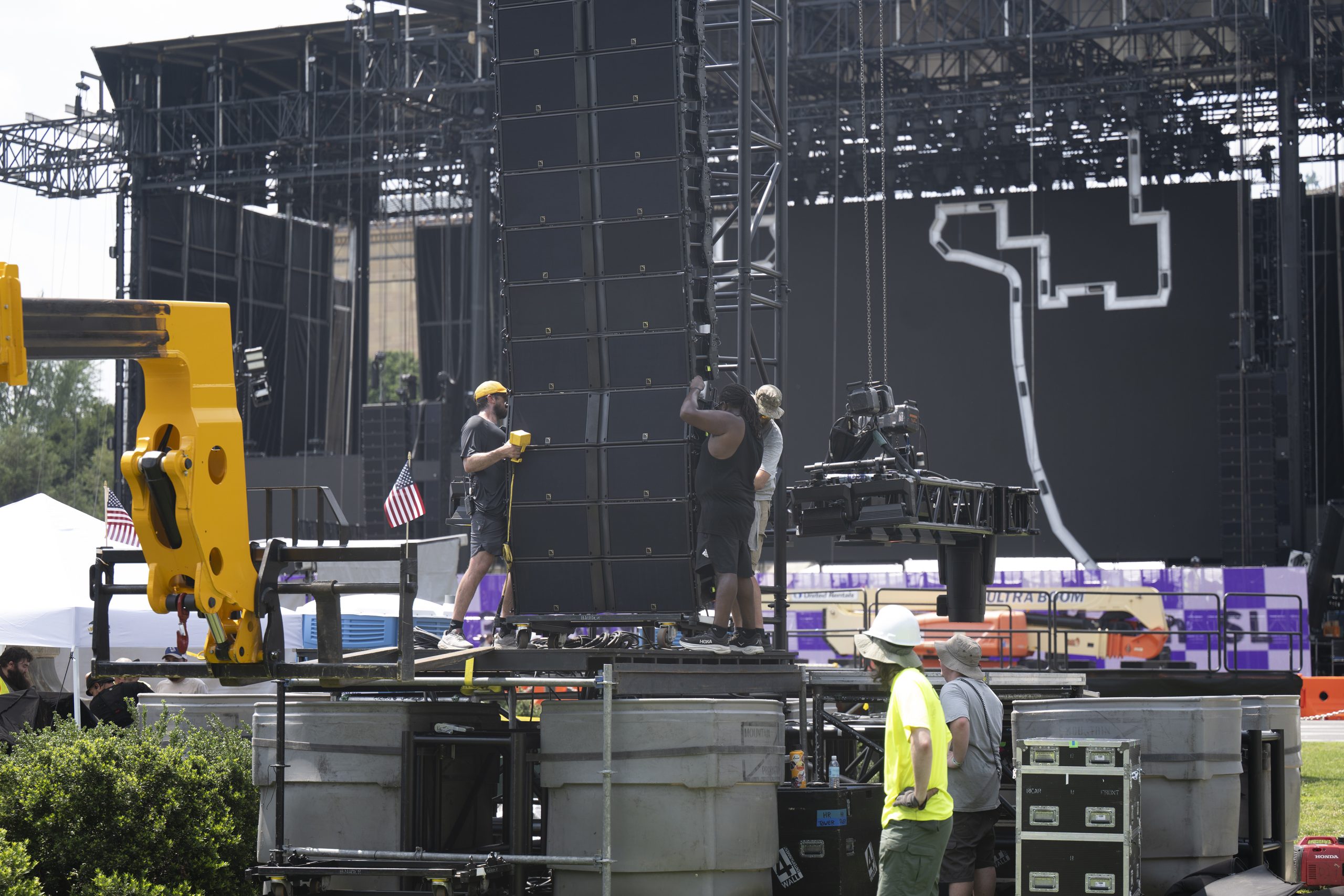
    Ground crews set up speakers on the stage on Wednesday in preparation for the July 4 concert expected to draw thousands to the Benjamin Franklin Parkway.Jose F. Moreno / Staff Photographer

    Parker recalled feeling the mounting pressure to prove Philadelphia could rise to the occasion of honoring the nation’s 250th anniversary shortly after the start of her tenure as mayor.

    “‘Philadelphia lacks ambition. They’re thinking too small. We need a leader. Where is the legacy project?’” Parker recalled from the discourse of the time. “The critics were right. Philadelphia, as the birthplace, we couldn’t do what every other city was doing. We couldn’t just do something that was average, something that was mediocre. What we did had to be a reflection of this moment and our history.”

    Parker’s news conference came hours after The Inquirer reported online that this year’s July Fourth concert will cost taxpayers millions more than in years past because the mayor’s administration hired ESM Productions, a for-profit company, to put on the annual show. For years, the concert has been produced by Welcome America, a nonprofit established by the city.

    The Inquirer reported that the city is set to pay ESM $15.5 million to put on the show, and that last year’s iteration of the Welcome America concert cost the organization about $3 million.

    Parker defended ESM and its founder, Scott Mirkin, as “the gold standard in planning large-scale global events, not just in America but across the world.” And she vowed that the city would produce a “fiscal impact report” after the event to account for how much money the city spent on this year’s festivities.

    Mayor of Philadelphia Cherelle L. Parker speaks during a news conference under a tent Wednesday, July 1, 2026, in Philadelphia, outlining public safety and transportation plans ahead of a July 4 concert expected to draw thousands to the Benjamin Franklin Parkway.Jose F. Moreno / Staff Photographer

    She also noted that former Mayor Jim Kenney put his own stamp on the annual July Fourth concert when he took office in 2016 — and took some heat for it. The Roots had headlined the concert since 2009, but Kenney’s administration went a different direction and The Roots were sidelined.

    Roots drummer Ahmir “Questlove” Thompson didn’t mince words at the time, writing on Facebook that the decision was “arrogance in the HIGHEST order courtesy of your new leader.”

    When Parker took office, she knew she wanted the spotlight back on the beloved local hip-hop group.

    “I’m proud to have The Roots back home,” Parker said.

    In terms of weather and safety, the city has proven this summer that it can host large-scale events in the heat seamlessly, said Philadelphia Police Commissioner Kevin J. Bethel.

    The city has already hosted five World Cup games, which have gone off without a hitch, Bethel said. For the July Fourth event, the department will be executing one of its largest deployments since the papal visit in 2015. That will include hundreds of officers across Center City and many more at the stadium and along the Parkway.

    “I want everybody to come and have a good time. Don’t mess up the party,” Bethel said.

    In order to keep people cool, the city will run 40 air-conditioned cooling centers, 150 pools and spray grounds, enhanced homeless service outreach, and extra fire department medics, said Dominick Mireles, Philadelphia’s deputy managing director for community safety. Along the Parkway, there will be misting fans and shade structures, he added.

    Parker said she’s confident every Philadelphian interested in participating will be able to do so safely and will look back on the day fondly.

    “I want people to remember where they were when America turned 250 years old and what we did here in the place when it all happened,” Parker said.

  • Everything you need to know about Philadelphia’s July Fourth concert and fireworks

    Philadelphia’s celebration of America’s 250th birthday culminates July 4 with a free concert and fireworks on the Benjamin Franklin Parkway.

    The One Philly: Unity Concert for America begins at 5 p.m. in front of the Philadelphia Museum of Art, featuring Christina Aguilera, Jill Scott, Meek Mill, Will Smith, The Roots, DJ Jazzy Jeff, Jordan Davis, Seal, State Property, Kathy Sledge, and more.

    This year’s event is no longer part of the longtime Wawa Welcome America festival. Mayor Cherelle L. Parker’s administration took over production of the annual July Fourth concert, renamed it the One Philly: Unity Concert for America, and hired ESM Productions to produce the show.

    Wanda Sykes will emcee the concert, which concludes with the city’s official fireworks display over the Parkway.

    Here’s everything you need to know before you go.

    Fans react to the music as the Wawa Welcome America Festival concluded on July 4, 2023, with a free concert featuring Ludacris on the Benjamin Franklin Parkway.Charles Fox / Staff Photographer

    Schedule and entry

    Guests must enter through a secure checkpoint at 20th Street and Logan Circle, where security may search attendees and their bags. Gates open at 3 p.m.

    The concert will start around 5 p.m., followed by the fireworks around 11:30 p.m., according to city officials.

    Who is performing at Philadelphia’s Fourth of July Concert?

    Headliners include Christina Aguilera, Jill Scott, Meek Mill, Will Smith, The Roots, and DJ Jazzy Jeff.

    Other performers include Jordan Davis, Kathy Sledge, State Property, Seal, and several others.

    Fireworks over the Philadelphia Museum of Art along the Benjamin Franklin Parkway on Friday, July 4, 2025.Yong Kim / Staff Photographer

    Fireworks

    Following the concert, the city’s official July Fourth fireworks display will begin at about 11:30 p.m. The show will be visible from throughout the Parkway and surrounding neighborhoods.

    Looking for more fireworks? Here’s a full list of fireworks shows happening throughout the Philadelphia region.

    The concert and fireworks will also air live on NBC10 and Telemundo62.

    Road closures

    Unless otherwise noted, the following closures will be in effect from approximately 6 a.m. Friday through 6 a.m. Monday:

    • 1900 Race Street
    • 1800-1900 Vine Street
    • I-676 off-ramp at 22nd Street
    • I-676 on-ramp at 22nd Street
    • I-76 eastbound off-ramp at Spring Garden Street
    • Spring Garden Tunnel
    • Park Towne Place between 22nd and 24th Streets
    • 20th Street between Arch Street and Pennsylvania Avenue
    • 19th Street between Callowhill and Cherry Streets
    • Benjamin Franklin Parkway from 17th Street to Eakins Oval
    • Eakins Oval
    • Kelly Drive between Eakins Oval and Fairmount Avenue (inbound traffic closes at Fountain Green Drive beginning about 5 p.m.)
    • 2000-2100 Winter Street
    • Spring Garden Street between Pennsylvania Avenue and 31st Street
    • 23rd Street between Pennsylvania Avenue and Eakins Oval
    • 22nd Street between Winter Street and Pennsylvania Avenue
    • 21st Street between Winter Street and Pennsylvania Avenue
    • All roads from Arch Street to Spring Garden Street between 18th and 22nd Streets (local access maintained for residents)
    • All roads from Arch Street to Fairmount Avenue between 22nd and Corinthian Streets (local access maintained for residents)
    • 16th and 17th Streets between Arch Street and Spring Garden Street will close only if conditions warrant.
    • 1600-1700 Benjamin Franklin Parkway will close only if conditions warrant.

    Beginning at 4 a.m. Saturday, the following roads also will close:

    • Anne d’Harnoncourt Drive behind the Philadelphia Museum of Art
    • Martin Luther King Jr. Drive from Falls Bridge to Eakins Oval

    From 8 p.m. Saturday until approximately 1 a.m. Sunday, Kelly Drive between Fairmount Avenue and Fountain Green Drive and Waterworks Drive also will be closed because of the fireworks display.

    Parking

    Temporary no-parking signs will be posted along streets affected by closures. Vehicles left in those areas will be courtesy towed to another nearby location.

    Public Transportation

    SEPTA

    On July 4, SEPTA Metro, buses and Regional Rail will operate on special schedules with enhanced service.

    Additional trips will run on the L and B lines.

    Most Regional Rail lines will offer additional inbound and outbound service before the fireworks. All Regional Rail lines except the Airport and Cynwyd lines will provide late-night outbound service from Jefferson Station, Suburban Station, and William H. Gray III 30th Street Station after the fireworks.

    Other SEPTA service will operate on a Sunday schedule. Routes without Sunday service will not operate.

    Routes 7, 32, 33, 38, 43, 48, and 49 will be detoured beginning at 5 a.m. Thursday through 5 p.m. Sunday because of road closures.

    SEPTA ambassadors will be stationed at major transit hubs to help direct passengers after the July 4 FIFA World Cup match and the One Philly concert and fireworks.

    Additional information is available on SEPTA’s July 4 service webpage. Riders can also check alerts on the SEPTA mobile app, at septa.org/alerts or by calling 215-580-7800.

    PATCO

    PATCO will operate on a holiday schedule July 4, with trains running every 10 minutes throughout the day. More information is available at ridepatco.org.

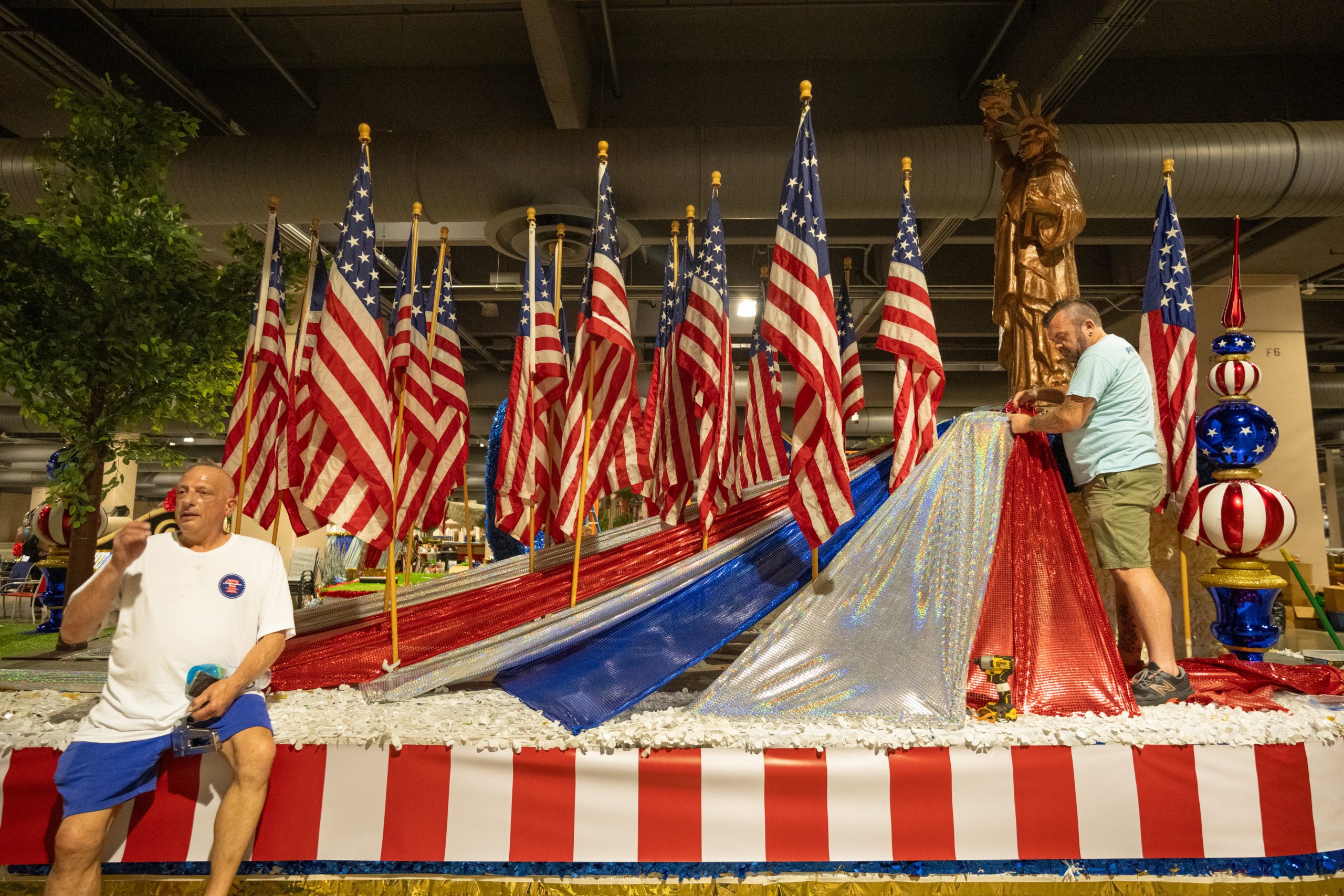
    Todd Marcocci (left) and Jeremy Williams work on a float on Monday for this year’s big Fourth of July parade, in Philadelphia.Jessica Griffin / Staff Photographer

    Fourth of July celebrations happening elsewhere in the area

    Fourth of July Freedom Festival at Pleasant Hill Park: 💵 Free, 🕒 July4, 5 to 9:30 p.m., 📍Linden Ave., Philadelphia, Pa 19136

    Philadelphia 4th of July Signature Dinner Cruise: 🕙 July 4, 7:30 p.m., 📍401 S. Christopher Columbus Blvd., Philadelphia, Pa. 19106, 🌐 cityexperiences.com

    2026 Freedom Festival at Wiggins Park 💵 Free, 🕒 6 to 11 p.m., 📍2 Riverside Dr., Camden, NJ 08103