Tag: Northern Liberties

  • ‘I’m proud of the city that I’m from’: Kurt Vile on why his new album is called ‘Philadelphia’s Been Good To Me’

    ‘I’m proud of the city that I’m from’: Kurt Vile on why his new album is called ‘Philadelphia’s Been Good To Me’

    Kurt Vile’s love of Philly — and Philadelphia’s affection for Kurt Vile — has never been in question.

    For the cover of Constant Hitmaker, the 2008 album that announced his arrival, Vile posed in front of a blown out wall “that looks like a Rauschenberg painting” at the corner of Frankford and Norris, he recalls. “That stuff’s beautiful, you know?”

    Since 2012, a Steve “ESPO” Powers mural that doubles as the cover for Vile’s 2013 album Wakin On A Pretty Daze has adorned a wall at Front and Master Streets in Northern Liberties, visible to travelers headed north on the Market-Frankford El.

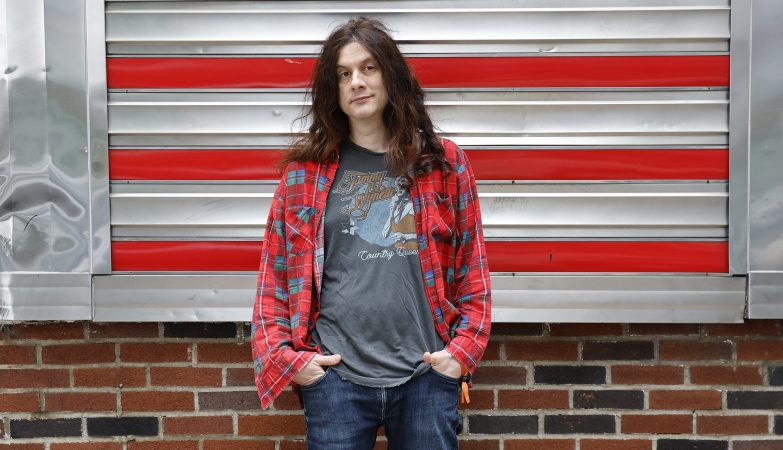
    With his signature mane and quizzical expression, Vile, who grew up in Lansdowne in Delaware County, has been the face of Philly’s reign as the capital city of 21st century indie rock.
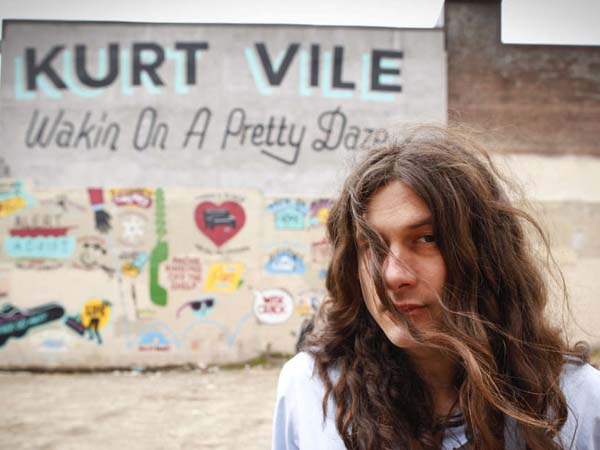
    Kurt Vile stands in front of a mural by Steve “ESPO” Powers on March 27, 2013. Michael S. Wirtz / Staff Photographer

    The city is embedded in Vile’s music at every turn, from the “I park for free!” boast on the 2018 song “Loading Zones” to the cover of 2022’s Watch My Moves, which pictures the Dad rock king wearing a crocodile mask in Wissahickon Valley Park, flanked by daughters Awilda and Delphine.

    But Vile has never repped his hometown so hard as on his new album, Philadelphia’s Been Good To Me, released in May. It includes shout-outs to Lincoln Drive, the Schuylkill, and Sun Ra, and an infectious single “Chance to Bleed” that features Philadelphia gangsta rap pioneer Schoolly D in a video shot at Kung Fu Necktie.

    Philadelphia’s Been Good To Me even includes a playful taunt at two of Vile’s classic rock favorites who dared to record songs with the word Philadelphia in the title.

    “A couple of my heroes wrote a song,” Vile talk-sings in “You Don’t Know Cuz It’s My Life.” “But that ain’t where they’re from, so hey you don’t know / But I still love you, Neil and the Boss.”

    Working in the wee hours in his basement OKV studio — which stands for “Overnight Kurt Vile” — in his fieldstone house in Mount Airy, Vile recalls, “I was singing along to this keyboard track I had laid down, and that thought came to me.”
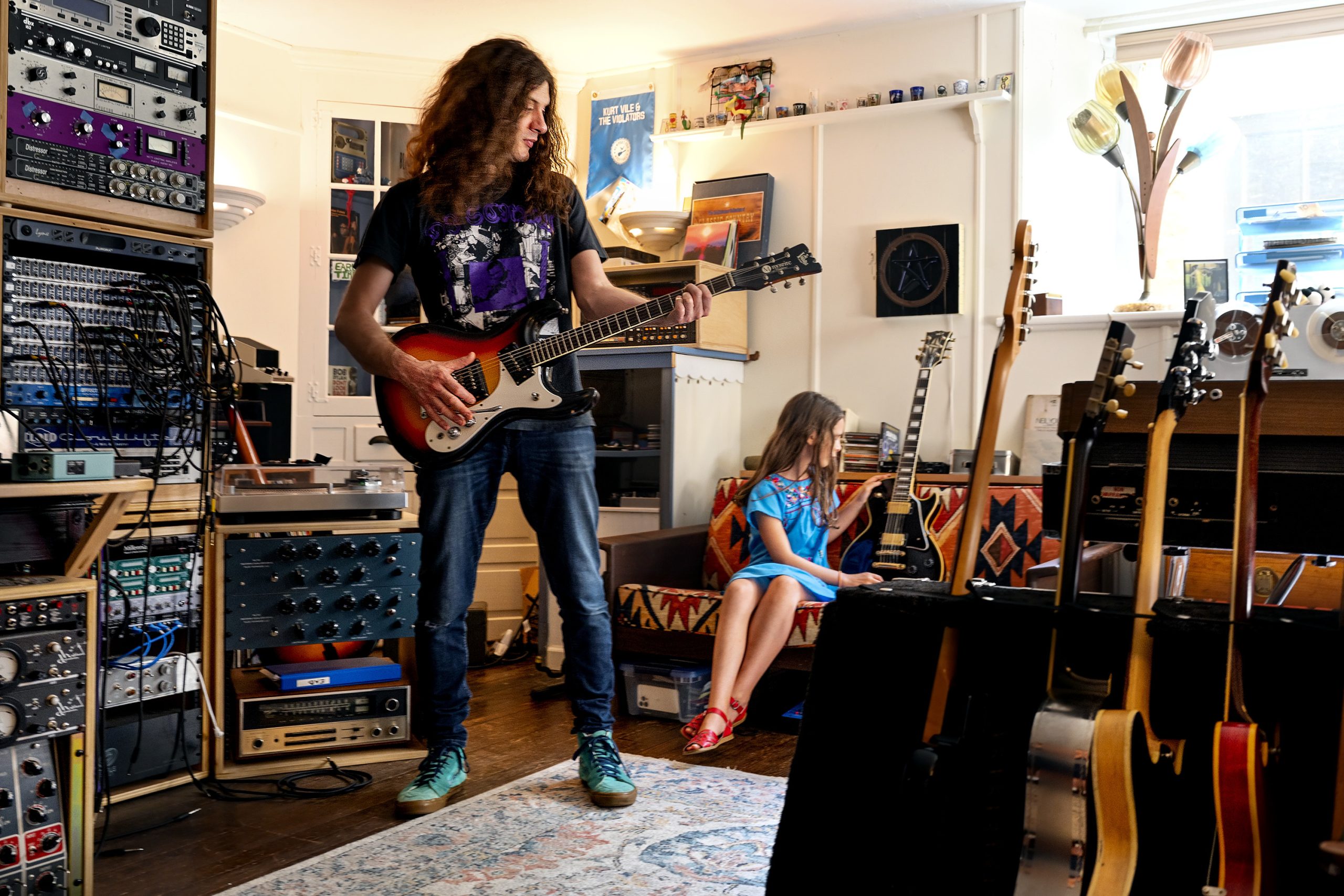
    Kurt Vile in his basement studio at his home in Mount Airy June 13, 2022, with his daughter Delphine.Tom Gralish / Staff Photographer

    Vile, who had (legally) parked his Prius in a nearby loading zone, was talking at the Silk City Diner on the Sunday night of Memorial Day weekend where he would realize a long-held ambition: sitting in with centenarian saxophonist Marshall Allen and members of the Sun Ra Arkestra.

    Vile — who was wearing a Tammy Wynette T-shirt and MF Doom trucker’s hat, with his 1965 Fender Jazzmaster Sunburst in the booth beside him (without a case) — explained his unique position in Philadelphia music history while dining on an Impossible Burger and Korean fried cauliflower.

    “Springsteen wrote the song ‘Streets of Philadelphia’ and Neil wrote ‘Philadelphia,’ and they’re both on the soundtrack to Philadelphia, right?” he says, referring to Jonathan Demme’s 1993 AIDS drama.

    “I get where they’re coming from, but it’s still an assignment. They’re singing about a city they don’t know that well. I’m proud of the city that I’m from, and I’m also lucky that I’m from here.

    “It’s like my friend Mary Lattimore, who plays the harp.” (And has given lessons to Vile’s daughters, who also both play guitar.) “She’s not from Philly, but she lived here forever, so it feels like home to her, even though she’s in LA now.”
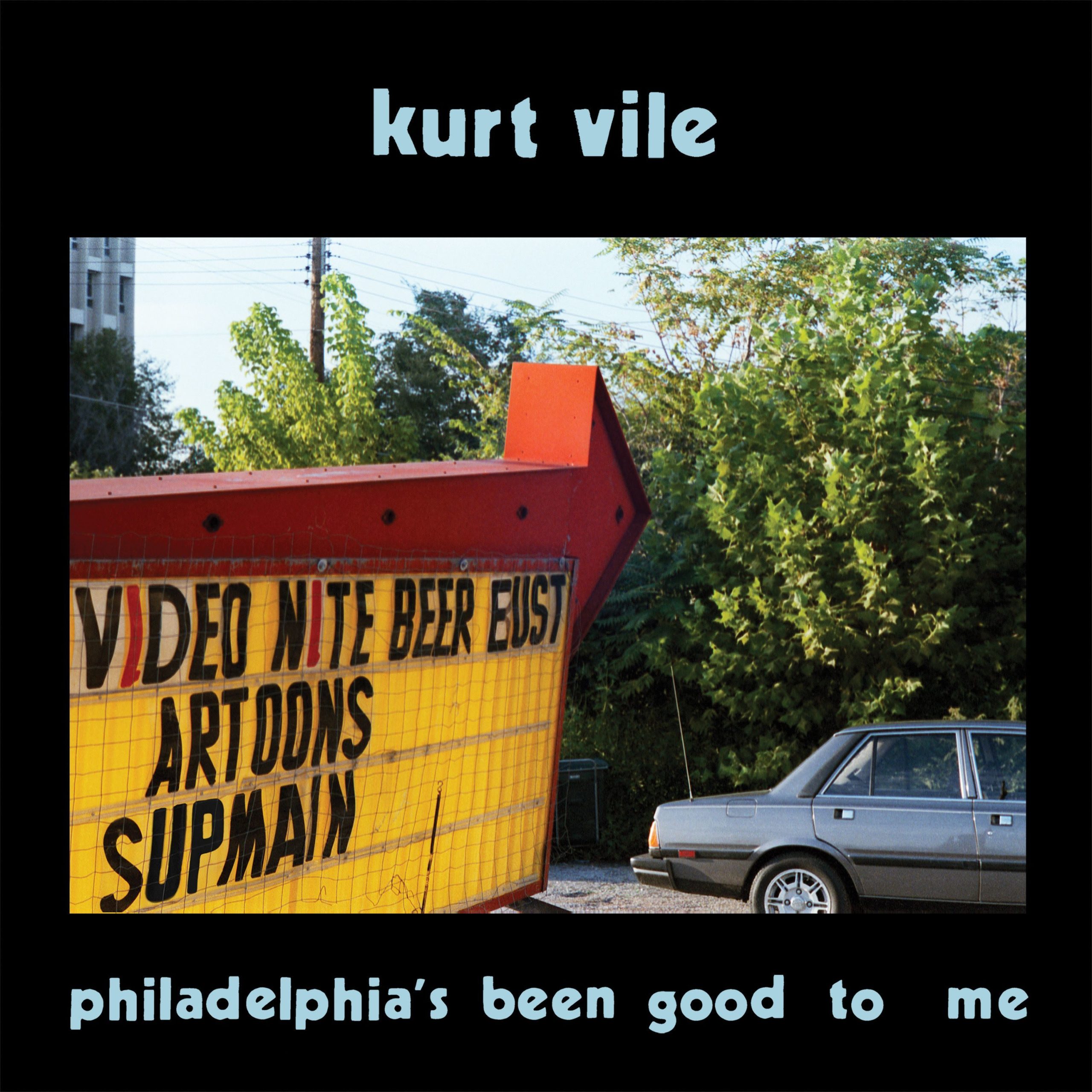
    The album cover of Kurt Vile’s ‘Philadelphia’s Been Good To Me,’ which features a photo by Memphis photographer William Eggleston.Verve

    Adam Granduciel of the War on Drugs, with whom Vile frequently teamed up when both were aspiring artists in the 2000s, also grew up elsewhere and now lives in Los Angeles.

    “They’re two of my oldest friends that were in the Philly scene forever, but they don’t have the extended history that I do.”
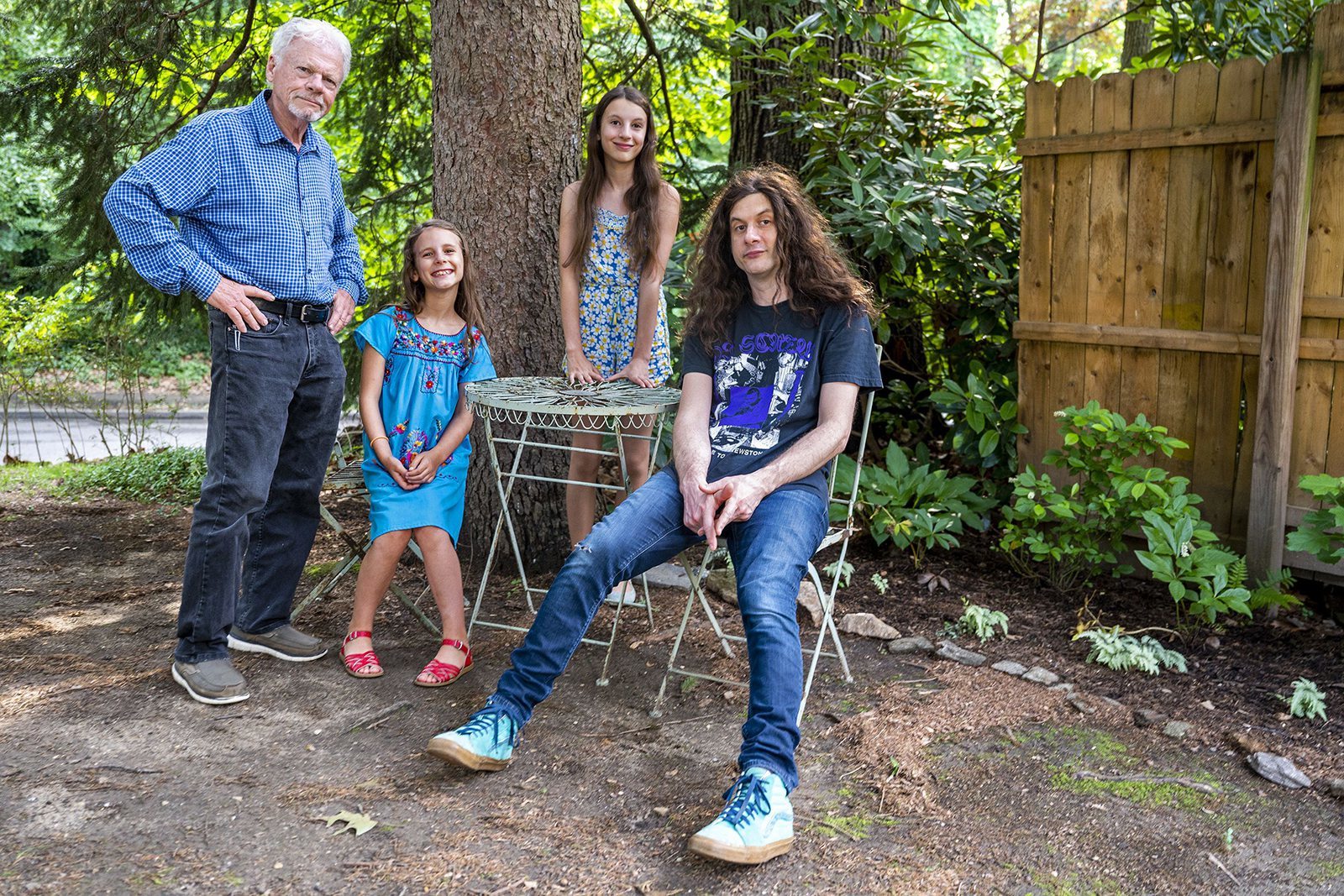
    Kurt Vile with his father, Charlie, and his daughters Delphine (left) and Awilda, who posed with him on the cover of his latest album, at his home in Mount Airy on June 13, 2022.Tom Gralish / Staff Photographer

    The Philly fixture

    Vile — who is the oldest boy among the 10 children of his SEPTA train operator father Charlie and stay-at-home mother Donna — is Philly-area born and bred.

    “I’m the OG,” he says. “That’s what I’m proud about. It’s like Questlove, or something,” though for all the Philly repping the Roots drummer does, he doesn’t live here either.

    Vile, by contrast, is a Philadelphia fixture. When artists like country rebel Margo Price, Australian rocker Courtney Barnett, and North African desert blues band Tinariwen have come to town, there was one way to know for sure they were in Philadelphia: Kurt Vile was standing next to them onstage.

    In 2024, MJ Lenderman covered Warren Zevon’s “Werewolves of London” at Union Transfer and paid homage with an altered lyric: “I saw Kurt Vile walkin’ in a pretty haze / His hair was perfect!”

    Vile plays the Dell Music Center with his band the Violators on July 25 as part of Connor Barwin’s Make The World Better Concert Weekend. He played Barwin’s first MTWB Foundation benefit in 2014, which raised money to build playgrounds and rec centers throughout the city.

    “I don’t follow football and I didn’t know who he was,” Vile says, recalling meeting Barwin at a show. “He walked in and he looked amazing. He was so tall, like a [expletive] Eagle. He was just a genuine fan. I love reconnecting with Connor and watching him do his thing.”

    Vile’s July 25 show is the second of two MTWB nights at the Dell. The first-night headliners are 1990s alt-rock heroes Pavement.

    “Pavement was my gateway drug to indie rock,” Vile says. “Stephen Malkmus was my hero. I got my first job as a busboy at the Blue Comet on Baltimore Pike and I would spend all my money on Pavement CDs.”

    Now, Vile is friends with Malkmus, and was stoked when he found out they were both playing the MTWB weekend — until he realized that he has a gig in Boston the night Pavement is playing. “I’m missing Pavement by a day,” he says. “Which I’m not happy about.”

    Vile, 46, has spent his entire life living in the Philly area, save for 2002-03 when he followed his wife Suzanne Lang to Boston while she got a master’s degree at Emerson College.
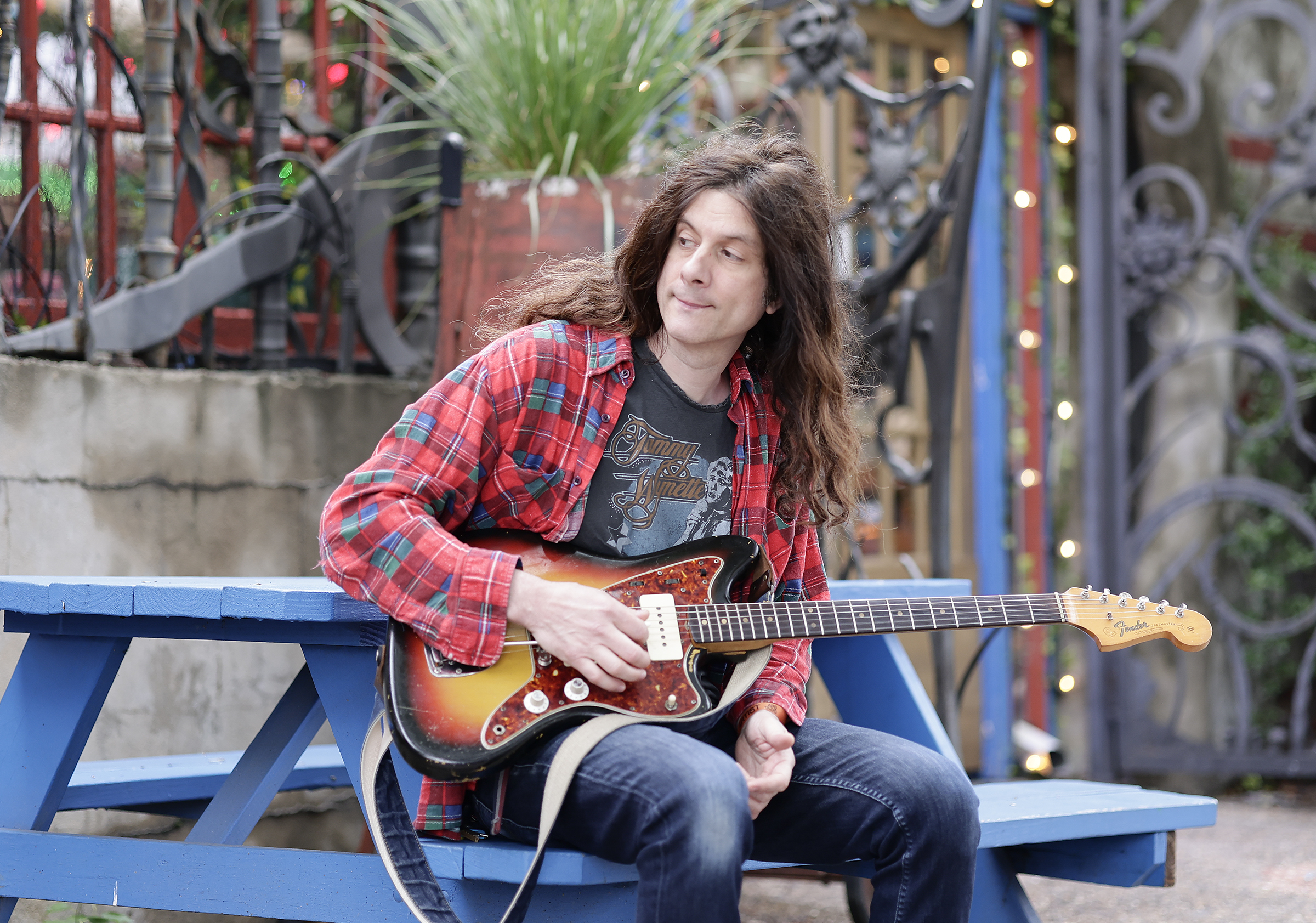
    Philly alt-rock star Kurt Vile outside the Silk City Diner on Sunday, May 24, 2026 in Philadelphia.Yong Kim / Staff Photographer

    He worked as a forklift operator for an air freight company. “The most ball bustin’ blue-collar job there is,” he says. Before he mastered the machinery, “I got made fun of a lot my first year. But then I got really good at it.”

    Returning to Philly and moving to Northern Liberties, he went to work for Philadelphia Brewing Company, where he was hired by future pizza sensei Joe Beddia who was roommates with Granduciel. “They were all blown away by my forklift skills,” recalls Vile. “And that’s how I met Adam.”

    At PBC, Vile met Jack Rose, the late Philadelphia guitarist who, like Vile, was a fan of influential American Primitive guitarist John Fahey.

    Asked to name his top five Philadelphia artists, Vile starts with Rose. He then adds Purling Hiss guitarist Mike Polizze, and psychedelic folk singer Meg Baird, Petty Bunco label head and singer Richie Charles, along with Schoolly D.

    “Is that five?” It is, but Vile has a couple more: Marshall Allen-slash-Sun Ra, and rockin’ country band Florry. “They’re so fun and excitable and young,” Vile says.
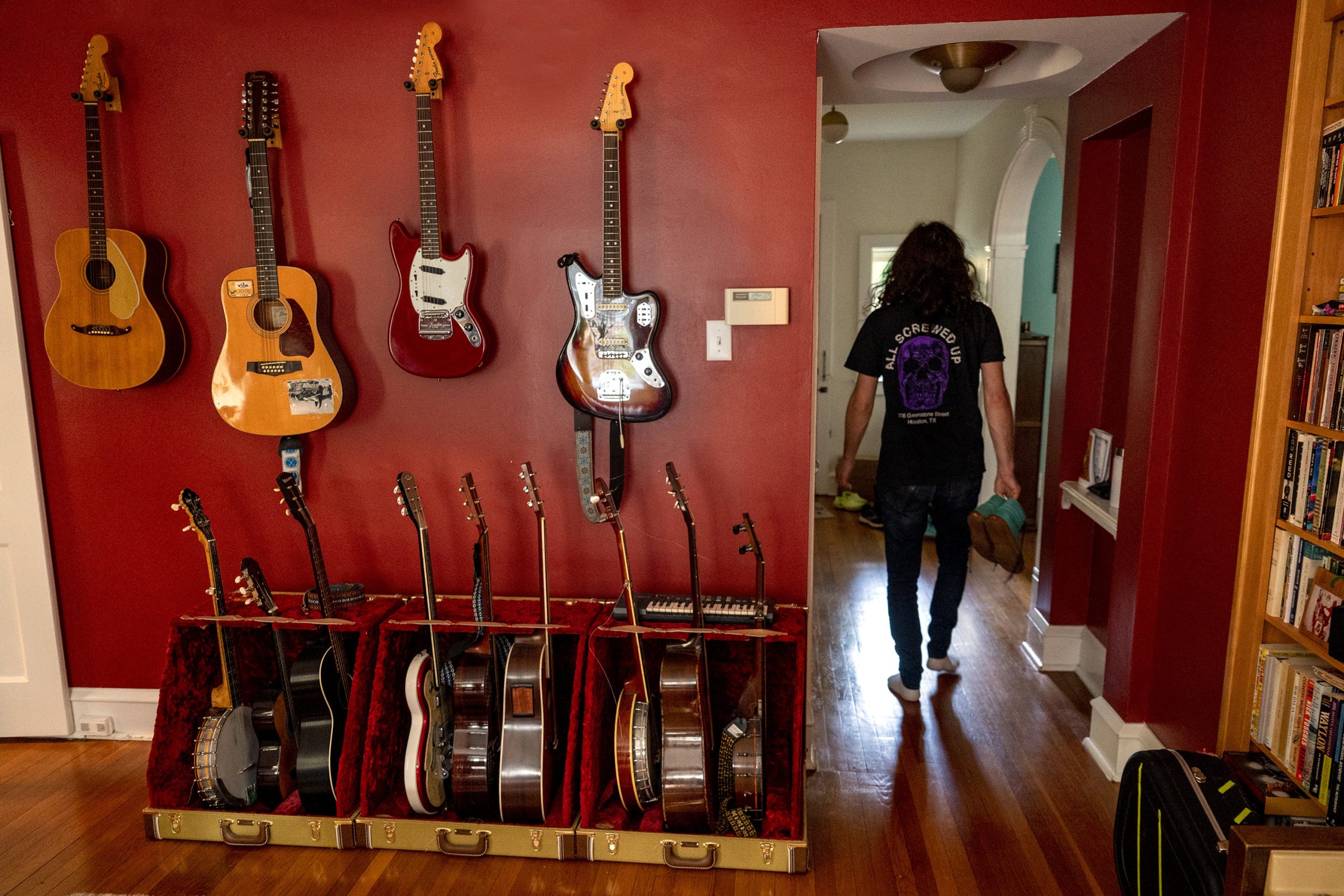
    Kurt Vile in the music room in his home in Mt. Airy June 13, 2022 (this is not the basement studio)TOM GRALISH / Staff Photographer

    ‘Mount Airy really saved my life’

    Vile moved to Mount Airy with Lang and Awilda and Delphine — who are now 16 and 13 — in 2016. “I need a driveway,” he said at the time.

    “I love Mount Airy and Germantown,” he says. “There’s still so much old-school Philly in Germantown. And Mount Airy really saved my life. I love that there’s forest, and I have room to think.
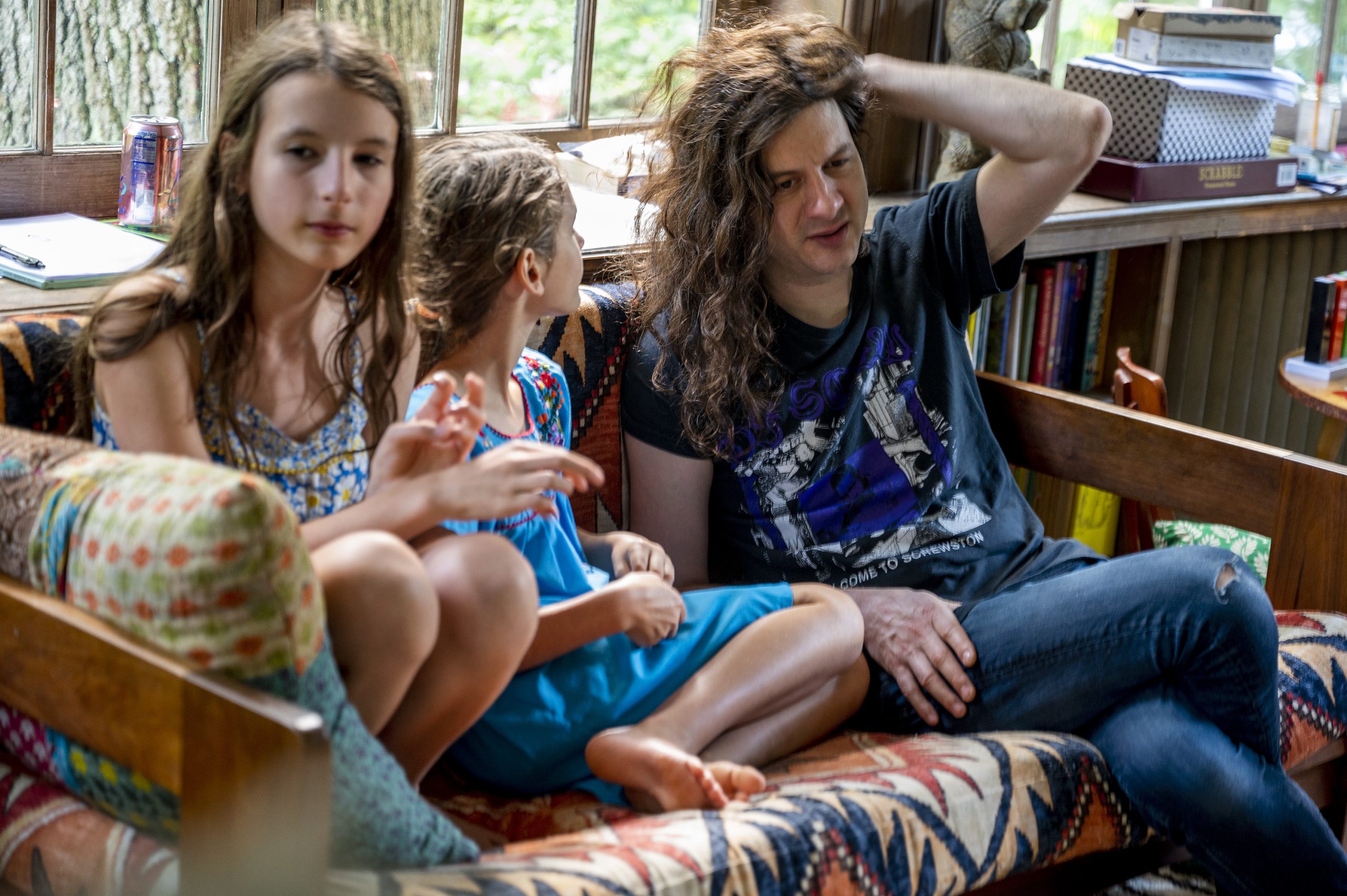
    Kurt Vile at his home in Mount Airy June 13, 2022, with his daughters Awilda (left) and Delphine, who posed with him on the cover of his latest album.Tom Gralish / Staff Photographer

    “But I can still go to the city any time, and it’s so quick,” driving his Prius down Lincoln and Kelly Drives. “You go in through the Art Museum, and it’s a classy way to go in, you know?”

    Over 10 albums, Vile has continued to develop a raw, unhurried signature sound. He often seems to be talking to himself in a bemused drawl over patient jams that turn out to be transfixing.

    What country star Keith Urban once said of Vile’s 2015 hit “Pretty Pimpin’” in naming it as one of five songs he wished he’d written applies to Vile’s songwriting in general: “I don’t know how he wrote it, but it sounds like pure stream of consciousness.”
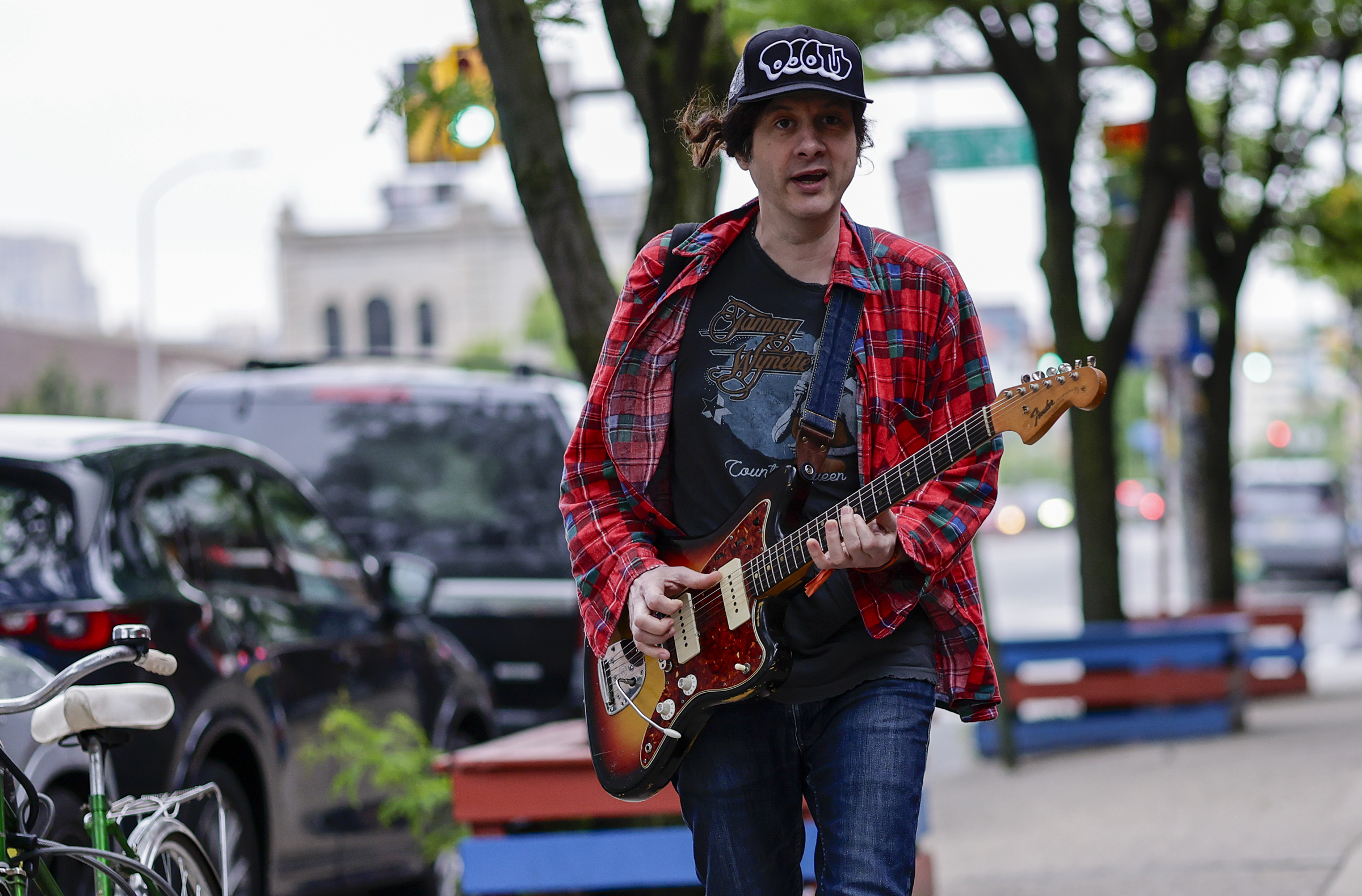
    Philly alt-rock star Kurt Vile walking outside the Silk City Diner on Sunday, May 24, 2026 in Philadelphia.Yong Kim / Staff Photographer

    ‘Philadelphia’s Been Good To Me’

    On Philadelphia’s Been Good To Me — whose cover features a photo by Memphis photographer William Eggleston — that deft, uncanny approach is evident on tracks like “99th Song,” an ode to a loop pedal that turns out to be a paean to domestic bliss.

    “Stoned on music, well, the best kind of high,” he sings. “Got love in my life, and three girls by my side.” Later, the album includes a more straightforward love song: “Every Time I Look At You,” which begins: “Every time I look at you, sparks fly from my eyes.”

    At Allen’s birthday party, Vile took a seat next to guitarist DM Hotep at the rear of the stage. “I was playing spacey, bendy Sonic Youth-hybrid leads,” he said afterward. “I felt really calm up there.”

    A few days after that party, Vile celebrated the release of Philadelphia’s Been Good To Me at the Triangle Tavern in South Philly, where 200-plus fans lined up to purchase the album and receive a free vegan cheesesteak as a bonus.

    Vile headed out with the Violators in June, and checked in before a sold-out show at San Francisco’s Castro Theatre this month.

    “I’m a little discombobulated today,” he says, ordering a late afternoon large coffee and glazed doughnut. “It was a late night.”

    The night before, Vile enjoyed a day off at Festa, a beloved San Fran karaoke bar closing this year he wanted to visit one last time. “I’m shy at first, but then everybody sings and I get up, too.” His go-to is “Stand Back” by Stevie Nicks.

    The tour, Vile says, “is going good, man.” This trek has made him rethink the streaming era. He’s a fan of physical media, and feels “the past was more simple and honest.”
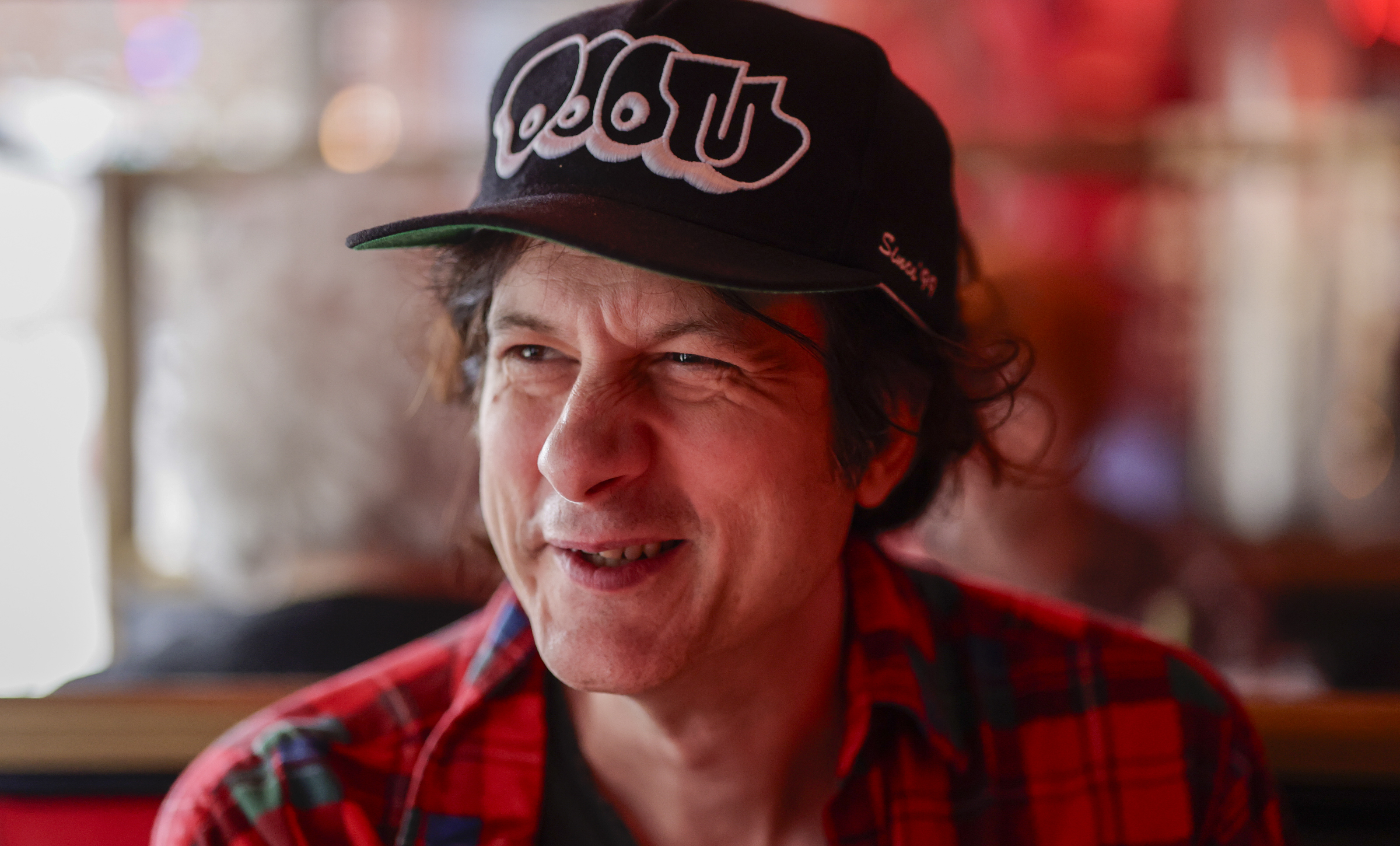
    Philly alt-rock star Kurt Vile at the Silk City Diner on Sunday, May 24, 2026 in Philadelphia. Yong Kim / Staff Photographer

    “But now the way people can consume your catalog from streaming, the younger people can binge my catalog like Netflix, and I can tell that they know all of my music. I just feel that people are connected.

    “This is my 10th record, and I’ve accumulated all these songs that have emotional qualities combined with a dreamy, pretty, hypnotic thing, and then it rocks live with my electric guitar. It just keeps evolving. The songs are simple enough, but the possibilities are endless.”

    On the bus, Vile has been keeping Philly — and Delco — close to his heart.
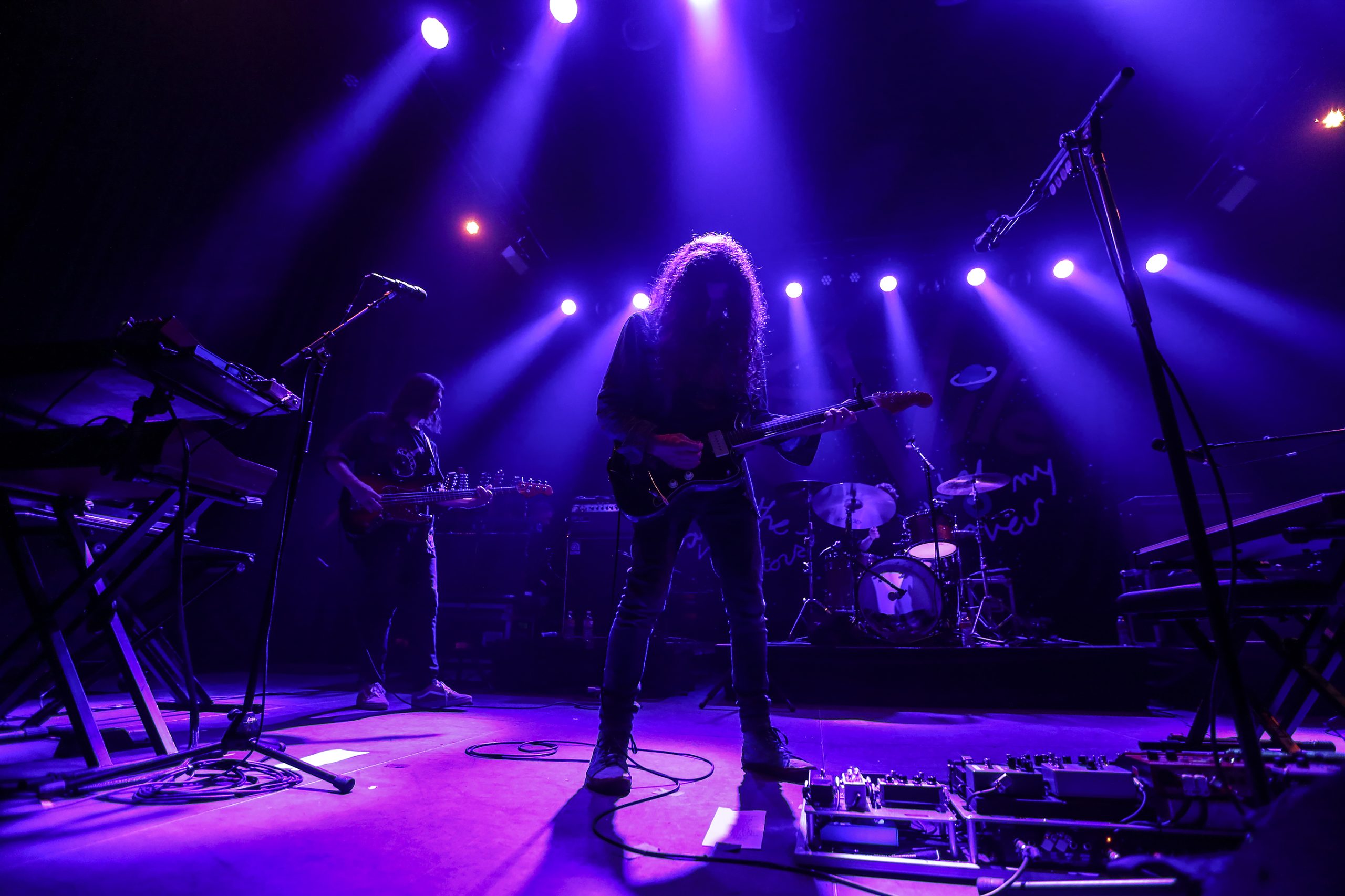
    Kurt Vile in concert at the Union Transfer, Friday, June 3, 2022Steven M. Falk / Staff Photographer

    “I’m watching Mare of Easttown,” he says. “I never saw it, and now I’m obsessed, just watching all the Delaware County locations and hearing Kate Winslet say a sentence half-Delco, half-British.” He slips into a Winslet impression: “I’m hoping for an an-swer,” and chuckles to himself.

    “But it’s my favorite show in a long time,” says Vile, who has Task cued up next. “And it’s got Mannequin Pussy in it. Does the director not know who I am?” he wonders. “I guess I’ve got to get in touch.”

    “The timing is interesting, ‘cause I’ve been spending a lot of time in Delco lately,” says Vile, who’s been hanging with his parents and recently dropped in at his old haunt Paul Revere Pizza in Lansdowne. “Now I’m traveling, and I’m touring my Philly record, and I’m loving it. I’m loving being somewhere else and not in Philly every night. But I’m watching Mare of Easttown. And I know I’m gonna love it when I come home.”


    Kurt Vile & the Violators with They Are Gutting A Body of Water and Twisted Teens at the Dell Music Center, 2400 Strawberry Mansion Dr. at 7:30 p.m. July 25th, dellmusiccenter.com.
  • The best things we ate this week

    The best things we ate this week

    The Maddie J at the Biscuit Lady

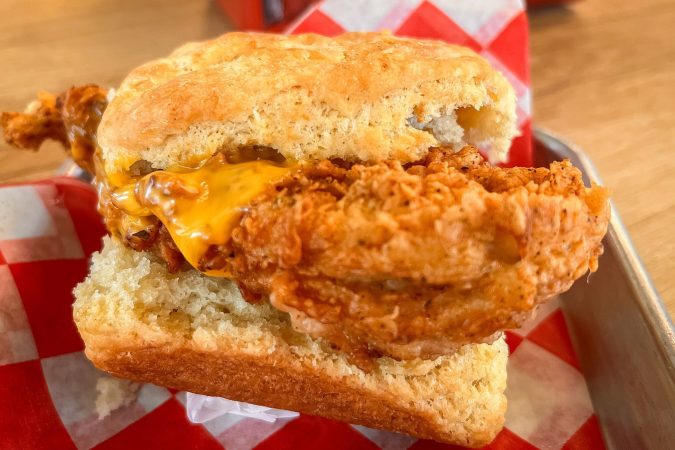
    Two great new moves by Tara Finder at the Biscuit Lady’s Plymouth Meeting location: later hours on weekends (till 8 p.m. for dine-in or takeout) and a chicken biscuit sandwich that’s only available after 2:30 p.m.. The Maddie J is 5 ounces of crispy fried chicken juiciness, a slice of American cheese, and a swipe of house Buffalo sauce. There’s a huge crunch and a zingy kick, but keep your plate handy because the light, flaky biscuit can barely contain all that goodness. It’s the perfect late-day counterpoint to morning specialties, such as the smash burger with bacon, fried egg, and jalapeño pimento cheese (Don’t Go Bacon My Heart) and the cheesesteak riff with ribeye, Cooper sharp, egg, and onion (the Stella). The Biscuit Lady, 115 Plymouth Rd., Plymouth Meeting, 484-243-6957, visitthebiscuitlady.com
    — Michael Klein

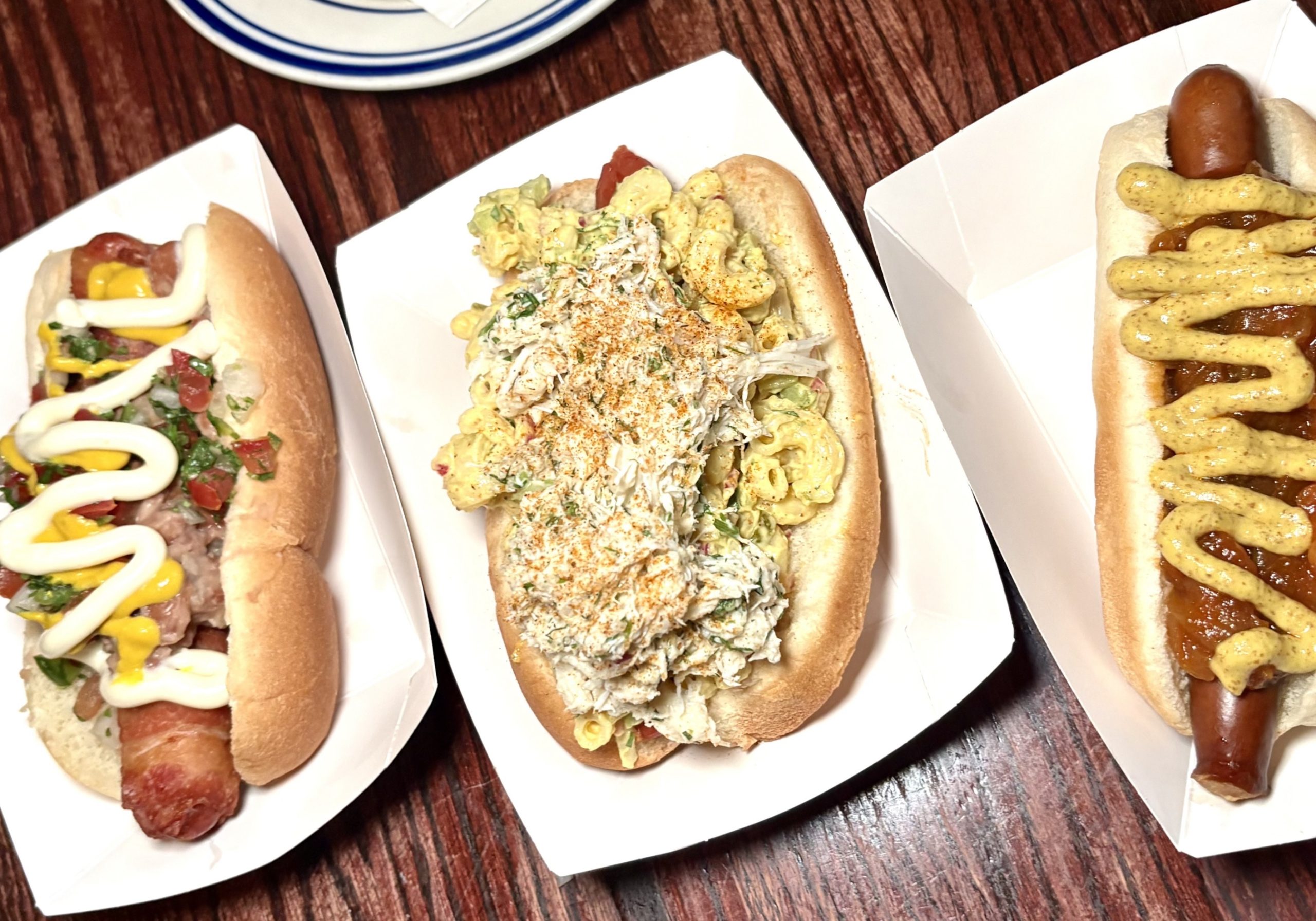
    Three weekly specials from Royal Tavern’s July-only hot dog menu. From left: a fried Diamondback Dog wrapped in bacon with salsa and beans, an Old Bay Bomber topped with Old Bay macaroni salad and crab, and Barrel It Up The Bronx topped with onion sauce and brown mustard.Craig LaBan / Staff

    Dog Days hot dog specials at Royal Tavern

    If you grew up in a hot dog culture like I did, devouring every Coney I could find in metro Detroit, the snap of the natural casing on Royal Tavern’s bespoke wieners is a flashback revelation. The Bella Vista bar’s third annual Dog Days of Summer event is in full throttle through the end of July, and they’re not serving skinless franks — the industrial norm — here. The taut-yet-delicate resistance on these artisanal links unleashes a savory rush of meaty juice, the pureed pork-beef blend harboring a balanced soupçon of coriander, garlic, and applewood smoke.

    Royal Tavern chef Nic Macri — whose butchery chops are still intact from his charcuterie run with La Divisa at Reading Terminal Market — began Dog Days two years ago as a labor of love to boost the bar’s typical summer doldrums. He ended up selling over 5,000 dogs that first July, then 7,000 in 2025, limiting it once again to the month due to the logistical challenge of transforming his small kitchen into a temporary frankfurter factory. This year, the restaurant aims to hit 10,000. To do so, Macri has turned to Happy Valley Meats to co-pack its proprietary recipe with responsibly-raised meats.

    But the creative challenge is still considerable: Four new preparations are unveiled every Monday for five weeks, pairing different techniques (steamed, chargrilled, fried, griddled) with an array of flavor toppings. No modifications allowed. I was charmed by the Baltimore-themed picnic of a dog last week topped with Old Bay macaroni salad and a scoop of fresh crab. But the purist in me kept returning to the Bronx-inspired steamer topped with saucy onions and brown mustard that still allowed that quality link to shine. There will be new cast of dogs next week themed to the World Cup, then a final quad dog bracket to bring it home, culminating in all 24 returning July 31 to celebrate a month of memorable wiener studies. The chef insists it will then be time to return to the fall programming of burgers, smoked beef, and fish sandwiches, no matter how much I plead our case: If Macri hasn’t turned Philly into a true hot dog town by then, no one can.

    Royal Tavern, 937 Passyunk Ave., 215-389-6694, royaltavern.com

    — Craig LaBan

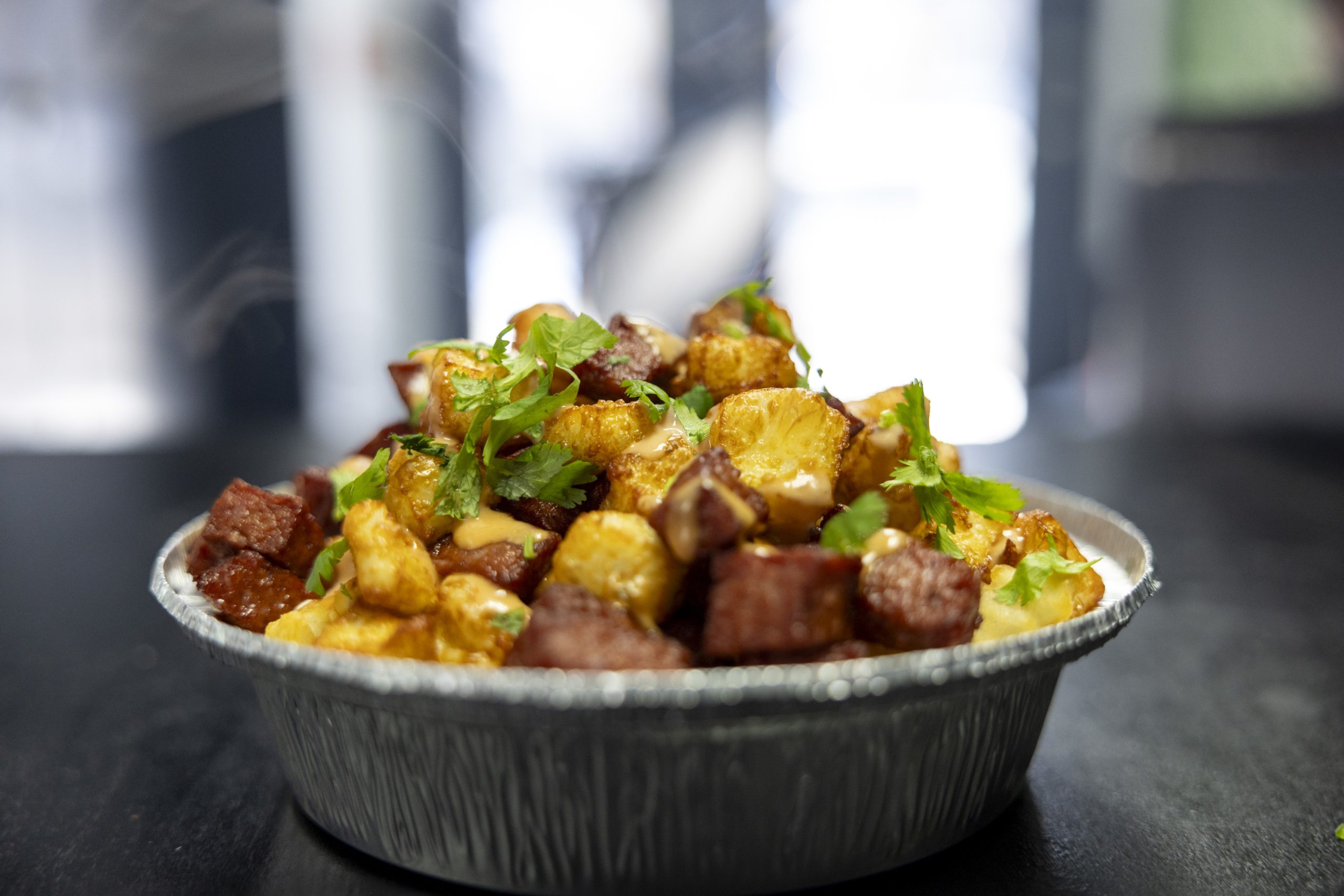
    Loaded fries at El Sazón R.D., 1030 N. Second St.Tyger Williams / Staff Photographer

    Loaded fries at El Sazón R.D.

    El Sazón R.D. in Northern Liberties only serves three things: smash burgers, empanadas, and fries — all with a Dominican twist. Luckily, it does them extremely well. The smash burgers have a crisp, lacy edge and come topped with queso de freir, a fried slab of slightly salty white cheese that elevates the sandwich from just a burger into something I’d wait in line for.

    The limited menu’s true hero, however, are the loaded fries. The dish is a decadent play on salchipapas — a street food ubiquitous across Latin America that combines fries with cut-up hot dog links — that comes with cubes of queso de freir and two hefty drizzles of tangy mayo-ketchup. The franks are juicy enough that they pop in your mouth, while cubing and frying the white cheese basically renders them into delectable cheese curds. Beware, though: These fries are very heavy, a meal in and of themselves that I often have to follow up with a nap. El Sazón R.D., 1030 N. Second St., 917-920-1316, elsazon-rd.com

    — Beatrice Forman

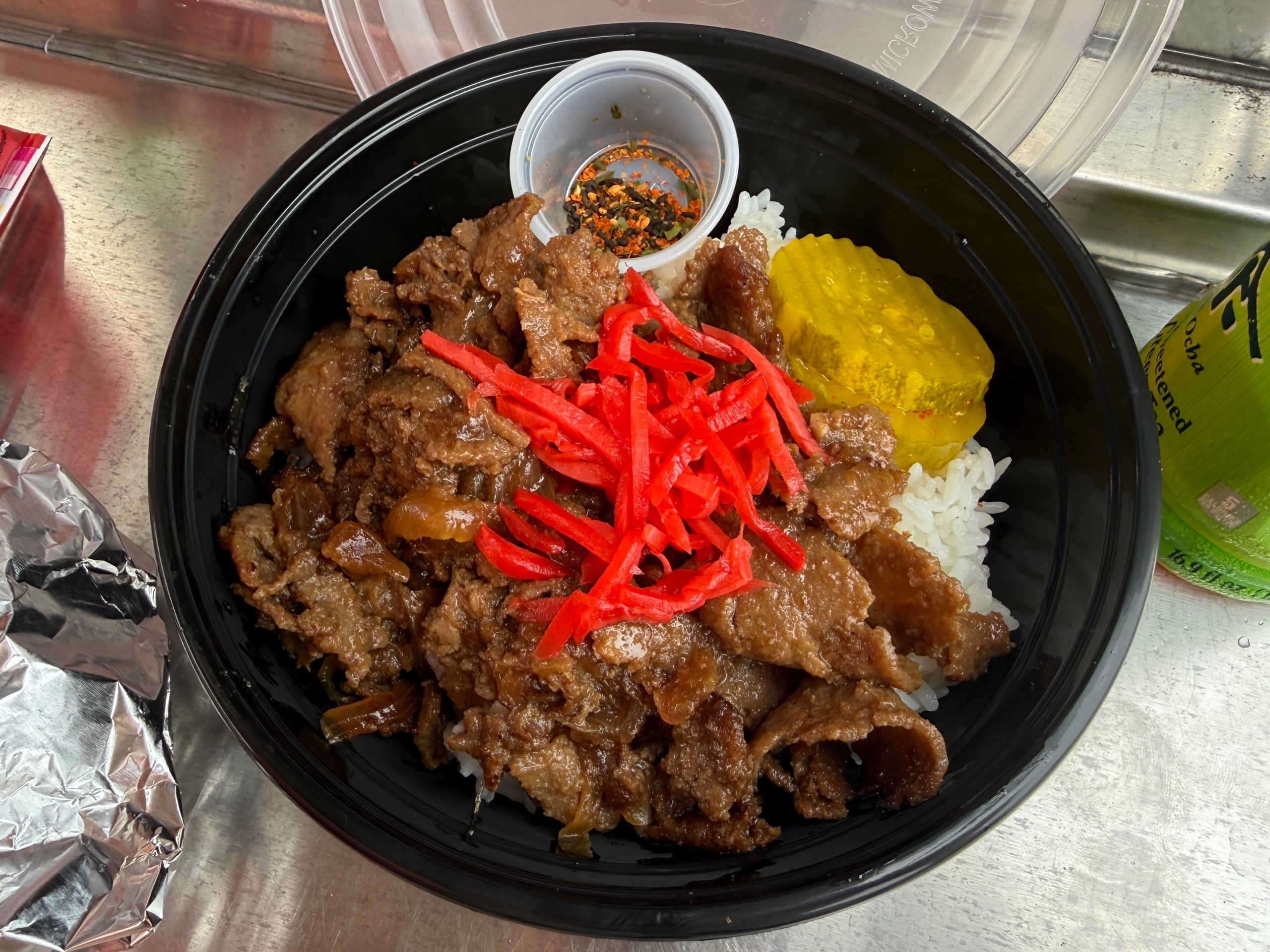
    Gyu-don at Haha’s Kitchen, a food cart that typically parks at 471 N. Seventh St. in Spring Garden.Kiki Aranita /

    Gyu-don at Haha’s Kitchen

    When Shikoku, Japan, native Shiho Utsunomiya first came to Philadelphia in 2000 and tried a Philly cheesesteak, she exclaimed, “This is a gyu-don! Well, the meat is anyway.” Eighteen years later, she began serving a chipsteak-based gyu-don at her food truck, Haha’s Kitchen (“Haha” means “mother” in Japanese), which typically parks in Spring Garden. The $10 bowl has tremendously tender beef, laced through with sweet, slow-cooked onions and decorated with a neon pink crown of pickled ginger. Served over steamed kokuho rice, it’s decadent and filling, and perhaps one of the best lunch deals in town.

    It’s also a marvel to watch Utsunomiya doing absolutely everything in the cart, from taking orders to preparing a large menu that encompasses American lunch standards like Italian sausage and hot dogs to chicken karaage, onigiri, and of course, this magnificent gyu-don. The best part of lunch may be witnessing how her cheerful but fierce independence comes to bear in the small kitchen. Utsunomiya worked at the now-closed Hikaru in between bearing and raising children, “but it’s very difficult to have kids and work in a restaurant kitchen,” she said. You should also grab one of the $3.50 tuna mayo onigiri for later. Generously sized and lovingly made, it tastes like a Japanese mother tucked it into your lunchbox. Haha’s Kitchen, 471 N. Seventh St., instagram.com/hahas_kitchen

    — Kiki Aranita

  • When the buzziest restaurants in Philly need a menu, this is the designer they call

    When the buzziest restaurants in Philly need a menu, this is the designer they call

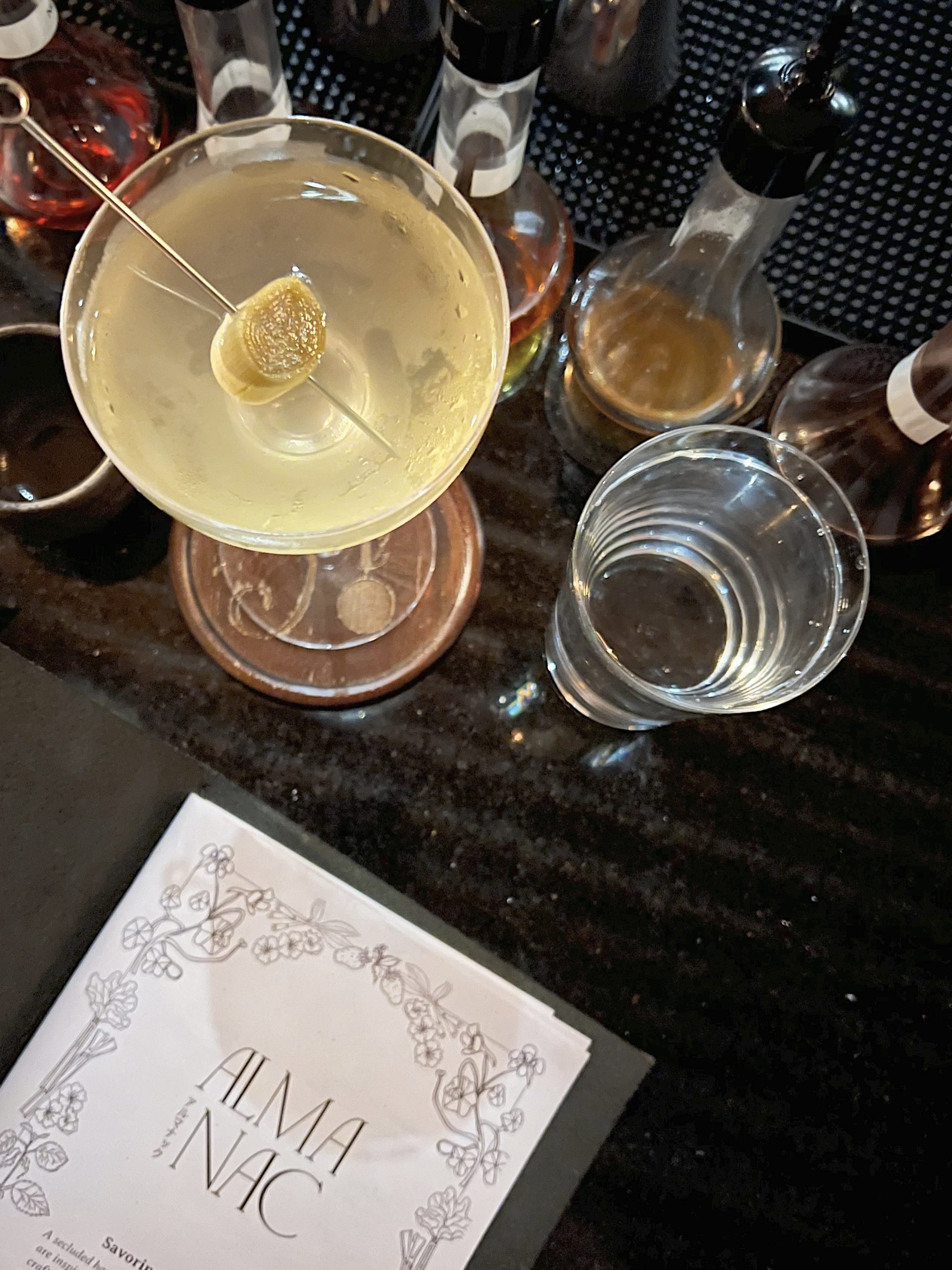
    Unless you’re paying close attention while flipping through the extensive menu at Almanac, Old City’s Japanese American cocktail bar, you might overlook some of the painstaking work that went into it. The leather-bound book’s deep green color is meant to evoke the interior of the bar. The borders of the pages hint at the seasonal ingredients that go into each cocktail, and the thin newsprint pages depicting glassware illustrations of Almanac’s complex cocktails are meant to both be a guide and evoke opening an old book.

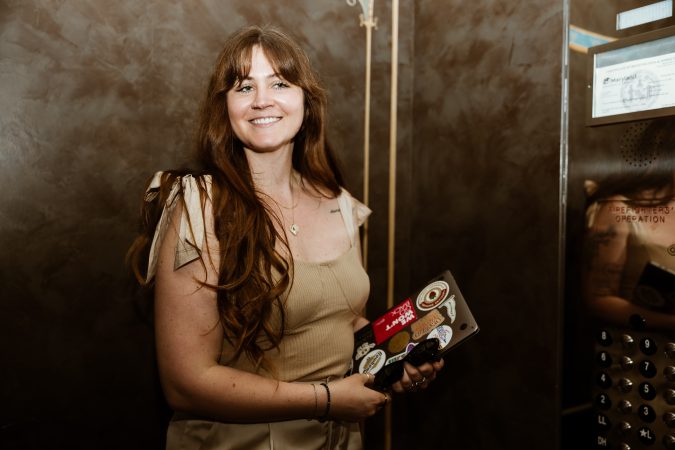
    Kylie Silvestri is obsessed with these details.

    That’s because she is the artist and designer behind menus for some of the city’s trendiest restaurants and bars. Her roster includes Sao, Almanac, Ogawa Sushi & Kappo, Javelin, Little Coco’s, River Twice, Little Water, Habibi Supper Club and its forthcoming cafe, Slow Drinks, and the forthcoming Northern Liberties cocktail bar, Field Day. Her company, Haridelle, focuses on this meticulous hospitality branding.

    “Design is part of the holy trinity in the food service industry,” Silvestri said. “There’s the food. There’s the hospitality, and then there’s the design.”

    Almanac’s menu, designed by Kylie Silvestri.Haridelle

    Menus help set the stage for each customer’s meal, and play a big role in bringing the restaurant’s story to life.

    “The second a customer sits down — before they even taste the food/beverage — they are holding a menu in hand,” she explained. “How does the menu feel, tactilely? How does it look? It all adds to the experience and helps to tell that story. So, for me, designing them is about building the puzzle pieces together in a way that connects and relays the message eloquently, from chef-owner to customer.”

    Silvestri didn’t begin her career with a roster of small hospitality clients. She previously worked for startup groups and larger hospitality companies. In 2021, she started freelancing to build her own company, called Kylie Creative, where she developed branding for predominantly women-owned entrepreneurial businesses in the wellness industry.

    As her clientele grew, she would pick up serving shifts at restaurants in the city, including Osteria, and build connections with industry folks. Soon, a friend at the restaurant introduced Silvestri to Amanda Rucker (River Twice, Little Water), who commissioned her to design flyers for a 2022 fundraising event to support abortion access. The following year, Rucker reached out to Silvestri for branding and menu development for Little Water.

    “I naturally pivoted my design work to focus on the hospitality industry — because once you start, you never leave,” she said.

    While designing menus is just a part of her restaurant branding business, the process can take up to a month for each restaurant. There are five key steps to ensure a final product that owners are happy with.

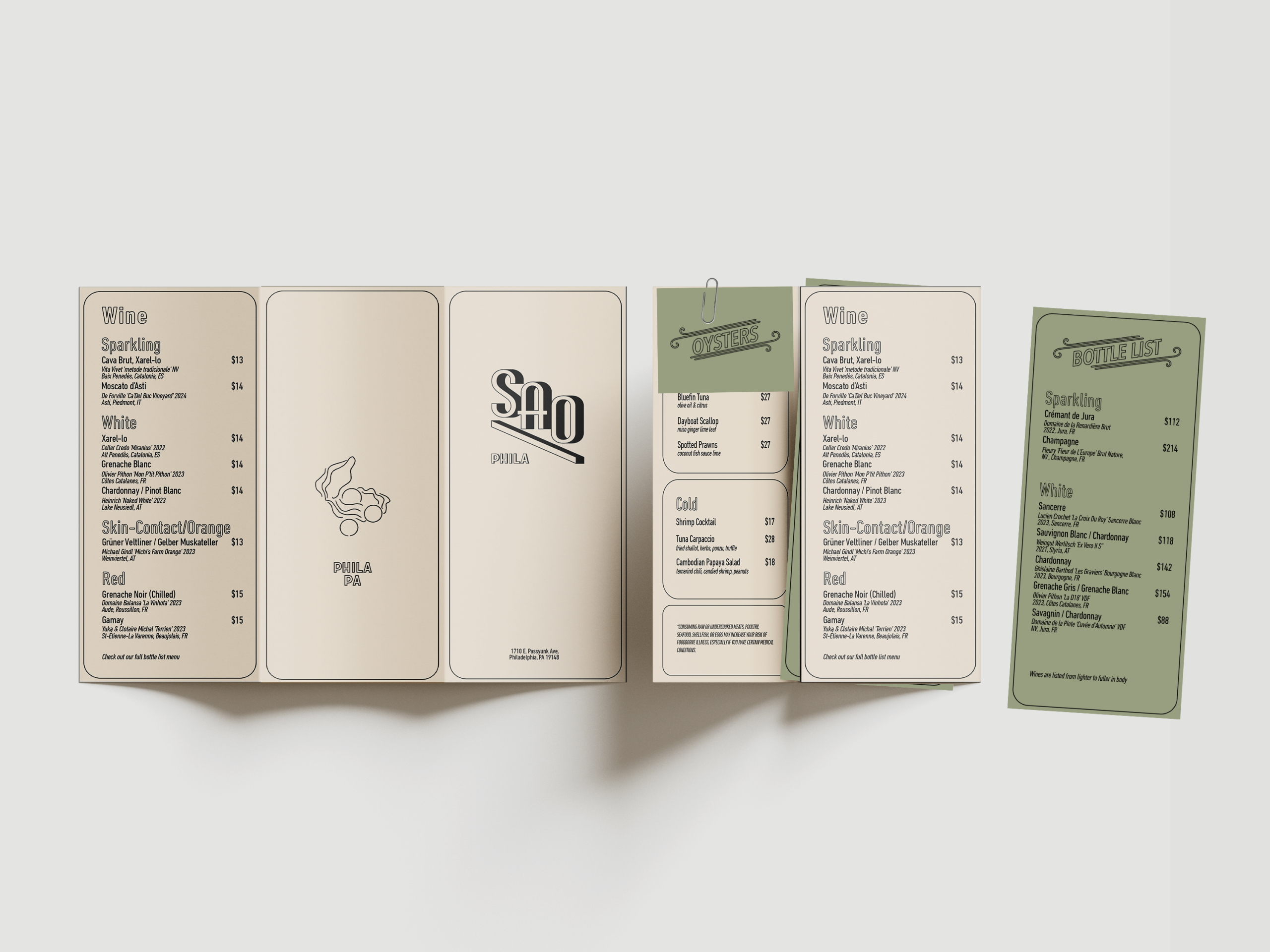
    Sao menu, by Kylie Silvestri.Haridelle

    First, Silvestri takes time to understand the owners/chefs’ vision for the menu. Then, she determines a menu system and layout with brand fonts and drawings. Walk-throughs of the restaurant/bar (in person or via renderings if it’s not built yet) help her connect the menu design to the physical space. Once the vision is mapped out, Silvestri likes to settle down at a local coffee shop to create the menus on Adobe Illustrator and InDesign. The final step is sharing paper stock samples with owners/chefs for feedback on design and tactility.

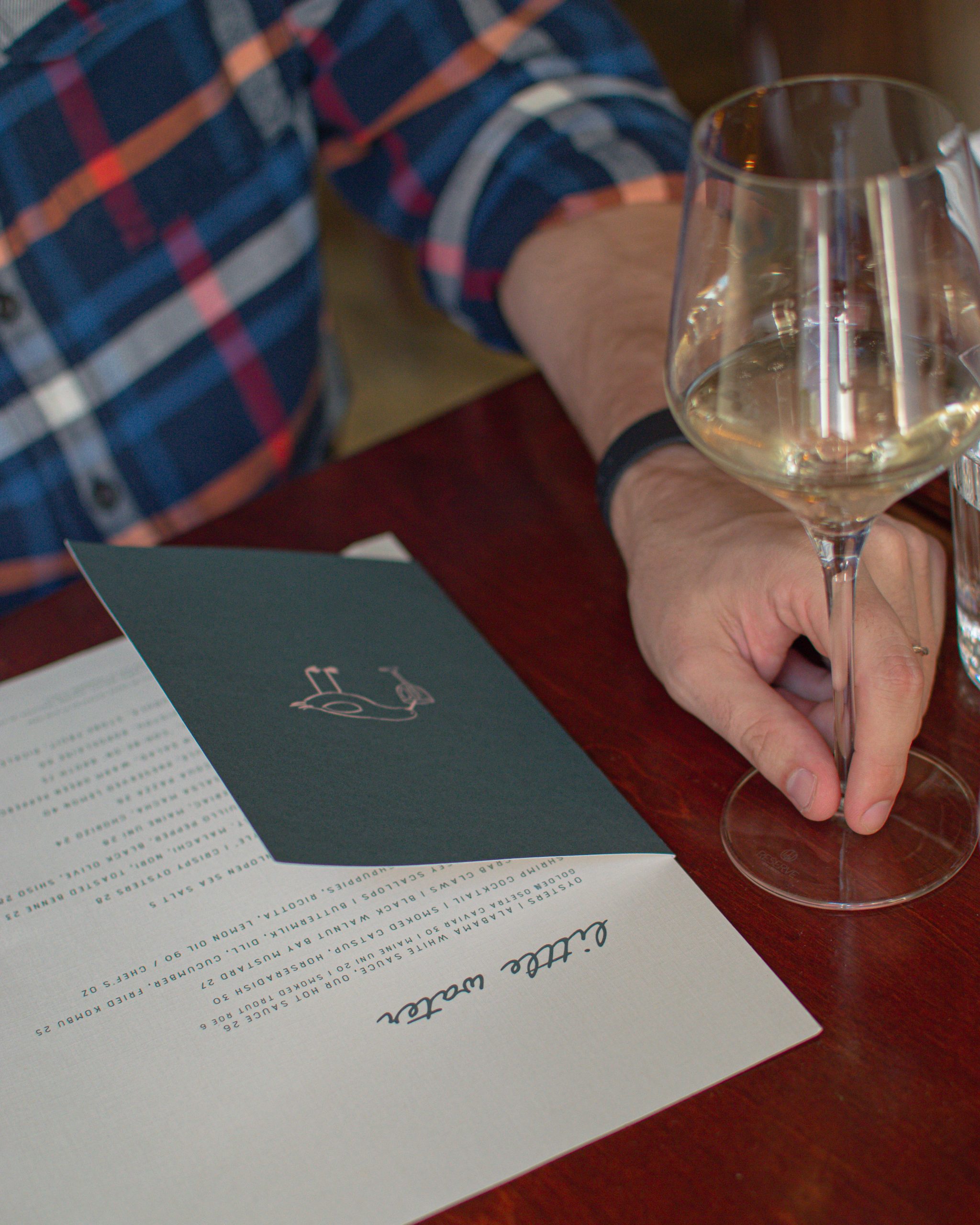
    At Little Water, the linen-textured menu was the answer to conversations surrounding technique and locale, reinforcing the feeling of the coast with dishes offering the breadth of the Gulf to Cape Cod. An illustration of a little sandpiper sipping out of a cocktail on the drinks menu showcases the personality of restaurant owners Randy and Amanda Rucker. “We tied the design to that nautical experience and having this playfulness — Randy always says that ‘We don’t take ourselves seriously; we take our food seriously,’“ Silvestri said.

    At Sao, the menu was inspired by Rachel Lorn’s family’s business down the Shore, featuring a takeout menu style that sections off the dishes in categories. There are outlines of vintage signage by Philly-based artist Darin Rowland.

    Little Water menu, by Kylie Silvestri.Haridelle

    For Habibi Supper Club and Field Day, the menus — like the restaurants — are still in development. On a recent Wednesday, Silvestri visited Field Day to chat with co-owner Katie Childs about the new bar’s branding and later chatted on the phone with Miled Finianos of Habibi Supper Club for his new cafe’s menu design.

    The menus, Silvestri explained, are “time capsules of culture, time, and space,” so every choice, from paper stock to illustration style, is made to capture that particular restaurant’s moment.

    Philly’s aim lately is on chef-owned restaurants, “or rather a focus on who is behind what,” she said, which means storytelling is more important than ever.

    “Philly’s food scene is incredibly versatile. … Each story is unique to the chef/beverage professional at the heart of the concept, making it an incredible city to work in,” she said. “I will never get tired of exploring new design styles and never feel pigeonholed to follow a specific one.”

  • 🍸 The coolest drink of the Summer of 2026 | Let’s Eat

    🍸 The coolest drink of the Summer of 2026 | Let’s Eat

    The temperature is approaching triple digits. (Or is that tipple digits?) Here’s one boozy relief drink you should know about.

    Also in this edition:

    • Down the shore: Craig LaBan hits the mainland for tasty meals.
    • Flying saucer returns: The city finally has signed a restaurant tenant at LOVE Park.
    • “Cambodian speakeasy”: Read on for restaurant dish.

    — Mike Klein

    If someone forwarded you this email, sign up for free here.

    Water ice martinis and other cooling treats

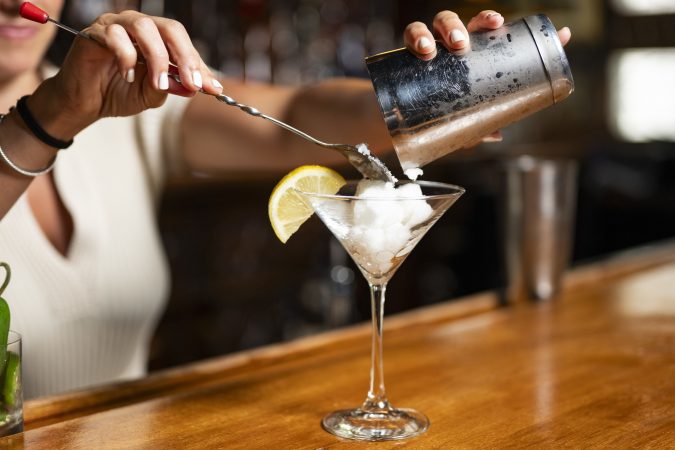
    The water ice martini is the cocktail of the summer, and Beatrice Forman chatted up the owner of John’s Water Ice, who developed it with Saloon.

    🍧 Extraordinary “ordinary” water ice: Here are our favorites.

    Ice cream options

    🍦 Stella’s Ice Cream out of Idaho (yes, Idaho) just opened on Front Street in Fishtown/Kensington, and Bea has the early scoop.

    🍦 Winners, rocking a feel-good message, is new on South Street in Graduate Hospital. As Kiki Aranita says, Winners’ appeal is more than just the flavors, like Sweet Success S’mores.

    🍦 Our guide to our favorite ice cream is right here.

    Down the shore with Craig LaBan

    Critic Craig LaBan is back from his annual Jersey Shore exploration, and he’s shaking the sand out of his notebook. In Part One of his roundup, he heads to the mainland to find some gems. Read that here.

    Looking ahead: Part Two, Craig’s reviews from Long Beach Island and thereabouts, will be online this weekend. On July 11, he’ll share his discoveries from points farther south in Part Three.

    Ember & Ash shuttered by fire

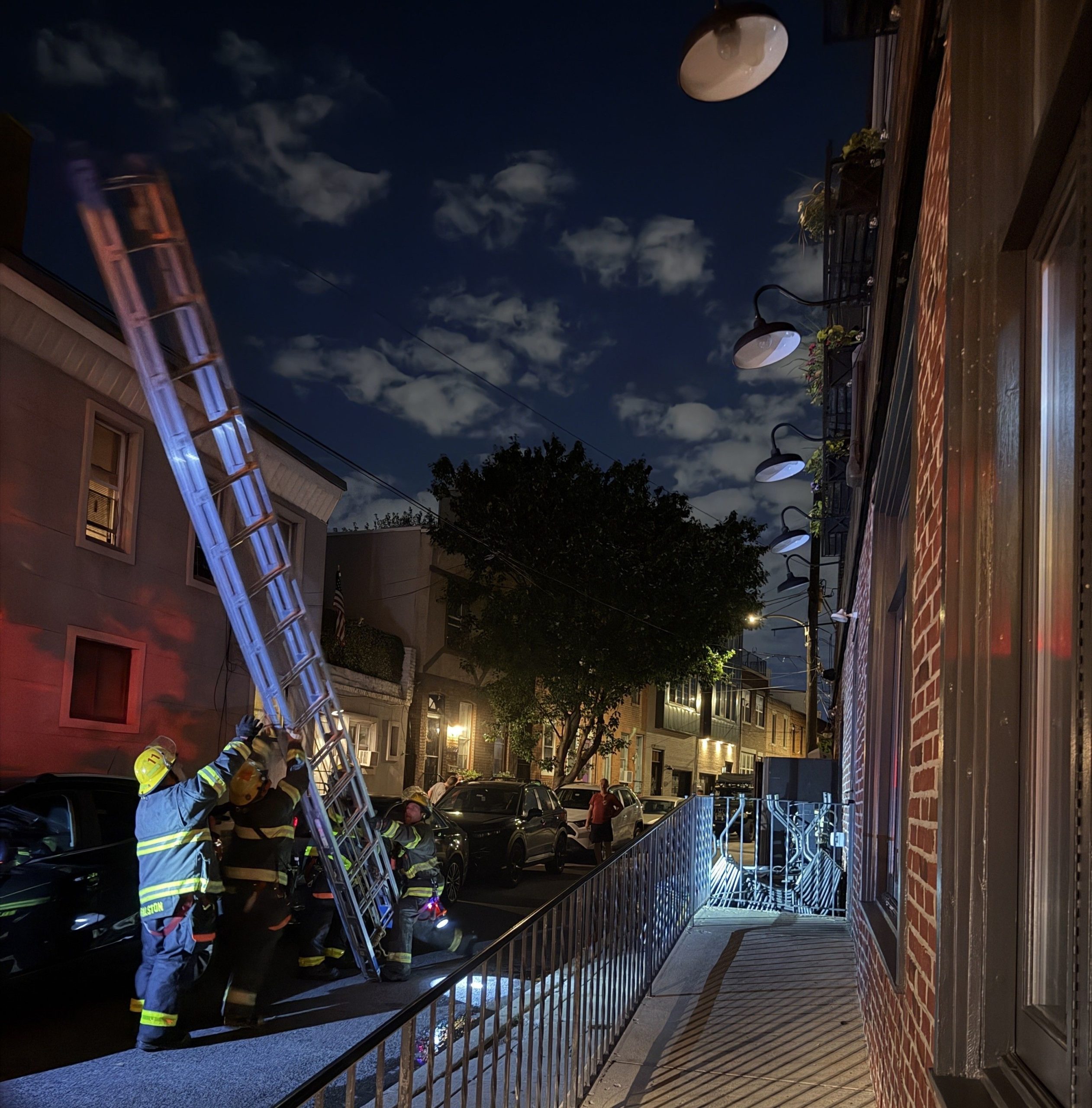
    Ember & Ash on East Passyunk Avenue will be closed for an undetermined period after smoke and flames shot up through the ventilation last week just after closing time. No injuries were reported.

    ‘Flying saucer’ building has liftoff

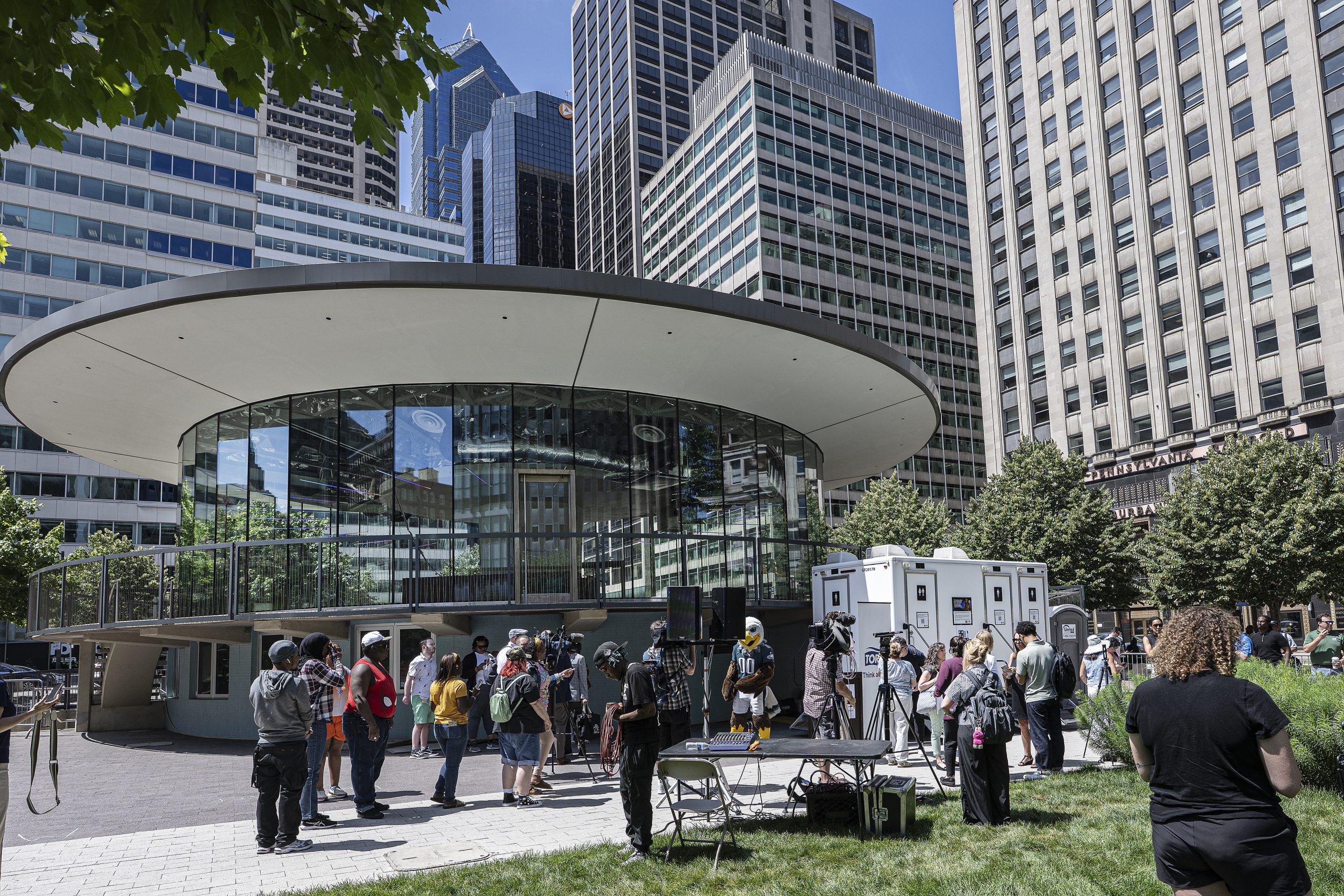
    This weekend will see the debut of Broad Street Beer Garden at LOVE Park, the first phase of a planning reuse of the so-called flying saucer building at 16th and JFK. Here’s the long history of the city landmark.

    The best things we ate last week

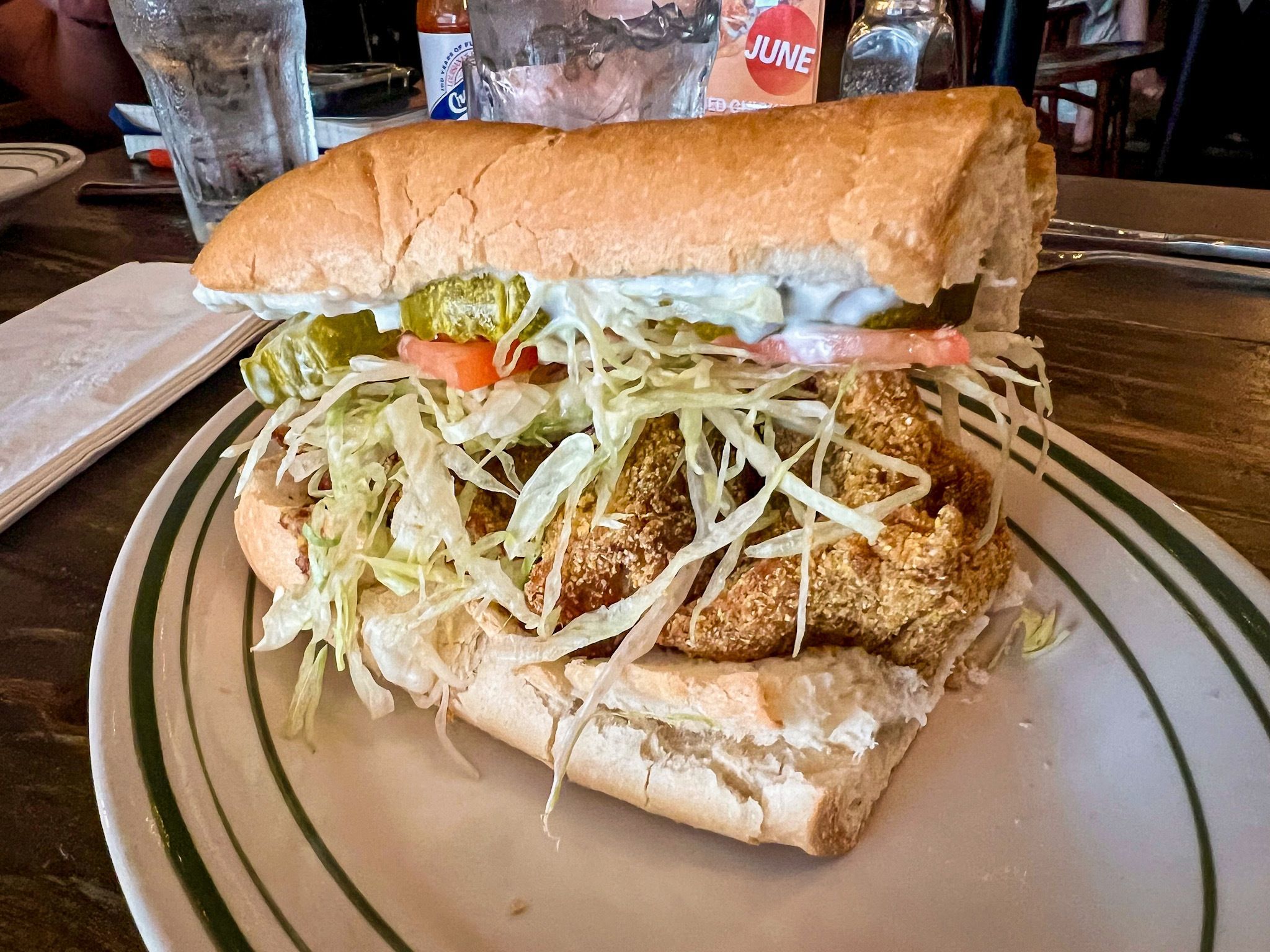
    We munched on fried silverfish that reminded us of French fries in Little Saigon, Argentine empanadas in West Philly, and a vegan po’ boy in Old City that tasted like the original.

    Scoops

    Intrigue! Albert Zheng, whose holdings include Javelin in Fairmount, is backing a yet-to be-named dual concept on the way to 808 Chestnut St., formerly a Dunkin’ Donuts. In front, the feature will be wagyu omakase, while the rear will be what he calls a Cambodian speakeasy. He says it’s six or seven months out.

    Mylar Bar, a cocktail bar inspired by the spirit of South Philly’s Dino’s Party Center, is expected to open later this summer from hospitality veterans Liv Arterbridge and Gina Piccari. They bought the former building at Ninth and Morris Streets where Dino’s sold balloons, decorations, and party supplies for decades before it moved across the street. “We want the whole thing to feel like a party,” Arterbridge said. “Nostalgic, fun, a little silly, intentionally unserious — but not a theme bar,” Piccari said. Cocktails will include martinis, punches, and classic drinks, alongside draft beer and familiar favorites. A full kitchen, led by chef Colin White, formerly of Sally and Emmett, will serve shareable “party snacks” and larger plates. They plan to offer late-night desserts, so food will be available until 1 a.m. with the bar wrapping at 2. Arterbridge, whose resume includes Cry Baby, Poison Heart, and a.bar, met Piccari while working at Boot & Saddle, where Piccari was manager. Piccari is now behind the bar at Le Virtù.

    Restaurant report

    Sixteen restaurants, bakeries, cafes, and bars — including Lillian’s, shown above — are opening in July. Read on for the rundown.

    Penny’s Bagels, on its way (for the last two years) to 212 Kings Highway East in Haddonfield, will hand out 250 red, white, and blue bagels on July 3 at the borough’s parade. The shop is eyeing an August opening, says owner Chris Fetfatzes.

    Maru, a fast-casual Korean-inspired restaurant from David Backhus and the team behind the now-closed Oori, is expected to open in August in what is now Collective Coffee & Bakery, which Backhus also owns, at 2922 Conestoga Rd. in Glenmoore. Maru’s menu will feature Korean fried chicken sandwiches, wings, tenders, house-made mochi doughnuts, and specialty coffee, while continuing to serve Collective Coffee and honor existing coffee subscriptions.

    Briefly noted

    Ota-Ya in Newtown has announced that Friday will be its last day after 30 years with the retirement of owners Jeff Wong and Cindy Tam.

    PETA is launching its “Nice Cream Trail,” highlighting 10 shops across the state serving vegan ice cream, and there are five local spots on the list: Dreams Ice Cream Factory in Glenside, Lu & Aug’s in Ardmore, the Main Freeze in Lansdale, Milk Jawn in South Philadelphia and Northern Liberties, and Scoop DeVille in Center City and Queen Village. The first Pennsylvania resident to complete the trail by visiting all 10 participating shops through August will win a vegan ice cream party with PETA’s “iScream” truck for themselves and up to 50 guests. Details are here.

    Two local BBQ chefs, Matt Groark (Medford Lakes, N.J.) and Maxwell McGibbon (Newark, Del.), are competing on Food Networks’ Pitmasters, premiering July 13 at 9 p.m.

    Diner en Blanc registration is still open. This year’s version of the pop-up picnic is Aug. 20.

    Miller’s Ale House, in the shopping center next to the Home Depot in Springfield, Delaware County, closed this week after 13 years, while Fishtown is abuzz with speculation that Bottle Bar East, which opened at 1308 Frankford Ave. around the same time in late 2012, has closed. The phone is down, and owners could not be reached for comment

    We all tried a new cheesesteak-flavored olive oil. I won’t say you have to.

    ❓Pop quiz

    Fountain Porter, the South Philly bar, just raised the price of its celebrated burger. How much is it now?

    A) $5

    B) $7

    C) $8

    D) $9

    Find out if you know the answer.

    Ask Mike anything

    When is Adda ever going to open in Fishtown? — Rich C.

    True, Adda has been a long time coming, since I initially wrote about it in June 2025 with an end-of-2025 target. Adda — from New York City’s Unapologetic Foods, whose establishments are acclaimed for their bold, no-holds-barred approach to Indian cooking — is now looking at a late-fall opening at 1700 Frankford Ave., the new building across from the Fishtown post office.

    Corrigendum: Reader Stephanie points out that Kalaya is the third Philadelphia restaurant, not the second, to win the James Beard Award for outstanding restaurant, as I wrote two weeks ago. Zahav was the first in 2019, while Friday Saturday Sunday won in 2023.

    📮 Have a question about food in Philly? Email your questions to me at mklein@inquirer.com for a chance to be featured in my newsletter.

    By submitting your written, visual, and/or audio contributions, you agree to The Inquirer’s Terms of Use, including the grant of rights in Section 10.

  • How Little Susie’s is building a pie business one crust at a time

    How Little Susie’s is building a pie business one crust at a time

    Daniel Martino didn’t set out to build an empire of pie shops. He just wanted somewhere to get coffee without leaving the neighborhood.

    When he bought his home in Port Richmond in 2013, the closest coffee shop was an hour round trip, he said. “Selfishly, I thought, I can put a little coffee shop here.”

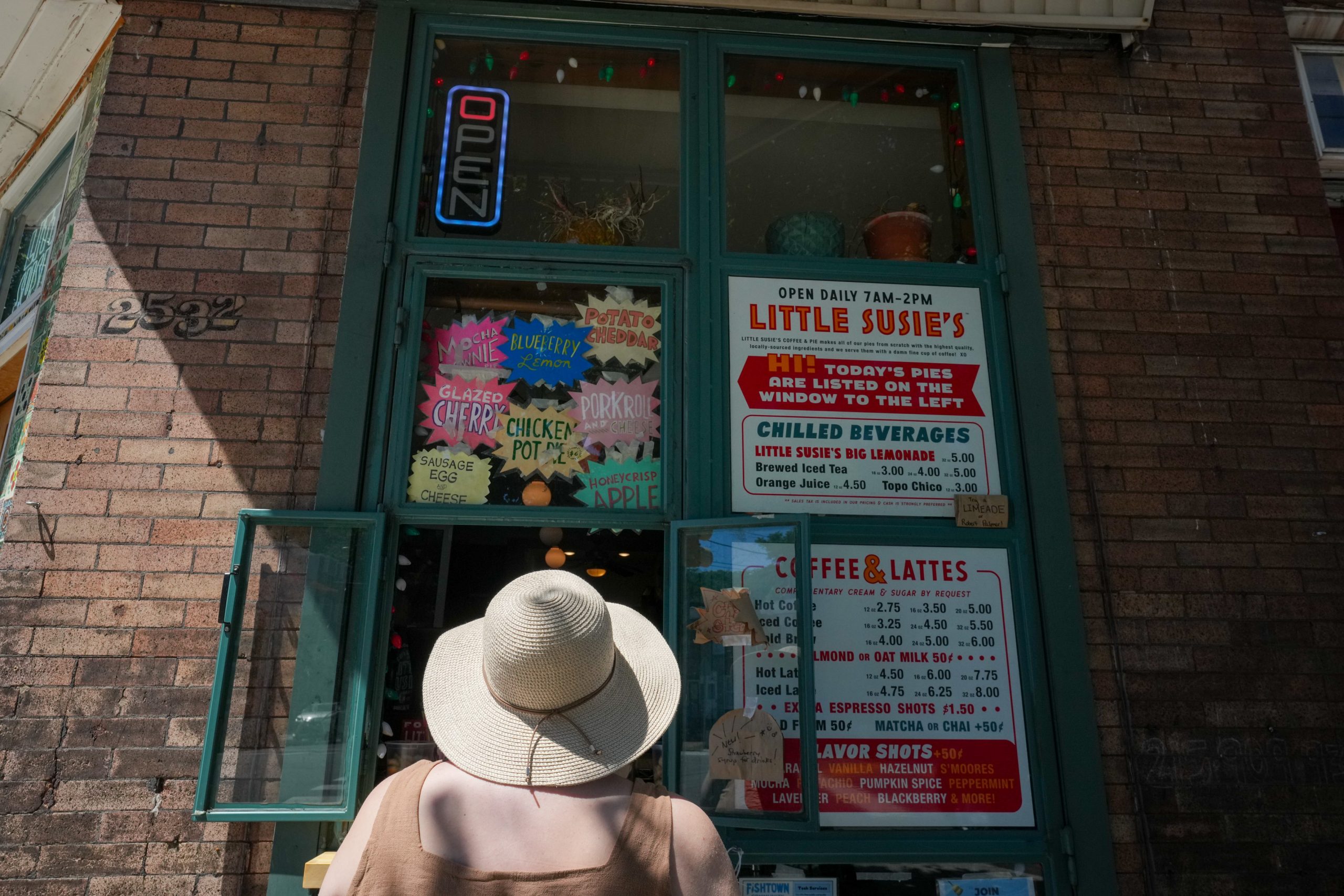
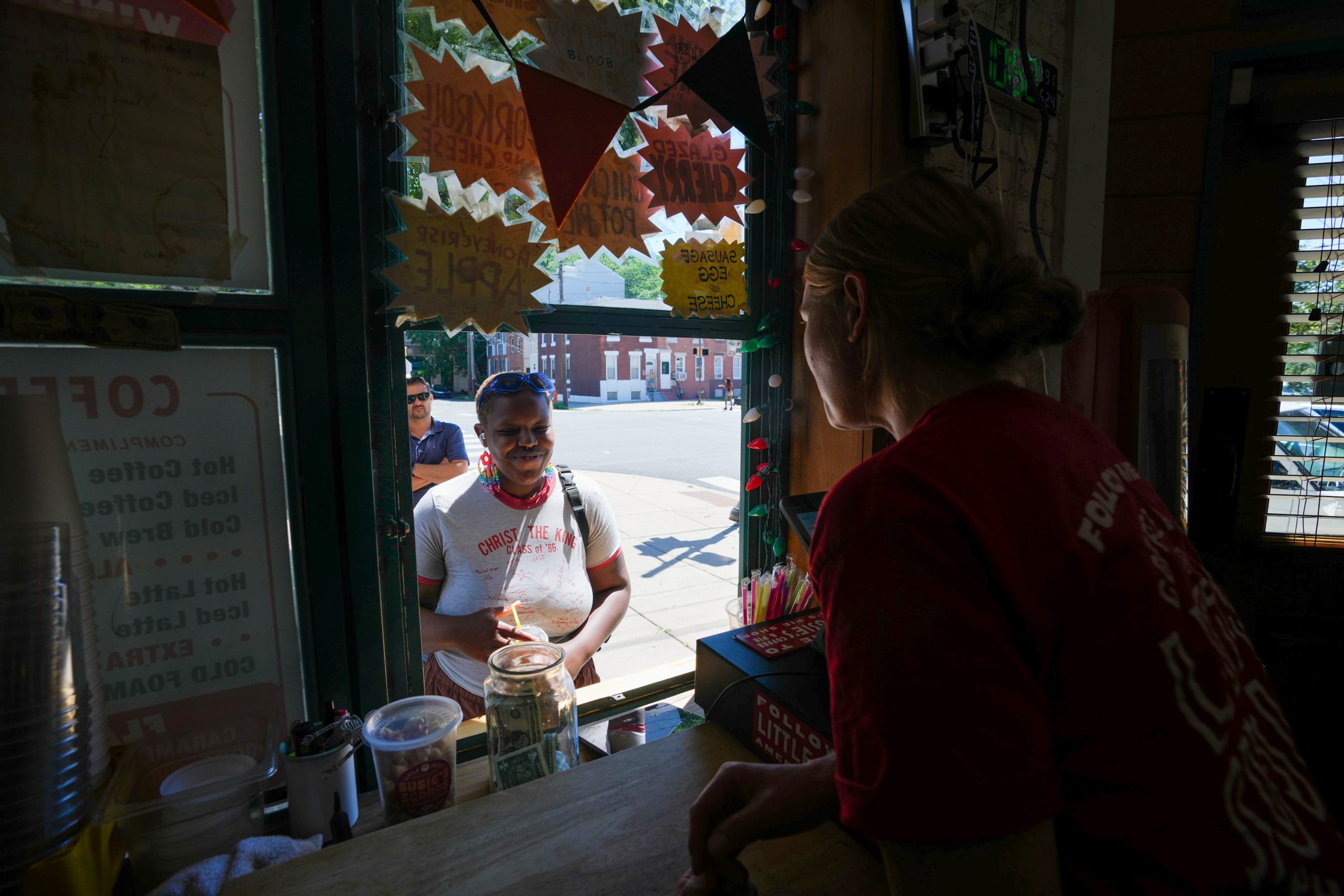
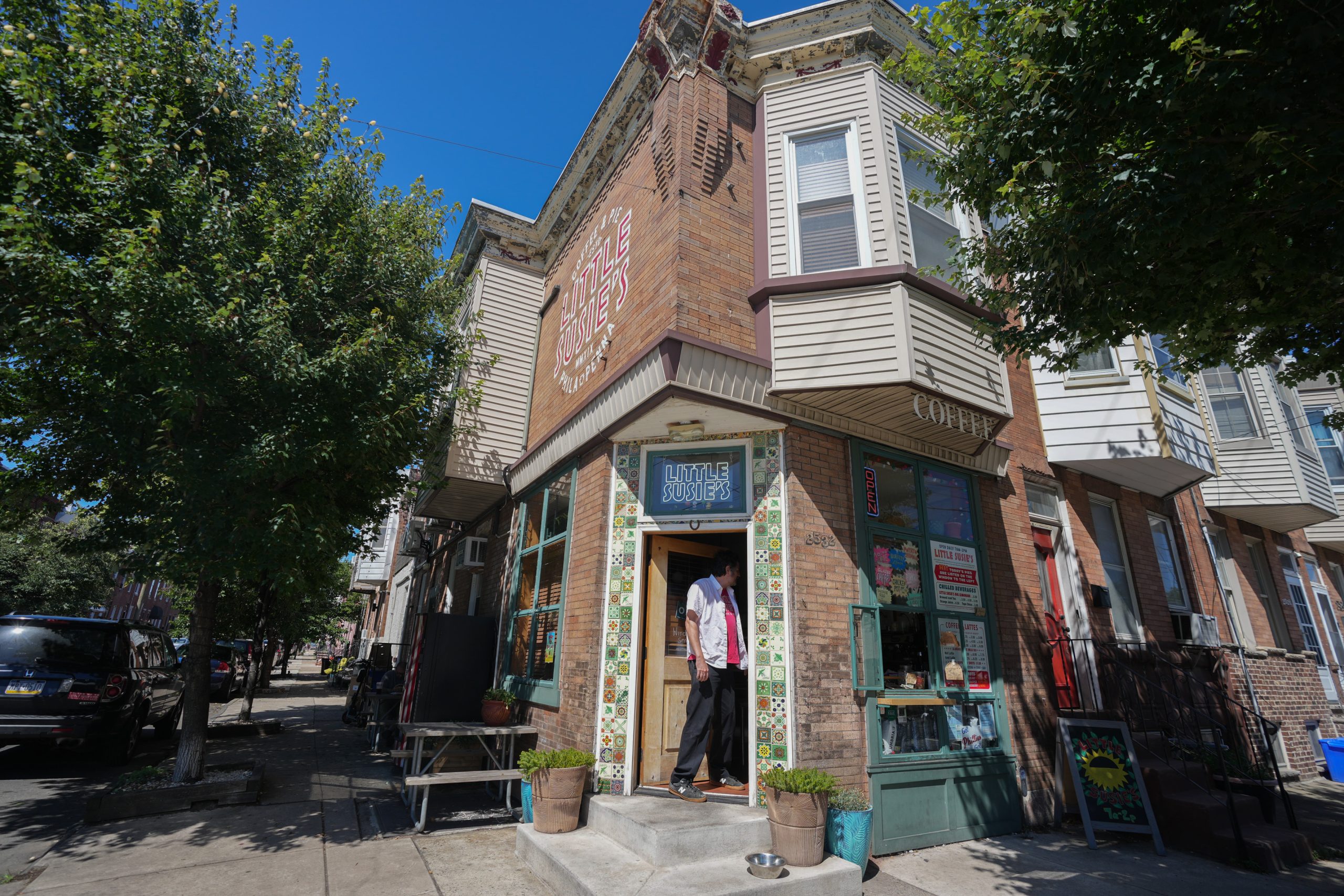
    The takeout window at Little Susie’s flagship location at 2532 E. Lehigh Ave.Jessica Griffin / Staff Photographer

    And what goes better with a cup of coffee than pie? He had a recipe he’d been baking for family get-togethers.

    Seven years after Martino opened Little Susie’s Coffee & Pie in the building next door to his house, his modest idea has grown into four Philadelphia locations, with a fifth expected to open Friday at the former Pop’s Bun Shop in Bella Vista, a franchise headed to Milwaukee, and plans for additional shops in Fairmount and Northern Liberties. All his stores run from takeout windows, requiring little more than coffee stations and electric ovens.

    Today, the company employs 28 people and turns out about 1,200 pies a day from a bakery occupying two cramped rooms in the corner rowhouse on Lehigh Avenue.

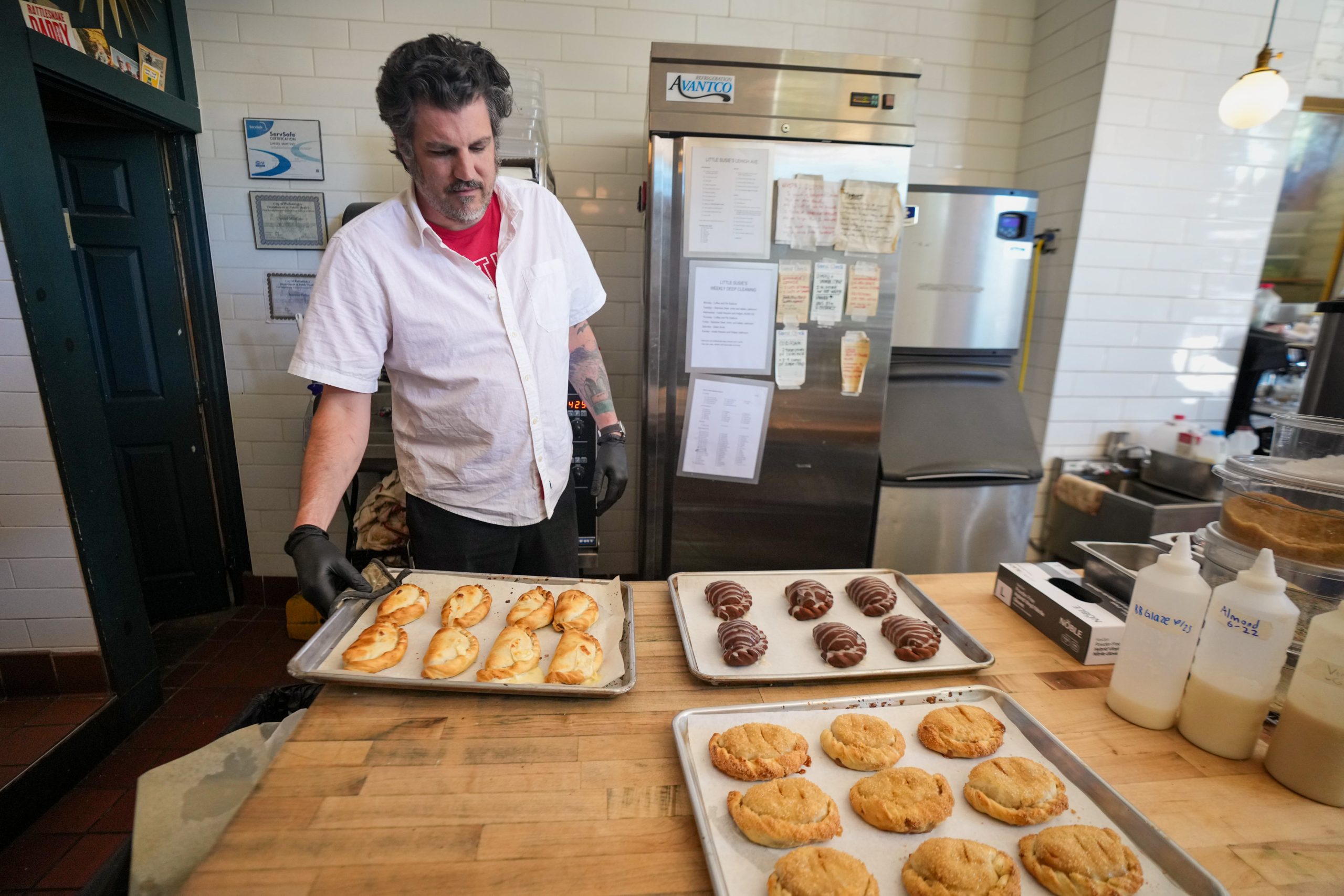
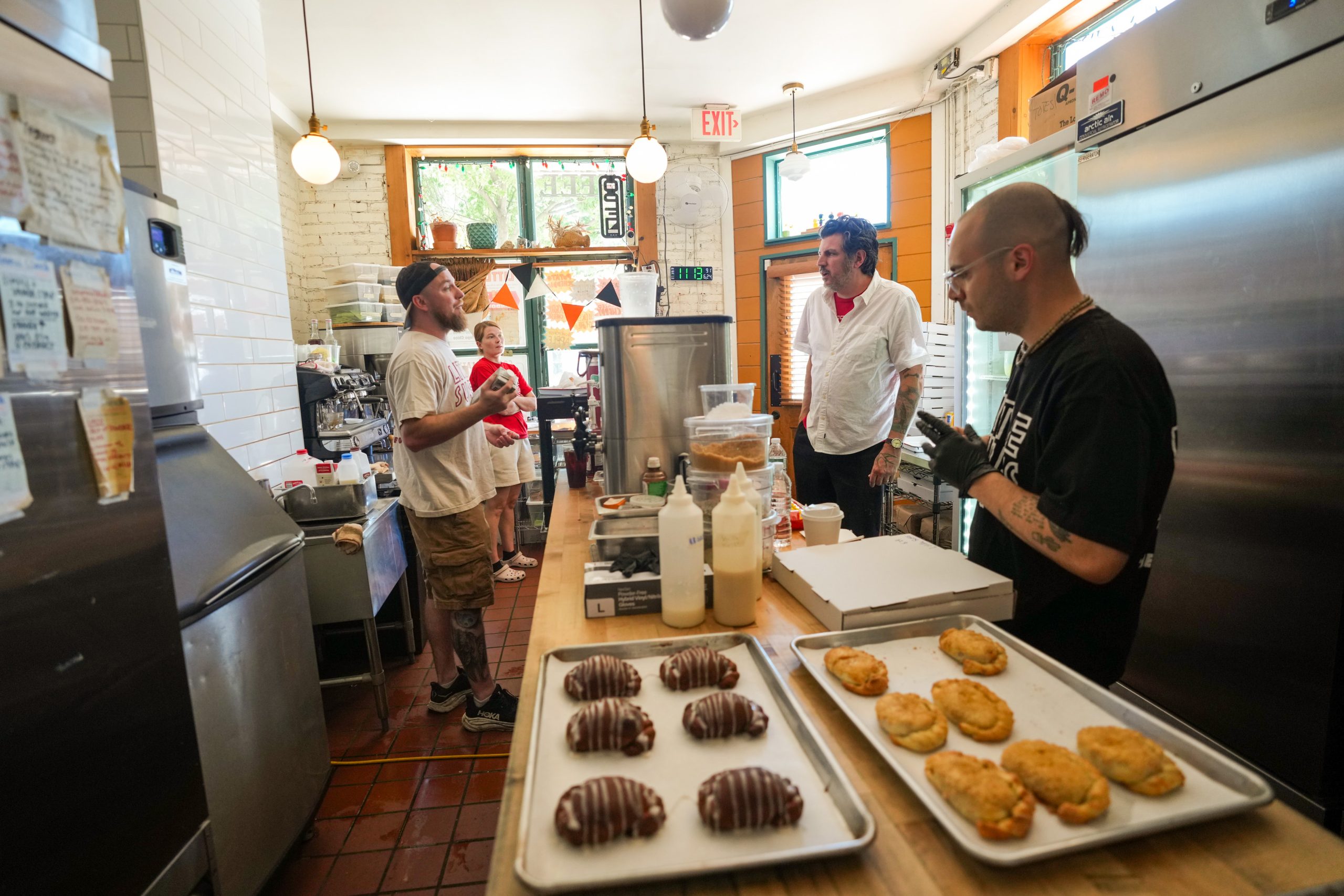
    Owner Daniel Martino with trays of pies at Little Susie’s.Jessica Griffin / Staff Photographer

    Martino, 46, who grew up in Northeast Philadelphia, has spent much of his working life around food. As a teenager, he worked at a swim club snack bar before taking a kitchen job at what is now Jefferson Torresdale Hospital.

    After studying film at Temple University, he joined Public House Investments, which ran City Tap House, as a DJ before becoming the hospitality company’s creative director, designing menus, logos, ads, and marketing material.

    When the property next door to his house became available, Martino said he used a home-equity line of credit to buy it before securing a Small Business Administration loan to renovate it.

    The takeout window at Little Susie’s. Hand-lettered signs advertise the specials.Jessica Griffin / Staff Photographer

    By the time Little Susie’s opened in December 2019, he said, “I had maxed out every credit card I had. I even had to go to the bank, hat in hand, and sign a signature loan for the last $10,000 just to get it open.”

    His shop offered a simple menu, little more than coffees and lattes and four kinds of pies. There was a counter for seating. The first day brought in about $180, and “it was the greatest day of my life,” Martino said.

    Then the pandemic arrived. When COVID-19 restrictions shut down indoor dining, Little Susie’s shifted to window service. Customers called in orders, paid over the phone, and picked up coffee and pies outside. Even after restrictions were lifted, the shop never reopened indoors.

    It wasn’t what Martino had imagined. His idea was ”Cheers with coffee — the neighbors and the mailman talking about the weather,” he said.

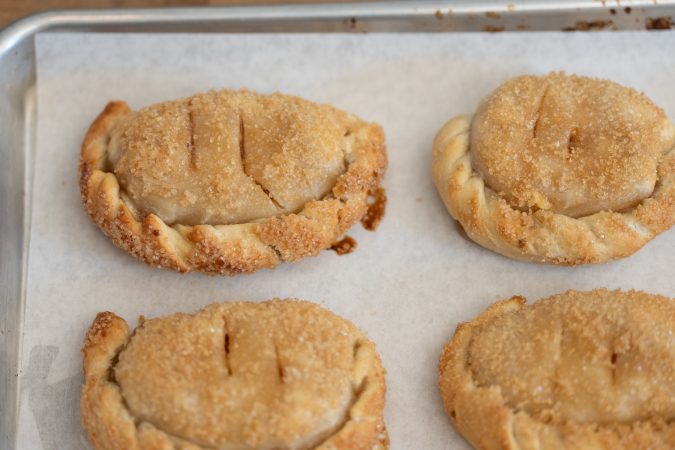
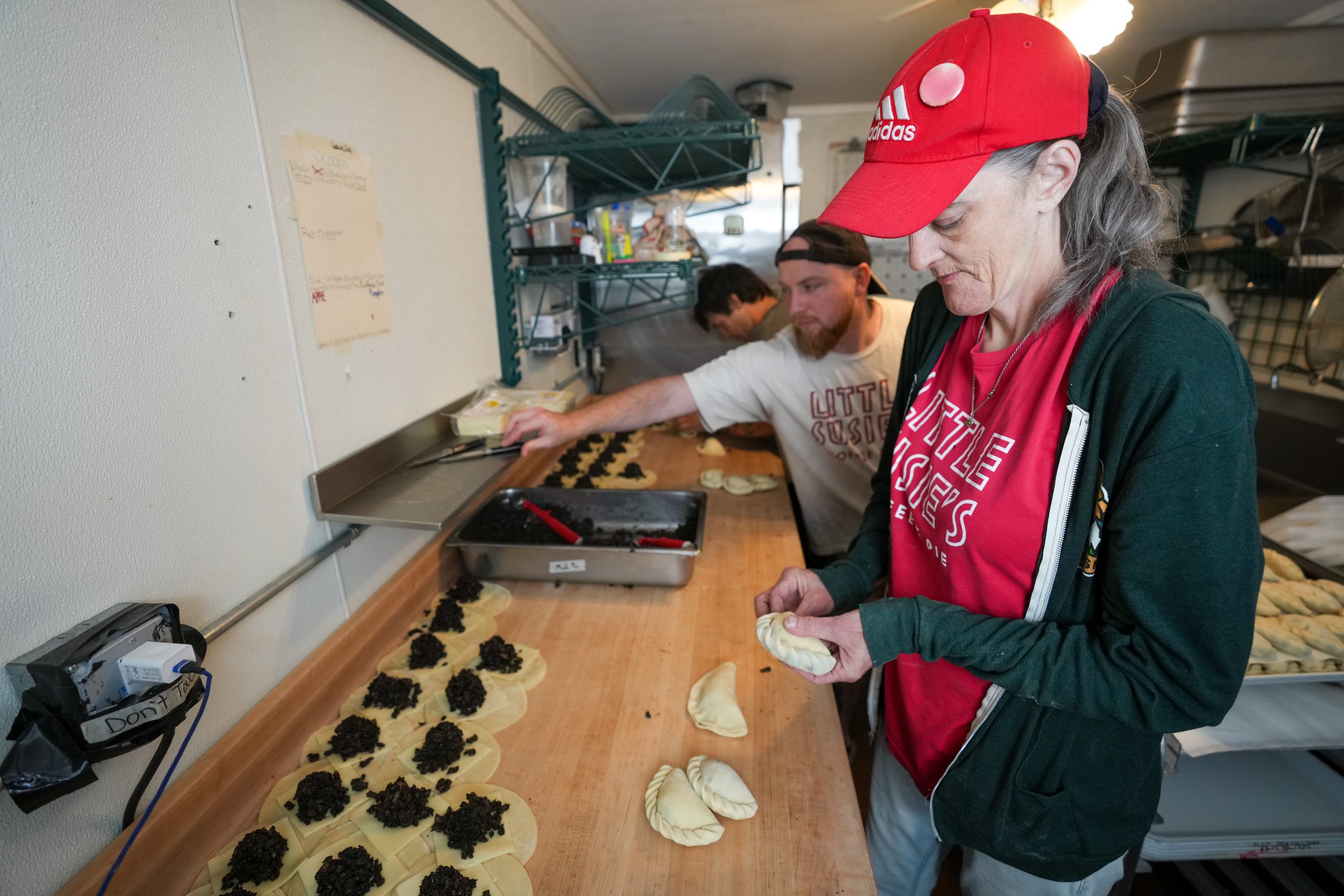
    Instead, customers embraced the walk-up model and the seating at a picnic table beneath a maple tree. The pies especially quickly caught on. The signature is the crust. Rather than trimming away the excess dough, workers twist it around each pie by hand, creating what Martino calls “a fluffiness that the fork doesn’t provide — that flaky tenderness you want in a pie crust. The twist is its own special treat in and of itself.”

    Owner Daniel Martino (rear, right) with staff and pies at Little Susie’s, set up in a rowhouse.Jessica Griffin / Staff Photographer

    The pies, which are baked and not fried, are made with a simple crust of flour, butter, sugar, and salt. It’s a 48-hour process. Dough is mixed at the company’s Kensington location, where a 20-quart mixer runs nearly all day. The dough rests for 24 hours before it is brought to Port Richmond, where it is sheeted, filled, twisted, frozen, and delivered to the other stores to be baked to order.

    Little Susie’s first menu included only blueberry, pork roll, apple, and mushroom Swiss fillings. Today, it offers about a dozen varieties, with eight available year-round and others rotating seasonally. “You can practically throw anything in this pie crust,” Martino said. “I haven’t been disappointed yet.”

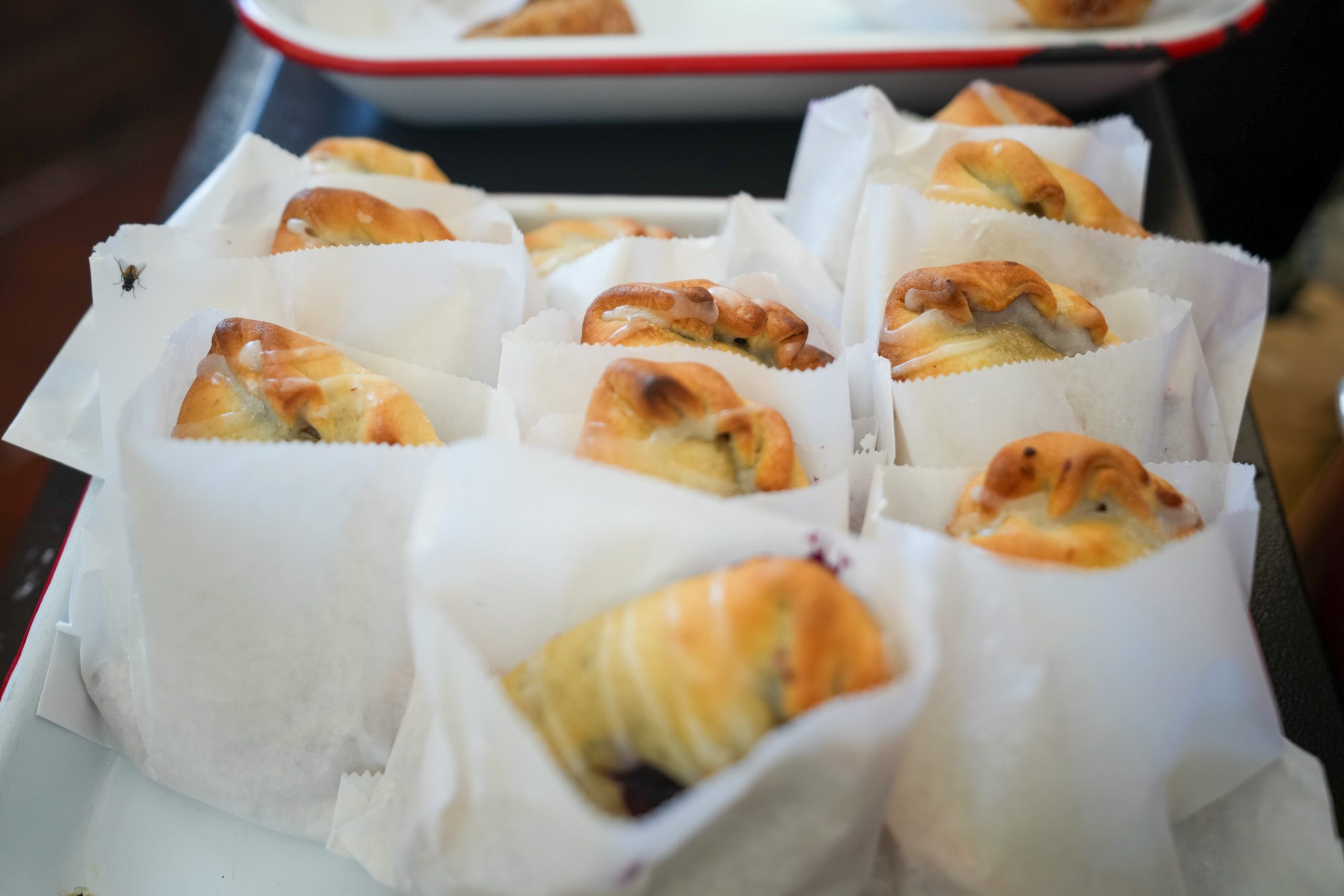
    Pies at Little Susie’s.Jessica Griffin / Staff Photographer

    Pork roll remains the top seller, followed by apple, and a sausage, egg, and cheese breakfast pie encrusted with everything bagel seasoning. Seasonal flavors have included ham and Brie, chocolate-covered strawberry, and Cajun crab and corn. None are gluten-free because of the shop’s limitations, he said.

    Not every idea works. “We tried to make a cannoli pie, but the cream just melted right out,” he said.

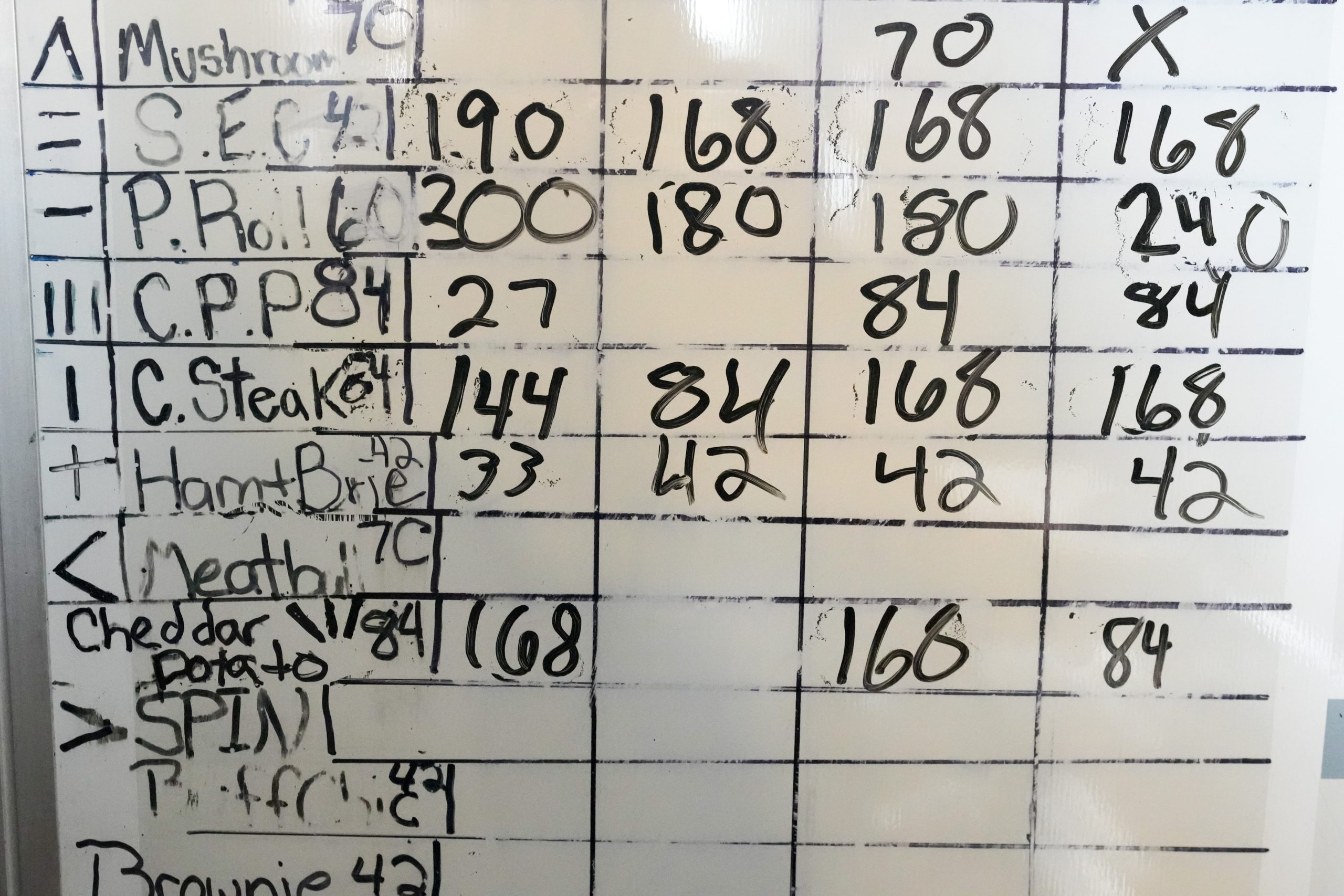
    Each shop sells 200 to 300 pies a day. The production kitchen now employs 11 bakers, who track production on a whiteboard nicknamed “the Pieble.” Each variety get its own knife mark on top; an inverted V, for example, denotes mushroom Swiss.

    The “Pieble” at Little Susie’s, the flagship pie takeout place located at 2532 E. Lehigh Ave., in Philadelphia, June 24, 2026.Jessica Griffin / Staff Photographer

    Lena Hurchick, who has worked at Little Susie’s for three years, said she enjoys “the competition of filling all the shops” and watching customers eat pies she helped make.

    “Susie” was the name of the dog that belonged to the former owner of the building. “When we had the community meeting here, I said, ‘I’m thinking Little Susie’s,’ and people started crying,” he said.

    Lena Hurchick crimps mushroom pies at Little Susie’s.Jessica Griffin / Staff Photographer

    Expansion has brought complications. A planned Fairmount location was nearly ready to open before the city determined that the property required zoning approval for food sales. “The city does not make it easy,” he said, adding that it will take months to get onto the zoning board’s calendar.

    Even so, he expects the company to keep growing. He has a handshake deal for a spot in Northern Liberties. Milwaukee is planned as the first franchise — operated by a friend — while Martino has begun thinking about a larger bakery in Philadelphia.

    “We’re basically bursting at the seams,” he said. “We’re probably going to need a 10,000-square-foot facility.”

    Owner Daniel Martino at Little Susie’s.Jessica Griffin / Staff Photographer

    He wants that growth to remain slow enough that the pies are still made fresh every day. “I don’t want to get too far away from making them every day, because then it just becomes some frozen-food empire,” he said.


    Little Susie’s Coffee & Pies’ locations are at 2532 E. Lehigh Ave. in Port Richmond, Second and Chestnut Streets in Old City, 1772 N. Front St. in Kensington, and 1754 S. Chadwick St. in Point Breeze. A fifth, at 800 S. Ninth St. in Bella Vista, is due to open Friday. Hours are 7 a.m. to 2 p.m. daily.

  • The hidden link between mummers and Pennsylvania’s most notorious labor rebels

    The hidden link between mummers and Pennsylvania’s most notorious labor rebels

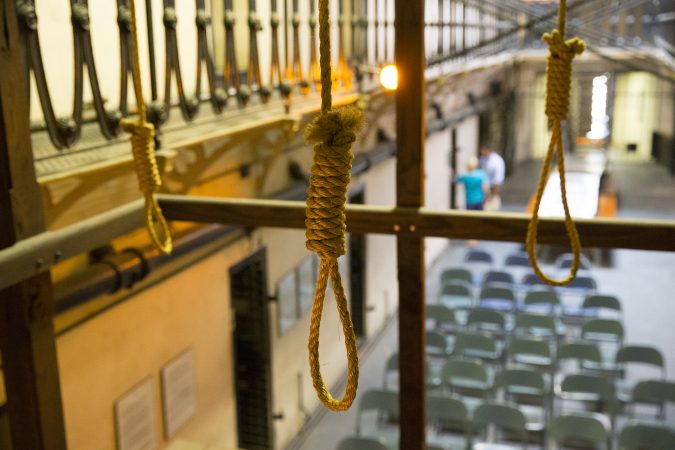
    The biggest mass execution in Pennsylvania’s long history took place 149 years ago this week.

    Ten Irish Catholics from the hard coal region went to the gallows, convicted of murder in a long-running labor war against the all-powerful coal companies. Another 10 would be hanged over the next few years, for a total of 20. Their trials made a mockery of justice, with a coal company president as prosecutor, a Pinkerton detective hired by the company as the star witness, and Irish Catholics excluded from the jury.

    The hanged men were called Molly Maguires, a name straight out of Ireland, where a secret society using that moniker battled the landlords on behalf of starving peasants during the horror of the 1840s potato famine. These Mollies disguised themselves in women’s clothing, or straw clothing, or whiteface or blackface. And they timed their killings around major holidays.

    That’s because the Molly Maguires were merely the flip side of a group quite familiar to Philadelphians — the mummers. The connection explains many of the mysteries about the Mollies — where the name came from, why the Mollies wore odd disguises, why they did their killing around high points of the calendar, and why they were revived in Pennsylvania amid resistance to the Civil War draft.

    In Ireland, mummers were more actors than musicians. They visited every home in a district around New Year’s and collected money by putting on a skit that always featured a killing. The money paid for a party for the whole community. Groups like the mummers performed this kind of trick or treat around other big holidays — St. Brigid’s Day on Feb. 1, Easter, the summer solstice and Halloween.

    During the potato famine, small bands of men — dressed in the women’s clothes or the straw of the mummers — began going from house to house, collecting money for the hungry. But these men weren’t mummers. They were Molly Maguires. And when they didn’t get what they wanted, or when landlords evicted tenant farmers, the mock killing of the mummers became the very real violence of the Molly Maguires.

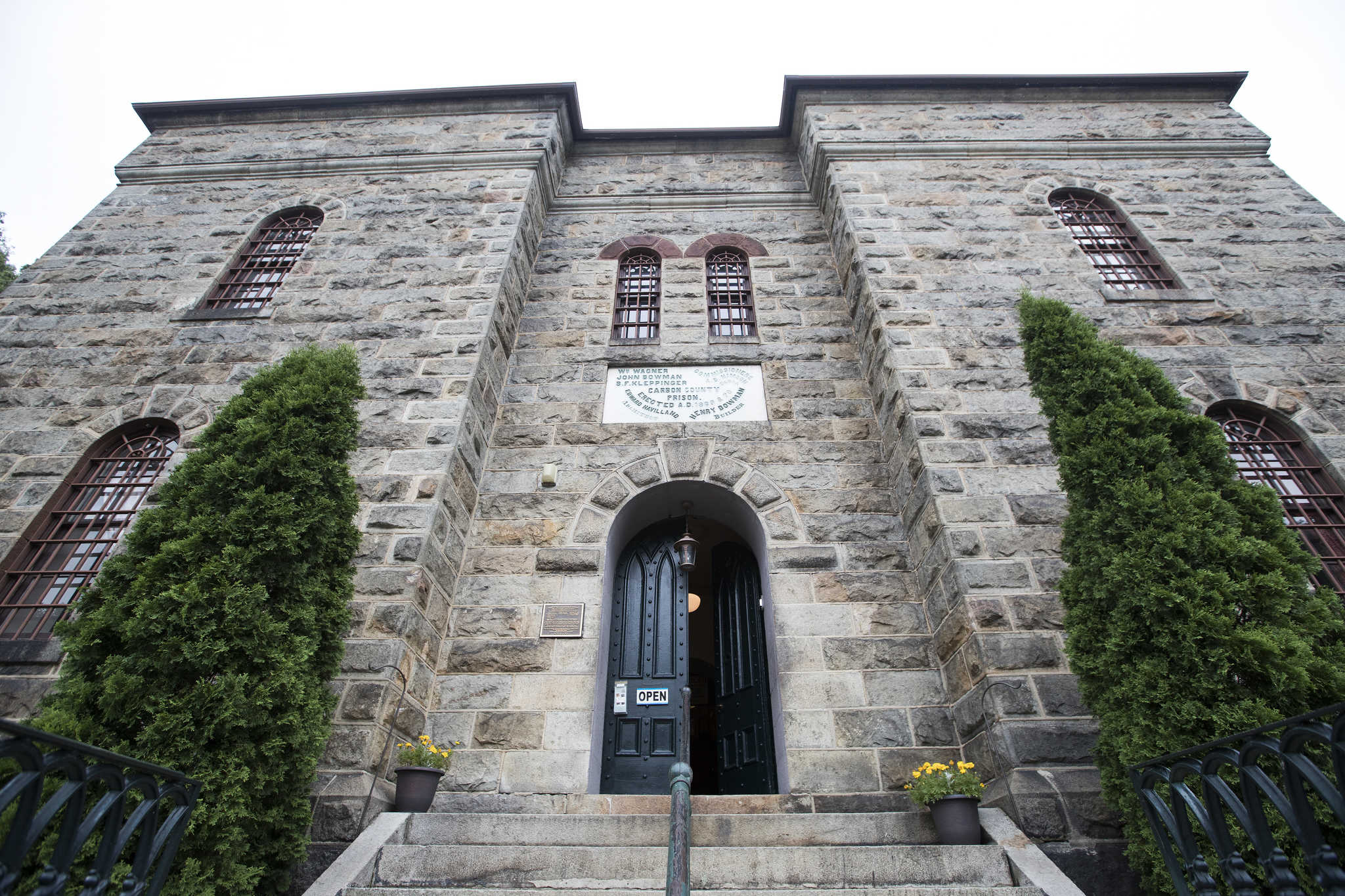
    The entrance to the former Carbon County Jail in Jim Thorpe, Pa., where seven Irish coal miners were hanged in 1877.CHARLES FOX / Staff Photographer

    The killings often took place around the days that the mummers celebrated, to signal that the Mollies were acting on behalf of the community. The three most celebrated Molly murders in Ireland came within a day or two of St. Brigid’s Day, the summer solstice, and Halloween.

    The name itself sounds like something from the mummers’ play. A female character often had names that began with the letter M — Molly Masket or Mary Ann McMonagle. And, curiously, Molly Maguire wasn’t always Molly — a number of death threats were signed “Mary Ann Maguire.” The similarity between “Mary Ann McMonagle” and “Mary Anne Maguire” underlined the links between the mummers and the Mollies.

    Famine emigration led many from the Molly Maguire heartland to the booming anthracite industry in Northeastern Pennsylvania. It was one of the few rural places in the United States where famine immigrants settled in such concentrated numbers that the folkways of the Irish countryside were transplanted wholesale, including mummery — and its associated pattern of violence. In 1848, a man acquitted of killing an Irishman was murdered in Schuylkill County, on Dec. 30. The killer, an Irishman, had whitened his face like a mime or a mummer.

    Mummery had long been established in Philadelphia, but a peculiar offshoot, called the fantasticals, emerged in Northern Liberties before the Civil War, as a protest against mandatory militia service. At the time, able-bodied men between ages 21 and 45 were regularly required to muster for militia drill. This meant a day without pay — and the fantasticals protested by making a mockery of it.

    They showed up for drill in ridiculous costumes, with giant wooden swords, or in some cases the leg of a deer. This mockery widened from muster day to mummers parades around Christmas and the Fourth of July and Halloween, and spread beyond Philadelphia.

    Before one of the Molly Maguires was hanged, he put his hand on the dirty floor of his cell in the former Carbon County Jail and then placed it firmly on the wall proclaiming, “This handprint will remain as proof of my innocence.”CHARLES FOX / Staff Photographer

    In 1855, the Pottsville militia was called out after a mine boss was beaten in Branchdale, Schuylkill County. Though just four men attacked him, the militia rounded up 28 Irish Catholics. Adding insult to arrest, the militia then played a Protestant anthem from Ulster, “The Boyne Water,” which celebrated the defeat of Catholic Ireland.

    It just so happened that the fantasticals made their first appearance in Schuylkill County that very year, marching in Pottsville on Christmas Day. The whole performance mocked the Pottsville militia and its music. The captain wielded a giant wooden sword, the rest were dressed in “every imaginable burlesque costume,” and the band was drunk — and played that way. In 1857, when the militia was used to break a strike by largely Irish mine workers in Cass Township, the fantasticals appeared in Schuylkill Haven on the Fourth of July and in Cressona on Dec. 26.

    A few short years after those anti-militia mummers parades, opposition to compulsory militia service in the Civil War led to the revival of the Molly Maguires. The man who administered the 1862 militia draft in Schuylkill County was a nativist Republican who saw conscription as a way to sweep large numbers of Irish Catholic Democrats into the maw of a bloody war. He set unfairly high conscription quotas for heavily Irish Cass Township, then urged that the draftees be shipped out before a crucial election.

    A cell in the former Carbon County Jail in Jim Thorpe, Pa.CHARLES FOX / Staff Photographer

    In response, Irish mine workers went out on strike, marching under arms with a fife and drum from mine to mine. Two months later, they went out on strike again, calling themselves Molly Maguires. When a government crackdown appeared imminent, the Mollies targeted residents who had shown government sympathies by volunteering for the military.

    On Jan. 2, 1863, five men fatally shot an Irish mine worker home wounded from the Union Army, then cheered for the Confederate president. Over the next nine days, two former militia men were attacked in Cass Township. A few days after Halloween, gunmen with false whiskers and blackened faces killed a mine owner who had been helping to enforce conscription.

    Note the progression. In the last half of the 1850s, some Schuylkill County residents were making fun of the militia, but by 1862, they were on strike to oppose the militia draft, and as 1862 edged into 1863, they were shooting former militia members around New Year’s. As in Ireland, what started as mummer revelry ended as Molly Maguire rebellion.

    The Molly troubles raged for another 15 years, ending only when a Pinkerton infiltrated the organization. The ensuing executions showed that the Mollies were no match for the coal companies and the state of Pennsylvania when it came to dealing death at high points of the calendar. The biggest killing — the hanging of 10 men on June 21, 1877 — came on the summer solstice.

    Mark Bulik is the author of “The Sons of Molly Maguire: The Irish Roots of America’s First Labor War.” A retired senior editor for The New York Times, he grew up in Ridley Park, Delaware County.

  • Cracks spread through Northern Liberties rowhouses after developer built nearby

    Cracks spread through Northern Liberties rowhouses after developer built nearby

    Brian and Robyn Emmons can’t sell their 12-year-old, $900,000 rowhouse in Northern Liberties in its current state.

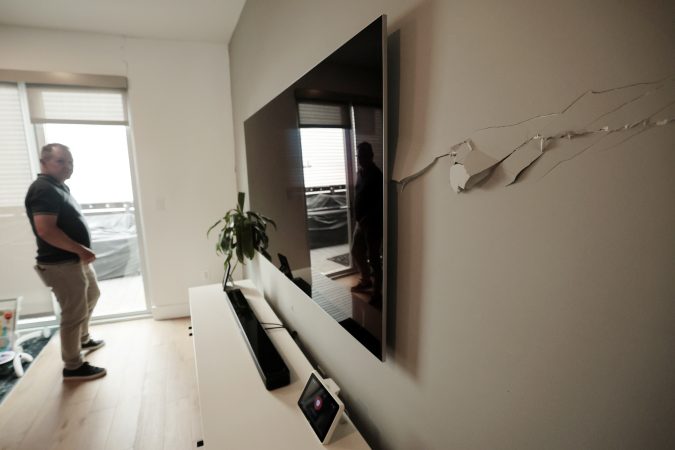
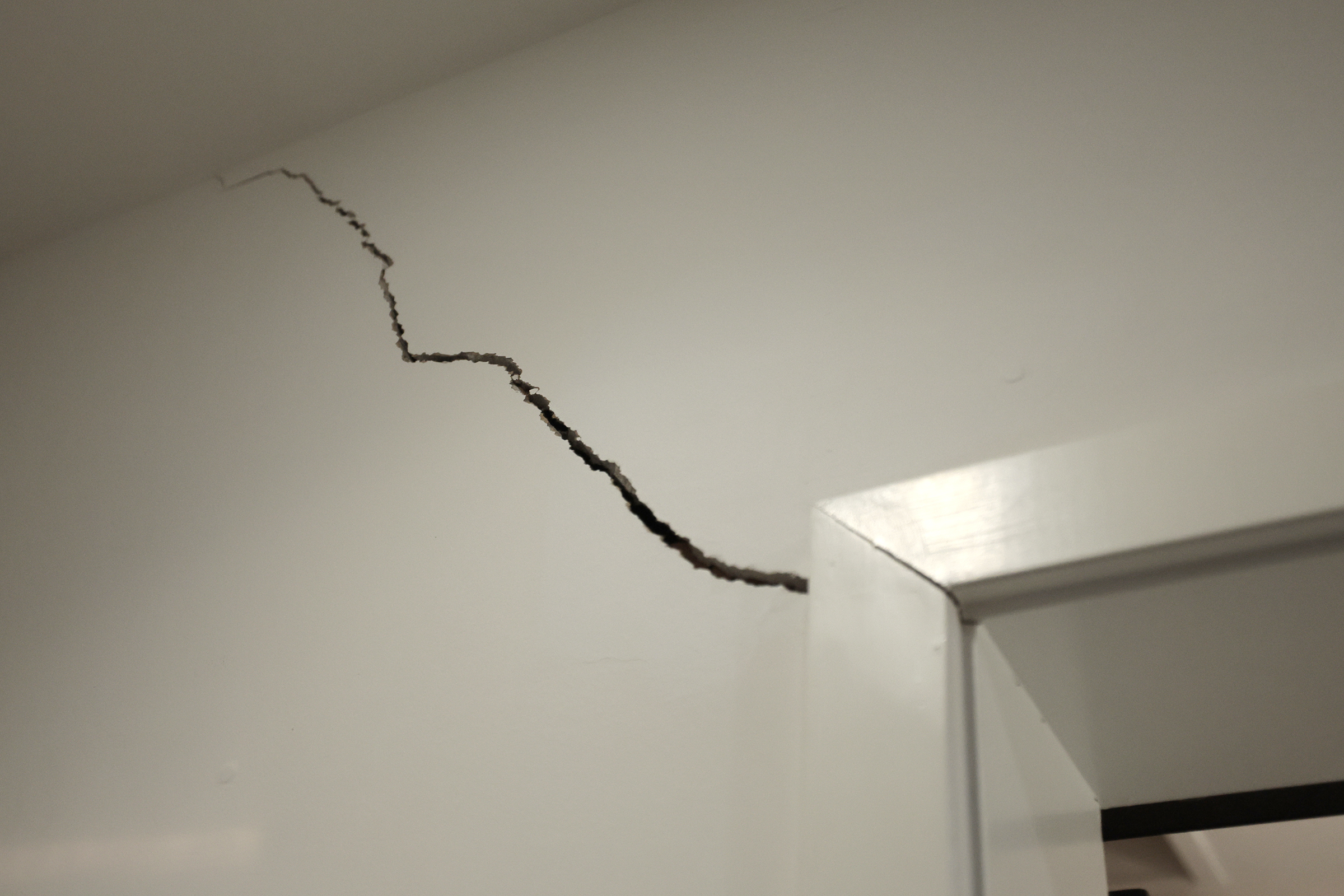
    Fissures have spread across some of the walls in their home — which was built in 2014 — and cracks radiate from many doors and windows.

    Three of their neighbors on Brown Street face similar issues. They say their homes were damaged by an apartment building constructed in 2023 that’s so close to the rear of their house they can almost touch it.

    One family moved out after the city Department of Licenses and Inspections declared their home unsafe in 2024.

    The Emmonses want to move to South Jersey, closer to family. Instead, as they wait for their second child to be born, they feel trapped.

    “The fact that my neighbor was issued an order not to occupy the house, and it’s attached to our house, it’s just really scary,” said Brian Emmons, who has been a real estate developer in Philadelphia for almost 20 years. “We are stuck.”

    Along with two neighbors, the Emmonses are suing the developer of the apartment building: Brian Zoubek, president and CEO of Zoubek Properties, who has built 250 houses in Philadelphia over his roughly decade-long career.

    Since graduating from Duke University in 2010, where he played basketball for the Blue Devils, including on the national champion team that year, Zoubek tried his hand at a few occupations before settling on development. He has expanded his business to the Jersey Shore, recently debuting 10 almost million-dollar townhouses at a news conference with New Jersey Gov. Mikie Sherrill.

    “I’m extremely proud of what we’ve built in Philadelphia,” Zoubek said in an email. “I put my own name on my work because I stand behind every project we build.”

    Zoubek faces lawsuits from the owners of three properties, all alleging that he damaged their Brown Street homes. An Inquirer review of court records found that Zoubek’s companies were similarly taken to court over allegations of sloppy construction practices by their contractors in at least three prior development projects.

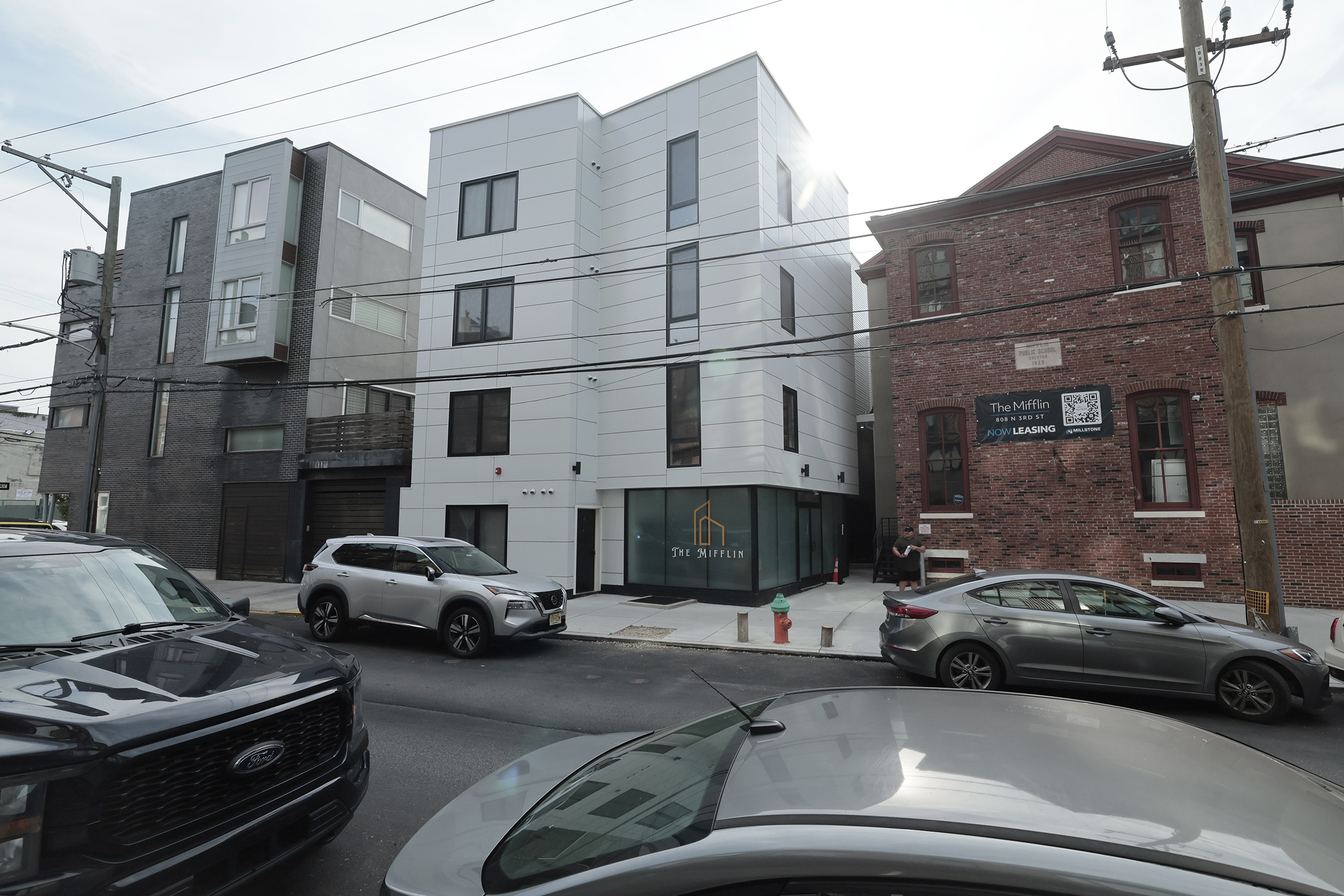
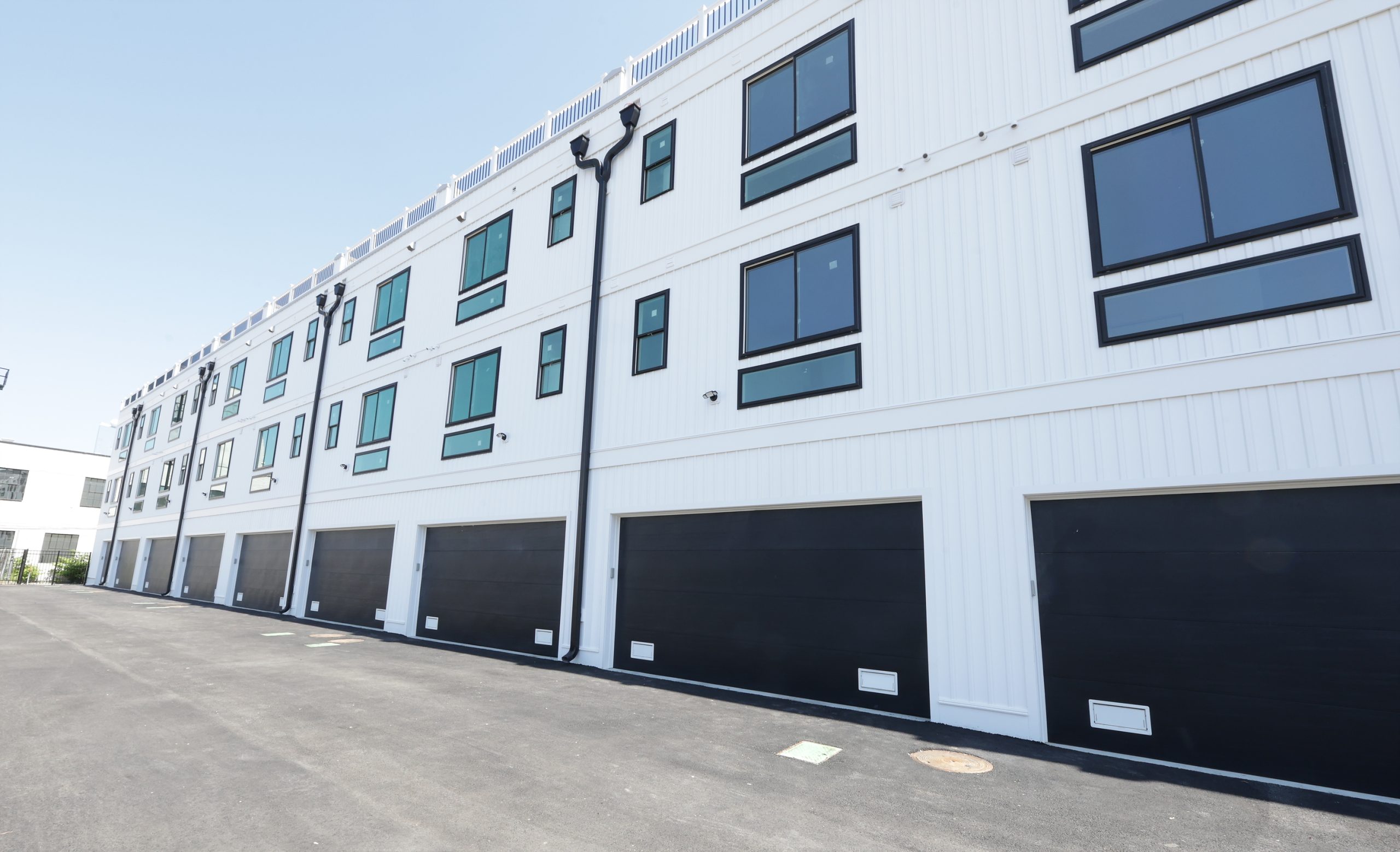
    The eastern end of Brown Street with rowhouses (gray), the new apartment building Zoubek built next door (white), and the former school he transformed into apartments (red brick). Elizabeth Robertson / Staff Photographer

    The Northern Liberties rowhouses

    Emmons and his neighbors sued last year alleging that the damage to their homes is the direct result of Zoubek’s redevelopment of the Mifflin School, built in 1825, just to the north of their homes.

    In mid-2021, Zoubek purchased the property — the oldest surviving public school building in Philadelphia — and carved it into 15 apartments with 14 more wedged into a four-story addition on a small lot between the Brown Street homes and the historic structure.

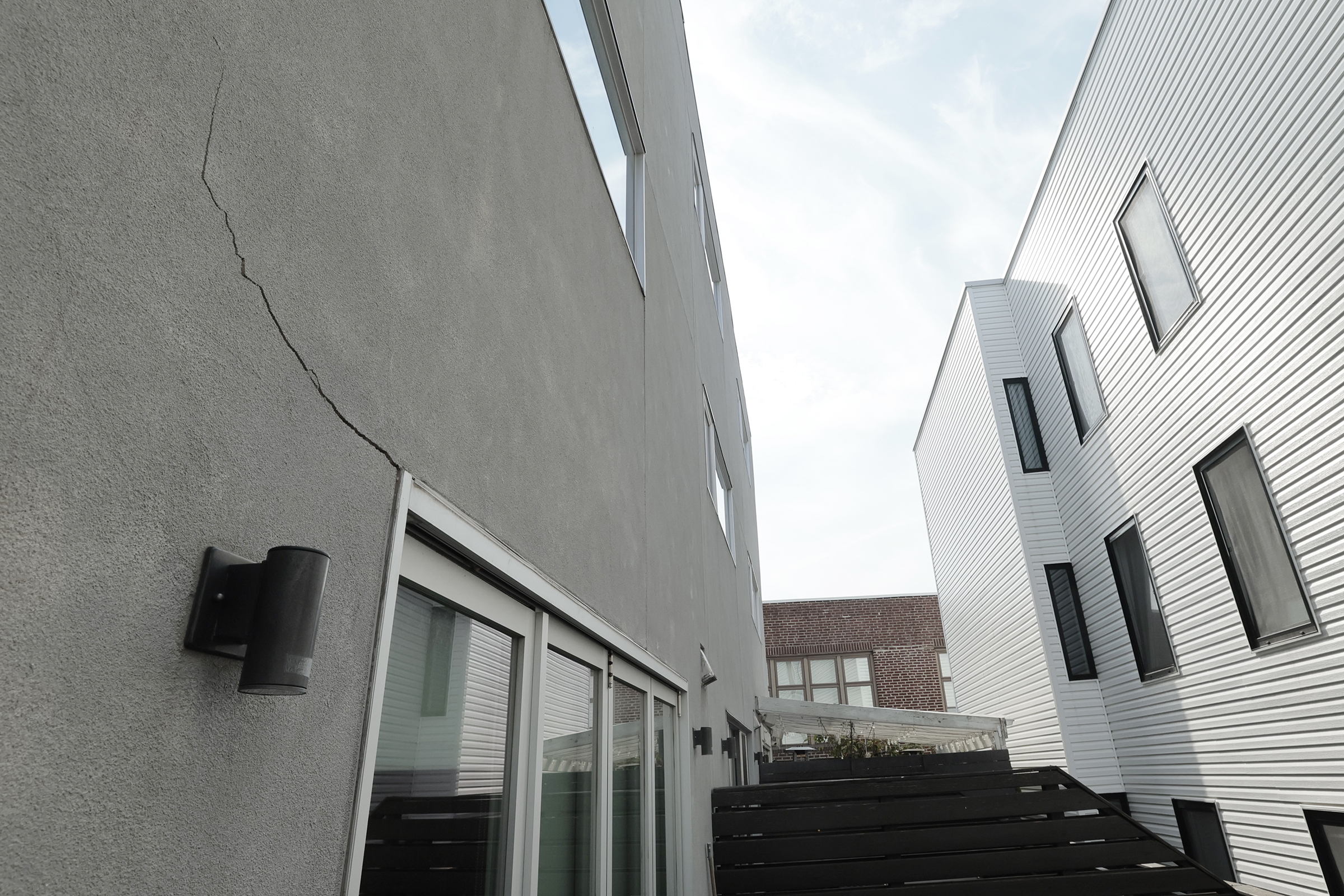
    The recent lawsuits contend that the developer dug too deep while excavating the basement of the new building and damaged their adjacent foundations. Within the three homes — which The Inquirer toured with Emmons — cracks grow in walls, floors slant, the shared garage leaks, and residents have struggled to open some windows and doorways.

    The other two homeowners declined to speak on the record, citing the ongoing lawsuits. The residents of a fourth house have resolved their case against Zoubek.

    “We are aware of the pending litigation and are actively defending these claims,” Zoubek said in an email. “Given the involvement of multiple parties, we are engaged in ongoing discovery and investigation and are confident the process will bear out the facts.”

    Zoubek was named in two earlier lawsuits that accused his construction crews of slapdash work that damaged neighboring properties. A third suit alleged that his company’s work triggered a floor collapse that injured two deliverymen.

    Zoubek said in a statement that all prior suits have been resolved.

    For Emmons, the experience on Brown Street has an irony to it. Ten years ago, he was the face of development in Philadelphia as president of the Building Industry Association (BIA) — a real estate advocacy group — and vice president of a development firm Toll Brothers runs in the city.

    Usually in the position of advocating for new development, Emmons counseled his neighbors when the project was announced that it was allowed by the property’s zoning and not worth resisting. But he did ask his fellow developer about his plans for the new apartment addition to the Mifflin School.

    A gaping crack in a first-floor wall in a home at 301B Brown St. in Philadelphia.Elizabeth Robertson / Staff Photographer

    “He clearly was doing things the wrong way,” Emmons said. “And I know that because I’m in the construction industry.”

    Zoubek contests Emmons’ assertion. He argues that many of his 30 building projects in Philadelphia involve basement excavation next to existing properties and that the Mifflin School project was fully permitted and supervised by skilled professionals.

    “That experience, combined with the engineering oversight on this project, reflects how seriously we take this work,” Zoubek said in an email. “After concerns were raised, the project was reviewed by L&I, which did not issue violations or take enforcement action.”

    A trail of lawsuits

    Zoubek has been building in the Philadelphia area for more than 10 years, mostly developing small apartment buildings or a handful of rowhouses in the city’s booming river ward neighborhoods.

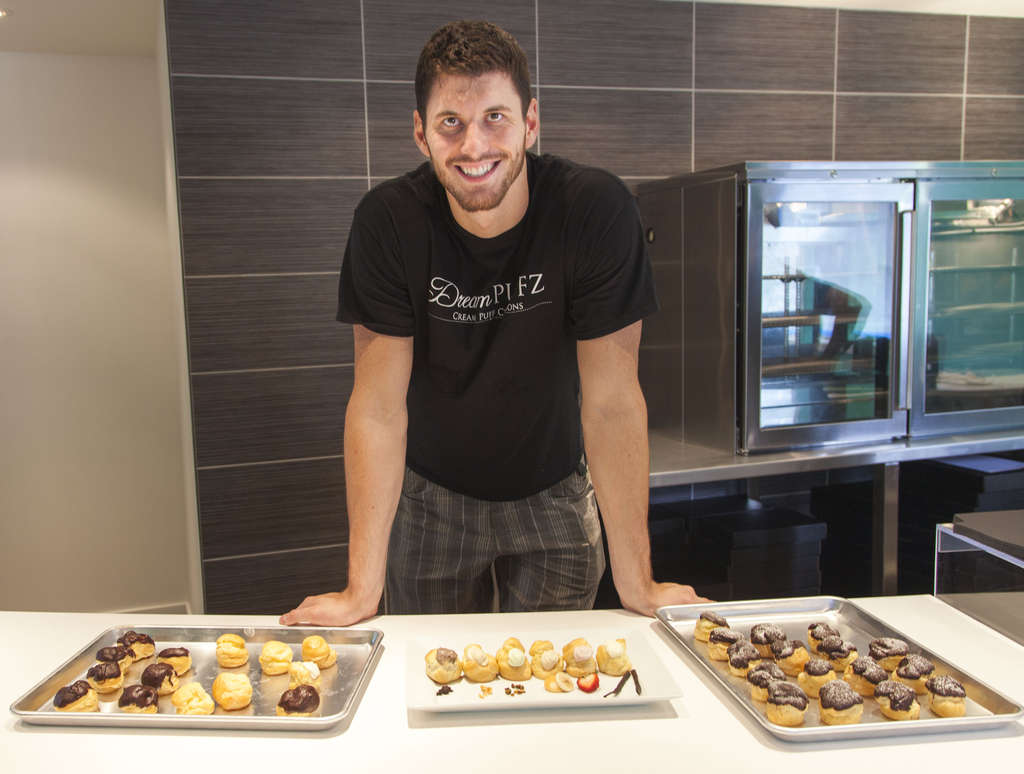
    Zoubek, at 7-foot-1-inch, was a basketball star at Haddonfield Memorial High School and got into real estate after a stint running a cream puffery and, later, as a real estate agent for Cushman Wakefield.

    He started his own firm, Zoubek Properties, in 2014 and a related construction management company called Z Builds. He also cofounded another company, Catalyst City Development, with childhood friend Tyler McNeil.

    As his construction business grew, his enterprises were drawn into complex litigation alleging property damage or injury caused during construction.

    Brian Zoubek in his now defunct cream puff shop Dream Puffz, a pre-development venture, in 2012.ELISE WRABETZ / Staff Photographer

    According to one lawsuit, Catalyst, the company Zoubek cofounded, and Manayunk-based Grit Construction worked together on a small development on Hope Street in Northern Liberties in 2019. During construction, Grit ruptured a lateral pipe connecting a sewer main to a strip of nearby businesses facing an adjacent block of Front Street.

    Exhibits from that lawsuit show Zoubek proactively contacted the neighboring property owner, reassuring him that his crews had quickly rerouted the noxious flow by splicing in PVC piping until a more permanent fix could be made.

    “Broke some sort of line,” Zoubek texted to the adjacent property owner, along with a photo of the messy scene. “So we put in a temp one.”

    But a week later, business owners next door were complaining about chronic plumbing issues. The temporary line had become clogged with rubble and other debris from the ongoing construction.

    According to the suit, in June, the toilets and sinks at a packing business on Front Street erupted as sewage backed up and flooded into the commercial unit. The next day, a barbershop next door was inundated with filth.

    A plumber came out to snake out the line but discovered that Zoubek’s crews had capped the severed line. Eventually, tenants fled.

    “Our tenants cannot continue with sewage backed up into their space,” a property manager for the commercial units next door wrote to Zoubek, in a 2020 email.

    Zoubek said that the case had settled but offered few other details: “The matter was ultimately resolved between the parties.”

    Zoubek Properties had also hired Grit and contractor All-State Services to demolish a building under the El in Fishtown in 2019 and build several new apartments.

    In 2021, the owner of a neighboring apartment complex sued, saying that during teardown crews punched holes in the side of the adjacent building, damaging its roof, framing, and supports.

    According to that complaint, tenants told a property manager about “a big noise and shaking in the building” during the demolition process.

    After arriving on the scene a short time later, the manager “observed All-State Services employees drinking alcohol while on the job and stumbling down off of heavy equipment,” the complaint said.

    Zoubek said that his contractor eventually repaired the wall and that a claim for further damages was handled by the two insurance carriers.

    “The matter is fully resolved,” he said.

    The new luxury townhouses on Kentucky Avenue known as the Residences at Orange Loop in Atlantic City, which Zoubek revealed with New Jersey politicians earlier this year. Thomas E. Briglia / For The Inquirer

    As that suit unfolded, Zoubek had another project underway in Old City, again for a small apartment complex on the 100 block of North Third Street.

    In 2021, two deliverymen bringing in elevator counterweights for the construction project were told to use a rear entrance to deposit their cargo, according to a personal injury lawsuit filed the next year.

    The suit contends that both the delivery company and the workers quizzed Zoubek’s crews about whether the rear entrance of the partially constructed building was structurally sound enough to handle the extreme weight of their load. They were assured that it had been inspected and was safe.

    Instead, the floor collapsed, sending the men and their equipment crashing into the basement, injuring both delivery workers.

    The suit was later settled for $6.5 million default judgment against the subcontractor.

    “That matter was resolved through the appropriate legal and insurance processes,” Zoubek said.

    Construction damages 50 rowhouses a year

    Lawsuits and claims of construction damage are endemic to the real estate industry. And building in the tight confines of Philadelphia’s dense rowhouse neighborhoods can be especially contentious.

    A 2023 Inquirer investigation found that 50 rowhouses a year have been rendered unsafe by construction next door.

    In the case of Brown Street, a spokesperson for Zoubek pointed The Inquirer to the website of Fortis Construction & Design, which built the five rowhouses there in 2014 and is now suspended by the city for “unpermitted, potentially dangerous underpinning and excavation.”

    Cracks on the exterior of a home at 303A Brown St. in Philadelphia (left) on June 9. Elizabeth Robertson / Staff Photographer

    Emmons, however, argues that the fault lies with Zoubek: The extensive damage to the Brown Street homes appeared only after the basement was dug out for the expansion of the Mifflin in 2023.

    “He can point the finger all he wants, but I hope he lies awake at night praying nobody gets injured or killed,” Emmons said in an email.

  • Danny Simmons, founder of Rush Arts and passionate supporter of Black artists, has died at 72

    Danny Simmons, founder of Rush Arts and passionate supporter of Black artists, has died at 72

    Danny Simmons, founder of Rush Arts Philadelphia, an arts community that provided space and motivation for local artists to be discovered and show their work, has died at 72. The cause of death was not announced.

    Mr. Simmons was the older brother to hip-hop mogul and Def Jam Recordings cofounder Russell Simmons and Rev. Joseph “Run” Simmons, one-half of the classic rap group Run-DMC.

    Mr. Simmons’ death was announced Monday by his brother Russell on Instagram.

    “It is with a profound sense of loss that we honor and celebrate the life of Danny Simmons Jr., a beacon of love and creativity,” Russell Simmons wrote on the social media post.

    “He was not just a brother, father, uncle, grandfather, and loving husband; he was a vibrant artist, dedicated supporter of creatives and a cherished friend. Though he has transitioned from this world, his legacy of kindness, generosity, and artistic brilliance will forever shine brightly in our hearts.”

    Daniel Simmons Jr. was born on Aug. 17, 1953, in Hollis, Queens. His father, Daniel Simmons Sr., was a truant officer and Black history professor who also wrote poetry. His mother, Evelyn Simmons, was a teacher who painted as a hobby.

    Both of his parents encouraged Mr. Simmons’ art but also pushed him to work a stable job with a pension. After receiving his degree in social work from NYU, he worked at the New York Bureau of Child Support through the 1980s.

    “He was the true artist in the family,” Russell Simmons said in a subsequent social media post. “Joey and I went into music … but Danny was the one who created from the deepest place. His poetry, art, and ideas shaped how we think and gave us freedom to dream beyond limits.”

    In 2003, Simon & Schuster published Mr. Simmons’ Three Days as the Crow Flies, a novel about a drug-addict hustler named Crow Shade, who poses as an artist in New York’s drug and arts scene.

    Three Days as the Crow Flies is fictional, but by the 1990s, Mr. Simmons had kicked a 20-year heroin addiction, given up his 9-to-5, and leaned into abstract painting.

    “I quit my job, started painting, and it started taking off,” he told The Inquirer in 2016. “But I couldn’t find a whole lot of outlets for my work. There were very few galleries dedicated to emerging Black artists. I figured if I was in that position, there had to be other artists in that position.”

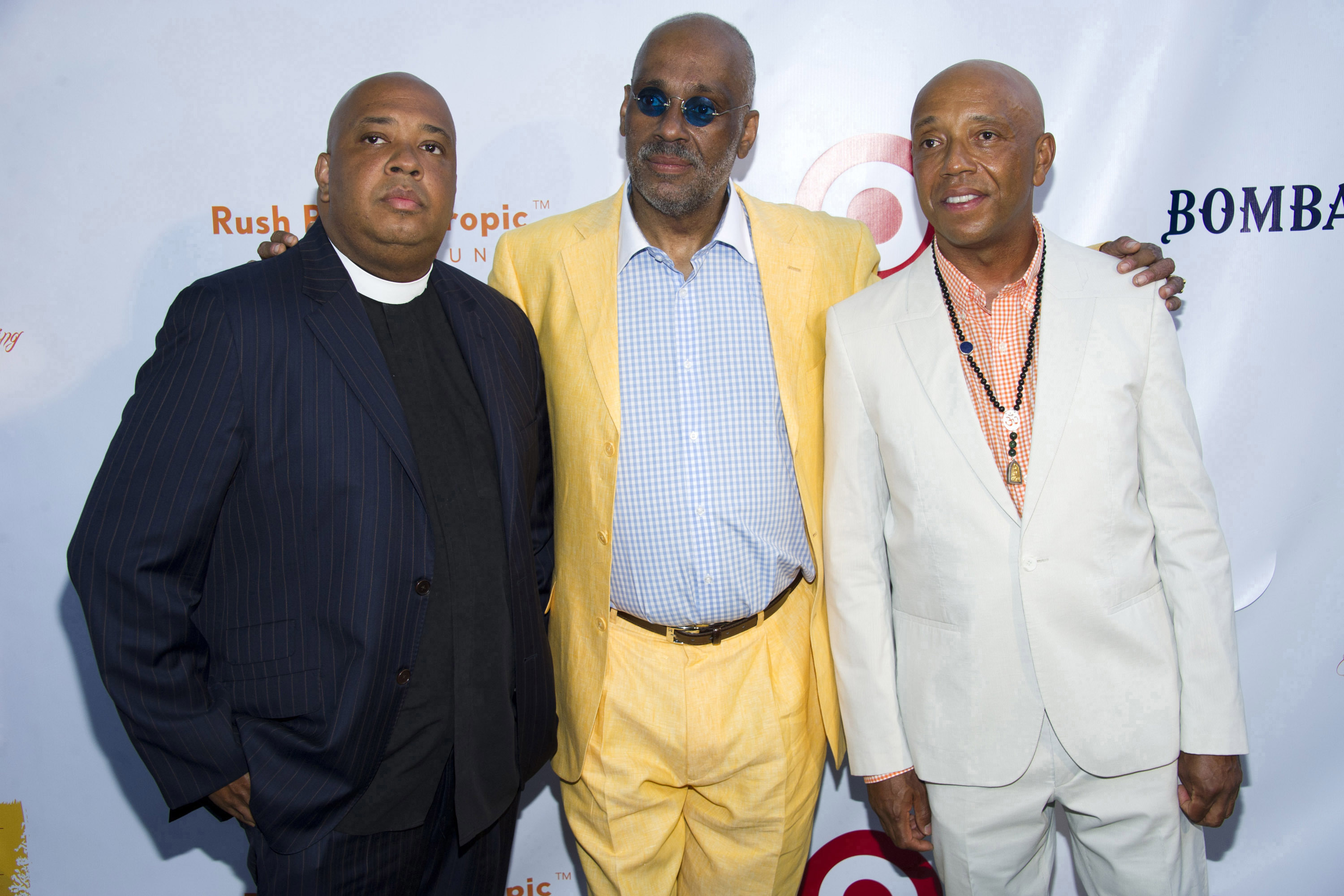
    Joseph “Rev. Run” Simmons (left), Danny Simmons (center), and Russell Simmons attend the 12th annual Art For Life Benefit Gala at Russell Simmons’ estate in East Hampton, N.Y., on Saturday, July 30, 2011.

    (Charles Sykes / AP Images for Rush Philanthropic)AP IMAGES FOR RUSH PHILANTHROPIC

    Mr. Simmons became an avid collector of Black art, opened two galleries in downtown Manhattan, and founded Rush Philanthropic Arts Organization, supporting Black artists around the world.

    “Danny’s impact has been global,” said Vashti DuBois, executive director of the Colored Girls Museum in Philadelphia. “His investments in and support of Black artists and Black institutions have fundamentally transformed the landscape of the Black art scene.”

    In the early 2000s, Mr. Simmons convinced his brother Russell to produce HBO’s Def Poetry Jam. The show, a spinoff of HBO’s Def Comedy Jam, ran from 2002 to 2007 and breathed new life into spoken word poetry, first popularized by the 1970s Black Arts movement.

    A prototype of Def Poetry Jam, that often showcased Philly artists Sonia Sánchez and Ursula Rucker, was filmed at the African American Museum in Philadelphia.

    Mr. Simmons won a Tony for the stage adaption in 2003.

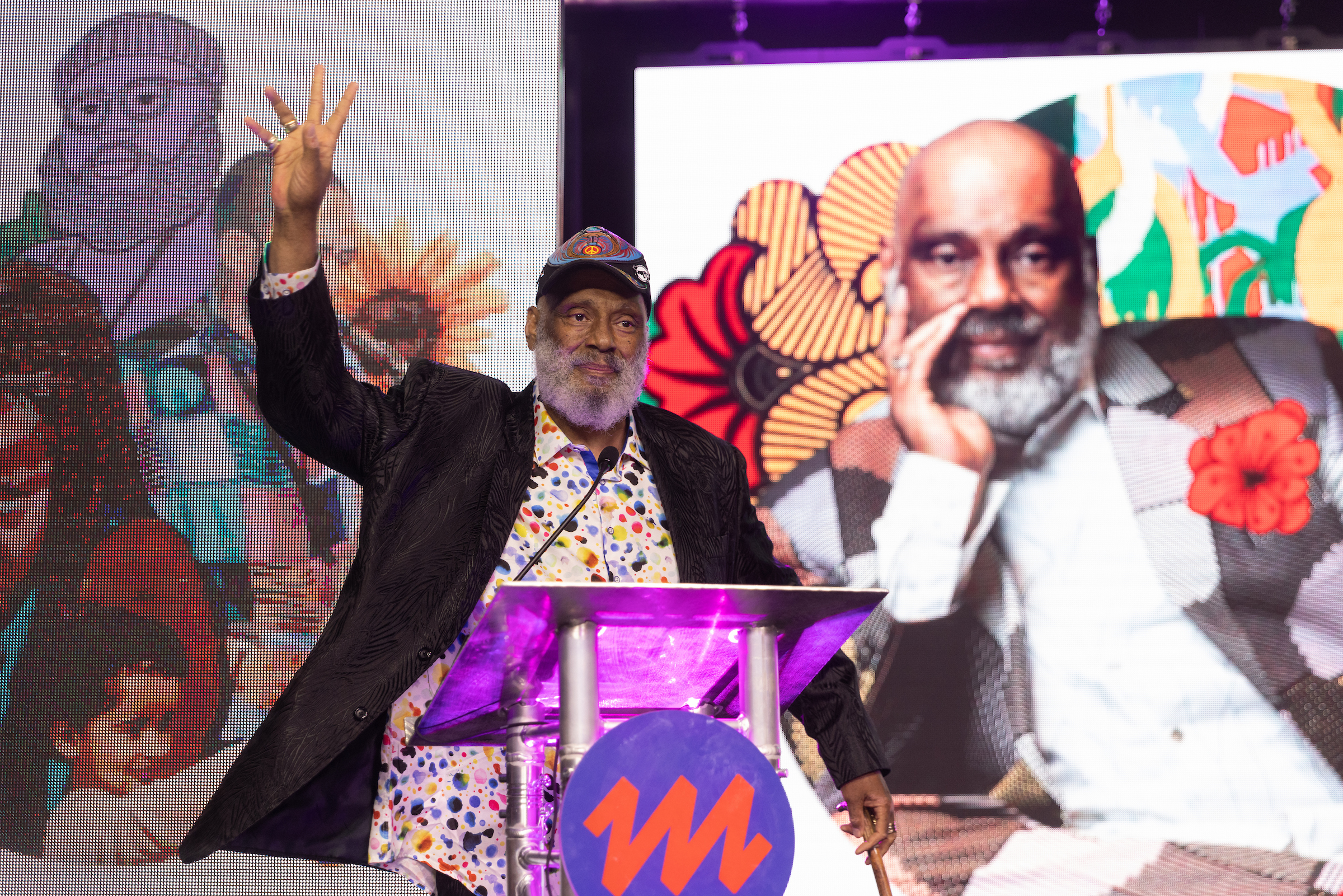
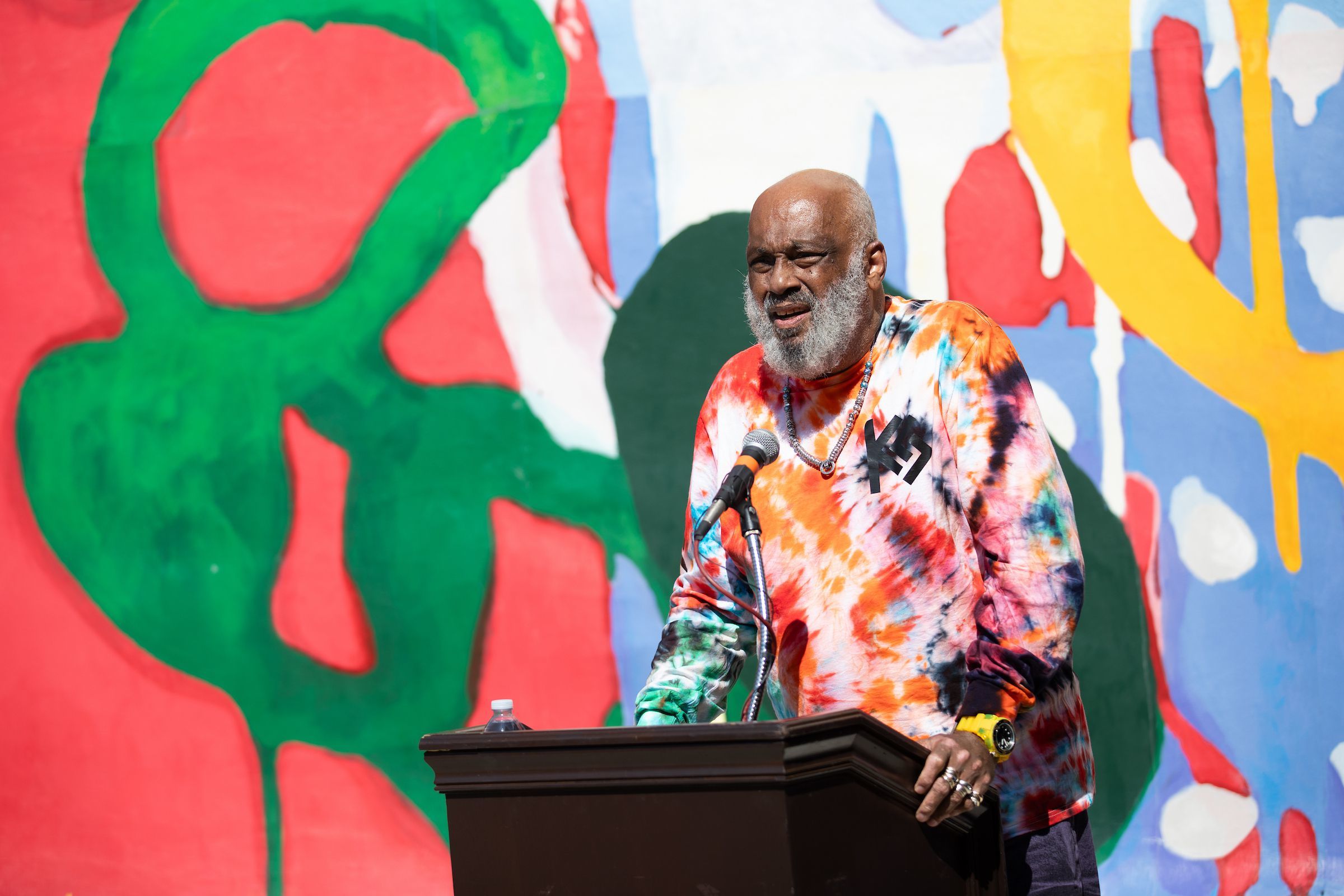
    Danny Simmons speaking at a Mural Arts Philadelphia event to unveil the 2023 mural, “My Crazy Red Rooster.”Mural Arts

    In 2015, the African American Museum hosted his solo show, “Badass Art, Man!” a colorful collection of paintings, collages, and statues he described as “neo-African abstract expressionist.”

    Later that year, he moved to Northern Liberties, because it reminded him of parts of Brooklyn, into a place with a backyard large enough to store his immense collections.

    He purchased an old bank building in the Logan section of Philadelphia on Old York Road and made it a home for Rush Arts Philadelphia, a community center and gallery. Until last month, the center supported the work of Philadelphia artists through a series of shows, exhibitions, and receptions.

    “Mr. Simmons had a remarkable ability to bring people together through art, inspiring others to see the world through a more vibrant lens,” said Ashley Jordan, president and CEO of the African American Museum in Philadelphia. “His presence was as memorable as the masterpieces he created and championed.”

    Mr. Simmons served on the Mural Arts board from 2022-25 and was the lead artist on four mural projects in Germantown and North Philadelphia.

    His work resides in the Woodmere Art Museum and the Pennsylvania Academy of Fine Arts. In 2019, he was appointed to the Philadelphia Museum of Art’s African American Collections Committee.

    “Danny was an extraordinary artist and human being,” said Jane Golden, founder and executive director of Mural Arts. “Danny was one of a kind, and he leaves very big shoes to fill in our city and our world.”

    Apart from his brothers, Mr. Simmons is survived by his wife, Keia Simmons; son, Jamel Simmons; and other family members and friends.

    Memorial services and celebrations have not been announced by the family.

  • A 100-unit apartment building with a rooftop pool is the latest new development slated for North Broad

    A 100-unit apartment building with a rooftop pool is the latest new development slated for North Broad

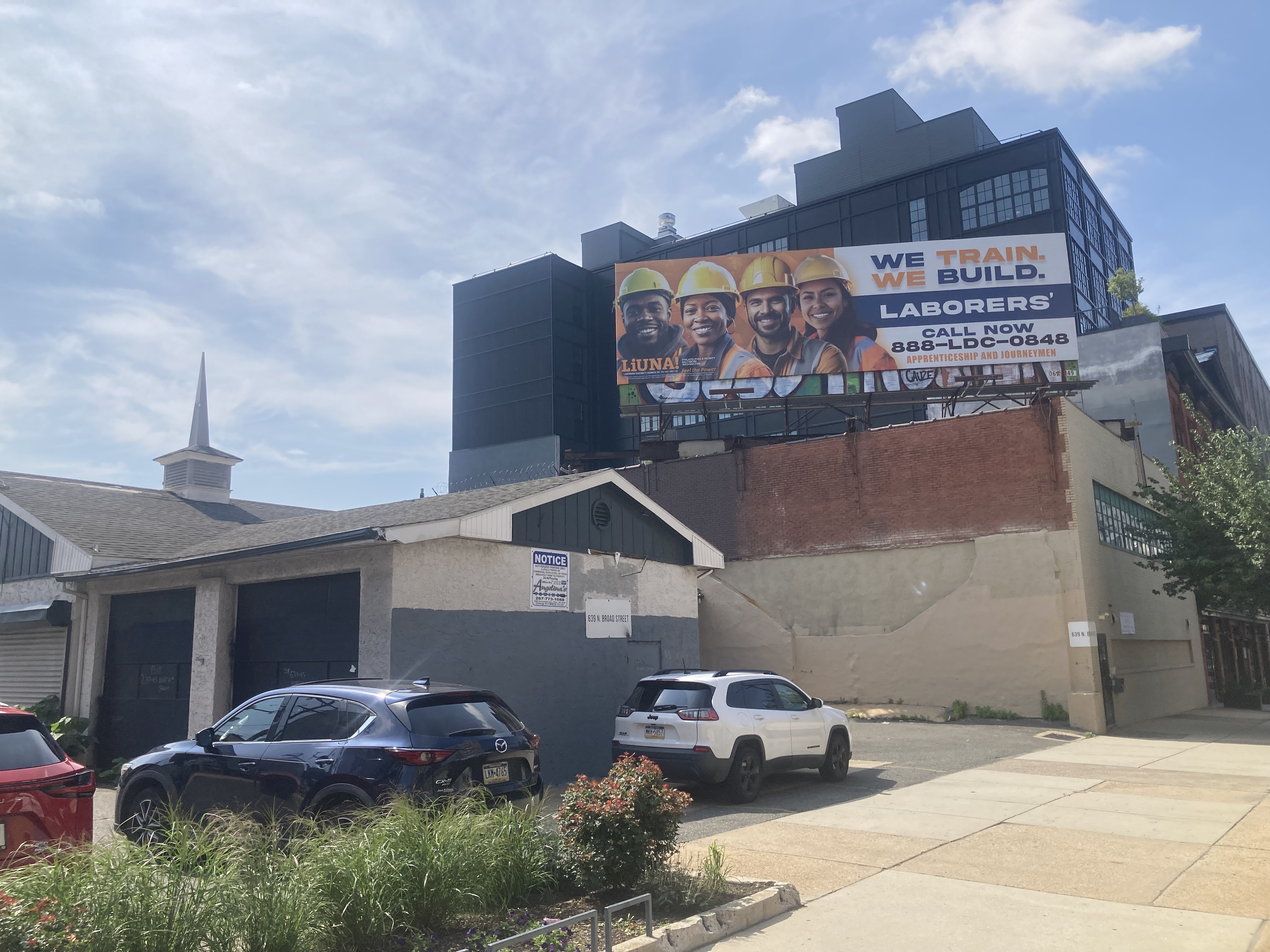
    A Long Island-based developer is planning a six-story, 100-unit apartment building — with a rooftop pool — at 639-53 N. Broad St.

    The property is owned by the Bill Wolf Petroleum Corp., which has expanded into retail and residential properties from its original focus on gas stations and other fuel-related real estate.

    The company has already redeveloped smaller buildings in Philadelphia at Fifth and South Streets and 12th and Walnut.

    The company acquired the Broad Street property in late 2021 for $6.9 million, according to city records. This week, Bill Wolf Petroleum obtained demolition permits for the existing auto-oriented and light industrial structures on the lot.

    The architect for the project is Stuart Rosenberg of SgRA Architects, who has worked with Bill Wolf Petroleum on its other Center City buildings.

    “They are looking for dense, urban, Center City development opportunities. They did not want to be on the outskirts like Northern Liberties or Port Richmond,” Rosenberg said. “They like Philadelphia. At the end of the day, you can build stuff here, so that’s why they’re investing in Philadelphia.”

    Documents posted on the Department of Licenses and Inspections website show a 72-foot-tall project, which includes the potential for over 4,500 square feet of bi-level commercial space fronting on North Broad Street.

    A parking garage is planned in the rear of the property with space for 33 vehicles as well as bike parking. It also sits directly above SEPTA’s Broad Street Line Fairmount Station.

    The property has some of the most flexible zoning in Philadelphia, allowing Bill Wolf Petroleum to move forward easily.

    The unit mixture will mostly be one- and two-bedrooms, with a few studio apartments. On the top floor will be between eight and 12 bi-level apartments.

    For the exterior, Rosenberg is planning designs in keeping with the surroundings on North Broad Street.

    “It’s going to be a classic, industrial type of vibe,” Rosenberg said. “It’s the aesthetic you’d see in a lot of New York or Philadelphia.”

    The acclaimed interior design firm Stokes Architecture & Design, which has worked on properties such as Parc and La Colombe’s Fishtown flagship, is being retained as well.

    The entrance to both the front lobby and garage will be on Wallace Street on the north side of the site. Retail will front on North Broad Street. In addition to the roof deck with a pool, there will be private balconies for the bi-level units on the top floor and a U-shaped courtyard on the second floor featuring additional outdoor space.

    Bill Wolf Petroleum’s project is just the latest in a burst of apartment developments proposed on North Broad Street.

    In the last eight months, 1,221 units have been permitted between City Hall and the southern border of Temple University’s campus. Much of the activity is clustered around the former Hahnemann University Hospital.

    “This part of the city [North Broad Street] is just really dynamic right now,” Rosenberg said.

    Some of the projects, however, are unlikely to break ground any time soon. Property owners like Brandywine Realty Trust obtained zoning permits after Councilmember Jeffery Young proposed a housing ban around the former Hahnemann campus.

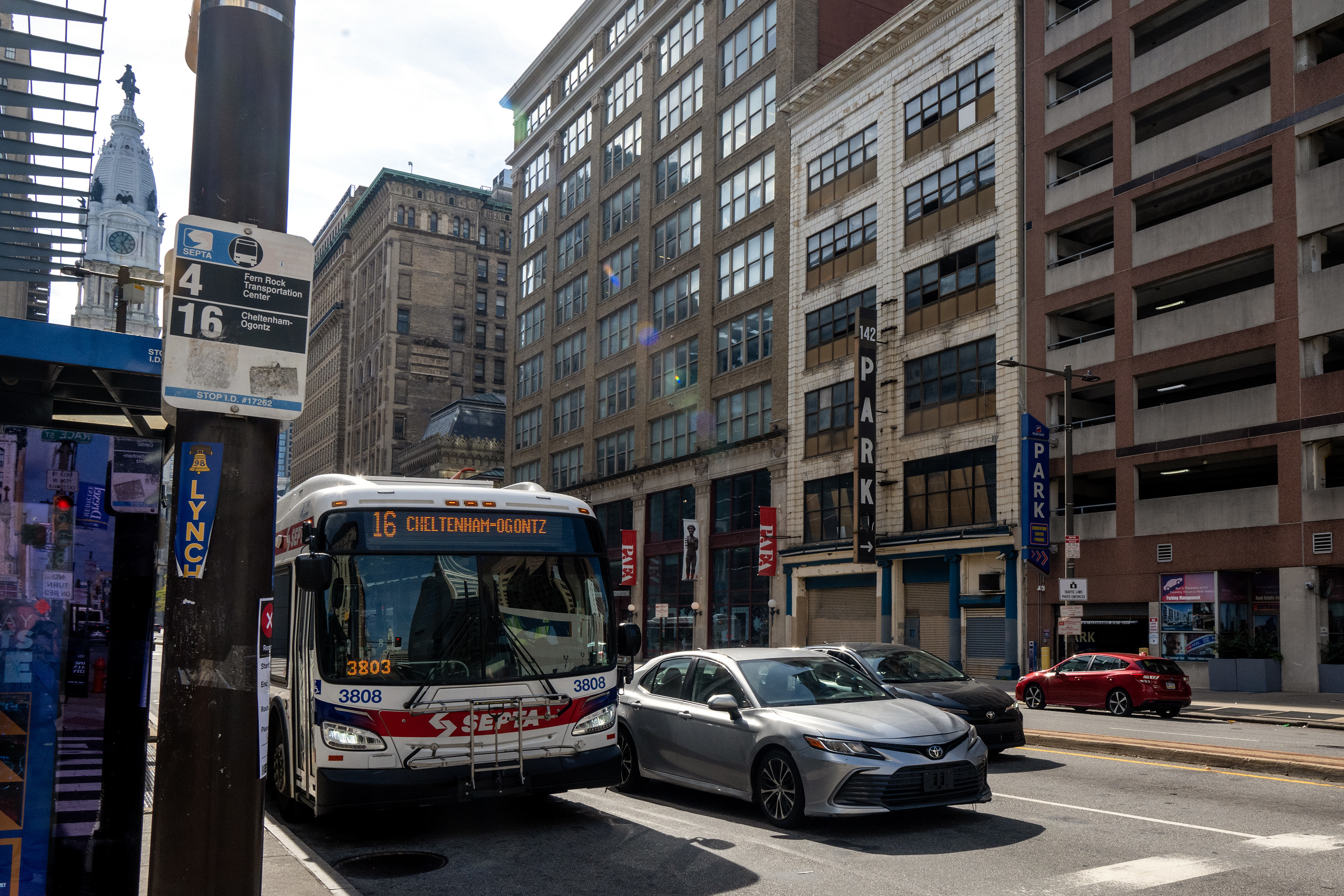
    142-44 N. Broad St. is another property slated for apartment development. Tom Gralish / Staff Photographer

    Although that bill was put on hold in the face of opposition from most stakeholders in the area — no one outside Young’s office ever publicly spoke in favor of it — the legislation prompted a rush to secure 824 apartment permits before it was shelved.

    Bill Wolf Petroleum’s project, which is outside Young’s proposed ban area, stands out because it is one of the only efforts that would not involve redeveloping an existing medical, industrial, or office building for residential use.

    The current interest in the North Broad Street corridor comes after an earlier boom, which saw developers like Alterra Property Group, Eric Blumenfeld, and Bart Blatstein scooping up struggling properties and vacant lots after the Great Recession.

    Some of those projects came to fruition, such as Alterra’s 410-unit Tower Place at Broad and Spring Garden Streets. Others had a more circuitous fate.

    North Broad organizations are watching the new developments with wary optimism.

    “I’ve learned to not get excited until there are shovels in the ground,” said Shalimar Thomas, executive director at North Broad Renaissance.

    But “it’s the main thoroughfare; it’s a great transportation hub, easy walkable,” Thomas said. “The potential and the bones and the structure are there. Maybe now more developers are starting to see that.”

  • Parlez-vous ‘L’? Hablas Filadelfia? SEPTA transit ambassadors have your back.

    Parlez-vous ‘L’? Hablas Filadelfia? SEPTA transit ambassadors have your back.

    OK, this scenario looked easy. Maybe I have what it takes.

    A passenger approaches you during your shift asking for directions to get to Northern Liberties from NRG station.

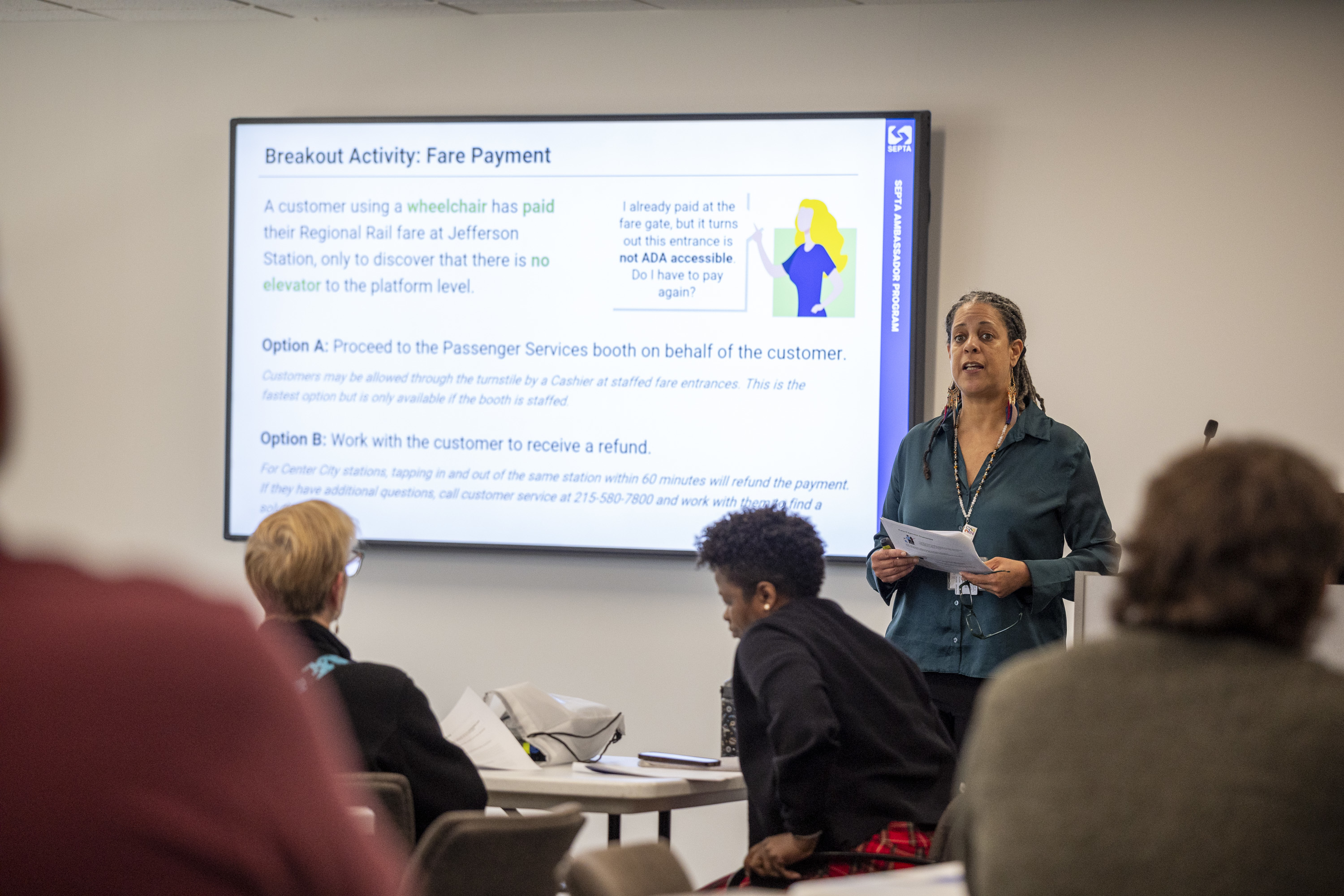
    I took the training class last week for SEPTA ambassadors alongside about 35 transit agency employees who had volunteered to help travelers find their way in a strange city during the World Cup.

    My tablemates asked what I would tell the person.

    Take the B (Broad Street) Line to 15th Street/City Hall, transfer to the eastbound L, and disembark at Spring Garden Station, on the southern edge of the neighborhood.

    Correct, to a point.

    “I didn’t say where I need to get to in Northern Liberties, right?” said Jena Burley, the SEPTA training facilitator teaching the class.

    Ack! Maybe the passenger would be better off taking the L for one more stop to Front-Girard, depending on the precise destination.

    “Ask for as much specific information as possible,” Burley said.

    SEPTA supervisors, administrators, and managers have been assigned 1,300 shifts as ambassadors in critical transit and Regional Rail stations from June 13 through July 19.

    Jena Burley leads the SEPTA ambassador class.Tyger Williams / Staff Photographer

    During that stretch Philadelphia will host six World Cup matches, the FIFA Fan Festival, the height of the nation’s 250th birthday bash, and Major League Baseball’s All-Star Week.

    Four to 12 ambassadors will provide information, directions, and, ideally, a friendly welcome in each designated station — along with crowd control, and de-escalation techniques for conflict.

    It’s a lot, which is why up to 1,000 employees have spent half a day in training with a detailed curriculum that feels like cramming for finals.

    I worked with them through scenarios of escalating severity to simulate situations they will encounter: sweaty, frustrated crowds on platforms; medical emergencies; confusion over SEPTA’s fares and methods of payment; and how to troubleshoot travel glitches. And scarier stuff.

    “This summer is an opportunity for SEPTA to shine, and you are such a big part of that,” said Lex Powers, chief officer for customer experience.

    The Disney approach

    This summer SEPTA is also debuting a new customer-service philosophy that subordinates other priorities to creating a safe and positive experience for people using the system.

    The approach is inspired by Disney’s iconic “four keys” of customer service, admired by general manager Scott A. Sauer, a Disney fan.

    The transit agency has used ambassadors since 2000 to help customers during special events like the Eagles Super Bowl parade last year, service changes, and the like. Officials rebooted the training program.

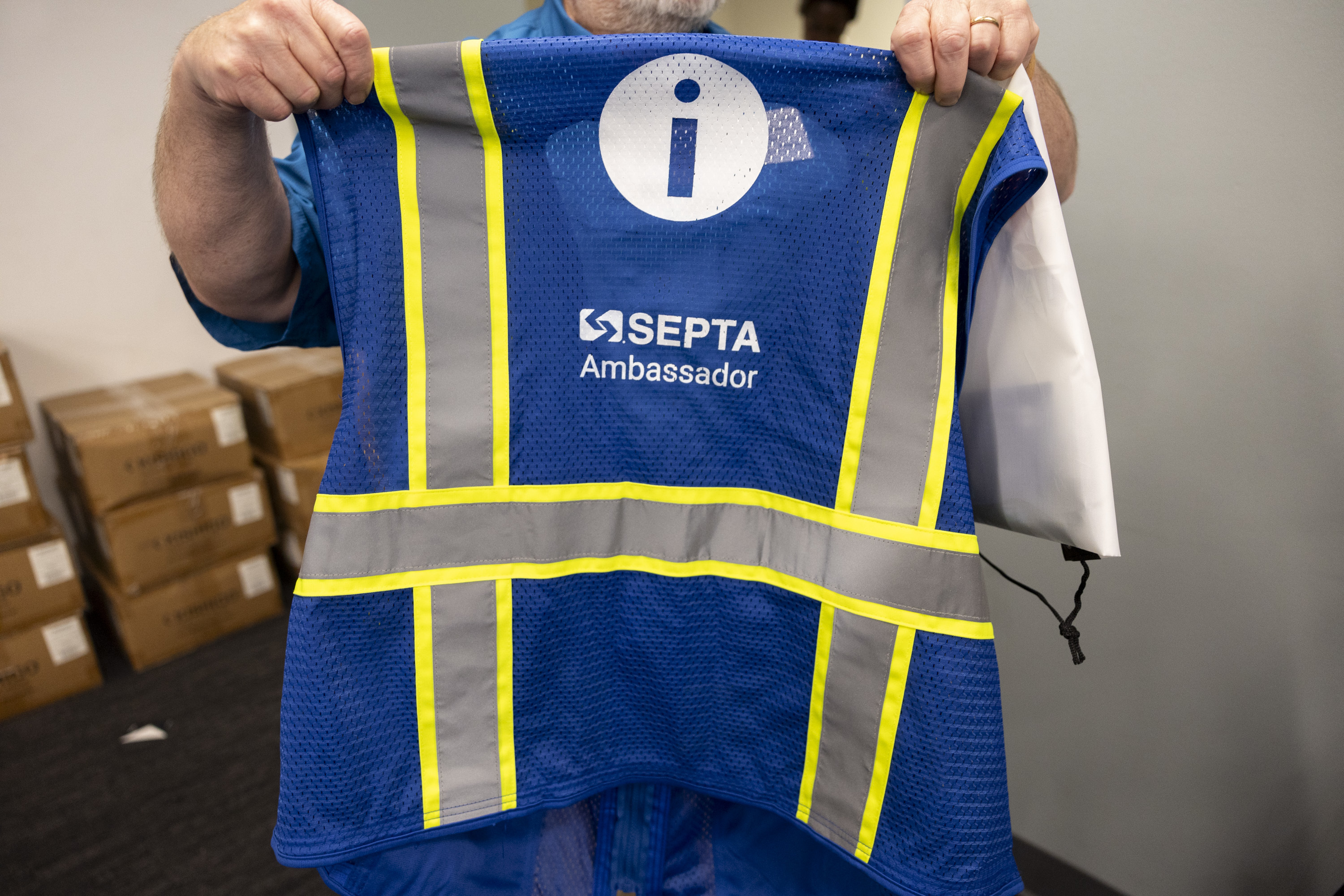
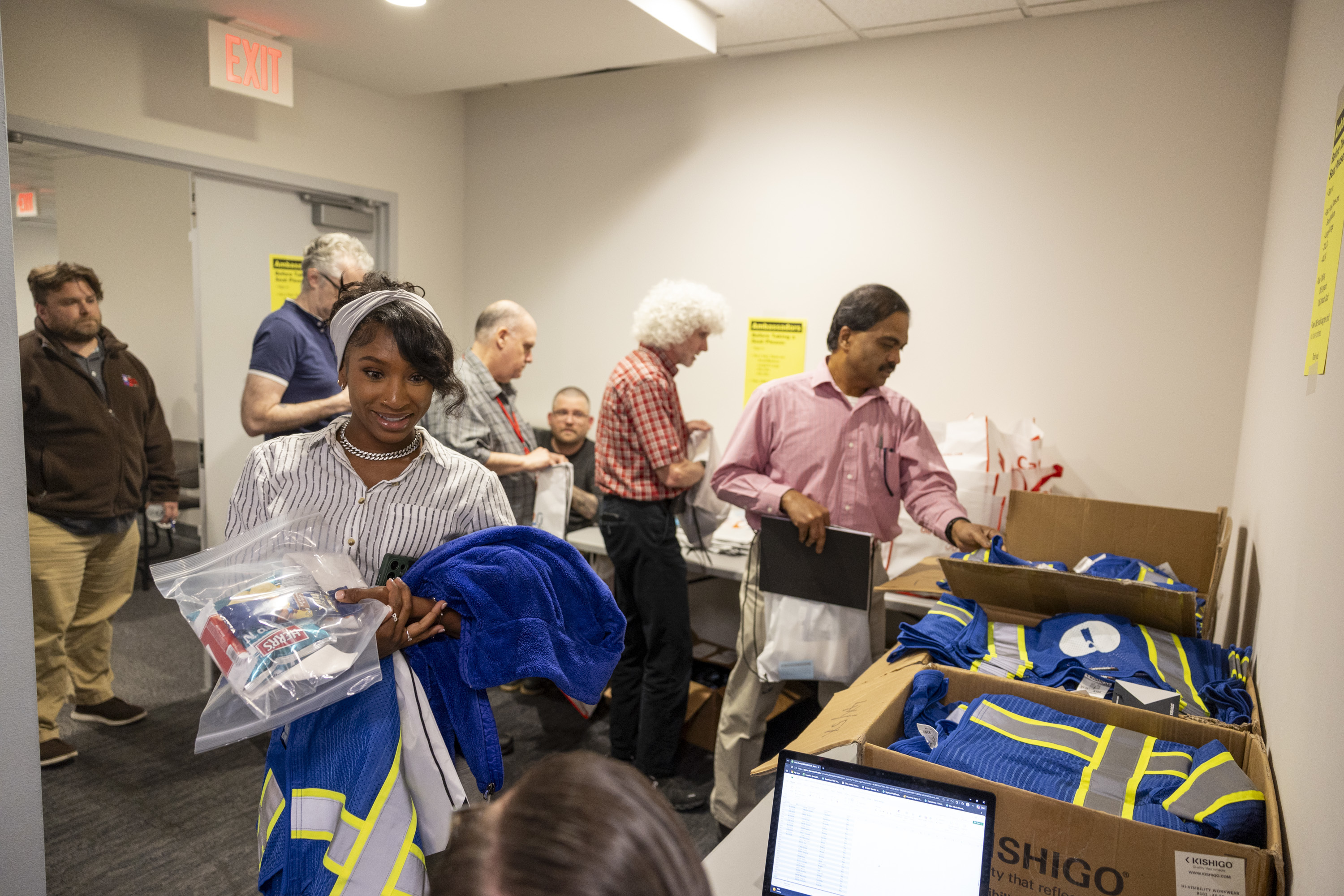
    This summer, ambassadors will carry “cheat sheet” cards and wear blue vests to differentiate them from other workers in typical yellow safety vests.

    I got my own blue vest at the start of the class — pretty snazzy — and tried to earn it.

    Brittany Davis, of Northeast Philadelphia, a service planner at SEPTA, gets her vest.Tyger Williams / Staff Photographer

    Cultural correctness

    The recent training included “cultural diplomacy” briefing sheets with guidance on customs and backgrounds of the countries with national teams playing here, prepared by the World Affairs Council of Philadelphia and protocol experts.

    For instance, I learned:

    • Never flash the “OK” hand gesture to a Brazilian. It’s offensive, like flipping the bird.
    • When greeting or handing things to a person from Ivory Coast, use your right hand. It is a social slight to use the left, which is reserved for personal hygiene.
    • In some cultures, such as Ghana, it is customary to exchange pleasantries before getting down to business. People from Curaçao, influenced by Dutch culture, can be more direct and, while friendly, value personal space.

    ‘Bring the temperature down’

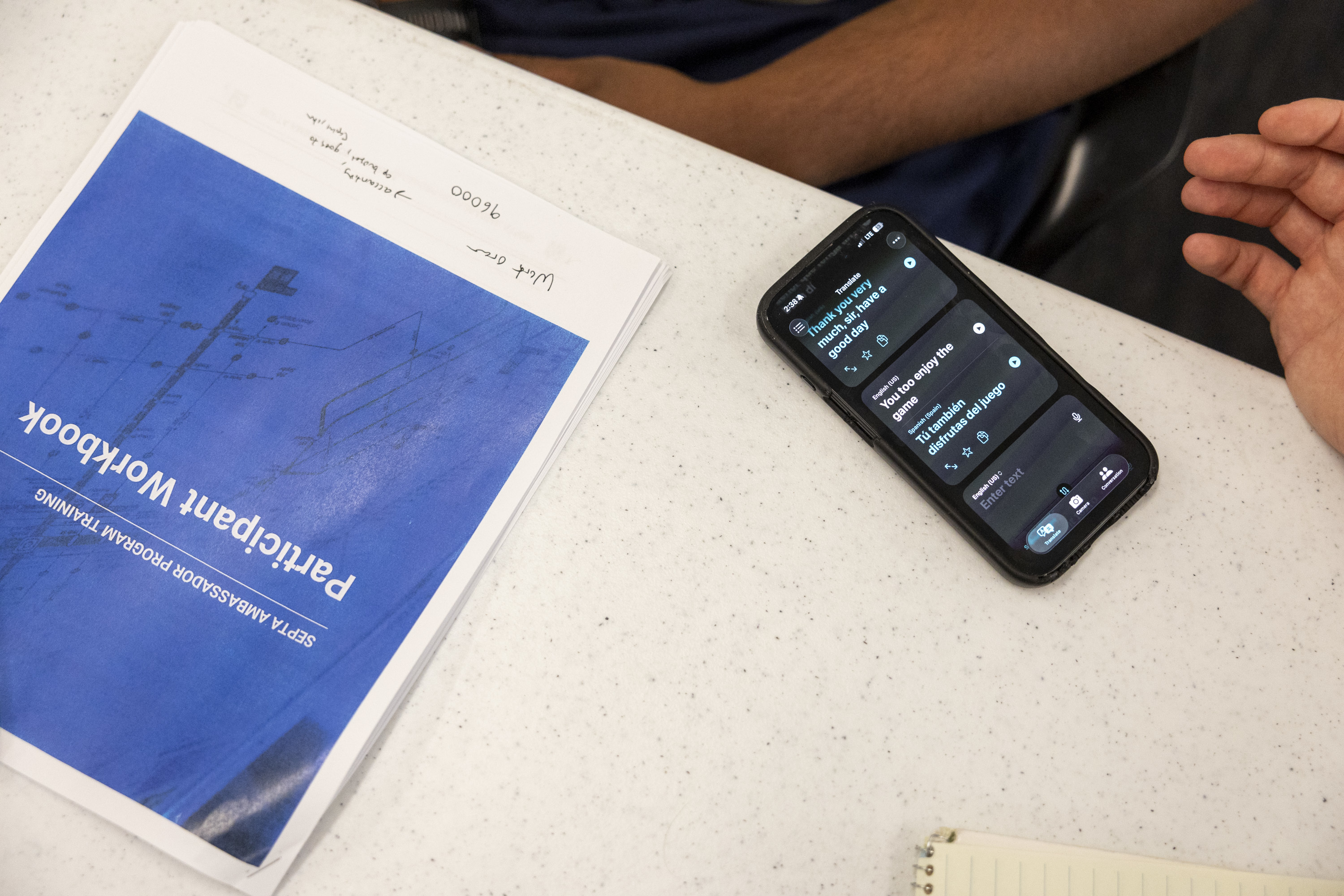
    My fellow trainees and I shared tables in a conference room and huddled to work through often complex scenarios in a 24-page workbook.

    You notice a particularly long line forming at one fare gate and go to investigate. …

    A customer is tapping a credit card over and over, but it doesn’t work. Another customer tries to squeeze past them, increasing tension, and voices in the line start to rise.

    “You want to bring the temperature down,“ said Noah Lee, manager of service-information development, with whom I shared a table. ”Take the person whose card doesn’t work off to the side to figure it out, and let other people go through.“

    Nithin Vejendla, an operation planner, speaks Spanish in the Google Translator app.Tyger Williams / Staff Photographer

    Nithin Vejendla said the bottleneck could be a two-person job and suggested bringing in another ambassador to wave people through the gate.

    “Try empathizing with them,” said Vejendla, a SEPTA operations planner who was at my table. “Like, ‘I know it’s frustrating. I’ve had times where [tapping] doesn’t work. … We’ll get you on the next train.’”

    Meanwhile, fix it. Is the person tapping incorrectly? Maybe the card reader’s bad, so try another turnstile. Consult a cashier.

    The situation worsens.

    A customer that has been held up in the line starts pushing and shoving the people in front of them. They are clearly agitated … [and] verbally threatening people.

    “If they keep escalating, at that point your responsibility shifts to keeping the other passengers safe,” Vejendla said. “Maybe you stay between them and the fare gates, a physical barrier.“

    Lee worked an ambassador shift during the 2025 Super Bowl parade and said he didn’t see anything like that.

    “The atmosphere was joyful, and it was in the morning,” Lee said.

    Vejendla, an operations planner who has worked at SEPTA for almost three years, was an ambassador for the Eagles parade and the Flower Show, and when SEPTA briefly cut and changed bus routes last year.

    Later, trainees downloaded Google Translate to practice.

    Vejendla speaks fluent Spanish and rough French. Powers, his boss, was teasing him about it.

    “Lex was like, and I quote, ‘I can’t believe the system understood you. That French accent was terrible.’”

    When emergencies arise

    Sometimes, the scenarios are more serious. People wind up in the track area, trying to retrieve an item or having fallen off a platform. What do you do?

    “Stop the train. Think about everything else later,” Burley said.

    Heather Jordan, employee relations manager, (right), and Kim Smith, senior project engineer and track engineering with SEPTA, (left), are looking at the SEPTA app to answer questions for an exercise during the SEPTA’s Ambassador class.Tyger Williams / Staff Photographer

    Go to the cashier and get them to push the Emergency Train Stop button, which activates a “stop” signal light. There are red flags in the booth to wave at incoming trains.

    Moving your arm back and forth at chest level is a traditional railroad stop signal. “Or go berserk,” Burley said, waving your arms over your head or flashing a phone flashlight.

    Do not enter the track area, and don’t try to pull a person up. The third rail carries 600 to 750 volts of electricity.

    “You’re there to keep customers safe, but if you’re not safe, you can’t help,” Burley said.

    As class ended and everyone left, I carried a deeper respect for the job of ambassador. I wished my fellow students good luck.