Tag: no-latest

  • ‘No help’: Aid arrived too late as Ebola spread in a Congolese town

    ‘No help’: Aid arrived too late as Ebola spread in a Congolese town

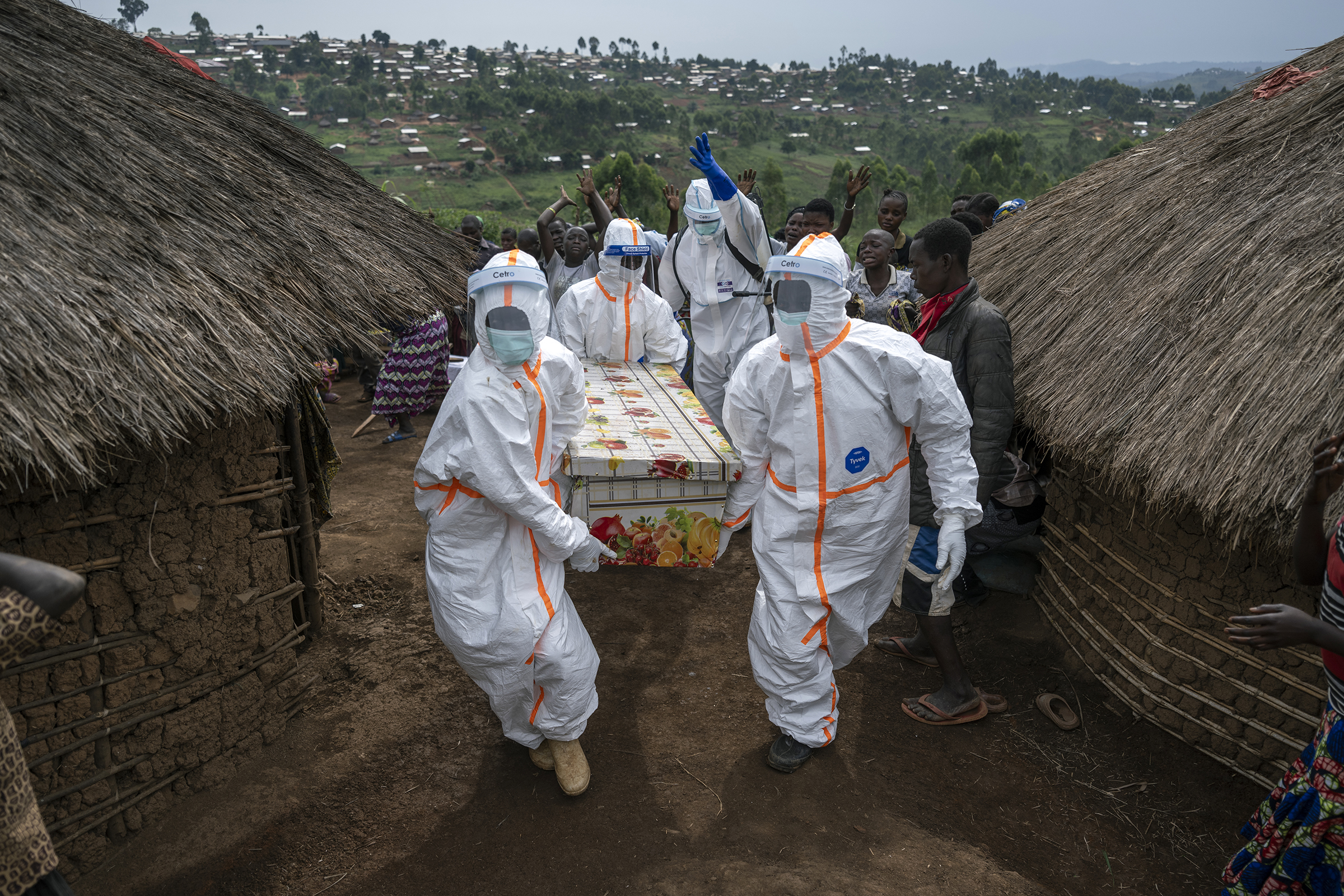
    MANGALA, Congo — On a hilltop town in eastern Congo, work has started on a new Ebola center. When completed, it will anchor an effort to contain the virus in the town and its surrounding villages.

    Local health workers say the center is too late.

    Many lives could have been saved, the health workers say, had a sustained effort to combat the virus started in the town of Mangala in June.

    In other towns in Ituri province, the epicenter of the outbreak, Ebola treatment centers were set up weeks after the World Health Organization declared a health emergency in May. In Mangala, the Ebola response only started ramping up in August.

    This outbreak, already the second largest on record, has reached seven different provinces in Congo and likely began spreading as early as January. More than 3,900 people have died of Ebola in Congo since May, according to the latest data from the government.

    There is tentative evidence to suggest that the response is making progress. The number of new cases reported each week appears to have reached a peak in August, according to recent figures from Africa Centers for Disease Control and Prevention. Outside aid organizations typically play a major role in African Ebola outbreaks, supplementing often weak government capacity.

    But health workers in Mangala say fewer lives would have been lost had help arrived sooner.

    “There was no help, not even a bit,” said Godefroy Banzani, a senior nurse in Mangala, recalling how the town felt abandoned in the early weeks of the outbreak.

    Experts say that what happened in Mangala underscores how this Ebola outbreak became the largest and fastest-growing that Congo has ever seen.

    “With an epidemic, the slower the response, the bigger it grows,” said Julien Harneis, a senior Ebola response coordinator for the United Nations.

    Health workers offered several explanations as to why the response lagged in Mangala. One issue: the town has few hotels, forcing aid workers to make a three-hour trip each day from Bunia, the regional capital. The rutted road is so dusty that drivers sometimes have to stop because they cannot see, while after rains it can become too muddy to navigate.

    Violent insurgents sometimes impose checkpoints along the dirt road leading into town. Foreign aid cuts have forced health workers to make painful choices about already scarce resources, including where to build Ebola centers, said Luca Fontana, a senior WHO official with years of experience fighting the virus.

    Privately, however, some international health workers said that Mangala was simply overlooked. Wessam Mankoula, head of emergencies at Africa CDC, acknowledged the concern in Mangala and said that it was difficult to establish treatment centers in every health zone affected by the virus.

    When the WHO declared an outbreak in mid-May, there were already hundreds of Ebola cases in Ituri province, setting the overall response on the back foot from the start. But health teams in towns such as Mongbwalu, Bunia, and Nizi were quickly mobilized to educate communities on infection.

    As those efforts were underway, Mangala remained on its own, officials say.

    When the New York Times visited the town in September, signs of the struggle to contain the virus were everywhere. The coming treatment center, which will be run by the international humanitarian medical charity Alima, was just a patch of flattened red earth.

    In the meantime, Mangala relies on the district hospital, where in the early months of the outbreak, Ebola patients were treated in a mud house with no windows, an earthen floor, and little ventilation.

    One afternoon in September, health workers set fire to their protective clothing after use, sending dark smoke skyward as the synthetic material burst into flames.

    The fire burned yards from an area accessible to villagers.

    Most treatment centers in Ituri province are strictly divided into green and red zones. Patients and suspected Ebola cases are kept in the red zone, and anyone entering must wear protective clothing. In the separate green zone, medical staff members and visitors can enter safely, talking with patients at a distance or through plastic screens.

    But at the regional hospital in Mangala, staff members said people with signs of the virus circulated freely across a central, grassy courtyard.

    Mave Liripa, 26, came to the hospital with her mother and 1-year-old daughter, Justine Ngabusi, in September. All three showed signs of Ebola, including fever and vomiting, Liripa said.

    Liripa’s 8-year-old son had died with Ebola symptoms the previous week, and the family buried him at home, she said.

    Nurses wearing protective gear took blood samples from the family to be sent for testing. Nurses told the family to sit on a bench, which was near patients with unrelated illnesses.

    “Everywhere is a red zone here,” said Jacques Savo Bamuhiga, the medical director in Mangala. Five nurses and a doctor have contracted Ebola at the hospital already, and one nurse has died, Bamuhiga said.

    The government stopped paying Mangala’s hospital staff at the start of the crisis. It gave no reason for the suspension, but the decision damaged morale and hindered efforts to organize a response, doctors said.

    Some heath workers quit, while others staged a brief strike. Though they have since returned to work, some said that they had still not received their salaries. Bamuhiga praised the staff who had worked unpaid through the crisis.

    Congo’s health minister, Roger Kamba, acknowledged that some health workers had not been paid. The government was working to resolve the problem quickly and would add a bonus to health worker salaries, he said.

    Hospital treatment increases the chances of patient recovery, which helps to convince residents of the benefits of disclosing to medical workers when someone is ill. Ebola patients are most infectious in the final days of the illness and just after death, making safe burials essential.

    All this reduces community transmission. But people must first be persuaded to allow sick relatives to be treated in hospitals rather than at home.

    In Mangala, a fledgling outreach team was only established in August. As a result, fears spread unchecked through the town that the hospital was injecting its patients with Ebola, staff members said.

    Residents boycotted the hospital and, even as late as early September, treatment rooms that were usually packed with patients before the outbreak remained empty.

    On top of the elevated community transmission caused by home treatment and unsafe burials, more people have died of conditions unrelated to the virus because they were too afraid to go to the hospital, Bamuhiga said.

    A single ambulance was recently assigned to the Ebola response team in Mangala and nearby villages, but several residents said they have sometimes waited days for its arrival.

    The ambulance, a four-wheel drive, picked up six patients on a recent afternoon. The patients scrambled into the car’s bench seats. Nurses had no choice but to cram three suspected Ebola patients next to patients with unrelated illnesses.

    How many people could have been saved in Mangala had help arrived sooner is difficult to determine. Bamuhiga put the official Ebola death toll in the town at 165, but said that number failed to reflect the many deaths at home.

    This article originally appeared in the New York Times.
  • Democrats project a party milestone in Congress: 100 women in the House

    Democrats project a party milestone in Congress: 100 women in the House

    WASHINGTON — Democrats pressing to win control of Congress in the midterm elections are also reaching for a major milestone in their ranks: electing at least 100 women to the House, the most ever in a legislative body that is still heavily dominated by older white men.

    With female candidates competing in many key districts that will determine the House majority, and polls showing the party gaining ground in those contests, Democrats are projecting they could have as many as 113 women in their ranks next year.

    “I’m incredibly confident that we will pass that 100 mark,” Rep. Teresa Leger Fernández of New Mexico, chairperson of the Democratic Women’s Caucus, said in an interview. “The real issue is how far above it do we go.”

    The peak projection of 113 could only be reached if Democrats won every competitive race, including a few that more strongly favor Republicans, a highly unlikely scenario even in the best of years. But even reaching 100 would be a high-water mark that was unthinkable just a generation ago. When EMILY’s List, the largest funder of female Democratic candidates who support abortion rights, was founded in 1985, less than 5% of the House Democratic Caucus were women. Now, it is approaching 50%.

    “We have all along in this election cycle put women front and center to deliver the House majority,” said Jessica Mackler, president of EMILY’s List, who noted that women backed by the organization make up a majority of toss-up House races.

    That didn’t happen by accident. This year, 18 out of the 40 Democrats in the party’s “Red to Blue” program that funds top contenders in battleground districts are women.

    “Women are going to give Democrats the majority in two ways,” Leger Fernández said. “We’re going to elect women candidates who will flip the House, and it’s also women voters who will come out and overwhelmingly vote for Democratic candidates, because the two hardest-hit groups by the Republicans’ policies have been Latinos and women.”

    There are 97 women in the House Democratic Caucus (including two nonvoting delegates who represent Washington, D.C., and the Virgin Islands), a record for female representation accounting for around 45% of Democratic members.

    While some are retiring, Democrats expect those who remain to be joined by a large crop of women running in safe Democratic districts and others who are strongly favored to win competitive races in an environment that polls show is favorable to their party, resulting in even higher numbers next year.

    The first tier of candidates Democratic leaders are counting on includes a dozen women who are running in open or safely Democratic seats, including Melat Kiros in Colorado, Darializa Avila Chevalier and Claire Valdez in New York, and Stefany Shaheen in New Hampshire.

    Three others pressing to flip Republican districts are seen as very likely to win: Marni von Wilpert, who is running in a newly drawn California district; Denise Powell, who is seeking a Democratic-trending Nebraska seat occupied by Republican Rep. Don Bacon; and Rebecca Bennett, who is polling ahead of Rep. Tom Kean Jr., the lawmaker who was absent from Congress for more than 100 days for what he later revealed was a struggle with depression.

    A dozen more women are running in races that the nonpartisan Cook Political Report ranks as “tossups.” Leger said she was confident that three or more of them would win in November. They include challengers to some of the most vulnerable Republican incumbents, including Reps. Rob Bresnahan Jr. of Pennsylvania, Jen Kiggans of Virginia, Derrick Van Orden of Wisconsin, Juan Ciscomani of Arizona, Mike Lawler of New York, and Mariannette Miller-Meeks of Iowa.

    If a handful of Democratic women running to flip more Republican-leaning districts in Colorado, Florida, Iowa, and South Carolina prevail, the ranks could swell even more.

    Should Democrats win the majority, Leger said she expected women to be the driving force next year on an agenda focused on childcare and eldercare.

    In her state of New Mexico, she said, “We have a majority-women legislature with a woman governor and we have universal childcare; I want to see that kind of progress.”

    Kelly Dittmar, a professor of political science at Rutgers University, said that representation mattered also “for perceptions of legitimacy.” A growing number of women serving in legislatures not only changes policy but “changes the institutions themselves,” she said.

    As an example, Dittmar pointed to the reaction in 2020 to an episode in which Rep. Alexandria Ocasio-Cortez (D., N.Y.) was called a “f—ing b—” by a male Republican colleague. Instead of letting it go, Ocasio-Cortez delivered a floor speech in which she read the vulgarity into the congressional record, and other female lawmakers rose to recount their own stories of experiencing sexism in the halls of power.

    Leger said having more women in Congress would also be more effective than any policy change in addressing the culture of sexual harassment on Capitol Hill.

    “When you have close to 50% of the Democratic caucus understanding what is it like to be on the other end of sexual assault, sexual mistreatment, sexual harassment, the conversation changes,” she said.

    Republicans have far less gender diversity in their ranks in the House, where there are currently 32 GOP women (including two nonvoting delegates) — around 15% of their members — and are at risk of those levels dropping further. To maintain the party’s number of female House members, it’s likely that six vulnerable GOP women would have to succeed in fending off their challengers next month.

    The GOP is also losing much of its racial diversity in the House: All four Black Republicans serving there are leaving Congress next year.

    Rep. Emilia Sykes (D., Ohio) said there were still small daily reminders that she served in an institution that was not designed with her in mind, even as the number of women climbed.

    “The size of the chairs is a problem,” Sykes said. “I’m not a big person; sitting in the chairs that are very large, my feet dangle.”

    She said she sometimes receives letters addressed to “the congressman,” which boggles her mind.

    “I think, ‘OK, you’re coming to advocate for millions of dollars and significant policy changes, and you have the lack of research to know the member isn’t a man,’” she said.

    Sykes said her journey to Congress as a young Black woman has been challenging: Fundraising has been more difficult for her, she said. Consultants were quick to overlook her when she first wanted to run. But she said she was a firm believer in the mantra “if you see it, you can be it.”

    “For the women who have found their way,” she added, “the fights that they’re fighting are incredible.”

    This article originally appeared in the New York Times.

  • White House blocks Politico from trip on Air Force One

    White House blocks Politico from trip on Air Force One

    The White House blocked Politico from traveling aboard Air Force One for President Donald Trump’s planned trip to Nebraska on Monday, a spokesperson for the outlet confirmed in an email.

    Politico, along with CNN and MS NOW, was banned from White House grounds in September; that decision was halted by a federal judge, who temporarily reinstated the outlets’ press credentials after they sued.

    But the judge’s decision does not extend beyond the White House grounds, or mention the traveling press pool, which reports on the president’s movements. The White House late last month blocked CNN from traveling on Air Force One, barring it from its duties to the broadcast pool, a group of outlets dedicated to filming the president.

    Politico was set to be the out-of-town print pooler, in charge of keeping an eye on the president’s whereabouts and activities and reporting them for the benefit of other news outlets. The decision Monday meant that Politico would not be able to fulfill those duties; it was unclear whether another outlet would step in to take its place.

    News of the decision was first reported by CNN. The White House did not immediately respond to a request for comment. Politico declined to share a statement beyond confirming the news.

  • Russia moves to tamp down speculation about plague in Siberia

    Russia moves to tamp down speculation about plague in Siberia

    The rumors have been swirling for days. That a young lab worker died of suspected plague in Siberia. That authorities feared an epidemic might spread and had quarantined hundreds of people.

    While concrete information is scant, conflicting reports abound. The name of the lab worker. Her age. If she died or what she may have died from.

    Russia’s consumer watchdog, which oversees disease control, has said only that “an employee of an anti-plague institute in the Irkutsk Region” was “diagnosed with pneumonia” of unknown origin.

    That has not stopped the rumors — fueled in part by contradictory statements from local officials as well as by a widespread distrust of Russian authorities, who have in the past concealed emergencies, like the AIDS outbreak in the 1980s — from making international headlines.

    With the Kremlin on Monday urging people to ignore speculation, here is what to know.

    The official line

    The Russian consumer watchdog did not name the employee. In a statement carried by state news outlets and published in pieces, the agency said that “no microorganisms linked to her professional activity were identified in the patient’s samples” and that “no health changes related to infectious pathology” had been identified among her contacts.

    A commission also checked the anti-plague institute in Irkutsk for compliance with “biological safety requirements,” the agency said, and “no emergency situations involving pathogenic microorganisms were identified.”

    The Irkutsk institute conducts research on a number of infectious diseases, including plague, which is caused by a bacterium. While there are a few hundred cases globally every year, mainly in Africa, plague can be easily treated with antibiotics if caught early.

    In its statement, the consumer watchdog added that the “sanitary and epidemiological situation” in the Irkutsk region was “stable.”

    The statement was issued Sunday, two days after initial reports emerged about something more concerning happening in the Irkutsk region, which is about 2,600 miles east of Moscow.

    Contradictory statements

    The first signs of a potential issue came Friday, when the Irkutsk regional governor said that he had held “an extraordinary meeting” with Russia’s chief sanitary physician about “a suspected case of a particularly dangerous infection in a resident.”

    “All identified contacts” of the resident “have been placed under medical observation,” the governor, Igor I. Kobzev, wrote in a statement on social media.

    That day, the mayor of Shelekhov, a town close to the city of Irkutsk, the regional capital, said that he had received “many inquiries” from residents and could confirm that the local hospital’s inpatient department was closed for quarantine. The mayor, Maksim N. Modin, said the hospital’s laboratory had suspended operations. He urged residents “not to spread rumors.”

    The governor of the neighboring Buryatia region, Aleksei Tsydenov, was the first to officially raise the prospect of plague. He said Friday that “the woman who died of plague in the Irkutsk region” had not visited Buryatia. His post on a state-linked messaging app was later updated to read “possibly died of plague.”

    The following day, authorities in Baikalsk, a town about 50 miles from the city of Irkutsk, cited “unofficial information” about “a case of plague” in a statement advising against travel to Shelekhov. That statement, on Telegram, was later deleted.

    So were at least three posts by Ren-TV, a federal news network, including one that named the deceased lab worker and reported that she had researched plague.

    Modin, the Shelekhov mayor, said Monday that the consumer watchdog had the situation “under strict control,” adding, “a set of anti-epidemic measures is being carried out.”

    Theories and speculation

    Local news media have painted a bleaker picture. Lyudi Baikala, a regional outlet, reported that in addition to the Shelekhov hospital, other clinics and a maternity ward had been closed in Irkutsk.

    Pavel Stepanov, a local journalist, posted on his Telegram channel that a young laboratory assistant had broken a test vial and died. That statement could not be independently verified. In a subsequent post Monday, Stepanov defended his reporting and questioned why some government agencies and Kremlin-friendly news outlets had deleted statements and stories about Irkutsk.

    The authorities, he said, “should investigate whether all this is not a sabotage by our enemies, who are acting with increasingly sophisticated methods.”

    Any reason to be scared?

    Officials in the United States and the European Union have said they are aware of and monitoring the reports about Irkutsk.

    A potential lab leak and a feared disease prompted some comparisons with COVID-19, but experts noted that even if plague were confirmed, the risk would be limited. Human cases of plague occur each year and are relatively simple to treat.

    Professor Ian Jones, a virus expert at the University of Reading, England, said in an emailed statement that the Irkutsk case “seems like a rare lab accident and is unlikely to go much further.”

    This article originally appeared in the New York Times.

  • Spain calls early election after housing crisis roils government

    Spain calls early election after housing crisis roils government

    MADRID — Prime Minister Pedro Sánchez of Spain called for early elections Monday, days after his left-wing governing coalition, which lacks a majority in parliament, lost a parliamentary vote to pass a package of emergency housing measures.

    Sánchez and other left-wing politicians are seeking to frame the early election around Spain’s housing crisis, after thousands of people protested in recent days against soaring rents and home prices. But the conservative Popular Party and the far-right Vox party are expected to focus instead on the migration crisis, and on Sánchez himself, a deeply unpopular figure among right-wing voters.

    The snap election will be held Nov. 29, months ahead of schedule, Sánchez said on Monday.

    Sánchez, one of Europe’s longest-serving leaders, had become a hero to the global left for standing up to the Trump administration over the war in Iran, and for supporting renewable energy and inclusive immigration policies. At home, his popularity was dented first by corruption accusations directed at his innermost circle, and then by a major migration crisis spurred by the sudden surge of tens of thousands of migrants into a Spanish territory in North Africa.

    The defeat of the housing measures, which Sánchez had hoped would soothe public anger at rising evictions and soaring rents — symbolized by the recent eviction of María del Carmen Abascal, an 87-year-old woman in Madrid — amounted to the final straw. The loss showed that his government was essentially paralyzed and unable to pass legislation that its liberal base deemed vital.

    But it also handed Sánchez an issue that could rally his left-wing base during the campaign, as he tries to defeat conservatives who currently outperform his Socialist Party in polls.

    “To carry out the far-reaching reforms to reduce inequality,” Sánchez said in a press briefing Monday, “we must mobilize to secure a much larger progressive majority in parliament — one capable of taking on the elites, achieving new social advances, and continuing to transform Spain.”

    Sánchez said voters would have to choose between keeping Spain as “a bastion of social justice” or “the far-right wave that brings regression wherever it governs.” That was a reference to Vox, which could join a right-wing government led by the Popular Party, the main conservative opposition group.

    The Popular Party celebrated Sánchez’s announcement as a victory, as it had been calling for months for an early election. “FINALLY,” the party said on social media Monday morning. “We will deliver justice, recover lost time, money and hope, and rebuild our country,” the party said in a video.

    Sánchez’s decision comes amid voter outrage at the eviction of Abascal. Though she was subsequently allowed to return home, her treatment led to mass protests and a tent encampment in central Madrid — and to the failed parliamentary vote last week.

    Polls in Spain have consistently shown broader support for right-wing parties in recent months. According to current projections, Sánchez’s left-wing bloc is falling well short of the numbers needed for a parliamentary majority. But after nearly a decade of leading the country, Sánchez has built a reputation for political comebacks.

    Sánchez’s decision to call an early election added to the shakiness that has been troubling European assets in financial markets recently. On Monday, the euro dropped to about $1.12, its lowest level since May 2025 against the U.S. dollar.

    This article originally appeared in the New York Times.

  • Obama to appear with El-Sayed in Detroit as the ex-president gets more involved in the midterms

    Obama to appear with El-Sayed in Detroit as the ex-president gets more involved in the midterms

    DETROIT — Former President Barack Obama will campaign alongside Michigan Senate candidate Abdul El-Sayed in Detroit later this month, lending his support to the progressive nominee after a bruising Democratic primary exposed divisions within the party.

    Obama will appear with El-Sayed at an Oct. 24 rally that will also feature other top Democratic candidates in Michigan, including Jocelyn Benson, the party’s nominee for governor. Obama is getting significantly more involved in the midterm elections, with additional campaign stops and advertisements expected to come in the closing weeks, according to plans shared first with the Associated Press.

    The Detroit event is a notable show of support for El-Sayed, who defeated moderate Rep. Haley Stevens in an August primary and has since worked to consolidate Democratic support in his race against Republican Mike Rogers. The open seat is expected to be among a handful that will decide which party controls the majority next year.

    Obama taped two dozen ads last week for Democratic candidates for governor and Senate that will be released in the coming days and weeks, in addition to more campaign stops soon to be announced.

    He appeared earlier this year in a campaign ad with Iowa Senate candidate Josh Turek and campaigned in Texas with Senate candidate James Talarico and the candidate for governor, Gina Hinojosa. This week, he will headline a Washington fundraiser supporting Democratic Senate candidates.

    Obama aims to help El-Sayed shore up support in a key area

    El-Sayed defeated Stevens by less than a percentage point in a primary that became a national test of the Democratic Party’s ideological direction. El-Sayed drew support from leading progressives, including Vermont independent Sen. Bernie Sanders and Democratic Rep. Alexandria Ocasio-Cortez of New York. Stevens was backed by Senate Democratic Leader Chuck Schumer.

    Some ads that supported Stevens showed Obama praising her, and she outperformed El-Sayed in Wayne County, winning about 51% of the Democratic primary vote compared with 45% for El-Sayed. The county includes Detroit, where more than three-quarters of residents are Black.

    Kamala Harris, the first Black and South Asian person to serve as vice president, campaigned with El-Sayed last month.

    Now the Oct. 24 rally with Obama, the first Black president, could give El-Sayed a boost on the first day of Michigan’s required early in-person voting period. Obama spoke with El-Sayed by phone following his primary victory.

    It will also be a boost for the other candidates in what is one of the most consequential elections in recent Michigan history. There are open races for governor, secretary of state, and attorney general, in addition to control of the state legislature being at play.

    Benson, who will also appear with Obama, is facing Republican Rep. John James in the race for governor.

    Benson and James are set to debate for the first time on Tuesday, and El-Sayed and Rogers are scheduled to debate for the first time on Oct. 8.

    Obama returns to the campaign trail for the closing stretch

    Obama has been selective in his involvement in the midterms so far, but his planned ramp-up in the final weeks follows a pattern from recent elections. He campaigned in Detroit on Oct. 22 during the 2024 presidential election and was in the city Oct. 29 during the 2022 midterms.

    His campaign appearances can draw large crowds and prominent guests. Rapper Eminem introduced Obama at his Detroit rally in 2024.

    This week, he will headline an event with the Democratic Senatorial Campaign Committee that will include a conversation with Delaware Sen. Lisa Blunt Rochester. That follows a September event with the Democratic Congressional Campaign Committee.

  • Why you should think about getting your flu shot right now

    Why you should think about getting your flu shot right now

    Flu is hitting unusually early in parts of the West, catching doctors by surprise as some hospitals see levels of illness more typical of early winter, when the respiratory virus season normally gets underway.

    Across Seattle Children’s hospital system, about 150 children have tested positive for influenza in the past two weeks, a level the system typically does not see until early December. By comparison, for the same time period last fall, the health system had about 10 flu cases, said Danielle Zerr, who heads the pediatric infectious diseases division. The percentage of flu tests coming back positive has also risen sharply, signaling that the virus is spreading more widely in the community.

    The flu season generally is considered to begin around Oct. 1 and clinicians typically advise people to get their vaccines by the end of October. Even though it is too early to know whether the September activity foreshadows a severe flu season or is an unusual surge that could subside, epidemiologists and clinicians are encouraging patients to get their shots sooner instead of waiting.

    “We’re about two months early. So this is really concerning because people haven’t been working hard to get their vaccines quite yet,” Zerr said. “The way flu is circulating now, you wanted that vaccine in you two weeks ago, if not even a little before that.”

    Seattle Children’s is also seeing an increase in COVID-19 cases, Zerr said. But that rise is less unusual: COVID-19 is less seasonally predictable than flu, with transmission surging at different points of the year.

    Other signs of unusually early flu activity are emerging across the West. Southern Nevada health officials last week reported their first flu-related death of the season, a man in his 50s with underlying health conditions. In addition to Washington state, Alaska, California, and Hawaii are also reporting sharp increases in the percentage of laboratory tests coming back positive for influenza.

    “Consider encouraging patients to get vaccinated as soon as possible, rather than waiting until later in the season, particularly in the Western region,” wrote Caitlin Rivers, an epidemiologist who tracks outbreak-prone pathogens in a weekly newsletter, FOI Clinical, for clinicians and public health practitioners.

    Spread of COVID-19 cases remains uneven across U.S.

    Scientists do not know what is driving the early rise. Flu activity remains low nationally, according to the Centers for Disease Control and Prevention. Health officials caution against drawing broad conclusions from what is happening in a handful of places. They are watching increased influenza activity in parts of Asia, including Japan, as well as changes in the strains circulating this year. International travel could also help viruses move quickly between countries.

    The CDC assesses the severity of each flu season based on three indicators: visits to doctors’ offices and clinics for influenzalike illnesses, flu-related hospitalizations, and flu deaths. The agency expects this flu season to be of moderate severity overall, although it cautions that there is considerable uncertainty this early. Last season was considered moderate across all ages but was classified as high severity for children.

    As of Sept. 30, the CDC’s Center for Forecasting and Outbreak Analytics estimates that influenza infections are growing or likely growing in 48 states, declining or likely declining in one state, and not changing in one state.

    Flu seasons can vary widely in their timing and severity, depending in part on which strains are circulating and how much immunity people have from previous infections and how well the vaccine is matched to circulating viruses.

    Seasons dominated by H3N2 viruses have historically tended to be more severe, particularly for older adults. Early surveillance in Washington this fall shows H1N1 predominating.

    Helen Chu, an infectious-diseases professor at the University of Washington, said the shift could help explain why flu is taking off so early. H3N2 dominated last season, meaning people may have less recent immunity against H1N1, she said. Whether that is actually driving the early spread — and what it might mean for the months ahead — remains unclear.

    Flu seasons are notoriously difficult to predict from year to year, said Robert Hopkins, medical director for the National Foundation for Infectious Diseases and an infectious diseases physician in Little Rock.

    Hopkins said there have been a few more influenza cases this fall than usual, but not a dramatic increase. And so far, there have been more COVID-19 cases than flu in his region, he said.

    Nationally, the summer COVID wave appears to be leveling off or declining, and hospitalizations remain low. Unlike flu, which generally follows a fall-and-winter pattern, COVID circulates year-round and has repeatedly produced waves in both summer and winter.

    Transmission remains uneven. As of Sept. 30, the CDC estimated that infections were rising in 19 states, falling in eight and holding steady in 23. Wastewater data show elevated levels in parts of the West and increases in parts of the Northeast, including New York City and surrounding counties.

    RSV remains very low nationally, although Florida — where RSV activity often begins earlier — is reporting increases in RSV-related emergency-room visits and hospital admissions among children younger than 5.

    For clinicians at Seattle Children’s, however, the timing is unmistakably unusual. September simply does not normally look like this.

    “The flu came so early this year that all the people who would normally get vaccinated might just not have had the opportunity yet or just hadn’t taken the opportunity to do it,” said Seattle Children’s Zerr. In addition, she said, there are some who are hesitant or reluctant to get the shots.

    Flu vaccines for the 2026-27 season are already widely available. Influenza vaccines are less effective in preventing infections than other vaccines such as the one for measles, mumps, and rubella, which the CDC says prevents measles in about 97% of cases when patients have received two doses. But multiple studies have shown the flu vaccine reduces the disease’s severity and averts hospitalizations and deaths.

    The 2024-25 flu season was especially harsh, and the CDC estimates there were 51 million influenza-related illnesses and 45,000 deaths, including 298 pediatric deaths.

    In 2023, the CDC launched a flu vaccine campaign called Wild to Mild to advertise how getting a flu vaccine reduces flu risk. But Health Secretary Robert F. Kennedy Jr. ordered the CDC to halt promotions for that ad campaign early last year.

    Unlike in previous years, the CDC has not launched a broad public campaign this fall urging Americans to get their flu shots, even as unusually early activity is emerging in parts of the West. The vaccine takes about two weeks to build protection.

    Kennedy has disparaged the flu shot or linked it to his voice condition at least two dozen times over the last six years. Early this year, the federal government reversed course and revised vaccination guidelines to no longer recommend routine flu shots for children and adolescents as part of an overhaul of the pediatric immunization schedule.

    But that action, along with other vaccine policy changes under Kennedy, was put on hold by a federal judge in March. The CDC’s influenza website currently recommends annual vaccinations for nearly everyone 6 months and older, generally advising people to get vaccinated in September or October.

    The website, updated Sept. 1, has a note at the top saying: “Because of legal uncertainties and inquiries, the CDC states the recommendations for seasonal influenza vaccination from the July 2025 immunization schedule remain in effect for the 2026-2027 influenza season.”

    Asked if the CDC plans a public campaign urging flu vaccination, Emily Hilliard, a spokesperson for the Department of Health and Human Services, said in a statement that the CDC is “developing a communications strategy to provide clear, accessible information about influenza vaccination and other critical steps people can take to protect themselves during respiratory virus season.” She said this includes information “about the benefits and risks of vaccination to support informed decision-making.”

  • Former White House press secretary Karoline Leavitt joins Fox News as a contributor

    Former White House press secretary Karoline Leavitt joins Fox News as a contributor

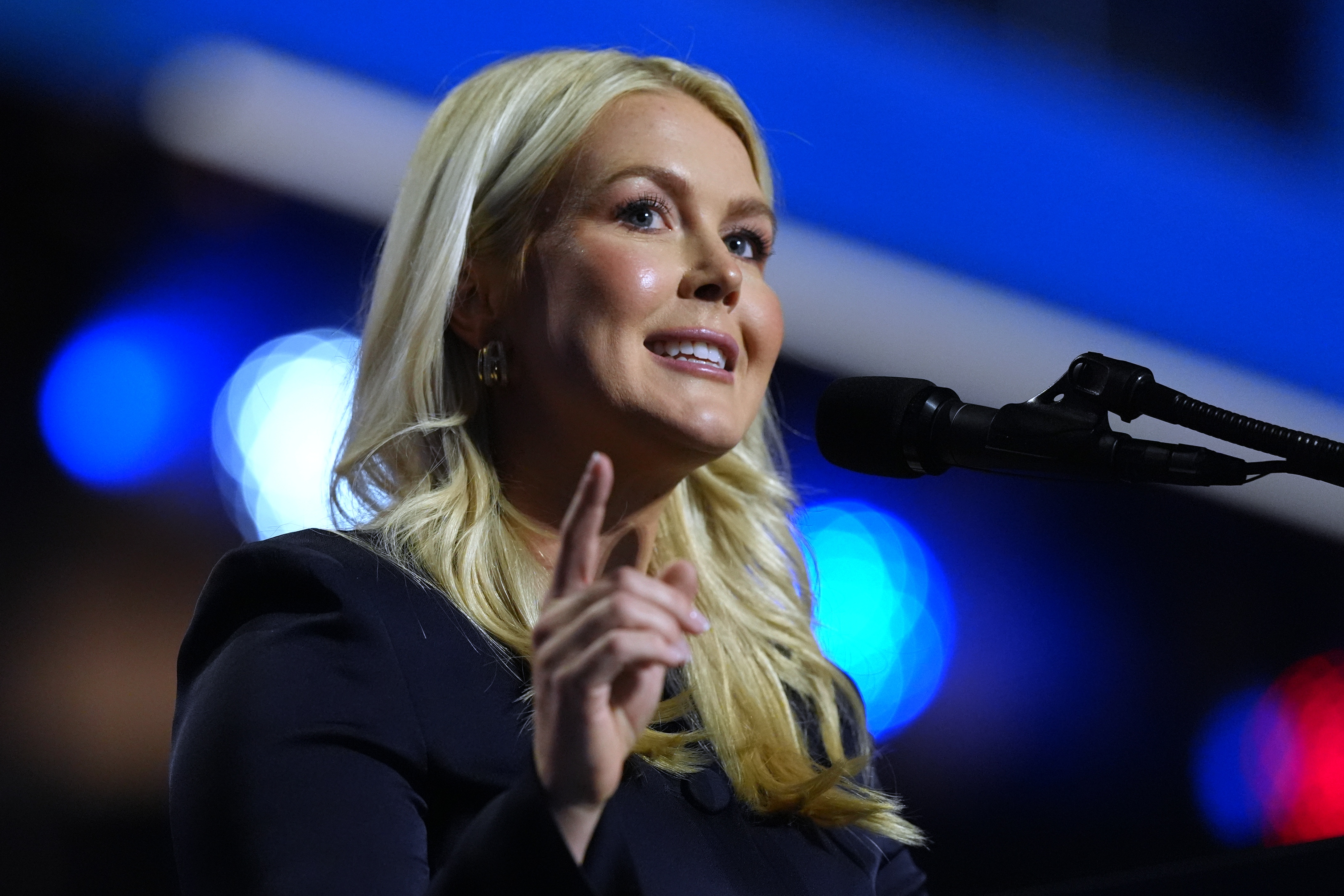
    Karoline Leavitt, who as White House press secretary was a firebrand defender of President Donald Trump, is joining Fox News as a contributor, the network announced.

    Leavitt departed the White House in August and is set to begin at Fox News on Nov. 1.

    In a statement, Leavitt said she looks forward to bringing to Fox’s viewers her “unique perspective” and “the same energy and candor” that defined her tenure at the White House.

    Fox News chief executive Suzanne Scott wrote that Leavitt’s “firsthand experience in the White House and on the presidential campaign trail gives her a distinct understanding of today’s political landscape.”

    Leavitt recently moved with her family back to her home state of New Hampshire, and Fox agreed to build a studio in her home, according to a person familiar with the matter who spoke on the condition of anonymity to share sensitive details.

    The New York Times first reported news of Leavitt’s hiring at Fox.

    Leavitt, who recently turned 29, was the youngest White House press secretary in history. She took on a singularly difficult task: speaking for a president who so often speaks — and posts online — for himself. She gave birth to a girl in May and, upon announcing her departure, said she felt she could not be the best mother to her two young children while in the role.

    The White House has not yet announced a replacement for Leavitt, and the position remains vacant.

    “Karoline is one of the best and most effective communicators around,” White House communications director Steven Cheung wrote in a statement. “Everybody at the White House is thrilled she has this opportunity to speak to the FOX News audience about President Trump’s successful agenda and highlight all the hard work this Administration has done for the American people.”

    Fox, a popular cable channel known for its conservative opinion hosts, has had a close relationship with Trump and his White House. Trump has hired Fox News personalities for top positions, most notably in his second administration: Pete Hegseth as defense secretary and Sean P. Duffy as transportation secretary.

    Fox’s Bret Baier, Laura Ingraham, and Jesse Watters all attended Trump’s recent state dinner with Chinese President Xi Jinping.

    But Trump, an avid Fox watcher, has also publicly complained about the network in recent days.

    “Why does FoxNews always put Chuck Schumer, Hakeem Jeffries, Jessica Tarlov, and every Democrat on, saying bad things about the Republican Party and, of course, me? I actually think they get more airtime than Pro Republicans,” he wrote on Truth Social last week. “This is why MAGA, and REAL Patriots, will never like Fox! They repeat a completely negative narrative, on and on it goes, and then we get a quick retort.”

    On Sunday, the president predicted that the channel’s ratings will plummet if it does not show his rallies.

    “Sad to see that Fox & Friends (Sunday) is not covering our packed house and incredibly enthusiastic (beyond!) Rally that took place in Ohio last night, or the ones in Alabama, Texas, or Oklahoma over the past two days,” he wrote on Truth Social. “… Our people want to see our Rallies, and reports on our Rallies, on FoxNews, or they will very quickly stop watching (like I am doing right now!).”

  • 6 things to watch in the Supreme Court’s new term

    6 things to watch in the Supreme Court’s new term

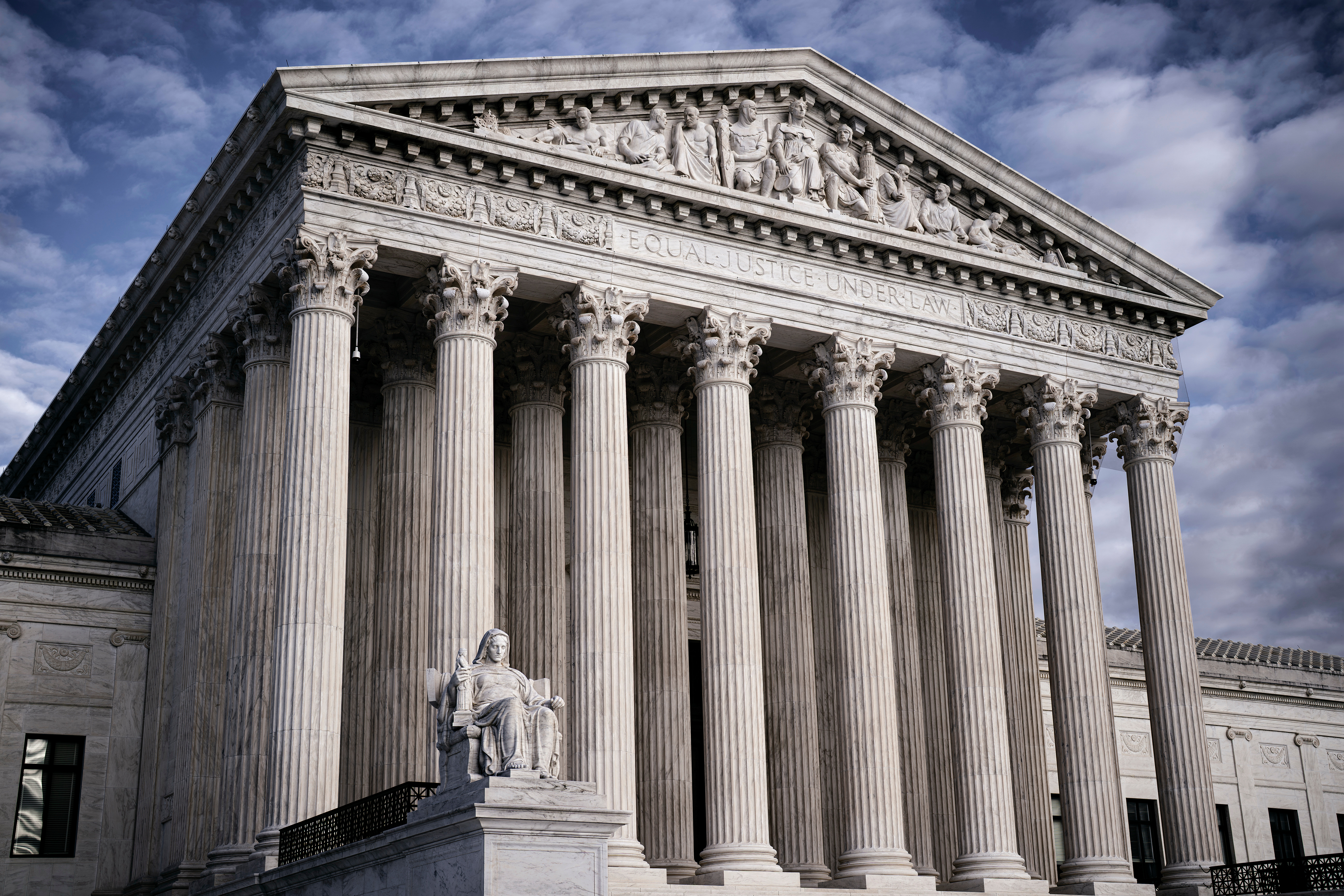
    The Supreme Court kicked off a new term Monday that could significantly shift the law on guns, religion, and immigration.

    The court may take up additional cases involving a range of controversial policies by President Donald Trump. And it could load up on other big constitutional issues, such as a Texas law that requires the Ten Commandments to be posted in public school classrooms.

    Also be on the lookout for potential retirements by Republican-appointed justices, and for a push by Democratic lawmakers to implement changes to the Supreme Court. Both may depend on how the midterms shake out.

    Oyez, oyez, oyez. Here’s what you should know as the new term begins.

    1. Trump’s immigration policies face more tests

    Last week the justices agreed to review two major Trump immigration policies in cases that could turn into blockbusters.

    One involves the legality of sending noncitizens to “third countries” where they are not citizens — a policy the court has allowed to continue as it decides the case. The second centers on Trump’s mandatory detention policy for immigrants awaiting removal proceedings. Both have been critical to Trump’s sweeping immigration crackdown.

    Other Trump policies that could land on the docket: the president’s ban on transgender people serving in the military and the administration’s maneuvers to install loyalists to U.S. attorneys offices while bypassing the Senate confirmation process. The legality of Trump’s newest round of tariffs and his renewed push to limit birthright citizenship could also return to the high court.

    2. The court could become enmeshed in the midterms

    The stakes are high for November’s midterm elections, which will determine control of the House and Senate. Voters will decide races at the ballot box, but the Supreme Court could play a notable role, too.

    The Supreme Court has already decided a flurry of cases related to voting and the election in the run-up to November, some dealing with the Trump administration’s aggressive efforts to restrict voting.

    Given Trump’s penchant for claiming voter fraud, it’s a good bet that challenges will roll in as the ballots are counted, particularly in closely contested elections.

    Democratic attorneys general in about 20 states have already been war-gaming on how to respond if federal agents are sent to polling places or voters are blocked from voting. Any fights could go up to the Supreme Court.

    3. Another landmark test on guns

    The Supreme Court in recent years has transformed few areas of law as much as gun rights. This term brings the next major chapter in that fight: whether states can ban AR-15-style semiautomatic rifles.

    The fight is significant legally, but also culturally. The AR-15 has become a symbol of Second Amendment rights for some gun enthusiasts, and a target for those who want stricter gun controls because that type of firearm has been used in so many mass killings.

    The Supreme Court will weigh restrictions on semiautomatic rifles in Illinois and Connecticut, which are being challenged by gun owners and gun rights groups. The Connecticut law was passed in the wake of the 2012 mass shooting at Sandy Hook Elementary, where a gunman killed 20 children and six school staff members.

    In recent terms, the conservative majority has greatly loosened restrictions on firearms, most notably in a 2022 case that struck down a New York law requiring a license to carry a firearm in public. That decision, New York State Pistol and Rifle Association, Inc. v. Bruen, found that any gun restrictions must have roots in the nation’s history and traditions.

    4. The expansion — and limits — of religious rights

    The justices have accepted multiple cases for this term brought by religious groups. One has attracted particular attention: St. Mary Catholic Parish v. Roy. It involves a Catholic preschool in Colorado that says it is being unfairly excluded from a state prekindergarten program because it does not admit children of gay and transgender parents.

    The high court led by Chief Justice John G. Roberts Jr. has generally ruled in favor of religious plaintiffs in such cases, and experts say St. Mary has a good chance of winning.

    The court is also widely expected to take up a case involving a Texas law that requires all public school classrooms to display the Ten Commandments. The case challenges a 46-year-old precedent holding that such displays of religious content in public schools violate the separation of church and state.

    5. Will a justice retire? It can’t be ruled out.

    Rumors swirled for months earlier this year that Samuel A. Alito Jr. might retire, before the conservative justice knocked down the talk in an interview with the Wall Street Journal in August. Still, speculation could soon flare again.

    With the midterm elections in November, Democrats have an opportunity to take control of the Senate, which must confirm any nominee to the high court. If Democrats triumph, that means Trump’s last opportunity to get a nominee through a Republican-controlled Senate will be during the lame-duck period between November and January.

    A Republican shellacking in November could put pressure on Alito, 76, or Clarence Thomas, 78, the other older conservative, to step aside for a younger nominee.

    Many court watchers do not expect Thomas to retire because he has a chance to become the longest-serving justice in the history of the court if he remains on the bench through May 2028. So all eyes will be on Alito.

    6. A push to overhaul the Supreme Court

    Democrats have pledged to overhaul the high court should they take control of Congress. They have already introduced a slew of proposals, including imposing term limits on the justices, increasing the number seats on the bench from nine to 13, and creating an enforceable code of ethics.

    Those efforts might still be a long shot unless the filibuster is eliminated. Otherwise, any proposal would require 60 votes in the Senate, which is highly unlikely. Still, the efforts reflect record dissatisfaction with the high court — especially among liberals — and Democrats have said any proposal is fair game.

  • At Trump’s rallies, a familiar mix of rituals and a plea to ‘please pretend’

    At Trump’s rallies, a familiar mix of rituals and a plea to ‘please pretend’

    If President Donald Trump’s earlier political rallies felt like standing-room-only rock concerts, the latest ones are starting to feel like the first stops of a farewell tour.

    The events are a ritual. He will attack Democrats. His words will probably stop making actual, logical sense for a moment, or for many moments. (It’s “the weave,” you see.) He will accuse Democrats of rigging the 2020 election (they didn’t). He will attack the news media. Then he will dance to a Village People song.

    At a time when embattled Republican candidates could use concentrated attention — and money — to elevate a prospective new crop of leaders, Trump is clinging to an old strategy that has served him for years: talking mostly about himself. With a month until the midterms, he is again rallying, talking up his record, offering cash prizes and asking supporters to play pretend.

    “I’m really in to win it. We want to win the midterms,” Trump told a crowd at a high school student center in Vandalia, Ohio, on Saturday evening. “If you don’t mind, please pretend that I’m on the ballot.”

    I have been covering Trump rallies, on and off, for almost a decade, including one held in the packed, 7,300-person-capacity gymnasium of my former middle school in Indiana. I have covered them as three-act plays, as formulaic festivals, and as laboratories for Trump to road test misinformation, insult a Democratic opponent or gauge the bond he has forged with a potent slice of American voters.

    Trump was in Oklahoma, Alabama and Ohio this past week for rallies, with a brief stop in Texas. On this last road tour, there are hints that he understands he has ground to make up: He has featured at each event a midterm-convention promise that he will give every American adult $5,000 if Republicans keep control of Congress — a pledge that would face a steep fiscal hurdle even in the event that his party defies polls showing that big Democratic gains are likely.

    Here are a few takeaways from his week campaigning.

    Trump is betting it all on his brand

    Trump suggests that his mere presence will be enough to carry several embattled Republicans to victory. He believes that when he runs, Republicans win. That was true in 2016 and 2024. In Ohio, Trump called polls forecasting a tough road ahead for his party “fake.” Besides, he added, they hadn’t factored in his campaign appearances.

    “They don’t account for the fact that Trump is out campaigning,” Trump said. “They never thought this was going to happen.”

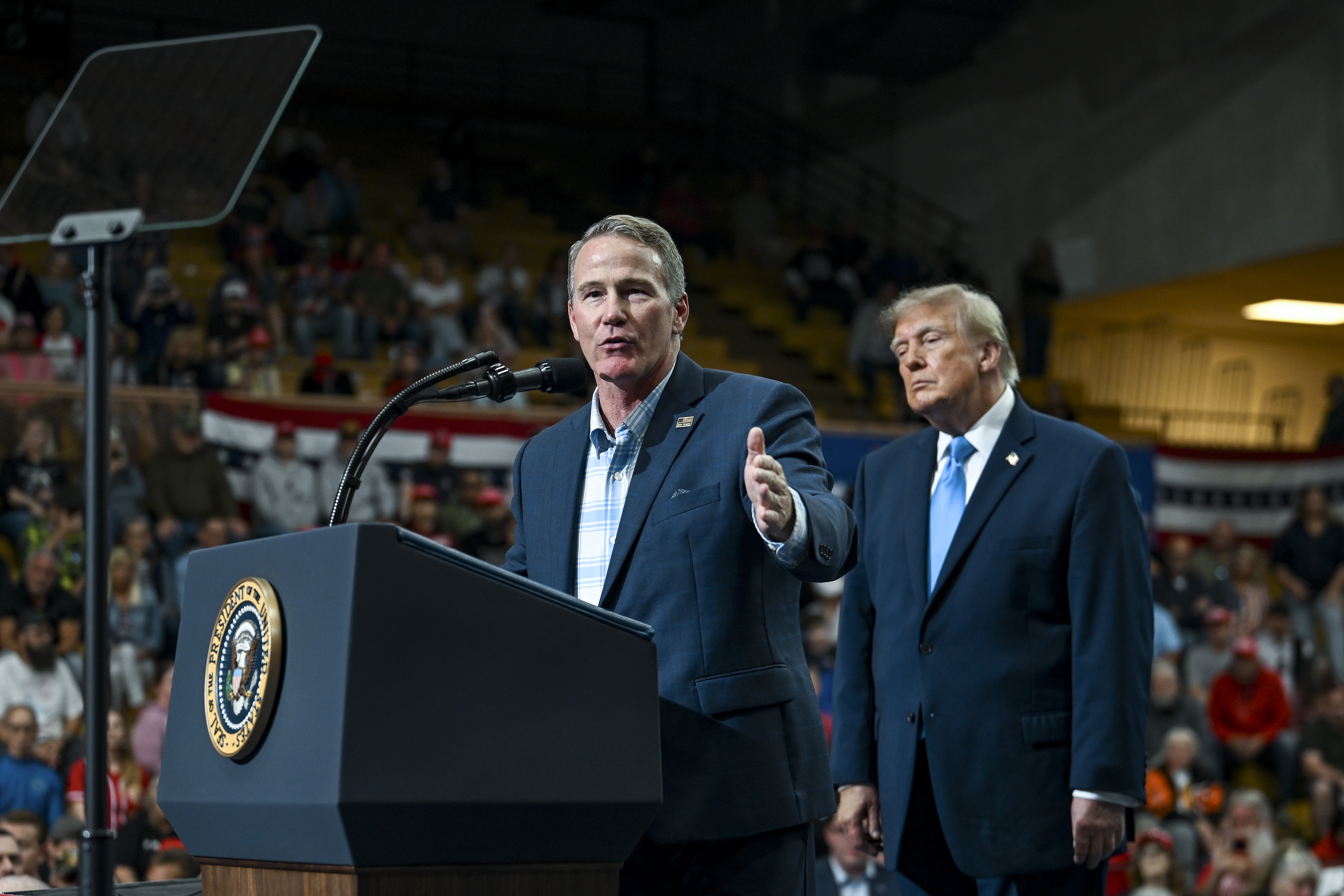
    Ohio is home to a tight race that could help determine whether Republicans keep control of the Senate in November, but at one point during a 90-minute speech, the president complained that he had to be out working hard on a Saturday night to help get others — in this case, Sen. Jon Husted of Ohio — elected.

    But, mirroring the dynamic in other states where he is campaigning, the Senate race in Ohio is about issues that go beyond Trump’s brand. Most Ohioans blame data centers for rising utility costs, a recent New York Times/Siena poll showed that they trust Husted’s Democratic challenger, former Sen. Sherrod Brown, more to address the problem.

    Onstage, Trump offered his support for a bill that Husted has introduced to control energy costs. But he also said he supported data centers, a position that is at odds with the majority of Americans.

    “We want them,” Trump said of data centers. “Look, there’s so much money to be made for Ohio, you can’t just turn them off. They’ll go to China.”

    In this moment, the crowd was quiet.

    In a statement Sunday, Davis Ingle, a White House spokesperson, said the president was an effective communicator who had built “one of the most robust coalitions in political history.”

    “President Trump is the unequivocal leader, best messenger and unmatched motivator for the Republican Party, and he is committed to maintaining Republican majorities in Congress,” Ingle added.

    Trump rallies are not standing-room-only anymore

    Trump can still draw crowds. People still wait all day to see him. They still go wild at the mention of Trump’s immigration policies, his opposition to transgender athletes in women’s sports and his support of voter-identification laws. They cheer when he uses profanity, as they did in Ohio when the president called Democrats an expletive.

    The president has maintained that the events have “sold out” and that there are overflow crowds in each town. The rallies are, in fact, more modest — and at times more sedate — than they used to be.

    In Oklahoma, visitors nearly filled an event center on a casino complex with a capacity of 4,920. In Alabama, the same state where 30,000 people attended a Trump rally in a 30,000-person stadium in August 2015, there were swaths of empty seats at the 10,000-capacity athletic center where Trump spoke Friday. In Ohio a day later, several areas of an upper deck were empty by the time Trump finished speaking at a 4,500-capacity high school student activity center.

    It was not the old norm of standing room only. Instead, attendees close to the stage were seated in neat rows. In Oklahoma, security guards kept walkways clear and told people not to stand on their seats.

    Natalie Baldassarre, a spokesperson for the Republican National Committee, responded to a request for crowd sizes at each event by saying Sunday that the rallies were “drawing some of our highest ticket demands to date,” adding that “our Republican candidates will continue to build off this momentum and drive voters to the polls as we approach Election Day.”

    The president is unhappy with his rally coverage

    On Sunday morning, Trump posted an angry message on social media aimed at Fox News, complaining that its morning program “Fox & Friends” had not adequately promoted his events.

    “These Election Rallies were representative of what is really happening with our great Republican Party,” Trump wrote. “Our people want to see our Rallies, and reports on our Rallies, on FoxNews, or they will very quickly stop watching (like I am doing right now!).”

    Later, he posted another update, saying that polls had always underestimated his political movement.

    At the rally in Ohio, two Republican voters said the thing that would help candidates like Husted was not the president, but other administration figures. In other words, some in the party are beginning to look beyond Trump for star power.

    “I think JD and Rubio need to get out there more and help Jon,” Jenni Worthington, 48, said from the stands, referring to the vice president and the secretary of state. “We need big names. It really needs more. A lot of people don’t know Jon.”

    Her husband, Todd Worthington, suggested there might not be anything the White House could do. Several Republican friends, he said, have already decided not to vote this fall.

    His rally speeches are still riddled with half-truths, falsehoods and claims that need context

    Trump has used his recent rallies to accuse Democrats of meddling in elections, an assertion he often makes. He has no evidence for this. In Ohio, the president said that Democrats “rigged” the 2020 election. That did not happen. It remains a popular line of attack.

    When he is not disparaging Democrats — or talking about random topics, like the large aspirin dose he “psychologically” needs to take daily, or claiming that he has one of the highest IQs “anywhere in the world” — he is talking about the economy. He sometimes exaggerates the numbers.

    There are plenty of bright spots, and Trump tells his crowds about thousands of new manufacturing jobs, a strong stock market and trillions in investment coming into the country. In Alabama, Trump touted $21 trillion in investments for the United States, though a different number is listed on the White House website, which calculates the investments at $11.2 trillion. Some of that money is dedicated to multiyear projects or earmarked as future investment.

    In Oklahoma, he said that “more Americans are working today in our country than at any time, by far, in history.” In raw numbers, this is true, because the country’s population has grown over the course of its history.

    Still, Americans are frustrated by high prices and slow job growth. This concern goes largely unacknowledged at Trump’s rallies, unless he is blaming Democrats for those problems.

    Occasionally, Trump glimpses toward his post-midterm future.

    In Oklahoma, he told some of his most loyal supporters that he would be impeached if they didn’t vote for Republicans. At the midterm convention last month in Dallas, he pondered someday standing alongside the Front Row Joes, a band of his most loyal followers, when he is finished with the presidency. And, on Saturday, he called out to a man who has been attending every rally. He wears a suit with a brick-wall print.

    “Someday, probably in my final appearance, I’m going to put a jacket on like that,” Trump said, talking directly to the man. “Because after that, I won’t be able to get elected.”

    And several times this past week, Trump referred to his 2024 rally in Butler, Pennsylvania, where a gunman nearly killed him.

    “Perhaps I’ll try a couple of years of being nonconsequential, if you don’t mind, because this is a dangerous position,” Trump said in Ohio.

    This article originally appeared in The New York Times.