Tag: no-latest

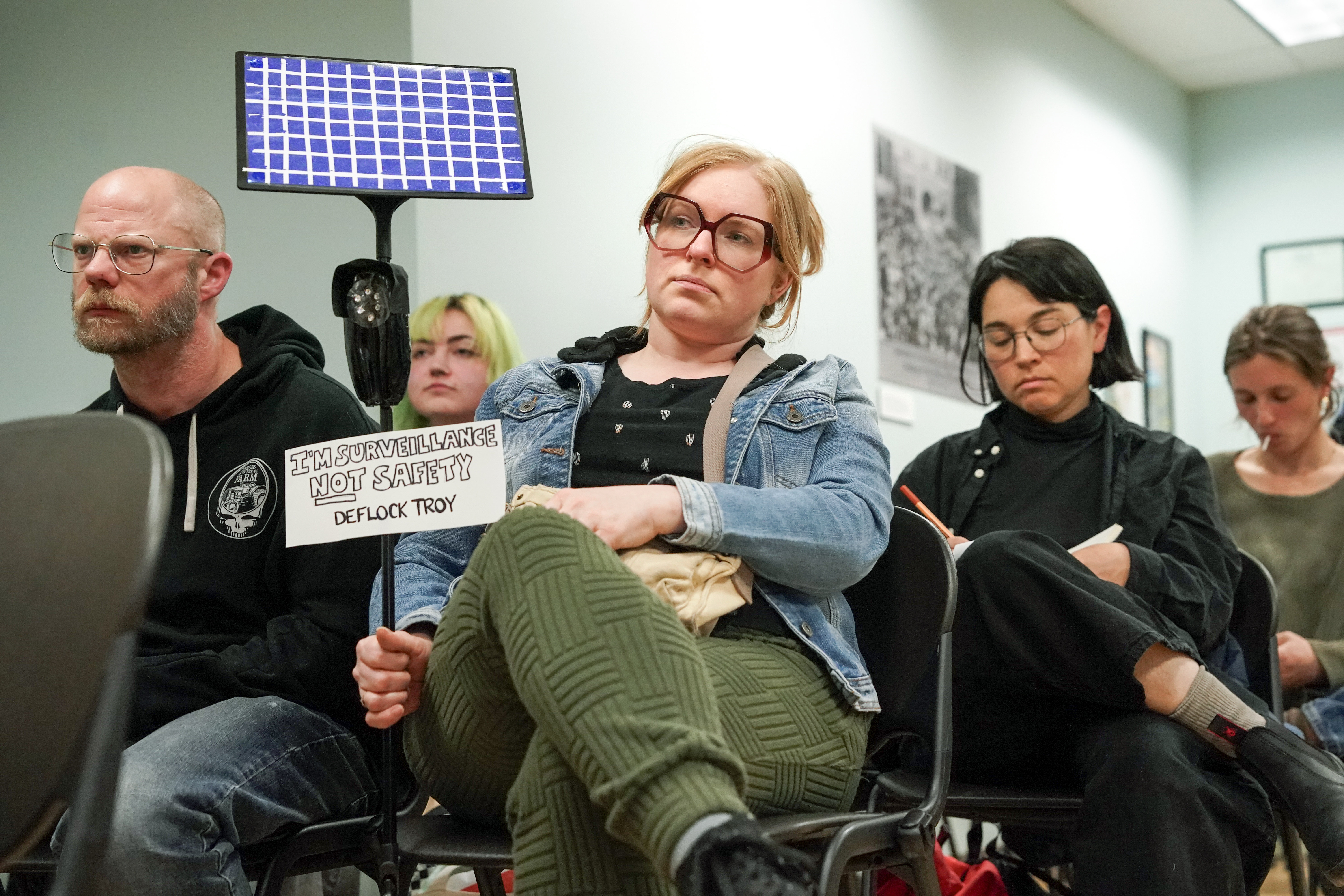
  • Americans are destroying license-plate cameras as surveillance backlash grows

    Americans are destroying license-plate cameras as surveillance backlash grows

    Adam Heimerman kept seeing the surveillance cameras on his way to work as a river guide in East Tennessee, and the sight rankled him.

    More than 130,000 of the automatic license-plate readers now dot the country, according to the crowdsourced tracker DeFlock.org. The artificial intelligence-assisted devices have been embraced by law enforcement as powerful investigative tools but widely denounced by the public over privacy concerns.

    For Heimerman, who’s 37 and running as an independent candidate for Congress, the cameras were one more sign that the United States was becoming a police state, he said in an interview. Then in July, the Blount County Sheriff’s Office alleges, Heimerman shot four of the cameras — including one near a church where worshipers sat inside.

    Heimerman declined to discuss specifics of his case, but he said he believes there’s widespread frustration over local governments that keep using the cameras despite community pushback. That has fueled a wave of recent vandalism across the country, he said.

    “When people act out in a manner that we’re witnessing, things have gotten bad and they no longer feel like they’re being heard,” Heimerman said. “People are tired of being told to sit down and be quiet and write a letter.”

    “How-to” videos have spread online that demonstrate how to disable the cameras from collecting footage using wire cutters and heavy gloves. People from an array of backgrounds — college students, computer engineers, a U.S. Air Force engineer — have been accused of vandalizing the devices.

    Cameras were recently damaged in communities around Detroit. In Winona, Minn., all eight of the city’s readers were cut down and stolen.

    Flock Safety, one of the largest players in technological surveillance, is often the target of the ire. The company operates cameras in more than 6,000 communities across the country that record 20 billion plate scans a month. Critics concerned about the information the devices collect and store say the cameras aren’t just tracking license plates, but people’s personal movements as they visit places like gun ranges, doctor’s offices, or marijuana purveyors.

    That criticism cuts “across partisan lines,” said Eleni Manis, the research director of the Surveillance Technology Oversight Project, a nonprofit that fights government surveillance.

    “As Americans we drive where we want and when we want,” Manis said. “Tracking ruins that for all of us. And that’s partly why this has gotten under everyone’s skin.”

    Flock, which did not return requests for comment, has defended its product and said that it has been used to solve countless crimes, including helping to uncover the identity of the mass shooter at Brown University last year.

    But misuse is rampant, a Washington Post report this month found. Authorities have charged or accused at least 50 law-enforcement officers of using license-plate readers for unauthorized purposes, including to stalk their exes. U.S. Immigration and Customs Enforcement officers have also accessed Flock’s nationwide database through local partners to conduct immigration searches.

    Last week, the company announced it was enacting major changes to prevent abuse by law enforcement, including requiring officers to label searches with criminal case numbers and reducing the amount of days data is stored from 30 to seven.

    Community backlash against the cameras has been fierce, with 100 jurisdictions around the country pausing or canceling contracts in recent months, according to data compiled by DeFlock.org.

    Despite that, some have turned to vigilantism — spray painting the devices red, ramming their pole mounts with pickup trucks, and slapping on stickers to block the camera lenses.

    Online videos even suggest the tools one might need to rip down cameras or disrupt their feeds with green laser pointers.

    A number of prominent influencers have applauded the vandalism, including right-wing pundit Tucker Carlson.

    Rick Wilson, the co-founder of the anti-Trump Lincoln Project political action committee, recently described in detail on a podcast the kind of “cheap green laser pointer” that can easily be purchased online to interfere with devices.

    “There are a lot of tools for citizens to express their discomfort of these things that are knowable and available,” Wilson said in an interview. “I’m not suggesting that people break the law. I’m suggesting that you are not helpless against a surveillance state that does not have your best interests in mind.”

    Carlson has portrayed the vandals as grassroots heroes fighting back against government overreach.

    “It’s not drug-addicted kids,” Carlson said on his podcast recently. “It’s sober, decent patriot Americans who believe the promises of their country. Flock was not part of the country they signed up for. No one asked their permission to steal their images and to spy on their conversations. They don’t think that makes them safer. They understand that it’s to strip them of their most basic humanity.”

    Last month, when a 20-year-old from West Virginia was arrested and charged with defacing Flock cameras, a host of Facebook commenters rushed to his defense, offering fake alibis.

    “He was saving my neighbors dog from a fire all day couldn’t be him,” one Facebook user wrote.

    “That man is innocent,” wrote another. “I saw him serving at a soup kitchen at the time of the incident.”

    In that case and others, images of the alleged vandals were captured on the very cameras they sought to deface, a fact law enforcement has been quick to point out.

    In a February news release announcing destruction of property charges against a 24-year-old in Michigan, the Waterford Police department noted, “Ironically, Detectives discovered one of the [cameras] had captured an image of the vehicle and license plate driven by the suspect at the time the cameras were damaged.”

    “[No] one is entitled to maliciously destroy property of another, including that of the Waterford Police Department,” the statement said.

    Heimerman, the congressional candidate and lifelong East Tennessee resident, said he’s running to represent the state’s 2nd District because he is worried that the needs of ordinary citizens are getting lost amid rampant corporate greed. His Republican opponent, Rep. Tim Burchett, earlier this month introduced legislation to ban federal money from being spent on the cameras.

    Heimerman, who vaguely recalls voting for Barack Obama, said he has written his own name in for president on the ballot for decades. A GoFundMe organized for his legal defense has raised over $13,000.

    Heimerman says he’s grateful for the attention his case has received, hoping it means that people are “waking up” to the need to pay attention to what local government is doing, not just those at the federal level.

    “It kind of brings a highlight to how much a boiling point we are at,” he said. “People are fed up.”


  • My husband was kicked out of hospice for dying too slowly

    My husband was kicked out of hospice for dying too slowly

    “No more operations,” he said.

    It was mid-January 2026, and my then-73-year-old husband, Mike Salmon, had just started bouncing back from a three-month ordeal of three operations related to aortic aneurysms, sepsis, and a terrifying descent into delirium tied to a stay in the intensive care unit. Now, after another potentially fatal aortic aneurysm and ambulance ride, the doctors clustered around his hospital bed said the fix involved two more major, risky operations.

    If Mike did nothing, the aneurysm or sepsis would likely kill him, they predicted. How soon? “Weeks,” one doctor said. “I’m astonished I’ve made it this far,” Mike said. So, abruptly, we were shunted onto hospice care — the dead-end spur of the American medical system.

    Hospice agencies manage care for patients expected to die within six months. They don’t provide curative procedures or drugs. Instead, they aim to help families make terminally ill patients comfortable, typically at home, as an illness reaches its inevitable conclusion. Families provide most of the day-to-day care, and 85% have suggested they are very satisfied with their hospice’s services, which include supplies of drugs and medical equipment, and visits from nurses, therapists, and aides.

    More than 1.9 million Americans were enrolled in hospice in the last fiscal year. Over 80% of those patients stayed on hospice until they died — within four weeks, on average. But each year, about 6% of patients are kicked out because a hospice doctor decides they have stabilized or improved enough that they are no longer likely to die in the next six months.

    In May, Mike joined that select group. His experience in and out of the hospice system revealed surprising lessons about how families can manage care. And getting removed from hospice revealed a little-known process that can represent a welcome respite for families like ours — but can be devastating for patients with serious chronic illnesses.

    Here’s what we learned in our four months on and off hospice.

    Check before you choose

    “Choose one.” A hospital nurse handed me a list of local hospice agencies. The sooner we signed up, the sooner Mike could go home. Stunned by the suddenness of Mike’s health emergency, I just pointed to the name at the top of the alphabetical list, assuming they were pretty much the same.

    Big mistake. Medicare sets basic standards for the hospice agencies it reimburses, but some agencies are understaffed or poorly run. Amy Tucci, president of the Hospice Foundation of America, noted that some agencies provide extra therapy, aide support, and other services.

    The problems with the organization I had chosen started immediately. Staffers were often late. They entered inaccurate medical information on Mike’s paperwork and didn’t make corrections when alerted. Medicare allows you to quit or change agencies, so I asked neighbors for recommendations.

    That was a good start, but Kristina Newport, chief medical officer of the American Academy of Hospice and Palliative Medicine, said I should also have checked the quality ratings on Medicare’s Care Compare site and the National Hospice Locator. Those sites would have alerted me to our first agency’s low ratings. Ideally, Newport said, patients or caregivers should call their area’s top-rated agencies to find those that provide the services you need, such as staff members who speak the patient’s native language, provide spiritual care that aligns with the patient’s beliefs, or are stationed nearby to arrive quickly in an emergency.

    The local, long-established nonprofit that neighbors recommended handled the transfer seamlessly. Its staff was punctual, accurate, and kind. The chef’s kiss after we switched: A nurse from the original company we chose called to say she hoped I hadn’t initiated the change because of “concerns about our care of your mother.”

    Some people get better on hospice

    Research hasn’t yet fully explored why, but some people actually see their health improve under hospice care. Studies have found, for example, that hospice patients with congestive heart failure or lung cancer live about a month longer, on average, than similar patients in the standard medical system.

    Terry Berthelot, who teaches courses on elder law and hospice care at the University of Connecticut, said many patients benefit from hospice’s careful pain management and from leaving hospitals, where they risk infection and overtreatment. Returning home allowed Mike to get up and walk without waiting hours for an overworked nurse to unplug a bunch of monitors, and to enjoy real food. Also, the hospice nurse gave him medicine to help him sleep through the night. He soon started regaining weight and strength.

    You can flunk out of hospice for not dying quickly enough

    Medicare and many other insurers pay for hospice services only for patients whom physicians certify are likely to die within six months of the most recent assessment (not the date of enrollment), so hospice staffers regularly reassess patients. Medicare audits agencies to check for fraud and demands repayment of funds provided for care of patients its auditors deem have not proved to be terminal. Hospices, good and bad, worry about their bottom lines and Medicare’s fraud audits. They may feel pressure to discharge patients who threaten the organization’s finances, even though such discharges can remove important care. “Medicare is worried about fraud and abuse, not about people not getting enough care,” Berthelot said.

    Especially for diagnoses with uncertain prognoses — such as dementia — if a patient improves or even stabilizes, hospice physicians might discharge the patient because they can no longer certify a likelihood of death within six months.

    For some lucky reason, Mike’s aneurysm and sepsis held off. By early May, his wounds had healed, and his strength had improved enough that he returned to gardening, playing bridge, and whipping up his signature lattice-topped blueberry-cinnamon pies. While we appreciated the convenience of the nurse’s visits and the drug and medical supply delivery, we realized Mike no longer needed care, so we agreed with our agency’s decision to discharge him.

    For patients suffering from more debilitating diseases, discharges can be a “nightmare,” said Krista Harrison, a hospice researcher at the University of California-San Francisco. Discharges often happen quickly. Medicare requires that patients be given a minimum of two days’ notice.

    When Harrison’s stepfather, suffering from a neurodegenerative disease similar to Parkinson’s, was discharged because his health seemed to plateau, the family scrambled to replace and pay for hospice-provided equipment such as a hospital bed and oxygen supply, and they had to quickly find and hire aides to replace the hospice aides. “Just getting his prescriptions reestablished and filled was a big deal,” she said. Her stepfather died six weeks after discharge, she said.

    Do your homework to ensure appropriate care

    Arming yourself with information about your risks and rights can help you get the hospice care you need when you need it.

    • Know your diagnosis. Discharges are unlikely for most cancer patients. But patients with dementia, heart disease, and Parkinson’s often plateau. So they are disproportionately likely to be discharged, UCSF’s Harrison said.
    • Choose a highly rated hospice. Research shows for-profit hospice agencies are more likely to discharge patients than nonprofits. Medicare’s Care Compare site will alert you to which is which.
    • Keep your own records. Caregivers who can document, say, a patient’s growing need for eating assistance can help hospice staff approve continuing care, or build a stronger appeal, UCSF’s Harrison said.
    • Keep your family doctor more informed. Doctors “don’t have the financial interest” the hospice faces and could help you dispute a discharge, Berthelot advised.
    • Appeal quickly. Hospice agencies must provide information on appealing a discharge. But you must file the appeal (online or by phone) by noon on the day before the termination date, which may mean you have only a few hours if you’ve been given the minimum two days’ notice, said Wey-Wey Kwok, a senior attorney for the Center for Medicare Advocacy.
    • Reenroll. Patients can try reenrolling in hospice at any time. Another hospice agency may take you immediately. Or you can wait until the patient’s health declines and try reenrolling with your original hospice agency, the Hospice Foundation’s Tucci advised.

    That last option is our plan. For now, Mike and I are enjoying these unexpected bonus days. But whenever fate catches up with him, Mike said, he’s comforted to know he’ll get good care from the hospice’s staff. “They’ll try to improve the quality of what time I have left,” he said.

    KFF Health News is a national newsroom that produces in-depth journalism about health issues and is one of the core operating programs at KFF — the independent source for health policy research, polling, and journalism.

  • Letters to the Editor | Aug. 19, 2026

    Letters to the Editor | Aug. 19, 2026

    AveArts 2.0

    Alan Greenberger and Harris M. Steinberg are two of Philadelphia’s most respected voices on planning and the public realm. That’s why I was surprised by how narrowly they framed AveArts 2.0.

    We agree that South Broad Street is one of Philadelphia’s great civic spaces, with potential still unrealized.

    We disagree on the new median. They suggest it reinforces Broad Street’s highway feel. I see the opposite. Six lanes of traffic were already there. The median breaks up the noise and asphalt, making a street dominated by automobiles more welcoming to people.

    Is every decision perfect? Of course not. That’s why we are building a beta block: to gather data, learn what works, and let that inform the next nine blocks rather than relying on opinion alone.

    Landscaping won’t create street life. People do. Future phases will focus on sidewalks and places to gather and linger.

    Philadelphia knows how to debate. But debate doesn’t get things built. The hard part is raising money, solving problems, bringing people together, and sticking with a big idea long enough to make it real.

    So, Alan and Harris, join us.

    Broad Street began as an audacious idea. Together, let’s do the hard work to finish it.

    Carl Dranoff, board chair, Avenue of the Arts Inc., founder and CEO, Dranoff Properties

    . . .

    Alan Greenberger and Harris M. Steinberg’s condemnation of the new Broad Street median seems remarkably premature.

    My wife and I live two blocks away and walk this stretch regularly. We knew the old median well. No one was lingering, strolling, or dining there. Today, a ribbon of trees and greenery has replaced it. To our eyes, it creates a view rather than destroying one, and has already made this heavily trafficked block feel more humane.

    More importantly, the median is only the first part of the project. The next phase will expand the pedestrian realm along the sidewalks, adding landscaping, seating, public art, and performance space — the very kind of street life the authors say Broad Street needs.

    They may ultimately prove right that elements of the design should be changed. That’s the point of building a “beta block” before extending the concept up and down Broad Street. But calling for millions of dollars of completed work to be ripped out before the rest of the block has even been built seems less like thoughtful urban planning than a rush to judgment.

    Give the trees — and the project — a chance to grow.

    Pete Sparber, Philadelphia

    Security at home

    This weekend we learned of the invasion and assault of Central Synagogue in New York and the defacing of the Weitzman here in Philadelphia.

    Pick your emotion. Anger, fear, frustration. But let’s be determined to do something rather than wallow in anguish. Let us take action. I call upon every police force to ramp up their protective response to houses of worship, both Jewish and Muslim — as we are both under assault. I call upon government bodies to make funding accessible to help secure our sites, harden them, and actively man them.

    I call upon each of us to reach out in the following ways:

    Call your legislators and demand action to support safety and security, and put their offices behind the efforts noted above. Contribute what you can in time and money to help our institutions do the important work of bringing our tradition safely to our communities.

    Last but certainly not least: Show up, go to your synagogue, and be counted. It is an act of defiance in the face of hatred; it is a concrete way to be in a community supporting our institutions.

    We cannot remain on the sidelines hoping someone will address the problems. That is our job. Now is the time to stand for what we believe in. We must not succumb to the fear that makes us cower in the shadows. Together we are stronger.

    Rabbi David Levin, president, Board of Rabbis of Greater Philadelphia

    A safer future

    On my way home from the hospital, I held my breath as a child on an e-bike careened across an intersection, directly in the path of a car trying to beat a traffic light. As a pediatrician who has seen too many broken limbs and traumatic brain injuries from crashes like this, I ran through the mental checklist of what I could do to help. I exhaled only when I heard the boy’s laughter drifting down the street; he was alive and well.

    The rise in fatal and serious crashes involving children on e-bikes is a public health priority. As The Inquirer recently reported, however, responsibility for improving safety cannot rest with parents alone — nor should grieving parents face criminal charges when their children are killed. Parents may purchase e-bikes, but they cannot control reckless drivers, inadequate bike infrastructure, or inconsistently regulated retailers.

    Individual responsibility remains important. E-bike users should meet minimum age requirements, wear helmets, and follow speed limits, just as young drivers must follow rules when operating cars.

    We need consistent regulations, safer infrastructure, and proactive safety education. Protecting children from preventable death and disability requires a shared responsibility among parents, riders, retailers, drivers, and policymakers.

    Vongai Mlambo, Philadelphia

    Grand safari?

    The guilty elephant is in the room, not in Africa. Thanks to The Inquirer’s March exposé, the shameful conduct of some members of the Montgomery County intermediate unit board — who, since 2023, have expensed $40,000 in international trips, including a 14-day African safari — has been brought to the public’s attention. No laws may have been broken, but any sense of ethics appears to have been abandoned.

    The intermediate unit serves Montgomery County children with physical, psychological, or intellectual disabilities. These are our children and our neighbors’ children. If the intermediate unit was sincerely interested in learning how economically distressed communities addressed the needs of these children, then it need not have traveled to Africa, but closer to economically distressed communities, such as Camden or East St. Louis, Ill.

    Families seeking services know how precious the available resources are. From personal experience, we know that even our local district is constrained by its budget and may resist providing services. Often, it is only through the perseverance and persistence of parents or guardians that these children ultimately receive the support they deserve under the law. Many parents become discouraged and give up. Others attend meeting after meeting, often missing days of work in order to overcome denial of services.

    Once the services are finally obtained, the professionals who provide them prove to be skilled and helpful. Their abilities make the judgment demonstrated by their board all the more troubling. The Inquirer reported that not every board member participated. Good for them. However, the safari takers, if honorable, should resign. How can we trust them with the future of our children? The board doesn’t need to travel to see elephants; the guilty elephant is right in their room. I’m grateful for the work of the investigative reporters at The Inquirer — they once again demonstrate why we need a strong, independent, local press.

    Leon S. Malmud and Elsa C. Malmud, Rydal

    Join the conversation: Send letters to letters@inquirer.com. Limit length to 150 words and include home address and day and evening phone number. Letters run in The Inquirer six days a week on the editorial pages and online.

  • Dear Abby | Calls and messages threaten racy video leak

    DEAR ABBY: A few years ago, I started receiving mysterious phone calls from a man claiming to have in his possession videos of me performing sexual acts. I do not know where he would have gotten something like that. I changed my phone number, but somehow he got my new number and started harassing me again.

    After a while, the phone calls stopped, and I haven’t received one in years. Recently, I was sent a request on Facebook by a girl with no profile information who then sent me a message saying something about a video and accosting me with sexual language. I have since deleted all my social media accounts. My question is: What if there is some video I have no knowledge of, and how do I handle it if someone decides to leak it?

    — SCARED AND EMBARRASSED

    DEAR SCARED AND EMBARRASSED: What has been happening to you amounts to harassment and blackmail. That is why you should notify the police about what has been going on. I seriously doubt that there is a video. (The whole thing is probably a scam.) If there is one and it is leaked, I recommend that you hold your head high and say to anyone who mentions it that yes, like most of the adult population in the world, you, too, have a sex life. At least then you will know who filmed it, and you can share that additional information with the authorities.

    ** ** **

    DEAR ABBY: I am 70. My sister is 68, and her husband is 80. He has kidney failure and needs 24 / 7 care. Our mother is 98. She lives independently in a condo and is mentally fully functional, but she can’t cook or do housekeeping anymore. (She has cleaning help.) My sister and I take turns making Mom warm meals, and my sister also does some light housekeeping. It takes one to two hours. My sister does this three times a week while her husband is at dialysis at a nearby facility. She also has my mother’s medical and financial powers of attorney and prefers to be the one to take care of things.

    I am in fairly good health but have some medical issues that may eventually make it difficult (or even impossible) to travel. This fall, I plan to go to Europe for three weeks. I would like to have someone come in to help my mom three times a week while I am gone. I would introduce this person ahead of time so that Mom could get to know them and I could show them what needs to be done.

    Unfortunately, Mom doesn’t want anyone other than my sister and me to care for her. My sister’s plate is already more than full, so I don’t want to add to it. Is it unreasonable of me to expect my mother to accept outside help?

    — PERPLEXED IN PENNSYLVANIA

    DEAR PERPLEXED: Your plan is not unreasonable, but it’s common for someone your mother’s age to resist change. Remind her that the clock is ticking on your travel opportunities, and emphasize that the arrangement is only temporary. Tell her you will call to check in while you’re away, and promise to bring back lots of photos and stories to share with her when you resume your normal caregiving routine.

  • Horoscopes: Wednesday, Aug. 19, 2026

    ARIES (March 21-April 19). Some people need the headline. Others need the whole story. Start with the short version and watch what happens next. The questions they ask will tell you which kind of listener you’re talking to and how much detail they want.

    TAURUS (April 20-May 20). People usually choose the path that’s most appealing in the moment. Arrange your environment so the easiest choice is also the one you want. A bowl of fruit on the counter gets eaten. A guitar on a stand gets played.

    GEMINI (May 21-June 21). Every conversation is an imperfect translation. We turn thoughts into words, then words back into thoughts. Some meaning gets lost along the way. Give each other a second chance to explain and you might discover a different story entirely.

    CANCER (June 22-July 22). You’ll be settling a question of boundaries. Everyone wants some say over their own corner of the world. Territorial disputes usually calm down when people feel heard. You’ll ask good questions before drawing conclusions.

    LEO (July 23-Aug. 22). The message in your heart feels important, urgent and larger than words. Consider that its strongest communication may be wordless. A warm welcome, a steady hand, a knowing smile or beautiful work can say everything that needs saying today.

    VIRGO (Aug. 23-Sept. 22). Sometimes the argument is about the wrong thing. Before defending your position, make sure everyone is answering the same question. Half the battle ends once people discover they’ve been talking about different problems.

    LIBRA (Sept. 23-Oct. 23). There are experiences that seem inconvenient but are nonetheless worthwhile: a crowded restaurant, a long drive, sore muscles, a second draft. You can put up with a fair amount of inconvenience when you know why you’re doing it.

    SCORPIO (Oct. 24-Nov. 21). Every conversation leaves a few loose threads. Before you assume you know what someone meant, pick up one of them and ask. A single follow-up question can spare everyone an afternoon of wrong assumptions.

    SAGITTARIUS (Nov. 22-Dec. 21). The “main character” energy is all around you today. It’s funny how lines that work on screen seldom play in the full dimension of reality, but reality can look beautiful on screen.

    CAPRICORN (Dec. 22-Jan. 19). A misunderstanding can become today’s funniest story if nobody rushes to protect their pride. Laugh first. Explain second. People forgive confusion, but they have a much more difficult time with defensiveness.

    AQUARIUS (Jan. 20-Feb. 18). It’s impossible to keep the end goal in mind if you don’t have an end goal in mind in the first place. Today feels a bit adrift. If you can’t pick a direction, start ruling things out. By declaring what you’re not into, you’ll get a clearer picture of what fits.

    PISCES (Feb. 19-March 20). Every time you say yes, you spend something valuable. Sometimes it’s cash. Sometimes it’s an afternoon. Sometimes it’s your attention. Before you spend anything today, ask yourself what you’re buying.

    TODAY’S BIRTHDAY (Aug. 19). It’s your Record-Breaking Year when you will train hard and perform at a level to surpass your previous best. Fresh inspiration and motivation give you an edge. You’ll become comfortable in unfamiliar situations. More highlights: Loved ones lavish you with respect and special treatment. Travel is a teacher. Through acts of public service, you’ll make a difference while also making golden connections. Capricorn and Gemini adore you. Your lucky numbers are: 7, 20, 33, 14 and 39.

  • Byron Donalds and David Jolly will compete to replace Ron DeSantis as Florida governor

    Byron Donalds and David Jolly will compete to replace Ron DeSantis as Florida governor

    ORLANDO — U.S. Rep. Byron Donalds won the Republican nomination for Florida governor and former Rep. David Jolly picked up the Democratic nod in Tuesday’s primaries, setting the stage for a fall campaign to replace outgoing Gov. Ron DeSantis and decide the state’s future political direction.

    November’s election will test President Donald Trump’s grip on his adopted state and Democrats’ ability to resurrect Florida as a national political battleground. Florida has moved notably to the right since Trump’s victory in 2016, though Democrats hope to regain ground from his slumping popularity ratings.

    DeSantis, a leading conservative figure who has both clashed and collaborated with Trump over the years, is barred from running for a third consecutive term.

    Also Tuesday, progressive state Rep. Angie Nixon won the Democratic nomination for a U.S. Senate special election, defeating retired Army Lt. Col Alexander Vindman, a onetime National Security Council official who testified in Trump’s first impeachment in 2019.

    Nixon, who was heavily outspent by Vindman, will face Sen. Ashley Moody, winner of the Republican nomination, in November to fill the last two years of Marco Rubio’s Senate term. Rubio left the seat to become Trump’s secretary of state last year.

    Donalds could be a historic figure in Florida

    Donalds would be Florida’s first Black governor if he wins in November. He defeated a former DeSantis running mate, Lt. Gov. Jay Collins, political newcomer James Fishback and others Tuesday.

    The 47-year-old congressman Donalds told his supporters at a Universal Studios resort hotel that he’d heard from Republican rivals who pledged their help in winning the general election.

    “The primary is over,” Donalds said. “Tonight we put aside our differences. Tonight we are one united Republican Party.”

    Donalds described Trump’s backing as important but not determinative.

    “Obviously, he has the strongest following of anybody in our party,” he said. However, he added, “you can’t just sit back and think the president’s endorsement is going to carry you.”

    Donalds has promised to push tax cuts, overhaul Florida’s insurance regulations to lower consumer costs and seek greater price transparency from healthcare providers.

    The Democrats’ candidate for governor, Jolly, is a former Republican congressman who switched parties last year. He did not shy away from his partisan history as he addressed supporters Tuesday night.

    “To my Democratic friends, thank you for welcoming me into the party,” he said.

    Jolly’s speech detailed a platform that balances between both political parties: an embrace of capitalism and a lean government, but one that “needs to do its part to fill the gaps,” such as with education and housing.

    “As an old-school Republican, I talk about ending the culture wars not to celebrate some progressive platform,” he said, “but because I still believe in the old school Republican, Libertarian policy that government should simply stay out of your life, and stay out of your bedroom.”

    It’s the second time in a row that Democrats have nominated a onetime Republican for governor.

    Four years ago, they backed former Gov. Charlie Crist, only to see him lose by nearly 20 percentage points to DeSantis.

    Rich Chamberlin, a retiree in Port St. Lucie, said he supported Jolly in Tuesday’s primary, spurred on by attack ads against him.

    “I saw anti-Jolly ads. I said ‘OK, if they are against him, then I must be for him,’” Chamberlin said, adding it didn’t matter to him that Jolly was once a Republican.

    A progressive gets Democratic nomination for Senate

    Florida voters haven’t sent a Democrat to the U.S. Senate since 2012, and this year’s race was always going to be an uphill climb.

    Moody, a former state attorney general, was appointed by DeSantis to fill Rubio’s seat last year after he became Trump’s secretary of state. She’s now running to finish the last two years of his term.

    Moody will face Nixon, a progressive state lawmaker who scored an upset victory over the Army veteran Vindman. Nixon would be Florida’s first Black U.S. senator if elected in November.

    “Rep. Nixon ran a strong campaign,” Vindman posted on social media. “I will be standing by her side in the fight against Ashley Moody. I hope you’ll join me.

    Wasserman Schultz wins in a new plurality Black district

    In U.S. House primaries, Tuesday’s biggest contest saw longtime Democratic U.S. Rep. Debbie Wasserman Schultz defeat former U.S. Rep. Sheila Cherfilus-McCormick and others in a redrawn South Florida district.

    Wasserman Schultz, who is white, urged voters in the new, plurality Black district to help her return to Washington for a 12th term. Cherfilus-McCormick had sought a comeback after resigning earlier this year under a pending federal indictment and threat of House ethics sanctions.

    Wasserman Schultz entered a new district after DeSantis’ successful push for new congressional maps intended to boost Trump’s midterm election prospects.

    Her four Black primary opponents — including Cherfilus-McCormick — had argued that the district should have a Black representative. But the voters went with a candidate who touted long experience from serving in Congress since 2005.

    Surrounded by her campaign staff Tuesday night, Wasserman Schultz tearfully thanked voters for having confidence in her. She said she wanted to “make all of you proud, to make sure that the people we spoke to all across this district know that I will fight so they can pay their rent.”

    Republican Rep. Cory Mills is ousted by a challenger

    Former television news reporter Ryan Elijah won the Republican nomination for Florida’s 7th Congressional District, ousting the scandal-plagued Mills.

    A two-term congressman, Mills has denied allegations of domestic violence against a former girlfriend and other controversies.

    But Florida Republicans including DeSantis had abandoned Mills ahead of the primary and the congressman was not included on Trump’s final list of Florida endorsements. Elijah advances to the general election in a central Florida district that is considered reliably Republican.

  • Trump’s ballroom is rising at breakneck speed: 20 hours a day, 7 days a week

    Trump’s ballroom is rising at breakneck speed: 20 hours a day, 7 days a week

    WASHINGTON — With the fate of his ballroom tied up in court, President Donald Trump is racing against the clock.

    He has enlisted a team of 250 workers to push ahead with construction 20 hours a day, seven days a week to complete as much work as quickly as possible. This week, there are plans to install 1 million pounds of rebar and pour 3,000 cubic yards of concrete for a project that is now two-thirds complete, the administration said in a court filing.

    Now, with the matter pending before the Supreme Court, the Trump administration is making a practical appeal to the justices: The ballroom is simply too far along to be stopped now.

    “His strategy clearly is to change the reality on the ground so that instead of preserving the status quo, those who rightly invoke the law against what he’s doing are put in a position of having to undo something that is already a fait accompli,” said Laurence H. Tribe, an emeritus university professor of constitutional law at Harvard.

    For years, Trump has argued that the White House should have its own ballroom, saying it was a matter of prestige on the world stage. A ballroom, he said, would allow officials to hold big events for special guests without needing to erect a tent on the South Lawn.

    In recent months, as preservationists and other critics have tried to halt or at least slow down the project, Trump has offered a new justification: national security. Essentially, Trump is treating the ballroom and the military bunker underneath it as one and the same.

    The bunker — officially known as the Presidential Emergency Operations Center, or PEOC — was built during World War II beneath what was once the East Wing, which Trump tore down last year to make way for his ballroom.

    Now, he speaks about the two projects in the same breath.

    After an armed man rushed the White House Correspondents’ Association dinner in April, for example, Trump said on social media that the mayhem had proved the need for “the Militarily Top Secret Ballroom currently under construction at the White House.”

    Trump demolished the East Wing last October without seeking any approvals or submitting construction or demolition plans to Congress. While he did bring the project before two review panels whose leaders he had appointed, Trump has continued to change the plans from the designs they authorized.

    Several federal court rulings have found that the president exceeded his authority by moving ahead without congressional approval, but the decisions have been paused pending appeals — which means the construction can go on at least until Friday, when an appeals court order to halt the aboveground construction goes into effect.

    The case is also pending before the Supreme Court.

    Last week, the Trump administration told the Supreme Court the president was adding flashy golden seals on the outside of the ballroom, a design element that was never submitted to the Commission of Fine Arts.

    Joshua Fisher, the director of White House management and administration, told the court that a concrete-and-steel superstructure had already been built that stretches five stories deep and 70 feet high.

    Fisher said 80% of the rebar for the project had been placed, and the concrete poured.

    He said $335 million of the $400 million needed for the project had been raised from private donors. He estimated the construction was 65% complete.

    Fisher said that the ballroom’s columns were being carved by renowned Italian artists, and that the building would be sturdy enough to withstand a nuclear blast.

    “Given the current progress, the superstructure is beyond the point of return,” Fisher wrote. He added that even if the Supreme Court ordered the plans for the building altered or the building taken down, “there would be no way to do so.”

    The message was clear: The ballroom cannot be undone.

    But in a filing Tuesday, the preservationists challenging the project told the justices that the administration was trying to “outrun judicial review” by suggesting that it was too late to stop the construction.

    “They tell this court that because the ballroom is being built with the type of concrete used ‘in nuclear power plants,’ it will soon be ‘virtually impossible to deconstruct,’” according to the filing.

    Lawyers for the National Trust for Historic Preservation in the United States, a nonprofit chartered by Congress to guard America’s historic buildings, said the administration had intentionally accelerated construction “in an effort to put their illegal ballroom” beyond judicial intervention.

    They have pointed to the Constitution and several federal laws that state Congress must approve such a project. One federal law says, “A building or structure shall not be erected on any reservation, park or public grounds of the federal government in the District of Columbia without express authority of Congress.”

    Lower court judges have sided with the preservationists, ruling that Congress must first sign off on the expansion and renovation of the White House complex.

    “Efforts to foil judicial review and arrogate Congress’ exclusive powers should not be rewarded with a stay that allows petitioners to complete a ballroom they lacked any authority to commence in the first place,” said the trust’s lawyers, led by Thaddeus A. Heuer.

    In its filing Tuesday, the trust suggested that the Supreme Court temporarily halt the aboveground work and then quickly schedule oral arguments for October or November to formally decide whether the project can proceed. If the justices do not press pause now, the trust said, the project is on track to be substantially finished this fall and it will be too late.

    D. John Sauer, the solicitor general, has argued that the ballroom is inextricably linked to the broader national security needs of the White House complex. He said the structure is built with hardened concrete, steel, and rebar; protective missile-resistant columns, roofs, and beams; droneproof ceilings and roofs; and bullet-, ballistic- and blastproof glass. It includes bomb shelters, state-of-the-art hospital and medical facilities, protective partitioning between all areas of the building, top secret military structures and equipment, military-grade venting, a single integrated air-conditioning and heating system, sniper nests, and a drone port on top.

    Sauer has also pushed back on the assertion in the unfavorable appeals court ruling that Trump is a temporary tenant, not the owner, of the White House. “The president of the United States of America is not a tenant, but rather the sole, elected head of the executive branch,” he wrote, adding that other presidents had taken steps to renovate the White House.

    The Supreme Court’s conservative majority has often been receptive to the Trump administration’s efforts to expand presidential power, but it has also ruled against some of Trump’s signature initiatives. The justices are expected to issue an order before the appeals court ruling that would halt construction takes effect Friday.

    Kimberly Wehle, a law professor at the University of Baltimore, said that Trump had been pushing to expand the powers of the presidency for years, and that attempting to construct a massive new building on White House grounds without lawmakers’ approval is his latest step.

    “It’s so symbolic that he literally bulldozes the White House and says, ‘What are you going to do about it?’” she said. “They’re making this general generic argument that ‘I’m the president, so it’s national security, I can do whatever I want.’ That is a very steep, slippery slope into unlimited power in the presidency.”

    This article originally appeared in the New York Times.

  • Frank Beard, drummer of boogie-rock trio ZZ Top, has died at 77

    Frank Beard, drummer of boogie-rock trio ZZ Top, has died at 77

    NEW YORK — Frank Beard, the drummer for the Texas boogie-rock trio ZZ Top who kept the tempo for the band’s biggest hits like “Sharp Dressed Man,” “Gimme All Your Lovin’,” and “Legs,” has died. He was 77.

    Mr. Beard was in hospice care when he died Tuesday at his ranch in Richmond, Texas, with family members at his side, according to publicist Bob Merlis. Band cofounder and guitarist Billy Gibbons, on tour with bassist Elwood Francis, hailed Mr. Beard in a statement.

    “Today, Elwood and I lost a great friend and collaborator, and the world lost one of the most naturally innovative drummers and a great and true son of Texas. His signature backbeat was key to keeping ZZ on top. The band of which he was part for six decades is going to keep on keeping on as he had wished,” Gibbons said.

    ZZ Top sold more than 50 million records and had six singles that reached No. 1 on Billboard’s Mainstream Rock Airplay chart. Seven of their albums have been in the Billboard 200’s Top 10 and they earned three Grammy Award nominations.

    “I’ve found the people I was meant to play with,” Beard says in the 2019 documentary ZZ Top: That Little Ol’ Band from Texas. “I never wanted to quit, and never wanted to get fired.”

    Drummers went to social media to pay tribute to Mr. Beard’s influence, including Rage Against the Machine’s Brad Wilk, who wrote his mind was blown seeing Mr. Beard’s two-hand shuffle live in high school. Former Guns N’ Roses drummer Matt Sorum called Mr. Beard “a very special and unique man behind the kit.”

    How the band came together

    Mr. Beard, from Frankston, Texas, met Gibbons in a band called the Moving Sidewalks and later introduced bassist and vocalist Dusty Hill who had been in several bands with Mr. Beard.

    The trio formed ZZ Top in 1969, naming themselves in part after blues singer Z.Z. Hill and influenced by the British power trio Cream and Jimmy Reed. They maintained their original lineup for more than five decades. Their signature look — long, bushy beards on Gibbons and Hill, and dark sunglasses for all — didn’t change much, either.

    When Rolling Stones guitarist Keith Richards helped induct the trio into the Rock & Roll Hall of Fame in 2004, he joked: “These cats know their blues and they know how to dress it up. When I first saw them, I thought, ‘I hope these guys are not on the run, because that disguise is not going to work.’ ”

    ZZ Top songs — with their sly and humorous lyrics — were popular in Hollywood, which used “Gimme All Your Lovin’” in Happy Feet, “Sharp Dressed Man” in Evan Almighty, “Legs” in Air, “Sleeping Bag” in I, Tonya, “Tush” in Dazed and Confused, “Mexican Blackbird” in From Dusk Till Dawn, and “La Grange” in Armageddon.

    “The best way to describe ZZ Top is we’re interpreters of a great American art form,” Gibbons told the Dallas Morning News.

    Their debut release, ZZ Top’s First Album, came out in 1970. Their sound was described as a hybrid mixing elements of rock, blues, and funk into a steaming-hot Houston stew. They called themselves a “Little Ol’ Band From Texas.”

    Breaking through

    Three years later, they broke through commercially with “La Grange,” a funky blues song on the album Tres Hombres that paid tribute to the Chicken Ranch, a brothel outside of the Texas town of La Grange that operated from 1905 until 1973 and was immortalized in the Broadway show and the film The Best Little Whorehouse in Texas. Gibbons has ascribed the power of “La Grange” to its simplicity — just two chords and a Robert Johnson-inspired guitar solo.

    The band went on to have such hits as “Tush” and “Cheap Sunglasses.” But their 1983 Eliminator — named after one of Gibbons’ custom cars — added more production elements, synthesizers, and drum machines to their stripped-down sound and yielded the hits “Gimme All Your Lovin’,” “Legs,” and “Sharp-Dressed Man.” The band toured with a Texas-shaped stage, live rattlesnakes, and a longhorn steer.

    Long beards weren’t always part of the band’s look. Gibbons said it happened by accident: In 1976, the trio took a long break and scattered. Mr. Beard went to Jamaica, Hill went to Mexico, and Gibbons went to France.

    “Although we were speaking by phone, this was pre-video phone. And Dusty and I did not know that we had gotten so lazy that we had decided to forget to shave,” Gibbons told The Tribune in San Luis Obispo in 2010. “So after three years we returned and showed up, and lo and behold here was this sort of wacky-looking image. And it just kind of stuck with us.”

    A boost from MTV

    The band’s rock-chic cool played well on the nascent MTV crowd and their videos, featuring models in short skirts emerging from one of Gibbons’ custom roadsters, became a mainstay.

    They kept the beards, hats and cheap sunglasses in the video trilogy of “Gimme All Your Lovin’,” “Sharp Dressed Man,” and “Legs,” made with director Tim Newman.

    “ZZ Top reveled in the humor and ridiculousness of it all, busting their synchronized dance moves and spinning their white-fur guitars. These guys always got the joke, at a time when other bands were still just nervously lip-syncing in front of brick walls,” Rolling Stone said in 2021.

    In 2012, superstar producer Rick Rubin helped update the trio’s sound with the band’s comeback album, La Futura. The album landed at No. 6 on the Billboard chart, their highest position since 1990’s Recycler, some 22 years previously.

    Hill died in 2021.

    In March 2025, the band announced via Instagram that Mr. Beard would temporarily step away from the band’s tour to tend to foot and ankle problems. Mr. Beard died weeks after ZZ Top called off its Aug. 5 concert at the Hollywood Bowl due to his health issues.

    Mr. Beard is survived by his wife, Debbie Meredith, and three children.

  • Whistleblower alleges political pressure, lack of evidence in antisemitism probes targeting schools

    Whistleblower alleges political pressure, lack of evidence in antisemitism probes targeting schools

    WASHINGTON — A Trump administration task force created to combat antisemitism pushed for settlements with Ivy League universities despite government investigations that were rushed and incomplete or that failed to establish legal violations by the schools, a former Justice Department lawyer alleged in a whistleblower disclosure obtained by the Associated Press.

    The complaint alleges that the investigations into some of the nation’s most prestigious academic institutions were designed to strong-arm the schools into cutting deals for political purposes. Outcomes of the investigations were “predetermined, without regard to the evidence” in a “politically mandated effort” to extract money from schools through settlement demands and funding freezes under the pretext of rooting out antisemitism, the complaint alleges.

    The work of the multiagency task force, launched by the Justice Department under then-Attorney General Pam Bondi in February 2025, was “marked by extraordinary procedural irregularities, predetermined outcomes without factual or legal support” and disregard for the law and Constitution, lawyers for the former government attorney wrote in seeking watchdog investigations into their client’s complaints.

    The complaint taps into a broader public discussion about the administration’s efforts to confront allegations of antisemitism at colleges, a problem that received renewed attention during campus protests over Israel’s war in Gaza that some Jewish students said made them feel unsafe. President Donald Trump returned to the White House with a goal of rooting out antisemitism that he said had gone unchecked during the Biden administration, but critics have called his government’s response heavy-handed and said it infringed on free speech rights and coerced concessions from public institutions.

    A key House Democrat is publicizing whistleblower’s allegations

    Lawyers for the former Justice Department attorney, identified as Haley Van Erem, filed the disclosure Tuesday with the inspectors general at the departments of Justice and Health and Human Services and the Office of Special Counsel.

    Van Erem spent nearly a decade working in the Justice Department’s Civil Rights Division before being involuntarily assigned to HHS to work on the Title VI investigations into the universities, the complaint says.

    The health department assignees were initially told to scrutinize allegations of antisemitism at medical school commencement ceremonies — the lawyers were advised of a New York Post story describing antisemitic conduct at graduation events, the complaint says — but the inquiries were later expanded to focus on the entire schools in the cases of Columbia and Brown, according to Van Erem’s account.

    She left the Justice Department in May 2025 because she was “unwilling to be made vulnerable to further participation in politically motivated investigations unsupported by facts and contrary to law,” says the complaint, which also accuses the task force of having targeted Muslim professors.

    Kiersten Pels, a Justice Department spokesperson, said the department “stands behind the integrity” of its investigations. A spokesperson for the Health and Human Services Department did not immediately respond to requests seeking comment Tuesday.

    Rep. Jamie Raskin, the top Democrat on the House Judiciary Committee, wrote separately to Harmeet Dhillon, who as the assistant attorney general in charge of the Justice Department’s Civil Rights Division has been a public face of the department’s efforts to counter antisemitism. In his letter, Raskin said antisemitism at colleges and medical schools is a real problem that needs to be investigated.

    “But,” he told Dhillon, “your ‘investigation’ into antisemitism was fake, a pre-baked frame-up operation thoroughly political in nature.”

    Raskin wrote that “the whole project was designed to harass professors and administrators at major universities, to curtail their freedom of speech and academic freedom, and to strip targeted institutions of hundreds of millions of dollars in grants that they had already been awarded on the merits of their applications.”

    Scrutiny over the handling of investigations into elite schools

    The whistleblower complaint deals chiefly with investigations into three Ivy League universities: Brown, Harvard, and Columbia.

    It alleges that in the case of Brown, the investigative team did not find evidence to support a violation of Title VI, the section of the Civil Rights Act that bars discrimination on the basis of race, color, or national origin in programs that receive federal funding, but that “leadership refused to permit a notice of no violation and instead sought some form of settlement or resolution despite acknowledging the absence of a legal basis for doing so.”

    Investigators did find evidence of discrimination at Columbia, the complaint says, but the investigation was done on an accelerated timetable before adequate factual development and legal review were completed and relied on allegations that “were unsupported, based on news reports or litigation filings, or that implicated protected First Amendment activity.”

    Columbia University agreed to pay the government $200 million as part of an agreement restoring access to federal funding. Brown University separately agreed to pay $50 million to Rhode Island workforce development organizations to end the three federal investigations involving allegations of antisemitism and racial bias in admissions, with no findings of wrongdoing.

    In the investigation into Harvard, Trump administration officials discussed “extraordinary funding freezes and sweeping proposed settlement terms” before an investigation had been completed that could establish Title VI violations. Sean Keveney, then-HHS acting general counsel, said he believed Harvard would settle because they were “over a barrel,” according to the complaint.

    A federal judge last year ordered the Trump administration to reverse its cuts of more than $2.6 billion in research funding for the university, saying the government “used antisemitism as a smokescreen for a targeted, ideologically-motivated assault on this country’s premier universities.” And a different judge last week dismissed a Trump administration lawsuit that accused Harvard University of turning a blind eye to harassment of Jewish students.

  • Trump says U.S. has no talks planned with Iran, says Strait of Hormuz is open

    Trump says U.S. has no talks planned with Iran, says Strait of Hormuz is open

    U.S. President Donald Trump said Tuesday the U.S. has no talks planned with Iran but insisted the Strait of Hormuz remains “open and operating,” despite limited traffic and a reported strike on a ship exiting the waterway.

    Earlier this week, Trump threatened to bomb Oman as the country sought a deal with Iran to manage shipping traffic through the strait, two regional officials said Tuesday, a day after Trump reportedly leveled the threat if Oman “gets in the way.” Iran says the waterway will not be reopened until the U.S. meets its conditions.

    As talks between Iran and Oman continue, a projectile hit a ship in the strait and Iran-backed Houthi rebels claimed they fired drones at an oil refinery in Saudi Arabia.

    Trump looms over negotiations to reopen Strait of Hormuz

    As Oman and Iran say they are nearing a deal to reopen the Strait of Hormuz, Trump said on social media Tuesday that the U.S. blockade of Iranian ports remains “in full force and effect,” but asserted that all water mines have been removed and that other marine traffic was free to pass.

    Trump posted a map depicting the strait as U.S. territory.

    Iranian Deputy Foreign Minister Kazem Gharibabadi appeared to respond to Trump’s post.

    “Just as Trump correctly wrote the name of the eternal Persian Gulf, soon his delusion regarding the Strait of Hormuz will either be corrected or we will correct the delusions of this deluded man,” he wrote on X.

    The Trump administration has told Oman it opposes parts of the yet-to-be-announced deal, according to officials briefed on the U.S. position. Those include joint Iranian and Omani management of the passage’s exit route and the collection of voluntary fees from vessels, even if the money is used for security and maritime environmental protection.

    The officials spoke on condition of anonymity because they were not authorized to talk to journalists.

    The White House on Tuesday referred to Trump’s remarks in the Oval Office and declined to comment further about Oman.

    Egypt says Iran-Oman agreement could open door to Iran-U.S. deal

    The Egyptian Foreign Ministry said Tuesday that the Iranian-Omani deal could pave the way for Washington and Tehran to return to negotiations for a “comprehensive and permanent deal that addresses all concerns and enhances regional security and stability.”

    The statement came after a meeting between Egyptian Foreign Minister Badr Abdelatty and Omani counterpart Badr al-Busaidi. But it did not address Trump’s latest threat against Oman.

    The 60-day negotiating period ended this week between the U.S. and Iran with no clear end to the war in sight.

    Ship traffic drops significantly in Strait of Hormuz

    Ship traffic through the Strait of Hormuz dropped significantly last week, with confirmed crossings falling 19.5% to 95 transits. Only three vessels made it through the waterway on Sunday, according to shipping data platform Kpler.

    The ships used the Iranian-designated route through the strait, with no crossings recorded through the Omani routes.

    Crossings through the Bab el-Mandeb Strait increased 6.7% to 254 transits, while so-called dark transits, in which ships turn off the transponders that broadcast their location, fell from 40 to 16, Kpler said.

    Projectile damages ship in strait causing casualty

    An unidentified projectile damaged the engine room of a ship in the Strait of Hormuz near Oman and “resulted in a crew casualty,” according to the British military’s U.K. Maritime Trade Operations center.

    The maritime monitoring agency did not release any details about the ship or its cargo, and it was not clear whether the crew member was killed or wounded.

    No environmental damage has been reported and the agency said the Omani Coast Guard was assisting other crew members and authorities were investigating.

    Iran-backed Houthis claim an attack on a Saudi oil refinery

    Yemen’s Iran-backed Houthi rebels claimed they fired drones at an oil refinery in neighboring Saudi Arabia, the latest attack threatening to reignite Yemen’s civil war and open another front in the Middle East.

    The attack targeted a facility run by Saudi Aramco, Saudi Arabia’s state-owned oil company, according to a report by the Houthi-run SABA news agency. There were no immediate reports of damage or comment from Saudi Arabia.

    The Houthis have escalated attacks against government forces in Yemen and oil facilities in Saudi Arabia, which supports the Yemeni government, and the kingdom’s shipping in the Red Sea, an important alternative to the Strait of Hormuz.

    Israel strike on Gaza City kills 7 people

    An Israeli strike hit Gaza City on Tuesday, killing six people, including a child, and wounding 14 others, according to Shifa Hospital, where the casualties were taken.

    The Israeli military said it struck Hamas commanders in the Shati area who it said were planning to carry out attacks against Israeli forces.

    The heaviest fighting has subsided since a ceasefire in the more than two-year war took hold in October. Israeli forces have carried out repeated airstrikes since then, killing at least 1,266 Palestinians, according to health officials in Gaza.

    The Gaza Health Ministry, which is part of the Hamas-led government, maintains detailed casualty records that are seen as generally reliable by U.N. agencies and independent experts. But it does not give a breakdown of civilians and militants.

    Missiles fired at the United Arab Emirates

    The defense ministry of the United Arab Emirates said two ballistic missiles were launched from Iran toward the UAE on Tuesday.

    One landed outside of the country’s waters, and the other landed within them, the Emirati Defense Ministry said. It was unclear whether the missiles were shot down by air defenses or fell. No damage or injuries were reported. There was no immediate statement from Iran.

    In the weeks after the U.S. and Israel launched a war against Iran on Feb. 28, the UAE was frequently targeted by Iranian missiles and drones, but Tuesday’s reported attack was the first in weeks.