DEAR ABBY: My friend of many years, whom I consider to truly be part of the family, has made food the only thing that makes her happy. Besides my husband, she’s all I have left. She went to a doctor a couple years ago who told her she must lose weight, but she ended up gaining more. I’ve tried talking to her, but she says I am preaching to the choir. It doesn’t help that her husband is also obese. They enjoy eating out constantly. She has many physical things wrong with her, most of which could be helped greatly by losing at least 80 pounds.
I want to write her a letter and tell her how hard it is watching her kill herself by not trying to help herself. She has a heart problem, and the extra weight certainly is not helping it. She has several other problems, too. She has aches and pains everywhere — her knees hurt, her feet hurt and her liver is not doing well from all the medications. Getting rid of most of the excess weight would definitely help her get around and make her healthier. It most likely would even get her off some of the medications. I wish I could write her and tell her that her daughter, son, husband, brother, sister-in-law, and especially her 7-year-old granddaughter and I really need her and want her to be around. Talking to her doesn’t help, so do you think a letter would be inappropriate?
— STATING MY CASE IN IDAHO
DEAR STATING: I am going to assume that you have already told this friend all the things you have in your letter to me. I am not sure how helpful it would be to put those thoughts in a letter. Your friend and her husband have a ritual they practice together — eating out. Unless both of them are willing to recognize it is causing serious health problems and are willing to do something about it, nothing will change. There is a group that has been mentioned in this column many times called Overeaters Anonymous. It is a self-help group with a long and successful history. In these meetings there is no weighing, no shaming, no dues or fees for members. (They are self-supporting through their own contributions.) While it might not be something your friend is willing to explore, it might make you feel better to suggest this to her if she’s unaware of it. The website is oa.org.
** ** **
DEAR ABBY: My mother has accused me of removing personal papers from her file cabinet. I have never gone into her file cabinet, nor have I ever removed any papers. This accusation is extremely hurtful. It has strained our relationship. I place great emphasis on honesty and integrity. I am now considering taking a polygraph test to validate my defense. Should I follow through or just let it go?
— HONEST DAUGHTER
DEAR DAUGHTER: Let it go. A polygraph test has a wide margin of error, so it wouldn’t provide conclusive proof anyway. Instead, try to understand that your mother’s accusation may come from frustration with herself at having misplaced the papers. She was wrong to take it out on you, but please show that you can be more forgiving than she has been.
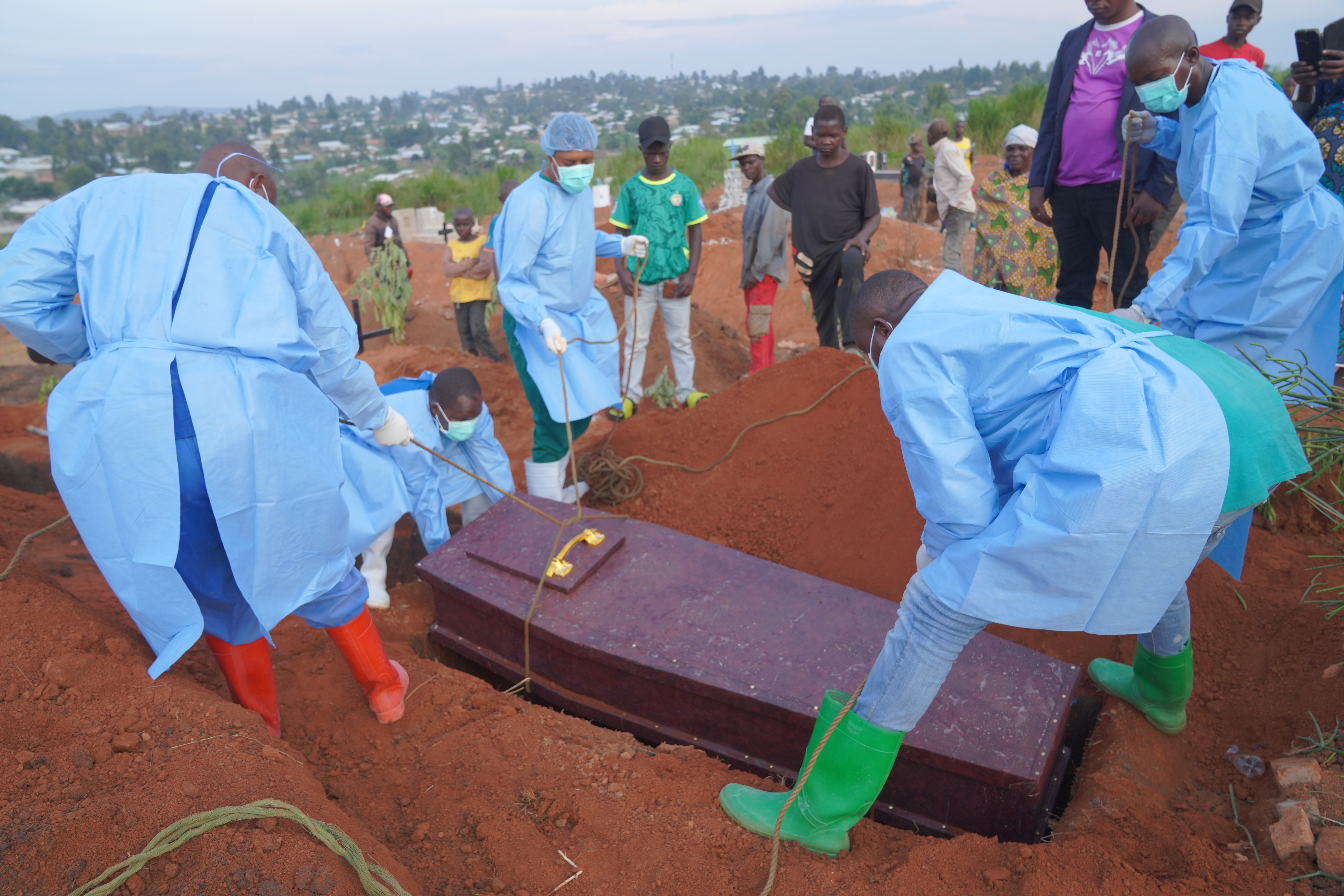
BUNIA, Congo — Congo will receive 70,000 doses of the Ervebo vaccine, which has been effective in past Ebola outbreaks, the World Health Organization and partners said Thursday, announcing a step seen as a major boost to efforts to contain what officials have described as the fastest Ebola outbreak in history.
The Ervebo vaccine is licensed for use against Ebola virus, one of the viruses that cause Ebola disease, but not for Bundibugyo virus, which is responsible for the current outbreak which has so far killed 2,476 people out of the 5,208 confirmed cases
WHO said in a statement that while it’s not known whether Ervebo may protect against the Bundibugyo virus, “early laboratory and animal data suggest it may provide some protection.”
The allocation includes 20,000 doses for a Phase 3 clinical trial to understand the impact of the vaccine on the Bundibugyo virus, the agency said. The remaining 50,000 doses will be used for front-line and health workers as recommended by WHO experts.
The outbreak raging in six provinces in eastern Congo has infected and killed more people at a greater speed than any other Ebola outbreak in history, and is spreading about three times faster compared to the 2014-2016 outbreak across West Africa — the deadliest Ebola outbreak on record with more than 11,000 deaths.
The International Coordinating Group on Vaccine Provision, which includes WHO and other partners, said the doses will be released immediately following a request from Congo’s government.
WHO Director-General Tedros Adhanom Ghebreyesus called the approval “an important example of global solidarity in action.” He said the agency and its partners remain committed to supporting strengthened surveillance, rapid detection, quality care, community engagement and vaccination efforts to bring the outbreak under control.
The lack of approved vaccines or treatments for the rare Bundibugyo virus has been a major issue for responders. Most new cases have been reported outside of the people being monitored, showing the virus continues to spread faster than efforts to track it. That has been a key contributor to the recorded deaths.
The case fatality rate so far is 47.5% although it is far worse in some places where response efforts are more challenging, such as in North Kivu province where the fatality rate is up to 70%.
Experts believe the virus began spreading from the mining town of Mongbwalu as early as February, months before authorities declared the outbreak on May 15.
KYIV, Ukraine — Russia pounded the Ukrainian capital of Kyiv and the surrounding region with scores of missiles and drones in a nighttime aerial attack that lasted for hours and killed at least 16 people, officials said Thursday.
Large-scale Russian missile strikes have become a regular occurrence this summer. Just over two weeks ago, a Russian attack on Kyiv and its surrounding region killed 17 people, and nine were killed in the city two days before that. The United Nations said last week that Kyiv was one of the hardest hit cities in July, with at least 54 civilians killed and 202 injured.
At the same time, Ukraine has shifted the war onto Russian soil through long-range drone strikes on oil facilities that have caused fuel shortages across the country. It has also unsettled the Russian public by striking warehouses of Wildberries, the country’s biggest online retailer.
Zelensky repeats his appeals for more air defense
President Volodymyr Zelensky has pleaded for countries to send more Patriot interceptors for defense, but international stockpiles are low amid the Iran war and Kyiv’s more than four-year fight against Russia’s all-out invasion.
Russia’s overnight barrage also included cruise missiles and jet-powered drones that further strain air defenses, Ukraine’s air force said.
Explosions boomed across Kyiv in the dark, but the air force said hits were recorded at 28 locations across the country. Emergency services said 15 people were killed in the capital, with another death in the wider Kyiv region. About 40 people were wounded, Zelensky said, as air raid warnings lasted until after dawn.
More than 38,000 people, including over 2,000 children, sheltered in Kyiv’s subway stations overnight, the system’s operator said.
“It was a massive attack,” Zelensky said on social media, adding that Russia “had been preparing [it] for a long time, combining different types of ballistic missiles, cruise missiles and drones, aiming to cause as much damage as possible to civilian infrastructure.”
The Russian Defense Ministry said it struck a Kyiv industrial site manufacturing components for Flamingo cruise missiles. Sites involved in the production and storage of drones, an ammunition depot and a logistics center were also hit, it said.
Russia is able to produce more than 200 cruise and ballistic missiles per month, Ukraine’s intelligence agency told news outlet Ukrainska Pravda in comments published Thursday. It has stockpiled more than 1,100 cruise missiles and about 130 Iskander-M ballistic missiles, as well as hundreds of missiles of other types, the agency was quoted as saying.
It was not possible to independently verify the report, and Russian officials do not routinely answer questions about the country’s arsenal.
Ukraine says it struck more Russian oil facilities
Russia and Ukraine have battered each other with drones and missiles as their armies struggle to gain the upper hand on the 780-mile front line.
Ukraine’s General Staff said its forces struck an oil refinery in Nizhnekamsk, in Russia’s Tatarstan region, starting a fire, and the Tamanneftegaz oil terminal in Volna, in Russia’s Krasnodar region, where there was also a blaze. Ukraine has hit both facilities in recent months as part of its campaign to disrupt Russia’s vital oil industry.
Tatarstan leader Rustam Minnikhanov confirmed there had been a “massive attack” in the region, state news agency Tass reported, citing his press service. Many of the drones targeted Nizhnekamsk’s Zakamsk economic area, disrupting production at industrial sites and damaging residential buildings, Tass quoted him as saying.
The Russian Defense Ministry said air defenses shot down 726 drones overnight over a number of Russian regions, annexed Crimea and the Black and Azov seas, in one of Ukraine’s biggest aerial attacks of the war.
Ukraine’s neighbors are on alert
Russia’s relentless onslaught has spooked other European countries, especially those bordering Ukraine, which fear spreading attacks from Moscow.
Amid the attack on Kyiv, the Polish Armed Forces Operational Command activated its military aviation operations, ground-based air defense systems and radar reconnaissance. Polish and other NATO military aircraft were deployed to monitor its airspace, Polish news agency PAP reported.
Romania’s Defense Ministry said an unidentified drone crashed and burned in an uninhabited area near the Ukrainian border. Two Spanish F-18 jets, deployed on a policing mission in Romania, were scrambled overnight to monitor a group of “air targets” near the border, the ministry said.
In addition, two Romanian F-16 fighter jets were deployed to destroy a naval drone seen near a major Black Sea gas project, Romania’s acting Defense Minister Radu Miruta said.
Moldova’s Defense Ministry also said its airspace was breached by at least one drone.
Russia “is increasingly testing the resolve of NATO and its partners, violating the sovereignty of neighboring states and deliberately expanding the risks posed by its war far beyond Ukraine,” Ukrainian Foreign Minister Andrii Sybiha said on social media.
European Commission President Ursula von der Leyen saw a broad threat to the European Union. “An escalating campaign of threats is underway, unsettling our citizens and seeking to divide our Union,” she said on X.
Explosions shatter windows and screams fill the air
Russia’s overnight strikes hit 12 locations across Kyiv’s Darnytskyi, Sviatoshynskyi and Solomianskyi districts, damaging 30 apartment blocks, a school, a children’s hospital and a kindergarten, Zelensky said.
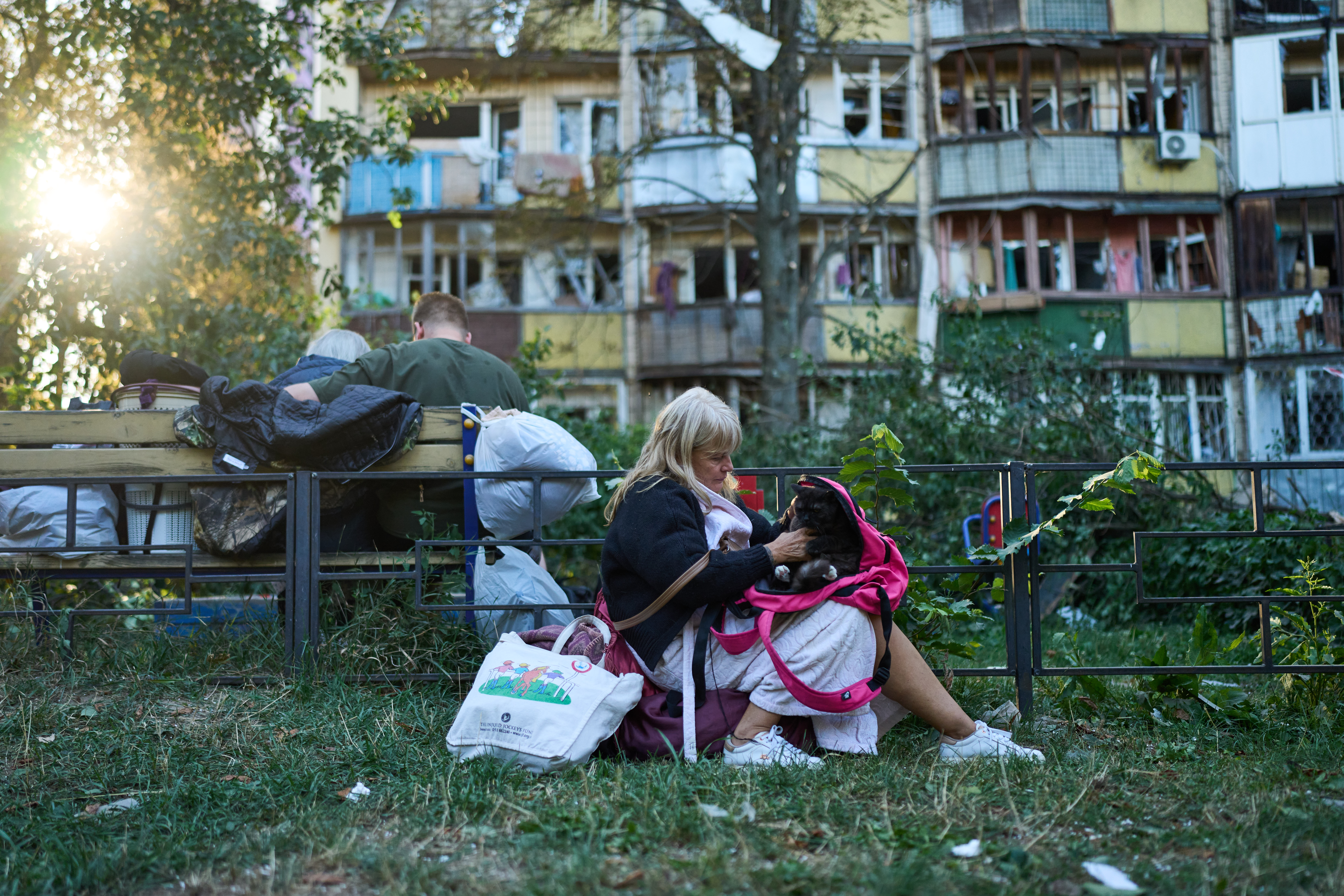
Larysa Bondaruk, 60, sat on the ground, holding her cat, Chanel, which had been rescued by firefighters. With tears in her eyes, she said her neighbor’s grandson had been trapped by the rubble and died. Her apartment was badly damaged.
“A rocket hit the roof. It was incredibly loud. Immediately, debris and doors were blown out. There were columns of smoke, columns of fire, screams, crying and despair,” she said. “Two people were killed in our building, but the rescuers responded quickly and professionally. I am grateful to them for that.”
In Solomianskyi district, the top two floors of a nine-story residential building were destroyed and fires broke out on other floors. People were also trapped in two residential buildings and a school shelter.
TOKYO — Christopher Bodeen, a tenacious, old-school wire service reporter who brought a keen analytical eye and a wry sense of humor to decades of work in China, Taiwan, and in war zones and natural disasters across the globe for the Associated Press, has died. He was 55.
Mr. Bodeen died Monday after a struggle with cancer and complications from a stroke, his daughter, Ingrid, said Thursday by telephone from Taiwan.
Mr. Bodeen, who spoke fluent Mandarin with a proud Taiwan accent, spent much of his career detailing China’s rise to an economic, political, and military superpower — and the accompanying friction from what critics have long called Beijing’s heavy-handed efforts to establish dominance in Asia and beyond.
“Chris was a reporter who would go anywhere and do anything for the story,” said Charles Hutzler, AP’s former bureau chief in Beijing. After a huge quake flattened a swath of Sichuan Province in 2008, Mr. Bodeen composed his account from one devastated town sentence by sentence over text messages because of damaged telecommunications networks. “It was one of the first eyewitness reports the AP and the world received about one of the worst earthquakes in decades,” Hutzler recalled.
He was an expert on politics and Chinese military issues
From AP bureaus in Shanghai, Beijing and Taipei, Mr. Bodeen was for years the news agency’s go-to person on Chinese politics and military issues, able to quickly determine the newsworthiness of the government’s often abstruse statements.
“A chat with Chris would inevitably turn into a remarkable history lesson,” said Emily Wang Fujiyama, former Greater China news director. “He had astounding knowledge of the region and would be writing about China’s military presence in the South China Sea, pivot to Taiwan’s intricate politics, and just as deftly write about the political sensitivities of Tibet, Mongolia, and China.”
Mr. Bodeen was born in Missouri on Sept. 9, 1970, but he spent parts of his childhood in the Middle East, Europe, Africa, and Asia. His father was a foreign service officer and his mother a former diplomat, his daughter, Ingrid, said. Friends and colleagues remembered his love of the Boston Red Sox, esoteric punk rock — and his contagious enthusiasm for the job of journalism.
“He was the blondest, palest person you’ll ever meet” yet also spoke pitch-perfect Chinese, said Ted Anthony, AP’s former China news editor and news director for Asia. “So when the earthquake in Sichuan happened in 2008, he went out there, put on one of his ever-present ball caps to cover his hair, and slouched down. He passed as Chinese, started interviewing people and sailed under the scrutiny of the authorities.”
He was ‘always ready for adventure’
Mr. Bodeen joined the AP in 1996, in Taiwan, the self-governing democratic island China claims as its own, before working as an editor on the agency’s international desk in New York and then joining the AP bureau in Beijing as a correspondent, in 2000. He majored in history and Asian studies at Tufts University, graduating in 1993.
“Chris Bodeen was always ready for adventure. Hiding in the hills of Hainan Island, China, to try to report on the return of an American Air Force plane forced down in 2001, he was the best colleague to be with,” said Raf Wober, a video journalist in the AP’s Hong Kong bureau.
In a 2017 story on efforts to burnish the image of Chinese leader Xi Jinping, Mr. Bodeen described state broadcaster China Central Television leading its evening national news bulletin “with more than four minutes of uninterrupted clapping for Xi as he met with adoring citizens,” and a Russian translator who “was so engrossed with reading a recent speech by Xi, Xinhua [the official news agency] said, that he skipped lunch and dinner just to finish studying it.”
While much of this might have seemed amusing to outsiders, Mr. Bodeen was careful to note that “the domination of [Xi’s] image in official propaganda evokes, for some, the painful memories of the upheaval of the 1960s and ’70s, when Mao [Zedong] was accorded the status of a near deity.”
Julie Pace, AP’s executive editor, remembered Mr. Bodeen as not only an effective China correspondent but as a fellow journalist whose knowledge elevated those around him.
“Chris cared deeply about his work and the value of on-the-ground reporting in such an important region of the world,” she said. ”His expertise informed AP’s audiences for so many years, but also helped lift up so many colleagues.”
Passion for family and work was his hallmark
Mr. Bodeen was deeply proud of his two daughters and loved showing off their artwork and achievements — and creative Halloween costumes — to colleagues. “Every parent thinks their kids are the best, but, hand to God, these girls are both adorable and seriously tough cookies,” he wrote of his children.
“He truly, passionately loved what he did, as much as he loved being a dad,” Ingrid Bodeen said. She recalled that when her father spent long stints reporting from Afghanistan during her childhood, “he would always have my mom fax over my spelling lists and homework so we could work on them together. He never missed a spelling test week.”
Mr. Bodeen was also beloved by colleagues for his sharp sense of humor, his knowledge of good local food, and an encyclopedic knowledge of movie and TV comedies from the ’70s and ’80s.
Kanis Leung, an AP reporter in Hong Kong, said that Mr. Bodeen once told her about an old correspondent’s description of news reporting as “the art of shoving 50 pounds of oatmeal into a 10-pound sack.”
“Except,” Mr. Bodeen told Leung, “he didn’t say oatmeal.”
Mr. Bodeen is survived by his wife, Yen Ling, daughters Ingrid, 26, and Naomi, 22, his parents and a sister.
HOUSTON — For years, travelers passing through Texas’ two biggest airports have had access to small washing stations for a ritual called wudu, in which Muslims clean their hands, arms, head and feet before the five daily prayers.
Such facilities have become more common in states with the largest Muslim populations, including Texas, where on Wednesday travelers and others popped in and out of washing stations at Houston’s George Bush Intercontinental Airport. The tiled wudu room sits along an airport hall just past a vending machine, with a small sign showing a draped person kneeling.
Public wudu stations are also open at places including the University of Minnesota, the University of Michigan, LaGuardia Airport in New York, and O’Hare International Airport in Chicago.
Now, amid rising attacks on Muslims by Republican elected officials, Texas Gov. Greg Abbott is making the stations a target. He sent a letter Friday to the heads of the Houston airport and Dallas-Fort Worth International Airport that said facilities aimed at serving one religious group are discriminatory against everyone else.
Abbott said he has asked the U.S. Department of Transportation to investigate both airports and warned that his office is “reviewing all grants to any local governmental entities involved in these schemes.”
Later that day, DFW announced it had scrapped plans to add additional washing stations in men’s and women’s restrooms that are available to passersby outside the security perimeter.
Airport spokesman Heath Montgomery wrote in an email that officials “determined the originally anticipated benefit may not be achieved” if the stations were built.
Asked if the decision was a response to Abbott’s letter, Montgomery said it was made before the letter was issued, but that airport officials “were aware of his and other public officials’ emerging concerns.”
Muslim leaders and experts in religious liberties rejected Abbott’s claim that the facilities would discriminate against non-Muslims. Several said opposition to the washing stations is the latest example of GOP leaders, perhaps most visibly in Texas, railing against Islam.
“If there is one thing all religious liberty scholars and advocates across the ideological spectrum have agreed on, it is that the Free Exercise Clause forbids government discrimination because of religion,” Steven T. Collis, a University of Texas at Austin law professor, said in an email. “Although Gov. Abbott’s letter characterized what the airports were providing as discriminating in favor of Muslims, this newest saga is actually part of a much broader pattern of state officials targeting Muslims and trying to make Texas an inhospitable place for them.”
Asma Uddin, a constitutional law scholar who writes about Islam in America, said the Supreme Court has long ruled that neutrality “does not mean that every religion gets treated exactly equally; it means the government cannot coerce, endorse, or exclude based on religious identity.”
The experts noted a range of public services targeted to specific groups, from kosher food served at airports to special low-sensory hours at museums or parks for autistic people. The public-private Texas waterpark chain Hawaiian Falls has hosted events for Christians including “Modesty Matters” and mass baptisms. President Donald Trump this summer hosted a massive evangelical Christian worship event on the National Mall in D.C.
“We can choose to be coy about it and pretend like there are actually sophisticated ideas or sincere concerns here about discrimination, religious encroachment, public safety or spending,” said Imam Omar Suleiman, who leads the think tank Yaqeen Institute outside Dallas. “Or we can embrace the fact that bigotry toward Muslims is alive and well and being fanned, funded and fueled to increase, in Texas and across the country. And people like Governor Abbott are at the center of that phenomenon.”
Abbott’s office declined to comment Wednesday, referring The Washington Post to social media posts in which he repeated his claim that the washing stations were religious discrimination.
The office also noted a Sunday interview on Fox News in which Abbott was asked why he opposes the stations but supports a new state law mandating the posting of a Protestant version of the Ten Commandments in every classroom.
Abbott called the two things “apples and oranges.” The biblical commandments, he said, were part of Texas history all the way up until “who we are today,” while “other faiths” don’t have “the same applications over the course of history of the state of Texas and hence don’t need to be recognized.”
Suleiman, who uses airport wudu stations when he’s traveling, called the washing facilities an important part of making Muslims comfortable and described Abbott’s letter as part of a movement looking to curtail that group’s religious freedoms.
“Putting one’s foot in the nasty sink of a public restroom — often trying to carefully ensure that no part of the body touches some yucky bathroom surface while balancing on one leg — isn’t really something Muslims are thrilled to be doing,” he said.
There are about 4.6 million Muslims in the United States and about 313,000 in Texas, according to the World Population Review. Muslims have become more visible in American public life in recent years, with milestones including the election of Mayor Zohran Mamdani (D) in New York and the Michigan Democratic primary win of Abdul El-Sayed, who would become the nation’s first Muslim U.S. senator if he defeats his Republican opponent this fall.
At the same time, anti-Muslim sentiment has become more public and more pointed.
“The blatant and mainstreaming of Islamophobia is worse than after [the Sept. 11, 2001, attacks],” said Haris Tarin, vice president of the Muslim Public Affairs Council, an advocacy group that focuses on policies of interest to U.S. Muslims.
Trump, who has declined to condemn anti-Islam comments from members of his party, last week described Democratic candidates in the midterm elections as “jihadists.” Earlier this month, Rep. Nancy Mace (R, South Carolina) said “every single Muslim holding public office in America is a Trojan horse.”
The growth of Muslim communities in Texas is impossible to miss.
The Houston area is now home to Texas’s largest Muslim community, with more than 200 mosques and Islamic centers. The Muslim population in the Dallas-Fort Worth area doubled in a decade, and Muslim state lawmakers represent suburban districts in both the Dallas and Houston metro areas.
Houston Mayor John Whitmire released a statement in response to Abbott’s letter saying 22 percent of all international travelers departing from Terminal D — where the wudu station is — are flying on airlines based in Muslim-majority countries. “IAH is a global gateway,” Whitmire wrote. “The ablution room was created in response to passenger requests and serves a practical need.”
Abbott, who is running for reelection, and Attorney General Ken Paxton — a Trump ally who is waging a competitive race for the Senate — have both embraced Islamophobic rhetoric on the campaign trail.
Last year, Abbott designated the Council on American-Islamic Relations, a Muslim civil rights and advocacy organization, as a foreign terrorist group. He and Paxton fought to revoke the group’s nonprofit status, a move that CAIR has challenged in court.
Abbott has also led GOP efforts to block a residential development planned around a large mosque complex in the Dallas area.
Texas officials denied Islamic schools access to the state voucher program until a judge ordered them not to. At the Texas GOP convention in Houston in June, Republicans added to their platform a provision banning “sharia,” or Islamic law, even though sharia law does not apply under U.S. civil law.
At the airport in Houston on Wednesday, people came in and out of the wudu rooms ahead of Dhuhr, the midday prayers. A man and woman wearing airport employee tags — she also wore a blue head scarf — slipped into their respective rooms shortly before 1:30 p.m. A mother and her teenage son, traveling home to Toronto after visiting family, said ablution stations are common in Canada.
Ubaid Mian, who manages several airport restaurants, said he uses the prayer and wudu rooms multiple times each day.
“The airport is a place where everybody travels. Diversity should be appreciated,” he said, shaking his head at the controversy. Texas “has so many people here who have so many different beliefs. There’s no harm in it. It should be respected.”
Mian said he would be back at the wudu room to prepare for evening prayer before heading home.
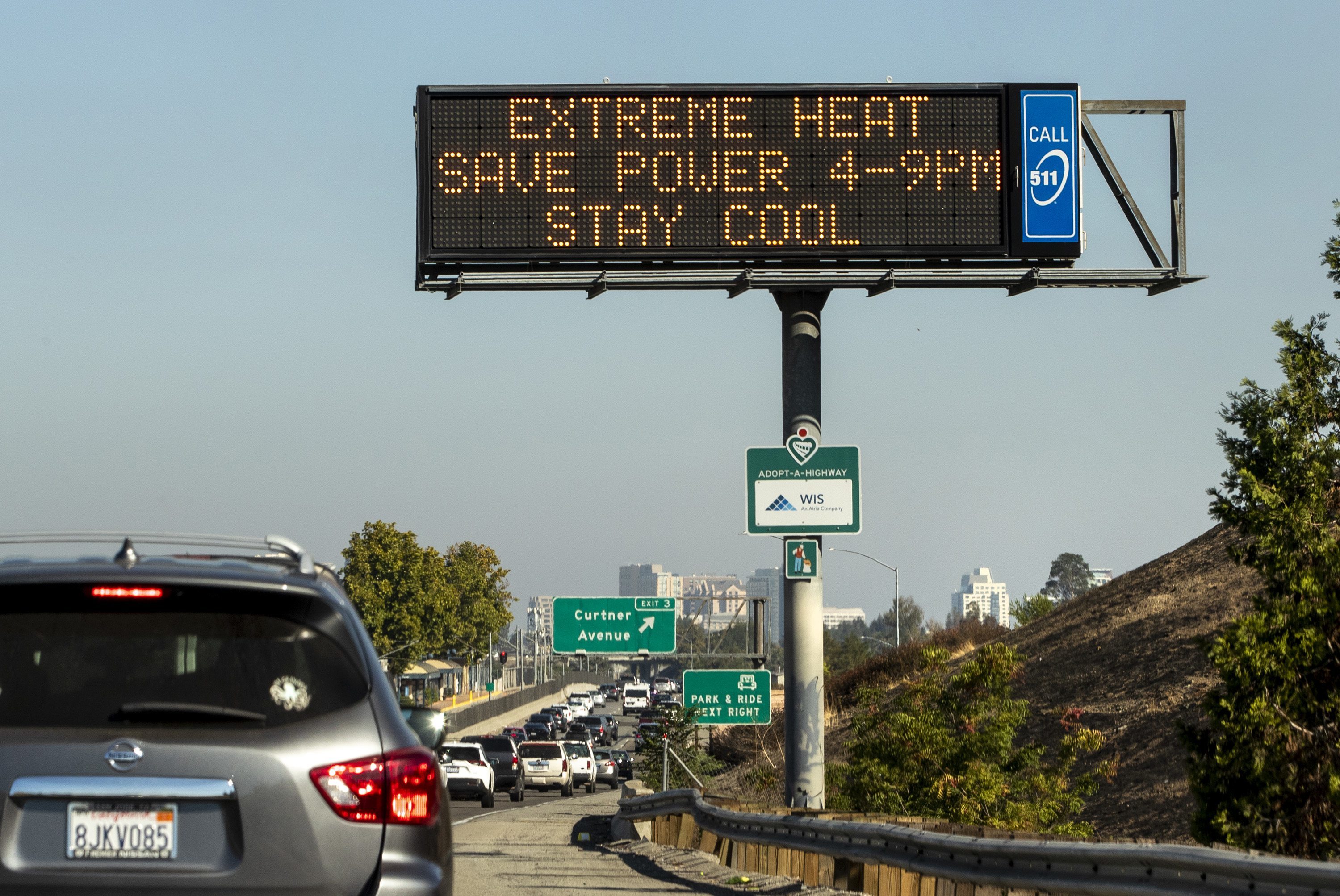
It was another sizzling summer day in late July, with temperatures nearing 100 degrees, when one of the main roads cutting through Greenville, Texas, finally just gave up.
The stretch of U.S. Highway 69 kept expanding in the extreme heat until it exploded, creating a sharp, two-foot-tall ramp where it broke at the pavement joint. Most of the traffic in this Dallas exurb drove around it.
But then a black pickup hit the ramp going about 30 mph, sending the truck airborne, Dukes of Hazzard-style, flying several feet in the air and slamming down on its front tires.
“Oh, my God!” an onlooker said, as the scene was being recorded. “That’s crazy!”
It was a dramatic example of what has been playing out repeatedly this summer along the nation’s roadways, railroad tracks and bridges: Intense heat is causing surfaces to expand to the point that they break.
The failures illustrate how the nation’s transportation networks, built for a different era, increasingly struggle to handle hotter modern-day summers. And this summer has been brutal. July, federal scientists have said, was the single hottest month on record in the contiguous United States.
Heat waves melt asphalt into goo. Train tracks twist. Overhead power lines sag. Concrete snaps into pieces in what are known as “blowups” — the technical term for what the Pennsylvania Department of Transportation defines as “a heave in a concrete or brick pavement caused by pavement expansion from excessive heat.”
The entire state of Wisconsin was cautioned earlier this summer to “watch for pavement buckles.” A blowup last month closed part of Interstate 97 near Severna Park, Maryland, clogging traffic for a quick repair and then for three straight nights. Interstate 49 in Shreveport, Louisiana, was also shut for hours while crews raced to deal with a blowup. After a bike path next to U.S. 36 buckled, officials in Boulder County, Colorado, warned residents to prepare for more.
“You start seeing them in early summer, and then they surge as the heat builds,” said David North, a district engineer with Louisiana’s transportation department.
Blowups, he said, are “unpredictable and instant.”
In New Jersey, a vertical-lift bridge over the Point Pleasant Canal has been forced to close to boat traffic four different times this summer — on June 11, June 30, July 14 and Aug. 7 — because unrelenting heat kept cooking bridge components and preventing the span from moving.
The bridge, which opened in 1972, was built for a different climate.
State officials now “are working with our consultants to see if there can be any modifications made to mitigate these issues,” Steve Schapiro of the New Jersey Department of Transportation said in a statement.
In Wisconsin, the rate of pavement buckling had been increasing over the last decade, with higher temperatures partly to blame, according to a 2022 state report.
The Federal Highway Administration in 2023 warned against relying on historical climate records when designing new roads and suggested looking instead to predictive climate models.
“I do think there is a recognition that [road] specifications and standards are static, but weather patterns are changing,” said Shane Underwood, an engineering professor at North Carolina State University and president of the Academy of Pavement Science and Engineering.
He was the lead author on a 2017 paper that warned that failing to change methods “significantly threatens” the nation’s roads.
Underwood said he’s seen some progress. He pointed to an online tool developed by federal officials that uses site-specific climate data to help engineers select the correct blend of binders for asphalt pavement. Roads in Arizona, for example, need to be stiffer than those in Minnesota to survive the high temperatures.
The regional recipes for new roads have changed over the years, like how the U.S. Agriculture Department updated its plant hardiness zone map to account for warm-weather plants surviving farther north these days.
Road engineers also are experimenting with other ways to protect the nation’s infrastructure.
“It’s really taken off in the last 10 to 20 years,” said Kim Roddis, professor emerita of civil and environmental engineering at George Washington University.
Some asphalt roads — which can soften like chocolate chip cookies — are now dusted with plastic polymers for better rigidity, Roddis said.
Several cities have tested out what is essentially white asphalt, to reflect more heat. San Antonio, Phoenix and Los Angeles have launched “cool pavement” pilot programs.
New Jersey has stopped building concrete roads with asphalt on top due to hotter temperatures, calling it an outdated design, Schapiro said. Next year, it plans to repair concrete pavement slabs along 11 miles of Interstate 287, in part to get ahead of potential future blowups caused by the heat.
Railroads are struggling with hotter days, too.
Metal tracks can bend in extreme summer heat, creating what’s known as a “sun kink” as rails exert force against the ties. That can cause trains to derail.
Train operators have responded by stepping up rail inspections and going slower during heat waves.
Washington’s Metro uses “heat ride” inspections to look for rails reaching 135 degrees, the trigger for speed restrictions. Amtrak runs into the problem so often that it offers an explainer page on its website so customers understand why trains might run slower during heat waves.
In February, a trade group for public transit agencies issued new guidelines “to improve its resilience to climate hazards,” with ideas such as replacing wood ties with concrete ones.
Union Pacific, one of the nation’s largest freight railroads, said this summer it was spraying white paint on its rail network in some places to cool the metal, borrowing a page from European railroads.
In Greenville, that flying pickup truck was not the first time extreme summer heat caused problems on U.S. Highway 69.
Just three weeks earlier and 10 miles away, a different section of the highway also succumbed to the heat when the asphalt pavement softened and vehicles pulled up the roadway in chunks.
It was a mess. But it was no match for what was to come.
The viral video of the pavement blowup was the talk of the town, said Greenville spokesman Daniel Starks.
“I was shocked,” he said. “You don’t ever want your road buckling — and definitely not like that.”
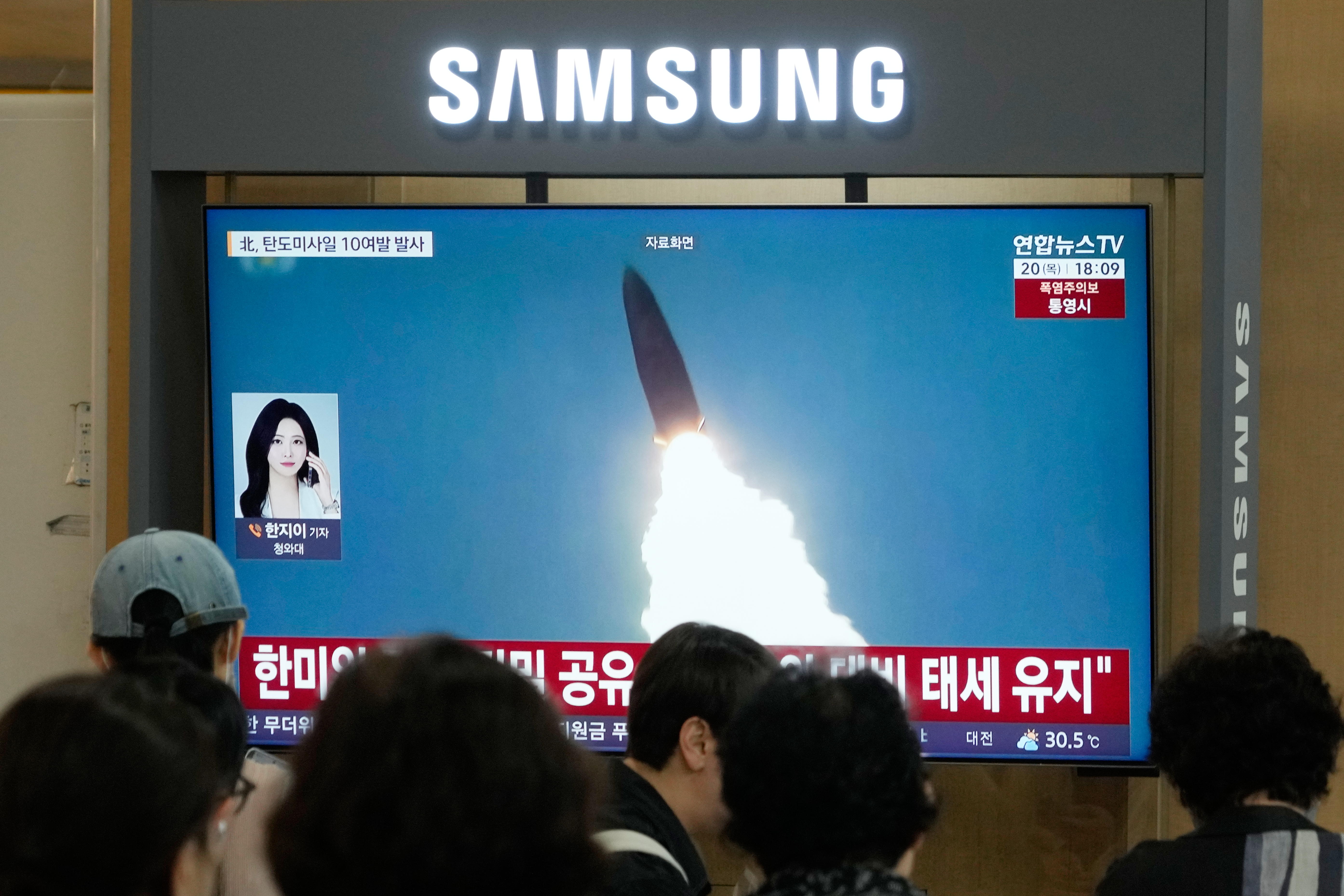
SEOUL, South Korea — North Korea launched a barrage of ballistic missiles toward the sea on Thursday, South Korea’s military said, a day after the North shrugged off a U.S. decision to scale back military drills with South Korea in an apparent bid to resume diplomacy.
The Joint Chiefs of Staff said the launches of about 10 short-range ballistic missiles happened from North Korea’s capital region around 5 p.m. local time on Thursday. The military said the missiles flew about 185 miles each toward North Korea’s eastern waters.
The military said South Korea has bolstered its surveillance posture and was closely coordinating information on the launches with the U.S. and Japan. South Korea’s presidential national security council issued a statement urging North Korea to halt ballistic missile launches.
The Japanese prime minister’s office had earlier said that it detected a suspected missile launch.
President Donald Trump earlier ordered the Pentagon to “substantially reduce” the Ulchi Freedom Shield exercises, just before they began Monday. Trump cited what he said was a good relationship with Kim and South Korea’s refusal to support him over the war in Iran.
On Wednesday, the South Korean and U.S. militaries confirmed they shortened the 11-day drills by shortening their duration by about half and canceling some field training exercises. The reduction of the exercises raised worries about the allies’ joint defense posture.
Kim Yo Jong, the influential sister of North Korean leader Kim Jong Un, dismissed Trump’s overture later Wednesday, saying “the provocative, aggressive nature of the drills won’t change even though their duration and size were reduced.”
“If the U.S. calculates that it can propagate its recent measure as the one of so-called good faith, they will not get the desired answer,” she said in a statement.
She denied Trump’s claim that Kim Jong Un had responded to his request for a conversation.
Kim Yo Jong still refrained from the typical North Korean reaction of fiery rhetoric and said personal relations between her brother and Trump are “still excellent.” That signals North Korea would want to wait for Trump to make bigger concessions before returning to talks.
When asked by reporters Wednesday if he would be meeting with Kim Jong Un this year, Trump said that “Yeah, I will be.” He wouldn’t answer a question about whether he is exchanging letters with Kim but said he gets along with him.
The Ulchi Freedom Shield is one of the main military exercises conducted by the U.S. and South Korea annually to enhance their ability to cope with potential North Korean aggression. Washington and Seoul say their drills are defensive in nature, but North Korea calls them an invasion rehearsal and often reacts with weapons tests.
Before this month’s drills started, North Korea accused the U.S. and South Korea of plotting more provocative exercises this summer and vowed to respond with “a new level of a deterrent.” Days before the drills’ start, North Korea fired two ballistic missiles into the sea in its first such launches since late June.
Trump’s earlier diplomacy with Kim Jong Un collapsed in 2019 due to disputes over how much sanctions relief North Korea should be given in return for dismantling its main nuclear complex, a limited denuclearization step. Kim has since shunned any talks with the U.S., pushed to modernize weapons arsenals and expanded cooperation with Russia.
Kim has said he won’t place his nuclear program back on the negotiating table. Experts say Kim has more leverage than when he first held talks with Trump in 2018 and 2019. They say Kim likely hopes to eventually win international recognition as a nuclear state and extensive sanctions relief in exchange for only limited steps toward denuclearization.
MOGADISHU, Somalia — Six million people in Somalia are facing acute food insecurity while the World Food Program has only a tenth of the resources it had in 2022 when it helped avert famine in the drought- and conflict-stricken East African nation, the head of the U.N. agency told The Associated Press.
“We can only do the bare minimum,” WFP executive director Carl Skau said Wednesday during a visit to a nutrition center on the outskirts of the capital, Mogadishu. “We’re only providing these nutrition supplies to the children that are really the worst hit.”
The reduced funds, because of cuts in international aid by donors and the redirection of resources to other humanitarian crises, meant that the WFP is unable to expand its assistance in Somalia, Skau said.
Millions of people at risk but far less aid
The WFP projects that 1.9 million children under age 5 in the country will suffer acute malnutrition this year, including nearly 500,000 who will require urgent treatment for severe acute malnutrition. Overall, around 30% of the population faces critical levels of food insecurity, the U.N. has said.
“We had 10 times more resources than now,” Skau said of the 2022 hunger emergency that was caused by a prolonged drought. “We were able to step in, and we prevented a famine here in Somalia.”
“We know what’s going on, we have the capacity, we have the experience of dealing with this. We just need the resources now to do it.”
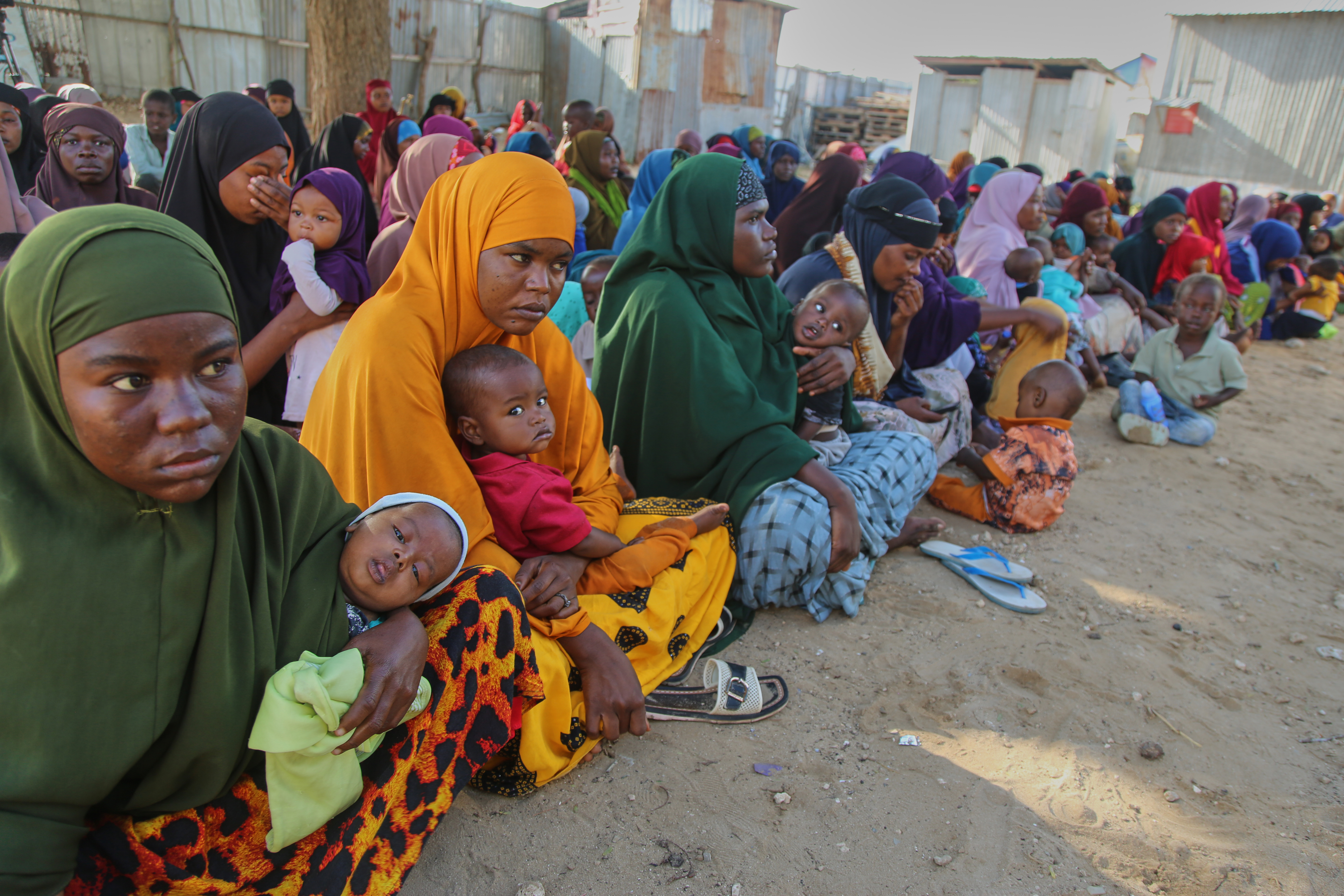
The consequences of the current food shortage, which is also a result of drought, conflict and the displacement of people, are seen at the Feynuus Health Center in Mogadishu’s Kahda district. Dozens of women carrying babies waited beneath a large tree or crowded along the veranda of the corrugated-metal facility seeking help.
Inside, health workers placed children in a blue weighing sling, screened them for malnutrition, and distributed therapeutic food.
One desperate mother tells her story
Halima Mohamed Hassan, a mother of six, had walked nearly 2 miles carrying her malnourished 4-year-old child. She is pregnant, but said she hadn’t eaten for two days. Her last meal was plain rice.
Health workers treated the child she brought with a special nutrient-dense food, while Hassan said that her other children were also malnourished, but she wasn’t able to bring them to the center.
“I could not carry all of them,” she said.
Hassan fled the Lower Shabelle region four months ago after her husband died of malnutrition, she said. Food and water became scarce, and conflict made it increasingly dangerous for the family to stay.
She and her children walked for four nights before reaching a camp for internally displaced people on Mogadishu’s outskirts.
Hassan now shares a makeshift shelter with her widowed mother and her mother’s four other children. The two women look for occasional work washing clothes in nearby neighborhoods to feed their household of 12.
A health center tries its best to help
The Feynuus center receives between 250 and 350 patients daily, mainly displaced women and children from regions outside Mogadishu, said Abdirahman Barkhad, program director of Youth Link Somalia, which operates the center.
Barkhad said that about 10 nearby health and nutrition centers had closed because of a reduction in humanitarian funding, increasing pressure on those that remain.
“We have witnessed children collapsing, because their families do not have enough food,” he said.
Mohamud Moallim Abdulle, commissioner of the Somali Disaster Management Agency, described the country’s food situation as “extremely alarming.”
He said that an estimated 1.85 million children are malnourished, while around 6 million people are affected by drought, and 2 million urgently need assistance.
They don’t know where their next meal is
Skau said that mothers he met this week in the town of Burhakaba described drought, insecurity, and also rising food prices as the main drivers of the crisis. Some had lost their crops and fled their homes. Others walked for three or four hours to reach health facilities, because aid workers couldn’t reach them.
“I spoke to women with eight to 10 children,” Skau said. “They don’t know where the next meal is going to come from.”
Insecurity, with Somalia battling a 20-year-long insurgency by the al-Shabab militant group, also makes humanitarian operations more expensive. WFP must use aircraft in areas where staff and supplies can’t travel safely by road, and some communities are inaccessible, Skau said.
He said that conflict in the Middle East was adding to the pressure by driving up fuel and food prices, limiting agricultural supplies, and drawing funding toward other emergencies.
After her child received some food at the center, Hassan began the walk back to the camp they live in. Her five other children were still waiting and hungry, she said, and she would have to return with them one at a time.
Camila Toro de Paula, a 25-year-old transgender woman from Venezuela, has spent the past 11 months in a federal immigration detention center for men, where she said she has been assaulted, threatened, and deprived of medical care.
Toro de Paula, who entered the United States seeking asylum, has lingered in solitary confinement without ready access to water for up to 24 hours a day, her lawyer said. Medical files from the center in Jena, Louisiana, where she is being detained show that she has complained to social workers about being punished because of her gender expression.
“I’m afraid of dying here,” Toro de Paula said in Spanish during a video interview from the federal facility. Immigration officials said Toro de Paula had entered the country illegally and cited her criminal history in the United States. Records show that the most serious charges against her, of felony assault and possession of a weapon, had been dismissed.
The case of Toro de Paula comes as the federal government has halted specialized care for transgender detainees inside at least 10 detention centers from Calexico, Calif., to Batavia, N.Y., according to public records. Officials no longer consistently provide transgender inmates with hormones and other gender-related care.
An Obama-era policy that provided basic rights for transgender people in immigration detention was deleted from the Department of Homeland Security website in February 2025. And officials have dissolved longstanding protections meant to shield transgender detainees from being harassed or physically harmed.
“We are NOT wasting U.S. taxpayer dollars to provide hormone therapy to illegal aliens seeking to change their sex,” the Department of Homeland Security said in an email to The New York Times, which did not address the other changes in policy.
Homeland Security has in recent months declined to say how many transgender migrants are in custody, but experts on incarceration estimate that there are at least several dozen out of more than 65,000 people in detention as of July 11. On Jan. 12, 2025, the latest date for which the government reported a count, the Immigration and Customs Enforcement agency had 47 transgender people in custody, according to data archived by the Vera Institute of Justice, a think tank focused on criminal justice reform.
Many migrants have complained about mistreatment and shoddy medical care in federal facilities. While transgender detainees represent a small fraction of those being held, they are an especially vulnerable population. Many are fleeing harassment in other countries and had just begun to be given some protections within the U.S. detention system in recent years.
Medical experts say that withholding hormones and other treatment for gender dysphoria can cause unique physical and mental health complications.
A hotline run by Immigration Equality, a nonprofit organization that helps LGBTQ+ and HIV-positive people who are in the immigration system, recorded a 68% increase in calls from LGBTQ+ detainees in 2025 compared with the year before. (The group does not have data specifically for transgender detainees.)
Immigration Equality’s clients include transgender women who said they had been removed from detention center units that had been reserved for them during the Biden administration and placed with men or in solitary confinement. The group said that the federal government had denied requests from transgender women to be transferred to facilities for women or transgender people.
“The administration is creating a humanitarian disaster” by changing policies that were meant to protect transgender people, said Bridget Crawford, the legal director at Immigration Equality.
The Department of Homeland Security rejected claims that conditions inside detention centers were inhumane. The agency did not directly respond to Toro de Paula’s assertions of assault and mistreatment, and identified her with male pronouns. Toro de Paula has received hormones for years, and her lawyer said that she has been denied hormone treatment in ICE detention.
“No detainees are being beaten or abused,” the federal agency said. “No lawbreakers in the history of human civilization have been treated better than illegal aliens in the United States.”
The actions of the Trump administration have been welcomed by opponents of transgender rights, including the Women’s Liberation Front, a women’s rights advocacy group that defines gender based on sex at birth and does not acknowledge transgender women. The group has argued that placing transgender women in prisons for women violates the constitutional rights of female inmates who are not transgender, including the Eighth Amendment right to protection from cruel and unusual punishment.
The Center for American Progress, a left-leaning think tank, issued a report citing ICE data that Democrats in Congress had collected. It found that LGBTQ+ migrants have a disproportionately higher chance of being abused in migrant detention centers. The statistics were collected during the 2017 fiscal year, which spanned Democratic and Republican administrations.
The report said that transgender detainees, on average, spent 99 days in solitary confinement, more than double the average for all immigrants in ICE custody. In the 2017 fiscal year, 1 in 8 transgender detainees was placed in solitary confinement, which officials said is done when detainees are viewed as a threat to other immigrants or personnel, or for protective purposes.
Data from the federal government show that in the 2024 fiscal year, during the Biden administration, 244 detainees who identified as transgender were booked into ICE custody.
In 2023, Immigration Equality interviewed 41 LGBTQ+ and HIV-positive immigrants who had been in detention. About one-third said that they had experienced sexual abuse, physical assaults, or sexual harassment because of their identity while in detention.
Almost all the participants said that they were the targets of homophobic, transphobic, xenophobic, racist, or other verbal and nonverbal abuse. Most said that they had received inadequate medical care for a range of conditions, and about half said that they had been placed in solitary confinement. Of the 41 participants interviewed for the report, 14 were transgender.
Safeguards under President Joe Biden have vanished during President Donald Trump’s second term.
In May, the federal government closed the Office of the Immigration Detention Ombudsman, which was responsible for investigating misconduct and abuse of all kinds in the immigration detention system.
“The violations that we’re seeing now are, to some extent, what we had seen in Trump’s first term — it’s almost like they’re on steroids, though,” said Lynly Egyes, the legal director of the Transgender Law Center, a civil-rights group. “It was often difficult for trans people to access medical care. Now, it is almost impossible.”
Many transgender migrants in detention, like Toro de Paula, came to the United States seeking asylum.
She told the story of a violent childhood in Venezuela. From the age of 8, she said that she was raped repeatedly by relatives. When she was about 10, she said that she tried to hug her mother, who recoiled and splashed her with hot cooking oil. She said that police stabbed her when she was 14 in what she described as a homophobic attack.
In October, a doctor who was retained by her legal team evaluated Toro de Paula and found an irregular hyperpigmented patch inside her left elbow where she said her mother had burned her. She had long scars on her left wrist and hand and on her right leg where she said Venezuelan police had sliced her skin with a knife when they had detained her.
Texas Gov. Greg Abbott (right) and Montana Gov. Greg Gianforte greet members of the National Guard as they arrive with fellow governors for a 2024 news conference along the Rio Grande to discuss Operation Lone Star in Eagle Pass, Texas. Eric Gay
Two years ago, she made the dangerous journey on foot to the United States. In September 2024, she reached Eagle Pass, Texas, where officials gave her food and clothes and put her on a flight to New York City. At the time, Gov. Greg Abbott of Texas had been sending thousands of migrants to Democratic-led cities as part of his multibillion-dollar border security effort, known as Operation Lone Star.
In New York, she joined a community of transgender women and attended parades and parties for LGBTQ+ people.
Her new life unraveled in August 2025 when she was arrested during a routine appointment at the New York City offices of ICE. She was flown to Louisiana and placed in a detention center for men, despite objections from her lawyer, Laura Berger, who works with the Legal Aid Society. The placement, Berger said, would put her client in danger.
The Department of Homeland Security said Toro de Paula had a criminal history that included charges for felony assault and criminal possession of a weapon, both of which were dismissed and sealed. According to her lawyer, those charges related to her arrest in the Bronx on June 30, 2025, after she was accused of hitting a man on the head with a skillet. Her lawyer said Toro de Paula was fending off a robber. The charges related to that incident were dismissed in October, court records show.
In a separate case in Queens, Toro de Paula was charged with prostitution; that was dismissed. She was also charged with pickpocketing in Queens and pleaded guilty to jostling.
“A lot of people don’t understand us,” said Jessica Guaman, a transgender woman who organized gatherings that Toro de Paula had attended in New York. “Camila is a good girl.”
Many transgender people in detention have fled persecution in their home countries, said Crawford of Immigration Equality.
Wilmar Quintero, a 50-year-old transgender woman from Venezuela, came to the United States seeking asylum and was detained in Michigan for about three months. Quintero said that she had fled her native country because police officers tortured her and left her for dead after she spoke out against civil rights abuses. Photographs of her bare chest revealed an expansive stretch of pinched, red scars that mark where officers carved out her breast implants, she said.
Quintero said that she was sexually assaulted by another migrant while being detained in Michigan.
“I lived through the worst horrors and humiliations imaginable,” Quintero said in Spanish. “They treated me like an animal.”
Immigration officials deported Quintero to Venezuela in April, and she went into hiding there. She said she is afraid of the police in Venezuela.
Crawford shared the stories of eight transgender clients who had similarly complained of discrimination, harassment, or abuse inside immigration detention facilities.
Toro de Paula said that detention center officials had pressured her to voluntarily agree to return to Venezuela, but she had refused. She said that they had humiliated her by forcing her to wear a mask and gloves while she is outside her cell because she is HIV-positive, even though the virus does not spread through the air. She has not been allowed to replace her wig, and officials have refused to give her undergarments for women. The Department of Homeland Security said Toro de Paula had worn the mask by choice — a claim that her lawyer disputed.
“I want to be heard,” Toro de Paula said. “Women like me have been disrespected enough. No more.”
CHICAGO — Meta insists it has a long history of protecting its youngest customers as it defends itself against a swath of lawsuits alleging its social media empire harms children.
In the latest such instance, the social media giant is fighting allegations in a California federal court that it contributes to the youth mental health crisis by deliberately and stealthily designing features to get children hooked on its platforms Instagram and Facebook. Four states are seeking billions of dollars in damages as well as fundamental changes to how Meta runs those apps.
Children’s mental health, and what they do and see on social media, are all issues “Meta takes seriously and tries to act on,” Paul Schmidt, a lawyer for the tech giant, said in opening statements this week.
Critics say the company’s safety record falls short and that many of its protections simply don’t work.
They include Marc Berkman, executive director at the Organization for Social Media Safety, who said Meta introduced safeguards promising to protect children in response to public pressure rather than out of concern.
There’s been a “lack of real institutional willingness to act here,” Berkman said.
Here’s a look at some of the changes Meta has introduced, along with the work advocates say could still be done.
Instagram users have always been able to block others — and, along with Meta’s oldest crown jewel, Facebook — the app has gradually added features for reporting problematic accounts and inappropriate content.
In 2016, Instagram users were given the option to delete or filter comments they found offensive, and later added warnings that prompted users to reconsider posting potentially harmful content, as well as options to limit comments and tags on their posts.
Meta also says it prevents adults from starting private chats with teens if they are not already connected, and has increased checks to make sure users under 13 — the minimum age for holding a Facebook or Instagram account — aren’t online. Schmidt said in his opening remarks that Meta recognizes some users still sign up using incorrect birthdays but that the company takes enforcement of age limits seriously.
The company says it also posts warnings and resources at the top of Instagram search results related to suicide, self-harm and eating disorders, and touts its “Teen Accounts,” launched in 2024, as a safe space for teenagers online. It aligns photo and video restrictions for teen accounts with those for a PG-13 movie, unless there’s parental permission otherwise.
Critics complain these changes amount to little more than corporate posturing.
A September 2025 report from former employee and whistleblower Arturo Béjar and four online safety advocacy nonprofits accused Meta of not taking “real steps” to address youth safety, instead opting for “splashy headlines about new tools for parents and Instagram Teen Accounts for underage users.”
“We really found that overall what Meta was marketing under Teen Accounts was very lacking in actual protections,” said Haley Hinkle, policy counsel at Fairplay, which co-authored the report. They evaluated 47 of Meta’s 53 safety features for teens on Instagram and found 60% of them were either not available or didn’t work as advertised, Hinkle said.
Meta called the report’s findings “misleading” and “dangerously speculative.”
Scrolling and core design
Researchers say Meta’s efforts to reduce the risk of children becoming addicted to the scrolling features of social media platforms have been largely unsuccessful.
Ashley Shea, a Ph.D. candidate specializing in social media and online spaces at Cornell University, points to what academics call “attention-capture deceptive designs” that are not exclusive to Meta’s platforms. They include infinite scrolling, “casino style” pulls to refresh content, push notifications and algorithmic recommendations. Those features “prey on the cognitive vulnerabilities” of young people with developing brains, in particular the need to feel rewarded.
Meta has taken important steps to address problematic content, cyberbullies, and sexual predators, Shea said, but she has not seen the same level of effort to offset the addictive impact of attention-capture deceptive designs.
Nudges and time management controls
“There’s no question that some teens struggle to manage their time with social media,” Schmidt said Tuesday, adding that Meta’s time management tools prove its evolution on the issue. Those tools include parental supervision controls and in-app “nudges” for teen users who repeatedly look at the same type of content or spend too long on Instagram or Facebook late at night.
Hinkle notes the “entirely voluntary” time management tools are not easy to set up, and amount to “far too little, too late.”
Béjar, the former Meta employee and whistleblower, agrees. In testimony Wednesday, he said a tool called “Take a Break” is “designed to fail.” Users have to turn the feature on themselves and, he said, very few do.
Across the board, tech companies exist to maximize revenue, said Berkman, and for almost every social media platform today, that means “maximizing children using their features for as long as they can.”
Legal challenges focused on “the fact that these are defective products by design because of their features, not the content per se” is something new, Shea added. And beyond the courtroom, mounting pressure on lawmakers could bring more industrywide changes.
“The momentum only continues to grow,” she said. “Ultimately, these are for-profit companies that respond to economic pressures. And so I think that the more economic pressure they’re confronted with through these litigations, the quicker they will have to adapt.”