Tag: no-latest

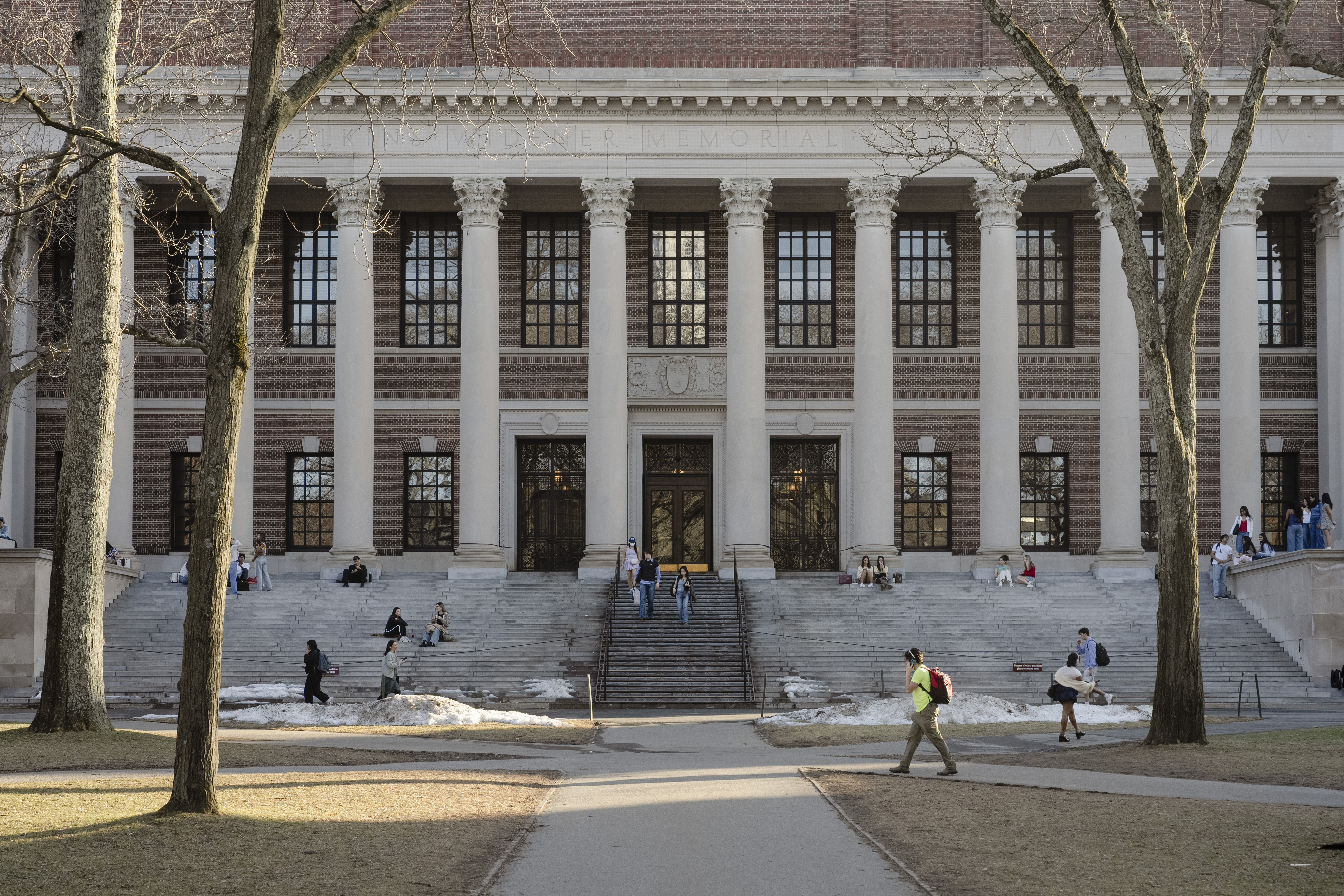
  • How Harvard’s epic fight with Trump is costing the university

    How Harvard’s epic fight with Trump is costing the university

    One of Harvard University’s biggest federal funding streams is down sharply, according to a New York Times analysis of government data.

    The declines have persisted even after a federal judge forced the Trump administration to reverse drastic cuts to the university last year.

    The funding, from the National Institutes of Health, currently lags about 18% behind the average pace of grants during the Biden administration, the analysis shows.

    Last year, Harvard successfully sued the Trump administration, after the government announced it had frozen more than $2.2 billion in 2025, from multiple federal agencies.

    But unlike then, when Trump officials made a public spectacle out of announcing the cuts, the NIH is mainly delaying, reducing, or rejecting grant requests, often leaving researchers and university leaders in the dark about what is happening.

    The reduction appears to be the latest front in the Trump administration’s on-again, off-again war with Harvard and other elite universities. It is a new, more subtle tactic that is harder to fight in court, but that could be just as damaging if cuts and uncertainty build.

    The Trump administration has targeted a number of the nation’s elite universities, accusing them of tolerating antisemitism and pursuing racial diversity in ways that flout the law, among other criticisms. Harvard — the country’s wealthiest university — has been one of the most frequent targets of federal officials.

    As the Trump administration has pulled multiple levers to try to bring Harvard and other schools to heel, Harvard has often pushed back. It was the first institution to sue the Trump administration, has won in court on a number of occasions, and has not reached a settlement with the federal government, as other prominent schools have done.

    Now, however, the university faces cuts that may be harder to counter. Last September, a judge ruled that the administration had improperly cut off funding to Harvard when it ended all of its grants in 2025, finding that the government had violated Harvard’s First Amendment rights.

    But in the ruling, the judge suggested that there were lawful means the government could pursue if it wanted to restrict Harvard’s money, should it choose to.

    That is what is happening.

    Through June 30 of this fiscal year, which began Oct. 1, the NIH provided Harvard 309 awards worth a total of $200 million. The amount is down from an average of roughly 440 awards worth $246 million for the same nine-month period in 2021-2024, according to the latest data available.

    Harvard is still one of the largest recipients of NIH funding, though it is far behind the top grantees such as Johns Hopkins, the University of Michigan, and Yale University. Other major research universities have also seen reductions in NIH funding.

    Though NIH support has slowed compared with the Biden years, the 2026 awards are outpacing last year, when Harvard’s funding was frozen. By the same point in 2025, NIH funding to Harvard was stalled at 201 grants worth $94 million.

    In recent months, Harvard’s individual schools have laid off staff. The leadership of the university’s largest division, the Faculty of Arts and Sciences, reported in an email to the division on Aug. 14 that 165 of its staff positions had been eliminated in a layoff and restructuring. The job cuts were aimed at reducing a major deficit.

    Carrie Barbash, an organizer and former president of the Harvard Union of Clerical and Technical Workers, said the final number of layoffs may change as some staff members whose jobs were eliminated consider moving into some newly designed roles.

    The current grant slowdown is not taking place evenly across Harvard. The university’s Chan School of Public Health is heavily dependent on NIH funds and has seen nearly 25% less in grant funding this year, compared with the average amount from 2021 to 2024.

    The NIH has obligated $67 million across 63 awards to Chan through June of this fiscal year; the 2021-24 average for the same time period was $90 million across more than 100 awards.

    Nancy Krieger, a professor of social epidemiology at the Chan School, said that fallout from the funding slowdown goes beyond individual projects that lost grants. More than a year of federal cuts — and legal fights over the reductions — have “shaken any sense of stability as to whether the federal government is a reliable funder,” she said.

    The school is already cutting back, with layoffs and reductions in the number of slots for Ph.D. students. “It’s not just that you lost funding, it’s that you’re reducing the size of the cohort for the next generation of researchers that you’re training,” Krieger said. “What is the knowledge lost? And what are the myriad ripple effects for the economies of the cities and towns that depend on universities as major employers?”

    Harvard has also won some rounds in its fight with the administration. Harvard’s court victories protected much of its grant money and its ability to host international students.

    A federal judge on Aug. 13 dismissed a Trump administration lawsuit against Harvard that had accused the school of tolerating antisemitism and sought the ability to deny it grants.

    Harvard’s endowment continues to ride the stock market to record highs, and the university’s steadfastness under pressure has inspired supporters and alumni who do not want it to yield to President Donald Trump.

    While Yale is in talks to perhaps become the next elite school to settle with the administration, Harvard continues to hold out. Harvard is not believed to be engaged in any serious settlement talks at this time.

    “Harvard is fighting for principles, both legal and constitutional, and doing so on behalf of the entire system of colleges and universities,” said Lee Bollinger, the former president of Columbia University. “We should all be grateful.”

    Yet, as Bollinger noted, “any litigant will inevitably pay a high price.”

    The administration has pushed the fight to Harvard on several fronts. The university is still engaged in other litigation and appeals with the Trump administration; a loss in any major case could be devastating.

    The Trump administration continues to open fresh battles. The government is proposing new budget rules that would give the administration’s political appointees more power over grants.

    White House spokesperson Liz Huston blamed the ongoing battles between the university and the administration on Harvard’s “stubborn commitment to unlawfully discriminating on the basis of race and failing to properly protect its students.”

    “Unless Harvard comes to the table in good faith, the Trump administration will continue pursuing every available legal avenue to enforce federal civil rights laws,” she said.

    Facing the uncertainty caused by lawsuits, grant slowdowns, and other pressures from the administration, Harvard and other schools are likely to continue to retrench, said Tom Gerety, a former president of Amherst College.

    “The main thing you do in uncertainty is hunker down and say, ‘What cuts can we make right now?’” he said, noting that research universities are already trimming back on Ph.D. programs.

    Tighter research budgets will mean scientists are more likely to seek jobs outside the United States, he said, while those still at American schools may be less likely to take the unconventional big swings in their research that can lead to scientific breakthroughs.

    “This is going to hurt,” Gerety said, “and it’s going to hurt a lot more in 10 years than it does now.”

    The government has pursued appeals of federal court rulings that went Harvard’s way last year.

    The two sides, as well as a number of outside parties, filed briefs this summer over last fall’s decision in the funding case. The government is also appealing a June 2025 court decision blocking the administration’s effort to stop Harvard from hosting international students. Oral arguments in that case are scheduled for October.


  • Supreme Court chief justice allows work on Trump’s $400M White House ballroom to continue for now

    Supreme Court chief justice allows work on Trump’s $400M White House ballroom to continue for now

    WASHINGTON— Chief Justice John Roberts on Friday allowed the White House to continue construction on President Donald Trump’s $400 million ballroom project for now, as the Supreme Court considers the Trump administration’s emergency request to intervene in lawsuits over the project.

    The temporary order came hours before lower-court rulings would have forced a halt to aboveground construction of the project because Trump didn’t get congressional approval.

    It will remain in place until the Supreme Court issues a more durable decision, though the one-page document does not detail Roberts’ reasoning or indicate when another ruling will be handed down. Roberts signed the order because he oversees emergency appeals of cases filed in the capital.

    Ballroom case tests limits of presidential power

    The case is coming before the nation’s highest court as Trump, a Republican, exercises unparalleled assertions of presidential power and increasingly seeks to mold the capital in his own image.

    The administration has argued that the president has total authority to renovate the White House and other federal buildings as he sees fit and that the ballroom project must be completed due to national security concerns.

    When Trump first announced the plans for a new ballroom, he did not emphasize national security. He said the project would be funded by private donations, including from himself.

    The National Trust for Historic Preservation argues that Trump has no unilateral authority to undertake the work, which has included demolishing the East Wing. Lawyers for the preservation group accused the White House of trying to “outrun the courts” by accelerating construction.

    A spokesperson for the trust said Friday that the order from Roberts is not a final decision and the group is awaiting further action. The full Supreme Court will likely weigh in next on whether construction can continue for the potentially long duration of the lawsuit.

    Trump said his administration is grateful for Friday’s decision, writing in a social media post that the project is “under budget and ahead of schedule.”

    While litigation plays out, the ballroom is going up quickly

    The Trump administration says 65% of the work has already been completed on the planned 90,000-square-foot ballroom, where the East Wing stood before the president ordered its demolition.

    Crews are working 20 hours a day, seven days a week, on the project, where about $200 million in private donations has been spent or committed, according to court documents filed by the Justice Department.

    The work has proceeded against the backdrop of the litigation winding through the courts.

    In April, a district court judge ordered a stop to the aboveground construction of the planned ballroom. That ruling was briefly suspended, then upheld by an appeals court panel. U.S. District Judge Richard Leon in Washington allowed work to continue only belowground on bunkers and military installations. Leon was nominated by President George W. Bush, a Republican.

    Leon’s decision was upheld by an appeals court panel, as two judges appointed by Democratic presidents found the project was for Congress to decide and “not a matter for Executive self-help.” A third judge, appointed by Trump, found that the preservationist group challenging the project had no legal standing to sue.

    Solicitor General D. John Sauer picked up on that argument, calling the decision halting the work “extraordinary and unlawful.” He said the completion of the project was “vitally required by national security.”

    The Trump administration has scored a series of victories on the Supreme Court’s emergency docket, though the justices have ruled against some of the president’s signature policies after fuller review.

  • Trump administration moves to strip bar association’s power to accredit law schools

    Trump administration moves to strip bar association’s power to accredit law schools

    The Trump administration’s ongoing feud with the American Bar Association has come to a head, as the Education Department threatens to strip the organization of its power to oversee law school programs across the country.

    Career staffers at the department recently recommended the ABA lose the federal recognition needed to operate as an accreditor. In a report made public Friday, staffers at the department said the ABA, which accredits nearly 200 law schools, had failed to keep both sides of its house “separate and independent,” undermining its effectiveness as an accreditor.

    The association is both an accreditor for law schools and a trade group for legal professionals. As an accreditor, ABA oversees the quality of law school education and determines whether law schools not affiliated with a university can accept federal student aid.

    President Donald Trump and other Republican lawmakers have accused the ABA of having a liberal bias and promoting diversity, equity, and inclusion, pushing a political agenda in law schools. Conservatives have also criticized the ABA, which has accredited law schools since 1952, for having a monopoly on oversight of law school education.

    The Education Department declined to comment.

    David Barker, assistant secretary for postsecondary education, told the Wall Street Journal, which first reported the recommendation, “We have said many times that accreditation, in general, operates like a cartel. When there’s no competition, accreditors feel free to inject their own political preferences, their own ideologies into the work that they do.”

    The ABA’s accreditation council chairperson, Melissa Hart, told the Washington Post the council is confident it complies with the Education Department’s requirements for accreditors and federal laws.

    “The outcomes produced by Council-accredited law schools are unmatched, and we continue the important work of accrediting law schools as our recognition process proceeds,” she said in a statement.

    The Education Department last approved the association to accredit law schools in 2021, a five-year designation that is up for review next month.

    The federal government relies on accreditors, little-known but powerful organizations, to deem colleges worthy to participate in the federal student aid program and to review educational quality.

    The report comes as the Trump administration seeks to reshape college accreditation, a system it has accused of being captured by liberal politics. The Education Department has proposed regulations to encourage intellectual diversity and increase competition among accreditors. The proposed rule also calls on accreditors and trade associations to be separate to prevent conflicts of interest.

    Tensions have simmered between the ABA and the Trump administration on multiple fronts, including in court. Top Justice Department officials have repeatedly taken aim at the legal group.

    Then-Attorney General Pam Bondi wrote to the ABA last year that the group was biased in favor of Democrats and said the administration would not allow it to help vet judicial nominees.

    Also last year, Todd Blanche — then the Justice Department’s No. 2 official, who has since replaced Bondi as attorney general — said that the agency would no longer pay for its employees to travel to the ABA’s events or allow them to even attend such functions.

    The ABA has also sued the administration, including in a case challenging Trump’s campaign to crack down on prominent law firms.

    Trump issued executive orders last year taking aim at several firms that had hired his perceived enemies or took on cases he disliked. Four of the firms that were targeted sued to fight those orders, and all of them won court orders blocking Trump’s sanctions.

    The ABA filed its own lawsuit challenging Trump’s actions, saying it had to act to protect its members “and the rule of law itself.” The case is ongoing, and a judge earlier this year rejected the Trump administration’s effort to have the lawsuit thrown out.

    An independent advisory board will meet next month to consider the Education Department’s recommendation and decide the ABA’s fate as an accreditor. A senior Education Department official will then weigh in.

    “We look forward to the opportunity to address any misconceptions and clarify the record at our upcoming hearing,” Hart said. “We’re confident the Council will address any concerns the Department may have at that hearing.”

    If the advisory board votes that the government should withdraw its recognition of the ABA as an accreditor and that decision is upheld by a senior department official, the ABA can then appeal to Education Secretary Linda McMahon.

    If McMahon denies the appeal, law schools affiliated with a university could use their school’s accreditor, while unaffiliated schools will have to find a new accreditor.

  • Trump threatens suit over report he doesn’t like, aiming to intimidate a critic

    Trump threatens suit over report he doesn’t like, aiming to intimidate a critic

    President Donald Trump has opened a new front in his campaign to intimidate political foes, threatening a prominent liberal think tank with a $5 billion defamation lawsuit over a report concluding that his deployment of the National Guard to cities across the country has had little effect on reducing violent crime.

    The threats against the think tank, the Center for American Progress, were Trump’s latest effort to use the legal system to punish critics for voicing unflattering facts and opinions generally protected by the First Amendment. And while it is unclear how far any suit the president might ultimately file would get in court, it could force the organization to spend money fighting it off and make it even more of a target of his allies and supporters.

    On Monday, one of Trump’s personal lawyers, Alejandro Brito, wrote a letter to the center warning that he would file the suit if the group did not fully retract the report, which was published on its website July 13. The letter, viewed by the New York Times, was addressed to the group’s president and CEO, Neera Tanden, a longtime Democratic official who served as a senior adviser to President Joe Biden, and to several of its board members.

    Brito claimed that the report about the National Guard was full of malicious and false statements. He gave Tanden and members of her board until 5 p.m. Friday to retract it and apologize to Trump.

    Tanden pushed back, saying in a statement that the center would “neither cower nor bend in the face” of legal action. She also defended the report, asserting that while its findings might have been “inconvenient to the Trump administration,” they were “grounded in rigorous, evidence-based research and analysis.”

    “This threatened lawsuit’s attack on facts and evidence is baseless,” she added. “A fundamental protection of the First Amendment is to allow for the publication of facts and analysis that is contrary to the arguments and claims of any administration. A lawsuit is a transparent attempt to silence us.”

    Trump has often lashed out at scholars and commentators for reproaching or critiquing him in the news media. Since winning reelection, he has filed a flurry of lawsuits against news organizations like the BBC and the Times, claiming they defamed him. He has even filed suit against the Des Moines Register, arguing that a poll the paper published before the 2024 election indicating that he would lose the vote in Iowa amounted to consumer fraud and election interference.

    (The Times has filed its own suits against the administration, including two seeking increased access for its reporters at the Pentagon.)

    The president has repeatedly claimed that his administration is the most transparent in U.S. history. But he and his aides have used lawsuits and executive actions to go after law firms, universities, and television networks. They have also used criminal tactics such as search warrants and grand jury subpoenas in an effort to pry loose sensitive information from reporters.

    Many of these efforts have faltered once they reached court and faced judicial scrutiny. Brito himself has filed multiple failed suits on behalf of Trump. Last month, a federal judge in Florida referred Brito for potential disciplinary proceedings after ruling that a suit he filed for the president against the IRS amounted to an improper exercise in self-dealing.

    The Center for American Progress report accused Trump of seeking to take credit for a nationwide decline in violent crime that began before he returned to the White House. The report determined that there was “no evidence” that the National Guard deployments had affected the crime rate, adding that they were poised to cost taxpayers more than $1.7 billion if they continued through the end of 2026.

    The report asserted that the “primary goal” of the deployments was “never to stop crime.” Instead, it said they amounted to “a dangerous power grab by the Trump administration.”

    The team that put the report together used an analysis based on homicide, violent crime, and gun victimization data in cities where the National Guard was deployed — Washington, Los Angeles, and Memphis, Tenn. — over the period from January 2023 to this February.

    “This approach was employed to identify any statistical changes in crime trends associated with the deployment of the National Guard in specific cities,” its authors wrote.

    Trump referred to the report on social media last week after watching a television segment about the report, which he described as “another Radical Left SCAM.” In the post, he threatened to sue the center and several of its funders, including liberal financier George Soros, who has long served as a boogeyman for the administration.

    A week later, Brito’s letter arrived at the center, saying that the president would sue if Tanden and her colleagues did not retract the report, issue an apology, and give Trump unspecified financial compensation.

    The letter ended with an all-caps salutation: “PLEASE GOVERN YOURSELVES ACCORDINGLY.”

    On Friday, a lawyer for the center fired back in a letter of his own, deriding Trump’s accusations that he had been defamed.

    “This is utterly absurd,” the lawyer, Kevin H. Metz, wrote to Brito. “Truth is not and cannot be defamation.”

    Metz went on to say that the center welcomed the opportunity to make its case in court and receive more information on the National Guard deployments through the process of discovery.

    Other think tanks of various political stripes have rallied to the center’s side.

    “Independent organizations across the ideological spectrum must be free to express their analysis and opinions, and to challenge those in power without fear of political retaliation or legal intimidation,” said Peter Goettler, president and CEO of the libertarian Cato Institute. “Disagreements on matters of policy should be settled through open inquiry, evidence, and debate — not threats designed to silence criticism.”

    This article originally appeared in the New York Times.

  • 💧🏛️ Can you find the Philly icon inside this week’s Pillars?

    💧🏛️ Can you find the Philly icon inside this week’s Pillars?

    It’s Friday — time to play our new word game Pillars, presented by Eric The Puzzler. This week, we have three new word games to test your puzzle-solving skills and your knowledge of Philly food, neighborhoods, and icons.

    By now you know the drill: Pillars is a game that asks you to find connections between pairs of words. Solve both pairs, and you’ll get a two-word phrase with a distinct Philly flair. Watch the video below to learn how it goes. From there, head over to Pillars to play. We update the game every Friday, and previous puzzles are always available in the Pillars archive.

    Here’s one last tip: Since every final answer forms a phrase you know from around Philly, you can work backwards if you get stuck. Solve the pink Pillar but stuck on the blue one? Look at the pink answer to see if it’s part of a common Philly phrase. From there, see if that answer makes sense for the Blue pillar.

    Play Pillars, a free weekly word game from The Philadelphia Inquirer
    Video: Play Pillars, a free weekly word game from The Philadelphia Inquirer
  • Court cuts $50M judgment against Infowars’ Alex Jones over falsely labeling Newtown killings a hoax

    Court cuts $50M judgment against Infowars’ Alex Jones over falsely labeling Newtown killings a hoax

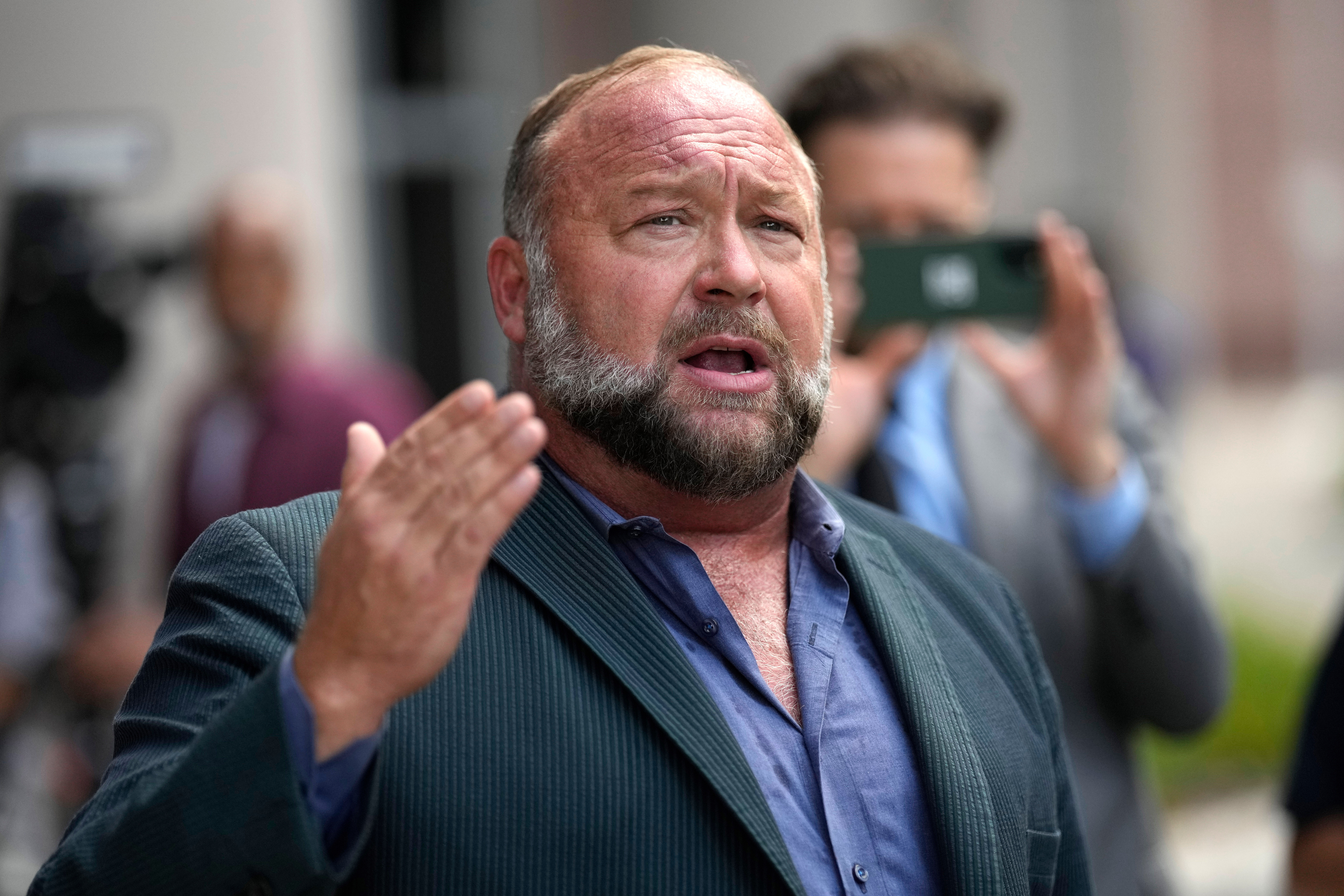
    AUSTIN, Texas — A Texas court on Friday slashed a $50 million judgment to $1.5 million against Infowars founder Alex Jones after he falsely claimed the 2012 Sandy Hook elementary school mass shooting was a hoax.

    The ruling does not affect a $1.25 billion judgment against Jones in Connecticut, but is a legal victory for him after he and his company, Free Speech Systems, were found liable for damages for claiming the mass shooting didn’t happen.

    Despite the multiple financial judgments against him in Connecticut and Texas, Jones has yet to make any payments as he appeals the amounts and the attempt to liquidate his company.

    The unanimous opinion by the Texas Third Court of Appeals found that Sandy Hook parents Neil Heslin and Scarlett Lewis did not show evidence that harassment inflamed by Jones’ hoax claims rose to a level that would allow them to exceed the state’s $750,000 cap on damages for each plaintiff.

    Heslin and Lewis’s 6-year-old son Jesse Lewis was among 20 children and six educators killed in the attack in Newtown, Conn. The lawsuit and the 2022 verdict against Jones marked the first time he was held financially liable for peddling lies about the massacre, claiming it was faked by the government to tighten gun laws.

    Jones, who portrayed the lawsuit as an attack on his First Amendment rights, conceded during the trial that the attack was “100% real” and that he was wrong to have lied about it.

    However, on his streaming show Friday, he called the Texas ruling “a gigantic victory for the First Amendment,” and said he will continue to appeal the case to the state Supreme Court to get the remaining damages thrown out.

    “I got lawyers who are good constitutional lawyers and they are not backing down,” Jones said.

    Mark Bankston, an attorney for Heslin and Lewis in Texas, shrugged off the appeals court ruling as “irrelevant” given that Jones still faces massive financial judgments.

    “The families care not at all about this irrelevant ruling which affects only two of the 19 claims they all share. Jones still faces over a billion dollars of liability, so this changes absolutely nothing. All it does it highlight the absurdity of Texas law,” Bankston said.

    Heslin and Lewis told jurors in the case that an apology wouldn’t suffice and called on them to make Jones pay for the years of suffering he has put them and other Sandy Hook families through.

    Jones’ trial attorney Andino Reynal had said immediately after the verdict that Jones would appeal the damages amount, and predicted it would be reduced to $1.5 million.

    Jones and his company have filed for bankruptcy, and those legal proceedings continue. The satirical website the Onion also moved to take over Jones’ Infowars platforms and turn his bullhorn of conspiracy theories into parody sites.

    Jones gave up the Infowars brand in April and moved to a new location, switching his shows to new websites and posting them on his personal X account. The Onion, meanwhile, has set up its own Infowars webpage on its website, running videos of shows parodying Jones.

  • CIA staff exodus leaves new retirees waiting months for benefits

    CIA staff exodus leaves new retirees waiting months for benefits

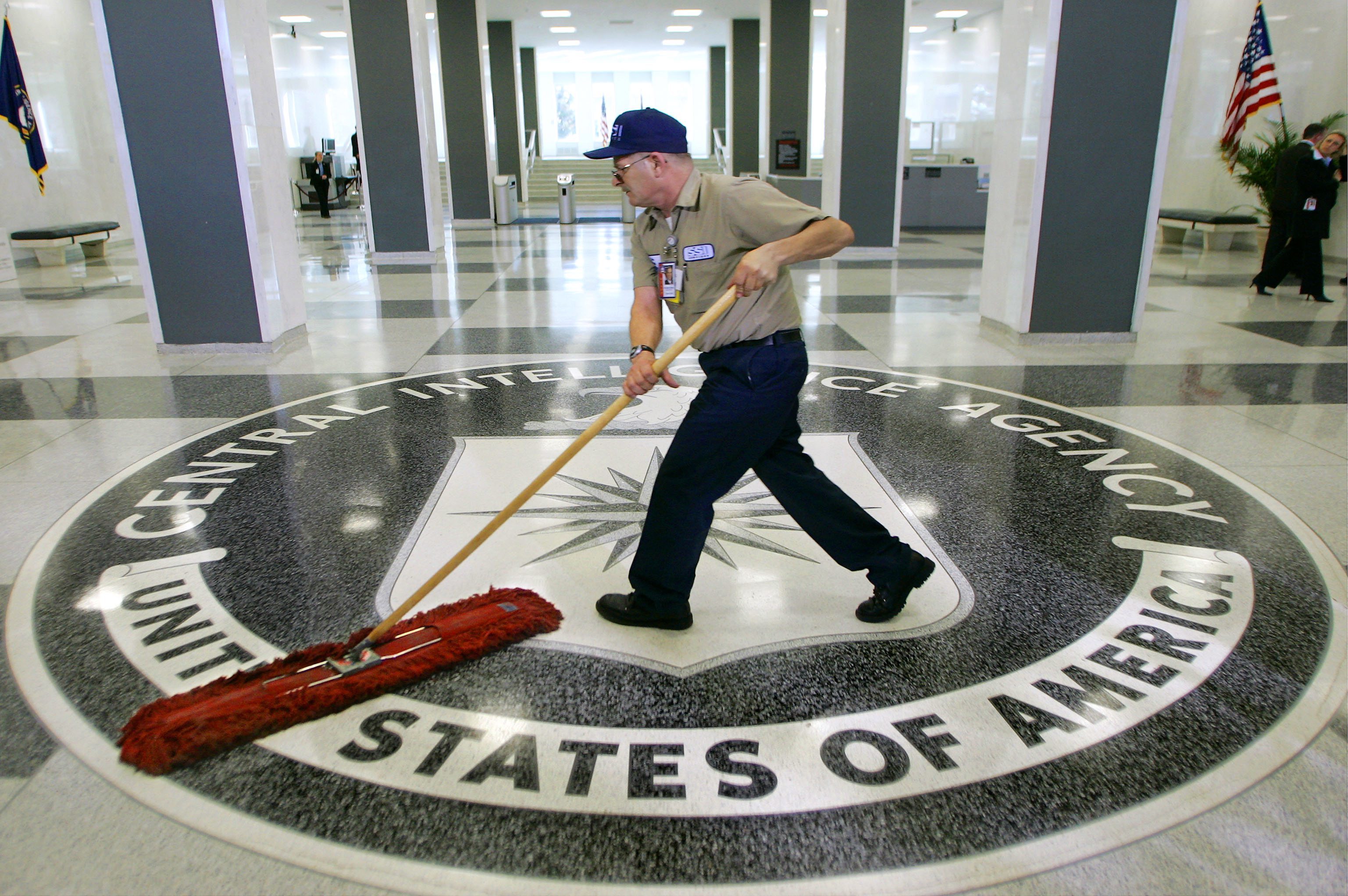
    A historic wave of departures at the CIA and deep cutbacks at the Office of Personnel Management are swamping the spy agency’s retirement system, leaving former spies with monthslong waits to get their first pension check, according to former intelligence officials and internal agency messages.

    While precise numbers are classified, current and former officials say the pace of retirements and resignations from the CIA outstrips anything in recent memory. They are being fueled in part by President Donald Trump’s push to shrink the federal government, including deferred resignations offered to workers last year.

    The CIA, in a recent note to alumni, acknowledged the problem and pleaded for patience.

    “The Retirement Branch is currently processing an unprecedented number of retirement cases, and is working diligently around the clock to expedite these cases,” the note said. “We appreciate your understanding and patience as we navigate this challenging period. Rest assured that our team is committed to processing your annuity payments as efficiently as possible.”

    It gave retirees two toll-free numbers to call if more than six months had passed since they’d received their final paycheck.

    One former official said she recently spoke to a colleague who retired in March and had just received their first, partial retirement check.

    “The question is how do you pay for your mortgage, and how do you pay for your kids’ college,” the former official said.

    As CIA workers prepare to retire, they are eligible to take a one-week, in-house seminar called “Horizons” that is meant to help them navigate life outside the spy agency’s cloistered halls — like how to prepare a job-hunting resumé that doesn’t disclose classified information.

    Lately, those in the seminar are being told they may not see their first full retirement check for up to nine months, or longer, after they depart the CIA’s headquarters in Langley, Va.

    The retirement crush mirrors trends across the federal government, where, data show, there are unprecedented numbers of people leaving, creating lengthy delays in retirees receiving their benefits. Last year, there were more than 330,000 departures, most of which were voluntary.

    The situation is particularly poignant at the CIA, where officers often serve in danger zones, rarely receive public recognition and share a culture of not complaining publicly outside the spy agency’s walls.

    CIA officers who until recently recruited agents, prepared classified reports on world crises or developed high-tech espionage tools are feeling the squeeze, said the former officials, who spoke on the condition of anonymity to discuss internal CIA dynamics.

    “If military retirees were told they had to wait a year or more for earned pension benefits, Washington would be apoplectic. Intelligence officers serve in the shadows, and their discretion should not become a shield for institutional failure,” said a former senior U.S. intelligence official familiar with the issue.

    “If agency and congressional leaders were not aware of this problem before, they are now,” he said.

    In response to the crunch, the CIA has surged personnel to the Retirement Branch, including people with experience with that work.

    “CIA is committed to ensuring that retired officers who dedicated their careers to our mission receive their hard-earned benefits as quickly as possible,” a CIA spokesperson said in response to questions from the Post.

    “Under Director [John] Ratcliffe, CIA is focused on returning the Agency to its mission of recruiting spies, and recently hired our largest class of operations officers in two decades,” the spokesperson said in a statement.

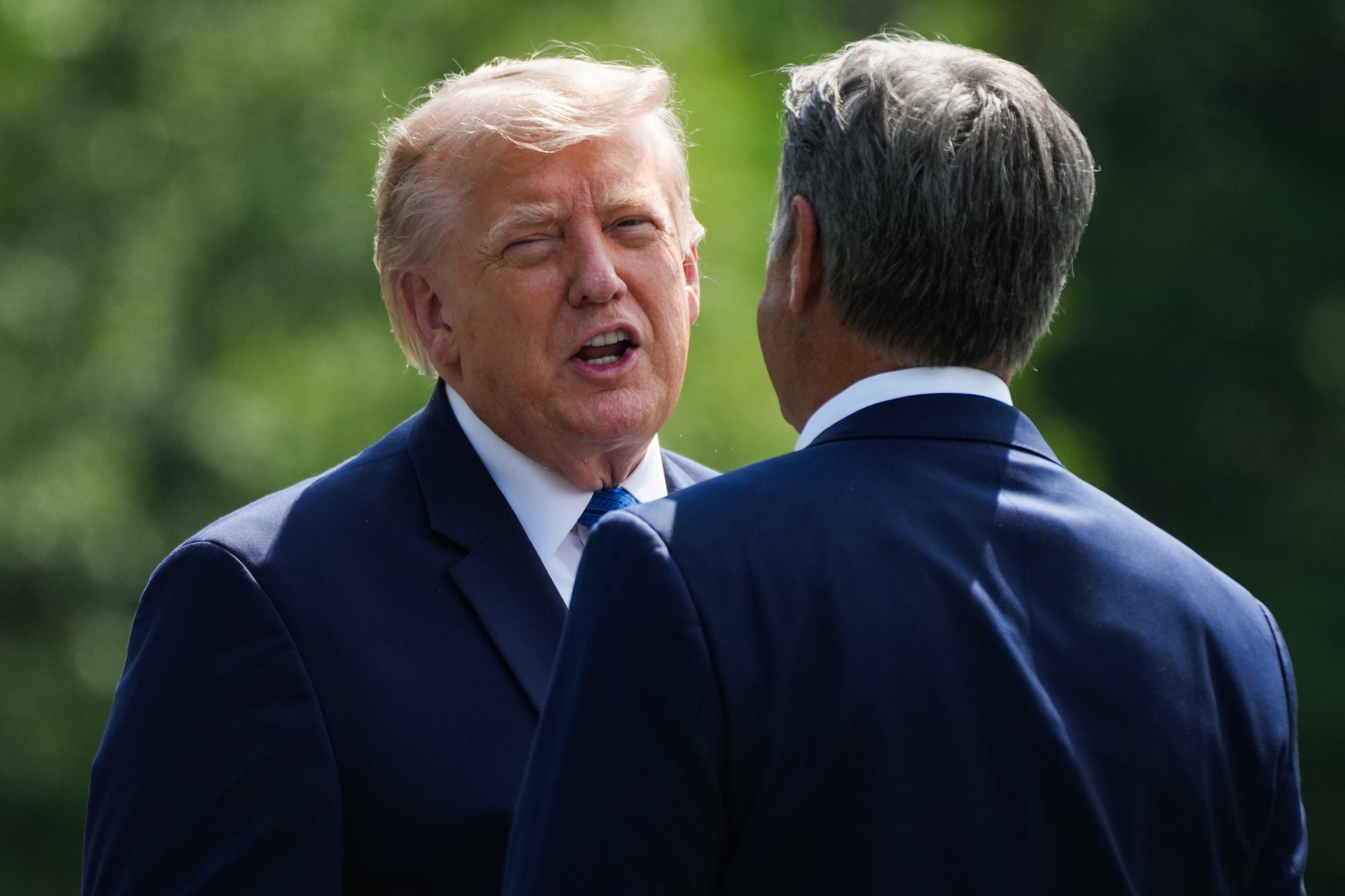
    President Donald Trump and CIA Director John Ratcliffe at Camp David last month.Nathan Howard

    The size of the CIA’s workforce and the number of employees who have left since the start of Trump’s second term are classified. Overall, the CIA workforce was believed to be about 22,000 in early 2025, U.S. officials said. Many hundreds of people — perhaps more than 1,000 — have since left, one of the former officials estimated.

    Some former officials describe the agency’s downsizing as the largest since the CIA was significantly cut back in the early 1990s, following the collapse of the Soviet Union and the end of the Cold War.

    In May 2025, the Trump administration told Congress it planned to reduce the CIA workforce by 1,200 over several years, mostly through attrition and reduced hiring. Agency workers were among the tens of thousands of federal employees who took a deferred resignation package the Trump administration offered to shrink the government’s ranks. Others simply decided it was time to leave.

    Administrators responsible for processing retirement requests are among those who have left, worsening the crunch, said two former intelligence officials.

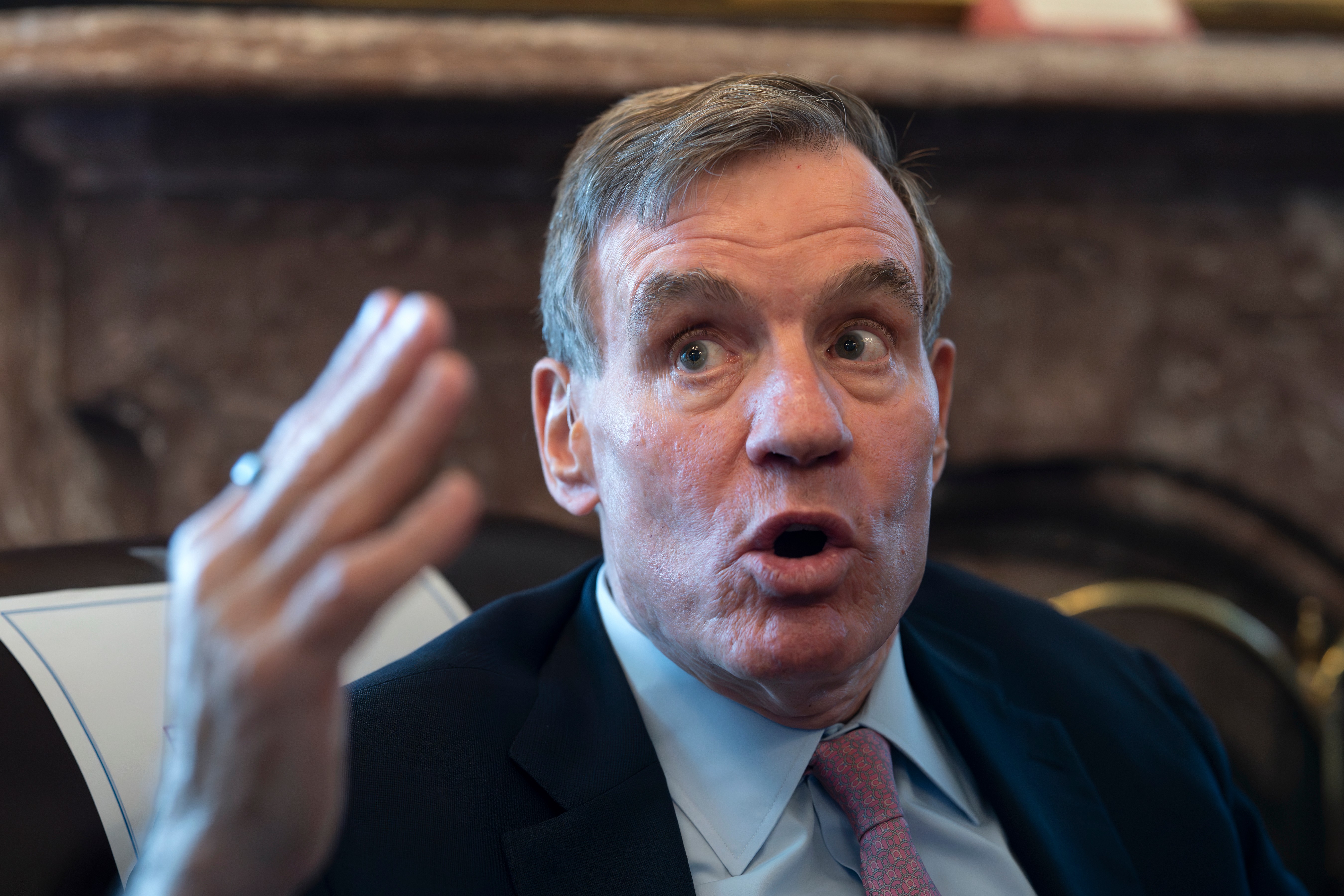
    Sen. Mark Warner (D., Va.), the vice chair of the Senate Intelligence Committee, speaks to reporters on June 11.J. Scott Applewhite

    “The men and women of the CIA protect our country and make Americans safer every day, often without any acknowledgment or recognition,” said Sen. Mark Warner of Virginia, the top Democrat on the Senate Intelligence Committee. “The least our government can do is ensure they receive the benefits they deserve when they decide to leave.”

    “Again and again, this administration has mistreated our public servants, including those in the CIA. And whether it’s incompetence or disrespect that is creating the delay, the administration needs to figure out how to fix it,” Warner said.

    Some CIA officers have pulled back their retirement requests because they can’t afford to go long periods without being paid, one of the former officials said. Others are falling back on savings or taking out second mortgages to cover the gap.

    “Start looking now, hoard cash, plan for a longer period of time” before receiving retirement pay, said a retired CIA official who left last fall. “More thoughtfully and aggressively pursue jobs before you leave.”

    The official said it took four to five months before he was paid for unused annual leave — a sum that can be substantial for some retirees — and another month after that before he saw his first retirement check.

    The CIA has a tradition of treating its retirees well, former officials said. Among the reasons: Angry ex-employees with heads full of secrets are a target for adversary intelligence services. “We are creating a massive [counterintelligence] risk,” said the official who left last fall.

    Like other federal officials, former CIA officers are banned from taking certain jobs for a set period after retirement, such as lobbying on issues they handled while in government or working for foreign governments.

    CIA retirement packages are initially handled within the agency, which can take several months. Retirees are given an estimate of what their benefits will be.

    Many factors can complicate the process. Departing officials may have served undercover, using a different identity; spent time in the U.S. military or at another intelligence agency; or have a spouse who also worked at the CIA.

    Once completed, the packages are transmitted to the Office of Personnel Management, the government’s human resources agency. Before the cases are finalized, OPM issues interim payments to retirees that are typically 60 to 80% of their eventual checks. The government eventually makes up the difference.

    John Hatton, staff vice president of policy and programs at the National Active and Retired Federal Employees Association, said there is no legal recourse for retirees who want to get their benefits sooner, and the government will not owe interest for delayed payments.

    “It’s a tough situation,” he said.

    The OPM’s workforce declined by a third, from just over 3,000 in fiscal year 2024 to 1,980 in fiscal 2026, according to the agency’s data. Though the OPM expanded the main office responsible for retirement services to handle the wave of departures, the team still shrank by 16%, according to the U.S. Government Accountability Office.

    OPM data show it is taking longer on average for the agency to process retirement claims, from 79 days in October 2025 to 109 days in July.

  • Pope hats, bloody shirts, and so many bobbleheads: The creative ways MLB teams lure fans to the park

    Pope hats, bloody shirts, and so many bobbleheads: The creative ways MLB teams lure fans to the park

    CHICAGO — It started as a limited promotion for a specialty theme night. Then the Chicago White Sox heard from their fans.

    Everyone wanted a pope-themed hat.

    “When things go bananas … that’s when it gets really fun,” said Brooks Boyer, the White Sox’s chief revenue and marketing officer.

    Fun is the overarching theme when it comes to stadium giveaways, and business has been good at major league ballparks this year.

    An array of creative promotions — everything from the New York Mets handing out fake glasses and mustaches for a Bobby Valentine Disguise Night to the Texas Rangers giving away a Nolan Ryan bloody lip jersey — has played at least a small role in an MLB-wide average attendance of 29,618 through Aug. 11, the highest such number for a full season since 2017.

    Bobbleheads remain popular — like the Brandon Nimmo Bull Riding bobblehead in Texas, or the butter-churning Nick Kurtz “Big Amish” bobblehead with the Athletics — but it’s not just those iconic figurines that are drawing big crowds. The Brewers handed out 25,000 bar dice sets to fans 21 and over on Saturday, and they had a crowd of 40,625 at American Family Field.

    The pitch clock and other innovative rules introduced by MLB in 2023 are often credited for spurring fan interest. But it’s clear from the long lines — and occasionally astronomical resale prices on eBay — what a clever giveaway can do for ticket sales, too.

    “I definitely think across the league, there’s been an increase in demand and desire, and even necessity, to do things that are outside of the box,” said Meagan Hermosillo, the director of marketing and promotions for the Arizona Diamondbacks. ”For us, we can’t really do a standard bobblehead or a standard anything. It has to have some kind of unique factor if we want it to move the needle.”

    Chicago’s pope hats took creative — and careful — planning

    The White Sox ended up giving the pope hats — shaped like the Pope’s miter, with the team’s sock logo in the middle — to everyone in the crowd of 38,113 for the Aug. 11 5-4 loss to the Cincinnati Reds. The tribute to Pope Leo XIV, a Chicago native and longtime White Sox fan, helped push the club’s season-long attendance to 1,460,383, surpassing its total of 1,445,738 for all of 2025.

    The team leaned into the theme. There were signs posted in the ballpark that read “LEO KNOWS MUNE” and “LEO KNOWS KONERKO,” referring to current White Sox first baseman Munetaka Murakami and former slugger Paul Konerko.

    “I thought it was a great idea, knowing that the Pope is from Chicago and he’s a Sox fan, which is great,” said Edward Lopez, 58, a truck driver from the south side of the city.

    Lopez was supposed to go to the game with his girlfriend, but she wasn’t able to make it. So he went through two different gates to make sure he secured two pope hats.

    “It was worth it,” he said.

    Promotions for the White Sox go through a committee led by senior director of marketing and promotions Mike Downey. They throw out ideas and concepts, and they also look at samples from different vendors.

    The team also is handing out wooden domino sets to 10,000 fans on Aug. 22 and magic wands to 20,000 fans on Sept. 4, a nod to the viral wand-waving dugout displays of injured reliever Mike Vasil.

    “We’ve always looked to have our giveaways be something that we know people would wear or use or value because it adds value to the ticket,” Boyer said. “So it starts with that.”

    While planning the pope hat night, religious sensitivities were part of the conversation for the promotions committee.

    “We haven’t done items that would be Pope Leo’s likeness,” Boyer said. “We wouldn’t do that without the permission of the Vatican. … We’ve been very careful. There is a little bit of nuance and finesse that needs to be done. And items, you know a lot of items may not be for everybody.”

    Teams are eagerly jumping on larger cultural moments for eye-catching promotions

    The Baltimore Orioles handed out a Tupac Shakur bobblehead in May. The New York Yankees gave out a KPop Demon Hunters bobblehead on Aug. 11, and they have a George Costanza calzone bobblehead — paying tribute to a 1996 Seinfeld episode — coming up on Aug. 27. Every MLB team except Toronto had a Star Wars Night this season.

    A Tupac Shakur bobblehead is displayed for the Baltimore Orioles’ giveaway at a baseball game against the Athletics on May 8, 2026, in Baltimore. Noah Trister

    Following in the footsteps of the minor leagues in many cases, it’s not enough anymore to just feature a popular player for a giveaway.

    “You can see that teams are doing a much better job with their understanding [of] who they’re trying to target,” said Jim Strode, an associate dean and professor at Ohio University’s College of Business. “When I think of the Seinfeld one, I’m thinking, you know, they’re targeting Gen X, they are targeting some, you know, younger baby boomers to try to get out to the ballpark.”

    There is also what Lauren Anderson, the director of the Warsaw Sports Business Center at the University of Oregon, described as the “collector chase game.” There were multiple fans looking to buy additional pope hats at Tuesday night’s game, and there were several listings for the giveaway and the KPop Demon Hunters bobblehead on eBay the next day.

    “You want something that’s unique and cool and something that you can, you know, I’m one of 5,000 people to get these, I’m one of 10,000,” Anderson said. “I mean, there is also a bit of the game of people want something that’s limited so they can flip it and sell it, like on an eBay.”

    David Brandt contributed to this article.

  • Letters to the Editor | Aug. 21, 2026

    Letters to the Editor | Aug. 21, 2026

    Green neighbors

    Instead of restricting data centers, I have a simple proposition for developers, state and county officials, state senators and representatives, overwhelmed township officials, and Gov. Josh Shapiro: Data center development and operations should be the epicenter and locus of landscape greening and ecological restoration.

    Just as the data center will play a lead role in the AI transformation of our economy, so, too, it will take the lead to restore nature in its location and surroundings. It will cool rather than heat its surroundings. Birds will make more noise than the facility. Community solar as part of the renewable fuel package will be available to home and business owners to lower utility costs. Greening of vast parking areas will cut off urban heat and protect public health. Retained water runoff from rain and snow will irrigate off-site plots to enhance their restoration. A landscape restoration fund derived from a tiny percentage of center income will extend the restoration benefits to the broader community and thus build up resilience to climate change.

    As a vehicle for promoting the natural world on their grounds, data centers will be the best of neighbors and just about everyone will want to live near them.

    Jon Berger, Philadelphia

    Challenge issued

    Rep. Brian Fitzpatrick’s response to Bob Harvie’s challenge to four debates exemplifies everything that is wrong with our five-term congressman. While Fitzpatrick plays games demanding Harvie release what his campaign calls “the FBI files,” constituents like me are dealing with rising gas and grocery prices, hikes in our health insurance premiums, and a sluggish job market.

    Is Fitzpatrick serious about serving us or even earning our votes? Because if he is, he should stop the games and debate Harvie in front of a live audience.

    If Fitzpatrick has ideas, let’s hear them. If he wants to defend his voting record, this is the time. And if Fitzpatrick disputes Harvie’s characterization of his role as a witness before a federal grand jury, he can address that in a face-to-face debate in which his opponent can respond directly.

    Refusing to debate while continuing to make accusations is simply political posturing — and insulting to the constituents the congressman is supposed to serve.

    Laura Rose, Newtown

    Ukraine Independence Day

    We have seen the heart-wrenching headlines and images again and again, as Russia has continued its barbaric and entirely unprovoked invasion of Ukraine. We have, as a result, perhaps for the first time, learned that Ukraine, the largest country wholly in Europe, is blessed not only with the richest soil for agriculture but also with an industrious, innovative, and peace-loving people. Against all odds, Ukraine has been defending itself admirably in this David vs. Goliath contest — even redesigning modern-day military weapons and tactics worldwide. However, on the heels of America’s Semiquincentennial — and on the eve of Ukraine’s 35th Independence Day on Aug. 24 — do we not have the moral obligation, as a nation, to do all we can to support this democracy which sent military assistance to the U.S. in Afghanistan and Iraq?

    Elie Wiesel stated: “The opposite of love is not hate, it’s indifference … And the opposite of life is not death, it’s indifference.” How can we ambivalently stand by effectively doing nothing, even as we witness an ongoing great injustice? President Franklin D. Roosevelt referenced the analogy that we should lend our neighbor our garden hose if their house was on fire; a metaphor more recently echoed by U.S. Rep. Brian Fitzpatrick (R., Pa.), when advocating for Ukraine recently on the House floor, who said its struggles transcend the political divide — it’s about freedom. Many U.S. Army veterans have gone to Ukraine to help in the conflict — some of whom have paid the ultimate price — because they felt this was truly the battle between good and evil.

    We all have a choice — and a voice. What if we, each one of us, our friends and neighbors all called our congressional representatives to urge passage of the Sanctioning Russia and Iran Act of 2026 so that there are no more excuses about finally making good on holding to account the two terrorist states that are responsible for most of the global instability today? Making the call wouldn’t cost a thing.

    Christine Fylypovych, Blue Bell

    Project Head Start

    In 1965, Lyndon B. Johnson established Project Head Start. Since the beginning, it has successfully helped to improve graduation rates, improve self-esteem in children, and provide a positive influence on a child’s future. It has long been an established fact that early childhood education also helps to prevent future criminal behaviors. Why is this horrid administration trying to defund this valuable program? They obviously have no concern for poor children. The wealthy can afford the best education for their families, but as a society, we have a responsibility to ensure all children have proper education as well as nutrition and healthcare.

    Add this to the proposals to separate the highly effective measles, mumps, and rubella vaccine into three separate shots for absolutely no medical or scientific reason, and you must question the motives of the cruel and ignorant people who are running the country. I am hoping citizens are paying attention and, come November, will vote into office those who will do what is right for the American people. Our children are depending on us.

    Kathleen Clements, Philadelphia

    Open and operating?

    The president of the United States says that the Strait of Hormuz is “open and operating,” yet cargo ships are still under attack. Reality suggests that the president is once again lying to the American public. Either that, or he is completely delusional. In either case, Donald Trump’s war is continuing to distress the world economy, and there is no end in sight if he can’t acknowledge the reality of the situation. His bizarre focus on things like his ballroom reveals his misplaced priorities.

    Bill Maginnis, North Wales

    Staggering national debt

    On Wednesday, the national debt reached $40 trillion. There was very little news coverage of this event, but it is significant for our future and the future of our children.

    The Republicans were the party of fiscal conservatives, budget-conscious individuals, and supporters of our allies. What happened?

    Republicans in Congress have let the Trump administration spend taxpayer money on just about everything the president wants. Take the East Wing ballroom. The White House is asking Congress for $1 billion to cover the costs of security and military upgrades.

    How about $20 billion to bail out Argentina to help stabilize their economy, so his friend wouldn’t lose money invested?

    How about $14 million for the failed reflecting pool renovation?

    Or $40 billion for the Iran war? How about the estimated $100 million spent on flying Trump back and forth for his golf weekends? The list goes on. Yet, somehow, the Trump administration can’t find money in the budget to pay for food aid and so many other programs that help the American taxpayer.

    Get out and vote. Stop the madness.

    Patrick Thompson, Media

    Surprise, surprise

    Developer Carl Dranoff does not like the perspective of two prominent local city planning experts about the expensive new median strip on South Broad Street. What a surprise that Dranoff, who came up with the idea, stands to benefit the most … because of his properties on that street.

    Susie Perloff, Philadelphia

    Join the conversation: Send letters to letters@inquirer.com. Limit length to 150 words and include home address and day and evening phone number. Letters run in The Inquirer six days a week on the editorial pages and online.

  • Horoscopes: Friday, Aug. 21, 2026

    ARIES (March 21-April 19). Leo season featured an emboldened version of you. You surprised a few of your nearest and dearest with your swift action. You’re headed into a season where you impress them with how hard you can work on what’s important to you.

    TAURUS (April 20-May 20). In the last few weeks, the cosmic cat vibes echoed through your stealth observations. You lingered in the tall grass, unseen, observing the experts who are already doing something you dearly want for your life. And now, no more watching. It’s go time.

    GEMINI (May 21-June 21). You’ve explored the more playful aspects of Leo season. The new era sees you continuing in this experimental approach even as you accomplish work that is in no way pretending or messing around. There will be a lightness in your serious pursuits.

    CANCER (June 22-July 22). Last season, you gave yourself permission to take up more space, and the world didn’t end. Quite the opposite. Now you’ll start living full time in the expansion. People around you will adjust to the more powerful you.

    LEO (July 23-Aug. 22). The spotlight suited you beautifully. Now comes the quieter pleasure of building something sturdy “backstage.” It’s bothersome to be watched while you’re figuring things out. You’ll have space, resources and the peace you need to do your best work.

    VIRGO (Aug. 23-Sept. 22). This is your time. In the weeks ahead, you’ll catch breaks, attract luck, belong to a team that works as hard as you do, and be rewarded and reciprocated at every turn. You’ve earned this, so enjoy it.

    LIBRA (Sept. 23-Oct. 23). You spent Leo season volunteering in good faith — a risk that rewarded you. Your habit of taking initiative will keep serving you and your team grows as people learn you can perform whether or not the conditions are ideal.

    SCORPIO (Oct. 24-Nov. 21). Last season, you made fun a priority instead of treating it like a reward you had to earn first. Keep bringing that same spirit to your many roles in life. The people around you will revel in the levity while still getting things done. Joy is your legacy.

    SAGITTARIUS (Nov. 22-Dec. 21). You’ve spent time watching people who already live the life you’re building, and you’ve borrowed what works. Now you’ll take it a few steps further, building the habits until they are part of your typical day and therefore take far less energy to initiate.

    CAPRICORN (Dec. 22-Jan. 19). Leo season reminded you that your personality belongs in everything you create. The work doesn’t have to become less “you” as it becomes more professional. Virgo season helps you refine your signature until people recognize it before they see your name.

    AQUARIUS (Jan. 20-Feb. 18). Leo season tempted you toward bigger ideas, and there’s no reason to scale them back now. Virgo season hands you a calendar, a notebook and enough ordinary Tuesdays to turn one ambitious vision into something people can actually experience.

    PISCES (Feb. 19-March 20). You stepped into the spotlight and let people see what you could do. A few bold choices back there changed the way people see you. In Virgo season, you’ll pick some aspect of the experiment and repeat it until it couldn’t be more natural.

    TODAY’S BIRTHDAY (Aug. 21). You are the Crowned Creative Royal this year. The world makes room for your ideas, your style and your presence. Doors swing open theatrically, and you walk in good. More highlights: People love picking up the check, gifting you and making you the guest of honor. Work takes on an international flavor. Your personal life is a slice of heaven as domestic work gets distributed evenly and routines allow for greater freedom and flow. Aries and Libra adore you. Your lucky numbers are: 8, 32, 17, 27 and 44.