Tag: no-latest

  • Under Trump, protected wild horses are going to slaughter

    Under Trump, protected wild horses are going to slaughter

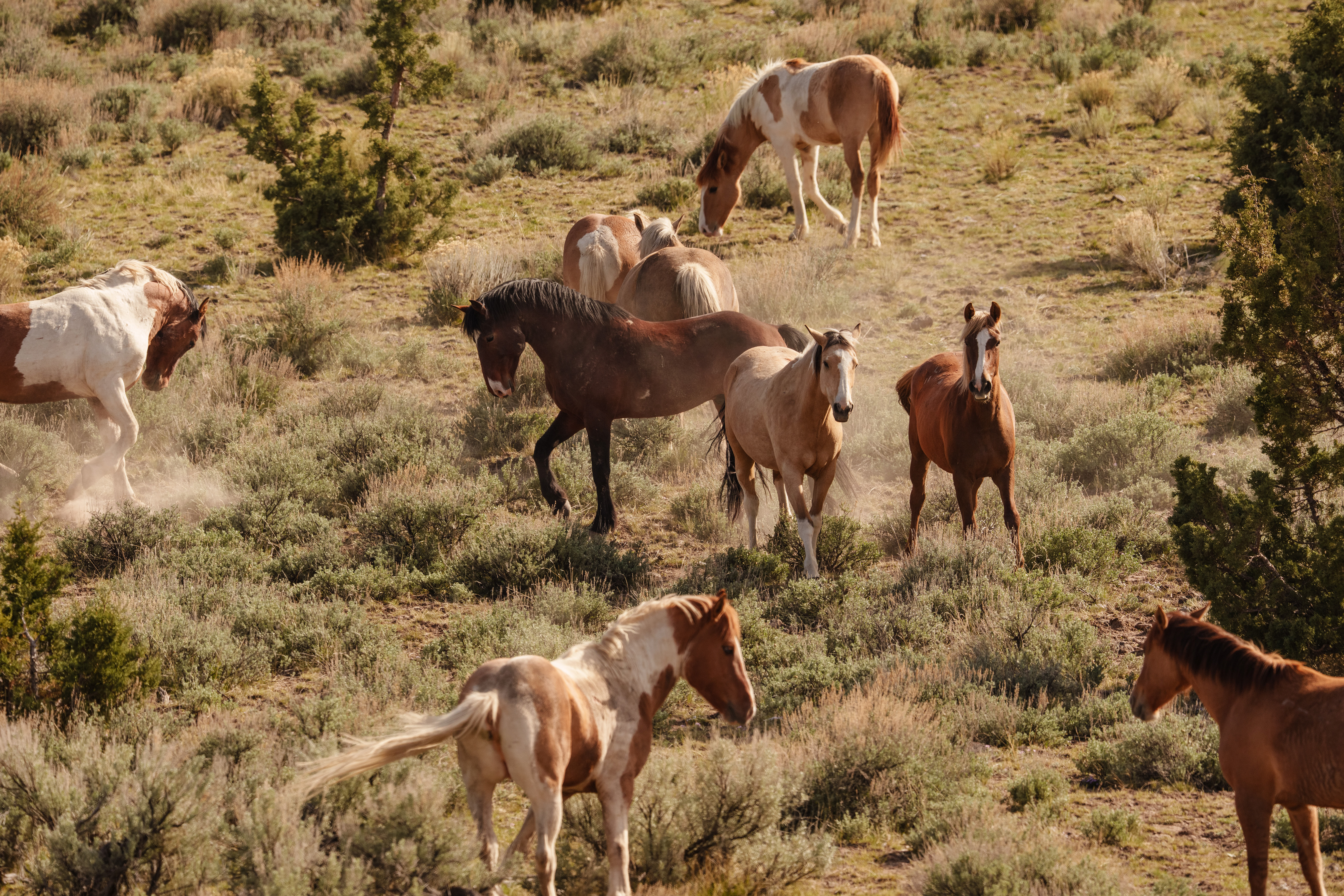
    They once had run free through the desert mountains of the West, a multicolored band of 68 wild mustangs that had never been saddled or corralled.

    Then the federal government rounded them up with helicopters in an attempt to control wild populations on public lands. The horses were held for years in a feed lot in Idaho while the government tried to find them what it called “loving homes.”

    Abruptly this March, the government found a home. Whether it was loving didn’t seem to matter.

    The horses were packed into metal trailers and trucked 1,800 miles east to the pens of a livestock trader in Ohio named Brandon Jones, who bought them for $25 each.

    A day later, two double-decker cattle trucks pulled up at midnight, loaded the mustangs, and quickly drove off into the night.

    From there, the mustangs disappeared. The trader won’t say where they went. Wild horse advocates suspect the horses were shipped to slaughter.

    But that’s not the government’s concern. It got what it wanted: two more truckloads of wild horses off its books.

    An examination of government records by the New York Times found that all over the country, the Bureau of Land Management, the agency in charge of protecting wild horses, is quietly selling thousands of horses to buyers like the one in Ohio. Slaughtering wild horses is illegal, but the bureau’s actions create a loophole that enables people to get mustangs on the cheap and then quickly resell them to be exported alive, processed into cuts of meat, and sold abroad.

    Livestock inspection records show mustangs sold by the government soon ended up on trucks bound for slaughter plants in Canada.

    The U.S. government’s sales of wild horses were once rare but started to rise after President Donald Trump took office. In 2025, they more than doubled to 3,700 horses, according to bureau records.

    In that time, the bureau has sent about 500 horses to Jones.

    In an interview, Jones said he was able to resell the horses quickly, though he didn’t advertise online or even post a “For Sale” sign at his corral. He would not say where the horses went and denied selling any to slaughter.

    The government can spend more than $3,000 to capture a mustang and bring it to market but sells each for as little as $25. A horse can fetch up to $750 at a slaughter plant. The potential for profit keeps buyers coming.

    By selling mustangs at a huge loss, animal welfare organizations say, the agency in charge of protecting wild horses is, instead, subsidizing their destruction.

    “The BLM is saying to the public that slaughter is off the table, but they’re doing it in plain sight using a third party,” said Clare Staples, who runs a wild horse sanctuary in Oregon called Skydog Ranch.

    The bureau did not respond to questions about its sales or make leaders available for comment. An unattributed statement from the agency said it “remains dedicated to placing animals into good homes, protecting their welfare, and upholding its statutory responsibilities on behalf of the American public.”

    About 73,000 wild horses roam federal public lands in the West, where they are protected from hunting or capture. For decades, in an attempt to keep the population sustainable, the bureau has rounded up 9,500 on average each year and offered them for adoption. But it finds adopters for only about half.

    The rest go into a labyrinth of feedlots and pastures that the bureau calls “the holding system.” The system now stores 58,000 wild horses at an annual cost of $100 million. Caring for them eats up most of the bureau’s $142 million wild horse budget.

    Over the years, bureau leaders have floated various lethal proposals for reducing the herds. But Congress — aware that the public wants mustangs protected — has barred the bureau from spending any money to kill healthy wild horses.

    There are alternatives to the roundups that have left so many horses in storage. For 20 years, the bureau has had access to inexpensive fertility-control drugs delivered by dart gun. They have been used effectively to control a few wild herds, and the government’s own experts have repeatedly urged the bureau to use them more widely.

    But because the bureau is spending so much on storage, it has little left to make the changes that would save it from storing more.

    And because the bureau has been unable to stop horses from coming into the storage system, it is now focused on getting them out.

    While the bureau can’t kill wild horses, it can use a series of bureaucratic maneuvers and financial transactions to transform them on paper into domestic livestock, stripping their legal protections.

    First, the bureau has to show a wild horse can’t be adopted. It does this by posting hundreds of horses at a time on its online adoption site. After a horse has three one-week listings with no takers, the law permits the government to designate it as unadoptable.

    Then it can be put up for sale.

    That’s an important legal distinction because a wild horse that is adopted retains its federal protections. One that is sold loses those protections immediately.

    A sold horse still can’t be legally killed — at least not yet — because the buyer is required to sign a contract promising not to slaughter the horse or “knowingly” sell it to anyone who intends to resell it for slaughter.

    But if the buyer resells to a middleman without asking questions, the buyer is safe from prosecution.

    The middleman has not signed a contract with the bureau and is free to legally sell the mustang to slaughter.

    Jones, 35, appeared out of nowhere in the wild horse world last spring and quickly became the bureau’s biggest buyer, bureau records show.

    He said he sold horses only two or three at a time to good owners. “I’m not dealing with traders,” he said. “I’m dealing with a farmer, come up the road, who wants to buy a horse.”

    Shown photos and video of the trucks of horses that left his property at midnight — taken by a local wild horse lover and shared with the Times — he questioned whether it had happened.

    “Could have been cattle,” he said.

    To buy large numbers of mustangs, Jones had to get approval from top officials in the bureau. His application stood out.

    Nearly all of the other buyers who have qualified over the years have well-established mustang sanctuaries. Not Jones.

    He had no ties to the wild horse world and no history of working with mustangs. The application asked what veterinarian would care for the horses. He listed an office an hour away from his land with a website that says it treats only small animals.

    On Facebook, he was friends with a number of livestock dealers but no wild horse rescues.

    For a year, his application sat at the bureau with no action. Then, in March 2025, a federal court ordered an end to one of the bureau’s leading ways of off-loading horses — the program that paid adopters $1,000 per horse.

    A few weeks later, Jones’ application was approved.

    He denied selling mustangs to the traders. He said it was wrong to see him as a bad guy. By reselling mustangs, he said, he had saved the government millions.

    There are small clues to what may have happened to the wild horses sold to Jones.

    Four showed up late last fall at an auction in Tennessee frequented by slaughter buyers.

    Jones said the horses in Tennessee were the result of just one bad sale to an irresponsible buyer.

    Another clue emerged at the Canadian border.

    The United States has no horse slaughter plants. The industry here was shut down in 2007, so horses are now exported to Canada.

    Jones lives about an hour from the main Canadian horse export crossing.

    Last summer, a few weeks after Jones received a load of 97 mares, export records show that one of the largest exporters of slaughter horses to Canada, an Ohio man named Fred Bauer, shipped two truckloads of horses to Canada. Grainy photos of the trailers’ interiors taken by border inspectors show some of the horses had distinctive serial numbers on their necks — government wild horse brands.

    Jones denied that his horses went to Canada through the exporter, saying, “I’d never deal with Freddy Bauer. Me and Freddy Bauer don’t get along.”

    Reached by phone, Bauer declined to say whether he had bought mustangs from Jones. When asked where Jones’ horses were going, Bauer said it would be simple for authorities to track the horses.

    “The government put Brandon Jones in charge of this whole wild horse situation,” he said. “There’s all kinds of records. So they ought to be able to find out what he’s doing if they want to.”

    This article originally appeared in the New York Times.
  • Canada strikes back at US with retaliatory tariffs as trade war escalates

    Canada strikes back at US with retaliatory tariffs as trade war escalates

    TORONTO — Canada struck back at the United States on Tuesday with retaliatory tariffs on about $20 billion worth of American goods, including steel, dairy products, appliances, and farm equipment, as the trade war between the once-friendly neighbors escalated sharply.

    The confrontation threatened one of the world’s largest trading relationships and further strained ties between the United States and a country long considered one of its closest allies. A prolonged dispute could raise costs for American businesses and consumers less than 2½ months before the midterm elections.

    The new tariffs extended well beyond industrial goods, hitting everyday purchases such as seafood, cheese, clothing, cosmetics, and toilet paper, with some facing duties as high as 50%.

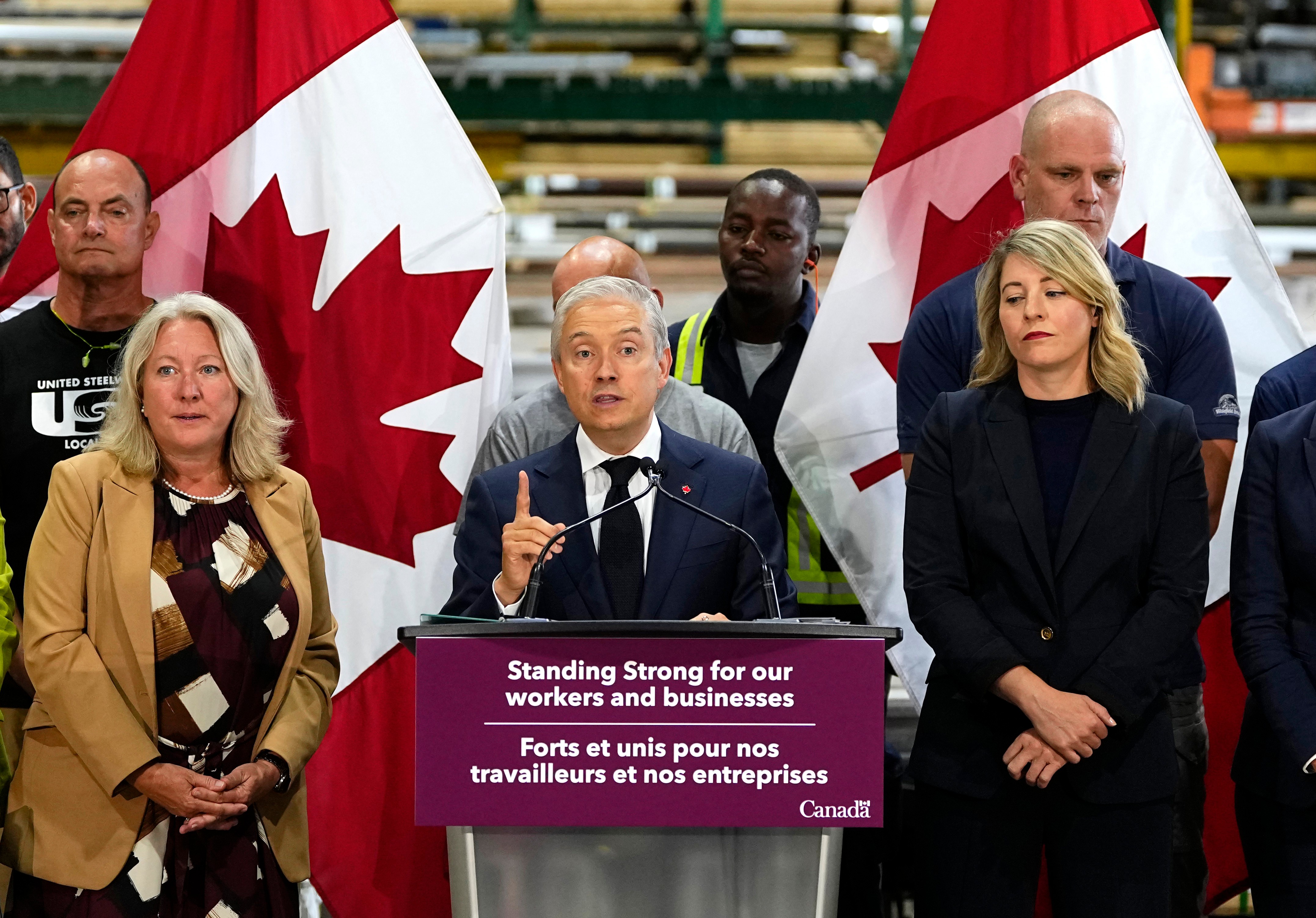
    “We did not choose this conflict, but when our economic integration is used as a weapon rather than the foundation for a win-win partnership, we need to stand up,” Finance Minister François-Philippe Champagne said in French, calling the situation “an unprecedented challenge imposed on Canada.”

    Industry Minister Mélanie Joly urged Canadians to buy Canadian goods, saying doing so would help protect jobs and launch a “movement of resistance.” She said Canada selected some American products for tariffs to put political pressure on particular U.S. states. Canadian officials used a similar strategy during Trump’s first term, when retaliatory tariffs targeted Kentucky whiskey, Florida orange juice, and Wisconsin yogurt.

    Canada’s retaliation came after the Trump administration imposed 50% tariffs over the weekend on Canadian goods following the collapse of trade negotiations. Canadian Prime Minister Mark Carney accused Washington of trying to subordinate Canada and said U.S. demands during the failed talks showed that Americans wanted to “destroy our major industries.”

    Trump told Canadian leaders to ‘fall in line’

    Trump intensified the confrontation Monday, telling Canadian leaders to “fall in line” or face consequences “far WORSE” than existing tariffs and threatening new 50% tariffs on Canadian vehicles, auto parts, and steel.

    Trump added another provocation Tuesday, saying the United States was giving “serious consideration” to renaming Lake Ontario “Lake America” in a feud with Ontario Premier Doug Ford. Such a change would be reminiscent of the Republican president’s unilateral action last year by executive order to rename the Gulf of Mexico to the Gulf of America.

    In the hours before Canada’s announcement, Trump went on a social media tear against the country, accusing it of ripping off American farmers and driving American companies out of business.

    “I deal with many countries, and Canada is easily the most difficult and unreasonable,” Trump wrote in one post. “They feel entitled, but they are not a State, and will be entitled no longer!”

    Tariffs on many U.S. products would double

    The tariffs will take effect Sept. 8 at rates of 15%, 25%, and 50%, with Canada matching the corresponding U.S. tariff rate on more than 700 products such as pulp and paper and electronics. The tariffs on many American products would double from 25% to 50%, with the largest share of the new measures affecting steel and aluminum.

    Canadian officials said the goal is not to raise revenue but to protect Canadian companies and reduce U.S. imports.

    U.S. steel imports, for example, have already fallen 30% since Canada imposed a 25% tariff, and the new 50% rate is expected to cut them further, Canadian officials said.

    Goods facing 50% tariffs include some steel and aluminum products, furniture, and clothing. Appliances, dairy products including cheese, fish and seafood, and certain steel and aluminum derivatives will face 25% tariffs. Existing Canadian countertariffs on U.S. autos will remain in place.

    Canada also announced a support package for workers and businesses affected by the dispute worth $7.5 billion in Canadian dollars ($5.4 billion in U.S. dollars).

    Canadian officials acknowledged the counter tariffs will raise costs for some businesses and consumers but said they expect the overall economic effects to be moderate.

    They said the government has provided more than $30 billion Canadian dollars (US$21.7 billion) in tariff-related support since the beginning of 2025 — far more than it has collected in retaliatory duties — as it tries to cushion the blow from the trade fight.

    Countries have integrated supply chains

    Canada and the United States have deeply integrated supply chains across autos, energy, agriculture, and manufacturing, making a prolonged trade fight potentially costly for businesses and workers on both sides of the border.

    Businesses and consumers are caught in the middle, facing uncertainty about how much prices may increase.

    Michael Howard II, owner of a furniture business in Warren, Mich., outside Detroit, said the tariffs will hamper the “ability for us to put food on the table for our family” and affect ”the ability for us to give back to our community.”

    Howard and his wife started their business a decade ago. They make and sell everything from dining room tables to bookcases.

    “To say that we don’t need Canada is just disingenuous,” he said. “It’s dishonest. And it’s just absolutely not truthful. We need our neighbor, but also they need us.”

    On Monday, Carney said U.S. negotiators had raised objections to French-language content on streaming platforms and French-language labeling rules. He rejected the idea that those issues were negotiable, saying in French: “For the Americans, questions about the French language, Quebec culture, francophone culture, and Canadian culture are irritants. Here in Quebec, here in Canada, they are rights.”

    In a social media post early Tuesday, Trump wrote: “I would never interfere with Canadians speaking French! In fact, I have never even thought of doing such a stupid thing. This lie was made up by a weak and ineffective Prime Minister in an attempt to gain political support, which he has totally lost, from the people of Quebec. I love French Canadians!”

  • El-Sayed joins Fox News for some light verbal combat and a pitch to Republicans

    El-Sayed joins Fox News for some light verbal combat and a pitch to Republicans

    “You’re filibustering.”

    “Pipe down one second.”

    “That’s a dodge, Abdul.”

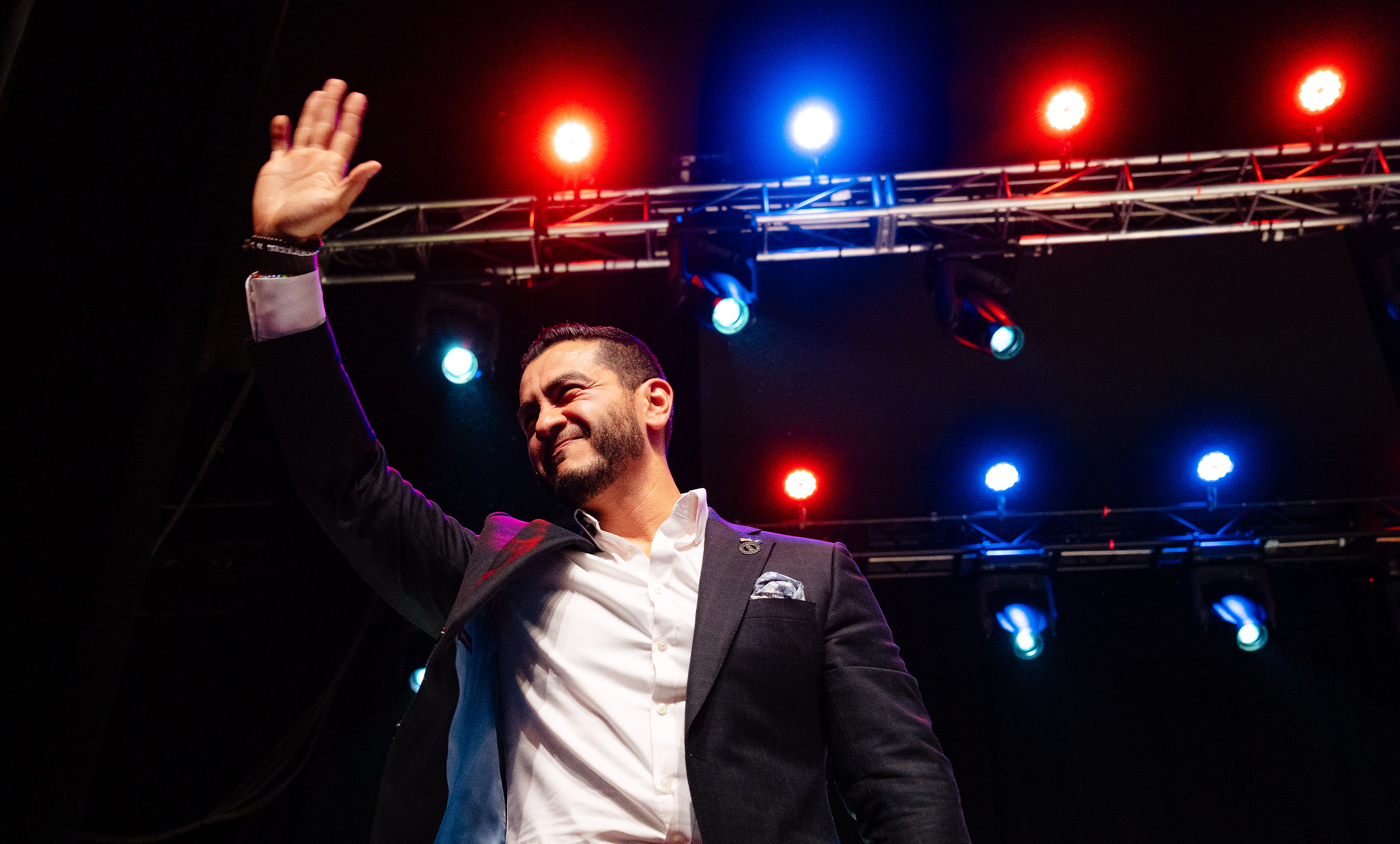
    Through tense smiles and laughter, Fox News host Jesse Watters frequently reminded his guest — the Democratic nominee for Senate in Michigan, Dr. Abdul El-Sayed — that Watters was the one conducting their prime-time interview as the candidate swerved through a minefield of hostile questions about issues ranging from transition surgeries to reparations to Islam to immigration.

    The appearance Monday night by El-Sayed, a progressive who has sought to dispel worries from moderate Democrats that he is too left-wing to win battleground Michigan, signaled his growing efforts to reach Republican voters and previewed his messaging strategy for the general election. His hard-fought primary victory this month has set up a race against former Rep. Mike Rogers, a Republican, in a contest considered crucial to Senate control.

    When Watters sought to pin down El-Sayed, the candidate would often redirect the question to more favorable political terrain. He pivoted from a question on immigration enforcement to high gas and grocery costs, and turned an inquiry on whether he drives an electric car (he drives a plug-in hybrid, he said) into a jab at President Donald Trump’s new trade war with Canada.

    In the most eye-popping moment of the exchange, Watters asked if El-Sayed believed it was OK “for a parent to slash his kid’s ding-a-ling off,” referring to transition surgeries for minors.

    El-Sayed responded by asking if Watters was circumcised.

    “Uh, yeah, but that’s a personal question, doctor,” Watters responded, laughing, before contending that “circumcision’s different than castration.”

    El-Sayed said that he believed the government should not tell Americans what healthcare procedures they could undergo, but he did not directly say whether he approved of transition surgeries.

    The interview showed the strategy El-Sayed is adopting as Rogers seeks to paint him as a radical leftist who is out of touch with Michigan voters. The Democratic nominee’s approach is to cast “culture-war” issues as a distraction from the everyday problems Americans face, like rising costs and worries about health care.

    The interview also previewed the kinds of arguments that could animate El-Sayed’s planned debate against Rogers, which is set for Oct. 8 on WOOD-TV, both campaigns announced Monday. The two men may face off sooner if they agree to additional debates.

    After Watters brought up Shariah — the system of Islamic religious rules often invoked by opponents to portray Islam as dangerous and anti-American — El-Sayed countered by asking the host if he knew about canon law, the code of religious rules that guides the Roman Catholic Church.

    “Nobody is trying to push Shariah law on anyone else, just like I hope nobody is trying to push canon law on anybody else,” El-Sayed said. “Because we live in an America where you should have the freedom of your religion.”

    Watters responded by saying: “Maybe. Shariah law in Michigan is kind of scary.”

    El-Sayed argued that voters were far more concerned about affording gas, seeing doctors and keeping their jobs than they were about Shariah.

    Asked about his position on trans athletes in sports, El-Sayed said he believed that matter should be “decided by the people who govern sports,” not him.

    “I’m out here trying to take on the healthcare crisis and Big Pharma, and you’re asking me about who gets to play what sports,” El-Sayed said. “It’s silly.”

    El-Sayed’s appearance Monday was his third televised interview with Fox News of the campaign, and his first of the general election.

    Whether or not he is able to attract a slice of Republican voters, he has already sought to capitalize on Watters’ comments about him. He started airing an ad Thursday that features the Fox News host saying after the primary, “You’ve got to respect Abdul because he beat the machine.”

    At the end of the interview Monday, Watters gave his guest “credit for facing the music” by going on his show, but called him “a little naive” and said some of his policies were “straight-up wacky.”

    El-Sayed contended that Trump’s ballroom renovations amid the war with Iran were “wacky,” and then said he would “love to come back on” to talk about money in politics, affordability and Medicare for All.

    “We’ll do it again, Abdul,” Watters said, smiling amusedly and adding, “Good luck in Michigan.”

    This article originally appeared in The New York Times.

  • Canada to announce retaliatory tariffs as Trump tells its leaders to ‘fall in line’

    Canada to announce retaliatory tariffs as Trump tells its leaders to ‘fall in line’

    TORONTO — Canada will announce retaliatory tariffs against the United States on Tuesday after relations deteriorated sharply Monday, with President Donald Trump telling Canadian leaders to “fall in line” or face consequences “far WORSE” than existing tariffs and Prime Minister Mark Carney accusing Washington of trying to subordinate Canada.

    Trump also threatened new 50% tariffs on Canadian vehicles, auto parts and steel, while Carney said U.S. trade demands showed Washington wanted to “destroy our major industries,” including autos, steel and aluminum.

    Finance Minister François-Philippe Champagne and three other Cabinet ministers are also expected Tuesday morning to share details of supports for workers affected by tariffs. Carney said earlier Monday that Canada may need to move away from matching U.S. tariffs dollar for dollar and instead use more targeted retaliation aimed at protecting Canadian workers and businesses.

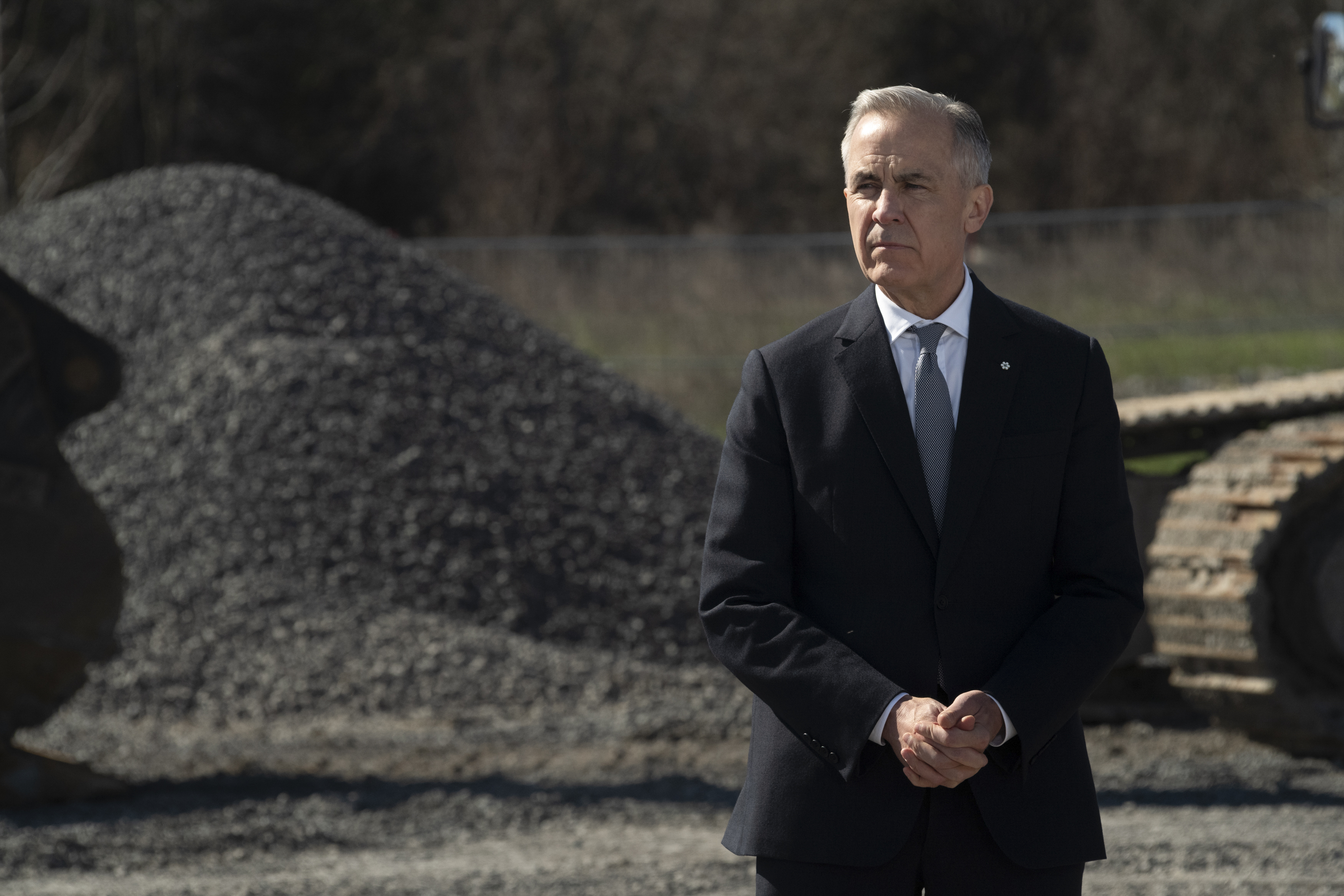
    “An attitude at the negotiation table that Canada is a subsidiary of the United States” is “not something we’re going to accept,” Carney said.

    Carney was even more blunt in French.

    “We learned during the negotiations that the Americans want to destroy our major industries, including autos, steel and aluminum,” Carney said. “That was one of the main reasons we said no. It was a bad deal.”

    The fiery words from both sides show how U.S.-Canada relations have deteriorated since Carney walked away from trade negotiations with the Trump administration late Friday, triggering the president’s threatened 50% tariffs the next day on about $20 billion worth of Canadian goods.

    Canada and the United States share one of the world’s largest trading relationships, with deeply integrated supply chains across autos, energy, agriculture and manufacturing, making a prolonged trade fight potentially costly for businesses and workers on both sides of the border.

    Carney cast doubt on the U.S.’s dependability, saying Canada was finding reliable partners “everywhere in the world, except in the United States. Except in the United States. And Russia.”

    Trump unleashes personal attacks on Canadian leaders

    On Monday, Trump came back with further tariffs, warning that he would impose them on Canada’s auto industry beginning next year.

    “Canada has been ripping off the United States of America for years,” Trump wrote on social media, criticizing what he called the country’s “ridiculously high tariffs” on American farmers.

    Carney said Washington’s auto-sector proposals would gradually have the effect of dismantling Canadian production.

    “This is the most successful automotive partnership in history,” Carney said, referring to the deeply integrated Canada-U.S. industry.

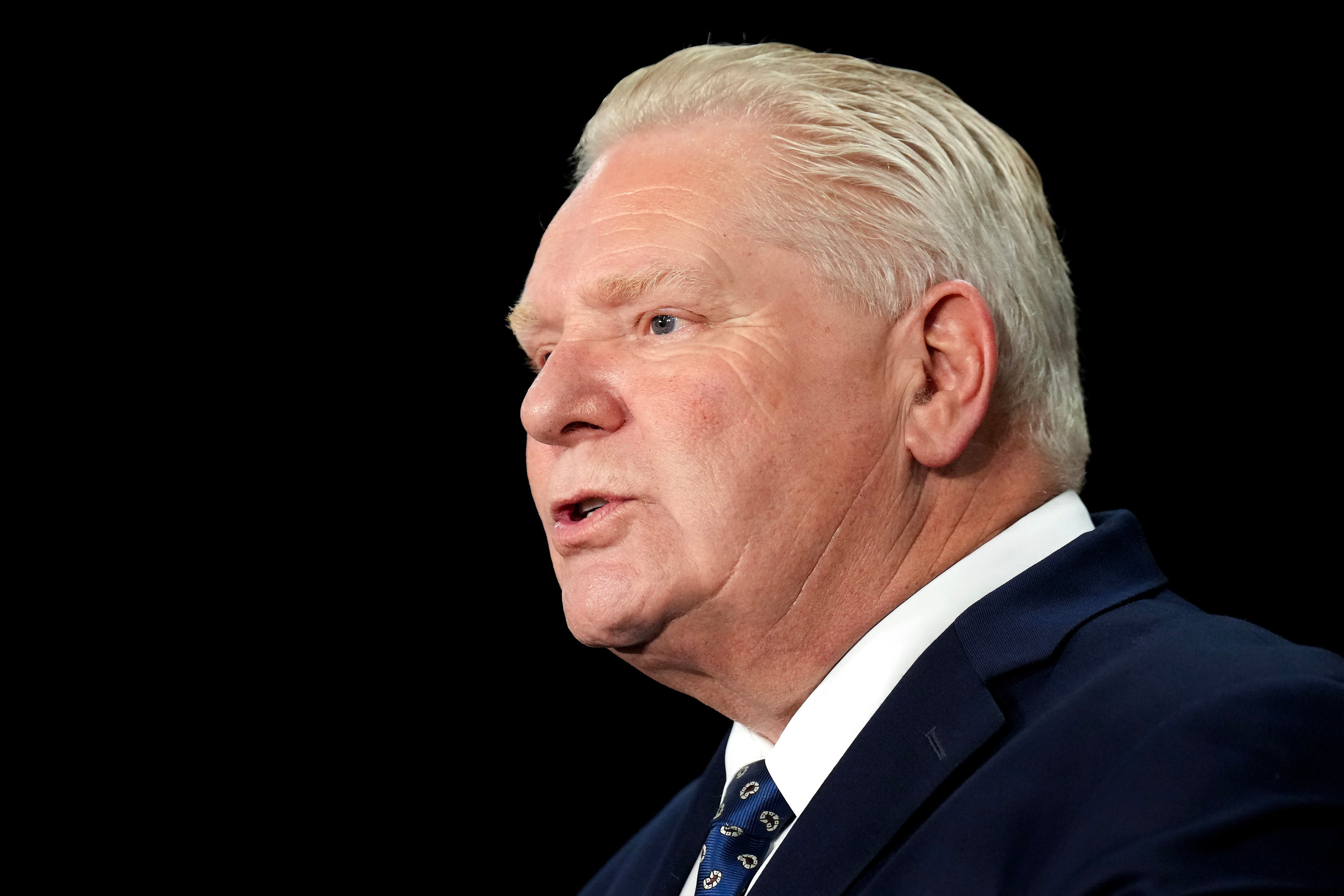
    Meanwhile, Ontario Premier Doug Ford unleashed his own tirade. In an interview with The Associated Press, he said Trump had underestimated Canadians’ willingness to endure economic pain rather than give in to U.S. pressure.

    “We’re all in,” Ford said. “Up here, we’re at a fever pitch; everyone’s in for an economic war. They know they’re going to have to sacrifice.”

    Trump responded in a social media post by attacking Ford personally, calling him “the less charismatic, intelligent, and overall unimpressive brother of the late, great, Rob Ford,” and once again referring to Canada’s prime minister as “Governor Carney.”

    Ford dismissed the insults: “If you think an insult from him hurts me? Well, bring it on, buddy, I’m ready.”

    Ford is a Progressive Conservative whose party differs from that of Carney, a Liberal, but the two underscore broad political unity in Canada over the trade fight with Trump.

    Ford threatens critical minerals and electricity

    Ford said “everything is on the table” if the dispute worsens, including cutting off electricity and critical minerals from Ontario.

    Critical minerals are increasingly important to U.S. national security and manufacturing. The Pentagon has sought more secure supplies of minerals used in military aircraft, missiles, munitions and electronics as Washington tries to reduce reliance on China, which dominates the mining or processing of several strategically important minerals.

    Ford said Canada should also consider increasingly severe retaliation if Trump continues targeting Canadian industries, including oil and potash, while Ontario could raise electricity prices or stop sending power south.

    “We power 1.5 million homes and businesses,” Ford said. “Everything’s on the table. I’ll do whatever it takes.”

    Ford has used electricity as leverage before. During an earlier phase of the dispute, Ontario imposed a 25% surcharge on electricity exported to Michigan, Minnesota and New York. Trump responded by threatening to double tariffs on Canadian steel and aluminum before both sides backed away.

    Auto industry becomes a central battleground

    Ford accused Trump of not simply seeking a better trade deal but aiming to hollow out Canadian industries and move production south.

    Ford said Trump wants to make Canada a vassal state.

    “He wants to bleed out every single sector and bring them down to the U.S.,” Ford said.

    The auto sector is especially important to Ontario, the center of Canada’s vehicle manufacturing industry. Plants and suppliers in Ontario are tightly integrated with factories in Michigan and other U.S. states, with parts routinely crossing the border multiple times during production.

    Automakers including Ford, General Motors and Stellantis operate major assembly plants in Ontario, and the wider supply chain supports tens of thousands of jobs. Trump’s new threat of a 50% tariff on Canadian vehicles and parts puts that sector directly at the center of the escalating dispute.

    U.S. Trade Representative Jamieson Greer said Monday that “the only reason Canada has auto production in the first place” was because of the 1960s Auto Pact, under which Canada used access to its market to encourage vehicle production north of the border.

    Ford says he opposed preliminary deal

    Ford also disclosed that he had opposed the preliminary agreement Carney was considering before Canada walked away from negotiations, and that he was unwilling to restore American liquor to Ontario store shelves as part of an agreement.

    “I wasn’t going to put the booze back on the shelves,” Ford said. “I was ready to go out there and call a press conference … and say I’m not buckling over.”

    Ford said he understood Washington had sought language late in the negotiations that would have restricted Canada’s ability to negotiate trade agreements with other countries without U.S. approval. Carney has called that demand unacceptable and a question of Canadian sovereignty.

    Carney said the dispute also exposed a deeper divide over language and culture, saying protections for French and Canadian culture that Washington views as trade irritants are considered fundamental rights in Canada.

    “Who does he think he is?” Ford said of Trump. “You gotta be kidding.”

  • Jeffries defends Kushner meeting, vowing tough oversight of Trump

    Jeffries defends Kushner meeting, vowing tough oversight of Trump

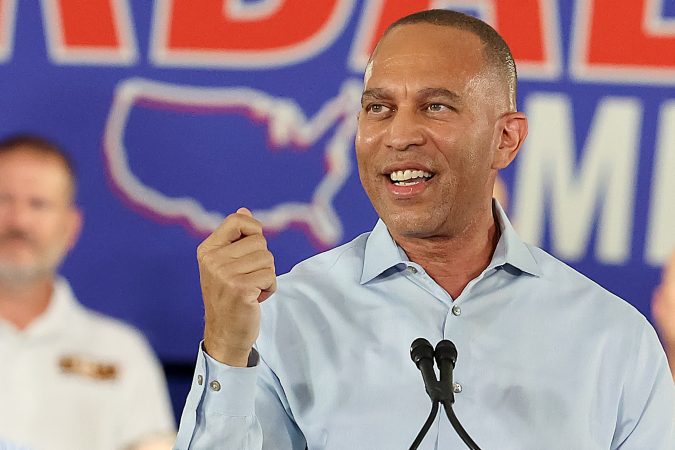
    WASHINGTON — Rep. Hakeem Jeffries, the minority leader, was forced to defend himself on Monday for taking a recent meeting with Jared Kushner, President Donald Trump’s son-in-law and top outside adviser, amid a backlash about the encounter from some progressives.

    “I wanted to give you a little real talk on this Jared Kushner situation,” Jeffries, D-N.Y., said in a video he posted on social media, in which he appeared in Brooklyn dressed in a bright green New York Yankees cap and matching polo shirt.

    Jeffries, who had initially declined to acknowledge the meeting or comment on it, said in the video that Kushner had asked for the meeting, and he had taken it, in order “to discuss the affordability crisis that exists, that is not a hoax.” (Trump has accused Democrats of inventing the concept of “affordability” to attack him over the high cost of living.)

    The discussion came as Trump and Democrats are attacking one another relentlessly on the campaign trail as they battle for control of Congress, and as the president’s inner circle is facing the increasingly likely possibility of a Democratic takeover, one that would put the Brooklyn lawmaker in line to be the House speaker.

    It drew bitter criticism from some Democrats, who are eager to see accountability for the Trump administration on a range of topics after a pliant two years of House Republican control. They said his decision to privately huddle with Kushner raised questions about how tough Jeffries would be in investigating the administration.

    “You do not meet with them — don’t have anything to do with them,” James Carville, the veteran Democratic strategist, vented online in a four-minute rant about Jeffries. “Any business we have is going to be conducted with you under oath.”

    Jeffries insisted in the video that he would be aggressive.

    “I shouldn’t have to say it, but I am,” he said. “No one is going to get a pass. We’re going to hold every single member of the Trump cartel accountable.”

    A spokesperson for Kushner did not respond to an email seeking comment on Jeffries’ video.

    The confab, which was first reported by The New York Times on Sunday, was described by people familiar with it as a general get-together in New York City to discuss areas where the Trump administration and Democrats could find common ground, discussing housing, cost-of-living and immigration. Kushner used the discussion to suggest that Jeffries meet with Susie Wiles, the White House chief of staff, with whom the Democratic leader has no relationship, according to one of the people with knowledge of the meeting.

    Kushner worked with Jeffries on criminal justice legislation during Trump’s first term, when he was an official senior adviser in the White House. Kushner now runs an investment firm backed heavily by Middle Eastern sovereign wealth funds and is not formally a part of the administration.

    But he has been an increasingly key outside adviser to his father-in-law, playing a central role in aspects of Trump’s foreign policy since last summer, a fact that Democrats on the House Judiciary Committee have begun to investigate.

    One of the most prominent faces of the Democratic left, Mayor Zohran Mamdani of New York, said he would still support Jeffries to lead the party. But elsewhere, there was outrage.

    Mehdi Hasan, the founder of the news site Zeteo, called the meeting “pathetic stuff from the House Dem leader” in a social media post. Adam Kinzinger, a former Republican member of Congress who has been among Trump’s harshest critics, referred to the meeting by posting: “Make this make sense.”

    Jeffries was already facing a potential rift within his caucus next year, with an incoming faction of antiestablishment members on the left who have repudiated him and broken with mainstream Democrats on a number of issues.

    A person with knowledge of the meeting, who spoke on the condition of anonymity to discuss a sensitive topic, said it was a mutual friend, not the president’s son-in-law, who suggested that Jeffries and Kushner meet.

    The meeting also created an awkward situation for House Speaker Mike Johnson, R-La., who has been confidently predicting that his party will retain its majority and found himself pushing back on the idea that the Trump administration was instead preparing for a Democratic victory.

    Asked on Sunday about the meeting, Johnson played down Kushner’s influence, saying he was “not really directly involved” in the administration, “at least in the day-to-day in the White House,” and again expressed confidence that Republicans could keep control of the House.

    This article originally appeared in The New York Times.

  • How to reset your child’s sleep schedule for back-to-school season

    How to reset your child’s sleep schedule for back-to-school season

    NEW YORK — After a summer of vacations and late nights, it’s time to set those back-to-school alarms.

    A good night’s sleep helps students stay focused and attentive in class. Experts say it’s worth easing kids back into a routine with the start of a new school year.

    “We don’t say ‘ get good sleep ‘ just because,” said pediatrician Dr. Gabrina Dixon with Children’s National Hospital. “It really helps kids learn and it helps them function throughout the day.”

    The amount of sleep kids need changes as they age. Preschoolers should get up to 13 hours of sleep. Tweens need between nine and 12 hours. Teenagers do best with eight to 10 hours of shut-eye.

    Set an earlier bedtime

    Early bedtimes can slip through the cracks over the summer as kids stay up for sleepovers, movie marathons and long plane flights. To get back on track, experts recommend setting earlier bedtimes a week or two before the first day of school or gradually going to bed 15 to 30 minutes earlier each night.

    Don’t serve a heavy meal before bed and avoid TV or screen time two hours before sleep. Instead, work on relaxing activities to slow down, like showering and reading a story.

    “You’re trying to take the cognitive load off your mind,” said Dr. Nitun Verma, a spokesperson for the American Academy of Sleep Medicine. “It would be like if you’re driving, you’re slowly letting go of the gas pedal.”

    Parents can adjust their back-to-school plans based on what works best for their child. Nikkya Hargrove moves her twin daughters’ bedtimes up by 30 minutes the week before school starts.

    Sometimes, her kids will negotiate for a few extra minutes to stay up and read. Hargrove said those conversations are important as her children get older and advocate for themselves. If they stay up too late and don’t have the best morning, Hargrove said that can be a learning experience too.

    “If they’re groggy and they don’t like how they feel, then they know, ‘OK, I have to go to bed earlier,’” said Hargrove, an author and independent bookstore owner from Connecticut.

    In the morning, soaking in some daylight by sitting at a window or going outside can help train the brain to power up, Verma said.

    Squash back-to-school sleep anxiety

    Sleep quality matters just as much as duration. First-day jitters can make it hard to fall asleep no matter how early the bedtime.

    Dixon says parents can talk to their kids to find out what is making them anxious. Is it the first day at a new school? Is it a fear of making new friends? Then they might try a test run of stressful activities before school starts to make those tasks feel less scary — for example, by visiting the school or meeting classmates at an open house.

    The weeks leading up to school can be jam-packed and it’s not always possible to prep a routine in advance. But kids will adjust eventually, so sleep experts say parents should do what they can. After all, their kids aren’t the only ones adjusting to a new routine.

    “I always say, ‘Take a deep breath, it’ll be OK,’” Dixon said. “And just start that schedule.”

  • From ‘Fortress North America’ to all-out trade war: How the U.S.-Canada talks collapsed

    From ‘Fortress North America’ to all-out trade war: How the U.S.-Canada talks collapsed

    The clock ticked toward midnight on Friday. New U.S. tariffs on Canada were about to come into effect and negotiators cooped up across the street from the White House were still plodding through the differences on each side. Aides shuffled in and out with new drafts, adjusting and readjusting.

    U.S. officials said they had offered Canada the best trade deal of any nation. Canadians believed it was a bad one. In the waning hours, both sides dug in even more.

    One Canadian negotiator said it was as if “shadow figures were suddenly in the room,” raising topics that had supposedly been settled in previous days.

    Back in Ottawa, Prime Minister Mark Carney got off the phone with Doug Ford, the premier of Ontario. Ford had told him plainly: Don’t take the deal.

    Ford told Carney he would not comply with a key U.S. demand: restoring the sale of U.S. alcohol that he, alongside most other provincial leaders, had banned. American tariffs on Canadian steel and automobiles were still too high to enable their long-term survival, Ford had decided.

    Carney called his team in Washington for the latest news from the negotiations. Then, just after 10:30 p.m., he pulled the plug and ordered them home.

    A month of intense talks to stave off new U.S. tariffs on Canada and soften the ones previously imposed by the Trump administration had been yielding steady progress. But they collapsed suddenly, setting in motion an all-out trade war between the two nations.

    The sticking points were many. In the last few hours, negotiators clashed over Canadian rules promoting French-language movies and shows online, as well as the Trump administration’s demands to dictate Canada’s steel tariffs on other countries. Canada, in turn, insisted on more generous treatment for its autos and electric vehicles, and ultimately backed away from its offer to cooperate on the Keystone XL pipeline that President Donald Trump has long desired, people familiar with the negotiations said.

    On Monday, after the negotiations collapsed, Trump vowed to increase tariffs on all cars, trucks, car parts and steel from Canada to 50%, starting on Jan. 1. He called Canadian officials “clowns” from “among the worst Nations in the World to deal with.”

    “WE DON’T NEED CANADA, THEY NEED US!” he wrote.

    Carney fired back: “The attitude, at the negotiation table, that Canada is a subsidiary of the United States,” he said, “that’s not something we’re going to accept.”

    Carney is now expected to announce Canada’s retaliation tariffs against the United States.

    What led to the breakdown is a story of fundamental misalignment between the countries — ideological, economic and political. Ultimately, Carney decided to defy Trump and endure his economic and political targeting of Canada.

    This account, which contains previously unreported details of the final days and hours of the trade negotiations, is based on interviews with five American and Canadian officials with direct knowledge of the talks, two former U.S. officials, as well as seven senior industry leaders on both sides of the border who were briefed throughout.

    The interviews show that the red lines for the two sides were so far apart that it would have required major concessions, particularly by Canada, to come to a final agreement.

    The zombie pipeline

    “The great Keystone XL Pipeline, long ago killed by Sleepy Joe Biden, may be awoken from the grave!” Trump said in an Aug. 18 social media post, in which he also claimed that the United States and Canada had a “DEAL!”

    Trump’s love of the beleaguered pipeline extension, meant to transport oil from Canada to the U.S. Gulf Coast until it was canceled by Biden in 2021, is well known.

    Carney had brought up the idea of reviving it during his first White House visit last year.

    Officials said that, when Carney and Trump spoke by phone early last week, Carney again mentioned the pipeline, saying that, for the right deal on tariffs, Canada would consider bringing its side of the pipeline back to life. Trump was thrilled, a former official briefed on the talks said.

    But by Friday, the Keystone XL pipeline idea was buried again. A U.S. official said that, in the last few hours, Canada had expressed reluctance to cooperate. A Canadian official said that the trade deal on offer was not good enough to make the pipeline make sense.

    The Lutnick factor

    Last Monday afternoon, with the talks still underway, Jamieson Greer, the U.S. trade representative, and Dominic LeBlanc, the Canadian trade minister, dodged reporters waiting in the Washington humidity as they left a roughly two-hour meeting at the Commerce Department.

    Canadian negotiators were used to working closely with Greer, who oversees U.S. trade deals and helped negotiate the United States-Mexico-Canada Agreement during Trump’s first term. But many of the issues that Canadians cared about most were instead the purview of the man who stayed inside in the air conditioning: Howard Lutnick, the secretary of commerce.

    Lutnick, a hard-charging former bond broker who has known Trump for decades, oversees the administration’s tariffs on cars, trucks, steel and aluminum. And in the coming days, he would take a hard line on those topics, issues that ultimately took down the talks.

    Negotiators were hopeful to start that week. After Trump threatened last month to impose 50% tariffs on hundreds of products, the Canadians reached out to negotiate, asking for a comprehensive deal that resolved Trump’s earlier tariffs and his latest threats, a U.S. official said. Trump gave Greer a green light to see what the Canadians had to offer.

    U.S. officials felt confident that they could get Canada to both scale back the retaliatory tariffs they had imposed against Trump and to remove what the United States saw as unfair barriers to agriculture, energy and digital trade.

    On Aug. 18, U.S. and Canadian officials agreed on the outlines of a deal, and Trump proclaimed on social media that he had paused his tariffs until midnight Friday to finalize the paperwork.

    But on Wednesday, as the two sides got into the details, particularly on metals and autos, snags emerged. Lutnick was wary of Canadian proposals that would lower the tariff on autos below the level he wanted.

    As word leaked last week that the United States would reduce its tariffs on Canadian steel and aluminum, U.S. companies lobbied the Commerce Department and the White House to preserve their protections. Lutnick intervened on their behalf, including suggesting that only a certain volume of aluminum be subject to lower tariff rates.

    After spending several days in negotiations, LeBlanc flew home to Ottawa on Wednesday afternoon. But early the next morning, he urgently returned to Washington, as did Marc-André Blanchard, Carney’s chief of staff.

    Neither was scheduled to be in Washington that day, according to two people familiar with the events. They were rushing back because of Lutnick’s intervention.

    Lutnick also insisted that tariffs not be lowered for heavy trucks, as they would be for cars. And Canada, which produces the GM Silverado and Ford F-350 and F-450 in Ontario, insisted this was a red line.

    Lutnick’s interventions caused frustration inside the trade office, which had been in talks with the Canadians for weeks, one person close to the office said. The person said Greer did not disagree with Lutnick substantively, but he did not think the Canadians would accept the proposals.

    A White House official said Lutnick’s hard line did not derail the negotiations. Kush Desai, a White House spokesperson, said that the entire trade and economic team was “playing from one playbook, President Trump’s playbook.”

    The United States ultimately offered to reduce its tariffs on steel, aluminum and cars, and eliminate entirely a tariff on Canadian lumber imposed last year, Greer said in an interview Saturday.

    For Canadians, Lutnick was already something of a villain. Though he is friendly enough to exchange text messages with Carney, he has offended many Canadians, including intervening to block the opening of a new Canada-U.S. bridge and saying that Canadian officials “suck” during an event in Washington in April.

    Lutnick had also made clear that his goal was moving auto production out of Canada into the United States. Speaking virtually at a U.S.-Canada summit late last year, Lutnick told a Canadian audience that the United States was no longer interested in buying Canadian-made cars.

    Sovereignty matters

    For the Canadian team, a number of different issues came down to sovereignty.

    On Friday, U.S. officials raised concerns about Canada’s future trade agreements and how they would guard against foreign products flooding into North America. They wanted to be able to review and potentially dictate the terms for Canada’s trade agreements with other countries, a Canadian official said.

    Canadian negotiators had gone into the talks suggesting the ultimate goal should be to create a “Fortress North America,” as they called it, with ultralow or nonexistent tariffs inside its walls, namely between Canada and the United States, and aligned tariffs for outsiders.

    But the United States wanted Canada to apply U.S. tariffs to other countries, particularly when it came to steel, now and in the future: If the United States changed policy and place higher tariffs on certain goods from a third country, Canada would need to do the same, even if it already had a trade agreement in place, a Canadian official said.

    For the Trump administration, this was necessary to prevent, for example, cheaper steel from flooding third countries through Canada and into the United States.

    But this was unacceptable to the Canadians, who are in talks on multiple trade deals with Latin American and other nations as part of Carney’s vision to diversify trade away from dependence on the United States.

    A Canadian official also said that the U.S. side also wanted Canada to swiftly phase out a program it began last year to support industries impacted by U.S. tariffs, known as “Buy Canadian,” which prioritizes using domestic products and suppliers for public-sector projects — similar to a policy the United States implements to favor its own industries.

    The Canadians also pressed the United States for a level of certainty that the deal would not be scrapped overnight by the Trump administration. But the United States maintained that it would retain all power to change tariff policy against Canada at any time, irrespective of the agreement, officials said. Carney would say in his seething Saturday address to Canadians: Sometimes, the United States signature is “written in pencil.”

    Lost in translation

    A particularly sore point in the talks, and one that has animated Canadians since they collapsed, was the suggestion by Carney that the United States wanted to intervene in Canada’s all-important policy to protect the use of the French language.

    French, spoken mostly but not exclusively in Quebec, is one of Canada’s two official languages and bilingualism is government policy across the country. Different kinds of laws protect and guarantee the continued use of French in daily life, from labels on products to funding for the arts and education. Quebec would likely break away from Canada, as it has often threatened to, without such guarantees.

    As part of the trade talks, Canada had agreed to review laws that protect Canadian-made online content, including French-language shows. On Friday, and until the final moments, the United States was asking Canada to repeal a law that would, among other provisions, compel streaming platforms to place such movies or series more prominently for Canadian subscribers.

    The U.S. side, officials said, viewed such policies as an intervention in the platforms’ freedoms.

    A person with direct knowledge of the talks said that the American side was flexible on this point, and did not make any asks regarding the French language explicitly. A Canadian counterpart said that, even if that were the case, the topic was still being debated until the last minute before the talks broke down Friday.

    It would be one of many issues left unresolved, as Carney decided the concessions were unthinkable for Canada.

    “We cannot accept what they have offered, and we will not give what they have asked,” he said.

    This article originally appeared in The New York Times.

  • An ‘economic D-Day’ that must overcome a troubled history

    An ‘economic D-Day’ that must overcome a troubled history

    In declaring a new “economic D-Day” for Iran on Monday, President Donald Trump and Treasury Secretary Scott Bessent are reaching for yet another strategy to grope their way out of a military adventure gone wrong. Along the way they are reversing the usual approach to coercing adversaries to bend to American will.

    Ordinarily, Washington approaches a problem like dismantling Iran’s nuclear program with straightforward diplomacy. If that goes nowhere, officials mix in escalating economic sanctions, adding an element of coercion. Military action is a last resort, and only if the president determines that risking American lives is worth the possible benefit.

    But Trump leaped from a brief round of diplomacy straight to bombing runs, meant to force the country to give up its stockpiles of 11 tons of enriched uranium — including a batch that was nearly bomb-ready — and perhaps collapse the government. The attacks failed at both objectives, at the cost of 18 American lives, hundreds or thousands of Iranians dead, and a price tag that independent analysts put at over $100 billion, though the Pentagon’s estimates are lower.

    And only now are Trump and Bessent trying one more grand experiment, named Operation Economic Outcast, that the White House described as “an unprecedented campaign to sever every remaining economic lifeline sustaining the Islamic Republic of Iran.”

    The plan is not implausible. As described by Bessent, it involves choking off every last transaction that funnels money to Tehran, whether it is well-disguised digital transactions, or ship-to-ship transfers of oil, or the movement of gold around the globe. “This is a sustained operation to collapse every last option for Iran,” Bessent, who has become the public face of the effort at economic strangulation, said at a news conference at the Treasury on Monday.

    But the effort raises a series of questions that the White House has not answered. First among them is why, if sanctions as airtight as these are possible, they were not employed before Trump ordered the U.S. military into battle, exposing shortages of key munitions and the limits of U.S. military power? And now that the military has, in Bessent’s words, “laid the groundwork” for success, what about China — which purchased more than 80% of Iran’s oil exports in 2025? Is the administration willing to risk another direct confrontation with Beijing, with which it is already at odds over artificial intelligence, Taiwan, a rapid nuclear expansion and a huge production overhang that threatens the global economy?

    The original D-Day, on the shores of Normandy, did not require Chinese participation. This economic D-Day does, and there is no indication so far that it is forthcoming, a month before Chinese President Xi Jinping is scheduled to arrive in Washington for his first state visit in more than a decade.

    “This will be tricky,” Peter Harrell, a visiting scholar at Georgetown Law School who has written extensively on the limits of economic sanctions, said on Monday.

    Earlier this year, in deciding how to bring Iran to its knees, Trump “had a choice to really come down hard on the Chinese, which he didn’t want to do because of his own economic agenda with Xi, or put the naval blockade on the Iranian tankers,” Harrell noted. “It turned out it was politically easier to put the blockade on all the Iranian tanks than to tell the Chinese ‘We will sanction your big companies’ if they continued their trade with Iran.”

    It is still a delicate issue.

    Bessent threatened what are called “secondary sanctions” on all nations that continued to do business with Iran.

    But in an opinion article for the Financial Times over the weekend and at his news conference Monday, Bessent never uttered the word “China.” He was going out of his way to avoid angering the world’s second-largest economy, and the one nation that may well determine whether this new White House strategy has a chance.

    Of course, there is nothing new in trying to make Iran an economic outcast. The first serious efforts to impose sanctions on Iran for its nuclear program date back to the George W. Bush administration. When the Obama administration was trying to push Iran into negotiations in 2009, the secretary of state at the time, Hillary Clinton, promised “crippling sanctions” unless the country entered negotiations.

    It took years to generate results, but many experts contend that the escalating sanctions that followed helped compel Iran to agree to the 2015 nuclear accord, sharply limiting its nuclear work in return for a lifting of financial and oil sanctions. Trump ripped up that agreement in 2018, declaring it deeply flawed.

    At that time, he began reimposing sanctions, and he and his secretary of state, Mike Pompeo, predicted that the economic pressure would be too much for Iran’s leaders to take.

    “The Trump administration is pursuing a ‘maximum pressure’ campaign designed to choke off revenues that the regime — and particularly the Islamic Revolutionary Guard Corps, part of Iran’s military that is directly beholden to the Supreme Leader — uses to fund violence,’’ Pompeo wrote in Foreign Affairs in late 2018. “Yet President Trump does not want another long-term U.S. military engagement in the Middle East.”

    Pompeo, now estranged from Trump, sounded many of the themes repeated by Bessent on Monday. The exception is that the United States is now committed to a military presence off Iran’s coast for an indeterminate amount of time, but certainly as long as Iran threatens shipping through the Strait of Hormuz.

    The record of these past sanctions is unimpressive: Iran kept shipping 2 million to 3 million barrels of oil a day despite them. Those numbers have now come down to a trickle, thanks to the naval blockade now in place.

    But the nuclear material has not moved out of its rubble-covered storage sites since the United States bombed those areas in June 2025, satellite photographs indicate. And the government survives, though under different management after Ayatollah Ali Khamenei was killed in the opening strikes of the war in February. His son, considered more of a hard-liner, now holds the post, even though he has not been seen or heard from directly.

    As a result, one of the more curious elements of Bessent’s speech Monday came when he returned to a promise made by Trump nearly six months ago: that he would establish the conditions for regime change.

    At the time, Trump thought the military battle would last a few days or weeks, before Iran offered what the president called “unconditional surrender.” He urged the Iranian people to rise up, and take over their government, after the smoke of the U.S. bombing cleared. Trump soon abandoned that effort, acknowledging in an interview with The New York Times in June that the Iranian people simply did not have the guns or organization to make that happen.

    Bessent tried a slightly different approach Monday.

    “To the ordinary soldiers supporting this regime,” Bessent said, “as more and more of your paychecks stop or are supposedly just delayed, ask whether your commanders are leading your country to triumph or to ruin, and recall that the Berlin Wall fell when ordinary soldiers decided not to shoot at their own people.”

    Of course, the circumstances when the wall fell were entirely different from those in Iran. There was no external, active war going on, just the accelerating pressure of the Cold War. And the Soviet Union and its satellites saw little hope in putting down the local uprisings, including the one in East Germany that led to Bessent’s historical analogy.

    Yet that is Trump’s big bet right now. His decision in February to forgo the kind of sanctions announced Monday, and to move right to military force, was in some ways an acknowledgment that economic sanctions move slowly, and that history suggests they often fail to work.

    Today, he is back to that plan, for absence of many other viable choices.

    This article originally appeared in The New York Times.

  • Letters to the Editor | Aug. 25, 2026

    Letters to the Editor | Aug. 25, 2026

    Broad mistake

    I couldn’t agree more with the op-ed on the complete lack of foresight used in the installation of concrete “planters” in the center of South Broad Street. In addition to the authors’ critique, let me add:

    Was any consideration given to the additional difficulties of snow removal and street maintenance?

    How about losing space for an emergency vehicle en route during heightened traffic?

    Was a thought given to further congesting a major artery already encumbered with bus and bike lanes?

    How about further strangulation by the inevitable appearance of that darling of the well-heeled — the streetery?

    Shall the Mummers be forced to separate into two groups?

    Another $150 million boondoggle destined to be removed by a head-scratching later generation. It would seem AI of a different sort has been at play on this one.

    J. Savage, Philadelphia

    Think for yourself

    What do students lose when artificial intelligence writes for them? Everything.

    Writing is thinking. You cannot write without thinking, and you cannot learn to think without writing.

    While it may be very hard mental work, especially at first, it gets better with practice. Students and others should not be deprived or deprive themselves of that training.

    When you write about anything, you research your facts and arguments (AI can help there). You explore counter facts and arguments that may change your perspective. You organize your thoughts in a coherent and appealing way. You learn how to spell, how to use proper grammar, and how to develop your own voice and style.

    This is how you develop critical thinking, which is sorely lacking in many of today’s adults. Writing really is an essential human skill. AI defeats that.

    I am a retired writer of one sort or another. At 81, I still write every day, and I still reject all efforts of the AI in my computers to do any of the writing for me. The pleasure — and it is a great pleasure — is in exercising that mental muscle, not letting a machine do it for me.

    Jodine Mayberry, Brookhaven

    It’s a magical world

    Instead of daylight saving time, I favor keeping standard time year-round. It’s better for schoolchildren in the winter, and in summer, as Calvin and Hobbes once pointed out on behalf of young children everywhere, “It’s a cruel season that makes you get ready for bed while it’s light out.”

    Stephen Bryant, Blue Bell

    Join the conversation: Send letters to letters@inquirer.com. Limit length to 150 words and include home address and day and evening phone number. Letters run in The Inquirer six days a week on the editorial pages and online.

  • Horoscopes: Tuesday, Aug. 25, 2026

    ARIES (March 21-April 19). Mistakes are inevitable. If you learn from them, they’re called an education. If you don’t, you may need to keep building up your collection until the breakthrough comes. Some lessons take longer to learn.

    TAURUS (April 20-May 20). Spending time on your spiritual life lifts your physical health, and caring for your body deepens your spiritual life. Exercise, prayer, proper rest, long moments of silence — all send benefits through multiple parts of your life at once.

    GEMINI (May 21-June 21). A reluctant leader may nonetheless be excellent in the post. People who fully appreciate how much responsibility leadership carries are less eager to seek power for its own sake. Knowing what’s involved, they approach the role with more caution than enthusiasm.

    CANCER (June 22-July 22). Some experiences make perfect sense only after you’ve lived through them. Your head catches up with your heart a little later. Move through the bafflement. It all clicks in at the perfect moment.

    LEO (July 23-Aug. 22). You’ll solve a human puzzle. Someone does something that makes no sense. You become fascinated by why they did it. You keep observing until the pattern clicks. Once you understand their motive, you know how to deal with them.

    VIRGO (Aug. 23-Sept. 22). If you only knew the depth, breadth and intensity of pure love directed at you on a regular basis, all life’s irritations, frustrations and injustices would be swept away by the mighty current of this profound truth.

    LIBRA (Sept. 23-Oct. 23). While it may seem unfair that someone so easily accomplishes the thing you’ve been struggling to do, it also doesn’t matter in the least since the only way to improve is by using what you have for however long it takes to figure it out.

    SCORPIO (Oct. 24-Nov. 21). Worry is a form of time travel — jumping to a possible future to check out the demands, losses and outcomes that live there, then borrow a bit of the bad feeling to bring back home. Skip the trip today.

    SAGITTARIUS (Nov. 22-Dec. 21). Identity is a story we tell ourselves about who we are. Good stories sometimes involve contrivances, exaggerations and facts placed in a strategic order. But when it’s your story, you have the artistic license to craft it.

    CAPRICORN (Dec. 22-Jan. 19). Micromanaging is often counterproductive, especially when the manager and the managed are both the same person. You have your reasons for doing things your way, even when you don’t know what they are.

    AQUARIUS (Jan. 20-Feb. 18). You settle into a remarkably even temper and attitude as you embody this truth. Whether you’re in a three-step process or a three-million-step process, it’s all stepping, and the number you’re on is always “this one.”

    PISCES (Feb. 19-March 20). Learning about the world helps you see that there is much more available to you than the options you knew about last week. The choices most people around you are making might be fine for them, but not for you.

    TODAY’S BIRTHDAY (Aug. 25). It’s your Year of Sweet Reverberations, when the goodness you’ve been pouring into the world catches up to you, giving you what you most desire and also what you need going forward: vitality, resources and people around you who support your favorite version of yourself. More highlights: Love’s fever. A big money deal. A hard asset or intellectual property becomes much more valuable — a game changer. Leo and Scorpio adore you. Your lucky numbers are 7, 5, 25, 10 and 14.