Tag: no-latest

  • Iran scrambles to sustain trade as U.S. threatens to sanction countries that refuse to break ties

    Iran scrambles to sustain trade as U.S. threatens to sanction countries that refuse to break ties

    BEIRUT — Iran’s economy, already strained by high inflation, years of Western sanctions, and a war that has sharply reduced oil revenue, is poised for more instability as the Trump administration tries to coerce other countries into ending all financial dealings with the Islamic Republic.

    A decision by the United Arab Emirates to suspend trade relations with Iran last week kick-started the White House’s latest attempt to isolate Tehran into submission. Iran entered the war with its foreign commerce concentrated among a relatively small group of countries, leaving it with fewer places to turn now.

    The success of the U.S. strategy will largely hinge on China, the main buyer of Iranian oil and its top trading partner. Russia, a fellow target of sweeping U.S.-led sanctions, has a military conflict and economic crisis of its own and probably can’t offer longtime ally Iran much hard financial support.

    Regional partners like Turkey, Pakistan, and Iraq maintain important relationships with both Iran and the U.S., giving them reason to avoid exposure to the secondary sanctions that Treasury Secretary Scott Bessent said awaited nations that did not cut economic ties with Iran.

    “Those who stand with the United States will reap the rewards of our partnership,” Bessent said Monday while outlining the plan he called “Operation Economic Outcast.” “Those who tether themselves to the Iranian regime should expect to share in the isolation.”

    The Emirates will be hard for Iran to replace as a conduit for foreign goods and payments

    Despite Western sanctions, Iran in 2024 exchanged $125 billion worth of goods globally, according to Trade Data Monitor, a private firm. Iran is not a member of the World Trade Organization.

    The bulk of its declared international trade, though, was with a handful of partners. The UAE, China, and Turkey supplied nearly three-quarters of Iran’s merchandise imports. Four countries — China, Iraq, the UAE, and Turkey — accounted for more than two-thirds of its non-oil exports.

    On the supply side, the UAE held outsized importance. It was Iran’s biggest source of imported items and a gateway to financial channels that helped Iranian businesses make and receive international payments. Both roles kept Iran connected to the global economy.

    As a re-export hub, the UAE processed shipments from foreign suppliers reluctant to deal directly with Iranian customers.

    “From Iran’s perspective, the UAE can be replaced, but the Iranians are openly saying it’s not going to happen overnight,” said Alex Vatanka, a senior fellow at the Middle East Institute in Washington.

    China has deep economic ties to Iran but depends less on the relationship

    Beijing has economic interests in the Persian Gulf beyond Iran, and so far has avoided getting drawn into the conflict the U.S. and Israel initiated. China buys the overwhelming majority of Iran’s crude through opaque trading networks that bypass sanctions.

    Its manufacturing clout and stranglehold on critical mineral supplies nonetheless give Beijing more room than Iran’s other partners to resist U.S. pressure, said David Lubin, a senior research fellow at Chatham House. Aggressive action against major Chinese banks and businesses could revive trade tensions as Chinese leader Xi Jinping prepares to meet with President Donald Trump in Washington next month.

    “I don’t see China playing ball by any means,” Lubin said.

    China is both Iran’s largest reported export market and a supplier of essential parts and products, according to WTO and U.N. data.

    During the Obama administration, Beijing did agree to reduce energy imports from Iran, said Atlantic Council fellow Daniel Fried, a former U.S. ambassador to Poland.

    “We will want the Chinese to go a lot farther than they have gone in the past,” Fried said. “But it’s a lot harder now.”

    China has experience helping an ally survive sanctions: it has long been North Korea’s economic lifeline and main diplomatic backer. Experts say China has avoided fully enforcing U.N. sanctions on North Korea and sent clandestine aid to help its impoverished neighbor stay afloat.

    Expanding bilateral trade would create problems for Iran’s neighbors

    Iranian Parliament Speaker Mohammad Bagher Qalibaf, who has been his country’s lead negotiator over the past six months, was in Iraq the day of the UAE’s trade suspension. A purpose of his visit, he said, was “speeding up efforts to expand joint cooperation among all countries in the region, without foreign interference.”

    The U.S. dollar’s preeminence in international trade and finance, however, means none of Iran’s trading partners would antagonize Washington lightly, Vatanka said. “We’re still at a point where if the U.S. wants to hurt you, it will matter,” he said.

    Underscoring potential consequences, Turkey settled a yearslong U.S. dispute in July over the role of a state-owned bank in helping Iran evade sanctions through an oil-for-gold scheme. Trump also moved to lift sanctions on its fellow NATO member stemming from Turkey’s purchase of a sophisticated Russian missile system.

    “I really don’t think Turkey would like to become the next country helping Iran to evade sanctions right now,” said Riccardo Gasco, an analyst at the IstanPol think tank in Istanbul.

    Iran is a vital import source for Iraq and retains influence there through allied political factions and armed groups. Baghdad has sought closer economic and security ties with Washington. Since it invaded Iraq in 2003, the U.S. has significant control over the nation’s foreign currency reserves because they are housed in the Federal Reserve Bank in New York.

    Oman, a frequent intermediary between Washington and Tehran, has found its balancing act suddenly precarious. Trump threatened Oman last week over its ongoing negotiations with Iran on the future management of the Strait of Hormuz.

    One easy route for goods slipping past sanctions on Iran would be ports like Gwadar near the Persian Gulf in Pakistan, said Peter Harrell, a visiting scholar at Georgetown University.

    “Ship an intermodal container of drone parts to one of the ports in western Pakistan and unload it onto a truck and have it driven across the border into Iran,” he said.

    While Pakistan, a key ally and economic partner of China in the region, wants to increase trade with Iran, it faces competing pressures. It is serving as a key mediator between Tehran and Washington and has deep security ties with Saudi Arabia, Iran’s longtime regional rival.

    Caspian Sea trade route alternatives unlikely to grow quickly

    With the Strait of Hormuz mostly blocked and Russia’s war with Ukraine endangering ships on the Black Sea, Iran has sought to develop a “road of life” on the Caspian Sea, said Nikita Smagin, an independent analyst and a former Russian state news agency correspondent in Tehran.

    Russia reportedly sent drones to Iran this year, repaying Tehran’s favor after Moscow’s full-scale invasion of Ukraine. It also rerouted exports to Iran via Caspian Sea ports like Astrakhan. Agricultural products make up 80% of Russia and Iran’s reported trade.

    “Both economies are exporting natural resources and have little to offer each other,” Smagin said.

    The other countries that border the Caspian — Azerbaijan, Turkmenistan and Kazakhstan — probably won’t rush to join in, said Umud Shokri, a fellow at George Mason University.

    Yet Russia and Iran are already in an “axis of the sanctioned,” said Mark Galeotti, executive director of the Mayak Intelligence firm. For decades the pair have collaborated to thwart trade restrictions, and increasing bilateral trade in both “strategic goods” and contraband like military technology, microchips and Gucci handbags could be a next step.

    “Pomegranates and tomatoes only go so far,” he said.
  • State Department advances Trump crackdown on ‘far-left terrorism’

    State Department advances Trump crackdown on ‘far-left terrorism’

    WASHINGTON — The State Department on Wednesday designated three groups based in Europe, including two that advocate Palestinian rights, as transnational terrorist organizations.

    The move is part of the Trump administration’s fight against what it calls a “resurgence of far-left political terrorism” worldwide, a focus that many security experts say is disproportionate.

    In a statement, the department said that it would impose sanctions on Palestine Action, which is based in Britain and organizes acts of support for Palestinians and opposition to Israeli policies; Masar Badil, another pro-Palestinian group with branches in Western Europe and Canada; and Autistici/Inventati, known as A/I Collective, which is based in Italy and offers free digital tools to leftist activists around the world.

    Even as many Western leaders and analysts raise alarms about the growing strength of far right-wing movements with violent tendencies, the Trump administration has mainly targeted what it calls an even more dangerous alternative on the left. In July, Secretary of State Marco Rubio hosted an international summit on the subject, which the State Department billed as a response to “a deliberate, ideologically motivated strategy to destabilize free societies by violently targeting our political and economic systems” on the part of far-left groups.

    That threat has long been “a blind spot in the international community’s counterterrorism focus,” the department said in a statement at the time.

    Many conservatives have been galvanized by the issue by recent events such as pro-Palestinian demonstrations seen by critics as sympathetic to Hamas and hostile to Israel, anti-Trump protests in U.S. cities that have sometimes turned violent and the assassination of the pro-Trump activist Charlie Kirk in September 2025.

    But experts say that talk of a broad, coordinated left-wing menace exaggerates the threat to America.

    Liberal groups such as the American Civil Liberties Union also warn that it could have a chilling effect on legitimate speech and give a pretext for intimidating or even prosecuting critics of the Trump administration.

    The State Department accused the newly designated groups of having terrorist ties, though its announcement focused on A/I Collective, which it said tailors digital services to help left-wing radical groups organize, communicate and plan violent attacks. That help includes sharing “target information” and tactical guidance to “many of the most active and violent antifa groups in the United States,” according to the department.

    The A/I Collective’s website says that it offers a secure platform for activists to communicate anonymously, free from government surveillance. It defines its core principles as “anti-fascism, anti-racism, anti-sexism, anti-militarism.”

    Founded in 2020, Palestine Action opposes Britain’s support for what it calls Israel’s “genocidal policies” toward the Palestinians. The group organized several pro-Palestinian protests in London before the British government banned it last year when five of its members were charged with breaking into a Royal Air Force base and spraying red paint on two aircraft.

    The United Nations High Commissioner for Human Rights said the ban raised “serious concerns that counterterrorism laws are being applied to conduct that is not terrorist in nature and risks hindering the legitimate exercise of fundamental freedoms across the U.K.”

    Masar Badil is a pro-Palestinian group that has published statements that “glorify violence” against Israel and has hosted webinars featuring members of Hamas and the Houthis, according to the Anti-Defamation League. The State Department said its action was based on the group’s close ties to Samidoun, a pro-Palestinian group that has been banned in Germany and declared a terrorist group by Israel and Canada.

    The U.S. terrorist designations mean that any U.S. controlled assets of the groups, and two specifically named Masar Badil leaders, will be frozen and anyone transacting with them — including by providing money or services — can be subject to civil or criminal action.

    The State Department said in a fact sheet on political terrorism last month that “far-left terrorist plots and attacks have sharply increased in the United States and Europe” since 2016, and that such terrorism “now accounts for more attacks and plots in the United States than any other ideological category.”

    Last year, the Trump administration declared the amorphous left-wing group antifa as a terrorist organization, offering little evidence of its threat.

    A September 2025 analysis by the Center for Strategic and International Studies, a nonpartisan research center, found that left-wing terrorist attacks and plots have risen in recent years and that left-wing attacks were on track to outnumber ones from the far right for the first time in 30 years.

    But left-wing violence has “risen from very low levels and remains much lower than historical levels of violence carried out by right-wing and jihadist attackers,” the report found.

    It added that the global leftist movement is disorganized and that its attacks “are remarkably less lethal overall than jihadist or right-wing attacks.”

    This article originally appeared in The New York Times.

  • Democrats to force Senate vote on Israel’s human rights practices

    WASHINGTON — Sen. Chris Van Hollen, D-Md., on Thursday plans to introduce a resolution that would order the Trump administration to provide Congress with a detailed accounting of Israel’s human rights practices in the West Bank, laying the groundwork to force a vote on the matter in coming weeks.

    The measure, the latest bid by Democrats in Congress to challenge the policies and actions of Israel’s government, invokes a provision of the Foreign Assistance Act that allows lawmakers to request information from the State Department about the human rights record of any country receiving U.S. security assistance.

    Cosigned by 10 Senate Democrats, the resolution is privileged, meaning that Van Hollen could force a vote on it even if Republican leaders refuse, as expected, to bring it to the floor. That could lead to yet another vote in Congress showcasing Democrats’ divide over Israel as a growing contingent in the party turns against the Jewish state.

    “We’ve seen ongoing human rights violations on the West Bank, but we’re going from bad to abysmal,” Van Hollen said in an interview.

    The resolution focuses on at least nine U.S. citizens who have been killed in the West Bank since January 2022, including Shireen Abu Akleh, a Palestinian American journalist killed in 2022, and Aysenur Ezgi Eygi, who was fatally shot by an Israeli soldier in 2024. It argues that Israeli authorities have failed to punish those responsible and that U.S. agencies have failed to conduct their own independent investigations or provide substantive information about existing ones.

    “If the United States Senate shines a spotlight on this, we will save lives,” Van Hollen said. “We will save the lives of American citizens. We will also save the lives of Palestinian civilians.”

    Concern about violence in the West Bank has steadily grown among Democrats in Congress. Last year, Sen. Cory Booker, D-N.J., introduced the West Bank Violence Prevention Act, which Van Hollen cosponsored, to impose visa and financial sanctions on people who commit or facilitate violence against civilians there. The bill attracted broad Democratic support but did not advance out of the Republican-led Foreign Relations Committee and was never brought up for a vote.

    J Street, the liberal pro-Israel advocacy group that backed that legislation, has argued that sanctions are needed to disrupt networks supporting extremist settlers and Palestinian militant groups and preserve the possibility of a two-state solution. The group has cited estimates that settler violence rose 30% during the first months of 2025 compared with the same period a year earlier.

    The issue has also prompted unusually sharp criticism from Israeli officials. Yechiel Leiter, Israel’s ambassador to the United States and a longtime settler, said earlier this year that extremist settler violence was a “stain” on Israel and was costing the country support in Washington. He said the Israeli government was taking this seriously.

    The issue has gained renewed focus this month following a new spate of violence in the West Bank with extremist settlers trapping two Palestinian families in their homes in the Israeli-occupied territories. One of the homes is owned by Louai Abu Ridi, an American citizen, prompting condemnation from U.S. officials including Mike Huckabee, the U.S. ambassador to Israel, who called the actions of the settlers “thuggish” and said the Israeli military and local police had acted at his urging to “remove the Israeli terrorists doing this.”

    “Actions by those who carried out this horrific act of terror meant to intimidate and harass this family are disgusting,” Huckabee said in a social media post this month.

    Shortly after, Leiter echoed the remarks, saying in his own post that “you cannot settle the land through destabilizing and disruptive behavior, as my esteemed colleague Mike Huckabee brilliantly put it when he spoke of ‘unsettling behavior.’”

    Extremist settlers have carried out at least 1,380 attacks in 250 communities in 2026, according to U.N. data from late July. Those settlers have faced a near-total lack of consequences.

    Van Hollen’s resolution would draw in the legislative branch to confront the issue directly.

    It would give the secretary of state 30 days to provide congressional committees with an unclassified report detailing what U.S. officials know about the killings, the status of investigations and the identities of potential suspects and Israeli security units involved.

    The administration would also have to determine whether credible information implicates any Israeli security units in such violence.

    The resolution also demands information about Palestinian children held under Israeli military law, including allegations of torture and other mistreatment.

    Van Hollen said the American deaths raised a broader question about Washington’s willingness to enforce its human rights laws against a close ally.

    “If we can’t get accountability for them,” he said, “how are we actually implementing our human rights laws with respect to the government of Israel as it relates to the West Bank?”

    “This has been building for a long time,” he added. “Enough is enough.”

  • Trump signs order renaming Lake Ontario as ‘Lake America’ in the United States

    Trump signs order renaming Lake Ontario as ‘Lake America’ in the United States

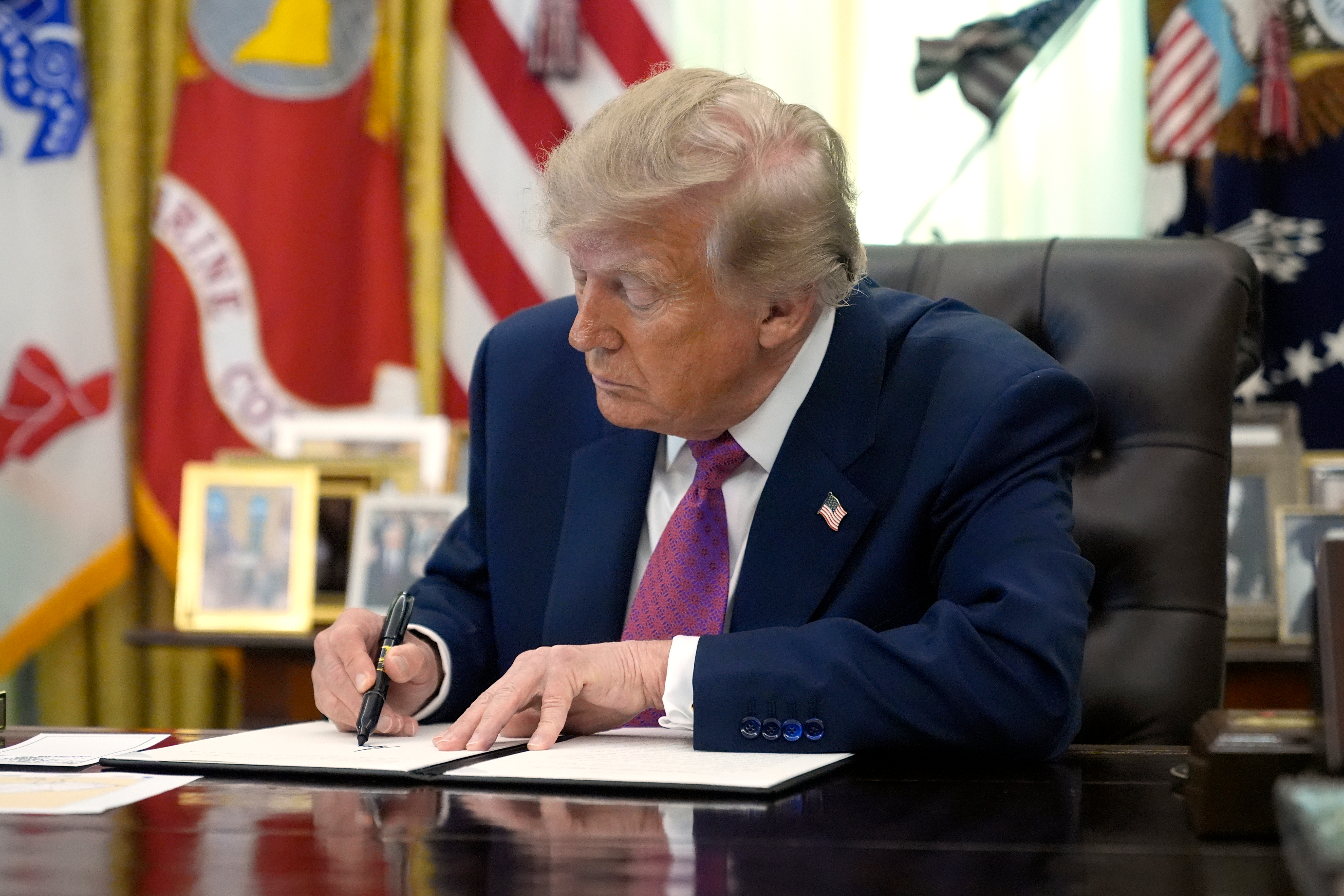
    WASHINGTON — President Donald Trump said Thursday he is renaming Lake Ontario to be known as “Lake America” in the United States as he exacerbates his trade war with Canada.

    The Republican president signed an executive order that updated the lake’s name for the U.S. geographic naming service. Trump cannot force Canada to follow his preferred naming convention, however.

    The move, which Trump said was “effective immediately,” is reminiscent of his move last year to rename the Gulf of Mexico as the “Gulf of America.’”

    Trump has been floating the idea of the name change in recent days as the U.S. announced it was imposing 50% tariffs on $20 billion worth of Canadian goods over the weekend after talks between the countries broke down. Trump has been needling America’s northern neighbor since he returned to the White House last year, suggesting the ally with whom the U.S. once had warm relations should instead be absorbed as the 51st state.

    Canada responded to Trump’s import taxes this week by imposing retaliatory tariffs on $20 billion worth of American goods, including steel, dairy products, appliances and farm equipment

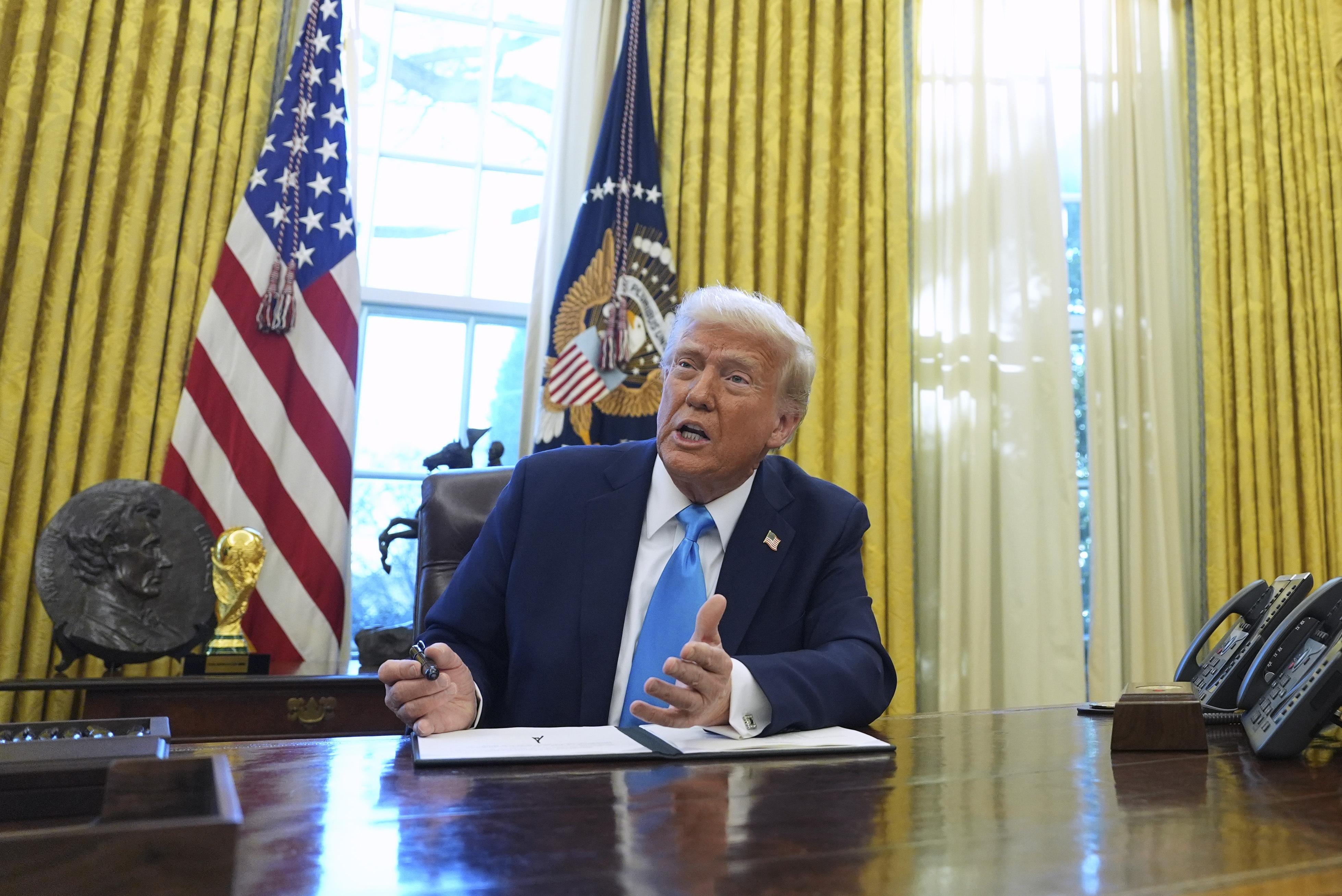
    Trump, who signed the order as he was sitting at the Resolute Desk in the Oval Office, had a large sign behind him propped on a stand with a map of the Great Lakes. Over Lake Ontario, in big red letters, the map read “Lake America.”

    On the other wide of the president was another map with the words, “MAKING THE GREAT LAKES EVEN GREATER.”

    He told reporters that Canada is “the worst” to deal with on trade. “They feel entitled and we can’t have that,” he said.

    The lake is one of multiple Great Lakes that the U.S. and Canada share borders along.

    Trump on Thursday suggested his push to rename bodies of water may not be finished.

    “So, if you think about it, we have a gulf and we have a lake. Now, all we need is an ocean,” Trump said. “So maybe we’ll have to change the name of the Atlantic and or the Pacific. Maybe we’ll change them.”

    The official U.S.-Canada border stretches across the water between Lake Ontario’s northern and southern shores. The body of water forms much of New York state’s coastline and separates Buffalo from Toronto, the capital of the province of Ontario. Toronto is Canada’s most populous city and Ontario its most populous province.

    Ontario is also the single largest export destination for more than a dozen U.S. states.

    The lake’s name comes from the Huron Indigenous people’s word “oniatarí:io,” which means “lake of shining waters,” and it predates European settlement in the region. The province, founded in 1867, took its name from the lake.

    The International Hydrographic Organization — of which both the United States and Canada are members — works to ensure that the world’s seas, oceans and navigable waters are surveyed and charted uniformly, and also names some of them. But there is no single international body that determines names of international bodies of water.

  • Canada is bolstering its defense industry as US relations fray. A boom is on for local contractors

    Canada is bolstering its defense industry as US relations fray. A boom is on for local contractors

    TORONTO — As Canada moves to reduce its dependence on American military suppliers, the push is on display inside a Toronto garment factory.

    Hunched over sewing machines, two workers rapidly stitch together pieces of camouflage-patterned fabric and Velcro strips. In the next room, workers snip stray threads as they inspect the finished product: helmet covers for the Canadian military.

    The factory is assembling uniforms for Wuxly, a luxury parka maker that is among a flurry of Canadian companies branching into defense contracting. As Canadian military spending surges, others are developing remote sensors for the country’s vast Arctic region, making drones to resupply soldiers, and building autonomous robots.

    The boom in the defense sector reflects Canadian Prime Minister Mark Carney’s vow to strengthen the country’s economic self-sufficiency amid fraying relations with Washington, including a fresh escalation this week with new rounds of tariffs.

    Canadian startups and established companies, alongside firms in Europe, are set to benefit from tens of billions of dollars in extra defense funding, driven partly by pressure from U.S. President Donald Trump to contribute more to NATO. Canada’s investment remains small compared with the Pentagon’s budget, but its strategy aims to boost domestic defense capabilities, and not just U.S. contractors.

    A country known for peacekeeping ramps up military spending

    A defense industrial strategy released earlier this year by Carney represents a generational shift for Canada, which invented modern peacekeeping and had long been content to remain in the shadow of its southern neighbor on defense matters.

    The defense plan earmarks an additional $60 billion in funding over the next five years, and the government has promised support for domestic businesses to sell into defense and security supply chains. Currently, Canada spends about $36 billion to $43 billion on national defense.

    “The scale of investment that is involved is quite significant by Canadian standards, certainly in peacetime,” said Philippe Lagassé, a professor at Carleton University specializing in defense policy.

    The defense boom is “quite evident at all the events we’re at. Every defense show (is) sold out. Lots of new companies and (other) industries coming into the (defense) industry, getting involved,” said Wuxly founder and CEO James Yurichuk.

    Wuxly’s helmet covers, destined for the Canadian Armed Forces, allow soldiers to attach call sign patches or gear like lights, cameras, and beacons. The company also makes military parkas and tank covers and has been supplying Ukraine’s military with gear, including 40,000 female uniforms — one of the company’s specialties.

    Carney has called for upgrading the Canadian military’s Arctic capabilities, increasing spending by tens of billions of dollars to assert sovereignty over the vast but sparsely populated and increasingly contested region.

    “There’s a lot of innovation that can create advantage in the North, and with the Arctic region being so important, we’ve got to clothe our soldiers properly,” Yurichuk said.

    Canadian companies and European allies find new opportunities

    A major part of the strategy is diversifying away from U.S. defense contractors. It focuses on tapping a wider global pool of suppliers of military hardware — and fostering domestic defense supply chains.

    The strategy envisions investments amounting to more than half a trillion dollars, creating 125,000 jobs and tripling the size of the country’s defense industry over the next decade by steering contracts to Canadian companies. It calls for accelerating research and development and prioritizes developing key “sovereign capabilities” including aerospace, robotics and unmanned systems.

    As Canada pursues partnerships with other allies, in addition to the United States, Ottawa has announced deals this year to buy radar planes from Sweden’s Saab over American competitors and submarines from Germany’s ThyssenKrupp.

    Canadian startups like New Frontier Robotics also are lining up to play a part.

    “There definitely is money in play,” said Nikhil Malhotra, co-founder of the two-person company. “We see it. Obviously, we are going for it.”

    The company is working on a mobile manipulator robot — essentially a robot arm on a mobile platform — powered by artificial intelligence that could have both military and civilian applications, in what’s known as dual-use technology.

    The initial plan was to target manufacturing, with robots working autonomously between assembly lines, but potential customers suggested there was also a growing need from the defense industry. Robots could also be used for support roles at military bases, Malhotra said.

    “If you have infrastructure up in the Arctic that needs maintenance, obviously the climate is very dangerous. Are you really willing to risk an operator’s life? The answer is no. It’s better to put this thing on,” said Malhotra, whose company is based temporarily at a robotics lab at the University of Waterloo, about 60 miles (100 kilometers) west of Toronto.

    Startups focus on products with versatility

    Canada’s efforts to modernize its war machine still face big potential challenges, including the risk that opposition parties target Carney’s spending plans in future elections.

    Companies that develop novel technologies could be lured to the U.S. by its much larger defense market. It also will be tough for Canadian companies competing against American counterparts with much bigger research and development budgets that mean they are “always going to be a bit more at the edge of the technological capability,” Lagassé said.

    Still, the strategy opens new possibilities for companies like drone maker Volatus Aerospace, based near Montreal.

    “Defense was not a popular topic for a small-cap Canadian public company in the past,” CEO Glen Lynch said.

    Lynch said Canada has had limited manufacturing capability not just for drones “but manufacturing capability in general.”

    Like New Frontier, Volatus’ technology is considered dual use. Because Canada is technically not at war, companies can’t rely on selling exclusively to the military.

    Volatus makes drones and related services for civilian and commercial uses, such as air dropping medicine to isolated communities. But it also has a defense unit and makes first-person-view drones that take out targets by crashing into them.

    The company does some testing at a 100-acre site north of Toronto accessed by an unmarked gravel road and surrounded by fields of corn. Volatus employees demonstrated several aircraft on a recent visit by The Associated Press.

    The company showed off a drone with a 60-kilogram (132-pound) payload slung underneath by cable, and a scaled-down drone with tilt-wing rotors that can carry cargo over long distances. In a demonstration, the drones operated autonomously and flew in a circular pattern before landing.

    One drone, dubbed the Canary, has payload bay doors and is used to airdrop medical supplies to remote indigenous First Nations communities in Alberta.

    It could also be used to send “resupply packages for soldiers” as well as dropping munitions, said Chief Operations Officer Greg Colacitti.

  • West Point climate professor says he was fired for refusing to ‘defy science’

    West Point climate professor says he was fired for refusing to ‘defy science’

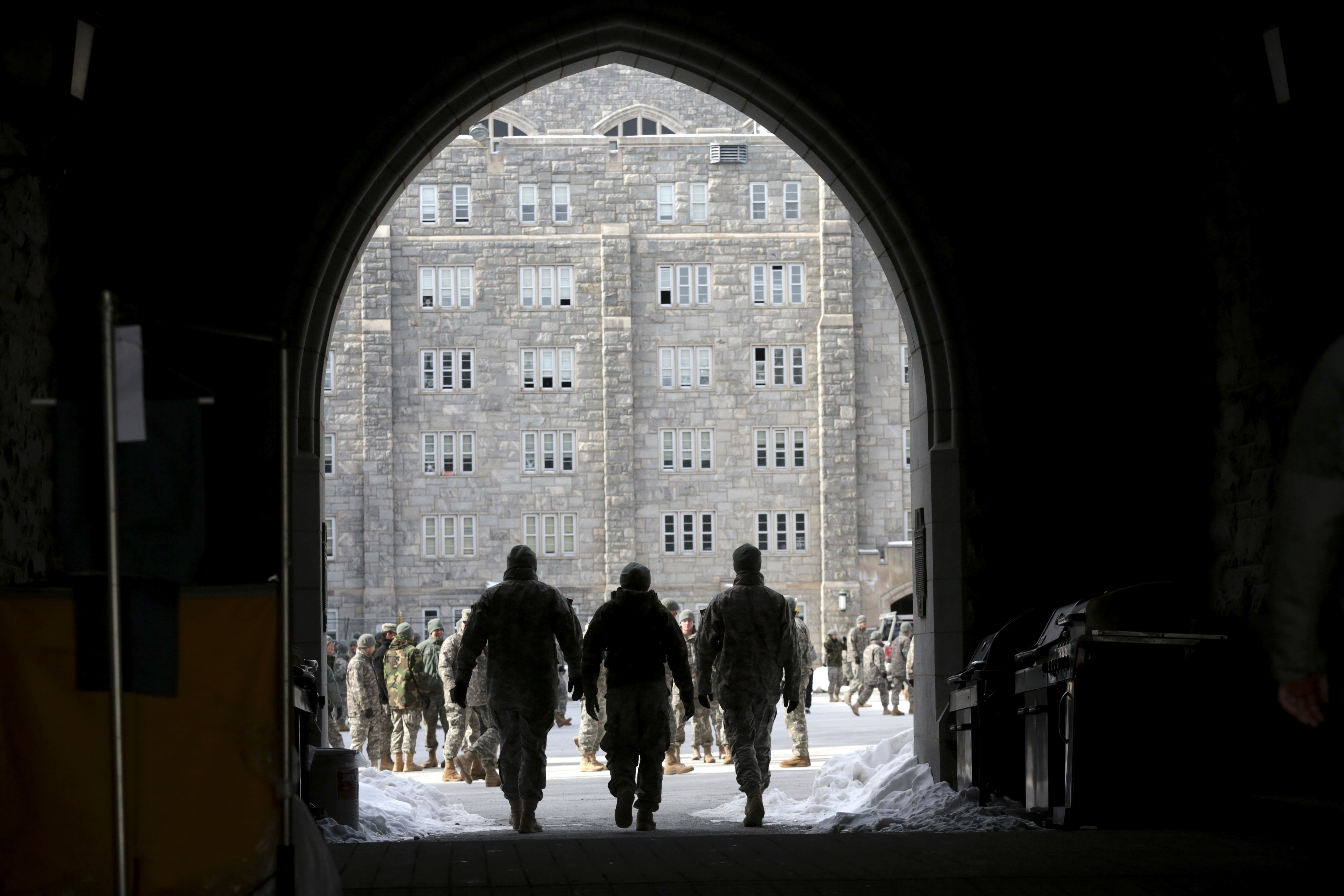
    After 17 years of teaching science at West Point, Adam Kalkstein says he was suddenly ordered last year to cut from his curriculum information about the human causes of climate change, according to a new lawsuit filed against the U.S. Military Academy.

    The change was immoral and potentially illegal, Kalkstein says he told Brig. Gen. Shane R. Reeves, who at the time was dean of West Point. Instead of upholding Army values, Kalkstein said he felt like a liar and a fraud.

    Reeves stormed out of the room when Kalkstein declined a suggestion that he resign, according to the lawsuit. Six months later, the tenured professor was told his contract would not be renewed.

    Filed in the Southern District of New York, the lawsuit accuses West Point of breaking the law by violating Kalkstein’s First Amendment rights by forbidding him from teaching about human-driven climate change, an order that required him “to omit a massive, fundamental, essential component of the course and to defy science,” according to the suit. Spokespeople for the Pentagon, West Point, and White House did not return requests for comment.

    Michael Sussman, the lawyer for Kalkstein, said his client is a conservative Republican who believes the military needs to be taught the true causes of climate change when it comes to national security. In a letter to Defense Secretary Pete Hegseth, Kalkstein said understanding the causes of global warming was important not for social justice reasons but for things like competing with the Russians in the Arctic and knowing why sea ice was melting.

    “He is loyal to the cadets and the academy,” Sussman said about the professor. “And to his perspective, edicts that he can’t say what’s true in a classroom is beyond his tolerance and totally counterproductive.”

    Kalkstein’s lawsuit is the latest example of the Trump administration’s attempt to force conservative cultural changes on the education system. President Donald Trump has made frequent public statements dismissing scientific consensus on global warming, and his administration has categorized federal and international climate change programs as “woke, weaponized and wasteful spending” along with diversity, equity and inclusion initiatives and transgender policies.

    The administration has repeatedly targeted the military for cultural change. Last year the administration banned hundreds of library books at the U.S. Naval Academy that did not align with Trump’s political agenda. Many of the books have since been returned, according to a Defense Department spokesperson.

    In May, Judge Cathy Seibel of U.S. District Court in White Plains, New York, ruled in favor of another West Point professor, Tim Bakken, the longest-serving law professor in the military academy’s history, who had sued over the school’s new restriction on expressing his opinions to students in the classroom on subjects he teaches.

    The latest lawsuit comes against the backdrop of a push by Hegseth to remake the service academies by dramatically scaling back the number of civilian professors and revising their curricula. A draft memo circulating inside the Pentagon this summer argued that the academies had been infected by “civilian academic norms” that were diluting the “focus on lethality.” The memo’s existence was first reported by CBS News.

    The memo argued that tenure had led the academies to elevate the “research priorities of the tenured academics” over the needs of the military. The memo also called for “a comprehensive review” that would examine the “operational relevance” of all course offerings at the academies.

    Hegseth in his 2024 book, The War on Warriors, bashed the academies as “Marxist-adjacent” institutions and blamed civilian professors for the shift.

    “Civilian professors were welcomed on campus for reasons of ‘diversity’ as well as expediency. And with them came the predictable, radical left-wing educational philosophies,” Hegseth wrote.

    Critics of Hegseth’s view have maintained that the civilian professors have improved and broadened the quality of instruction at the academies at a time when winning wars requires agile thinkers.

  • ICE officer charged in Minneapolis shooting released in Texas after immediate extradition rejected

    ICE officer charged in Minneapolis shooting released in Texas after immediate extradition rejected

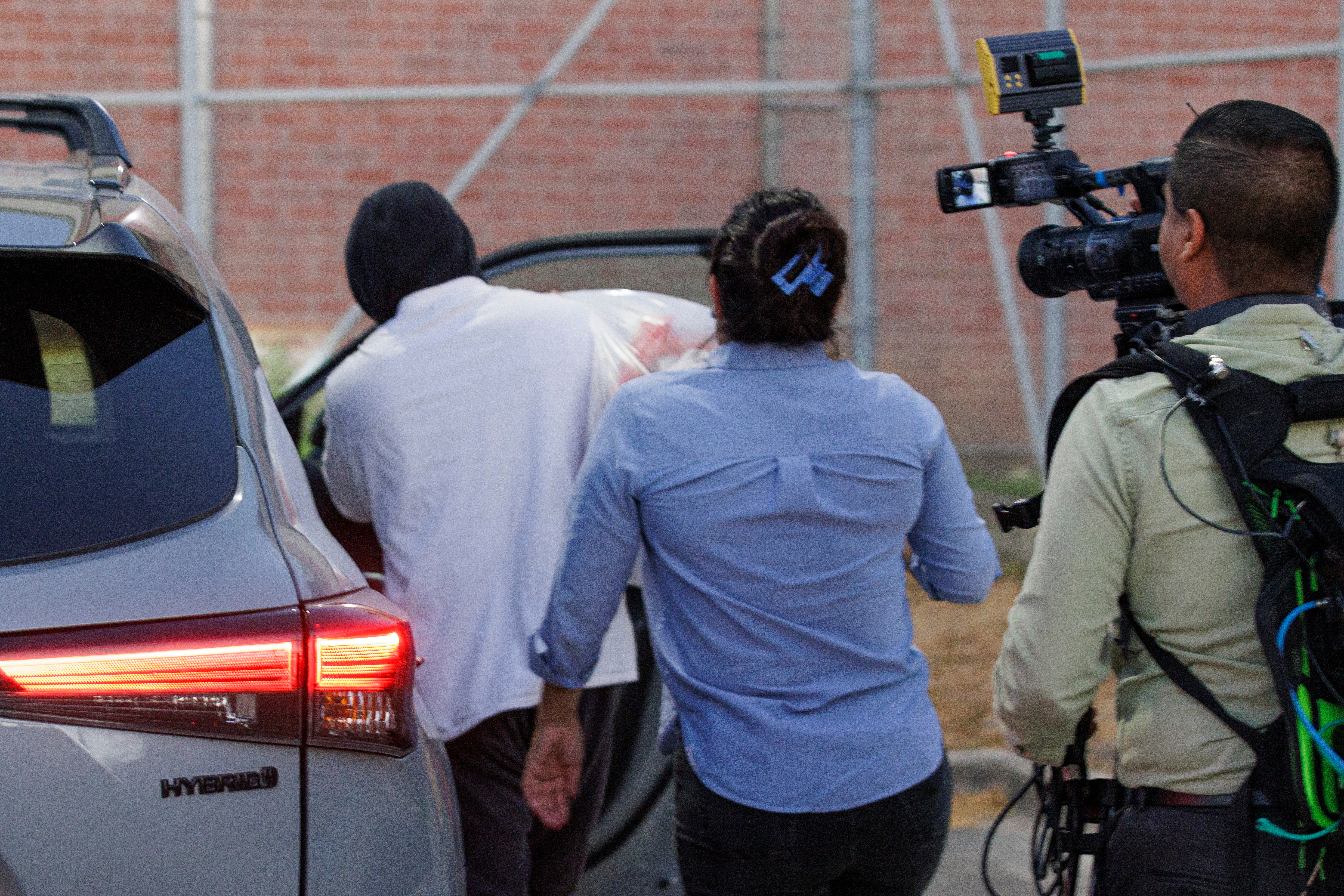
    BROWNSVILLE, Texas — An Immigration and Customs Enforcement officer charged with shooting a man and lying about it during the immigration crackdown in Minneapolis was released from a Texas jail Thursday, after a judge refused to order his return to Minnesota.

    Christian Castro was released at the break of dawn from a detention center in Brownsville. He motioned his hand toward a few camera operators and a reporter crowding around him and quickly got into an SUV that drove off.

    A day earlier, U.S. District Judge Fernando Rodriguez Jr. wrote in an order that said he couldn’t prevent a county sheriff from releasing Castro or order Texas Gov. Greg Abbott to sign his extradition warrant.

    Castro is charged in Minnesota with assault and falsely reporting a crime in the Jan. 14 shooting of 24-year-old Julio Cesar Sosa-Celis.

    Castro is accused of firing gun through door of home

    Castro is accused of firing a gun through the front door of a Minneapolis home, shooting Sosa-Celis in the leg. Prosecutors say Castro also falsely accused Sosa-Celis and another man of attacking an ICE officer with a broom handle and a snow shovel.

    After a Minnesota judge issued a nationwide warrant for Castro’s arrest in May, authorities, including Minnesota’s Bureau of Criminal Apprehension, arrested Castro in Cameron County on May 29. Minnesota authorities have sought his extradition since his arrest, but he remained in custody in Brownsville, a city bordering Mexico.

    Under Texas law and barring extradition, Castro had to be released after 90 days of detention, which was Thursday.

    Minnesota officials believe Castro could flee to Mexico.

    Minnesota Attorney General Keith Ellison filed a request for a temporary restraining order last week seeking to block Castro’s release or to order his return to Minnesota.

    Abbott waiting for internal state investigation about Castro

    Texas attorneys on Tuesday argued the judge could not rule on a decision that’s still pending. Abbott has not denied the extradition. Instead he is waiting for the outcome of an internal state investigation considering whether Castro was legally a “fugitive” under the Extradition Clause, the lawyers said.

    The judge wrote in Wednesday’s order that the court couldn’t yet step in.

    “The Court concludes that it lacks subject matter jurisdiction because the case is not ripe for adjudication,” the order read. “Minnesota cannot premise its causes of action on the allegation that Governor Abbott may violate those authorities in the future; it must prove that a violation has already occurred.”

    The judge said in his order that the extradition laws do not outline how long the Texas governor can take to make that decision.

    Abbott said last week he would not respond to the extradition request, citing the ongoing investigation into fraud in government social service programs in Minnesota, which President Donald Trump used to justify his immigration crackdown there.

    Abbott directs ‘bad lawyers’ comment at Minnesota attorney general

    After the judge’s decision, Ellison posted online that the Texas governor had an obligation to extradite Castro. And by refusing to extradite him, “Greg Abbott is turning Texas into a sanctuary state for violent criminals.”

    Abbott responded to Ellison.

    “You guys are such bad lawyers. You showed up unprepared, uninformed & unpersuasive,” Abbott wrote online. “You don’t know the law & it showed.”

    The Texas governor accused Minnesota of refusing to enforce immigration laws and threatened to send immigrants in the future to their state as he did with New York City, when thousands were released into Texas under President Joe Biden’s administration.

    A message seeking reaction from Ellison was sent to his office Thursday.

    Minnesota officials say Castro could flee the country, citing calls he made from jail to a woman in Mexico, talking “about marrying her and buying a house in Mexico when he is released,” according to the lawsuit.

    The judge conceded that Castro could flee the country but added that “the threat of injury by itself does not create an issue ripe for adjudication.”

  • Ratko Mladic, murderous ‘Butcher of Bosnia,’ dies at 83

    Ratko Mladic, murderous ‘Butcher of Bosnia,’ dies at 83

    Ratko Mladic, the former Bosnian Serb general whose actions during the Balkan wars of the 1990s led to him being called the “Butcher of Bosnia” and who was held responsible for Europe’s deadliest massacre since World War II, the killing of some 8,000 Muslim men and boys at Srebrenica in 1995, has died. He was 83.

    His death was announced Thursday by Serbian state media.

    Mladic was captured May 26, 2011, in a farming village north of Belgrade, Serbia’s capital, after almost 16 years as a fugitive, ending one of the longest searches in modern history. His 2017 conviction by an international tribunal on charges of genocide, crimes against humanity, and war crimes marked the end of a dark and bloody chapter.

    In pronouncing a life sentence, the presiding judge, Alphons Orie, said Mladic’s crimes ranked “among the most heinous known to humankind.” Mladic appealed the verdict, which was upheld in 2021.

    The Balkan wars erupted as Yugoslavia was breaking up into independent states. Slobodan Milosevic, the nationalist president of Serbia, one of those states, was intent on creating a Greater Serbia. He reawakened old ethnic and religious enmities and started wars pitting Serbs against Slovenes, Croats, Bosniaks, and the Albanians of Kosovo.

    Roughly 100,000 people died during the conflict, and more than 2.5 million were displaced.

    A ruddy-faced and intimidating man with a bellowing voice, piercing blue eyes and a grandiose sense of himself, Mladic, an officer in the Yugoslav People’s Army, led the army of the Bosnian Serbs in the early 1990s.

    On the eve of the Srebrenica massacre, he promised to avenge the conquest of Serbia centuries before by the Ottoman Muslim Turks. Over 10 days, his soldiers hunted down, captured, and summarily executed thousands of Bosniaks, lining them up with hands tied behind their backs and shooting them. Women were raped. International pleas for restraint were ignored.

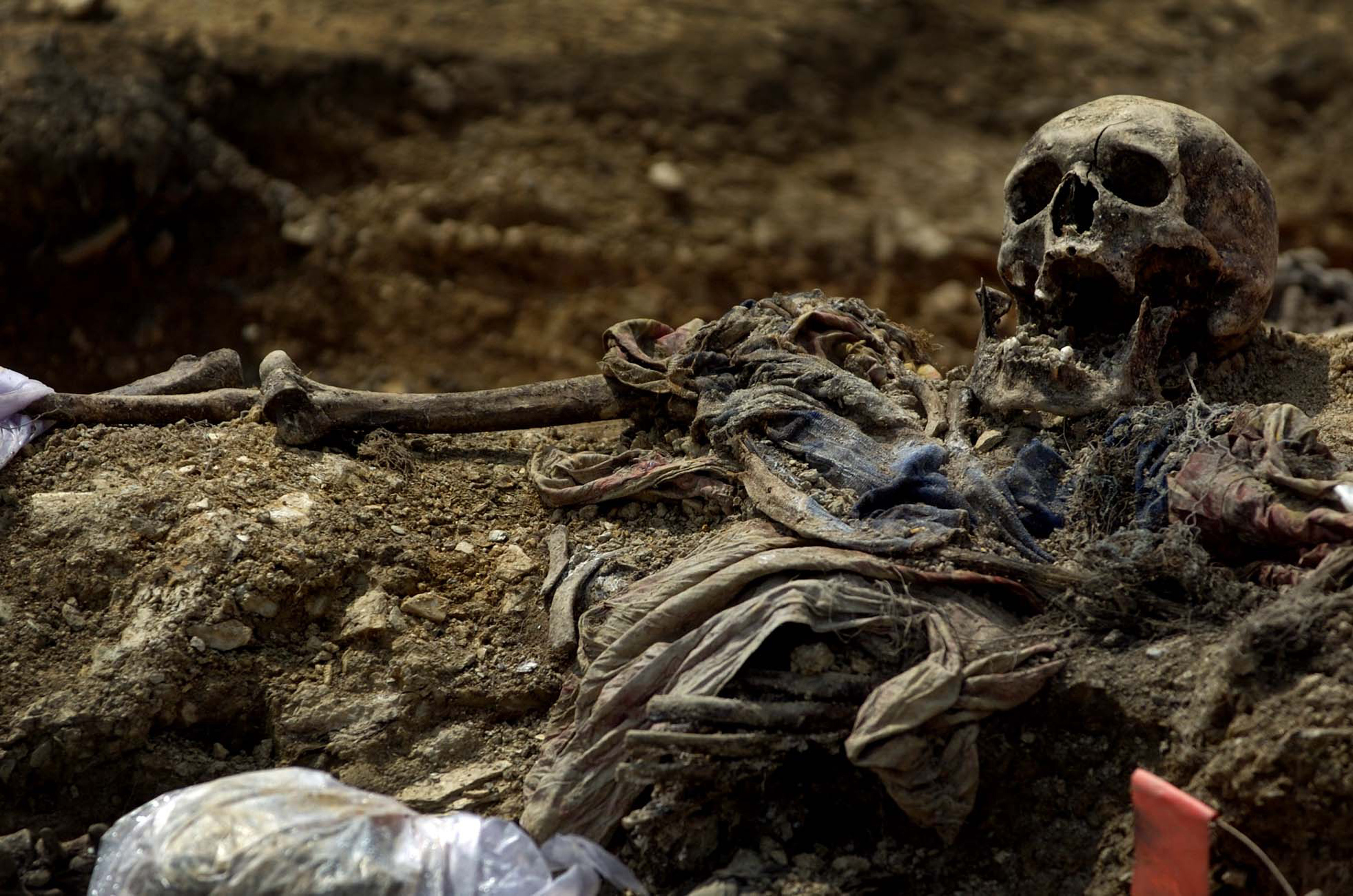
    Serb forces buried the remains, dug them up again, and scattered them in distant mass graves in an organized effort to hide damning evidence of war crimes.

    Mladic’s trial was among the last high-profile ones at the International Criminal Tribunal for the former Yugoslavia in The Hague. The tribunal wound down after trying nearly 100 of those responsible for the atrocities of the Balkan wars, including Mladic’s boss, Radovan Karadzic, the political leader of the Bosnian Serbs.

    Arrested in 2008, Karadzic was convicted in 2016 on charges almost identical to Mladic’s, and his sentence was extended to life in prison three years later.

    Mladic’s arrest was a signal moment in Serbia’s long effort to shed its status as a pariah nation. It removed a major obstacle to the country’s still-pending accession to the European Union, which had grown weary of the refusal of successive Serbian governments to capture him.

    When he was finally tracked down, he was hiding in the house of a cousin and was so desperate for money that one of his repeated demands was the restoration of his frozen military pension.

    During his trial, Mladic, once a seemingly invincible warrior, at times appeared reduced to a meek old man as witness after witness offered harrowing testimony about the violence he had unleashed. His right arm was impaired by the effects of at least two strokes he suffered while a fugitive, and he was unable to take notes.

    Flashes of the mercurial, domineering general remained, though. In his first court appearance in June 2011, he dismissed the charges against him as “obnoxious” and “monstrous.” At other times, he yelled at the judges.

    At one point, he was absent from a session, apparently to receive treatment for high blood pressure. When he returned, he raged at the bench, shouting, “Everything you are saying is a pure lie!” He was removed from the court.

    In addition to masterminding the massacre at Srebrenica, Mladic was eventually also convicted of multiple crimes tied to the nearly four-year siege of Sarajevo, Bosnia’s capital, in which 10,000 people died, including 1,500 children.

    During the siege, the longest in the history of modern warfare, Mladic’s men shelled the city from surrounding mountains and terrorized civilians with sniper bullets. Judges also found him guilty of the persecution and extermination of non-Serbs living in large swaths of Bosnia.

    Within Serbia, Mladic’s military prowess was legendary. Ljiljana Bulatovic, who wrote a biography of him, said he remained a hero to many Serbs, who would always regard him as “the mythical protector of the Serbian people.”

    But the magnitude of the crimes he was accused of — and the immense suffering he inflicted on Bosnians and Croats driven from lands slated for Serbs — provoked international revulsion and the offer of a $14 million reward for his capture, though it was never claimed after Serbian war crimes investigators seized him.

    His early life of desolation and struggle may have helped sustain him during his long, spartan years as a fugitive.

    “He had a strong psychological makeup,” Ratko Skrbic, a former general who served under him, later said. “It has to do with military honor. He was brought up never to surrender.”

    Ratko Mladic was born into poverty in the remote village of Bozanovici on March 12, 1943, when the area was part of the Independent State of Croatia, a Nazi puppet state dominated by fanatical Croat nationalists.

    His father, Neda Mladic, an ethnic Serb member of the communist-led partisan resistance, was killed when Ratko was a toddler, and his mother, Stana (Lalovic) Mladic, raised him and his two siblings. His family’s experience planted in Mladic a deep fear that ethnic Serbs, unless they held the upper hand, would always face persecution by Croats and other ethnic groups.

    He was a metalworker as a young man but soon turned toward the military for his schooling. With his sharp mind, physical strength, and a charisma that inspired deep loyalty, Mladic rose swiftly in the Yugoslav People’s Army.

    He was said to have adhered early in his military career to Josip Broz Tito’s brand of communism, which rejected nationalism and called instead for Yugoslav brotherhood as a way of holding together Yugoslavia’s fragile assemblage of multiethnic, multireligious republics.

    Tito died in 1980, and after Milosevic stirred up nationalist grudges and Yugoslavia had begun to disintegrate in the early 1990s, Mladic took up Milosevic’s cause: halting separatism and assuring the dominance of the Serbs, the largest ethnic group. In 1992, a month after the Bosnian Republic’s declaration of independence, Mladic’s forces began the siege of Sarajevo.

    In 1994, his daughter, Ana, a medical student in her early 20s, killed herself with his prized military pistol, apparently distraught by her father’s actions in the war.

    Zoran Stankovic, a former Serbian minister of defense and friend of Mladic’s who performed her autopsy, later said Mladic had asked him to cut off a lock of her hair and extract the bullet from her head, and to give them both to him as mementos.

    Friends said he became unhinged after her death, and he insisted on visiting her grave under guard before his extradition from Serbia to The Hague.

    “After the suicide,” Stankovic said, “I never saw brightness in his eyes, only sadness.”

    Before the massacre at Srebrenica, Mladic summoned the Dutch commander of a United Nations peacekeeping force that was protecting the Muslim community there and ushered him to a room where a live pig was tied up.

    Mladic ordered his men to slit the pig’s throat, sending blood gushing over the floor. “That’s how we deal with our enemies,” Mladic said, according to witnesses.

    In July 1995, with video cameras rolling, Mladic’s bodyguards handed out candies to Bosniak children. “No one will be harmed,” Mladic told terrified women and children July 12, patting a young boy on the head. At the time, his soldiers were preparing to conduct the mass killings.

    After the massacre, the outrage in Washington and Europe prompted a NATO bombing campaign that overcame Bosnian Serb forces and led to the Dayton Accords that ended the Balkan wars in December 1995, though conflict in the former Yugoslavia erupted again in 1998 over Kosovo.

    In 1995, the international tribunal in The Hague, which had been created two years earlier, indicted Mladic on war crimes and genocide charges related to the Sarajevo siege and the Srebrenica massacre.

    Mladic, who had the protection of Milosevic, did not immediately lie low. He moved among military barracks, according to friends who said they would visit him to play table tennis or chess. For several years, he visited his daughter’s grave. Surrounded by bodyguards, he attended a Chinese-Yugoslav soccer match in Belgrade in 2000.

    Milosevic fell from power in 2000 and the next year was arrested and sent to The Hague to stand trial. (He died in 2006, as his trial was nearing its end.)

    Mladic was forced underground, and is believed to have been protected by allies in the Serbian military and intelligence services. His wife, Bosiljka, and his son, Darko, sought unsuccessfully to have him declared dead. They survive him.

    In the end, he was captured alone, with two loaded pistols at his side, and surrendered willingly.

    “Congratulations,” he said when officers stormed in. “I’m the one you’ve been looking for.”

    FILE — The body of a victim of the Srebrenica massacre, the worst ethnically motivated mass murder on the continent since World War II, lies in a mass grave in Budak, Bosnia on July 9, 2005. Ratko Mladic, the former Bosnian Serb general who was captured in 2011 and convicted in international court of responsibility for the killing of some 8,000 Muslim men and boys at Srebrenica, has died, Serbian state media announced on Aug. 27, 2026. He was 83. (Andrew Testa/The New York Times)ANDREW TESTA
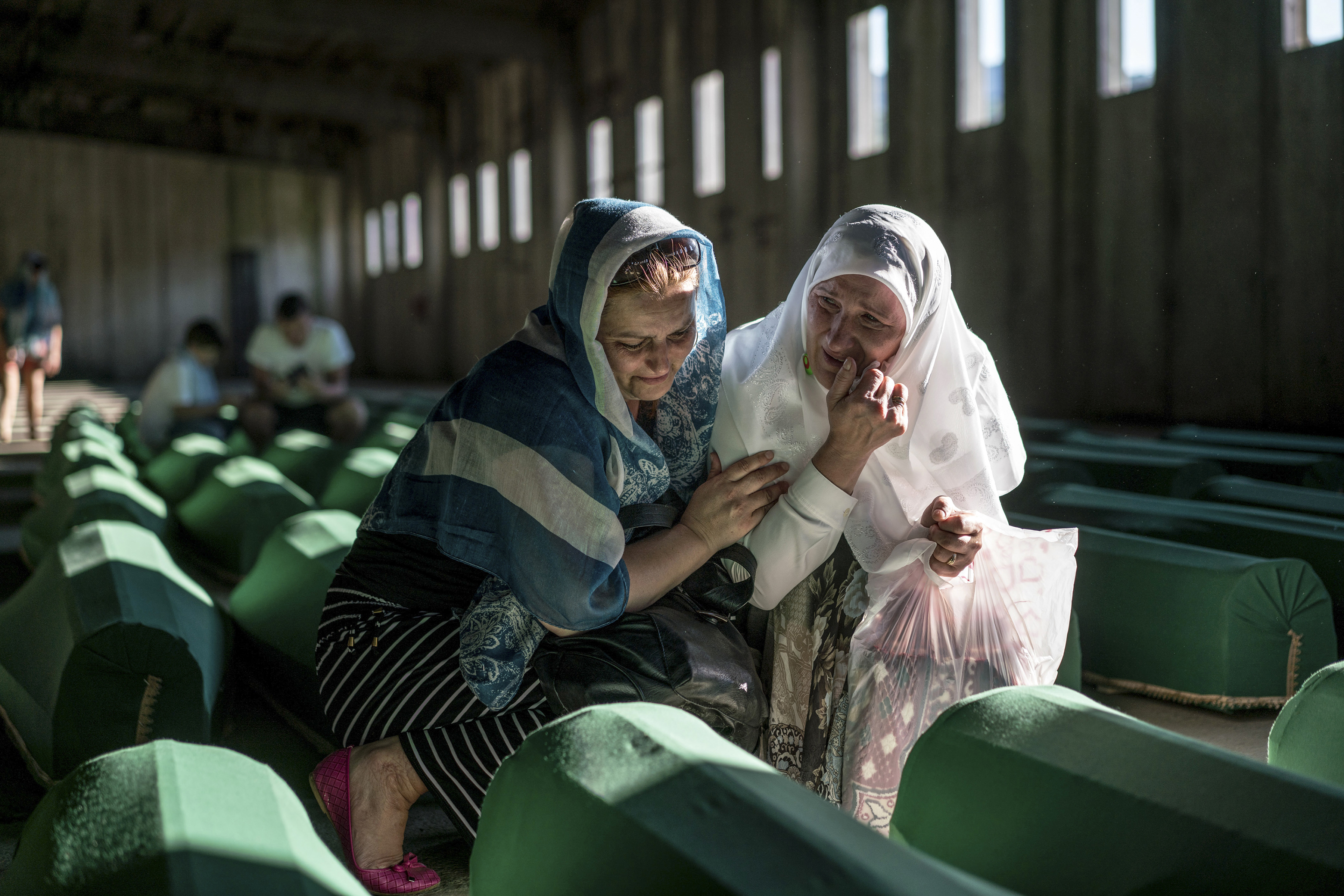
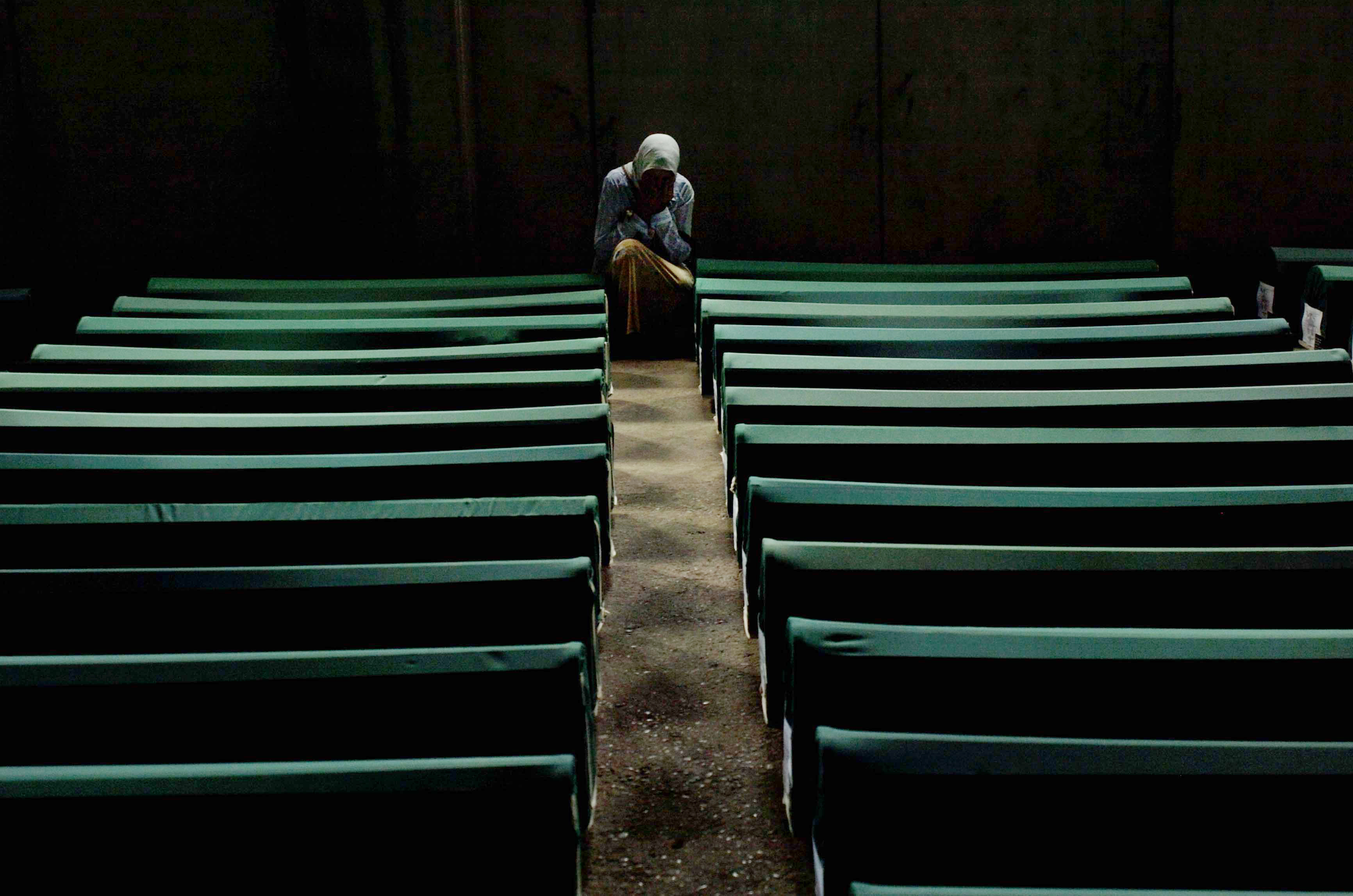
    FILE — A woman mourns among the coffins of the nearly 600 victims of the Srebrenica massacre, the worst ethnically motivated mass murder on the continent since World War II, in Potocari, Bosnia on July 9, 2005. Ratko Mladic, the former Bosnian Serb general who was captured in 2011 and convicted in international court of responsibility for the killing of some 8,000 Muslim men and boys at Srebrenica, has died, Serbian state media announced on Aug. 27, 2026. He was 83. (Andrew Testa/The New York Times)ANDREW TESTA
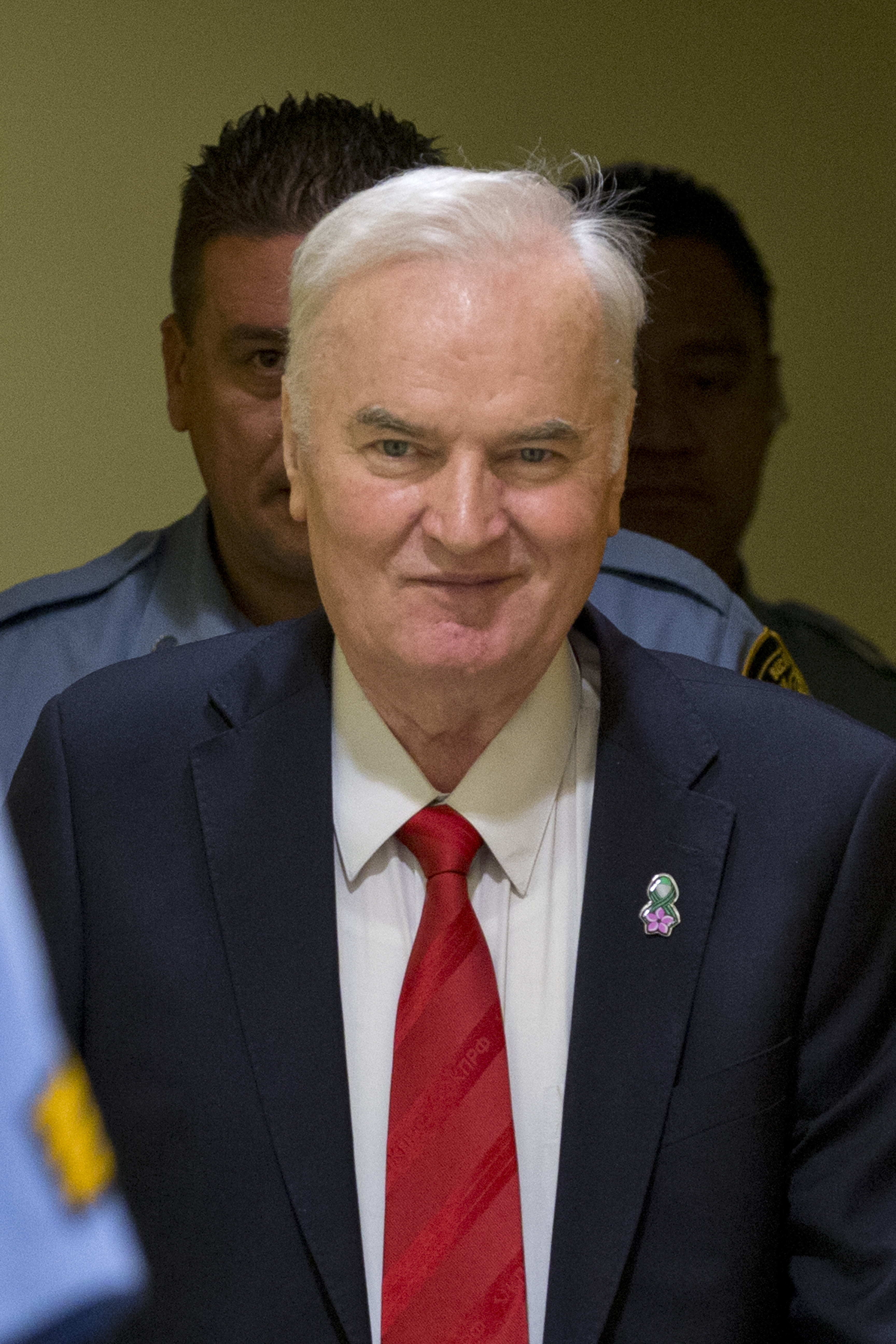
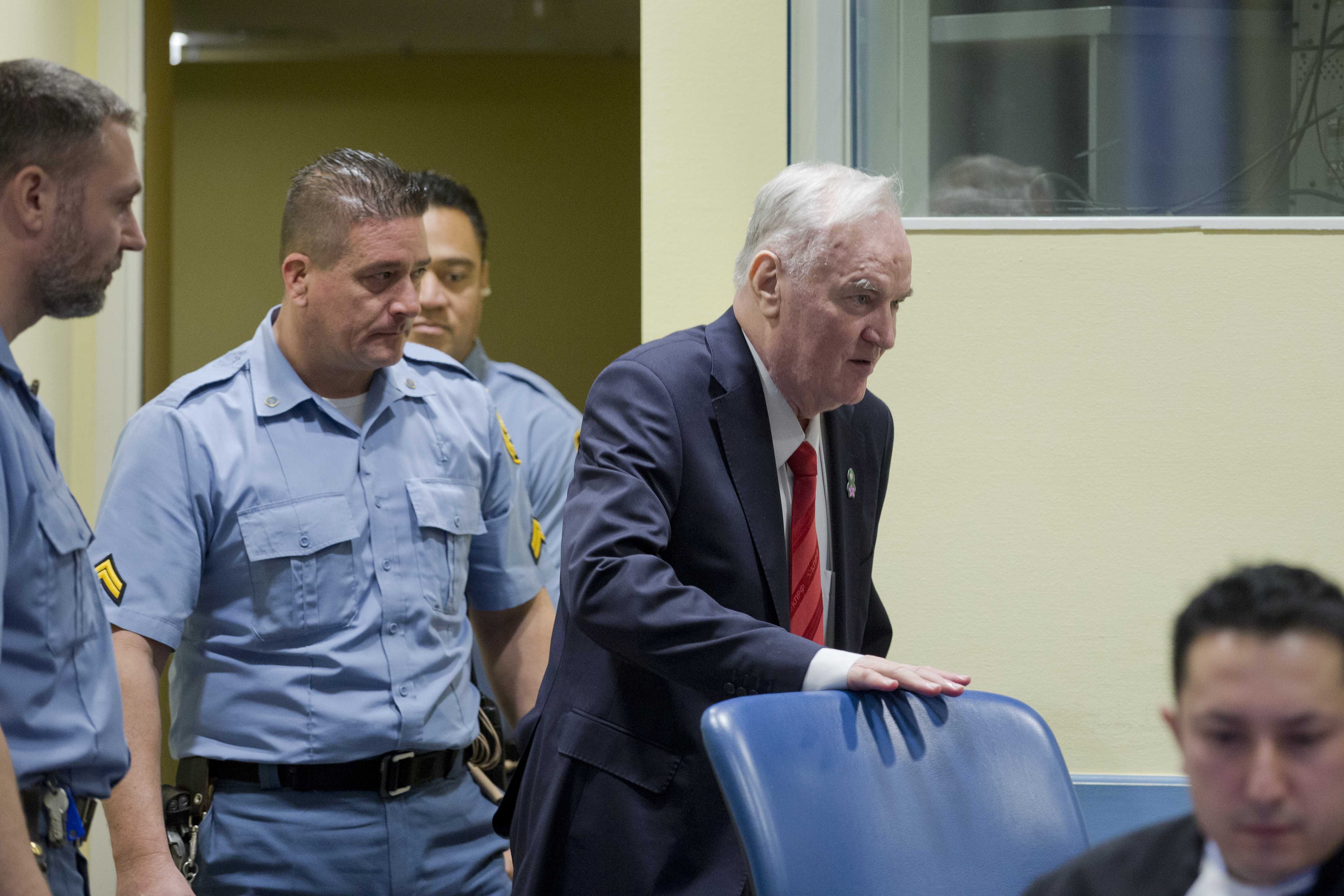
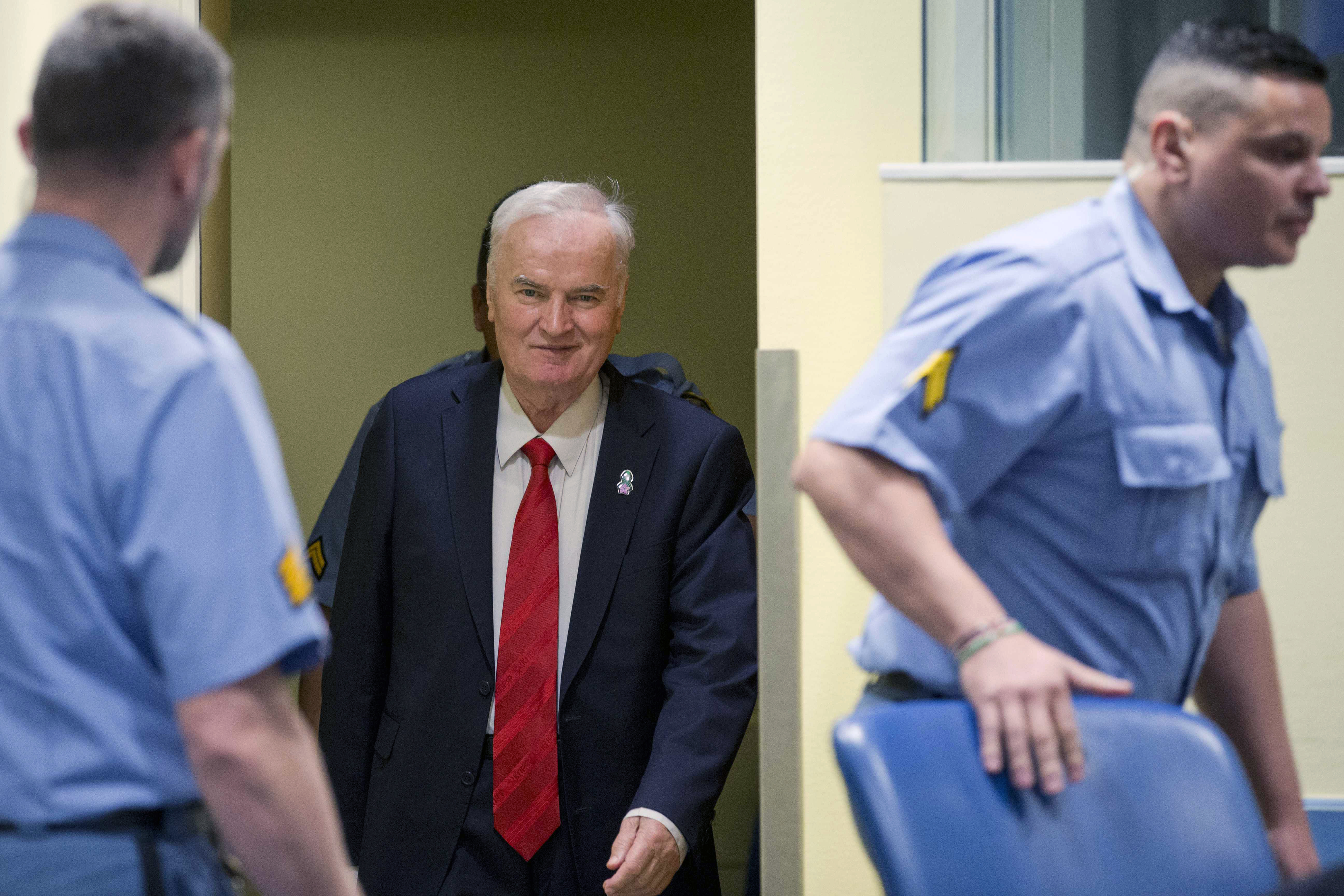
    FILE — Ratko Mladic, the former Bosnian Serb general dubbed the “Butcher of Bosnia” for his actions during the Balkan wars of the 1990s, enters a courtroom in The Hague on Nov. 22, 2017, to hear the verdict from a United Nations war crimes tribunal. Mladic, who was captured in 2011 and convicted here of responsibility for the killing of some 8,000 Muslim men and boys at Srebrenica, has died, Serbian state media announced on Aug. 27, 2026. He was 83. (Peter Dejong/Pool via The New York Times) — NO SALES. FOR EDITORIAL USE ONLY —PETER DEJONG
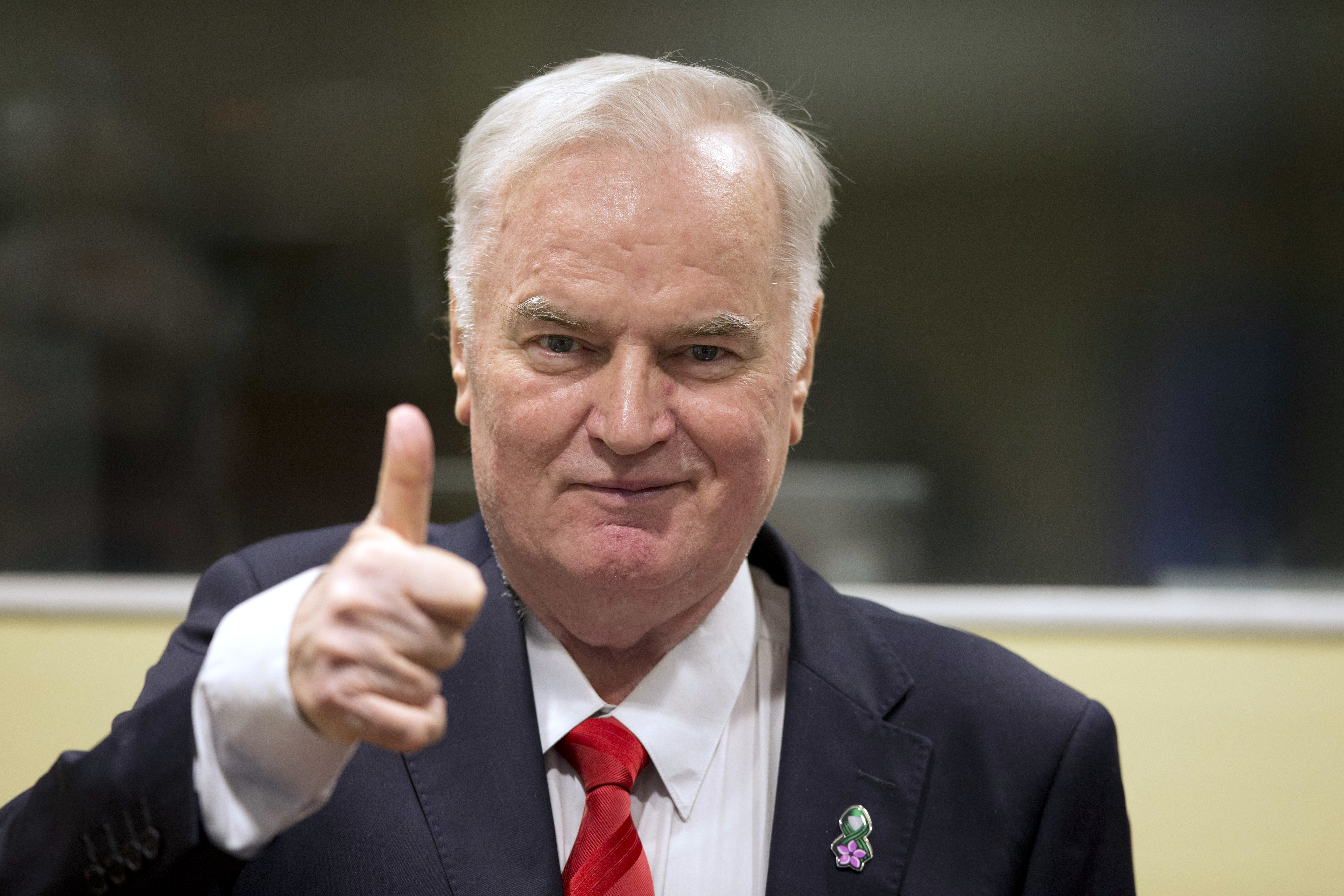
    FILE — Ratko Mladic, the former Bosnian Serb general dubbed the “Butcher of Bosnia” for his actions during the Balkan wars of the 1990s, enters a courtroom in The Hague on Nov. 22, 2017, to hear the verdict from a United Nations war crimes tribunal. Mladic, who was captured in 2011 and convicted here of responsibility for the killing of some 8,000 Muslim men and boys at Srebrenica, has died, Serbian state media announced on Aug. 27, 2026. He was 83. (Peter Dejong/Pool via The New York Times) — NO SALES. FOR EDITORIAL USE ONLY —PETER DEJONG
    FILE — Ratko Mladic, the former Bosnian Serb general dubbed the “Butcher of Bosnia” for his actions during the Balkan wars of the 1990s, enters a courtroom in The Hague on Nov. 22, 2017, to hear the verdict from a United Nations war crimes tribunal. Mladic, who was captured in 2011 and convicted here of responsibility for the killing of some 8,000 Muslim men and boys at Srebrenica, has died, Serbian state media announced on Aug. 27, 2026. He was 83. (Peter Dejong/Pool via The New York Times) — NO SALES. FOR EDITORIAL USE ONLY —PETER DEJONG
    FILE — Ratko Mladic, the former Bosnian Serb general dubbed the “Butcher of Bosnia” for his actions during the Balkan wars of the 1990s, enters a courtroom in The Hague on Nov. 22, 2017, to hear the verdict from a United Nations war crimes tribunal. Mladic, who was captured in 2011 and convicted here of responsibility for the killing of some 8,000 Muslim men and boys at Srebrenica, has died, Serbian state media announced on Aug. 27, 2026. He was 83. (Peter Dejong/Pool via The New York Times) — NO SALES. FOR EDITORIAL USE ONLY —PETER DEJONG
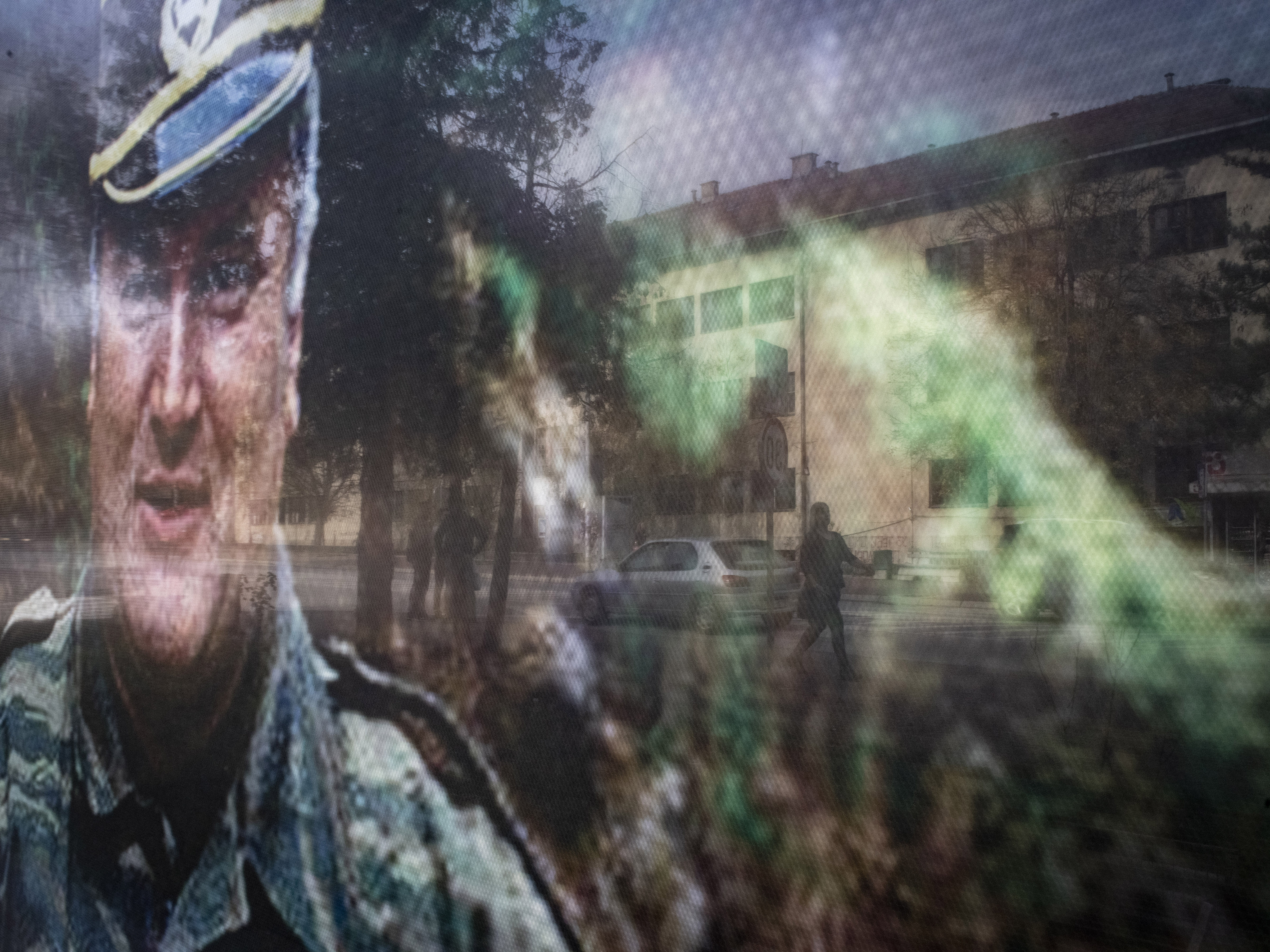
    FILE — An image of Ratko Mladic, the former Bosnian Serb general dubbed the “Butcher of Bosnia” for his actions during the Balkan wars of the 1990s, is projected on a building in the Serbian part of Sarajevo, Bosnia and Herzegovina, on Nov. 3, 2018. Mladic, who was captured in 2011 and convicted in international court of responsibility for the killing of some 8,000 Muslim men and boys at Srebrenica, has died, Serbian state media announced on Aug. 27, 2026. He was 83. (Laura Boushnak/The New York Times)LAURA BOUSHNAK
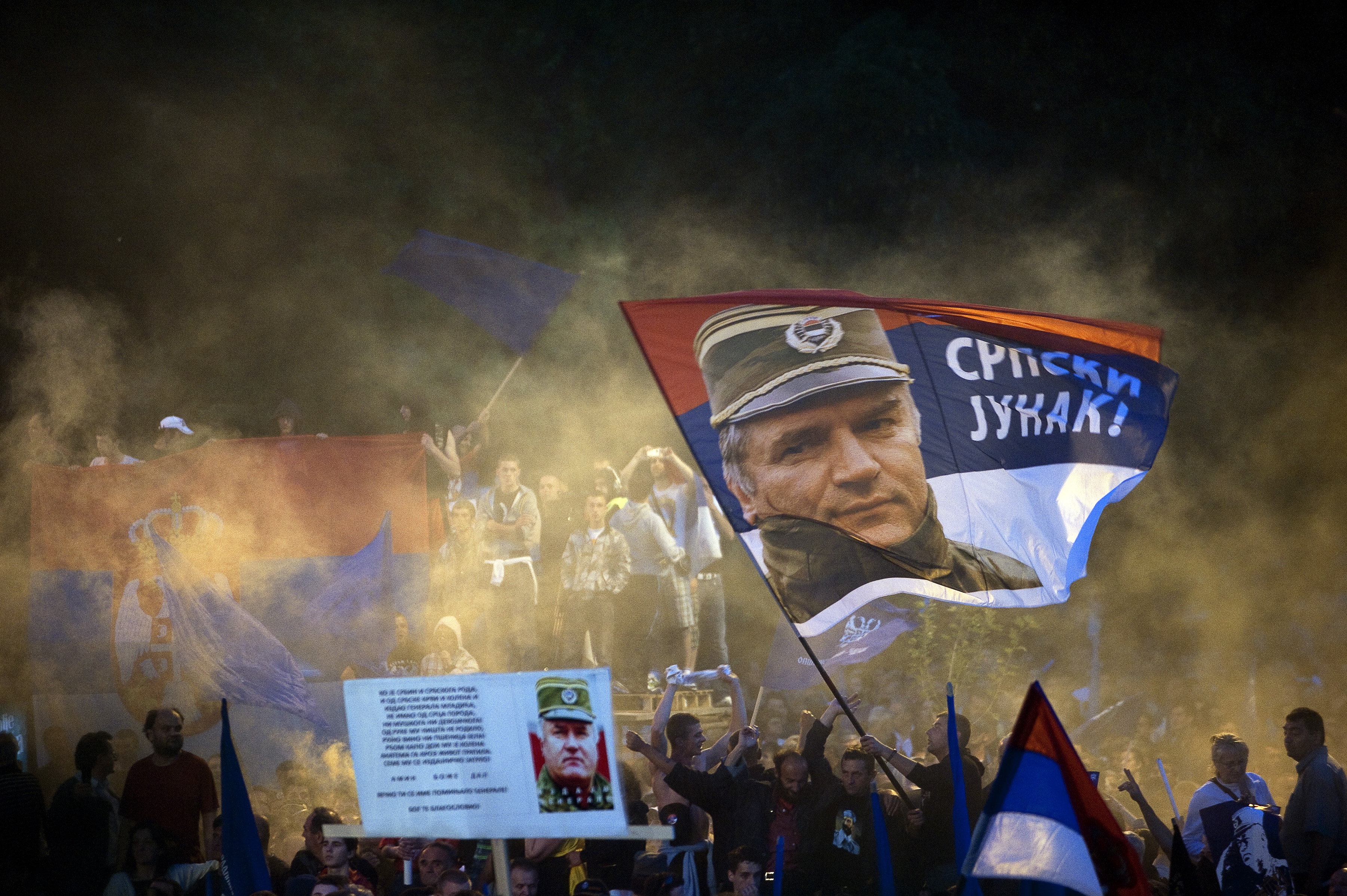
    FILE — Supporters of Ratko Mladic, the former Bosnian Serb general dubbed the “Butcher of Bosnia” for his actions during the Balkan wars of the 1990s, demonstrate in Belgrade, Serbia, on May 29, 2011. Mladic, who was captured in 2011 and convicted in international court of responsibility for the killing of some 8,000 Muslim men and boys at Srebrenica, has died, Serbian state media announced on Aug. 27, 2026. He was 83. (Andrew Testa/The New York Times)ANDREW TESTA
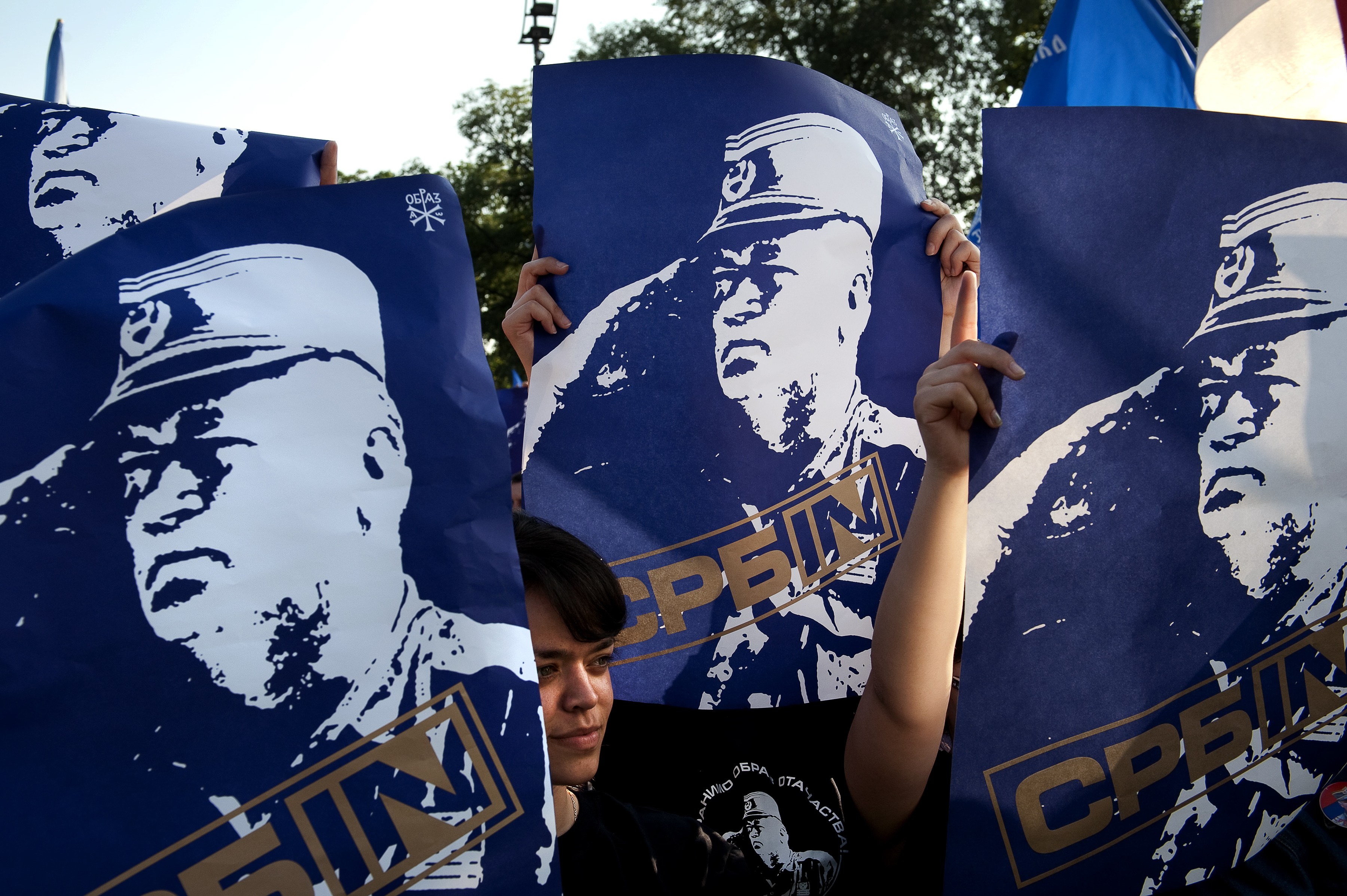
    FILE — Supporters of Ratko Mladic, the former Bosnian Serb general dubbed the “Butcher of Bosnia” for his actions during the Balkan wars of the 1990s, demonstrate with flags and posters bearing his image in Belgrade, Serbia, on May 29, 2011. Mladic, who was captured in 2011 and convicted in international court of responsibility for the killing of some 8,000 Muslim men and boys at Srebrenica, has died, Serbian state media announced on Aug. 27, 2026. He was 83. (Andrew Testa/The New York Times)ANDREW TESTA
  • Lindsay Clancy’s attorney says she was in a deep psychosis when she killed her 3 children

    Lindsay Clancy’s attorney says she was in a deep psychosis when she killed her 3 children

    PLYMOUTH, Mass. — Lindsay Clancy strangled her three children because she was depressed and tired of living, not because of failings with mental healthcare, a prosecutor told jurors Thursday before they began deliberating in her murder trial.

    “It was a choice to take them with her,” prosecutor Jennifer Sprague said. “It is a choice that we don’t want to think about that a mother could make.”

    “But it’s a choice she made,” Sprague said.

    Clancy’s mental state is at the center of the closely watched trial that has drawn attention to maternal mental health after childbirth. The debate has stirred deep divisions among the public over whether she should be held criminally responsible for the January 2023 killings.

    Her attorney contends she was experiencing postpartum psychosis when she killed her children, telling jurors she was a loving mother before her mental health spiraled and that she repeatedly sought help that failed her. The rare mental illness is linked to stress, sleep deprivation and hormonal changes following childbirth.

    Clancy, who did not testify during the monthlong trial, has pleaded not guilty by reason of lack of criminal responsibility. Clancy, now 36, had sought treatment from multiple providers in the months before the killings and was prescribed various drugs.

    Less than three weeks after being discharged from a psychiatric hospital, she killed Cora, Dawson and Callan Clancy, ages 5, 3 and 8 months, at the family’s Massachusetts home. She then jumped from a second-floor window and remains paralyzed from the waist down.

    Lindsay Clancy was depressed, prosecutor says

    During more than four weeks of testimony, jurors heard differing views from medical experts about Clancy’s mental state after Callan’s birth.

    Defense attorney Kevin Reddington said her condition worsened “because of the damned medicine and the lousy medical care that she got.”

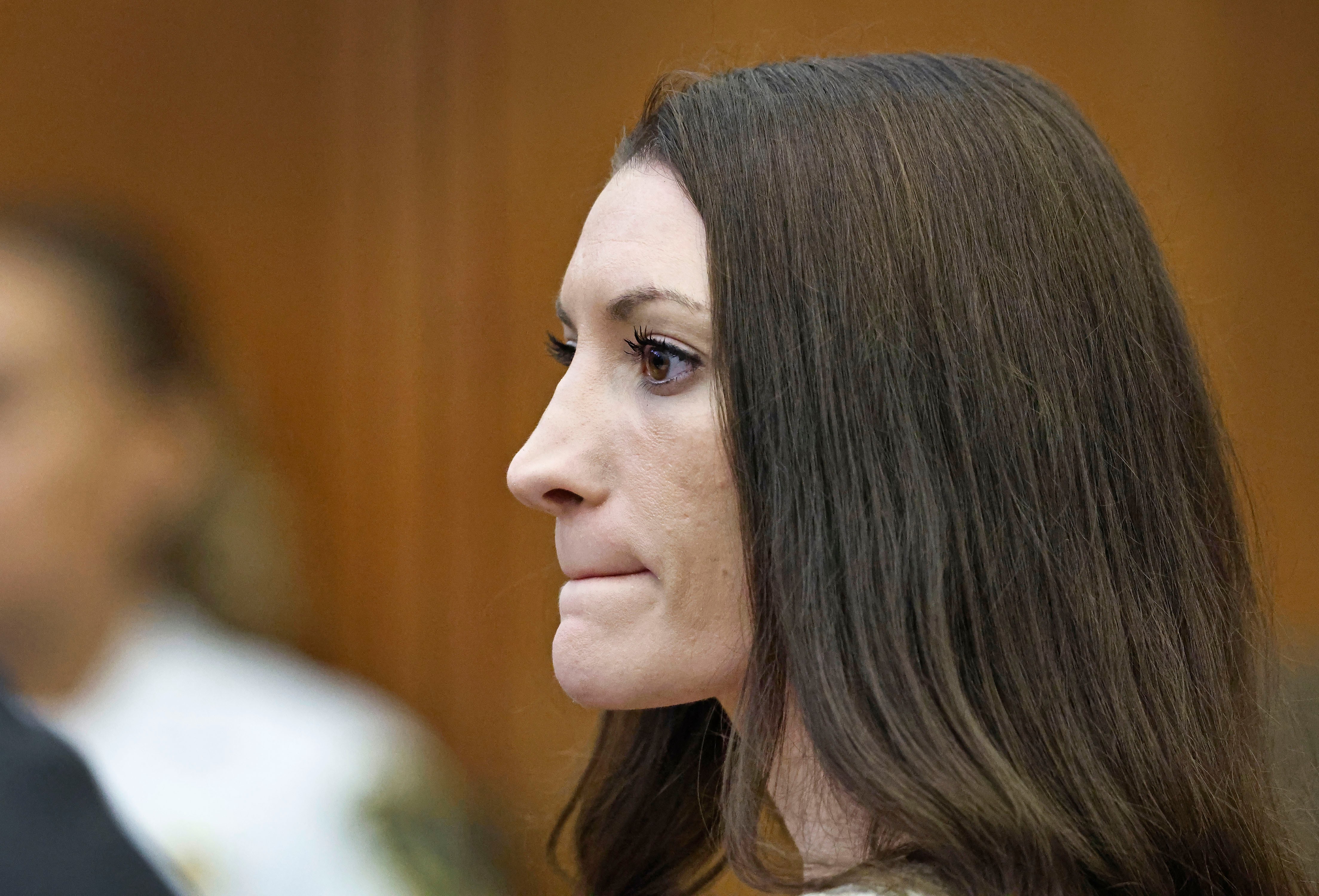
    Clancy dabbed her eyes with a tissue and put a hand to her forehead as the prosecution described how she killed her children and confronted a central question in the case:

    Why would a mother who loved her children kill them?

    “She was depressed. She was exhausted. She was done. She didn’t want to try anymore. She felt damaged,” Sprague said. “But those kids, those kids were her protective factor. Those kids were keeping her from ending her misery.”

    Sprague said the case shouldn’t be a referendum on the nation’s mental healthcare system or how it treats women. She argued that Clancy had access to many providers and a wealth of family support.

    If convicted of murder, Clancy faces life in prison without parole. If found not guilty due to a lack of criminal responsibility, she still could be committed to a state mental health facility.

    Mental health is at the heart of Clancy trial

    Clancy’s decision not to tell her mental health providers about thoughts she had in December 2022 of harming her children showed that she understood those thoughts were wrong, Sprague said.

    She also made sure she had just enough time to kill her children on Jan. 24, 2023, Sprague said, by sending her husband to pick up dinner and medicine for one of the kids.

    The prosecutor acknowledged that Clancy sought help for her mental health struggles, but said she did not always take medications as prescribed or give her providers complete and accurate information.

    Both Clancy’s mother and sister testified in the trial that she became anxious, paranoid and suicidal.

    Lindsay Clancy lived for her kids, attorney says

    Clancy’s attorney criticized the prosecution’s case and raised doubts about the police investigation while painting Clancy as a good mother.

    He said prosecutors tried to suggest her suicide attempt wasn’t serious. “You know that is not what happened,” he said.

    He said investigators didn’t take pictures or test blood found at the home. He held up a copy of the book “Good Moms have Scary Thoughts” that investigators found at the Clancy house. He said a mental healthcare provider gave it to her.

    He showed jurors a small “wish box” that Clancy and then-husband Patrick bought on their honeymoon. Over the years, the couple filled the box with slips of paper wishing to have healthy, successful kids, Reddington said as Lindsay Clancy wiped away tears.

    Reddington told the jury that Clancy “lived for her kids” but after she starting seeing a doctor that “it was not a wonderful life anymore.”

    “You have the medical records. You heard the testimony. You know her concerns. You know her fears,” he said.

  • Why colleges are cutting Black studies departments, majors, and classes

    Why colleges are cutting Black studies departments, majors, and classes

    U.S. colleges are increasingly slashing their African American studies and related programs, citing low enrollment and limited funding, at a time when the federal government is exerting intense pressure to end racial diversity efforts.

    Some academics blame politics, pointing out that Republicans and the Trump administration have taken aim at scholarships, admissions policies, and other efforts to boost diversity. At least a dozen schools, including private colleges and public flagship universities, have scaled back Black, African, or African American studies programs since Trump signed an executive order targeting diversity, equity, and inclusion programs, a Washington Post review found.

    “Politics is the engine, not a factor,” said Jafari Sinclaire Allen, director of the Institute for Research in African American Studies at Columbia University.

    Allen, whose institute has surveyed colleagues around the country, says the cuts are so deep that they could damage the pipeline for important research and training for new scholars for years to come.

    “They are not cutting at the fringe,” said Allen, who is also a professor of African American and African diaspora studies at Columbia. “They are striking the foundations.”

    Universities that have closed or merged African American studies units over the past two years include the University of Iowa, the University of Texas at Austin, and the University of Kansas.

    Others have eliminated or begun phasing out majors and degrees, including Kennesaw State University, the University of Toledo, and Indiana University at Bloomington. Several colleges have also trimmed classes, removed them from the core curriculum, or cut staff.

    Enrollment in the programs has been falling in recent years, data shows.

    For three straight years, students received fewer than 700 degrees in African American studies nationally, the lowest level in the last two decades, according to an analysis of federal data through 2025 by a researcher at the American Academy of Arts & Sciences. That’s despite the fact that the number of schools offering degree programs has gradually risen during the same span.

    “It is quite puzzling,” said Robert Townsend, director of humanities, arts, and culture programs at the academy, an honorary society and policy research center.

    Low enrollment has made the programs a target for cuts at some schools.

    Take the University of North Texas (UNT), which projected a $45 million shortfall for the fiscal year ending this month. The university blamed falling enrollment, especially among international graduate students, and cuts in state funding for instruction and operations.

    “UNT is facing a significant budget challenge,” the school said on its website.

    To help balance the budget, the school said it would close or consolidate a long list of programs, including undergraduate minors in Africana studies, Asian studies, Mexican American studies, LGBTQ studies, women’s and gender studies, and degrees related to linguistics.

    Some states have passed laws requiring schools to review and cull programs that yield few degrees. For instance, the University of Toledo cited such a law in Ohio when it suspended admissions to its bachelor’s program in Africana studies last year.

    And the University of Iowa noted that there were only nine students in the bachelor’s program for African American studies when it decided to eliminate the major. It also closed its African American studies program.

    But department chairs point out that the cuts are coming at a time when some states have also passed laws restricting courses focused on race or ethnicity.

    For instance, a Florida law enacted in 2023 bars core general education classes — select courses required for graduation — from teaching “identity politics.” A North Carolina law passed this year generally bars public universities from requiring courses “related to divisive concepts” involving race or gender. And Texas A&M canceled eight courses, citing new policies governing race and gender instruction. The canceled courses included “Introduction to Race and Ethnicity” and several courses focused on diversity.

    On the federal level, the Trump administration has attacked diversity, equity, and inclusion programs, arguing that they amount to race discrimination that violates civil rights laws. As part of the anti-DEI effort, the administration blocked many research grants related to race.

    The Education Department did not respond to a request for comment on the cuts to African American studies programs.

    Erica R. Edwards, chairperson of Black studies at Yale University, said such programs have become a target because “the field is unapologetic in its critiques of fascism, antiblackness, sexism and antitransness, and anti-immigration.”

    “Given the concerted attempts of our current administration and its allies to suppress history and silence truth, it comes as no surprise that Black Studies programs are facing challenges from the inside — cuts, intense scrutiny, censorship, and consolidation — as well as attacks from the outside,” Edwards wrote in an email to the Post.

    Some say the cuts are part of a broader ideological attack on the humanities.

    “Although conservative attacks on the humanities have recurred periodically over the past several decades, the present moment is markedly different in scale and coordination,” said the executive committee for the American Studies Association, a scholarly organization, in a recent public statement.

    Neetu Arnold, a policy analyst for the conservative Manhattan Institute, said the cuts are probably driven by low enrollment rather than politics. Still, Arnold said she believes that Black and African American studies departments have blurred the line between scholarship and advocacy.

    “It’s hypocritical for department chairs to deride the cuts as political when they’re the ones who have allowed their departments to become highly politicized hotbeds of scholar-activism,” Arnold said.

    To be sure, some cuts may be temporary. The University of Louisville in Kentucky paused admissions to three graduate programs, including its Pan-African studies Ph.D., because of tight funding. But a spokesperson said it is likely that admissions will reopen when more funding is available.

    And some universities said they are continuing to offer classes and fund research in the field, despite consolidation and other administrative cuts.

    Consider Northwestern University in Illinois. The school recently decided to move its African studies program from its research office to its provost’s office and eliminate two positions that supported the program. The move received national attention in part because the university says the program, founded in 1948, is the oldest of its kind in the United States.

    Despite the changes, a Northwestern spokesperson said the program will continue to conduct research, offer a certificate for graduate students, and sponsor both a major and minor for undergraduates.

    “None of that is changing — it will all continue,” said spokesperson Jon Yates. “To be clear: The program is not being downgraded.”

    Still, more cuts could be coming to African or African American studies programs across the country.

    For instance, the University of Georgia said it is evaluating whether to drop low-enrollment programs as part of a regular review.

    That includes its African American studies major.