Tag: no-latest

  • Iran’s leader calls for Muslim unity

    Iran’s leader calls for Muslim unity

    Iran’s supreme leader called on Muslim countries to stand together against Israel and the United States, imploring them to “know your real enemy.”

    U.S. broadcaster NBC said Israeli settlers attacked a team of its journalists in the occupied West Bank. A British activist faced deportation after Israeli settlers seized him and turned him over to police. And an Israeli airstrike in central Gaza killed at least two Palestinians, including a 3-year-old boy, hospital authorities said.

    Here’s a look at the latest developments Sunday in the Iran war and the wider Middle East. Full coverage can be found here.

    Iran’s supreme leader urges regional unity

    Iran’s new supreme leader, Ayatollah Mojtaba Khamenei, urged Muslim cooperation and unity in a letter to religious leaders from Islamic countries attending a conference in Tehran, Iran’s official IRNA news agency reported.

    Khamenei called the U.S. and Israel enemies of all Islamic nations. “My enduring and repeating advice to rulers of Islamic nations is to know your real enemy, understand its plans and confront it,” he wrote.

    Six months after the U.S. and Israel attacked Iran, killing Khamenei’s father and other senior leaders, Khamenei has not been seen publicly.

    The war has exposed deep divisions in the Muslim world after Iran struck targets in neighboring Gulf Arab countries and restricted movement through the Strait of Hormuz. Tehran has opposed the U.S. military presence in neighboring nations.

    NBC says settlers attack journalists in West Bank

    Settlers attacked an NBC crew in the central West Bank on Saturday as they were interviewing a Palestinian woman who said she’d been driven out of her house, the network said.

    Correspondent Matt Bradley, two other crew members, and the woman were treated for injuries, NBC said, giving no details about them.

    NBC shared footage showing masked settlers approaching the crew with sticks and beating their vehicles.

    Israel’s military said it was “aware of reports of Palestinian injuries, including a Palestinian woman who sustained non-life-threatening injuries and was evacuated by the Red Crescent for medical treatment.” It did not comment on the attack on the NBC crew.

    Prime Minister Benjamin Netanyahu issued a rare condemnation of the violence on Saturday, after a growing wave of violence by settlers in the West Bank. The Israeli leader has come under U.S. criticism for the attacks.

    Settlers seized a British activist, lawyer says

    Israeli settlers seized a British activist from a Palestinian village in the West Bank on Saturday and locked him in a shed before turning him over to police, his lawyer said Sunday.

    Inbar Shaked Vardi said settlers held Finn Joughin for half an hour. Video showed two settlers, one armed, restraining Joughin and marching him away.

    It was not clear what led to his capture. Settlers alleged he assaulted a child, which Vardi denied. Settlers pointed to a video where the activist uses his body in an apparent attempt to block a settler boy from passing through a fence. Vardi said the video shows he was trying to protect the village.

    “Without any hearing, the police has decided to move him to deportation, which just shows that this entire case has been political in the first place,” Vardi said later, adding that Joughin would likely be deported Sunday night.

    A spokesperson with the U.K. government’s Foreign, Commonwealth, and Development Office said embassy officials have raised the case with Israeli authorities and were seeking information.

    Israeli strike kills 2 Palestinians in Gaza, including a child

    An Israeli strike hit a group of people in the western part of Deir al-Balah, killing a 3-year-old and a man who Israel’s military called a Hamas operative.

    The military in a statement identified the man as Hassam Osama Hussein Nasir. It said he had “posed an immediate threat,” without providing evidence.

    Another Palestinian was wounded, according to Al-Aqsa Martyrs Hospital, which received the casualties.

    The deaths were the latest in Gaza since a fragile October ceasefire deal attempted to halt more than two years of war between Israel and Hamas. Gaza’s Health Ministry says Israeli fire has killed at least 1,318 Palestinians since that truce.

  • Cape Cod learns to live with sharks

    Cape Cod learns to live with sharks

    On a cloudless afternoon in July, Nicole Sweeney was on a charter boat off the southeastern corner of Massachusetts’ Cape Cod, cruising through blue-green water as smooth as sea glass. Conditions were perfect for a dunk in the ocean, but swimming was resoundingly off the table.

    That’s because if all went to plan, Sweeney would soon come face to face — or at least face to fin — with a great white shark.

    “When I was a kid, sharks were not something we ever thought much about,” said Sweeney, 55, who has visited Cape Cod every summer since she was born. “Now you can’t go anywhere on the Cape without finding a coaster or a keychain or a mug with a shark fin on it.”

    The onslaught of great white merch is more than mere leftovers from last summer’s 50th anniversary of Jaws.

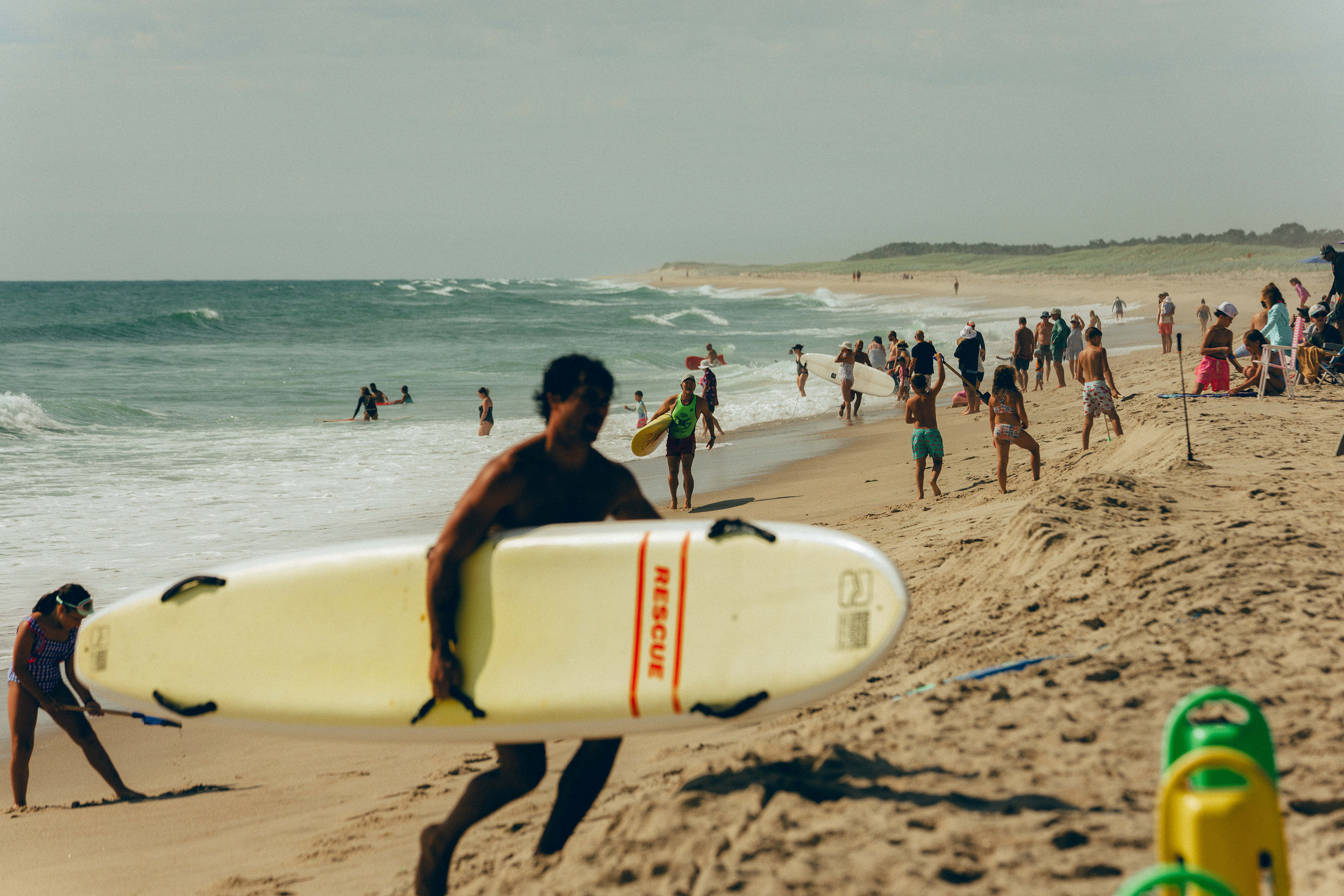
    Over the last several years, a resurgent seal population has turned Cape Cod into one of the world’s top seasonal hot spots for great white sharks. In summer and autumn, the stretch of ocean from the northern tip of the Outer Cape down past Chatham, on the Cape’s elbow, is now the best place on Earth to see great whites swimming — and hunting — close to shore.

    Back on land, the specter of sharks is inescapable. Beyond the shark-bite ball caps and the “Respect the Locals” shark bumper stickers, ominous shark flags and menacing warning signs, along with “Stop the Bleed” kits, have become summer fixtures on the Outer Cape’s beaches.

    Even so, the seasonal shark surges have seemingly done little to dampen overall enthusiasm for Cape Cod, where the median single-home sale price nearly doubled from 2019 to 2025 and hotel prices can top $2,000 a night during high season.

    The sharks have, however, changed people’s behavior. Demand for swimming pools has spiked. Beachgoers now keep a close eye on the shark-tracking app Sharktivity. And shark-spotting tours regularly operate within striking distance of some of the Cape’s most popular beaches.

    Greg Skomal, a marine biologist with the Massachusetts Division of Marine Fisheries and New England’s leading authority on white sharks (as scientists typically call great whites), has seen the shift in beachgoers’ habits from his shark-tagging trips up and down the coastline.

    “We observe it from the research vessel,” Skomal said. “We don’t see the same number of people in the water at great distances from shorelines.”

    From a conservation perspective, the sharks’ return to these waters is a success story, the result of the Marine Mammal Protection Act of 1972, which rescued the region’s gray seal population from the brink of extinction. (A 2017 study estimated Cape Cod’s gray seal count to be between 30,000 and 50,000, up from about 2,000 in 1994.)

    The sharks soon followed, leading to increasingly frequent beach closures and, inevitably, run-ins with humans. In 2012, a bodysurfer was bitten by a white shark off a Truro beach. He survived, as did a swimmer who was bitten at a neighboring beach in 2018. But a month later, a 26-year-old boogie boarder was killed by a white shark at Newcomb Hollow Beach, in the town of Wellfleet — the first fatal shark attack in Massachusetts waters since 1936. Two years later, a white shark killed a swimmer off the coast of Maine.

    Yet in recent years, Cape Cod’s tourist economy has grown to nearly $2.8 billion (up from nearly $2 billion in 2019 per the Cape Cod Chamber of Commerce), even as the U.S. National Park Service has recorded a drop in recreational visits to the Cape Cod National Seashore, a 40-mile stretch of coastline that includes six beaches frequented by white sharks.

    Although the sharks may have pushed some beachgoers away, one thing is certain: They’re also luring people in.

    Ten years ago, the world capital of white shark tourism was that other Cape at the bottom end of the Atlantic: Cape Town, South Africa, whose resident great white population had long supported an enormous cage-diving industry. But those sharks have since disappeared, possibly driven away by commercial overfishing or perhaps shark-liver-hungry orcas, the subject of an unsettled scientific debate. Guadalupe Island in Mexico, another white shark hot spot, had its shark tourism and cage-diving operations shut down in 2023 by the Mexican government, which cited practices in the industry that were putting sharks and humans at risk.

    At the same time, Cape Cod’s star began to rise as a white shark ecotourism destination, specifically the town of Chatham, where shark seekers can choose from a growing number of private shark charters — generally costing north of $2,000 — that employ spotter planes to locate the animals, which passengers can then observe from the boat. (Cage diving, which typically involves chumming the water to attract sharks, is illegal in Massachusetts, though at least one Cape Cod outfitter runs shark cage-diving tours offshore in federal waters.)

    And while you can still cage-dive with great whites off the remote Neptune Islands in South Australia and off the southern edge of New Zealand, those experiences require all-day or even multiday tours. Only on Cape Cod can you spend a morning observing white sharks in the wild and be back on the beach by lunchtime.

    “The fact that we can go out and see them in a 2½-hour charter is incredibly unique,” said Hannah Leary, ecotourism coordinator for the Atlantic White Shark Conservancy, a research and education nonprofit in Chatham that operates the Sharktivity app. “We can just come out of the inlet and they’re all right there.”

    Its “open boat” shark charters, which offer “a shared adventure with Cape Cod’s apex predator,” run several times a week and regularly sell out (at a slightly more accessible $530 per person, with up to six people sharing a boat). Lately, Leary said, she has noticed an uptick in international guests and travelers who’ve come to Cape Cod specifically to see great whites.

    At Cape Cod’s surf shops, though, the sharks are old news.

    On a recent Sunday morning, Pump House Surf Shop in Eastham, which sells $20 miniature lifeguard-spec shark flags and last month shared a winking social media post about sharks, was packed with shoppers. Across the street at the equally crowded Nauset Surf Shop, the oldest surf shop on the Cape, longtime owner Phil Clark said shark-deterrent products started flying off his shelves after 2018, but they’re not selling much anymore.

    “Everybody is kind of used to it,” Clark said of the sharks’ presence. “They’re buying surfboards. The kids are taking surf lessons.” Indeed, Sugar Surf, an all-female surf school, is still holding classes at Marconi Beach in Wellfleet, where a white shark took a bite out of a stand-up paddleboard in 2017.

    “It’s not the same business it was 30 years ago, but there’s still tons of business,” said Clark, who noted that boogie boards and skimboards have become his bestsellers. “People are still here, and they’re having fun and enjoying themselves.”

    For Suzy Blake, co-head lifeguard of Wellfleet’s beaches, the shark risk is “part of our lives now as lifeguards and residents of the Outer Cape.” She and her team are now armed with an arsenal of shark-specific equipment and protocols, including tourniquets and “Stop the Bleed” training, as well as a direct linkup to real-time shark detector buoys, which send push alerts to the lifeguards when tagged sharks are in the area.

    Later that afternoon, at Newcomb Hollow Beach, Lisa DonDiego sat on a beach blanket with a friend a few yards away from the lifeguard stand, looking out at the ocean.

    “I understand the fear,” said DonDiego, 37, up from Philadelphia for her family’s annual summer pilgrimage to the Outer Cape. “And at the end of the day, I recognize that the ocean belongs to them. But I still want to come to Cape Cod.”

    She said she consulted the town of Wellfleet’s shark updates and the Sharktivity app, which logs crowdsourced shark sighting data and any buoy pings by tagged sharks, to help make an informed decision about getting into the water. Quitting the Cape’s beaches altogether, though, is out of the question. “Basically nothing could keep us off the beach,” she said.

    The next morning, the sun was shining, and Paul Bordé, a local real estate agent, was out for a joyride out of Chatham Harbor on his Boston Whaler, keeping his eyes peeled for “one of the big boys.”

    “Sharks have changed behaviors and conversations more than they’ve changed demand,” Bordé said. A noticeable trend has been an increasing appetite for swimming pools; one Cape Cod pool builder even advertises “shark free swimming” on its trucks.

    That said, nothing has shaped the Cape’s real estate market in recent years as much as the pandemic. And while the COVID-19-era buying frenzy has cooled a bit, Cape Cod is still a seller’s market. Even the swimming pool surge is part of a broader pandemic-era trend toward creating “backyard oases,” Bordé said, adding that heated pools in particular were allowing families to extend the outdoor season by several months.

    As for the sharks, Bordé called them “magnificent,” though he said the closest he came to a sighting that morning was a tagged white shark named Tarly pinging a nearby detector buoy.

    On the charter boat, Sweeney had better luck. Less than half an hour into her shark tour, she found herself tearing up. Five decades after watching her first Jacques Cousteau film with her father, kick-starting her enduring fascination with great whites, Sweeney was gazing down through clear, shallow water at a 10-to-12-foot male white shark.

    This time, there was no need for a bigger boat.

    “Just to be in that small boat, looking over the sides at this massive, powerful, beautiful animal,” she said. “It was awe-inspiring.”

    This article originally appeared in the New York Times.

  • Letters to the Editor | Aug. 30, 2026

    Letters to the Editor | Aug. 30, 2026

    Mailing it in

    I don’t understand the U.S. Supreme Court. Justices are appointed for life and cannot be fired. So why do they undermine the Constitution by toadying to Donald Trump’s every insane whim? What hold does he have to make them so subservient?

    Their latest decision that Trump can withhold mail-in ballots from states that have not bowed to his outrageous demand of supplying voter rolls is deranged. As someone who doesn’t own a car, the mail-in ballot is a great convenience for me. And Pennsylvania has been wise enough not to supply our state’s lists since the federal government, according to the Constitution, has no control over elections.

    I wonder if they can be impeached. After all, they did present an incomplete view about upholding the precedent of Roe v. Wade.

    Susan M. Wendt, Norristown

    Dolly’s memory

    To me, and many others, those who make it their mission in life to spread joy, love, comfort, and knowledge often seem invincible, as Dolly Parton did.

    The news of her passing is a sobering reminder that our time on earth is limited, and tomorrow isn’t promised.

    Times are interesting, to say the least. But if people from all walks of life can agree today that Parton made the world a better place, then perhaps we aren’t as divided as we initially thought.

    May her memory be a blessing.

    Evan Grollman, Highland Park

    Admission of failure

    By announcing the U.S.’s aggressive efforts to harm Iran’s economy, President Donald Trump has effectively admitted that our military campaign has failed to achieve any of its alleged goals. There has been no regime change. The Strait of Hormuz remains unusable. Iran’s nuclear program — allegedly destroyed last year — remains as viable as ever. The president’s desperate efforts to enlist other countries in this new attempt to defeat Iran economically say to the world that our ill-conceived military incursion has failed, and we are desperately looking to other countries to support our attempt to find some way to succeed against Iran. It is abundantly clear that the U.S. has only one viable remaining option to try to save face: declare victory and move on to something else. Stop wasting billions of American taxpayers’ money on a failed mission that clearly was not thought through and will not succeed.

    Ben Zuckerman, Philadelphia

    Join the conversation: Send letters to letters@inquirer.com. Limit length to 150 words and include home address and day and evening phone number. Letters run in The Inquirer six days a week on the editorial pages and online.

  • Dear Abby | Daughter’s unemployed fiance fails to impress Mom

    Dear Abby | Daughter’s unemployed fiance fails to impress Mom

    DEAR ABBY: One year ago, I convinced my daughter (64) to move here to Florida to be closer to me. I bought her a small mobile home to live in, and I don’t charge her any rent. Before she moved down here from Minnesota, she agreed to pay the lot rent and her own utilities.

    Recently, she met a man and fell in love. She has been single and self-supporting for more than 20 years, but she says she’s lonely and wants someone to talk to when she gets home from work. She thinks this man fits the bill. He is 60 and doesn’t have a job, a car or a place to live. He has been staying with a friend for the entire two months she has known him. He has given her an engagement ring after two months, and they plan on marrying later this year.

    My daughter asked me if I’m happy for her. When I told her if she is lonesome when she comes home from work, she should consider getting a pet, she laughed. I do not think two months is long enough. In my opinion, her fiance should at least have a job — and a car would be nice so she wouldn’t have to take the bus to work every day. What should I tell her if she asks me if she should marry him?

    — CONCERNED MOM

    DEAR CONCERNED MOM: She won’t ask, because she knows she won’t like the answer. However, if she does, give your honest opinion — and tell her that I share it. A legal union with this man who has nothing would be foolish and self-destructive. Instead of planning a wedding, his time and energy would be better spent looking for work.

    ** ** **

    DEAR ABBY: I am receiving physical therapy at a center with a huge TV on the wall. It is on the entire time, playing stuff like sports and home improvement shows. I find it tedious, stressful and distracting. Importantly, due to my declining hearing, the TV makes it difficult to understand the young physical therapist I’m working with. I have told her several times now that because of the background noise, I need her to face me, not the TV, so I can hear her. She tends to forget this fact. I have even asked about playing music instead of the TV, to no avail.

    I would go somewhere else, but this is the only place my insurance pays for. I dread going there because of this. Am I wrong to want a quiet environment in which to heal?

    — PEACEFUL IN FLORIDA

    DEAR PEACEFUL: You are not wrong. Your physical therapist appears to have a listening problem. Rather than continue to complain to this employee, talk to the manager of the therapy center and explain the problem.

    ** ** **

    DEAR ABBY: This may seem like a silly question, but when filling out paperwork that asks if I am married, divorced or widowed, I’m not sure what to put down. I was divorced, but then he died. Does it matter which answer I choose?

    — BEFUDDLED IN INDIANA

    DEAR BEFUDDLED: This is not a silly question. It is one I have been asked before. The correct answer is that you are divorced. If your ex-husband remarried after your divorce, the woman he married is his widow.

  • Horoscopes: Sunday, Aug. 30, 2026

    Horoscopes: Sunday, Aug. 30, 2026

    ARIES (March 21-April 19). Getting an opportunity feels exciting, though someone saying “yes” is not the achievement itself. The achievement takes shape through all the practical steps that follow. It lies in the “how,” not the “what.”

    TAURUS (April 20-May 20). Yesterday’s agreement was made in calm weather. Today’s tension is the test. Were expectations clear? Were they reasonable? Will effort be shared? Is there room for disagreement? A durable promise can survive a little discomfort.

    GEMINI (May 21-June 21). You’ll make your point and make someone laugh, too, not because your point is a joke but because people are open to you. Laughter shows that they feel receptive to your tone and message.

    CANCER (June 22-July 22). Inspiration makes the beginning feel inevitable. Discipline becomes important when the glow of inspiration fades and everything starts feeling like work, but don’t fret. You’re devoted, and devotion can finish what enthusiasm started.

    LEO (July 23-Aug. 22). Your instinct is to be welcoming and open, but some people are unaware of what is being offered unless it is first withheld. The best way to make them truly feel welcome is to make them earn their place. Otherwise, they will only feel entitled.

    VIRGO (Aug. 23-Sept. 22). What can you do with plans revised at the kitchen table, and imperfect conditions? Win the battle. What can you do with borrowed space, limited funds and tired hands? Build the world. Look around. Everything you see was made this way.

    LIBRA (Sept. 23-Oct. 23). When you don’t know what to do next, you keep making yourself useful, creating convenience, relieving pain and solving problems. Remember that your efforts are only truly successful when they uplift you, too.

    SCORPIO (Oct. 24-Nov. 21). Facts can be counted. Truth often has to be recognized. Facts tell you what happened. Truth helps you understand what it meant. Today, look beyond the data to the meaning it points toward.

    SAGITTARIUS (Nov. 22-Dec. 21). You repeat certain thoughts so often they begin to sound like facts. Today, one of them catches your attention. It’s worth questioning. Is it true? Is it helpful? Have you outgrown it? Can you substitute a better fit?

    CAPRICORN (Dec. 22-Jan. 19). Go on and be lazy; it’s wise. Some kinds of work just make more work. Rest is productive in its own way. You’ll recalibrate your health and productivity by making room for doing a big stretch of absolutely nothing.

    AQUARIUS (Jan. 20-Feb. 18). You’ll get back to the joy of making lists — putting your thoughts into neat lines and giving yourself the opportunity for the immensely satisfying act of crossing out items and seeing progress take physical shape.

    PISCES (Feb. 19-March 20). A flurry of activity sorts itself into two main categories: things you can control and things you can’t. There’s so much in the first category that the second hardly deserves another thought.

    TODAY’S BIRTHDAY (Aug. 30). In this, your Year of Enough-ness, you realize you always have plenty of what you need. It comes easily to you, and you share it just as freely, caught up in a current that’s reciprocal, balanced and abundant. More highlights: You’ll get around in style. You’ll apply new things you learn to successful, lucrative and almost immediate results. Distant connections become close and sweetly fulfilling. Aries and Scorpio adore you. Your lucky numbers are: 2, 40, 17, 30 and 8.

  • With shoppers wary of illness, farmers destroy millions of heads of lettuce

    With shoppers wary of illness, farmers destroy millions of heads of lettuce

    SALINAS, Calif. — At a Church Brothers Farms production facility, where conveyor belts rumble with giant heaps of chopped romaine and red cabbage, the company has slashed workers’ hours and laid off employees this summer. Some assembly lines in the plant in San Juan Bautista, Calif., near the agricultural heartland of the Salinas Valley, weren’t operating at all this past week.

    Fresh produce sales fell nationwide after a major outbreak of cyclosporiasis, an illness that causes severe diarrhea. More than 17,000 people have been sickened so far, and two have died, according to federal health officials.

    The largest cluster of cases was linked to iceberg lettuce grown in Mexico, and greens from the Salinas Valley haven’t been implicated by federal officials. Yet demand for the valley’s lettuce has plummeted all the same, said Raymond Gonzales, vice president of processing plant operations at Church Brothers.

    “Even though all this product is from the U.S.,” Gonzales said, waving a gloved hand at pale green leaves churning through cold water, “the consumer just sees it as lettuce.”

    Like many American farmers, Church Brothers made a tough decision in recent weeks to abandon healthy crops. If there isn’t a market for the produce, it often makes more financial sense to use the greens to re-fertilize the land than to shell out for the labor costs for harvesting.

    Jeff Church, the company’s chief operating officer, said Church Brothers had lost hundreds of thousands of dollars in discarded greens. He estimated that the company had returned an extra 3.9 million heads of lettuce to the soil over the past six weeks as demand dropped.

    “We just couldn’t use it,” said Church, 54.

    The amount of romaine and iceberg lettuce produced for sale this summer in the United States has been the lowest in a quarter century, according to shipping data from the U.S. Department of Agriculture. And wholesale prices for lettuce remain at break-even costs, even though so little is available for sale, the data show.

    Nowhere has the economic impact been felt more than in the Salinas Valley, an agricultural region about 100 miles south of San Francisco that marketers have long called the Salad Bowl of the World.

    The area is perhaps best known nationally for the John Steinbeck novels set here, such as Of Mice and Men and East of Eden. But the Salinas Valley has also been prized for generations for its temperate weather and fertile soil, which allow it to grow strawberries, broccoli, and, in the summer, 70% of the nation’s lettuce.

    So produce scares are nothing new. It took years for spinach sales to recover after a deadly E. coli outbreak in 2006. But questions about the origins of the largest-ever U.S. outbreak of cyclospora, a parasite in human feces, seems to have made customers particularly cautious, avoiding berries and several types of fresh vegetables that were never linked to the outbreak.

    The Centers for Disease Control and Prevention has confirmed only one source — iceberg grown in Mexico by produce behemoth Taylor Farms. But health officials say they’re investigating at least six other clusters for which sources have not yet been publicly identified.

    “I even had one reporter tell me they were not going to have a Caesar salad,” said Norm Groot, executive director of the Monterey County Farm Bureau, who pointed out that romaine lettuce, the kind typically used in a Caesar, had never been connected to the parasite.

    At Church Brothers, a large, family-owned business that has been growing produce in the Salinas Valley since 1999, lettuce sales began to drop in July, around the time the CDC announced a link between cyclospora and Taco Bell lettuce. It didn’t help that Taylor Farms, whose Mexican-grown lettuce was implicated, is based in Salinas, linking the outbreak to the valley in customers’ minds.

    Sales have begun to pick up as the outbreak starts to subside, Church said. Yet he is now struggling to determine how much to plant in the coming months.

    Church, wearing a vest in the Salinas morning fog this past week, contemplated the math as he watched workers harvesting iceberg lettuce strip off outer leaves with knives before wrapping the heads in plastic to sell to Walmart.

    If local farmers plant too little, fearing more losses, there will be a lettuce shortage in the winter. But if Church plants a typical amount, he could be forced again to do what farmers call discing, in which they dispatch a tractor with steel blades, or discs, to chop up healthy produce and plow it back into the soil.

    Daniel Sumner, an agricultural economics professor at the University of California, Davis, said it was unclear how long customers would avoid leafy greens, given how fast information travels on social media and a larger lack of trust in institutions.

    Just this past week, farmers were upset about a meme of the scariest Halloween costume: Taylor Farms shredded iceberg lettuce. The Washington Post published an opinion column arguing that Americans should permanently stop eating lettuce.

    “It’s a really tough moment,” said Dave Puglia, president and CEO of Western Growers, an agricultural trade association representing produce farmers in California and other Western states. “There’s a lot of very good, fresh produce that’s being plowed back into the ground.”

    Puglia said the drop in sales linked to this outbreak — close to 30% — had been higher than for other recent disease outbreaks.

    And while America has a very safe food supply system, there are risks inherent to lettuce, he said, since it’s largely grown outside and is eaten raw. Leafy greens are among the leading sources of foodborne illness in the United States.

    In Salinas, a city of 159,000 residents where Main Street is lined with brick buildings featuring art deco entryways, hand-painted tomatoes and heads of lettuce grace the public trash cans. Looming as one of the tallest buildings in downtown, across from the National Steinbeck Center, is the headquarters of Taylor Farms, a major employer.

    The mayor of Salinas, Dennis Donohue, said he was keeping an eye on local economic indicators, such as sales tax revenue, to see how the produce sales slump could ultimately affect the city’s finances. But ups and downs are the nature of the agriculture business, said Donohue, who previously ran a small specialty vegetable company.

    “Things tend to bounce back,” he said.

    As far as eating lettuce, even customers in Salinas remain wary.

    Melanie Waltrip, who co-owns Smalley’s Roundup Restaurant, a 50-year-old steakhouse with deep red booths, said her servers were still fielding questions about the safety of consuming their green salads, typically served as a side with ribs or pork chops.

    But Jeff Birkemeier, 46, who co-owns Amapola Kitchen in downtown Salinas, said his most popular menu item, a Chinese chicken salad made with romaine, remains a bestseller. He said that employees of Taylor Farms, who work across the street from his cafe, often stop by for lunch.

    “My customers in general are people that have grown up in this type of agricultural hotbed for their whole lives, and they just kind of take it all in stride,” he said.

    This article originally appeared in the New York Times.
  • Ontario premier answers Trump’s ‘Lake America’ with giant ‘Lake Ontario’ sign

    Ontario premier answers Trump’s ‘Lake America’ with giant ‘Lake Ontario’ sign

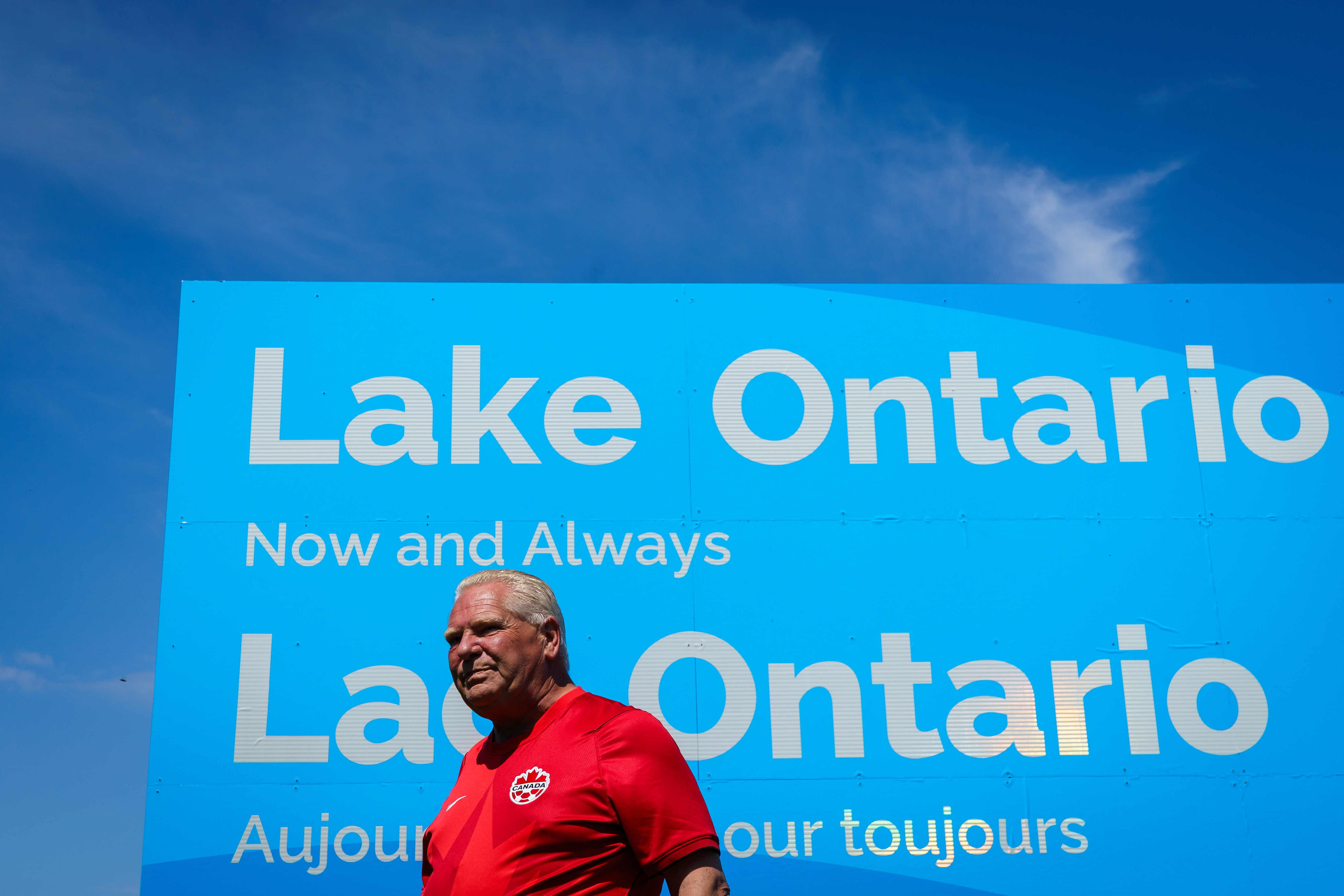
    TORONTO — Ontario Premier Doug Ford answered President Donald Trump’s “Lake America” decree Saturday with a billboard-sized message on the Canadian shoreline: “Lake Ontario. Now and Always.”

    Wearing a Team Canada soccer jersey, Ford unveiled the sign near Grimsby, Ontario, and posed for photographs. The 24-by-12-foot sign stands on 6-foot legs, putting its top about 18 feet above the ground — roughly two stories high. The message is repeated in French.

    It was the latest show of defiance after Trump signed an executive order directing U.S. federal agencies to call Lake Ontario “Lake America.” After months of tariffs, threats to make Canada the 51st U.S. state, and personal attacks on its leaders, the move has been met in Canada largely with ridicule.

    Ford said Trump was trying to rename the lake because Ontario and Canada were “standing up for ourselves” and argued the name would outlast the president.

    “Long after President Trump is gone, it will still be called Lake Ontario,” Ford said in a video posted on social media.

    Manitoba Premier Wab Kinew compared Trump to an aging rock band trying to revive an old hit.

    “You know when a rock band is really over the hill and you see them like in a casino playing some song from like 50 years ago. I think that’s the part of Donald Trump’s presidency we’re at now, Like he thought they had a real hit, a real golden oldie, with the Gulf of Mexico,” Kinew said, referring to Trump’s executive order renaming the Gulf of Mexico the Gulf of America. “And he’s trying to bring back that, and he’s trying to play the hits for his base. But I think everybody here thinks it’s a little sad and it’s not his best work.”

    The mockery was not limited to politicians. Canadian historian Robert Bothwell was even more scathing.

    “The greatest country on earth takes this moron seriously?” Bothwell said.

    But Bothwell said the dispute was more serious than the jokes, arguing Trump’s broader aim was “to subordinate Canada and at best make it a colony, at worst absorb it into the United States.”

    Nelson Wiseman, professor emeritus at the University of Toronto, said Trump “would like Canada to act like a vassal state, but it refuses to do so. That irritates him.”

    The dispute comes as relations between the longtime allies worsen over trade. Negotiations collapsed last week, both governments accused the other of making late demands, and Canada announced retaliatory tariffs set to take effect next month.

    Trump’s order also came amid an escalating war of words with Ford. In an interview with the Associated Press earlier this week, Ford said Ronald Reagan would be “throwing up” over Trump’s tariff policies and “disgusted with President Trump.”

    Trump fired back by dismissing Ford’s comments as “bluster,” calling him Prime Minister Mark Carney’s “flunky” and mocking him as the “less charismatic, intelligent, and overall unimpressive brother” of the late Toronto Mayor Rob Ford.

    Trump continued promoting the new name Saturday, reposting a meme showing Canada geese with Trump-like blond hair firing rifles as they “protected” Lake America.

    Trump has repeatedly used maps to make political points. A “Gulf of America” map was displayed for a time beside the Resolute Desk in the Oval Office, and Trump has posted images depicting Canada as part of the United States or as the 51st state.

    The name Lake Ontario comes from the Huron Indigenous people’s word “oniatarí:io,” which means “lake of shining waters.” The Canadian province of Ontario, founded in 1867, took its name from the lake.

    Wendat Nation Grand Chief Pierre Picard, whose people historically lived from the St. Lawrence Valley to the Great Lakes and whose language gave Lake Ontario its name, called Trump’s move an attempt to erase Indigenous history.

    “I want to tell him that it is unacceptable for us, as a nation, to have a president who can eradicate our history, our culture, and our identity,” Picard said.

    Canadian Prime Minister Mark Carney rejected the move, noting the lake’s Indigenous roots and that the name predates both Canadian Confederation and the U.S. Declaration of Independence. Trump cannot require Canada to adopt the new name.

  • This Appalachian memoir author is running as a Democratic contrast to JD Vance

    This Appalachian memoir author is running as a Democratic contrast to JD Vance

    CLIFTON FORGE, Va. — Veterans flock to a law office in this old railroad town for help wrestling with the feds over healthcare. Across the mountains in Waynesboro, families who can’t afford groceries spend hours waiting outside the food pantry. Up in Monterey, the town economic development director works for free because budgets are thin.

    Beth Macy writes it all down, still chasing stories across Appalachia after 40 years as a newspaper reporter and author of books including Dopesick, an exposé about Big Pharma’s contributions to the opioid crisis that became an Emmy-winning Hulu miniseries.

    After the memoir Hillbilly Elegy catapulted JD Vance to prominence as an authentic child of the Rust Belt and Appalachia, Macy is leaning on her own roots and her writing about the region to jump into politics. But her long-shot bid for a House seat as a Democrat in a bright red Virginia district positions her as a kind of anti-Vance.

    In an essay in the New York Times shortly before Vance was elected vice president, Macy faulted him for fearmongering about immigrants and turning his back on the public institutions that helped him escape poverty.

    “I’m coming at it from the perspective of an old-school mountain Democrat,” Macy said in a recent interview. “Let’s make it safe, let’s protect working people.”

    The two writers hail from Ohio hometowns only 60 miles apart: Middletown for Vance and Urbana for Macy. Both are the product of dysfunctional families and economic hardship. But Vance went on to the Ivy League and venture capital, urging the downtrodden to take personal responsibility for their prospects in life.

    Macy, 62, published her own life story last year in Paper Girl, which examines the same terrain as Hillbilly Elegy but comes to very different conclusions.

    Macy, who put down roots in Appalachia and spent decades writing about the region’s struggles for Virginia’s Roanoke Times newspaper, believes Vance blames poor people for their own plight. She sees outside forces working against the region going back generations, including the opioid makers who falsely claimed that their drugs were not addictive, and government policies driving the offshoring of manufacturing jobs.

    Campaigning with pad and pen in hand, Macy says she aims to “connect pain to policy,” and she criticizes both major parties for a system that fails those in need. The message was warmly received on a recent campaign swing, and many voters were thrilled to meet Macy, who made sure the Dopesick show was filmed partly in the district.

    But after years of division stoked by culture wars, folks who came out to see Macy the celebrity are not sold on casting a ballot for someone with a D after her name.

    “Exactly the issue she has to overcome here — and I’m not sure how — is that an awful lot of people vote by just the R or the D, as simple as that,” said Robin Sullenberger, who spent two decades as a supervisor in Highland County and stopped by a recent Macy campaign appearance in Monterey. The supervisor jobs are nonpartisan, but Highland County — Virginia’s least populous county — has picked a Republican for president in every election since Alf Landon in 1936.

    Macy is running against Republican incumbent Ben Cline in Virginia’s bright-red 6th District, a New Jersey-sized stretch of mountains and valleys that stretches from Winchester in the north to Roanoke in the south.

    The nonpartisan election handicapper Cook Political Report rates the district as “Solid Republican.” Cline, seeking his fifth term, beat his 2024 Democratic challenger by 28 percentage points and outperformed Donald Trump, who won by 24 points.

    “I know that her liberal positions on the issues appeal to some sections of the Democrat base, but to compare her to JD is to suggest that her message may sell here,” Cline said in an interview. “It’s not selling here in the Shenandoah Valley, in the Roanoke Valley. There are common-sense conservative values here.”

    Macy is navigating a tricky path within her party. She repudiates the recent rise of democratic socialists and also blames establishment lions such as President Bill Clinton for the NAFTA trade deal that she says wrecked the region’s economy.

    She depicts her campaign as focused on practical solutions: addressing the “immigration disaster” through humane treatment and clear paths to citizenship; providing affordable healthcare through Medicare-for-all; aiding farmers by ending tariffs; taxing billionaires.

    Macy has raised more money than Cline as of July 15, at $1.7 million compared with his $1.4 million, according to analysis by the nonpartisan campaign finance site Virginia Public Access Project. Almost all of her donations have come from individuals, while Cline has received more than $400,000 from GOP political action committees, according to VPAP.

    Macy didn’t get involved in politics until last year, when friends in Roanoke — the blue-leaning city in Southwest Virginia where she lives with her husband — convinced her she had the name recognition to challenge Cline.

    At the time, Macy was fine-tuning the manuscript of Paper Girl, which is part memoir and part hard-eyed examination of what’s become of her hometown. Macy grew up poor with an alcoholic father and a mother who took any job to provide for the family. Community support helped them get by, and federal Pell grants enabled Macy to go to college and pursue a career in journalism.

    Returning to Urbana, Macy wrote about finding a town hollowed out by poverty and drug addiction. The sense of community, she says, has been replaced by a divisive strain of Christian nationalism and MAGA-fueled anger toward anyone seen as an outsider. A place once proud of its heritage helping enslaved African Americans seek freedom on the Underground Railroad is now peppered with Confederate flags.

    A central figure in the book is a transgender young man struggling to get by in the community. Macy is deeply sympathetic to LGBTQ+ people because one of her two grown children is in a same-sex marriage and the other is nonbinary.

    An editor pushed her to end the book with a strong statement about political solutions. “Basically, elect better people to office, people who will do the most good for the most people,” Macy said. “I didn’t think it would be me.”

    Campaigning still feels odd to a journalist who spent years striving to be nonpartisan. She habitually takes notes, asking everyone she meets for their phone number and the spelling of their name. If she fills up a notebook, she’ll bum another from anyone nearby.

    Macy says stories are the heart of her campaign: her own family member who died young after refusing two organ transplants because the donors had received the coronavirus vaccine. The farmer who can’t afford diesel fuel for his tractor because of the war in Iran. The sheriff who can’t get emergency calls because his mountainous county has only one cell tower.

    And, everywhere, the families who have lost loved ones to painkillers that were promoted as safe.

    “I don’t care if you’re Republican or Democrat or moderate. We’re people. We’re Americans,” Macy told a group of Democrats at a fundraiser outside Harrisonburg — like other college towns, a blue island in the district. Her message was simultaneously that President Donald Trump’s policies are making problems worse and that people can fix them by overcoming political divisions.

    “We’re not going to win this thing,” she said, “without meeting people in the middle.” She claimed incremental success, but for offbeat reasons. One business owner told Macy he’d vote for her because he didn’t like the way Trump disrespected Rob Reiner after his tragic death, she said; another Republican was going to switch after seeing Trump post an image of himself as Jesus that appeared to be AI-generated.

    “I’ll take it,” Macy said.

    In Clifton Forge, where the exteriors were shot for Dopesick several years ago and where actor Michael Keaton was seen in local restaurants, the economy has struggled for decades since the Chesapeake & Ohio Railroad shifted jobs elsewhere.

    Kristen McConnell sees desperation every day in her law practice focusing on veteran healthcare and disability issues. Solving problems is harder, she said, because of politics.

    “Everybody wants healthcare, everybody wants childcare, everybody wants a livable wage,” McConnell said, but if a Democrat talks about those subjects, it is viewed as socialism.

    “People don’t understand that these things they use every day are the things that they’re railing against,” she said.

    On a sizzling Friday at the end of July, Macy greeted people at a monthly downtown festival, as booths along the closed-off streets sold baked goods, homemade jewelry, hot dogs, and barbecue.

    John and Charlotte Waugh from nearby Covington set up folding chairs with a good view of the Bart Chucker Band, a local favorite alt-country group. John Waugh, 65, retired from a manufacturing job, is a big fan of Trump. Charlotte, 64, a retired educator, is not.

    John has read some of Macy’s work, he said, and thinks she’s right on the money in diagnosing the region’s problems. But while his wife plans to vote for her, he will not.

    “It’s more not just her — it’s the whole Democratic Party,” he said, saying that Democrats want boys to play girls’ sports. “I got granddaughters.”

    Up the street at her consignment shop, Jennifer Oeltjen, 75, stayed open late to take advantage of the happy festival crowd. She was thrilled when Dopesick was filming there. The crew bought clothes from her for costumes, she said, and she remembers watching a night shoot when black-clad production assistants scurried around like ninjas.

    A longtime Republican, Oeltjen worries that people nowadays expect too much help from the government. While she does not approve of the way Trump talks, she said the Democrats she sees on Fox News spend too much time battling him. She also cannot square pro-transgender policies with her religion.

    Oeltjen has read Macy’s work and watched her speak to local groups. “She’s a good person,” Oeltjen said. “If I were going to vote for a Democrat, it would be Beth.”

    But that’s not likely, she said, even though she knows very little about Cline. She intends to vote Republican this fall.

  • Far-right British provocateur Milo Yiannopoulos has been deported after his immigration arrest in US

    Far-right British provocateur Milo Yiannopoulos has been deported after his immigration arrest in US

    British far-right commentator Milo Yiannopoulos has been deported back to the United Kingdom after his arrest by American immigration authorities, U.S. officials said Saturday.

    The U.S. Department of Homeland Security said Yiannopoulos was returned to his home country on Friday after being accused of overstaying after entering the U.S. legally in May 2019. An immigration judge had issued a final order of removal on July 22 after he failed to show up for an immigration hearing, a Homeland Security spokesperson said.

    Yiannopoulos was arrested Thursday at Louis Armstrong New Orleans International Airport in Louisiana and detained by Immigration and Customs Enforcement.

    “He chose to overstay his welcome in violation of our nation’s laws,” a Homeland Security spokesperson said in a statement.

    Yiannopoulos and his representatives did not respond to requests for comment. He has not posted on his X social media account since Thursday.

    Yiannopoulos is a well-known champion of conservative causes and has frequently taken provocative public positions criticizing feminism, Islam, and immigrants. He has been especially supportive of President Donald Trump’s immigration crackdown.

    “Zero immigration for the next 20 years. No ifs, no buts,” Yiannopoulos wrote on X last year.

    The British national has most recently worked for the rapper Ye, formerly known as Kanye West, who performed in New Orleans on Friday evening.

    Yiannopoulos rose to fame in the early 2010s as an incendiary writer for the conservative website Breitbart News. He resigned from the company in 2017 after a video of him endorsing pedophilia resurfaced online. He later apologized for the remarks and said he himself was a victim of sexual assault as a minor.

    Yiannopoulos’ arrest on Thursday comes amid a nationwide uptick in detentions as part of Trump’s immigration crackdown.

    Far-right conservative activist Laura Loomer swiftly took to social media to applaud Yiannopoulos’ arrest after years of public feuding between the two personalities.

    “I was the first person to report on the fact that Milo was in the U.S. illegally where he incited violence against President Trump and worked for Marjorie Traitor Greene,” Loomer wrote on X.

    Controversy around Yiannopoulos ballooned in 2017 when he carried out what he called his “Troll Academy Tour” across college campuses nationwide. Fights broke out when some students protested Yiannopoulos’ appearances and accused him of hate speech, while others celebrated him as a champion of free speech. Around that time, Buzzfeed reported on Yiannopoulos’ cozy relationships with self-proclaimed white nationalists.

    In recent years, Yiannopoulos continued to work in the orbit of conservative activism. In 2022, he was an intern for former U.S. Rep. Marjorie Taylor Greene, according to the Washington Post. He subsequently ran the short-lived 2024 presidential campaign for Ye.

    Most recently, Yiannopoulos has worked as a spokesperson for Ye, who has been beset by controversy of his own following antisemitic comments that the rapper has since apologized for. The Washington Post reported Saturday that two sold-out Ye concerts in St. Petersburg, Russia, were canceled in part because of his history of such remarks.

  • Trump cannot deport students for criticizing Israel, judge rules

    Trump cannot deport students for criticizing Israel, judge rules

    SAN JOSE, Calif. — Citing the importance of the First Amendment, a federal judge in California says the U.S. government is unconstitutionally silencing critics of Israel’s war in Gaza and others as part of the Trump administration ‘s quest to deport noncitizens who it says disrupted college campuses while expressing their views.

    Judge Noël Wise, in a ruling Friday, delivered a victory for the student newspaper at Stanford University, which has said some international students were afraid to speak out because of the deportation threat.

    The decision largely piggybacks on findings from nearly a year ago by a U.S. district judge in Boston, who ruled that the Trump administration violated the Constitution when it targeted people who are not citizens for deportation solely for supporting Palestinians and criticizing Israel.

    Wise wrote that the freedoms of speech and the press are “foundational to America’s enduring democracy.” The judge cited free-speech and vagueness flaws that violate the First Amendment and Fifth Amendment as she struck down portions of the provisions that the federal government follows regarding deportations.

    Wise cited retaliation in March 2025 by U.S. immigration authorities against people who engaged in speech supporting the Palestinians and against Israel’s actions — which a growing number of experts, including those commissioned by a U.N. body, have said amount to genocide. The judge also cited retaliation against people who were critical of Charlie Kirk after the Turning Point USA co-founder was assassinated last September.

    “Tomorrow, or perhaps even today, targets may include anyone in the United States who exercises their freedom of speech to simply express opinions the government does not like,” the judge in San Jose said.

    “This downward spiral is antithetical to our Constitution that recognizes our right to speak freely,” she added. “Here you can simultaneously hate the content of a person’s speech and love the country that cherishes the freedom to allow it. Zealous protection of our Constitutional right to free speech is a provocative demonstration of our country’s powerful lack of fear.”

    The Justice Department did not respond Saturday to a message seeking comment on the decision.

    Conor Fitzpatrick, an attorney with the Foundation for Individual Rights and Expression, which brought the lawsuit, praised the ruling.

    “In America, free speech doesn’t just belong to the people who say things the government agrees with,” Fitzpatrick said in a release.