Tag: no-latest

  • Doctors on the front lines of a measles comeback speak out

    Doctors on the front lines of a measles comeback speak out

    This isn’t just a bad year for measles. It looks to be the start of a bad era. Confirmed measles cases just hit a 35-year high, and it’s only July. Together with last year, the number of cases has exceeded the combined total over the previous 25 years. The vast majority of cases stem from domestic outbreaks fueled by low rates of vaccination—and rates are declining.

    For the first time in a quarter century, the U.S. no longer meets a main criterion for having eliminated measles as a public health threat. That status hinges on sporadic outbreaks fizzling out within a year. Utah’s outbreak has lasted for longer, since June 2025.

    Nearly 400 people have been hospitalized with measles in the U.S. this year and last, three people have died, and at least three suffered brain swelling with lingering symptoms.

    This month, the Centers for Disease Control and Prevention is set to finalize a comprehensive study of the nation’s measles situation, examining data from January 2025 through June 2026.

    “I don’t think we could say with a straight face that there hasn’t been transmission over the past 12 months,” said a CDC scientist with knowledge of the agency’s measles report. (KFF Health News agreed not to name the researcher, who is concerned about retaliation.) The researcher said a national committee of measles specialists will review the CDC’s internal report, which then goes to the Pan American Health Organization, a group that evaluates the measles elimination status of countries throughout North, South, and Central America, and the Caribbean.

    PAHO will make its decisions at an annual meeting this fall, but scientists say the writing is on the wall. “The assessment for elimination isn’t until November, but that is a scheduling issue, basically,” said Anne Schuchat, who led the CDC’s immunization and respiratory disease group from 2006 to 2015.

    “It’s just so sad, because some people will get brutally ill,” she said of measles’ return. “This is a wake-up call.”

    Pediatricians in Utah have been on the front lines as measles and other vaccine-preventable ailments have returned to the U.S. In interviews with KFF Health News, six doctors shared insights on this new era of vaccine hesitancy — and what could be done to turn the situation around.

    The conversations have been edited for clarity.

    On unvaccinated children hospitalized with measles complications

    Emilie Morris, a hospital pediatrician in Salt Lake County and Utah County: When children come in, they’re often bent over. We call it tripoding, which is particular to upper respiratory infections and airway swelling. They have a rash — viruses cause rashes all the time — but in this context, the kid is hunched over, mouth open, drooling, crying, maybe not even producing tears, because they’re so dehydrated. Really labored breathing, kind of tugging in their belly, tugging between their ribs. Their eyes look kind of glazed over. It’s like they’re seeing through you.

    Nathan Money, a hospital pediatrician in Salt Lake County and Utah County in Utah, says it’s “heartbreaking” to see children with measles struggling to breathe. (Amy Maxmen/KFF Health News) Amy Maxmen/KFF Health News

    Nathan Money, a hospital pediatrician in Salt Lake County and Utah County: If the child has a fever or trouble breathing, and they’re unvaccinated, I have to be way more aggressive from a medical standpoint, because they are at higher risk of having life-threatening illnesses. I have to do more blood work, or lumbar punctures to rule out meningitis. I have to do things which are painful, and it’s traumatic for the families.

    I tell them, “Because your child doesn’t have vaccines, I have to be more worried about conditions like sepsis or meningitis, so therefore I need to do more workup.” The last thing I want to do is miss something. These are parents who love their children. They always tell me, “Do what you need to do to make sure my child is safe.”

    Trahern W. Jones, a pediatric infectious disease specialist based in Salt Lake County, Utah, says parents are often surprised by how severe measles can be. (Amy Maxmen/KFF
    Health News)Amy Maxmen/KFF Health News

    On treating unvaccinated children hospitalized for measles

    Trahern W. Jones, a pediatric infectious disease specialist based in Salt Lake City: So I’m coming into a room and just hearing the most awful barking cough, just a cough and a high-pitch stridor as the child is trying to breathe. And he’s just coughing so hard it just makes you feel short of breath. He looks like he’s been beaten down for days, but he can’t rest, because the cough keeps him awake.

    The parents tell me they’re not anti-vaccine, but in the past, somebody they know had a reaction to a vaccine — or something they thought was a reaction to a vaccine — and so they paused vaccines when the child was a baby. They were planning to catch up later.

    In another case, the parent was stunned by how awful it was. I asked them what they knew about measles before their child was sick, and they said the only person who’d ever taught them anything about measles was their grandmother who had taken care of her kids with measles ages ago. That’s something I’ve heard from other parents. It’s such an awful illness. Even the best possible course is going to be one of the worst diseases most children ever go through.

    There are multiple facets to it. Physically, the child has been beat down for multiple days by this virus. The parents don’t get to sleep, because they’re nursing their child. Then there’s the emotional component because the parent is regretting not getting the vaccine, not realizing how bad this was, and then feeling deeply ashamed, trying to reconcile with family members who are really upset at them for not getting their child vaccinated.

    Morris: One child was from a family that was uninsured because they didn’t feel that they would need to use the medical system. They were faced with the high burden of cost of our healthcare system. The cost was playing into the parents’ decision on whether or not their child should receive necessary medical care. I said something like: “Please don’t go home. Your child needs oxygen. She has pneumonia. We will figure out a way to pay for this, because we acknowledge what we do is expensive.”

    On top of that, the parent had several other children in the home who weren’t vaccinated. It was past the period where we could intervene with vaccines to try to prevent infection, so then our recommendation was to quarantine their children at home for 21 days: “Don’t interact with anybody else in your community. Don’t go to the grocery store, even with a mask. Please take this seriously.”

    It takes time for parents to understand the level of concern I have, even when their child is physically ill in the hospital requiring ongoing care. It’s pretty indicative of the breakdown of trust between physicians and families. I say, “This is the gravity or severity of your child’s situation and how serious we need to be about protecting other people.”

    It’s frustrating. How can I make people understand I have a very genuine concern for their child? And I know they share that concern, but maybe it’s not the same degree of concern, because they don’t understand the illness and how severe it can become.

    Money: It’s heartbreaking to see these children struggling to survive when measles could have been easily prevented by a safe mechanism that is readily available and well studied. These are well-meaning parents who love their children, who have gotten bad information from federal leadership or from online sources. The saddest part to me is when I am caring for a child and the parent says, “I didn’t know that this could get so bad.”
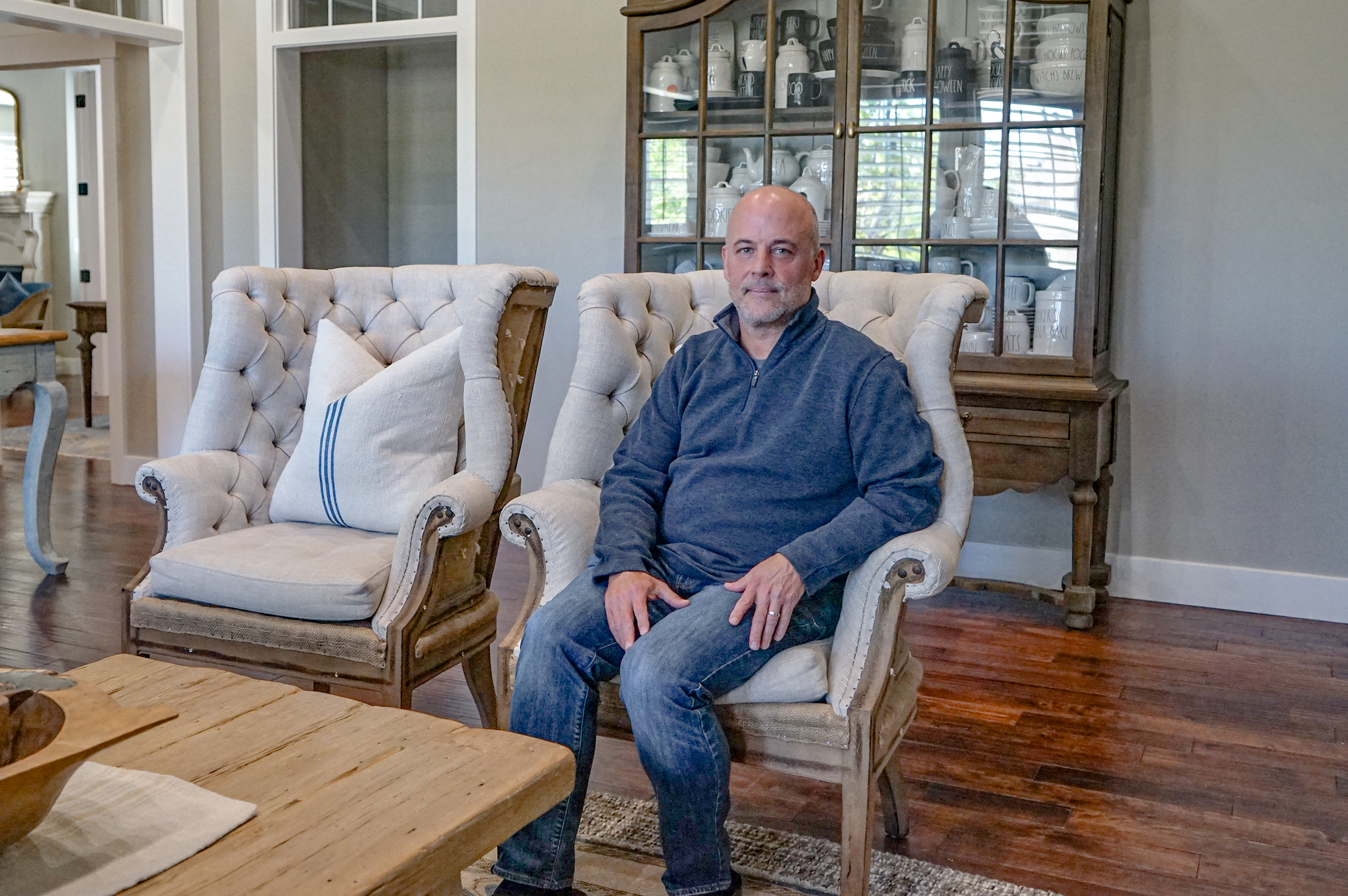
    Tim Duffy, a pediatrician in Salt Lake County, Utah, says many parents are concerned about incorrect claims about vaccines seen on social media. (Amy Maxmen/KFF Health
    News)Amy Maxmen/KFF Health News

    On conversations with parents who don’t vaccinate their children

    Tim Duffy, a pediatrician in Salt Lake County: A lot of families aren’t aggressively anti-vax, but they’re hesitant. Younger parents who grew up in the digital age have done their research — “research” in quotation marks — for months. And they keep getting confirmation of their concerns on social media. They think they’re doing what’s best for their child.

    I’ve told families: “You could do nothing I say as a pediatrician. You could sleep your child on their stomach. You could not put them in a car seat or, when they’re older, not use seat belts. You could do nothing I say, and for your individual child, they will probably be OK. But from my standpoint, where I’m taking care of thousands of kids, within a system that takes care of hundreds of thousands of kids, we will have bad outcomes. These children will show up at our facilities, and it’s so sad.”

    Pediatrician in southern Utah whom KFF Health News agreed not to name, because of concerns about harassment after being targeted by anti-vaccine activists in the past: A lot of parents are concerned about autism. I’ve told them that I’d be very concerned if there was any evidence that what we’re doing is causing autism. But if vaccines were causing autism, we should see more cases of autism in vaccinated kids compared to unvaccinated kids, and we’re just not seeing that.

    I’ve also had families who say they want to be natural, or that they’re concerned about what is in the shots. A frequently asked question is: “Did you vaccinate your children?” I say that knowing what I know, I’m confident giving this to my kids. They’re all vaccinated.

    On the influence of politics on vaccine hesitancy

    Jones: Vaccines have become a political football. That wasn’t true 20 years ago. But now it’s used to drive a wedge between groups of people, which is unfortunate. Vaccines are one of the main reasons why we don’t have to worry about losing our kids.

    Southern Utah pediatrician: People don’t know who to believe. If politics comes up, I tell parents that my messaging on vaccines is not politically motivated. When parents ask about changes to the vaccine schedule, I’m transparent. [In January, the Department of Health and Human Services controversially recommended reducing the number of vaccines given to children. A few months later, a federal judge blocked those changes.]

    I’ve said there was a process for the approval of immunizations through ACIP [the Advisory Committee on Immunization Practices], which is made up of scientists, public health experts, and doctors, and all those people were let go, and a new panel was selected. A couple of individuals changed the recommendation outside of the time-tested, evidence-based process for evaluating vaccines. That raises concerns for me as a doctor. I tell parents that the American Academy of Pediatrics, the American Academy of Family Physicians, and several other professional organizations have issued statements saying that these changes are not based on evidence.

    Ellie Brownstein, a pediatrician in Salt Lake County and president-elect of the Utah chapter of the American Academy of Pediatrics: I avoid talking about politics, but what’s being said has added another layer to our work. One family asked me about changes to vaccine recommendations, so instead of just telling them what immunizations are due, I talk with them about why physicians and researchers have followed a different schedule for years, about the reasoning and the science behind it. I explain that I trust these experts over someone without a lot of experience.

    Money: People are not vaccinated, because they’ve lost trust in the medical community. They’re placing trust elsewhere. Rebuilding trust is a complicated process, but it comes from consistent messaging at every level, from the pediatrician to local health departments to community leaders, city leadership, district leadership, religious leadership, educational leadership.

    We need consistent messaging from state leadership, which has been pretty absent. I want to see commercials on TV about the safety of the MMR [measles, mumps, and rubella] vaccine and the dangers of the measles, sponsored by my state leadership. I’d like to see this on billboards and in schools, in public buildings and grocery stores. I want to go to a sports event and see messages about the measles and the MMR vaccine. Right now, people have to go out of their way to find information from reputable sources.

    We also need policy changes to support vaccination. This train is going in the wrong direction, and it can feel like a helpless situation, because we’re just not seeing the public messaging and leadership that’s needed to turn this around.

    Advice on talking with parents who don’t vaccinate their children

    Jones: Approach them with as much compassion as you possibly can. Ask open-ended questions to learn about their experiences that led them to have these concerns. I think it’s really important to not come down on them, citing facts and figures and pointing to guidelines on why they need to get their kids vaccinated. But try to direct their attention to the fact that you’re a real person with your own real experiences and knowledge. I point out to families that I have my own kids, and I would never recommend something for your kids that I wouldn’t do for mine.

    Southern Utah pediatrician: I’ve learned that if you come down hard, you’re going to lose people who need care. My number one goal now is to build bridges and maintain a relationship with families, because that’s what’s going to allow me to convince some of them.

    I approach people differently depending on where they are. Parents who are very skeptical or anti-vax will say no when I tell them their child is due for immunizations. I’ll say: “Fine. You guys get to choose. You’re the parents. But I’m curious to know what your reasoning is.” Sometimes they’re just like, “It’s something I’ve decided.” They don’t want to have a conversation.

    It’s a good day if I can have a conversation with someone who doesn’t want to vaccinate, even if I don’t convince them. I try to help them think through things rather than shoving anything down their throat. When they’re done talking, I’ll ask, “Can I share my perspectives on this?” Some will say yes enthusiastically, and others will say yes because they’re being polite.

    A lot of parents aren’t sure what to do, and those are the people I focus most of my time on. I focus our conversation on their specific concerns, and I’m open about specific side effects that different immunizations can have. For example, I’ll tell them that some children get a fever after a vaccine, which is OK. The fever is not harmful, but it can make babies feel crummy as their body is building up antibodies against viruses and bacteria.

    Brownstein: I don’t like the idea of excluding unvaccinated kids from my practice. I know some do that. But what that does is it ends any future discussion. I can’t keep talking with parents about vaccines if I kick them out of my practice, and if these parents find like-minded doctors, this situation will get worse.

    On being on the front lines of measles’ comeback in the U.S.

    Money: I wish that people could see what I see. Everyone else sees what people post on Instagram. Or they think, “Someone I know had measles when they were a kid and they were fine.” But as a hospital-based pediatrician, I see what happens when things go poorly. I see what happens when children with measles aren’t able to breathe on their own, and they’re in a hospital bed with a cannula in their nose, struggling to breathe, an IV in their arm because they can’t drink on their own. And the child is terrified, and the parents are scared that their child might die.

    It’s heartbreaking as a pediatrician and as a father to know that the entire situation could have been easily prevented.

    Duffy: Even though parents say vaccination is their choice, I still feel personally responsible if something bad happens that’s preventable, because I feel like I didn’t say the right thing, I didn’t ask the right questions. Maybe I let it drop because of the look on a parent’s face.

    Morris: Every pediatrician I know cares so deeply about what they do. Sometimes people forget that we are human beings practicing this discipline, and we bring all our concerns for our community into this space. I’m trying to navigate a lot of complex human emotions, like how it feels to hold grief with a family when something bad happens that was preventable — which is the worst situation, because you think, “Could I have done something differently?”

    Jones: I think we’ll see more diseases start coming back that we thought we had gotten rid of. I think it’s going to take dramatic changes to actually prevent those outcomes. I’m not necessarily seeing those changes being done by those in power.

    I think of that quote from The Lord of the Rings. It’s something like, you don’t get to choose the time that you’re born into, but you get to choose what you’re going to do about it. And if there’s any comfort that I have, it’s in knowing that there are right decisions to make and that I’m going to make them, and I’m going to help others make them, too.

    KFF Health News is a national newsroom that produces in-depth journalism about health issues and is one of the core operating programs at KFF — the independent source for health policy research, polling, and journalism.
  • Trump says he may pull Blanche’s attorney general nomination until dissenting senators leave office

    Trump says he may pull Blanche’s attorney general nomination until dissenting senators leave office

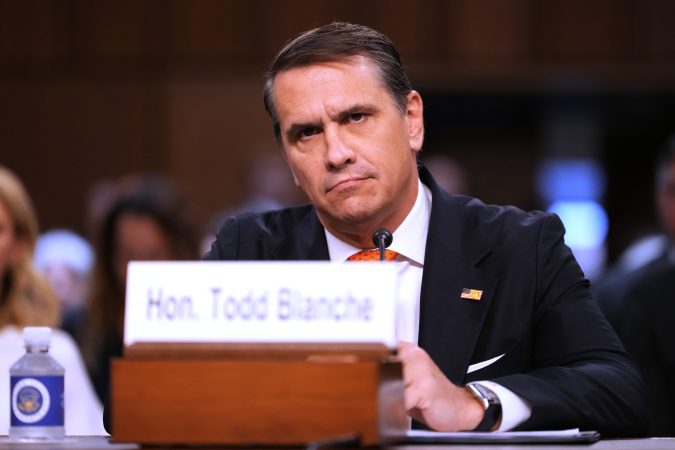
    President Donald Trump suggested Thursday that he might withdraw Todd Blanche’s nomination to become attorney general until next year amid a standoff with two Republican senators who are demanding concessions from the administration in exchange for their votes.

    Sens. John Cornyn (Texas) and Thom Tillis (N.C.) have called for changes, in writing, to the controversial deal the Justice Department struck earlier this year to resolve a lawsuit Trump filed against the IRS. Despite days of negotiations with the Justice Department, an agreement appeared far from likely.

    In a social media post Thursday, Trump called out the senators, both of whom are set to leave their elected positions at the end of the year, and suggested their resistance to supporting Blanche stemmed from Trump’s refusal to back them for reelection.

    “John Cornyn, of Texas, and Thom Tillis, of North Carolina, both of whom I refused to Endorse, and whose political careers have been ended by my action, are refusing to vote for this Great Nominee,” Trump wrote.

    He added: “I have no objection to temporarily withdrawing Todd’s name, if they do not do the right thing, and putting him back after Cornyn and Tillis are out of office.”

    If Trump follows through on that threat, Blanche could remain the head of the Justice Department on an acting basis for the foreseeable future.

    Still, the fact that two senators from the president’s own party had brought Trump to consider such a move signified the extent to which Republican lawmakers are showing an increased willingness to buck the president’s demands as his popularity falls and the midterms approach.

    Cornyn lost his bid for reelection in May after the president endorsed his primary opponent, Texas Attorney General Ken Paxton. Tillis opted not to seek reelection this year after a dispute with Trump. Since then, both senators have opposed the president on occasion, but their stand on Blanche’s nomination is the most significant break so far.

    Despite Trump’s pronouncement, there is no guarantee that Blanche’s path to nomination would become easier if the president waits for the senators to leave office. Analysts from both sides expect Democrats to make gains in the midterm elections, potentially retaking one or both chambers of Congress.

    Responding to Trump’s threat Thursday, Cornyn shot back with a social media post of his own saying the president “is mistaken if he believes concerns about the provisions in his tax lawsuit settlement are limited to me and Senator Tillis.”

    “This is not just a problem with just Thom Tillis and me — we just happen to be on the front lines on the Judiciary Committee,” Cornyn later told reporters. “I think there’s a serious question whether — if this goes unresolved — whether he could ever get confirmed. And I think that’s too bad, because I think he’s basically a good guy.”

    “After the midterms, who knows who’s going to be the next United States senator from North Carolina or Texas?” Cornyn said.

    Earlier in the day, the senator dismissed the notion that his and Tillis’ position stems from hostility to Trump. “This is about making sure that we maintain the integrity of our justice system and fairness for everybody involved,” Cornyn said.

    That back-and-forth came hours after Sen. Chuck Grassley (R., Iowa), chairperson of the Senate Judiciary Committee, was forced to postpone a committee vote on Blanche’s nomination that had been scheduled for Thursday morning or risk a losing outcome.

    Republicans enjoy a 12-10 advantage on the Judiciary Committee, including Sen. Darline Graham of South Carolina, who recently replaced her late brother, Sen. Lindsey Graham. Either Cornyn or Tillis voting against Blanche would be enough to force a tie, stalling the nomination before it could reach the Senate floor. “No” votes from both senators would kill the nomination in committee.

    “Chairman Grassley works to set President Trump’s nominees up for success in committee, not failure,” Grassley’s office said of the decision to postpone the vote.

    Cornyn and Tillis are demanding changes to two aspects of the Justice Department’s deal with Trump, which resolved the lawsuit the president had filed against the IRS over the leak of his tax returns to the media.

    They want Blanche to codify in writing his public pledge that the administration will not move forward with the “Anti-Weaponization Fund,” a nearly $1.8 billion payout fund to compensate people who claim they are victims of politically motivated prosecutions.

    They are also seeking to limit a separate provision that offered Trump, his family members, and their businesses protection from past tax claims — a potentially lucrative benefit for a president who has often complained of burdensome IRS audits. That aspect of the deal has led to accusations of corruption and self-dealing.

    The federal judge who oversaw Trump’s lawsuit recently denounced it as an improper attempt to “manipulate” the court process. She said it was not a legitimate legal dispute between two independent parties, given that both sides ultimately reported to Trump, but rather a pretext to come up with a questionable deal, which was reached without court approval.

    Blanche has said he did not play a direct role in overseeing the negotiations between the Justice Department and Trump’s legal team. However, his signature is the only one that appears on the documents relating to the deal’s tax provisions.

    Cornyn, among other things, wants the administration to clarify in writing that those protections do not apply to the Trump family’s future actions.

    Neither side is offering specifics on the status of their ongoing negotiations, but talks continued into Thursday morning, with the Justice Department and the senators swapping proposals and counteroffers.

    A Justice Department official, speaking on the condition of anonymity to share details on the talks, said the department had sent a new proposal to Cornyn and Tillis late Wednesday.

    “The Department has been in regular communication with Committee members for weeks, and we look forward to continuing to work productively with Senators to address any concerns,” the department said in a statement.

    Cornyn sent a proposal of his own Thursday morning but told reporters that he had not heard back and had no scheduled meetings or calls with White House or Justice Department officials.

    Trump is generally not inclined to make concessions to lawmakers who he thinks are not on his side, said one Trump adviser, speaking on the condition of anonymity to discuss the president’s mindset. Trump does not think he needs Senate Republicans as much as they think he does, the adviser added.

    Cornyn suggested that the $1.8 billion payout fund was no longer the main source of the impasse. Instead, he said, the latest hang-up involved the senators’ requested revisions to the part of the deal containing tax protections for Trump.

    Tillis said separately that Trump’s threat to withdraw Blanche’s nomination rather than formally rescind the payout fund casts doubt on Blanche’s promise that the fund is dead.

    “It doesn’t add up,” Tillis told reporters. “It suggests to me that there’s at least one or two people in the White House that wanted to have this latent capability for future use.”

    Both senators blamed the White House, not Blanche, for the impasse.

    “I’m happy to solve the problem,” Cornyn said. “I thought we had solved it last night. … I think as far as Blanche and the Department of Justice, we were pretty much on the same page. But then when the president got wind of it, he wasn’t.”

  • A shrinking weapons stockpile is testing the Pentagon’s sweeping new strategy

    A shrinking weapons stockpile is testing the Pentagon’s sweeping new strategy

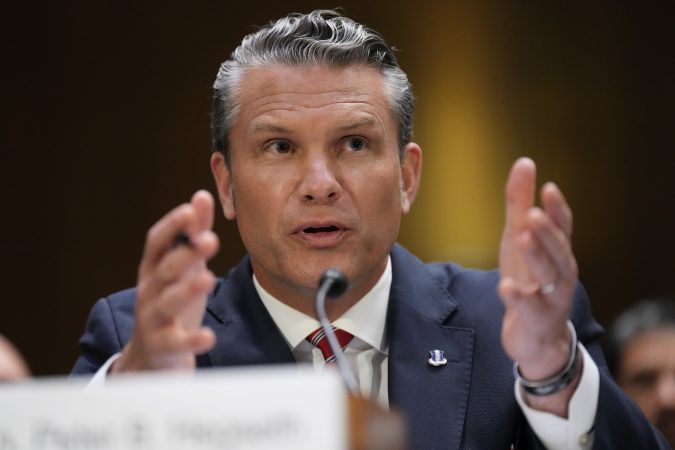
    In a late-June meeting with more than a dozen of the nation’s top defense technology firms, Defense Secretary Pete Hegseth had an urgent message: The Pentagon needed their help to rapidly replenish America’s weapons arsenal.

    Outside the room, the United States was mired in a conflict with Iran that was rapidly depleting U.S. stocks of missiles and interceptors. According to three people familiar with the meeting, some of whom spoke on the condition of anonymity to discuss sensitive information, Hegseth told executives that their companies would be critical to restocking the nation’s supplies.

    The meeting, several details of which were previously unreported, underscores a pivotal shift in the U.S. defense industry. With the Iran war consuming vast quantities of precision munitions and relying less on ground troops or drone warfare, the Pentagon is leaning on venture-backed startups to solve one of its most pressing problems: rebuilding America’s weapons stockpiles at speed.

    The meeting was filled with the Pentagon’s top brass, including Steve Feinberg, the deputy defense secretary; Emil Michael, the undersecretary of defense for research and engineering; and Michael Duffey, the Pentagon’s top acquisitions official.

    Leading defense tech firms were summoned, including AI-aircraft software company Shield AI, the autonomous weapons firm Anduril, cruise missile startup CoAspire, and low-cost munitions maker Castelion. Some details of the meeting were previously reported by Breaking Defense.

    In many ways, this is the moment Silicon Valley’s defense entrepreneurs have said they were made for — to be cheaper, quicker, and more nimble to the needs of the U.S. fighting force than legacy multibillion-dollar defense contractors.

    They represent a sharp departure from established firms, which have far more experience managing clunky government acquisition processes and billions of dollars in capital to spend producing weapons en masse and lobbying lawmakers, but can move more slowly, especially in creating new supplies featuring cutting-edge technology, including artificial intelligence.

    The urgent need for new weapons is a major test for the Trump administration, which has turbocharged its relationship with Silicon Valley and made collaboration with startups a core part of its weapons acquisition process. The conflict, according to industry experts, may reveal whether newcomers can deal with the challenging realities of providing weapons at scale, overcoming antiquated contracting processes and congressional gridlock.

    Hegseth focused on these hurdles at the gathering, asking each executive what obstacles stood in the way of producing more weapons, according to the people. Several pointed to slow Pentagon contracting processes and the difficulty startups face securing enough up-front financing to fund large production runs and expensive research and development.

    It’s unclear, however, whether the industry’s newest entrants can scale quickly enough to meet the Pentagon’s demands.

    “It’s one thing to build … it’s another thing to then mass produce,” said Jerry McGinn, the director of the Center for the Industrial Base at the Center for Strategic and International Studies. “Can they deliver?”

    Acting Pentagon press secretary Joel Valdez said in a statement to the Washington Post that the Defense Department is “transforming how the Department fights, buys, and builds” its weapons “to ensure we rapidly deliver critical technology to the warfighter at scale.” He added that the department “will harness the creativity and drive of American innovators, clear bureaucratic blockers, and put our acquisition system on a wartime footing to deliver tangible solutions to the Joint Force.”

    Anduril and Shield AI did not reply to a request for comment.

    ‘Begging to be unleashed’

    In the second Trump administration, the Pentagon has made it increasingly clear that Silicon Valley will be essential in creating cheaper, smarter, and smaller weapons to reshape how the U.S. fights war.

    The Defense Department’s top leadership has become stuffed with former Silicon Valley executives, bringing their startup ethos to the Pentagon to transform the military.

    Speaking in November at the National War College in Washington, Hegseth outlined his vision to overhaul the Pentagon’s acquisition process in partnership with U.S. industry to ensure it can operate on a wartime footing.

    “American industry and its innovative spirit are begging to be unleashed to solve our most complex and dangerous warfighting problems,” he said. “We need to get out of our own way, out of your way and enter into real partnership with you rather than overprescribe and decelerate your natural progress.”

    Approximately 10,000 new defense tech companies have entered the market since 2024, according to a July report by CSIS. Nontraditional companies outside of legacy defense contractors received more than $120 billion in contract obligations in the 2025 fiscal year.

    But one of the Pentagon’s most urgent needs is munitions. The war with Iran has sharply depleted U.S. stockpiles, with CSIS estimating Monday that inventory of Patriot interceptors has fallen from 2,200 before the war to fewer than 827, and THAAD missiles from 452 to fewer than 278.

    It could take three or more years to replenish the supply of THAAD and Patriot missile defense systems to what it was before the Iran war, according to a CSIS analysis in May, putting the U.S. at increased risk of service members dying and military assets abroad becoming damaged due to weakened defenses. Precision strike and joint air-to-surface missiles may take several months to a year to replace, according to the analysis.

    The Defense Department is aiming to fill this gap by turning to tech companies that make low-cost munitions. The Pentagon’s fiscal 2027 budget calls for nearly half of all of its munitions to be low-cost, with that share rising to 70% by fiscal 2031, CSIS analyzed.

    This mindset has filtered into current agreements. In May, the Pentagon announced several multiyear arrangements with defense tech companies, including Anduril, Castelion, CoAspire, Leidos, and Zone 5, to “aggressively expand” the U.S. military’s strike capabilities and purchase their low-cost missiles.

    The goal, according to the announcement, is to procure 10,000 low-cost cruise missiles in three years, starting in 2027. The Defense Department has also said it will issue a contract to Castelion to purchase a minimum of 500 of its low-cost hypersonic missiles — called Blackbeard — annually with a desire to buy up to 12,000 over five years if the technology receives proper testing accreditations.

    McGinn of CSIS said the demand will expose the industry to the realities of making weapons in real time. The startups have shown they can build the technology at low cost, he said, but now they have to prove their products are up to Pentagon standards, while navigating the whims of Congress, which appropriates defense spending.

    Doug Denneny, the founder and chief executive of cruise missile startup CoAspire, said startups face a challenge beyond mastering technological advancements.

    “That is the direct messaging that we receive from the Department of War,” he said, using the Trump administration’s preferred name for the Defense Department. “‘Great that you’ve got this great technology. … We get it. We believe it. You’ve demonstrated it. You’ve proven your capability. Now you have to manage your supply chain, and now you have to produce at scale. Otherwise, it’s not worth the investment.’”

    “The importance of that has been emphasized to me personally by senior leadership in the Pentagon,” he added.

    The rush to expand weapons production could also overwhelm the subcontractors that supply critical components, creating bottlenecks across the defense supply chain, Denneny said.

    Bryon Hargis, co-founder and chief executive of Castelion, said the Pentagon’s reliance on startups carries enormous pressure. His company’s Blackbeard hypersonic missile could cost about $500,000 each — far below the roughly $5 million price tag of comparable weapons v but scaling production to meet military demand remains the challenge.

    “I feel the weight of … everything that we still have yet to do and to build out,” he said, adding that making good on supply promises is “going to be just tremendous amounts of pain over the next years.”

    He noted that the partnership is “an honor, but it’s a great responsibility. Like I feel we have to deliver.”

  • How views on Trump’s handling of Iran have shifted, according to a new AP-NORC poll

    How views on Trump’s handling of Iran have shifted, according to a new AP-NORC poll

    WASHINGTON — Most Americans say the war in Iran has not been worth fighting, and President Donald Trump’s approval rating on Iran has fallen slightly since last month, according to a new AP-NORC poll.

    The results are a stark repudiation of the Republican president’s approach to the conflict, which has dragged on far longer than he originally predicted.

    About two-thirds of U.S. adults say the war with Iran, which began Feb. 28, has not been worthwhile, according to the new poll from The Associated Press-NORC Center for Public Affairs Research. That includes the vast majority of Democrats and independents, as well as about 37% of Republicans.

    The poll was conducted July 23-27, as the U.S. and Iran paused attacks following a nearly two-week escalation in the war. During the escalation, the U.S. targeted Iranian military and commercial sites while Iran attacked U.S. military facilities in the Middle East, resulting in additional deaths of American service members. Since the war began, 18 U.S. service members have been killed, but the Trump administration has sought to revise those numbers.

    The survey reinforces how unpopular the Iran war has become at home, a potential problem for congressional Republicans up for reelection in November who have defended Trump’s military actions. Just 28% of U.S. adults now approve of how Trump is handling Iran, a slight decline from 34% last month. Even Republicans appear to be increasingly unhappy with the prolonged conflict. Roughly 61% of Republicans approve of how Trump is handling Iran, an apparent decline from 71% in June. The margin of sampling error for Republicans is 6 points, so the decline is considered slight, but it’s still noteworthy given Republicans’ much higher approval of how Trump is handling the presidency overall.

    Trump’s overall approval rating is at 33%, slightly below where he stood at this point in his first term and similar to where former President Joe Biden stood about one and a half years into his presidency, when inflation peaked.

    Robert McClary, a 52-year-old Republican from Sugar Grove, Ohio, is skeptical the war could be brought to an easy conclusion and disapproves of Trump’s handling of it. McClary voted for the president once, in 2016, but recalls that during the last election, Trump campaigned on not starting new wars in the Middle East.

    “I don’t have any trust in this administration at all and to why they brought us into this war, why they’re putting our soldiers at risk again,” he said.

    The findings also indicate that most Americans’ goals for the conflict may not be aligned with Trump, who has repeatedly said the war was launched to keep a nuclear weapon out of Iran’s hands. While about two-thirds of U.S. adults say it’s “extremely” or “very” important to keep Iran from gaining a nuclear weapon — with Republicans especially likely to say this — even more Americans say it’s highly important for the U.S. to keep gasoline prices low or negotiate a permanent ceasefire with Iran.

    McClary added: “I really don’t know what you can do now. I mean, you’ve kind of gotten yourself buried into this mess.”

    Relatively few want military action against Iran to continue

    There’s little appetite among Americans for a prolonged conflict.

    Only about 2 in 10 U.S. adults want to continue military action in Iran, while about 3 in 10 say the U.S. should pause military action and seek a renewed ceasefire through negotiations. About 2 in 10 want to completely stop military action in Iran and roughly one-quarter don’t know enough to say.

    About half of Republicans say the U.S. should continue military action against Iran, particularly those who identify as “very conservative.” Republicans who identify as MAGA — part of Trump’s Make America Great Again movement — are much likelier than non-MAGA Republicans to say the war should continue. Non-MAGA Republicans are more likely to want a ceasefire or a complete halt to the military action.

    Jennifer Norton, a 71-year-old Republican from Crossville, Tennessee, supports military action in Iran but has been displeased to see prices rising for things like beef roasts and hamburgers. Norton lives on a “modest income,” and things are getting expensive.

    “I am getting a little impatient, but when I start to dwell on that for a minute, I remember Mr. President Trump is a brilliant businessman,” she said. “He can’t tell us exactly what he’s doing, but I trust that he’s doing something. I mean, he is doing fine.”

    Independents and Democrats are more likely than Republicans to want to stop military action against Iran immediately, although about 3 in 10 Republicans want either a pause or complete stop to military action.

    Ryan Sloan, a 39-year-old Republican in Lakeland, Florida, has come to disapprove of the conflict in Iran recently because he wants a better explanation from the Trump administration about why the war intensified in late July.

    “Let’s face it, not everybody’s going to be happy with him,” Sloan said. “I just wish I’d have had more transparency about why things were going on the way they were.”

    Most say it’s important to keep gas prices down

    Many Americans continue to be concerned about the pocketbook impact of the Iran war. About 7 in 10 U.S. adults — 72% — say it’s “extremely” or “very” important for the U.S. to prevent domestic oil and gas prices from rising, up slightly from 67% in March.

    Oil topped $100 a barrel last week, ending a brief period of lower prices when hostilities between the U.S. and Iran eased in June. Gas prices rose above $4 per gallon on average, and the elevated fuel price is hitting consumers in other ways, too. Inflation cooled last month but remains elevated, and consumer spending has slowed, with signs that Americans are taking advantage of sales and other incentives.

    There are also indications that fluctuating gasoline prices are an increasingly big problem for many Americans. About 4 in 10 say the cost of gas for their car is a “major source” of stress in their life right now, compared with about 3 in 10 in February.

    Mikal Baker, a 47-year-old political independent in Sandy Springs, Georgia, disapproves of the war in Iran and is frustrated by the effect on gas prices.

    “I don’t see the benefit. I don’t see the total benefit of the American citizen for this war,” he said. But Baker is skeptical it will ever come to an end. “I can’t say it will ever be over with.”

    Some Americans may be hoping that gasoline prices could stabilize or go down. About 4 in 10 U.S. adults are “extremely” or “very” concerned about being able to afford gas in the next few months, down slightly from 45% in March.

    Republicans prioritize keeping Iran from obtaining a nuclear weapon

    Even as most Americans prioritize keeping gas prices from rising, a similar share say it’s “extremely” or “very” important to negotiate a permanent ceasefire with Iran.

    About 7 in 10 Americans say it’s “extremely” or “very” important for the U.S. to reach a ceasefire agreement, slightly higher than the roughly two-thirds who say it’s at least “very” important to prevent Iran from obtaining a nuclear weapon. That’s also well above the 4 in 10 who say it’s “extremely” or “very” important to prevent Iran from threatening Israel.

    Early in the conflict, Trump said the United States’ primary objectives were to degrade Iran’s military capability, eliminate their Navy and Air Force, keep them from gaining nuclear weapons and protect U.S. allies in the region.

    Republicans, in particular, say it’s highly important to keep Iran from obtaining a nuclear weapon. About 8 in 10 say this is at least “very” important, compared with roughly 7 in 10 who say that about preventing oil and gas prices from rising and negotiating a permanent ceasefire with Iran.

    Sloan, the Florida Republican, believes it’s important to keep Iran from gaining a nuclear weapon, adding: “We are most definitely their number one targets once they do have nuclear capabilities.”

  • 5 takeaways from the Senate hearing where Fauci refused to answer questions

    5 takeaways from the Senate hearing where Fauci refused to answer questions

    For almost three hours Wednesday, Republican senators grilled Anthony S. Fauci with dozens of questions at a hearing focused on the origins of the covid-19 pandemic and whether Fauci previously lied under oath to Congress. Again and again, the 85-year-old former government scientist gave the same response.

    “On the advice of counsel, I respectfully decline to answer based upon my rights under the Fifth Amendment to the Constitution,” Fauci said. He delivered variations of that answer more than 100 times.

    Fauci was subpoenaed to appear before the Senate’s government oversight committee by its chairman, Sen. Rand Paul (R-Kentucky), who has spent years alleging that Fauci participated in a cover-up of the possible origins of the covid-19 pandemic. Paul has also blamed Fauci for inadvertently sparking the pandemic – noting that Fauci’s agency previously funded coronavirus research in Wuhan, China, where the outbreak was first detected in late 2019 – and has called for him to be put in prison.

    Fauci has denied the allegations in repeated appearances before Congress, most recently in a combative 2024 hearing. Infectious-disease experts have also insisted to Paul and other Republicans that while Fauci’s former agency, the National Institutes of Health, funded virus research in Wuhan, the work could not have caused the pandemic.

    Fauci said Wednesday that he refused to testify because he believed Paul was seeking to wrongly trap him.

    “The only conclusion I can reach is that the sole reason he is calling me before this committee is to get me to say something – anything – that could vindicate his repeated public pledges that I end up, in his words, ‘behind bars,’” Fauci said, before announcing his plan to invoke the Fifth Amendment.

    Here are five takeaways from the hearing.

    Republicans tore into Fauci

    Senate Republicans did not miss their chance to lace into Fauci. They inquired. They mocked. They goaded. At times, they flat-out insulted. Beyond asking about covid-19’s origins, senators accused Fauci of mishandling pandemic guidance and accused him of using his growing profile during the pandemic for personal benefit.

    Paul, a longtime adversary of Fauci, was visibly frustrated with Fauci’s nonanswers. Paul warned the former official that it was against the law to obstruct an investigation and threatened “repercussions” for Fauci’s unresponsiveness. When Fauci’s attorney, David Schertler, asked to make a comment, a back-and-forth led to Paul removing the lawyer from the room.

    It was the first of many tense moments.

    “Nothing says honesty like taking the Fifth, huh, Doc,” Sen. Josh Hawley (R-Missouri) said, leaning forward in his seat. The senator grew heated in his questioning, raising his voice and pointing with both hands as he accused Fauci of enriching himself.

    A Hawley staffer propped up an image of a magazine cover for which Fauci posed in September 2020. “You became a narcissist and a megalomaniac and a liar,” Hawley said.

    Fauci leaned forward, looking down at the table in front of him, hands fidgeting in his lap, glancing up occasionally at the senators accosting him.

    At one point, Sen. Bernie Moreno (R-Ohio) asked audience members to stand up if they had disagreed with or been harmed by policies such as mask requirements and school closures. More than a dozen stood. Moreno asked Fauci to turn around and look at them. Fauci turned to confer with his lawyers, then faced forward again.

    Sen. James Lankford (R-Oklahoma) adopted a warmer tone toward Fauci than his colleagues did. “I know you’re invoking your Fifth Amendment right, which you have the right to be able to do constitutionally,” he said. “Thanks for coming to be a part of this.”

    Democrats defended Fauci – mostly

    Democrats portrayed Fauci as a hero and said the GOP attacks were baseless. They also criticized Republicans for attacking public health officials like Fauci while supporting the Trump administration’s cuts to public health research and funding.

    Sen. Gary Peters (Michigan), the committee’s top Democrat, called Paul’s efforts biased. “One-sided investigations designed to validate predetermined conclusions do not serve the American people,” Peters said.

    Fauci and other public health officials have saved lives, said Sen. Richard Blumenthal (D-Connecticut). “Today, we are demeaning and degrading their lifesaving service,” he added.

    One Democrat struck a different note.

    Sen. John Fetterman (D-Pennsylvania) was not going to attack Fauci, he said, but he wouldn’t defend him, either. Instead, Fetterman shared a regret: that the lab-leak theory came to be seen by some as a right-wing conspiracy theory, preventing people like himself from taking it seriously.

    “I hope … the next time our nation’s facing something like this, we are not … as I might have been, blinded by the partisan idea that maybe the truth might come from a side that’s different than you are,” Fetterman said.

    The hearing shows how divisions have calcified

    Wednesday was the latest example in a years-long trend: Congressional lawmakers have been unable to work together on a probe of the pandemic’s origins.

    A House investigation of the government’s pandemic response began in early 2023 with the top Republican and Democrat pledging to work together. It descended into partisan bickering and dueling reports about what the investigation found, and whether Fauci was personally culpable.

    In the Senate, a bipartisan plan to set up a commission investigating the nation’s covid response repeatedly stalled out. Democrats have accused Republicans of promoting conspiracy theories about Fauci’s role and other aspects of the response, while GOP officials say liberals and the media have not been sufficiently transparent about mistakes that government officials made.

    Paul, particularly, has long vowed to hold Fauci accountable for his “crimes” – a claim that Fauci and his allies say made it impossible to cooperate with him Wednesday.

    Paul’s threat to hold Fauci in contempt raises new legal questions

    The chairman said his committee plans to hold a vote next week on whether Fauci was in contempt of Congress. But he and his colleagues acknowledged legal uncertainty about how to proceed, complicated by President Joe Biden’s preemptive pardon for Fauci before Biden left office.

    Lankford asked Paul if there is guidance on whether Fauci could be held in contempt for refusing to answer questions after making an opening statement. Lankford noted a 2013 episode in the House in which an IRS official made an opening statement and then invoked her Fifth Amendment right to not answer questions about whether her agency had wrongly targeted conservative groups. The GOP-led House concluded that the official had waived her Fifth Amendment rights by making an opening statement, and she was ultimately found in contempt.

    “Are we dealing with the same issue here?” Lankford asked.

    Paul said that was among the legal questions lawmakers would consider. He added that the courts may need to settle whether, with “a presidential pardon that offers you complete immunity, you can still claim that you need protection” in a congressional hearing.

    “Dr. Fauci isn’t liable for anything as long as he tells the truth,” Paul added.

    Some past congressional witnesses have also repeatedly pleaded the Fifth. Martin Shkreli, a controversial pharmaceutical investor, refused to answer questions in front of a House Oversight Committee hearing in 2016, annoying lawmakers with his smirking. While lawmakers discussed holding Shkreli in contempt of Congress, they ultimately did not.

    Regina Wallace-Jones, the head of the Democratic fundraising engine ActBlue, also repeatedly invoked the Fifth Amendment during a congressional hearing last month in which Republicans pressed her on the platform’s process for vetting foreign donations.

    “It is the only reasonable response to a proceeding that from the beginning has been about harassing a political opponent’s fundraising platform, not genuine oversight,” she wrote in The Washington Post.

    House Republicans have threatened to hold ActBlue in contempt.

    Evolving perceptions of Fauci

    Fauci was initially seen as a unifying figure, particularly in the early days of the pandemic as Americans looked for answers – and the highly visible doctor provided them in TV interviews, podcast appearances and other forums.

    About 8 in 10 Americans in April 2020 said they trusted Fauci to provide reliable information on the pandemic, including similar shares of Republicans and Democrats, according to polling by KFF, a nonpartisan health care research and polling organization. But within two years, only about 5 in 10 Americans had trust in Fauci, a decline driven by plunging GOP support: Just one-quarter of Republicans said they trusted the doctor, according to KFF.

    Some of that was fueled by relentless criticism of Fauci in conservative media, which blamed him for pandemic policies that were increasingly viewed as too harsh. It was also driven by President Donald Trump, who empowered Fauci in early 2020 and followed his advice on imposing shutdowns and other measures, before distancing himself from the doctor later that year and repeatedly criticizing his guidance.

    “I didn’t mind him, I didn’t find him to be bad personally, as a person,” Trump told “Fox & Friends” on Tuesday. “But I didn’t agree with what he was saying or what he was doing.”

    Fauci has previously said that Trump soured on him as the pandemic stretched on and the 2020 presidential election drew closer, with Trump telling the scientist to be more optimistic about the virus’s risks in his media appearances.

    Fauci still retains more trust than some current leaders.

    Fifty-four percent of Americans in February said they were confident that Fauci had provided the public with trustworthy medical information, according to a February poll by the Annenberg Public Policy Center of the University of Pennsylvania. That exceeded the level of trust in current Health Secretary Robert F. Kennedy Jr., who was at 38 percent.

  • Congo says the death toll in fastest-growing Ebola outbreak has passed 1,500

    Congo says the death toll in fastest-growing Ebola outbreak has passed 1,500

    BUNIA, Congo — Ebola has killed more than 1,500 people in eastern Congo in the fastest-growing outbreak of the disease, data released Thursday showed, marking a 50% increase in around a week as the emergency continues to outpace response efforts.

    As of Tuesday, 3,442 cases had been recorded, with 1,521 deaths, according to the latest government update. The sharp rise since last week partly reflects a backlog of cases and deaths that had not yet been confirmed or recorded, the Africa Centers for Disease Control and Prevention said Thursday.

    The outbreak, declared on May 15, has been linked to the Bundibugyo virus, for which there are no approved vaccines or treatments. Delays in contact tracing, difficulties accessing affected areas, mistrust from communities, and violence by armed groups and some residents have hampered the response, the Africa CDC said.

    The outbreak is mostly concentrated in eastern Congo’s remote Ituri province, which accounts for nearly 90% of cases, but there have been others confirmed in five provinces, including one of the country’s largest cities, Kisangani.

    Neighboring Uganda declared itself free of Ebola on Tuesday following the discharge of the country’s last patient in mid-June.

    Ebola is rare, but highly contagious and can be contracted via bodily fluids such as vomit, blood, or semen. The disease it causes is severe and often fatal.

    Africa CDC Director-General Jean Kaseya said Thursday that 63% of confirmed deaths in the last two weeks occurred outside of treatment centers.

    Kaseya said this is largely due to the “unsafe handling of infected bodies” by residents. Traditional burial practices in some communities involve touching the bodies of the deceased, which can be highly contagious.

    The restrictions that health authorities have placed on such funerals, along with widespread misinformation asserting that the deadly virus isn’t real, have angered some residents and led to attacks on health facilities.

    In Ituri’s Nyakunde health zone, international partners supporting the Ebola response had to temporarily relocate after a July 15 attack on a hospital and a treatment center, sparked by a patient’s death.

    Officials say the relocation of these partners, including Africa CDC and Mercy Corps, has disrupted surveillance, contact tracing, and supplies.

    Désiré Duabo, chief medical officer for the health zone, said foreign aid groups and agencies had provided much of the supplies, equipment, and operational support, and warned that the small stocks left are “almost depleted.”

    Attacks such as the one in Nyakunde are causing anxiety among health workers and making it difficult for them to carry out their duties, said Pierre Akilimali, the Ebola response incident manager at the National Public Health Institute of the Democratic Republic of the Congo.

    “They are working amidst risks of infection as well as risks to their personal safety,” he said.

    Local health officials say security has since stabilized and are urging partners to return, with Africa CDC saying teams could redeploy as soon as next week.

    The latest outbreak has killed more people at a quicker rate than any previous outbreak, including in 2014-2016 when 28,000 cases were reported, of which over 11,000 people died. That outbreak took about eight months to reach 1,000 deaths.

    The World Health Organization says the global risk of spread remains low because Ebola does not travel through the air, making it much harder to spread than respiratory viruses. Cases detected outside the affected region have so far been quickly identified and contained without leading to sustained transmission, the agency said.

    In Congo, however, the risk of the spread remains “very high,” according to the WHO.

  • Lawmakers will investigate Iranian attack that killed 6 U.S. troops

    Lawmakers will investigate Iranian attack that killed 6 U.S. troops

    Democratic lawmakers announced Thursday that they are opening an investigation into the Iranian drone strike that killed six U.S. service members in Kuwait earlier this year, citing doubts over the objectivity of the military’s internal review of the attack.

    In a letter to Defense Secretary Pete Hegseth, Sen. Elizabeth Warren (D., Mass.) and Rep. Pat Ryan (D., N.Y.) — along with almost a dozen other House and Senate Democrats — cited recent reporting by the Washington Post and other media outlets scrutinizing the March 1 strike, saying they want answers to whether the military had adequate protections in place before the attack and whether the troops received proper medical care afterward.

    “The need for this investigation goes beyond the Shuaiba attack — it’s about taking accountability and protecting our service members,” Ryan, an Army and Iraq War veteran, said in a statement to the Post. He was referring to Port Shuaiba, the facility along the Persian Gulf where the deadly strike occurred. “It’s our job as members of Congress to force [Hegseth] to give us real answers and make sure something like this never happens again.”

    Reached for comment, the Pentagon did not address whether it would cooperate with lawmakers’ investigation, saying in a brief statement that “as with all Congressional correspondence, we will respond directly to the sender.”

    It was just the second day of Operation Epic Fury, the name the Trump administration has given the conflict, when an Iranian Shahed drone crashed into the center of an Army operations center at Port Shuaiba. Dozens of service members were injured in the attack along with the six who died.

    In the months since, survivors have alleged that military leaders failed to take appropriate action after being warned the facility lacked adequate defenses. Some have said, too, that troops wounded in the strike faced considerable difficulty obtaining treatment.

    Military officials have contested both assertions.

    As the Post reported this month, several soldiers who were at Port Shuaiba have said they doubt the Army’s internal review will hold anyone accountable. Citing a U.S. official familiar with the review, the Post also reported that the initial findings did not assign fault for the attack or address any punitive action.

    The Army has shared its findings with the families of some of the fallen service members but has not released that information publicly.

    In their letter to Hegseth, lawmakers questioned the seriousness and independence of the Army’s internal review, citing other reporting by the Post that revealed the task was assigned initially to a midgrade officer within the affected unit instead of an outside investigator.

    The matter was later elevated to a more senior officer at U.S. Army Central, the affected unit’s parent command. Outside observers have said they were skeptical of the move, noting that it still left the review to be overseen by personnel in the same chain of command.

    The lack of an independent investigator, coupled with new concerns about the Pentagon’s transparency and recordkeeping, raise questions about “whether investigations into service member casualty incidents will be conducted objectively,” Warren wrote in the letter.

    Citing Democrats’ concerns about the Defense Department’s “failures to provide service members that sustained injuries in this war with adequate care and its inability to honestly and openly inform the American people about the consequences of this war,” the lawmakers have chosen to pursue answers on their own, the letter says.

    They requested a response from the Pentagon by Aug. 12.

  • Letters to the Editor | July 30, 2026

    Letters to the Editor | July 30, 2026

    Data over politics

    In a recent Shackamaxon column, Daniel Pearson admonished the Friends of Pine and Spruce (FOPS) for taking our grievances over the Pine and Spruce Street redesign to court.

    FOPS represents a multitude of residents who live on and near these historic, narrow residential corridors. We engaged with the city, voiced our concerns, and sought a balanced solution that maintains safety for cyclists while preserving essential accessibility for elderly, disabled, and young residents. But City Hall, so far, is beholden to a single, vocal advocacy group, and insists on designing our streets based on politics instead of data, good practice, and engineering. That is slowly changing, with our help.

    In pursuing our lawsuit, we are exercising a foundational constitutional right. The judiciary exists precisely to act as a check on government overreach, improper legislative process, and a lack of transparency.

    The 2024 death of Barbara Friedes was a terrible tragedy. But even in the wake of tragedy, municipal governments must follow the law and rely on sound traffic engineering. The driver in that tragic crash was severely intoxicated and traveling on Spruce Street faster than the speed limit set for I-95. Banning residential loading and erecting concrete barriers does nothing to solve the single greatest cause of traffic deaths: excessive speed.

    Instead, the city’s rushed, politically driven response would make the streets more dangerous. Walled-off lanes turn narrow streets into high-speed e-bike expressways with no egress for pedestrians, separating seniors, paratransit vans, and emergency vehicles from front doors.

    We all want safer streets — for all road users: pedestrians, cyclists, motorists, residents, seniors, and people with disabilities. It should be guided by data, accessibility needs, and open public input, not political decrees passed without transparency. This political coercion will soon come to your neighborhood. We’re all fighting back.

    Lloyd Brotman, president, Friends of Pine and Spruce

    Accountability

    Sen. Dave McCormick once explicitly rejected Donald Trump’s Big Lie about winning the 2020 election. Now mum on election denial, he avidly supports the SAVE America Act, purportedly to stop voter fraud.

    You may ask: Why would anyone object to proof of citizenship to register to vote? Let’s see: You need either an original birth certificate or a current U.S. passport. REAL ID? Won’t cut it. And if you’ve changed your name, you’ll need legal proof of any changes. Married? Legal proof. Divorced? Legal proof. Surely everyone has the time, access, and money to procure all these documents.

    The fraud here is Sen. McCormick parroting the lies Republicans have been pushing for decades about rampant voter fraud. The SAVE Act is a draconian solution in search of a problem, intended not to protect democracy, but to subvert it.

    Rosalind Holtzman, Elkins Park

    . . .

    Let me get this straight. The Inquirer publishes an excellent article about Sen. Dave McCormick and others who are pushing the ill-conceived SAVE America Act on us, and it concludes by saying McCormick declined to be interviewed for the article. All we get are quotes from his canned town hall, where he cherry-picks questions and offers prepared responses. But then we give the senator space for a Letter to the Editor to repeat his one-sided false arguments uncontested. Let’s have some legitimate dialogue with the senator and stop giving him space for his infomercials.

    Helene Hilger, Philadelphia

    Join the conversation: Send letters to letters@inquirer.com. Limit length to 150 words and include home address and day and evening phone number. Letters run in The Inquirer six days a week on the editorial pages and online.

  • Horoscopes: Thursday, July 30, 2026

    ARIES (March 21-April 19). Your predictive guesses are more accurate than not. Use that today. Let it cue your preventive measures. As good as you are at solving problems in the moment, you get even better results if you prevent them before they happen.

    TAURUS (April 20-May 20). Every group has someone setting the direction. Today’s advantage comes from understanding that vision and helping move it forward. You don’t have to be the loudest voice to become an indispensable one.

    GEMINI (May 21-June 21). Small choices have outsized effects. Stay aware. Double-check your work. Keep reminding yourself what matters most. It’s easier to steer a moving ship than to reroute one that’s drifted miles off course.

    CANCER (June 22-July 22). Did you mess it up in some way? Good. Until you have a collection of interesting mistakes, you’re not yet a master. The thing that doesn’t work today may become the missing piece of something better later.

    LEO (July 23-Aug. 22). People think refinement is something you’re born with, but it’s more about small, respectful choices made over and over. Today your lovely instincts and steady self-control make a favorable impression that will linger for years to come.

    VIRGO (Aug. 23-Sept. 22). Talk can be cheap, and it can be expensive, too. The price is paid in attention. You’ll notice who is asking for it and who is earning it. You’re inclined to give your attention to the people who say less.

    LIBRA (Sept. 23-Oct. 23). You’ve established a method that works, though it’s not the only one that will. Switch the order. The beginning doesn’t always belong at the beginning. Rearranging familiar pieces can reveal a stronger story, a better argument or a clearer path forward.

    SCORPIO (Oct. 24-Nov. 21). There are very few things in this world that “always” or “never” happen. So the hyperbole may be unhelpful, especially today when the odd chance is the one that actually transpires and the open mind is richly rewarded.

    SAGITTARIUS (Nov. 22-Dec. 21). Your first impulse is often worth following, but not always. Today it’s those second through hundredth thoughts that are the most auspicious to follow. Well-considered strategies will be worth the time it takes to put them together.

    CAPRICORN (Dec. 22-Jan. 19). You will sharpen your skills against the challenge of an equal. The match may end with a winner and a loser, but everyone walks away better for the match. A worthy opponent is a gift regardless of the outcome.

    AQUARIUS (Jan. 20-Feb. 18). It’s OK to leave a project unfinished until tomorrow or next week. Returning with fresh eyes helps you notice what today’s version missed. Distance doesn’t solve every problem, but it will make the next step rather obvious.

    PISCES (Feb. 19-March 20). You’ll deal with machines today, perhaps so much so that you’ll develop a craving for the human voice, touch, and yes, the human foibles too. Because without human mistakes, there is no real connection.

    TODAY’S BIRTHDAY (July 30). This is your Year of the Fuse, when one spark starts a much bigger chain of events: exciting, fortuitous and transformative. The high energy cycles are complemented by stretches of serenity. More highlights: An investment in yourself pays off. A casual acquaintance becomes an important ally. Your domestic scene gets a style update that also makes daily life less work. Gemini and Aquarius adore you. Your lucky numbers are: 6, 14, 10 and 32.

  • Dear Abby | Needy neighbor is constantly asking for things

    DEAR ABBY: I moved into my apartment four months ago. While my sister, her son and I were moving things in, my new next-door neighbor introduced herself. She has since become intrusive. I am an introvert, and she knocks on my door wanting everything from plastic bags to cigarettes and alcohol. Every day since I moved here, she has been asking for something. She came six times yesterday. I’d like to be her friend, but she takes and I give. I’m tired. Help, please.

    — OVERWHELMED IN OHIO

    DEAR OVERWHELMED: A way to fix this would be to tell your neighbor the truth. Tell her you would like to be a considerate neighbor, but you are not a convenience store and do not wish to be disturbed on a daily basis. Then, when she comes around asking for cigarettes, liquor or plastic bags (which are choking our landfills and our waterways), tell her you are fresh out — and repeat it as necessary. If she persists, discuss it with the management of your apartment building.

    ** ** **

    DEAR ABBY: My brother-in-law is currently in a relationship with a woman who was intimate with my husband many years before we married. It was a one-night thing, but now she is with my BIL and is going to be at family functions. I’m afraid it’s going to be awkward, and I’m not comfortable. My husband is supportive of whatever I choose to do. The rest of the family has no issue with it because, of course, it’s not their issue. I need advice.

    — IN A DILEMMA IN PENNSYLVANIA

    DEAR DILEMMA: This is not a dilemma unless you choose to make it one. A one-night stand is not a relationship, and the woman is not a cause for concern. What happened between them once, many years ago before your marriage, shouldn’t be a threat to you or your relationship with your husband’s family. If anyone is tasteless enough to bring it up, treat it with humor or say you don’t wish to discuss it. Then act like the lady you are and be cordial.

    ** ** **

    DEAR ABBY: I’m a 17-year-old guy, and I still suck my thumb, though I do it mostly when I’m in bed. I am going to college next year and I’m worried I might get outed by a roommate if I’m caught. Is my habit that unusual, and do you have any advice on how to stop it? It’s like an addiction.

    — EMBARRASSED IN THE WEST

    DEAR EMBARRASSED: You are not alone in having this problem. In the past, I have heard from other adults who suck their thumbs. Comfort yourself with the thought that it’s not an addiction and not all that unusual. Stress has been known to cause people to suck their thumbs. One way to discourage the habit would be to keep yourself from becoming overly tired. Another would be to coat your thumbs with a bad-tasting substance. (Search online or ask your pharmacist to recommend something.) That, coupled with the fear of being ridiculed, may do the trick.