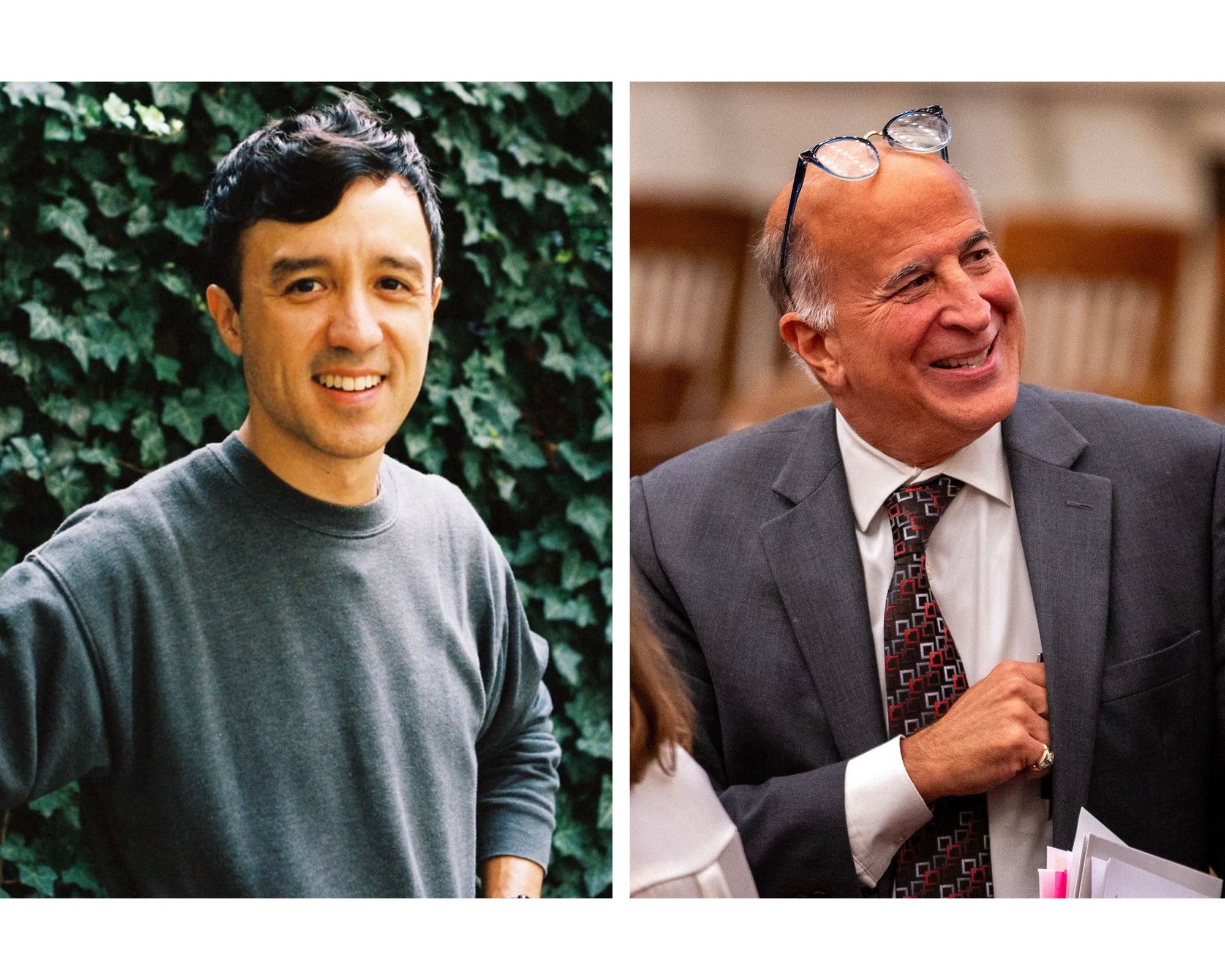
Will Gross, a progressive activist and the Democratic leader of a South Philadelphia ward, said Thursday that he plans to run for City Council in a race that could pit him against longtime sitting Councilmember Mark Squilla.
In a statement to The Inquirer, Gross said he “intend[s] to run for the First District to fight for transformative policies that deliver for working-class Philadelphians.”
“I’ve been hearing from a lot of people throughout the district, from Port Richmond to South Philly and everywhere in between, who are eager for new leadership and are encouraging me to run,” he said.
Every City Council seat will be on the ballot next year. Gross said that he would have “more to say” about his campaign after this November’s midterm election.
If Gross officially launches a campaign and Squilla runs for reelection, as he has said he intends to, it could make the 1st District a key battleground ahead of the May primary election.
“It’s a democratic society, and people have a right to run for office,” Squilla said Thursday.
Gross would likely be supported by the city’s left-leaning organizations, which are looking to grow their influence on Council by toppling more centrist Democratic incumbents. He recently launched a campaign website that identifies him as a labor organizer and a democratic socialist.
Meanwhile, Squilla has long been aligned with organized labor and much of the city’s Democratic establishment. He has repeatedly cruised to reelection since he first took office in 2012.
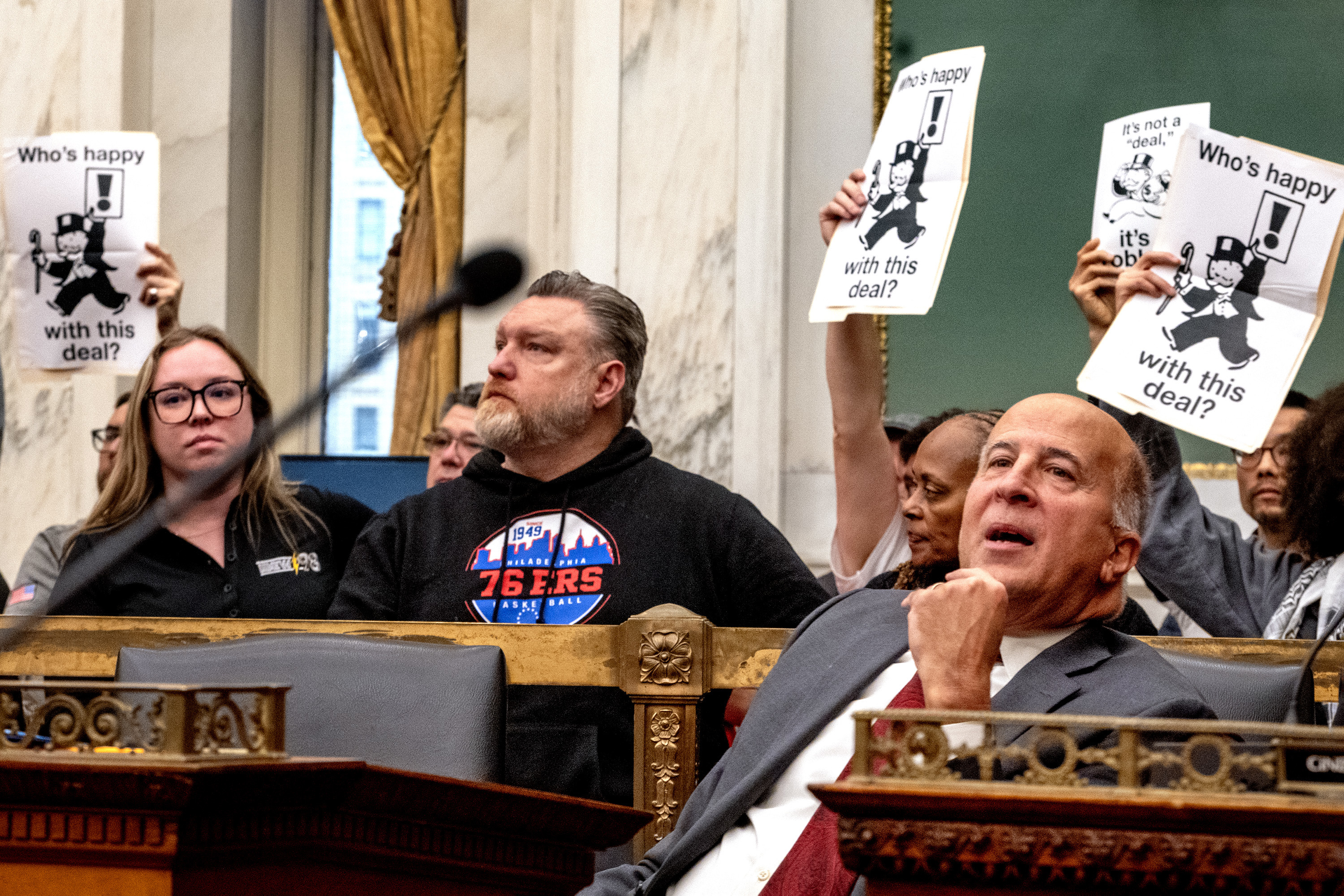
Squilla angered progressives in 2024 when he supported the effort by the 76ers to build a new arena in Center City. That project would have been located adjacent to Chinatown, and opponents said it would have been an existential threat to the neighborhood.
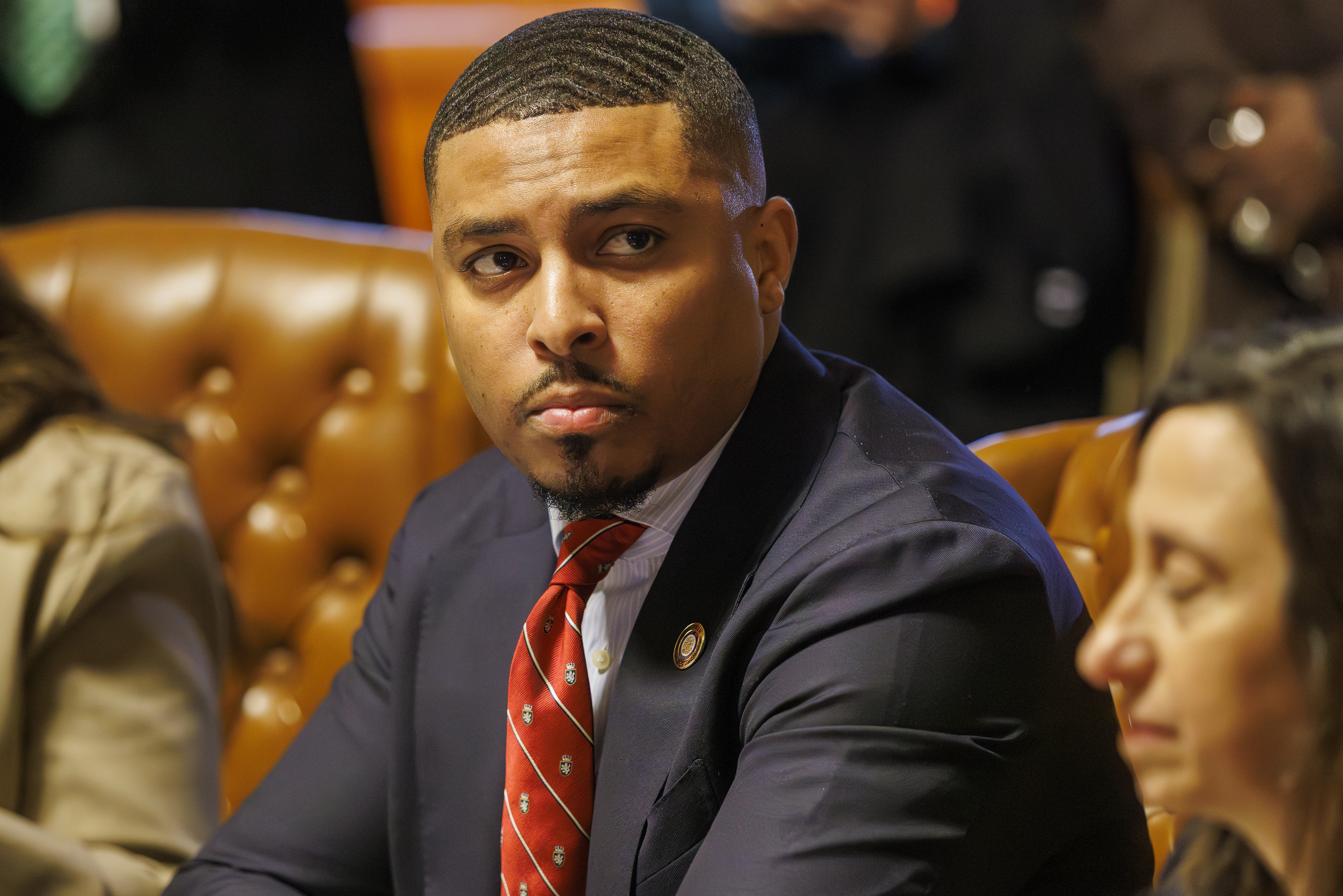
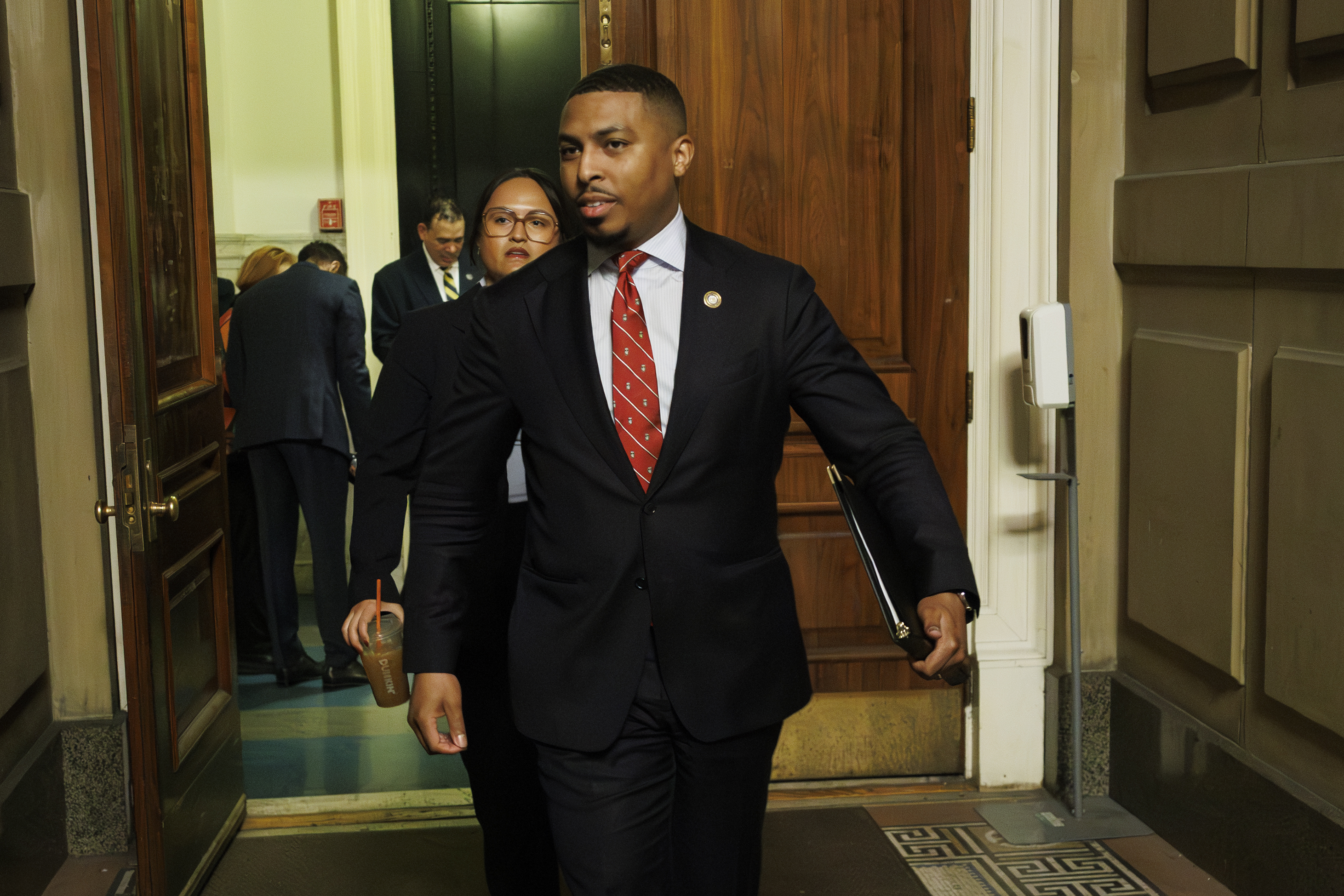
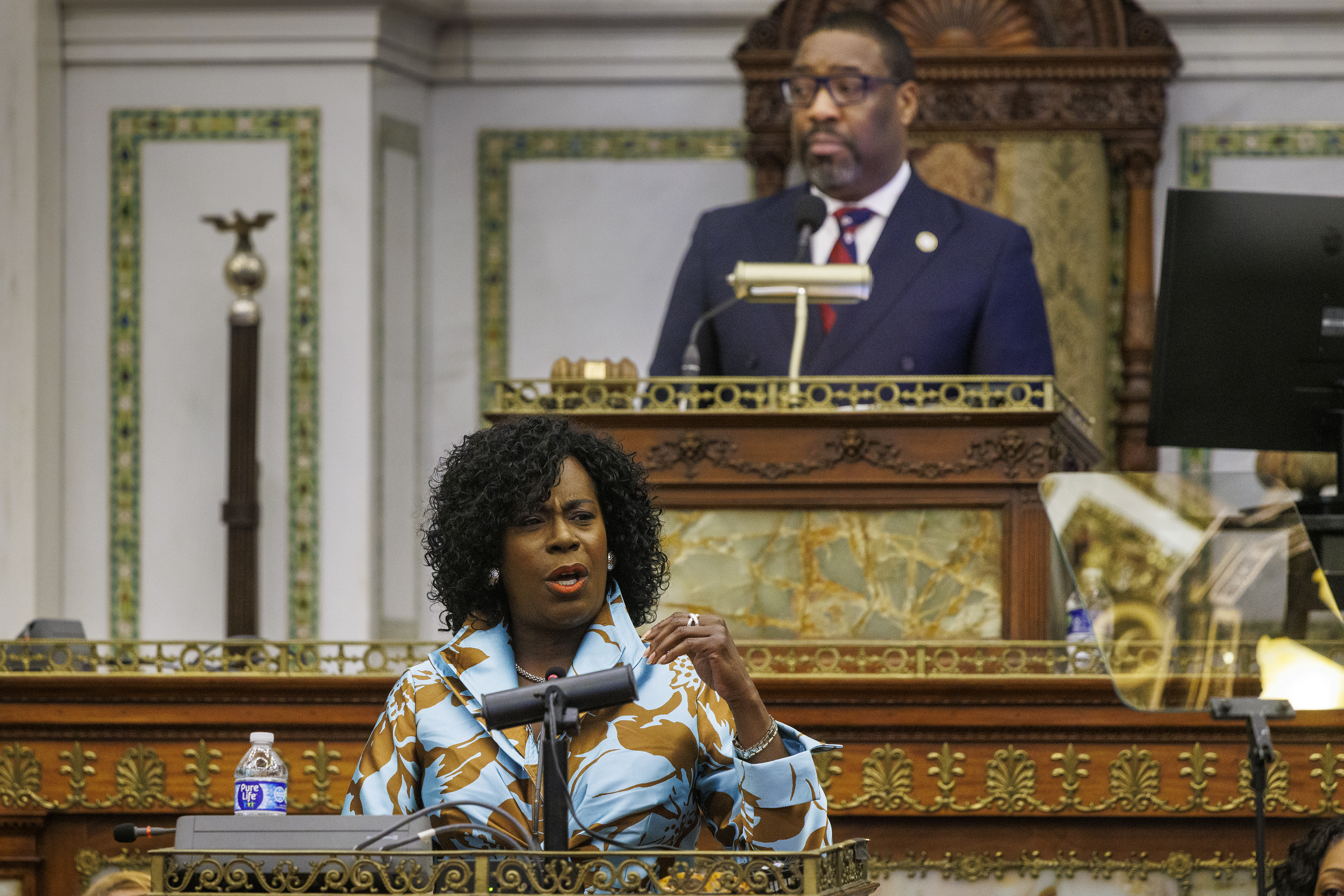
Councilmember Mark Squilla takes his seat in chambers, in front of arena proponents and opponents Wednesday, Dec. 11, 2024, before a scheduled committee vote on Sixers arena-related legislation was postponed.Tom Gralish / Staff Photographer
Gross, the leader of the South Philadelphia-based 2nd Ward and the owner of OX Coffee in Queen Village, was a prominent opponent of the Center City arena proposal.
He has also previously clashed with the party establishment.
In 2023, Gross’ ward endorsed Kendra Brooks and Nicolas O’Rourke, who were running for at-large seats on Council on the Working Families Party ticket. He was one of 100 members of the Democratic City Committee who signed a public letter in support of Brooks and O’Rourke, who both went on to win seats on Council.
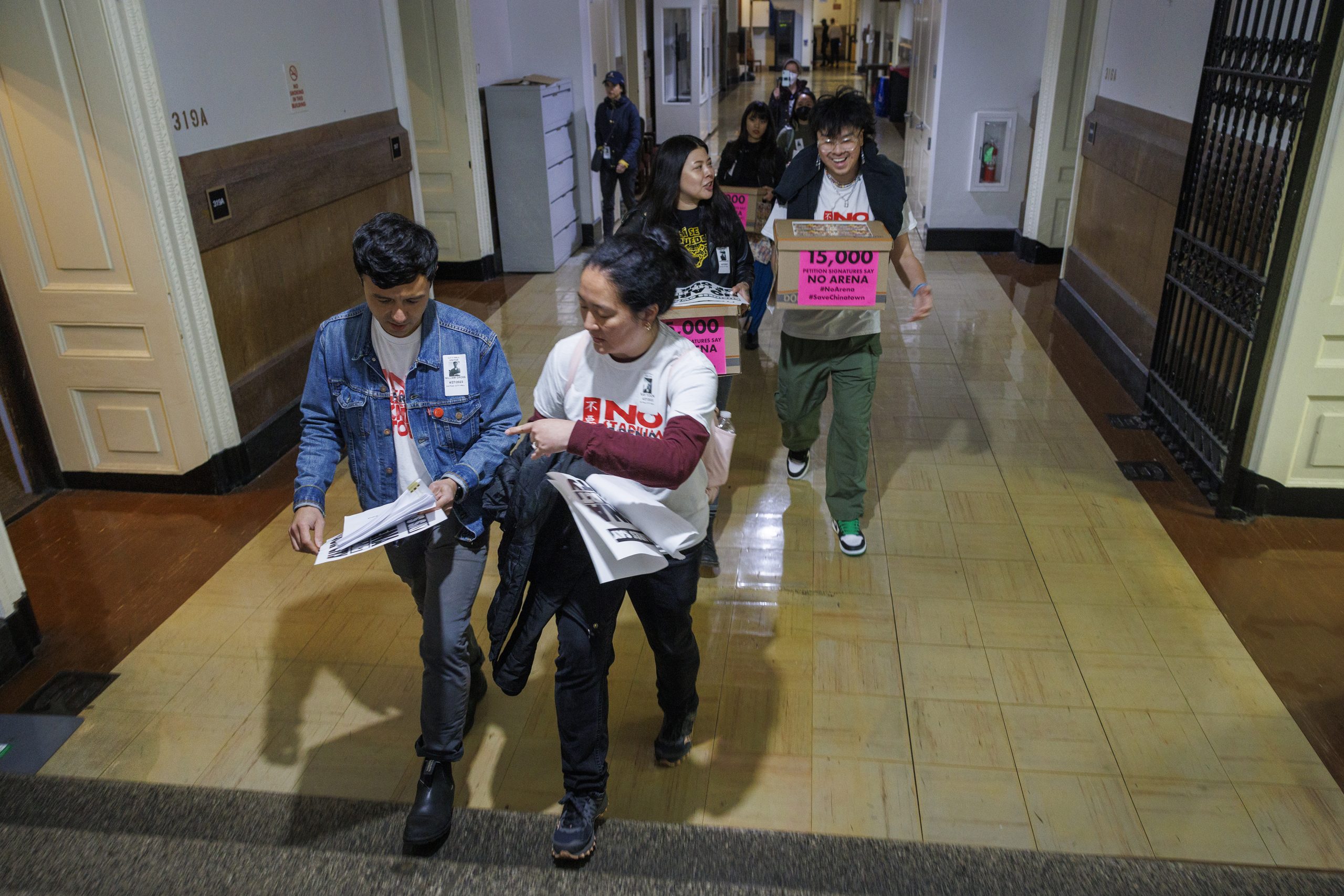
In this 2023 file photo, Will Gross and Kay Yoon, of the No Arena in Chinatown group, deliver petitions to Councilmember Mark Squilla.
At the time, City Committee chair Bob Brady warned that members could be expelled from their positions in the Democratic Party for supporting candidates from another political party. Brady said then that “the Second Ward is really jerking me around” and that Gross had told him the ward would back off the WFP endorsements but never did.
In 2022, Gross was one of four Democratic candidates who ran for an open seat in the state House representing parts of Center City. He lost in the primary to State Rep. Ben Waxman, who still represents Pennsylvania’s 182nd district.
Gross is one of several progressives who may challenge incumbent Council members next spring amid a national wave of leftist candidates winning competitive primaries against establishment-aligned Democrats.
Longtime labor organizer Seth Anderson-Oberman has said that he may again challenge Councilmember Cindy Bass, who represents the 8th District in North and Northwest Philadelphia. Bass, who has said she intends to run for reelection, narrowly beat Anderson-Oberman in 2023.
And The Inquirer has previously reported that two progressive criminal justice reform advocates, Celeste Trusty and Leigh Owens, are among a handful of candidates considering running in the 4th District. That seat is currently held by Councilmember Curtis Jones Jr., who has said he intends to run for reelection.
City Council President Kenyatta Johnson wants to explore opening a city-supported grocery store in Philadelphia.
Johnson on Thursday proposed a “Philly Food Affordability Act” package of legislation that calls for the creation of a new Philadelphia Office of Food and Nutrition Safety, as well as Council hearings probing grocery pricing practices and examining the possibility of one run or supported by the city.
“We have leadership in Washington, D.C., that has taken thousands of individuals off these SNAP benefits rolls, which means you have thousands of families here in the city of Philadelphia who will be food-insecure,” Johnson told reporters Thursday, referring to President Donald Trump’s changes to the Supplemental Nutrition Assistance Program taking effect Oct. 1. “So we’re working to make sure that no children go to bed hungry, no children go to school hungry, and, at the end of the day, come up with an overall long-term comprehensive strategy to address the issue of food insecurity.”
Johnson’s proposed legislation comes after New York City Mayor Zohran Mamdani this year made national headlines for his push to open five municipally backed grocery stores that would offer prices 30% below market rate. The proposal is facing a lawsuit from the Multicultural Business Coalition, a coalition of small-business owners.
Johnson said his inspiration for exploring the issue was Newark Mayor Ras Baraka, who has opened five “community-partnered grocery stores” offering 25% to 30% discounts.
None of Johnson’s proposals involve immediate action on addressing food insecurity, but they instead lay the groundwork for potential future legislation by Council or actions by the mayor’s administration.
Johnson’s proposal so far includes no details on what a city-backed grocery store could look like in Philly. Rather, it calls for an informational public hearing exploring possibilities, such as a public-private partnership.
Johnson’s proposed Philadelphia Office of Food and Nutrition Safety would be led by a mayor-appointed director charged with developing citywide policies for food security, collecting and reporting data on food insecurity, and improving access to healthy, affordable food, among other things, according to Johnson’s office. The office would be guided by a Food and Nutrition Security Advisory Commission made up of five mayoral appointees.
The proposal, which was introduced by Majority Leader Katherine Gilmore Richardson on Johnson’s behalf, would amend the Home Rule Charter, meaning it would have to be approved first by Council and then by a majority of voters, who could see a ballot question about the issue in the May 2027 primary election.
Johnson turned to two of Council’s more progressive members to handle the issue-based public hearings he proposed.
Councilmember Nicolas O’Rourke, in Philadelphia City Hall on March 12, 2026.Alejandro A. Alvarez / Staff Photographer
Councilmember Nicolas O’Rourke, who chairs Council’s Cost of Living Task Force, introduced Johnson’s resolution to hold a hearing on the possibility of a “City of Philadelphia-Supported Grocery Store.” The hearing will consider various models for how such a store could be structured, as well as similar initiatives in other cities.
Councilmember Rue Landau, who has championed other consumer protection issues, introduced Johnson’s resolution to hold a hearing on emerging technologies in the grocery industry including “surveillance, algorithmic, and dynamic pricing systems … to examine opportunities to support transparency, affordability, and consumer confidence.”
Council on Thursday approved resolutions green-lighting both hearings. Legislation related to Johnson’s proposed charter amendment will be referred to committee.
Just in time for pumpkin spice latte season, Philadelphia City Council members are giving up Starbucks — and they want you to do the same.
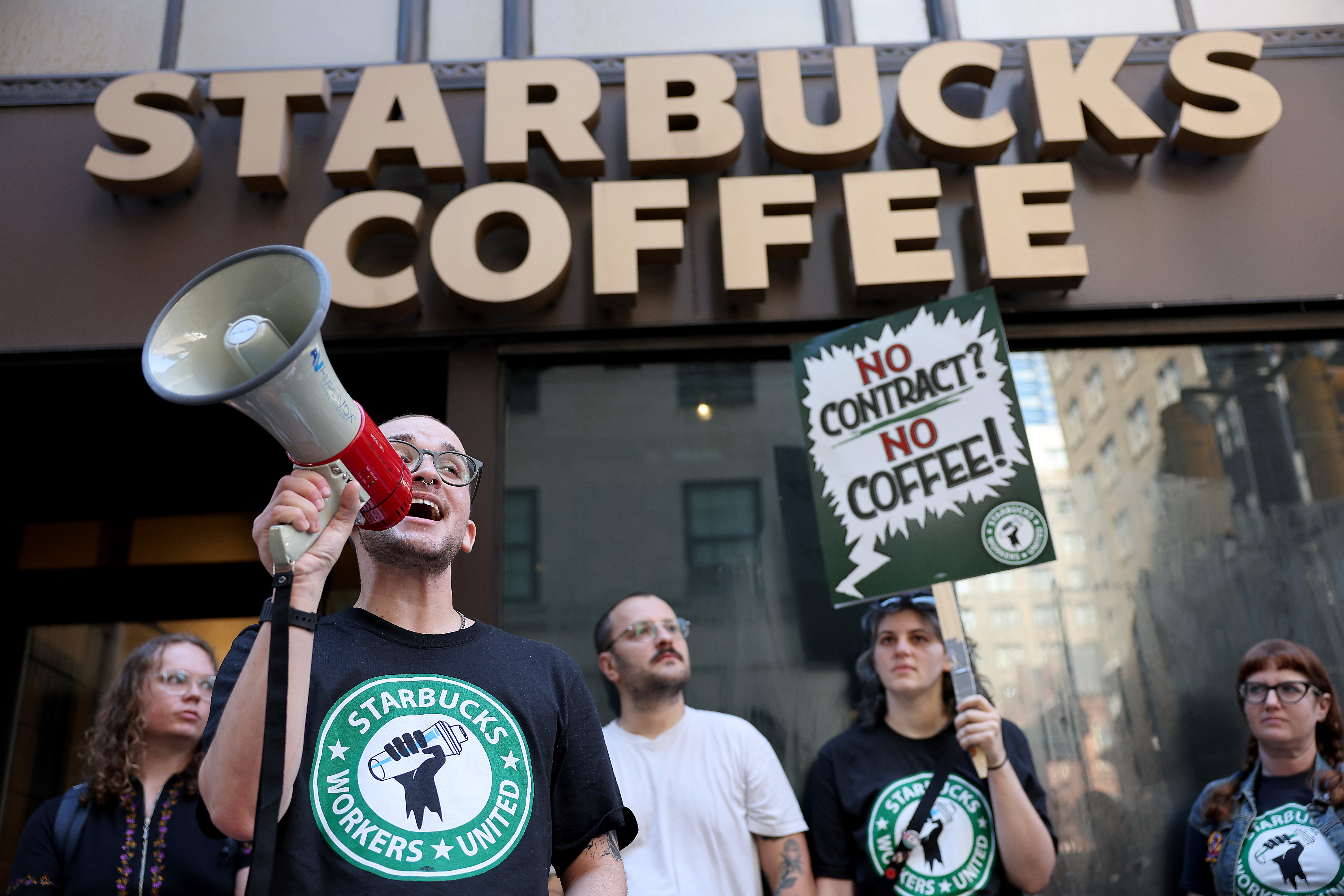
Council voted unanimously on Thursday to make Philadelphia one of the first cities in the country to explicitly endorse a nationwide boycott of Starbucks amid a unionization drive, and to pledge not to use city funds at the coffee chain until it reaches a contract agreement with its workers.
Also during Council’s session on Thursday: Councilmember Jamie Gauthier introduced controversial legislation to approve a contract with a trash incinerator that she doesn’t support. We’ll explain.
What was this week’s highlight?
Council puts Starbucks on ice: The expression of solidarity with Starbucks workers is a ceremonial resolution that does not carry the weight of law and does not require approval from Mayor Cherelle L. Parker.
Still, Council’s vote was a formal endorsement of the boycott orchestrated by Starbucks Workers United and targeting the world’s largest coffee chain, which is already reducing its footprint in the city. Starbucks closed six Philadelphia locations last year, and two additional branches — one at 2201 South St. in Southwest Center City and the other at 1018 N. Second St. in Northern Liberties — closed on Sunday.
The only other city to formally support the unionization effort is St. Louis, where last week the city’s board of aldermen approved a resolution to “express solidarity with Starbucks Workers United as they call for a boycott of Starbucks.”
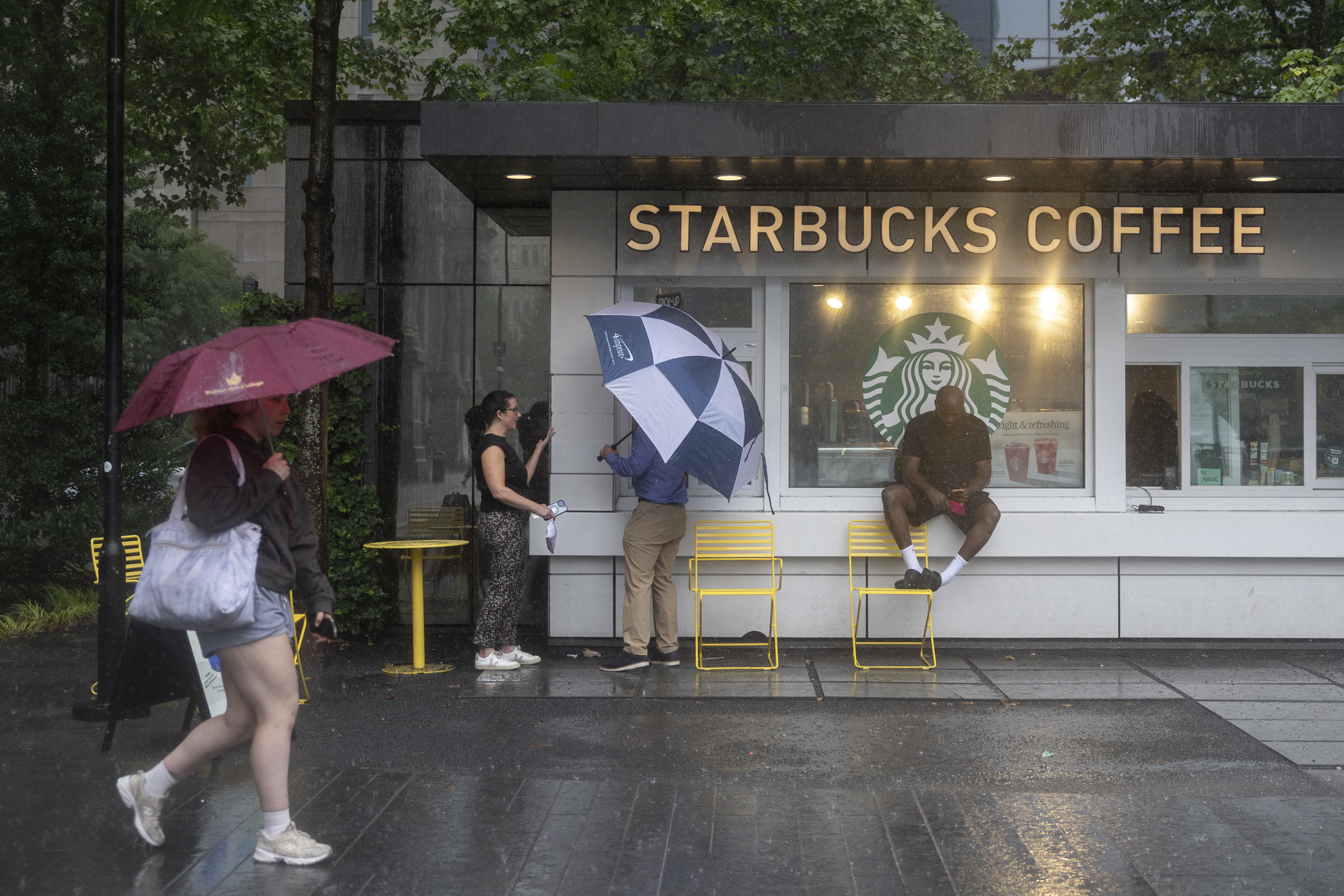
People staying dry at the Starbucks Coffee at Dilworth Park near City Hall in Philadelphia, Pa., on Thursday, July 9, 2026.Tyger Williams / Staff Photographer
Over the last five years, baristas have unionized at hundreds of individual Starbucks locations, but the company has not agreed to a nationwide contract that the union has sought. The union in August called for a nationwide boycott to last until an agreement is reached.
Councilmember Nicolas O’Rourke, a member of the progressive Working Families Party who represents the city at-large, authored the legislation and said its passage is “another affirmation of Philadelphia being a union town.”
“I am always interested in making sure that businesses in the city of Philadelphia and people are thriving,” O’Rourke said. “But my first priority is always to make sure that workers and workers’ conditions are right and that they are respected.”
Council is controlled by a supermajority of Democrats, and the body is largely supportive of organized labor.
Council President Kenyatta Johnson said he backs the Starbucks boycott, even though he is generally not a big coffee drinker.
“Unfortunately, they do have a vegan breakfast sandwich,” said Johnson, who follows a plant-based diet. “But I won’t be having those any time soon.”
A spokesperson for Starbucks said in a statement Thursday that the company is “committed to engaging in productive bargaining.”
What else happened today?
Introducing legislation she doesn’t support: Thursday’s meeting featured another twist in the long-running debate over a Chester trash incinerator and how Philadelphia gets rids of its garbage. Gauthier, a progressive Democrat who has advocated for the city to stop burning its trash, introduced legislation that would allow the city to continue doing so.
Here’s why: The Parker administration is looking to renew its long-held contract with Reworld, the Chester waste-to-energy facility where the city ships about one-third of its trash to be burned. (The rest of the trash is sent to landfills.)
In order to renew the multiyear contract, Council must approve authorizing legislation. Gauthier, who previously floated a bill to ban the city from incinerating trash but did not garner enough support to pass it, is asking her fellow lawmakers to vote against the contract renewal.
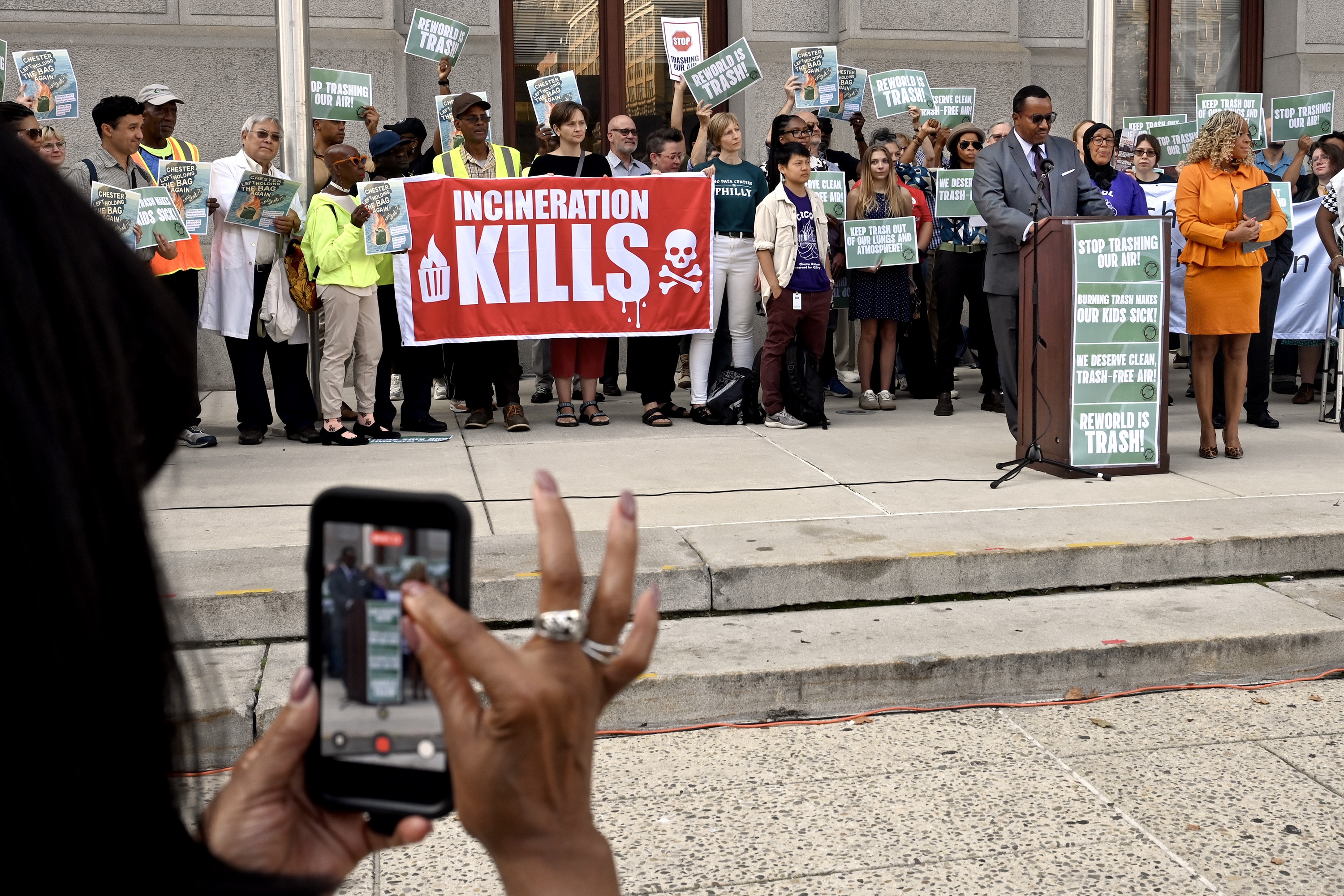
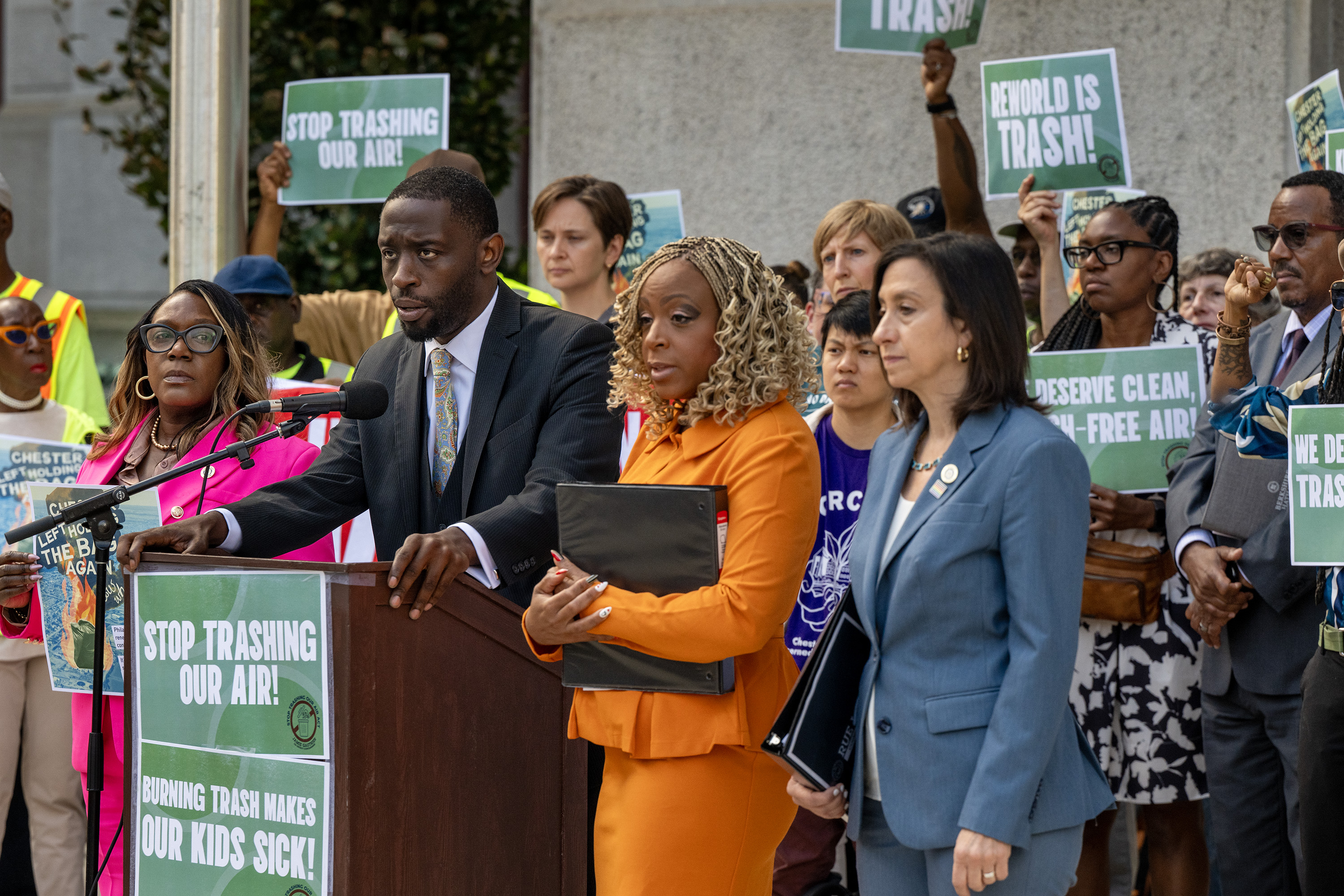
Chester Mayor Stefan Roots (at lectern) is joined by Philadelphia City Councilmember Jamie Gauthier (right) at a rally outside City Hall early Thursday morning Sept. 17, 2026.Tom Gralish / Staff Photographer
Although it may seem like a reversal of her position, Gauthier introducing the legislation herself — even when she does not support it — will allow her to have some say when a committee holds a hearing on the legislation. She hopes to amend it to strike Reworld from the deal so that the city processes all trash and recycling through landfills.
“It gives me and my coalition an opportunity to be at the table on something that we fought really hard on for more than a year now,” she said in an interview. “We’ve been working really hard to make sure that we’re protecting the health of folks in Chester and in Philadelphia, and protecting our environment.”
Johnson will decide which committee will hear the bill. He said Thursday that he is still reviewing the legislation.
Mamdani-fication: Create a Philly Medicaid Supplement Program. Expand access to programs that provide transit subsidies to low-income Philadelphians. Use city money to buy properties with expiring federal affordable housing subsidies.
These were some of the recommendations included in the Affordable Philly Now report, which was recently released by the Cost of Living Task Force.
O’Rourke, who convened the task force, held a committee hearing Wednesday examining the report’s findings, and he was not shy about noting that it was partly inspired by another progressive a few miles up I-95.
“You cannot deny the profound impact that … Mayor Zohran Mamdani has had,” O’Rourke said, praising the New Yorker for “mixing moonshot municipal goals with sewer socialism” and working to build a “protective hedge” of social safety net programs.
Nicolas O’Rourke, Philadelphia City Council member, during the mayor’s budget address on March 12.Alejandro A. Alvarez / Staff Photographer
Wednesday’s hearing was a meeting of the Committee on Global Opportunities and the Creative/Innovative Economy, which O’Rourke chairs. As a freshman and a member of a minority party, O’Rourke does not have a high-profile committee leadership post like some of the more senior Democratic lawmakers on Council. His committee was previously led by former GOP Councilmember David Oh and does not naturally align with O’Rourke’s progressive politics.
O’Rourke said at the committee hearing Wednesday — the first time he chaired a Council hearing — that he was shifting the panel’s work.
“The prior version of this committee revolved around corporate investment fitting into global value chains and making Philadelphia an international destination,” O’Rourke said. “In my reflection on the meaning of the committee, I have spent more time focusing on a part of the committee’s mandate that actually seems more in its merit — that is, to consider all matters related to making Philadelphia a world-class city. … And in some seasons, world-class cities show themselves by being bold in providing a protective hedge for its people.”
Quote of the week
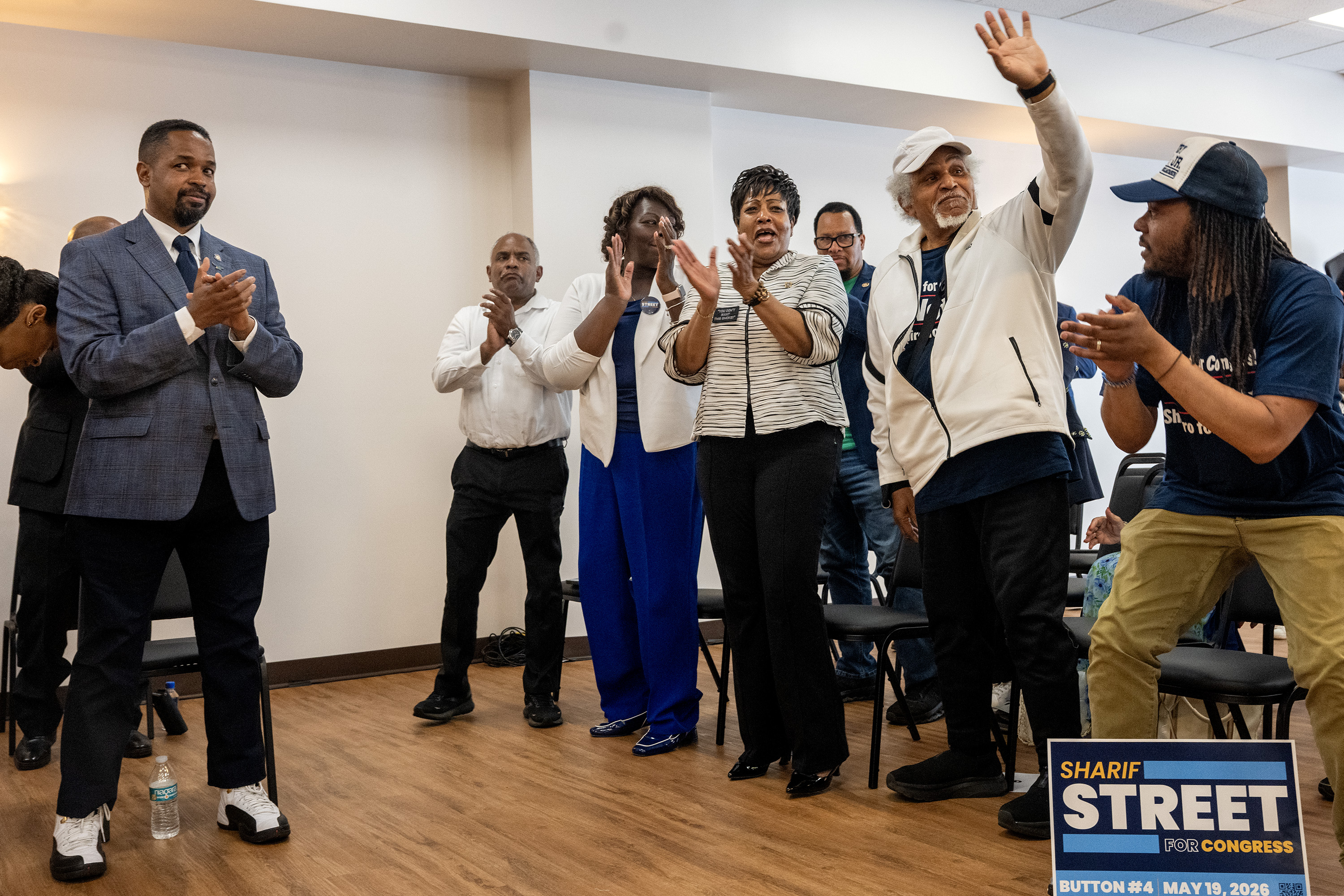
Former Mayor John F. Street (right) is acknowledged by supporters of his son, State Sen. Sharif Street (left), in West Philadelphia Monday, May 18, 2026.Tom Gralish / Staff Photographer
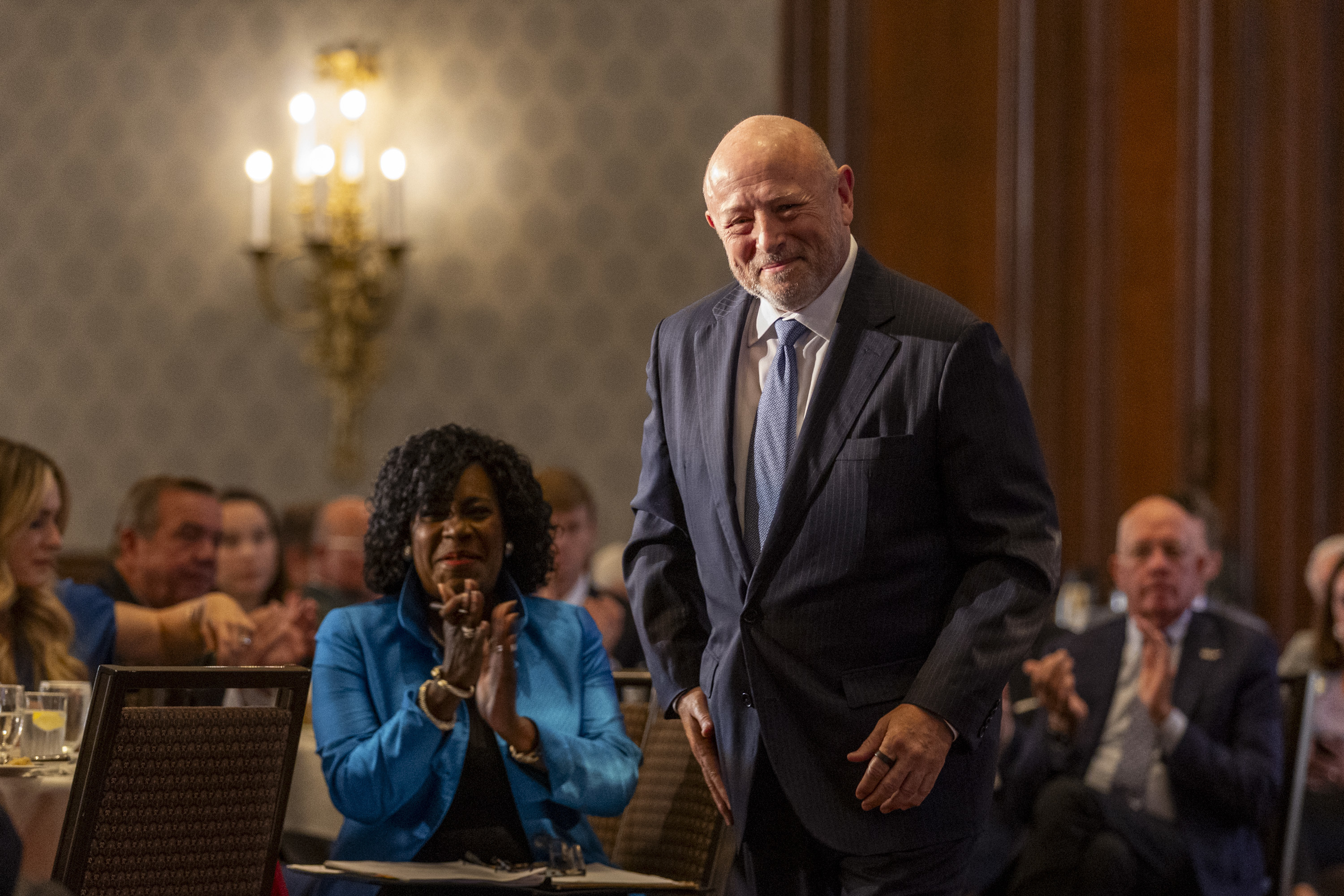
That was former Mayor John F. Street, the erstwhile City Council president, who returned to his old workplace Thursday to speak during public comment. He was testifying in support of a resolution to honor Philadelphia Police Lt. Greg Brown, who was, among other assignments, a member of Street’s security detail and is now retiring.
Street said Brown was one of the few people he never got to humiliate, because Brown “always got it right.”
“I never had a chance to put him on any list,” Street said.
With recent victories by democratic socialists nationwide prompting a fierce debate about the future of the Democratic Party, most Democrats in Pennsylvania have a positive view of socialism — and nearly 40% consider themselves to be a democratic socialist, a new poll found.
About one-third of likely voters in the midterm elections this fall have a favorable view of socialism and 56% have an unfavorable view. That result closely mirrors a recent national poll from the New York Times and Siena University, raising questions about the appeal of socialism to a wider swath of voters.
“We’re more popular than ever,” said Dan Parker, cochair of Philadelphia’s chapter of the Democratic Socialists of America (DSA). “But we still have a long way to go.”
(function(){function e(){window.addEventListener(`message`,function(e){if(e.data[`datawrapper-height`]!==void 0){var t=document.querySelectorAll(`iframe`);for(var n in e.data[`datawrapper-height`])for(var r=0,i;i=t[r];r++)if(i.contentWindow===e.source){var a=e.data[`datawrapper-height`][n]+`px`;i.style.height=a}}})}e()})();
The survey of 615 likely Pennsylvania voters conducted from Sept. 15 through 21 comes amid a surge of leftist victories both locally and across the country.
State Rep. Chris Rabb defeated a pair of more moderate candidates in Philadelphia’s highly competitive congressional primary in May. A democratic socialist, Rabb is highly favored to win in the general election and has spent the months since his primary campaigning for other like-minded candidates.
Nearly all of those candidates — from Abdul El-Sayed in the high-stakes Michigan U.S. Senate race to a pair of New York candidates boosted by Mayor Zohran Mamdani — have also won their primaries as Rabb and his allies look to grow the ranks of progressives starting on Capitol Hill in January.
“The mainstream Democratic establishment candidates are telling us time and time again to settle for less, to expect nothing other than the status quo,” Parker said. “People are looking for a different set of politics that speaks to their material needs and to the values of freedom that many are striving for.”
Parker said Philadelphia DSA has been “exploding” since Rabb’s victory. The group mobilized hundreds of volunteers to knock between 75,000 and 100,000 doors during his campaign, and more than 750 new members have joined since May to put the chapter’s total ranks at about 3,000, he said.
Councilmember Kendra Brooks speaks with colleague Nicolas O’Rourke during a March 12 caucus session. Alejandro A. Alvarez / Staff Photographer
Rabb’s success follow that of Pittsburgh’s U.S. Rep. Summer Lee, who was first elected to Congress with DSA support in 2022. Other DSA-backed elected officials include Philadelphia City Councilmembers Kendra Brooks and Nicolas O’Rourke, as well as State Sen. Nikil Saval, while new primary victories this year include Mark Pinsley and Ce-Ce Gerlach in Lehigh Valley-based legislative races.
Further growth, Parker said, will come with DSA-backed candidates working in office to “prove that government can exist to serve ordinary people.”
On that agenda: Advocating for universal healthcare, affordable housing, progressive tax policies, defunding and ultimately abolishing ICE, and ending the wars in Iran and Gaza.
“What makes DSA distinct — and democratic socialism as a political movement distinct — is that it’s not really just about who has the right ideas,” Parker said. “It’s about a theory of change that puts the vast majority of society in the driver’s seat.”
(function(){function e(){window.addEventListener(`message`,function(e){if(e.data[`datawrapper-height`]!==void 0){var t=document.querySelectorAll(`iframe`);for(var n in e.data[`datawrapper-height`])for(var r=0,i;i=t[r];r++)if(i.contentWindow===e.source){var a=e.data[`datawrapper-height`][n]+`px`;i.style.height=a}}})}e()})();
As Democrats look to retake control of Congress and the White House, how much influence that movement will yield remains an open question.
Moderates like Gov. Josh Shapiro, a potential 2028 Democratic presidential candidate, have acknowledged the energy on the left while advocating for a more centrist approach. Shapiro said this summer that the progressive candidates were practicing “performative politics” and would need to deliver if elected. He has also said he expects the party to have the most significant “battle over what we believe in” in more than three decades as the next presidential race gets underway.
The latest poll shows the party’s base remains divided in Pennsylvania.
While Democrats in the state remain split in their views of socialism, 38% consider themselves to be a democratic socialist while 57% do not, the poll found. Just over half of Democrats see their party as divided and 45% believe it’s united.
‘A tiny, tiny fraction’
Some observers also cautioned that the number of self-identifying democratic socialists across all of Pennsylvania — a swing state that has largely elected moderates to statewide office — may appear larger than reality. The poll did not define democratic socialism, for one. And progressives have been overrepresented in other polling this year, including in Wisconsin and Michigan, said Lew Irwin, a political science professor at Duquesne University in Pittsburgh.
“A lot of people will claim an affiliation when they actually have an affinity,” Irwin said, adding that it’s still become “increasingly mainstream and acceptable inside the Democratic Party” to identify as socialist.
J.J. Balaban, a Philadelphia-based ad maker for more moderate Democrats like U.S. Rep. Brendan Boyle, pointed to the fact that even with the additional energy on the left, the vast majority of Democrats in Washington next year will not be socialist.
“We’re talking about a tiny, tiny fraction of the Democratic caucus,” he said.
Balaban said that is one of the reasons why Republicans’ campaign messaging may also not be effective as they try to defend their majorities in the November midterm elections. Republicans have branded all kinds of Democrats as socialists — repeatedly denouncing the entire party as far left and “communist” in its agenda.
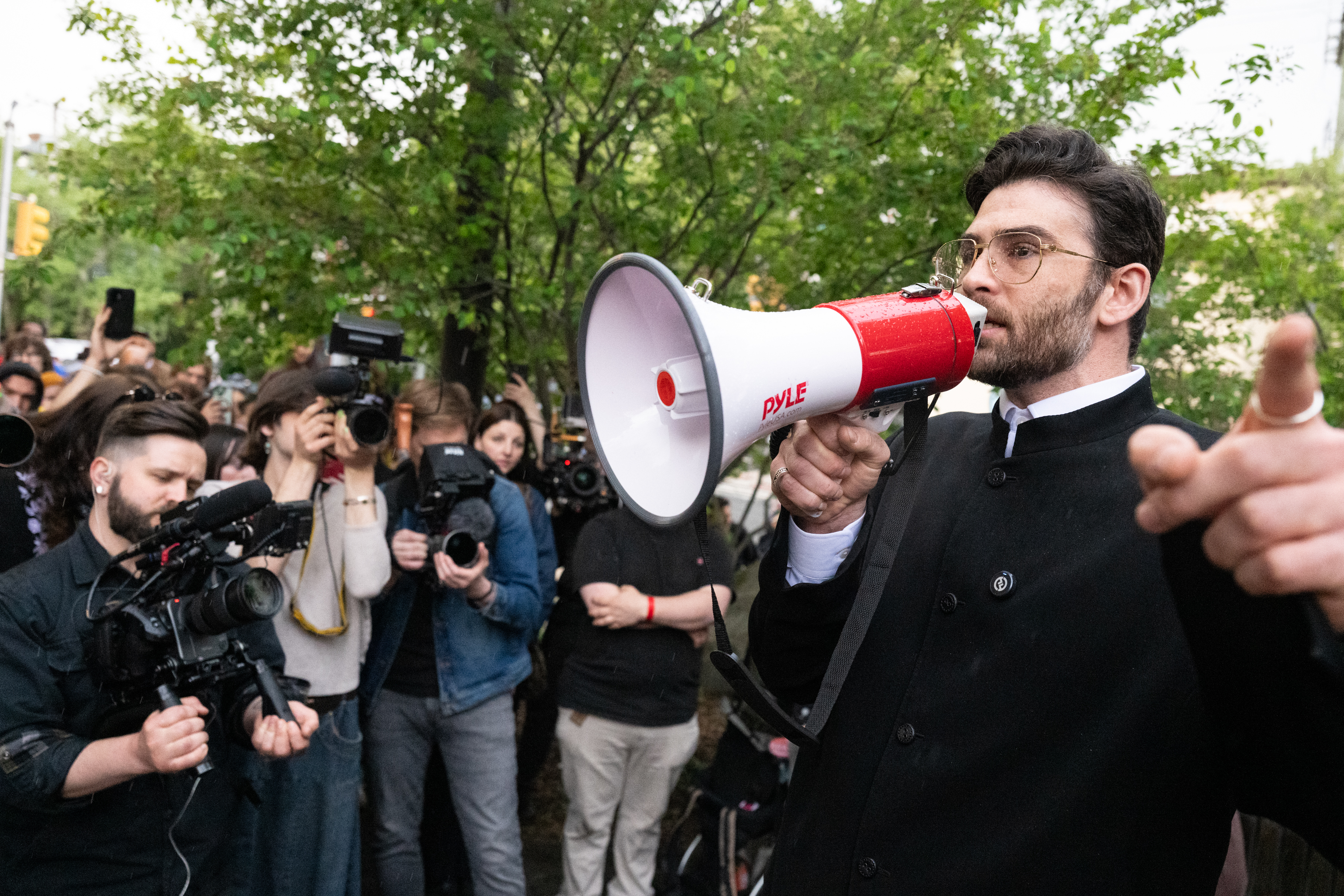
One of the main characters featured in those attacks has been Hasan Piker, the controversial leftist streamer who campaigned with Rabb and other candidates this year. His visit to Philadelphia in April drew hundreds of young progressives but was condemned by Rabb’s opponents and Jewish groups who consider his views antisemitic.
Online influencer Hasan Piker speaks to attendees at an April 30 fundraiser for State Rep. Chris Rabb’s 2026 congressional campaign at Renata’s Kitchen in West Philadelphia.Erin Blewett / For The Inquirer
Piker’s support of El-Sayed has become a dominant issue in the Michigan race, but the poll of Pennsylvania voters shows he is mostly unknown in the Keystone State.
Among Pennsylvania likely voters, 23% had an unfavorable view of Piker and 6% had a favorable view. Two-thirds said they had not heard of him — and a higher share of Republicans knew him compared to Democrats.
“He is a much greater part of the discourse in the Fox cinematic universe than he is in actual Democratic discourse,” Balaban said.
With polls increasingly showing Democratic momentum this fall, even some conservatives appear to be pushing for Republicans to shift their messaging away from socialism.
Former U.S. Rep. George Santos, a Republican who has reportedly lived at least partially in the Poconos since President Donald Trump commuted his sentence last year, posted a video Thursday in which he criticized a mailer for U.S. Rep. Rob Bresnahan, a freshman Republican in a tight reelection campaign. The mailer claims Bresnahan will “stop the socialists” and lists his Democratic challenger, Paige Cognetti, alongside the “socialist dream team” of progressives Mamdani, U.S. Sen. Bernie Sanders (Ind., Vt.), and U.S. Rep. Alexandria Ocasio-Cortez (D., N.Y.).
“Please stop sending me this. It’s silly,” Santos said in the video, adding colorful language to say Pennsylvania Republicans should be focusing on the cost of living.
“No more rhetoric!” he added.
Staff writer Joe Yerardi contributed to this article.
Last November, Mayor Cherelle L. Parker announced with great fanfare that Philadelphia could create a property tax break to spur the conversion of derelict buildings, such as empty Center City office towers and vacant school facilities, into apartments.
She had worked with legislators in Harrisburg to change state law to allow Philadelphia to pursue the legislation, which would create a 20-year property tax abatement for conversions of “deteriorated” properties.
But 10 months later, no such legislation has been introduced in City Council, and Parker on Wednesday called on city lawmakers to consider her 20-year abatement idea for distressed properties.
“We have an affordability crisis here in the city of Philadelphia,” Parker told reporters Wednesday. “What if we marry that challenge with these persistently vacant buildings that have gone underutilized, and we put them to their best and their highest use to incentivize affordable housing?”
Parker’s administration, however, has not yet transmitted a draft of the bill to Council, which is typically the first step for lawmakers to consider legislation championed by the mayor.
“Tell them, ‘Send the bill over,’” Council President Kenyatta Johnson told reporters Thursday. “We haven’t seen any piece of legislation regarding 20-year tax abatement at this particular point in time.”
Asked about the delay, Tiffany W. Thurman, Parker’s chief of staff, said Thursday that city agencies “are collaborating to ensure the proposed legislation is legally sound and can withstand constitutional scrutiny.” She added that Parker “remains firmly committed to presenting City Council with a bill that incentivizes the development of affordable and workforce housing on vacant, publicly owned land.”
On Thursday, several members of Council questioned the lack of specifics from the mayor’s office, and others were less than enthused about the idea of approving a new tax break when the Philadelphia School District is facing a funding crisis.
“I continue to appreciate an effort to make sure that we have access to affordable housing in the city of Philadelphia,” Councilmember Nicolas O’Rourke said. “At the same time, I am very much so laser-focused and desirous of the city getting the revenue that it needs.”
A controversial policy
Property tax abatements have long been controversial in Philadelphia, with opponents contending that they starve the city and school district of needed revenue while favoring real estate developers.
Philadelphia’s 10-year abatement program, which was established in the 1990s, previously exempted owners from paying real estate tax on all new construction or improvements on any type of property for 10 years.
That program was long hailed as key to the city’s turnaround in the early 2000s. But concerns about its impact on neighborhood inequality and school funding grew over time, and Council in 2019 roughly halved the value of the tax break for new construction.
Parker argues that the idea behind her legislation is different: She wants to see a far more narrowly targeted bill that would only help developers who seek to redevelop large, derelict buildings.
“We’re talking about … persistently vacant school buildings that have been vacant from three up to 30 years,” Parker said Wednesday.
The mayor also noted that the development environment has worsened dramatically since Council cut the 10-year tax abatement’s power, with soaring interest rates and construction material inflation as factors that weigh heavily on complex and large-scale projects.
Still, many Council members are skeptical of tackling a potentially controversial measure that is seen to favor developers ahead of next year’s municipal elections, when all 17 city lawmakers will be on the ballot.
“I’d like to get more information on exactly what the plan is because the tax abatements are, as you know, hugely unpopular,” said Councilmember Cindy Bass, who represents parts of North and Northwest Philadelphia.
Bass said that while the abatement has spurred needed growth, she would need to see any expansion of it balanced with the needs of lower-income Philadelphians who are struggling with rising costs and property taxes.
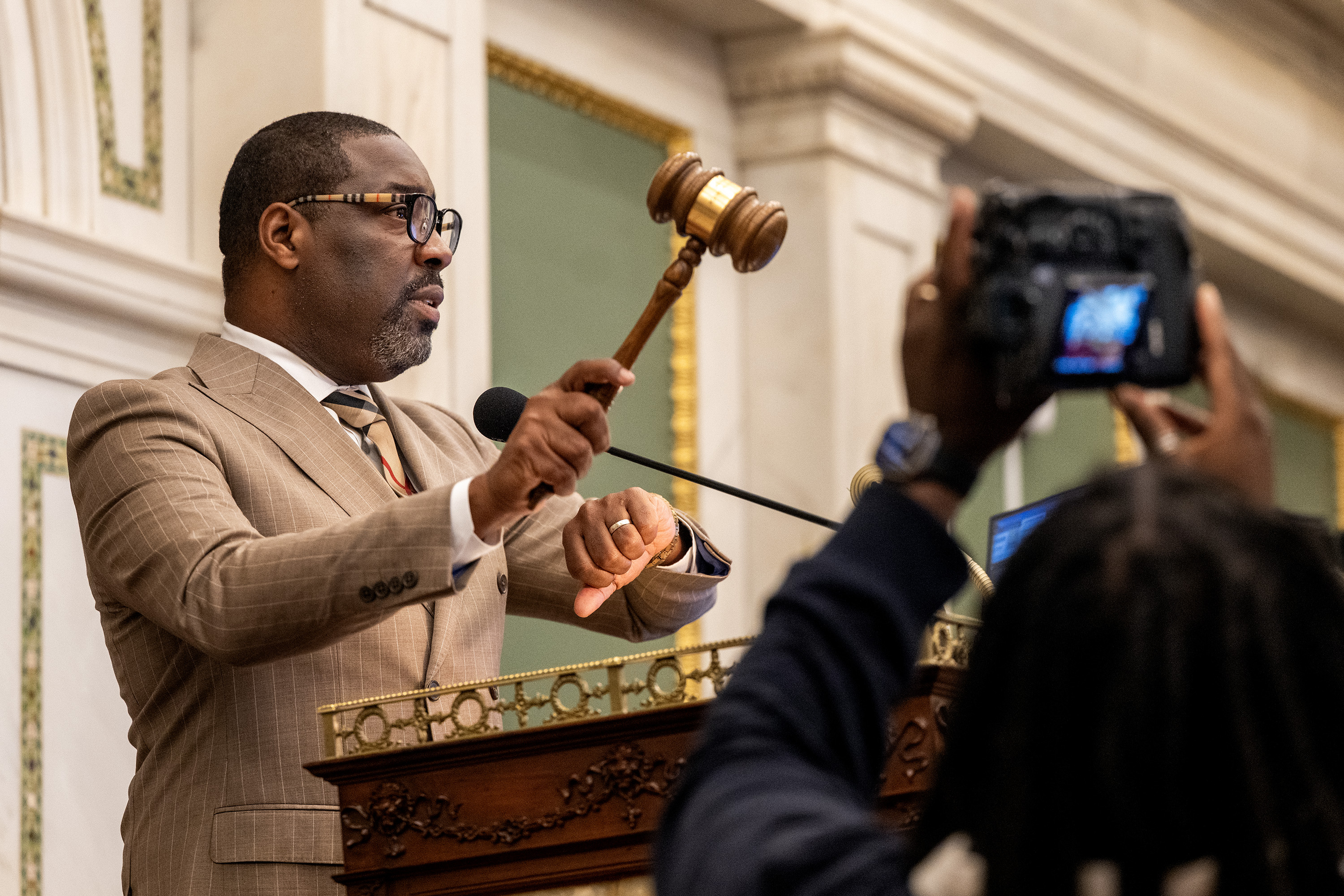
President Kenyatta Johnson checks his watch and gavels City Council into session on Sept. 17, as the body returns for start of its fall session.Tom Gralish / Staff Photographer
And Johnson on Thursday reiterated his comments from earlier this year that he would like to see the newly authorized 20-year abatement include a provision that requires an affordable housing component of the projects it enables.
“Any type of legislation like that should really focus on making sure that we’re providing a level of affordability, also senior housing,” he said. “Obviously, the devil’s always in the details.”
But it is not clear that state law would allow Philadelphia to mandate affordability in an abatement bill, and Parker cautioned against doing anything that would exceed the city’s authority.
“We have to make sure that whatever we are proffering, that it is directly connected to what has been enabled,” Parker said. “It has to pass legal muster for no one to question the constitutionality of what it is that we’re doing.”
Persistently vacant schools
A 20-year abatement would apply to empty office buildings in Center City and long-vacant industrial buildings. But Parker and administration officials have focused their pitch on revitalizing empty public schools.
“We need to pass it because it’s going to be extremely beneficial for challenging properties,” John Mondlak, chief of staff of the Philadelphia Department of Planning and Development, said Wednesday. “You think about schools in 10 years, 20 years — they are very difficult to reposition.”
That pitch, however, runs up against another policy issue festering between Parker and Council.
Thomas and other Council members vigorously protested the plan and are still pressing for the board to reconsider it.
“That’s our priority,” Thomas said Thursday. “I don’t want to have a conversation about schools that are vacant until we have a conversation about schools that are occupied.”
Private equity investor Gregory L. Segall, a Philadelphia Republican who was a key backer of Mayor Cherelle L. Parker’s 2023 campaign, has resigned from three city boards as he weighs other “civic engagement” opportunities, according to a copy of one of his resignation letters obtained by The Inquirer.
Parker, a Democrat, appointed Segall to the Philadelphia Gas Works board, the Philadelphia Tax Reform Commission, and the Mayor’s Business Roundtables. Segall resigned from all three effective Aug. 31. He also served as a vice chair of Parker’s transition committee when she was taking office.
“While I am stepping away from this role, I remain committed to civic engagement and intend to explore other ways to continue the journey I have been privileged to pursue over the last several years,” Segall, the chairman and CEO of Versa Capital, wrote in his letter resigning from the Mayor’s Business Roundtables, an advisory group convened by Parker.
Segall’s moves come as candidates are gearing up to run in next year’s municipal elections, when Parker and all 17 City Council members are up for reelection.
Candidates in the primary election have until early spring to decide whether they are running.
Claudia Vargas, a journalist who formerly worked for NBC10 and The Inquirer, reported this week that Segall was considering running for Council.
When contacted by The Inquirer, Segall, who lives in Chestnut Hill, said Wednesday he is “not running” for Council.
“People have suggested multiple forms of public service, including Council, and I have no plans or commitments at this time,” Segall, 63, said in an interview.
Segall said he continues to “strongly support Mayor Parker, and my highest and best hope is that my public service will be in aid of her continued success.”
Parker on Wednesday declined to comment on the report of Segall exploring a run for office.
From 2022 through 2025, Segall and his wife donated $37,300 to Parker’s campaign, according to campaign finance records. He also gave $150,000 to a super PAC backing her 2023 run, and $6,200 to her transition committee, the records show.
“The 2023 election took place at a time of crisis in the city, and getting the right leader was never more critical,” Segall said. “So the reason for my commitment to her was quite simple: Before I’m a Republican, I’m a Philadelphian.”
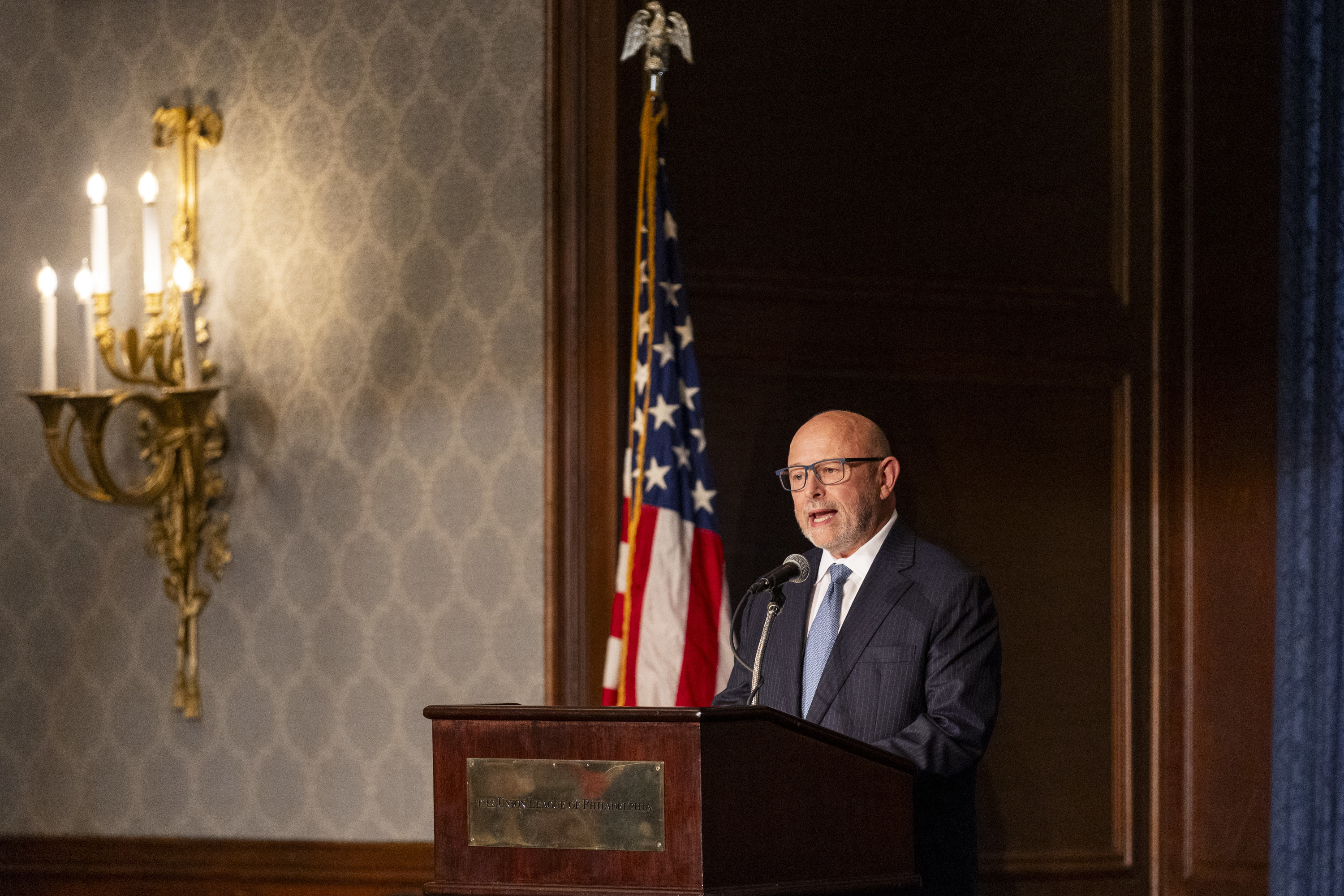
Gregory Segall, Chairman and CEO of Versa and Supporter of Mayor Parker, speaks at the Union League of Philadelphia Presidential Luncheon in Philadelphia, Pa., on Thursday, September 18, 2025.Tyger Williams / Staff Photographer
Citing Republican Party sources, Vargas reported that Segall was considering running for one of the two at-large seats on Council that are elected citywide and are set aside by the Home Rule Charter for minority-party or independent candidates.
Republicans held those seats for about seven decades until Councilmembers Kendra Brooks and Nicolas O’Rourke won them over the last two election cycles as members of the progressive Working Families Party.
Brooks is considering challenging Parker in next year’s mayoral election, sources previously told The Inquirer, which would require her to resign from her Council seat.
The Philly GOP has been strategizing ways to recapture the seats, and a run by Segall, a wealthy businessman who could potentially help fund his own campaign, could be a major opportunity for the party.
Segall donated $2,500 to the Republican City Committee last October.
GOP chair Vince Fenerty said he has met Segall and thinks he is a “nice and honorable man.”
“We’re a party that welcomes any potential candidate, and the decision to endorse would be up to our ward leaders,” Fenerty said in an interview Thursday.
Brian O’Neill, who represents the 10th District in Northeast Philadelphia, is currently the only Republican on Council. Democrats hold the remaining 14 seats.
Philadelphia City Council members are considering dueling proposals over how the city eliminates its garbage, with one lawmaker leading an effort to immediately block the city from shipping its garbage to a trash incinerator and another taking a longer-term approach.
Councilmember Mark Squilla on Thursday introduced legislation authorizing Mayor Cherelle L. Parker’s administration to, within three years, develop a plan to dramatically reduce the city’s reliance on both trash incineration and landfills over the next 20 years.
Squilla’s proposal, which he drafted with input from Parker’s administration, is something of an alternative for lawmakers to consider as Councilmember Jamie Gauthier has for months pushed for a more aggressive approach to stop the city from incinerating trash this year.
Both lawmakers hosted news conferences this week alongside their allies to rally support for their cause, part of a long list of events Council members hosted as the legislative body returned Thursday for its first meeting of the fall session.
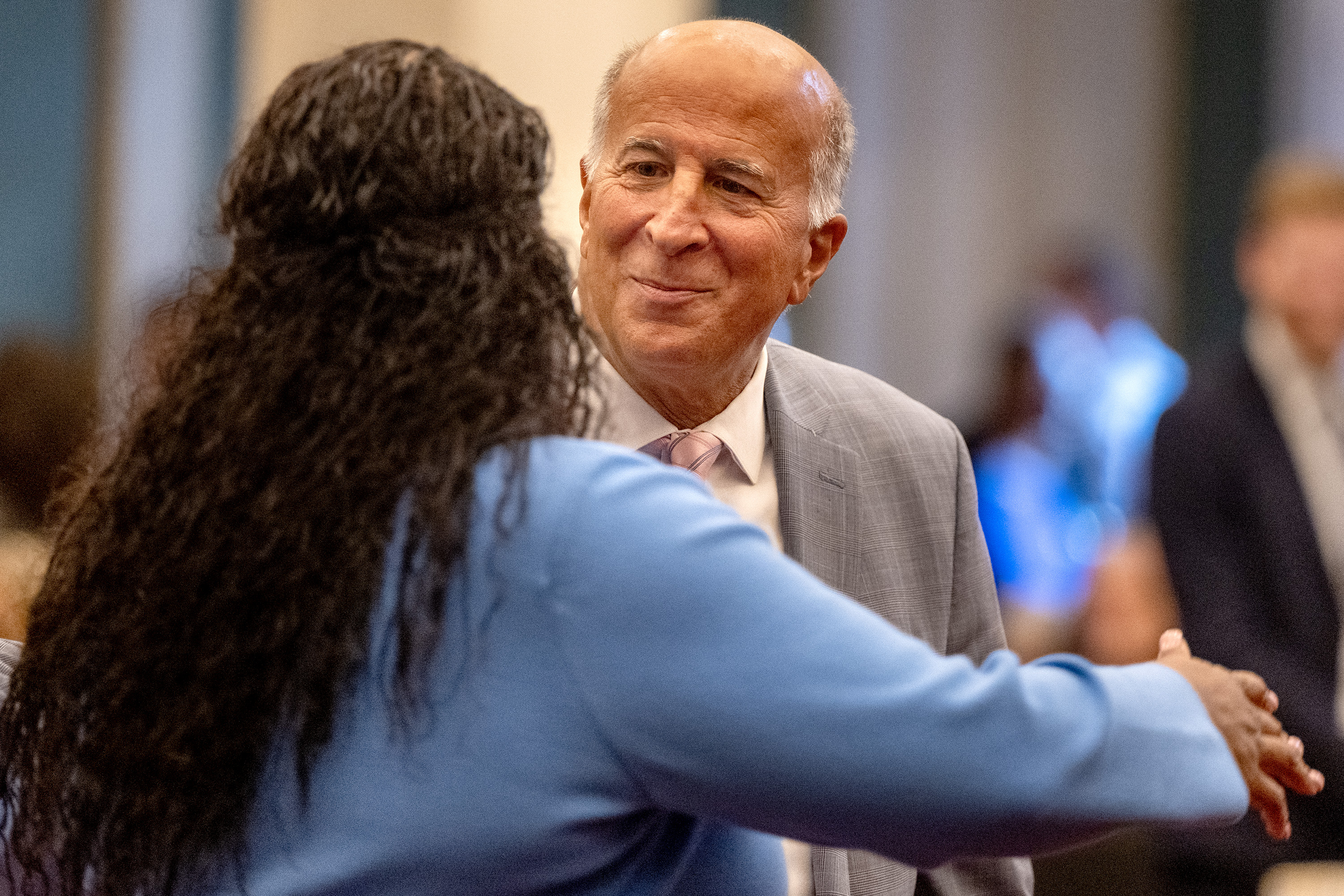
Councilmembers Mark Squilla and Katherine Gilmore Richardson (back to camera) greet each other as City Council convenes for its fall session Thursday, Sept. 17, 2026.Tom Gralish / Staff Photographer
The first meeting after the summer break typically has a jovial, first-day-of-school feel. But the mood briefly shifted Thursday when City Hall was evacuated and Council abruptly adjourned after a suspicious package was found on the floor where Council was meeting.
Police cleared the package, and Council resumed its business Thursday afternoon.
Here’s what else happened this week:
What was this week’s highlight?
Incinerator issue heats up: Gauthier has for months sought to pass legislation that would ban the city from continuing its long-term practice of sending about a third of its garbage to a trash incinerator in Chester, about 15 miles south of the city. She argues that incineration is bad for the environment and harms Chester residents’ health.
Parker’s administration opposed the legislation, called the Stop Trashing Our Air Act, and Gauthier in the spring failed to gain enough support for it in Council.
Now, Gauthier is trying to block the Parker administration from renewing its contract with Reworld, the incineration facility. The administration needs Council approval to enter into a new four-year contract with the firm.
Gauthier has several members on her side, including three fellow progressive lawmakers, as well as Councilmember Isaiah Thomas, who is the Democratic majority whip.
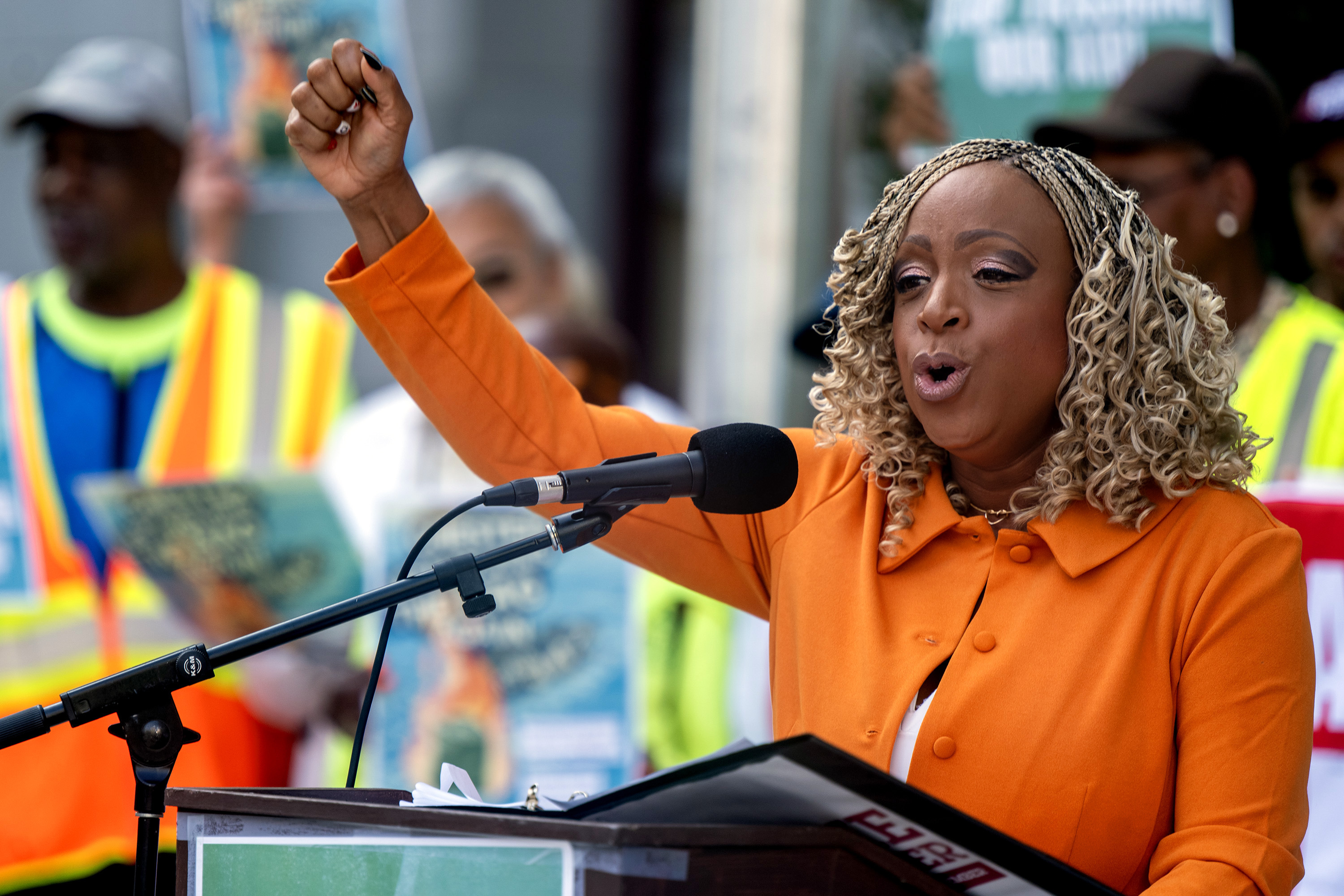
City Councilmember Jamie Gauthier speaks at a rally outside City Hall early Thursday morning Sept. 17, 2026 where protesters called on Council to reject Mayor Cherelle L. Parker’s waste disposal contracts. A coalition of elected officials, health and climate experts, and advocates from Philadelphia and Chester gathered to oppose the city’s sending its trash to an incinerator in Chester.Tom Gralish / Staff Photographer
Squilla’s proposal in some ways offers members an off-ramp. His bill calls for a “circular waste” system that includes new techniques for waste disposal, such as composting and “anaerobic digestion,” a process that breaks down organic waste.
Managing Director Carlton Williams said Wednesday during a news conference with Squilla that the city is looking to build out an anaerobic digestion system within four years.
Squilla said that while the administration is already working toward a more modern waste disposal system, passing a law would “codify what we had as plans and resolutions before.”
Gauthier said that she supports Squilla’s goal of moving toward a more sustainable system, but that his legislation “is a plan to create a longer-range plan.”
“It in no way changes the decision in front of Council,” she said. “We can move away from this practice right now.”
What else happened this week?
Severing the law department: The city law department serves as legal counsel for both the mayor’s administration and Council, a dynamic that can sometimes cause friction when the city’s elected officials disagree.
Council on Thursday approved a resolution by Thomas to hold a hearing “to consider the separation of the [law] department’s functions between the administration and City Council.”
Thomas has clashed with Parker’s administration, and he said he became interested in looking at the department’s structure due to concerns that Council was not receiving independent legal advice on some issues.
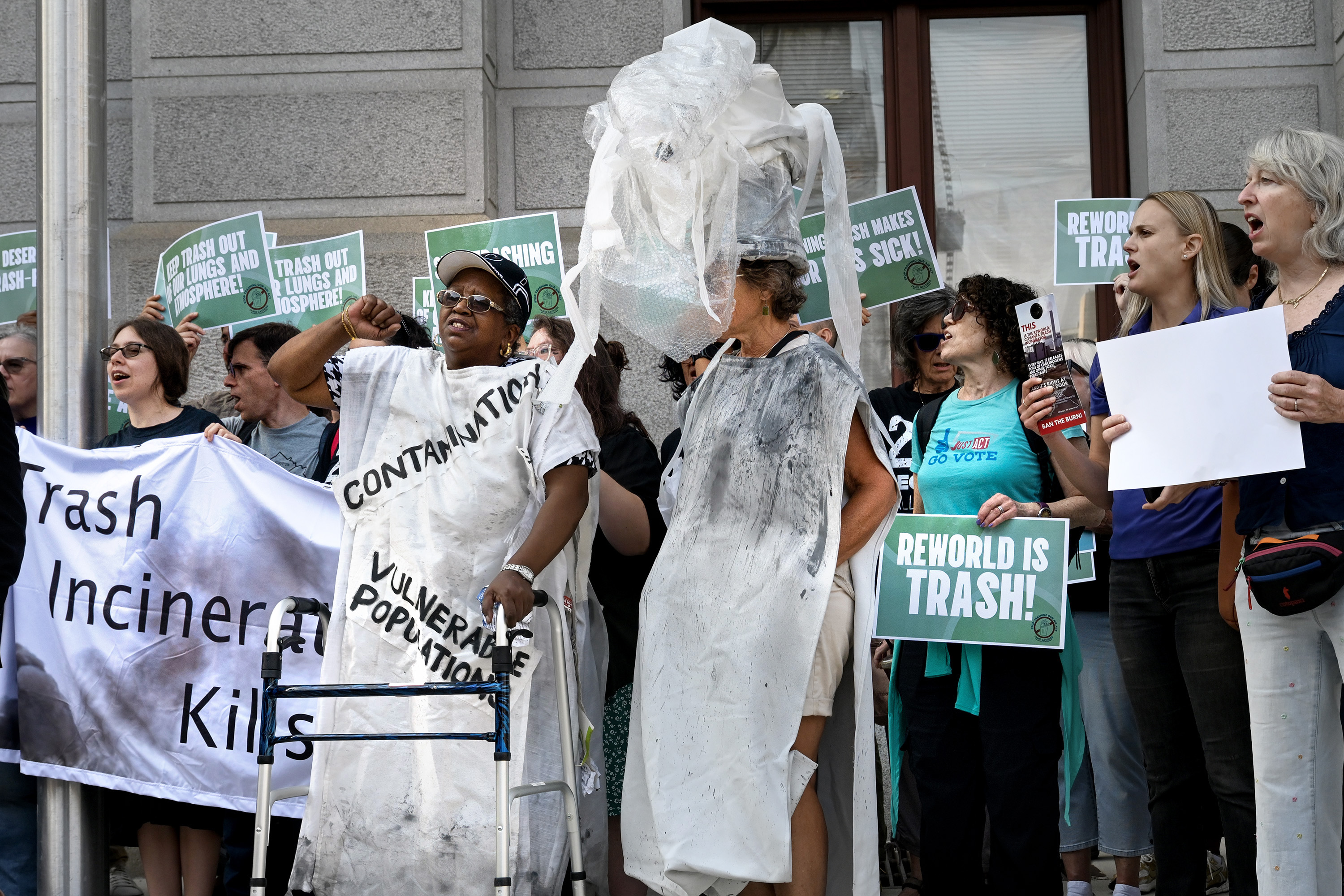
Lois Williams (left), dressed as a “sick person,” and Shari Hersh (right) in costume as a “smokestack,” join a rally outside City Hall early Thursday to call on City Council to reject Mayor Cherelle L. Parker’s waste disposal contracts.Tom Gralish / Staff Photographer
He pointed to the Philadelphia School District’s controversial facilities plan, which involves the closure of 17 school buildings and was adopted by the school board in April over the objections of many Council members.
And he said recent legal proceedings around the city’s business income and receipts tax were “part of the motivation” to hold a hearing on the law department.
In 2025, after a Massachusetts company sued the city seeking to overturn a popular tax break program that primarily helped small businesses, the law department said it had determined the lawsuit was likely to succeed. The Parker administration eventually settled the case and persuaded Council to eliminate the tax break. Some Council members at the time complained that the city did not defend the tax break more vigorously.
The department already silos off some of the work it does on behalf of Council from the rest of the administration, such as when it drafts bills proposed by lawmakers. Council also may hire outside legal counsel, but must pay for those services out of its own budget.
A law department spokesperson did not immediately respond to a request for comment.
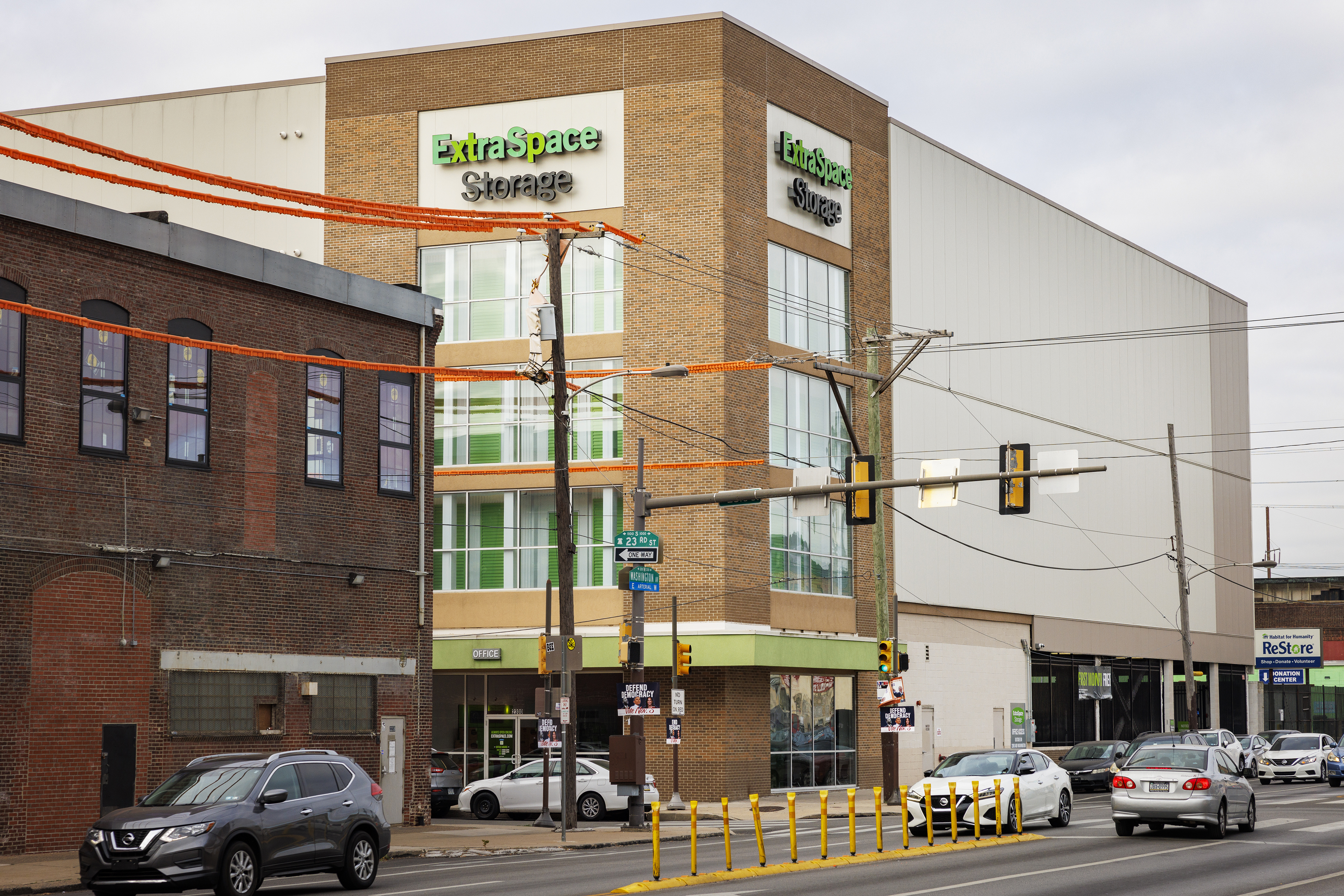
Storage wars: Councilmember Mike Driscoll introduced legislation on Thursday that would ban new self-storage facilities from his district in lower Northeast Philadelphia.
The storage industry boomed during the COVID-19 pandemic, as consumer spending shifted from services to goods, many families struggled to afford larger homes, and low interest rates juiced development.
Northeast Philadelphia saw a particularly large boom in self-storage buildings because of its rich supply of properties zoned for industrial development. Driscoll said that advocates in the Tacony neighborhood felt their community had become oversaturated.
“They want more affordable housing and [self-storage units] are taking valuable sites for that,” Driscoll said.
ExtraSpace self-storage at Washington Avenue and S. 23rd Street, Philadelphia, Monday, November 4, 2024.Alejandro A. Alvarez / Staff Photographer
Self-storage facilities are gold mines for developers. They suffer little wear and tear, they have few utility costs, and labor costs are low after construction.
According to online industry search portal StorageCafe, Philadelphia has 89 self-storage sites containing more than seven million square feet of space. About a third of that has been built since 2019.
Other municipalities have moved to limit the spread of self-storage facilities in recent years. New York City banned them from industrial areas to preserve jobs, and Denver blocked them from properties close to light rail lines. Providence, R.I., in 2023 banned new facilities from the city altogether.
Driscoll said that he may further limit his legislation to the Tacony neighborhood.
“I don’t want to hurt another part of my district that maybe wants these things,” he said.
Embracing affordability: Multiple members of City Council said this week that tackling affordability is their primary objective this fall, including Councilmember Nicolas O’Rourke, whose office published a lengthy report outlining dozens of proposals aimed at reducing costs.
Some may be more realistic short-term goals than others.
The report, which was drafted by a Cost of Living Task Force made up of community advocates and industry leaders, recommended the city explore everything from opening municipal grocery stores to creating a local Medicaid supplement program.
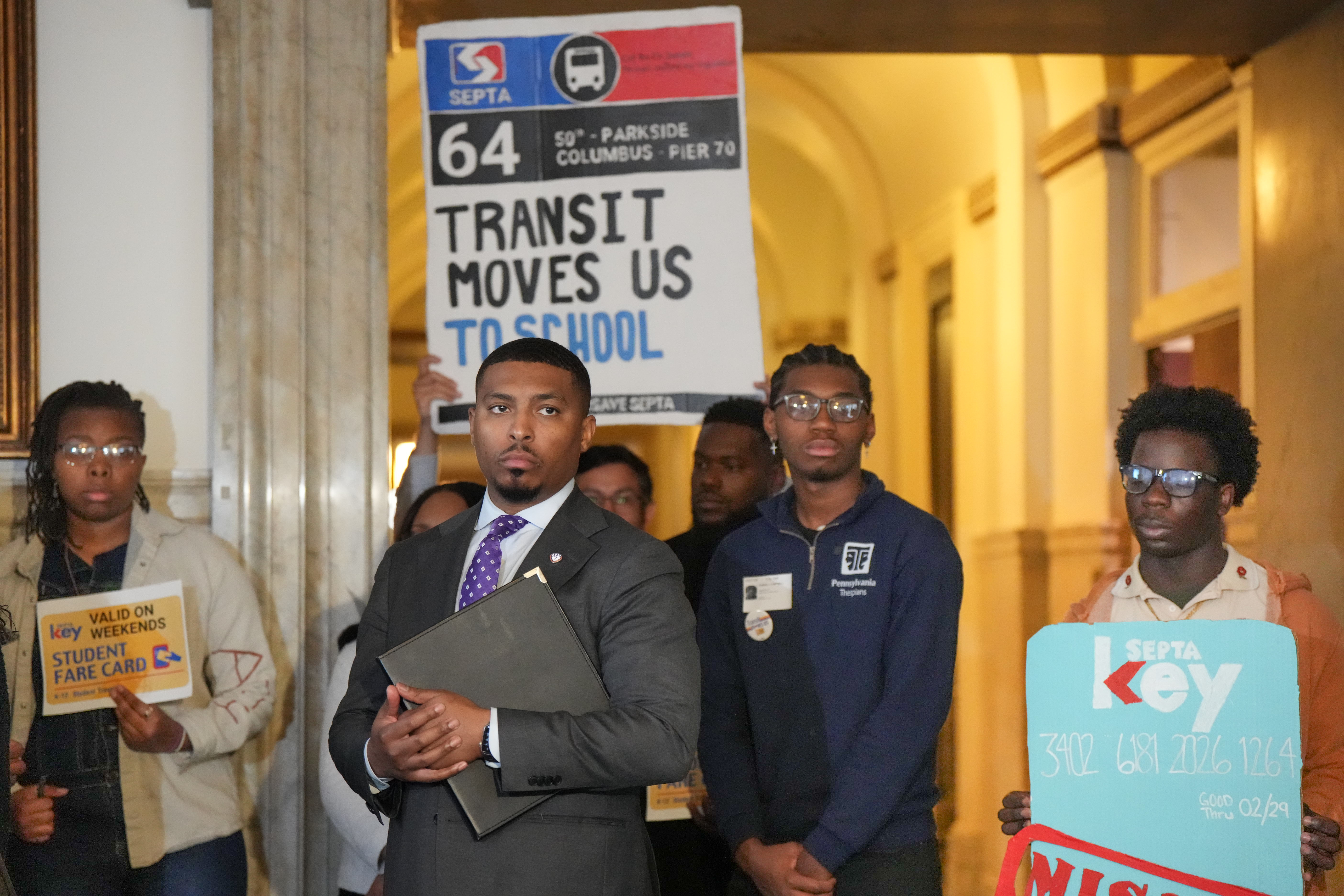
Councilmember Nicholas O’Rourke with students and activists during a press conference about SEPTA in April.Jessica Griffin / Staff Photographer
It also recommends restructuring existing housing programs to more aggressively target the poorest residents, and establishing a Transit Access Fund that would fund free or reduced-fare transit passes for low-income households.
O’Rourke, a member of the progressive Working Families Party, plans to hold a committee hearing on the task force report this fall.
Council President Kenyatta Johnson will also introduce an affordability measure this fall. He plans to bring forward legislation that would establish a permanent Food and Nutrition Security Coordination Office, he said in a statement.
Quote of the week
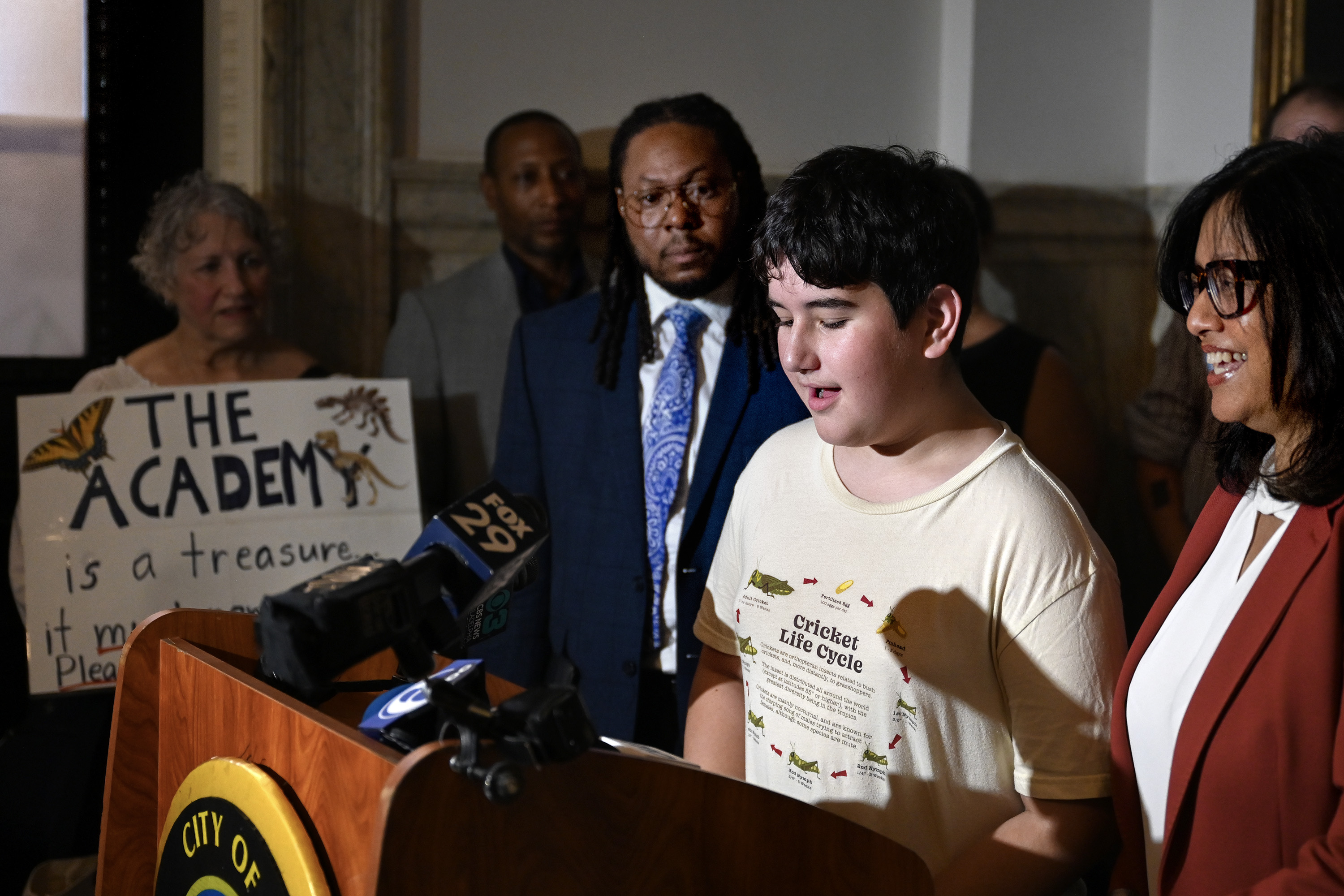
Jeffery Young, Jr. (left) with twelve year-old Jack Erfer of Wynnewood and councilmembers and Nina Ahmad (right) in supporting the Academy of Natural Sciences of Drexel University before City Council resumes for its fall session Thursday.Tom Gralish / Staff Photographer
No bones about it: That was Councilmember Jeffery Young Jr., who called for hearings on the planned closure of the Academy of Natural Sciences.
A West Philadelphia renter has filed a class-action lawsuit against his property manager and a national company that sells property management software, alleging that his landlord used price-setting algorithms that Philadelphia has banned.
Since early 2025, Philadelphia has prohibited rental home providers from coordinating to set prices and using software that facilitates the practice. Officials argued that price coordination, especially among large corporate landlords, can lead to artificially inflated rents.
This month, renter Yiyao Liu sued Willow Bridge Property Co., which manages his apartment building and is one of the country’s largest residential property managers, and RealPage, an industry leader in software for landlords. Liu alleges that Willow Bridge used RealPageservices to getrent recommendations based on information from competing landlords that is not available to the public, in violation of a Philadelphia ordinance.
The lawsuit, filed in Philadelphia’s Court of Common Pleas, is the first known case brought under the city’s ban, according to the office of City Councilmember Nicolas O’Rourke, who introduced legislation in 2024.
At the time, O’Rourke said his bill was a preemptive move based on corporate landlords’ use nationwide of software to coordinate rental prices. City Council unanimously passed the legislation in October 2024, and the ordinance went into effect in February 2025.
Liu, who lives in the Vue32 apartment building, asks in his lawsuit to represent as a class other tenants of Philadelphia rental units managed by Willow Bridge.
A representative from RealPage said Monday that the company does not comment on active litigation, and Willow Bridge’s general counsel did not immediately respond to a request for comment.
Last month, Washington, D.C.’s Office of the Attorney General announced that it had reached settlements with two landlords it accused of conspiring to inflate rents using RealPage software. The landlords agreed to pay a total of $1.4 million. These were the latest settlements to come from the district’s 2023 lawsuit against RealPage and 14 of the district’s largest residential landlords.
The association said algorithm-based technologies improve operational efficiency, which “directly benefit[s] residents and rental communities.” And it argued that algorithmic software “encourages pricing competition within the marketplace through greater transparency.”