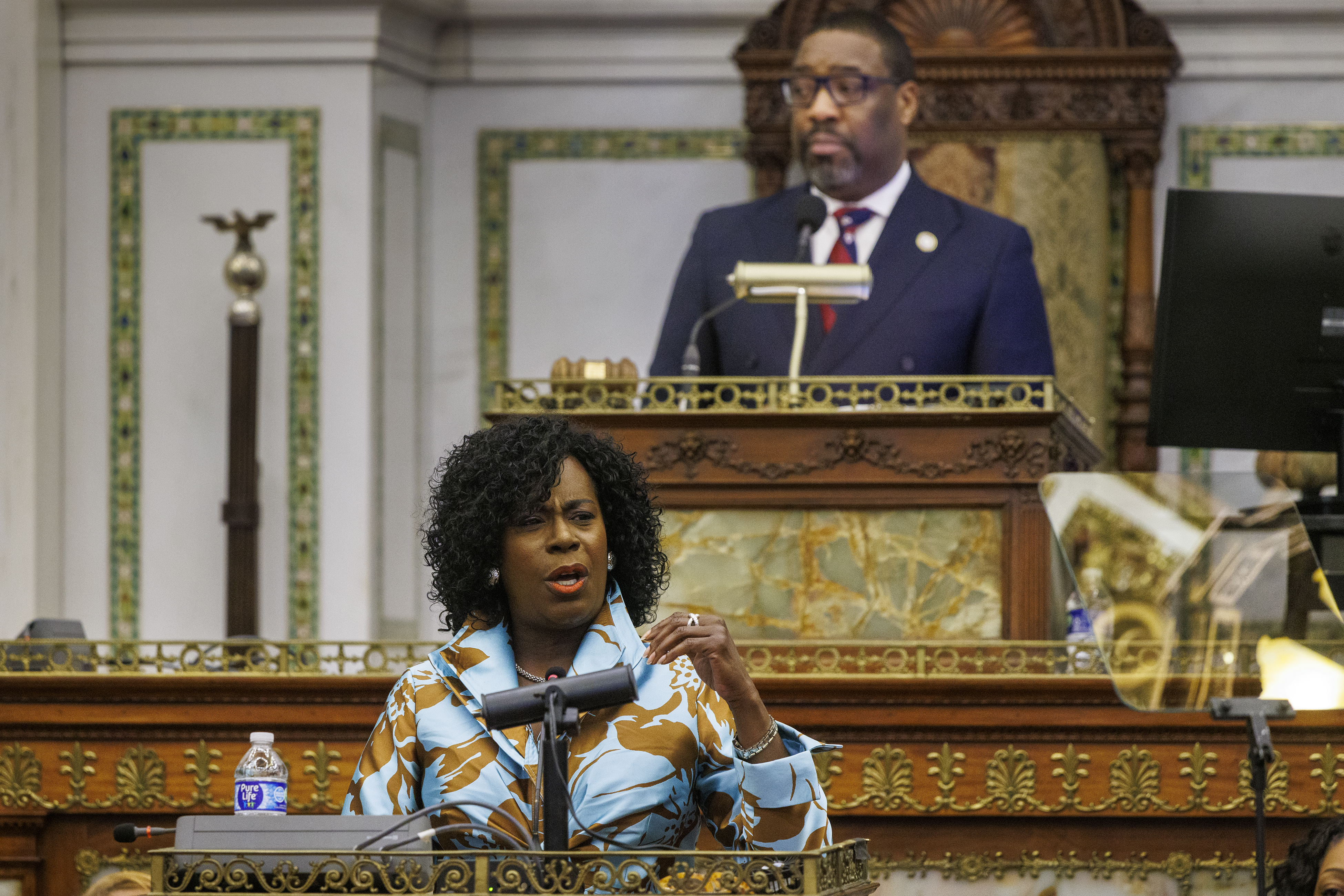
Just in time for pumpkin spice latte season, Philadelphia City Council members are giving up Starbucks — and they want you to do the same.
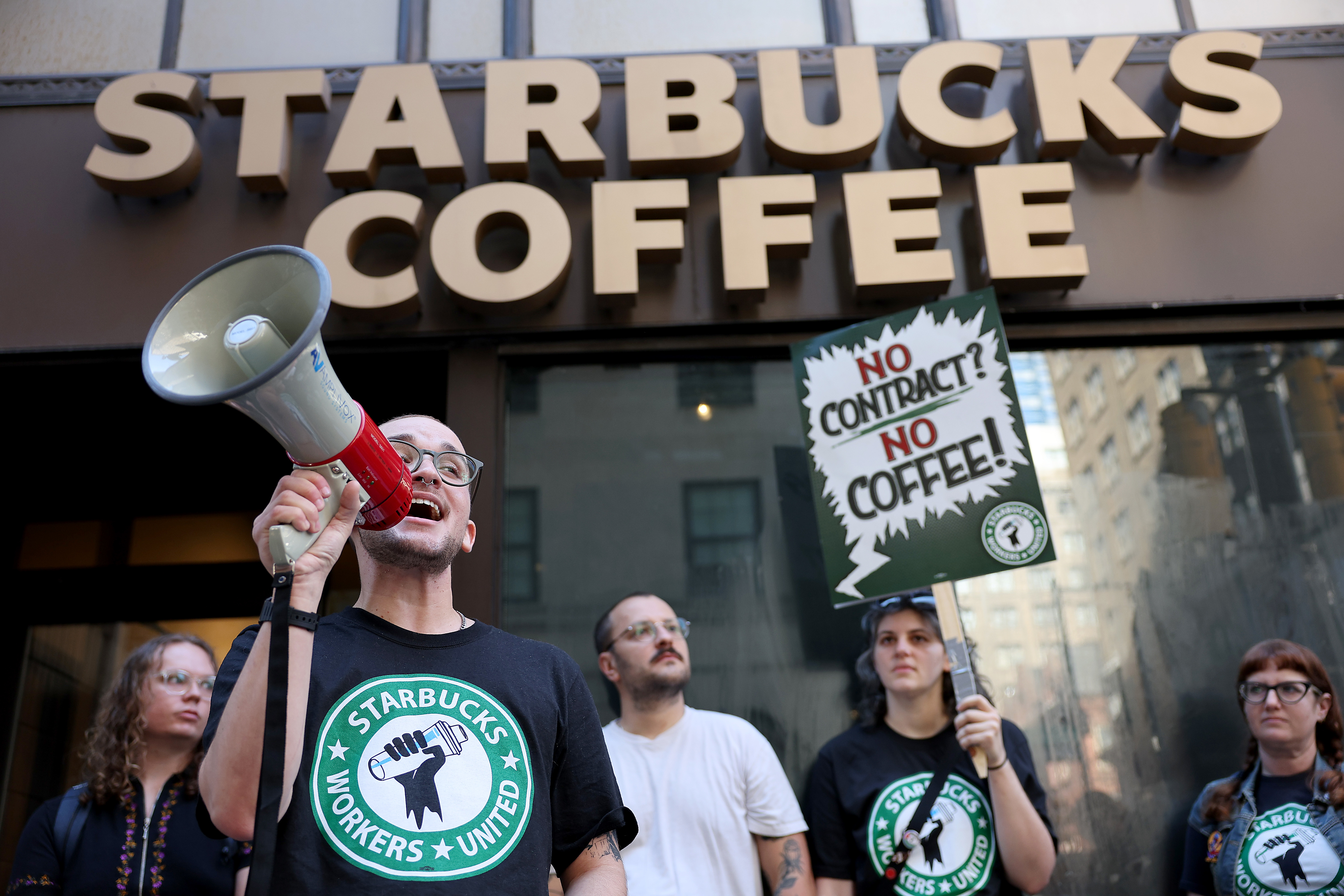
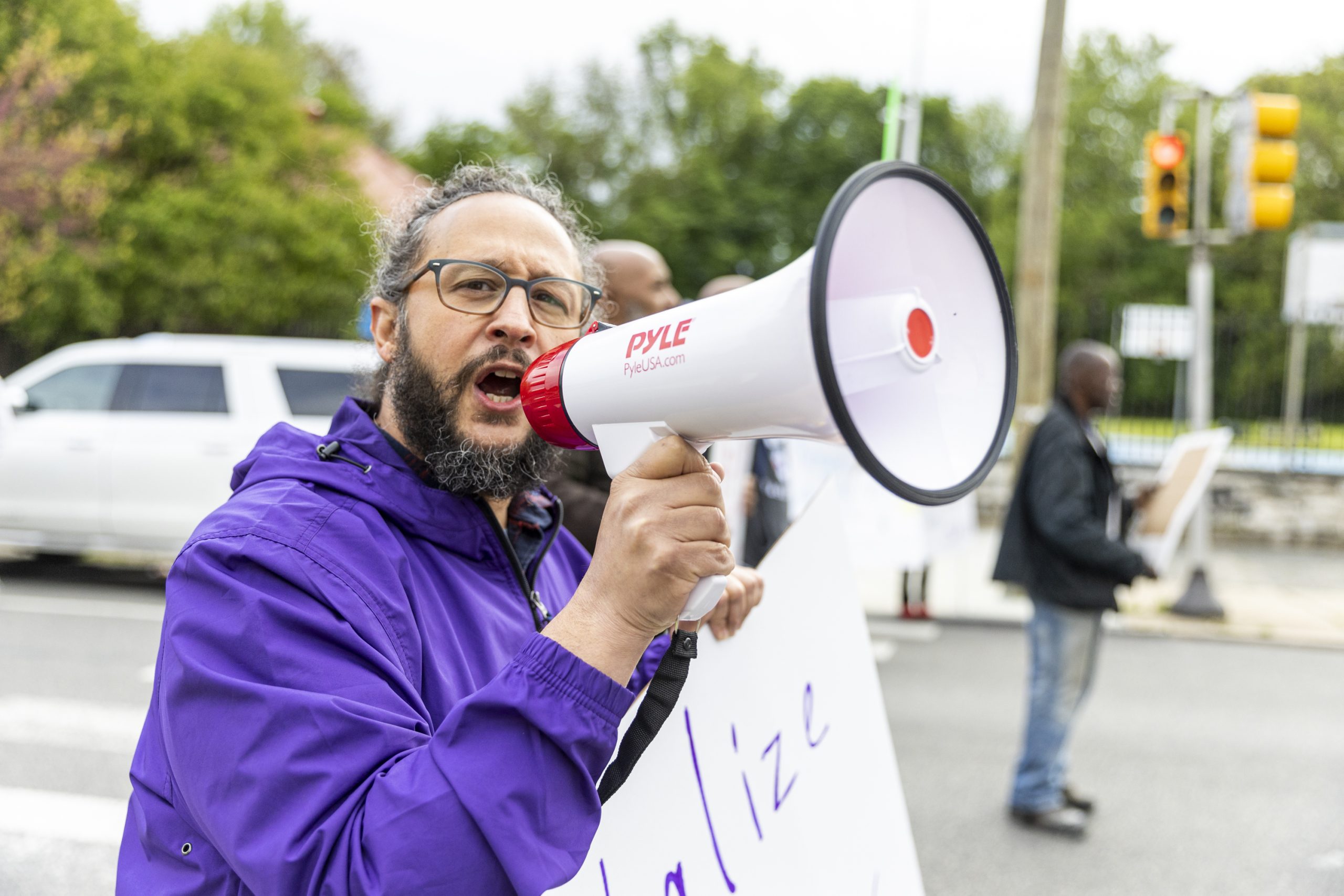
Council voted unanimously on Thursday to make Philadelphia one of the first cities in the country to explicitly endorse a nationwide boycott of Starbucks amid a unionization drive, and to pledge not to use city funds at the coffee chain until it reaches a contract agreement with its workers.
Also during Council’s session on Thursday: Councilmember Jamie Gauthier introduced controversial legislation to approve a contract with a trash incinerator that she doesn’t support. We’ll explain.
What was this week’s highlight?
Council puts Starbucks on ice: The expression of solidarity with Starbucks workers is a ceremonial resolution that does not carry the weight of law and does not require approval from Mayor Cherelle L. Parker.
Still, Council’s vote was a formal endorsement of the boycott orchestrated by Starbucks Workers United and targeting the world’s largest coffee chain, which is already reducing its footprint in the city. Starbucks closed six Philadelphia locations last year, and two additional branches — one at 2201 South St. in Southwest Center City and the other at 1018 N. Second St. in Northern Liberties — closed on Sunday.
The only other city to formally support the unionization effort is St. Louis, where last week the city’s board of aldermen approved a resolution to “express solidarity with Starbucks Workers United as they call for a boycott of Starbucks.”
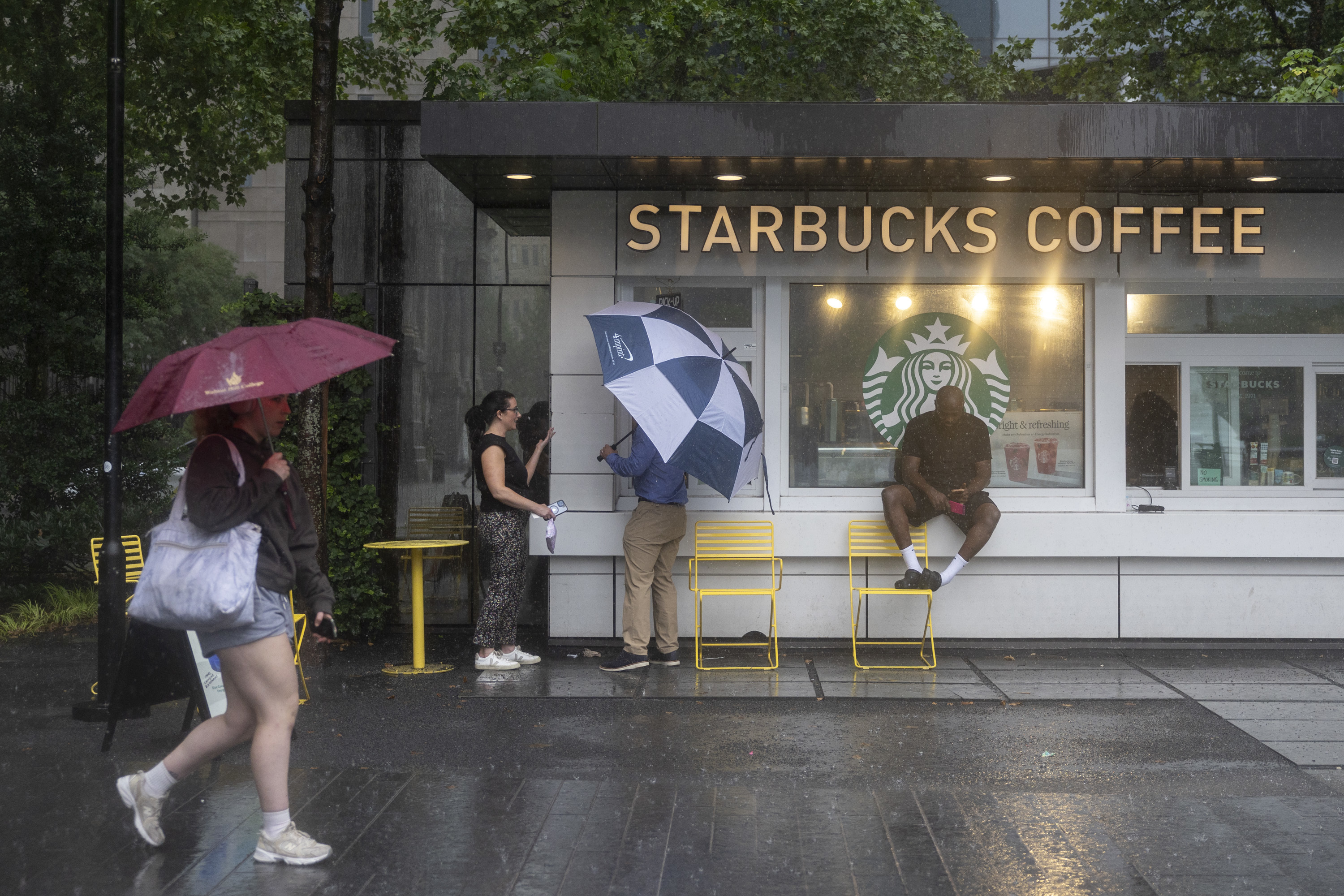
People staying dry at the Starbucks Coffee at Dilworth Park near City Hall in Philadelphia, Pa., on Thursday, July 9, 2026.Tyger Williams / Staff Photographer
Over the last five years, baristas have unionized at hundreds of individual Starbucks locations, but the company has not agreed to a nationwide contract that the union has sought. The union in August called for a nationwide boycott to last until an agreement is reached.
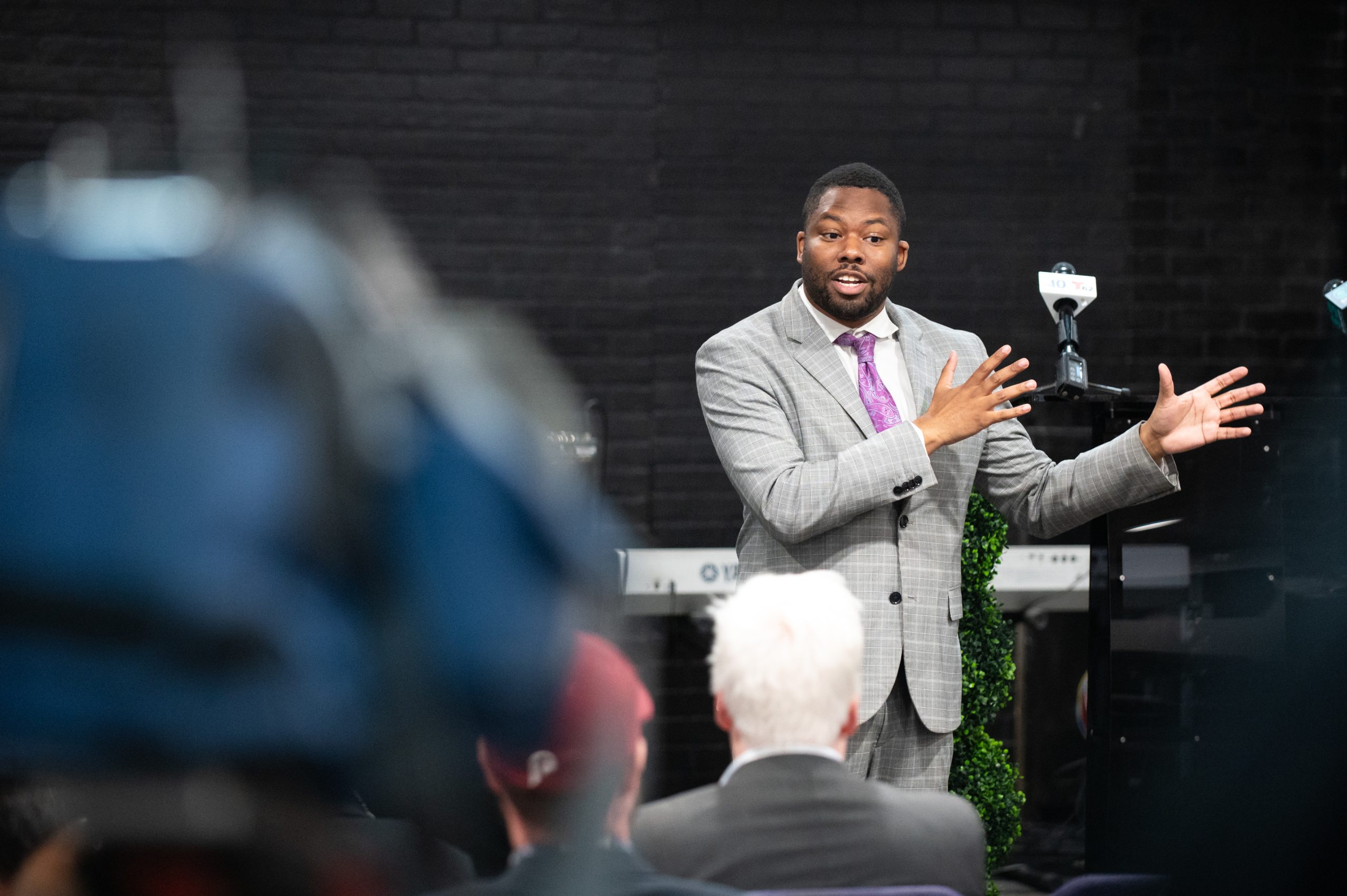
Councilmember Nicolas O’Rourke, a member of the progressive Working Families Party who represents the city at-large, authored the legislation and said its passage is “another affirmation of Philadelphia being a union town.”
“I am always interested in making sure that businesses in the city of Philadelphia and people are thriving,” O’Rourke said. “But my first priority is always to make sure that workers and workers’ conditions are right and that they are respected.”
Council is controlled by a supermajority of Democrats, and the body is largely supportive of organized labor.
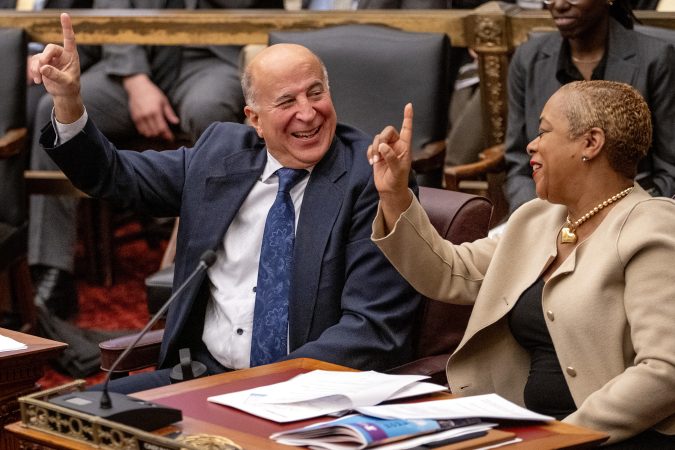
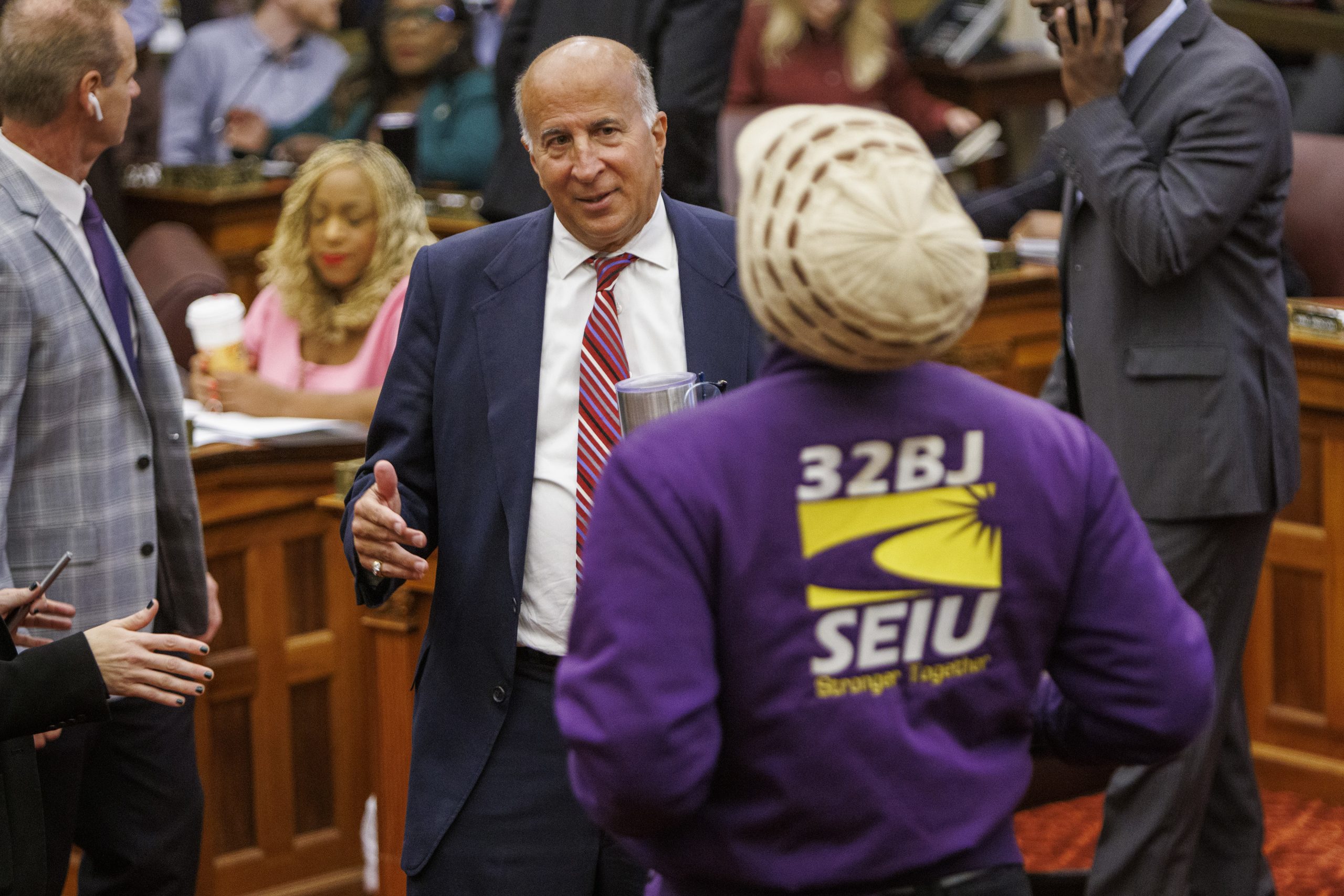
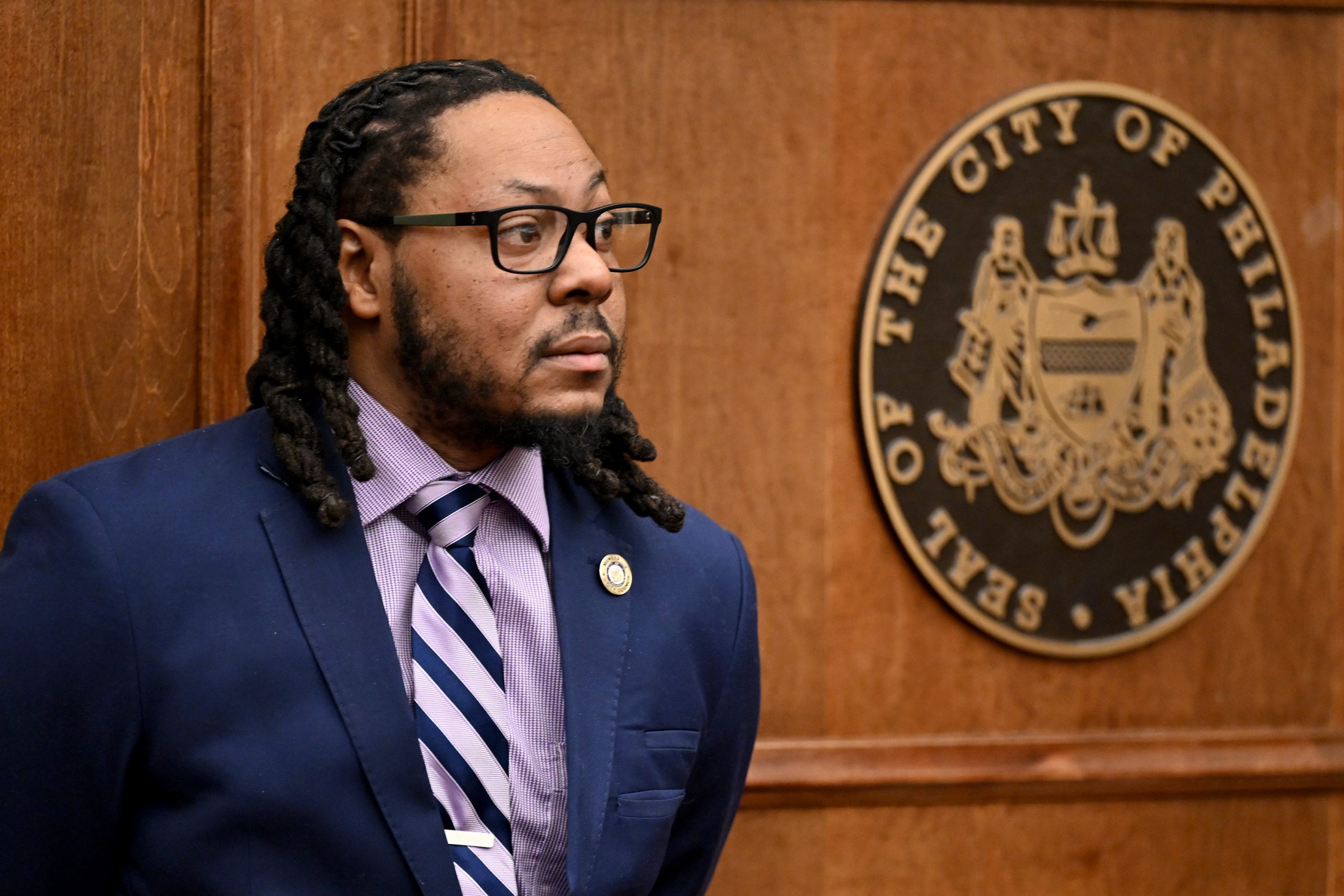
Council President Kenyatta Johnson said he backs the Starbucks boycott, even though he is generally not a big coffee drinker.
“Unfortunately, they do have a vegan breakfast sandwich,” said Johnson, who follows a plant-based diet. “But I won’t be having those any time soon.”
A spokesperson for Starbucks said in a statement Thursday that the company is “committed to engaging in productive bargaining.”
What else happened today?
Introducing legislation she doesn’t support: Thursday’s meeting featured another twist in the long-running debate over a Chester trash incinerator and how Philadelphia gets rids of its garbage. Gauthier, a progressive Democrat who has advocated for the city to stop burning its trash, introduced legislation that would allow the city to continue doing so.
Here’s why: The Parker administration is looking to renew its long-held contract with Reworld, the Chester waste-to-energy facility where the city ships about one-third of its trash to be burned. (The rest of the trash is sent to landfills.)
In order to renew the multiyear contract, Council must approve authorizing legislation. Gauthier, who previously floated a bill to ban the city from incinerating trash but did not garner enough support to pass it, is asking her fellow lawmakers to vote against the contract renewal.
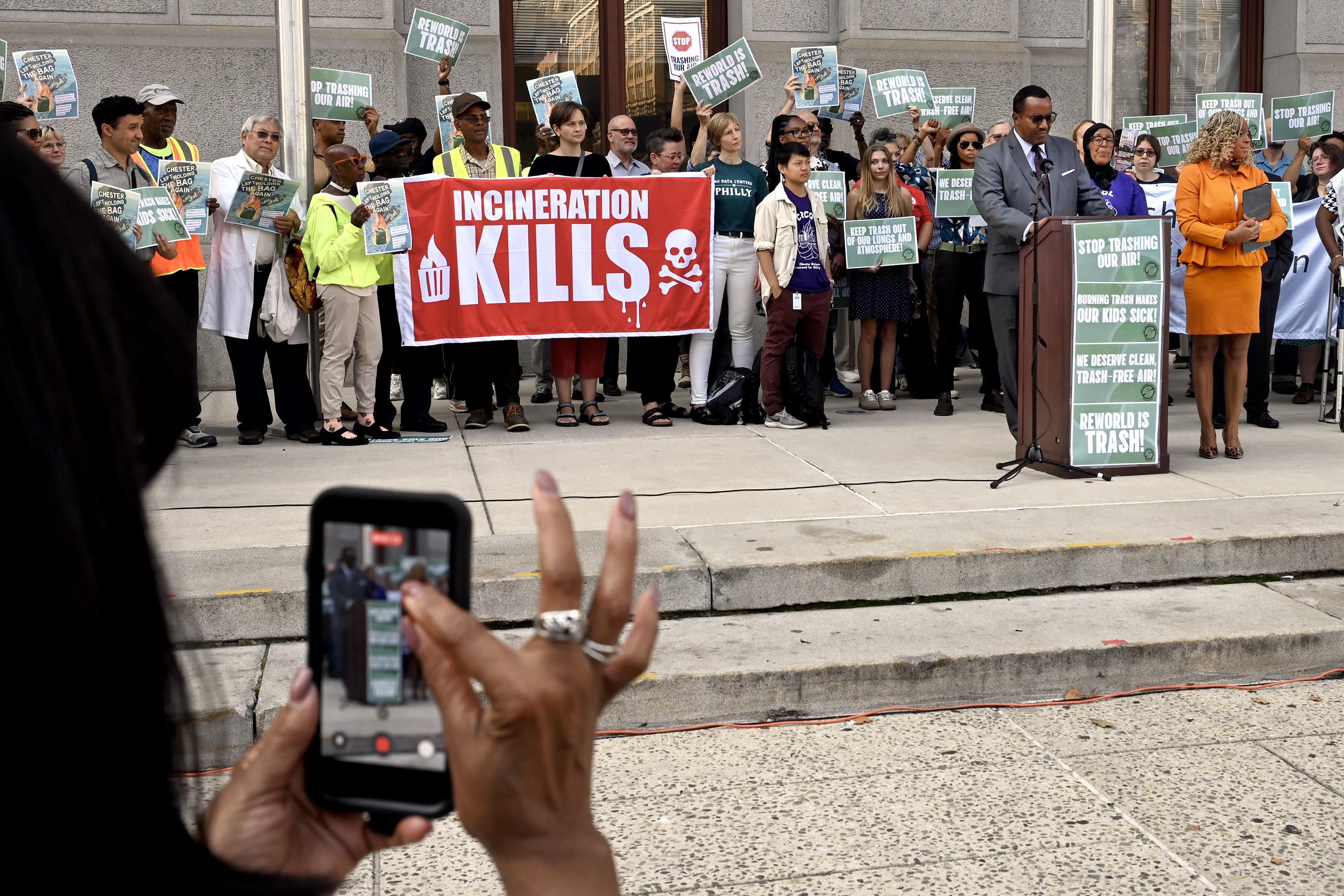
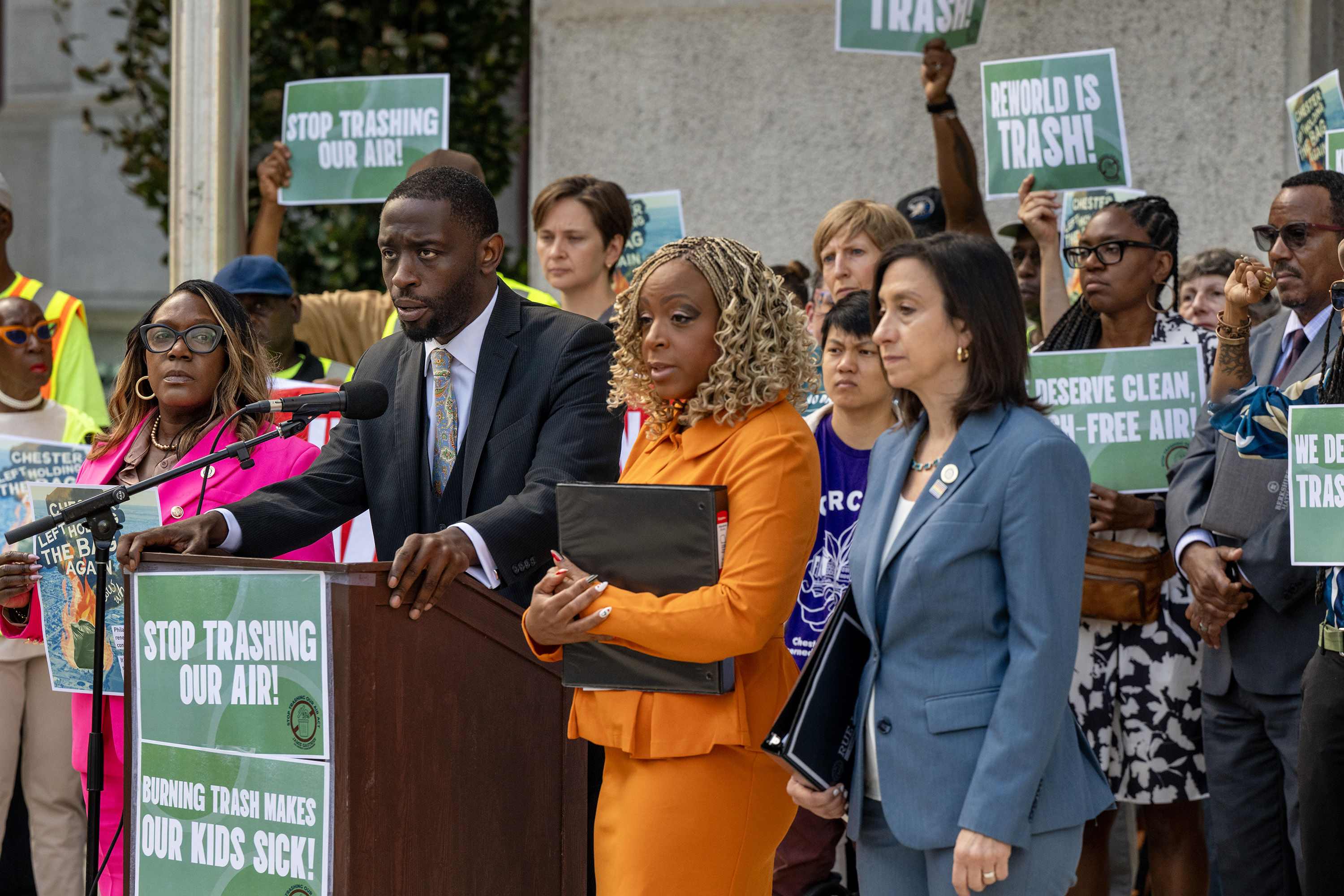
Chester Mayor Stefan Roots (at lectern) is joined by Philadelphia City Councilmember Jamie Gauthier (right) at a rally outside City Hall early Thursday morning Sept. 17, 2026.Tom Gralish / Staff Photographer
Although it may seem like a reversal of her position, Gauthier introducing the legislation herself — even when she does not support it — will allow her to have some say when a committee holds a hearing on the legislation. She hopes to amend it to strike Reworld from the deal so that the city processes all trash and recycling through landfills.
“It gives me and my coalition an opportunity to be at the table on something that we fought really hard on for more than a year now,” she said in an interview. “We’ve been working really hard to make sure that we’re protecting the health of folks in Chester and in Philadelphia, and protecting our environment.”
Johnson will decide which committee will hear the bill. He said Thursday that he is still reviewing the legislation.
Mamdani-fication: Create a Philly Medicaid Supplement Program. Expand access to programs that provide transit subsidies to low-income Philadelphians. Use city money to buy properties with expiring federal affordable housing subsidies.
These were some of the recommendations included in the Affordable Philly Now report, which was recently released by the Cost of Living Task Force.
O’Rourke, who convened the task force, held a committee hearing Wednesday examining the report’s findings, and he was not shy about noting that it was partly inspired by another progressive a few miles up I-95.
“You cannot deny the profound impact that … Mayor Zohran Mamdani has had,” O’Rourke said, praising the New Yorker for “mixing moonshot municipal goals with sewer socialism” and working to build a “protective hedge” of social safety net programs.
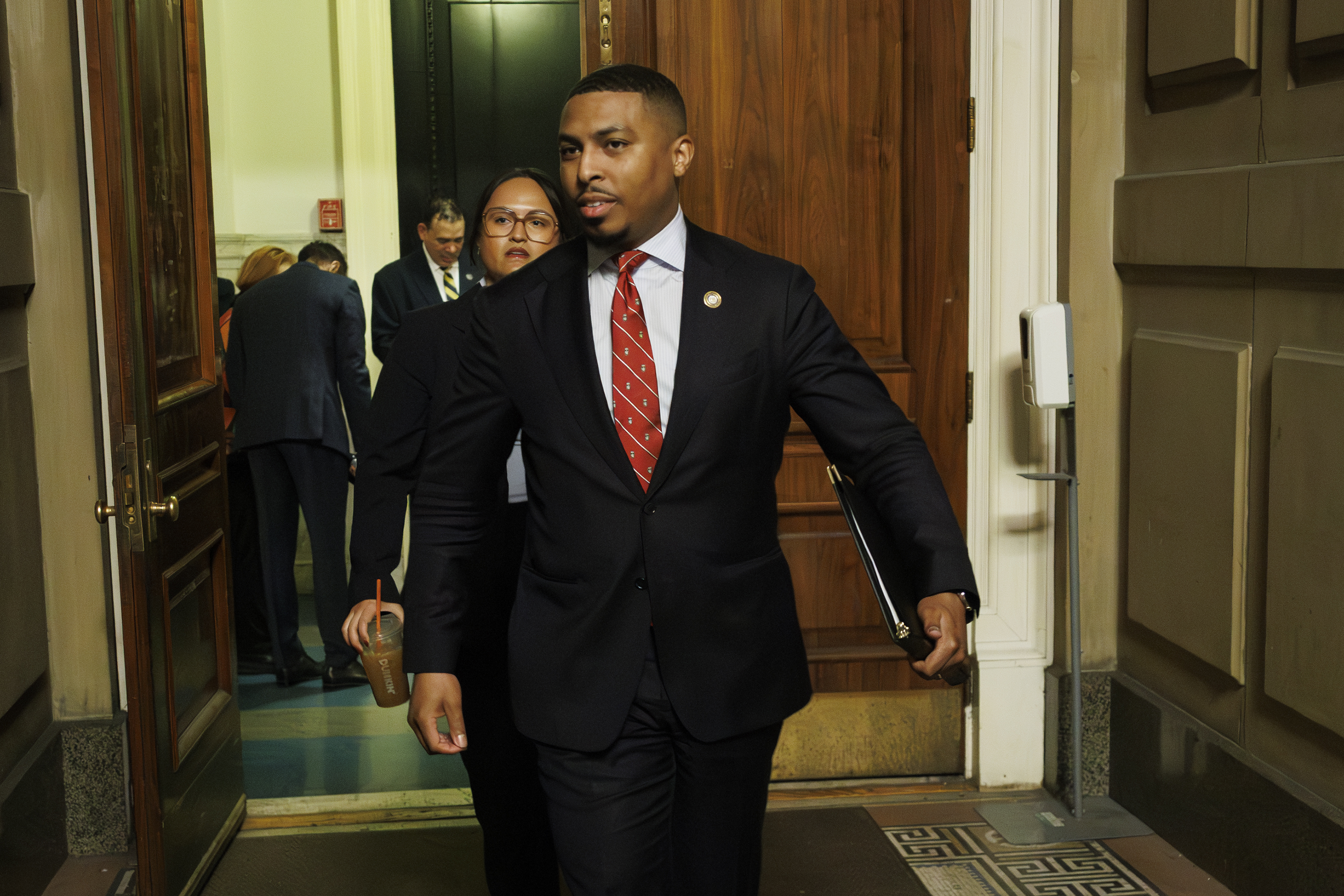
Nicolas O’Rourke, Philadelphia City Council member, during the mayor’s budget address on March 12.Alejandro A. Alvarez / Staff Photographer
Wednesday’s hearing was a meeting of the Committee on Global Opportunities and the Creative/Innovative Economy, which O’Rourke chairs. As a freshman and a member of a minority party, O’Rourke does not have a high-profile committee leadership post like some of the more senior Democratic lawmakers on Council. His committee was previously led by former GOP Councilmember David Oh and does not naturally align with O’Rourke’s progressive politics.
O’Rourke said at the committee hearing Wednesday — the first time he chaired a Council hearing — that he was shifting the panel’s work.
“The prior version of this committee revolved around corporate investment fitting into global value chains and making Philadelphia an international destination,” O’Rourke said. “In my reflection on the meaning of the committee, I have spent more time focusing on a part of the committee’s mandate that actually seems more in its merit — that is, to consider all matters related to making Philadelphia a world-class city. … And in some seasons, world-class cities show themselves by being bold in providing a protective hedge for its people.”
Quote of the week
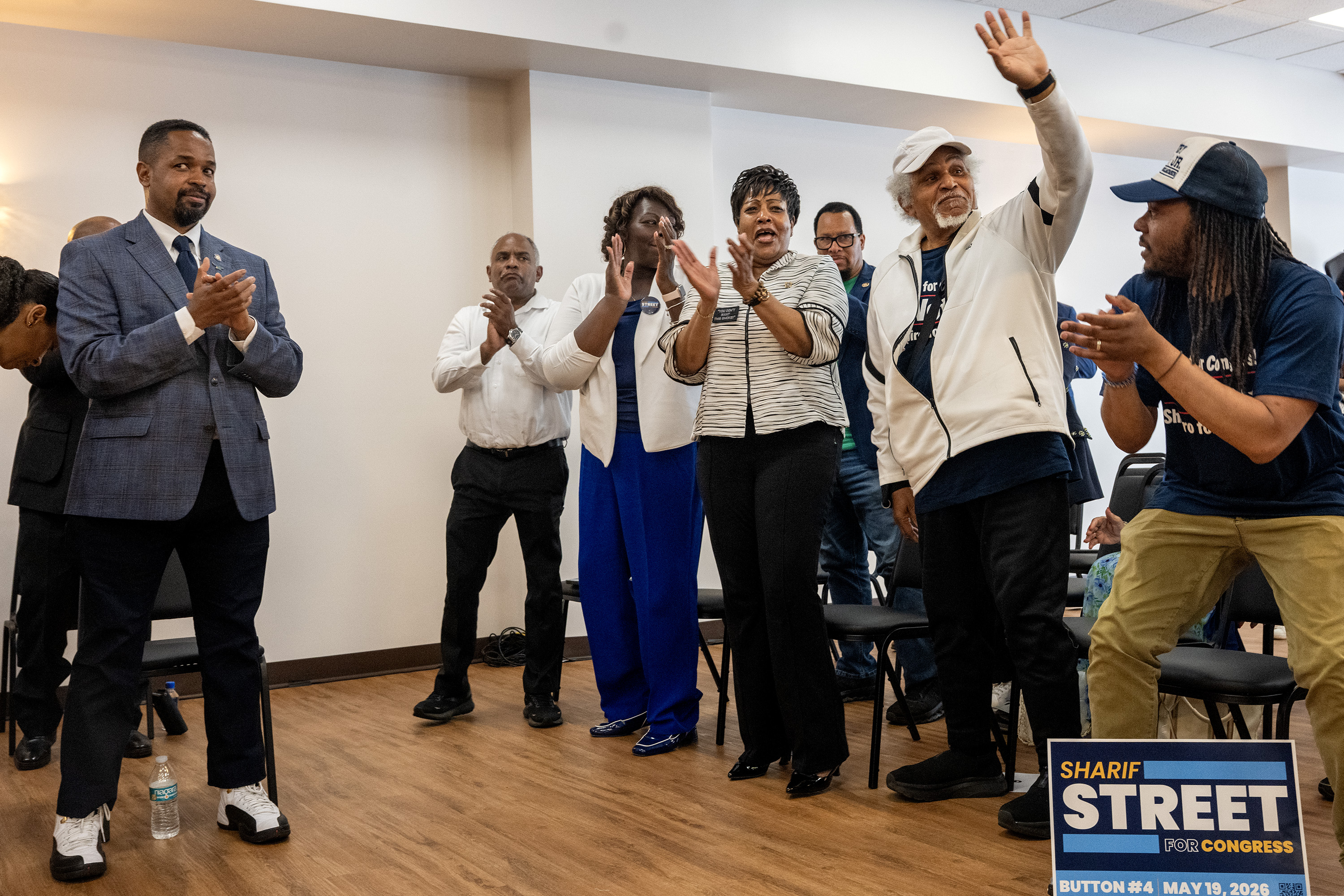
Former Mayor John F. Street (right) is acknowledged by supporters of his son, State Sen. Sharif Street (left), in West Philadelphia Monday, May 18, 2026.Tom Gralish / Staff Photographer
That was former Mayor John F. Street, the erstwhile City Council president, who returned to his old workplace Thursday to speak during public comment. He was testifying in support of a resolution to honor Philadelphia Police Lt. Greg Brown, who was, among other assignments, a member of Street’s security detail and is now retiring.
Street said Brown was one of the few people he never got to humiliate, because Brown “always got it right.”
“I never had a chance to put him on any list,” Street said.
With recent victories by democratic socialists nationwide prompting a fierce debate about the future of the Democratic Party, most Democrats in Pennsylvania have a positive view of socialism — and nearly 40% consider themselves to be a democratic socialist, a new poll found.
About one-third of likely voters in the midterm elections this fall have a favorable view of socialism and 56% have an unfavorable view. That result closely mirrors a recent national poll from the New York Times and Siena University, raising questions about the appeal of socialism to a wider swath of voters.
“We’re more popular than ever,” said Dan Parker, cochair of Philadelphia’s chapter of the Democratic Socialists of America (DSA). “But we still have a long way to go.”
(function(){function e(){window.addEventListener(`message`,function(e){if(e.data[`datawrapper-height`]!==void 0){var t=document.querySelectorAll(`iframe`);for(var n in e.data[`datawrapper-height`])for(var r=0,i;i=t[r];r++)if(i.contentWindow===e.source){var a=e.data[`datawrapper-height`][n]+`px`;i.style.height=a}}})}e()})();
The survey of 615 likely Pennsylvania voters conducted from Sept. 15 through 21 comes amid a surge of leftist victories both locally and across the country.
State Rep. Chris Rabb defeated a pair of more moderate candidates in Philadelphia’s highly competitive congressional primary in May. A democratic socialist, Rabb is highly favored to win in the general election and has spent the months since his primary campaigning for other like-minded candidates.
Nearly all of those candidates — from Abdul El-Sayed in the high-stakes Michigan U.S. Senate race to a pair of New York candidates boosted by Mayor Zohran Mamdani — have also won their primaries as Rabb and his allies look to grow the ranks of progressives starting on Capitol Hill in January.
“The mainstream Democratic establishment candidates are telling us time and time again to settle for less, to expect nothing other than the status quo,” Parker said. “People are looking for a different set of politics that speaks to their material needs and to the values of freedom that many are striving for.”
Parker said Philadelphia DSA has been “exploding” since Rabb’s victory. The group mobilized hundreds of volunteers to knock between 75,000 and 100,000 doors during his campaign, and more than 750 new members have joined since May to put the chapter’s total ranks at about 3,000, he said.
Councilmember Kendra Brooks speaks with colleague Nicolas O’Rourke during a March 12 caucus session. Alejandro A. Alvarez / Staff Photographer
Rabb’s success follow that of Pittsburgh’s U.S. Rep. Summer Lee, who was first elected to Congress with DSA support in 2022. Other DSA-backed elected officials include Philadelphia City Councilmembers Kendra Brooks and Nicolas O’Rourke, as well as State Sen. Nikil Saval, while new primary victories this year include Mark Pinsley and Ce-Ce Gerlach in Lehigh Valley-based legislative races.
Further growth, Parker said, will come with DSA-backed candidates working in office to “prove that government can exist to serve ordinary people.”
On that agenda: Advocating for universal healthcare, affordable housing, progressive tax policies, defunding and ultimately abolishing ICE, and ending the wars in Iran and Gaza.
“What makes DSA distinct — and democratic socialism as a political movement distinct — is that it’s not really just about who has the right ideas,” Parker said. “It’s about a theory of change that puts the vast majority of society in the driver’s seat.”
(function(){function e(){window.addEventListener(`message`,function(e){if(e.data[`datawrapper-height`]!==void 0){var t=document.querySelectorAll(`iframe`);for(var n in e.data[`datawrapper-height`])for(var r=0,i;i=t[r];r++)if(i.contentWindow===e.source){var a=e.data[`datawrapper-height`][n]+`px`;i.style.height=a}}})}e()})();
As Democrats look to retake control of Congress and the White House, how much influence that movement will yield remains an open question.
Moderates like Gov. Josh Shapiro, a potential 2028 Democratic presidential candidate, have acknowledged the energy on the left while advocating for a more centrist approach. Shapiro said this summer that the progressive candidates were practicing “performative politics” and would need to deliver if elected. He has also said he expects the party to have the most significant “battle over what we believe in” in more than three decades as the next presidential race gets underway.
The latest poll shows the party’s base remains divided in Pennsylvania.
While Democrats in the state remain split in their views of socialism, 38% consider themselves to be a democratic socialist while 57% do not, the poll found. Just over half of Democrats see their party as divided and 45% believe it’s united.
‘A tiny, tiny fraction’
Some observers also cautioned that the number of self-identifying democratic socialists across all of Pennsylvania — a swing state that has largely elected moderates to statewide office — may appear larger than reality. The poll did not define democratic socialism, for one. And progressives have been overrepresented in other polling this year, including in Wisconsin and Michigan, said Lew Irwin, a political science professor at Duquesne University in Pittsburgh.
“A lot of people will claim an affiliation when they actually have an affinity,” Irwin said, adding that it’s still become “increasingly mainstream and acceptable inside the Democratic Party” to identify as socialist.
J.J. Balaban, a Philadelphia-based ad maker for more moderate Democrats like U.S. Rep. Brendan Boyle, pointed to the fact that even with the additional energy on the left, the vast majority of Democrats in Washington next year will not be socialist.
“We’re talking about a tiny, tiny fraction of the Democratic caucus,” he said.
Balaban said that is one of the reasons why Republicans’ campaign messaging may also not be effective as they try to defend their majorities in the November midterm elections. Republicans have branded all kinds of Democrats as socialists — repeatedly denouncing the entire party as far left and “communist” in its agenda.
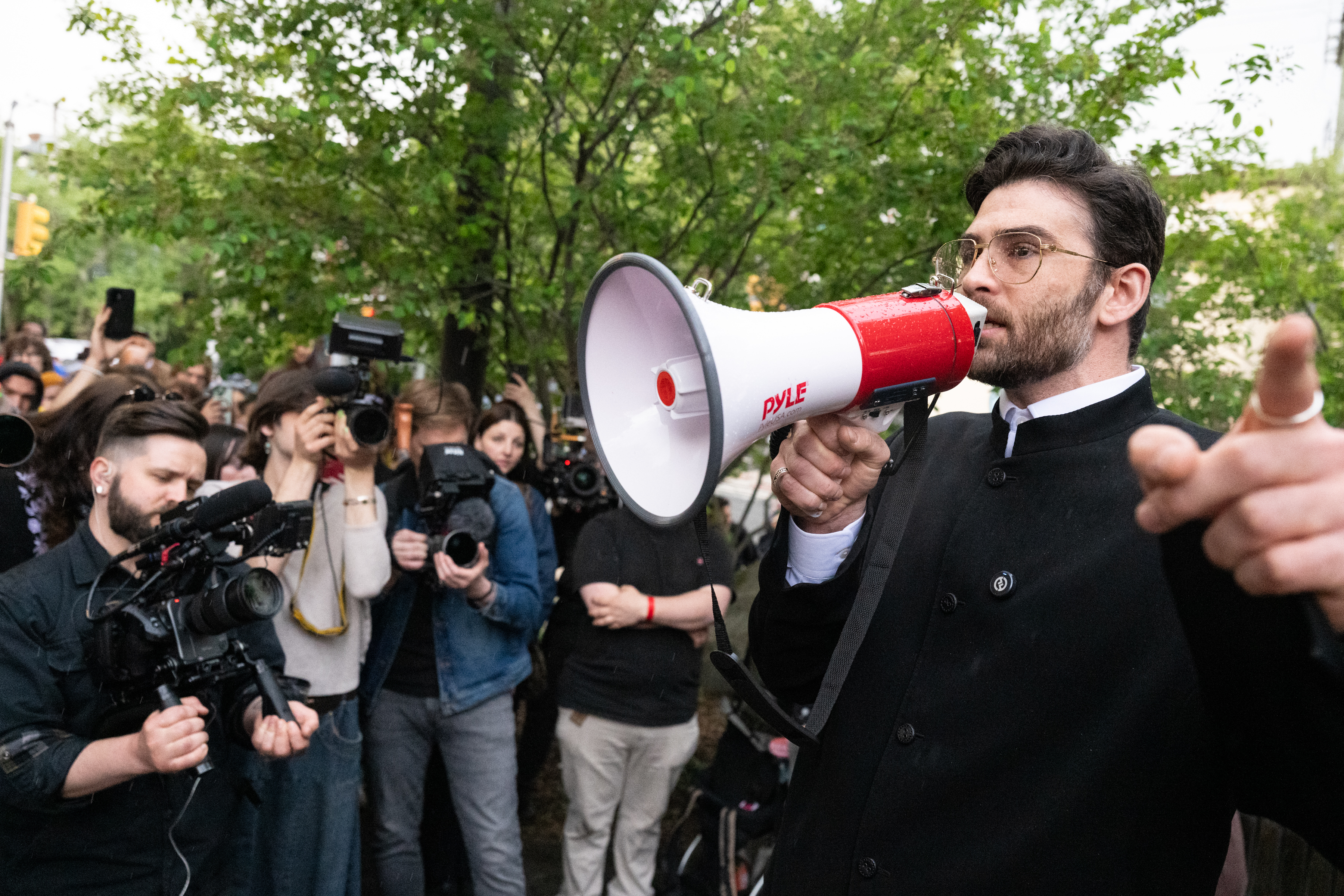
One of the main characters featured in those attacks has been Hasan Piker, the controversial leftist streamer who campaigned with Rabb and other candidates this year. His visit to Philadelphia in April drew hundreds of young progressives but was condemned by Rabb’s opponents and Jewish groups who consider his views antisemitic.
Online influencer Hasan Piker speaks to attendees at an April 30 fundraiser for State Rep. Chris Rabb’s 2026 congressional campaign at Renata’s Kitchen in West Philadelphia.Erin Blewett / For The Inquirer
Piker’s support of El-Sayed has become a dominant issue in the Michigan race, but the poll of Pennsylvania voters shows he is mostly unknown in the Keystone State.
Among Pennsylvania likely voters, 23% had an unfavorable view of Piker and 6% had a favorable view. Two-thirds said they had not heard of him — and a higher share of Republicans knew him compared to Democrats.
“He is a much greater part of the discourse in the Fox cinematic universe than he is in actual Democratic discourse,” Balaban said.
With polls increasingly showing Democratic momentum this fall, even some conservatives appear to be pushing for Republicans to shift their messaging away from socialism.
Former U.S. Rep. George Santos, a Republican who has reportedly lived at least partially in the Poconos since President Donald Trump commuted his sentence last year, posted a video Thursday in which he criticized a mailer for U.S. Rep. Rob Bresnahan, a freshman Republican in a tight reelection campaign. The mailer claims Bresnahan will “stop the socialists” and lists his Democratic challenger, Paige Cognetti, alongside the “socialist dream team” of progressives Mamdani, U.S. Sen. Bernie Sanders (Ind., Vt.), and U.S. Rep. Alexandria Ocasio-Cortez (D., N.Y.).
“Please stop sending me this. It’s silly,” Santos said in the video, adding colorful language to say Pennsylvania Republicans should be focusing on the cost of living.
“No more rhetoric!” he added.
Staff writer Joe Yerardi contributed to this article.
Last November, Mayor Cherelle L. Parker announced with great fanfare that Philadelphia could create a property tax break to spur the conversion of derelict buildings, such as empty Center City office towers and vacant school facilities, into apartments.
She had worked with legislators in Harrisburg to change state law to allow Philadelphia to pursue the legislation, which would create a 20-year property tax abatement for conversions of “deteriorated” properties.
But 10 months later, no such legislation has been introduced in City Council, and Parker on Wednesday called on city lawmakers to consider her 20-year abatement idea for distressed properties.
“We have an affordability crisis here in the city of Philadelphia,” Parker told reporters Wednesday. “What if we marry that challenge with these persistently vacant buildings that have gone underutilized, and we put them to their best and their highest use to incentivize affordable housing?”
Parker’s administration, however, has not yet transmitted a draft of the bill to Council, which is typically the first step for lawmakers to consider legislation championed by the mayor.
“Tell them, ‘Send the bill over,’” Council President Kenyatta Johnson told reporters Thursday. “We haven’t seen any piece of legislation regarding 20-year tax abatement at this particular point in time.”
Asked about the delay, Tiffany W. Thurman, Parker’s chief of staff, said Thursday that city agencies “are collaborating to ensure the proposed legislation is legally sound and can withstand constitutional scrutiny.” She added that Parker “remains firmly committed to presenting City Council with a bill that incentivizes the development of affordable and workforce housing on vacant, publicly owned land.”
On Thursday, several members of Council questioned the lack of specifics from the mayor’s office, and others were less than enthused about the idea of approving a new tax break when the Philadelphia School District is facing a funding crisis.
“I continue to appreciate an effort to make sure that we have access to affordable housing in the city of Philadelphia,” Councilmember Nicolas O’Rourke said. “At the same time, I am very much so laser-focused and desirous of the city getting the revenue that it needs.”
A controversial policy
Property tax abatements have long been controversial in Philadelphia, with opponents contending that they starve the city and school district of needed revenue while favoring real estate developers.
Philadelphia’s 10-year abatement program, which was established in the 1990s, previously exempted owners from paying real estate tax on all new construction or improvements on any type of property for 10 years.
That program was long hailed as key to the city’s turnaround in the early 2000s. But concerns about its impact on neighborhood inequality and school funding grew over time, and Council in 2019 roughly halved the value of the tax break for new construction.
Parker argues that the idea behind her legislation is different: She wants to see a far more narrowly targeted bill that would only help developers who seek to redevelop large, derelict buildings.
“We’re talking about … persistently vacant school buildings that have been vacant from three up to 30 years,” Parker said Wednesday.
The mayor also noted that the development environment has worsened dramatically since Council cut the 10-year tax abatement’s power, with soaring interest rates and construction material inflation as factors that weigh heavily on complex and large-scale projects.
Still, many Council members are skeptical of tackling a potentially controversial measure that is seen to favor developers ahead of next year’s municipal elections, when all 17 city lawmakers will be on the ballot.
“I’d like to get more information on exactly what the plan is because the tax abatements are, as you know, hugely unpopular,” said Councilmember Cindy Bass, who represents parts of North and Northwest Philadelphia.
Bass said that while the abatement has spurred needed growth, she would need to see any expansion of it balanced with the needs of lower-income Philadelphians who are struggling with rising costs and property taxes.
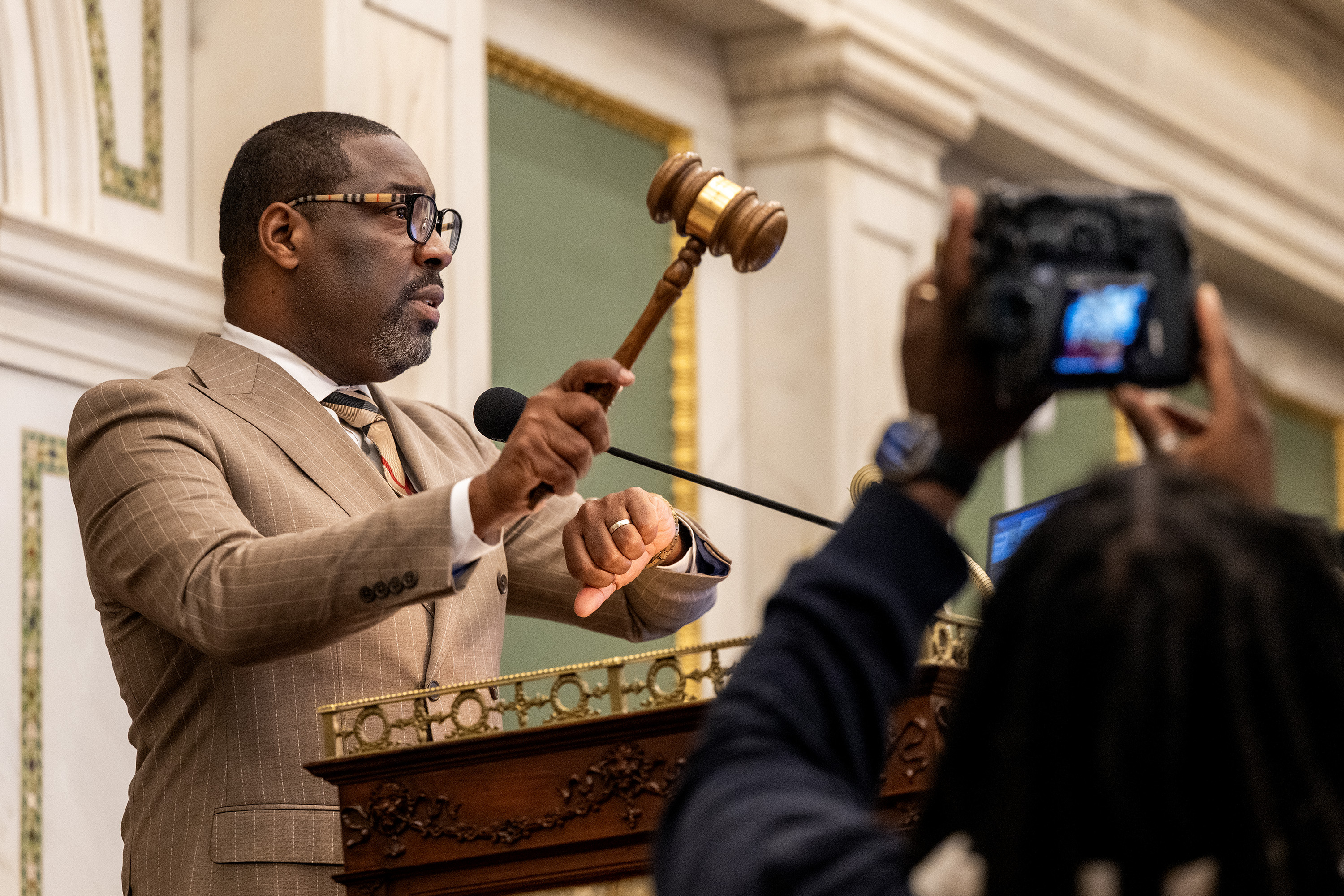
President Kenyatta Johnson checks his watch and gavels City Council into session on Sept. 17, as the body returns for start of its fall session.Tom Gralish / Staff Photographer
And Johnson on Thursday reiterated his comments from earlier this year that he would like to see the newly authorized 20-year abatement include a provision that requires an affordable housing component of the projects it enables.
“Any type of legislation like that should really focus on making sure that we’re providing a level of affordability, also senior housing,” he said. “Obviously, the devil’s always in the details.”
But it is not clear that state law would allow Philadelphia to mandate affordability in an abatement bill, and Parker cautioned against doing anything that would exceed the city’s authority.
“We have to make sure that whatever we are proffering, that it is directly connected to what has been enabled,” Parker said. “It has to pass legal muster for no one to question the constitutionality of what it is that we’re doing.”
Persistently vacant schools
A 20-year abatement would apply to empty office buildings in Center City and long-vacant industrial buildings. But Parker and administration officials have focused their pitch on revitalizing empty public schools.
“We need to pass it because it’s going to be extremely beneficial for challenging properties,” John Mondlak, chief of staff of the Philadelphia Department of Planning and Development, said Wednesday. “You think about schools in 10 years, 20 years — they are very difficult to reposition.”
That pitch, however, runs up against another policy issue festering between Parker and Council.
Thomas and other Council members vigorously protested the plan and are still pressing for the board to reconsider it.
“That’s our priority,” Thomas said Thursday. “I don’t want to have a conversation about schools that are vacant until we have a conversation about schools that are occupied.”
Private equity investor Gregory L. Segall, a Philadelphia Republican who was a key backer of Mayor Cherelle L. Parker’s 2023 campaign, has resigned from three city boards as he weighs other “civic engagement” opportunities, according to a copy of one of his resignation letters obtained by The Inquirer.
Parker, a Democrat, appointed Segall to the Philadelphia Gas Works board, the Philadelphia Tax Reform Commission, and the Mayor’s Business Roundtables. Segall resigned from all three effective Aug. 31. He also served as a vice chair of Parker’s transition committee when she was taking office.
“While I am stepping away from this role, I remain committed to civic engagement and intend to explore other ways to continue the journey I have been privileged to pursue over the last several years,” Segall, the chairman and CEO of Versa Capital, wrote in his letter resigning from the Mayor’s Business Roundtables, an advisory group convened by Parker.
Segall’s moves come as candidates are gearing up to run in next year’s municipal elections, when Parker and all 17 City Council members are up for reelection.
Candidates in the primary election have until early spring to decide whether they are running.
Claudia Vargas, a journalist who formerly worked for NBC10 and The Inquirer, reported this week that Segall was considering running for Council.
When contacted by The Inquirer, Segall, who lives in Chestnut Hill, said Wednesday he is “not running” for Council.
“People have suggested multiple forms of public service, including Council, and I have no plans or commitments at this time,” Segall, 63, said in an interview.
Segall said he continues to “strongly support Mayor Parker, and my highest and best hope is that my public service will be in aid of her continued success.”
Parker on Wednesday declined to comment on the report of Segall exploring a run for office.
From 2022 through 2025, Segall and his wife donated $37,300 to Parker’s campaign, according to campaign finance records. He also gave $150,000 to a super PAC backing her 2023 run, and $6,200 to her transition committee, the records show.
“The 2023 election took place at a time of crisis in the city, and getting the right leader was never more critical,” Segall said. “So the reason for my commitment to her was quite simple: Before I’m a Republican, I’m a Philadelphian.”
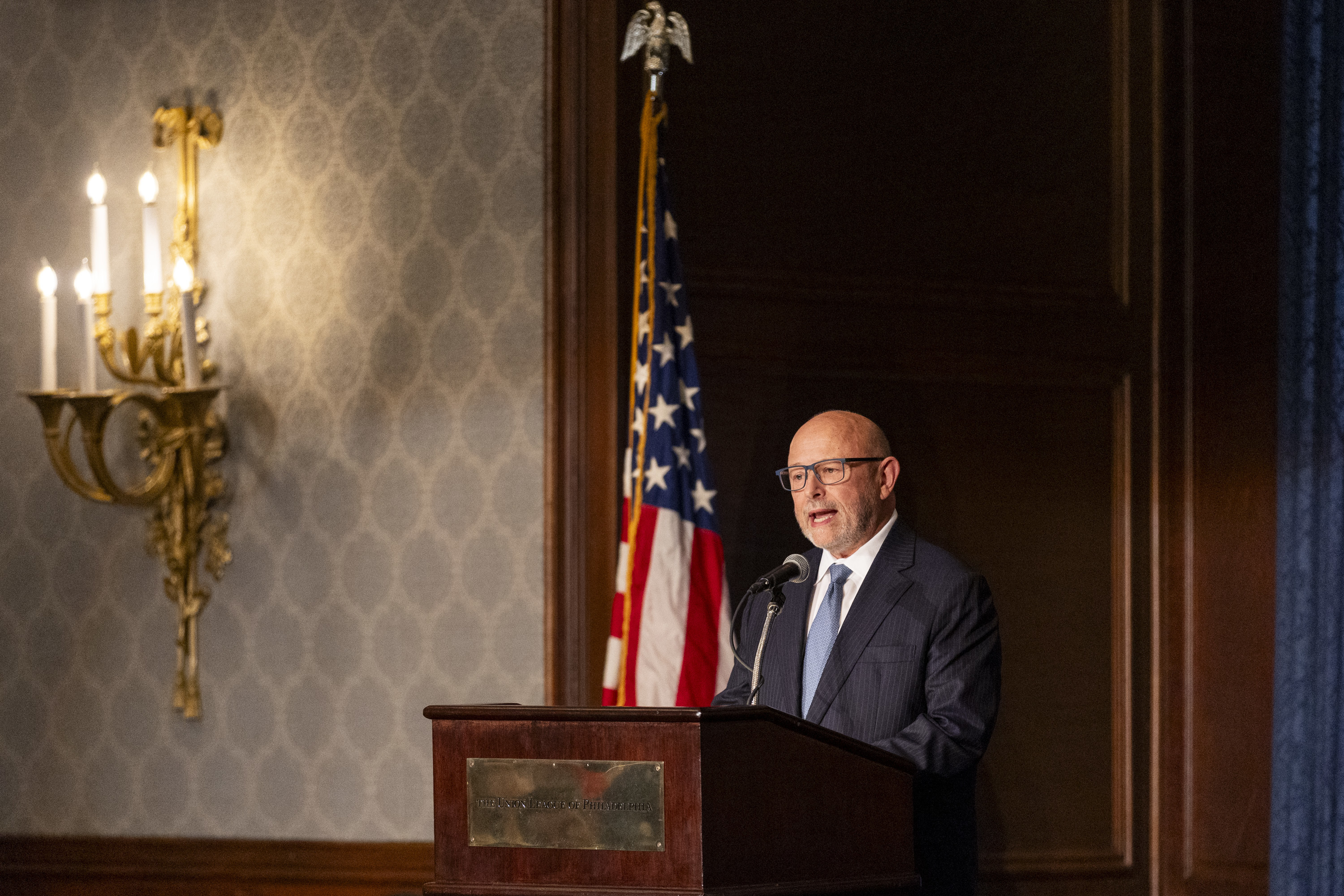
Gregory Segall, Chairman and CEO of Versa and Supporter of Mayor Parker, speaks at the Union League of Philadelphia Presidential Luncheon in Philadelphia, Pa., on Thursday, September 18, 2025.Tyger Williams / Staff Photographer
Citing Republican Party sources, Vargas reported that Segall was considering running for one of the two at-large seats on Council that are elected citywide and are set aside by the Home Rule Charter for minority-party or independent candidates.
Republicans held those seats for about seven decades until Councilmembers Kendra Brooks and Nicolas O’Rourke won them over the last two election cycles as members of the progressive Working Families Party.
Brooks is considering challenging Parker in next year’s mayoral election, sources previously told The Inquirer, which would require her to resign from her Council seat.
The Philly GOP has been strategizing ways to recapture the seats, and a run by Segall, a wealthy businessman who could potentially help fund his own campaign, could be a major opportunity for the party.
Segall donated $2,500 to the Republican City Committee last October.
GOP chair Vince Fenerty said he has met Segall and thinks he is a “nice and honorable man.”
“We’re a party that welcomes any potential candidate, and the decision to endorse would be up to our ward leaders,” Fenerty said in an interview Thursday.
Brian O’Neill, who represents the 10th District in Northeast Philadelphia, is currently the only Republican on Council. Democrats hold the remaining 14 seats.
Philadelphia City Council members are considering dueling proposals over how the city eliminates its garbage, with one lawmaker leading an effort to immediately block the city from shipping its garbage to a trash incinerator and another taking a longer-term approach.
Councilmember Mark Squilla on Thursday introduced legislation authorizing Mayor Cherelle L. Parker’s administration to, within three years, develop a plan to dramatically reduce the city’s reliance on both trash incineration and landfills over the next 20 years.
Squilla’s proposal, which he drafted with input from Parker’s administration, is something of an alternative for lawmakers to consider as Councilmember Jamie Gauthier has for months pushed for a more aggressive approach to stop the city from incinerating trash this year.
Both lawmakers hosted news conferences this week alongside their allies to rally support for their cause, part of a long list of events Council members hosted as the legislative body returned Thursday for its first meeting of the fall session.
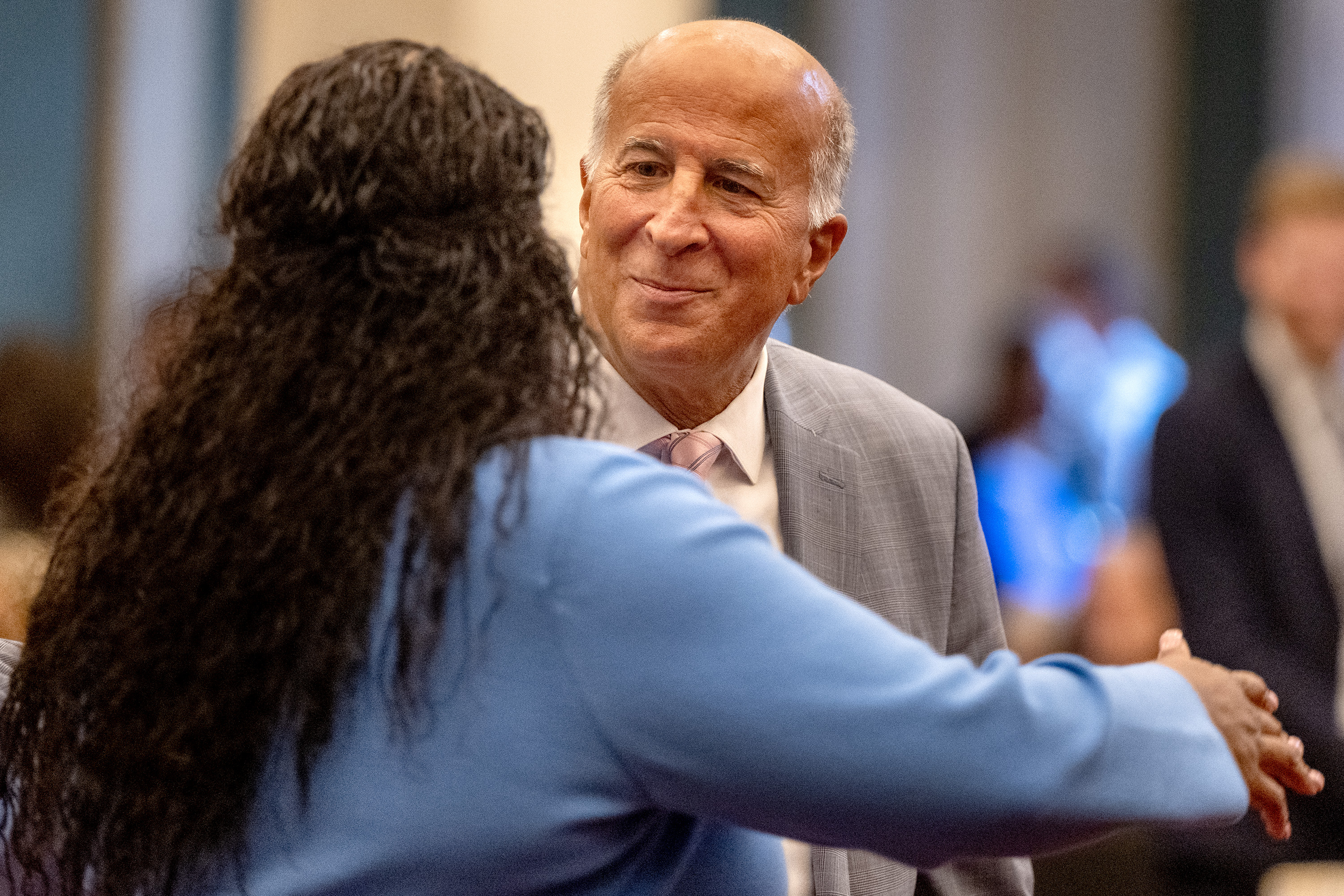
Councilmembers Mark Squilla and Katherine Gilmore Richardson (back to camera) greet each other as City Council convenes for its fall session Thursday, Sept. 17, 2026.Tom Gralish / Staff Photographer
The first meeting after the summer break typically has a jovial, first-day-of-school feel. But the mood briefly shifted Thursday when City Hall was evacuated and Council abruptly adjourned after a suspicious package was found on the floor where Council was meeting.
Police cleared the package, and Council resumed its business Thursday afternoon.
Here’s what else happened this week:
What was this week’s highlight?
Incinerator issue heats up: Gauthier has for months sought to pass legislation that would ban the city from continuing its long-term practice of sending about a third of its garbage to a trash incinerator in Chester, about 15 miles south of the city. She argues that incineration is bad for the environment and harms Chester residents’ health.
Parker’s administration opposed the legislation, called the Stop Trashing Our Air Act, and Gauthier in the spring failed to gain enough support for it in Council.
Now, Gauthier is trying to block the Parker administration from renewing its contract with Reworld, the incineration facility. The administration needs Council approval to enter into a new four-year contract with the firm.
Gauthier has several members on her side, including three fellow progressive lawmakers, as well as Councilmember Isaiah Thomas, who is the Democratic majority whip.
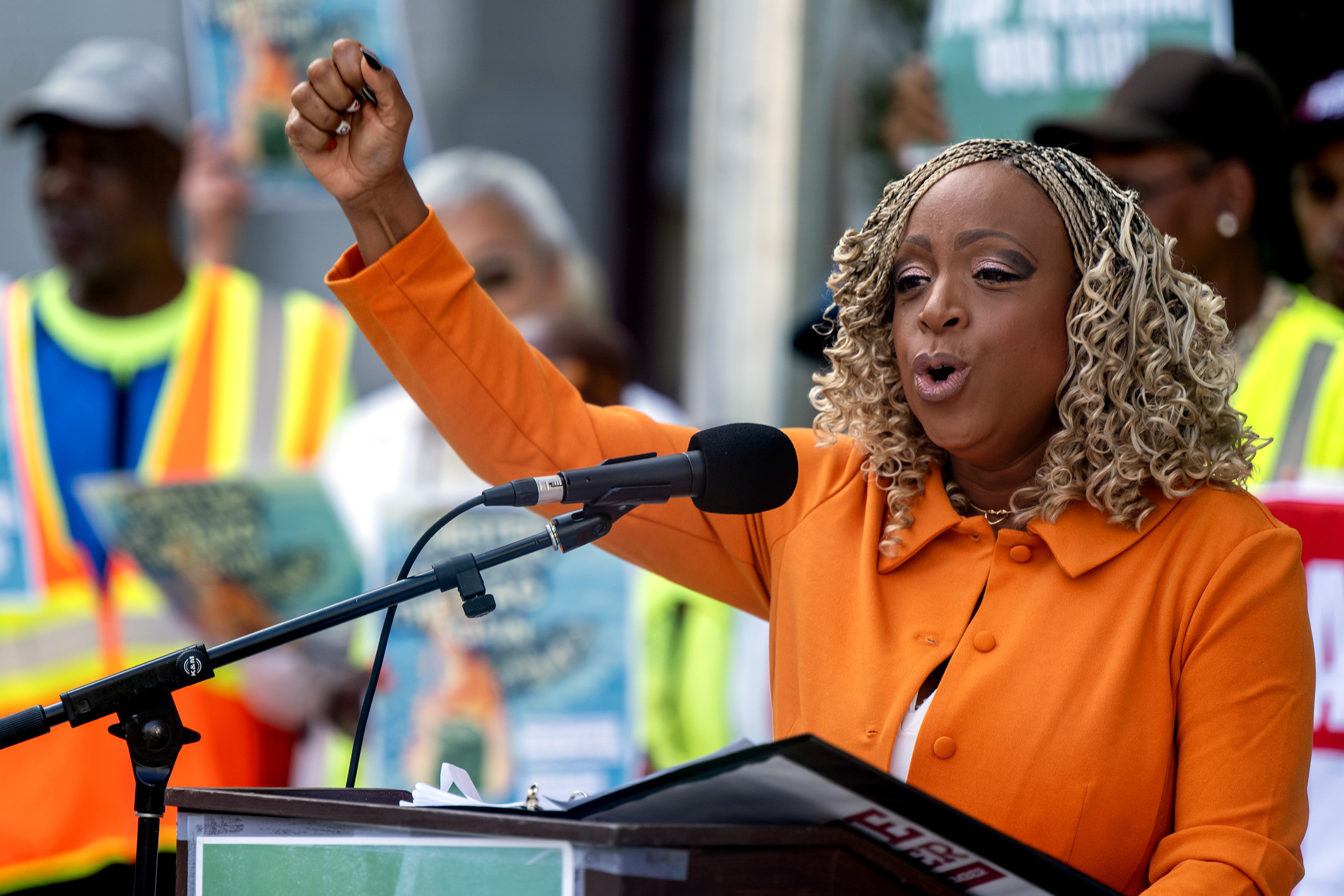
City Councilmember Jamie Gauthier speaks at a rally outside City Hall early Thursday morning Sept. 17, 2026 where protesters called on Council to reject Mayor Cherelle L. Parker’s waste disposal contracts. A coalition of elected officials, health and climate experts, and advocates from Philadelphia and Chester gathered to oppose the city’s sending its trash to an incinerator in Chester.Tom Gralish / Staff Photographer
Squilla’s proposal in some ways offers members an off-ramp. His bill calls for a “circular waste” system that includes new techniques for waste disposal, such as composting and “anaerobic digestion,” a process that breaks down organic waste.
Managing Director Carlton Williams said Wednesday during a news conference with Squilla that the city is looking to build out an anaerobic digestion system within four years.
Squilla said that while the administration is already working toward a more modern waste disposal system, passing a law would “codify what we had as plans and resolutions before.”
Gauthier said that she supports Squilla’s goal of moving toward a more sustainable system, but that his legislation “is a plan to create a longer-range plan.”
“It in no way changes the decision in front of Council,” she said. “We can move away from this practice right now.”
What else happened this week?
Severing the law department: The city law department serves as legal counsel for both the mayor’s administration and Council, a dynamic that can sometimes cause friction when the city’s elected officials disagree.
Council on Thursday approved a resolution by Thomas to hold a hearing “to consider the separation of the [law] department’s functions between the administration and City Council.”
Thomas has clashed with Parker’s administration, and he said he became interested in looking at the department’s structure due to concerns that Council was not receiving independent legal advice on some issues.
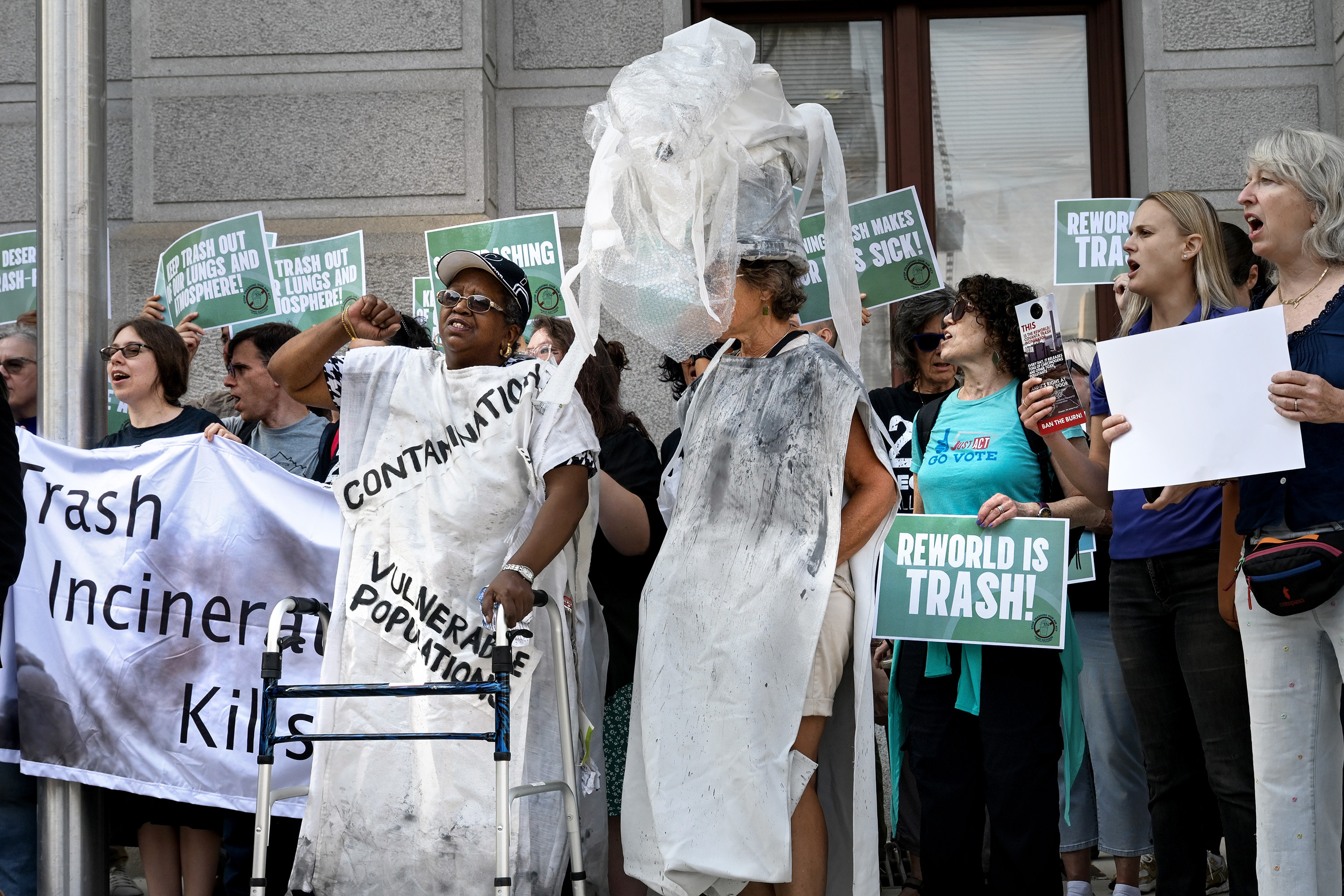
Lois Williams (left), dressed as a “sick person,” and Shari Hersh (right) in costume as a “smokestack,” join a rally outside City Hall early Thursday to call on City Council to reject Mayor Cherelle L. Parker’s waste disposal contracts.Tom Gralish / Staff Photographer
He pointed to the Philadelphia School District’s controversial facilities plan, which involves the closure of 17 school buildings and was adopted by the school board in April over the objections of many Council members.
And he said recent legal proceedings around the city’s business income and receipts tax were “part of the motivation” to hold a hearing on the law department.
In 2025, after a Massachusetts company sued the city seeking to overturn a popular tax break program that primarily helped small businesses, the law department said it had determined the lawsuit was likely to succeed. The Parker administration eventually settled the case and persuaded Council to eliminate the tax break. Some Council members at the time complained that the city did not defend the tax break more vigorously.
The department already silos off some of the work it does on behalf of Council from the rest of the administration, such as when it drafts bills proposed by lawmakers. Council also may hire outside legal counsel, but must pay for those services out of its own budget.
A law department spokesperson did not immediately respond to a request for comment.
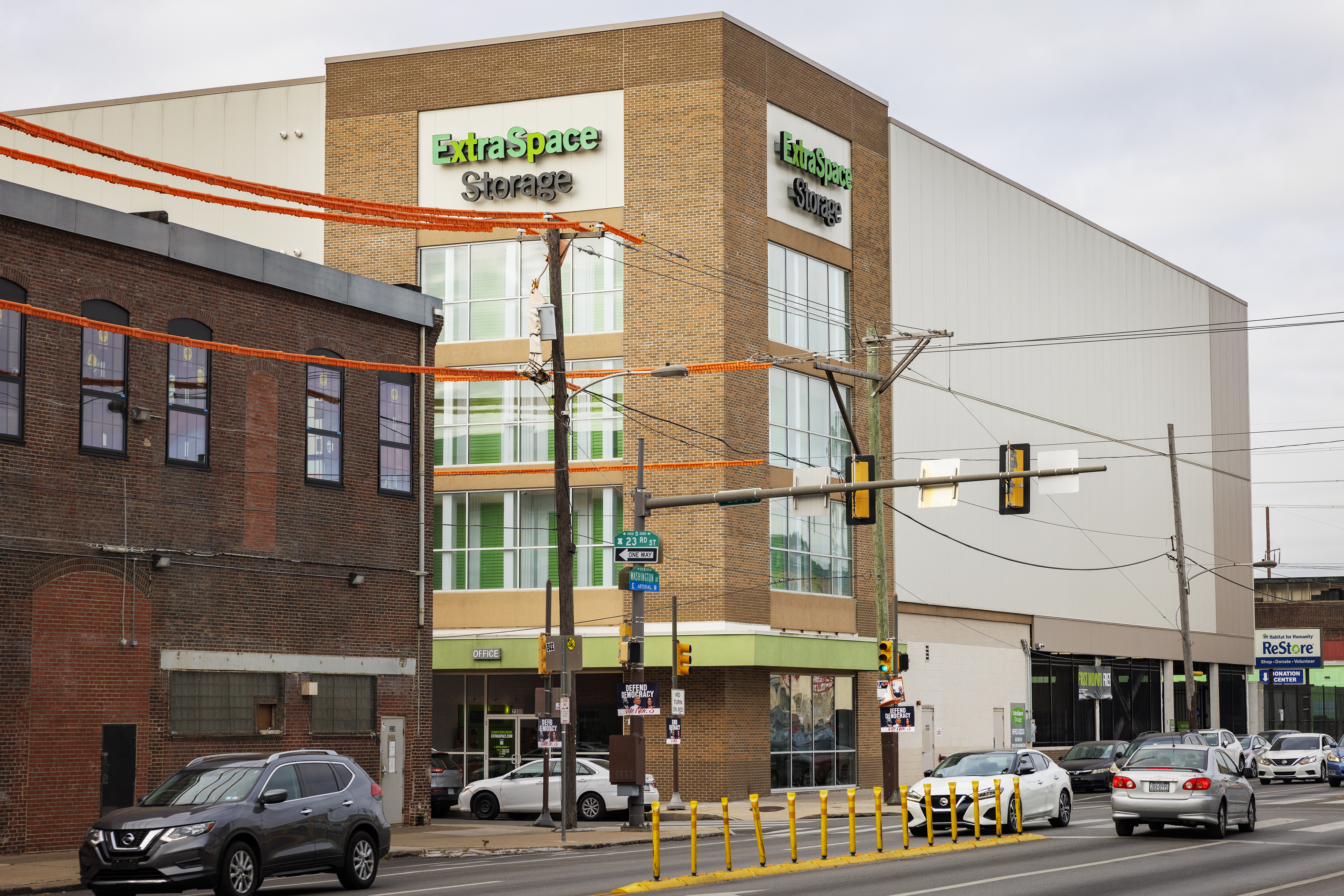
Storage wars: Councilmember Mike Driscoll introduced legislation on Thursday that would ban new self-storage facilities from his district in lower Northeast Philadelphia.
The storage industry boomed during the COVID-19 pandemic, as consumer spending shifted from services to goods, many families struggled to afford larger homes, and low interest rates juiced development.
Northeast Philadelphia saw a particularly large boom in self-storage buildings because of its rich supply of properties zoned for industrial development. Driscoll said that advocates in the Tacony neighborhood felt their community had become oversaturated.
“They want more affordable housing and [self-storage units] are taking valuable sites for that,” Driscoll said.
ExtraSpace self-storage at Washington Avenue and S. 23rd Street, Philadelphia, Monday, November 4, 2024.Alejandro A. Alvarez / Staff Photographer
Self-storage facilities are gold mines for developers. They suffer little wear and tear, they have few utility costs, and labor costs are low after construction.
According to online industry search portal StorageCafe, Philadelphia has 89 self-storage sites containing more than seven million square feet of space. About a third of that has been built since 2019.
Other municipalities have moved to limit the spread of self-storage facilities in recent years. New York City banned them from industrial areas to preserve jobs, and Denver blocked them from properties close to light rail lines. Providence, R.I., in 2023 banned new facilities from the city altogether.
Driscoll said that he may further limit his legislation to the Tacony neighborhood.
“I don’t want to hurt another part of my district that maybe wants these things,” he said.
Embracing affordability: Multiple members of City Council said this week that tackling affordability is their primary objective this fall, including Councilmember Nicolas O’Rourke, whose office published a lengthy report outlining dozens of proposals aimed at reducing costs.
Some may be more realistic short-term goals than others.
The report, which was drafted by a Cost of Living Task Force made up of community advocates and industry leaders, recommended the city explore everything from opening municipal grocery stores to creating a local Medicaid supplement program.
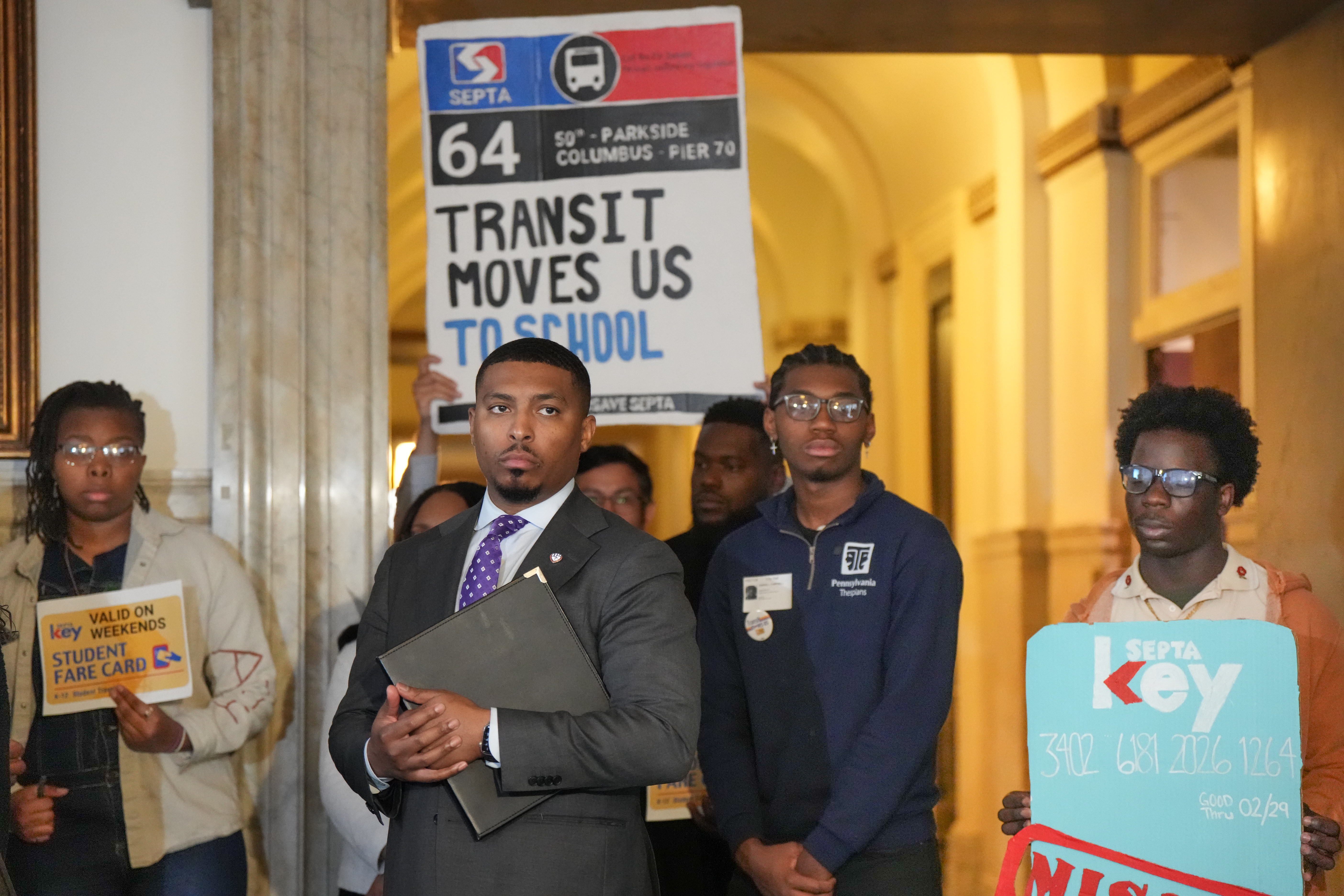
Councilmember Nicholas O’Rourke with students and activists during a press conference about SEPTA in April.Jessica Griffin / Staff Photographer
It also recommends restructuring existing housing programs to more aggressively target the poorest residents, and establishing a Transit Access Fund that would fund free or reduced-fare transit passes for low-income households.
O’Rourke, a member of the progressive Working Families Party, plans to hold a committee hearing on the task force report this fall.
Council President Kenyatta Johnson will also introduce an affordability measure this fall. He plans to bring forward legislation that would establish a permanent Food and Nutrition Security Coordination Office, he said in a statement.
Quote of the week
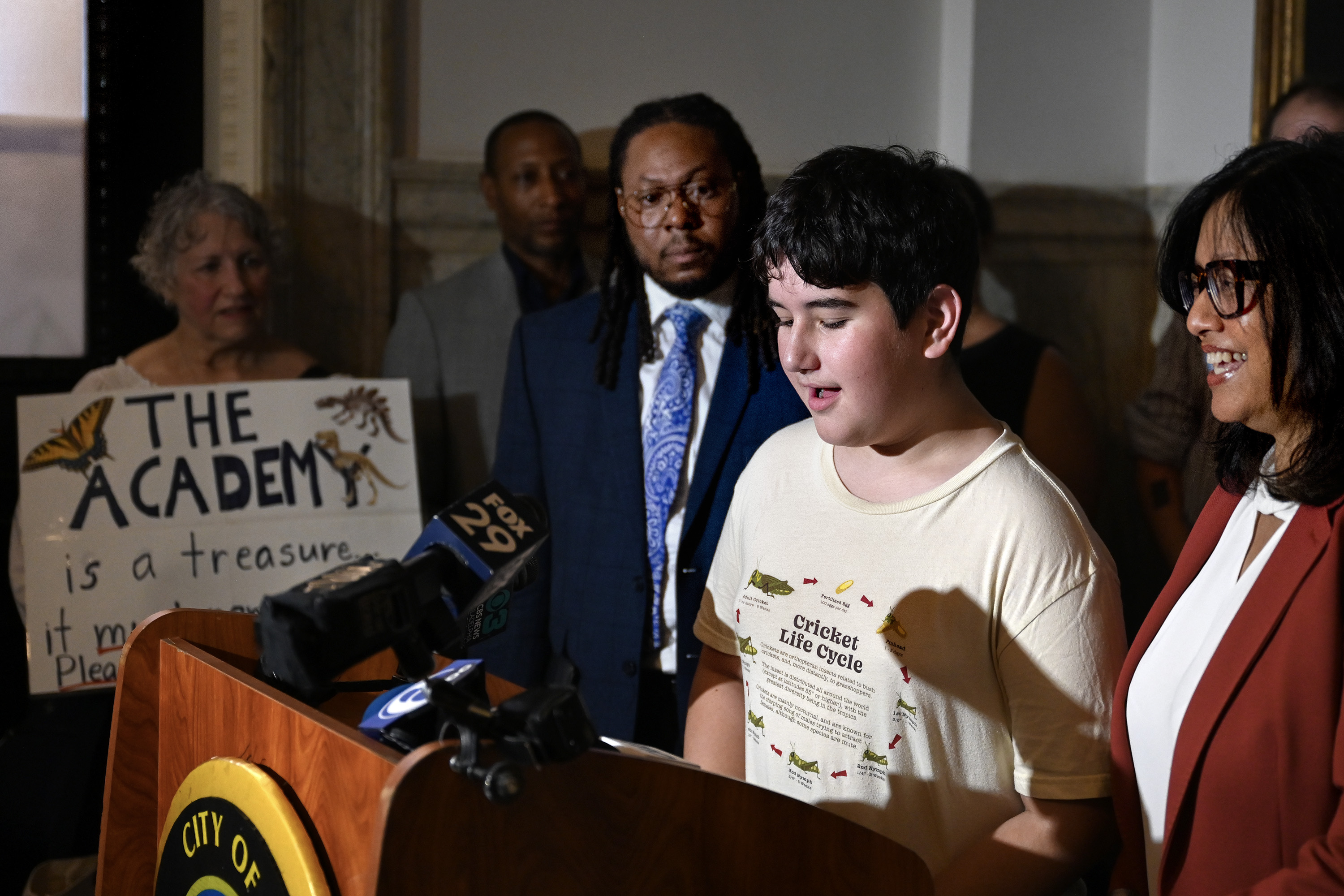
Jeffery Young, Jr. (left) with twelve year-old Jack Erfer of Wynnewood and councilmembers and Nina Ahmad (right) in supporting the Academy of Natural Sciences of Drexel University before City Council resumes for its fall session Thursday.Tom Gralish / Staff Photographer
No bones about it: That was Councilmember Jeffery Young Jr., who called for hearings on the planned closure of the Academy of Natural Sciences.
A West Philadelphia renter has filed a class-action lawsuit against his property manager and a national company that sells property management software, alleging that his landlord used price-setting algorithms that Philadelphia has banned.
Since early 2025, Philadelphia has prohibited rental home providers from coordinating to set prices and using software that facilitates the practice. Officials argued that price coordination, especially among large corporate landlords, can lead to artificially inflated rents.
This month, renter Yiyao Liu sued Willow Bridge Property Co., which manages his apartment building and is one of the country’s largest residential property managers, and RealPage, an industry leader in software for landlords. Liu alleges that Willow Bridge used RealPageservices to getrent recommendations based on information from competing landlords that is not available to the public, in violation of a Philadelphia ordinance.
The lawsuit, filed in Philadelphia’s Court of Common Pleas, is the first known case brought under the city’s ban, according to the office of City Councilmember Nicolas O’Rourke, who introduced legislation in 2024.
At the time, O’Rourke said his bill was a preemptive move based on corporate landlords’ use nationwide of software to coordinate rental prices. City Council unanimously passed the legislation in October 2024, and the ordinance went into effect in February 2025.
Liu, who lives in the Vue32 apartment building, asks in his lawsuit to represent as a class other tenants of Philadelphia rental units managed by Willow Bridge.
A representative from RealPage said Monday that the company does not comment on active litigation, and Willow Bridge’s general counsel did not immediately respond to a request for comment.
Last month, Washington, D.C.’s Office of the Attorney General announced that it had reached settlements with two landlords it accused of conspiring to inflate rents using RealPage software. The landlords agreed to pay a total of $1.4 million. These were the latest settlements to come from the district’s 2023 lawsuit against RealPage and 14 of the district’s largest residential landlords.
The association said algorithm-based technologies improve operational efficiency, which “directly benefit[s] residents and rental communities.” And it argued that algorithmic software “encourages pricing competition within the marketplace through greater transparency.”
Philadelphia City Council is already looking to 2027. And with all 17 seats on the ballot next spring, the elections are shaping up to be a pivotal test of whether the city’s established politicians can withstand a rising tide of frustration with the party among Democratic voters.
All of the incumbents have said they intend to run for reelection, and several are likely to face serious challenges from new candidates focused on grassroots organizing and progressive groups — hoping to seize the opportunity presented by a nationwide leftward shift amid President Donald Trump’s second term.
Three districts have emerged as key battlegrounds.
And the city’s progressive organizations, emboldened by a series of wins locally and nationally, are targeting two other districts: the 1st, which stretches from South Philadelphia to Fishtown and is represented by Councilmember Mark Squilla, and the 8th, which includes parts of North and Northwest Philadelphia and is represented by Councilmember Cindy Bass.
“We’re definitely feeling confident,” said Robert Saleem Holbrook, executive director of the progressive advocacy group Straight Ahead. “Anyone who is going to be running under a progressive banner or a progressive movement is going to have to be running against the establishment, not toward it.”
A competitive race also appears to be taking shape for the seven Council seats that represent the city at-large.
Five of those seats are all but certain to be won by Democrats, making the May 2027 primary the key election in deep-blue Philadelphia.
The other two at-large seats — set aside for Council members outside the majority party under the city’s Home Rule Charter — will be decided in the November 2027 general election. Currently, the two minority party seats are held by Councilmembers Kendra Brooks and Nicolas O’Rourke of the left-leaning Working Families Party.
Jane Golden, founder and executive director of Mural Arts Philadelphia, takes the stage during the dedication of the Super Bowl LIX mural at Spike’s Trophies on June 17, 2025 in Philadelphia.Monica Herndon / Staff Photographer
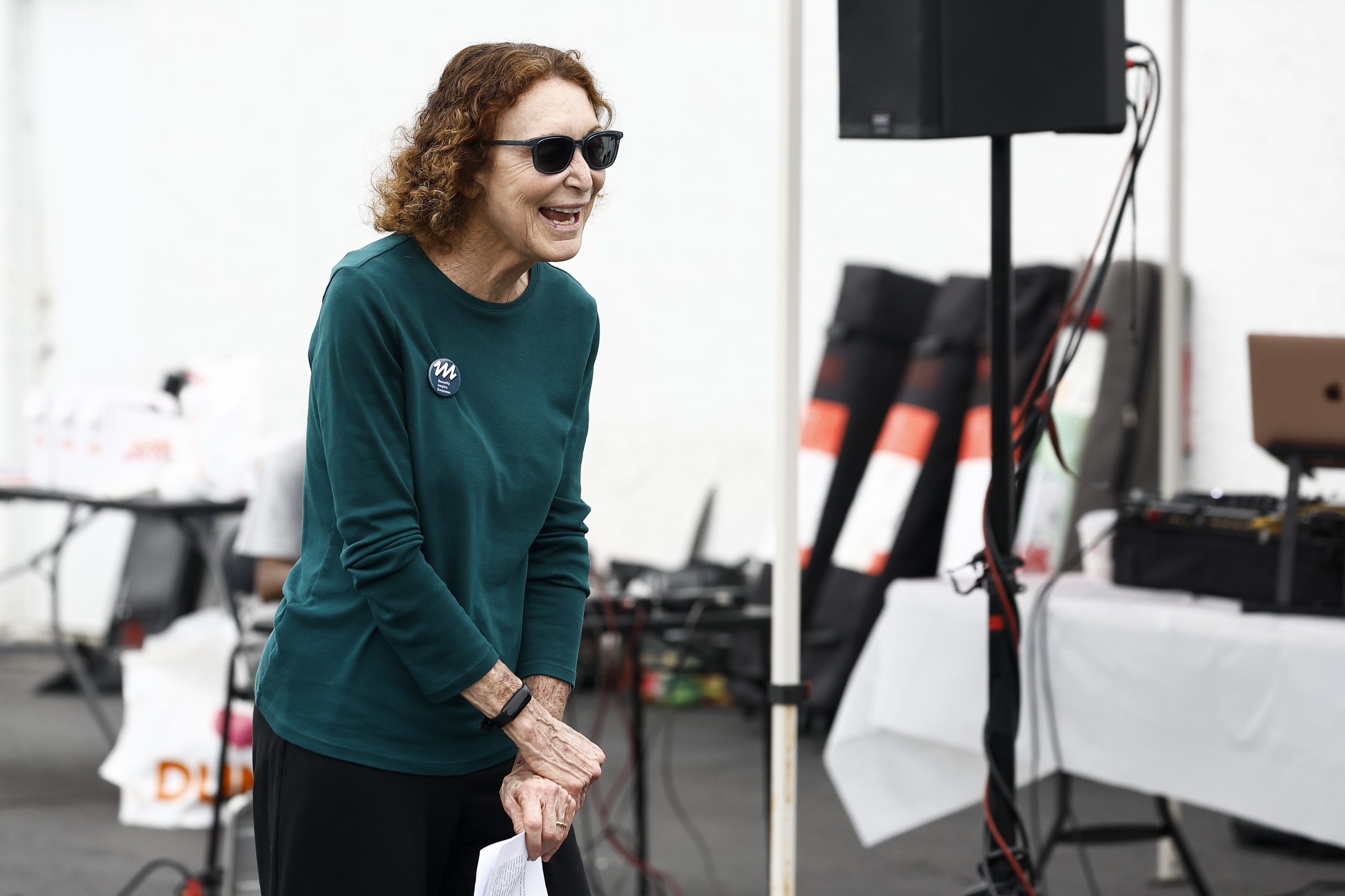
Golden, 73, said last week that she is not currently running for Council, but acknowledged she has thought about it for years.
“It’s always something that is tempting to me, because I just love the city so much,” she said. “I feel honored that people even think of me.”
Progressives eye Bass’ North Philly seat
Philadelphia’s progressive activists this year see two key opportunities to expand the loosely organized left-leaning bloc on Council, which currently consists of four members. Winning additional seats could also grow their influence by enticing more moderate members to vote alongside them if they believe primary voters are moving left.
Leftists have notched high-profile wins in Democratic primaries across the country this year, including in Philadelphia, where democratic socialist State Rep. Chris Rabb (D., Philadelphia) bested more moderate candidates for a seat in Congress representing about half of the city. The district is one of the most Democratic in the nation.
Anderson-Oberman, 55, the executive director of the progressive group Reclaim Philadelphia, said last week that he is “leaning” toward taking another swing.
“We’re in a moment in this country and this city where people have had enough,” he said. “People are looking for new answers. … Cindy represents the old way of doing things.”
Union organizer Seth Anderson-Oberman, running for 8th District City Council, joins in a small rally with community and Happy Hollow Advisory Board members along Wayne Avenue at Happy Hollow Playground in Philadelphia on April 2, 2023.Tyger Williams / Staff Photographer
Another Council run by Anderson-Oberman may test how far progressive momentum can go in Philadelphia. He was a member of the Communist Party USA in his 20s, and has said he is proud of that experience.
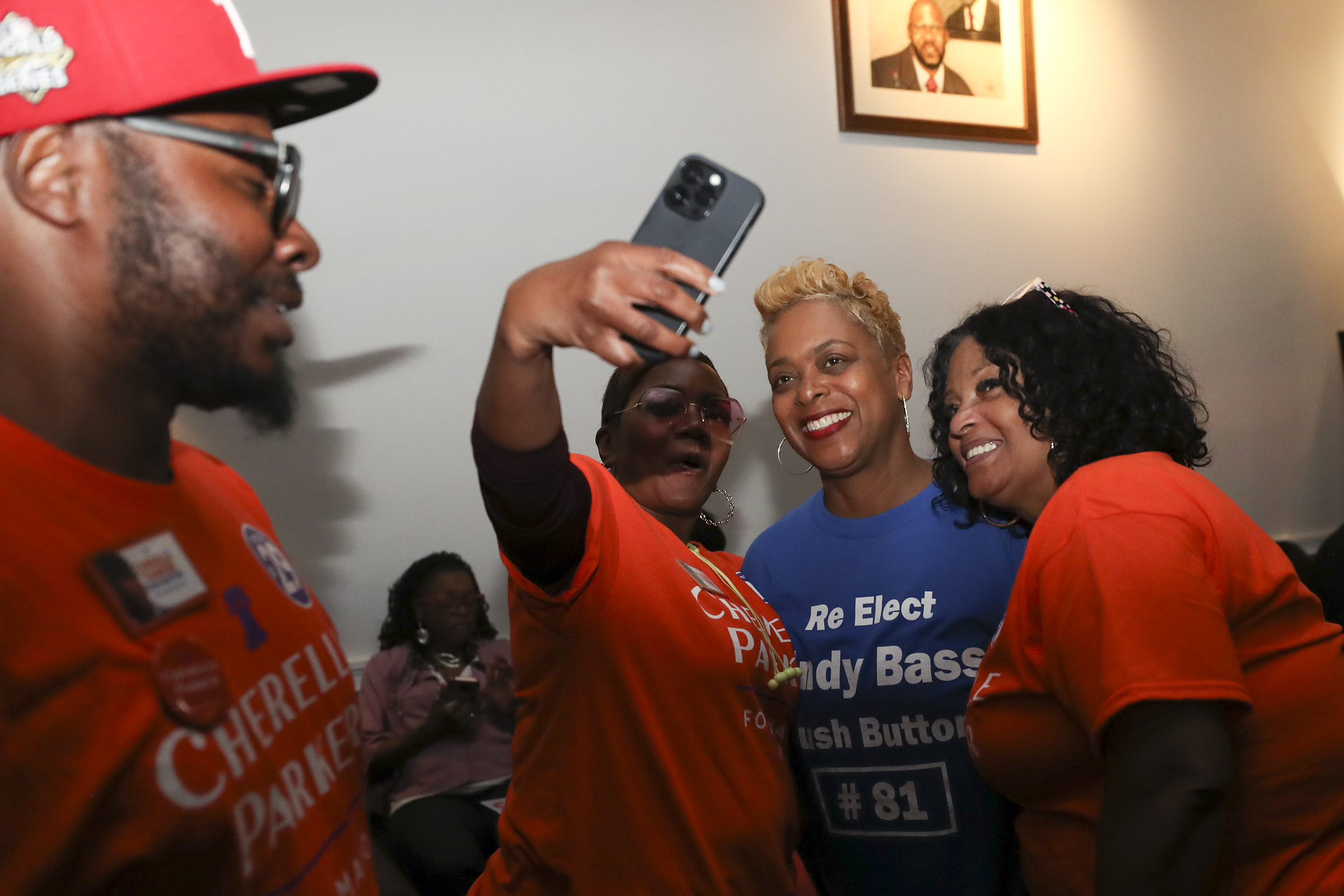
Bass, 58, said she is ready for the race no matter who her opponent is.
In June, she survived a contentious fight for another four-year term as Democratic leader of Mount Airy’s 22nd Ward. She was criticized for her handling of the process, and the party ordered a redo of the election.
She and her progressive opponent, Octavius Price, tied, then struck a power-sharing agreement. Through it all, Bass said, longtime residents stuck by her — and she is confident voters will do the same next year.
“My voters are people who are based in this community, committed to this community, intend to stay in the communities that they are in,” she said.
City Councilmember Cindy Bass (center) attends the watch party for Democratic candidate for mayor Cherelle L. Parker at Laborers 332 in Philadelphia on May 16, 2023.Heather Khalifa / Staff Photographer
Jeff Jones, a community leader and social justice advocate from Germantown, has also said he intends to run in the 8th District.
“I want to bring that new vision and a new voice to the 8th District, where residents and children and families can know that their voice matters, their concerns will be heard, and their challenges will be met,” said Jones, 61, a first-time political candidate.
Squilla could see a lefty challenger
Leftists are also eying Squilla’s seat, which represents the area along the Delaware River from Pennsport to Kensington. Since Squilla took office in 2012, the district has transformed from a bastion of working-class white voters to one of the most progressive swaths of the city.
Squilla, 63, who has strong labor ties and is one of the most pro-development district Council members, said being a centrist has likely put a target on his back in the 2027 election.
Another contributing factor may be Squilla’s support for controversial legislation in 2024 to approve the 76ers’ since-abandoned plan to build a new arena in Center City. The project, which would have been in Squilla’s 1st District, was opposed by advocates for Chinatown, which the arena would havebordered.
Councilmember Mark Squilla arrives in Council chambers on Nov. 12, 2024, before the start of a public hearing on a proposed Sixers arena.Alejandro A. Alvarez / Staff Photographer
Despite the fierce objections, Council approved the project with Mayor Cherelle L. Parker’s support in December 2024. Weeks later, the basketball team announced it was abandoning its Center City plan and would instead build its next arena in South Philly.
Squilla said he is prepared to defend his actions, noting that he worked to ensure any arena deal would benefit his district and that many of those promises are moving forward despite the 76ers withdrawing their proposal.
“The goal as an elected official, and also as a leader, is not always to make the popular decision,” he said. “The goal is to have a process to make the decision that would be best for the people around it.”
One prominent opponent of the Center City arena plan was Will Gross, the owner of Ox Coffee in Queen Village and a progressive who is the Democratic leader of the 2nd Ward. He is seen by political insiders and progressive organizations as the most likely candidate to take on Squilla.
Gross declined to comment.
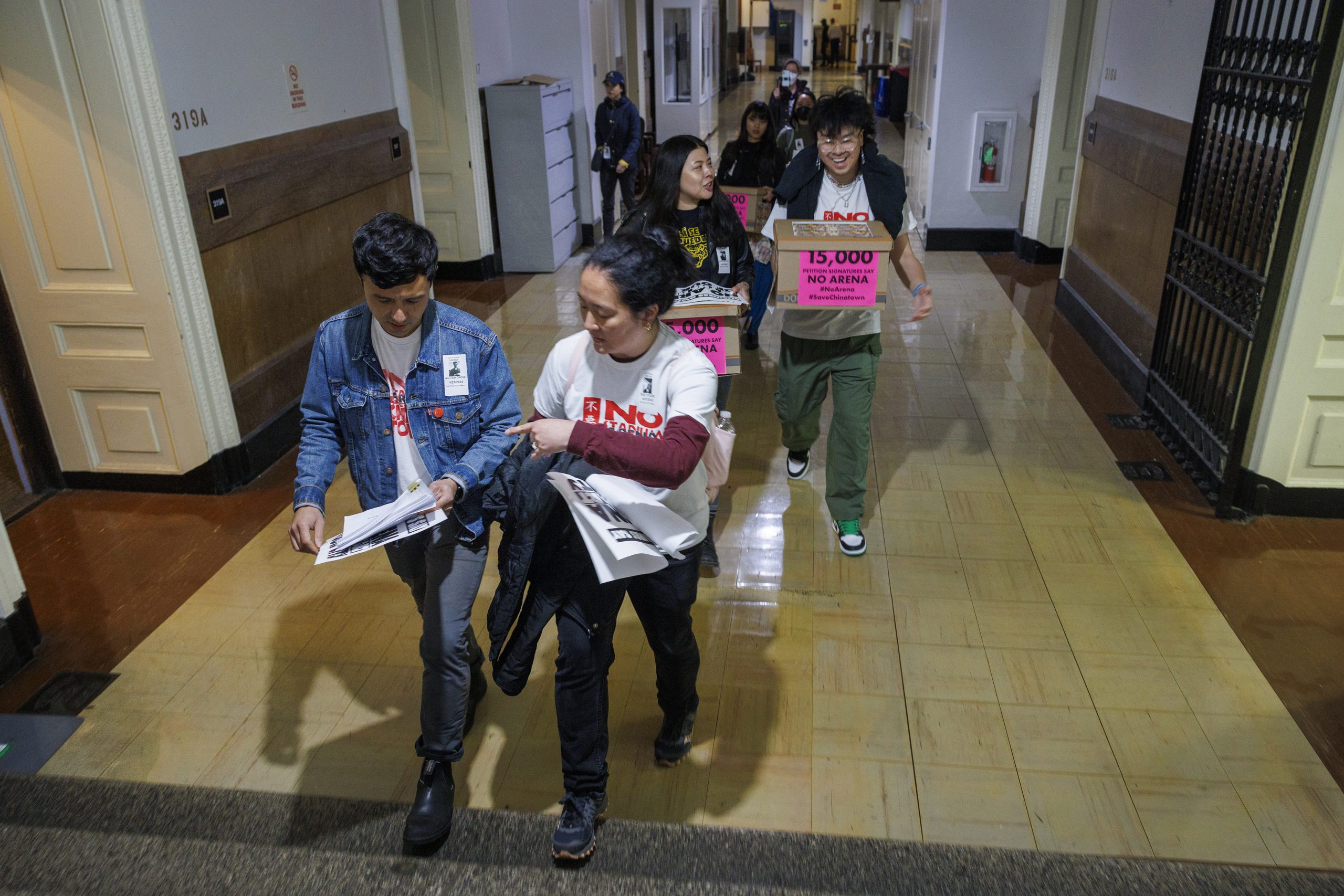
In this 2023 file photo, Will Gross and Kay Yoon, of the No Arena in Chinatown group, deliver petitions to Councilmember Mark Squilla. Alejandro A. Alvarez / Staff Photographer
A progressive challenger may also emerge in the North Philly and Kensington-based 7th District, which is represented by Councilmember Quetcy Lozada.
Some insiders have speculated that Celin may run again. He declined to comment.
Lozada, 55, said she “can’t focus” on potential challengers.
“If I spend my time listening to the buzz about who is running,” she said, “we won’t get any work done.”
A battle takes shape in the 5th District
In the 5th District, a seat that represents parts of North Philadelphia and Center City, a handful of Democratic challengers are lining up to take on Young, 40, who is seen as one of Council’s most vulnerable members.
That is in part because of the unusual way in which he was elected in 2023. He ended up being the only Democrat on the ballot after several others, including party officials’ preferred candidates, were removed amid legal challenges.
Councilmember Jeffery Young Jr. in chambers as City Council meets Dec. 11, 2025.Tom Gralish / Staff Photographer
One of those candidates was Curtis Wilkerson, who was chief of staff to former City Council President Darrell L. Clarke. Two sources, who spoke on condition of anonymity because they were not authorized to discuss the campaign dynamics, said Wilkerson is considering running for the seat again next year.He did not respond to a request for comment.
Also likely to run is Jalon Alexander, an attorney who unsuccessfully ran for an at-large seat on Council in 2023. Alexander, 33, formed an exploratory committee last year and is expected to formally declare his candidacy later this summer.
Two others are also considering running.
Dustin Dove, a lawyer and the president of the Fairmount Civic Association, said neighbors and community leaders have encouraged him to get in the Council race, and he is “taking the possibility of running seriously.”
“I think our city government should work for everyone by keeping our neighborhoods safe and streets walkable, making housing affordable, and ensuring fairness and access in public services,” Dove, 38, said last week.
Jalon Alexander, an attorney and community advocate, speaks to attendees at a meeting about potential SEPTA budget cuts hosted at Garden of Prayer Church in Strawberry Mansion on June 9, 2025.Erin Blewett / For The Inquirer
And Max Tuttleman, 37, a philanthropist who unsuccessfully ran for an at-large seat in 2023, said he “cares deeply about the 5th District and would never close the door to serving Philadelphia.”
He added that “Center City and the neighborhoods around it should be growing faster than they are.”
Young said in an interview last weekthat he intends to run for reelection, but that challengers are not his focus.
“I‘m focused on serving my constituency, serving my community,” he said. “The work that we’ve been doing will hopefully earn the support of the residents of the 5th District.”
A smaller, but competitive, at-large field
Over the last several election cycles, dozens of candidates lined up to run for at-large seats during a time of immense turnover in Council.
But with seven incumbents all looking toward reelection in 2027, there may be fewer challengers who line up to take them on. So far, only Golden and a handful of others have emerged as possible contenders.
David Alexander Jenkins, a cultural strategist known for delivering impassioned speeches during Council’s public comment section, said he is considering a run, encouraged by fellow community members.
“When the community that is around you constantly pushes you to intercede on their behalf, then it’s because they have trusted you to do what it is that you do best,” Jenkins, 39, said. “I think it would be incredibly unwise to ignore that.”
And Jude Husein, 28, a Palestinian-born community activist who was raised in North Philly, has already launched her campaign. If her bid is successful, Husein, a former staffer for State Sen. Art Haywood, would be the first member of Gen Z on Council.
In this 2023 file photo, Jude Husein, of North Philadelphia, speaks at a rally for a Day of Solidarity event at the Art Museum steps.Tyger Williams / Staff Photographer
Leaders of progressive organizations said they are closely watching her candidacy. However, Husein is not exactly running as a leftist. She said that her policy positions are varied and that she will seek endorsements from any institution that is “values-aligned.”
“I’m running because I think government should work for the people who pay for it, and should make neighborhoods affordable and safer,” she said.
Also in the running for Council at-large seats are Billy McCann, 46, a former teacher who lives in Port Richmond, and Isaiah T. Martin, 26, who lives in West Philly and leads a community development nonprofit. The pair, who both said they are progressive, have established something of a slate with Jones, who is challenging Bass in the 8th District.
They said they would prioritize public education, affordability, housing assistance, and government accountability, and they argued that establishment Democrats are failing to connect with voters.
“A new day is coming,” said Martin, another member of Gen Z who would make history on Council if elected. “It’s time we get people who are going to do the actual work and not just sit here and talk about it.”
Former City Councilmember Jannie Blackwell, who has been a fixture of Philadelphia politics for decades, is no longer a Democratic wardleader. State Sen. Sharif Street — weeks after losing the city’s heated congressional race — just became one.
And the Rev. Lewis Nash Sr., who in 2024 was removed as leader of the 47th Ward after The Inquirer reported he was recorded making anti-LGBTQ+ remarks, has returned to the post after being reelected in his North Philadelphia ward Monday night.
Meanwhile, the upstart group Wards That Work, which was backed by progressive activists and sought to recruit hundreds of people to run for committee openings in the May 19 Democratic primary, claimed victories in six wards that were previously seen as aligned with the party establishment or more centrist Democrats.
Despite those notable gains,fewer than one-third of Philadelphia’s 69 Democratic ward leaders are seen as closely aligned with the party’s left wing.
That means Bob Brady, who has led the local Democratic Party since 1986 and is seen by many as the embodiment of the political old guard, will likely coast to victory in party leadership elections — decided by the ward leaders — next week, securing an 11th term as chair of the Democratic City Committee.
The party’s internal politics have become a key battleground in the fight between progressive upstarts and the Democratic establishment. There has also been a renewed push to grow the number of “open wards” — those that allow committeepeople to vote on political endorsements rather than allowing ward leaders to decide unilaterally.
Brady, a former U.S. representative, has over the last few weeks struck a conciliatory tone regarding the party’s left wing after clashing with activists in a series of elections, most notably when the party sought to punish committeepeople who endorsed the elections of Councilmembers Kendra Brooks and Nicolas O’Rourke from the progressive Working Families Party.
“These labels — Working Families, Reclaim, socialist — the best labels they have that I love is they’re Democrats,” he said in an interview, referring in part to Reclaim Philadelphia, a group inspired by U.S. Sen. Bernie Sanders’ presidential runs that organized the local progressive movement’s first successful ward takeovers in 2018.
Now, he said, he is focused on unity as Democrats hope to make gains in this year’s midterm elections and defeat candidates aligned with President Donald Trump in future elections.
“We can come together and beat that nut in the White House,” Brady said.
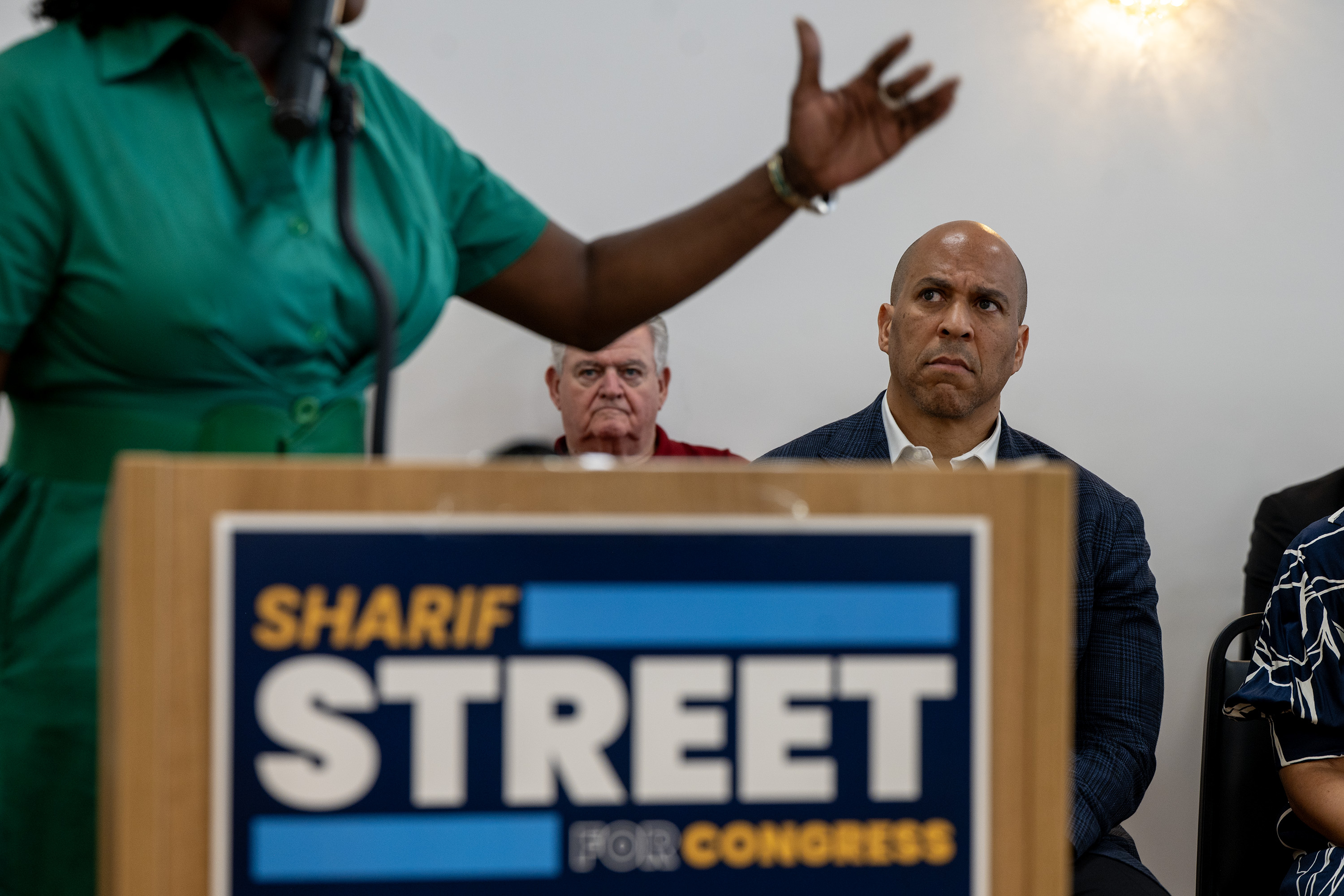
Philadelphia Democratic Party Chairman Bob Brady (left) and U.S. Sen. Cory Booker (right) listen as Mayor Cherelle L. Parker speaks in support of State Sen. Sharif Street at a get-out-the-vote rally at the Church of Christian Compassion in West Philadelphia Monday, May 18, 2026 the day before Tuesday’s Democratic primary election for the 3rd Congressional District.Tom Gralish / Staff Photographer
Earlier this year, however, Brady acknowledged that the Democratic City Committee funded mailers opposing some of the committeepeople backed by Wards That Work, and many on the left are still hoping for major changes in the local party.
District Attorney Larry Krasner, for instance, recently called on Brady to resign, and State Rep. Chris Rabb, a democratic socialist who last month won the Democratic primary for an open Philadelphia congressional seat, has emerged as a leading critic.
Rabb beat Street, the party’s endorsed candidate, in the 3rd Congressional District race, and has accused the city committee of neglecting the work of turning out the vote, instead concerning itself with backroom dealings among party insiders.
State Rep. Chris Rabb greets supporters on election day. He is arriving to his polling place to vote, Grace Epiphany Episcopal Church, Philadelphia, Tuesday, May 19, 2026.Alejandro A. Alvarez / Staff Photographer
Rabb has not explicitly called for Brady to resign. But he is now calling for a dramatic overhaul of the party, from its leaders to its bylaws to the city’s antiquated ward boundaries.
“What I’m asking for is for the ward leaders — whatever candidate is running for chair, whether it’s Bob Brady or anyone else — that they demand that their first order of business is to overhaul the bylaws by Labor Day [to focus] on building a local party built on transparency integrity and inclusion,” Rabb said in an interview last week.
Progressives make gains
On paper, Philadelphia’s Democratic Party structure is bottom-up. Every four years, during the primaries of presidential midterm cycles, registered Democrats elect two committeepeople from their precincts, as they did this year on May 19. The committeepeople then elect neighborhood-level ward leaders, and the ward leaders in turn elect the top officials in the city party, including Brady.
But in practice, many critics of the city’s old guard see a top-down reality, with Brady and other high-ranking city officials controlling the party’s agenda.
Progressives are hoping to wrest control of the party from the establishment or to force reforms that make it more hospitable to left-leaning candidates. But it remains an uphill battle given the diffuse nature of the party system.
Among the notable progressive wins in Monday night’s ward elections:
5th Ward (Center City): Ryan Alsayegh, a political consultant currently working for State Reps. Tarik Khan and Joe Hohenstein, unseated Mike Boyle.
25th Ward (Port Richmond, Kensington): Alexandria Mercedes Murphy, a neurophysiologist and volunteer with Reclaim Philadelphia, succeeded Tommy Johnson.
31st Ward (Fishtown, East Kensington): Molly Hartman, a staffer for Councilmember Rue Landau, faced no opponents in her bid to succeed Margaret Rzepski.
27th Ward (University City): Benjamin Moss-Horwitz, a staffer for State Rep. Rick Krajewski, won a contested race to succeed retiring ward leader Carol Jenkins, a party stalwart.
46th Ward (Squirrel Hill, Cedar Park): James Bridgeforth, a University of Delaware professor, ran an uncontested race to succeed Blackwell, who retired this year after defeating a progressive challenger for her ward in a contentious election four years ago.
In West Philadelphia’s 60th Ward, State Rep. Amen Brown, a centrist Democrat, was unseated by Lorraine White-Johnson.
White-Johnson, who had the backing of Wards That Work, said in an interview that she is not aligned with one faction and welcomes all Democrats. She added that she plans to explore opening up the ward but has not made formal plans to do so yet.
Philadelphia City Councilmember Cindy Bass on Thursday, September 11, 2025.Alejandro A. Alvarez / Staff Photographer
In Mount Airy’s 22nd Ward, Councilmember Cindy Bass declared herself reelected to a new term in a controversial move by saying she won a contested voice vote of committeepeople and denying motions for a roll-call vote that could have clarified the results. Her opponent, Octavius Price, was backed by progressive organizers and said he plans to challenge the election.
Some notable ward election results did not involve major ideological shifts.
Nash, who on Tuesday denied having made the anti-LGBTQ+ comments that previously cost him his seat, won a three-way race to reclaim the 47th Ward.
“I forgive everybody that was involved with those unforeseen circumstances,” Nash said in an interview Tuesday. “To anyone that was offended by the alleged comments, forgive me and the person who made those comments, allegedly and falsely, and let’s move forward.”
In a statement, Street said he would “take a back-to-basics approach, listening to my neighbors about their concerns and filling vacant committee member seats.”
“Last month’s election results galvanized my belief that we need to build the party from the ground up,” Street said in a statement. “We need to increase voter turnout in Black communities, like North Philadelphia, by demonstrating every day that Democrats are fighting for them.”
Staff writer Anna Orso contributed to this article.