Netflix House Philadelphia is reportedly struggling to attract nighttime visitors as the streaming platform reconsiders its expansion plans.
On Sunday, Bloomberg reported that Netflix is reassessing its plans for opening new Netflix Houses, nearly a year after launching its first two locations in King of Prussia and Dallas.
The 100,000-square-foot entertainment venue at King of Prussia Mall features mini golf, virtual reality games, a movie theater, and rotating attractions inspired by popular Netflix shows, including Stranger Things and Squid Game. Admission tickets start at $39.
The opening came as shopping malls across the Philadelphia region have increasingly turned to entertainment and other experiences to attract visitors beyond traditional retail. As The Inquirer previously reported, Plymouth Meeting Mall has embraced that approach with attractions, including Dave & Buster’s, Legoland Discovery Center, and an indoor trampoline venue. King of Prussia, meanwhile, has remained one of the region’s more successful shopping destinations.
The King of Prussia location has reportedly been more difficult for Netflix to establish than its Dallas counterpart. Bloomberg identified nighttime attendance as a particular challenge for the attraction.
Dallas, meanwhile, is reportedly breaking even, with group visits and corporate events helping drive business.
Both Netflix Houses are located outside their namesake cities. The Philadelphia location sits inside King of Prussia Mall in Montgomery County, while the Dallas venue is in a suburban area north of the city’s downtown, according to Bloomberg.
At a conference in early 2025, Netflix co-CEO Ted Sarandos said he envisioned dozens of Netflix Houses throughout the world in a relatively short time.
Now, those early results are factoring into Netflix’s decisions about where and when to open additional entertainment venues, according to Bloomberg. The company is reportedly taking more time to evaluate future locations.
A third Netflix House is scheduled to open on the Las Vegas Strip next year. Unlike the King of Prussia and Dallas locations, the Las Vegas venue will have a smaller footprint and sit in an area that draws a steady stream of tourists, the outlet reported.
Bloomberg reported that Netflix is also exploring opportunities outside the United States, with London among the cities under consideration. The company may wait another year before committing to additional locations, according to the report.
Netflix did not provide an on-the-record comment in response to The Inquirer’s questions about its expansion plans.
When Brian Gralnick walks his daughter in a stroller through Melrose Park, he carries garden shears to fend off the foliage.
“I’m not going to push my daughter into a rose bush,” Gralnick said.
Cheltenham’s sidewalk code enforcement is complaint-based, officials said, meaning the township addresses violations when residents point them out.
Gralnick, a 47-year-old lifelong Elkins Park resident,has taken matters into his own hands: trimming shrubs that block his path.
He’s also a frequent filer of sidewalk complaints to the township.
“I could do a dozen on a weekend, easily,” Gralnick said. “It’s just around accessibility issues, though.”
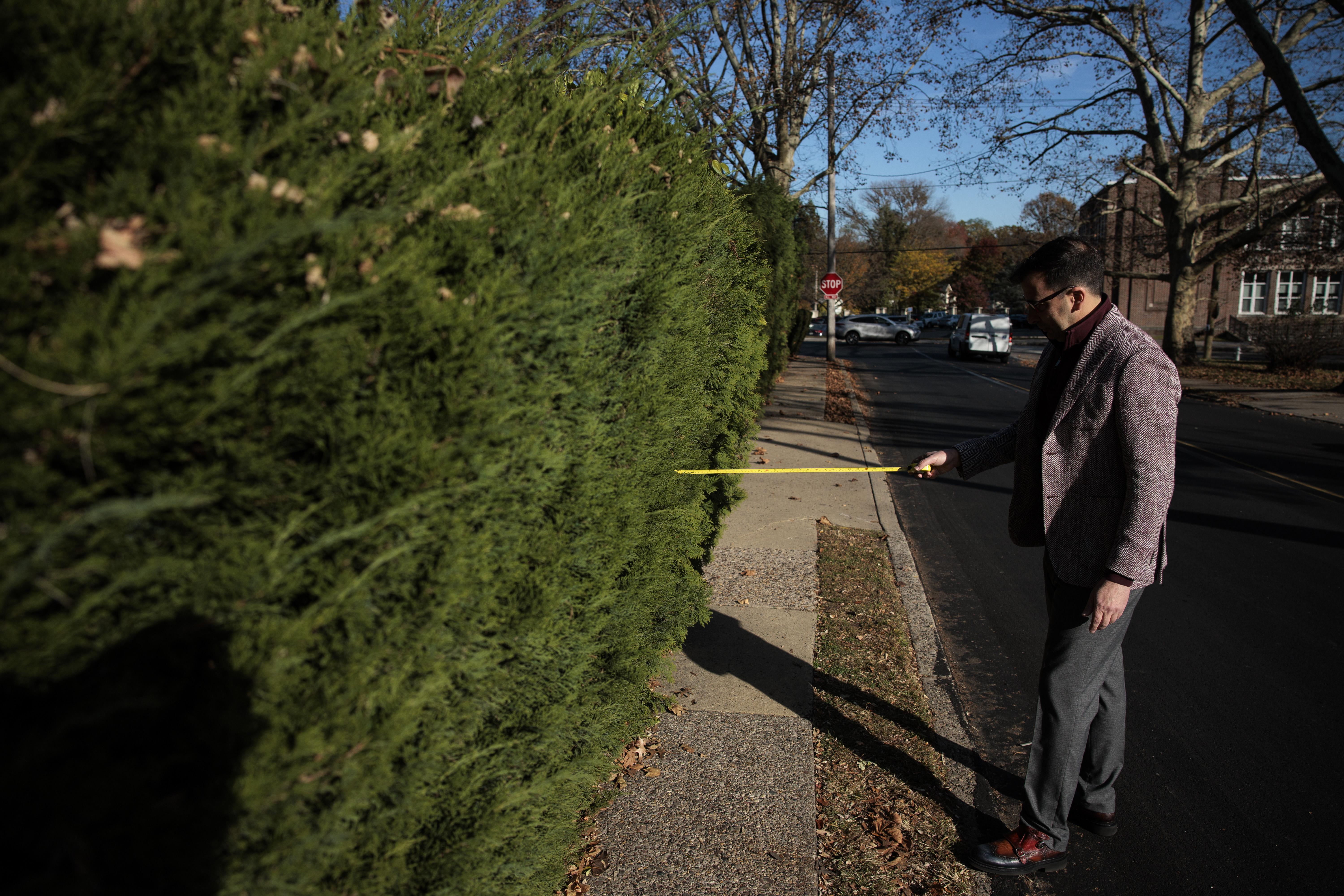
Brian Gralnick talks about the remaining width of the sidewalk as vegetation grows into the walkable space on Park Avenue behind the Samuel A. Green House in Elkins Park on Nov. 4.Monica Herndon / Staff Photographer
For years, he’s talked to township officials about sidewalk obstructions, emails show. He even once offered a tour of his route through Melrose Park, Gralnick said, but the problem persists.
“The hedges have shown tremendous growth,” he said of one property. “Code enforcement, less so.”
Homeowners typically pick fast-growing species for their hedges, which require trimming multiple times per year, said Kai Jones, the owner of Jones Lawn & Landscape in Wyndmoor.
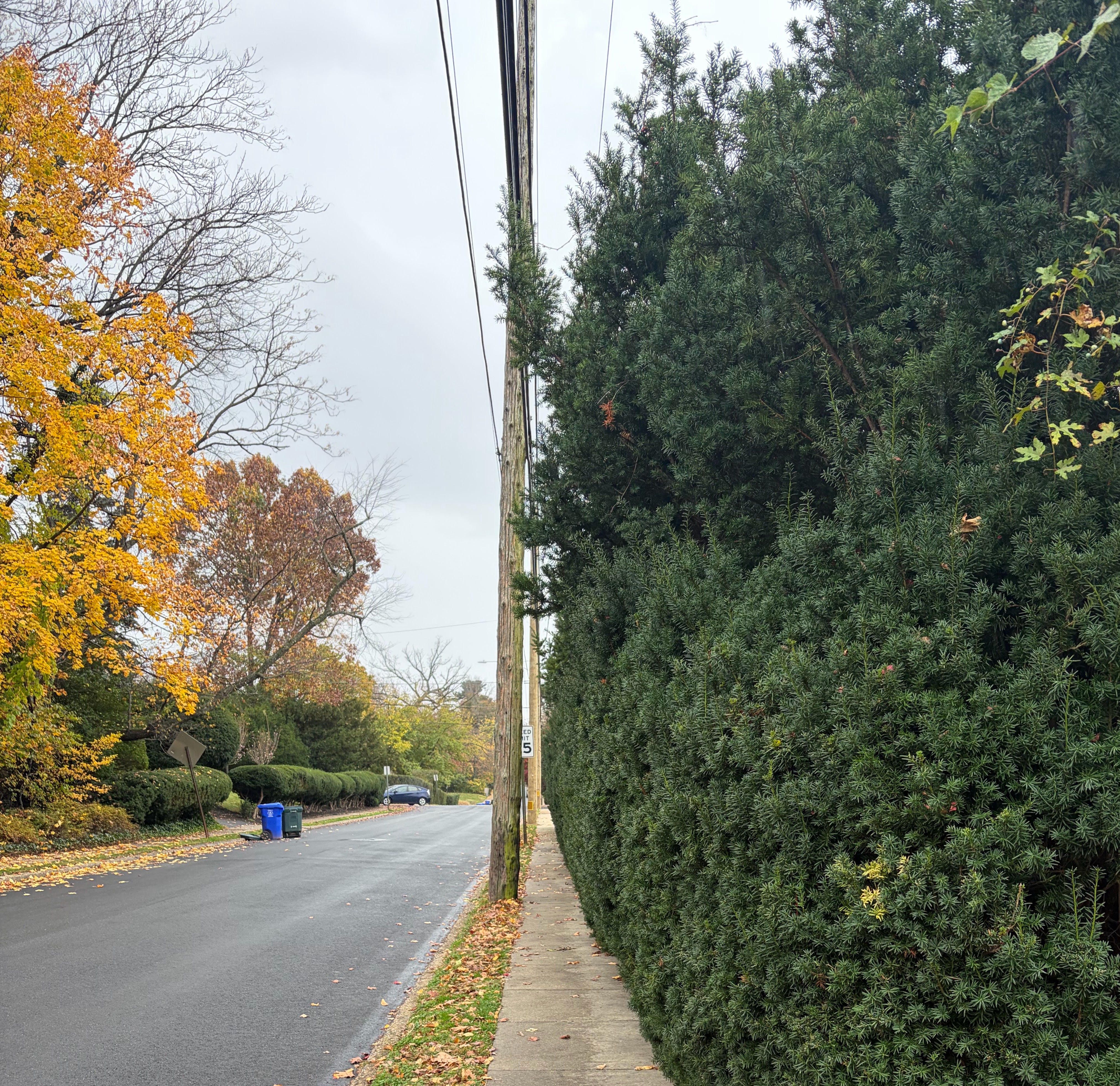
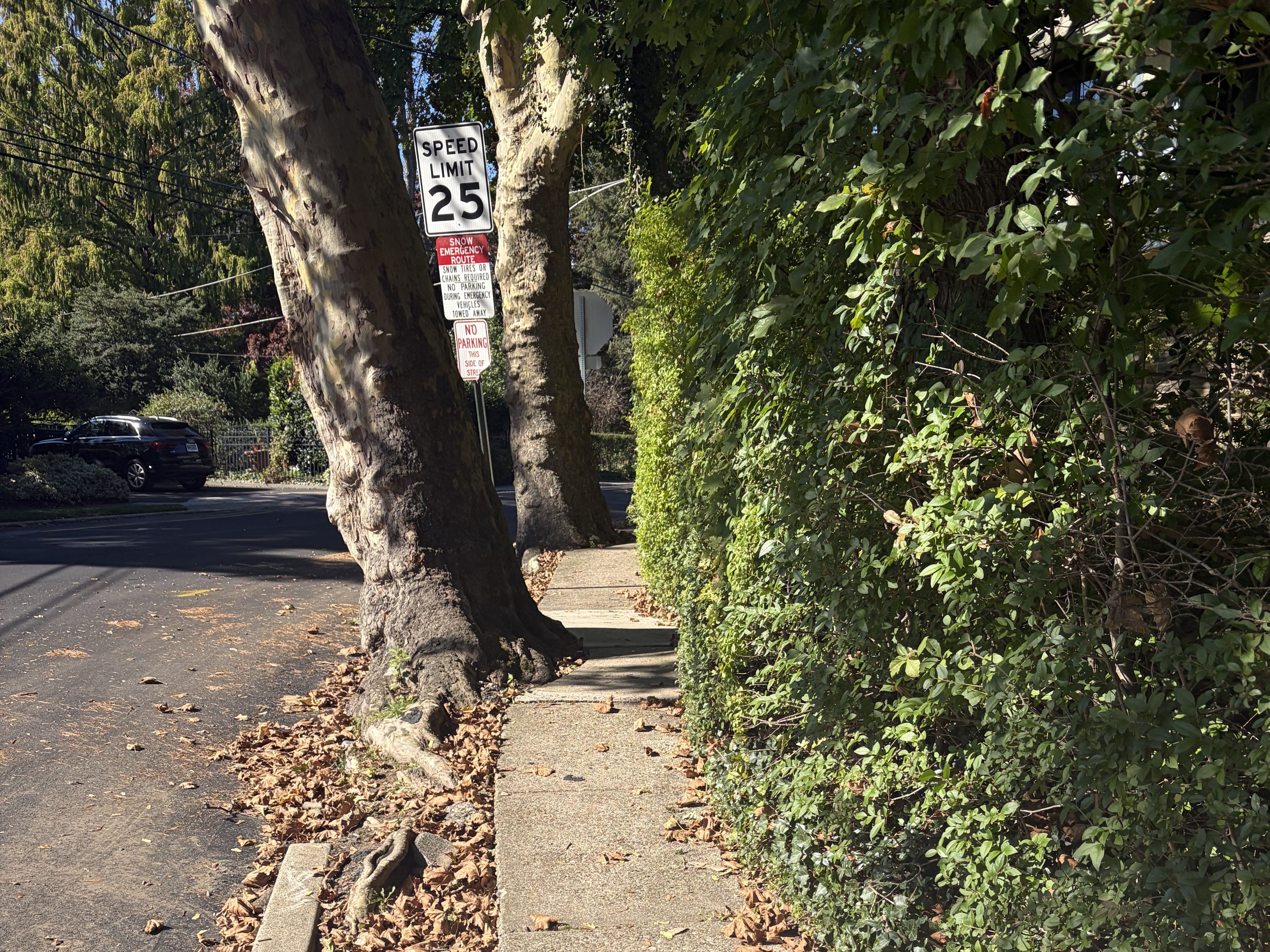
Several residents mentioned this stretch of High School Road, pictured here on Nov. 12, as an example of sidewalks made nearly impassable by foliage.Jess Rohan
As an inner-ring suburb, Cheltenham has shrubs that are over 50 years old, longtime residents said.
Gralnick said his focus on accessibility began not with his children but with seniors, when he worked in Pennsylvania’s Department of Aging.
“If my kids’ 18-inch-wide stroller cannot safely fit on the sidewalk, how is someone using a walker or a wheelchair … supposed to navigate it?” he said.
How Cheltenham polices sidewalks
The township code prohibits vegetation that obstructs “normal passage” on sidewalks.
When the township receives a complaint, Scott Lynch, head of building and codes and the fire marshal, or another inspector typically visits the site within one business day.
Then, Cheltenham sends a courtesy letter, rather than a violation notice, Lynch said, because it’s the most effective way to get responses from residents. “Eighty-five percent of the time, we get cooperation just with a courtesy letter,” he said.
If the resident doesn’t respond to the letter within three days, Cheltenham issues a violation notice. After 10 days, Cheltenham can file a citation with a local court, which can decide to fine the property owner up to $600 per day, Lynch said. In some cases, the township does the workand charges the property owner.
“Sometimes, this looks to other residents like no action is being taken, while really there’s a process (albeit frustrating) playing out behind the scenes,” township spokesperson Lauren Walter wrote in an email.
At times, Cheltenham opts not to penalize residents who are in touch with the township and either can’t afford to work on their properties or are otherwise vulnerable, Lynch said.
Repeated trimming issues test the limits of the township’s complaint-based approach, Lynch said: If a resident cuts their bushes back from the sidewalk, they have addressed the code violation. Cheltenham can’t tell homeowners to cut the foliage further onto their own property to make the trim last longer.
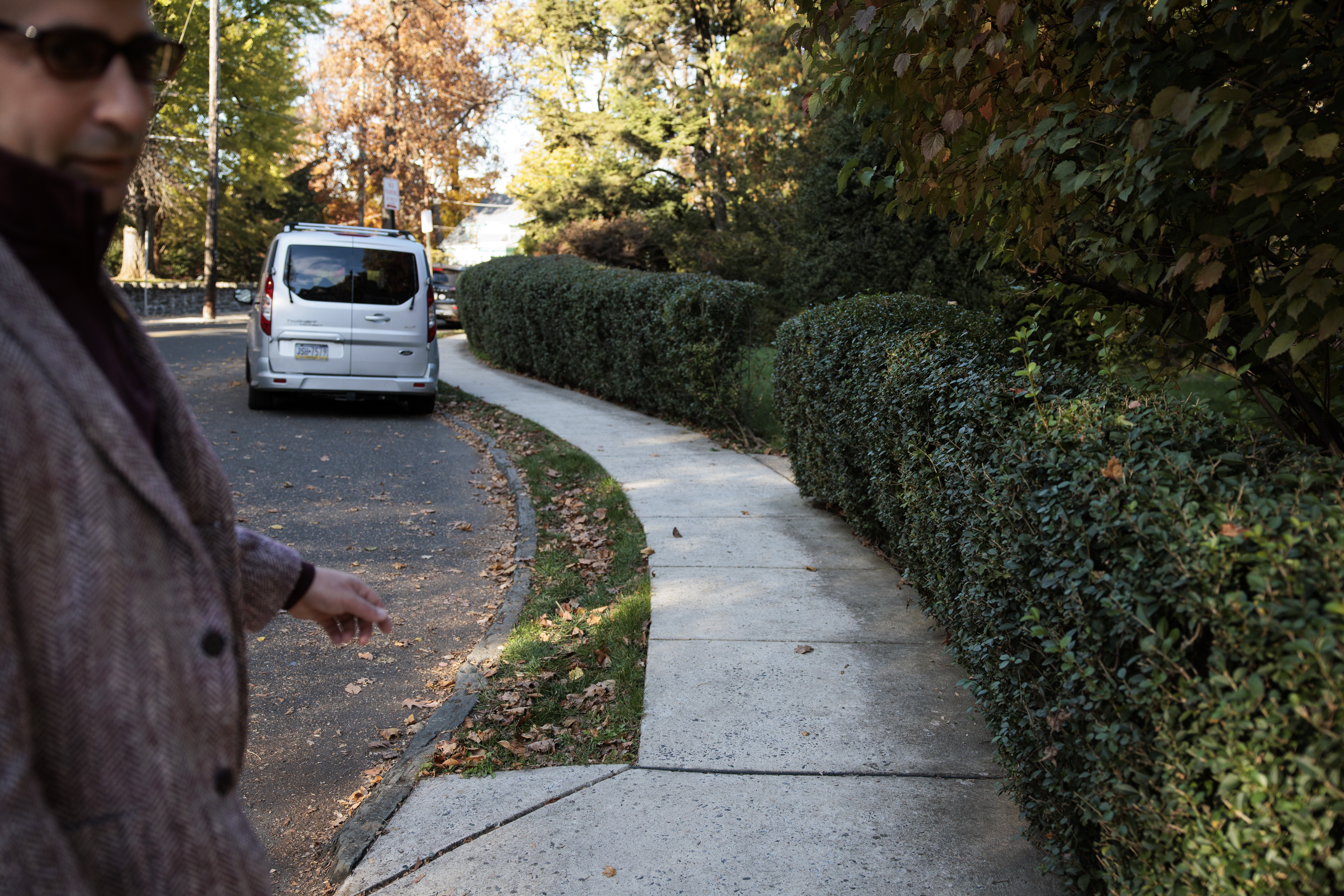
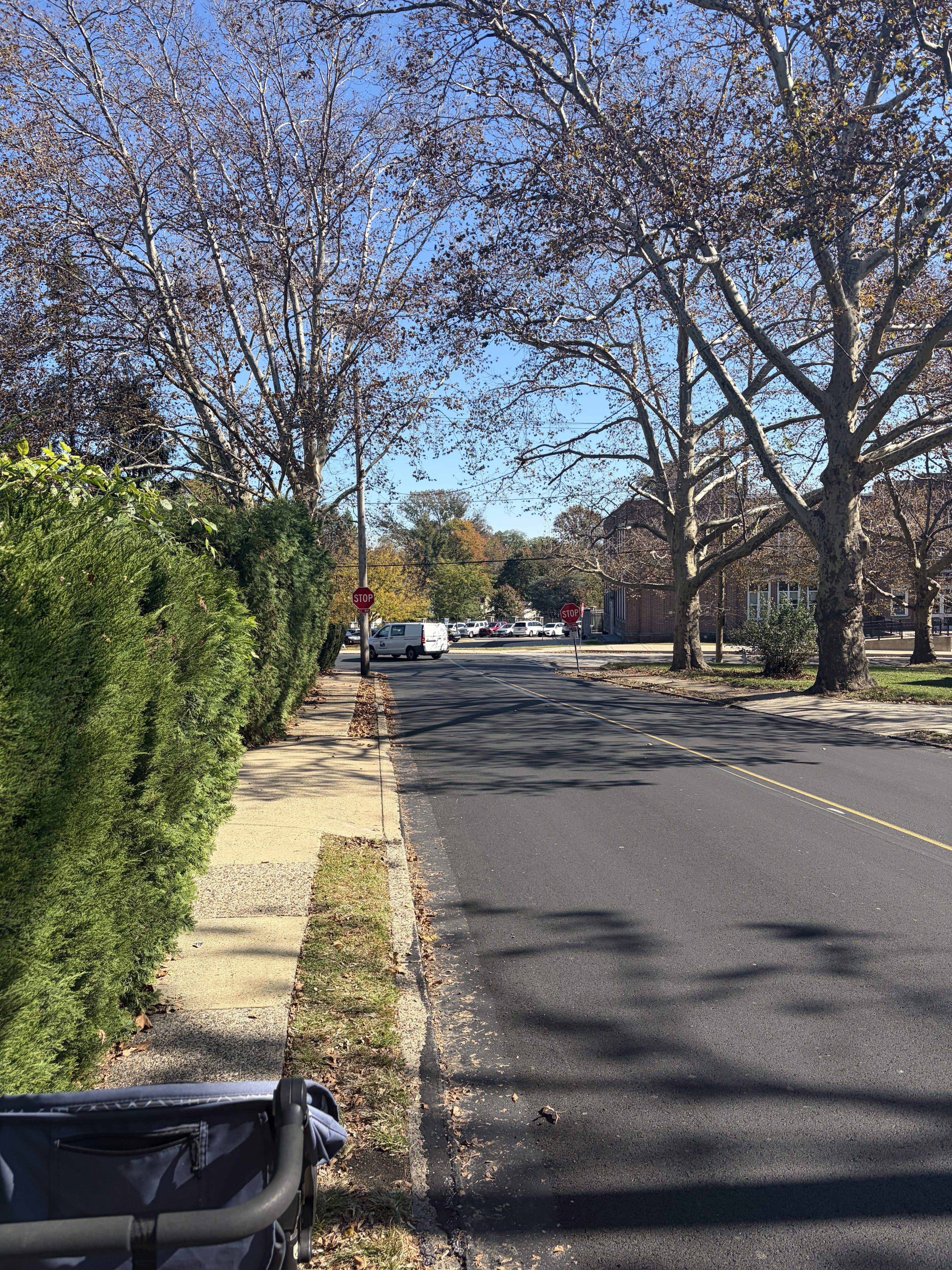
But some sidewalks are chronically blocked, residents said. On an afternoon in late October, pedestrians heading to Myers Elementary School from Union Avenue used foliage-narrowed sidewalks on one side that made it difficult to push a stroller or pass someone without stepping onto the grass. Google Maps images show the sidewalk encroached by the same bush in April 2025.
“Most of these houses, the hedges look neat,” Gralnick said. “The township needs to understand that neatly trimmed vegetation is not the same as an accessible, walkable sidewalk.”
Brian Gralnick walks along the sidewalk on Union Avenue near Montgomery Avenue on Nov. 4.Monica Herndon / Staff Photographer
Cheltenham employees do visual inspections to confirm hedge work has been completed, Lynch said, which may or may not include leaving their vehicles, depending on what they can see from behind the wheel.
“Inspectors need to get out of their cars and actually walk,” Gralnick said.
Shrubbery encroached on the sidewalk on Union Avenue approaching Montgomery Avenue on Oct. 23.Jess Rohan
Some sidewalks are uneven and narrow
Cheltenham wants residents to walk more and use mass transit, according to the township’s comprehensive plan.
But several Elkins Park-area residents who walk said they use the street to avoid uneven slabs.
Brian Gralnick took a photo of a sidewalk with a .8-inch height difference and sent it to township officials in June.Brian Gralnick
“I often walk in the street as the pavement is better,” said Gennel Williams, 43, a Cheltenham resident for more than five years. “My mom also took a tumble on the uneven sidewalks a few years back and now refuses to walk outside during the winter.”
Lauren Siegel, 66, is a long-distance runner. She prefers the risk of car traffic, “because the sidewalks are such a tripping hazard.”
For some, the issue is relative. Molly Wernick, 38, who recently moved back to the township from Point Breeze, said the sidewalks in her area are better than in South Philly. “What I’m dealing with now is like, smooth sailing,” she said.
Meanwhile, Gralnick’s frustration has driven him to write Aerosmith-inspired poetry.
“Living on the hedge — Where the stroller meets the street,” Gralnick wrote in a ditty he shared with The Inquirer. “Living on the hedge — No room for wheels or feet.”
One sidewalk, on Spring Avenue, is hemmed in by two large trees on one side and a hedge on the other.
A sidewalk on Spring Avenue in Melrose Park is hemmed in by trees on one side and a hedge on the other.Jess Rohan
“We get complaints every spring from people about that,” Lynch said.
After The Inquirer contacted the township for this story, Lynch said Cheltenham is looking at the Spring Avenue property again.
The township will also revisit the hedge issue by Union Avenue, Lynch said.
This suburban content is produced with support from the Leslie Miller and Richard Worley Foundation and The Lenfest Institute for Journalism. Editorial content is created independently of the project donors. Gifts to support The Inquirer’s high-impact journalism can be made at inquirer.com/donate. A list of Lenfest Institute donors can be found at lenfestinstitute.org/supporters.
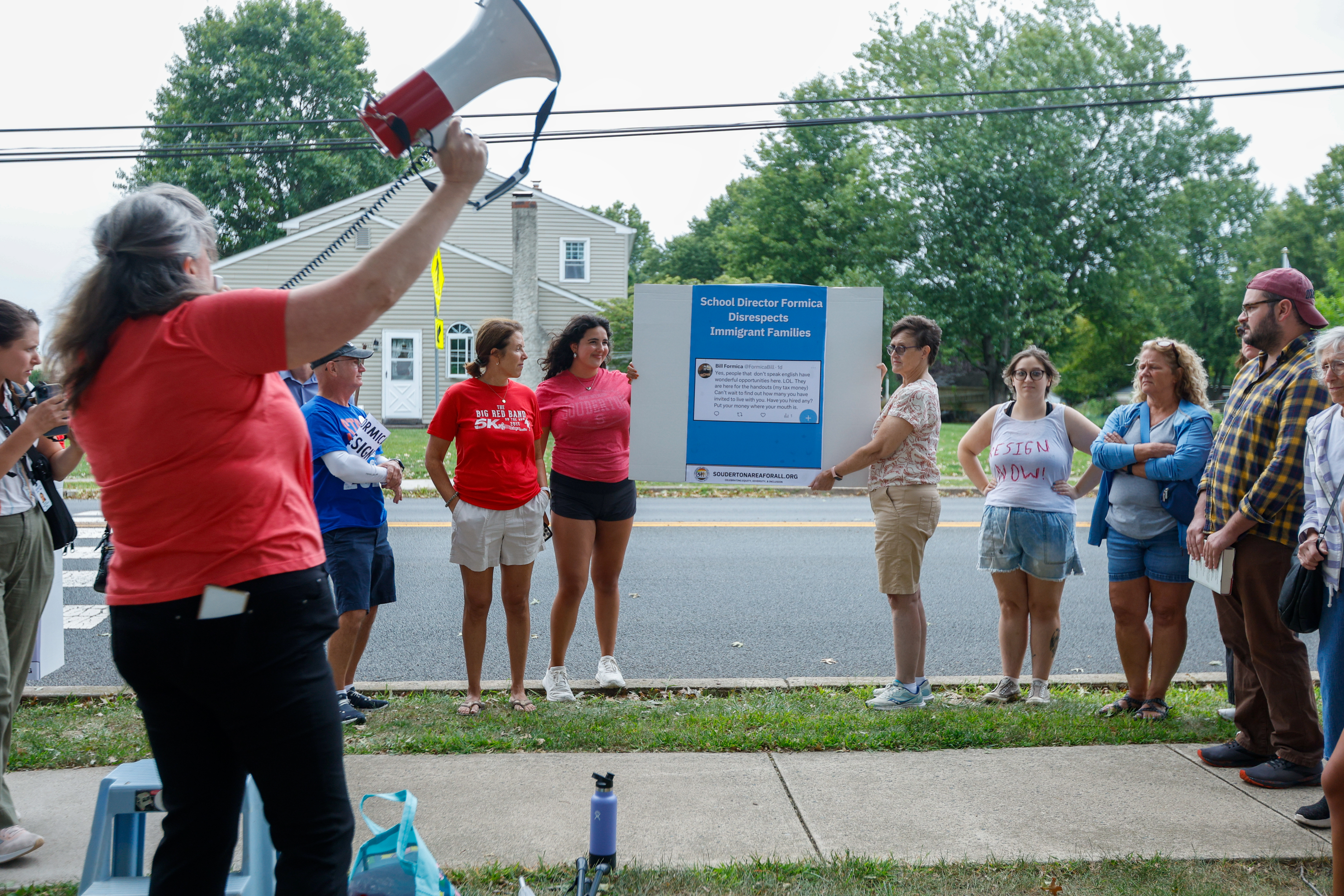
The Souderton Area School District must create an area for demonstrators and livestream school board meetings under a settlement reached in a lawsuit brought two years ago by residents who accused the district of illegally banning them, the American Civil Liberties Union of Pennsylvania said Thursday.
“Members of the public have a First Amendment right to attend and participate in school board meetings,” Sara Rose, the ACLU of Pennsylvania’s deputy legal director, said in a statement. “School boards should take a lesson from this case: you can’t silence critics by banning them from meetings.”
Souderton’s superintendent, Christopher Hey, said in an email Friday that the district “continues to welcome and value respectful community participation at school board meetings” and was “moving forward collaboratively.”
The residents, who were protesting lewd social media posts by Formica about then-vice president Kamala Harris, were accused by the district of threatening another school board member and her teenage daughter in a parking lot after a September 2024 board meeting.
District officials said the residents had mistakenly believed the girl was Formica’s daughter. The district’s solicitor, Jeffrey Sultanik, wrote in an Oct. 10 2024 letter to Kitt, “You screamed ‘Tell your father he’s an {expletive} ,’ and ‘Tell her dad he’s a fascist and needs to resign.’”
The ACLU said the district had falsely accused the residents — Patrick Kitt and Christopher Spigel, along with Spigel’s teenage daughter — of yelling at the school board member, Kim Wheeler, and blocking her from leaving the lot.
The district lifted the ban on the residents in March 2025.
As part of a tentative settlement agreement in early 2025, the residents agreed to provide a “confidential apology” to Wheeler’s daughter, according to the ACLU, “if the district agreed to livestream and archive its school board meetings, create an area for individuals to demonstrate outside school board meetings, pay plaintiffs’ attorneys’ fees, and issue a joint press release about the settlement.”
But that April, the school board refused to approve the joint press release “and instead asked the plaintiffs to agree not to discuss the settlement publicly” — a demand they rejected, the ACLU said.
It said the district’s lawyer then asked the court to bar the residents from discussing the case and demanded that the residents agree to not bring criminal complaints against any board member based on the 2024 incident.
The residents then withdrew their offer to apologize. Kitt, in a statement, said he “lost all trust that the school board was operating in good faith.”
“When the district tried to silence us — again — I lost all trust that the school board was operating in good faith,” Kitt said. “It became clear that the board wanted the apology to weaponize it against us, and it had nothing to do with Wheeler’s daughter.”
The district then asked the court to force the residents to abide by the settlement agreement, according to the ACLU. While the court found the district had failed to prove the settlement was binding, because it hadn’t been approved by the school board, it still ordered the parties to follow it, the ACLU said.
The residents, however, asked the court to reconsider the portion of the agreement involving an apology to Wheeler’s daughter.
In a Sept. 28 decision, Judge Mia Roberts Perez said that “it is not controversial to acknowledge that the ethical thing to do when an adult harms a child is to apologize to that child, even if the harm was inadvertent.”
“The First Amendment, however, limits the Court’s ability to compel an apology,” Perez said. She struck the portion of the settlement agreement that required the apology.
The district had 30 days to appeal Perez’s order, but did not, Rose said.
Hey said Friday that “we respect the court’s opinion, including its views expressed in the September 28, 2026 decision.”
The settlement requires the district to livestream and archive recordings of its school board meetings — something the district wasn’t doing while residents were protesting Formica, Rose said. The district began streaming and archiving meetings in December 2024.
It also requires the district to create a “designated outdoor gathering/demonstration area adjacent to (or in the immediate vicinity of) the district’s administrative offices building.”
The district also has to pay $63,000 in attorney’s fees for the residents, under the settlement.
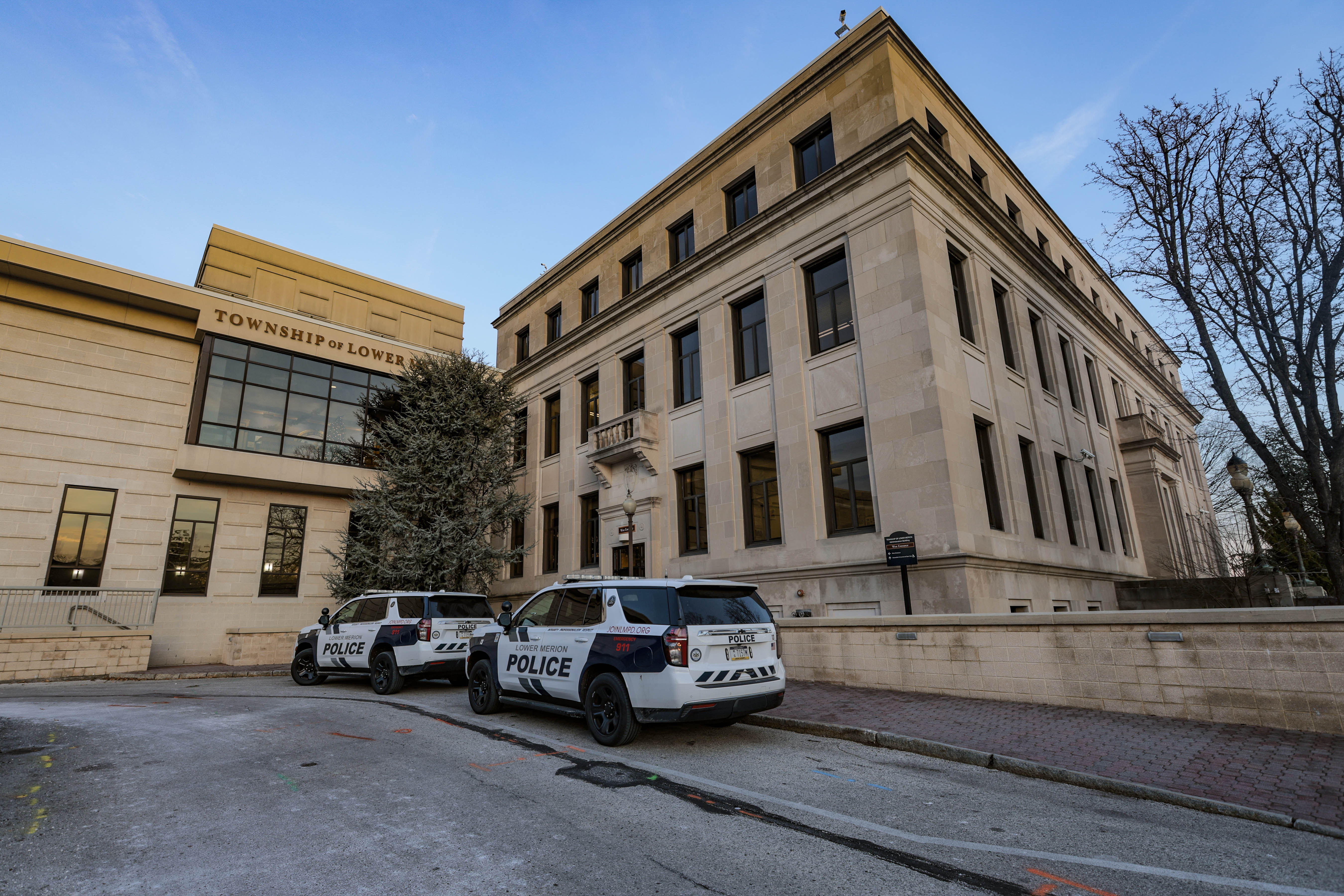
Lower Merion is weighing a property tax increase for the third year in a row as personnel and infrastructure costs strain the township’s budget.
Township staff have proposed raising real estate taxes by 19% in 2027, which they say would bring in an additional $6.8 million to help offset costs from increased staffing, healthcare and pension obligations, storm response, and police overtime.
If passed by commissioners, it would be the third consecutive annual increase in Lower Merion after 13 years of no increases. The township raised taxes by 6.5% in 2025 and 8% in 2026.
Though the 19% recommendation from staff hasprompted sticker shock from some residents, any tax increase will ultimately be decided by the board of commissioners, which is set to adopt the 2027 budget on Dec. 16 after a series of public hearings.
The board has amended staff recommendations in the past (commissioners last year approved an 8% tax increase despite staff suggesting 9.5%), and some commissioners at a Wednesday night meeting seemed poised to favor a lower rate for next year.
With the proposed increase, property owners with the median assessed home in Lower Merion of $287,600, which equates to a market value of about $966,000, would owe an extra $263 annually.
Lower Merion property owners continue to pay real estate taxes calculated on property values established in 1998, the last time Montgomery County reassessed property, according to a report in the 2027 proposed budget penned by township manager Ernie McNeely.
Commissioner Gilda Kramer said at the meeting that more than adecade without an increase left the township needing to levy higher taxes.
“Our residents have had the benefit of tremendous stability and no increases while our costs have gone up for many, many, many years,” Kramer said.
Board president Todd Sinai argued the township has little room to cut spending given the many rising costs baked into the budget.
“There aren’t a whole lot of places that we have much discretion, unfortunately,” Sinai said.
Township staff said they can look into trimming the budget, but warned that cuts would likely mean eliminating staff. Two-thirds of Lower Merion’s general fund expenditures go toward staffing.
Officials say Lower Merion is facing considerable budgetary headwinds, including higher pension obligations and a 19% rise in employee healthcare costs.
“We are getting hit hard by healthcare,” Adam Szumski, Lower Merion’s chief financial officer, told commissioners.
The township hired a number of employees in 2026, including 17 newpolice officers.
Lower Merion also faces high remediation expenses from winter and summer storms and plans to direct money to its solid waste fund, which is facing acute budget pressures.
While the township is projected to bring in $6 million more than expected in revenue in 2026, due largely to strong business and transfer tax revenue, investment income, and licenses and permits, spending is expected to be$1.7 million over budget. The township is projected to end 2026 with a fund balance of $23 million.
According to McNeely’s report,Lower Merion has two main avenues for raising revenue: increasing property taxes or levying an earned income tax.
The township is among the 3% of municipalities in Pennsylvania without an earned income tax. Local governments across the commonwealth, many facing similar budget pressures, have moved toimplement earnedincome taxes in recent years, in many cases reducing their reliance on regular property tax increases.
Lower Merion staff have recommended against an earned income tax, however, arguing that even with the proposed 19% property tax increase, the township’s millage rate would be around average for the county, and that, per the report from McNeely, an earned income tax would be “much more disruptive and significant” for taxpayers.
The first public hearing on the budget will take place on Nov. 18.
This suburban content is produced with support from the Leslie Miller and Richard Worley Foundation and The Lenfest Institute for Journalism. Editorial content is created independently of the project donors. Gifts to support The Inquirer’s high-impact journalism can be made at inquirer.com/donate. A list of Lenfest Institute donors can be found at lenfestinstitute.org/supporters.
Lower Merion Township will purchase a residential home in Bala Cynwyd to house volunteer firefighters, a move officials say is key in recruiting and retaining personnel as the firedepartment contends with dwindling volunteer participation and increased calls for service.
The township’s board of commissioners voted unanimously to authorize the purchase of 303 Tregaron Rd. last night.
Lower Merion will put $500,000 toward purchasing the building, and the Union Fire Association, one of the seven fire companies that make up the Lower Merion Fire Department, will pay $205,000 plus closing costs as an interest-free loan to the township.
The Union Fire Association, based in Bala Cynwyd, provides fire and emergency services to the township’s Bala Cynwyd and Merion sections. The four-bedroom, three-bathroomresidence will houseup to four active volunteer firefighters serving in any township fire company.
In 2022, the Union Fire Association began investigating how to improve overnight accommodations for its firefighters, both career and volunteer. The fire station at the time decided that its existing second-floor social hall should be converted to add bunk rooms and living facilities. The township committed $500,000 toward the project.
Yet bids received earlier this year put the project $1 million over budget, prompting the township and Union Fire Association to consider alternatives.
When an adjacent residential property, 303 Tregaron Rd., came on the market this summer, the property owner, township, and fire company agreed on a sale price of $705,000.
The township will pay for insurance and major repairs, and the fire company will be responsible for routine maintenance, administrative responsibilities for the live-in firefighter program, and minor repairs.
At the Wednesday meeting, board president Todd Sinai said it’s “a delight to be able to help” the fire company.
Providing living quarters for firefighters is seen as an important recruitment and retention tool in the township, which is facing a drop in participation from volunteer firefighters, who make up the bulk of its labor force.
The Gladwyne Fire Company, also a member of the Lower Merion Fire Department, houses volunteer firefighters at its station, a nearby apartment, and a single-family home.
Gladwyne’s housing program “continues to be one of the most effective and robust recruitment and retention tools not only within Lower Merion Township but throughout the region,”Blaine Leis, Gladwyne’s fire chief, wrote in a 2025 report.
The Lower Merion Fire Department has asked the township for a significant funding boost in 2027, citing rising costs, increased calls for service, and the dwindling volunteer base, which fire department officials say requires hiring additional full-time personnel.
This suburban content is produced with support from the Leslie Miller and Richard Worley Foundation and The Lenfest Institute for Journalism. Editorial content is created independently of the project donors. Gifts to support The Inquirer’s high-impact journalism can be made at inquirer.com/donate. A list of Lenfest Institute donors can be found at lenfestinstitute.org/supporters.
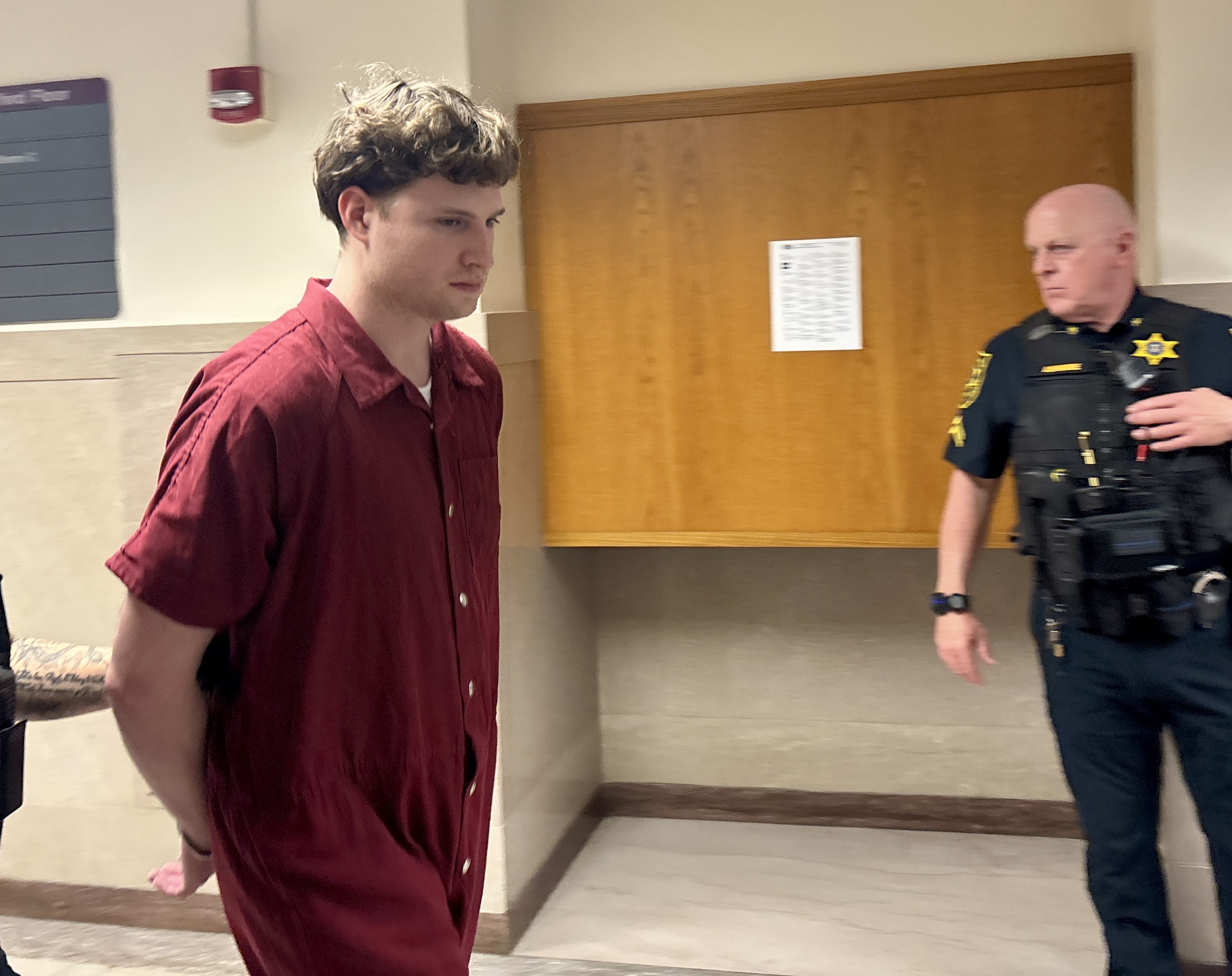
A Lower Gwynedd man was sentenced to 25 to 50 years in state prison Thursday for intentionally running over a Plymouth Township police officer, leaving him with life-altering injuries, during a chaotic chase in October 2025.
In a negotiated deal with prosecutors, Dalton Janiczek, 22, pleaded guilty but mentally ill to attempted murder of a law enforcement officer, aggravated assault, and fleeing and eluding. That designation means Janiczek will receive psychiatric care during his sentence.
The plea came days before Janiczek’s jury trial was set to begin.
After handing down the sentence, Montgomery County Court Judge Wendy Rothstein commended Plymouth Township Officer Jacob Hennessey for his resilience in light of the physical and mental injuries he is still fighting to overcome.
“You leave home every day with one mission, to protect the public,” Rothstein said. “Unfortunately, on that day, you were the ones who were targeted.”
Janiczek apologized to Hennessey and the dozens of other officers who packed Rothstein’s courtroom Thursday, saying he was deeply sorry for his actions that day.
“At the time, I didn’t appreciate I was suffering from serious mental illness,” Janiczek, the son of Center City civil defense attorney Lee Janiczek, said.
Janiczek’s attorney, Tim Woodward, said afterward that his client has been diagnosed with bipolar disorder with psychotic features. He sharply criticized the systems in place to treat mental illness, saying Janiczek had been improperly released from Montgomery County Emergency Services, a private psychiatric hospital, after being involuntarily committed weeks before the encounter with police.
“They let him walk out. That is an utter disgrace, and something needs to be done, because mental illness is real,” Woodward said. “The system is broken.”
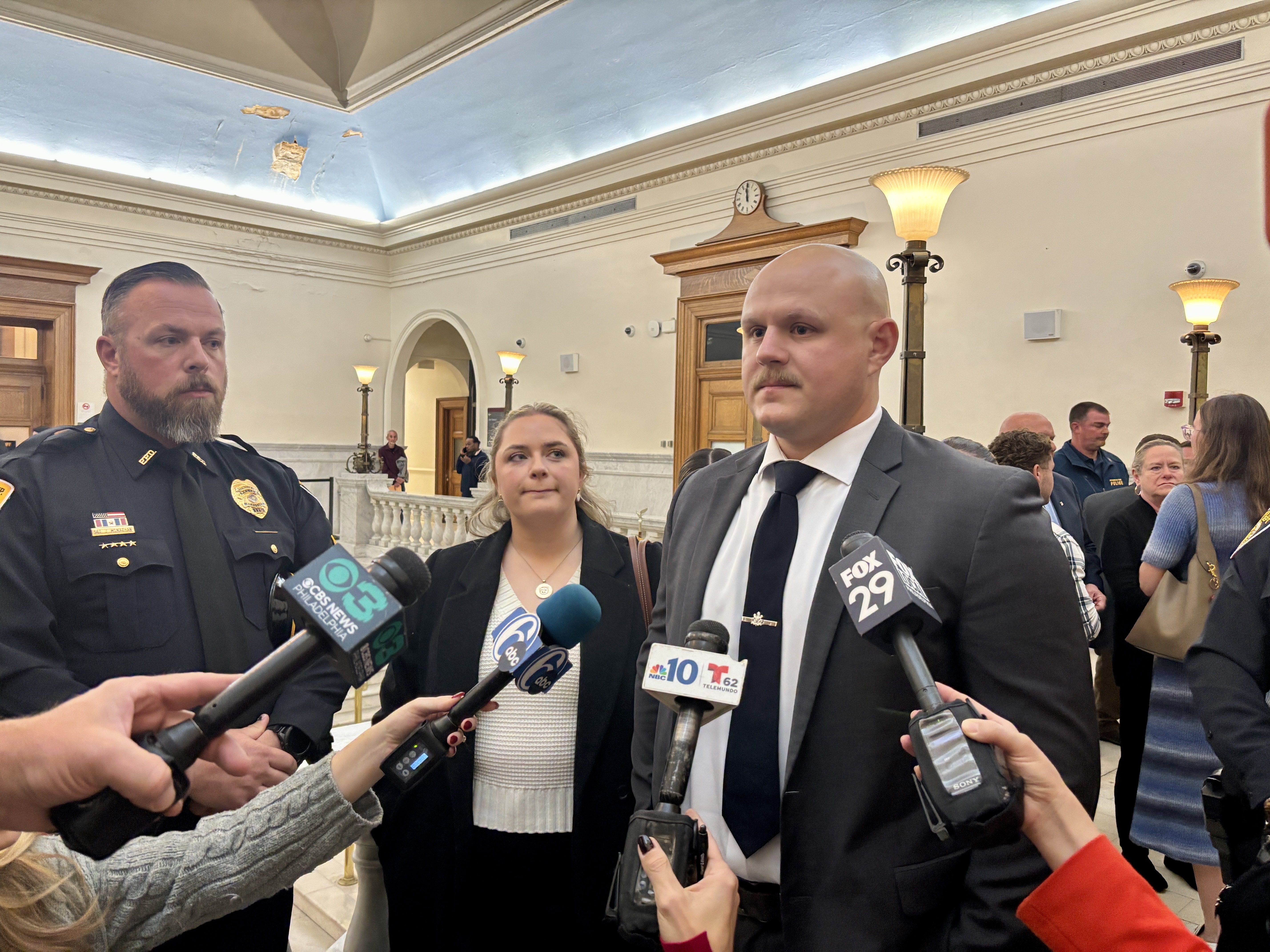
Plymouth Township Police Officer Jacob Hennessey (right) and his wife, Meghan, (center) speak to reporters after Dalton Janiczek was sentenced to decades in state prison.Vinny Vella / Staff
On the day of the incident, Janiczek intentionally ran over Hennessey with his Mercedes G63 while fleeing from an attempted traffic stop moments earlier, prosecutors said. The officer was pursuing Janiczek after he threatened to blow up a police station in Chester County and fled from other officers’ attempts to pull him over, prosecutors said.
In the parking lot of the Doubletree Hotel on Fountain Road, Hennessey ordered Janiczek to get out of the vehicle, then drew his gun and fired as the SUV continued to barrel toward him.
Janiczek struck him once, pulled away, and then returned to hit the officer an additional three times as Hennessey lay on the ground, attempting to put a tourniquet on his shattered leg.
Janiczek then fled, and intentionally struck two vehicles being driven by other Plymouth Township officers. Both officers were hurt in those collisions, including Sgt. Kyle Wilhelm, who suffered from significant injuries to his knee and later retired from the department.
Hennessey, choking back his emotion, said Thursday he can still smell the coolant that dripped onto him as Janiczek’s SUV was on top of him, and can still hear his own screams for help.
He underwent five surgeries, one as recent as September, to repair fractures to his tibia, femur, fibula, and ribs. Constant nerve damage still plagues him, and he is unable to flex his left foot.
But the worst injury, he said, is his inability to return to a career he had dreamed of since he was in eighth grade.
“The scars may fade, but every day I wake up with a sore knee, I will be reminded of the damage to my family caused by Mr. Janiczek,” he said.
Hennessey’s injuries occurred eight days before his planned wedding to his childhood sweetheart, Meghan. The couple still were able to wed, he said, albeit in a much different ceremony than they had imagined: in his in-laws’ backyard, with him in a wheelchair and a tuxedo T-shirt.
“It’s truly a miracle I’m here today,” Hennessey said. “I want everyone to understand that if God didn’t intervene, I surely wouldn’t be here.”
As Democrats in Washington prepare to launch a flurry of investigations into President Donald Trump and his allies once they assume control of Congress in January, one Philadelphia-area lawyer is gearing up for battle.
Wally Zimolong, a Main Line attorney who has worked for Republican causes including the unsuccessful efforts to overturn the president’s loss in the 2020 election, said his firm is assembling a team of trial lawyers to defend Trump administration officials when Democrats take control of Congress in January.
Incoming Democratic leaders have vowed to hold Trump and his cabinet accountable. Their sweeping wins in the midterm elections, they have said, give them a broad mandate to act not just on voters’ top-of-mind affordability issues but also on what they have described as the most corrupt administration in history.
Warning of an unprecedented “subpoena-palooza,” Zimolong, a longtime Trump supporter, said the situation is all-hands-on-deck.
“Anybody that had any interaction with the Trump administration is going to be a potential target,” he said. “That’s certainly how we’re treating it.”
Less than 12 hours after the “blue tsunami” became apparent last week, Zimolong and his Wayne-based firm announced the plan they had been discussing for months: a Congressional Investigations and Lawfare Defense Task Force.
The group’s intention is to defend Trump officials as well as private third parties associated with the White House. Those include businesses that have come under scrutiny for working with the government or donating to the president’s projects.
The top Democrat on the House Natural Resources Committee, for instance, on Monday sent letters to nine federal agencies and 27 private companies to preserve records that may be relevant to congressional inquiries. The list included major corporations like Chevron, United Airlines, and TikTok, which Democrats have said may have received special treatment after donating to this year’s 250th anniversary events.
“[T]o every agency official and corporate executive receiving these letters: save everything,” U.S. Rep. Jared Huffman, a California Democrat who is poised to become the committee’s chair in January, said in a statement. “The American people deserve to know what you did with their government and their money, and we intend to get them answers.”
U.S. Rep. Robert Garcia, another California Democrat set to chair the powerful House Committee on Oversight and Government Reform, had a more succinct election night message: “Lawyer up.”
Zimolong said he believed Garcia’s statement showcased an intention by Democrats not to engage in legitimate investigations that fulfill their legislative and oversight duties but to take an illegal and “prosecutorial” approach that the public does not want.
He pointed to the failed attempt, initiated by an outgoing Republican and supported by House Democrats, this week to impeach Defense Secretary Pete Hegseth. Democrats promised to try again when they have a sizable majority in January, revisiting accusations that Hegseth violated the Constitution while waging the war in Iran, ignoring laws intended to limit civilian casualties, and more. Zimolong said the idea that Hegseth committed high crimes or misdemeanors by following the commander in chief’s orders was “ridiculous” and “political retribution, plain and simple.”
“If Democrats want to spend their perceived legislative mandate on investigations and subpoenas rather than focusing on the wants and needs of the American people … then it’s going to be a short reign for Democrats,” Zimolong said. “In some ways, if that’s how they want to spend their time, I welcome it because it’s the quickest way for Republicans to regain control of Congress.”
In 2020, he worked outside the Trump campaign to invalidate ballots cast in the Pennsylvania election as the president spread false claims that widespread fraud led to his loss. Four years later, he represented the Trump campaign as well as Republican Dave McCormick’s U.S. Senate campaign and the Republican National Committee in lawsuits around election administration — including a successful move in Bucks County to extend a deadline for voters to apply for, receive, and cast mail ballots in person.
This year, he has represented Democratic Gov. Josh Shapiro’s Abington Township neighbors in a land dispute, as well as a Lehigh Valley congressional candidate who made a last-ditch effort to get on the ballot in a highly competitive race as a Green Party nominee but who Democrats believed was part of a disguised GOP effort to draw votes from the Democratic nominee, Bob Brooks, who went on to win the seat.
Zimolong, in an interview with The Inquirer, said that he did not “coordinate with anybody” in the congressional race and that the Shapiro situation was not “a Republican thing.”
“People think it’s sort of coordinated and we all get together and plan these things out,” he said. “That’s not the way the world works.”
Zimolong said he and his colleagues began considering the task force in the spring when it looked like Republicans might lose control of Congress in the midterms. He said they spoke “to a wide range of stakeholders that may be affected by this,” though he declined to name any individuals or groups because of confidentiality concerns. The team of lawyers is still being built out, and he said he is confident that both outside counsel and those working in the Department of Justice are equipped to handle the coming investigations, whether he is part of the defense or not.
“I’m not worried about anything. I don’t think it’s going to get very far,” he said.
Still, he said, he expects a robust court battle that will “test the limits of executive privilege” — possibly unlike anything since Watergate, when President Richard Nixon unsuccessfully fought to keep White House recordings private. Zimolong said the Trump administration is “correctly” signaling that it will take “a very aggressive view on executive privilege” that protects its communications and those of cabinet officials.
In a clear sign of the clash ahead, White House counsel William Scharf sent a letter to Garcia on Monday that claimed Democrats had issued “abusive and capricious threats,” and that their actions to issue “unlawful subpoenas … may warrant further investigation.” One of the comments the White House noted was from U.S. Rep. Analilia Mejia (D., N.J.), who wrote on social media, “We’re going to toss out subpoenas like Mardi Gras beads.”
Garcia responded in a statement, saying the new Congress “will not be deterred by baseless threats from a weaponized DOJ or from the president’s lawyers.” The lawmaker has indicated he will pursue investigations into Trump’s family’s business dealings — which he has referred to as the “Trump Crime Family” — as well as the handling of the Jeffrey Epstein investigation files and immigration enforcement “abuses” by Immigration and Customs Enforcement and the Department of Homeland Security.
Another investigation topic could be Trump’s personal settlement with the Department of Justice this year. The deal included a $1.8 billion anti-weaponization fund that Trump launched to compensate individuals whom the administration believed to be the victims of political prosecution, though both Democrats and Republicans raised deep concerns and it was blocked by the courts. Zimolong and his firm applauded its creation in May.
Democrats have also raised alarms about Trump’s use of the Justice Department to investigate and indict his perceived political enemies, such as former FBI Director James Comey.
After an additional boundary-pushing two years, Zimolong said Democrats are preparing to unfairly target Trump and nearly anyone in his orbit.
“I like to say that if you look at the White House, you’re a potential target,” Zimolong said. “Obviously, that’s in jest. But, depending on which member you speak to or … which member statements you read, it’s not that far off.”
Workers employed at Lloyd Industries in Montgomeryville typically spend their days making components for HVAC systems, handlingsheet metal, stainless steel, and fiberglass.
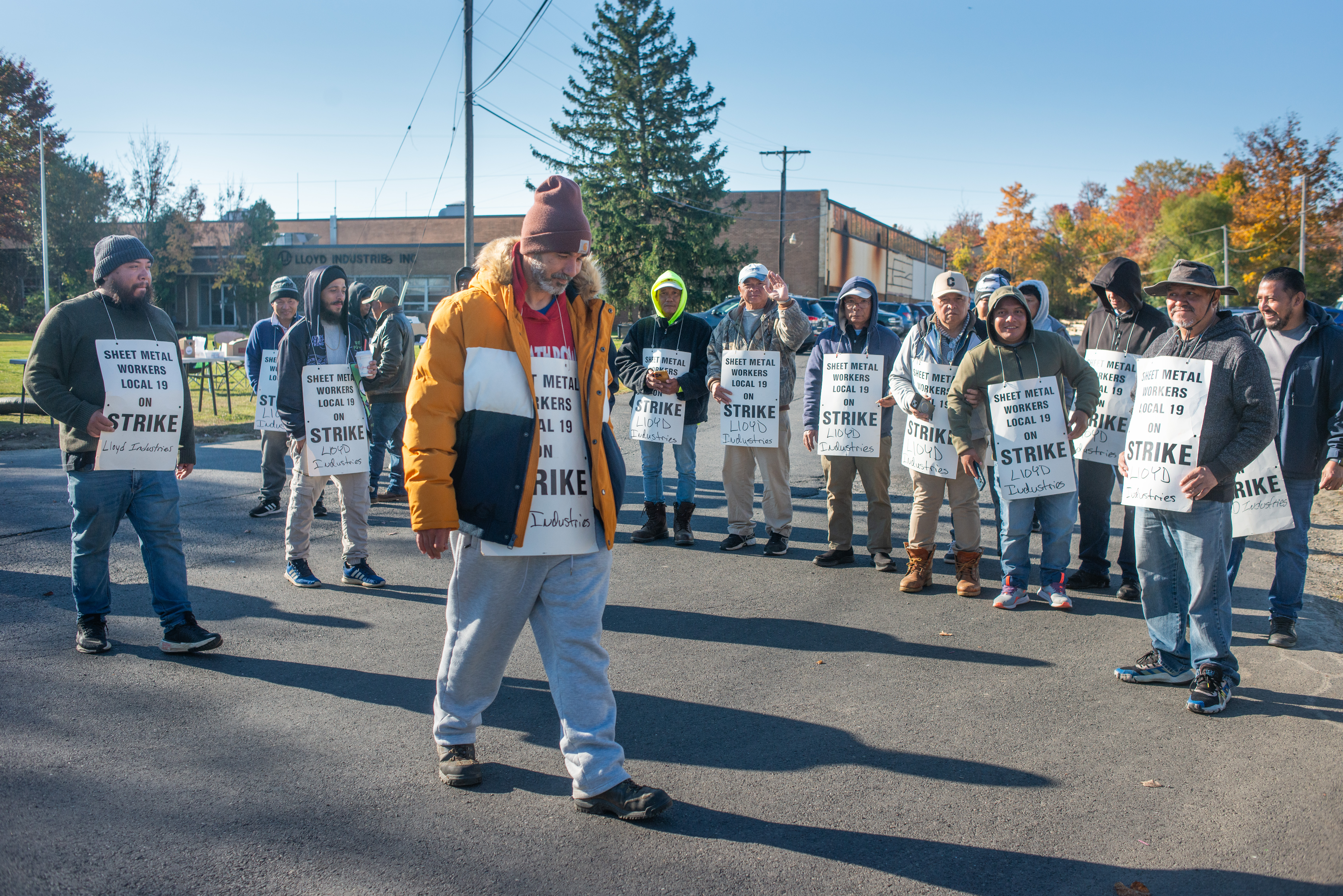
But for the past two months, instead of building fire dampers that block smoke or fire from spreading, 22 of them have found themselves on a picket line. On a recent day in late October, workers stood outside the plant wearing posters indicating they’re on strike.
Shop steward Ricky Boyer is among the 22, who have been showing up at 8 a.m. for the picket line, where the union is providing bagels, coffee, doughnuts, and lunch. He and his colleagues are seeking improvements to wages, healthcare, and working conditions after their most recent three-year union contract expired Sept. 1 and negotiations with the company broke down.
Since the strike started, another 25 colleagues have opted to go back to work, lured by higher wages than they typically make, according to the unionthat represents them, Sheet Metal Workers Local 19. In total, the union represents 47 workers at the site.
Boyer has opted to stay on strike because, he says, “I know you don’t cross the picket line.”
“The reason we’re out there is for our benefit,” said Boyer, who has been with the company for roughly 16 years. “It makes no sense to cross the picket line.”
Workers on strike are being financially supported by the union. Every week, workers “get more money from us than they’re getting inside [the company],” said Bryon Blum, business representative for Sheet Metal Workers Local 19.
A representative for Lloyd Industries did not respond to a request for comment.
Lloyd Industries has offered workers more money than they typically make to return to work and leave the strike, according to the union. William Thomas Cain / For The Inquirer
Many workers have gone on strike in the Philadelphia area in recent years with short work stoppages. Peco workers went out for three days in July before reaching a deal with the company. Unionized hotel workers have gone on multiday strikes since they started bargaining for new contracts in 2025, and in 2024, Aramark workers went on strike for four days at all three South Philly stadiums.
At Lloyd Industries, workers are on their 11th week of picketing.
As the strike has dragged on, and despite the pay from the union, Blum says workers want to return to work.
“They tell me every day they want to go back to work, but they realize the importance of standing out here and sticking up for their rights,” he said.
What do workers want?
Following three days of negotiations in August, Lloyd Industries owner, William “Billy” Lloyd, made a final proposal and walked away from bargaining, according to the union.
Since then, Blum has been unsuccessful in getting the company back to the negotiating table. The union has filed several unfair labor practice charges against the company with the National Labor Relations Board, including for failing to bargain in good faith, said Blum.
“We would be inside right now working and sitting down with a contract if the guys didn’t cross the line,” he said.
Lloyd Industries offered a 50-cent increase to workers’ hourly wage in its one-year contract proposal, the union has said. Union workers there make on average $23.85 an hour, and many depend on overtime. William Thomas Cain / For The Inquirer
Workers make on average $23.85 an hour, and many depend on overtime, he says. A worker in Montgomery County, where the company is located, needs to make $26.97 an hour to cover their basic needs, according to a calculator developed at the Massachusetts Institute of Technology. If that single adult has a child to support, that hourly rate rises to $50.74 to be considered a living wage.
In their most recent contract, workers saw hourly wage increases of $1.50 in the first year and $1.25 in the following two years. This year, amid bargaining, the company offered workers a one-year contract with a 50-cent per hour increase, says Blum.
Shop steward Boyer says workers aren’t “asking for a lot,” but the 50-cent offer just “wasn’t even talkable,” pointing to high gas prices and the rising cost of groceries.
“We just want a fair contract,” Boyer said. “We want to be able to work, take care [of, and] provide for our families.”
Employees have medical insurance paid in part through their employer but want a better plan. Some forgo the insurance because they can’t afford it, Blum said.
They also want better working conditions, said Blum, who adds that the area they work in is “filthy” and that “nobody cleans in there.” Fiberglass, used for insulation, is floating around, he said.
“The workers want the machines to be cleaner, the air to be cleaner. They want management to stop turning off the exhaust fans,” he said.
Lloyd Industries was cited or inspected several times between 2000 and 2014 by the Occupational Safety and Health Administration (OSHA), The Inquirer has reported. The company was ordered to pay $1,047,399 in 2019, after firing two workers in 2014 and 2015 who cooperated with OSHA investigators. The company also faced allegations that it was racially discriminating against a worker who was laid off in 2015, and ultimately won his case.
Local 19 has represented the workers for over 30 years, Blum said.
“They’re just working men that want to see a better way of life,” he said. “The union’s here to give them that. We’ve been trying to give them that for years now.”
In the days after 10-year-old Malayshia Allford was reported missing, her foster mother went to great lengths to misdirect investigators: texting herself affectionate notes from the girl’s phone, responding throughout the day to feign concern, and later claiming the child had fallen down some steps, according to a police report.
All the while, police say, Malayshia was already dead — her body hidden in the trunk of a car in South Jersey.
Witnesses who spent time inside the West Philadelphia home of Carprice Williams, the foster mother charged with killing Malayshia, also described chronic and horrific abuses: withholding food from the child for as long as a week, beating her with a phone cord, and throwing her down stairs, according to the report obtained by The Inquirer.
The report, which details interviews with unnamed witnesses, provides a grim account of what happened inside Williams’ home. It also raises questions about what supervision city-contracted social workers provided, and how Williams was able to continue in her role as a teacher in the Philadelphia School District.
The Defender Association of Philadelphia, which represents Williams, did not immediately respond to a request for comment.
Malayshia Allford, 10, was missing for more than a week before her remains were found inside the trunk of a car in South Jersey.Courtesy of Philadelphia police
Since early 2025, Williams taught fifth grade at Lewis C. Cassidy Academics Plus School, a kindergarten-through-eighth-grade school in Overbrook. She had also worked at Mifflin Elementary in East Falls for a time, at Young Scholars Charter School in Northern Liberties, and at a Montgomery County preschool.
School district officials said they could not answer questions about Williams’ tenure, but her $114,041 salary is at the “senior career teacher” pay rate, indicating she had at least 10 years of teaching experience plus a master’s degree and further postgraduate education. Williams’ LinkedIn profile said she holds a master’s and doctorate from Drexel University. Asked to verify that, a Drexel spokesperson confirmed only the master’s degree.
Arthur Steinberg, president of the Philadelphia Federation of Teachers, said Malayshia’s death was “a horror” and “a tragedy.” Steinberg called for an investigation into the foster care system but said the matter “had nothing to do with her role as a teacher.”
“To have something like this happen, it’s just unspeakable,” he said.
The Philadelphia School District has declined to answer questions about the case. A city spokesperson did not respond to a request for comment Monday afternoon.
Williams had been a foster parent since at least 2020.
That is when she took in two young siblings — one of whom ended up in the hospital the next year with a traumatic brain injury, severe malnutrition, and marks indicative of being struck with an object, according to a lawsuit.
A doctor at Children’s Hospital of Philadelphia certified that 2021 event as a “near fatality,” triggering a review that found the foster mother had committed abuse and recommended that she never be allowed to foster again, the lawsuit said.
However, a Pennsylvania Department of Human Services spokesperson said, Williams successfully appealed the child-abuse finding and her record was expunged.
The Bureau of Hearings and Appeals, an administrative review board within the state human services agency, overturns roughly 90% of cases brought on appeal, according to a 2021 report by Pennsylvania’s auditor general that found the system was failing child victims.
Nadeem Bezar, a lawyer representing Malayshia’s estate, said that even if Williams was not in the child-abuse registry, the information about the 2021 incident would have been retained in an internal database and should have been used to bar her from future foster placements.
In that 2021 case, Williams told officials that she heard a loud noise and then found the child unresponsive with labored breathing. Later, the children in that case alleged that Williams had grabbed the child’s braids and slammed her head to the floor.
Last month she tried to cover up the circumstances of Malayshia’s death over the nearly two weeks the child was missing, the police report said. Williams provided relatives and law enforcement with conflicting accounts about when she had last seen the girl, and crafted a phony text exchange to support her story that the child’s biological parents had kidnapped her, according to the report.
Investigators concluded that Williams used Malayshia’s phone to text herself: “Mommy I know you are waiting for me to come home but my family they don’t want me to be adopted. … I love you.”
The report lays out allegations by witnesses it does not identify who told police that Williams bent a child’s fingers backward until they were injured, made another stand in a corner all night, directed her 4-year-old son to hit another child with a sword, and forced Malayshia to walk up and down stairs wearing a heavy weighted vest. Williams had the inside of the home under video surveillance, according to the report, and required Malayshia to ask permission to use the bathroom.
Williams contradicted the witnesses’ accounts, saying she had never hit Malayshia, though she told police the child had recently fallen down a few steps. She said Malayshia sometimes wore a weighted vest to calm her during tantrums but had not worn it in about six months.
A medical examiner determined that Malayshia died of blunt force trauma, according to the police report. She had a fractured rib, bruises on her head, torso, and buttocks, and whiplike marks across her legs, the report said.
Surveillance video recorded shortly before 2 a.m. on Oct. 26 shows a man dragging a large bag, with what appeared to be a strand of braided hair sticking out, from the alley behind Williams’ block and loading it into a vehicle, the police report said.
The man, a relative who initially denied his involvement, later told police that Williams said the little girl “didn’t wake up,” and when he urged her to call police she told him it was too late, according to the report.
Authorities have not said whether the relative is expected to be charged.
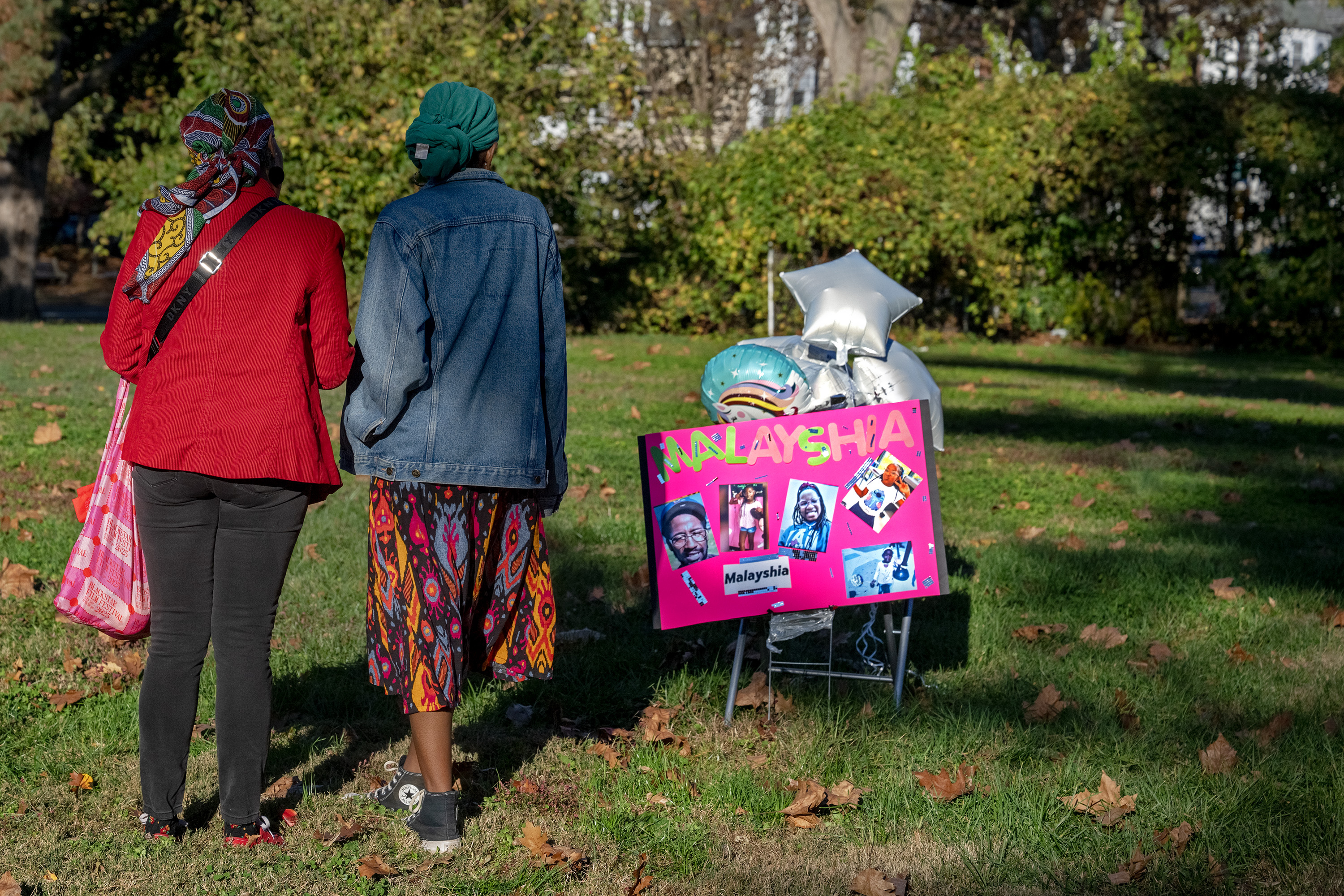
Family and friends gather on Sunday to remember Malayshia Allford.Tom Gralish / Staff Photographer
Her parents were home with their youngest children in Elkins Park around 7 p.m. on July 19 when her mom, Crystal Hilliard-Keith, went into sudden, painful labor with Isabella.
Only six months pregnant, Hilliard-Keith began preparing to drive to the hospital. But Isabella’s dad, Anthony Robinson, knew they wouldn’t make it. He called 911.
“She prayed,” Robinson said. “I prayed.”
Two veteran paramedics, Jessica Barto and Gerald Speed, were filling in for other EMTs that day. They were standing next to the truck, one mile away from the family’s house, when they got the call.
“There were people and things in places that, if even one of those things had been different, the outcome wouldn’t have been the way that it is,” Barto said.
CPR with one finger
Five minutes later, Barto and Speed arrived. Barto delivered Isabella, freeing her from the amniotic sac and clamping the umbilical cord while Speed notified Jefferson Abington Hospital. The baby was smaller than the palm of her hand, and she wasn’t making any noise.
Then, Barto saw Isabella’s ribs flare: She was trying to take her first breath.
“She’s a fighter,” Barto thought. “And we’re in this together.”
None of Barto’s equipment fit, so the EMT of 24 years improvised, using a smaller syringe hooked up to an IV catheter to clear Isabella’s nose. She started CPR, performing chest compressions with one finger.
Four miles away, neonatologist Erin Cipko’s team at Abington was alerted by Speed’s call that a baby born at 23 weeks would be arriving at the emergency room. Because it was after 4 p.m., Cipko was the only neonatologist in the neonatal intensive care unit.
She and her team grabbed the specialized tools they would not have in the ER, Cipko said, and started running.
Resuscitating a 23-week preemie born in the hospital is difficult enough, said Cipko, who has treated newborns for over a decade. A 2022 study found babies of that gestational age born at medical facilities had a survival rate of just 55%.
A 23-weeker born at home? Cipko had never seen that.
“I really didn’t think we had any chance of saving her,” she said.
Quran Frazier, a firefighter and EMT who had responded from the fire department, drove the ambulance as Barto continued CPR and Speed connected the baby to a heart monitor, finding a very slow pulse.
“Everybody knew what they were supposed to do and did it, really without us talking about it,” Barto said.
‘We were in shock,’ Abington doctor says
Meanwhile, Cipko, nurses, and ER staff were in the trauma bay preparing medications, hooking up oxygen, and locating other equipment.
Isabella arrived at the hospital, 25 minutes old and lighter than a cantaloupe, on an adult-sized gurney with Barto on board, continuing CPR. The clamp that Barto put on Isabella’s umbilical cord, Cipko said, had prevented the baby from bleeding out.
Hospital staff got to work — placing Isabella on a warmer, giving medication to restart her heart, and inserting a breathing tube. Because Barto had been delivering continuous CPR, Cipko said, her lungs inflated more quickly, and her blood flowed easily. Within five minutes, Isabella had a heart rate and stable oxygen.
“We were in shock,” Cipko said.
The doctor believes Isabella’s large size — heavier than the typical weight for 23-weekers, who are often under a pound — helped save her. Isabella was so large that Cipko assumed at first she must be older, until she noted the skin texture and other signs that confirmed Isabella’s extreme prematurity.
“I can’t even conceptualize what smaller would’ve looked like,” Barto said.
A wedding
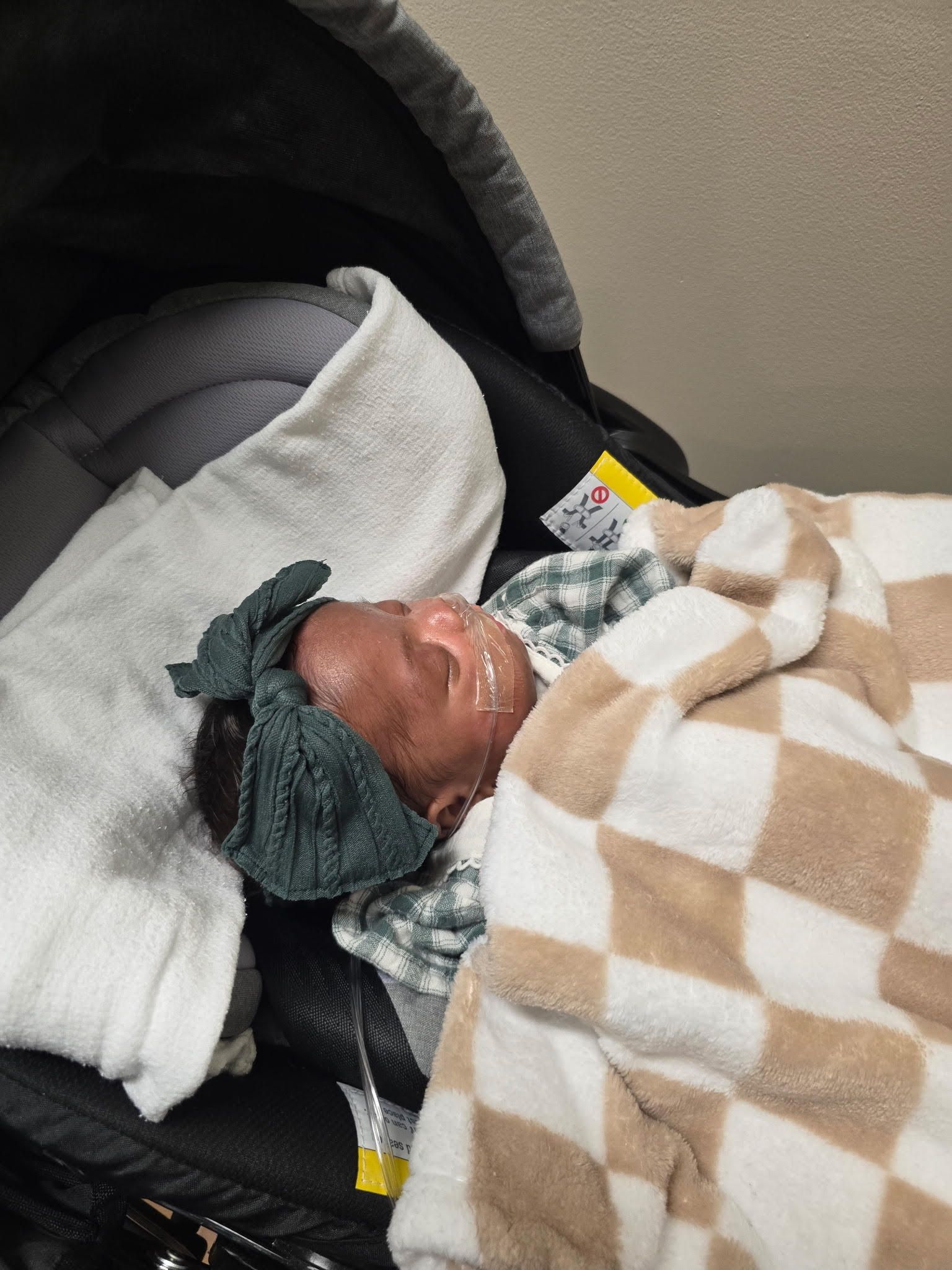
Almost four months later,Isabella is doing great, her parents and doctor said — she weighs over six pounds, eats almost everything by mouth, and is working on developing her heart. Isabella, who has four older siblings, is still in the NICU at Jefferson Abington Hospital.
“Life now, we look at it differently,” her mom, Hilliard-Keith, said. “It’s a blessing.”
Barto has stayed in touch with Isabella’s parents since the delivery — making sure the family is doing well, and even running an errand in an overwhelming postdelivery moment, Robinson said.
Weeks later, Barto visited Isabella. Through tears, she held her hand up next to the baby, unable to believe how small she once was.
“She’s so perfect,” Barto said. “She looks like a baby.”
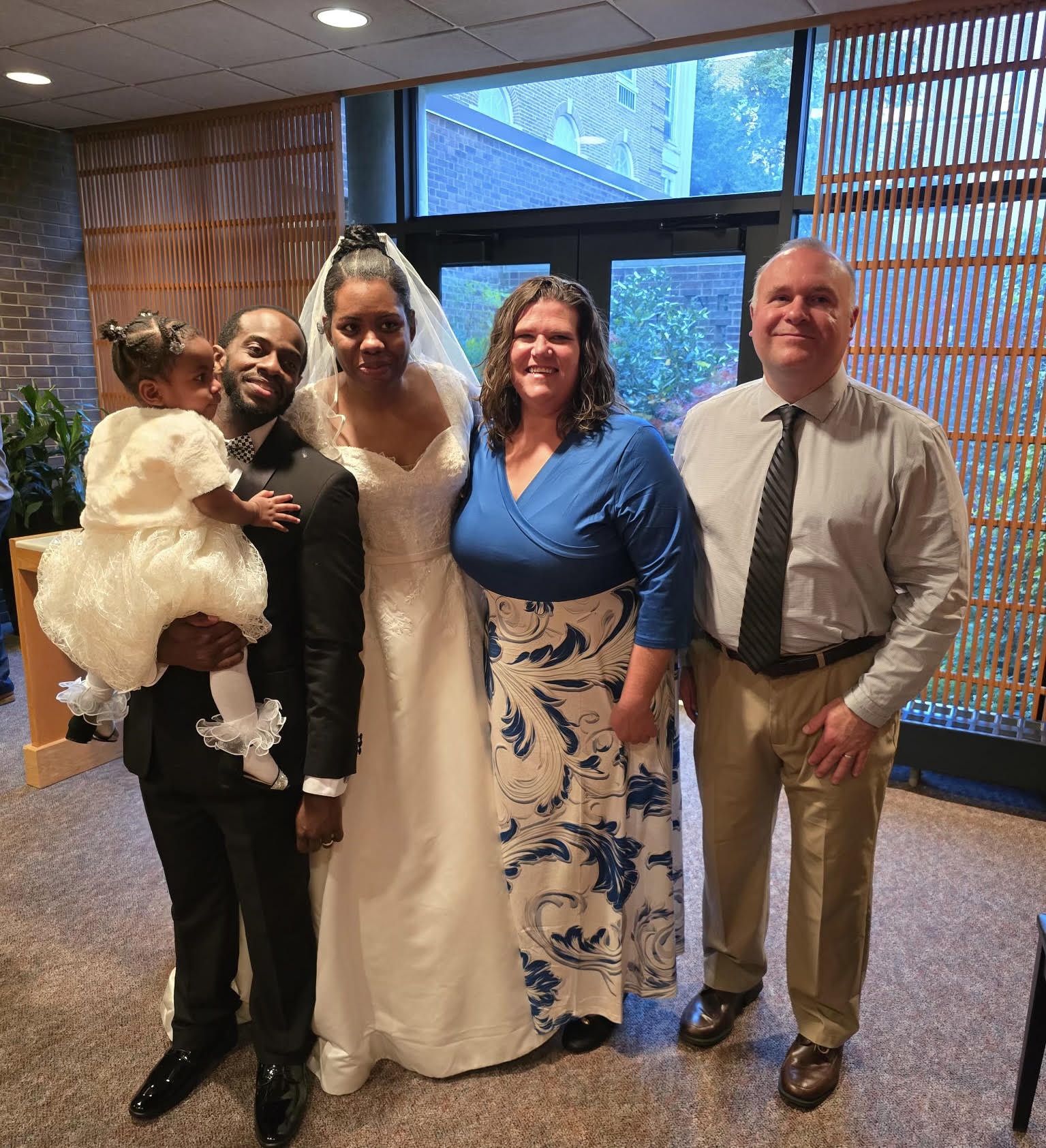
On Saturday — two days before Isabella’s due date — Barto and Speed attended Hilliard-Keith and Robinson’s wedding alongside Isabella, on a short field trip from the NICU.
Isabella was just 1.5 pounds when a Cheltenham EMT helped deliver her at home in July. Pictured four months later at her parents’ wedding, she has quadrupled her weight and is doing well, her parents and doctor said.Jessica Barto
Cipko and Barto both credited all of the medical staff, from paramedics to nurses to ER personnel, whose quick work made Isabella’s survival possible.
“A lot of people contributed to something so special,” Cipko said. “Without everybody, you can’t do that.”
This suburban content is produced with support from the Leslie Miller and Richard Worley Foundation and The Lenfest Institute for Journalism. Editorial content is created independently of the project donors. Gifts to support The Inquirer’s high-impact journalism can be made at inquirer.com/donate. A list of Lenfest Institute donors can be found at lenfestinstitute.org/supporters.