The Centers for Disease Control and Prevention will send a “disease detective” to Pennsylvania this week to help address an ongoing measles outbreak that has now sickened more than 1,200 people across the state, an official with the U.S. Department of Health and Human Services said.
The state requested the assistance of the CDC’s Epi-Aid program, part of the Epidemic Intelligence Service, which provides short-term technical assistance and subject matter expertise during health crises.
Epi-Aid experts typically work with a state for one to three weeks to provide technical assistance investigating an “urgent public health problem,” according to the CDC’s website.
Pennsylvania has the worst measles outbreak in the country in more than three decades.
In the last week, the state reported 157 new cases. The outbreak is centered in Lancaster County and has spread across the state, including into Chester County in the Philadelphia suburbs.
In addition to the expert assistance, federal health officials have provided nearly $4 million in one-time funding to “support measles response operations” through most of 2027, an HHS official said.
The CDC will “continue working closely with Pennsylvania health officials to provide the expertise and support needed to respond to the outbreak and protect public health,” HHS press secretary Grace Davis Jamison wrote in an email.
The state has asked for help improving its understanding of case counts and the trajectory of the outbreak; estimating the “true burden” of measles in Pennsylvania; and understanding how vaccination efforts impact those analyses, Pennsylvania Department of Health spokesperson Neil Ruhland said in a statement.
He said that the effort would be complementary to the health department’s ongoing measles response and that the state is already receiving “remote assistance” from the CDC’s measles response team. About 300 health department staff are working directly with communities around the state, Ruhland said.
Pennsylvania’s request for federal help has been complicated by a highly politicized dispute around the reporting of deaths linked to measles.
Since late August, when the state reported its first two deaths associated with the highly contagious virus, President Donald Trump’s HHS secretary, Robert F. Kennedy Jr., has questioned the validity of the state’s death reporting.
He and Democratic Gov. Josh Shapiro have accused each other of politicizing the deaths. Shapiro claims that Kennedy, a longtime anti-vaccination activist, spread misinformation that decreased vaccination rates and made Pennsylvania vulnerable to a measles outbreak.
Kennedy and CDC Director Erica Schwartz recommend vaccination as the most effective way to prevent measles, the HHS statement noted.
(function(){function e(){window.addEventListener(`message`,function(e){if(e.data[`datawrapper-height`]!==void 0){var t=document.querySelectorAll(`iframe`);for(var n in e.data[`datawrapper-height`])for(var r=0,i;i=t[r];r++)if(i.contentWindow===e.source){var a=e.data[`datawrapper-height`][n]+`px`;i.style.height=a}}})}e()})();
Under Kennedy’s direction, the CDC for weeks omitted measles-associated deaths from its measles data dashboard.
HHS representatives also said the state had not been cooperating with the federal agency, noting that Pennsylvania had not requested assistance through Epi-Aid as other states had.
Before requesting Epi-Aid assistance, Pennsylvania health officials said they were already working closely with CDC staff.
On Sept. 16, state Health Secretary Debra Bogen sent a letter to the CDC saying the state wouldaccept Epi-Aid help if the CDC acknowledged the deaths reported in Pennsylvania, which now total five confirmed by the state. A sixth death, reported this week by a coroner in Franklin County, remains under state investigation.
But the CDC’s data dashboard still reflected only two measles deaths this year nationally as of Wednesday, without noting the location.
The agency says it is working to establish a standard definition for measles deaths and in the meantime will report “measles-caused deaths” when the National Center for Health Statistics identifies measles as the underlying cause of a death, based on information from death records submitted by states.
Public health experts have noted that this process is a departure from previous death reporting protocols and often takes weeks longer.
The state had “several weeks of discussions” with professional staff at the CDC and formally submitted the Epi-Aid request Oct. 7, Ruhland said.
“We continue to seek information from the CDC about their process for reporting deaths before finalizing acceptance of Epi-Aid support,” Ruhland wrote, noting that the CDC updated its dashboard to reflect two measles deaths after Bogen’s letter.
Latest measles case counts
On Wednesday, Pennsylvania health officials reported that 1,222 people in nearly two-thirds of the state’s counties have contracted measles so far in 2026.
(function(){function e(){window.addEventListener(`message`,function(e){if(e.data[`datawrapper-height`]!==void 0){var t=document.querySelectorAll(`iframe`);for(var n in e.data[`datawrapper-height`])for(var r=0,i;i=t[r];r++)if(i.contentWindow===e.source){var a=e.data[`datawrapper-height`][n]+`px`;i.style.height=a}}})}e()})();
Health experts say this number is likely an undercount, as not all measles cases are reported to the state.
About one in five of the reported measles cases required hospitalization.
Lancaster County remains at the epicenter of the outbreak, with 443 cases reported this year. Chester County has seen 90 cases, while Mifflin County, in central Pennsylvania, has reported 183.
Health officials said in a news release that healthcare providers around the state have seen a “surge of interest” in MMR vaccines as the outbreak has worsened.
Providers administered more than 56,000 vaccines in September — more than double those given out in a typical month — and have already given out more than 23,000 vaccines in the first two weeks of October.
Editor’s note: This story has been updated with comment from Pennsylvania health officials.
A 39-year-old woman in Franklin County died after contracting measles, the county’s coroner reported Monday, the sixth report of a death linked to Pennsylvania’s worst measles outbreak in decades.
The woman had “several underlying conditions, including a past diagnosis of measles with treatment,” Coroner Jordan Conner said in a news release posted on Facebook. The office said it investigated the death Saturday.
The woman was not vaccinated against the measles, Conner wrote in an email to The Inquirer. He did not specify the other underlying health conditions also present. He described the woman’s measles diagnosis in his news release as “recent.”
In a follow-up email, Conner wrote that the woman’s primary cause of death was “a probable acute cardiac event due to possible complications of the measles.”
State and federal officials have clashed over how to characterize the five deaths previously confirmed by Pennsylvania health officials, the most reported nationally in a single year since 1992.
The state Department of Health has reached out to the Franklin County coroner’s office to conduct a “thorough review” of the death, officials said in an email. They plan to update the public once their investigation is complete.
Franklin County’s coroner noted the death matched Pennsylvania’s reporting standard for deaths related to measles.
(function(){function e(){window.addEventListener(`message`,function(e){if(e.data[`datawrapper-height`]!==void 0){var t=document.querySelectorAll(`iframe`);for(var n in e.data[`datawrapper-height`])for(var r=0,i;i=t[r];r++)if(i.contentWindow===e.source){var a=e.data[`datawrapper-height`][n]+`px`;i.style.height=a}}})}e()})();
Pennsylvania defines a “measles-associated death” as one that occurs within 30 days of symptom onset in a person with clinical evidence of infection and a positive laboratory test, and who did not die of another unrelated cause, like a car crash.
Conner’s office said it would not release additional details that could identify the patient.
Measles has not been reported as widely in Franklin County, in south central Pennsylvania on the Maryland border, as in communities affected by an outbreak that has spread across more than half the state. Franklin has seen seven cases of measles so far this year.
State officials have not provided additional information on any deaths in Pennsylvania, beyond the patient’s county of residence and vaccination status, citing privacy laws, and other details about measles-related deaths have been relayed by families and local officials.
The state also reported the death of a Lancaster County resident earlier this month.
In an interview, the family of a 20-year-old Lancaster County woman who died Sept. 25 told The Inquirer she’d been receiving treatment for leukemia. A newlywed, she was the last of nine siblings infected when measles swept through her unvaccinated family’s home at the edge of the Philadelphia suburbs, The Inquirer learned from her grandmother.
The Lancaster County woman died in Dauphin County, where she had been hospitalized, from measles pneumonia due to mixed phenotype acute leukemia, the county confirmed last week in a response to a public records request.
That woman also had other significant health conditions, the coroner noted: cytomegalovirus viremia, pancytopenia, and acute respiratory distress syndrome.
Yet the Centers for Disease Control and Prevention only lists two deaths on its website tracking the toll of measles outbreaks nationally, and the agency has not specified where the deaths occurred.
This follows several weeks in which the CDC omitted deaths reported in Pennsylvania under the leadership of President Donald Trump’s health secretary, Robert F. Kennedy, Jr., a longtime anti-vaccine activist.
Editor’s note: This story has been updated to note the vaccination status and additional detail on the cause of death, and state comment.
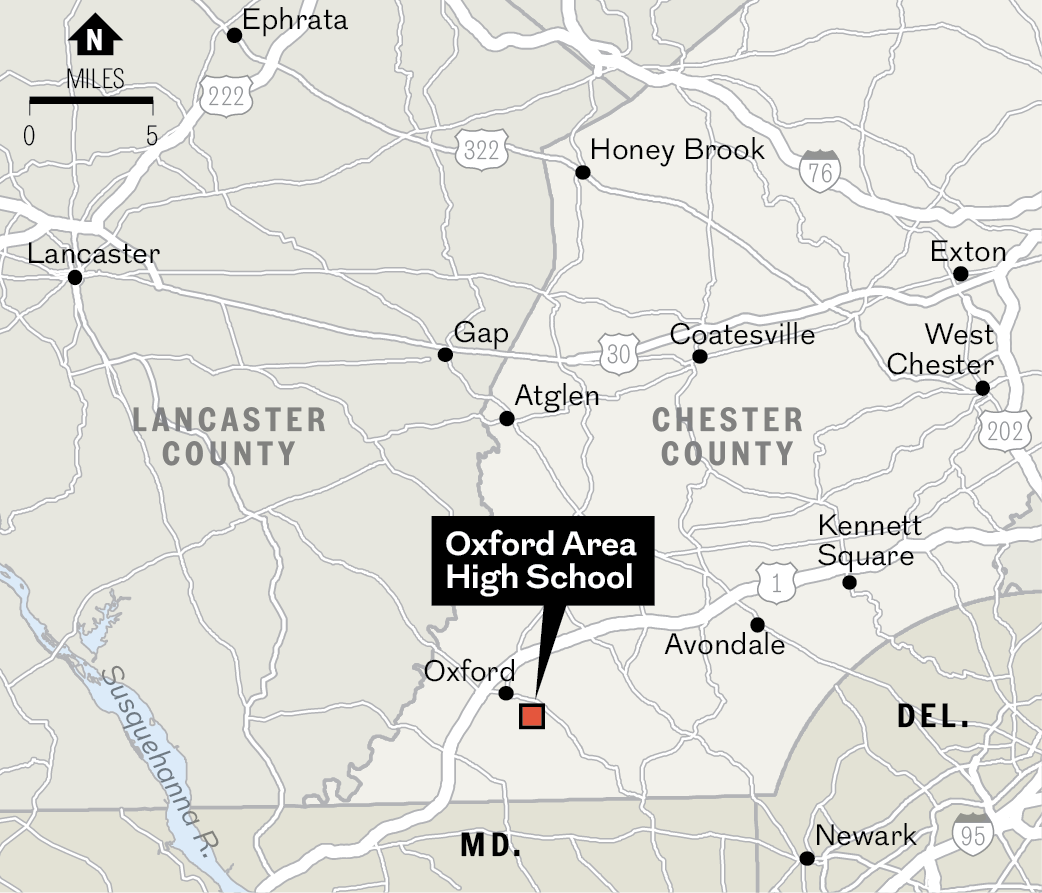
In-person learning resumed Monday at Oxford Area High School after classes were canceled last week as the district collected employees’ vaccination statuses following a confirmed measles case.
In a message posted to its website, Superintendent David Woods said that the district worked with health officials “to ensure that all necessary measures have been taken to support a safe return for students and staff.”
“The building has undergone appropriate cleaning and sanitization procedures, and we are confident in the measures implemented to welcome our school community back safely,” he wrote.
Staff and students who are unvaccinated “have been, or will be” contacted about quarantining for up to 21 days, he added. The district did not disclose how many people were affected by quarantine.
The high school was closed to students and staff Friday after a confirmed measles case prompted Chester County’s health department to direct the school to verify the vaccination status of its employees, Woods said in a letter last week.
Schools are required by state law to track and report data for all required vaccines — including the measles, mumps, and rubella (MMR) vaccine — for students but not for staff.
Officials canceled scheduled homecoming events, but allowed for a high school football game, hosted in Kennett Square, to proceed, according to a Facebook post.
The closure came as Chester County has seen an increasing number of measles cases, more than most entire states in the country, with most of its more than 80 cases along the western border with Lancaster County, where the outbreak is centered. Pennsylvania has the largest outbreak in the nation, sickening more than 1,100 people across more than half of the state’s counties.
Districts in other outbreak areas have not closed schools, but Oxford wasn’t alone last week. In nearby West Grove, Technical College High School Pennock’s Bridge Campus operated virtually on Friday after Chester County health officials notified its administrators of possible measles exposures between Sept. 30 and Oct. 2.
This suburban content is produced with support from the Leslie Miller and Richard Worley Foundation and The Lenfest Institute for Journalism. Editorial content is created independently of the project donors. Gifts to support The Inquirer’s high-impact journalism can be made at inquirer.com/donate. A list of Lenfest Institute donors can be found at lenfestinstitute.org/supporters.
Pennsylvania is grappling with its biggest measles outbreak in three decades, with the most deaths reported in the nation in a single year since 1992.
Here are answers to frequently asked questions about this highly contagious virus, according to federal, state, and local health agency resources and advisories.
How do you catch measles?
Measles is spread through the air, from an infected person. The virus can linger in the air and on surfaces for up to two hours. People can become infected if they inhalecontaminated air, or touch a contaminated surface and then their eyes, nose, or mouth.
How contagious is measles?
Measles is the most contagious virus known to humans. Nine out of 10 unvaccinated people who come into contact with measles will get sick.
What are the symptoms of measles?
The most common signs of measles include high fever, cough, runny nose, watery eyes, and a blotchy rash. Severe complications are rare but can include pneumonia, brain swelling, and neurological problems. About one out of every 1,000 measles patients develop acute encephalitis — brain swelling that can lead to permanent brain damage, according to the U.S. Centers for Disease Control and Prevention. About one to three out of every 1,000 measles patients die from complications.
Who is at greatest risk for severe illness?
Infants and children under age 5 are at high risk, and adults can also experience serious complications. So can pregnant women and people with weakened immune systems.
Individuals in these groups who are unvaccinated — for instance, infants who are too young to receive the vaccine and people being treated for cancer who can’t be vaccinated — are particularly vulnerable. But the virus can cause severe complications even among people who are otherwise healthy.
How long is a person with measles contagious?
Measles is contagious for an eight-day window: four days before rash symptoms appear, through four days after. Symptoms typically appear within seven to 14 days after exposure, but can take up to 21 days. So a person with no rash can still be contagious.
What does a measles rash look like?
A measles rash starts as flat red spots on the face near a person’s hairline. It usually appears three to five days after a person develops early symptoms linked with a variety of illnesses, like a fever, a cough or a runny nose, according to the CDC.
The rash then spreads downward across the body. A person might also have small, raised bumps on top of the flat red spots, the CDC says, and the spots might appear to join together as they spread.
How can I protect myself against measles?
Get vaccinated. Two doses of the measles, mumps and rubella (MMR) vaccine offer 97% protection against measles, making it the most effective way to avoid getting sick.
Unvaccinated people who have already been exposed to measles can get an MMR shot within 72 hours of the exposure, which may provide protection against the virus. Patients who are vaccinated may experience a milder illness if they do develop measles, the CDC says.
In some cases, people at high risk of severe disease can take an antibody treatment, immune globulin, within six days of exposure. After a measles exposure in a neonatal intensive care unit at Children’s Hospital of Philadelphia, infants there who were too young to be vaccinated received preventive antibody treatments.
While immune globulin may offer some protection, no specific treatment has been developed for measles.
Can you get measles if you are vaccinated?
Chances are low, because the vaccine is so effective. So-called breakthrough infections in vaccinated peopleoccur in about 3% of cases. Vaccinated individuals who are in areas with widespread measles cases are at greater risk.
In September, Pennsylvania officials reported four people who were appropriately vaccinated and still contracted measles. None required hospitalization and the cases represent less than 1% of the total measles cases reported in the state this year.
When do kids get the measles vaccine?
Leading physicians’ groups and the CDC recommend children receive the first dose of the measles vaccine at one year of age, and a second dose before entering kindergarten, around age 5. The vaccine is among those required to attend school, though a growing number of families have legally opted out for various reasons.
In Pennsylvania, doctors have begun recommending a “dose zero” for children who are at least six months old, and accelerated shots for kids over 1, if they live in an area with an active measles outbreak.
Most adults who are fully vaccinated or considered immune from a childhood infection do not need a booster. But people who live in an area with high measles transmission may want to get tested for measles antibody levels.
A titer test measures antibodies in the blood of people who are immune to the virus either from vaccination or past infection. People with low levels of antibodies may benefit from a booster shot.
How is measles treated?
Since measles has no direct treatment, options focus on managing symptoms. Mild, flulike symptoms can be treated with rest, hydration, and over-the-counter pain relievers.
People who have measles should isolate themselves for at least four days after developing a rash, and caretakers should wear an N95 mask while in the same room.
More severe measles complications, such as difficulty breathing, pneumonia, severe dehydration, or extremely high fever require hospital care.
How is measles different from chickenpox?
Chickenpox, or varicella, is caused by a different virus, the varicella-zoster virus. It is less contagious than measles, the CDC says, but can still infect about 90% of unvaccinated people who come into close contact with a person with chickenpox.
A measles rash is flat and blotchy and starts on the forehead, while a chickenpox rash begins with red spots on the chest, stomach, face, and back that then turn into itchy blisters that eventually scab. Once all sores have scabbed, the person is no longer contagious.
How is measles different from rubella?
Rubella, sometimes called “German measles,” is not caused by the measles virus. No longer common in the United States, it’s particularly dangerous for pregnant women and can cause serious birth defects or miscarriage, the CDC says.
Why is measles dangerous?
Most people who get measles recover without serious complications.
But about one in five unvaccinated people who get measles must be hospitalized, as seen this year in Pennsylvania’s outbreak. Additionally, up to one in 20 children with measles will develop pneumonia, and one in 1,000 children will develop swelling of the brain, according to the CDC.
Getting measles during pregnancy can contribute to a premature birth, low birth weight, and even miscarriage or infant mortality.
Measles can also put patients at a higher risk from other infections, an effect known as “immune amnesia” that can last months or years, the CDC says.
Pennsylvania health officials have reported five measles-associated deaths in the current outbreak, and were investigating a sixth reported by a local coroner’s office as of Oct. 16.
The state defines a “measles-associated death” as one that occurs within 30 days of symptom onset in a person with clinical evidence of infection and a positive laboratory test, and who did not die of another unrelated cause, like a car crash.
Is there a measles outbreak near me?
Pennsylvania health officials update a dashboard tracking measles cases three times a week, so you can check to find out if there are measles cases in your county.
Call your healthcare provider if you think you have measles. They can test you through a blood test, a urine sample, or a nose or throat swab. Healthcare providers can call the state health department at 877-724-3258, or contact their local health department, to report a case of suspected measles or ask questions about testing.
What should I do if I get measles?
Call your healthcare provider or the state health department’s toll-free hotline at 877-PA-HEALTH (877-724-3258) if you think you were exposed to measles and have symptoms.
If you’re seeking care at a doctor’s office, urgent care, or hospital and believe you have measles, call ahead to let them know you’re coming, so they can take precautions to protect others.
Editor’s note: This story has been updated to reflect an additional death related to measles.
After years of declining vaccination rates, Pennsylvania is experiencing one the nation’s largest measles outbreaks in decades.
In the Philly region in 2025, almost 250 schools had kindergarten vaccination levels below 95% — the threshold that epidemiologists say is needed to prevent community spread of the virus.
The Inquirer analyzed the most recent kindergarten vaccination data available for 1,800 schools to pinpoint the communities, neighborhoods, and individual schools where children are most vulnerable.
(function(){function e(){window.addEventListener(`message`,function(e){if(e.data[`datawrapper-height`]!==void 0){var t=document.querySelectorAll(`iframe`);for(var n in e.data[`datawrapper-height`])for(var r=0,i;i=t[r];r++)if(i.contentWindow===e.source){var a=e.data[`datawrapper-height`][n]+`px`;i.style.height=a}}})}e()})();
In Philadelphia, Delaware, Chester, Montgomery, and Bucks Counties, 40% of kindergarten classrooms were vulnerable to an outbreak during the 2025-26 school year, up from 33% the year prior, an Inquirer analysis of state data found.
Kindergarten vaccination rates are considered a bellwether for a community’s attitudes toward vaccination, as parents are deciding whether to get the shots required by law to attend school.
Search the table below to see the measles, mumps, and rubella (MMR) vaccination rate among kindergartners at your school and how it has changed since last year.
The data were obtained from the state health department through a public records request. It did not include schools with fewer than 20 kindergarten students, which the state withheld citing privacy concerns.
(function () {window.addEventListener(‘message’, function (e) { var message = e.data; var els = document.querySelectorAll(‘iframe[src*=”‘ + message.id + ‘”]’); els.forEach(function(el) { el.style.height = message.height + ‘px’; }); }, false); })();
In the latest sign of the concern over a Pennsylvania measles outbreak that is now the nation’s largest, Oxford Area High School was closed on Friday due to a confirmed measles case.
Districts in other outbreak areas have not been closing schools as the state grapples with its worst measles outbreak in three decades, but school officials in the Chester County community west of Philadelphia made the decision after consulting with county health officials to limit the risk from the highly contagious disease.
In a letter to the school community, Oxford Area School District Superintendent David Woods said that all students and staff who are unvaccinated, or do not have proof of their vaccination status, will be required to quarantine at home for 21 days. The school’s quarantine decision follows Pennsylvania Department of Health guidelines.
Schools are required by state law to track and report data for all required vaccines — including the measles, mumps and rubella (MMR) vaccine — for students but not for staff.
Chester County’s health department directed the school to verify the vaccination status of its employees, Woods said in the letter. The district made the decision to close the school Oct. 9 to complete the verification process, a county spokesperson said.
School and county officials have not said whether the positive case involved a student, staff member, or someone else in the school community. “We recognize that situations such as this can be unsettling, especially when they involve the health of children,” Woods said in his letter.
High school and district officials did not respond to a request for comment.
The superintendent’s note did not say whether the school will reopen Monday or whether homecoming festivities planned for this weekend would be canceled.
But the school district did decide that a football game, with Oxford playing at Kennett High School in Kennett Square, could go on “after taking the appropriate health and safety precautions,” officials said in a social media post.
Pennsylvania Department of Health “generally does not recommend school closure for outbreaks of infectious diseases” as an initial response, according to published school guidance. Exposed students and staff who are unvaccinated or cannot verify their vaccination status will be instructed to stay home for 21 days, according to a health department spokesperson.
The decision to close is ultimately made by school administrators, according to the Department of Health, which urges schools to consult with in-house medical staff and county or state health authorities.
Chester County Health Director Jeanne Franklin applauded the district’s quick response, noting the move could prevent longer closures from widespread sickness.
“We don’t want it to get to the point of they have to shut down because they don’t have the staff to run the school, or too many students are infected and can’t come to school,” she said.
The county learned of the case from a health provider who treated the individual, and then contacted the school district.
Vaccine records for students were readily available, but the school was still in the process of gathering vaccine information about staff — a step the county had urged schools to take in anticipation of the region’s outbreak reaching Chester County schools.
The district ultimately decided it did not know the vaccination status of enough of the school’s employees to safely open the school on Friday.
“The moment we called, they were on it,” Franklin said, adding that she “fully respected” the decision to close. As the first school in Chester County with a confirmed measles case, ”they’re going to have an abundance of caution and make sure they get it right,” she said.
Chester County has the third-most measles cases in Pennsylvania, despite an overall measles vaccination rate just below the 95% protection scientists say is necessary to prevent the virus from spreading.
Pennsylvania’s measles outbreak, largest in the nation this year, has sickened more than 1,100 people across more than half of the state’s counties. The state has confirmed five measles-associated deaths, the most seen in the nation in more than three decades.
The state’s outbreak, which began in April, is centered in Lancaster County, right outside the Philadelphia region.
Chester County is the only county in the Philadelphia region in which the virus is known to be actively circulating. The county has reported 87 cases this year, as of Friday, mostly along Chester County’s western border with Lancaster County.
Oxford is located in the southwestern corner of Chester County.
Another school in nearby West Grove, Technical College High School (TCHS) Pennock’s Bridge Campus, operated virtually on Friday, after the Chester County health officials notified its administrators of possible measles exposures between Sept. 30 and Oct. 2.
A spokesperson for the campus overseen by the Chester County Intermediate Unit said the decision was made “because the staff verification process could not be completed within the time frame required by the Health Department.”
Programs housed within its building, including the Practical Nursing Program and Early Discovery Center, were closed for the day.
Additionally, the county on Friday warned of possible measles exposures at multiple pharmacies Oct. 4:
CVS located at 870 Baltimore Pike in Kennett between 10:45 a.m. and 3 p.m.
CVS located at 857 West Baltimore Pike in West Grove between 12:30 and 3:30 p.m.
Giant located at 849 Baltimore Pike in West Grove between 1 and 3:45 p.m.
(function(){function e(){window.addEventListener(`message`,function(e){if(e.data[`datawrapper-height`]!==void 0){var t=document.querySelectorAll(`iframe`);for(var n in e.data[`datawrapper-height`])for(var r=0,i;i=t[r];r++)if(i.contentWindow===e.source){var a=e.data[`datawrapper-height`][n]+`px`;i.style.height=a}}})}e()})();
Joe Maida, who is raising his 5-year-old granddaughter with his wife in East Nottingham, was surprised to hear the high school was shutting down for the day.
Maida, 65, felt there was a lack of information from the district to explain its decision — such as who in the school population was infected, if officials were disinfecting, if there was an adequate “plan of attack” to reopen Monday.
He was also surprised the high school’s varsity football team would be able to play a game Friday night.
“I’m a bit taken aback” by the response, he said.
But his granddaughter is vaccinated, and her elementary school was unaffected. “I’m not giving it a lot of energy,” he said. “It’s the measles. It’s not the plague,” he said.
(function(){function e(){window.addEventListener(`message`,function(e){if(e.data[`datawrapper-height`]!==void 0){var t=document.querySelectorAll(`iframe`);for(var n in e.data[`datawrapper-height`])for(var r=0,i;i=t[r];r++)if(i.contentWindow===e.source){var a=e.data[`datawrapper-height`][n]+`px`;i.style.height=a}}})}e()})();
School vaccination
Chester County reported its first measles case of the outbreak at the end of June. As part of its early preparations, the county health department alerted schools before the beginning of the new school year that they would need to know the vaccine status of all staff and volunteers in the event of a positive case.
While Chester County has an overall kindergarten measles vaccination rate just below the 95% herd immunity rate, Oxford Area High School students appear well protected.
The school reported that all of its 303 12th graders had received the MMR vaccine in the 2025-2026 school year, the most recent year for which data is available.
The district’s middle school, Penn’s Grove School, reported a 96.3% MMR vaccine rate among 7th graders last year.
To better understand how school districts have been preparing for possible measles cases, The Inquirer contacted 12 Chester County districts last month, asking how they were planning and communicating with students and staff about the prospect of quarantines.
The Oxford district, which has more than 3,000 students, did not respond, along with a number of other Chester County districts.
Pennsylvania State Education Association, the statewide teachers’ union, declined to comment on the school closure.
Oxford Area Education Association, which represents teachers at the high school, couldn’t immediately be reached for comment.
School response to measles
Measles, long considered eradicated in the United States, is resurging amid declining vaccination rates.
In the Philadelphia region, at least 40% of kindergartens were vulnerable to an outbreak as of last school year, up from 33% the prior year, according to an Inquirer analysis of school immunization data widely used to assess community protection levels.
Schools are required to report vaccine information for students in kindergarten, 7th grade, and 12th grade. Earlier this year, Pennsylvania’s Department of Health began making this information publicly available through a searchable database, in an effort to raise awareness of declining vaccine rates in schools.
Health officials in neighboring Delaware and Montgomery Counties said they have similarly been advising school districts about rules for unvaccinated students and staff in the event of a positive measles case.
Montgomery County has urged schools to review immunization records and confirm proof of immunity, and develop plans to “rapidly identify students and staff who may be at risk,” said Christina Miller, administrator of the county’s Office of Public Health.
Delaware County’s health department said that it would offer guidance to a school with a positive measles case on how to verify immune status for students, employees, and volunteers, as well as how to identify high- or low-risk exposures at the school.
If a case is identified in a Philadelphia school, the city’s health department said it would work with the school’s administration to determine when the person was infectious and how to protect exposed students and staff.
Counties without a local health department rely on Pennsylvania’s Department of Health.
Neil Ruhland, a spokesperson for the state health department, said school nurses or school leaders should contact the health department immediately if a measles exposure occurs at a school.
Schools should review attendance records, assess where the exposure occurred, and determine the vaccination status of exposed people.
If the department confirms a measles case and exposure at a school, it will notify families and provide guidance on what to do if they’re not vaccinated, Ruhland said. Exposed students who are vaccinated are considered immune and don’t need to do anything else.
An exposed person who isn’t fully vaccinated will be told to quarantine at home for 21 days, whether or not they show symptoms, Ruhland said. But, if that person gets an MMR dose within 72 hours of the exposure, quarantine will be lifted, he added.
Verifying vaccine status
Tracking down childhood vaccine records as an adult can be challenging — many adults may have been vaccinated before medical records were widely stored online, and their long-ago pediatricians may no longer be practicing.
Titer blood tests can check for antibodies that indicate immunity against measles, either from the vaccine or a past infection. People with low antibodies — and therefore low protection — can get a booster.
Perhaps the fastest way to ensure you’re protected as an adult, Franklin said, is to get the MMR vaccine. The vaccine is safe to get even if you have already received it, she said.
Inquirer staff writers Aubrey Whelan, Brooke Schultz, and Maddie Hanna contributed reporting.
Pennsylvania reached a total of more than 1,000 confirmed measles cases this week, the largest U.S. outbreak in the generation since the disease was all but eliminated from this country. Based on the illness’ fatality rate and the five measles-related deaths recorded in the state as of last week, up to five times as many Pennsylvanians may have been infected.
Sadly, this is likely a mere harbinger of what America faces in an era of unprecedented misinformation and political recklessness.
Measles is both highly preventable by vaccination and highly contagious among the unvaccinated: 99.6% of Pennsylvania’s confirmed infections have been of people who were not vaccinated.
With two of America’s superspreaders of anti-vaccine disinformation, President Donald Trump and Health and Human Services Secretary Robert F. Kennedy Jr., running the federal government and its health agencies, vaccination rates for measles and other diseases have continued to decline. The worst consequences will disproportionately befall vulnerable communities, such as the state’s highly unvaccinated Amish enclaves, and vulnerable people within them, such as the very young and immunocompromised people the disease has killed.
Kennedy is doing for America what he did for Samoa, the Pacific island nation where he infamously fueled anti-vaccination sentiment during a visit in 2019, shortly before a measles contagion there killed 83 people. Two years later, he appeared in Lancaster County, the epicenter of the current outbreak, to also stoke unfounded suspicion of vaccines.
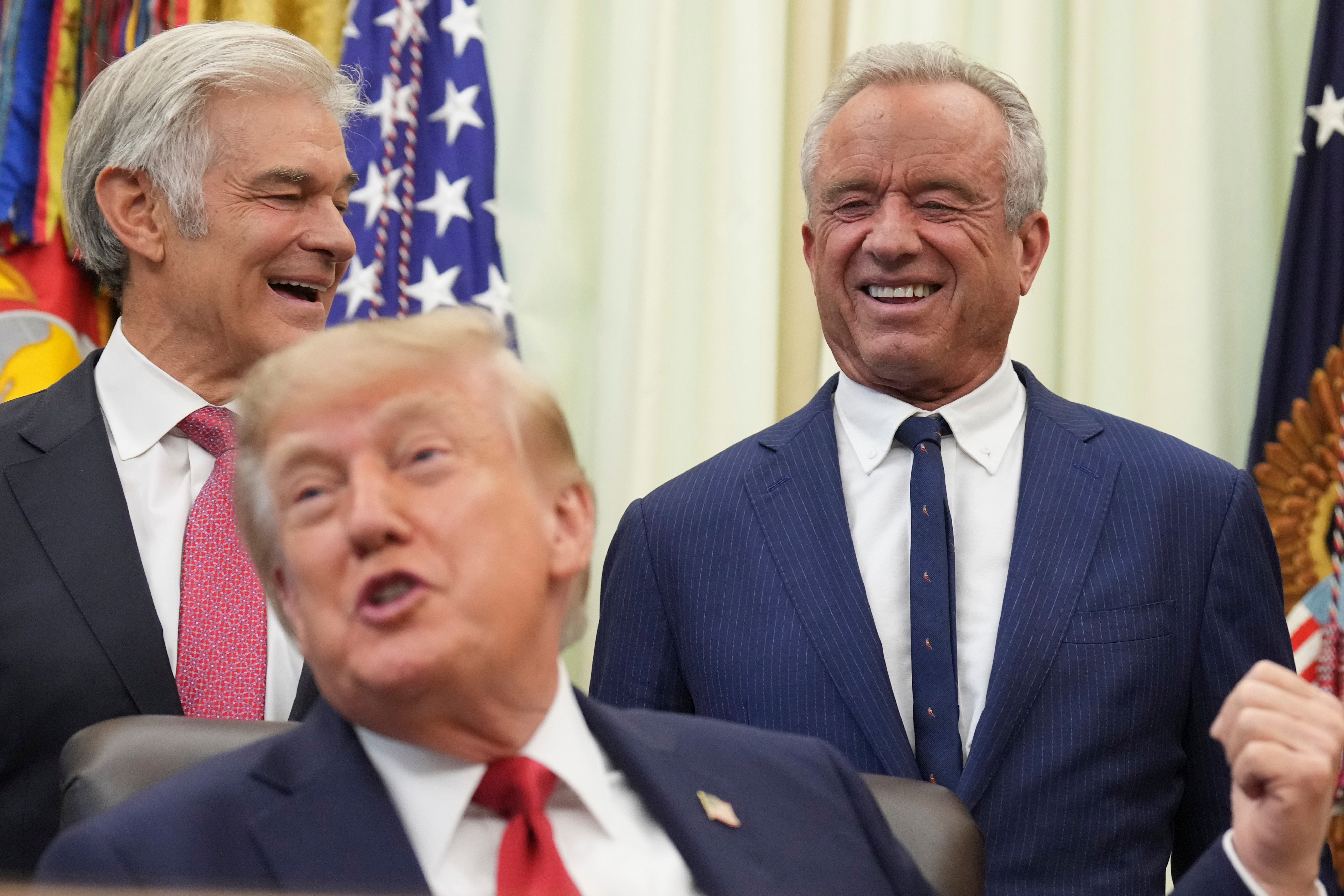
President Donald Trump speaks as Health and Human Services Secretary Robert F. Kennedy Jr., right, and Mehmet Oz, administrator of the Centers for Medicare & Medicaid Services, listen during an event about healthcare in the Oval Office of the White House, Sept. 18.Jacquelyn Martin
As health secretary, Kennedy has hardly failed to add some qualification or confusion to his every mention of the vaccine for measles, mumps, and rubella, which is widely administered, safe, and effective. A recent poll by the University of Pennsylvania’s Annenberg Public Policy Center found that fewer than one in three Americans believe he supports the MMR shot. Further undermining confidence in the vaccine, Trump issued an executive order in August calling for it to be split into three shots that aren’t available in the United States while making false claims about the safety of the combined dose. The order also endorsed Kennedy’s attempt to reduce the number of school vaccinations recommended by the government, which was blocked by a federal judge.
Even without legal force, the administration’s anti-vaccination message is unmistakable and corrosive. With 95% vaccine coverage thought necessary to confer population-level protection, known as herd immunity, every additional doubt is dangerous.
Measles outbreaks in Pennsylvania, Texas, South Carolina, Utah, and, most recently, New York — which led Gov. Kathy Hochul to declare a state of emergency this week — are the predictable result of the Trump administration’s campaign to discredit the vaccine. Tellingly, Kennedy has responded to Pennsylvania’s plight with even more of the misinformation that caused it, denying the role of the disease in the deaths.
Fortunately, even without the assistance of a responsible federal government, states such as Texas and South Carolina have contained their outbreaks, partly by taking advantage of the accompanying interest in vaccination to boost collective immunity. While the spread of measles to 39 Pennsylvania counties is alarming, Pennsylvania health officials say 53,000 doses of the MMR vaccine were administered to residents last month, roughly double the average, with state pop-up clinics and other facilities boosting the numbers.
The recommended two doses of the vaccine confer a lifetime of prevention for 97% of those who get them. Given the state of our federal health infrastructure, that is a considerable comfort.
The child gasped for air, sitting alone in front of an upstairs television, near death inside her Northeast Philadelphia home.
As a measles outbreak ravaged the city, Philadelphia’s deputy health commissioner, Robert Ross, used the home phone to call a judge for a court order to treat the girl. Her family worshiped at Faith Tabernacle Congregation, a fundamentalist Christian church at the center of the outbreak. Many members were refusing all medical care, including vaccinations.
The 1991 outbreak would eventually sicken 1,400 people across Philadelphia and kill nine children. It spurred the city to pursue the nation’s first and only court-compelled vaccinations. Some parents at Faith Tabernacle were ordered, against their wishes, to vaccinate their children against measles.
The girl in the house in Northeast Philadelphia was about 9 years old and “minutes, maybe an hour, away from respiratory failure,” Ross recalled. And when he tried to call for medical care, her grandmother tried to block him from the phone.
The child ended up on a ventilator at St. Christopher’s Hospital for Children and ultimately survived. Her story became a defining moment in the public health response to the state’s last major measles outbreak, part of a nationwide surge between 1989 and 1991 that sickened tens of thousands of people and led to at least 166 deaths.
Then and now, the highly contagious disease spread in communities with low vaccination rates, but for different reasons. The 1991 outbreak spread in a community that rejected vaccines — and across a city with limited access to vaccination even for those open to them. Now, vaccines are easier to access — but too many people don’t want them.
So far, Philadelphia has been spared as measles actively spreads in the region’s western suburbs of Chester County and just beyond in Lancaster County, whose 401 reported cases lead the state.
Ross and other physicians who treated children in Philadelphia in 1991 lament the return of measles, which tops the list of vaccine-preventable diseases once common during childhood.
“I would have said there was no chance this would ever happen again,” said Ross, who went on to spend decades as a public health administrator in California. “We were looking forward to decades of measles-free, whooping cough-free, polio-free livelihoods for children.”
In 1991, parents flocked to vaccine clinics organized around the city. At one event that May, doctors handed out shots to 60 children — with Nerf balls and a DJ on hand to make the medicine go down — in Fishtown and South Kensington, then without full-time pediatricians to routinely provide vaccines. Another vaccination effort immunized 6,000 children over a weekend, with help from the Phillie Phanatic.
Today, families increasingly are opting out of vaccines, often by taking advantage of religious and philosophical exemptions that provide legal outs from immunizations otherwise required to enter school. And vaccine skeptics once relegated to the fringes of public discourse now are setting the federal health agenda under President Donald Trump.
Years of declining vaccination rates have left not only children but also many unvaccinated adults vulnerable. Where only children died in 1991, three of five deaths in the current outbreak appear to have occurred in adults.
“It felt like a more winnable battle in ’90, ’91, than right now,” Ross said.
‘You just knew that an outbreak was imminent’
In the spring of 1989, an R.E.M. concert led to Philadelphia’s first reported cases, involving concertgoers at the Spectrum. The city health department interviewed teenagers exposed at the show, ramped up vaccinations, and braced for the worst.
Pennsylvania laws requiring vaccinations for school admission were still relatively new — on the books for less than a decade — and federal health officials had only just begun recommending a second dose of measles, mumps, and rubella vaccines for children.
Tens of thousands of preschoolers had not received even one dose of the MMR vaccine, the Daily News reported when the first cases emerged. Nearly two-thirds of Hispanic toddlers in North Philadelphia had not received the one dose recommended by age 2, The Inquirer noted at the time.
The virus started spreading: 89 cases were reported in the city in 1989, followed by more than 200 the next year.
The numbers followed a nationwide trend: By December 1990, measles had infected more than 25,000 people across the country, a 68% increase over the year before.
At Philadelphia’s children’s hospitals, St. Christopher’s was receiving three to four measles cases a day in city neighborhoods with high poverty and low access to medical care. Children’s Hospital of Philadelphia was handling one to two at its main campus in West Philadelphia, where at least half of preschoolers had received their recommended shots.
In 1991, officials told The Inquirer that roughly 60% of preschoolers citywide were vaccinated against measles, well below the 95% threshold that scientists now say is necessary to prevent the virus from spreading in a community.
In part, this reflected access challenges. The federal government had reduced public health funding under President Ronald Reagan, a Republican, as rising poverty contributed to a growing uninsured population. The illicit drug use that defined the crack epidemic also meant some parents neglected to seek medical care for their kids, Ross said. All contributed to “a toxic brew” that kept kids from getting immunized, he said.
“You just knew that an outbreak was imminent,” Ross said.
Deaths mount
In January 1991, Philadelphia recorded its first measles death in 20 years — an unvaccinated 18-month-old who developed pneumonia after contracting measles.
The next month, two unvaccinated girls involved with Faith Tabernacle died from measles. Church members told the Daily News their views required rejecting medical care: Only God could cure illness. “They effectively had a ban not just on vaccines but on all medical care,” Ross said.
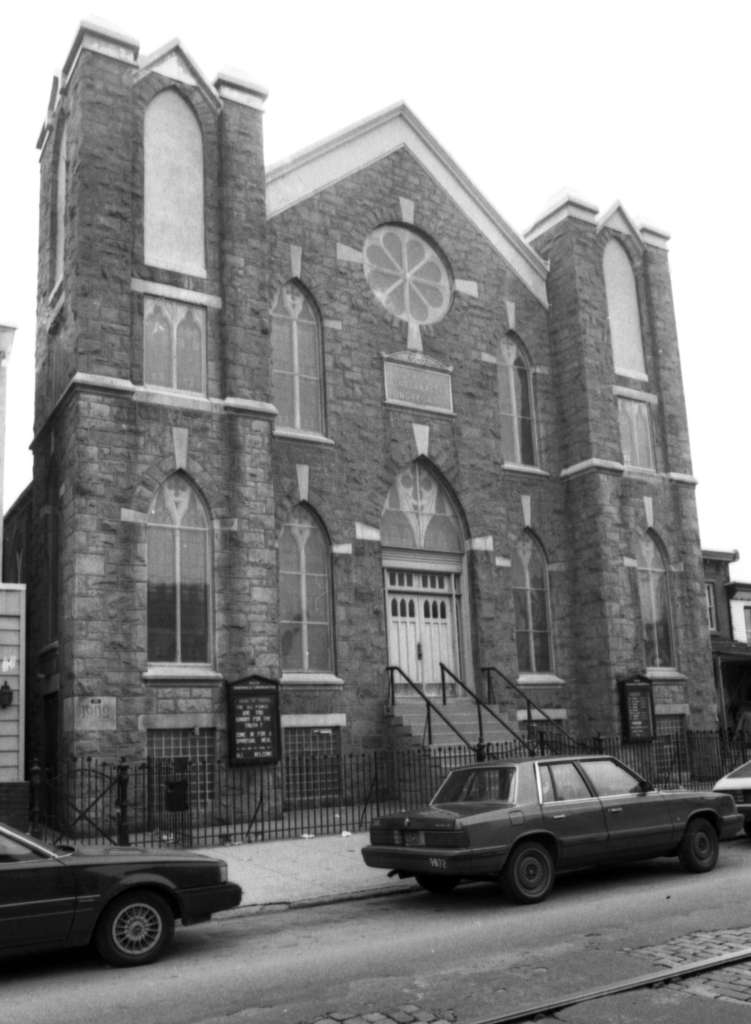
Faith Tabernacle Church at Fifth and Erie Streets in 1991. Children from the congregation died in a measles outbreak that year.File Photograph
Some church members refused to call a doctor or visit a hospital even as their children lay dying. Other parents associated with the church, however, did take their children to the hospital as their conditions deteriorated.
Sarah Long, then an infectious-disease physician at St. Christopher’s, remembers the first child with measles she treated in 1991 — a 2-year-old with a high fever and rapid breathing, characteristic of a case of pneumonia.
But with a classic case of pneumonia, “the child is hyperalert and anxious,” Long said.
“These children — they were not able to sit up. Not able to take fluids. They’re just lying there, incapacitated,” she recalled.
She was stunned by the consequences of a disease avoidable through immunization since the 1960s. “This was a completely preventable problem,” Long said.
After a third death, of a Cheltenham girl whose family attended the church, Ross and other health department workers grew concerned that phone calls with the church’s members were not producing accurate information.
With a judge on call to order medical treatment if necessary, Ross and others knocked on congregants’ doors.
At the house where he discovered the girl gasping for breath upstairs, Ross met eight other children recovering from measles infections, the virus’ characteristic rash fading from their faces.
Hundreds of children not affiliated with the church also fell ill. Six of the nine children who died were church members.
Reached by phone, Faith Tabernacle’s pastor said news reports over the years had “misconstrued the truth” about the church’s experience during the outbreak.
Declining to give his name, and noting that he was not its leader at the time, he said the church supports personal choices about medical care. “We’re not a cult. We present the word. It’s up to the individual,” he said. “We trust the Lord for our healings.”
‘We had to resort to it’
In March 1991, after another child died, several judges upheld a Common Pleas Court ruling that ordered five Faith Tabernacle parents to vaccinate their children. Their parents cried as they brought their children to court for the shots.
“We had to resort to it,” Ross said. ”We just had nothing else available to us to protect those kids.”
Such a ruling is unlikely to happen again in the current political landscape, said Paul Offit, a vaccination expert who heads CHOP’s Vaccine Education Center and worked at the hospital during the 1991 outbreak.
The 1991 court rulings were much more stringent than typical vaccine requirements for schools or employment, Offit said. Under a vaccine mandate, for example, a person might face a penalty for not being vaccinated — like not being able to work a specific job — but can still decline a vaccine.
Philadelphia courts compelled Faith Tabernacle parents to vaccinate their children — with no way to opt out.
By the time courts were compelling parents to vaccinate their children, the city’s large-scale vaccine drives helped ensure that few children still lacked immunity to measles, he said.
The arrival of spring and summer — measles traditionally spreads in the fall and winter — also helped quell the outbreak. So did a wave of media coverage that raised awareness about the virus and spurred many parents to vaccinate.
Offit published a book, Bad Faith, in 2015 about religious objections to vaccination, including Faith Tabernacle’s experience.
In 1991, immunization rates came up as shots were made more widely available.
Now, stricter vaccine mandates for school entry could help reduce measles transmission — but that is politically unviable, Offit said.
Pennsylvania has some of that nation’s most permissive exemption laws, requiring only that parents indicate a religious or philosophical objection to vaccinations on a form before sending unvaccinated kids to school.
An Inquirer analysis found a 15% increase in the use of these exemptions in the last two years, reflecting increasing public mistrust in vaccines.
In the state’s current outbreak, Health Secretary Robert F. Kennedy Jr. has spent years stoking skepticism of the vaccine, although he recently said the MMR vaccine is effective.
Downplaying the dangers of the state’s measles outbreak, he has accused Pennsylvania Gov. Josh Shapiro, a Democrat, of politicizing the outbreak and said his administration may have “fabricated” the first reports of measles-related deaths.
Kennedy later acknowledged that one of the deaths was caused by measles. Yet the Centers for Disease Control and Prevention website currently lists two measles-related death across the nation this year, despite Pennsylvania’s reports of five deaths.
Now local physicians and health systems have limited options to combat anti-vaccination sentiment to increase immunization rates.
“We have two tools: quarantine and vaccine mandates,” Offit said, “and there’s been an erosion in both because people like RFK Jr. say you can’t trust medical experts. I am worried we’re going to be seeing this for years.”
Pennsylvania surpassed 1,000 measles cases Monday, crossing a grim milestone to rank among the largest U.S. measles outbreak in decades.
Pennsylvania reported 106 new measles cases in the past week, totaling 1,004 this year. That includes 992 in the current outbreak that began in April, with Pennsylvania poised to soon surpass an outbreak in South Carolina that sickened 997 this year and last.
Texas also saw a major outbreak in recent years, logging 990 cases in a 2025.
Pennsylvania has reported five measles-associated deaths, the most in the U.S. in more than three decades, and just under 200 hospitalizations this year.
The statewide outbreak is now on track to become the largest the country has seen since the 1990s, when the virus whipped through cities across the U.S. Philadelphia alone logged some 1,400 measles cases in the 1990-1991 outbreak.
(function(){function e(){window.addEventListener(`message`,function(e){if(e.data[`datawrapper-height`]!==void 0){var t=document.querySelectorAll(`iframe`);for(var n in e.data[`datawrapper-height`])for(var r=0,i;i=t[r];r++)if(i.contentWindow===e.source){var a=e.data[`datawrapper-height`][n]+`px`;i.style.height=a}}})}e()})();
Yet health leaders believe Pennsylvania’s tally is an undercount, with more cases going unreported, as people are often reluctant to speak with the health department.
Chester County, the only county in the Philadelphia region where the virus is spreading, reported 84 cases as of Monday, one more than last week. Local health officials say they are struggling to identify people exposed to contain the virus actively circulating in the western county.
“People don’t answer the phone. People hang up. People are absolutely not going to stay home for 21 days,” Dale Weiser, the clinical services supervisor for Chester County’s health department, said last week in an interview with The Inquirer about the county’s measles response. “It’s very hard to stop it, especially without real cooperation from the community.”
Data released by the Pennsylvania Department of Health suggest that the outbreak has affected an unusually high number of adults, with a higher rate of hospitalizations and deaths than seen in other recent outbreaks.
About two-thirds of measles cases in Pennsylvania have been among adults, and about 20% of cases required hospitalization, according to state data.
In 2025, the CDC recorded 2,289 measles cases across the country, with a hospitalization rate of 11%. The vast majority of cases involved children, who are considered at greater risk because they are less likely to be vaccinated. Adults 20 years and older accounted for a little under a third of cases nationally that year.
An undercount of cases may partially explain these anomalies, said Rémy Pasco, a research associate at the University of Colorado who helped develop a measles outbreak simulator based on school vaccination rates.
While the virus is considered especially dangerous among infants, whose immune systems are still developing and are too young to be vaccinated, older children who contract measles may experience more mild symptoms. Parents may be less likely to seek medical help — and less likely to report the illness — among children with mild symptoms, he said.
Outbreak continues to spread
Lancaster County has the highest case count in Pennsylvania, with391 cases as of Monday. The county is home to one of the country’s largest Amish and Mennonite communities, where families have a long tradition of limiting their use of traditional healthcare and often forgo vaccination.
But since April, the virus has quickly spread across communities where significant numbers of residents are undervaccinated. Cases have been reported in 39 of Pennsylvania’s 67 counties.
(function(){function e(){window.addEventListener(`message`,function(e){if(e.data[`datawrapper-height`]!==void 0){var t=document.querySelectorAll(`iframe`);for(var n in e.data[`datawrapper-height`])for(var r=0,i;i=t[r];r++)if(i.contentWindow===e.source){var a=e.data[`datawrapper-height`][n]+`px`;i.style.height=a}}})}e()})();
Measles is so contagious that nine out of 10 unvaccinated people who come into contact with the virus will get sick.
Chester County and the entire Philadelphia region are pockmarked with vulnerable communities where vaccination rates have dropped below the 95% “herd immunity” threshold scientists say is necessary to keep the virus from spreading.
That’s how, despite an overall vaccination rate of 94.5%, Chester County has become a hot spot for the spreading outbreak.
Measles was declared eradicated in the U.S. in 2000 due to widespread vaccination. The measles vaccine, which is mandatory for school attendance, is 97% effective with two doses.
But families have increasingly been opting out of school-mandated immunization, amid rising politicization of vaccines and widespread misinformation.
Pennsylvania has among the country’s most permissive exemption policies, allowing families to opt out of vaccination for medical, philosophical, or religious reasons, often by simply printing and signing a form.
In late June, Chester County reported two cases of measles, as an outbreak in bordering Lancaster County crossed into the farmlands that blend into the suburban sprawl of Philadelphia’s collar communities.
Case numbers grew tenfold in July, and by late August, three dozen people had gotten sick up and down the county’s western border.
The latest numbers now show 83 measles cases in Chester County, more than most entire states have seen all year, making it a locus in Pennsylvania’s largest measles outbreak in more than three decades.
Chester is the first county in the Philadelphia region to grapple with wide circulation of a highly contagious virus that could spread like wildfire if it reaches other under-vaccinated communities, especially densely populated ones closer to the city.
As cases rise in Chester County, public health officials are ramping up educational outreach, scheduling pop-up clinics, and even bringing doses of the vaccine to people’s homes, all in an effort to contain known hot spots in the outbreak.
At Chester County’s schools, homecoming parades, and grocery stores, many families say they are aware of the outbreak, but are not deeply concerned. Those who are vaccinated worry more that their social and school lives may be disrupted, as they were during the COVID-19 pandemic, if the virus continues to spread.
Anne Nemeth, who lives in Paradise in Lancaster County, feels only a little worried, given that her two sons are vaccinated.
At a time of declining vaccination rates, she isn’t sure whether some of her closest neighbors, who the family regularly gets together with,are vaccinated.
They are Amish, and she has read that many of the people getting sick in her area were part of the Plain community. Two Amish infants in Lancaster County died in August after contracting measles in the state’s first deaths linked to the outbreak.
“I’m hoping they would tell us if they were sick,” she said. “It’s a lot of trust.”
Pennsylvania has reported five deaths associated with measles. A 20-year-old Amish woman who died lived just over the Chester border in Lancaster County. She wanted the vaccine after her parents and eight siblings got sick, but couldn’t get it because she was being treated for leukemia.
Close to 1,000 people statewide have been sickened by the virus, marking one of the most robust outbreaks the United States has seen in years. And experts say the cases that have been reported are likely an undercount, as many people do not seek medical care for their symptoms and some have been reluctant to speak with the health department.
“Public health is now in a race with the disease,” said Dale Weiser, the clinical services supervisor for Chester County’s health department. “It’s going to either burn through all the susceptible people, or we’re going to make fewer people susceptible through vaccination. That’s the only way it ends.”
(function(){function e(){window.addEventListener(`message`,function(e){if(e.data[`datawrapper-height`]!==void 0){var t=document.querySelectorAll(`iframe`);for(var n in e.data[`datawrapper-height`])for(var r=0,i;i=t[r];r++)if(i.contentWindow===e.source){var a=e.data[`datawrapper-height`][n]+`px`;i.style.height=a}}})}e()})();
Measles spreads in Chester County
Measles is so contagious that nine out of 10 unvaccinated individuals who come in contact with the disease will get sick.
That’s how a county like Chester, with one of the highest vaccination rates in the state, has also come to log the third-most cases in the outbreak.
Chester County’s kindergarten measles vaccination rate falls just below the 95% threshold that scientists say is necessary to keep the virus from spreading widely. Kindergarten vaccination offers a view into a community’s protection because the vaccines are required for school attendance.
But the county — like the rest of the Philadelphia region — is pockmarked with areas where vaccination has dropped well below the so-called herd immunity threshold, leaving families vulnerable to severe illness.
In eastern Chester County, for instance, five elementary schools in West Chester had kindergarten measles vaccination rates below 95% — one of the vulnerable areas in theregion identified by an Inquirer analysis of 2025-26 school-level data.
Farther east, Chester City in Delaware County, and neighborhoods in West and North Philadelphia have also similarly seen measles vaccination rates drop below so-called herd immunity.
In Chester County, the health department seeks to limit the virus from spreading from west to east across the county, where it would reach more densely populated communities, said Jeanne Franklin, Chester County’s health director.
“If it finds that pocket of unvaccinated individuals, it’s going to popcorn until it finds no one left,” Franklin said.
(function(){function e(){window.addEventListener(`message`,function(e){if(e.data[`datawrapper-height`]!==void 0){var t=document.querySelectorAll(`iframe`);for(var n in e.data[`datawrapper-height`])for(var r=0,i;i=t[r];r++)if(i.contentWindow===e.source){var a=e.data[`datawrapper-height`][n]+`px`;i.style.height=a}}})}e()})();
The health department began reaching out to hospitals and schools months before Chester County reported its first cases, because public health leaders knew it was likely only a matter of time before the virus spread from Lancaster County, Franklin said.
Hospitals were asked to develop a measles screening protocol, if they didn’t have it already, so that early symptoms, such as fever, cough, and runny nose, wouldn’t be dismissed as seasonal illnesses.
Schools were urged to start tracking vaccine status among staff. When a school identifies a measles case, the county requires any student or staff member who is unvaccinated or does not have proof of vaccination to stay home for 21 days, Franklin said. Since many adults don’t have their vaccination records handy, that could create a major staffing disruption.
As case counts in Chester County grow, pop-up vaccine clinics have been scheduled across the county.
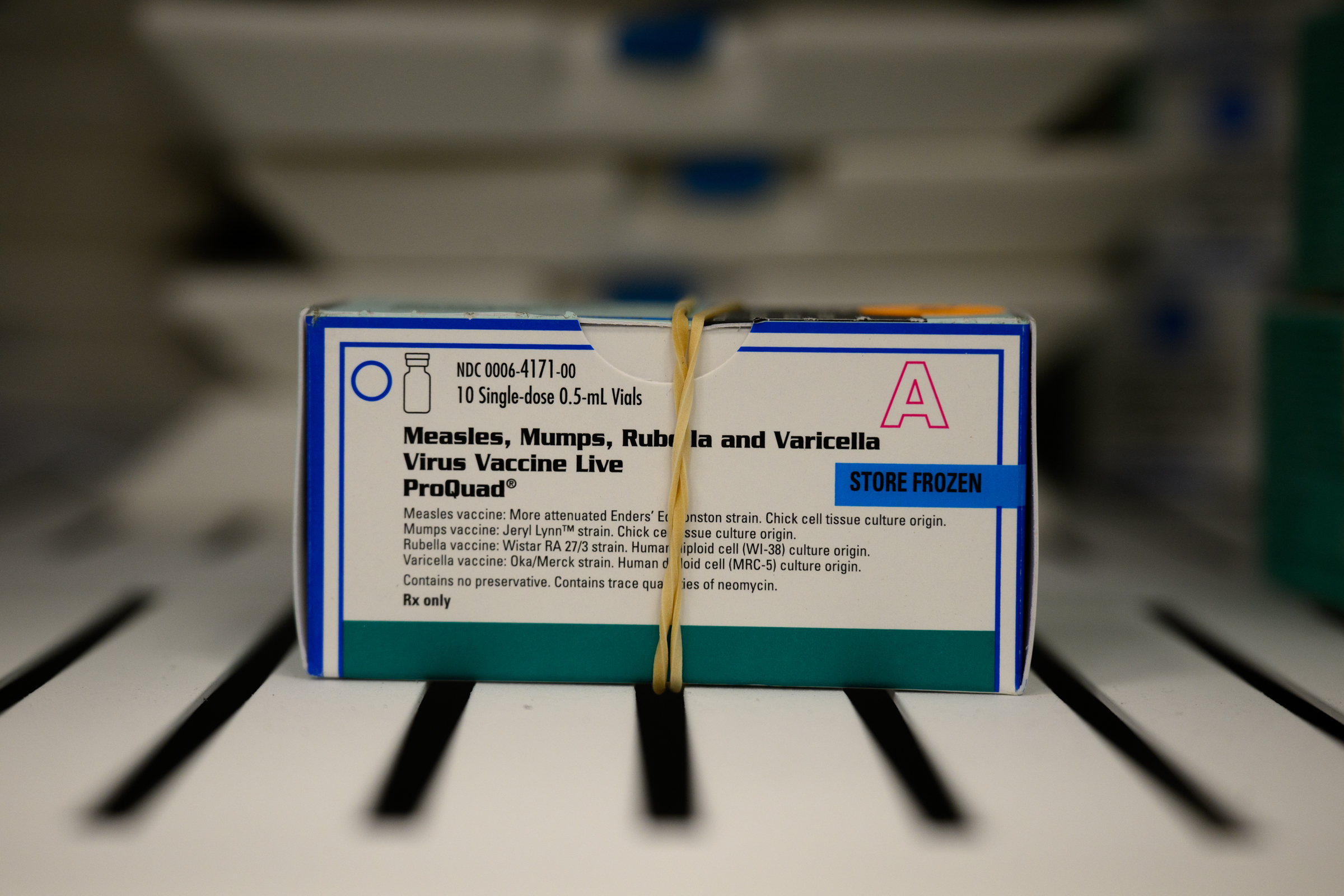
The health department has administered more than 500 doses of the measles, mumps, and rubella (MMR) vaccine so far this year, most of them since the outbreak began in April.
The health department’s nurses will bring doses of the vaccine to homes and farms of residents who don’t travel. Vaccines are also available at the county’s health clinics.
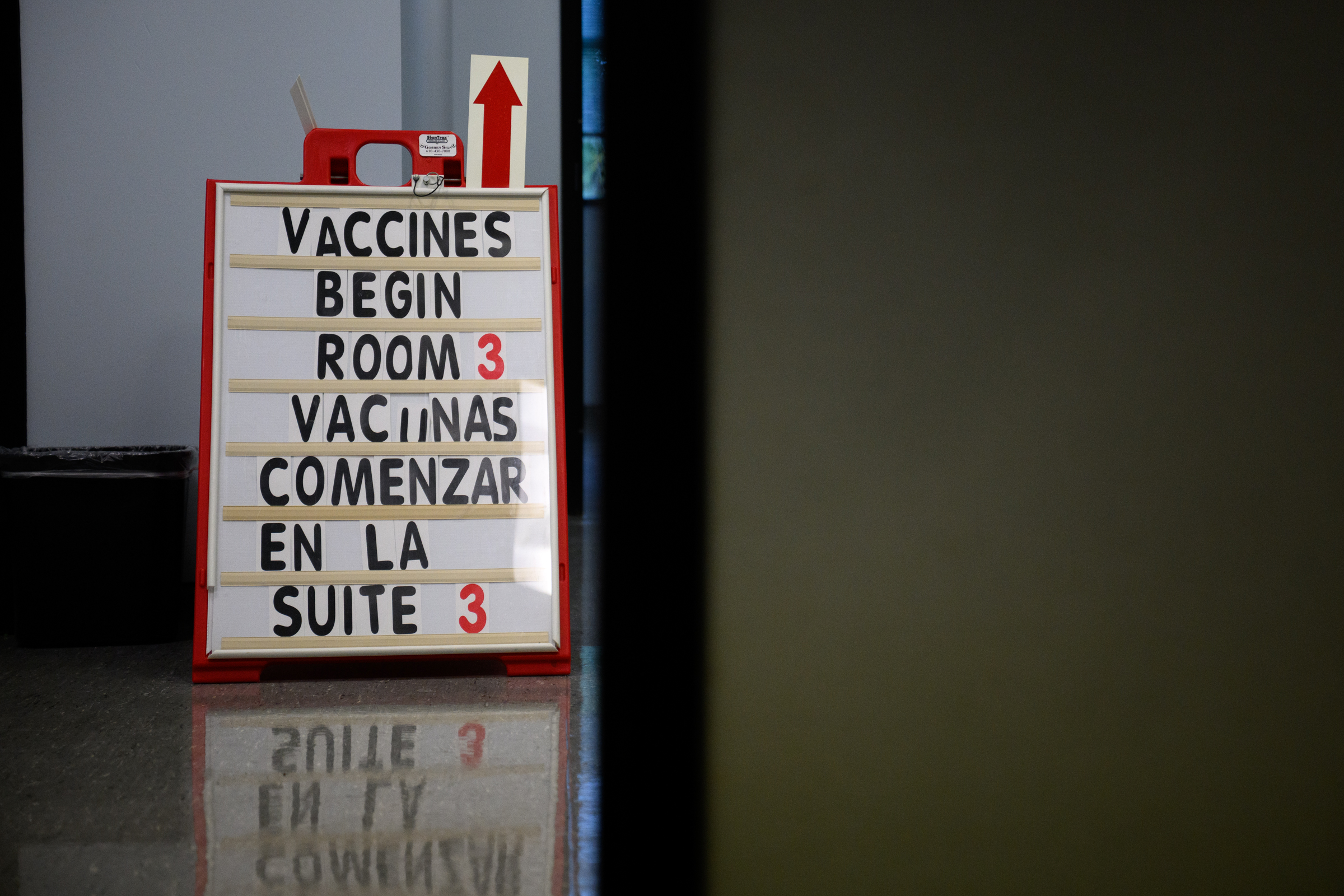
A sign for vaccinations directs visitors at the Chester County Health Department in West Chester.Kriston Jae Bethel / For the Inquirer
Debunking vaccine myths
Many of the parents lined up along Atglen’s Main Street last week for the local school district’s homecoming parade said they did not feel a reason to be deeply concerned about the outbreak because their families are vaccinated.
“I guess I have the same level of concern as I have for all sickness with kids in public schools,” said Sandi Wrigley, a Cochranville mother whose children, ages 9 and 11, are vaccinated. “If we take the time to worry about that, it’ll be an endless worry.”
Until recently, measles was considered eradicated in the United States, and despite declining vaccination rates, most families are still choosing to vaccinate their children.
Some were angry that measles is even a conversation.
Michael Lavender, from Parkesburg, said vaccinating his 12-year-old daughter was an “easy decision.”
“I really feel like there should be no reason to even talk about it,” he said.
On the other side of the county, families lined up inside the Great Valley Middle School gymnasium in Malvern for flu and COVID-19 vaccines.
Kevin Wrabley, of Malvern, doesn’t worry about his 11-year-old son contracting measles because he is vaccinated. But he does worry about other children and adults who aren’t able to get vaccinated.
“It’s discouraging, things we thought were safely behind us are coming back,” he said.
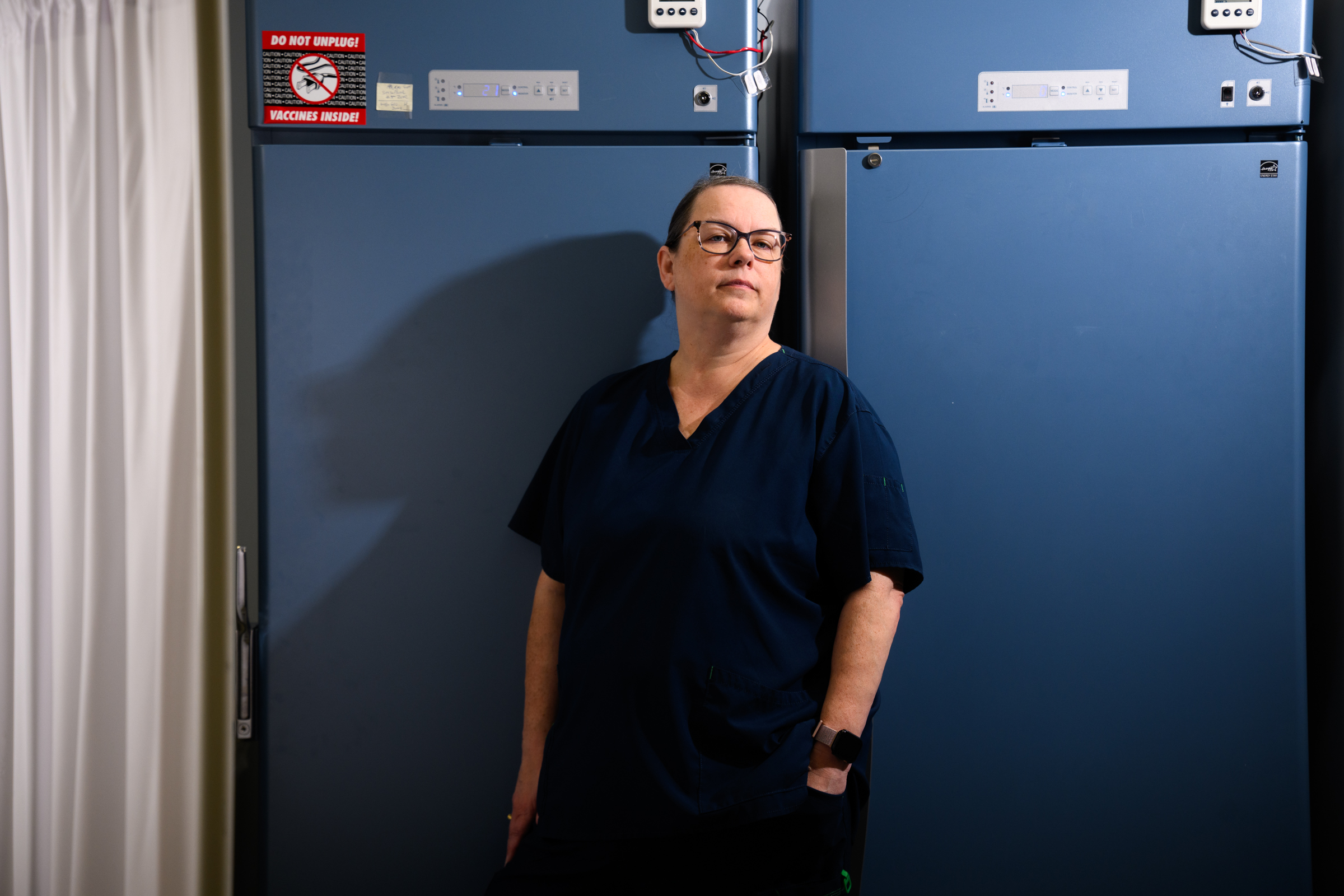
Dale Weiser, clinical services supervisor at the Chester County Health Department, stands in front of freezers storing vaccines at the department’s office in West Chester.Kriston Jae Bethel / For the Inquirer
In Chester County, public health educators have the task of trying to untangle the myriad reasons people are opting out of a vaccination. Many have little to do with science: Two doses of the measles vaccine provide 97% protection — better than most vaccines.
The MMR vaccine is among those long required to attend school in Pennsylvania and every other state. But families here have increasingly been deciding against vaccination for religious and philosophical reasons, as state law permits, often by simply printing and signing a form noting their objection.
Some fluctuations in kindergarten vaccination rates are typical from year to year, but the rise of anti-vaccine rhetoric in federal leadership and a growing distrust in public health authorities has exacerbated fears about vaccination.
On measles awareness flyers posted on social media and in public spaces, Chester County advertises its public health hotline, where people can call to talk to a nurse. Weiser and her colleagues work to dispel worries from callers over misinformation that the vaccine contains tracking chips, heavy metals, and can cause people to become sterile.
Some call back multiple times, with new questions. Weiser answers them all, without judgment and without pushing people to get vaccinated.
“We have a way to prevent this,” Weiser said. “There is no reason that any child, adolescent or adult in this country should be suffering with measles.”
Personalized measles outreach
Standard public health messaging — get vaccinated to protect yourself and your family — may not resonate in the area’s rural farming communities that overlap with Lancaster County.
The area has a large concentration of Amish and Mennonite families who are not necessarily opposed to vaccines, but have gone without most traditional medicine for generations.
Anabaptist religions emphasize self-sacrifice for the betterment of others, said Kevin Ressler, CEO of Alliance for Health Equity, a healthcare nonprofit in Chester County.
Instead of vaccinating, families may isolate themselves at the earliest signs of illness to keep anyone else from getting sick, said Ressler, who is Mennonite and has served as a pastor.
Outside New Holland, Gina King self-quarantined when she and her eight children got sick with measles in June. King was vaccinated, but she and her husband chose not to vaccinate the children.
Her 14-year-old son was briefly hospitalized for breathing difficulty, but he and his siblings all recovered. King, who spoke with The Inquirer in July, later drafted a tip sheet for other families in her Plain community based on their experience, such as stocking up on groceries to avoid going out in the community while contagious.
“If you made the choice to not vaccinate, you knew there was a risk of getting sick,” King wrote. “We should care about others enough to be willing to make some sacrifices to protect vulnerable people.”
Ressler thinks public health messaging may need to be more direct: You are hurting other people by not getting vaccinated.
Measles symptoms may not develop for days or even weeks after exposure, meaning many more people could be exposed before a family decides to quarantine.
Public health nurses say they have had the most success with face-to-face conversations, at people’s homes.
Nurses employed by Chester County and local nonprofit organizations often take doses of the MMR vaccine directly to people’s homes in rural parts of the region. Kriston Jae Bethel / For the Inquirer
Over the last 15 years, Union Community Care, a public health nonprofit in Lancaster County, has developed a route for its mobile clinic with stops at homes, farms, and churches through Lancaster and western Chester Counties.
The program’s nurse practitioner diagnoses earaches and eye infections, gives general physicals, and can administer vaccines.
The program, called Plain Healthy, depends on hard-earned trust that the nurse will come every 10 days for anyone who needs help. It has spread by word of mouth, adding several more stops in Chester County since the outbreak began, said Alisa Jones, CEO of Union Community Care.
“The most important thing is it is community led,” Jones said. “We are invited to these homes and farms. We do not invite ourselves.”