Tag: LGBTQ+

  • Proposed rule could gut American science, Penn researcher warns

    Proposed rule could gut American science, Penn researcher warns

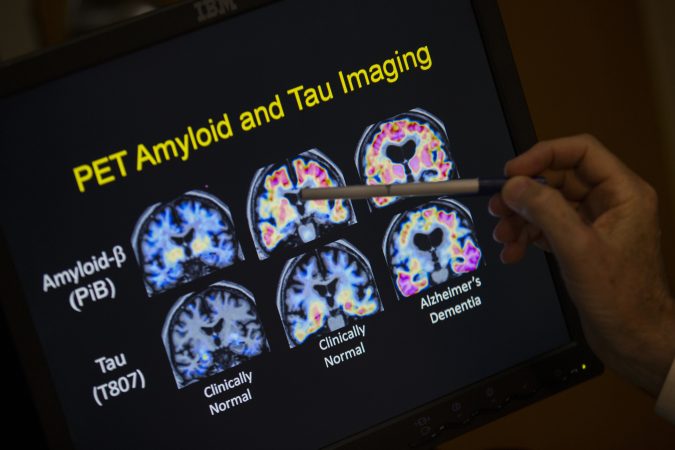
    As an undergraduate researcher at the University of Pennsylvania, I spend my time outside of class studying how a protein called tau destroys the brain cells of Alzheimer’s patients. This research happens at Penn’s Center for Neurodegenerative Disease Research (CNDR), it is funded by the National Institutes of Health, and it is the reason I want to spend my life as a physician-scientist.

    It is also exactly the kind of research a new federal proposal could quietly undermine.

    On May 29, the White House’s Office of Management and Budget (OMB) published a 100-page proposed rule that would fundamentally restructure how the federal government administers research grants. The comment period closes July 13.

    Most Americans have never heard of it. That needs to change.

    The rule has several alarming impacts. For instance, it would allow political appointees to override scientific peer review in grant decisions, upending the meritocratic, rigorous system that has pushed American science forward since World War II.

    Perhaps most critically, it would permit the government to terminate any active federal grant at any time, for any reason — including the vague, undefined justification that a study is no longer in the “national interest.” Furthermore, it would effectively ban federal funding for research into health disparities across racial populations, with a stated exception so narrow it is meaningless in practice.

    Let me put that in perspective with specific examples. Over seven million Americans currently live with Alzheimer’s disease, and that number will nearly double by 2050. The research that underpins our understanding of this disease — including discovery of biomarkers, assembly of databases, and clinical trial frameworks — took decades of sustained, longitudinal federal investment to build. The Alzheimer’s Disease Neuroimaging Initiative, launched in 2004, required over 20 years of continuous funding and investment prior to producing any comprehensive datasets that now drive clinical trials.

    Under the proposed rule, however, a political appointee or administrator with no scientific background could have decided at any point in that 20-year window that the study was no longer in the “national interest” and ended the study. The harm this vague, sweeping rule would do is not hypothetical. Much biomedical and clinical research, including in the field of neurodegenerative diseases, is longitudinal, and progress is not always immediately visible.

    I’m reminded of what the late John Trojanowski, a former leader of the lab I now work in, said in regard to his research on the proteins behind Alzheimer’s:

    “We asked our mentors, ‘Is this something we should do?’ They all said, ‘No. It’s a swamp, and you’ll ruin your careers because so little is known.’ What they saw as a swamp, we saw as a huge challenge and opportunity that has led to an engaging career.”

    Trojanowski’s partner in that research was Virginia Lee, whose work on tauopathies I have the privilege of contributing to today.

    Their “swamp” turned out to be an oasis of discovery that likely would’ve remained untouched if these two experts in their field had not trusted in themselves and decades of training. If even their mentors — senior scientists in their own right — had dismissed these field-defining ideas, imagine the damage administrators and political appointees can inflict on similar revolutionary discoveries simply because they deem them “not in the national interest.”

    The ban on research into racial disparities will compound this harm. Black Americans are diagnosed with Alzheimer’s at roughly twice the rate of white Americans. Population differences in disease risk, progression, and biomarkers are not ideological claims, but instead are observed, replicated findings in the scientific literature.

    For example, research has found that the relationship between the APOE4 gene (a major genetic risk factor for Alzheimer’s disease) and brain pathology inherently differs across racial groups. More specifically, some studies have found different patterns of tau protein markers in Black and Hispanic populations compared with the predominantly white cohorts that comprised much of the foundational, preexisting literature.

    As currently written, this provision reaches much further than OMB’s framing of eliminating unlawful DEI policies suggests, and instead directly threatens legitimate biomedical research.

    From a student perspective, I also want to acknowledge something that institutional press releases may not: This rule falls hardest on the people least able to absorb the blow.

    If a principal investigator or faculty member loses a grant, it is by all means a loss, but they are more likely to have tenure, salary, or institutional support. If a graduate or doctoral student loses a grant mid-project, they potentially lose their publication, graduation timeline, and may face an altered career trajectory. And yet, trainees are never once mentioned in this proposal.
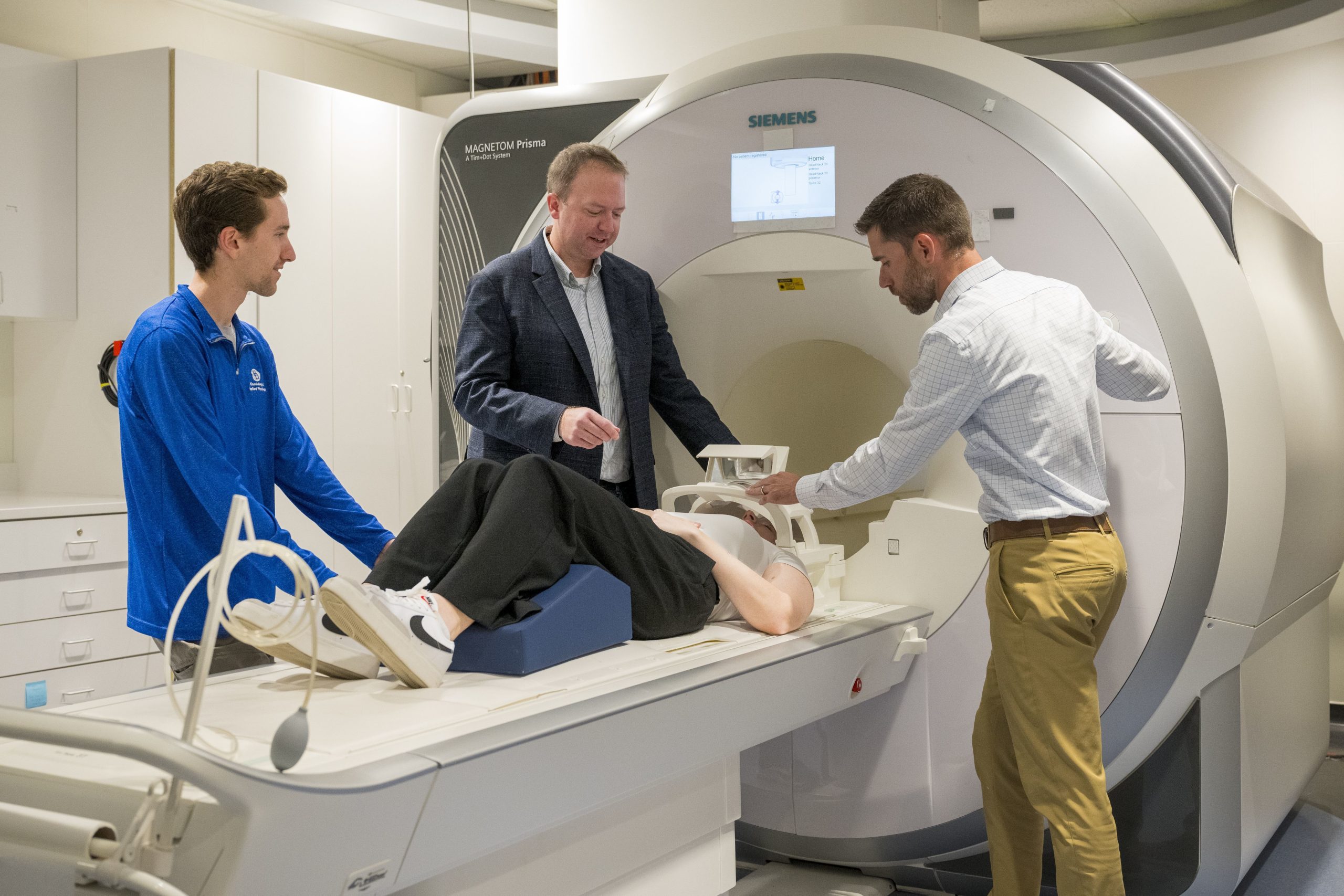
    Doctoral students at the Delaware Center for Cognitive Aging study the impact of cardiovascular function on brain tissue integrity and cognitive aging.Kathy F. Atkinson/University of Delaware

    So what can those of us who want to ensure we have the tools to effectively treat future pandemics and that our children benefit from world-class health research do?

    Congress has little practical recourse here. The Congressional Review Act exists, but in the current political climate, a veto-proof majority to overturn an OMB rule is a fantasy.

    Yet, our voice still matters.

    I do not say this as a mere platitude. The Federal Register, where this document was published, contains a form for anyone to leave a comment for OMB. Unlike the “contact me” forms on senators’ and representatives’ pages that you rarely receive a response from, the comments here are public — and they also carry legal weight. When this proposal gets challenged in court — and it almost certainly will — judges will look at the administrative record, which includes every single comment.

    If OMB does not meaningfully engage with a substantive objection raised during the comment period, that provides grounds to vacate the rule. Your comment doesn’t just go into a void. It becomes part of the legal ammunition.

    Physicians and healthcare workers: Share the stories of your patients who benefited from federally funded studies. Scientists and students: Explain your research and the progress made from it. Attorneys and legal scholars: Challenge the principles and wording in this sweeping, overarching proposal.

    To those whose careers do not directly involve science, this is your fight, too.

    Comment on your medical condition that’s been treated. Chances are that treatment was only possible due to federally funded basic science. And if you or a loved one suffers from a disease or illness for which we do not yet have a cure, it is all the more important that you speak up with us.

    Stable and comprehensive funding allows scientists to develop treatments for both rare illnesses and widespread ones like neurodegenerative diseases.

    This is also a fight for our underrepresented racial and ethnic populations, the LGBTQ+ community, and the marginalized in our city. The decision to fund research on medical disparities is a decision to invest in the people who need it most.

    As we in Philadelphia celebrate our nation’s Semiquincentennial, America’s first hospital and medical school, and the great scientific advancements of our city, it would be wrong not to recognize the benefit biomedical research has received from federal funding.

    This legacy is now in danger. If we want to see another 250 years of great American science, now is the time to act.

    Ayaan Shah is a sophomore at the University of Pennsylvania studying neuroscience and an undergraduate research assistant at Penn’s Center for Neurodegenerative Disease Research.
  • America’s rich tradition of July Fourth protest is worth recalling

    America’s rich tradition of July Fourth protest is worth recalling

    No Kings and other protests opposing the policies and executive overreach of the Trump administration continue to draw crowds across the country, most recently on Flag Day, June 14, which was also the president’s 80th birthday. While critics have denounced these demonstrators as un-American — House Speaker Mike Johnson called a 2025 No Kings march a “hate America rally” — those voicing dissent, pushing for change and speaking truth to power are, in fact, participating in a tradition at our nation’s core.

    That tradition dates back to July 4, 1776, when the Continental Congress, citing a list of grievances, declared independence from the rule of a would-be despot, King George III. The founders’ act of resistance set an example that ordinary Americans would follow. According to historian David Waldstreicher, citizens in the early republic used celebrations not just to commemorate independence, but to lay claim to the lofty principles expressed in the Declaration of Independence, namely that all are created equal, that they have unalienable rights, and that government is instituted to secure those rights, deriving its just powers from the consent of the governed.

    The custom continued for two-plus centuries, with Americans regularly marching, picketing, or otherwise taking to the streets on the Fourth to realize a more perfect union.

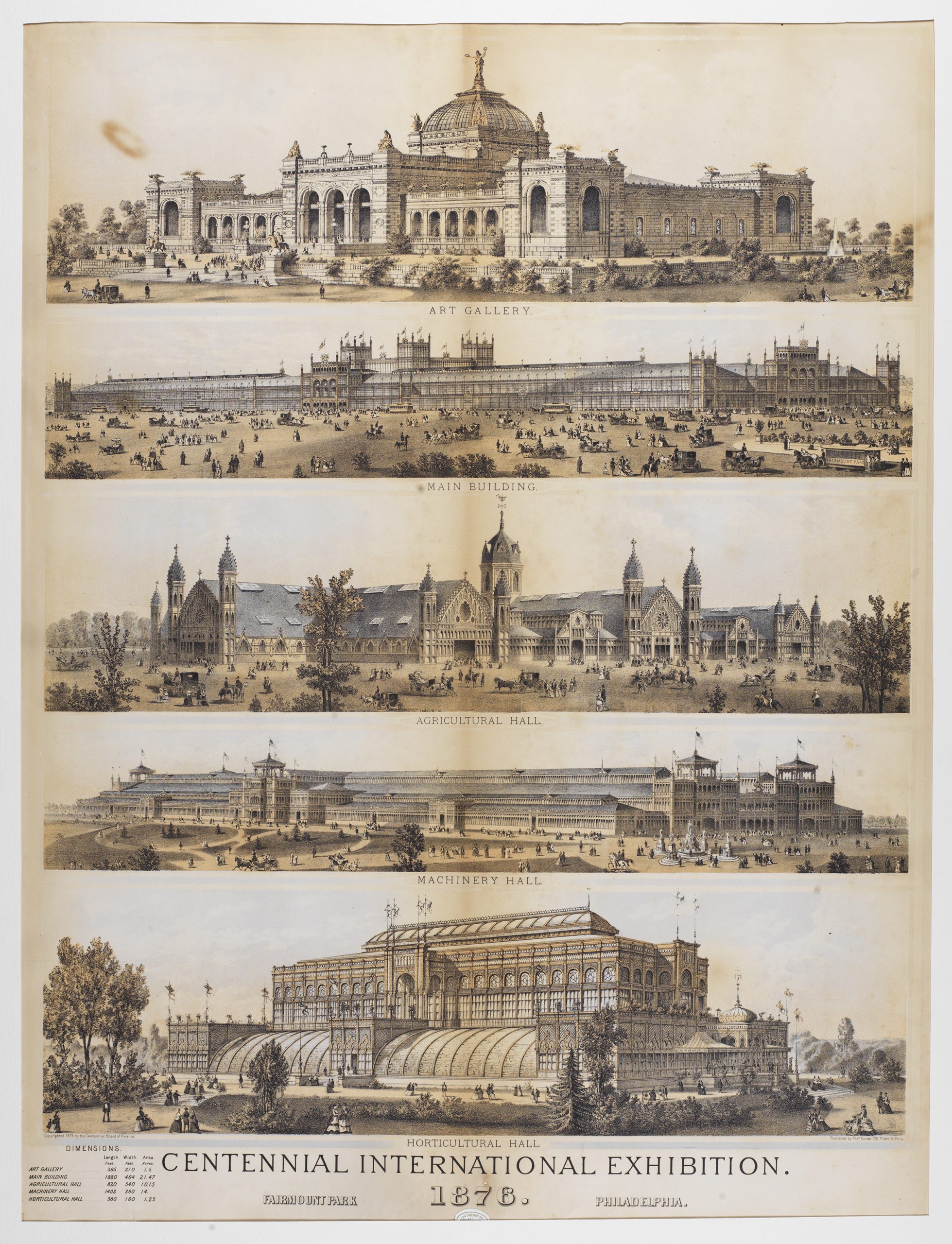
    Centennial International Exhibition, 1876.Courtesy of the Historical Society of Pennsylvania

    Perhaps the most famous Independence Day protest occurred in 1876 in Philadelphia. As tens of thousands gathered for the Centennial International Exhibition in Philadelphia’s Fairmount Park to celebrate a century of American progress in the arts, in industry, and in economic development, Susan B. Anthony protested the fact that half the nation, women, remained unable to vote and were thus without the unalienable rights named in the declaration.

    Anthony and a determined group of suffragists attempted to introduce a statement drafted by the National Woman Suffrage Association into the exhibition’s official proceedings. When Joseph Hawley, president of the United States Centennial Commission, prevented the women from doing so, Anthony led a procession to Independence Hall, where she read aloud the suffragists’ “Declaration of Rights of the Women of the United States” to a crowd that quickly gathered around her. Patterned after the original declaration, the text condemned the government for denying women the franchise, before ending with a clear demand: “We ask justice, we ask equality, we ask that all the civil and political rights that belong to citizens of the United States, be guaranteed to us and our daughters forever.”

    It took decades of nonviolent action before Congress passed the 19th Amendment, granting women the constitutional right to vote. But Anthony’s principled stance contributed to a rich history of July Fourth protests that continued a century later, as the nation prepared to mark the Bicentennial.

    On July 4, 1976, approximately 10,000 to 15,000 demonstrators massed in Washington, D.C., on America’s 200th birthday. Assembled by the People’s Bicentennial Commission, a New Left group, near the Jefferson Memorial, they marched to the U.S. Capitol under a banner reading, “Independence from Big Business.”

    The group’s populist call for economic democracy resonated in the mid-1970s, when the country was still reeling from a divisive war (Vietnam), a constitutional crisis (Watergate), and an economic recession that saw both inflation (5.97% in July 1976) and unemployment (7.6%) soar. Many people signed the commission’s “Declaration of Economic Independence” calling for limits on concentrated corporate power in the interest of the common good. “We, therefore, the Citizens of the United States of America,” the declaration stated, “hereby call for the abolition of these giant institutions of tyranny … to provide for the equal and democratic participation of all American Citizens in the economic decisions … that effect … our Nation.”

    Other protests occurred across the country, in Detroit and Chicago, as well as Los Angeles, San Francisco, and Seattle. Even Salt Lake City witnessed a small demonstration — albeit on Saturday, July 3, so as not to disturb the Christian Sabbath.

    Marchers with the Rich Off Our Backs Coalition demonstrate at Penn’s Landing in Philadelphia on July 3, 1976.George D. McDowell Philadelphia Evening Bulletin Photographs

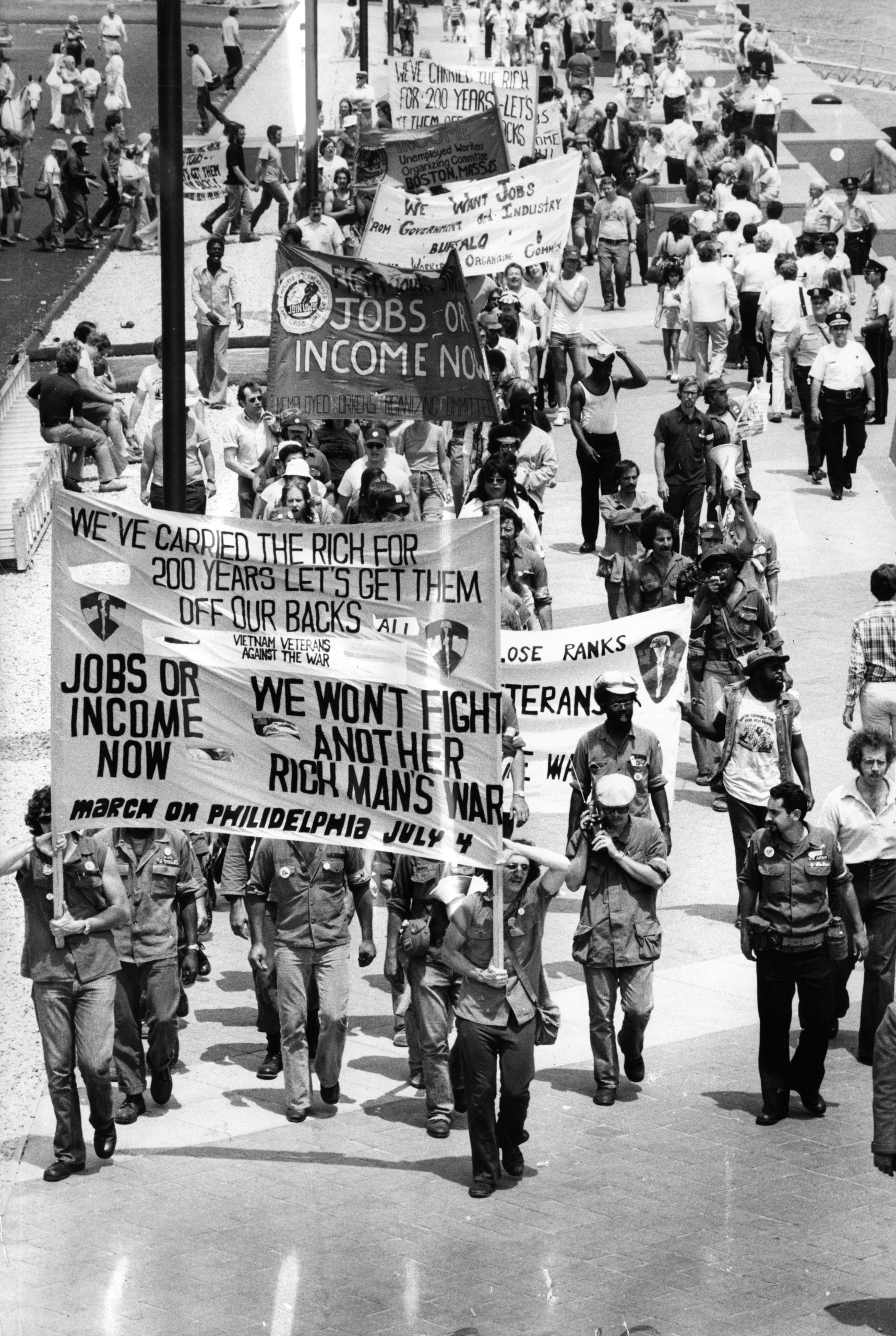
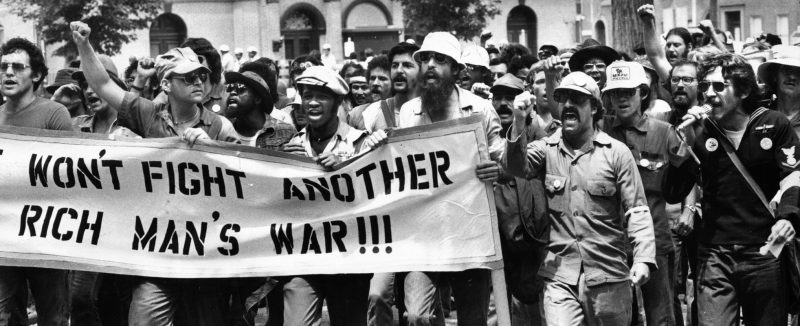
    The largest gatherings, though, were in Philadelphia, where more than 3,000 demonstrators gathered in Norris Square, under the auspices of a group called the Rich Off Our Backs Coalition, to march for jobs and income and economic justice — backed by fatigue-wearing Vietnam Veterans Against the War, who chanted: “One, two, three, four, we won’t fight a rich man’s war.”

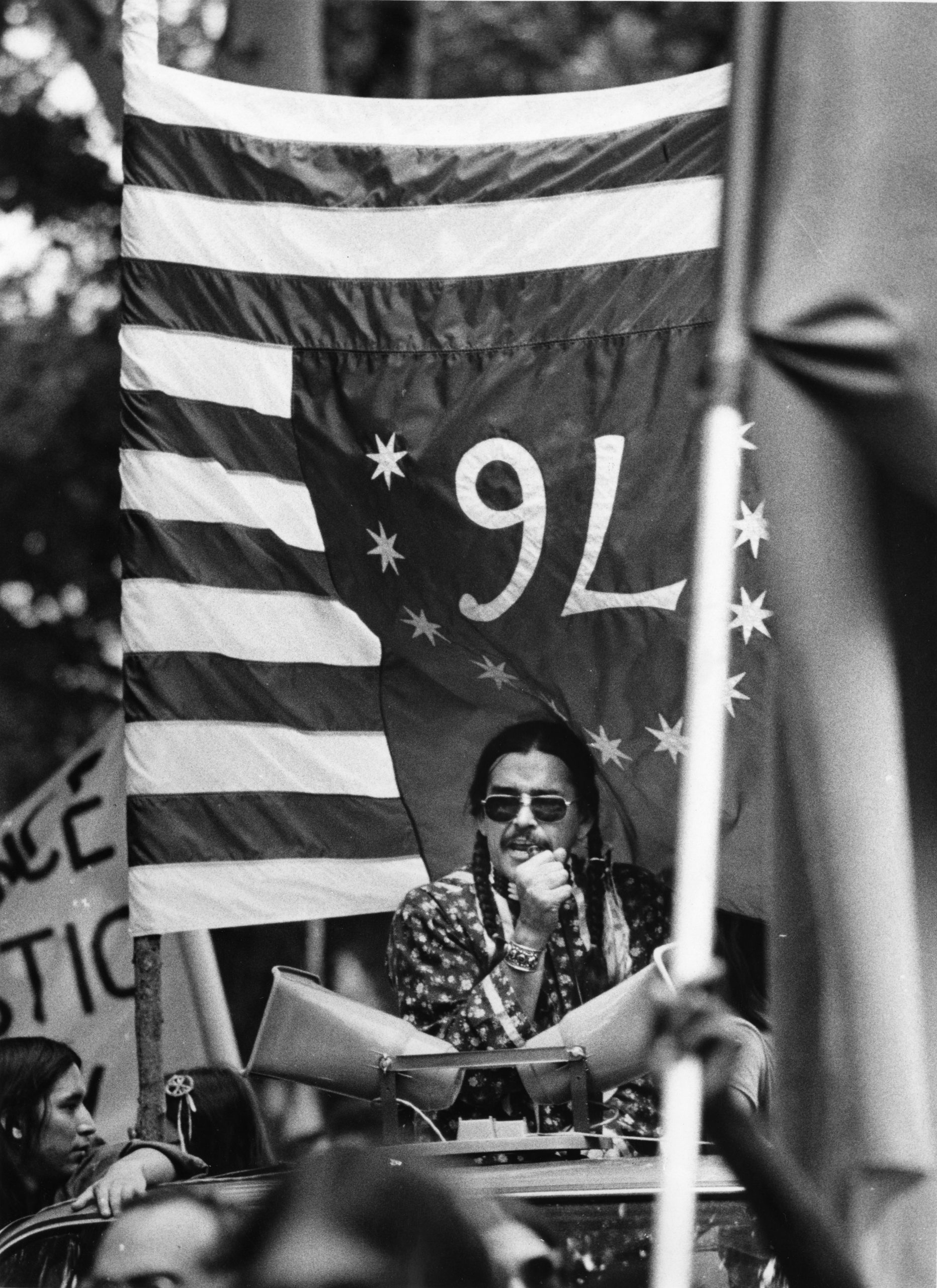
    Another group, the July 4th Coalition, rallied 30,000-plus in Fairmount Park, site of the Bicentennial, to demand Puerto Rican independence, greater rights for Black Americans, Native Americans, and members of the LGBTQ+ community, and much else. Karen DeCrow, president of the National Organization for Women, reread the declaration Susan B. Anthony had introduced a century earlier to flag the limited progress the nation had made toward gender equity since 1876. Black Panther leader Elaine Brown, a native Philadelphian, decried America’s 200-year history of racism.

    A group of Native Americans leads a July 4th Coalition protest parade at 33rd and Diamond Streets in Philadelphia on July 4, 1976.George D. McDowell Philadelphia Evening Bulletin Photographs

    Despite opposition — Mayor Frank Rizzo famously requested 15,000 federal troops to maintain order — the demonstrations remained peaceful. Organizers won plaudits even from those who did not necessarily agree with their critiques. Protesters had a right, The Inquirer editors agreed, to call attention to America’s shortcomings, as they saw them. Dissent was as integral to the Fourth of July as bunting and brass bands: Its existence confirmed “the strength and genius of American democracy.”

    Today, according to polls, Americans typically mark Independence Day by barbecuing, shooting fireworks, going to the beach, viewing a parade, traveling, watching patriotic movies, or relaxing at home. Participating in a protest, demonstration, rally, or other nonviolent action does not rate a mention.

    That’s certainly understandable. These days are exhausting, and we all just want a break, a moment to have a laugh with family and friends.

    Yet, America’s rich tradition of July Fourth protest is worth recalling, especially at a time when the nation’s democratic institutions are under stress, for it once served as an essential tool that enabled Americans to hold their leaders to account for the words of 1776. We, the people, have never quite realized those words — written principally by a slave owner, Thomas Jefferson.

    But for 250 years and counting, the Declaration of Independence has set a “moral standard,” as historian Pauline Maier has argued, to which not only feminists and civil rights activists but civil libertarians and laborers have turned time and again in pursuit of liberty from their oppressors, be those would-be tyrants, foreign or domestic.

    M. Todd Bennett, a professor of history at East Carolina University, and David McKean, former director of policy planning in the U.S. Department of State, are the authors of “The Flag Was Still There: A History of the American Experiment in Five Anniversaries” (PublicAffairs, 2026).

    Made By History takes readers beyond the headlines with articles written and edited by professional historians. Opinions expressed do not necessarily reflect the views of The Inquirer.

    Made By History sponsors. Inquirer Staff
  • Philly’s queen of Gay Bingo hangs up her heels after 30 years and $5 million raised for AIDS research

    Philly’s queen of Gay Bingo hangs up her heels after 30 years and $5 million raised for AIDS research

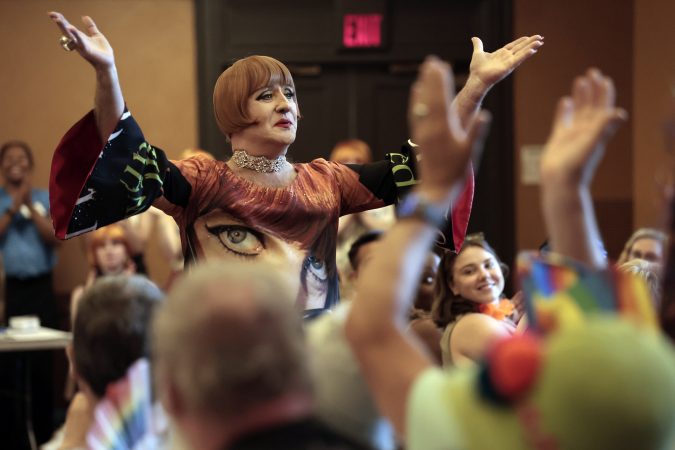
    The legendary redheaded drag queen Carlota Ttendant donned a baby-blue Eva Gabor-inspired gown — its plunging neckline revealing tasteful chest hair — and sensible black heels.

    At 65, arthritis stifles her strut in stilettos.

    “Drag is a young girl’s game,” she said.

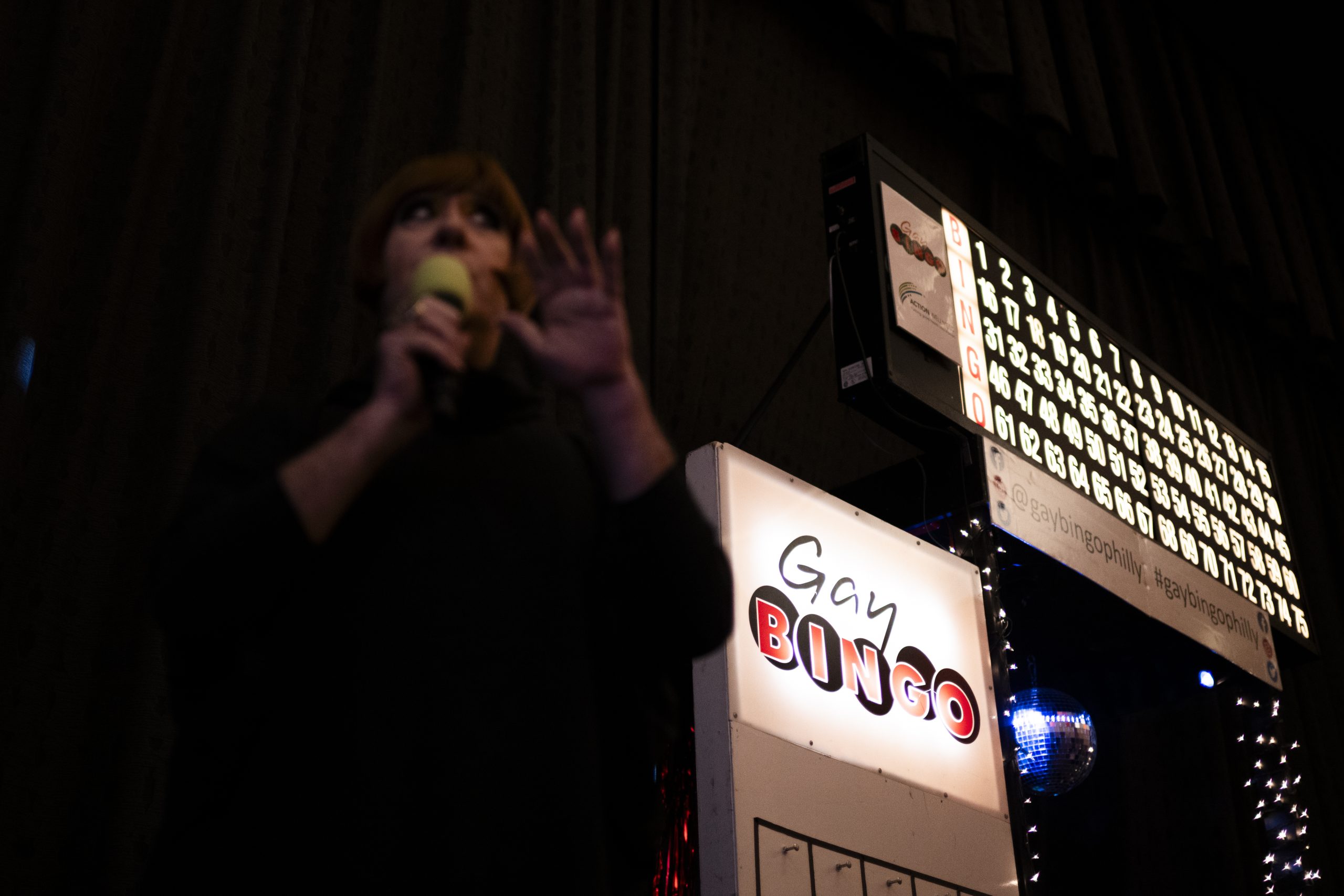
    This was her swan song. At the close of its 30th season this Pride Month, the man behind the makeup, Michael Byrne, hung up his heels and bid adieu to his drag persona and his longtime gig hosting Gay Bingo, the camp, irreverent, slightly profane, and undoubtedly silly monthly HIV/AIDS fundraiser.

    “I know it’s time,” Byrne said. And, “I’m excited to never wear Spanx ever again.”

    Across three decades, Carlota Ttendant has called hundreds of games and elicited endless laughs, all while raising millions for people living with HIV/AIDS across the Delaware Valley. She helped steer a community through crisis, providing a respite to those experiencing immense loss and stigma. Even as medicine has advanced and HIV/AIDS has become manageable, she’s crafted a safe space for queer Philadelphians. For one night each month, she’s been an entertainer and an equalizer, responsible for uniting people — gay and straight, from Haddonfield to Phoenixville — around a common goal.

    And since Carlota came into Byrne’s life, she’s taught him to lead with courage, practice gratitude, and be unabashedly unafraid. He’s gone from being the “worst waiter ever” and selling cosmetics, to being a performer, licensed clinical social worker counseling older LGBTQ+ folks through their own next phases of life, and president of Philly AIDS Thrift’s board.

    “None of it would have been possible without all of you,” Carlota told the 400-person crowd — the biggest turnout in years — at her last Gay Bingo on June 13 in the basement ballroom at Congregation Rodeph Shalom. “In the ’90s there was horror happening, and today there is horror happening.

    “But please, let’s do some laughing,” Carlota said.

    “Let’s play bingo!”

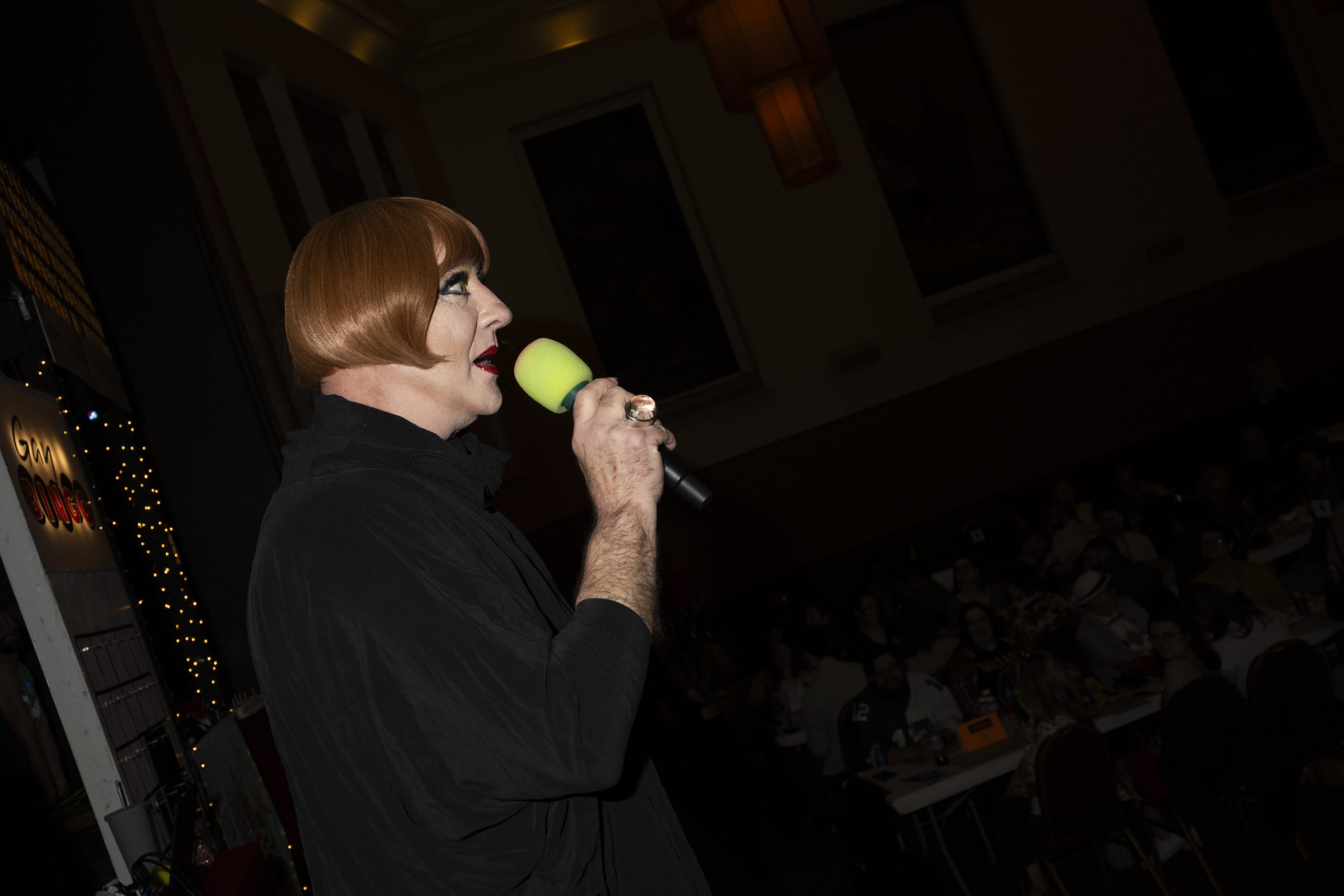
    Michael Byrne, as his drag persona Carlota Ttendant, during Gay Bingo on Saturday, May 9, 2026, at Congregation Rodeph Shalom in Philadelphia.Joe Lamberti / For The Inquirer

    Act I

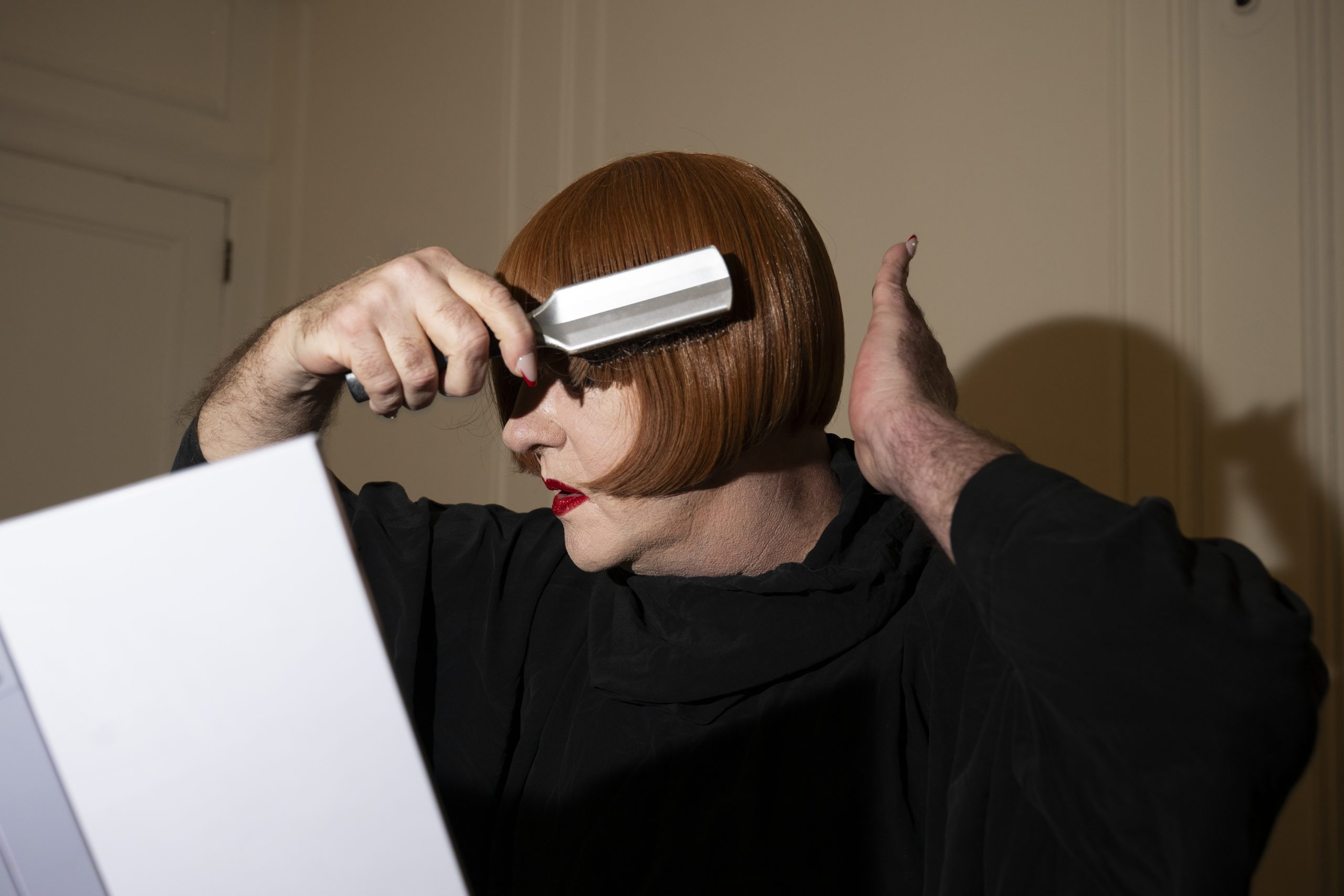
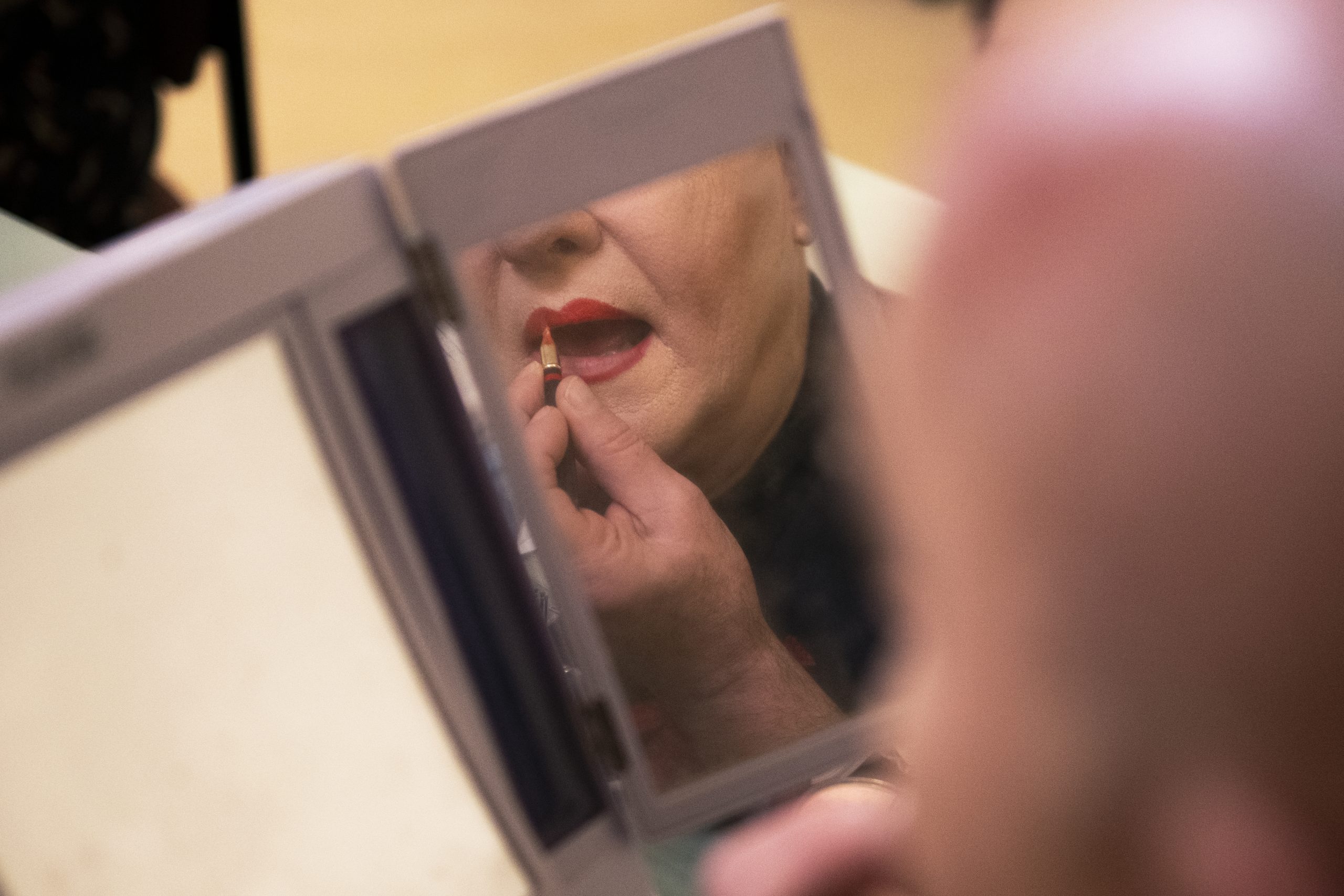
    Like so many Saturdays before, Byrne, on June 13, slathered his face with foundation, carved out his cheeks, deepened his eyes, and painted on his red lip. There was haze — from the dusting of loose setting powder, bronzer, and blush — and musk — from sweat and heat and hairspray — in a Rodeph Shalom classroom, which moonlights as a bridal suite and a boudoir for the Bingo Verifying Divas or BVDs. At 10 minutes till curtain, he futzed with his press-on nails, shimmied into a mod swing dress, straightened the back seams of his tights, and dabbed on some glitter. With each gender-bending step, he transformed into his “twin sister,” Carlota.

    Michael Byrne transforms into his drag persona Carlota Tendant ahead of Gay Bingo on May 9 at Congregation Rodeph Shalom in Philadelphia.Joe Lamberti / For The Inquirer

    Like all classy ladies, Carlota’s exact age is lost to time. In the 1990s, Byrne was organizing a fundraiser for Big Mess Theatre, an avant-garde troupe that he helped establish as the spinning axis of Philadelphia’s alternative performance scene, complete with vaudeville acts, an oompah orchestra, and live auction with a striptease routine. Byrne was to host and make his drag debut, and Carlota Ttendant (read as car lot attendant) was conjured up over bourbon and blackjack. (He learned, years later, that there was a ’60s stripper at the famed Trocadero Theatre with the same name.)

    Byrne never aimed to create a perfect, feminine illusion with Carlota. He left his chest unshaven and unstuffed, but short, thrifted dresses showed off his long and feminine legs. Carlota’s makeup was an extension of the exaggerated theater paint Byrne, who has been on stages since he was 10, knew; cheap wigs hid his sideburns. Nothing could mask his deep, raspy, anything-but-ladylike voice.

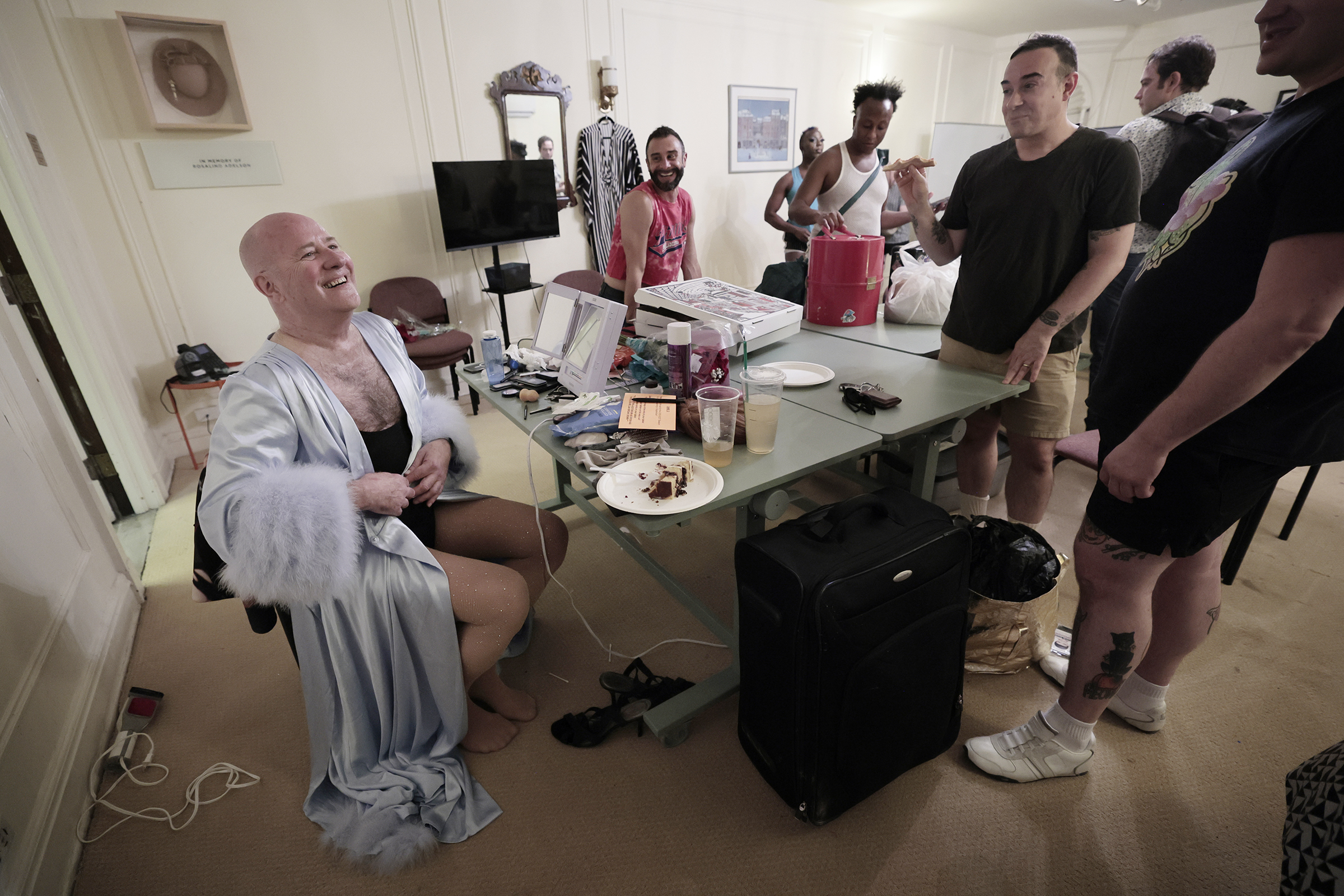
    Carlota Ttendant (Michael Byrne) (at left) laughs with friends and fellow performers after Carlota’s final evening cohosting Gay Bingo at Congregation Rodeph Shalom in Philadelphia on June 13. Elizabeth Robertson / Staff Photographer
    Michael Byrne transforms into his drag persona Carlota Ttendant ahead of Gay Bingo on May 9 at Congregation Rodeph Shalom in Philadelphia.Joe Lamberti / For The Inquirer

    Carlota could be bossy and profane but never vulgar; she could poke fun at audiences without being cruel. She became the “drag queen you could bring your grandma to,” Byrne said.

    Around the time Carlota came to be, the number of new AIDS diagnoses and deaths peaked in Philadelphia. In 1992, new AIDS cases surpassed 1,500; in 1994, AIDS deaths topped 900, according to city data.

    (function(){function e(){window.addEventListener(`message`,function(e){if(e.data[`datawrapper-height`]!==void 0){var t=document.querySelectorAll(`iframe`);for(var n in e.data[`datawrapper-height`])for(var r=0,i;i=t[r];r++)if(i.contentWindow===e.source){var a=e.data[`datawrapper-height`][n]+`px`;i.style.height=a}}})}e()})();

    Misinformation about the disease, which strips the body of its natural defenses and leaves it vulnerable to life-threatening infections and ailments, was rampant. People alienated gay men, wrongly fearing HIV/AIDS could be transmitted through a handshake, a hug, or across a dinner table, The Inquirer and Philadelphia Daily News wrote. Diagnostic testing took weeks; what rudimentary treatments were available sometimes made people sicker; and HIV often progressed to AIDS within a few years.

    “It was not unusual to have people dying every month,” said Kevin Burns, who as a case manager with the nonprofit ActionAIDS (now called Action Wellness) connected clients to hospice care. Burns later served as Action Wellness’ executive director.

    The need for resources was rife, and in 1996, Philly’s nonprofit AIDS Fund set out to supplement the money it made from its annual AIDS Walk, according to Sandra Thompson, former chair of its board of directors. An article in City Paper about an irreverent bingo-drag night sweeping Seattle — which, by one report in the Seattle Times, raised $10,000 a night — caught the attention of Mark “Chumley” Singer, then a fledgling events producer, who pitched the idea to the AIDS Fund. (The fund folded in 2024 due to the decrease in new AIDS cases, and turned ownership of Gay Bingo over to Action Wellness.)

    Singer recalled thinking at the time: “I’ve been doing sad, mopey, candlelight vigil fundraisers. … Why can’t we raise money and have fun?”

    Singer and Byrne had never met before the latter was tapped to host Gay Bingo, but their chemistry was kismet.

    “There was never a show where we weren’t having more fun than everybody,” said Singer, who cohosted until the early aughts. Byrne and Singer left Gay Bingo around that time, but Byrne later returned.

    Byrne remembers the magic of those early years of Gay Bingo. He remembers when 600 seats would sell out in 10 minutes, and he remembers doing his glittered red lip from the floor of the Gershman Y’s mirrored dance studio. He remembers two-show Saturdays and how six hours in heels would make him catatonic on Sunday. He remembers riffing with and ribbing Singer and the laughs their off-color jokes and mild profanity elicited. He remembers the constant movement of the bold and bawdy BVDs, on Rollerblades, or the electricity when O-69 was called and hundreds stood up, shaking and shouting with the fervor of their libidos.

    But Byrne also remembers the solemn moments: the steelworker who told a documentarian about watching his bodybuilder son become emaciated; the families who sponsored games on the anniversary of their loved one’s death; the pharmacist who learned all he could about HIV drugs; Byrne’s own friends who were infected.

    “Our community was in crisis,” Byrne said, “while we focused on it, we also focused on being fun and laughing.

    “And we all needed that at that point.”

    Act II

    The “Rainbow Bombshell” Gay Bingo on June 13 doubled as a Pride extravaganza and an homage to all things Carlota. Her first outfit of the night was crafted from a promotional banner from her years hosting the Philadelphia Orchestra’s Halloween Concert. Alongside her, the BVDs dressed as Big Mess-era Carlota, Norma Kamali-inspired Carlota, Phillies Carlota, and fuzzy caftan-wearing Carlota. Attendees, ushers, volunteers, and even the American Sign Language interpreter wore that signature red bob — wigs that Action Wellness bought in bulk. One wore a T-shirt that read, “Dibs on the ginger.”

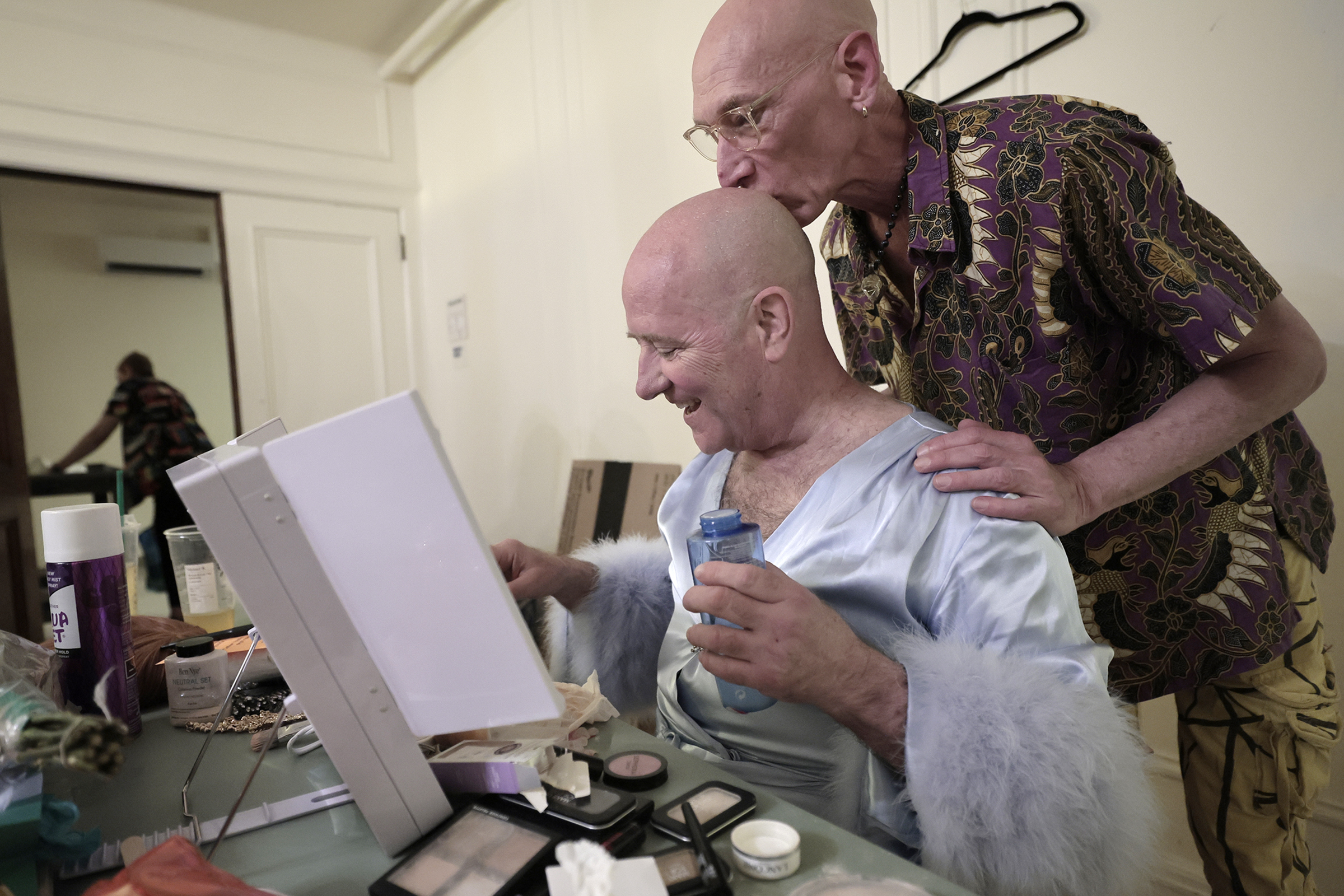
    In the dressing room, Tess Tickle (Paul Struck) kisses Carlota Ttendant (Michael Byrne) on the head after Rainbow Bombshell Gay Bingo at Congregation Rodeph Shalom in Philadelphia on Saturday, June 13, 2026. “I love him” said Struck as he walked out of the dressing room.Elizabeth Robertson / Staff Photographer
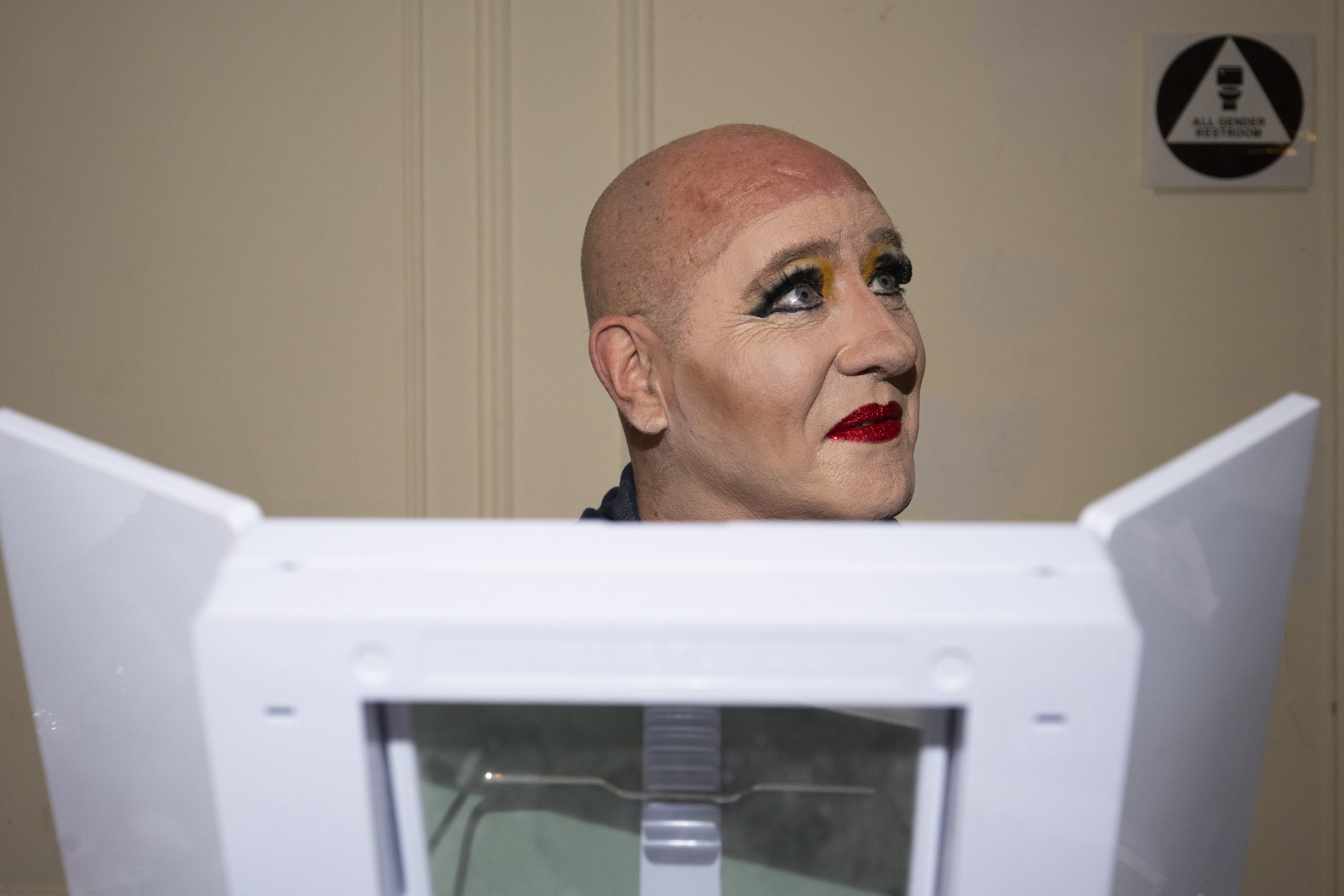
    Carlota Ttendant (Michael Byrne) puts on a favorite crystal ring and fake nails before cohosting Rainbow Bombshell Gay Bingo on June 13. Elizabeth Robertson / Staff Photographer

    “Are we ready to win some money?” Carlota said, hyping up the crowd before the first of 12 rounds of bingo. Councilmember Rue Landau, the Philadelphia City Council’s first openly LGBTQ+ member, called the first game:

    I-28.

    I-26.

    G-52.

    B-14.

    O-63.

    B-3.

    “Bingo!” someone cried out, as the audience let out an audible wave of disappointment, exasperation, and defeat, and the BVDs rushed over to authenticate.

    “Did you just get bingo, girl?” Carlota wisecracked.

    For 30 years, these Gay Bingo players have pledged each month to “keep on playing Gay Bingo until this crisis is over.” And today, HIV/AIDS deaths and new diagnoses have stagnated, according to the most recently available health department data, and drug cocktails have made it so people with HIV can live long, healthy lives and may never pass the disease onto others or have their illness advance to AIDS. Preventative medications, like PrEP, can also dramatically decrease the risk of becoming infected.

    Michael Byrne, as his drag persona Carlota Ttendant, on May 9 at Congregation Rodeph Shalom in Philadelphia.Joe Lamberti / For The Inquirer

    But there are still obstacles to ending the epidemic. HIV/AIDS disproportionately affects Black and brown communities and low-income people who experience barriers to healthcare, according to Action Wellness executive director Mary Evelyn Torres. The geographic disparities are also stark: Current drug regimens may be readily available in well-resourced countries, like the United States, but access is scarce in the world’s vulnerable pockets. These problems have only been exacerbated by President Donald Trump’s proposed cuts to domestic and foreign HIV/AIDS programs. The withdrawal of American dollars overseas, United Nations officials warned, could lead to more than 4 million AIDS-related deaths and 6 million more HIV infections by 2029.

    (function(){function e(){window.addEventListener(`message`,function(e){if(e.data[`datawrapper-height`]!==void 0){var t=document.querySelectorAll(`iframe`);for(var n in e.data[`datawrapper-height`])for(var r=0,i;i=t[r];r++)if(i.contentWindow===e.source){var a=e.data[`datawrapper-height`][n]+`px`;i.style.height=a}}})}e()})();

    Meanwhile, the Trump administration and state legislatures are attempting to roll back protections for LGBTQ+ people. In Philadelphia, Pride celebrations this month in the Gayborhood were disrupted after Philadelphia police pushed and confronted revelers using what some have called outsized and aggressive crowd-control tactics, although Police Commissioner Kevin Bethel said his department’s actions had nothing to do with Pride. City Council has since announced it will hold public hearings to examine the police response.

    “We’ve come a long way, but there’s still work to be done,” Torres said, “and that work is being threatened by this administration.”

    As the epidemic has changed, so has Gay Bingo: The money raised — more than $5 million since its inception — now goes toward Action Wellness’ social services and programming. The BVDs ditched their roller skates at the Gershman Y (because of the new, carpeted venue). Tickets cost $50-$60, compared to $10-$12 in May 1996, and these days, attendance averages between 150 and 200 a month.

    Drag has evolved, too. Spending centuries on the periphery as proto-punk-beatniks and after-midnight acts, queens disrupted and challenged the mainstream with wit and wonder. Then, the exploding popularity of RuPaul’s Drag Race, a drag reality-TV competition, seismically changed the culture, snubbing scrappiness for silicon and kitsch for couture. The show ushered drag into the zeitgeist: Its lingo became commonplace and its contestants turned into social media stars, with businesses, makeup brands, books, and podcasts, as the art form continues to face political bans and threats nationwide.

    The show “has taken everything to a whole other planet,” Byrne said, “and that’s amazing and that’s really great.

    “That’s also not what I do.”

    Carlota was never concerned with “affecting female mannerisms” or “trying to be this woman or this drag queen,” Singer said. To Byrne, she’s come to embody the fiercest, most unafraid, and righteous versions of himself. But “Michael was never far from Carlota,” Singer said.

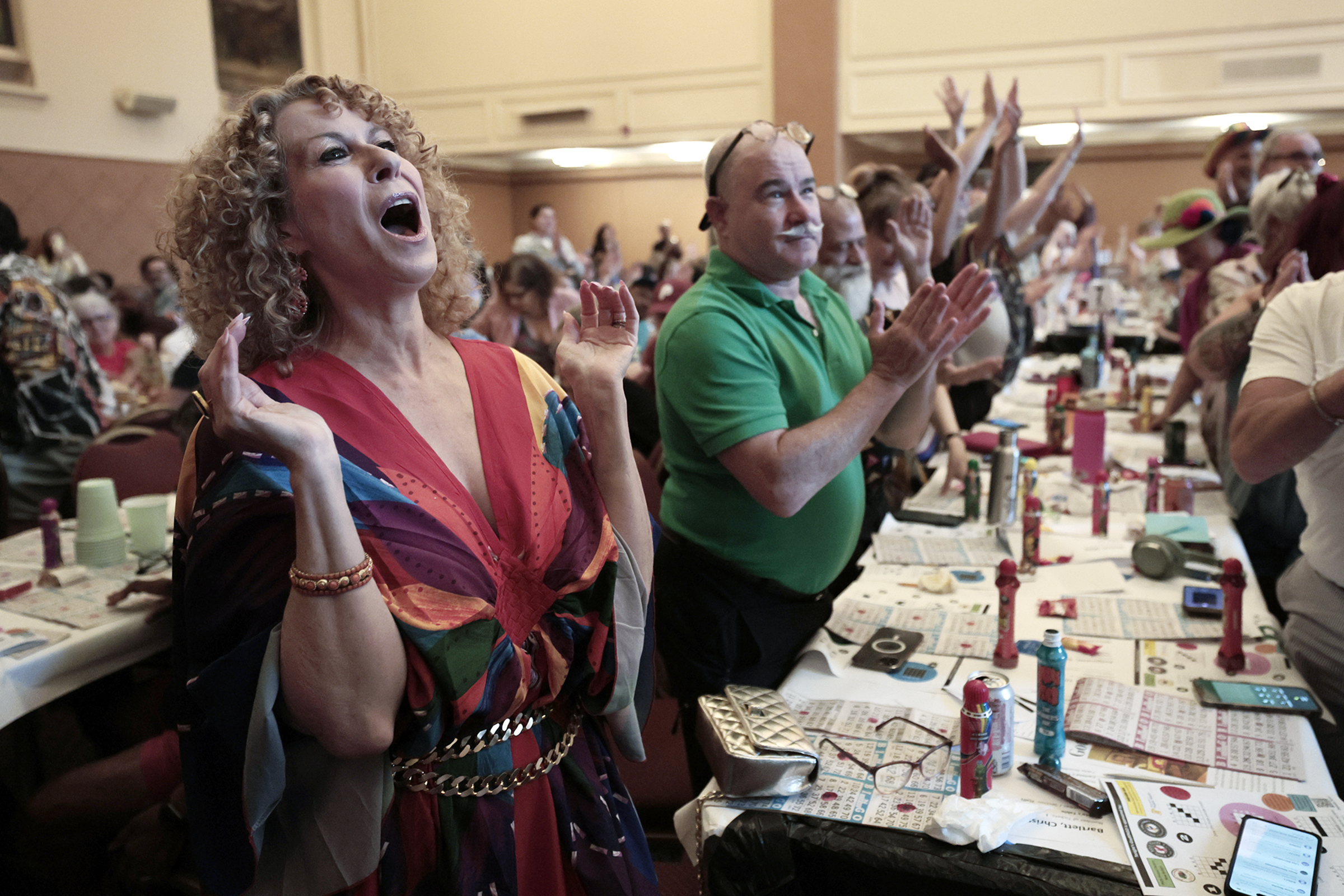
    Janie Lopez of Philadelphia cheers for her friend Carlota Ttendant during Gay Bingo at Congregation Rodeph Shalom.Elizabeth Robertson / Staff Photographer

    To those who know Byrne, Carlota’s come to represent someone purer and more singular, a testament to what joyful resistance and defiant resilience can achieve amid tragedy. Her ingenuity and authenticity have made her synonymous with Gay Bingo, according to Action Wellness event planner and cohost Tim Johnson (otherwise known as Stella D’Oro); her playfulness is what’s engaging, Burns said; the safe space she’s cultivated for the queer community is what keeps people coming back season after season, said regulars Cat Johnson, 47, and Katie Dickerson, 38, of Roxborough.

    “It’s going to be really different without Carlota,” Johnson said. “No one’s going to fill her shoes, but I think that the vibe and the energy is going to live on.”

    “It’s a lot easier to raise money when everyone is having fun,” said Amber Schlesman, 38, of Point Breeze, who’s been coming to Gay Bingo since its Gershman Y days. “And for the shoes, I’m guessing it’s a size 12.”

    All those shoes will be donated to Philly AIDS Thrift soon enough, Byrne said.

    Epilogue

    Byrne’s voice cracked as he thought of the people who made Carlota’s run possible: the AIDS Fund organizers, Singer, the original cast of BVDs, the volunteers, those who came back monthly, the victims, their families. Many sent her off June 13 with a trove of well wishes, notes that read, “thanks for the memories,” and “so proud of all you’ve done.” They told her, “I love you,” and “hang up those high heels, baby.”

    At the end of the night, Byrne’s best friend gifted him a throw pillow.

    “Don’t be a lady,” it said. “Be a legend.”

    Michael Byrne transforms into his drag persona Carlota Ttendant ahead of Gay Bingo on Saturday, May 9, 2026, at Congregation Rodeph Shalom in Philadelphia.Joe Lamberti / For The Inquirer
  • York’s minor league team forfeits game over Pride Night jerseys, but celebrates anyway

    York’s minor league team forfeits game over Pride Night jerseys, but celebrates anyway

    There won’t be a Pride Night baseball game in York, Pa., but there was still a Pride Night at the ballpark.

    Hours before the minor league York Revolution’s annual Pride Night game was slated to take place Thursday night, the team announced it was forfeiting to the Southern Maryland Blue Crabs.

    The decision stemmed from a dispute among several Revolution players who refused to wear the team’s special Pride edition jerseys, according to team officials.

    “The club decided that hosting the event is more important than forcing players to wear jerseys they are not comfortable with and playing the game,” The Revolution said in a statement. The statement added that the event would pivot into a Pride Night celebration “out of respect for the Pride Community and the York community as a whole.”

    The team said it’s treating the game as a rainout and ticketholders can redeem their tickets for another game of their choice this season. York plays in the Atlantic League of Professional Baseball, an independent partner league of Major League Baseball.

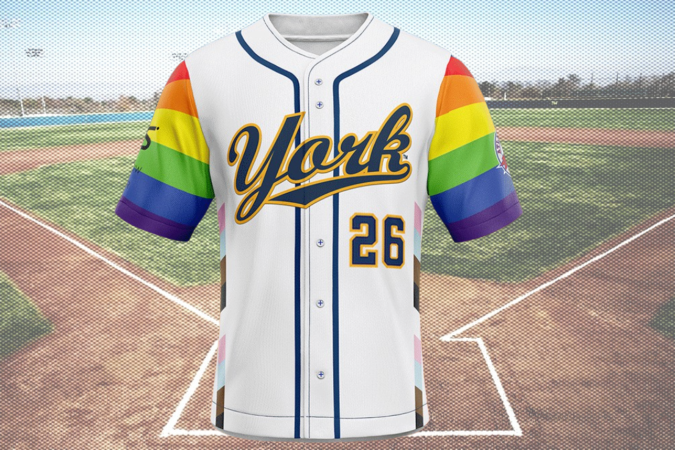
    Thursday’s game would have marked the York Revolution’s 11th Pride Night. As part of the celebratory game, the team would wear white jerseys with rainbow sleeves and side panels, nodding to the Pride flag and “Pride” written in script on the back.

    According to NBC, the forfeit rose from “less than nine players” — the minimum number needed to fill a lineup card — on the 28-man roster being willing to play wearing Thursday’s Pride uniforms. The standoff led to an “unprecedented team meeting” where Revolution president and GM Ben Shipley told NBC he was unable to talk players into wearing the uniforms.

    “I’m disappointed that we’re at this point and I recognize the players’ plight and their unwillingness to cross their line. I also think tolerance is not acceptance,” Shipley said. “I was just asking for tolerance from the team and they were unwilling to navigate that with me.”

    In its statement, The Revolution added that the players’ action “is completely inconsistent with our vision as the Most Welcoming Place in York.” The team announced it would make a $10,000 donation to its local LGBTQ+ center, the Rainbow Rose Center, as a “small token of our regret” and show of continued support.

    York, about an hour-and-a-half outside of Philadelphia, has a historic Republican stronghold. In 2016, it gave President Donald Trump his biggest county-level win margin in Pennsylvania. There is a limited but growing LGBTQ+ scene. The first York County Pride celebration took place in 2022.

    The Human Rights Campaign, which releases Municipal Equality Index scores nationwide on cities’ LGBTQ+ support, does not have a score for York.

    The Revolution teammates’ refusal to wear Pride jerseys comes at a time when across the country, rights and recognition of the LGBTQ+ community remain a polarizing issue. More than 500 anti-LGBTQ+ bills have been introduced this year according to the ACLU, centering around topics including gender affirmation, sports participation bans, drag show bans, and overall LGBTQ+ erasure.

    According to the minor league team, while Thursday wouldn’t have a game, attendees could still take tours of WellSpan Park, enjoy music, batting practice, and other activities. The now 32 unworn Pride jerseys were also listed on the team’s site Thursday night for auction with proceeds benefiting the Rainbow Rose Center.

  • JD Vance can never become president | Will Bunch Newsletter

    One of my many New Year’s resolutions back in January was never to write what I call “Captain Obvious columns” about the Donald Trump scandal du jour that’s all over your social media feed. So you’ll have to imagine the column I didn’t write about Trump’s tacky UFC cage match that desecrated the White House, and the role of bread and circuses (or just circuses…where’s the bread?) in the inevitable decline and fall of decrepit empires.

    If someone forwarded you this email, sign up for free here.

    A ‘President JD Vance’ would be a different kind of dictator. The scary kind.

    They say you never get a second chance to make a first impression — unless your name is JD Vance, or it becomes JD Vance after a few false starts. In 2016, a then utterly unknown Yale Law grad introduced himself to America with a No. 1 bestseller, Hillbilly Elegy, that used his (sort-of) Appalachian family’s hardscrabble story to come off as an empathetic horse whisperer for the white working class.

    He cemented that first impression when we learned he’d privately described Trump as a kind of a demagogue feeding off the pathologies he’d written about in Elegy — someone he feared might become “America’s Hitler.”

    But Trump’s victory coupled with some exposure to the ketamine-fueled paranoia of Silicon Valley’s billionaires gave the former James Donald Bowman yet another shot at reinvention — now embracing extreme right-wingers and crackpot conspiracy theories all the way to his election, at age 40, as the 50th vice president of the United States.

    Today, less than two weeks before the 10th anniversary of Hillbilly Elegy’s publication, Trump has become America’s…Mussolini, a strutting yet sometimes buffoonish strongman and a hopelessly corrupt invader of faraway lands.

    It’s Vance who could actually become America’s Hitler, if he gets that chance…a very real possibility.

    That’s a strong statement, but it’s also perhaps the most powerful takeaway from the heavily promoted, about-to-be-published book from all-access New York Times reporters Maggie Haberman and Jonathan Swan, Regime Change. It portrays the vice president as eager to go much further than Trump in crushing domestic dissent.

    In book excerpts published Monday, Haberman and Swan depicted Vance — in a tag-team alliance with Trump’s ruthless mass-deportation guru Stephen Miller — as calling for the radical step of invoking the Insurrection Act to send in troops to put down protests by everyday Americans in Minnesota who were enraged by masked goon squads snatching their immigrant neighbors and the killing of two U.S. citizens.

    Describing a White House meeting of senior aides — but not Trump — in late January after Renee Good and Alex Pretti were gunned down, the Times reported that “Vance got to the point. They needed to invoke the Insurrection Act, swiftly, to crush the unrest in Minnesota. It would be painful in the short term, he said, but the message it would send — that paid agitators could not get away with disrupting ICE operations — would make sure no one tried it again.”

    There are many problems with Vance’s anti-democratic impulses. As Haberman and Swan reported, even most of the Trump aides in the room agreed that invoking the 1807 law in this circumstance would be both a significant expansion of presidential power and a public-relations nightmare. Even worse, the nation’s No. 2 official was urging this would-be abuse of power based on a right-wing internet lie — the falsehood that Minnesota’s angry neighbors were “paid protesters.”

    The deeply reported episode isn’t the only disturbing glimpse of Vance’s governing philosophy in recent months, but it’s the most revealing, and most damning: a true believer in the worst conspiracy theories about the left, with the inclination to wield dictatorial powers against them.

    Earlier this month, Vance — arguably the regime’s top cheerleader for Europe’s extreme far-right political parties — stunned the United Kingdom’s center-left government by weighing in on growing unrest over the stabbing death of an 18-year-old English college student by a Sikh migrant. He sounded more like a wannabe X influencer than a top official of the U.K.’s historic American ally. As racist hate mobs prowled streets in England and Northern Ireland, Vance said the murder of Henry Nowak proved that “European elites” had failed to oppose the “politics of self-hatred and the mass invasion of migrants.”

    One thing is clear: Vance is not on the side of calm, which is problematic when what the world needs now is love, sweet love.

    Increasingly, Vance seems to disappear for longer stretches of time, and when he reemerges he is bathed in the stench of the social media sewers where he seems to spend much of his time.

    That’s certainly appears to be the case with his main mission in 2026; rooting out fraud, which isn’t targeted at the nation’s biggest scam — the multi-dollar enrichment of the president’s family — but at alleged schemes by Somali immigrants and other heirs to Ronald Reagan’s racially coded “welfare queen.” A recent Washington Post report found many claims by a Vance-led task force are misleading or overhyped, and that legitimate business have been swept up in its wide net.

    Ten years ago, Vance wrote a book seeking your empathy because that served his true purpose: ruthless ambition. In that context, it was no moral conflict at all to pull a 180 and support a victorious Trump, or to leverage his rising fame into a hookup with Silicon Valley types like his billionaire patron Peter Thiel — people who believe in building private cities to protect them from the masses and the government, and who are more prone to conspiracy theories than your 79-year-old uncle on Facebook.

    Thiel and the other tech billionaires have programmed Vance into a true believer of whatever nonsense they believe, and lined him up next in the queue for power. That makes him even more dangerous than Trump, who believes in nothing beyond himself.

    Ever since Trump first claimed victory on Nov. 8, 2016, I’ve worried that the next guy would be even worse — chasing American autocracy with a real plan, not clown-car narcissism. Vance is the one I was worried about, and he is only an 80-year-old, Big Mac-infused heartbeat away from the presidency for the next 31 months.

    I’ve made clear my disgust at political violence, and the possibility of a Vance succession is another reason why I shudder to think what would happen if an attack killed or disabled the 47th president someday. If Vance was willing to send troops to Minneapolis to stomp down soccer moms and baristas with whistles, his militaristic power grab against the left after an assassination would end any last hope for our bedridden democracy.

    It’s one more item on the pro-democracy checklist. It may be the proverbial lost cause worth fighting for, but we should try to ensure that JD Vance does not become the 48th president of the United States.

    If Democrats stay on track to retake the House and possibly the Senate, they should hold hearings not only on Trump’s high crimes and misdemeanors but on the vice president’s involvement — and, based on that evidence, his possible impeachment. It may prove impossible to remove Vance from office, but hearings will help to establish a record that will end his dreams — and those of his billionaire buddies — about 2028.

    It’s past time for the next transition for this American chameleon who calls himself JD Vance: back to private citizen.

    Yo, do this!

    • The World Cup’s return to North America has gone much as I expected it would: Marred by its runaway commercialism and the U.S. immigration hassles that kept too many fans and a world-class referee from Somalia at home, but with a focus on joy on the pitch and in the stands now that the games have begun. Here in Philadelphia, the essence of everything good about the World Cup has been the FIFA Fan Festival at Lemon Hill, the city greenspace on the hill behind the Art Museum on the Schuylkill. It’s been a daily gathering post for thousands of fans to watch the matches on a 60-foot screen, imbibe from a beer garden, and load up on official merch. It’s free but ticketed; learn how to gain access and how to get there here.
    • Some 51 years after Jaws, filmmaker Steven Spielberg is still finding ways to get us out to the multiplex for a summer blockbuster. His new the-aliens-are-here epic, Disclosure Day, merges nostalgia for his greatest hits like E.T. with our 21st century anxieties about artificial intelligence, outsiders, space, and what it means to be human in our modern world. It’s getting excellent, but not perfect, reviews, and I’m looking forward to seeing it for myself.

    Ask me anything

    Question: What is your favorite fast food joint? — @funkndonuts.bsky.social via Bluesky

    Answer: Most of this week’s questions were in this lighthearted mode; it feels like the good sports excitement of the World Cup and the NBA finals has provided us a calm eye in the hurricane. Anyway, as an apparent donut lover you’ll be glad to know that my modern family runs on Dunkin coffee. As a kid, my barely-evolved-from-hillbillies family had low-brow tastes that I now appreciate in hindsight, and on our yearly road trips to the ancestral home of Peoria, I fell in love with the greasy pizza — later augmented by greasy fried chicken — at Shakey’s. The chain has shrunk to a few West Coast outlets and I haven’t been in decades. Probably for the best.

    What you’re saying about…

    Last week’s question about what the next, hopefully normal U.S. president should do about the ballroom monstrosity rising on the east side of Donald Trump’s White House drew a good array of responses. Although a couple of you wanted to see the project repurposed for community gardens or housing for D.C.’s homeless, others believe any Trump creation must be expunged in dramatic fashion. “Provide Pulaskis (fire axes) and sledgehammers and a good crew of competent supervisors and let we the people come and pay five bucks for the privilege of fifteen minutes of smashing it up,” wrote Linda Nafziger-Meiser. “Hell, I’ll bring my own Pulaski.” But architect Larry Weintraub thinks the White House needs a ballroom, as long as it meets historical and architectural standards. “Hopefully, the new design will be understated but appropriate and subordinate to the majesty of the White House,” he wrote.

    📮 This week’s question: In a recent column, I announced that I’ve deleted Elon Musk’s social-media app X, which once thrived as Twitter. I saw that as a way to protest Musk’s racism, and his obscene wealth. Should governments and corporations continue to use X for communications? Are you still on X or have you left, and why? Please email me your answer and please put the exact phrase “Deleting X” in the subject line.

    Backstory on the birthright citizen who’s a U.S. hero

    Folarin Balogun, now 24, grew up in London, which is where one of the world’s top clubs, Arsenal, spotted him as a potential soccer star at age 8. His parents are Nigerian. He currently plays club soccer in Monaco. So how was it that Balogun found himself last Friday wearing the red, white, and blue jersey of the United States in front of 70,000 delirious Americans on the pitch near Los Angeles, mixing skillful footwork with an aura of glee as he scored two goals in a 4-1 World Cup opener win over Paraguay?

    Credit the 14th Amendment — or maybe blame it, if you’re one of the reactionaries who believe that people like Balogun should not be U.S. citizens, soccer gods be damned.

    Even if for some weird reason you’re not yet a soccer fan, you’ve probably followed the heated debate over birthright citizenship. The notion that anyone born on U.S. soil is automatically an American citizen — an idea enshrined after the Civil War to remove any potential doubts about the citizenship of formerly enslaved African Americans — is disputed by the Donald Trump regime. The president’s executive order seeking to undo the longstanding interpretation of the 1868 14th Amendment, and strip citizenship from millions of people born here to immigrant, non-citizen parents, is currently before the U.S. Supreme Court. Trump’s xenophobic MAGA supporters have long slurred children of undocumented migrants with the epithet, “anchor babies.”

    It turns out that Balogun, when he’s not lighting up the back of the net, is a law-school case study of the immigration debate roiling his accidental country. In the summer of 2001, Balogun’s future mom, who was seven months pregnant, and dad decided to vacation in the United States. When the couple attempted to fly home to London, an unnamed airline worker who would change the course of soccer history told Florence Balogun she was too pregnant to safely fly. So she stayed in Brooklyn, gave birth to her son, and the family left America after two months.

    As he developed into a world-class striker on European soil, Balogun came to understand that his U.S. citizenship offered a much better shot at competing in the World Cup than the other two nations where he was also eligible, England or Nigeria. For his mom, Balogun’s fate was sealed in the summer of 2001. “Even when he wasn’t even thinking of making an international decision, I’d already made up my mind that he is going to play for America,” Florence Balogun said.

    They say that the Supreme Court, despite all the blather about “calling balls and strikes,” is in reality always aware of the political zeitgeist. Even a right-wing justice who happens to also be a long-suffering Phillies fan in Samuel Alito probably sees on some level that stripping citizenship from the breakout star of U.S. men’s soccer would be highly unpopular. The World Cup — the idea, and not its capitalist corruption by FIFA — imagines a society that abhors exclusion, where it takes every kind of people to make what life’s about. I dream of an America that can run with France and Argentina on the pitch, and that welcomes human beings like Balogun, even ones who’ve never kicked a soccer ball in their lives.

    What I wrote on this date in 2019

    This newsletter goes out Tuesday on the 11th anniversary of the day that changed America forever: Donald Trump’s gilded Trump Tower journey down an escalator to join the 2016 presidential race, as Neil Young’s “Rockin’ in the Free World” blared behind him. In 2019, I used that date to reflect how much we’d fallen in just four years since June 16, 2015. I wrote: “The president’s “shocking” tweet or statement of the day still sparked hours and hours of cable TV blather, including a parade of congressional Democrats who were concerned or saddened or what not. They called Trump’s worst acts impeachable offenses, but then nobody impeached him. They said Trump was unpresidential, but the next day he was still president.” Read the rest: “4 years since Trump came down that escalator and the cycle of empty outrage has become unbearable.”

    Recommended Inquirer reading

    • Last week I focused on the little people who’ve been crushed by the return of Donald Trump, and the big guys getting obscenely rich. In my Sunday column, I looked at the agonizing fate of Tuan Van Bui, an Amerasian born in Saigon at the height of the Vietnam War who was welcomed to Philadelphia in 1990 under a government-approved visa. Why was he violently arrested by U.S. Immigration and Customs Enforcement, and what is the truth about his April death behind bars in Indiana, at age 55? Over the weekend, I voiced my outrage over Elon Musk, who in just one week used his massive platform on X to whip up race riots in Belfast, and was rewarded by Wall Street as the world’s first trillionaire. I looked at how we enable this situation, and announced my small step in fighting back by deleting the X app.
    • One depressingly constant story in the 21st century is the way that supposedly liberal blue states and big cities still fall back on oppressive, militarized policing to crack down on protesters. Progressive activists in New Jersey took to The Inquirer this week to express their lingering disappointment in first-year Gov. Mikie Sherrill — a Democrat that many of them had worked to elect in 2025 — and her state police’s aggressive handling of demonstrations outside the ICE detention center in Newark, Delaney Hall. They would have found an amen chorus here in Philadelphia’s LGBTQ+ community, where city cops showed up at the annual Gayborhood Pride festival in riot gear and arrested 15 of the revelers. The backlash against the police actions has already triggered a City Council investigation. Journalists are typically society’s first line of defense against police misconduct. You support that mission when you subscribe to The Inquirer.

    By submitting your written, visual, and/or audio contributions, you agree to The Inquirer’s Terms of Use, including the grant of rights in Section 10.

  • ‘This is not about Pride’: Police Commissioner Bethel addresses criticism of police response to Gayborhood

    ‘This is not about Pride’: Police Commissioner Bethel addresses criticism of police response to Gayborhood

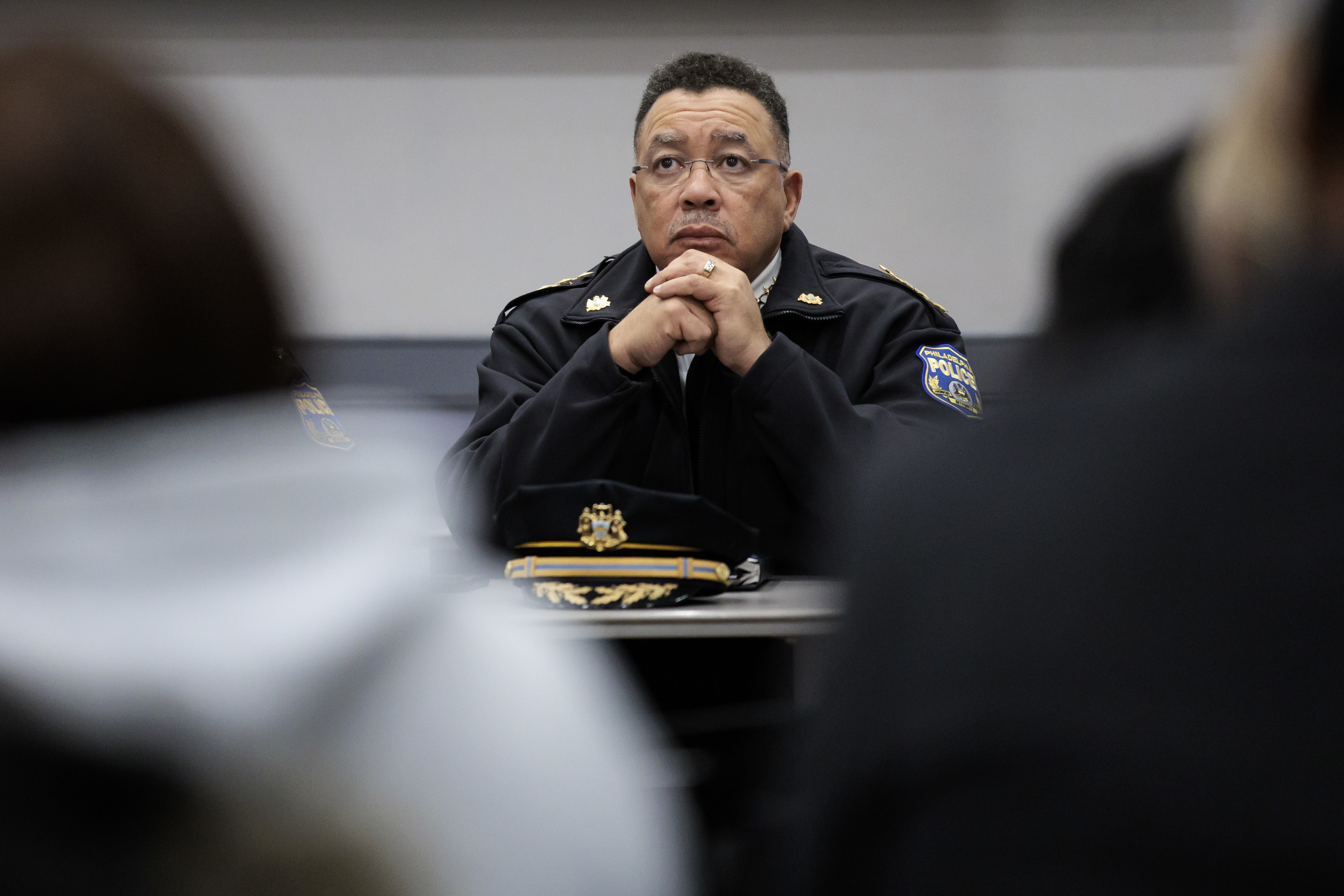
    Addressing criticism of his department’s handling of crowd control at a Pride celebration in the Gayborhood over the weekend, Police Commissioner Kevin Bethel said Friday that his officers became overwhelmed by dueling events and unruly behavior from large groups of teenagers.

    The turmoil — which led police to arrest 15 people and shut down street festivities in the LGBTQ+ neighborhood earlier than anticipated — stemmed from a change in the way the city celebrated Pride this year, Bethel said in a news conference at police headquarters.

    The decision to hold Philadelphia’s official Pride celebration on the Benjamin Franklin Parkway on Sunday deviated from the tradition of holding it in the Gayborhood, according to Bethel, who said the competing events created a public safety risk.

    In retrospect, he said, barricades that police set up on the Gayborhood sidewalks — another deviation from past celebrations there — might not have been a wise move.

    “We now know that might not have been the right decision,” he said, noting they caused ‘frustration” among guests.

    Bethel said the evening took a turn when large groups of people began arriving at both the Parkway and the Gayborhood, overwhelming the 600 officers dispatched across both events.

    And in the Gayborhood, that included crowds of teenagers, some breaking out into fights, he said.

    The commissioner said commanding officers made the decision to close down the streets near popular gay bars like Woody’s around 8 p.m. as a consequence.

    To underscore the point, Bethel played a video of one of those altercations, which showed a throng of young people acting erratically, some yelling and pushing each other.

    He called the arrival of young people to the Gayborhood a “surge” that saw teens “taking over” a parking lot and getting on top of cars.

    “At that point there are some decisions that have to be made,” Bethel said. “We can’t have thousands of individuals swirling together.”

    Bethel also acknowledged public outcry over images of police officers on horseback and motorbikes engaged in crowd control. Those officers had been dispatched to the Gayborhood from the Parkway event once crowds began to get out of hand, he said.

    “That is not pretty — it is not pretty when you move people,” he said.

    Responding to questions over the department’s enforcement at LGBTQ+ festivities, Bethel repeated his earlier assertion that the nature of the event had nothing to do with police response.

    “All of this is not about Pride, it is not about the Gayborhood, it is not about anyone’s feelings about anything,” he said. “It is about safety.”

    The commissioner added that he welcomed speaking again about the issue at City Council hearings called on the matter that will likely take place in the fall.

  • Philly City Council will hold hearings to investigate police response during Pride celebration in the Gayborhood

    Philly City Council will hold hearings to investigate police response during Pride celebration in the Gayborhood

    Philadelphia City Council will hold public hearings to examine the police department’s crowd-control tactics used during Sunday’s Pride festivities in the city’s Gayborhood, a response that drew criticism from LGBTQ+ community leaders who have called the display of force unacceptable.

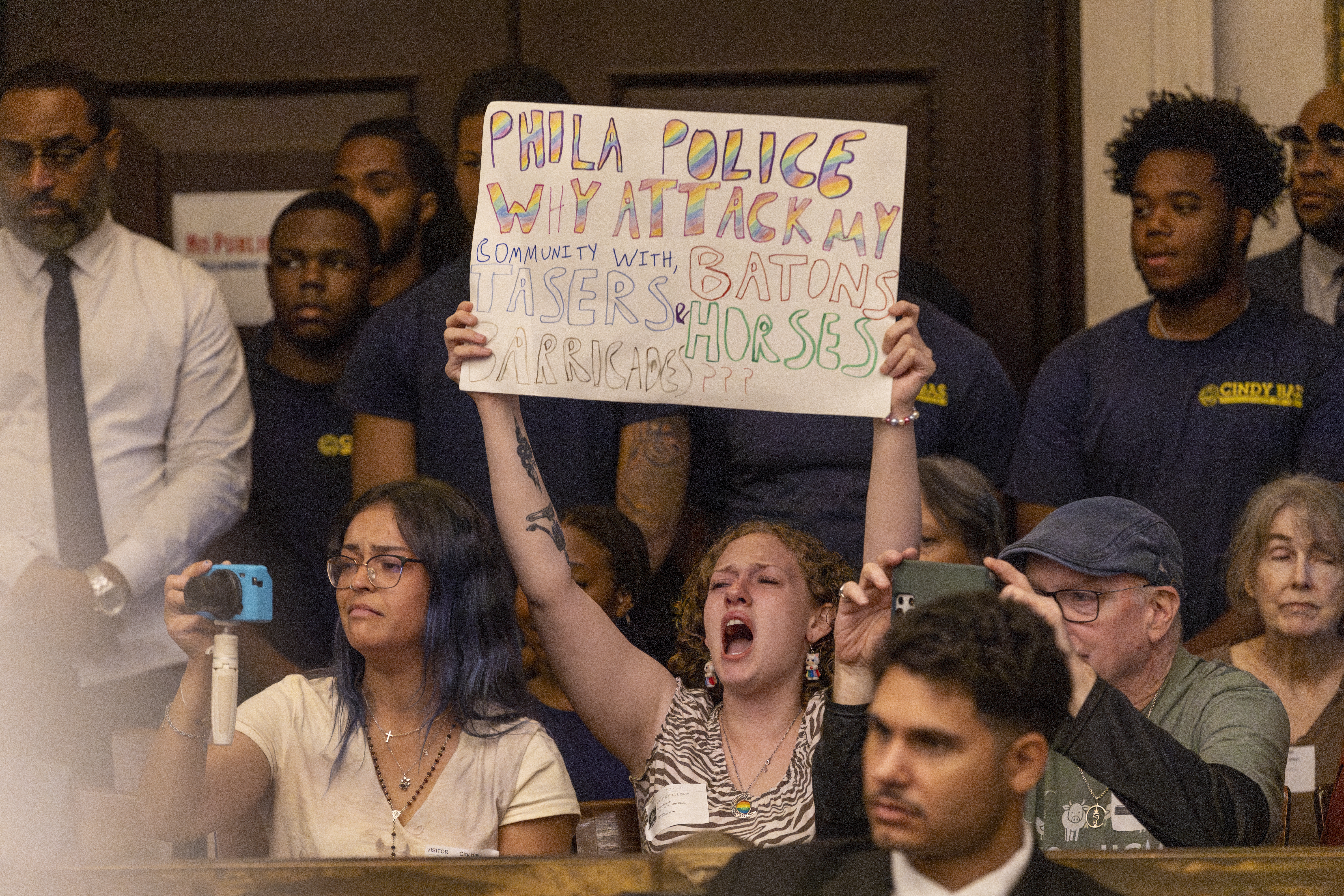
    Councilmember Rue Landau, a Democrat who represents the city at-large and is Council’s first openly LGBTQ+ member, introduced legislation Thursday to authorize Council to hold hearings on the response, citing video and eyewitness accounts of “aggressive police tactics,” such as physical confrontations between police and celebrators, as well as the use of mounted and motorcycle officers to disperse crowds.

    A large police presence at a Pride celebration in the Gayborhood on Sunday, June 8, 2026.Courtesy of Joshua Stokem

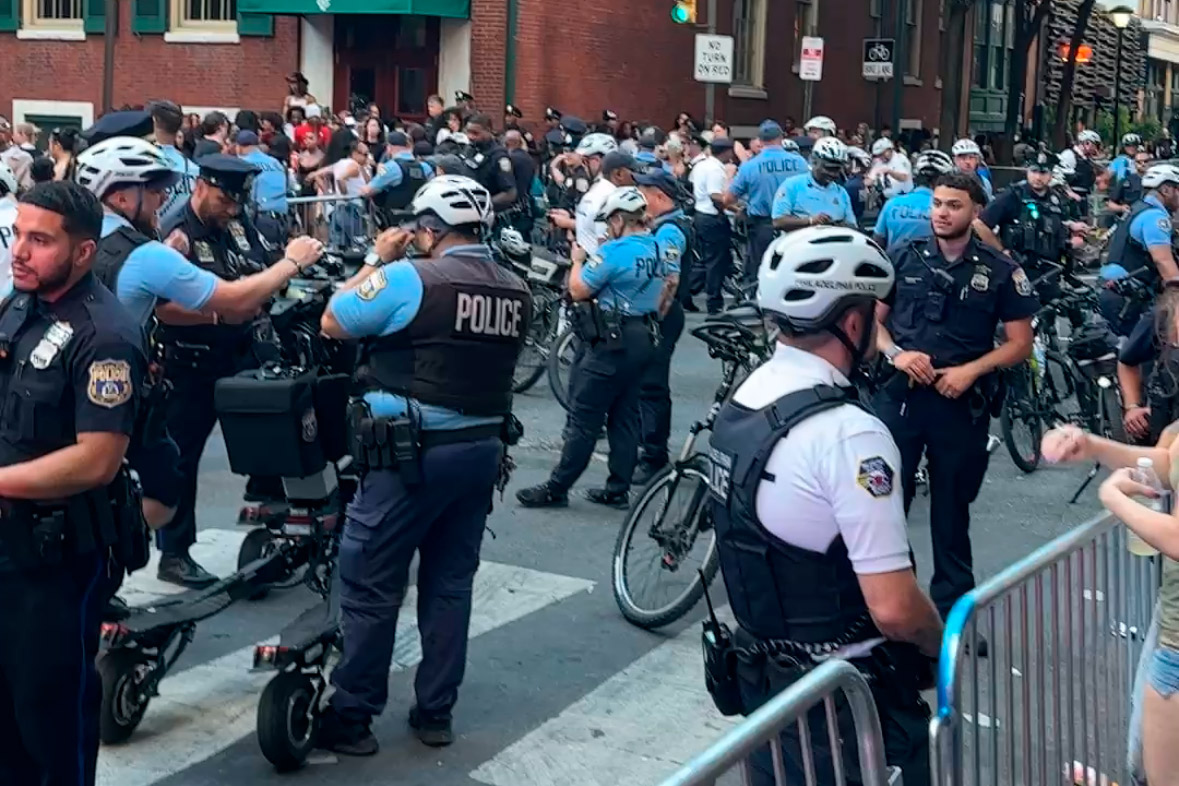
    Images and videos that circulated widely on social media this week showed officers pushing attendees, as well as police on horseback dispersing crowds from the sidewalk. Multiple officers were seen on video with their faces covered, and others barricaded Gayborhood streets. Police said 15 people were arrested.

    “It’s clear that this was a lack of communication, a lack of planning, and a lack of clear on-the-ground decision making of what to do in this situation,” Landau said Thursday.

    Holding hearings in Council “is not going to heal the pain and trauma that happened on Sunday,” Landau said, but it will “answer strategic and tactical questions.”

    ”We need to work towards a time when the Gayborhood is safe and open and welcoming to every member of the queer community, but especially to Black and brown queer people and trans people,” she added.

    Councilmember Rue Landau on Thursday, March 12, 2026.Alejandro A. Alvarez / Staff Photographer

    The city sponsored an official Pride march and festival on the Benjamin Franklin Parkway on Sunday, but many also gathered to celebrate in the Gayborhood, near some of the city’s best-known LGBTQ+ establishments.

    During an acknowledgment of Pride month in Council on Thursday, Mark Segal, the publisher of the Philadelphia Gay News and a fixture of the city’s LGBTQ+ community, said he was looking for accountability and wanted to know: “Who was in charge Sunday?”

    “No police should be wearing a mask in Philadelphia,” Segal said to applause. “No motorcycle should be up on the sidewalk. Police on horseback should not be hurting citizens. The police should not be running around with Tasers. People should not be punched. People should not be fenced off like animals.”

    Council unanimously approved a resolution to hold hearings. They are not likely to take place until fall, as Thursday was Council’s final meeting before adjourning for summer recess.

    The move to hold hearings is a notable step for a Council that has largely steered clear of public criticism of the city’s police department in recent years. While individual members have taken issue with discrete tactics or policies, most have been satisfied with the leadership of the force under Commissioner Kevin J. Bethel, who took the helm in 2024 when Mayor Cherelle L. Parker appointed him to the role.

    Bethel said the police department is investigating the agency’s response during the Pride festivities, and a police spokesperson said that five officers who wore facial coverings may face discipline for violating department policy.

    Parker said in a statement that senior members of the administration were examining the response. During an unrelated news conference Thursday, she said that “accountability will be reached.”

    “Rest assured we’re going to do the research. We’re going to find out what happened and where accountability is appropriate,” Parker said.

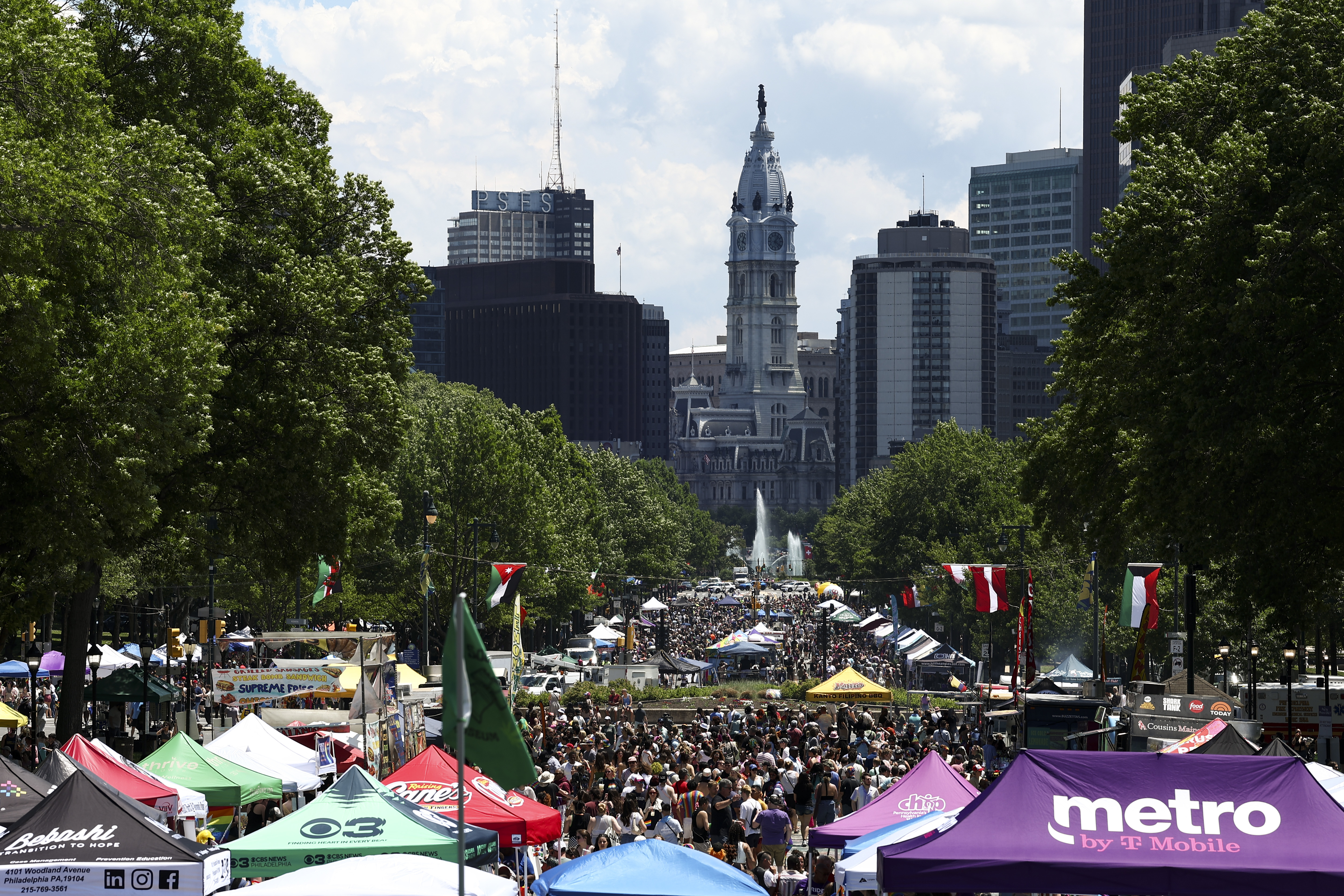
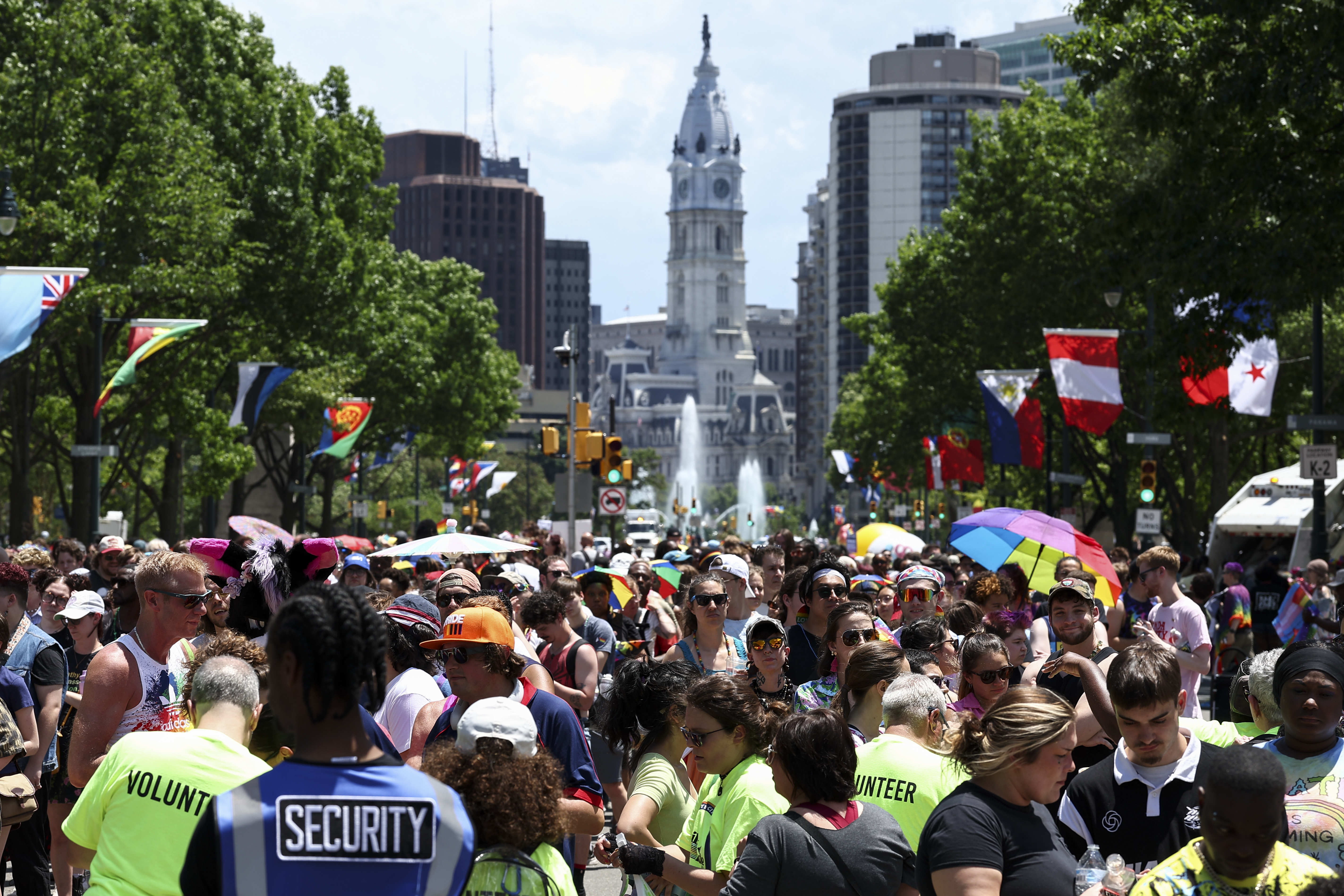
    People fill the street during the Philly Pride Festival on the Ben Franklin Parkway on Sunday, June 7, 2026 in Philadelphia.Monica Herndon / Staff Photographer

    More than a dozen LGBTQ+ residents and Pride attendees came to Council on Thursday to tell lawmakers about their experiences Sunday and call for an investigation.

    Philadelphia resident Jazmyn Henderson, a longtime activist in the city, was in the Gayborhood on Sunday and said she witnessed police using aggressive crowd-control tactics.

    She said she did not think Council’s resolution was enough to make her feel safe going forward.

    “I think City Council is delusional,” Henderson said. “I think the city is delusional, and they think that that resolution meant anything to any of the Black and brown people who were brutalized, assaulted, hurt, or mistreated by the cops on Sunday.”

    Sergio Cea, political director of the progressive political group Reclaim Philadelphia, testified during Council’s public comment section that he was tear-gassed by officers in West Philadelphia during a wave of civil unrest in 2020 and, following Sunday’s events in the Gayborhood, he does not feel safe in the city from what he described as “police violence.”

    “I really welcome the resolution that Rue Landau is presenting, but we need to go beyond that,” Cea said. “We are not safe.”

  • Mayor Parker responds to the police use of force during Philly’s Pride celebration

    Mayor Cherelle L. Parker says she is looking for answers after Philadelphia police arrested 15 people at a Pride celebration in the Gayborhood on Sunday that drew anger from community members over police use of force.

    “I know that members of our LGBTQ+ community are hurting, frustrated, and looking for answers. … I want everyone to know that I hear you, I see you, and my Administration is taking your concerns seriously,” Parker said on social media Tuesday evening.

    Images and videos spread across social media of police using crowd control tactics to disperse Pride-goers in the neighborhood, in what some considered to be an outsize and aggressive law enforcement presence.

    In one image shared on X, a police officer on a motorcycle appears to push against a woman’s chest, and, in a separate photo, another officer pushes the same woman against a storefront security door while arresting her.

    Other videos posted on social media showed police on horseback dispersing young people from a sidewalk, as well as officers physically struggling with a man outside the gay bar Woody’s. Another clip shows a row of police officers — two of them wearing face coverings — forming a line to clear a barricaded Gayborhood street while officers on motorbikes rode along the sidewalks.

    On Wednesday, Sgt. Eric Gripp, a spokesperson for the police department, said that officials had identified five officers who wore face coverings during the enforcement, and that those officers had violated department policy by doing so.

    The department is still working to determine what type of corrective action will be taken depending on the outcome of an internal investigation, he said.

    On Tuesday, Parker said she and some of her top staff, Director of LGBTQ+ Affairs Tito Valdes, and Philadelphia Police Commissioner Kevin Bethel had met to “review the information available to us and discuss next steps.”

    “In the days ahead, we will meet with community leaders as part of that effort. As we move forward, we must reject the notion that public safety and accountability are mutually exclusive,” Parker said in the statement posted to social media.

    Commanding officers at the scene gave orders to disperse crowds, according to Gripp, the police spokesperson.

    The crowd control tactics used on Sunday drew ire from local elected officials like City Councilmember Rue Landau, who said she has been in talks with city departments and police to understand why PPD used this strategy. “Police brutality has no place at Pride,” Landau said.

    People wait to enter the Philly Pride Festival at 21st Street on the Ben Franklin Parkway on Sunday.Monica Herndon / Staff Photographer

    A different Pride this year

    This year’s Pride looked different from that of earlier years. Usually, Philadelphia Pride celebrations and parades occur within the Gayborhood in Center City, east of Broad Street. But this year Philly Pride 365 and the city moved the parade and festival to the Benjamin Franklin Parkway because of security concerns over crowd sizes that had grown to more than 150,000 people, among other reasons, festival organizers said.

    The festival portion of Pride also asked attendees to pay $10 to enter an event that for years had been free to attend.

    Before and after the official celebrations ended, Pride-goers gathered in the Gayborhood, patronizing bars and spilling into the streets — a common practice during the celebration. But guests were surprised to find that several Gayborhood blocks around 13th and Walnut Streets were blocked with metal barricades, limiting crowds to sidewalks, said Joshua Stokem, a New Jersey resident who regularly attends the city’s Pride celebrations.

    Stokem said the layout caused large groups to pack into the corridors outside bars and restaurants and, in his view, created confusion and exacerbated some of the issues attendees had with police.

    On Sunday, police had 600 officers assigned to Pride celebrations with around 150 officers in the Gayborhood monitoring festivities, Bethel said.

    “By all accounts, [it was] a successful event attended and enjoyed by thousands of people. As crowd sizes increased in the Gayborhood, officers responded to a growing number of public safety concerns, including fights, disorderly behavior, blocked roadways, and the challenges associated with safely managing large crowds in a confined area,” he said in the statement.

    Bethel said the department had expected the Parkway celebration to gradually transition to the Gayborhood event, but that did not happen.

    Instead, he said, two separate gatherings were essentially happening at once, creating a situation that was “challenging to manage safely” and led to the decision to clear parts of the neighborhood.

    “That decision was not made in any way, shape, or form because people were celebrating Pride,” he said.

    Most of the arrests during Sunday’s event were for disorderly conduct, according to Bethel, while one person was charged with aggravated assault of a police officer.