Tag: LGBTQ+

  • We pick our favorite shows from this year’s big, bizarre, and bold Philly Fringe Fest

    We pick our favorite shows from this year’s big, bizarre, and bold Philly Fringe Fest

    The Philadelphia Fringe Festival celebrated its 30th year with more than 338 productions across the city. Our reporters found shows that left us dazzled and confused, tearful but still laughing, and truly amazed by all the strange, weird, and delightful originality that artists from Philly (and beyond) had to offer.

    These were some of our favorite performances, including solo shows, interactive experiences, immersive dance, otherworldly journeys, and incisive political explorations.

    Most optimistic: ‘Lunar Retreat’

    To enter this performance, you must prepare for take off: Grab a set of headphones specifically curated for your group (an audience of just a dozen or so, per entry time) and remove your shoes.

    Past the doors lies a transformed Pearlstein Gallery, with different sections divided by flowing white curtains. The calm voice in your ears provides instructions, like a guided meditation for a winding path through a constellation of dancers before you arrive in a maze of tall, twisting cardboard adorned with twinkling lights and images of the moon’s various cycles.

    After billions of years orbiting the earth, our moon has been slowly inching away from us, the disembodied voice explains. The show asks: What does it mean to enter someone’s orbit, to connect with another person, when we all drift apart eventually, inevitably? At its core, Lunar Retreat tackles grief, prompting the audience to imagine a loved one who is physically distant. What detail about this person do you never want to forget? After we write down our answers, we’re guided into the maze, where the answers from previous attendees dot the spiraling walls.

    Fringe Fest regular Nichole Canuso’s dance company Branching Paths is renowned for immersive and interactive performances; here she worked with ocean explorer/artist Rebecca Rutstein, sound designer Bobby McElver, video designer Kate Freer, and set designer Anna Kiraly, among many collaborators. The projections were especially astounding: In one room, a dancer performed a series of moves in one place that were recorded and projected to the same location on a loop, allowing her to essentially dance with and embrace the projected version of herself. It was a mesmerizing collaboration between dance and technology.

    Founder and artistic director of Nichole Canuso | Branching Paths, presented “Lunar Retreat” in the 2026 Philadelphia Fringe Festival.Theo Cote

    At the end, the three audience groups gathered for the finale, when eight dancers (including the choreographer, Canuso) evoked ocean tides as they converged and separated, where they kept reaching for one another and then leaping apart. I was in awe not only of the performance itself but of my fellow audience members, who embraced the experience with open hearts and curious minds — leaving me surprisingly optimistic about the future of humanity.

    — R.C.

    Standout Solo Show: ‘Tuzluk’

    This wildly inventive coming of age story follows Turkish Colombian American theatre artist izzy sazak as they deconstruct the heroes of their childhood. It’s a bold, imaginative examination of how we recontextualize the stories that we are told as kids. Throughout the piece, sazak examines their father, his Turkish heritage, and the Turkish mythos that they grew up instilled with. It is a magnificent look at the crossroads of culture, legacy, and family; while also being frankly honest about how many people idolize political figures.

    sazak is an effortless performer, immediately engaging with the audience, establishing a welcome and safe feeling throughout the performance. They are also very adept at comedy: their timing is precise, and they can easily adapt and improvise.

    izzy sazak in a promo image for their show “Tuzluk” in the 2026 Philadelphia Fringe Festival.Courtesy of subject

    The word tuzluk is Turkish for “salt and pepper shakers,” but it is also a colloquial name for the folded paper toys that kids use to tell their futures. This item is used both as a literary device, as sazak unravels their future through the show, and also as set pieces.

    Several tuzluks of varying sizes are arranged on the stage, and are utilized as props. The final moments of the show, when the last tuzluk is opened, is one of the most cathartic, community focused finales I’ve ever experienced in a theatre.

    — F.S.

    Best true story, retold: ‘Kramer/Fauci’

    C-SPAN isn’t usually the place where one might find dramatic inspiration. But for director/creator Daniel Fish, one hour of a televised debate in 1993 provided an insightful window into a painful history that still resonates deeply. His innovative verbatim play follows a contentious conversation between Larry Kramer, the fierce activist/playwright who founded ACT UP, and Anthony Fauci, head of the National Institute of Allergy and Infectious Diseases at the time, about then-President Bill Clinton’s new task force to address the AIDS crisis.

    On the sparse stage only four actors appear, playing the moderator (Greig Sargent), Fauci (Pete Simpson), Kramer (Thomas Jay Ryan), and the callers who dial into the TV segment (Jennifer Seastone). There are no cameras, no desks or green screens to evoke the monotony of C-SPAN’s regular programming; instead, the moderator is seated and his guests move around freely while Seastone spins around on roller skates, occasionally donning a chicken suit. The pared down production allows Kramer and Fauci’s sparring to take the spotlight (literally) but also creates a dynamic movement that keeps the audience engaged in their hot-and-cold ping-pong match without feeling like we’re watching a live podcast taping.

    It’s far from boring, no matter how wonky the dialogue gets. Ryan’s Kramer erupts on a dime, shouting and throwing barbs and teasingly threatening to slap Fauci, who deflects and delivers defensive, boilerplate responses typical of a bureaucrat, knowing that his answers are dissatisfying. Kramer is fuming and defiant, demanding urgency from a government and a public whose inert response to the epidemic was a systemic, fatal failure on an unimaginable scale. When the callers chime in, many express sympathy, but one chilling, virulently homophobic standout accuses him of infecting the nation’s bloodline.

    The most dramatic moment comes rather abruptly, when a towering bubble machine churns out a mass of suds that slowly takes over the stage. Kramer sits next to it, arms crossed, resigned as the machine whirs and the foam spreads.

    Given the devastating subject matter, I didn’t expect to laugh so much. The pair at the center of the show hold profound respect for each other despite their disagreements and there’s a familiarity to their banter that underscores their shared goal; their debate is almost endearing to hear in retrospect today, if the reality wasn’t so infuriating. It ends with an epic line from Kramer when asked for his last word: “I want Bill Clinton to come out of the closet … and do something about this disease.”

    — R.C.
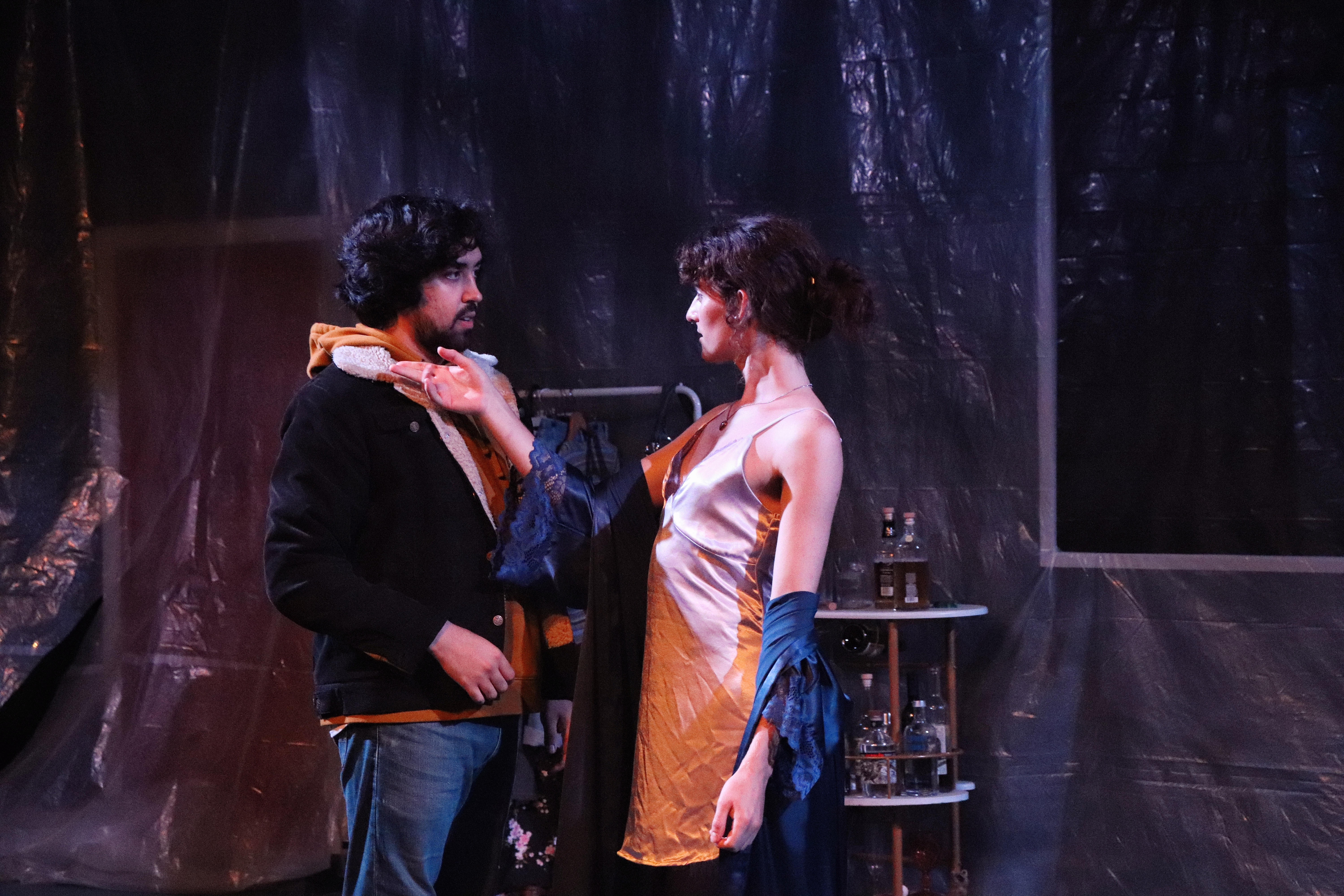
    A scene from “Returned, Iridescent,” part of the 2026 Philadelphia Fringe Festival.Seph McAndrew

    Most Promising: ‘Returned, Iridescent’

    There is a scarcity of narrative stories that showcase LGBTQ+ people growing up and living into old age. Oftentimes, these characters are burdened with struggle, defeat, and frequently, a tragic end; especially stories of trans people. Returned, Iridescent, the new work by playwright Rose Farrell, defies this trope by taking the audience on a beautifully poetic journey of two queer characters who constantly collide, combust, and separate, only to be drawn back together again and again. The text shifts between realism and poetry, allowing the characters to be both their true selves and romanticized versions. It is a beautiful story about finding yourself, loving yourself, and accepting the happiness that you deserve.

    Breathtakingly nuanced performances from the two leads (Olive Gallagher & Gideon Caro McDonald) help ground this work in the moment. Watching the two of them effortlessly push, pull, and play with each other is a joy. I’m eager to see what these two talents do next. Strong design elements, with direction by Jack McManus, help this play to soar.

    This play is an extremely timely one, given the current social and political discourse around trans people, which often serves to dehumanize or vilify them. I commend Theatre by Development for choosing to tell this story now, and hope that it is told many times more.

    — F.S.

    Nerdiest romance: ‘Wikipedilove’

    A Newfoundland town called Dildo. The erotic novella A Billionaire Dinosaur Forced Me Gay. Eva Braun?

    All are ripe for exploration at the love-and-sex-themed Wikipedilove, the lo-fi, musical PowerPoint presentation staged at West Philly Fringe hub Studio 34.

    Writer, singer, and guitarist Noam Osmond — who moonlights as a “troubadour for hire” and can occasionally be spotted serenading strangers in Clark Park — and singer and accordionist Anna Apostolidis take the audience through a whirlwind of weird internet, told through screenshots, academic analysis, and cutesy folk songs.

    In under an hour, we learn, for instance, that gray whales mate in threes (“#consensuwhale”) and that there’s a Wikipedia page of “List of sexually active popes,” among many other NSFW topics.

    At the packed Friday night performance I attended, audience members were game to sing and sway along, emblematic of the participatory theatre that makes the Fringe Festival so special.

    Two actors dressed as sparkly winged green and yellow bugs who appeared in the finale were a highlight of the show — luna moths, which live for just one week, solely to mate. Because who says science can’t be silly and sexy?

    — J.Z.
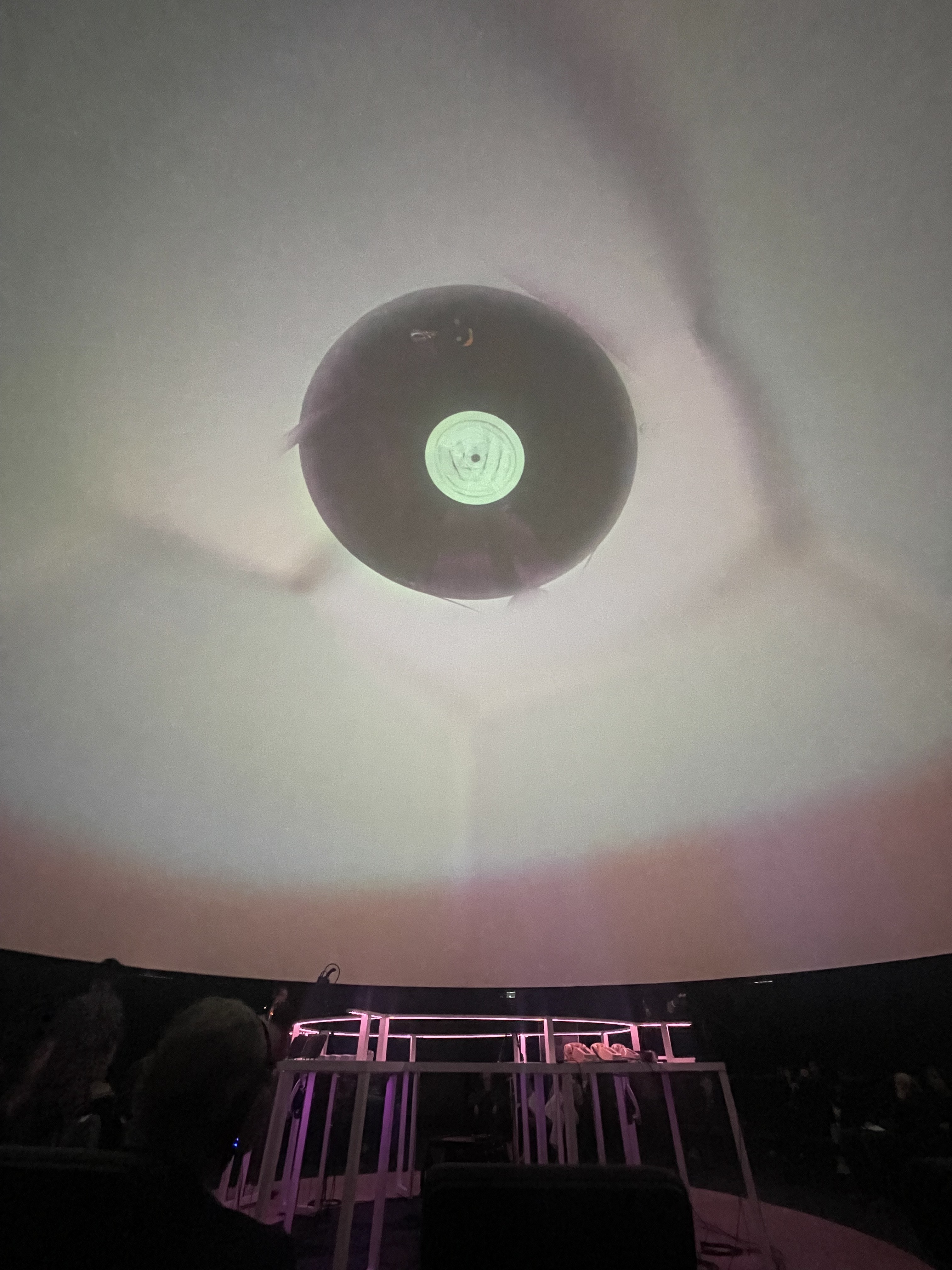
    A projection of a vinyl record on the domed screen of Fels Planetarium for “Utopian Hotline,” part of the 2026 Philadelphia Fringe Festival.Rosa Cartagena

    Strangest existential journey: ‘Utopian Hotline’

    A night at the museum is always a fun set up for a new adventure. This trip to the cosmos — courtesy of the theatermakers at Mitu, an experimental group based in Brooklyn — took place inside the Franklin Institute’s Fels Planetarium.

    At the center of the room sat a round desk with a camera, turntable, microphones, and telephones. Audience members wore headphones and sat back as the domed screen above came alive with the trippy, philosophical show.

    The titular hotline is real, inspired by the Golden Record that NASA sent to space that’s meant to represent earth, featuring sounds from voices to waterfalls to classical music. Mitu’s project imagines the messages we could send out into the universe if we created another record with people answering the prompt, “How do you imagine a more perfect future?”

    Their respondents express variations of similar feelings: that it’s a hard question to answer, that it’s especially difficult to imagine a future when our current present time is so fraught, that we all want compassion and care and kindness no matter how far humanity travels from earth. (It’s an active hotline for anyone who’d like to add their voice.)

    The show was part listening session (headphones required) and part strange story time as the performers at the center, akin to astronaut guides in matching gray suits, tinkered with the machines in front of them, sometimes taking over the mic to sing and other times recording with the camera so that their face would appear in the screen like a ghost. They posed existential questions about whether we’re alone in this universe or if we’ll ever truly understand the fickleness of time. The performance was somewhat disorienting, but the experience felt strikingly unique regardless of the occasional confusion, or maybe because of it.

    — R.C.
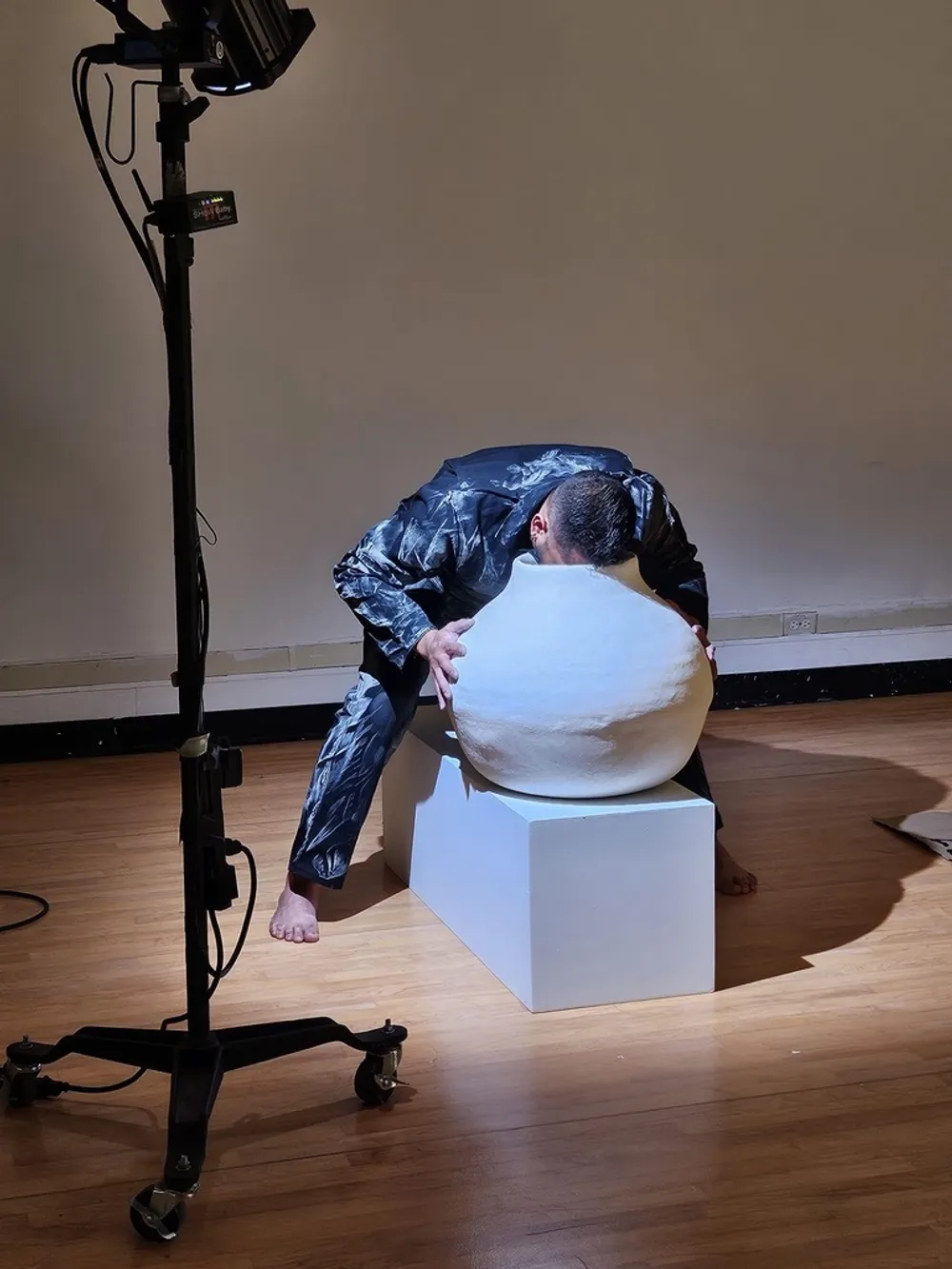
    Actor Justin Jain in “Bad Clay,” a show in the 2026 Philadelphia Fringe Festival.Wendi Van Horn

    Most Thought-Provoking: ‘Bad Clay’

    Justin Jain brings the audience to the cross section of sculptural ceramics and performance art in his original work Bad Clay. An experimental piece about migration, America, and sculpture, it delights in the way Fringe shows often do; by highlighting something new and unexpected. Entering the space, the audience is greeted by a series of ceramics laid around the room, all of which are made by Jain. Throughout the piece, Jain interacts with each ceramic, and also throws some clay on a wheel, creating live sculptures in front of the audience. Conspicuously, there is also a mannequin in the room; dressed as an ICE agent, and draped in an American flag. Ever present, this mannequin provides a feeling of unease that permeates the room, and when it is finally addressed and incorporated into the piece, it results in a truly harrowing moment.

    What really stood out about this piece was the prologue. In a prerecorded monologue from Jain, he explains that the piece we’re about to see is an experiment. He goes on to explain how he has struggled to be presented by the Asian Arts Initiative directly, and also how he came to be in the space that the piece is taking place in … as it was not the space he wanted to present in. According to this prologue, he was looked over for various fellowships and grants, which led to having to present this piece as part of the “pay to play” aspect of the Festival. As a Philly artist of some notoriety, Jain still has struggled for financial and creative stability. It was an interesting breath of realism, and a frank conversation about the state of arts funding throughout the city. Additionally, it also offered audiences a “peek behind the curtain” as they heard firsthand about the hurdles of presenting a fringe show, and how it affects performers and producers.

    Bad Clay is something I would be intrigued to see again, and to see what it would look like as Jain envisions it fully. It is a piece that raises interesting thoughts and questions, paired with honest reflection, and fully seeing it as the artist intended would be an exhilarating experience.

    — F.S.

    Shows we’re excited to seeing develop further post-Fringe

    • Alpha by Lisa Villamil
    • Trauma Queen by Liv Shoup
    • Amor/Libertad by Joel De Jesus-Pacheco
    • The Suppliants by Sidney Marie Hughes
    • Dickie Dickie Dicky Donnie by BETTY
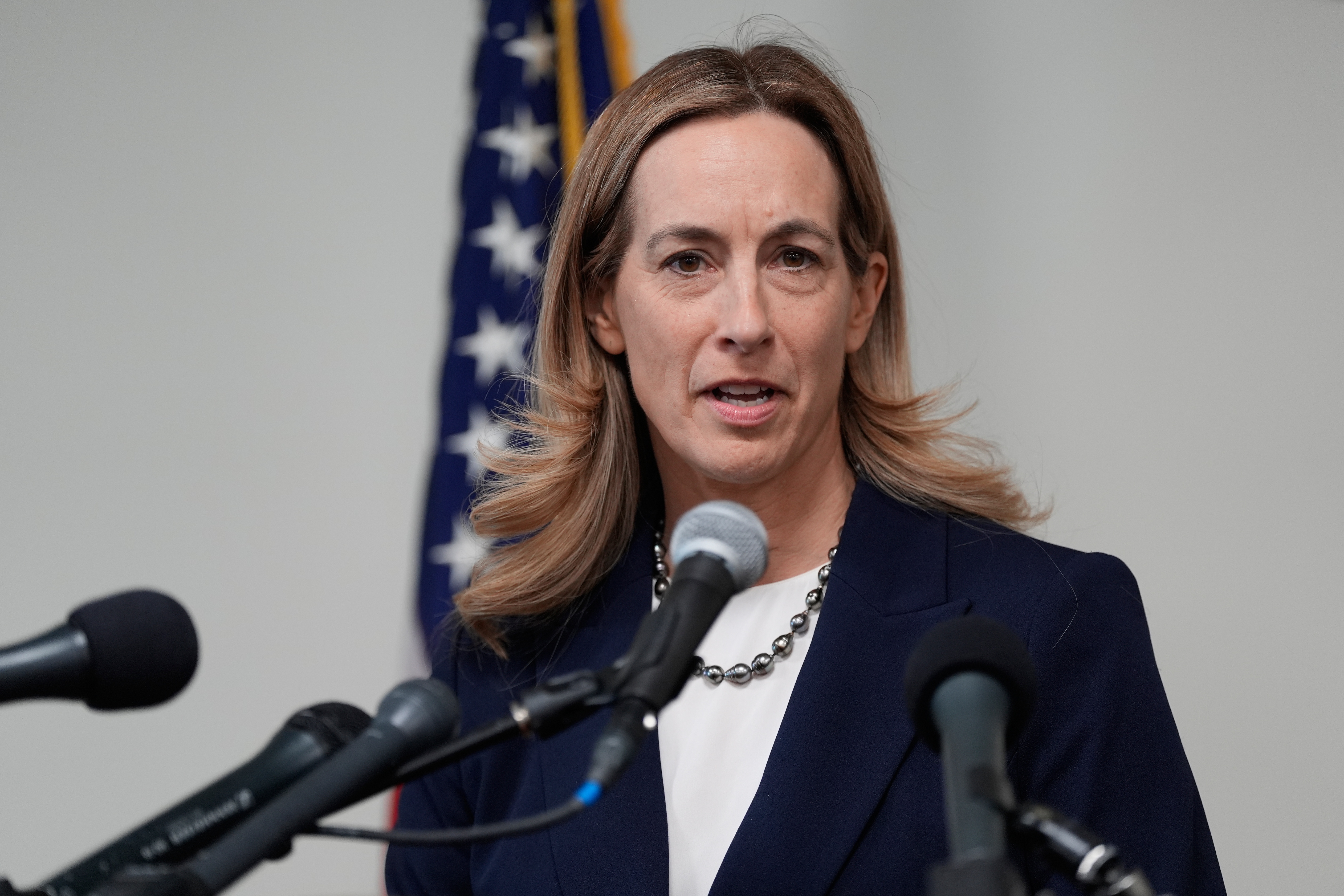
  • Sen. Dave McCormick calls for increased NIH funding, breaking with Trump in Washington Post piece

    Sen. Dave McCormick calls for increased NIH funding, breaking with Trump in Washington Post piece

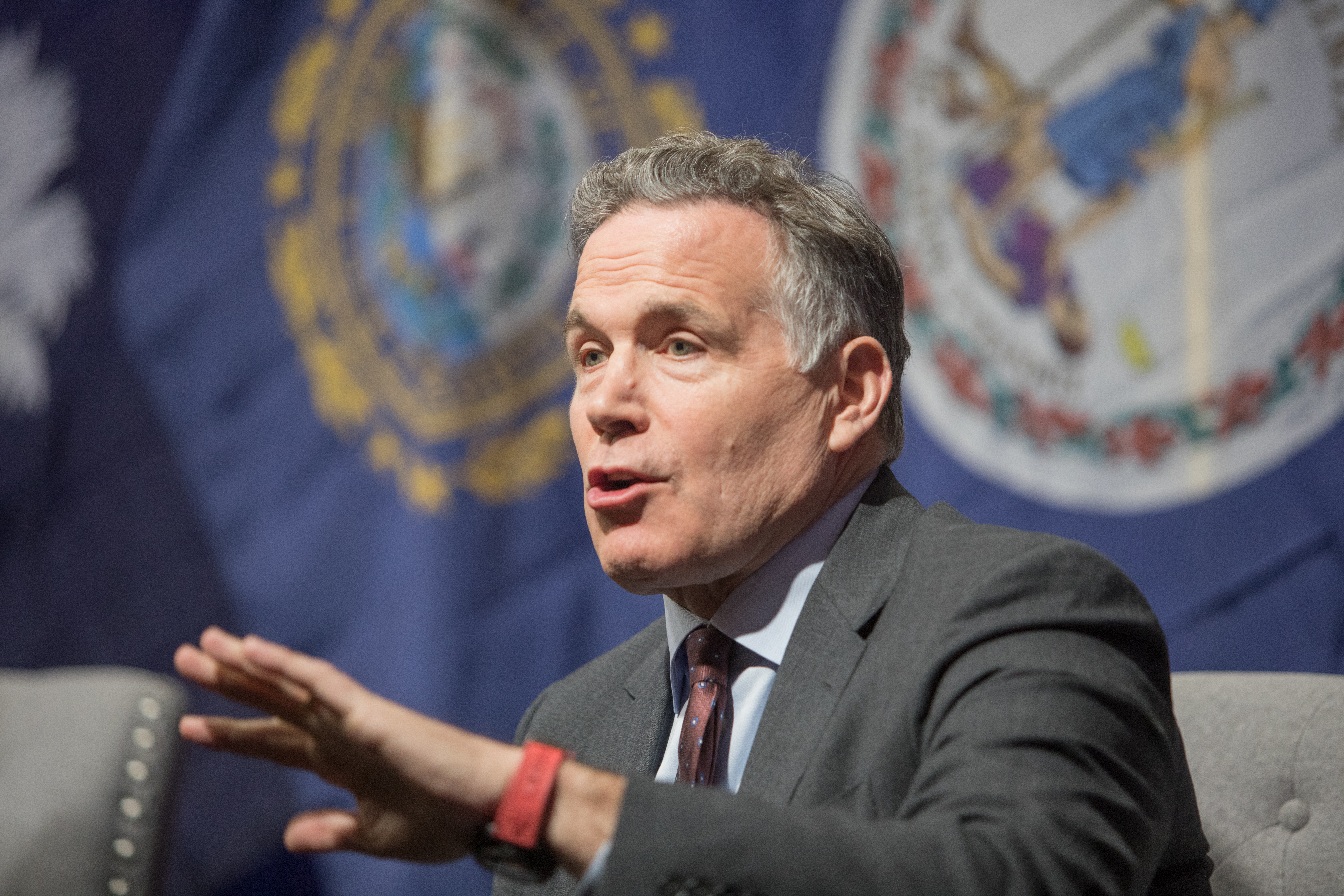
    U.S. Sen. Dave McCormick called for doubling the National Institutes of Health budget and prioritizing “merit-based science” in a Washington Post opinion piece published Wednesday.

    The column emphasized the Pennsylvania Republican’s disagreement with decisions made under President Donald Trump’s administration over the last year and a half that have disrupted billions in scientific funding, prompting lawsuits and court reversals in certain cases.

    “I’m a Republican senator. America needs more science, not less,” read the headline on McCormick’s column.

    He opened with a reference to KJ Muldoon, a Philadelphia-area child whose life was saved by a personalized gene-editing therapy. NIH funding helped researchers at Children’s Hospital of Philadelphia and the University of Pennsylvania develop the treatment. This work represents how federal investment can drive breakthroughs in American medicine, McCormick noted.

    “Meanwhile, the U.S. is underinvesting in discovery,” he wrote, highlighting how the NIH budget has declined by more than 10% since 2003, adjusting for inflation.

    Though McCormick has largely supported Trump’s agenda, he has repeatedly pushed back on cuts to research funding.

    His office last week publicized a letter authored alongside Sen. John Fetterman (D., Pa.) in which the senators issued a bipartisan call for the federal government to explain recent cuts to healthcare research grants affecting Pennsylvania.

    CHOP and Penn are among the institutions that had to shut down programs after the Agency for Healthcare Research and Quality stopped funding more than 100 grants nationwide, totaling hundreds of millions of dollars, in July.

    In his commentary, McCormick cited examples of NIH funding “saving lives and lowering the cost of disease.” Although less than 1% of federal spending goes toward NIH research, he said, the investment delivers outsized returns.

    The nation’s leadership in scientific innovation could slip if federal funding continues to fall, he added.

    “Conservatives should recognize that basic research, like national security, is a public good that private capital rarely funds,” he wrote.

    At the same time, he echoed some of the Trump administration’s criticisms of research funding, which it says overemphasizes diversity, equity, and inclusion.

    The federal government has canceled nearly 1,400 grants midstream, many due to language referencing diversity, he said.

    In the Philadelphia area, research on LGBTQ+ health and health disparities — how social factors like race, income, and living conditions affect health — has been particularly targeted by cuts.

    “While some of these grants deserved to be canceled, some were legitimate research with buzzwords inserted to get approval from the Biden administration,” McCormick wrote.

    A federal judge had ruled that some of the cuts targeting diversity-related grants were unlawful and discriminatory, after researchers and institutions pushed back through lawsuits.

    McCormick said he has urged the government to let scientists revise their applications to continue their work, rather than wasting the investment in those canceled grants.

    He also called for the government to double the NIH’s $48 billion budget within five years, rather than cut it by nearly 40% as the Office of Management and Budget had proposed last year. The proposed cuts were rejected.

    “If we dare, KJ’s story can be the beginning of a new golden age of American science,” he concluded in the op-ed.

  • Republican House candidate removed from panel after repeatedly misgendering Rep. Sarah McBride

    Republican House candidate removed from panel after repeatedly misgendering Rep. Sarah McBride

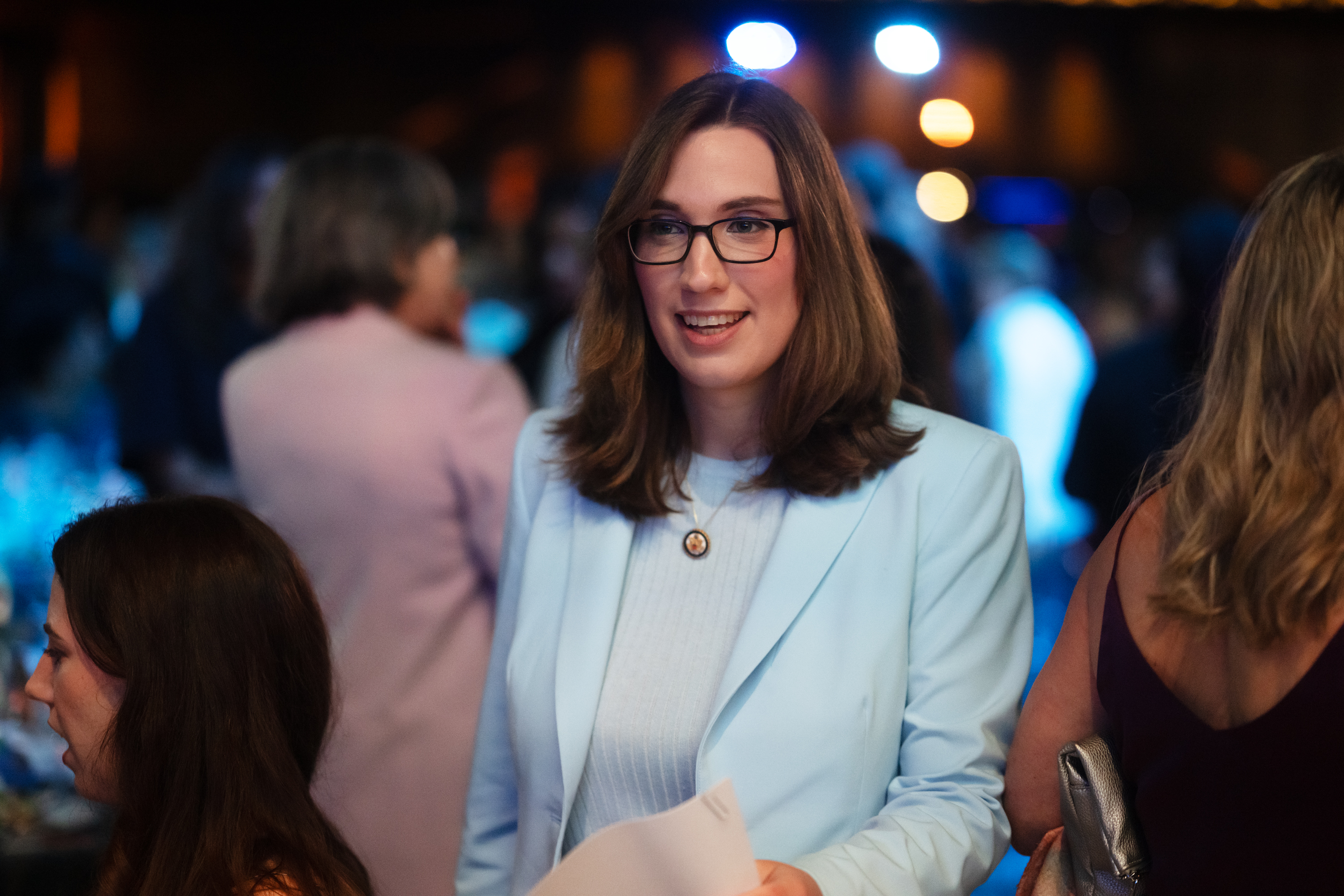
    Republican U.S. House contender Joseph “Dr. Joe” Arminio was removed from a panel Thursday featuring candidates in Delaware races after he repeatedly misgendered Democratic U.S. Rep. Sarah McBride.

    McBride is the first openly transgender member of the U.S. House and was sworn in last year.

    Things unraveled at the Siegel Jewish Community Center in Wilmington, where the Jewish Federation of Delaware’s Jewish Community Relations Committee coordinates a candidates forum every two years. The event featured candidates for U.S. Senate, U.S. House of Representatives, attorney general, state treasurer, and auditor of accounts.

    McBride will face Republican Arminio in November for the state’s only U.S. House seat.

    Arminio, a Wilmington native, political scientist, author, and educator, campaigned largely on inflation. His responses to a 2026 voter questionnaire indicate several anti-LGBTQ+ policy positions. In 2008, he ran unsuccessfully for Congress in Maryland. He did not receive the Delaware GOP’s endorsement, which went to Earl Cooper.

    At the public event, Arminio repeatedly referred to McBride using he/him pronouns and later called her a “gentleman.”

    In the first incident, Arminio’s remarks were met with boos from the crowd. After he spoke, moderator Ken Grant warned him to follow the forum’s rules for proper decorum.

    “If you fail to show respect to anyone else on this stage, you’ll be asked to leave,” Grant said.

    Arminio acknowledged the incident during one of his forum responses.

    “I committed an error before,” he said. “I do acknowledge it. It’s not the first error I’ve made in this campaign, or at any point in my future life.”

    But minutes later, Arminio misgendered McBride again, pointing at her and Democratic Sen. Chris Coons and calling the two of them “gentlemen.” The crowd started booing again, and Arminio’s microphone was cut off.

    McBride said on stage she wanted Arminio to stay and be able to talk about his platform, but organizers held firm.

    Arminio told 6abc he planned to address the incident. He did not immediately respond to The Inquirer’s request for comment.

    The Human Rights Campaign describes the political climate for transgender people and the LGBTQ+ community as an ongoing crisis amid legislative hostility, federal rollbacks, and discrimination. The organization estimates there are more than 2 million transgender people across the country.

    Experts say misgendering a trans person can range in severity from a microaggression or macroaggression to explicit harassment depending on the intent, frequency, and context. Studies show the LGBTQ+ community is more likely to experience harassment, discrimination, and violence than cisgender and heterosexual people.

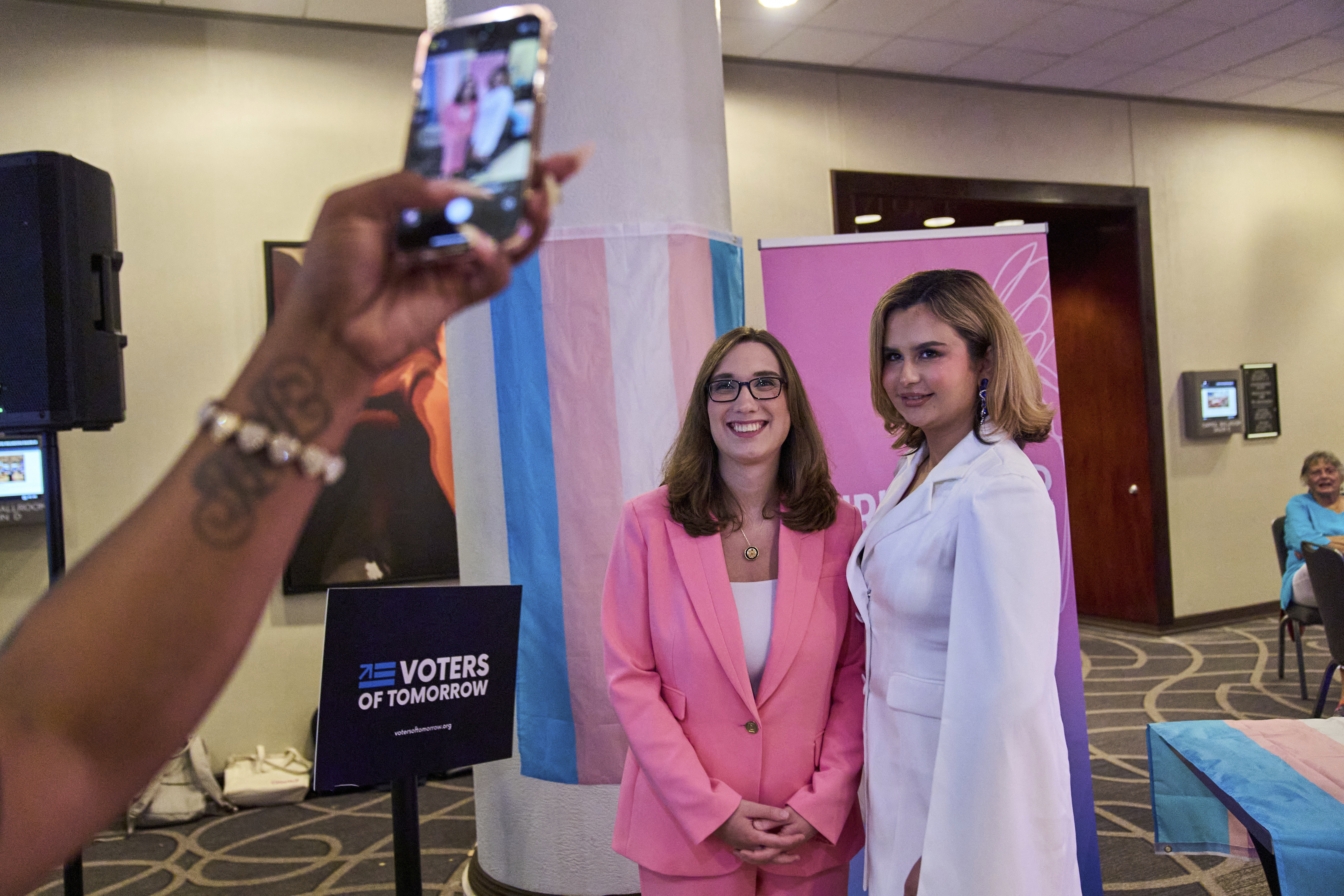
    Bella Bautista, 22, right, a trans woman, has a photo taken with Rep. Sarah McBride, D-Del., the first trans woman to be a member of Congress, during a reception held by the Christopher Project in June 2025.Jacquelyn Martin

    McBride, who was previously a state senator, has been targeted by transphobic attacks across her career.

    After being elected to Congress, Rep. Nancy Mace (R., S.C.) introduced a resolution banning transgender women from using women’s facilities in the U.S. Capitol. Speaker Mike Johnson also implemented a policy restricting restroom access in the Capitol and House offices to a person’s “biological sex,” which experts say is a politicized term to describe someone’s assigned sex at birth.

    The policies were viewed as a way to directly target McBride, the only openly trans person serving in either chamber. McBride has also been repeatedly misgendered.

    Last year, Rep. Keith Self (R., Texas) called McBride “Mr. McBride.” She quipped back, calling him “Madame Chair.” Others stepped in on McBride’s behalf, but the exchange got heated, and the session ended early with Self refusing to honor McBride’s identity.

    Other House Republicans have continued to use male pronouns and honorifics while referring to McBride during interviews, debates, and on social media.

    The representative has worked across the aisle with politicians whose views on the LGBTQ+ community don’t align with hers. She says her job in public office is to represent her state’s priorities and, in turn, normalize trans visibility.

    At the forum, Mike Katz, a former Democratic state senator and now the GOP’s endorsed candidate for U.S. Senate, said Arminio’s actions were uncalled for and apologized to the crowd. Following the event, in a lengthy Facebook post, he called for Arminio to withdraw from the race, calling it a matter of “respect.”

    Grant, the event’s moderator, said ground rules were shared with candidates in advance and were clear: “treat everyone on stage with respect.”

    “When a candidate declined to do so after a clear and public warning, the rules were applied — as they would have been for any candidate, of any party, on any subject,” he said. “I want the focus to remain where it belongs: on the nine candidates who spent the evening answering voters’ questions thoughtfully and civilly, and on the hundreds of Delawareans who came, in person and online, to listen.”

    McBride appears to be taking the incident in stride.

    “I am always so proud to represent Delaware and Delawareans,” she wrote in a statement Friday. “Nothing — and certainly not politicians seeking to go viral — will ever distract me from my laser focus on lowering the cost of gas, groceries, housing, childcare, and healthcare.”

  • New Jersey Gov. Sherrill signs a law to protect reproductive and gender-affirming healthcare. Here’s what to know.

    New Jersey Gov. Sherrill signs a law to protect reproductive and gender-affirming healthcare. Here’s what to know.

    New Jersey Gov. Mikie Sherrill signed a bill Thursday that offers greater protections for reproductive and gender-affirming healthcare — both for patients and for providers in the state — by making it a crime to intervene against such care.

    The new law strengthens existing reproductive healthcare protections and also broadens them to now include gender-affirming care. It is meant to cover residents as well as people traveling to the state.

    “This is a very big deal. It’s amazing,” said Martha Madrigal, a transgender woman who leads the Collingswood chapter of PFLAG, a national advocacy group for the families of LGBTQ+ people.

    She added that the law is a “solid declaration” that interfering with transgender rights “does not stand in New Jersey. We’re letting out an enormous sigh of relief today.”

    The legislation expands New Jersey’s shield laws by expressly including gender-affirming care in the definition of “protected reproductive healthcare services.”

    Essentially, the law creates a new crime for interfering with someone trying to access reproductive healthcare, such as an abortion, or gender-affirming care.

    It is now a fourth-degree crime (a low-level felony like shoplifting, punishable by up to 18 months in prison) to injure, threaten, intimidate, or physically block patients or providers, or to damage property in an effort to interfere with such care.

    The law would also protect providers from extradition to other states that have banned abortion or gender-affirming care for minors.

    Sherrill said New Jersey is “standing firm in defense of reproductive freedoms — including the right to choose and the right to receive gender-affirming care.”

    In comments after the signing, Sherrill referenced “attacks” and efforts to impose restrictions on access to abortion and gender-affirming healthcare by the Trump administration and Republican-led states.

    She said the transgender community has been “relentlessly attacked” by the Trump administration.

    “They’ve pulled tactics straight out of the ‘Red Scare’ playbook to restrict transgender people’s healthcare,” Sherrill contended.

    Since returning to office last year, President Donald Trump has issued orders to block federal funding for gender-affirming care for people under 19, oust transgender military personnel, and prevent transgender people from using the gender they self-identify as on passports.

    “We are not going to pay for our innocent children to undergo these barbaric surgeries and practices, which result in unthinkable and irreversible harm to their young bodies,” Trump said on Truth Social earlier this month after Medicaid ended reimbursement for hormone treatment and surgeries for minors.

    Surgeries for minors are extremely rare. And fewer than 1 in 1,000 U.S. adolescents receive medication for gender-affirming care, according to a Harvard University study released last year.

    State Sen. Teresa Ruiz (D., Essex), a chief sponsor of the bill and the Senate’s majority leader, said the bill makes New Jersey “a beacon of hope” in the nation.

    “You can’t tell us what we can read on a library shelf but want to be up in our uterus in an exam room,” she said.

    The law empowers patients and providers to take legal action against individuals who interfere with their access to or delivery of protected care.

    And it protects healthcare providers from professional penalties or adverse actions involving their medical malpractice insurance for providing care that is legal in New Jersey.

    Speaking for healthcare providers in New Jersey, Kristyn Brandi and Catherine Obando, doctors from Union who are preparing to open a clinic providing abortions and gender-affirming care, praised the law as an assurance that providers could deliver care without “risking their freedom or professional license” in the state.

    “We are grateful to know that our patients and staff will be protected from criminalization and harassment,” Brandi and Obando said in a statement as founders of the Luminosas Wellness Collective.

  • A newly formed nonprofit is trying to shut down a Gayborhood bar, claiming it’s a ‘public nuisance’

    A newly formed nonprofit is trying to shut down a Gayborhood bar, claiming it’s a ‘public nuisance’

    Editor’s note: This story was updated to include information from an interview conducted with Michael van der Veen and William Brennan after the story was published. van der Veen, Brennan, and their attorney, George Bochetto, did not responded to multiple interview requests in the days leading up to publication.

    A newly formed local group sued the Gayborhood’s Bar X this month, alleging it is a public nuisance. The group wants to shutter the decade-old business, whose clientele is largely Black.

    The lawsuit asks a Philadelphia Common Pleas Court judge to order the Camac Street bar to cease operations. It arrives at a time of increased police presence on the nightlife strip and heightened tension between the city’s Black LGBTQ+ community and police.

    Bar X has “repeatedly generated excessive noise, disorderly conduct, disturbances, violence, public intoxication” and requires a constant police presence, the complaint says. It also claimed neighbors have observed “public displays of drunkenness and sexual activity” outside the bar.

    The city failed by maintaining the establishment’s business license, the suit says, urging a judge to revoke it.

    Behind the lawsuit is Michael van der Veen, a 62-year-old high-profile Center City lawyer whose office is in the building across from Bar X on Camac Street.

    The bar has been using the office’s parking spot for years, van der Veen said, despite repeated requests to remain off the lawyer’s private property.

    But things escalated in July when, according to van der Veen, he was assaulted while leaving his office around 9 p.m. at night.

    “When I got jumped from behind and got coldcocked, I was done,” he said.

    Days later, veteran criminal defense lawyer William Brennan incorporated Save Our Neighborhood for Tomorrow Inc., the group that filed the lawsuit against “the dive bar of the Gayborhood,” as Bar X pitches itself.

    “This changed when passive-aggressive behavior became assaultive-aggressive behavior,” Brennan said. “It can’t be tolerated.”

    Brennan and van der Veen have previously worked on high-profile cases together, including on President Donald Trump’s defense team during his second impeachment in 2021.

    The duo also represented the Trump Organization in a 2022 tax-fraud trial in New York City.

    Save Our Neighborhood for Tomorrow does not appear to have a website or social media presence.

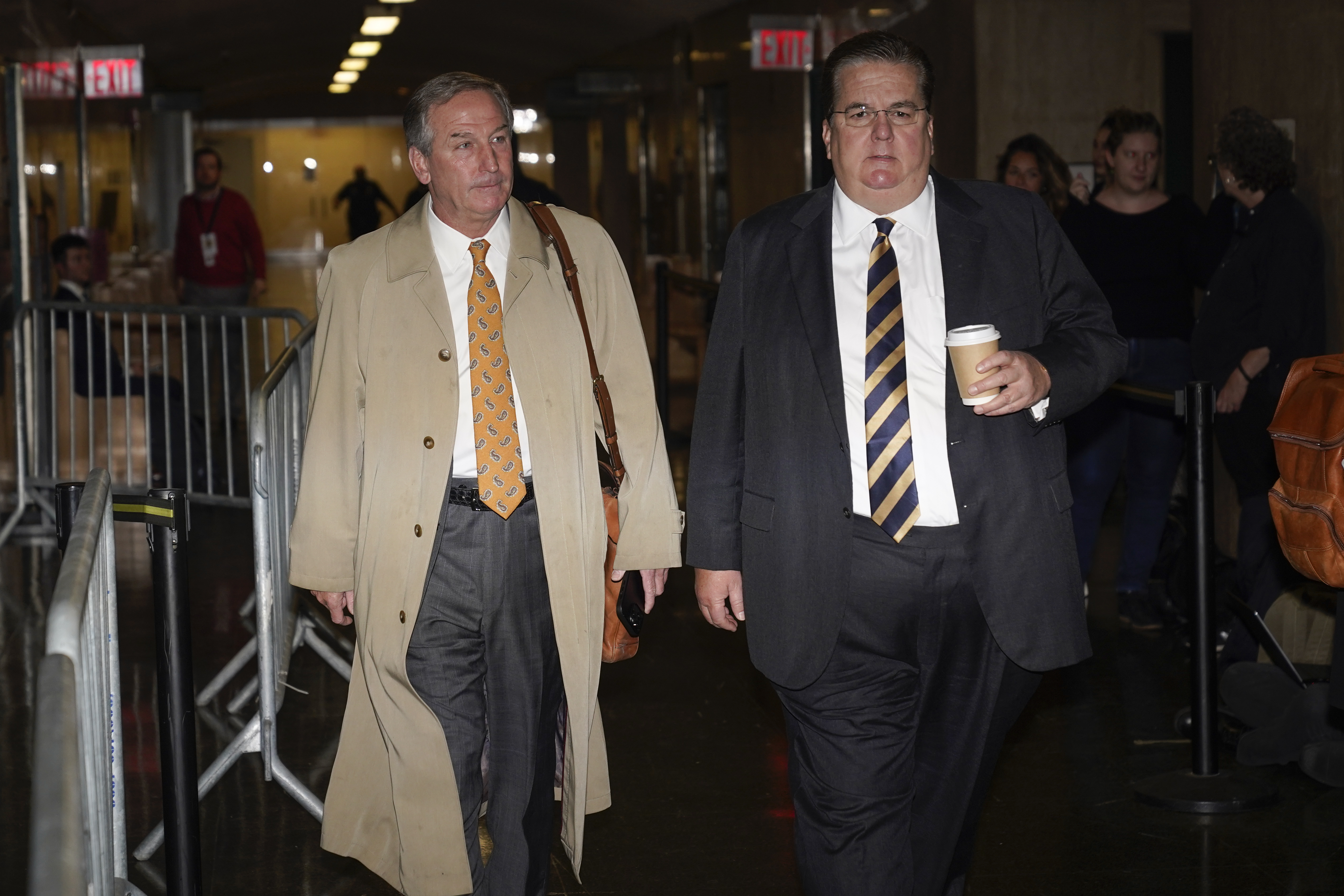
    Defense attorneys Michael van der Veen, left, and William Brennan arrive to criminal court in New York in 2022 for Trump’s tax fraud case. Seth Wenig

    George Bochetto, the attorney who filed the lawsuit on behalf of the newly formed group, did not respond to repeated requests for an interview. Bochetto is also representing a different group of Pine Street and Spruce Street residents who won an injunction to pause safety upgrades to bike lanes.

    The lawsuit against Bar X names owner Tony Tsang, business entities associated with the bar, the city, and the commissioner of the Philadelphia Department of Licenses and Inspections, Bridget Collins-Greenwald. The city did not respond to requests for comment.

    Tsang disputed the allegations of public drunkenness and sexual activity and said the bar is a longtime fixture of the block.

    “You don’t like it, you like it quieter, how come you don’t move out of the city?” Tsang, 59, said in a recent interview at the bar. “One block, three bars, how come they’re only complaining about us?”

    A ‘very homey’ gay bar

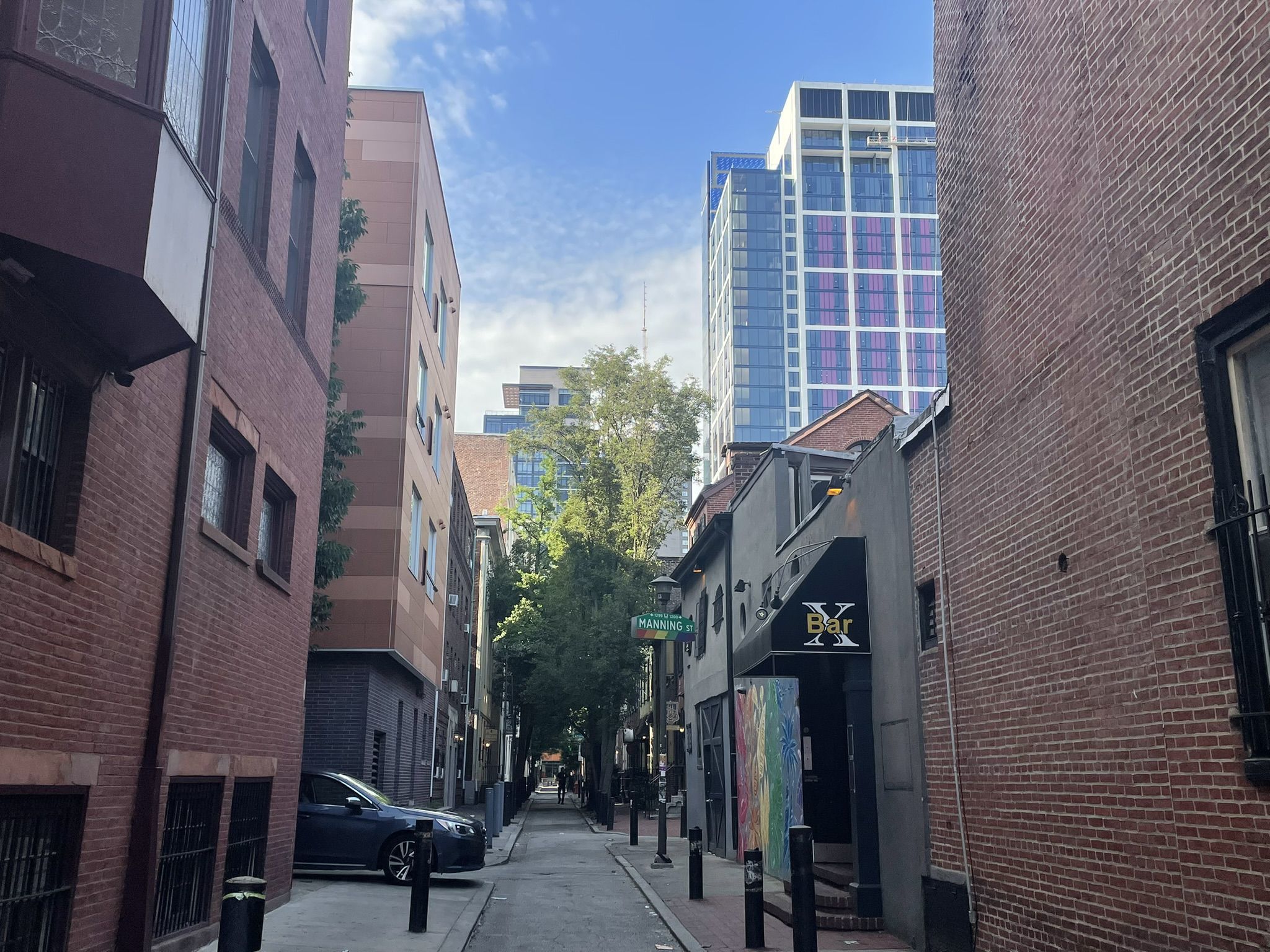
    Bar X sits between Locust and Spruce on Camac, a narrow, 200-year-old street that is home to two other gay bars, Tavern on Camac and UBar. It is also around the corner from the bar 254, which replaced Tabu. Those three bars are all owned by the Tavern Group.

    Tsang said the majority of his clientele is Black and suggested that the lawsuit had more to do with his identity and that of his patrons than the noise or disturbance allegations.

    “To me, it’s the color. I’m Asian. My English isn’t too good. They want to play a game with me,” Tsang said.

    Tsang opened his bar in 2016, naming it Bar X so it would be easy for people to remember. The bar’s exterior features a rainbow mural of tropical leaves; inside Tsang hung Ikea posters of Audrey Hepburn and James Dean. He said he stocks the bar himself, buying whatever club soda is on sale at the supermarket.

    The bar has a large dance floor and a DJ booth that abuts the alley.

    Bar X occupies the former location of the Venture Inn, a landmark institution that opened in the 1930s and transformed over the decades from a gay-friendly bar to a gay bar in the 1970s. The property was sold in late 2015 and the Venture Inn closed.

    Joseph Ward, a part-time bartender at Bar X who also runs its social media and marketing, said the bar stands out because it’s “very homey,” with Taco Tuesdays and twice-weekly karaoke. (There’s also a male revue every Thursday night.)

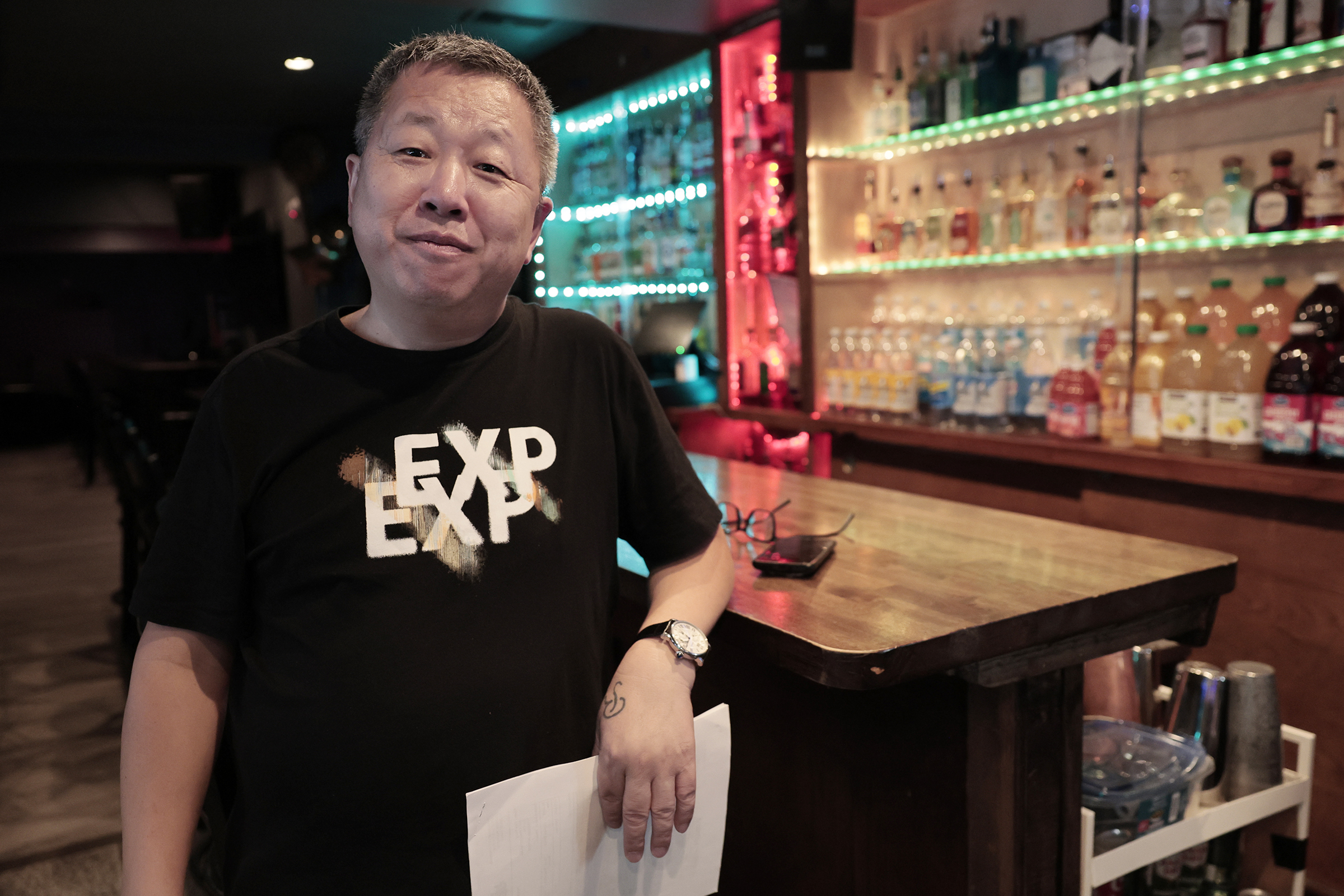
    Bar X owner Tony Tsang said he stocks the bar himself with whatever club soda is on sale at the supermarket.Elizabeth Robertson / Staff Photographer

    “You [can] just chill and not have to worry about the hustle and bustle of a nightclub,” Ward, 36, said. He said the bar is one of the last minority-owned clubs in the Gayborhood and hosts a largely nonwhite crowd.

    The lawsuit cites negative Google reviews from people purporting to be Bar X customers, including accounts of stolen phones and allegations that a bartender gave patrons drinks containing sedatives.

    The remedy to the situation, the suit says, is for the city to shut down the bar.

    Ward said that rumors of drugged drinks at the bar had gained traction online earlier this year, but that staff had not been able to verify any crimes, despite reaching out to those making the accusations. In response, the bar ordered covers for customers’ drinks.

    “We take pride in it being a safe place in the Gayborhood,” Ward said, “so we obviously want to keep it that way.”

    A new police deployment

    Bar X’s block has seen an increase in crime incidents this year, according to Philadelphia Police Department public data.

    The lawsuit claims that since last summer there have been nearly 70 crime incidents at the property, including “multiple reports of a person with weapons, assaults, robbery, and disorderly conduct.”

    <iframe title="Crime Incidents On Bar X's Block" aria-label="Column Chart" id="datawrapper-chart-LCiYX" src="https://datawrapper.dwcdn.net/LCiYX/1/" scrolling="no" frameborder="0" style="width: 0; min-width: 100% !important; border: none;" height="477" data-external="1"></iframe><script type="text/javascript">(function(){function e(){window.addEventListener(`message`,function(e){if(e.data[`datawrapper-height`]!==void 0){var t=document.querySelectorAll(`iframe`);for(var n in e.data[`datawrapper-height`])for(var r=0,i;i=t[r];r++)if(i.contentWindow===e.source){var a=e.data[`datawrapper-height`][n]+`px`;i.style.height=a}}})}e()})();</script>

    In April, the Washington Square West Civic Association hosted a meeting with residents, city officials, and Tsang in an attempt to address neighborhood complaints. Councilmember Mark Squilla, who represents the area and attended the meeting, estimated that more than 40 people attended.

    In response, the city experimented with one-off street cleanings of Camac to address litter, Squilla said. Police also began clearing the street of people on weekend nights after 2 a.m., when the bar closes.

    “We’ll continue to work on compliance and whatever else is needed there,” Squilla said.

    A Philadelphia Police Department spokesperson confirmed there is currently a “bar/nightclub” deployment in the bar’s general area. The department has used similar deployments throughout the city for decades to respond to community concerns and public safety needs, Sgt. Eric Gripp said in a statement.

    Allegations of aggressive crowd control

    The enhanced law enforcement presence there comes at a time of high tension between the city’s LGBTQ+ community and police. Earlier this month, City Council members grilled Police Commissioner Kevin Bethel over the department’s response during Pride festivities in June. Pride attendees testified at the hearing that the most aggressive crowd-control tactics were used on crowds of Black celebrators.

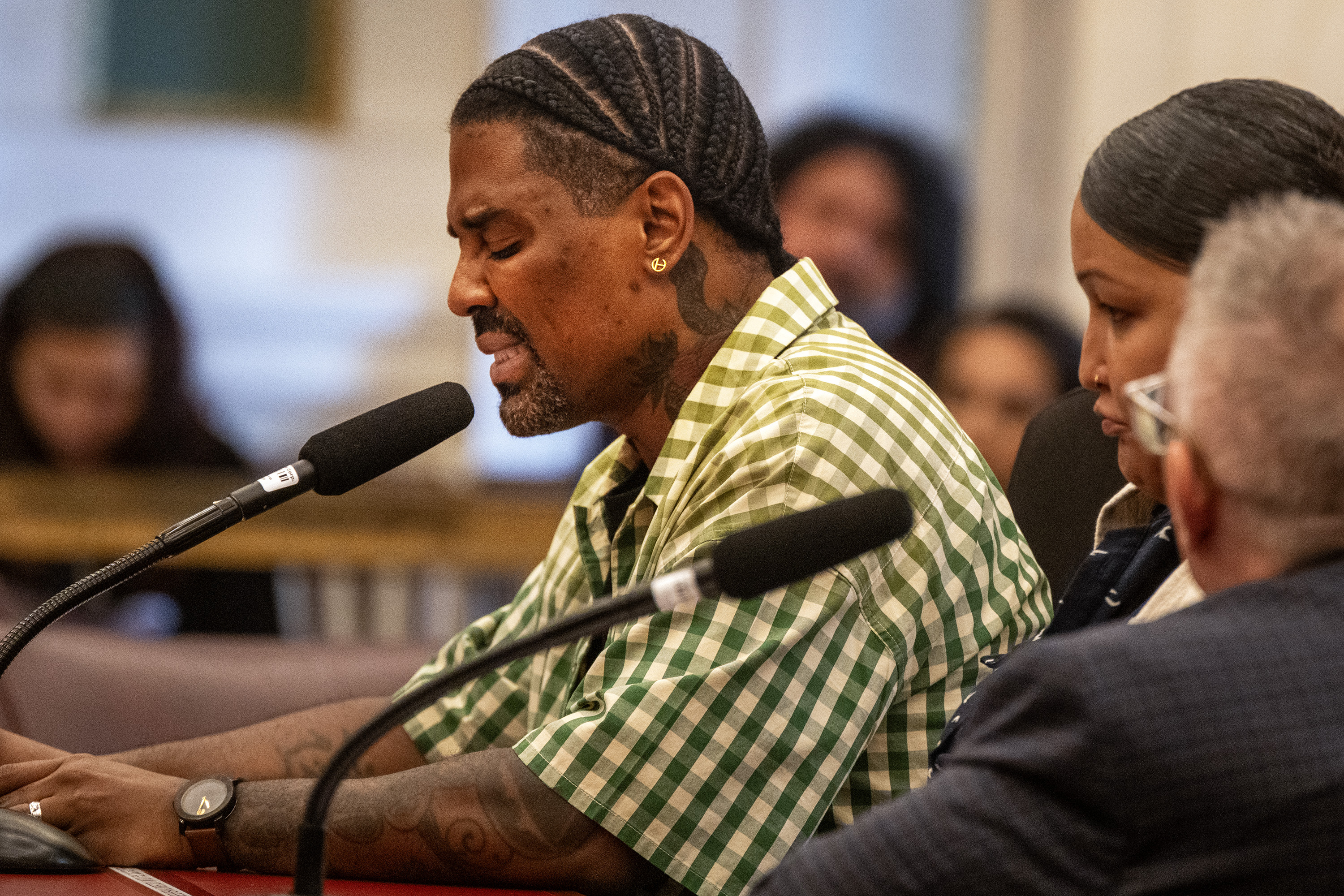
    Jacen Bowman, president of Philly Black Pride, testified earlier this month at a City Council Committee on Legislative Oversight hearing into the Philadelphia Police tactics used during Pride celebrations in June.Tom Gralish / Staff Photographer

    “Black and brown LGBTQ+ people are watched differently. We are approached differently. We are policed differently,” Jacen Bowman of Philly Black Pride said at the hearing. “Too often we are made to feel like visitors in a neighborhood that is promoted as the heart of Philadelphia’s LGBTQ+ community.”

  • Philly City Council grilled Police Commissioner Kevin Bethel over officers’ Pride response as LGBTQ+ advocates demanded accountability

    Philly City Council grilled Police Commissioner Kevin Bethel over officers’ Pride response as LGBTQ+ advocates demanded accountability

    Several members of Philadelphia City Council and a bevy of LGBTQ+ community leaders on Wednesday sharply criticized Police Commissioner Kevin Bethel, who testified about the department’s response to Pride festivities in the city’s Gayborhood in June and largely defended the force’s crowd-control tactics that had drawn outrage.

    Bethel acknowledged that June 7 was “not a perfect day” and vowed that the police department would implement more robust planning procedures ahead of next year’s celebrations.

    But he stopped short of apologizing for the police department’s response, saying chaotic scenes from the Pride events were part of officers’ attempts to disperse crowds from the Gayborhood, where thousands of people congregated instead of the city’s official festival on the Benjamin Franklin Parkway.

    Among them, Bethel said, were hundreds of teenagers, some of whom were seen on video fighting.

    “There’s a large group of young people who [had] descended into the neighborhood for what they think is something there,” Bethel said. “There is nothing for them there, other than to take over the street.”

    That comment did not sit well with Council members and dozens of LGBTQ+ community members who attended the hearing at City Hall.

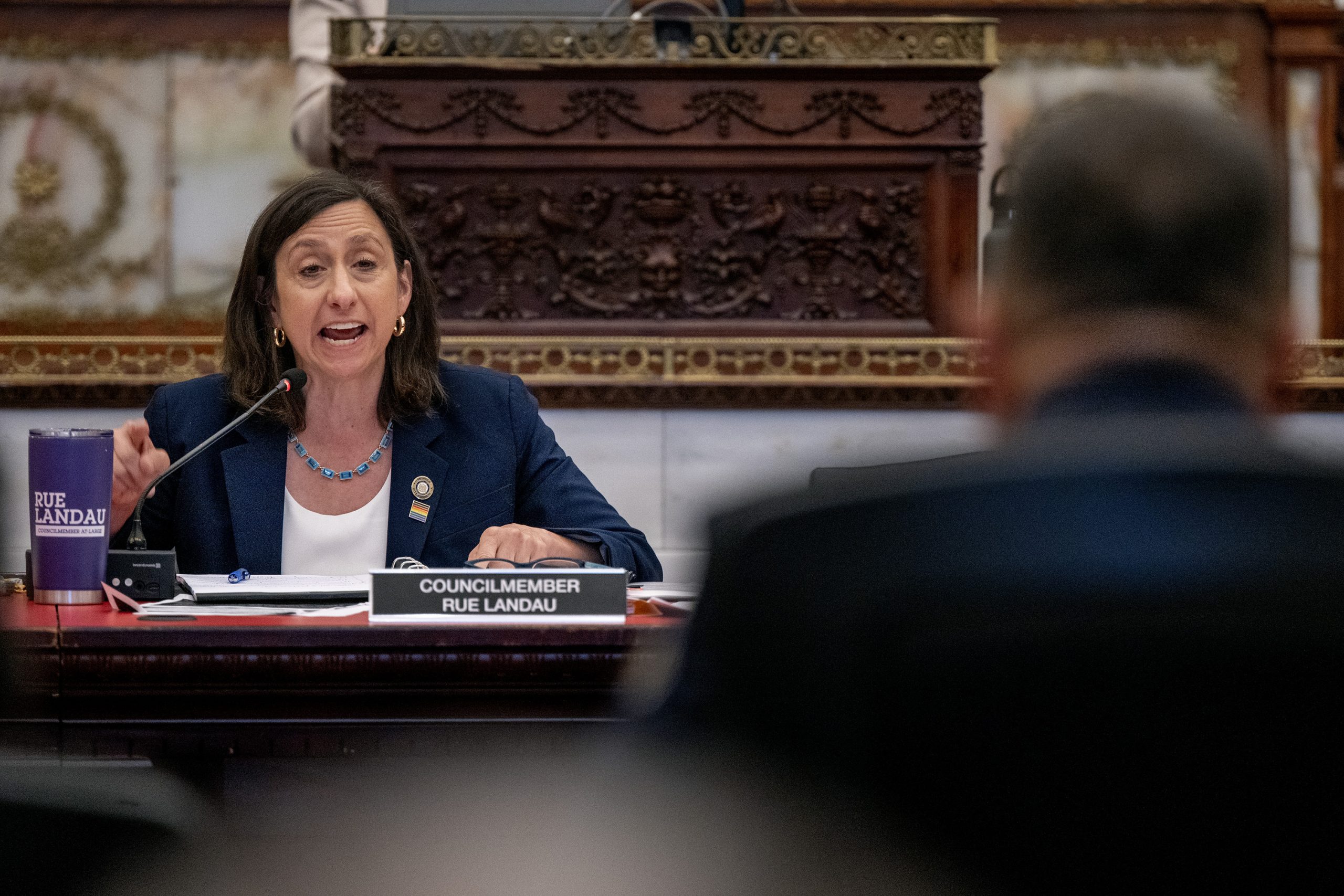
    “Your testimony today and what I’m hearing is both painful and perplexing,” said Councilmember Rue Landau, a Democrat who called for the hearing and is the first out LGBTQ+ person to serve on Council. “It is mind-boggling to think that you and your team would not know that people were going back to the Gayborhood.”

    Councilmember Isaiah Thomas, a Democrat, said he was “confused” why groups of teenagers fighting would have prompted an outsized police response throughout the Gayborhood that included crowds running amid police on horseback and motorcycles.

    “It doesn’t really feel like we’re having a conversation that can put us in a position of earning the trust of a lot of the people who feel like the trust has been lost,” he said.

    And C. Michael Robinson, a community advocate, added: “Only adult bullies scapegoat children, and that was a weak display of leadership.”

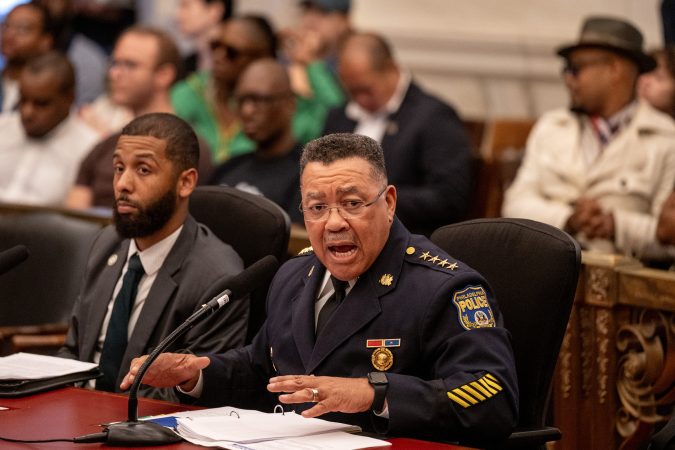
    Councilmember Rue Landau questions Police Commissioner Kevin Bethel (foreground) as Council’s Committee on Legislative Oversight holds a hearing Wednesday, Aug. 5, 2026 into the Philadelphia Police tactics used during Pride celebrations in June.Tom Gralish / Staff Photographer

    The hearing Wednesday before Council’s Committee on Legislative Oversight was the most tense questioning that Bethel, a veteran of the city’s police force, has faced since he was sworn in as commissioner in January 2024 at the beginning of Parker’s term. He has enjoyed a largely warm relationship with Council members, who have been supportive of his leadership amid a significant drop in violent crime.

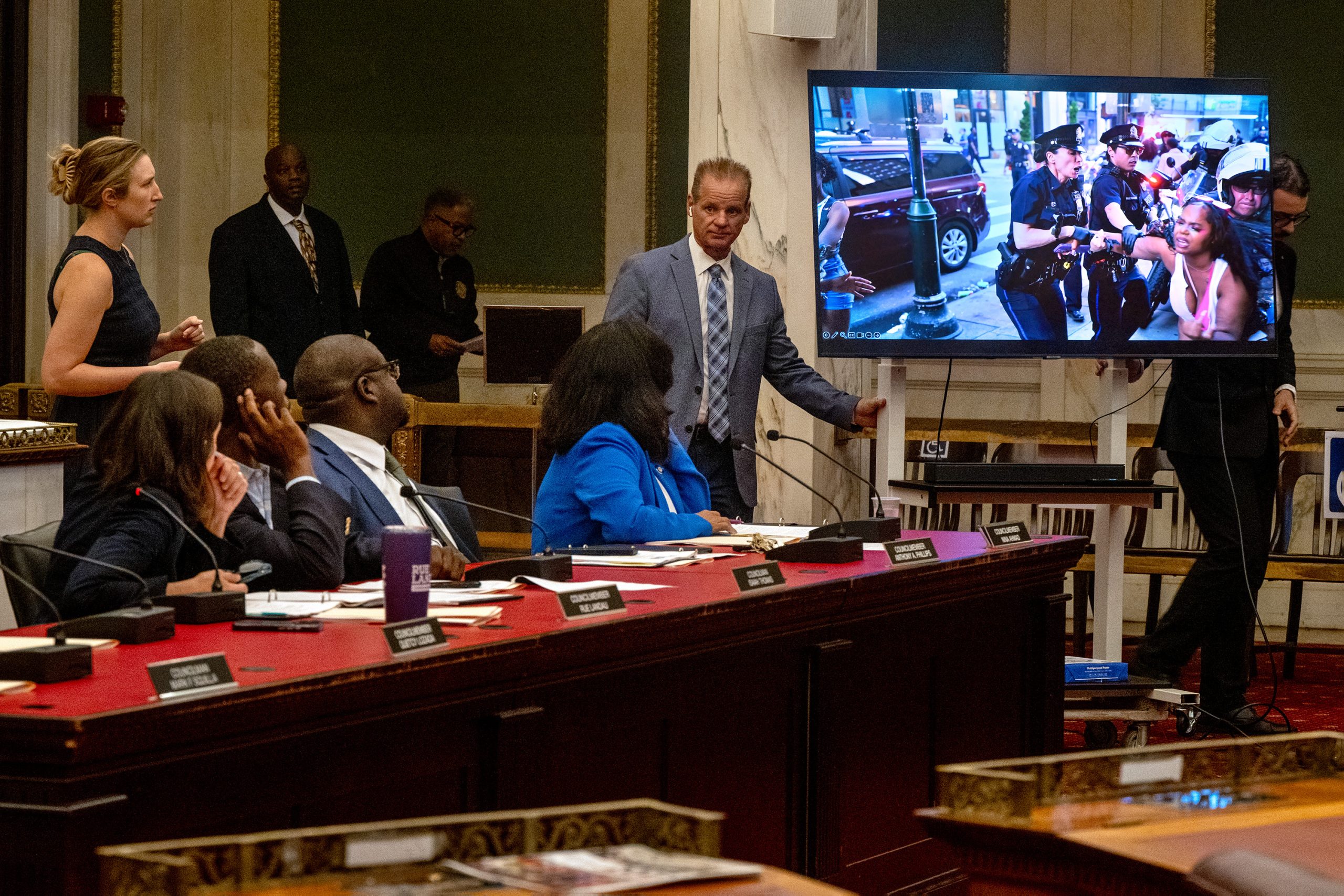
    However, the police department faced intense scrutiny following June 7, the day of the Pride parade and celebration during which 15 people were arrested and videos of police corralling crowds in the Gayborhood drew widespread criticism. Videos posted to social media showed officers physically struggling with Pride attendees, as well as police on horseback and motorcycles dispersing people, and at times displaying batons and Tasers.

    Following the backlash, Landau called for Council’s Committee on Legislative Oversight to hear testimony from the department’s top brass, as well as members of Mayor Cherelle L. Parker’s administration and LGBTQ+ advocates.

    Pride attendees who testified Wednesday said police forcefully directed them through a maze of barricades in the Gayborhood. Several described being pushed and yelled at, and said that the most aggressive tactics were used on crowds of mostly Black people. One person said they heard an officer use a slur.

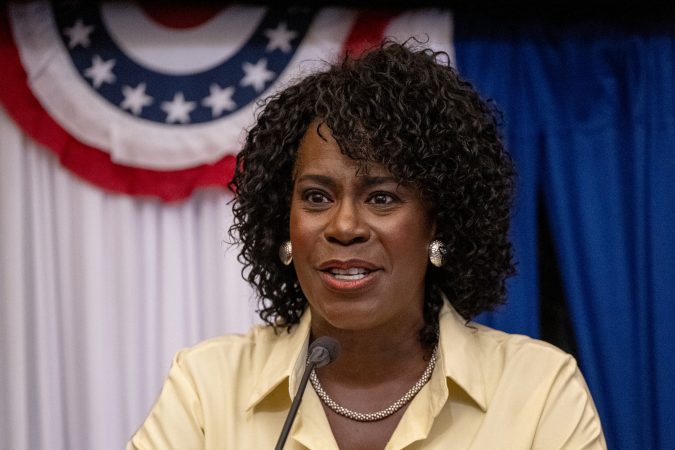
    Parker said in a statement Wednesday that the events described during the hearing “show us we can and must do better.”

    “We can and will learn from what occurred,” she said.

    Councilmember Rue Landau (seated, left) shows a collection of social media videos as City Council’s Committee on Legislative Oversight holds a hearing Wednesday, Aug. 5, 2026 into the Philadelphia Police tactics used during Pride celebrations in June.Tom Gralish / Staff Photographer

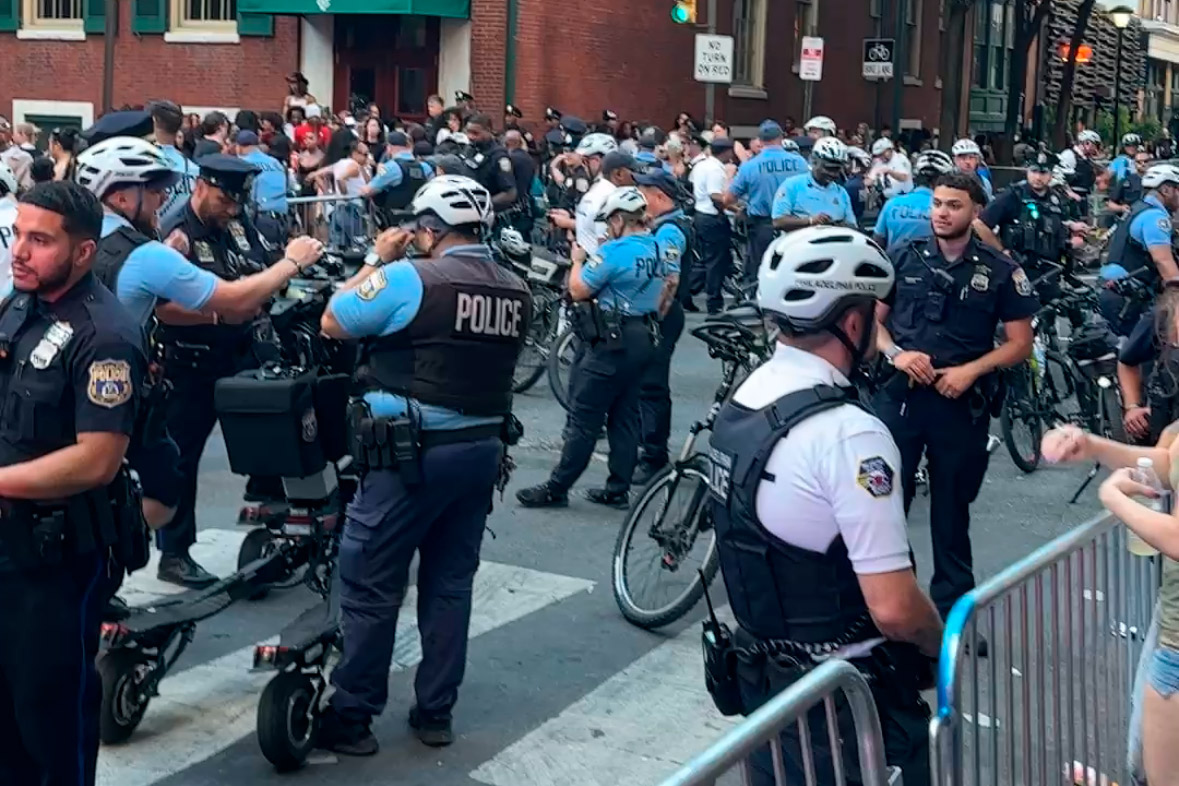
    This year marked the first time the city’s Pride festival was held on the Benjamin Franklin Parkway, where Bethel said police had been well-prepared to manage crowds. Thousands of people still congregated in the Gayborhood, where celebrations were held in previous years, creating dueling events that he said overwhelmed the department.

    Officers attempted to manage crowds in the Gayborhood for hours, Bethel said, and began working to disperse people by late afternoon. To do so, he said, officers used barricades, as well as officers mounted on horseback and motorcycles to motivate people to leave on their own.

    A large police presence at a Pride celebration in the Gayborhood on Sunday, June 8, 2026.Courtesy of Joshua Stokem

    Landau said she was horrified by the crowd-control tactics and asked Bethel if he supported the decision to have officers on motorcycles on the sidewalk, calling it “terrifying” and “dangerous.”

    He said the goal of moving the crowd was “appropriate at the time.”

    In what became a tense back-and-forth, Landau said that people attending Pride “did not believe that you were there to protect them.”

    “They were terrified, they were harassed, they were traumatized,” she said. “This was not about protection. You had 150 officers there, by your own testimony. That is a significant amount of officers.”

    Bethel responded: “Do you want police there at all?”

    Landau appeared taken aback.

    “My comment that there was 150 officers there should not turn into the end-sum game of ‘Do you not want anybody there?’” she said.

    The police commissioner did not specify how many officers in total are facing potential discipline stemming from Pride events on June 7, but he said “eight or nine″ are under investigation by the internal affairs division for wearing facial coverings, a violation of department policy.

    Bethel, who was formerly the department’s liaison to the LGBTQ+ community, vowed a more collaborative planning process next year.

    “Next year it will not be like that. It will be prepared,” Bethel said. “It is not my job to police that event. It is to keep it safe.”

    Several LGBTQ+ advocates and community members testified in favor of additional accountability measures.

    Jacen Bowman, the president of Philly Black Pride, called for an independent after-action review, a permanent LGBTQ+ public safety advisory council that is consulted during the planning of large events, and more consistent cultural competency training for officers.

    “Versions of these structures already exist,” Bowman said. “The question is whether or not the structure has the authority, independence, or enforcement power necessary to produce accountability. Oversight without authority is observation.”

  • Mayor Parker’s former DEI chief sues the city for discrimination in tell-all lawsuit

    Mayor Parker’s former DEI chief sues the city for discrimination in tell-all lawsuit

    Philadelphia’s former chief diversity, equity, and inclusion officer has said before that Mayor Cherelle L. Parker and top administration officials scapegoated her after she reported sexual harassment in City Hall and then fired her “unjustly.”

    But in an explosive new lawsuit filed in federal court in Philadelphia this week, that officer, Brandee Anderson, claimed her termination was part of a coordinated effort to “suppress” or rebrand diversity work and came as a top Parker administration official made derisive comments about other DEI leaders.

    She claimed Parker — a centrist Democrat who is Black and the city’s first female mayor — said in 2025 that she “did not care about Ms. Anderson’s ‘DEI ideology,’ only minority business.”

    And she alleged in the lawsuit that the mayor threatened to remove any administration official who expressed dissenting views, telling a gathering of senior officials that no one “has a right to have an opinion about where we are going.”

    The suit, filed Monday in U.S. District Court for the Eastern District of Pennsylvania, seeks unspecified damages and payment of lost wages as a result of her firing. Parker is named as a defendant, as are Deputy Mayor Vanessa Garrett Harley, Inspector General Alexander DeSantis, and communications director Joe Grace. Anderson claimed DeSantis and Grace defamed and retaliated against her in statements to the media after her firing.

    Anderson served as Parker’s chief DEI officer beginning in 2024, advising the mayor and administration on matters such as workforce diversity, community engagement, equitable budgeting, and minority business opportunities. She also oversaw offices that serve LGBTQ+ residents and people with disabilities.

    She was fired in 2025 after Tyrell Brown, then the director of the Philadelphia Office of LGBTQ+ Affairs, reported to Anderson that they had received a “semi-nude” photo from a senior administration official. Anderson says in the lawsuit that she was fired days after elevating the matter to Garrett Harley and human resources officials.

    The city declined to comment on the lawsuit and generally does not answer questions about pending litigation.

    The lawsuit was the second filed against the city by a former DEI official during Parker’s tenure. Leslie Marant, the Philadelphia Police Department’s first DEI chief, who was fired in the first days of Parker’s administration, said in a federal lawsuit filed in October that she was a victim of the systemic discrimination that she was tasked with addressing. That litigation is ongoing.

    It was also the second time this month that a former Parker administration official accused senior administration members of fostering a toxic work environment.

    Shania Bennett, the former director of the Philadelphia Office of Youth Engagement, last week posted on social media that working for the city was “the worst experience of [her] life” and that she had quit her job after “unprofessional harassment.”

    Bennett could not be reached for comment.

    ‘Stand down’ on DEI matters

    Anderson, an attorney who founded a firm that creates anti-racist trainings, was hired in October 2024 to lead the city’s DEI efforts. In the lawsuit, she alleges that Parker officials undermined her authority from the outset.

    She claimed Parker forbade her from contacting members of City Council with whom she had existing relationships. And she said Garrett Harley, one of Parker’s most senior officials, told her and other DEI leaders to “stand down” if they expressed dissenting views, saying “if you can’t align with the mayor’s strategy, DEI may not be the job for you.”

    Deputy Mayor Vanessa Garrett Harley speaks during a news conference in Philadelphia, Pa., in June 2024.Tyger Williams / Staff Photographer

    Anderson also claimed Garrett Harley made discriminatory comments about a transgender official, Celena Morrison-McLean, former director of the Philadelphia Office of LGBTQ+ Affairs, who reported to Anderson. Garrett Harley, the lawsuit alleges, instructed Anderson to “document Celena [Morrison-McLean] out,” or create a paper trail leading to her dismissal.

    According to the lawsuit, the deputy mayor also mocked Morrison-McLean during a meeting with several other officials, saying she used a “deep male tone” to intimidate staff.

    Morrison-McLean left her post in November 2024, roughly eight months after she was pulled over by a Pennsylvania State Police trooper in a traffic stop that went viral and resulted in her and her husband’s arrest.

    She is now a consultant, according to her LinkedIn profile. She could not be reached for comment.

    Celena Morrison-McLean reads a statement with Darius McLean (rear) Thursday, Mar. 7, 2024. The married LGBTQ leaders were arrested during a contentious traffic stop over the weekend.Tom Gralish / Staff Photographer

    Anderson said in the lawsuit that Garrett Harley also made comments to her in early 2025 that she saw as fostering a hostile work environment. She claims she disclosed to Garrett Harley that she was the victim of rape and asked for time off to attend a hearing in the criminal case against her alleged assailant.

    “Ms. Garrett-Harley responded,” the lawsuit says, “by questioning how one woman could rape another.”

    In a separate instance, Garrett Harley also instructed Anderson to delete emails documenting dangers to children in the city’s care, according to the lawsuit. The lawsuit did not elaborate on the content of the emails.

    Harassment report and press fallout

    Brown was appointed in March 2025 to succeed Morrison-McLean as the city’s director of LGBTQ+ affairs. In July 2025, Brown reported to Anderson that Christopher Dailey, then a deputy chief of staff in the mayor’s office, had sent them a sexual image on a cruising app.

    At the time, Anderson said Brown told her they did not feel harassed by the photo, partly because it was not clear whether Dailey knew to whom he had sent the image, which included Dailey’s face. Brown’s profile was anonymous, Anderson said, but the app used geolocation, meaning that users would have known they were contacting someone in or near City Hall.

    Anderson elevated Brown’s report to human resources roughly a week later, the complaint says, leading DeSantis, the city’s inspector general, to launch an investigation.

    By July 22, Anderson was fired. DeSantis has said Anderson never possessed the photo, but allowed Brown to display it while another employee besides Anderson, their supervisor, was in the room. That decision, DeSantis said, constituted a violation of the city’s sexual harassment policy.

    Mayor Cherelle Parker, right, hugs Tyrell Brown, left, the new Director of LGBTQ+ Affairs, during a press conference to announce new appointments, at City Hall, in Philadelphia, March 21, 2025.Jessica Griffin / Staff Photographer

    Brown was fired the same week as Anderson. Parker tasked Garrett Harley with handling the office’s work through March, when the administration named a replacement.

    Anderson’s lawsuit claims racial discrimination, noting that Dailey, who is white, was not fired, but was instead moved to a new role in a different office. Brown and Anderson are both Black.

    Brown could not be reached for comment.

    Additionally, Anderson claimed that Parker, DeSantis, and Grace each made “false and defamatory” statements in the media after she was fired.

    She cited a July 2025 Inquirer article in which Grace said Anderson’s allegations about the reason for her termination included “outright misstatements of fact.”

    The lawsuit also mentioned an interview with iHeart Radio’s WDAS 105.3 FM that DeSantis participated in last year about the firings, during which he said that Anderson had “mishandled the photograph” and “did something wrong.”

    Anderson, in the lawsuit, said those statements were false.

  • William Way center’s proposed demolition would erase an important Philly landmark

    William Way center’s proposed demolition would erase an important Philly landmark

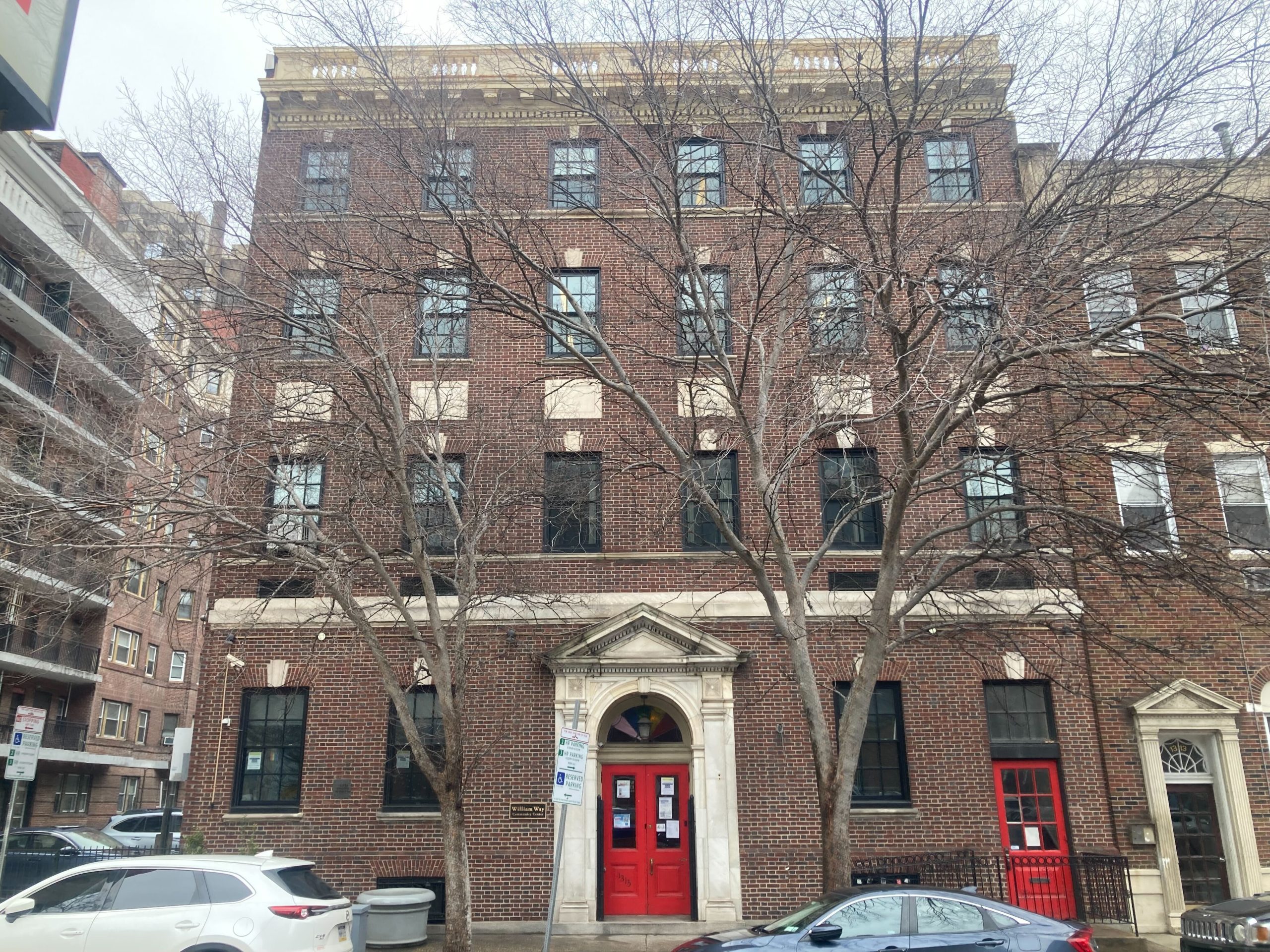
    The first time people openly referred to the pocket of Center City between Jefferson University and Broad Street as the “Gayborhood” was 1995. Within a year, the William Way LGBT Community Center made it official by purchasing a stately, Georgian-style clubhouse at Juniper and Spruce. The building has been a refuge for Philadelphia’s LGBTQ+ community ever since.

    Sadly, that groundbreaking haven is now closed. It was shuttered in December to address maintenance issues, including an outbreak of black mold. At the time, the board said it was gearing up for a major renovation and would temporarily relocate its core services to St. Luke’s church on 13th Street.

    Just three months later, William Way’s board abruptly changed course and revealed the center would be demolished to build subsidized housing aimed at LGBTQ+ seniors.

    The announcement came not from William Way’s board, but from Mark Segal, a longtime activist who founded the Philadelphia Gay News and oversees a nonprofit that has built affordable housing, the dmhFUND. The timing was noteworthy: The plan was made public a few days after a Common Pleas Court judge overturned the neighborhood’s historic district protections.

    Segal’s announcement stunned William Way regulars, including many former board members. Sure, COVID-19 had scrambled the organization’s finances, as it did for many Philadelphia nonprofits. Revenue and donor gifts fell precipitously. The center laid off nearly a third of its staff in 2024, and its longtime director, Chris Bartlett, retired soon after.

    The building was known to be in poor condition. But total demolition? Nothing suggested that the building was unsalvageable, including a major facilities assessment by Metcalfe Architecture & Design in late 2024.

    While there is no doubt that the building requires extensive renovations, demolition is the wrong solution. It would rob all of Philadelphia — not just its LGBTQ+ community — of a major cultural touchstone.

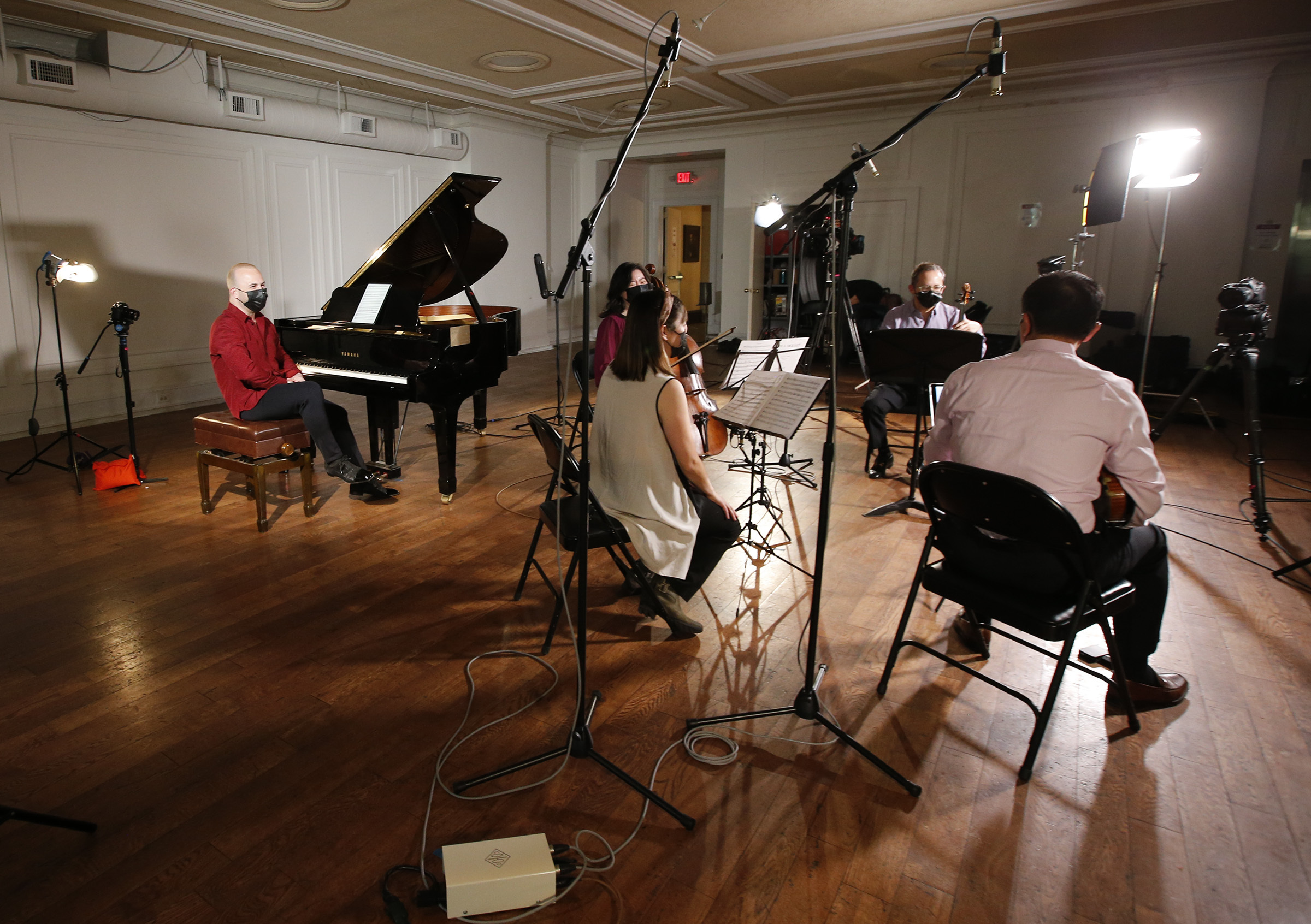
    Philadelphia Orchestra music director Yannick Nézet-Séguin filmed a series called “Our City, Your Orchestra” in the William Way center ballroom in 2021, along with violist Pierre Tourville and other musicians.YONG KIM / Staff Photographer

    A civil rights landmark

    Although the William Way center has called 1315 Spruce St. home for only three decades, its presence has transformed the 19th-century building — originally a private club for engineers — into a civil rights landmark.

    This is where Philadelphia’s LGBTQ+ community fought to address the AIDS crisis, advance marriage equality, and be accepted into the mainstream of American life. It’s where they attended cabarets in the elegant ballroom and art exhibits in the wood-trimmed parlor. The building’s visibility makes it the architectural equivalent of being out.

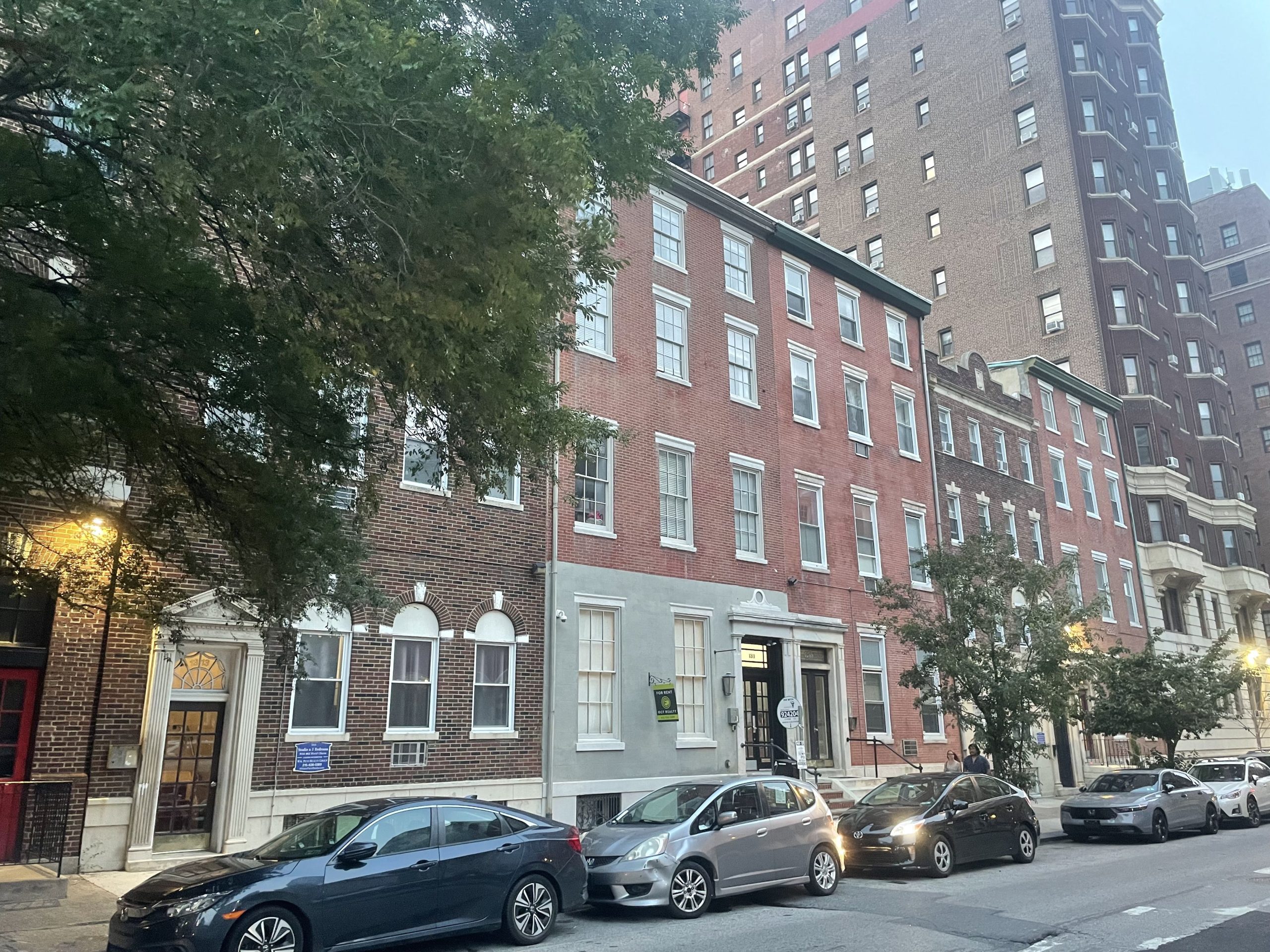
    Beyond losing a place with profound cultural resonance, the demolition would break up the historic 1300 block of Spruce Street, a stretch that is still remarkably intact despite the presence of two unsightly parking lots at the Juniper Street corners.

    Although the block’s large townhouses, which were built for lawyers and doctors in the 1840s, have been divided into apartments, the row retains most of its original architectural features and reads as a single ensemble. The William Way building, which was created in 1929 by fusing two townhouses behind a single facade, was designed to blend in with its neighbors.

    No one would consider demolishing other community anchors, such as Christ Church in Old City, Mother Bethel A.M.E. Church in Center City, Rodeph Shalom synagogue in Spring Garden. So why is this one being written off so casually?

    The 1300 block of Spruce Street, where the William Way Center is located, remains a largely intact architectural ensemble. The townhouses date from the 1840s and were originally private homes occupied by doctors and lawyers.Inga Saffron

    I couldn’t get any of William Way’s board members or employees to answer that question. A communications consultant did provide written responses to several queries, but eventually directed me to Segal.

    He told me that the financially strapped nonprofit had reached out to him because of his development experience, as well as his long association with the center. The second-floor ballroom is named in his honor.

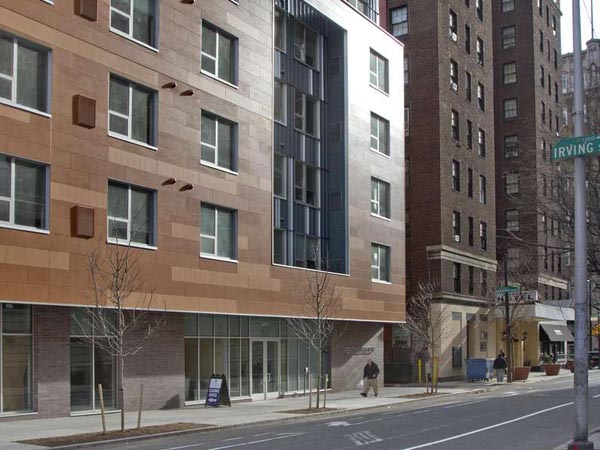
    Segal was also the guiding force behind the John C. Anderson Apartments on 13th Street, the first subsidized housing in the United States marketed to low-income LGBTQ+ seniors. After the building opened to raves in 2014, Segal began searching for another Gayborhood site for a second affordable project. But land prices in the desirable Washington Square West neighborhood were just too high.

    Completed in 2014, the John C. Anderson apartments at 13th and Spruce Streets were the first subsidized housing in the U.S. marketed to low-income LGBTQ+ seniors.

    A new plan for William Way

    William Way’s troubles provided a solution.

    Segal told the board he could replace its 180-year-old clubhouse with a mid-rise building that would include both subsidized apartments and a new home for William Way. The board chairs, Dave Huting and Laura Ryan, readily accepted the deal and signed a letter of intent with the dmhFUND earlier this year. In exchange for providing the land, William Way would be given a condo space large enough to accommodate its programs for a dollar.

    Completing that project won’t be easy, however. To raise money for the apartments, Segal and the dmhFUND will have to cobble together a mix of federal, state, city, and private grants. Most affordable housing projects rely heavily on Low Income Housing Tax Credits from Washington, and there is stiff competition for those funds. Any new construction on the site would also require Philadelphia Historical Commission approval, even though the historic district is currently in limbo.

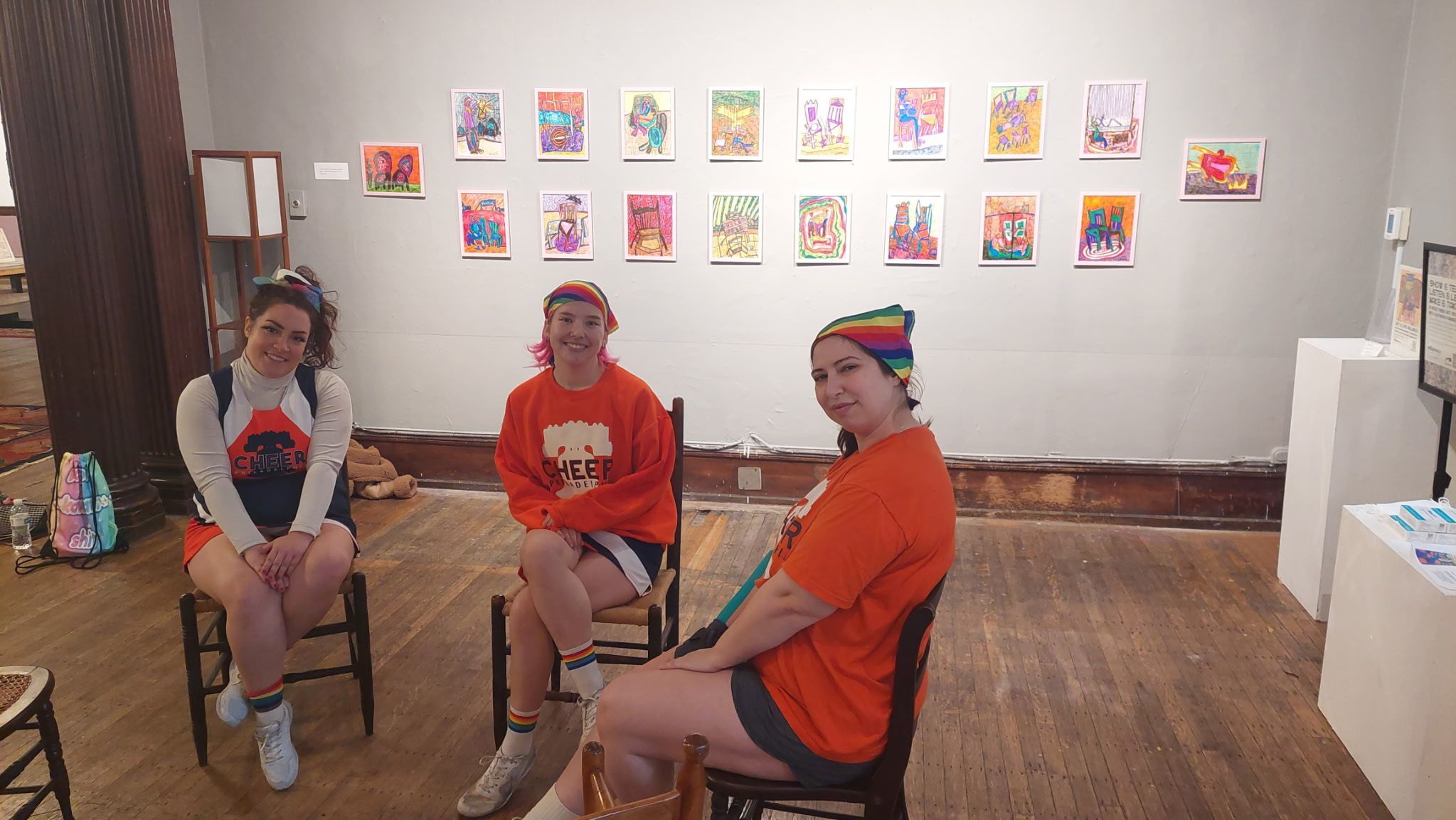
    Artist Kathryn Pennepacker staged one of the last art exhibits in the William Way center’s wood-trimmed reception area. Titled “You are welcome here. I saved a chair for you,” it encouraged visitors to sit, talk and view her artwork.Courtesy of Kathryn Pennepacker

    Because of those hurdles, Segal told me, it could take five to seven years to complete the apartments. During that time, William Way would be without a permanent home. And once it moves back to Spruce Street, it’s unlikely the new space will have the same level of visibility as the existing building.

    Segal says he is undaunted by the challenge. “People told me John C. Anderson was impossible,” he said. “People told me all the things I’ve fought for were impossible.”

    Despite the Metcalfe report’s conclusions and a more upbeat assessment from J&M Preservation Studio, Segal maintains that the building is too far gone to be saved at a reasonable price. In his view, William Way must now choose between saving itself or saving the building.

    Alternatives to demo?

    It’s hard to believe the situation is that binary. Several people who have been involved in the center’s programs told me that the decision to go with Segal’s plan was made by a small circle of board members, without consulting the larger William Way community and its longtime donors.

    Demolition “wasn’t even mentioned” as an option at the organization’s 50th anniversary gala celebrations in February, held just a week before the arrangement with Segal became public, noted Paul Steinke, executive director of the Preservation Alliance for Greater Philadelphia and a former William Way board member.

    In a guest essay published last month in the Philadelphia Gay News, Steinke and a group of activists urged the board to hold a community meeting where the issues could be aired and debated. Segal has responded by forming an advisory board composed of a handpicked group of William Way staff, activists, elected officials, and neighborhood residents.

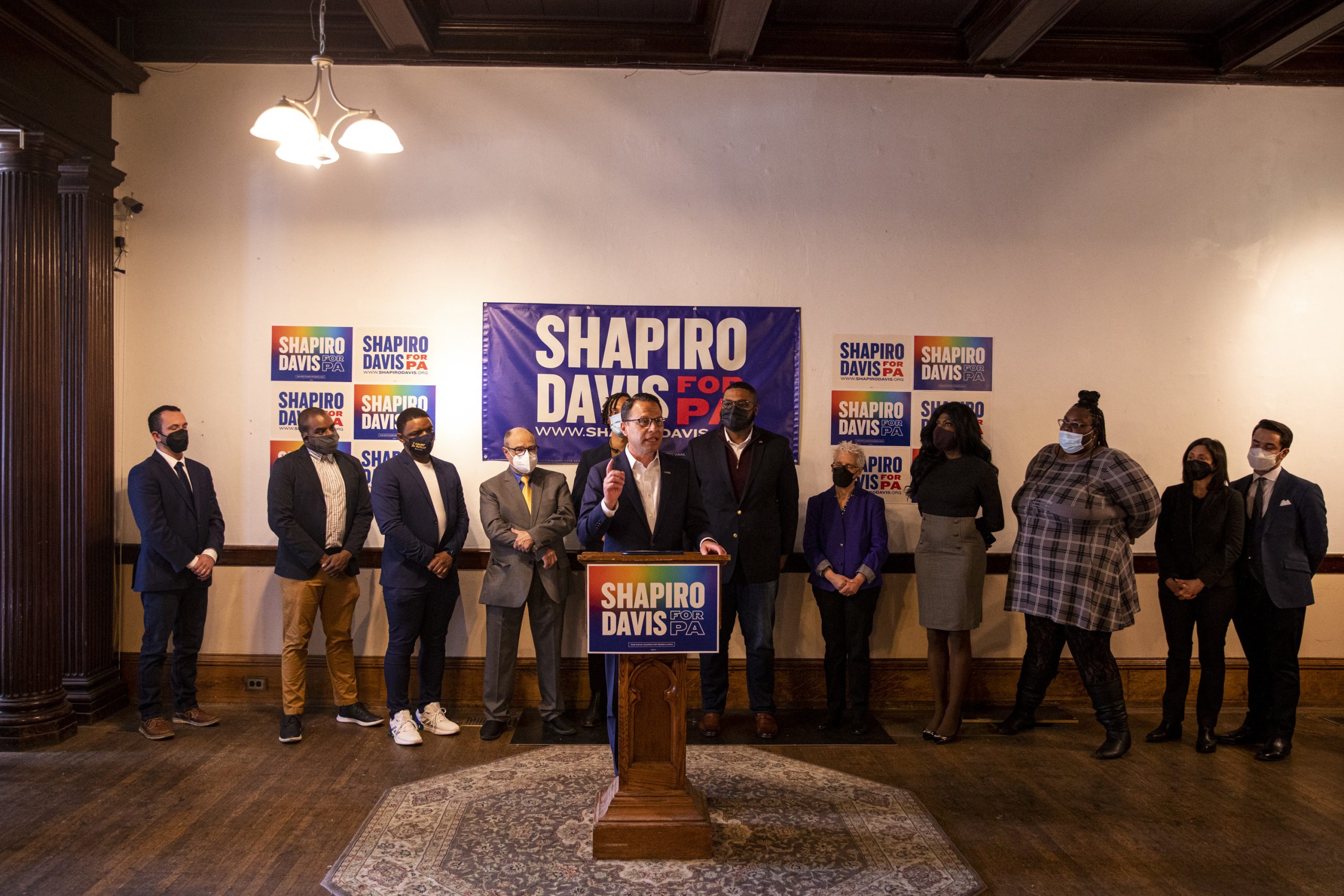
    In 2022, Gov. Josh Shapiro spoke in the parlor of the William Way center, where he received endorsements from a variety of LGBQT+ leaders. TYGER WILLIAMS / Staff Photographer

    Before COVID interfered, the board had been working on a design to reconfigure the building to address longstanding circulation issues. The plan called for slicing off the back of the structure and inserting a small tower with space for offices or apartments. The arrangement would have preserved the facade and the two most important ceremonial rooms, the ballroom and the large lobby area.

    Why not use that idea to create affordable housing?

    Segal argues that it would be difficult to insert two separate entrances — one for the William Way center, the other for the apartments. But there are plenty of narrow rowhouses in Philadelphia that have separate entrances serving apartments. I know it’s heresy in progressive circles to say this, but how about partnering with a market-rate developer who could finish the overbuild in less than five years?

    An even faster option? Renovate the existing building. It can be done in stages so the center could move back sooner.

    The William Way LGBT Community Center already has two entrances, which could be repurposed to serve an apartment tower inserted behind the front rooms.Jake Blumgart / Staff

    Building affordable housing in Center City, close to transit, is a noble goal, and Segal deserves praise for making it a priority. But there is something seriously wrong when we demolish a building rich in Philadelphia history, while leaving the surface parking lots that flank it in place.

    Since COVID, Philadelphia has lost a series of legacy cultural institutions that shaped the city’s identity. The Painted Bride. The Atwater Kent history museum. And, most painful of all, the University of the Arts.

    William Way worked too hard for visibility to now be erased.

  • South Street’s Tattooed Mom says live music events are on hold indefinitely

    South Street’s Tattooed Mom says live music events are on hold indefinitely

    South Street bar Tattooed Mom is unable to host events with music — ranging from drag shows and burlesque performances to karaoke — indefinitely, following an order from the Department of Licenses & Inspections.

    L&I ordered to bar to cease all events involving music performances in March after a Feb. 17 inspection revealed the bar was operating without a special assembly license, records show.

    Getting one could take months, according to Tattooed Mom owner Robert Perry, and would require the bar to apply for a special zoning exception, a process with a reputation for long delays.

    “I’m not asking for better treatment. I’m not trying to be a victim about this,” Perry told The Inquirer. “But having this process have to grind to a halt or drag out does feel wrong. There should be a better way.”

    Perry opened Tattooed Mom in 1997 at 530 South St., where it has developed a reputation among artists — particularly LGBTQ+ performers — as a place to experiment with new work. The bar routinely hosted drag shows, cabarets, and burlesque nights as well as more staid events, such as art markets, craft circles, and stand-up comedy.

    The only hitch: Unbeknownst to Perry, Tattooed Mom hosted many of these events without the correct license.

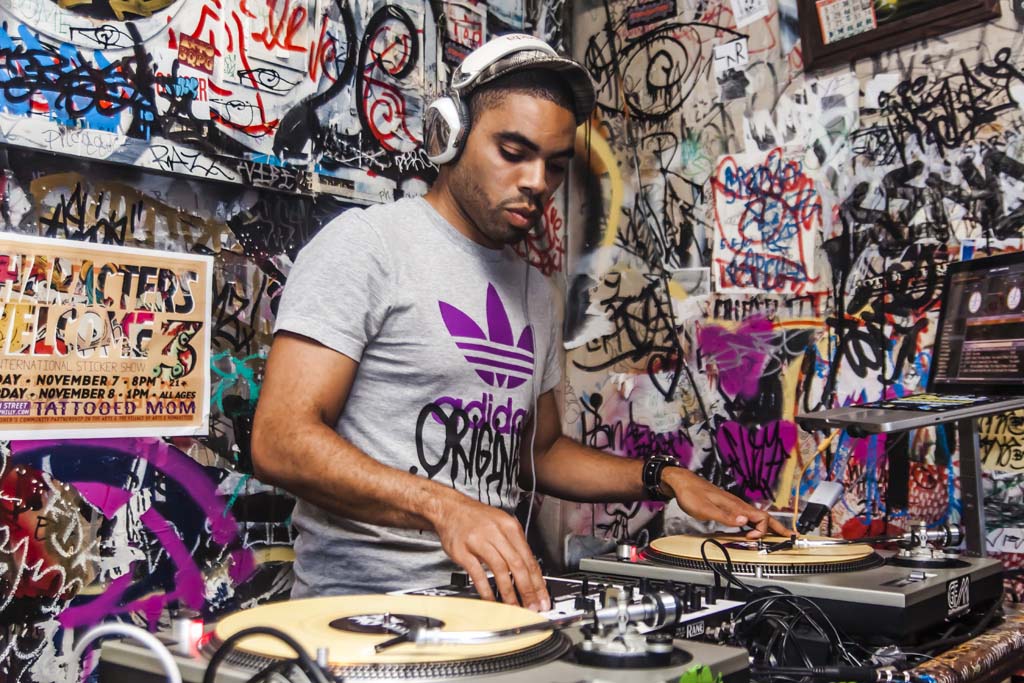
    A DJ spins records during an event at Tattooed Mom in 2014. The South Street will be unable to host DJs, drag performers, or karaoke until it gets a Special Assembly Occupancy License, which could take upwards of six months.

    At least a six-month wait for a solution

    Perry said the issue arose in February, when an L&I inspector visited during the annual Mx. Tattooed Mom pageant, a variety show where drag queens, musicians, and other performers compete. The L&I inspector didn’t ask for a special assembly occupancy license while on site, Perry said. Yet, when he received a copy of the inspection report weeks later, Tattooed Mom was cited for a lack of proper licensure alongside minor fire code violations.

    All Philly establishments that have an occupancy of 50-plus people and offer live or recorded music performances, dancing, or DJs need a special assembly occupancy license. The license costs $253 and is renewed annually, but securing one requires a police recommendation and an entertainment zoning permit, which has a separate and often-lengthy approvals process.

    Perry believed Tattooed Mom was operating lawfully because the bar’s upstairs event space has an occupancy of fewer than 50 people. The violation was a “shocking kind of addition,” he said, “and bigger than what I expected to have to correct.”

    The bar ceased all drag, karaoke, and music events in March, said Perry, canceling upward of 30 performances in order to pass a L&I inspection in April.

    To apply for the license, Tattooed Mom must first secure a zoning exception to host live entertainment since its block’s commercial mixed-use designation (CMX-3) doesn’t automatically allow for it.

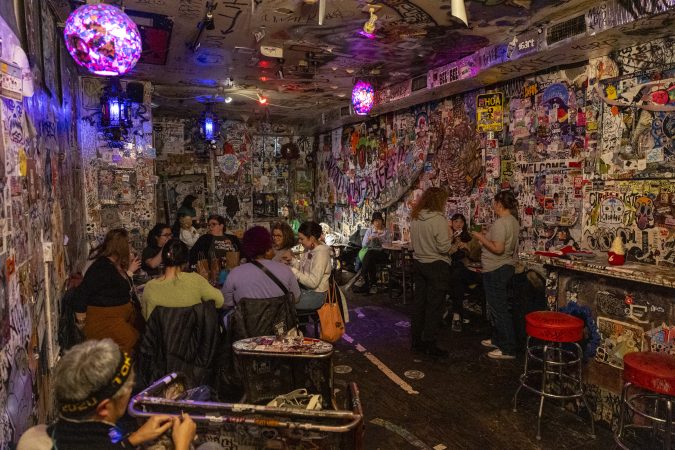
    Owner Robert Perry walks down the stairs at Tattooed Mom. The iconic South Street bar has hosted drag performances, burlesque, karaoke and DJs since it opened in 1997.Tom Gralish / Staff Photographer

    The process requires a public meeting for community feedback followed by a separate hearing with the delay-plagued Zoning Board of Adjustment. As of March 2026, the wait time for a hearing is 180 days — or roughly six months — according to a manual from the City of Philadelphia. (A $750 expediting fee cuts the wait time down to 140 days, or 4.5 months.) Tattooed Mom has yet to apply for the special exception, Perry said.

    Once it became clear there was no short-term solution, the bar announced the change to its events on Instagram in mid-July.

    “Tattooed Mom is still prohibited from hosting live music events of any kind. We’re working with legal, government, and small business support groups to figure out the daunting, complicated, and expensive next steps for zoning, permits, and licenses,” according to the July 11 statement. “We believe the interpretation of some of these rules is unjust to queer communities and creative spaces. There’s no clear timeline yet, but we’ll do our best to keep you in the loop.”

    “We’re not shoot-from-the-hip people. I’m not a reactionary,” Perry said. “We feel like we want to try to move forward. We don’t know if we’ll be able to, but we want to try to.”

    ‘Like if “Footloose” was set in an eviler universe’

    The bar’s Instagram post has been shared more than 1,240 times and received nearly 400 comments. The majority call out the city for allegedly targeting businesses that cater to LGBTQ+ patrons.

    In March, the lesbian-owned women’s sports bar Marsha’s on South Street was raided by a mix of masked and unmasked officers over a bogus underaged drinking tip. And in June, city police fell under scrutiny for getting physical while patrolling Pride celebrations in the Gayborhood.

    “This is outright discrimination,” wrote one commenter.

    “Love that L&I can’t seem to inspect buildings that are literally crumbling but can shut down queer performance spaces,” wrote another. Others called the enforcement “extremely targeted” and “feeling like a Lavender Scare.”

    L&I rebukes that narrative. Tattooed Mom has no current violations, department spokesperson Kandyce Stukes confirmed in an email, and said the bar’s management “seemed to fully understand what they needed to do” for compliance.

    “This is not a targeted effort to stifle a thriving business. It is instead holding all businesses to the same standard, no matter how iconic or popular,” Stukes wrote.

    Others aren’t so sure.

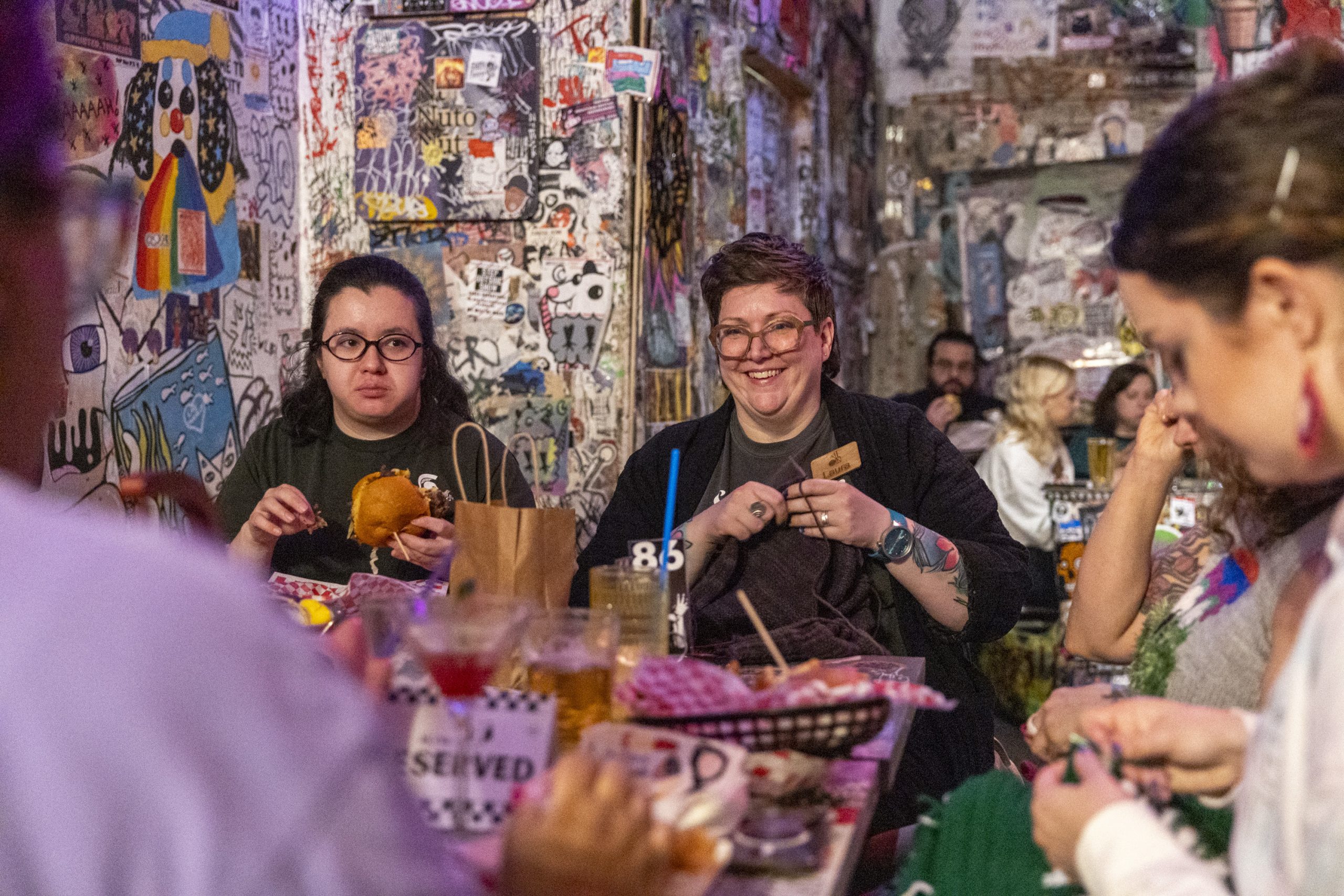
    Crocheters with the Drunken Knitwits work on their craft at Tattooed Mom. The bar is trying to fill the holes in its events calendar with events that don’t involve live music, such as craft nights and comedy.Tyger Williams / Staff Photographer

    “To have a bar that’s not even allowed to do karaoke sounds ridiculous. That’s like if Footloose was set in an eviler universe,” said drag queen Elizabeth New Jersey, who has hosted events and performed at Tattooed Mom at least once a month for nearly two years.

    The bar, they said, has long served as a space for people to try drag since it doesn’t require payment to perform. Producing events at Tattooed Mom helped the drag queen build a portfolio to land a full-time job in the arts. Now, they’re worried a pipeline has been cut off for others to do the same.

    “There’s other performance venues in Philly, but a lot of them are not as receptive to working with newer talent,” Elizabeth New Jersey said. Tattooed Mom “has always been an affirming space for people to be credited, to be paid, and given their flowers for their craft.”

    Jer Nightshade, a musician whose monthly queer variety show the Moment was displaced by Tattooed Mom’s cancellations, only began performing professionally after winning the bar’s 2025 Mx. Tattooed Mom pageant. They said it’s one of the few venues they believe adopts an attitude of “we believe in you” to all performers, regardless of whether they can pull in a crowd.

    The “Accidental Acquaintances” group art show at Tattooed Mom featuring displayed works and live painting by various street artists from around the city on Saturday, July 11, 2015. ( Tim Blackwell / Philly.com )

    Tattooed Mom is working to fill the holes in its calendar with events like comedy shows that can keep drag in the bar without violating city law. On Aug. 16, it will host the Big Gay Bash, its first-ever improv drag show.

    Nightshade is optimistic Tattooed Mom will get the proper license. For now, they’re more concerned about the chilling effect on LGBTQ+ nightlife.

    “Things sometimes feel like they’re regressing,” they said. “In the climate that we’re in now, for any government department to be wasting time shutting down what brings other people joy is frustrating. We’re not hurting anybody. We’re not destroying anything.”


    Staff writer Jason Nark contributed to this article.

  • Fellowships shelter exiled writers. The hard part comes after.

    Fellowships shelter exiled writers. The hard part comes after.

    Not long ago, I was a celebrated exiled writer, one of the most visible faces at City of Asylum Pittsburgh — a grassroots organization that helps endangered writers build new homes and new lives in Pittsburgh. Today, I am alone, unable to find a job, without health insurance, and, if I remain in this situation, I may soon be unable to pay my rent and find myself — God forbid — homeless.

    My story begins in Algeria — the country that prompted Salman Rushdie and other writers to first establish the “parliament of writers” internationally in 1993 because of the alarming number of attacks on, and assassinations of, writers in the country in the ’90s during the civil war. This is the same country that had earlier welcomed the international Black Panthers, and many African liberation movements since its independence from France.

    I came here as a threatened writer.

    For years in Algeria, I was persecuted because of my novels, my legal and constitutional struggle as a gay Muslim man, and my defense of women’s rights, LGBTQ+ rights, and freedom of expression.

    In 2015, I was the first Algerian to call for the legalization of same-sex marriage. I started speaking up on taboo topics, crimes against children, for example, and family laws that relegated women to second-class citizens and prioritized men in the family. In 2017, I was interrogated for hours about one of my novels, which highlighted the participation of the LGBTQ community in the war of independence against the French — another taboo topic.

    In 2019, I broke the greatest taboo of all in Algeria, calling for the truth to be told about the 20,000 young men kidnapped during the civil war.

    I was tried and sentenced to pay a fine for using humor to criticize the presidential elections in 2020, and then in 2021 I was interrogated for hours about two articles I had written: one in which I criticized the president, the other, a call to liberate “God” from politics.

    I was already in the U.S. when I was sentenced, in absentia, to a year in prison in Algeria for those same articles.

    The German Bundestag honored me through its “Parliamentarians Protect Parliamentarians” program for human rights advocates, and I was shortlisted for the Index on Censorship Freedom of Expression Awards in 2021. There were other recognitions, but also so much pain, which finally pushed me to escape.

    I say escape because I chose myself, for the first time in my life. I chose to live. In 2017, PEN International contacted me and proposed that I get in touch with the International Cities of Refuge Network, a Norwegian organization that has a network of many cities of asylum around the world. In 2021, I got Artist Protection Fund funding, and through that, I got a fellowship with the City of Asylum Pittsburgh and Carnegie Mellon University.

    City of Asylum welcomed me in Pittsburgh and gave me an important period of safety and opportunity. During this period, I taught Arabic and worked at Carnegie Mellon, where I also studied translation as part of the employee educational benefits while holding a fellowship there. These opportunities changed my life, and I am grateful for them.

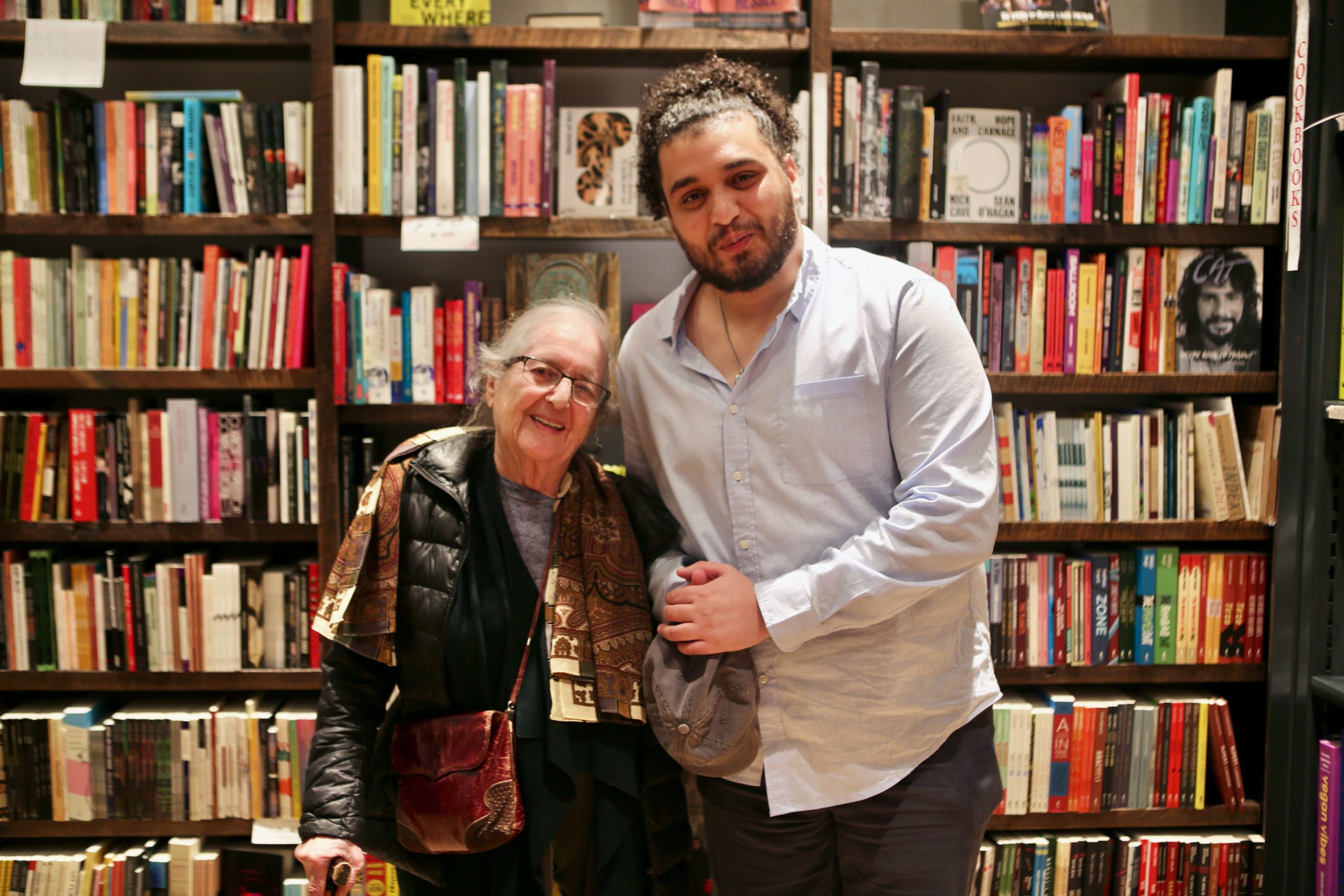
    Elaine Moukhtefi with Anouar Rahmani in Pittsburgh in 2025. Moukhtefi — an American writer, translator, and activist — worked with Frantz Fanon in support of the anti-colonial Algerian National Liberation Front in the 1950s and ’60s. She helped welcome members of African national liberation movements, including Nelson Mandela and the international Black Panther members, to Algeria before she was forced to leave the country in 1974. Rahmani says that meeting her in Pittsburgh “was the most beautiful surprise in my life.”Courtesy of Anouar Rahmani

    But eventually, as happens with fellowships, programs end, and the difficult question of what comes next begins.

    Excitedly, I began applying for jobs related to my degrees and experience. When that didn’t pan out, I applied for translation jobs and positions requiring Arabic or French. I applied for work that matched my résumé, and for work that did not. Being an immigrant, I lowered my expectations and looked for work almost anywhere. To give you the full picture, I applied for cleaning jobs, including one cleaning hotel toilets in Pittsburgh.

    I hoped to find anything that would protect me from the bitter winter cold and the eyes of racists. Above all, I wanted a job that would preserve my dignity and my life. I did not have many conditions. Any legal work would have been enough to begin my life again. But perhaps because of a curse, bad luck, or something beyond my ability to understand or predict, I was not successful.

    Today, I live afraid, on the verge of homelessness, in debt, without health insurance, and without a passport because the Algerian Embassy will not renew mine. I do not know where to turn or what to do. All doors seem closed to me. And all that comes to mind is the applause of audiences at the many events where I was once a guest speaker, on days when I truly believed myself to be an “important” person. Now it seems like a joke.

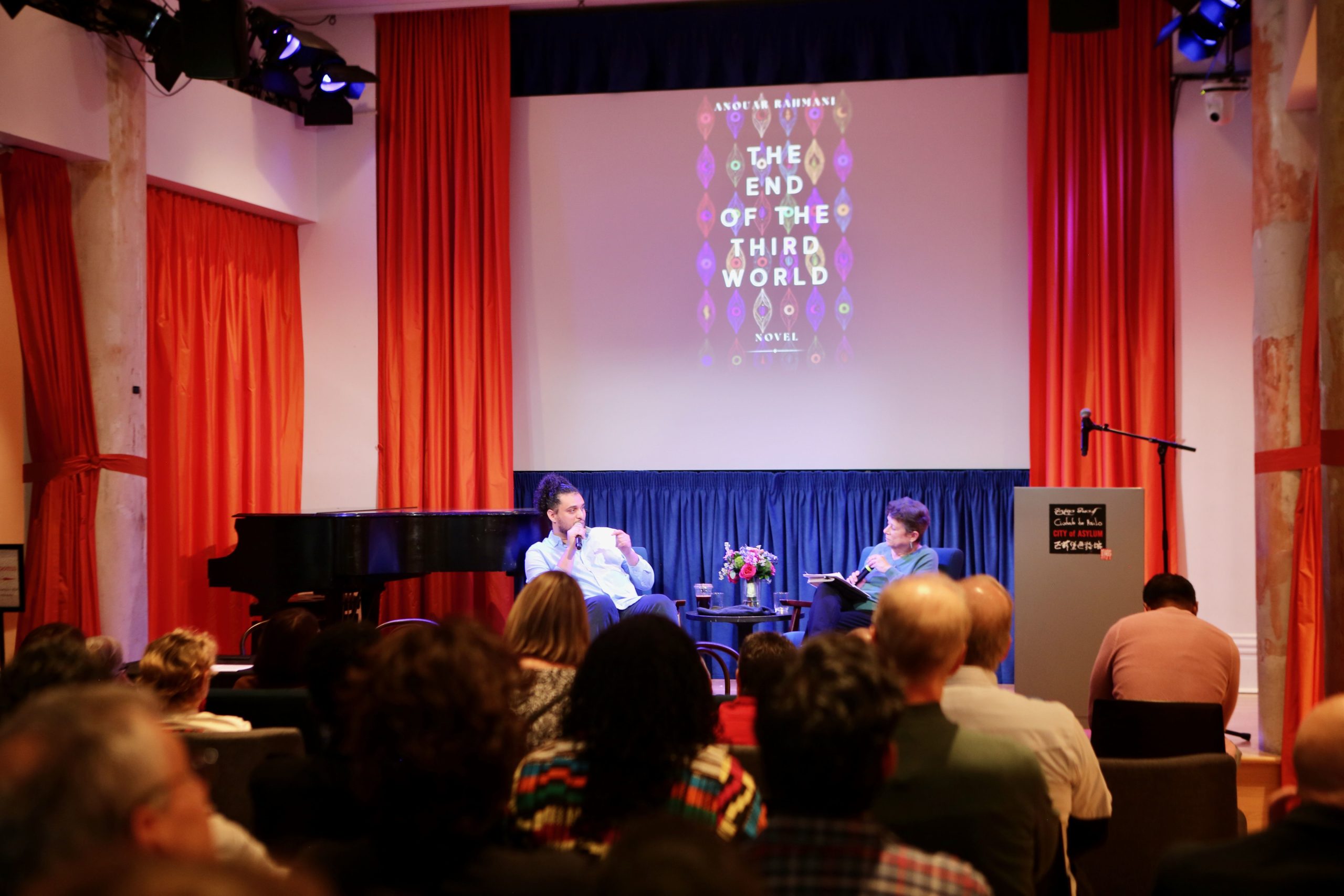
    Anouar Rahmani (left) and Kenya C. Dworkin y Méndez, from Carnegie Mellon University, in a public conversation and preview of Rahmani’s novel, “The End of the Third World,” at a City of Asylum Pittsburgh event in 2025.Courtesy of Anouar Rahmani

    We do not matter much as immigrants. U.S. Immigration and Customs Enforcement hunts immigrants down, and politicians direct hateful rhetoric against us. We are labeled with the ugliest descriptions in the media. I am a queer immigrant from Algeria. I have become almost everything some politicians in this country hate.

    After the Gaza War, many Arab and Muslim scholars and students spoke with me about their fears. When students were arrested during pro-Palestinian protests, many of us became afraid in a country that had promised us we would not need to be afraid again.

    I am afraid. Do I have the right to say this? Or must I live within a diplomatic discourse that allows only gratitude to be expressed after a rescue?

    I need to write about the difficult side of rescue, the “after the rescue” nobody speaks about.

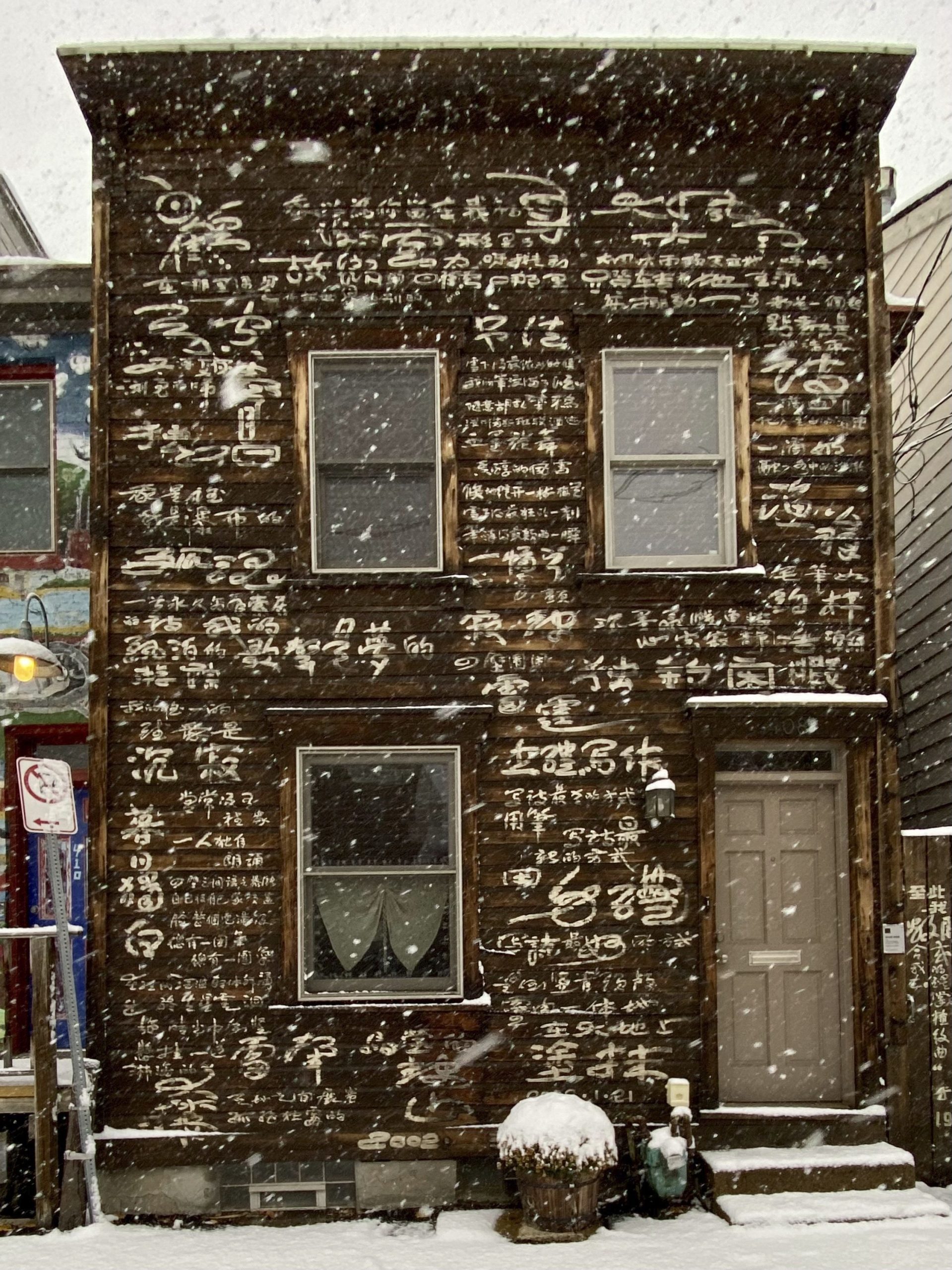
    This photo shows House Poem, a home painted by Huang Xiang, the first exiled writer in the City of Asylum Pittsburgh residency program, in December 2020. City of Asylum Pittsburgh is a nonprofit organization that is part of an international network of support to writers and artists threatened by a lack of freedom of expression in their home countries./ AP

    My story is perhaps personal, but it is bigger than me. It is about exiles brought into this country with hope — who later discover how fragile their survival is. While we are often presented as examples of success, many exiles live in psychological, economic, and legal fragility and under indescribable pressure.

    The danger for an exiled writer, scholar, or artist does not end simply because a fellowship ends. I do not doubt the sincerity of the people and the organization that brought me to America and sheltered me. I am not trying to blame my failures on it or on others. But I want us to reconsider the rescue model on which it is built and to work toward sustainable mechanisms of support.

    Perhaps the end of a fellowship should be announced with the same energy as its beginning. When an exiled writer or artist arrives, organizations often use newsletters, social media, institutional networks, and public events to introduce the new fellow to a city. The arrival becomes news. But the departure, and the professional uncertainty that may accompany it, can happen almost silently. Why not use the same networks to announce that a fellowship is ending and that a writer, scholar, or artist is entering the job market? Visibility should not disappear precisely when it may be most vital to survival.

    Snow welcomed the author when he first arrived in Pittsburgh as a City of Asylum and International Cities of Refuge Network fellow in January 2022.Courtesy of Anouar Rahmani

    Host organizations can make introductions, advocate, and help open doors that are often inaccessible to a newcomer navigating a foreign labor market. Many exiles have advanced degrees, years of professional experience, and strong résumés. What they lack is access: knowledge of the hidden mechanisms of the local job market, professional references, institutional introductions, and networks capable of converting experience into employment.

    Most importantly, the path toward employment after a fellowship should be treated as part of the fellowship. This work should begin even before the fellow arrives. What credentials may need recognition or supplementation in the host country’s labor market? What legal barriers to employment might exist? These questions should be asked from the beginning, revisited throughout the residency, and followed beyond its formal end.

    I want to be clear about what I am saying. City of Asylum Pittsburgh helped me in many ways. I am not dismissing that assistance. The question is not whether individual people tried to help me. The question is whether the fellowship model itself is adequately designed for what happens after the fellowship ends.

    What matters in the idea of rescue is not the moment of rescue itself, but the possibility of survival afterward. We do not want to remain symbols of rescue; we want to survive.

    All of us want to be beings breathing under the sky — but not in fear that it is about to fall on our heads.

    Anouar Rahmani is an Algerian novelist, writer, journalist, and internationally recognized defender of freedom of expression. Rahmani’s literary and public trajectory has positioned him as one of the most visible contemporary Algerian voices confronting censorship, religious and moral authoritarianism, and the criminalization of imagination.