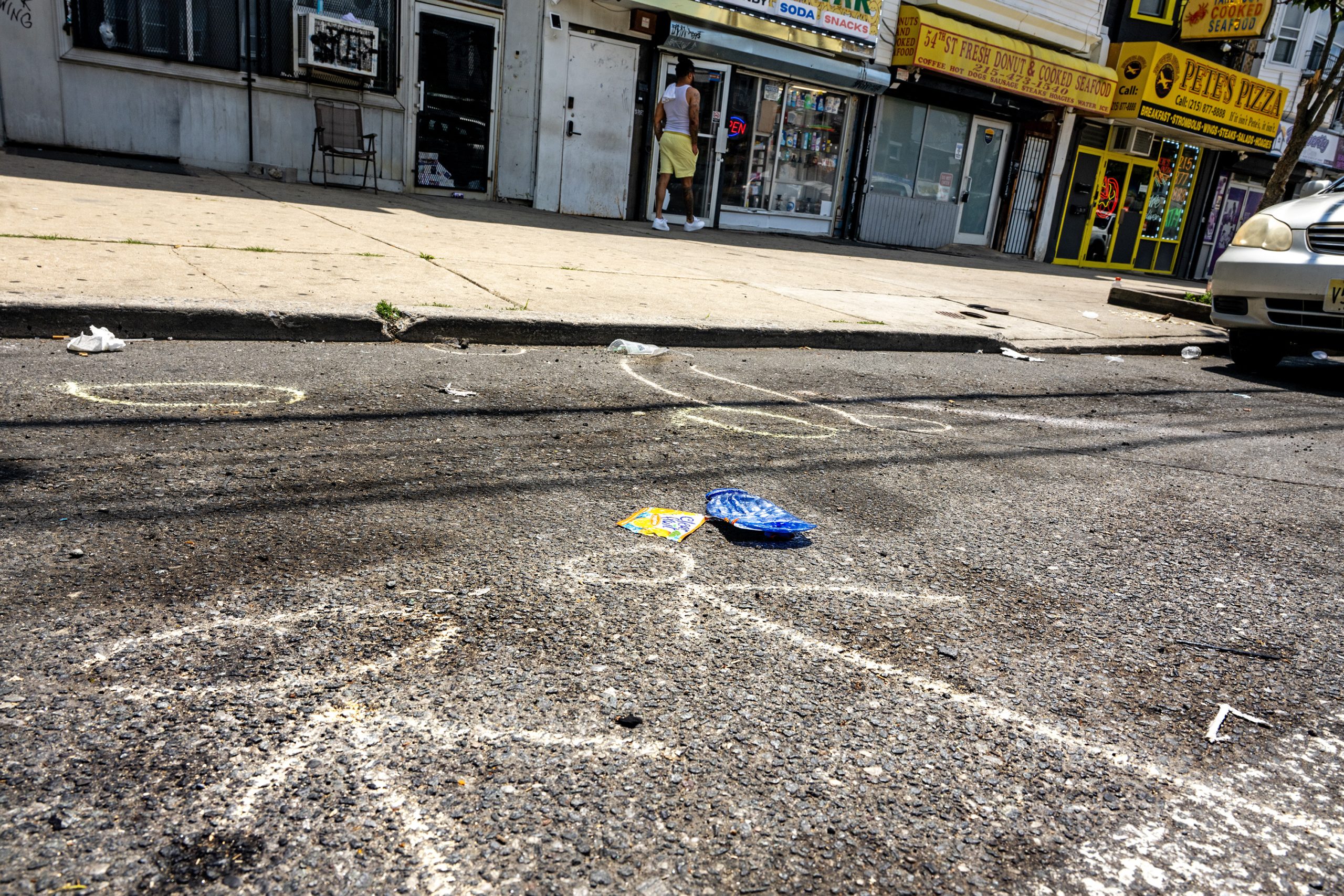
In the past, principal Shauneille Taylor had no way of knowing when one of the children at Edward Gideon Elementary School had witnessed a shooting, or an incidence of domestic violence, or seen a parent arrested.
The child might walk into the North Philadelphia school the next day and act aggressively, or appear withdrawn, or shut down, and adults would wonder why — sometimes, they might even assign disciplinary consequences for acting out.
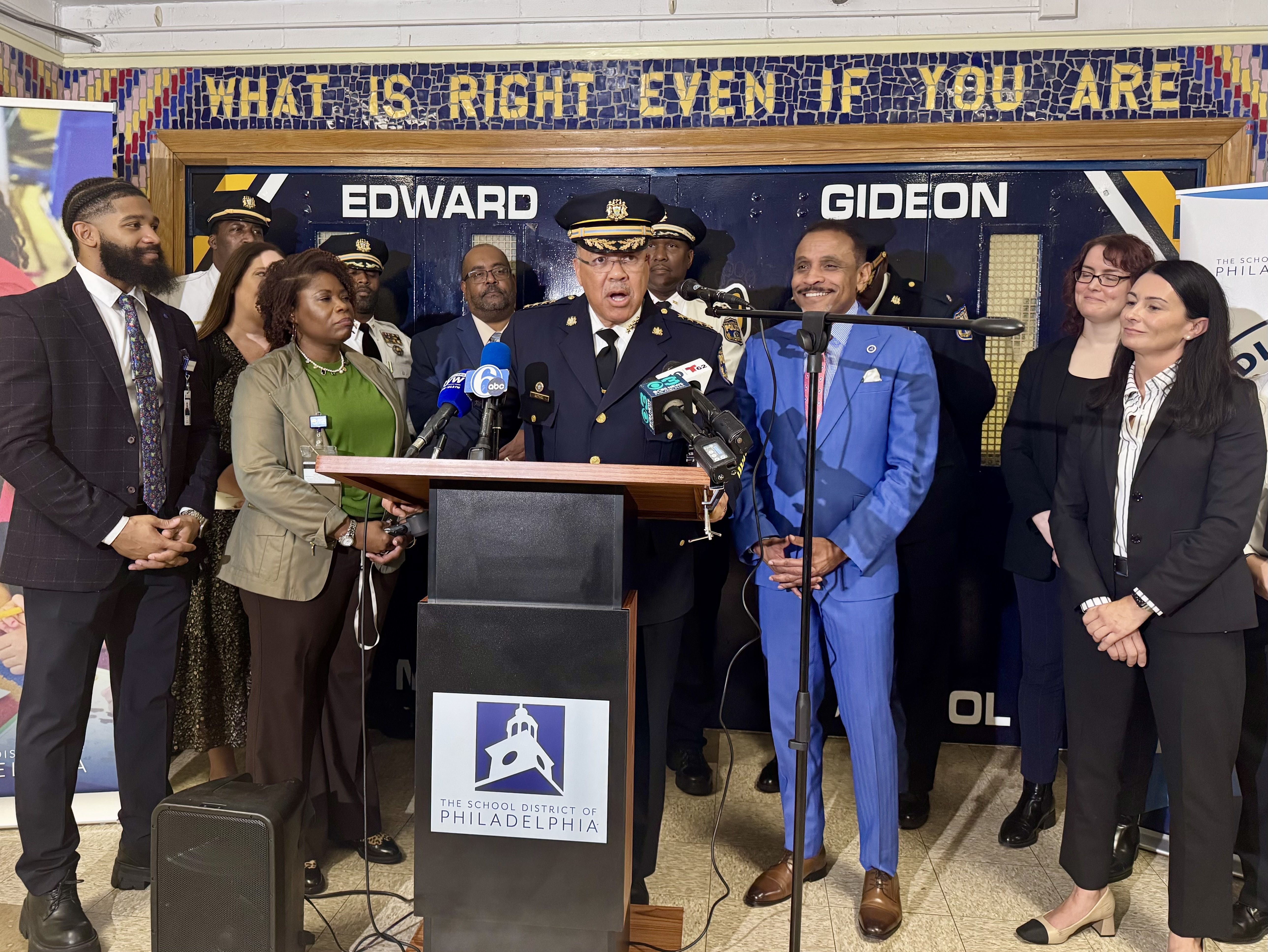
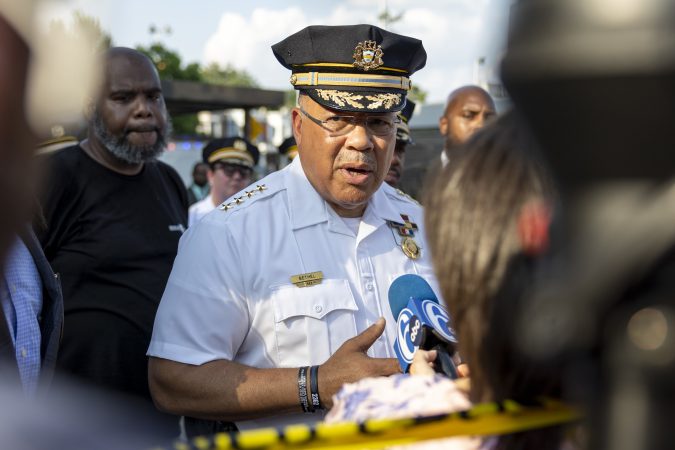
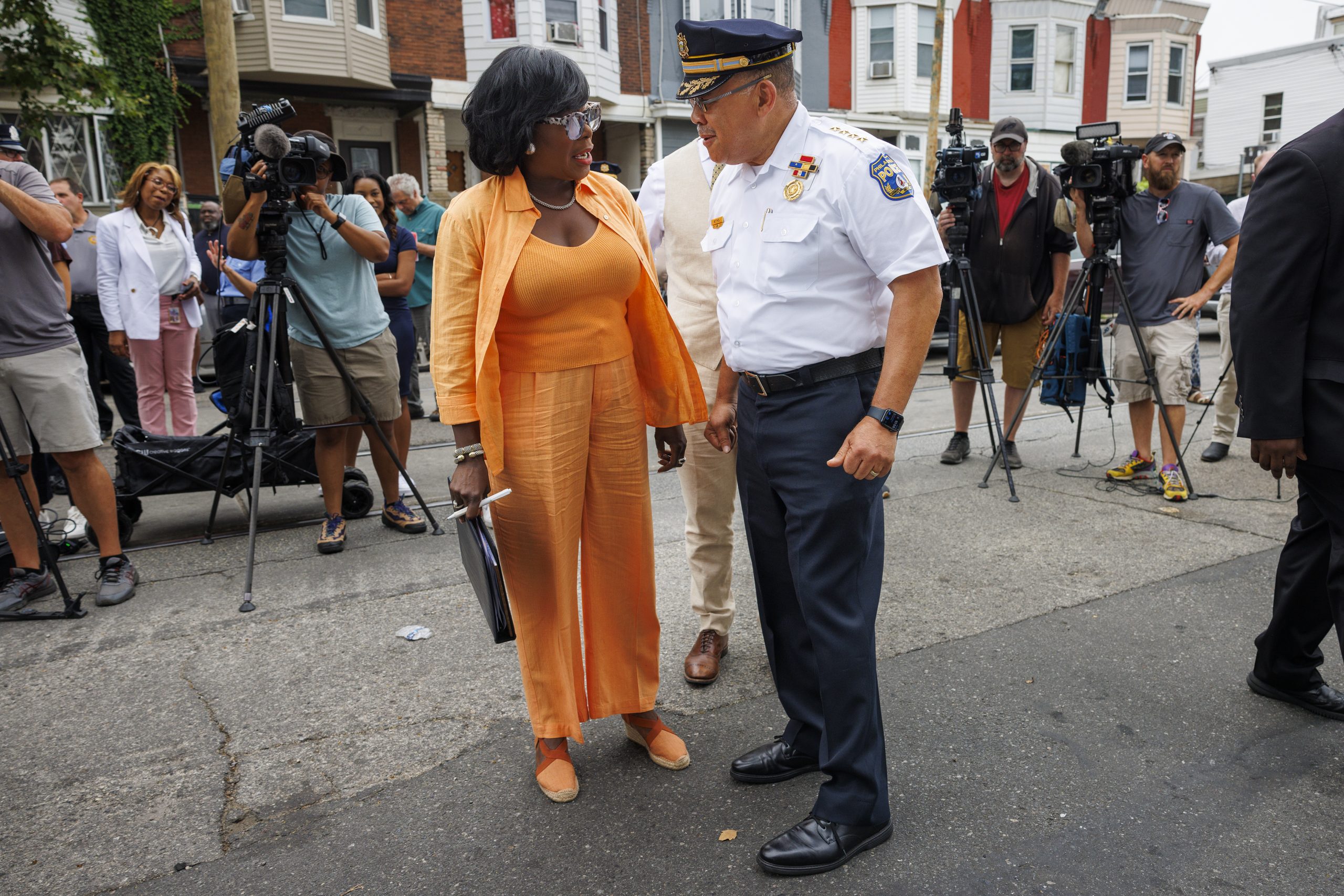
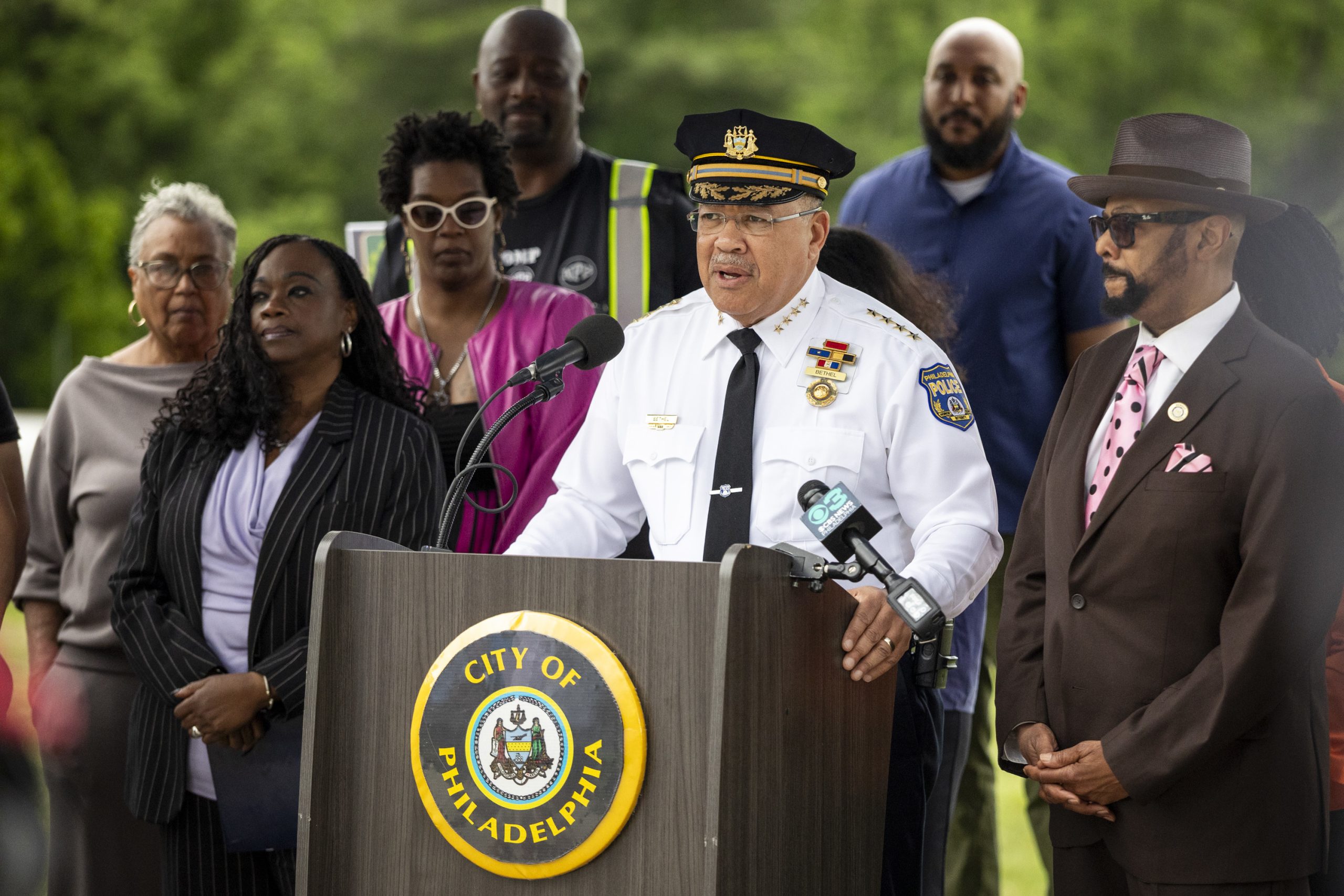
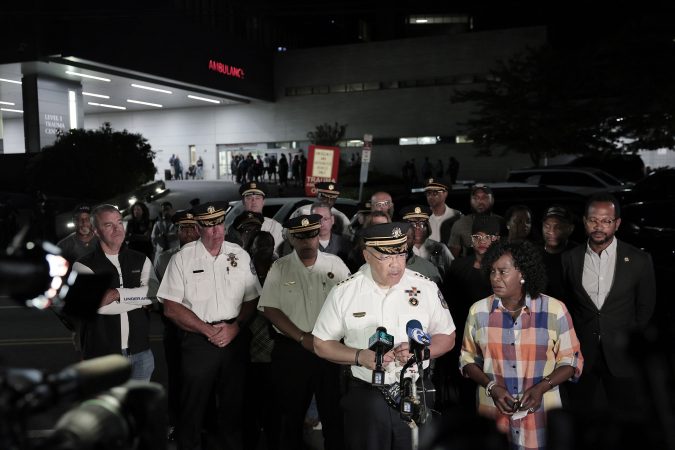
That changed with an initiative piloted at Gideon and 14 other city schools, now going districtwide, Philadelphia Police Commissioner Kevin Bethel and Superintendent Tony B. Watlington Sr. announced Monday.
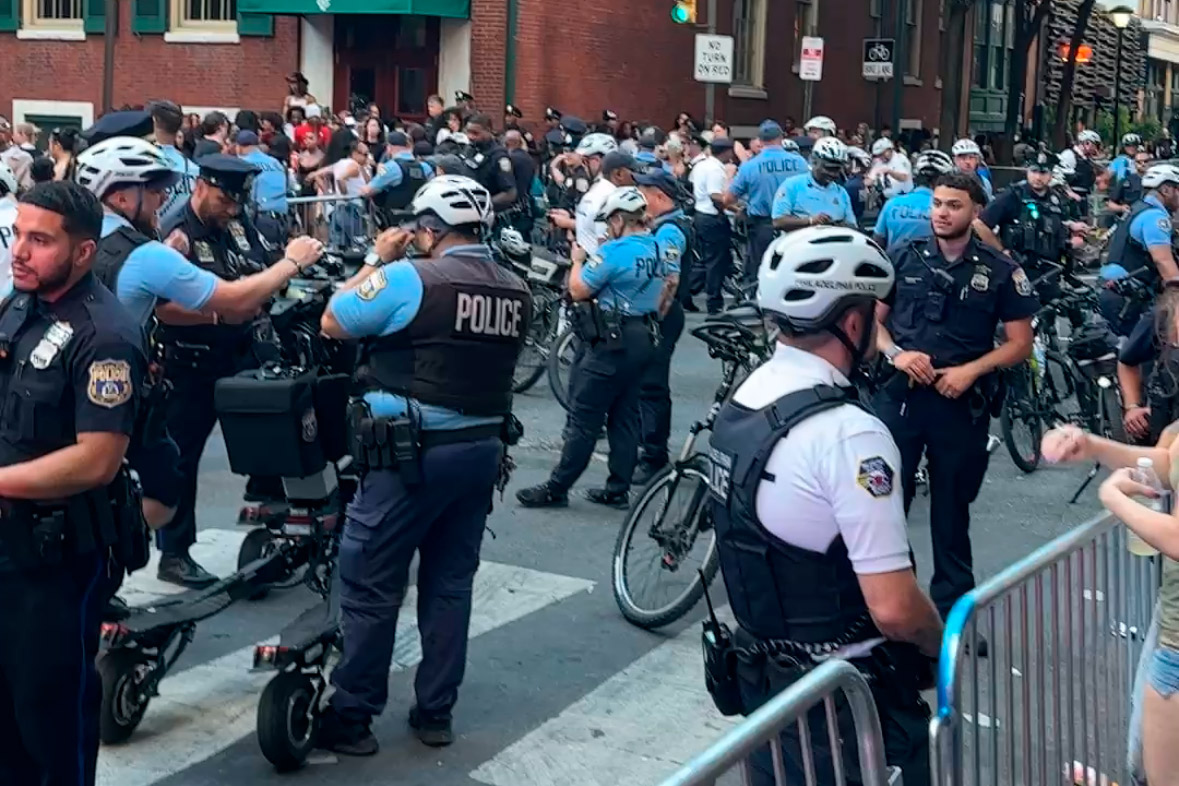
The “Handle With Care” program allows officers to make referrals to schools attended by child witnesses to crimes. Schools are then alerted that one of their children may need extra attention, with staff trained in trauma-informed practices and poised to offer more support.
“Having that heads up has made a profound difference for our school,” Taylor said at a news conference in a Gideon hallway Monday.
The program is the brainchild of Bethel, a former district safety chief and longtime city officer, who dreamed for years about figuring out a way to better care for kids who witnessed traumatic events.
In 2024, the district used a $1 million federal grant to launch a “Handle With Care” pilot in 15 schools in North Philadelphia. That money paid for training and a dedicated staffer.
A $200,000 state grant will fund the staffer’s work going forward, officials said.
Officials “didn’t want to assume that everyone understands trauma, how to identify the warning signs, and how to provide that support,” Bethel said. “So we had the opportunity to provide training to Philadelphia police officers and school-based staff, not only on how to understand trauma, but on how to provide meaningful support. Through this pilot, we were able to provide that support to more than 70 students who may otherwise have walked into school carrying the weight of what they experienced without anyone knowing that they just needed a little extra care.”
It’s certainly a shift from years ago, Bethel said, when “the word trauma wasn’t really part of our vocabulary in policing or frankly, much of the conversations around children and their experiences.”
“But we understand today more than we do ever what young people experience and how those experiences affect their behavior, their ability to learn, their relationships, and their development. Our young people are exposed to significant levels of trauma,” he said.
When children witness traumatic events, officers have the ability to trigger Handle With Care alerts. A point person at the child’s school will then be alerted — not with the details of the incident, just that this student needs extra support because of an event.
It “gives the school an opportunity to intervene … rather than waiting until a child’s trauma manifests its way into a disciplinary action or academic, emotional problems,” Bethel said. “Early recognition creates an opportunity for early intervention.”
Editor’s note: This story was updated to include information from an interview conducted with Michael van der Veen and William Brennan after the story was published. van der Veen, Brennan, and their attorney, George Bochetto, did not responded to multiple interview requests in the days leading up to publication.
A newly formed local group sued the Gayborhood’s Bar X this month, alleging it is a public nuisance. The group wants to shutter the decade-old business, whose clientele is largely Black.
The lawsuit asks a Philadelphia Common Pleas Court judge to order the Camac Street bar to cease operations. It arrives at a time of increased police presence on the nightlife strip and heightened tension between the city’s Black LGBTQ+ community and police.
Bar X has “repeatedly generated excessive noise, disorderly conduct, disturbances, violence, public intoxication” and requires a constant police presence, the complaint says. It also claimed neighbors have observed “public displays of drunkenness and sexual activity” outside the bar.
The city failed by maintaining the establishment’s business license, the suit says, urging a judge to revoke it.
Behind the lawsuit is Michael van der Veen, a 62-year-old high-profile Center City lawyer whose office is in the building across from Bar X on Camac Street.
The bar has been using the office’s parking spot for years, van der Veen said, despite repeated requests to remain off the lawyer’s private property.
But things escalated in July when, according to van der Veen, he was assaulted while leaving his office around 9 p.m. at night.
“When I got jumped from behind and got coldcocked, I was done,” he said.
Days later, veteran criminal defense lawyer William Brennan incorporated Save Our Neighborhood for Tomorrow Inc., the group that filed the lawsuit against “the dive bar of the Gayborhood,” as Bar X pitches itself.
“This changed when passive-aggressive behavior became assaultive-aggressive behavior,” Brennan said. “It can’t be tolerated.”
Save Our Neighborhood for Tomorrow does not appear to have a website or social media presence.
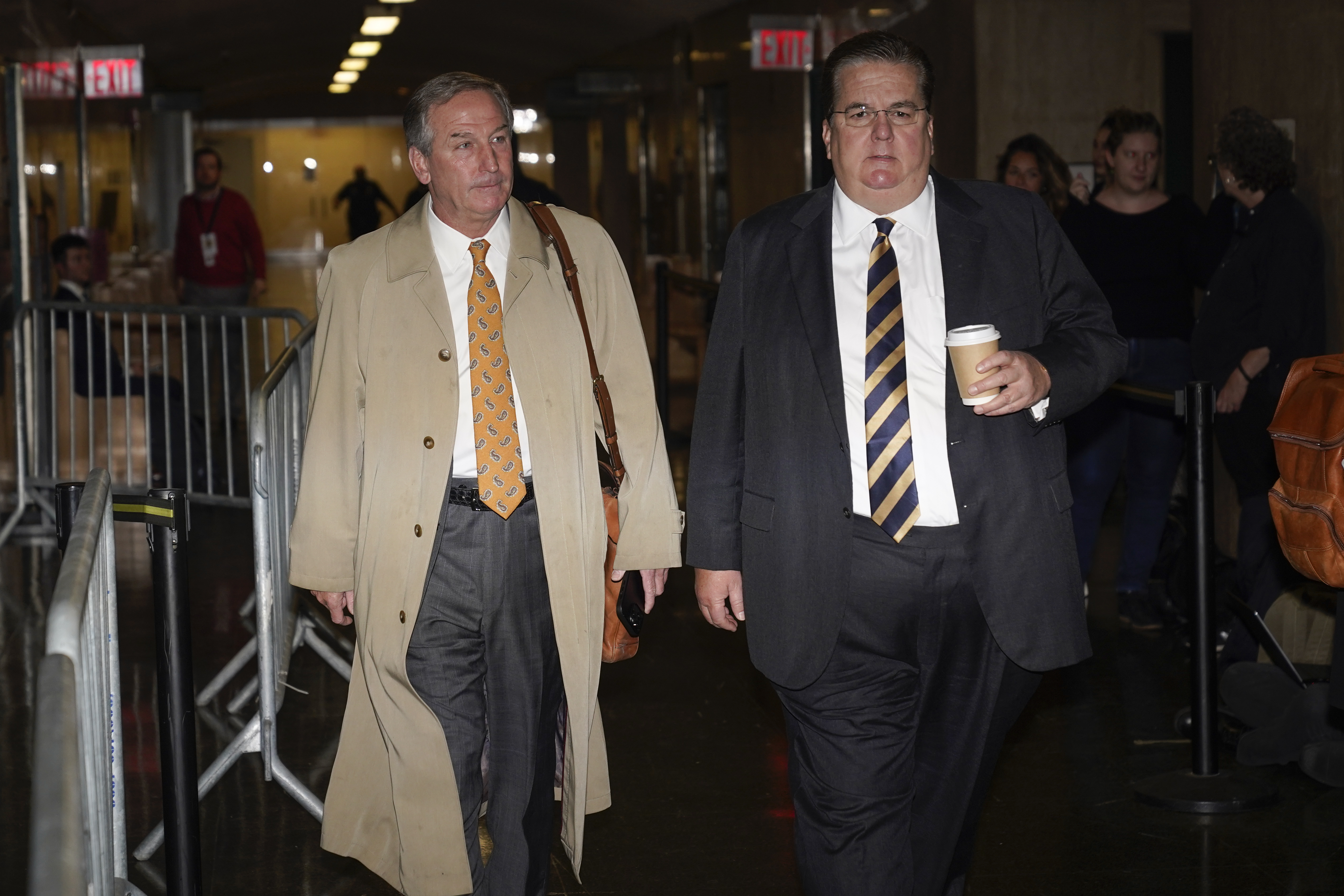
Defense attorneys Michael van der Veen, left, and William Brennan arrive to criminal court in New York in 2022 for Trump’s tax fraud case. Seth Wenig
George Bochetto, the attorney who filed the lawsuit on behalf of the newly formed group, did not respond to repeated requests for an interview. Bochetto is also representing a different group of Pine Street and Spruce Street residents who won an injunction to pause safety upgrades to bike lanes.
The lawsuit against Bar X names owner Tony Tsang, business entities associated with the bar, the city, and the commissioner of the Philadelphia Department of Licenses and Inspections, Bridget Collins-Greenwald. The city did not respond to requests for comment.
Tsang disputed the allegations of public drunkenness and sexual activity and said the bar is a longtime fixture of the block.
“You don’t like it, you like it quieter, how come you don’t move out of the city?” Tsang, 59, said in a recent interview at the bar. “One block, three bars, how come they’re only complaining about us?”
A ‘very homey’ gay bar
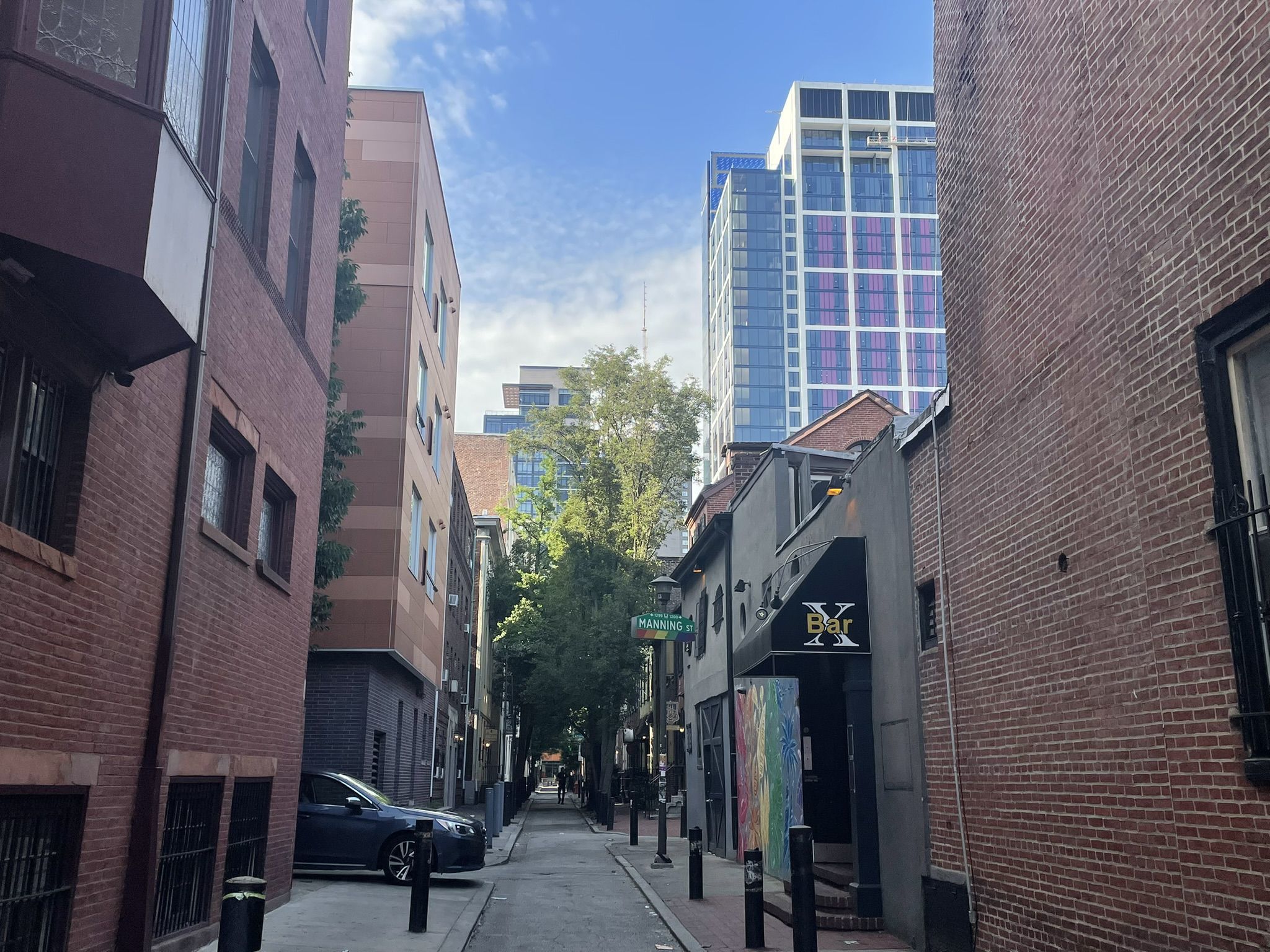
Bar X sits between Locust and Spruce on Camac, a narrow, 200-year-old street that is home to two other gay bars, Tavern on Camac and UBar. It is also around the corner from the bar 254, which replaced Tabu. Those three bars are all owned by the Tavern Group.
Tsang said the majority of his clientele is Black and suggested that the lawsuit had more to do with his identity and that of his patrons than the noise or disturbance allegations.
“To me, it’s the color. I’m Asian. My English isn’t too good. They want to play a game with me,” Tsang said.
Tsang opened his bar in 2016, naming it Bar X so it would be easy for people to remember. The bar’s exterior features a rainbow mural of tropical leaves; inside Tsang hung Ikea posters of Audrey Hepburn and James Dean. He said he stocks the bar himself, buying whatever club soda is on sale at the supermarket.
The bar has a large dance floor and a DJ booth that abuts the alley.
Joseph Ward, a part-time bartender at Bar X who also runs its social media and marketing, said the bar stands out because it’s “very homey,” with Taco Tuesdays and twice-weekly karaoke. (There’s also a male revue every Thursday night.)
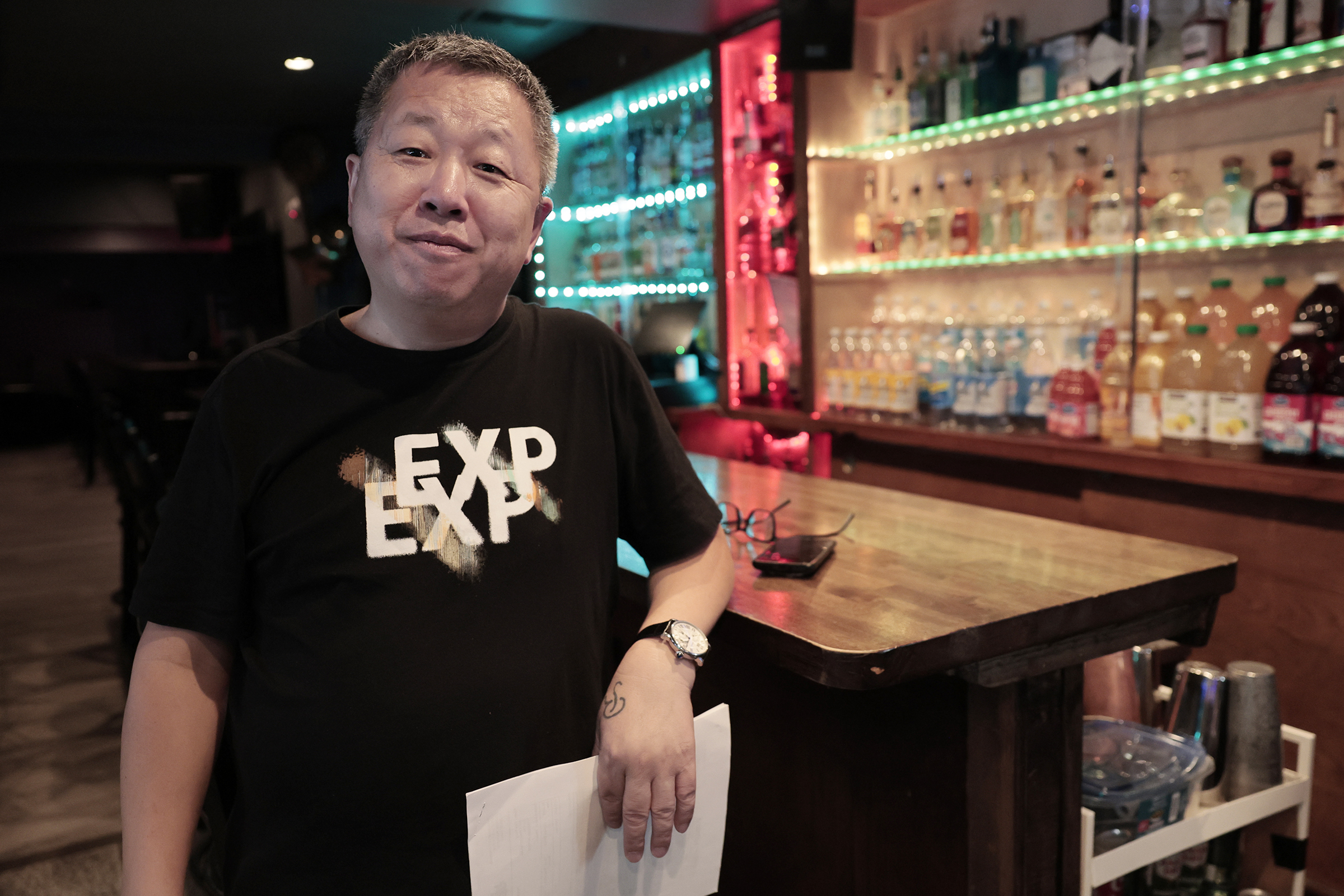
Bar X owner Tony Tsang said he stocks the bar himself with whatever club soda is on sale at the supermarket.Elizabeth Robertson / Staff Photographer
“You [can] just chill and not have to worry about the hustle and bustle of a nightclub,” Ward, 36, said. He said the bar is one of the last minority-owned clubs in the Gayborhood and hosts a largely nonwhite crowd.
The lawsuit cites negative Google reviews from people purporting to be Bar X customers, including accounts of stolen phones and allegations that a bartender gave patrons drinks containing sedatives.
The remedy to the situation, the suit says, is for the city to shut down the bar.
Ward said that rumors of drugged drinks at the bar had gained traction online earlier this year, but that staff had not been able to verify any crimes, despite reaching out to those making the accusations. In response, the bar ordered covers for customers’ drinks.
“We take pride in it being a safe place in the Gayborhood,” Ward said, “so we obviously want to keep it that way.”
A new police deployment
Bar X’s block has seen an increase in crime incidents this year, according to Philadelphia Police Department public data.
The lawsuit claims that since last summer there have been nearly 70 crime incidents at the property, including “multiple reports of a person with weapons, assaults, robbery, and disorderly conduct.”
<iframe title="Crime Incidents On Bar X's Block" aria-label="Column Chart" id="datawrapper-chart-LCiYX" src="https://datawrapper.dwcdn.net/LCiYX/1/" scrolling="no" frameborder="0" style="width: 0; min-width: 100% !important; border: none;" height="477" data-external="1"></iframe><script type="text/javascript">(function(){function e(){window.addEventListener(`message`,function(e){if(e.data[`datawrapper-height`]!==void 0){var t=document.querySelectorAll(`iframe`);for(var n in e.data[`datawrapper-height`])for(var r=0,i;i=t[r];r++)if(i.contentWindow===e.source){var a=e.data[`datawrapper-height`][n]+`px`;i.style.height=a}}})}e()})();</script>
In April, the Washington Square West Civic Association hosted a meeting with residents, city officials, and Tsang in an attempt to address neighborhood complaints. Councilmember Mark Squilla, who represents the area and attended the meeting, estimated that more than 40 people attended.
In response, the city experimented with one-off street cleanings of Camac to address litter, Squilla said. Police also began clearing the street of people on weekend nights after 2 a.m., when the bar closes.
“We’ll continue to work on compliance and whatever else is needed there,” Squilla said.
A Philadelphia Police Department spokesperson confirmed there is currently a “bar/nightclub” deployment in the bar’s general area. The department has used similar deployments throughout the city for decades to respond to community concerns and public safety needs, Sgt. Eric Gripp said in a statement.
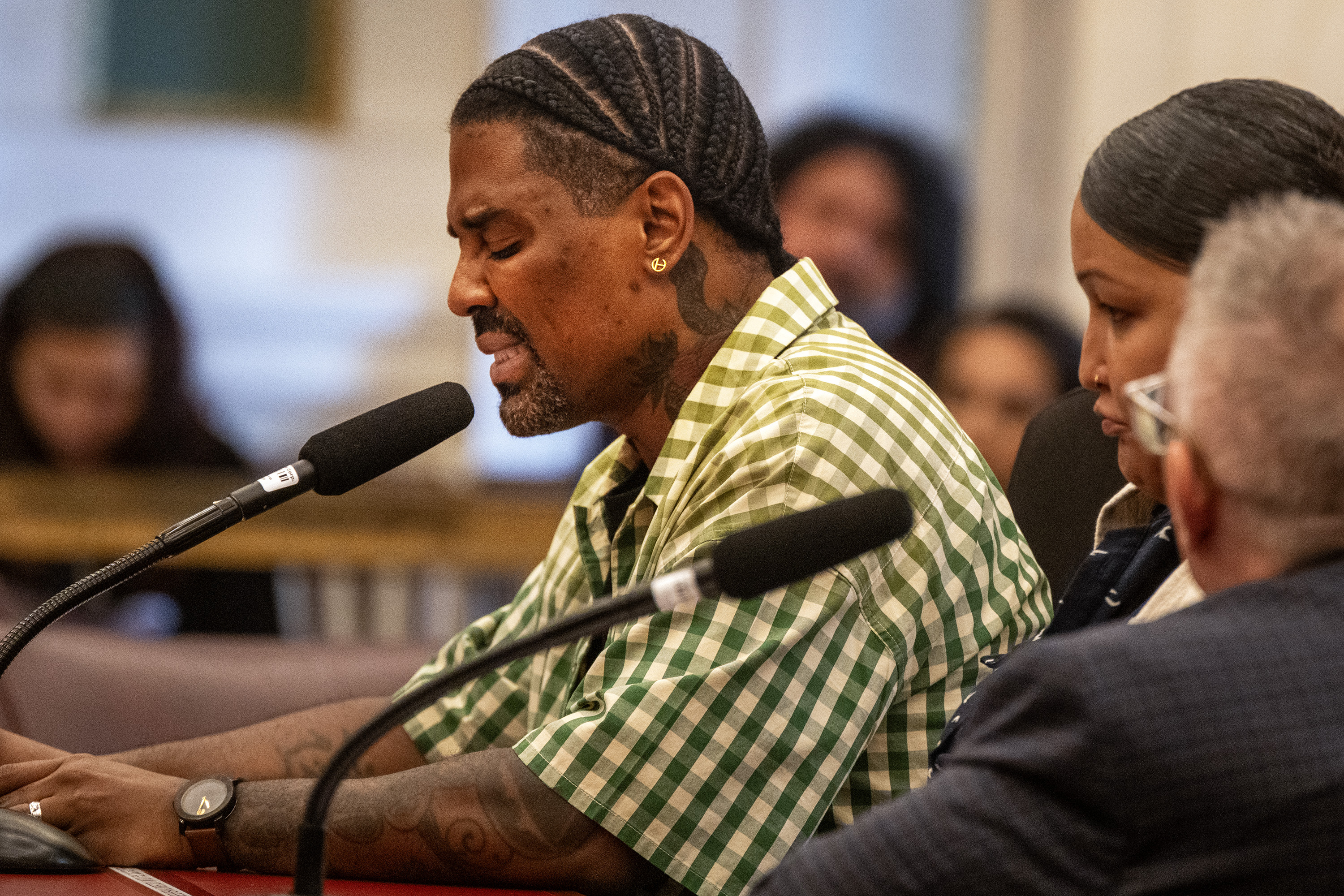
Jacen Bowman, president of Philly Black Pride, testified earlier this month at a City Council Committee on Legislative Oversight hearing into the Philadelphia Police tactics used during Pride celebrations in June.Tom Gralish / Staff Photographer
“Black and brown LGBTQ+ people are watched differently. We are approached differently. We are policed differently,” Jacen Bowman of Philly Black Pride said at the hearing. “Too often we are made to feel like visitors in a neighborhood that is promoted as the heart of Philadelphia’s LGBTQ+ community.”
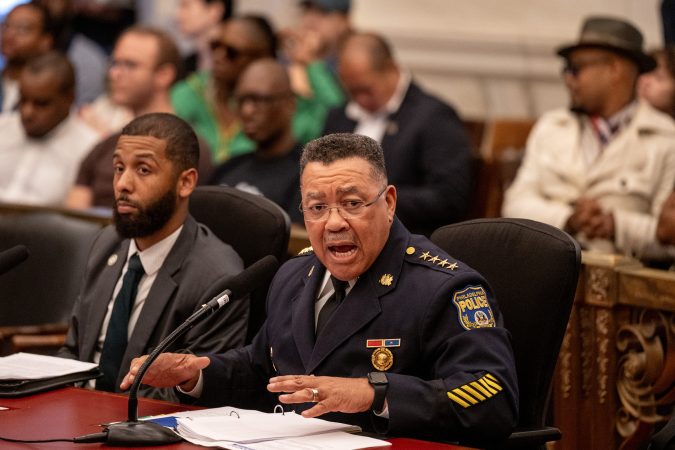
Several members of Philadelphia City Council and a bevy of LGBTQ+ community leaders on Wednesday sharply criticized Police Commissioner Kevin Bethel, who testified about the department’s response to Pride festivities in the city’s Gayborhood in June and largely defended the force’s crowd-control tactics that had drawn outrage.
Bethel acknowledged that June 7 was “not a perfect day” and vowed that the police department would implement more robust planning procedures ahead of next year’s celebrations.
But he stopped short of apologizing for the police department’s response, saying chaotic scenes from the Pride events were part of officers’ attempts to disperse crowds from the Gayborhood, where thousands of people congregated instead of the city’s official festival on the Benjamin Franklin Parkway.
Among them, Bethel said, were hundreds of teenagers, some of whom were seen on video fighting.
“There’s a large group of young people who [had] descended into the neighborhood for what they think is something there,” Bethel said. “There is nothing for them there, other than to take over the street.”
That comment did not sit well with Council members and dozens of LGBTQ+ community members who attended the hearing at City Hall.
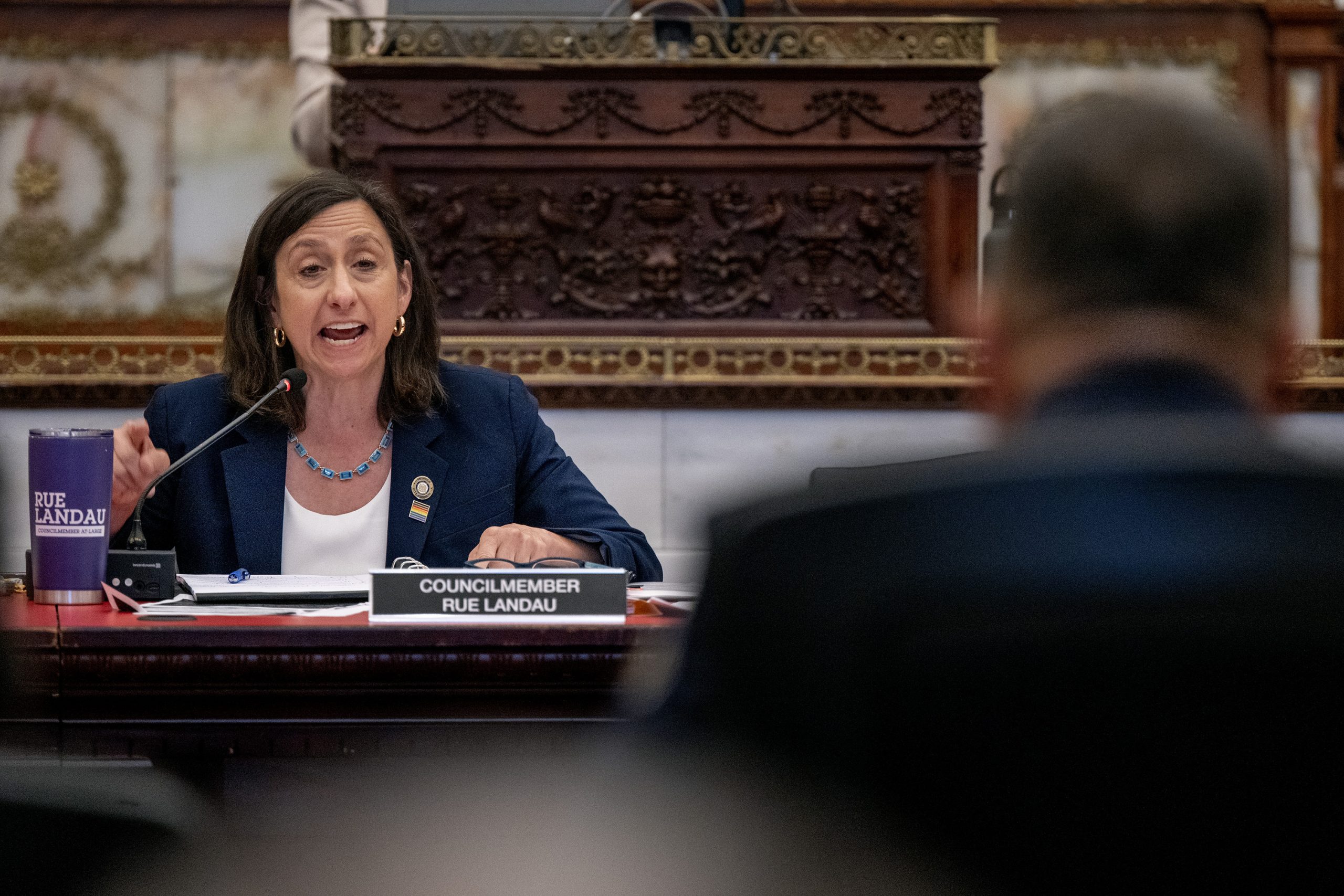
“Your testimony today and what I’m hearing is both painful and perplexing,” said Councilmember Rue Landau, a Democrat who called for the hearing and is the first out LGBTQ+ person to serve on Council. “It is mind-boggling to think that you and your team would not know that people were going back to the Gayborhood.”
Councilmember Isaiah Thomas, a Democrat, said he was “confused” why groups of teenagers fighting would have prompted an outsized police response throughout the Gayborhood that included crowds running amid police on horseback and motorcycles.
“It doesn’t really feel like we’re having a conversation that can put us in a position of earning the trust of a lot of the people who feel like the trust has been lost,” he said.
And C. Michael Robinson, a community advocate, added: “Only adult bullies scapegoat children, and that was a weak display of leadership.”
Councilmember Rue Landau questions Police Commissioner Kevin Bethel (foreground) as Council’s Committee on Legislative Oversight holds a hearing Wednesday, Aug. 5, 2026 into the Philadelphia Police tactics used during Pride celebrations in June.Tom Gralish / Staff Photographer
The hearing Wednesday before Council’s Committee on Legislative Oversight was the most tense questioning that Bethel, a veteran of the city’s police force, has faced since he was sworn in as commissioner in January 2024 at the beginning of Parker’s term. He has enjoyed a largely warm relationship with Council members, who have been supportive of his leadership amid a significant drop in violent crime.
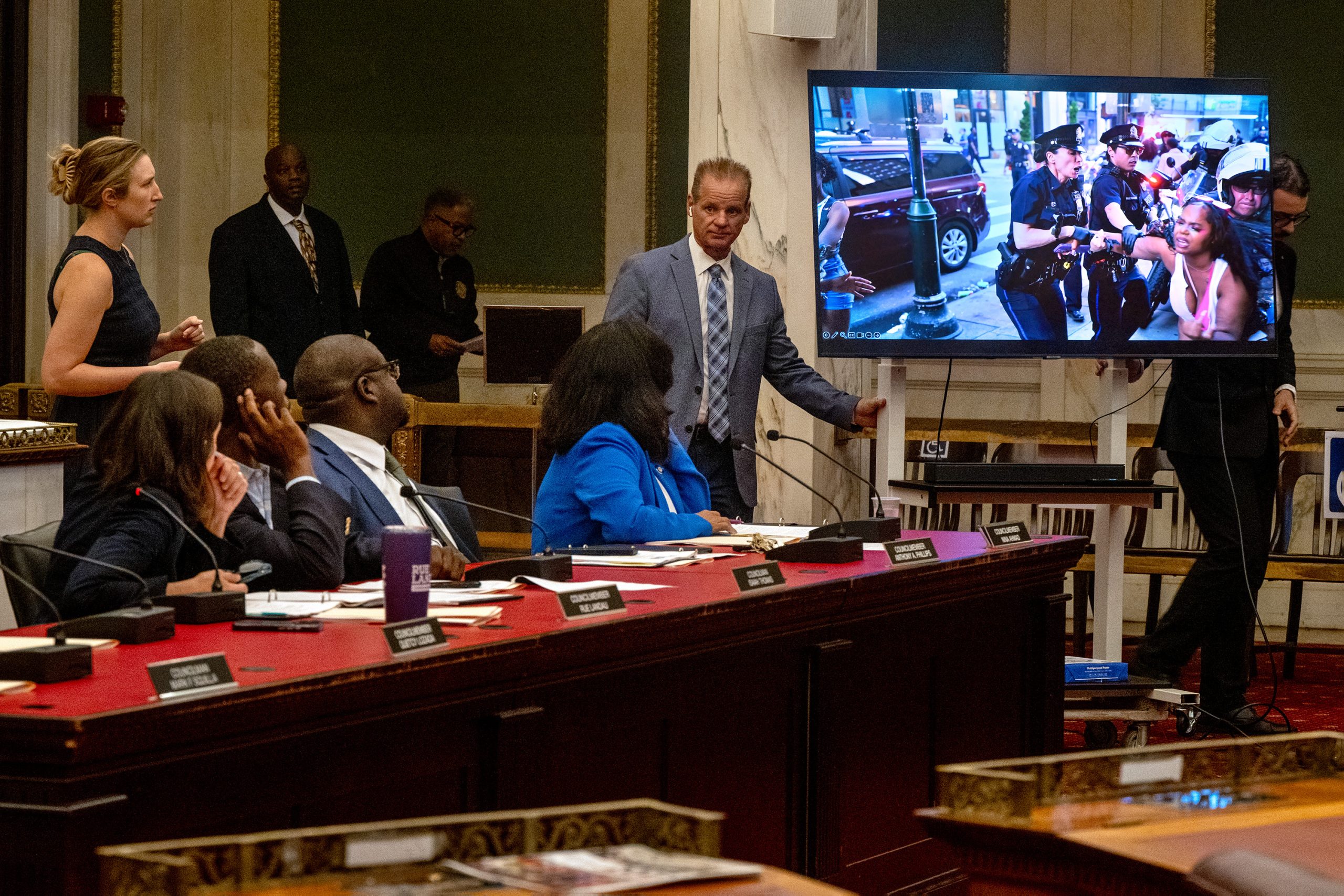
However, the police department faced intense scrutiny following June 7, the day of the Pride parade and celebration during which 15 people were arrested and videos of police corralling crowds in the Gayborhood drew widespread criticism. Videos posted to social media showed officers physically struggling with Pride attendees, as well as police on horseback and motorcycles dispersing people, and at times displaying batons and Tasers.
Following the backlash, Landau called for Council’s Committee on Legislative Oversight to hear testimony from the department’s top brass, as well as members of Mayor Cherelle L. Parker’s administration and LGBTQ+ advocates.
Pride attendees who testified Wednesday said police forcefully directed them through a maze of barricades in the Gayborhood. Several described being pushed and yelled at, and said that the most aggressive tactics were used on crowds of mostly Black people. One person said they heard an officer use a slur.
Parker said in a statement Wednesday that the events described during the hearing “show us we can and must do better.”
“We can and will learn from what occurred,” she said.
Councilmember Rue Landau (seated, left) shows a collection of social media videos as City Council’s Committee on Legislative Oversight holds a hearing Wednesday, Aug. 5, 2026 into the Philadelphia Police tactics used during Pride celebrations in June.Tom Gralish / Staff Photographer
This year marked the first time the city’s Pride festival was held on the Benjamin Franklin Parkway, where Bethel said police had been well-prepared to manage crowds. Thousands of people still congregated in the Gayborhood, where celebrations were held in previous years, creating dueling events that he said overwhelmed the department.
Officers attempted to manage crowds in the Gayborhood for hours, Bethel said, and began working to disperse people by late afternoon. To do so, he said, officers used barricades, as well as officers mounted on horseback and motorcycles to motivate people to leave on their own.
A large police presence at a Pride celebration in the Gayborhood on Sunday, June 8, 2026.Courtesy of Joshua Stokem
Landau said she was horrified by the crowd-control tactics and asked Bethel if he supported the decision to have officers on motorcycles on the sidewalk, calling it “terrifying” and “dangerous.”
He said the goal of moving the crowd was “appropriate at the time.”
In what became a tense back-and-forth, Landau said that people attending Pride “did not believe that you were there to protect them.”
“They were terrified, they were harassed, they were traumatized,” she said. “This was not about protection. You had 150 officers there, by your own testimony. That is a significant amount of officers.”
Bethel responded: “Do you want police there at all?”
Landau appeared taken aback.
“My comment that there was 150 officers there should not turn into the end-sum game of ‘Do you not want anybody there?’” she said.
The police commissioner did not specify how many officers in total are facing potential discipline stemming from Pride events on June 7, but he said “eight or nine″ are under investigation by the internal affairs division for wearing facial coverings, a violation of department policy.
Bethel, who was formerly the department’s liaison to the LGBTQ+ community, vowed a more collaborative planning process next year.
“Next year it will not be like that. It will be prepared,” Bethel said. “It is not my job to police that event. It is to keep it safe.”
Several LGBTQ+ advocates and community members testified in favor of additional accountability measures.
Jacen Bowman, the president of Philly Black Pride, called for an independent after-action review, a permanent LGBTQ+ public safety advisory council that is consulted during the planning of large events, and more consistent cultural competency training for officers.
“Versions of these structures already exist,” Bowman said. “The question is whether or not the structure has the authority, independence, or enforcement power necessary to produce accountability. Oversight without authority is observation.”
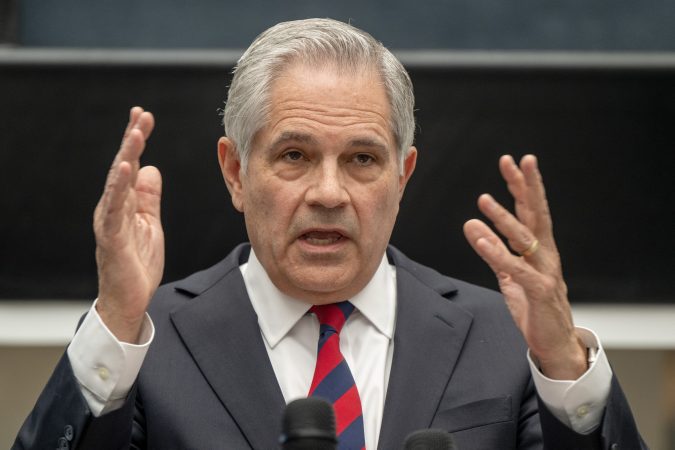
District Attorney Larry Krasner on Tuesday said he strongly disagreed witha judge’s decision to overturn the murder conviction of a man who killed Philadelphia Police Officer Moses Walker Jr. in 2012 and vowed to appeal.
Krasner said Common Pleas Court Judge Jennifer Schultz, who handed down the ruling Monday, was “legally incorrect” in vacating the conviction of Rafael Jones, who is serving life in prison for killing the officer during a street robbery at the end of his shift.
But Krasner, speaking at a news conference alongside Walker’s mother and Roosevelt Poplar, president of Lodge 5 of the Fraternal Order of Police, said Jones’ conviction was different from others involving Nordo that have since been reevaluated.
“We believe now that Rafael Jones is guilty — that he murdered Moses Walker Jr.,” Krasner said.
If the appellate court denies the district attorney’s appeal, he added, “we will be retrying this case. We have a lot of evidence to do so. And we will be retrying it vigorously.”
Jones’ attorney, Jason Edward Parris, said Tuesday afternoon that the vacated conviction represented justice.
If jurors heard Jones’ case today, Parris said, they would have information about Nordo’s sex abuse crimes involving informants in homicide investigations that was not available at the time of Jones’ trial.
“I don’t think anybody should be comfortable with someone serving life in prison based in part on an investigation done by an officer who is now doing 49 years [in prison] for crimes committed during the investigation of this case,” Parris said.
Walker, 40, was shot and killed shortly before dawn on Aug. 18, 2012.
The officer had just left the 22nd District station in North Philadelphia dressed in civilian clothes when Jones and another man, Chancier McFarland, targeted him in a robbery, prosecutors said.
Jones fired at Walker after the officer reached for his gun, according to prosecutors. Both men were arrested, and McFarland pleaded guilty and testified against Jones as part of a deal to avoid life in prison.
Years later, during Nordo’s sexual abuse trial in 2022, one of his accusers testified that the detective had steered him toward a $20,000 reward and later raped him.
Though Krasner acknowledged the “messy history” that came with Nordo’s involvement in Jones’ case, he said the district attorney’s office was confident in the conviction.
There were multiple pieces of evidence that pointed to Jones’ guilt, he said, including a murder confession that was not introduced at trial because Jones did not testify, and McFarlane’s eyewitness account of the crime.
“We concluded years ago that this conviction was in the category that should not be disturbed,” Krasner said.
The district attorney’s office will appeal Schultz’s ruling to Superior Court, a process Krasner said could take up to two years.
Poplar, the FOP president, said he had faith that Krasner’s office would prevail.
“Yesterday was a tough day,” he said, echoing comments made by Police Commissioner Kevin Bethel, who said he was disappointed by the ruling.
Walker’s mother, Wayniya, said she and her family “would not allow these latest developments to weaken us.”
“We remain confident justice will prevail,” she said, adding that she hoped that the death of her son, not the vacated conviction of his killer, would “remain at the center of this case.”
“No decision rendered can alter what happened on Aug. 18, 2012,” she said.
Until last year, Philadelphia police detectives wrote search warrants on typewriters. Officers still take incident reports with pen and paper, and hand deliver them to detective bureaus. And when someone reports a minor crime, it can take hours for police to respond — if they do at all.
To Police Commissioner Kevin Bethel, those details capture something bigger: a department in need of a systems upgrade.
In a new five-year strategic plan released Thursday, Bethel broke from the tradition of his predecessors by treating the police department and its nearly $900 million budget as a business in need of modernizing — with an eye toward better “customer service” for residents — rather than centering on crime-fighting tactics like commanders of the past.
“If we’re going to be a modern police department,” he said in an interview this week, “we have to take on some of the structures of a modern business.”
To him, that involves tackling many of the less glamorous parts of police work: upgrading internal records systems, streamlining police report forms, and expanding training for officers.
But there are also some flashy — if not eyebrow-raising — initiatives within the 73-page plan: integrating artificial intelligence into 911 calls, allowing residents to report nonemergency crimes via video chat, and creating an internal diversion program for officers who violate low-level department policies.
Some parts of the plan — built on conversations with more than 200 people in the department, city leadership, and community — would be funded through grants, the department said, while others would need to be approved and funded by City Council, which has been largely amenable to Bethel’s budget requests in recent years.
The department said the long-term view “allows future needs to be considered through the normal budget process well before they arise.”
Philadelphia Mayor Cherelle Parker and Police Commissioner Kevin Bethel speak at a press conference in 2024.Alejandro A. Alvarez / Staff Photographer
It has been one of Bethel’s signature undertakings since Mayor Cherelle L. Parker appointed him as Philly’s top cop in January 2024, part of a long history of police commissioners and mayors working together to craft long-term public safety plans to guide their administrative goals.
In 2012, then-Mayor Michael Nutter said the department would focus on confiscating illegal guns, and ramp up overtime to put more cops on the street. And in 2020, amid an unprecedented spike in gun violence, then-Police Commissioner Danielle Outlaw outlined goals to increase the clearance rate for homicides and shootings.
Bethel’s plan, by contrast, is light on specifics for traditional crime fighting. While it broadly describes strategies like increasing foot patrols on SEPTA and expanding the use of digital forensic evidence in investigations, it does not set targeted reductions in homicides, shootings, or traffic deaths.
That, he said, was intentional.
“This plan is really not a crime plan. We have a crime plan. We’ve been covering it for a long time. We know that space of it,” he said. “But we’ve never done anything as an organization with, how do we move into being a modern and forward-thinking, always-evolving organization?”
That has likely given Bethel the rare breathing room to look past the crime stats that have defined past administrations and focus instead on the machinery behind them.
Here are some standout parts of the plan:
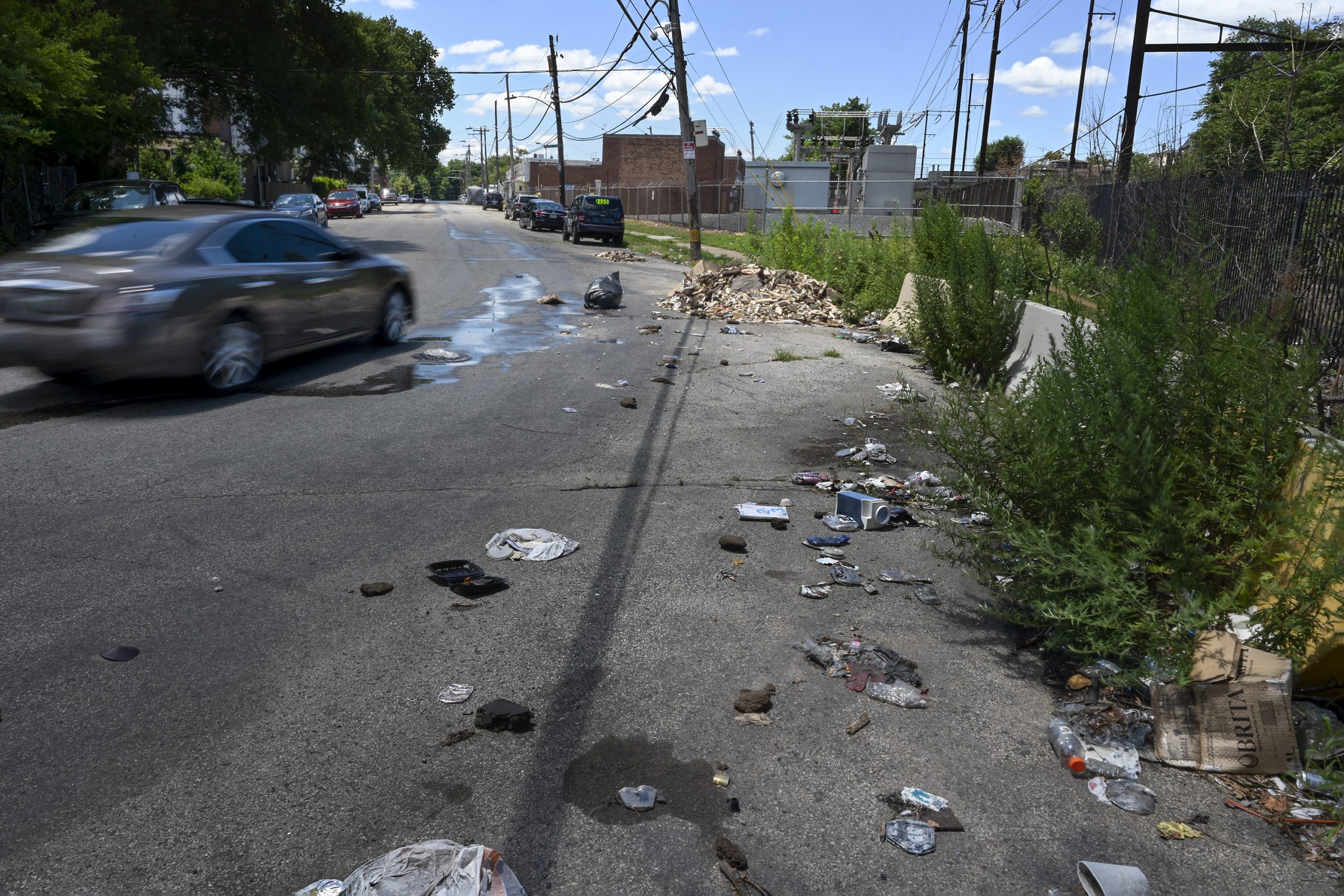
Illegally dumped trash piles up at South 56th and Hoffman Streets in Kingsessing in this 2024 photo. Residents would now have officers in their police district to specifically help address quality-of-life issues. Tom Gralish / Staff Photographer
New quality-of-life officers
Quality-of-life concerns have long dominated community police meetings, Bethel said. So within the next two years, the department plans to install “quality-of-life officers” in every police district to be the point of contact for residents on issues like abandoned cars, illegal dumping, and nuisance businesses.
Those officers, Bethel said, would be responsible for coordinating calls with other city departments to more quickly resolve problems.
Report low-level crimes via video call
One of the biggest issues for the department, Bethel said, is poor “customer service.”
Officers typically juggle high-priority calls — like shootings and assaults — alongside reports of nonviolent crimes like petty theft, vandalism, or minor car crashes. Because the lower-level offenses are considered less urgent, officer response can sometimes take several hours, leaving residents frustrated.
Under the new system, he said, people would be able to report low-level crimes online and be provided with a link to a video chat with officers, who could take the report and send a copy to the caller digitally, with no in-person visit needed.
Filing a report over the phone will still be possible, he said, but for people who want to avoid an emergency call for minor issues, this is a new option.
The new system could start to roll out within the next year.
AI-assisted 911 calls
The department also plans to test 911 call systems that use artificial intelligence to screen calls.
When people call for help, they will be connected to an emergency dispatcher, with AI listening in the background. Callers who report lower-level crimes, like vandalism or theft, will be transferred to an AI-assisted line and have the option to report the matter online or via video call.
There will also be a separate, nonemergency phone number that will be answered by an artificial voice. The system will screen for keywords or issues linked to high-priority crimes, like a robbery or shooting, and immediately transfer those calls to a human dispatcher, the department said.
Bethel said the department is still evaluating potential pitfalls, and acknowledged the nuances: “A theft can turn into a robbery, and a robbery can turn into a shooting, a shooting can turn into a murder,” he said.
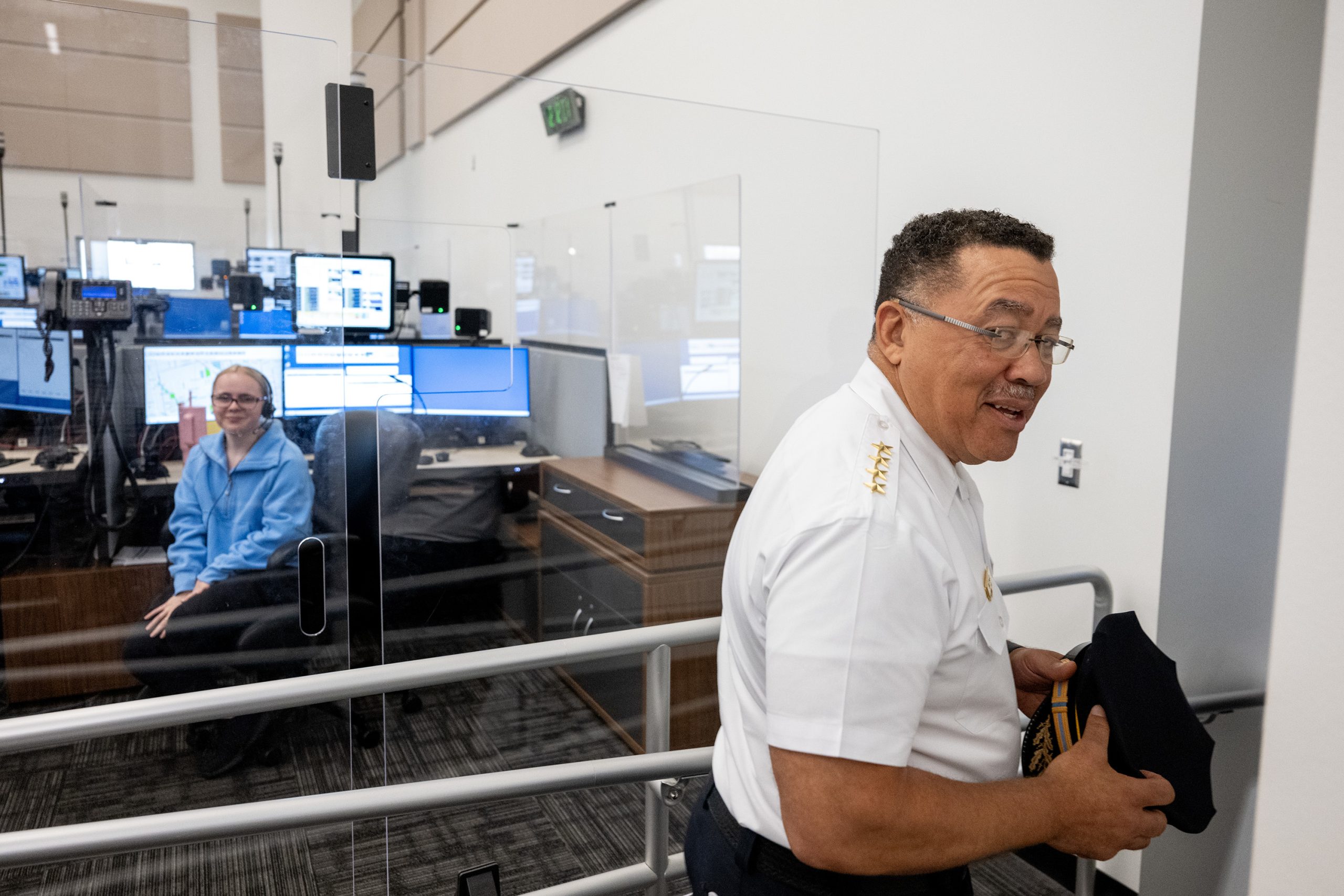
Police Commissioner Kevin Bethel inside the radio room at PPD headquarters in 2024.Tom Gralish / Staff Photographer
An internal diversion program
When city police officers violate department policy, their disciplinary cases are sent to the Police Board of Inquiry, and reprimands can remain on their record and affect future promotions unless appealed and overturned through union arbitration.
Under a new initiative, officers accused of lower-level violations could go through an internal diversion program that requires them to undergo training and avoids a mark on their record. Among those offenses are sleeping on duty, dismissive behavior, using derogatory or offensive language, or failing to activate body-worn cameras. In the latter case, Bethel said, the diversionary program would not be available for officers with repeated failures to turn cameras on.
Officers would not be eligible for diversion if they are found to have committed the same offense within the previous six months, or if the offense happened alongside more serious violations ineligible for the program.
Bethel said the diversion option was developed in coordination with the Citizens Police Oversight Commission with a goal of giving officers “a second chance, but also train them.”
Expand communication with the public
The department intends to develop transition plans when captains or commanders leave neighborhood police districts — something community leaders had requested, Bethel said.
It will also host quarterly community meetings to review data, and develop publicly available dashboards with additional crime, quality-of-life, and other types of data to measure performance.
By expanding points of contact with the community, Bethel said, “they’re going to hold us accountable.”
The House Judiciary Committee subpoenaed Philadelphia District Attorney Larry Krasner on Wednesday, ordering him to turn over documents related to his office’s handling of immigration matters and criticizing what it called the prosecutor’s “pro-illegal-alien policies.”
The Republican-led Congressional committee said in a letter that it sent the subpoena after Krasner, a Democrat, promised but failed to provide materials that were requested in May.
The committee, in a letter signed by Rep. Jim Jordan (R., Ohio), its chair, accused Krasner of declining to prosecute or under-prosecuting foreign nationals so that they could avoid consequences connected to their immigration status. The committee said it was asserting its authority to try to end sanctuary-city policies in cities including Philadelphia.
In response, Krasner called the subpoena “yet another step in authoritarian efforts to do dirt in the dark” and to put pressure on state prosecutors.
“We have always complied with the law and will continue to do that,” Krasner said Wednesday. “That makes us different from [President Donald] Trump, who spends all day, every day, violating the law of the U.S. Constitution ― and morality.“
Krasner and the House committee have sparred since May, when the panel accused top city law enforcement officials of shielding criminal immigrants through sanctuary policies and demanded that they quickly turn over a trove of related records and correspondence.
That represented an escalation by Trump-allied Republicans in their criticism of Philadelphia government on rules concerning undocumented residents, particularly around limiting city cooperation with U.S. Immigration and Customs Enforcement.
In May, in letters to Krasner, Police Commissioner Kevin Bethel, and Sheriff Rochelle Bilal, the Judiciary Committee accused each of hindering federal immigration enforcement. Each letter sought up to six years of immigration communications between their agencies and immigration officials and, in the sheriff’s case, with activist groups including No ICE Philly, Juntos, Asian Americans United, and others.
The Trump administration has clashed with cities and states that embrace sanctuary policies, contending they are hurting Americans and threatening to cut their federal funding. Philadelphia has long been among the targets.
Krasner had responded by telling the committee, which said it was conducting oversight of state and local jurisdictions that it believes endanger Americans by not assisting immigration agents, that such policing powers belong to the city.
“The legal errors are unsurprising,” Krasner wrote to Jordan and to Rep. Tom McClintock (R., Calif.), chair of the subcommittee on immigration, noting that neither had passed the bar. “The factual errors are also unsurprising, given your histories of adhering to wholly repudiated, counterfactual and unscientific election denialism, climate change denialism, and the like.”
Krasner wrote that he needed time to address each of the committee’s allegations and requests, and was working to hire a lawyer who would be in touch soon.
In July, Krasner wrote the committee and encouraged it to “question me in public so all Americans are able to see who is telling the truth.”
The committee’s “fear of such a public airing only makes clearer your lack of real purpose and your complicity in peddling lies,” such as, he said, that local and state prosecutors “rather than President Trump’s ill-conceived deportation actions are responsible for criminals going free.”
Immigrants are far less likely to commit and be arrested for crimes than U.S. citizens, Krasner noted. But the small number of immigrants who commit serious crimes are being deported by ICE before they can stand trial and be sentenced, given “a ‘get out of jail free’ card and a plane ride to another country, a country where they will never face American justice.”
The committee told Krasner on Wednesday that time to provide the requested records had run out. Its subpoena directs him to turn over the materials by July 29.
“Although you may disagree about the need to reform federal law to end sanctuary policies … you cannot seriously contend that the committee lacks the authority to do so,” the committee wrote, adding that Congress may amend statutes “to ensure that prosecutors cannot circumvent immigration law and allow aliens to escape accountability for their crimes.”
The first week of July has typically been one of Philadelphia’s most violent, with recent Independence Day weekends marked by mass shootings, police officers shot, and bursts of violence that left a dozen dead.
But this year, amid a dramatic decline in violence and a flood of visitors to the city, the holiday weekend was noticeably calmer than in years past, offering another encouraging sign that the dramatic decline in shootings held through one of its toughest tests.
Twenty-three people were shot from July 1 through July 7 — a slightly higher total than most weeks in 2026, but nearly half the average number of shooting victims during the same period over the last decade, according to city data. In 2021, at the height of the city’s gun violence crisis, more than 70 people were shot in that week alone.
If the current pace continues, Philadelphia is on track to record fewer than 200 homicides for the first time since the 1960s, a remarkable turnaround from just five years ago, when nearly three times as many people were killed.
(function(){function e(){window.addEventListener(`message`,function(e){if(e.data[`datawrapper-height`]!==void 0){var t=document.querySelectorAll(`iframe`);for(var n in e.data[`datawrapper-height`])for(var r=0,i;i=t[r];r++)if(i.contentWindow===e.source){var a=e.data[`datawrapper-height`][n]+`px`;i.style.height=a}}})}e()})();
Philadelphia Police Commissioner Kevin Bethel said in an interview that the July Fourth weekend is historically one of the most challenging for urban police departments.
Bethel said he and other city, state, and federal law enforcement officials spent about two years planning for this holiday weekend, preparing for potential crises that never came.
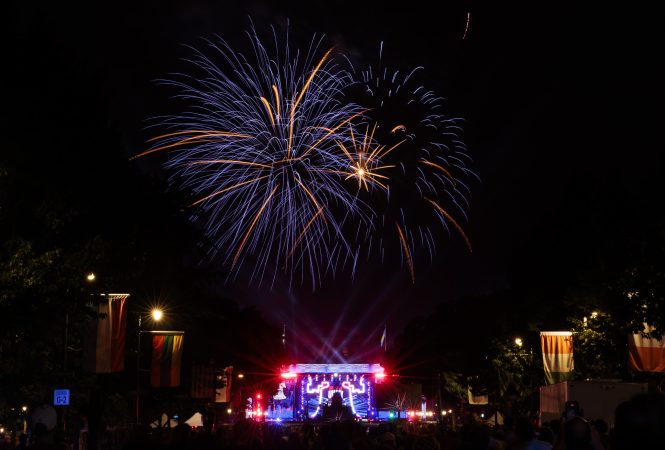
Anticipating hundreds of thousands of visitors for FIFA Club World Cup events and the nation’s 250th birthday celebrations, the department canceled many officers’ vacation requests over the last month and, on the Fourth, deployed more than 2,000 members of local and state law enforcement across the city, he said.
Philadelphia Police Commissioner Kevin J. Bethel, speaks at a press conference on the details for the Roots Picnic in May 2026.Tyger Williams / Staff Photographer
Reinforcements from the Pennsylvania State Police and neighboring municipalities helped the city maintain staffing levels in neighborhoods that have historically seen more violence, Bethel said. Officers worked in the record-breaking heat, he said, with some starting their shifts at 7 a.m. and clocking out only after the concert on the Parkway ended at 3 a.m.
The FBI took the lead on monitoring the skies, Bethel said, intercepting several drones that were flying illegally. (None of the drones, he said, was flying with “nefarious” intent.)
He called the weekend a validation of the city’s planning and broader work that has contributed to the decline in gun violence.
“I can’t tell you how many people grabbed me and said they felt welcomed and felt safe,” he said of the events over the last month. “Let’s own the win. Let’s not hide from it.”
Bethel also said there had been no acts of violence around the approximately two dozen bars that were approved to stay open until 4 a.m. from June 11 to July 19 to accommodate crowds attending the FIFA, July Fourth, and MLB All-Star celebrations.
“We’re seeing zero issues,” he said.
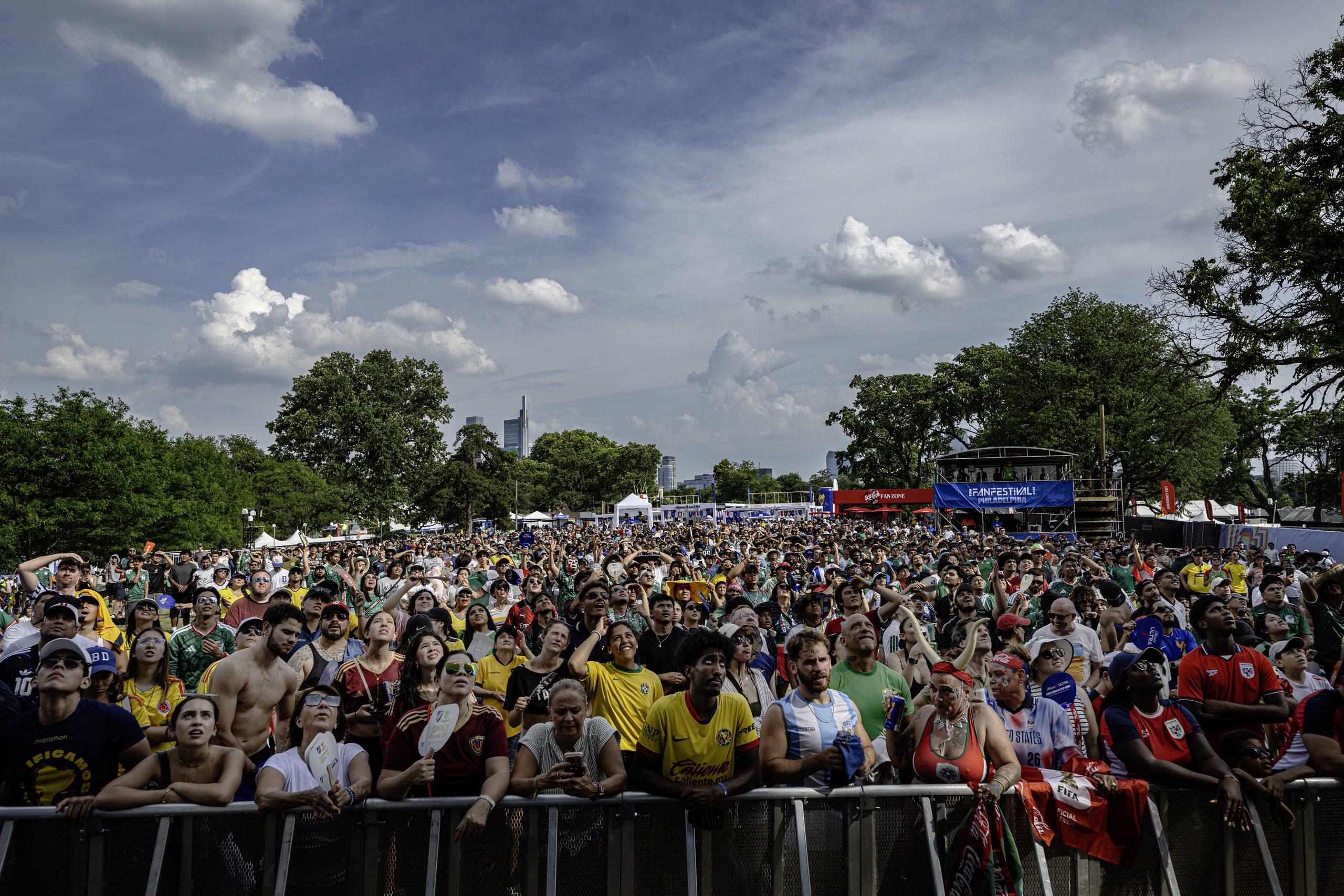
Soccer fans gather to watch Mexico play South Africa on a giant screen during the opening day of the FIFA Fan Festival at Lemon Hill on Thursday, June 11, 2026, in Philadelphia.Jose F. Moreno / Staff Photographer
The reduction in violence over the holiday weekend fits a broader pattern. Shootings and homicides in the city began to decline in 2023, mirroring a national trend, and have continued to fall. So far this year, 90 people have been killed in homicides — less than a third of the number recorded at the same time three years ago, according to police data.
Just as there was no clear explanation for the spike in crime that began in 2019, criminologists and law enforcement officials say, it is similarly difficult to pinpoint the reasons for its decline. But there are theories: an overall return to normal life after the pandemic, expanded community-based violence prevention programs, more arrests in shootings and homicides, and targeted prosecutions of some of the city’s most violent gangs.
One measurable change has been the police department’s improved clearance rates, which researchers have long viewed as a potential deterrent to future violence.
The homicide clearance rate — the share of killings solved, including arrests made this year in both new and older cases — has climbed to nearly 99%, up from about 47% in 2022. The clearance rate for nonfatal shootings has risen to about 41%, roughly double what it was in 2021.
Bethel said those arrests take would-be shooters and victims off the streets and interrupt cycles of violence.
“We’re impacting retaliation, we’re impacting somebody being shot again, we’re impacting someone who may shoot and kill somebody,” he said.
Jeff Asher, a New Orleans-based national crime analyst, said because the decline is likely driven by many programs and societal changes, it is hard to know what will sustain the progress.
“I keep expecting [the crime rate] to stop falling, and it’s just not,” he said in an interview. “So, maybe this is the new normal. We just can’t say with a ton of confidence.”
Still, the quieter weekend was not wholly peaceful.
Three men were killed between Friday and Monday morning, leaving families and neighbors to mourn loved ones even as the city showed signs of sustained progress.
On Monday morning, Shawn Caddell, 32, was killed during a robbery inside a Logan beer deli, police said. And on Sunday, two men were slain in areas that have long been hot spots for shootings: Emanuel Aguirre, 27, was fatally shot in the Hunting Park section of North Philadelphia, and Donald McPhaul, 51, was gunned down on Salford Street in West Philadelphia.
A 16-year-old in South Philadelphia was among more than a dozen people who were shot and survived.
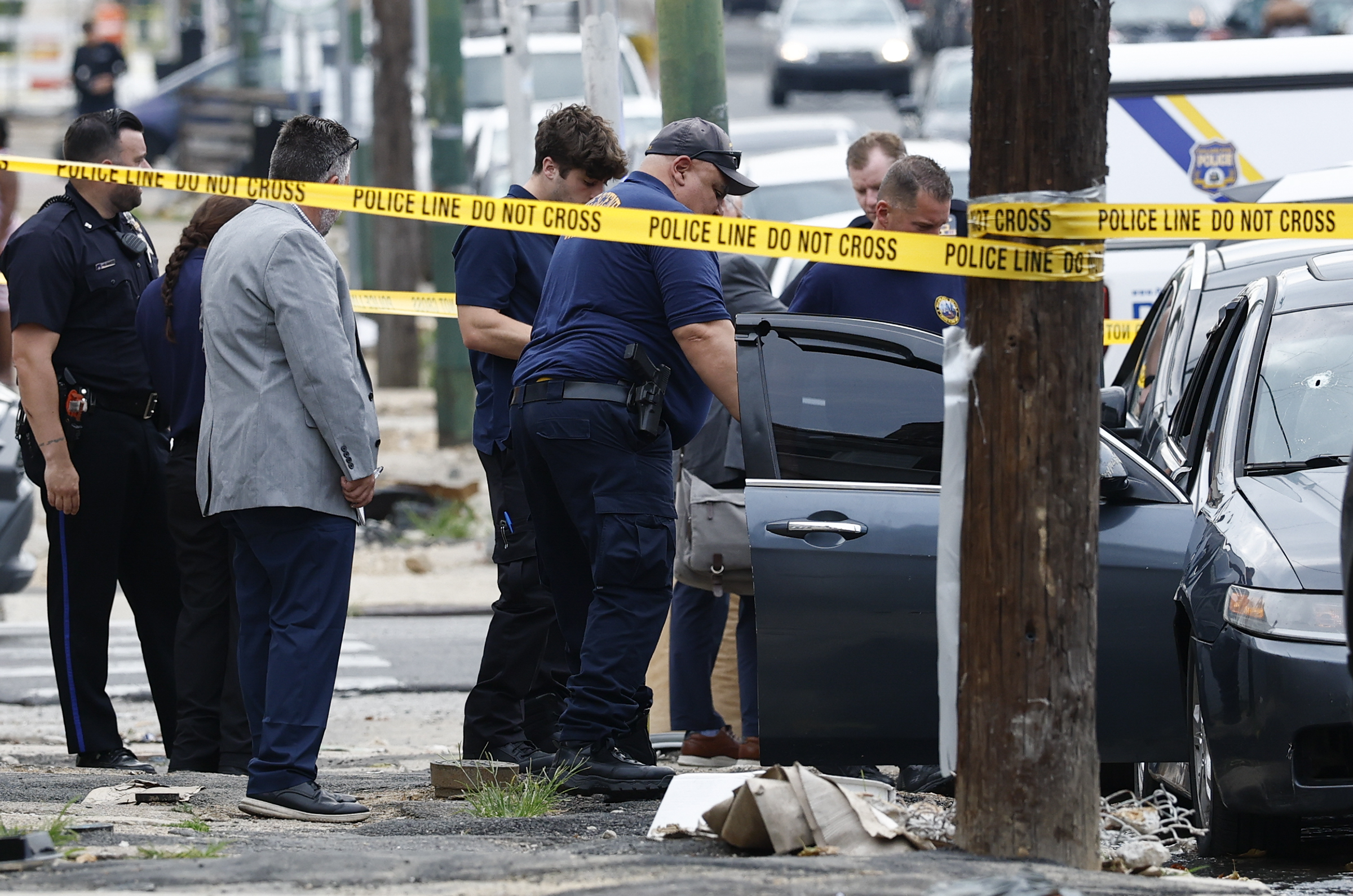
Philadelphia police examine a car with a bullet hole after a man was fatally shot along the 500 block of East Wyoming Avenue on July 5, 2026.Yong Kim / Staff Photographer
Bethel said the pockets of the city that have long experienced higher rates of violence — and that continue to see shootings, albeit fewer, today — remain a priority.
“We are never going to give up in those communities,” he said. “We are going to keep working in those areas.”
Recent polls have found that a majority of Philadelphians have noticed the decline and feel safer. But for residents on blocks where shootings remain a recurring threat, a citywide trend line can feel distant from daily life.
Chantay Love, president of the victim-advocacy organization EMIR Healing Center, said the communitiesseeing recurring violence are still grappling with “the trauma and collateral damage that is left behind” from the last six years.
Linda Days, 72, who lives in the area, said the shooting that killed McPhaul was another reminder of the violence she has come to expect since moving there seven years ago from Olney.
Standing in her doorway on Tuesday, Days said it feels as if gunfire has become part of the soundtrack outside her home. But during the Fourth of July weekend, she said, she is especially careful to stay inside.
“I don’t even come out to watch the fireworks,” she said.
The legendary redheaded drag queen Carlota Ttendant donned a baby-blue Eva Gabor-inspired gown — its plunging neckline revealing tasteful chest hair — and sensible black heels.
At 65, arthritis stifles her strut in stilettos.
“Drag is a young girl’s game,” she said.
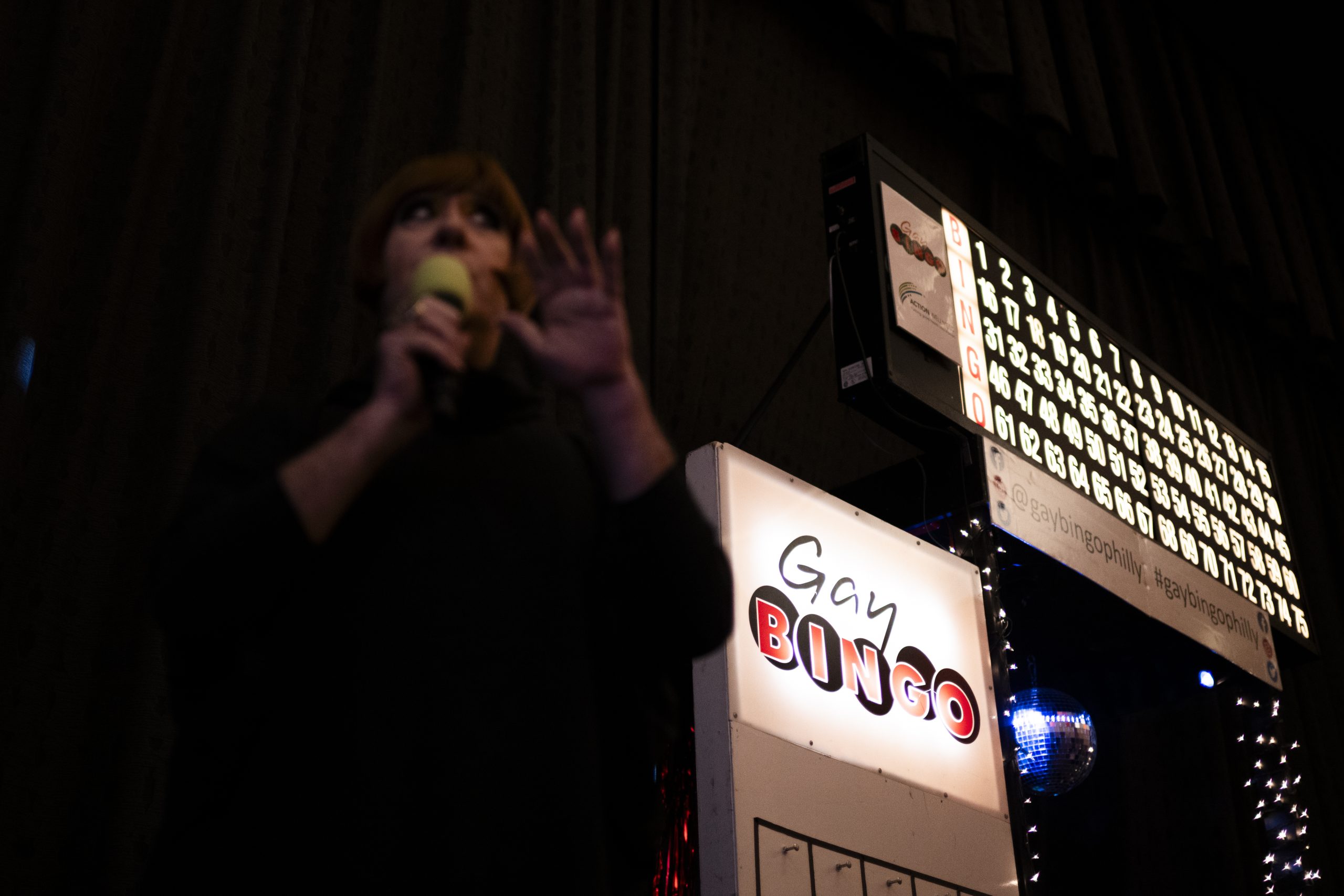
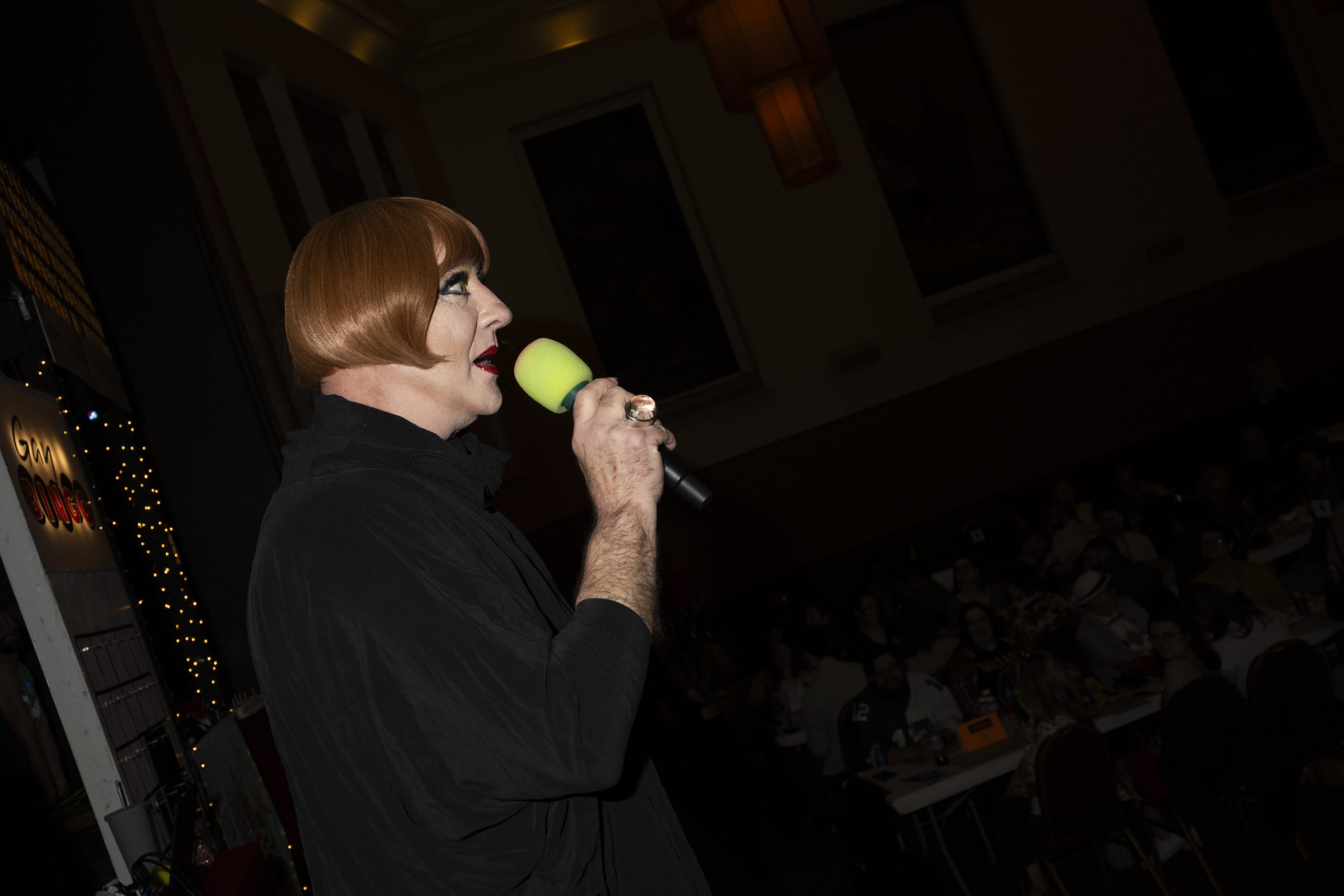
This was her swan song. At the close of its 30th season this Pride Month, the man behind the makeup, Michael Byrne, hung up his heels and bid adieu to his drag persona and his longtime gig hosting Gay Bingo, the camp, irreverent, slightly profane, and undoubtedly silly monthly HIV/AIDS fundraiser.
“I know it’s time,” Byrne said. And, “I’m excited to never wear Spanx ever again.”
Across three decades, Carlota Ttendant has called hundreds of games and elicited endless laughs, all while raising millions for people living with HIV/AIDS across the Delaware Valley. She helped steer a community through crisis, providing a respite to those experiencing immense loss and stigma. Even as medicine has advanced and HIV/AIDS has become manageable, she’s crafted a safe space for queer Philadelphians. For one night each month, she’s been an entertainer and an equalizer, responsible for uniting people — gay and straight, from Haddonfield to Phoenixville — around a common goal.
And since Carlota came into Byrne’s life, she’s taught him to lead with courage, practice gratitude, and be unabashedly unafraid. He’s gone from being the “worst waiter ever” and selling cosmetics, to being a performer, licensed clinical social worker counseling older LGBTQ+ folks through their own next phases of life, and president of Philly AIDS Thrift’s board.
“None of it would have been possible without all of you,” Carlota told the 400-person crowd — the biggest turnout in years — at her last Gay Bingo on June 13 in the basement ballroom at Congregation Rodeph Shalom. “In the ’90s there was horror happening, and today there is horror happening.
“But please, let’s do some laughing,” Carlota said.
“Let’s play bingo!”
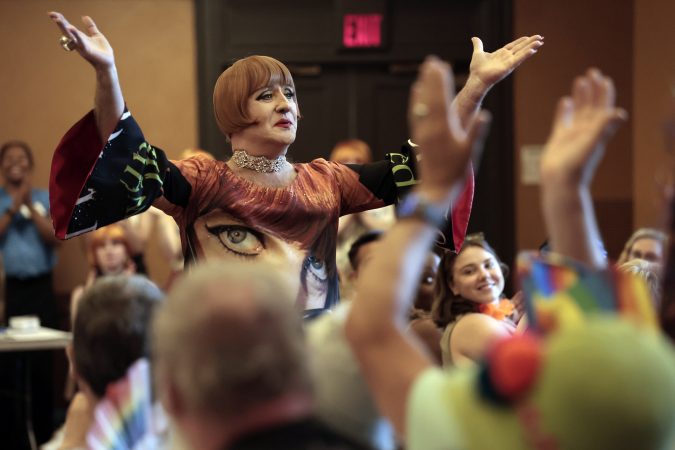
Michael Byrne, as his drag persona Carlota Ttendant, during Gay Bingo on Saturday, May 9, 2026, at Congregation Rodeph Shalom in Philadelphia.Joe Lamberti / For The Inquirer
Act I
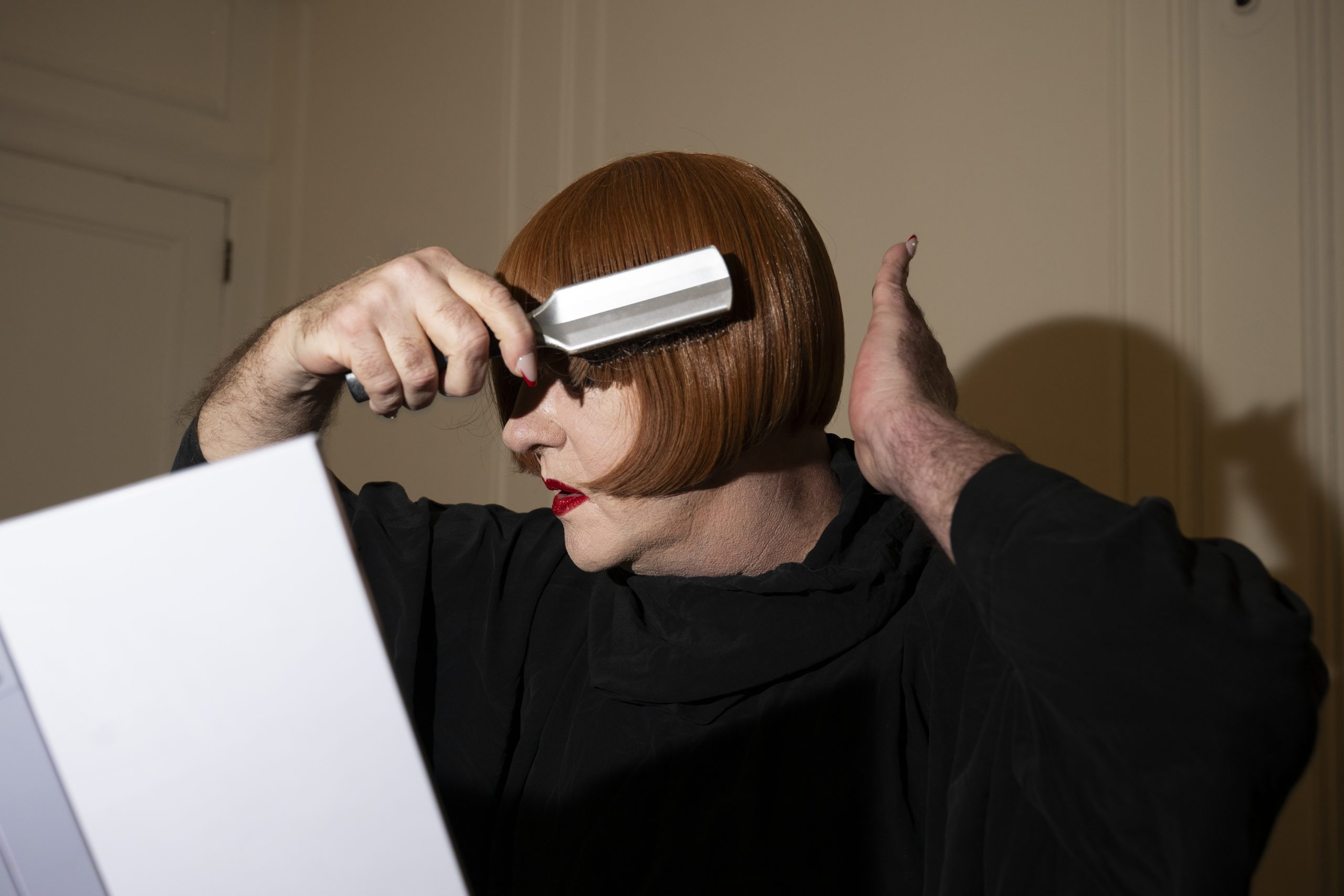
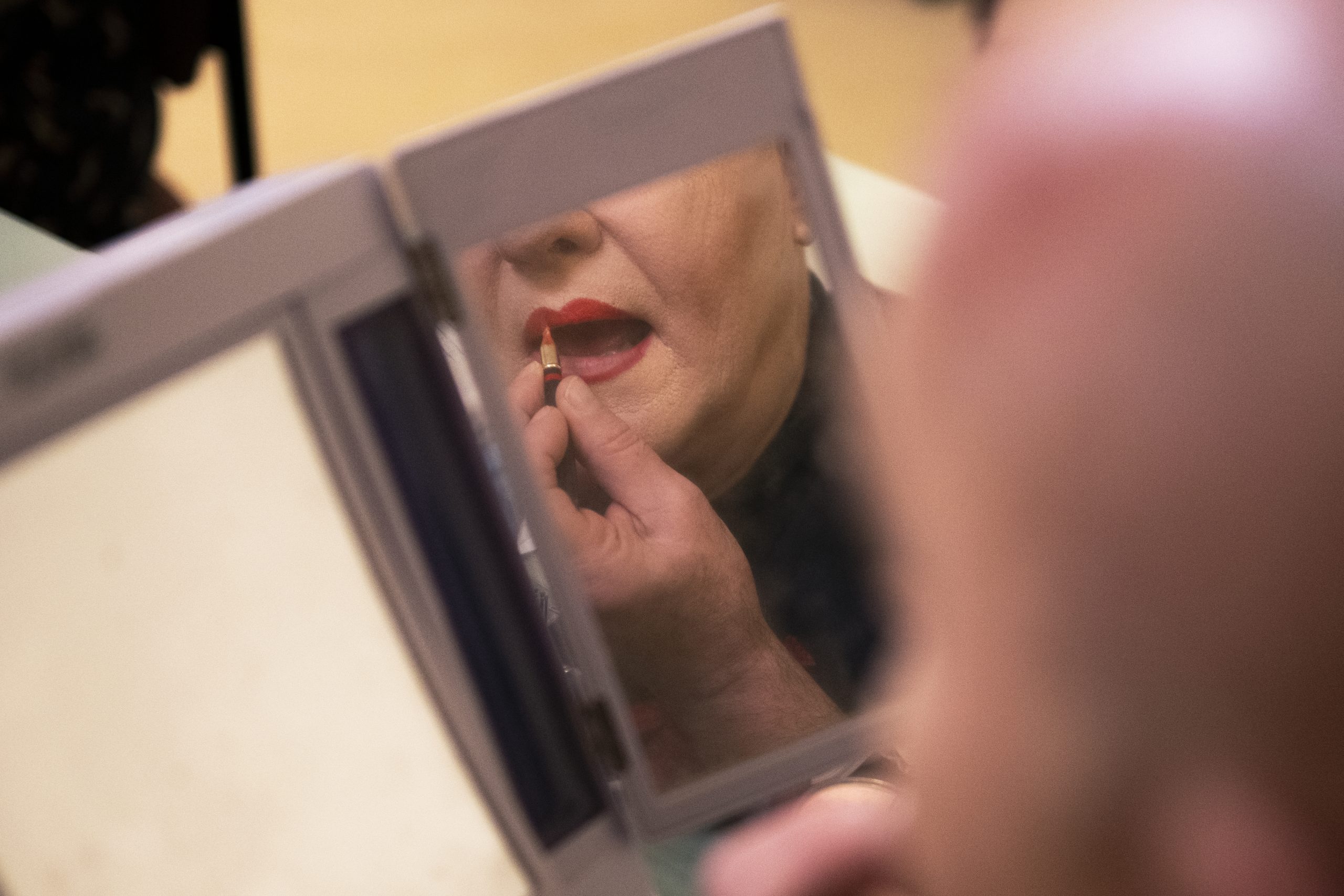
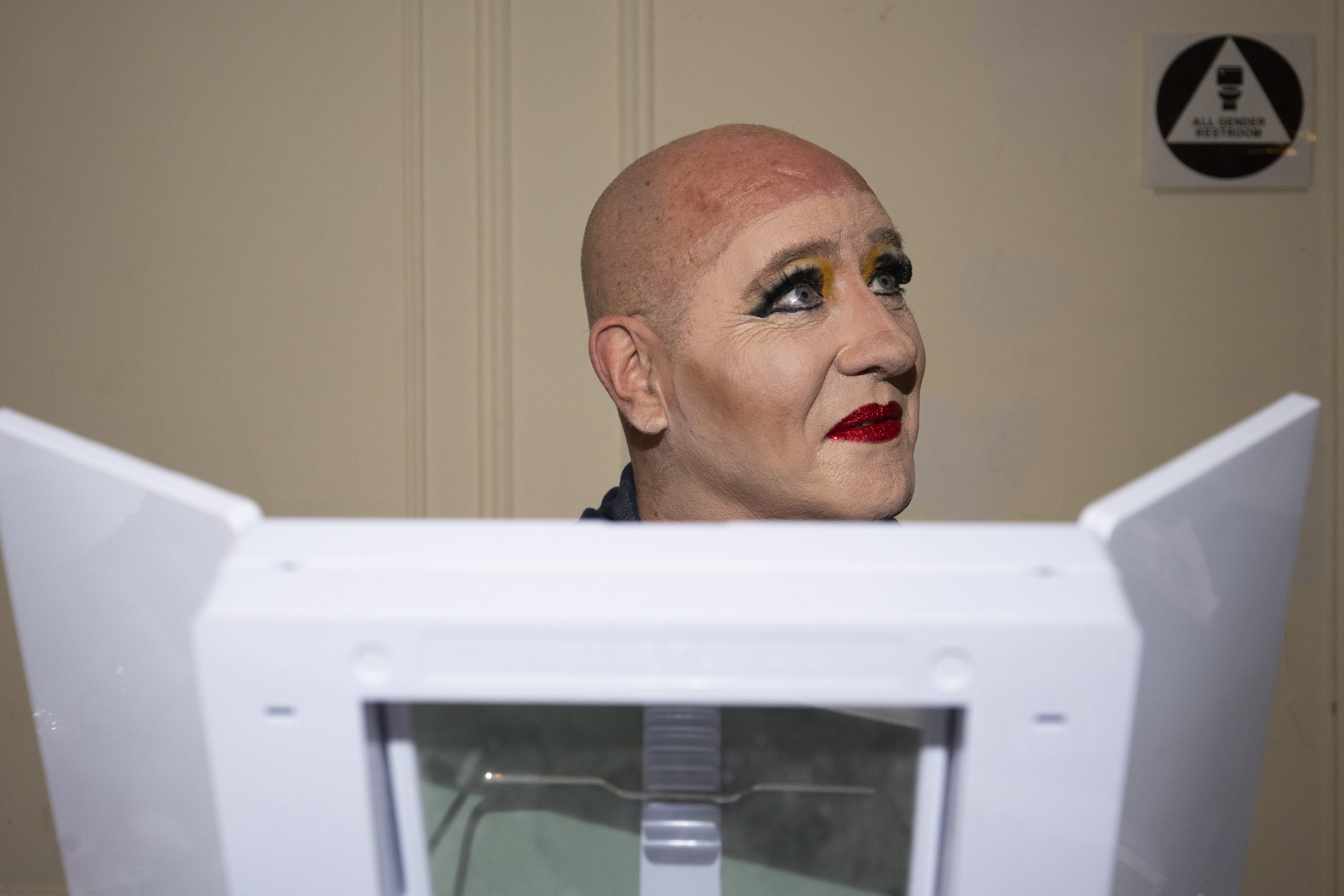
Like so many Saturdays before, Byrne, on June 13, slathered his face with foundation, carved out his cheeks, deepened his eyes, and painted on his red lip. There was haze — from the dusting of loose setting powder, bronzer, and blush — and musk — from sweat and heat and hairspray — in a Rodeph Shalom classroom, which moonlights as a bridal suite and a boudoir for the Bingo Verifying Divas or BVDs. At 10 minutes till curtain, he futzed with his press-on nails, shimmied into a mod swing dress, straightened the back seams of his tights, and dabbed on some glitter. With each gender-bending step, he transformed into his “twin sister,” Carlota.
Michael Byrne transforms into his drag persona Carlota Tendant ahead of Gay Bingo on May 9 at Congregation Rodeph Shalom in Philadelphia.Joe Lamberti / For The Inquirer
Like all classy ladies, Carlota’s exact age is lost to time. In the 1990s, Byrne was organizing a fundraiser for Big Mess Theatre, an avant-garde troupe that he helped establish as the spinning axis of Philadelphia’s alternative performance scene, complete with vaudeville acts, an oompah orchestra, and live auction with a striptease routine. Byrne was to host and make his drag debut, and Carlota Ttendant (read as car lot attendant) was conjured up over bourbon and blackjack. (He learned, years later, that there was a ’60s stripper at the famed Trocadero Theatre with the same name.)
Byrne never aimed to create a perfect, feminine illusion with Carlota. He left his chest unshaven and unstuffed, but short, thrifted dresses showed off his long and feminine legs. Carlota’s makeup was an extension of the exaggerated theater paint Byrne, who has been on stages since he was 10, knew; cheap wigs hid his sideburns. Nothing could mask his deep, raspy, anything-but-ladylike voice.
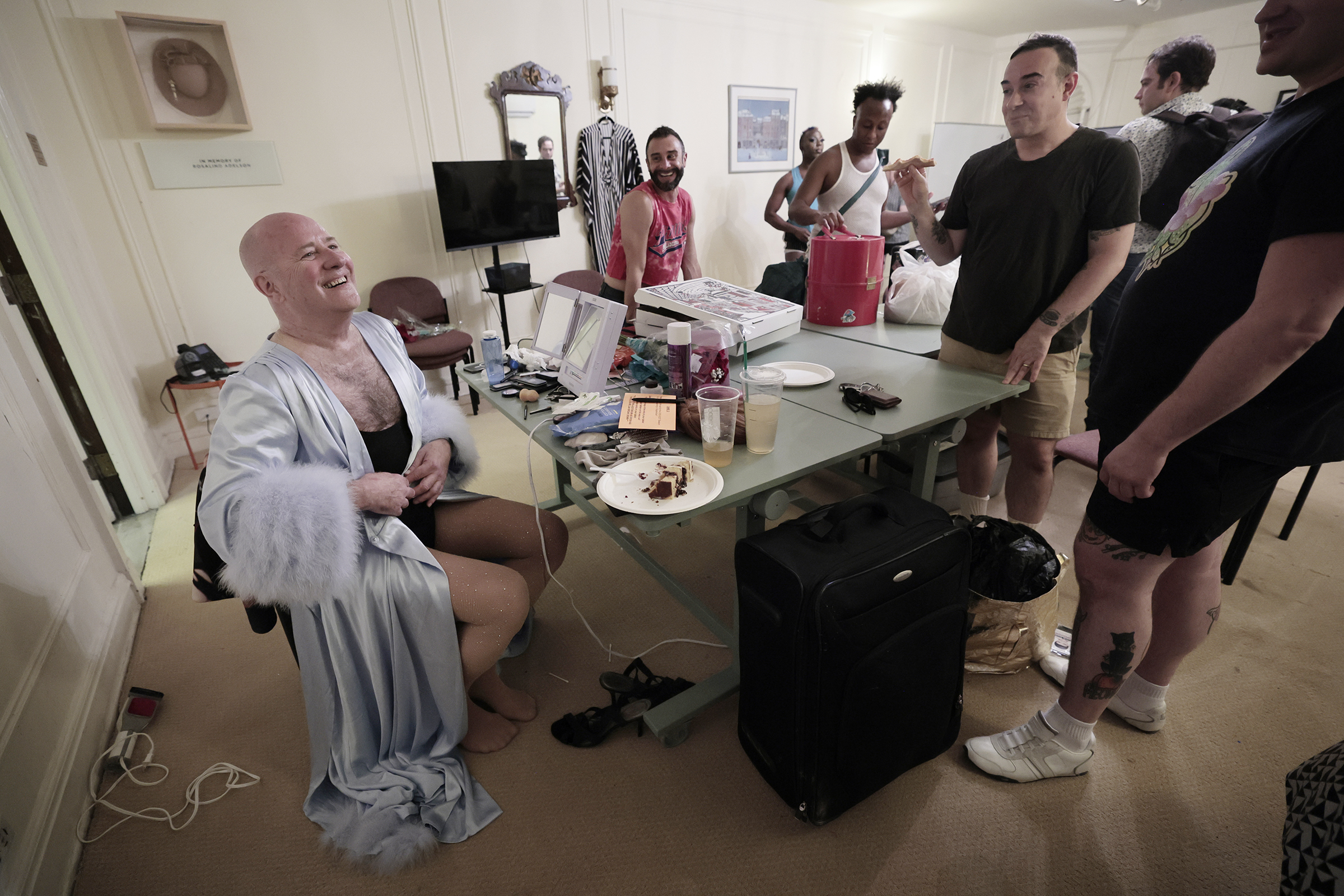
Carlota Ttendant (Michael Byrne) (at left) laughs with friends and fellow performers after Carlota’s final evening cohosting Gay Bingo at Congregation Rodeph Shalom in Philadelphia on June 13. Elizabeth Robertson / Staff PhotographerMichael Byrne transforms into his drag persona Carlota Ttendant ahead of Gay Bingo on May 9 at Congregation Rodeph Shalom in Philadelphia.Joe Lamberti / For The Inquirer
Carlota could be bossy and profane but never vulgar; she could poke fun at audiences without being cruel. She became the “drag queen you could bring your grandma to,” Byrne said.
Around the time Carlota came to be, the number of new AIDS diagnoses and deaths peaked in Philadelphia. In 1992, new AIDS cases surpassed 1,500; in 1994, AIDS deaths topped 900, according to city data.
(function(){function e(){window.addEventListener(`message`,function(e){if(e.data[`datawrapper-height`]!==void 0){var t=document.querySelectorAll(`iframe`);for(var n in e.data[`datawrapper-height`])for(var r=0,i;i=t[r];r++)if(i.contentWindow===e.source){var a=e.data[`datawrapper-height`][n]+`px`;i.style.height=a}}})}e()})();
Misinformation about the disease, which strips the body of its natural defenses and leaves it vulnerable to life-threatening infections and ailments, was rampant. People alienated gay men, wrongly fearing HIV/AIDS could be transmitted through a handshake, a hug, or across a dinner table, The Inquirer and Philadelphia Daily News wrote. Diagnostic testing took weeks; what rudimentary treatments were available sometimes made people sicker; and HIV often progressed to AIDS within a few years.
“It was not unusual to have people dying every month,” said Kevin Burns, who as a case manager with the nonprofit ActionAIDS (now called Action Wellness) connected clients to hospice care. Burns later served as Action Wellness’ executive director.
The need for resources was rife, and in 1996, Philly’s nonprofit AIDS Fund set out to supplement the money it made from its annual AIDS Walk, according to Sandra Thompson, former chair of its board of directors. An article in City Paper about an irreverent bingo-drag night sweeping Seattle — which, by one report in the Seattle Times, raised $10,000 a night — caught the attention of Mark “Chumley” Singer, then a fledgling events producer, who pitched the idea to the AIDS Fund. (The fund folded in 2024 due to the decrease in new AIDS cases, and turned ownership of Gay Bingo over to Action Wellness.)
Singer recalled thinking at the time: “I’ve been doing sad, mopey, candlelight vigil fundraisers. … Why can’t we raise money and have fun?”
Singer and Byrne had never met before the latter was tapped to host Gay Bingo, but their chemistry was kismet.
“There was never a show where we weren’t having more fun than everybody,” said Singer, who cohosted until the early aughts. Byrne and Singer left Gay Bingo around that time, but Byrne later returned.
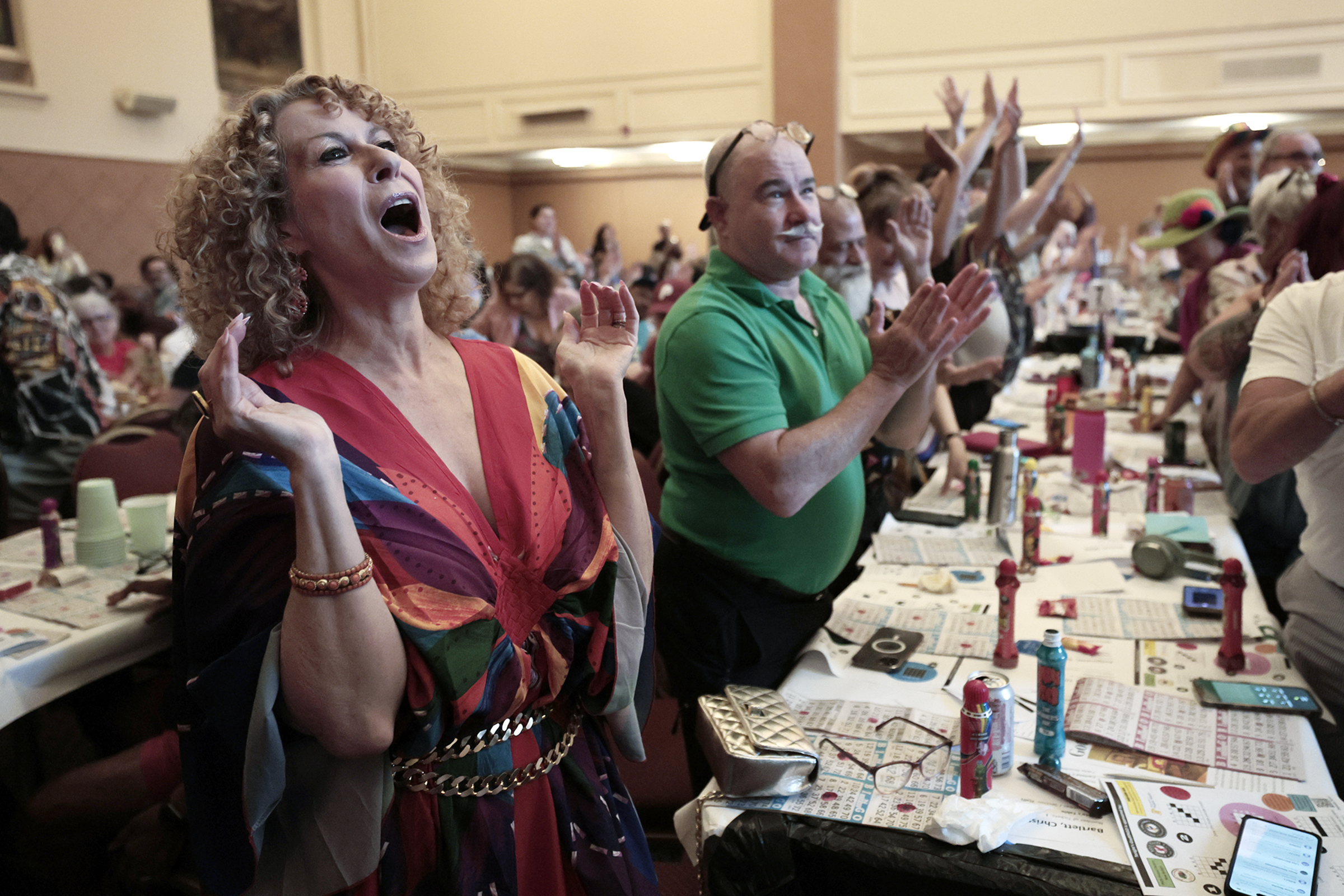
Byrne remembers the magic of those early years of Gay Bingo. He remembers when 600 seats would sell out in 10 minutes, and he remembers doing his glittered red lip from the floor of the Gershman Y’s mirrored dance studio. He remembers two-show Saturdays and how six hours in heels would make him catatonic on Sunday. He remembers riffing with and ribbing Singer and the laughs their off-color jokes and mild profanity elicited. He remembers the constant movement of the bold and bawdy BVDs, on Rollerblades, or the electricity when O-69 was called and hundreds stood up, shaking and shouting with the fervor of their libidos.
But Byrne also remembers the solemn moments: the steelworker who told a documentarian about watching his bodybuilder son become emaciated; the families who sponsored games on the anniversary of their loved one’s death; the pharmacist who learned all he could about HIV drugs; Byrne’s own friends who were infected.
“Our community was in crisis,” Byrne said, “while we focused on it, we also focused on being fun and laughing.
“And we all needed that at that point.”
Act II
The “Rainbow Bombshell” Gay Bingo on June 13 doubled as a Pride extravaganza and an homage to all things Carlota. Her first outfit of the night was crafted from a promotional banner from her years hosting the Philadelphia Orchestra’s Halloween Concert. Alongside her, the BVDs dressed as Big Mess-era Carlota, Norma Kamali-inspired Carlota, Phillies Carlota, and fuzzy caftan-wearing Carlota. Attendees, ushers, volunteers, and even the American Sign Language interpreter wore that signature red bob — wigs that Action Wellness bought in bulk. One wore a T-shirt that read, “Dibs on the ginger.”
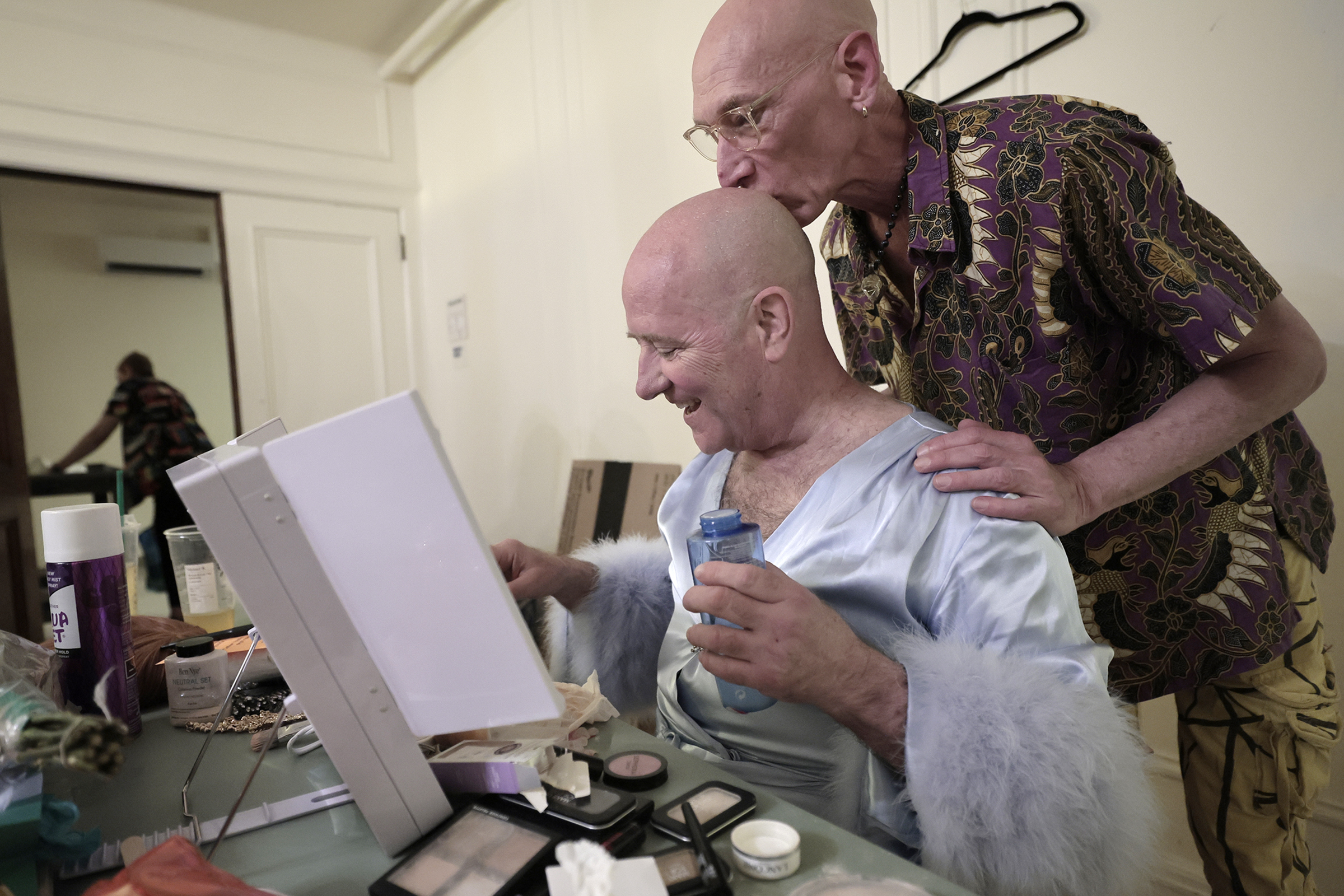
In the dressing room, Tess Tickle (Paul Struck) kisses Carlota Ttendant (Michael Byrne) on the head after Rainbow Bombshell Gay Bingo at Congregation Rodeph Shalom in Philadelphia on Saturday, June 13, 2026. “I love him” said Struck as he walked out of the dressing room.Elizabeth Robertson / Staff PhotographerCarlota Ttendant (Michael Byrne) puts on a favorite crystal ring and fake nails before cohosting Rainbow Bombshell Gay Bingo on June 13. Elizabeth Robertson / Staff Photographer
“Are we ready to win some money?” Carlota said, hyping up the crowd before the first of 12 rounds of bingo. Councilmember Rue Landau, the Philadelphia City Council’s first openly LGBTQ+ member, called the first game:
I-28.
I-26.
G-52.
B-14.
O-63.
B-3.
“Bingo!” someone cried out, as the audience let out an audible wave of disappointment, exasperation, and defeat, and the BVDs rushed over to authenticate.
“Did you just get bingo, girl?” Carlota wisecracked.
For 30 years, these Gay Bingo players have pledged each month to “keep on playing Gay Bingo until this crisis is over.” And today, HIV/AIDS deaths and new diagnoses have stagnated, according to the most recently available health department data, and drug cocktails have made it so people with HIV can live long, healthy lives and may never pass the disease onto others or have their illness advance to AIDS. Preventative medications, like PrEP, can also dramatically decrease the risk of becoming infected.
Michael Byrne, as his drag persona Carlota Ttendant, on May 9 at Congregation Rodeph Shalom in Philadelphia.Joe Lamberti / For The Inquirer
But there are still obstacles to ending the epidemic. HIV/AIDS disproportionately affects Black and brown communities and low-income people who experience barriers to healthcare, according to Action Wellness executive director Mary Evelyn Torres. The geographic disparities are also stark: Current drug regimens may be readily available in well-resourced countries, like the United States, but access is scarce in the world’s vulnerable pockets. These problems have only been exacerbated by President Donald Trump’s proposed cuts to domestic and foreign HIV/AIDS programs. The withdrawal of American dollars overseas, United Nations officials warned, could lead to more than 4 million AIDS-related deaths and 6 million more HIV infections by 2029.
(function(){function e(){window.addEventListener(`message`,function(e){if(e.data[`datawrapper-height`]!==void 0){var t=document.querySelectorAll(`iframe`);for(var n in e.data[`datawrapper-height`])for(var r=0,i;i=t[r];r++)if(i.contentWindow===e.source){var a=e.data[`datawrapper-height`][n]+`px`;i.style.height=a}}})}e()})();
“We’ve come a long way, but there’s still work to be done,” Torres said, “and that work is being threatened by this administration.”
As the epidemic has changed, so has Gay Bingo: The money raised — more than $5 million since its inception — now goes toward Action Wellness’ social services and programming. The BVDs ditched their roller skates at the Gershman Y (because of the new, carpeted venue). Tickets cost $50-$60, compared to $10-$12 in May 1996, and these days, attendance averages between 150 and 200 a month.
Drag has evolved, too. Spending centuries on the periphery as proto-punk-beatniks and after-midnight acts, queens disrupted and challenged the mainstream with wit and wonder. Then, the exploding popularity of RuPaul’s Drag Race, a drag reality-TV competition, seismically changed the culture, snubbing scrappiness for silicon and kitsch for couture. The show ushered drag into the zeitgeist: Its lingo became commonplace and its contestants turned into social media stars, with businesses, makeup brands, books, and podcasts, as the art form continues to face political bans and threats nationwide.
The show “has taken everything to a whole other planet,” Byrne said, “and that’s amazing and that’s really great.
“That’s also not what I do.”
Carlota was never concerned with “affecting female mannerisms” or “trying to be this woman or this drag queen,” Singer said. To Byrne, she’s come to embody the fiercest, most unafraid, and righteous versions of himself. But “Michael was never far from Carlota,” Singer said.
Janie Lopez of Philadelphia cheers for her friend Carlota Ttendant during Gay Bingo at Congregation Rodeph Shalom.Elizabeth Robertson / Staff Photographer
To those who know Byrne, Carlota’s come to represent someone purer and more singular, a testament to what joyful resistance and defiant resilience can achieve amid tragedy. Her ingenuity and authenticity have made her synonymous with Gay Bingo, according to Action Wellness event planner and cohost Tim Johnson (otherwise known as Stella D’Oro); her playfulness is what’s engaging, Burns said; the safe space she’s cultivated for the queer community is what keeps people coming back season after season, said regulars Cat Johnson, 47, and Katie Dickerson, 38, of Roxborough.
“It’s going to be really different without Carlota,” Johnson said. “No one’s going to fill her shoes, but I think that the vibe and the energy is going to live on.”
“It’s a lot easier to raise money when everyone is having fun,” said Amber Schlesman, 38, of Point Breeze, who’s been coming to Gay Bingo since its Gershman Y days. “And for the shoes, I’m guessing it’s a size 12.”
All those shoes will be donated to Philly AIDS Thrift soon enough, Byrne said.
Byrne’s voice cracked as he thought of the people who made Carlota’s run possible: the AIDS Fund organizers, Singer, the original cast of BVDs, the volunteers, those who came back monthly, the victims, their families. Many sent her off June 13 with a trove of well wishes, notes that read, “thanks for the memories,” and “so proud of all you’ve done.” They told her, “I love you,” and “hang up those high heels, baby.”
At the end of the night, Byrne’s best friend gifted him a throw pillow.
“Don’t be a lady,” it said. “Be a legend.”
Michael Byrne transforms into his drag persona Carlota Ttendant ahead of Gay Bingo on Saturday, May 9, 2026, at Congregation Rodeph Shalom in Philadelphia.Joe Lamberti / For The Inquirer
One of three Philadelphia police officers wounded in an exchange of gunfire that left a retired firefighter dead in West Philadelphia late Saturday was released from the hospital Monday, as authorities continued to investigate the shooting.
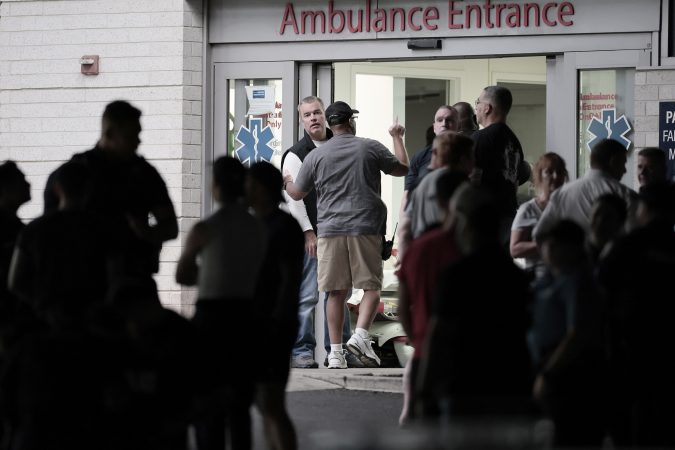
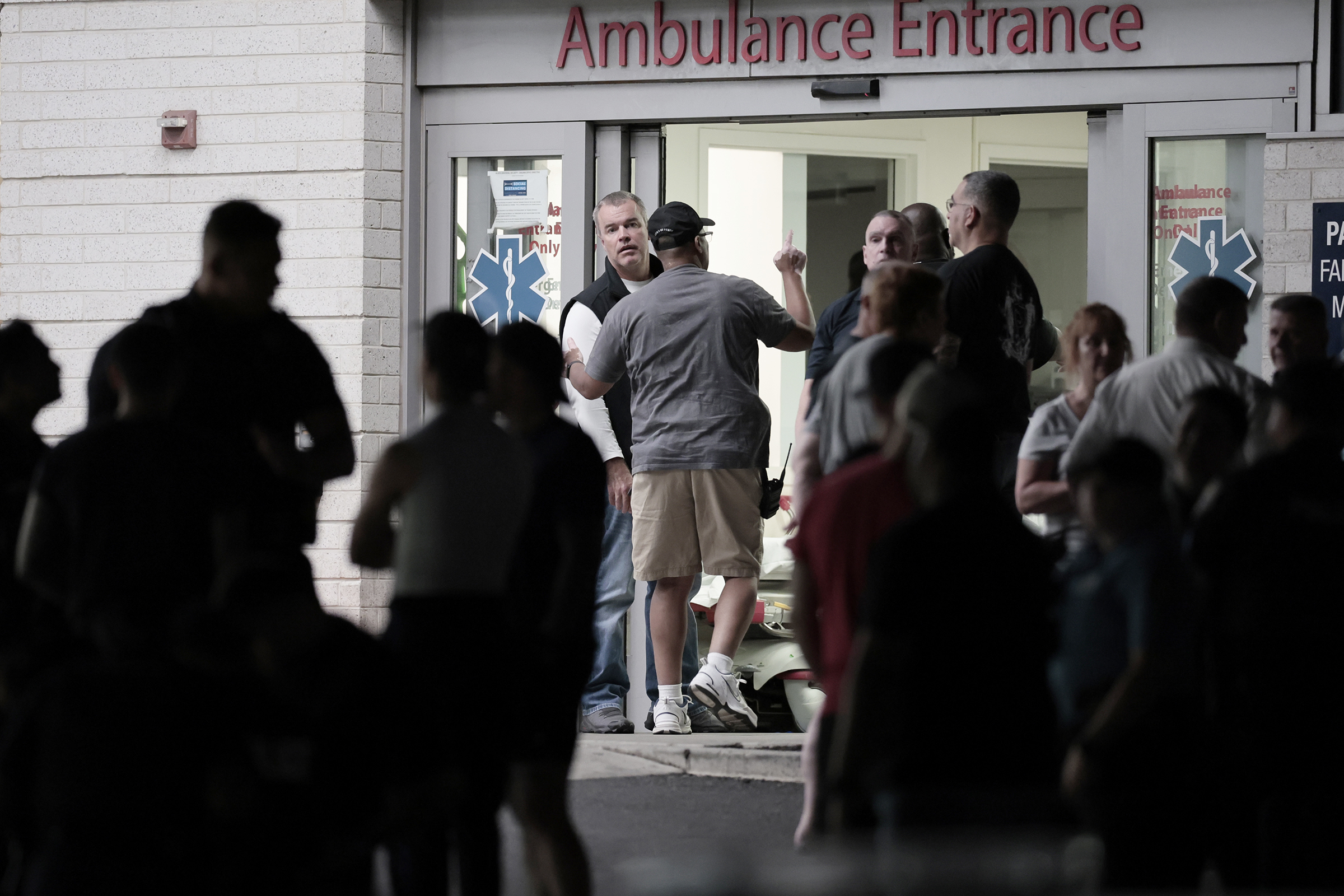
The officer, whom police did not identify, left Penn Presbyterian Medical Center shortly after 1 p.m. Monday, 6abc reported. Dozens of uniformed officers lined the emergency department entrance and saluted as their colleague was pushed outside in a wheelchair and helped into a silver SUV. The crowd erupted in applause as the vehicle pulled away.
His release came nearly two days after authorities say Eric Franks, 57, opened fire on officers who were investigating an unrelated report of a vehicle struck by gunfire near 54th and Arlington Streets in Wynnefield around 10:30 p.m.
As the investigation entered its second day, both law enforcement officials and Franks’ family struggled to understand what could have led him to shoot at police. The police department declined to provide additional details about the confrontation, but a source familiar with the case said footage from the officers’ body worn cameras offered little explanation for such a reaction.
According to the source, who spoke on the condition of anonymity to discuss an ongoing investigation, as officers investigated the vehicle that had been struck by bullets, Franks approached and began complaining about crime and policing in the area.
He appeared frustrated, the source said, that officers had not yet cordoned off the area around the vehicle with crime scene tape, and became increasingly agitated as officers repeatedly asked him to step back so they could do their jobs.
Video obtained by The Inquirer appears to show Franks yelling at officers, then pushing one, before stepping back and pulling a gun from his waistband.
Franks then fired multiple shots at the officers, according to the video and police accounts, and four officers returned fire. Three officers — including a sergeant — were struck by gunfire. Franks was shot in the chest and leg and later died at Thomas Jefferson University Hospital.
Police said Franks had a license to carry a firearm. Commissioner Kevin Bethel said investigators are trying to determine why Franks confronted the officers.
District Attorney Larry Krasner said at a news conference Monday that his office is investigating. He said representatives of his office had spoken with Franks’ family, and had visited the scene and begun reviewing evidence, including video footage that captured the events leading up to the fatal encounter.
Krasner declined to provide additional details, describing the investigation as “very active” and saying he could not divulge further information in order to “preserve the integrity of the investigation.”
The district attorney said his “thoughts are with all the people who have been affected and harmed,” but added that his office — like Franks’ family and members of the community — has questions about what transpired.
He joined Mayor Cherelle L. Parker in a promise to “make sure officers receive the support they need as they heal and process the trauma connected to the shooting.” At the same time, he said, “We also stand in solidarity with all Philadelphians who want to make sure we get the truth, and that we apply the law appropriately.”
He encouraged anyone with information about the shooting — including police officers — to contact his office and speak with investigators.
Franks’ wife, Michele, described her husband as a longtime Wynnefield resident, business owner, and former Marine who spent nearly two decades with the Philadelphia Fire Department before retiring last year.
“He cared very much about community, and about Wynnefield,” she said.
The retired firefighter was also a community activist, an attorney representing Franks’ family said, adding that Franks had met with City Councilmember Curtis Jones Jr. about an uptick in drug-related crimes in the neighborhood.
In a letter posted Sunday on Facebook that did not mention Franks by name, Jones wrote that he was “deeply saddened and heartbroken” by the shooting, and called for a continued commitment to “building a safer, and more peaceful Wynnefield for all.”
Three Philadelphia police officers were wounded in a shooting late Saturday after an argument with a retired city firefighter escalated, and the man opened fire on them in the street, law enforcement sources and city officials said.
The gunman was killed by officers in response, officials said.
Police responded to reports of gunfire at a car near North 54th and Arlington Streets in the Wynnefield section of West Philadelphia around 10:30 p.m., Commissioner Kevin Bethel said at a news conference early Sunday.
A 57-year-old man — identified by police late Sunday as Eric Franks — then confronted four officers on the block and began arguing with them, according to video of the encounter obtained by The Inquirer.
Officials said police were trying to explain to Franks that they needed to establish a crime scene, according to a news release Sunday evening.
The video appeared to show an animated Franks yelling at officers while another man attempted to hold him back. Franks, according to the video, then pushed a sergeant.
City Managing Director Adam K. Thiel (center, facing forward) at the emergency entrance of Penn Presbyterian Medical Center, where three Philadelphia police officers were taken after being shot.Elizabeth Robertson / Staff Photographer
Bethel said the officers repeatedly told him to “stand down” before attempting to arrest him about 10:45 p.m.
As the officers tried to detain Franks, the video showed him break free, then pull a gun from his waistband, and begin shooting at the officers in the street. In the statement released Sunday, police said Franks had a license to carry a firearm. It stated that the officers repeatedly told him not to draw the weapon.
In the video, officers and several civilians could be seen diving behind cars and scattering for their lives.
Four officers shot back at Franks, Bethel said. Three, including a sergeant, were struck by gunfire and taken to Penn Presbyterian Medical Center. One officer was shot in the face, one in the hip, and another in the leg, according to Mayor Cherelle L. Parker. The officers’ names have not been released by officials.
All were reportedly stable Sunday and expected to recover.
The video shows Franks stumbling down the sidewalk before collapsing. He was shot in the chest and leg. He died at Thomas Jefferson University Hospital at 11 p.m., Bethel said.
Bethel said Franks was not involved in the initial incident for which police were called.
“Why he elected to come into that scene and engage the officers — whether this was premeditated — we will walk through that process to see,” Bethel said. “But you don’t come to a situation like that … to engage the officer. We all can start to think of what potentially his intended purpose was.”
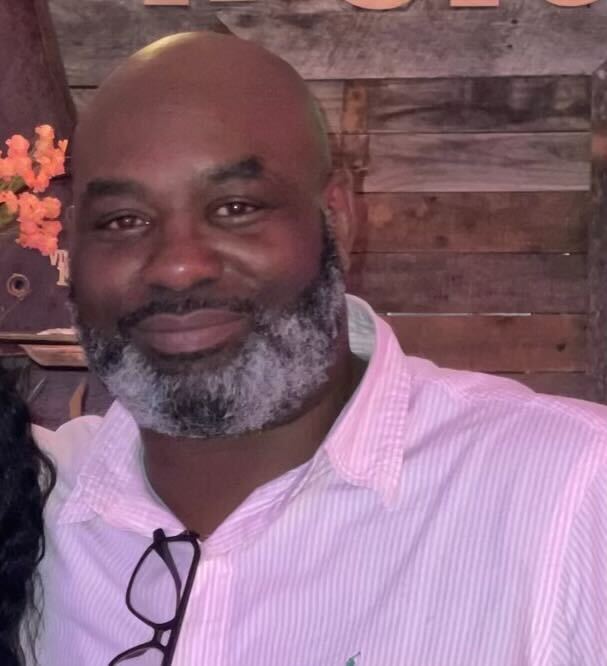
Eric Franks, 57, a retired firefighter, was shot by Philadelphia police officers on Saturday night.Courtesy of the Frank family attorney
Franks’ family attorney James Funt said Bethel should not have “insinuated” that Franks may have planned the shooting.
“That’s just not true,” Funt said. “I don’t know where he got that information.”
Funt said Franks was a community activist who had met with Philadelphia City Councilmember Curtis Jones Jr. and police to address an increase in drug crimes in the neighborhood.
On Saturday night, Franks was managing a 16-year-old’s birthday party at his event space business at the other end of the block when his son called him to tell him that someone had shot a car, Funt said. Franks ran to the corner to see if he could help, he said.
“He is not someone who would try to be an initial aggressor,” Funt said.
Funt said he doesn’t know what led up to the confrontation captured on video, but it warrants a full investigation and the review of any additional video recordings to get the full picture.
An investigation by the police department’s officer-involved shooting investigation unit and internal affairs bureau, and the Philadelphia District Attorney’s Office, is ongoing.
“All we want is for the facts to come out,” Funt said.
City payroll records show Franks retired from the Philadelphia Fire Department in September 2025 after nearly 20 years on the job.
Mike Bresnan, president of the International Association of Firefighters Local 22, declined to comment Sunday. A city spokesperson for the fire department referred questions to the police.
Police evidence marks are along 54th Street in the Wynnefield section of West Philadelphia Sunday June 14, 2026, the morning after three Philadelphia police officers were wounded in a shooting late Saturday after a verbal altercation with a retired city firefighter.Tom Gralish / Staff Photographer
The officers, ages 43 and 30, have worked as Philadelphia police for two and seven years, respectively. The sergeant, 39, has been with Philadelphia police for eight years.
“These men and women give their lives for this work,” Bethel said. The mayor also commended the officers’ resiliency and resolve. “We’re just grateful that tonight, they will survive their injuries,” Bethel added.
On Sunday, officers with the police department’s crime scene unit continued to comb the block — a street of porch-lined rowhouses and small businesses — for evidence and witnesses. Police pulled several fired shell casings, caked in mud, from a sewer drain.
Across the street, a group of people who identified themselves as Franks’ relatives gathered outside the event space called Mingle, that the family owns.
Franks’ wife, Michele, referred questions about the shooting to Funt.
But in a brief phone interview, she tearfully described how they’d been together ever since they went to their senior prom at Overbrook High School in 1986.
“He’s a husband, father, a man of the community,” she said.
Editor Joe Berkery contributed to this article. The article has been updated to include PPD’s statement on the shooting, released Sunday evening.