Tag: Kenyatta Johnson

  • Philly developers are planning a $1.5M campaign to protect City Council from progressive challengers

    Philly developers are planning a $1.5M campaign to protect City Council from progressive challengers

    Philadelphia real estate developers see the writing on the wall.

    As progressives have toppled centrist Democrats in nationally watched races, some local development interests are wary that the same trend could reshape Philadelphia City Council this spring, when every member is up for reelection. They see a growing progressive faction as a threat to business.

    Enter the incumbent protection plan.

    Nearly a dozen local developers are already pouring hundreds of thousands of dollars into Philly For Growth, a group that in the past two Council election cycles spent millions on advertising campaigns to back business-friendly Democrats, according to a source familiar with the planning.

    Philly For Growth is an independent expenditure group, also known as a super PAC. It can raise and spend unlimited amounts of money to influence an election, but there are rules barring super PACs from most forms of coordination with the candidates they support.

    In 2023, the group was the biggest special interest group involved in that year’s Council races, and it provided a substantial boost to its chosen candidates by outspending individual campaigns.

    Ahead of the May primary election, Philly For Growth plans to spend $1.5 million to support pro-business Democrats, most of whom are sitting Council members, according to the source, who spoke on the condition of anonymity because they were not authorized to discuss the plans. The group will not fund negative advertising about Council’s four incumbent progressives, the source added.
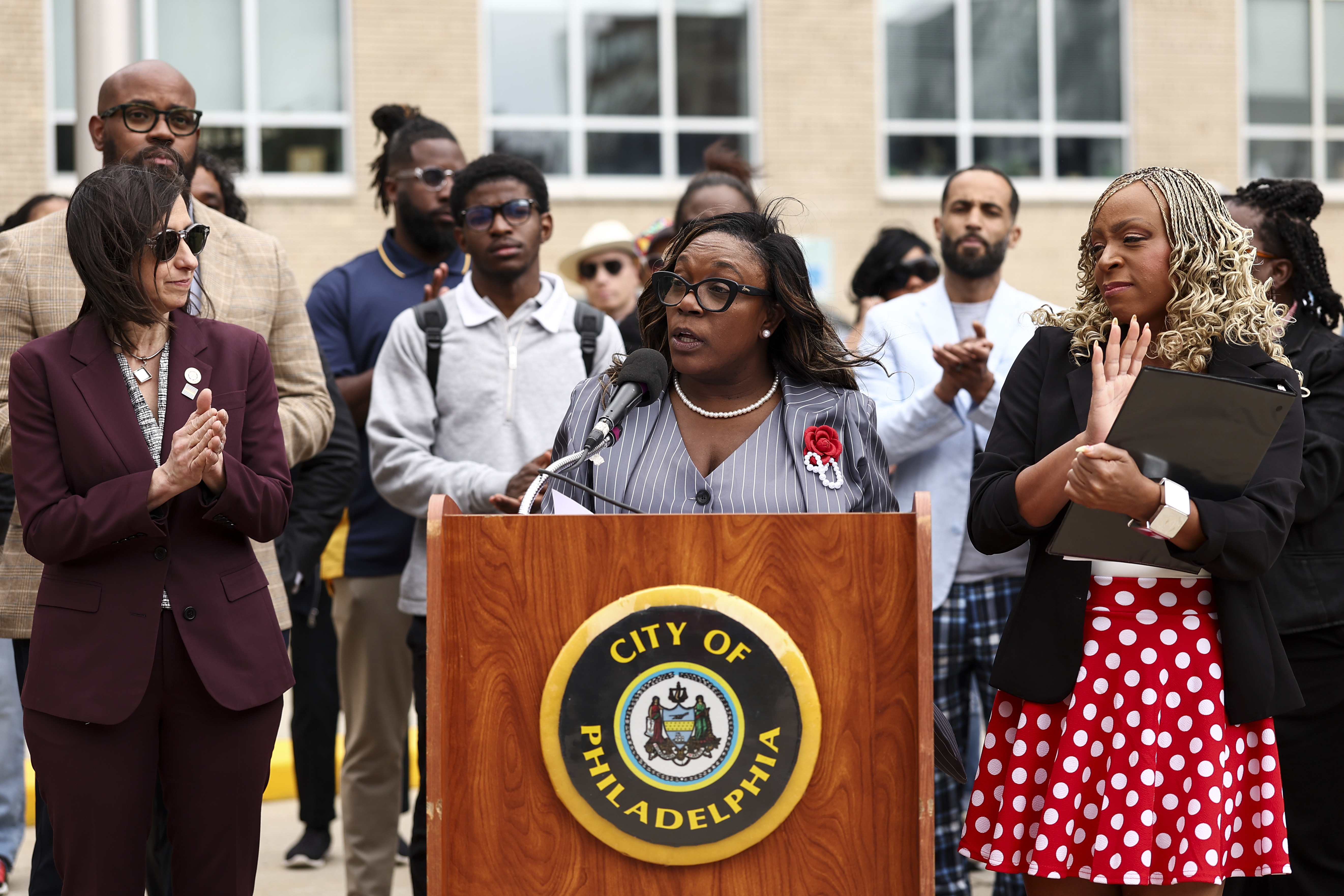
    Councilmember Kendra Brooks, of the progressive Working Families Party, speaks during a rally outside of the School District of Philadelphia headquarters in May. At left is Councilmember Rue Landau and at right is Councilmember Jamie Gauthier. All three are members of Council’s progressive faction.Monica Herndon / Staff Photographer

    The idea is to keep progressives from growing their power on Council instead of spending money to knock off the leftists who are already there. There are currently four reliably progressive votes out of the total 17 on Council, but some members may be more likely to vote with that faction as Democratic voters nationally revolt against incumbents.

    That’s a different strategy than in 2023, when Philly For Growth backed a slate of five candidates — two incumbents and three challengers. Both incumbents won, but all three challengers lost.

    Philly For Growth has previously been affiliated with the Building Industry Association of Philadelphia, an advocacy group for development interests. Mo Rushdy, the BIA’s former president who leads the organization’s political activity, declined to comment.

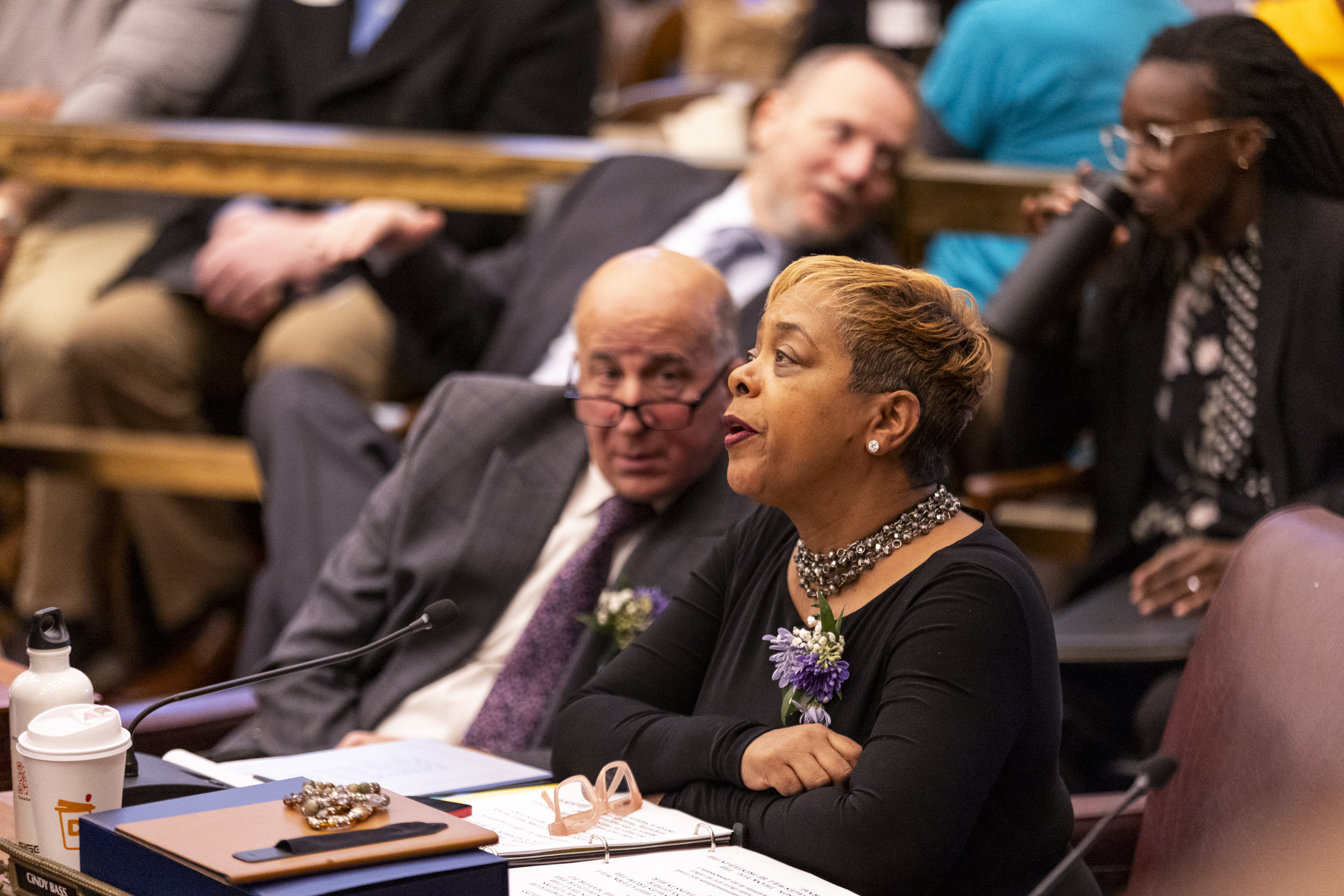
    The source said that Philly For Growth will fund advertising to support Council members Mark Squilla, whose 1st District includes parts of South Philly, Center City, and Fishtown; Cindy Bass, whose 8th District is based in North and Northwest Philadelphia; and Quetcy Lozada, whose 7th District includes much of North Philadelphia and Kensington.

    All three are seen as more centrist members and have said they intend to run for reelection. No challenger has officially launched a campaign against any of them, but candidates who are aligned with the city’s left-leaning political organizations are expected to emerge as the primary — still eight months away — draws nearer.

    The super PAC is making one exception when it comes to supporting incumbent district Council members, the source said. In the 5th District, currently represented by Councilmember Jeffrey Young Jr., the group will support a to-be-decided challenger.
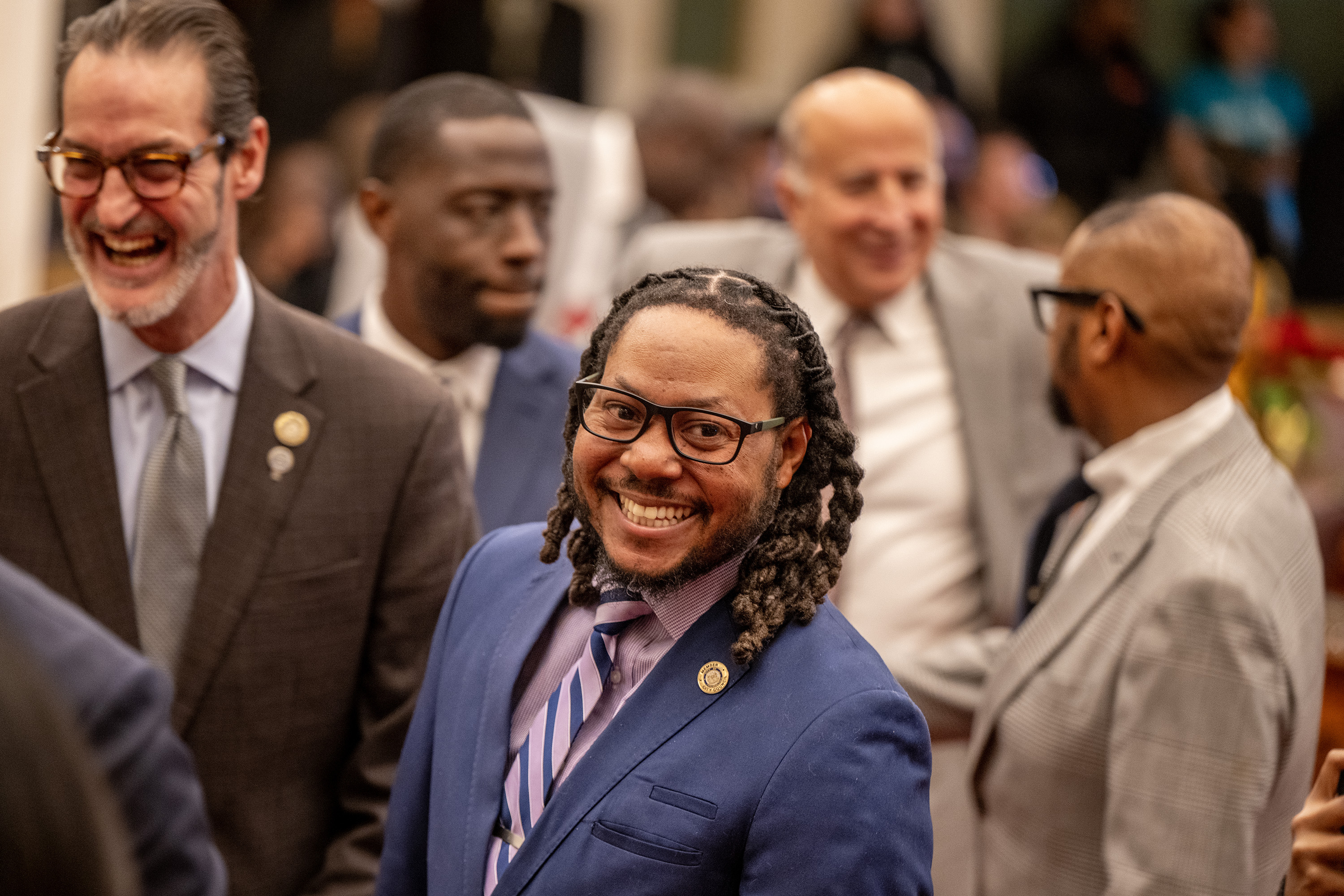
    Councilmember Jeffery Young Jr. speaks to other members of Council during a 2025 session.Tom Gralish / Staff Photographer

    At least five people have said they are interested in running for the North Philly-based 5th District seat, and Young has drawn opposition from development interests for pushing proposals that would slow or halt some projects in his district.

    Young said in a statement that building “sensible, affordable housing” is one of his top priorities and that he has supported city programs like Turn the Key, which provides mortgage support to first-time homebuyers.

    “People are free to back those who share their values. These are my values,” Young said. “I am leaving it to the residents of the 5th to determine whose values best reflect them.”

    The super PAC will also fund advertising backing four incumbent members who represent the city at-large: Isaiah Thomas, Katherine Gilmore Richardson, Jim Harrity, and Nina Ahmad. That group doesn’t include progressive at-large Councilmember Rue Landau, but Philly For Growth doesn’t plan to oppose her, the source said.
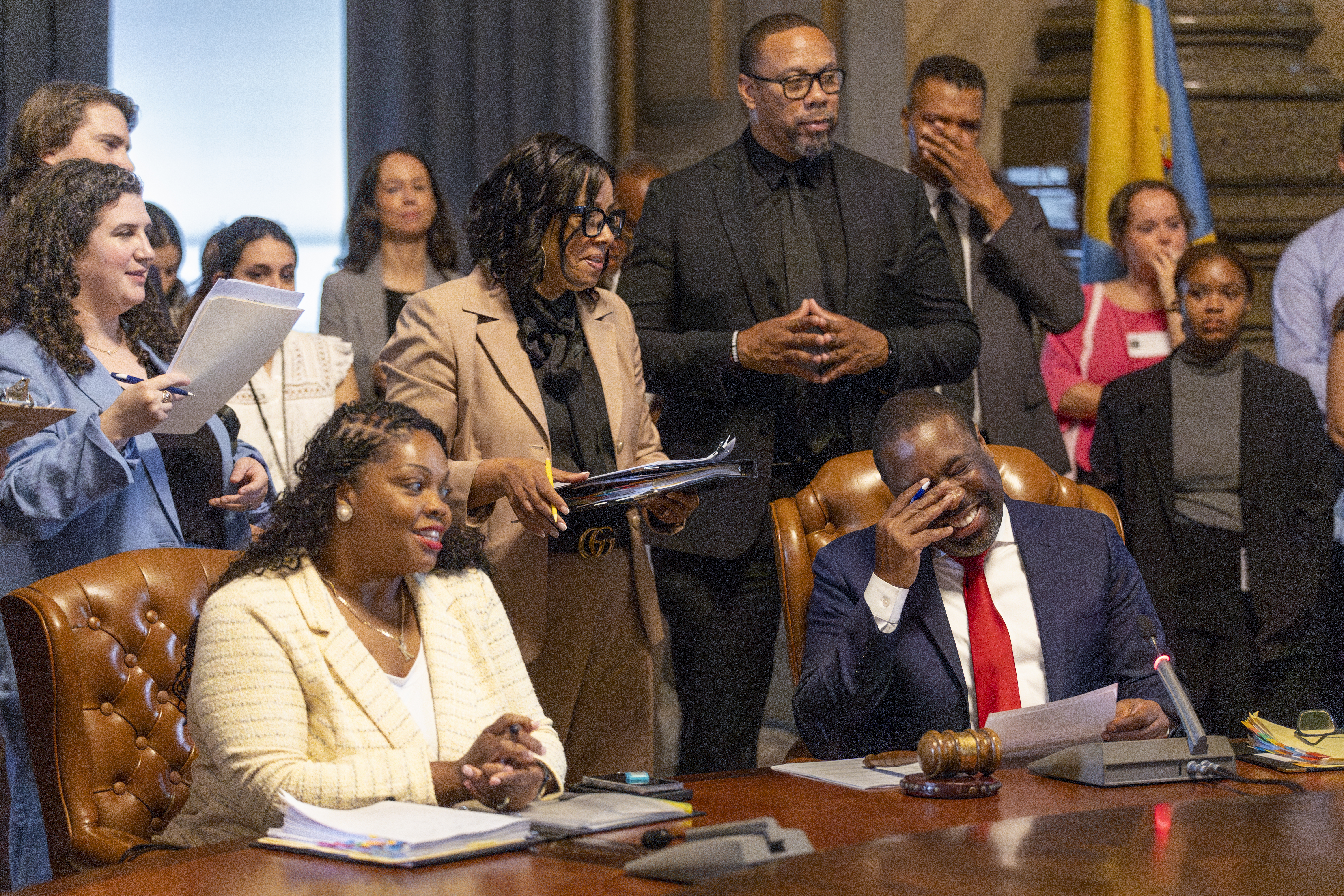
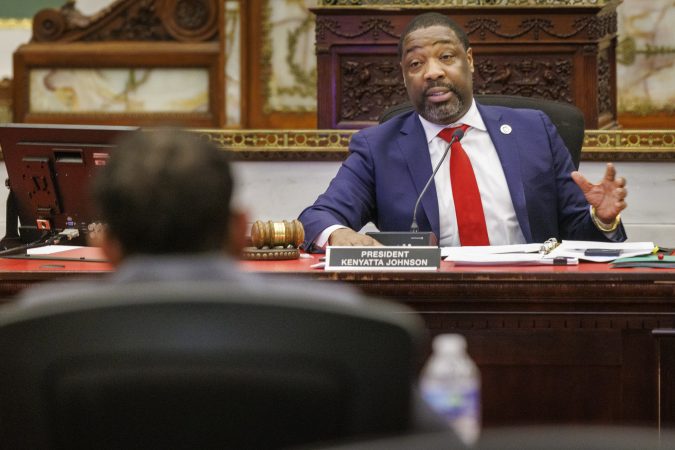
    Council President Kenyatta Johnson laughs inside the caucus inside City Hall on June 11.Aidan T. Gallo / Staff Photographer

    A spokesperson for Landau’s campaign arm said in a statement that the Council member “stands by her accomplishments for working people, small businesses and vulnerable communities in Philadelphia and looks forward to voters having the opportunity to make up their own minds next year.”

    It’s unclear just how competitive the at-large race will be, and candidates have until the spring to decide — nomination paperwork is typically due in March. Seven of Council’s members represent the entire city at-large, and two of those seats are effectively reserved for members of minority parties under the city’s Home Rule Charter.

    That has traditionally meant that five seats are held by Democrats, given the party’s massive voter registration advantage in the city. In recent years, Republicans and the progressive Working Families Party have battled for the remaining two seats during the fall general election, and the WFP currently holds both.

    Mayor Cherelle L. Parker, who is also up for reelection, and Council President Kenyatta Johnson, who insiders do not expect will see a serious challenger, will likely be on Philly For Growth’s slate, too, the source said.

  • A new high-rise built by PMC Property Group would overlook the Schuylkill from Walnut Street

    A new high-rise built by PMC Property Group would overlook the Schuylkill from Walnut Street

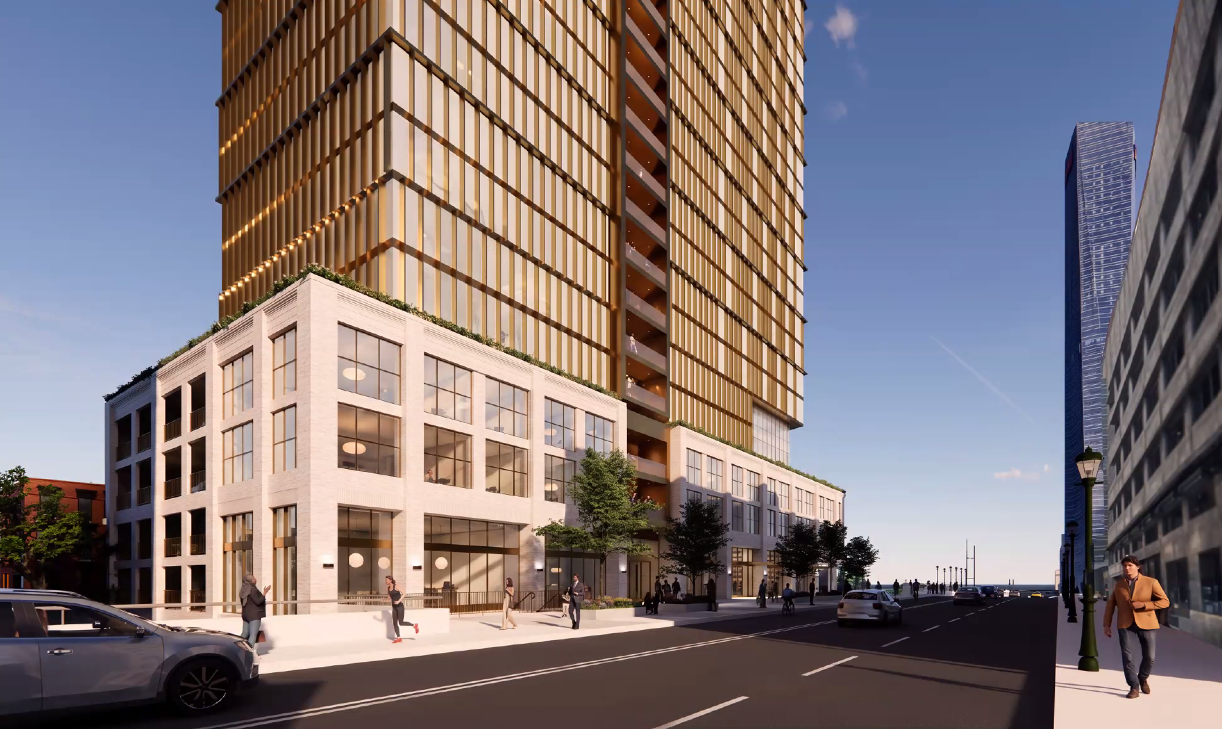
    Philadelphia’s largest apartment owner, PMC Property Group, wants to build a 31-story high-rise at 24th and Walnut Streets.

    The 372-unit apartment building at 200-10 S. 24th St. would also include 118 parking spaces and a swimming pool.

    The proposed 358-foot-tall tower would be the real estate company’s latest apartment development on the Schuylkill. PMC built the two Riverwalk Towers a half mile to the north, in Center City’s Logan Square neighborhood, and the 287-unit building at 2301 John F. Kennedy Blvd.

    “Through these [earlier] efforts, PMC has taken dead space pretty much and activated it, creating the vibrancy of Center City living,” said Adam Laver, a land-use attorney with Blank Rome who represents the developer, in a meeting with the Center City Residents Association (CCRA) on Thursday night.

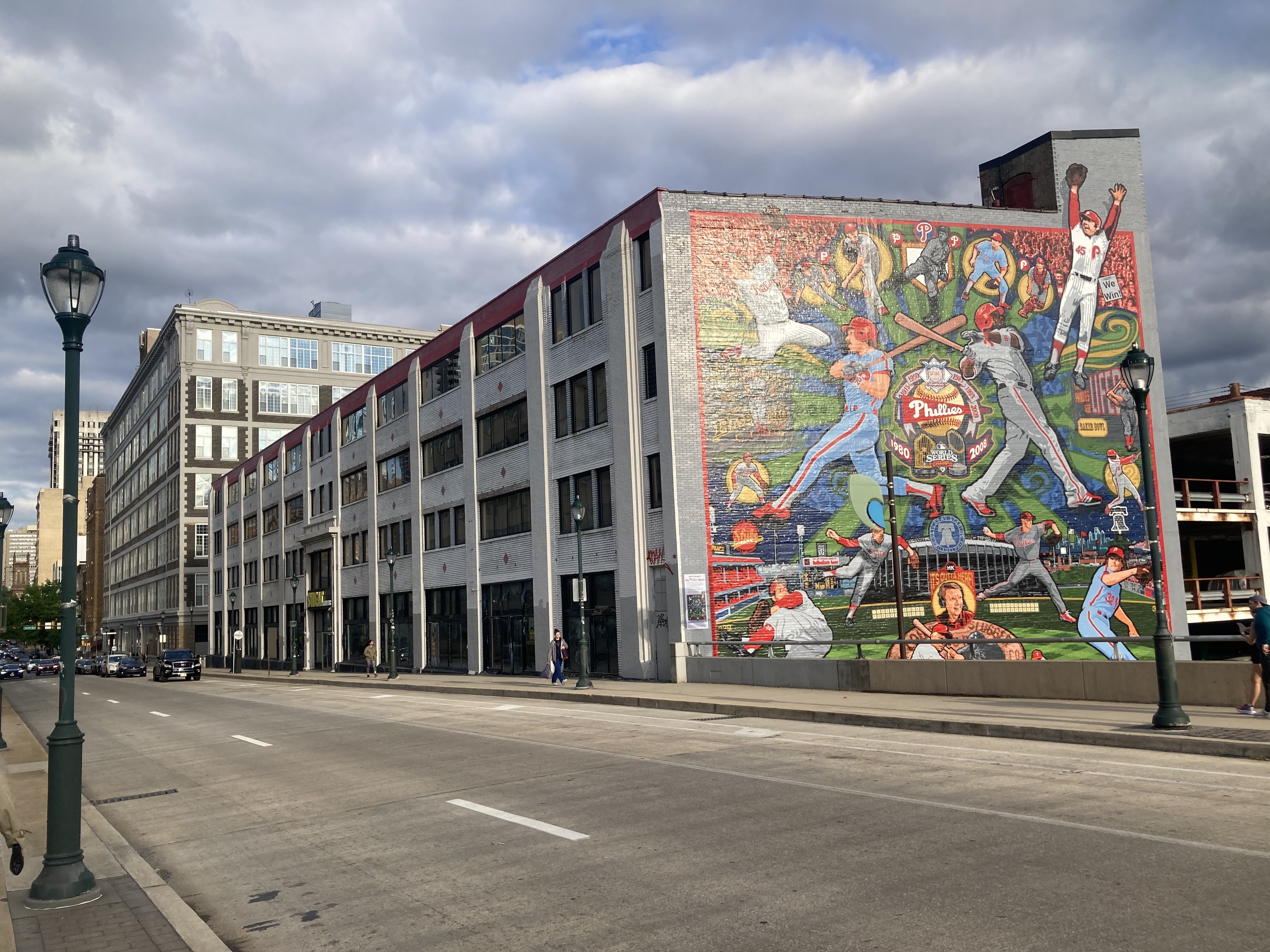
    The 110-year-old building that currently sits at 200-10 S. 24th St. is best known for its mural celebrating the Phillies, by David McShane, which dates to 2015. It would need to be demolished to make way for the project.

    The building currently houses Walnut Bridge Parking & Storage and is owned by Michael Karp, a major local real estate owner, student-housing landlord, and charter school operator. He did not respond to requests for comment.

    “PMC does not currently own the property, and it could potentially be a joint venture,” said Laver.

    PMC Property Group wants to change the zoning on this 110-year-old former industrial building at 200-10 S. 24th St. so they can build a large, new apartment tower.Jake Blumgart

    Parking for the proposed project would be on the bottom two levels, on a podium built to reflect the current industrial building. (The parking garage on those lower floors would exit onto 24th Street.) The tower itself would be set back from the podium and property line.

    Philadelphia-based Tantillo Architecture is designing the building. They have previously worked on projects like the office-to-residential conversion of 400 Market and the redevelopment of the landmark Bellevue Hotel on South Broad Street.

    Like many historical buildings along the Schuylkill, 200-10 S. 24th St. has an industrial past, but unlike some of its counterparts it is still zoned exclusively for that kind of use.

    PMC is seeking to change the property’s zoning legislatively, which would require the support of City Council President Kenyatta Johnson, who represents the area.

    That means support from CCRA — the local registered community organization (RCO) — would be invaluable to the project. RCOs grapple with zoning issues and their feedback often holds significant sway with elected officials.

    The presentation on Thursday night was part of PMC’s ongoing negotiations with CCRA.

    “The industrial [zoning] does not allow residential household living,” said Laver. “That’s really why we’re having this open process with all of you this evening.”

    A rendering of the proposed tower, looking east, along Walnut Street.Tantillo Architecture

    Neighbors were concerned about whether parking could be available to the public, whether demolition could affect the direct neighbors in the condos and townhouses of Fitler’s Walk, and whether the Phillies mural could be saved.

    “That is something that we would be pleased to work with CCRA and others to try to figure that piece out,” Laver said, in regards to the mural.

    He said that PMC would also consider providing some public parking, as the garage’s demolition will mean some current public spaces are lost.

    Laver said that he anticipates that the project could take two and a half years to develop, assuming that PMC gets the support of CCRA and Council President Johnson.

    Following Thursday’s public meeting, CCRA will consider public feedback, and the organization’s board will vote on whether to support the zoning change.

    A rendering of the tower, from street level, looking west.Tantillo Architecture

    A bill changing the property’s zoning could not be introduced until Sept. 17, at the earliest, when City Council returns to session.

    Johnson said earlier this year that he hadn’t yet begun seriously considering the project as negotiations between the developer and CCRA unfold.

    “I’m aware of the project, but they’re still going through the RCO process,” said Council President Johnson, in a May interview.

    “Once they get through that process, if the RCO says, ‘Yes, this is something we want to see in our neighborhood,’ then they’ll get a hearing where we’ll evaluate if this is something we want to support as a body,” said Johnson.

    PMC could also secure relief from the property’s industrial land use regulations from the Zoning Board of Adjustment, but that is often a lengthy and unpredictable endeavor.

    PMC’s president, Ron Caplan, has a long history in Philadelphia. During the recent development slowdown in Philadelphia, the company is one of the few that has continued developing new projects at a steady clip.

  • A sweeping audit of the Philadelphia School District’s management and operations is coming, at City Council President Kenyatta Johnson’s request

    A sweeping audit of the Philadelphia School District’s management and operations is coming, at City Council President Kenyatta Johnson’s request

    The Philadelphia School District is about to face significant new scrutiny, with City Council President Kenyatta Johnson asking for a sweeping performance audit of the school system’s management and operations.

    City Controller Christy Brady has agreed to the request, which came via a letter in recent weeks signed by all 17 Council members, Johnson’s office told The Inquirer. The comprehensive review will go beyond the audit Brady’s office performs annually, delving into areas such as staffing and outside contractors.

    Council laid out no deadline for the audit but made clear it is expecting the results in time for next budget season, which will begin in the new year and ramp up in the spring.

    The district, one of the largest in the United States, has a $4.6 billion budget, which funds education for 113,000 students in 213 district schools and 65,000 in 81 charters. About $2 billion of that money comes directly from the city.

    “While the SDP is subject to regular financial statement audits that examine the accuracy of financial reporting and compliance with applicable accounting standards, this request seeks a performance audit focused on evaluating the efficiency, effectiveness, and management of financial and operational practices, including budgeting decisions, resource allocation, internal controls, and long-term fiscal planning,” Johnson said in a statement Thursday.

    The news comes during a period of heightened tensions between Council and the district, spurred by members’ frustration over the school board’s move to close 17 schools and a separate $300 million structural deficit that took Council by surprise.

    Last week, at a news conference where several members “begged” the district to come to the table to negotiate over school closings, Councilmember Curtis Jones Jr. said Council has “tools in our tool belt that we will use” if the board does not change its mind about some building closures.

    Jones has sponsored legislation to hold hearings on creating an independent financial authority, like the Pennsylvania Intergovernmental Cooperation Authority, to oversee the district’s finances.

    Council sources told The Inquirer that there is no indication that the district has conducted malfeasance, but that given the billions that flow to the district from city coffers, Philadelphia officials want a closer accounting of how the money is being spent.

    After the board voted to begin the closure process in April, multiple members of the public also called for increased financial scrutiny of the district.

    Reginald Streater, the school board president, said in a statement Thursday that the board and district will work with the controller’s office “to continue strengthening our financial processes and procedures.”

    Streater said the audit squares with the board’s approach to governance.

    “Good governance is not about assuming we have all the answers; it is about asking the right questions, using evidence to guide decisions and being willing to improve. We look forward to understanding the proposed scope of the audit and ensuring that the examination is constructive and focused on helping the district work well for students, families and educators,” Streater said.

    Superintendent Tony B. Watlington Sr. stressed the district’s academic strides, history of audits with no material weaknesses, and moves to solidify its credit rating.

    Frustration over a budget deficit and school closings

    Johnson, in his statement, said that the audit will reassure Council that “resources are being managed effectively and operations are functioning efficiently by the SDP,” and that he believes its findings will help inform priorities for next fiscal year’s budget.

    This year’s budget season was chaotic.

    After Mayor Cherelle L. Parker introduced her initial budget, Watlington ordered $225 million in cuts, including some school cuts, with 300-plus teachers, counselors, and climate staff slated to lose their positions.

    The problem, Watlington underscored in remarks in March, was “not because we’re not good stewards of the dollars, but because of historic underfunding.” (The district achieved its highest credit rating ever under Watlington, who has said he wants to be the superintendent to retire the system’s structural financial issues permanently.)

    Philadelphia’s school system cannot raise its own revenue but instead depends on the city and state to bankroll it, unlike every other district in Pennsylvania.

    City Hall seemed shocked at the news of the deficit and job cuts, despite the fact that Watlington had warned officials in 2025 that a budget gap was coming. The school district spent $300 million in reserves that year to avoid layoffs and program cuts as federal COVID-19 funds dried up.

    After Watlington said he would be forced to make the school cuts, Parker then upped her proposed 20-cent-per-trip rideshare tax to a $1-per-trip levy. That frustrated a Council already catching heat from city residents anguished over plans to close schools.

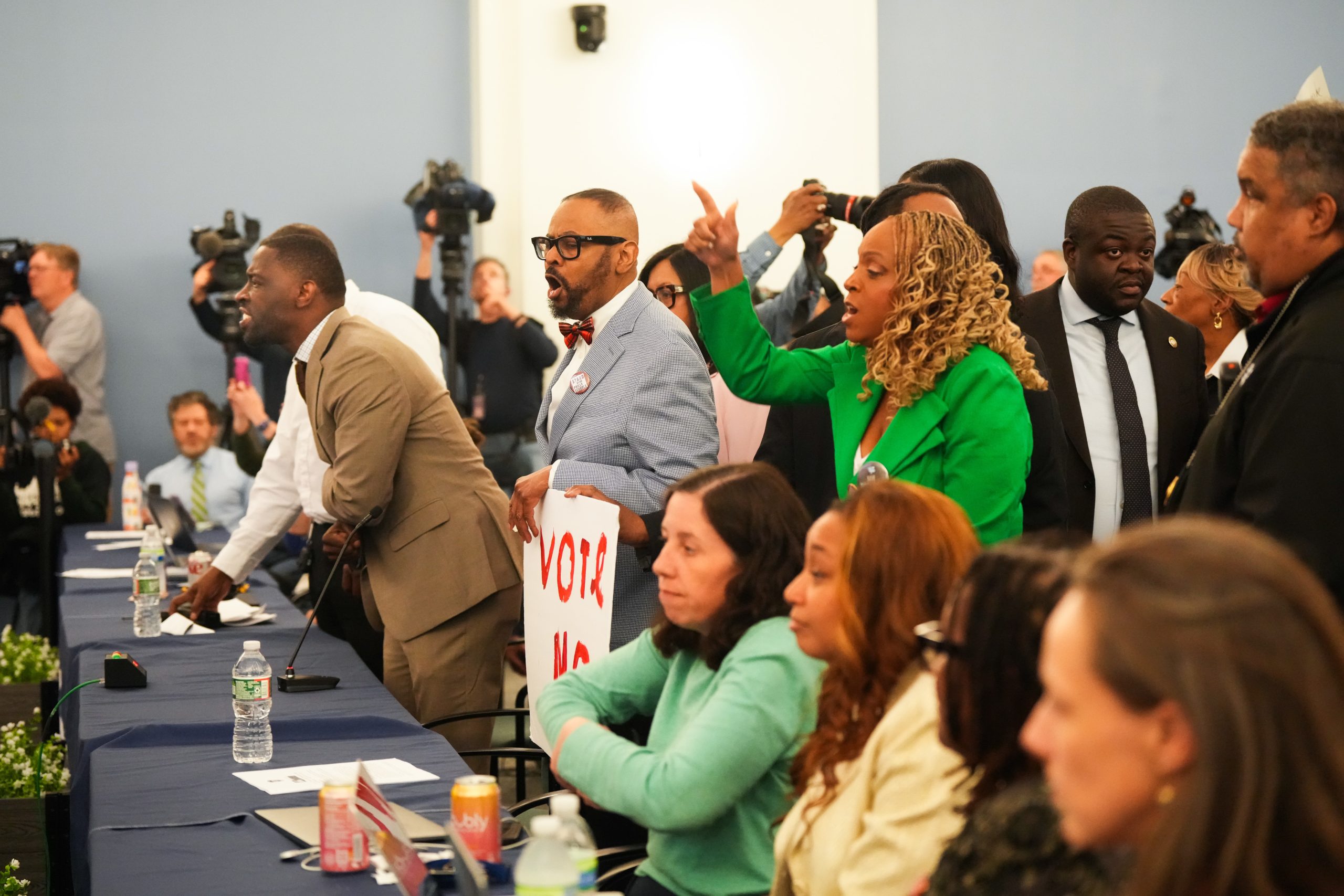
    (Left to Right) Councilmembers Isaiah Thomas, Curtis Jones Jr., and Jamie Gauthier protest at Thursday’s school board meeting as the board prepared to vote on the facilities plan.Jessica Griffin / Staff Photographer

    In April, several Council members took the dramatic step of repeatedly disrupting the school board’s vote in an attempt to get it to reconsider the closures of a handful of schools, including Lankenau and Robeson High Schools and Overbrook Elementary.

    The school board proceeded anyway — Council approves school board members, who are appointed by the mayor, and the city’s budget, but had no formal authority over the closures.

    The rideshare tax ultimately died.

    Eventually, Parker, Watlington, Council, and the school board worked out a deal to save the 300 jobs, with the city promising $216 million over five years from yet-unspecified sources.

    But it quickly became clear that some Council members remained frustrated with the school system and were looking for a way forward.

    Councilmember Isaiah Thomas has said he will not vote to reconfirm any school board member who voted for the closings; he and others have also said they believe it is time to rethink the school board’s governance structure.

    The city, as a primary funder of the district, needs a clearer picture of what is going on, they say.

    “Given the SDP’s current budget challenges, requests for additional public revenue, and recent proposals involving school closures and operational reductions, City Council believes a comprehensive performance and management review is warranted to ensure transparency, accountability, and informed public decision-making,” Johnson said in the statement. “The City of Philadelphia has a responsibility to ensure that all available revenues, expenditures, obligations, and funding strategies have been thoroughly reviewed before significant decisions affecting students, families, educators, neighborhoods, and public assets are implemented.”

    What will the special audit examine?

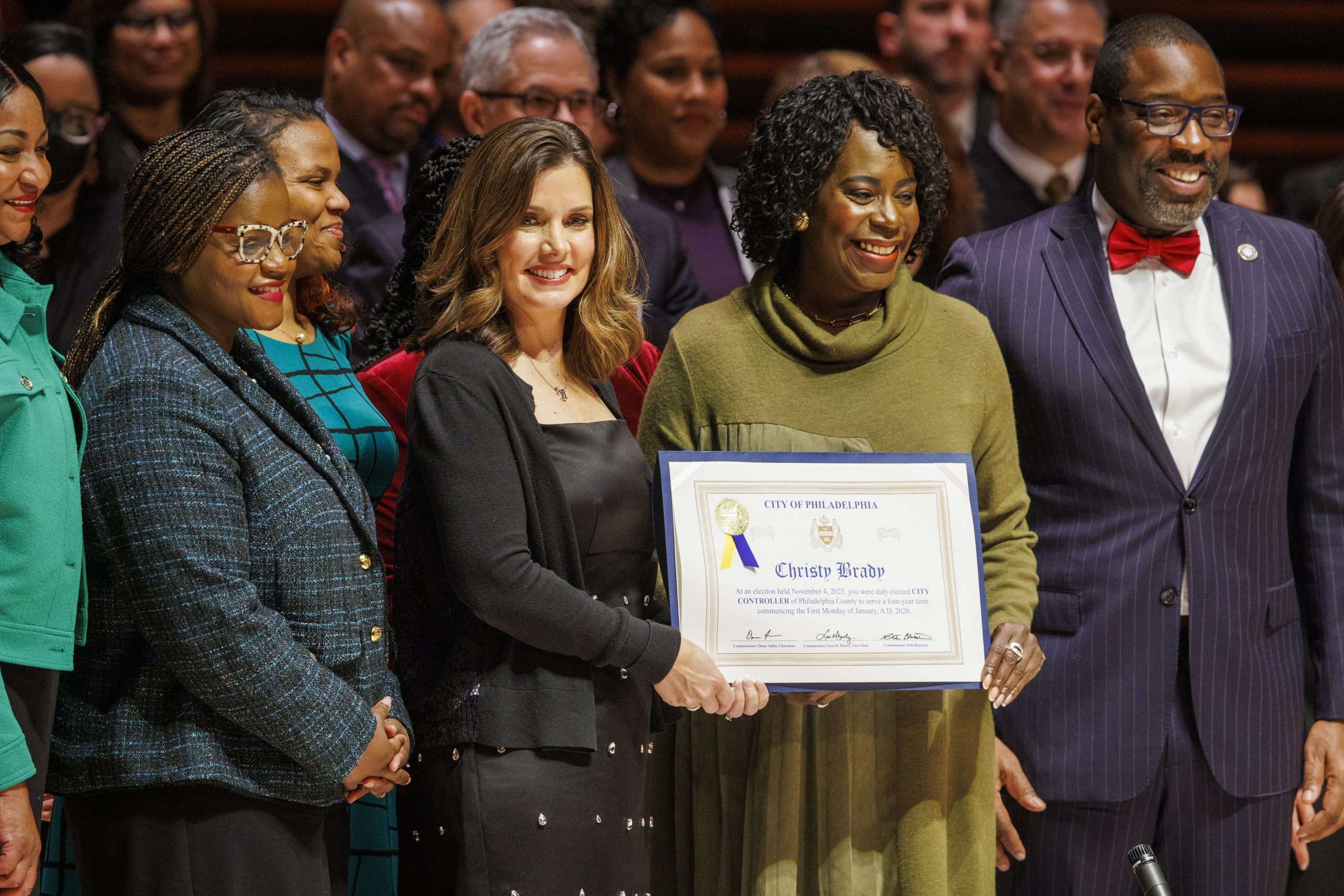
    City Controller Christy Brady (second from left, standing next to Mayor Cherelle L. Parker) is seen in this January file photo. Alejandro A. Alvarez / Staff Photographer

    Brady, in a statement, said the audit will “ensure resources are being managed effectively, operations are functioning efficiently and students are receiving the support they deserve. We’ve been encouraged by the SDP administration’s response to our previous audits and the steps it has taken to implement our recommendations. We expect this audit will continue that collaborative approach and continue to produce positive results for the benefit of students, educators and taxpayers.”

    Council has asked Brady to go deep, from probing into the current structural deficit and the projections used to get there to the status of Philadelphia Parking Authority revenues, both expected and received.

    Brady will also look at the district’s use of reserves and its administrative costs, and she will explore “the effectiveness and efficiency of administrative and operational expenditures, including central office functions, non-instructional spending and other costs not directly tied to classroom instruction.”

    She will look into how the district’s budgeting methods and long-term planning square with industry best practices, and examine contract management and consultant utilization to try to find areas “for improved accountability, transparency, and cost efficiency.”

    Brady is also charged with a deep dive into the financial effects of forthcoming school closings, and the potential ramifications of the closings on surrounding neighborhoods.