Philadelphia’s largest apartment owner, PMC Property Group, wants to build a 31-story high-rise at 24th and Walnut Streets.
The 372-unit apartment building at 200-10 S. 24th St. would also include 118 parking spaces and a swimming pool.
The proposed 358-foot-tall tower would be the real estate company’s latest apartment development on the Schuylkill. PMC built the two Riverwalk Towers a half mile to the north, in Center City’s Logan Square neighborhood, and the 287-unit building at 2301 John F. Kennedy Blvd.
“Through these [earlier] efforts, PMC has taken dead space pretty much and activated it, creating the vibrancy of Center City living,” said Adam Laver, a land-use attorney with Blank Rome who represents the developer, in a meeting with the Center City Residents Association (CCRA) on Thursday night.
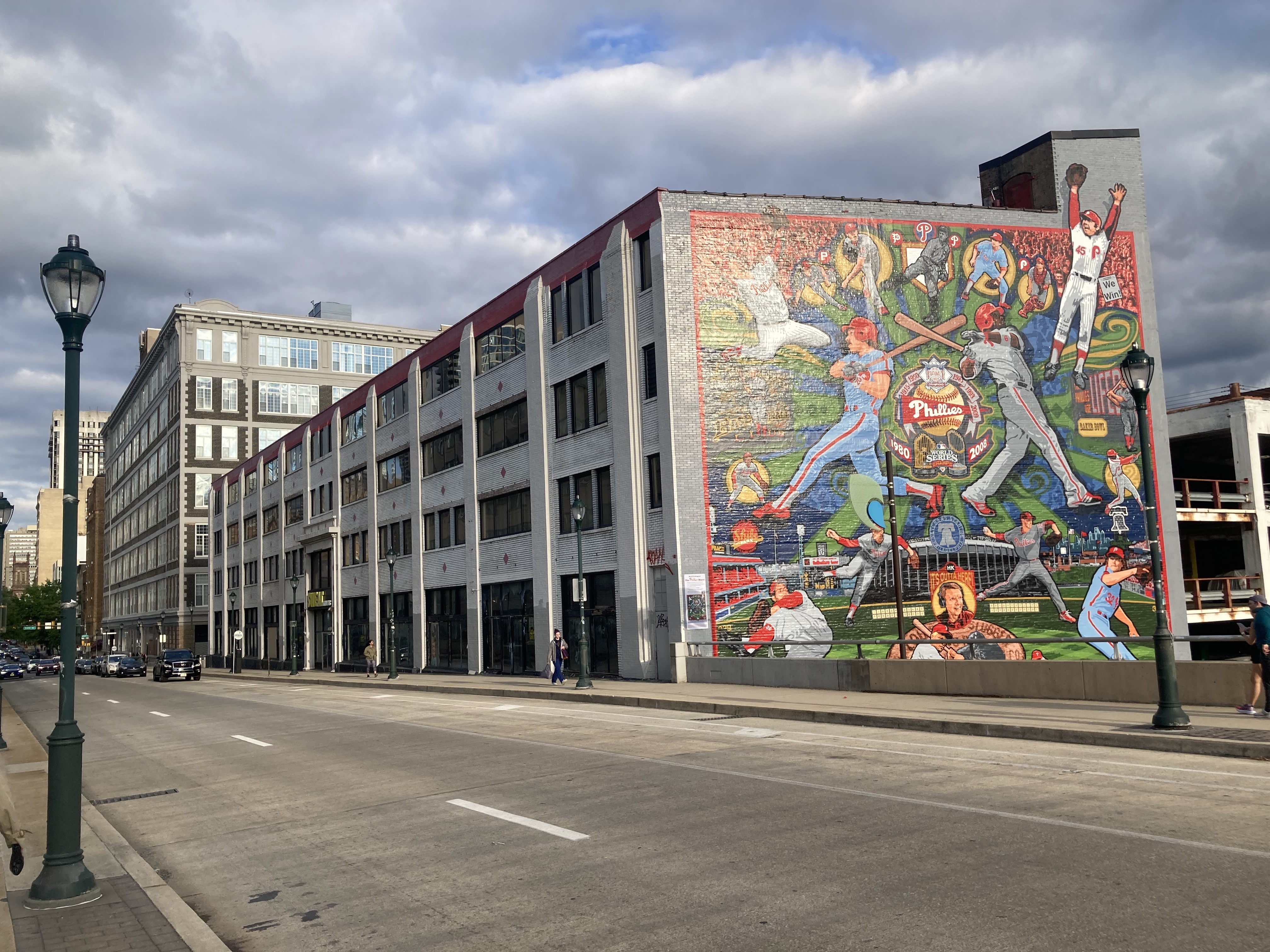
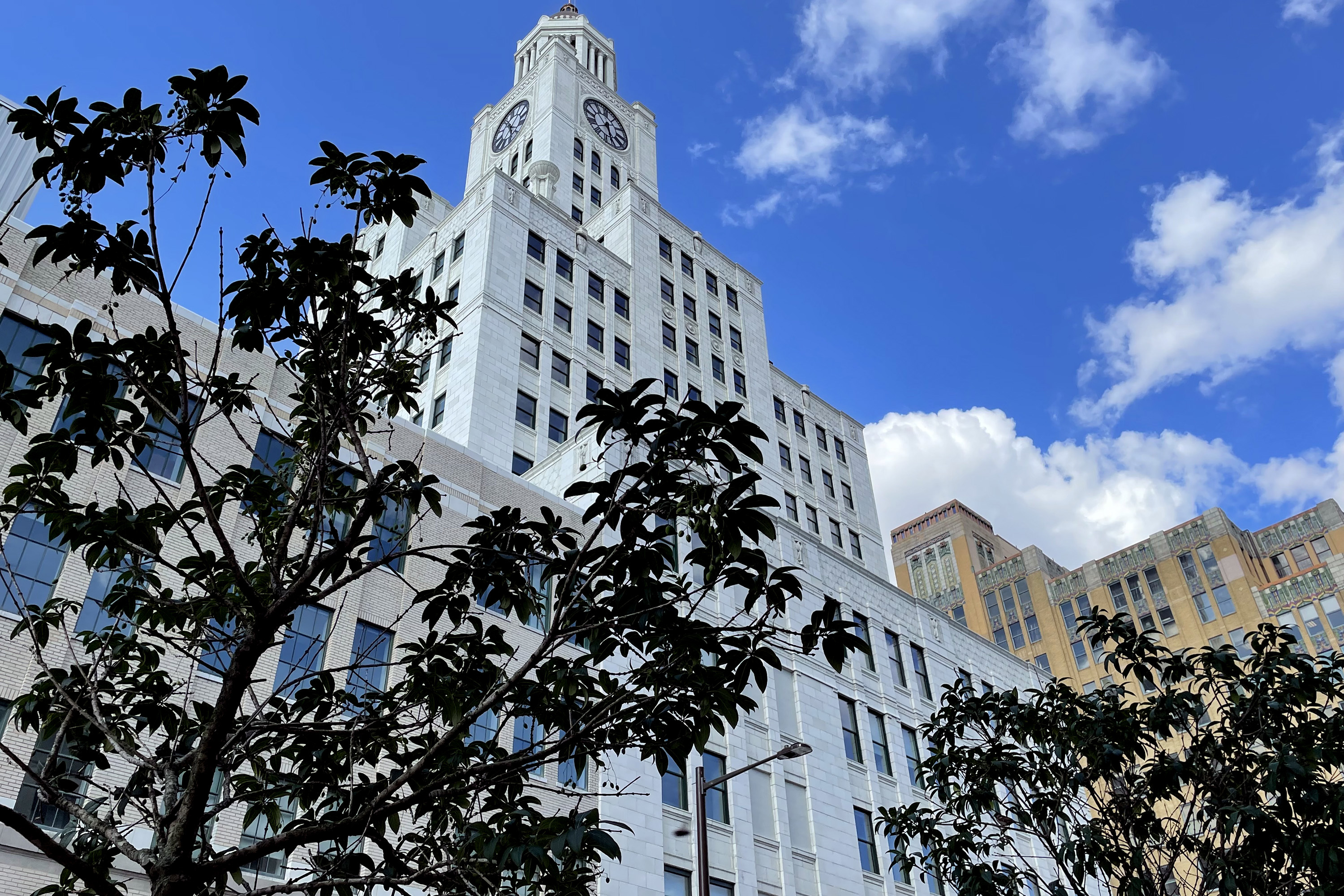
The 110-year-old building that currently sits at 200-10 S. 24th St. is best known for its mural celebrating the Phillies, by David McShane, which dates to 2015. It would need to be demolished to make way for the project.
The building currently houses Walnut Bridge Parking & Storage and is owned by Michael Karp, a major local real estate owner, student-housing landlord, and charter school operator. He did not respond to requests for comment.
“PMC does not currently own the property, and it could potentially be a joint venture,” said Laver.
PMC Property Group wants to change the zoning on this 110-year-old former industrial building at 200-10 S. 24th St. so they can build a large, new apartment tower.Jake Blumgart
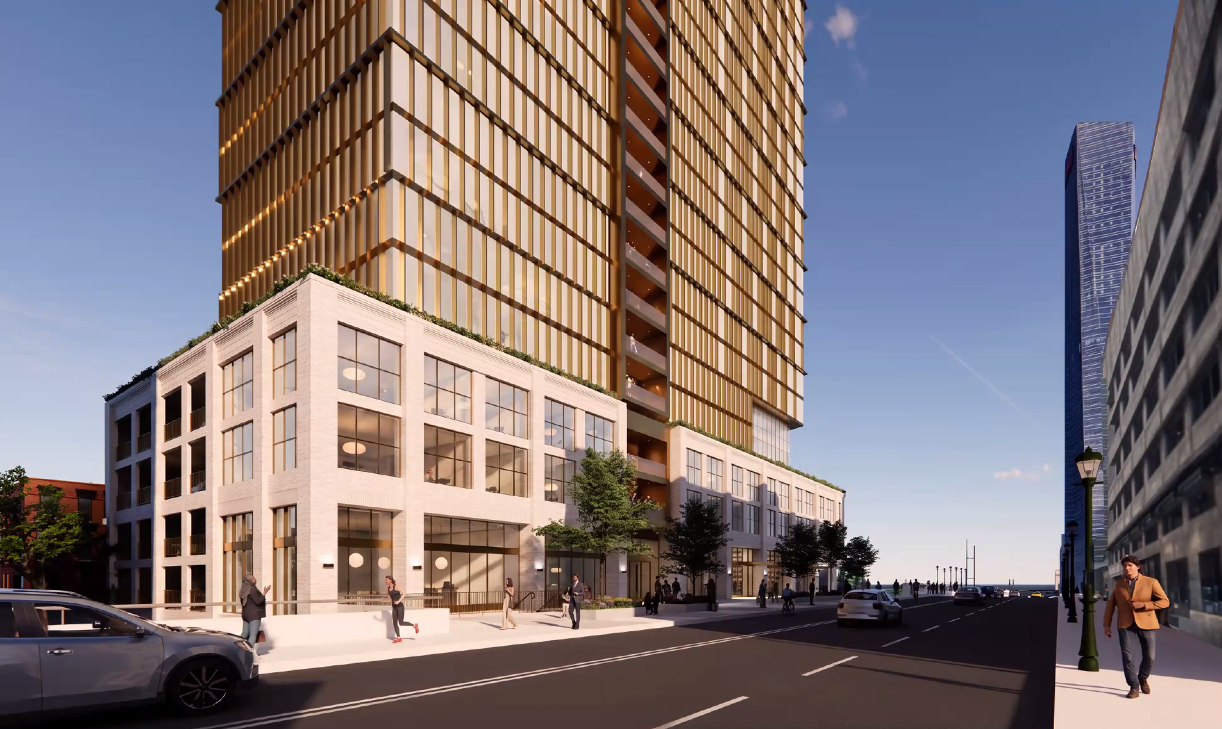
Parking for the proposed project would be on the bottom two levels, on a podium built to reflect the current industrial building. (The parking garage on those lower floors would exit onto 24th Street.) The tower itself would be set back from the podium and property line.
Philadelphia-based Tantillo Architecture is designing the building. They have previously worked on projects like the office-to-residential conversion of 400 Market and the redevelopment of the landmark Bellevue Hotel on South Broad Street.
Like many historical buildings along the Schuylkill, 200-10 S. 24th St. has an industrial past, but unlike some of its counterparts it is still zoned exclusively for that kind of use.
PMC is seeking to change the property’s zoning legislatively, which would require the support of City Council President Kenyatta Johnson, who represents the area.
That means support from CCRA — the local registered community organization (RCO) — would be invaluable to the project. RCOs grapple with zoning issues and their feedback often holds significant sway with elected officials.
The presentation on Thursday night was part of PMC’s ongoing negotiations with CCRA.
“The industrial [zoning] does not allow residential household living,” said Laver. “That’s really why we’re having this open process with all of you this evening.”
A rendering of the proposed tower, looking east, along Walnut Street.Tantillo Architecture
Neighbors were concernedabout whether parking could be available to the public, whether demolition could affect the direct neighbors in the condos and townhouses of Fitler’s Walk, and whether the Phillies mural could be saved.
“That is something that we would be pleased to work with CCRA and others to try to figure that piece out,” Laver said, in regards to the mural.
He said that PMC would also consider providing some public parking, as the garage’s demolition will mean some current public spaces are lost.
Laver said that he anticipates that the project could take two and a half years to develop, assuming that PMC gets the support of CCRA and Council President Johnson.
Following Thursday’s public meeting, CCRA will consider public feedback, and the organization’s board will vote on whether to support the zoning change.
A rendering of the tower, from street level, looking west.Tantillo Architecture
A bill changing the property’s zoning could not be introduced until Sept. 17, at the earliest, when City Council returns to session.
Johnsonsaidearlier this year that he hadn’t yet begun seriously considering the project as negotiations between the developer and CCRA unfold.
“I’m aware of the project, but they’re still going through the RCO process,” said Council President Johnson, in a May interview.
“Once they get through that process, if the RCO says, ‘Yes, this is something we want to see in our neighborhood,’ then they’ll get a hearing where we’ll evaluate if this is something we want to support as a body,” said Johnson.
PMC could also secure relief from the property’s industrial land use regulations from the Zoning Board of Adjustment, but that is often a lengthy andunpredictable endeavor.
The Philadelphia School District is about to face significant new scrutiny, with City Council President Kenyatta Johnson asking for a sweeping performance audit of the school system’s management and operations.
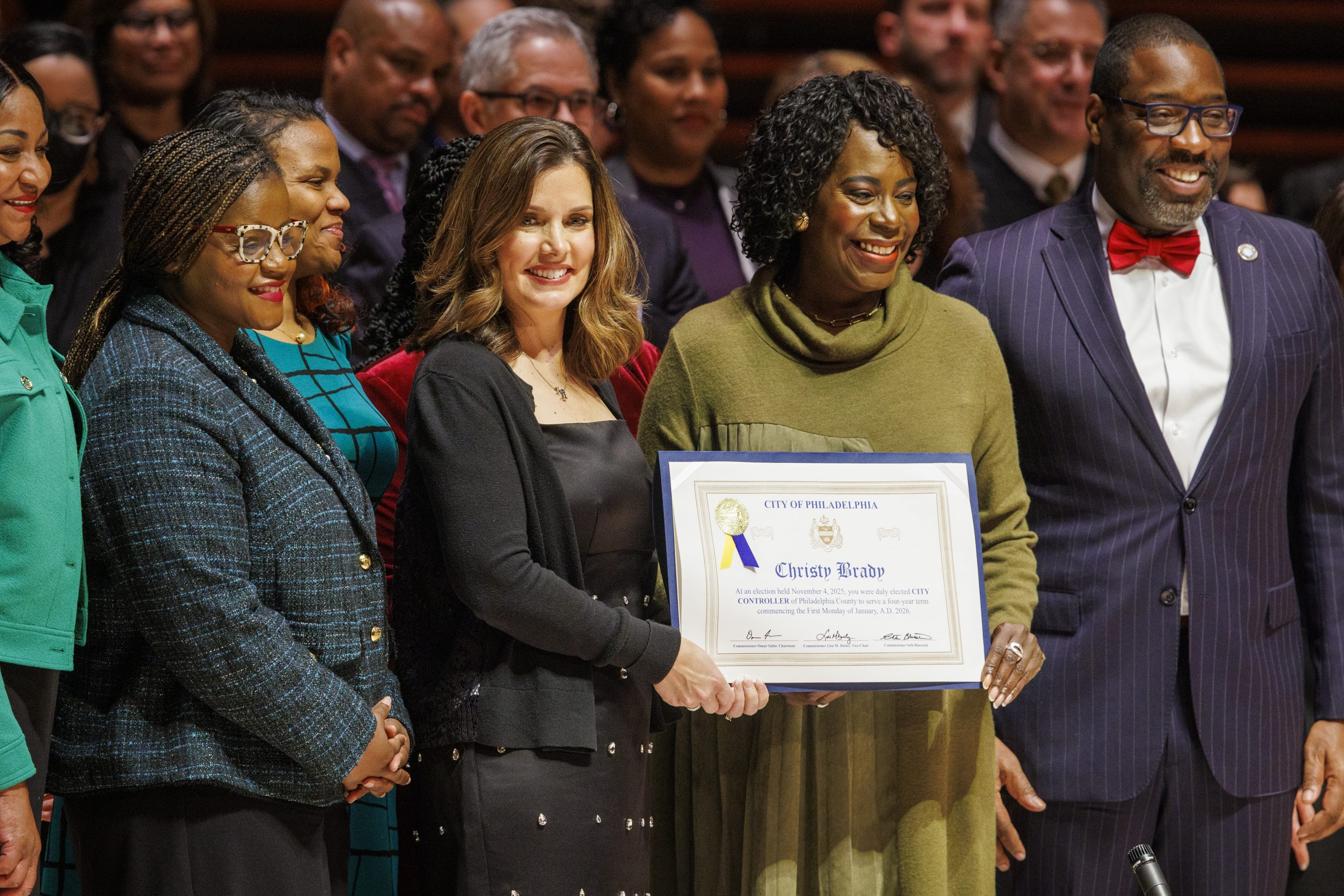
City Controller Christy Brady has agreed to the request, which came via a letter in recent weekssigned by all 17 Council members, Johnson’s office told The Inquirer. The comprehensive review will go beyond the audit Brady’s office performs annually, delving into areas such as staffing and outside contractors.
Council laid out no deadline for the audit but made clear it is expecting the results in time for next budget season, which will begin in the new year and ramp up in the spring.
The district, one of the largest in the United States, has a $4.6 billion budget, which funds education for 113,000 students in 213 district schools and 65,000 in 81 charters. About $2 billion of that money comes directly from the city.
“While the SDP is subject to regular financial statement audits that examine the accuracy of financial reporting and compliance with applicable accounting standards, this request seeks a performance audit focused on evaluating the efficiency, effectiveness, and management of financial and operational practices, including budgeting decisions, resource allocation, internal controls, and long-term fiscal planning,” Johnson said in a statement Thursday.
The news comes during a period of heightened tensions between Council and the district, spurred by members’ frustration over the school board’s move to close 17 schools and a separate $300 million structural deficit that took Council by surprise.
Last week, at a news conference where several members “begged” the district to come to the table to negotiate over school closings, Councilmember Curtis Jones Jr. said Council has “tools in our tool belt that we will use” if the board does not change its mind about some building closures.
Jones has sponsored legislation to hold hearings on creating an independent financial authority, like the Pennsylvania Intergovernmental Cooperation Authority, to oversee the district’s finances.
Council sources told The Inquirer that there is no indication that the district has conducted malfeasance, but that given the billions that flow to the district from city coffers, Philadelphia officials want a closer accounting of how the money is being spent.
After the board voted to begin the closure process in April, multiple members of the public also called for increased financial scrutiny of the district.
Reginald Streater, the school board president, said in a statement Thursday that the board and district will work with the controller’s office “to continue strengthening our financial processes and procedures.”
Streater said the audit squares with the board’s approach to governance.
“Good governance is not about assuming we have all the answers; it is about asking the right questions, using evidence to guide decisions and being willing to improve. We look forward to understanding the proposed scope of the audit and ensuring that the examination is constructive and focused on helping the district work well for students, families and educators,” Streater said.
Superintendent Tony B. Watlington Sr. stressed the district’s academic strides, history of audits with no material weaknesses, and moves to solidify its credit rating.
Frustration over a budget deficit and school closings
Johnson, in his statement, said that the audit will reassure Council that “resources are being managed effectively and operations are functioning efficiently by the SDP,” and that he believes its findings will help inform priorities for next fiscal year’s budget.
This year’s budget season was chaotic.
After Mayor Cherelle L. Parker introduced her initial budget, Watlington ordered $225 million in cuts, including some school cuts, with 300-plus teachers, counselors, and climate staff slated to lose their positions.
The problem, Watlington underscored in remarks in March, was “not because we’re not good stewards of the dollars, but because of historic underfunding.” (The district achieved its highest credit rating ever under Watlington, who has said he wants to be the superintendent to retire the system’s structural financial issues permanently.)
Philadelphia’s school system cannot raise its own revenue but instead depends on the city and state to bankroll it, unlike every other district in Pennsylvania.
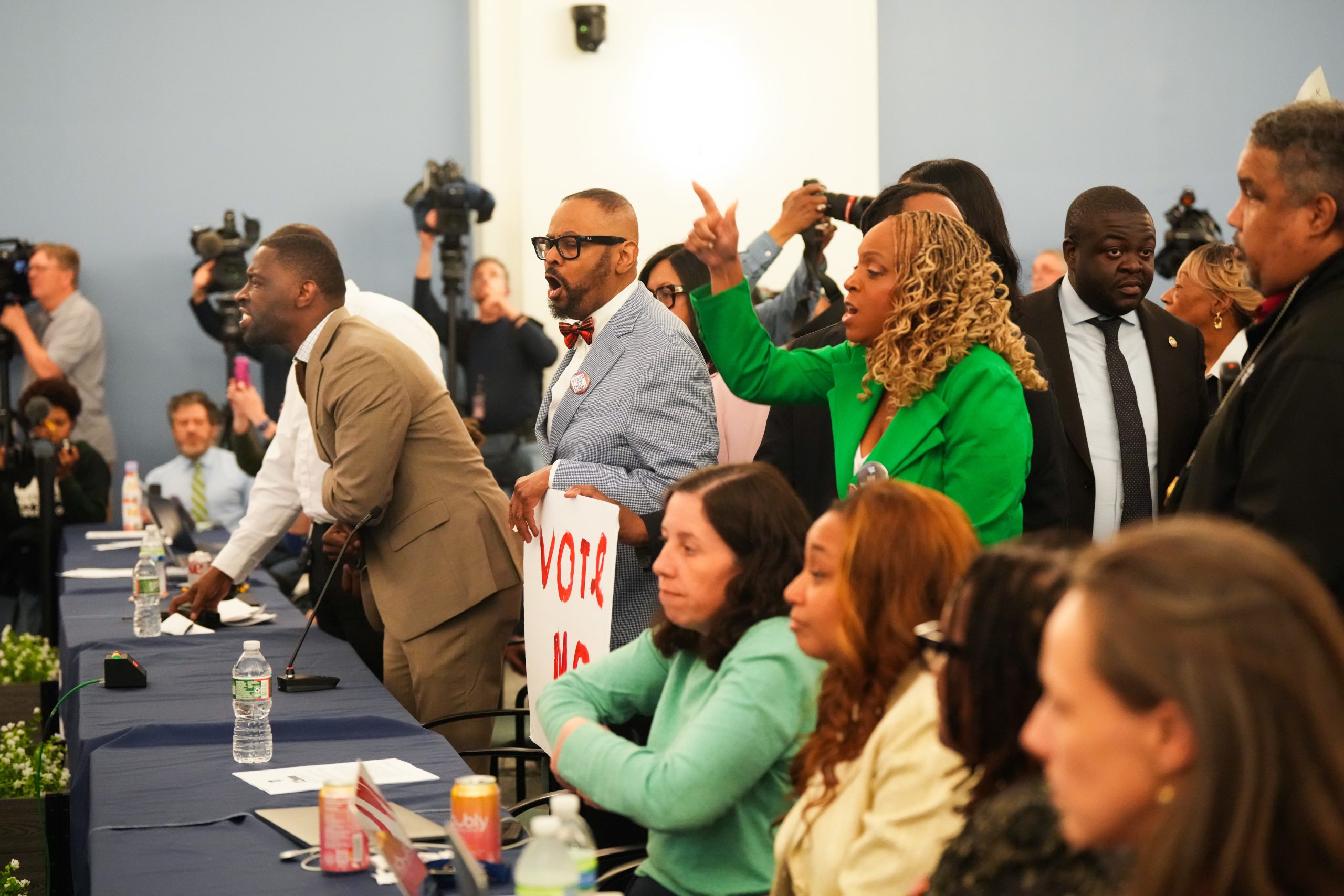
(Left to Right) Councilmembers Isaiah Thomas, Curtis Jones Jr., and Jamie Gauthier protest at Thursday’s school board meeting as the board prepared to vote on the facilities plan.Jessica Griffin / Staff Photographer
In April, several Council members took the dramatic step of repeatedly disrupting the school board’s vote in an attempt to get it to reconsider the closures of a handful of schools, including Lankenau and Robeson High Schools and Overbrook Elementary.
The school board proceeded anyway — Council approves school board members, who are appointed by the mayor, and the city’s budget, but had no formal authority over the closures.
But it quickly became clear that some Council members remained frustrated with the school system and were looking for a way forward.
Councilmember Isaiah Thomas has said he will not vote to reconfirm any school board member who voted for the closings; he and others have also said they believe it is time to rethink the school board’s governance structure.
The city, as a primary funder of the district, needs a clearer picture of what is going on, they say.
“Given the SDP’s current budget challenges, requests for additional public revenue, and recent proposals involving school closures and operational reductions, City Council believes a comprehensive performance and management review is warranted to ensure transparency, accountability, and informed public decision-making,” Johnson said in the statement. “The City of Philadelphia has a responsibility to ensure that all available revenues, expenditures, obligations, and funding strategies have been thoroughly reviewed before significant decisions affecting students, families, educators, neighborhoods, and public assets are implemented.”
What will the special audit examine?
City Controller Christy Brady (second from left, standing next to Mayor Cherelle L. Parker) is seen in this January file photo. Alejandro A. Alvarez / Staff Photographer
Brady, in a statement, said the audit will “ensure resources are being managed effectively, operations are functioning efficiently and students are receiving the support they deserve. We’ve been encouraged by the SDP administration’s response to our previous audits and the steps it has taken to implement our recommendations. We expect this audit will continue that collaborative approach and continue to produce positive results for the benefit of students, educators and taxpayers.”
Council has asked Brady to go deep, from probing into the current structural deficit and the projections used to get there to the status of Philadelphia Parking Authority revenues, both expected and received.
Brady will also look at the district’s use of reserves and its administrative costs, and she will explore “the effectiveness and efficiency of administrative and operational expenditures, including central office functions, non-instructional spending and other costs not directly tied to classroom instruction.”
She will look into how the district’s budgeting methods and long-term planning square with industry best practices, and examine contract management and consultant utilization to try to find areas “for improved accountability, transparency, and cost efficiency.”
Brady is also charged with a deep dive into the financial effects of forthcoming school closings, and the potential ramifications of the closings on surrounding neighborhoods.
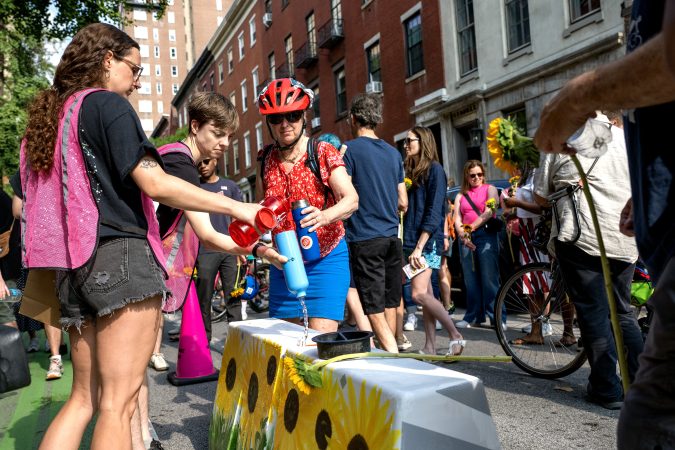
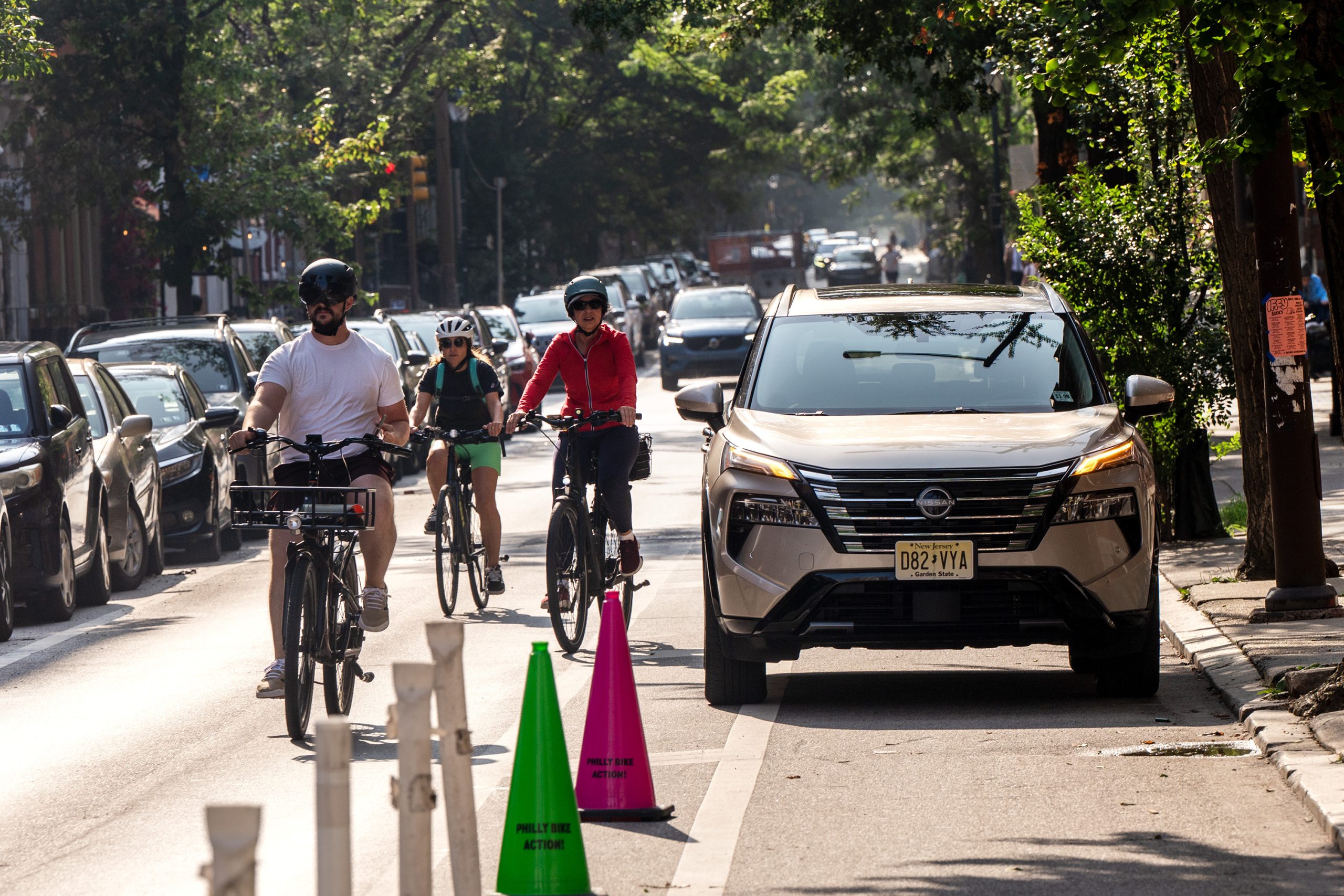
A four-foot plastic traffic barrier was placed in the bike lanes on 18th and Spruce Streets on Sunday. Painted white and adorned with 12 sunflowers, the small protective barrier would not only protect cyclists from cars, but represent the people killed by drivers since the death of Barbara Friedes, a pediatric doctor who, in 2024, was killed where the painted barrier was placed while riding her bike home from work.
But just hours after hundreds of people, including City Council President Kenyatta Johnson, helped install the barrier during a memorial for Friedes, it was removed, said Jessie Amadio, an organizer for Philly Bike Action, which organized the memorial.
The swift removal led the group to suspect city crews may have removed it, sparking an outcry from supporters who contacted city departments and Mayor Cherelle L. Parker.
“It takes years to protect a bike lane but hours to remove bike lane protection?” Philly Bike Action wrote on Instagram. “Drained and removed on a Sunday like it was the most pressing business in the entire City today.”
The city has said it was not aware of any removal efforts on its part.
Later Sunday, Philly Bike Action members found the memorial barrier tucked behind a dumpster in the alleyway behind Temple Beth Zion-Beth Israel, mere feet away from where it was placed. The city contends crews would have taken it to a sanitation facility or other waste removal site.
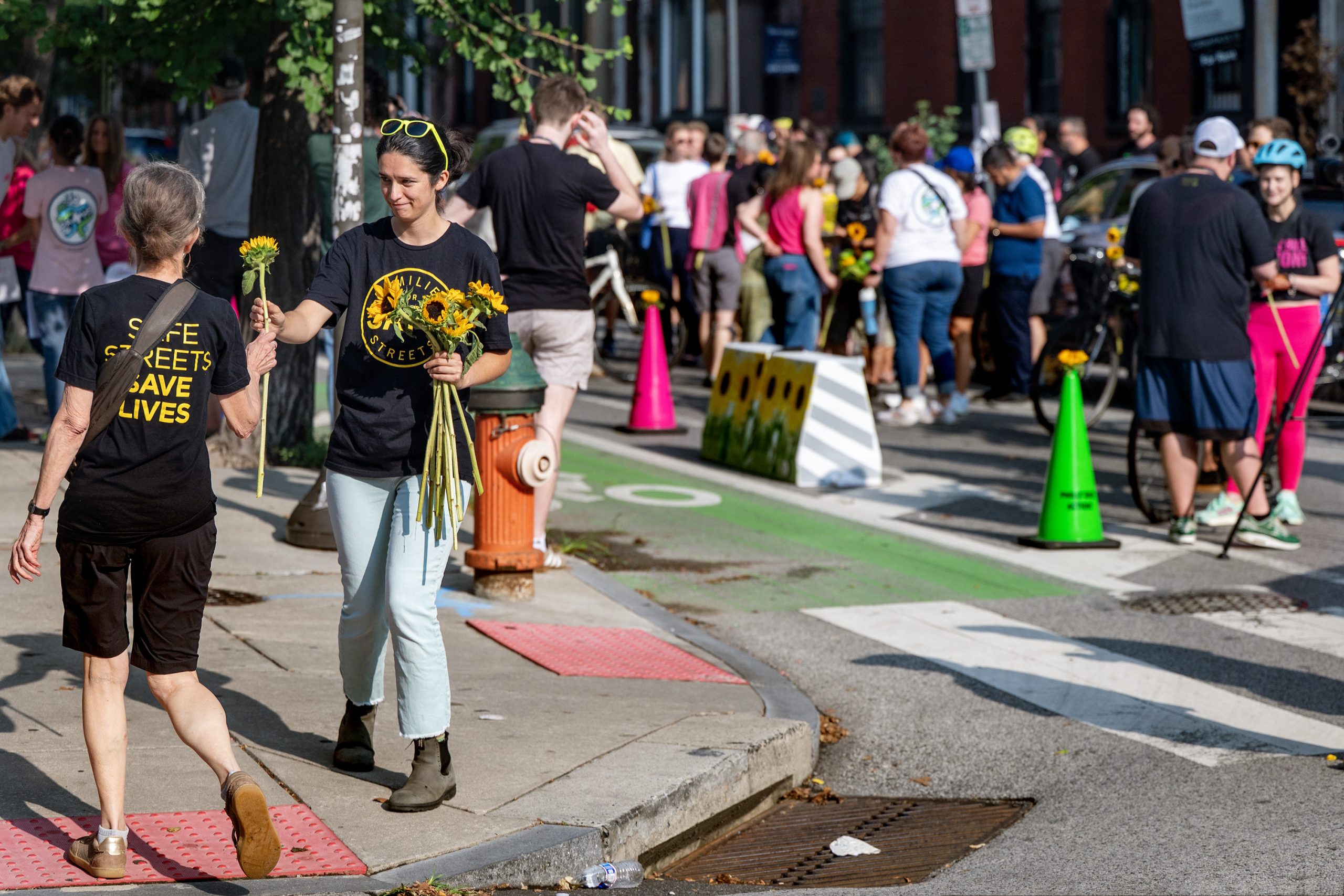
Hanna Kahler hands out sunflowers as family, friends, and Philly Bike action members arrive at Barbara’s Angel Bike at 18th and Spruce for a memorial Sunday. Barbara Friedes, a 30-year-old Children’s Hospital of Philadelphia doctor, was killed on her bike on the spot by a drunk driver in July 2024.Tom Gralish / Staff Photographer
The city’sManaging Director’s Office said it was unaware of any city employee taking part in the memorial barrier’s removal.
“We just need more time to ask every single person who might have been out there, but everybody who has been asked at this point who worked in that area on Sunday did not remove them,” a spokesperson said.
The office has been investigating since Sundayafternoon, checking with the Philadelphia Police Department, the Fire Department, the Streets Department, and the Department of Sanitation as to whether one of their crews removed it. The spokesperson said that no city department issued an order for employees to remove the barrier.
The Police Departmentreported back that it did not have nearby surveillance footage showing the area where the barrier was placed to identify who may have removed it. Police canvassed the area Monday to gather additional information and doorbell surveillance footage, a spokesperson said.
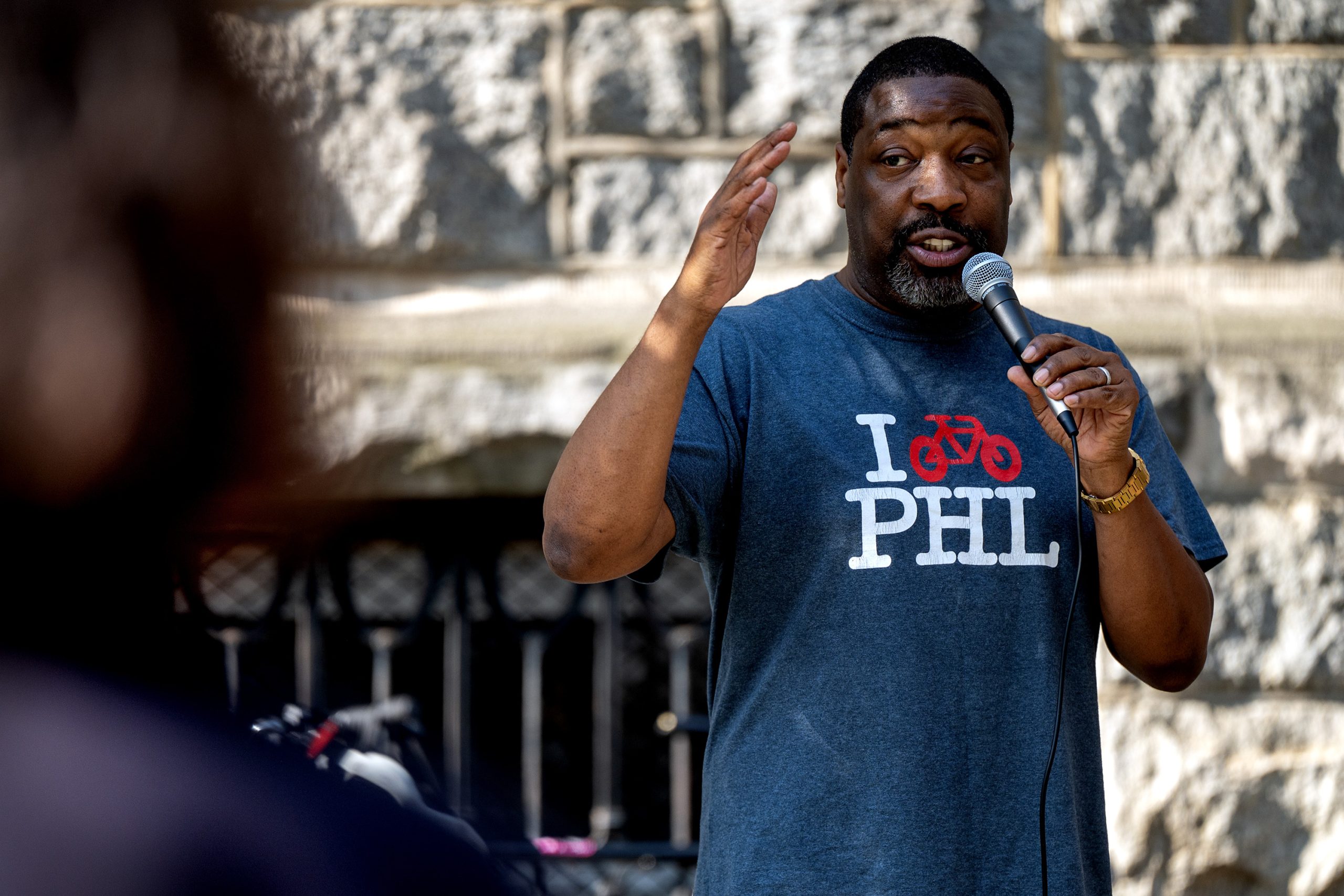
City Council President Kenyatta Johnson speaks as friends, family, and Philly Bike Action members gather at the angel bike for Barbara Friedes at 18th and Spruce for a memorial Sunday. Friedes, a 30-year-old Children’s Hospital of Philadelphia doctor, was killed on her bike at the intersection by a drunk driver in July 2024. Johnson pledged he would remain committed to finding ways to protect cyclists in Philadelphia.Tom Gralish / Staff Photographer
In Philadelphia, the majority of people killed in vehicle crashes are pedestrians and cyclists, according to recent PennDot data. While overall crashes have declined since 2020, the number of drivers crashing into non-motorists has stayed the same or increased.
Following the deaths of Friedes and other cyclists and pedestrians, the city pledged $4.8 million to install permanent concrete bike lane barriers along Spruce and Pine Streets in Center City. Part of this plan was to convert parking spaces along these streets into loading zones intended to give vehicles a place to briefly stop instead of in bike lanes. However, the neighborhood group Friends of Pine and Spruce sued on the grounds that the city had no legal authority to remove parking spaces to create “neighborhood loading zones.”
A car is parked in the bicycle lane in the 1700 Block of Spruce Street on Sunday even as family, friends, and Philly Bike Action members gather at Barbara Friedes’ Angel Bike at 18th and Spruce for a memorial. Friedes, a 30-year-old Children’s Hospital of Philadelphia doctor, was killed on her bike at the intersection by a drunk driver in July 2024.Tom Gralish / Staff Photographer
The city has since delayed the Spruce and Pine Streets safety project due to a 2025court injunction. Common Pleas Judge Damaris L. Garcia recently denied the city’s motion to dissolve the injunction, and the project remains on pause.
While Philly Bike Action recognizes the need for the city to wait on legal proceedings, the group believes the judge’s order should still allow the construction of barriers as the injunction targets “ongoing construction” and efforts associated with proposed “neighborhood loading zones, or related restrictions on Pine and Spruce Streets.” However, the addition of “related restrictions” introduced ambiguity and has kept the city’s plans stalled.
“We can’t wait another two to five years,” Amadio said. “The barrier is not much bigger than the curbs on the end of the road and will prevent cars from merging into the bike lane and hurting people.”
Pennsylvania elected officials are mourning the death of former State Sen. Shirley Kitchen, the second Black woman to serve in the state Senate and a champion for progressive issues who represented parts of North Philadelphia for more than two decades. She died Saturdayat 79. A cause of death was not immediately clear.
Kitchen represented the 3rd Senatorial District, composed of parts of North Philadelphia, for 20 years. She is remembered by her former colleagues as a pillar and matriarch of her community who worked tirelessly to improve the lives of low-income people, even after she retired.
“She did so many things for so many people. Now that I’m old enough to appreciate it, I’m not quite sure how she did it — and she did it with such force,” said State Sen. Anthony H. Williams (D., Philadelphia), who served alongside Kitchen in the Senate and had known her for decades. Kitchen was elected to the state Senate in 1996 and served five terms before retiring in 2016.
Her former colleagues, some through tears, credited many of Pennsylvania’s recent criminal justice reforms as being born under Kitchen’s leadership, with her early legislative proposals paving the way for their passage years later. For example, Kitchen authored early drafts of what is now known as the Clean Slate Act, which automatically seals some nonviolent convictions after 10 years, hiding them from most employer and landlord background checks. She first introduced similar legislationin Harrisburg years earlier and it failed. In 2018, two years after Kitchen retired, the Clean Slate Act became law in Pennsylvania and was heralded as a first-in-the-nation model for criminal justice reform.
Elected officials across the city shared their condolences, remembering Kitchen as an advocate who cared deeply for her community.
Mayor Cherelle L. Parker in a social media post on Sunday recalled Kitchen as “fighting for people who often had no one else to fight for them,” and as a trailblazer for Black women in politics.
“Shirley Kitchen cared about working people, and she cared about Philadelphia,” said Parker, the city’s first Black female mayor and a former state representative.
City Council President Kenyatta Johnson said in a statement that Kitchen “never forgot who she was fighting for,” dedicating her life to making people’s lives better.
State Rep. Joanna McClinton (D., Philadelphia), Pennsylvania’s first Black female speaker of the House, wrote in a social media post that Kitchen was “a mentor and her service in the state House and Senate inspired me greatly.”
Williams added that Kitchen also sought to elevate other Black politicians, like himself, to elected office — and laid the groundwork for much of the city’s current political progressivism.
“The reality is that a lot of the infrastructure that helps them, Shirley had everything to do with it, and more,” Williams said, noting her advocacy and experience during the Civil Rights Movement. “I would hope the progressives in this generation would tip their hat to a generation that really created the progressive movement.”
State Sen. Sharif Street (D., Philadelphia) had known Kitchen since he was a child, and said she helped him see the power a Senate seat has in improving the lives of his neighbors. When she decided to retire, Kitchen encouraged Street, who was on her staff at the time, to run to fill the vacancy in the 3rd District following her fifth and final term in the state Senate.
Williams and Street recalled Kitchen as a fair but demanding mentor.
“If she told you to do something, you better do it,” Williams said, with a laugh.
For Street, Kitchen “didn’t limit her advice. She had opinions about everything in my life, including when my wife was right and I needed to listen to her.”
Street said he spoke with Kitchen weekly, and Williams said he remained in touch with her as recently as last month. She often had ideas or issues she wanted the senators to take up. Street spoke with her last week about a forthcoming Registered Community Organization meeting that she was leading about a new proposed development nearby, emblematic of her continued involvement in her community.
Prior to her election to the state Senate, Kitchen was involved in the National Welfare Rights Movement, which was a progressive advocacy group for the dignified treatment of women and children, largely led by Black women, during the 1960s and 1970s, Williams said.
Kitchen served as the minority chair of the Senate Public Health and Welfare committee, in which she often leaned on her social work experience to inform her legislative proposals.
A Democrat in a time where Republicans controlled the state legislature, she served her entire tenure in the minority party, but was still able to garner bipartisan support for some of her legislative proposals.
“This image of her being an urban Black woman from Philadelphia would limit her ability to get stuff done in the Senate just wasn’t true,” Williams added. “She could analyze people and figure out what way to approach them with exceptional skill.”
Born in 1946 in Augusta, Ga., Kitchen attended the Philadelphia School District and graduated from Antioch University in 1979 with a bachelor’s degree in human services, according to her Senate Library biography. She went on to work for former Philadelphia Mayor John Street, Sharif Street’s father, before she was elected to the state House in a special election in 1987. After she lost reelection to the seat in 1989, Kitchen returned to Harrisburg a decade later after her election to represent the 3rd Senatorial District.
“She was a transformational figure that loved her community and understood that the purpose of those of us holding elected power is to be able to make a difference in the lives of the people we serve, in a way that they can feel and see,” Sharif Street added.
Funeral services will be announced in the coming days, he said.
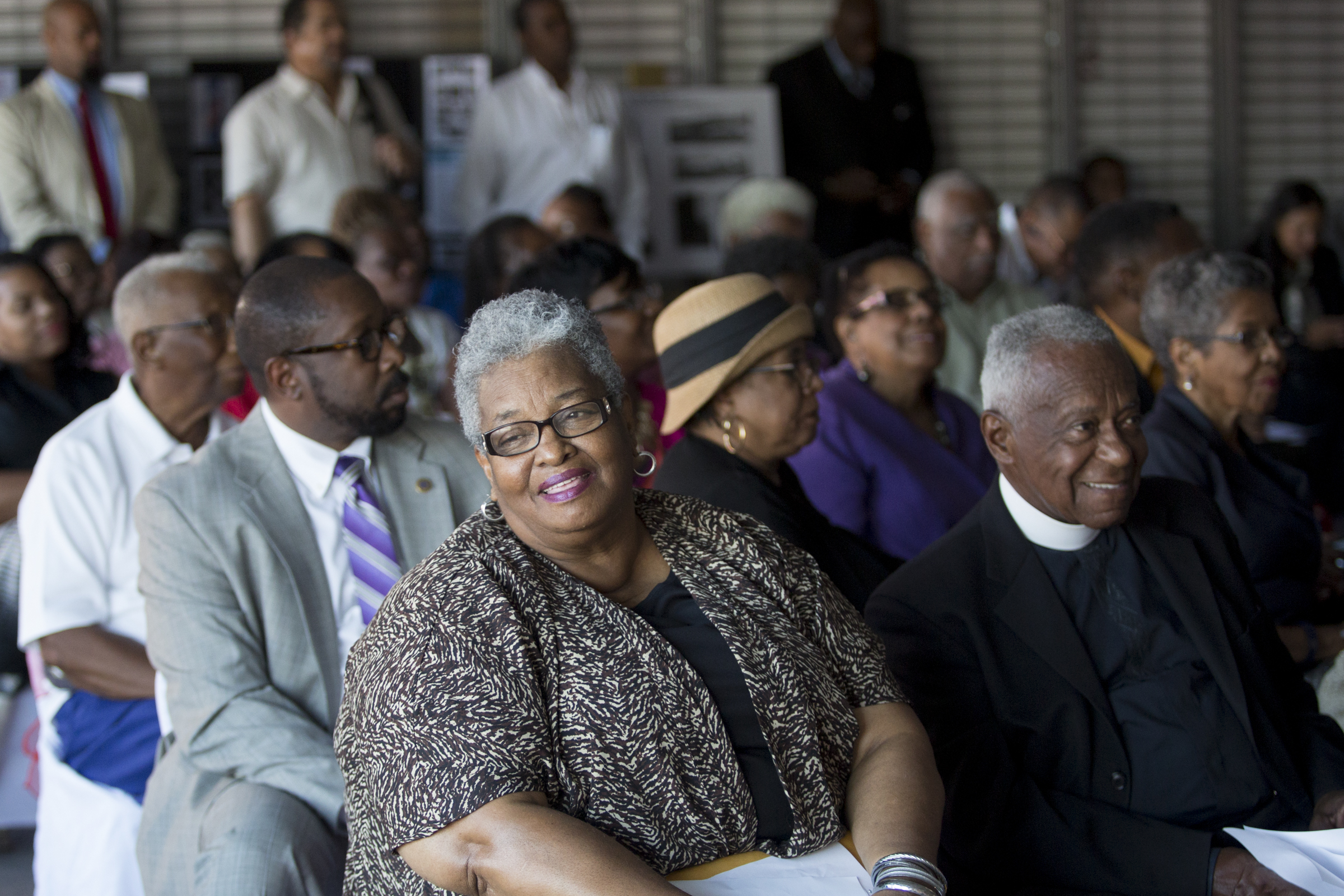
Senator Shirley Kitchen in the audience during speeches in honor of the historical marker that was unveiled at Sullivan Progress Plaza September 14, 2016. The plaza was the first black-owned and operating shopping center in America. Wednesday, Sept. 14, 2016.Margo Reed/ Staff Photographer
An overwhelming majority of Philadelphians feel safe in their neighborhoods and more than 40% believe that the city has become cleaner under the leadership of Mayor Cherelle L. Parker, according to a new poll, suggesting that city residents see significant progress on the mayor’s key campaign promises.
However, there is not a broad citywide consensus on Parker’s tenure as she heads into an expected reelection campaign next year, and there were also red flags for her and the city, including alarmingly bad evaluations of the public school system.
That is according to a recent Suffolk University/Philadelphia Inquirer poll that surveyed 500 Philadelphians across the city on issues including crime, quality of life, city services, and education. More than half of those surveyed said they would rate Philly as a “good” or “excellent” place to live.
About 83% of residents reported feeling safe in the city just five years after record-high rates of gun violence in Philadelphia, with respondents in neighborhoods most affected by violent crime most likely to say they feel that crime has decreased since Parker took office in 2024.
And the city’s public school system emerged as a primary concern, with 45% saying they would rate Philadelphia’s schools as of “poor” quality, while more than half of the poll’s respondents said that schools play an important role in whether they stay in the city or move out.
The survey was conducted last week, after the financially struggling Philadelphia School District and its controversial school closure plan dominated local headlines for more than a month.
David Paleologos, director of the Suffolk University Political Research Center in Boston, said the poll provides Philadelphia policymakers with a blueprint for how to keep people in the city: continue progress on crime and improve the public schools.
“If that happens,” he said, “then Philadelphia is poised to be a renaissance city.”
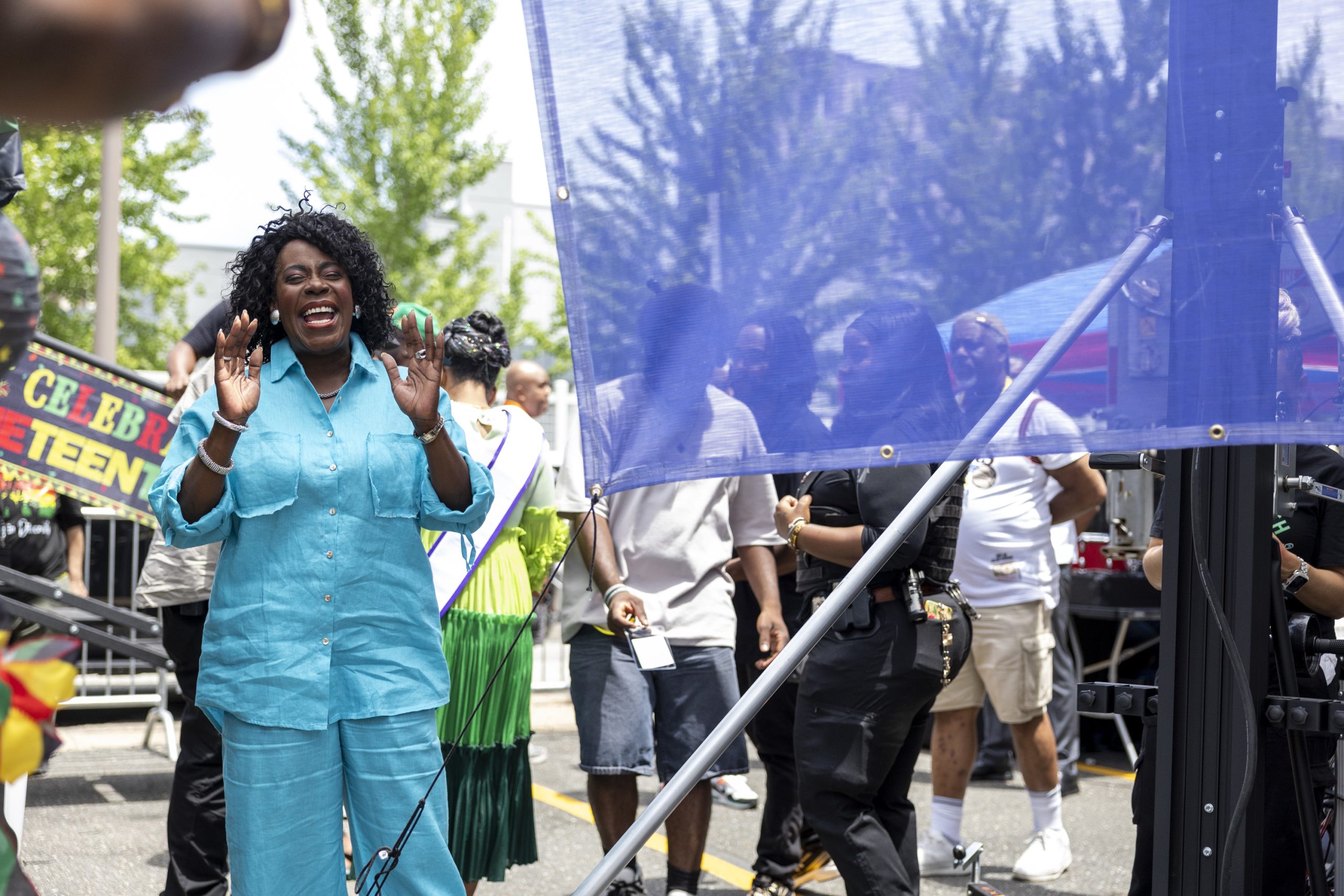
Mayor Cherelle L. Parker attending the Juneteenth Block Party at the African American Museum in Philadelphia on June 19.Tyger Williams / Staff Photographer
Parker said in a statement that her administration “values both qualitative and quantitative information.”
“The real-life, lived experiences of people in this city are what matters most,” she said. “Polling is not my North Star in how I govern. My solutions always come from the ground up, from what people can see, touch, and feel.”
For Parker’s political fortunes, the poll represents mixed results. It showed that the substantial base of support that lifted the mayor to office in 2023 is holding up, with Black residents and older Philadelphians most likely to say they have a favorable view of her and see progress on her campaign promises.
But Parker has not consolidated broad citywide enthusiasm, with 44% of respondents saying that they have a favorable view of the mayor and 35% saying they have an unfavorable one. That is positive territory for Parker more than halfway through her first term, but not overwhelmingly so.
Her biggest vulnerability is with young people — respondents under age 45 were more likely to say that they had an unfavorable view of the mayor than a favorable one. White residents were also more sour on Parker.
(function(){function e(){window.addEventListener(`message`,function(e){if(e.data[`datawrapper-height`]!==void 0){var t=document.querySelectorAll(`iframe`);for(var n in e.data[`datawrapper-height`])for(var r=0,i;i=t[r];r++)if(i.contentWindow===e.source){var a=e.data[`datawrapper-height`][n]+`px`;i.style.height=a}}})}e()})();
Paleologos said that the poll shows there are “pockets of strength” that make Parker, a centrist Democrat, electorally strong, but that he would not consider her support broad-based.
Those results come as the city’s most prominent progressive political groups are weighing whether to mount a challenge against Parker next year. As the incumbent, Parker would be the hands-down favorite in any contest, as no Philadelphia mayor has lost a campaign for reelection in modern history.
Aren Platt, the executive director of People for Parker, the mayor’s political arm, said in a statement that Parker’s support “has always been under-counted, especially in public polling.” He cited polling conducted during the 2023 mayor’s race that showed her tied with or trailing her top opponents in the Democratic primary, in which Parker prevailed by a commanding 10 percentage points.
Platt also said the Suffolk University/Inquirer poll is not necessarily predictive of how the mayor could perform in a theoretical reelection race. The poll was of Philadelphia residents, not likely primary voters.
“This poll may reflect the demographics of Philadelphia, but elections are decided by the people who show up to vote on election day,” he said. “In Philadelphia, those are two very different universes.”
The poll also showed relatively positive marks for one of Parker’s potential successors: City Council President Kenyatta Johnson. He has said that he supports Parker for reelection, but Philadelphia mayors are limited to two terms and Johnson is widely seen as a potential future contender for the city’s top office.
Overall, 48% of respondents said they had a favorable view of Johnson and only 12% had an unfavorable one. Johnson is also far less publicly known than Parker, with 40% of those surveyed saying they had either never heard of him or were undecided on their view of him.
Negative reviews of the Philadelphia School District
About one in five respondents said that schools and education are the most important issue in the city, making it second only to crime. Paleologos said that is somewhat unique to Philadelphia — in other major cities where he has polled public opinion, he said, respondents often rank jobs and the economy as greater concerns.
(function(){function e(){window.addEventListener(`message`,function(e){if(e.data[`datawrapper-height`]!==void 0){var t=document.querySelectorAll(`iframe`);for(var n in e.data[`datawrapper-height`])for(var r=0,i;i=t[r];r++)if(i.contentWindow===e.source){var a=e.data[`datawrapper-height`][n]+`px`;i.style.height=a}}})}e()})();
Nearly 75% of respondents said they would rate the quality of Philadelphia’s public schools as “fair” or “poor.” Younger residents were far more likely than older ones to rate the schools as “poor,” and more than half of all respondents said the public schools are an important factor in determining whether they and their family stay in the city or move away.
“That’s a big number,” Paleologos said. “That research alone gives the policymakers a bird’s-eye view of what they need to do to keep people here in Philadelphia.”
The survey also shows that residents see issues across the school system. When asked what should be the highest priority in improving the schools, there was little consensus among respondents: About a third said teacher pay, while a quarter said school safety, and another quarter said building repairs.
Just 4.4% said the highest priority should be instituting year-round school, an initiative that Parker campaigned on and that the district is piloting.
Superintendent Tony B. Watlington Sr., School Board President Reginald L. Streater, and Mayor Cherelle L. Parker stand together during an announcement at the School District of Philadelphia Headquarters on June 10.Monica Herndon / Staff Photographer
In a statement provided to The Inquirer after the initial publication of this story, Monique Braxton, a spokesperson for the School District of Philadelphia, said district leaders share “the public’s sense of urgency to significantly improve public schools in the City of Philadelphia.”
She said the district is making progress toward the superintendent’s goal of making the district the “fastest improving large urban district in the nation.”
Braxton added that the district’s own survey suggests most parents are satisfied. The district’s 2024-25 survey, Braxton said, found that 90.3% of more than 26,000 parents whose students attend district schools said they were pleased with the quality of education their child received.
The quality of Philadelphia’s public schools has been a perennial concern, and city leaders have long pointed to the chronic underfunding of the Philadelphia School District. In 2023, the state Commonwealth Court ruled that Pennsylvania had for years unconstitutionally deprived students in low-wealth districts of an adequate education, and state lawmakers are now funding schools under a new formula.
District leaders have undertaken significant efforts in recent years to improve academic performance. There have been some positive results, including improvement on test scores and a recent report that said Philadelphia School District students’ learning post-pandemic was tops in the nation among large urban districts.
The district also earlier this year adopted a sweeping, $3.3 billion effort to renovate and modernize 169 schools. That multiyear plan was hotly debated, as it included the closure of 17 schools.
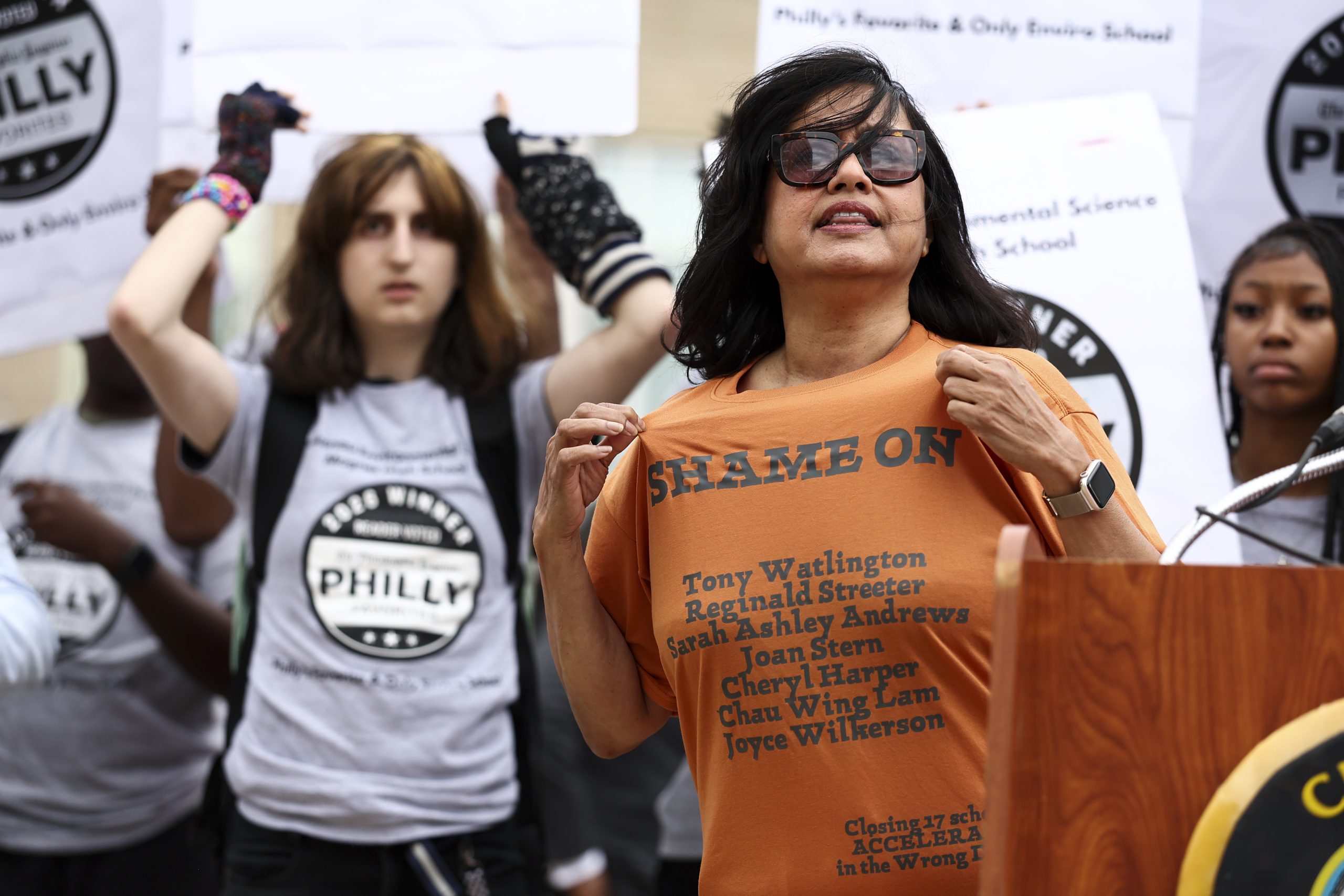
Councilmember Nina Ahmad shows off her T-shirt during a rally outside of the School District of the Philadelphia School District headquarters building on May 28. Council members rallied to oppose the school closure plan.Monica Herndon / Staff Photographer
Parker said the Commonwealth Court “got it right” in declaring that low-wealth districts like Philadelphia’s are chronically underfunded.
“If we had all the resources we need, we’d see even more enhanced improvements in our schools,” Parker said. “I’ll never stop fighting for our children and their right to a high-quality education.”
Crime is the top concern, but most residents feel safe
Despite rates of violent crime in the city plummeting to record lows under Parker, public safety remains the top concern for three in 10 Philadelphia residents, suggesting that people who live in the city are still anxious about crime.
When asked about whether they believe crime in their neighborhood has increased or decreased over the last two years, a third of respondents said they believe it has increased, about 32% said it has decreased, and 28% said they believe it has stayed the same.
(function(){function e(){window.addEventListener(`message`,function(e){if(e.data[`datawrapper-height`]!==void 0){var t=document.querySelectorAll(`iframe`);for(var n in e.data[`datawrapper-height`])for(var r=0,i;i=t[r];r++)if(i.contentWindow===e.source){var a=e.data[`datawrapper-height`][n]+`px`;i.style.height=a}}})}e()})();
(function(){function e(){window.addEventListener(`message`,function(e){if(e.data[`datawrapper-height`]!==void 0){var t=document.querySelectorAll(`iframe`);for(var n in e.data[`datawrapper-height`])for(var r=0,i;i=t[r];r++)if(i.contentWindow===e.source){var a=e.data[`datawrapper-height`][n]+`px`;i.style.height=a}}})}e()})();
A closer look at the results shows that a plurality of respondents in the neighborhoods most affected by violent crime, including North and West Philadelphia, believe that crime has decreased.
The respondents most likely to say that they believe crime in their area has increased live in Northeast Philly. But public data maintained by the Philadelphia District Attorney’s Office show overall crime has decreased there, too. There are five Northeast Philadelphia police districts, and the total number of crime incidents reported to police declined in all of them between 2023, the year before Parker took office, and last year.
Despite the mixed poll results, a vast majority of Philadelphians — nearly 83% — said that they feel safe in their own neighborhood.
That is good news for Parker, who ran for office as a tough-on-crime Democrat amid a historic wave of gun violence and who vowed often to “bring order back to our city.”
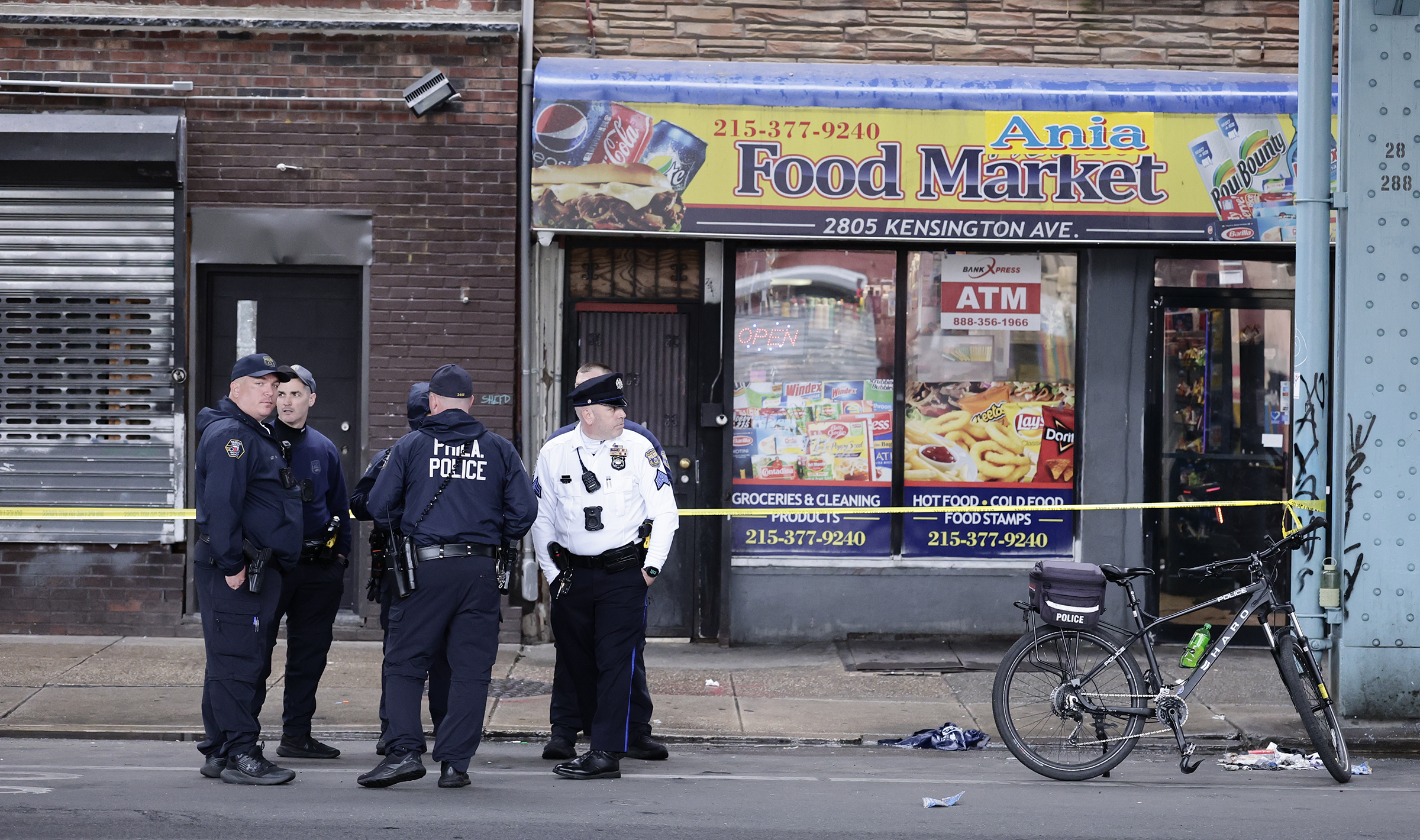
Philadelphia police officers stand along the 2800 block of Kensington Ave. after a police involved shooting on May 23. Police shot a robbery suspect.Yong Kim / Staff Photographer
Parker said in a statement that the polling results are evidence that her public safety strategy is working, calling it her “number one priority.”
She also vowed to continue her administration’s efforts in Kensington, the epicenter of the city’s opioid crisis. The Parker administration has deployed a multipronged approach, including increased police patrols in the neighborhood and an expansion of offerings for people in addiction.
But 53% of poll respondents said they do not believe the mayor’s efforts there are working, and those who live closest to the problem were the least supportive. In the region that encompasses the Lower Northeast and the river wards, where Kensington is located, 68% of people said Parker’s strategy is not working while only 18% said it is.
The mayor’s overall favorability was also lowest in that area of the city, the only region where more respondents said they had an unfavorable view of the mayor than a favorable one.
(function(){function e(){window.addEventListener(`message`,function(e){if(e.data[`datawrapper-height`]!==void 0){var t=document.querySelectorAll(`iframe`);for(var n in e.data[`datawrapper-height`])for(var r=0,i;i=t[r];r++)if(i.contentWindow===e.source){var a=e.data[`datawrapper-height`][n]+`px`;i.style.height=a}}})}e()})();
Parker acknowledged that there is “much more work to do” in Kensington and said that “changing culture and going to war with the status quo is never easy.“
Parker’s ‘clean and green’ message is landing
For a city derisively called “Filthadelphia” and where cleanliness has been a longtime concern, a significant number of people seem to think Philadelphia is getting cleaner.
When asked about trash and litter, 41% of poll respondents said they believe the city has gotten cleaner over the last two years. Just 19% said Philadelphia has gotten dirtier, and 38% said it has stayed the same.
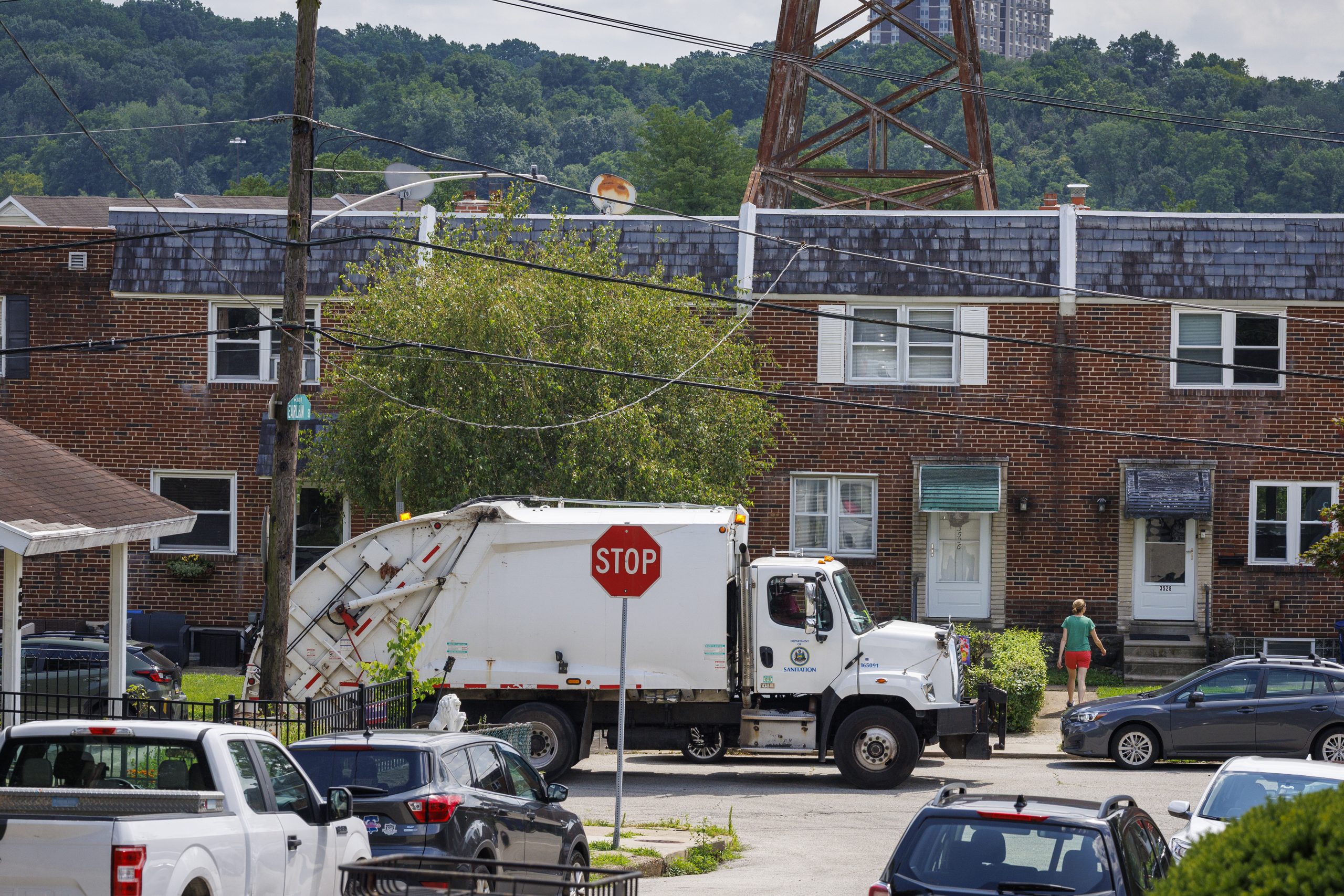
A sanitation department truck is seen along Cresson Street at West Earlham Street in Philadelphia on the first day of trash collection after a strike on July 14, 2025.Alejandro A. Alvarez / Staff Photographer
Those are positive marks for a mayor whose slogan is “safer, cleaner, greener” and who has instituted new programs including twice-weekly trash pickup in the densest parts of the city.
Despite those efforts, Philadelphians gave worse reviews to the overall quality of city services in their neighborhood. About six in 10 respondents said the quality was either “fair” or “poor,” while 40% said “good” or “excellent.”
Staff writer Michelle Baruchman contributed to this article.
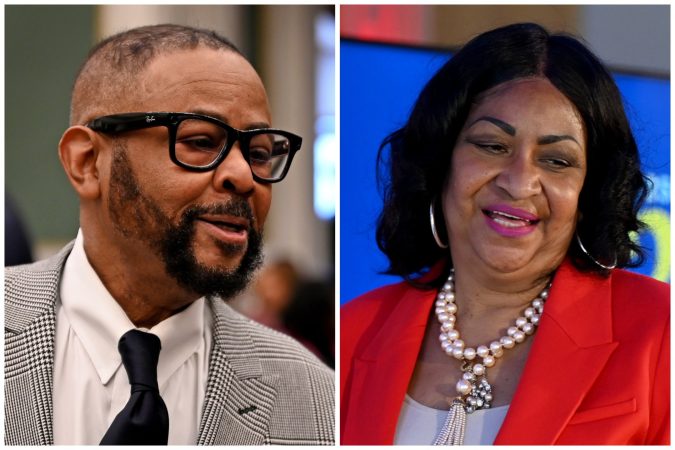
Councilmember Curtis Jones Jr. and City Representative Jazelle Jones, who are married, are poised to collect up to $752,000 in combined payouts from Philadelphia’s widely criticized Deferred Retirement Option Plan, an early retirement incentive that two decades ago sparked a major scandal in City Hall.
But neither of the city officials is actually retiring.
DROP is available to all city workers. But both of the Joneses are using the program in a way that is not available to a vast majority of municipal employees:temporarily retiring and immediately returning to their jobs, allowing them to receive their DROP payouts before the end of their city government careers.
Curtis Jones, 68, who has represented the 4th District for 18 years, is able to access that perk because he is a long-serving lawmaker. Jazelle Jones, 70, a high-ranking appointee of Mayor Cherelle L. Parker, received an exception from the mayor to be rehired after her DROP retirement.
Following her one-day retirement, Jazelle Jones also received a $97,000 payout for unused sick and vacation time, a benefit normally reserved for employees permanently departing from city government.
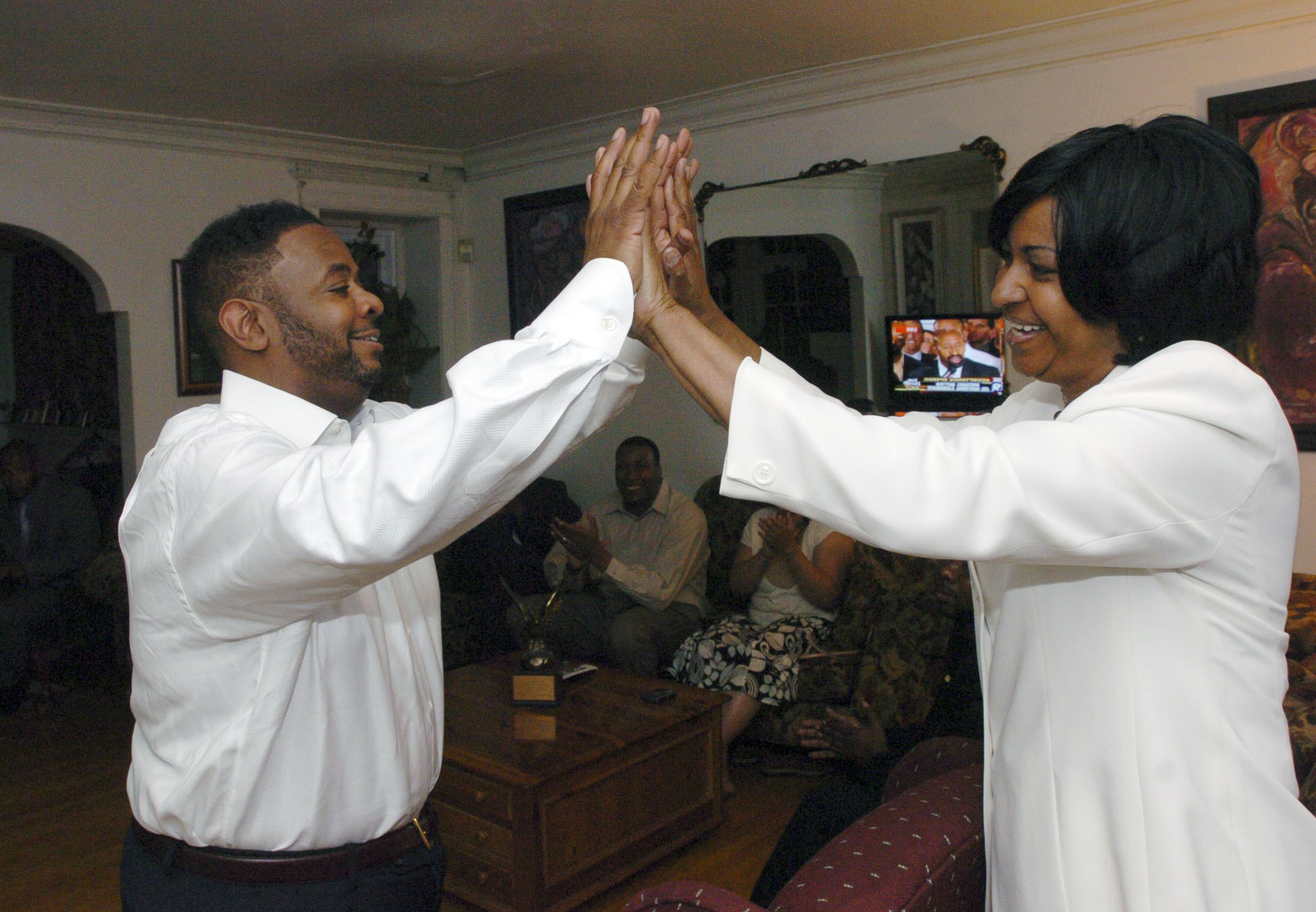
FILE – Curtis Jones, Jr. declares victory with his wife Jazelle and his family in the Council race in his home in West Philadelphia on Tuesday, May 15, 2007.Gina Gayle / Staff Photographer
Lauren Cristella, president of the government watchdog group Committee of Seventy, said the administration’s handling of the situation further undermines public confidence in the DROP program.
“Rehiring an employee to the same position the day after she collects a DROP payout defeats the purpose of the program,” Cristella said. “DROP exists to manage workforce transitions, not to serve as a bonus for employees with no intention of actually leaving.”
Established in the late 1990s during Mayor Ed Rendell’s administration, DROP was originally pitched as a cost-neutral way to give the city predictability over retirements and entice high-earning employees to step down early.
But the program ended up costing the city far more than expected, andvoter frustration withelected officials’ enrollment in DROP was credited with ending the political careers of several Council members.
At the height of that controversy in 2010, Curtis Jones voted to enact a law banning future elected officials from accessing DROP. But he and others already serving at that time were “grandfathered” in, Curtis Jones said.
He would be eligible to collect a $432,000 lump-sum DROP payment in August 2028. However, Curtis Jones said he plans to run for a sixth Council term in 2027, using the loophole to briefly retire to collect the payout before resuming his post.
In interviews, the Council member, who earns $165,000 annually, said he instead plans to retire in December 2027, collecting a reduced DROP payment closer to $350,000. If he is reelected, the maneuver would allow him to hang on to his Council seat for another four years by being sworn back into office the following month.
He justified his enrollment in DROP by saying that times have changed since the 2010 vote — both for the city’s finances, which have dramatically improved, and for his health. He said he is suffering from glaucoma, an incurable disease that causes vision loss.
“Over the years, I’ve had four surgeries on my eyes,” said Curtis Jones, who represents the Northwest and West Philadelphia-based Council district. “I’ve actually lost 40% of my vision.”
Curtis Jones said he enrolled in DROP “so that if I was blind, I wouldn’t have been without resources.”
A centrist Democrat, he endorsed Parker’s 2023 campaign for mayor and is viewed as her most reliable ally on Council.
His wife, Jazelle Jones — who receives a $199,000 annual salary for serving as an ambassador for the city and planning special events — temporarily retiredfor one day last year and was then immediately rehired by the city with a $4,000 raise.
The Philadelphia Administrative Board, which oversees personnel matters, granted her an exception to return to her job. That board is led byParker, a staunch defender of DROP, and other top officials in her administration.
The mayor said she personally asked Jazelle Jones to return to work, and defended the decision.
Parker cited Jazelle Jones’ “lived experience” and the potential disruption her departure could cause for major events this year, like the city hosting World Cup games.
“The essential nature of her role is why I asked” Jazelle Jones to continue working, Parker said Tuesday in a phone interview. “And I’m unapologetic about asking. It’s one of the most important decisions I’ve made as mayor.”
Jazelle Jones was originally scheduled to retire in September 2024. Instead, in a departure from typical DROP procedures, she continued to work as the city representative through that date and took her one-day retirement a year later, in September 2025.
None of those changes appear to have been approved at the time they occurred by the city’s administrative board. It was not until March 2026 when the board retroactively approved exceptions allowing Jazelle Jones to receive an extra year of DROP — resulting in the 2025 retirement date — and her rehiring, according to board minutes.
Parker declared an emergency in order to approve the extra year of DROP for Jazelle Jones, the mayor’s office said. The move effectively increased her retirement payout by almost 20%, to nearly $320,000.
Parker’s office did not respond to questions about the deviation in the approval timeline.
Jazelle Jones did not respond to a request for comment through the mayor’s office.
‘Tools in the toolbox’
When city employees enroll in DROP, they select a mandatory retirement date no more than four years in the future. Between the time they sign up for the program and their selected retirement date, the city pays their regular salaries and makes pension payments as if they had already retired.
The deferred pension payments are deposited into an interest-bearing account that each city worker collects in a lump-sum payout four years after enrolling. The departing employee then begins to receive standard monthly pension checks, which are calculated based on when they entered DROP.
City workers make contributions from their salaries to the municipal pension fund. But their contributions do not cover all of the pension fund’s liabilities, let alonethe added costs associated with DROP, which ultimately come out of taxpayer coffers.
Philadelphia’s original DROP law created a loophole in which elected officials, who generally serve four-year terms, can enter into the program, retire a day before their terms end, and rejoin the city workforce when they are sworn in again the following day.
The revelation that many members of Council had enrolled in DROP rocked City Hall in the early 2000s. The scandal was credited for several members’ decisions to not run for new terms in 2011 and was widely seen as the reason former Councilmember Frank Rizzo Jr. lost reelection that year.
A 2017 city controller report found that, cumulatively, the program had cost the city in excess of $277 million despite initially being projected as budget-neutral.
While DROP programs were once common in cities across the country, the Government Finance Officers Association — a national organization that Philadelphia officials regularly cite for best practices when shaping the city budget — in 2020 warned they led to unpredictable costs and detrimental impacts on municipal pension funds.
“Government defined benefit plans should not include deferred retirement option programs for a variety of reasons,” the GFOA said a statement.
Parker, however, has defended the program as a valuable recruitment and retention tool.
“Government doesn’t pay you as much as the private sector, so we offer a great benefits package,” Parker told reporters in March. “DROP, the defined-benefit pension — I’m never going to be for taking away any of the tools in the toolbox that would allow the city of Philadelphia to compete.”
‘Semi-hypocritical’
In 2008, when Council was in the early stages of considering a ban on elected officials enrolling in DROP, some wanted the prohibition to apply not just to future officeholders, but current ones as well.
Curtis Jones, a freshman legislator at the time, agreed.
“It would be semi-hypocritical if I say [end it] for only future elected officials,” he said then.
The bill that Council eventually passed did not prohibit current members from enrolling in DROP. Now, Curtis Jones is set to become the first lawmaker to benefit from the program in years.
“At the time, when I was 20/20 vision, [banning lawmakers from using DROP] was my decision. And now that I’ve had some surgeries, I’ve changed that position,” Jones said Monday. “It’s an earned benefit that I contributed to that I would like to receive.”
Cristella, of the Committee of Seventy, accused Jones of hypocrisy.
“Being grandfathered in is not the same as acting with integrity,” she said.
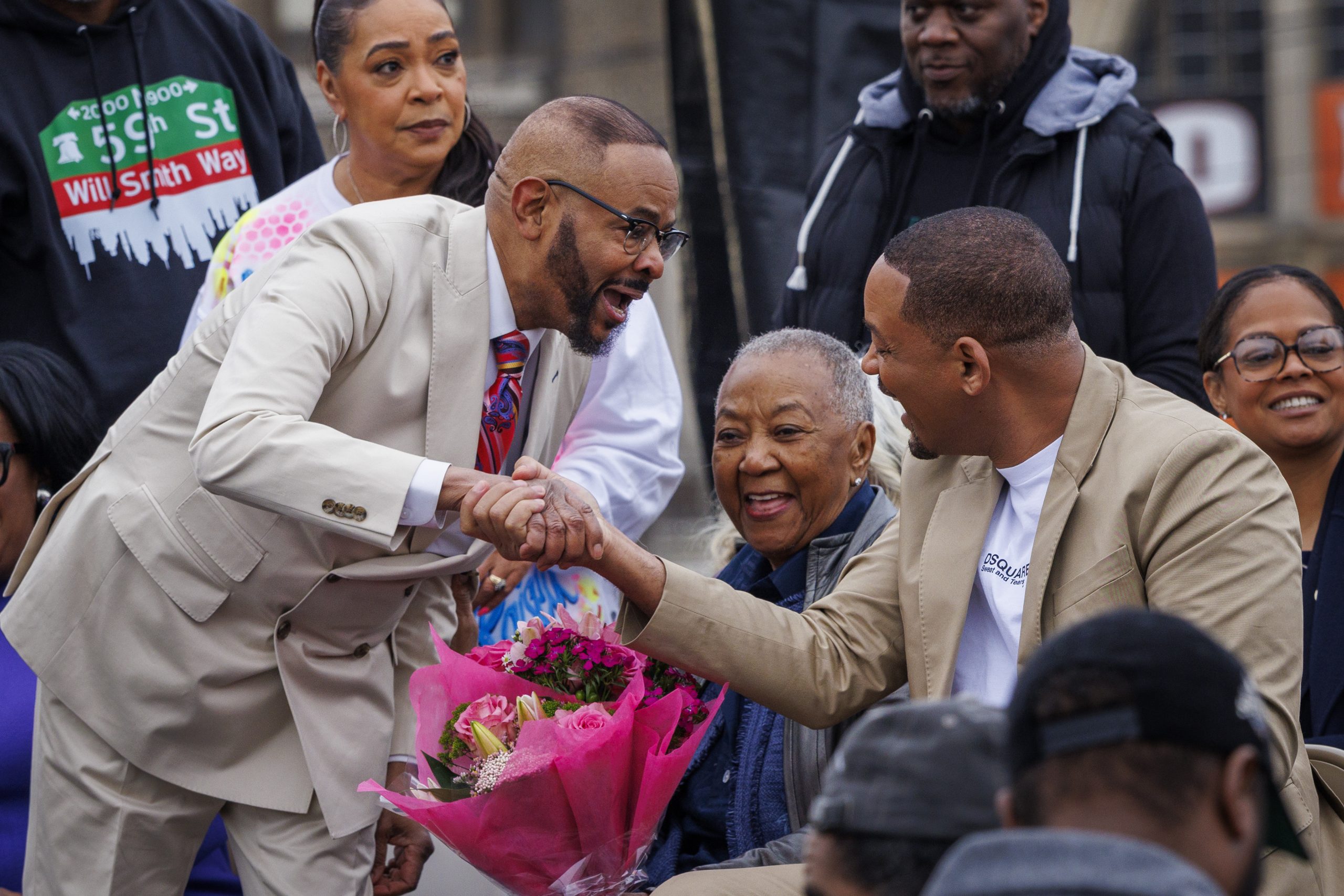
At left is Councilmember Curtis J. Jones Jr. shaking the hand of actor and rapper Will Smith who was honored with a street naming, Will Smith Way, at N. 59th and Lancaster, across from Overbrook High School, Wednesday, March 26, 2025.Alejandro A. Alvarez / Staff Photographer
Curtis Jones enrolled in DROP in August 2024, meaning he is required to retire no later than August 2028. He has made no secret of his intent to run for a sixth term next year, even publicly musing about delaying bridge repairs in his district so as not to subject potential voters to traffic jams.
Were he to win reelection and collect his maximum $432,221 DROP payout, Curtis Jones’ scheduled retirement date would fall within the first year of his next four-year term.
However, the lawmaker said in an interview that he intends to complete his next Council term. To achieve that, he said he would instead resign in December 2027, after the November election but just before he would be sworn into a new term in January 2028.
“I am going to resign, then be sworn in [if], God willing, I’m reelected,” he said.
In this scenario, Curtis Jones said, he would receive a reduced DROP payout by forgoing the final nine months of payments into his interest-bearing account by taking his brief retirement early. He would be effectively rehired to his city job by being sworn back into office.
He added that he hopes State Rep. Morgan Cephas, a West Philadelphia Democrat, will succeed him in the 4th Council District after the 2031 elections.
Cephas declined to comment.
In 2023, Curtis Jones ran for Council president, but lost to Kenyatta Johnson. He said he is now relieved he did not win.
“I am functional. My staff kind of helps to keep that good,” Jones said. ”I am thankful to God that I did not get elected [Council] president. Do you know how much reading they do? I could have not kept up with all of the numbers and stuff like that, so I know my limitations.”
‘I had heard whispers’
During Jazelle Jones’ one-day retirement in 2025, the 25-year city employee earned a $319,757 DROP payout and cashed out nearly 1,000 hours of unused sick and vacation time, worth $97,000, as all city workers are entitled to do upon their last day of service.
The very next day, she was back on the job, with a small raise that brought her salary to about $199,000.
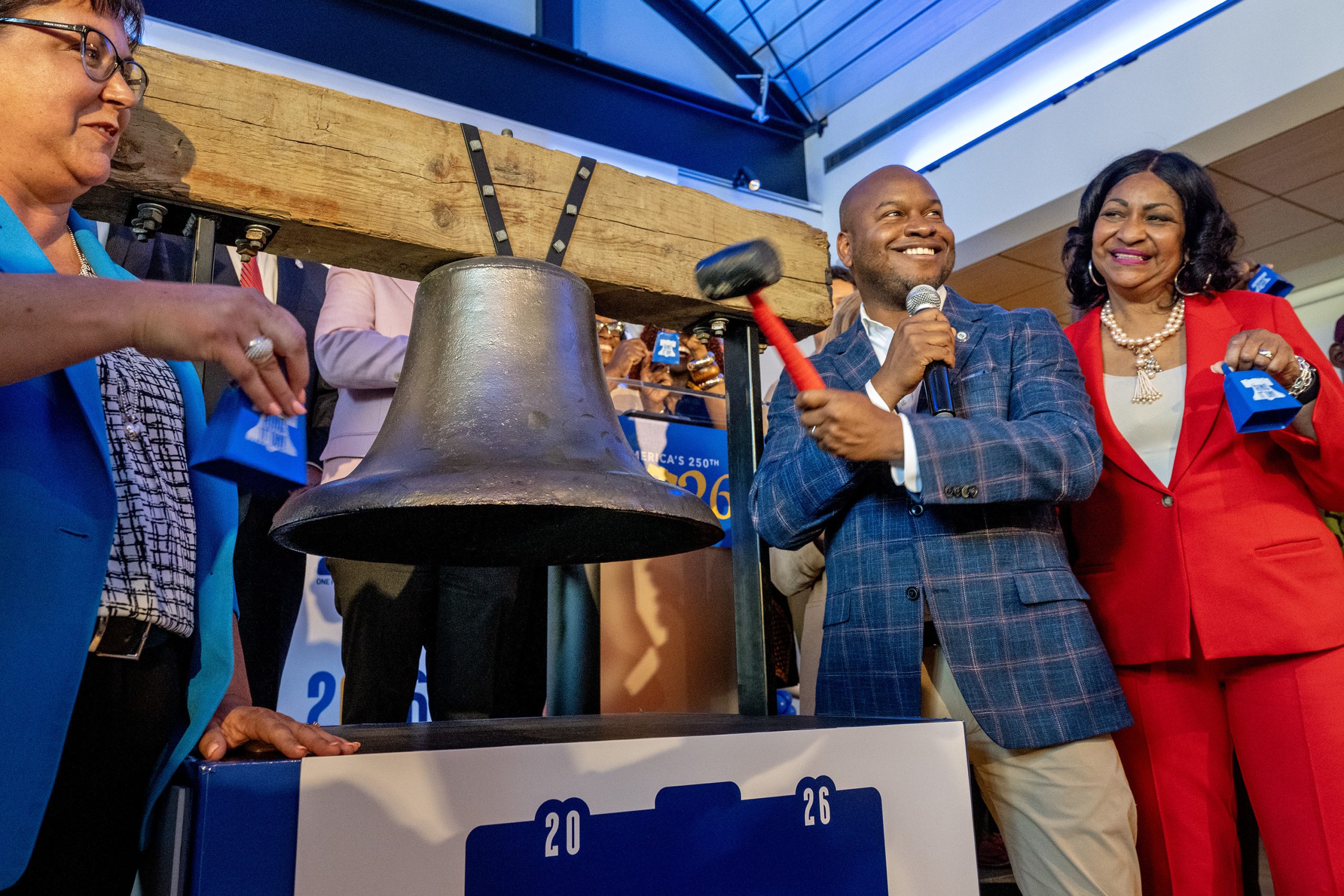
Michael Newmuis (center), the city’s 2026 Director Philadelphia, rings the bell to kick off the city’s “Ring It On! One Philly, A United Celebration” at Independence Visitor Center Wednesday, Sept. 3, 2025. Mayor Cherelle L. Parker announced the new initiative that puts city neighborhoods at the forefront of the city celebrations of America’s 250th birthday in 2026. At right is Jazelle Jones, City Representative and Director of Special Events.Tom Gralish / Staff Photographer
Despite saying Jazelle Jones was needed to coordinate the city’s 2026 festivities, Parker has also appointed a separate 2026 director, Michael Newmuis, to a $175,000 position to also oversee this year’s major events.
The mayor said Jazelle Jones was irreplaceable given her experience managing large events like the 2015 papal visit, the 2016 Democratic National Convention, the 2017 NFL Draft, and the Eagles’ Super Bowl wins.
“Could we have hired five to 10 people to try to do the job Jazelle does?” Parker asked. “We could have tried, but there would be no reason for me to do that when I had the best person.”
Parker indicated she was aware of the steep price tag required to keep Jazelle Jones working through 2026 when the mayor first appointed her as city representative shortly after taking office in 2024.
“I had heard whispers,” Parker said. “They said, ‘You’re going to lose Jazelle.’”
City personnel records show Jazelle Jones enrolled in DROP in September 2020, meaning her first planned retirement date was September 2024, just nine months after Parker appointed her to the role.
Jazelle Jones’ $97,000 payout for unused paid time off was deposited into her account this month, four days after The Inquirer contacted the mayor’s office about her rehiring. The mayor’s office did not respond to a question about the delay in her payment.
Unlike most newly hired city employees, who are entered into a hybrid 401(k)-style pension plan, she was granted an exception allowing her to continue paying into an older, more generous pension plan.
Cristella, from the Committee of Seventy, said the decision to hire Jazelle Jones into a vital role months prior to her mandatory retirement date was irresponsible.
“It is also deeply troubling that the city would retain a high-salaried senior official with full knowledge that a large DROP payout was imminent,” Cristella said. “If city leadership knew and proceeded anyway, that is a failure of fiscal stewardship that demands explanation.”
Staff writer Max Marin contributed to this article.
Mayor Cherelle L. Parker and other top leaders of the city government and the Philadelphia School District will travel to Harrisburg on Monday for a high-stakes trip aimed at securing millions of dollars in new funding for the financially strapped public schools.
Parker will spend much of the day advocating for increased public education dollars as state lawmakers hurtle toward their June 30 budget deadline. The mayor is slated to host an afternoon rally in the Capitol Rotunda alongside Superintendent Tony B. Watlington Sr., school board president Reginald L. Streater, and City Council President Kenyatta Johnson.
Their trip to the Capitol comes after weeks of tension among those same leaders, who earlier this month hammered out a city budget deal that was in large part centered on finding new funding for the school district, which is facing a $300 million structural deficit and had planned to cut more than 300 school-based staff positions.
Parker and school officials wanted the city to levy a $1-per-ride tax on rideshare services like Uber and Lyft to secure about $50 million a year in recurring funding, but Council rejected that plan, and instead voted on a one-time diversion of money to the district that came out of the existing city budget.
Parker, who served in the state legislature for a decade before becoming a City Council member and then taking office as mayor in 2024, said when she announced the new funding plan that city leaders would be able to travel to Harrisburg “saying we’ve made tough decisions, we’ve made sure we’ve done our best to take care of our own, and we have a plan.
“Philadelphia is primed to travel to Harrisburg to advocate in unity to ensure that our children get access to the revenue that they deserve,” she said, “so that they can have a first-class school district here in the city.”
Superintendent Tony B. Watlington Sr., school board president Reginald L. Streater, and Mayor Cherelle L. Parker stand together during an announcement at the School District of Philadelphia Headquarters on June 10 in Philadelphia. Philadelphia School District officials will move to restore 340 classroom-based jobs that were slated to be cut, despite top district leaders saying earlier that they did not have the recurring funding needed to keep the positions.Monica Herndon / Staff Photographer
The mayor’s message to lawmakers will be largely focused on securing capital dollars for the district’s $3 billion plan to modernize 169 aging school buildings over the next decade. In April, the school board adopted its controversial facilities plan — which includes an intention to close 17 schools — with the goal of bringing in $2 billion of that money from state and philanthropic sources.
Finding that money in Harrisburg could be a tall task as the state faces its own multibillion-dollar budget shortfall. All 203 state representatives and half of the 50-member Senate are up for reelection this year, and many lawmakers gearing up to face voters in November are averse to broad-based tax increases aimed at juicing revenue.
In addition, gridlock is commonplace in the divided legislature, where reaching a state budget deal has been a drawn-out and arduous process in recent years. Last year’s bitter negotiations stalled for more than five months, leading to mass service disruptions statewide.
Gov. Josh Shapiro, a Democrat who is in the midst of his own reelection battle and is seen as a potential contender for president, has also said that he is generally not looking to raise taxes. Leaders in Harrisburg last month rejected a separate proposal by Parker to raise the city’s hotel tax to generate new funding for homelessness prevention programs.
However, Shapiro has positioned himself as a champion of public education, and he proposed increasing the Philadelphia School District’s general funding allocation to about $2.2 billion in the coming fiscal year, a $151 million increase over this year’s amount.
Statewide, Shapiro called for an additional $565 million for public schools as part of the state’s new “adequacy funding” formula, a multiyear plan developed to address the chronic underfunding of low-wealth school districts.
The formula was adopted in 2024 after a Commonwealth Court ruling that the state had for years unconstitutionally deprived some children of an adequate education by sustaining a funding plan largely reliant on local property tax dollars. Philadelphia is the only school district in the state that can’t itself raise taxes. Instead, it depends on the city and state governments for funding.
Parker said earlier this month that despite her own tax proposal to fund the schools falling through, she intends to “take this fight on the road.”
“We stand in unity with our legislative leaders in Harrisburg, our legislative leaders on both sides of the aisle, [and] we stand with our governor,” she said. “And we fight until the end to ensure that we do everything we possibly can to ensure that our school district has access to the resources that it needs.”
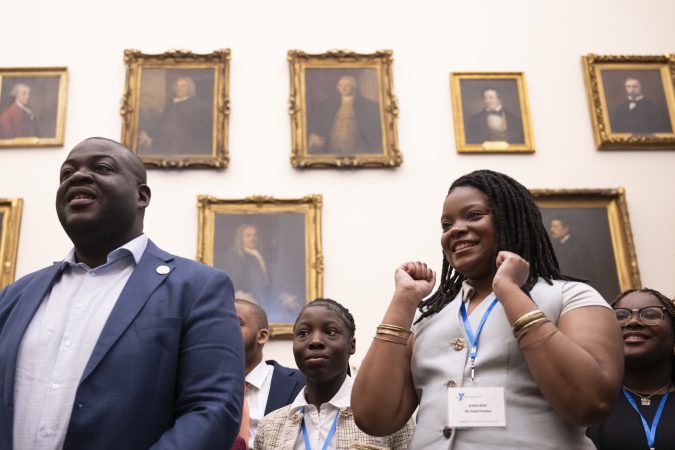
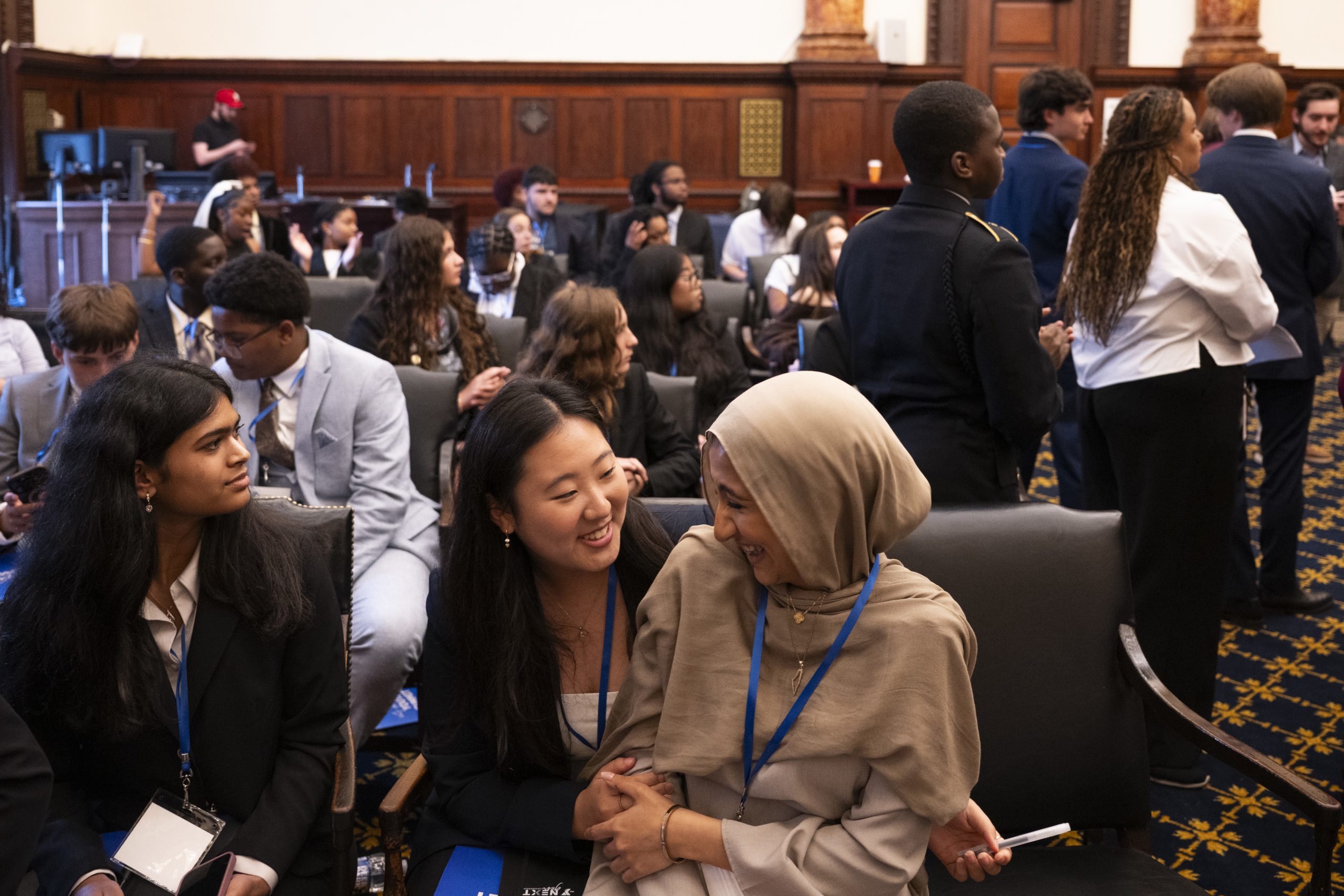
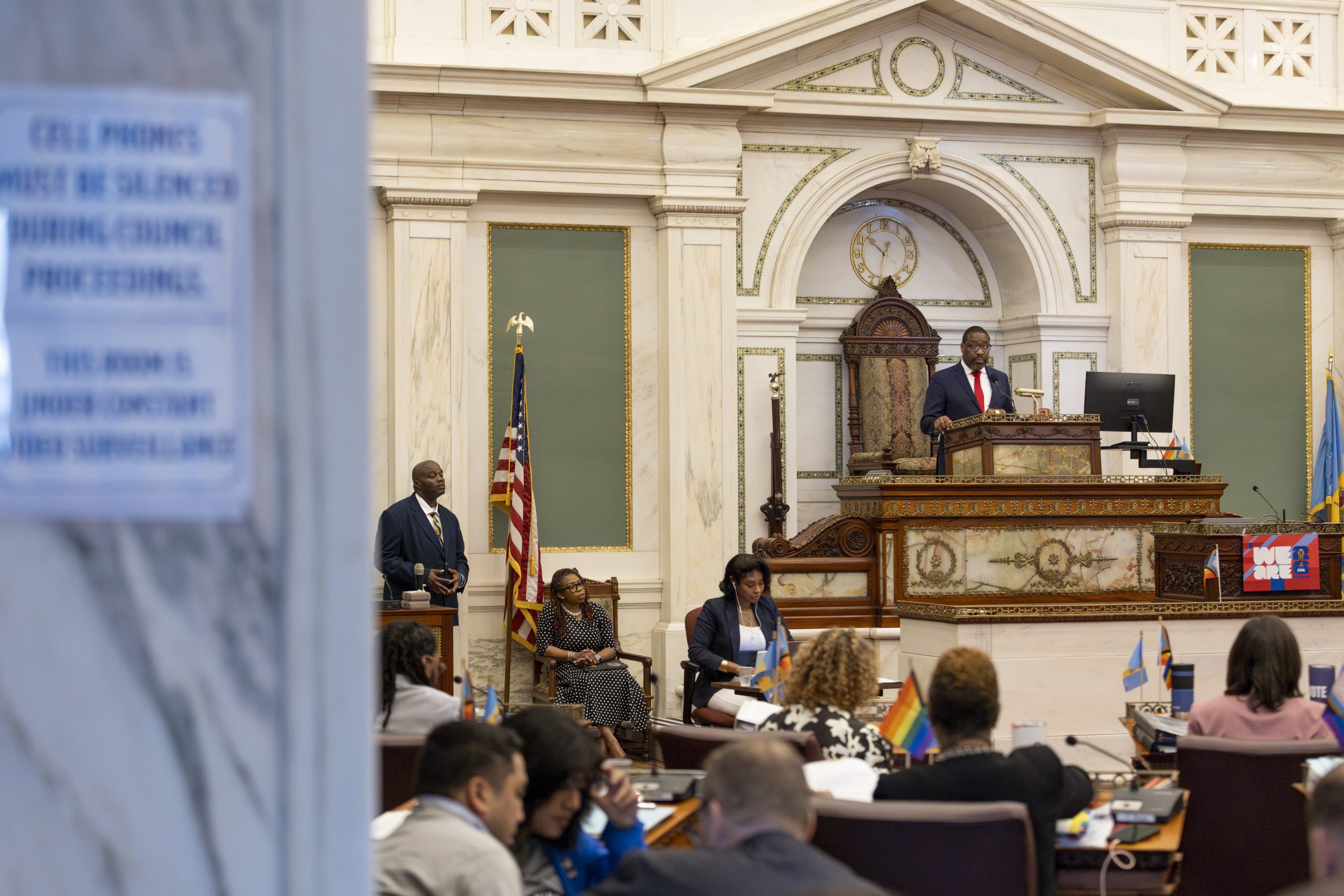
The City Council chambers looked as they always do: a sea of slacks and blazers, votes and debates, bills and budgets. The only difference? Every Council member was ateenager.
Around 100youths entered Philadelphia City Hall on Wednesday to take part in the Greater Philadelphia YMCA’s Government Youth Summit. The event, hosted by the YMCA for the first time, gave teens from Philadelphia and the surrounding area a hands-on way to learn about their city government.
“This is our first shot at it. I think it’s been real successful,” said Shaun Elliott, president of the Greater Philadelphia YMCA. “And there’s two things we want to do: teach kids about civic government and how it works, but also help them develop the competencies of leadership.”
At the beginning of the day, the participants were presented with a bill on spending and initiatives during the FIFA World Cup, which they then discussed, debated, and reshaped in line with their roles.
Sitting alongside teens representing other districts, Justina Ndebhleh, 17, who was representing the Sixth District in Lower Northeast Philadelphia, led a discussion on SEPTA funding.
“We’re talking about whether increasing SEPTA prices will be beneficial or not,” Ndebhleh said. “Because we know increasing the fare would be a regressive tax since lower-income communities do take SEPTA on a daily basis.”
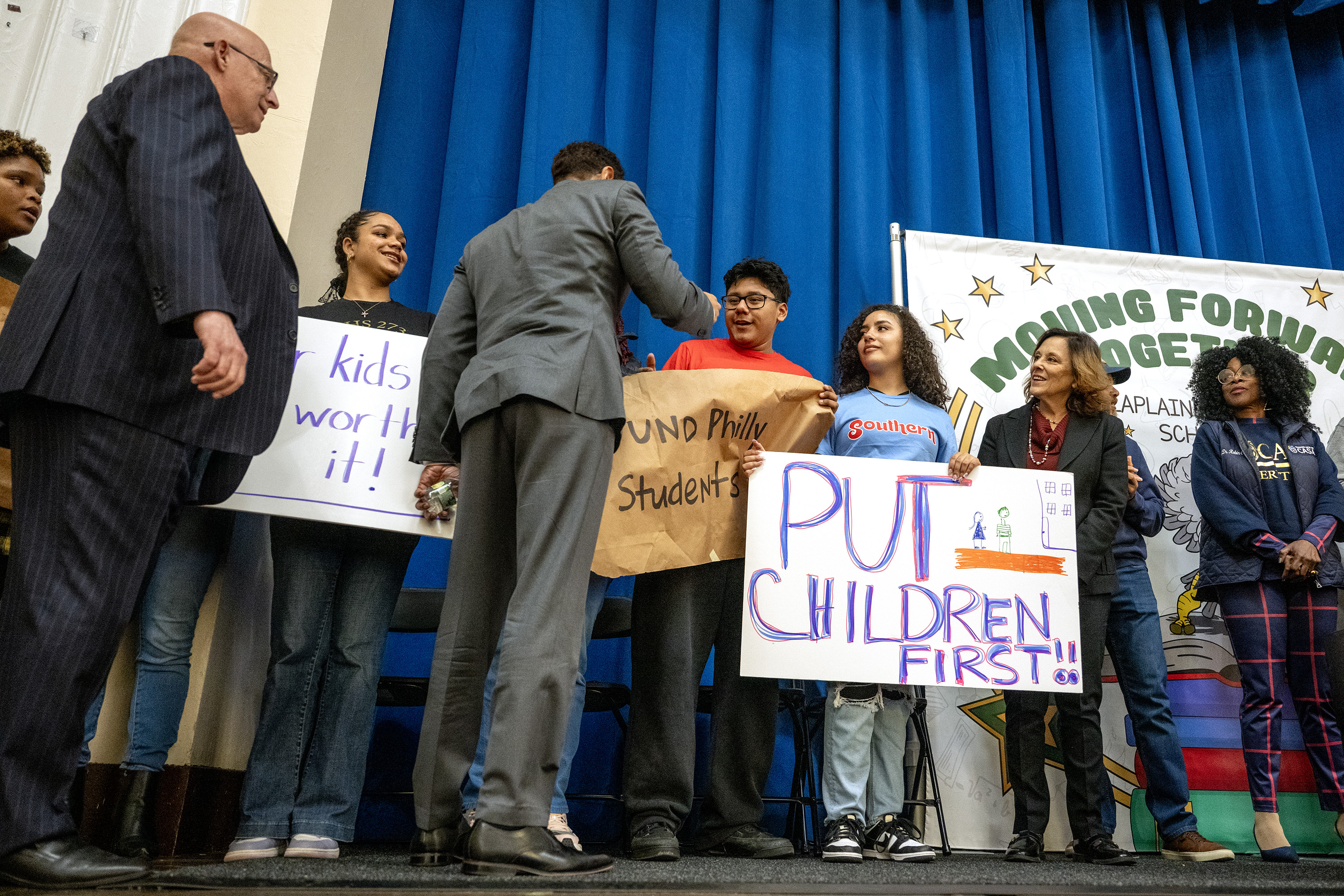
Students hold discussions after meeting with City Council President Kenyatta Johnson.Joe Lamberti / For The Inquirer
Between debates and meetings, teens were given the chance to speak with Mayor Cherelle L. Parker and City Council President Kenyatta Johnson.
Lindsay Doyle, director of youth civic engagement for the YMCA, said she hoped the participants left understanding that their opinions matter and that they can help make change.
“It’s really incredible to see them in these spaces,” Doyle said, “and have them interact with City Council members, and have those elected officials reinforce the idea that their thoughts … and their beliefs really matter, and they can utilize those to change the entire city, state, and nation.”
Kailey Reinboth, 18, from Boyertown Area Senior High School, said the experience gave her a better understanding of what it means to be an engaged citizen, especially at a young age.
“I believe that it is really [giving] me insight into my roles and responsibilities as a citizen and being someone that needs to be civically engaged,” she said. “You are the change, ultimately. And being … the change that you want to see, not just in the future, because, you know, they talk about the youth being the future — the youth aren’t the future. They are the present, and we really need to enforce that in making sure that we’re not making change in the future. We are making change now.”
Elliott said he hopes to see the program grow in future years, providing more teens with the experience to learn about local government.
“We have 100 young people here. So how about 200 or 250 next year?” he said.
Sick of being charged with “processing” or “transaction” fees when shopping online?
So is City Councilmember Rue Landau, and she introduced a bill Thursday to help Philadelphians avoid so-called pay-to-pay fees for online transactions.
“This will keep money in people’s pockets,” Landau said in an interview. “Oftentimes, people are paying these fees every single month to simply pay their bills to an entity that only allows you to pay it in a certain way. They are unnecessary. We are making them unlawful.”
The legislation aims to ban fees that are not related to actual costs to the seller. That means standard credit card processing fees, which retailers must pay to credit card companies, would not be banned under the bill. Instead, the bill aims to tackle additional fees beyond those processing charges by:
Mandating online payment portals have at least one option that involves no additional fees.
Requiring “cost justification” for fees, which Landau’s office said would essentially ban convenience fees by necessitating proof they are related to real costs borne by the seller.
Compelling online retailers to disclose all fees up front in “total-price advertising” before a transaction begins.
To enforce the bill’s provisions, the city’s law department would be authorized to sue businesses charging illegal pay-to-pay fees. The bill would also allow private individuals to sue for damages from companies charging the fees, including as part of a class-action lawsuit.
Next, Council President Kenyatta Johnson will refer the bill to a committee, where it could get a hearing as soon as this fall.
Philadelphia City Council members inside the caucus inside City Hall in Philadelphia, Pa. on Thursday, June 11, 2026.Aidan T. Gallo / Staff Photographer
City budget negotiations wrapped up last week, and Thursday’s votes were largely procedural.
But the fallout continued Thursday from Council’s decision last week not to adopt Mayor Cherelle L. Parker’s proposal to plug the Philadelphia School District’s budget deficit with a new $1-per-ride tax on rideshare services like Uber and Lyft.
Council President Kenyatta Johnson speaks during an announcement at the School District of Philadelphia Headquarters on Wednesday, June 10, 2026 in Philadelphia. Philadelphia School District officials will move to restore 340 classroom-based jobs that were slated to be cut, despite top district leaders saying last week that they did not have the recurring funding needed to keep the positions.Monica Herndon / Staff Photographer
Council instead pulled roughly $50 million, the amount the tax would have generated next year, from the existing city budget to help fund the schools. District officials, however, said after that vote that they would have to move forward with cuts to 340 classroom positions because Council did not provide recurring revenue.
The Tower of Taxpayers: The city will soon own the 18-story tower at 400 N. Broad St., the beaux arts landmark that is the Philadelphia Police Department’s headquarters and was dubbed the “Tower of Truth” when it was the home of The Inquirer.
Council on Thursday voted 17-0 to approve legislation authorizing the city to borrow $200 million so it can own the building, part of a complex and controversial deal in which the city is buying outstanding debt on the property that is currently held by developer Bart Blatstein.
The Philadelphia Public Services Building (PPSB) at 400 North Broad Street is the historic former Inquirer and Daily News building. It will soon be owned by the city of Philadelphia.TOM GRALISH / Staff Photographer
The purchase stems from an agreement inked in 2017 during former Mayor Jim Kenney’s administration. Under the terms of the deal, the city’s current $15 million annual rent on the building was set to nearly double if the city did not exercise a one-time option to buy the property.
Parker administration officials testified to a Council committee last week that, while the building is appraised to be worth $21.5 million, in order to purchase the structure, the city was required to assume the debt that Blatstein incurred to renovate the property.
Council members on the Finance Committee balked at the $200 million price tag and initially held up the proposal, but eventually approved the measure.
The city will issue bonds to buy the debt and will pay roughly $15 million a year in debt service.
Expanding the definition of ‘the line of duty’: The city appears poised to offer death benefits to the families of first responders who die by suicide, a change that amounts to an expansion of how the government defines a death that occurred “in the line of duty.”
Council approved legislation to offer pension payments, healthcare coverage, and other forms of compensation to the families of city workers who either had a diagnosed psychiatric disorder due in “significant part to exposure to one or more traumatic events in the line of duty” or died by suicide within 45 days of exposure to a traumatic event at work.
That was despite the city’s risk manager testifying last week to a Council committee that the Parker administration opposes the change. Sharolyn Murphy told Council members that the administration is focused on suicide prevention, and that expanding who is eligible for death benefits would result in higher costs to the pension fund.
On Thursday, Council approved the bill in a 17-0 vote, sending it to Parker’s desk with a veto-proof majority.
Quote of the week
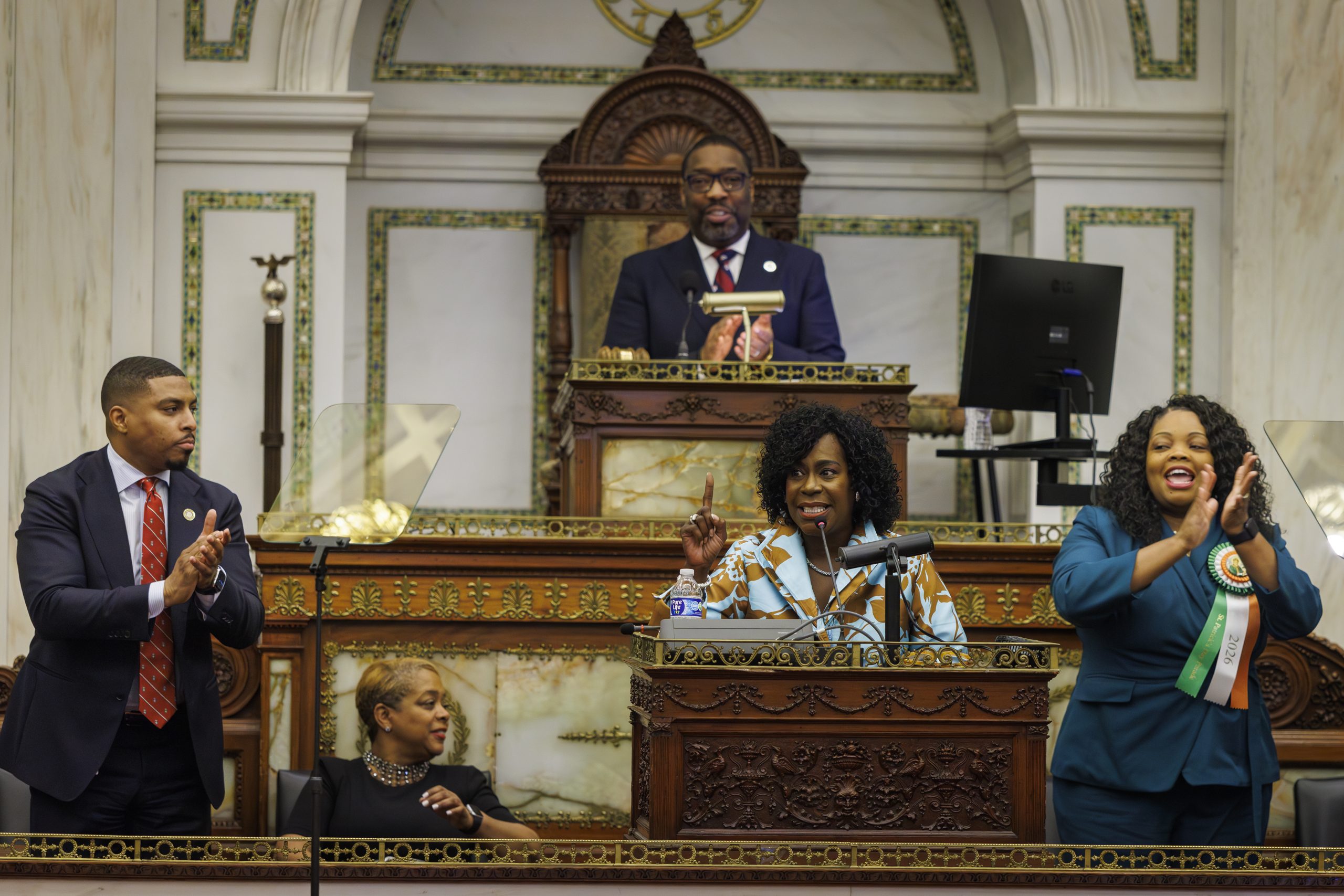
Philadelphia City Council members inside the begin the session inside the chamber at City Hall in Philadelphia, Pa. on Thursday, June 11, 2026.Aidan T. Gallo / Staff Photographer
A bittersweet Pride: That was Mark Segal, the publisher of the Philadelphia Gay News and one of the most recognized leaders of the city’s LGBTQ+ community. He spoke Thursday during a Pride celebration in Council, and he called for accountability following the police response to Pride festivities on Sunday that many have called heavy-handed.
Philadelphia School District officials and public education advocates were relieved Wednesday when Mayor Cherelle L. Parker announced she had reached a deal with City Council that will prevent 340 classroom positions from being eliminated amid the district’s funding woes.
But as limited details about the agreement began to emerge Thursday, it became clear that the deal was less of a schools-funding program than a plan to figure one out over the next year — with the prospect of $216 million in city budget cuts taking effect if Parker and Council cannot eventually agree to adopt a new revenue stream.
“Council President Kenyatta Johnson and I publicly committed to working together to find local, recurring, predictable, and dependable revenue sources for the School District of Philadelphia over the next year to ensure that we keep these critical positions,” Parker said Thursday during a city budget bill-signing ceremony. “That is our shared goal and our commitment.”
But if Parker and Johnson do not make good on that commitment by July 1, 2027, the city will be on the hook for additional funding it has promised the school district between 2028 and 2031, including roughly $50 million in the first year of that time frame.
Council President Kenyatta Johnson speaks during an announcement at the School District of Philadelphia Headquarters on Wednesday, June 10, 2026 in Philadelphia. Philadelphia School District officials will move to restore 340 classroom-based jobs that were slated to be cut, despite top district leaders saying last week that they did not have the recurring funding needed to keep the positions.Monica Herndon / Staff Photographer
Parker, Johnson, Superintendent Tony B. Watlington Sr., and school board president Reginald Streater triumphantly unveiled the agreement to stave off the planned job cuts Wednesday. That announcement followed days of suspense after Council last week refused to pass the mayor’s proposed $1-per-trip rideshare tax, which would have funded schools, and instead advanced a city budget with about $50 million from one-time cuts that would be sent to the district as a Band-Aid for its $300 million budget gap.
Council’s move prompted Watlington, with Parker’s backing, to say the positions would still be eliminated without an explicit promise that the money would be recurring, rather than a one-time allocation.
Officials said they worked “around the clock” between Council’s rejection of the rideshare tax and Wednesday’s announcement, which Johnson jubilantly hailed as “Christmas in June.”
On Thursday, education advocates and labor leaders heaped praise on the administration for the deal.
Several district principals said Thursday they do not yet have details about exactly how much they will get back in their budgets, or how the dominoes will fall once positions are restored.
Watlington had school leaders build their 2026-27 budgets as if the cuts were happening, and many of the affected teachers, counselors, and climate staff secured new positions, some in the district and some outside the system. The restoration will undoubtedly cause vacancies elsewhere, months after other districts filled jobs for the fall.
“The win is making sure that those 340 jobs, with teachers, will not be laid off, and they will not have to second-guess if next year they’re going to come back to work,” Johnson told reporters Thursday. “And I think ultimately we can talk about sometime the ‘how’ we get to a particular end. But it’s always the ‘why.’ … At the end of the day, all of our young people still can have a chance to get a quality education.”
‘Budget sequestration’ comes to Philly?
The agreement between Parker and Johnson in some ways hearkens back to Congress’ 2011 “budget sequestration” debacle, when President Barack Obama, a Democrat, and House Speaker John Boehner (R., Ohio) agreed to severe across-the-board spending reductions that would take effect automatically if lawmakers and the White House failed to reach a “grand bargain” to restructure the federal budget.
They never reached an agreement — and the sequestration cuts, once thought of as too painful to countenance, eventually became reality.
Parker and Johnson are optimistic their arrangement for the school district and the city budget will not suffer a similar fate.
The future city budget cuts will be reflected in the city’s five-year plan, which must be approved by a state oversight board each year but is not binding legislation like annual taxing and spending measures. That gives City Hall more wiggle room to figure out how to find the money officials have now promised the district than Obama and Boehner had.
Philadelphia Mayor Cherelle L. Parker is cheered by members of Philadelphia City Council at conclusion of the budget address, Thursday, March 12, 2026. From left are council members Nicholas O’Rourke, Cindy Bass and Katherine Gilmore Richardson. In background is council President Kenyatta Johnson. .Alejandro A. Alvarez / Staff Photographer
Parker said her administration has already identified the cuts that will be reflected in the five-year plan when it is up for approval next month at the Pennsylvania Intergovernmental Cooperation Authority. But she has offered few specifics on what those potential cuts would entail.
Parker said Thursday that the city could make up part of the difference by reducing future debt repayment obligations by reducing the size of planned city bond sales. She mentioned the city’s capital budget, which funds projects like repaving roads and renovating recreation centers, but did not say how much would be cut.
And she said the city could halve its next borrowing related to her signature housing program, Housing Opportunities Made Easy. The city plans to take out a second tranche of $400 million in city bonds next year for H.O.M.E.; the potential cuts to free up money for schools could include taking only $200 million at that time, she said.
“Where did we get the money from in future years?” Parker said Thursday. “In our five-year plan, we made cuts to very important programs associated with our capital budget and even our H.O.M.E. plan — but cuts that will never have to be realized once we all make good on that commitment to generate that approximately $50 million in new, predictable recurring revenue.”
One complication in the negotiations to come is that Parker and all 17 Council members are up for reelection next year, and lawmakers are not eager to approve new taxes before voters head to the ballot box.
The Democratic primary, which effectively decides almost all elections in Philadelphia due to the city’s deep-blue electorate, will be in May 2027. The next city budget, including all tax measures for the following fiscal year, must be enacted by the end of June 2027, leaving several weeks after the election for Council to potentially approve a new tax to provide money for the district next year.
Philadelphia City Council members at City Hall in Philadelphia, Pa. on Thursday, June 11, 2026.Aidan T. Gallo / Staff Photographer
Some possibilities do not involve new or increased taxes for residents. The city, for instance, could speed up its plans to increase the share of property tax revenue that is dedicated to the district. Currently, the district receives 56% of property tax revenue, while the city takes 44%.
Parker said the agreement will allow Philadelphia to present a united front in Harrisburg as officials prepare to ask for more state funding for the city’s school district. State lawmakers in the past have pointed to disagreements among city leaders when rejecting requests for additional support.
“This is the first time … in my lifetime that the city of Philadelphia, the administration, and the legislative branch, along with the superintendent of the School District of Philadelphia and the school board, will all travel [to Harrisburg] in unity, along with all of our union partners and all of our education advocates,” Parker said. “We can stand up when we arrive in Harrisburg and say … ‘Philadelphia’s homework is done.’”
School advocates relieved
Arthur Steinberg, president of the 14,000-member Philadelphia Federation of Teachers, said the news of Parker and Johnson’s agreement came just in time. Thursday was the last day of school for 114,000 district students; staff finish the school year Friday.
“It was a very difficult year, and I’m glad that we’re able to tell them now that the positions that were cut due to this will be restored,” Steinberg said at a news conference Thursday morning outside Council chambers. “This means a lot to them. There’s stability over the summer. The communities will know who their teachers will be, and they’ll know where they’re going.”
Arthur G. Steinberg (left), president of the Philadelphia Association of Teachers, and school superintendent Tony B. Watlington, Sr. (right) greet students as they arrive onstage for Mayor Parker’s announcement March 23, 2026, of $1 rideshare tax proposal to fund city schools.Tom Gralish / Staff Photographer
Tiffany Johnson Williams said she was thrilled that cuts at her child’s school — Nebinger Elementary in South Philadelphia — and others would be rolled back.
“I am equally grateful to Mayor Parker, Superintendent Watlington, and the school board for coming back to the table and working collaboratively to reach the solution that restored our critical positions,” Williams said at the news conference. “As a parent and educator and a youth advocate, I know that stability matters.”
Councilmember Isaiah Thomas, who has had a testy relationship with the district and school board over the last several months, suggested it was time to move forward cohesively to push for more funding elsewhere.
“I think where we are at this moment is recognizing that as we come together as Philadelphians, our job now is to use our advocacy initiatives and our leverage to try to get even more resources from Harrisburg,” Thomas said.
Staff writers Anna Orso and Jake Blumgart contributed to this article.