Private equity investor Gregory L. Segall, a Philadelphia Republican who was a key backer of Mayor Cherelle L. Parker’s 2023 campaign, has resigned from three city boards as he weighs other “civic engagement” opportunities, according to a copy of one of his resignation letters obtained by The Inquirer.
Parker, a Democrat, appointed Segall to the Philadelphia Gas Works board, the Philadelphia Tax Reform Commission, and the Mayor’s Business Roundtables. Segall resigned from all three effective Aug. 31. He also served as a vice chair of Parker’s transition committee when she was taking office.
“While I am stepping away from this role, I remain committed to civic engagement and intend to explore other ways to continue the journey I have been privileged to pursue over the last several years,” Segall, the chairman and CEO of Versa Capital, wrote in his letter resigning from the Mayor’s Business Roundtables, an advisory group convened by Parker.
Segall’s moves come as candidates are gearing up to run in next year’s municipal elections, when Parker and all 17 City Council members are up for reelection.
Candidates in the primary election have until early spring to decide whether they are running.
Claudia Vargas, a journalist who formerly worked for NBC10 and The Inquirer, reported this week that Segall was considering running for Council.
When contacted by The Inquirer, Segall, who lives in Chestnut Hill, said Wednesday he is “not running” for Council.
“People have suggested multiple forms of public service, including Council, and I have no plans or commitments at this time,” Segall, 63, said in an interview.
Segall said he continues to “strongly support Mayor Parker, and my highest and best hope is that my public service will be in aid of her continued success.”
Parker on Wednesday declined to comment on the report of Segall exploring a run for office.
From 2022 through 2025, Segall and his wife donated $37,300 to Parker’s campaign, according to campaign finance records. He also gave $150,000 to a super PAC backing her 2023 run, and $6,200 to her transition committee, the records show.
“The 2023 election took place at a time of crisis in the city, and getting the right leader was never more critical,” Segall said. “So the reason for my commitment to her was quite simple: Before I’m a Republican, I’m a Philadelphian.”
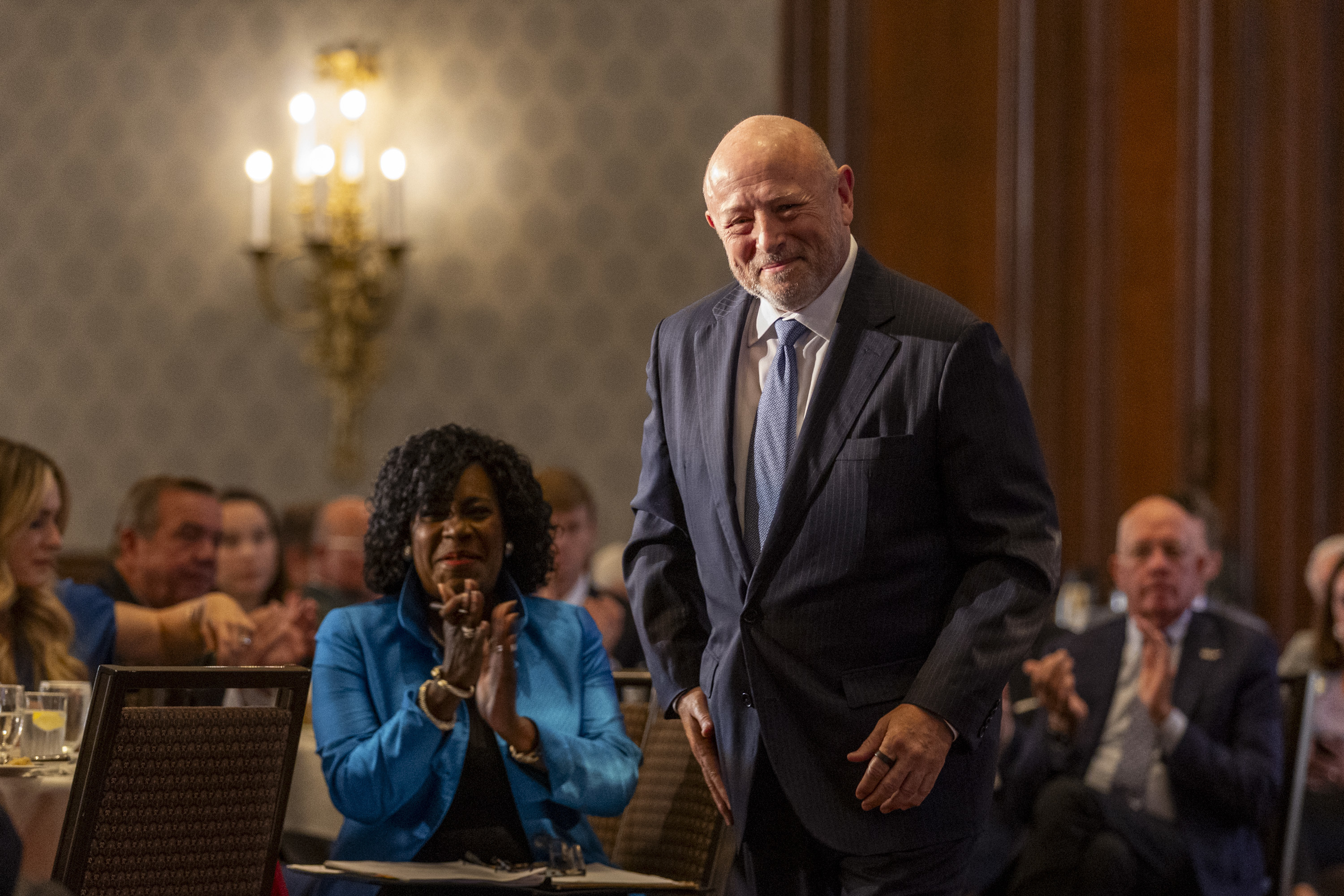
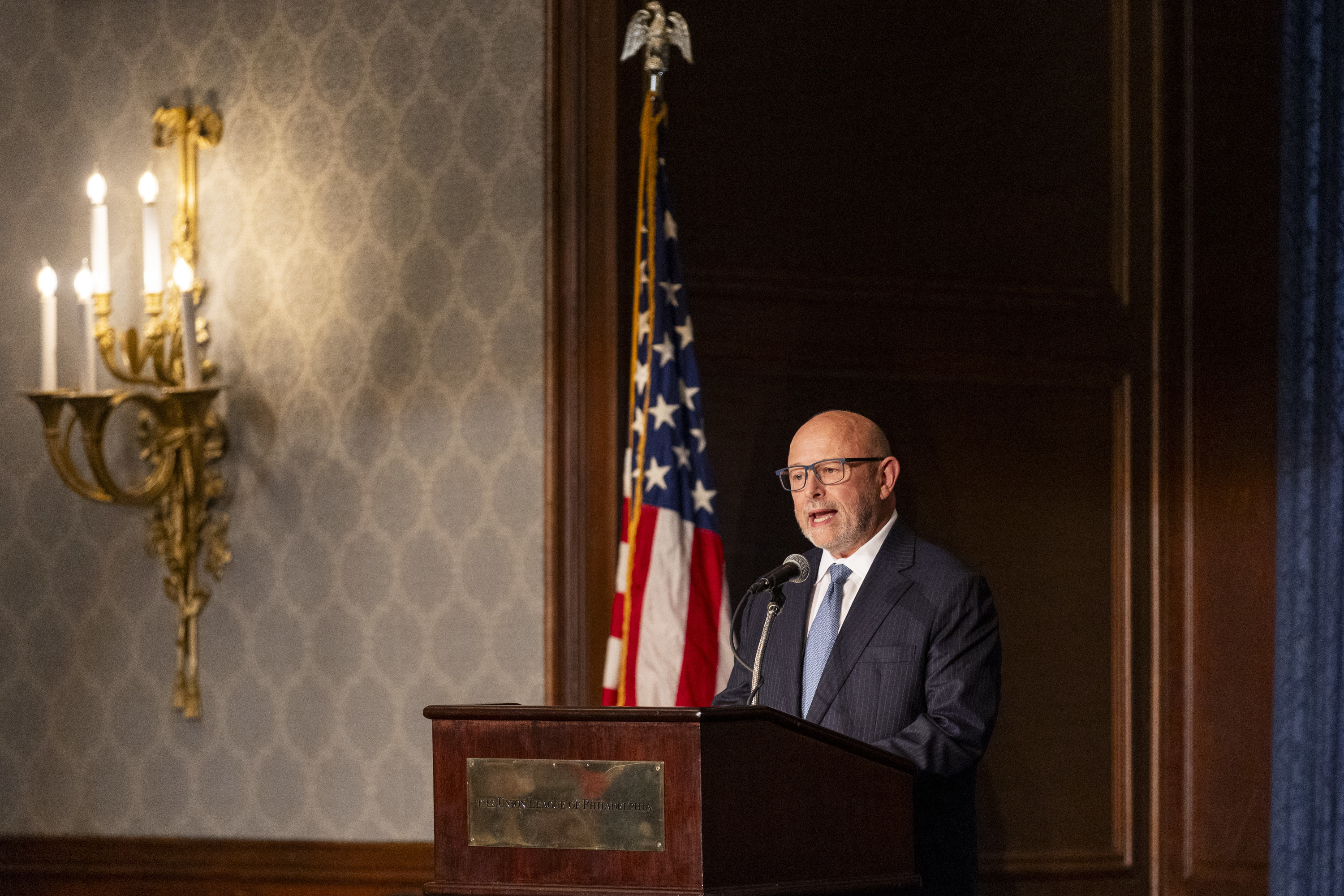
Gregory Segall, Chairman and CEO of Versa and Supporter of Mayor Parker, speaks at the Union League of Philadelphia Presidential Luncheon in Philadelphia, Pa., on Thursday, September 18, 2025.Tyger Williams / Staff Photographer
Citing Republican Party sources, Vargas reported that Segall was considering running for one of the two at-large seats on Council that are elected citywide and are set aside by the Home Rule Charter for minority-party or independent candidates.
Republicans held those seats for about seven decades until Councilmembers Kendra Brooks and Nicolas O’Rourke won them over the last two election cycles as members of the progressive Working Families Party.
Brooks is considering challenging Parker in next year’s mayoral election, sources previously told The Inquirer, which would require her to resign from her Council seat.
The Philly GOP has been strategizing ways to recapture the seats, and a run by Segall, a wealthy businessman who could potentially help fund his own campaign, could be a major opportunity for the party.
Segall donated $2,500 to the Republican City Committee last October.
GOP chair Vince Fenerty said he has met Segall and thinks he is a “nice and honorable man.”
“We’re a party that welcomes any potential candidate, and the decision to endorse would be up to our ward leaders,” Fenerty said in an interview Thursday.
Brian O’Neill, who represents the 10th District in Northeast Philadelphia, is currently the only Republican on Council. Democrats hold the remaining 14 seats.
Kendra Brooks, a progressive who made history as the first third-party candidate to win a seat on Philadelphia City Council in 100 years, is considering challenging Mayor Cherelle L. Parker in the spring Democratic primary election, according to two sources familiar with her thinking.
The sources, who were not authorized to speak about the matter publicly and did so on the condition of anonymity, said Brooks is mulling a campaign but has not yet made a decision. She declined to comment Friday.
To run in the Democratic mayoral primary, Brooks would have to resign from her seat on Council. Under state law, she could remain a member of the Working Families Party or switch her party registration to Democrat..
A bid for the mayor’s office would pit Brooks, the de facto leader of the city’s Working Families Party and democratic socialist faction, against Parker, a centrist who has long been aligned with the city’s Democratic Party establishment.
“People want to see leaders fighting for something,” Brooks said at the time, “and right now we don’t see our city fighting for anything.”
Aren Platt, the executive director of the mayor’s political campaign arm, declined to comment.
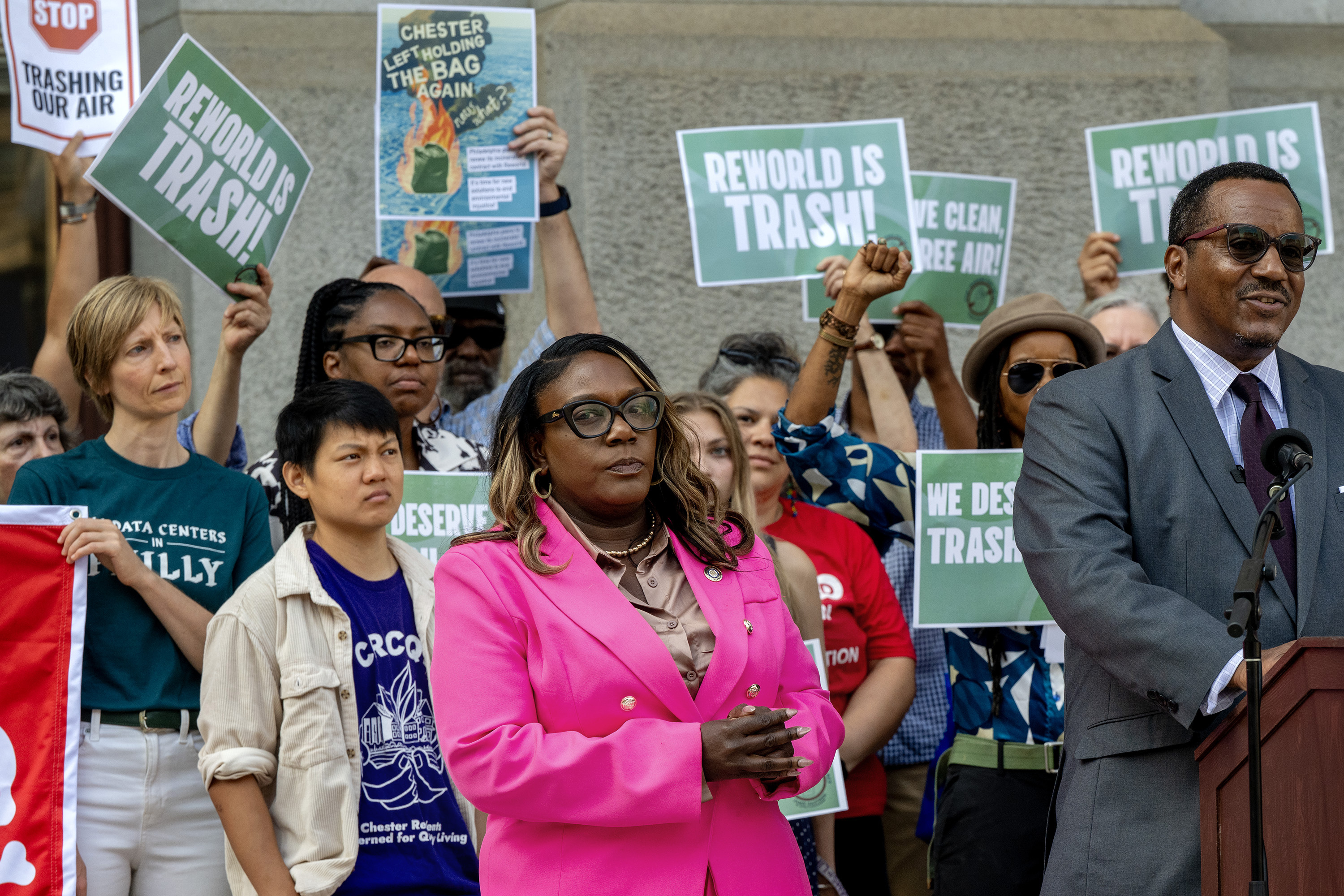
City Councilmember Kendra Brooks joins Chester Mayor Stefan Roots (right) and protesters at a rally outside City Hall Sept. 17, 2026.Tom Gralish / Staff Photographer
Brooks’ supporters see the mayor as potentially vulnerable as progressives have ascended nationally and notched wins over more traditional Democrats. That includes Mayor Zohran Mamdani’s victory last year in New York City and Abdul El-Sayed’s win in the Michigan Democratic primary for U.S. Senate.
Closer to home, the left is emboldened by State Rep. Chris Rabb, who was backed by Brooks’ coalition and in May won the Democratic primary for a seat in Congress representing about half of Philadelphia. He toppled two centrist Democrats who were each supported by party leaders, big donors, and politically powerful labor unions.
Despite the energy on the left, no progressive has officially launched a run for mayor ahead of the May primary election. Shania Bennett, the mayor’s former director of youth engagement, who has never run for office before, said this month that she will challenge Parker. Bennett said recently that she had not yet hired a campaign team or developed a policy platform.
Any challenger to Parker faces significant hurdles. No Philadelphia mayor has lost reelection in modern history, and Parker would be backed by the city’s Democratic Party, which can now spend unlimited amounts of money in coordination with its chosen candidates under a new board of ethics policy.
Parker will also be supported by the deep-pocketed building trades unions that boosted her in the crowded open mayoral primary in 2023.
“We’re going to put all the resources, both financial resources and people resources, to bear to make sure that Mayor Parker has a second term,” said Ryan Boyer, the head of the Philadelphia Building and Construction Trades Council. “I want to be clear and vociferous that the Philadelphia Building Trades … are fully and completely behind Cherelle Parker.”
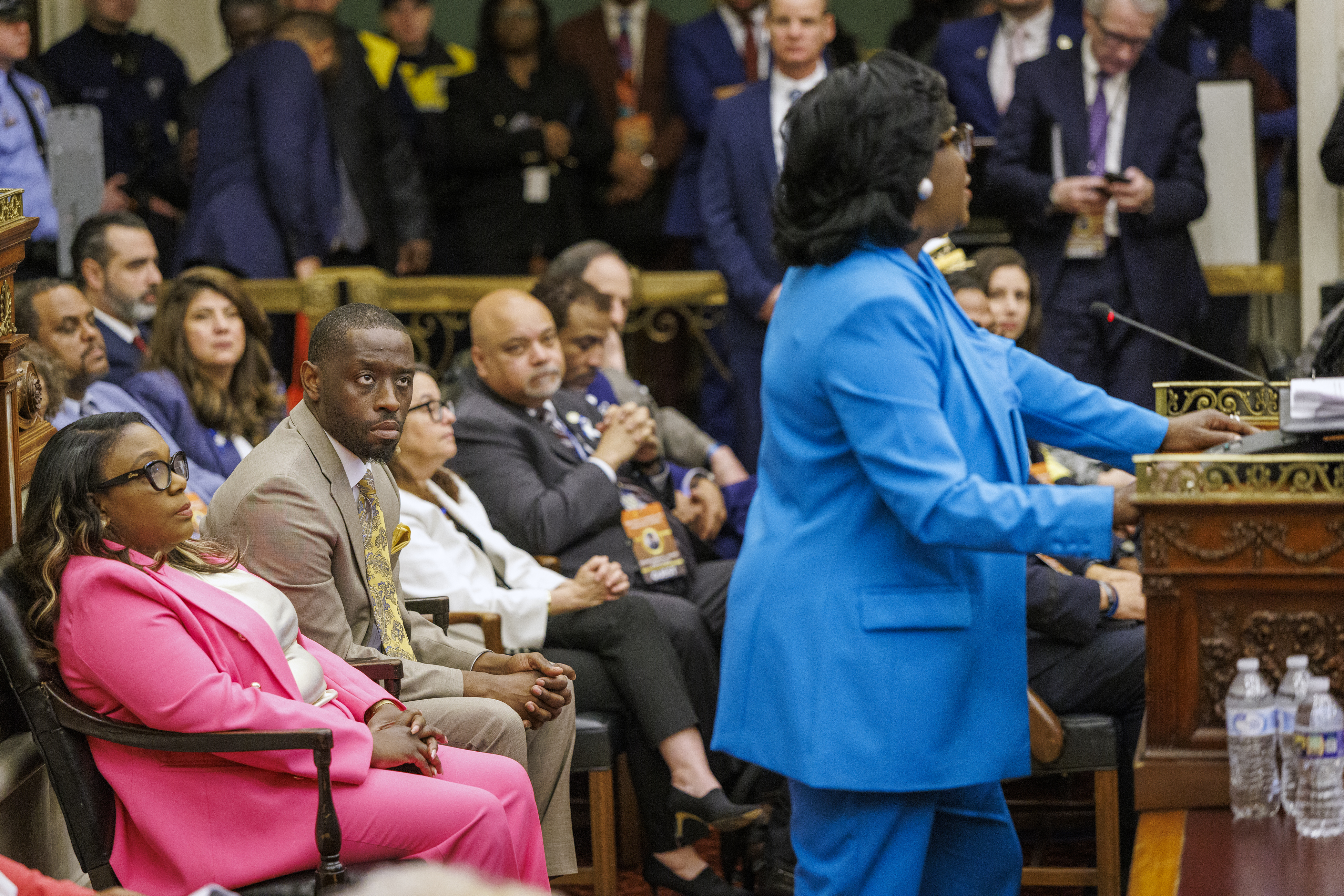
In this March 2025 file photo, City Councilmember Kendra Brooks, left, listens to Mayor Cherelle L. Parker deliver her annual budget address.Alejandro A. Alvarez / Staff Photographer
Parker is likely to see support from a super PAC bankrolled by city developers, and she also has her own massive war chest. Her campaign had $1.4 million in the bank as of May, according to the most recent campaign finance paperwork available. Brooks had $17,000 on hand as of her last report in January.
But Brooks, who has won citywide election twice to represent the city as an at-large member of Council, could be a formidable opponent. She is one of the most prominent left-wing politicians in the city, and she is well-known in national progressive circles.
The Working Families Party’s chapter in Pennsylvania recently commissioned a poll that showed Brooks as broadly popular with the city’s Democratic primary electorate but with much lower name recognition than Parker, according to polling documents obtained by The Inquirer.
According to the survey of 900 respondents, 35% said they had a favorable view of Brooks, with just 4% saying they had an unfavorable view. Nearly 40% of respondents said they did not know who Brooks was.
Nearly all of the respondents knew of Parker. Forty-eight percent said they had a favorable view of the mayor, and 40% said they had an unfavorable view. Those findings are similar to a June Suffolk University/Philadelphia Inquirer poll.
Nick Gavio, a spokesperson for the Working Families Party, said in a statement that the organization often conducts polling on public opinion in the city and that the survey was “one test among a battery of others that we conducted in Philadelphia ahead of the 2027 elections.”
“We are pleased that the Working Families Party and Minority Leader Brooks are so popular,” he said, “which we believe reflects our focus on the issues that matter to the working people of this city.”
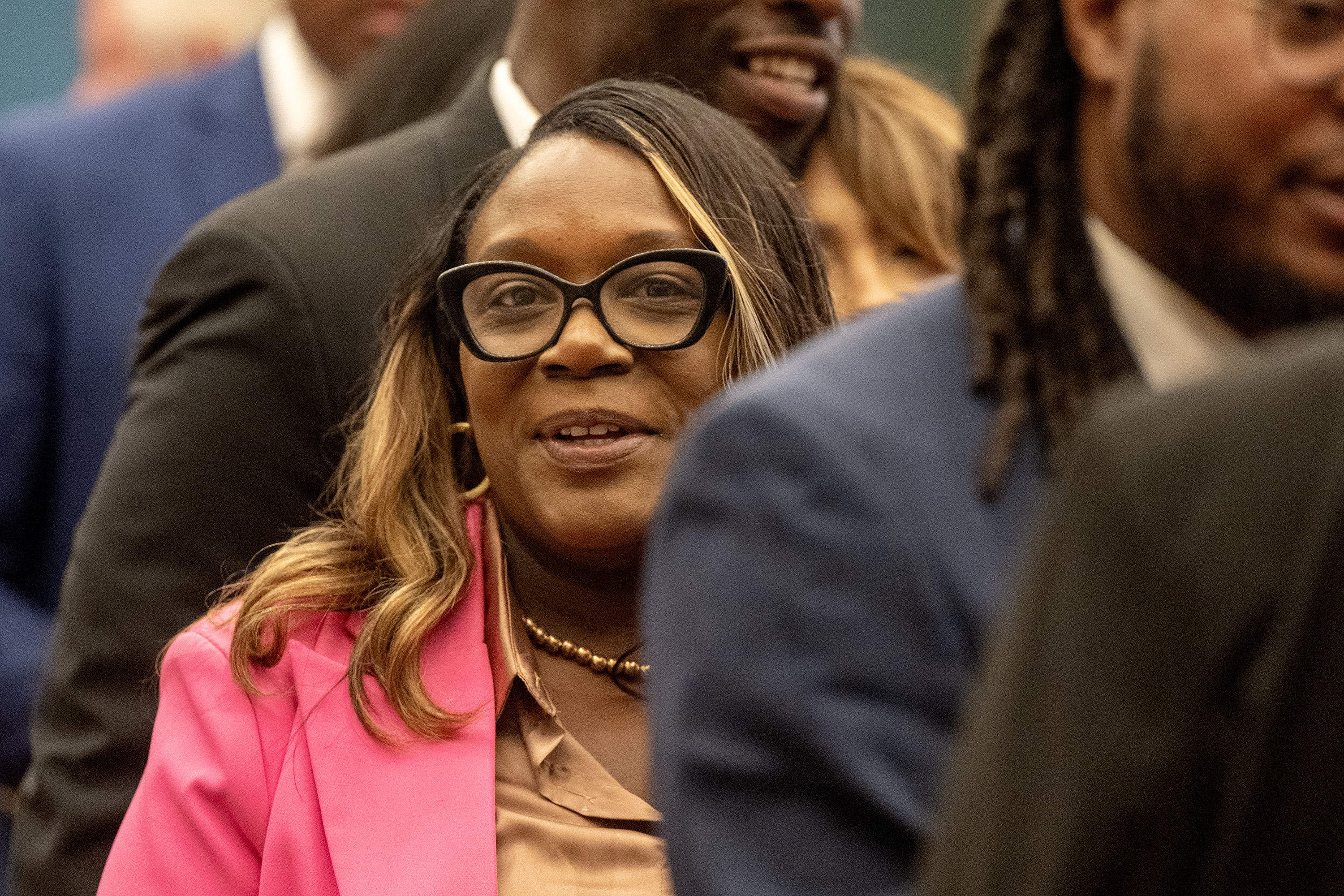
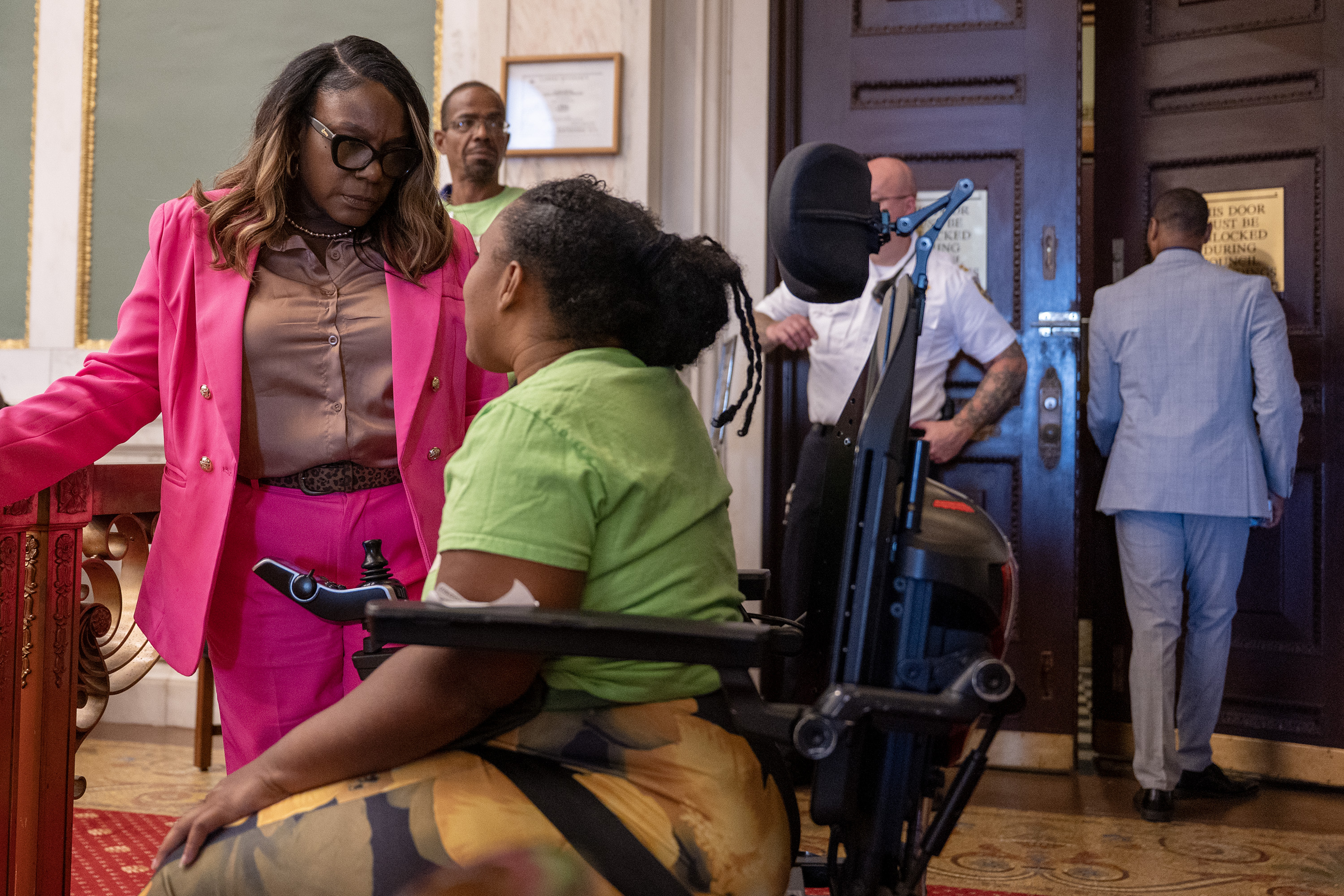
City Councilmember Kendra Brooks talks with Dominique Howell (right) in chambers as City Council returns for its fall session Thursday, Sept. 17, 2026. Howell is a long-time constituent and was there with the non-profit Liberty Resources, part of the Philadelphia Coalition for Affordable Communities.Tom Gralish / Staff Photographer
Several other leftist politicians in the city have been rumored to be considering running for mayor against Parker, but none have said publicly that they intend to launch a campaign.
One is District Attorney Larry Krasner, the third-term prosecutor who is one of the most prominent progressive district attorneys in the country. Krasner has been increasingly critical of Parker, and in June said that he would not rule out the possibility of running against her.
Correction: A previous version of this article incorrectly stated the steps Brooks would have to take to run in the Democratic mayoral primary. She could remain a registered member of the Working Families Party or switch her party registration.
After a federal judge said last week that Philadelphia District Attorney Larry Krasner may have committed federal crimes, questions quickly emerged about the prosecutor’s political future.
Krasner, an outspoken Democrat and one of the nation’s most well-known progressive prosecutors, has recently entertained entreaties to run for higher office, including a possible bid for Philadelphia mayor next year.
But in the week since U.S. District Judge Paul S. Diamond said he had referred Krasner and a top supervisor to the Department of Justice for investigation, Krasner has largely stayed quiet, and few elected Democrats have publicly come to his defense.
Behind the scenes, many insiders asked: Could this episode damage Krasner too much for him to mount a campaign for another office?
In a statement Tuesday, Krasner said he had already told another progressive considering a bid for mayor that he would defer to her.
“I’m a big believer in Councilmember Kendra Brooks,” Krasner said, referring to the City Council member who The Inquirer reported is considering a run for mayor. “Prior to these accusations, I told her that if she runs for mayor, I will not consider running.”
And he framed the legal conclusions by Diamond — a federal jurist appointed by former Republican President George W. Bush — as merely “accusations,” citing others who have been targeted for investigation by the Department of Justice under President Donald Trump.
He referenced the New York attorney general, a former FBI director, and a DOJ employee who was charged after throwing a sandwich at a federal agent and has since become a symbol of resistance to Trump’s administration.
“Ask Letitia James, James Comey, the ‘sandwich man’ or the guy who took peeling paint from the reflecting pool what they have to say about accusations,” Krasner said. “Or ask dozens of innocent people whose exonerations this DA’s office supported what they say about accusations.”
Krasner’s statement Tuesday was one of the first public comments he has made regarding the case since Diamond’s criminal referral, aside from a brief statement last week saying that he disagrees with Diamond’s conclusions and could not comment further because the matter is pending in court.
The uncertainty around Krasner alsohas some city Democrats contemplating a dramatic outcome: Could criminal charges or judicial discipline sweep Krasner from office before the end of his term in 2030?
And if that happened, who would replace him as the city’s chief law enforcement officer?
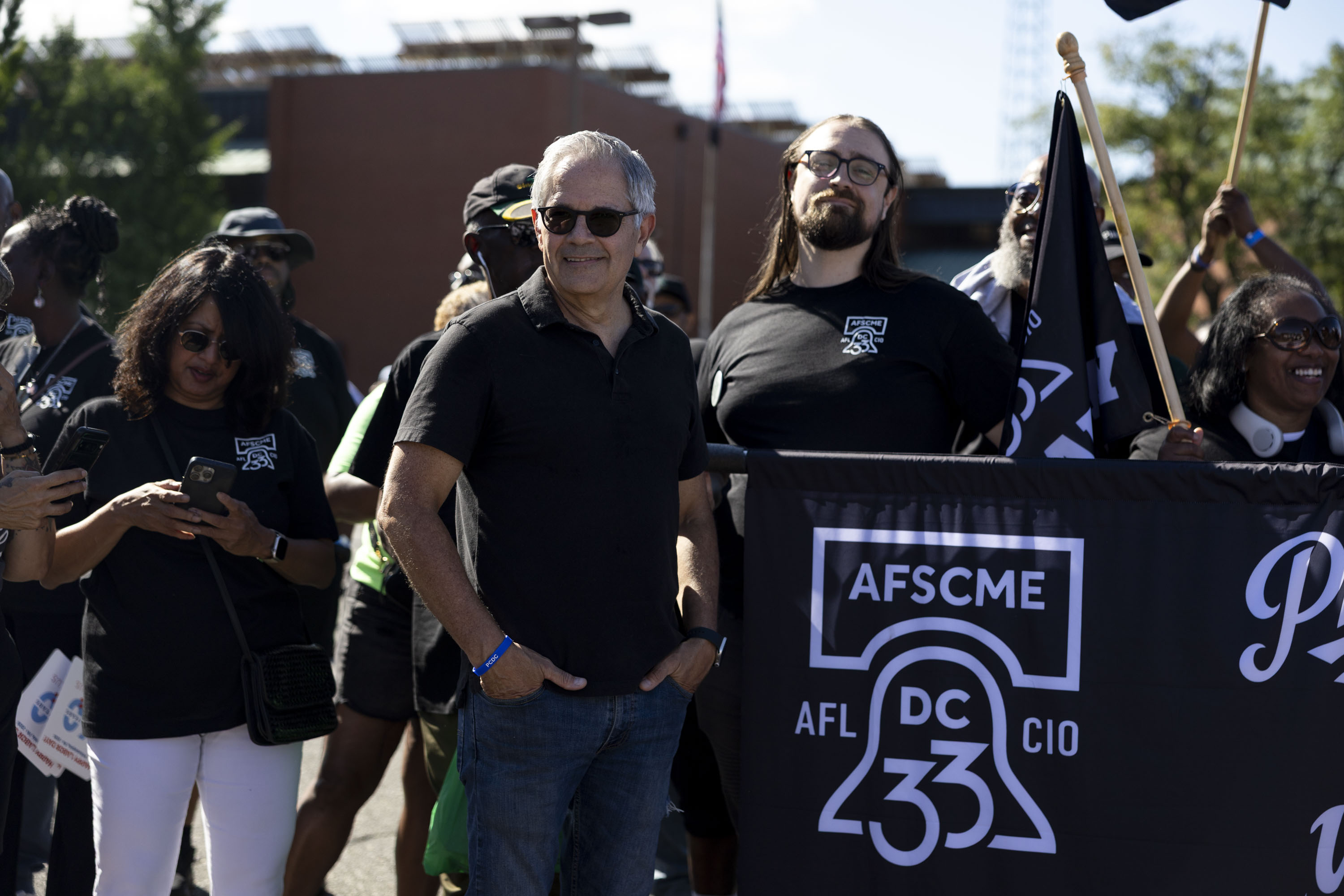
District Attorney Larry Krasner standing with District Council 33, for the 39th Annual Tri-State Labor Day Parade on Sept. 7.Tyger Williams / Staff Photographer
At least two elected Democrats have spoken to ward leaders about filling the district attorney’s role if Krasner were to be forced from office, according to sources familiar with the conversations who were not authorized to speak about them publicly.
But some of Krasner’s allies say this is all much ado about nothing. They maintain that Diamond’s legal conclusions and the referral of the matter to the Department of Justice were politically motivated and that Krasner will weather it, as he has past tribulations.
“They’re trying to do something that they’ve been trying to do for years, which is go after Krasner’s head,” said Sergio Cea, political director of the progressive group Reclaim Philadelphia, which has supported Krasner since his first run for office in 2017. “What they’re trying to do is roll back the gains that Philly voters pushed forward.”
Silence from elected officials
Krasner has always been something of a political outsider. He has never been endorsed by the city’s Democratic Party and has been critical of its leadership.
City Councilmember Nicolas O’Rourke, a member of the progressive Working Families Party and a longtime supporter of the district attorney, said in a statement Tuesday that he has confidence in Krasner’s ability to lead his office.
“There’s no question,” he said. “DA Krasner can and should be doing the work that Philadelphians have tasked him with through their votes.”
Aside from O’Rourke, most of the city’s top officials have declined requests for comment about Krasner’s recent legal jeopardy, including some of his ardent supporters.
Some say that Krasner has not asked them to weigh in, and that they are hesitant to take a position on a complex legal issue. Others say they do not want to distract from a midterm election that is just six weeks away.
Jack Inacker, a Democratic strategist based in Philadelphia, said he was not surprised that few elected Democrats have spoken on Krasner’s behalf.
“You’ve got these major dustups all the time, it seems now,” Inacker said. “Krasner being so antagonistic to everyone doesn’t get him allies.”
Inacker also said the courtroom allegations are “esoteric in nature,” making it challenging for elected officials to stake a position.
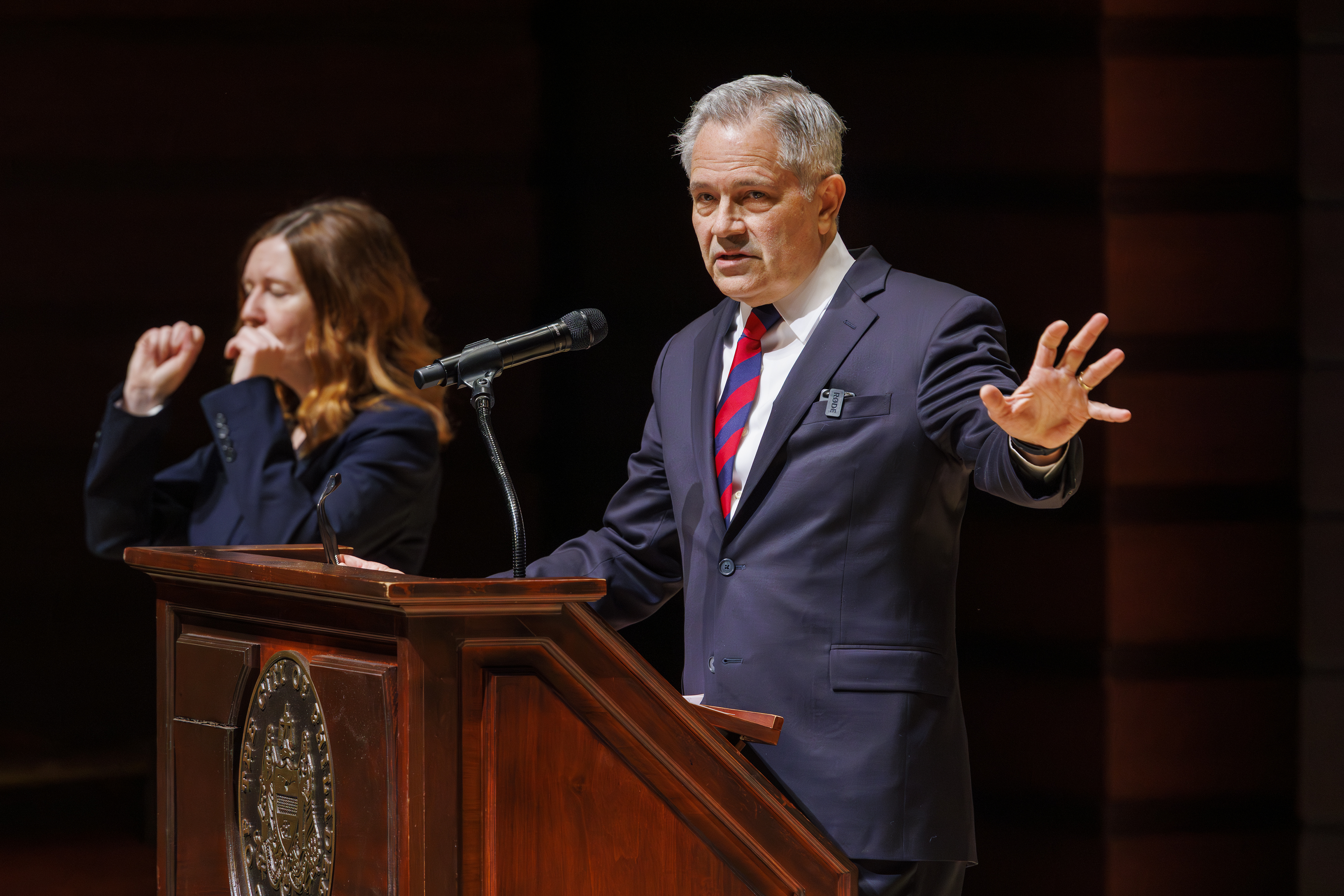
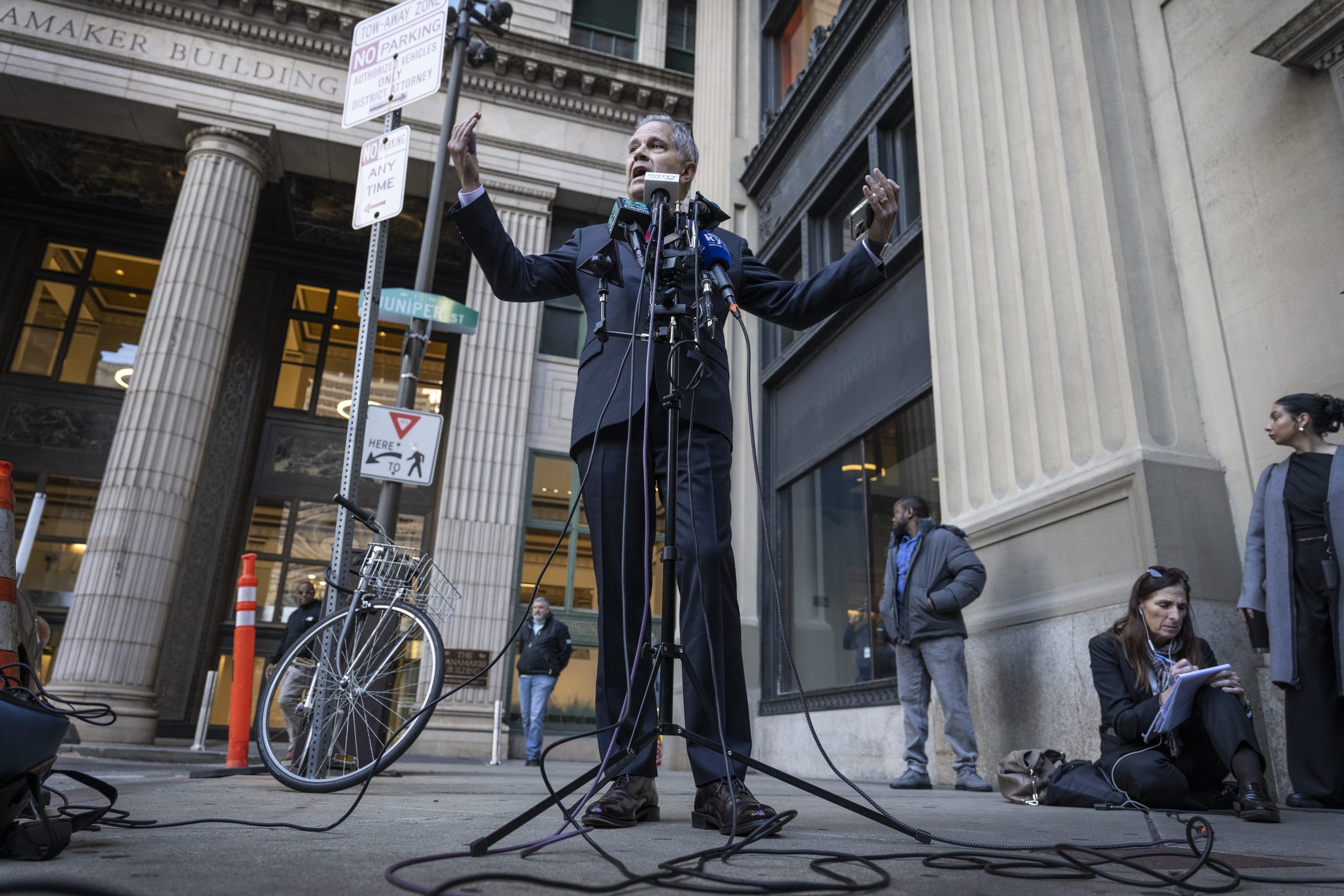
Newly reelected District Attorney Larry Krasner speaks to reporters during a news conference outside the District Attorney’s Office on Nov. 5, 2025.
The case before the federal judge centers on Dennis Johnson, who has sought for more than a decade to have his 2009 murder conviction overturned. In 2022, a former assistant district attorney working for Krasner filed paperwork to support Johnson’s bid.
But four supervisors in Krasner’s office later testified that they found errors in that 2022 brief, and that Krasner was involved in conversations about attempting to mislead the court to cast the former prosecutor as rogue.
Krasner has denied wrongdoing.
Brian Hart, a Democrat who has been critical of Krasner and served as a media adviser to Dugan’s campaign, said this episode is more fraught for Krasner than his 2022 impeachment.
“The allegations aren’t coming from just Republicans,” said Hart, a public relations strategist. “They’re coming from testimony within his own office.”
The mayor’s race question
Some activists on the left wing of the city’s Democratic Party have said they feel emboldened to mount a serious challenge against Parker, who will be up for reelection next year. They cite recent wins by progressives both in the city and nationally.
And eight months out from the May primary election, several prospective candidates, including Brooks, are mulling whether to launch a campaign.
When asked then whether he might consider a future campaign for mayor — or even U.S. Senate — Krasner responded: “Do I have a plan to run for these offices today? No. But … it would be foolish for me to completely rule out those possibilities.”
Philadelphia District Attorney Larry Krasner, seen here with Mayor Cherelle Parker at a news conference at Dilworth Park on Dec. 16, 2024.Alejandro A. Alvarez / Staff Photographer
Larry Ceisler, a public affairs executive based in Philadelphia, said a federal criminal investigation of Krasner could pose a logistical problem if it was conducted while he was running for mayor.
But politically speaking, Ceisler said, it might not be an impediment. An investigation by the Department of Justice under Trump — an entity many Democrats distrust — could rally progressive support.
“I think he would probably run with it as a badge of honor,” he said.
Ceisler pointed to former Mayor John F. Street, who in 2003 was locked in a tight race for reelection when police found an FBI bug in his office. Street blamed Republican President George W. Bush’s administration, and he went on to win the election a few weeks later.
“When these things happen, everybody puts on their respective jerseys, so the Krasner people are going to say, ‘It’s political,’” Ceisler said. “I think to the Krasner constituency, especially if he wants to run for mayor, or do something else, I don’t think this fazes them.”
Weighing a post-Krasner future
It is unclear where any potential criminal investigation or disciplinary probe of Krasner and his office might lead, and legal experts have said that a hypothetical investigation would likely take months.
But some Philadelphia Democrats are already contemplating what would happen if Krasner cannot finish the term that he began this year and that ends in 2030, with some quietly discussing contingency plans to fill the office.
Under state law, in the event of a vacancy, the city’s Common Pleas Court judges vote by secret ballot to appoint a new district attorney. The appointed interim district attorney would serve until the next general election. Those elections take place in even-numbered years.
During the three-week gap between when Williams resigned and Hodge was appointed, the district attorney’s office was led by Williams’ first assistant district attorney, Kathleen Martin.
Krasner does not have a first assistant district attorney. Robert Listenbee, who formerly held the role, retired in January, and the legally required position remains unfilled.
Staff writers Chris Palmer and Ellie Rushing contributed to this article.
One evening last week, City Council President Kenyatta Johnson stood on South Broad Street and greeted his fellow lawmakers as they arrived at Steak 48.
Johnson had invited them to the swanky Center City steakhouse to “reconnect, share conversation, and enjoy each other’s company outside of City Hall,” according to an invitation for the Sept. 9 “members only” event obtained by The Inquirer.
Council resumes for its fall session Thursday — and after the way things ended in the spring, the city’s legislators may have needed the opportunity to break bread together.
When lawmakers last met in June, they approved a $7.1 billion city budget that left all sides feeling dejected. Council turned away a series of tax proposals from Mayor Cherelle L. Parker, including a $1-per-ride levy on rideshare companies like Uber and Lyft, and ended up passing a budget that omitted a number of members’ own priorities and left unanswered how the city will help the Philadelphia School District navigate its funding crisis in the long run.
In addition to representing a new low in Parker’s relationship with the legislative body of which she was once a member, some Council members also questioned their own negotiating team’s handling of the ordeal.
Councilmember Mike Driscoll noted last week that while he was not “pointing fingers,” Council could have added more money in the budget for line items requested by lawmakers, such as funding for community groups.
“I’m disappointed and pissed off at the way it played out,” Driscoll, who represents parts of Northeast Philadelphia, said in an interview. “Our priorities weren’t analyzed in a more thoughtful [way]. … We do the amendments. [Parker] doesn’t. We could have put money in.”
Councilmember Michael Driscoll in Philadelphia on April 23, 2026.Jessica Griffin / Staff Photographer
An Inquirer reporter saw at least 11 of Council’s 17 members at the Steak 48 event, meaning a majority, or quorum, of Council was present. The Pennsylvania Open Meetings Act, or Sunshine Act, requires legislative bodies to notify the public if a quorum is present for a meeting at which official business is discussed.
But Johnson said at the beginning of the dinner that would not be happening.
“Tonight we do no official business,” Johnson said in an interview. “Just social. Welcome back to City Council. Eat and drink and be merry. No policy on the table. No legislation on the table. Just having a good time.”
Johnson’s invite directed members to RSVP to a Council staffer’s city email address. Johnson said his campaign picked up the tab.
“Everyone facing reelection next spring knows they have to be able to point to real accomplishments on the important issues voters care about,” City Hall lobbyist John C. Hawkins said. “And this fall is their last opportunity for them to address the most pressing issues that were not fully resolved in the spring budget process.”
Budget fight hangover
When Council and the mayor in the spring failed to reach a deal over new tax revenue to plug a $48 million hole in the school district’s budget, Johnson said Council had helped identify one-time savings in the city budget to fill the gap for a year while vowing to explore new recurring revenue streams for the district.
Johnson has not yet scheduled a hearing on schools funding, and Council’s dissatisfaction with the district appears to have been mounting.
Mayor Cherelle L. Parker, Council President Kenyatta Johnson, and Superintendent Tony B. Watlington Sr. arrive for an announcement at the School District of Philadelphia Headquarters on Wednesday, June 10, 2026 in Philadelphia.
He said in a statement this week that Council will honor its commitment, but also alluded to finding that money in the district’s own budget, despite school officials saying they are navigating a $300 million structural deficit.
Johnson said Council is awaiting the results of a performance audit of the school district that is being conducted by City Controller Christy Brady. He said that report “will help Council identify any available funds to support recurring funding.”
New arena, who dis?
In the fall of 2024, Council wasconsumed by the debate over the 76ers’ proposal to build an arena in Center City.
Lawmakers spent much of the session debating the economic benefit of the project, while opponents cried out that it would displace businesses and residents in nearby Chinatown.
Despite Council approving it, that project was scuttled by the Sixers, who instead teamed up with Comcast, which owns the Flyers, to plot a different project: a joint venture that would bring a new arena to the South Philly sports complex. Earlier this month, they released the first renderings of what the Spectrum-inspired arena could look like.
There will likely be spirited discussions about it all in Council — at some point. But don’t expect a redux this fall of the all-out brawl that was 2024.
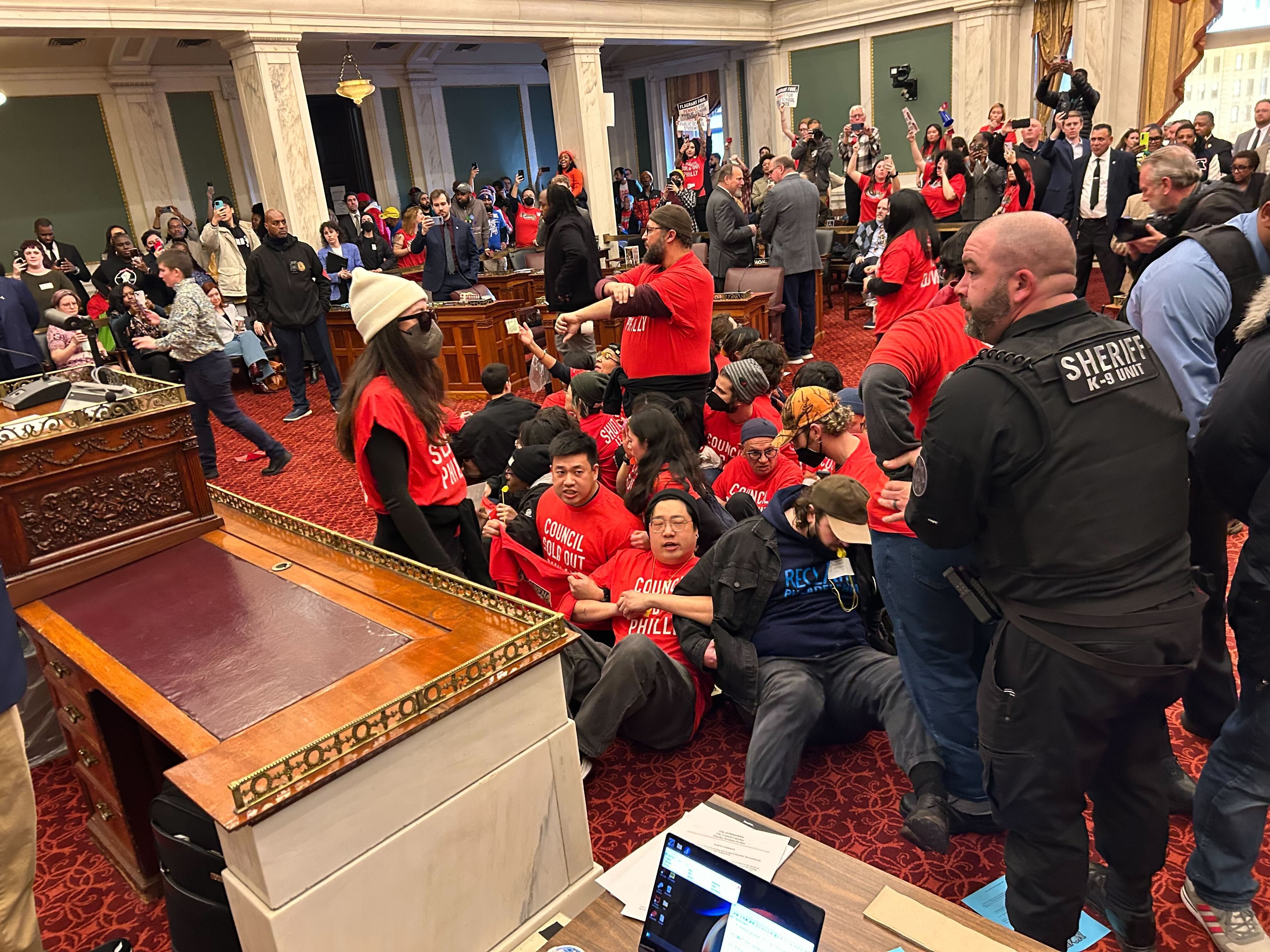
Protesters link arms as sheriff’s deputies attempt to remove them from Philadelphia City Council chambers as the council is scheduled to vote on final approval for the Sixers’ proposed Center City arena on Thursday, Dec. 19, 2024.Sean Collins Walsh / Staff
The stadium district falls in Johnson’s 2nd District, meaning it will be on him to introduce legislation that would green-light the project. And he has not been in a hurry to accommodate the Sixers’ timeline, which would be to approve the project as soon as possible so the venue can open by 2030.
Johnson said in a statement that “no zoning legislation is scheduled for introduction,” and that he is working to find consensus with the Parker administration and other Council members before introducing any legislation.
“I am focused on ensuring that any future legislation concerning the new arena addresses the interests and concerns of the community around the Stadium District and in Philadelphia,” he said.
When that legislation is brought forth, it is unlikely to be anywhere near as controversial as the 76ers’ Center City proposal, which drew opposition due to its proximity to Chinatown, so long as the teams uphold their promise to not seek public subsidies.
The Asian Pacific Islander Political Alliance, which led opposition to the Center City arena, released a statement earlier this month that signaled openness to the South Philly project.
“The people of South Philly should have a meaningful voice in whether and how this project moves forward,” said Will Gross, an API PA member who is rumored to be considering a run for Council. “And if it does, it should mean good union jobs, a strong community benefits agreement, and real benefits for the people who live and work in the neighborhood.”
Trash issue continues to burn
Councilmember Jamie Gauthier has spent the better part of the last year trying to whip up support for a bill that would ban the city from shipping off its trash to be burned at an incinerator in Chester, a longtime practice she and others say is poisoning residents of the city to Philadelphia’s south.
The Parker administration opposed the measure, saying it would limit the government’s ability to carry out its normal competitive bidding process and select the best-value contractor. Gauthier failed to get a majority of Council on her side, and she never called up the Stop Trashing Our Air Act for a vote.
This fall, she will try a new tactic.
Gauthier and her allies are attempting to kill the Parker administration’s effort to approve a new contract with Reworld, which operates the Chester waste-to-energy facility where the city sends about a third of its garbage. (The remainder is hauled off to landfills.)
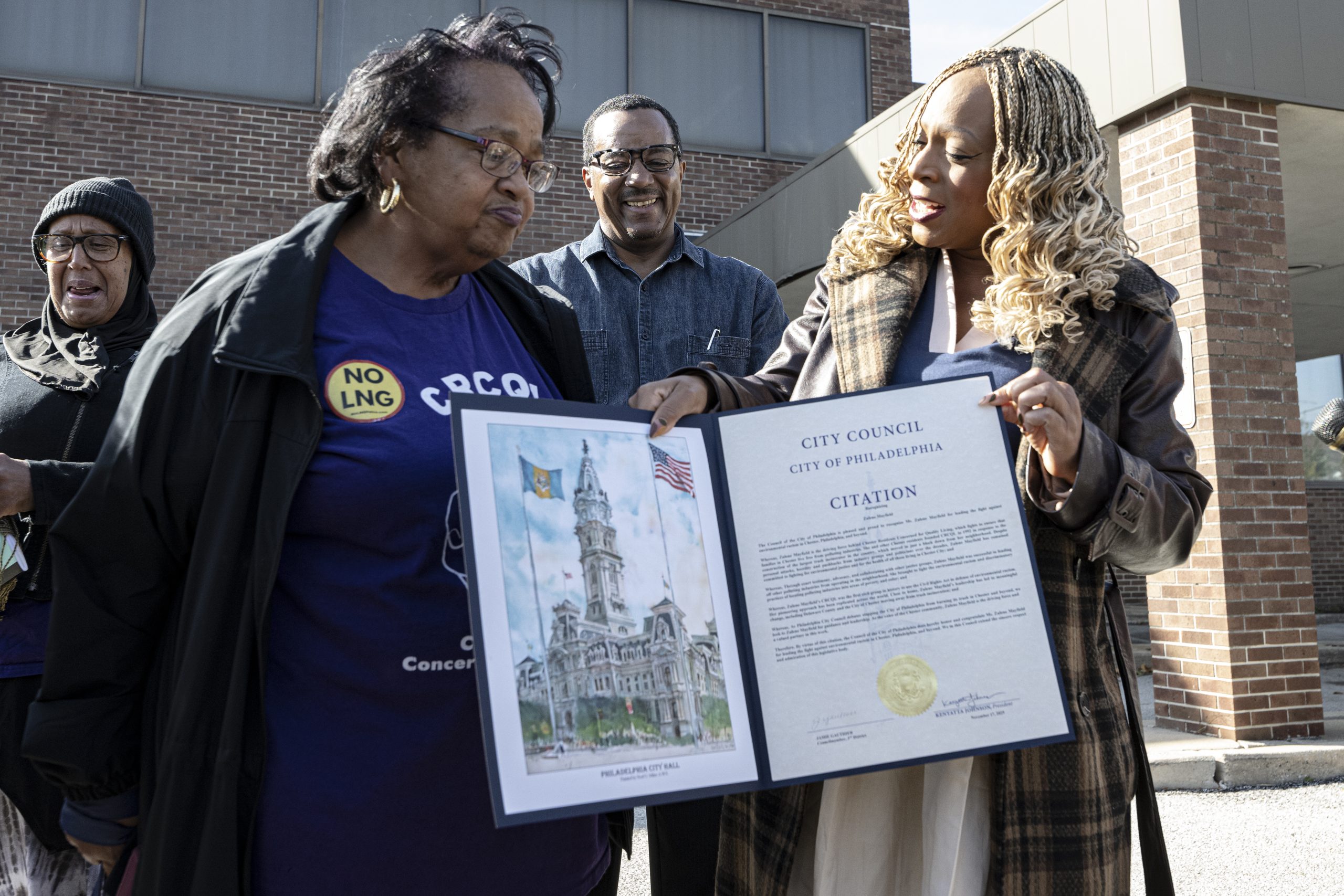
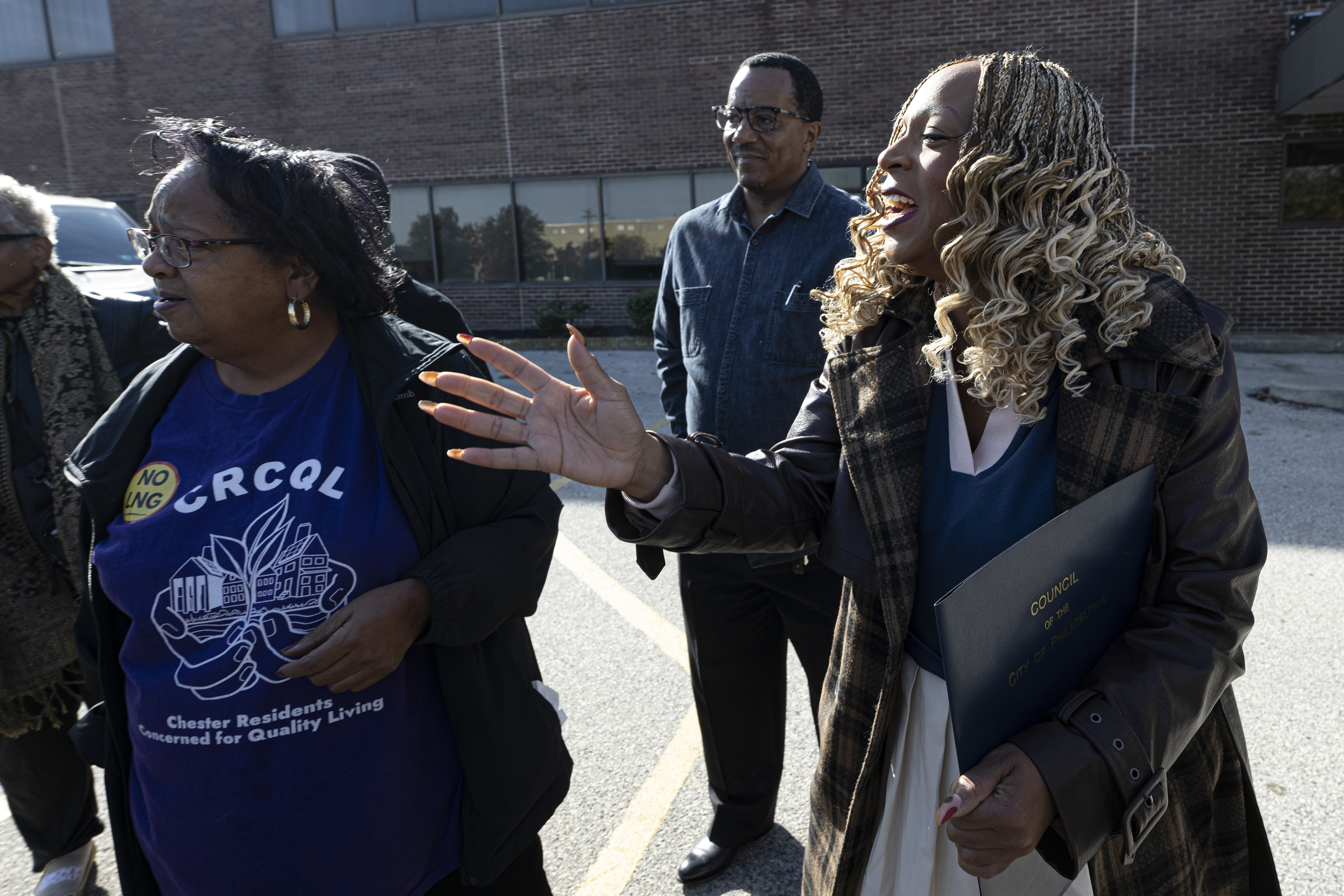
Chester resident Zulene Mayfield, left, Philadelphia Councilmember Jamie Gauthier, right, and Chester Mayor Stefan Roots meet to discuss Gauthier’s “Stop Trashing Our Air Act,” which would ban the city from incinerating waste, during a visit with lawmakers and staff in Chester, Pa., on Friday, Nov. 7, 2025.Jose F. Moreno / Staff Photographer
In July, the Parker administration announced that it intends to enter into a new four-year contract for waste processing and disposal with Reworld, as well as two landfill operators, Republic Services and Waste Management. The terms of those contracts have not yet been made public.
Council must approve multiyear contracts, and Gauthier, who represents parts of West and Southwest Philadelphia, said she is planning a full-court press to get her colleagues to “block Mayor Parker’s dirty deal with trash incinerators.”
The question is whether she can get eight other members on her side to reach a majority of Council. She is likely to find support from three fellow progressives, and she is expected to be joined by Councilmember Isaiah Thomas, the Democratic majority whip, at a Thursday news conference calling on the city to end its contract.
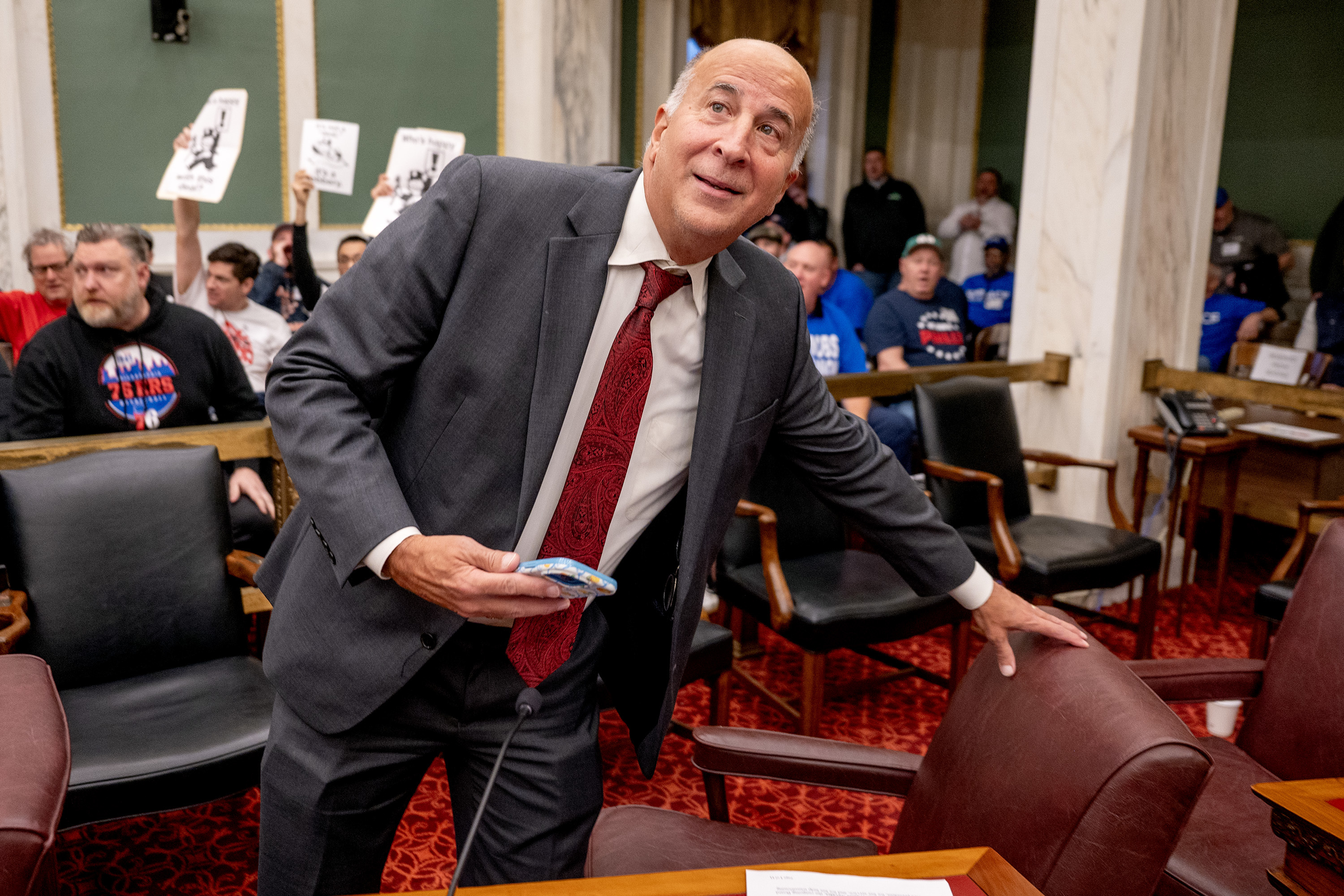
Councilmember Mark Squilla takes his seat in chambers Wednesday, Dec. 11, 2024, before a scheduled committee vote on Sixers arena related legislation was postponed,Tom Gralish / Staff Photographer
Meanwhile, Councilmember Mark Squilla said he has been working with the administration on a plan to build out a “circular waste” system that would replace incineration and landfilling over time with composting and waste “digestion.”
“The incinerator bill …. doesn’t solve a problem we have: to reduce our waste,” Squilla, whose district includes parts of Center City, South Philadelphia, and the river wards, said in an interview. “If we can reduce our waste by going to composting and digestion and other forms, we then eliminate all of our trash. Therefore end up with the result of what the goal should be, [which] is to get as close as possible to zero waste.”
Squilla’s proposal, which would involve “a long-term contract to attract providers to be able to build out a possible digester to decrease the amount of food waste,” could make it easier for Council members sympathetic to Gauthier’s goals but skeptical of her incinerator bill to approve the administration’s contract with Reworld while committing to a long-term solution.
The business tax, revisited
Separate from the school district revenue, some Council members are hoping to advance measures that would provide tax relief to businesses.
Council two years ago approved a 13-year schedule of rate cuts that would dramatically reduce the business income and receipts tax. But at the same time, Parker moved to eliminate a tax break that primarily helped small businesses after its legality under the Pennsylvania Constitution was challenged in court.
The elimination of the tax break — which excluded from taxation companies’ first $100,000 in revenue — has forced thousands of small firms and sole proprietors that make less than that threshold to begin paying a tax from which they had been effectively exempted.
Driscoll worked with tax experts to find a workaround that could pass legal muster — exempting certain types of businesses, such as sole proprietors, from the tax entirely — and he is planning to call up for a vote his bill this fall.
Thomas, meanwhile, said he will introduce a resolution Thursday to hold hearings this fall on the feasibility of reducing the net income portion of the business tax “much sooner” and more “aggressively,” meaning an acceleration of the tax cuts already scheduled.
The measures are likely to spark opposition from more progressive members of Council and could be tricky to navigate for Parker, who wants to make Philly more business-friendly but may not want to forgo additional revenue.
Members eye priorities as election looms
With next year’s election looming — and all 17 members indicating they intend to seek new four-year terms — the fall session is also likely to see movement on a myriad of issues championed by individual legislators.
Majority Leader Katherine Gilmore Richardson said she will propose bills to “protect communities from harmful nuisance businesses and improve processes around code violations,” continuing her efforts to crack down on businesses that neighbors say attract crime.
Councilmember Rue Landau, who represents the city at-large, said she is “tackling the impact of emerging technologies, making Philadelphia more affordable for working people, and ensuring equity remains at the center of how we serve our LGBTQ+ communities.”
Landau said she also plans to introduce a resolution calling on the state to ban automated license plate readers like Flock cameras.
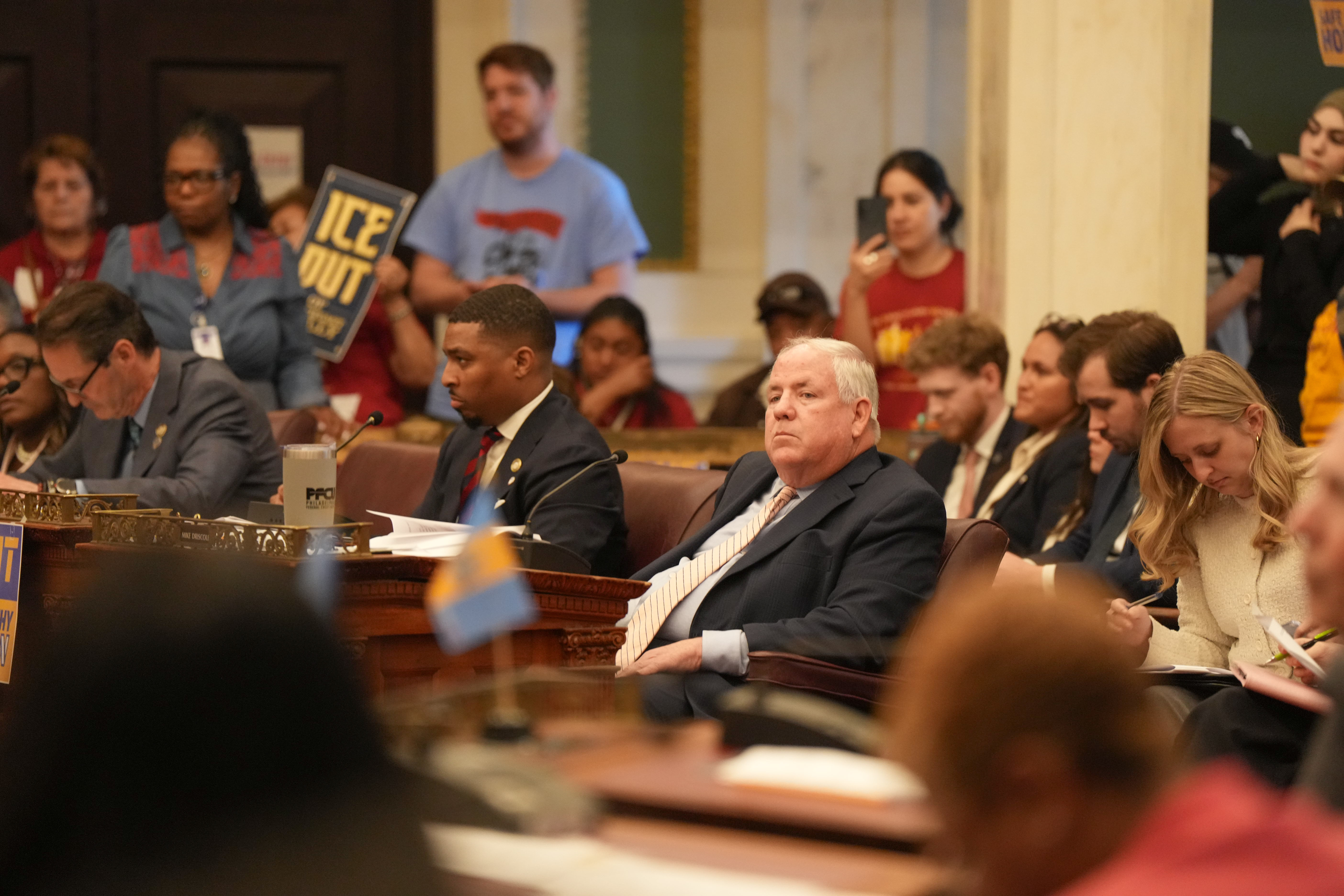
The Philadelphia Council members inside the caucus inside City Hall in Philadelphia, Pa on Thursday, June 11, 2026.
And Councilmember Kendra Brooks will propose new protections for temporary workers and tenants facing eviction, according to her spokesperson, Kathleen Melville.
Brooks, a progressive who represents the city at-large, will also fight for additional funding for reproductive healthcare providers, a priority of hers that was left out of the budget following Council’s impasse with Parker, Melville said.
“That was her biggest focus going into the budget,” Melville said. “She had the same experience as every other Council member in that none of her budget priorities made it into the budget.”
Several members have also said that they want to bolster the city’s property tax relief offerings after the administration this summer released its citywide assessments that will mean higher taxes for thousands of homeowners.
The most likely move would be for Council to amend the city’s tax code to increase the popular homestead exemption, which currently exempts the first $100,000 from a home’s taxable value if the owner lives in the dwelling as their primary residence.
Johnson said Council “will review all tax-relief options” this fall.
CHESTER — Like a Ben Franklin impersonator waving at Independence Hall and the Liberty Bell, tour guide B. Preston Lyles directed the tour group’s attention to various landmarks as they passed by.
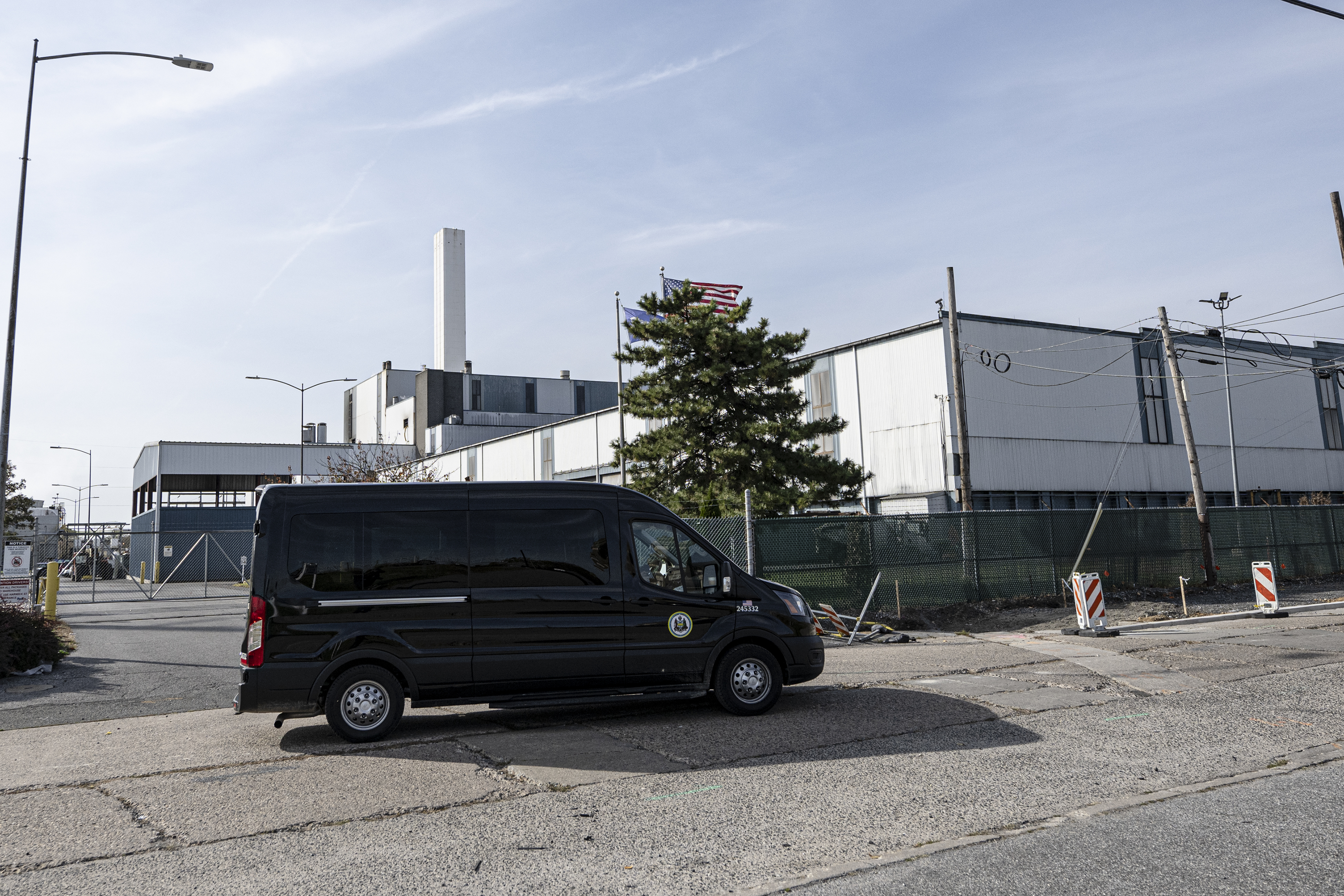
But instead of highlighting monuments that made locals swell with pride, Lyles was pointing to sites he said made thepeople of Chester get sick and die younger: power plants, an oil refinery, a sewage sludge-burning facility, and — most relevantly for Friday’s group — the Reworld trash incinerator, the destination for about a third of the rubbish collected by Philadelphia’s city government.
“Chester City is known as one of the nation’s worst cases of environmental racism,” Lyles, an organizer for Delco Environmental Justice, told the group, referring to the concentration of polluting industries in Black and brown communities. “It is not just because the city holds the nation’s largest waste incinerator, but due to an extreme concentration of toxic industries in and adjacent to such a small city.”
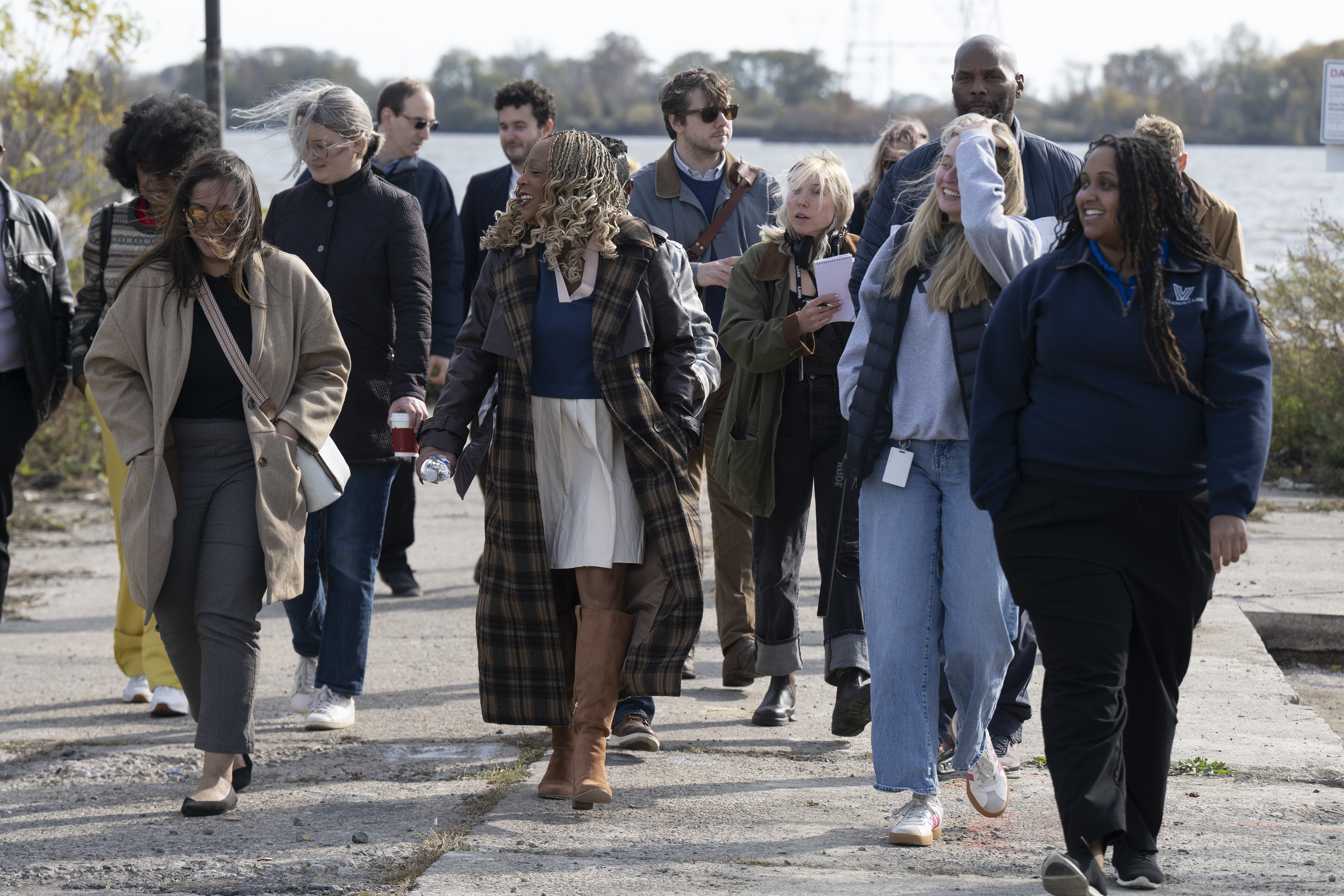
Philadelphia Councilmember Jamie Gauthier tours Chester to discuss her “Stop Trashing Our Air Act,” which would ban the city from incinerating waste, during a visit with lawmakers and staff in Chester, Pa., on Friday, Nov. 7, 2025.Jose F. Moreno / Staff Photographer
“From a justice and fairness perspective, it just seems so wrong to me and so obvious,” said Gauthier, who was joined on the tour by Councilmember Kendra Brooks and staffers for other lawmakers. “Seeing the incinerator on the waterfront and all of these other dirty uses and the abandoned homes, that made me want to do this more, because it’s wrong. It’s wrong that people should be loaded down with all these toxic uses.”
Reworld in 2024 burned more than 355,000 tons of trash collected by the city. Its contract with Philadelphia ends in June 2026.
Gauthier has introduced a bill, the Stop Trashing Our Air Act, that would prohibit the city from incinerating trash, and Council’s Committee on the Environment, which she chairs, will likely hold a hearing on it this fall.
Reworld spokesperson Linda Ribakusky said the company is a “leading sustainable waste solutions provider.” The Chester facility, she said, offers “a more sustainable alternative to landfilling by converting waste into renewable energy and recovering valuable metals that would otherwise be lost.”
“The Reworld Delaware Valley facility helps reduce greenhouse gases by avoiding landfill methane and generates enough clean electricity to power more than 50,000 local homes each year,” Ribakusky said in a statement. “We are proud to be an active part of the Chester community. Working alongside local schools, nonprofits, neighbors, and community organizations, we support initiatives that create real impact.”
‘Now is the time’
The Philadelphia Sanitation Department collects and disposes of about half of the city’s waste, said Michael Ewall, founder of the Philly-based Energy Justice Network. The other half is handled by private haulers hired by businesses and owners of larger residential properties.
Under its contract, Reworld takes one-third of the municipally collected trash to the Chester incinerator, which the company says produces about 87 megawatts of electricity, enough to power 52,000 homes, while burning the waste. WM, which operates a major landfill in Bucks County’s Falls Township, takes the other two-thirds.
When the most recent contracts were signed in 2019, the city agreed to pay roughly $65 per ton of trash to both Reworld, which was then known as Covanta, and WM, formerly Waste Management.
Gauthier said she has had constructive conversations with Mayor Cherelle L. Parker’s administration about eliminating incineration from the city’s waste management operations, and is hopeful the city will include environmental justice concerns in its request for proposals for the new contracts.
Parker’s office did not respond to a request for comment.
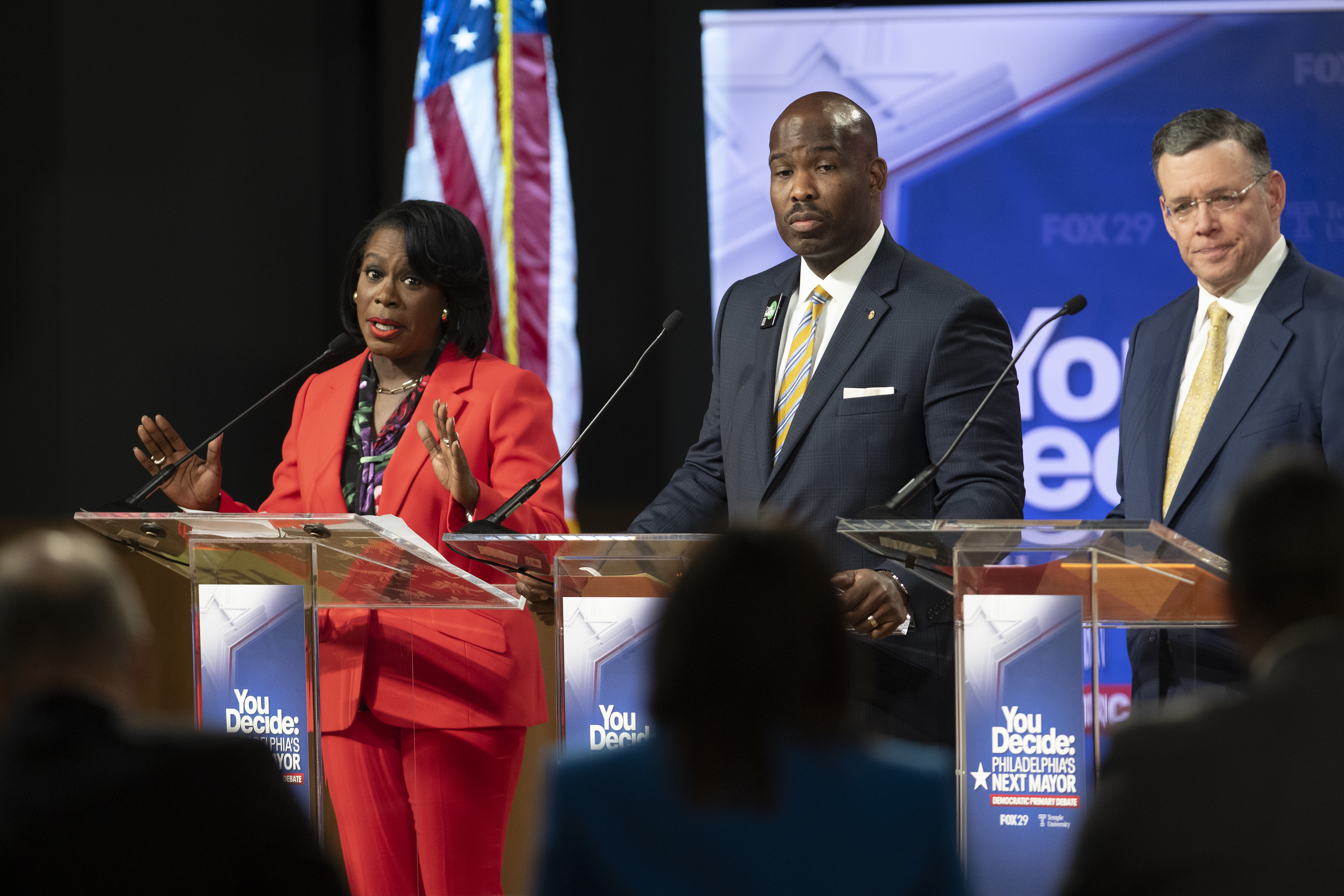
The Chester incinerator provided a flashpoint in the 2023 mayoral election, which Parker won. During a debate, a moderator asked candidate Jeff Brown about the incinerator, prompting Brown to say, in part, “The trash has to go somewhere.”
In a debate performance that was key to her rise and Brown’s downfall in the race, Parker was among the candidates who pounced on the soon-to-be-infamous comment.
Top candidates for the Philadelphia mayor seat former City Council Member Cherelle Parker, left, Former City Council Member Derek Green, and businessman Jeff Brown, during a televised debate at the Temple performing arts center in Philadelphia, Pa. Tuesday, April 11, 2023.Jose F. Moreno / Staff Photographer
During the debate, however, Parker was not asked directly if she would commit to ending the city’s contract with Reworld.
“I was enthused to hear our mayor speak about this on the campaign trail,” Gauthier said. “I hope we all want to do the right thing. Now is the time to show that.”
Environmental advocates contend that neither landfills nor incinerators are good for the environment and urge municipalities to focus on reducing waste in the first place. For instance, Ewall, who developed a policy platform called the Zero Waste Hierarchy, pointed out that thousands of communities now charge residents for each bag of trash just as utilities charge for each gallon of water or kilowatt of electricity.
But for the “residuals” that do need to be collected, advocates have generally coalesced around the conclusion that incineration is more harmful than landfilling, Ewall said.
Delaware County, which adopted a Zero Waste Plan in September, commissioned a 2021 study that found incineration was the costliest of its waste-disposal options, from both a health perspective and a financial one.
The county determined that each ton of trash burned at the incinerator produced $234 to $337 in health and environmental costs. The impact from landfilling, meanwhile, was $144 per ton.
‘Reverse the environmental tragedy’
Founded by William Penn, Chester is the oldest city in Pennsylvania. But over the last century, it has become a hub for some of the region’s least-wanted uses, including polluting manufacturers, fossil fuel facilities, a state prison, and, since the early 1990s, the incinerator. About 69% of Chester’s 33,000 residents are Black, and 31% live below the federal poverty line.
“We hope that Philadelphia is listening in a strong way … as we attempt to reverse the environmental tragedy that has occurred here in the last 3½ decades due to the incineration of trash,” Chester Mayor Stefan Roots said Friday. “It’s an old technology, and it’s time for it to go. Especially in a community like Chester that’s looking to develop, it’s one of our biggest impediments.”
Chester resident Zulene Mayfield, left, Philadelphia Councilmember Jamie Gauthier, right, and Chester Mayor Stefan Roots meet to discuss Gauthier’s “Stop Trashing Our Air Act,” which would ban the city from incinerating waste, during a visit with lawmakers and staff in Chester, Pa., on Friday, Nov. 7, 2025.Jose F. Moreno / Staff Photographer
About 31% of the trash the incinerator burned in 2024 comes from Philly, with Delaware County accounting for 28% and New York City 26%.
During the tour, Lyles explained how environmental racism can occur even if decision-makers are not consciously prejudiced against certain communities, because wealthier areas often organize to prevent polluting industries in their backyards.
“In the late 1990s, there were about 60 proposals for new gas-fired power plants in PA. Only 16 of them were built,” he said. “Most of them faced a stiff opposition from community groups in suburban and rural areas, but those on either side of Chester went in with no organized opposition.”
The final stop on the tour was a row of boarded-up and dilapidated homes along a railroad used for industrial purposes near the edge of the incinerator property. The homes started emptying out in the early 2000s, Ewall said, and the last was abandoned a few years ago.
He recalled meeting one of the last residents to leave.
“She had six grandchildren. She lived with her granddaughter, around 14, and one of the times I met her, had an oxygen tank that she would carry around with her just to be able to breathe,” Ewall said. “They just kind of disappeared one day, and I saw a boarded house.”