Tag: Kendra Brooks

  • Pa. Democrats have mostly positive view of socialism as progressive candidates secure wins

    Pa. Democrats have mostly positive view of socialism as progressive candidates secure wins

    With recent victories by democratic socialists nationwide prompting a fierce debate about the future of the Democratic Party, most Democrats in Pennsylvania have a positive view of socialism — and nearly 40% consider themselves to be a democratic socialist, a new poll found.

    Still, socialism remains broadly unpopular among all voters in the key swing state, according to the poll, conducted by Siena University on behalf of The Inquirer and the New York Times.

    About one-third of likely voters in the midterm elections this fall have a favorable view of socialism and 56% have an unfavorable view. That result closely mirrors a recent national poll from the New York Times and Siena University, raising questions about the appeal of socialism to a wider swath of voters.

    But as Philadelphians prepare to send a democratic socialist to Congress for the first time — and also as talk builds of a larger wave of progressivism across the state — 57% of Democratic likely voters in Pennsylvania have a favorable view of socialism and 24% have an unfavorable view, the poll found.

    “We’re more popular than ever,” said Dan Parker, cochair of Philadelphia’s chapter of the Democratic Socialists of America (DSA). “But we still have a long way to go.”

    (function(){function e(){window.addEventListener(`message`,function(e){if(e.data[`datawrapper-height`]!==void 0){var t=document.querySelectorAll(`iframe`);for(var n in e.data[`datawrapper-height`])for(var r=0,i;i=t[r];r++)if(i.contentWindow===e.source){var a=e.data[`datawrapper-height`][n]+`px`;i.style.height=a}}})}e()})();

    The survey of 615 likely Pennsylvania voters conducted from Sept. 15 through 21 comes amid a surge of leftist victories both locally and across the country.

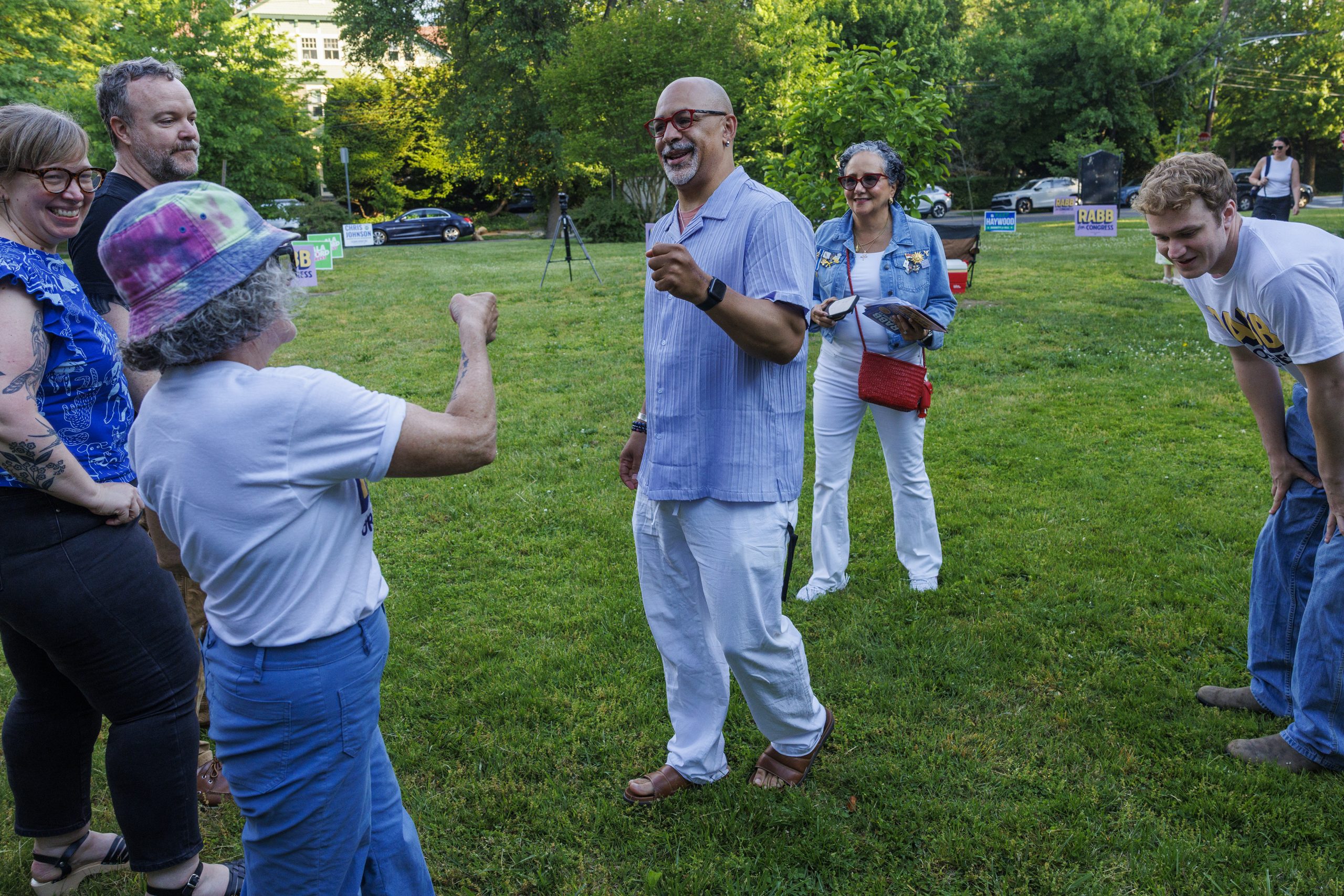
    State Rep. Chris Rabb defeated a pair of more moderate candidates in Philadelphia’s highly competitive congressional primary in May. A democratic socialist, Rabb is highly favored to win in the general election and has spent the months since his primary campaigning for other like-minded candidates.

    Nearly all of those candidates — from Abdul El-Sayed in the high-stakes Michigan U.S. Senate race to a pair of New York candidates boosted by Mayor Zohran Mamdani — have also won their primaries as Rabb and his allies look to grow the ranks of progressives starting on Capitol Hill in January.

    Beyond the next Congress, the leftist wing of the party is hoping for momentum heading into the 2028 races for president and Pennsylvania’s U.S. Senate seat held by Democratic Sen. John Fetterman, who has antagonized socialists and made appeals to Republicans.

    “The mainstream Democratic establishment candidates are telling us time and time again to settle for less, to expect nothing other than the status quo,” Parker said. “People are looking for a different set of politics that speaks to their material needs and to the values of freedom that many are striving for.”

    Parker said Philadelphia DSA has been “exploding” since Rabb’s victory. The group mobilized hundreds of volunteers to knock between 75,000 and 100,000 doors during his campaign, and more than 750 new members have joined since May to put the chapter’s total ranks at about 3,000, he said.
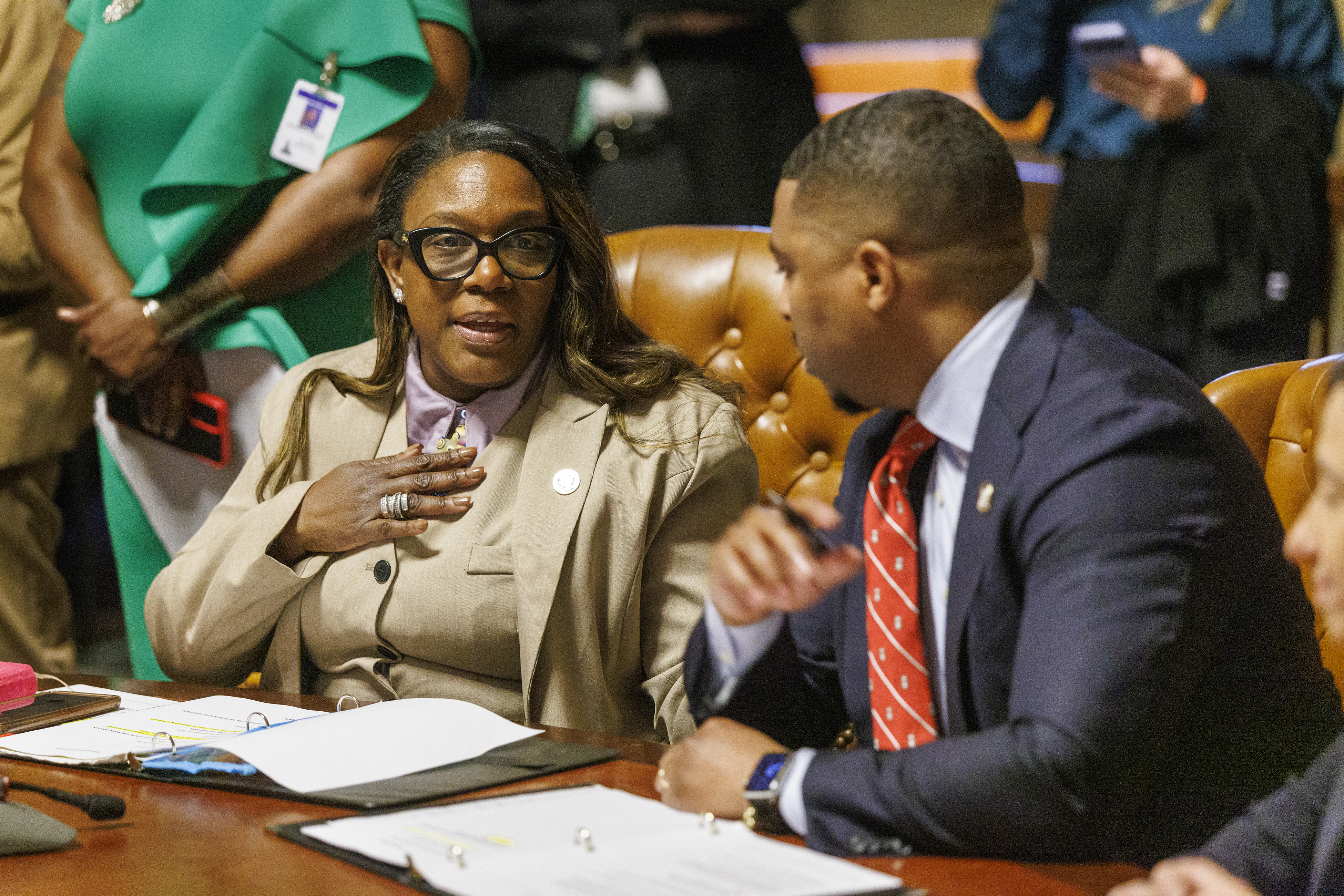
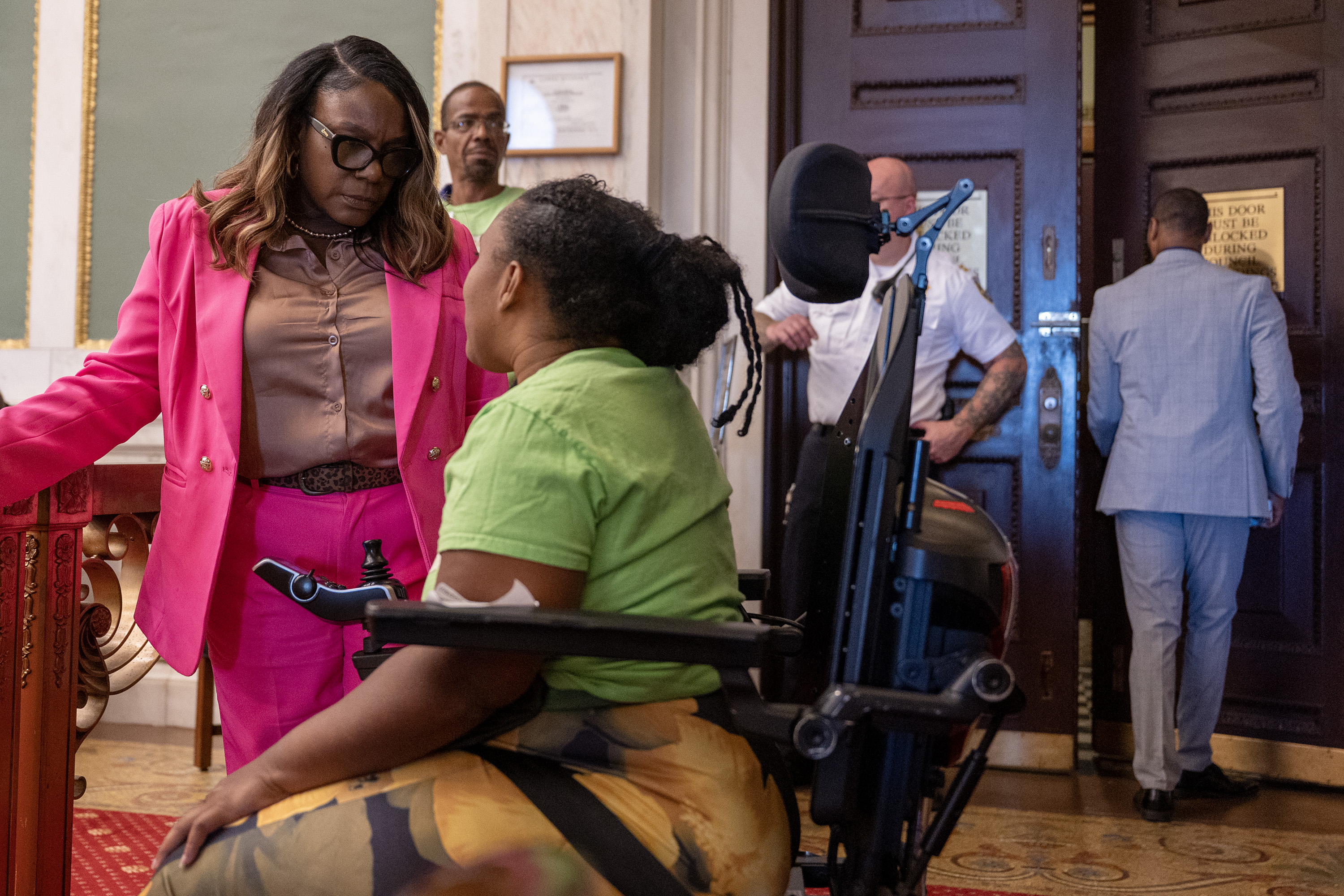
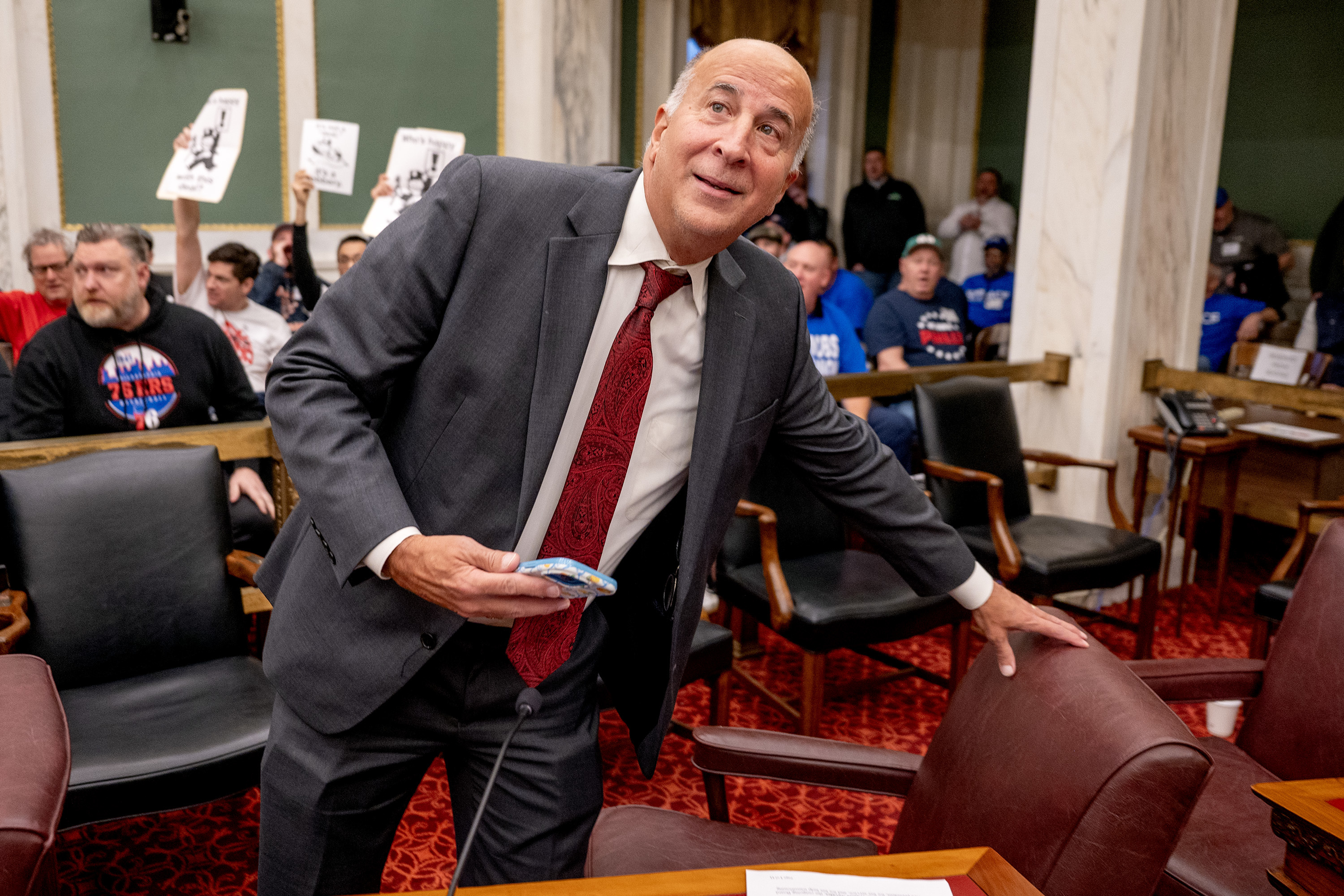
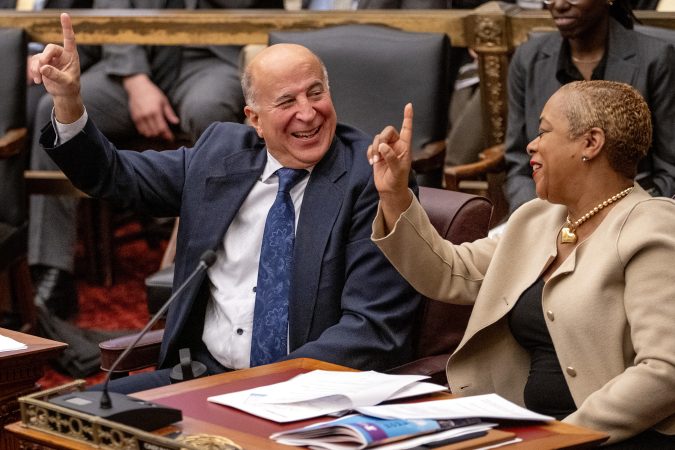
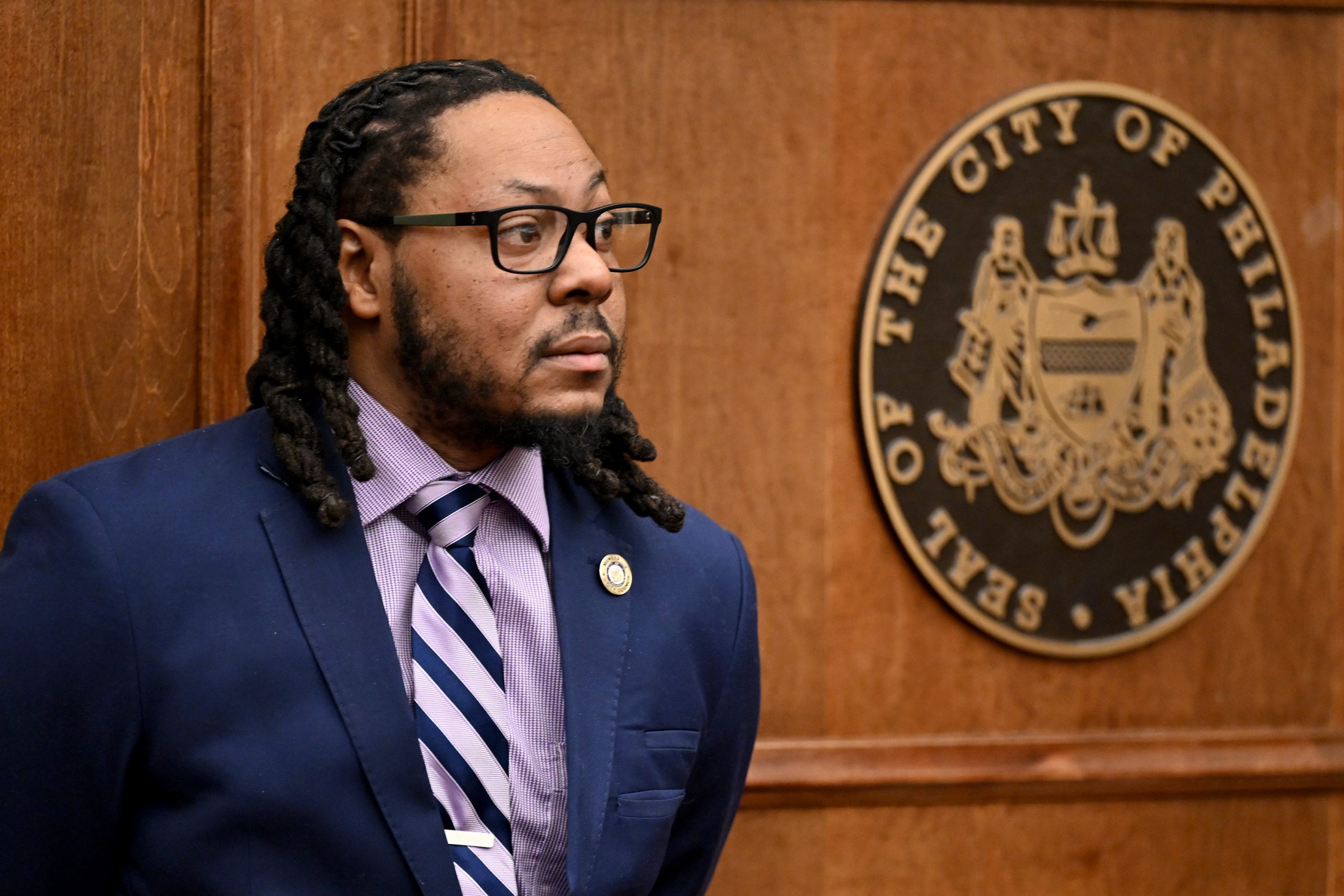
    Councilmember Kendra Brooks speaks with colleague Nicolas O’Rourke during a March 12 caucus session. Alejandro A. Alvarez / Staff Photographer

    Rabb’s success follow that of Pittsburgh’s U.S. Rep. Summer Lee, who was first elected to Congress with DSA support in 2022. Other DSA-backed elected officials include Philadelphia City Councilmembers Kendra Brooks and Nicolas O’Rourke, as well as State Sen. Nikil Saval, while new primary victories this year include Mark Pinsley and Ce-Ce Gerlach in Lehigh Valley-based legislative races.

    Further growth, Parker said, will come with DSA-backed candidates working in office to “prove that government can exist to serve ordinary people.”

    On that agenda: Advocating for universal healthcare, affordable housing, progressive tax policies, defunding and ultimately abolishing ICE, and ending the wars in Iran and Gaza.

    “What makes DSA distinct — and democratic socialism as a political movement distinct — is that it’s not really just about who has the right ideas,” Parker said. “It’s about a theory of change that puts the vast majority of society in the driver’s seat.”

    (function(){function e(){window.addEventListener(`message`,function(e){if(e.data[`datawrapper-height`]!==void 0){var t=document.querySelectorAll(`iframe`);for(var n in e.data[`datawrapper-height`])for(var r=0,i;i=t[r];r++)if(i.contentWindow===e.source){var a=e.data[`datawrapper-height`][n]+`px`;i.style.height=a}}})}e()})();

    As Democrats look to retake control of Congress and the White House, how much influence that movement will yield remains an open question.

    Moderates like Gov. Josh Shapiro, a potential 2028 Democratic presidential candidate, have acknowledged the energy on the left while advocating for a more centrist approach. Shapiro said this summer that the progressive candidates were practicing “performative politics” and would need to deliver if elected. He has also said he expects the party to have the most significant “battle over what we believe in” in more than three decades as the next presidential race gets underway.

    The latest poll shows the party’s base remains divided in Pennsylvania.

    While Democrats in the state remain split in their views of socialism, 38% consider themselves to be a democratic socialist while 57% do not, the poll found. Just over half of Democrats see their party as divided and 45% believe it’s united.

    ‘A tiny, tiny fraction’

    Some observers also cautioned that the number of self-identifying democratic socialists across all of Pennsylvania — a swing state that has largely elected moderates to statewide office — may appear larger than reality. The poll did not define democratic socialism, for one. And progressives have been overrepresented in other polling this year, including in Wisconsin and Michigan, said Lew Irwin, a political science professor at Duquesne University in Pittsburgh.

    “A lot of people will claim an affiliation when they actually have an affinity,” Irwin said, adding that it’s still become “increasingly mainstream and acceptable inside the Democratic Party” to identify as socialist.

    J.J. Balaban, a Philadelphia-based ad maker for more moderate Democrats like U.S. Rep. Brendan Boyle, pointed to the fact that even with the additional energy on the left, the vast majority of Democrats in Washington next year will not be socialist.

    “We’re talking about a tiny, tiny fraction of the Democratic caucus,” he said.

    Balaban said that is one of the reasons why Republicans’ campaign messaging may also not be effective as they try to defend their majorities in the November midterm elections. Republicans have branded all kinds of Democrats as socialists — repeatedly denouncing the entire party as far left and “communist” in its agenda.

    One of the main characters featured in those attacks has been Hasan Piker, the controversial leftist streamer who campaigned with Rabb and other candidates this year. His visit to Philadelphia in April drew hundreds of young progressives but was condemned by Rabb’s opponents and Jewish groups who consider his views antisemitic.
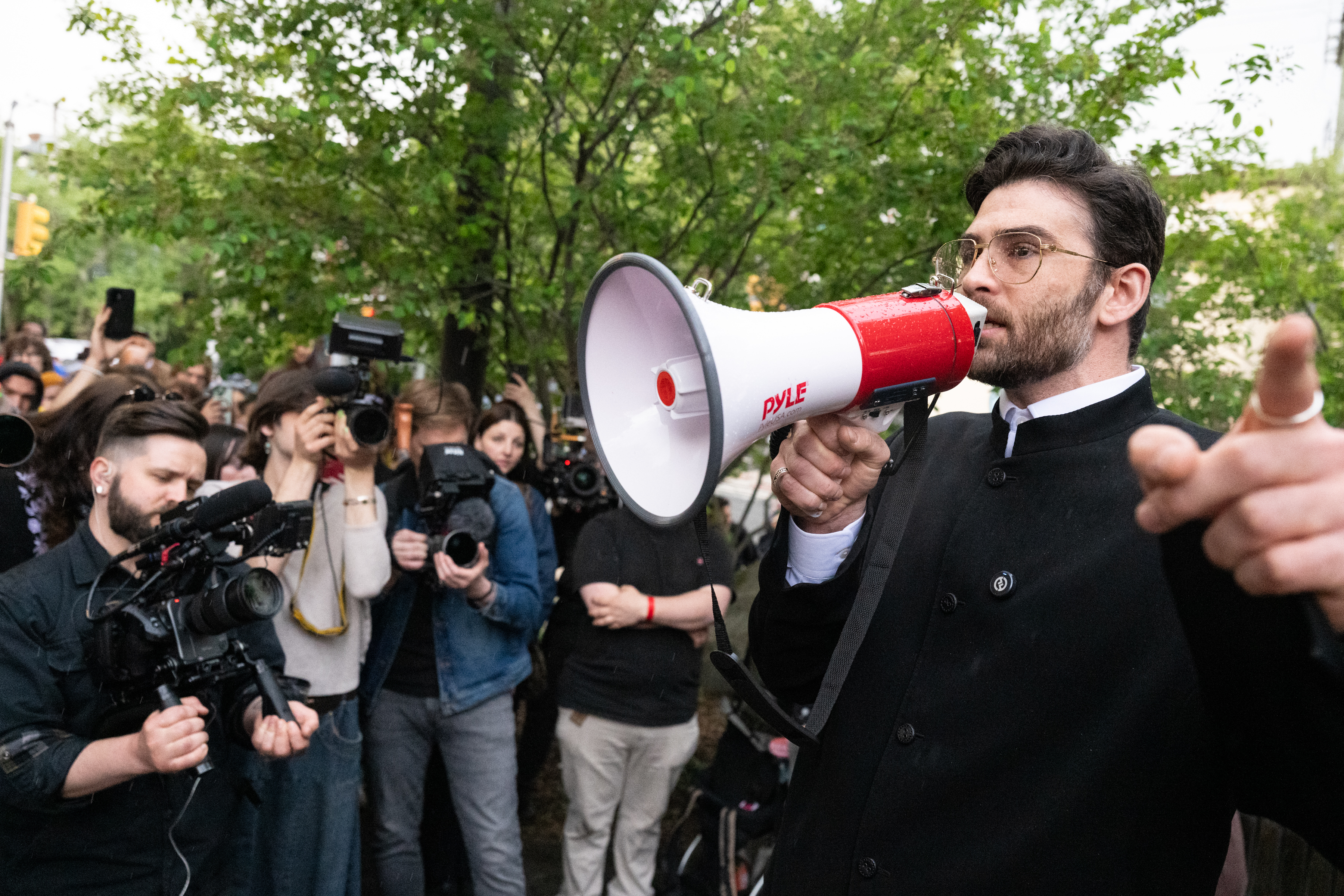
    Online influencer Hasan Piker speaks to attendees at an April 30 fundraiser for State Rep. Chris Rabb’s 2026 congressional campaign at Renata’s Kitchen in West Philadelphia.Erin Blewett / For The Inquirer

    Piker’s support of El-Sayed has become a dominant issue in the Michigan race, but the poll of Pennsylvania voters shows he is mostly unknown in the Keystone State.

    Among Pennsylvania likely voters, 23% had an unfavorable view of Piker and 6% had a favorable view. Two-thirds said they had not heard of him — and a higher share of Republicans knew him compared to Democrats.

    “He is a much greater part of the discourse in the Fox cinematic universe than he is in actual Democratic discourse,” Balaban said.

    With polls increasingly showing Democratic momentum this fall, even some conservatives appear to be pushing for Republicans to shift their messaging away from socialism.

    Former U.S. Rep. George Santos, a Republican who has reportedly lived at least partially in the Poconos since President Donald Trump commuted his sentence last year, posted a video Thursday in which he criticized a mailer for U.S. Rep. Rob Bresnahan, a freshman Republican in a tight reelection campaign. The mailer claims Bresnahan will “stop the socialists” and lists his Democratic challenger, Paige Cognetti, alongside the “socialist dream team” of progressives Mamdani, U.S. Sen. Bernie Sanders (Ind., Vt.), and U.S. Rep. Alexandria Ocasio-Cortez (D., N.Y.).

    “Please stop sending me this. It’s silly,” Santos said in the video, adding colorful language to say Pennsylvania Republicans should be focusing on the cost of living.

    “No more rhetoric!” he added.

    Staff writer Joe Yerardi contributed to this article.
  • A GOP backer of Mayor Parker resigned from three city boards as he weighs ‘civic engagement’ opportunities

    A GOP backer of Mayor Parker resigned from three city boards as he weighs ‘civic engagement’ opportunities

    Private equity investor Gregory L. Segall, a Philadelphia Republican who was a key backer of Mayor Cherelle L. Parker’s 2023 campaign, has resigned from three city boards as he weighs other “civic engagement” opportunities, according to a copy of one of his resignation letters obtained by The Inquirer.

    Parker, a Democrat, appointed Segall to the Philadelphia Gas Works board, the Philadelphia Tax Reform Commission, and the Mayor’s Business Roundtables. Segall resigned from all three effective Aug. 31. He also served as a vice chair of Parker’s transition committee when she was taking office.

    “While I am stepping away from this role, I remain committed to civic engagement and intend to explore other ways to continue the journey I have been privileged to pursue over the last several years,” Segall, the chairman and CEO of Versa Capital, wrote in his letter resigning from the Mayor’s Business Roundtables, an advisory group convened by Parker.

    Segall’s moves come as candidates are gearing up to run in next year’s municipal elections, when Parker and all 17 City Council members are up for reelection.

    Candidates in the primary election have until early spring to decide whether they are running.

    Claudia Vargas, a journalist who formerly worked for NBC10 and The Inquirer, reported this week that Segall was considering running for Council.

    When contacted by The Inquirer, Segall, who lives in Chestnut Hill, said Wednesday he is “not running” for Council.

    “People have suggested multiple forms of public service, including Council, and I have no plans or commitments at this time,” Segall, 63, said in an interview.

    Segall said he continues to “strongly support Mayor Parker, and my highest and best hope is that my public service will be in aid of her continued success.”

    Parker on Wednesday declined to comment on the report of Segall exploring a run for office.

    From 2022 through 2025, Segall and his wife donated $37,300 to Parker’s campaign, according to campaign finance records. He also gave $150,000 to a super PAC backing her 2023 run, and $6,200 to her transition committee, the records show.

    Segall introduced Parker last year when she gave a high-profile speech at the Union League, where he is a member.

    “The 2023 election took place at a time of crisis in the city, and getting the right leader was never more critical,” Segall said. “So the reason for my commitment to her was quite simple: Before I’m a Republican, I’m a Philadelphian.”

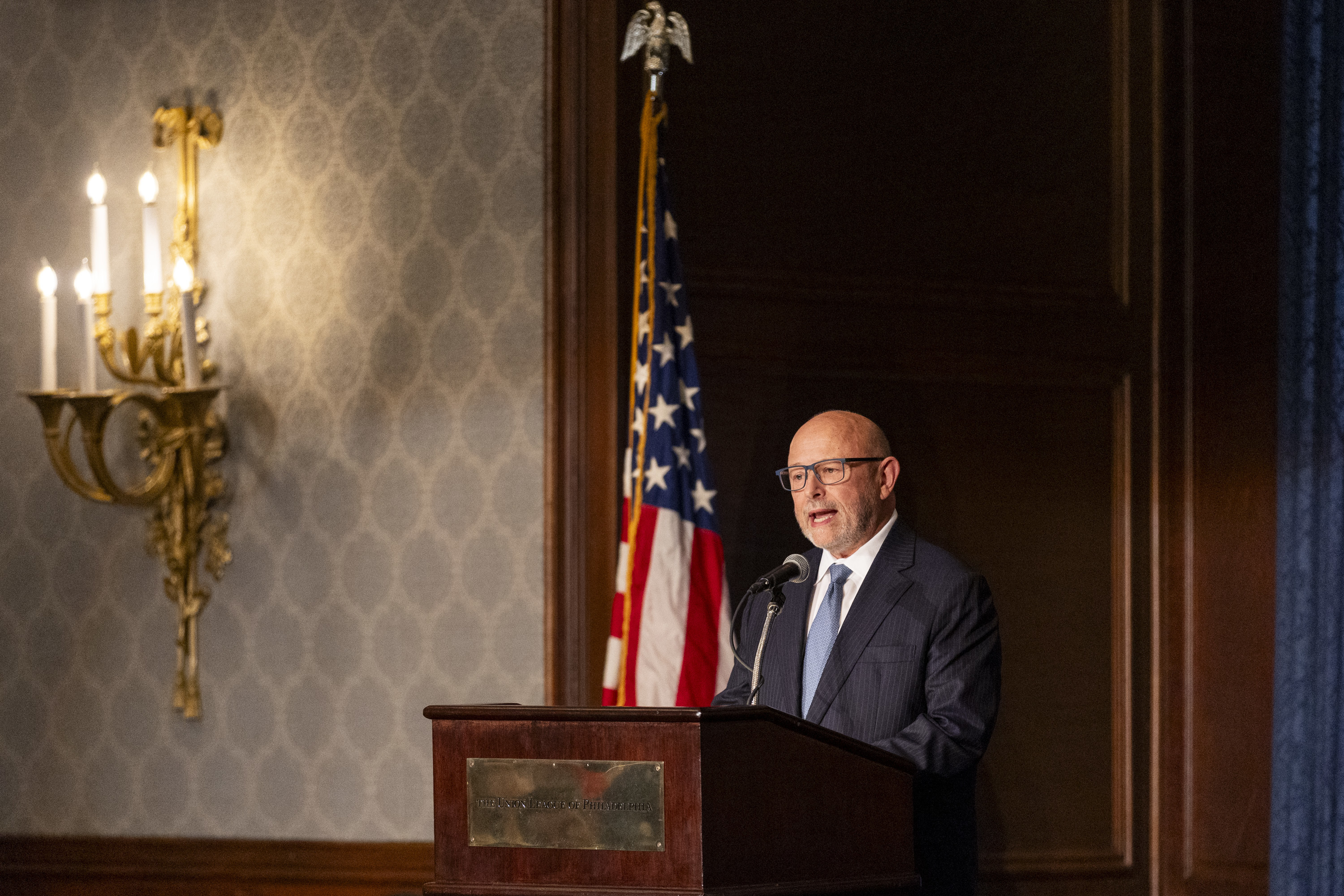
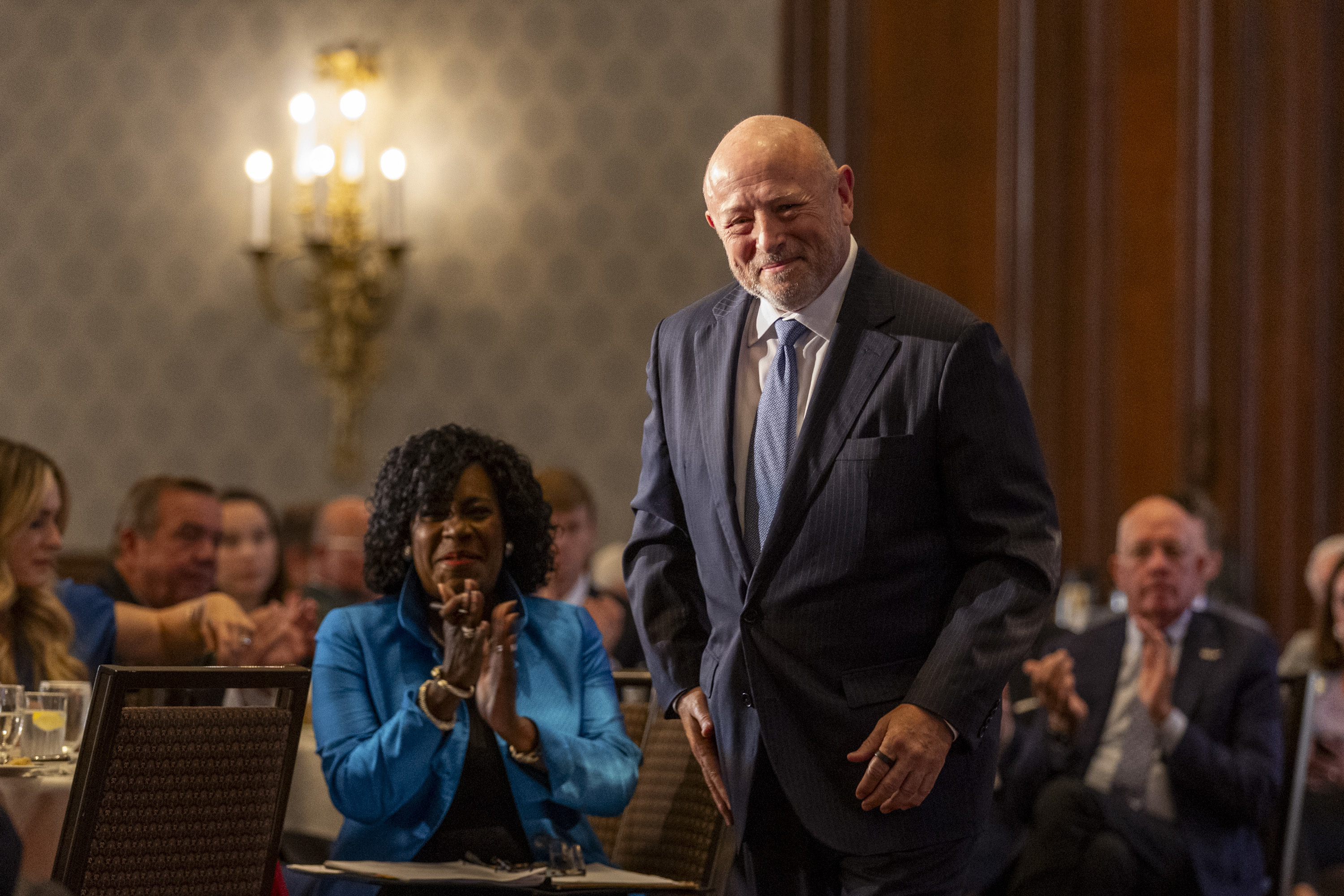
    Gregory Segall, Chairman and CEO of Versa and Supporter of Mayor Parker, speaks at the Union League of Philadelphia Presidential Luncheon in Philadelphia, Pa., on Thursday, September 18, 2025.Tyger Williams / Staff Photographer

    Citing Republican Party sources, Vargas reported that Segall was considering running for one of the two at-large seats on Council that are elected citywide and are set aside by the Home Rule Charter for minority-party or independent candidates.

    Republicans held those seats for about seven decades until Councilmembers Kendra Brooks and Nicolas O’Rourke won them over the last two election cycles as members of the progressive Working Families Party.

    Brooks is considering challenging Parker in next year’s mayoral election, sources previously told The Inquirer, which would require her to resign from her Council seat.

    The Philly GOP has been strategizing ways to recapture the seats, and a run by Segall, a wealthy businessman who could potentially help fund his own campaign, could be a major opportunity for the party.

    Segall donated $2,500 to the Republican City Committee last October.

    GOP chair Vince Fenerty said he has met Segall and thinks he is a “nice and honorable man.”

    “We’re a party that welcomes any potential candidate, and the decision to endorse would be up to our ward leaders,” Fenerty said in an interview Thursday.

    Brian O’Neill, who represents the 10th District in Northeast Philadelphia, is currently the only Republican on Council. Democrats hold the remaining 14 seats.

  • Philly City Councilmember Kendra Brooks is considering running for mayor, sources say

    Philly City Councilmember Kendra Brooks is considering running for mayor, sources say

    Kendra Brooks, a progressive who made history as the first third-party candidate to win a seat on Philadelphia City Council in 100 years, is considering challenging Mayor Cherelle L. Parker in the spring Democratic primary election, according to two sources familiar with her thinking.

    The sources, who were not authorized to speak about the matter publicly and did so on the condition of anonymity, said Brooks is mulling a campaign but has not yet made a decision. She declined to comment Friday.

    To run in the Democratic mayoral primary, Brooks would have to resign from her seat on Council. Under state law, she could remain a member of the Working Families Party or switch her party registration to Democrat..

    A bid for the mayor’s office would pit Brooks, the de facto leader of the city’s Working Families Party and democratic socialist faction, against Parker, a centrist who has long been aligned with the city’s Democratic Party establishment.

    Brooks, a longtime organizer from North Philadelphia and the minority leader on Council, got her start in politics as a public education advocate and has served on Council since 2020. Her most high-profile legislation this year was a package of bills that placed new restrictions on federal immigration enforcement in the city, and drew legal challenges from the Trump administration.

    She has been critical of Parker, especially with regard to the mayor’s strategy of largely sidestepping criticism of President Donald Trump’s administration. Brooks has said that officials who do not outwardly oppose the president’s mass deportation campaign are engaging in “complicity disguised as strategic silence,” and she accused the mayor of “caving” to Trump when the administration last year quietly abandoned race- and gender-conscious contracting goals.

    “People want to see leaders fighting for something,” Brooks said at the time, “and right now we don’t see our city fighting for anything.”

    Aren Platt, the executive director of the mayor’s political campaign arm, declined to comment.

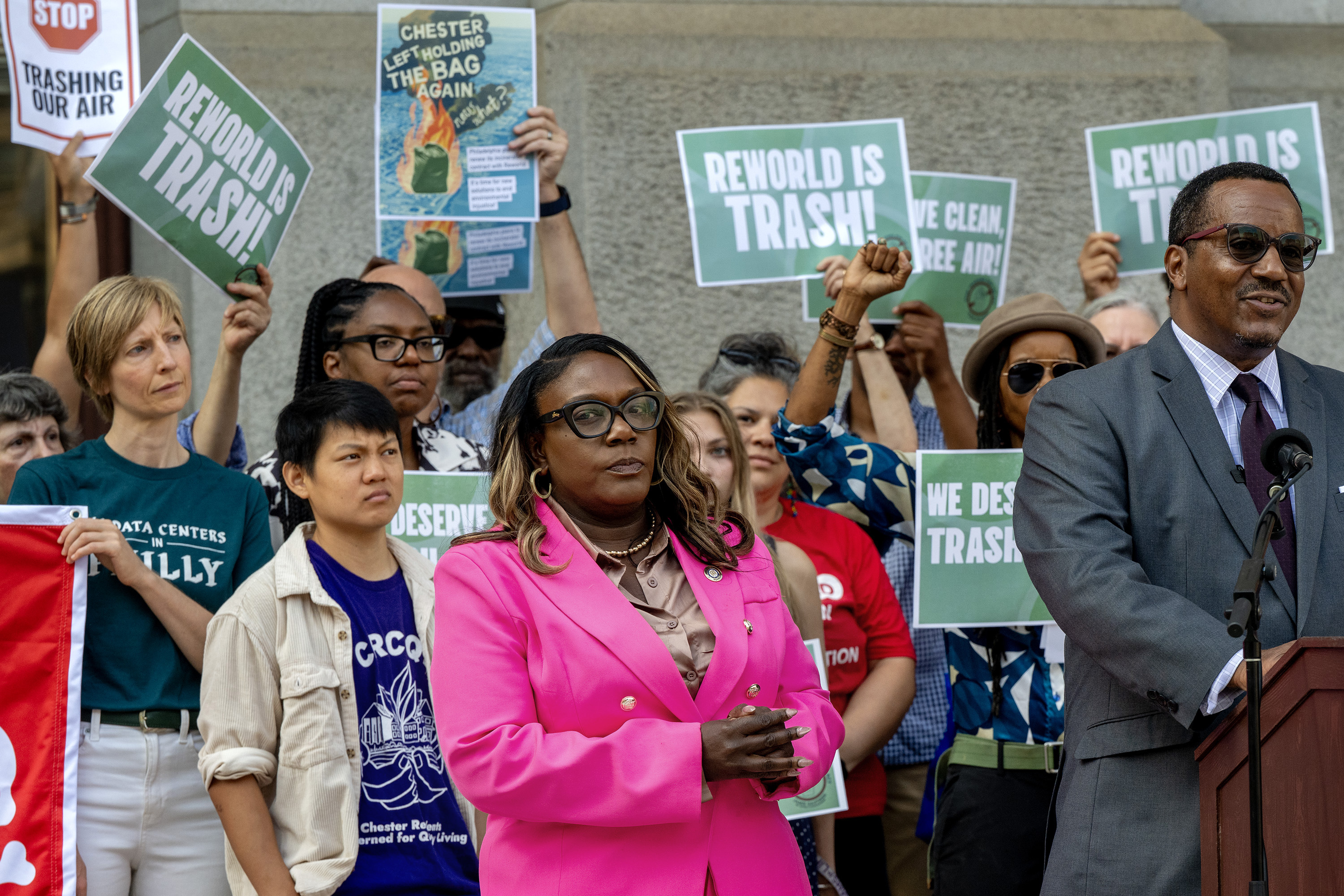
    City Councilmember Kendra Brooks joins Chester Mayor Stefan Roots (right) and protesters at a rally outside City Hall Sept. 17, 2026.Tom Gralish / Staff Photographer

    Brooks’ supporters see the mayor as potentially vulnerable as progressives have ascended nationally and notched wins over more traditional Democrats. That includes Mayor Zohran Mamdani’s victory last year in New York City and Abdul El-Sayed’s win in the Michigan Democratic primary for U.S. Senate.

    Closer to home, the left is emboldened by State Rep. Chris Rabb, who was backed by Brooks’ coalition and in May won the Democratic primary for a seat in Congress representing about half of Philadelphia. He toppled two centrist Democrats who were each supported by party leaders, big donors, and politically powerful labor unions.

    Despite the energy on the left, no progressive has officially launched a run for mayor ahead of the May primary election. Shania Bennett, the mayor’s former director of youth engagement, who has never run for office before, said this month that she will challenge Parker. Bennett said recently that she had not yet hired a campaign team or developed a policy platform.

    Any challenger to Parker faces significant hurdles. No Philadelphia mayor has lost reelection in modern history, and Parker would be backed by the city’s Democratic Party, which can now spend unlimited amounts of money in coordination with its chosen candidates under a new board of ethics policy.

    Parker will also be supported by the deep-pocketed building trades unions that boosted her in the crowded open mayoral primary in 2023.

    “We’re going to put all the resources, both financial resources and people resources, to bear to make sure that Mayor Parker has a second term,” said Ryan Boyer, the head of the Philadelphia Building and Construction Trades Council. “I want to be clear and vociferous that the Philadelphia Building Trades … are fully and completely behind Cherelle Parker.”

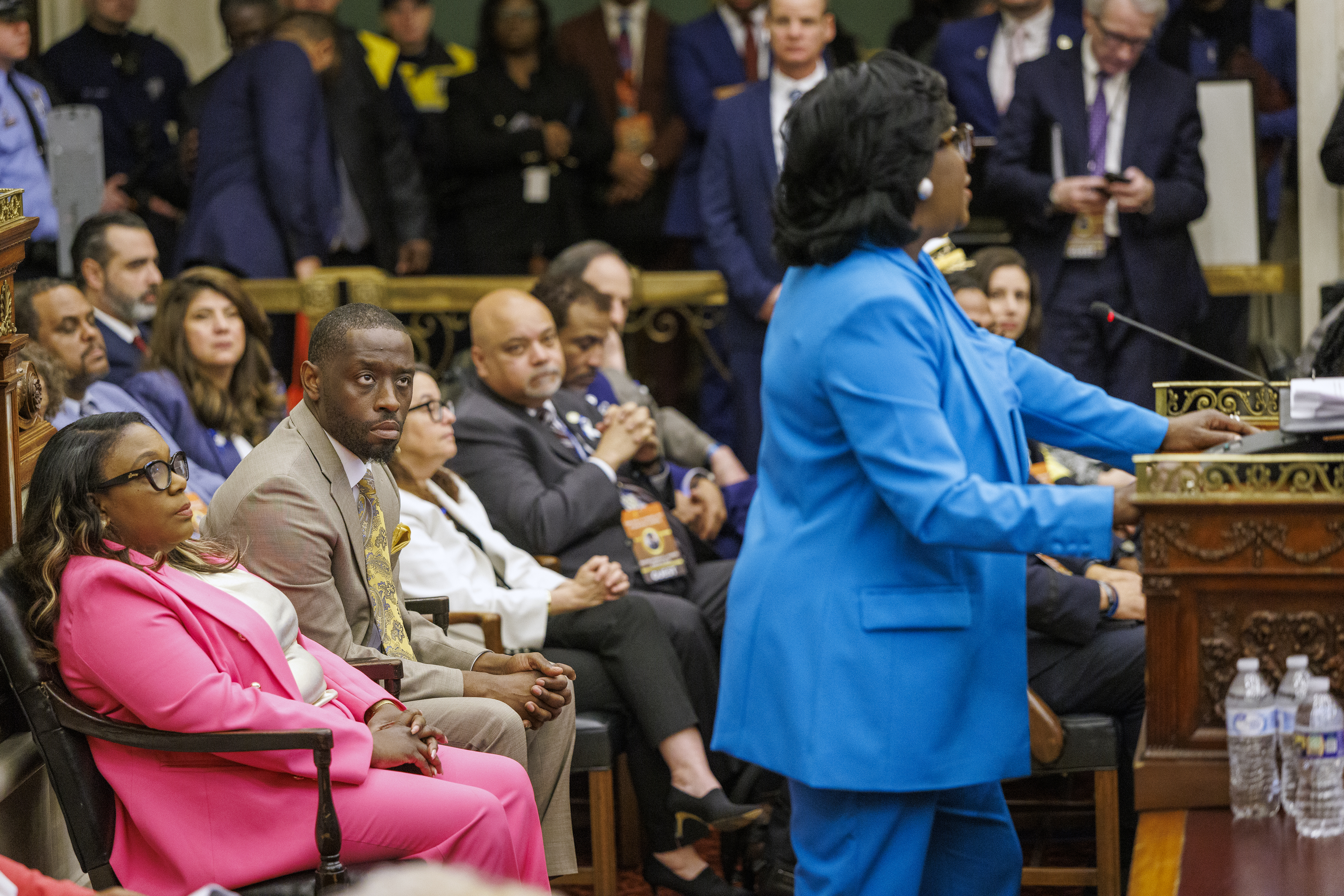
    In this March 2025 file photo, City Councilmember Kendra Brooks, left, listens to Mayor Cherelle L. Parker deliver her annual budget address.Alejandro A. Alvarez / Staff Photographer

    Parker is likely to see support from a super PAC bankrolled by city developers, and she also has her own massive war chest. Her campaign had $1.4 million in the bank as of May, according to the most recent campaign finance paperwork available. Brooks had $17,000 on hand as of her last report in January.

    But Brooks, who has won citywide election twice to represent the city as an at-large member of Council, could be a formidable opponent. She is one of the most prominent left-wing politicians in the city, and she is well-known in national progressive circles.

    The Working Families Party’s chapter in Pennsylvania recently commissioned a poll that showed Brooks as broadly popular with the city’s Democratic primary electorate but with much lower name recognition than Parker, according to polling documents obtained by The Inquirer.

    According to the survey of 900 respondents, 35% said they had a favorable view of Brooks, with just 4% saying they had an unfavorable view. Nearly 40% of respondents said they did not know who Brooks was.

    Nearly all of the respondents knew of Parker. Forty-eight percent said they had a favorable view of the mayor, and 40% said they had an unfavorable view. Those findings are similar to a June Suffolk University/Philadelphia Inquirer poll.

    Nick Gavio, a spokesperson for the Working Families Party, said in a statement that the organization often conducts polling on public opinion in the city and that the survey was “one test among a battery of others that we conducted in Philadelphia ahead of the 2027 elections.”

    “We are pleased that the Working Families Party and Minority Leader Brooks are so popular,” he said, “which we believe reflects our focus on the issues that matter to the working people of this city.”

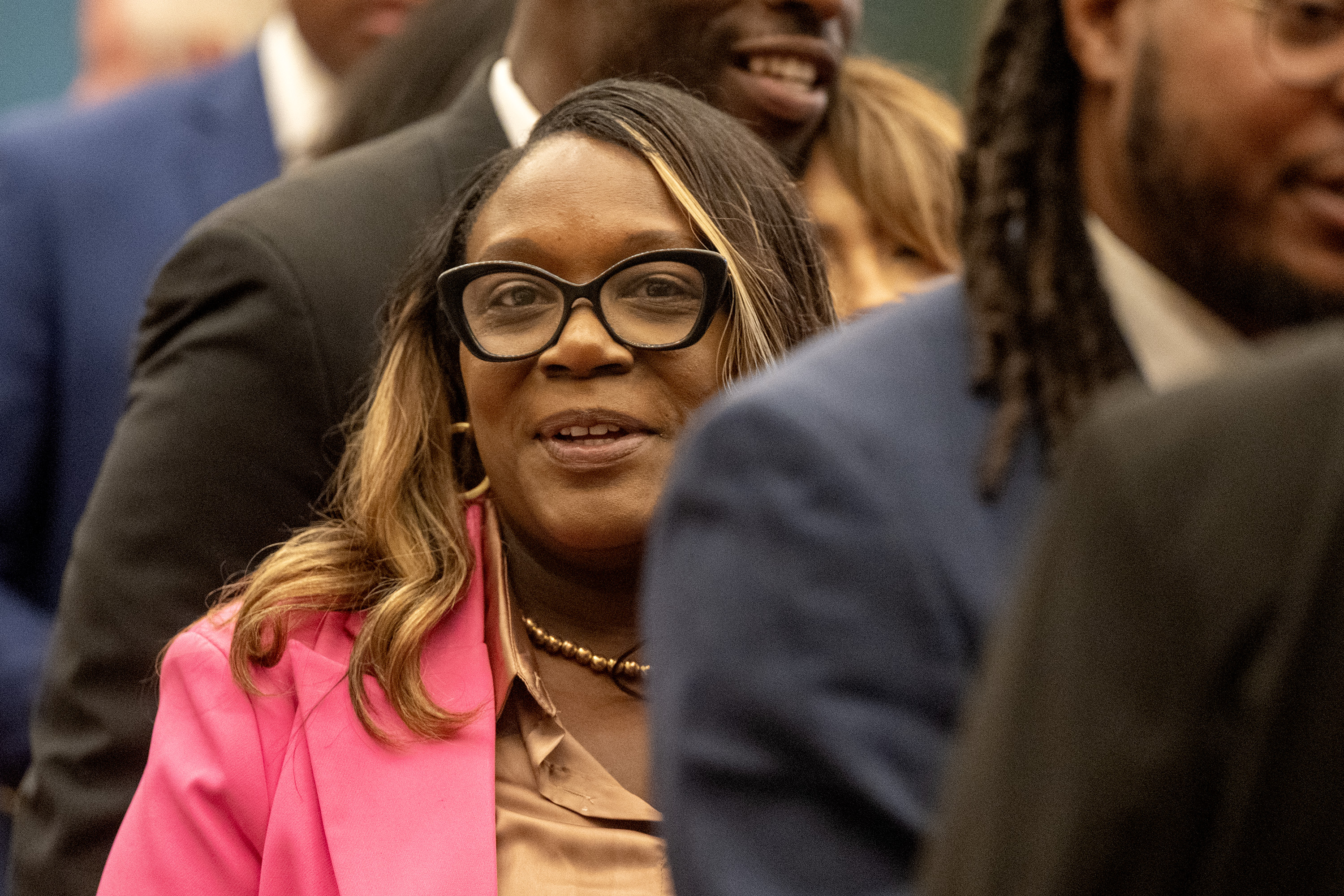
    City Councilmember Kendra Brooks talks with Dominique Howell (right) in chambers as City Council returns for its fall session Thursday, Sept. 17, 2026. Howell is a long-time constituent and was there with the non-profit Liberty Resources, part of the Philadelphia Coalition for Affordable Communities.Tom Gralish / Staff Photographer

    Several other leftist politicians in the city have been rumored to be considering running for mayor against Parker, but none have said publicly that they intend to launch a campaign.

    One is District Attorney Larry Krasner, the third-term prosecutor who is one of the most prominent progressive district attorneys in the country. Krasner has been increasingly critical of Parker, and in June said that he would not rule out the possibility of running against her.

    But the district attorney has recently faced significant scrutiny related to his handling of a complex post-conviction case. Last week, U.S. District Judge Paul S. Diamond said that Krasner may have committed federal crimes and that he had referred the matter to the Department of Justice for investigation.

    Krasner has denied wrongdoing.

    Correction: A previous version of this article incorrectly stated the steps Brooks would have to take to run in the Democratic mayoral primary. She could remain a registered member of the Working Families Party or switch her party registration.
  • DA Larry Krasner faces an uncertain political future as Democrats weigh what could come next

    DA Larry Krasner faces an uncertain political future as Democrats weigh what could come next

    After a federal judge said last week that Philadelphia District Attorney Larry Krasner may have committed federal crimes, questions quickly emerged about the prosecutor’s political future.

    Krasner, an outspoken Democrat and one of the nation’s most well-known progressive prosecutors, has recently entertained entreaties to run for higher office, including a possible bid for Philadelphia mayor next year.

    But in the week since U.S. District Judge Paul S. Diamond said he had referred Krasner and a top supervisor to the Department of Justice for investigation, Krasner has largely stayed quiet, and few elected Democrats have publicly come to his defense.

    Behind the scenes, many insiders asked: Could this episode damage Krasner too much for him to mount a campaign for another office?

    In a statement Tuesday, Krasner said he had already told another progressive considering a bid for mayor that he would defer to her.

    “I’m a big believer in Councilmember Kendra Brooks,” Krasner said, referring to the City Council member who The Inquirer reported is considering a run for mayor. “Prior to these accusations, I told her that if she runs for mayor, I will not consider running.”

    And he framed the legal conclusions by Diamond — a federal jurist appointed by former Republican President George W. Bush — as merely “accusations,” citing others who have been targeted for investigation by the Department of Justice under President Donald Trump.

    He referenced the New York attorney general, a former FBI director, and a DOJ employee who was charged after throwing a sandwich at a federal agent and has since become a symbol of resistance to Trump’s administration.

    “Ask Letitia James, James Comey, the ‘sandwich man’ or the guy who took peeling paint from the reflecting pool what they have to say about accusations,” Krasner said. “Or ask dozens of innocent people whose exonerations this DA’s office supported what they say about accusations.”

    Krasner’s statement Tuesday was one of the first public comments he has made regarding the case since Diamond’s criminal referral, aside from a brief statement last week saying that he disagrees with Diamond’s conclusions and could not comment further because the matter is pending in court.

    The uncertainty around Krasner also has some city Democrats contemplating a dramatic outcome: Could criminal charges or judicial discipline sweep Krasner from office before the end of his term in 2030?

    And if that happened, who would replace him as the city’s chief law enforcement officer?

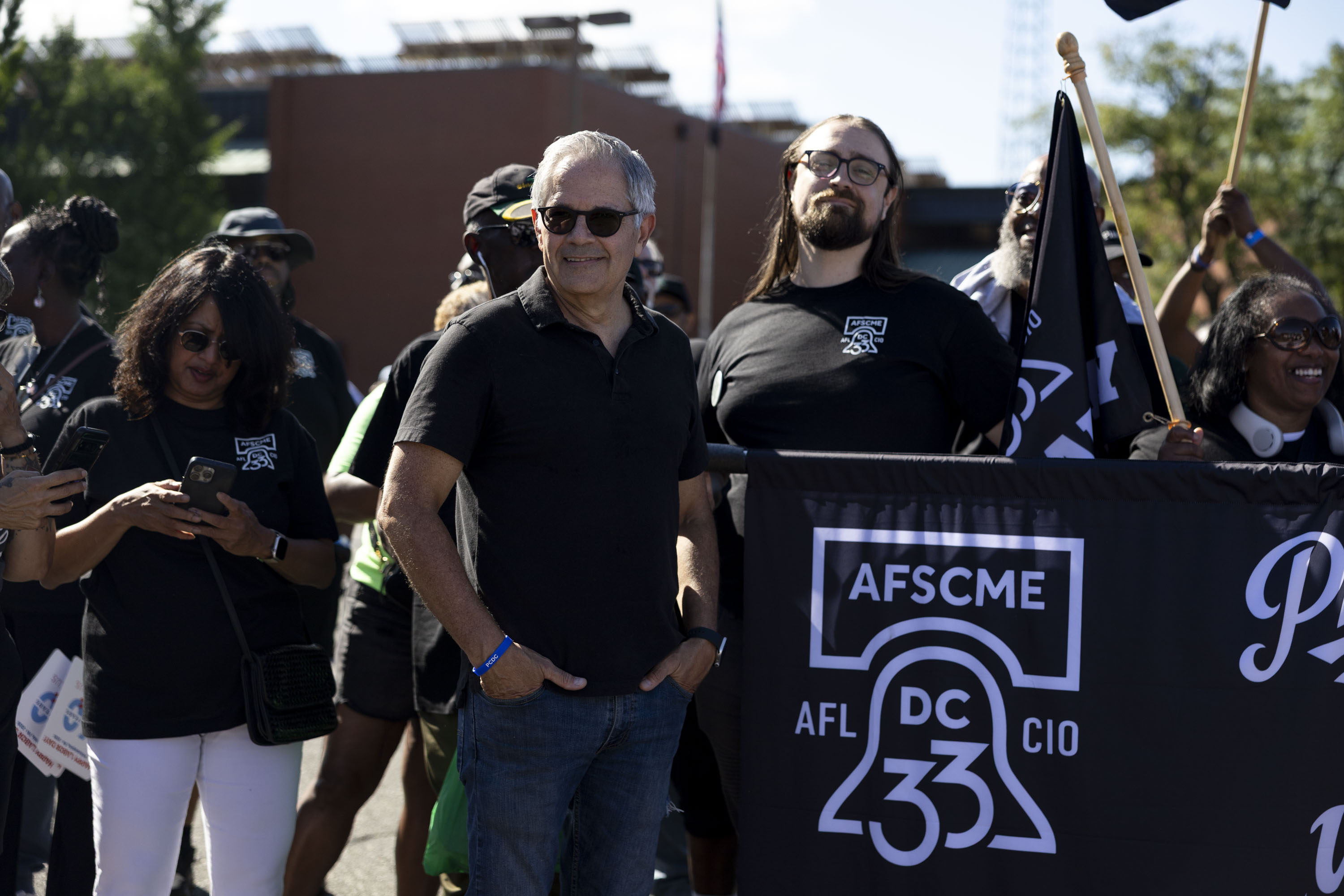
    District Attorney Larry Krasner standing with District Council 33, for the 39th Annual Tri-State Labor Day Parade on Sept. 7.Tyger Williams / Staff Photographer

    At least two elected Democrats have spoken to ward leaders about filling the district attorney’s role if Krasner were to be forced from office, according to sources familiar with the conversations who were not authorized to speak about them publicly.

    But some of Krasner’s allies say this is all much ado about nothing. They maintain that Diamond’s legal conclusions and the referral of the matter to the Department of Justice were politically motivated and that Krasner will weather it, as he has past tribulations.

    “They’re trying to do something that they’ve been trying to do for years, which is go after Krasner’s head,” said Sergio Cea, political director of the progressive group Reclaim Philadelphia, which has supported Krasner since his first run for office in 2017. “What they’re trying to do is roll back the gains that Philly voters pushed forward.”

    Silence from elected officials

    Krasner has always been something of a political outsider. He has never been endorsed by the city’s Democratic Party and has been critical of its leadership.

    Despite that, he maintained support among progressives and a significant contingent of Black elected officials last year when he prevailed over former Municipal Court Judge Patrick Dugan and skated to a third term in office.

    City Councilmember Nicolas O’Rourke, a member of the progressive Working Families Party and a longtime supporter of the district attorney, said in a statement Tuesday that he has confidence in Krasner’s ability to lead his office.

    “There’s no question,” he said. “DA Krasner can and should be doing the work that Philadelphians have tasked him with through their votes.”

    Aside from O’Rourke, most of the city’s top officials have declined requests for comment about Krasner’s recent legal jeopardy, including some of his ardent supporters.

    Some say that Krasner has not asked them to weigh in, and that they are hesitant to take a position on a complex legal issue. Others say they do not want to distract from a midterm election that is just six weeks away.

    Jack Inacker, a Democratic strategist based in Philadelphia, said he was not surprised that few elected Democrats have spoken on Krasner’s behalf.

    In recent months, Krasner called on former U.S. Rep. Bob Brady, the chair of the Democratic City Committee, to resign, and publicly confronted Ryan Boyer, the head of the politically powerful Philadelphia Building and Construction Trades Council, over campaign contributions.

    “You’ve got these major dustups all the time, it seems now,” Inacker said. “Krasner being so antagonistic to everyone doesn’t get him allies.”

    Inacker also said the courtroom allegations are “esoteric in nature,” making it challenging for elected officials to stake a position.

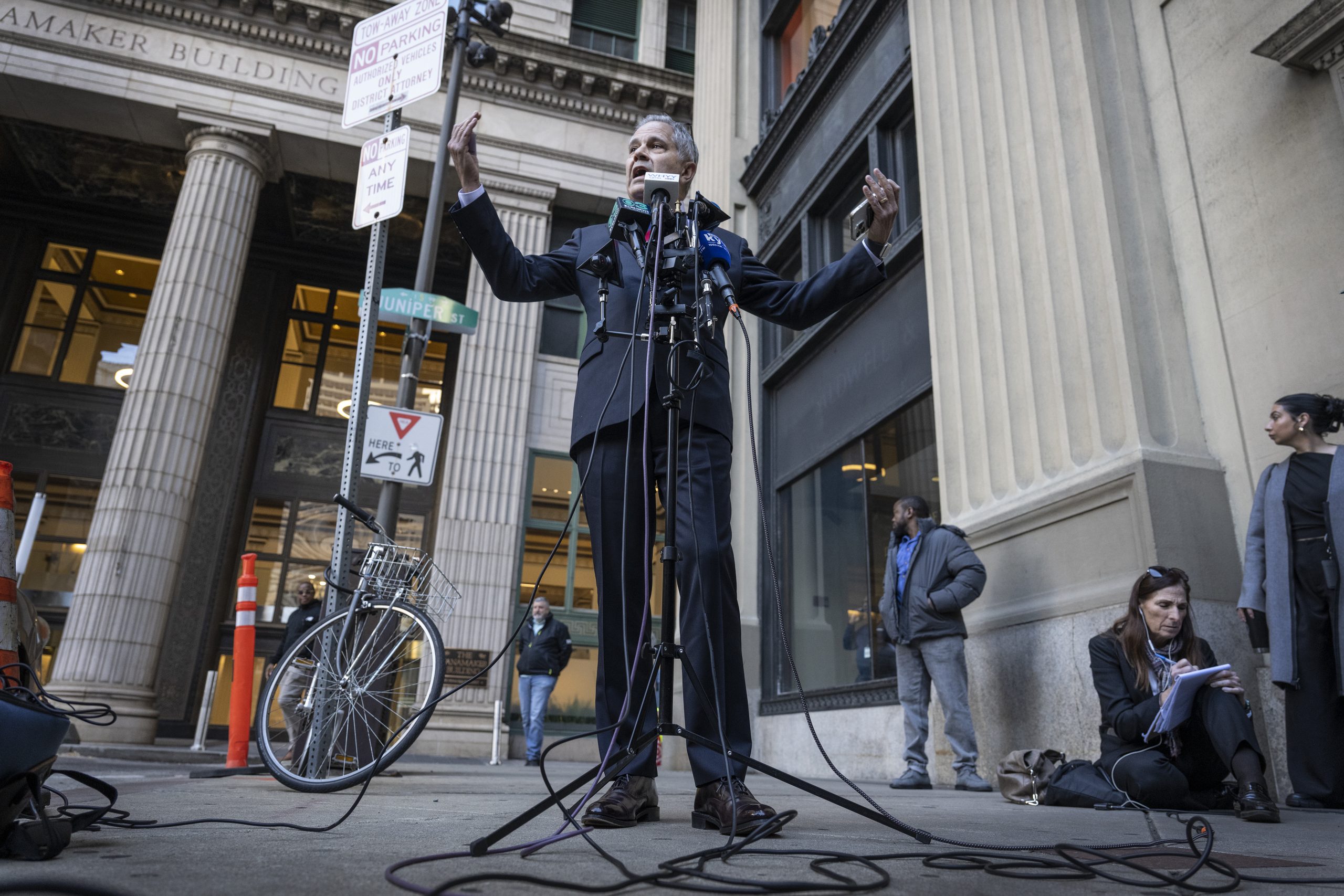
    Newly reelected District Attorney Larry Krasner speaks to reporters during a news conference outside the District Attorney’s Office on Nov. 5, 2025.Jose F. Moreno / Staff Photographer

    The case before the federal judge centers on Dennis Johnson, who has sought for more than a decade to have his 2009 murder conviction overturned. In 2022, a former assistant district attorney working for Krasner filed paperwork to support Johnson’s bid.

    But four supervisors in Krasner’s office later testified that they found errors in that 2022 brief, and that Krasner was involved in conversations about attempting to mislead the court to cast the former prosecutor as rogue.

    Krasner has denied wrongdoing.

    Brian Hart, a Democrat who has been critical of Krasner and served as a media adviser to Dugan’s campaign, said this episode is more fraught for Krasner than his 2022 impeachment.

    “The allegations aren’t coming from just Republicans,” said Hart, a public relations strategist. “They’re coming from testimony within his own office.”

    The mayor’s race question

    Some activists on the left wing of the city’s Democratic Party have said they feel emboldened to mount a serious challenge against Parker, who will be up for reelection next year. They cite recent wins by progressives both in the city and nationally.

    And eight months out from the May primary election, several prospective candidates, including Brooks, are mulling whether to launch a campaign.

    After earlier this year casting doubt on speculation that he could run for mayor, Krasner seemed open to the possibility in June.

    When asked then whether he might consider a future campaign for mayor — or even U.S. Senate — Krasner responded: “Do I have a plan to run for these offices today? No. But … it would be foolish for me to completely rule out those possibilities.”

    Philadelphia District Attorney Larry Krasner, seen here with Mayor Cherelle Parker at a news conference at Dilworth Park on Dec. 16, 2024.Alejandro A. Alvarez / Staff Photographer

    Larry Ceisler, a public affairs executive based in Philadelphia, said a federal criminal investigation of Krasner could pose a logistical problem if it was conducted while he was running for mayor.

    But politically speaking, Ceisler said, it might not be an impediment. An investigation by the Department of Justice under Trump — an entity many Democrats distrust — could rally progressive support.

    “I think he would probably run with it as a badge of honor,” he said.

    Ceisler pointed to former Mayor John F. Street, who in 2003 was locked in a tight race for reelection when police found an FBI bug in his office. Street blamed Republican President George W. Bush’s administration, and he went on to win the election a few weeks later.

    “When these things happen, everybody puts on their respective jerseys, so the Krasner people are going to say, ‘It’s political,’” Ceisler said. “I think to the Krasner constituency, especially if he wants to run for mayor, or do something else, I don’t think this fazes them.”

    Weighing a post-Krasner future

    It is unclear where any potential criminal investigation or disciplinary probe of Krasner and his office might lead, and legal experts have said that a hypothetical investigation would likely take months.

    But some Philadelphia Democrats are already contemplating what would happen if Krasner cannot finish the term that he began this year and that ends in 2030, with some quietly discussing contingency plans to fill the office.

    Under state law, in the event of a vacancy, the city’s Common Pleas Court judges vote by secret ballot to appoint a new district attorney. The appointed interim district attorney would serve until the next general election. Those elections take place in even-numbered years.

    The last time the process played out was in 2017, when the Board of Judges selected former city prosecutor Kelley Hodge to lead the office as interim district attorney. She replaced former District Attorney Seth Williams, who resigned shortly before pleading guilty to federal corruption charges in a case also overseen by Diamond.

    During the three-week gap between when Williams resigned and Hodge was appointed, the district attorney’s office was led by Williams’ first assistant district attorney, Kathleen Martin.

    Krasner does not have a first assistant district attorney. Robert Listenbee, who formerly held the role, retired in January, and the legally required position remains unfilled.

    Staff writers Chris Palmer and Ellie Rushing contributed to this article.
  • After a messy budget fight, Philly City Council turns to its unfinished business: Trash, taxes, and a new arena

    After a messy budget fight, Philly City Council turns to its unfinished business: Trash, taxes, and a new arena

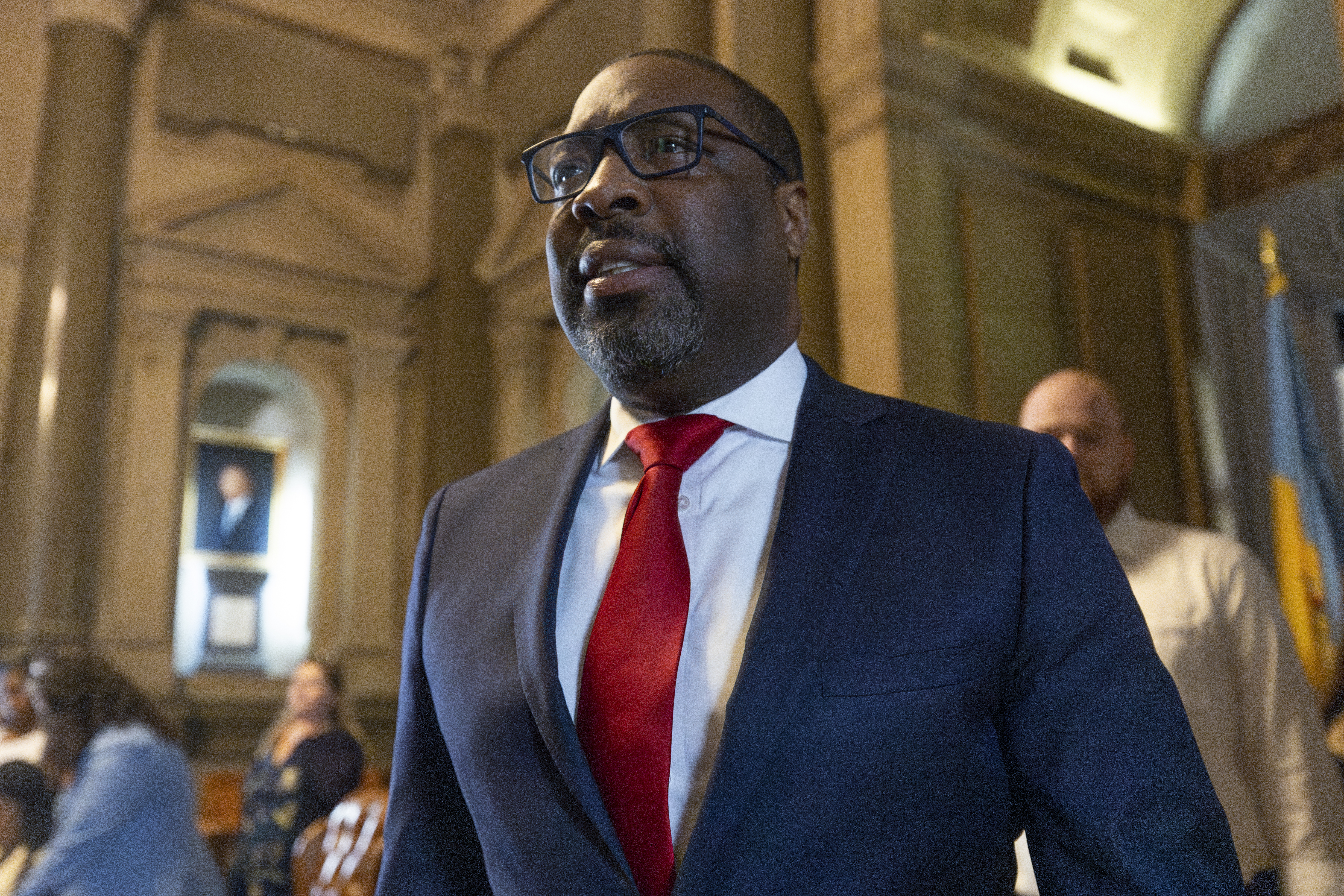
    One evening last week, City Council President Kenyatta Johnson stood on South Broad Street and greeted his fellow lawmakers as they arrived at Steak 48.

    Johnson had invited them to the swanky Center City steakhouse to “reconnect, share conversation, and enjoy each other’s company outside of City Hall,” according to an invitation for the Sept. 9 “members only” event obtained by The Inquirer.

    Council resumes for its fall session Thursday — and after the way things ended in the spring, the city’s legislators may have needed the opportunity to break bread together.

    When lawmakers last met in June, they approved a $7.1 billion city budget that left all sides feeling dejected. Council turned away a series of tax proposals from Mayor Cherelle L. Parker, including a $1-per-ride levy on rideshare companies like Uber and Lyft, and ended up passing a budget that omitted a number of members’ own priorities and left unanswered how the city will help the Philadelphia School District navigate its funding crisis in the long run.

    In addition to representing a new low in Parker’s relationship with the legislative body of which she was once a member, some Council members also questioned their own negotiating team’s handling of the ordeal.

    Councilmember Mike Driscoll noted last week that while he was not “pointing fingers,” Council could have added more money in the budget for line items requested by lawmakers, such as funding for community groups.

    “I’m disappointed and pissed off at the way it played out,” Driscoll, who represents parts of Northeast Philadelphia, said in an interview. “Our priorities weren’t analyzed in a more thoughtful [way]. … We do the amendments. [Parker] doesn’t. We could have put money in.”

    Councilmember Michael Driscoll in Philadelphia on April 23, 2026.Jessica Griffin / Staff Photographer

    In addition to dealing with the aftermath of the budget, Council this fall is expected to revisit a tense debate over how the city disposes of its trash and a proposal by Driscoll to provide business tax relief to sole proprietors. It may also begin to consider legislation related to the proposed 76ers and Flyers arena in the South Philadelphia sports complex.

    An Inquirer reporter saw at least 11 of Council’s 17 members at the Steak 48 event, meaning a majority, or quorum, of Council was present. The Pennsylvania Open Meetings Act, or Sunshine Act, requires legislative bodies to notify the public if a quorum is present for a meeting at which official business is discussed.

    But Johnson said at the beginning of the dinner that would not be happening.

    “Tonight we do no official business,” Johnson said in an interview. “Just social. Welcome back to City Council. Eat and drink and be merry. No policy on the table. No legislation on the table. Just having a good time.”

    Johnson’s invite directed members to RSVP to a Council staffer’s city email address. Johnson said his campaign picked up the tab.

    Parker and all 17 Council members will be on the ballot in next year’s municipal elections.

    “Everyone facing reelection next spring knows they have to be able to point to real accomplishments on the important issues voters care about,” City Hall lobbyist John C. Hawkins said. “And this fall is their last opportunity for them to address the most pressing issues that were not fully resolved in the spring budget process.”

    Budget fight hangover

    When Council and the mayor in the spring failed to reach a deal over new tax revenue to plug a $48 million hole in the school district’s budget, Johnson said Council had helped identify one-time savings in the city budget to fill the gap for a year while vowing to explore new recurring revenue streams for the district.

    Johnson has not yet scheduled a hearing on schools funding, and Council’s dissatisfaction with the district appears to have been mounting.

    Mayor Cherelle L. Parker, Council President Kenyatta Johnson, and Superintendent Tony B. Watlington Sr. arrive for an announcement at the School District of Philadelphia Headquarters on Wednesday, June 10, 2026 in Philadelphia. Monica Herndon / Staff Photographer

    He said in a statement this week that Council will honor its commitment, but also alluded to finding that money in the district’s own budget, despite school officials saying they are navigating a $300 million structural deficit.

    Johnson said Council is awaiting the results of a performance audit of the school district that is being conducted by City Controller Christy Brady. He said that report “will help Council identify any available funds to support recurring funding.”

    New arena, who dis?

    In the fall of 2024, Council was consumed by the debate over the 76ers’ proposal to build an arena in Center City.

    Lawmakers spent much of the session debating the economic benefit of the project, while opponents cried out that it would displace businesses and residents in nearby Chinatown.

    Despite Council approving it, that project was scuttled by the Sixers, who instead teamed up with Comcast, which owns the Flyers, to plot a different project: a joint venture that would bring a new arena to the South Philly sports complex. Earlier this month, they released the first renderings of what the Spectrum-inspired arena could look like.

    There will likely be spirited discussions about it all in Council — at some point. But don’t expect a redux this fall of the all-out brawl that was 2024.

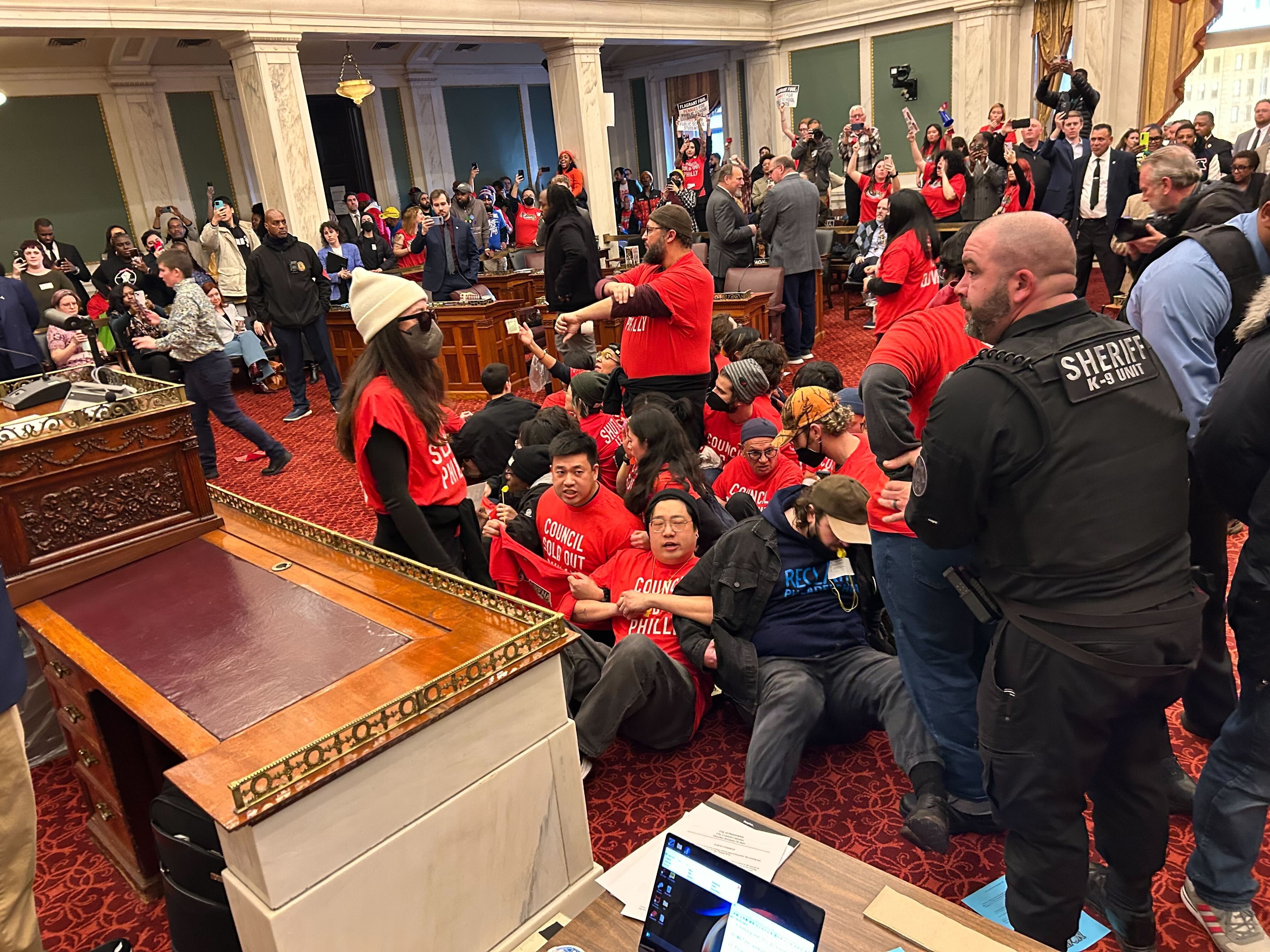
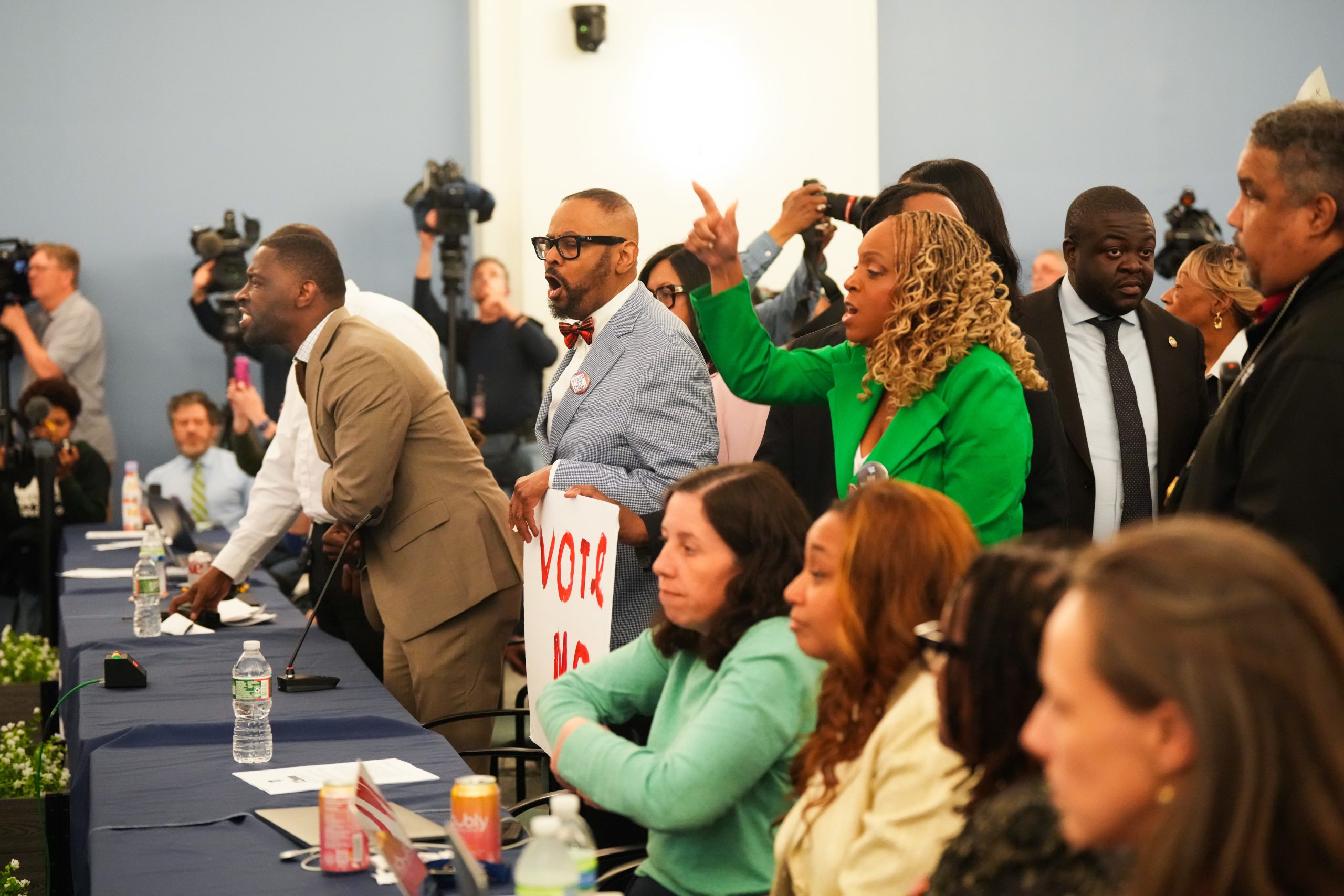
    Protesters link arms as sheriff’s deputies attempt to remove them from Philadelphia City Council chambers as the council is scheduled to vote on final approval for the Sixers’ proposed Center City arena on Thursday, Dec. 19, 2024.Sean Collins Walsh / Staff

    The stadium district falls in Johnson’s 2nd District, meaning it will be on him to introduce legislation that would green-light the project. And he has not been in a hurry to accommodate the Sixers’ timeline, which would be to approve the project as soon as possible so the venue can open by 2030.

    Johnson said in a statement that “no zoning legislation is scheduled for introduction,” and that he is working to find consensus with the Parker administration and other Council members before introducing any legislation.

    “I am focused on ensuring that any future legislation concerning the new arena addresses the interests and concerns of the community around the Stadium District and in Philadelphia,” he said.

    When that legislation is brought forth, it is unlikely to be anywhere near as controversial as the 76ers’ Center City proposal, which drew opposition due to its proximity to Chinatown, so long as the teams uphold their promise to not seek public subsidies.

    The Asian Pacific Islander Political Alliance, which led opposition to the Center City arena, released a statement earlier this month that signaled openness to the South Philly project.

    “The people of South Philly should have a meaningful voice in whether and how this project moves forward,” said Will Gross, an API PA member who is rumored to be considering a run for Council. “And if it does, it should mean good union jobs, a strong community benefits agreement, and real benefits for the people who live and work in the neighborhood.”

    Trash issue continues to burn

    Councilmember Jamie Gauthier has spent the better part of the last year trying to whip up support for a bill that would ban the city from shipping off its trash to be burned at an incinerator in Chester, a longtime practice she and others say is poisoning residents of the city to Philadelphia’s south.

    The Parker administration opposed the measure, saying it would limit the government’s ability to carry out its normal competitive bidding process and select the best-value contractor. Gauthier failed to get a majority of Council on her side, and she never called up the Stop Trashing Our Air Act for a vote.

    This fall, she will try a new tactic.

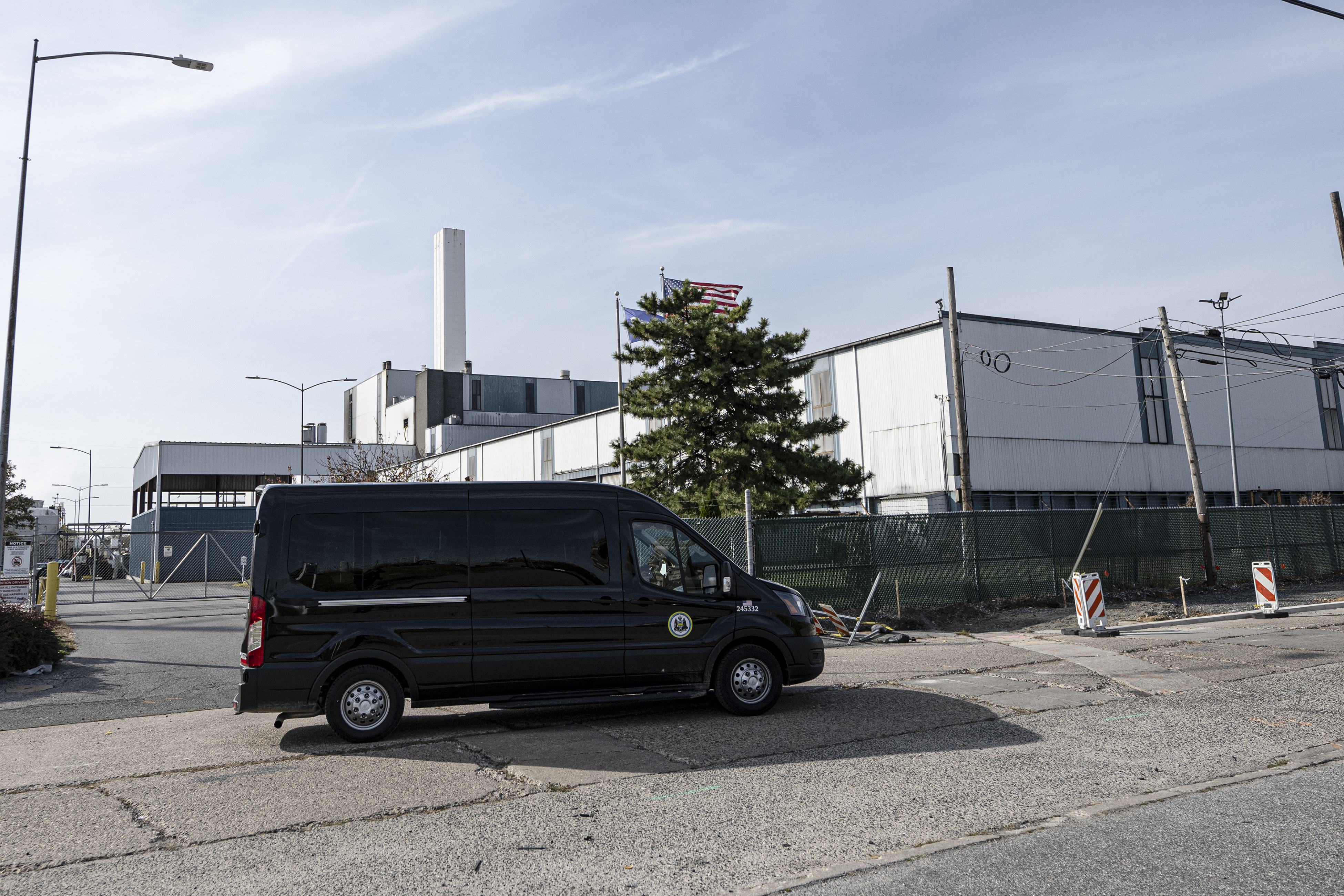
    Gauthier and her allies are attempting to kill the Parker administration’s effort to approve a new contract with Reworld, which operates the Chester waste-to-energy facility where the city sends about a third of its garbage. (The remainder is hauled off to landfills.)

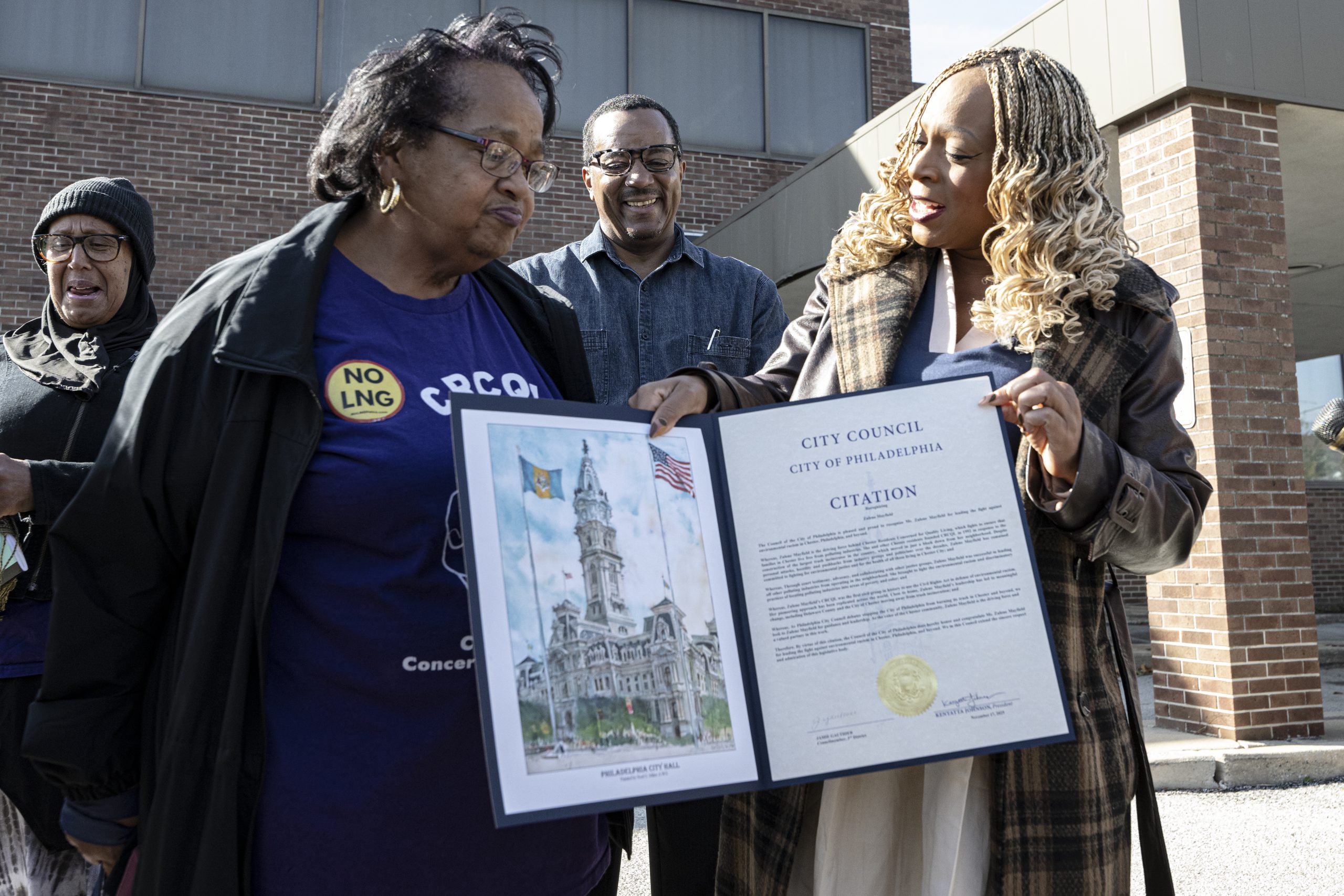
    Chester resident Zulene Mayfield, left, Philadelphia Councilmember Jamie Gauthier, right, and Chester Mayor Stefan Roots meet to discuss Gauthier’s “Stop Trashing Our Air Act,” which would ban the city from incinerating waste, during a visit with lawmakers and staff in Chester, Pa., on Friday, Nov. 7, 2025.Jose F. Moreno / Staff Photographer

    In July, the Parker administration announced that it intends to enter into a new four-year contract for waste processing and disposal with Reworld, as well as two landfill operators, Republic Services and Waste Management. The terms of those contracts have not yet been made public.

    Council must approve multiyear contracts, and Gauthier, who represents parts of West and Southwest Philadelphia, said she is planning a full-court press to get her colleagues to “block Mayor Parker’s dirty deal with trash incinerators.”

    The question is whether she can get eight other members on her side to reach a majority of Council. She is likely to find support from three fellow progressives, and she is expected to be joined by Councilmember Isaiah Thomas, the Democratic majority whip, at a Thursday news conference calling on the city to end its contract.

    Councilmember Mark Squilla takes his seat in chambers Wednesday, Dec. 11, 2024, before a scheduled committee vote on Sixers arena related legislation was postponed,Tom Gralish / Staff Photographer

    Meanwhile, Councilmember Mark Squilla said he has been working with the administration on a plan to build out a “circular waste” system that would replace incineration and landfilling over time with composting and waste “digestion.”

    “The incinerator bill …. doesn’t solve a problem we have: to reduce our waste,” Squilla, whose district includes parts of Center City, South Philadelphia, and the river wards, said in an interview. “If we can reduce our waste by going to composting and digestion and other forms, we then eliminate all of our trash. Therefore end up with the result of what the goal should be, [which] is to get as close as possible to zero waste.”

    Squilla’s proposal, which would involve “a long-term contract to attract providers to be able to build out a possible digester to decrease the amount of food waste,” could make it easier for Council members sympathetic to Gauthier’s goals but skeptical of her incinerator bill to approve the administration’s contract with Reworld while committing to a long-term solution.

    The business tax, revisited

    Separate from the school district revenue, some Council members are hoping to advance measures that would provide tax relief to businesses.

    Council two years ago approved a 13-year schedule of rate cuts that would dramatically reduce the business income and receipts tax. But at the same time, Parker moved to eliminate a tax break that primarily helped small businesses after its legality under the Pennsylvania Constitution was challenged in court.

    The elimination of the tax break — which excluded from taxation companies’ first $100,000 in revenue — has forced thousands of small firms and sole proprietors that make less than that threshold to begin paying a tax from which they had been effectively exempted.

    Driscoll worked with tax experts to find a workaround that could pass legal muster — exempting certain types of businesses, such as sole proprietors, from the tax entirely — and he is planning to call up for a vote his bill this fall.

    Thomas, meanwhile, said he will introduce a resolution Thursday to hold hearings this fall on the feasibility of reducing the net income portion of the business tax “much sooner” and more “aggressively,” meaning an acceleration of the tax cuts already scheduled.

    The measures are likely to spark opposition from more progressive members of Council and could be tricky to navigate for Parker, who wants to make Philly more business-friendly but may not want to forgo additional revenue.

    Members eye priorities as election looms

    With next year’s election looming — and all 17 members indicating they intend to seek new four-year terms — the fall session is also likely to see movement on a myriad of issues championed by individual legislators.

    Majority Leader Katherine Gilmore Richardson said she will propose bills to “protect communities from harmful nuisance businesses and improve processes around code violations,” continuing her efforts to crack down on businesses that neighbors say attract crime.

    Councilmember Rue Landau, who represents the city at-large, said she is “tackling the impact of emerging technologies, making Philadelphia more affordable for working people, and ensuring equity remains at the center of how we serve our LGBTQ+ communities.”

    Landau said she also plans to introduce a resolution calling on the state to ban automated license plate readers like Flock cameras.

    The Philadelphia Council members inside the caucus inside City Hall in Philadelphia, Pa on Thursday, June 11, 2026.Aidan T. Gallo / Staff Photographer

    And Councilmember Kendra Brooks will propose new protections for temporary workers and tenants facing eviction, according to her spokesperson, Kathleen Melville.

    Brooks, a progressive who represents the city at-large, will also fight for additional funding for reproductive healthcare providers, a priority of hers that was left out of the budget following Council’s impasse with Parker, Melville said.

    “That was her biggest focus going into the budget,” Melville said. “She had the same experience as every other Council member in that none of her budget priorities made it into the budget.”

    Several members have also said that they want to bolster the city’s property tax relief offerings after the administration this summer released its citywide assessments that will mean higher taxes for thousands of homeowners.

    The most likely move would be for Council to amend the city’s tax code to increase the popular homestead exemption, which currently exempts the first $100,000 from a home’s taxable value if the owner lives in the dwelling as their primary residence.

    Johnson said Council “will review all tax-relief options” this fall.

  • Three Philly City Council districts emerge as key battlegrounds in the 2027 election

    Three Philly City Council districts emerge as key battlegrounds in the 2027 election

    Philadelphia City Council is already looking to 2027. And with all 17 seats on the ballot next spring, the elections are shaping up to be a pivotal test of whether the city’s established politicians can withstand a rising tide of frustration with the party among Democratic voters.

    All of the incumbents have said they intend to run for reelection, and several are likely to face serious challenges from new candidates focused on grassroots organizing and progressive groups — hoping to seize the opportunity presented by a nationwide leftward shift amid President Donald Trump’s second term.

    Three districts have emerged as key battlegrounds.

    In the North Philadelphia-based 5th District, at least four people are considering challenging Councilmember Jeffery Young Jr., a freshman lawmaker who has championed controversial legislation and at times publicly clashed with constituents.

    And the city’s progressive organizations, emboldened by a series of wins locally and nationally, are targeting two other districts: the 1st, which stretches from South Philadelphia to Fishtown and is represented by Councilmember Mark Squilla, and the 8th, which includes parts of North and Northwest Philadelphia and is represented by Councilmember Cindy Bass.

    “We’re definitely feeling confident,” said Robert Saleem Holbrook, executive director of the progressive advocacy group Straight Ahead. “Anyone who is going to be running under a progressive banner or a progressive movement is going to have to be running against the establishment, not toward it.”

    A competitive race also appears to be taking shape for the seven Council seats that represent the city at-large.

    Five of those seats are all but certain to be won by Democrats, making the May 2027 primary the key election in deep-blue Philadelphia.

    The other two at-large seats — set aside for Council members outside the majority party under the city’s Home Rule Charter — will be decided in the November 2027 general election. Currently, the two minority party seats are held by Councilmembers Kendra Brooks and Nicolas O’Rourke of the left-leaning Working Families Party.

    Several insiders said one bold-faced name is considering a run for a Democratic seat: Jane Golden, the well-known founder and executive director of Mural Arts Philadelphia, who is stepping down from her full-time role later this month.

    Jane Golden, founder and executive director of Mural Arts Philadelphia, takes the stage during the dedication of the Super Bowl LIX mural at Spike’s Trophies on June 17, 2025 in Philadelphia.Monica Herndon / Staff Photographer

    Golden, 73, said last week that she is not currently running for Council, but acknowledged she has thought about it for years.

    “It’s always something that is tempting to me, because I just love the city so much,” she said. “I feel honored that people even think of me.”

    Progressives eye Bass’ North Philly seat

    Philadelphia’s progressive activists this year see two key opportunities to expand the loosely organized left-leaning bloc on Council, which currently consists of four members. Winning additional seats could also grow their influence by enticing more moderate members to vote alongside them if they believe primary voters are moving left.

    Progressives have in the last year authored some of the most high-profile legislation to come out of Council, including one package of bills by Brooks and Councilmember Rue Landau meant to set limits on federal immigration enforcement in the city and another by O’Rourke that codified new rights for renters.

    Leftists have notched high-profile wins in Democratic primaries across the country this year, including in Philadelphia, where democratic socialist State Rep. Chris Rabb (D., Philadelphia) bested more moderate candidates for a seat in Congress representing about half of the city. The district is one of the most Democratic in the nation.

    Next on progressives’ wish list: ousting Bass and Squilla, two more centrist Democrats who have both been on Council since 2012.

    In Bass’ 8th District, longtime labor organizer Seth Anderson-Oberman may challenge Bass for a second time after losing to her in 2023 by just 423 votes.

    Anderson-Oberman, 55, the executive director of the progressive group Reclaim Philadelphia, said last week that he is “leaning” toward taking another swing.

    “We’re in a moment in this country and this city where people have had enough,” he said. “People are looking for new answers. … Cindy represents the old way of doing things.”

    Union organizer Seth Anderson-Oberman, running for 8th District City Council, joins in a small rally with community and Happy Hollow Advisory Board members along Wayne Avenue at Happy Hollow Playground in Philadelphia on April 2, 2023.Tyger Williams / Staff Photographer

    Another Council run by Anderson-Oberman may test how far progressive momentum can go in Philadelphia. He was a member of the Communist Party USA in his 20s, and has said he is proud of that experience.

    Bass, 58, said she is ready for the race no matter who her opponent is.

    In June, she survived a contentious fight for another four-year term as Democratic leader of Mount Airy’s 22nd Ward. She was criticized for her handling of the process, and the party ordered a redo of the election.

    She and her progressive opponent, Octavius Price, tied, then struck a power-sharing agreement. Through it all, Bass said, longtime residents stuck by her — and she is confident voters will do the same next year.

    “My voters are people who are based in this community, committed to this community, intend to stay in the communities that they are in,” she said.

    City Councilmember Cindy Bass (center) attends the watch party for Democratic candidate for mayor Cherelle L. Parker at Laborers 332 in Philadelphia on May 16, 2023.Heather Khalifa / Staff Photographer

    Jeff Jones, a community leader and social justice advocate from Germantown, has also said he intends to run in the 8th District.

    “I want to bring that new vision and a new voice to the 8th District, where residents and children and families can know that their voice matters, their concerns will be heard, and their challenges will be met,” said Jones, 61, a first-time political candidate.

    Squilla could see a lefty challenger

    Leftists are also eying Squilla’s seat, which represents the area along the Delaware River from Pennsport to Kensington. Since Squilla took office in 2012, the district has transformed from a bastion of working-class white voters to one of the most progressive swaths of the city.

    Squilla, 63, who has strong labor ties and is one of the most pro-development district Council members, said being a centrist has likely put a target on his back in the 2027 election.

    Another contributing factor may be Squilla’s support for controversial legislation in 2024 to approve the 76ers’ since-abandoned plan to build a new arena in Center City. The project, which would have been in Squilla’s 1st District, was opposed by advocates for Chinatown, which the arena would have bordered.

    Councilmember Mark Squilla arrives in Council chambers on Nov. 12, 2024, before the start of a public hearing on a proposed Sixers arena.Alejandro A. Alvarez / Staff Photographer

    Despite the fierce objections, Council approved the project with Mayor Cherelle L. Parker’s support in December 2024. Weeks later, the basketball team announced it was abandoning its Center City plan and would instead build its next arena in South Philly.

    Squilla said he is prepared to defend his actions, noting that he worked to ensure any arena deal would benefit his district and that many of those promises are moving forward despite the 76ers withdrawing their proposal.

    “The goal as an elected official, and also as a leader, is not always to make the popular decision,” he said. “The goal is to have a process to make the decision that would be best for the people around it.”

    One prominent opponent of the Center City arena plan was Will Gross, the owner of Ox Coffee in Queen Village and a progressive who is the Democratic leader of the 2nd Ward. He is seen by political insiders and progressive organizations as the most likely candidate to take on Squilla.

    Gross declined to comment.

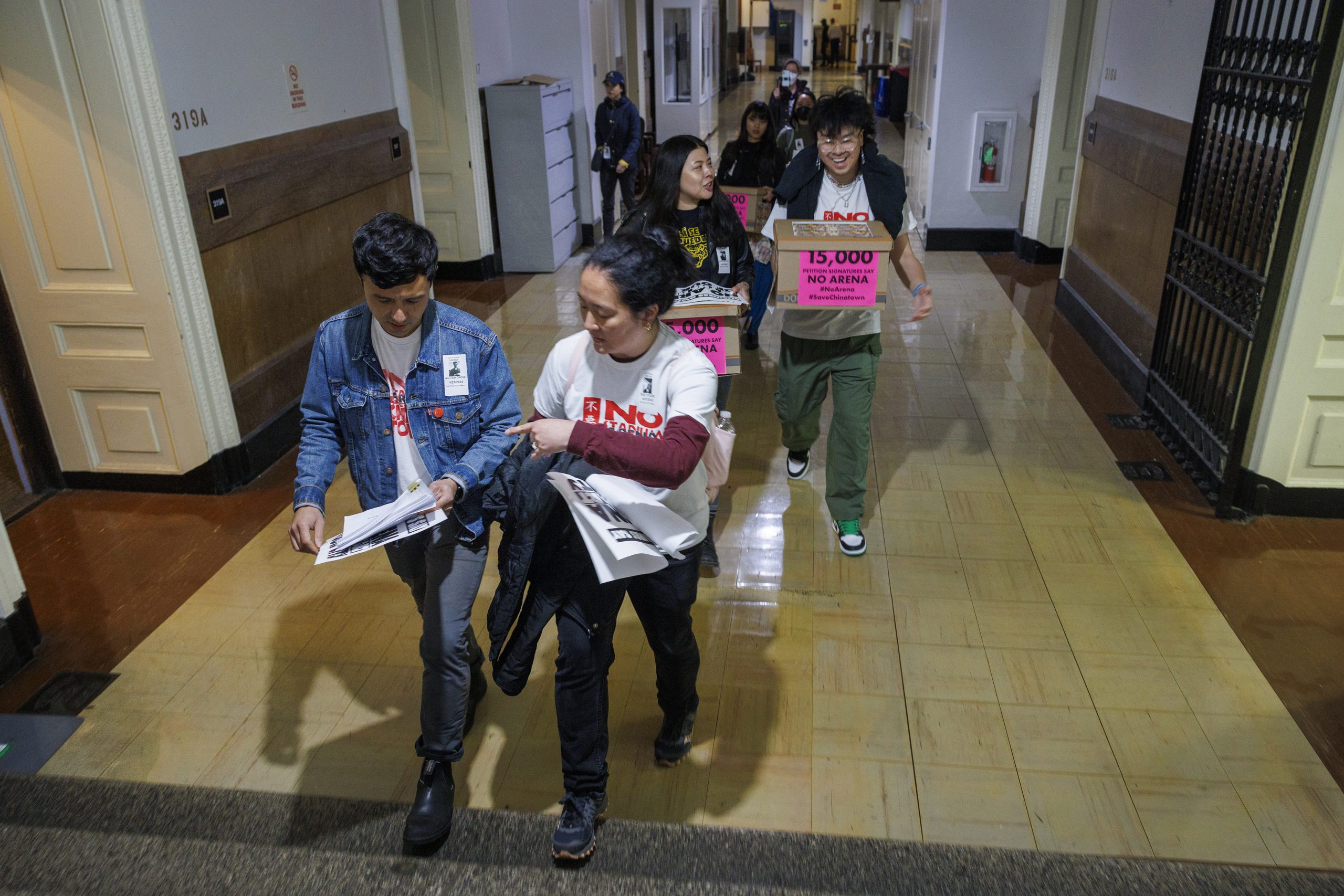
    In this 2023 file photo, Will Gross and Kay Yoon, of the No Arena in Chinatown group, deliver petitions to Councilmember Mark Squilla. Alejandro A. Alvarez / Staff Photographer

    A progressive challenger may also emerge in the North Philly and Kensington-based 7th District, which is represented by Councilmember Quetcy Lozada.

    In 2023, Lozada, Council’s only Latina member, won decisively over social worker Andres Celin, who argued for a more social services-driven response to address longstanding issues in the beleaguered district.

    Some insiders have speculated that Celin may run again. He declined to comment.

    Lozada, 55, said she “can’t focus” on potential challengers.

    “If I spend my time listening to the buzz about who is running,” she said, “we won’t get any work done.”

    A battle takes shape in the 5th District

    In the 5th District, a seat that represents parts of North Philadelphia and Center City, a handful of Democratic challengers are lining up to take on Young, 40, who is seen as one of Council’s most vulnerable members.

    That is in part because of the unusual way in which he was elected in 2023. He ended up being the only Democrat on the ballot after several others, including party officials’ preferred candidates, were removed amid legal challenges.

    Councilmember Jeffery Young Jr. in chambers as City Council meets Dec. 11, 2025.Tom Gralish / Staff Photographer

    One of those candidates was Curtis Wilkerson, who was chief of staff to former City Council President Darrell L. Clarke. Two sources, who spoke on condition of anonymity because they were not authorized to discuss the campaign dynamics, said Wilkerson is considering running for the seat again next year. He did not respond to a request for comment.

    Also likely to run is Jalon Alexander, an attorney who unsuccessfully ran for an at-large seat on Council in 2023. Alexander, 33, formed an exploratory committee last year and is expected to formally declare his candidacy later this summer.

    Two others are also considering running.

    Dustin Dove, a lawyer and the president of the Fairmount Civic Association, said neighbors and community leaders have encouraged him to get in the Council race, and he is “taking the possibility of running seriously.”

    “I think our city government should work for everyone by keeping our neighborhoods safe and streets walkable, making housing affordable, and ensuring fairness and access in public services,” Dove, 38, said last week.

    Jalon Alexander, an attorney and community advocate, speaks to attendees at a meeting about potential SEPTA budget cuts hosted at Garden of Prayer Church in Strawberry Mansion on June 9, 2025.Erin Blewett / For The Inquirer

    And Max Tuttleman, 37, a philanthropist who unsuccessfully ran for an at-large seat in 2023, said he “cares deeply about the 5th District and would never close the door to serving Philadelphia.”

    He added that “Center City and the neighborhoods around it should be growing faster than they are.”

    That was a subtle dig at Young, who critics say has been too hostile to development in his district by opposing some residential projects.

    Young said in an interview last week that he intends to run for reelection, but that challengers are not his focus.

    “I‘m focused on serving my constituency, serving my community,” he said. “The work that we’ve been doing will hopefully earn the support of the residents of the 5th District.”

    A smaller, but competitive, at-large field

    Over the last several election cycles, dozens of candidates lined up to run for at-large seats during a time of immense turnover in Council.

    But with seven incumbents all looking toward reelection in 2027, there may be fewer challengers who line up to take them on. So far, only Golden and a handful of others have emerged as possible contenders.

    David Alexander Jenkins, a cultural strategist known for delivering impassioned speeches during Council’s public comment section, said he is considering a run, encouraged by fellow community members.

    “When the community that is around you constantly pushes you to intercede on their behalf, then it’s because they have trusted you to do what it is that you do best,” Jenkins, 39, said. “I think it would be incredibly unwise to ignore that.”

    And Jude Husein, 28, a Palestinian-born community activist who was raised in North Philly, has already launched her campaign. If her bid is successful, Husein, a former staffer for State Sen. Art Haywood, would be the first member of Gen Z on Council.

    In this 2023 file photo, Jude Husein, of North Philadelphia, speaks at a rally for a Day of Solidarity event at the Art Museum steps.Tyger Williams / Staff Photographer

    Leaders of progressive organizations said they are closely watching her candidacy. However, Husein is not exactly running as a leftist. She said that her policy positions are varied and that she will seek endorsements from any institution that is “values-aligned.”

    “I’m running because I think government should work for the people who pay for it, and should make neighborhoods affordable and safer,” she said.

    Also in the running for Council at-large seats are Billy McCann, 46, a former teacher who lives in Port Richmond, and Isaiah T. Martin, 26, who lives in West Philly and leads a community development nonprofit. The pair, who both said they are progressive, have established something of a slate with Jones, who is challenging Bass in the 8th District.

    They said they would prioritize public education, affordability, housing assistance, and government accountability, and they argued that establishment Democrats are failing to connect with voters.

    “A new day is coming,” said Martin, another member of Gen Z who would make history on Council if elected. “It’s time we get people who are going to do the actual work and not just sit here and talk about it.”

  • No Philly mayor has lost reelection in modern history. So does Mayor Parker have anything to worry about?

    No Philly mayor has lost reelection in modern history. So does Mayor Parker have anything to worry about?

    Through much of Mayor Cherelle L. Parker’s first two years in office, most political insiders in Philadelphia assumed she would cruise to reelection.

    After all, no mayor in the last eight decades in the deep-blue city has lost a bid for a second term. And Parker is backed by the city’s long-powerful Democratic establishment, contributing to the foregone conclusion that their allied mayor would win again.

    Even some of Parker’s staunchest critics on the left admitted privately that they were resigned to her serving eight years in office.

    Then last month, conventional wisdom started to crack.

    State Rep. Chris Rabb — a democratic socialist and an anti-establishment firebrand — won a tightly contested battle for an open seat in Congress, prevailing over Parker’s endorsed candidate and even carrying the 50th Ward in Northwest Philadelphia, where Parker is ward leader.

    Now some of the activists who lead the city’s largest left-leaning organizations think that race showed that Philadelphians are ready to pick a progressive over the Democratic establishment. And they are looking at next year’s mayor’s race again, asking the question: Is Parker vulnerable?

    “We would love to have a progressive challenger in this race,” said Sergio Cea, political director of the progressive group Reclaim Philadelphia. “The establishment was really defeated on all fronts this election cycle.”

    In a little more than 10 months, Parker, a centrist Democrat and the city’s first female mayor, will be up for reelection. She has not officially announced a campaign — doing so would trigger strict fundraising rules and limits — but all signs indicate she intends to run again, including an already huge campaign war chest.

    Any challenger to Parker would be considered a significant underdog. The mayor has the power of incumbency, and can point to progress on her 2023 campaign promises to make the city safer and cleaner, not the least of which is a historically low homicide rate. Thousands of residents are getting their trash picked up twice a week, and polls consistently show that more Philadelphians say they think that the city is heading in the right direction now than when Parker took office.

    She even seemed to recover politically after one of her lowest moments: the eight-day municipal worker strike last year that left so much garbage piling up that it became colloquially known as “the trash strike.” Parker, through her signature unyielding negotiating style, muscled her way to an agreement with the union.

    Today, she is supported by most of the city’s elected officials and powerful organized labor groups. Ryan N. Boyer, the head of a coalition of deep-pocketed building trades unions, said recently that any challenger to Parker would face “annihilation.”

    “This is Philadelphia, there are always people who want to run for mayor. But mayoral elections are decided on whether people think their city is moving in the right direction,” said Aren Platt, executive director of People for Parker, the mayor’s political campaign arm. “Mayor Parker has been underestimated her entire career, and she has a habit of proving people wrong.”

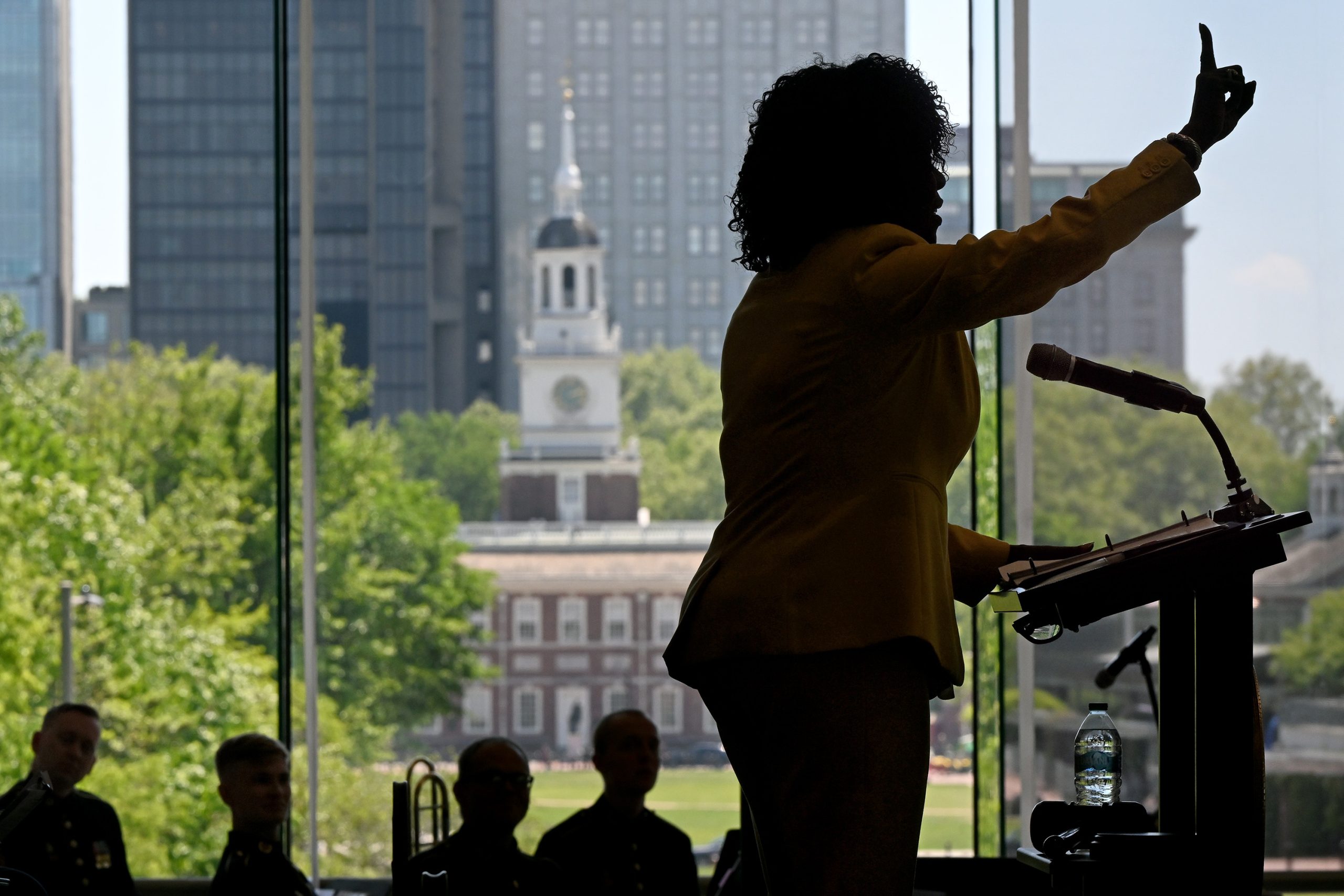
    Mayor Cherelle L. Parker raises a finger with her call-and-response “One Philly, A United City” mantra ending her speech during a ceremonial meeting of the Pennsylvania Senate at the National Constitution Center across the mall from Independence Hall on May 5.Tom Gralish / Staff Photographer

    However, some on the left see a coalescence of forces that could bolster their chances: national frustration with the Democratic establishment that has manifested in leftist wins, a widespread anti-incumbent sentiment, and liberal rage toward President Donald Trump, whom Parker has largely avoided maligning publicly.

    They also see potential signs of Parker’s power waning, including her recent budget battle during which she could not get Democrats in Harrisburg and City Hall on board with her tax plans.

    “If you just have the right candidates that are able to speak to the dissatisfaction of Democratic voters in Philadelphia,” Cea said, “I do think [Parker] is in trouble.”

    But the biggest question for Philadelphia progressives in the approaching mayoral race remains: Who could be their candidate?

    The potential challengers

    Jack Inacker, a Democratic strategist based in Philadelphia, said there are few, if any, challengers to Parker who could pull off a win in 2027.

    “The progressive infrastructure now has built up in a way where, if you squint really hard, you can see a path to a progressive challenger,” Inacker said. “The problem is that [Parker] is one big mistake away from being beatable, but she’s not beatable yet. And people know that.”

    Candidates have plenty of time to decide. Paperwork to get on the ballot likely would not be due until March.

    Perhaps the most talked-about potential challenger so far is District Attorney Larry Krasner, the city’s most prominent progressive. He has not ruled out a run for mayor, and he has recently publicly criticized Parker and some of her closest allies.

    Last week, he invited media to walk along with him while he hand-delivered a letter to the mayor’s suite in City Hall to express dissatisfaction with his office’s budget. Parker called the move “stunting.”

    Platt, in a thinly veiled shot at Krasner, said in a statement that “what we’ve seen recently is too many politicians focused on generating headlines rather than solving problems: manufacturing controversy, looking for someone else to blame, and confusing political theater with leadership.”

    District Attorney Larry Krasner greets supporters during his election night party at the Pipeline Philly coworking space on May 20, 2025, in Philadelphia. Krasner defeated challenger Patrick Dugan both in the Democratic primary and in the general election.Monica Herndon / Staff Photographer

    Krasner has won citywide election three times, twice winning reelection in landslide fashion. He is one of the nation’s most well-known progressive prosecutors and one of the city’s most polarizing figures. His base of support includes the city’s left, as well as a large swath of Black voters and elected officials.

    But it was Parker’s political family — the vaunted Northwest Coalition of the some of the city’s most storied Black politicians — that was key to Krasner’s political ascent. Challenging Parker could be seen as a betrayal by some in the voter-rich northwest corner of the city, and his base there could fracture.

    Krasner has also in the past struggled to keep up with his opponents in fundraising. Any challenger to Parker would likely need to bring in well over a million dollars, a sum of money that Krasner has never raised before.

    Several other elected officials are seen as potential challengers to Parker, including several sitting members of City Council.

    Councilmember Isaiah Thomas, who represents the city at-large, has long been rumored to have ambitions for higher office. He has been elected citywide twice, and recently was among the most vocal opponents of the Philadelphia School District’s controversial plan to close 17 schools.

    And he has allies both on the left and in the city’s business community, the latter of which has been frustrated with a Parker administration policy shift that increased the tax burden on small businesses.

    Councilmembers Isaiah Thomas (from left), Curtis Jones Jr., and Jamie Gauthier protest at an April school board meeting as the board prepared to vote on the facilities plan.Jessica Griffin / Staff Photographer

    Thomas said last week that he is focused on his job in City Council.

    “That job right now is hard enough, looking at the affordability crisis, the crisis around public education, and other issues that we’re facing,” he said.

    There’s also two-term Councilmember Jamie Gauthier, who represents parts of West Philadelphia and has positioned herself as one of Council’s chief critics of the Parker administration. She said earlier this year that running for mayor “could be interesting one day,” but that she would not run if she did not see a clear path to victory.

    She said in a statement that her focus is “finishing what we started on City Council, especially building affordable housing.”

    Gauthier added: “But it’s clear Philadelphians are hungry for leaders who will put working families above big business.”

    And there is Councilmember Kendra Brooks, the de facto leader of the city’s left-leaning coalition and a member of the progressive Working Families Party. Brooks, who represents the city at-large, has twice campaigned and won citywide.

    A political adviser to Brooks said she is focused on her work in City Hall and running for reelection to Council, as well as “building Black progressive political power through the WFP.”

    What do progressive gains mean for the 2027 mayor’s race?

    Parker’s camp sees strength in her numbers.

    In March, the mayor’s political arm commissioned a poll that found that 60% of respondents approve of the job Parker is doing as mayor, while 33% disapprove. Her approval rating was even higher among Black voters, older voters, and residents of Northwest Philadelphia — one of the highest-turnout areas of the city.

    Mayor Cherelle L. Parker (right) hugs Rachel O’Neal, executive of the Friends Childcare Center, at the unveiling of a new playful learning hub at Sisters Cities Park on Thursday.Jessica Griffin / Staff Photographer

    Cornell Belcher, one of the top Democratic pollsters in the nation, has conducted polling for Parker dating back to her mayoral campaign. He said that a key indicator of voter attitude toward an incumbent mayor is the number of residents who think the city is heading in the right direction.

    The results this spring, he noted, were “dramatically different” from when Parker was first campaigning for the office. In April 2023, Belcher measured that 66% of Democratic primary voters in the city were dissatisfied with the direction of Philadelphia.

    Today, he said, 62% are satisfied.

    Still, other polls have shown potential warning signs for Parker.

    In three polls that were conducted this spring in the 3rd Congressional District and obtained by The Inquirer, an average of 48% of Democratic primary voters said they had a favorable view of Parker and 41% had an unfavorable view. The polls, which measured voter attitudes in roughly half the city, were conducted by three different firms, and they were commissioned by different campaigns and organizations.

    Approval and favorability ratings are not apples-to-apples. An approval rating is often considered a more reliable data point for an incumbent executive, because it measures attitudes about job performance, not reputation.

    Belcher, who founded his polling firm 25 years ago and polled for former President Barack Obama, said he would not draw conclusions from polls of a congressional district that includes only half the city and was taken in a different election year. And he questioned other pollsters’ methodology in Philadelphia, a city that is tricky to survey.

    “A city like Philadelphia, with all its different racial and ethnic groups, getting that right is hard,” Belcher said. “The more diverse an area is, the more work you have to put into getting it right.”

    Chris Rabb greets supporters on election day. He is arriving to his polling place to vote, Grace Epiphany Episcopal Church, on May 19.Alejandro A. Alvarez / Staff Photographer

    The results of last month’s congressional race energized progressives, in part because Rabb performed well in parts of the city that Parker carried when she won the crowded open Democratic mayoral primary in 2023. An Inquirer analysis found that more than a quarter of Rabb’s votes came from divisions that voted for Parker in 2023.

    Rabb won his Democratic primary in a race that included three front-runners. But mayoral reelection battles in Philadelphia have historically been head-to-head, meaning the winner will look to reach 50% of the vote, a more challenging proposition for an ideological candidate.

    Platt said he would caution against concluding that Parker is politically vulnerable based on the outcome of the congressional race.

    And he said Rabb’s win in Parker’s 50th Ward is not a sign of cracks in the mayor’s base. He noted that the ward’s Democratic committeepeople last week unanimously reelected Parker as ward leader.

    “The mayor is organized, and her coalition across Philadelphia is strong,” Platt said. “They may not be active on Reddit, but they’re there, and they believe in what she’s doing because they can see the results in their neighborhoods.”

  • Philly progressives made gains in Democratic ward elections. But party chair Bob Brady remains well-positioned for reelection.

    Philly progressives made gains in Democratic ward elections. But party chair Bob Brady remains well-positioned for reelection.

    Former City Councilmember Jannie Blackwell, who has been a fixture of Philadelphia politics for decades, is no longer a Democratic ward leader. State Sen. Sharif Street — weeks after losing the city’s heated congressional race — just became one.

    And the Rev. Lewis Nash Sr., who in 2024 was removed as leader of the 47th Ward after The Inquirer reported he was recorded making anti-LGBTQ+ remarks, has returned to the post after being reelected in his North Philadelphia ward Monday night.

    Meanwhile, the upstart group Wards That Work, which was backed by progressive activists and sought to recruit hundreds of people to run for committee openings in the May 19 Democratic primary, claimed victories in six wards that were previously seen as aligned with the party establishment or more centrist Democrats.

    Despite those notable gains, fewer than one-third of Philadelphia’s 69 Democratic ward leaders are seen as closely aligned with the party’s left wing.

    That means Bob Brady, who has led the local Democratic Party since 1986 and is seen by many as the embodiment of the political old guard, will likely coast to victory in party leadership elections — decided by the ward leaders — next week, securing an 11th term as chair of the Democratic City Committee.

    The party’s internal politics have become a key battleground in the fight between progressive upstarts and the Democratic establishment. There has also been a renewed push to grow the number of “open wards” — those that allow committeepeople to vote on political endorsements rather than allowing ward leaders to decide unilaterally.

    Brady, a former U.S. representative, has over the last few weeks struck a conciliatory tone regarding the party’s left wing after clashing with activists in a series of elections, most notably when the party sought to punish committeepeople who endorsed the elections of Councilmembers Kendra Brooks and Nicolas O’Rourke from the progressive Working Families Party.

    “These labels — Working Families, Reclaim, socialist — the best labels they have that I love is they’re Democrats,” he said in an interview, referring in part to Reclaim Philadelphia, a group inspired by U.S. Sen. Bernie Sanders’ presidential runs that organized the local progressive movement’s first successful ward takeovers in 2018.

    Now, he said, he is focused on unity as Democrats hope to make gains in this year’s midterm elections and defeat candidates aligned with President Donald Trump in future elections.

    “We can come together and beat that nut in the White House,” Brady said.

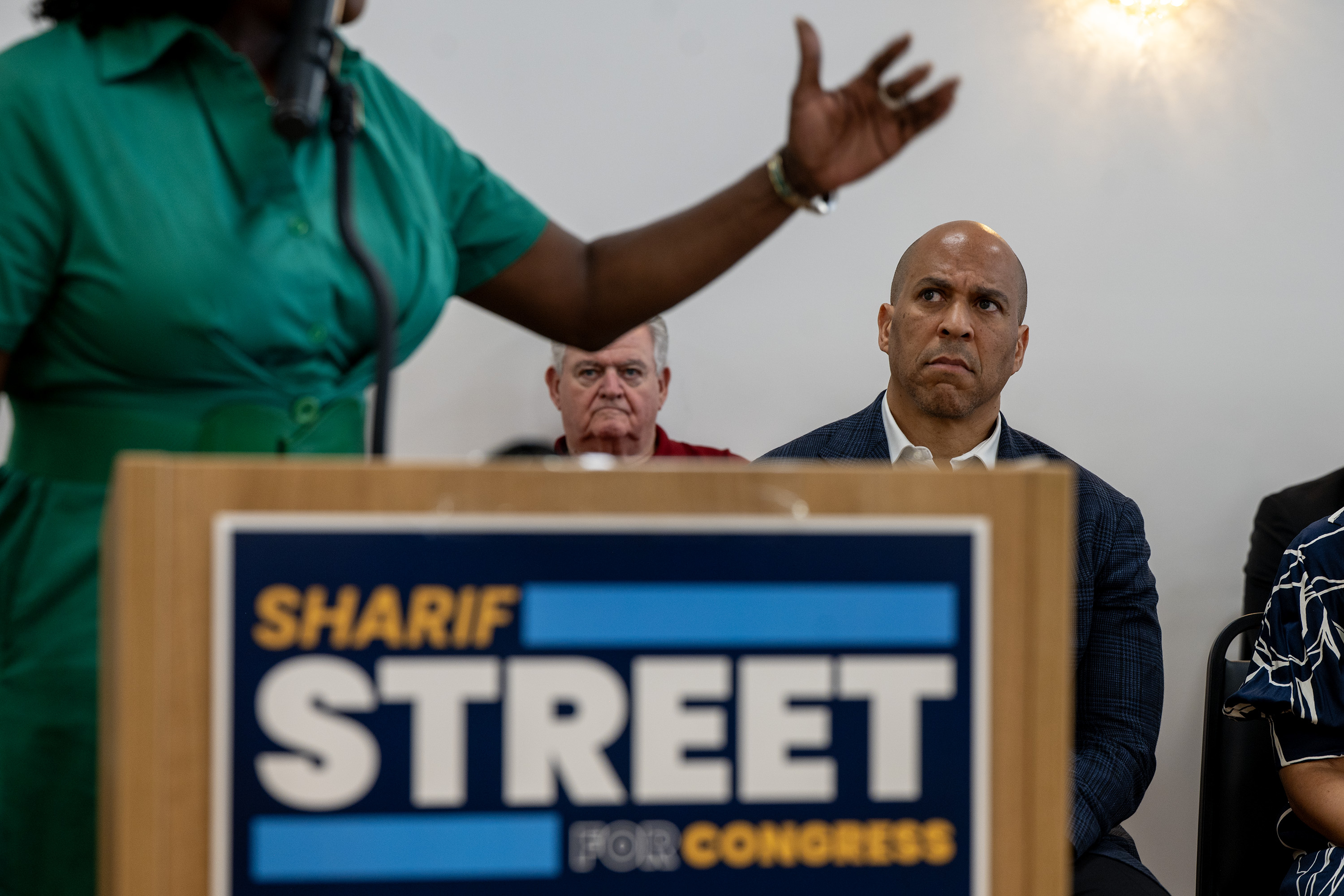
    Philadelphia Democratic Party Chairman Bob Brady (left) and U.S. Sen. Cory Booker (right) listen as Mayor Cherelle L. Parker speaks in support of State Sen. Sharif Street at a get-out-the-vote rally at the Church of Christian Compassion in West Philadelphia Monday, May 18, 2026 the day before Tuesday’s Democratic primary election for the 3rd Congressional District.Tom Gralish / Staff Photographer

    Earlier this year, however, Brady acknowledged that the Democratic City Committee funded mailers opposing some of the committeepeople backed by Wards That Work, and many on the left are still hoping for major changes in the local party.

    District Attorney Larry Krasner, for instance, recently called on Brady to resign, and State Rep. Chris Rabb, a democratic socialist who last month won the Democratic primary for an open Philadelphia congressional seat, has emerged as a leading critic.

    Rabb beat Street, the party’s endorsed candidate, in the 3rd Congressional District race, and has accused the city committee of neglecting the work of turning out the vote, instead concerning itself with backroom dealings among party insiders.

    State Rep. Chris Rabb greets supporters on election day. He is arriving to his polling place to vote, Grace Epiphany Episcopal Church, Philadelphia, Tuesday, May 19, 2026.Alejandro A. Alvarez / Staff Photographer

    Rabb has not explicitly called for Brady to resign. But he is now calling for a dramatic overhaul of the party, from its leaders to its bylaws to the city’s antiquated ward boundaries.

    “What I’m asking for is for the ward leaders — whatever candidate is running for chair, whether it’s Bob Brady or anyone else — that they demand that their first order of business is to overhaul the bylaws by Labor Day [to focus] on building a local party built on transparency integrity and inclusion,” Rabb said in an interview last week.

    Progressives make gains

    On paper, Philadelphia’s Democratic Party structure is bottom-up. Every four years, during the primaries of presidential midterm cycles, registered Democrats elect two committeepeople from their precincts, as they did this year on May 19. The committeepeople then elect neighborhood-level ward leaders, and the ward leaders in turn elect the top officials in the city party, including Brady.

    But in practice, many critics of the city’s old guard see a top-down reality, with Brady and other high-ranking city officials controlling the party’s agenda.

    Progressives are hoping to wrest control of the party from the establishment or to force reforms that make it more hospitable to left-leaning candidates. But it remains an uphill battle given the diffuse nature of the party system.

    Among the notable progressive wins in Monday night’s ward elections:

    • 5th Ward (Center City): Ryan Alsayegh, a political consultant currently working for State Reps. Tarik Khan and Joe Hohenstein, unseated Mike Boyle.
    • 25th Ward (Port Richmond, Kensington): Alexandria Mercedes Murphy, a neurophysiologist and volunteer with Reclaim Philadelphia, succeeded Tommy Johnson.
    • 31st Ward (Fishtown, East Kensington): Molly Hartman, a staffer for Councilmember Rue Landau, faced no opponents in her bid to succeed Margaret Rzepski.
    • 27th Ward (University City): Benjamin Moss-Horwitz, a staffer for State Rep. Rick Krajewski, won a contested race to succeed retiring ward leader Carol Jenkins, a party stalwart.
    • 46th Ward (Squirrel Hill, Cedar Park): James Bridgeforth, a University of Delaware professor, ran an uncontested race to succeed Blackwell, who retired this year after defeating a progressive challenger for her ward in a contentious election four years ago.

    In West Philadelphia’s 60th Ward, State Rep. Amen Brown, a centrist Democrat, was unseated by Lorraine White-Johnson.

    White-Johnson, who had the backing of Wards That Work, said in an interview that she is not aligned with one faction and welcomes all Democrats. She added that she plans to explore opening up the ward but has not made formal plans to do so yet.

    Philadelphia City Councilmember Cindy Bass on Thursday, September 11, 2025.Alejandro A. Alvarez / Staff Photographer

    In Mount Airy’s 22nd Ward, Councilmember Cindy Bass declared herself reelected to a new term in a controversial move by saying she won a contested voice vote of committeepeople and denying motions for a roll-call vote that could have clarified the results. Her opponent, Octavius Price, was backed by progressive organizers and said he plans to challenge the election.

    Some notable ward election results did not involve major ideological shifts.

    Nash, who on Tuesday denied having made the anti-LGBTQ+ comments that previously cost him his seat, won a three-way race to reclaim the 47th Ward.

    “I forgive everybody that was involved with those unforeseen circumstances,” Nash said in an interview Tuesday. “To anyone that was offended by the alleged comments, forgive me and the person who made those comments, allegedly and falsely, and let’s move forward.”

    Also in North Philadelphia, Street, a former chair of the Pennsylvania Democratic Party, unseated 11th Ward leader Dwayne Lilley just weeks after losing his congressional bid to Rabb.

    In a statement, Street said he would “take a back-to-basics approach, listening to my neighbors about their concerns and filling vacant committee member seats.”

    “Last month’s election results galvanized my belief that we need to build the party from the ground up,” Street said in a statement. “We need to increase voter turnout in Black communities, like North Philadelphia, by demonstrating every day that Democrats are fighting for them.”

    Staff writer Anna Orso contributed to this article.
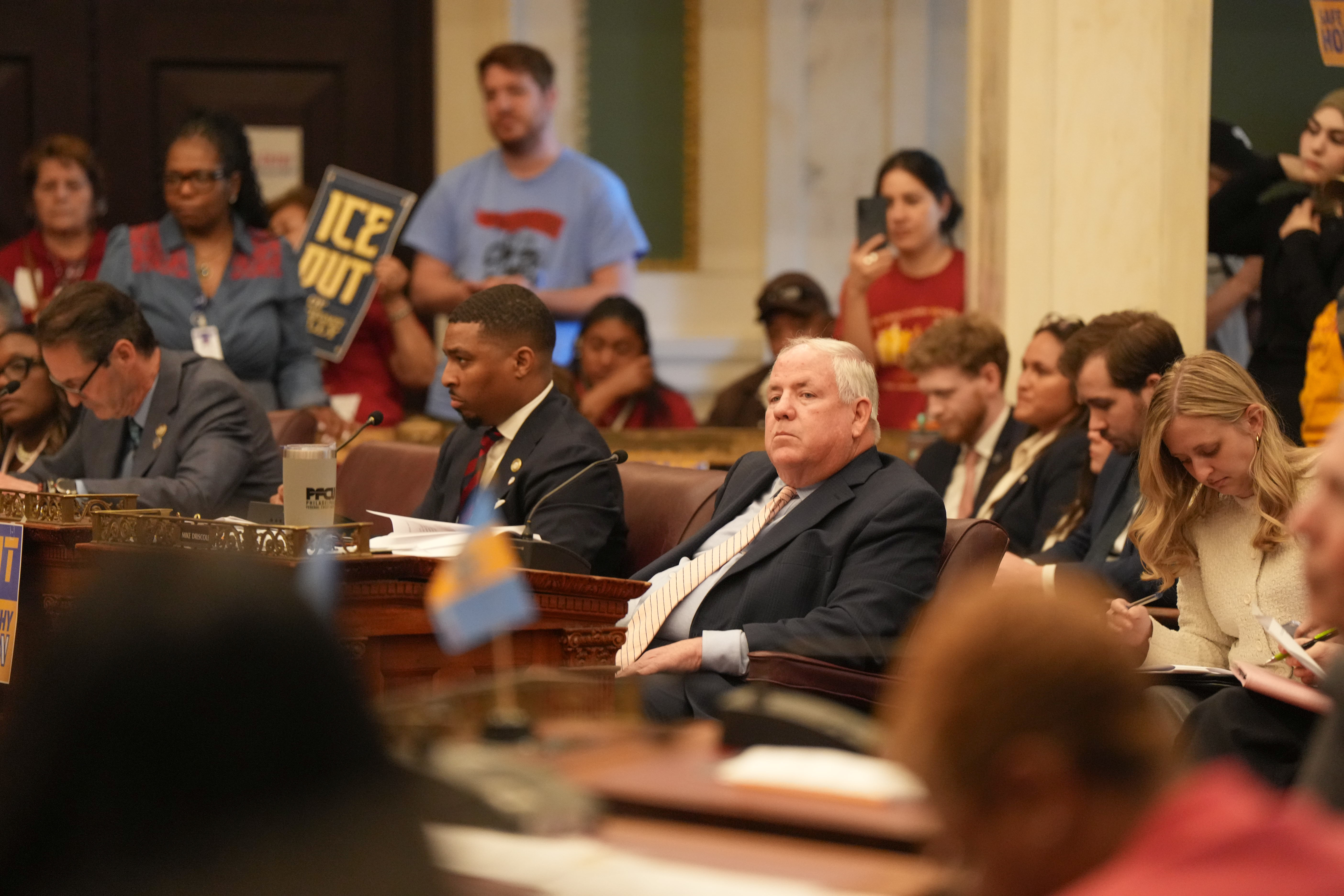
  • Philly sends a third of its trash to a Chester incinerator. Council members took a ‘Toxic Tour’ to get a closer look.

    Philly sends a third of its trash to a Chester incinerator. Council members took a ‘Toxic Tour’ to get a closer look.

    CHESTER — Like a Ben Franklin impersonator waving at Independence Hall and the Liberty Bell, tour guide B. Preston Lyles directed the tour group’s attention to various landmarks as they passed by.

    But instead of highlighting monuments that made locals swell with pride, Lyles was pointing to sites he said made the people of Chester get sick and die younger: power plants, an oil refinery, a sewage sludge-burning facility, and — most relevantly for Friday’s group — the Reworld trash incinerator, the destination for about a third of the rubbish collected by Philadelphia’s city government.

    “Chester City is known as one of the nation’s worst cases of environmental racism,” Lyles, an organizer for Delco Environmental Justice, told the group, referring to the concentration of polluting industries in Black and brown communities. “It is not just because the city holds the nation’s largest waste incinerator, but due to an extreme concentration of toxic industries in and adjacent to such a small city.”

    Philadelphia City Councilmember Jamie Gauthier, who is hoping to end the city’s relationship with the Reworld incinerator, on Friday attended the Energy Justice Network’s “Toxic Tour” in and around Chester to highlight the facility’s impact on Philly’s southern neighbors.

    Philadelphia Councilmember Jamie Gauthier tours Chester to discuss her “Stop Trashing Our Air Act,” which would ban the city from incinerating waste, during a visit with lawmakers and staff in Chester, Pa., on Friday, Nov. 7, 2025.Jose F. Moreno / Staff Photographer

    “From a justice and fairness perspective, it just seems so wrong to me and so obvious,” said Gauthier, who was joined on the tour by Councilmember Kendra Brooks and staffers for other lawmakers. “Seeing the incinerator on the waterfront and all of these other dirty uses and the abandoned homes, that made me want to do this more, because it’s wrong. It’s wrong that people should be loaded down with all these toxic uses.”

    Reworld in 2024 burned more than 355,000 tons of trash collected by the city. Its contract with Philadelphia ends in June 2026.

    Gauthier has introduced a bill, the Stop Trashing Our Air Act, that would prohibit the city from incinerating trash, and Council’s Committee on the Environment, which she chairs, will likely hold a hearing on it this fall.

    Reworld spokesperson Linda Ribakusky said the company is a “leading sustainable waste solutions provider.” The Chester facility, she said, offers “a more sustainable alternative to landfilling by converting waste into renewable energy and recovering valuable metals that would otherwise be lost.”

    “The Reworld Delaware Valley facility helps reduce greenhouse gases by avoiding landfill methane and generates enough clean electricity to power more than 50,000 local homes each year,” Ribakusky said in a statement. “We are proud to be an active part of the Chester community. Working alongside local schools, nonprofits, neighbors, and community organizations, we support initiatives that create real impact.”

    ‘Now is the time’

    The Philadelphia Sanitation Department collects and disposes of about half of the city’s waste, said Michael Ewall, founder of the Philly-based Energy Justice Network. The other half is handled by private haulers hired by businesses and owners of larger residential properties.

    Under its contract, Reworld takes one-third of the municipally collected trash to the Chester incinerator, which the company says produces about 87 megawatts of electricity, enough to power 52,000 homes, while burning the waste. WM, which operates a major landfill in Bucks County’s Falls Township, takes the other two-thirds.
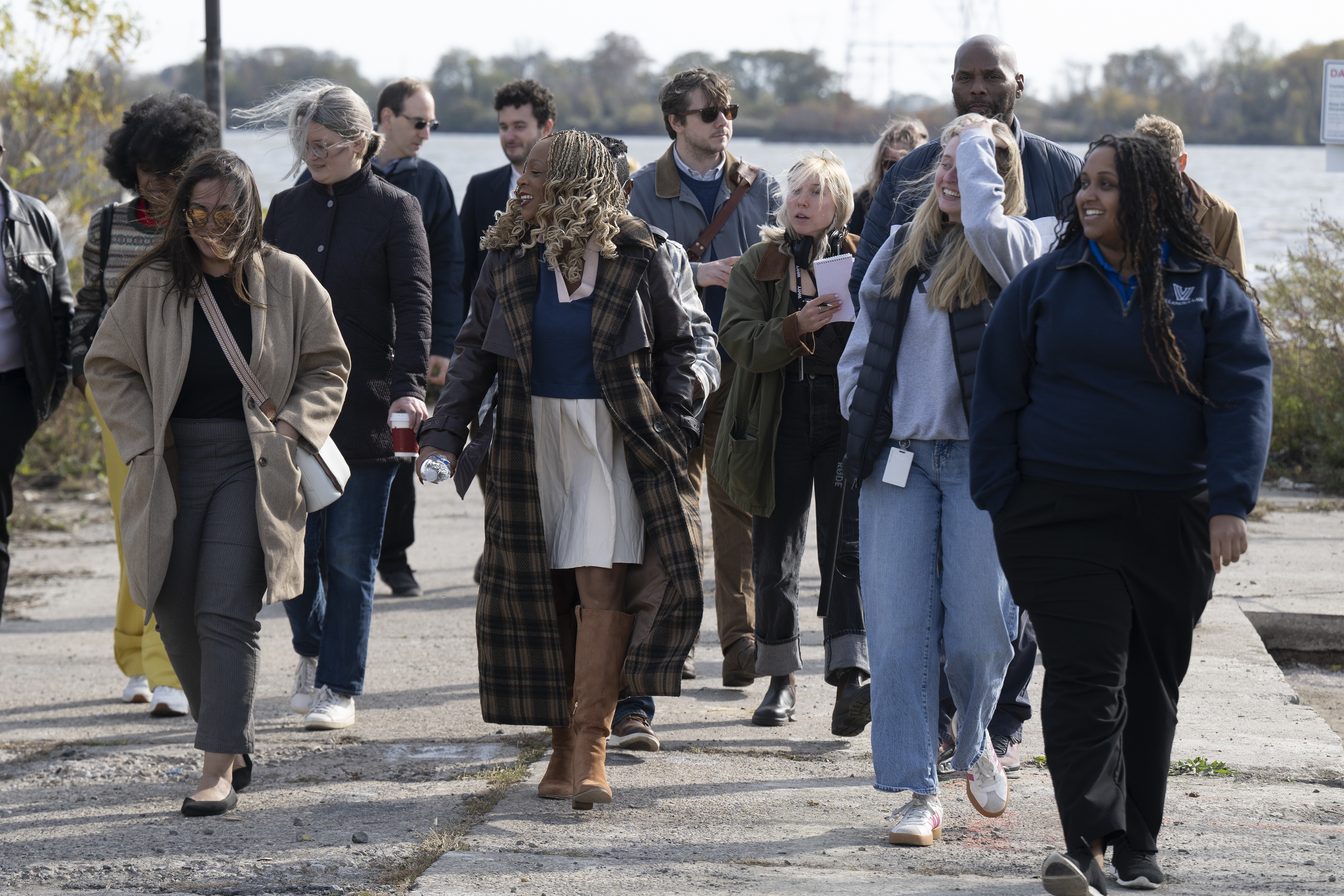
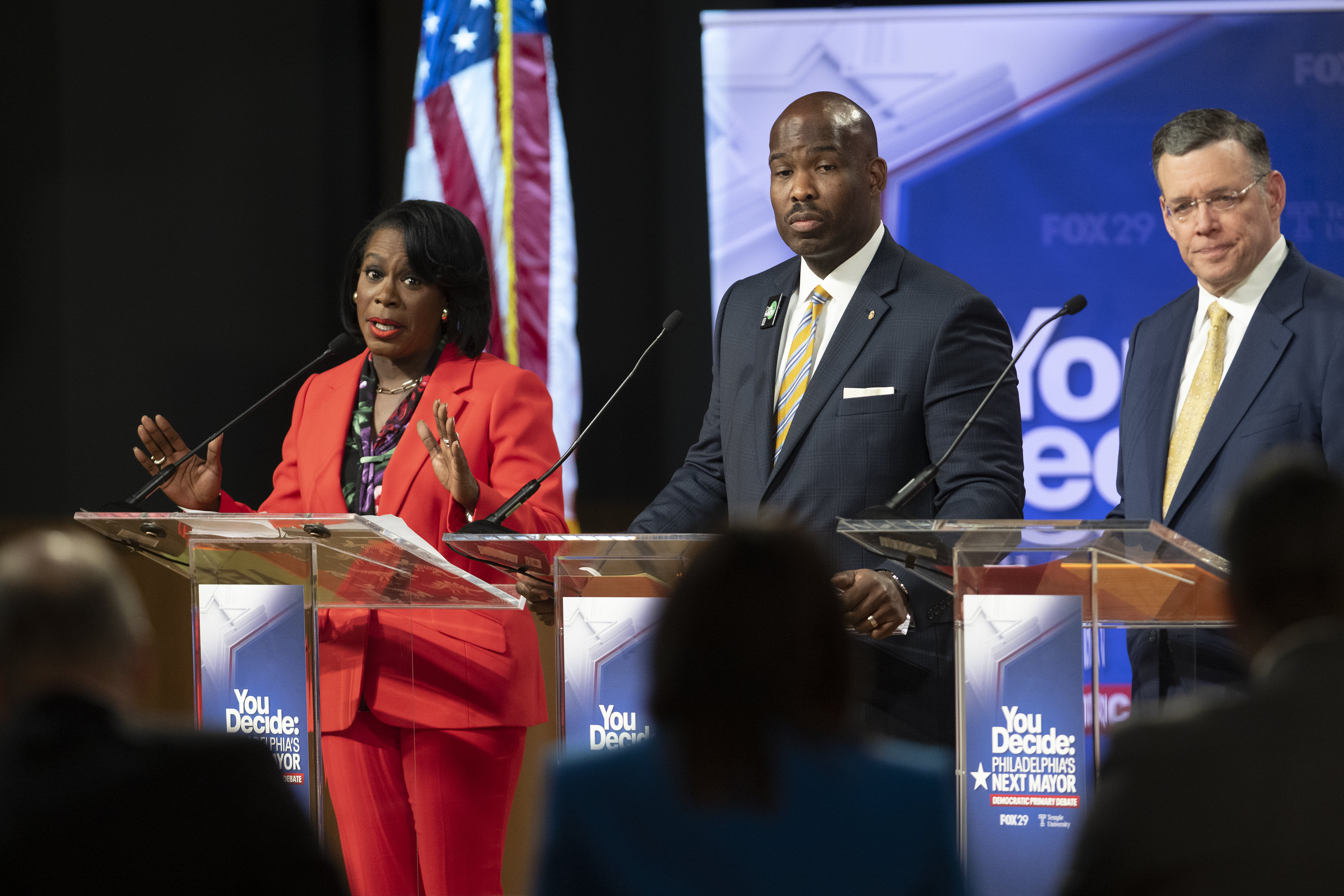
    When the most recent contracts were signed in 2019, the city agreed to pay roughly $65 per ton of trash to both Reworld, which was then known as Covanta, and WM, formerly Waste Management.

    Gauthier said she has had constructive conversations with Mayor Cherelle L. Parker’s administration about eliminating incineration from the city’s waste management operations, and is hopeful the city will include environmental justice concerns in its request for proposals for the new contracts.

    Parker’s office did not respond to a request for comment.

    The Chester incinerator provided a flashpoint in the 2023 mayoral election, which Parker won. During a debate, a moderator asked candidate Jeff Brown about the incinerator, prompting Brown to say, in part, “The trash has to go somewhere.”

    In a debate performance that was key to her rise and Brown’s downfall in the race, Parker was among the candidates who pounced on the soon-to-be-infamous comment.

    “That response is the same way you treat the Black and brown community,” said Parker, who ran on a campaign to turn Philly into America’s “safest, cleanest, greenest” big city.

    Top candidates for the Philadelphia mayor seat former City Council Member Cherelle Parker, left, Former City Council Member Derek Green, and businessman Jeff Brown, during a televised debate at the Temple performing arts center in Philadelphia, Pa. Tuesday, April 11, 2023.Jose F. Moreno / Staff Photographer

    During the debate, however, Parker was not asked directly if she would commit to ending the city’s contract with Reworld.

    “I was enthused to hear our mayor speak about this on the campaign trail,” Gauthier said. “I hope we all want to do the right thing. Now is the time to show that.”

    Environmental advocates contend that neither landfills nor incinerators are good for the environment and urge municipalities to focus on reducing waste in the first place. For instance, Ewall, who developed a policy platform called the Zero Waste Hierarchy, pointed out that thousands of communities now charge residents for each bag of trash just as utilities charge for each gallon of water or kilowatt of electricity.

    But for the “residuals” that do need to be collected, advocates have generally coalesced around the conclusion that incineration is more harmful than landfilling, Ewall said.

    Delaware County, which adopted a Zero Waste Plan in September, commissioned a 2021 study that found incineration was the costliest of its waste-disposal options, from both a health perspective and a financial one.

    The county determined that each ton of trash burned at the incinerator produced $234 to $337 in health and environmental costs. The impact from landfilling, meanwhile, was $144 per ton.

    ‘Reverse the environmental tragedy’

    Founded by William Penn, Chester is the oldest city in Pennsylvania. But over the last century, it has become a hub for some of the region’s least-wanted uses, including polluting manufacturers, fossil fuel facilities, a state prison, and, since the early 1990s, the incinerator. About 69% of Chester’s 33,000 residents are Black, and 31% live below the federal poverty line.

    “We hope that Philadelphia is listening in a strong way … as we attempt to reverse the environmental tragedy that has occurred here in the last 3½ decades due to the incineration of trash,” Chester Mayor Stefan Roots said Friday. “It’s an old technology, and it’s time for it to go. Especially in a community like Chester that’s looking to develop, it’s one of our biggest impediments.”

    Chester resident Zulene Mayfield, left, Philadelphia Councilmember Jamie Gauthier, right, and Chester Mayor Stefan Roots meet to discuss Gauthier’s “Stop Trashing Our Air Act,” which would ban the city from incinerating waste, during a visit with lawmakers and staff in Chester, Pa., on Friday, Nov. 7, 2025.Jose F. Moreno / Staff Photographer

    About 31% of the trash the incinerator burned in 2024 comes from Philly, with Delaware County accounting for 28% and New York City 26%.

    During the tour, Lyles explained how environmental racism can occur even if decision-makers are not consciously prejudiced against certain communities, because wealthier areas often organize to prevent polluting industries in their backyards.

    “In the late 1990s, there were about 60 proposals for new gas-fired power plants in PA. Only 16 of them were built,” he said. “Most of them faced a stiff opposition from community groups in suburban and rural areas, but those on either side of Chester went in with no organized opposition.”

    The final stop on the tour was a row of boarded-up and dilapidated homes along a railroad used for industrial purposes near the edge of the incinerator property. The homes started emptying out in the early 2000s, Ewall said, and the last was abandoned a few years ago.

    He recalled meeting one of the last residents to leave.

    “She had six grandchildren. She lived with her granddaughter, around 14, and one of the times I met her, had an oxygen tank that she would carry around with her just to be able to breathe,” Ewall said. “They just kind of disappeared one day, and I saw a boarded house.”