Tag: Jersey Shore

  • Frank Spagnuola, original ‘American Bandstand’ dancer and longtime interior designer, has died at 85

    Frank Spagnuola, original ‘American Bandstand’ dancer and longtime interior designer, has died at 85

    Frank Spagnuola, 85, formerly of Philadelphia, one of the original American Bandstand dancers, 1957 Chalypso dance champion, longtime interior designer, and gourmet home cook, died Monday, Aug. 17, of congestive heart failure at the Complete Care at Court House nursing center in Cape May Court House.

    Born and reared in South Philadelphia, Mr. Spagnuola was lifelong friends with performers Bobby Rydell, Frankie Avalon, Fabian Forte, James Darren, and Jerry Blavat, and dozens of other singers, dancers, musicians, and disc jockeys from the neighborhood. He enjoyed socializing as well as music and dancing, and, at 15, became one of the original dancers when the old WFIL-TV station hosted Bandstand and then American Bandstand in the 1950s and ’60s.

    The TV station invited local teens to dance to the latest hits in its Studio B on Market Street in West Philadelphia, and Mr. Spagnuola did just that on many afternoons from 1955 to 1963. In 1957, he and partner Dottie Horner finished first in American Bandstand’s first Chalypso contest, spotlighting an original Philly dance that combines the cha-cha and the calypso.

    “We would cut classes” to dance on Bandstand, Mr. Spagnuola, a graduate of the old Bishop Neumann High School, said in a 2017 video interview. “We had eight or nine classes, and we would leave, like, the sixth class. Father would say, ‘Where are you going?’ Well, you know where we’re going, Father. The priests watched the show. I mean, everybody watched the show.”

    Mr. Spagnuola graduated from the old Bishop Neumann High School in 1958.Courtesy of the family

    It was downstairs at Studio B, Mr. Spagnuola said, that he encountered Bandstand guest stars Pat Boone, Bobby Darin, and Sal Mineo. As a teen in the neighborhood, he performed in local skit shows with Rydell and played football and double-dated with Fabian.

    On Facebook, Fabian called Mr. Spagnuola “a gentleman and talented dancer,” and said: “Frank Spagnuola was one of the most popular and beloved regular dancers on Dick Clark’s American Bandstand during the show’s iconic Philadelphia era.”

    Mr. Spagnuola is profiled at history-of-rock.com and bandstand.cafex.biz, and he and Dottie Horner are on the cover of the 1997 Dick Clark’s American Bandstand souvenir collectors’ magazine. He is featured in the 1997 New Jersey Network documentary Bandstand Days and called the show “part of American history.”

    Over the years, as Bandstand’s popularity ebbed and flowed, he routinely reconnected with other original dancers — they were called the Bandstand Regulars — at reunions, public events, and celebrations in the region. American Bandstand went off the air in 1989.
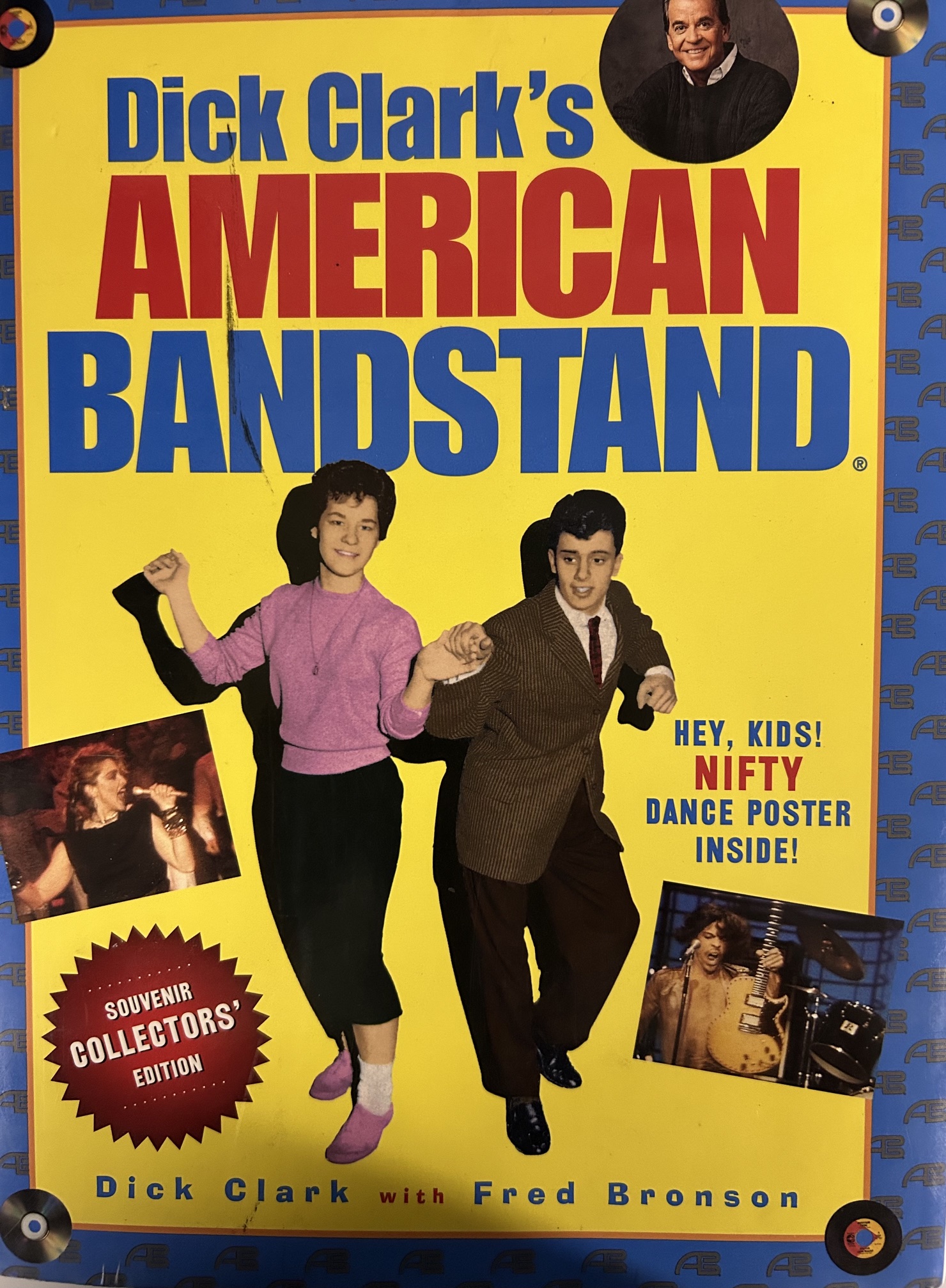
    Mr. Spagnuola and his dance partner, Dottie Horner, were on the cover of this 1997 souvenir collectors’ magazine. Courtesy of the family

    “Everybody loved Frank,” said longtime disc jockey and music director Tommy McCarthy. “He had an infectious smile. He was a guy you just liked.”

    Friends on Facebook called Mr. Spagnuola “movie star handsome,” “a rock & roll soldier,” “a Bandstand pioneer,” and “one of the nicest gentleman you could ever meet.” One said: “Wonderful dancer, wonderful person, wonderful friend.”

    After graduating from Bishop Neumann in 1958, Mr. Spagnuola worked in a high-end carpet store, studied interior design, and earned an associate’s degree at the old Philadelphia College of the Arts. He became an interior designer, worked for Sears at the Moorestown Mall for 25 years, and was active with the American Society of Interior Designers.

    On his own, he did private design work for Muhammad Ali, former Eagles assistant coach Jon Gruden, and other local notables. “He cultivated an eye for beauty and design,” his family said in a tribute, “shaping spaces with elegance and functionality.”
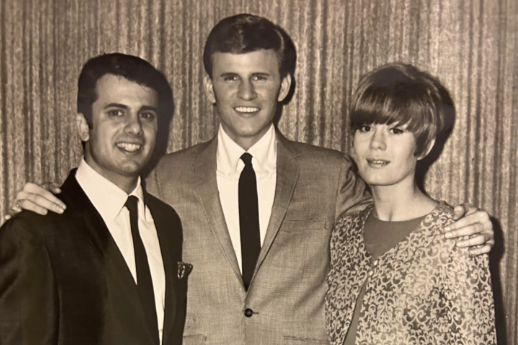
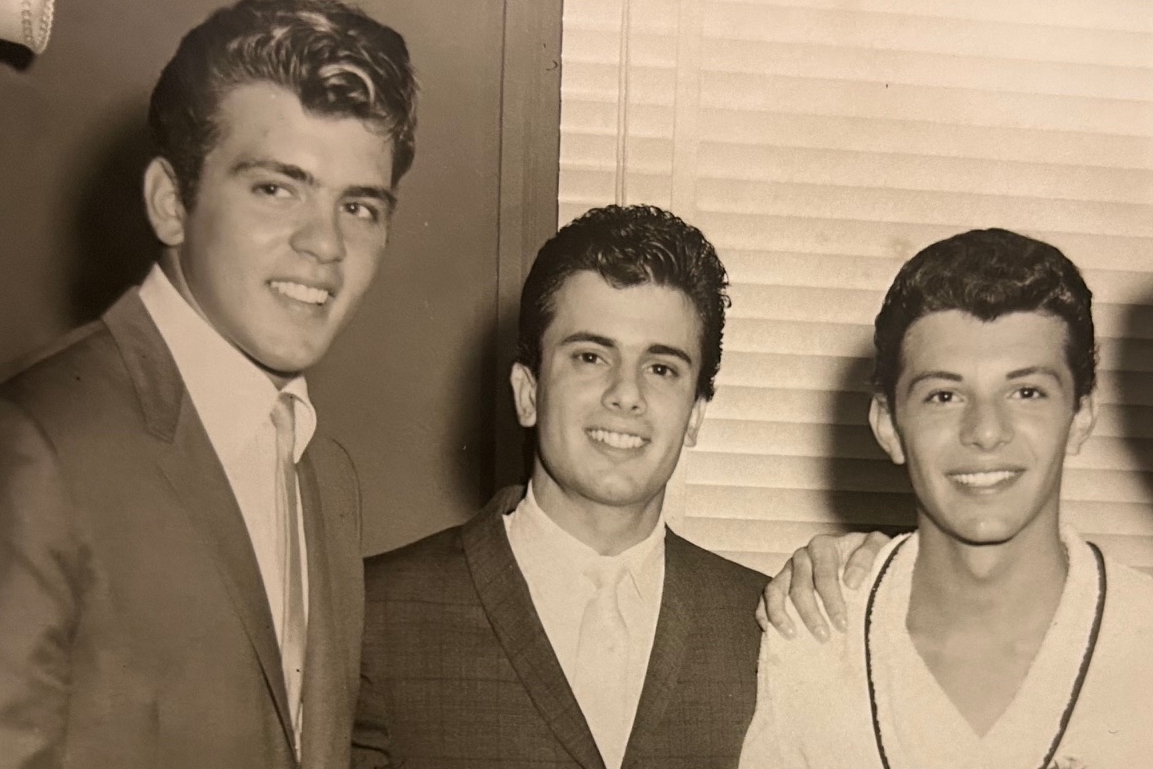
    Mr. Spagnuola (left above) stands with his wife, Janet, and Bobby Rydell. Below, he is flanked by Fabian (left) and Frankie Avalon.Courtesy of the family

    Francis Michael Spagnuola was born Nov. 2, 1940. The oldest of three brothers, he liked to hang out at the Jersey Shore and dine on Italian food.

    He married Janet Moretti, and they had a son, Stephen, and a daughter, Carrie, and lived in South Philadelphia and Center City. His wife died in 2005.

    Mr. Spagnuola moved to Cape May later, became an accomplished home cook, and was known for his crab salad dip. He was passionate, upbeat, and funny, everyone said, and his children called him “a steadfast anchor and a lifelong source of support.”

    His family said: “He leaves behind a memory as warm and enduring as the summer shore and the Wildwood days he so dearly cherished.”
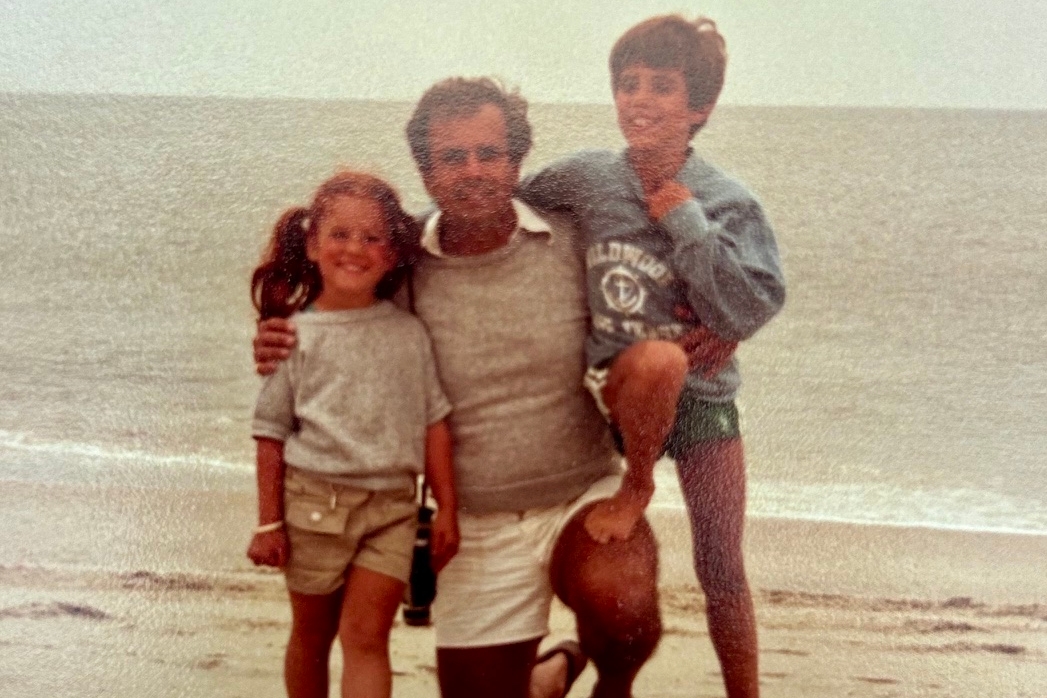
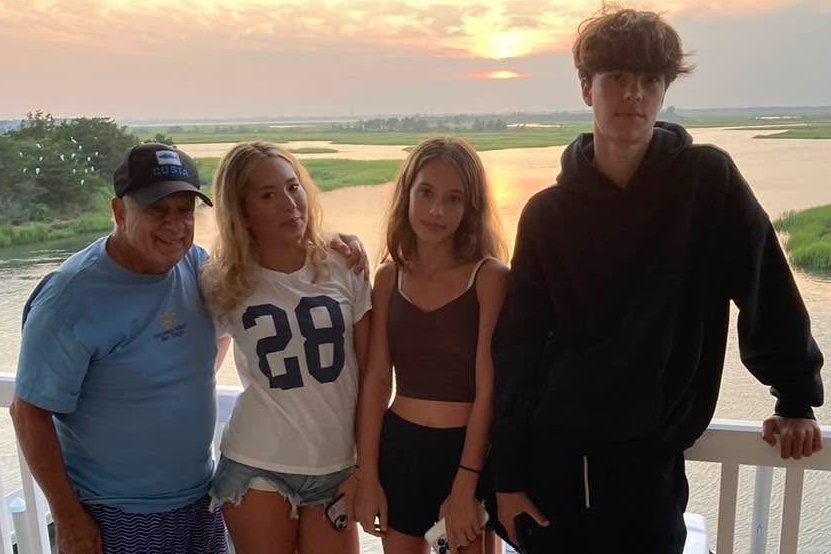
    Mr. Spagnuola enjoyed time with his children (above) and grandchildren (below).Courtesy of the family

    His son said: “He loved life. He loved people. He loved characters.”

    In addition to his children, Mr. Spagnuola is survived by three grandchildren and other relatives. Two brothers died earlier.

    Services were held earlier.

    Donations in his name may be made to the American Heart Association, Box 840692, Dallas, Texas 75284.

    Mr. Spagnuola “loved life. He loved people. He loved characters,” his son said.Courtesy of the family
  • Avalon will allow outdoor live music one hour later at Gully’s

    Avalon will allow outdoor live music one hour later at Gully’s

    Avalon has changed its tune.

    Over objections from nearby residents, the affluent Cape May County shore town voted to soften liquor license restrictions for the popular new bar Gully’s, allowing one more hour of outdoor music, until 9 p.m.

    The vote followed an outcry from the town’s locals, old-timers, and music lovers after the band Three and One was told to stop playing at 8 p.m. July 17, two hours earlier than advertised, after complaints from neighbors and a visit from Avalon police.

    The 8 p.m. cutoff for outdoor music was a special condition included in the liquor licenses of Gully’s and other bars in town.

    But at its August council meeting last Wednesday, the council adopted new restrictions on Gully’s that gives the bar one more hour for outdoor live music.

    Gully’s had been appealing those conditions to the state’s Division of Alcohol Beverage Control before the resolution’s adoption.

    Councilman Jamie McDermott downplayed the consequences of extending the music one more hour, and said the noise was “part of living within the two blocks of the commercial business district.”

    “It’s a summer disruption,” he said. “We’re talking about eight Saturday nights that are going to go until nine o’clock.

    “For me, for a summer town, that’s not Sea Isle, that’s the seashore at its best,” he said.

    According to the resolution, Gully’s has retained a sound engineer to help with noise volume from its bands.

    “Each band will be given the sound engineer’s phone number so that the engineer can approve the band’s system before it is set up,” the resolution states.

    In addition, “bands will be warned that they will be cut off and not paid if they do not keep the volume reasonable.”

    The council noted that Gully’s space is mostly outdoors, unlike other bars in town with bigger indoor footprints for music, and that the borough itself has outdoor music until 9 p.m. at its public concerts.

    The extension to 9 p.m. was characterized as a temporary solution for the rest of the summer. The issue will be revisited before next summer.

    Gully’s has agreed to withdraw its appeal, for now, Nicole Curio, the municipal solicitor, told the council.

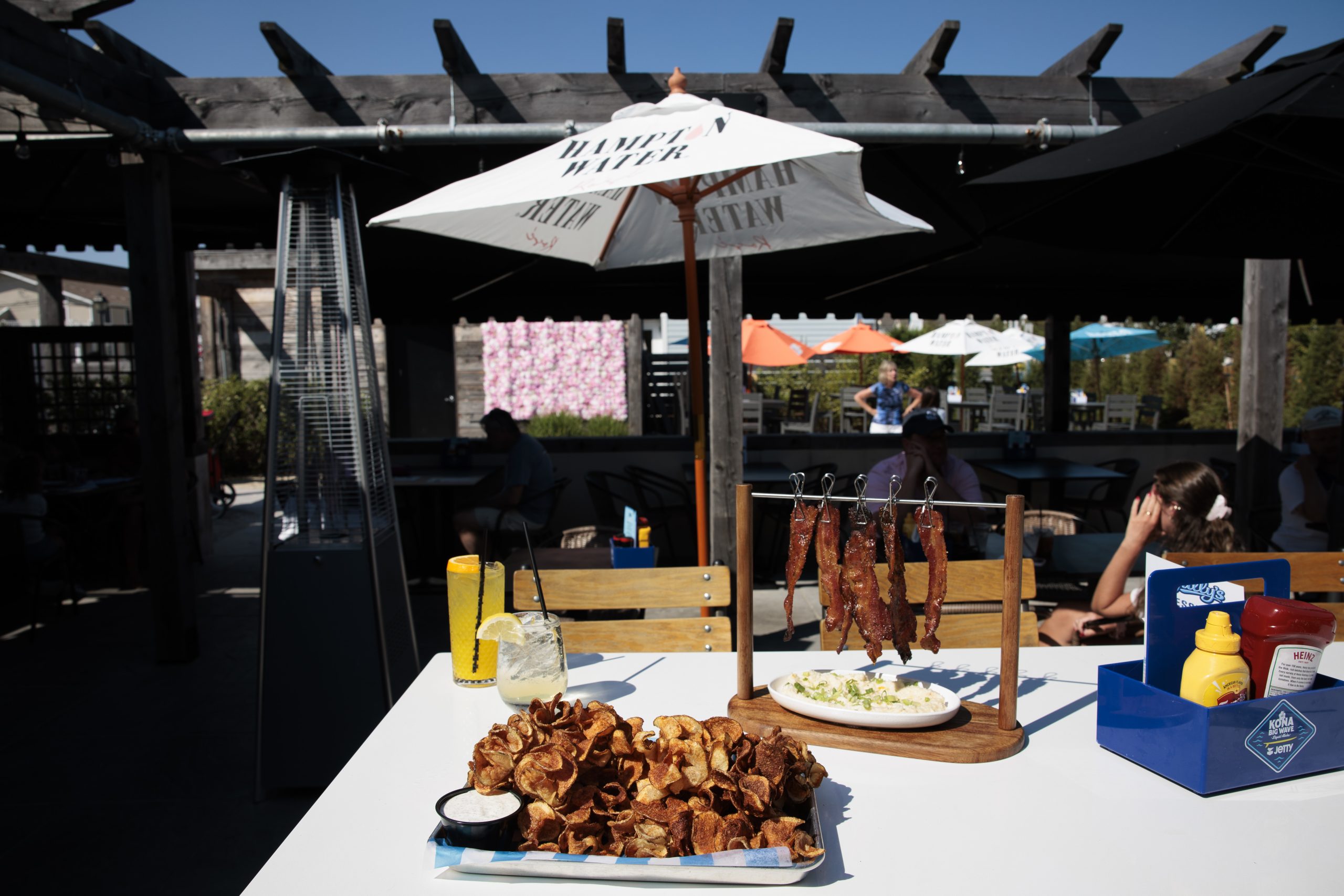
    The hanging candied bacon served over grits and Gully’s blooming potato at Gully’s on Wednesday, June 17, 2026, in Avalon, NJ.Monica Herndon / Staff Photographer

    The resolution requires Gully’s bands to have smaller sound systems, no 18-inch or larger bass speakers, and to monitor their volume. The restaurant announced the change on its Facebook page.

    The resolution also states that concerned neighbors will be given a number to text if they have issues with the volume.

    Gully’s has also agreed to reposition the stage so that bands are facing the building rather than the neighborhood, the resolution states.

    City Council President Greg “Chet” Johnson said at the meeting that the town needed to ensure that all the new people investing in summer homes had places to go once they arrived in Avalon.

    “The town has changed,” Johnson said, addressing residents who had objected to the new regulation. “It’s a more affluent community that’s coming here. You’ve had great appreciation in your property. This is going to continue to grow and boom. People that come down now, they’re not bringing their groceries. They want to go to restaurants. They want entertainment.”

    The popularity of Gully’s, in a space where a previous business had not flourished, showed that it was something the town as a whole supported, he said.

    Larry Hayes, a neighbor who lives about 500 yards away and has complained about the noise, said he was opposed to the new regulations. Others said Avalon was caving to Gully’s.

    Council Vice President Sam Wierman said it was unrealistic for neighbors near Avalon’s commercial district to want “everything shut off” at 8 p.m.

    “That’s the reality of living,” he said. “I don’t think 9 p.m. is unreasonable. It’s a middle ground.”

    Curio, the solicitor, noted that the resolution did not address other events at Gully’s, like its amplified Monday minnow races, which were also receiving attention from PETA, the animal rights group.

    Resident Jody Kyle, meanwhile, noted a noise issue she thought was worse than Gully’s: The noise from the nearby Wawa, which she said went on until midnight or 2 a.m. some nights.

    “It’s underaged kids who belong at home,” she told council.

  • She turned a tiny cottage in North Wildwood into a retreat for the whole family

    She turned a tiny cottage in North Wildwood into a retreat for the whole family

    Dolly Kelly was leaving the beach with her nephew Sean Kelly on a sunny day in 2020, when she passed the Angelsea Cottage, her favorite house in North Wildwood.

    When she spied the For Sale sign on the front lawn, she got excited.

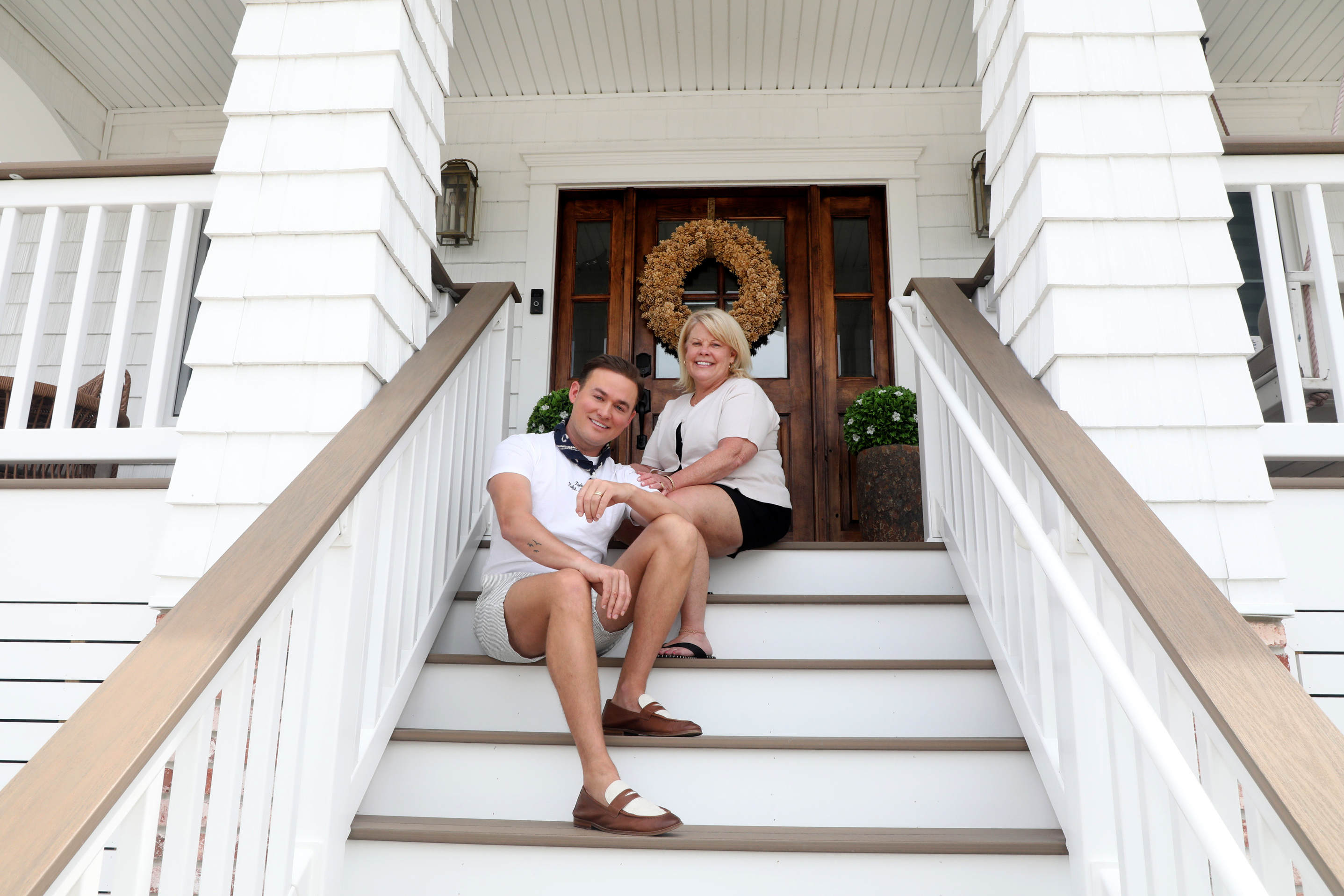
    “I just loved that porch,” Dolly recalled. “We actually walked up the steps, sat down, and took a picture.”

    The next day, Dolly walked through the house and made an offer, but she was outbid. She was devastated.

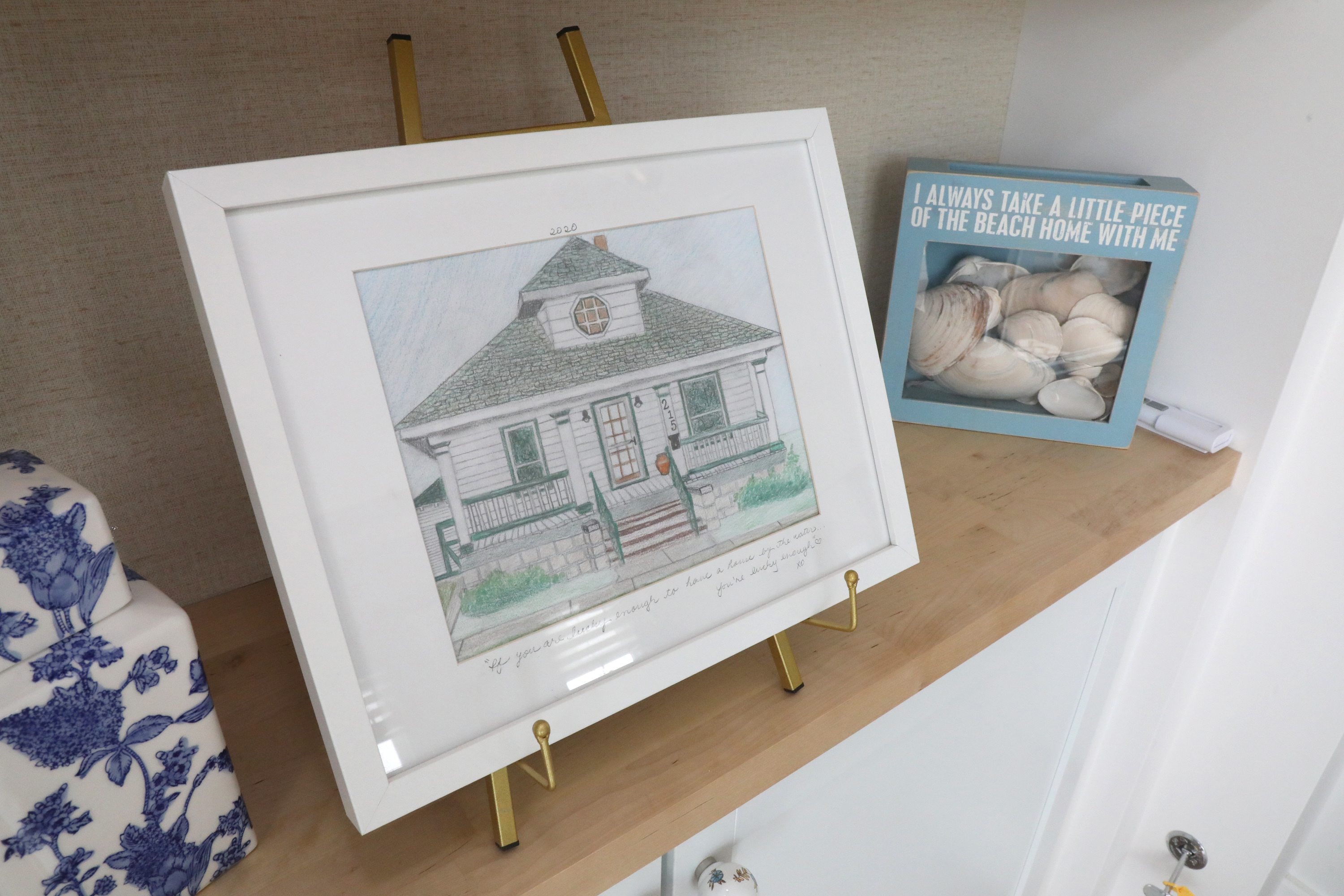
    A framed drawing of the original cottage is on display in the home. Vernon Ogrodnek / For The Inquirer

    But two months later, she got a call that the deal had fallen through — the house could be hers. She made a successful offer that day and moved in three months later.

    While Dolly loved the 675-square-foot cottage built in 1913, it had only two bedrooms and one bathroom. With a large, close-knit family, she wanted a gathering place with lots of space to entertain. She was sad to knock down the original house but given its age and condition, adding on wasn’t a viable option.

    “I have 13 nieces and nephews and 13 great-nieces and -nephews who come over all the time,” Dolly said.

    She spent a year-and-a-half building a 2,400-square-foot home with an open concept and a porch similar to the original one she adored. She was helped by Shore Pro Builders in Wildwood. And her nephew, owner of DUNE by Sean Kelly, handled most of the home’s design with “modern coastal living” in mind.

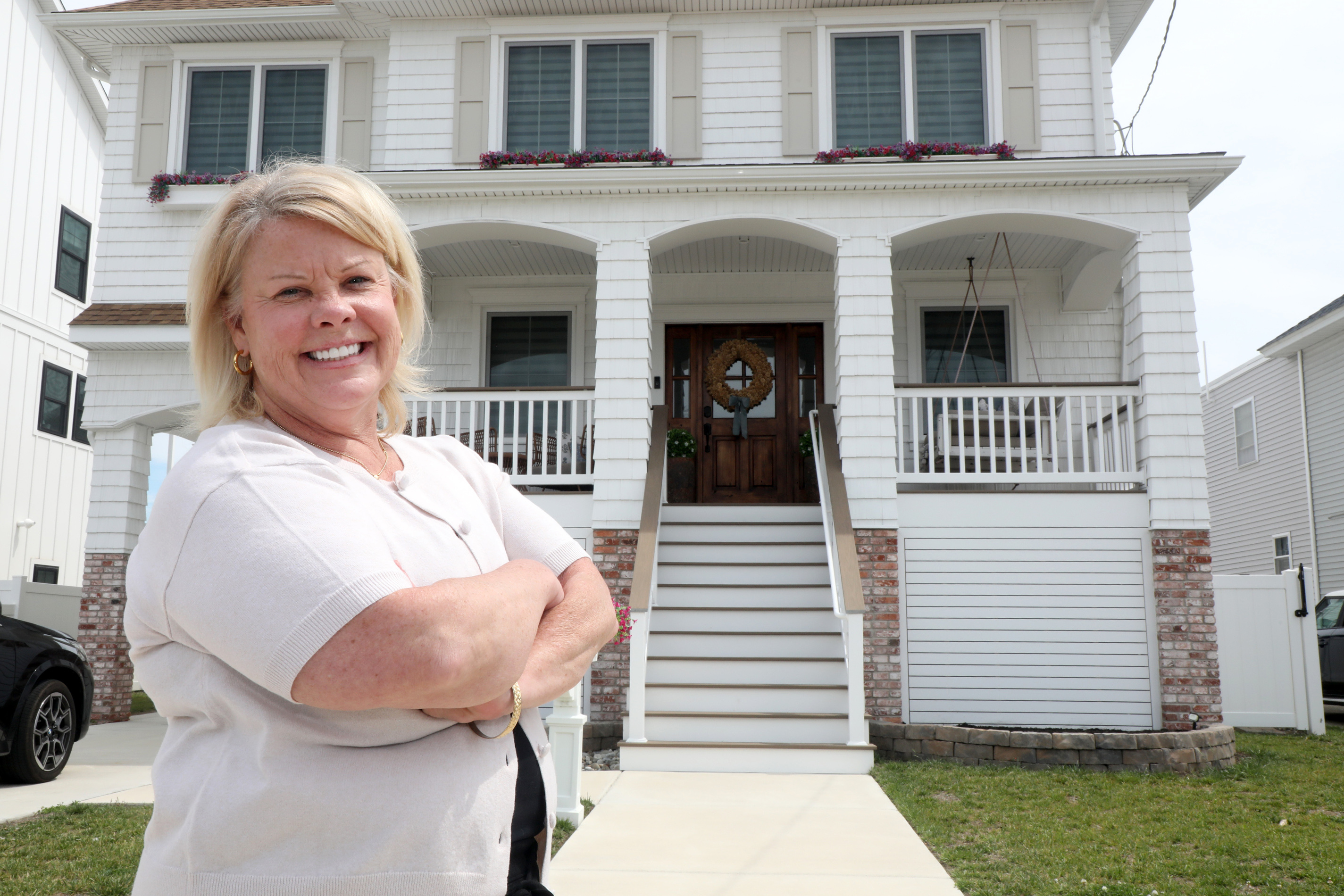
    Dolly Kelly stands outside her rebuilt home.Vernon Ogrodnek / For The Inquirer
    The new house has an open concept, with the living room flowing into the kitchen.Vernon Ogrodnek / For The Inquirer

    “The finished home blends the timeless architecture of Nantucket and the Hamptons with a distinctly North Wildwood personality,” Sean said. It “honors the history and character of the original Anglesea Cottage while creating something entirely new.”

    Dolly’s must-haves included a covered carport, large covered porch, open-concept living area, and three bedrooms. She calls her design style elevated and intentional.

    To honor the history of the original house and the town itself, their goal was building a home in a traditional style with a lot of character. The home’s interior is mostly white with blue accents — for summer. She changes the pillows and accessories for each season.

    The living room blends style with comfort. The furniture is white, which might seem like a risky move in a house where lots of kids are encouraged to play. But Dolly isn’t concerned because the performance fabric is easy to clean.

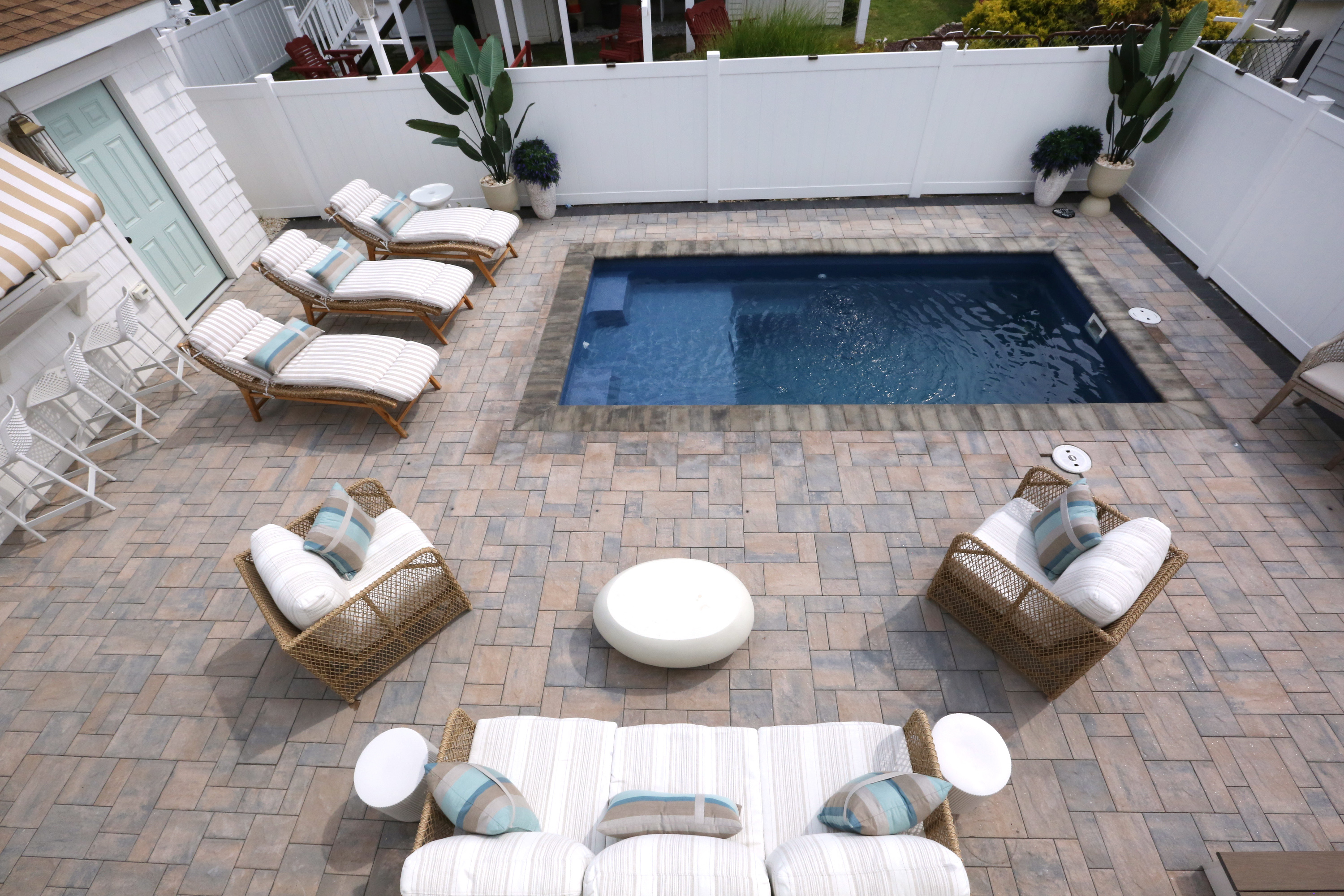
    The backyard has comfortable seating and a heated pool.Vernon Ogrodnek / For The Inquirer

    The kitchen is the hub, where everyone congregates as Dolly cooks. It’s not unusual for a dance party to break out. The island is quartz; the appliances are all GE Café, and the pot-filler is a prized possession. The backsplash is made from three types of stone.

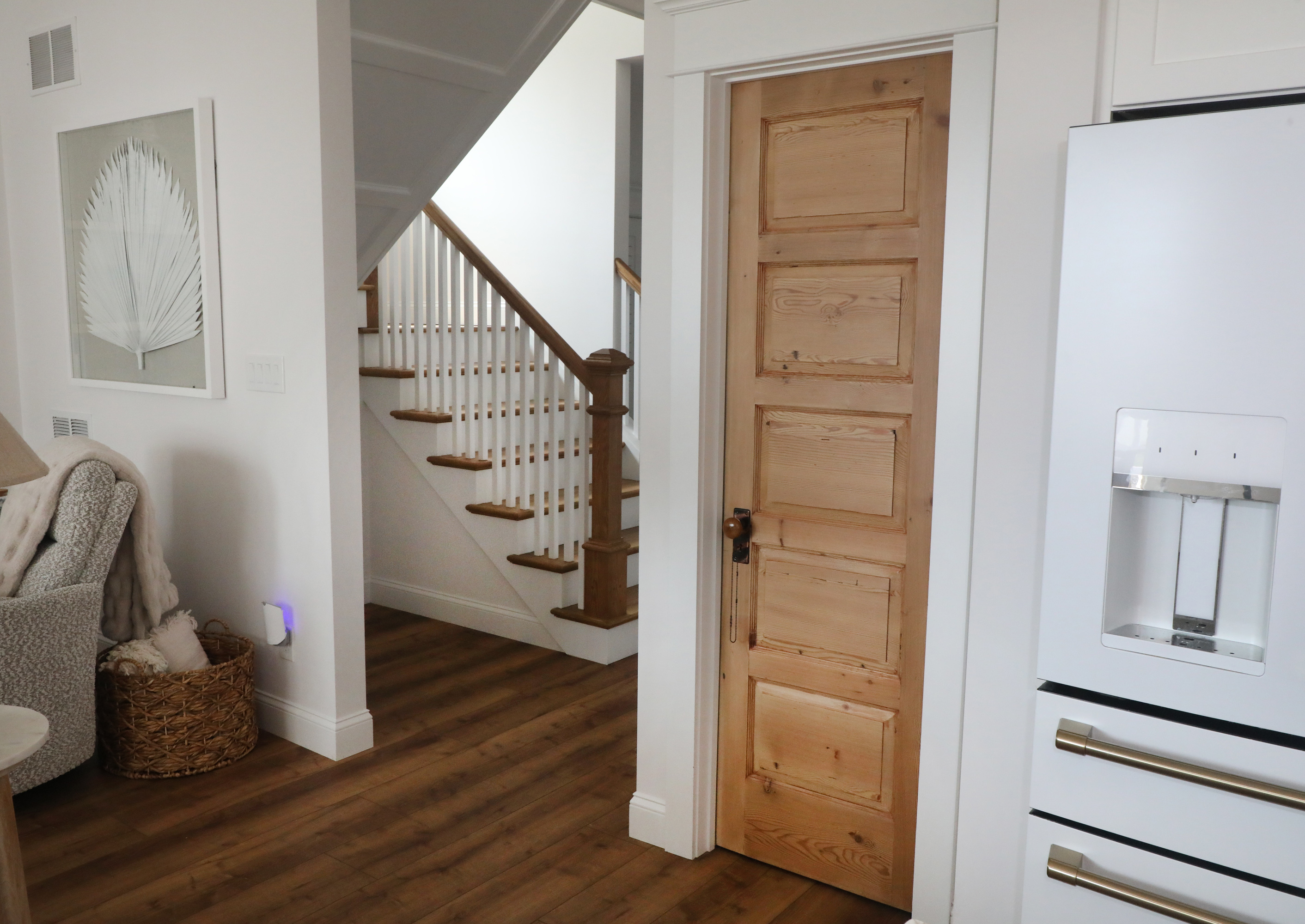
    Dolly eats most of her meals in the breakfast nook, bathed in natural light. One door from the original house was salvaged and repurposed as the pantry door.

    Her office is tucked behind large glass doors with black windowpanes, custom designed by North Wildwood-based Window Hub. She appreciates being able to see out, while also having privacy.

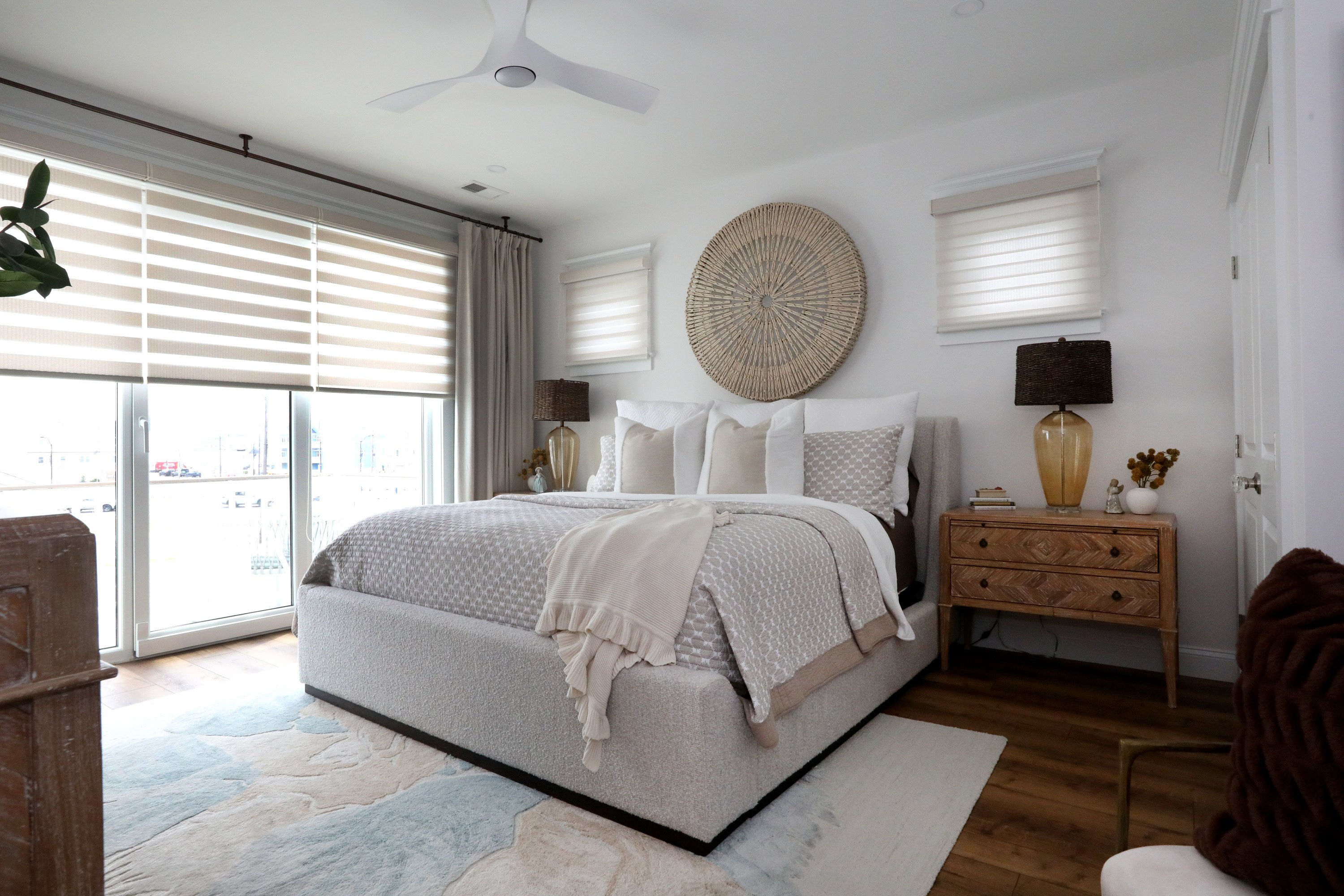
    The main bedroom.Vernon Ogrodnek / For The Inquirer
    A print in Kelly’s office is one of her favorite items in the house. The space has custom doors.Vernon Ogrodnek / For The Inquirer
    Kelly enjoys cooking for the family in her kitchen and dines in the breakfast nook daily.Vernon Ogrodnek / For The Inquirer
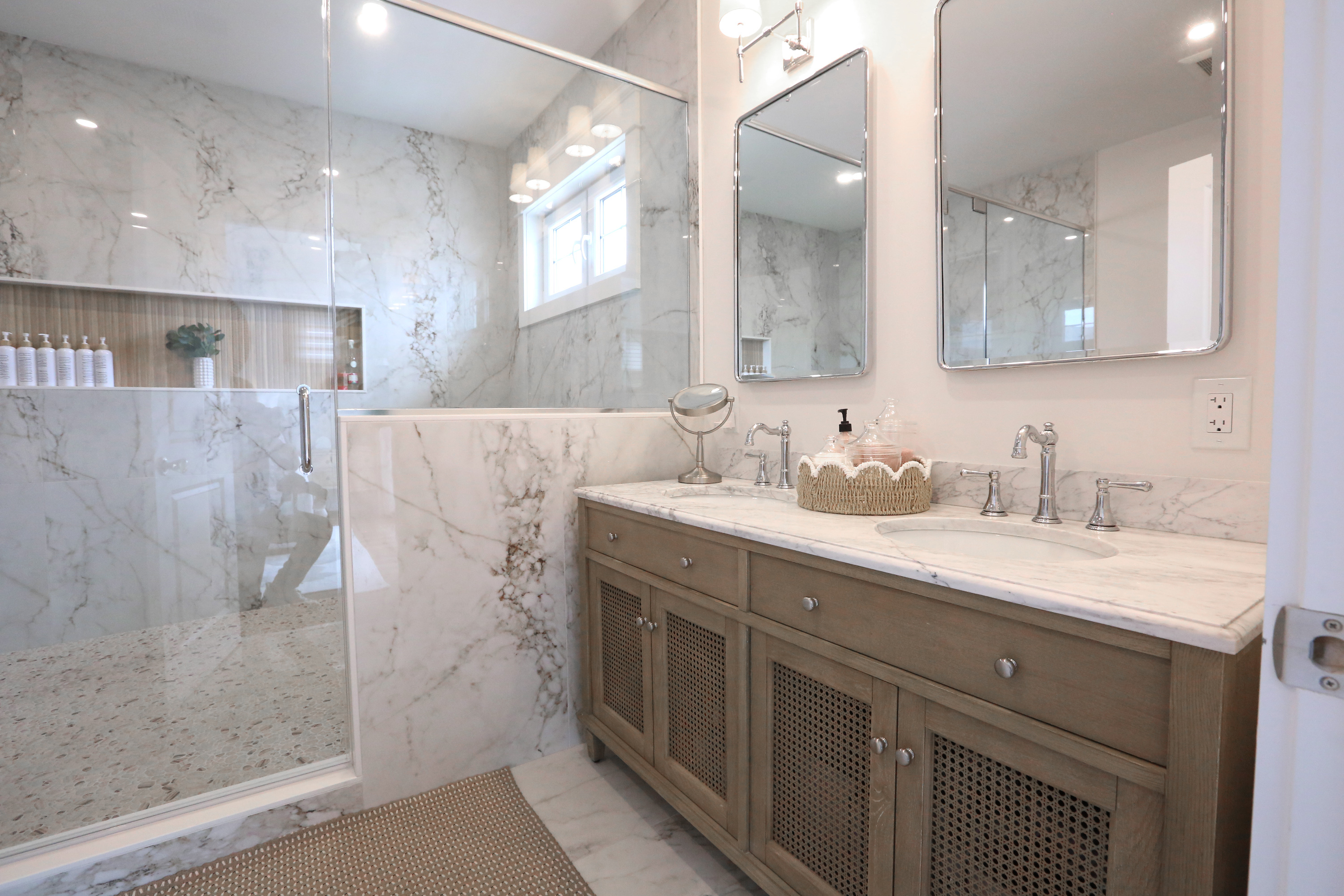
    The primary bathroom includes a spa-like bathing area.Vernon Ogrodnek / For The Inquirer

    The primary bedroom features a water room — a large enclosed shower with a soaking tub, offering the feel of a luxurious spa.

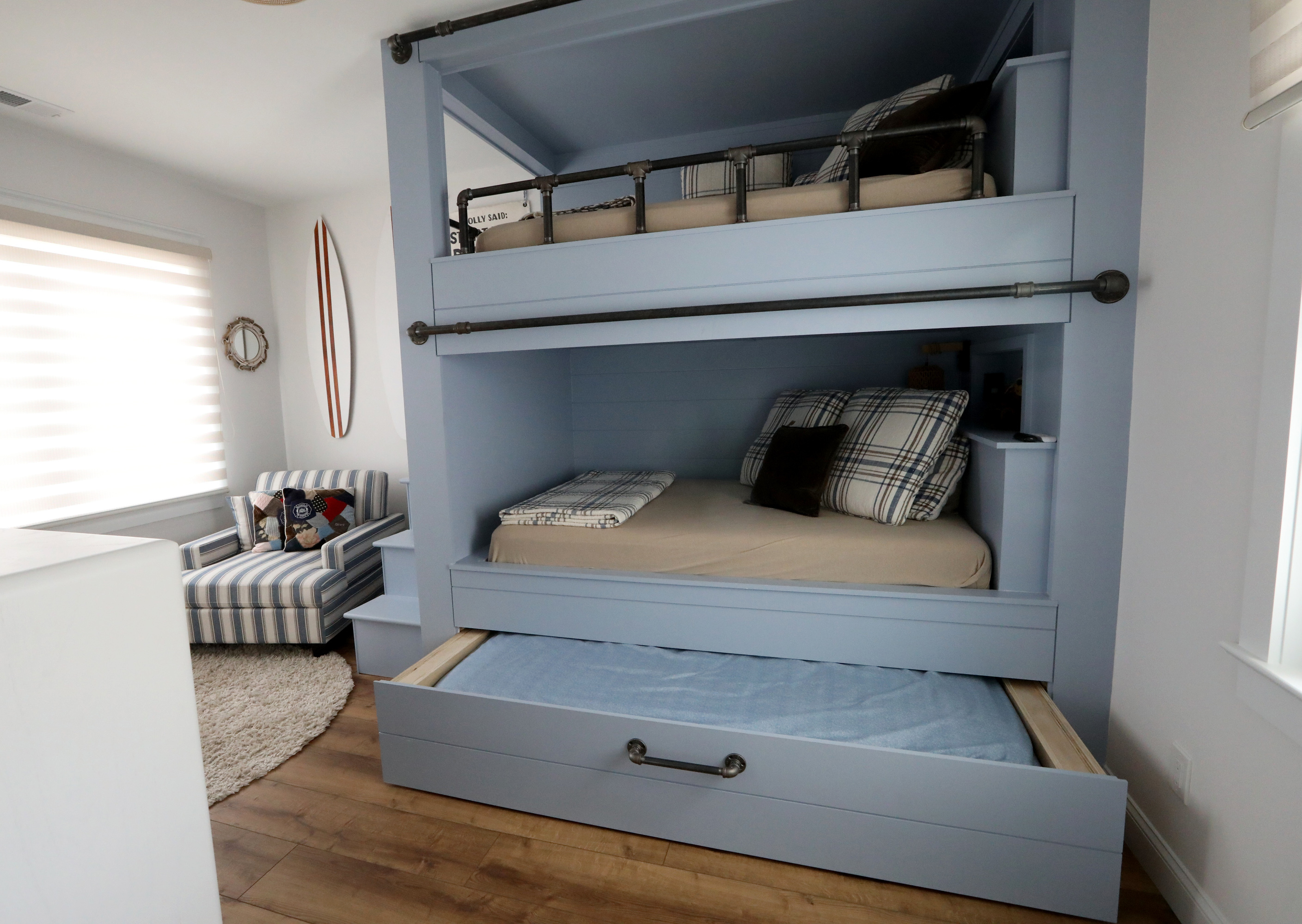
    To maximize sleeping space, one bedroom contains queen-sized bunk beds with a queen-sized trundle. The home can comfortably sleep 12, but when there are more guests, the kids find other creative spaces to spend the night.

    Dolly loves shopping, finding beautiful accessories to match the decor. The spherical crystal floor lamp she found at Restoration Hardware blends traditional crystal with contemporary metal geometry.

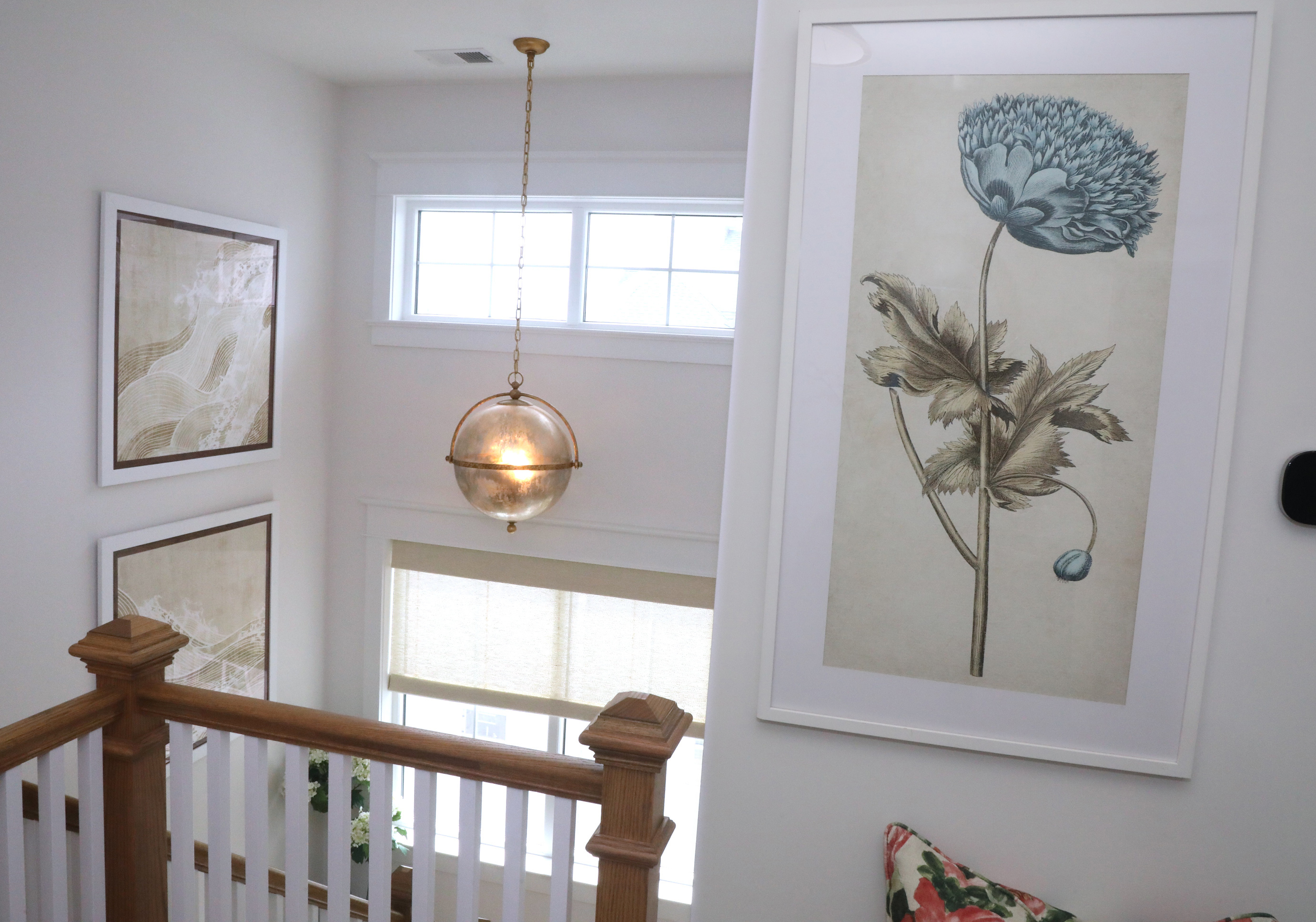
    The chandelier that hangs in the stairwell — a globe pendant featuring a hand-hammered mercury glass shade — came from Visual Comfort & Co. in High Point, N.C.

    A bedroom for the younger members of her family has queen-sized bunk beds and a trundle.Vernon Ogrodnek / For The Inquirer
    A door from the original home leads into a pantry.Vernon Ogrodnek / For The Inquirer
    Kelly’s shoe collection is displayed in her custom closet.Vernon Ogrodnek / For The Inquirer
    A chandelier featuring a hand-hammered mercury glass shade hangs in the stairwell.Vernon Ogrodnek / For The Inquirer

    The home has become the family retreat Dolly envisioned. This past Memorial Day weekend, 19 family members descended to hang out with their beloved aunt.

    “I couldn’t be the aunt I am today if I didn’t have them all around,” she said.

    The group spends time at the beach but also in the built-in heated swimming pool in the backyard. She keeps it open from April through October.

    The porch.Vernon Ogrodnek / For The Inquirer

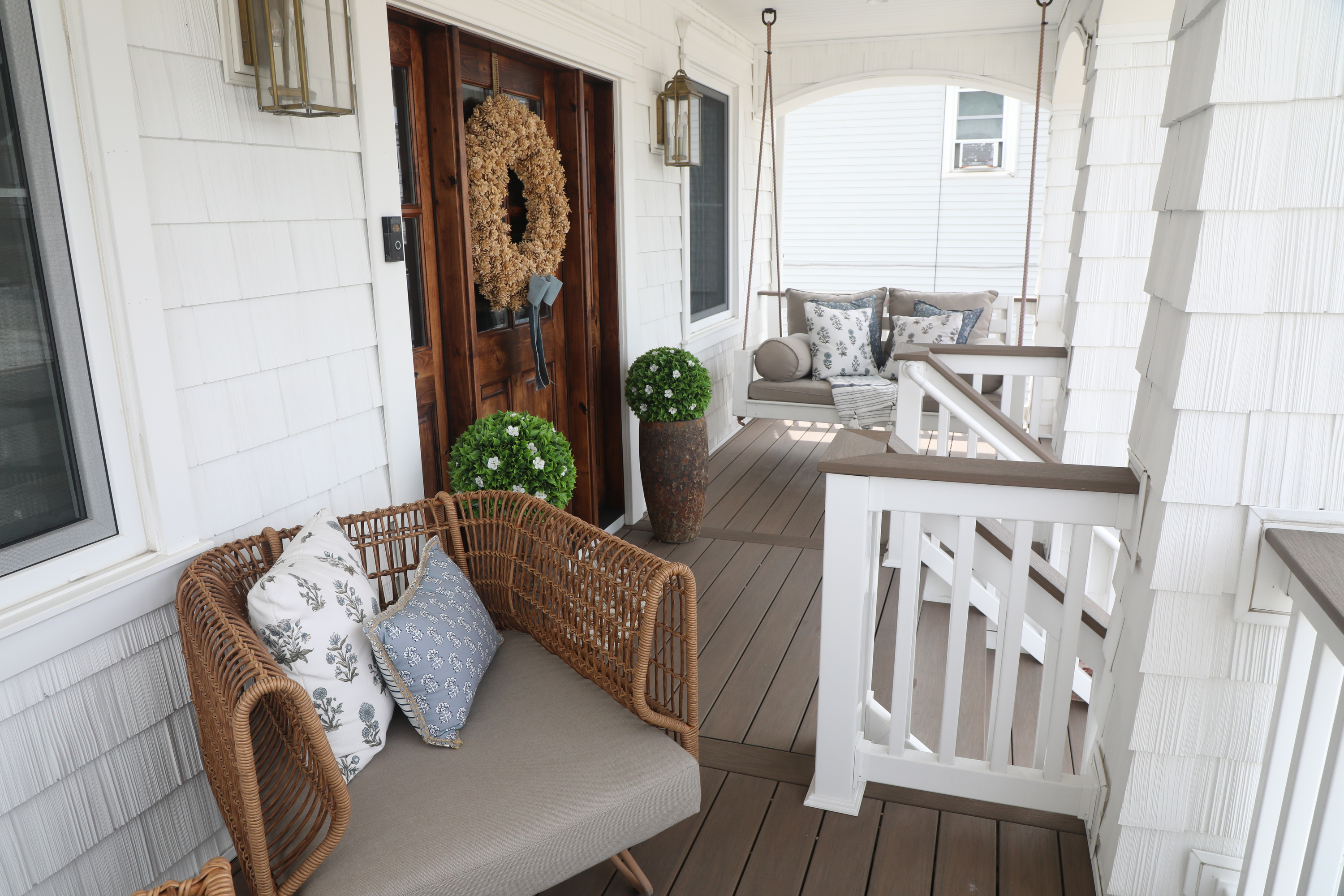
    The front porch features comfortable furniture including a two-person swing and is one of Dolly’s favorite spots to entertain or chat with neighbors.

    “This is the gathering place whether it’s just a casual Sunday-Funday sitting by the pool barbecuing, or if it’s a big bash,” she said.

    Is your house a Haven? Nominate your home by email (and send some digital photographs) at properties@inquirer.com.

  • Ocean City community groups have filed a lawsuit challenging the Wonderland rehabilitation designation

    Ocean City community groups have filed a lawsuit challenging the Wonderland rehabilitation designation

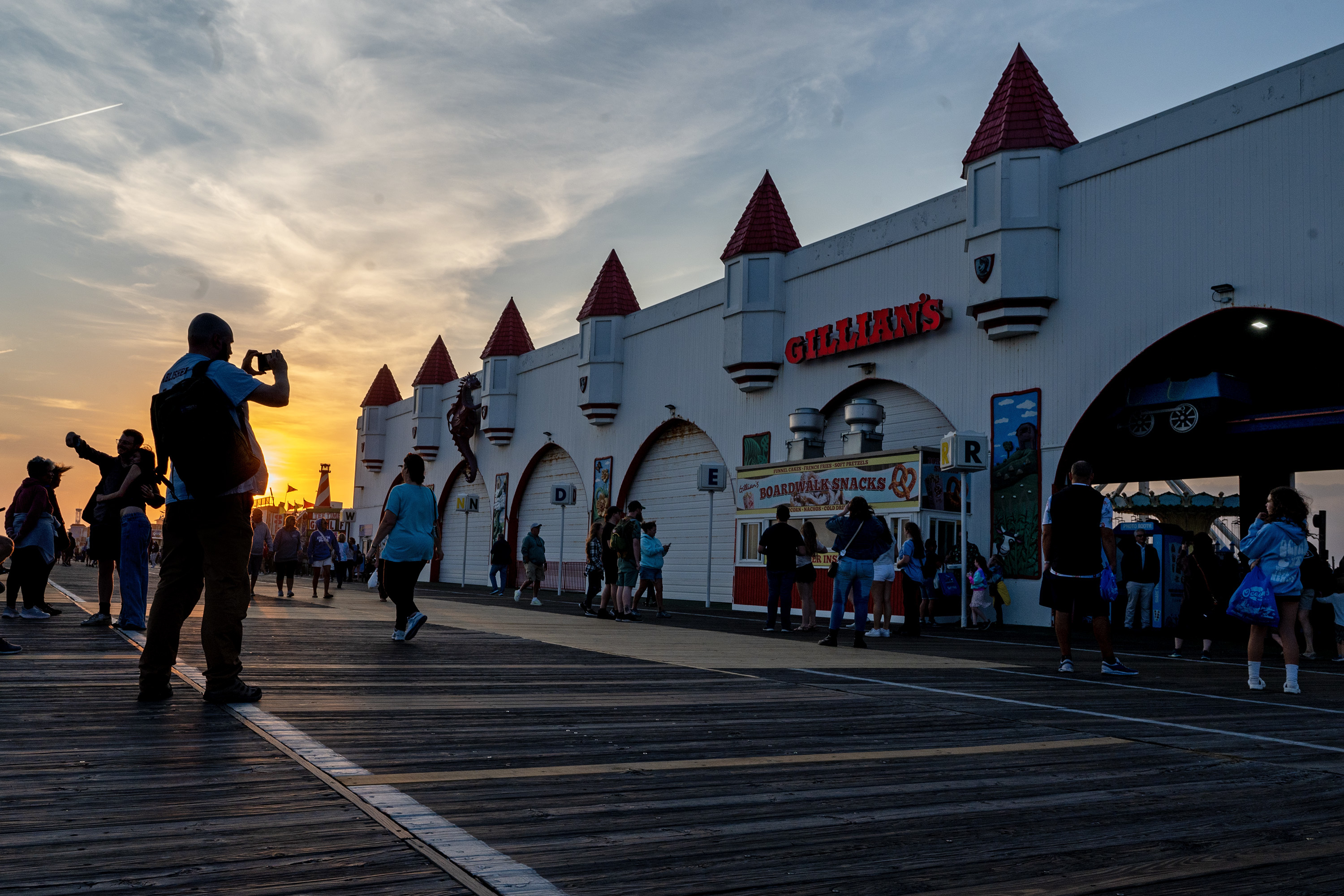
    Four community groups in Ocean City filed a lawsuit Monday seeking to void City Council’s June 25 decision to designate the old Gillian’s Wonderland Pier as “in need of rehabilitation.”

    That vote started a negotiation with developer Eustace Mita, the owner of the property who has been seeking approval to build a seven-story, 242-room hotel on the site.

    Mita said earlier this month he is submitting a revised proposal for a hotel on the 2.42-acre property. His initial proposal called for a luxury hotel that preserved the Ferris wheel, carousel, and some kiddie rides.

    Hotels are not a permitted use under current zoning, requiring either variances or a negotiation under a rehabilitation designation. Mita sought the rehabilitation route.

    He said earlier this month that it was no longer viable to restore or replace the Ferris wheel.

    The lawsuit notes that Wonderland Pier served for generations as “a civic anchor for the northern end of the Boardwalk,” and that the pier “has been a focal point of the City’s identity as a low-rise family-friendly resort community.”

    The groups filing suit in Cape May County Superior Court were two neighborhood groups, Plaza Place Civic Association and Beach Watch Motel Condominium Association, the government watchdog group Fairness in Taxes, and Ocean City 2050, a group that has been advocating for an alternative to Mita’s luxury hotel proposal.

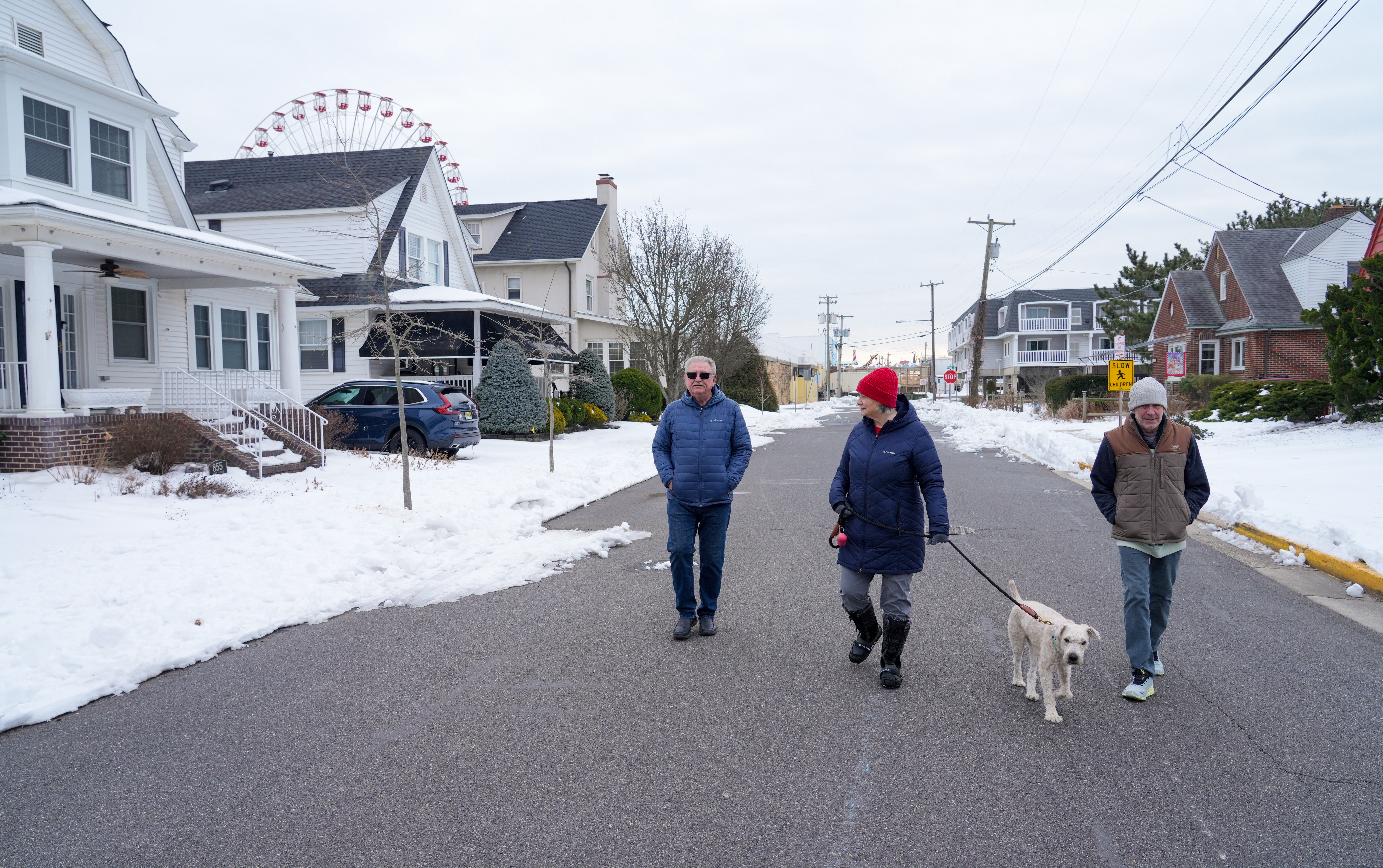
    Jack Gutenkunst (left), Marie Crawford, and her husband, Richard, with Shiloh, a 9-year-old soft-coated wheaten terrier, walk along Plaza Place, in Ocean City on Feb. 3, 2026. They live in the historic neighborhood right behind the site of the old Wonderland Pier and are fighting against the proposed development of a hotel on the boardwalk property.Tim Hawk / For The Inquirer

    Defendants are the City of Ocean City and the City Council.

    “This lawsuit was a difficult but necessary decision to make,” said Jack Gutenkunst of Plaza Place Civic Association, in a statement announcing the lawsuit. “Council’s Wonderland rehabilitation designation is deeply flawed and seeks to improperly strip away important planning protections that residents have long relied upon.”

    The lawsuit alleges that Mayor Jay Gillian’s failure to recuse himself from Council’s Wonderland discussions constituted “substantial financial and ethical conflicts of interest.”

    Gillian, whose family operated Wonderland for 65 years, sold the property to Mita in 2021 but continued to operate the amusement park under a lease arrangement. He made the decision to close Wonderland in 2024. The lawsuit notes financial entanglements that remain between the mayor and Mita.

    Reached by text message, Gillian declined to comment on the lawsuit.

    “The city cannot comment on pending litigation,” Doug Bergen, public information officer for Ocean City, said by email.

    The lawsuit also alleges that the designation failed to satisfy the state’s legal requirements under New Jersey’s Local Redevelopment and Housing law.

    “This lawsuit is not about stopping progress,” said Howie Atkinson of the Beach Watch group, in a statement announcing the lawsuit. “But no project is important enough to justify abandoning transparency, ignoring conflicts of interest, or shutting the public out of the progress.”

    The groups said the lawsuit should not stop the city from continuing to examine recommendations by its Boardwalk subcommittee. City Council tabled action related to the subcommittee at its last meeting due to the pending lawsuit.

  • New Trump-promoted Freedom Fuel station pops up in Philly. Another could be shut down.

    New Trump-promoted Freedom Fuel station pops up in Philly. Another could be shut down.

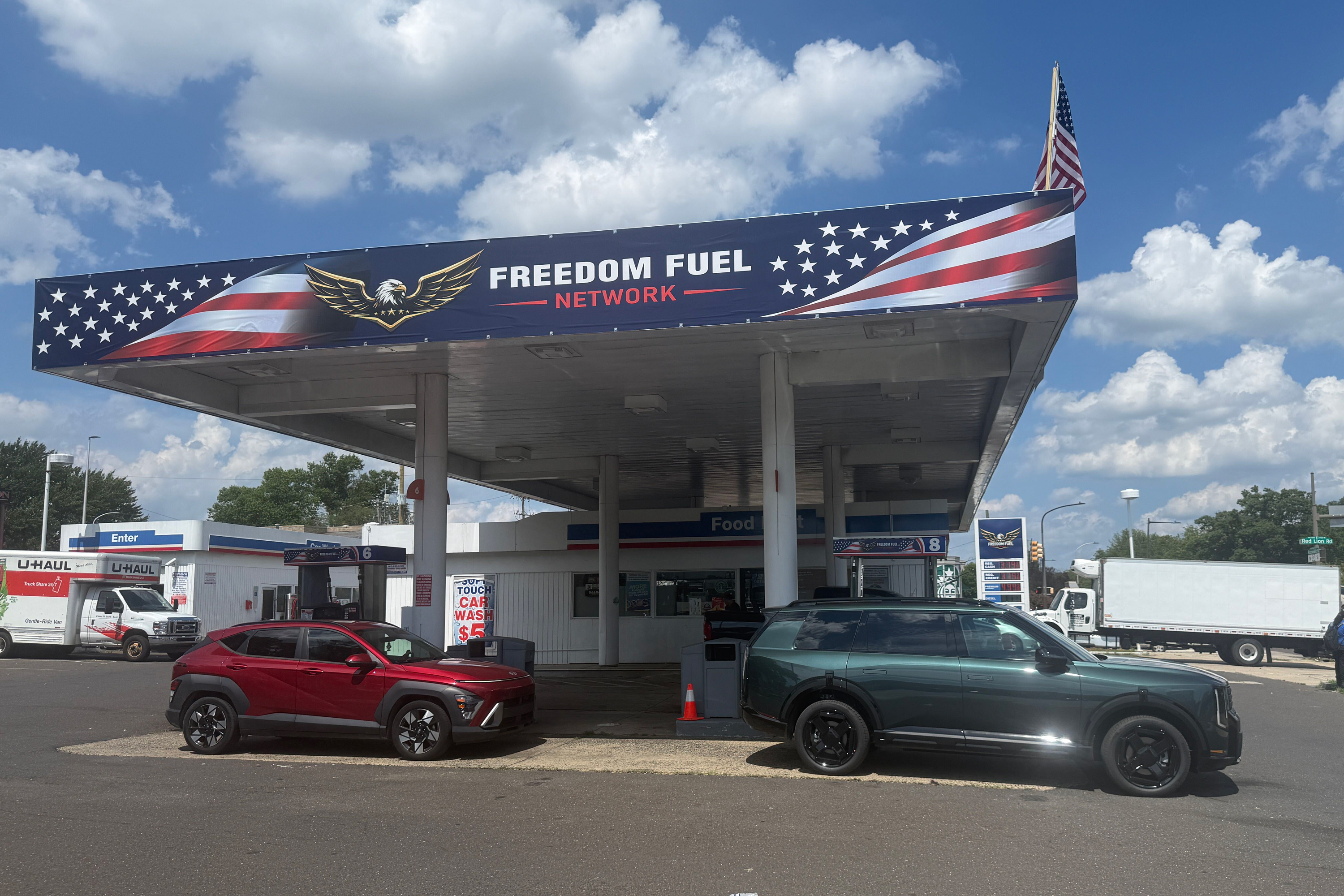
    Philadelphia drivers looking to save a few bucks at the pump streamed into the city’s newest Freedom Fuel station Friday afternoon, even while the station’s deep discounts remain a mystery.

    The station, located in Bustleton on Roosevelt Boulevard, is one of four new Freedom Fuel locations added this week. The other three are in New Jersey, including one all the way up in Morris County.

    The gas network, which was promoted by both the White House and President Donald Trump last month, is now up to 29 stations across the Philadelphia region, stretching east to the Jersey Shore.

    (function(){function e(){window.addEventListener(`message`,function(e){if(e.data[`datawrapper-height`]!==void 0){var t=document.querySelectorAll(`iframe`);for(var n in e.data[`datawrapper-height`])for(var r=0,i;i=t[r];r++)if(i.contentWindow===e.source){var a=e.data[`datawrapper-height`][n]+`px`;i.style.height=a}}})}e()})();

    Nearly all the pumps were full at Philly’s newest Freedom Fuel spot Friday afternoon, with the station selling a gallon of regular gas for $3.79 a gallon. That’s nearly 35 cents a gallon less than a Wawa just up Roosevelt Boulevard, where a gallon of regular gas went for $4.13 on Friday.

    A nearby Lukoil was a bit closer to Freedom Fuel’s prices, offering a gallon of regular gas for $3.99.

    An enduring mystery remains how Freedom Fuel has been able to consistently offer lower prices than nearby competitors.

    Experts told The Inquirer Freedom Fuel was likely suffering losses for selling fuel at such a low price, especially since many of the company’s stations don’t have robust convenience stores or car washes to create revenue.

    “It becomes unsustainable,” Eliezer Fich, a finance professor at Drexel University’s LeBow College of Business, told The Inquirer last month. “Unless prices go down. But if they do, they go down for everybody.”

    According to public records, the newest Freedom Fuel station is owned by Celik Plaza II l.l.c., which had previously run it under a “Red Lion Fuel” banner. Engin Celik, who is listed as a principal with the company, according to documents reviewed by The Inquirer, did not respond to a request for comment.

    Philly Freedom Fuel station faces closure after failing inspection

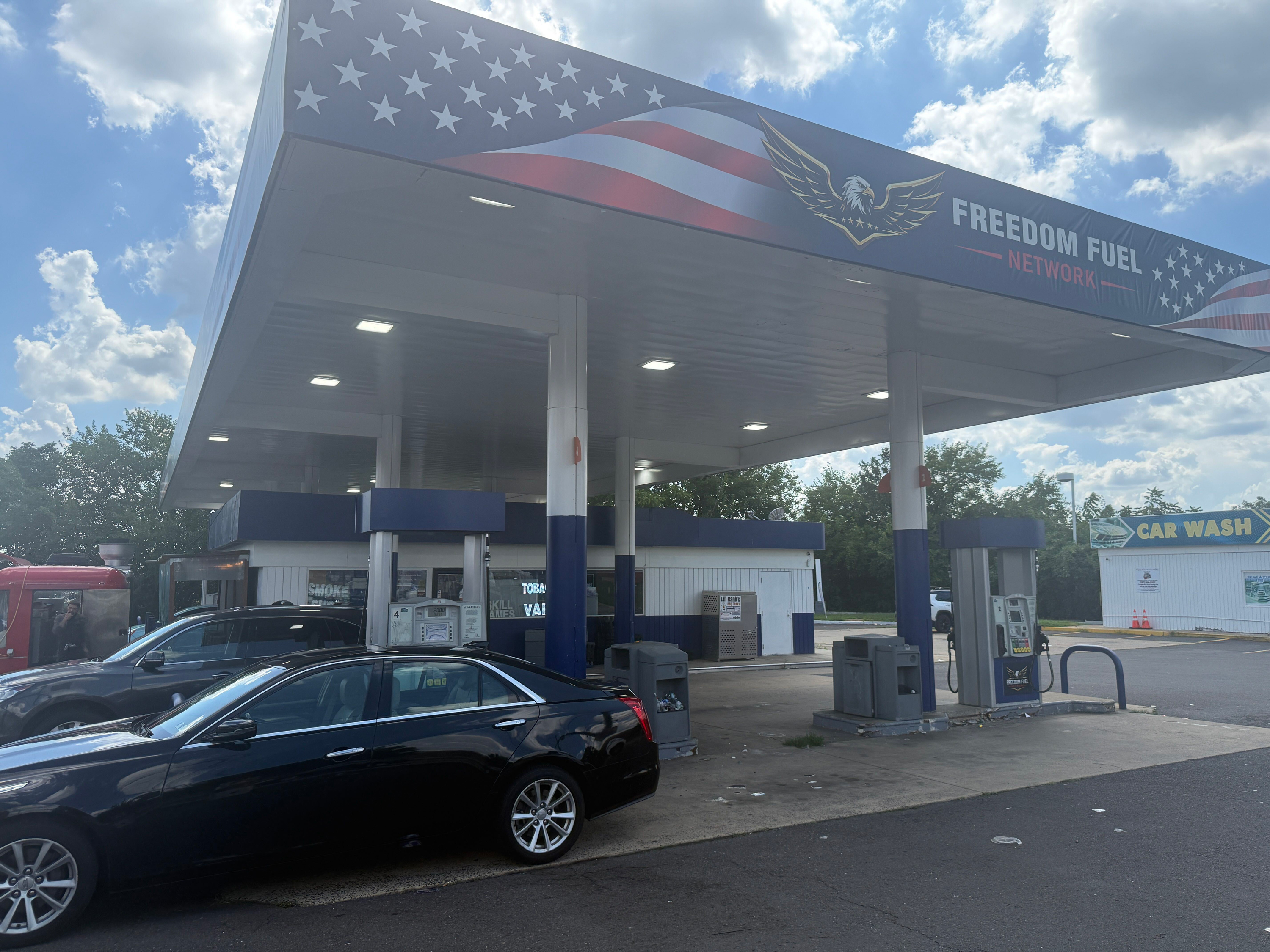
    The Freedom Fuel station on Bustleton Ave. in Philadelphia. Dana Munro / staff

    While Freedom Fuel is adding locations, it could soon lose one in Philadelphia.

    The station on Bustleton Avenue, one of at least six locations linked to Cherry Hill developer Shamikh Kazmi and his brother Syed Kazmi, has an expired fuel dispensing license and failed an inspection last week, according to city records.

    If unresolved, the station could be forced to close by Sept. 4, according to a city spokesperson.

    The Kazmi brothers, who have been embroiled in at least two lawsuits related to previous gas station ventures, could not be reached for comment.

    Freedom Fuel owners remain quiet

    Ravens special teams coach Randy Brown signed Freedom Fuel’s formation papers. Terrance Williams

    While Freedom Fuel’s launch was proudly promoted last month by Trump, the company’s owners have remained quiet about the enterprise and how they’re able to maintain low fuel prices.

    A White House spokesperson previously told The Inquirer Freedom Fuel is a private company receiving no government subsidies and not accessing fuel at a lower cost.

    “Freedom Fuel Network is a privately owned and proudly patriotic company — along with its convenience store operators, haulers, sign companies, and operational partners — that answered President Trump’s call to action to lower prices at the pump,” the company said in a statement on its website.

    Baltimore Ravens assistant coach Randy Brown, the former mayor of Evesham Township, N.J., and a self-proclaimed “proud Trump supporter,” signed Freedom Fuel’s certificate of formation in Delaware on June 23. Brown has declined to comment on the enterprise.

    Former commodities trader Yoni Gontownik also signed the certificate of formation, and has not responded to requests to comment. Gontownik and his wife, Bellen, have hosted Republican fundraisers through NORPAC, a New Jersey-based political action committee supporting pro-Israel lawmakers in both parties.

    Staff writer Ryan W. Briggs contributed to this article.

  • Meet the South Jersey business making food carts for Jersey Shore vendors and Disney World

    Meet the South Jersey business making food carts for Jersey Shore vendors and Disney World

    In a country-industrial stretch of Hammonton halfway between Philadelphia and Atlantic City sits a concrete-block maze of machine shops, where workers have built thousands of stainless-steel hot-sandwich and coffee carts and catering trucks.

    This is the one-story home of Custom Mobile Food Equipment, which for 74 years has built these customized portable kitchen-storefronts of varying sizes, and kept them on the road with extra helpings of customer support. They roll onto Jersey Shore boardwalks and Center City street corners, at weeklong public festivals and private events across America, and in fancy resorts and on military bases abroad.

    It’s a South Jersey fixture, with Camden roots and deep Philly ties.

    “We started small,” with hot dog carts cut to fit, not block, city sidewalks, said Custom vice president David Kyle. He said his family helped Philadelphia officials write the city’s street vendor ordinances, and made sure the carts fit.

    Custom has outlasted food fashions and changes in the ways workers lunch. Kyle said he’s confident the enterprise will outlast recent inflation, global competition, and import tariffs: “A lot of our business is repeat business, and the big names we go after,” he said during a tour of the plant. “People rely on us to turn out a product that will last.”

    From pony-cart produce to theme-park fixture

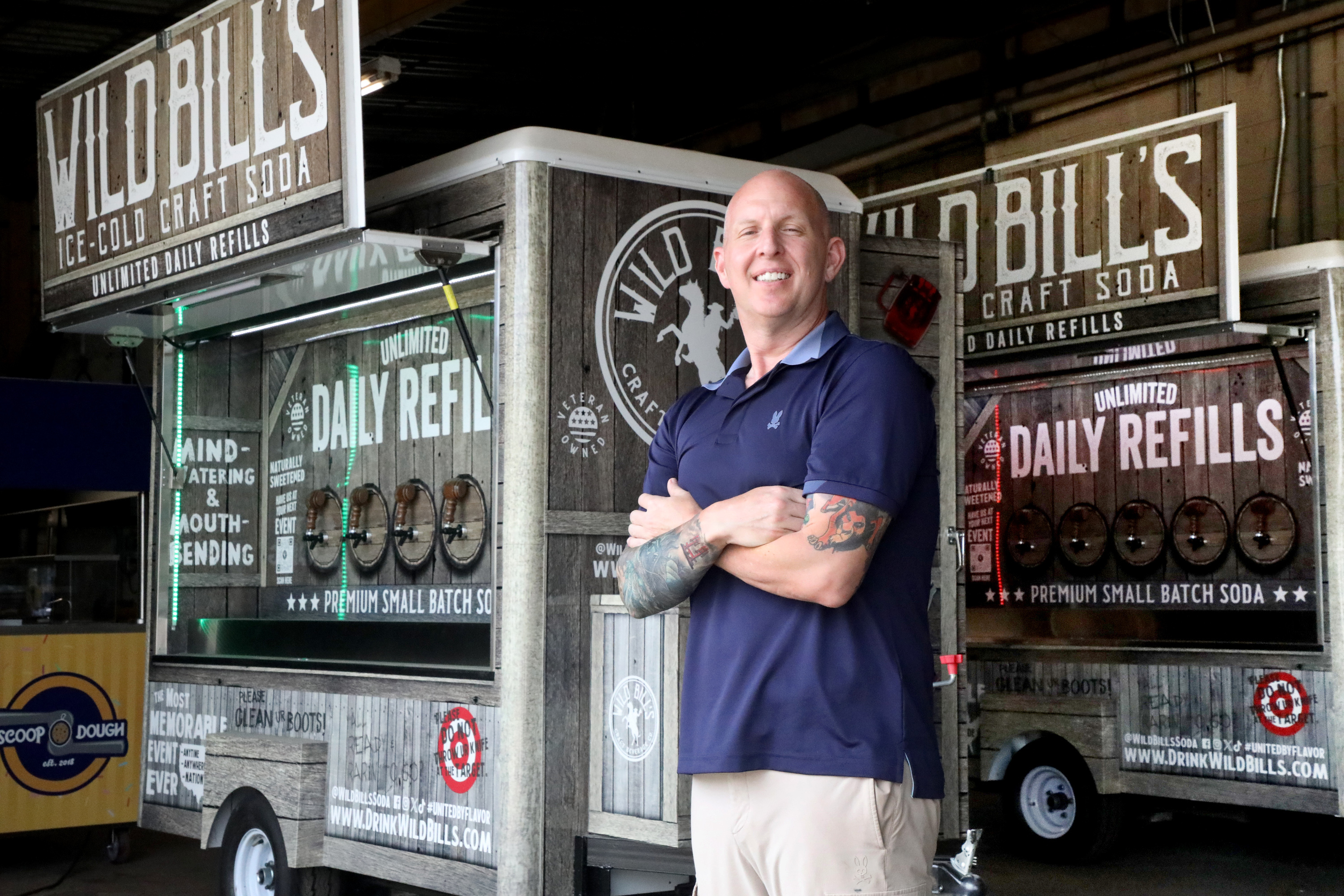
    Lehigh Valley-based Wild Bill’s Craft Beverage Co. serves its old-fashioned sodas from kegs mounted in Custom vehicles of several sizes. They sell drinks at crowded motorcycle rallies in Gettysburg and Sturgis, S.D., the Ohio State Fair, the Great State of Maine Air Show in Brunswick, San Diego Comic-Con, and Schuylkill regattas.

    “These are high-end, unique stands. We have 60 of them. We add a couple a year,” said Wild Bill’s chief executive, Mike Quilty. “One of our franchisees in Utah just drove one of Custom’s self-propelled Ford barrel wagons to Vancouver.”

    To make trips like that, the equipment has to be built well, Quilty said, noting Custom’s “unlimited support” for when technical issues arise, which doesn’t require buying a service contract.

    Custom’s late founder, William Sikora, developed the catering truck in the early 1950s as a kitchen on wheels installed on a Detroit-made chassis. Sikora as a grade-school kid in Camden had sold vegetables from a pony-drawn cart, then opened a grocery. He bought apartment buildings and diners, and became a top officer of First Peoples Bank.

    Walking room to room past heavy presses and cutters on the Hammonton shop floor, Sikora’s grandson Kyle said 40 workers build more than 100 pieces of equipment a year — food trucks, trailers, catering wagons, specialty equipment with kitchen-sized stoves, refrigerators, freezers.

    “We’ve sold to Disney World and SeaWorld, Sesame Place, and U.S. bases in Japan,” Kyle said on a muggy midsummer morning as room fans, metal-forming machinery, and new-cart test motors whirred. “We have 18 projects going right now.”

    Custom built 32 commercial kitchens on caster wheels for Carnival Cruise Line’s Calypso Lagoon in the Bahamas, which opened last year, with rounded bull-nose counters instead of sharp industrial edges to accommodate peak work flow.

    Paul McIlvaine, an electrician, works on the interior of a Chickie & Pete’s food cart at Custom Mobile Food Equipment, in Hammonton, Tuesday, July 21, 2026.Vernon Ogrodnek / For The Inquirer

    How much does it cost to launch a kitchen cart?

    Today, Custom’s basic Model 525 carts retail for around $6,500. For that sum, plus storage, food, fuel, and licensing costs, “you’re in business serving food,” said Kyle.

    “It’s rewarding, you get to meet so many kinds of people,” he added.

    New catering trucks start at more than $125,000, like a high-end camper.

    All the carts and trucks are built from stainless steel sides, stamped with Custom’s distinctive elongated-diamond pattern over tubular steel framing. The company uses multiple steel suppliers, including Allegheny Ludlum Steel Corp. in Pittsburgh. It was harder to find domestic steel when the U.S. auto industry demand was stronger, Kyle said. But now materials costs are much higher, often in response to higher tariffs.

    “We try to use built-in-USA [materials], but some stuff you cannot get here,” Kyle said. Robertshaw Controls, for example, makes the only burner controls that fit Custom’s standards. They moved the operation to Mexico from Texas, so Custom now imports them.

    Cart metal is just one inflating cost vendors face, said Christian Subashi, second-generation owner of Loudogs hot-dog carts in Sea Isle City. Refrigerators were 50% cheaper before last year’s new tariffs, he said, and sausage prices have “gone through the roof.”

    Kyle said his company’s hot-dog cart price “has gone up $1,000 or $2,000 in 10 years,” lower than the general inflation rate. “We have to absorb some. It’s how you do business,” he said. He’s confident steel prices will stabilize eventually.

    The future of food carts

    The company has no plans to automate, Kyle said. “All our products are custom built — handmade and hand-fabricated. No two carts are exactly alike,” he said, noting that the company also retrofits and rehabs units as needed. “They can last forever.”

    “Our pricing is more, but it lasts longer than assembly-line stuff coming in from Mexico or China at low cost.”

    One once-robust market that has all but evaporated is carts for vendors who work construction sites. Custom employed over 100 during the building boom of the late 1990s. The company built a catering truck a day, on average, back then; now it’s closer to one a week.

    “Wawa and DoorDash are delivering deli trays to jobs sites now. And Wawa has built out so many stores in their area, guys can just leave the job and run to Wawa. So that business is down for us,” said Kyle.

    The focus now is on larger orders that can be built more efficiently. Plus it’s gotten harder, Kyle said, to hire skilled craftsmen.

    Local buyers of carts and trucks include Shore ice cream and water-ice vendors, as well as the food vendors that sell at breweries, thanks to the New Jersey’s restrictions on breweries serving food

    But Custom is also very much “a national brand,” said James Evans, who runs the food-truck division for Ocean City-based Manco & Manco Pizza, including eight Phillies stadium locations.

    Like Custom, Manco is a third-generation South Jersey business, and Evans said he wouldn’t have gone anywhere else to build stadium-ready trailers. The two firms cut a deal last February for Custom to build an initial “food truck you can drive, available for private parties, corporate functions, MLB events, anywhere we can take a truck.”

    The first was delivered in July, with four propane-fueled Baker’s Pride deck ovens “to cook our pizzas to Manco standards.”

    Custom faces a string of manufacturing challenges with any order, Kyle said.

    But from Manco’s perspective the passage of his project from plan to delivery “was seamless,” said Evans.

    “As we morph into their larger trucks, we will add wings and tenders,” he said. “If everything in business and life went that easy, it’d be great.”

  • More flooding downpours are possible in the Philly region. A heat advisory is in effect through Saturday.

    More flooding downpours are possible in the Philly region. A heat advisory is in effect through Saturday.

    Skin-clinging humidity, random downpours, heat indexes in triple figures, steamy nights. Welcome to Miami North.

    The heat advisory for the entire region has been extended to 8 p.m. Saturday, with more random showers likely. As to when something resembling comfort returns to Philly? “That’s the million-dollar question,” said Matt Benz, senior meteorologist with AccuWeather Inc.

    Similar conditions could persist into late next week, he added.

    Highs might not get much past 90, but with the atmosphere this steamy, the heat index in Philly had reached 102 at 2 p.m. (In Miami, it was down to 82, thanks to a cooling thunderstorm.)

    Both Camden and Delaware Counties have posted “code red” heat advisories, even though conditions are not expected to approach the official criteria of two consecutive days of highs of at least 95 degrees.

    Waves of air from the Gulf Stream and the gulf itself continue to wash over the Mid-Atlantic region, said Brian Hurley, senior branch forecaster at the federal Weather Prediction Center in College Park, Md., adding that the situation is going to persist.

    (function(){function e(){window.addEventListener(`message`,function(e){if(e.data[`datawrapper-height`]!==void 0){var t=document.querySelectorAll(`iframe`);for(var n in e.data[`datawrapper-height`])for(var r=0,i;i=t[r];r++)if(i.contentWindow===e.source){var a=e.data[`datawrapper-height`][n]+`px`;i.style.height=a}}})}e()})();

    On the plus side, drought conditions continue to ease, and officially in Philadelphia, rainfall since Jan. 1 is now about normal, recent rains having wiped out a significant deficit.

    Officially, both the entire state of New Jersey and Chester County are under state-imposed “drought warnings,” but changes may be in the wind and the clouds.

    Three months ago, all of New Jersey was in at least “moderate drought,” according to the interagency U.S. Drought Monitor, but with Thursday’s update, less than half the state was so designated. As for Chester County, the percentage of the county in “severe drought” has dropped from 90% to 37% in the same period.

    However, the recent rains have come in fits and starts and have been less generous in some areas and overly generous elsewhere, and have had a knack for outwitting science.

    Those random downpours are going to continue

    “Multiple rounds of showers and thunderstorms each afternoon and evening may become strong to severe,” the National Weather Service in Mount Holly warned Thursday.

    Don’t expect much notice.

    Case in point: Around 7:30 p.m. Wednesday, the weather service posted a missive: “The threat for flooding has diminished tonight.”

    Shortly thereafter, flood warnings went up for portions of all four of Philly’s neighboring Pennsylvania counties.

    That followed afternoon downpours that caused extensive road flooding in Philly and neighboring areas as a corridor of heavy rain cut through the city.

    Michael Silva, a meteorologist in the Mount Holly office, was among those who had not seen it coming.

    “Before work, I was about to go out twice for walks,” Silva said. “Then I looked at the radar.”

    Despite all the rain, and probably as result of the antecedent dryness — heading into July, Philadelphia had experienced 16 consecutive months of below-normal rainfall — stream and river levels remain well below the danger zones.

    And so far, the trees appear to be holding their ground, said Shane Farrell, arborist with the Davey Tree Expert Co., and to date he has not seen the type of “mud slurry” that might coax them out of their roots, barring severe-storm gusts.

    Showers are likely to be numerous and widespread on Friday, said AccuWeather’s Benz.

    The outlook for the weekend for Philly and the Shore

    Saturday is expected to be a clone of Thursday, as a so-called Bermuda high-pressure system over the North Atlantic continues to lure steamy air northward. Winds circulate clockwise around centers of high pressure; thus, areas to the west of the center, where Philly happens to be, experience winds from the south and southwest.

    Benz sees an outside chance that an approaching front will provide a very temporary and modest measure of relief on Sunday. Don’t bet on it, however. He said it is going to encounter a whole lot of resistance along the way.

    The outlooks are similar for the Jersey Shore, which is likely to be quite a popular destination this weekend.

  • Wonderland developer is tearing down a $10M mansion in Avalon

    Wonderland developer is tearing down a $10M mansion in Avalon

    Wonderland developer Eustace Mita, whose proposal for a luxury seven-story hotel in Ocean City has drawn critics, is building an enormous spec house in the Avalon dunes that will be the borough’s largest home.

    Mita says the 17,694-square-foot home at 5475 Dune Drive is not for his personal use, but rather a house built by his Achristavest construction company that will be offered for sale. There is no designated buyer yet, he said.

    “This is a spec home,” he said by telephone. “Is it the biggest home in Avalon? Yes, absolutely. It’s not just one big home. It’s a home with a carriage house.”

    Construction will require additional sand trucked in to fortify the dune for the property, which will include a 14,000-square-foot main house connected to a 3,000-square-foot carriage house.

    It replaces a 7,800-square-foot home that will be torn down, said Mita, the owner of the Icona brand of Shore hotels. His company bought the property for $10.3 million in 2024.

    Mita said he will continue to personally use a home on the beach in Ocean City, at 28th and Wesley.

    Two stories in the new house will be subterranean and three will be above ground, he said. The below-ground floors will include a bowling alley, golf simulator, indoor pool, home theater, recording studio, and cold plunge.

    He said has secured state environmental proposals and emphasized that the house, because it will occupy the same footprint as the existing house, did not need a zoning variance from Avalon borough.

    Avalon’s impressively high and vast dune system has 11 homes. The largest existing house in the dunes is at 5299 Dune Drive and owned by the heirs to the Utz potato chip family business. It is 12,631 square feet.

    The Utz family had to go to court for final approval for their 40-room house, over the objections of environmental groups seeking to preserve one of the last remaining high dune systems on the East Coast.

    In Mita’s case, the Avalon planning and zoning board approved the plans June 9, with the only notes being that the sand brought in should be “clean, uncontaminated, and free of hazardous substances.”

    At the July borough council meeting, several residents expressed concern about the size of the project and its impact on the dunes.

    Mita said the additional sand was requested by state environmental officials to fortify the dunes and will be placed on the street side near the retaining wall, not “onto the dunes” as some residents feared.

    “I didn’t even need variances,” he said. “The renderings make it look overpowering.”

    The additional sand, he said, was mandated by CAFRA (Coastal Area Facility Review Act) regulations.

    “I can’t build one inch into the existing toe of the dunes,” he said. “I have to build a retaining wall as to not to encroach on the dune. It preserves the integrity.”

    Eustace Mita, arriving at the Ocean City Music Pier for a city planning board meeting on Jan. 7, 2026, about the old Wonderland Pier site he owns.Amy S. Rosenberg / staff

    Residents expressed concerns at a recent Avalon council meeting.

    “It’s just a ruin, a ruin of the dunes,” said Elaine Scattergood, who said borough officials were being misled by claims that the property would stay within the footprint and elevation of the existing house. “If the dunes were a child, I think the protective agency would have taken it away from us.”

    In Ocean City, those engaged in the back and forth over the Wonderland site also had a lot to say about Mita’s plan for Avalon’s high dunes.

    “His home looks bigger than the hotel he wants to build in O.C.,” said one Facebook commenter.

    “Barge the old home up to the Wonderland site,” said another. “Problem solved.”

    Mita said his company is currently building three beachfront spec homes at 77th in Avalon, and three beachfront homes at 116th Street in Stone Harbor.

    He said building a spec home of this size and expected sale price in the many tens of millions was “so risky.”

    Who would be a potential buyer?

    “LeBron James,” he mused. “Or Taylor Swift. She spent summers in Stone Harbor. There’s a recording studio. You can’t even buy a beach block lot in Avalon or Stone Harbor for $5 million.”


  • The best Jersey Shore farmers markets

    The best Jersey Shore farmers markets

    Farmers markets are more than just an alternative to grocery stores — they offer a direct line to local farmers, bakers, and artisans. Instead of buying a mass-market bag of greens, you can chat with the person who planted the seed and ask them questions about how they raise their vegetables. And what better way to experience the abundance of South Jersey produce and products than a beach-adjacent market?

    Here are seven weekly Shore markets worth a trip, from Wildwood to Ocean City.

    Margate Community Farmers Market

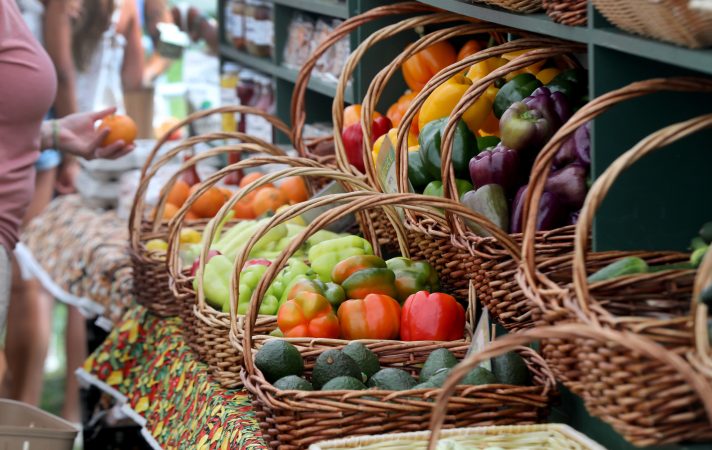
    Every Thursday morning from mid-June to early September, tables filled with fresh produce — cherries, peach cider, corn, potatoes, tomatoes, carrots, and more — populate the corner of Monroe and Amherst. There’s fun on offer, too: This year, the market hosted a peach pie contest and dog show.

    Thursdays, 8:30 to 11:30 a.m.; Parking lot at corner of Monroe & Amherst Ave, Margate City

    West Cape May Farmers Market

    Located at the West Cape May’s Backyard Park, the borough’s late afternoon-to-evening farmers market runs June 23 until Aug. 25, rain or shine. While there are a plethora of fresh produce and local food vendors, the market also offers open mic from 3 to 5 p.m., followed by live music performances after 5 p.m.

    Tuesdays, 3 to 7:30 p.m.; 732 Broadway, West Cape May

    Sea Isle City Farmers Market

    From June to September, vendors descend on Sea Isle’s Excursion Park on Tuesday mornings.. Shop tomatoes, peaches, snap peas, and other seasonal finds from Al’s Produce. Pick up a monstera, peace lily, or an alocasia from Petals and Plants. Or grab a treat from Duck Donuts as you walk around. Other sellers at this year’s market include Telford, Pa. ‘s Nutty Novelties, art-kit expert the Crayon Lady, and Petersburg, N.J.’s Salt and Clover Sheep Farm.

    Tuesdays, 8 a.m. to noon; Excursion Park, Pleasure Avenue & JFK Boulevard, Sea Isle City

    Wildwood Farmers Market

    It’s the 13th season of the Wildwood Farmers Market, and this summer there are over 100 vendors attending, including artists and clothing retailers, plus weekly entertainment for the kids in attendance. There’s plenty of produce to choose from and baked goods to try, including gluten-free options. Grab an iced coffee or cold-pressed juice from one of the vendors and get lost among the booths selling hot sauces, jerkies, spice mixes, wines, sea glass art, and more. This market runs Saturdays till Labor Day, so get there while you can.

    Saturdays, 8 a.m. to 12:30 p.m.; 3400 Pacific Ave., Wildwood

    Brigantine Farmers Market

    Rain or shine, the Brigantine Community School parking lot plays host to the Brigantine Farmers Market every summer Saturday, until Sept. 5 this year. Munch on Kismet bagels and Duke’s Dogs hot dogs.Get Pickled pickles, and Maui Joe’s shaved ice as you shop from farm vendors like Nectar Flow Farm with mushrooms and berries, Recklesstown Farm Distillery’s craft spirits, and Sam Mento Farms with Hammonton blueberries.

    Saturdays, 8 a.m. to noon; 205 Sheridan Pl., Brigantine

    Ventnor City Farmers Market

    Farmers market season in Ventnor runs from May 22 to Sept. 4. The market, which celebrated its 10th anniversary this year, takes place in the parking lot at St. James Church. With more than 80 farmers, food vendors, and crafters, this market is a great place for stocking up on fresh-cut flowers from Far & Away Flowers; grass-fed, free-range meats products from Giordano’s Family Farm; smoked salmon and pastrami from South Jersey Smoke House; and fruits and veggies from Peplowski Fruit Farms.

    Fridays, 8:30 a.m. to noon; 6421 Atlantic Ave., Ventnor

    Stone Harbor Farmers Market

    Every Sunday morning from Memorial Day until Sept. 20, vendors set up shop at Stone Harbor’s Water Tower Plaza. Fill up a tote with tomatoes, sunflowers, cherries, peaches, and other produce from vendors like The Potato Homestead, Springhouse Farms, and Brookeberry Farms; coffee bean bags from Harry & Beans Coffee and fresh squeezed lemonade from Twisted Lemonade Beverage Co.; and specialty foods like Pickle Girl Pickles, RSK Doughnuts, and Carlo’s Empanadas.

    Sundays, 8 a.m. to 12:30 p.m.; 95th St. and 2nd. Ave., Stone Harbor

    Ocean City Farmers Market

    Wednesdays in Ocean City mean a stop at the farmers market. In the summer, local farmers and vendors sell cherries, peaches, cucumbers, and corn at the Tabernacle Grounds. There are also stalls offering tomato pies. Head to Sixth Street and Asbury Avenue for other items — think baby onesies and framed art. This market runs through mid-September.

    Wednesdays, 8 a.m. to noon; 550 Wesley Ave., Ocean City

  • Phillies acquire Luis Arraez in trade with Giants; Bryce Harper moving back to RF

    Phillies acquire Luis Arraez in trade with Giants; Bryce Harper moving back to RF

    Luis Arraez is neither an outfielder nor a right-handed hitter. But he is the Phillies’ solution for scoring more runs.

    Even though it puts Bryce Harper back in right field.

    Welcome to the Phillies’ brave new world.

    Amid an underwhelming market for righty-swinging outfielders, Dave Dombrowski made a trade-deadline splash Monday, acquiring Arraez — a lefty-hitting second baseman — and reliever Caleb Kilian from the Giants for two minor leaguers, including breakout pitching prospect Ramon Marquez — and in the process, uprooting three-quarters of the infield and transplanting Harper to the outfield for the first time since April 2022.

    Then, in an almost concurrent trade, the Phillies picked up veteran lefty reliever Brooks Raley from the Mets for minor-league outfielder John Spikerman and right-hander Luke Gabrysh.

    “Obviously,” Harper said, “it’s been a good deadline. I think [Dombrowski]’s done a great job.”

    Harper said he didn’t know the Phillies were talking to the Giants about Arraez when he texted Dombrowski on Sunday night, after a conversation over the weekend in Baltimore with manager Don Mattingly. In both cases, he reiterated what he has said for years: For another productive hitter who played in the infield, he would make a short-term move back to right field.

    With Harper clearing the way, the Phillies pivoted to Arraez, a contact-hitting savant and three-time batting champion with a bead on a fourth. He’s leading the National League with a .324 average and has struck out only 21 times in 464 plate appearances.

    In short, he’s like almost no other modern hitter.

    Luis Arraez has more walks (25) than strikeouts (21).
    Gregory Bull

    “He’s kind of like the modern day like Tony Gwynn, Wade Boggs,” said Mattingly, who played with both. “The guy just hits. He’s always hit, [won] batting titles, and just continues to do it. Obviously a huge addition to the lineup.”

    But in pivoting to a hitter whom they believe will have a bigger impact than any of the righty-hitting outfielders they were scouting, the Phillies threw into flux an infield that already ranks among the worst defensive groups in the majors.

    Arraez wants to stay at second base, where he improved defensively this season under Giants infield coach Ron Washington. Mattingly said the Phillies “wouldn’t have made the trade if we weren’t going to put him at second,” but really, they had little choice. The out-of-contention Giants assured Arraez they would only trade him to a team that would use him there.

    Effective Tuesday night, then, when Arraez joins the Phillies, second baseman Bryson Stott will move to third base, third baseman Alec Bohm will go to first, and yes, Harper will shift back to the grass.

    “The key for me is Harp,” Mattingly said. “Harp moving to the outfield is really the key to this.”

    Said Harper: “I’ve said it in years past — I mean, I know everybody thinks it’s crap when I say it, but it’s not. Any chance that we have an opportunity to win, I’d do anything for this organization. And they know that.”

    In the weeks leading up to the deadline, the Phillies focused on three areas: a right-handed bat, a late-inning reliever, and a starting pitcher. With so many needs and few assets in the farm system, it seemed like a challenge for Dombrowski to get everything.

    As a team, the Phillies entered the week tied for 28th in the majors in on-base percentage (.304). In particular, they have gotten less production than any team from the right side of the plate, with a worst-in-the-majors .280 on-base percentage and .644 OPS.

    But neither Mike Trout nor Byron Buxton has signaled a willingness to waive their no-trade rights. (In Buxton’s case, the Twins are a playoff contender in the American League.) The Reds’ Spencer Steer injured his wrist and may miss the rest of the season; the Royals traded Lane Thomas to the Braves; the Angels’ Jo Adell has a .279 career on-base percentage; and the Orioles were noncommittal on trading Taylor Ward.

    (Adell and Ward were ultimately dealt to the Guardians and Mariners, respectively, Monday.)

    Given the state of the market, the Phillies felt they needed to get creative. So, they widened their search over the weekend, according to major league sources, and landed on Arraez, who has a .360 on-base percentage and figures to help set the table for Kyle Schwarber and Harper.

    “He’s a guy that won the batting title a couple of years and somebody that’s going to put the bat on the ball,” Harper said. “Exciting player, you know? I think he just brings a lot to our lineup. He’s got that hit tool, and it’s somebody that can be really good for us.”

    The Phillies also acquired Kilian, a 29-year-old righty, to add depth to the middle of the bullpen. He has a 4.26 ERA in 46 games this season, but hasn’t allowed a run in eight of his last 11 appearances.

    The move comes at a cost for a farm system that was already ranked among the worst in baseball.

    Marquez, a hard-throwing 20-year-old right-hander, has emerged this season, prompting debate among scouts about whether he or 2025 first-round pick Gage Wood was the best pitching prospect in the system. Scouts are impressed by Marquez’s changeup and an uptick in his fastball velocity. He has a 1.50 ERA in six starts since moving up to high-A Jersey Shore.

    Marty Gair, a 23-year-old, was recently promoted to Jersey Shore. He has a 4.50 ERA and six saves in 30 appearances overall this season.

    Raley is shaping up as an important addition, especially given the powerhouse Dodgers’ lefty-heavy lineup. In 41⅓ innings with the Mets, the 38-year-old veteran had a 1.96 ERA. A pending free agent, he will join José Alvarado as the lefty weapons to combat Shohei Ohtani, Freddie Freeman, Max Muncy, and Kyle Tucker in the middle and late innings.

    “I see him more towards the back end,” Mattingly said. “Obviously we’ve got Alvy, who’s throwing the ball really good. But we’ll take all the arms we can get out there.”