U.S. Rep. Jeff Van Drew is keeping his campaign going as he weighs running again in 2028 after his shocking loss to U.S. Rep.-elect Zack Mullock, the mayor of Cape May.
“I’m going to visit and travel the depth and breadth of my district … and just see what people are thinking and how,” Van Drew said on the phone Monday, confirming that he is exploring a 2028 run.
The South Jersey Republican conceded to Mullock two hours after polls closed in a race many had expected would go red. Mullock, 41, swung the district approximately 20 percentage points after Van Drew, 73, won reelection by double digits in 2022 and 2024. Van Drew, of Cape May County’s Dennis Township, was first elected as a Democrat in 2018 before switching his party to Republican and vowing his “undying support” to President Donald Trump one year later.
Van Drew will continue to employ campaign staff, who will help with his fundraising and scheduling. They will take a deep dive into the election results, and also help local Republican candidates, he said on the phone.
“This is a tough time to be a Republican Eagles fan,” he joked.
Van Drew compared his exploration to candidates who start campaigning two years early for president or governor to feel out their district. But he said he does not think he would run for a different role.
“I’ll look at everything, but you know, Congress is my love,” he said. “We’ll see.”
Chris Carroll, Mullock’s campaign manager, said in a text message Monday that the Democrat is “grateful to the voters of South Jersey for the honor of representing them in Congress.”
“He is going to remain focused on reducing the cost of living, ending the war, tariffs and cuts to Medicare & Medicaid and fighting for the middle class,” Carroll said. “For Congressman-elect Mullock, the campaign is over. The work of governing is about to begin.”
Despite the giant swing, the candidates were still just over 7,000 votes and less than 3 percentage points apart with 97% of votes counted. Van Drew won reelection by nearly 6 points in 2020, 19 points in 2022, and 17 points in 2024.
The Republican said he expects the district to continue to be “more conservative than not” in the future.
“This was a very, very close election in the worst of times. I mean, this is Watergate 2,” Van Drew said, repeating a comparison he made right after conceding.
Van Drew’s congressional campaign announced that he is maintaining a full-time political operation “as he weighs options looking ahead to 2028″ in a post on Facebook.
“Congressman Van Drew isn’t done fighting for A STRONG AMERICA and A STRONG SOUTH JERSEY,” spokesperson Ron Filan said in a statement. “He will continue to stand up, speak out, and remain as active in the community as he always has been.”
Filan added, in underlined bold: “Our campaign office will remain open and a full time staff in place as he weighs the options ahead.”
Van Drew still had almost $900,000 left in his campaign coffers as of Oct. 14, according to Federal Election Commission data.
The statement from Filan came just a day after Mullock, who ran as an everyday guy, went viral on Sunday for saying he had to look up his congressional salary shortly before new member orientation in Washington.
The announcement marked a decisive shift from Van Drew’s tone on Tuesday.
In his concession speech Tuesday, Van Drew said that he was weighing his options but that he would not necessarily seek political office. He said he had to organize his thoughts after his improbable loss.
Early in his speech, before even sharing that he had conceded to Mullock, Van Drew noted: “I’m not good at just tinkering around the house and driving my wife crazy, so I’m going to do something. And I’m not talking about running for anything, or any of that. But that’ll work out. It’ll work out in time.”
Later in his eight-minute remarks, after thanking his staff, he added: “I’m not going to go away. That doesn’t mean I’m running for office again.”
But he emphasized that he would “be around” and continue to share his “strong feelings about America and American exceptionalism, and what we have to do.”
The 2nd Congressional District touches six South Jersey counties, spanning from Gloucester County across to Ocean County and down to Cape May County.
The film Blacula (1972) was made on a budget of $500,000 and went on to earn more than $1 million in box office returns, becoming an early success in the genre later called Blaxploitation.
The genre was later seen as propagating racist stereotypes with its depictions of sexual violence, crime, and drugs. But at the time, it created a market for low- and midbudget films with a Black cast set in urban settings, made by Black filmmakers.
After the success of Blacula — whose plot involved an African prince sealed in a coffin by Count Dracula — the production company Kelly-Jordan Enterprises wanted to make a film just like it.
They picked Philadelphia-born filmmaker Bill Gunn.
The result was Ganja and Hess (1973), also involving a Black vampire but totally unlike Blacula. Instead, Gunn turned the genre on its head to tell the story of an anthropologist, Hess Green, who becomes a vampire after beingstabbed by his assistant George Meda with a cursed dagger. In a plot involving Meda’s suicide and other dark turns, Green falls in love with Meda’s widow, Ganja.
A still from “Ganja and Hess,” the 1973 film made by Philadelphia native Bill Gunn, which appears in Ashley Clark’s book “The World of Black Film: A Journey Through Cinematic Blackness in 100 Films.”Courtesy of Kino Lorber
The film screened at the Cannes Film Festival’s Critics’ Week and was called “ineffectually arty” by a New York Times critic.
(“There are times when the white critic must sit down and listen. If he cannot listen and learn, then he must not concern himself with black creativity,” Gunn wrote in a letter to the Times.)
“They got the wrong guy with Bill Gunn,” said Clark. “He decided to use the sort of vampire scaffolding as an opportunity to hang on to it, all sorts of weird, provocative, sexual, racial, historical, religious themes, and the film was quickly pulled from theaters.”
It was later recut, chopped up, and released in “many, many different versions with hideously reductive and silly titles, and it took a long time to come back into the popular consciousness,” said Clark. Seeing a resurgence of sorts in the 2010s, the film was restored, preserved, and newly distributed.
A still from “Ganja and Hess,” the 1973 film made by Philadelphia native Bill Gunn, which appears in Ashely Clark’s book “The World of Black Film: A Journey Through Cinematic Blackness in 100 Films.”Courtesy of Kino Lorber
This delayed appreciation of Black films, Clark said, is a key point of the book.
“These kinds of politically and thematically provocative films by Black filmmakers are either underappreciated or suppressed, even upon release, but find welcome audiences a long time after the fact, and I think Ganja and Hess is very much one of those.”
Clark’s book runs the gamut of Black film, from blockbusters like Ava DuVernay’s Selma and Spike Lee’s Malcolm X to criminally underseen films like My Contribution (1972) by Cuban filmmaker Sara Gómez.
“At the risk of sounding like some sort of a clichéd athlete, I guess I’ve been preparing for this moment my whole life,” said Clark, who has previously worked as director of film programming at New York’s Brooklyn Academy of Music, and curated film series for London’s BFI Southbank and the Museum of Modern Art in New York.
“The World of Black Film” by Ashley Clark is a survey of important and influential Black films from around the globe. It features several Philadelphia-connected films including ones by filmmakers Cheryl Dunye and Ephraim Asili.Laurence King Publishing
Upon writing the book, Clark realized “there was potentially a gap in the market for an accessible and rigorous survey of international Black film.” In his own experience, as “someone who’s followed Black film intently over the years,” he had seen most such undertakings focus on Black American films.
“I did think that there was an opportunity to fill that gap, and do something that was genuinely internationally minded, and draw all sorts of fun and interesting connections that might be both illuminating for prospective audiences but also a learning experience for me,” said Clark, who is British American.
The list came together relatively quickly, he said, but not without some “painful omissions.”
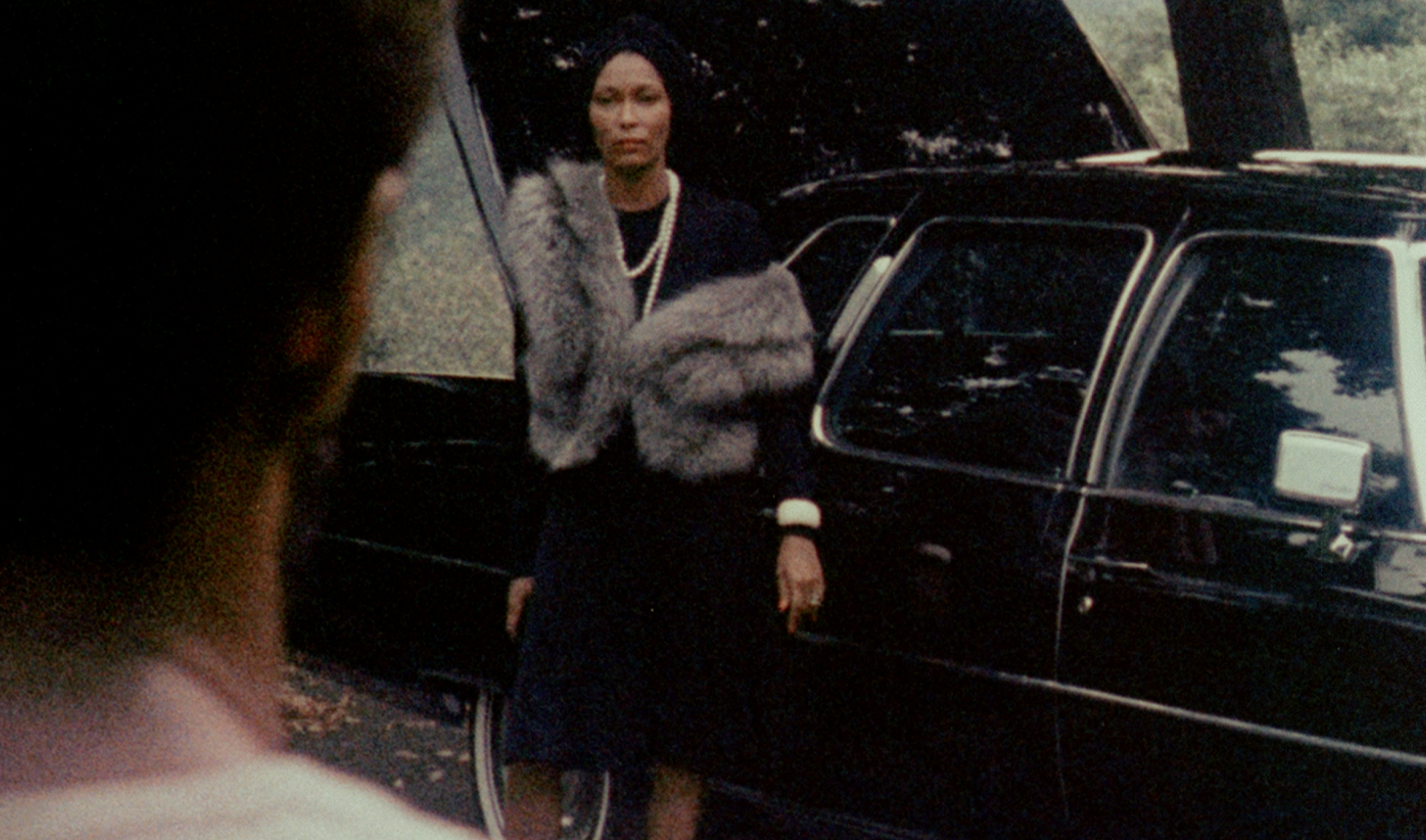
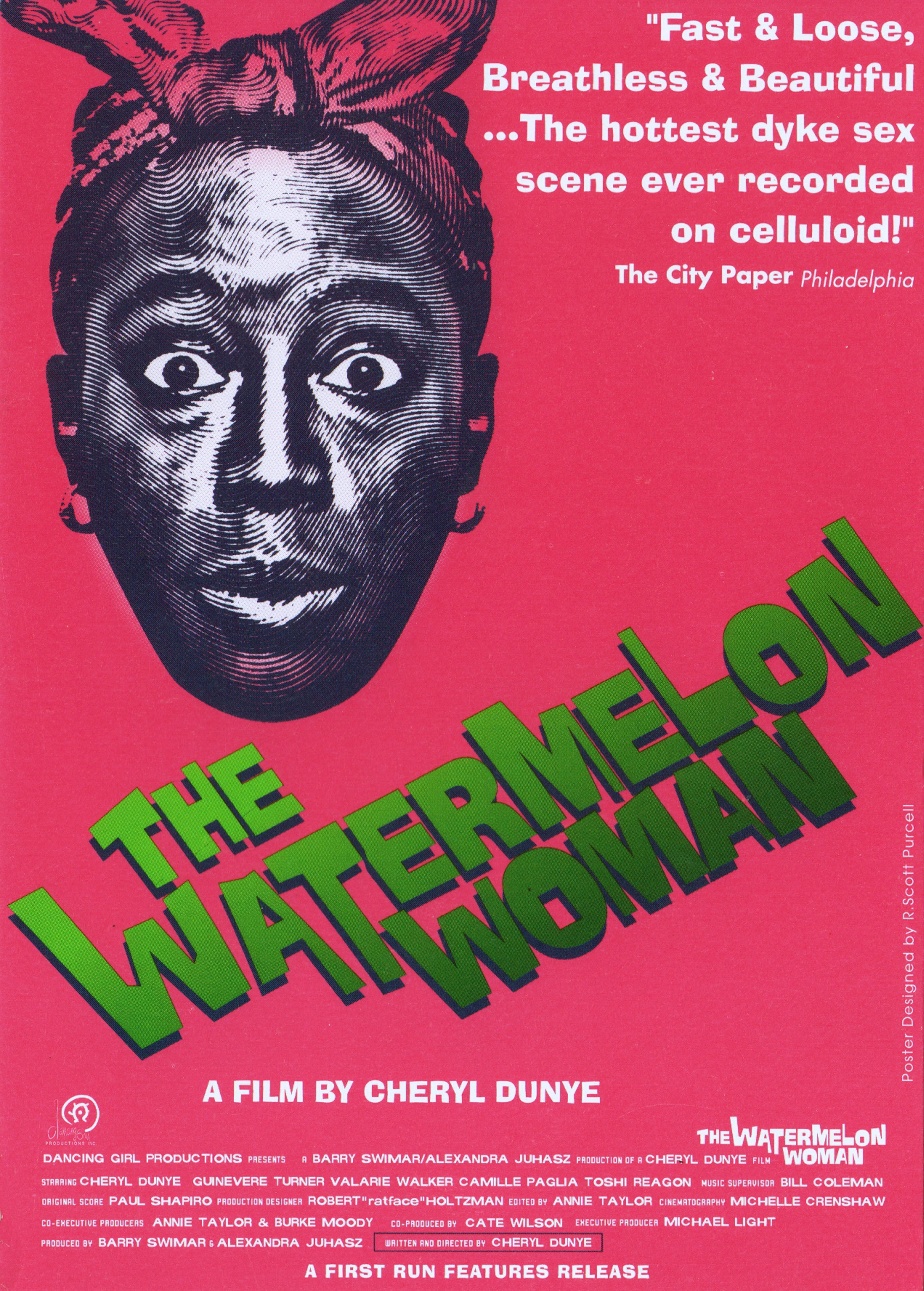
Among the films that make it is a gem of a film by one-time Philadelphian Cheryl Dunye. In the queer mockumentary hybrid rom-com TheWatermelon Woman (1996), Clark sees a creative precursor to this year’s massively popular You Can See Everything.
“The Watermelon Woman” (1996)Alamy Stock Photo
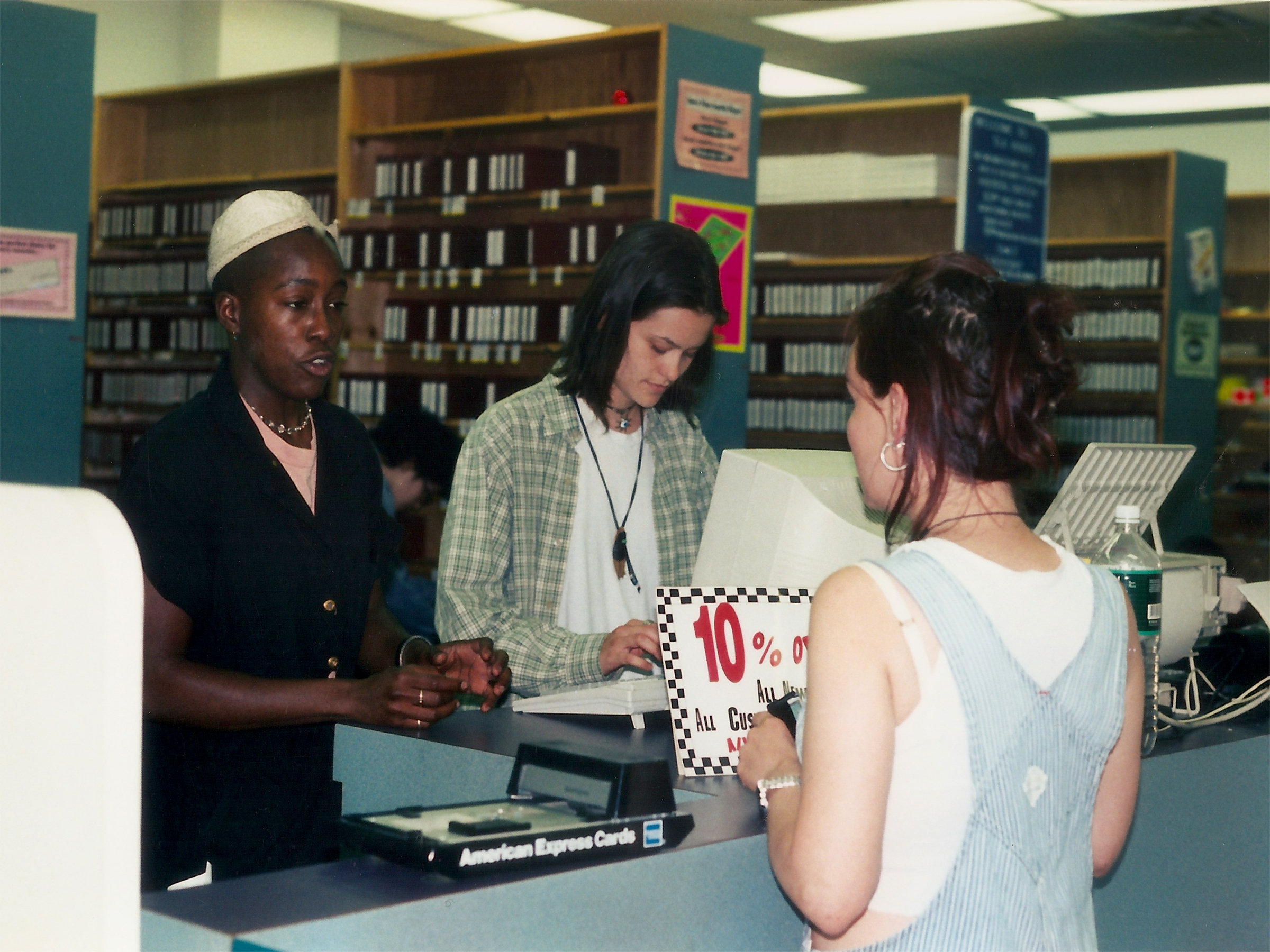
Set in Philadelphia, the story follows Cheryl, a young Black lesbian who works at a video store and is obsessed with an obscure 1930s Black actress known as “the Watermelon Woman.” The film and its frank discussion of homosexuality led to a Republican congressman demanding to cut the National Endowment for the Arts funding by $31,500, the grant amount Dunye received for the film. “It was a total triumph for Dunye’s debut,” wrote The Inquirer’s Rosa Cartagena when including the film in The Inquirer’s list of 50 best Philadelphia films.
“There’s this massive interest in form bending and hybridity of documentary reality. With Watermelon Woman, you have something that’s just straight out the gate… It’s really playful. It’s mixing fact and fiction. It’s very witty, but it’s also very earnest. I think it’s such a unique and thoughtful and funny piece of work,” said Clark, who lives in Jersey City. “I just think it’s a brilliant film.”
A film still from Cheryl Dunye’s “The Watermelon Woman,” a Philadelphia-set story that follows a young Black lesbian named Cheryl, who works at a video store and is obsessed with an obscure 1930s Black actress known as “the Watermelon Woman.”Courtesy of the Film Collaborative
Roslyn, native and Temple Film alum Ephraim Asili’s The Diaspora Suite also finds inclusion in Clark’s book. The collection of five short films includes the 19-minute American Hunger, which travels from the streets of Philadelphia to the Jersey Shore and then to Ghana as Asili meditates upon the relationship between Black Americans and the African diaspora.
“It was one of the first things on my list to include in the book,” said Clark. “He just brings that sort of realness and that sense of questing for a fuller picture of blackness, and connecting it to the diaspora. I feel that he’s a very authentic, driven, disciplined artist, and I think that is indivisible from where he comes from, which has shaped his sense of self.”
Asili also made the 2009 documentary Points on a Space Age on Sun Ra, the Afrofuturist bandleader and cosmic visionary who chose Germantown as his home base in the late 1960s. The Sun Ra Arkestra’s Marshall Allen, 102, still lives there.
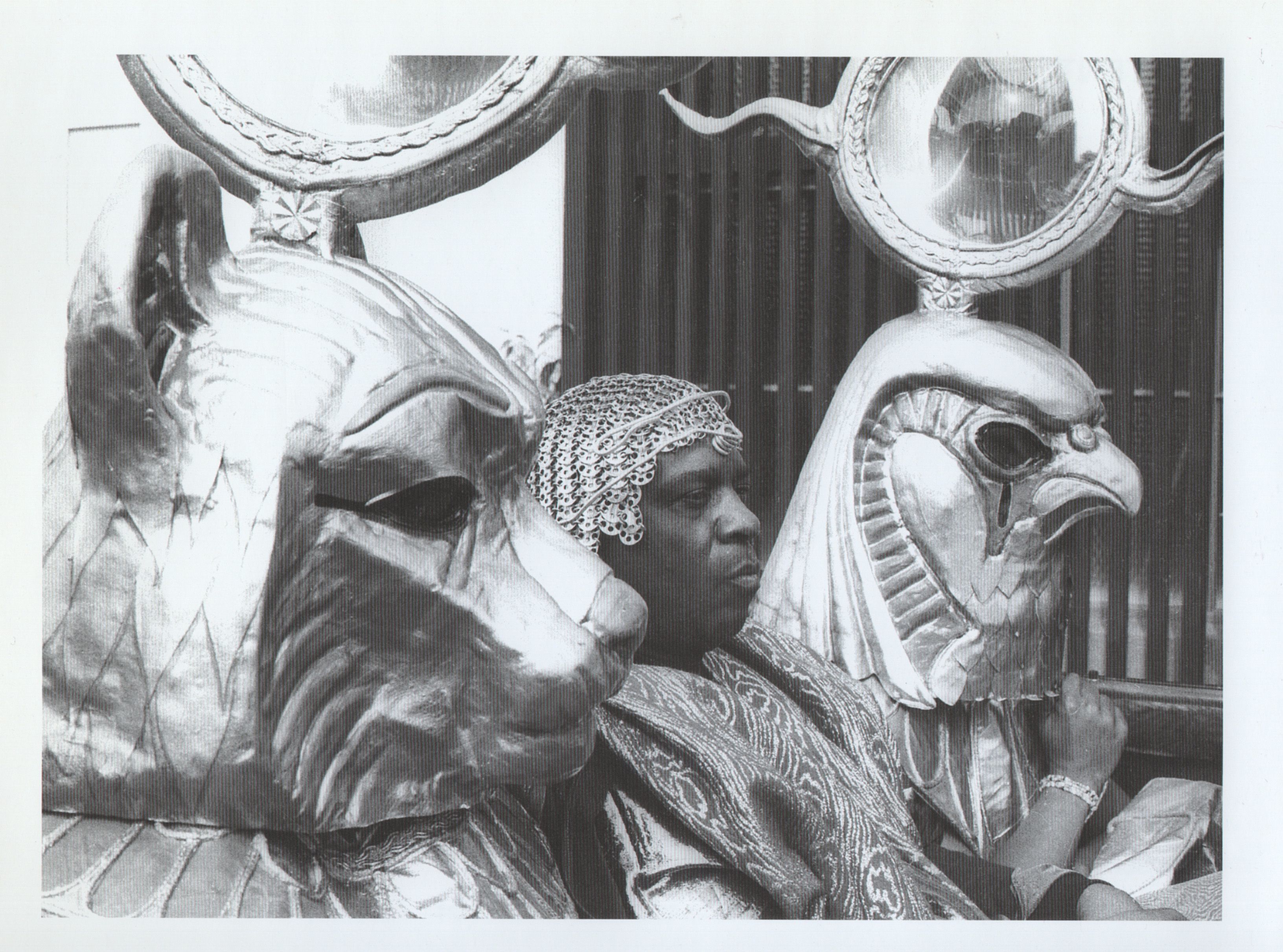
Points on a Space Age is not on Clark’s list (he had a rule about not including multiple works from the same filmmaker), but John Coney’s 1974 “profane jazz odyssey” Space is the Place is.
Sun Ra, on the set of the 1974 film “Space is the Place.”Jim Newman
In the film, Sun Ra plays a divine guru who wants to move disempowered young Black people from Oakland, Calif., to outer space.
It is definitely one of the strangest films in his book, Clark admits.
“It’s completely unhinged. What to say about Sun Ra? It’s hard to put this sort of cosmic energy into words. I just want people to check this film out and figure out what they make of it.”
A sense of “realness” and “a willingness to go to slightly uncomfortable places” mark the Philadelphia films on his list, Clark said. “A certain aspect of a confrontational quality is present in all the films, and there’s a sort of celebration of Blackness.”
Like the city of Philadelphia itself, its films show a “sort of front foot in your identity. And there’s just a confidence and a sureness to a film like Watermelon Woman, even though it’s a debut feature. There’s just a realness to it that tracks with my experience of being in Philadelphia.”
“The World of Black Film” is available in digital and physical bookstores.
Ashley Clark joins Stephanye R. Watts of the Be Reel Black Cinema Club in conversation following a screening of Julie Dash’s 1991 “Daughters of the Dust,” which also appears in Clark’s book. Nov. 9, 6:30 p.m., Two Locals Brewing Co., 3675 Market St., Suite 100, Phila. cinespeak.eventive.org
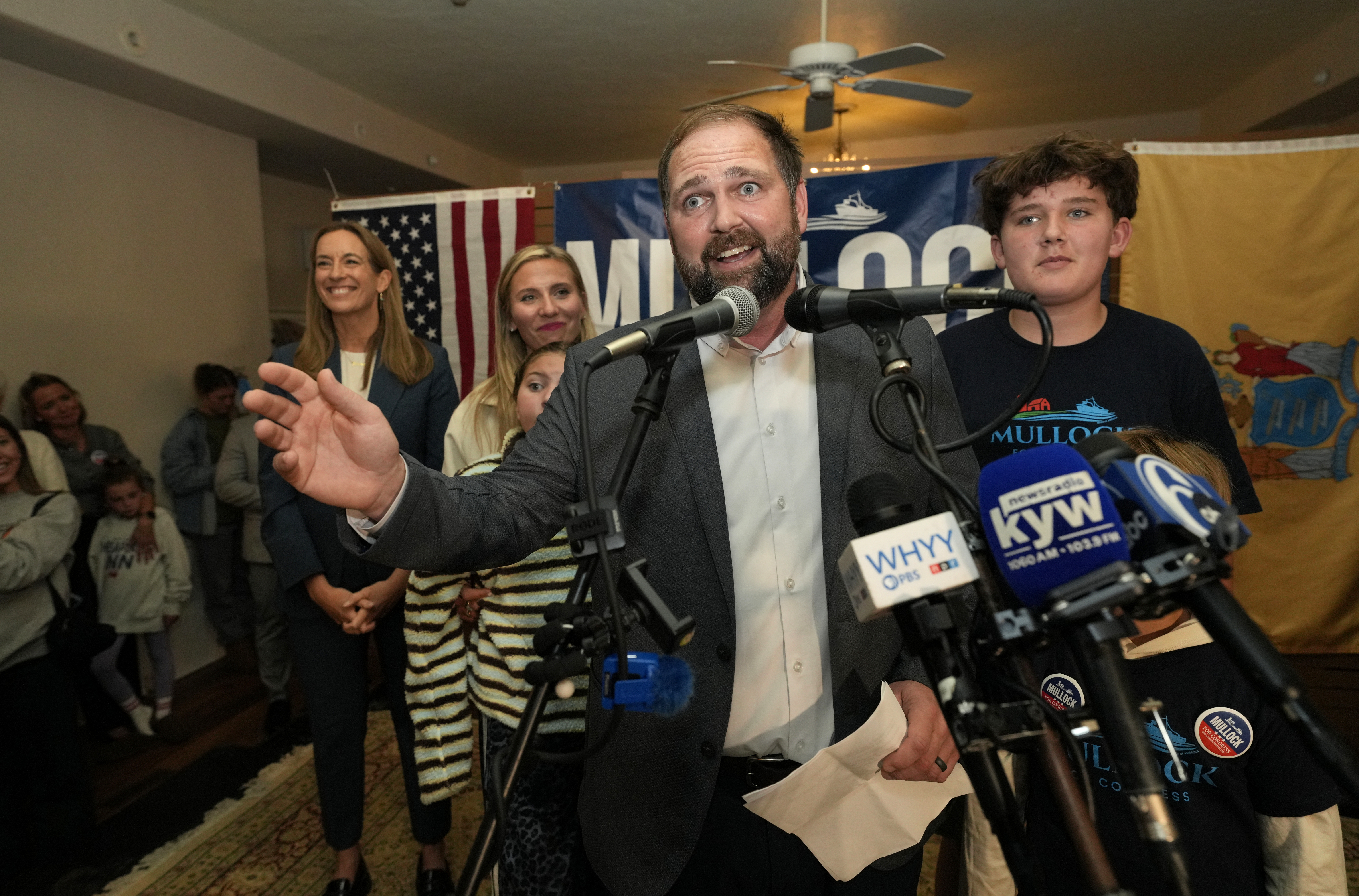
The day after the midterm election, U.S. Rep.-elect Zack Mullock simultaneously fielded calls from members of Congress and hugs from Cape May residents on the street. One person slowed down his car and shouted congratulations out his window. Others stopped their bicycles to express their well wishes.
A coffee shop customer said it was pretty cool thatMullock won. “But who’s gonna be mayor?”
The Jersey Shore mayor’s congressional race was not even on the map for national Democrats until just over a month ago. But after Mullock’s improbable win over a Republican four-term incumbent in a district President Donald Trump won by nearly 13 percentage points in 2024, his phone has not stopped ringing.
“I missed a call from Kamala Harris last night,” Mullock, 41, said Wednesday, sitting on a stool at his friend’s coffee shop, less than a 10-minute walk from the home he bought with his wife, Justine, in 2013, the front yard littered with their three kids’ sporting equipment. “So, yeah, I have a long list of people to call.”
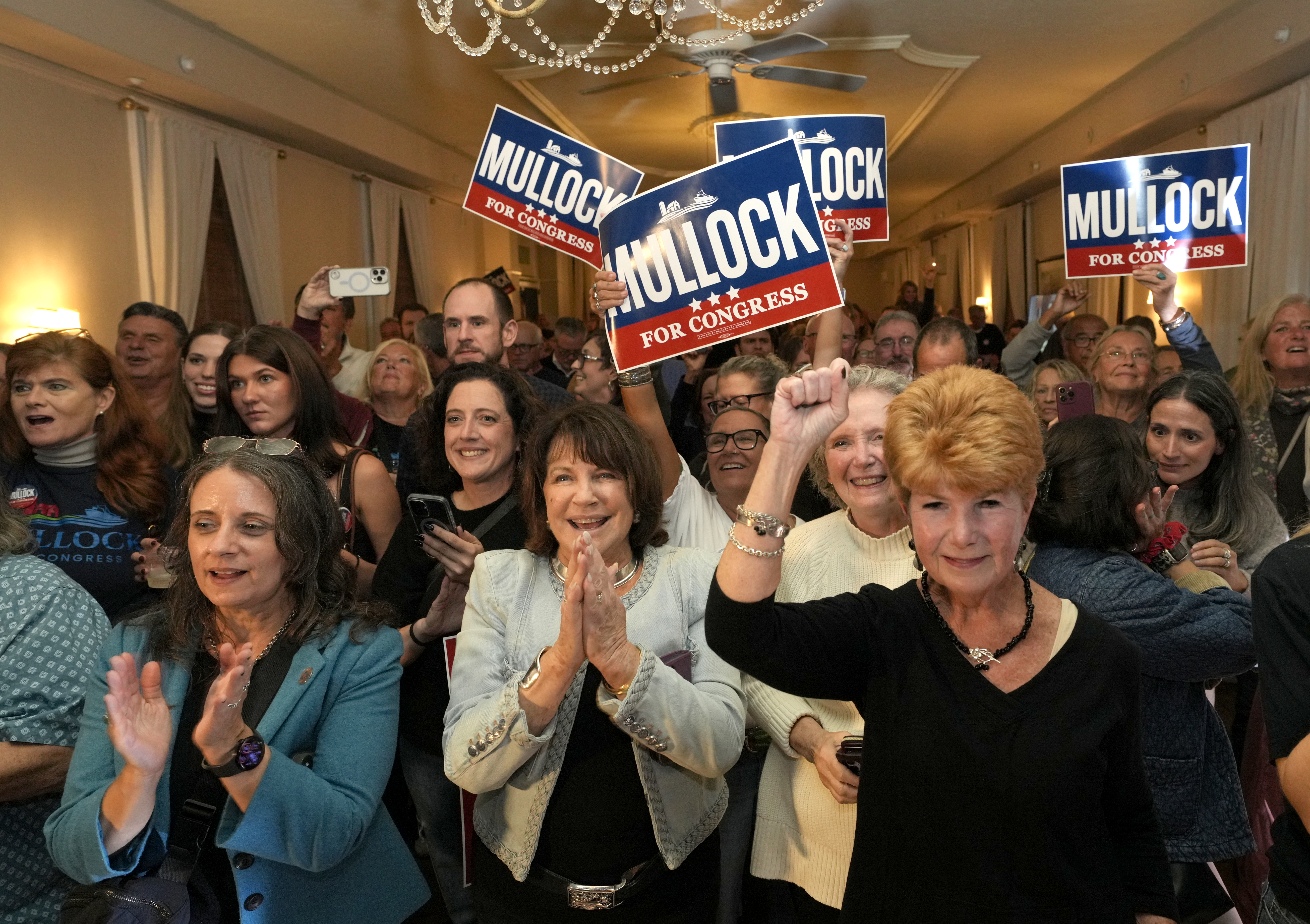
Lee Zektzer of Cape May cheers as she watches returns come in during a party for Democrat Zack Mullock, at the Chalfonte Hotel in Cape May on Tuesday, Nov. 3, 2026.Tim Hawk / For The Inquirer
Locals in Cape May were giddy with excitement that their mayor beat Van Drew, who had won reelection by close to 20 percentage points the last two cycles. If anyone saw it coming, it was local organizers who watched Mullock meticulously build a winning operation over several months as he flew under the radar.
But many people were in utter shock, including Mullock, who said that when he first jumped in the race earlier this year, he didn’t think he would win.
“I really did it out of principle,” he said.
The last Democrat to win the seat was actually Van Drew in the 2018 anti-Trump wave. But the lawmaker switched parties a year later and declared his “undying support” for the president.
After winning a crowded primary in June, Mullock hit the pavement across the six counties in the district, and he kept hearing Republicans and independents say they would vote for him. Come September, he started to feel like, “OK, we have a shot here.”
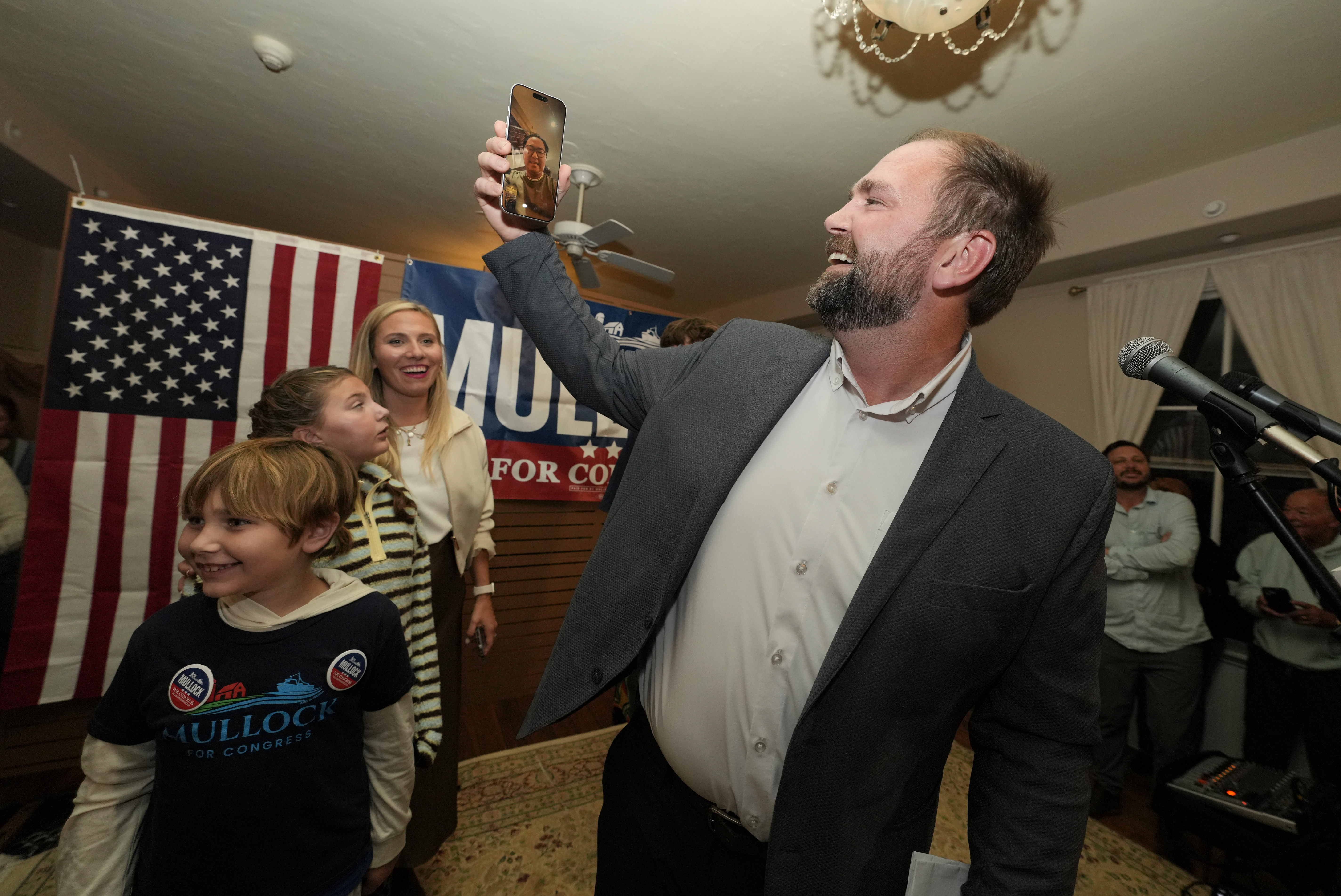
Cape May Mayor Zack Mullock holds his phone to show Sen. Andy Kim the crowd during his election party at the Chalfonte Hotel after incumbent Jeff Van Drew conceded on Tuesday.Tim Hawk / For The Inquirer
As national forecasters predicted Van Drew’s reelection, Mullock felt a tighter race on the ground as he spoke with thousands of South Jerseyans in the sprawling district, which spans from Gloucester County in the Philly suburbs to Ocean County and the Jersey Shore.
“I just felt like there are too many people telling me they want change,” he said.
Video: Zack Mullock talks about pulling off N.J.’s most improbable victory of election night
How Zack Mullock did it
Mullock swung the district by about 20 points, one of the biggest shifts in the national blue wave.
And he did it largely without help from the national party other than a last-minute batch of outside spending and campaign trail appearances by a handful of prominent Democrats, including New Jersey U.S. Sens. Andy Kim and Cory Booker, in the final weeks of the race.
He ran as an everyday guy. His first campaign video featured him watching an Eagles game with his family. And he showed throughout his campaign that he could relate to other South Jerseyans. He was humble, saying he did not have a sales pitch when recording a video for social media with the governor just days before the election. But he also showed a fiery side on the debate stage with Van Drew, unabashedly cutting in to correct the incumbent.
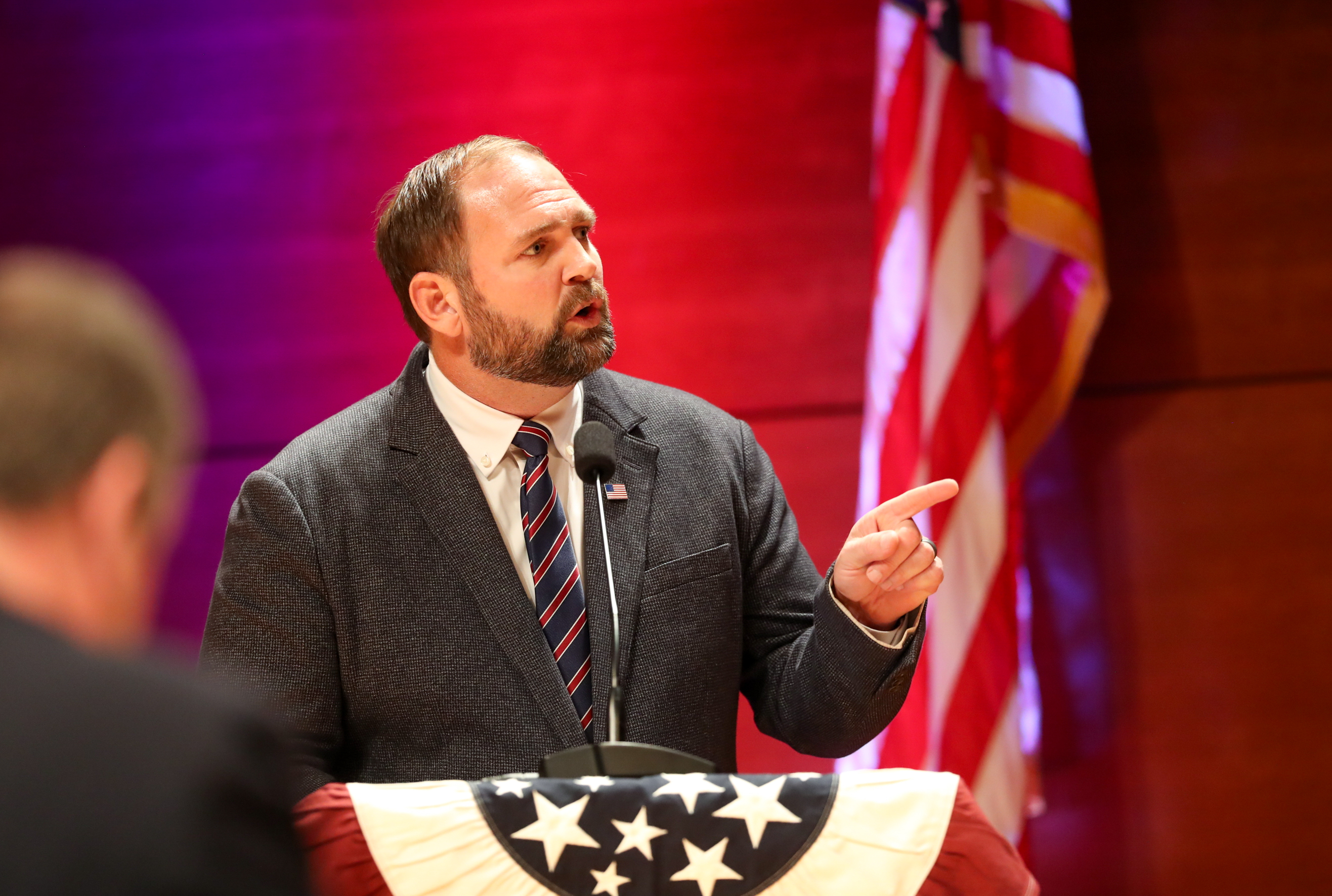
Democrat Zack Mullock points to U.S. Rep. Jeff Van Drew during a debate in the Campus Center Theatre at Stockton University, Thursday, Oct. 22, 2026.Tim Hawk / For The Inquirer
“The way he did that really caught my attention,” said Jacovi Lindsey, a Vineland Democrat who leads Project Inspiration,alocal organization that provides programming for underserved families.
Lindsey was one of many, many district residents who saw Mullock speak on the campaign trail. That was part of his winning strategy, said Mullock’s campaign manager, Chris Carroll.
“We would schedule stops everywhere every day, and we hit all six counties multiple, multiple, multiple times a week,” Carroll, 35, said in an interview Wednesday.
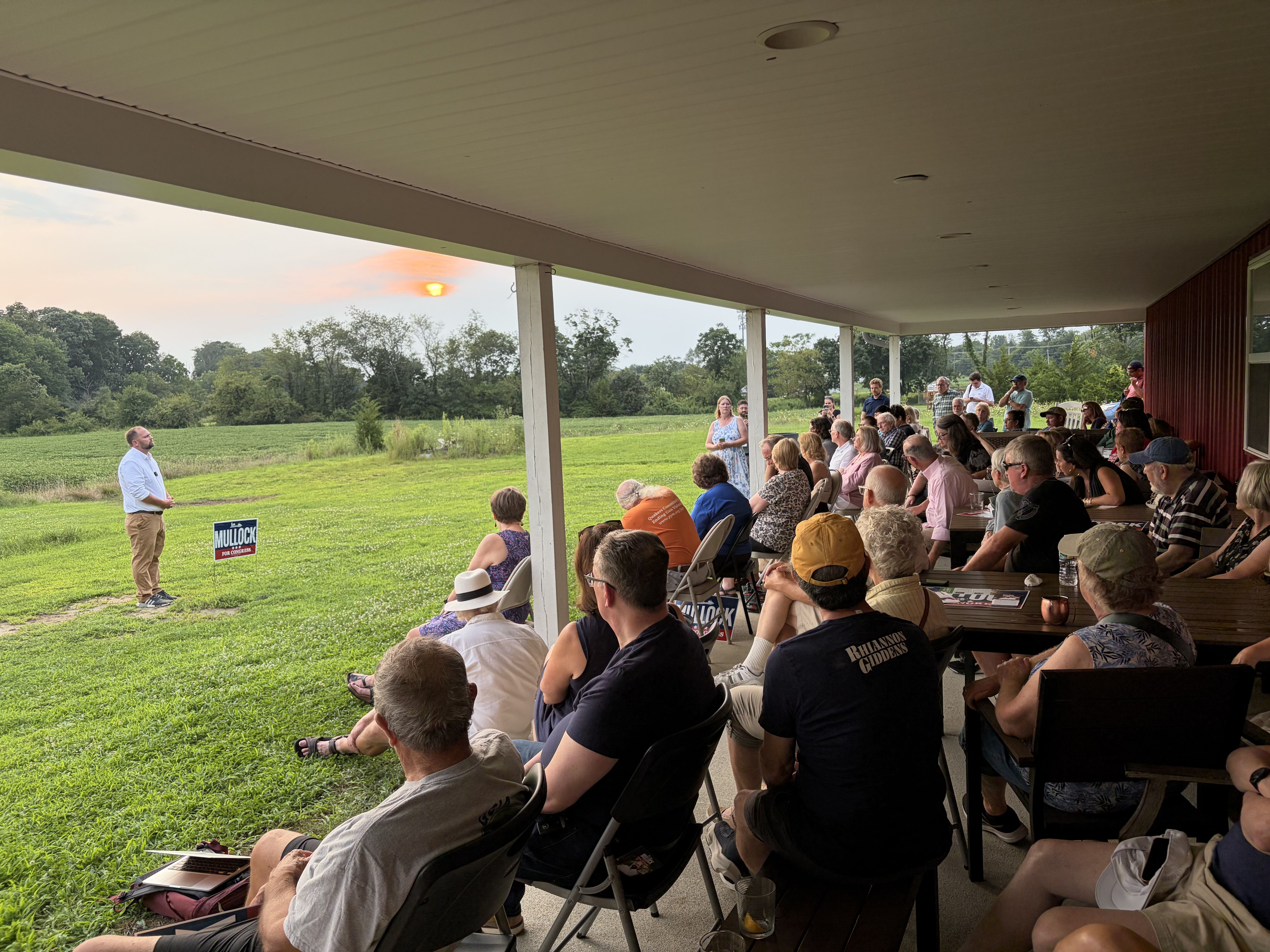
So many people had packed into the back of Independent Spirits Distillery in Gloucester County’s Woolwich to hear Mullock speak in August, they had to move outside.
Zack Mullock held a campaign event at Independent Spirits Distillery in Gloucester County’s Woolwich on Aug. 11.Aliya Schneider / StaffZack Mullock speaking to Democrats in Vineland on Monday, the day before Election Day.Aliya Schneider / Staff
Mullock told the crowd that he had asked Amy Kennedy — Van Drew’s 2020 challenger, who had come the closest before Mullock — if she was planning to run again. She was not, but she encouraged him to go for it. (Mullock ended up hiring Carroll, Kennedy’s former scheduler).
Two weeks later, he was sitting in a room with JFK’s bomber jacket behind him in the home Kennedy shares with her husband, the late president’s nephew, former U.S. Rep. Patrick Kennedy.
“The first thing I said is, ‘I’m Zack Mullock, I’m a proud husband and a father of two,’ and my wife looks at me and I said, ‘Oh, I have three kids.’ So that was the start of the campaign,” he told the crowd to laughter.
He also recounted recently going on the national news to talk about Cape May’s water department being hit by an Iranian cyberattack, which he said was “a major reminder of just how important this election is.”
Nearly three months later, supporters had to once again move outside because so many people showed up at a get-out-the-vote event for Mullock with Gov. Mikie Sherrill in Vineland. Angela Bardoe, 55, chair of the Vineland Democratic Committee, said she had not seen that much energy in the decade she has been organizing in Cumberland County.
“We were always pulling teeth trying to get people to volunteer, and we’re not pulling teeth anymore,” she said the day before Election Day.
Mullock, who hasworked as both a local contractor and a businessperson, was able to energize people across thediverse district, which includes multimillion-dollar homes along the Shore, immigrant communities, farmland, and Phillysuburbs.
Carroll described Mullock as “the Mr. Rogers of Cape May” but also “a fighter for the people.”
“You feel at ease and at home with him,” Carroll said, noting voters’ exhaustion with the “messy” politics of the Trump era. “They just want a return of normalcy and decency, and that’s what Zack brought.”
State Sen. Paul Moriarty, a Gloucester County Democrat, speaks with Zack Mullock at a Gloucester County Democratic Committee rally on Oct. 24.Aliya Schneider / Staff
He said the campaign had a big focus on unaffiliated voters,who make up 35% of the district’s electorate, more than either party.
Carroll said he knows the election was a referendum on Trump’s policies. But local issues like concerns about a large data center in Vinelandalso helped Mullock’s bid.
Mullock focused a lot on Van Drew’s support for Trump’s tariffs, his vote for a bill that cut Medicaid, and his votes against resolutions to end the Iran war. The cost of living, homeownership, and flooding concerns were also big issues, he said.
Van Drew’s campaign frequently posted about Mullock online, deriding him as a liar. The lawmaker told The Inquirer ahead of the election thatbacklash to Trump could shed a few points from his total, but he felt confident he would prevail.
As of Oct. 14, Van Drew’s campaign spent nearly $2.3 million during the 2026 cycle while Mullock’s campaign spent just upward of $855,000. Van Drew still had almost $900,000 left in his coffers at that point while Mullock had just over $100,000.
And while it was easy to find a public meet-and-greet with Mullock over the course of the summer and fall, the same could not be said for Van Drew, who largely attended community events without advertising his schedule.
Mullock knows Republicans, who make up 34% of the district’s electorate, crossed the aisle to support him.
“Just walking around town today, people were giving me the thumbs-up … and by the way, a lot of those people are Republicans,” he said Wednesday.
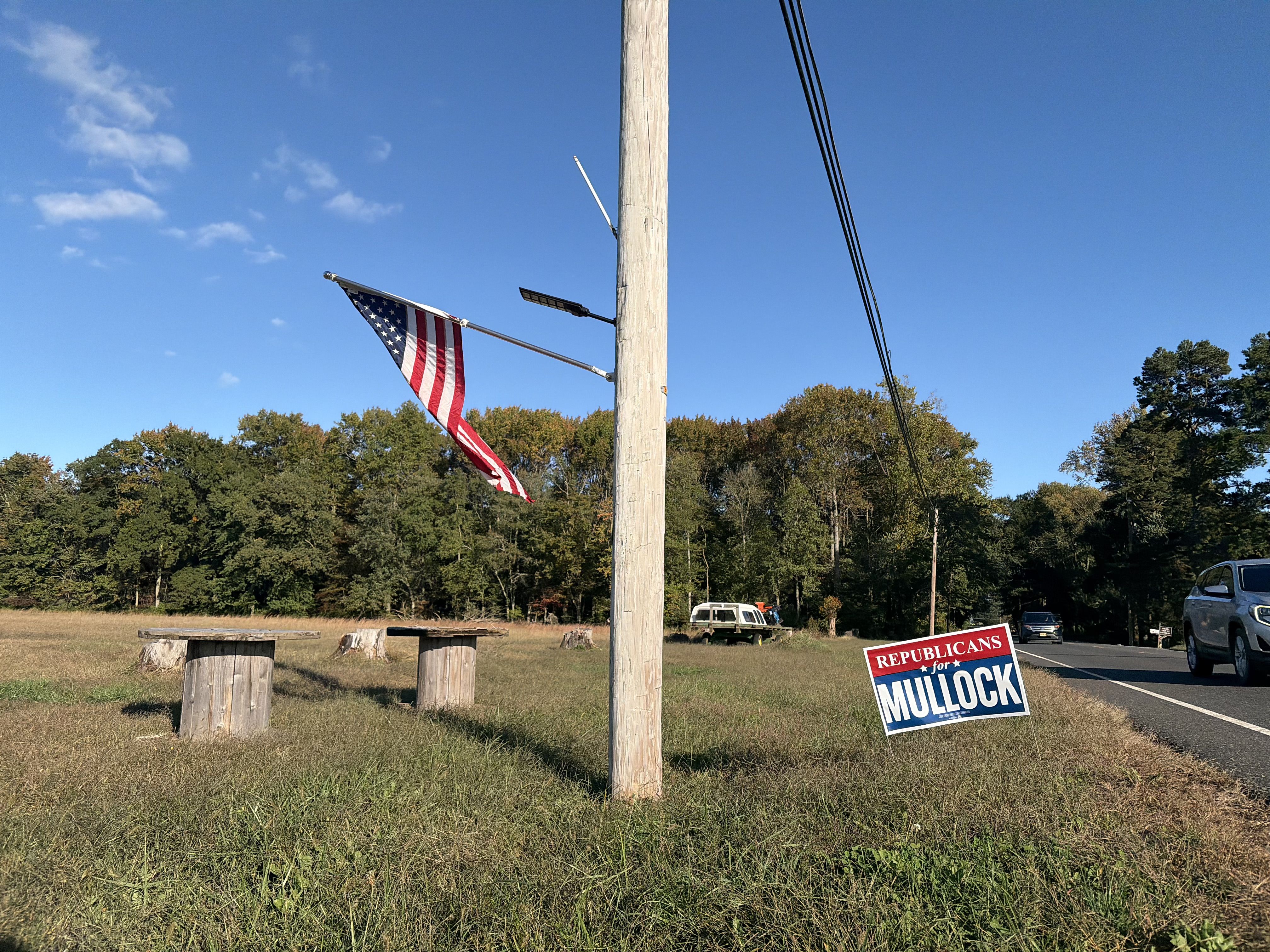
A Republicans for Mullock sign on Almond Road in Pittsgrove on Oct. 12.Aliya Schneider / Staff
Republican Anne Nelson said in a phone interview Wednesday that Mullock was the best vote she has ever cast. Nelson, 56, had voted against Van Drew in the past but said attending a meet-and-greet with Mullock drove her to volunteer with his campaign.
“I’ve never been a huge political person. I paid attention, but not the way I paid attention this time,” said Nelson, a public school speech therapist who lives in Mays Landing.
Over the objections of some of her Trump-supporting family members, she decorated her lawn with “Republicans for Mullock” signs, along with a sign for a local Republican candidate.
“I feel like I can think independently about topics that matter, and I’m not going to just vote straight party lines when so much is on the line,” she said.
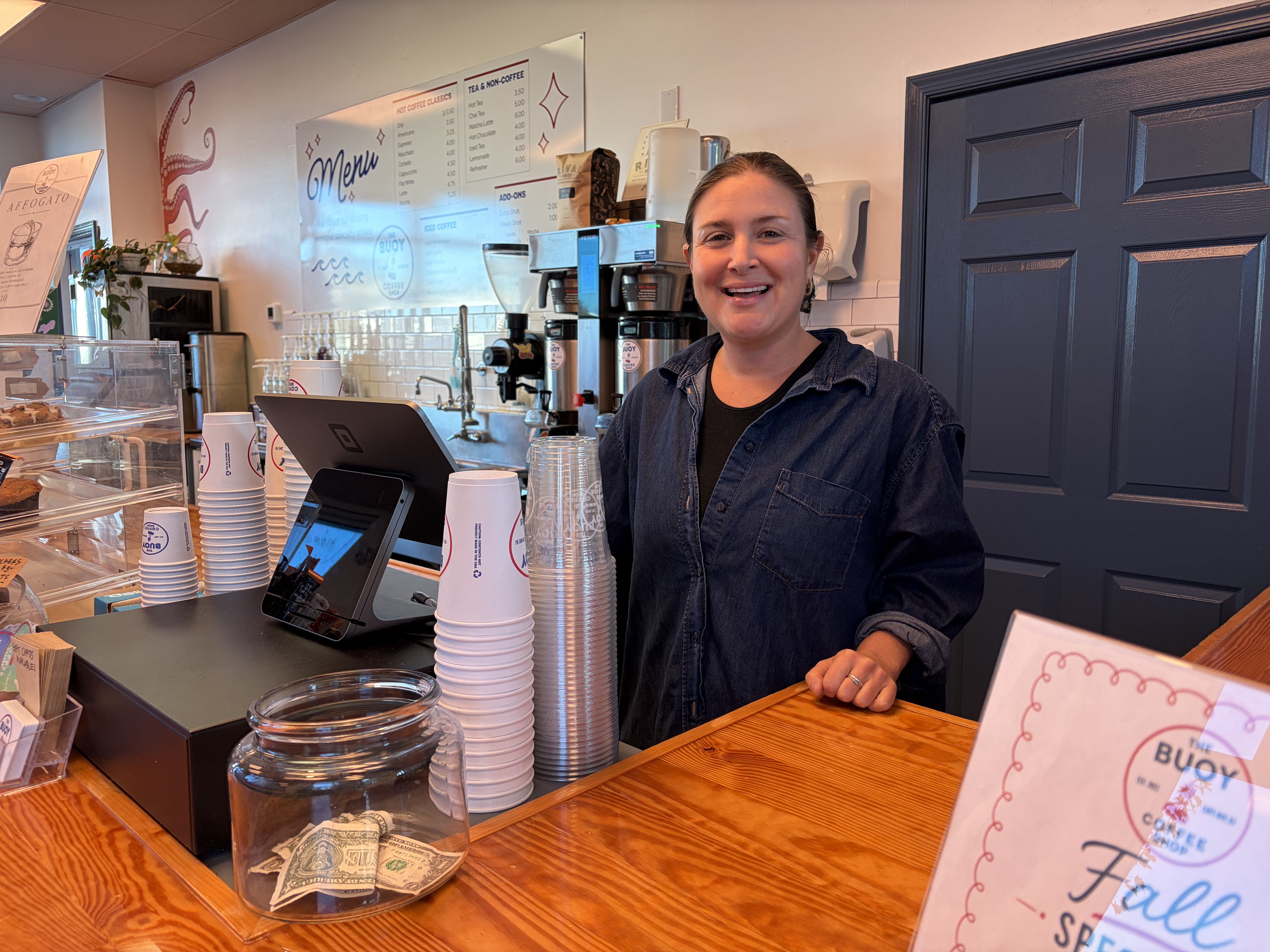
Meghan Protassi, Mullock’s childhood friend and owner of Buoy Coffee Shop, said in an interview Wednesday that as she phone-banked for Mullock, people told her that their significant other who historically voted for Van Drew planned to support Mullock.
“They’re just ready for something a little bit different,” said Protassi, 40, a Democrat.
Meghan Protassi, Zack Mullock’s childhood friend and owner of Buoy Coffee Shop, in Cape May on Wednesday.Aliya Schneider / Staff
A Shore mayor headed to Congress
A restaurant on Cape May’s beachside promenade was closing up shop for the season on Wednesday afternoon. But Mullock was quick to say that there is no off season as the small city’s mayor.
In a campaign video on Facebook that garnered more than 6,000 views, Mullock walked through Cape May to show some of his accomplishments in office: a new firehouse, a library, a theater, and a police station in the works. He squeezes down a blue slide, touting an ADA-accessible playground.
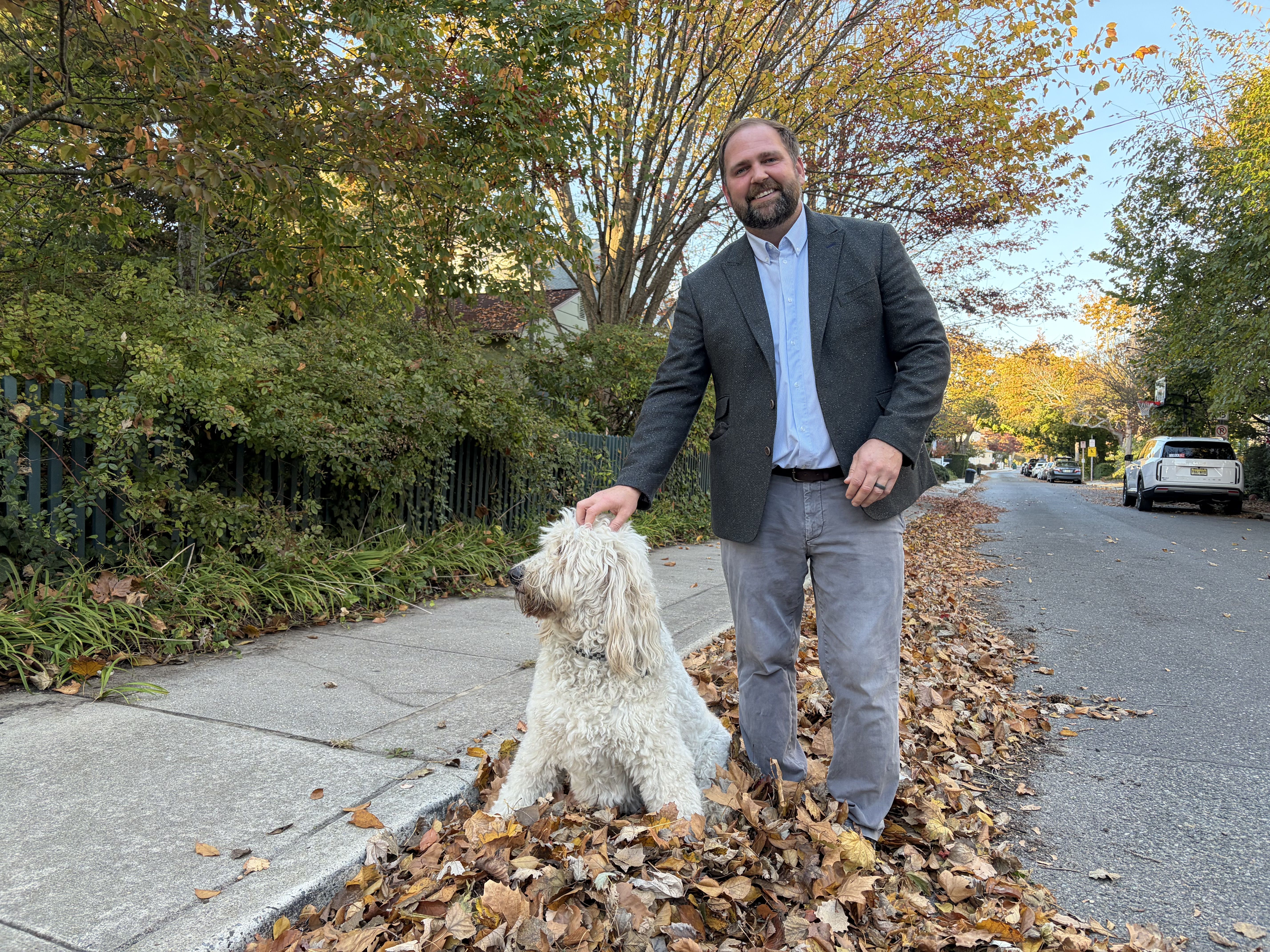
Cape May Mayor Zack Mullock, the representative-elect for New Jersey’s 2nd Congressional District, in Cape May with his dog on Wednesday, the day after the election.Aliya Schneider / Staff
“We’ve done this all the same way: Democrats, Republicans, independents, moderates all working together — and even surfers,” he said, a young surfer making a cameo with a big smile. “That’s what I’ve done here in Cape May, and that’s what we’ll do in Congress.”
Mullock ran for Cape May City Council 10 years ago and lost. He won two years later, unseated the mayor two years after that in 2020, and was reelected without opposition.
It doesn’t hurt that people in Cape May and Cape May Point know the Mullock family well. With the candidate’s father, Bob Mullock, at the helm, family members have taken on projects to save historic landmarks, including the Sisters of St. Joseph’s beachfront retreat they turned into the Cape May Arts and Science Center.
His family also founded the Harriet Tubman Museum in Cape May, where Mullock worked as the volunteer general contractor for the project.
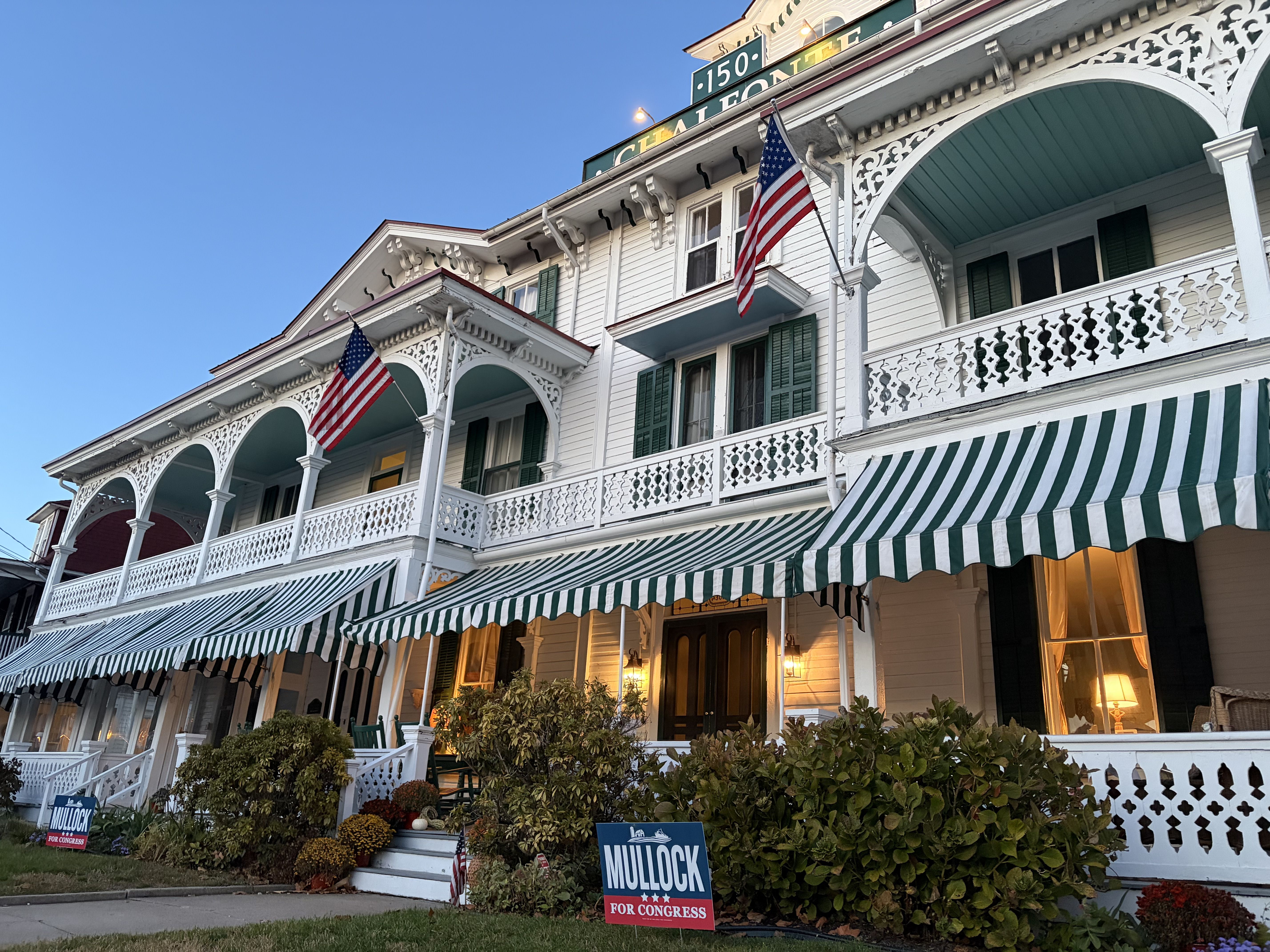
The Chalfonte Hotel in Cape May on Wednesday.Aliya Schneider / StaffThe city of Cape May on Wednesday.Aliya Schneider / Staff
Members of Mullock’s family own the Chalfonte Hotel and the Cape May National Golf Club. Born and raised in Cape May Point, Mullock grew up working in hospitality, plumbing one minute and greeting customers the next, which he said was good training for elected office. He also served on the Atlantic Cape Community College Foundation Board for a decade.
Protassi said she is excited to see Mullock implement changes nationally that she has seen in Cape May.
“I do really think he has the ability to unite people. I think he can speak to people, and they really are receptive, and you know they’re interested in what he has to say.”
James Rosin, 71, who said he leans libertarian, said that he supported Trump’s promises to stay out of wars and the ideas behind the Department of Government Efficiency (DOGE), but that the president has gone “off the rails.”
A retired psychiatric intensive care unit nurse who has lived in Cape May for 10 years, Rosin said independent-minded voters had “a change in tenor” that helped Democrats.
“He’s a very effective mayor,” Rosin said, walking from Acme to his bus stop on Wednesday. “He’s very personable. You know, everybody in town knows him.”
James Rosin, 71, in Cape May on Wednesday.Aliya Schneider / Staff
On Wednesday, Mullock ran into his old friend Rick Rutherford at the coffee shop. The two men were in a basement punk rock band together as young teens — Mullockplayed guitar and sang vocals, and played on a golf team with Rutherford’s brother. Rutherford was shocked and impressed when Mullock was even elected mayor.
Rutherford, 42, said he normally does not vote because he does not like the partisan political system. But the local chef-restaurant owner cast his vote for Mullock — and wrote in his wife for sheriff as a joke.
“I know him from, like, the roots of childhood and that he actually, like, just worked from the grassroots, ground up, all the way to where he is,” said Rutherford, who is registered as a Republican but does not identify with either party.
A political staffer for Gov. Mikie Sherrill takes a video of her with Zack Mullock on the Saturday before the election in Whitesboro.Aliya Schneider / Staff
The final day
Mullock spent the morning of Election Day in a very Jersey fashion: visiting 12 diners across six counties. He went home for a lunch break and started feeling antsy that he was not working, so he began phone-banking, then went to hand out campaign literature in front of three different Wawas.
“I needed something to do,” he said.
Democrats had an enthusiastic showing in early voting, but as more votes came in on Election Day he thought he probably lost.
However, as the votes were tallied, he realized Republicans and unaffiliated voters must have really cast ballots for him. He had a chance.
And all of a sudden, at 10 p.m., Van Drew’s name came up on his phone — he knew thanks to caller ID, because he did not have his contact saved — and the lawmaker congratulated him.
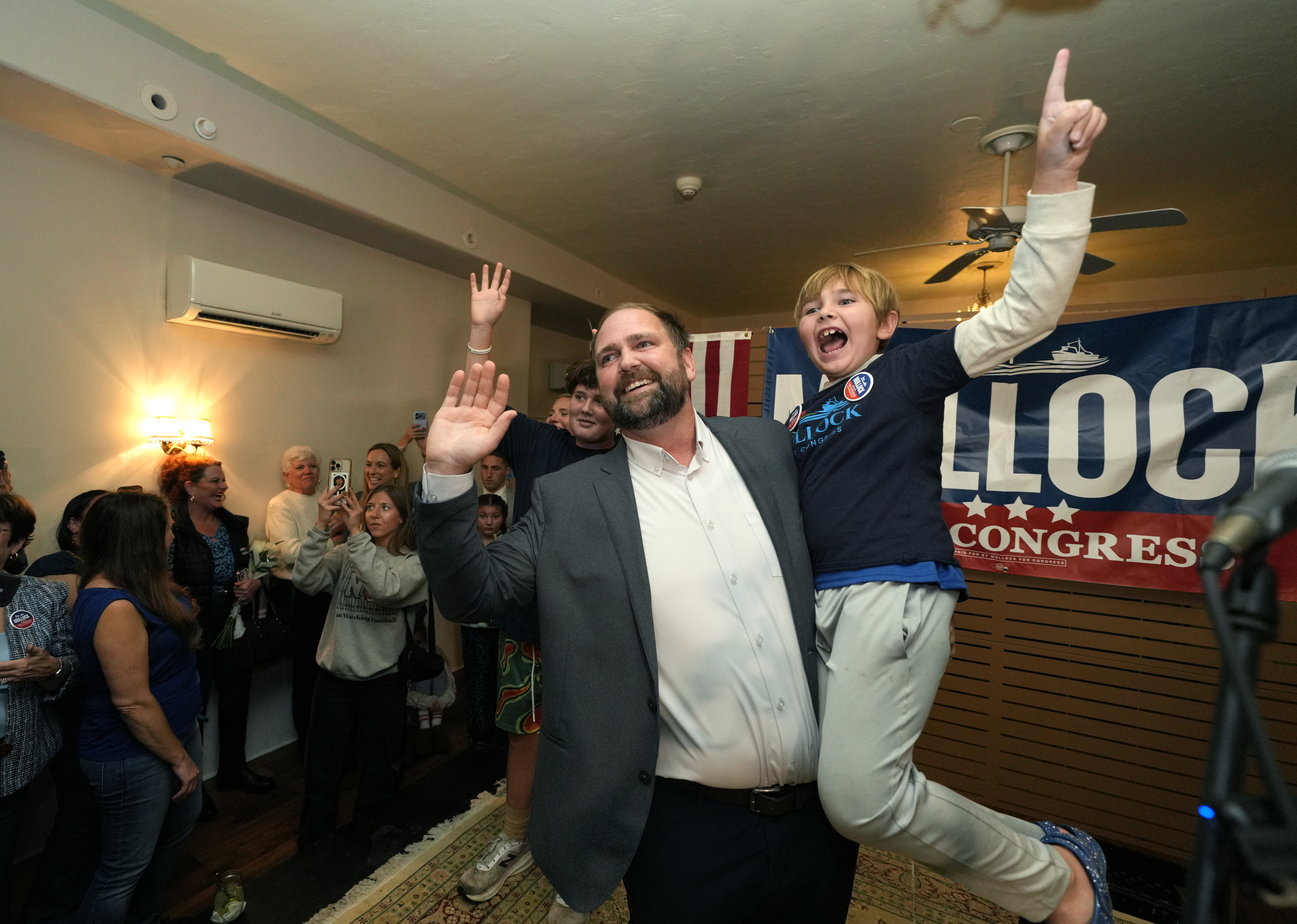
“Honestly I started tearing up, because I just didn’t expect it,” Mullock said. “It was very emotional in that moment. My wife was next to me, so I gave her a big hug, and everyone cheered.”
Protassi was also caught off guard. She said she thought he might not win the seat on his first try and she might be making phone calls for him again in two years. “Then when I heard that he got the call, I was like, ‘Is this? Are we sure?’”
They were celebrating at his family’s hotel. His sister Cindy Mullock noted they hosted fundraisers for Van Drew in the same ballroom back when he was a Democrat.
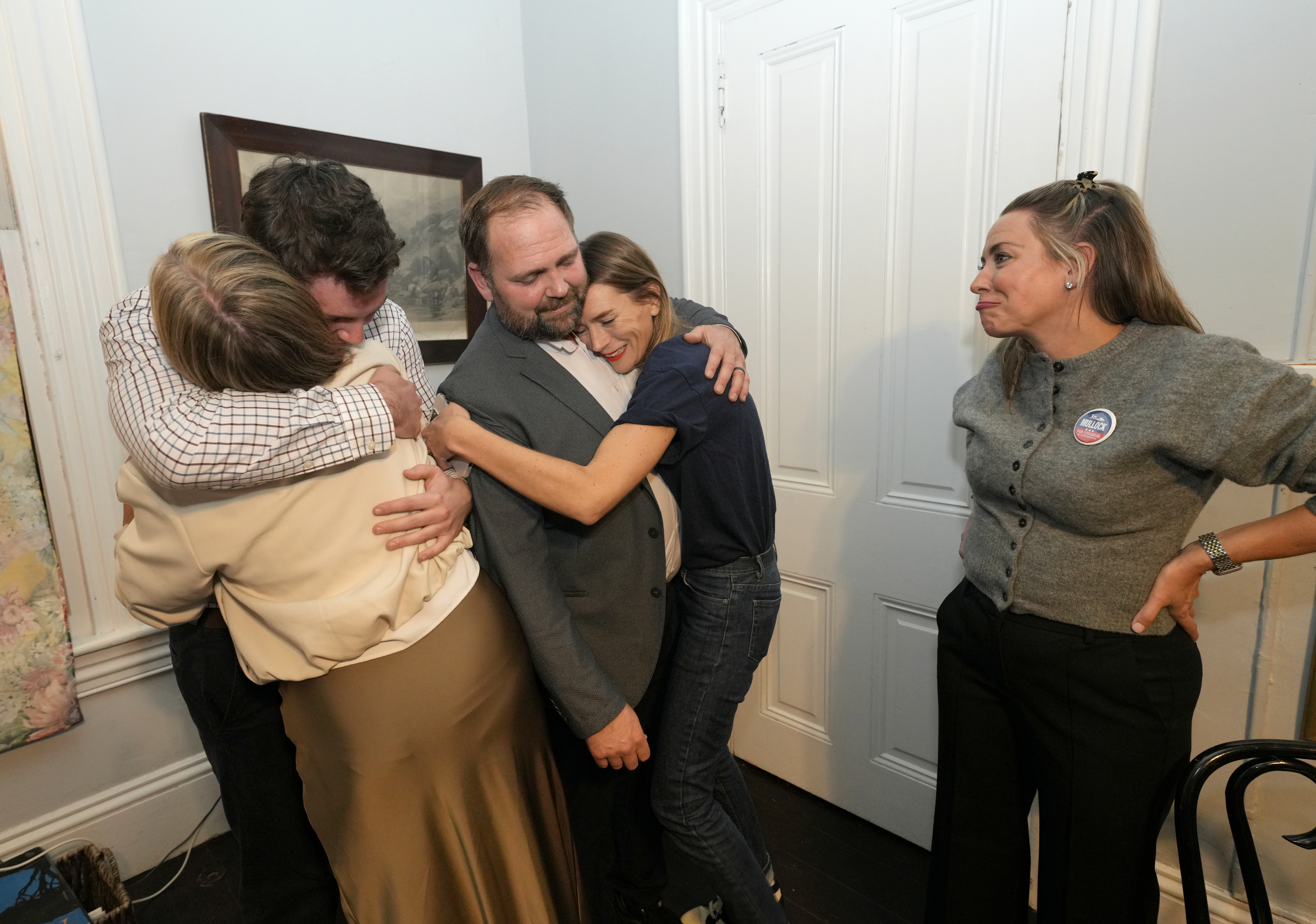
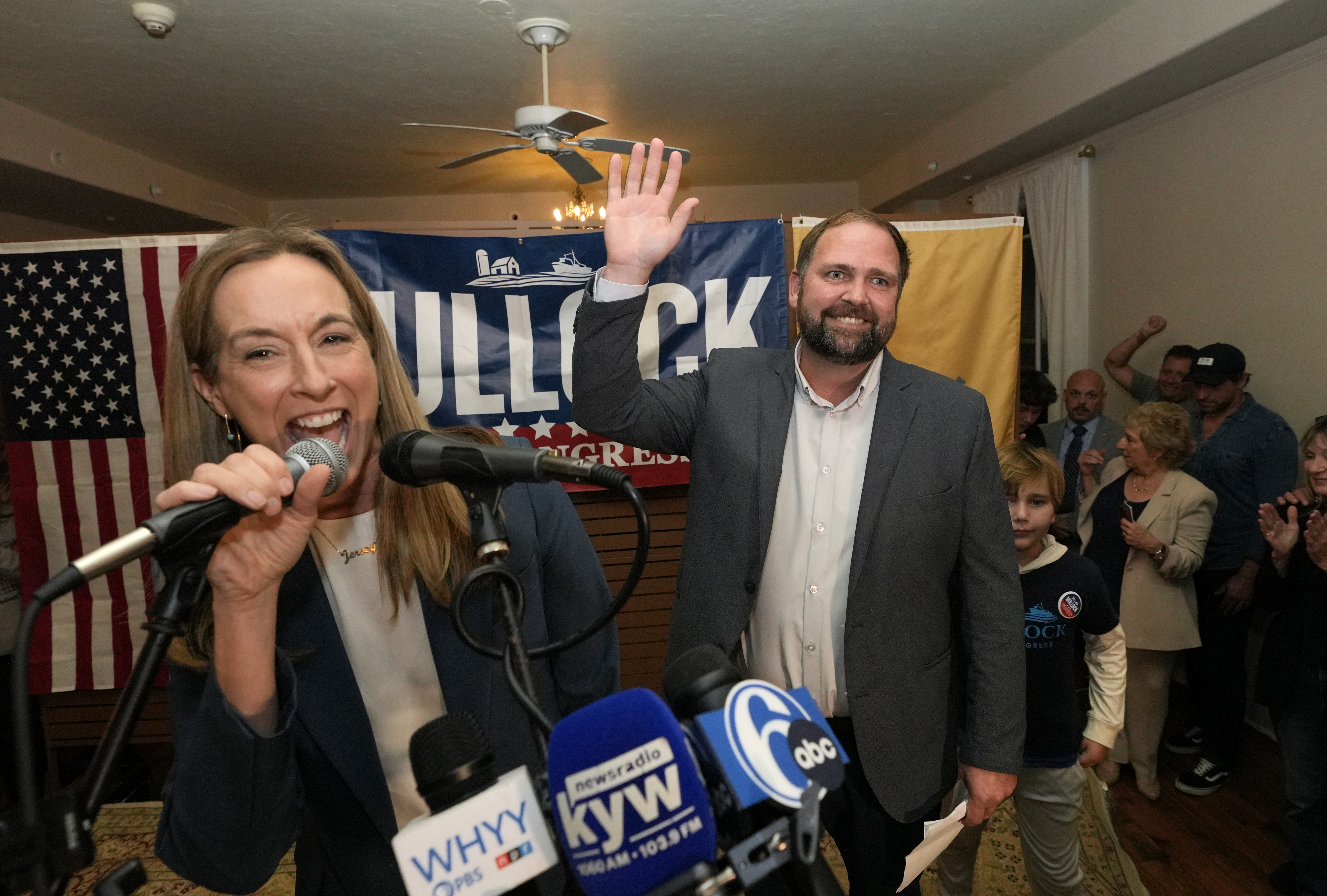
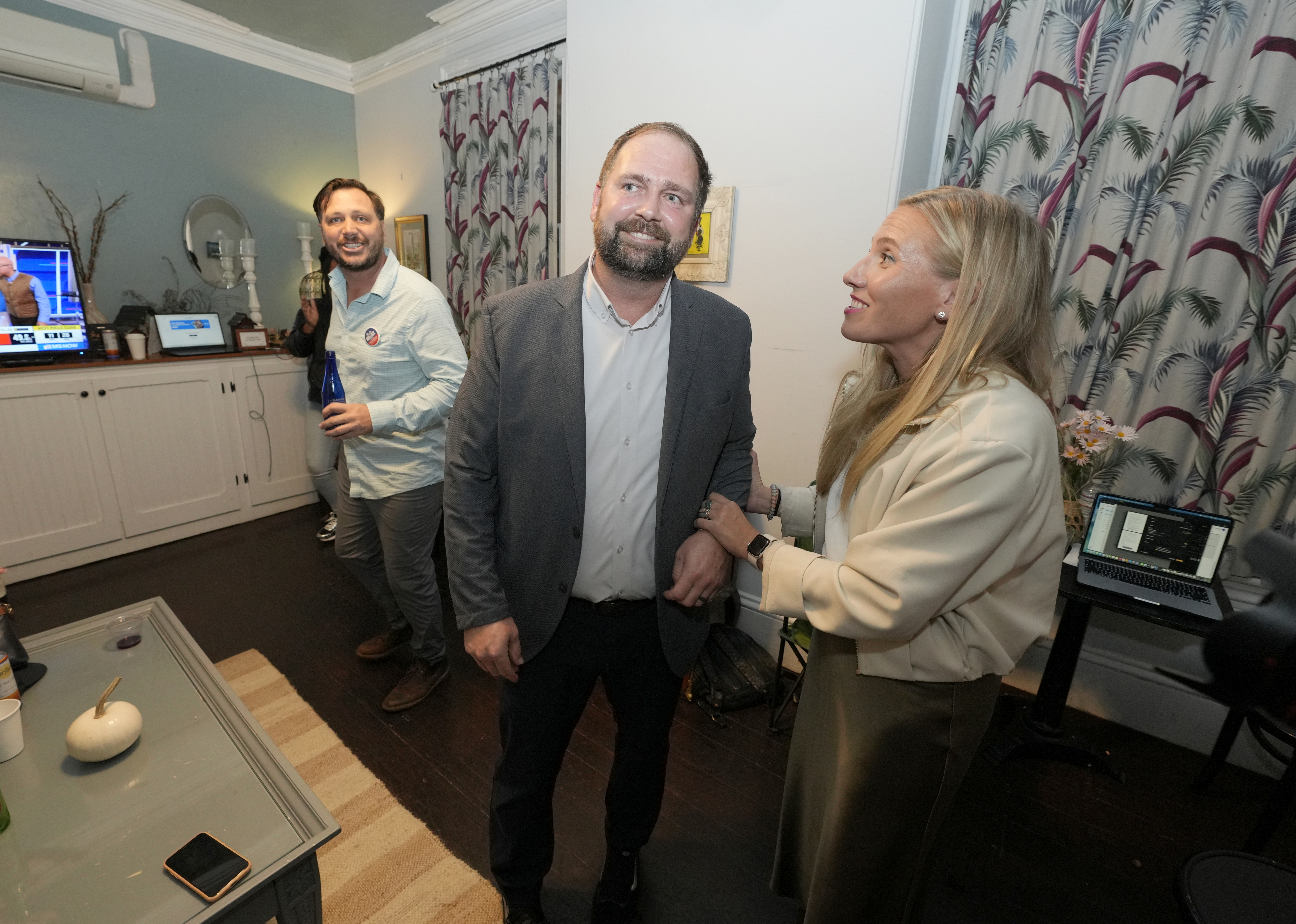
From left, Justine Mullock hugs campaign staffer Aidan Kilgannon and Zack Mullock hugs volunteer campaign advisor Justine Magariel after he received a concession call from U.S. Rep. Jeff Van Drew.Tim Hawk / For The InquirerGov. Mikie Sherrill introduces U.S. Rep.-elect Zack Mullock, during an election party at the Chalfonte Hotel, Tuesday, Nov. 3, 2026. Mullock defeated incumbent Jeff Van Drew.Tim Hawk / For The Inquirer
Mullock got emotional when asked about how his family feels about him going to Washington.
“They’re so proud, my mom and dad,” he said, needing to step aside for a minute. “I just haven’t, I haven’t had a moment to process this yet,” Mullock said Wednesday, running on three hours of sleep, adrenaline, and coffee.
Trying to answer the question again, he said he was grateful for his wife, Justine, for her support, his kids, whose ballgames he had to miss, and his parents.
Mullock said he would not have launched his campaign if not for Trump, who he often says has been a negative role model for his 12-year-old son. But frankly, he acknowledged, he doesn’t feel ready for Congress.
“It is going to be a learning curve,” he said. “But I do remember the day I got elected as the youngest mayor in Cape May, and realizing that I don’t know everything that I’m doing, but I know my guiding principles, and I know my moral compass of right and wrong, and working to help others, and I think ultimately those are the decisions that you’re going to make in Congress.”
After Van Drew’s call came in Tuesday night, the governor flew down by helicopter from fellow New Jersey DemocratRebecca Bennett’s victory party to celebrate. Mullock’s phone began buzzing with calls and texts that never really stopped. He went to bed at 3 a.m. and woke up at 6 a.m., and heard his phone buzzing throughout those three hours as well. He got up feeling full of love and graciousness.
“I mean, I just, I am — I’m a small-town mayor,” he said. “So to feel like people have the faith in you to represent them, … it’s a beautiful thing.”
Staff writer Amy Rosenberg contributed to this article.
The buyers: Nicole Renish, 32, social media manager and dance teacher, and Dan Renish, 31, HVAC worker and a PhanaVision camera operator with the Philadelphia Phillies.
The house: A two-bedroom, one-bath ranch built in 1986 spanning 768 square feet in the Villas in Cape May County.
The price: Was set to be listed for $350,000; sold for $340,000 before it hit the market
The agent: Christina Cavalier of Farrell Realty
The ask: Nicole and Dan grew up vacationing at the Jersey Shore, and the Pennsylvania natives (she’s from Scranton; he’s from Ridley) loved the idea of putting down roots in Cape May County. But their 700-square-foot apartment in Wildwood Crest came with multiple headaches: mold, leaky bathtub, a summertime parking situation that Nicole described as “insanity.”
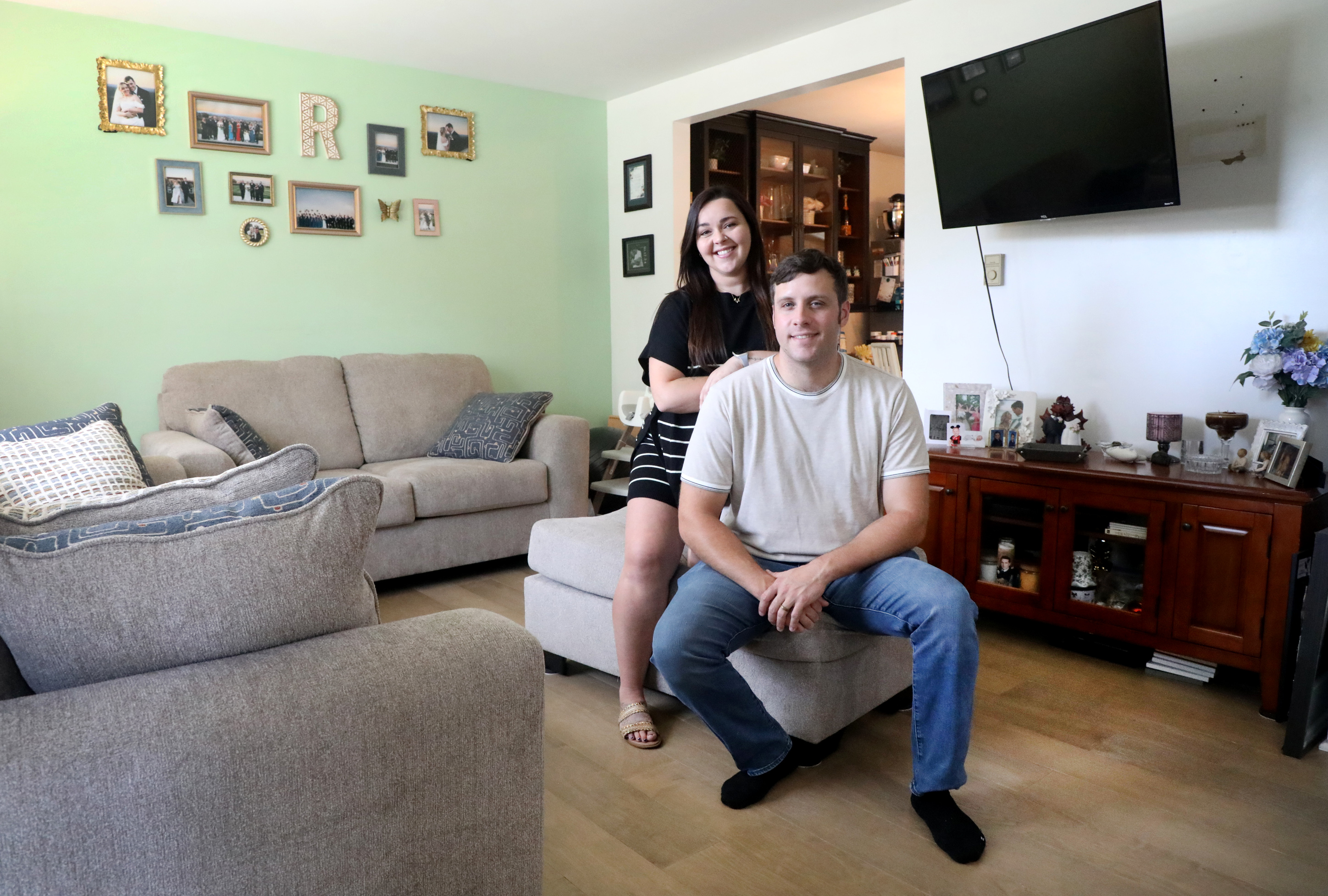
Dan and Nicole Renish hang out in the living room, which came with new plank flooring.Vernon Ogrodnek / For The Inquirer
So the couple set their sights on a starter home. They dreamed of a Shore property with three bedrooms and a garage where Dan could pursue his hobby of fixing old Jeeps. It didn’t take long for them to redraw their lines in the sand.
The search: The couple spent the next 2½ years immersed in a different kind of Jersey Shore roller coaster. Because prices in North Cape May were beyond their budget, they expanded north, searching as far as Ocean View. They toured 21 homes, including one odd space with roughly a dozen reptile enclosures. “I saw two snakes and walked out,” Nicole said.
There were many false starts. The couple put in several offers. They were outbid on three and grieved a failed inspection on the fourth. “So many days I was defeated,” Nicole said. “I would just cry because I felt like I did everything I was supposed to do: went to college, got a good job, worked a second job and then a third. It’s hard down here because it’s a vacation town; people want their second homes. But it’s like … guys, leave some for the rest of us!”
Complicating the search, the couple planned on supplementing their down payment with a loan through the New Jersey Housing and Mortgage Finance Agency (NJHMFA) Down Payment Assistance Program. This shrank the pool even further because many properties within their budget wouldn’t meet the condition requirements. Even chipped paint or slightly damaged siding took houses out of the running.
The sunroom, with floor-to-ceiling windows, serves as a work area. The couple hopes to one day renovate this space.Vernon Ogrodnek / For The Inquirer
On their worst days, to cheer themselves up, they did what any true-blooded Shore residents would do: “We went out for ice cream,” Dan said.
The appeal: Over the course of their prolonged search, the couple tied the knot and got pregnant, adding extra urgency.
“I texted our Realtor in a fit of pregnancy rage,” Nicole said. “Turns out, she’d just received a call from someone who wanted to sell a house quickly.”
The Renishes stopped by for a peek at the corner lot on a dead-end street, located around the bend from a sports complex and jungle gym. The modest rancher boasted new plank flooring, a recently renovated kitchen with granite countertops, storage attic, sunroom complete with floor-to-ceiling windows, fenced-in backyard, and an outdoor shower. It didn’t match the wish list — no third bedroom, no garage, only marginally larger than their rental — but it still felt meant to be.
On the wall hung a photo of a young girl, and Nicole recognized her as a dance student; turns out, the house belonged to her grandmother.
“It was kismet,” Nicole said. “The stars aligned.”
The recently renovated kitchen came with granite countertops.Vernon Ogrodnek / For The Inquirer
The deal: After years of suffering through bidding wars, Dan and Nicole enjoyed a clean inspection and negotiation-free settlement. The homeowner had been planning to list at $350,000, the top end of the Renishes’ budget. They offered $340,000, and it was accepted. They closed just before Memorial Day weekend, and “the day I deleted my Zillow app was the best day of my life,” Nicole said.
The money: Nicole, a former server, spent years working doubles and 12-hour days, socking away money from multiple jobs, while Dan juggled his own assortment of gigs. Wedding gifts added to their savings. The couple ultimately received $10,000 through the assistance program (forgivable if they remain in their home for at least five years), and they put another $11,200 toward deposits, closing costs and related expenses. Their mortgage rate is 5.6%, with a monthly payment of $2,502.
A recent baby shower generated lots of gifts to fill the nursery.Vernon Ogrodnek / For The Inquirer
The move: For two weeks before moving day, Dan ferried boxes from Wildwood Crest to the new house in his car. Then, on a rainy Memorial Day weekend — a tricky time to be navigating the streets of Cape May County — he borrowed a box truck from his HVAC company and enlisted family members for the big push. With four cars joining the convoy, they hauled the remaining belongings in just two trips.
Life after close: So far, the couple has replaced the HVAC system (less daunting when you work in the business), replaced the attic stairs, put in a flower bed, repaired some fencing, and begun rehabilitating an overgrown backyard with gallons of homemade weed killer. Dan has also tackled some painting (Sherwin-Williams Romaine in the living room and Baby Blue Eyes in the nursery).
Still on the to-do list are bigger projects: transforming the backyard, planting a vegetable garden, installing a dishwasher, maybe even a large-scale renovation down the line to add a primary suite.
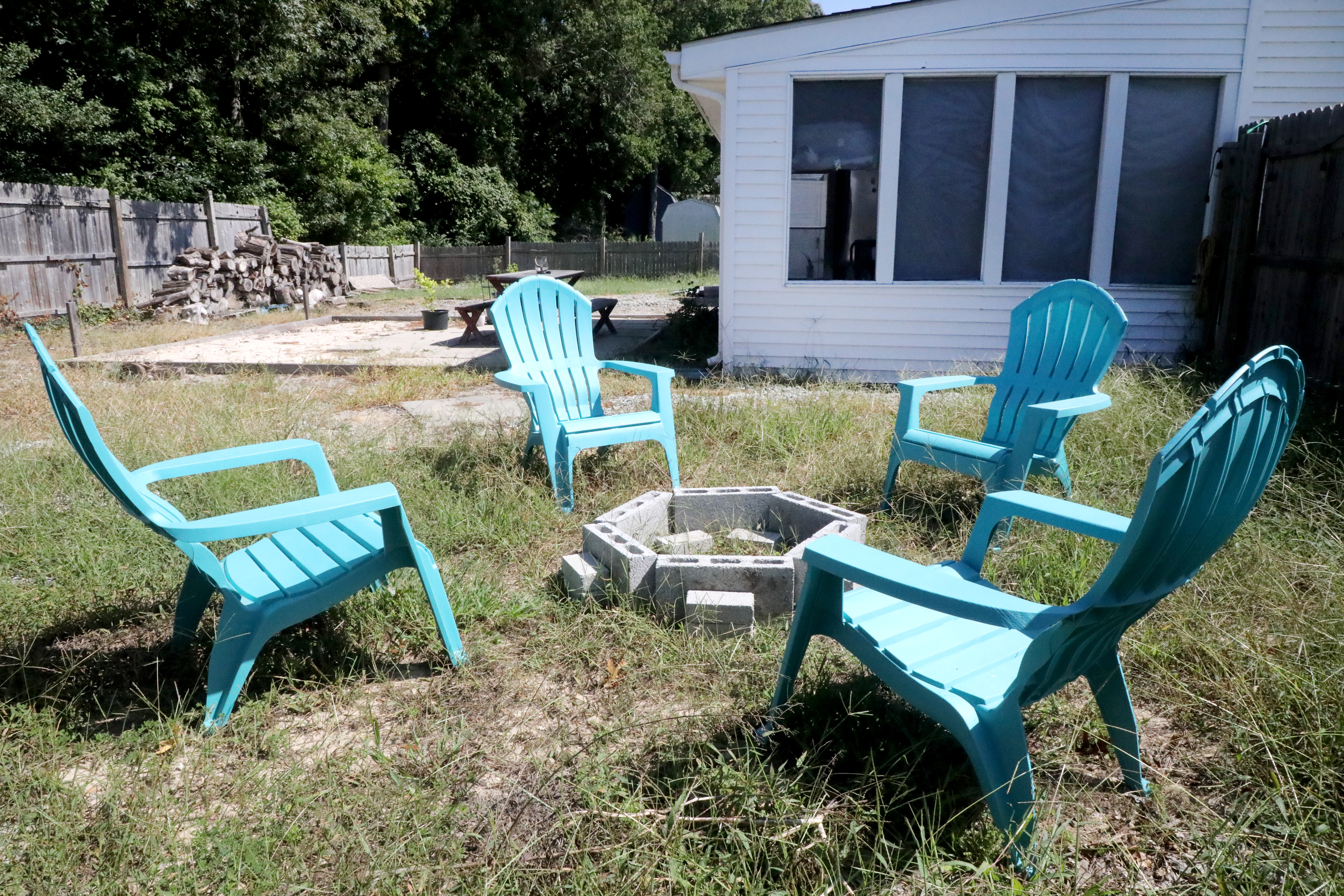
The backyard is another work in progress. Dan Renish built a fire pit, and he and Nicole hope to transform the outdoor space into something more manicured.Vernon Ogrodnek / For The Inquirer
But for now, the couple is enjoying little signs that they’ve landed in the right place. During the darkest days of their house hunt, they went looking for ice cream. Now it comes to them: A Mister Softee truck stops on their block every Sunday.
The first time Nicole heard its jingle, she “was like a dog looking out the window.” When the driver told them he’d be back every week, she thought, “OK, yeah, we bought the right house.”
Did you recently buy a home in the Philadelphia area or South Jersey? Share the story of how you did it. Email Inquirer real estate reporters at properties@inquirer.com.
Cape May Mayor Zack Mullock’s shocking victory over incumbent Republican U.S. Rep. Jeff Van Drew in South Jersey is official, according to the Associated Press.
Van Drew conceded to Mullock two hours after the polls closed Tuesday, much to the surprise of supporters of both candidates. The AP officially called the race two days later, at 4:29 p.m. Thursday, with a difference of just over 7,000 votes and 2.5 percentage points between the two candidates.
Mullock garnered 137,166 votes, or 49.2%, and Van Drew received 130,084 votes, or 46.7%, with 97% votes tabulated, according to the AP.
It’s a spectacular flip for the red-leaning district, which spans from Gloucester County down to the Jersey Shore. The district’s electorate, as of Election Day, is nearly 35% unaffiliated, nearly 34% Republican, and nearly 30% Democrat.
“The direction of our country and what Donald Trump has been doing, I just felt like we need a strong Democratic voice to show that there is another alternative, especially here in South Jersey,” Mullock said in an interview Wednesday.
U.S. Rep. Jeff Van Drew announcing to supporters that he conceded the race at the Oar House in Sea Isle City on Tuesday.Elizabeth Robertson / Staff Photographer
National analysts predicted the race would be solidly Republican and shifted its rating to likely Republican in the final stretch — not even viewing it as lean Republican or a toss-up, let alone a Democratic win.
But Mullock’s campaign felt the energy on the ground in the months leading up to the election across the political spectrum.
The election was largely a referendum on President Donald Trump amid high gas prices and an unpopular war in Iran. But Mullock, a local mayor with deep roots in Cape May, was also a strong fit for the district, which also faced local hot topics like a massive data center.
Van Drew was elected to the U.S. House as a Democrat in 2018 after holding local and state positions for years. He switched his party to Republican the following year and vowed his “undying support” to Trump. But with deep connections in the district himself, he warded off his 2020 challenger by almost 6 points and was reelected by double digits the last two cycles.
He said in his concession speech that he will contemplates what’s next for him, but pledged to continue speaking about about his values of “American exceptionalism.”
“His success is our success, so I do wish him well,” Van Drew said about Mullock in an interview right after his concession speech. “To wish him ill is wrong. It’s not faithful, and I am a Christian, and I try to be faithful. And also, it’s not productive. If he fails miserably, so does America. That’s not good.”
In a major upset, Republican U.S. Rep. Jeff Van Drew has conceded to Democratic Cape May Mayor Zack Mullock in South Jersey’s 2nd Congressional district. Van Drew’s concession came even as the Associated Press was still reporting the race too close to call.
The victory for Mullock, 41, is a major win for Democrats in a right-leaning district where Van Drew, 73, has been elected four times even though he switched his party to Republican in 2019, a year after being elected as a Democrat.
“I am so humbled. I can’t believe this is happening,” Mullock said Tuesday, joined by his family and Gov. Mikie Sherrill who flew in on a helicopter to be present for the historic moment.
He compared this year’s election cycle to the 1974 midterms, when Democrats racked up victories amid voter frustration with President Richard Nixon following the revelation of the Watergate scandal.
“What I said all along is I’ll be fine as long as it’s not a Watergate, and it kind of is a Watergate,” Van Drew said. “There’s no Watergate issue, but it’s kind of like a Watergate where it’s larger than life and just swept people along with it.”
The blue wave reached all the way to Cape May. Here’s Democratic Cape May Mayor Zack Mullock accepting congratulations for his upset victory over Rep. Jeff Van Drew, who conceded, in NJ-02 in South Jersey. https://t.co/U4oPCiLBYm
Local Democrats saw the Jersey Shore mayor as their best bet to oust Van Drew but he was largely ignored by national players until the final stretch of the race. The Democratic Congressional Campaign Committee added the district to its ”districts in play” list just last month but did not prioritize it among more competitive races across the country and region.
(function () {window.addEventListener(‘message’, function (e) { var message = e.data; var els = document.querySelectorAll(‘iframe[src*=”‘ + message.id + ‘”]’); els.forEach(function(el) { el.style.height = message.height + ‘px’; }); }, false); })();
But Mullock’s victory indicates a blue tsunami even greater than the wave observerswere expecting. U.S. Sen. Cory Booker (D, N.J.) declared at a get-out-the-vote rally that Democrats can turn their TVs off if Mullock wins his race “because you know we will have taken back the House.”
Sen. Andy Kim, a Burlington County Democrat, also campaigned with Mullock, and in the final stretch of the race he was joined by DNC Chair Ken Martin, U.S. Rep. Jamie Raskin (D., Md.), and Sherrill.
Van Drew has held elected positions in South Jersey for decades. He maintained support in the state even after switching his party from Democrat to Republican and vowing his “undying support” to President Donald Trump in 2019, one year after getting elected to the House. He defeated Amy Kennedy by almost 6 percentage points in 2020 and won reelection by nearly 19 percentage points in 2022 and nearly 17 points in 2024.
Supports of Democratic congressional candidate and Cape May Mayor Zack Mullock cheer during an election night party at the Chalfonte Hotel in Cape May.Tim Hawk / For The Inquirer
Galloway Township resident William Collier, 53, said he voted for Van Drew when he ran as a Democrat. The incumbent’s party change, Collier said, helped motivate him to vote for Mullock this year.
“Van Drew doesn’t do anything for Jersey,” said Collier, a hospice worker who was interviewed while leaving work in Atlantic City. “He doesn’t do anything. He let us down. He was a Democrat, then he switched over to be a Republican. I can’t vote for Van Drew.”
At Mullock’s results party, Karen Kurtz, 73, a resident of Cape May for 50 years, said Mullock’s victory was “amazing.”
“We’ve gone out and went house to house and promoted him, and we are just over the moon that he has won,” Kurtz said. “Everybody was ready for a change. … It needed to happen.”
One local issue that may have helped Mullock was the development of a controversial data center in Vineland.
Irene Demaio, 68, said she can hear a constant hum from the data center in Vineland at her home on quiet mornings.
“Someone I spoke to today, her brother lives even closer and has hearing aids, has to take them out, and still wear earplugs because of the humming noise,” Demaio said from a polling site at a fire station less than two miles away from the massive data center.
Van Drew, whose district includes the center, has said he has no authority over the project. But Demaio said she doesn’t trust his word.
“I think the politicians that let it happen need to go. Point blank,” she said. “They need to be out of office. Van Drew, specifically.”
Dan Vandzura, 31, also had the data center front of mind on Tuesday — this year above other issues he would usually prioritize, he said.
“There’s a certain set of issues that I might usually be inclined to focus on,” he said. “That one, definitely, I’ll say has risen higher than others. … I never thought data center would be the thing that’s a big deal, but here we are.”
He declined to share who he was voting for.
Mullock said in an interview last month that voters across the state are most interested in knowing whether he will “be a decent human being.”
“I think it’s beautiful that people are willing to put aside some of their biggest issues for the greater good, but it also says how low the bar has gotten,” he told The Inquirer.
“They have zero faith in the system, and they just think what’s happening right now is just outright corruption, and they just want good people to go in and fight it,” he added.
Cape May is a nonpartisan government, and the South Jersey Democrat said he’s hired Republican city managers and has no problem working across the aisle. He’s touted local investments in his community and said he has kept taxes down.
With his family, Mullock helped create the Harriet Tubman Museum and the Cape May Point Arts and Science Center. His family also owns the Cape May National Golf Club, where he has worked as vice president.
He’s also a general contractor and serves on the Atlantic Cape Community College Board.
Born and raised in South Jersey, Mullock and his wife, Justine, have three children.
Mullock raised less than $1 million through Oct. 14 while Van Drew raised more than $2.4 million in the same time period. The Cape May mayor was also outspent in a four-way Democratic primary, which he won with nearly 40% of the vote.
Mullock criticized Van Drew over his support of Trump’s One Big Beautiful Bill Act, which made large cuts to Medicaid. He also admonished the lawmaker for voting against bills calling for an end to the Iran war.
“It’s been about fighting for the middle class for Social Security, for Medicare, for Medicaid and for affordable healthcare for all families,” Mullock said in his victory speech. “Yes, it’s about ending the war in Iran. It’s been about ending the tariffs that are causing all of our prices to skyrocket.”
For some voters, national political concerns were top of mind.
Margate resident Andy Slobotkin, 67, who owns a place mat advertising company, said he didn’t know much about Mullock, but was voting for him because “I know that I’d like some change.”
“People are embracing a little bit of a change this election cycle,” said Slobotkin, a Democrat. “They need to send a message to the Republican Party that we were promised one thing and we got something else.”
Staff writer Sarah Nicell contributed to this article.
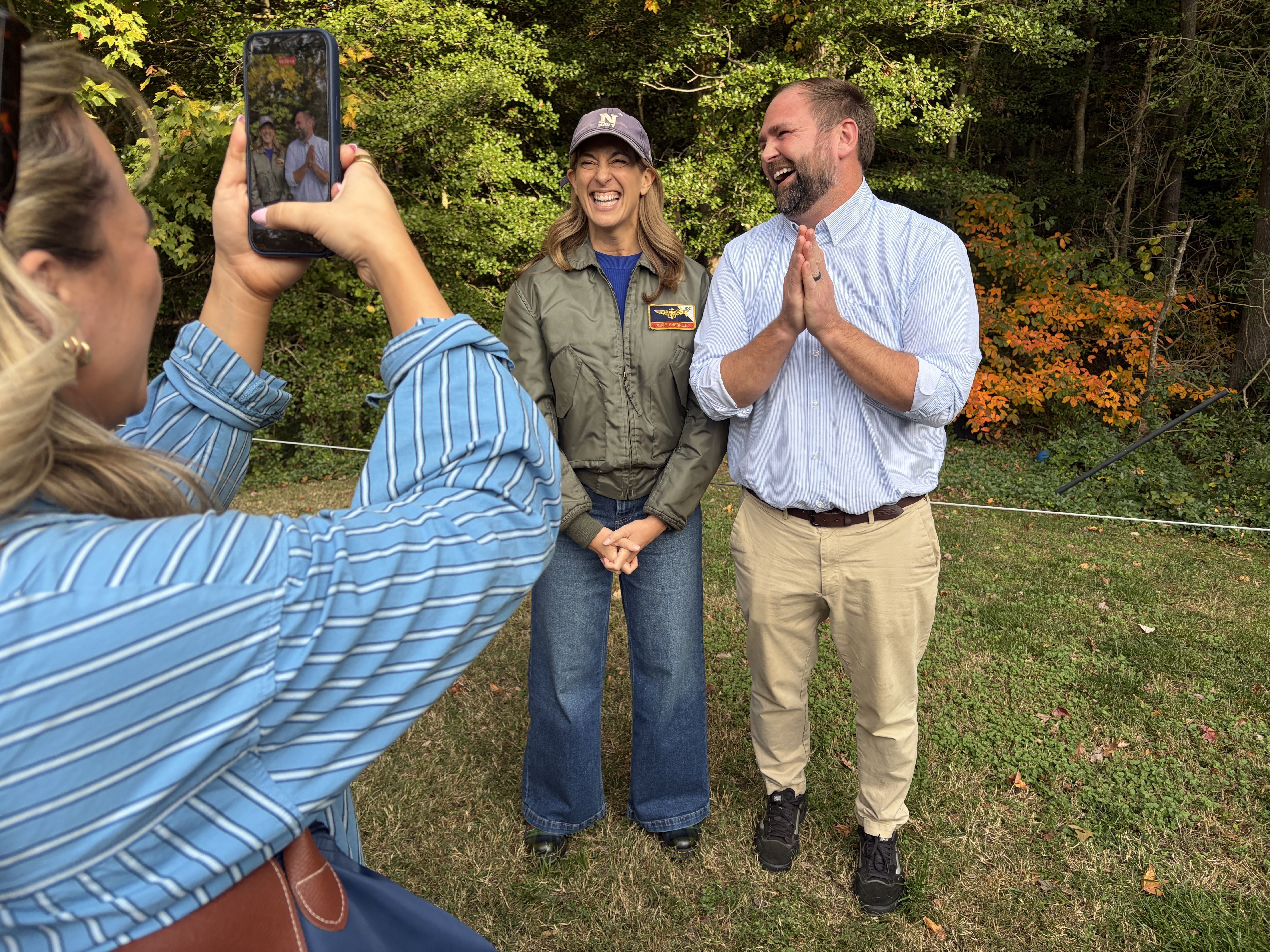
Gov. Mikie Sherrill rallied with Democratic Cape May Mayor Zack Mullock on Saturday in their first appearance together for his campaign against Republican U.S. Rep. Jeff Van Drew, just days before the election.
“I gotta tell you guys, this is a tough race,” Sherrill said Saturday in front of a crowd of roughly 100 people gathered in the backyard of Cape May County NAACP president Quanette Vasser-McNea’s Whitesboro home. “It’s not easy flipping a red seat. But if ever there’s a year to do it, this is the year.”
The Democratic governor emphasized Mullock’s family’s connections to the region and Van Drew’s support for President Donald Trump.
“He just wants to make life work better,” she said of Mullock, standing on a hill surrounded by sun-soaked fall foliage. “He comes from a family that you know.”
“And you know what? He’s not going to take a loyalty oath to the president, no matter who that person is,” she added.
Van Drew was elected to Congress as a Democrat in 2018 after years in the state legislature and local office. He became a Republican in 2019 and vowed his “undying support” to Trump. In 2020, Democrat Amy Kennedy came within 6 percentage points of him, but he won by double digits in 2022 and 2024. The sprawling 2nd Congressional District spans from Gloucester County to the Jersey Shore.
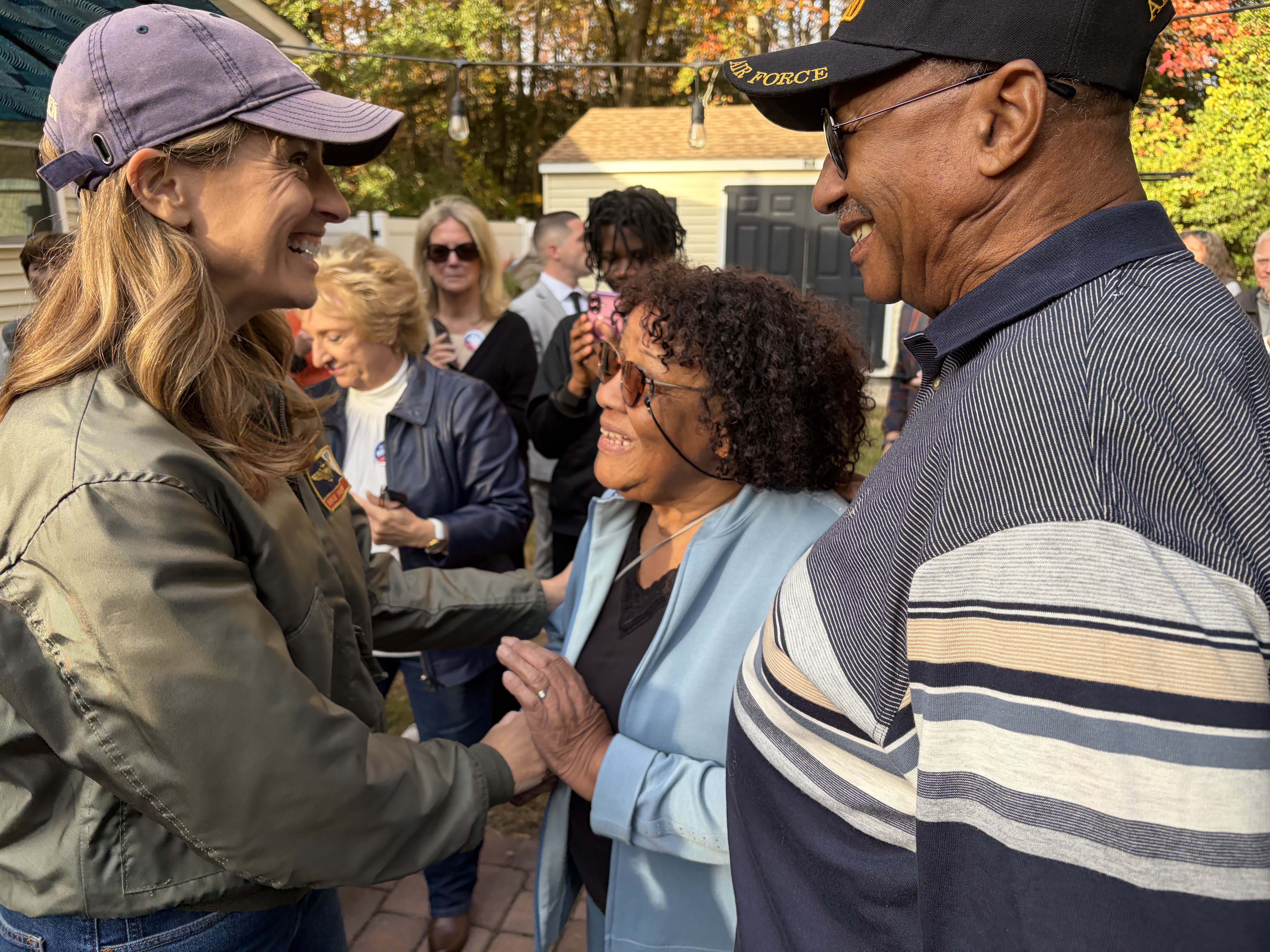
Gov. Mikie Sherrill speaks with Emily Dempsey and and Eugene Dempsey at a campaign event for Cape May Mayor Zack Mullock, a candidate for Congress, in Whitesboro on Saturday.Aliya Schneider / Staff
The race largely flew under the radar this year as national Democrats focused on more competitive districts. But with increasing anticipation of a blue wave, the party began taking the race more seriously in recent weeks, attracting more spending for Mullock. Early voting numbers have also shown enthusiasm among Democrats in the region.
National political analysts have shifted their ratings for the district from “safe Republican” to “likely Republican” in recent days, favoring a Van Drew win, but less confidently than before.
Saturday was the first time Sherrill appeared at an event to campaign with Mullock, and it came three days before the election.
At the get-out-the-vote event, Mullock told a crowd of supporters that the governor’s team had reached out to him about a week ago asking where he wanted to do an event together in Cape May County. He said he wanted to meet in Whitesboro, an unincorporated community with a rich African American history, “because this is a town that has been skipped over far too long.”
Mullock criticized Trump for “selling bitcoins and Bibles” while the middle class struggles.
“When we get elected and we get into office, there’s a few things that are going to happen right away. We’re going to restore the cuts to Medicare and Medicaid,” he said, Sherrill clapping behind him with a big smile.
“We’re going to vote to end the war in Iran. We’re going to vote to end the tariffs. But then we’ve got to roll up our sleeves and really get to work,” he added. He said Congress also needs to address the cost-of-living crisis and make homeownership more attainable.
Aside from being the mayor of Cape May, Mullock, a contractor, worked with his family to create the Harriet Tubman Museum and the Cape May Point Arts and Science Center. His family members also own the Chalfonte Hotel and the Cape May National Golf Club, where he works as vice president.
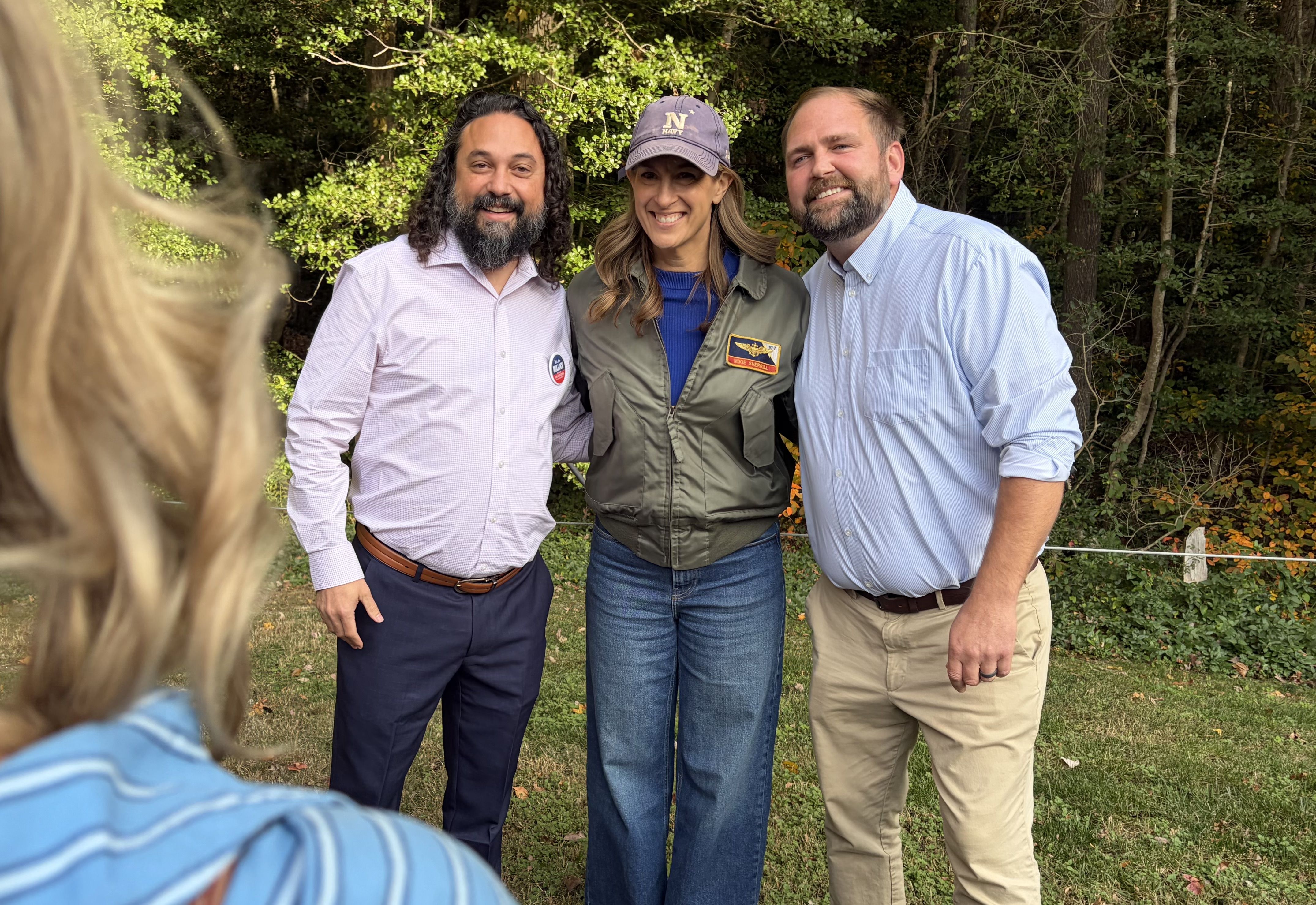
Eric Morey (left), a candidate for Cape May County Board of Commissioners, takes a photo with Gov. Mikie Sherrill and Cape May Mayor Zack Mullock at an event in Whitesboro on Saturday.Aliya Schneider / Staff
Eric Morey, a Democrat running for commissioner in Cape May County, said in an interview at the event that Mullock is well-known across the county, which “carries a lot, especially in a conservative area like Cape May County.”
“He’s shown that he’s someone that cares about South Jersey in general,” Morey said. “People connect with that.”
Despite her lack of presence on the campaign trail, Sherrill said in an interview after the event that the race has been on her radar and that she is “feeling really good about it.” She pointed out how Democratic Sens. Andy Kim and Cory Booker have campaigned with Mullock and said she has been calling for support.
“I was just on the phone with [House Democratic leader]Hakeem Jeffries last week saying like, ‘Guys, no time like the present here,’ and I think he heard me,” Sherrill said. “He said, ‘Yeah, I’m excited about that race.’”
As for why Van Drew has maintained his seat for so long, Sherrill said: “That’s always been a little bit of a puzzle.”
“I think people maybe don’t realize how he has just given up, sort of, focusing on the people he serves, and just has done whatever, you know, Trump tells him to,” she said.
“I think people see that that pathway is not working for them; it’s driving up their costs, and they want somebody like Zack Mullock in Congress who is going to both hold Donald Trump accountable and always focus on serving them,” she added.
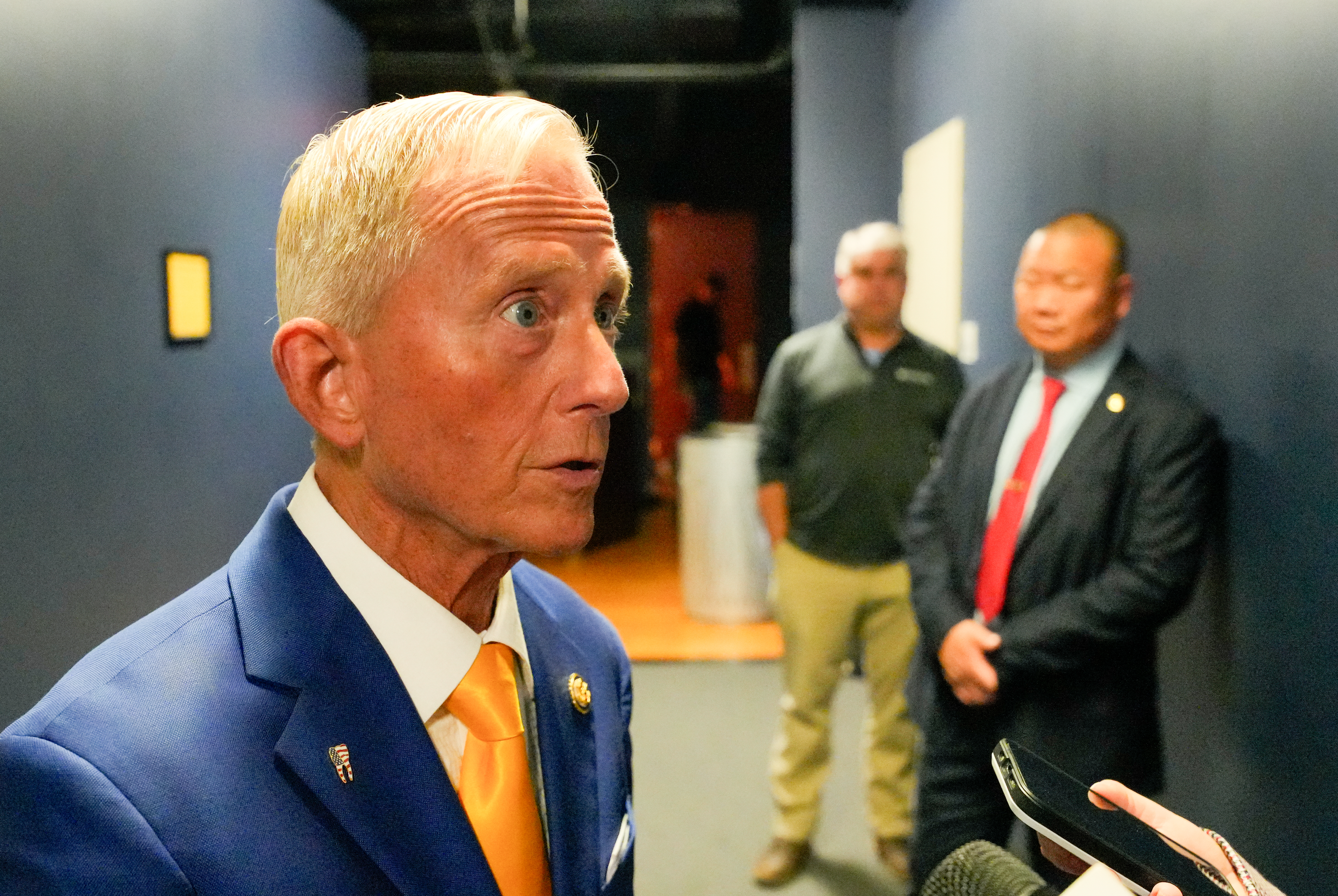
U.S. Rep. Jeff Van Drew exits speaks to reporters after a debate with Democrat Zack Mullock, at the Campus Center Theatre at Stockton University on Thursday, Oct. 22.Tim Hawk / For The Inquirer
The high cost of living and dissatisfaction with Trump have presented challenges to Republican incumbents.
Van Drew, of Dennis Township, acknowledged in a phone interview Saturdaythat it is a hard year for Republicans given the national landscape, but he still feels good about his seat.
“I’m not sure whether we keep the [House] majority or not,” he said. “I realistically understand what’s going on.”
But he said that his district knows him well and that newer elected officials who had closer races than his in 2024 are more at risk.
“I’ve always had a real connection … and a relationship with my constituents, and I think that always keeps me in good stead,” he said. “So I’ve always relied on it before. I rely on it now. I work super hard all the time, and I think that even in a tougher year like this, we’ll be fine.”
His final pitch to voters is twofold. One is that he has delivered a slew of projects for South Jersey, and the other is more philosophical, he said.
“I do believe in American exceptionalism,” he said. “I do believe it’s the greatest nation that ever existed on the face of the earth.”
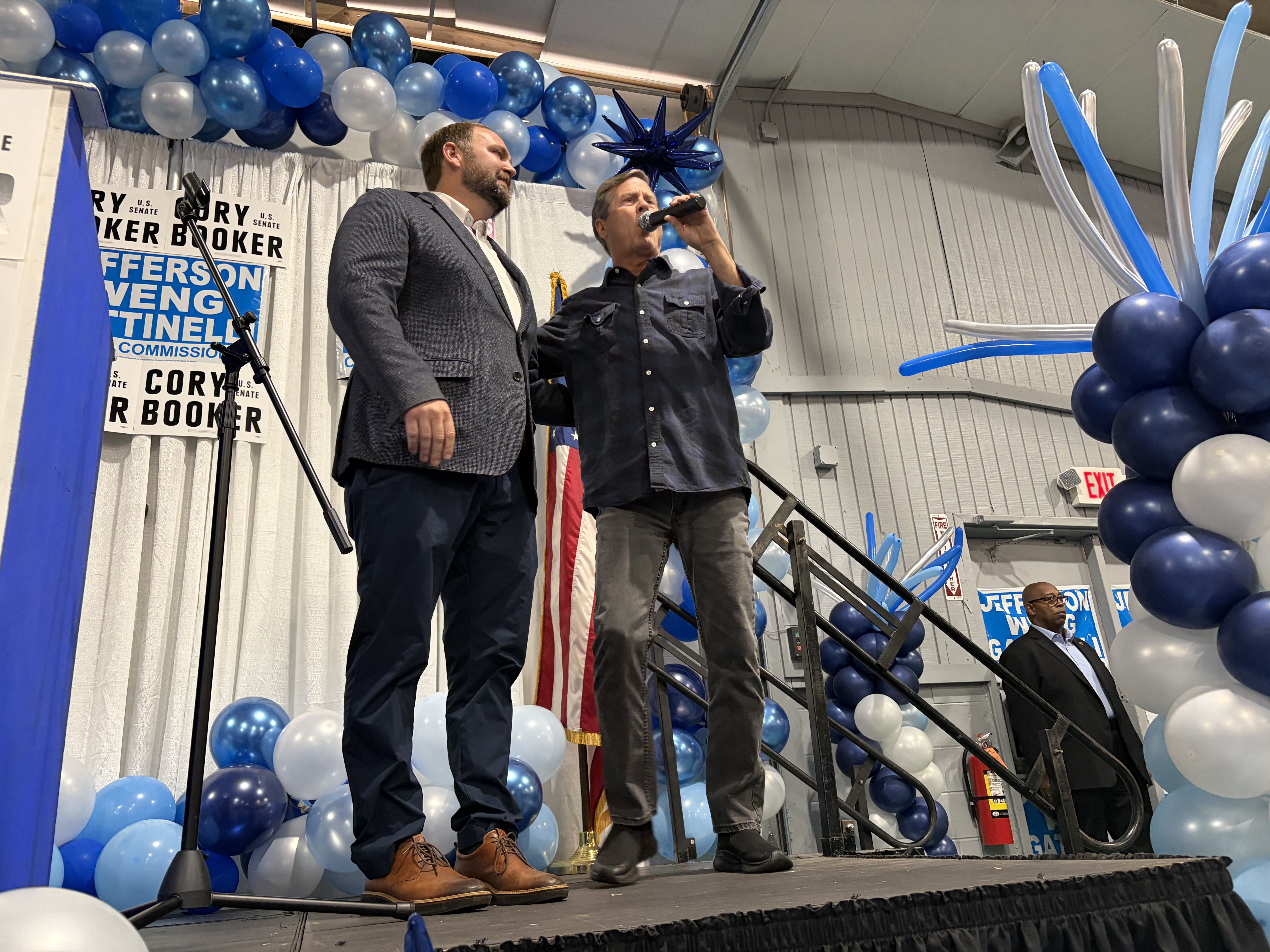
U.S. Rep. Donald Norcross (D., N.J.) compared his South Jersey Republican colleague U.S. Rep. Jeff Van Drew to Adolf Hitler while mocking him during a Saturday get-out-the-vote rally in Gloucester County.
After being reached by The Inquirer, Norcross apologized to Van Drew and said he went “too far” earlier that day.
“Donald, my undying, I pledge to you!” Norcross cried out after getting down on his knees in front of a crowd of roughly 200 Democratic supporters at the Deptford Eventure Center in Westville, referencing Van Drew’s support for President Donald Trump.
Snapping out of character, he said: “Jesus Christ! Oh my God! You remember thatbulls—? A guy from Jersey on his knee? That’s disgusting.”
Norcross — whose district includes all of Camden County, much of Gloucester County, and parts of Burlington County — is facing a long shot challenge from Republican Damon Galdo, a West Deptford podcaster who works in construction. But he focused his attention Saturday more on Van Drew, who represents a sprawling neighboring South Jersey district that spans from parts of Gloucester County down to Cape May.
U.S. Rep. Donald Norcross got on his knees to mock U.S. Rep. Jeff Van Drew’s support for President Donald Trump at a Gloucester County rally on Saturday.Aliya Schneider / Staff
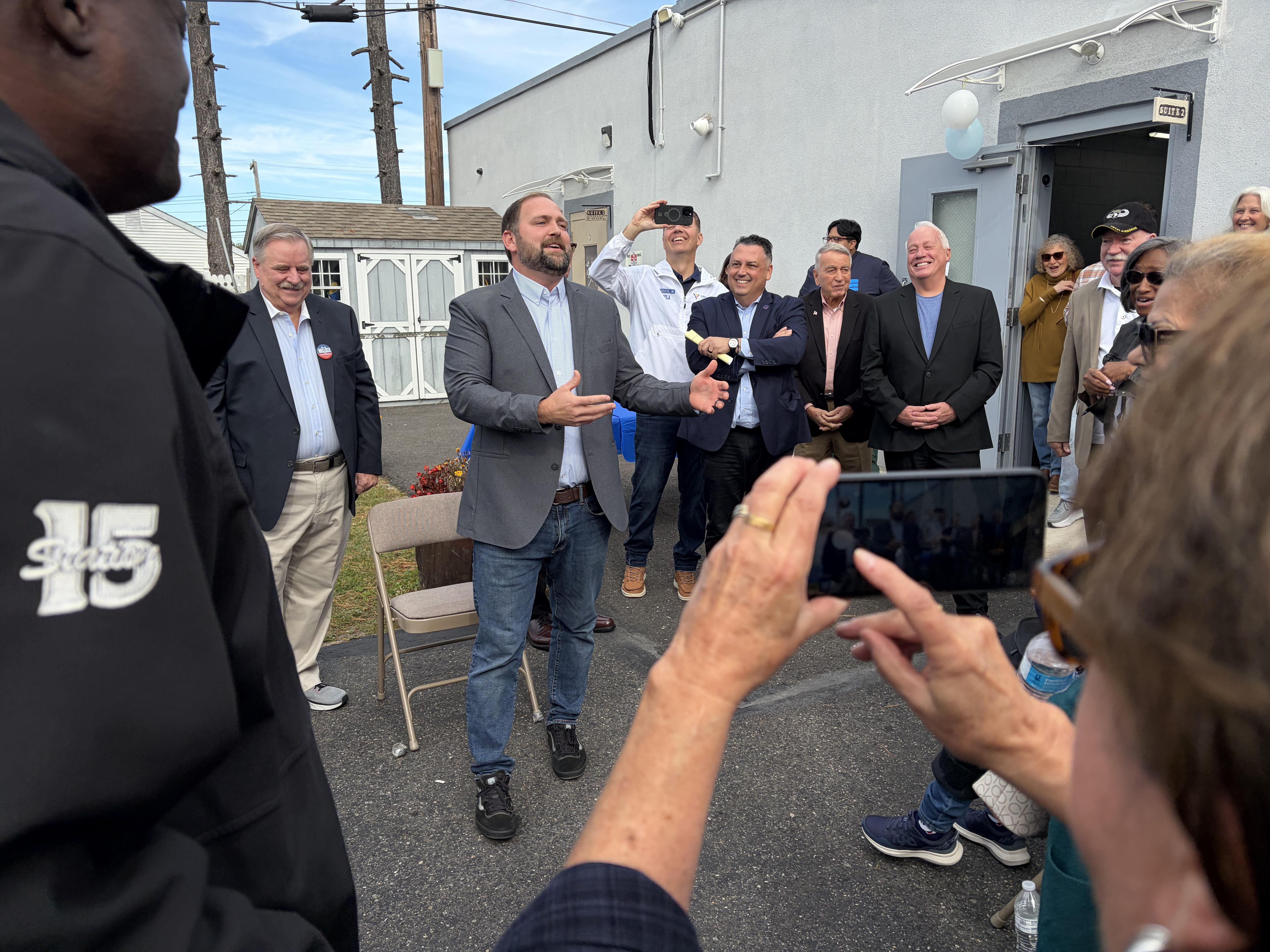
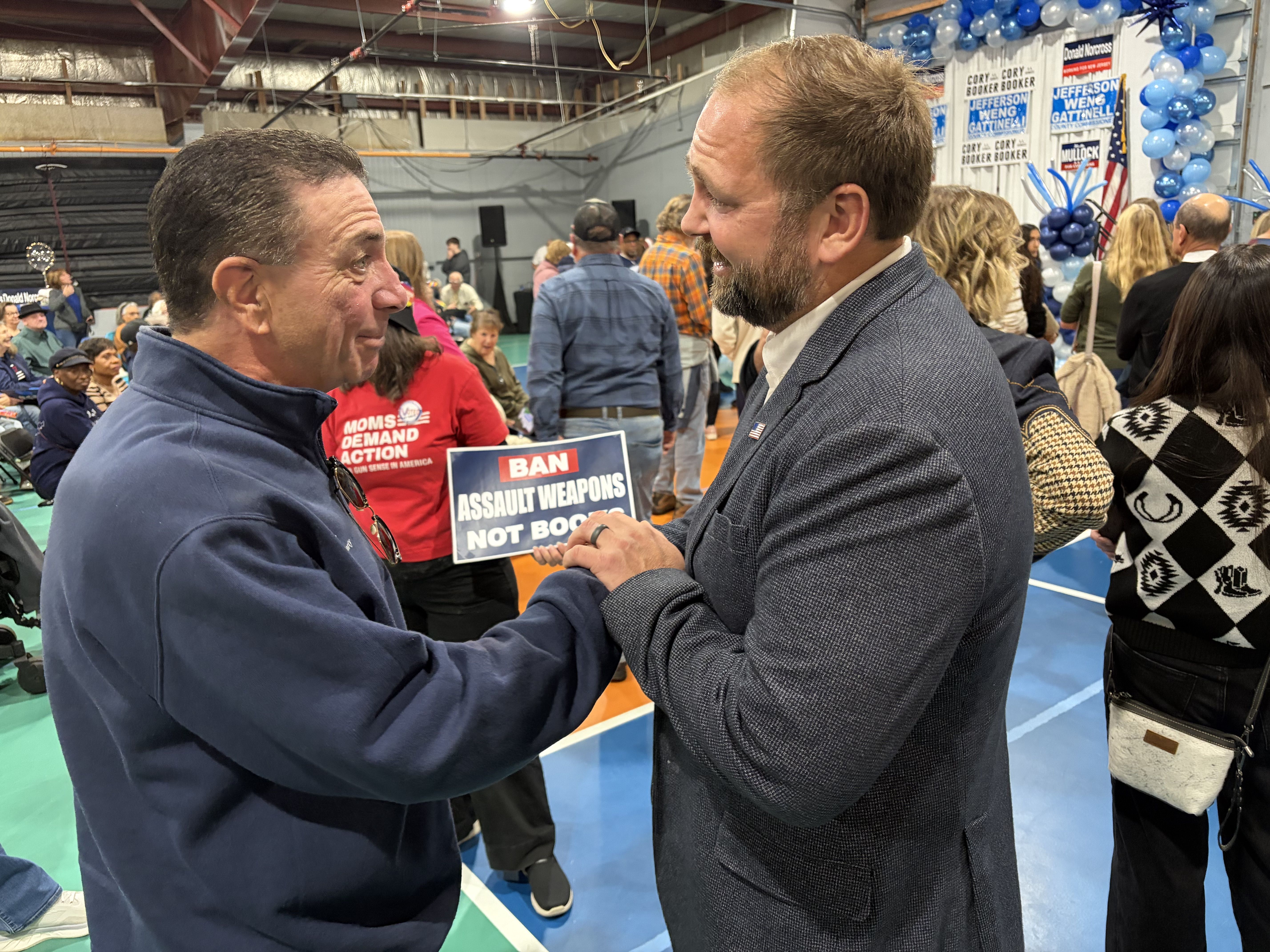
Norcross was joined by fellow Democrats U.S. Sen. Cory Booker and Cape May Mayor Zack Mullock, who is challenging Van Drew, for a rally to energize supporters 10 days ahead of the midterms.
Mullock did not comment on Norcross’ speech Saturday.
Three Gloucester County Democratic commissioners who are running for reelection — Jim Jefferson, Joann Gattinelli, and Matthew Weng — and U.S. Sen. Angela Alsobrooks, a Democrat representing Maryland, also made appearances.
Democrats are particularly sour on Van Drew, who served in local and state positions for years and was elected to Congress as a Democrat in 2018 before switching to the Republican Party and vowing his “undying support” to Trump a year later. Van Drew has warded off challengers ever since, but the race has attracted increasing national attention in recent weeks as Democrats anticipate a blue wave.
Norcross said onstage he knew Van Drew leaned conservative even before they got to Congress.
“He called himself a Democrat,” Norcross said. He bemoaned Van Drew’s opposition to raising the state’s minimum wage while they served in the state legislature together.
Norcross also made fun of Van Drew’s shoes, saying “now he wears them pointy boots that you can’t kill cockroaches on ‘em. Ah, the guy’s losing!” before commenting on his hair. Norcross also referred to a white handkerchief that Van Drew used to wear in his jacket pockets, which was folded to show a series of peaks.
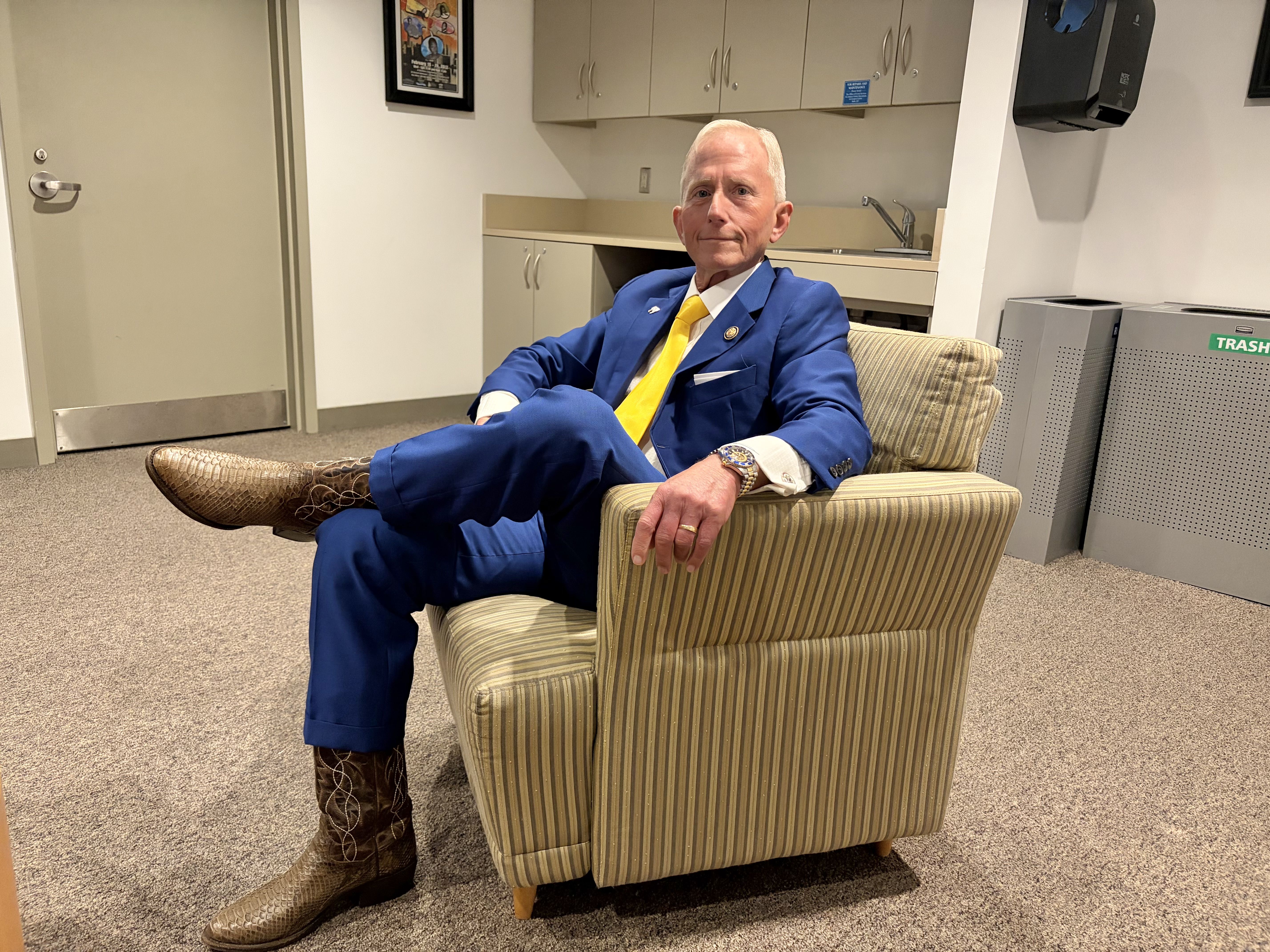
U.S. Rep. Jeff Van Drew sits backstage after his debate with his Democratic challenger Cape May Mayor Zack Mullock at Stockton University on Thursday.Aliya Schneider / Staff
“That haircut: If it was darker, that’s Hitler’s haircut. That tells you who he really is. And those things he used to wear in his pocket, those three things. … The Klan hats he used to wear there, remember that? This is the real Jeff Van Drew.”
Norcross called Van Drew to apologize after The Inquirer asked about the remarks.
“Whatever implications there were from my comments, I did not mean them that way. I went too far,” Norcross said through a spokesperson.
After Norcross apologized to him, Van Drew said on the phone that he was “profoundly disappointed” by his colleague’s remarks, which he called “rough and inappropriate for a congressman.”
“I think he agrees,” Van Drew added. “I think he knows it now. I guess he got caught up in the moment.”
Van Drew said he accepted Norcross’ apology, he’s glad he called, and that it’s time to move on.
“Hopefully he has learned a lesson from it,” the Republican added.
When asked for comment on Norcross’ remarks before the apology, Van Drew’s spokesperson Ron Filan said the Republican lawmaker is praying for his Democratic colleague.
“When Congressman Norcross was in the hospital last year, Congressman Van Drew reached out to see how he was doing and prayed for him,” Filan said. “He will continue to pray for him especially considering what he has just said and done. That tells you everything you need to know about who Jeff Van Drew really is.”
At the rally, Norcross, all fired up, also used a swear word when talking about high gas prices amid Trump’s war in Iran, and was met with cheers.
“I’m not going to say anything today that we didn’t say with that one second to go in the Eagles game. … So forgive me, I’m an electrician,” he joked onstage.
Steve Sweeney, the former longtime state senator who now works as the Gloucester County administrator and chairs the county’s Democratic committee, also referenced Van Drew’s decision to support Trump with a graphic metaphor at the rally.
“You saw when Jeff got down on his knee and kissed Donald Trump’s ass in front of the whole world. We’re gonna get rid of him real soon,” Sweeney said, which he later said he stood by “1,000%.”
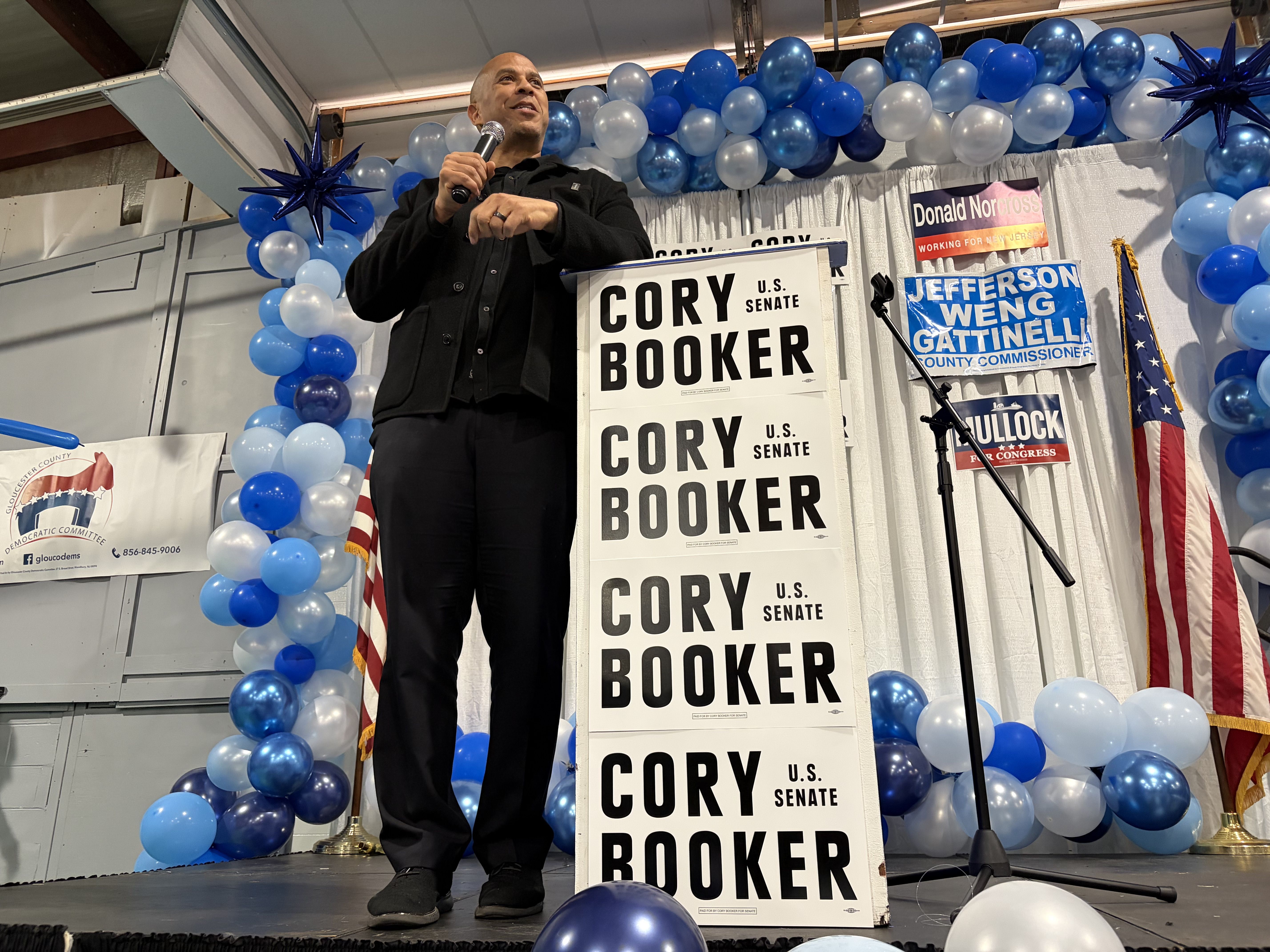
Sen. Cory Booker at a campaign rally hosted by the Gloucester County Democratic Committee on Saturday.Aliya Schneider / Staff
Sweeney, a longtime friend of Norcross, said before Norcross’ apology that he is “not going to criticize Donald for his opinion” when asked if the lawmaker’s comparisons went too far. He expressed that he also isn’t a fan of Van Drew’s hairstyle — or policies.
At the rally, Norcross introduced Mullock as the “Jeff Van Drew slayer.” The Jersey Shore mayor’s voice was strained, completely shot from his many speeches on the campaign trail — and likely his tense debate with Van Drew two days earlier.
Mullock criticized Van Drew’s vote for the One Big Beautiful Bill Act, which made cuts to federal healthcare programs, and noted, “I know I sound like I’m a person who really needs some good healthcare right now.”
Booker joked that Mullock “may have a weak voice” but “has a strong heart.”
“When we elect him to the House of Representatives, you can turn off the TV, because you know we will have taken back the House,” the senator said. “You can turn off the TV because you know that that is going to shock the nation. That even the president of the United States will get the message. And any of the remaining Republicans in Congress, we’re going to say, ‘I’m not going to hitch my wagon to that guy.’ We have so much power in this county.”
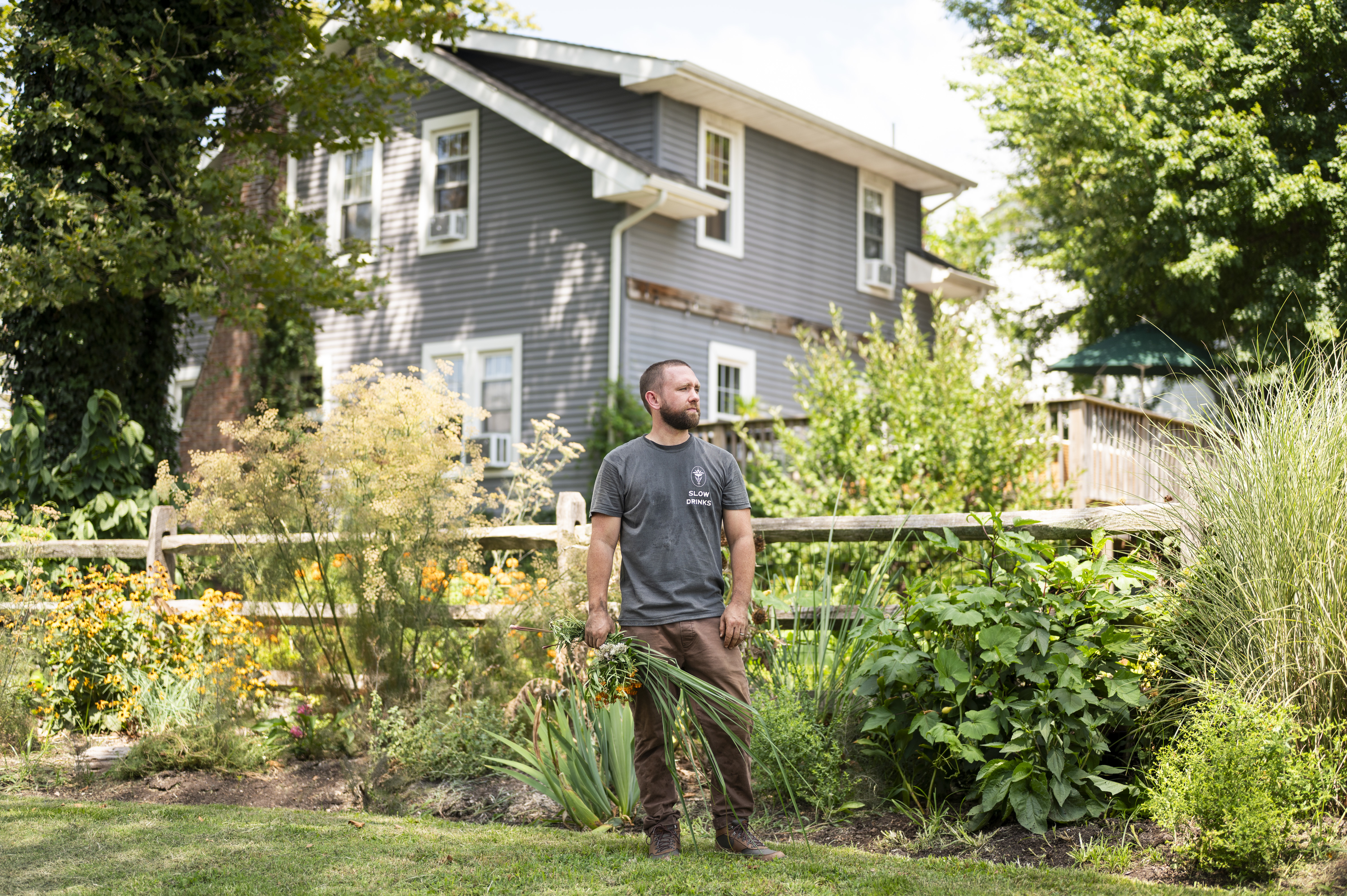
There’s an unassuming backyard in South Jersey that powers some of the area’s most interesting cocktails. The third-of-an-acre Pennsauken plot looks like that of any suburban home, with a weathered swing set and plenty of lawn, but it generates over 100 species of fruit, vegetables, herbs, and flowers each year, a mix of the familiar — lavender, dill, celery, tomatoes, peppers, etc. — and the far more intriguing: dandelion chicory, huacatay, prickly pear cactus, pawpaws, yuzu, jujubes, wormwood, and Jenny Lind melon.
Ingredients from this garden have been showcased in drinks at some of Philly’s best cocktail bars, as well as bars in Chicago; Cleveland; Berlin; Mexico City; Turin, Italy; and Bacolod, Philippines. That’s because the garden’s keeper, James Beard Award-winning beverage writer and bartender Danny Childs, knows how to transform the bounty into a liquid treasure trove.
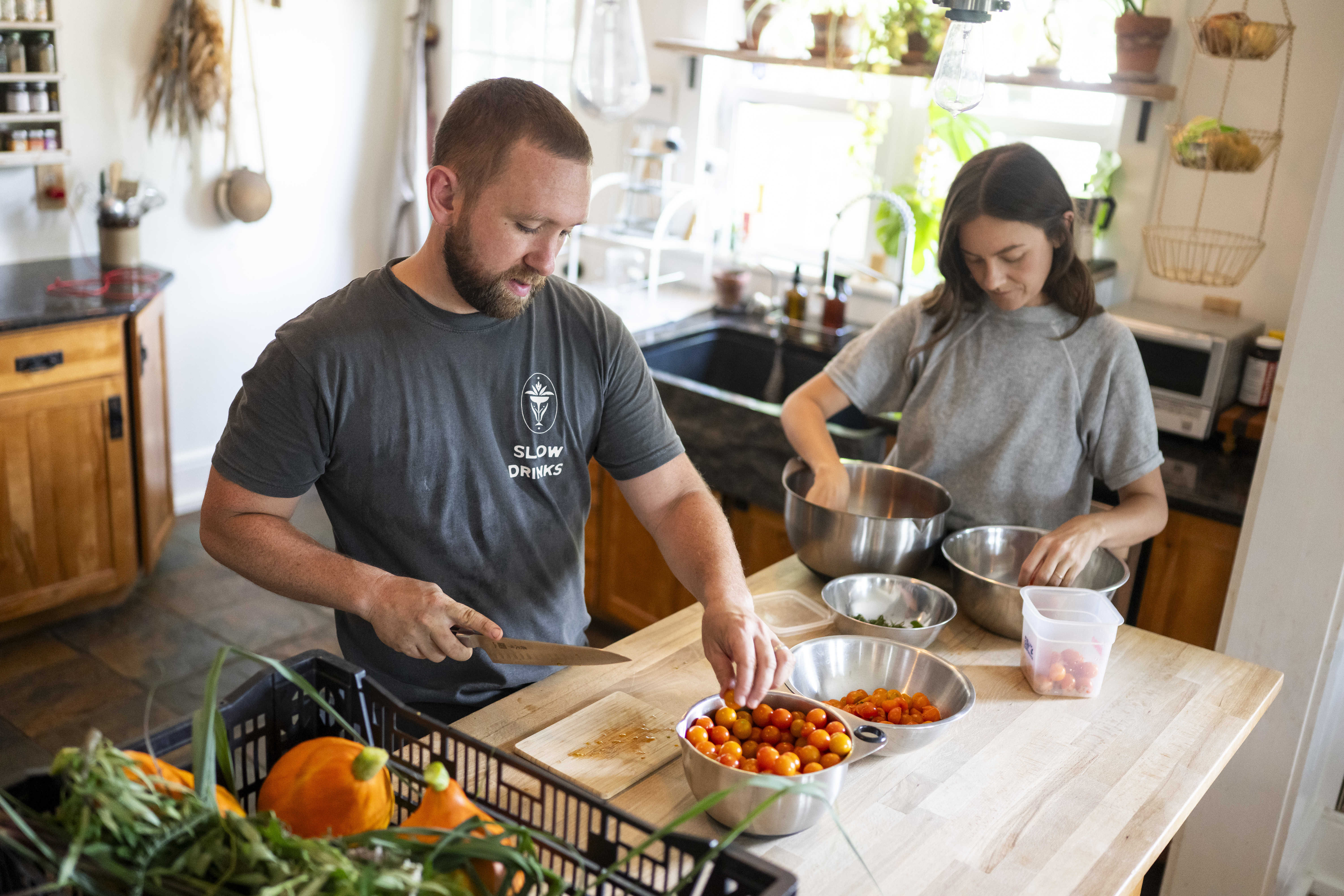
Danny Childs and his wife Katie sift through tomatoes picked from their garden at their home in Pennsauken, N.J., while making lacto-fermented tomato water.Allie Ippolito / For The Inquirer
This backyard and the wilds of South Jersey inspired Childs to develop a range of farm- and field-to-bar beverages, alcoholic and non, collected and detailed in his 2023 book, Slow Drinks.
The principles and practices in the book combine to form a drink-making theory that’s familiar to anyone who’s dined in a farm-to-table restaurant. The best illustration may be homemade amaro, which can capture a time and a place in a bottle by way of its botanicals. Slow Drinks has a recipe for every season — in spring, it’s a strawberry-tinged rabarbaro with roasted dandelion root; in fall, it’s a wormwood-heavy génépy spiked with apples, cranberries, and figs.
The theory behind Slow Drinks, which Childs views as larger than the book itself, emphasizes seasonality, local sourcing, preservation, and storytelling, and it can be applied anywhere.
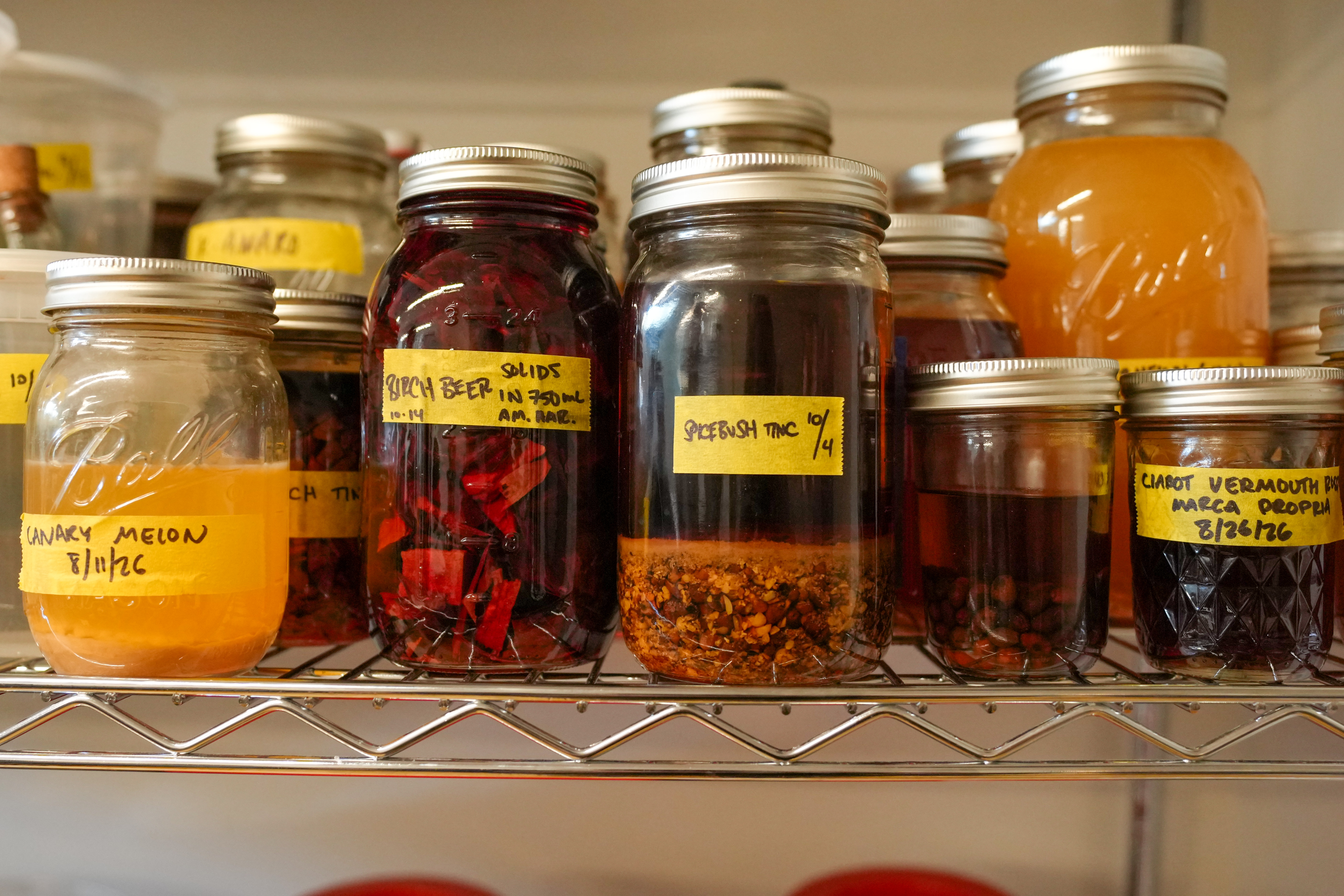
Childs’ South Jersey-inspired amari are infused with botanicals from backyards, forests, and parking lot shrubberies. MONICA HERNDON / Staff Photographer
The farm- and field-to-bar approach has caught the attention of prestigious bar programs here and abroad: Slow Drinks has sold 14,000 copies in English and some 4,000 copies in Italian. It was recently translated to Mandarin.
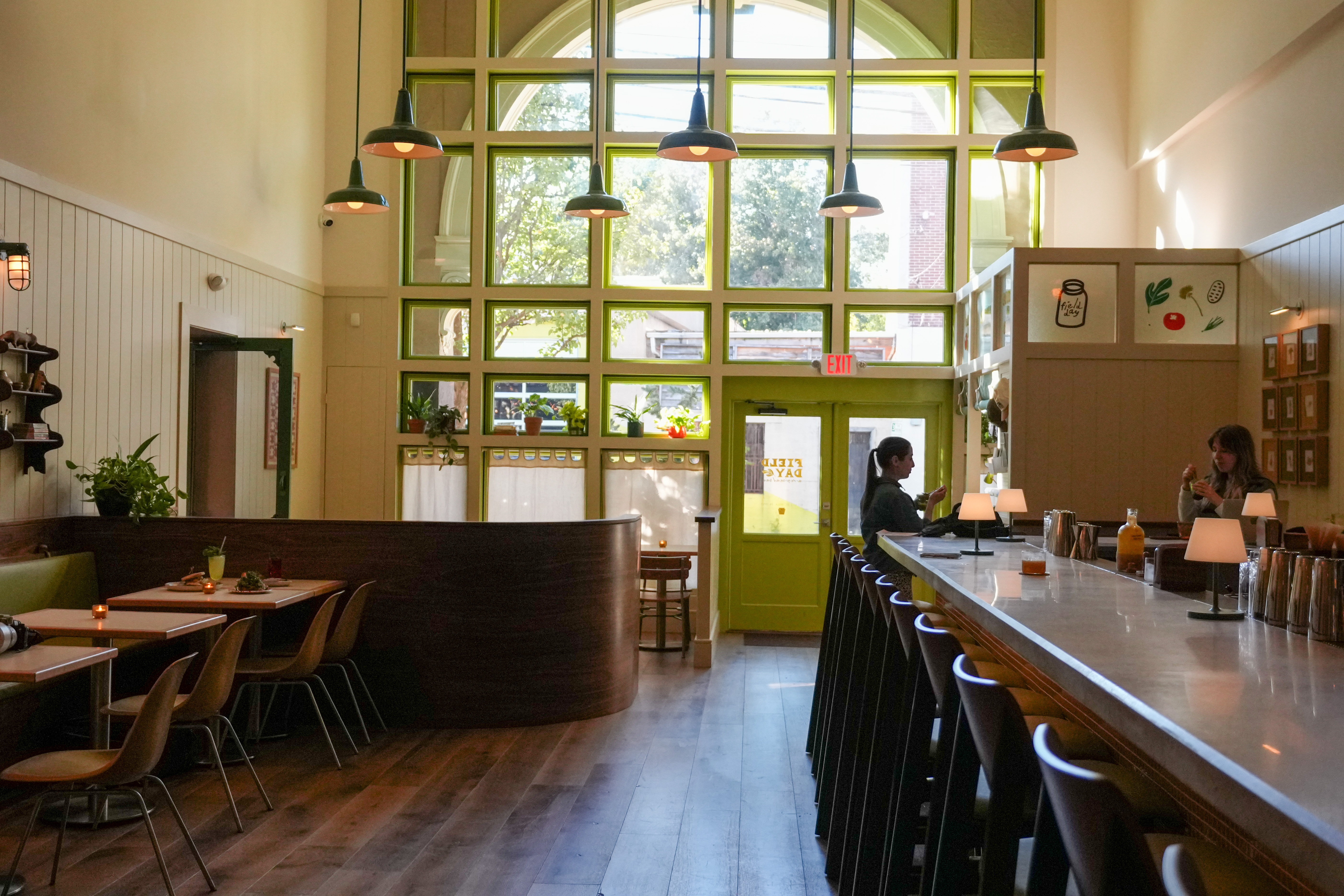
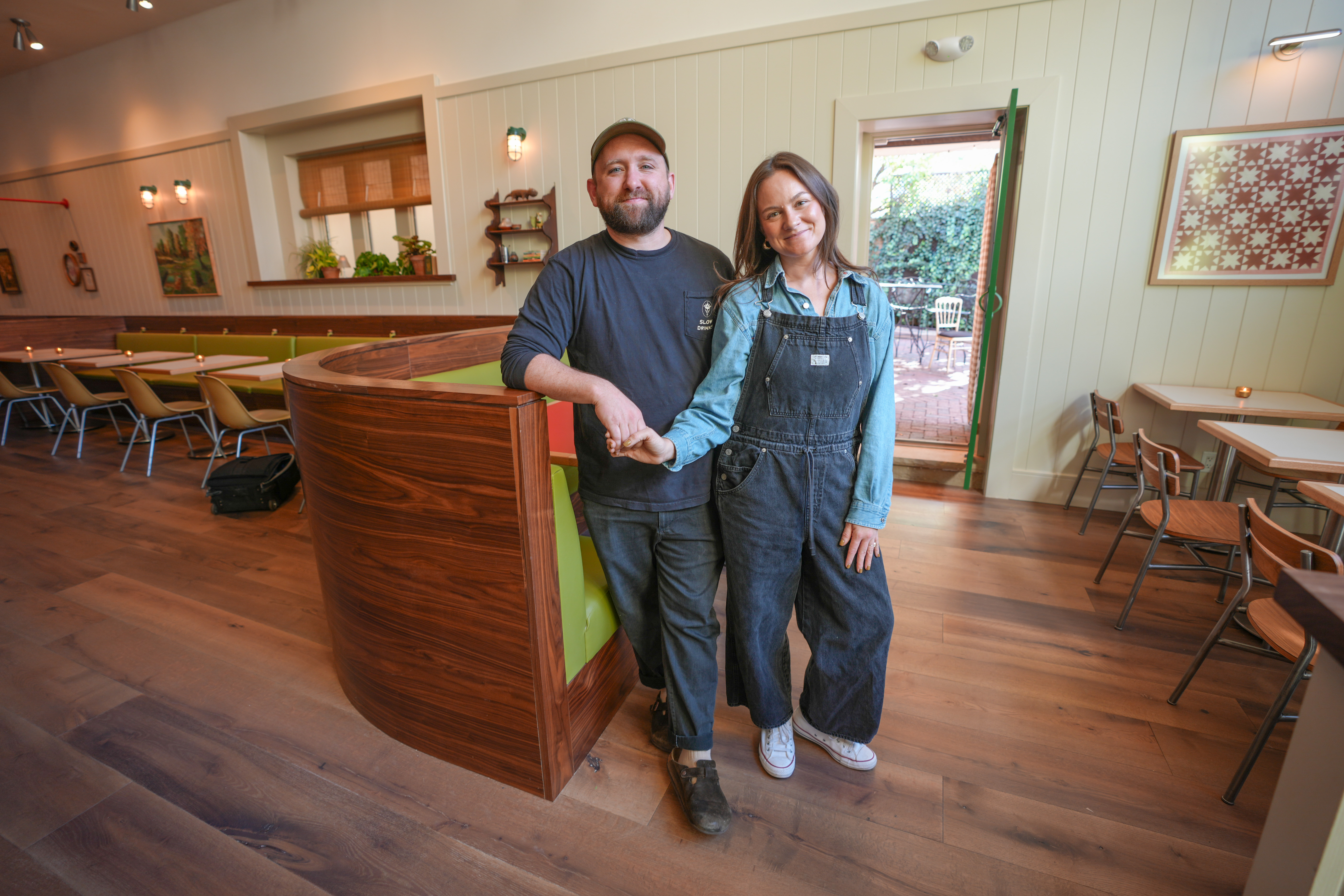
Though Childs has consulted on several beverage programs in Philly, this year marks the opening of his first bar, Field Day, in Northern Liberties, which he owns with his wife, Katie. Flagged as a “regional cocktail bar,” Field Day will filter its menu through a Slow Drinks lens, showcasing the breadth of ingredients and culinary traditions that swirl around our pocket of the Mid-Atlantic, from the Jersey Shore to Pennsylvania Dutch country. Think sherry and cherry wishniak highballs, boozy gelati, and a daiquiri-colada hybrid flavored with pawpaws and strawberries, along with regional foods like tomato pie, Lebanon bologna, and steamed clams.
Field Day, in Philadelphia’s Northern Liberties neighborhood, opened Oct. 21.Jessica Griffin / Staff Photographer
The bar’s debut marks the culmination of years of work. But Childs’ ultimate goal is much bigger. He wants Slow Drinks to take root at bars everywhere. He’s made some headway, but just as it takes time to turn black walnuts into booze, sowing the seeds of a cocktail revolution is no fast or easy feat.
Pitching a movement
It was steamy outside but freezing inside the Ritz-Carlton New Orleans, where Childs was presenting at 2025’s Tales of the Cocktail, the national drinks-industry conference that is nerdy and bacchanalian in almost equal measure.
The annual convention brings together a wide range of beverage professionals — bartenders, bar owners, distillers, marketers — who converge on seminars that would likely bore a layperson to tears. Slideshows on backbar configuration, viscosity, extraction, and “sensory analysis of spirits” were standing-room only, even as cocktail samples were being passed outside conference-room doors. The most-anticipated presentations saw people queue up outside the meeting rooms up to 45 minutes beforehand.
Childs had organized a panel with himself, bartending legend Jim Meehan (best known for cofounding the East Village cocktail bar Please Don’t Tell, or PDT), and Matchbook Distilling’s Leslie Merinoff Kwasnieski. It was slated for a Thursday morning, the penultimate day of the five-day-long conference and when many bartenders fly back home to work lucrative weekend shifts. That may have accounted for the relatively modest crowd in the double-wide meeting room that had been jam-packed for a boisterous lecture on dilution two days before.
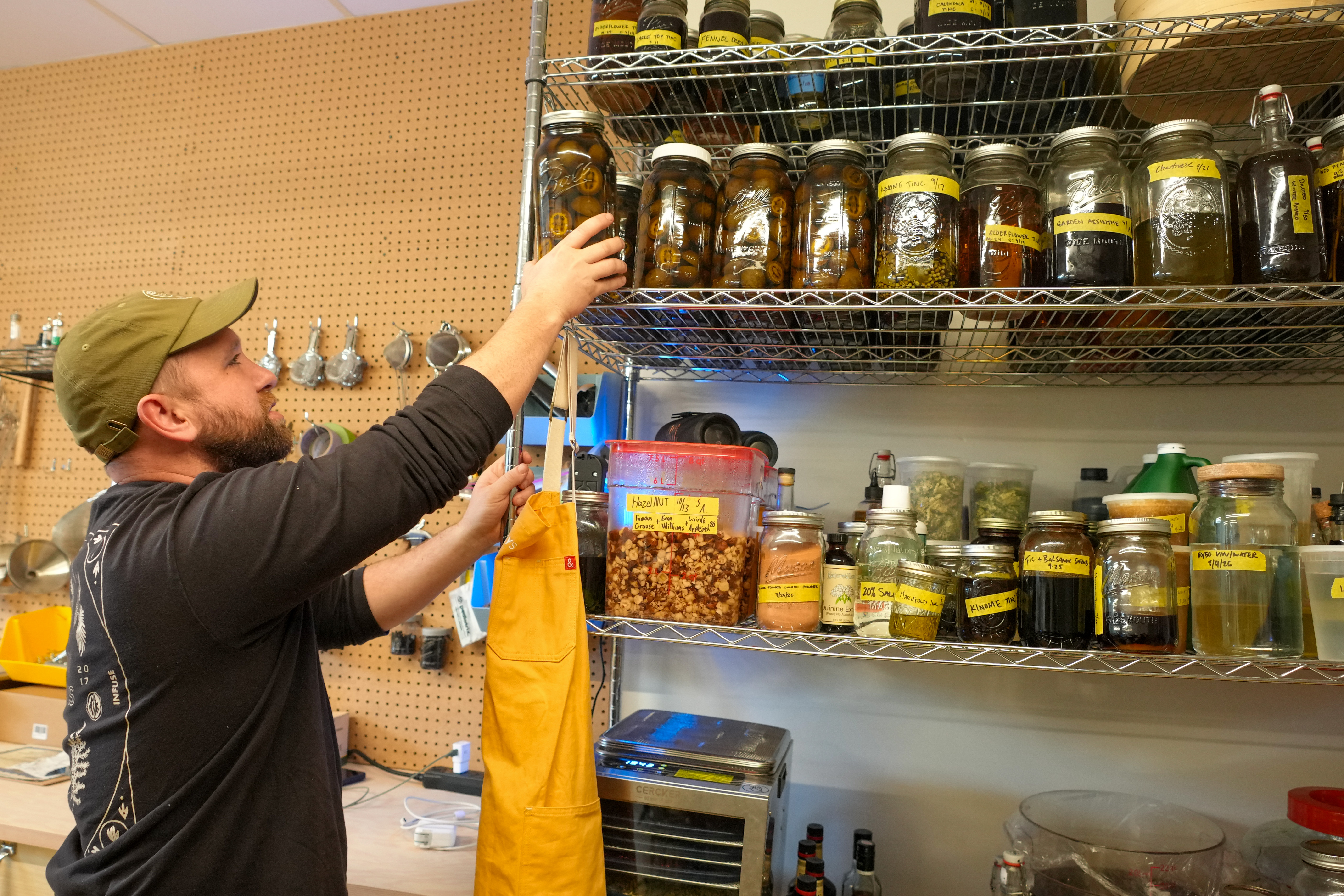
Local botanicals and produce macerate above Field Day, in the Slow Drinks’ second-floor HQ.Jessica Griffin / Staff Photographer
Another factor that may have contributed to crowd size? Compared to some more granular items on the Tales of the Cocktail agenda, the panel — entitled “the Slow Beverage Movement” — promised to be a little lofty.
Over an hour, fielding questions from then-executive director of Slow Food USA Bilal Sarwari, the panelists made the case for cocktails concocted the locally inflected way. The discussion at times veered into very dry territory: Childs waxed on ethnobotany, Meehan meditated on our world’s disappearing biodiversity, and Merinoff Kwasnieski, at one point, gushed about fungal networks’ impact on soil quality.
The talk was well-received by the audience (a small contingent of which were Slow Food Negroni Week scholarship recipients, whose rides to the conference had been subsidized by fundraising efforts that Childs had a hand in), and a couple queries ate up the 10 minutes left for questions. Reliably upbeat, Childs said he couldn’t have been happier with how it went.
Having sat in on several other seminars with higher-energy audiences, I myself wasn’t so sure how well the pitch had landed. A bartender with a gardening habit might be an easy sell. But could Slow Drinks’ time- and labor-intensive cocktail theory gain a foothold in the mainstream? How many bartenders are willing to ferment their own ginger beer, forage ingredients for housemade amari, or harvest actual roots for root beer?
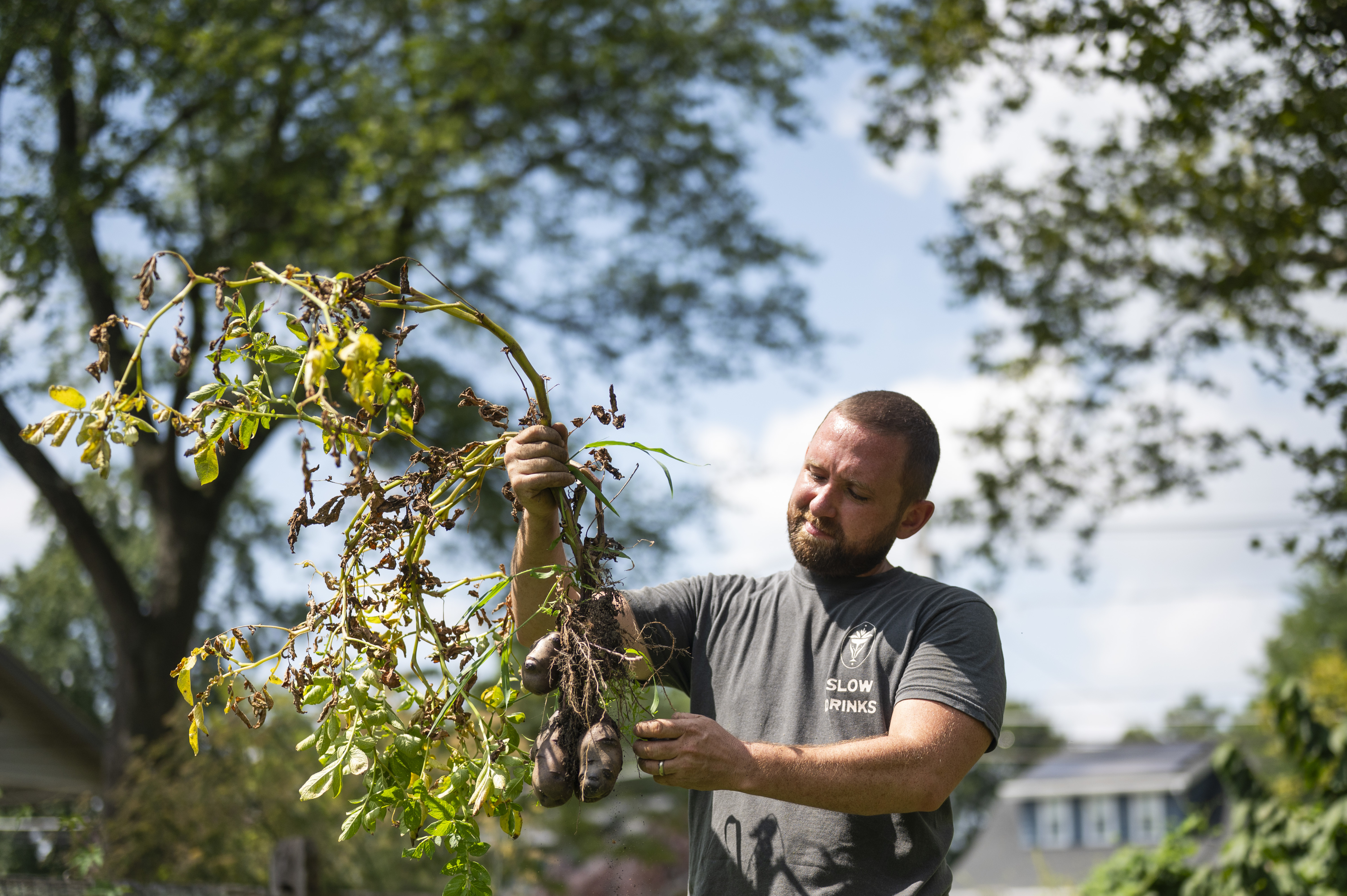
Purple potatoes are among the hundreds of plants Childs grows in his backyard. Allie Ippolito / For The Inquirer
Deeply unpopular, very important
I asked Meehan later about the challenges facing this prospective movement. In 2024, Meehan released a book, The Bartender’s Pantry, written, as he framed it in our interview last year, “in the wake of the reindustrialization of the craft cocktail.” He considers it in league with Slow Drinks — acall to think harder about cocktail ingredients and their sourcing in a time when “our world and our climate is under great duress.”
Like Childs, Meehan feels strongly about this cause, but he’s skeptical about industry uptake. “Are people doing this? Absolutely not. And will they do this? I don’t know. I doubt it,” he said.
But Meehan had reason for optimism, too. “As I think back to the early days of the craft cocktail movement that I participated in [in the aughts] … it is very hard to describe to today’s young bartenders how deeply unpopular what we were doing was — how unpopular, unprofitable, and how vain and silly most people viewed us.”
Danny Childs foraging for blooms from a mimosa tree in 2021, when he was still bar manager at the Farm and Fisherman Tavern.MONICA HERNDON / Staff Photographer
He remembered working 12-hour shifts at Pegu Club, the storied New York cocktail bar that opened in SoHo in 2005, and earning just $80, a fraction of what he would make at Gramercy Tavern. He would repeatedly deny requests to sub vodka in for other spirits on the cocktail menu. “It was tough,” Meehan said.
Time and “a never-ending parade of great press” eventually moved the needle, he said, as a curious clientele of mostly young professional women came in, dragging their vodka-drinking boyfriends with them. He was surprised to see customers casually embracing whiskey and gin drinks within just a couple of years. By the 2010s, craft cocktail bars were opening in cities all over the country.
Liquid Gold, an Old Fashioned riff that uses beeswax, propolis, and raw honey, at Field Day.Jessica Griffin / Staff Photographer
To some extent, Meehan — no longer bartending — finds himself on the outs again, having taken up a new mantle in advocating for a more thoughtful, sustainability-minded approach to beverages. He considers himself in the same camp as Childs in that sense, but he thinks Childs has an edge he and his cocktail-pioneer comrades didn’t: “We were weirdos, and Danny is, frankly … very normal and very reasonable and very articulate, and I think mostly he’s very positive,” Meehan said. “For these reasons, I think this guy has a very good chance of being successful.”
“I think that there’s something revolutionary about what Danny’s putting out there,” Meehan said. “I’m sure people think that we look like some bartender form of Alice Waters, but I think that it is very important work.”
Changing perceptions
Childs is well aware that the very idea of locally inflected cocktails can come across as pretentious and twee — they’re the kind of thing you might have seen skewered on Portlandia.
But it’s also hard to imagine a better ambassador for what seems like a very fancy thing: Childs first developed Slow Drinks as a concept while working as bar manager at Farm & Fisherman, a family-friendly tavern in a Cherry Hill strip mall. Over a decade, he hooked suburbanites on sophisticated cocktails that were also approachable and highly drinkable, only going on a spiel about sourcing when prompted.
Danny and Katie Childs at their regional cocktail bar Field Day. “He looks like a he looks like a Division Three running back,” bartender and beverage writer Jim Meehan said of Danny Childs. “He’s very approachable.”Jessica Griffin / Staff Photographer
Childs’ upbringing no doubt plays a part in his innate ability to soft-sell. Before he moved to Marlton at age 11, he grew up in Delco: first in his grandparents’ house and then a Clifton Heights apartment complex. His dad bartended at the Clifton Inn (now Murray’s Bar & Grille) for years. “I grew up in that bar in a lot of ways,” Childs said. He remembers learning to play pool and shuffleboard there, and having his first underage drink one Christmas Eve.
His blue-collar roots are balanced by a deeply nerdy side. Childs’ fascination with plants, fostered by his naturalist-oriented uncle and grandfather, kicked into high gear when he studied anthropology and ethnobotany at the University of Delaware. He spent four years traveling through South America to study the use of medicinal plants among Indigenous people. (If not for a bartending gig in Chile, Childs might be an M.D./Ph.D. teaching and practicing ethnomedicine today.)
He swerved out of academia postcollege, when a would-be gap year sent him down an agricultural rabbit hole: first on a Marlton Christmas tree farm — where he and Katie homesteaded in a military tent equipped with a wood-burning stove for nine months — and then over stints at Urban Roots Farm in Newtown Square and at Plowshare Farms in Bucks County.
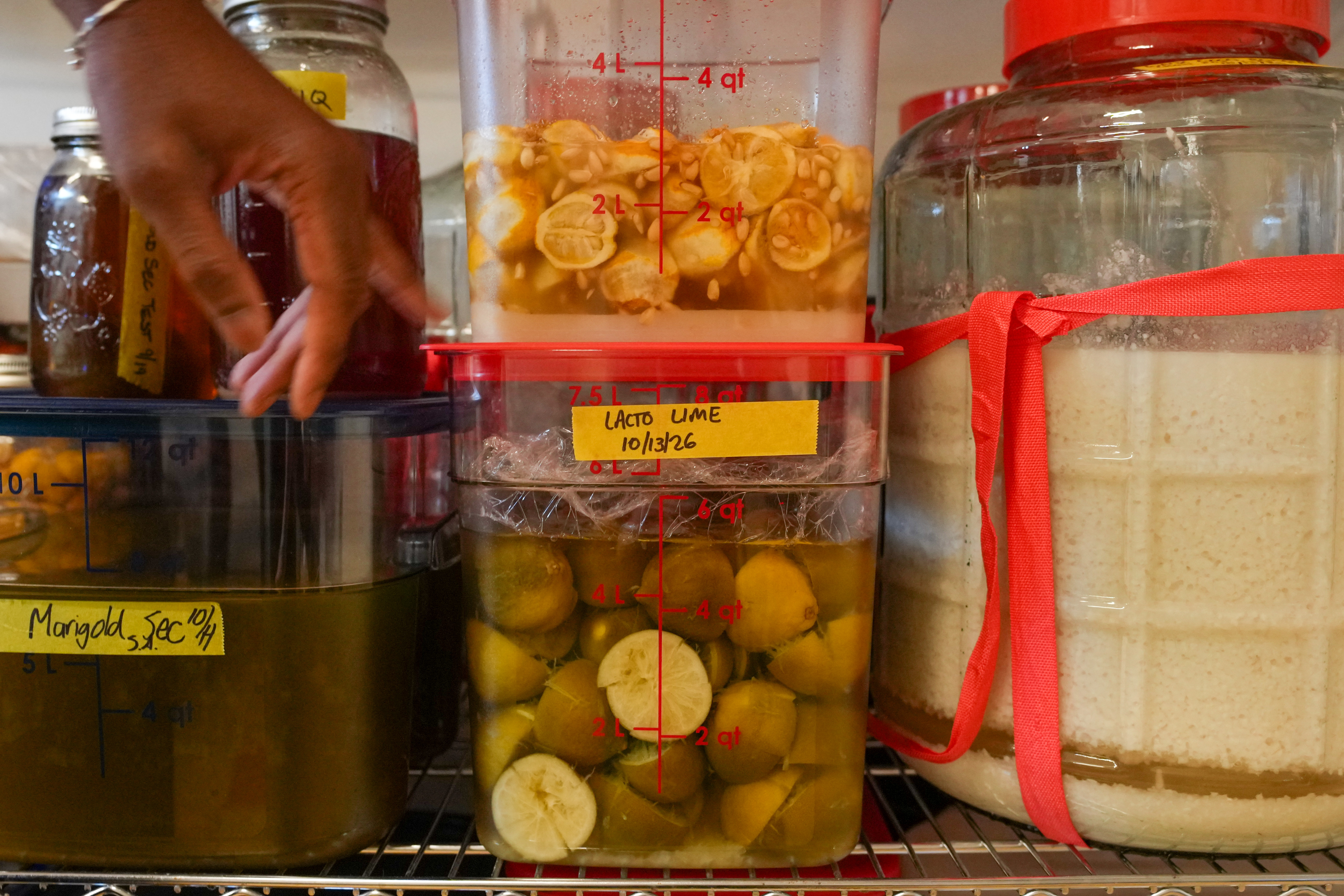
Lacto-fermented limes sit below a bin of trifoliate oranges steeping to eventually make cheong (fermented syrup) in the Slow Drinks HQ and Field Day R&D lab in Northern Liberties. Jessica Griffin / Staff Photographer
Those various walks of life all braided together when Childs took a job at Farm & Fisherman in 2013. It was there that he started dreaming up “cocktails through an anthropological lens” — a phrase, as he writes in Slow Drinks, that he scrawled on a bar napkin, then spent years teasing out. He started applying age-old practices of fermentation and infusion to the local ingredients surrounding him, then mixing them up behind the bar.
Childs codified these methods in Slow Drinks, which is intended as a springboard for other bartenders and home enthusiasts, offering building-block master recipes for shrubs, liqueurs, aromatized wines, and more preserved, distilled, and infused liquids. Cocktail recipes (pickled ramp martini, stone-fruit amaretto sour, clarified persimmon punch, etc.) round out the book, showing region-specific applications season by season.
The Slow Drinks book by Danny ChildsMonica Herndon / Staff Photographer
Just as he knows the larger theory runs the risk of feeling esoteric to guests, he recognizes the work required may intimidate industry pros. “Bartenders are taught how to make syrups and mix cocktails with ingredients that are on their backbar. It’s changing a little bit, but the bars pushing that envelope are still like the top 1%,” he said. “I know it might seem difficult or out of reach.”
Childs’ ultimate counterargument is a humble one: He’s not actually doing anything new here. “People have been doing this for hundreds and in a lot of cases thousands of years.”
Local gaze, global ambition
Childs has been dedicated full-time to Slow Drinks as a business and a concept since 2023, when he left his role at Farm & Fisherman. The departure gave him time to promote the book but also more flexibility and autonomy over where the larger idea might go.
“It was kind of like jumping out of the plane without a parachute and hoping for the best,” Childs said of the decision to leave.
Childs handles nocino in the Slow Drinks HQ above Field Day.Jessica Griffin / Staff Photographer
In the years since, he’s consulted on several bar projects in the Philly area (most notably Almanac and La Jefa, both James Beard Award nominees). With Katie as copilot, he’s grown the Slow Drinks brand via pop-ups and collaborations, some of which have left lasting impressions. (If you find yourself at Mexico City’s Baldió, ask to try the chinampas Chartreuse and agave amazake.) He’s also established a close relationship with the international organization Slow Food that’s taken him to various cities and countries to present on the budding movement, often with an entourage of scholarship-backed bartenders who are practicing this style of drink making already.
Childs also spent much of the last two years laying the groundwork for Field Day, whose staff claims a number of Philly’s most promising restaurant-industry talent, including chef Melissa McGrath and fermentation whiz Jamaar Julal.
Even as he becomes a bar owner, Childsis going full tilt on Slow Drinks. The business’ headquarters live above the bar, in an office/lab that shares space with Cescaphe Ballroom’s wedding complex. This summer he and Katie hired Canyon Shayer, a Philly Distilling and Heaven Hill alum, to be the S corporation’s COO and “director of culture,” working with clients on developing and implementing Slow Drinks-style beverage programs.
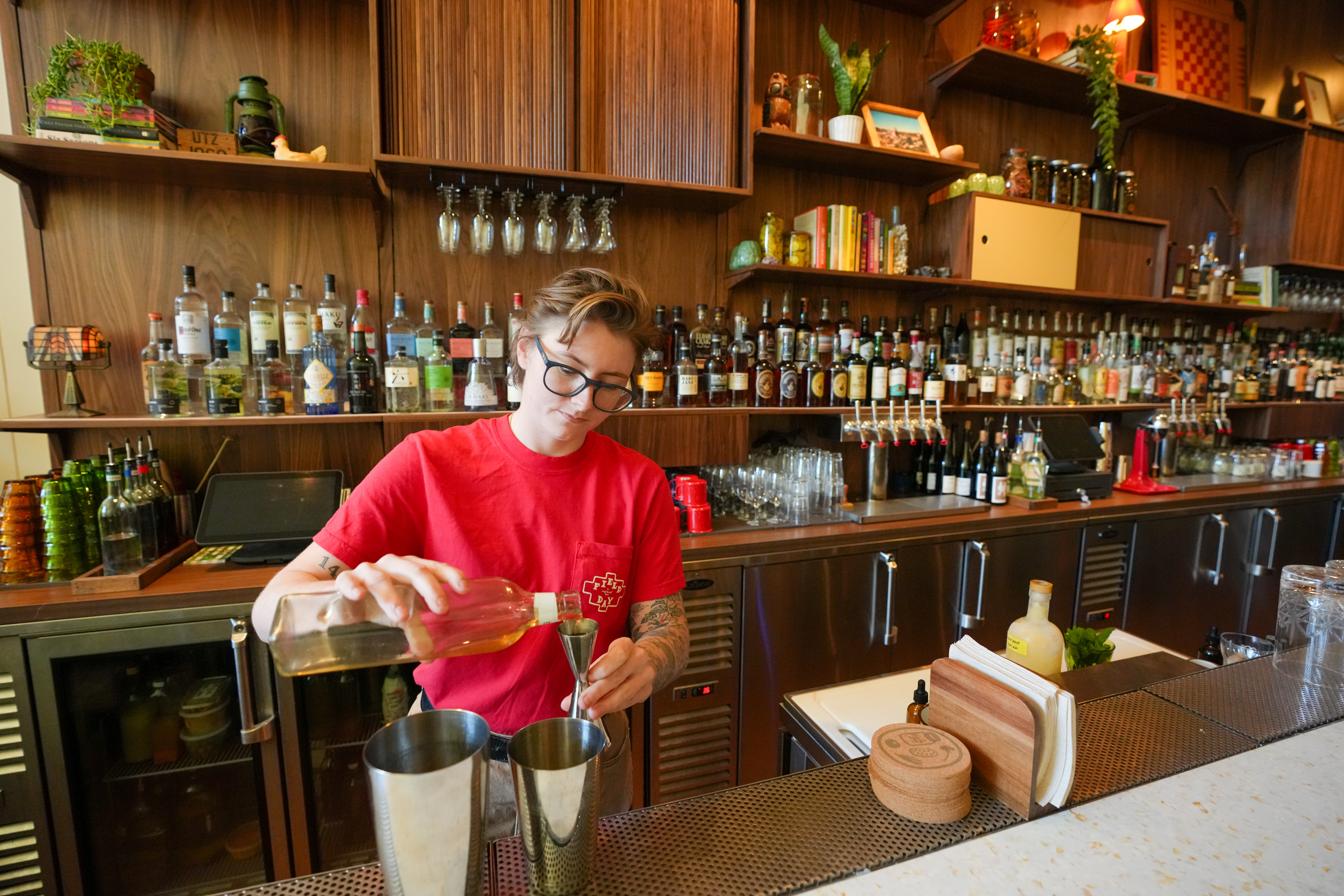
Erin Dassler makes cocktails at Field Day. Childs hope the bar serves as a model of a full-fledged Slow Drinks program. Jessica Griffin / Staff Photographer
In a way, Field Day is a test case, “a blueprint for, this is what [Slow Drinks] looks like in practice day in and day out,” Childs said. “I think we’ve just really scratched the surface of getting people fully bought into it, and that it is something that can leave the industry better than we found it.”
If Childs gets his way, bartenders all over will see potential ingredients every time they step foot outside — even if it’s just into their own backyards.
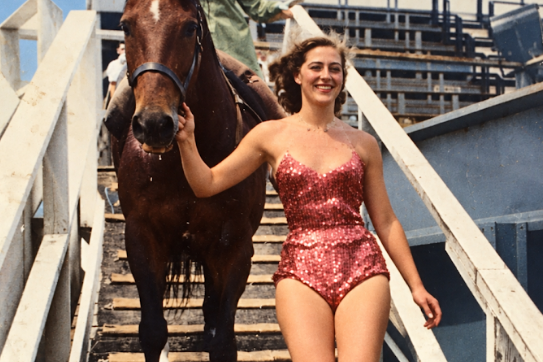
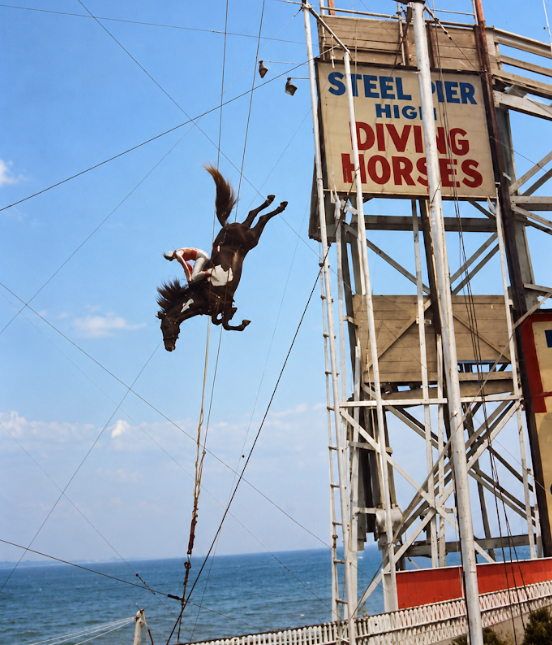
Sarah Hart was 21 when she met Gamal and the other horses that high dived into a 10-foot pool of water several times a day at Steel Pier in Atlantic City.
Gamal, she told the Courier-Post in 1998, liked to leap off the 40-foot-high platform without a second thought. Other horses, she said, “would take five minutes before they’d jump.”
It was 1957, and Mrs. Hart, already a skilled diver and college swimmer, knew about the horse-diving grand finale at Steel Pier’s water circus. “It was a little bit spectacular to see this huge horse flying through the air,” she told the Courier-Post. “The motion was beautiful. A young girl brave enough to ride the horse added to it.”
That summer, Mrs. Hart became one of those brave girls. She outperformed 100 other applicants and, until 1962, rode Gamal and his counterparts off the platform and into the water below.
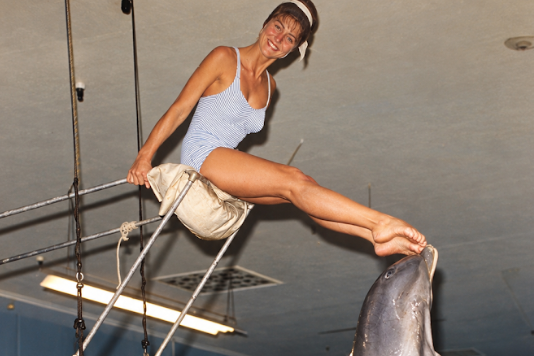
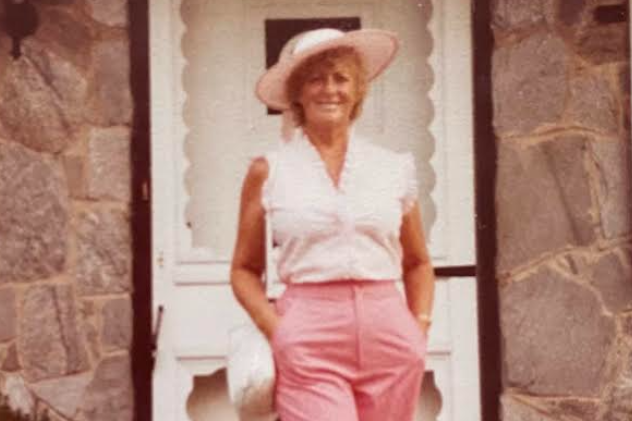
Mrs. Hart was equally comfortable riding horses into pools of water and frolicking with dolphins.Courtesy of the family
“What you have to do is just simply get on the horse and hang on tight, and go along for the ride,” she told the Courier-Post in 1993. In 1998, she said: “It was the easiest thing I ever did.”
On Tuesday, Oct. 13, Mrs. Hart, also a longtime South Jersey teacher, an environmentalist, and the wife of Gene Hart, the longtime Flyers broadcaster, died of heart failure at her home in Gladwyne. She was 90.
“She was a free spirit,” her daughter Lauren said. “She did a little bit of everything.”
Born in Chester, Mrs. Hart grew up on and around the Boardwalk in Atlantic City. She went to schools in Pleasantville and worked at Boardwalk carnival games as a teenager. For years, she told a story about beating future Hall of Famer Wilt Chamberlain in the old shoot-the-basketball game.
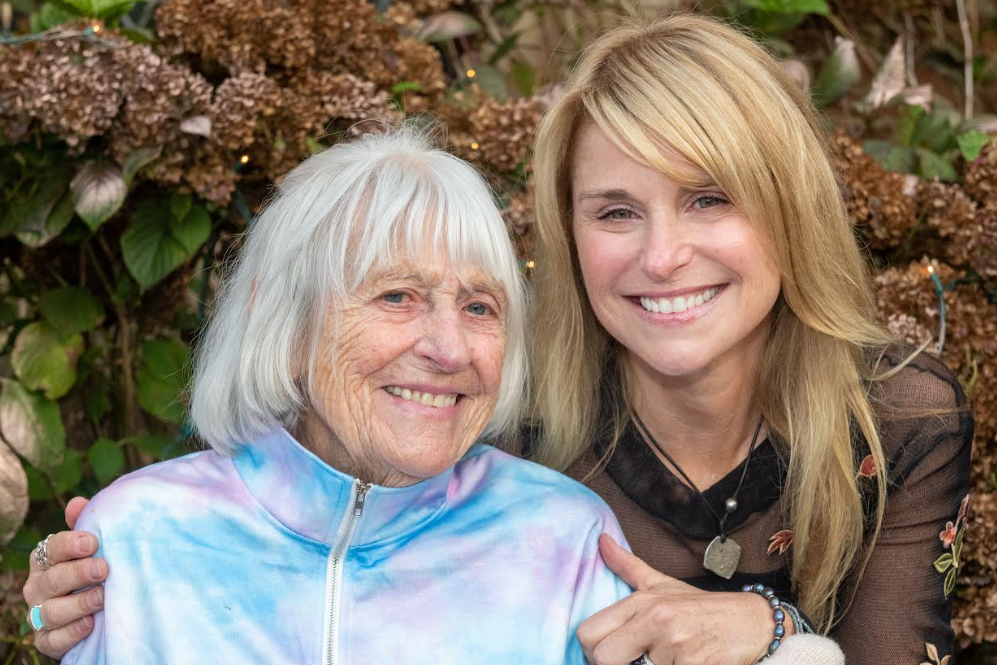
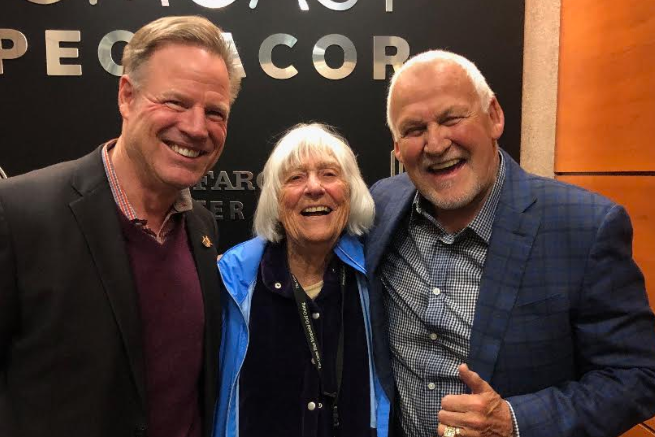
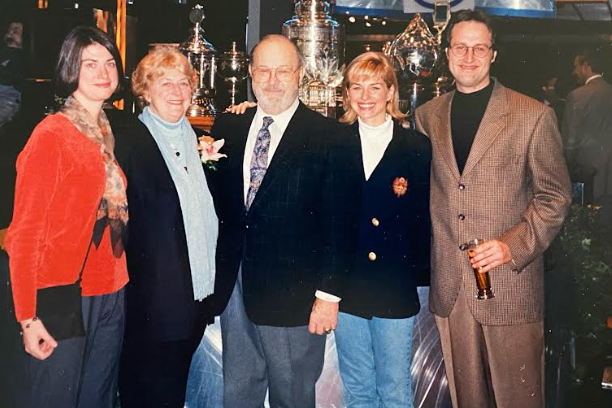
Mrs. Hart, left below, was a lifelong Flyers fan. Courtesy of the family
She performed with synchronized swimming teams at the University of Florida after high school and at the 1958 World’s Fair in Brussels, Belgium. She met the Flying Wallendas, singer Tony Bennett, and other entertainers at Steel Pier, and swam with the dolphins at the old Aquarama Aquarium Theater of the Sea in South Philadelphia in the 1960s.
She met her husband, Gene, at Steel Pier, and they married in 1963. His mother had ridden the high-diving horses at Steel Pier in the 1930s, and he was a comic diver and announcer for the water circus.
They had daughters Laurenand Sharon and a son, Brian, and lived in Cherry Hill. Her husband died in 1999, and she moved to Gladwyne during the COVID-19 pandemic.
Mrs. Hart taught English as a second language for decades at schools in the Lenape Regional High School District and later as a general substitute. She ran unsuccessfully for Cherry Hill Township Council in 1981 and was active with the Cherry Hill Environmental Board and the Pinelands Preservation Alliance. She was a longtimeelection worker at voting polls in South Jersey.
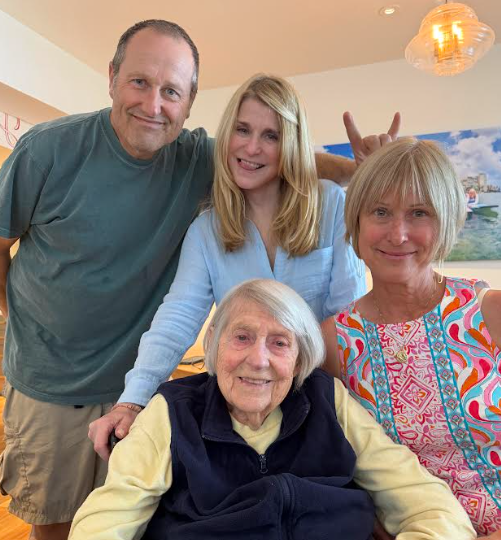
Mrs. Hart, front above and left below, enjoyed time with her family. Courtesy of the family
She graduated from high school in Florida, returned to South Jersey after two years of premed classes at the University of Florida, and earned a bachelor’s degree in English with honors at what is now Rowan University.
“A more kind and generous spirit you will never find,” a former teaching colleague said in a Facebook tribute, “and what a great advocate for students and their needs.” A longtime friend said: “There was no sweeter, more considerate, or kinder soul on the face of the Earth.”
Sarah Gregg Detwiler was born Aug. 2, 1936. She enjoyed dancing, nature, and animals as a girl, and even flew small airplanes out of the Atlantic City airport. Her family moved to Apopka, Fla., 20 miles northwest of Orlando, before her senior year of high school.
Later, she and her husband traveled the world together, sharing fine art, classical music, opera, and the theater. For years, Monday night was date night at the Metropolitan Opera House in New York.
Mrs. Hart, second from left below, was popular wherever she went. Courtesy of the family
She stabled her own horse near their home for a time and landscaped the entire property, in-ground pool and all, when they moved to Tampa Avenue in Cherry Hill in 1971. “There wasn’t a tree in the yard when we moved in,” Gene Hart told The Inquirer in 1981.
Mrs. Hart especially liked roses and said: “I’m an outdoor person, and we all love the water.” Of course, she was a lifelong Flyers fan.
“She was known above all for her warmheartedness and egalitarian spirit,” her family said in a tribute. Her daughter Lauren said: “She was kind and always working in the service of others. She was a giver.”
In addition to her children, Mrs. Hart is survived by five grandchildren, two sisters, and other relatives. A sister and three brothers died earlier.
Mrs. Hart “was known above all for her warmheartedness and egalitarian spirit,” her family said in a tribute. Courtesy of the family