Tag: Isaiah Thomas

  • No Philly mayor has lost reelection in modern history. So does Mayor Parker have anything to worry about?

    No Philly mayor has lost reelection in modern history. So does Mayor Parker have anything to worry about?

    Through much of Mayor Cherelle L. Parker’s first two years in office, most political insiders in Philadelphia assumed she would cruise to reelection.

    After all, no mayor in the last eight decades in the deep-blue city has lost a bid for a second term. And Parker is backed by the city’s long-powerful Democratic establishment, contributing to the foregone conclusion that their allied mayor would win again.

    Even some of Parker’s staunchest critics on the left admitted privately that they were resigned to her serving eight years in office.

    Then last month, conventional wisdom started to crack.

    State Rep. Chris Rabb — a democratic socialist and an anti-establishment firebrand — won a tightly contested battle for an open seat in Congress, prevailing over Parker’s endorsed candidate and even carrying the 50th Ward in Northwest Philadelphia, where Parker is ward leader.

    Now some of the activists who lead the city’s largest left-leaning organizations think that race showed that Philadelphians are ready to pick a progressive over the Democratic establishment. And they are looking at next year’s mayor’s race again, asking the question: Is Parker vulnerable?

    “We would love to have a progressive challenger in this race,” said Sergio Cea, political director of the progressive group Reclaim Philadelphia. “The establishment was really defeated on all fronts this election cycle.”

    In a little more than 10 months, Parker, a centrist Democrat and the city’s first female mayor, will be up for reelection. She has not officially announced a campaign — doing so would trigger strict fundraising rules and limits — but all signs indicate she intends to run again, including an already huge campaign war chest.

    Any challenger to Parker would be considered a significant underdog. The mayor has the power of incumbency, and can point to progress on her 2023 campaign promises to make the city safer and cleaner, not the least of which is a historically low homicide rate. Thousands of residents are getting their trash picked up twice a week, and polls consistently show that more Philadelphians say they think that the city is heading in the right direction now than when Parker took office.

    She even seemed to recover politically after one of her lowest moments: the eight-day municipal worker strike last year that left so much garbage piling up that it became colloquially known as “the trash strike.” Parker, through her signature unyielding negotiating style, muscled her way to an agreement with the union.

    Today, she is supported by most of the city’s elected officials and powerful organized labor groups. Ryan N. Boyer, the head of a coalition of deep-pocketed building trades unions, said recently that any challenger to Parker would face “annihilation.”

    “This is Philadelphia, there are always people who want to run for mayor. But mayoral elections are decided on whether people think their city is moving in the right direction,” said Aren Platt, executive director of People for Parker, the mayor’s political campaign arm. “Mayor Parker has been underestimated her entire career, and she has a habit of proving people wrong.”
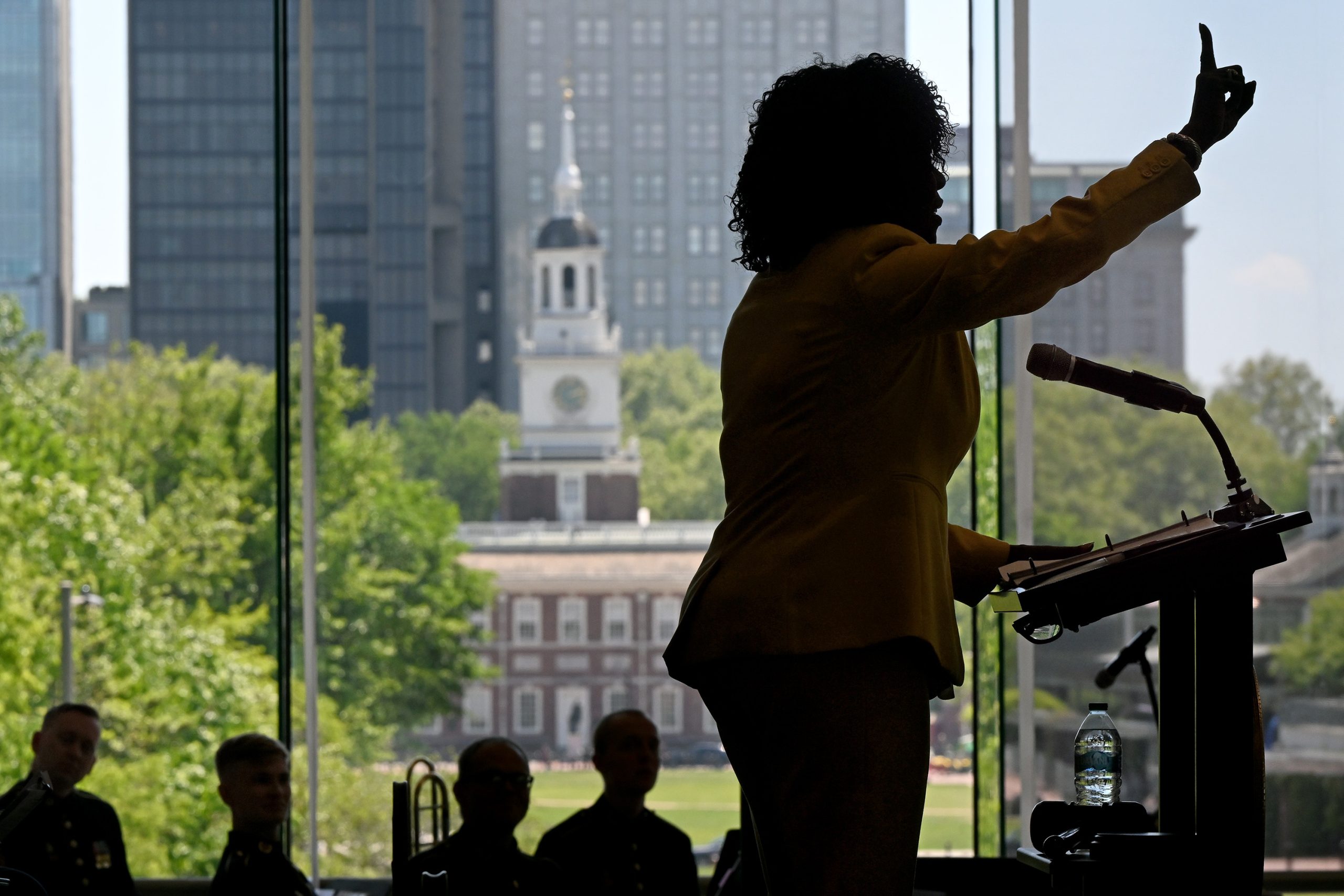
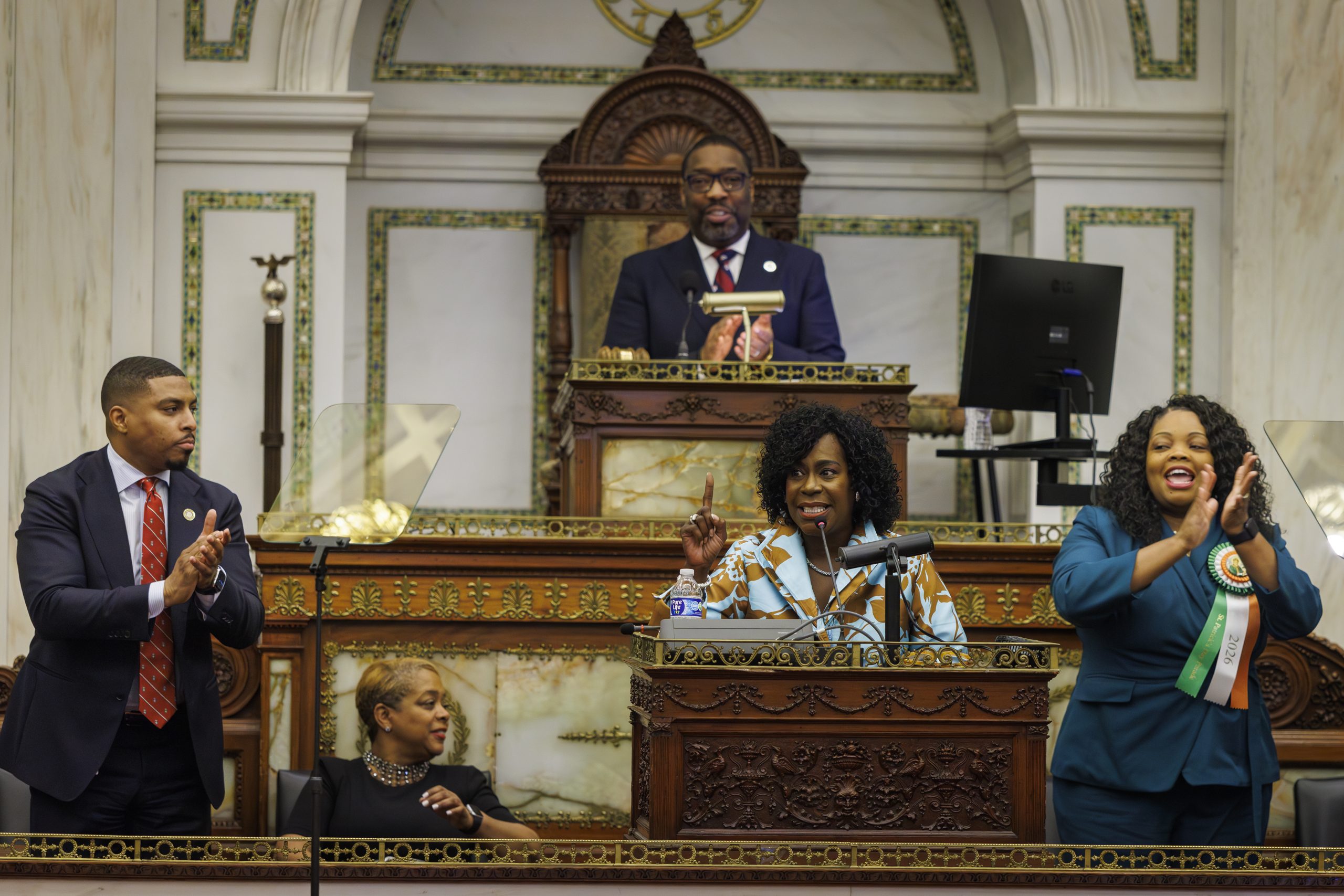
    Mayor Cherelle L. Parker raises a finger with her call-and-response “One Philly, A United City” mantra ending her speech during a ceremonial meeting of the Pennsylvania Senate at the National Constitution Center across the mall from Independence Hall on May 5.Tom Gralish / Staff Photographer

    However, some on the left see a coalescence of forces that could bolster their chances: national frustration with the Democratic establishment that has manifested in leftist wins, a widespread anti-incumbent sentiment, and liberal rage toward President Donald Trump, whom Parker has largely avoided maligning publicly.

    They also see potential signs of Parker’s power waning, including her recent budget battle during which she could not get Democrats in Harrisburg and City Hall on board with her tax plans.

    “If you just have the right candidates that are able to speak to the dissatisfaction of Democratic voters in Philadelphia,” Cea said, “I do think [Parker] is in trouble.”

    But the biggest question for Philadelphia progressives in the approaching mayoral race remains: Who could be their candidate?

    The potential challengers

    Jack Inacker, a Democratic strategist based in Philadelphia, said there are few, if any, challengers to Parker who could pull off a win in 2027.

    “The progressive infrastructure now has built up in a way where, if you squint really hard, you can see a path to a progressive challenger,” Inacker said. “The problem is that [Parker] is one big mistake away from being beatable, but she’s not beatable yet. And people know that.”

    Candidates have plenty of time to decide. Paperwork to get on the ballot likely would not be due until March.

    Perhaps the most talked-about potential challenger so far is District Attorney Larry Krasner, the city’s most prominent progressive. He has not ruled out a run for mayor, and he has recently publicly criticized Parker and some of her closest allies.

    Last week, he invited media to walk along with him while he hand-delivered a letter to the mayor’s suite in City Hall to express dissatisfaction with his office’s budget. Parker called the move “stunting.”

    Platt, in a thinly veiled shot at Krasner, said in a statement that “what we’ve seen recently is too many politicians focused on generating headlines rather than solving problems: manufacturing controversy, looking for someone else to blame, and confusing political theater with leadership.”
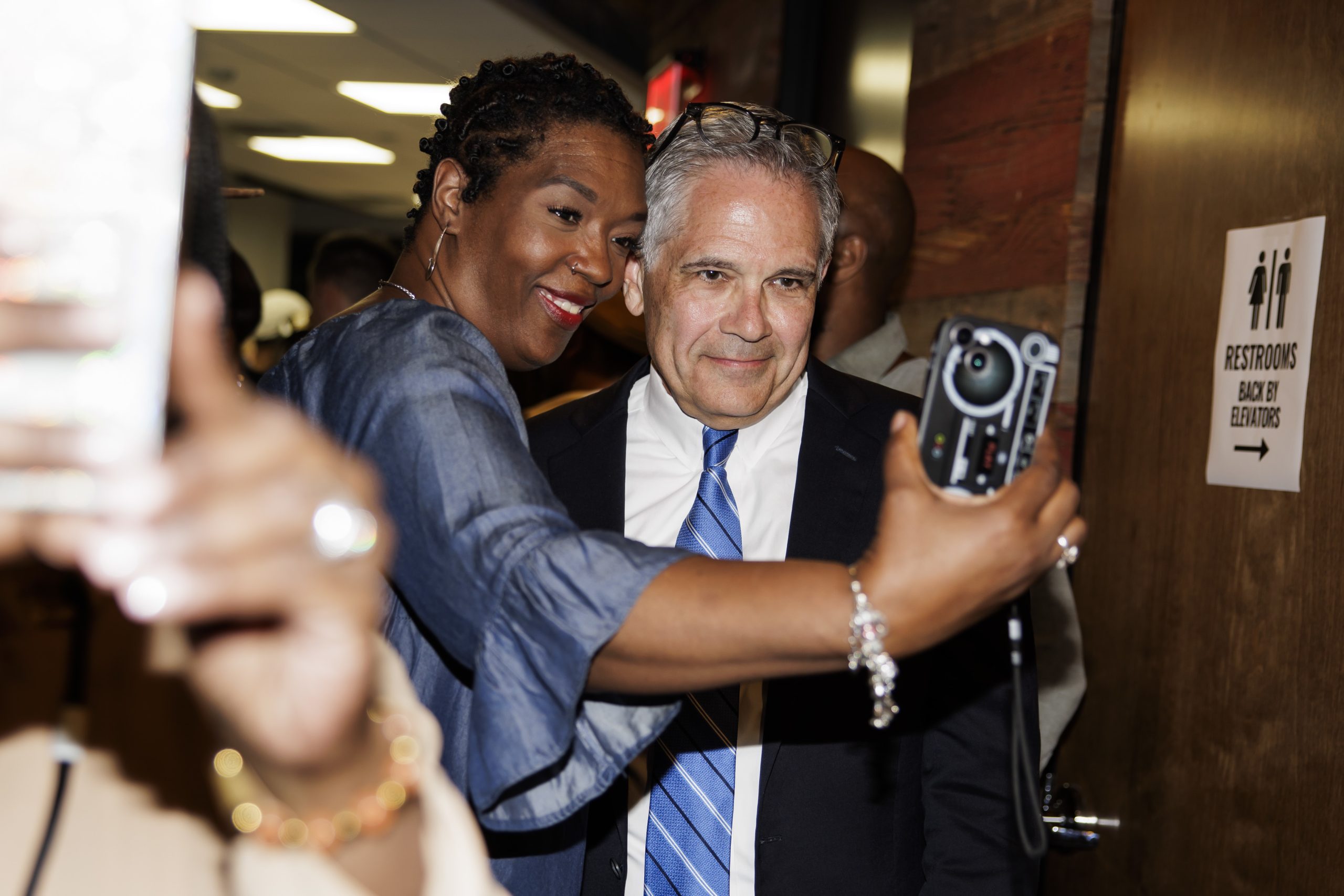
    District Attorney Larry Krasner greets supporters during his election night party at the Pipeline Philly coworking space on May 20, 2025, in Philadelphia. Krasner defeated challenger Patrick Dugan both in the Democratic primary and in the general election.Monica Herndon / Staff Photographer

    Krasner has won citywide election three times, twice winning reelection in landslide fashion. He is one of the nation’s most well-known progressive prosecutors and one of the city’s most polarizing figures. His base of support includes the city’s left, as well as a large swath of Black voters and elected officials.

    But it was Parker’s political family — the vaunted Northwest Coalition of the some of the city’s most storied Black politicians — that was key to Krasner’s political ascent. Challenging Parker could be seen as a betrayal by some in the voter-rich northwest corner of the city, and his base there could fracture.

    Krasner has also in the past struggled to keep up with his opponents in fundraising. Any challenger to Parker would likely need to bring in well over a million dollars, a sum of money that Krasner has never raised before.

    Several other elected officials are seen as potential challengers to Parker, including several sitting members of City Council.

    Councilmember Isaiah Thomas, who represents the city at-large, has long been rumored to have ambitions for higher office. He has been elected citywide twice, and recently was among the most vocal opponents of the Philadelphia School District’s controversial plan to close 17 schools.

    And he has allies both on the left and in the city’s business community, the latter of which has been frustrated with a Parker administration policy shift that increased the tax burden on small businesses.
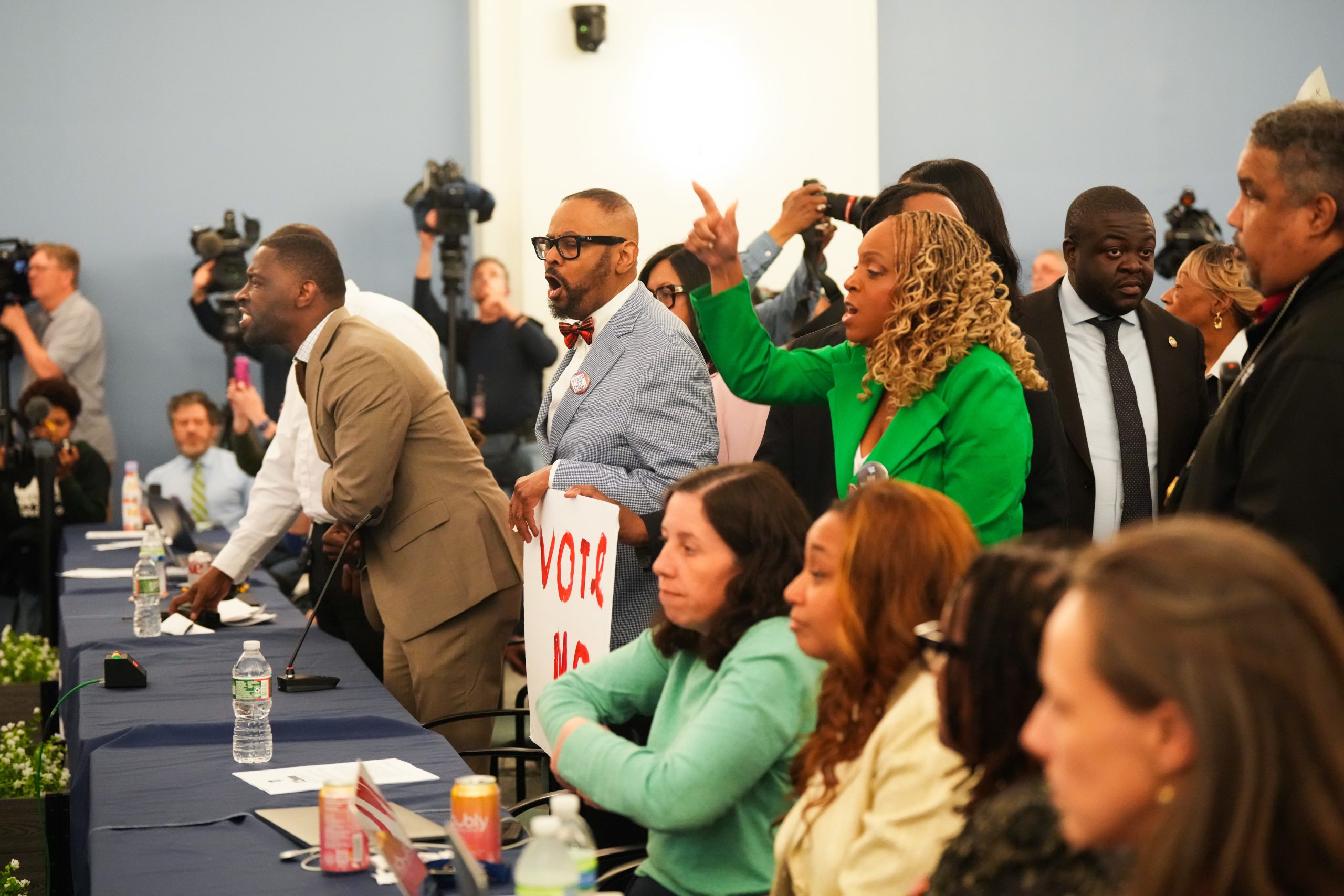
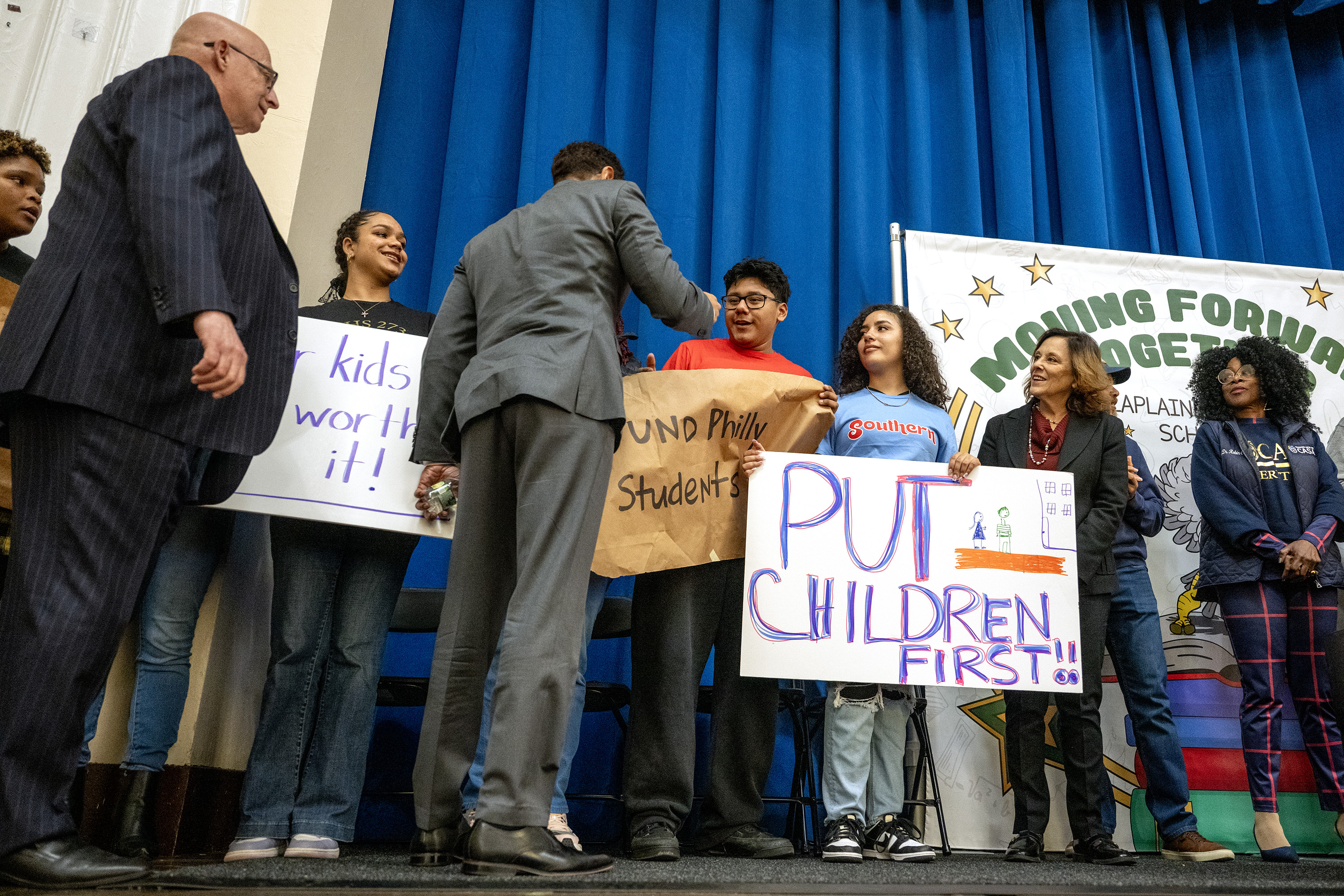
    Councilmembers Isaiah Thomas (from left), Curtis Jones Jr., and Jamie Gauthier protest at an April school board meeting as the board prepared to vote on the facilities plan.Jessica Griffin / Staff Photographer

    Thomas said last week that he is focused on his job in City Council.

    “That job right now is hard enough, looking at the affordability crisis, the crisis around public education, and other issues that we’re facing,” he said.

    There’s also two-term Councilmember Jamie Gauthier, who represents parts of West Philadelphia and has positioned herself as one of Council’s chief critics of the Parker administration. She said earlier this year that running for mayor “could be interesting one day,” but that she would not run if she did not see a clear path to victory.

    She said in a statement that her focus is “finishing what we started on City Council, especially building affordable housing.”

    Gauthier added: “But it’s clear Philadelphians are hungry for leaders who will put working families above big business.”

    And there is Councilmember Kendra Brooks, the de facto leader of the city’s left-leaning coalition and a member of the progressive Working Families Party. Brooks, who represents the city at-large, has twice campaigned and won citywide.

    A political adviser to Brooks said she is focused on her work in City Hall and running for reelection to Council, as well as “building Black progressive political power through the WFP.”

    What do progressive gains mean for the 2027 mayor’s race?

    Parker’s camp sees strength in her numbers.

    In March, the mayor’s political arm commissioned a poll that found that 60% of respondents approve of the job Parker is doing as mayor, while 33% disapprove. Her approval rating was even higher among Black voters, older voters, and residents of Northwest Philadelphia — one of the highest-turnout areas of the city.

    Mayor Cherelle L. Parker (right) hugs Rachel O’Neal, executive of the Friends Childcare Center, at the unveiling of a new playful learning hub at Sisters Cities Park on Thursday.Jessica Griffin / Staff Photographer

    Cornell Belcher, one of the top Democratic pollsters in the nation, has conducted polling for Parker dating back to her mayoral campaign. He said that a key indicator of voter attitude toward an incumbent mayor is the number of residents who think the city is heading in the right direction.

    The results this spring, he noted, were “dramatically different” from when Parker was first campaigning for the office. In April 2023, Belcher measured that 66% of Democratic primary voters in the city were dissatisfied with the direction of Philadelphia.

    Today, he said, 62% are satisfied.

    Still, other polls have shown potential warning signs for Parker.

    In three polls that were conducted this spring in the 3rd Congressional District and obtained by The Inquirer, an average of 48% of Democratic primary voters said they had a favorable view of Parker and 41% had an unfavorable view. The polls, which measured voter attitudes in roughly half the city, were conducted by three different firms, and they were commissioned by different campaigns and organizations.

    Approval and favorability ratings are not apples-to-apples. An approval rating is often considered a more reliable data point for an incumbent executive, because it measures attitudes about job performance, not reputation.

    Belcher, who founded his polling firm 25 years ago and polled for former President Barack Obama, said he would not draw conclusions from polls of a congressional district that includes only half the city and was taken in a different election year. And he questioned other pollsters’ methodology in Philadelphia, a city that is tricky to survey.

    “A city like Philadelphia, with all its different racial and ethnic groups, getting that right is hard,” Belcher said. “The more diverse an area is, the more work you have to put into getting it right.”
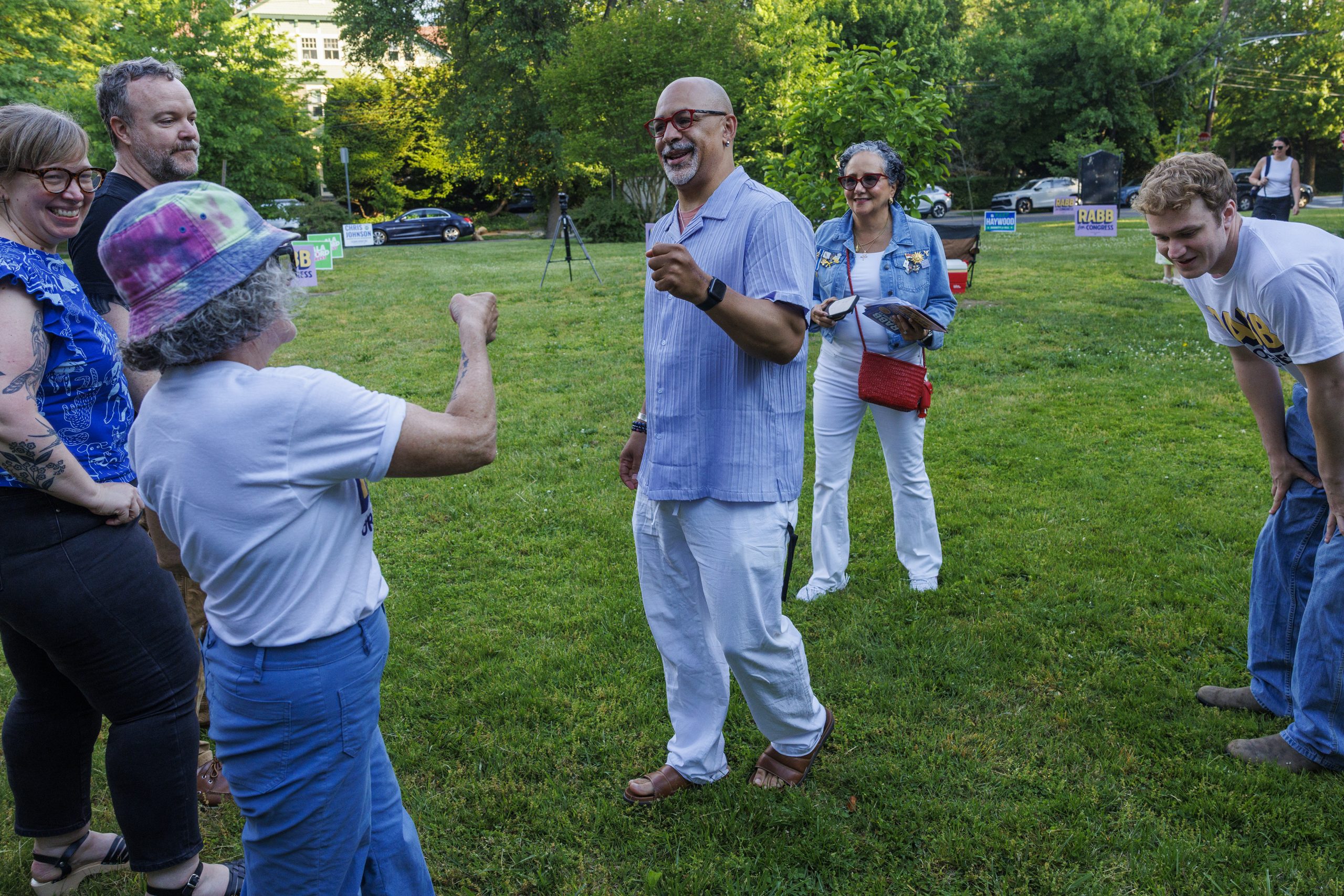
    Chris Rabb greets supporters on election day. He is arriving to his polling place to vote, Grace Epiphany Episcopal Church, on May 19.Alejandro A. Alvarez / Staff Photographer

    The results of last month’s congressional race energized progressives, in part because Rabb performed well in parts of the city that Parker carried when she won the crowded open Democratic mayoral primary in 2023. An Inquirer analysis found that more than a quarter of Rabb’s votes came from divisions that voted for Parker in 2023.

    Rabb won his Democratic primary in a race that included three front-runners. But mayoral reelection battles in Philadelphia have historically been head-to-head, meaning the winner will look to reach 50% of the vote, a more challenging proposition for an ideological candidate.

    Platt said he would caution against concluding that Parker is politically vulnerable based on the outcome of the congressional race.

    And he said Rabb’s win in Parker’s 50th Ward is not a sign of cracks in the mayor’s base. He noted that the ward’s Democratic committeepeople last week unanimously reelected Parker as ward leader.

    “The mayor is organized, and her coalition across Philadelphia is strong,” Platt said. “They may not be active on Reddit, but they’re there, and they believe in what she’s doing because they can see the results in their neighborhoods.”
  • Mayor Parker and City Council now have one year to figure out a way to bring in $216 million after reversing Philly school cuts, officials say

    Mayor Parker and City Council now have one year to figure out a way to bring in $216 million after reversing Philly school cuts, officials say

    Philadelphia School District officials and public education advocates were relieved Wednesday when Mayor Cherelle L. Parker announced she had reached a deal with City Council that will prevent 340 classroom positions from being eliminated amid the district’s funding woes.

    But as limited details about the agreement began to emerge Thursday, it became clear that the deal was less of a schools-funding program than a plan to figure one out over the next year — with the prospect of $216 million in city budget cuts taking effect if Parker and Council cannot eventually agree to adopt a new revenue stream.

    “Council President Kenyatta Johnson and I publicly committed to working together to find local, recurring, predictable, and dependable revenue sources for the School District of Philadelphia over the next year to ensure that we keep these critical positions,” Parker said Thursday during a city budget bill-signing ceremony. “That is our shared goal and our commitment.”

    But if Parker and Johnson do not make good on that commitment by July 1, 2027, the city will be on the hook for additional funding it has promised the school district between 2028 and 2031, including roughly $50 million in the first year of that time frame.

    Council President Kenyatta Johnson speaks during an announcement at the School District of Philadelphia Headquarters on Wednesday, June 10, 2026 in Philadelphia. Philadelphia School District officials will move to restore 340 classroom-based jobs that were slated to be cut, despite top district leaders saying last week that they did not have the recurring funding needed to keep the positions.Monica Herndon / Staff Photographer

    Parker, Johnson, Superintendent Tony B. Watlington Sr., and school board president Reginald Streater triumphantly unveiled the agreement to stave off the planned job cuts Wednesday. That announcement followed days of suspense after Council last week refused to pass the mayor’s proposed $1-per-trip rideshare tax, which would have funded schools, and instead advanced a city budget with about $50 million from one-time cuts that would be sent to the district as a Band-Aid for its $300 million budget gap.

    Council’s move prompted Watlington, with Parker’s backing, to say the positions would still be eliminated without an explicit promise that the money would be recurring, rather than a one-time allocation.

    Officials said they worked “around the clock” between Council’s rejection of the rideshare tax and Wednesday’s announcement, which Johnson jubilantly hailed as “Christmas in June.”

    On Thursday, education advocates and labor leaders heaped praise on the administration for the deal.

    Several district principals said Thursday they do not yet have details about exactly how much they will get back in their budgets, or how the dominoes will fall once positions are restored.

    Watlington had school leaders build their 2026-27 budgets as if the cuts were happening, and many of the affected teachers, counselors, and climate staff secured new positions, some in the district and some outside the system. The restoration will undoubtedly cause vacancies elsewhere, months after other districts filled jobs for the fall.

    “The win is making sure that those 340 jobs, with teachers, will not be laid off, and they will not have to second-guess if next year they’re going to come back to work,” Johnson told reporters Thursday. “And I think ultimately we can talk about sometime the ‘how’ we get to a particular end. But it’s always the ‘why.’ … At the end of the day, all of our young people still can have a chance to get a quality education.”

    ‘Budget sequestration’ comes to Philly?

    The agreement between Parker and Johnson in some ways hearkens back to Congress’ 2011 “budget sequestration” debacle, when President Barack Obama, a Democrat, and House Speaker John Boehner (R., Ohio) agreed to severe across-the-board spending reductions that would take effect automatically if lawmakers and the White House failed to reach a “grand bargain” to restructure the federal budget.

    They never reached an agreement — and the sequestration cuts, once thought of as too painful to countenance, eventually became reality.

    Parker and Johnson are optimistic their arrangement for the school district and the city budget will not suffer a similar fate.

    The future city budget cuts will be reflected in the city’s five-year plan, which must be approved by a state oversight board each year but is not binding legislation like annual taxing and spending measures. That gives City Hall more wiggle room to figure out how to find the money officials have now promised the district than Obama and Boehner had.

    Philadelphia Mayor Cherelle L. Parker is cheered by members of Philadelphia City Council at conclusion of the budget address, Thursday, March 12, 2026. From left are council members Nicholas O’Rourke, Cindy Bass and Katherine Gilmore Richardson. In background is council President Kenyatta Johnson. .Alejandro A. Alvarez / Staff Photographer

    Parker said her administration has already identified the cuts that will be reflected in the five-year plan when it is up for approval next month at the Pennsylvania Intergovernmental Cooperation Authority. But she has offered few specifics on what those potential cuts would entail.

    Parker said Thursday that the city could make up part of the difference by reducing future debt repayment obligations by reducing the size of planned city bond sales. She mentioned the city’s capital budget, which funds projects like repaving roads and renovating recreation centers, but did not say how much would be cut.

    And she said the city could halve its next borrowing related to her signature housing program, Housing Opportunities Made Easy. The city plans to take out a second tranche of $400 million in city bonds next year for H.O.M.E.; the potential cuts to free up money for schools could include taking only $200 million at that time, she said.

    “Where did we get the money from in future years?” Parker said Thursday. “In our five-year plan, we made cuts to very important programs associated with our capital budget and even our H.O.M.E. plan — but cuts that will never have to be realized once we all make good on that commitment to generate that approximately $50 million in new, predictable recurring revenue.”

    One complication in the negotiations to come is that Parker and all 17 Council members are up for reelection next year, and lawmakers are not eager to approve new taxes before voters head to the ballot box.

    The Democratic primary, which effectively decides almost all elections in Philadelphia due to the city’s deep-blue electorate, will be in May 2027. The next city budget, including all tax measures for the following fiscal year, must be enacted by the end of June 2027, leaving several weeks after the election for Council to potentially approve a new tax to provide money for the district next year.

    Philadelphia City Council members at City Hall in Philadelphia, Pa. on Thursday, June 11, 2026.Aidan T. Gallo / Staff Photographer

    Some possibilities do not involve new or increased taxes for residents. The city, for instance, could speed up its plans to increase the share of property tax revenue that is dedicated to the district. Currently, the district receives 56% of property tax revenue, while the city takes 44%.

    Additionally, Council last year approved a Parker proposal to enact 13 years of cuts to the business income and receipts tax and five years of reductions to wage tax. The city could generate more revenue by pausing those reductions.

    Parker said the agreement will allow Philadelphia to present a united front in Harrisburg as officials prepare to ask for more state funding for the city’s school district. State lawmakers in the past have pointed to disagreements among city leaders when rejecting requests for additional support.

    “This is the first time … in my lifetime that the city of Philadelphia, the administration, and the legislative branch, along with the superintendent of the School District of Philadelphia and the school board, will all travel [to Harrisburg] in unity, along with all of our union partners and all of our education advocates,” Parker said. “We can stand up when we arrive in Harrisburg and say … ‘Philadelphia’s homework is done.’”

    School advocates relieved

    Arthur Steinberg, president of the 14,000-member Philadelphia Federation of Teachers, said the news of Parker and Johnson’s agreement came just in time. Thursday was the last day of school for 114,000 district students; staff finish the school year Friday.

    “It was a very difficult year, and I’m glad that we’re able to tell them now that the positions that were cut due to this will be restored,” Steinberg said at a news conference Thursday morning outside Council chambers. “This means a lot to them. There’s stability over the summer. The communities will know who their teachers will be, and they’ll know where they’re going.”

    Arthur G. Steinberg (left), president of the Philadelphia Association of Teachers, and school superintendent Tony B. Watlington, Sr. (right) greet students as they arrive onstage for Mayor Parker’s announcement March 23, 2026, of $1 rideshare tax proposal to fund city schools.Tom Gralish / Staff Photographer

    Tiffany Johnson Williams said she was thrilled that cuts at her child’s school — Nebinger Elementary in South Philadelphia — and others would be rolled back.

    “I am equally grateful to Mayor Parker, Superintendent Watlington, and the school board for coming back to the table and working collaboratively to reach the solution that restored our critical positions,” Williams said at the news conference. “As a parent and educator and a youth advocate, I know that stability matters.”

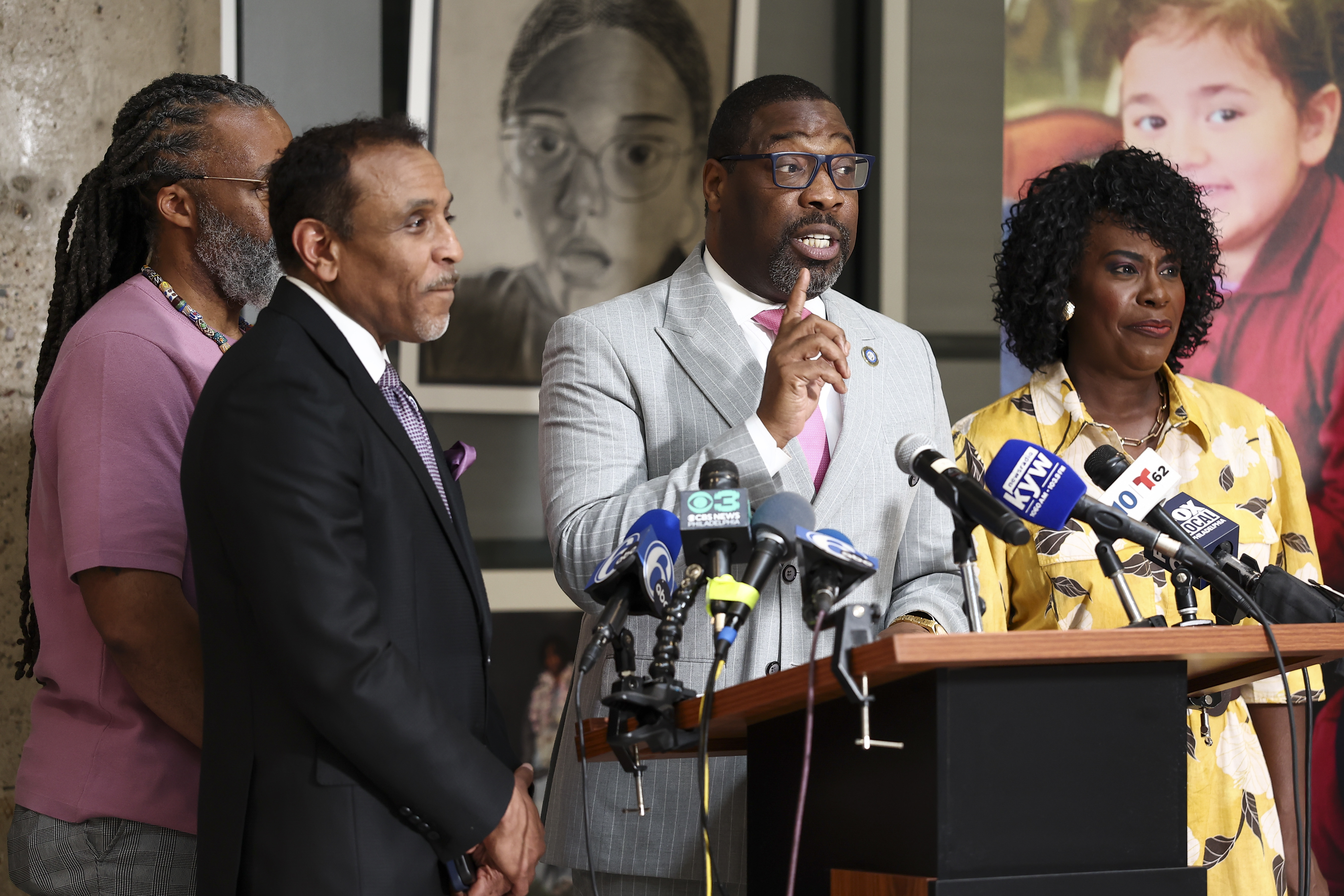
    Councilmember Isaiah Thomas, who has had a testy relationship with the district and school board over the last several months, suggested it was time to move forward cohesively to push for more funding elsewhere.

    “I think where we are at this moment is recognizing that as we come together as Philadelphians, our job now is to use our advocacy initiatives and our leverage to try to get even more resources from Harrisburg,” Thomas said.

    Staff writers Anna Orso and Jake Blumgart contributed to this article.

  • Former Philly union leader Chris Woods found not guilty of fraud

    Former Philly union leader Chris Woods found not guilty of fraud

    Christen “Chris” Woods, the former leader of one of Philadelphia’s largest labor unions, was acquitted of theft and conspiracy charges Wednesday by a judge who rejected prosecutors’ allegations that he used a union-funded renovation project to secretly funnel money into local political campaigns.

    In delivering her verdict, Common Pleas Court Judge Tracy Brandeis-Roman said prosecutors had failed to prove beyond a reasonable doubt that Woods — who once led District 1199C of the National Union of Hospital and Healthcare Employees — acted criminally when he hired longtime political operative Tracy Hardy to oversee the renovation of a bar inside the union’s Center City headquarters in 2019. The case against him, she said, relied on circumstantial evidence that did not definitively tie Woods to any wrongdoing.

    As the judge declared Woods, 41, not guilty, he lowered his head toward the defense table, overcome with emotion. Behind him, family members and friends sprang to their feet, raising their hands toward the ceiling and shouting in celebration until Brandeis-Roman restored order by rapping her gavel.

    The verdict brought to an end a protracted prosecution by the Pennsylvania Attorney General’s Office that accused Woods of orchestrating a plot to covertly channel money into Philadelphia’s 2019 Democratic primary elections.

    Prosecutors alleged that Woods used a bar renovation project as a vehicle to steer more than $100,000 in union funds toward political consulting and campaign work benefiting candidates he supported, including one of Woods’ closest friends, Isaiah Thomas, who won a City Council seat.

    Rather than rely on traditional campaign contributions, prosecutors said, Woods hired Hardy — who owned bars but did not work in construction — to develop fake and inflated estimates for the renovation project, then got one of those bloated proposals approved by the union’s board. Then, they said, Hardy took the excess money and used it to surreptitiously support the candidates.

    Woods, who now owns a consulting firm and medical transportation business, was once viewed as a rising star in city political circles, and dozens of supporters sat in the courtroom to watch the case unfold. Thomas was among those who attended the proceedings, making a brief appearance during the trial’s opening phase in February. Brandeis-Roman conducted the nonjury trial over the course of months, before hearing closing arguments in May and issuing her verdict Wednesday.

    During the trial, Woods’ attorneys blamed Hardy for any issues with the renovation’s cost or the accuracy of its invoices. Woods never intended to use the union’s funds for anything other than construction, they said, and if Hardy overbilled the union, he did so on his own — and to line his own pockets.

    Hardy pleaded guilty in federal court last year to charges stemming from the bar renovation, as well as a separate scheme in which he fraudulently obtained $2 million in pandemic relief funds.

    He is scheduled to be sentenced in September.

    “This isn’t a case about theft from a union,” Woods’ attorney, Keir Bradford-Grey, said in court. “This case is about a fraud between Hardy and [his contractors].”

    Among the evidence presented were financial records and witness testimony that prosecutor James Price said showed the renovation project’s cost ballooned from an initial estimate of about $47,000 to nearly $150,000 by the time the board approved it. Price said that was because Woods and Hardy were secretly using the arrangement to fund political consulting by Hardy for candidates of Woods’ choosing.

    “You cannot spend union money just because you think it’s for the best,” he said in his closing argument.

    But Woods’ attorneys said that the initial estimate for the construction project was unrealistically low, and that Hardy did ultimately renovate the bar.

    If Hardy was a sloppy bookkeeper or dubious project manager, they argued, that did not make Woods guilty of knowingly misdirecting his union members’ funds to another purpose.

    Woods’ trial also included testimony by Ryan Boyer, head of the politically influential Philadelphia Building and Construction Trades Council and one of the city’s most powerful political figures. Boyer spent half a day on the witness stand answering questions about his relationship with Woods and Hardy, as well as his assessment of the bar renovation’s costs.

    Although Boyer served as a prosecutors’ witness, he delivered testimony that appeared to bolster Woods’ case: He said Hardy was a shady operator who cut corners and spread himself too thin, and suggested that any issues with the bar renovation likely stemmed from Hardy’s conduct.

    On Wednesday, Brandeis-Roman said the evidence left room for competing interpretations, with facts that felt as if they “could go both ways.” Combined with testimony from 19 character witnesses who vouched for Woods’ integrity, she said, the uncertainty convinced her that prosecutors had not met their burden of proof.

    “Sometimes,” she added, “all you have is your good name, and that should mean something.”

    Among those in the courtroom was Woods’ mother, Valencia, who jumped from her seat after the verdict and repeatedly shouted, “Thank you, Jesus. Thank you, God,” until she embraced her son in the hallway outside the courtroom.

    There, surrounded by loved ones, Woods said the verdict meant “I’m finally able to move on with my life.”

    Bradford-Grey added: “I am glad people will finally get to see he is not the person he was portrayed originally in the paper. It’s time to put this to bed and let Chris be the man we know he is.”