Last November, Mayor Cherelle L. Parker announced with great fanfare that Philadelphia could create a property tax break to spur the conversion of derelict buildings, such as empty Center City office towers and vacant school facilities, into apartments.
She had worked with legislators in Harrisburg to change state law to allow Philadelphia to pursue the legislation, which would create a 20-year property tax abatement for conversions of “deteriorated” properties.
But 10 months later, no such legislation has been introduced in City Council, and Parker on Wednesday called on city lawmakers to consider her 20-year abatement idea for distressed properties.
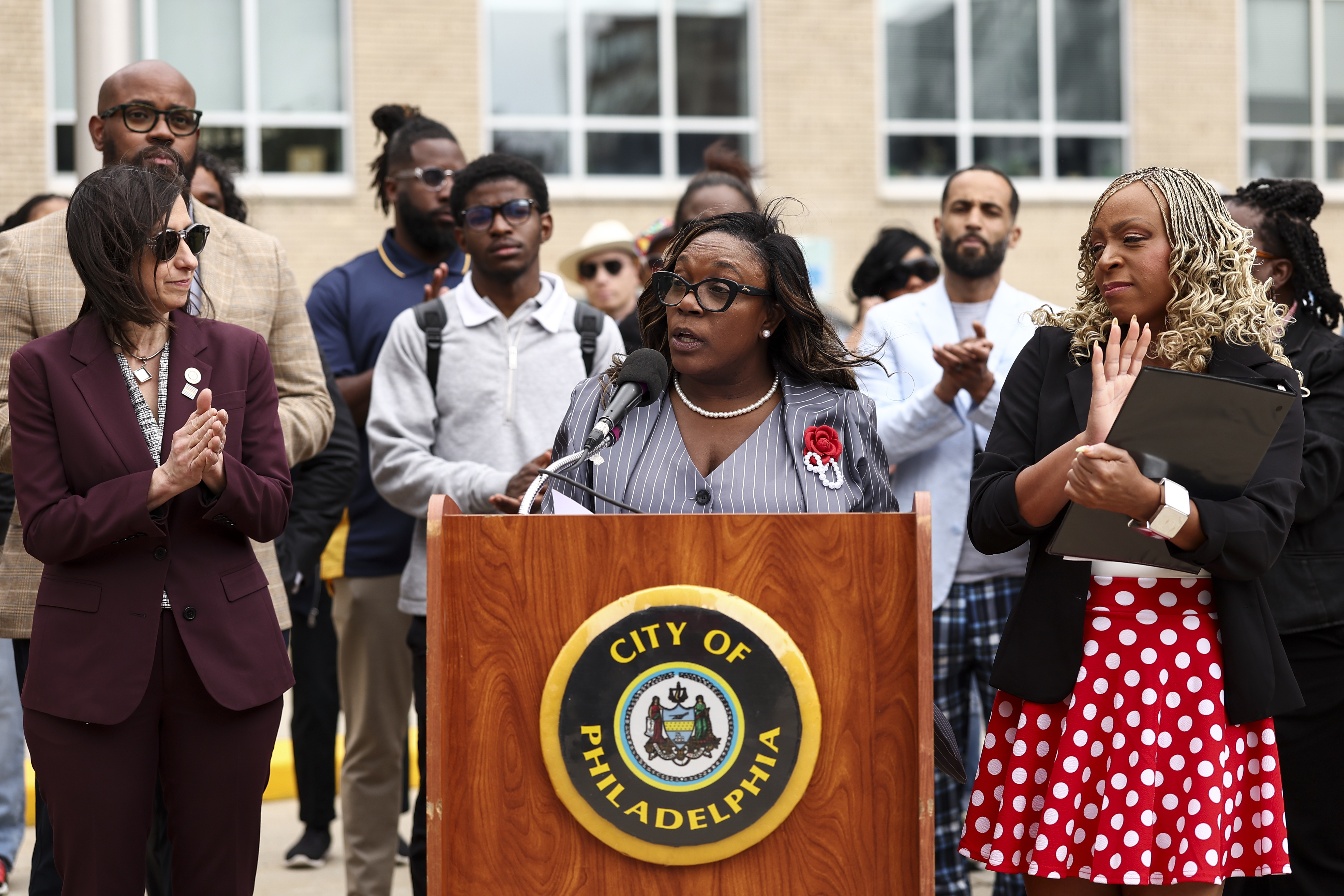
“We have an affordability crisis here in the city of Philadelphia,” Parker told reporters Wednesday. “What if we marry that challenge with these persistently vacant buildings that have gone underutilized, and we put them to their best and their highest use to incentivize affordable housing?”
Parker’s administration, however, has not yet transmitted a draft of the bill to Council, which is typically the first step for lawmakers to consider legislation championed by the mayor.
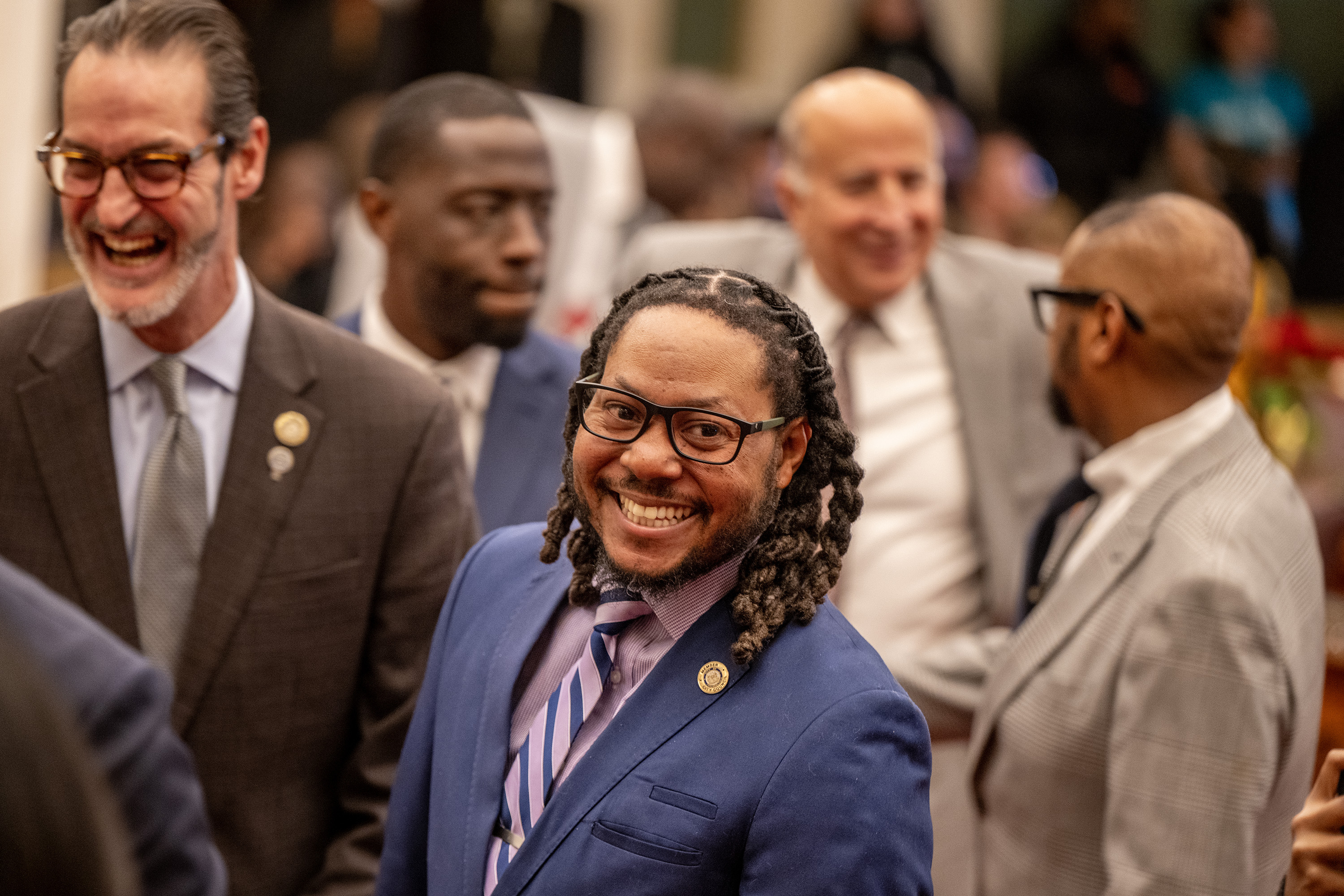
“Tell them, ‘Send the bill over,’” Council President Kenyatta Johnson told reporters Thursday. “We haven’t seen any piece of legislation regarding 20-year tax abatement at this particular point in time.”
Asked about the delay, Tiffany W. Thurman, Parker’s chief of staff, said Thursday that city agencies “are collaborating to ensure the proposed legislation is legally sound and can withstand constitutional scrutiny.” She added that Parker “remains firmly committed to presenting City Council with a bill that incentivizes the development of affordable and workforce housing on vacant, publicly owned land.”
On Thursday, several members of Council questioned the lack of specifics from the mayor’s office, and others were less than enthused about the idea of approving a new tax break when the Philadelphia School District is facing a funding crisis.
“I continue to appreciate an effort to make sure that we have access to affordable housing in the city of Philadelphia,” Councilmember Nicolas O’Rourke said. “At the same time, I am very much so laser-focused and desirous of the city getting the revenue that it needs.”
A controversial policy
Property tax abatements have long been controversial in Philadelphia, with opponents contending that they starve the city and school district of needed revenue while favoring real estate developers.
Philadelphia’s 10-year abatement program, which was established in the 1990s, previously exempted owners from paying real estate tax on all new construction or improvements on any type of property for 10 years.
That program was long hailed as key to the city’s turnaround in the early 2000s. But concerns about its impact on neighborhood inequality and school funding grew over time, and Council in 2019 roughly halved the value of the tax break for new construction.
Parker argues that the idea behind her legislation is different: She wants to see a far more narrowly targeted bill that would only help developers who seek to redevelop large, derelict buildings.
“We’re talking about … persistently vacant school buildings that have been vacant from three up to 30 years,” Parker said Wednesday.
The mayor also noted that the development environment has worsened dramatically since Council cut the 10-year tax abatement’s power, with soaring interest rates and construction material inflation as factors that weigh heavily on complex and large-scale projects.
Still, many Council members are skeptical of tackling a potentially controversial measure that is seen to favor developers ahead of next year’s municipal elections, when all 17 city lawmakers will be on the ballot.
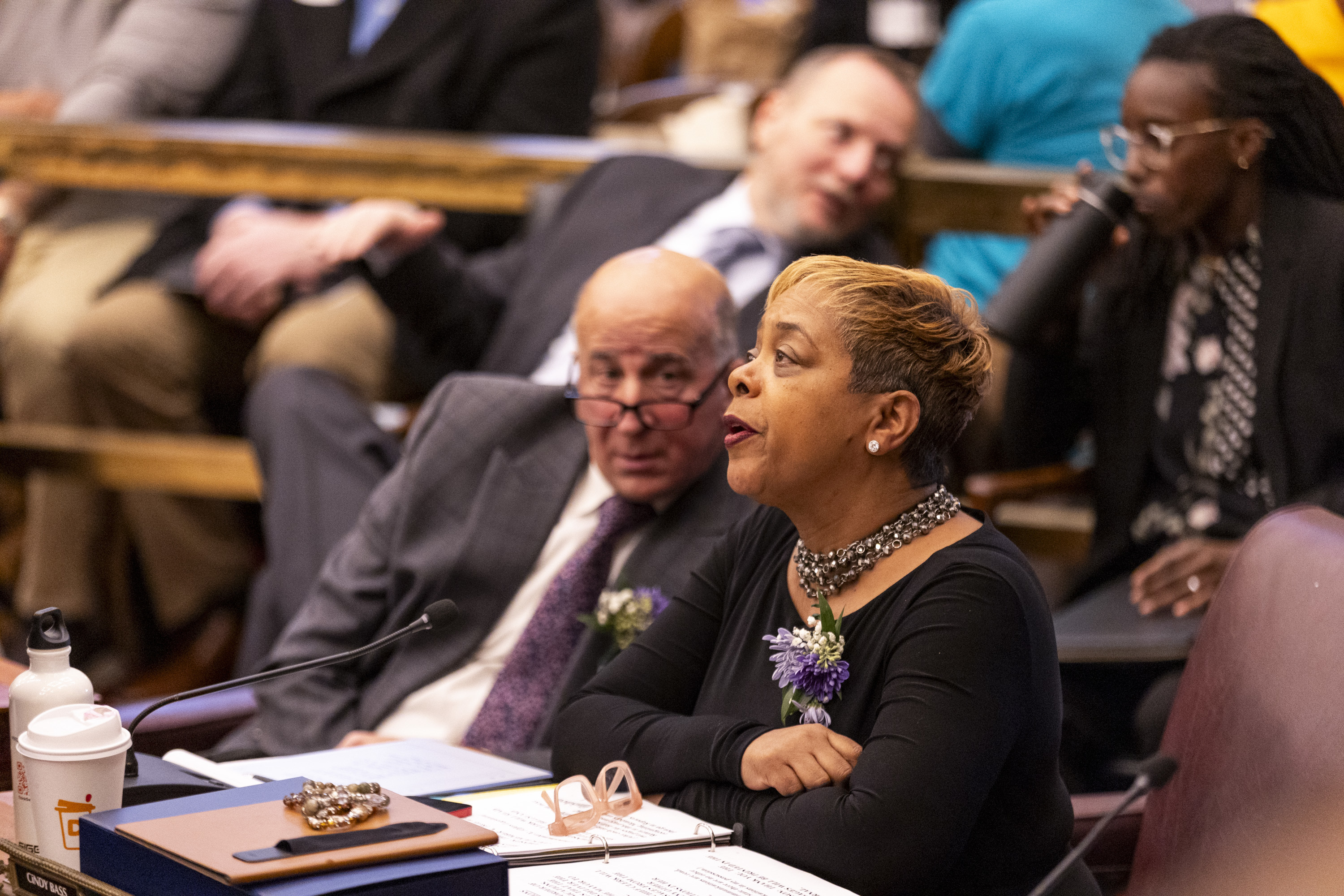
“I’d like to get more information on exactly what the plan is because the tax abatements are, as you know, hugely unpopular,” said Councilmember Cindy Bass, who represents parts of North and Northwest Philadelphia.
Bass said that while the abatement has spurred needed growth, she would need to see any expansion of it balanced with the needs of lower-income Philadelphians who are struggling with rising costs and property taxes.
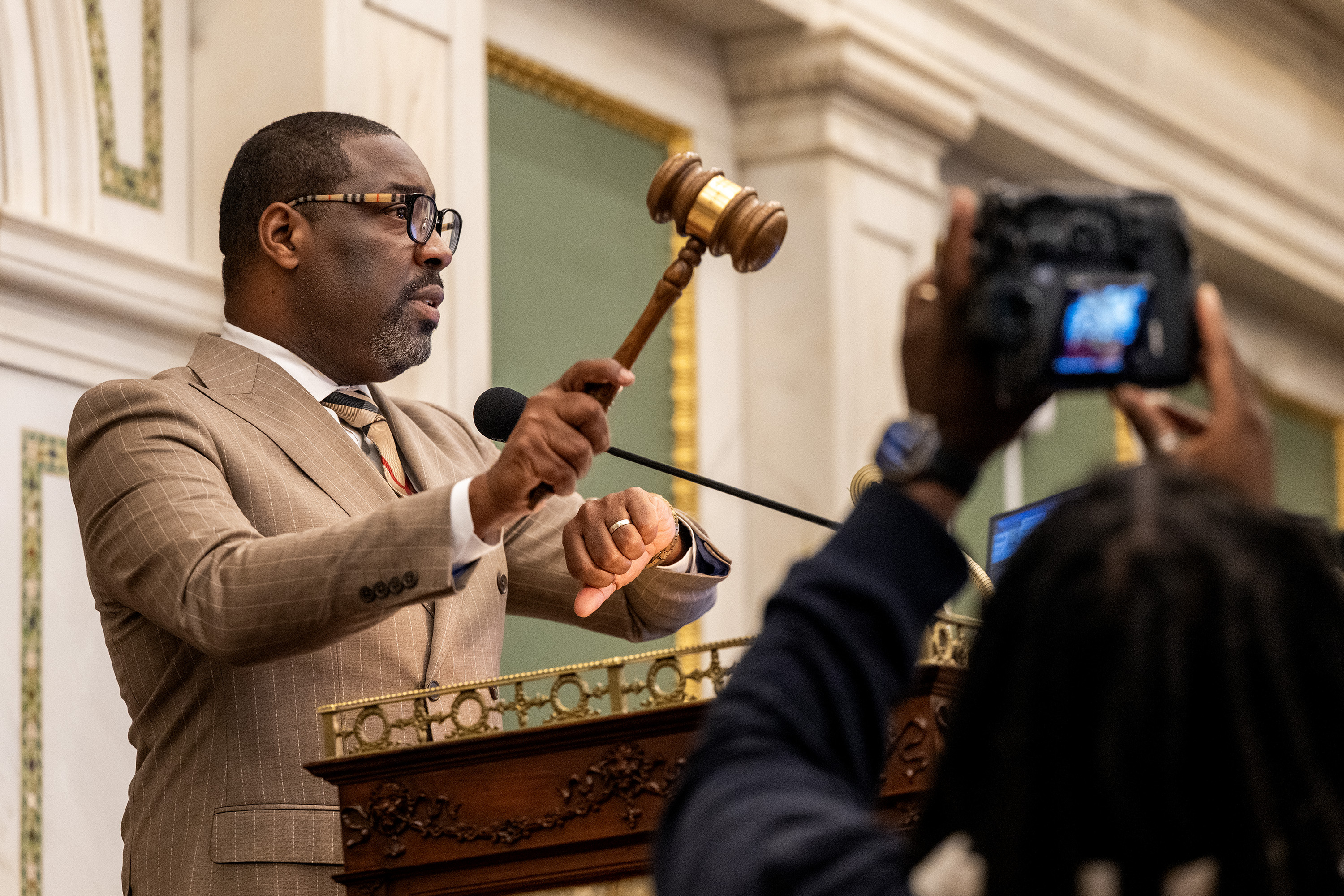
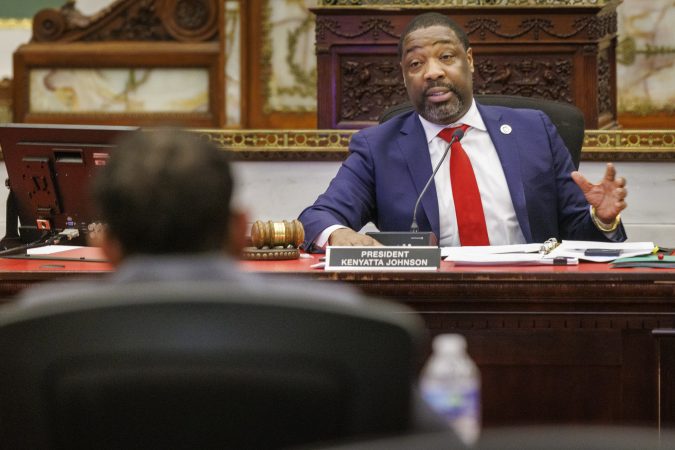
President Kenyatta Johnson checks his watch and gavels City Council into session on Sept. 17, as the body returns for start of its fall session.Tom Gralish / Staff Photographer
And Johnson on Thursday reiterated his comments from earlier this year that he would like to see the newly authorized 20-year abatement include a provision that requires an affordable housing component of the projects it enables.
“Any type of legislation like that should really focus on making sure that we’re providing a level of affordability, also senior housing,” he said. “Obviously, the devil’s always in the details.”
But it is not clear that state law would allow Philadelphia to mandate affordability in an abatement bill, and Parker cautioned against doing anything that would exceed the city’s authority.
“We have to make sure that whatever we are proffering, that it is directly connected to what has been enabled,” Parker said. “It has to pass legal muster for no one to question the constitutionality of what it is that we’re doing.”
Persistently vacant schools
A 20-year abatement would apply to empty office buildings in Center City and long-vacant industrial buildings. But Parker and administration officials have focused their pitch on revitalizing empty public schools.
“We need to pass it because it’s going to be extremely beneficial for challenging properties,” John Mondlak, chief of staff of the Philadelphia Department of Planning and Development, said Wednesday. “You think about schools in 10 years, 20 years — they are very difficult to reposition.”
That pitch, however, runs up against another policy issue festering between Parker and Council.
Thomas and other Council members vigorously protested the plan and are still pressing for the board to reconsider it.
“That’s our priority,” Thomas said Thursday. “I don’t want to have a conversation about schools that are vacant until we have a conversation about schools that are occupied.”
This week’s edition of Shackamaxon looks at a crackdown on “smoke shops,” the Philadelphia police’s handling of traffic citations, how Harrisburg deadlines can be leveraged to fund transit, and what City Council forgot to talk about in its first session after returning from summer break.
Up in smoke?
An increasingly common frustration has been expressed across Philadelphia over the rise of what are known as “smoke shops,” which have proliferated in the city’s commercial corridors. Ostensibly operating as grocery stores, they are often locations where illegal drugs and drug paraphernalia are sold. They tend to operate late into the night and attract the ire of both residents and other business owners.
That’s why it was refreshing to see someone make a substantive move to shut them down. State Rep. Amen Brown, whose district includes parts of West Philadelphia and Logan Square, has put together an initiative he’s called Operation Breezy. Working with both city and state law enforcement, and relying on the support of members of the community, Brown’s efforts have already shuttered 13 of the establishments.
Brown’s approach uses confidential informants, many of whom come from the community itself. He told me that one of the now-closed shops had roughly 40 pounds of marijuana on thepremises, the outlets routinely sell out-of-state cigarettes, and that firearms have been seized as part of the efforts. Residents who would like to help can send an email to OperationBreezy@gmail.com or a message to the effort’s Instagram page, @operationbreezy.
Brown said he’d like to do more to stop the smoke shops, but that the best option requires action at the local level. Rather than enacting a broad-based curfew for all businesses, he’d prefer to target just the smoke shops. He says that might be possible by imposing restrictions on the operating hours of grocery stores that are smaller than 300 square feet. That’s a size below which, officials say, legitimate uses for a storefront become impractical.
Still, I couldn’t help wondering whether this incident is a natural outgrowth of the department’s policies. The Philadelphia police simply do not seem to take enforcing traffic laws seriously enough. Traffic citations have plunged over the last few decades. In the 1990s, officers regularly issued roughly half a million tickets per year. In 2023, about 45,000 tickets were handed out. These days, we celebrate an increase of a few thousand citations, even as overall stops remain at a fraction of the total pedestrian safety experts say is needed. Commissioner Bethel has said that enforcing traffic violations is a lesser priority.
While many officers blame the city’s Driving Equality Law for this decline, that measure does not prevent officers from enforcing moving violations, which are the most dangerous offenses. Failing to do so is a choice the department has made on itsown. The result of this lack of enforcement, traffic safety experts say, has been an increase in reckless and aggressive driving.
Given thata city controller report called Philadelphia’s streets the most dangerous of any major U.S. city, this lack of prioritization must change. While speed cameras and other forms of automated enforcement have made a difference along high-traffic corridors like Roosevelt Boulevard and Broad Street, they can only enforce certain offenses in certain locations. Reckless driving is an issue almost everywhere.
It is impossible to know what went through the mind of the officer who left Eugene Beauford in the street. The department has declined to publish his name, let alone make him available for an interview. But perhaps this horrific incident will prompt police brass to rethink the department’s strategy for enforcing traffic laws.
Skill game shutdown
Next month, Pennsylvania’s so-called games of skill will need to be unplugged. Oct. 13 marks the last day of the grace period the state Supreme Court gave the General Assembly to devise a taxation and regulatory scheme for the machines, devices that resemble slot machines and which are currently banned under state law. For years, legislators have debated where the machines can operate, and whether they should pay the same tax rate as existing slot machines.
By pure coincidence, there’s another big deadline approaching: the authorization period for the state-appointed SEPTA prosecutor. I’d like to propose a potential compromise for both issues. Harrisburg should extend the SEPTA prosecutor’s authority by three years, agree to Gov. Josh Shapiro’s proposed shift in sales tax revenue to support public transit, and pay for it by legalizing skill games and taxing them at the same rate as slot machines. They should also pass regulations limiting the placement of the machines and creating penalties for owners who allow children to use them.
Given District Attorney Larry Krasner’s recent struggles, extending the SEPTA prosecutor should be less politically contentious now than it was in years past. Lawmakers can also point to the significant decline in fare evasion and violent crime on the transit system over the last few years as justification.
For Philadelphia lawmakers who may be reluctant to place limits on the authority of Krasner, who has been overwhelmingly elected by their constituents three times, that kind of middle ground can provide fiscal peace of mind for SEPTA, which has been subject to financial uncertainty for three years. While Democrats seem to be pinning their hopes for approving more state funding for SEPTA on winning control of the state Senate during this fall’s elections, that is hardly guaranteed. If a deal can be reached ahead of time, it reduces the risk of a collapse. It also does not preclude additional action next year.
Finally, the need to act on skill games is clear. As it stands, it will be difficult for the commonwealth to shut down every location that houses the machines. We don’t even know how many exist. I am not a fan of these devices, which have a negative impact on the communities that host them. Regulation will make it easier to mitigate that damage and ensure Pennsylvanians see some benefit from the funds that flow through them.
Council comeback
After its three-month summer hiatus, City Council is back in session. All eyes on the second floor of City Hall will be trained on how Mayor Cherelle L. Parker will respond to a series of potentially contentious legislative proposals — from Councilmember Jamie Gauthier’s bill to stop burning trash to Councilmember Isaiah Thomas’efforts to stop at least part of the school closure plan.
City Council should hold investigatory hearings into both officials. Residents deserve better from their leaders than what both Krasner and Bilal have shown.
Philadelphia City Council members are considering dueling proposals over how the city eliminates its garbage, with one lawmaker leading an effort to immediately block the city from shipping its garbage to a trash incinerator and another taking a longer-term approach.
Councilmember Mark Squilla on Thursday introduced legislation authorizing Mayor Cherelle L. Parker’s administration to, within three years, develop a plan to dramatically reduce the city’s reliance on both trash incineration and landfills over the next 20 years.
Squilla’s proposal, which he drafted with input from Parker’s administration, is something of an alternative for lawmakers to consider as Councilmember Jamie Gauthier has for months pushed for a more aggressive approach to stop the city from incinerating trash this year.
Both lawmakers hosted news conferences this week alongside their allies to rally support for their cause, part of a long list of events Council members hosted as the legislative body returned Thursday for its first meeting of the fall session.
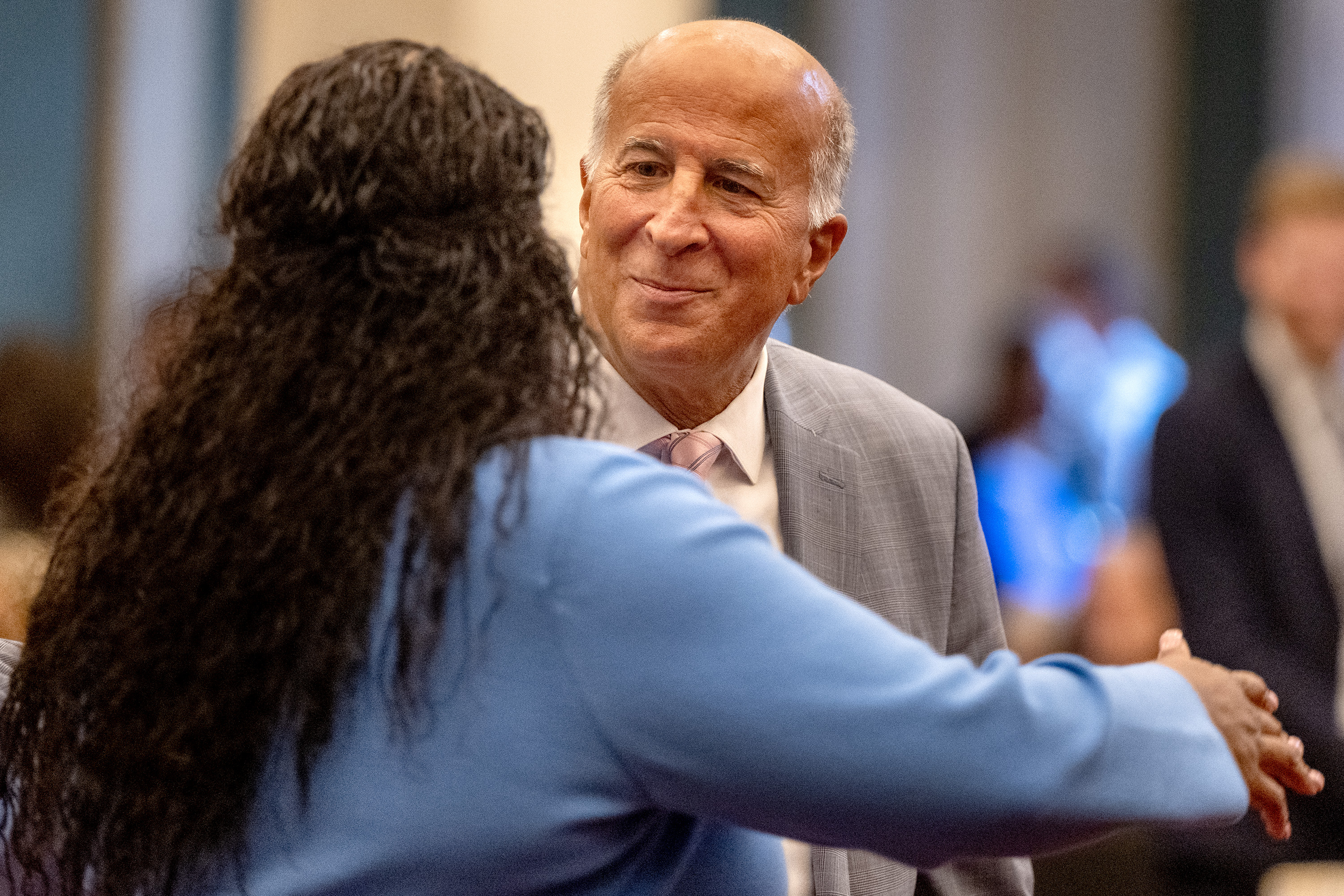
Councilmembers Mark Squilla and Katherine Gilmore Richardson (back to camera) greet each other as City Council convenes for its fall session Thursday, Sept. 17, 2026.Tom Gralish / Staff Photographer
The first meeting after the summer break typically has a jovial, first-day-of-school feel. But the mood briefly shifted Thursday when City Hall was evacuated and Council abruptly adjourned after a suspicious package was found on the floor where Council was meeting.
Police cleared the package, and Council resumed its business Thursday afternoon.
Here’s what else happened this week:
What was this week’s highlight?
Incinerator issue heats up: Gauthier has for months sought to pass legislation that would ban the city from continuing its long-term practice of sending about a third of its garbage to a trash incinerator in Chester, about 15 miles south of the city. She argues that incineration is bad for the environment and harms Chester residents’ health.
Parker’s administration opposed the legislation, called the Stop Trashing Our Air Act, and Gauthier in the spring failed to gain enough support for it in Council.
Now, Gauthier is trying to block the Parker administration from renewing its contract with Reworld, the incineration facility. The administration needs Council approval to enter into a new four-year contract with the firm.
Gauthier has several members on her side, including three fellow progressive lawmakers, as well as Councilmember Isaiah Thomas, who is the Democratic majority whip.
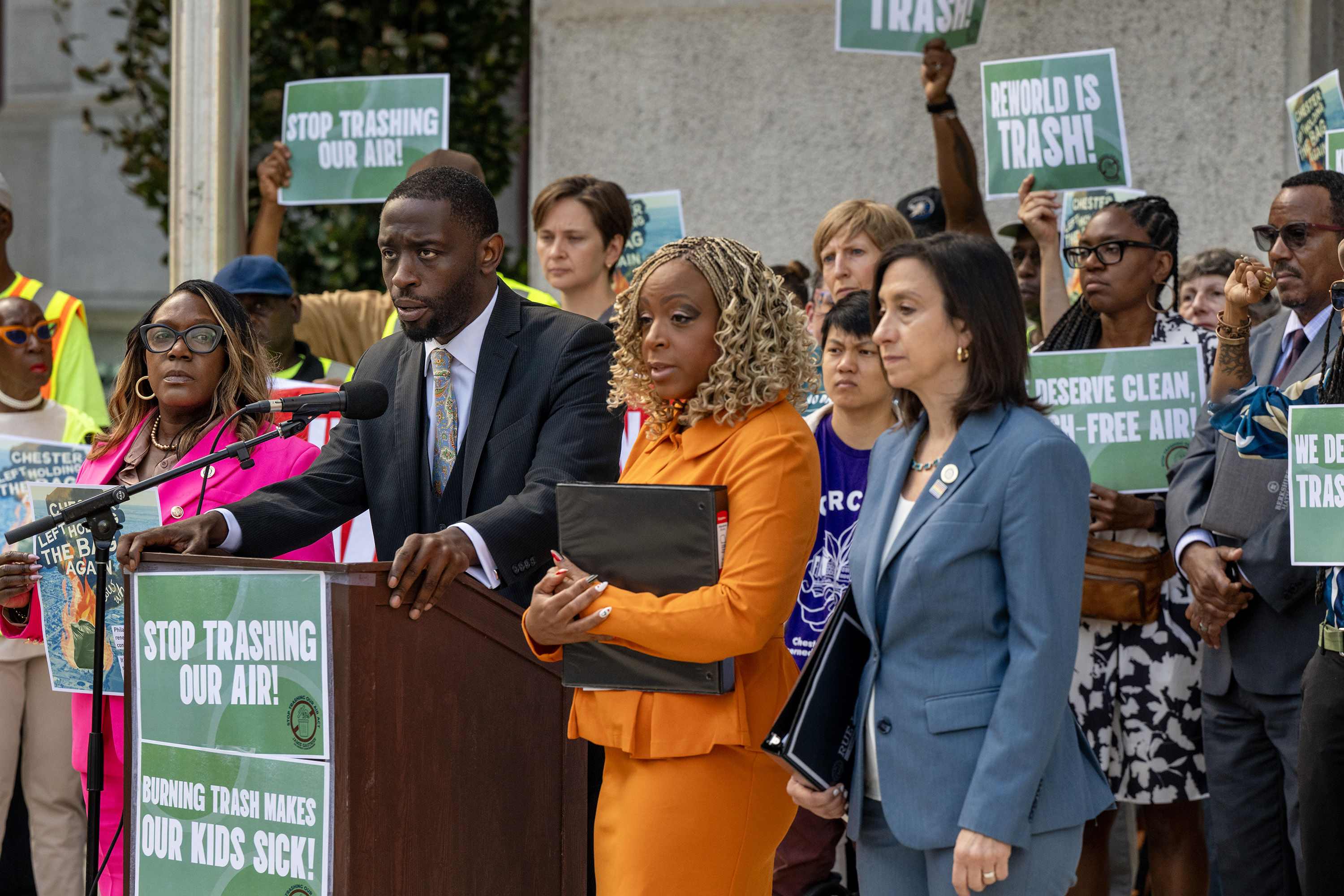
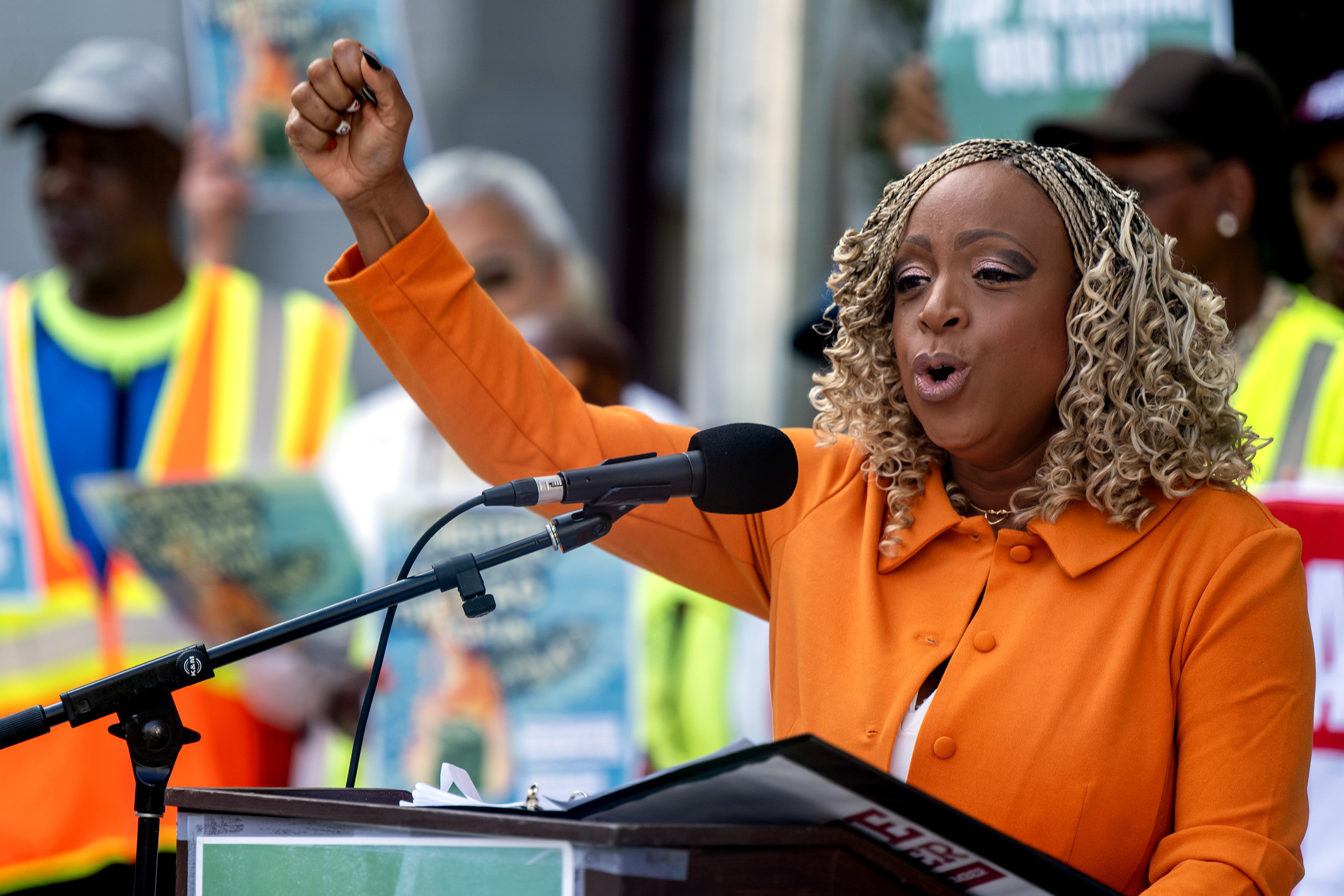
City Councilmember Jamie Gauthier speaks at a rally outside City Hall early Thursday morning Sept. 17, 2026 where protesters called on Council to reject Mayor Cherelle L. Parker’s waste disposal contracts. A coalition of elected officials, health and climate experts, and advocates from Philadelphia and Chester gathered to oppose the city’s sending its trash to an incinerator in Chester.Tom Gralish / Staff Photographer
Squilla’s proposal in some ways offers members an off-ramp. His bill calls for a “circular waste” system that includes new techniques for waste disposal, such as composting and “anaerobic digestion,” a process that breaks down organic waste.
Managing Director Carlton Williams said Wednesday during a news conference with Squilla that the city is looking to build out an anaerobic digestion system within four years.
Squilla said that while the administration is already working toward a more modern waste disposal system, passing a law would “codify what we had as plans and resolutions before.”
Gauthier said that she supports Squilla’s goal of moving toward a more sustainable system, but that his legislation “is a plan to create a longer-range plan.”
“It in no way changes the decision in front of Council,” she said. “We can move away from this practice right now.”
What else happened this week?
Severing the law department: The city law department serves as legal counsel for both the mayor’s administration and Council, a dynamic that can sometimes cause friction when the city’s elected officials disagree.
Council on Thursday approved a resolution by Thomas to hold a hearing “to consider the separation of the [law] department’s functions between the administration and City Council.”
Thomas has clashed with Parker’s administration, and he said he became interested in looking at the department’s structure due to concerns that Council was not receiving independent legal advice on some issues.
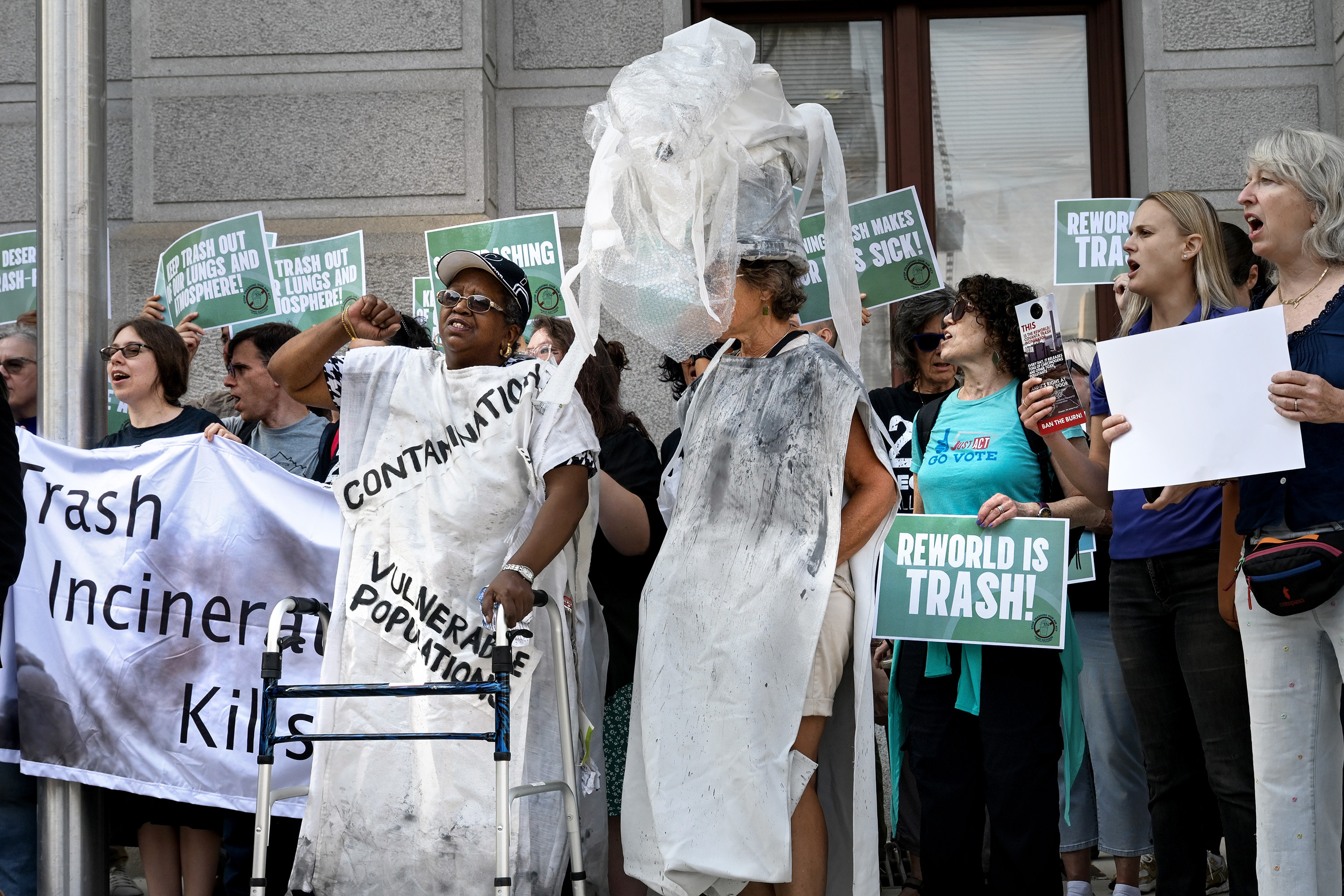
Lois Williams (left), dressed as a “sick person,” and Shari Hersh (right) in costume as a “smokestack,” join a rally outside City Hall early Thursday to call on City Council to reject Mayor Cherelle L. Parker’s waste disposal contracts.Tom Gralish / Staff Photographer
He pointed to the Philadelphia School District’s controversial facilities plan, which involves the closure of 17 school buildings and was adopted by the school board in April over the objections of many Council members.
And he said recent legal proceedings around the city’s business income and receipts tax were “part of the motivation” to hold a hearing on the law department.
In 2025, after a Massachusetts company sued the city seeking to overturn a popular tax break program that primarily helped small businesses, the law department said it had determined the lawsuit was likely to succeed. The Parker administration eventually settled the case and persuaded Council to eliminate the tax break. Some Council members at the time complained that the city did not defend the tax break more vigorously.
The department already silos off some of the work it does on behalf of Council from the rest of the administration, such as when it drafts bills proposed by lawmakers. Council also may hire outside legal counsel, but must pay for those services out of its own budget.
A law department spokesperson did not immediately respond to a request for comment.
Storage wars: Councilmember Mike Driscoll introduced legislation on Thursday that would ban new self-storage facilities from his district in lower Northeast Philadelphia.
The storage industry boomed during the COVID-19 pandemic, as consumer spending shifted from services to goods, many families struggled to afford larger homes, and low interest rates juiced development.
Northeast Philadelphia saw a particularly large boom in self-storage buildings because of its rich supply of properties zoned for industrial development. Driscoll said that advocates in the Tacony neighborhood felt their community had become oversaturated.
“They want more affordable housing and [self-storage units] are taking valuable sites for that,” Driscoll said.
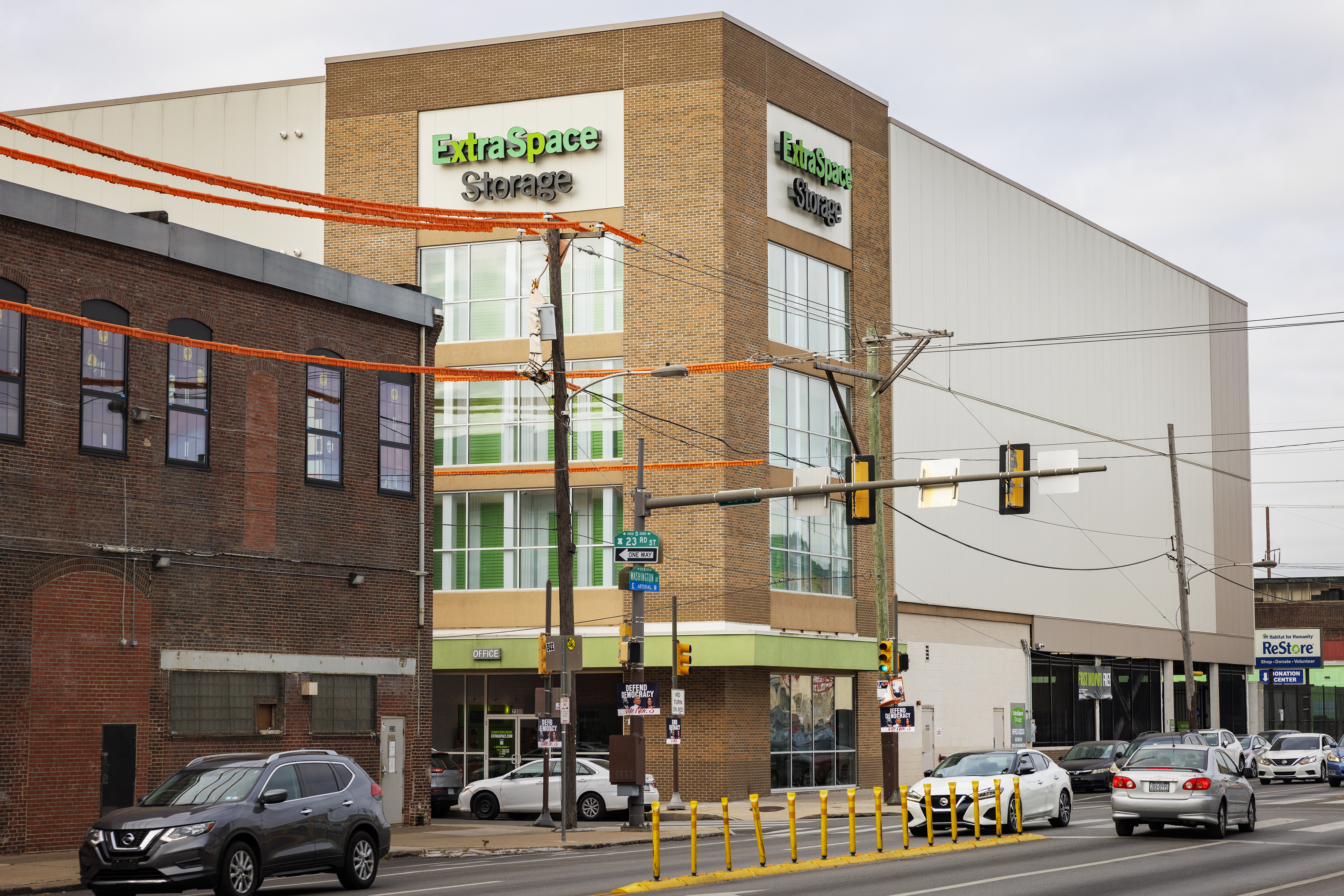
ExtraSpace self-storage at Washington Avenue and S. 23rd Street, Philadelphia, Monday, November 4, 2024.Alejandro A. Alvarez / Staff Photographer
Self-storage facilities are gold mines for developers. They suffer little wear and tear, they have few utility costs, and labor costs are low after construction.
According to online industry search portal StorageCafe, Philadelphia has 89 self-storage sites containing more than seven million square feet of space. About a third of that has been built since 2019.
Other municipalities have moved to limit the spread of self-storage facilities in recent years. New York City banned them from industrial areas to preserve jobs, and Denver blocked them from properties close to light rail lines. Providence, R.I., in 2023 banned new facilities from the city altogether.
Driscoll said that he may further limit his legislation to the Tacony neighborhood.
“I don’t want to hurt another part of my district that maybe wants these things,” he said.
Embracing affordability: Multiple members of City Council said this week that tackling affordability is their primary objective this fall, including Councilmember Nicolas O’Rourke, whose office published a lengthy report outlining dozens of proposals aimed at reducing costs.
Some may be more realistic short-term goals than others.
The report, which was drafted by a Cost of Living Task Force made up of community advocates and industry leaders, recommended the city explore everything from opening municipal grocery stores to creating a local Medicaid supplement program.
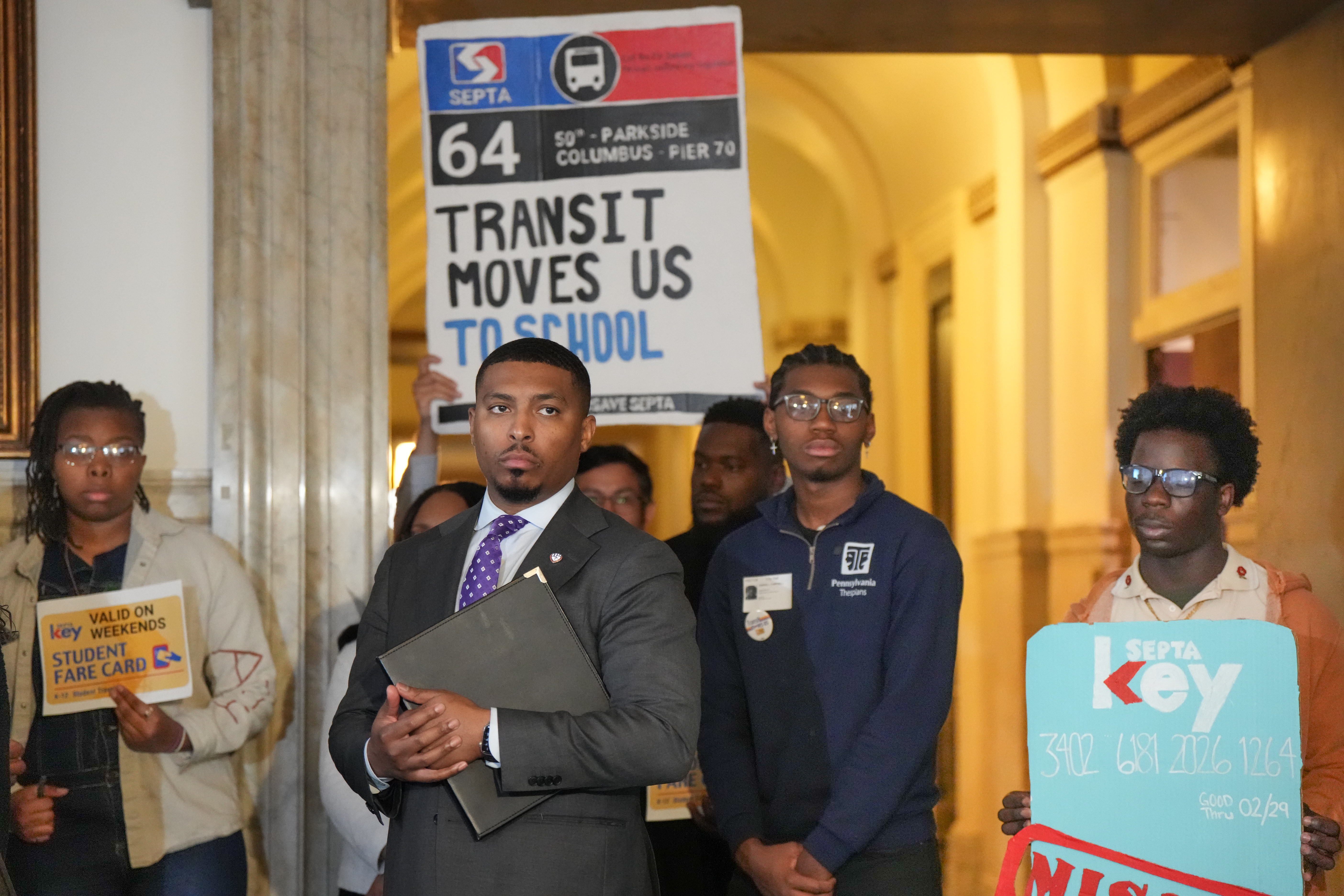
Councilmember Nicholas O’Rourke with students and activists during a press conference about SEPTA in April.Jessica Griffin / Staff Photographer
It also recommends restructuring existing housing programs to more aggressively target the poorest residents, and establishing a Transit Access Fund that would fund free or reduced-fare transit passes for low-income households.
O’Rourke, a member of the progressive Working Families Party, plans to hold a committee hearing on the task force report this fall.
Council President Kenyatta Johnson will also introduce an affordability measure this fall. He plans to bring forward legislation that would establish a permanent Food and Nutrition Security Coordination Office, he said in a statement.
Quote of the week
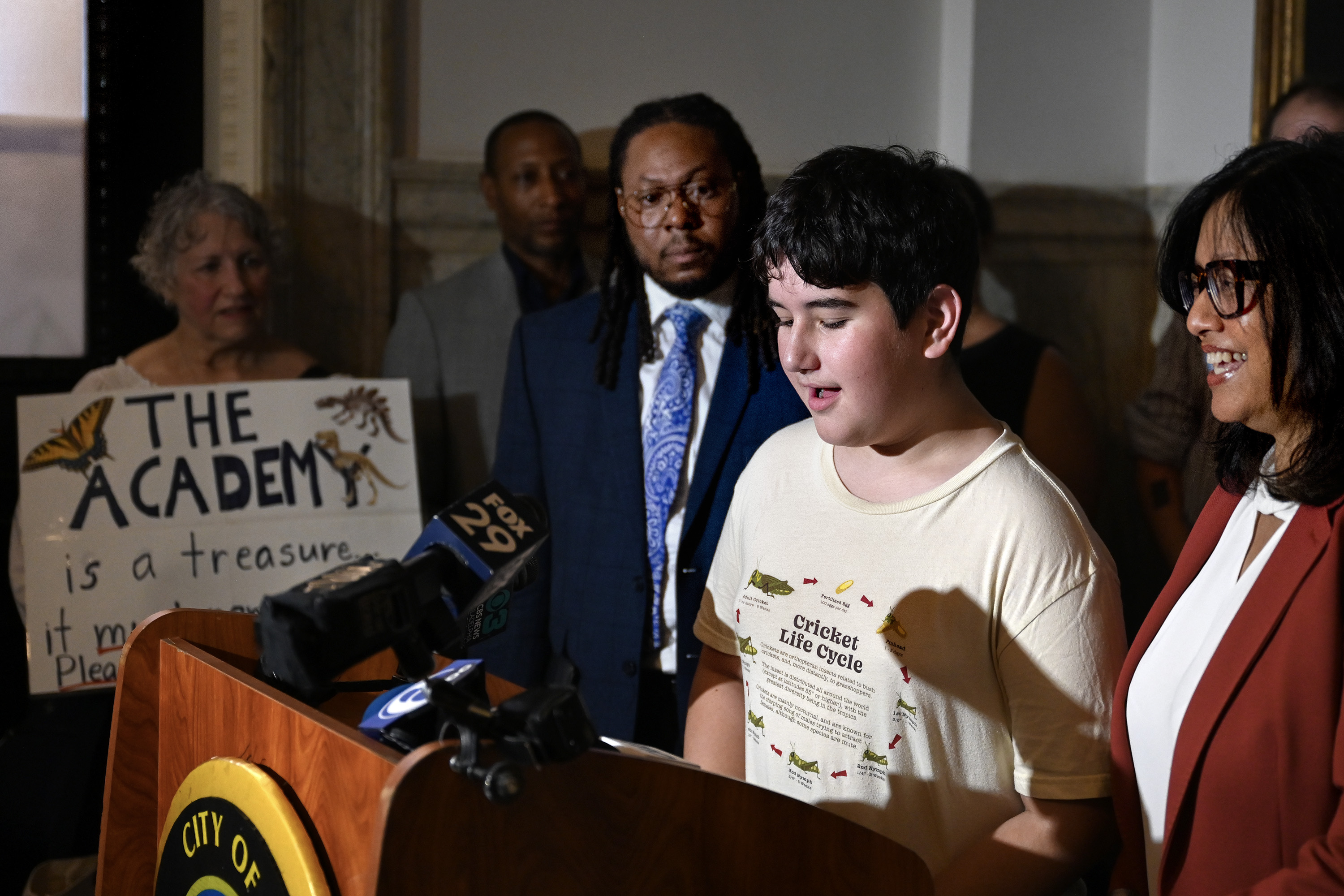
Jeffery Young, Jr. (left) with twelve year-old Jack Erfer of Wynnewood and councilmembers and Nina Ahmad (right) in supporting the Academy of Natural Sciences of Drexel University before City Council resumes for its fall session Thursday.Tom Gralish / Staff Photographer
No bones about it: That was Councilmember Jeffery Young Jr., who called for hearings on the planned closure of the Academy of Natural Sciences.
One evening last week, City Council President Kenyatta Johnson stood on South Broad Street and greeted his fellow lawmakers as they arrived at Steak 48.
Johnson had invited them to the swanky Center City steakhouse to “reconnect, share conversation, and enjoy each other’s company outside of City Hall,” according to an invitation for the Sept. 9 “members only” event obtained by The Inquirer.
Council resumes for its fall session Thursday — and after the way things ended in the spring, the city’s legislators may have needed the opportunity to break bread together.
When lawmakers last met in June, they approved a $7.1 billion city budget that left all sides feeling dejected. Council turned away a series of tax proposals from Mayor Cherelle L. Parker, including a $1-per-ride levy on rideshare companies like Uber and Lyft, and ended up passing a budget that omitted a number of members’ own priorities and left unanswered how the city will help the Philadelphia School District navigate its funding crisis in the long run.
In addition to representing a new low in Parker’s relationship with the legislative body of which she was once a member, some Council members also questioned their own negotiating team’s handling of the ordeal.
Councilmember Mike Driscoll noted last week that while he was not “pointing fingers,” Council could have added more money in the budget for line items requested by lawmakers, such as funding for community groups.
“I’m disappointed and pissed off at the way it played out,” Driscoll, who represents parts of Northeast Philadelphia, said in an interview. “Our priorities weren’t analyzed in a more thoughtful [way]. … We do the amendments. [Parker] doesn’t. We could have put money in.”
Councilmember Michael Driscoll in Philadelphia on April 23, 2026.Jessica Griffin / Staff Photographer
An Inquirer reporter saw at least 11 of Council’s 17 members at the Steak 48 event, meaning a majority, or quorum, of Council was present. The Pennsylvania Open Meetings Act, or Sunshine Act, requires legislative bodies to notify the public if a quorum is present for a meeting at which official business is discussed.
But Johnson said at the beginning of the dinner that would not be happening.
“Tonight we do no official business,” Johnson said in an interview. “Just social. Welcome back to City Council. Eat and drink and be merry. No policy on the table. No legislation on the table. Just having a good time.”
Johnson’s invite directed members to RSVP to a Council staffer’s city email address. Johnson said his campaign picked up the tab.
“Everyone facing reelection next spring knows they have to be able to point to real accomplishments on the important issues voters care about,” City Hall lobbyist John C. Hawkins said. “And this fall is their last opportunity for them to address the most pressing issues that were not fully resolved in the spring budget process.”
Budget fight hangover
When Council and the mayor in the spring failed to reach a deal over new tax revenue to plug a $48 million hole in the school district’s budget, Johnson said Council had helped identify one-time savings in the city budget to fill the gap for a year while vowing to explore new recurring revenue streams for the district.
Johnson has not yet scheduled a hearing on schools funding, and Council’s dissatisfaction with the district appears to have been mounting.
Mayor Cherelle L. Parker, Council President Kenyatta Johnson, and Superintendent Tony B. Watlington Sr. arrive for an announcement at the School District of Philadelphia Headquarters on Wednesday, June 10, 2026 in Philadelphia. Monica Herndon / Staff Photographer
He said in a statement this week that Council will honor its commitment, but also alluded to finding that money in the district’s own budget, despite school officials saying they are navigating a $300 million structural deficit.
Johnson said Council is awaiting the results of a performance audit of the school district that is being conducted by City Controller Christy Brady. He said that report “will help Council identify any available funds to support recurring funding.”
New arena, who dis?
In the fall of 2024, Council wasconsumed by the debate over the 76ers’ proposal to build an arena in Center City.
Lawmakers spent much of the session debating the economic benefit of the project, while opponents cried out that it would displace businesses and residents in nearby Chinatown.
Despite Council approving it, that project was scuttled by the Sixers, who instead teamed up with Comcast, which owns the Flyers, to plot a different project: a joint venture that would bring a new arena to the South Philly sports complex. Earlier this month, they released the first renderings of what the Spectrum-inspired arena could look like.
There will likely be spirited discussions about it all in Council — at some point. But don’t expect a redux this fall of the all-out brawl that was 2024.
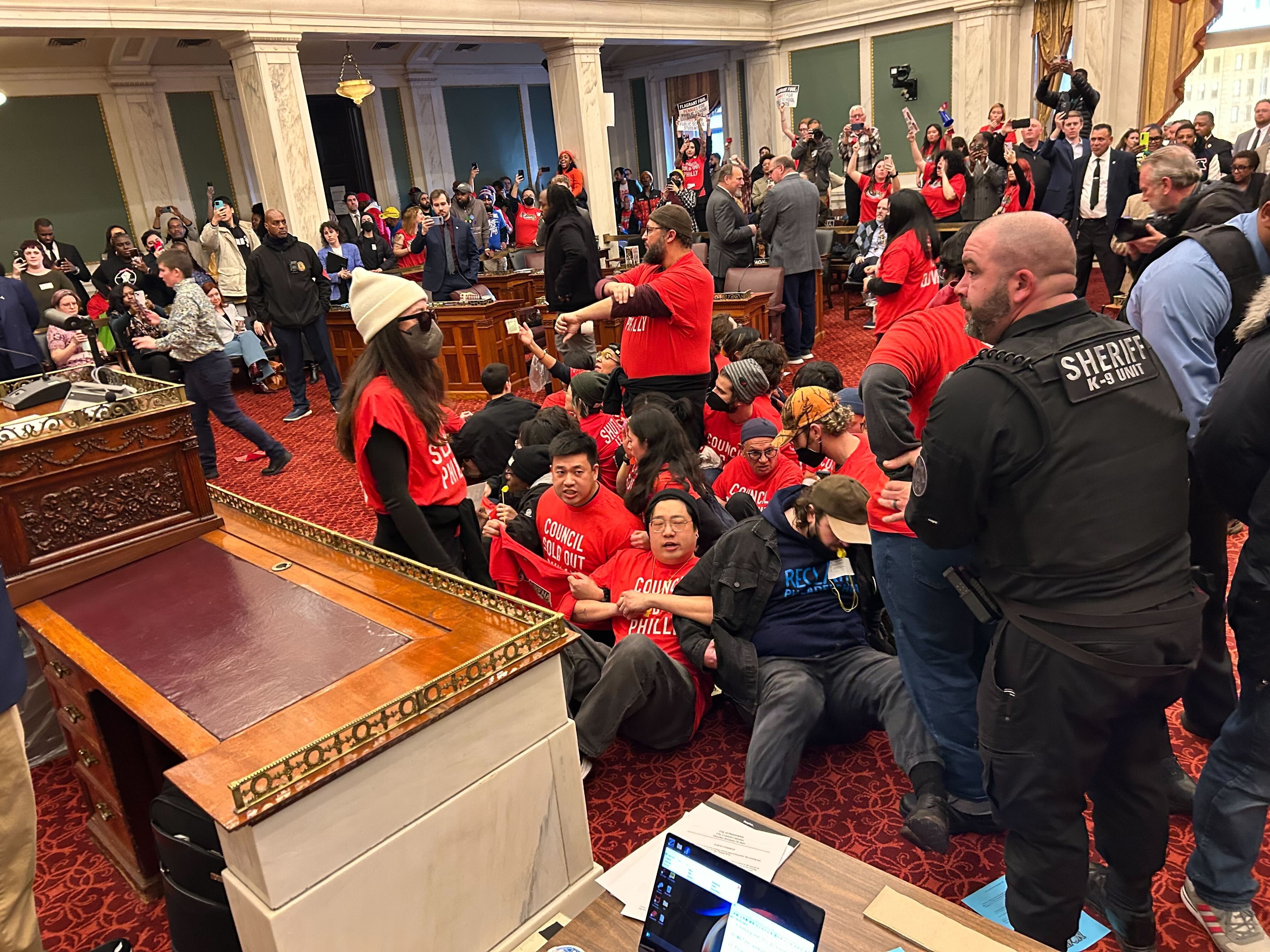
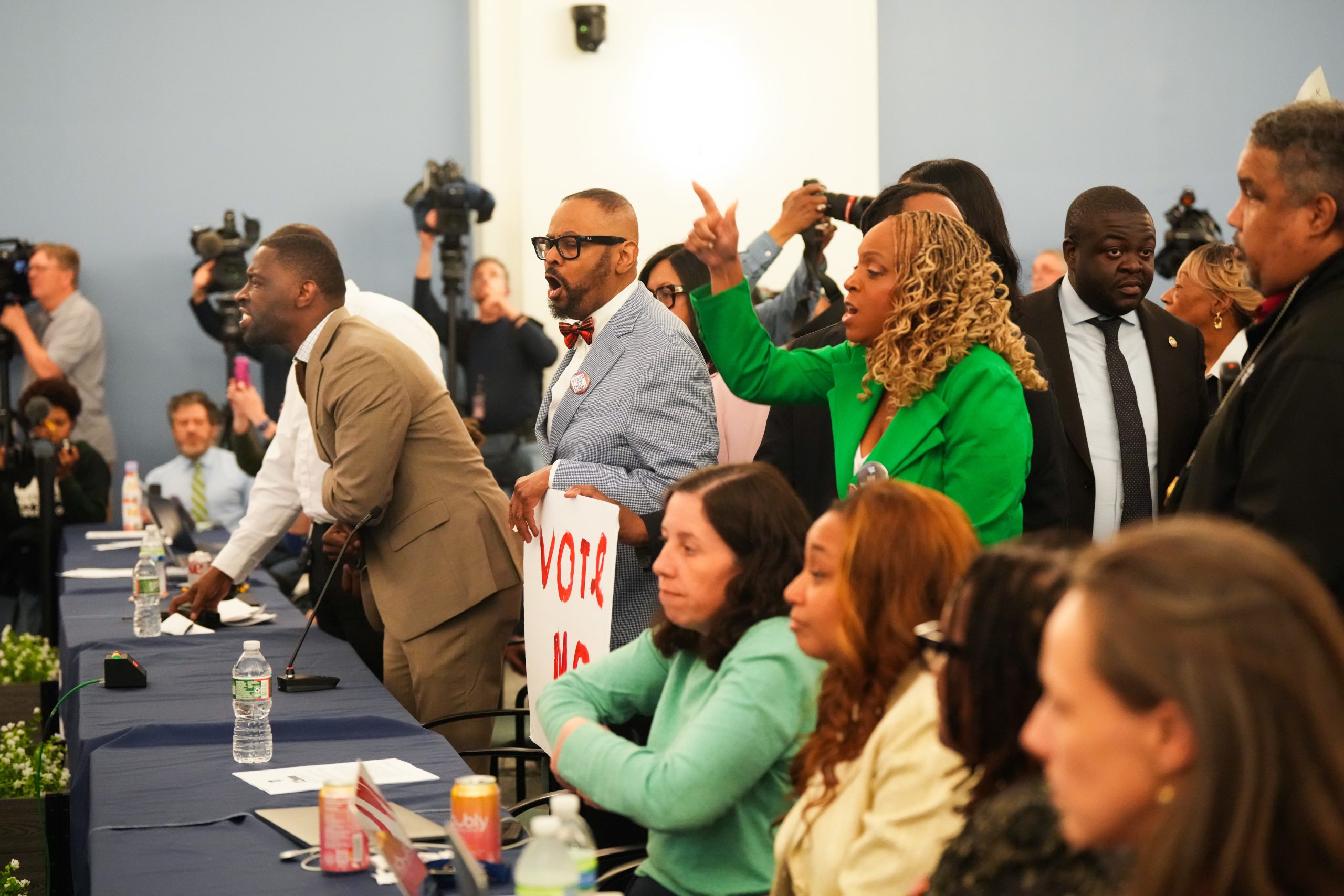
Protesters link arms as sheriff’s deputies attempt to remove them from Philadelphia City Council chambers as the council is scheduled to vote on final approval for the Sixers’ proposed Center City arena on Thursday, Dec. 19, 2024.Sean Collins Walsh / Staff
The stadium district falls in Johnson’s 2nd District, meaning it will be on him to introduce legislation that would green-light the project. And he has not been in a hurry to accommodate the Sixers’ timeline, which would be to approve the project as soon as possible so the venue can open by 2030.
Johnson said in a statement that “no zoning legislation is scheduled for introduction,” and that he is working to find consensus with the Parker administration and other Council members before introducing any legislation.
“I am focused on ensuring that any future legislation concerning the new arena addresses the interests and concerns of the community around the Stadium District and in Philadelphia,” he said.
When that legislation is brought forth, it is unlikely to be anywhere near as controversial as the 76ers’ Center City proposal, which drew opposition due to its proximity to Chinatown, so long as the teams uphold their promise to not seek public subsidies.
The Asian Pacific Islander Political Alliance, which led opposition to the Center City arena, released a statement earlier this month that signaled openness to the South Philly project.
“The people of South Philly should have a meaningful voice in whether and how this project moves forward,” said Will Gross, an API PA member who is rumored to be considering a run for Council. “And if it does, it should mean good union jobs, a strong community benefits agreement, and real benefits for the people who live and work in the neighborhood.”
Trash issue continues to burn
Councilmember Jamie Gauthier has spent the better part of the last year trying to whip up support for a bill that would ban the city from shipping off its trash to be burned at an incinerator in Chester, a longtime practice she and others say is poisoning residents of the city to Philadelphia’s south.
The Parker administration opposed the measure, saying it would limit the government’s ability to carry out its normal competitive bidding process and select the best-value contractor. Gauthier failed to get a majority of Council on her side, and she never called up the Stop Trashing Our Air Act for a vote.
This fall, she will try a new tactic.
Gauthier and her allies are attempting to kill the Parker administration’s effort to approve a new contract with Reworld, which operates the Chester waste-to-energy facility where the city sends about a third of its garbage. (The remainder is hauled off to landfills.)
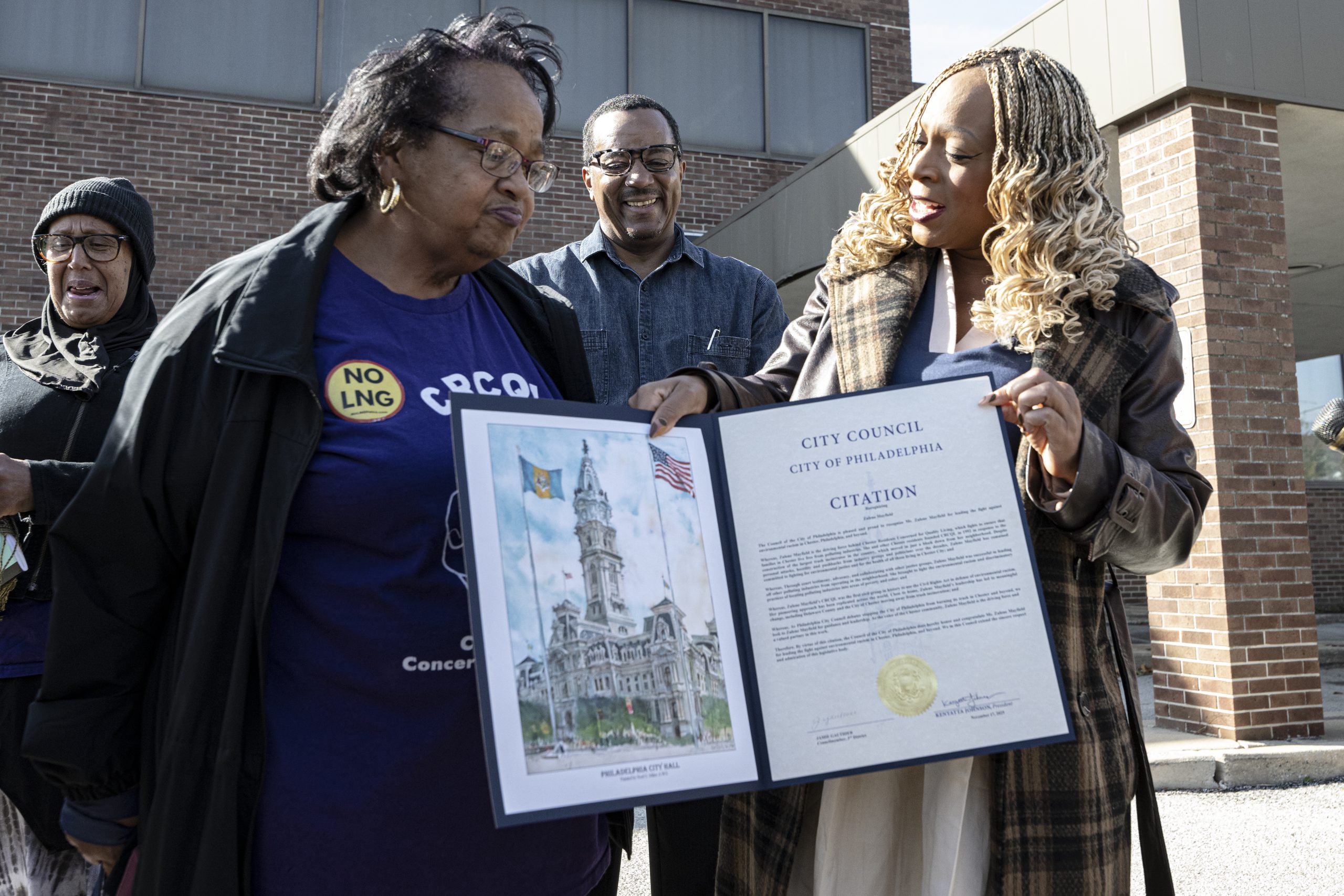
Chester resident Zulene Mayfield, left, Philadelphia Councilmember Jamie Gauthier, right, and Chester Mayor Stefan Roots meet to discuss Gauthier’s “Stop Trashing Our Air Act,” which would ban the city from incinerating waste, during a visit with lawmakers and staff in Chester, Pa., on Friday, Nov. 7, 2025.Jose F. Moreno / Staff Photographer
In July, the Parker administration announced that it intends to enter into a new four-year contract for waste processing and disposal with Reworld, as well as two landfill operators, Republic Services and Waste Management. The terms of those contracts have not yet been made public.
Council must approve multiyear contracts, and Gauthier, who represents parts of West and Southwest Philadelphia, said she is planning a full-court press to get her colleagues to “block Mayor Parker’s dirty deal with trash incinerators.”
The question is whether she can get eight other members on her side to reach a majority of Council. She is likely to find support from three fellow progressives, and she is expected to be joined by Councilmember Isaiah Thomas, the Democratic majority whip, at a Thursday news conference calling on the city to end its contract.
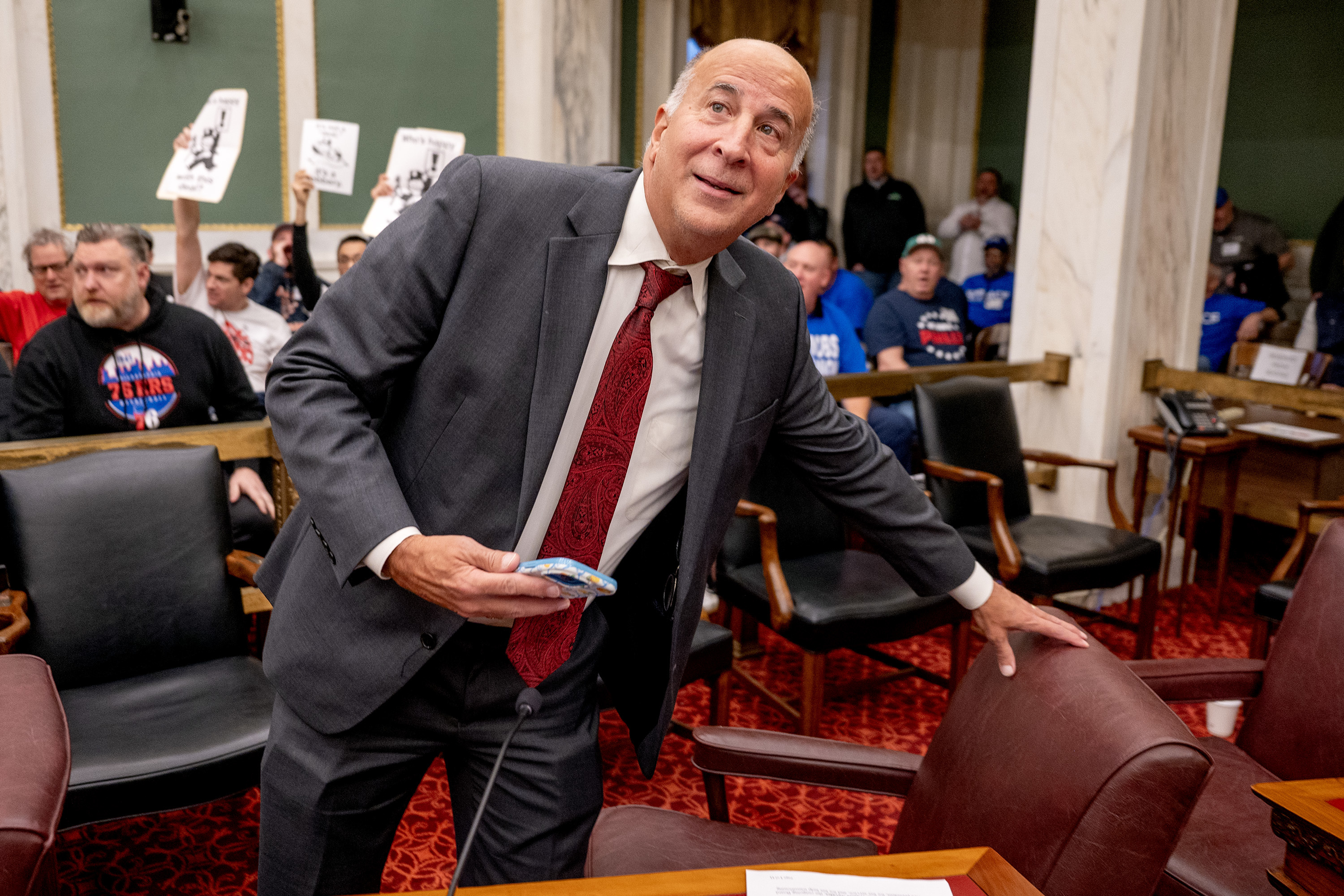
Councilmember Mark Squilla takes his seat in chambers Wednesday, Dec. 11, 2024, before a scheduled committee vote on Sixers arena related legislation was postponed,Tom Gralish / Staff Photographer
Meanwhile, Councilmember Mark Squilla said he has been working with the administration on a plan to build out a “circular waste” system that would replace incineration and landfilling over time with composting and waste “digestion.”
“The incinerator bill …. doesn’t solve a problem we have: to reduce our waste,” Squilla, whose district includes parts of Center City, South Philadelphia, and the river wards, said in an interview. “If we can reduce our waste by going to composting and digestion and other forms, we then eliminate all of our trash. Therefore end up with the result of what the goal should be, [which] is to get as close as possible to zero waste.”
Squilla’s proposal, which would involve “a long-term contract to attract providers to be able to build out a possible digester to decrease the amount of food waste,” could make it easier for Council members sympathetic to Gauthier’s goals but skeptical of her incinerator bill to approve the administration’s contract with Reworld while committing to a long-term solution.
The business tax, revisited
Separate from the school district revenue, some Council members are hoping to advance measures that would provide tax relief to businesses.
Council two years ago approved a 13-year schedule of rate cuts that would dramatically reduce the business income and receipts tax. But at the same time, Parker moved to eliminate a tax break that primarily helped small businesses after its legality under the Pennsylvania Constitution was challenged in court.
The elimination of the tax break — which excluded from taxation companies’ first $100,000 in revenue — has forced thousands of small firms and sole proprietors that make less than that threshold to begin paying a tax from which they had been effectively exempted.
Driscoll worked with tax experts to find a workaround that could pass legal muster — exempting certain types of businesses, such as sole proprietors, from the tax entirely — and he is planning to call up for a vote his bill this fall.
Thomas, meanwhile, said he will introduce a resolution Thursday to hold hearings this fall on the feasibility of reducing the net income portion of the business tax “much sooner” and more “aggressively,” meaning an acceleration of the tax cuts already scheduled.
The measures are likely to spark opposition from more progressive members of Council and could be tricky to navigate for Parker, who wants to make Philly more business-friendly but may not want to forgo additional revenue.
Members eye priorities as election looms
With next year’s election looming — and all 17 members indicating they intend to seek new four-year terms — the fall session is also likely to see movement on a myriad of issues championed by individual legislators.
Majority Leader Katherine Gilmore Richardson said she will propose bills to “protect communities from harmful nuisance businesses and improve processes around code violations,” continuing her efforts to crack down on businesses that neighbors say attract crime.
Councilmember Rue Landau, who represents the city at-large, said she is “tackling the impact of emerging technologies, making Philadelphia more affordable for working people, and ensuring equity remains at the center of how we serve our LGBTQ+ communities.”
Landau said she also plans to introduce a resolution calling on the state to ban automated license plate readers like Flock cameras.
The Philadelphia Council members inside the caucus inside City Hall in Philadelphia, Pa on Thursday, June 11, 2026.Aidan T. Gallo / Staff Photographer
And Councilmember Kendra Brooks will propose new protections for temporary workers and tenants facing eviction, according to her spokesperson, Kathleen Melville.
Brooks, a progressive who represents the city at-large, will also fight for additional funding for reproductive healthcare providers, a priority of hers that was left out of the budget following Council’s impasse with Parker, Melville said.
“That was her biggest focus going into the budget,” Melville said. “She had the same experience as every other Council member in that none of her budget priorities made it into the budget.”
Several members have also said that they want to bolster the city’s property tax relief offerings after the administration this summer released its citywide assessments that will mean higher taxes for thousands of homeowners.
The most likely move would be for Council to amend the city’s tax code to increase the popular homestead exemption, which currently exempts the first $100,000 from a home’s taxable value if the owner lives in the dwelling as their primary residence.
Johnson said Council “will review all tax-relief options” this fall.
On Aug. 6, Philadelphia City Councilmember Isaiah Thomas held an Education Committee hearing on the crisis of preschool suspensions and expulsions, examining their devastating impact on families and possible policy solutions to this discriminatory practice, which research has shown is rife with racism and ableism.
At the advocacy organization where I serve as policy director, Education Law Center-PA, we help hundreds of families every year who are navigating preschool pushout. That includes families whose children — yes, even toddlers as young as 18 months old — have been suspended or expelled from preschool.
This shocking practice is common: Preschools suspend children at a rate three times higher than K-12 schools.
Suspensions and expulsions of our youngest learners, which are harmful to a child’s development and can profoundly impact their future, disproportionately harm Black and brown children, children with disabilities or developmental delays, and children sharing those identities.
Myriad preschool programs exist in Philadelphia and across the commonwealth, which can make it difficult to untangle how each program is regulated and which agency oversees it. This patchwork can also make it difficult for families to understand which protections apply to their children. The clearest safeguards exist when protections, in conjunction with legal requirements, are explicitly codified in preschool program regulations.
Head Start programs offer the strongest protections for our youngest learners, but in Philadelphia, those regulations only apply to 170 Head Start locations, a fraction of the city’s total early childcare settings.
Current Head Start policy, which Kennedy now seeks to rescind, prohibits the expulsion of students in its programs and severely restricts suspensions to extraordinary circumstances, with a host of steps that must be taken before any temporary exclusion.
During the recent City Council hearing, one of the most important policy suggestions offered by ELC-PA’s attorney, Rose Wehrman, included implementing the existing Head Start policy for all of the city’s preschool programs. It’s a policy that, if implemented with fidelity, could have afforded important protections for many families featured in our April report on preschool pushout.
Jennifer Garrison’s 4-year-old son, Terrell, is a constant source of joy for everyone around him. Garrison described him to members of City Council as “loving, gentle, and full of energy.” But Terrell, who is Black and has autism, was denied the most basic needs in his preschool and was effectively excluded from his program under conditions that would not have been permissible under Head Start’s regulations.
To hear Garrison talk about the juxtaposition of who Terrell is compared with how he was treated is gutting — and unfortunately too common.
Had Terrell been in a program with the protections explicitly outlined by Head Start’s now-in-jeopardy regulation prohibiting such exclusion, perhaps he and his family would not have endured such a traumatic experience. We don’t know that for sure, but we do know that Head Start’s policy is one that should be expanded to more programs.
The benefits of Head Start are comprehensive: The National Head Start Association outlines academic, social-emotional, and physical health benefits, and notes that the impacts are “particularly strong” among underserved students. This is, in part, due to strong policies around developmentally inappropriate practices like suspension and expulsion.
But Secretary Kennedy, in the name of “parental empowerment” and even “freedom,” wants to upend the foundations of a decades-long program with lifelong benefits, ranging from increased educational success through K-12 and beyond, as well as physical, emotional, and financial health.
Changes to Head Start proposed by Health and Human Services Secretary Robert F. Kennedy Jr. include deregulating nearly every facet of of the program, from appropriate staffing ratios to developmental screenings, writes Hillary Linardopoulos.Amanda Cuda
In addition to the rescission of the suspension and expulsion policy, Kennedy’s proposed rule changes would deregulate nearly every other facet of Head Start. This includes appropriate staffing ratios, developmental screenings, and a host of regulations that are central to the program.
Fortunately, these proposals are not final, and people can submit public comments (of any length or format) to the Department of Health and Human Services by Oct. 6 to oppose the deregulation of Head Start.
The existing federal regulations are the ones we should emulate right here in Philadelphia and across the commonwealth. We urge our fellow community members to join us by submitting comments opposing the gutting of Head Start regulations, which would destabilize this foundational program.
Meanwhile, our organization will continue to work to support families and expand the existing Head Start policies to include all programs educating our youngest learners across Philadelphia and the entire commonwealth.
Hillary Linardopoulos is the policy director for the Education Law Center-PA, a nonprofit organization dedicated to ensuring equal access to a quality public education for all children in Pennsylvania.
Philadelphia real estate developers see the writing on the wall.
As progressives have toppled centrist Democrats in nationally watched races, some local development interests are wary that the same trend could reshape Philadelphia City Council this spring, when every member is up for reelection. They see a growing progressive faction as a threat to business.
Enter the incumbent protection plan.
Nearly a dozen local developers are already pouring hundreds of thousands of dollars into Philly For Growth, a group that in the past two Council election cycles spent millions on advertising campaigns to back business-friendly Democrats, according to a source familiar with the planning.
Philly For Growth is an independent expenditure group, also known as a super PAC. It can raise and spend unlimited amounts of money to influence an election, but there are rules barring super PACs from most forms of coordination with the candidates they support.
In 2023, the group was the biggest special interest group involved in that year’s Council races, and it provided a substantial boost to its chosen candidates by outspending individual campaigns.
Ahead of the May primary election, Philly For Growth plans to spend $1.5 million to support pro-business Democrats, most of whom are sitting Council members, according to the source, who spoke on the condition of anonymity because they were not authorized to discuss the plans. The group will not fund negative advertising about Council’s four incumbent progressives, the source added.
Councilmember Kendra Brooks, of the progressive Working Families Party, speaks during a rally outside of the School District of Philadelphia headquarters in May. At left is Councilmember Rue Landau and at right is Councilmember Jamie Gauthier. All three are members of Council’s progressive faction.Monica Herndon / Staff Photographer
The idea is to keep progressives from growing their power on Council instead of spending money to knock off the leftists who are already there. There are currently four reliably progressive votes out of the total 17 on Council, but some members may be more likely to vote with that faction as Democratic voters nationally revolt against incumbents.
That’s a different strategy than in 2023, when Philly For Growth backed a slate of five candidates — two incumbents and three challengers. Both incumbents won, but all three challengers lost.
Philly For Growth has previously been affiliated with the Building Industry Association of Philadelphia, an advocacy group for development interests. Mo Rushdy, the BIA’s former president who leads the organization’s political activity, declined to comment.
The source said that Philly For Growth will fund advertising to support Council members Mark Squilla, whose 1st District includes parts of South Philly, Center City, and Fishtown; Cindy Bass, whose 8th District is based in North and Northwest Philadelphia; and Quetcy Lozada, whose 7th District includes much of North Philadelphia and Kensington.
All three are seen as more centrist members and have said they intend to run for reelection. No challenger has officially launched a campaign against any of them, but candidates who are aligned with the city’s left-leaning political organizations are expected to emerge as the primary — still eight months away — draws nearer.
The super PAC is making one exception when it comes to supporting incumbent district Council members, the source said. In the 5th District, currently represented by Councilmember Jeffrey Young Jr., the group will support a to-be-decided challenger.
Councilmember Jeffery Young Jr. speaks to other members of Council during a 2025 session.Tom Gralish / Staff Photographer
At least five people have said they are interested in running for the North Philly-based 5th District seat, and Young has drawn opposition from development interests for pushing proposals that would slow or halt some projects in his district.
Young said in a statement that building “sensible, affordable housing” is one of his top priorities and that he has supported city programs like Turn the Key, which provides mortgage support to first-time homebuyers.
“People are free to back those who share their values. These are my values,” Young said. “I am leaving it to the residents of the 5th to determine whose values best reflect them.”
The super PAC will also fund advertising backing four incumbent members who represent the city at-large: Isaiah Thomas, Katherine Gilmore Richardson, Jim Harrity, and Nina Ahmad. That group doesn’t include progressive at-large Councilmember Rue Landau, but Philly For Growth doesn’t plan to oppose her, the source said.
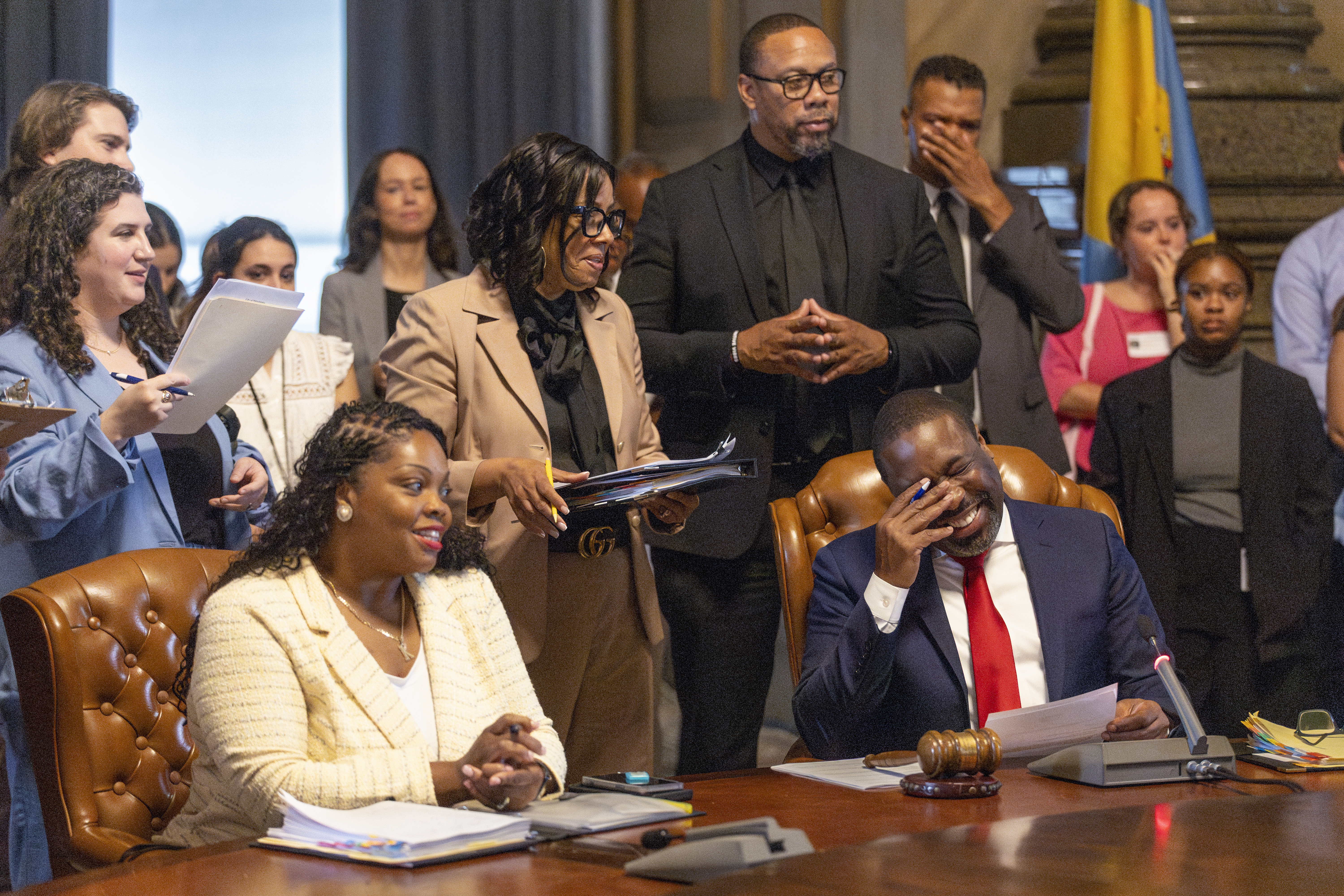
Council President Kenyatta Johnson laughs inside the caucus inside City Hall on June 11.Aidan T. Gallo / Staff Photographer
A spokesperson for Landau’s campaign arm said in a statement that the Council member “stands by her accomplishments for working people, small businesses and vulnerable communities in Philadelphia and looks forward to voters having the opportunity to make up their own minds next year.”
It’s unclear just how competitive the at-large race will be, and candidates have until the spring to decide — nomination paperwork is typically due in March. Seven of Council’s members represent the entire city at-large, and two of those seats are effectively reserved for members of minority parties under the city’s Home Rule Charter.
That has traditionally meant that five seats are held by Democrats, given the party’s massive voter registration advantage in the city. In recent years, Republicans and the progressive Working Families Party have battled for the remaining two seats during the fall general election, and the WFP currently holds both.
Mayor Cherelle L. Parker, who is also up for reelection, and Council President Kenyatta Johnson, who insiders do not expect will see a serious challenger, will likely be on Philly For Growth’s slate, too, the source said.
The Philadelphia School District is about to face significant new scrutiny, with City Council President Kenyatta Johnson asking for a sweeping performance audit of the school system’s management and operations.
City Controller Christy Brady has agreed to the request, which came via a letter in recent weekssigned by all 17 Council members, Johnson’s office told The Inquirer. The comprehensive review will go beyond the audit Brady’s office performs annually, delving into areas such as staffing and outside contractors.
Council laid out no deadline for the audit but made clear it is expecting the results in time for next budget season, which will begin in the new year and ramp up in the spring.
The district, one of the largest in the United States, has a $4.6 billion budget, which funds education for 113,000 students in 213 district schools and 65,000 in 81 charters. About $2 billion of that money comes directly from the city.
“While the SDP is subject to regular financial statement audits that examine the accuracy of financial reporting and compliance with applicable accounting standards, this request seeks a performance audit focused on evaluating the efficiency, effectiveness, and management of financial and operational practices, including budgeting decisions, resource allocation, internal controls, and long-term fiscal planning,” Johnson said in a statement Thursday.
The news comes during a period of heightened tensions between Council and the district, spurred by members’ frustration over the school board’s move to close 17 schools and a separate $300 million structural deficit that took Council by surprise.
Last week, at a news conference where several members “begged” the district to come to the table to negotiate over school closings, Councilmember Curtis Jones Jr. said Council has “tools in our tool belt that we will use” if the board does not change its mind about some building closures.
Jones has sponsored legislation to hold hearings on creating an independent financial authority, like the Pennsylvania Intergovernmental Cooperation Authority, to oversee the district’s finances.
Council sources told The Inquirer that there is no indication that the district has conducted malfeasance, but that given the billions that flow to the district from city coffers, Philadelphia officials want a closer accounting of how the money is being spent.
After the board voted to begin the closure process in April, multiple members of the public also called for increased financial scrutiny of the district.
Reginald Streater, the school board president, said in a statement Thursday that the board and district will work with the controller’s office “to continue strengthening our financial processes and procedures.”
Streater said the audit squares with the board’s approach to governance.
“Good governance is not about assuming we have all the answers; it is about asking the right questions, using evidence to guide decisions and being willing to improve. We look forward to understanding the proposed scope of the audit and ensuring that the examination is constructive and focused on helping the district work well for students, families and educators,” Streater said.
Superintendent Tony B. Watlington Sr. stressed the district’s academic strides, history of audits with no material weaknesses, and moves to solidify its credit rating.
Frustration over a budget deficit and school closings
Johnson, in his statement, said that the audit will reassure Council that “resources are being managed effectively and operations are functioning efficiently by the SDP,” and that he believes its findings will help inform priorities for next fiscal year’s budget.
This year’s budget season was chaotic.
After Mayor Cherelle L. Parker introduced her initial budget, Watlington ordered $225 million in cuts, including some school cuts, with 300-plus teachers, counselors, and climate staff slated to lose their positions.
The problem, Watlington underscored in remarks in March, was “not because we’re not good stewards of the dollars, but because of historic underfunding.” (The district achieved its highest credit rating ever under Watlington, who has said he wants to be the superintendent to retire the system’s structural financial issues permanently.)
Philadelphia’s school system cannot raise its own revenue but instead depends on the city and state to bankroll it, unlike every other district in Pennsylvania.
(Left to Right) Councilmembers Isaiah Thomas, Curtis Jones Jr., and Jamie Gauthier protest at Thursday’s school board meeting as the board prepared to vote on the facilities plan.Jessica Griffin / Staff Photographer
In April, several Council members took the dramatic step of repeatedly disrupting the school board’s vote in an attempt to get it to reconsider the closures of a handful of schools, including Lankenau and Robeson High Schools and Overbrook Elementary.
The school board proceeded anyway — Council approves school board members, who are appointed by the mayor, and the city’s budget, but had no formal authority over the closures.
But it quickly became clear that some Council members remained frustrated with the school system and were looking for a way forward.
Councilmember Isaiah Thomas has said he will not vote to reconfirm any school board member who voted for the closings; he and others have also said they believe it is time to rethink the school board’s governance structure.
The city, as a primary funder of the district, needs a clearer picture of what is going on, they say.
“Given the SDP’s current budget challenges, requests for additional public revenue, and recent proposals involving school closures and operational reductions, City Council believes a comprehensive performance and management review is warranted to ensure transparency, accountability, and informed public decision-making,” Johnson said in the statement. “The City of Philadelphia has a responsibility to ensure that all available revenues, expenditures, obligations, and funding strategies have been thoroughly reviewed before significant decisions affecting students, families, educators, neighborhoods, and public assets are implemented.”
What will the special audit examine?
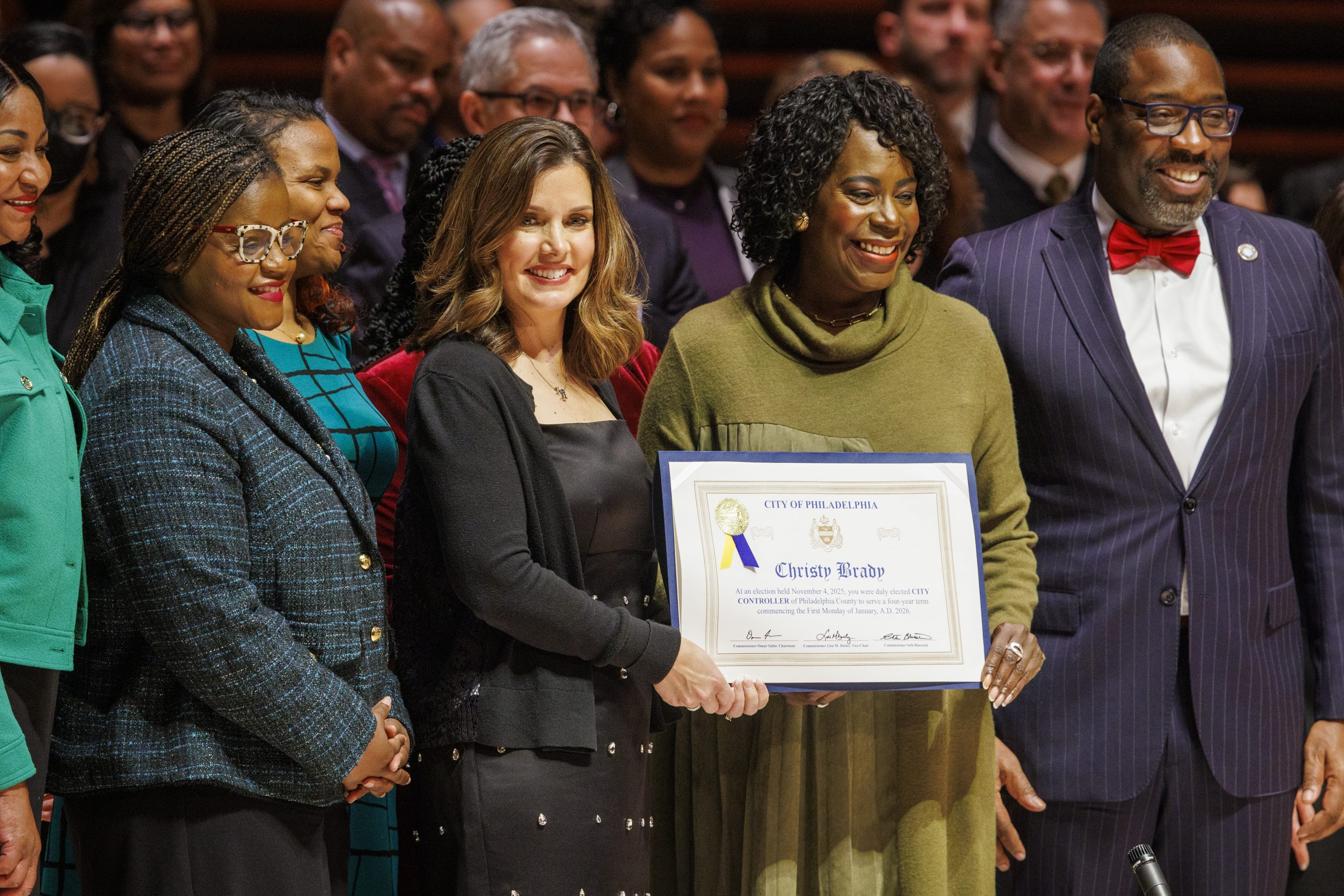
City Controller Christy Brady (second from left, standing next to Mayor Cherelle L. Parker) is seen in this January file photo. Alejandro A. Alvarez / Staff Photographer
Brady, in a statement, said the audit will “ensure resources are being managed effectively, operations are functioning efficiently and students are receiving the support they deserve. We’ve been encouraged by the SDP administration’s response to our previous audits and the steps it has taken to implement our recommendations. We expect this audit will continue that collaborative approach and continue to produce positive results for the benefit of students, educators and taxpayers.”
Council has asked Brady to go deep, from probing into the current structural deficit and the projections used to get there to the status of Philadelphia Parking Authority revenues, both expected and received.
Brady will also look at the district’s use of reserves and its administrative costs, and she will explore “the effectiveness and efficiency of administrative and operational expenditures, including central office functions, non-instructional spending and other costs not directly tied to classroom instruction.”
She will look into how the district’s budgeting methods and long-term planning square with industry best practices, and examine contract management and consultant utilization to try to find areas “for improved accountability, transparency, and cost efficiency.”
Brady is also charged with a deep dive into the financial effects of forthcoming school closings, and the potential ramifications of the closings on surrounding neighborhoods.
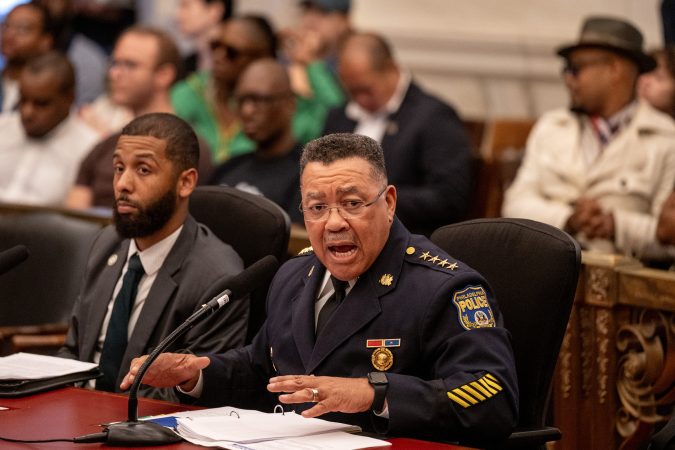
Several members of Philadelphia City Council and a bevy of LGBTQ+ community leaders on Wednesday sharply criticized Police Commissioner Kevin Bethel, who testified about the department’s response to Pride festivities in the city’s Gayborhood in June and largely defended the force’s crowd-control tactics that had drawn outrage.
Bethel acknowledged that June 7 was “not a perfect day” and vowed that the police department would implement more robust planning procedures ahead of next year’s celebrations.
But he stopped short of apologizing for the police department’s response, saying chaotic scenes from the Pride events were part of officers’ attempts to disperse crowds from the Gayborhood, where thousands of people congregated instead of the city’s official festival on the Benjamin Franklin Parkway.
Among them, Bethel said, were hundreds of teenagers, some of whom were seen on video fighting.
“There’s a large group of young people who [had] descended into the neighborhood for what they think is something there,” Bethel said. “There is nothing for them there, other than to take over the street.”
That comment did not sit well with Council members and dozens of LGBTQ+ community members who attended the hearing at City Hall.
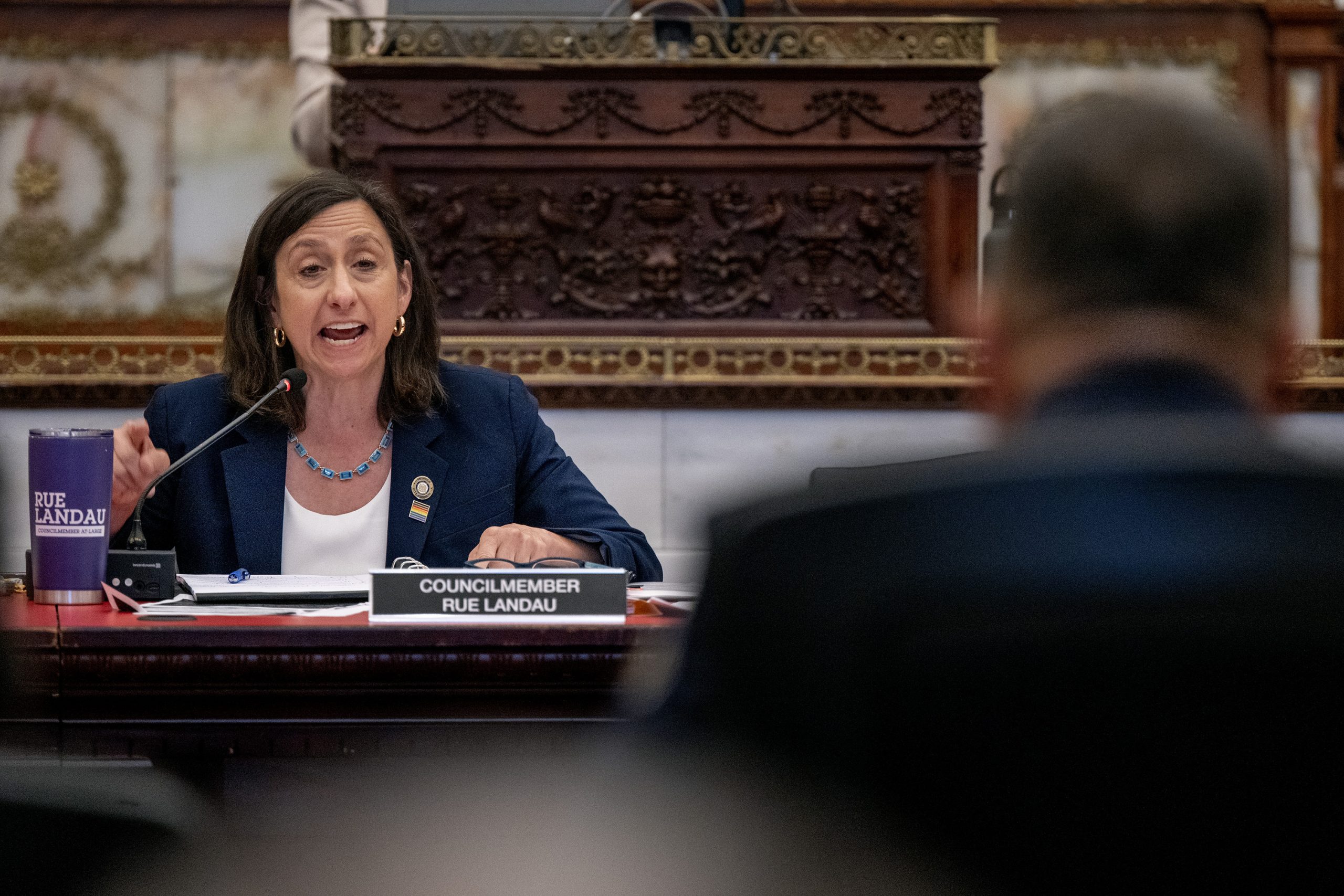
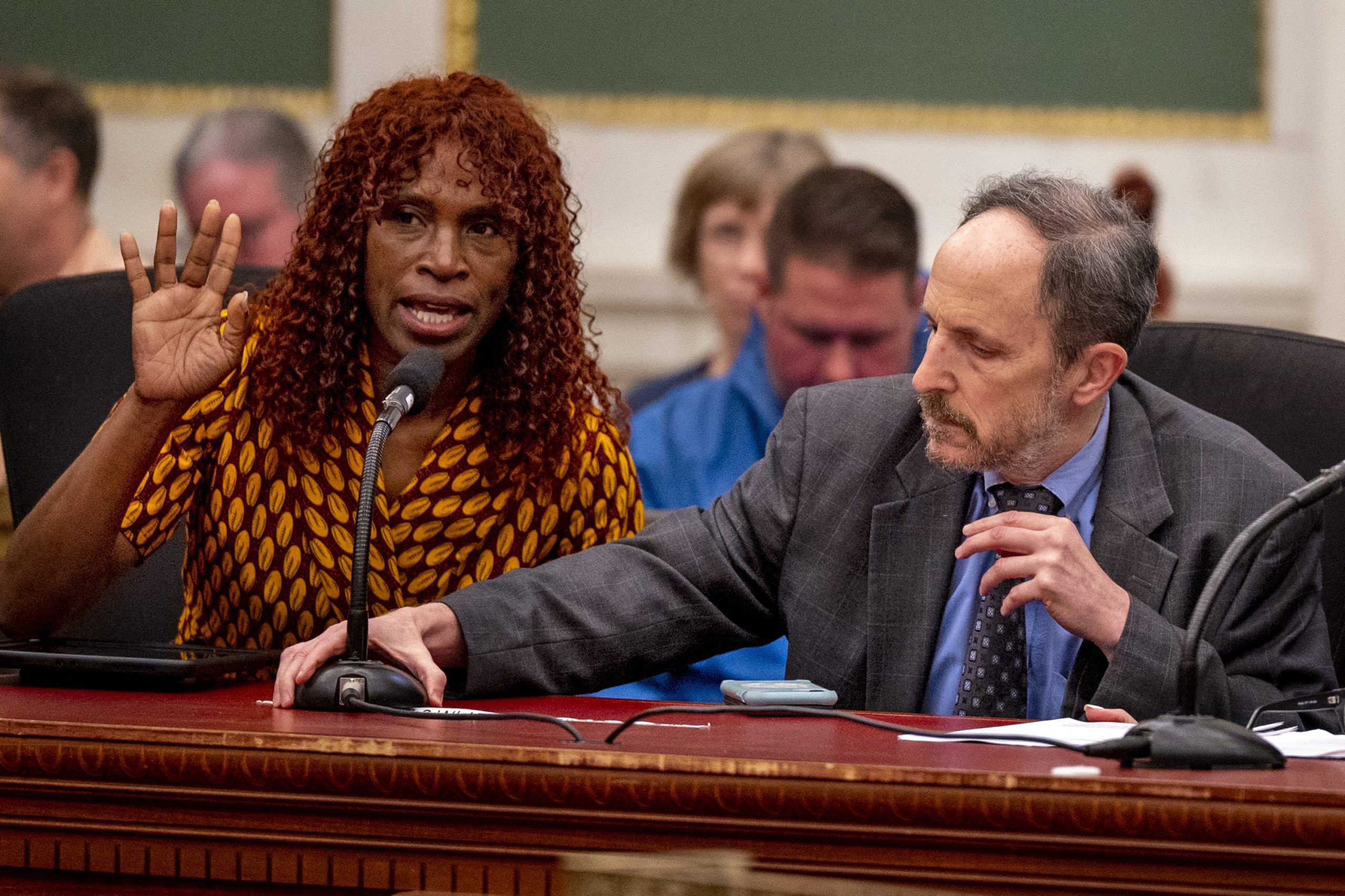
“Your testimony today and what I’m hearing is both painful and perplexing,” said Councilmember Rue Landau, a Democrat who called for the hearing and is the first out LGBTQ+ person to serve on Council. “It is mind-boggling to think that you and your team would not know that people were going back to the Gayborhood.”
Councilmember Isaiah Thomas, a Democrat, said he was “confused” why groups of teenagers fighting would have prompted an outsized police response throughout the Gayborhood that included crowds running amid police on horseback and motorcycles.
“It doesn’t really feel like we’re having a conversation that can put us in a position of earning the trust of a lot of the people who feel like the trust has been lost,” he said.
And C. Michael Robinson, a community advocate, added: “Only adult bullies scapegoat children, and that was a weak display of leadership.”
Councilmember Rue Landau questions Police Commissioner Kevin Bethel (foreground) as Council’s Committee on Legislative Oversight holds a hearing Wednesday, Aug. 5, 2026 into the Philadelphia Police tactics used during Pride celebrations in June.Tom Gralish / Staff Photographer
The hearing Wednesday before Council’s Committee on Legislative Oversight was the most tense questioning that Bethel, a veteran of the city’s police force, has faced since he was sworn in as commissioner in January 2024 at the beginning of Parker’s term. He has enjoyed a largely warm relationship with Council members, who have been supportive of his leadership amid a significant drop in violent crime.
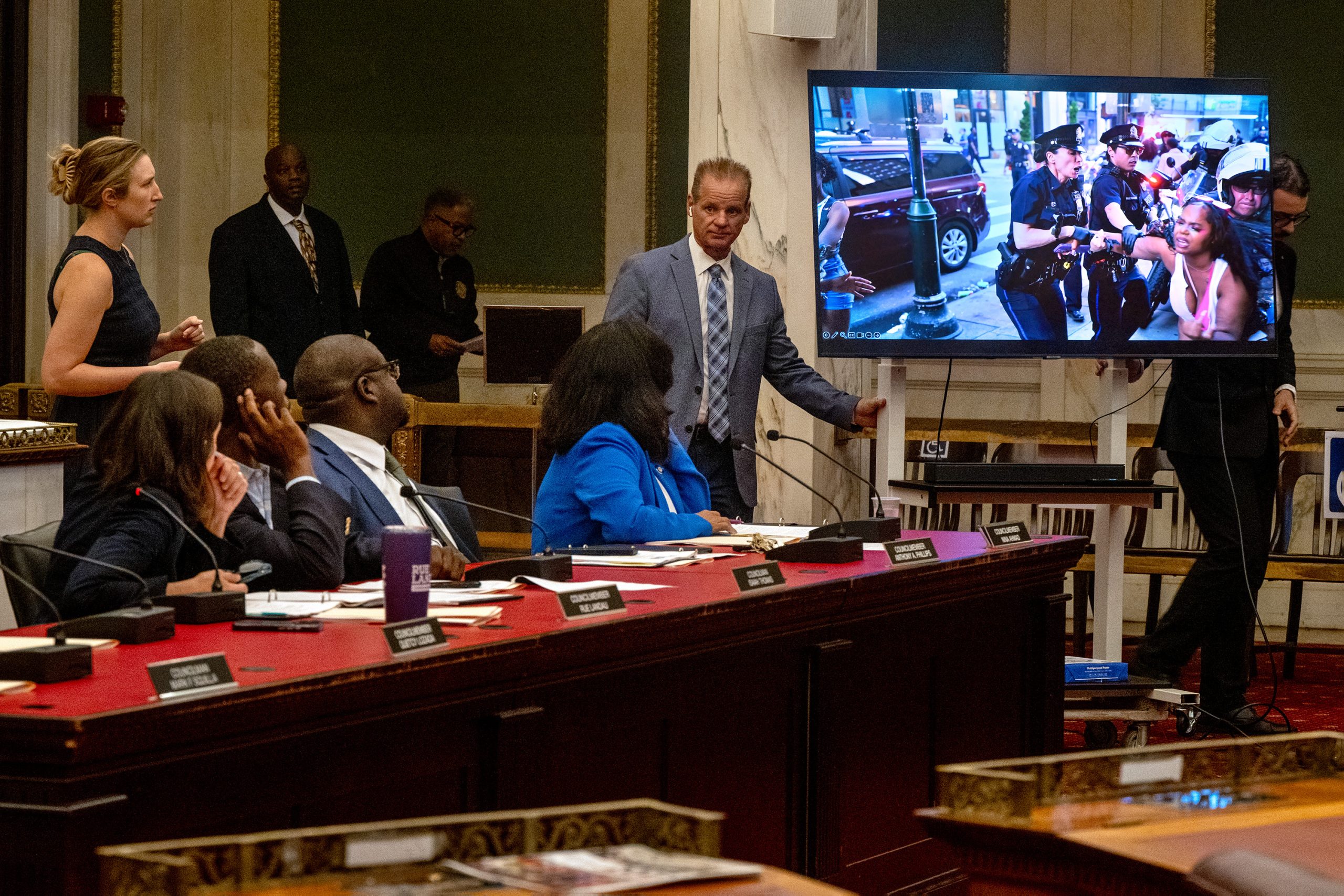
However, the police department faced intense scrutiny following June 7, the day of the Pride parade and celebration during which 15 people were arrested and videos of police corralling crowds in the Gayborhood drew widespread criticism. Videos posted to social media showed officers physically struggling with Pride attendees, as well as police on horseback and motorcycles dispersing people, and at times displaying batons and Tasers.
Following the backlash, Landau called for Council’s Committee on Legislative Oversight to hear testimony from the department’s top brass, as well as members of Mayor Cherelle L. Parker’s administration and LGBTQ+ advocates.
Pride attendees who testified Wednesday said police forcefully directed them through a maze of barricades in the Gayborhood. Several described being pushed and yelled at, and said that the most aggressive tactics were used on crowds of mostly Black people. One person said they heard an officer use a slur.
Parker said in a statement Wednesday that the events described during the hearing “show us we can and must do better.”
“We can and will learn from what occurred,” she said.
Councilmember Rue Landau (seated, left) shows a collection of social media videos as City Council’s Committee on Legislative Oversight holds a hearing Wednesday, Aug. 5, 2026 into the Philadelphia Police tactics used during Pride celebrations in June.Tom Gralish / Staff Photographer
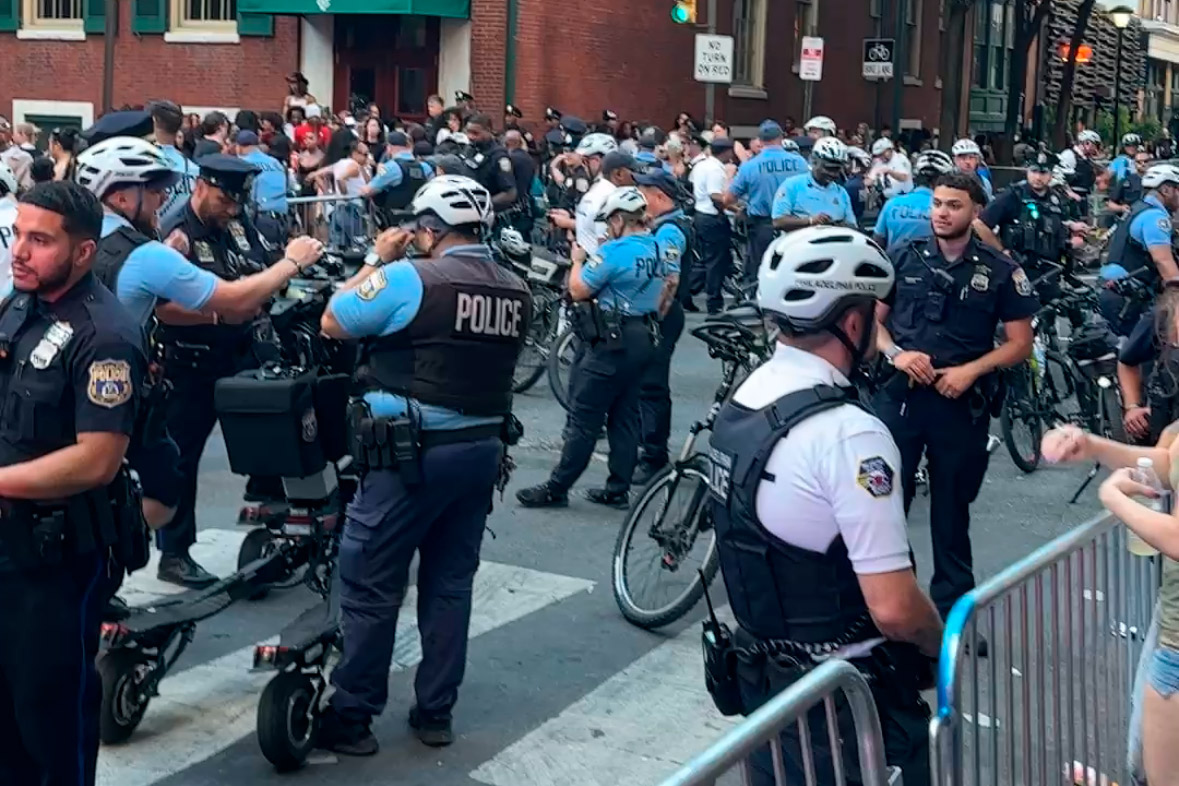
This year marked the first time the city’s Pride festival was held on the Benjamin Franklin Parkway, where Bethel said police had been well-prepared to manage crowds. Thousands of people still congregated in the Gayborhood, where celebrations were held in previous years, creating dueling events that he said overwhelmed the department.
Officers attempted to manage crowds in the Gayborhood for hours, Bethel said, and began working to disperse people by late afternoon. To do so, he said, officers used barricades, as well as officers mounted on horseback and motorcycles to motivate people to leave on their own.
A large police presence at a Pride celebration in the Gayborhood on Sunday, June 8, 2026.Courtesy of Joshua Stokem
Landau said she was horrified by the crowd-control tactics and asked Bethel if he supported the decision to have officers on motorcycles on the sidewalk, calling it “terrifying” and “dangerous.”
He said the goal of moving the crowd was “appropriate at the time.”
In what became a tense back-and-forth, Landau said that people attending Pride “did not believe that you were there to protect them.”
“They were terrified, they were harassed, they were traumatized,” she said. “This was not about protection. You had 150 officers there, by your own testimony. That is a significant amount of officers.”
Bethel responded: “Do you want police there at all?”
Landau appeared taken aback.
“My comment that there was 150 officers there should not turn into the end-sum game of ‘Do you not want anybody there?’” she said.
The police commissioner did not specify how many officers in total are facing potential discipline stemming from Pride events on June 7, but he said “eight or nine″ are under investigation by the internal affairs division for wearing facial coverings, a violation of department policy.
Bethel, who was formerly the department’s liaison to the LGBTQ+ community, vowed a more collaborative planning process next year.
“Next year it will not be like that. It will be prepared,” Bethel said. “It is not my job to police that event. It is to keep it safe.”
Several LGBTQ+ advocates and community members testified in favor of additional accountability measures.
Jacen Bowman, the president of Philly Black Pride, called for an independent after-action review, a permanent LGBTQ+ public safety advisory council that is consulted during the planning of large events, and more consistent cultural competency training for officers.
“Versions of these structures already exist,” Bowman said. “The question is whether or not the structure has the authority, independence, or enforcement power necessary to produce accountability. Oversight without authority is observation.”
With the eyes of the nation on Philadelphia for America’s 250th birthday, Mayor Cherelle L. Parker’s administration this year took over management of the city’s free July Fourth concert, which for years was produced by a nonprofit established by the city: Welcome America.
The mayor instead hired ESM Productions, a for-profit company, to put on the annual show featuring musical acts and fireworks over the Ben Franklin Parkway, and she changed the name from Wawa Welcome America to the “One Philly: Unity Concert for America” — a version of Parker’s well-known slogan, “One Philly: A United City.”
Another change: It will cost taxpayers far more than in the past.
The city is due to pay ESM Productions about $15.5 million for the show, which will be headlined by Christina Aguilera, Jill Scott, and The Roots, and feature rapper Meek Mill, according to a copy of the city’s contract paperwork with ESM, obtained by The Inquirer. The city in March signed a $10 million contract with the Philadelphia-based company, as well as a $5.5 million contract amendment.
By comparison, Welcome America’s budget for all of 2024 — including that year’s July Fourth concert,the numerous other events it manages in the build-up to the concert, and the salaries of its staff — was about $6.6 million, only about $5.3 million of which came from government grants, according to the group’s most recent federal nonprofit disclosure.
Welcome America, which is a public-private partnership with the mayor serving as a board member, receives city and state funding, as well as a corporate sponsorship. The organization has been involved in Philly’s July Fourth celebrations since 1993.
Fans react to the music as the Wawa Welcome America Festival concluded July 4, 2023 with a free concert featuring Ludacris on the Benjamin Franklin Parkway.Charles Fox / Staff Photographer
Last year’s iteration of the Wawa Welcome America concert cost the organization about $3 million, according to a person with knowledge of the situation who spoke on the condition of anonymity because they were not permitted to disclose that information.
The Philly taxpayer money paid to the concert’s producers does not cover additional expenses borne by the city, such as pay for police officers and sanitation workers staffing the event.
Parker’s office declined a request from The Inquirer for a copy of the contract or information on the cost of this year’s concert. Chief Deputy Mayor Vanessa Garrett Harley said in an interview that the administration would publicly disclose the costs and economic benefits of the concert after it was over.
“At a later time, we could certainly be doing a full accounting, as we’re not trying to hide anything and always want to be transparent,” Garrett Harley said.
Chief Deputy Mayor Vanessa Garrett Harley speaks at Belmont Plateau in Philadelphia on May 28.Tyger Williams / Staff Photographer
Following the interview with Garrett Harley, The Inquirer later obtained the contract, and the mayor’s office on Tuesday did not respond to follow-up questions about the cost of the concert.
ESM’s original $10 million contract with the city included a breakdown of costs, ranging from $5,000 for “furniture” to nearly $3.4 million for “talent.” It also included $1.2 million for “ESM Productions Fees” and $1 million for “Above the line Producer’s Unit.”
The contract amendment for $5.5 million, signed June 26, did not include details on costs.
A spokesperson for ESM declined to comment.
Founded in 1996 by Scott Mirkin and Jenny Woo, ESM has previously produced numerous high-profile events on the Parkway, including the 2015 papal visit and Jay-Z’s Made in America concert.
David L. Cohen, a Philly political powerbroker and former U.S. ambassador to Canada, said he has hired ESM to produce events going back to when he was chief of staff for then-Mayor Ed Rendell in the 1990s.
“They’re incredibly competent; they’re incredibly good; they do an excellent job,” he said. “I really do think they’re the best event producers in Philadelphia.”
In paperwork submitted to the city, ESM said it “has a long standing relationship” with Cohen and pointed to events he hired the company to produce at the U.S. embassy in Ottawa, Canada, as examples of its past work.
Michael DelBene, president and CEO of Welcome America, said that, despite no longer being the producer for the concert, his organization is still managing more than a dozen Semiquincentennial-related events in partnership with the city. The events kicked off on Juneteenth and will run through the Fourth.
“The celebrations that happen in the city are the implementation of the mayor’s vision, and if she chooses a team to implement that vision, that’s great, and we all support that person and that team,” DelBene said in an interview. “We’re all going to row in the same direction to make sure the city shines.”
Drama and infighting had plagued a series of nonprofit efforts and federal commissions meant to coordinate the festivities. And the COVID-19 pandemic pushed party-planning way down the priority list for the city and for state leaders who could have previously led the charge, former Mayor Jim Kenney and former Gov. Tom Wolf.
Those delays likely squandered any opportunities for a monumental building project, such as the Please Touch Museum building, which was constructed for the 1876 Centennial Exposition, or the Ben Franklin Bridge, which opened for America’s 150th birthday in 1926. They may have also cost Philly the chance for an appearance by a high-profile dignitary, such as when Queen Elizabeth II visited for the 1976 Bicentennial.
Mayor Cherelle L. Parker heads to the stage at the Independence Visitor Center Wednesday, Sept. 3, 2025 to announce a new initiative that puts city neighborhoods at the forefront of the city celebrations of America’s 250th birthday in 2026.Tom Gralish / Staff Photographer
But the mayor eventually embraced the task in a more public way — following some public prodding from City Councilmember Isaiah Thomas — and the city’s Semiquincentennial celebrations will very much bear her stamp.
Parker has pledged to spend $120 million this year to mark the occasion, and she has made investing in communities across the city, not just the historic district, a major focus as Philadelphia this summer is also hosting World Cup games and the MLB All-Star Game. Much of that spending will pay for street work and beautification projects in neighborhood commercial corridors, 250th-themed block parties, and extra funding for annual events like the Odunde Festival.
“We want to make sure that any and everybody can participate in this regardless of your station in life,” Garrett Harley said.
‘This is her big concert’
With the official Independence Day parade — still organized by Welcome America — scheduled for Friday, July 3, there is surprisingly little in the way of official patriotic proceedings taking place on July Fourth itself.
Parker at 10 a.m. will lead a Philadelphia Freedom Awards ceremony at Independence Mall, honoring seven people, including Cohen and actor and Philadelphia-native Colman Domingo.
At 5 p.m., the concert will kick off on the Ben Franklin Parkway. Performers include Aguilera, Will Smith, DJ Jazzy Jeff, Jill Scott, The Roots, Meek Mill, and Seal. The city’s official fireworks show will begin at the show’s conclusion, around 11:30 p.m.
Fans during the Wawa Welcome America July 4th Concert on the Parkway in Philadelphia, Pa. on July 4, 2022.ELIZABETH ROBERTSON / Staff Photographer
Parker has several times compared this year’s show to Live Aid, the 1985 benefit concert staged in Philadelphia and London that featured in its 10-hour stateside lineup Bob Dylan, Mick Jagger, Madonna, Phil Collins, the Beach Boys, the Four Tops, Santana, Run-D.M.C., and many other musical A-listers.
“If you remember Live Aid and you think about the legacy experience we’re trying to create … that’s what we’re trying to do on July the Fourth,” Parker said in March.
Garrett Harley on Tuesday conceded the concert lineups may not be exactly comparable, but said the mayor was “really talking more about the scope and the magnitude and just the memories.”
“But to certain kids it’s gonna be bigger than Live Aid, because Christina Aguilera means to them what Stevie Wonder and some of the folks who ran Live Aid meant to others,” Garrett Harley said.
Garrett Harley disputed the notion that renaming the concert “One Philly: A Unity Concert for America” meant that it now bears Parker’s branding.
“I don’t know how a ‘Unity Concert for America’ is Parker’s branding because the whole point of this is about unity,” Garrett Harley said. “The branding is really about reminding people that we need to unify, we need to be one America, despite everything that may be going on in the country right now.”
The mayor frequently concludes speeches by asking crowds to raise their index fingers and say in unison, “One Philly: A United City.” She has also had the slogan printed on city trash trucks and cans, along with her name.
Mayor Cherelle L. Parker raises a finger with her call-and-response “One Philly, A United City” mantra ending her speech during a ceremonial meeting of the Pennsylvania Senate at the National Constitution Center across the mall from Independence Hall on May 5.Tom Gralish / Staff Photographer
“Even if it is Parker’s branding, if that’s how people see it, what would Wawa Welcome America be if not branding?” Garrett Harley added.
(Wawa, a longtime corporate sponsor for the city’s July Fourth festivities, pays Welcome America to include its branding in the event, defraying costs for taxpayers.)
Branding or not, Parker’s vision guided the planning for the concert, Garrett Harley said.
“At the end of the day, this is [Philadelphia’s] 100th mayor,” Garrett Harley said of Parker. “This was her biggest concert, and probably will be the biggest that she will ever do. She’s the first female mayor. She’s the first African American female mayor. This is her big concert.”
In past years, the city’s budget process has followed a certain pattern for Mural Arts Philadelphia and other groups.
The mayor’s proposed budget lists city funding at one level; City Council and others advocate for modifications at a higher level; and the budget goes back to the mayor and is finalized with the higher allocation in place.
This year was different.
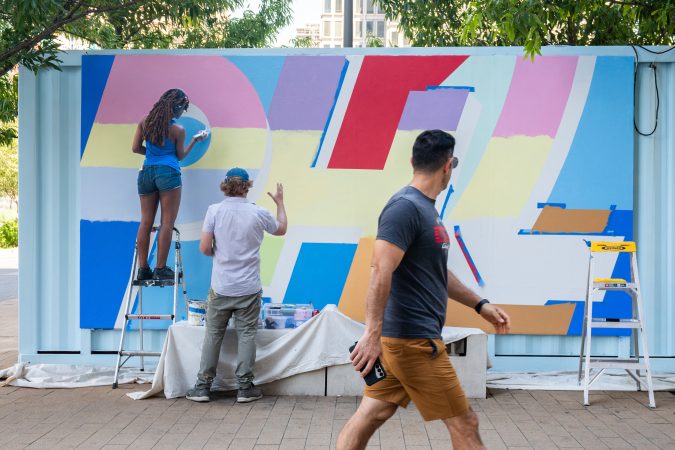
Philadelphia’s nationally acclaimed program that puts colorful murals in neighborhoods and provides jobs was hoping for a boost in city funding.
Instead, the budget ultimately agreed to by Mayor Cherelle L. Parker’s administration and City Council cut funding to Mural Arts — from $5.1 million in fiscal year 2026 to $3.7 million in 2027.
Likewise the Philadelphia Cultural Fund. The group — which awards hundreds of grants to arts groups throughout the neighborhoods — was looking for increased funding in the city’s newly approved $7.1 billion budget for the fiscal year starting July 1.
But the arts nonprofit, established by the city recently, learned that it will get substantially less — $3.5 million instead of the $5 million it received from the city for the fiscal year now ending.
As a result, both groups say they will have to make deep cuts to programs.
Philadelphia’s arts and culture sector had greeted the start of Parker’s term 2½ years ago with optimism for increased funding. Today, it is “alarmed” by the cuts to Mural Arts and the Cultural Fund, said Patricia Wilson Aden, president and CEO of the Greater Philadelphia Cultural Alliance.
“We always say that your budget tells a story, and I have to say that the cultural community is disappointed and frustrated with the story being told by this FY27 budget,” she said. “Cutting the budget of signature programs like Mural Arts by 26% or decreasing funding to the Philadelphia Cultural Fund, that’s going to have ramifications throughout the city.”
Parker was not available for comment, a spokesperson said.
Valerie V. Gay (left) chief cultural officer with the City’s Office of Arts, Culture and the Creative Economy, and finance director Rob Dubow (right) testify at a Philadelphia City Council hearing, Aug. 8, 2024 on the collapse of the University of the Arts.Tom Gralish / Staff Photographer
Valerie V. Gay, the city’s chief cultural officer, said it was the city’s view that funding for the two groups had remained flat from 2026 to 2027, since the base allocation stayed the same and it was only the added amount that did not come through — though she allowed that “absolutely I can see how it can be perceived.”
A ripple effect
The resulting cuts at both groups promise to be substantial. The Cultural Fund will be forced to reduce the number of grants it had been expecting to distribute in the coming year, from 332 to 232. It has changed its eligibility requirements, which will eliminate grants to a pool of midsize organizations currently eligible.
“It’s going to be a ripple effect. People are going to feel it and communities are going to feel it,” said Philadelphia Cultural Fund executive director Gabriela Sanchez.
“An investment in the Philadelphia Cultural Fund is more than a budget line item,” Sanchez wrote in a statement distributed by the group. “Funding to PCF represents how the city values neighborhood theaters, cultural centers, museums, arts education programs, festivals, dance companies, community storytelling initiatives, music programs, and cultural traditions that bring Philadelphians together. These spaces are where young people discover their creativity, where seniors find connection, where communities celebrate their heritage, and where residents gather across lines of difference.”
Jane Golden (center right) speaks with press at the Wawa Welcome America media preview for the Philly Fair 250, outside the Please Touch Museum in West Philadelphia, June 18, 2026. Mural Arts held a ceremonial unveiling of a 10-story-high mural replica, originally titled ‘CityKids Speak On Liberty,’ and created by Keith Haring.
Mural Arts director Jane Golden declined to comment, but an initial assessment from the group obtained by The Inquirer says that “hundreds of residents in at least 15 Philadelphia communities will lose the opportunity to develop public art projects,” and that opportunities for paid work, job training, and mentorship through the Mural Arts Restorative Justice program will be reduced by 25%.
Mural Arts will also have to cut by 75% its program of restoring and preserving the city’s murals, “putting at risk community landmarks that took years and significant public investment to create,” the impact statement reads.
Of the program reductions at both groups, Gay said: “I am always sad that any cuts are made or that any organizations are unable to do the work they thought they were going to be able to do. That’s always a sad time for us, and I’m looking forward to when we are a fully funded sector.”
A city spokesperson was unable to provide a full list of groups that in past years had received higher allocations after advocacy from City Council and others, but this year did not.
What’s behind the cuts
Aden says arts and culture has seen some significant recent “wins” from city government. Among them is the advancement of a referendum that, if approved by the mayor and then by voters this fall, would enshrine the city’s office of arts and culture, called Creative Philadelphia, in the City Charter.
The city has approved $500,000 a year to develop and implement a cultural plan for Philadelphia that would document financial needs and could identify potential pathways to establishing funding.
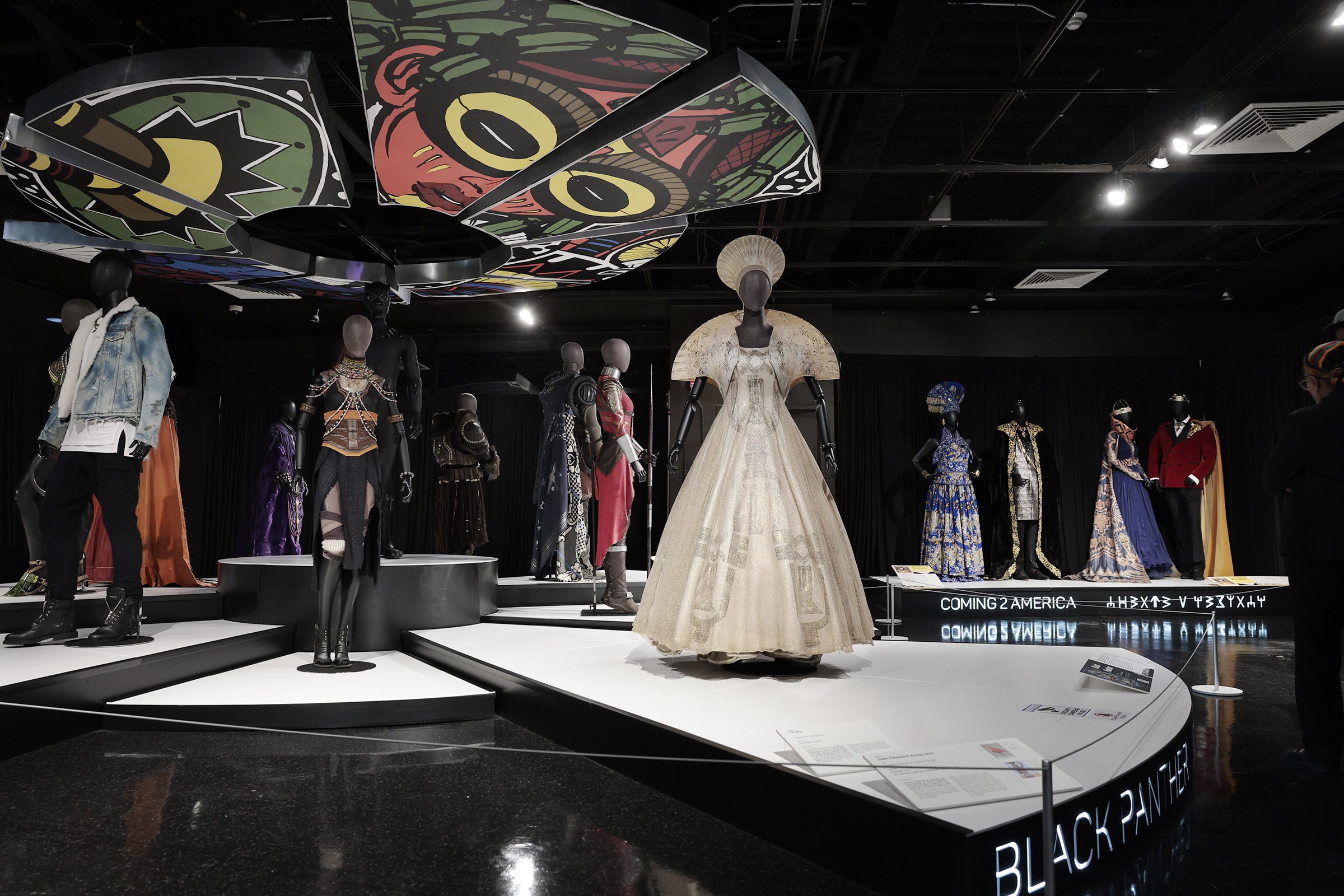
The ‘Ruth E. Carter: Afrofuturism in Costume Design’ exhibition at the African American Museum in Philadelphia, Nov. 1, 2025.Elizabeth Robertson / Staff Photographer
Sometimes the city’s support is for regular operations, and other times it is for specific capital projects. In an unusually large commitment, the city has pledged $50 million to the African American Museum in Philadelphia for its relocation to the Benjamin Franklin Parkway.
The city is providing nearly $32.5 million to arts and culture in FY27, according to a list provided by Parker’s office. While that total includes small items that might seem mundane — paying utility bills at various facilities, for instance — it also shows multimillion-dollar allocations to the Philadelphia Museum of Art, Dell Music Center, and Philadelphia Zoo.
But the arts and culture sector often finds itself fighting for adequate funding in the annual budget process. Arts leaders and others say it has been standard practice in recent memory that funding is listed at one level in the mayor’s proposed budget and after City Council testimony in budget hearings ends up being higher.
This year, the mayor “could have funded [the arts] at a higher amount,” as she did last year, but did not do so, Councilmember Rue Landau said.
The cuts came after a budget that passed without a series of tax increases proposed by Parker, including a $1 tax on rideshare services, after failing to win support from City Council. After Council signaled it would reject Parker’s tax proposals, the administration would not agree to any last-minute line items for new funding requests from lawmakers.
Councilmember Isaiah Thomas, a consistent arts supporter who, like Landau, is an ex-officio Mural Arts board member, said that with the lack of new tax revenue and the city’s extra allocation of $48 million to cover the Philadelphia School District’s budget shortfall, the funding pie for other allocations got smaller.
“This budget year, a lot of attention and advocacy went toward schools,” Thomas said. The funding cuts to Mural Arts and the Cultural Fund were “extremely unfortunate,” he said, “and I wish we could have done something different.”
The need for ‘predictable, stable, reliable’ funding for the arts
While the city’s budget is now final, there is another potential window of opportunity for funding through a midyear budget transfer process in which the city might see expenditures in certain areas coming in lower than expected, and then transfer money from those categories to other areas.
Asked whether funds might be restored through a budget transfer to Mural Arts or the Cultural Fund, Gay said:
“I think anything is on the table, but I also think nothing is guaranteed.”
Patricia Wilson Aden, president and CEO of the Greater Philadelphia Cultural Alliance, at S. Broad Street and Walnut along the Avenue of the Arts, Feb. 15, 2023.Alejandro A. Alvarez / Staff Photographer
Any restoration of funds would happen after arts groups have already put cuts in place, and this kind of unpredictability “makes planning by these organizations very, very difficult,” Aden said.
“The practice of underfunding the arts and having Council and other entities have to go on an advocacy campaign to increase funding is illogical,” Landau said. “It is clear as day that we should be supporting the arts with additional funding every single year, so we don’t have to go through this and it won’t ever be a question mark for them.”
What is really needed, Aden said, is a dedicated arts fund in Philadelphia and the region.
“We’ve seen other regions benefit from this predictable, stable, reliable funding. And instead, here in Philadelphia, each year we have this conversation about increases and decreases and their impact. We are sometimes left to the will and whim of elected officials, and we would like to take the creative economy out of the political realm and put it solidly within our larger civic interest, so that it is stable and has the investment that is required to reach its full potential.”
Staff writer Anna Orso contributed to this article.