Tag: Inquirer Local

  • Lawyer recommends school policy changes| Inquirer Greater Abington

    Lawyer recommends school policy changes| Inquirer Greater Abington

    Hey there, Greater Abington,

    Cheltenham School District has received recommendations about changing its policies following the football hazing scandal. Here’s what we know. Also in the headlines, Cheltenham Township and the owners of Holy Sepulchre Cemetery are at odds over whether the latter should be paying property taxes, police charged an ex-boyfriend in the killing of a Walmart employee in Wyncote, and La Mott Fire Company may offer free or reduced rent to firefighters to attract volunteers.

    P.S. Oops! In last week’s edition, we accidentally referred to November’s election as the “primary” when we shared The Inquirer’s guide to the 2026 Pennsylvania midterms. It’s possible we skipped our (apparently necessary) second cup of coffee.

    — Laura Smythe (greaterabington@inquirer.com)

    If someone forwarded you this email, sign up for free here.

    What to know about Cheltenham’s review of its football scandal

    Interim Cheltenham Superintendent Chris McGinley (center).William Thomas Cain / For The Inquirer

    A lawyer commissioned by the Cheltenham School District has handed down a list of recommendations for changing the district’s policies after a 15-year-old was allegedly assaulted in a locker room hazing incident last year. District officials have not said what those recommendations are.

    Potential changes to upward of 25 policies will be reviewed in upcoming school board policy committee meetings, officials told The Inquirer. In written responses to reporter Maddie Hanna last week, Interim Superintendent Chris McGinley characterized the lawyer’s work as “not a formal report,” but findings that contain “recommendations for specific changes to individual policies.”

    The recommendations come as district officials are expected to join State Sen. Art Haywood and Rep. Napoleon Nelson later today to announce the passage of a new law that makes hazing a mandated reportable offense.

    Hanna has more on the lawyer’s review.

    Inside Cheltenham’s 11-year property tax showdown with the Archdiocese of Philadelphia
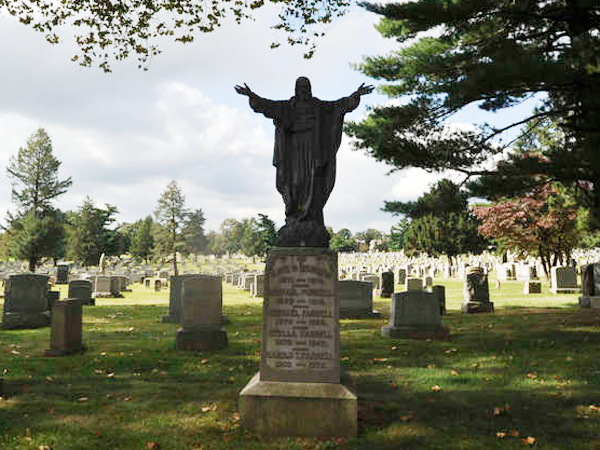
    Cheltenham and the Archdiocese of Philadelphia have been tied up in a legal battle for more than a decade over whether property taxes must be paid on Holy Sepulchre Cemetery, one of the township’s largest plots.

    While not clear how much tax money hangs in the balance in the dispute, the cemetery would owe roughly $683,000 this year alone based on the current tax rate. Most of that would go to schools.

    Inquirer reporter Jess Rohan untangles the case, which involves a for-profit death services corporation in Florida.

    💡 Community news

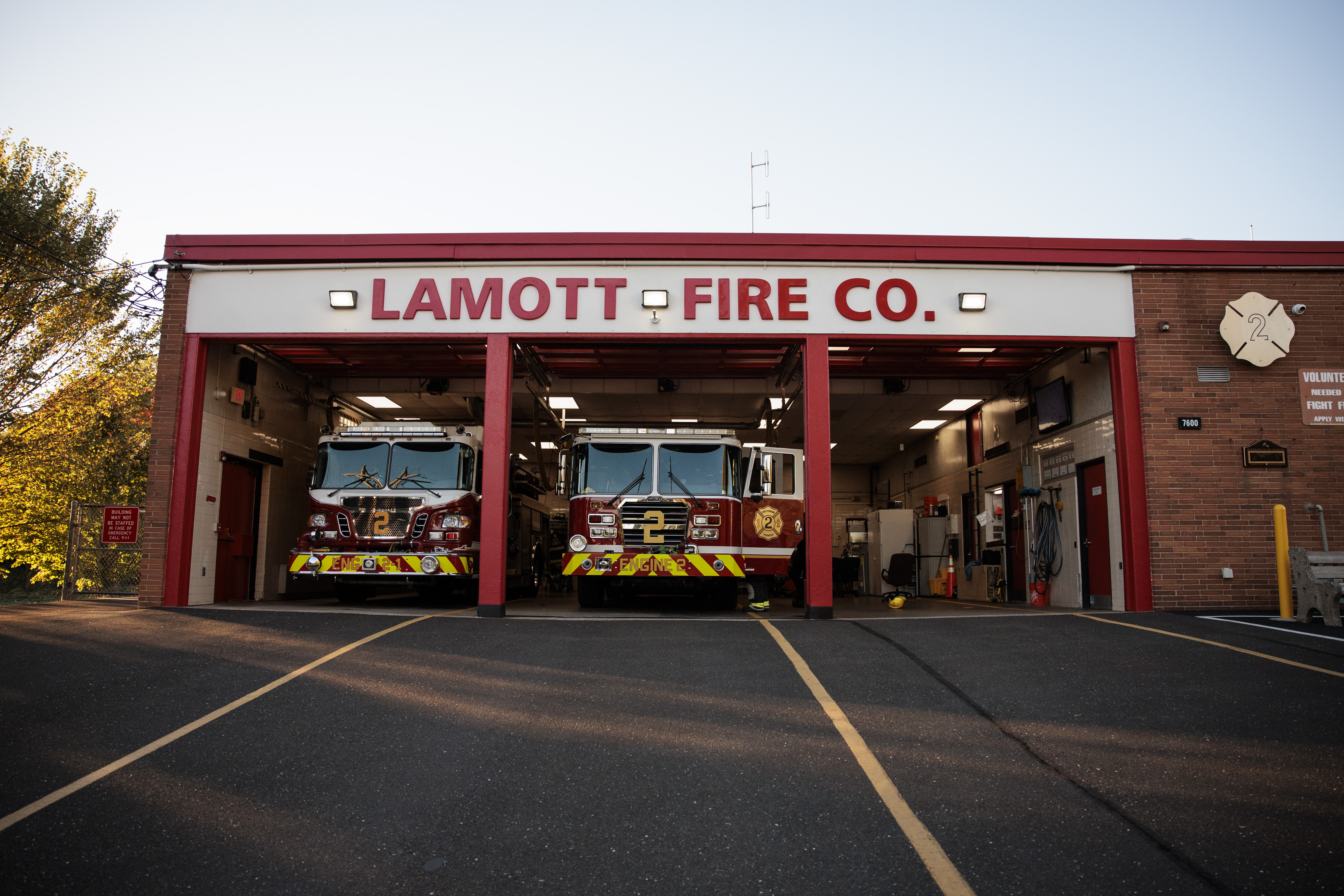
    • Cheltenham-based La Mott Fire Company plans to develop an apartment building connected to its fire house and offer firefighters free or reduced rent. It’s meant to draw in volunteers and shorten response times.
    • Police on Monday charged an ex-boyfriend with killing 45-year-old Walmart employee Latosha Ann Cooper in the Wyncote store’s parking lot last week. They say 23-year-old Destino Jean Louis shot Cooper after she changed her mind about marrying him to help him obtain a green card.
    • Sports fans from across the region were psyched to see NBA megastar LeBron James make his home debut as a 76er. The passionate crowd included Abington resident Rodney Anderson, whose voice broke out over the boisterous concourse: “Actual defense? The focus, the intensity? I’m loving it.”
    • From Nov. 2 through Dec. 18, Tyson Avenue will be closed between Albright Avenue and Easton Road in Abington Township as part of a bridge rehabilitation project.

    🗺️ Other nearby news

    • A jury found Fearless Restaurants, the group behind nearby eateries such as a White Dog Cafe outpost in Haverford, negligent in its handling of sexual harassment incidents at Rosalie, its popular Italian restaurant in Wayne.
    • Montgomery County Commissioner Neil Makhija appeared in a new Democratic Congressional Campaign Committee ad as part of a push to engage Asian American and Pacific Islander voters in efforts to flip a key U.S. House seat in Bucks County in the midterms.

    🏫 Schools briefing

    🍽️ On our plate

    🎳 Things to do

    🧛 Costume Parade Storytime: Kids 5 and under can show off their Halloween costumes and take in some not-so-scary stories. ⏰ Wednesday, Oct. 28, 10:30 a.m. 💵 Free 📍 Elkins Park Free Library

    🎃 Trunk-or-Treat: This family-friendly event is back for its second year, featuring sweet treats and spooky-season fun. ⏰ Thursday, Oct. 29, 6-7:30 p.m. 💵 Free 📍 Glenside Free Library

    🎥 The Blair Witch Project: Following a showing of the hit 1999 horror film, the actors who played the three main characters will take the stage to share behind-the-scenes stories and answer audience questions. ⏰ Thursday, Oct. 29, 8 p.m. 💵 $53.56-$98.44 📍 Keswick Theatre

    👻 Halloween with Reality Check Experiment: Jam out to live music and compete for cash prizes in a costume contest. ⏰ Saturday, Oct. 31, 7-10 p.m. 💵 $10 📍 The Royal

    🏡 On the market

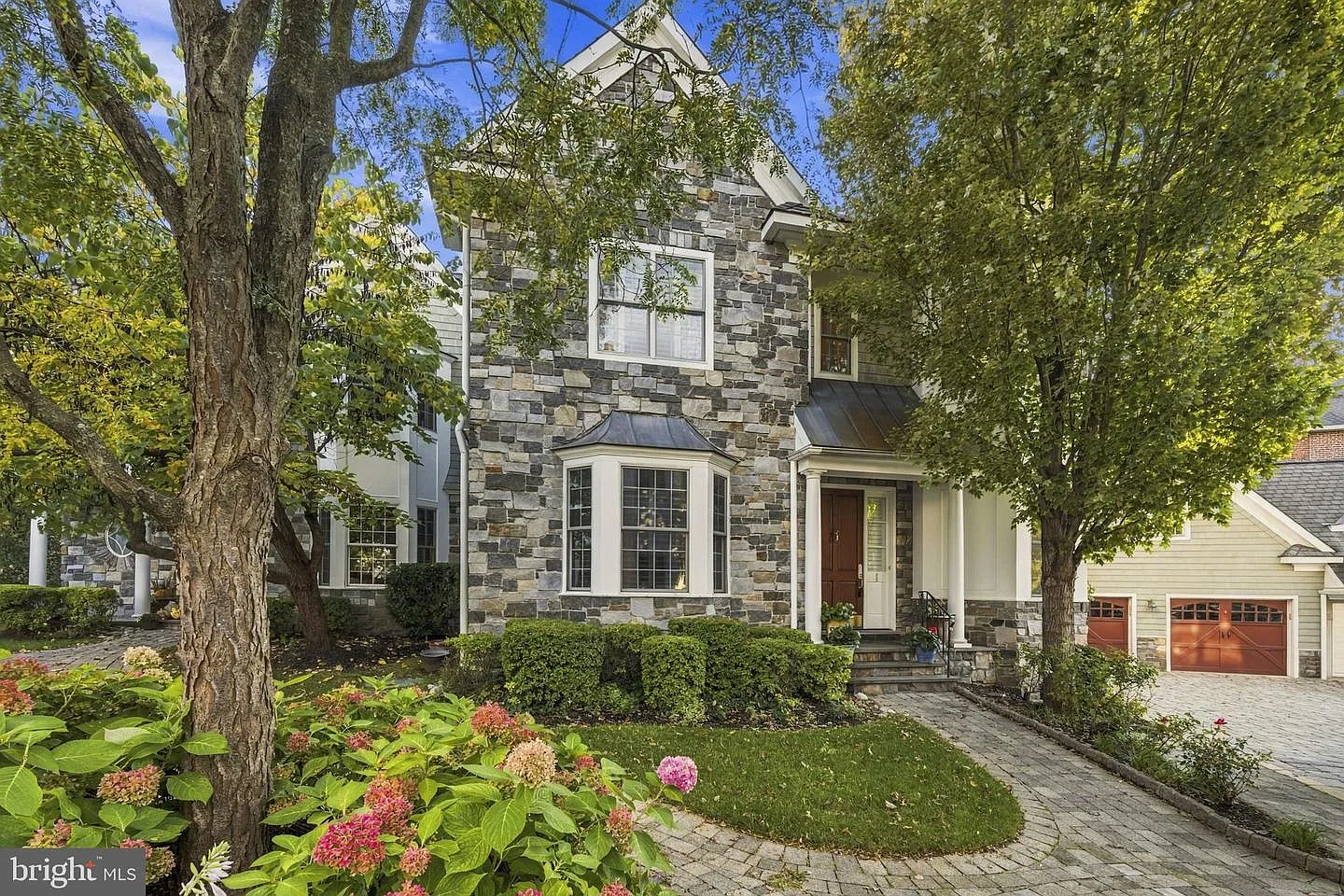
    An updated Chelten Hills colonial
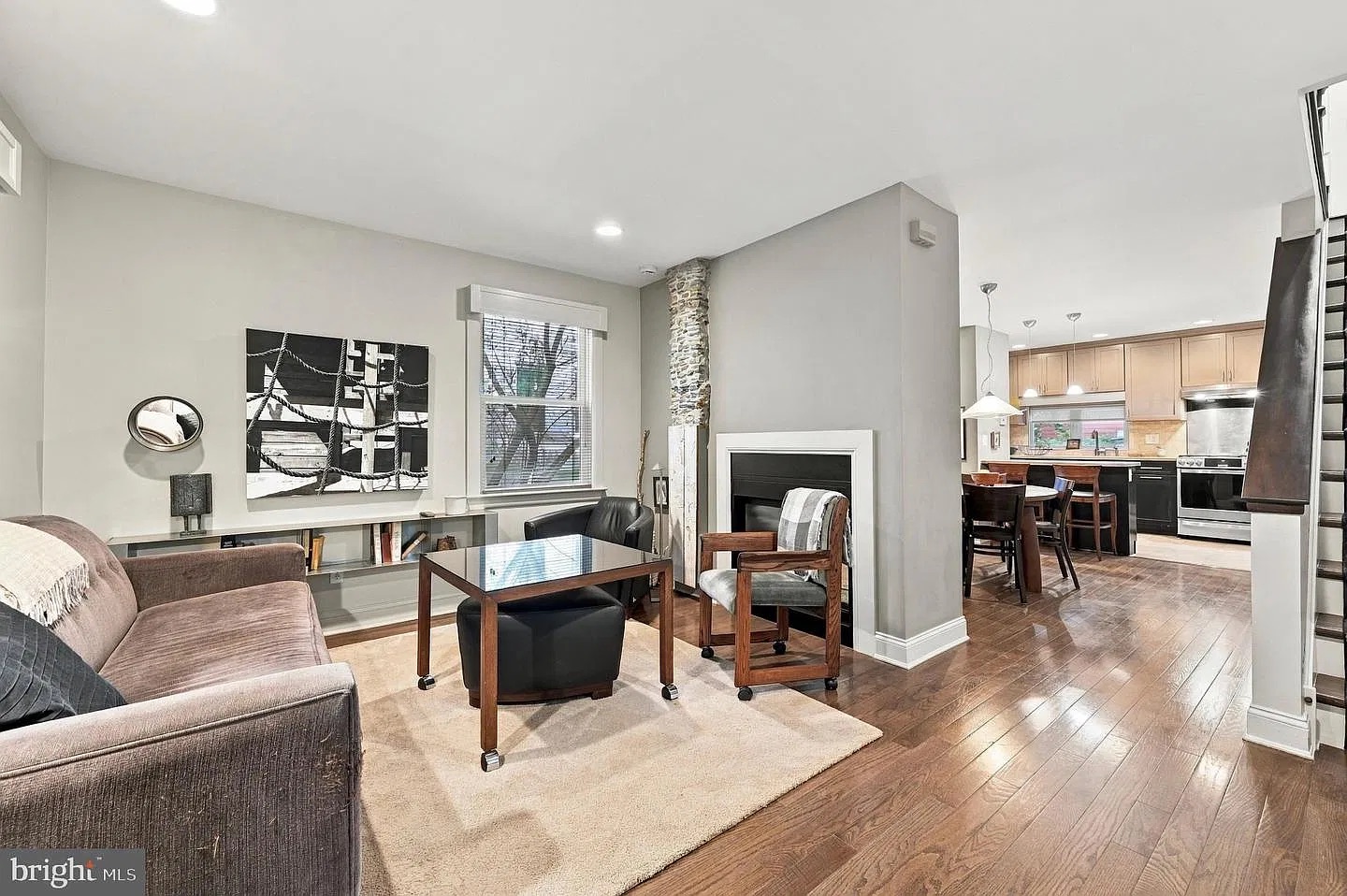
    Inside 770 Rock Lane in Elkins Park, PA.

    This colonial in Elkins Park was originally built in 1930 before undergoing a complete renovation in 2009. It features an open-plan living and dining area, a double-sided gas fireplace, and a full basement. There are three bedrooms and one bathroom. Outside space includes a patio and a backyard.

    See more photos of the property here.

    Price: $379,000 | Size: 1,056 SF | Acreage: 0.07

    🗞️ What other Greater Abington residents are reading this week:

    By submitting your written, visual, and/or audio contributions, you agree to The Inquirer’s Terms of Use, including the grant of rights in Section 10.

    This suburban content is produced with support from the Leslie Miller and Richard Worley Foundation and The Lenfest Institute for Journalism. Editorial content is created independently of the project donors. Gifts to support The Inquirer’s high-impact journalism can be made at inquirer.com/donate. A list of Lenfest Institute donors can be found at lenfestinstitute.org/supporters.
  • Some Cheltenham firefighters could live rent-free under a fire company’s new building proposal

    Some Cheltenham firefighters could live rent-free under a fire company’s new building proposal

    La Mott Fire Company plans to build an apartment building behind its firehouse and offer firefighters free or reduced rent in an effort to attract more volunteers and improve response times.

    The Cheltenham Township-based department filed plans with Montgomery County in early September to build a 3,000-square-foot apartment unit behind the firehouse on Penrose Avenue. The county filed its initial review letter on Friday, and the plan is now working its way through the township approval process.

    The four-unit addition would have a door directly into the firehouse, La Mott leaders said last week. Each apartment would have its own bedroom, bathroom, and sitting room, with a shared kitchen, laundry, and communal area.

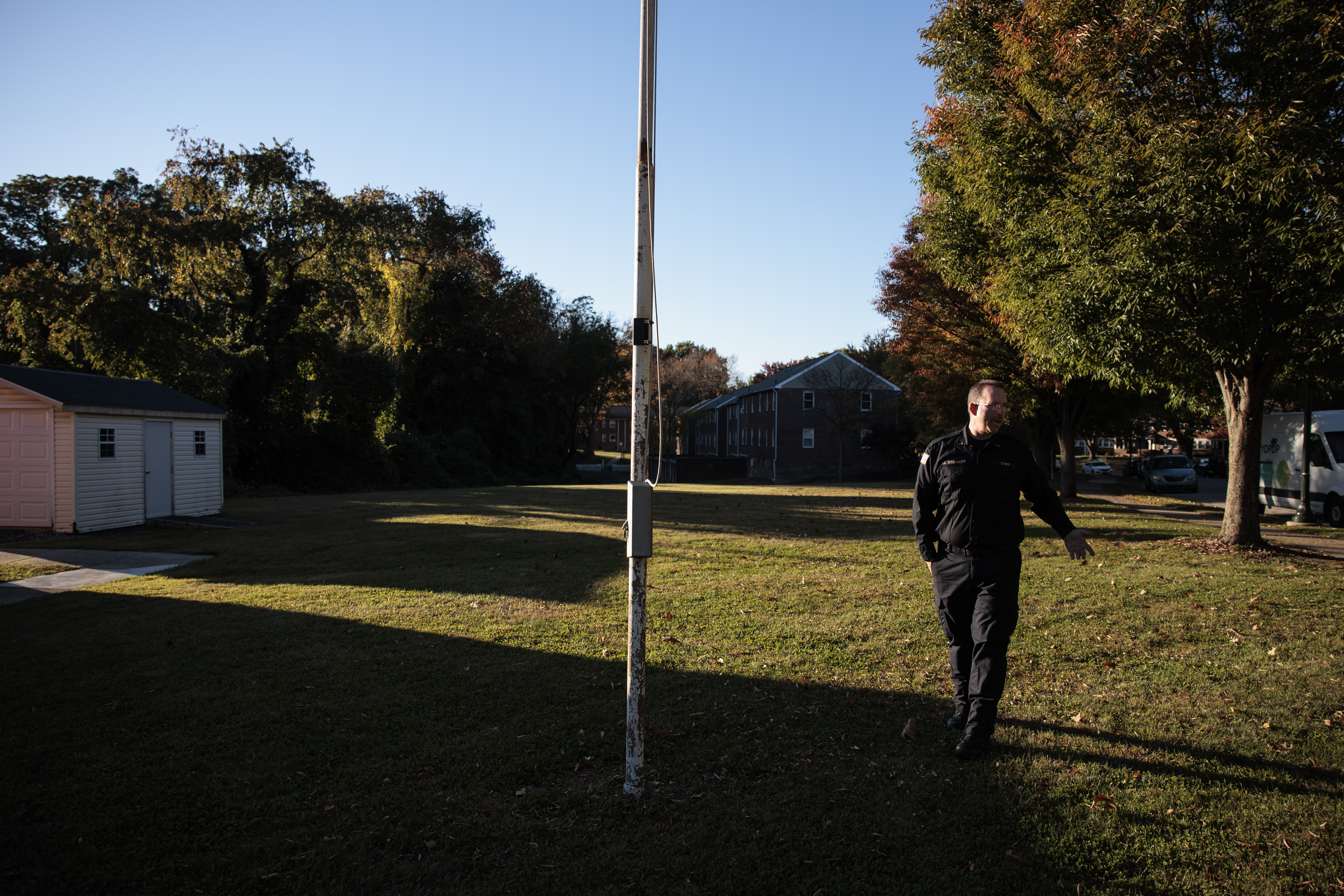
    Chief Joe Stuckert walks through the site of the planned firefighter apartments behind the La Mott firehouse.Monica Herndon / Staff Photographer

    The fire company also wants to tackle infrastructure renovations in the existing 1950s building as part of the project, such as improving the sewer and water lines.

    La Mott has been pushing to lower response times in recent years, company president Ken Hellendall said, including hiring paid firefighters for tasks that require additional training, like driving the truck. Most of the company’s roughly 30 active members are trained volunteers.

    “We are looking at quicker response times, and even quicker when we have people living here,” Hellendall said.

    La Mott has averaged 250 calls per year in the last five years, according to data on its website. For a town of Cheltenham’s density, national benchmarks recommend all needed firefighters arrive at low-hazard structure fires in under nine minutes.

    It’s difficult to say whether La Mott is meeting the benchmark because Cheltenham does not specify whether calls are fires in the monthly fire marshal’s report, but La Mott’s average response time across all types of calls was six minutes for 2025.

    A state study found Cheltenham’s four fire companies’ average response times met the benchmark in 2019, but they struggled to meet the staffing benchmark of 15 firefighters responding.

    The company will likely offer the apartments for free or reduced rent to firefighters who take on a certain portion of calls and other duties, leaders said, but they haven’t worked out the details yet. It’s not yet clear how the company will pay for recurring costs such as utilities and maintenance.

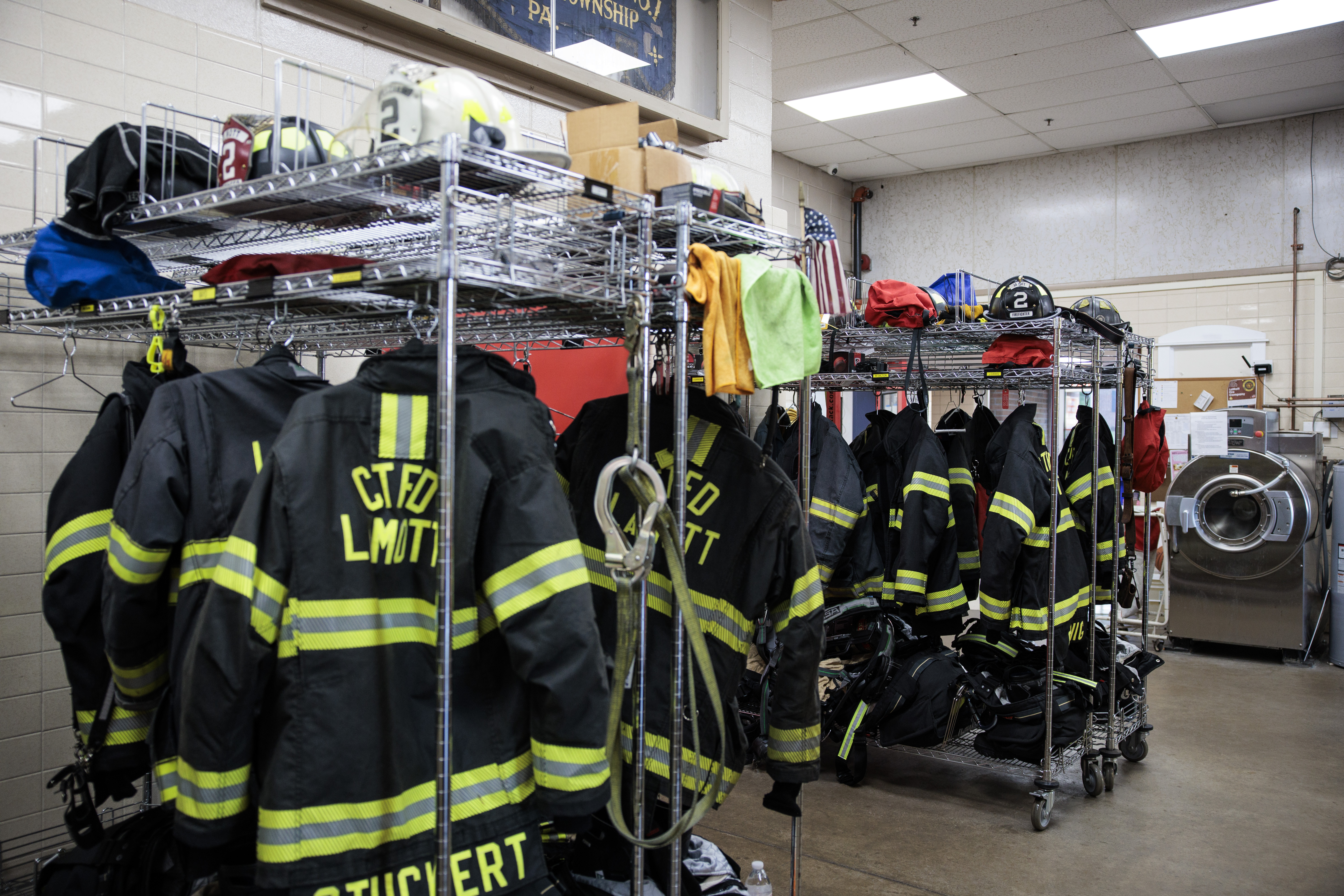
    Firefighting gear hangs on racks at the La Mott Fire Company. Leaders hope free or reduced-rent housing will help to recruit and retain volunteer firefighters.Monica Herndon / Staff Photographer

    La Mott used to pay rent for two firefighters at Lynnewood Gardens Apartments for a total of $3,000 per month. Having them three minutes away helped, leaders said, but it wasn’t worth the cost, and the company ended that initiative in 2025 after the two firefighters left.

    La Mott isn’t the only fire company offering housing to its firefighters.

    The head of the building committee, Dave Schwartz, toured different types of living quarters at other companies, including Elkins Park, Fort Washington, and Gladwyne, to help design La Mott’s addition, he said.

    A state grant for $850,000 might cover about half the project, Chief Joe Stuckert estimated, and the company plans to use savings and loans for whatever’s left.

    The apartments could be open as soon as early 2028, Schwartz said.

    This suburban content is produced with support from the Leslie Miller and Richard Worley Foundation and The Lenfest Institute for Journalism. Editorial content is created independently of the project donors. Gifts to support The Inquirer’s high-impact journalism can be made at inquirer.com/donate. A list of Lenfest Institute donors can be found at lenfestinstitute.org/supporters.
  • This $8.75M Chester County home for sale includes a massive garage for 40 cars

    This $8.75M Chester County home for sale includes a massive garage for 40 cars

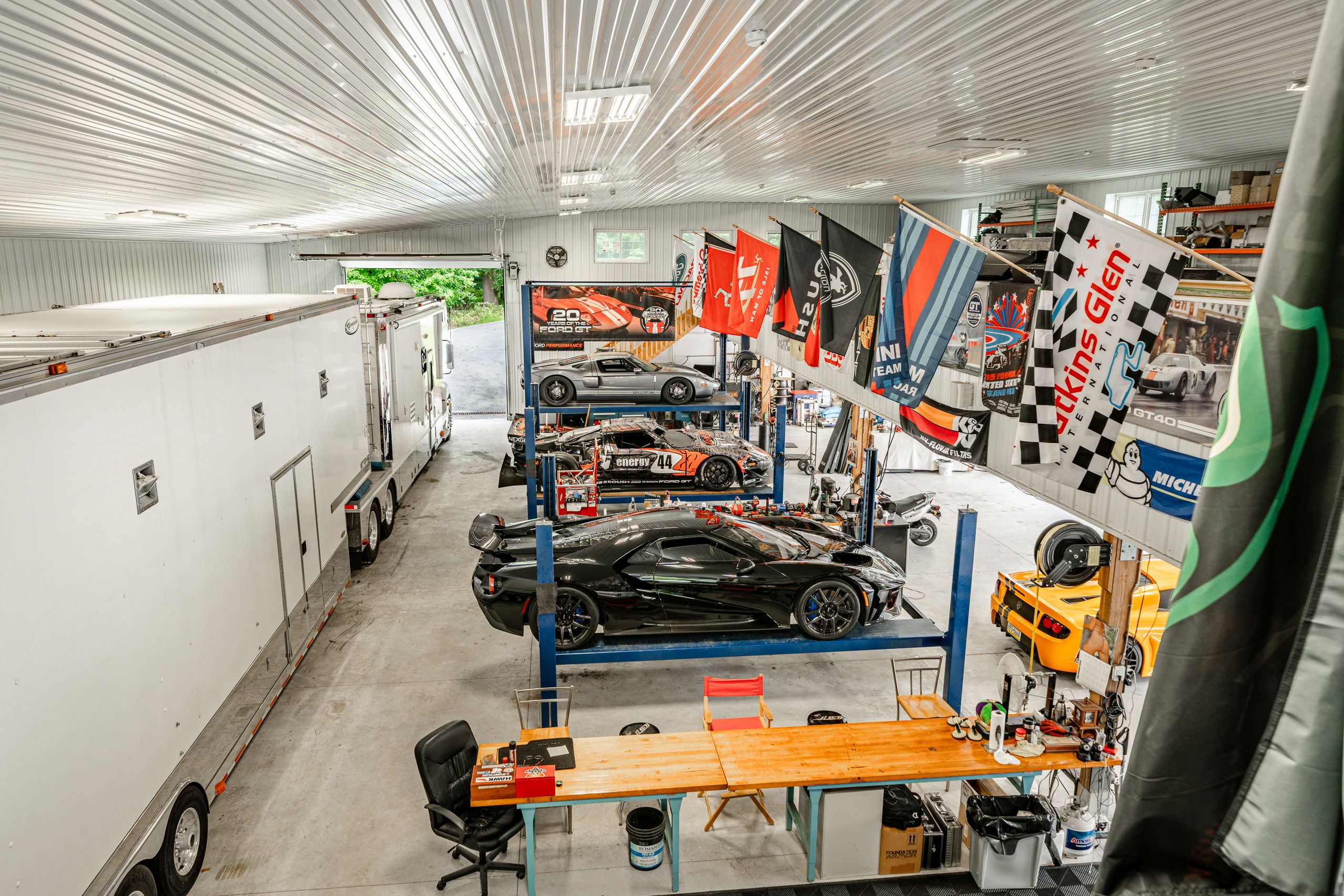
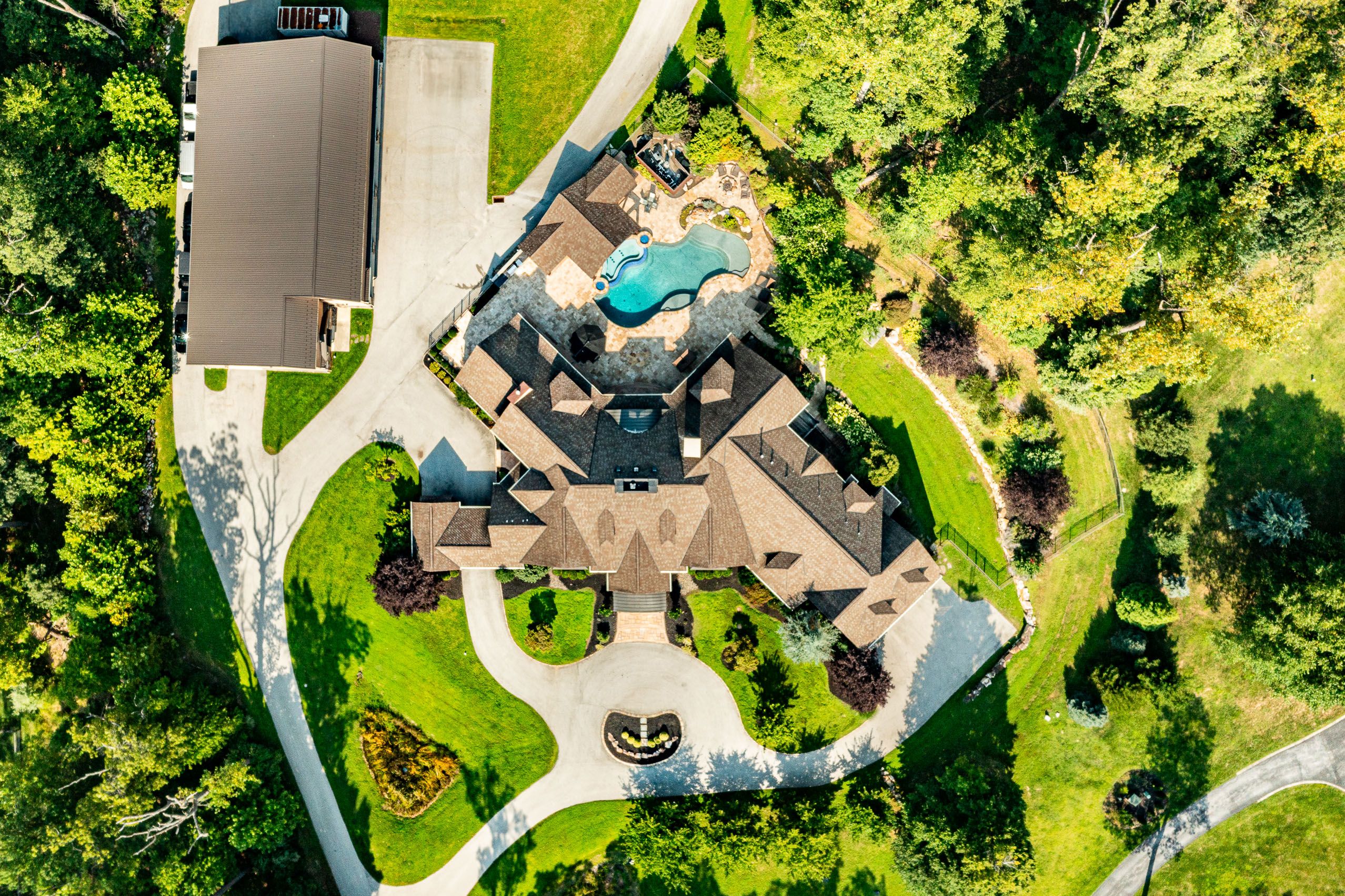
    More than 8,000 square feet would be a lot of space for a house. But this Chester County property for sale for $8.75 million includes a detached garage of that size designed to house a car collection.

    The space can fit about 40 vehicles and has three lifts and radiant flooring.

    “For a high-end car enthusiast, this property is perfect,” said listing agent Carole Bissett-Montagna with Compass Real Estate.

    The 8,300-square foot detached garage is currently designed for a car collection.Brian Castro, Virtual Vista

    A buyer also could reimagine the space for another hobby or as an indoor sport or recreational facility, she said. It also has an office and a bathroom.

    The garage sits off to the side of the property’s residence, which spans 17,832 square feet and has six bedrooms, six full bathrooms, and three half bathrooms.

    It’s all on about 6½ acres of mostly wooded property in Tredyffrin Township.

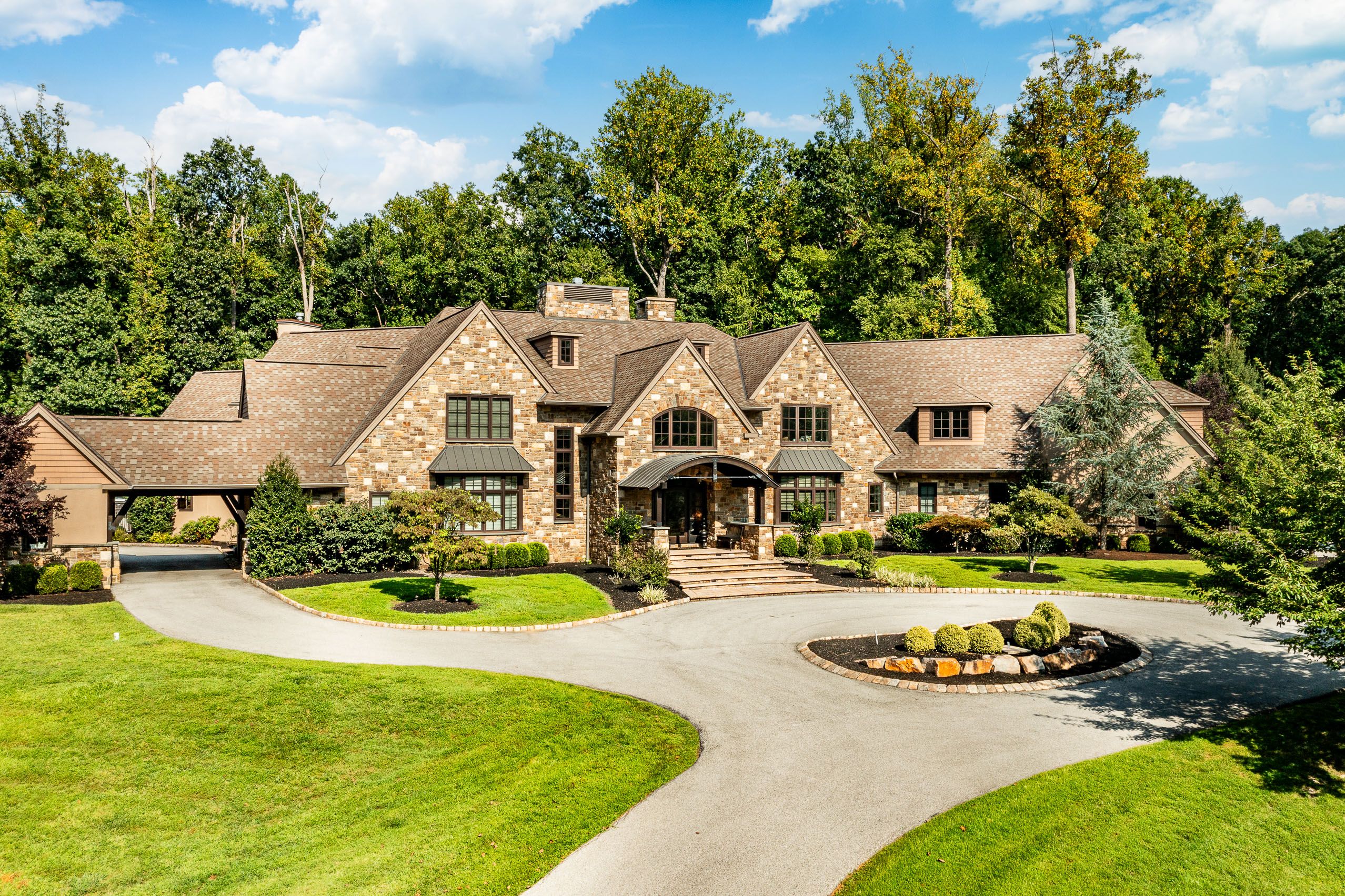
    This property includes a 17,832-square-foot house and an 8,300-square-foot detached garage.Brian Castro, Virtual Vista

    The home has “beautiful finishing touches you just don’t see in other homes” and “a very open floor plan for a home that size,” Bissett-Montagna said. Unique cabinetry and fieldstone throughout the home also make the property stand out, she said.

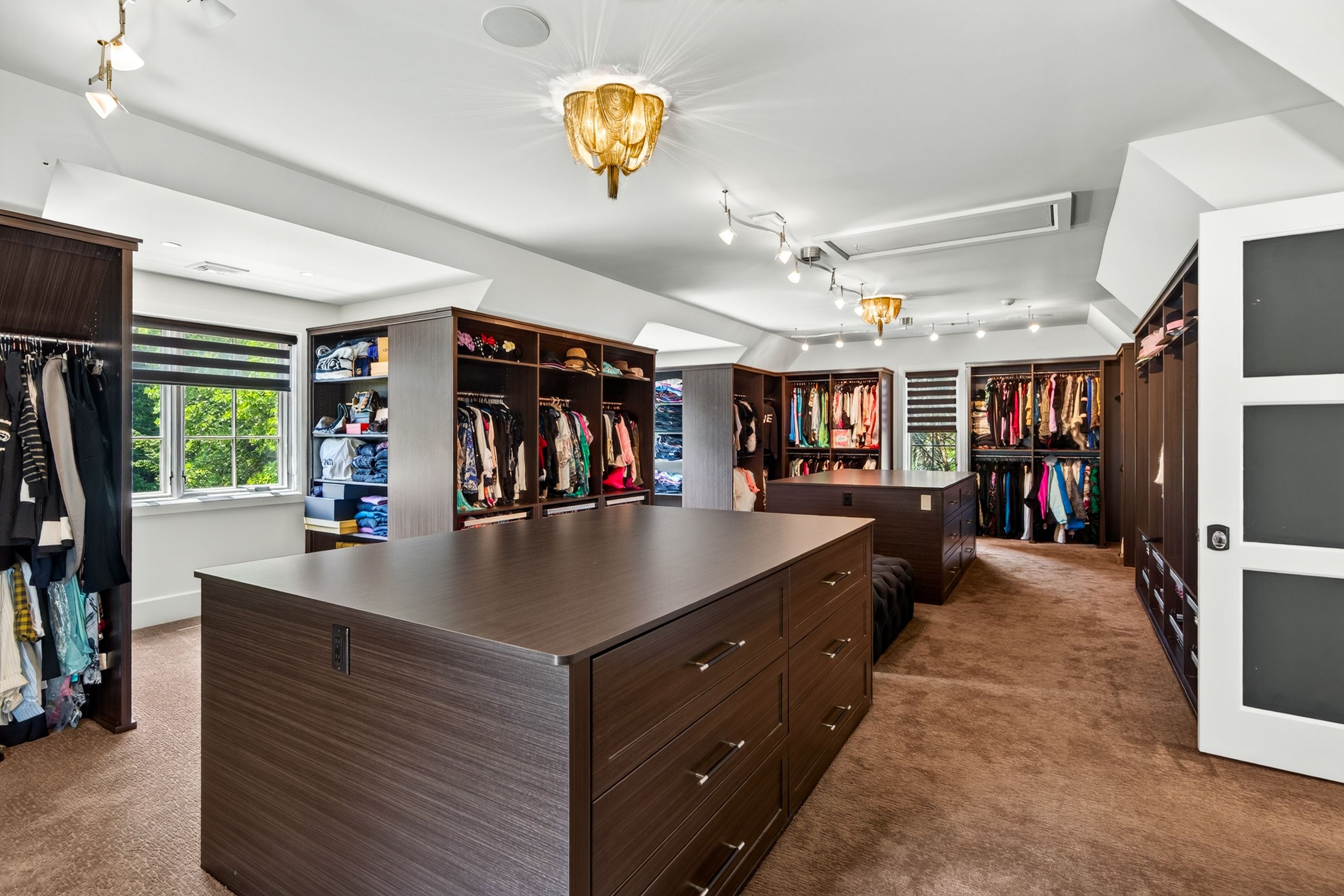
    The house has two primary suites. The one on the first floor includes a bathroom with a steam room. The one on the second floor features a fireplace, a balcony, and an 800-square-foot closet and dressing room.

    A primary suite on the second floor features an 800-square-foot closet and dressing room.Brian Castro, Virtual Vista

    The house’s great room features vaulted 34-foot ceilings and a two-story, three-sided stone fireplace. Large windows and glass doors look out onto the backyard.

    Next to the great room, a built-in bar has custom lighted cabinetry and a two-sided, 700-gallon saltwater fish tank. The tank is fully automated and feeds the fish itself.

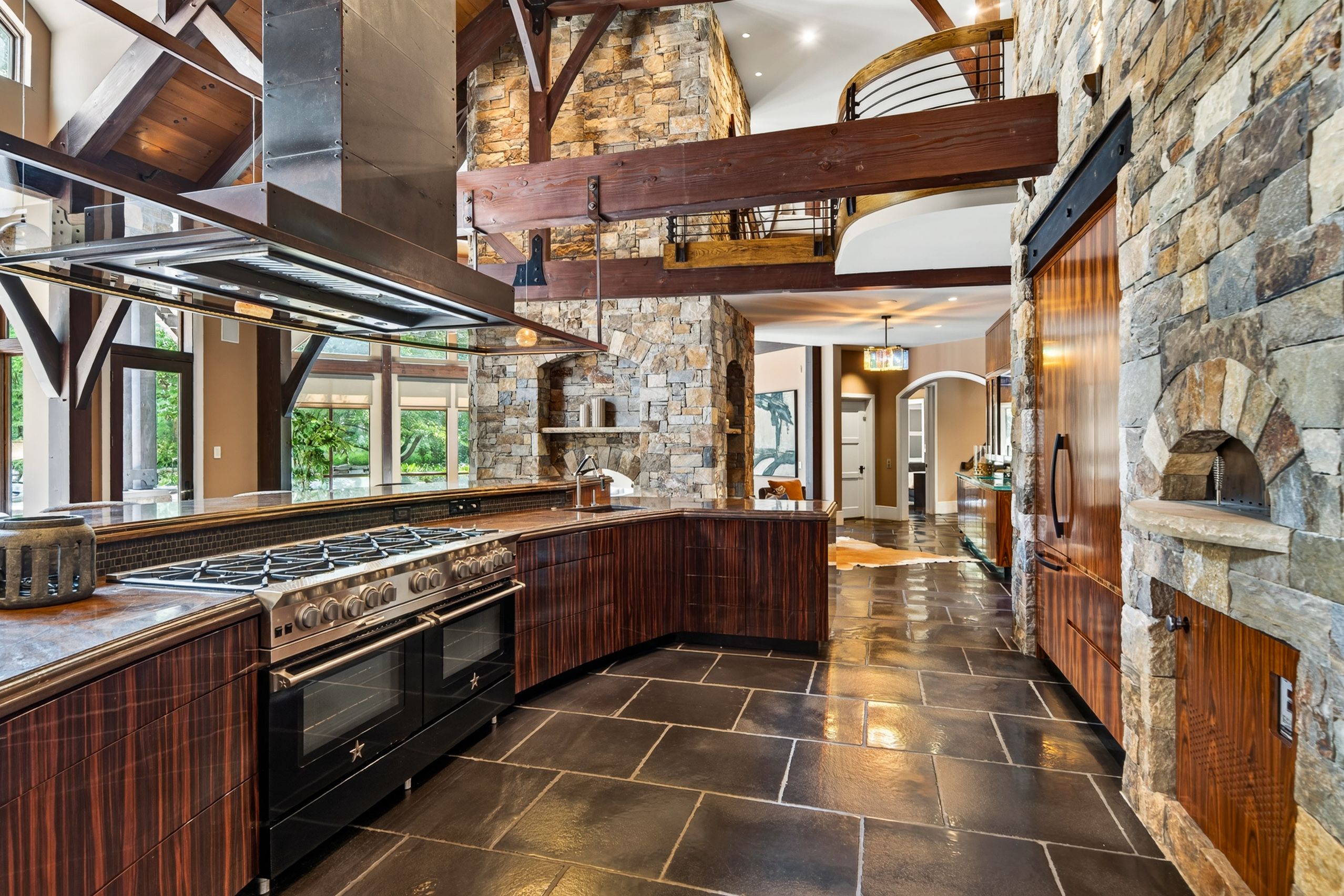
    The kitchen features a built-in pizza oven; a two-level, 20-foot island; black slate flooring; and integrated lighting in all the cabinets and drawers. The dual-oven range is topped by a custom metal range hood.

    The kitchen includes a built-in pizza oven and a dual-oven range.Brian Castro, Virtual Vista

    A separate food-preparation area includes a commercial refrigerator and freezer, a commercial dishwasher, another dishwasher, and an oversized sink.

    A guest or in-law suite with a private entrance includes a full kitchen, a bedroom, a bathroom, and a seating area.

    A four-seasons room blends indoor and outdoor living with sliding glass doors. Between this room and the dining room is a wall with a 60-inch built-in fireplace.

    Downstairs, a finished basement includes a bar, wine cellar, media room, gym, and additional entertainment spaces.

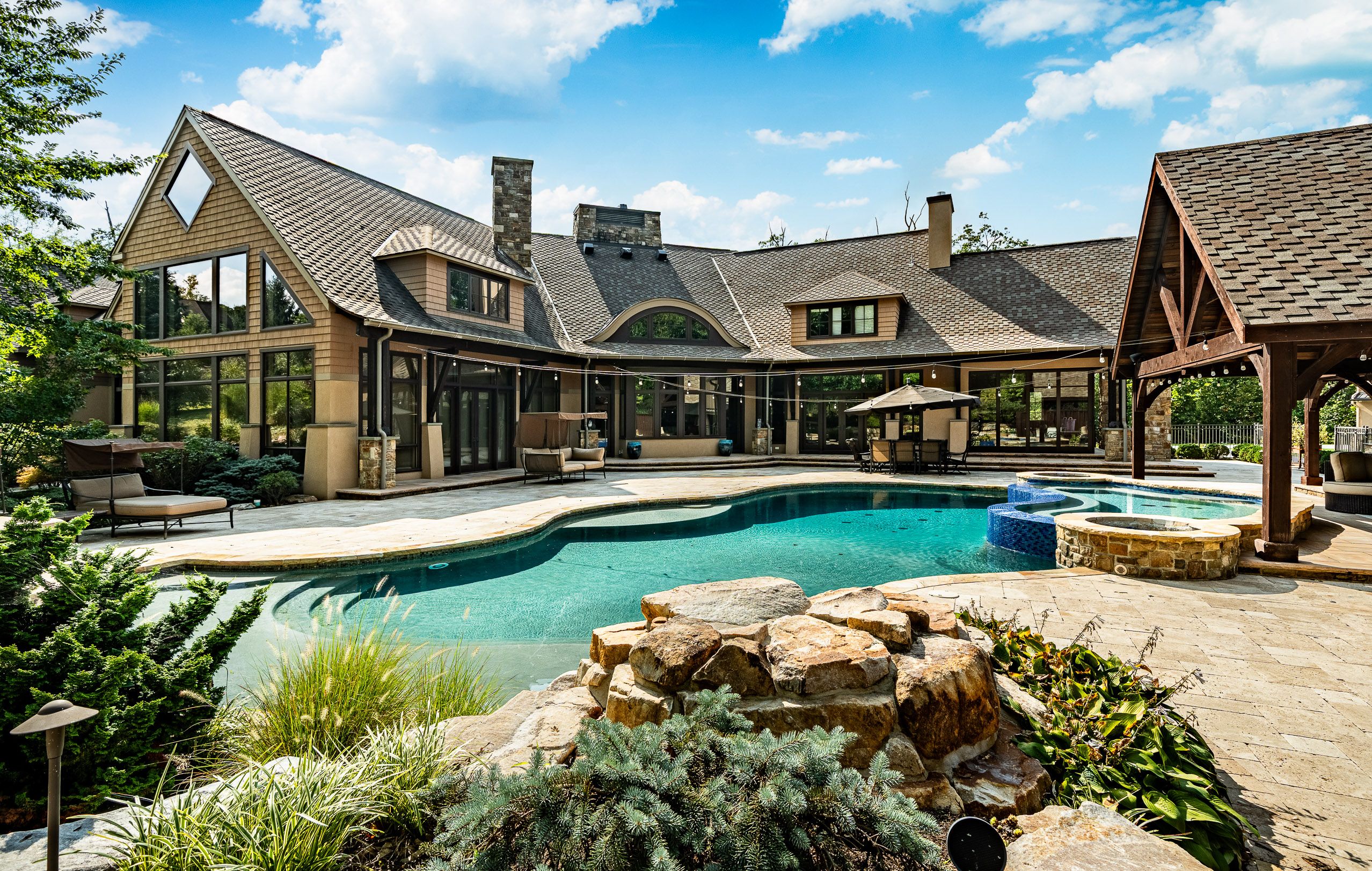
    In the backyard, a large terrace has several seating areas and surrounds the home’s 45,000-gallon, free-form swimming pool. The space also includes three fire features, a pool house, a built-in grill, and a bar area with a sink.

    The backyard includes a pool, pool house, several seating areas, and fire features.Brian Castro, Virtual Vista

    The home is a few miles’ drive to I-76 and Pickering Valley Golf Club and is near the Diamond Rock nature preserve.

    The property was listed for sale in September.

  • Prominent restaurant group must pay $200K for mishandling sexual harassment at a Main Line restaurant, jury says

    Prominent restaurant group must pay $200K for mishandling sexual harassment at a Main Line restaurant, jury says

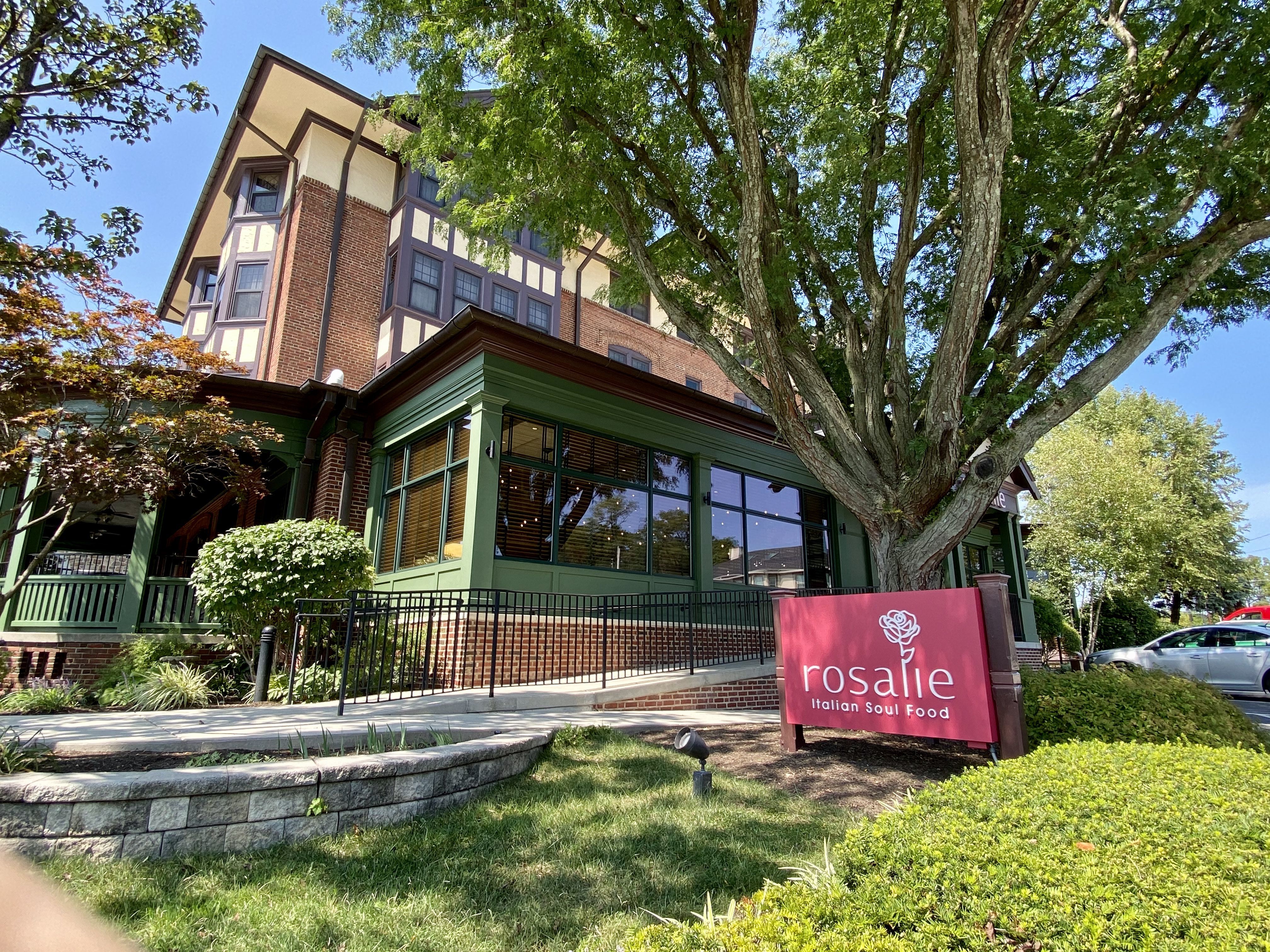
    Fearless Restaurants was negligent in its handling of repeated incidents of sexual harassment at Rosalie, its popular Italian restaurant in Wayne, a jury found in a civil trial last month.

    The panel ordered Fearless to pay $200,000 to Jennifer Ford and Brianna Krigelman, two former Rosalie employees who said longtime server Daniel Razionale touched them in a sexual manner at work without their consent.

    Ford and Krigelman sued the restaurant group last year, saying Fearless “knowingly, recklessly, and negligently permitted” Razionale to work with them despite a conviction for prowling.

    In August 2023, Razionale, 37, was charged with indecent assault and harassment after Ford, Krigelman, and a third Rosalie employee told police he assaulted them at the restaurant. He later pleaded guilty to three counts of harassment in a negotiation with prosecutors, and the indecent assault charges were dismissed.

    Ford started working as a server at Rosalie in August 2022. In November 2022, Razionale rubbed his crotch on Ford’s hand as she stocked a refrigerator, according to the affidavit of probable cause for his arrest. That same month, the affidavit said, Razionale “grabbed [Krigelman’s] right buttocks and squeezed with his hand in a sexual manner.”

    The suit said Fearless covered up Razionale’s behavior and retaliated against Ford and Krigelman after they complained.

    “I finally feel believed,” Ford said of the jury’s verdict. “A big burden was just taken of my shoulders.”

    A lawyer for Fearless said the restaurant group disagrees with the verdict. Repeated attempts to reach Razionale were unsuccessful.

    Headquartered in Radnor, Fearless Restaurants owns 12 restaurants in Philadelphia and the surrounding suburbs, including the Moshulu at Penn’s Landing, Louie Louie, and five outposts of the farm-to-table institution White Dog across University City, the Main Line, and Delaware County. The group has plans to open a 13th restaurant in Wayne later this year.

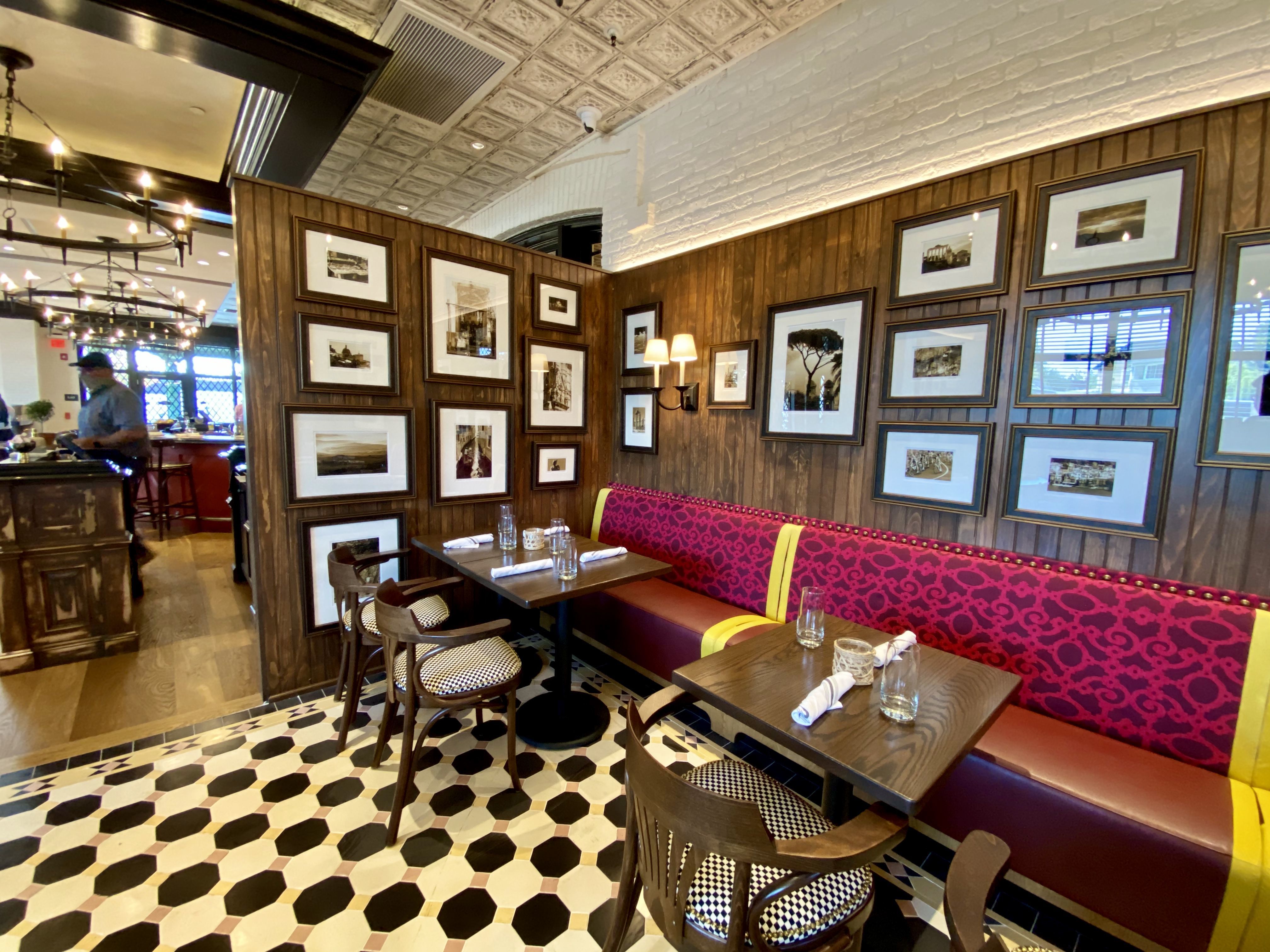
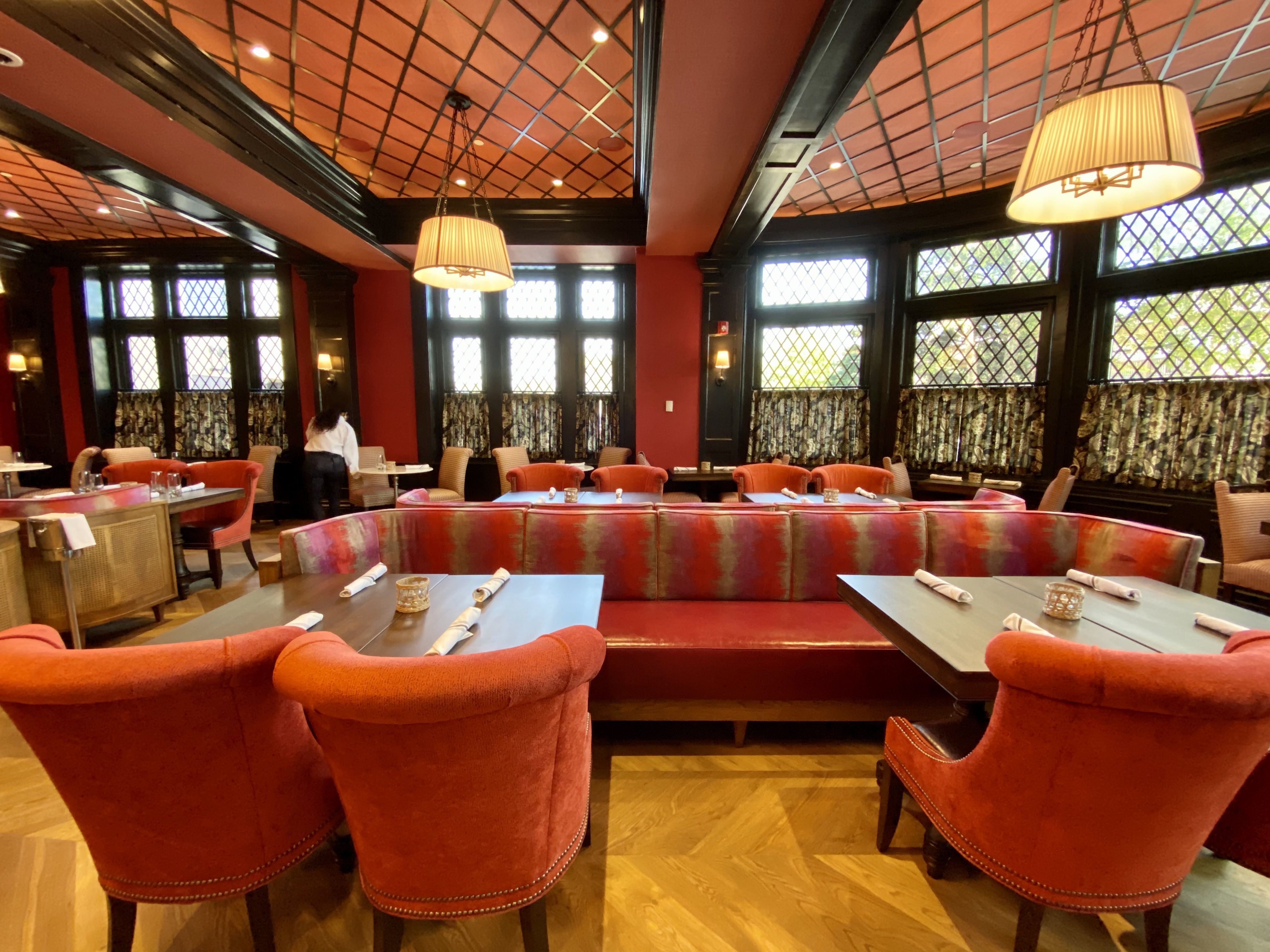
    Indoor seating inside Fearless Restaurants’ Rosalie at the Wayne Hotel.Michael Klein / Staff

    Fearless’ lawyer, Kim Russell, said the company did not know about Razionale’s misconduct at work. While the jury found Fearless negligent, she said, it did not agree with the conclusion that the company knew of Razionale’s actions. She has asked a Common Pleas Court judge to overturn the $200,000 penalty.

    A history of prowling

    Razionale began working as a server at several Fearless restaurants in September 2019, Russell said.

    The next year, he was charged with loitering, prowling, and defiant trespass for allegedly peeping at a Bryn Mawr apartment complex. He pleaded guilty to the charges in January 2021 and was sentenced to two years of probation.

    In July 2023, Radnor Township police arrested Razionale for prowling and peeping in a separate incident at an apartment complex on the 400 block of Norris Road. He pleaded guilty to charges of loitering and prowling at night in 2024.

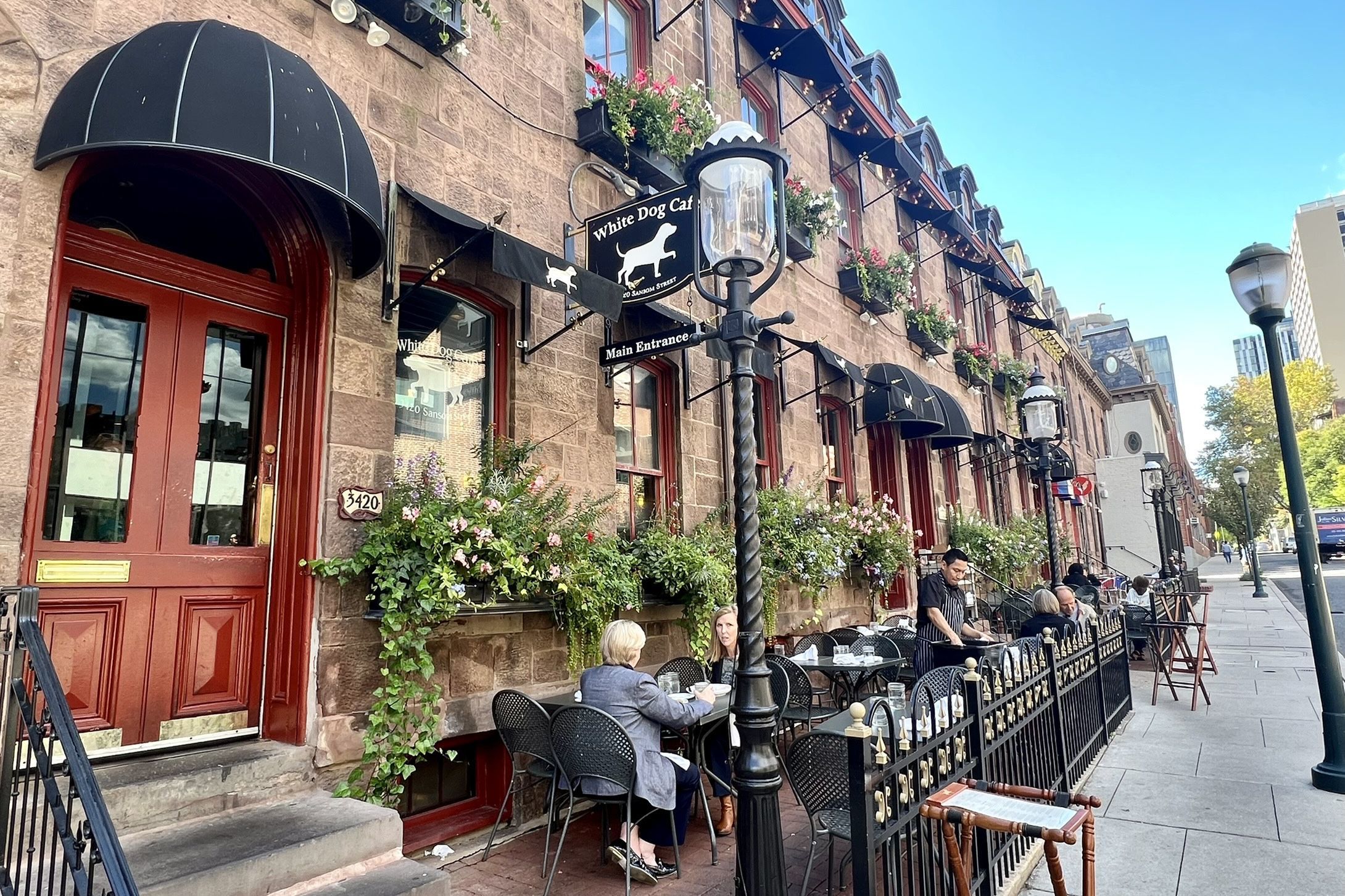
    Fearless Restaurants owns 12 restaurants in the Philadelphia region, including White Dog Cafe locations in University City, Wayne, Haverford, Glen Mills, and Chester Springs.Michael Klein / Staff

    Russell said Fearless wasn’t aware of Razionale’s first arrest until November 2022. Had the company known, she said, it would not necessarily have fired him. “Anyone who is arrested is innocent until proven guilty, and employers cannot fire someone simply for being arrested,” she said.

    Criminal charges

    After seeing media coverage of Razionale’s July 2023 arrest, Ford said, she, Krigelman, and a third Rosalie employee told Radnor police he had harassed them at work.

    The third employee — who was not named in court documents — told police that Razionale touched her breasts through her clothes while placing a pen down her shirt in December 2022, according to the arrest affidavit. “It made her feel so uncomfortable that she quit her job,” the document said.

    Ford, for her part, said she went to police because “it was the right thing and someone had to do it.”

    Razionale resigned from the restaurant in summer 2023, Russell said. He pleaded guilty in May 2024 to three counts of harassment, a misdemeanor, in connection with the incidents. He was sentenced to three years of probation and sex offender supervision.

    Civil charges

    Russell said Radnor police never contacted Fearless about the women’s allegations or the charges against Razionale.

    “No one from the police told Fearless about the case, and no one ever asked Fearless for any evidence of any kind, including video,” she said. “Fearless would have cooperated.”

    In their lawsuit, Ford and Krigelman said they told supervisors at Rosalie and Fearless’ human resources department about the incidents before going to the police. In response, the suit said, Fearless “made efforts to conceal [Razionale’s] sexual misconduct” by transferring him to other restaurants in the group.

    The dining room at Rosalie.Michael Klein / Staff

    The suit said the restaurant group also lacked proper safeguards — including pre-employment screening, preventive trainings, and clear investigative standards — for handling sexual misconduct.

    Russell said that was not so. The company trains all managers on spotting workplace misconduct and maintains an anonymous hotline for employees to report issues, she said.

    ‘Nothing I really did mattered’

    Ford said Razionale trained her when she first started at Rosalie, and working with him required near-constant boundary setting from the start.

    Razionale, she said, repeatedly engaged in lewd conduct around her. He would mimic masturbation, she said, and would often thrust his crotch in her face. Ford said she always told him to stop.

    “He’d respect me for maybe an hour … then we’d be back at zero,” she said. “I thought it was something I had to suffer through to keep my job.”

    Ford said she talked to her supervisors about Razionale’s inappropriate behavior, and after he rubbed his crotch on her hand, she lodged a complaint with HR. “Nothing I really did before mattered,” she said.

    Fearless responded by first scheduling Razionale for different shifts at Rosalie, the suit said, a move that Ford said limited her ability to pick up extra work. Then, Razionale was transferred elsewhere, the lawsuit said.

    Russell said Fearless was unable to corroborate Ford’s HR complaint, but it removed Razionale from the schedule at Rosalie. He was also never intentionally transferred, Russell said: Since Razionale worked across Fearless restaurants, he “maintained his shifts at other locations where he was already working.”

    “Fearless never received any other complaints at all about Mr. Razionale’s conduct,” Russell said. They had “no reason to believe that there was any ‘pattern’ of conduct at work.”

    Retaliation allegations

    After Ford reported Razionale’s behavior, the suit said, Fearless retaliated against her by taking “overt steps to discredit, defame and tarnish” her reputation, leading to lost wages and earning potential.

    After Razionale was transferred, Ford said she was scheduled to work in smaller sections of the restaurant and began to receive disciplinary write-ups for what she said was described as a “bad attitude.” Ford left Rosalie in March 2023 and said she has struggled to find consistent work since.

    “I left because I felt silenced,” Ford said. “The general feeling [at Rosalie] was that I did something wrong.”

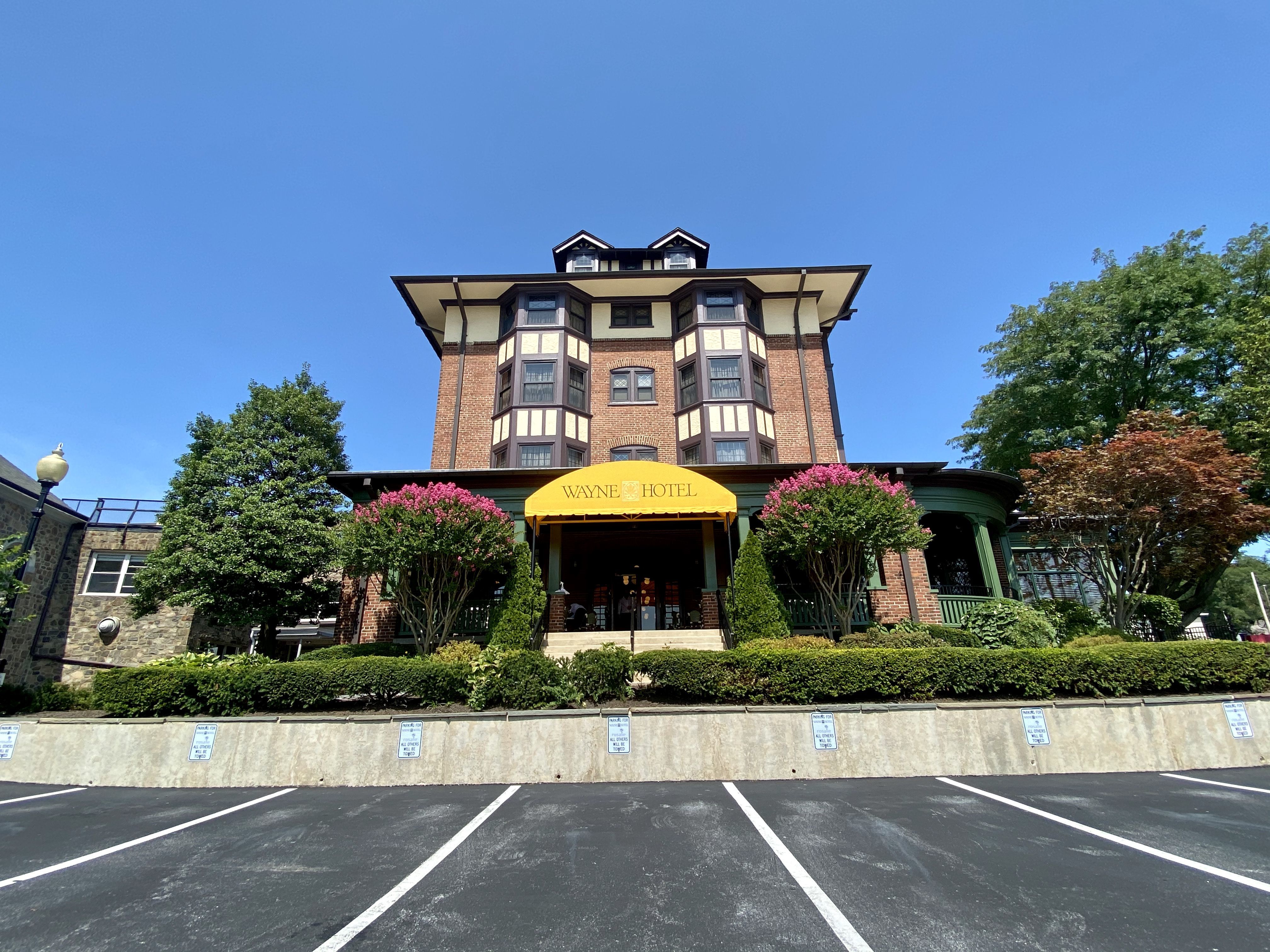
    Rosalie is set up inside the Wayne Hotel.Michael Klein / Staff

    According to the lawsuit, Krigelman experienced similar treatment. Krigelman’s lawyer, Ryan Grace, said she was terminated from Rosalie in August 2023 for alleged insubordination.

    Fearless denies retaliating against either woman. Russell said Ford and Krigelman “produced no evidence at all that Fearless said or did anything at all to damage [their] reputations.”

  • Mobility challenges, market pressures, and historic charm: Six takeaways from a newly accepted ‘Vision for Wayne’

    Mobility challenges, market pressures, and historic charm: Six takeaways from a newly accepted ‘Vision for Wayne’

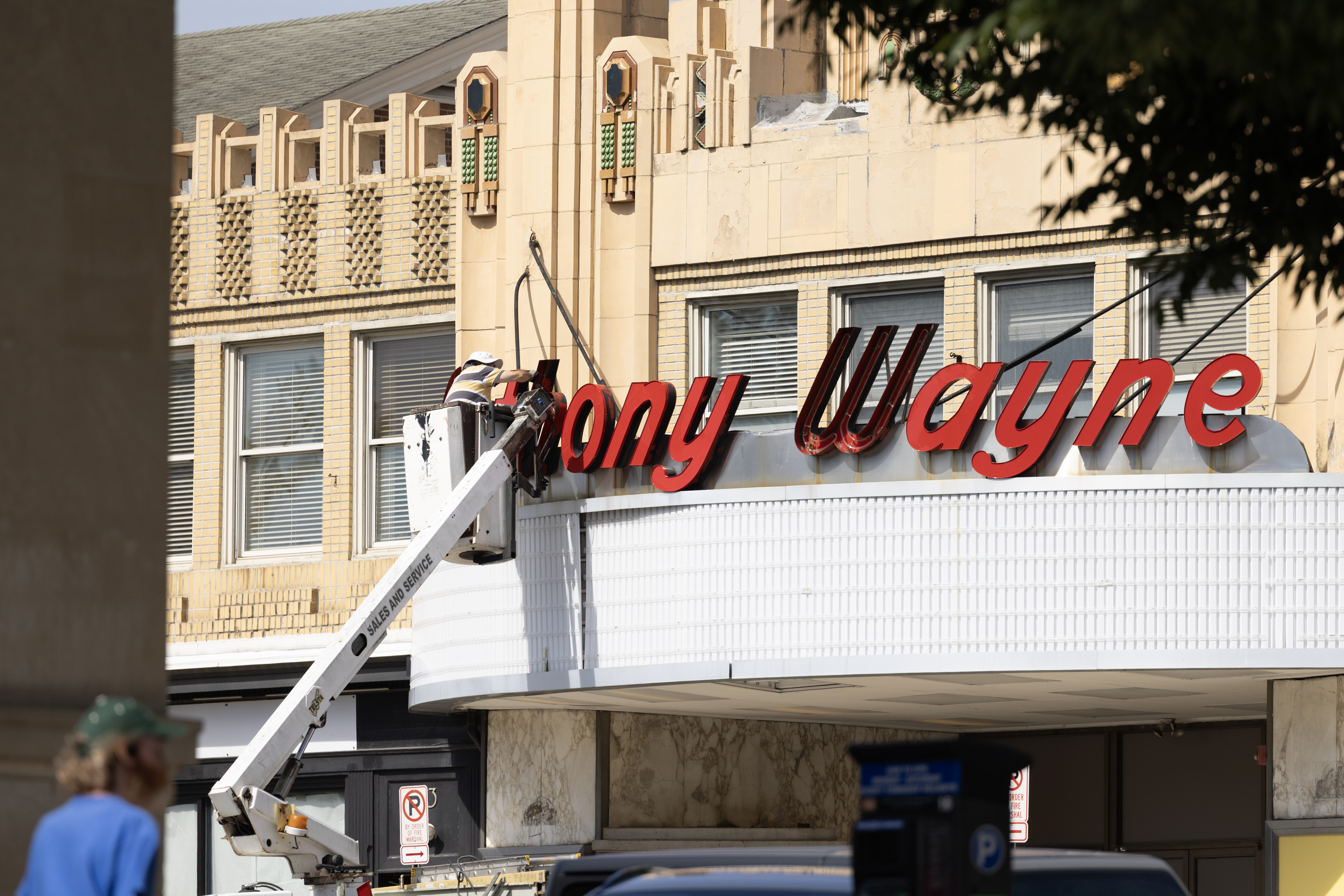
    What does the future hold for Wayne? A 144-page document accepted by Radnor’s commissioners may have some clues.

    The Radnor Township Board of Commissioners on Oct. 12 voted to accept “A Vision for Wayne,” a downtown master plan that outlines land use, transportation, economic development, and infrastructure policy recommendations to allow Wayne in 2036 to “continue to be the premier suburban town center on the Main Line” and “a vibrant, active place for people of all ages, abilities, and backgrounds to live, learn, work, dine, shop, relax, and socialize.”

    The document includes resident survey data, a historical look at downtown Wayne, and a menu of recommendations for spurring economic development.

    Though the plan was accepted by commissioners, Township Manager William White clarified at the meeting that it is “conceptual,” and that any new developments or policy changes would need to be approved by the board through separate processes.

    Here are six takeaways from “A Vision For Wayne.”

    Residents love Wayne’s walkability

    When asked what they love most about downtown Wayne, 77% of survey respondents cited walkability. Wayne is “highly valued for its historic village character and human-scaled streets,” according to the report, and its compact, mixed-use planning creates an “active, well-connected community.” Following walkability, 54% of respondents said retail and restaurants are the things they love most about Wayne, and 40% said Wayne’s historic character.

    A report accepted by Radnor’s commissioners outlines a vision for the next decade in downtown Wayne. Jasmine Goldband / Staff

    Lancaster Avenue presents the ‘biggest mobility challenge’

    While Lancaster Avenue, which cuts through downtown Wayne, is a “vital regional roadway,” it presents “the most significant mobility challenge within the downtown core,” according to the report.

    At evening rush hour, the busiest time of day on Lancaster Avenue, its main intersection with Wayne Avenue handles around 2,130 vehicles per hour. Frequent curb cuts, fast vehicle speeds, and difficult crossing conditions “feel out of step” with the village’s quaint character and create a “barrier that divides the business district,” according to the report.

    The visioning document, as well as Radnor’s 2035 comprehensive plan, calls for numerous traffic calming solutions along Lancaster Avenue, including changing traffic flows, installing speed reduction devices, reducing the number of driving lanes, and strictly enforcing speed limits.

    Market pressures could threaten to displace local businesses

    Downtown Wayne “exists in a kind of equilibrium right now,” with a healthy mix of restaurants, shops, large brands, and independent retailers, according to the report.

    Wayne has long staved off an influx of national chains due to its smaller storefronts and proximity to large malls, the report says. Now, however, many large retailers are gravitating toward “Main Street” settings. FP Movement and Ballard Designs, both national brands, relocated to Wayne from King of Prussia last year.

    Low storefront turnover and rising tenant interest suggest that, as leases expire, higher-priced dining concepts and large chains that can pay rising rents may have the upper hand.

    “In other words, some existing boutiques and other mom-and-pops might be lost in the shuffle,” the report reads.

    A visioning document proposes a host of policy changes that stakeholders say will bolster Wayne’s economy in the decade to come. Jasmine Goldband / Staff

    The data say Wayne has an ‘overall surplus of parking,’ though it doesn’t always feel that way

    The numbers say Wayne has plenty of parking — but not everyone feels that way.

    According to a comprehensive parking supply-and-demand analysis conducted by Walker Consultants, there are nearly 2,400 parking spaces in Wayne, the majority of which are in private, business-specific lots. During peak occupancy in Wayne, around noon on a day in September 2025, only around 1,550 spaces, or 66% of the total supply, were in use, according to Walker Consultants’ study. At that lunchtime peak, there were over 80 vacant spots in public off-street lots, 145 vacant street parking spaces, and 550 vacant spaces in private lots. While there is technically a “surplus,” according to the report, hot spots like North Wayne Avenue and the North Wayne lot saw excess use, whereas spaces on the periphery of the downtown core had more availability.

    While the data show enough parking, the report acknowledges that “parking is an emotional and highly subjective experience for most users,” and that just as important as data is “how parking in a community is perceived.”

    A key recommendation that came out of the visioning document, a plan to turn a portion of the North Wayne Avenue municipal parking lot into a community park, has drawn ire from some local business owners who say eliminating 24 parking spaces would strain businesses already operating under difficult economic conditions.

    Wayne’s special zoning district provides an ‘important framework,’ but needs updating

    In 2006, Radnor Township adopted the Wayne Business District Master Plan, a framework for land use and economic decisions designed to spur the development of a vibrant downtown core in Wayne. One of the provisions that arose from the plan was the Wayne Business Overlay District, a special zoning and land use district that established Wayne-specific architecture standards.

    While the overlay district has provided an “important framework” for guiding Wayne, the report suggests a number of updates, including creating standards and incentives for the development of diverse housing options, clarifying language to allow explicitly for everyday retail uses like grocery stores and fitness studios, and creating clearer guidelines for how buildings can look.

    Radnor Township’s approval process can make development too cumbersome

    Like many municipal governments, Radnor currently requires developers to navigate multiple levels of approvals to update or construct new buildings. In some cases, this involves receiving a green light from the historical architectural review board, planning commission, zoning hearing board, and board of commissioners, depending on the proposal at hand. This approval structure “creates a real burden for minor applications,” the report says, and can “inhibit investment and unnecessarily prolong commercial vacancies.” The report recommends allowing administrative approval for certain smaller changes and exempting planning commission and board of commissioners reviews for buildings under a certain square footage.

    Clarification: This story has been updated to note that the board of commissioners accepted the “Vision for Wayne” recommendations.

    This suburban content is produced with support from the Leslie Miller and Richard Worley Foundation and The Lenfest Institute for Journalism. Editorial content is created independently of the project donors. Gifts to support The Inquirer’s high-impact journalism can be made at inquirer.com/donate. A list of Lenfest Institute donors can be found at lenfestinstitute.org/supporters.
  • Cheltenham is locked in an 11-year legal battle with the Archdiocese of Philadelphia over property taxes

    Cheltenham is locked in an 11-year legal battle with the Archdiocese of Philadelphia over property taxes

    Cheltenham is in a battle with the Archdiocese of Philadelphia over at least a decade’s worth of property taxes for one of the township’s largest properties.

    The dispute began in 2014, after the archdiocese transferred Holy Sepulchre Cemetery to a limited liability corporation the church controls called Philadelphia Catholic Cemeteries, as part of an effort to improve the church’s financial situation.

    The archdiocese had also, the year before, signed a 60-year, $89 million lease with a for-profit death services corporation, now the Florida-based Everstory Partners, to run 13 Delaware Valley cemeteries, including Holy Sepulchre.

    Church graveyards are typically exempt from property taxes, but after the cemetery was transferred to the LLC, Montgomery County revoked the exemption and notified Holy Sepulchre it would begin collecting for 2015, according to court filings. The county’s decision also affected Calvary Cemetery in Lower Merion, another of the 13 leased cemeteries.

    Holy Sepulchre’s owners appealed, arguing that the cemetery is still under the nonprofit Archdiocese of Philadelphia because the church controls the LLC, and should be religiously exempt. They also appealed the county’s $9.1 million assessment, submitting an appraisal of $4.67 million.

    Cheltenham Township and the Cheltenham and Lower Merion school districts are all parties in the case.

    Whether the LLC should count as separate from the archdiocese is “a controversial question,” said Marie Reilly, an attorney with expertise in Catholic Church bankruptcy cases. “This is one of those arguments that lawyers love.”

    It’s not clear how much money a decade of taxes from the 200-acre cemetery puts at stake for Cheltenham and Montgomery County.

    In addition to the large gap between the assessment figures offered by the county and property owners for 2015, the parties at one point also disputed which parcels are included in the assessment appeal. The county in 2025 assessed the cemetery at $9.3 million, according to public records. This year, the cemetery would owe about $683,000 total based on the tax rate, including more than half a million for the schools.

    The county confirmed to The Inquirer that the cemetery began paying property taxes in 2025, but it’s unclear whether they’re paying for the whole cemetery plot, or only a smaller portion that had been involved in the parcel dispute.

    The case is still active, a Cheltenham School District spokesperson confirmed. But no filings have been added to the court docket since last year after Cheltenham filed a motion to remove the judge, accusing his office of communicating inappropriately with the cemetery side.

    The communication dispute arose shortly before the judge ordered Cheltenham to pay more than $43,000 of the cemetery’s legal fees for making a claim about which parcels were included in the suit years after it began.

    Another school district, Marple Newtown in Delaware County, settled with the leased cemetery in their district to receive $587,690 for five years’ worth of property taxes through 2021, and has paid property taxes in the years since, according to public records.

    The Cheltenham school district and township, the archdiocese, and Everstory did not comment further for this story.

    This suburban content is produced with support from the Leslie Miller and Richard Worley Foundation and The Lenfest Institute for Journalism. Editorial content is created independently of the project donors. Gifts to support The Inquirer’s high-impact journalism can be made at inquirer.com/donate. A list of Lenfest Institute donors can be found at lenfestinstitute.org/supporters.
  • ‘It feels like a weight has been lifted’: Cherry Hill students share their experience with the state’s new phone ban

    ‘It feels like a weight has been lifted’: Cherry Hill students share their experience with the state’s new phone ban

    They play board games at lunch. They greet each other in the hallways between periods. They pay more attention in class.

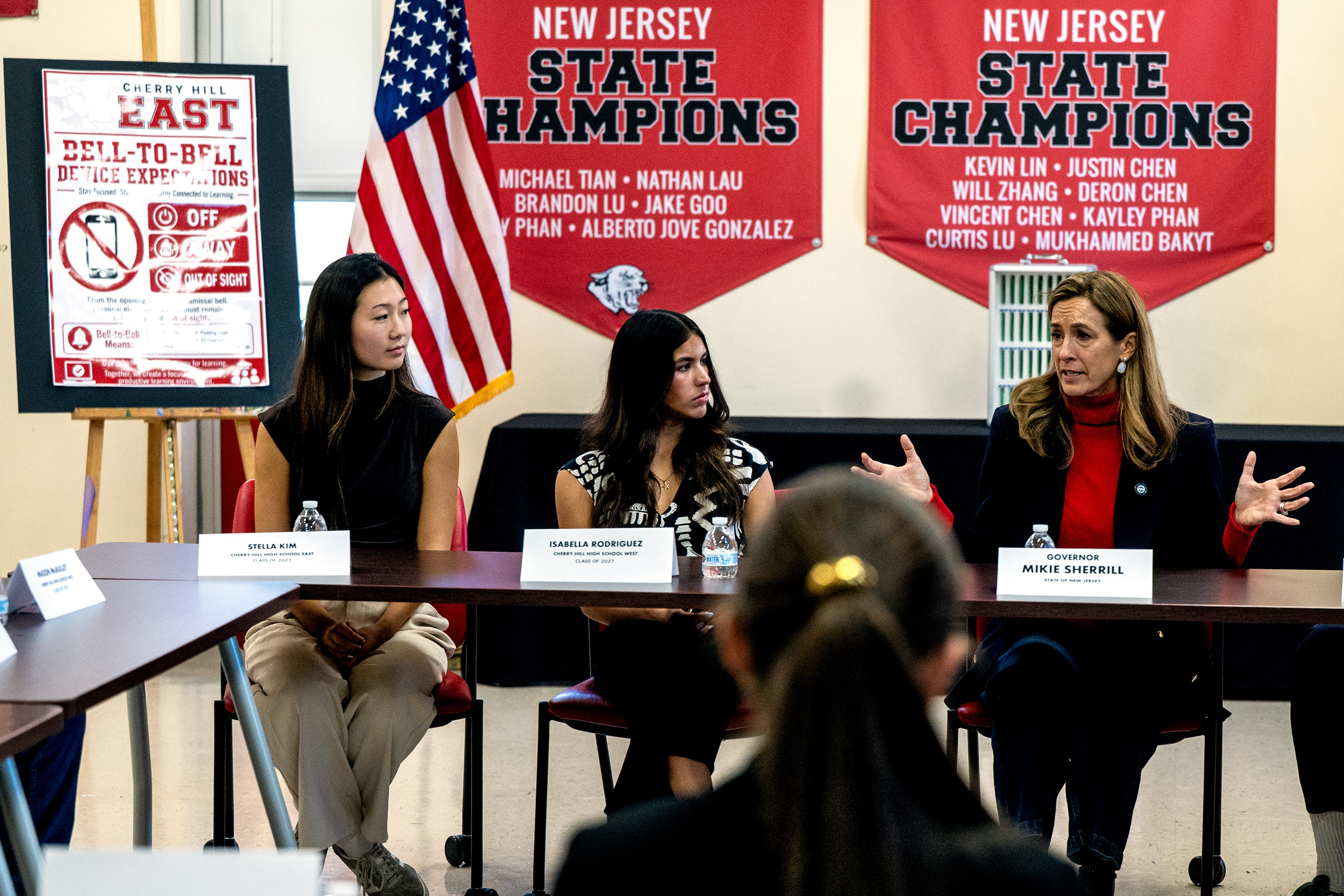
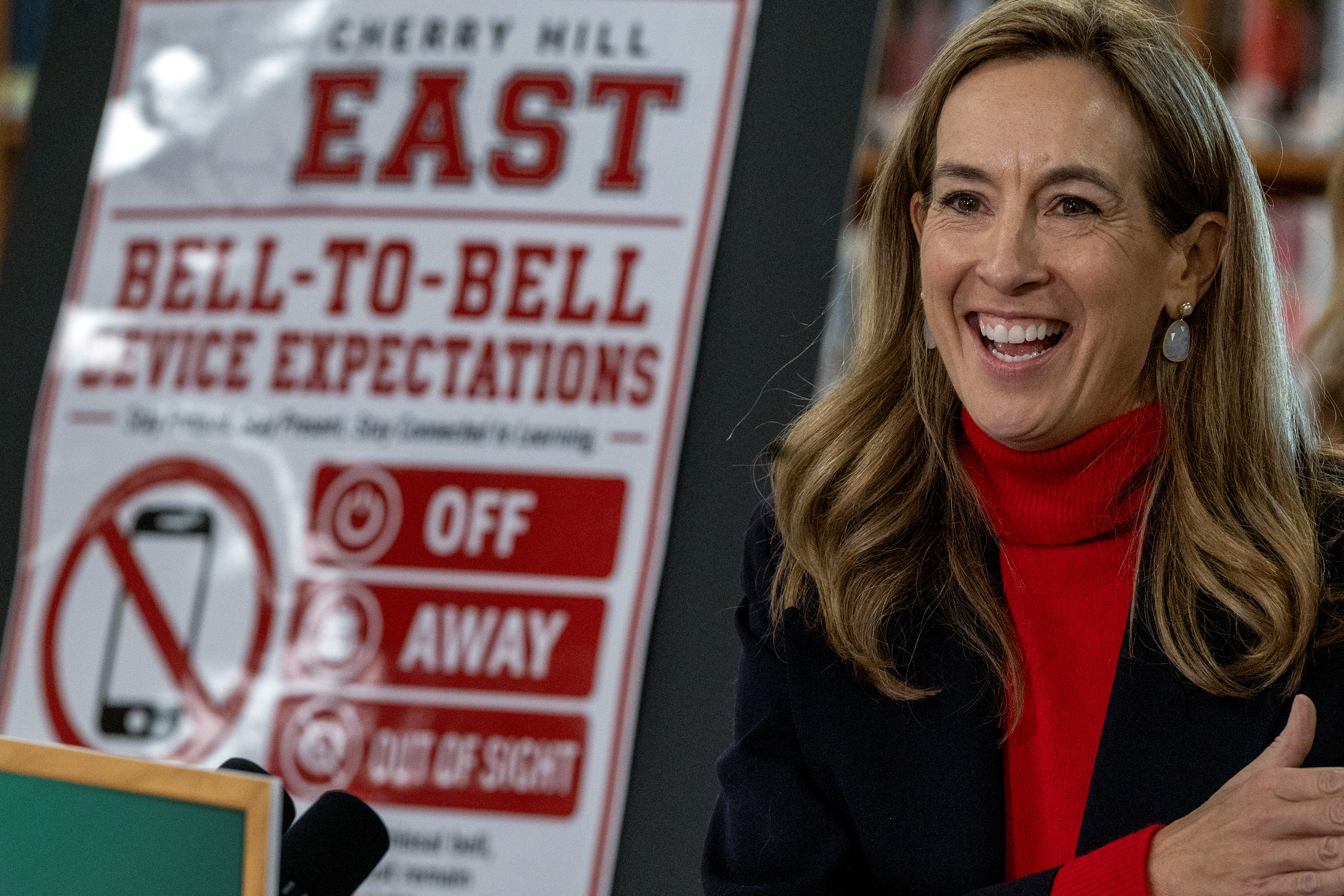
    Gov. Mikie Sherrill got an earful Thursday when she visited Cherry Hill High School East to learn more about how a state law that bans the use of cell phones and devices in schools has affected learning.

    Junior Giovannina Viglietta, 16, said her stress level and anxiety have been reduced because she no longer checks her phone constantly and can focus on classwork.

    “Without the pressure to constantly check messages or keep up with social media, it feels like a weight has been lifted off my shoulders and I can be more focused in classes,” Viglietta said.

    Seniors Stella Kim (left, from East) and Isabella Rodriguez from West, join other students in a roundtable discussion with Gov. Mikie Sherrill at Cherry High High School East.Tom Gralish / Staff Photographer

    Effective since the academic year began in September, the law has changed the school environment with fewer distractions, after some initial pushback, students and school officials say.

    “Our teachers no longer have to compete with a device for their students’ attention, and they can create more engaging classrooms,” Cherry Hill School Superintendent Kwame Morton said.

    Sherrill implemented the law, which was signed in January 2026 by former Gov. Phil Murphy. It required New Jersey’s nearly 600 public school districts to adopt bell-to-bell restrictions on cell phones and internet-enabled devices.

    The governor said she was impressed with the insight shared with her by a handful of students during a closed-session roundtable prior to her media briefing.

    “Giving students a school day free from constant digital distractions creates more room to learn, build friendships, and connect with their teachers,” Sherrill said. “We know that when kids put down the screens, their mental health and academic performance improve.”

    The bell-to-bell restrictions cover the entire school day, from the moment students arrive, and include lunch, study hall, and between classes.

    Cherry Hill East Student Government president Stella Kim, a senior, said the school culture was different when students were allowed to use their cell phones. She had been skeptical the ban would work but says it has become “the new norm.”

    “Everyone was really in their own world. They didn’t talk to each other,” said Kim, 17.

    Kara Rogalcheck, 17, a senior at Cherry Hill High School West, admitted she “wasn’t the happiest” when the cell phone ban was implemented. She said she is enjoying her final year, living in the moment.

    Said Vasisth Medavarapu, 16, a junior at East: “We’re definitely talking more.”

    The law allowed districts to decide how the devices are stored. Some districts have locked pouches, let students keep their devices turned off in their belongings, or store them in lockers or classrooms.

    Cherry Hill East students said they were pleased that the district allows them to keep their phones with them, and that makes them feel trusted. The schools have locked phone boxes used to store phones for repeat violations. The phones are returned at the end of the day in most cases.

    The phone lock box safe used in the Cherry Hill School District was on display on Thursday.Tom Gralish / Staff Photographer

    State Education Commissioner Lily Laux said districts across the state are reporting positive results. It may take years to see the full impact of the ban, she said.

    Educators say the problems with cell phones had become untenable. Teachers were frustrated trying to enforce the rules in class, while students watched movies or constantly scrolled social media.

    Cherry Hill and several other South Jersey districts, including Woodbury and Deptford, voluntarily began enforcing cell phone restrictions before the law was passed. The Cherry Hill school board also banned cell phones for its members during meetings.

    Morton said there have been few violations since the ban became mandatory. Cherry Hill has a tiered progressive discipline approach for violations.

    Gov. Mikie Sherrill visits Cherry Hill High School East on Thursday. The district began enforcing cell phone restrictions before the new law was passed.Tom Gralish / Staff Photographer
  • Middletown Township approves preliminary plans for new early learning center next to Penncrest High School

    Middletown Township approves preliminary plans for new early learning center next to Penncrest High School

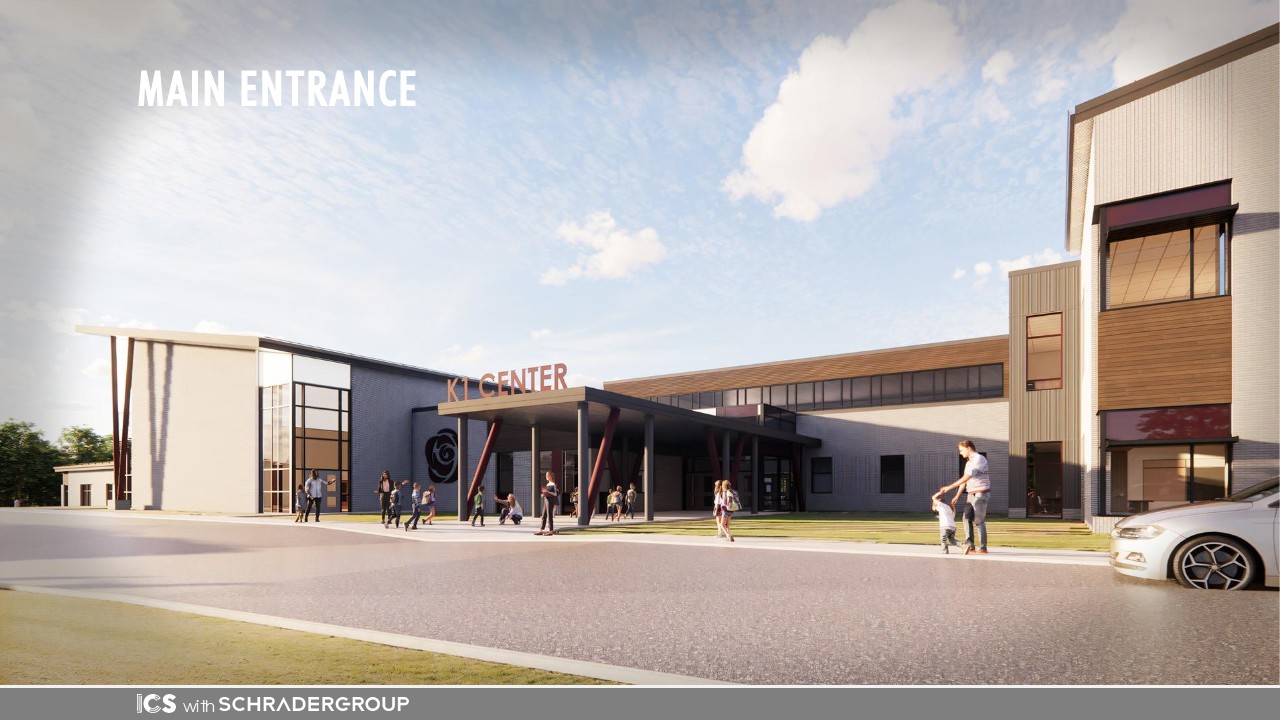
    The Middletown Township Council on Wednesday approved preliminary plans for the construction of a kindergarten and first-grade center next to Penncrest High School, marking a significant advancement for the Rose Tree Media School District in its yearslong attempt to construct a new school.

    Five of the six township council members present at the meeting voted in favor of the preliminary land development plan. Leslie Campo, who represents the district where the school will be placed, said she voted down the proposal after she “heard the voices” in her district.

    The K-1 Center is set to house all of the Rose Tree Media School District’s kindergarten and first-grade students, with specially designed classrooms and facilities for 5- to 7-year-olds and enough space for full-day kindergarten, an offering the district is currently unable to provide to families. The K-1 Center will also be home to the Linking Learning to Life program, which serves Rose Tree Media students ages 18 to 21 with disabilities.

    The school building is estimated to cost around $84 million, with an additional estimated $7.5 million for a proposed athletics addition. A realignment of Rose Tree Road, part of the district’s plan, is set to cost around $3.7 million, but will be partially grant-funded. The district has received a $2.5 million grant from the Pennsylvania Department of Transportation’s Multimodal Transportation Fund for the road realignment and has applied for a second grant, according to Barbara Wilson, the district’s coordinator of communication.

    In a statement, Rose Tree Media Superintendent Joseph Meloche said that the preliminary approval “represents an important and positive step forward in our efforts to provide a modern, developmentally appropriate learning environment for our youngest students” and that the district looks “forward to continuing our collaborative work with the Township as we move through the remaining steps toward making this important generational investment in our students and community a reality.”

    The school’s preliminary plan was approved with around three dozen conditions from Middletown Township, including that the Rose Tree Media School District will make financial contributions toward traffic safety infrastructure on neighboring roads and will install fire hydrants and reimburse the township for any service costs.

    One condition requiring the school district to “develop and implement strategies to strongly encourage and incentivize” families to utilize school buses to limit traffic drew some skepticism from the district.

    “My concern is that folks are gonna see the word incentivized with some sort of financial remuneration. …
I just don’t know that it’s something that we want to put on the shoulders or the pocketbook of the school district,” Meloche told township officials at the meeting.

    Council members said that given the outsize concerns about traffic around the school, the district will need to go “above and beyond” to get kids on the bus and out of parent drop-off lines. Meloche said the district is willing to encourage bus ridership and will share its plan with the township.

    The school district will be required to fulfill the various conditions and nail down specifics of the plan ahead of a final approval vote by council, which would officially allow construction to begin.

    The district plans to open the school for the 2029-30 academic year.

    The Rose Tree Media School District says rising enrollment has pushed students into modular classrooms and made it continually impossible to offer full-day kindergarten, even as neighboring districts have begun to provide it in recent years. A previous plan for a new Rose Tree Media elementary school was denied by neighboring Edgmont Township in 2023, spawning a legal challenge from the school district that was later withdrawn.

    Enrollment in the Rose Tree Media School District grew from 3,897 students in the 2006-07 school year to 4,269 students in the 2024-25 school year. The district estimates its enrollment will peak in the 2032-33 school year with 4,592 students, even as the number of children living in the Philadelphia suburbs has fallen steadily since 2010, following national trends.

    The school district has said expanding or converting existing school buildings is not a viable option.

    The K-1 Center has seen considerable pushback from residents who live around the site. During an hour of public comment on Wednesday night, neighbors warned that the school’s construction would irreparably erode their neighborhood’s bucolic character, add noise and light pollution, and create dangerous traffic bottlenecks.

    “The corner where this school is proposed sits right at the junction between a busy highway corridor and our residential road. Design-wise, this building is an eyesore with a blatant disregard for the neighborhood,” resident Alison McCoach said. “… When a plan is fundamentally flawed, forcing it through is not leadership, it’s recklessness.”

    A handful of speakers voiced support for the school and referenced a petition in support of the project, which has garnered nearly 850 signatures.

    This suburban content is produced with support from the Leslie Miller and Richard Worley Foundation and The Lenfest Institute for Journalism. Editorial content is created independently of the project donors. Gifts to support The Inquirer’s high-impact journalism can be made at inquirer.com/donate. A list of Lenfest Institute donors can be found at lenfestinstitute.org/supporters.
  • Havertown’s hometown quarterback | Inquirer Haverford

    Havertown’s hometown quarterback | Inquirer Haverford

    Hello, Haverford!

    Bryce Young may sport an opponent’s colors, but the NFL quarterback has roots in Havertown. This is his story. Also this week, Haverford resident Jeffrey Yass is contributing to the White House ballroom project, plus Haverford College has named its next president.

    — Lisa Dukart (haverford@inquirer.com)

    P.S. Tell us what you think of the newsletter by taking our survey or emailing us at haverford@inquirer.com.

    If someone forwarded you this email, sign up for free here.

    Carolina Panthers quarterback Bryce Young’s story started in Havertown

    Bryce Young’s return to Philadelphia, where the quarterback helped lead the Carolina Panthers to victory over the Eagles on Sunday, was a homecoming of sorts.

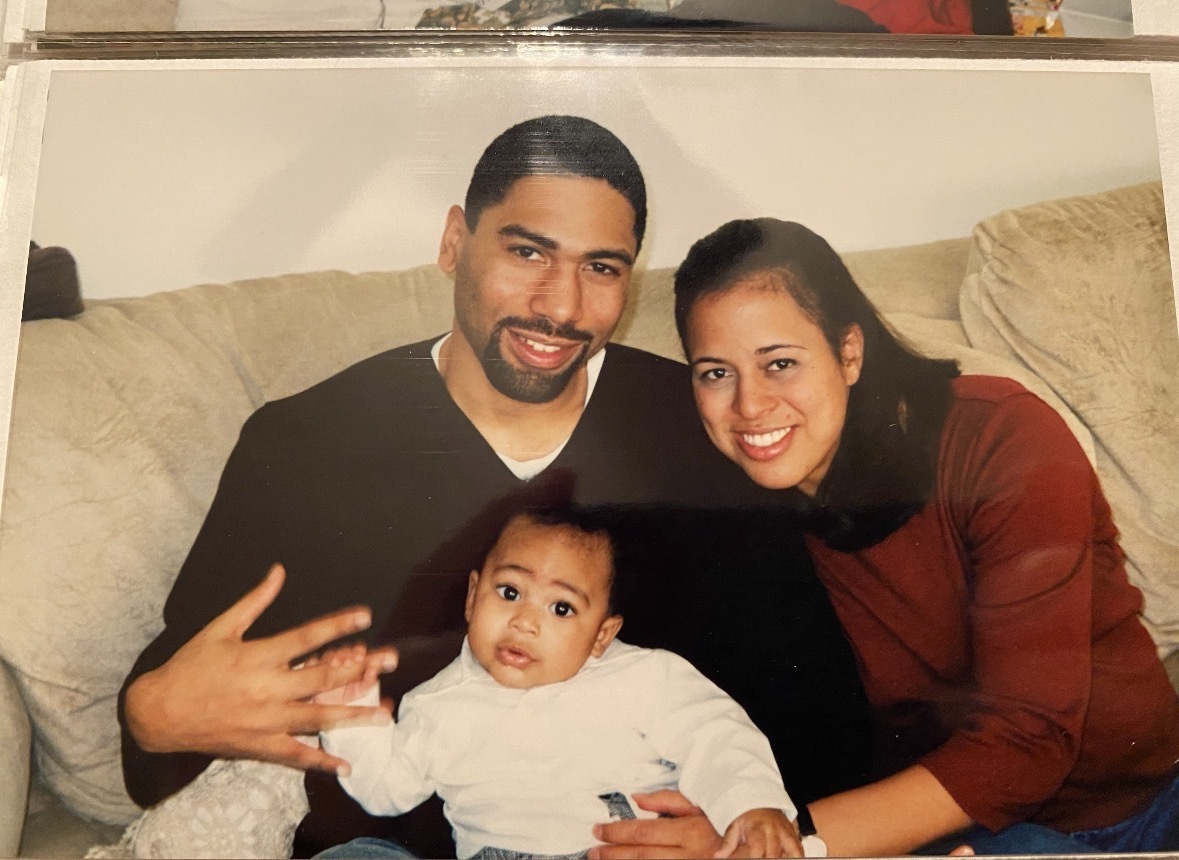
    Young spent the first six months of his life in Havertown, after which his family moved to California. Despite his short tenure in the township, it’s become an important place for him. Every time the family returns to the area, they revisit their old haunts, driving past their one-time home on Hillcrest Avenue and seeing what’s changed in the neighborhood.

    Young’s mom even likes pointing out his former favorite spots, including Paddock Park.

    The Inquirer’s Alex Coffey looks at Young’s roots to the region, which grew deep thanks to his parents.

    💡 Community news

    • Haverford resident Jeff Yass, who cofounded Bala Cynwyd-based Susquehanna International Group, is among those who donated to President Donald Trump’s White House ballroom project, committing $5 million, according to documents obtained by The Washington Post.
    • Haverford College has hired Tulane University dean Brian T. Edwards as its next president. The Middle East and North African studies scholar, who starts July 1, will succeed Wendy Raymond. Raymond’s tenure was riddled with controversy over how the school handled pro-Palestinian activism on campus.
    • Delaware County nurse Monica Ryadi faced her first Immigration and Customs Enforcement check-in last week after being detained on her way to Disneyland in September. Ryadi — who is in the country legally after fleeing religious persecution in Indonesia with her parents two decades ago — is being tracked by ankle monitor.
    • Attention commuters: SEPTA made changes to some of its Regional Rail schedules as of Sunday, so be sure to check times before heading out the door this week.
    • Last week, Gov. Josh Shapiro visited Manoa Fire Company, where he heard from members about the importance of grant funding for local fire houses. The fire house recently used grants to buy new equipment.
    • Penn Valley resident Charles Weiner, who previously owned popular North Philadelphia sandwich shop Max’s Steaks & Eagle Bar, has been indicted on tax fraud charges.
    • Tomorrow is the deadline to submit an application through the online lottery for the township’s Shade Tree Commission giveaway of 120 trees.
    • Tuesday is the last day to request a mail ballot for the November election. Check out The Inquirer’s guide to the 2026 midterms here.

    🗺️ Other nearby news

    🏫 Schools briefing

    🍽️ On our plate

    • Popular Havertown eatery Sophie’s BBQ has ended its bar collaboration with Four Birds Distilling. While it’s not ready to announce who’s taking over, the restaurant says it’s working “on a massive new partnership” and will be operating as a BYOB for up to eight weeks.
    • Spicebox Indian Kitchen has opened at 20 E. Eagle Rd. in Havertown, serving popular Indian dishes such as samosas, kababs, tandoori-style meats, and curry.
    • Battle Royale Brewing Co., a new brewery and arcade complete with nostalgic games like pinball and Pac-Man, opened this week in Springfield.

    🎳 Things to do

    🖼️ Arts Equity: The Big Works Show: It’s your last chance to see the exhibition, featuring a range of artistic works. ⏰ Through Saturday, Oct. 24 💵 Free 📍 Main Line Art Center

    🍎 Heirloom Apple Tasting: Sample heirloom apples, apple-based treats, and more at this annual event. ⏰ Saturday, Oct. 24, 2-4 p.m. 💵 $5.04-$12.51 📍 Harriton House

    🎶 Barry Harris, Jeremy Galyon, and Hugo Vera: Local singer/songwriter Barry Harris will host the event, which features wide-ranging performances. ⏰ Saturday, Oct. 24, 7:30-10 p.m. 💵 $19.36-$26.50 📍 Kelly Center

    👑 Marie Antoinette: Catch a screening of the 2006 Sofia Coppola film starring Kirsten Dunst as the controversial former queen of France. ⏰ Tuesday, Oct. 27, 7:15 p.m. 💵 $11.75-$16.25 📍 Bryn Mawr Film Institute

    🏡 On the market

    A fully renovated five-bedroom Havertown home

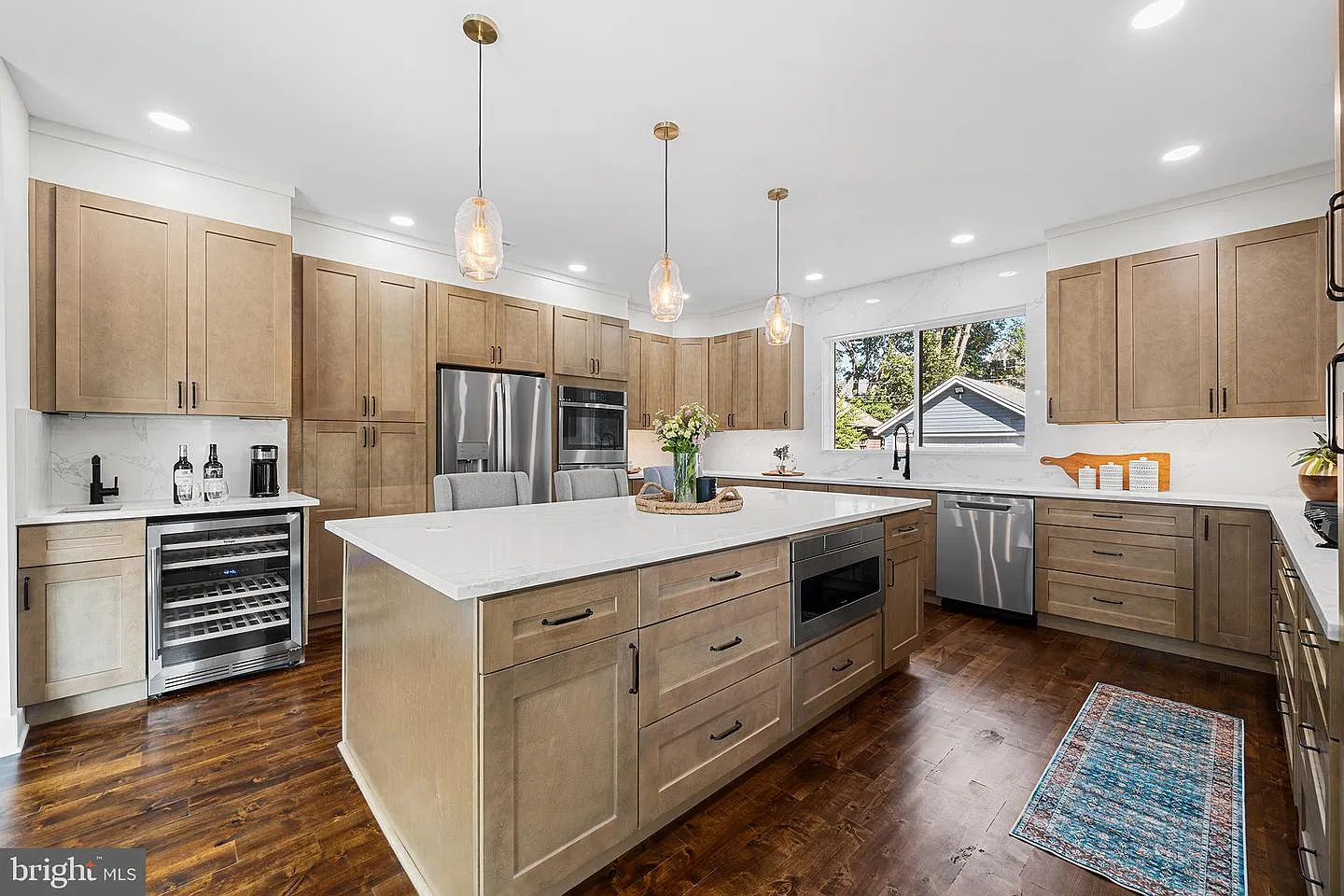
    This century-old Havertown home has been fully renovated and expanded. It has an open-concept first floor, including a living area with a fireplace, a dining room, and a kitchen with a large island. There are five bedrooms upstairs, three of them with ensuite bathrooms, including the primary suite, which has a large walk-in closet and a soaking tub. There’s additional living space in the finished basement, which has a full bathroom. Outside, there’s a deck overlooking the yard and a detached two-car garage.

    See more photos of the home here.

    Price: $1.375M | Size: 4,625 SF | Acreage: 0.31

    Each week we feature an interesting local listing in or around the township. Have one we should consider? Email us at haverford@inquirer.com.

    📈 Haverford market report

    • Median listing price: $575,000 (down $20,000 from August) 📉
    • Median sold price: $455,000 (down $127,500 from August) 📉
    • Median days on the market: 21 (down 11 days from August) 📉

    This Haverford market report is published on a monthly basis. Above is data for September from realtor.com.

    🗞️ What other Haverford residents are reading this week:

    Staffer Patricia Madej contributed to this newsletter.

    Clarification: This newsletter has been updated to reflect that the November election is the general election.

    By submitting your written, visual, and/or audio contributions, you agree to The Inquirer’s Terms of Use, including the grant of rights in Section 10.

    This suburban content is produced with support from the Leslie Miller and Richard Worley Foundation and The Lenfest Institute for Journalism. Editorial content is created independently of the project donors. Gifts to support The Inquirer’s high-impact journalism can be made at inquirer.com/donate. A list of Lenfest Institute donors can be found at lenfestinstitute.org/supporters.
  • Main Line Health ups malpractice reserves | Inquirer Radnor

    Hello, Radnor!

    What should have been a “banner” fiscal year for Main Line Health has ended in a loss. Here’s why. Also this week, Villanova University has 12 interns working in and around the Vatican, underscoring the school’s ongoing connection to the Catholic center. Plus, a King of Prussia sinkhole remediation project wraps up.

    — Lisa Dukart (radnor@inquirer.com)

    P.S. Tell us what you think of the newsletter by taking our survey or emailing us at radnor@inquirer.com.

    If someone forwarded you this email, sign up for free here.

    Why Main Line Health upped its medical malpractice reserves

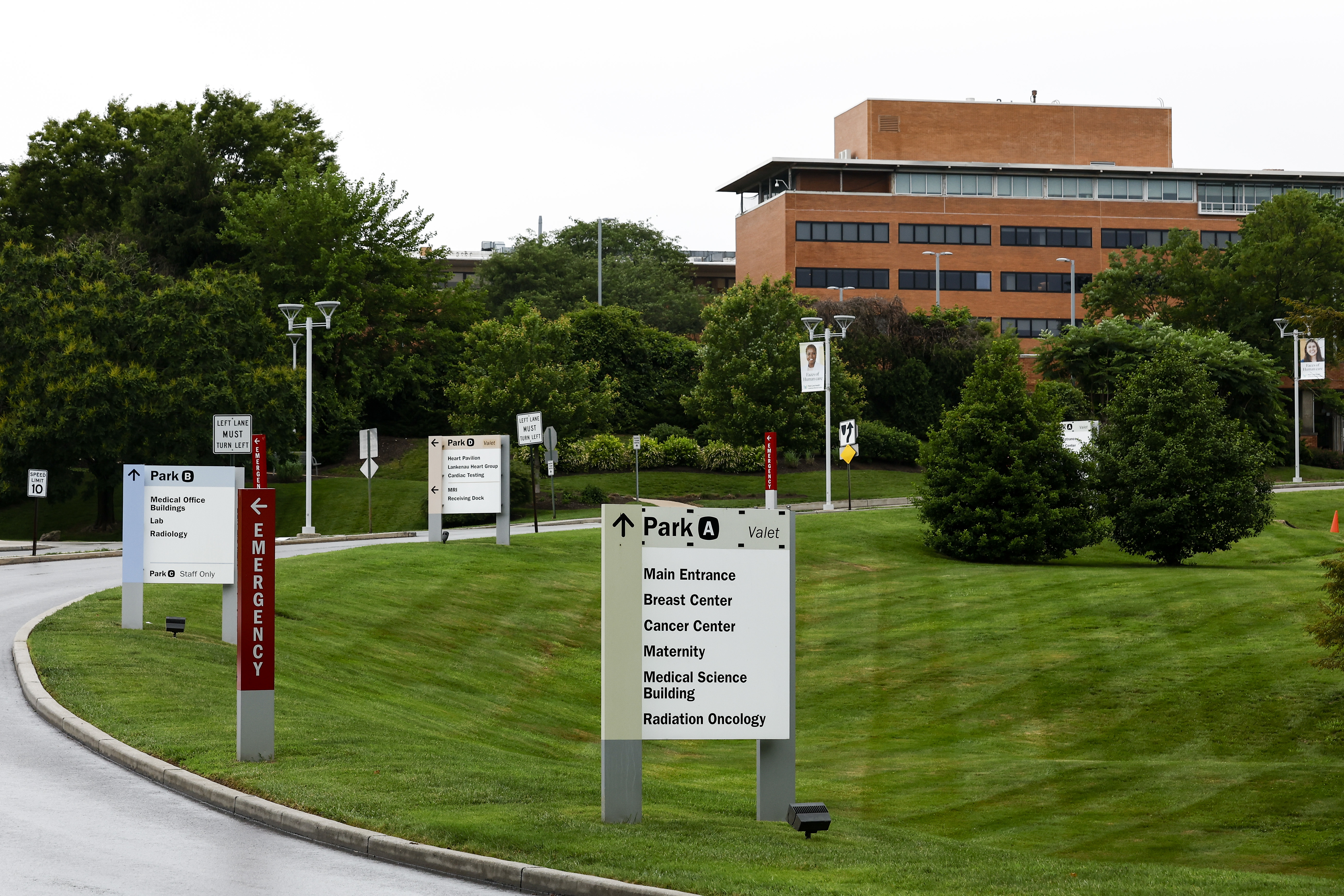
    Main Line Health operates several area hospitals, including Lankenau Medical Center. Monica Herndon / Staff Photographer

    Radnor-based Main Line Health would have had a “banner year” had it not been for the system increasing its reserves for potential medical malpractice claims, CEO Ed Jimenez told The Inquirer.

    Main Line Health upped its reserves by $134 million, as a Pennsylvania special rule requiring healthcare malpractice cases be filed in the same county where the injury occurred comes to an end.

    The Inquirer’s Harold Brubaker explains what that means for Main Line Health.

    💡 Community news

    🗺️ Other nearby news

    🏫 Schools briefing

    • Students in kindergarten through eighth grade have an early dismissal tomorrow. Tomorrow is also Radnor’s homecoming game and ceremony.

    🍽️ On our plate

    • Cooler weather have you craving a night in? Johnny’s Pizza, with locations in Wayne and Bryn Mawr, has made our list of best spots for takeout, based on The 76, or The Inquirer’s guide to the area’s most essential restaurants. But, be warned: Johnny’s does turn off online ordering when volume is high.

    🎳 Things to do

    🍎 Heirloom Apple Tasting: Sample heirloom apples, apple-based treats, and more at this annual event. ⏰ Saturday, Oct. 24, 2-4 p.m. 💵 $5.04-$12.51 📍 Harriton House

    🧟 Music Video Bingo: Test your horror movie knowledge during this bingo-trivia mashup. ⏰ Saturday, Oct. 24, 4 p.m. 💵 Free 📍 118 North

    🇮🇹 Regional Italian Cuisine: This culinary class includes spaghetti, a roasted chicken dish, and tiramisu. ⏰ Thursday, Oct. 29, 6-8:30 p.m. 💵 $85 for members, $100 for non-members 📍 Wayne Art Center

    🏡 On the market

    A four-level carriage home with an elevator

    Spanning four levels, all served by an elevator, this Wayne carriage home has lots of living space. Its first floor has an office, an open-concept kitchen and living room, and a dining room. There are three bedrooms on the second floor, including a primary suite with a soaking tub and a walk-in closet with built-in cabinetry, and another bedroom on the third level. It also has a home theater and bar in the finished basement, where there’s additional living space. There’s an open house Sunday from 1 to 3 p.m.

    See more photos of the home here.

    Price: $1.695M | Size: 3,178 SF | Acreage: 0.31

    Each week we feature an interesting local listing in or around the township. Have one we should consider? Email us at radnor@inquirer.com.

    📈 Radnor market report

    • Median listing price: $962,500 (up $50,500 from August) 📈
    • Median sold price: $1,300,000 (up $100,000 from August) 📈
    • Median days on the market: 25 (down six days from August) 📉

    This Radnor market report is published on a monthly basis. Above is data for September from realtor.com.

    🗞️ What other Radnor residents are reading this week:

    Staffer Patricia Madej contributed to this newsletter.

    Clarification: This newsletter has been updated to reflect that the November election is the general election.

    By submitting your written, visual, and/or audio contributions, you agree to The Inquirer’s Terms of Use, including the grant of rights in Section 10.

    This suburban content is produced with support from the Leslie Miller and Richard Worley Foundation and The Lenfest Institute for Journalism. Editorial content is created independently of the project donors. Gifts to support The Inquirer’s high-impact journalism can be made at inquirer.com/donate. A list of Lenfest Institute donors can be found at lenfestinstitute.org/supporters.