Tag: hp-topper

  • AI art on Philly’s walls? | Mike Newall

    AI art on Philly’s walls? | Mike Newall

    Every Sunday, Mike Newall brings you an inside look at a story defining Philly this week and a preview of what’s coming in the week ahead.

    Nobody wants to look at AI slop. Not in public art. And certainly not in Philly, one of the world’s great outdoor art galleries.

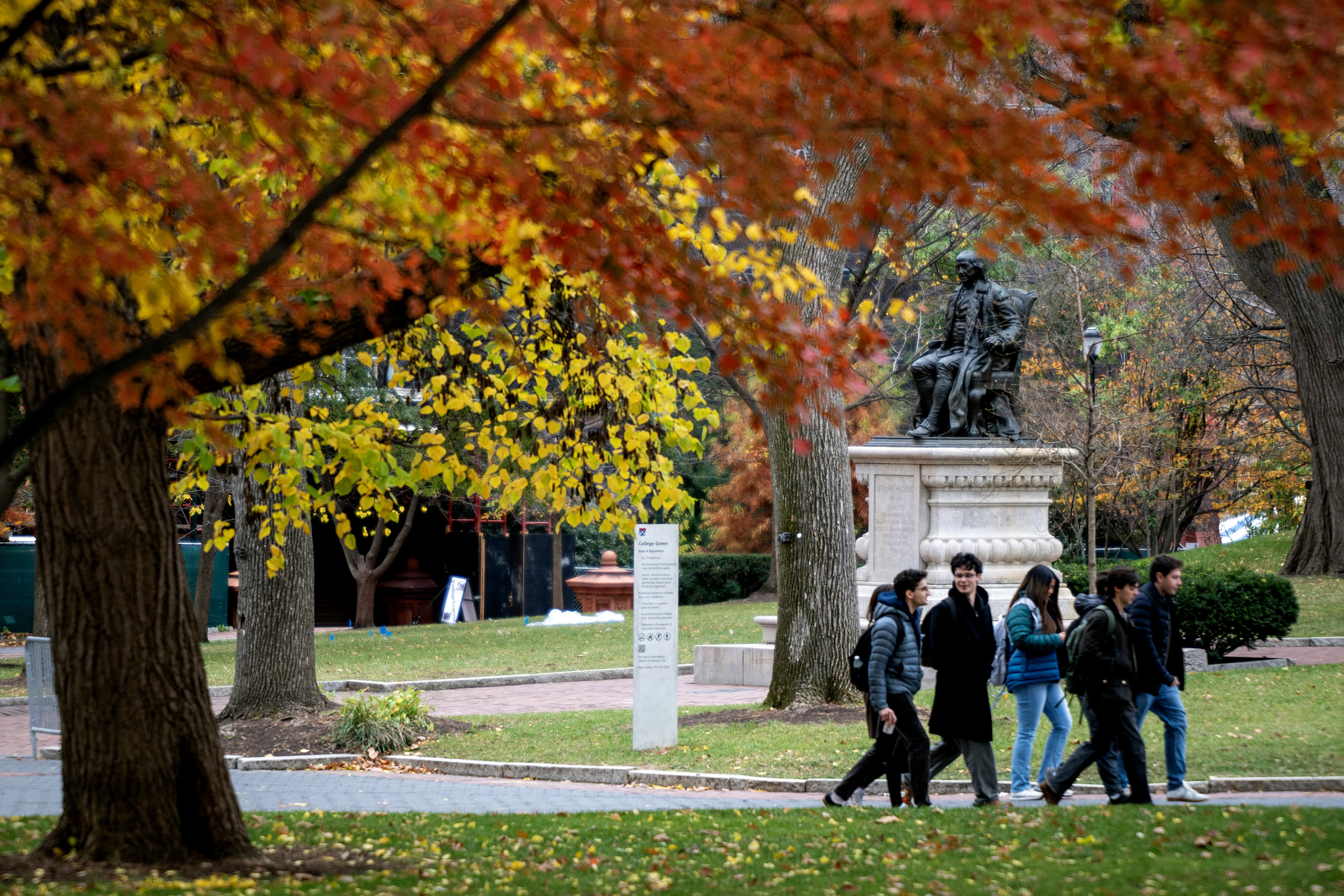
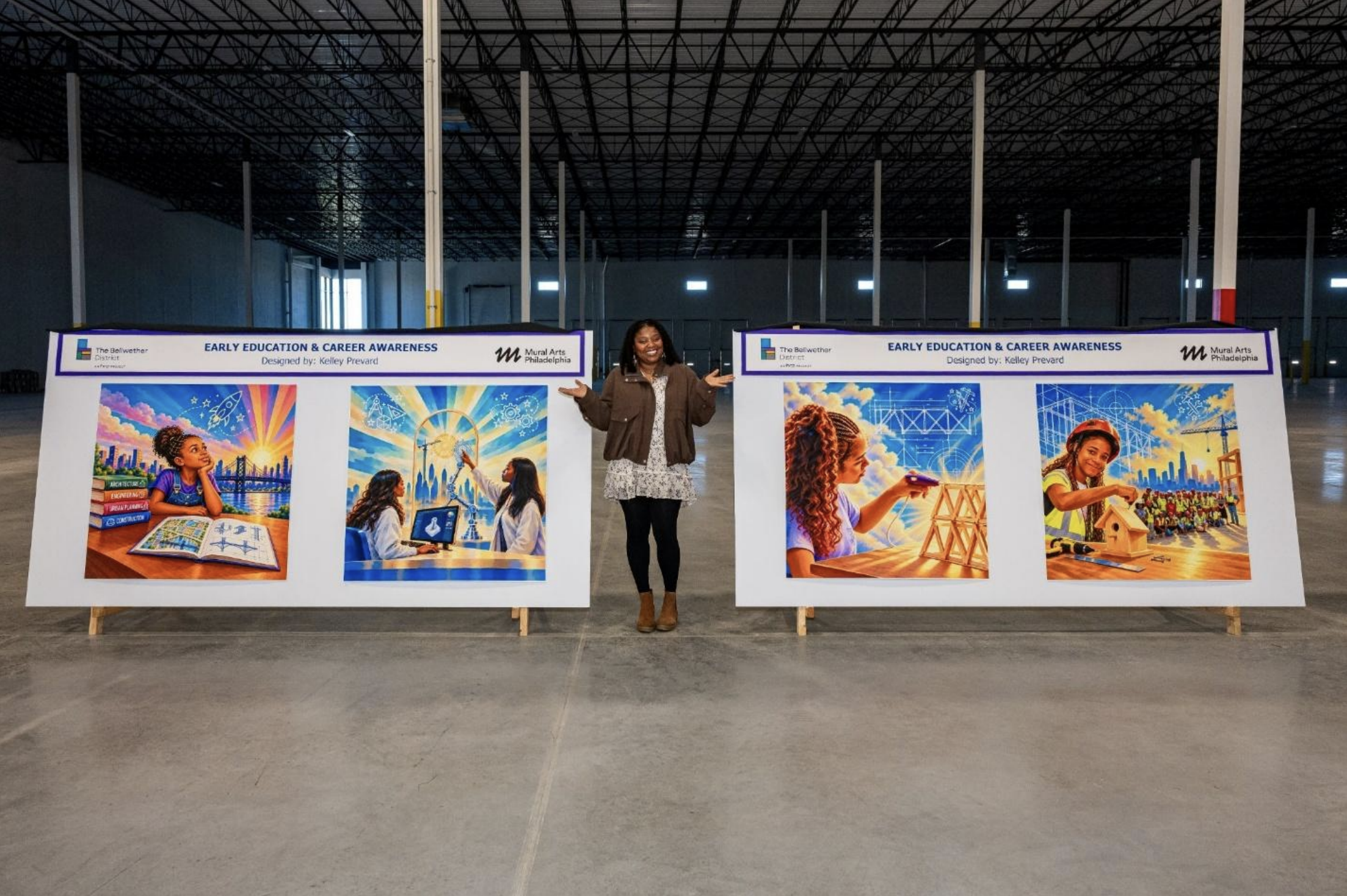
    But that’s just what Mural Arts served up last month — according to scores of social media sleuths and at least one AI scholar — when they unveiled designs for banners that will adorn a fence along the Bellwether District development in South Philly. Part of Mural Arts’ citywide “Throughlines” installation, the temporary banners are intended to dress up the dreary worksite.

    Instead, they’ve sparked debate about the role of AI in Philly’s public art — and drawn ire over Mural Arts’ lack of a formal AI policy. It’s a conversation poised to intensify at a Mural Arts Town Hall Thursday on the issue.

    Four designs by muralist Kelley Prevard quickly set off alarm bells. One featured a skyline bearing a closer resemblance to Chicago than Philly.

    No one at Mural Arts seemed to notice. And, the organization did itself no favors.

    Emily Mello, months into her tenure as executive director of Mural Arts — the nation’s largest public art program — did not answer my colleague Rosa Cartagena’s queries last week on whether the banners used AI-generated imagery, or how they were approved. (The artist has refused to comment.)

    Brushing aside social media outcry — including questions over its commitment to local artists — Mural Arts says it will go ahead with the banner’s planned installation later this month. The Windy City skyline will be altered to look more like Philly, a spokesperson said.

    The public art imbroglio has touched a nerve in the local art world’s AI reckoning, raising a disconcerting question: What happens when the “Mural Capital of the World” can’t get its own skyline right?

    Cartagena, who has her finger on the pulse of Philly’s art scene, is here to tell us the questions she wants answered at the Town Hall, when local artists will review Mural Arts’ working AI policy draft.

    Mike: Mural Arts has yet to explain their internal review process, right?

    Rosa: True. It’s really easy to focus on the individual artist, but in this case her work was unveiled with Mural Arts approval. The responsibility of this commission is with Mural Arts.

    Mike: This is bigger than Mural Arts, of course?

    Rosa: These are really big questions for any arts organization in the city or the world. What are we going to do with these tools, and what does it mean moving forward?

    Mike: The anger has been real. Some social media users are predicting the banners will be vandalized?

    Rosa: There’s this sense of this isn’t what we want, this isn’t real, and this is not Philadelphia.

    Data deep dive: Shapiro’s resounding rout

    (function(){function e(){window.addEventListener(`message`,function(e){if(e.data[`datawrapper-height`]!==void 0){var t=document.querySelectorAll(`iframe`);for(var n in e.data[`datawrapper-height`])for(var r=0,i;i=t[r];r++)if(i.contentWindow===e.source){var a=e.data[`datawrapper-height`][n]+`px`;i.style.height=a}}})}e()})();

    Gov. Josh Shapiro is having a political moment. As my colleague, Gillian McGoldrick reports, Shapiro staked his reputation and rising presidential prospects on flipping Pennsylvania from red to blue in the midterms — and won big. Shapiro outperformed his 2022 gubernatorial win in 65 of Pennsylvania’s 67 counties, according to an Inquirer analysis. The coronation is far from complete. Election oracle Nate Silver predicted his slam dunk favorite for president in 2028 — and it ain’t Shapiro.

    A look ahead

    • The Tun Legacy Foundation — a nonprofit working to rebuild the Tun Tavern in Old City, birthplace of the Marines in November 1775 — will host its third annual block party Tuesday celebrating the Marine Corps birthday.
    • Alaska and Mississippi’s Senate races may finally be called next week, which could further “Fetterman proof” the U.S. Senate for Democrats.
    • The 41st Legislative District race in Lancaster between incumbent Republican Brett Miller and Democrat Brad Chambers might also be called, possibly strengthening the Dems’ trifecta. The Dems have so far won 111 House seats, to the Republicans 88. It‘s the last uncalled House race in Pennsylvania.
    • “Bouquet of Stories: Celebrating Philadelphia’s Gardening Heritage” — a free exhibition presented by the Athenaeum of Philadelphia and the Pennsylvania Horticultural Society — opens fully to the public on Monday. Exploring three centuries of Philly gardening, the exhibition unearths stories of bygone gardeners who helped transform Philadelphia into a horticultural hub, says exhibit curator Tracy Qiu.
    • Gov. Shapiro is scheduled to be at the Navy Yard on Friday. Last month, he announced a $371 million investment in Philly’s port that he said will create 6,000 jobs.
    • 2026’s other national milestone is upon us: The 50th anniversary of the release of Rocky. (Official events, including local screenings this week of Rocky and I Play Rocky, a biopic chronicling Sylvester Stallone’s real-life struggles making the film, are listed here.)

    Yo Adrian, I cannot wait to read this book!

    One more thing: The damaged tombs of Philly’s oldest Jewish cemetery.
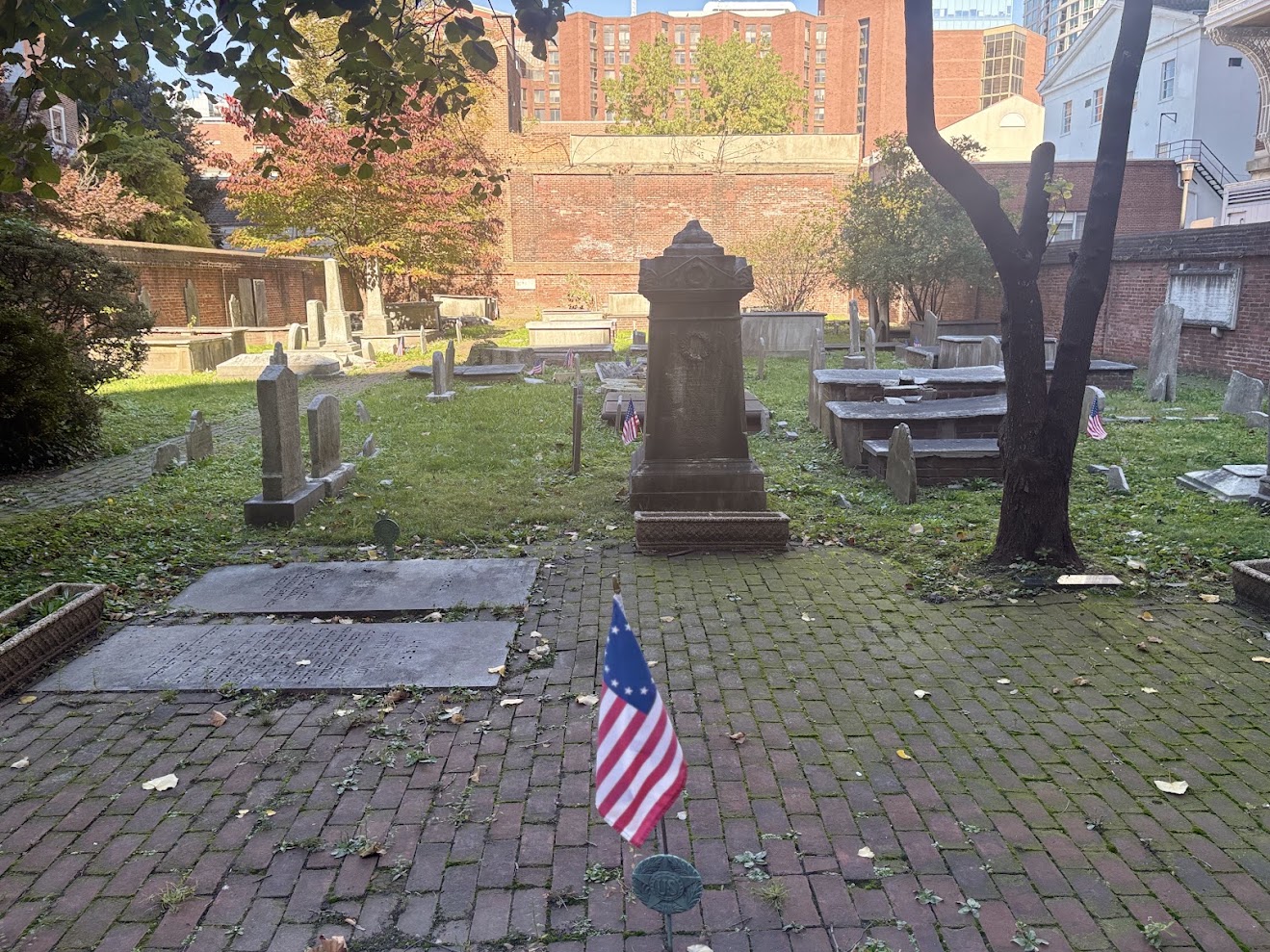
    Graves at Historic Mikveh Israel Cemetery in Center City were damaged in a July storm. An effort is underway to restore and preserve the burial ground.Courtesy of Congregation Mikveh Israel (Custom Credit)

    The historic cemetery sits off 8th and Spruce Street, like a hidden timehole. Nestled behind iron gates and a high brick wall, Mikveh Israel Cemetery, established in 1740, is the oldest Jewish burial ground in Philadelphia. The souls who take their rest in the postage stamp-sized graveyard include a who’s who of Philadelphia’s colonial-era Jewish community.

    Haym Solomon, the forgotten founding father, a principal financier of the fledgling Continental Army and government, who died penniless for his troubles. Rebecca Gratz, the influential Jewish philanthropist and educator. Nathan Levy, a merchant and community leader, whose ship, the Myrtilla, transported the Liberty Bell across the Atlantic.

    “If you are a Jew from anywhere in the world, it’s relevant to you, and if you are an American of any religion, it is still relevant to you,” said Rabbi Yosef Zarnighian of Congregation Mikveh Israel in Old City, which maintains the cemetery. “This is an American story.”

    The latest chapter of the cemetery is a trying one.

    In July, a severe microburst storm caused a large oak tree to collapse, damaging historic graves, including the plot of Levy’s young son, whose name is lost to time. The child’s marble tomb is shattered — and others are cracked in half.

    Last month, Congregation Mikveh Israel kicked off a fundraising effort for $200,000 to restore the sacred burial ground. On Tuesday, the congregation will post its second installment of “Stories from the Cemetery” — a series of Instagram videos highlighting remarkable Philadelphians buried at Mikveh Israel (this week features Solomon).

    Donors can “Adopt an Ancestor” by directly supporting the maintenance and restoration of graves.

    On a recent afternoon, Rabbi Zarnighian walked among the damaged graves.

    “Heartbreaking,” he said. “It’s our job to tend to the dignity of those who lie here.”
  • LeBron James and Mike Gansey’s viral high school photo still resonates ahead of return to Cleveland: ‘It’s just surreal’

    CLEVELAND — The group of Northeast Ohio high school basketball players gathered in the downtown warehouse district for a 2000 all-area team photoshoot for the Cleveland Plain Dealer. Wearing their school’s jerseys, they swapped stories about AAU matchups and times they crossed paths in open gyms. That 10 of them were there, instead of the typical five selected by the newspaper, felt like a testament to that season’s immense talent.

    “When that photo came out and they picked that team,” Chester Mason, that year’s co-Ohio Mr. Basketball, recently recalled to The Inquirer by phone, “I’m like, ‘Man, this is the greatest team, I believe, from Northeast Ohio that was ever assembled.’”

    That photo, snapped more than a quarter-century ago, approximately 400 miles away from Philadelphia, has become popular with 76ers followers because of the two players posing on the far right.

    The forearm of Mike Gansey, then an Olmsted Falls junior who is now the Sixers’ president of basketball operations, is resting on the shoulder of LeBron James, then a freshman at Akron’s St. Vincent-St. Mary and on the cusp of exploding into arguably the best player of all time.

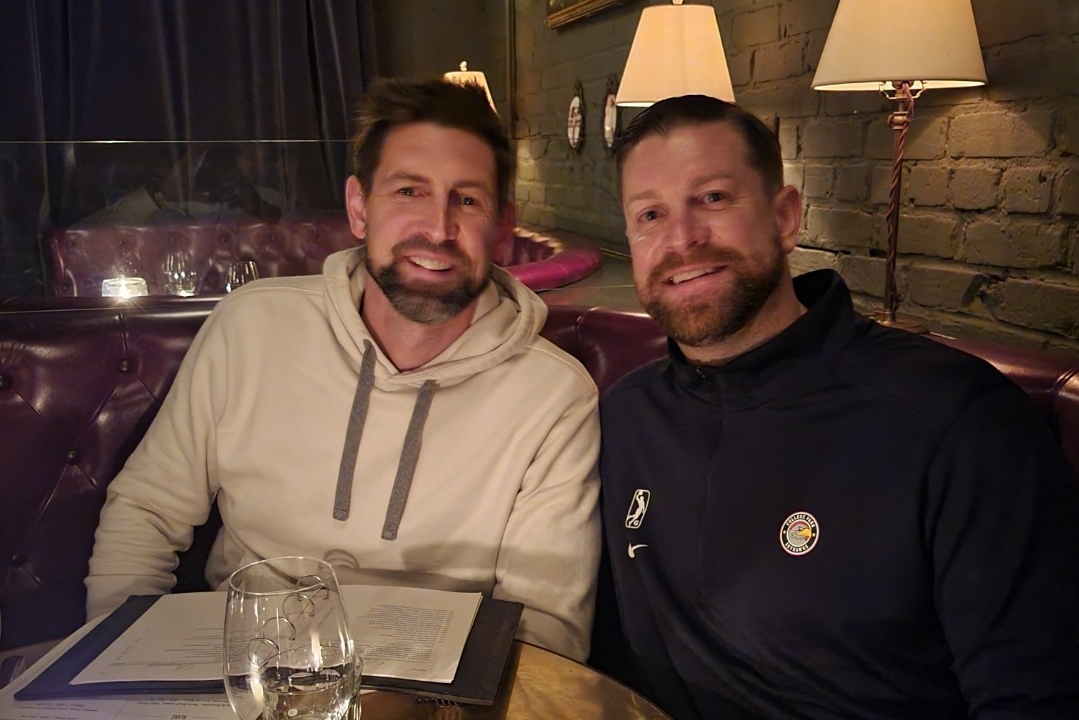
    Steve Gansey, right, brother of Sixers president of basketball operations Mike Gansey, left, became popular online after he shared an image of his brother and LeBron James.

    James and Gansey already shared a full-circle moment, when they won a dramatic 2016 NBA championship with their hometown Cleveland Cavaliers as a superstar player and rising executive, respectively. But that photo resurfaced when Gansey’s younger brother, Steven, posted it on X (formerly Twitter) with the eyeballs emoji on the night of July 1. It was a less-than-stealth recruiting pitch to then-free agent James after the Sixers acquired All-NBA talent Jaylen Brown in a stunning blockbuster trade earlier in the day.

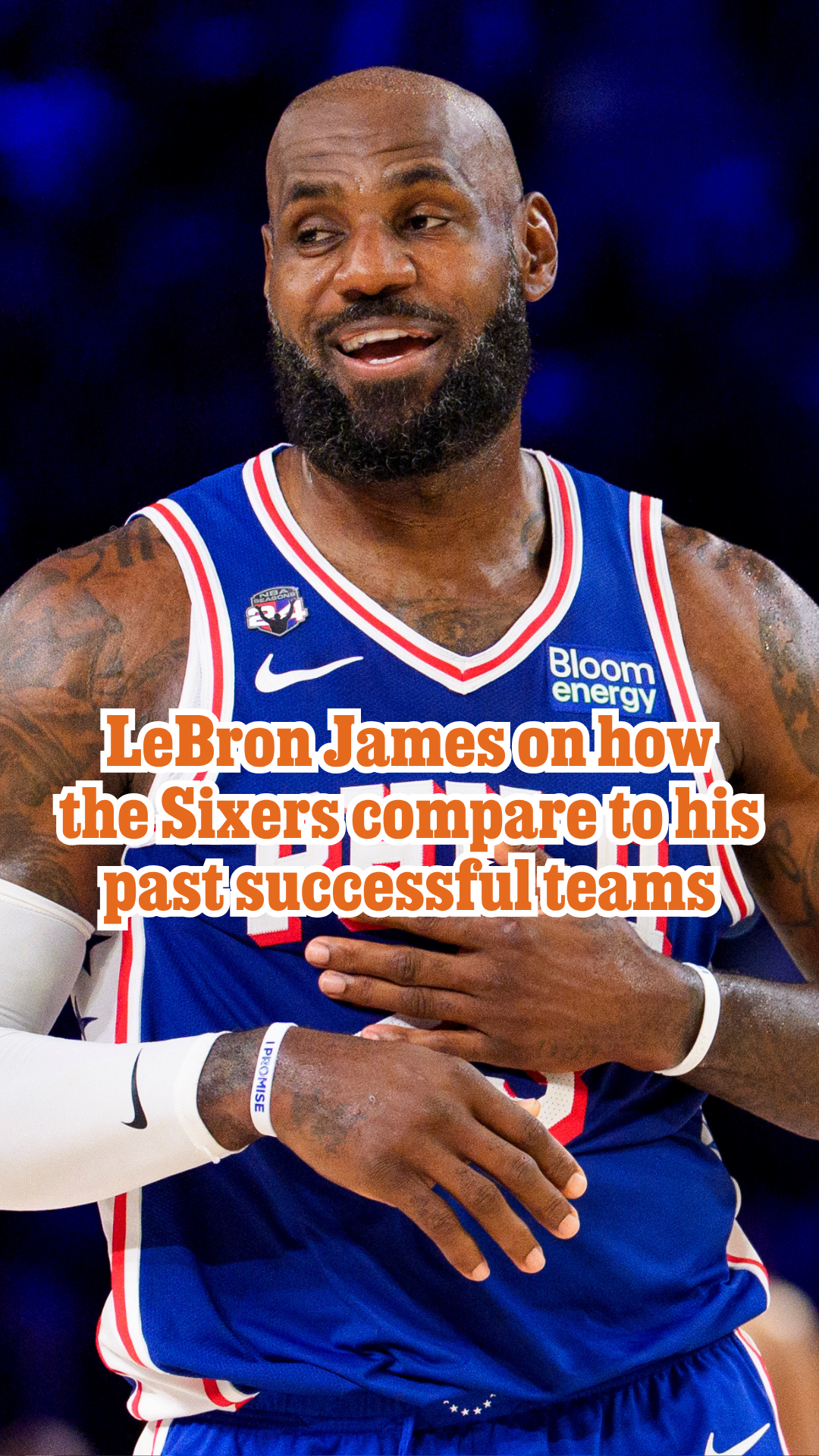
    James did choose the Sixers, meaning both men will return to Cleveland together for the first time for Friday night’s matchup against the Cavaliers at Rocket Arena. And some who remember James and Gansey as teenagers — and that now-famous photo — still marvel at the foreshadowing, along with how it represents their basketball roots.

    “It’s just surreal,” said Mason, who was nicknamed “Chet the Jet” while starring at Cleveland South, “that all of [these] years later, they’re able to link up. And now they’re over there in Philly and [trying] to do some special stuff. …

    “Like I tell my kids, the memories last forever. So that picture right there, no matter what, I can always say, ‘I was in that photo with arguably the best NBA basketball player ever, and one of the best young execs in the business, in the NBA.’”

    Others in that photo include Maverick Carter, James’ longtime business partner, and Brian Swift, who played collegiately at South Florida and professionally in Europe before going into coaching. Mason — who played professionally overseas and in the G League for more than a decade, then became a coach at Brush High School and with USA Basketball — says today that they all represented “the grit, the grind, and the tough mentality” that he imagines is similar to Philly’s basketball scene.

    Pat Donahue, Gansey’s coach at Olmsted Falls and a staple in the local high school scene for more than two decades, appreciated those players’ egos did not overshadow their talent.

    “If you said, ‘These two kids are transferring to Olmsted Falls,’” Donahue told the Inquirer by phone, “I would be like, ‘Great.’ And not necessarily because they would help the basketball team, although they would, but because they were great individuals. They were just really good people, and I can’t say that about every kid I’ve ever seen play.”

    When asked earlier this week about the day of that photoshoot, James said he most remembers feeling out of place among upperclassmen he had admired while watching in AAU tournaments and other high school games.

    “Why was I there?” James recalled following the Sixers’ win over the Chicago Bulls Monday night. “ … It was so surreal for me.”
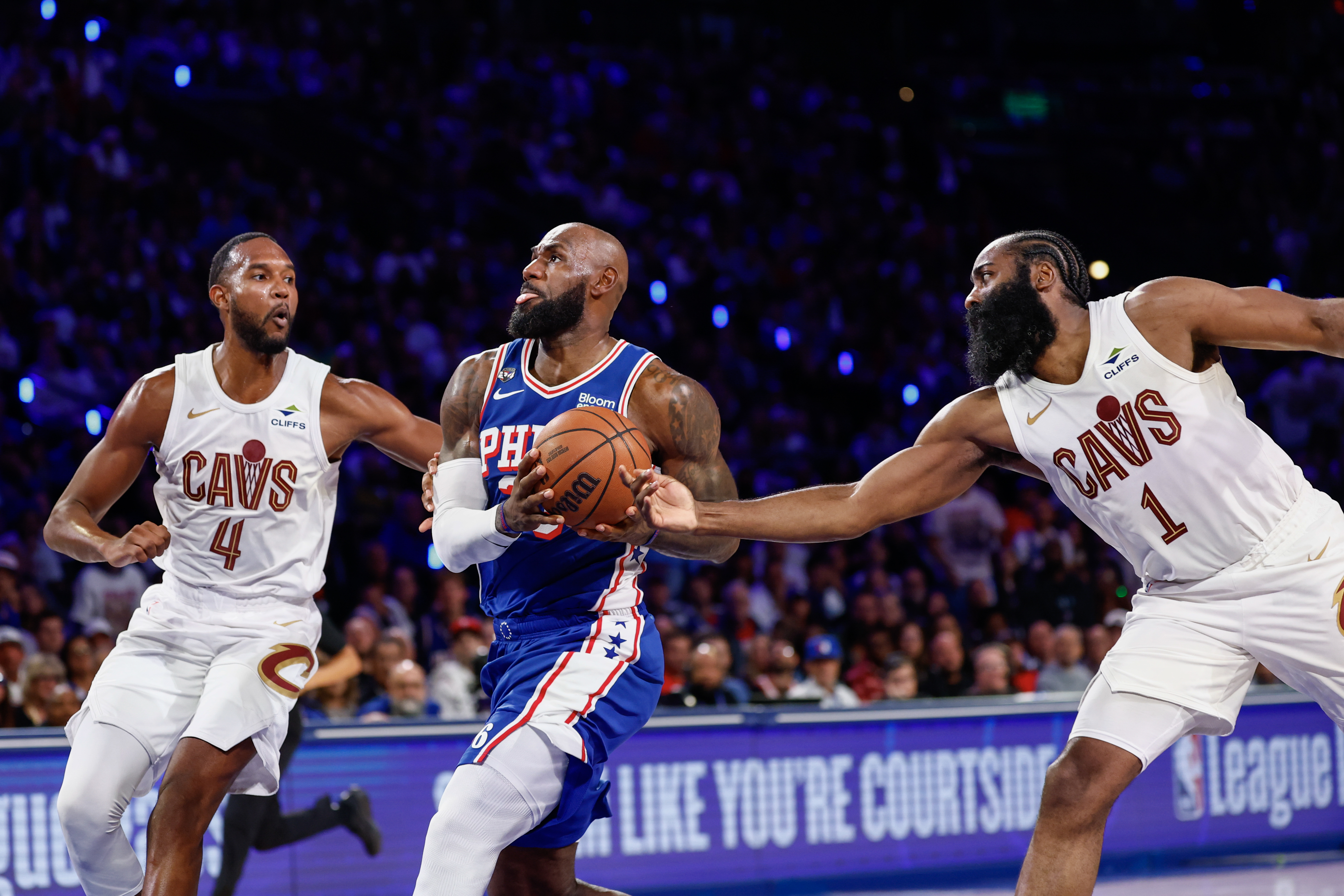
    LeBron JamesChris Szagola

    Mason, who has known James since sixth grade, assures the future Hall of Famer was “just being modest.” At that age, James already boasted the frame and athleticism of a college-ready player — along with the basketball IQ that remains a signature trait at age 41.
    “If anybody practiced with him, they know exactly what I’m talking about,” Mason said. “ … How he dissects basketball. He remembers stuff. He knows where everybody is supposed to be. He knows what you’re supposed to be doing, even if it ain’t his position.”
    Gansey also had a strong reputation among his peers. Though Donahue often encouraged Gansey to shift into score mode, Mason remembers that Gansey “knew how to put the ball in the basket” and “had that swag” despite being from the suburbs.

    “It was like, ‘No, you’re going to have to play tonight, and he got game,’” Mason said of Gansey. “He could do everything that you could do on the court.”

    Added James: “We all knew about [Gansey] in Akron.”

    Sixers president Mike Gansey (left) and NBA star LeBron James competed in high school, where James beat out Gansey for Mr. Basketball Ohio in 2001.Tom Gralish and Charles Fox / Staff Photographers

    Donahue chuckles today that the group photo is “not the most flattering picture of Mike,” his teenage face clearly trying to appear tough. The coach also remembers including it in a scrapbook he made for all players who came through his program featuring newspaper clippings and other mementos.

    So when brother Steve posted it on the internet, Donahue immediately called to ponder if “that was the smartest thing to do.” The “very unfiltered” Steve told his former coach that Mike “handled it very, very well.” As it rapidly spread across social media, Mason was among those who quoted it, calling it a “Classic Legendary Photo” with three fire emojis.

    After all, Mason has the newspaper version laminated and hanging in his office at Brush, where he has been the boys basketball head coach since 2015. As students pass through year after year, their “you knew LeBron in high school?!” reaction remains consistent.

    They have continued to cross paths since then. Mason was invited to Cavaliers training camp in 2007, during James’ first stint with the organization. Then when James and Gansey were both part of the organization nearly a decade later, James said he “knew [Gansey] had the makings” of a future NBA lead executive.

    Mason and Gansey still regularly text, including a long “proud of you” message sent by Mason when Gansey got the Sixers’ top job and then landed James and Brown. When James was with the Los Angeles Lakers, Mason brought his son to a game in Cleveland and still felt love from his childhood pal. Mason still jokes that he has “little bragging rights” for being the co-Mr. Basketball in that 2000 photo, before James won that award the next three years.

    “I can always say, ‘Man, I got my boy for one,’” Mason said. “Ain’t nobody beat ‘Bron in a lot of stuff, right?”

    Who then finished second to James for that award in 2001? Gansey. They won a title with the Cavaliers a decade ago. Now, they have reunited again as Sixers — and are about to return to their basketball roots together.

    Roots captured by a photo that resonates with basketball followers in Northeast Ohio and Philly.

    “It’s just amazing,” Mason said. “I know every time somebody posts it, it’s going to go viral.”

  • Vape stores might not close under a new ban, but retail districts are ready for new business

    Vape stores might not close under a new ban, but retail districts are ready for new business

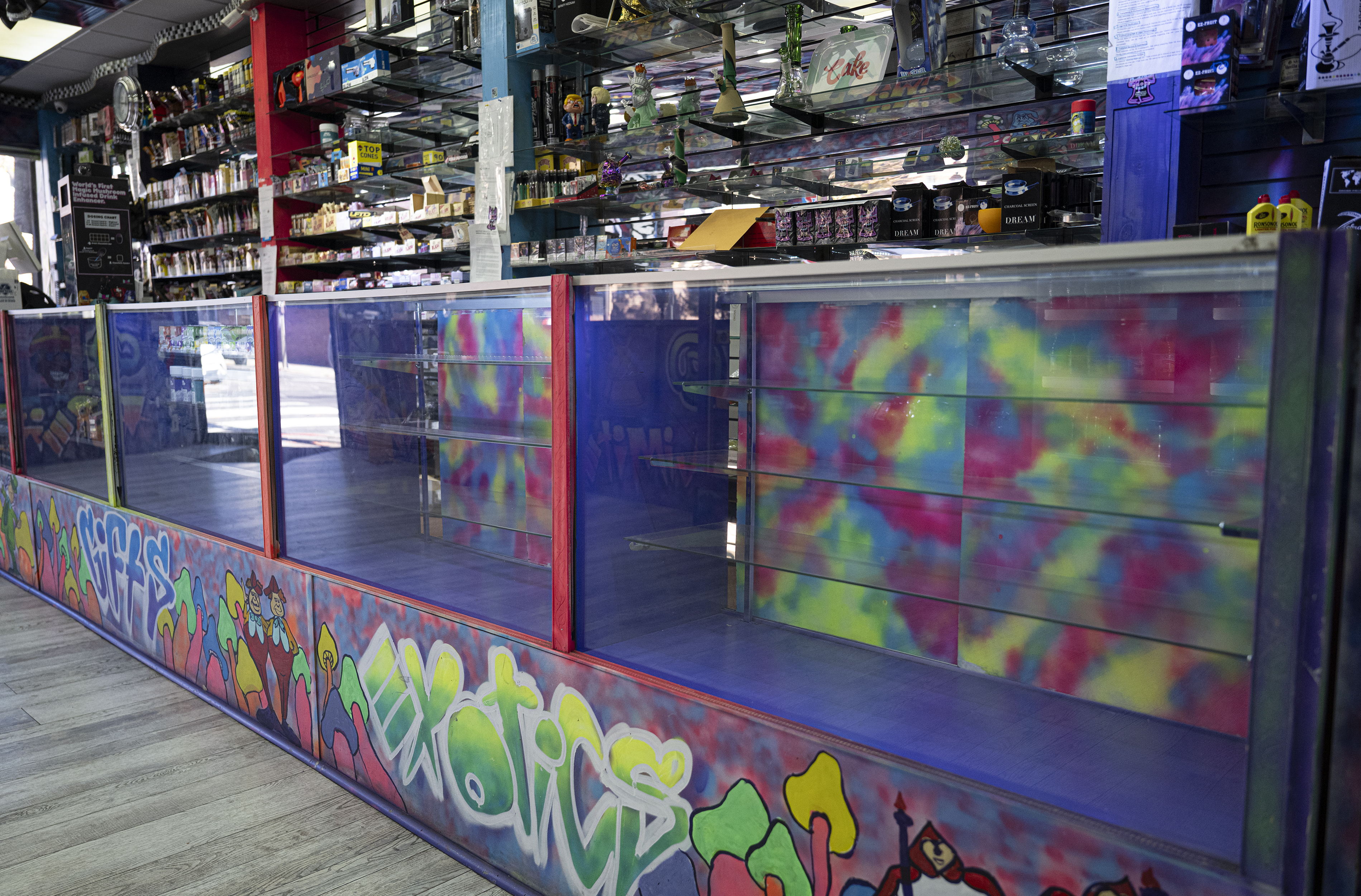
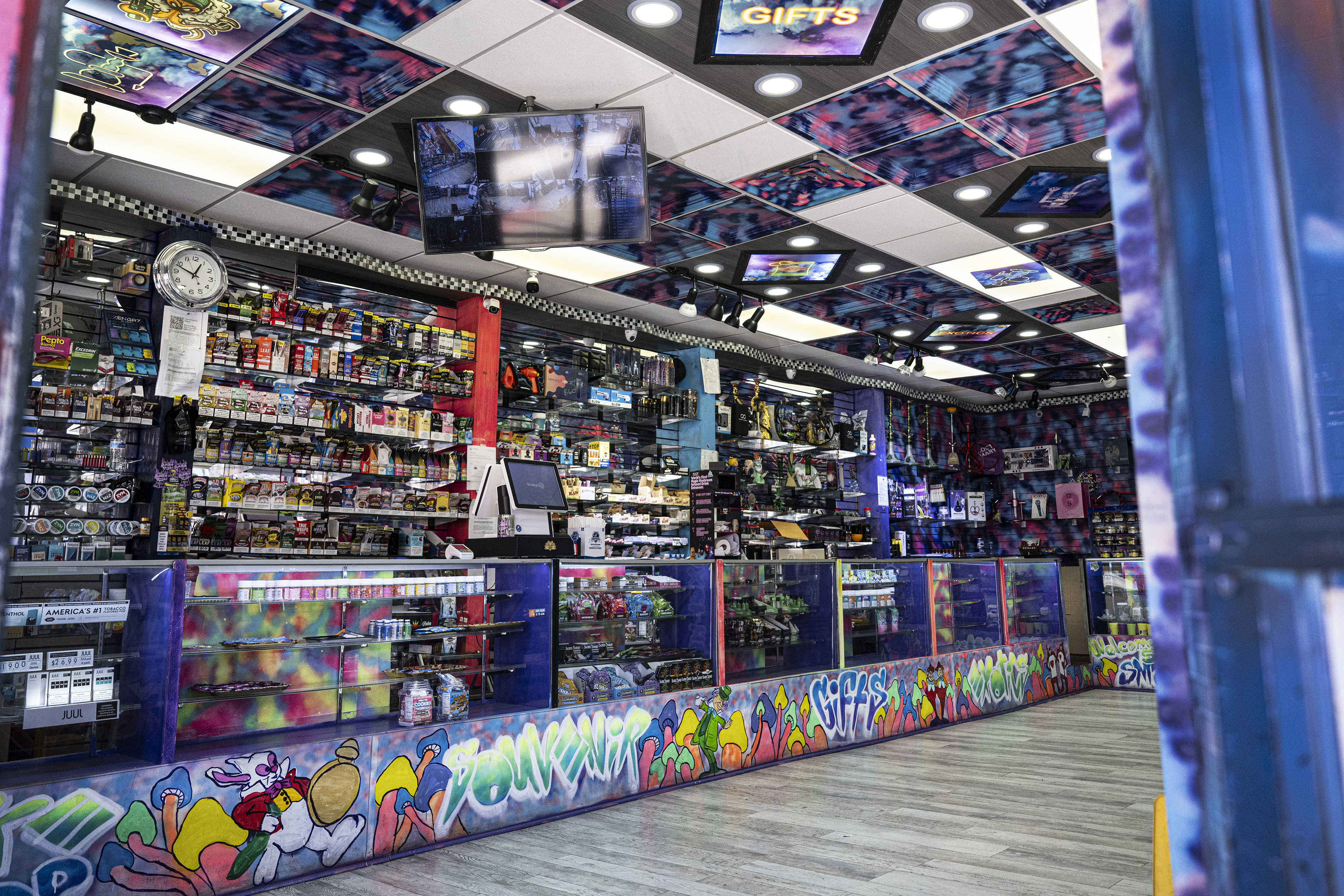
    Entire walls of retail shelves in Philadelphia vape shops, once marketing colorful, fruit-flavored nicotine products, sat empty the first week of Pennsylvania’s new vape ban.

    Pointing to the swaths of bare countertops — many of which were the central marketing displays at stores — shop owners and managers on South Street, many of whom were not authorized to speak on behalf of the store or feared scrutiny from inspectors, said they are facing the possibility of closure.

    One manager of a South Street convenience store that used to sell a wide variety of vapes said nicotine products make up 30% of their business. For stores that can’t fall back on convenience and grocery items to sell, many will likely close, he said.

    The South Street Smoke Shop is shown on Thursday, Oct. 22, 2026, in Philadelphia. Electronic disposable vaporizers are largely banned in Pennsylvania, with a few exceptions, prompting vape shop owners to warn that the restrictions could devastate their businesses or force them to close.Jose F. Moreno / Staff Photographer

    The manager at South Street Smoke Shop on Eighth Street said that he spent half his shift the day before Oct. 19 — when vape ban enforcement began — removing thousands of dollars worth of product from retail shelves. Another store manager said disposable vapes and their associated products are “the majority of our business,” she said. “This is unprecedented.”

    Under a new law, signed by Gov. Josh Shapiro last year, six companies are approved to manufacture, distribute, and sell electronic nicotine products in Pennsylvania. Any product not approved in the electronic nicotine delivery system directory is now banned from sale, including popular brands like Cali, Geek Bar, and Puff Bar.

    Philadelphia has also taken steps to heavily restrict where vape stores can open. City Councilmember Katherine Gilmore Richardson introduced legislation earlier this month that would adjust the city’s zoning code to prohibit any businesses selling tobacco and nicotine products from opening within 750 feet of a school, daycare, park, or an existing store that sells nicotine products. Richardson said this would effectively ban new stores from opening in most of Philadelphia.

    The vape store boom

    The vape industry and retail vape stores have seen exponential growth in the last decade, expanding from a $3.5 billion industry in 2015 to a more than $40 billion a decade later. Market analysts have projected the industry to grow by double digits into the 2030s.

    This growing market also serves a customer base in which 60% to 80% of consumers prefer to buy products in stores.

    The low entry barrier and higher-margin appeal of opening a vape store in a bustling retail district moves some entrepreneurs to make the jump, said Steven Gartner, executive vice president of CBRE’s global retail platform.

    “Most of these stores are start-up businesses. The ability to get merchandise is relatively easy, and you don’t need to be part of a brand conglomerate. They’re small; someone can open one with 1,000 feet of retail space,” Gartner said.

    Another factor at play is that storefront landlords aren’t always discerning about the mix of businesses in a retail district in the way business leaders might. “Landlords may own one or two buildings on a block, and they don’t really care about the mix of businesses — they care about renting their vacant store and getting rent,” Gartner said.

    Especially so during the COVID-19 pandemic and in its wake, as property owners looked for tenants to fill vacant storefronts. This is often why in places like South Street, there can be a vape store each block for several streets in a row.

    Retail strips with an abundance of vape stores such as South Street are open to new businesses, said Eleanor Ingersoll, executive director of South Street Headhouse District, the nonprofit that manages the neighborhood business district.

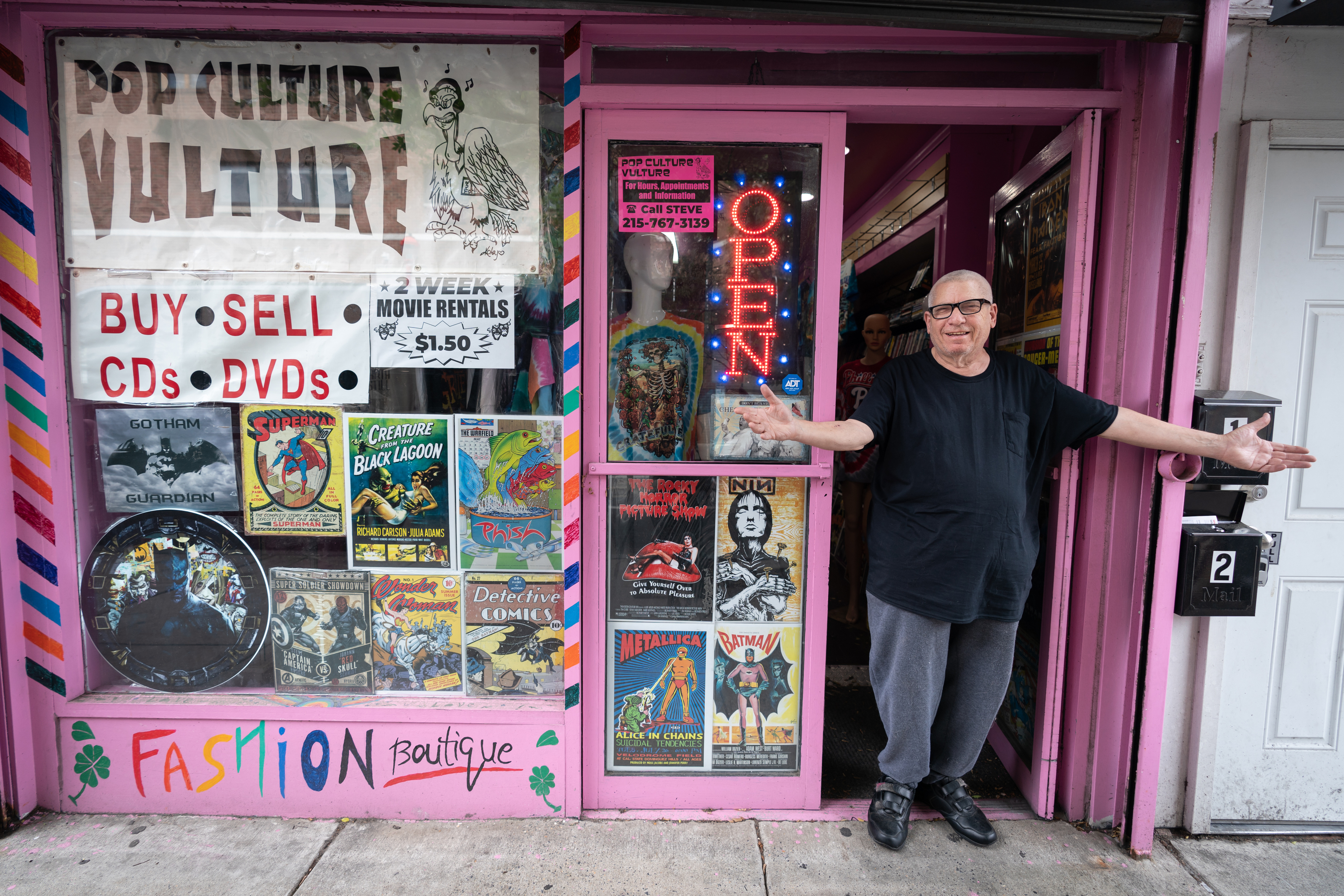
    Steve Brasovankin, owner of Pop Culture Vulture, at his then newly opened store on the 200 block of South Street in Philadelphia, June 6, 2024. As vape and smoke shops navigate financial turmoil amid a new 2026 vape ban, business improvement districts hope to see bars, restaurants, and niche retail experiences take their place.Jessica Griffin / Staff Photographer

    “The only thing constant about South Street is change. The role that smoke shops and vape stores play in the district is a matter of great proliferation in a very short amount of time,” Ingersoll said. “There is the argument that they occupy space that could go to more diverse business concepts. We would love to see more bars, restaurants, art galleries, and niche experience entrepreneurship.”

    South Street has attracted more of these unique retail experiences with the rebuild of Jim’s Steaks in 2024, including new boutiques, shops, and eateries, including video rental store Pop Culture Vulture. In May, South Street welcomed the return of Gargoyles gallery owner Hadassah Zuberi, 80, a proprietor of antique art and rare memorabilia — 22 years after shuttering her showroom.

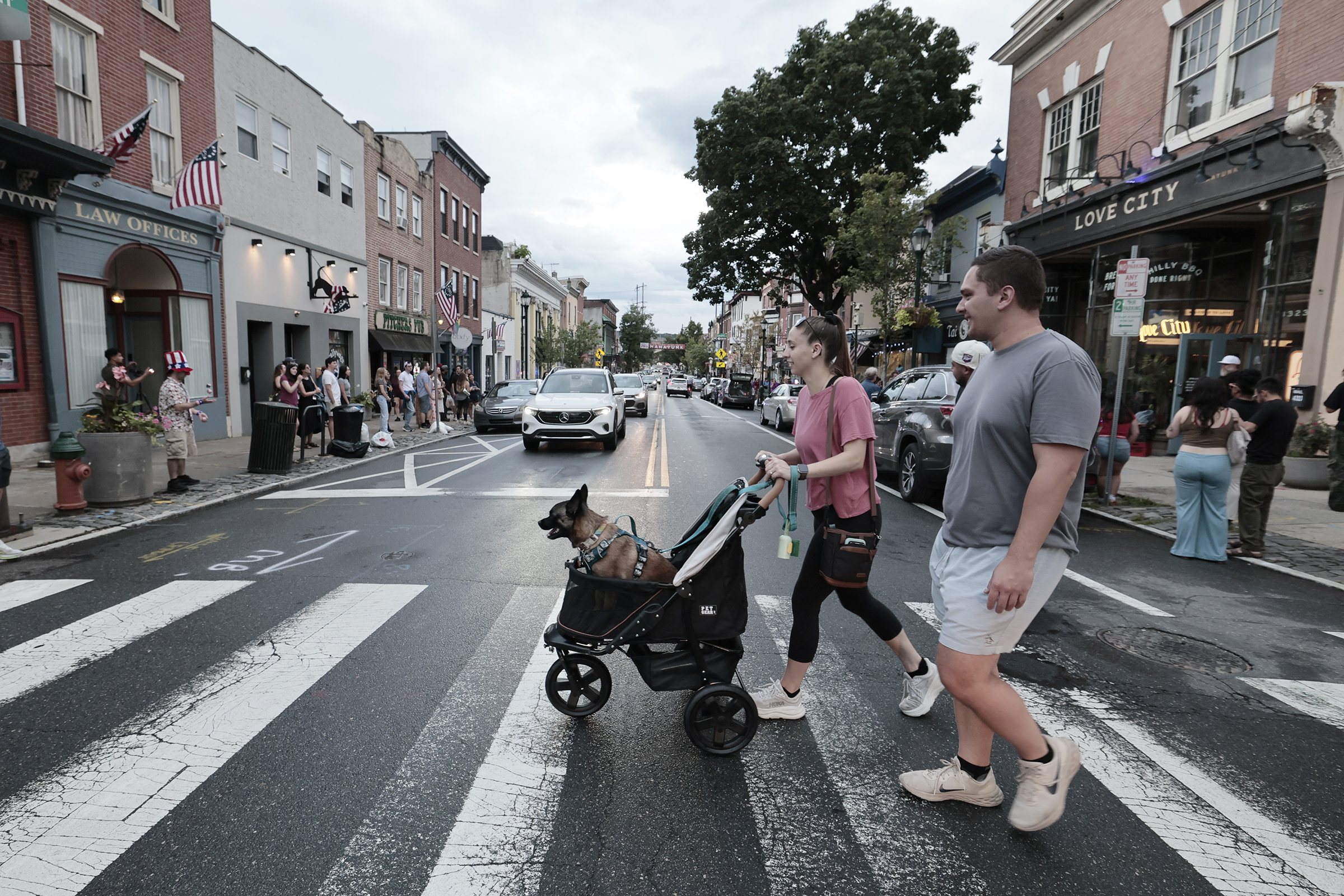
    Kim Albanowski pushes her dog “Koda” across Main street in “his chariot” as Jason Pepin looks on, during the Stroll After Hours event in Manayunk in July.Elizabeth Robertson / Staff Photographer

    Gwen McCauley, director of Manayunk’s business improvement district, which includes at least three vape stores along Main Street, echoed South Street’s desire to see “neighborhood-serving businesses that contribute to the vibrancy” of a neighborhood.

    “Over the last 10 years, Manayunk is seeing a growing number of young families moving here,” McCauley said. “We want our businesses to reflect and support that demographic.”

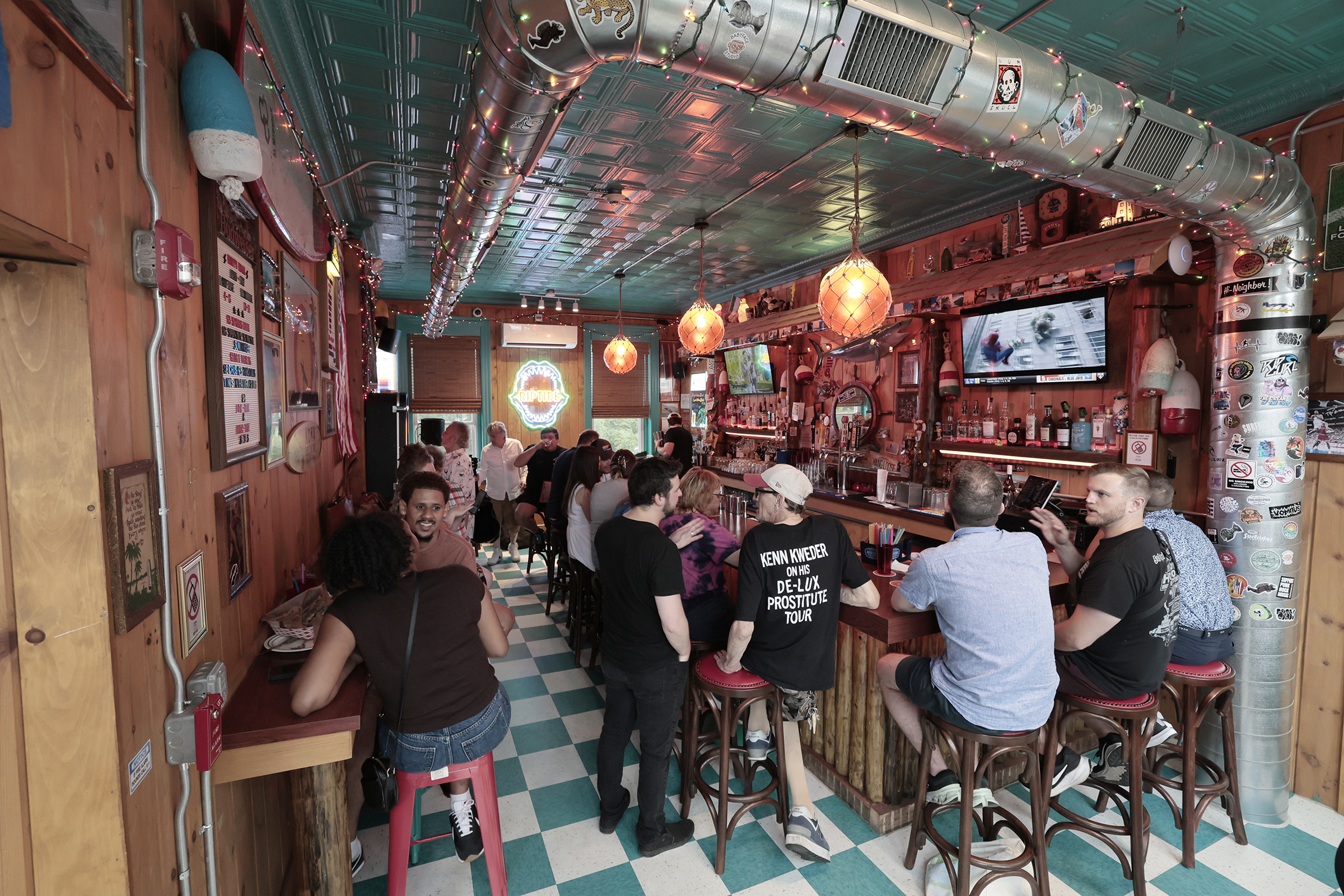
    A crowd gathers at Riptide Tavern in Manayunk back in July.Elizabeth Robertson / Staff Photographer

    Manayunk’s Main Street is ushering in its next era of neighborhood retail, catering to a flock of new families, with a dozen new businesses in the last two years, including the opening of Riptide Tavern in June from Taqueria Amor owner Tim Spinner, and Eleanor’s Consignment in October.

    What comes next for vape stores

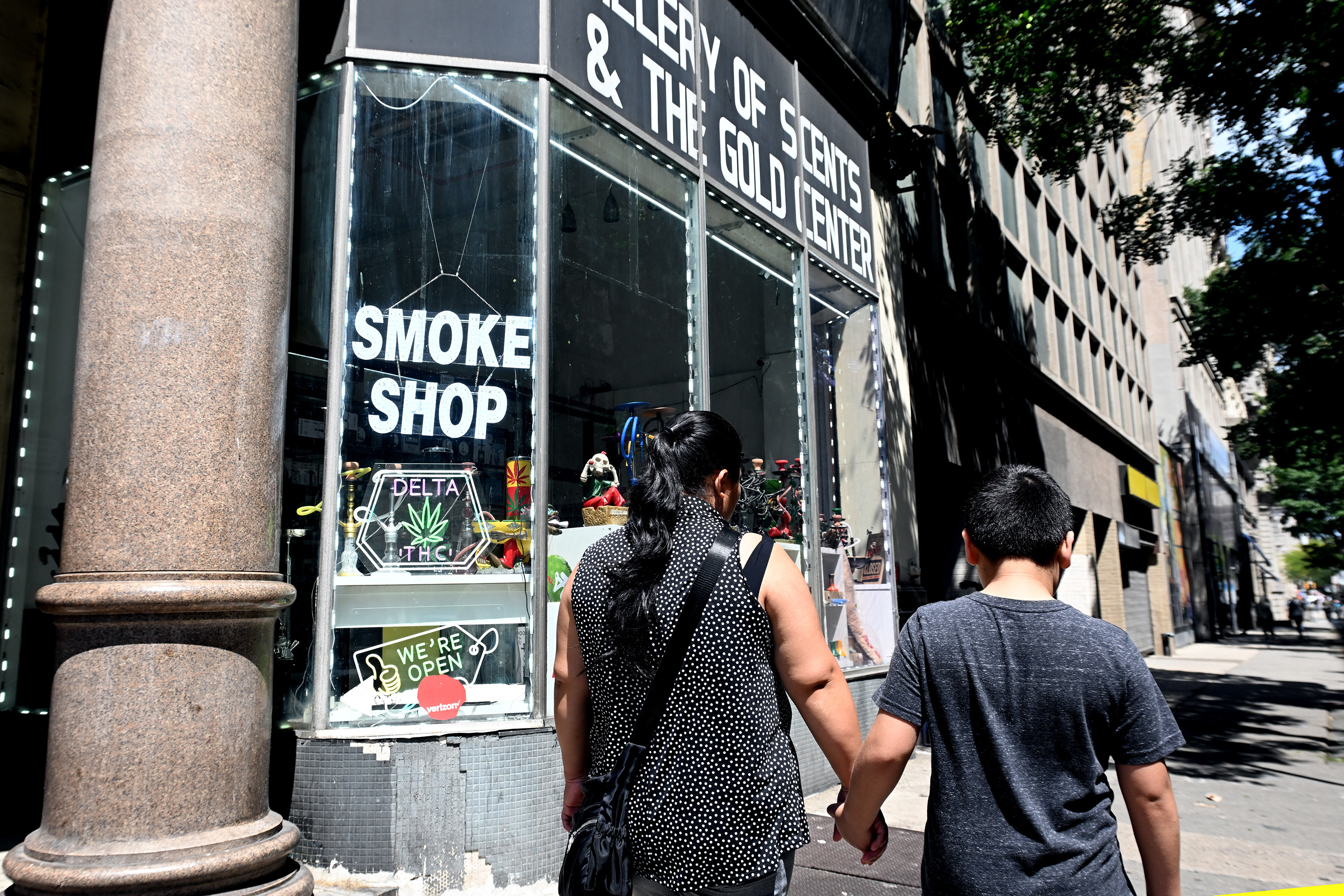
    City smoke shop on the 1000 block of Chestnut Street in July 2025. All 10 samples of “legal” weed The Inquirer purchased from stores in the city and suburbs tested over the federal limit for the ingredient that gets users high. Tom Gralish / Staff Photographer

    But vape stores likely won’t be an extinction-level event.

    In other states that passed similar restrictions, like Massachusetts in 2019, vape stores didn’t close en masse. Instead, dramatically fewer vape stores entered the market after the state banned flavored tobacco products, with a 50% drop in the number of licenses issued for new tobacco stores, according to a 2023 UC San Diego study.

    More telling is a study published in September that looks into the effect e-cigarette directory laws, like Pennsylvania’s, have on the sales of nicotine products. Researchers found that across three states, Alabama, Oklahoma, and Louisiana, there were no lasting declines in sales of vape products. In Louisiana, where sales initially declined, they rebounded within eight months.

    Like other states, Pennsylvania will likely not see an exodus of vape stores, but these small businesses will navigate a monthslong transition to stay afloat — and new entrepreneurs will certainly be wary of entering the retail space.

    Gartner believes this is where the market will decide whether customers flock to other states, online stores, or continue to patronize local retail.

    “There could be an inevitable shakeout, or there is enough business to sustain them all,” Gartner said.

  • The polar vortex may have record-early impacts, including on Philly’s weather in November

    The polar vortex may have record-early impacts, including on Philly’s weather in November

    The mega-El Niño event unfolding in the equatorial tropical Pacific has been dominating the stage in the weather, but evidently it is about to get some competition from a radically different source.

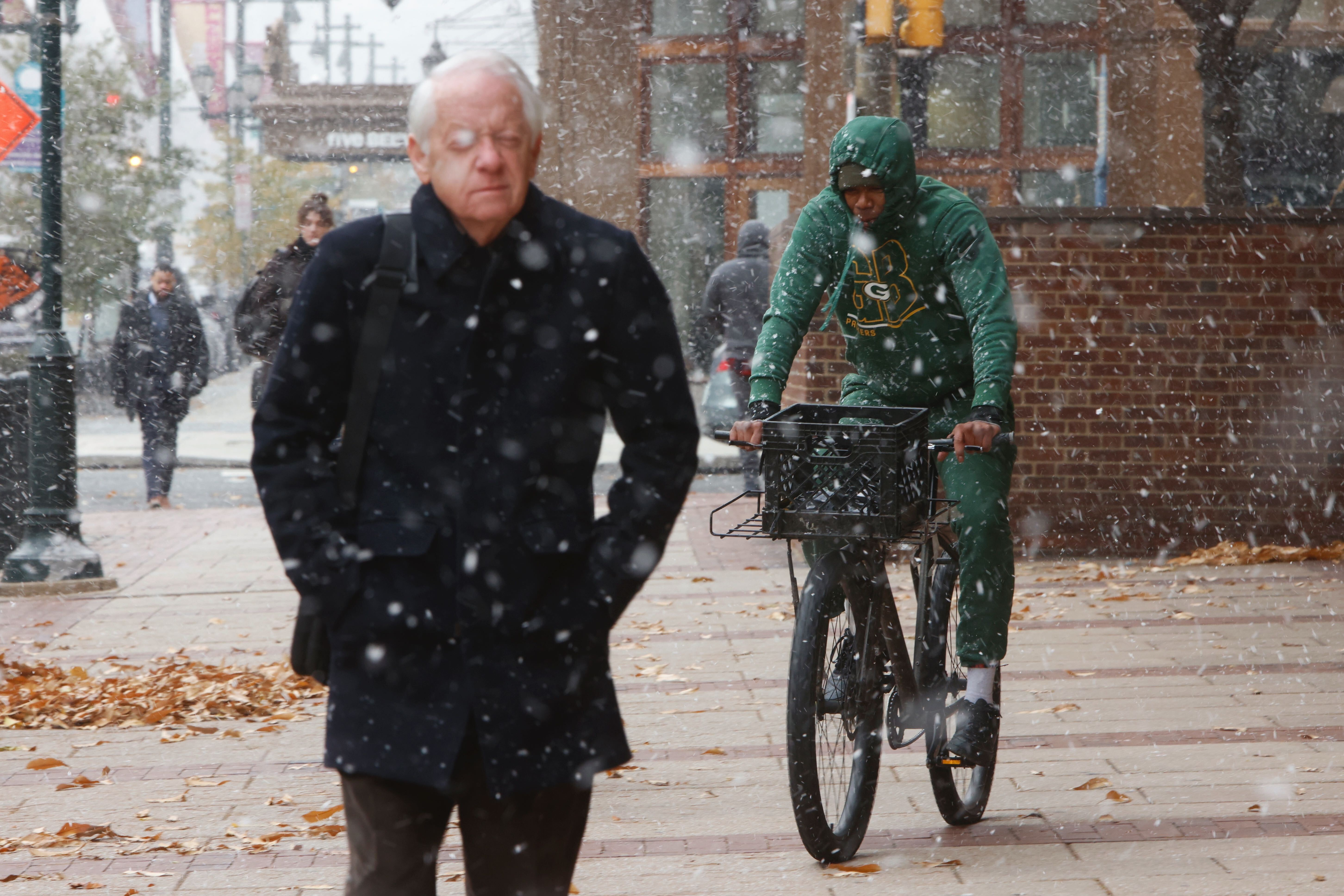
    The polar vortex, the powerful west-to-east winds that lock in frigid air in the Arctic, is showing signs of weakening, and that could result in cold air and even stray snowflakes spilling into lower latitudes in the next three weeks, perhaps as far south as the Mid-Atlantic region.

    “We’re already seeing the polar vortex become distorted and stretched out,” said Laura Ciasto, meteorologist with the National Weather Service’s Extended Prediction Division. That usually doesn’t happen until deep into winter.

    Talk about seasonal creep.

    This would be “unprecedentedly early,” said Judah Cohen, research scientist with the Massachusetts Institute of Technology, a specialist in polar meteorology.

    Hold the panic: The locations and intensities of any impacts would be uncertain. However, they could be evident before Thanksgiving as high drama unfolds in the atmosphere over the Arctic that could result in a so-called stratospheric warming event.

    What is a sudden stratospheric warming event?

    The stratosphere over the Arctic region, 10 to 30 miles above the surface where the air is truly rare, is the domain of the polar vortex, whose cold-imprisoning winds can swirl at 100 mph.

    On occasion, the jouncing action of upward-moving waves can disrupt the circulation of the vortex, compromising it and at times resulting in the winds reversing — the official threshold for a sudden stratospheric warming event.

    That could happen in the next week to 10 days, Ciasto said,

    The weakening of the vortex would allow warmer air to invade the Arctic, and Arctic air to ooze southward, with impacts in the lower latitudes possible in the second or third week of November.

    The warming events on average have occurred about six times a decade in the period of record, dating to 1958 — but never this early.

    Two others occurred in November, but later in the month, Ciasto said.

    “Because there have been so few in November, there’s some uncertainty about what the surface impacts might look like.”

    Or how long they might last, or whether other disruptions will follow.

    How much for Philly?

    The warming events “lead to increased probabilities of below-normal temperatures across the Eastern United States,” said Ciasto.

    The Philly region has experienced some serious winter weather following stratospheric warming events. After an uneventful start to the winter of 2020-21, Philadelphia ended up with one of its snowier Februaries, with some places outside the city receiving up to 50 inches that winter.

    A warming event occurred two Februaries later, and the seasonal snow total was all of 0.3 inches in Philly.

    While a warming may “load the dice” for cold and snow in the East, “other factors can affect our weather,” Ciasto said.

    “We can’t forget the other big player that’s unfolding this winter,” she said. That would be the record-challenging El Niño brewing in the equatorial Pacific.

    “How these two phenomena work together or compete will definitely influence what we feel at the surface,” Ciasto said.

    El Niño, the polar vortex, and winter

    Sea surface temperatures over a vast area of the Pacific are about 4.5 degrees above normal, according to the federal Climate Prediction Center, and the warm waters are due to persist through the winter.

    Interacting with the overlying air, the waters are generating upper-air winds from the west that are going to affect U.S. weather into March.

    The consensus among forecasters is for above-normal temperatures for Philly and much of the nation this winter.

    For its part, AccuWeather Inc. is not particularly alarmed by the potential early visit from the polar vortex. “We’ve heard the chatter,” said Tom Kines, a senior AccuWeather meteorologist. This early in the season, cold air is wanting, and if anything, Philly might get a few November days with below-normal temperatures, but “nothing unusual,” he said.

    AccuWeather is sticking with its call for a mild and snow-deprived winter in Philly and other places along I-95, he said.

    Not everyone is on board with the low-snow idea, however, given the potential for El Niño-energized coastal storms. Paul Dorian, meteorologist with Arcfield Weather, said conditions are favorable for more polar vortex intrusions. He was predicting 30 to 40 inches of snow for Philly.

    Figuring out how this winter is going to play out has been especially challenging, Cohen said, “and the uncertainty in the forecast only looks larger.”

  • LeBron James has handshakes with Sixers stars, role players and arena staff. He wants to make ‘everyone feel important’

    LeBron James has handshakes with Sixers stars, role players and arena staff. He wants to make ‘everyone feel important’

    Not long ago, Dru Joyce was watching the Sixers at home in Pittsburgh when he saw something that brought him back to his childhood. The game was about to start, and players were jogging onto the court, high-fiving their Philadelphia teammates.

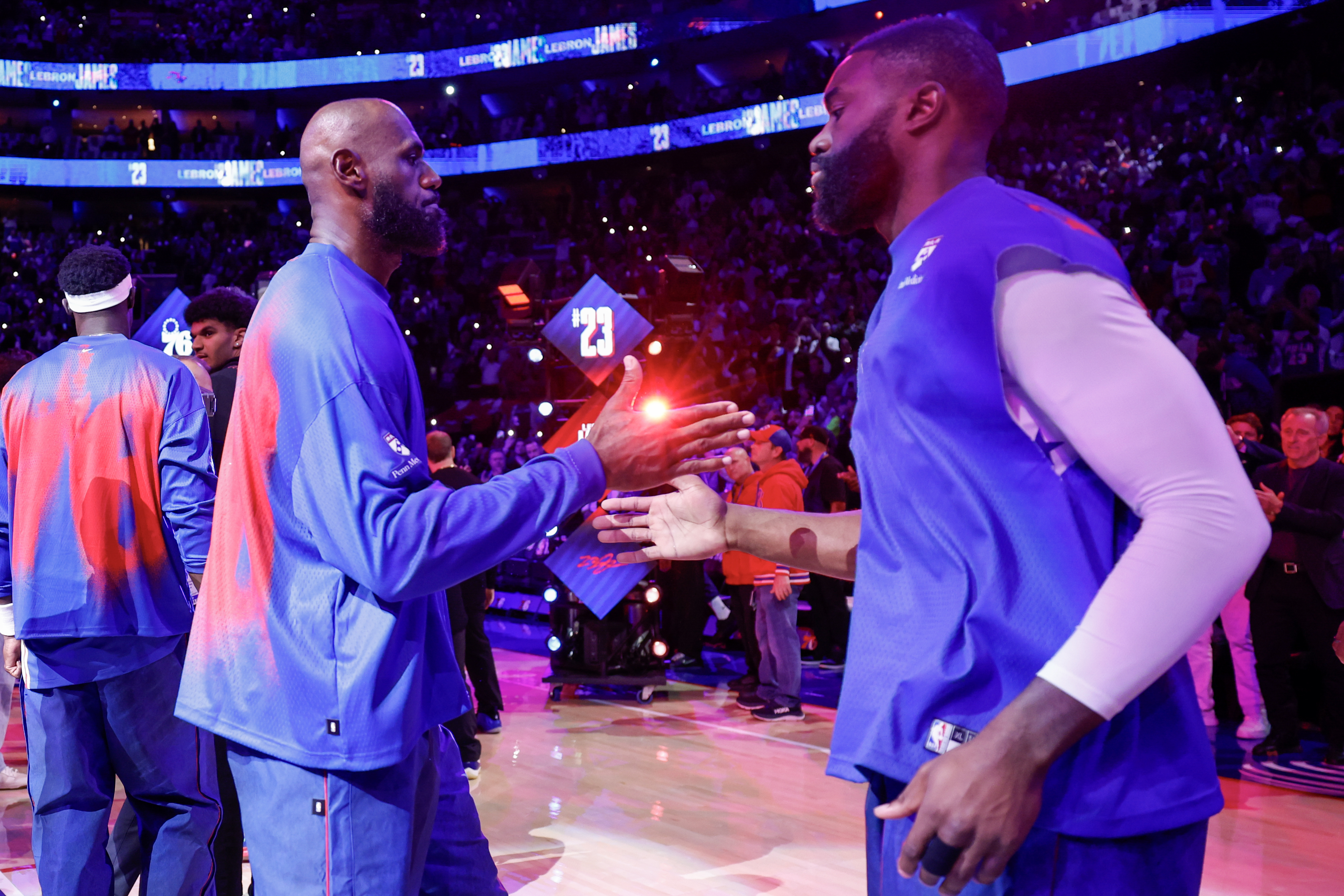
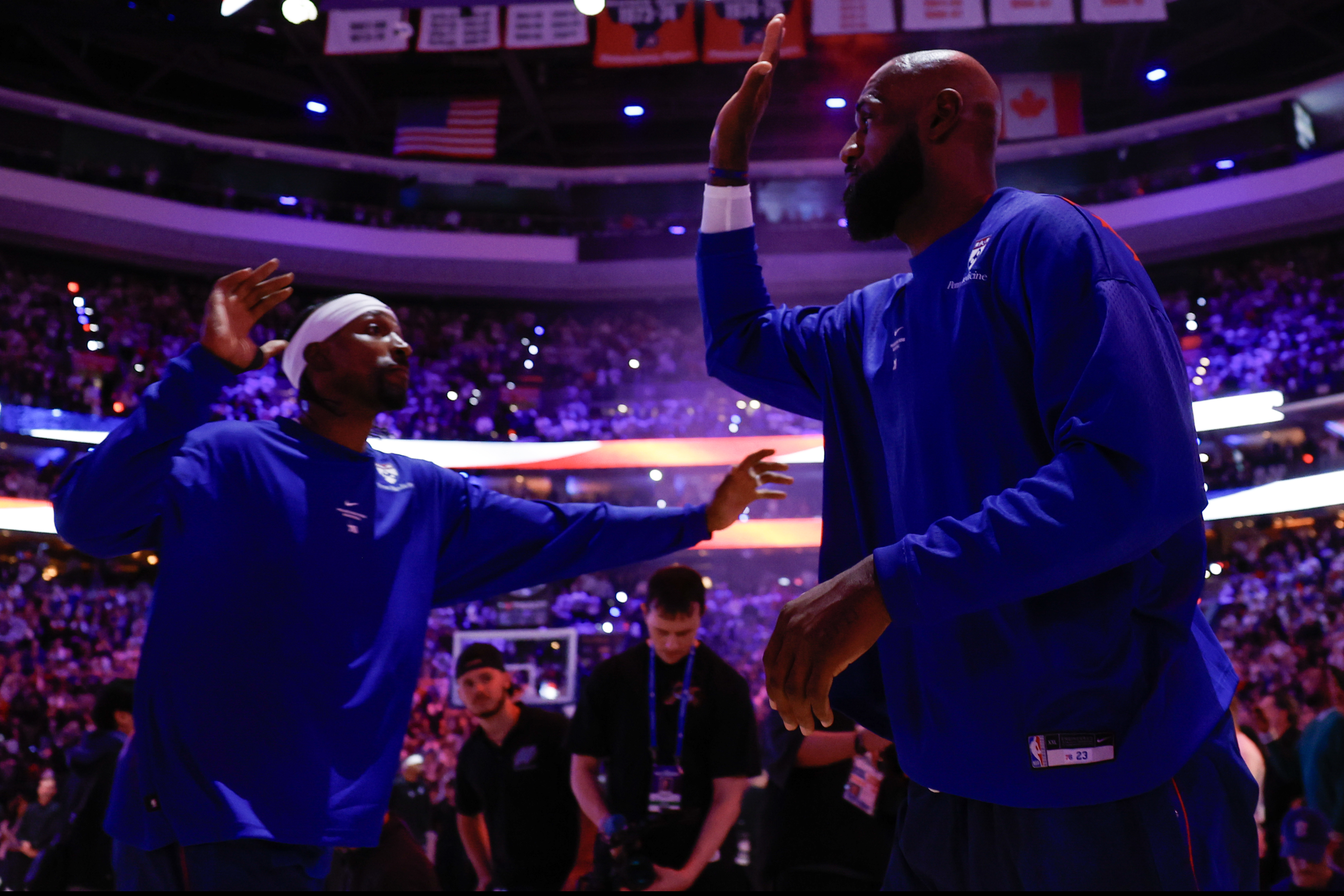
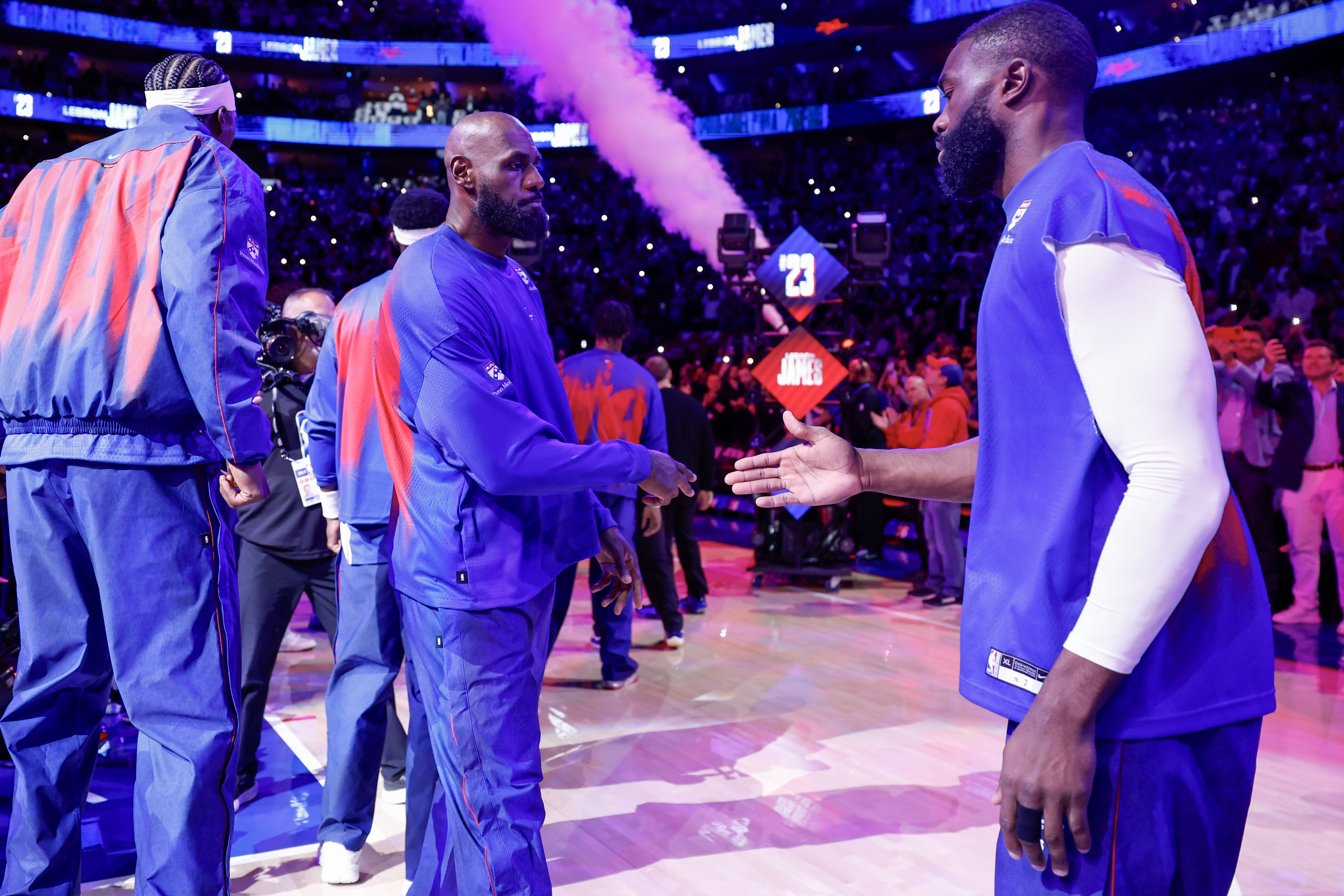
    Amid the slapping palms and bumping fists, a 6-foot-9, 250 pound showman emerged, armed with his own choreography. As LeBron James traveled down the line, he paused at almost every Sixer, stuck out his hand, and proceeded to reveal new, tailor-made handshakes.

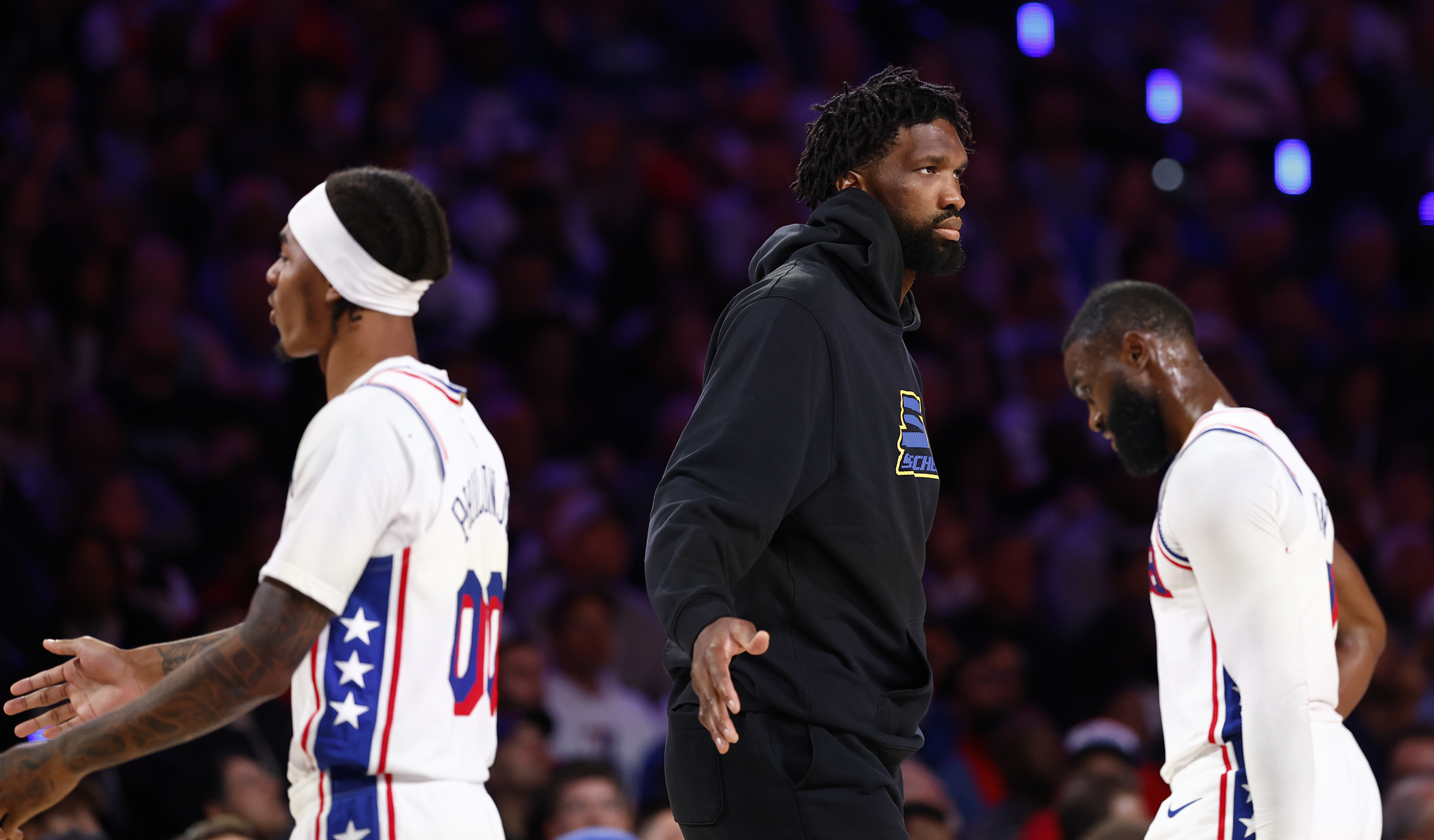
    Each gesture was distinct. There was the finger-twirl with Tyrese Maxey; the imaginary mask with Jaylen Brown; the hip thrusts with Joel Embiid.

    For Kentavious Caldwell-Pope, a former teammate of James’ with the Lakers, the four-time MVP pretended to load a clip. For VJ Edgecombe, the future Hall of Famer tapped his head twice and powerfully shrugged his shoulders.

    And of course, James couldn’t leave out Dean Wade, the lone Caucasian on the roster.

    “I just have the simple, ‘Hire me’ handshake,” Wade said. “I try to stay out of it because I can’t do this stuff.”

    Joyce’s family was mesmerized. His wife and son asked about the Sixers star’s near-photographic memory. The head coach of Duquesne’s men’s basketball team had little insight to provide.

    “You see him have new handshakes with new guys, and it’s like, ‘Man, another set of guys, another set of handshakes,’” Joyce said. “Like, why? Why and how?”

    He might not have answers to these questions, but Joyce certainly has the context. He first met James when they were nine years old, competing against each other in the same Akron, Ohio, rec league.

    One day, his father, also named Dru Joyce, knocked on James’ door in the Elizabeth Park projects to see if the hardcourt wunderkind would join his son’s AAU team.

    Gloria James cautiously peeked behind the curtain with young LeBron by her side. He locked eyes with the young Joyce and before long, they were teammates, through their senior year at St. Vincent-St. Mary High School; a bond that endures to this day.

    Joyce recalls the handshakes starting in ninth grade. They were far less elaborate back then — maybe one step instead of four — but James and his friends made them part of their pre-game routine, forging muscle memories that would last a lifetime.

    And the King is still preserving the practice today. At every stop of his NBA career, from Cleveland to Miami to Los Angeles, and now, to Philadelphia, he’s created handshakes. They are all intentional; often with some sort of underlying theme.

    What’s more remarkable, though, is the sheer breadth of these gestures. James doesn’t just shake hands with stars. He’s expanded his repertoire to include role players, two-way players, and rookies.

    He has custom greetings with coaches, team attendants, locker room managers and photographers; inviting them all into his Hall of Fame orbit, if only for a few seconds.

    While this tradition might seem paltry compared to James’ other accomplishments, those who know him say it’s anything but.

    “He’s an incredible athlete, an incredible man,” said James’ former teammate, Quinn Cook. “But I think for him, his superpower isn’t his talent. His superpower is making everybody feel important.

    “Anybody that’s around him, he’s going to make them feel like the biggest person in the world.”

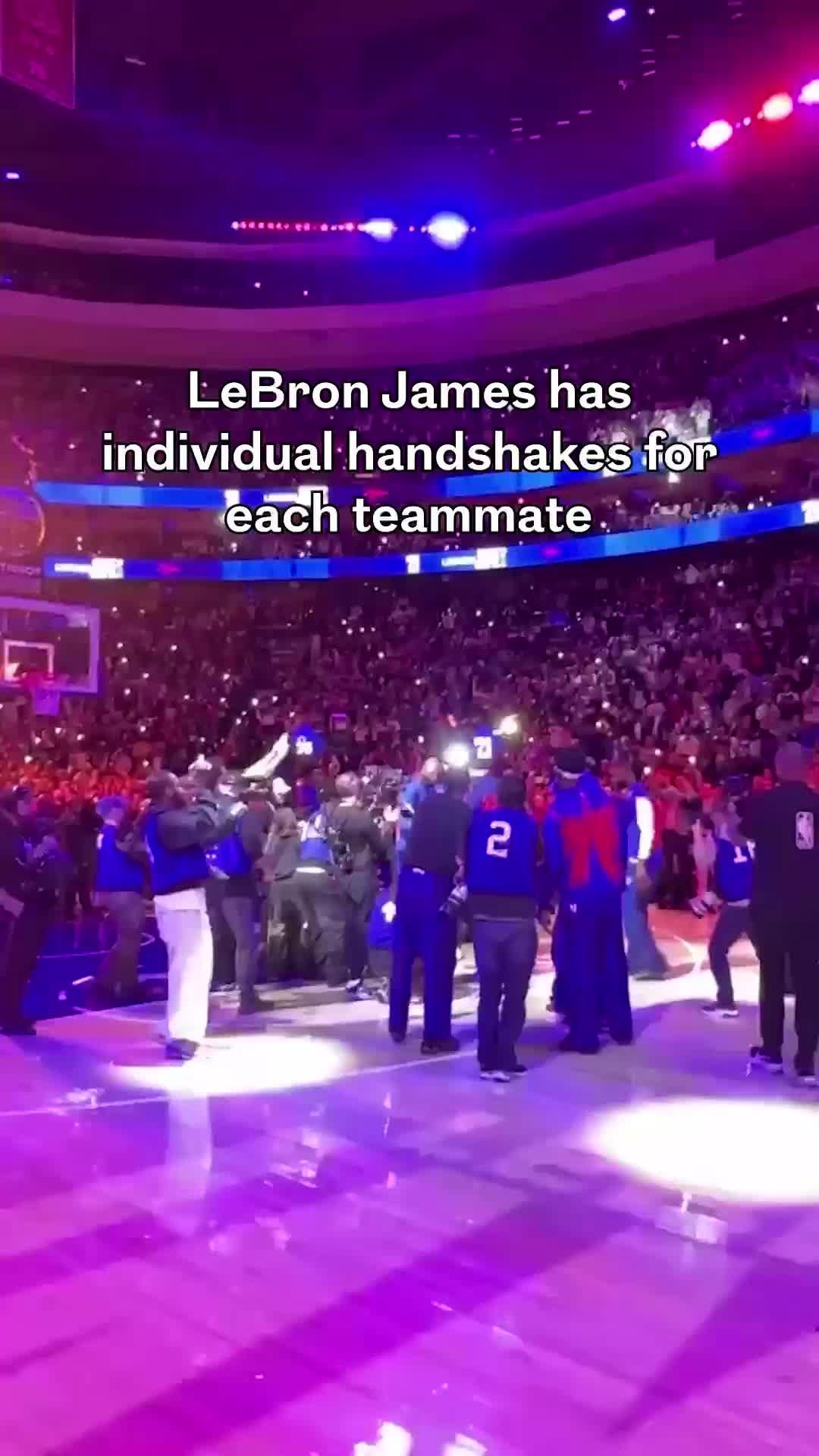
    LeBron James has individual handshakes for each teammate
    Video: LeBron James has individual handshakes for each teammate

    ‘He just ripped it’

    Before James signed with the Sixers in July, he talked to Maxey about the scrutiny his presence would bring. There would be more cameras, more media, more pressure.

    There would be outside noise in both the figurative and literal sense; players would have to get used to the sound of his helicopter, for example, soaring over the team’s practice facility in Camden.

    James, the league’s all-time leading scorer, was used to this. The Sixers were not. But for all of his far-reaching fame, he’s also shown an unlikely ability to relate. Cook experienced it firsthand when he was a rookie in training camp with Cleveland in 2015.

    He and the future Hall of Famer weren’t strangers. Cook and James are mutual friends with Kevin Durant, and Cook attended James’ basketball camps growing up. But they’d never gotten to know each other well, and upon joining the Cavs, James immediately gravitated to the undrafted point guard.

    As Cook tried to earn a roster spot, he became James’ and J.R. Smith’s designated rookie. This status involved menial tasks like carrying around a bag of playing cards and gum when the veterans were in need, and picking up Krispy Kreme donuts in the morning.

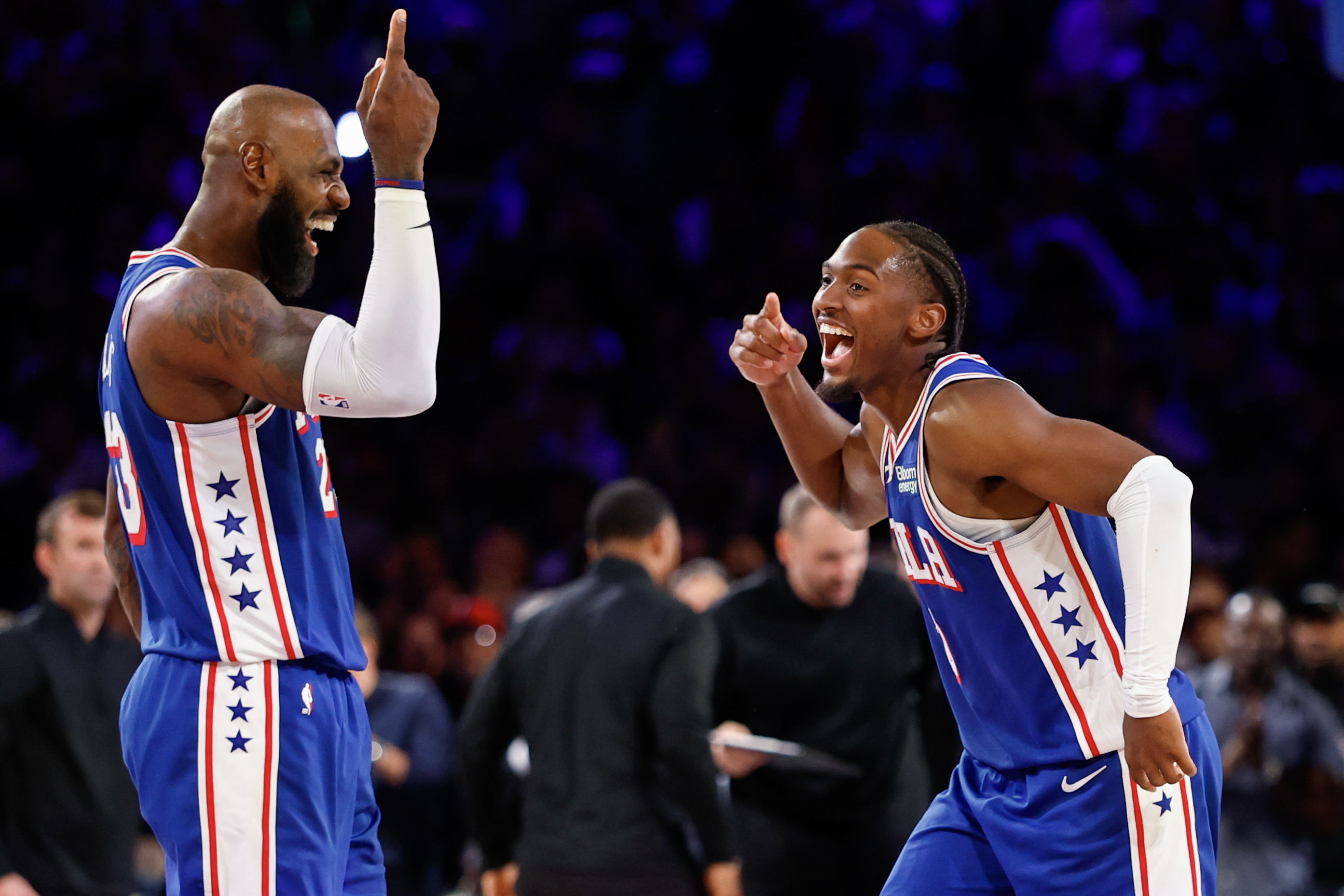
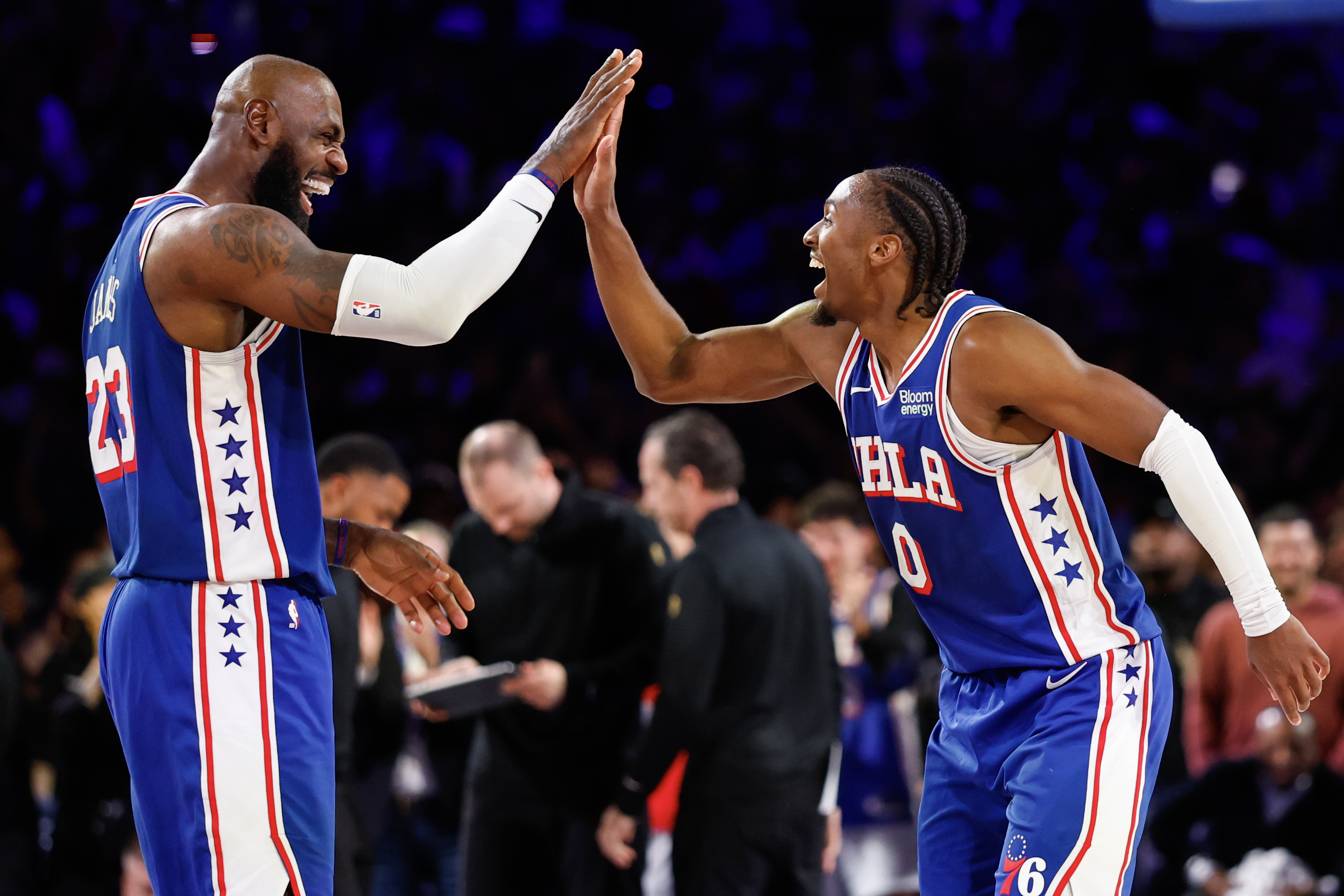
    Sixers forward LeBron James and guard Tyrese Maxey celebrate a stop late during the fourth quarter against the Cavaliers.Yong Kim / Staff Photographer

    But the payoff was worth it. On road trips, Cook would sit alongside his vets. They’d always pay for meals, donating their per diems to the cause. Even after the rookie was sent to the G League, James continued to attend his games, driving 60 miles from Cleveland to Canton.

    Cook had been going through some challenges at home. His grandfather had recently died, and his aunt, who suffered a stroke earlier in her life, was having health problems.

    James could tell it was weighing on him. So, he began to check in.

    “Any time I had an hour, two hours, or they were off, Bron’s like, ‘Man, meet me at the house,’” Cook recalled. “‘Let’s go to the facility and just talk.’

    “At this time, I’m fully in the G League. I’m not even with the Cavs anymore. I’m with the minor league team. And Bron, literally, anytime they were in town, and he had an hour, two hours: ‘Hey, come here, let’s play Madden.’”

    To Cook, the handshakes are an extension of this side of James. The NBA star doesn’t discriminate; he’s crafted greetings with everyone from Dwyane Wade to Jarred Vanderbilt; from Jayson Tatum to Zydrunas Ilgauskas.

    This extends to arena staff, too. Cook has seen James exchange handshakes with janitors and social media managers. In 2011, when the forward joined the Miami Heat, he developed a rapport with one of the team attendants, Marvin Ulysse.

    He’d often compliment Ulysse on his sneakers, which invariably led to other topics: where they grew up, how they grew up, their love for the game. One time, during the preseason, James walked into the Kaseya Center, and guided Ulysse through a five-step process.

    The team attendant was stunned. While Ulysse knew James had a long history of custom hand-shaking, he figured he’d be the last person to ever receive one.

    But there he was, later that night; standing in front of a mirror, practicing each twist and turn and arm bump, to make sure he didn’t forget.

    “I was a team attendant,” Ulysse said. “I’m not thinking I’m gonna get a handshake like the players are. But then he made a handshake with every team attendant in that locker room.”

    James continued his hand-shaking ways when he signed with the Lakers in 2018. Caldwell-Pope saw his role change that year, to more of a three-and-D player; James began to call him “sniper.”

    The following season, the four-time MVP approached him at practice with a phrase any of his current (or former) teammates would be familiar with.

    “He was like, ‘I got a handshake,’” Caldwell-Pope recalled. “And we just did it. Mine, specifically, is being locked and loaded. Basically, we just loading the clip. Just getting ready to g—damn play, and shoot the ball at all times.”

    Sixers forward LeBron James and teammate Kentavious Caldwell-Pope shake hands before a game against the Cavaliers.Yong Kim / Staff Photographer

    For Rui Hachimura, it was a respectful bow, like they do in his native Japan. For D’Angelo Russell, it was a nod to the ice in his veins. For Anthony Davis, it was a flurry of high-fives, followed by an interlocking-finger finale. For Dalton Knecht, it was a raised bow-and-arrow aimed toward the sky.

    Drew Timme was on the Lakers’ G League team when he was introduced to James in 2025. The future Sixer was on a rehab assignment, and they started joking about the time James sported a mustache with the Cavs about a decade ago.

    Timme — who still has his signature handlebar — was signed to a two-way contract last November. One night, before a Lakers game, he was standing in the tunnel when James turned to him.

    The Akron native dapped Timme up, and then lifted his hands, tracing an imaginary mustache above his mouth.

    “I was like, ‘I can f— with it,’” Timme said. “He just ripped it. I was like, ‘That’s why you’re the GOAT, man.’”

    A small gesture with a big impact

    It didn’t take long for James to get to work in Philadelphia. By the second day of camp, he’d already concocted a greeting with Maxey: slapping the back of their hands, raising them for a high-five, and then twirling their fingers in the air.

    Rookie Labaron Philon Jr. and second-year shooting guard Edgecombe noticed the veteran teaching his new handshakes in practice. The one with Caldwell-Pope, in particular, stood out; the two first-round picks were in awe of the intricate routine after seeing it at a team dinner.

    They decided to patiently wait their turn.

    “Me and Labaron were like, ‘Maybe one day,’” Edgecombe said with a laugh.

    That day came sooner than Edgecombe expected. A couple of weeks ago, before the Sixers’ season opener in New York, James walked up to the guard with a message: “V, I got one for us.”

    He started tapping his head — “like when you dunk on somebody” — and shrugging his shoulders, like a boxer ready to fight.

    The future Hall of Famer provided no explanation, but somehow, it fit Edgecombe perfectly. Maxey says this isn’t by accident. For as spontaneous as James’ handshakes might appear, he does put thought into them.

    And just like they did in Akron, and Cleveland, and Miami, and Los Angeles, the gestures still make an impact. A few seconds of daps and twists and bumps, to remind a teammate that they matter — even to one of the all-time greats.

    “You got a handshake with LeBron James, man,” Maxey said. “Especially for guys that don’t play as much… that’s a memory.”

  • Tanner McKee is known as a positive presence. The Eagles will need their new QB1 to keep spirits high in trying times.

    Tanner McKee is known as a positive presence. The Eagles will need their new QB1 to keep spirits high in trying times.

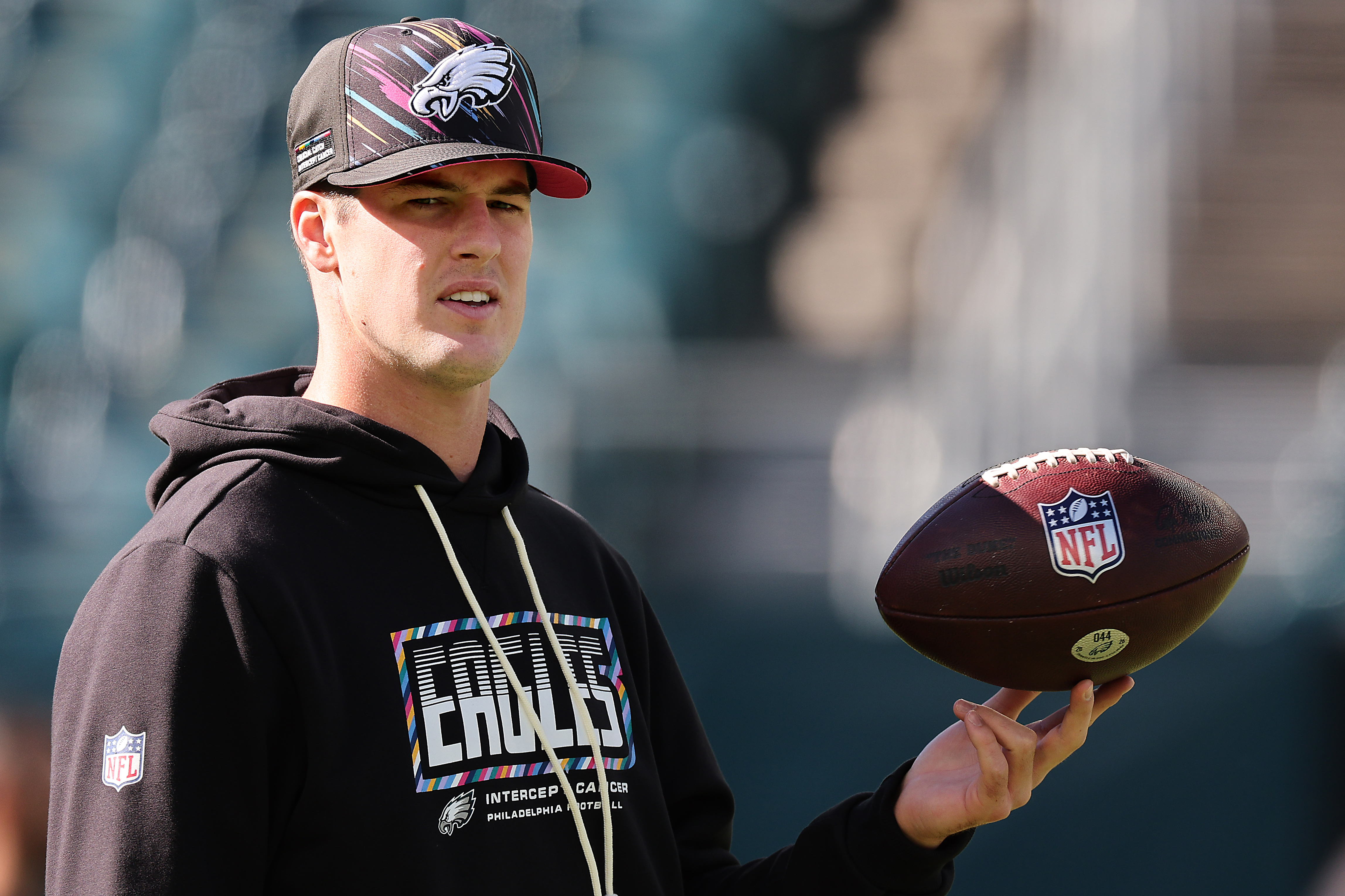
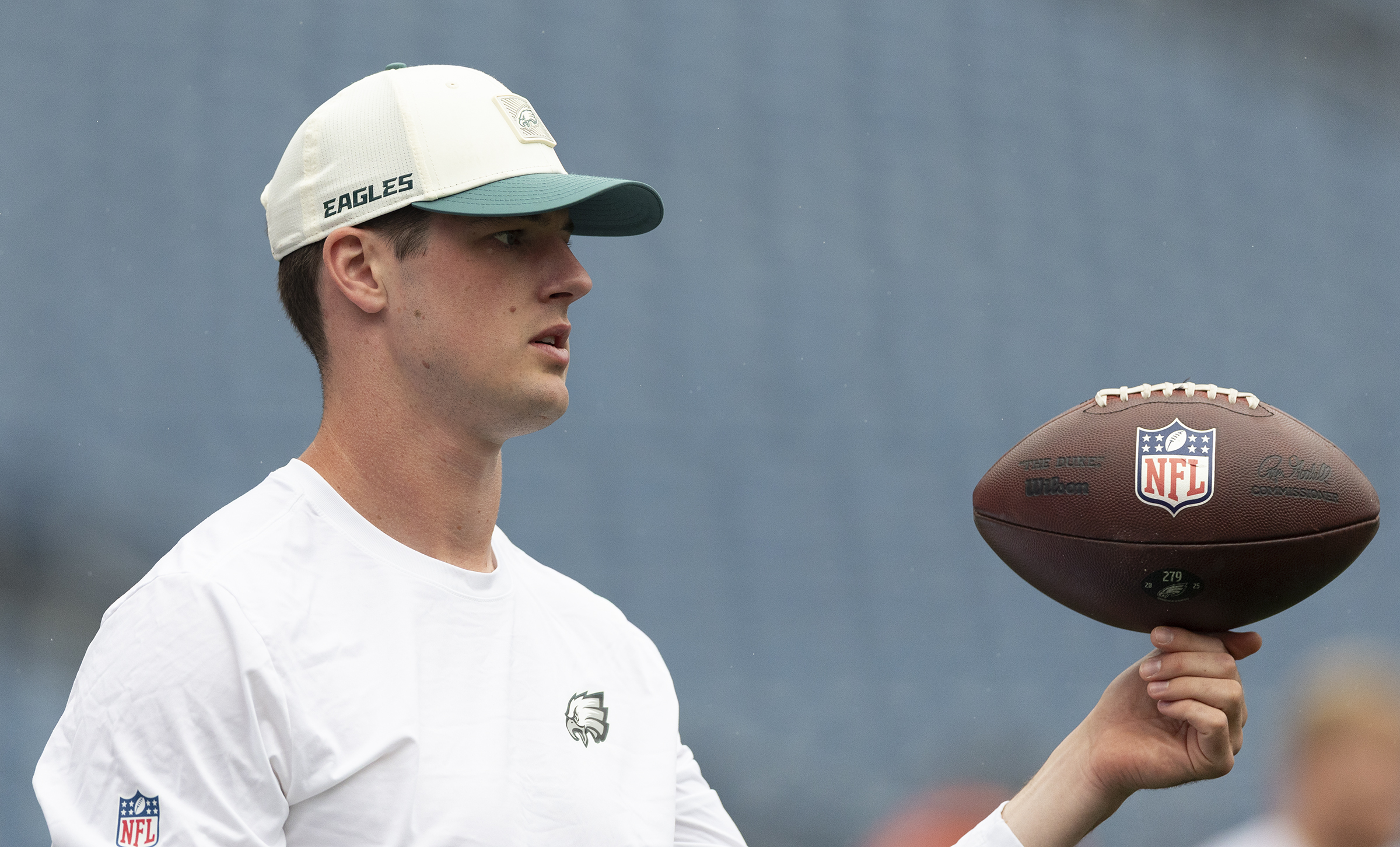
    Little did Walt Whitman know that when he wrote the line, “I contain multitudes,” in his poem “Song of Myself” in 1855, he would help explain the dichotomy that exists within a 26-year-old Eagles quarterback over 170 years later.

    Tavita Pritchard said he quickly learned of the “multitudes” within Tanner McKee as his offensive coordinator and quarterbacks coach at Stanford, when McKee arrived as a freshman in 2020. Off the field, Pritchard described McKee as “one of the most positive people” who was so personable and gregarious that he could strike up a conversation with anybody.

    But when he stepped on the field, the 6-foot-6, 231-pound quarterback flipped the switch on his demeanor.

    “He’s a freaking killer on the field, man,” said Pritchard, who is now Stanford’s head coach. “He is as competitive a person as I’ve been around. He is somebody who absolutely wants to dominate the opponent.”

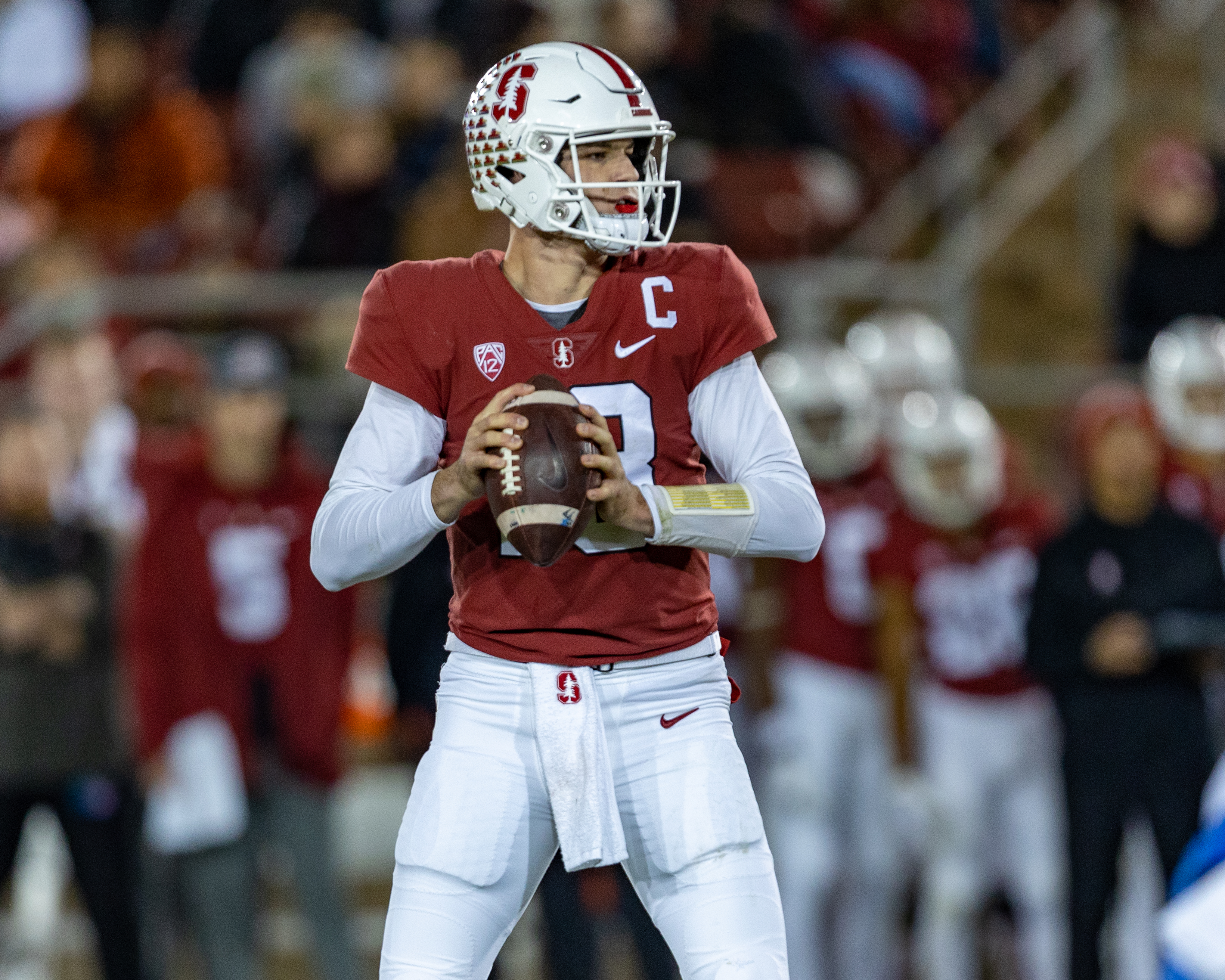
    Tanner McKee impressed coaches at Stanford with his poise and unflappability. John Lozano/ISI Photos

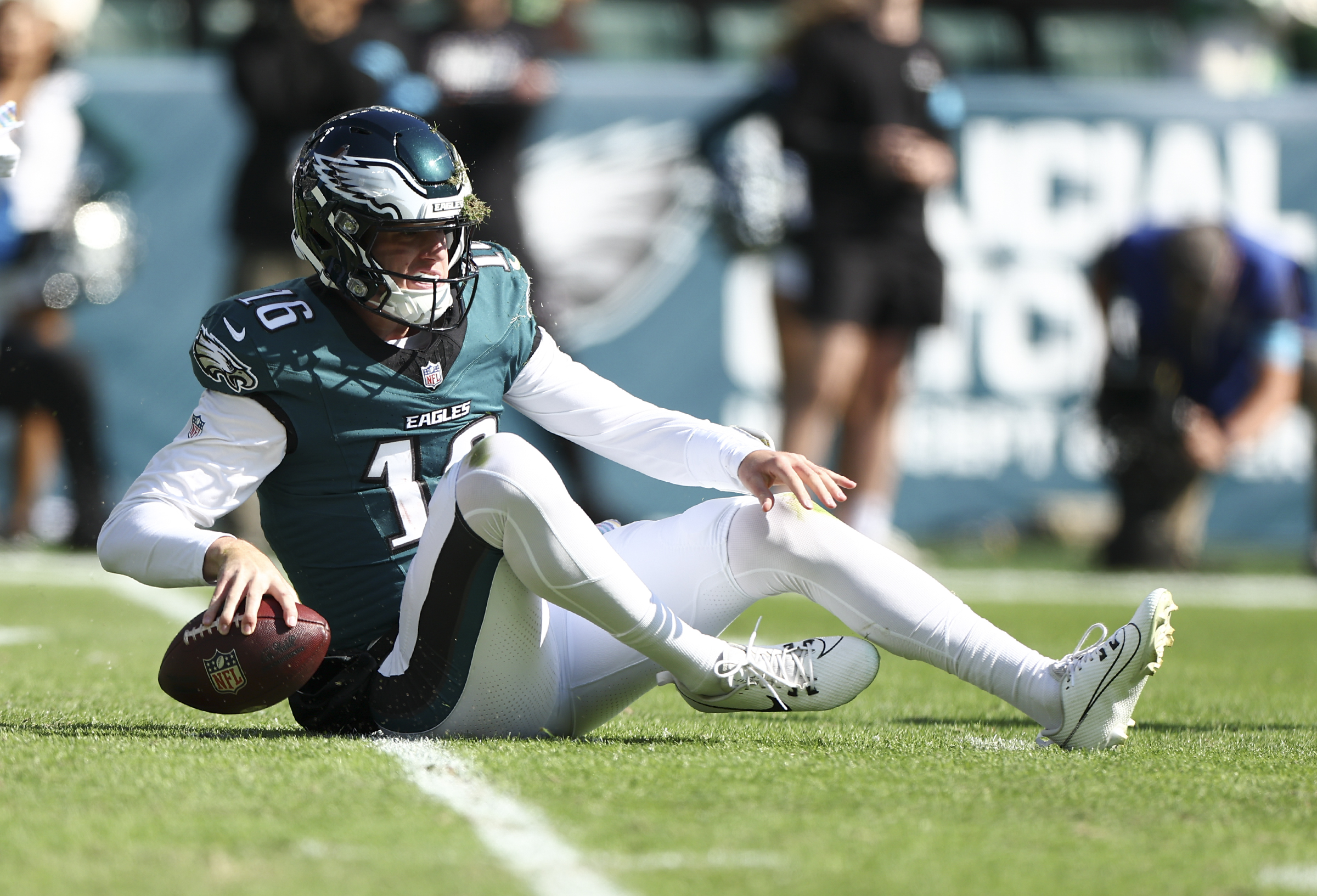
    Those disparate qualities within McKee, the Eagles’ 2023 sixth-rounder, haven’t changed. If anything, they’ve become even more evident as he has stepped into the starting role on a full-time basis in the absence of Jalen Hurts, who could miss the rest of the season after he was diagnosed with blood clots in his lungs.

    Despite being McKee’s teammate for the last four seasons, Jordan Mailata is just now getting extended exposure to his on-field personality. Mailata, the Eagles’ starting left tackle since 2020, hasn’t taken nearly as many snaps with McKee under center over the years as he has with Hurts. Over the last week and a half, Mailata is beginning to understand what the second-unit offensive linemen have been telling him about McKee and his presence in the huddle.

    “There’s a switch,” Mailata said. “He’s [a] very positive, friendly guy, but then when he’s out there, the urgency goes up tenfold, and he’s a different guy out there. The urgency, you see it, the fire, the command of, like, ‘Everybody, refocus.’ To me, he snaps me back out of it. If he can see visually that I’m not in it, he’ll bring me back in.”

    McKee must now bring everyone back in. As the starter moving forward, McKee will be tasked with helping an inefficient Eagles offense that ranks 30th in the NFL in expected points added per play (minus-.21, according to Next Gen Stats) rebound in a wide-open NFC East. He will look to snap the Eagles’ four-game losing skid, too, beginning with their Monday Night Football matchup against the Dallas Cowboys (8:15 p.m., 6abc and ESPN).

    He was inconsistent in the first non-Week 18 start of his career last week against the Carolina Panthers, going 26-for-45 (57.8% completion) for 215 yards and a touchdown. But unlike last week, when McKee learned that he would start just three days before the game, offensive coordinator Sean Mannion now has the benefit of a full week of game-planning around McKee.

    McKee has shown that he is capable of flipping the switch within. Can he help flip the switch on the Eagles’ season?

    “The last couple months, probably month, [is] weighing on everyone,” Mailata said. “But having Tanner under center and just his infectious energy has helped a lot.”

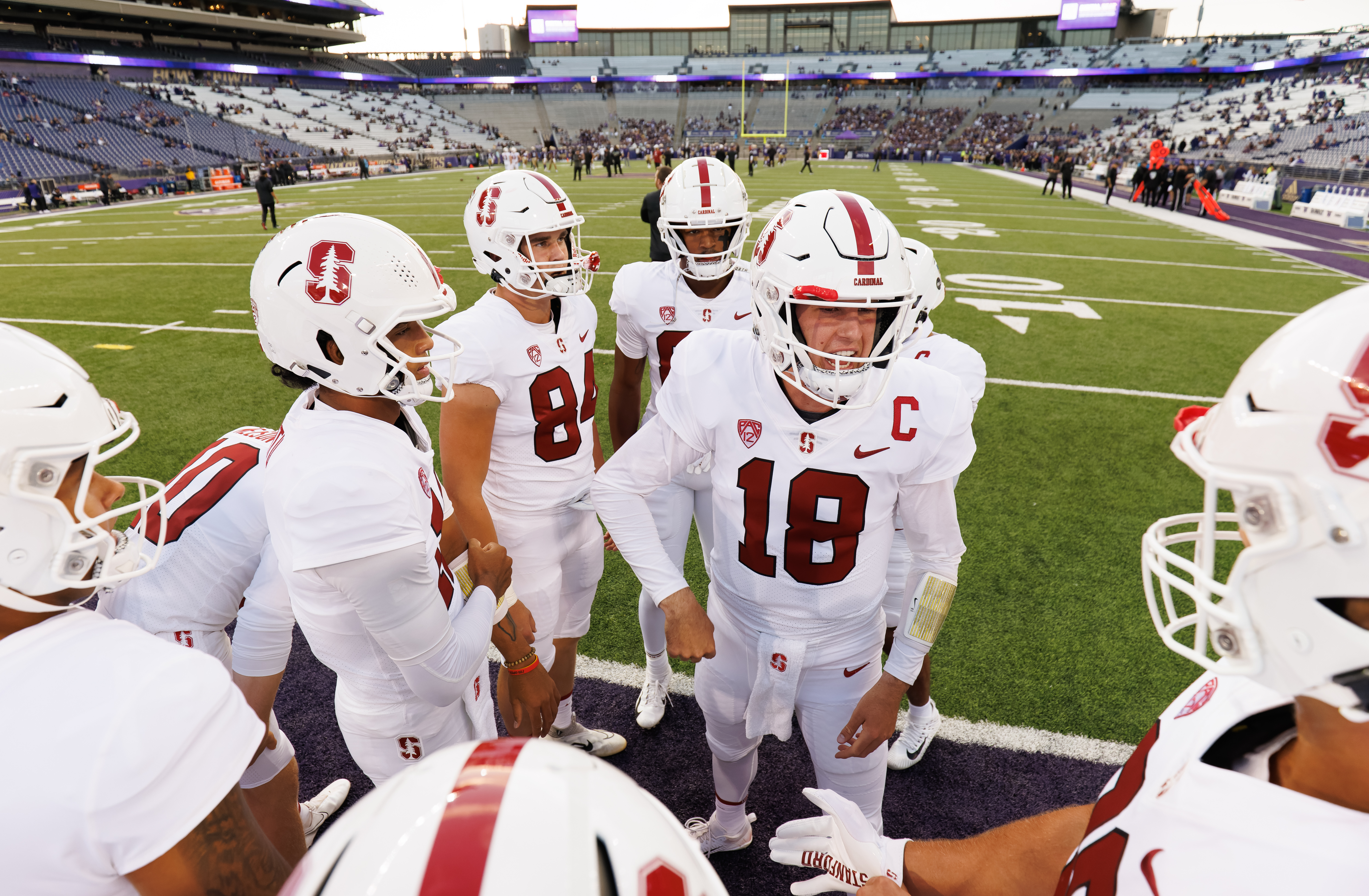
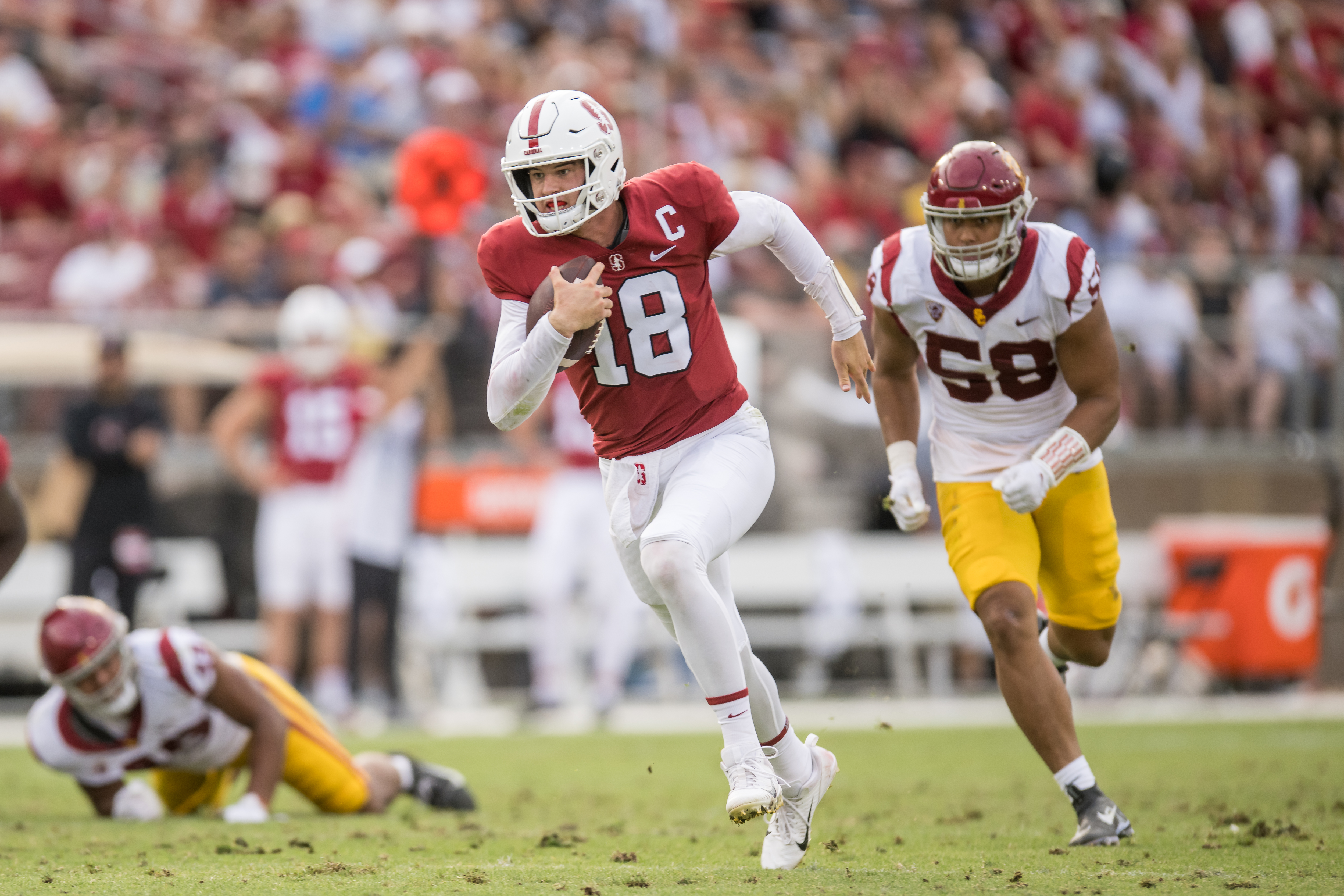
    Tanner McKee (18) was pressed into service during the COVID-affected year of 2020 and rose to become Stanford’s captain two seasons later.Bob Drebin/ISI Photos

    ‘Unflappable’ in the face of adversity

    For better or worse, McKee is well-acquainted with taking over at quarterback in less-than-ideal situations.

    In 2020, his freshman year at Stanford amid the COVID-19 pandemic, McKee saw his first game action in the season opener on the road against No. 12 Oregon. He found out that he would get playing time just hours before kickoff.

    Davis Mills, the starter at the time and now a Houston Texans backup, had an inconclusive COVID-19 test. Despite testing negative multiple times after an initial false positive, former Stanford head coach David Shaw found out that he still couldn’t play Mills. The process delayed the Cardinal’s eventual decision to pivot to a quarterback tandem of junior Jack West and McKee, a freshman who had recently returned from serving a 21-month LDS mission in Brazil.

    “He was not moved, in the best sense of that,” Pritchard said. “He was like, ‘OK, great, here we go. Can we go walk through these plays?’”

    And so they did, in a parking lot adjacent to Autzen Stadium. They tried to hide behind a trailer that carried Stanford’s equipment so that nobody could see them rehearsing their plays. While Stanford lost, 35-14, McKee flashed in his debut, especially when he flaunted his arm on a 46-yard deep post to current Arizona Cardinals wide receiver Simi Fehoko late in the third quarter.

    In theory, Shaw could’ve just gone with West, who was more experienced and knew the offense better. But he had been excited to finally see McKee play.

    “I’d waited since his senior year of high school,” said Shaw, who is now the passing game specialist for the Detroit Lions. “Waited from going on a mission for those two years, and we had that opportunity to play him, and knew that it wasn’t going to take away from his eligibility. We said, ‘Hey, gosh, I got to see this kid go out there and play.’ And [he] threw one of the most beautiful balls of the game. And I’m like, ‘Yeah, that’s what we have to look forward to once this kid is really ready to take over.’”

    Shaw also continued to see the maturity that McKee possessed before he began his career at Stanford, and even before he went on his mission in Brazil. He overcame melanoma when he was 16 years old. It didn’t take long for Shaw to understand early in their relationship, when Stanford was recruiting McKee out of Centennial High School in Corona, Calif., that he was a fighter.

    “This is a young man that’s been through a lot, and has remained a high-caliber person, and at the same time, a tough, tough, tough competitor,” Shaw said.

    In 2021, McKee won the starting job and showed that he was “unflappable” in the face of big moments, Pritchard said. In the first start of his career at the helm of unranked Stanford against No. 14 USC, he went 16-for-23 for 234 yards and two passing touchdowns, plus one rushing touchdown. He became the 13th FBS quarterback since 2012 to beat a ranked opponent on the road in their first career start.

    Tanner McKee pulled off a rare collegiate feat by beating a ranked USC team on the road in his first start. Stanford Athletics / ISI Photos

    He followed that up two weeks later with a stellar performance in a rematch with No. 3 Oregon. After taking a shot to the ribs on the final drive, McKee missed one play and returned to action. He threw the game-tying touchdown as the clock expired in regulation, then tossed another in overtime to win, 31-24. Shaw never doubted that McKee would return after taking the hit that sidelined him.

    “When you know what he’s been through, that was very, very minor,” Shaw said. “The moment he was going to get cleared, he was going to go out there with no hesitation and go out and grip it and rip it.”

    With the highs came the lows. Stanford won just six games with McKee as the starter over the course of two seasons. Shaw lamented the Cardinal’s inability to play better football around McKee, although he still knew he would have a chance to play at the NFL level.

    Regardless, McKee was an “eternal optimist,” Pritchard said, in the face of adversity. Positivity can turn into negativity if it’s funny, according to Shaw, but that wasn’t the case with McKee.

    “Positivity has to have gravity,” Shaw said. “So I say that in such a way that people that have been through difficult things and have found a way to be positive, they can exude that positivity with gravity, with earnestness, and be able to step in the huddle and say, ‘Hey, that wasn’t good enough. We’ve got to be better. Come on, guys,’ and lifting people up and bringing people along comes very natural to him.

    “And there’s a genuine feeling that the guys get from him that this is someone that they can follow, this is someone that they can trust, this is someone that’s in the battle with them.”

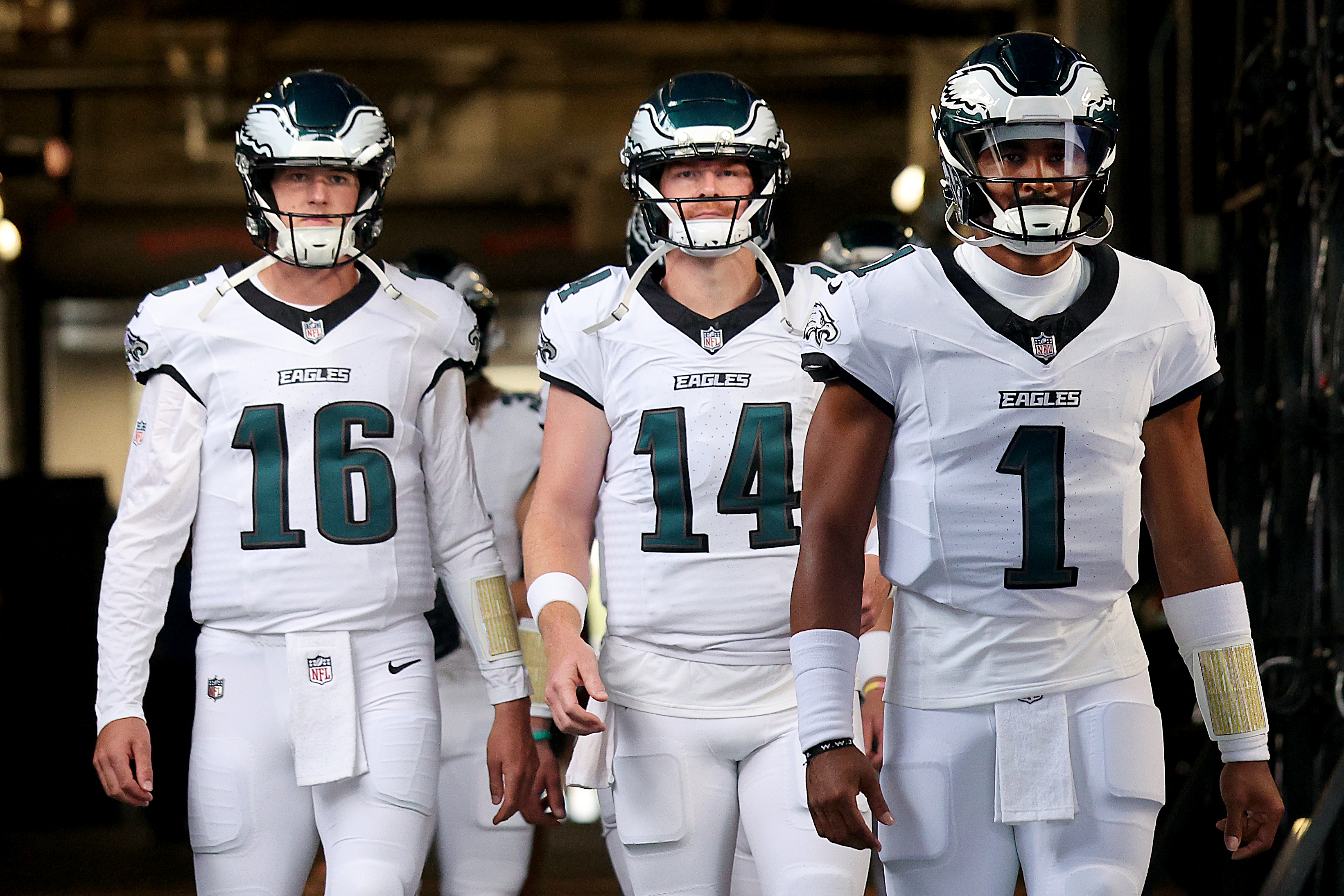
    Tanner McKee (left) had to battle Andy Dalton (center) for No. 2 quarterback duties in a competition that continued once the season started. David Maialetti / Staff Photographer

    ‘I want the guys to trust me’

    Roughly seven weeks ago, McKee learned that Andy Dalton would serve as the backup to Hurts going into the season opener against the Washington Commanders.

    McKee recalled a conversation that he had with Parks Frazier, the Eagles quarterbacks coach, that day. Frazier told him that nothing would really change from a day-to-day perspective for McKee as the third-string quarterback. The backup competition would continue, and McKee would go through his typical process of preparation every week.

    “That’s kind of the way that I approached it, taking it day-by-day, being able to take a step back and let me just focus on today,” McKee said. “Let me focus on this first meeting. Let me focus on this next walkthrough, then this next practice. I feel like that helped my mindset a ton, and still preparing and being ready if something was going to happen, if I was going to get an opportunity.”

    He continued to prepare as if he was one injury away from game action. In reality, he was an interception and an injury away, as he took over QB2 duties in the game following Dalton’s pick in the Week 3 loss to the Chicago Bears, then was promoted to the starting job when Hurts was indefinitely sidelined due to the blood clots discovered in his lungs.

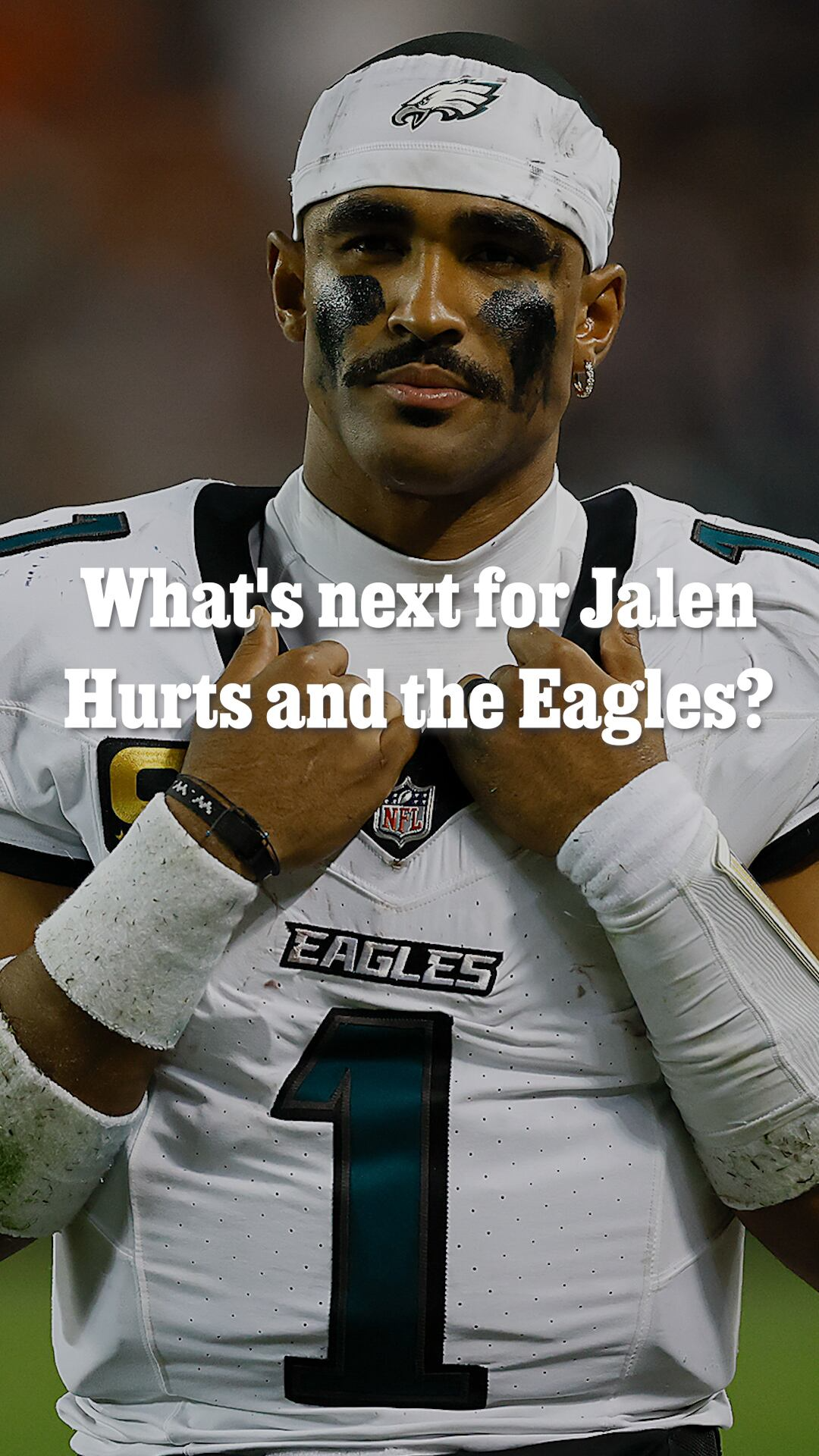
    What's next for Jalen Hurts and the Eagles?
    Video: What’s next for Jalen Hurts and the Eagles?

    Even when he was the backup, McKee was expected to be the leader in the huddle with the scout team and ensure that everyone was on the same page. Now that he’s the starter, he said he’s “taken an extra step forward” in those duties.

    “I want the guys to trust me,” McKee said. “I want the guys to know that when I go in there, they have full confidence that the offense is going to run smoothly.”

    McKee is building that trust through his preparation, his leadership, and his trademark sense of positivity. Right tackle Markel Bell said it’s clear that McKee knows his stuff, and his authority in the huddle helps everyone get on the same page. Mailata also noted that one of the benefits of having a full week to practice with McKee is getting used to his cadence, which helps the offensive linemen avoid committing false starts.

    Tanner McKee has worked hard to build trust with his teammates on the practice field. Yong Kim / Staff Photographer

    Rookie quarterback Cole Payton isn’t in the huddle with McKee, of course, but when he watches tape back from practice, the difference between his laid-back demeanor off the field and his assertive one in the huddle is stark. Britain Covey said that McKee is a little bit more vocal than Hurts is in the huddle, which is by design. The 29-year-old receiver said he thinks McKee is trying to “over-communicate” his confidence to his receivers, so he doesn’t leave any of them guessing about how he is feeling at any given moment, especially because some of them don’t have much experience playing with him.

    “He threw a bad pass today in practice, and immediately he’s coming in the huddle, taking ownership, saying, ‘My bad,’ and hyping guys up,” Covey said. “And that kind of confidence is contagious. We just need to be better for him than we were this last week.”

    McKee has another opportunity against the Cowboys to prove he can run the offense, albeit potentially without DeVonta Smith and Dontayvion Wicks, who have been sidelined this week with hamstring and ankle injuries, respectively. Saquon Barkley, who has been out for the last two weeks with a hamstring injury, is eyeing a return against the Cowboys, providing some hope that the team can get the run game going and, in turn, spark the play-action pass game.

    They failed to achieve that objective in Barkley’s absence against the Panthers. Still, Mannion emphasized his belief in McKee’s ability to execute his West Coast-style system. Mannion said McKee has been getting “better and better” within the offense, and now, he has the full week of reps as the starter to get comfortable within it.

    “I think he’s really sharp mentally, he’s accurate, [and] he gets the ball out of his hands quickly,” Mannion said. “I think he does all the things that you ask of a quarterback in terms of his pre-snap operation, and being able to use his cadence [and] being able to handle things at the line of scrimmage if you need adjustments. I think he’s strong in a lot of those areas, and I think it opens up some things for us offensively.”

    Tanner McKee had his ups and downs against the Panthers in his first start of the season last week. Monica Herndon / Staff Photographer

    Shaw watched last week’s game against the Panthers and saw many of those same attributes within his former quarterback that Mannion covets. After all, they were the same qualities that stuck out to Shaw when McKee was in high school — his stature in the pocket, his quick release, and his accuracy.

    The personnel around McKee may change yet again this week, but Shaw knows how stabilizing his presence can be in challenging moments.

    “As a former coach and fan of Tanner, you’re like, ‘Oh man, I wish they were a little bit healthier around him,’” Shaw said. “But at the same time, you watch some of those plays, and you see him moving the pocket and get the ball out of his hands. You see him point the protection and run the offense.

    “And I watch that, I watch him operate the offense with a lot of pride.”

  • A freeze warning is up for parts of the Philly region this weekend

    A freeze warning is up for parts of the Philly region this weekend

    For the first time since the peach- and apple-killing renegade freezes of April, temperatures could drop below 32 degrees in the region Saturday and Sunday mornings in what otherwise is going to be a spectacular October weekend for the region’s leaf-peepers.

    The National Weather Service has posted a “freeze warning” for northern and western Bucks, Chester, and Montgomery Counties until 9 a.m. Saturday, and a frost advisory for the rest of the region.

    And temperatures are likely to be similar early Sunday.

    Technically, the official “growing season” — the period between the spring and fall freezes — hasn’t yet ended in Philly or the seven neighboring counties.

    Whether it gets cold enough for the diminishing waters on the ground to turn to ice will depend on the winds, or lack thereof, said Nick Guzzo, meteorologist in the weather service’s Mount Holly office.

    The skies under the all-but-full moon will be clear, and if the winds are light, conditions would be ripe for daytime heating to radiate efficiently into space.

    Temperatures are forecast to stay above 32 at the freeze-resistant Philadelphia International Airport and along the I-95 corridor.

    However, those readings would be a solid 10 degrees below the normals for the dates. Daytime highs in the 60s would be about average.

    The skies during the day should continue to remain wall-to-wall blue, and by all accounts it will be a spectacular weekend for foliage connoisseurs.

    The foliage is approaching peak in the region, according to the Pennsylvania Department of Conservation and Natural Resources’ weekly update, which is based on reports from state foresters, with the local maximum color likely right around Halloween.

    “Expect increased traffic, cyclists, pedestrians, and wildlife near scenic routes, overlooks, parks, and rural roads,“ said Jana Tidwell, spokesperson for AAA Club Alliance. ”Pull off to a safe location to enjoy the foliage.”

    Meanwhile, the next several days are likely to be a feet-up situation for local meteorologists as strong and persistent high pressure — cloud-repellent heavier air — is likely to keep it dry through the rest of the month.

    AccuWeather Inc.’s extended outlook has no mention of rain until Election Day, Nov. 3.

    And in case you missed it in all the LeBron James hubbub, uneventful Josephine, the 10th named storm of the ultraquiet Atlantic hurricane season, officially bit the dust at 5 p.m. Thursday, having lost its tropical identity, the National Hurricane Center announced.

    The seasonal hurricane count remains at one, with nothing else brewing as would-be hurricanes have been no match for the storm-shearing winds generated by the ultrawarm waters in the equatorial Pacific.

    Thank you, El Niño.

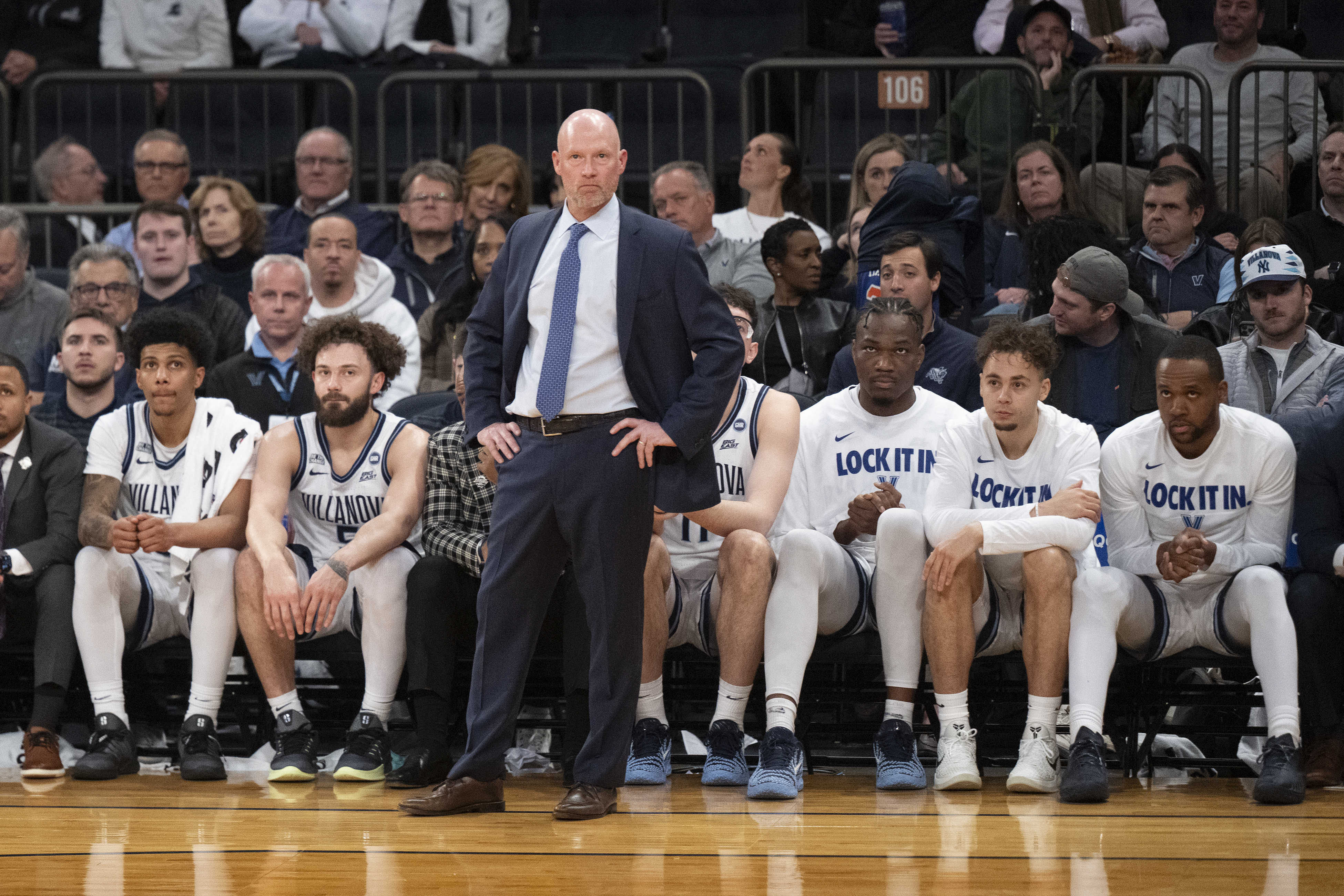
  • Kevin Willard insulted a reporter and the rest of the Big 5. He and Villanova should be ashamed.

    Kevin Willard insulted a reporter and the rest of the Big 5. He and Villanova should be ashamed.

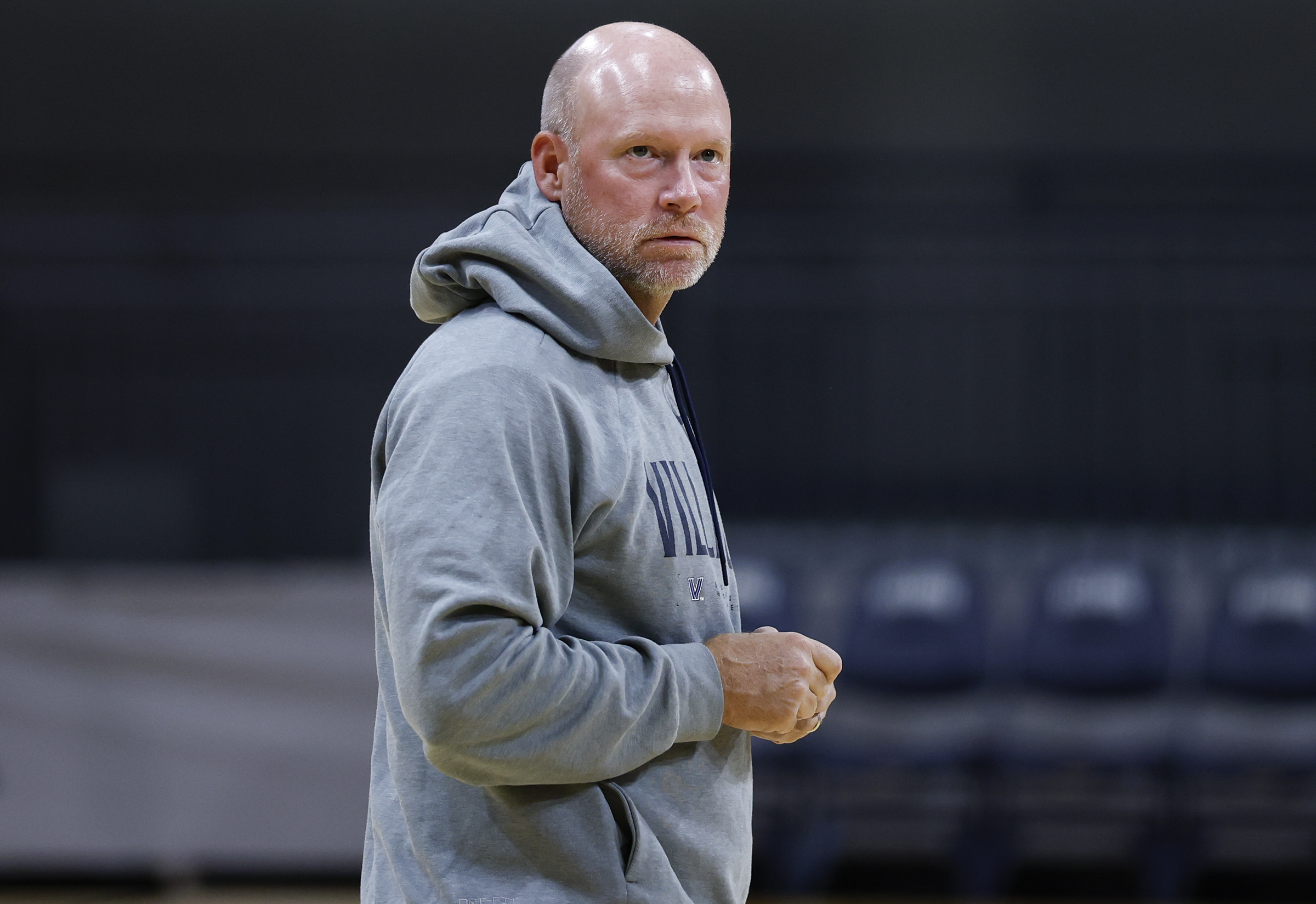
    Kevin Willard embarrassed himself and Villanova University on Thursday night. The solace that he and the school’s leaders can take from the episode is that they’re at least getting out of the Big 5, getting what they want, and getting what is best for their men’s basketball program. But the bad taste that Willard left in everyone’s mouth will linger for a long time, and he has no one to blame but himself for quickly becoming a local pariah.

    After skipping the Coaches vs. Cancer Preseason Fanfest at the Alan Horowitz Sixth Man Center on Thursday morning, after The Inquirer’s Jeff Neiburg broke the news that Villanova “was not interested” anymore in participating in the Big 5 round robin, Willard took to the microphone after the Wildcats’ exhibition loss to Virginia at Finneran Pavilion and insulted Neiburg for … getting the story right.

    He did call some details of Neiburg’s story “false” (even though they weren’t), and he said, “This was not a Villanova thing. … But unfortunately either people are illiterate, which I don’t think they are, or you’re just a bad writer.” Then he went on to confirm the entire point of Neiburg’s reporting: that Villanova — by opting out of the round-robin and scheduling more home games against non-Big 5 programs, some of which would draw bigger crowds — can generate more revenue for itself.

    “The other schools wanted us to play on the road every year,” Willard said. “I have to do what’s best for my program.”

    Let’s be clear about something: The issue here with Willard, at least as far as I’m concerned, has nothing to do with Villanova’s decision to leave the Big 5. The city series has been dying a slow, inexorable death over decades for numerous reasons, and given the revenue Villanova can and has to generate to keep up with the rest of the Big East and other national-tier programs, the university is doing what it has to do. The age of local camaraderie coming first is over. A once-great tradition has gone extinct, and it’s a shame, and it’s worth a period of mourning.

    But as long as the alumni of Temple, St. Joe’s, La Salle, Penn, and Drexel can’t or won’t fund their programs at a level approximating the level that ’Nova’s alums fund their program, it’s reality.

    Villanova is looking out for itself, and in this turbulent and money-only era of quasi-professional athletics, that’s fine. If Willard had owned that decision and merely laid out the reasons for it, only those who think it’s possible to travel back in time would have complained. Instead, he tried to humiliate Neiburg publicly — then ducked the opportunity to speak to him privately after the press conference — for the sake of distracting people from the truth: that everyone at Villanova knows that what Neiburg reported was correct.

    Villanova head coach Kevin Willard during last season’s Big East tournament.Jose F. Moreno / Staff Photographer

    What’s more, he torched most if not all of the goodwill between Villanova and the other Big 5 schools that Jay Wright had re-established and Kyle Neptune had maintained. Hell, Wright’s teams won 25 straight Big 5 games, won two national titles, and reached two more Final Fours while the other schools were giddy whenever they happened to qualify for the NCAA Tournament. And he still remained at all times a respected and admired figure within local basketball circles because he appreciated and respected those rivalries and the memories and moments they represented.

    Willard could barely be bothered to pay lip service to any of that rich history. Anyone who had followed his career could see this exit coming: He ended Seton Hall’s century-long series with St. Peter’s and wouldn’t have minded if the Pirates’ annual game against Rutgers had gone away. This time, though, he didn’t just decline to cross the bridge. He burned it to ash.

    The round-robin format was “stupid,” he said Thursday, and he wasn’t “going to go to La Salle and play in front of 400 people. No, that’s not going to happen.”

    His rant was graceless, classless, and betrayed a fundamental refusal to understand the big, rowdy, loyal family that is the Philadelphia basketball community — never mind that he couldn’t even muster the minimal courage to face head-on the ramifications of his program’s actions and the reporter who revealed them.

    The last days of the Big 5 were always looming. They didn’t have to be so ugly. The what and why of Villanova’s decision were justifiable and explainable. Kevin Willard botched the how so badly that it will take the end of his tenure before anyone can hope for any healing to begin.

    Why the new guards of Philly's 'cathedral of college basketball' are high school teams
    Video: Why the new guards of Philly’s ‘cathedral of college basketball’ are high school teams
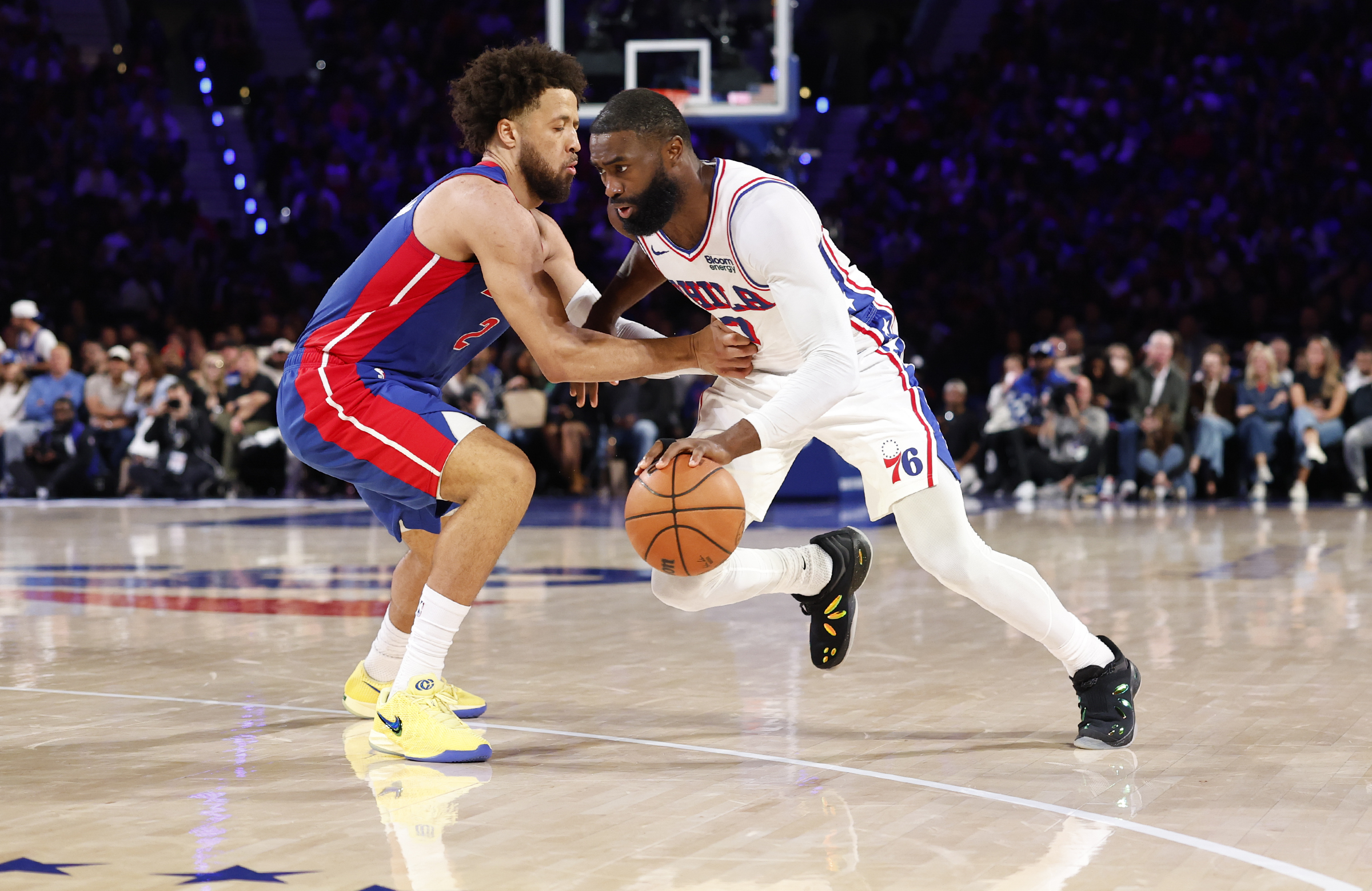
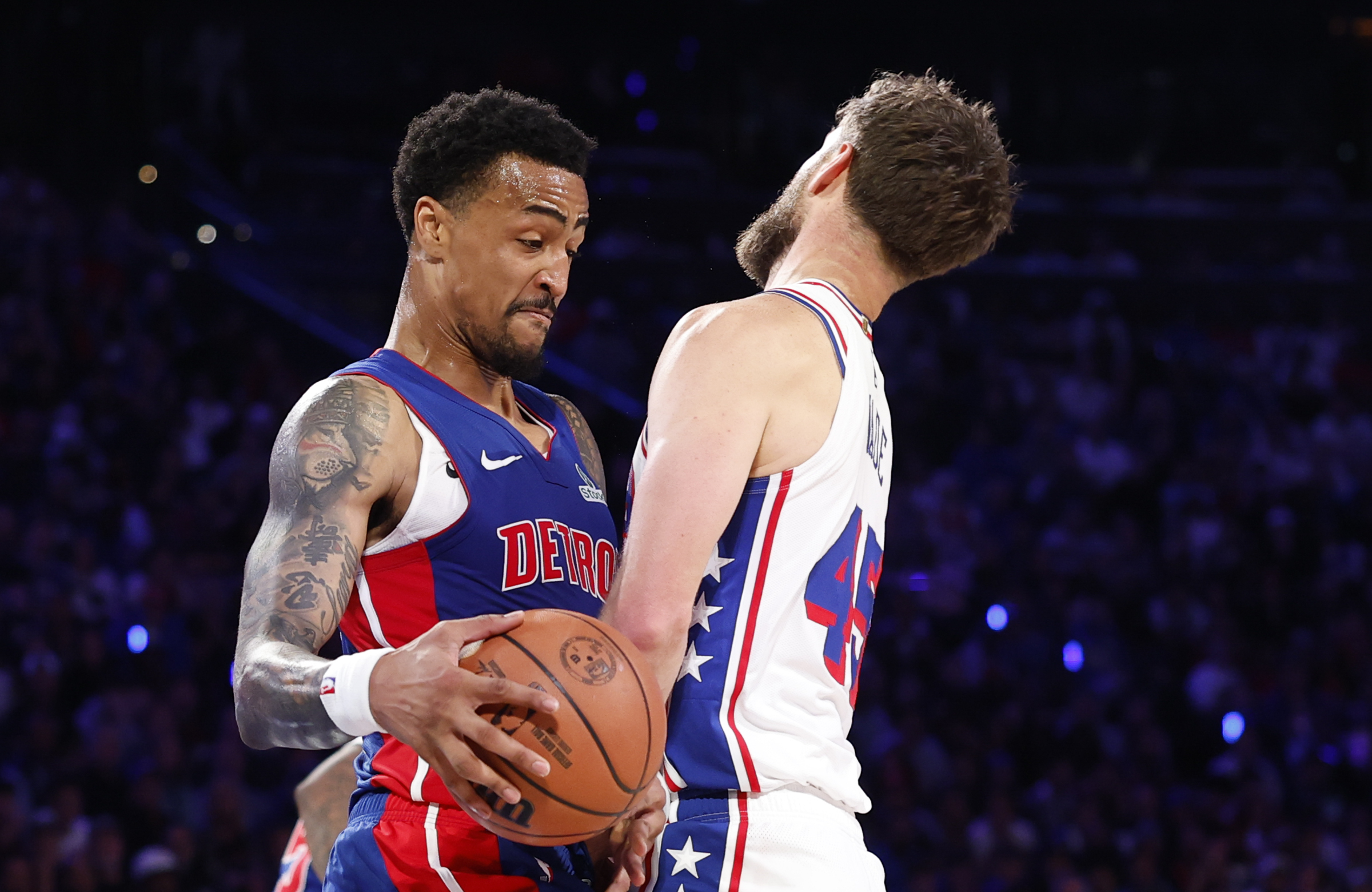
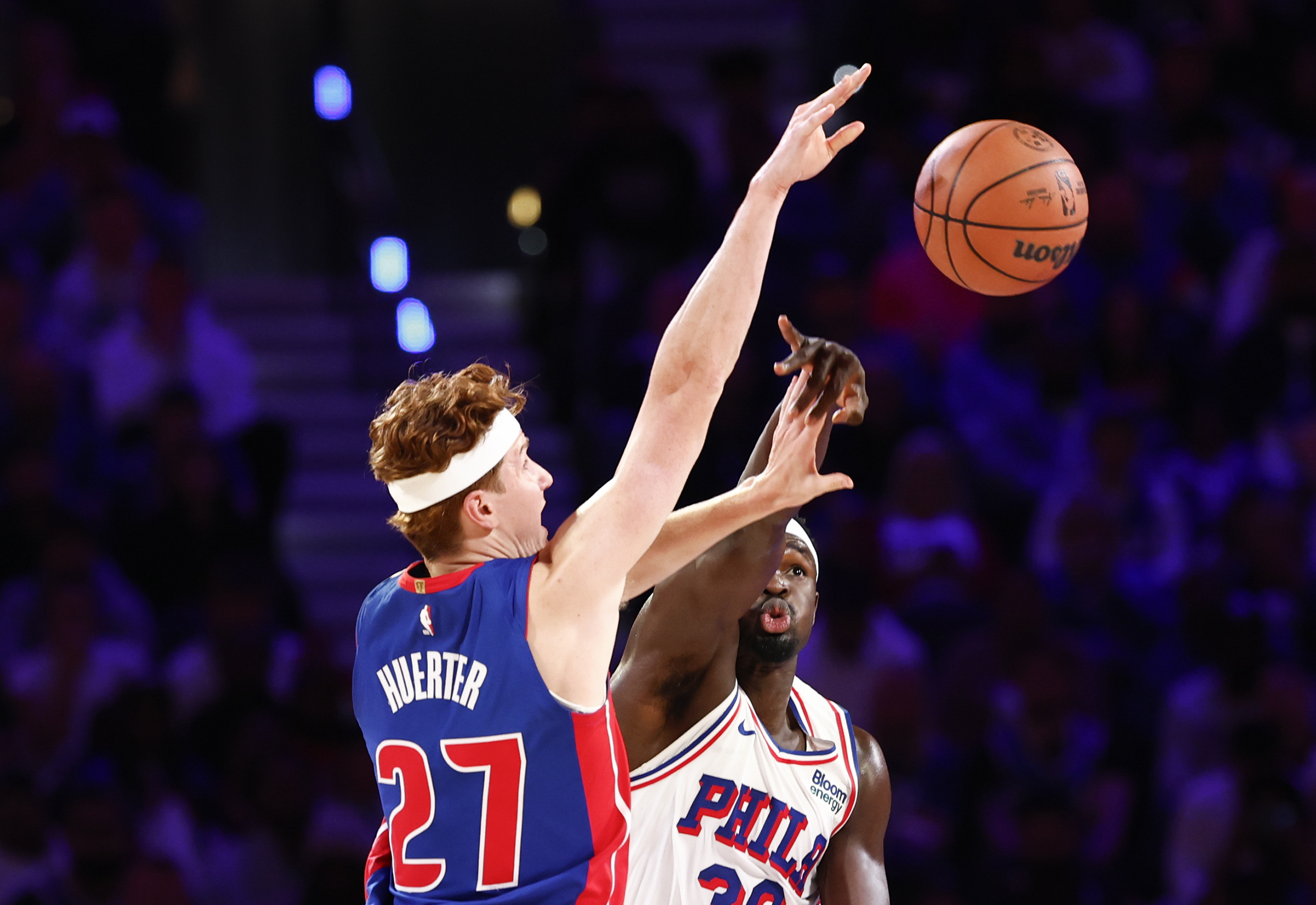
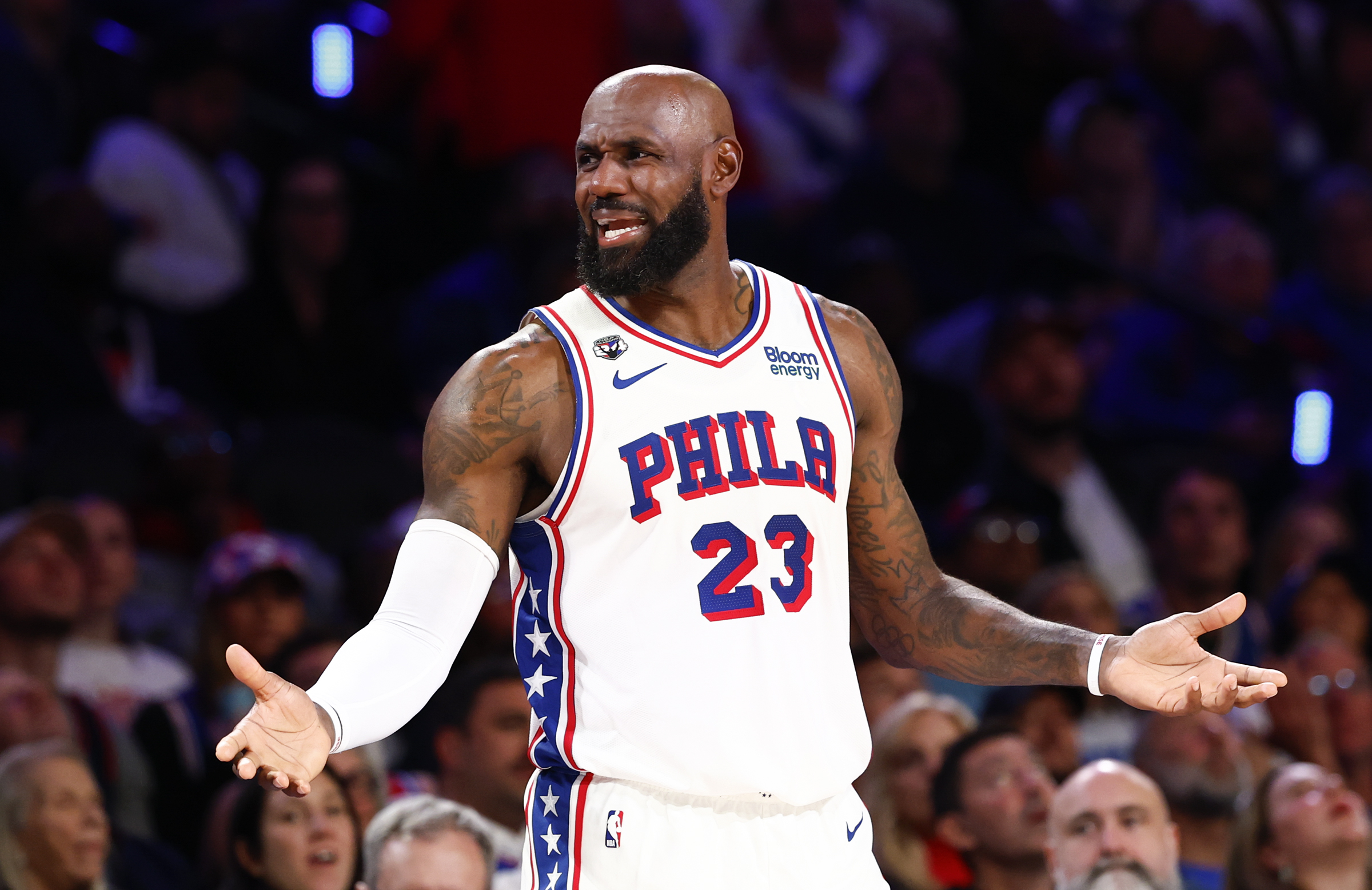
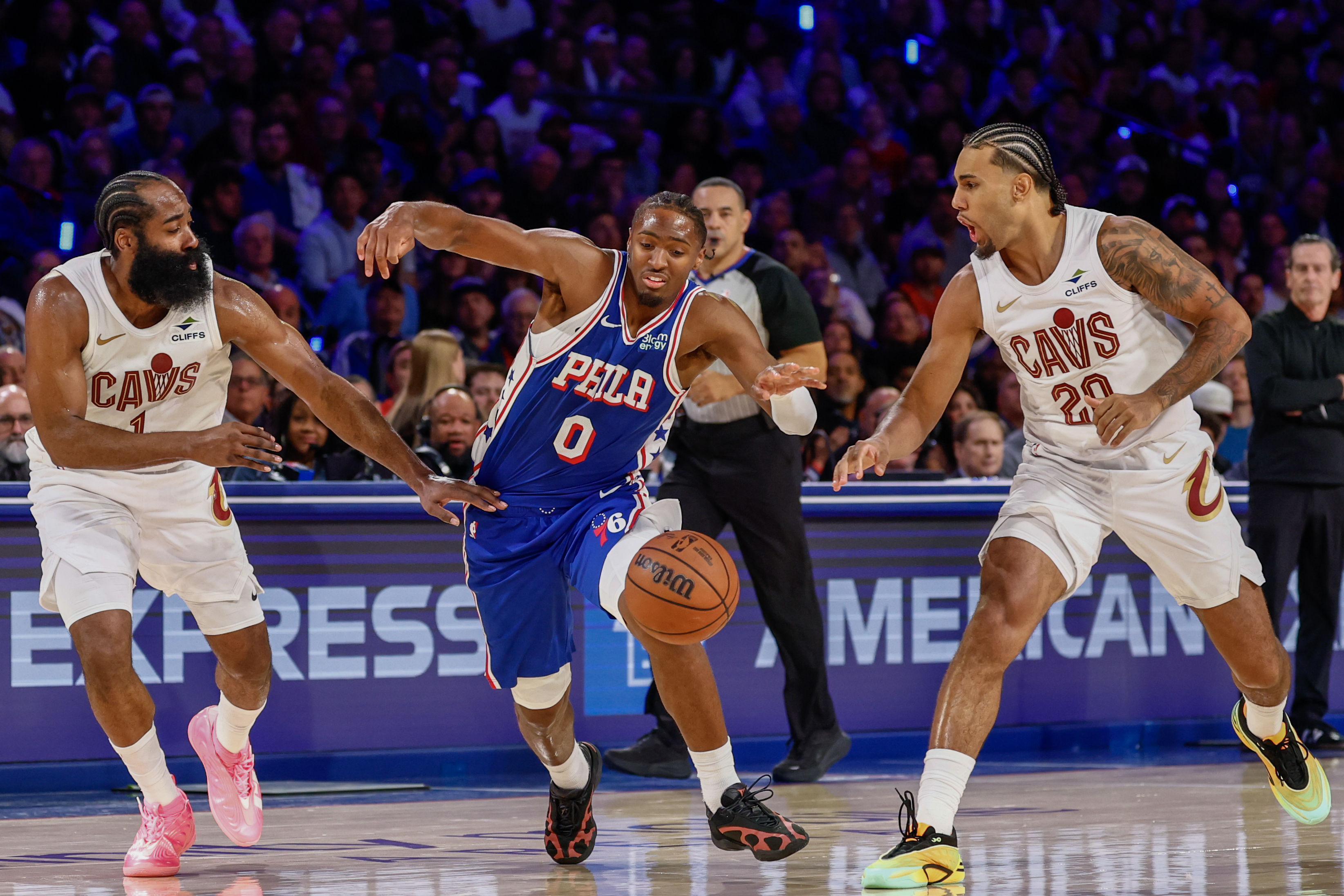
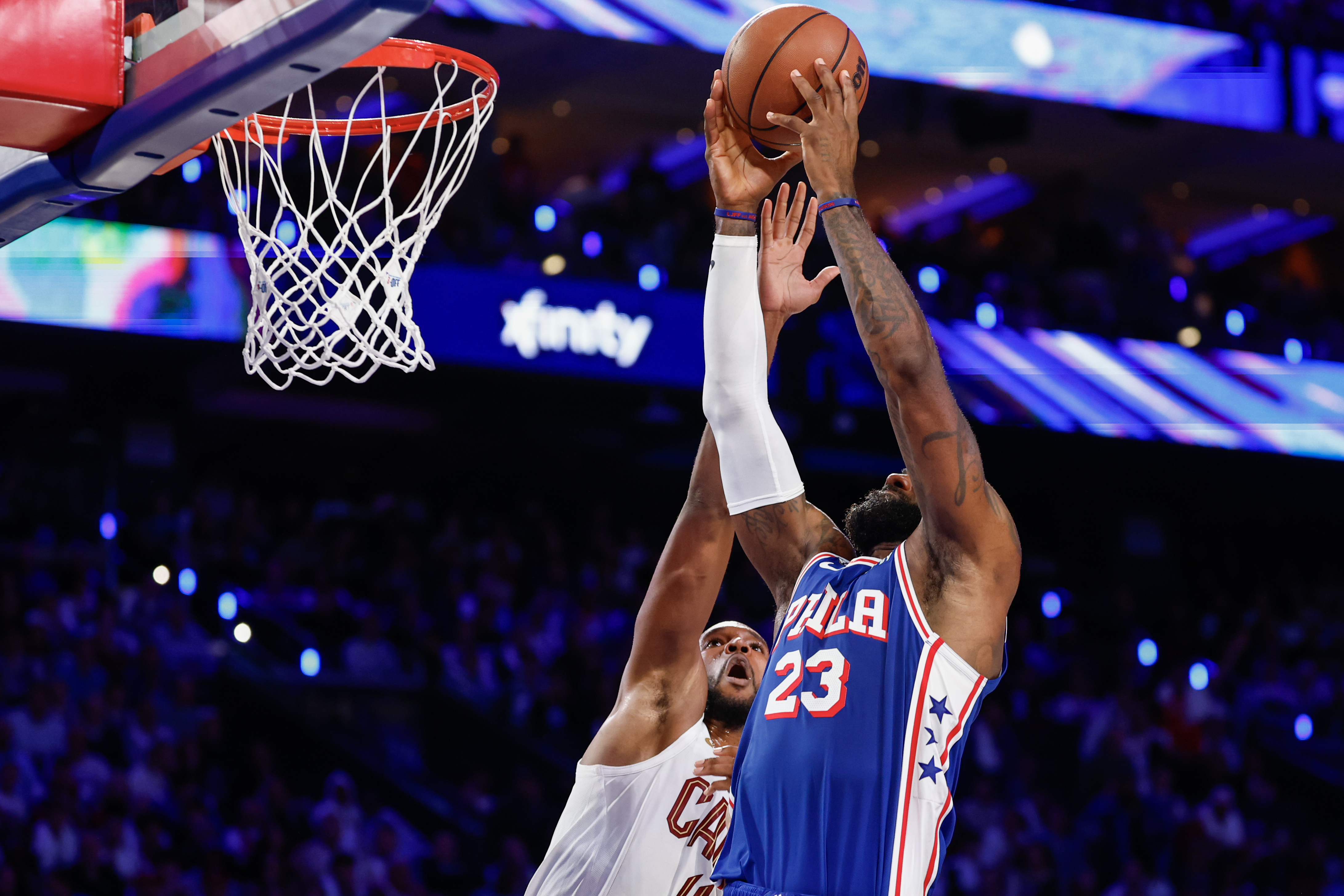
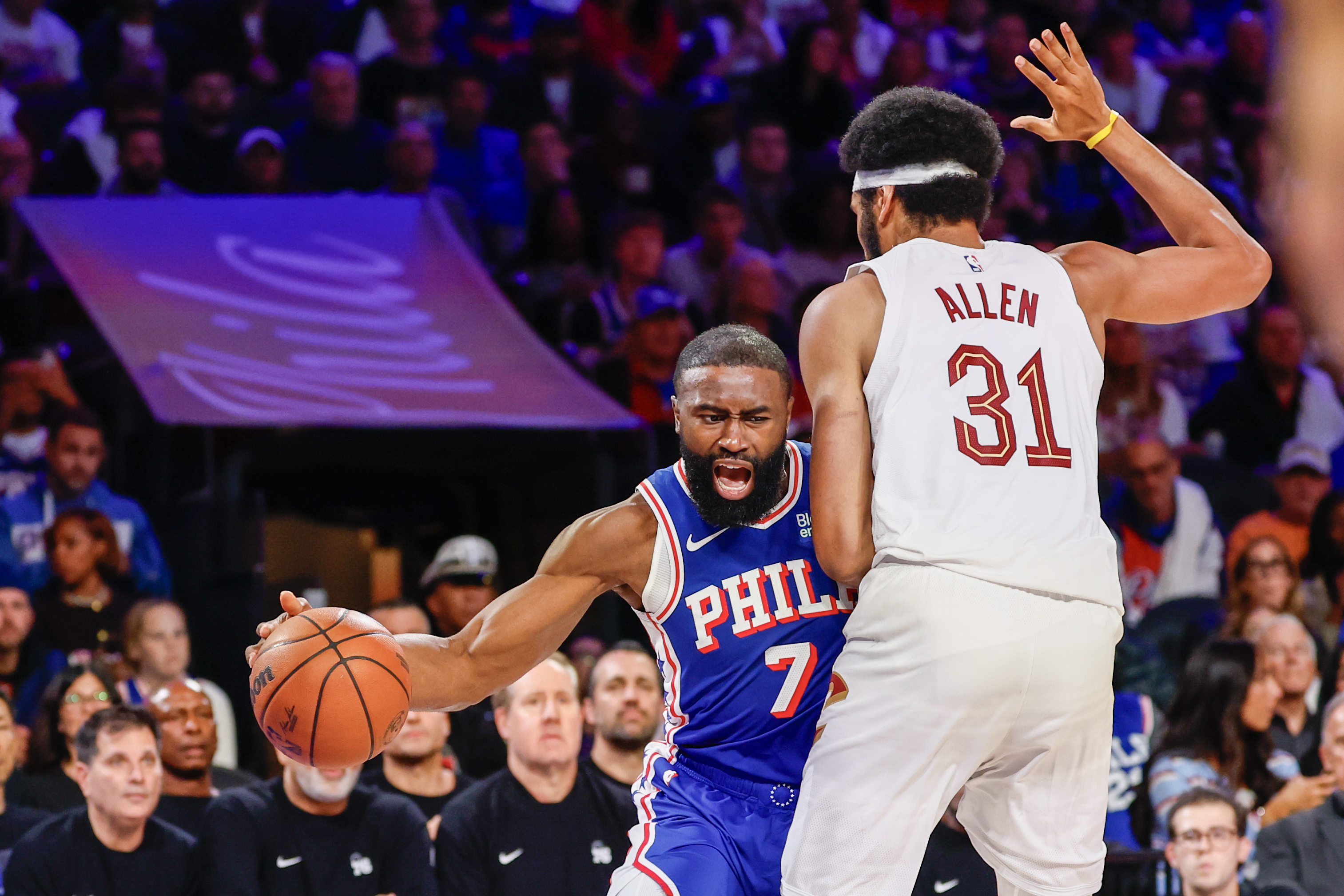
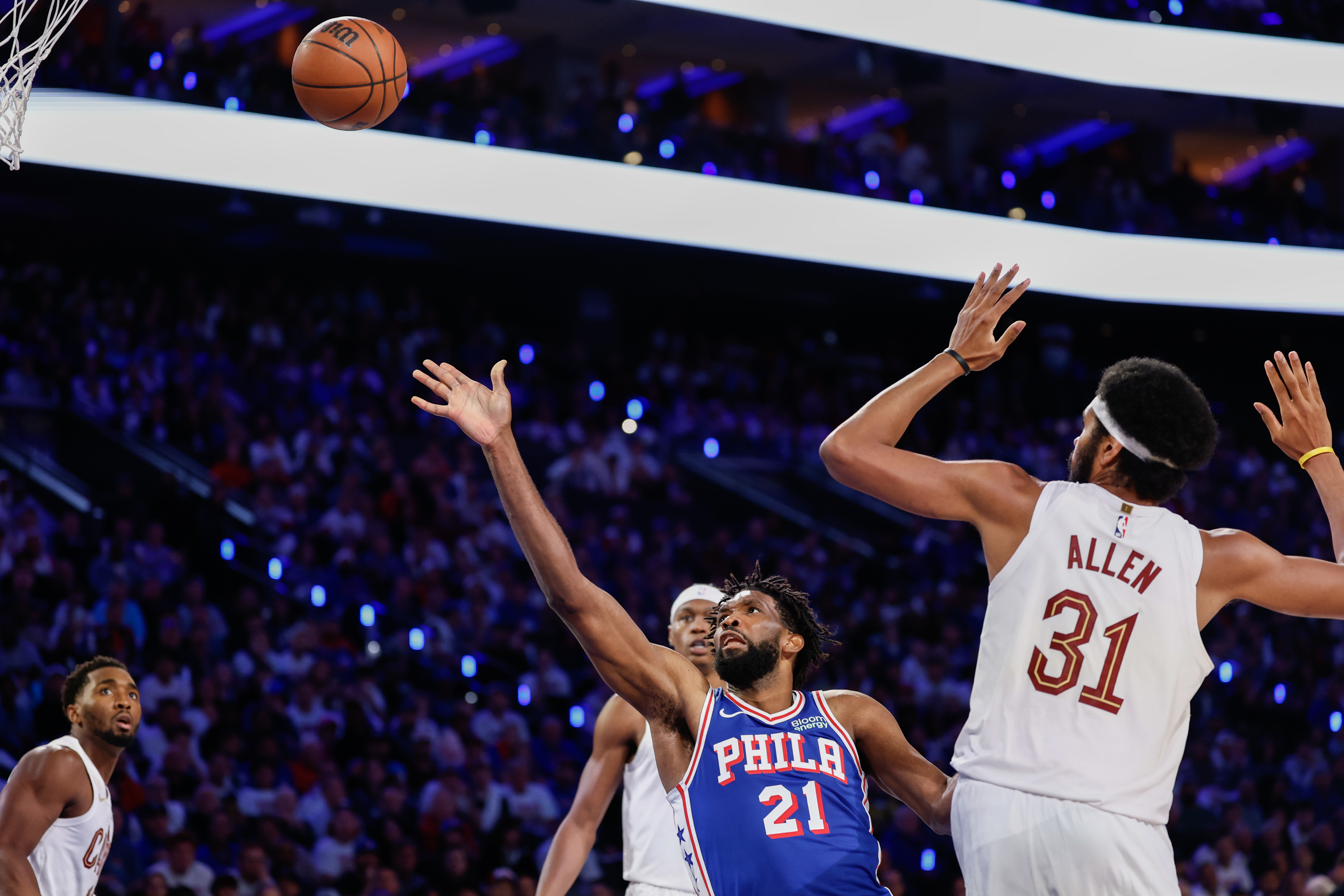
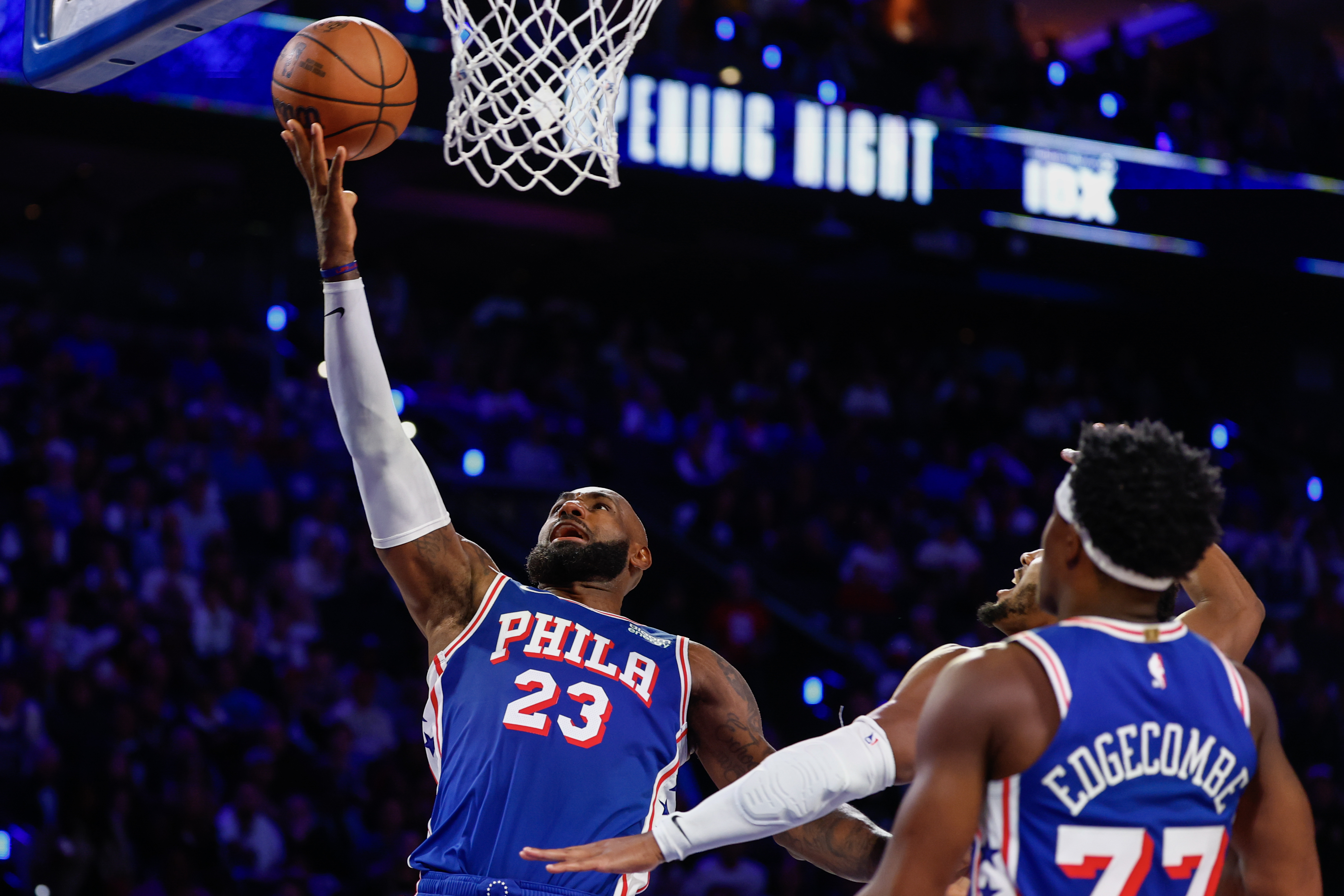
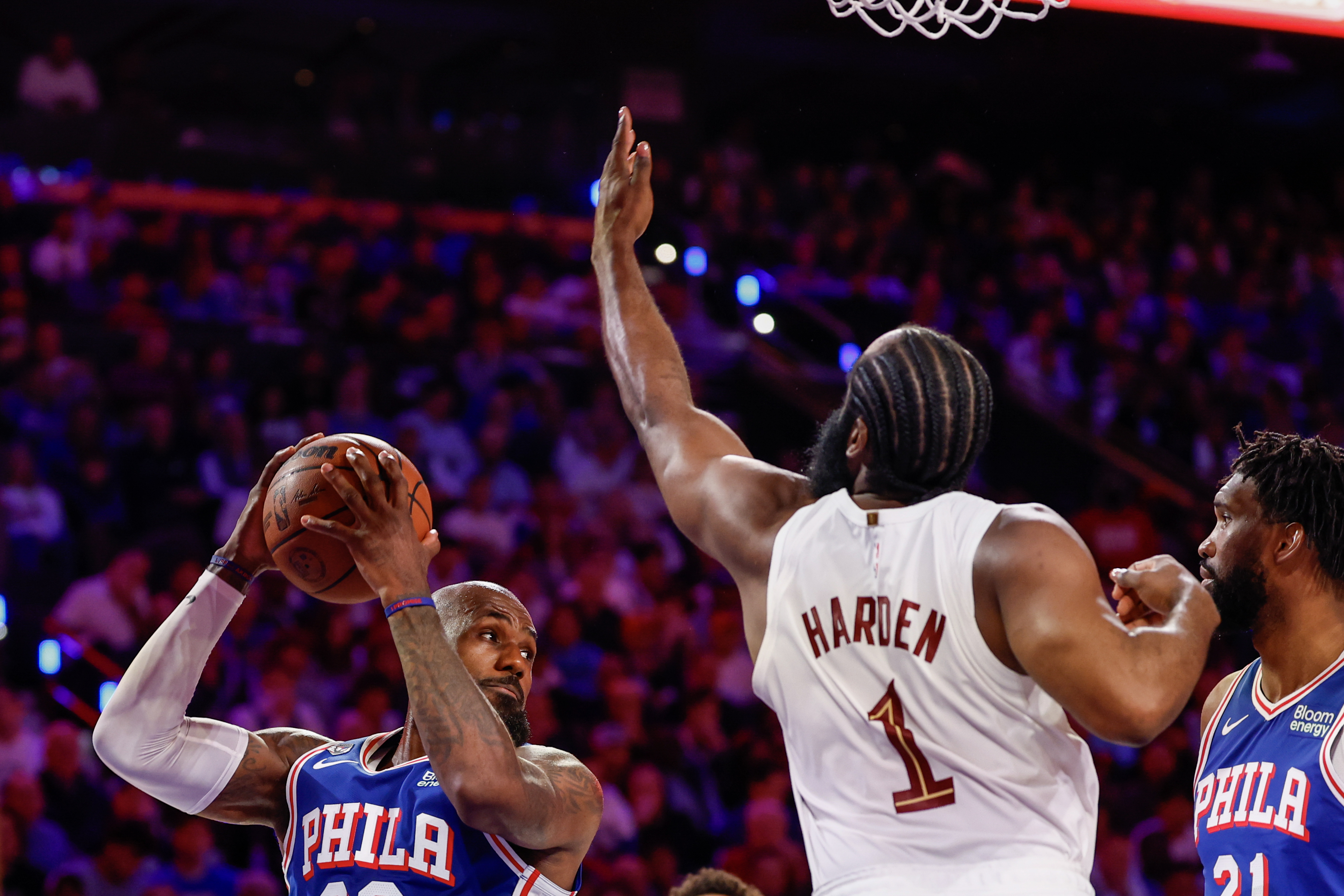
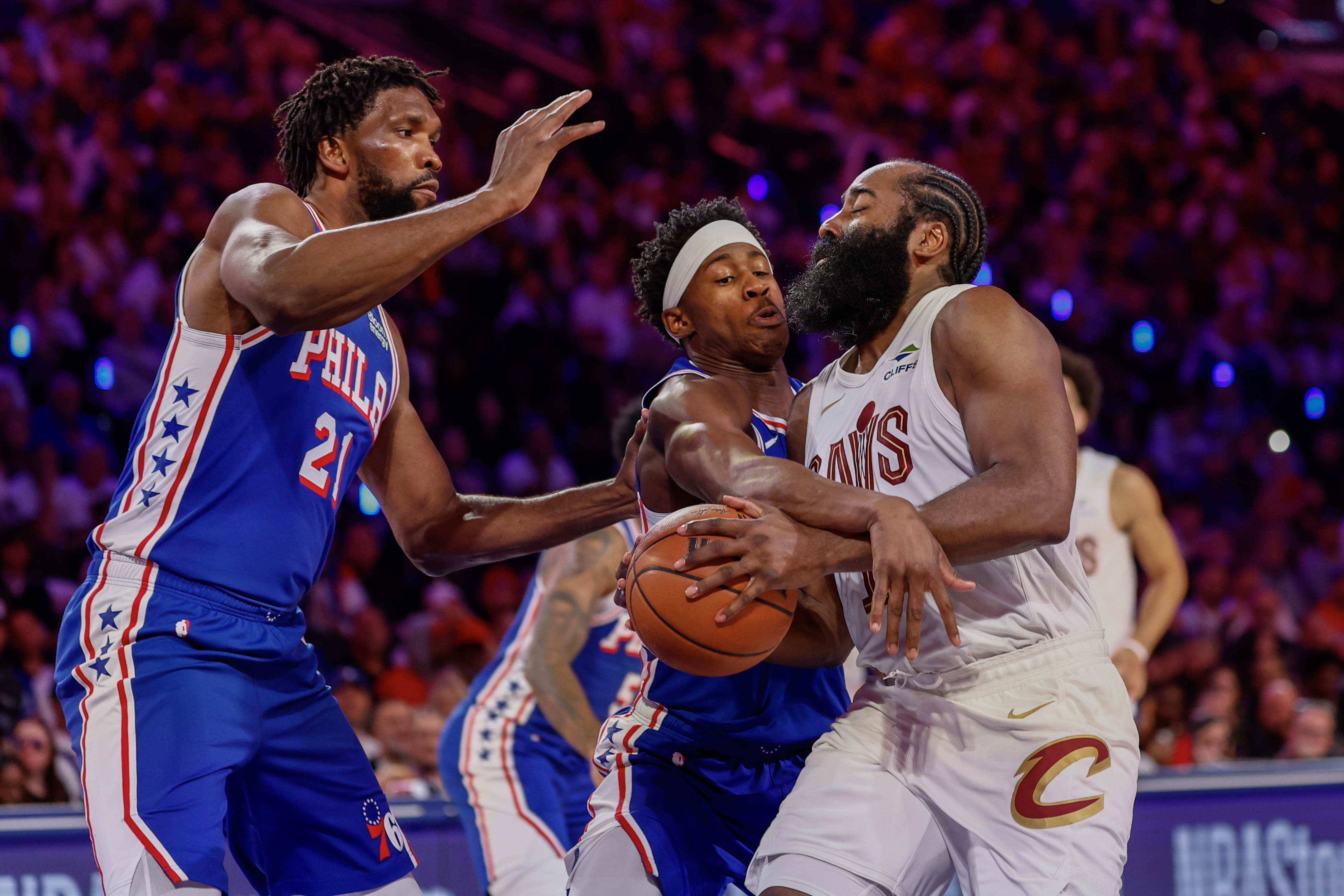
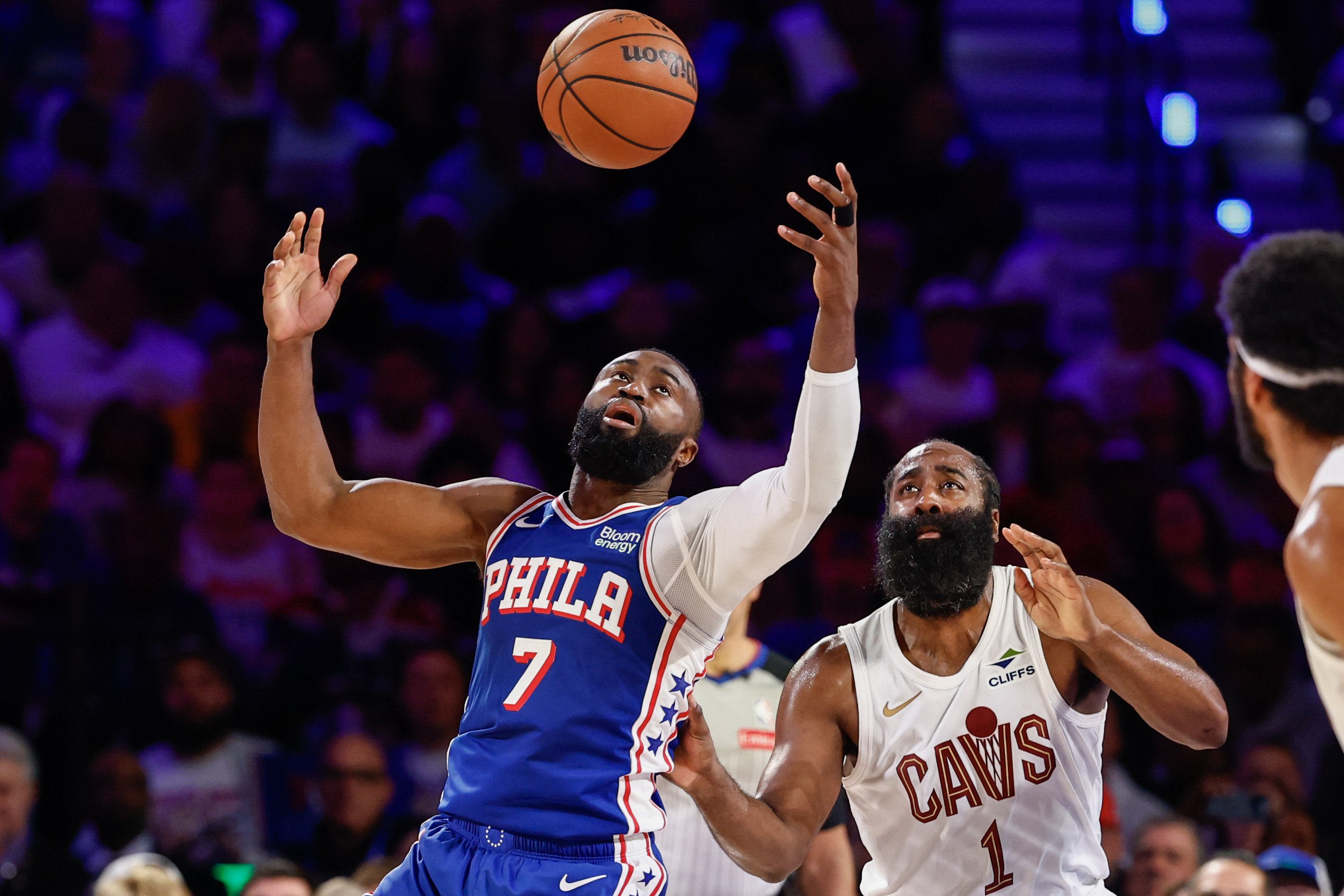
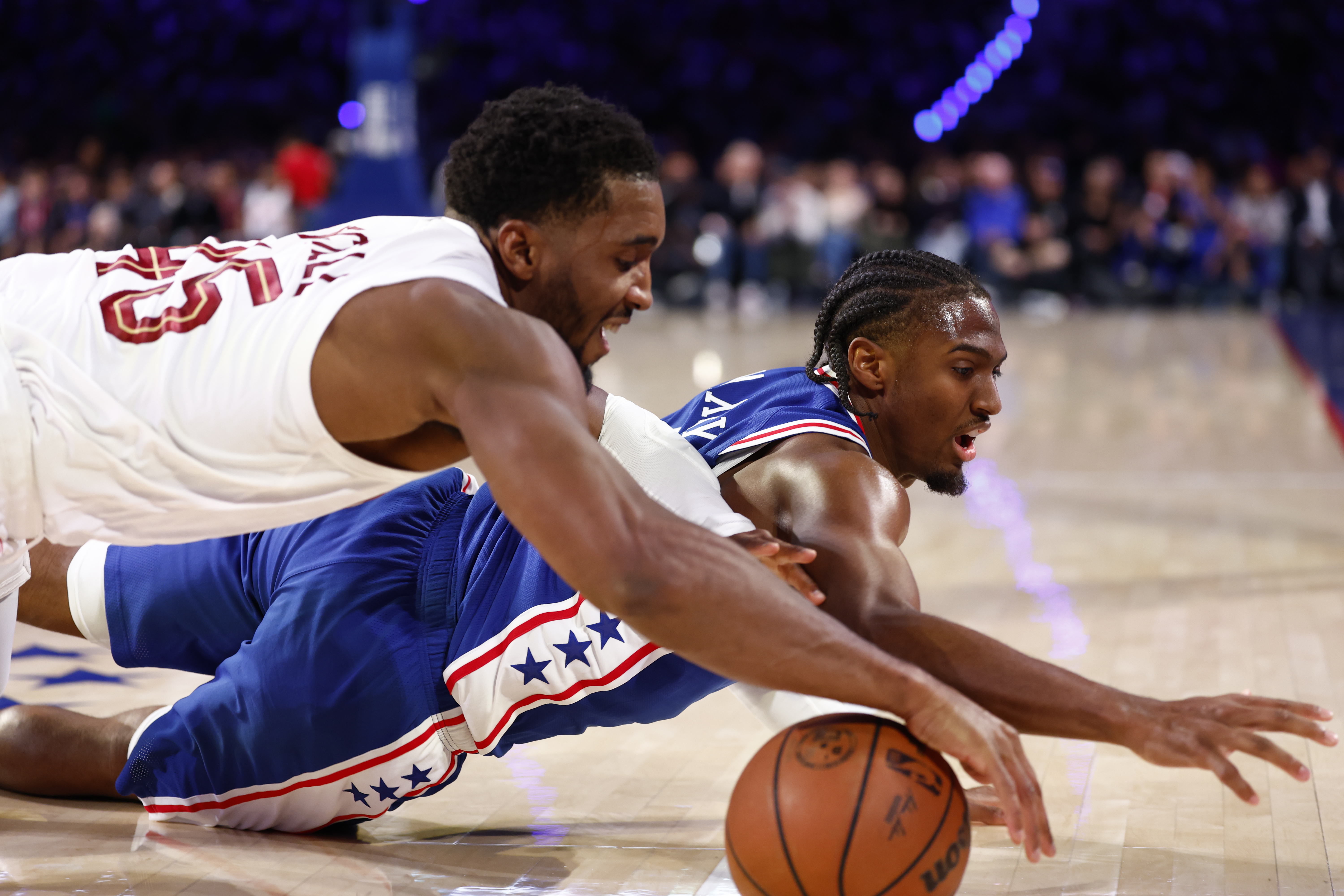
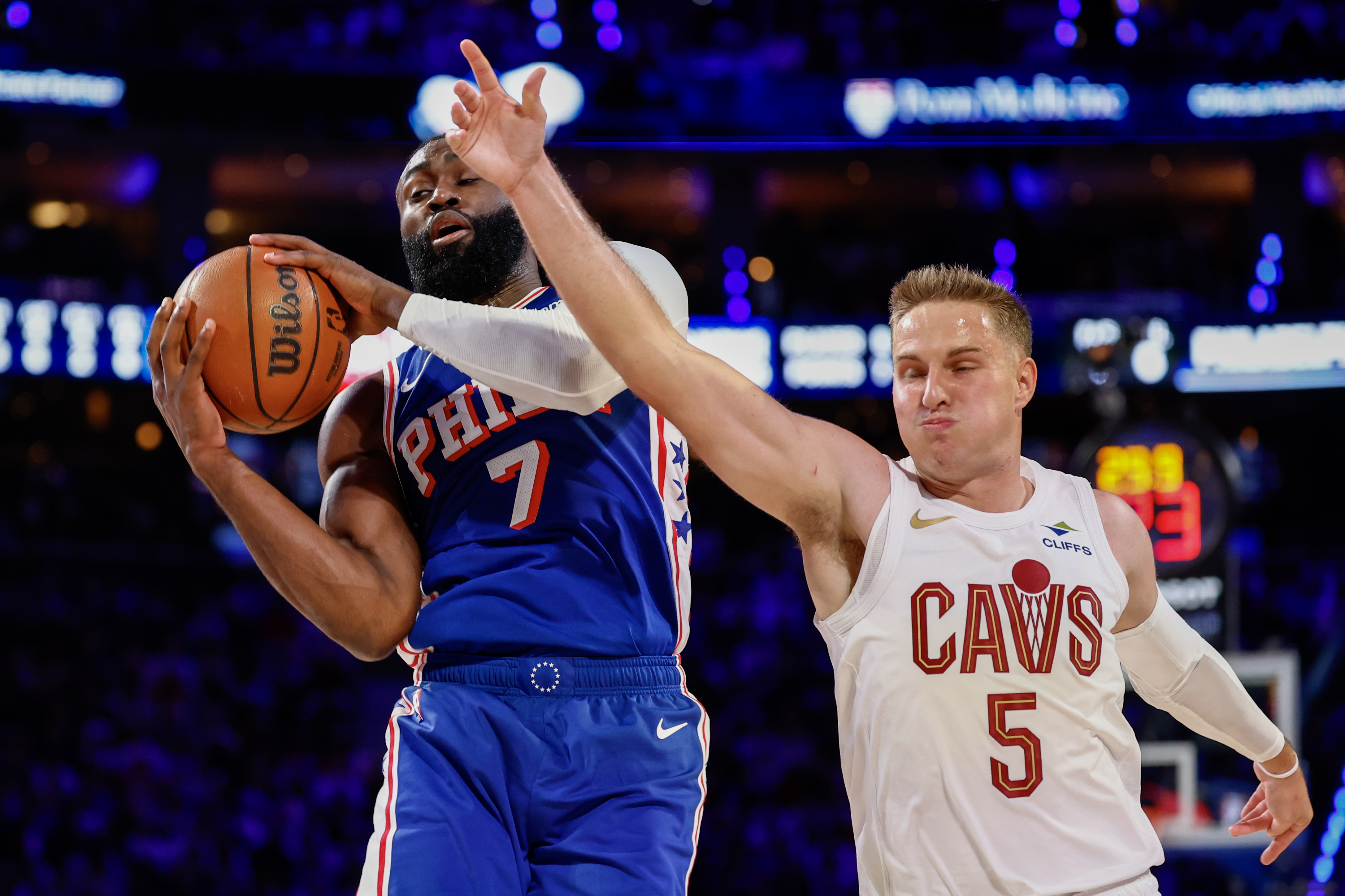
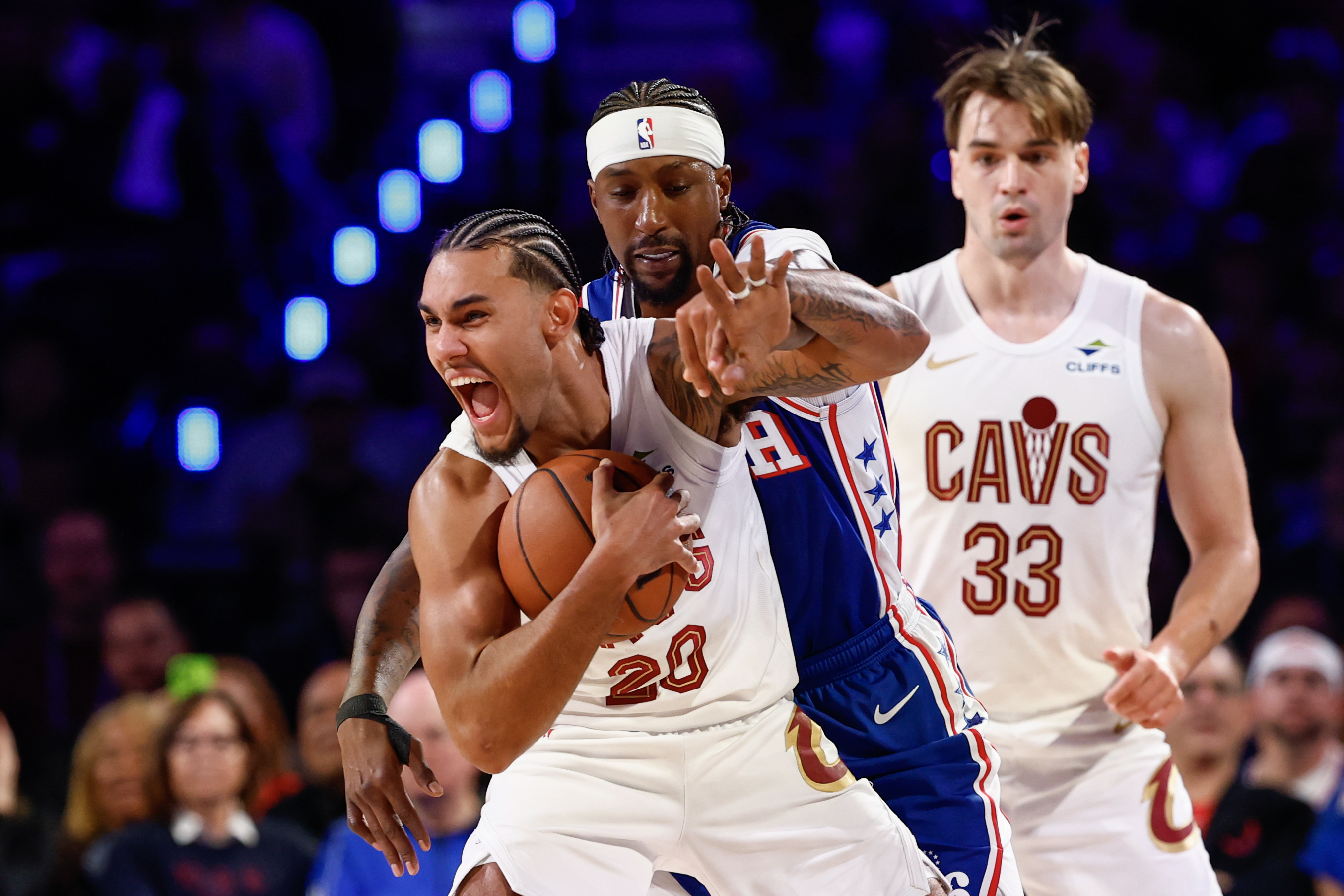
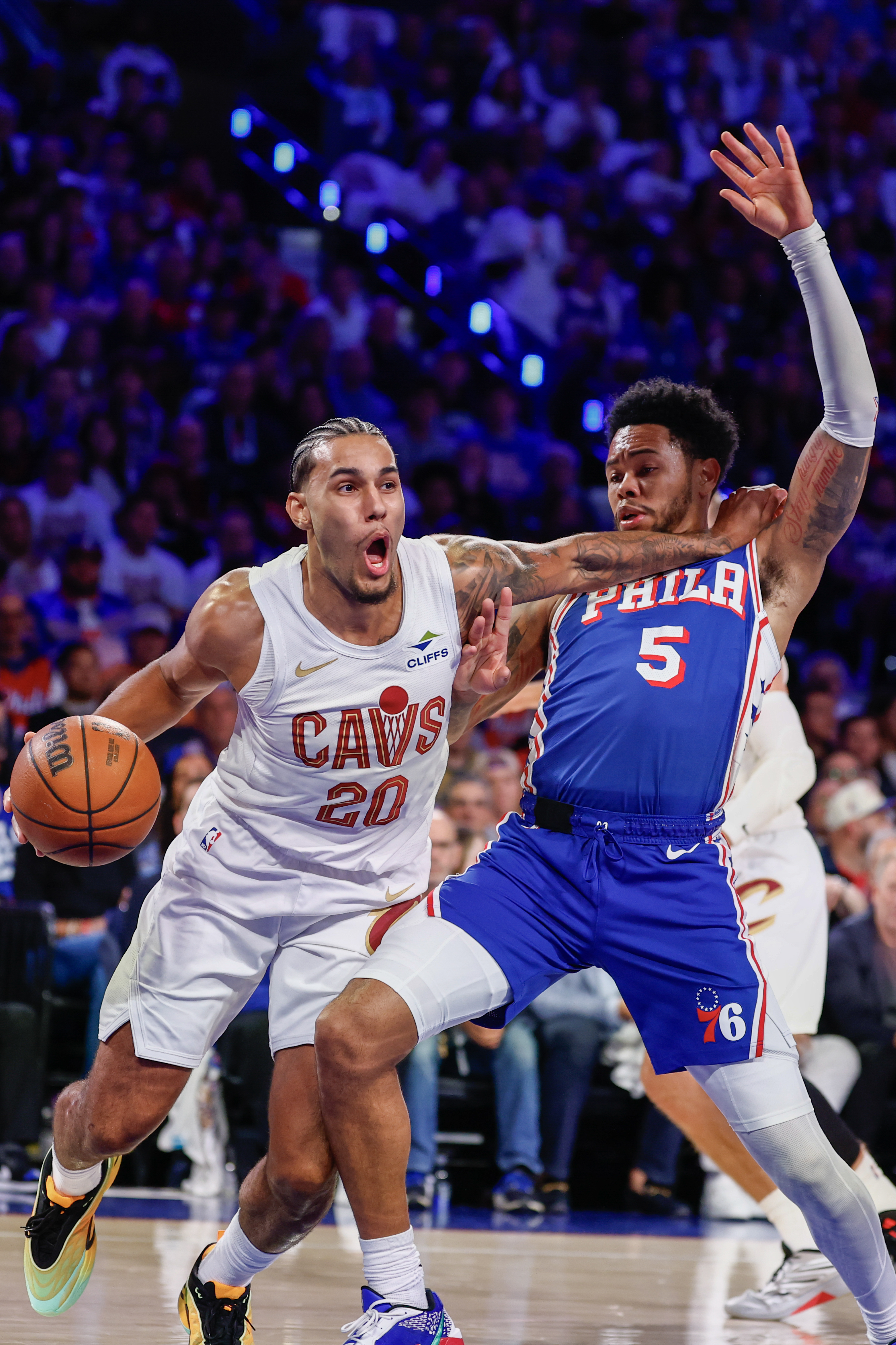
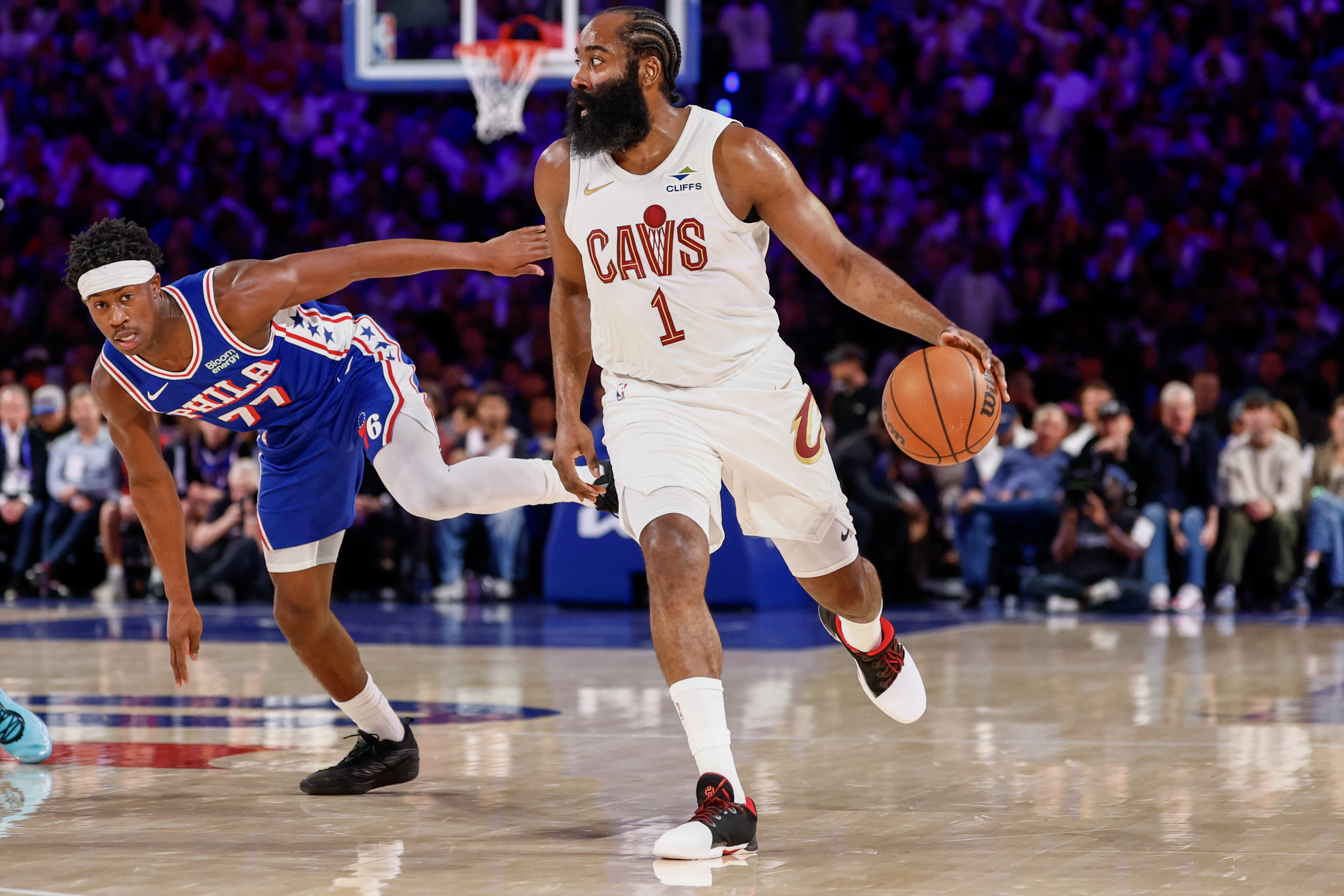
  • Sixers beat Cavaliers, 114-106, after trailing by 29 points in wild home opener

    Sixers beat Cavaliers, 114-106, after trailing by 29 points in wild home opener

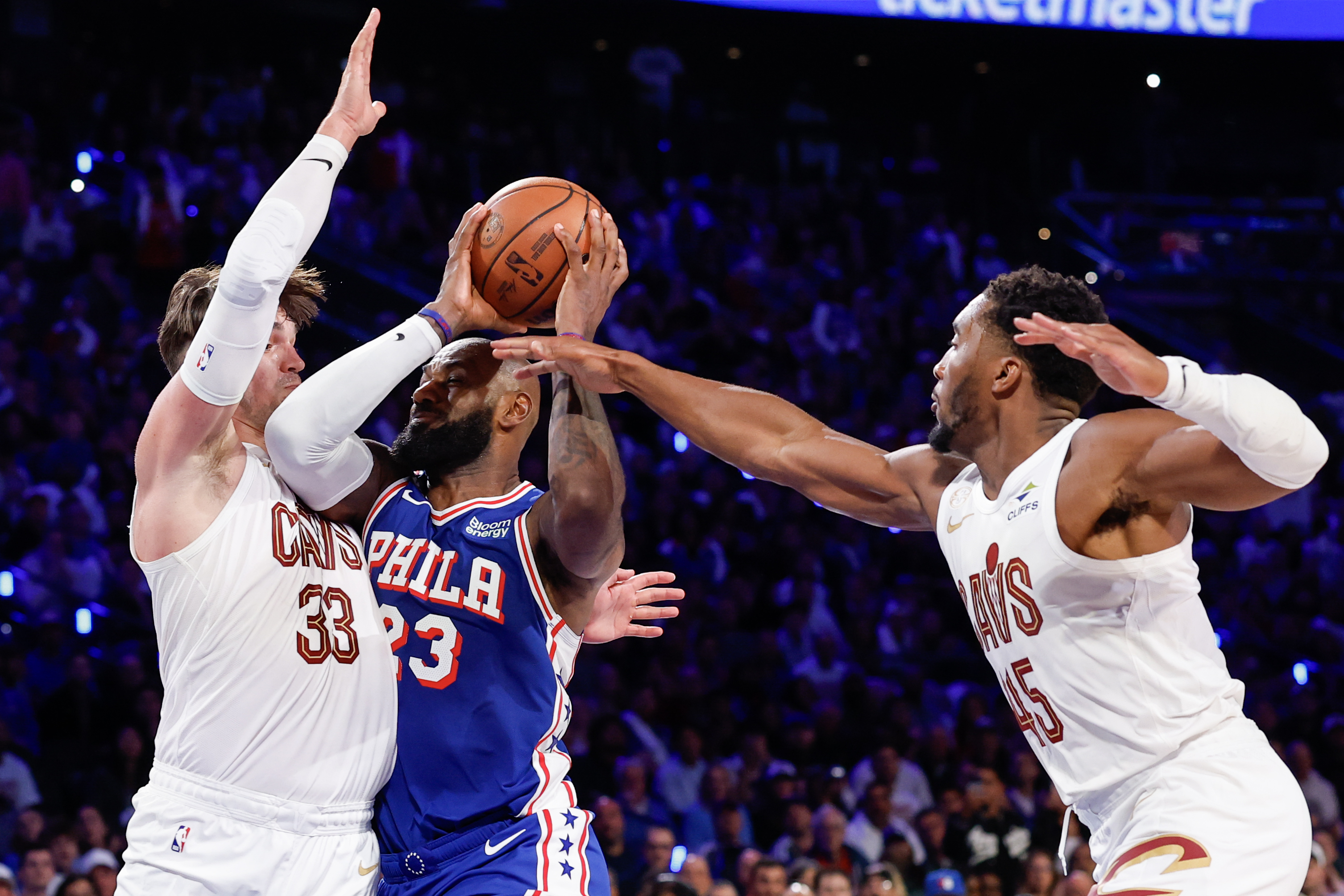
    Just before tipoff, LeBron James poured powder onto his hands, cameras gathered around and the crowd erupted as he did his trademark powder toss. Even after beating the Knicks two nights ago, that moment felt like an unofficial start of this season for the 76ers.

    And, well, the Sixers came out and played — at first — as if that game Tuesday didn’t happen and they never played with each other. Then they played like the contenders they picture themselves to be in erasing all of a 29-point deficit on what turned out to be a wild night at Xfinity Mobile Arena.

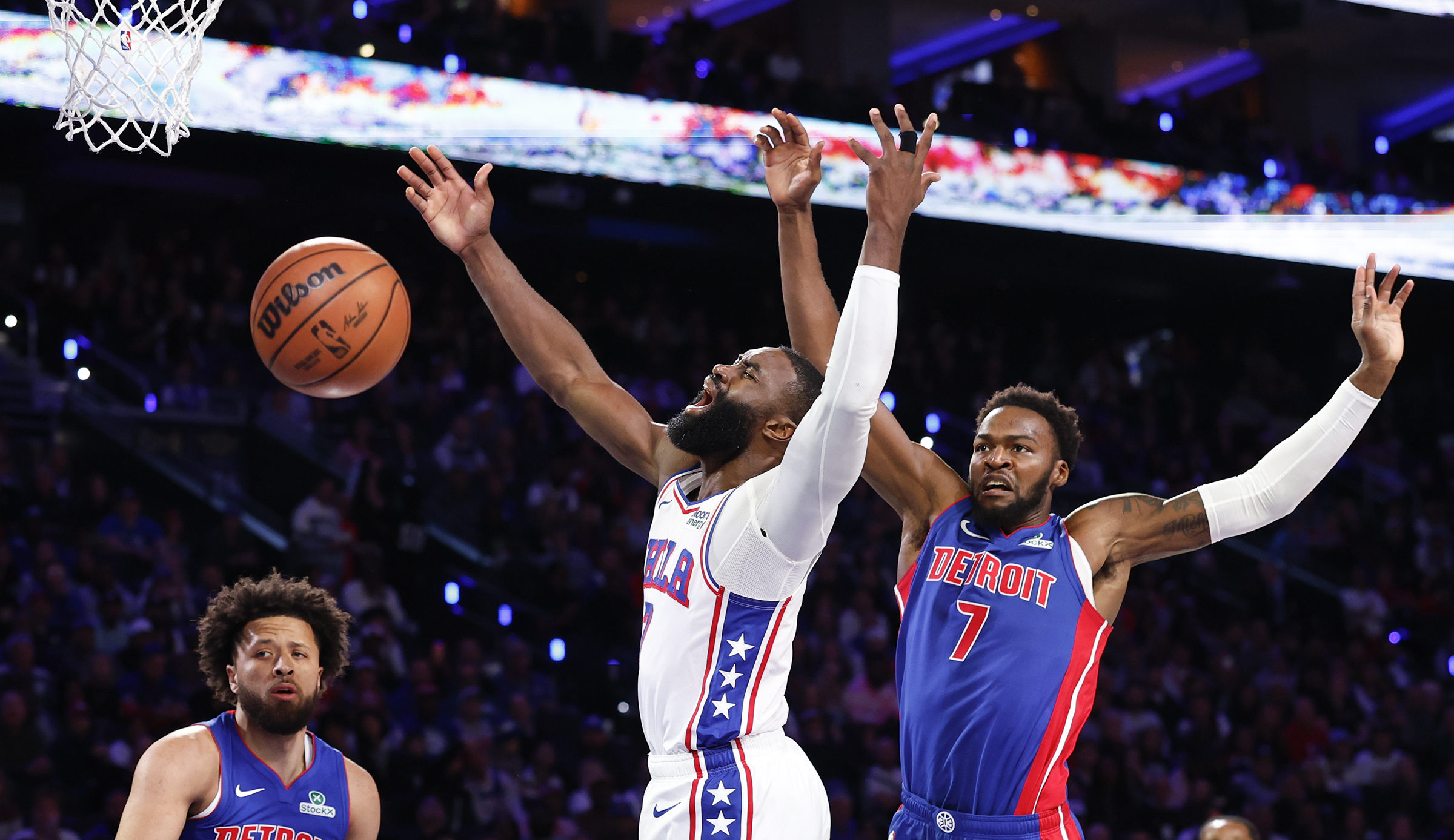
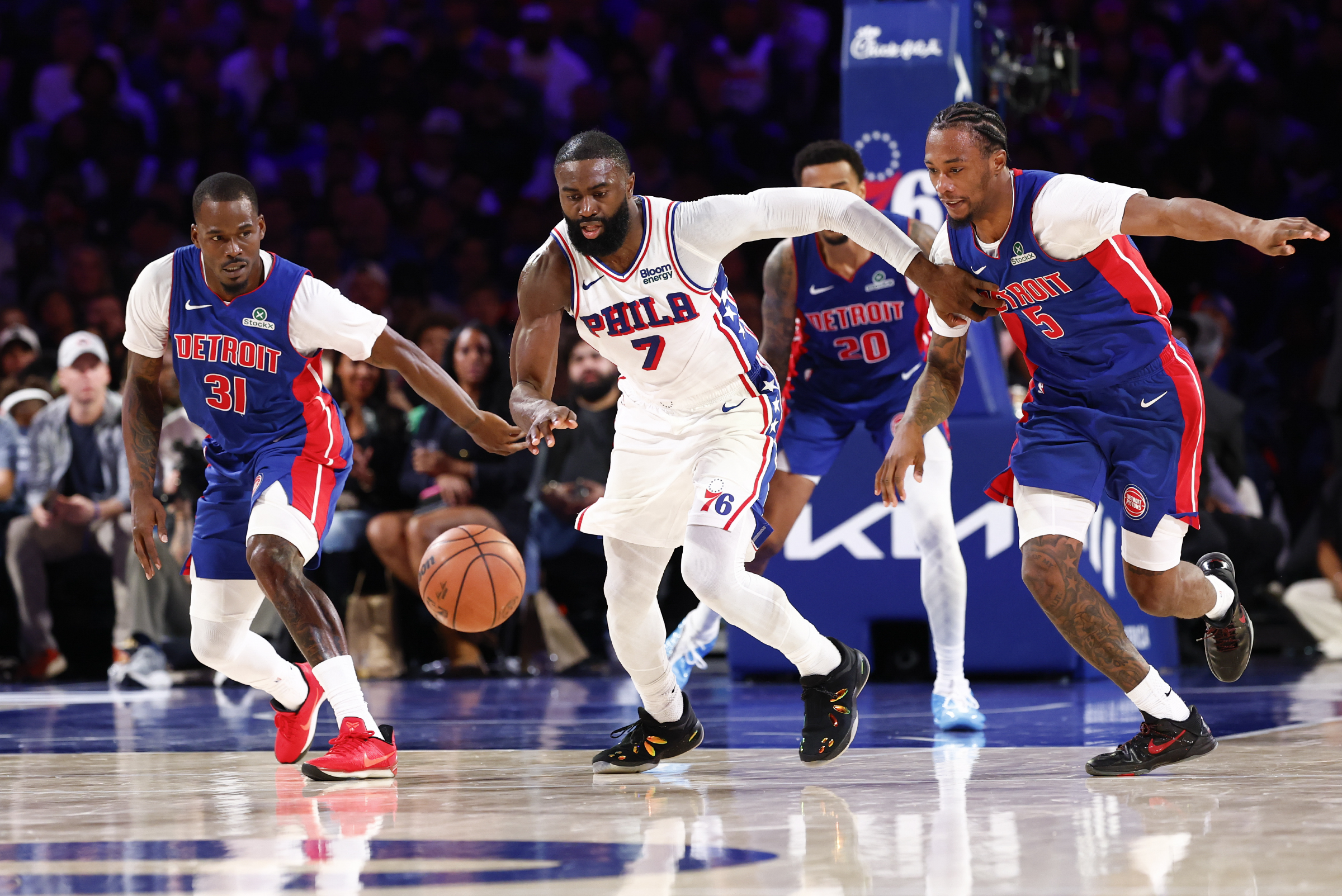
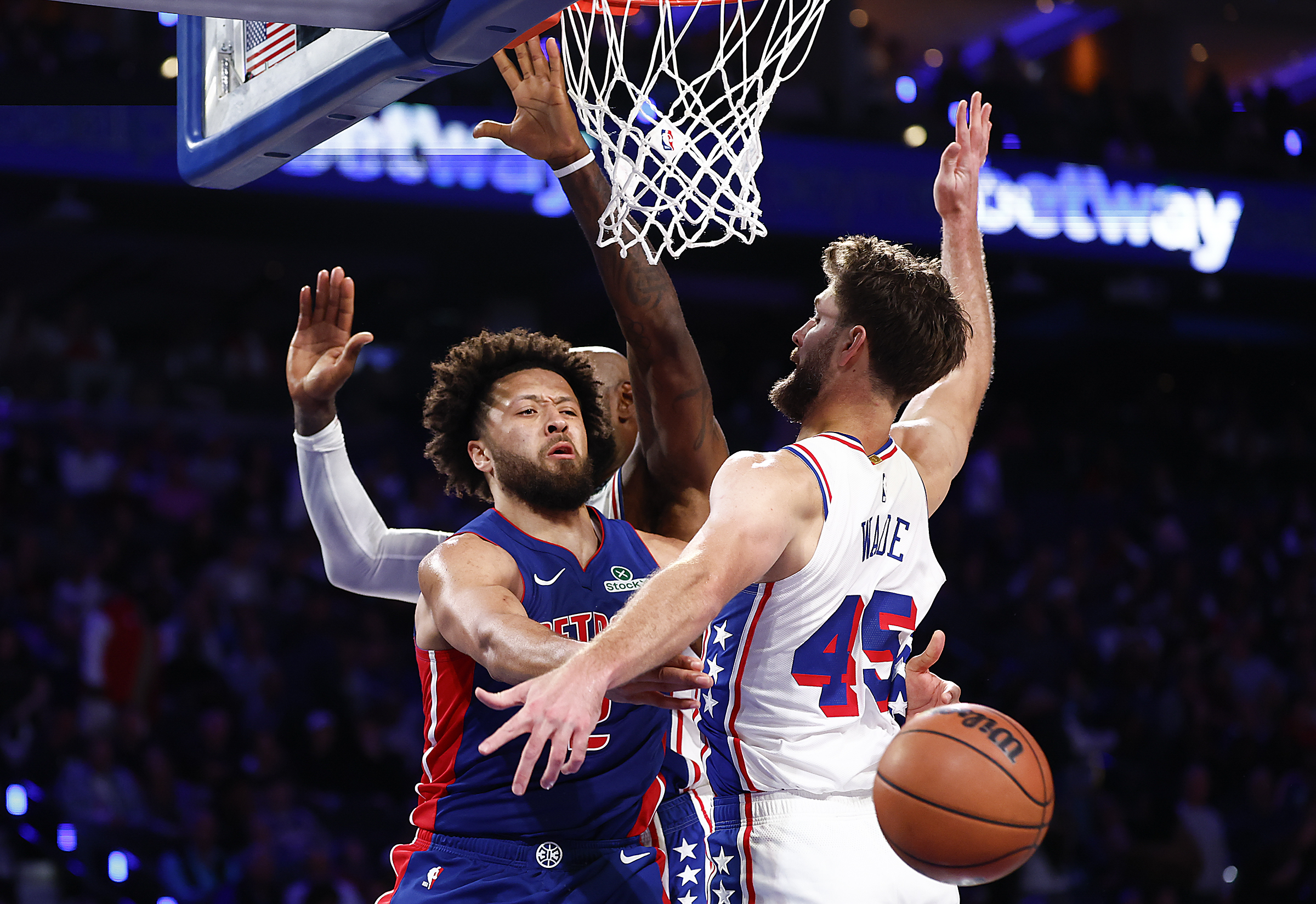
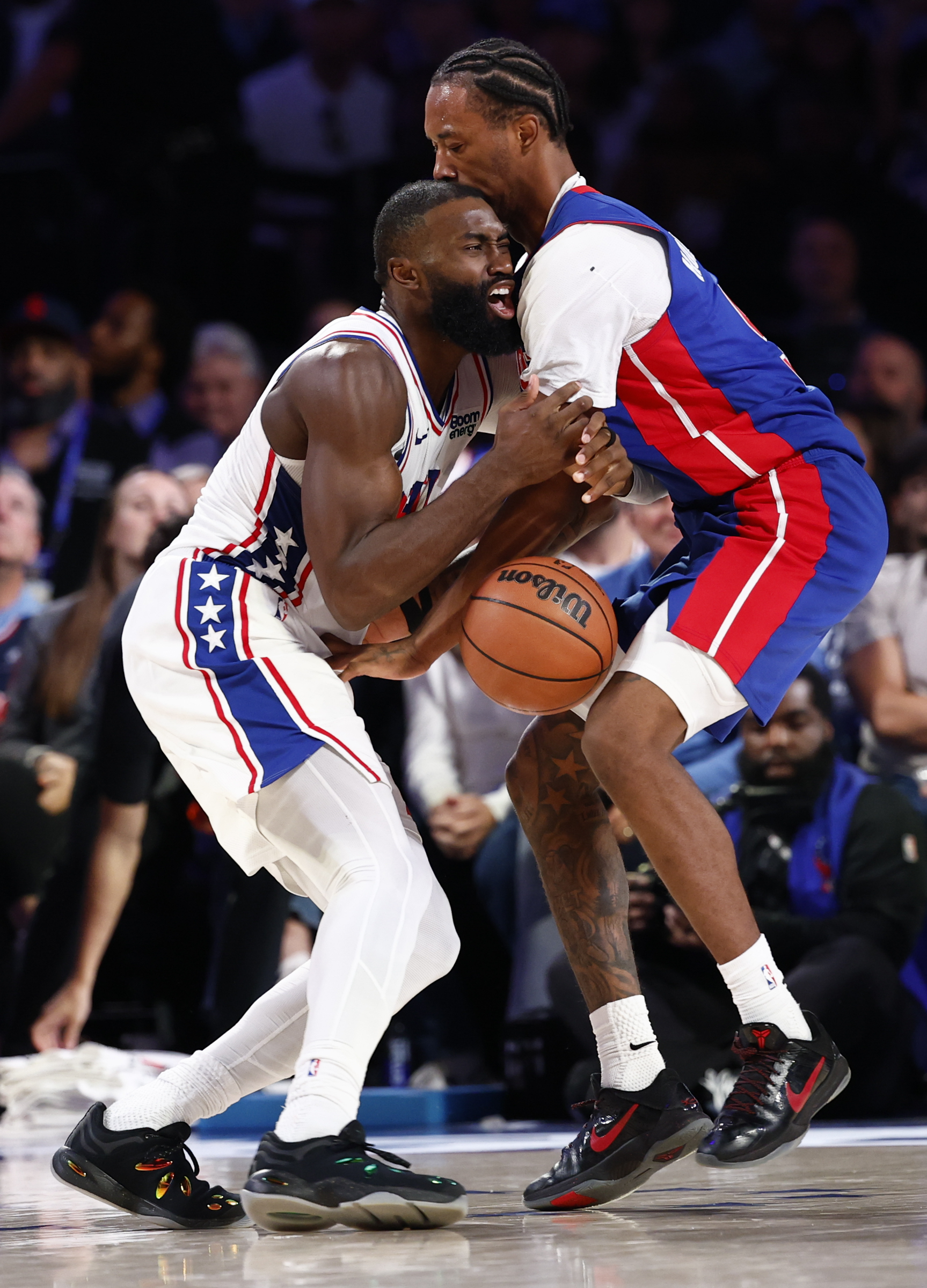
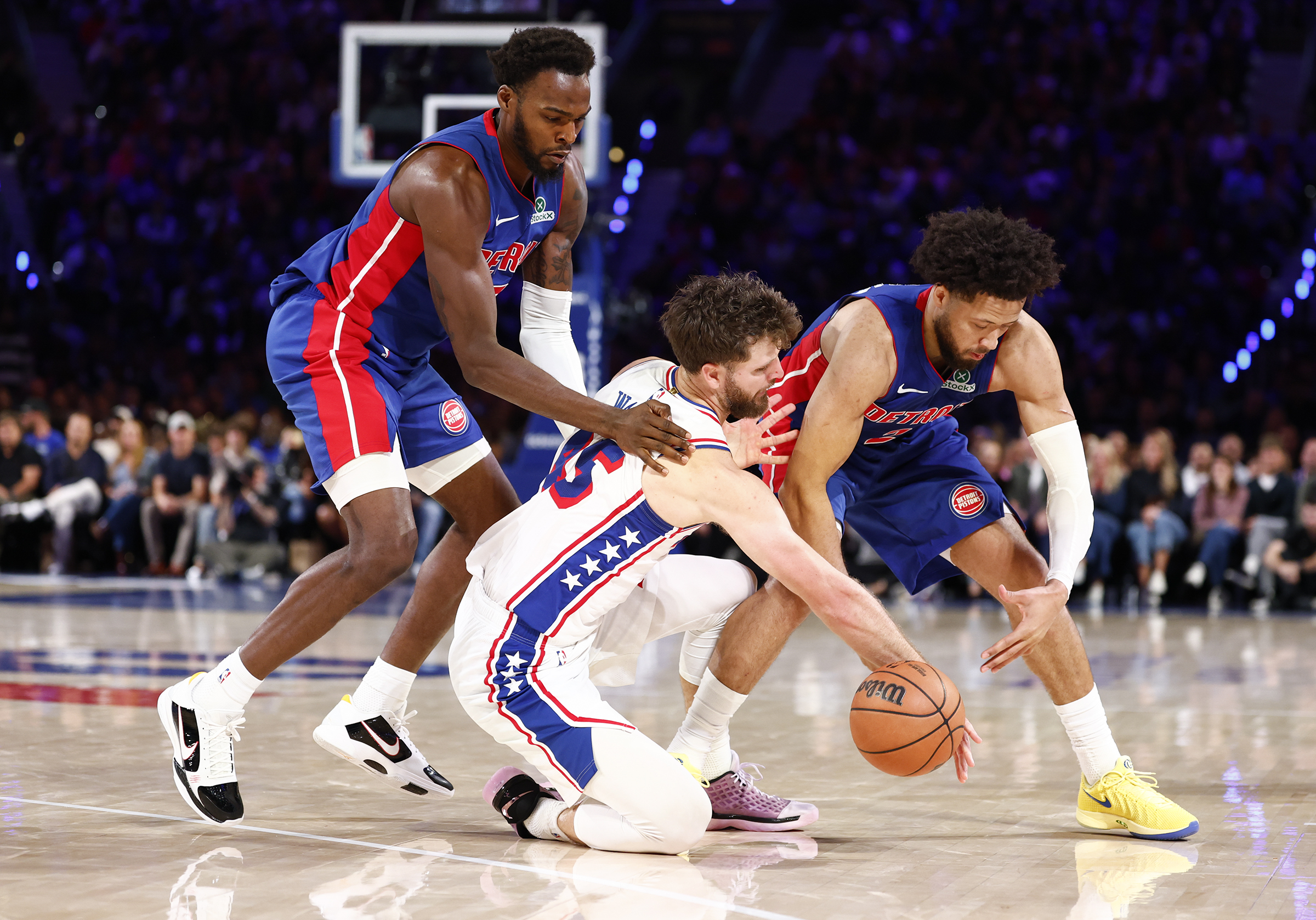
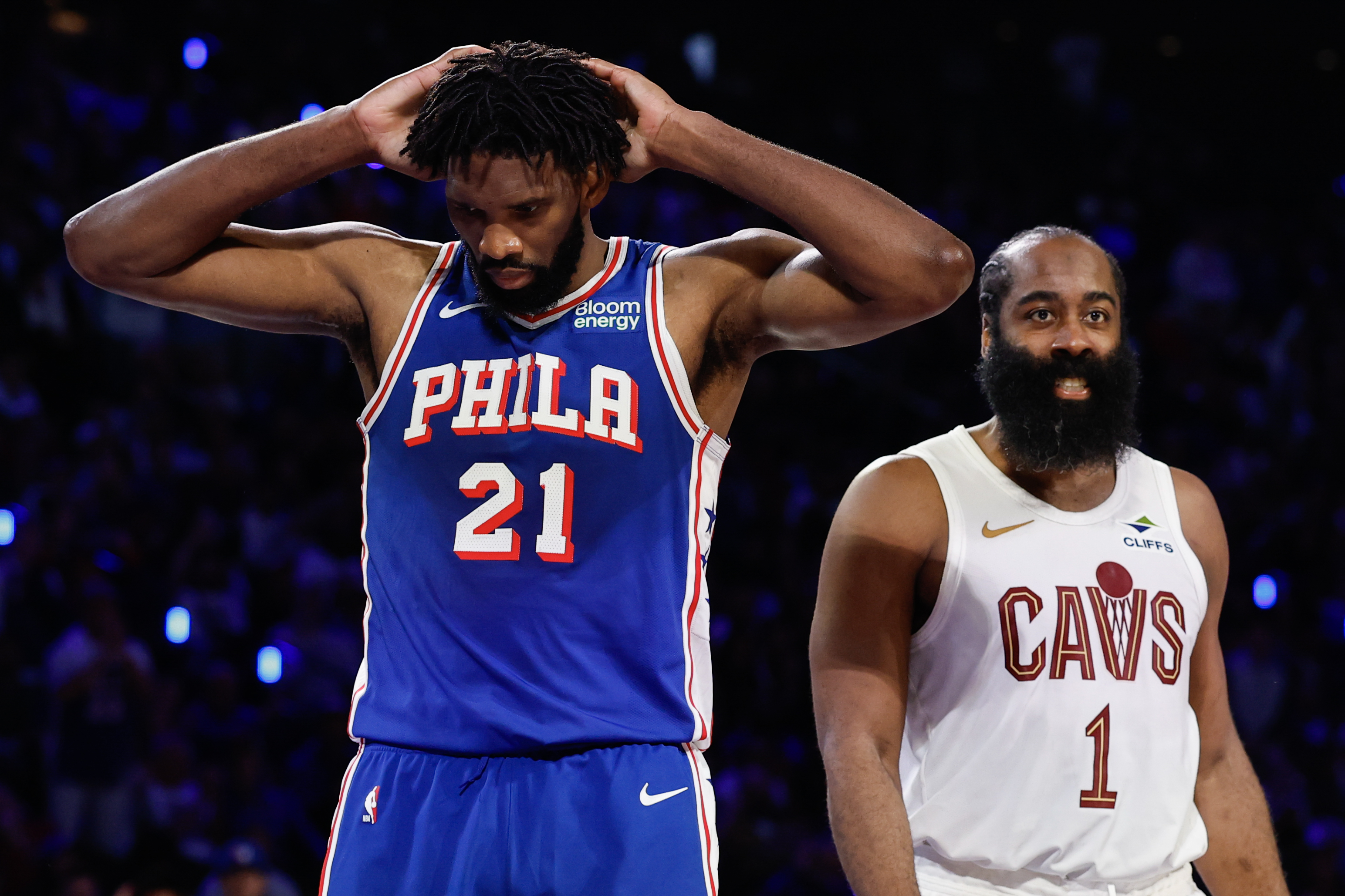
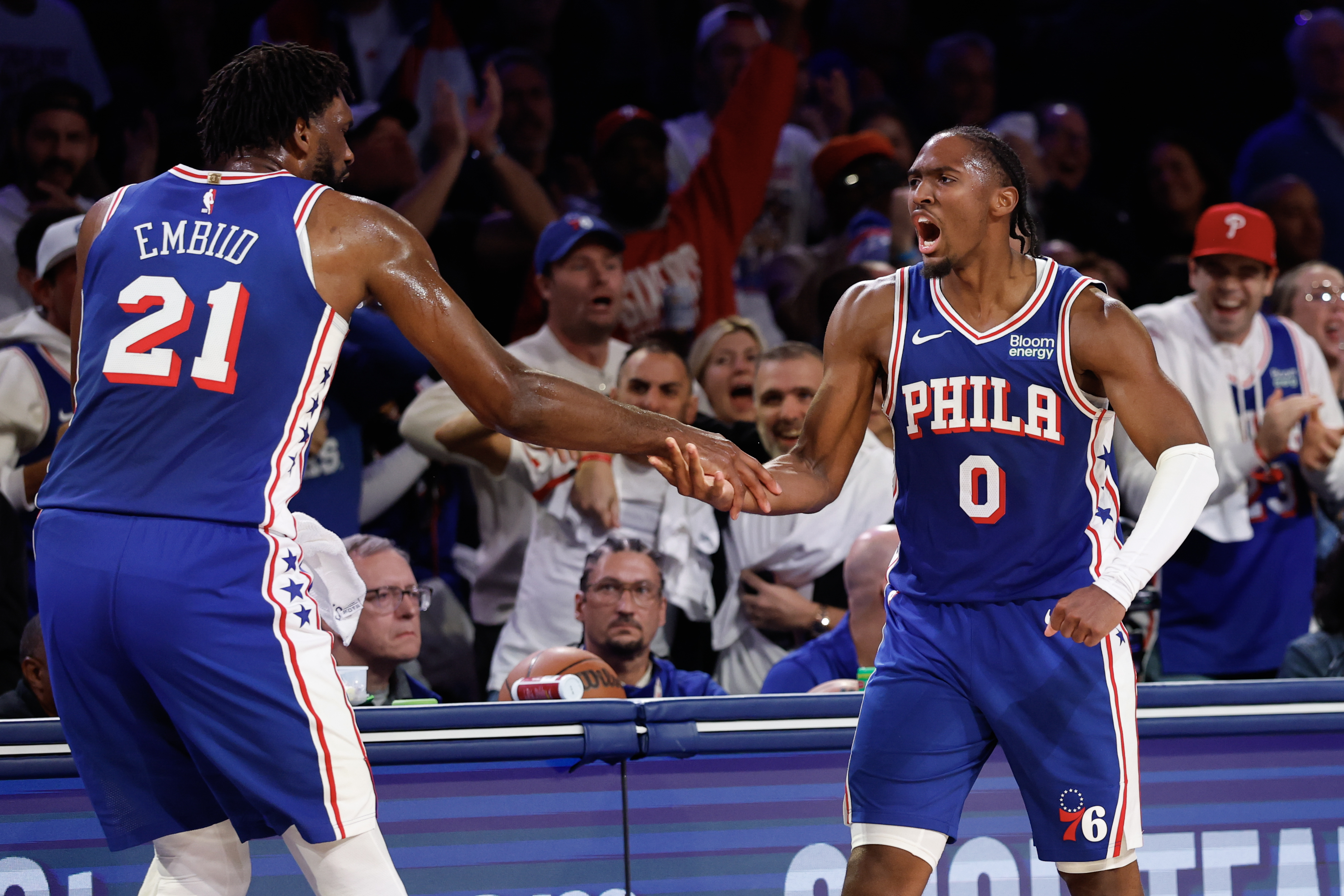
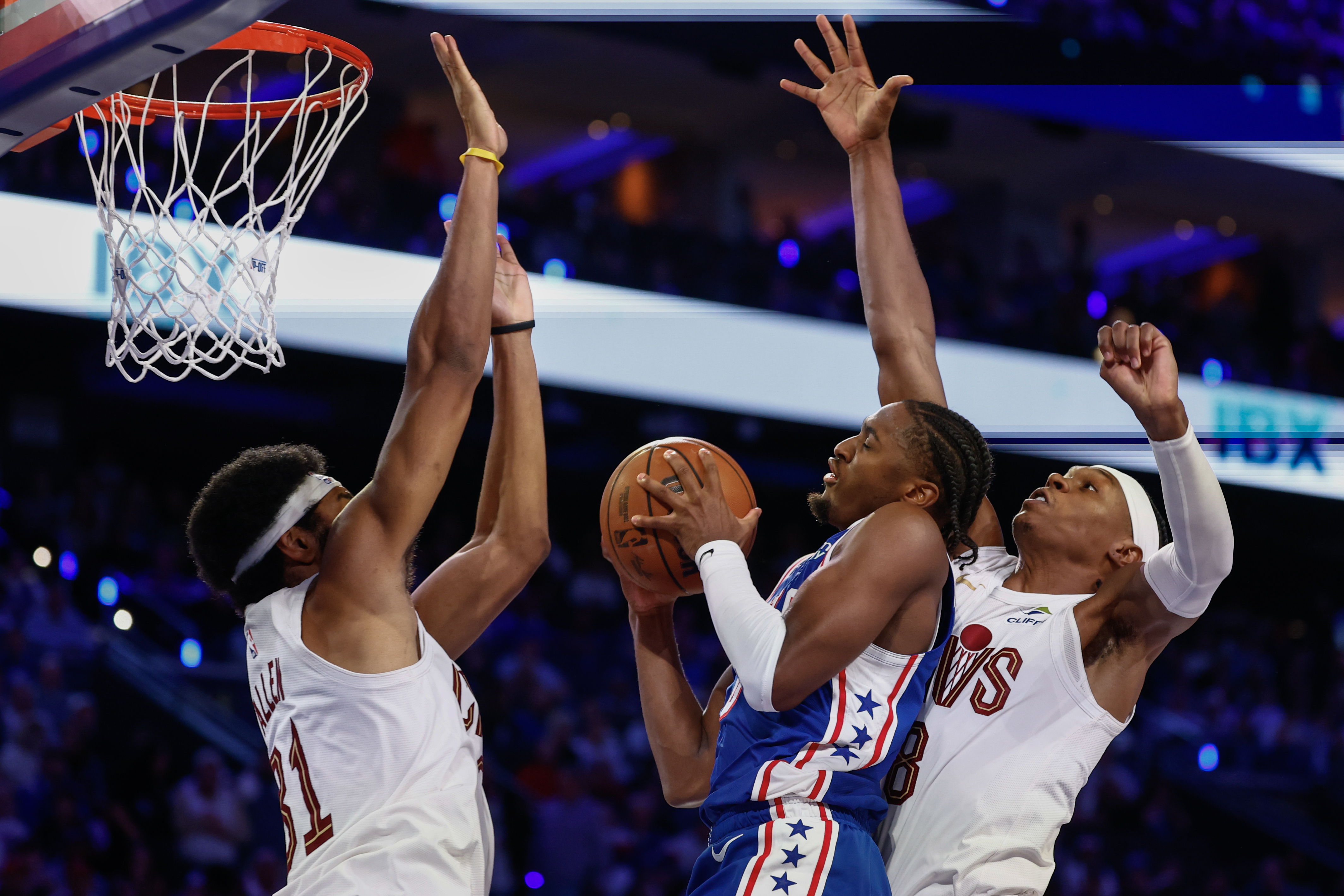
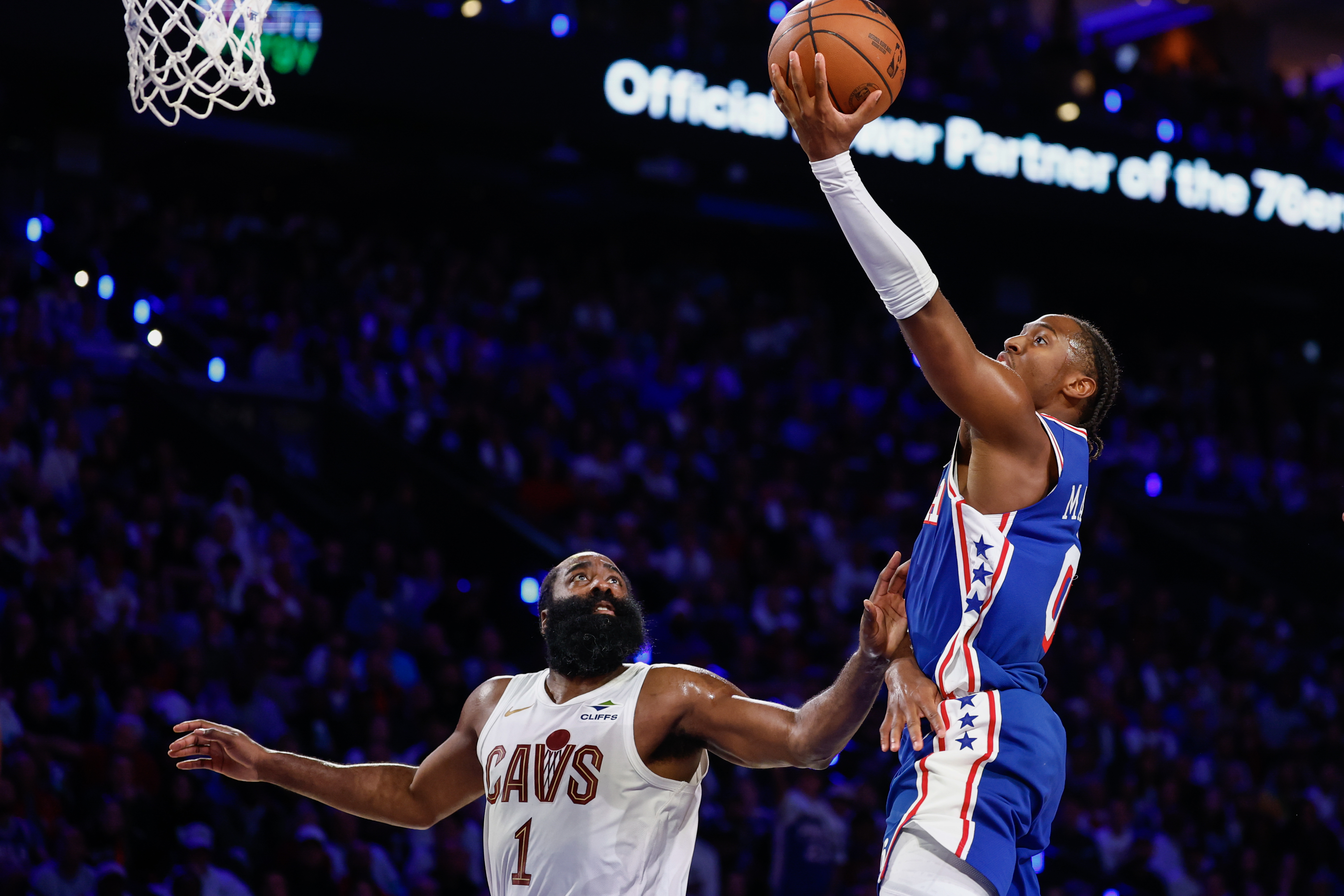
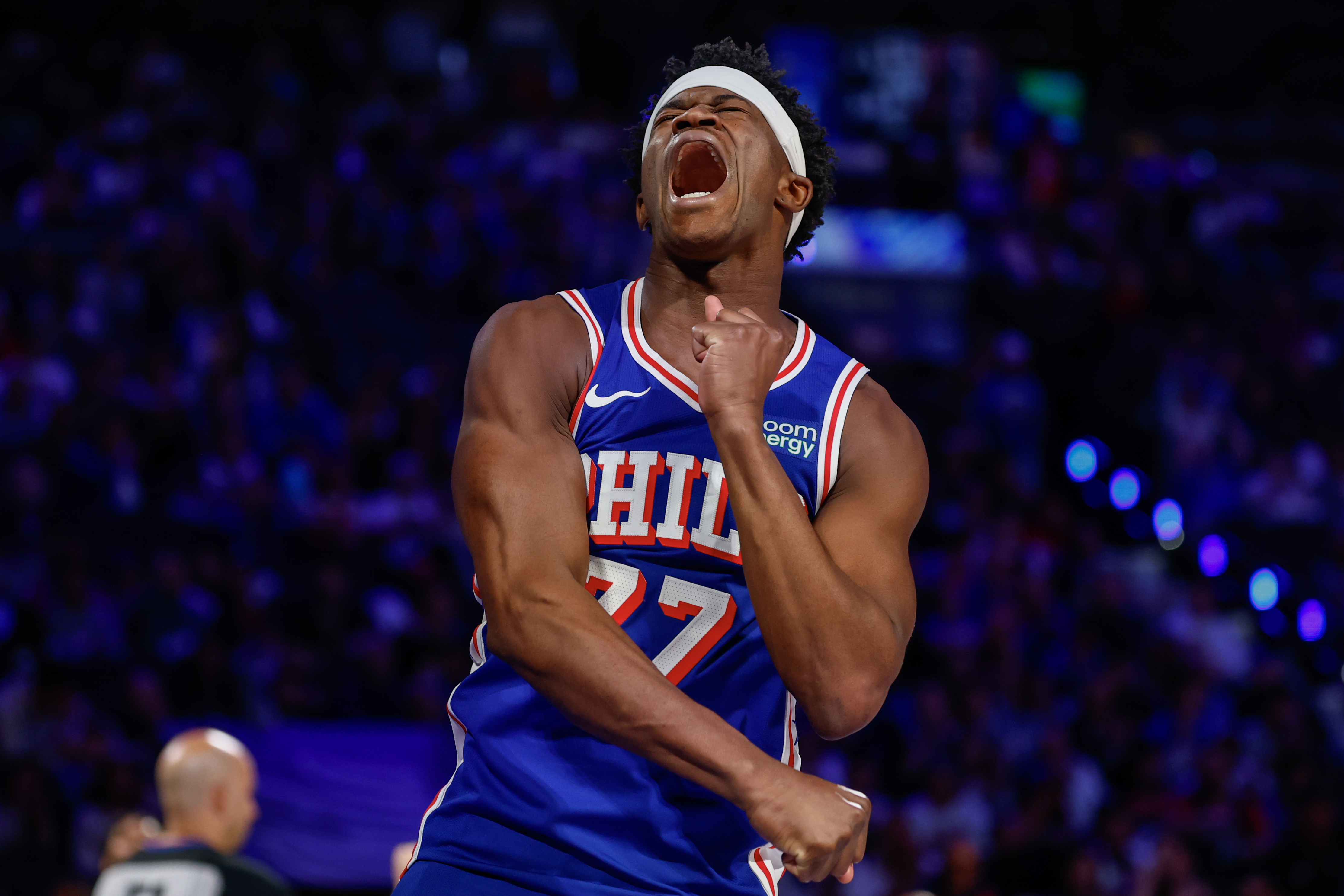
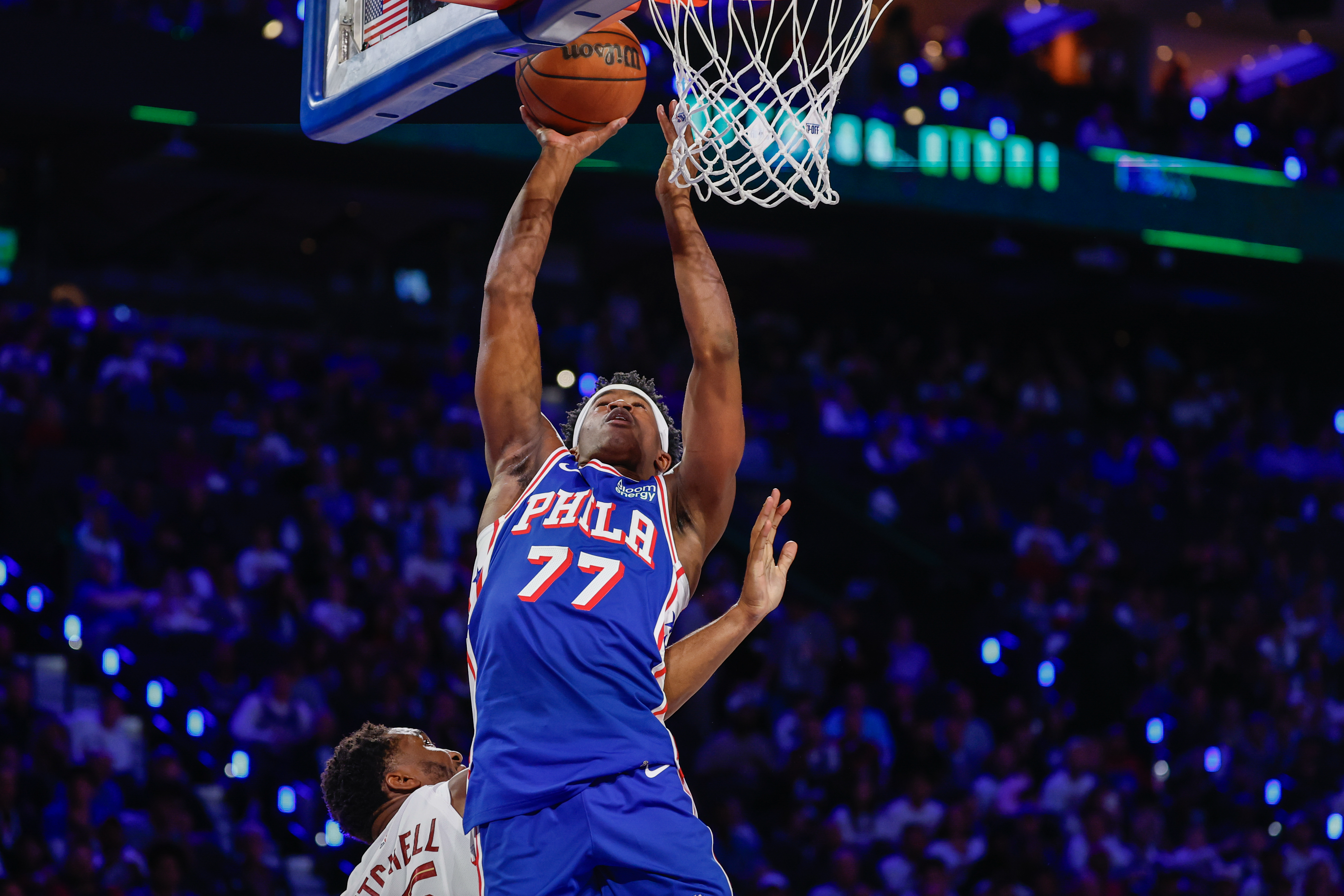
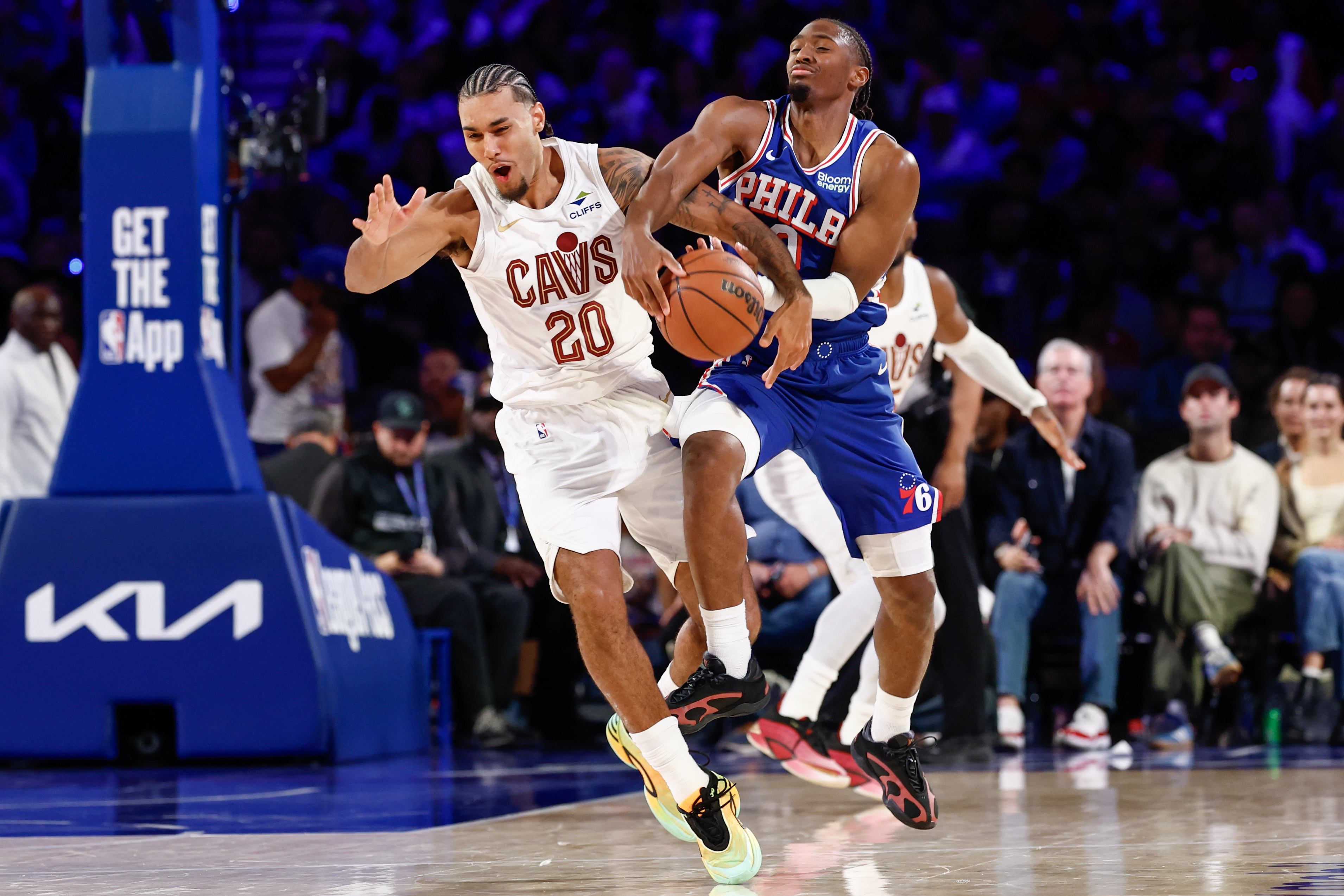
    A delirious, standing crowd at the start went to booing by the second to delirious and on its feet again in the second half of a 114-106 Sixers win over the Cleveland Cavaliers. It was a playoff-like atmosphere that included VJ Edgecombe getting a bloody nose, and a momentary tussle between former teammates Tyrese Maxey and James Harden in the fourth quarter, which caused the crowd to shower Harden with a not-for-print chant.

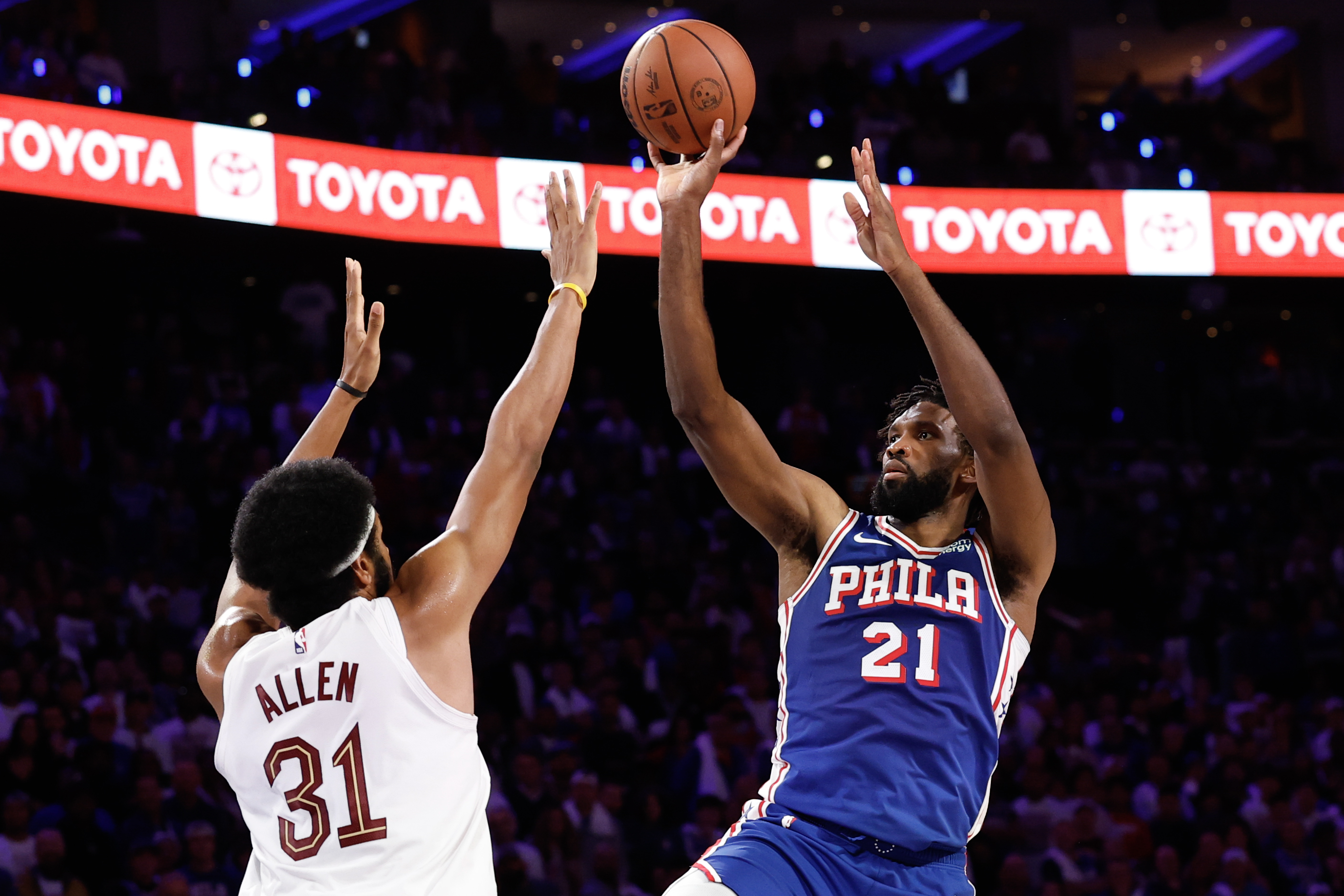
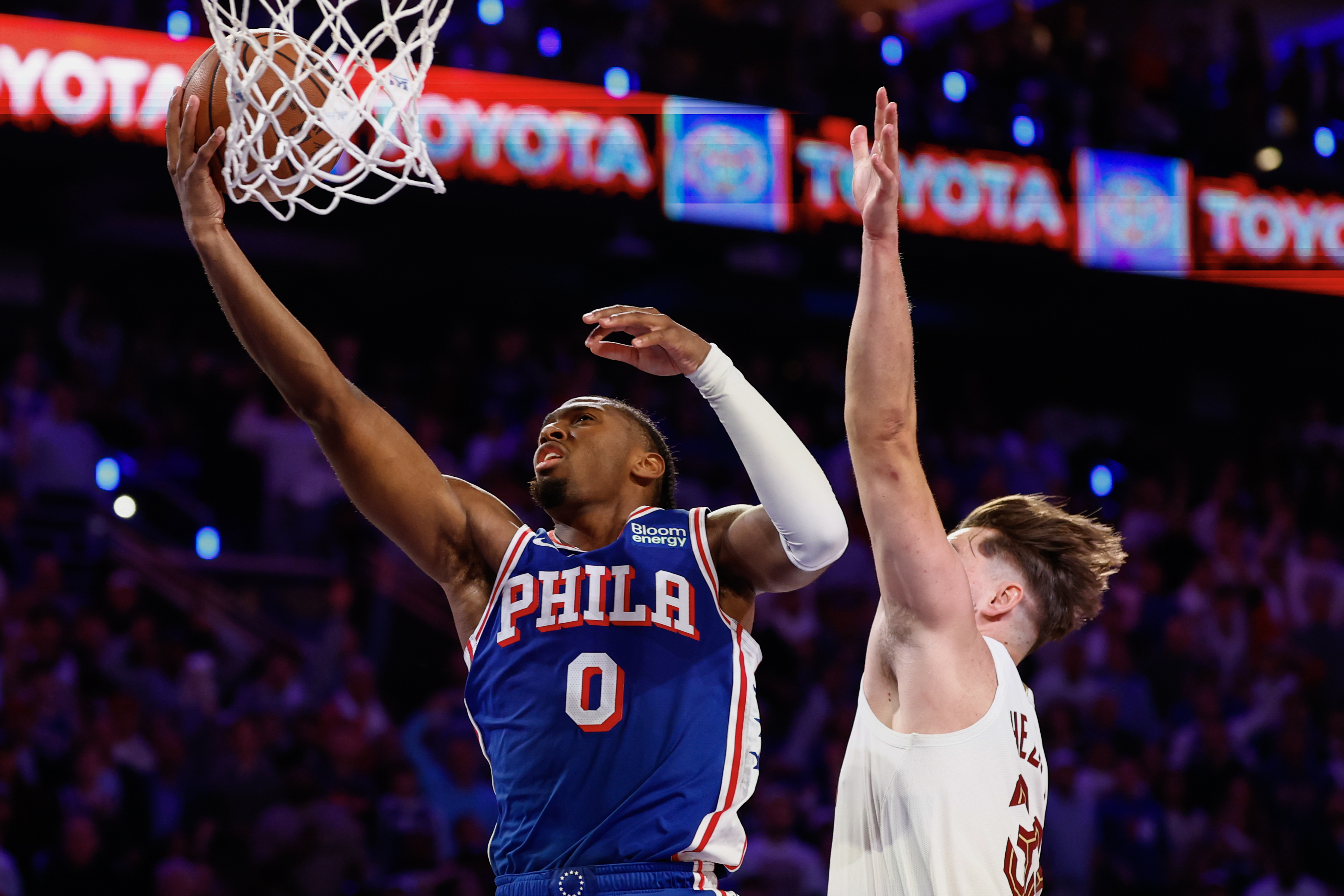
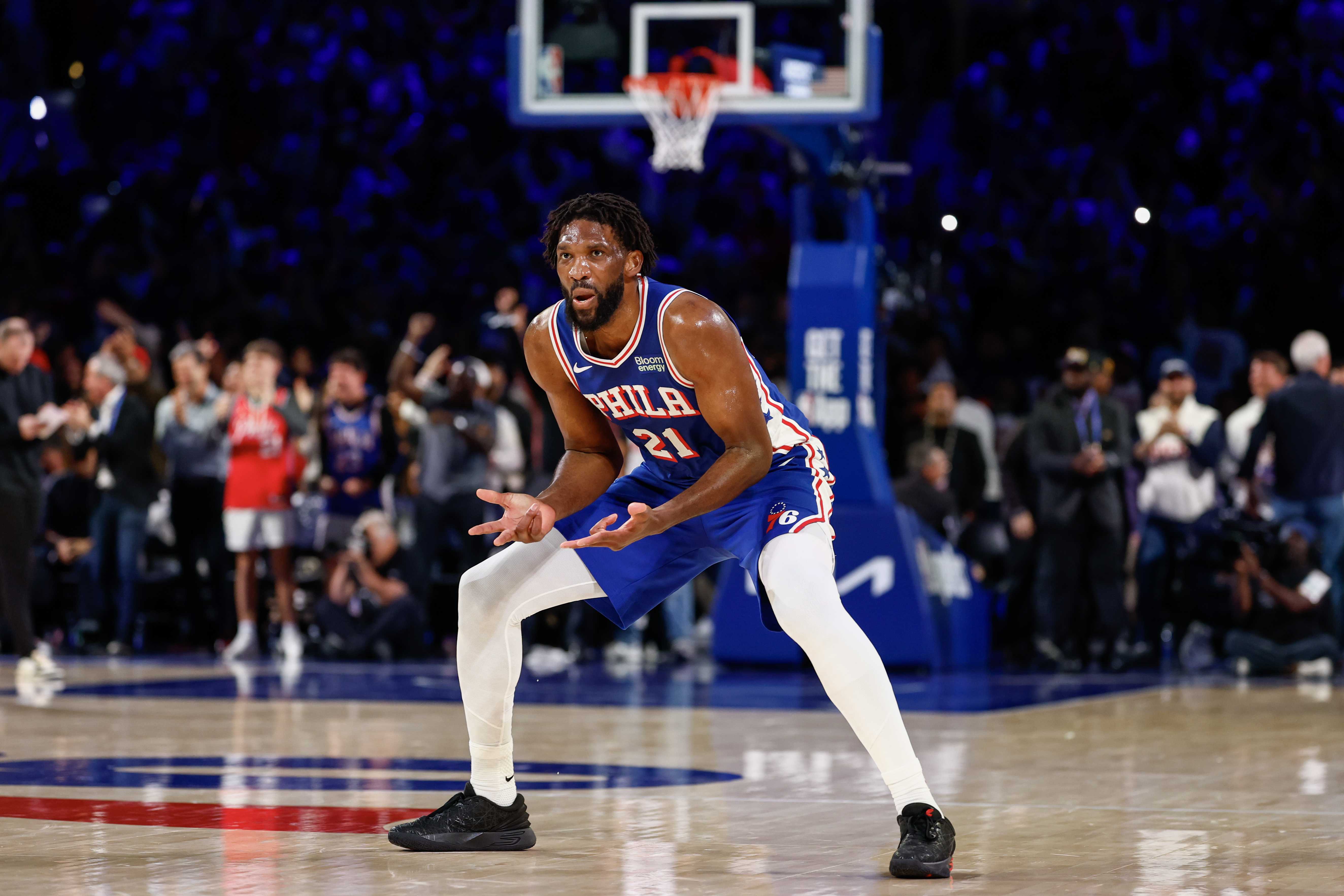
    Maxey led the Sixers with 32 points as every starter scored in double figures. Joel Embiid had 24, James produced 17, and Jaylen Brown came through with 10 of his 21 in the fourth. Edgecombe also chipped in 11.

    Everyone plays a part

    All the stars had a starring role at one point or another.

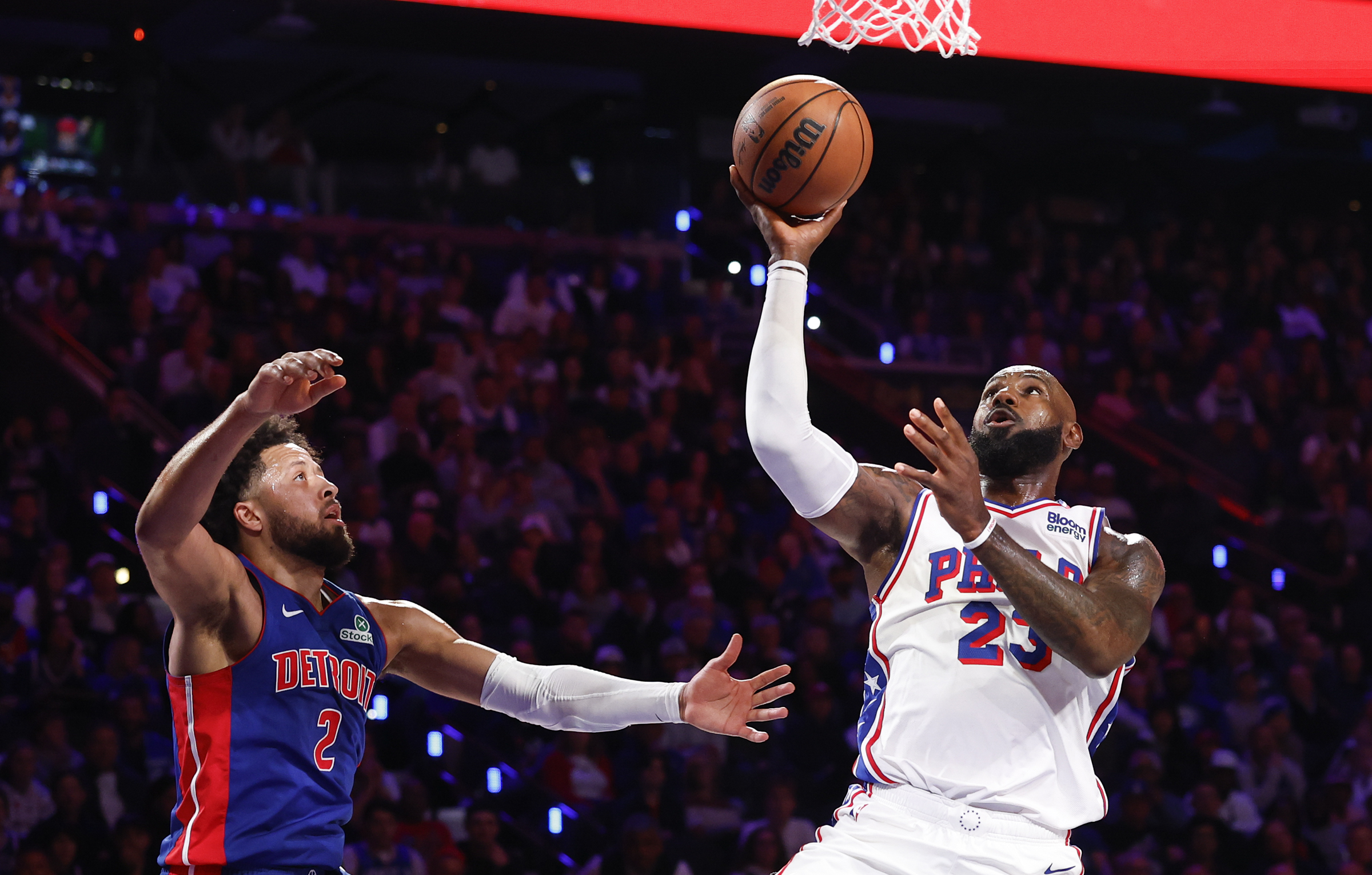
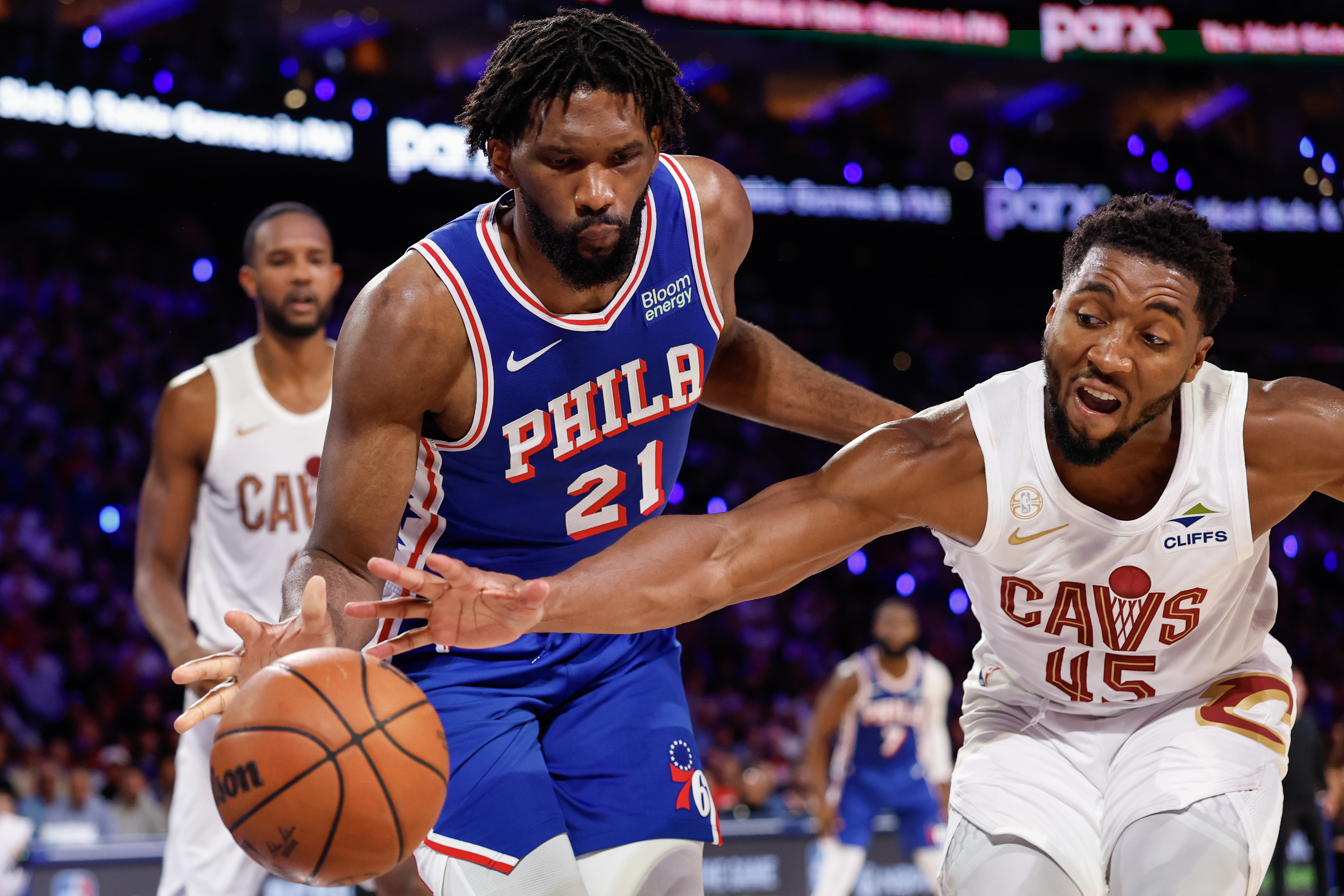
    James and Maxey sparked the comeback with transition offense off Cleveland turnovers in the third quarter. That got the Sixers back in it. Then in the fourth quarter, when it seemed the Sixers just could never get all the way back, Embiid had seven straight points to give the Sixers their first lead, 96-95.

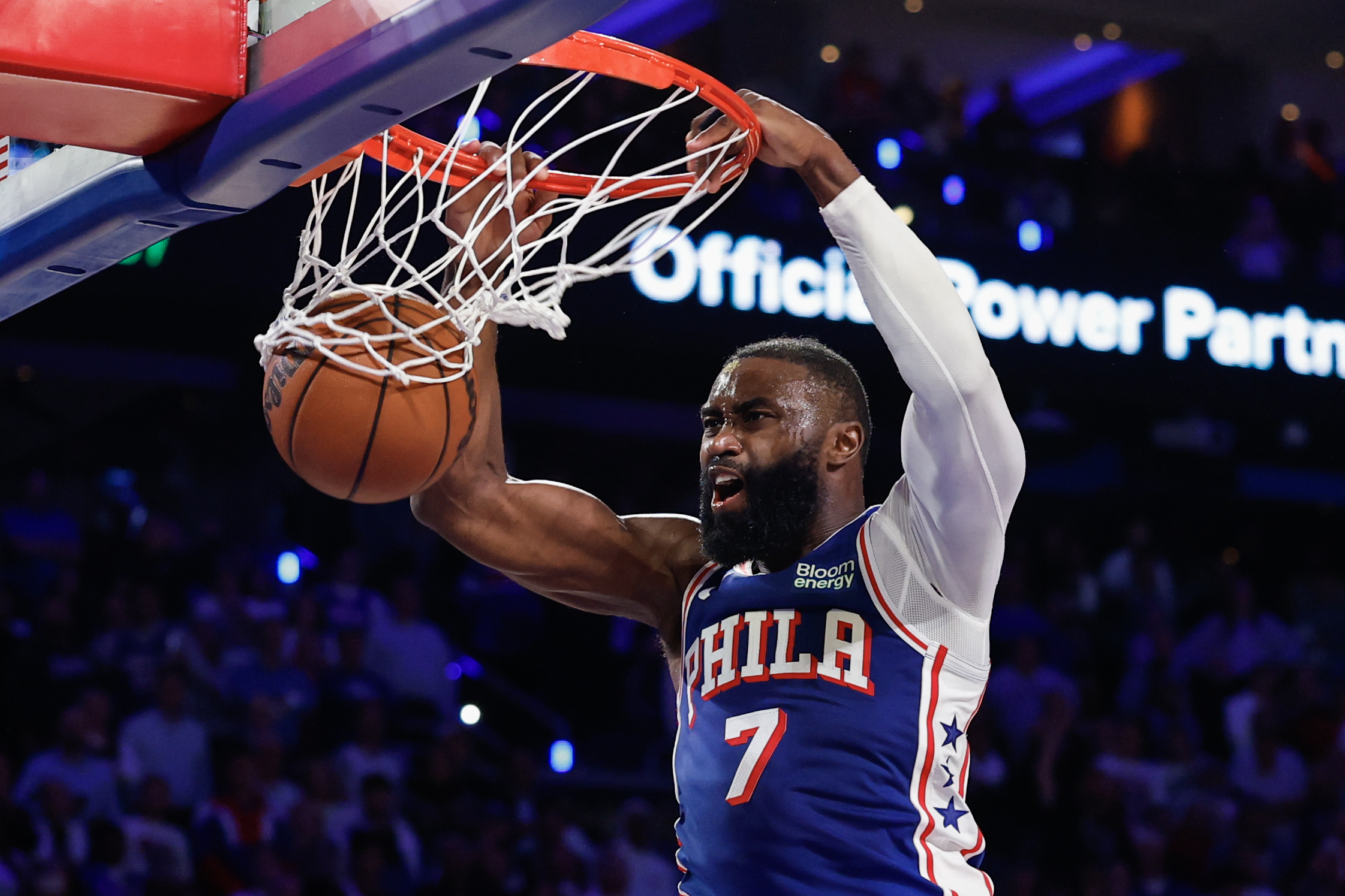
    Sixers guard Jaylen Brown dunks late in the fourth quarter against the Cavaliers Thursday.Yong Kim / Staff Photographer

    Brown had the biggest flourish, as he found his way into the paint for six consecutive points of his own to build the Sixers lead to 102-95.

    After Brown’s third straight bucket, the crowd reached its highest decibel level of the night, and he walked back down the court yelling as his teammates swarmed him.

    Maxey and Brown then iced the win with 44 seconds to play with a pair of layups.

    Defense, James, Maxey spark comeback

    All comebacks start with good defense, and the Sixers didn’t waste any time out of halftime digging in on that end of the floor. They forced two quick turnovers on an 11-0 burst that brought them back into the game. The Sixers forced Cleveland into eight third-quarter miscues and returned the favor after their miserable first half.

    The Sixers then got out and ran, and then they ran some more. James had 10 points in the quarter while Maxey had nine and Jaylen Brown had another seven. The Sixers got within two, 84-82, before Cleveland scored the final six points of the quarter for a 90-82 lead entering the fourth.

    The defense and transition offense seemed to feed off the crowd, while the Cavaliers couldn’t stop fouling; officials called them for 11 fouls in the quarter. James and Maxey took charge of the offense during that stretch, with the two of them pushing the ball up the floor every chance they got, make, miss or turnover.

    Brutal start

    Even with all the energy in the building, the Sixers came out flat, or perhaps all the emotion made them play a little tight.

    The Cavs dominated the first quarter as the Sixers stumbled out of the blocks. They committed nine turnovers in the first quarter while hitting just eight field goals. The Cavaliers converted those nine turnovers into 13 points with Mitchell scoring 12.

    The Cavaliers pressured the Sixers stars and made it hard for them to get the ball even on simple passes. That forced isolation offense for the likes of Brown, who was just 1-for-7 from the field to open the night.

    The Sixers couldn’t shrug off the unfamiliarity in the second quarter, which was also turnover-filled. They had another six turnovers, 15 for the half, and shot just 4-for-15 from three-point range in the first half.

    The Sixers struggled with Cleveland’s size, something that has bothered them in the past, like last season when Cleveland went 4-0 against the Sixers.

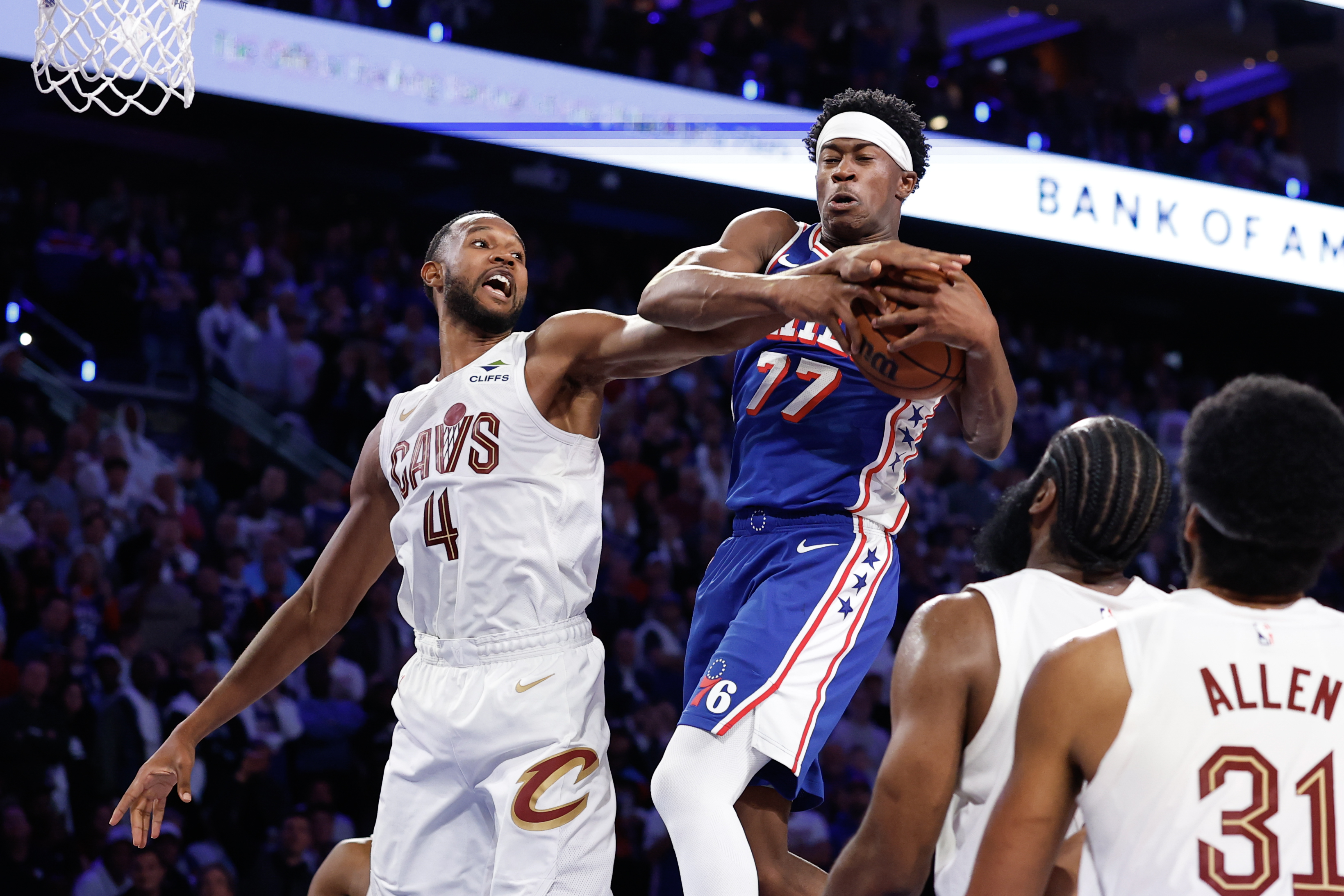
    Evan Mobley had 15 points and six rebounds in the first half while Jarrett Allen had 14 points and five boards. With Joel Embiid’s injury history, and the loss of Ariel Hukporti to an Achilles injury in the preseason, one of the shallow spots on the roster is center.

    Cleveland is one of the teams with the front-line size to exploit that. Cleveland had eight offensive rebounds in the first half as the Cavaliers built their lead.

  • How two Philadelphia brothers became the perfect people to make a documentary about the Phanatic

    How two Philadelphia brothers became the perfect people to make a documentary about the Phanatic

    Dave Raymond always opened himself to the conversation but he often knew how it would end. Someone wanted to do a project about the Phillie Phanatic and they wanted Raymond on board. Raymond, the first person to wear the costume in 1978, was usually interested. And then that was it.

    Sometimes the people never called back. Some projects stalled at the finish line. Others got caught in Hollywood purgatory.

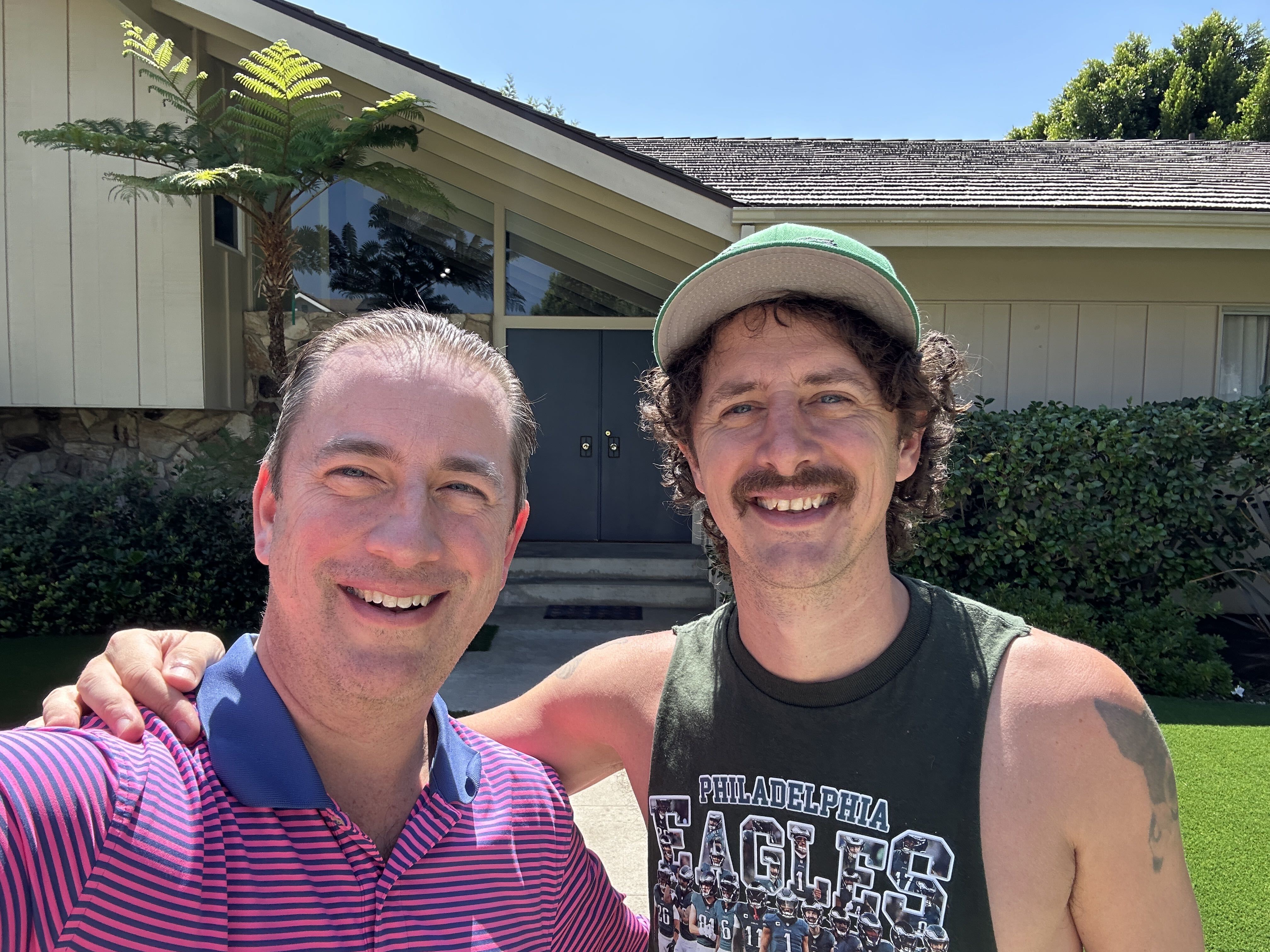
    But Raymond knew there was something different about the brothers who reached out in August 2024. Hoag Kepner and his older brother Tyler grew up Phillies-obsessed in Montgomery County where they loved the mascot as much as they did Mike Schmidt.

    They sat in Section 234 of Veterans Stadium, roared at the Phanatic’s bits, and shrieked when their grandmother plucked a feather from the mascot’s tail.

    Hoag couldn’t believe there had never been a documentary about the Phanatic and he told Raymond he wanted to be the filmmaker who finally did it. He sent him a pitch, explaining why this project would not sputter like the rest.

    Big Phan — which premieres Saturday at the Philadelphia Film Festival — took two years to finish as the brothers tapped into their childhood and told a story that only they could. First, Hoag and Tyler Kepner needed to convince Raymond that they were the right people to do it.

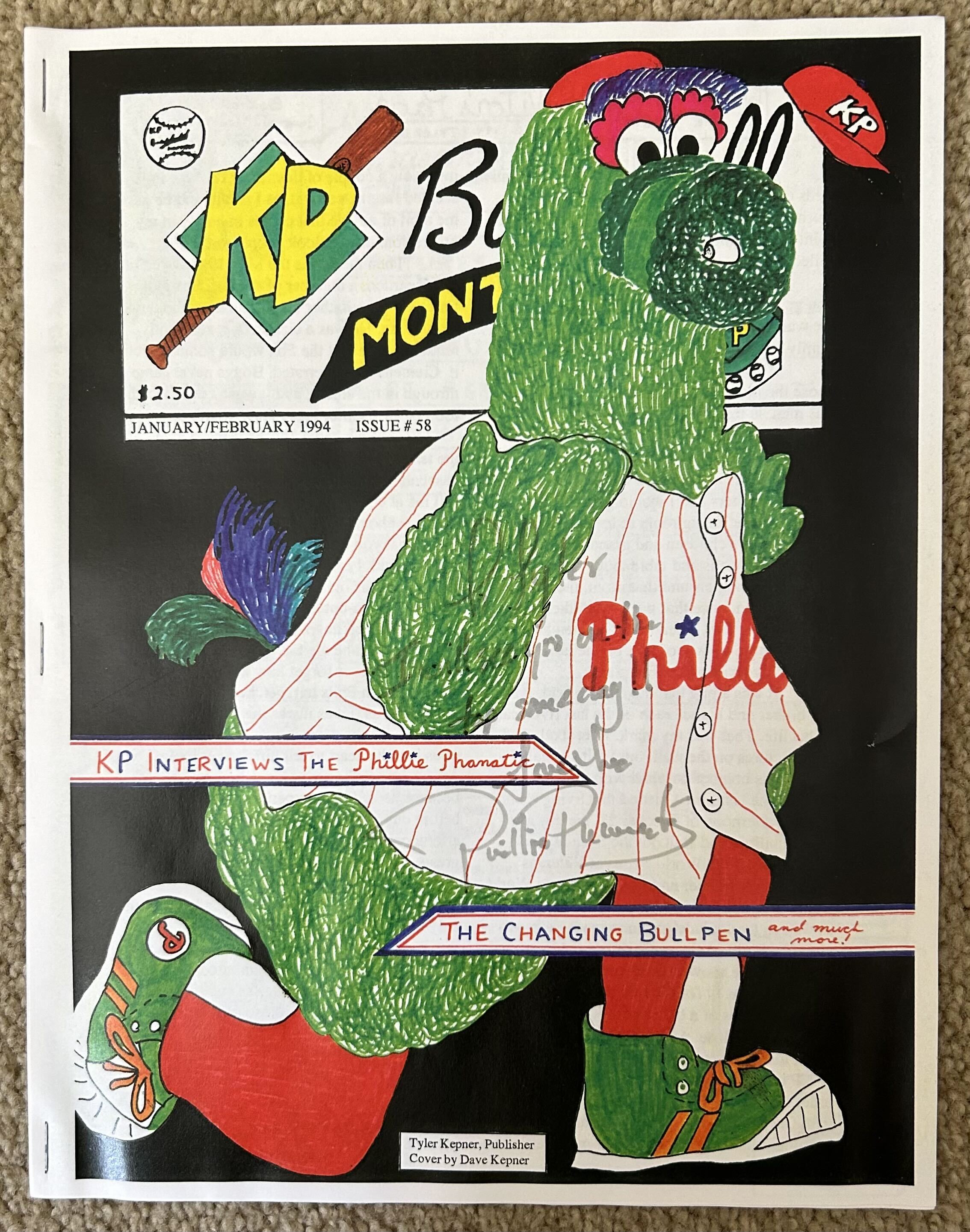
    The January/February 1994 issue of KP Baseball Monthly featuring the Phillie Phanatic.Hoag Kepner

    The last page of their pitch included an illustration of the Phanatic from 1994 that Hoag made for the baseball newsletter his brother produced from their Montgomery County home. Tyler, now a national baseball writer with The Athletic, wrote the words for KP Baseball Monthly and Hoag drew the covers.

    The January/February 1994 issue included a feature on Raymond — “KP Interviews The Phillie Phanatic,” it said — shortly after Raymond retired from the Phils. The brothers told Raymond that they wanted to tell the mascot’s story again. Yes, there was something different about this conversation.

    “That’s what really sold me: two Philadelphia brothers who have all this backstory,” Raymond said. “At the very least, I have to say yes just because of that.”

    He was magic

    The Kepners had season tickets at The Vet and their plan came with perks.

    “We had the Dave Montgomery plan,” Tyler, 51, said.

    Their father, John, served in Army Reserves with Montgomery, the longtime team executive who later became part owner. Montgomery let the Kepner boys pick out 16 games every offseason as the brothers built their own partial season-ticket package without any filler games. They only paid for the games they wanted to go to.

    “How great is that?” Tyler said.

    Montgomery placed the Kepners in Section 234, which was usually filled with notable faces. Arlen Specter sat behind them once and kept score. Charles Barkley signed their baseball. And the Phanatic always seemed to barrel through.

    “He was magic, man,” said the 46-year-old Hoag, who is the film’s director, while his brother is an executive producer. “It’s the same with Santa Claus. I still wonder about that. When you’re little, you have one foot in knowing that something isn’t real, but you want to believe so you do. He just came alive. This seemed real. He seemed animated.”

    “He was enormous. I think that’s something that as you get taller, you lose sight of. But as a kid, he’s like 7-feet tall. I think there’s an initial fear, but you know he’s friendly.”

    The Phillies introduced the Phanatic in 1978 as another way to drum up interest at The Vet. Bill Giles already tried Kite Man, Benny The Human Bomb, and the Great Wallenda. He was up for anything, but the documentary details how Giles needed to be convinced before greenlighting the Phanatic.

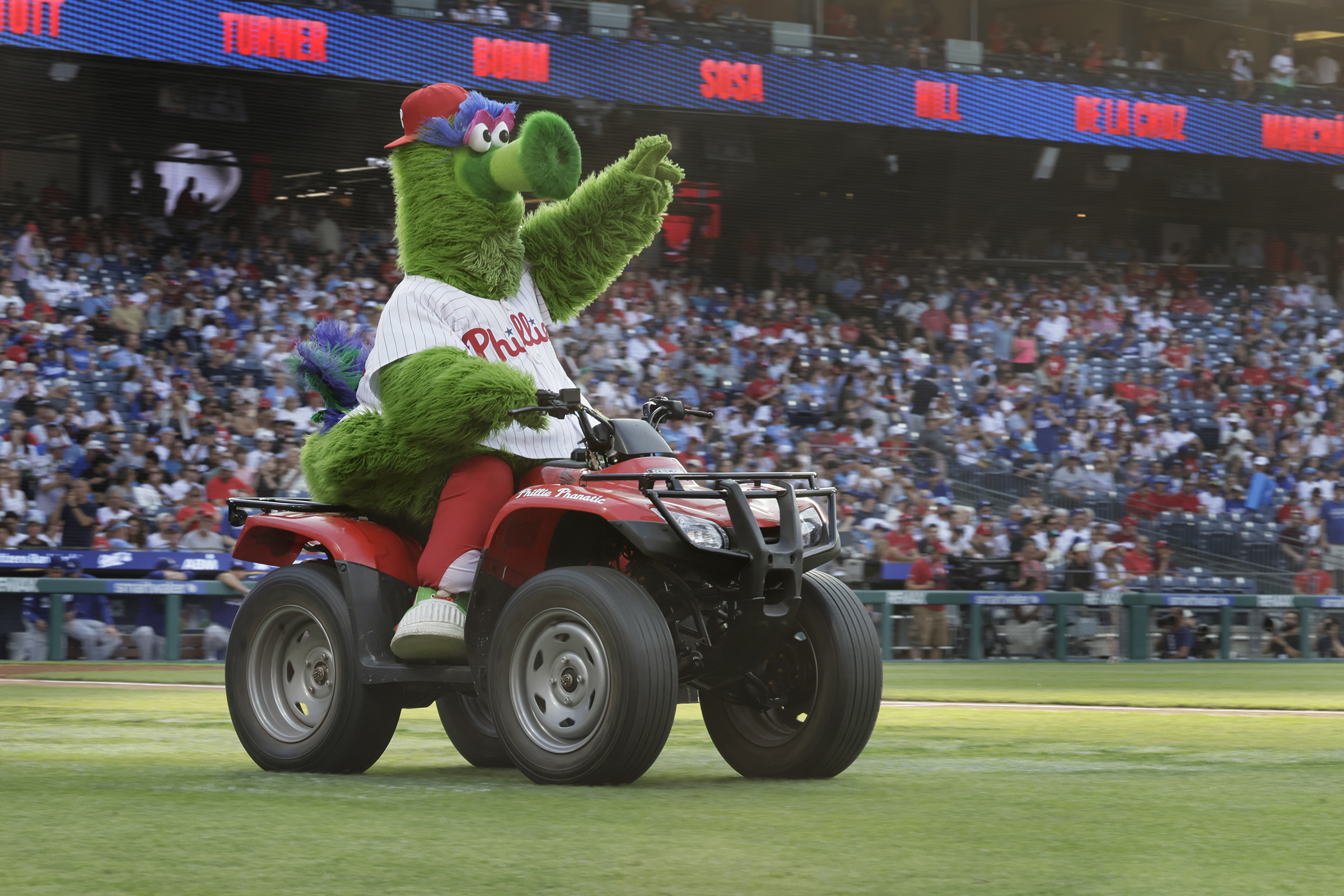
    The Phillie Phanatic has been entertaining fans since 1978.Elizabeth Robertson / Staff Photographer

    The costume was designed by the same people who created Miss Piggy and the Phanatic was introduced on a random weeknight in case the mascot was a bust. Giles tapped Raymond, then an intern from the University of Delaware, to step into the costume. Big Phan explains why that choice was perfect: Raymond had a big personality and had communicated non-verbally at home because his mother lost her hearing from Meniere’s disease.

    The Phanatic became a sensation that quickly outgrew South Philly. The mascot has appeared everywhere from late night TV to The Simpsons to rock concerts. In Philly, he’s the Phanatic. But elsewhere, he’s more than just a Major League Baseball team’s biggest fan. The Phanatic grew into a piece of pop culture. So who better to tell the story than people who lived it?

    “I’m not under the illusion that I’m the only one who could make it, by any means,” Hoag said. “But I do feel like you have to be from Philly. I think it helps if you were around the Phanatic as a kid and had those experiences that I did and had a personal connection to it.”

    ‘A very selfish idea’

    Hoag had recently finished his latest film and was wondering what he could do next while he was watching a Phillies game on TV. There was his next project: The Phanatic.

    “Who wouldn’t want to make a documentary about the Phanatic?” said Hoag, who lives in Austin, Texas. “In many ways, it was a very selfish idea. I wanted there to be one so I tried to get people to let me make one.”

    The film was funded by local donors, worked on by a Philly illustrator, and aided by a local puppeteering company. Morgan Betz, the grandson of a former Phillies owner, is a producer. The brothers were not the only local connection to a film about a local icon. Hoag said they hope to secure a distribution deal with a streaming service after the Philadelphia Film Festival.

    The 95-minute film encapsulates how a green flightless bird from the Galápagos Islands became a piece of Philadelphia. It helped that everyone working on it already knew why.

    “I didn’t have to explain to them how powerful the Phanatic is to young kids because they lived it,” Raymond said.

    The brothers from Section 234 traveled the country as they conducted interviews with people like Bryce Harper, Chase Utley, and Schmidt along with Lil’ Dickey, Jason Kelce, and Simpsons producer Christine Nangle, who grew up in Northeast Philly. Tyler peppered the questions while Hoag rolled the camera, working together just like they did in their home in Gwynedd Valley.

    “We really became kids again,” Hoag said. “We would always be texting about mascots. I don’t want to talk smack on other mascots, but we have opinions on the other ones we see. He goes to a lot of games and he would snap a photo and be like ‘Look at this clown’ or ‘This one’s pretty good.’ It was fun to relive our Phillies days.”

    The documentary traces the mascot’s history before it tackles the depression Raymond battled, the stress of being the Phanatic, and the death of his mother. Raymond left the Phillies after the 1994 season and handed the Phanatic to Tom Burgoyne, his understudy who has done the job ever since.

    Tyler Kepner (left) and brother Hoag as children in Montgomery County.Hoag Kepner

    Raymond has spent years as a motivational speaker, training himself to not become emotional when he talks. But that didn’t help him when he sat with the Kepners and talked about his mom.

    “As a speaker, the worst thing you can do is to disengage your audience,” Raymond said. “So what they teach you is if you’re going to go through something emotional, you don’t want to lose your audience. It’s a human feeling but as soon as you lose composure, the audience is worried about you and you’ve disengaged them. I’ve told this story so many times on stage and it requires practice and focus.

    “When I told it in front of the cameras, I just broke down. So what I felt good about is that it was finally coming out in a way for me. It was cathartic because I wasn’t worried about telling it to an audience. It just happened.”

    The brothers interviewed Giles, who died earlier this month, and spoke to the person inside the Gritty costume but didn’t reveal their identity. The doc tells how Burgoyne found the job by searching The Inquirer’s classified ads after feeling burned out by his entry-level sales gig. And it follows Burgoyne around the ballpark as the 61-year-old still makes the mascot come alive all these years later.

    “It’s about the Phanatic, but don’t think it’s about this furry mascot,” Hoag said. “It’s about these two guys and their journey and purpose. Talk about two people whose purpose was so clearly defined. That’s all we want in life: What’s my purpose? I want to feel like I was made for something and I really do something. These guys were perfectly suited for it and they fulfilled their purpose in a way that’s like, ‘Ahh, Wouldn’t it be great if we all had that?’ Hopefully this inspires people to find that.”

    The 95-minute film “Big Phan” encapsulates how a green flightless bird from the Galápagos Islands became a piece of Philadelphia.Yong Kim / Staff Photographer

    The coup de gras

    The Phanatic came into Section 234 with the same chaotic energy he did years earlier when he visited the Plymouth Meeting Mall.

    “You’re that little and you can’t believe he’s at your mall,” Tyler said. “Like ‘Oh my god, he’s here.’ He’s not at the stadium. He’s where I hang out. It was like seeing Bob Dernier at the Magarity Chevrolet. I was like, ‘I can’t believe Bob Dernier is at the Magarity Chevrolet.’ It blew my mind. It was the same thing with the Phanatic.”

    The mascot spotted Barkley in Section 234, started bowing to him, and then brought him gifts. First, he stole someone’s popcorn and brought it to Barkley. Next, a hot dog.

    “Then he grabs a woman’s purse and gives it to Charles,” Tyler said. “And then in a bit that you could never do anymore, he grabs a lovely young lady, sweeps her off her feet, and brings her to Charles as the ultimate gift he could give Charles Barkley. Charles was dying. He was literally knee slapping. That was the Phanatic. He could go right up to the edge sometimes. That’s the stuff you would see in 234.”

    Phillies PR director Larry Shenk gave Tyler a press credential when he was still a kid, allowing him to go into dugouts and interview players for his newsletter. Tyler typed them at home, had friends armed with magic markers help color the covers, and mailed it to subscribers like Bob Costas, Harry Kalas, and Tug McGraw.

    One of Tyler’s final issues was the cover story with Raymond. He mailed Raymond a copy and the Phanatic returned it with a signature.

    “To Tyler, I will see you at the top someday” Raymond wrote. “Love, The Phillie Phanatic.”

    The newsletter was the launching pad for Tyler’s sports writing career as he is now one of baseball’s esteemed chroniclers. And the brothers dug up that old issue two years ago, hoping it would convince an old friend that they were the guys for the job.

    “I think that was the coup de grâce for Dave,” Hoag said. “He said he was looking at it with his wife and she said, ‘These are the guys.’ I think he enjoyed that there was a real connection. I said, ‘We met when I was 8 and you high-fived me in Section 234. He said, ‘Oh yeah, I remember.’ All of a sudden I have this responsibility that I wanted. But I’m like, ‘Wait, I’m telling the Phanatic story? Whoa. This is important.’”