Officials from Drexel University and the Academy of Natural Sciences were scheduled to meet Friday to continue discussing a path forward — with a potential split of the two organizations hovering over talks as one possibility.
“That’s certainly a [potential] outcome,” said one source familiar with the situation who requested anonymity because they weren’t authorized to speak on the matter.
But there likely also will be “reconciliation attempts,” the source said. “We either abide by the terms that we have been talking about or don’t.” If both sides abide by the terms, they said, “then everything continues peacefully.”
The Academy and Drexel announced an affiliation in 2011, merging aspects of their operations but keeping separate boards. The Inquirer reported in April that Drexel told the Academy to either fully merge with the university or it would move to disaffiliate, and the two have been negotiating a new affiliation agreement.
Neither the Academy nor Drexel returned calls early Friday evening seeking comment on whether the meeting had ended and its outcome.
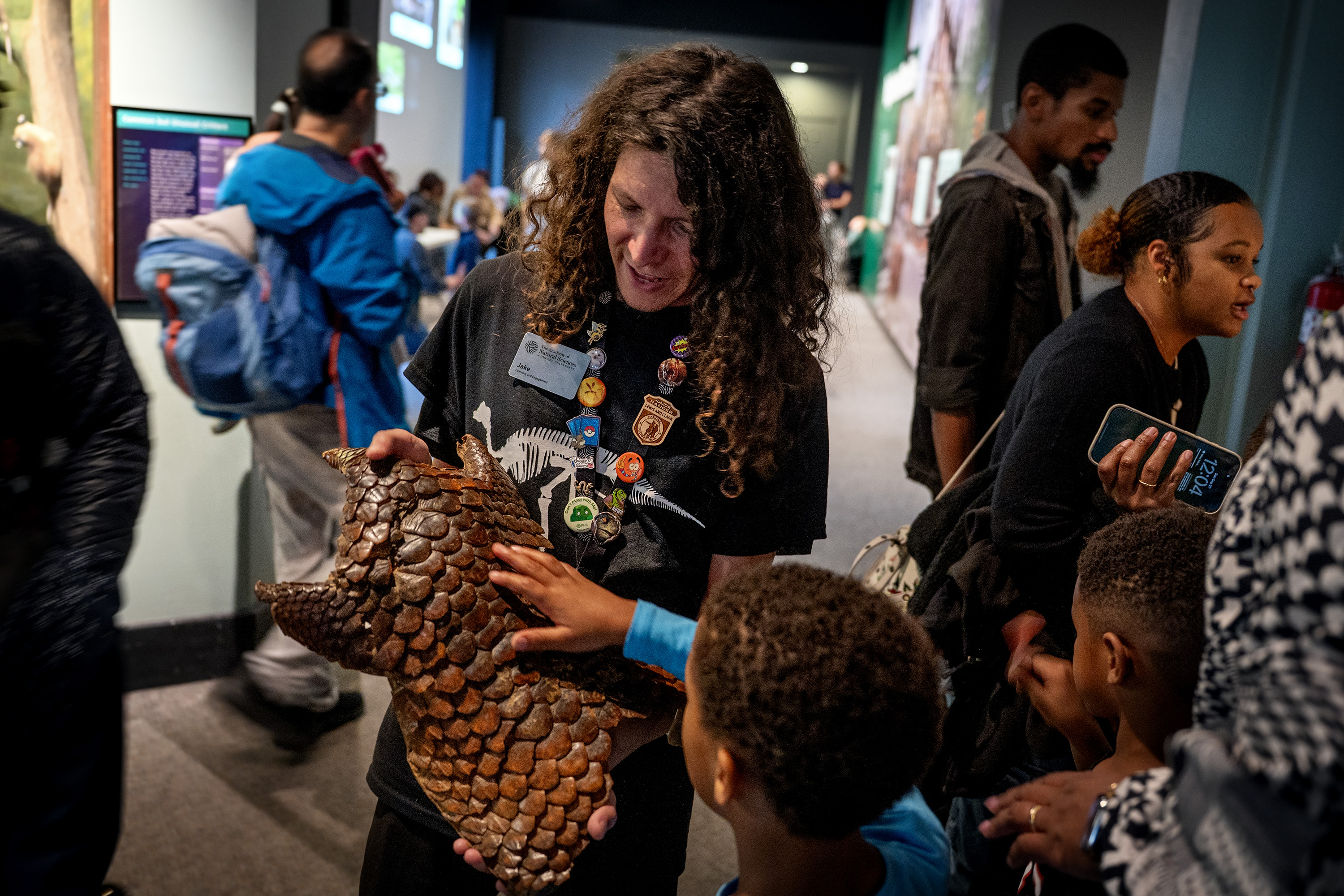
Science educator Jake Cook lets visitors feel the skin of a pangolin — a scaly anteater — at the Academy of Natural Sciences of Drexel University on Sunday.Tom Gralish / Staff Photographer
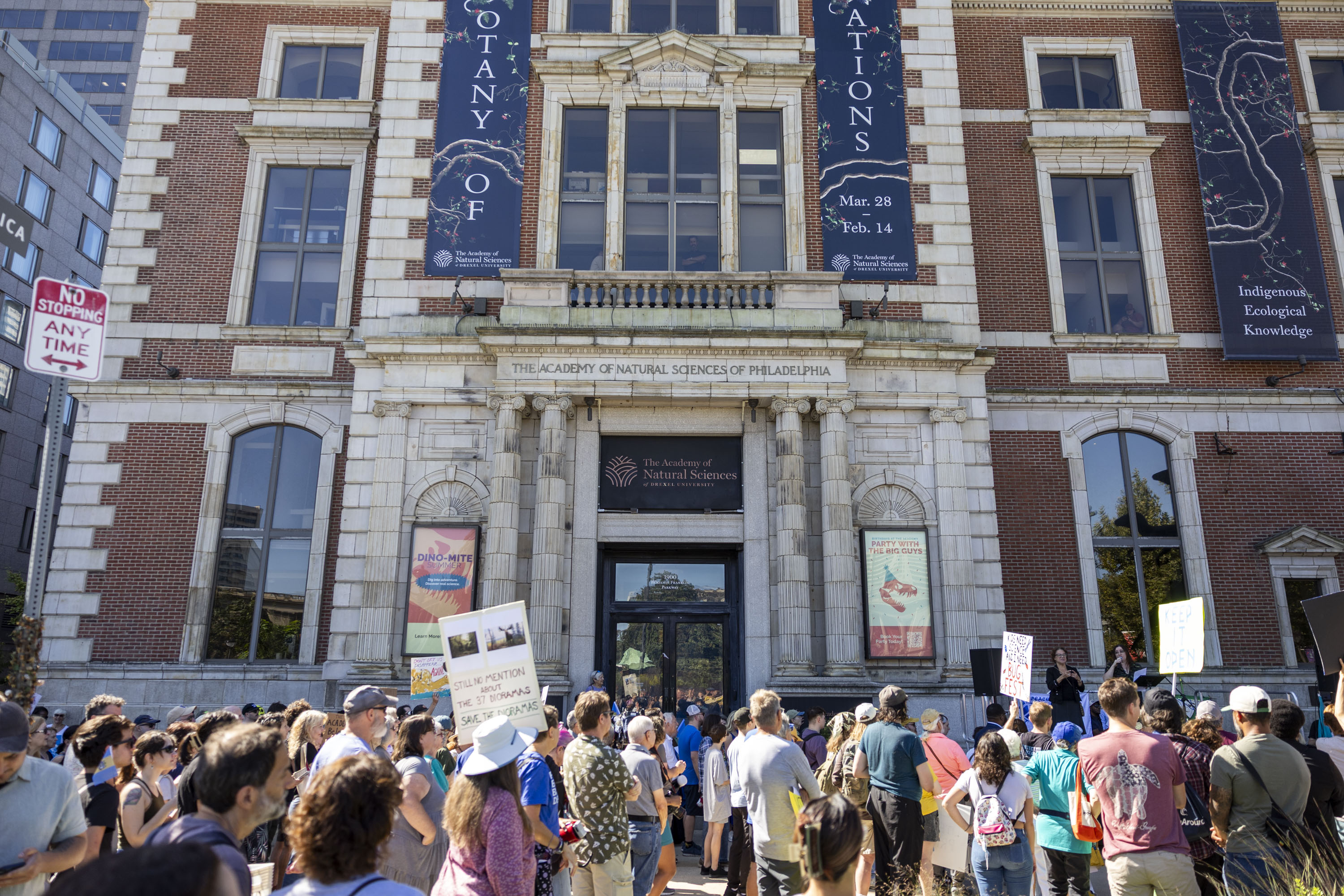
Drexel and the Academy disclosed plans in September to close the Academy museum, move the 19 million specimens in the collection, and eventually sell the building at 19th Street and the Benjamin Franklin Parkway.
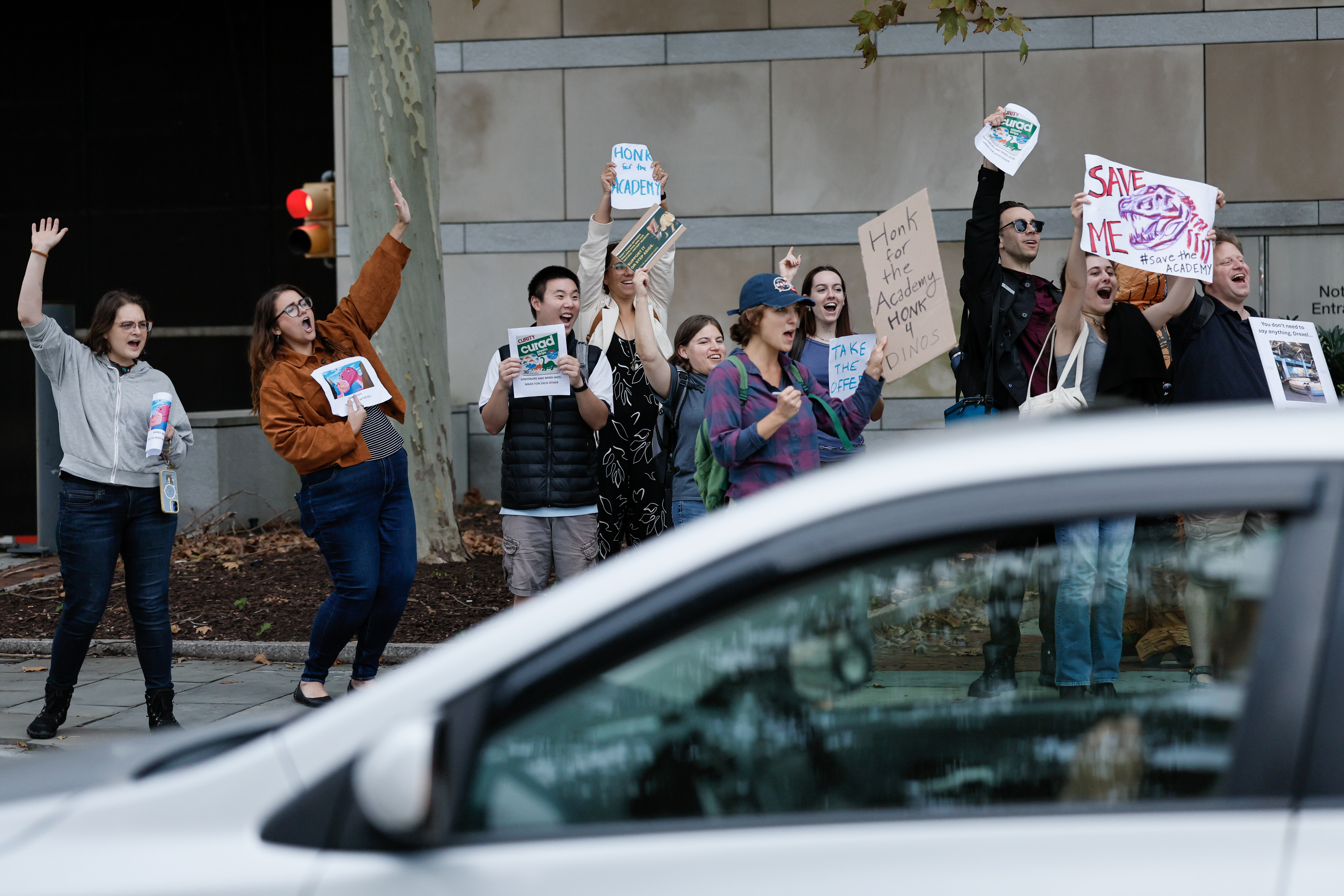
A group of protesters earlier this week gathered at the same time as a Drexel board meeting and called on the university to disaffiliate and give the Academy a chance to negotiate what’s best for it.
Drexel spokesperson Niki Gianakaris said earlier this week that the university had offered the Academy a path to disaffiliation.
“We have been, and remain, open to that possibility,” she said. “We continue to engage in good-faith discussions with the Academy about its future.”
Her comments came days after the William Penn Foundation made public its offer to underwrite operating costs for at least a year and keep the museum’s doors open while a permanent solution can be worked on.
William Penn said the goal was to “provide time to test the interest of other funders and supporters who have not been engaged so far,” and the Academy leadership said it was open to the reprieve.
The Academy, founded in 1812, has operated a museum since 1828, and its announced closure has generated street protests, more than 100,000 petition signatures, editorials, and the scheduling of City Council hearings for next week.
The museum was shuttered to the public at the end of the day last Sunday, following large numbers of visitors in recent weeks but prior years of declining attendance. In the 2025 fiscal year, it brought in 126,000 visitors — down from 2014 when it welcomed 208,000 science fans to its “dioramas, dinosaurs, butterflies, live animals, and the renovated Children’s Nature Discovery Center, Outside In,” according to the Academy’s tax return from that year.
The “Save the Academy” coalition gather outside of the National Constitution Center on Tuesday in an effort to keep the Academy of Natural Sciences museum open.Elizabeth Robertson / Staff Photographer
Since the beginning of the Drexel-Academy affiliation a decade and a half ago, “our goal has always been to improve the financial position of that museum and the Academy of Natural Sciences as a whole, the research and the collections,” said a Drexel source familiar with the matter who was not authorized to speak publicly about it. “That was written into the original affiliation, and as we moved forward in time we hit snags and different things we never quite achieved that financial resilience then. And then COVID hit and that became even more challenging for the museum.”
Drexel said that it had not received a formal proposal from William Penn but that it would be open to talking with the foundation about the matter.
Gianakaris did not comment Friday on whether talks had been held or scheduled.
“What William Penn has put forward is not enough,” said the first source, who had noted that a split was a possible outcome. “That wouldn’t do it.”
Gianakaris said Drexel’s focus is on “safeguarding the Academy’s collections and research enterprise” while developing a “long-term model” that allows the public to engage with its collections.
Drexel’s board of trustees earlier this week discussed the matter during a two-day meeting that was scheduled months ago. The meeting, the second held since Antonio Merlo became Drexel’s president July 1, 2025, was for the board to “focus on the university’s long-term future, strategic priorities and governance effectiveness,” Gianakaris said.
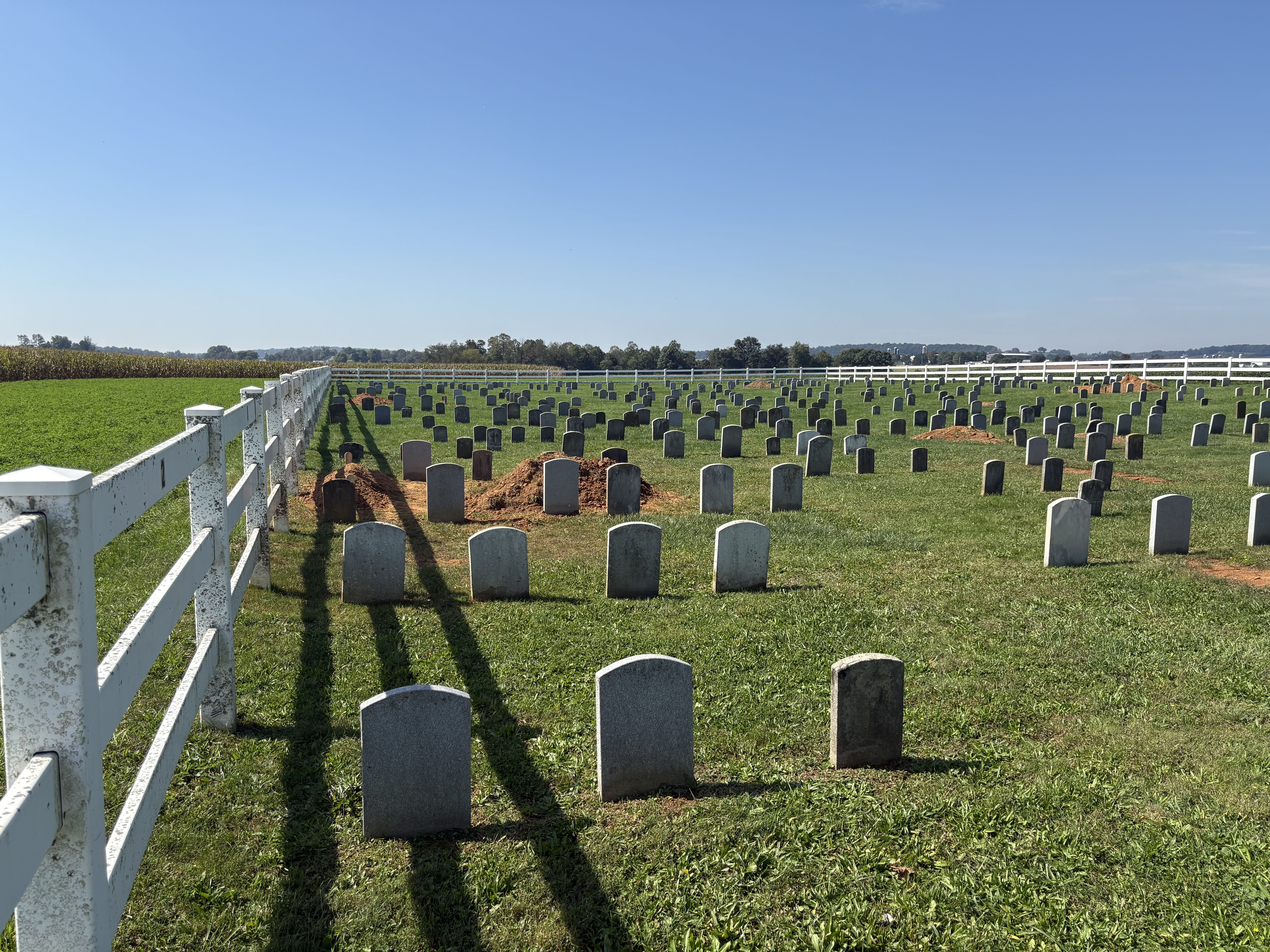
The headstone had not yet been placed Thursday on the freshly dug grave where a 20-year-old Amish woman was buried this weekamid the rolling clover fields and dairy farms at the edge of suburban Philadelphia.
Newly wed, and receiving treatment for blood cancer, she was the last of nine siblings sickened when measles swept through her unvaccinated family’s home on a one-lane road in Lancaster County.
At first, the home remedies that eased their symptoms seemed to help her, too: Soothing the fever with bath soaks. Calming the rash with coconut or olive oil. Cloistering in a dark room to ease light sensitivity.
Then her fever spiked. She struggled to breathe and had to sleep sitting up in a recliner in the living room, her maternal grandmother recalled.
Her family does not operatecars, in keeping with Amish beliefs, so they hired a driver to take her to the emergency department at Hershey Medical Center about an hour away. She died about two weeks later in the intensive care unit there, her grandmother said.
Speaking on the porch of her stone farmhouse, the grandmother described the family’s experience with Pennsylvania’s largest measles outbreak in three decades, now the nation’s largest. At her request, The Inquirer withheld her name and that of her deceased granddaughter to protect the family’s privacy.
She said her granddaughter ultimately developed double pneumonia and died after the family decided to discontinue use of a ventilator.
The cancer made her especially vulnerable to a virus as contagious as measles, which will infect 9 in 10 unvaccinated people who are exposed.
“Her immune system wasn’t built up,” the grandmother said. “She just couldn’t take it with the measles.”
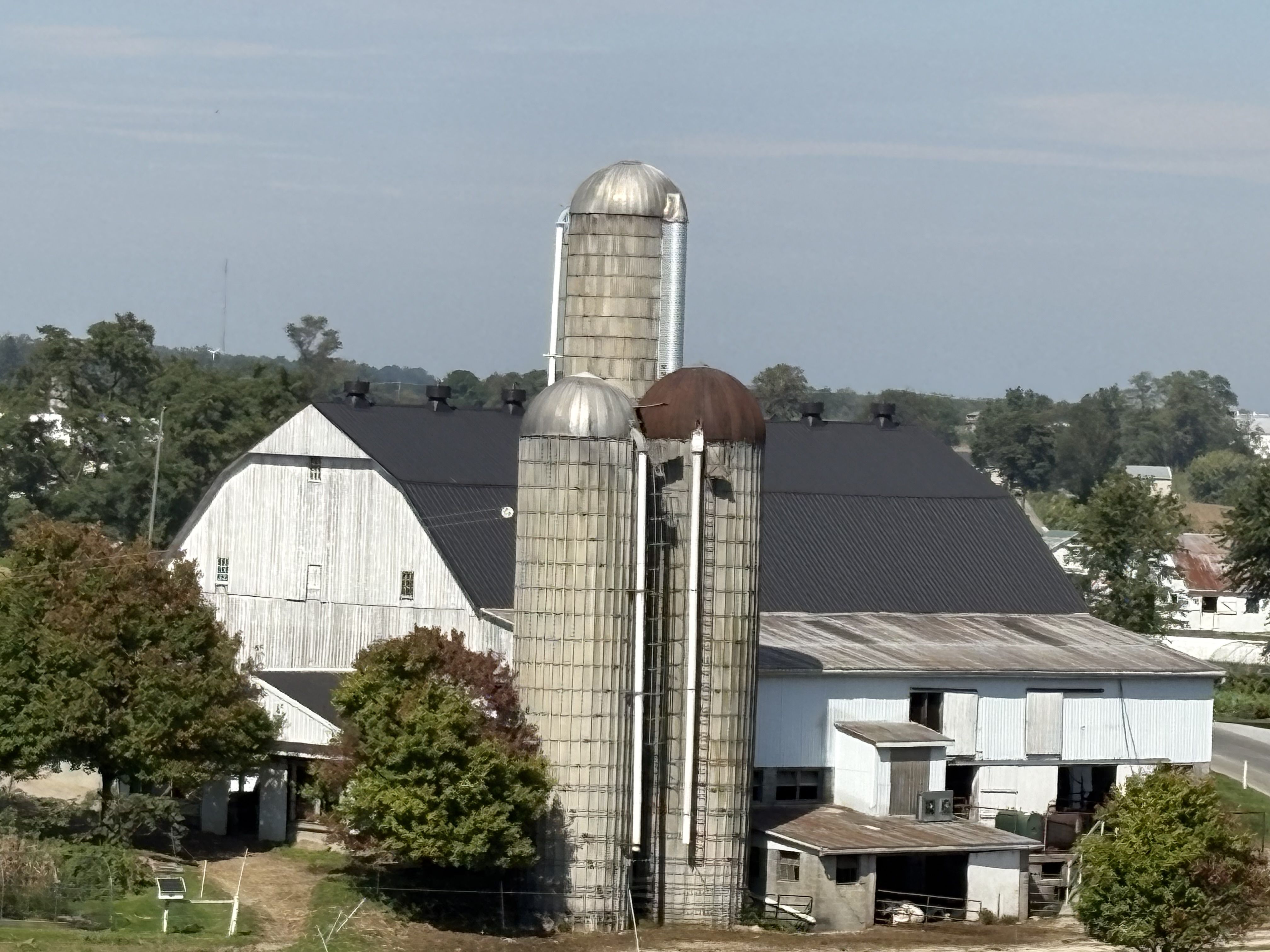
The Lancaster County borough where a 20-year-old Amish young woman died from pneumonia caused by measles is dotted with diary farms and grain silos.Wendy Ruderman
Pennsylvania reported on Wednesday its fifth measles-related death, revealing only that the latest fatality was an unvaccinated Lancaster County resident. Health officials did not provide further details, citing privacy laws.
But it appears from the grandmother’s account, along with other records and news reports, that three of the five deaths occurred in adults with measles. Other reported deaths included an 18-year-old Amish woman from Mifflin County and a 40-year-old from Jefferson County with severe respiratory conditions. Two Amish infants in Lancaster County who had confirmed measles cases also died. All five cases involved people who were unvaccinated, either by choice or because they were too young to receive vaccines.
The number of deaths in adults is striking, said Paul Offit, who heads the Vaccine Education Center at the Children’s Hospital of Philadelphia. Widespread childhood vaccinations had eradicated the disease in the United States, leaving mostly children too young to be vaccinated at high risk in recent decades. Now multiple generations of unvaccinated children are adults, exposing wider vulnerabilities across the state, Offit said.
“We’re aging out a population that was never vaccinated,” he said.
After learning the details of the 20-year-old’s death from The Inquirer, Offit explained that measles commonly leads to pneumonia.
“The measles virus reproduces itself in the lungs and can cause severe and occasionally fatal infection,” he said.
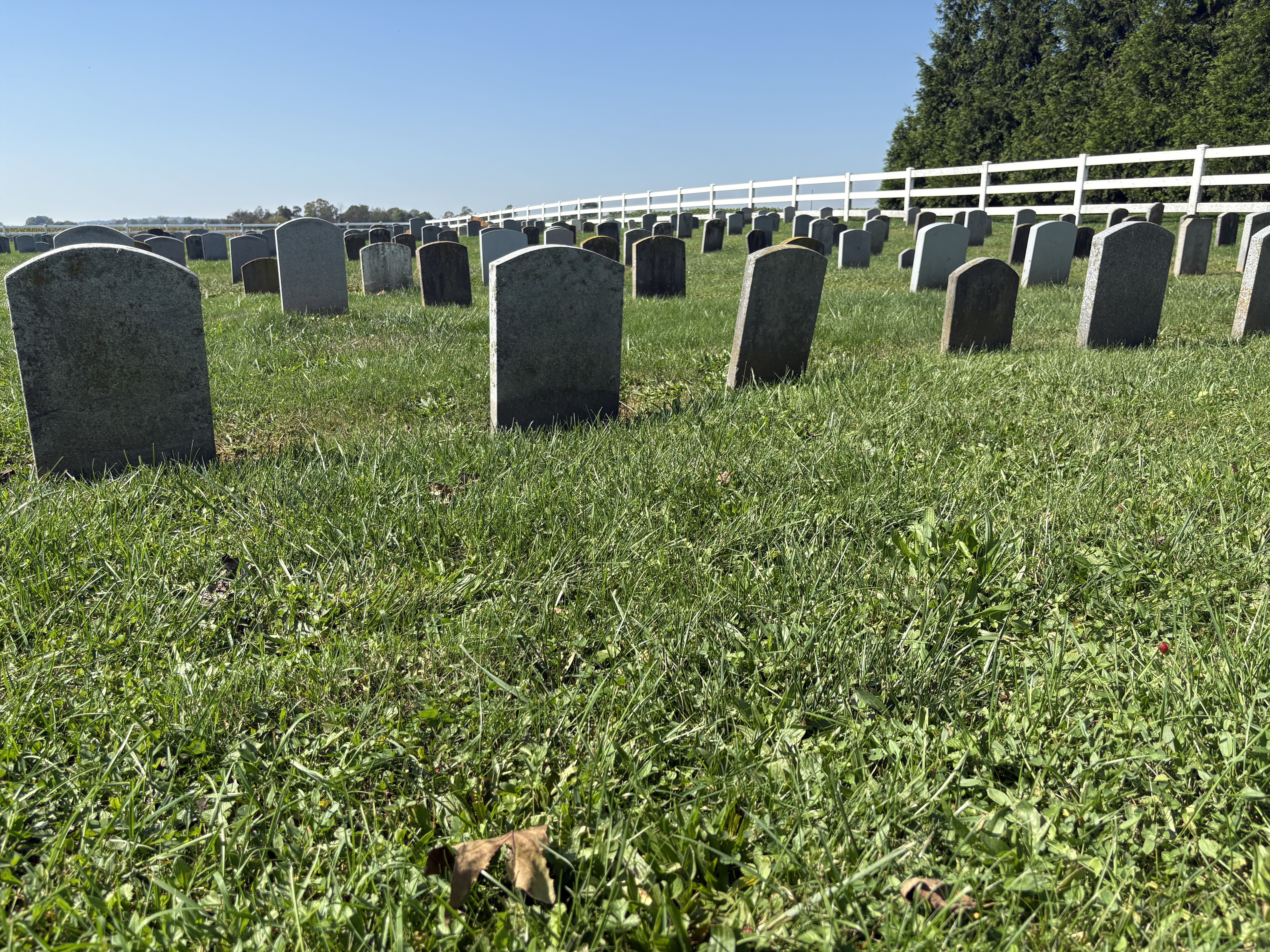
The Amish cemetery where the 20-year-old woman is buried.Wendy Ruderman
Too late to get vaccinated
The young woman, the second oldest in a line of nine siblings, ages 6 to 22, fearedgetting measles in the outbreak in Lancaster County, her grandmother said.
About two years ago, she was diagnosed with leukemia, a blood cancer, and began medical treatment with the help of an “English” neighbor — as Amish call outsiders — to drive her to her medical appointments.
The treatment regimen of chemo and steroids further weakened her immune system. She knew she was at risk of more severe sickness from a viral infection like measles, which started spreading throughout her family in the late summer.
Her eight siblings, her parents, and her new husband all got sick, the grandmother said.
Along with home remedies, family members drank extra fluids to stay hydrated, the grandmother said.
“They weren’t worried,” the grandmother said. “Measles just has to take its course.”
Although no one in the household was vaccinated, they are not opposed to the vaccine based on Amish beliefs. They believe it’s an individual choice, she said, and many Amish people opt not to get vaccinated because they “don’t know what’s in it.”
“We wouldn’t tell people not to get vaccinated,” the grandmother said. “It’s up to each person.”
As illness spread in her household, her granddaughter grewmore worried about getting the virus than about the vaccine that medical authorities have long considered safe and effective.
She asked her doctor if she could get a measles vaccination. Her doctor said no. “She wasn’t allowed to get the shot because she was on chemo,” the grandmother said.
The measles vaccine contains a live but weakened virus, and her granddaughter was already immunocompromised from the leukemia treatment.
After getting measles, her granddaughter began to feel better in early September. She picked vegetables from the family’s garden to make soup using tomato juice as the broth. She canned jars for the coming cold months, her grandmother said.
Then, in mid-September, she spiked a high fever, and her breathing became labored.
“She could hardly breath. Her lungs were just in bad shape,” she said.
The Amish typically only seek emergency hospital treatment until “sometimes we’re dying,” the grandmother said, recalling how her husband got chided by a doctor in 2018 for waiting too long to get the heart surgery he desperately needed.
“We do what we can at home,” she said. “We have so many natural things we can do.”
By Sept. 11, the family knew it was time to take her granddaughter for emergency care at Hershey Medical Center.
At Hershey’s ER, doctors gave her a chest X-Ray, but sent her home before reading it, the grandmother said.
“They wouldn’t do anything for her. They didn’t want her there,” shesaid. (A Hershey spokesperson did not reply to a request for comment on Friday.)
A Hershey provider later called and left a voicemail message asking the family to bring her back. Although the family has a phone in their house, the grandmother said they rarely use it. With the ringer off, all calls go to voicemail, she said.
A driver took them back to the hospital, where she was admitted on Sept. 14. An ultrasound showed fluid between the lining of her lungs and in her lungs. She was diagnosed with double pneumonia, her grandmother said.
Hospital staff hooked her up to supplemental oxygen.
“They had the oxygen up as far as they could and she still had to work to breathe,” the grandmother said.
About a week later, they moved her to the intensive care unit, where they sedated her so they could put her on a ventilator while intubated.
The hospital allowed two family members at a time to sit by her bed. Her granddaughter’s young husband and the girl’s mother sat vigil, the grandmother said.
As she continued to deteriorate, life support was the only remaining option, and it carried the risk of neurological complications, including brain death.
The family didn’t want that, the grandmother said. “They couldn’t do anything more,” she said.
They turned off the oxygen and shut off the ventilator, Family members, including her new husband’s parents, gathered around her bed.
She died with a breathing tube still in her mouth, the grandmother said.
A happy first year of marriage
More than 300 people came to the family’s home on Monday for the funeral service and viewing. She was buried in a cemetery near the family’s home, about a month before what would have been her first wedding anniversary.
Despite being ill with leukemia, her granddaughter’s trademark “rosy pink cheeks” and “beautiful smile” beamed on her wedding day, her grandmother recalled.
The November 2025 wedding, held at the family home, was a festive affair, with plates loaded up with chicken and vegetables, chicken and filling, pickled cabbage, and cooked celery.
She feels sorry for her granddaughter’s husband, who declined to be interviewed. “They had a good year together,” she said.
At the young woman’s home, two black dogs, with hay in their matted curly hair, greeted an Inquirer reporter on Thursday. Some of her family members were outside, unloading cornstalks from a horse-drawn wagon and feeding them into a John Deere harvesting machine.
They stopped working and spoke to one another in Pennsylvania Dutch, a centuries-old German dialect, before fetching the young woman’s father, who declined to be interviewed.
Staff writers Aubrey Whelan and Sarah Gantz contributed to this article.
Democratic State Rep. Malcolm Kenyatta on Friday called for Republican Rep. Aaron Bernstine to resign from the Pennsylvania House after he reportedly useda homophobic slur against Kenyatta, who is gay, earlier this week.
“Pennsylvania is better and bigger than this,” Kenyatta, who represents Philadelphia, said in a video message posted to X Friday.
He added that he’s calling for Bernstine, who represents portions of Butler and Lawrence Counties in Western Pennsylvania, to step down “not because I’m angry at him or because he hurt my feelings. It’s because his behavior falls so far beneath what it must mean to be a member of the House of Representatives.”
“And when you use language that demonizes people, that belittles people, it’s never about one person. It’s indicative of what you will do to anybody, and what he’d say about any Pennsylvanian,” Kenyatta said.
Along with the alleged slur, Bernstine also allegedly said in a Harrisburg bar earlier in the week that Kenyatta had lost weight, which Bernstine reportedlyattributed to AIDS, according to PennLive.
Kenyatta was not present when the alleged remarks were made.
In his post, Kenyatta said he was “deeply grateful” to leaders of the Pennsylvania Building and Construction Trades Council “who stood up in real time.”
Michael Ford, the organization’s secretary/treasurer, overheard Bernstine’s alleged remarks and told PennLive, according to the news organization. Ford didn’t respond to requests for comment.
Addressing the incident in a statement Thursday, Bernstine said, “The allegations attributed to me are false. This is a political attack.”
After news broke, various legislative groups spoke out against Bernstine, including the Democratic National Committee, for which Kenyatta serves as vice chair.
“Hateful, homophobic, and racist attacks like this have absolutely no place in our politics, our communities, or our country,” DNC chair Ken Martin said in a statement.
Several Democratic lawmakers called for Berstine’s resignation. House Democratic leadership said it was “exploring potential next steps” and called on GOP leadership to hold Berstine accountable.
The Pennsylvania House Republican Caucus called the reported conduct by Bernstine, one of its members, “troubling,” and said it “does not comport with the values and professionalism Pennsylvanians expect of their state lawmakers.”
Bernstine has been the subject of controversy in the past.
In 2020, House Republican leaders called for Bernstine’s resignation after videos of him encouraging his young son to smoke and curse surfaced. Soon after, Bernstine was reelected, and the demands quieted.
Three years earlier, in the midst of Black Lives Matter demonstrations in which motorists were blocked, Bernstine posted on X, “If anyone EVER tries to stop my car on a highway with negative intentions… I will not stop under any conditions.”
On Friday, in concluding his remarks on X, Kenyatta suggested it’s time to move on.
“Let’s all in united voice demand better, demand more, and then let’s get back to work on the serious stuff,” he said.
ATLANTA — Like statues, there they stood, this Phillies team. Leaning against the dugout railing, chins resting on their crossed arms as they watched it all slip away once again.
This one was a slow death. But the end could have been discerned a mile away.
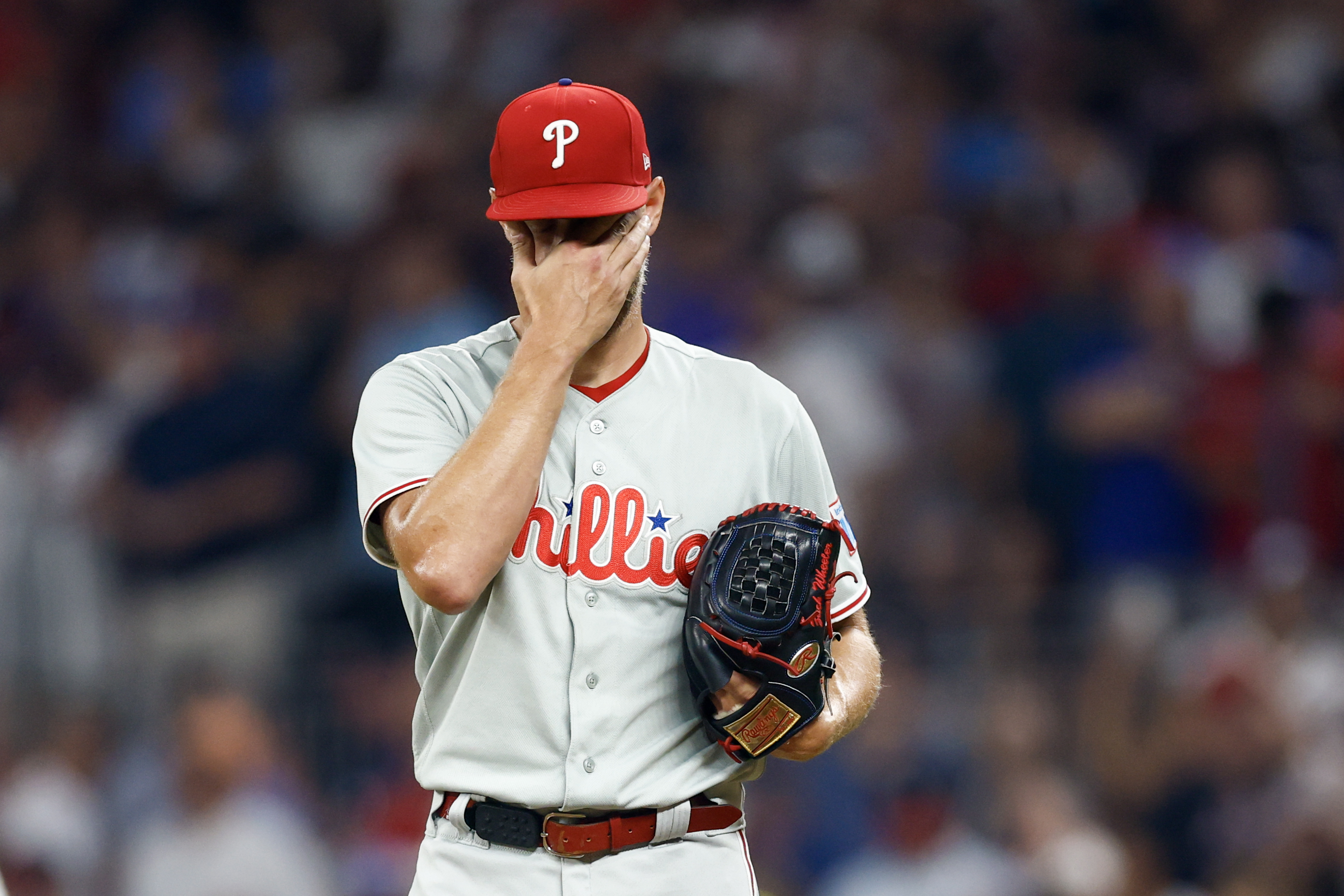
Even before Michael Harris II’s first-inning homer off Aaron Nola that gave Atlanta a lead it would not surrender. Even before Ozzie Albies’ fourth-inning homer off Zack Wheeler, which might have been the mortal blow.
It was the Phillies’ roster construction that led to this, a 6-2 loss to the Braves on Thursday night, the end of their season in Game 3 of the wild-card series. It was the lack of starting depth, the lack of a competent bullpen, the lack of reliable right-handed hitters. The weaknesses that at times the Phillies had been able to paper over were all amplified by the way their regular season ended, and directly led to their demise Thursday.
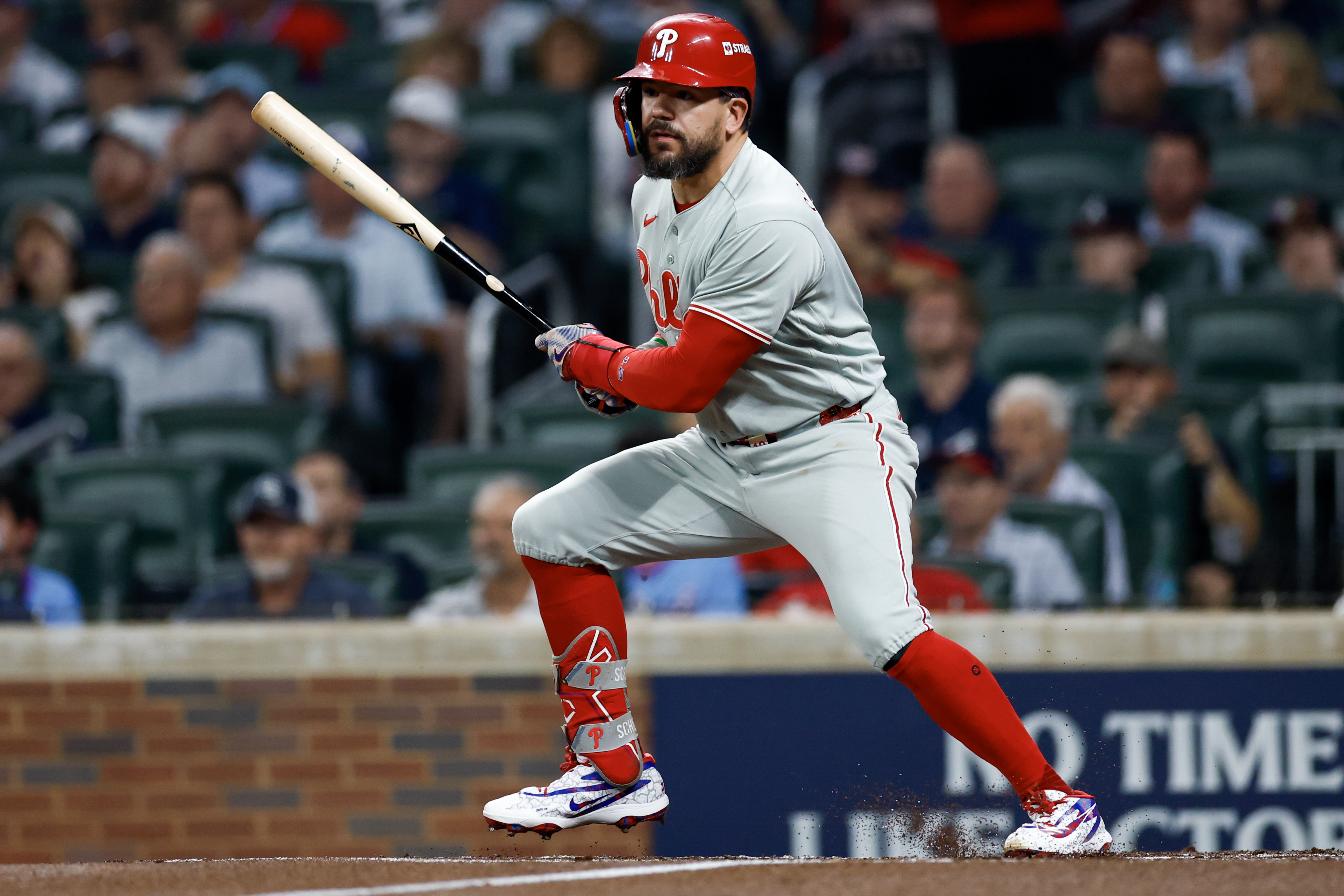
“It’s just as frustrating as last year, and the year before that,” said Kyle Schwarber.
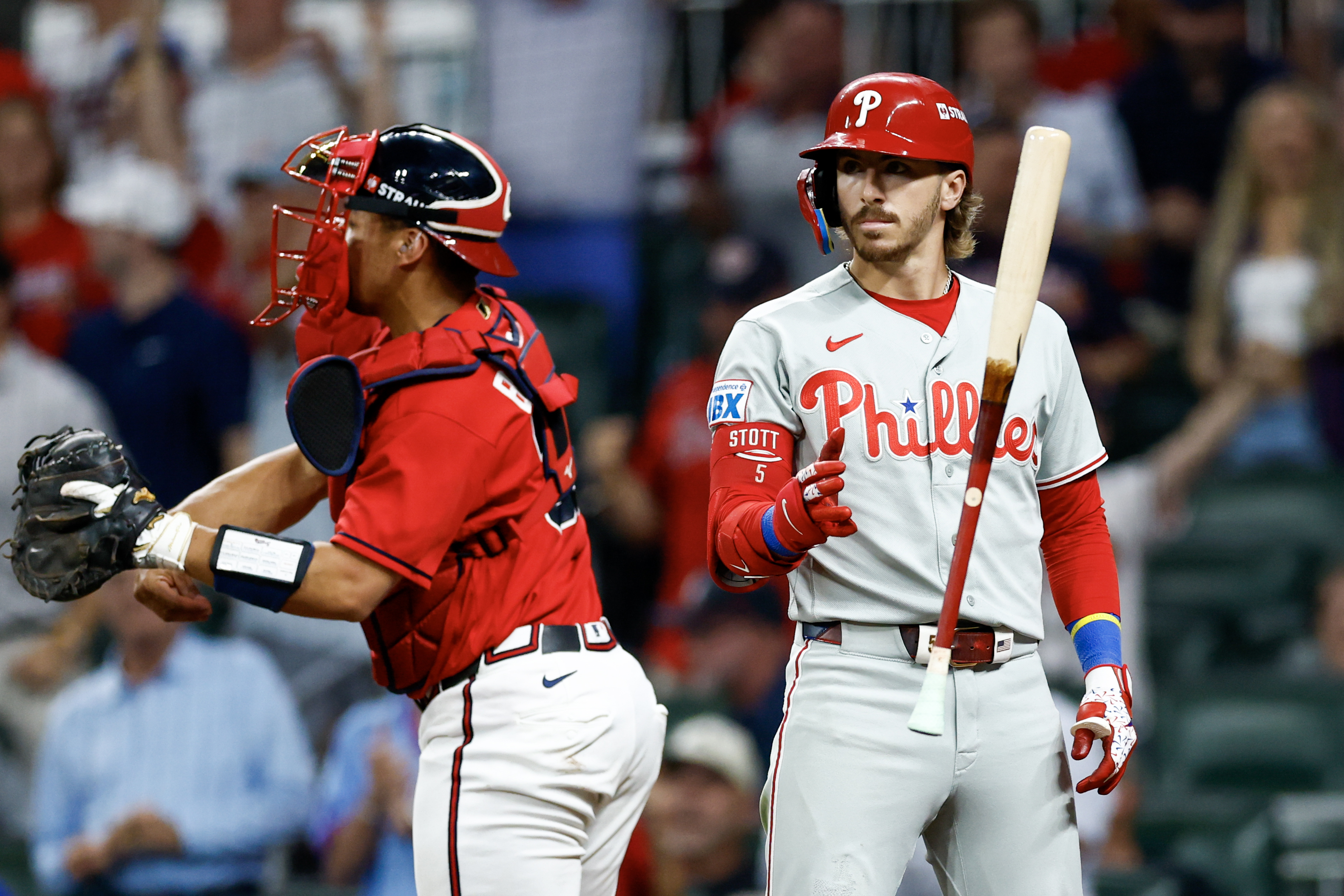
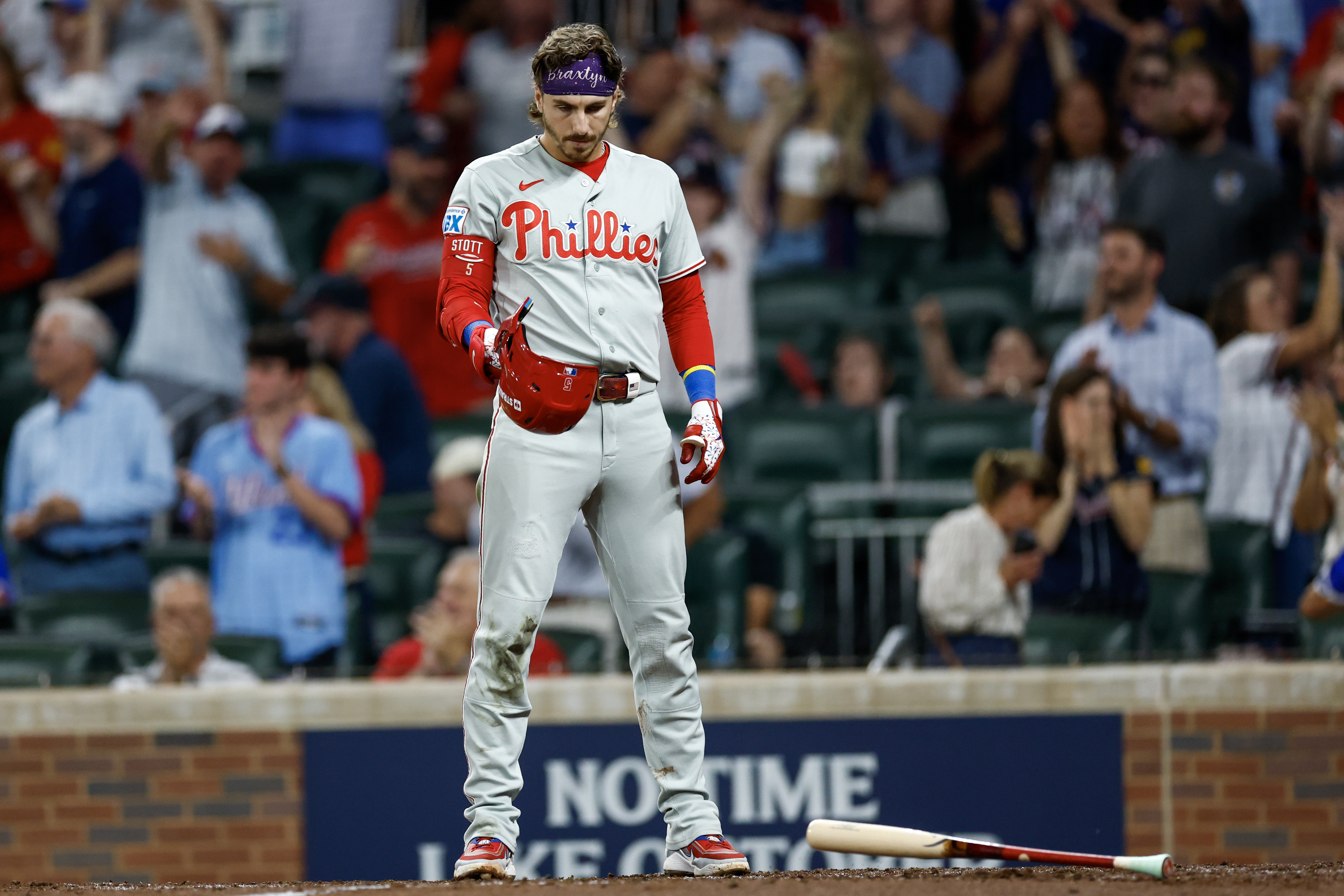
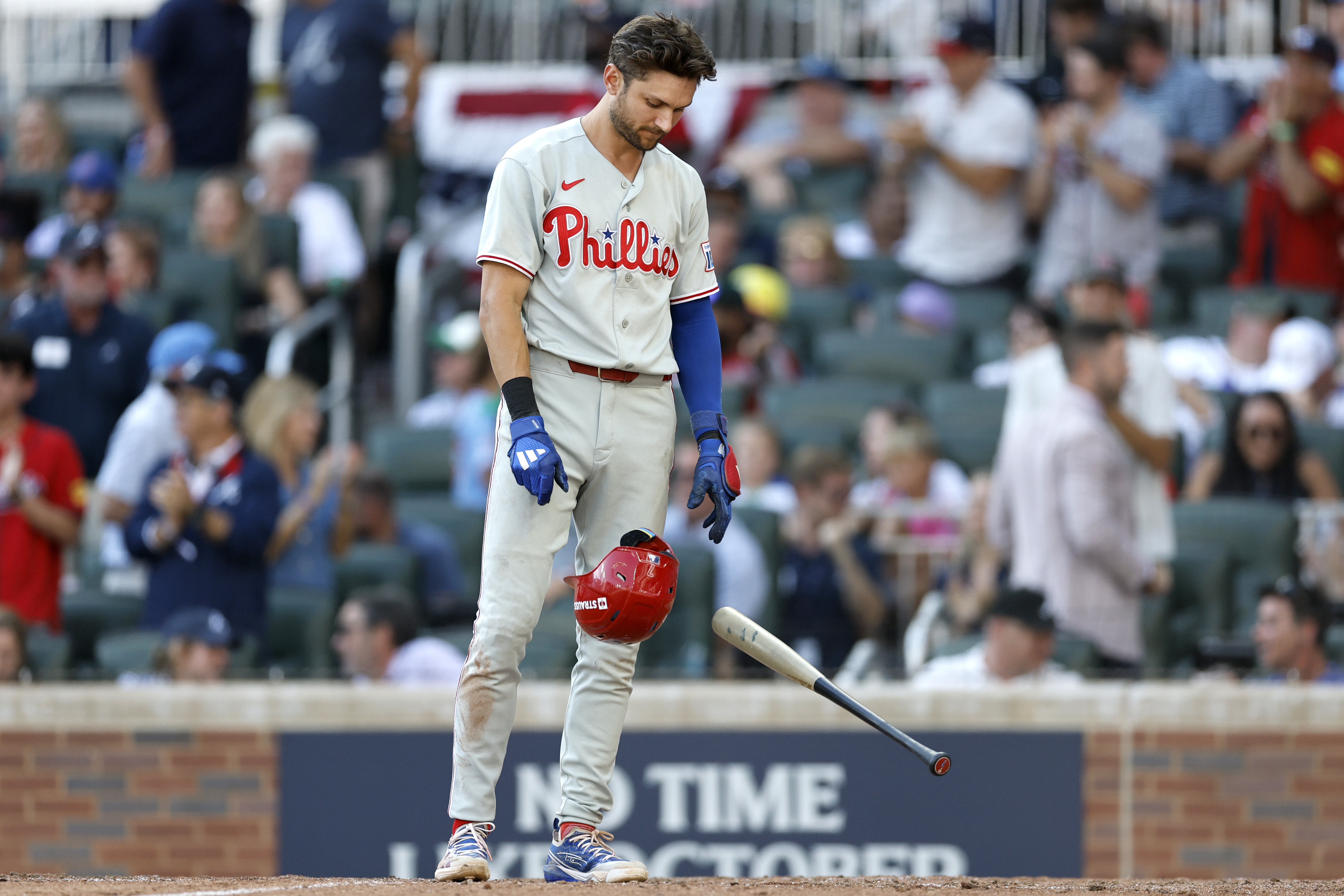
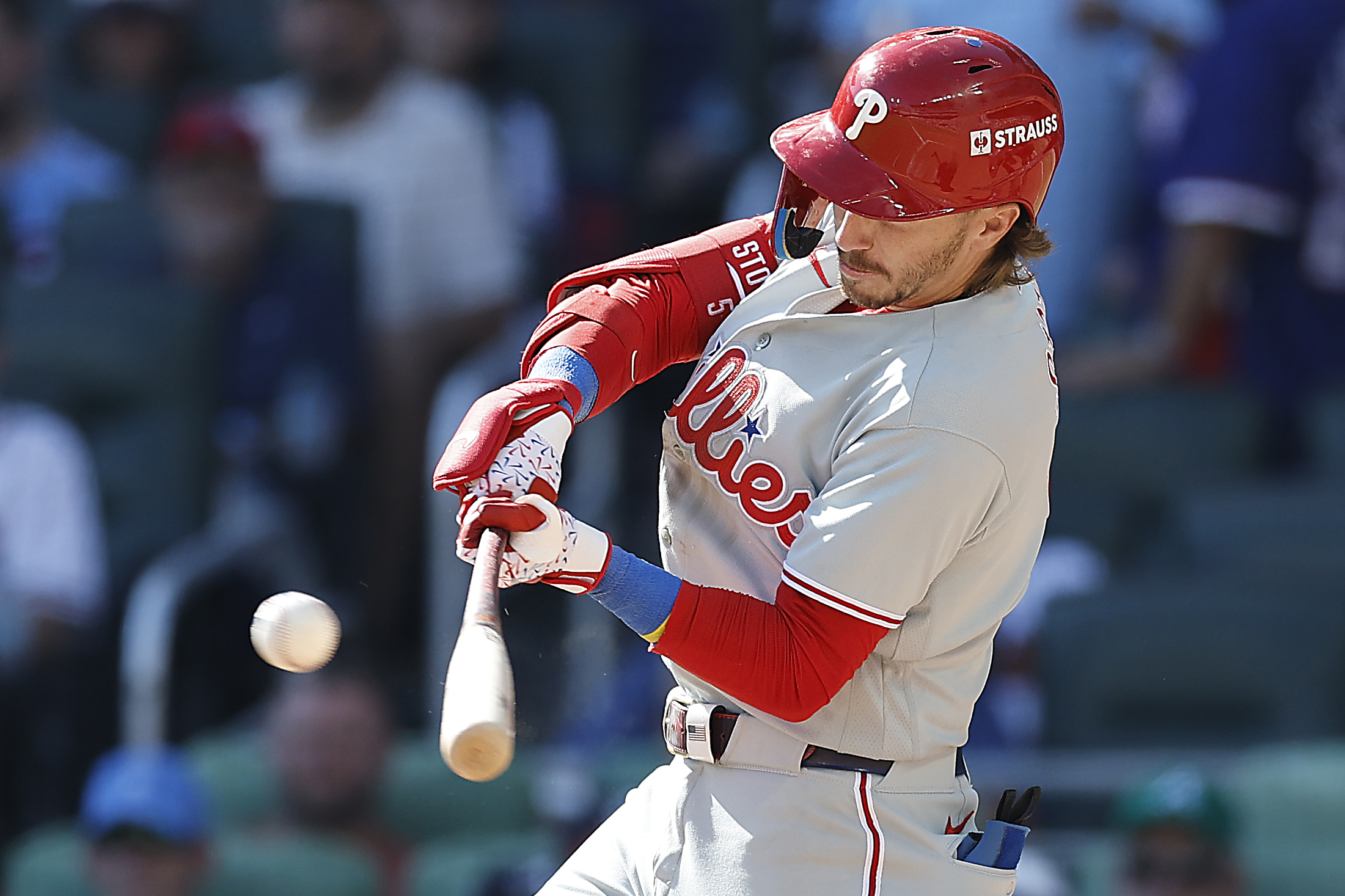
The Phillies’ Bryson Stott strikes out to end the fourth inning.Yong Kim / Staff Photographer
The four consecutive games lost in the final week, delaying a postseason clinch until the very last possible moment, loomed incredibly large. The Phillies used Nola on two days’ rest in Game 161 as a desperate attempt to secure a playoff berth — and it failed. They were then forced to use Wheeler in Game 162.
“Looking back, having your pitching set up is really important this time of year,” Trea Turner said. “We didn’t do a good job playing down the stretch to have that happen.”
Instead of being able to line up the top three arms in their formidable rotation for this three-game series, the Phillies had to cobble together a precarious plan. Jesús Luzardo, who returned from injury to also pitch in Game 162, could cover only five innings on Tuesday. Cristopher Sánchez started Wednesday, and the Phillies leaned on Andrew Painter in relief rather than their unstable bullpen.
That left Nola, who has struggled to keep the ball in the park all season, and Wheeler on short rest for Thursday’s elimination game.
None of president of baseball operations Dave Dombrowski’s trade deadline acquisitions — not Brooks Raley, nor the injured Luis Arraez and Caleb Kilian — were on the wild-card roster.
“We didn’t play as well as we wanted down the stretch, especially right there at the end, and we kind of had to piece it together,” Wheeler said. “This series, not ideal, but we’re all pros here, and when we get the ball, it’s time to compete, and it’s up to us at the end of the day.”
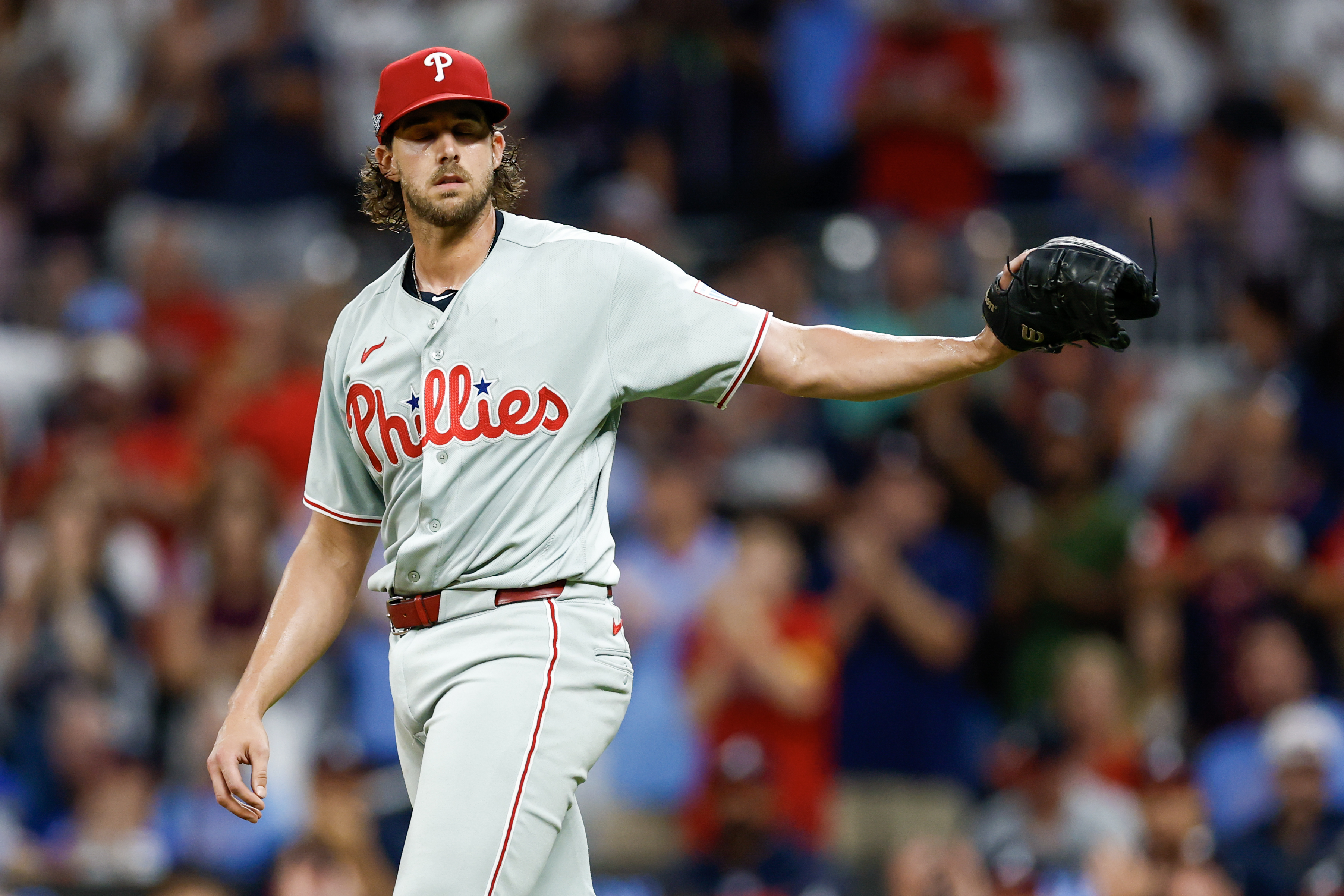
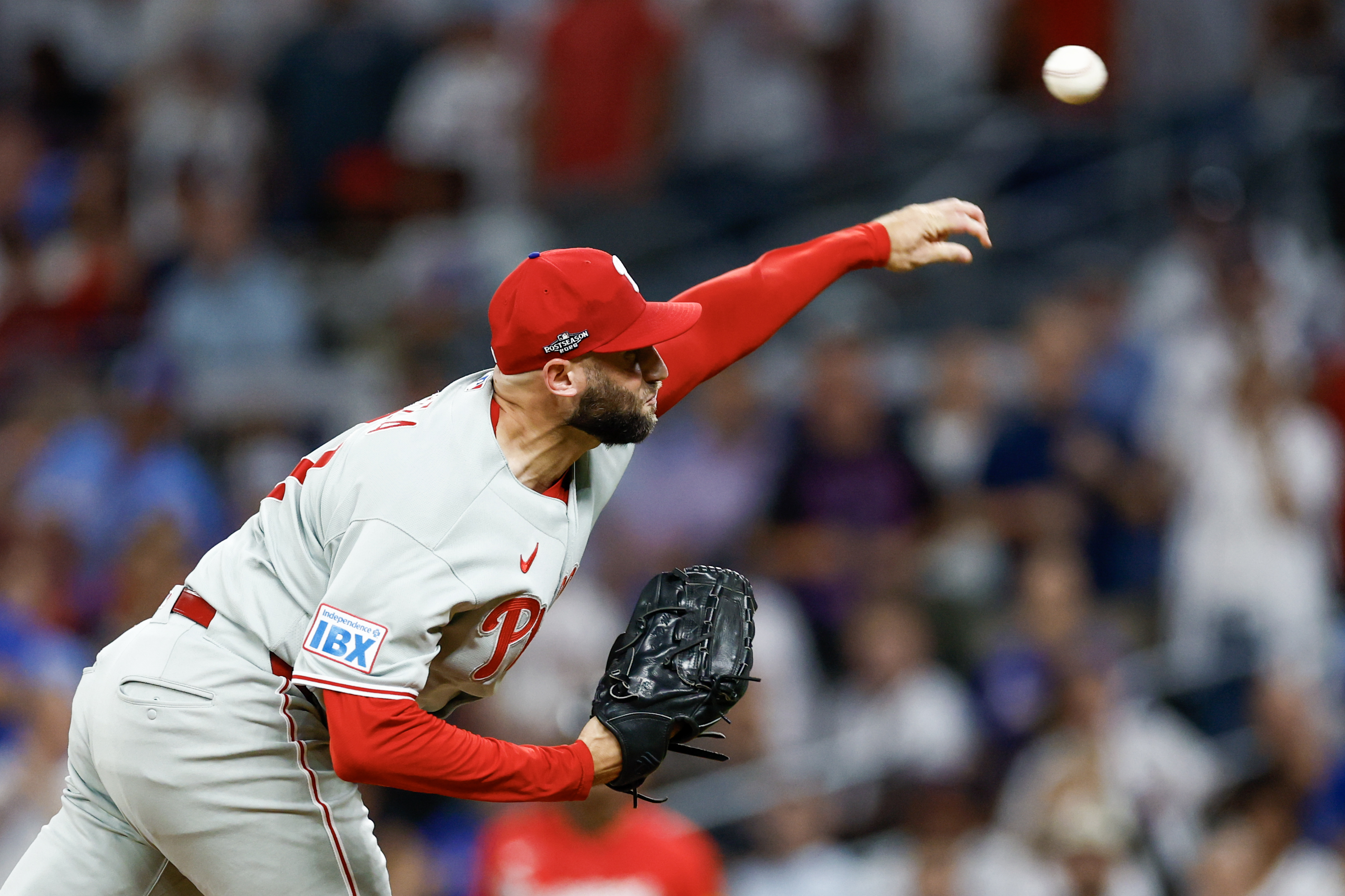
Aaron Nola started Game 3 and lasted 1⅔ innings, giving up a three-run homer to Michael Harris II in the first. Yong Kim / Staff Photographer
When both pitchers gave up blasts to the Braves over the right-center field wall on Thursday, there were endless “what ifs.” What if Wheeler wasn’t pitching on three days’ rest? What if he had started the game instead of Nola, who has historically been hit hard by the top of Atlanta’s order? What if the Phillies’ bats could have picked up their overworked pitchers?
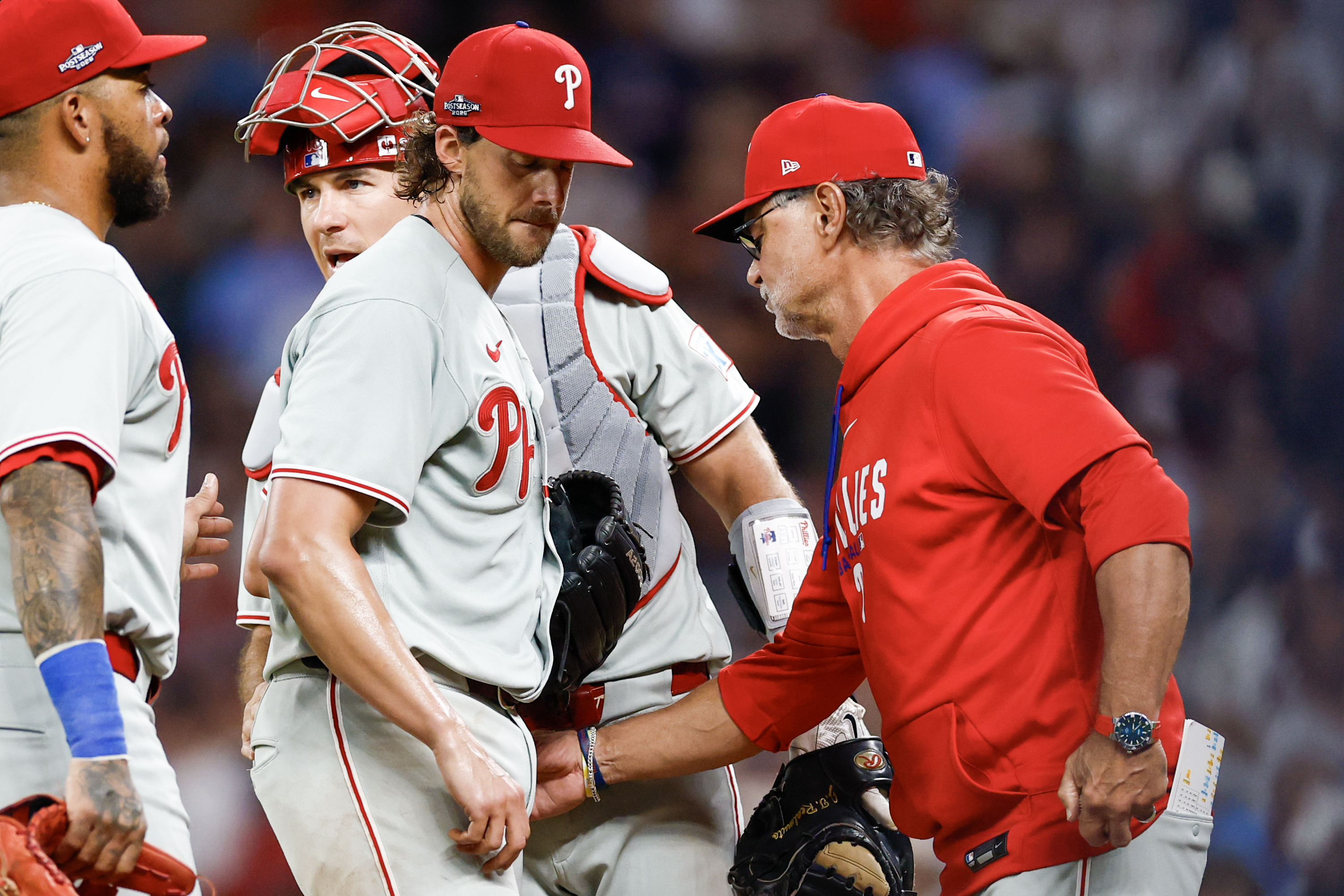
Interim manager Don Mattingly said the Phillies decided to start Nola because he was more rested than Wheeler, and they hoped he would be able to keep them in the game for a few turns through Atlanta’s batting order. Nola had also authored a notable turnaround in his regular season, with a 2.77 ERA in his final 10 starts.
“He was one of our best guys down the stretch,” Mattingly said.
It was a nightmare scenario for the Phillies early, and a best-case scenario for the Braves. Less than two months ago, Atlanta opener Ray Kerr had been a minor leaguer. But he did his job by handling the Phillies’ lefties — excluding Schwarber, who singled and then drew a walk — while their righties failed to carry the load.
From the leadoff spot, Turner went hitless against the lefty Kerr. He finished the series 1-for-11 in three games.
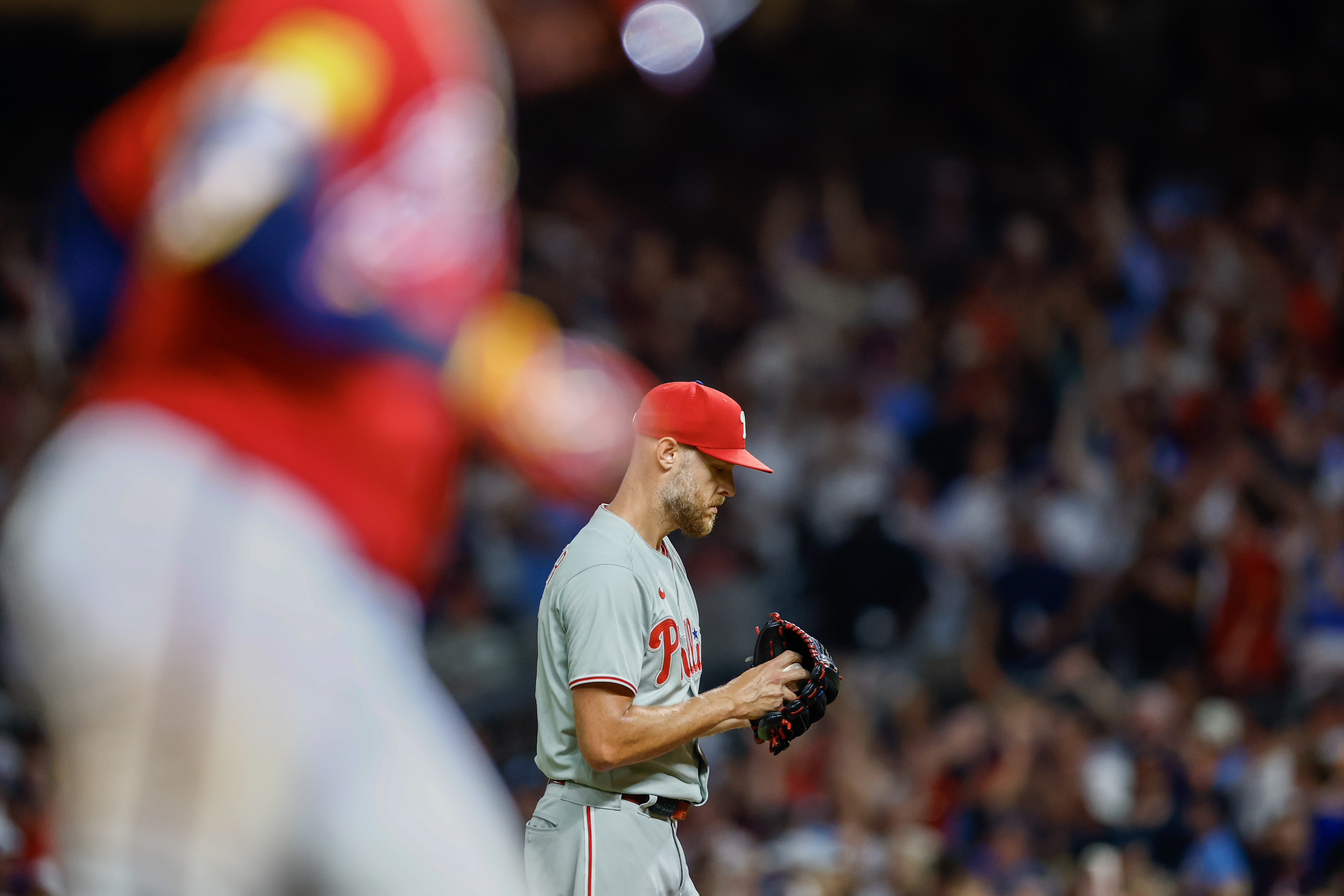
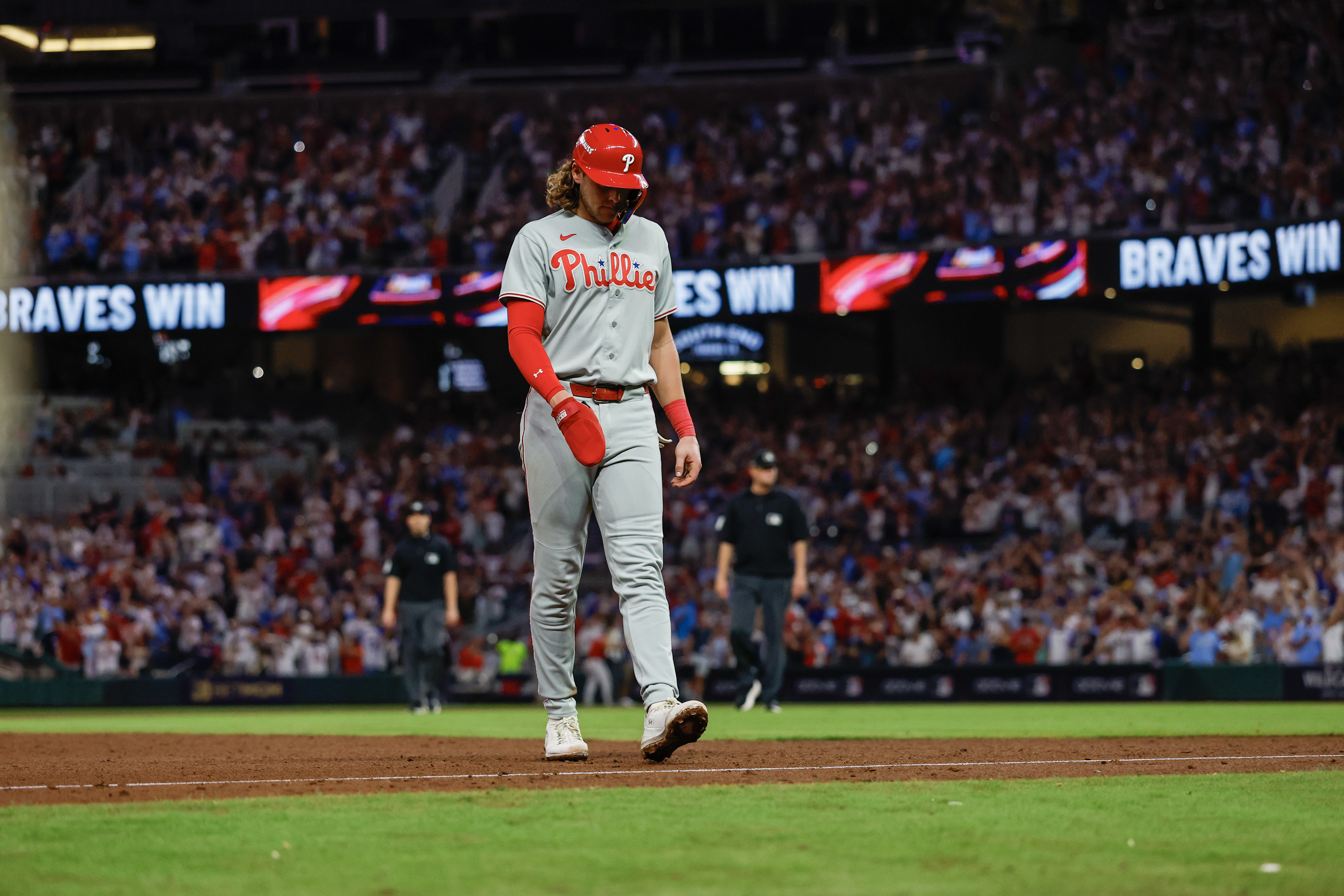
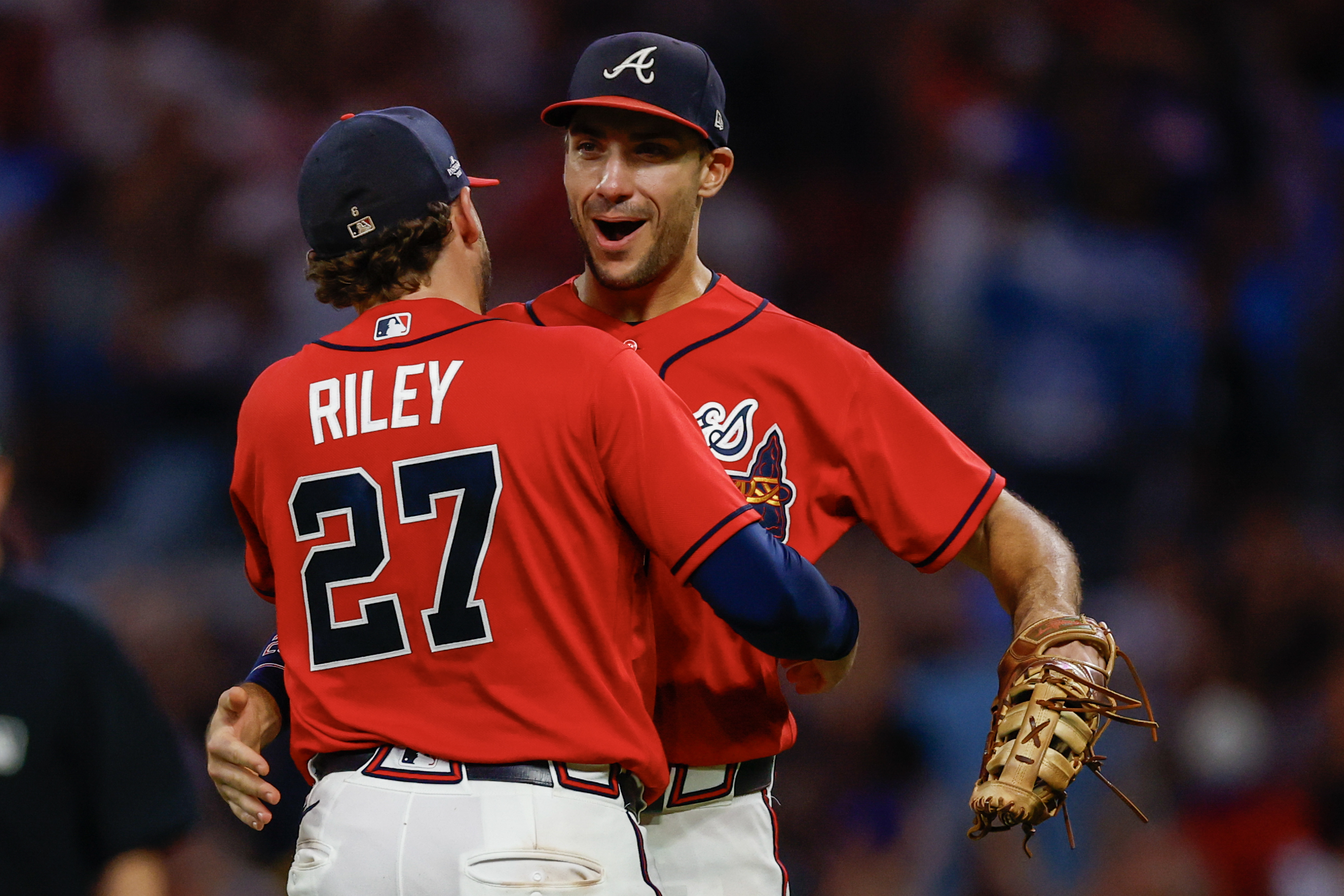
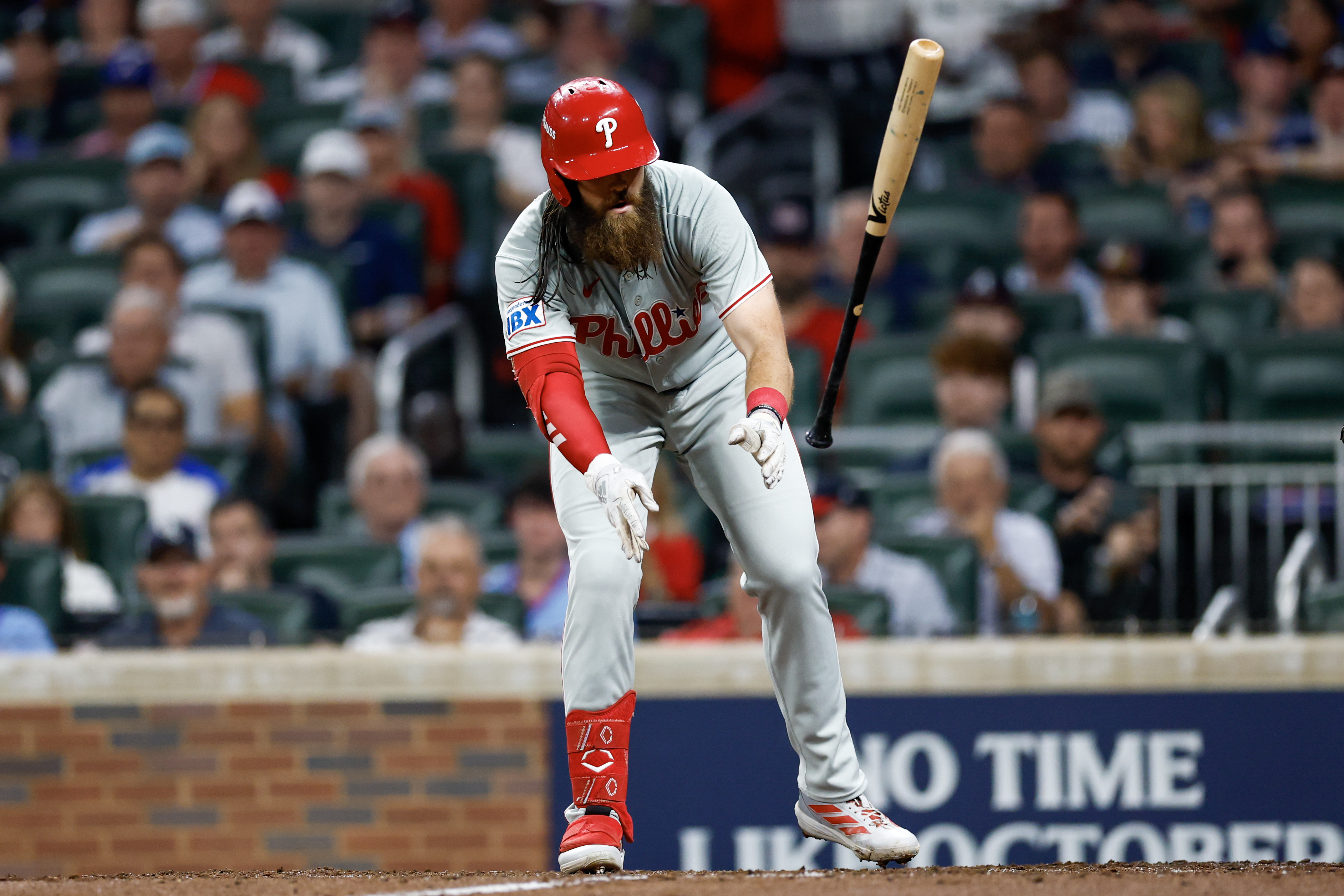
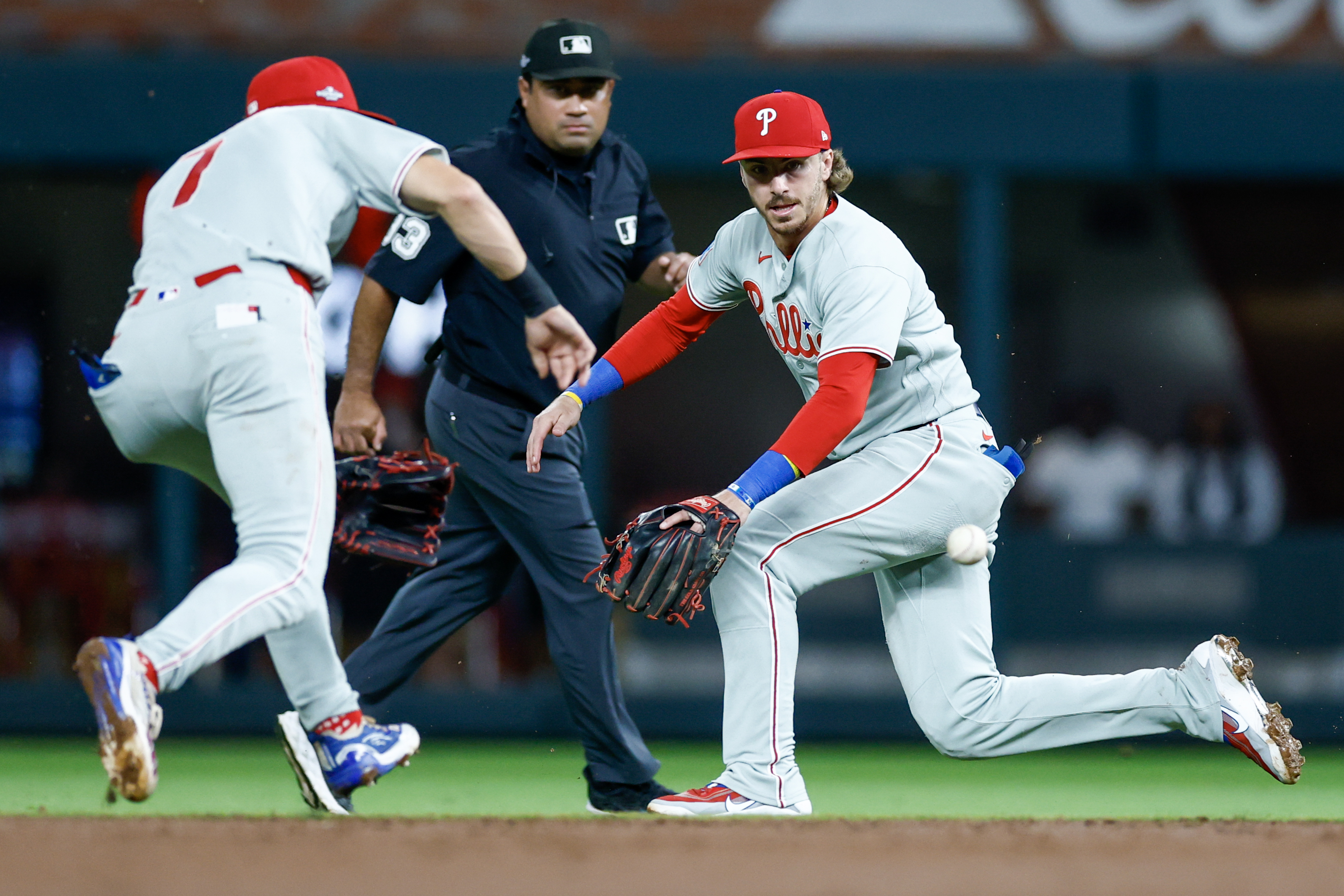
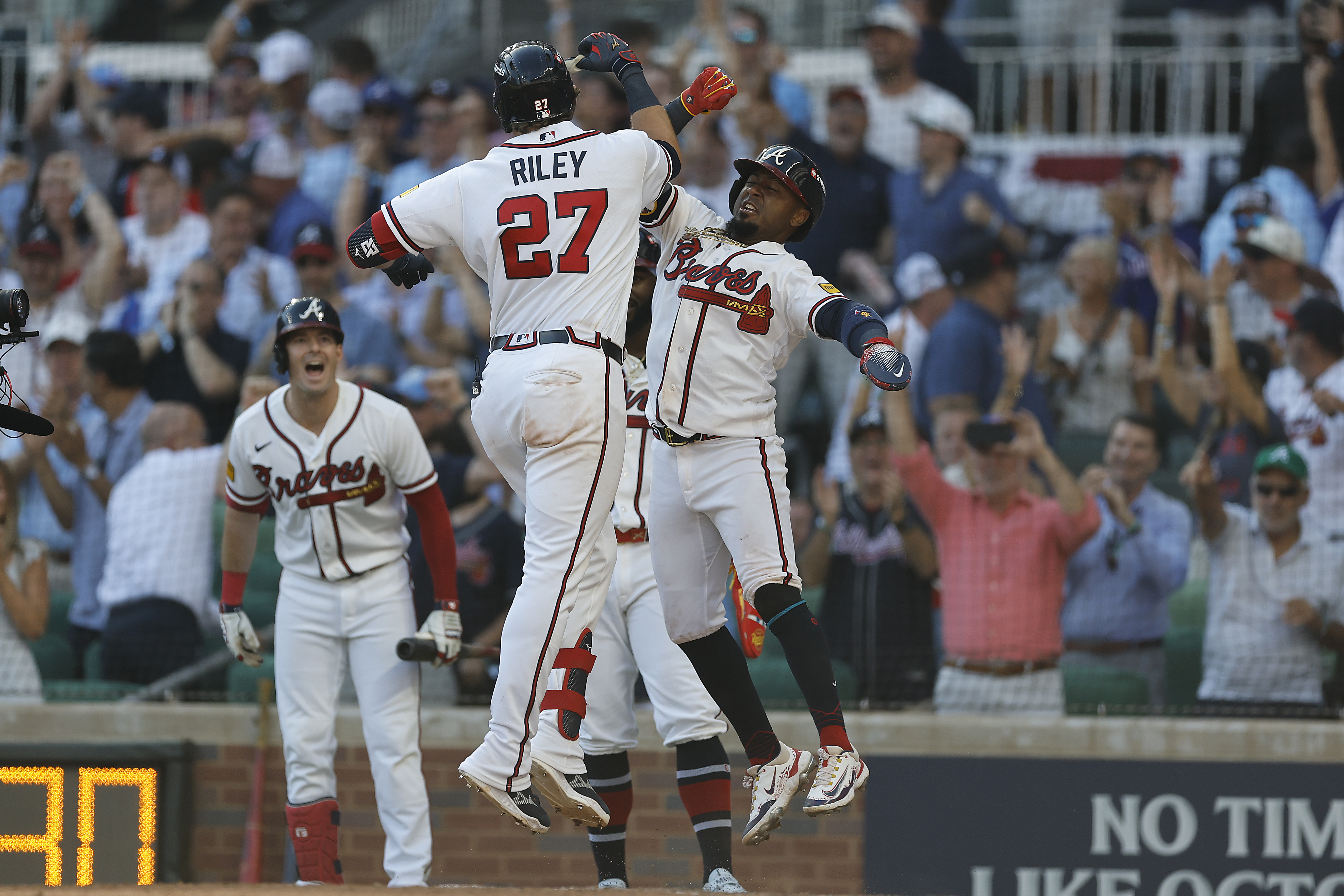
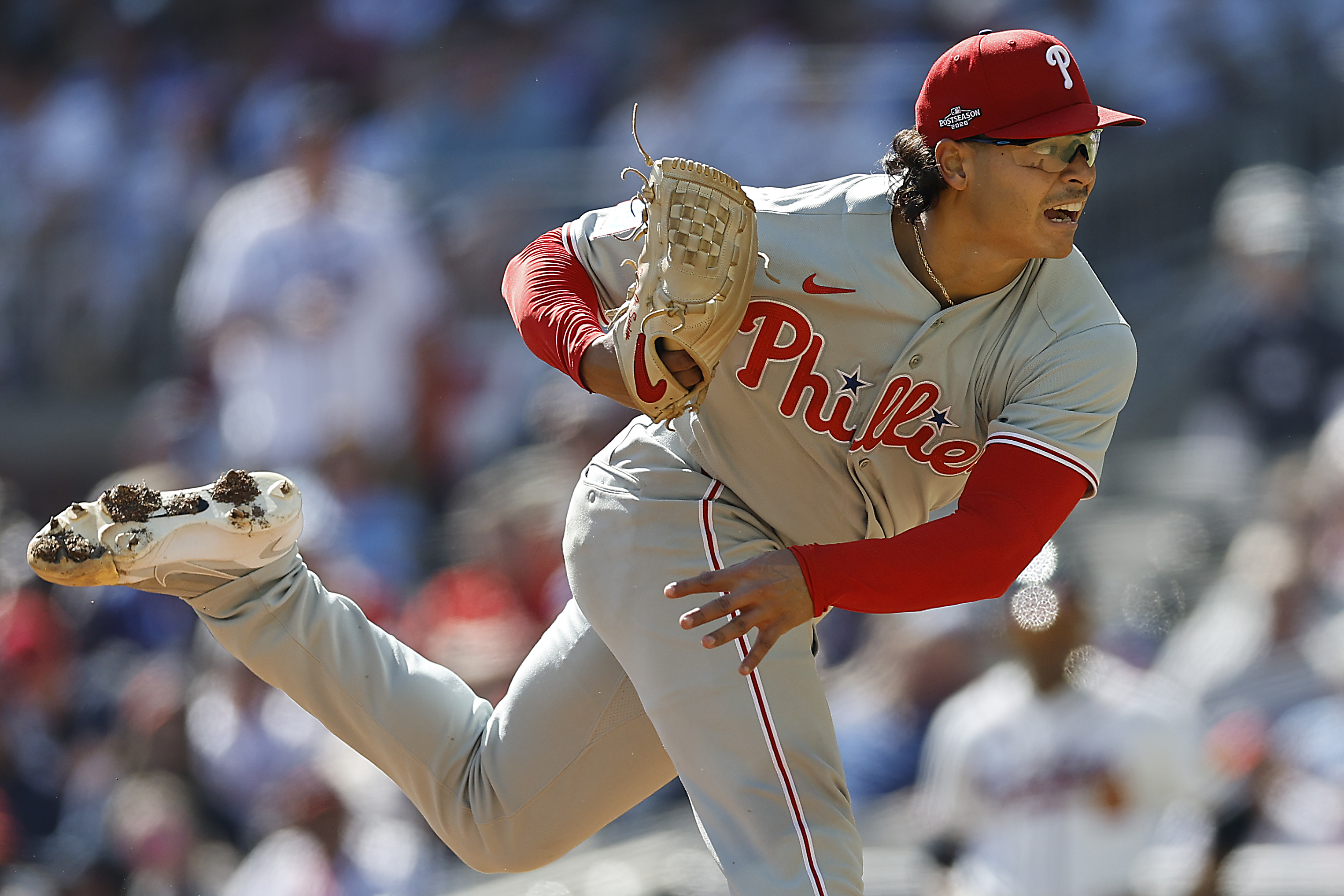
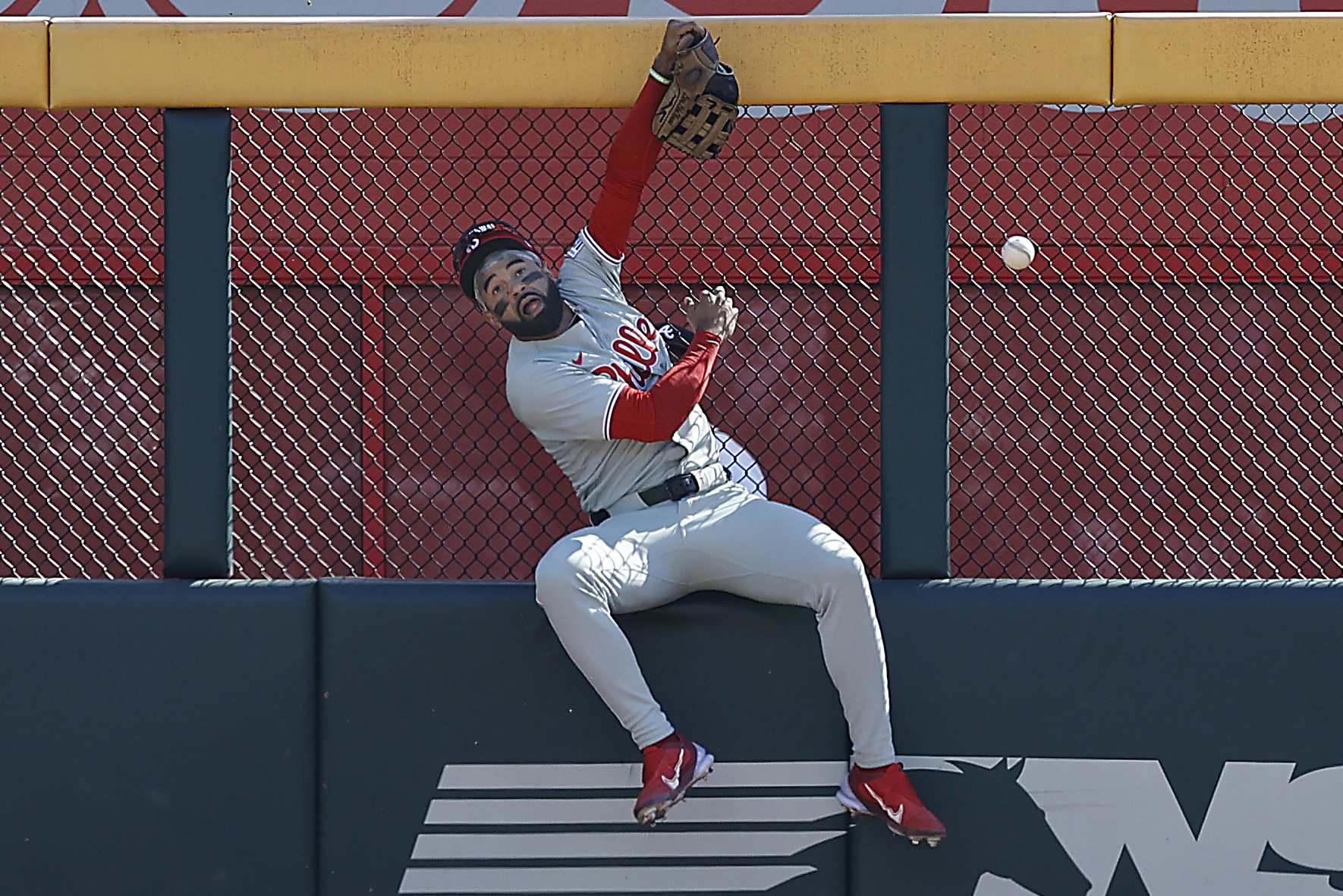
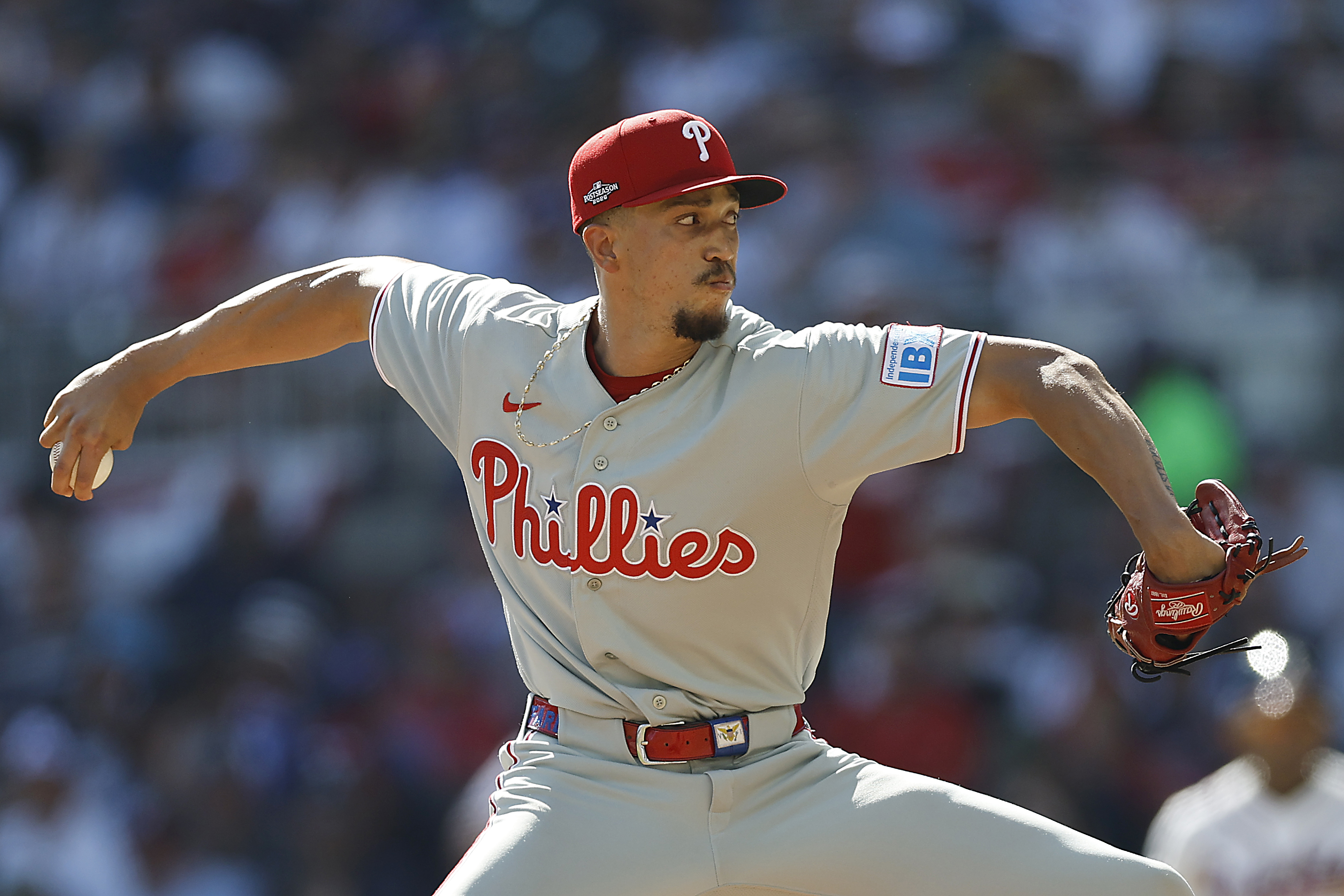
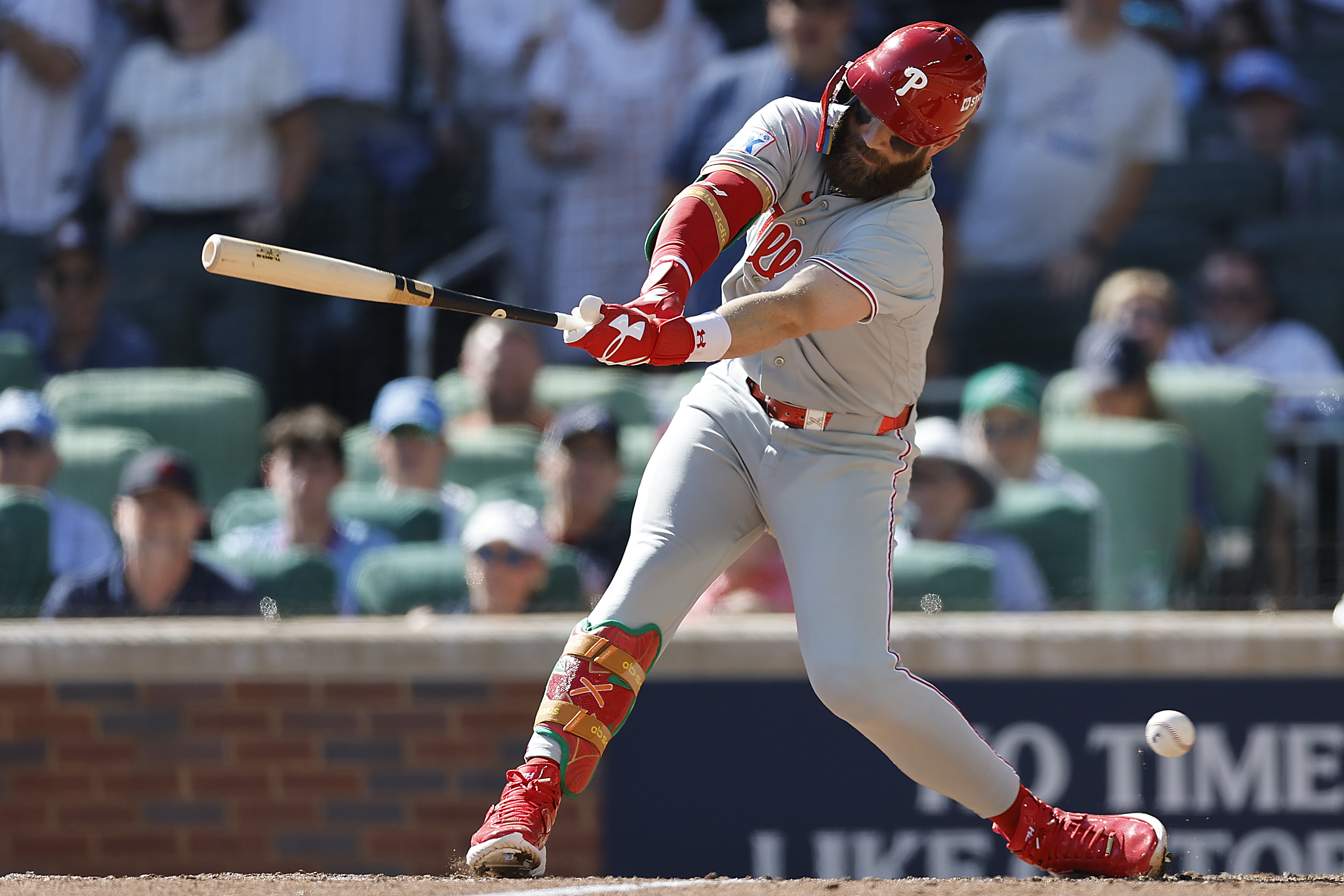
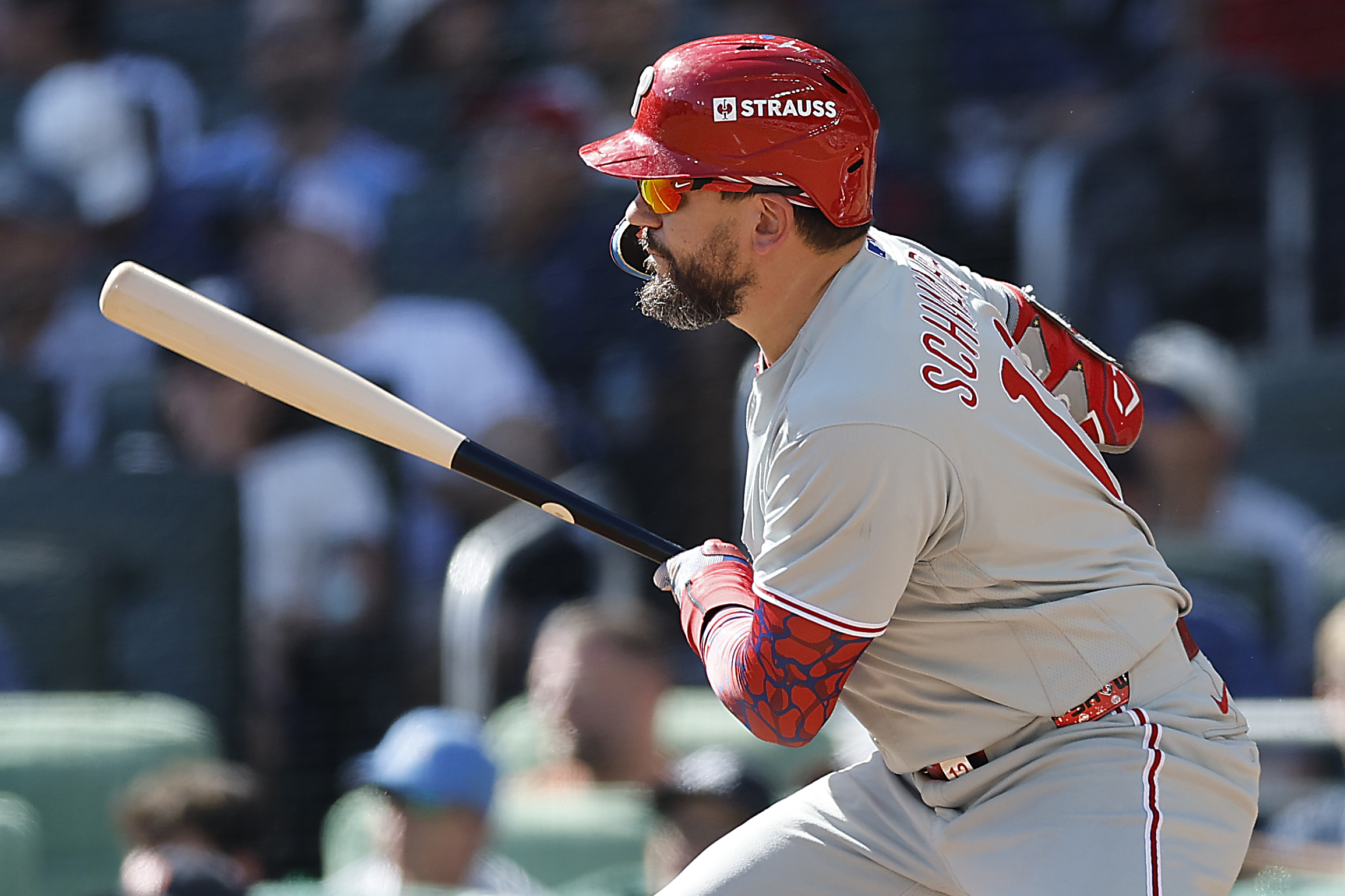
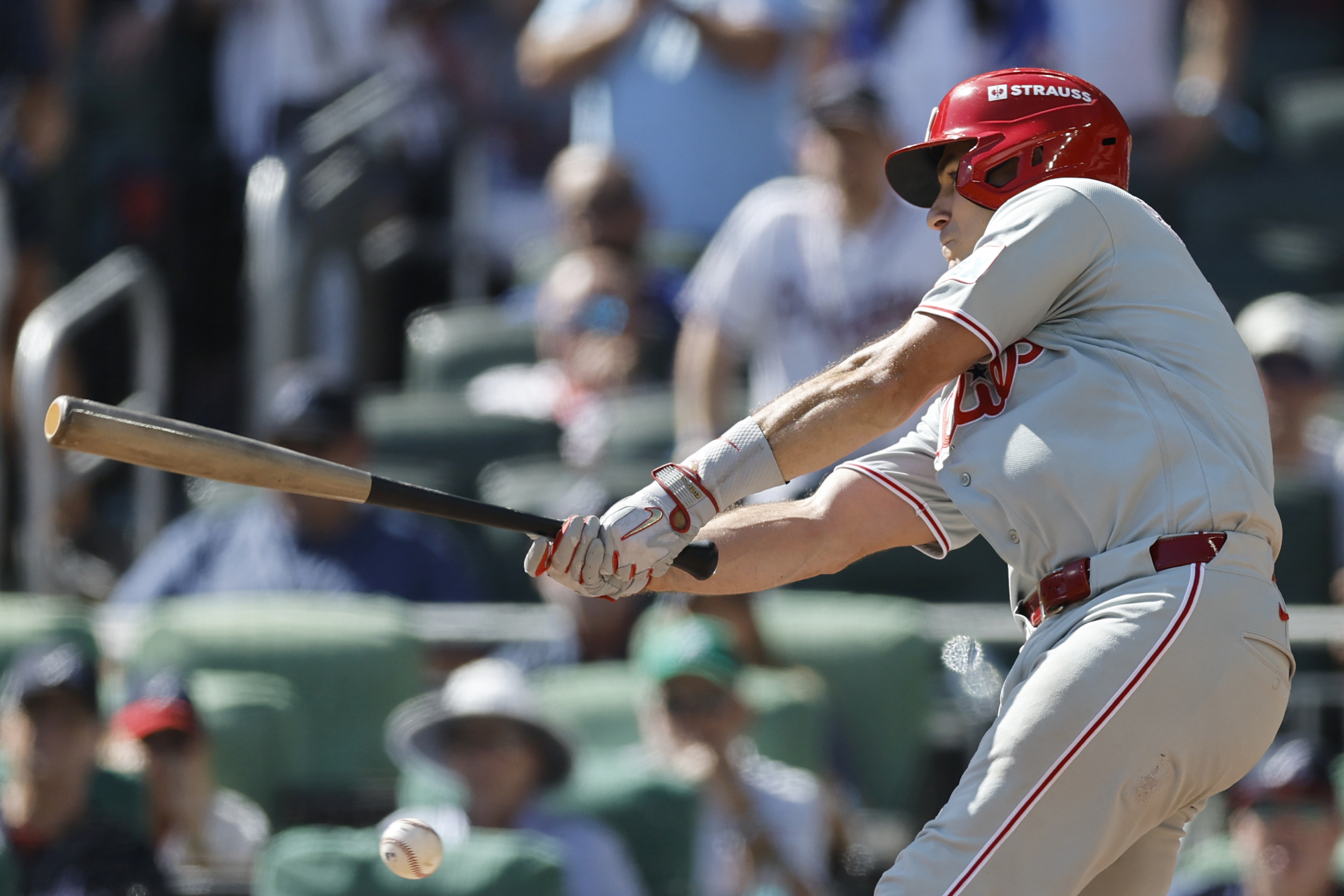
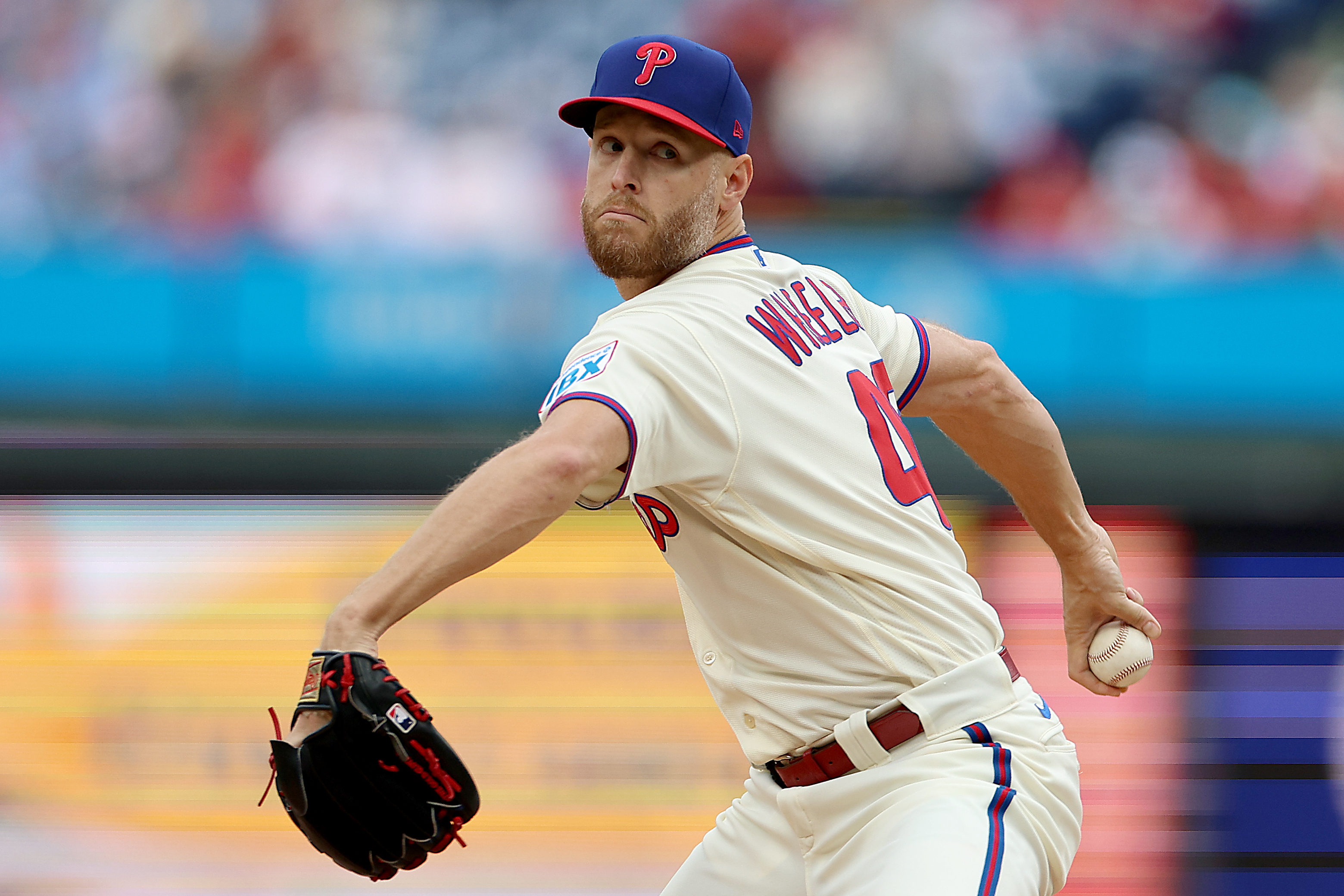
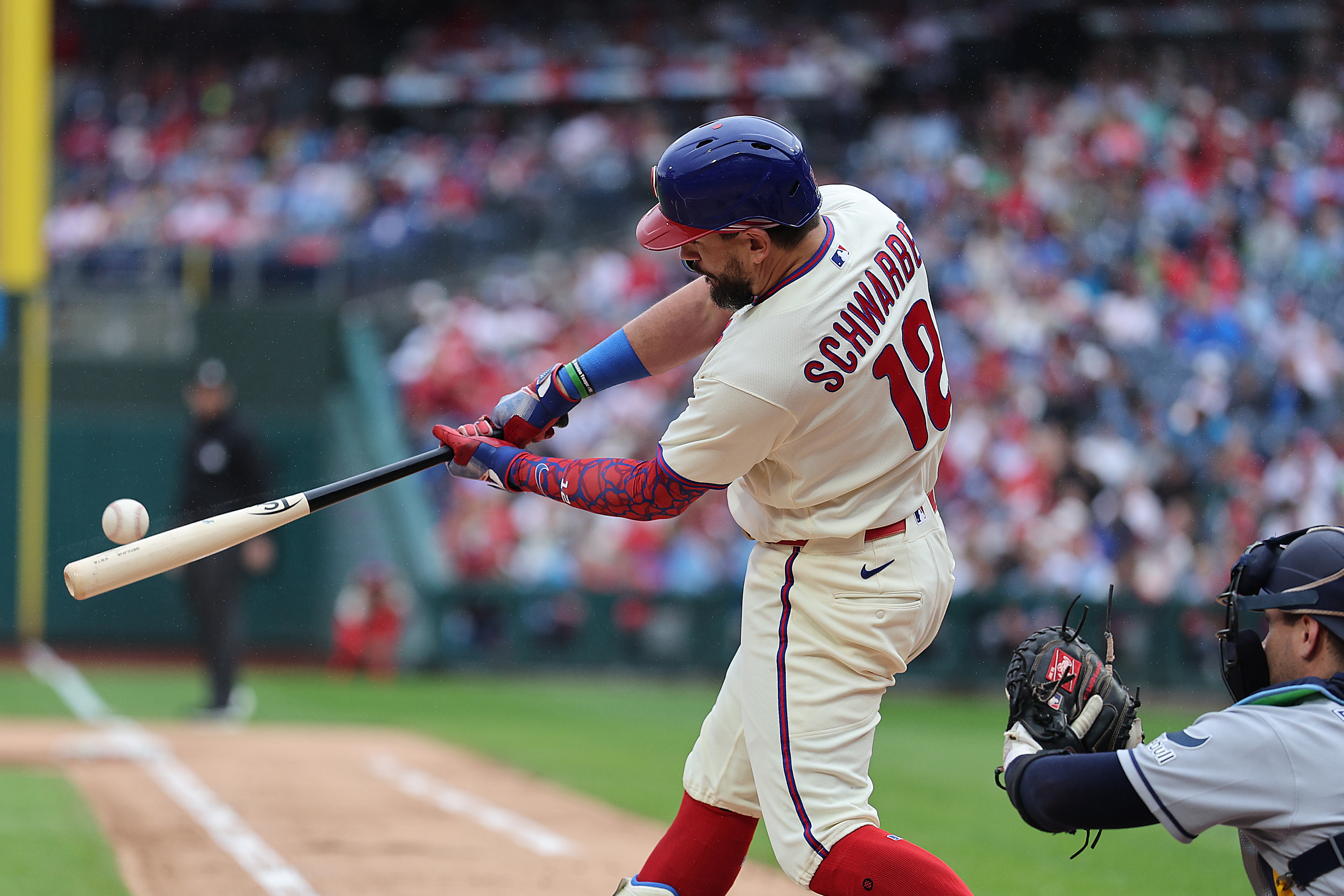
Phillies Alec Bohm walks off the field after the final out in Game 3 of the National League wild-card series against the Braves Thursday, Oct. 1, 2026, in Atlanta.Yong Kim / Staff PhotographerBraves Austin Riley (left) and Matt Olson celebrate their win in Game 3 of the National League wild-card series over the Phillies Thursday, Oct. 1, 2026, in Atlanta.Yong Kim / Staff PhotographerBraves starting pitcher Chris Sale closes the game during the ninth inning in Game 3 of the National League wild-card series against the Phillies Thursday, Oct. 1, 2026, in Atlanta.Yong Kim / Staff PhotographerBraves right fielder Ronald Acuña Jr. attempts to catch Phillies Derek Hill triple during the eighth inning in Game 3 of the National League wild-card series Thursday, Oct. 1, 2026, in Atlanta.Yong Kim / Staff PhotographerPhillies Derek Hill runs to third after hitting a triple during the eighth inning in Game 3 of the National League wild-card series against the Braves Thursday, Oct. 1, 2026, in Atlanta.Yong Kim / Staff PhotographerPhillies pitcher Jonathan Bowlan after Braves Matt Olson hits a solo home run during the seventh inning in Game 3 of the National League wild-card series Thursday, Oct. 1, 2026, in Atlanta.Yong Kim / Staff PhotographerBraves Matt Olson hits a solo home run during the seventh inning in Game 3 of the National League wild-card series Thursday, Oct. 1, 2026, in Atlanta.Yong Kim / Staff PhotographerPhillies first baseman Bryce Harper hits a double during the sixth inning in Game 3 of the National League wild-card series against the Braves Thursday, Oct. 1, 2026, in Atlanta.Yong Kim / Staff PhotographerPhillies designated hitter Kyle Schwarber hits a single during the sixth inning in Game 3 of the National League wild-card series against the Braves Thursday, Oct. 1, 2026, in Atlanta.Yong Kim / Staff PhotographerPhillies Bryan de la Cruz hits a single during the fifth inning in Game 3 of the National League wild-card series against the Braves Thursday, Oct. 1, 2026, in Atlanta.Yong Kim / Staff PhotographerPhillies Brandon Marsh tosses his bat after drawing a walk during the fifth inning in Game 3 of the National League wild-card series Thursday, Oct. 1, 2026, in Atlanta.Yong Kim / Staff PhotographerPhillies second baseman Bryson Stott after he strikes out looking to end the fourth inning in Game 3 of the National League wild-card series against the Braves Thursday, Oct. 1, 2026, in Atlanta.Yong Kim / Staff PhotographerPhillies pitcher Zack Wheeler after Braves Ozzie Albies hits a two-run homer during the fourth inning in Game 3 of the National League wild-card series Thursday, Oct. 1, 2026, in Atlanta.Yong Kim / Staff PhotographerPhillies pitcher Zack Wheeler after Braves Ozzie Albies hits a two-run homer during the fourth inning in Game 3 of the National League wild-card series Thursday, Oct. 1, 2026, in Atlanta.Yong Kim / Staff PhotographerPhillies pitcher Zack Wheeler throws a pitch during the third inning in Game 3 of the National League wild-card series against the Braves Thursday, Oct. 1, 2026, in Atlanta.Yong Kim / Staff PhotographerPhillies pitcher Tim Mayza throws a pitch during the second inning in Game 3 of the National League wild-card series against the Braves Thursday, Oct. 1, 2026, in Atlanta.Yong Kim / Staff PhotographerPhillies second baseman Bryson Stott (right) and shortstop Trea Turner (left) go after a single hit by Braves designated hitter Dominic Smith during the second inning in Game 3 of the National League wild-card series Thursday, Oct. 1, 2026, in Atlanta.Yong Kim / Staff PhotographerPhillies manager Don Mattingly takes out pitcher Aaron Nola during the second inning in Game 3 of the National League wild-card series against the Braves Thursday, Oct. 1, 2026, in Atlanta.Yong Kim / Staff PhotographerPhillies pitcher Aaron Nola after giving up a three-run home run to Braves Michael Harris II during the first inning in Game 3 of the National League wild-card series against the Braves Thursday, Oct. 1, 2026, in Atlanta.Yong Kim / Staff PhotographerBraves Michael Harris II hits a three-run home run during the first inning in Game 3 of the National League wild-card series against the Phillies Thursday, Oct. 1, 2026, in Atlanta.Yong Kim / Staff PhotographerPhillies designated hitter Kyle Schwarber hits a single during the first inning in Game 3 of the National League wild-card series against the Braves Thursday, Oct. 1, 2026, in Atlanta.Yong Kim / Staff PhotographerPhillies shortstop Trea Turner and back-up catcher Garrett Stubbs (right) throw the baseball during warm ups before the Phillies play on the Atlanta Braves in game 3 of the National League wild-card series on Thursday, Oct. 1, 2026 in Atlanta.Yong Kim / Staff Photographer
“I think this year was the biggest question mark for me offensively in a long time, and I got to figure that out,” Turner said. “So definitely gonna have a lot of work to do there, and I’ll do it.”
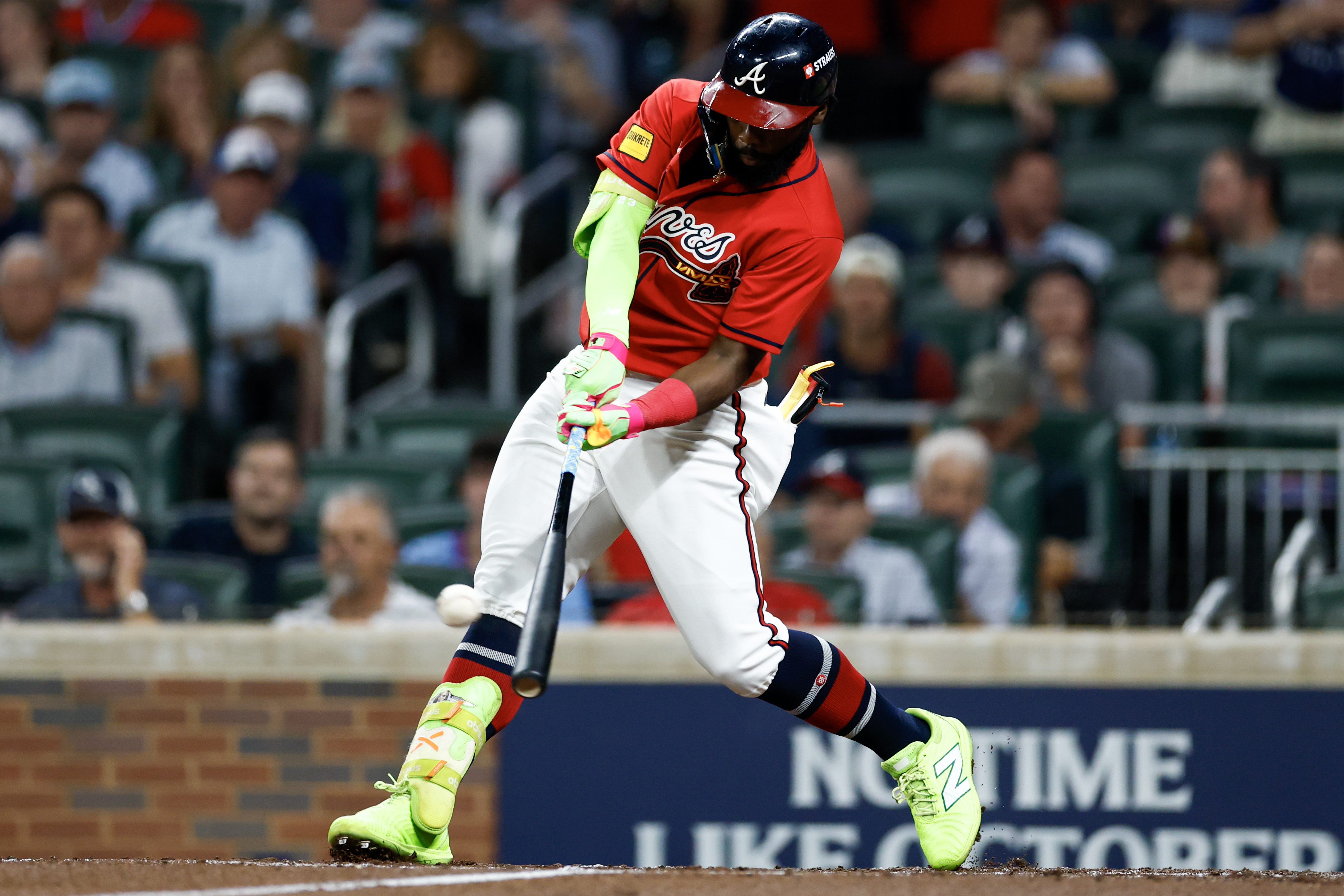
Nola, on the other hand, only managed to secure five outs. The veteran right-hander did not have his command, and he sprayed the ball all over the place while Atlanta was content to take its bases. That is, until Harris went down to get a sinker below the zone in the first inning, powering it 387 feet for a 3-0 Atlanta lead in the blink of an eye.
“I just didn’t get ahead, they didn’t chase much,” Nola said.
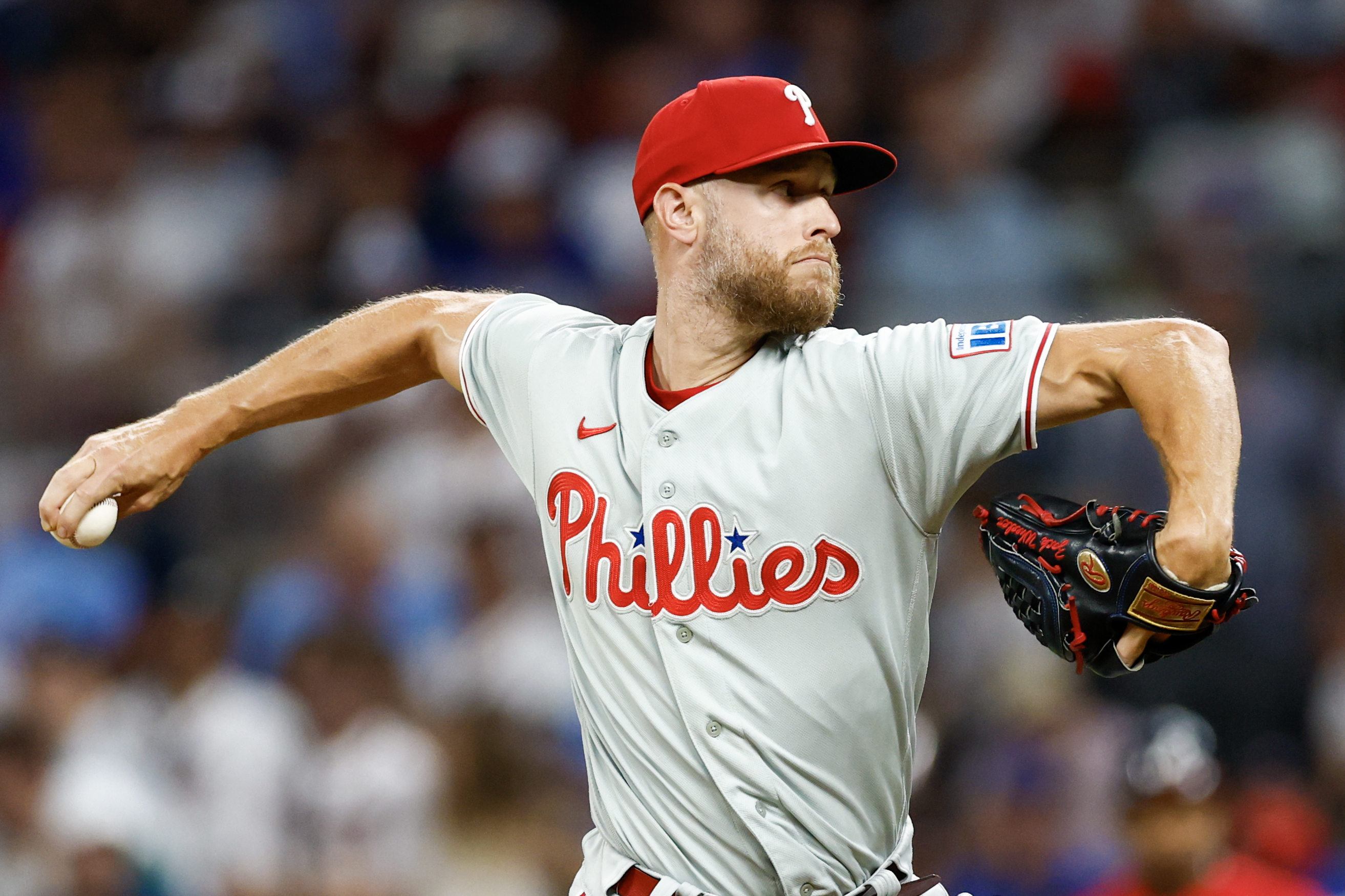
Tim Mayza finished off the second inning before Nola could see the top of the Braves’ order again. And then it was Wheeler for the third, tasked with stopping the bleeding there. But a nine-pitch walk to Austin Riley, followed by a mistake pitch to Albies, resulted in yet another homer over that brick wall in right center.
Kyle Schwarber hits a single in the first inning. He reached base three times in Game 3. Yong Kim / Staff Photographer
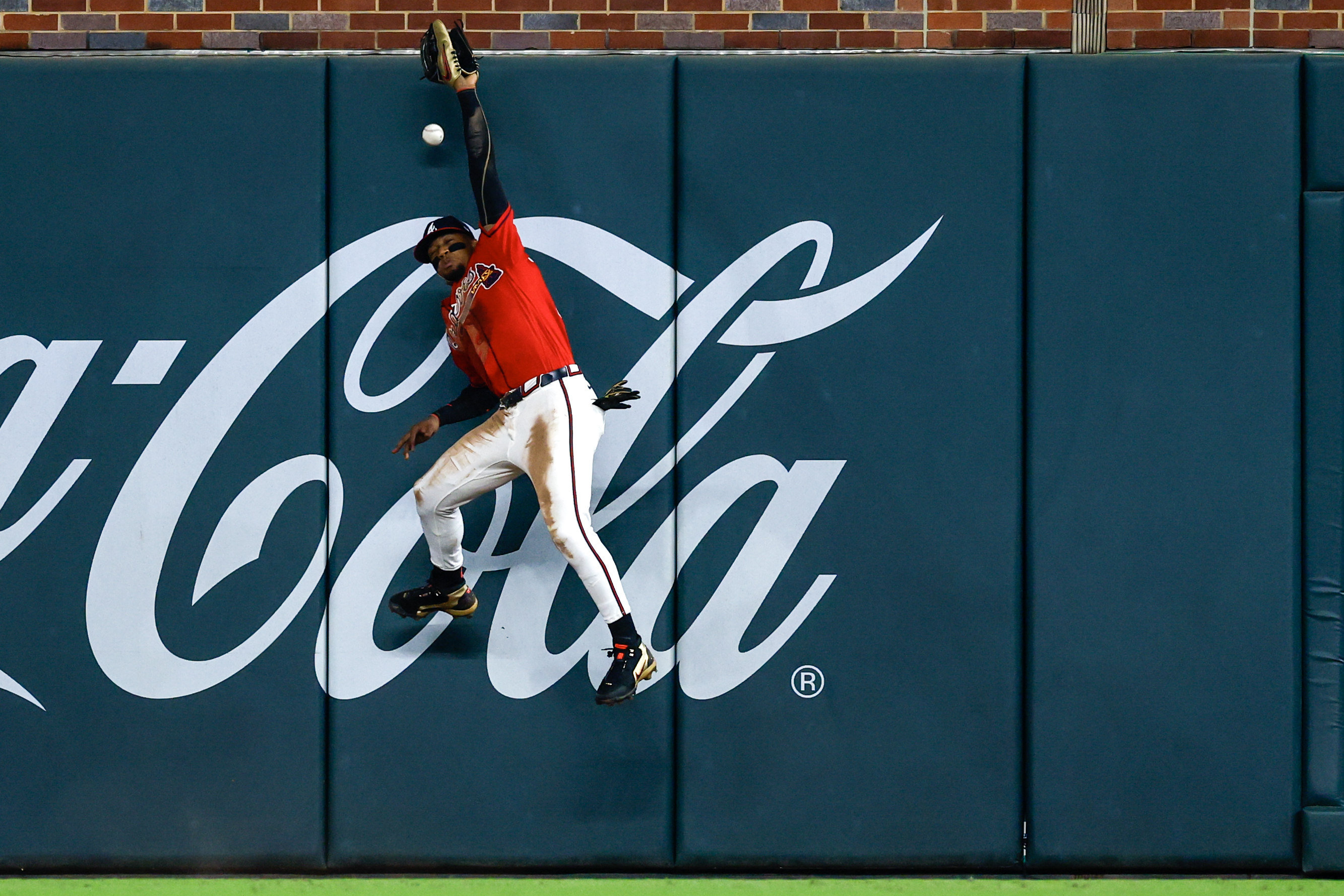
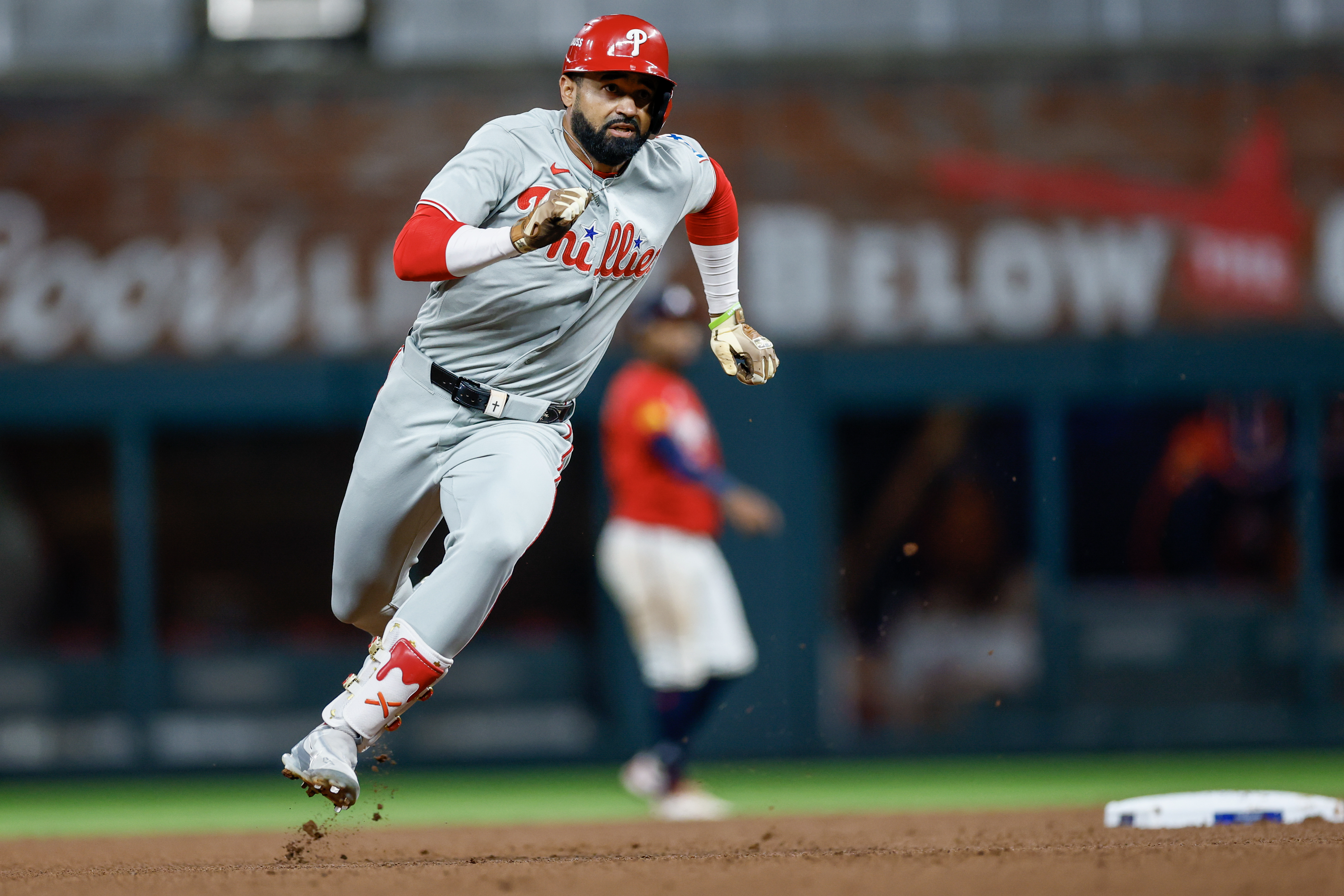
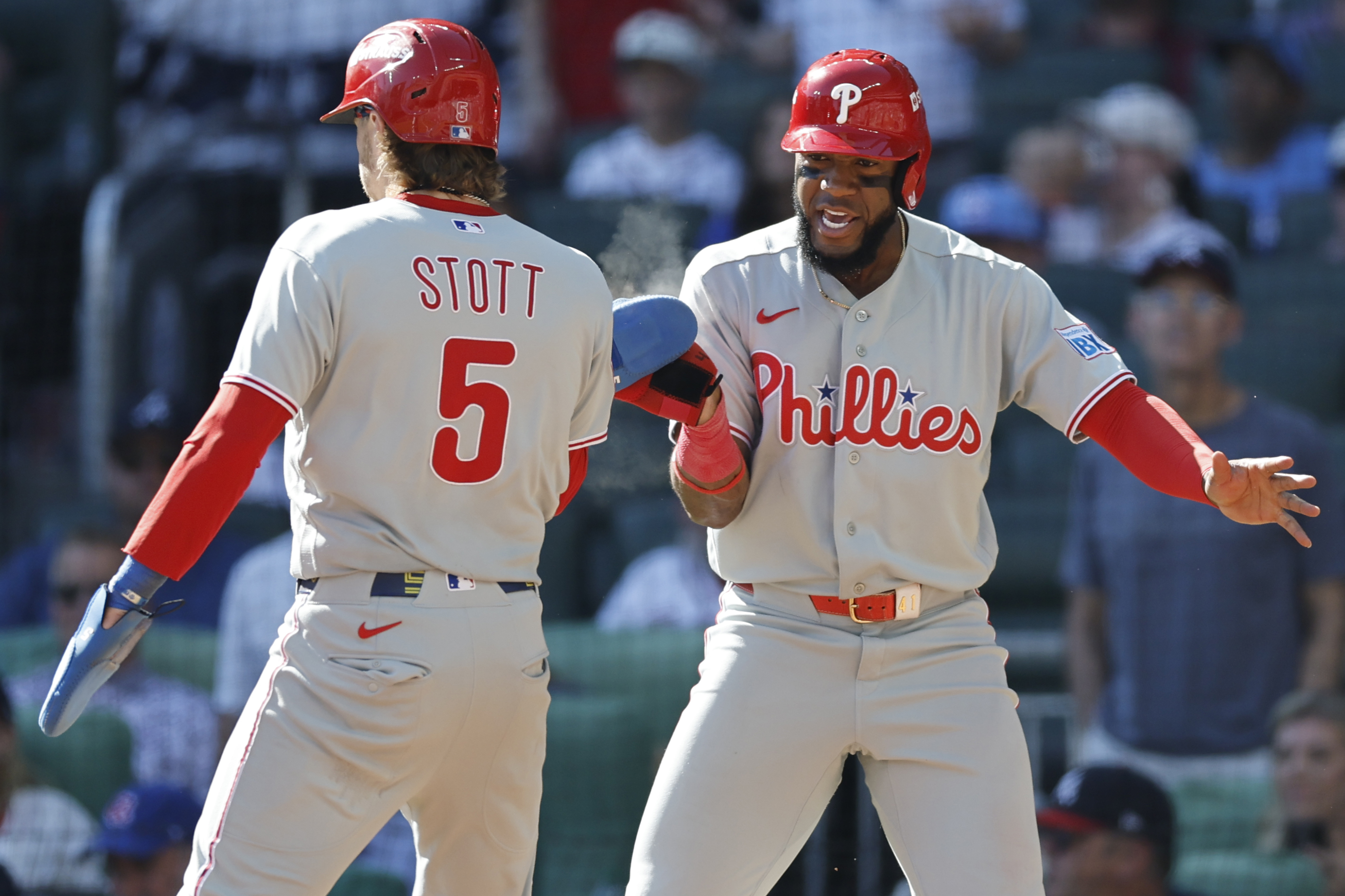
A five-run deficit, especially in the fourth, has been surmountable for this club before. But with every groundout, with every lazy fly ball, it became apparent the Phillies had exhausted the last of their comeback magic. They managed a run in the sixth — on a Schwarber single, a Bryce Harper double, and an RBI groundout from Alec Bohm — and another in the seventh. Derek Hill tripled and scored on a sacrifice fly from Turner.
But the Phillies were unable to snatch momentum back with the long ball, as they had done on Wednesday. While the Braves went deep again in the seventh, this time Matt Olson against Jonathan Bowlan, the Phillies couldn’t find their power.
“It’s hard to score in the postseason. I know we got the lineup capable, but the best teams that get to the postseason have the best pitching, and it’s not like you’re going to put up 10 every night,” Turner said. “Can we play better? Can we do things better? For sure. We got to ask ourselves those questions and find answers.”
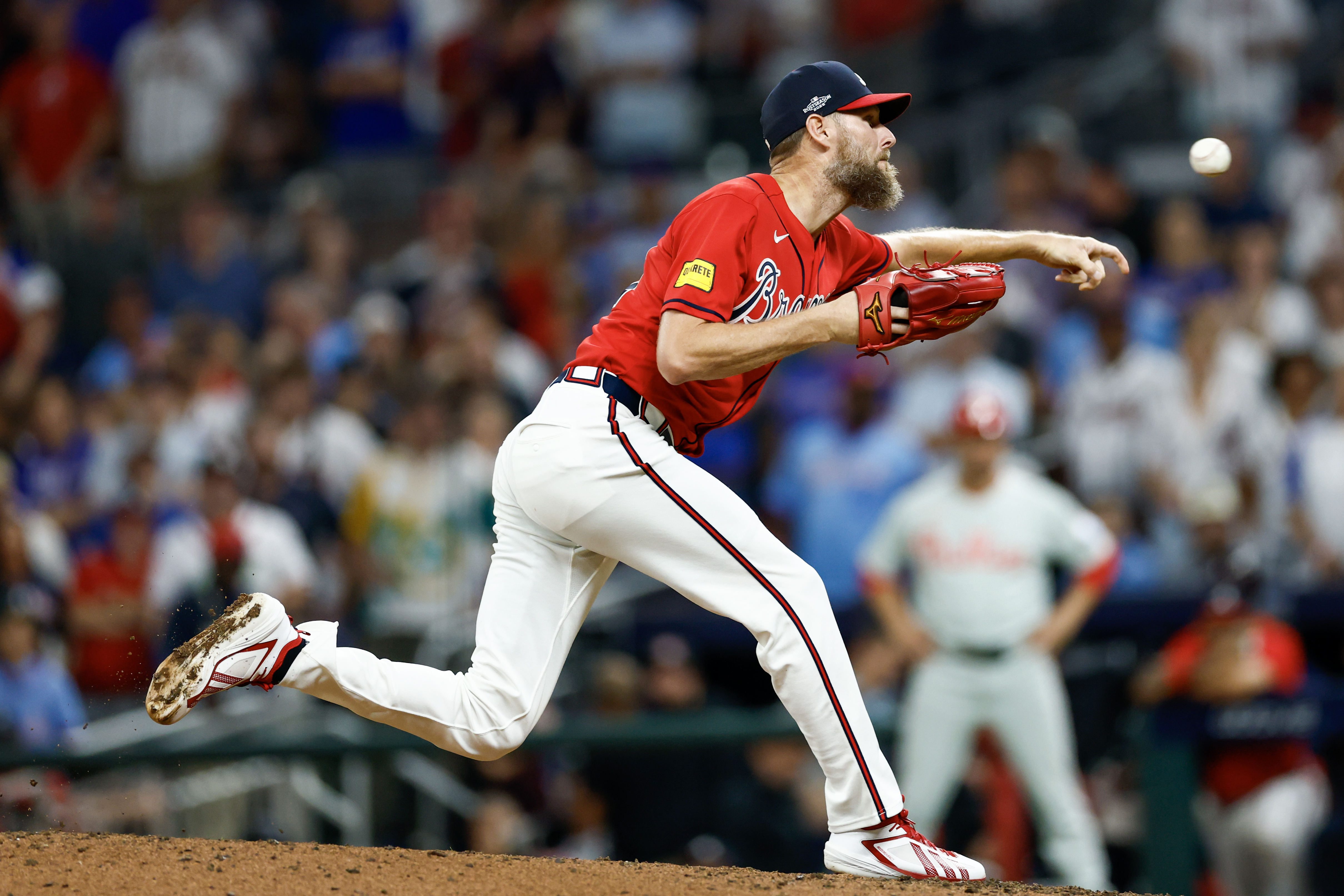
In the eighth, Atlanta brought in ace Chris Sale in relief, after the 37-year-old had thrown 95 pitches two days ago, to face Harper. He chased three pitches outside the zone to strike out in a non-competitive at-bat.
The third strike, a slider in the dirt, got past Atlanta catcher Drake Baldwin and skittered toward the backstop, but Harper didn’t notice right away. He leaned down to undo his leg guard before realizing and starting to run toward first. By then, Baldwin had recovered the ball and threw him out easily to officially end the inning.
“I don’t like the shoulda, woulda, coulda, if this ball would have dropped, or we would have put this guy in, or anything,” Harper said. “I don’t like that. You’re here to do business. You’re here to win games. We didn’t do that.”
Sale closed it out in the ninth. He gave up a leadoff single from Bohm, but rebounded to retire Bryson Stott and Bryan De La Cruz. As a final indictment of the Phillies’ roster and depth, the final out came down to pinch-hitting Otto Kemp, a utility player with an .080 average in 25 major league at-bats this year, the last of which was in May.
Braves ace Chris Sale closed out the Phillies in Game 3.Yong Kim / Staff Photographer
Kemp was outclassed by Sale, badly missing on a slider well inside to send the Braves to the Division Series against the Dodgers. Fireworks ignited the sky, as the Phillies leaned on the railing and watched.
“If you don’t win the last game, it’s a crash landing no matter what,” Mattingly said. “It doesn’t matter where it is. There’s going to be one team that doesn’t have it.”
There will be changes coming. Mattingly’s future as Phillies manager is in doubt. He declined to discuss his status postgame. Bohm, Arraez, Edmundo Sosa, José Alvarado, Tim Mayza, Brooks Raley, and injured Adolis García will all be free agents. The Phillies will no longer owe dead money to Nick Castellanos or Taijuan Walker.
Harper said he expects the team to look “a lot different” next year.
“It’s going to be a long offseason, obviously. I trust in the organization and people that are in charge,” he said. “See where we go.”
But the core, built around him, still left Truist Park late Thursday night another year older, and never further from that elusive goal.
ATLANTA — If you weren’t careful you’d have gotten blood on your shoes when Trea Turner fell on his sword.
Turner knows exactly why the Phillies don’t score as much as they should. He looks that reason in the eye every morning.
“Me,” he said. “I mean, it’s pretty simple.”
Turner spoke in front of his locker in the visiting clubhouse at Truist Park after a Game 3 wild-card loss to the Braves crushed the Phillies’ playoff hopes, the fourth consecutive year in which a billion-dollar lineup produced dime-store offense and, as a result, for the third consecutive season, it exited the postseason in the first series in which it played.
Turner’s dead wood isn’t the only issue on this club. It lost crucial deadline addition Luis Arraez, a .300 hitter, to injury last week. Its bullpen, flawed even when whole, was ravaged by injury as well. It is a poor defensive team with subpar speed that often is amplified by bafflingly bad base-running.
Turner isn’t the only hole in the lineup, either. Bryson Stott has been just as bad at times, as has catcher J.T. Realmuto, who went hitless in the 2024 postseason and was 2-for-10 against the Braves.
But both Stott and Realmuto are defensive stars. Turner can be a defensive liability, even though he plays shortstop. But then, that’s a different conversation, and besides, it only reinforces this reality: No money is more poorly spent by the Phillies than the money they’ve spent on Turner. There is no simple solution. Turner is 33, he has an untradeable contract, and he’s locked in for seven more seasons. Hopefully, by the time he’s 40, he will have figured it out.
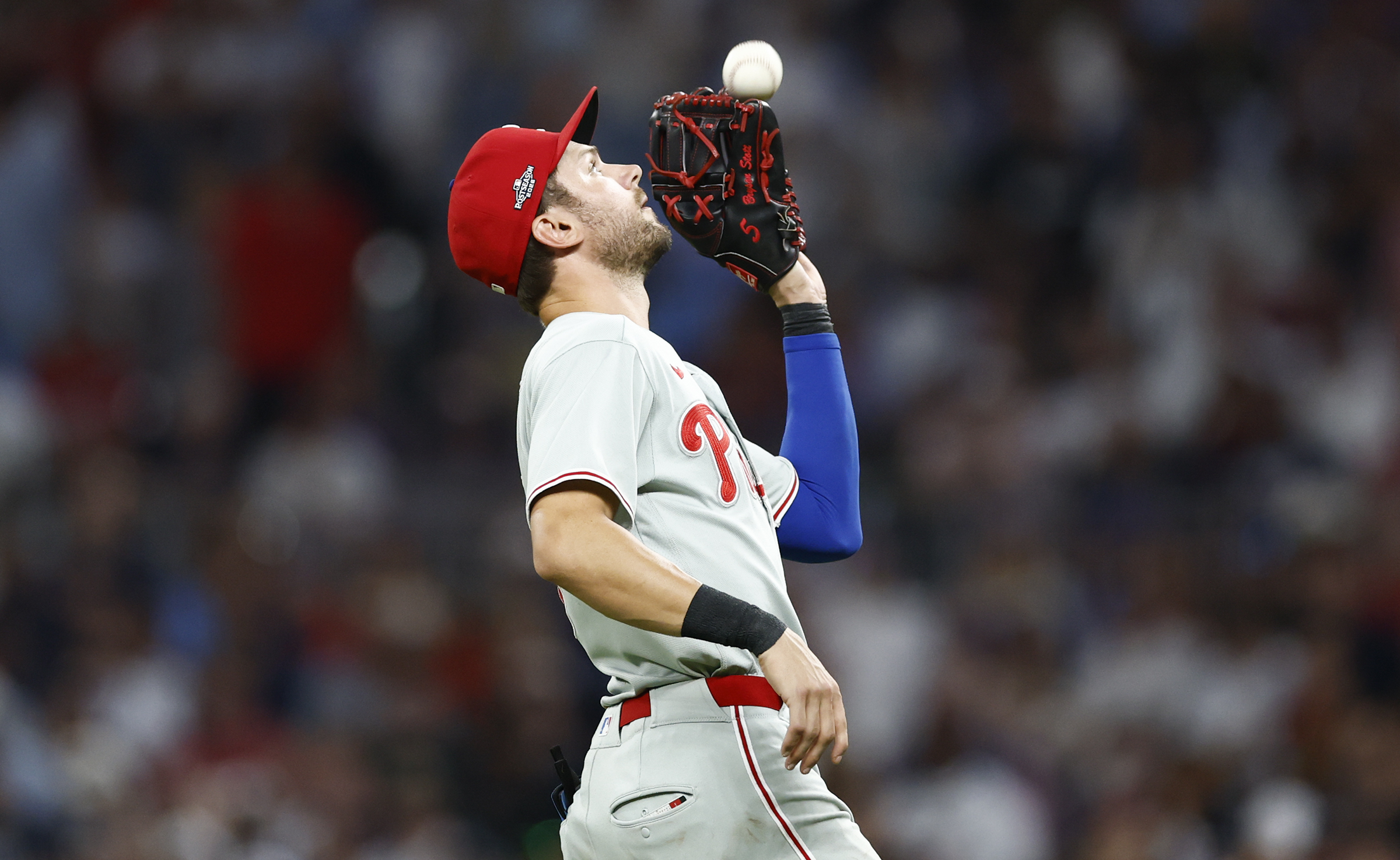
Trea Turner can be a defensive liability at shortstop.Yong Kim / Staff Photographer
Dave Dombrowski, the team’s president, gave Turner a $300 million contract in 2023 with a simple, specific job: Get on base in front of Kyle Schwarber and Bryce Harper so they could drive him in.
Sure, he might hit the odd home run, but Turner has two batting titles, and he’s got speed to burn.
All he’s been burning in the Phillies’ postseasons is John Middleton’s cash.
“You know, when you hit first or second, you get a lot of at-bats, and I kind of get things going,” he said.
He spoke of the design, not the execution.
Because he hasn’t gotten things going. Not in a long time. Not in the playoffs, especially.
After their 6-2 loss Thursday, the Phillies now have three runs or fewer in the first nine innings in 11 of their last 13 playoff games. That encompasses the last two games of the NLCS against the Diamondbacks in 2023, the four NLDS games against the Mets in 2024, the four NLDS games against the Dodgers in 2025, and the three against the Braves this year.
Not coincidentally, they now have lost 10 of those 13 games.
In those 13 games, Turner is 8-for-52. That’s a .154 average.
And that, folks, is the biggest reason why the Phillies can’t score.
Further, lack of scoring is the biggest reason why the Phillies can’t win. Not the bullpen. Not the defense.
Turner’s postseason struggles from last year bled into his regular-season efforts this year. His batting average fell from .304 in 2025, best in the National League, to .242, the worst of his 13 full seasons — the worst by 24 points. The Phillies’ team average dipped from No. 2 in the NL in 2025 to No. 12 in 2026. They also scored 65 fewer runs in 2026 than in 2025.
Some of those runs, had they been scored in late September, would have helped the Phillies earn home-field advantage in the wild-card round. The Phillies held the top wild-card spot, but, with five games to play, they hit a four-game slide. They scored one run in three of those games. They were shut out in the fourth.
As such, they needed to win Game 162 in order to ensure the third wild-card slot, and they burned ace Zack Wheeler in that game. That meant Wheeler was not available for Game 1 of the wild-card series against the Braves on Tuesday.
Phillies Alec Bohm walks off the field after the final out in Game 3 of the National League wild-card series against the Braves Thursday, Oct. 1, 2026, in Atlanta.Yong Kim / Staff PhotographerBraves Austin Riley (left) and Matt Olson celebrate their win in Game 3 of the National League wild-card series over the Phillies Thursday, Oct. 1, 2026, in Atlanta.Yong Kim / Staff PhotographerBraves starting pitcher Chris Sale closes the game during the ninth inning in Game 3 of the National League wild-card series against the Phillies Thursday, Oct. 1, 2026, in Atlanta.Yong Kim / Staff PhotographerBraves right fielder Ronald Acuña Jr. attempts to catch Phillies Derek Hill triple during the eighth inning in Game 3 of the National League wild-card series Thursday, Oct. 1, 2026, in Atlanta.Yong Kim / Staff PhotographerPhillies Derek Hill runs to third after hitting a triple during the eighth inning in Game 3 of the National League wild-card series against the Braves Thursday, Oct. 1, 2026, in Atlanta.Yong Kim / Staff PhotographerPhillies pitcher Jonathan Bowlan after Braves Matt Olson hits a solo home run during the seventh inning in Game 3 of the National League wild-card series Thursday, Oct. 1, 2026, in Atlanta.Yong Kim / Staff PhotographerBraves Matt Olson hits a solo home run during the seventh inning in Game 3 of the National League wild-card series Thursday, Oct. 1, 2026, in Atlanta.Yong Kim / Staff PhotographerPhillies first baseman Bryce Harper hits a double during the sixth inning in Game 3 of the National League wild-card series against the Braves Thursday, Oct. 1, 2026, in Atlanta.Yong Kim / Staff PhotographerPhillies designated hitter Kyle Schwarber hits a single during the sixth inning in Game 3 of the National League wild-card series against the Braves Thursday, Oct. 1, 2026, in Atlanta.Yong Kim / Staff PhotographerPhillies Bryan de la Cruz hits a single during the fifth inning in Game 3 of the National League wild-card series against the Braves Thursday, Oct. 1, 2026, in Atlanta.Yong Kim / Staff PhotographerPhillies Brandon Marsh tosses his bat after drawing a walk during the fifth inning in Game 3 of the National League wild-card series Thursday, Oct. 1, 2026, in Atlanta.Yong Kim / Staff PhotographerPhillies second baseman Bryson Stott after he strikes out looking to end the fourth inning in Game 3 of the National League wild-card series against the Braves Thursday, Oct. 1, 2026, in Atlanta.Yong Kim / Staff PhotographerPhillies pitcher Zack Wheeler after Braves Ozzie Albies hits a two-run homer during the fourth inning in Game 3 of the National League wild-card series Thursday, Oct. 1, 2026, in Atlanta.Yong Kim / Staff PhotographerPhillies pitcher Zack Wheeler after Braves Ozzie Albies hits a two-run homer during the fourth inning in Game 3 of the National League wild-card series Thursday, Oct. 1, 2026, in Atlanta.Yong Kim / Staff PhotographerPhillies pitcher Zack Wheeler throws a pitch during the third inning in Game 3 of the National League wild-card series against the Braves Thursday, Oct. 1, 2026, in Atlanta.Yong Kim / Staff PhotographerPhillies pitcher Tim Mayza throws a pitch during the second inning in Game 3 of the National League wild-card series against the Braves Thursday, Oct. 1, 2026, in Atlanta.Yong Kim / Staff PhotographerPhillies second baseman Bryson Stott (right) and shortstop Trea Turner (left) go after a single hit by Braves designated hitter Dominic Smith during the second inning in Game 3 of the National League wild-card series Thursday, Oct. 1, 2026, in Atlanta.Yong Kim / Staff PhotographerPhillies manager Don Mattingly takes out pitcher Aaron Nola during the second inning in Game 3 of the National League wild-card series against the Braves Thursday, Oct. 1, 2026, in Atlanta.Yong Kim / Staff PhotographerPhillies pitcher Aaron Nola after giving up a three-run home run to Braves Michael Harris II during the first inning in Game 3 of the National League wild-card series against the Braves Thursday, Oct. 1, 2026, in Atlanta.Yong Kim / Staff PhotographerBraves Michael Harris II hits a three-run home run during the first inning in Game 3 of the National League wild-card series against the Phillies Thursday, Oct. 1, 2026, in Atlanta.Yong Kim / Staff PhotographerPhillies designated hitter Kyle Schwarber hits a single during the first inning in Game 3 of the National League wild-card series against the Braves Thursday, Oct. 1, 2026, in Atlanta.Yong Kim / Staff PhotographerPhillies shortstop Trea Turner and back-up catcher Garrett Stubbs (right) throw the baseball during warm ups before the Phillies play on the Atlanta Braves in game 3 of the National League wild-card series on Thursday, Oct. 1, 2026 in Atlanta.Yong Kim / Staff Photographer
“Having your pitching set up is really important this time of year,” Turner said. “And we didn’t do a good job playing down the stretch to have that happen.”
The Phillies lost that game. They had to use closer Jhoan Duran early, and for too long, and he tired, and they lost.
Turner went 0-for-3 in Game 1. He got picked off, too.
It was a rough visit to Georgia.
Turner finished the wild-card round 1-for-11 despite having the two magnificent sluggers hitting behind him, as they did all season.
“A lot of that’s on me,” Turner said. “I think you know, Kyle and Bryce did a good job.”
Harper was 3-for-13 with a double, a homer, and two RBIs. Schwarber was 4-for-11 with a homer. Their overall postseason production, however, is Ruthian.
To be fair, in his 67 career playoff games, Turner has not been a total bust. He hit .270 in his first 54 playoff games, which included a World Series title run with the Nationals in 2019. In his first 11 playoff games with the Phillies, in 2023, he hit .415 with three homers, five doubles, and 1.224.
He has been a black hole since. Again, he is not alone.
Stott, since Game 6 of the 2023 NLCS against the Diamondbacks, is 8-for-45 (.178) with one extra-base hit and 14 strikeouts.
Bryson Stott strikes out looking to end the fourth inning in Game 3.Yong Kim / Staff Photographer
But then, Stott has made about $10 million since 2023.
Turner has made almost $110 million since 2023.
He makes more than $27.2 million per season. How will he better earn his money in 2027?
Turner has no idea.
“It’s a question. Got a lot of work to do. Go over everything and just figure out, as much as I can. Find answers. See what I did bad,” Turner said. “This year was the biggest question mark for me offensively in a long time. I’ve got to figure that out. So I’m definitely gonna have a lot of work to do there. And I’ll do it.”
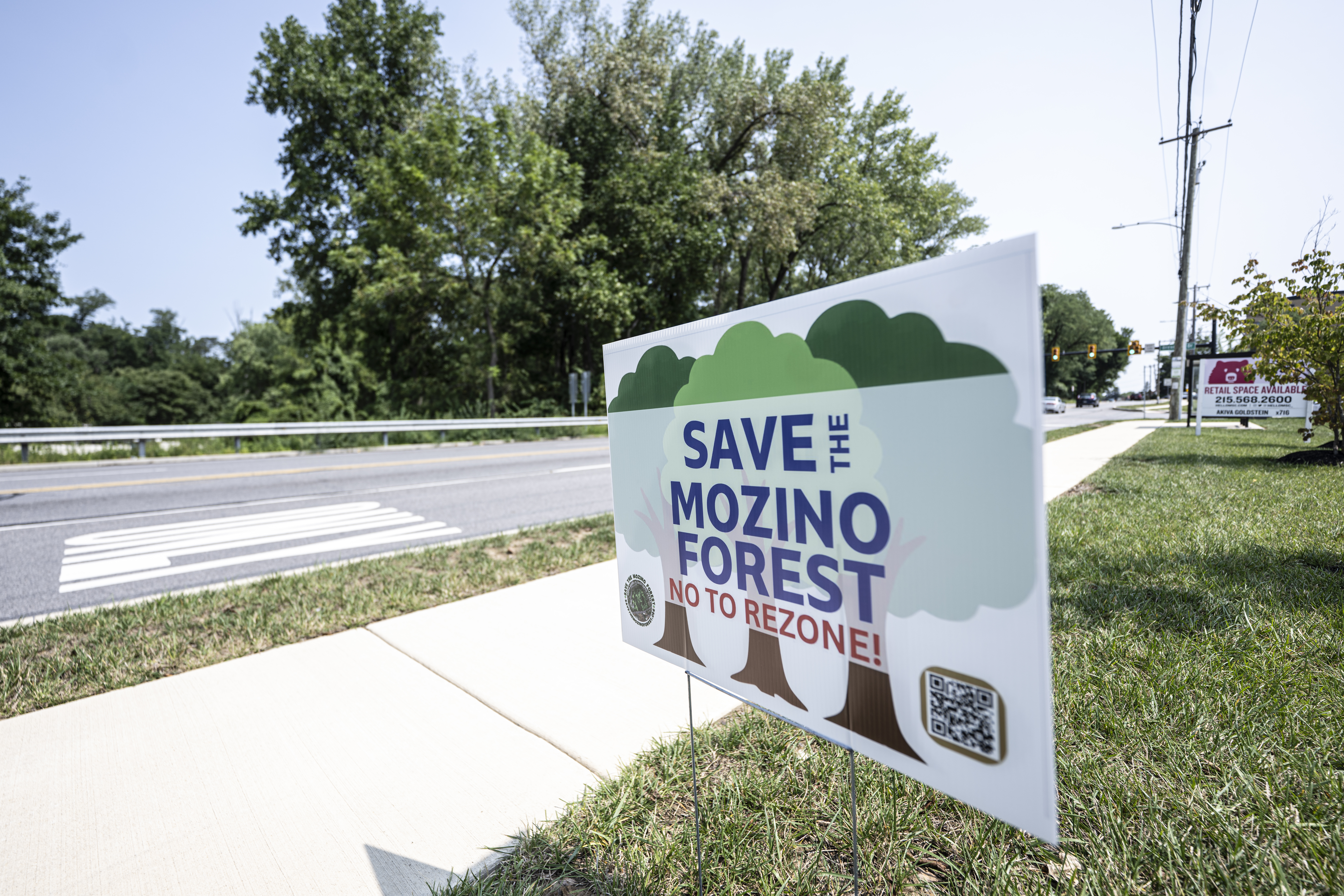
Fifteen acres of undeveloped land in Upper Darby Township face an uncertain fate as environmental groups rush to secure funding to purchase and protect the site.
Upper Darby residents and environmentalists are working to pull together $8 million to secure the purchase of the Mozino Tract, a parcel of land in Drexel Hill that, until recently, was slated to become a mixed-use housing and retail development.
Upper Darby’s council in August voted to table a proposal to rezone the land, currently zoned for residential use, to allow for a blend of single-family homes, townhouses, apartments, commercial spaces, and community gathering spots. Township staff at the meeting said they worked with the developer to create the mixed-use zoning proposal, a plan they said would help meet core township goals of increasing tax revenue and adding diverse housing options far more than an initial proposal to put 56 single-family homes on the site.
Now, developer Greg Lingo of Rockwell Development Group says he has abandoned the plans to build the mixed-use development and is giving organizers a chance to purchase the land for open space preservation.
If they can’t pull the money together, Lingo will go back to his original plan to put 56 single-family homes on the Mozino Tract, a proposal that is already permitted under the current zoning and won’t require special approvals.
As the high price tag looms, organizers say they’re confident they can find the money to keep the Mozino Tract wild.
What is the Mozino Tract?
The Mozino Tract is a 15-acre wooded parcel located between State and Township Line Roads in Drexel Hill. The land is currently owned by the Peter S. and Catherine G. Mozino Deed of Trust and is under contract to be sold to Lingo’s Rockwell Drexel LLC.
At an August meeting, Upper Darby residents packed the council chambers, urging the township to reject the plan for a mixed-use development and asking council topurchase the land to preserve it as open space. Many described spending time in the wooded area that, while not officially a public park, has been a place to commune with nature.
Amid pushback from residents, Lingo at the meeting said he would be willing to sell the property to the township, despite thinking that it would not be “a great use,” and approximated the cost of the sale at $8 million. Council unanimously tabled the zoning ordinance and voiced an openness to purchasing the property if funds could be raised.
The property’s assessed value is $446,920, according to Delaware County property records.
Lingo in an email on Sept. 15 wrote that it was immediately clear when he first met with neighbors that “they did not want any development” of the Mozino Tract, so he thought it best to work with thetownship on the mixed-use plan to “maximize open space, introduce different housing types across different price points, improve pedestrian mobility, maximize taxable income to the township and to dedicate a public park.”
Lingo’s email affirmed his commitment to Upper Darby, where he grew up, and said it was his “fault for assuming that I knew what was best” in proposing the mixed-use project.
If the environmental groups can’t find the funding to purchase the property, Lingo plans to enter into an agreement with a public or national homebuilder to build the 56 single-family homes.
Rockwell Development Group is “communicating regularly” with the environmental groups, Lingo wrote.
Organizers ‘have all confidence’ in raising funds
Bonnie Hallam, an organizer spearheading the effort to preserve the Mozino Tract, said local environmentalists “have all confidence” that they will be able to raise the $8 million.
“We really believe that this is going to be conserved, and we want the township to get on board with that,” Hallam said.
Hallam said she and other organizers submitted their first grant application on Sept. 25 to the Open Space Institute and have been in conversation with local and national funding groups, including the William Penn Foundation and the Pennsylvania Department of Conservation and Natural Resources. The group is going to start a community fundraising effort through the Foundation for Delaware County, she said.
The environmental leaders are also hoping to secure money through an open space referendum on the ballot in Delco this November. If the referendum is approved by voters, the county could spend $120 million financing land conservation projects, including “protecting natural areas from development.”
“We’re really going to work hard to secure that because we feel that the county is very much interested in this piece of property as well,” Hallam said.
Delaware County “has not had any conversations with Mr. Lingo regarding the purchase of the tract,” according to county spokesperson George Basile.
Hallam hopes Upper Darby Township will agree to be the title holder for the land, an agreement they have not made yet.
Upper Darby Township is “exploring its options right now” and “hoping for a resolution soon” regarding the Mozino Tract, public information officer Rob Ellis said in an email.
For Hallam and her co-organizers, preserving the open space — its wildlife, tall trees, and bubbling creek — is priceless. The Save The Mozino Forest group is organizing a rally on Saturday at Collenbrook Church.
“We have a really unique piece of property here that’s doing hard-working environmental services for the township,” Hallam said.
This suburban content is produced with support from the Leslie Miller and Richard Worley Foundation and The Lenfest Institute for Journalism. Editorial content is created independently of the project donors. Gifts to support The Inquirer’s high-impact journalism can be made at inquirer.com/donate. A list of Lenfest Institute donors can be found at lenfestinstitute.org/supporters.
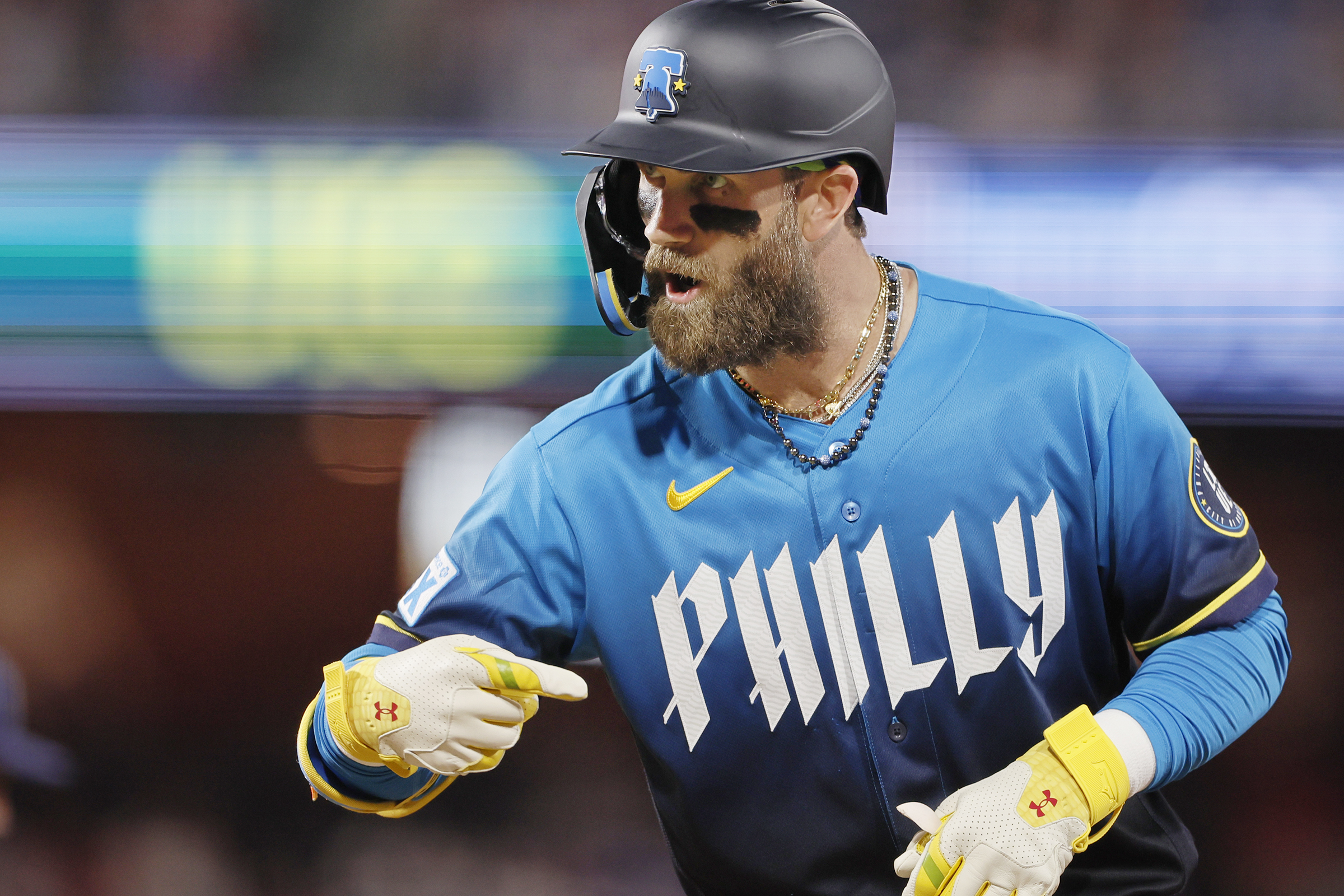
In response to congressional concerns about a video of Phillies star Bryce Harper that a FanDuel VIP account manager sent to a bettor who had an addiction, a FanDuel executive recently disclosed in a letter to lawmakers that the company has sent approximately 30 similar personalized videos of athletes and entertainers to its customers during the last two years.
“On occasion, FanDuel has arranged a personalized video message, almost always through publicly available services, as a token of appreciation for a customer’s loyalty in choosing FanDuel over its competitors,” Cory Fox, a senior vice president for public policy and sustainability, wrote on Sept. 24.
The videos, Fox said, are not used to “induce customers to continue gambling.”
FanDuel did not name the 30 athletes and entertainers in its letter. The company declined on Wednesday to provide their identities to The Inquirer.
It was the second letter that FanDuel has sent about its business practices to U.S. Sen. Richard Blumenthal (D., Conn.) and U.S. Reps. Paul D. Tonko (D., N.Y.) and Valerie P. Foushee (D., N.C.) since mid-August. The lawmakers had demanded that the company end its VIP program after The Inquirer wrote in July that FanDuel had sent in 2024 a short video greeting from Harper to a bettor from the Philadelphia suburbs who had a gambling addiction.
Blumenthal, Tonko, and Foushee also called on Major League Baseball and the Major League Baseball Players Association to prohibit players from doing promotional work for gambling entities. Such activity is permitted in the league’s current collective bargaining agreement, as long as players do not encourage betting on baseball.
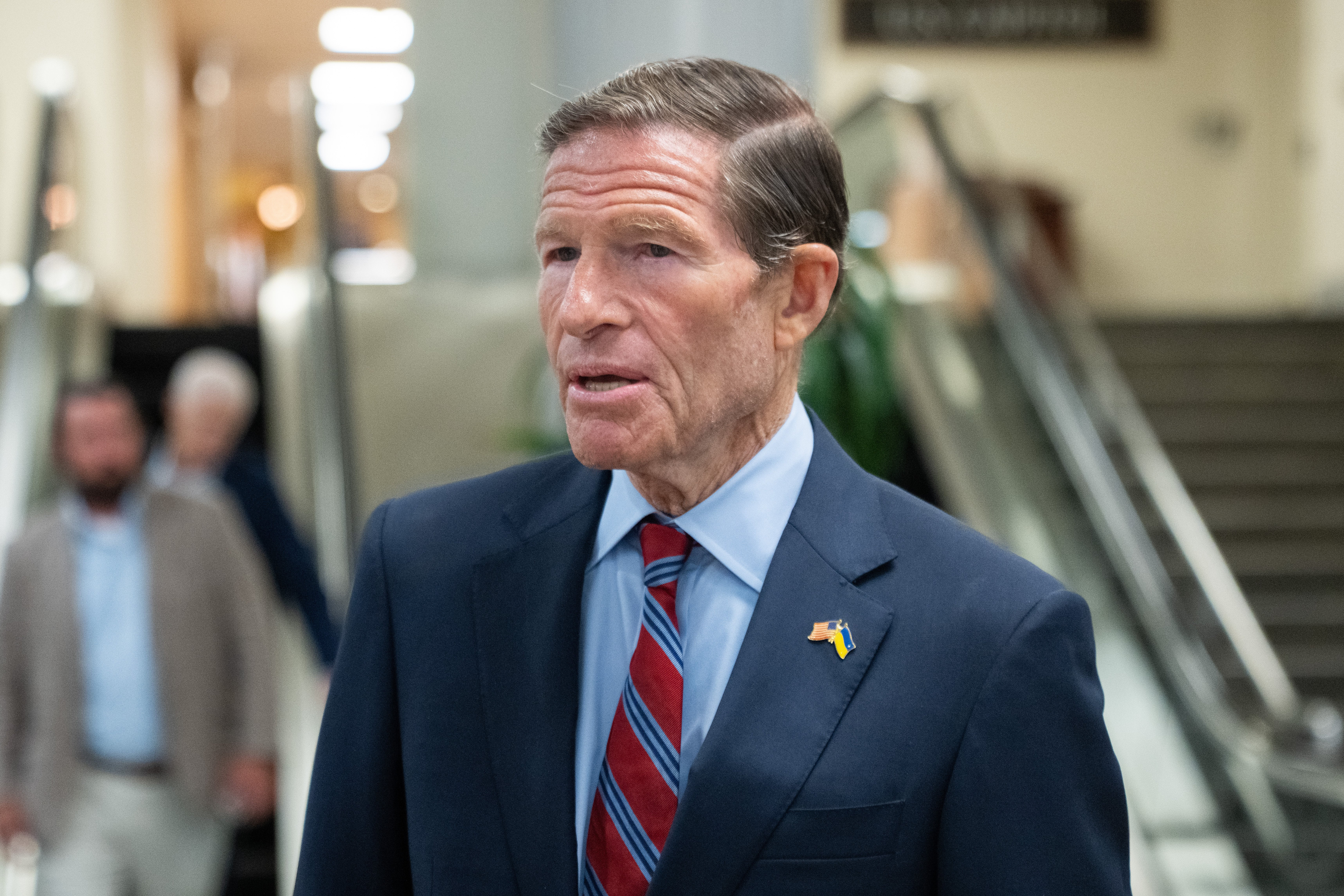
Sen. Richard Blumenthal, D-Conn., is among the federal lawmakers who have criticized FanDuel over some of its business practices.Allison Robbert
In response, the players union said it would support banning players from participating in personalized marketing campaigns for VIP programs as part of its next contract.
The legislators pressed FanDuel for additional information about its VIP practices earlier this month, accusing the company of initially providing them with “misleading and incomplete” responses.
Fox said that FanDuel’s VIP program “serves only a small fraction of total FanDuel customers” and is meant to encourage customer loyalty. He noted that the company’s competitors — including federally regulated prediction markets — have similar loyalty programs.
The lawmakers previously alleged that VIP account managers foster “false friendships” with gamblers to entice them to continue betting, and asked whether FanDuel ensures they are not extending predatory offers to problem gamblers.
Fox denied those claims in his response.
He said VIP managers are trained to recognize and report signs of problem gambling — such as a bettor expressing concern about paying bills or making references to harming themselves — and must seek approval before offering customers certain levels of rewards.
The company separately reviews customers’ wagering, deposit, and withdrawal patterns and the amount of time spent on FanDuel’s platform for potential red flags.
“FanDuel’s VIP program is not designed to encourage destructive gambling,” Fox wrote.
A VIP manager obtained a video of Harper, a two-time National League Most Valuable Player, through the video service Cameo, and sent it in November 2024 to Terry Thompson, a Montgomery County resident who lost nearly $2 million on sports bets that he placed with FanDuel and DraftKings beginning in 2020.
Earlier this year, having gambled away the last of his money, Thompson indicated to his therapist that he was planning to die by suicide. He entered a psychiatric facility to be treated for gambling addiction.
When Harper recorded the greeting, he was not aware that Thompson had an addiction, or that FanDuel intended to use the video for business purposes, Harper wrote on Instagram in July.
Fox said if customers indicate that they want to cut back on gambling or shutter their account, the company provides assistance, and does not offer perks to encourage them to reconsider.
“Where the right outcome is closing the account entirely,” Fox wrote, “FanDuel’s VIP Account Managers take that action.”
The Inquirer will continue to report on issues related to the growth of gambling addiction — among teens and adults — across Pennsylvania. If you, or someone you know, would like to speak with a reporter, please contact David Gambacorta or William Bender at dgambacorta@inquirer.com and wbender@inquirer.com
ATLANTA — Derek Hill thought he had a chance at it.
Off the bat, even Austin Riley didn’t think it was gone. He barreled up a mistake from Phillies closer Jhoan Duran — who was pitching in the eighth inning as an indication of how shallow the Phillies’ bullpen is this time of year — and as he made his way toward first, Riley prayed that it would keep carrying.
“It just caught a jet stream,” said Hill.
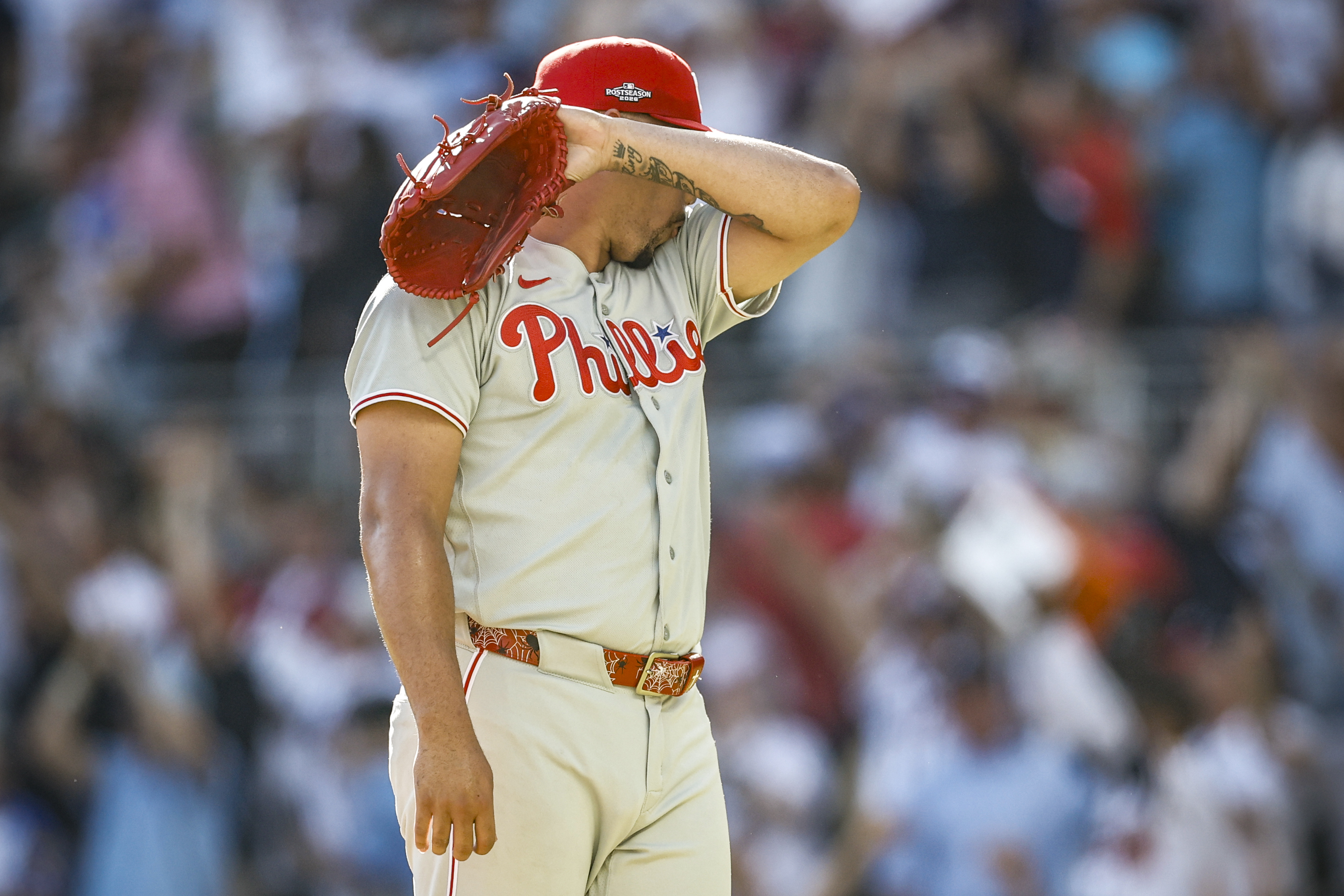
The ball landed atop the brick wall in center field of Truist Park, taking with it the Phillies’ chances in Game 1 of the wild-card series. Riley’s three-run shot propelled the Braves to the 5-3 come-from-behind win. And it left Duran shaking his head on the mound, as the latest Phillies reliever to watch a late lead evaporate in the first postseason game.
“That’s a dagger,” Bryce Harper said.
The Braves’ Austin Riley celebrates his three-run homer in the eighth inning.Yong Kim / Staff Photographer
In Game 1 of the 2024 National League Division Series, a combination of Jeff Hoffman, Matt Strahm, and Orion Kerkering coughed up a one-run lead over the Mets in the eighth inning. In Game 1 of the 2025 NLDS, Strahm gave up a three-run homer to the Dodgers in the seventh. The Phillies lost both games, and eventually both series.
Two of those relievers are not on the team anymore, and Kerkering finished the season at triple A. It was the Phillies’ best bullpen arm that lost the game Tuesday.
“In our minds, we had our best guy out there,” said interim manager Don Mattingly. “You live with this one.”
Even by postseason standards, when managers tend to become more aggressive with their pitching changes, Mattingly using his closer for the seventh and eighth was a surprising move. But the Phillies were clinging to a one-run lead, courtesy of a two-run triple from J.T. Realmuto, and the circle of trust in the bullpen has been ever-shrinking.
Should the Phillies have gotten to the ninth still with the lead, the plan for the final three outs would depend where the Braves were in the order, Mattingly said. Andrew Painter or Jonathan Bowlan were potential options, and the Phillies could have also used a combination of relievers.
It nearly worked out. Duran needed 12 pitches to handle the top of Atlanta’s order in the seventh, and got two outs on three pitches to start the eighth. But a soft infield hit from Michael Harris II to shortstop, followed by a mislocated splitter that hit Ozzie Albies gave the Braves some more life. And then Duran missed his spot to Riley with a fastball.
Jesus Luzardo gave up one run in five innings. Yong Kim / Staff Photographer
“It’s hard to see something like that,” Duran said. “I missed the pitch in the zone, and I paid the price.”
The early deployment of Duran wasn’t the first risk Mattingly took with his pitching plan on Tuesday.
It had been 22 days since Jesús Luzardo started a game. He faced batters for the first time on Sunday, in a four-pitch outing that lasted mere minutes. Nobody — not Braves manager Walt Weiss and his club, not even Mattingly — knew what to expect from him when he took the ball to start Game 1. Mattingly hoped he would at least begin the game “on a good foot.”
But Luzardo delivered much more than that. He held the Braves to one run and three hits over five innings, turning a 1-1 game over to Alex McFarlane. For 77 pitches, Luzardo went toe-to-toe with Atlanta ace Chris Sale.
“I feel like our bodies are pretty well-conditioned, even though I was down for three weeks,” Luzardo said. “But I feel like the long season helped condition me for that situation.”
Luzardo gave up one run in the second on a ground single up the middle from Mike Yastrzemski. An adrenaline spike helped him top out at 98.2 mph with his fastball during the outing. But as the game progressed, Luzardo felt like he was tiring. His velocity started to drop in the fourth and fifth innings, and that was the end of the line.
“He gave us more than we thought, honestly,” Mattingly said. “Just kept checking with him every inning, checking with the trainers, seeing if he was having trouble getting loose between innings. Zeus was great today.”
Phillies center fielder Derek Hill can’t come up with a ball hit by the Braves’ Ozzie Albies in the sixth inning. Yong Kim
The Phillies managed to squeeze out a first-inning run against the 37-year-old Sale, who started the game a little erratic with his command. A walk to Kyle Schwarber and a double from Alec Bohm on an elevated fastball well above the zone got the Phillies on the board first.
The second time he walked out to the mound, though, Sale seemed back to himself, and he diced up the Phillies lineup. Sale continued his career dominance over Bryce Harper, who went 0-for-3 against him.
It briefly appeared Harper’s fortunes might be changing when he came a few feet from a towering two-run shot that would have given the Phillies the lead in the sixth. But it landed just foul, and Harper badly whiffed on a slider well outside two pitches later to strike out.
“It was close,” Harper said of the foul ball. “Not close enough.”
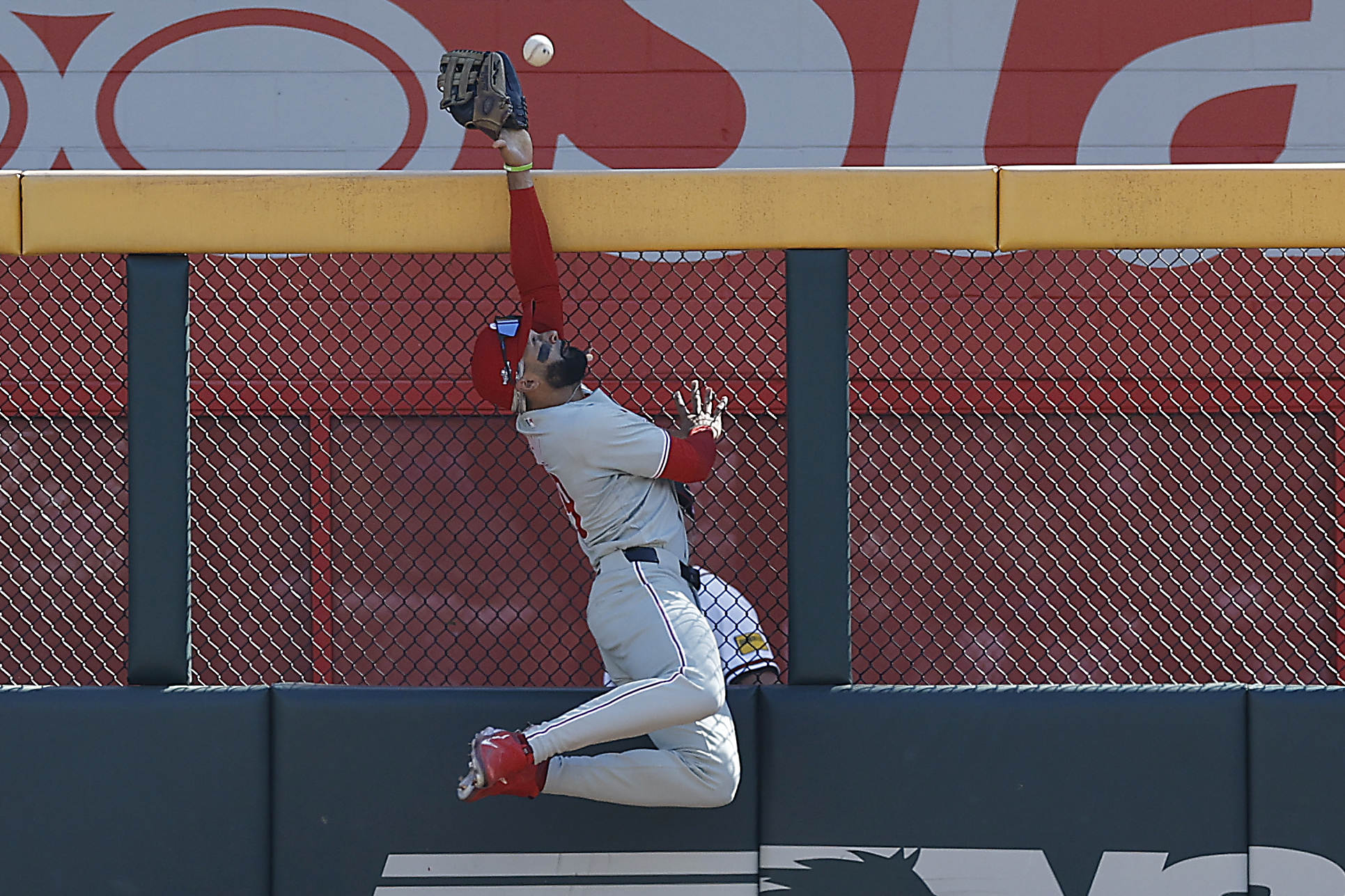
The Braves briefly took a lead in the seventh off McFarlane before the Phillies snatched it right back. Hill was inches from another highlight-reel catch in center on a deep fly ball from Albies at the wall, but he slightly mistimed it and the ball deflected off his wrist. Hill couldn’t corral the ball immediately, and Albies advanced to third on an RBI triple.
After the Phillies finally chased Sale from the game in the seventh, they jumped in front again with a triple of their own. Realmuto pounced on a fastball from Didier Fuentes and sent it to the right field corner, where Ronald Acuña Jr. misplayed it, allowing two runs to score.
“Obviously the triple was fun, exciting. Not too many batters later, giving up the lead, that wasn’t fun,” Realmuto said. “That’s the playoffs, though. It’s such a roller coaster, and that’s why we love this game so much, is the emotions that come with it.”
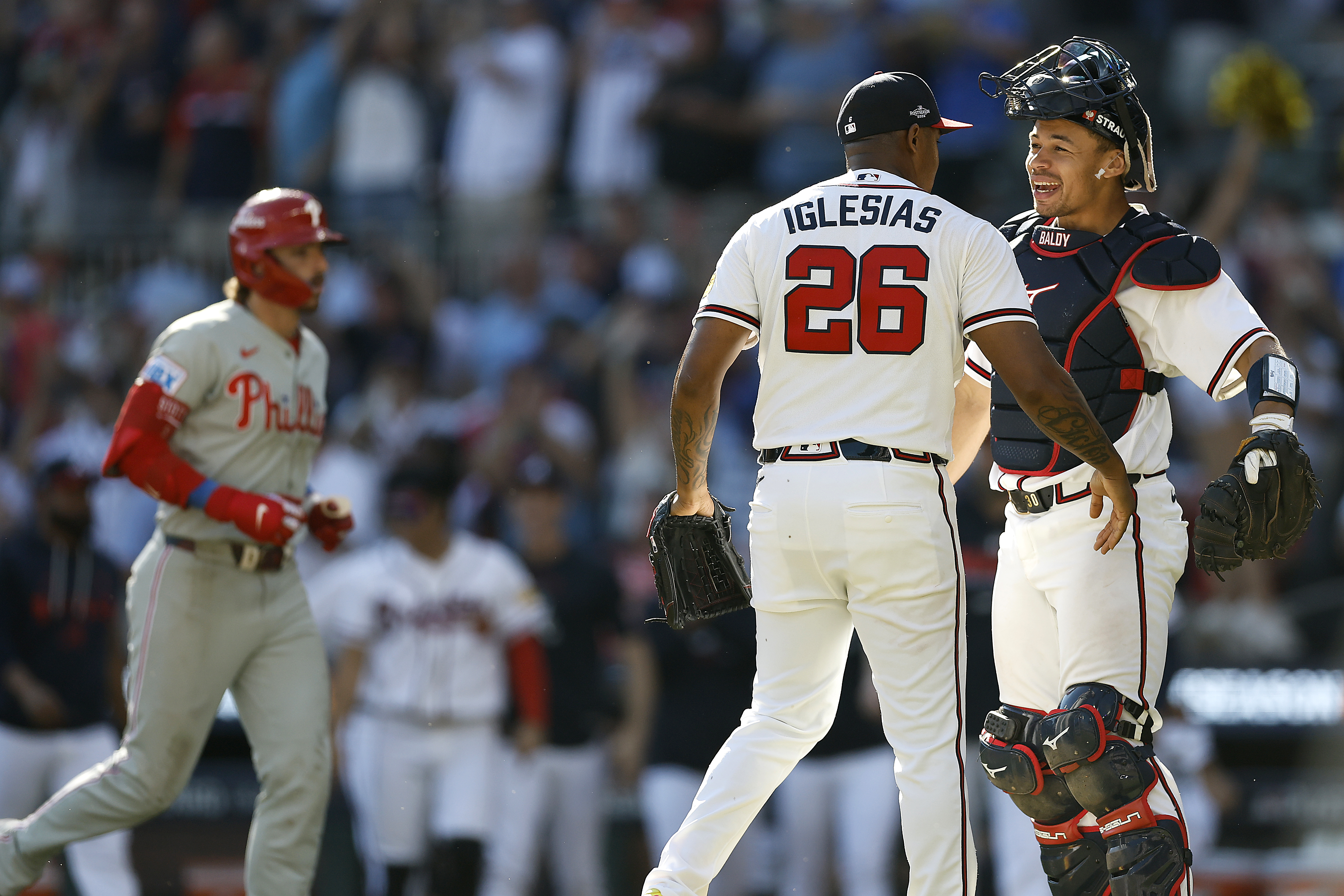
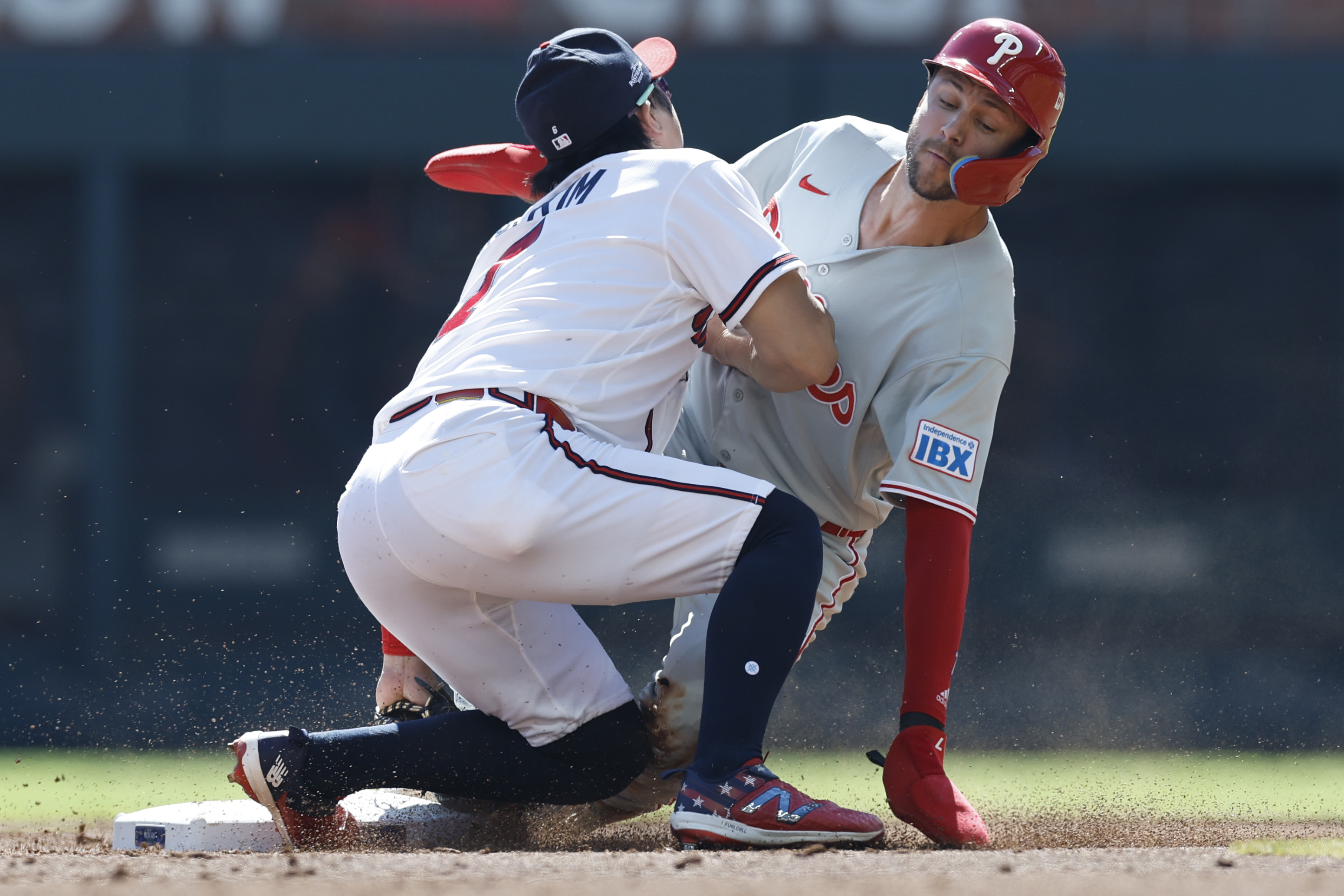
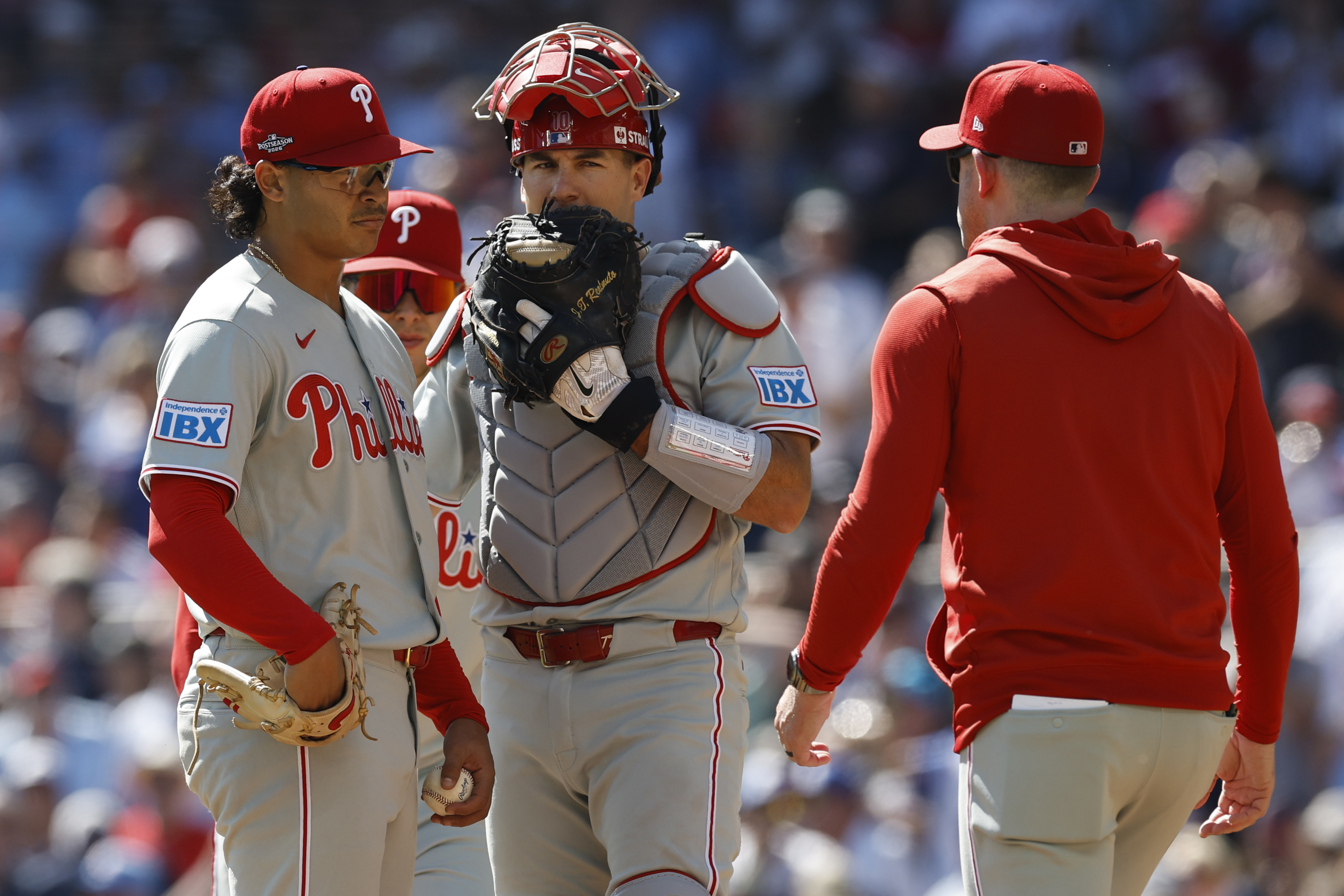
Philadelphia Phillies second baseman Bryson Stott (left) jogs off the field after the final out as the Atlanta Braves relief pitcher Raisel Iglesias (center) celebrates their win with Atlanta Braves catcher Drake Baldwin (right).Yong Kim / Staff PhotographerPhiladelphia Phillies relief pitcher Jhoan Duran reacts after giving up a three-run homer to the Atlanta Braves Austin Riley in the eighth inning.Yong Kim / Staff PhotographerAtlanta Braves Austin Riley celebrates his three-run homer in the eighth inning.Yong Kim / Staff PhotographerPhiladelphia Phillies relief pitcher Jhoan Duran reacts after giving up a three-run homer to the Atlanta Braves Austin Riley in the eighth inning.Yong Kim / Staff PhotographerPhiladelphia Phillies relief pitcher Jhoan Duran reacts after catching a line drive off the bat of Atlanta Braves Matt Olson in the eighth inning.Yong Kim / Staff PhotographerPhiladelphia Phillies relief pitcher Jhoan Duran pitches against the Atlanta Braves in the seventh inning.Yong Kim / Staff PhotographerPhiladelphia Phillies Bryson Stott celebrates after he scores in the seventh inning.Yong Kim / Staff PhotographerPhiladelphia Phillies Bryan De La Cruz (right) celebrates with Bryson Stott after they both scored on J.T. Realmuto hit in the seventh inning.Yong Kim / Staff PhotographerPhiladelphia Phillies catcher J.T. Realmuto knocks in two runs in the seventh inning.Yong Kim / Staff PhotographerPhiladelphia Phillies Bryson Stott singles in the seventh inning.Yong Kim / Staff PhotographerPhiladelphia Phillies Derek Hill reaches for a ball of the bat of Atlanta Braves second baseman Ozzie Albies in the sixth inning.Yong Kim / Staff PhotographerPhiladelphia Phillies Alex McFarlane pitches against the Atlanta Braves in the sixth inning.Yong Kim / Staff PhotographerPhiladelphia Phillies Bryce Harper strikes out in the sixth inning.Yong Kim / Staff PhotographerPhiladelphia Phillies Kyle Schwarber singles in the sixth inning.Yong Kim / Staff PhotographerPhiladelphia Phillies catcher J.T. Realmuto strikes out to end the fifth inning.Yong Kim / Staff PhotographerPhiladelphia Phillies second baseman Edmundo Sosa celebrates his fifth inning double.Yong Kim / Staff PhotographerPhiladelphia Phillies starting pitcher Jesus Luzardo delivers a pitch against the Atlanta Braves in the fourth inning.Yong Kim / Staff PhotographerPhiladelphia Phillies starting pitcher Jesus Luzardo reacts to the third out in the third inning.Yong Kim / Staff PhotographerAtlanta Braves Ha-Seong Kim tags Philadelphia Phillies shortstop Trea Turner as he tries to steal second base in the third inning.Yong Kim / Staff PhotographerPhiladelphia Phillies starting pitcher Jesus Luzardo (left) and Philadelphia Phillies catcher J.T. Realmuto (center) talks as pitching coach Caleb Cotham makes a visit after the Phillies game up a run to the Atlanta Braves.Yong Kim / Staff PhotographerAtlanta Braves starting pitcher Chris Sale pitches in the first inning.Yong Kim / Staff PhotographerPhiladelphia Phillies starting pitcher Jesus Luzardo pitches against the Atlanta Braves in the first inning.Yong Kim / Staff PhotographerPhiladelphia Phillies Kyle Schwarber and Derek Hill (right) celebrate after Schwarber scores on an Alec Bohm double in the first inning.Yong Kim / Staff PhotographerPhiladelphia Phillies Alec Bohm hits a RBI double in the first inning.Yong Kim / Staff PhotographerPhiladelphia Phillies Bryce Harper (right) and Trea Turner greet each other before the start of game 1.Yong Kim / Staff Photographer
As Riley’s ball kept carrying in the eighth, it was hard not to be reminded of those other Game 1s, and what happened after them. Falling behind in a wild-card series is an even graver blow. Since the current playoff format was instituted in 2022, only one team has ever advanced to the division series after dropping the first game.
But the Phillies have done unlikelier things.
“We know what’s at stake tomorrow,” Schwarber said. “So it’s, sure, frustrating, right? Everyone walks away from that game, and everyone says, ‘What if?’ But the what ifs go away when you leave here, and everyone’s focused on the task at hand tomorrow.”
In the dugout after the final out, Schwarber noticed Cristopher Sánchez standing off by himself, staring out at the mound. Sánchez will take the ball on Wednesday as the Phillies see if they have any last-minute heroics left in them to extend their season another day.
“Let’s go. You know what I mean?” Schwarber said. “That’s our guy.”
On a clear June evening in Washington earlier this year, the Phillies were down to their final strike of the game. Improbably, unbelievably, they pulled off an eight-run comeback anyway. A night later, they did it again, needing only two runs that time.
On an August night in Anaheim, Calif., there were two outs in the ninth when Edmundo Sosa hit a go-ahead grand slam.
The Phillies have failed many times this year. There have been cold spells, blown leads, perplexing errors, and losing streaks, though none more humiliating than the four straight they lost last week. But they have also pulled off the unlikely. And so perhaps it was fitting that in the 11th hour of their season, in Game 162, the offense at last woke from its slumber.
In Sunday’s 7-3 win over the Rays, with big-game pitcher Zack Wheeler on the mound, the Phillies finally finished the task. In the final game of the regular season, with rain pouring the entire time, they secured the last National League wild-card spot. They will now head to Atlanta for the best-of-three series that begins on Tuesday with Game 1 at 2 p.m.
“Whatever happens, wherever we gotta go, if you’re good enough to win it all, you gotta beat everybody,” said interim manager Don Mattingly.
In the batting cages before the game, Trea Turner and a few teammates mused that they had never played in a Game 162 that truly mattered before. In years past, their teams had either been already in, or completely out of the playoffs by the time they reached the end of their regular-season schedule.
Zack Wheeler gave up one run in six innings against the Rays on Sunday. David Maialetti / Staff Photographer
“You gotta do what you gotta do,” Turner said. “You gotta find a way in, and at times this year we didn’t play well, but we played good enough to sneak in. And now, it’s just trying to move on.”
Bryce Harper and Edmundo Sosa each hit a homer, after the offense had gone 47 consecutive innings without one. The Phillies did the little things, too: stole bases, moved runners with a sacrifice bunt, scored with sacrifice flies. In the end,they had 12 hits, and eight of nine starters reached base at least once. They only struck out five times.
J.T. Realmuto had one of the biggest swings after Mattingly dropped the catcher to ninth in the order for the first time in his career. As his slump reached 0-for-34 in the Phillies’ embarrassing 12-1 loss on Saturday, Realmuto said plainly that he had been letting his teammates down.
He didn’t let it go any further. With two out in the second inning and Sosa on second after hitting his own double, Realmuto hit a line drive to left field. Sure, it was misread by Victor Mesa Jr., who got turned around, but at 110.5 mph off the bat it was a solid piece of contact, and it gave the Phillies an early 2-0 lead.
“You knew that every run you get when you got Wheeler out there is important,” Mattingly said. “You get a run early, it takes a little pressure off early.”
Trea Turner advanced Realmuto to third with a single, before Kyle Schwarber ripped a 116.8 mph laser off the right-field wall to score two. As he got to second base standing up, Schwarber turned back to his dugout and let out a roar and a fist pump, in a rare display of intense emotion from the 33-year-old.
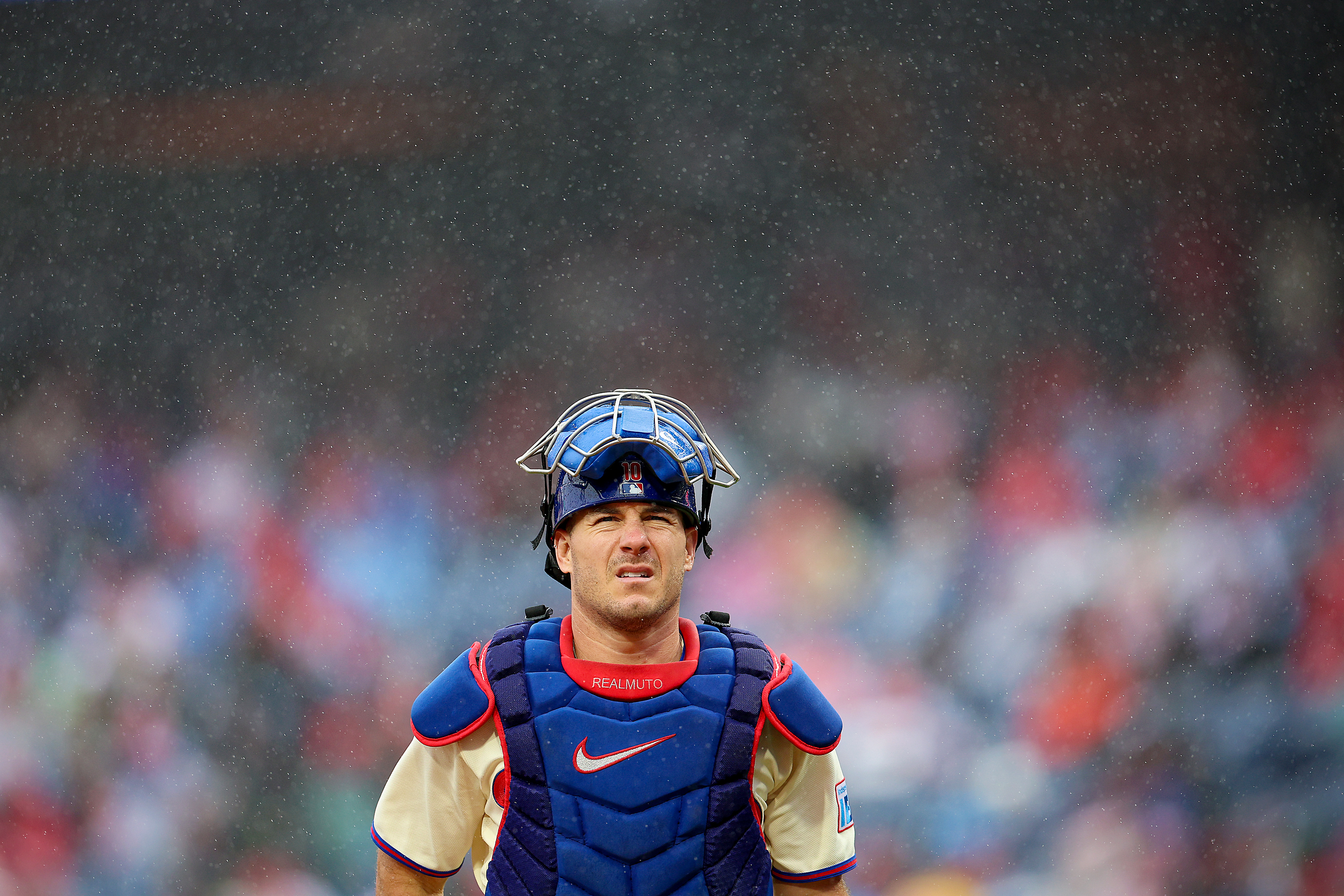
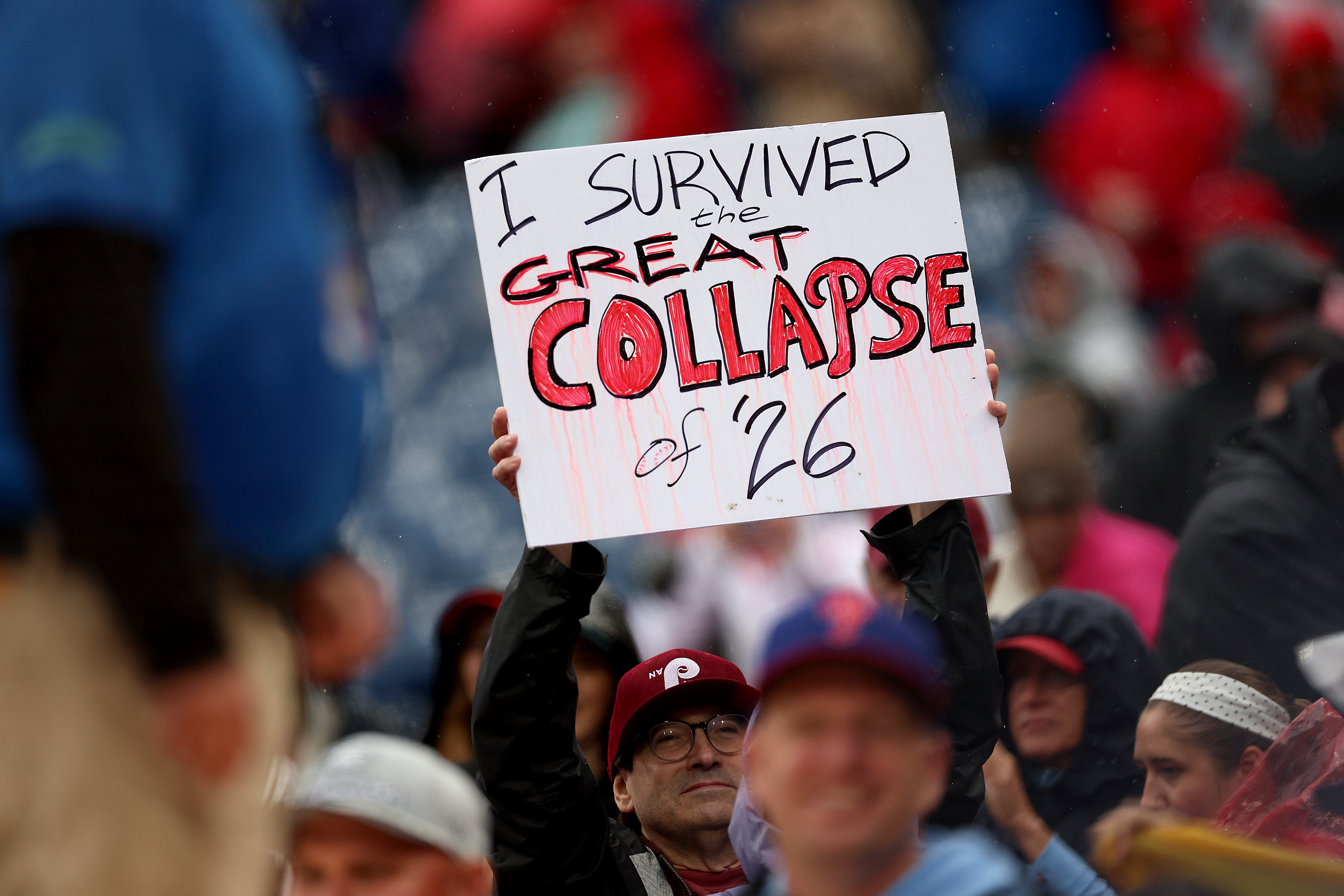
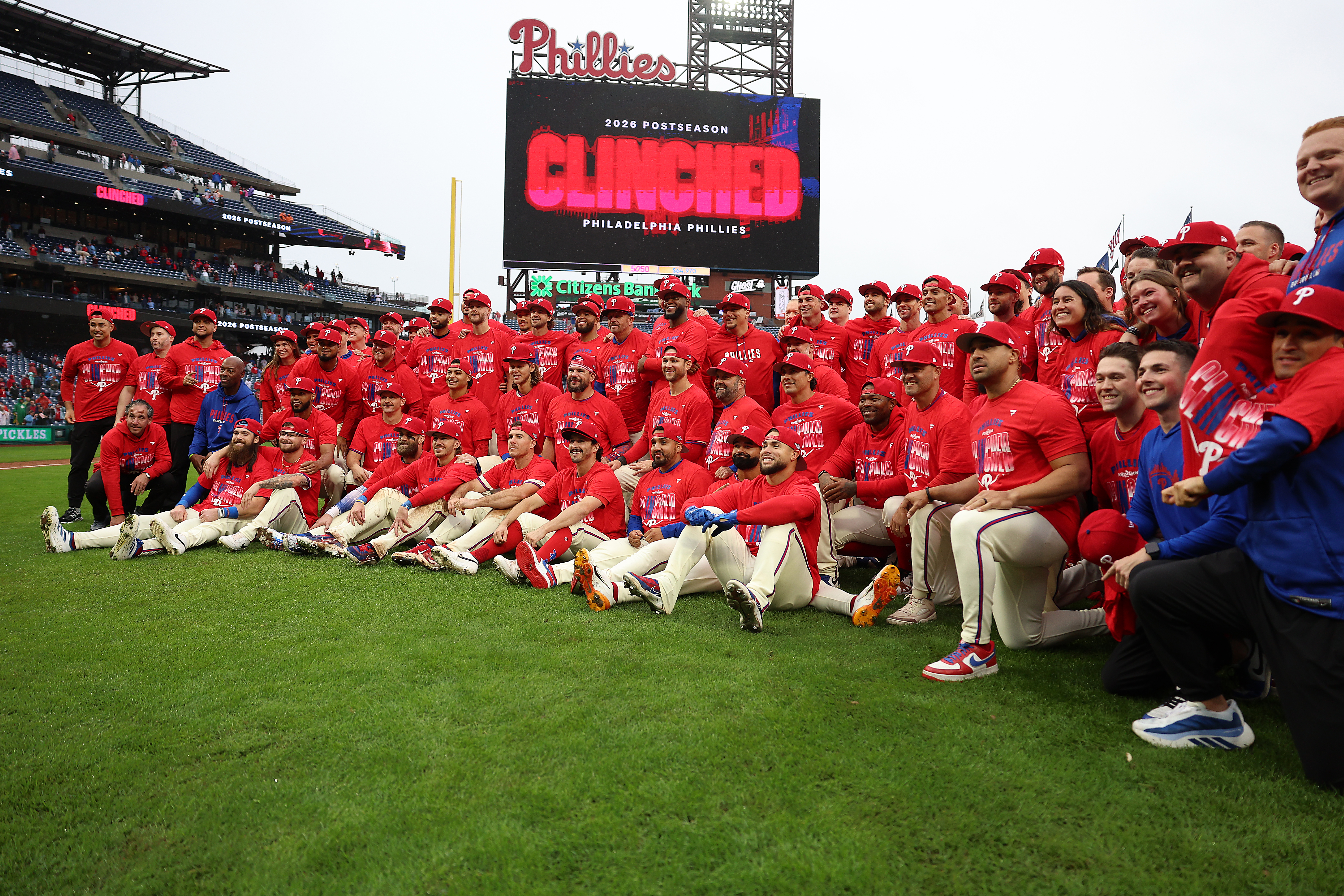
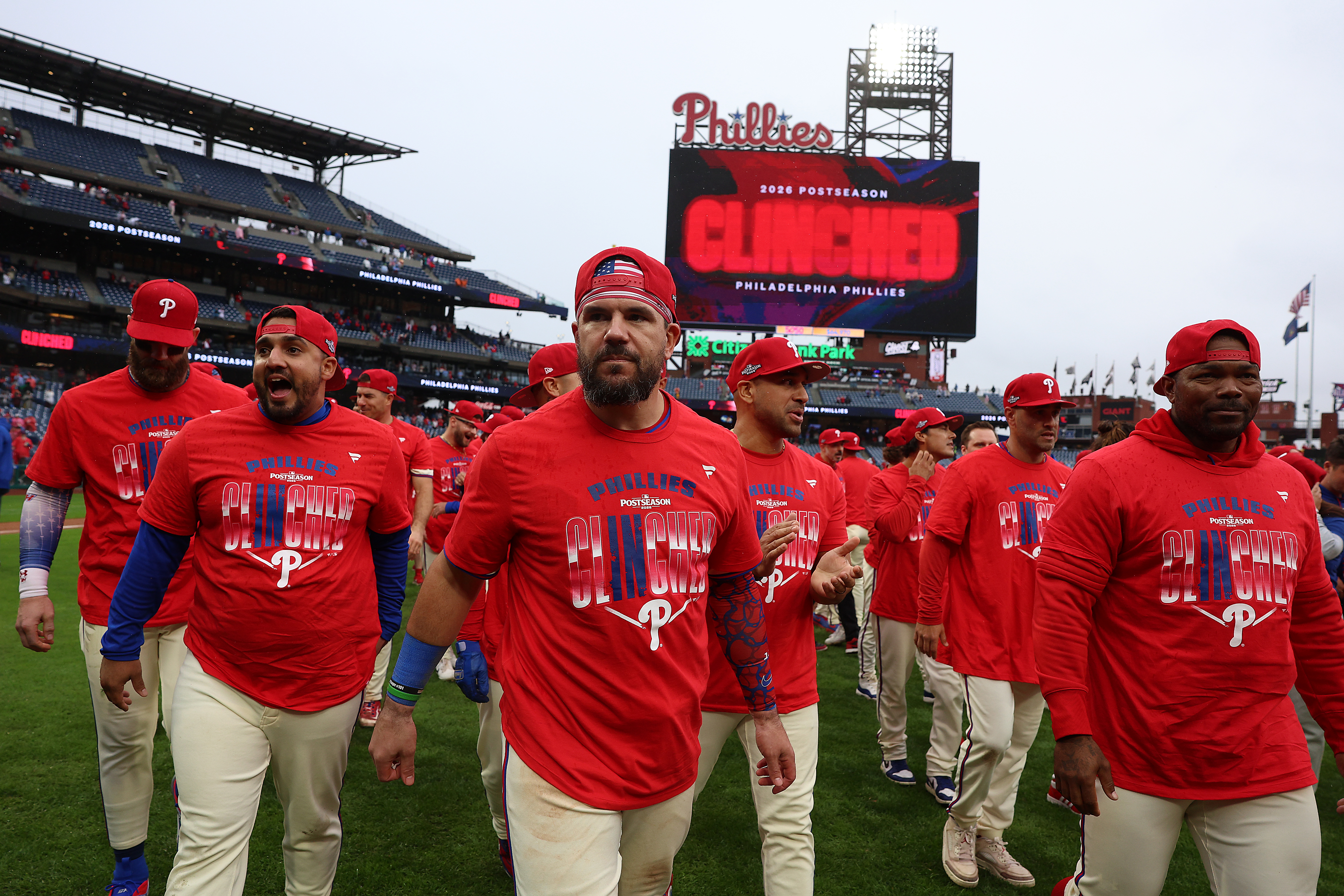
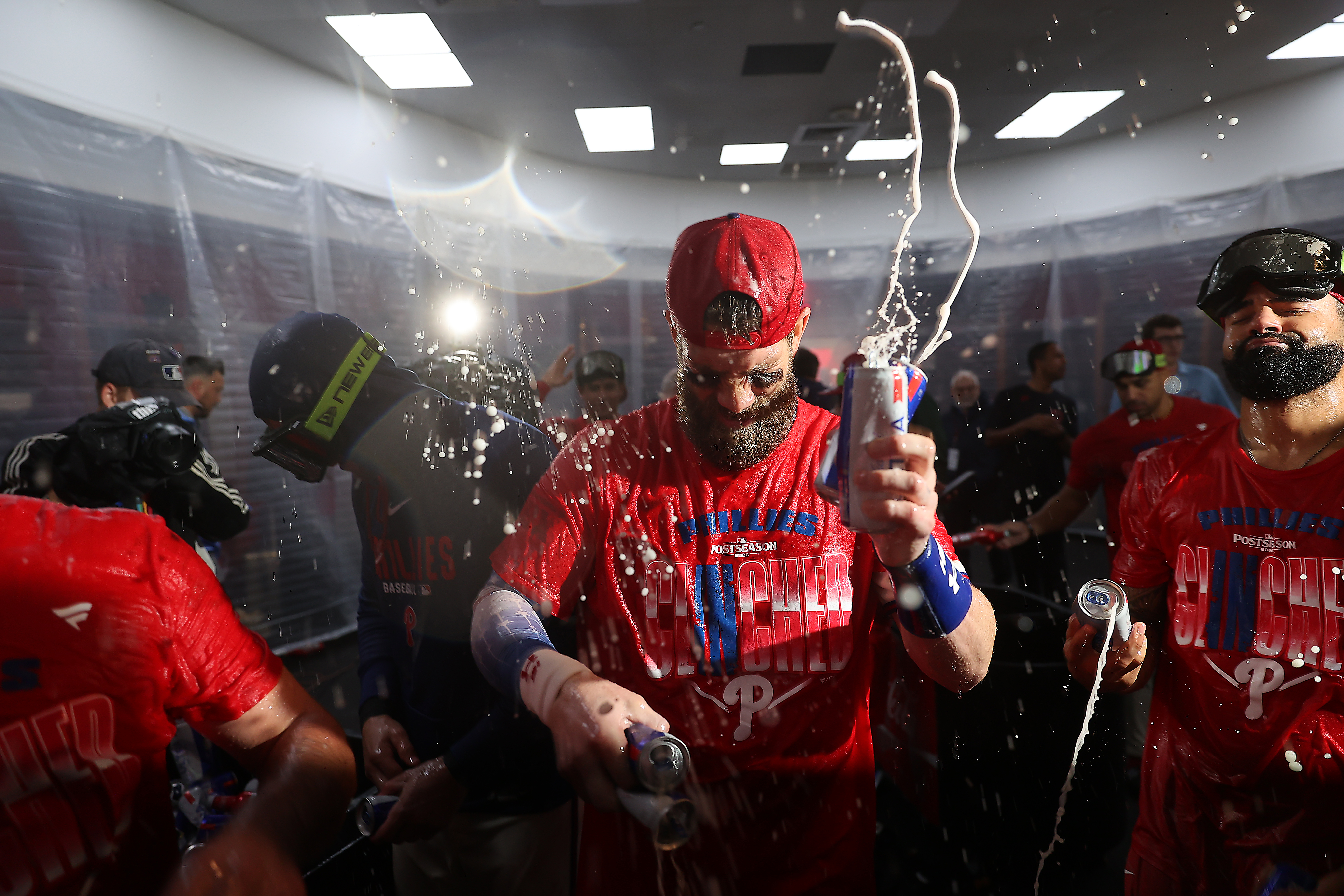
Philadelphia Phillies third baseman Alec Bohm (left) celebrates as Philadelphia Phillies designated hitter Kyle Schwarber (right) scores in the first inning.David Maialetti / Staff PhotographerPhiladelphia Phillies pitcher Zack Wheeler pitches in the second inning.David Maialetti / Staff PhotographerPhiladelphia Phillies designated hitter Kyle Schwarber hits an RBI double in the second inning.David Maialetti / Staff PhotographerPhiladelphia Phillies third baseman Alec Bohm (center) congratulates Philadelphia Phillies shortstop Trea Turner (right) after he scores on a Philadelphia Phillies designated hitter Kyle Schwarber double in the second inning.David Maialetti / Staff PhotographerPhiladelphia Phillies pitcher Zack Wheeler pitches in the third inning.David Maialetti / Staff PhotographerPhiladelphia Phillies designated hitter Kyle Schwarber (left) and Philadelphia Phillies shortstop Trea Turner (right) react after the umpire called Philadelphia Phillies Bryson Stott out as he tried to steal second base. After a review, Stott was ruled safe.David Maialetti / Staff PhotographerPhiladelphia Phillies first baseman Bryce Harper watches his solo homer in the fifth inning.David Maialetti / Staff PhotographerPhiladelphia Phillies first baseman Bryce Harper celebrates his solo homer in the fifth inning.David Maialetti / Staff PhotographerPhiladelphia Phillies pitcher Zack Wheeler pitches in the fifth inning.David Maialetti / Staff PhotographerPhillies fans celebrate after Philadelphia Phillies second baseman Bryson Stott scores in the fifth inning.David Maialetti / Staff PhotographerPhiladelphia Phillies left fielder Edmundo Sosa celebrates his homer in the fifth inning.David Maialetti / Staff PhotographerPhiladelphia Phillies catcher J.T. Realmuto looks up at the rain as it falls late in the game.David Maialetti / Staff PhotographerPhiladelphia Phillies pitcher Jhoan Duran celebrates the final out against the Tampa Bay Rays.David Maialetti / Staff PhotographerPhiladelphia Phillies pitcher Jhoan Duran (left) and Edmundo Sosa (right) celebrate after advancing into the playoffs.David Maialetti / Staff PhotographerA Phillies fan holds up a sign after the Phillies win to clinch a playoff spot.David Maialetti / Staff PhotographerPhiladelphia Phillies pose for a group photo after they clinched a playoff spot.David Maialetti / Staff PhotographerPhiladelphia Phillies walk off the field after clinching a playoff spot at Citizens Bank Park.David Maialetti / Staff PhotographerBryce Harper and his teammates celebrate in the clubhouse after clinching a playoff spot.David Maialetti / Staff PhotographerBryce Harper and his teammates celebrate in the clubhouse after clinching a playoff spot.David Maialetti / Staff PhotographerPhiladelphia Phillies Kyle Schwarber celebrates in the clubhouse after clinching a playoff spot.David Maialetti / Staff PhotographerPhillies Bryce Harper and his teammates celebrate in the clubhouse after clinching a playoff spot.David Maialetti / Staff PhotographerPhiladelphia Phillies center fielder Justin Crawford celebrates in the clubhouse after clinching a playoff spot.David Maialetti / Staff PhotographerPhiladelphia Phillies Kyle Schwarber celebrates in the clubhouse after clinching a playoff spot.David Maialetti / Staff PhotographerPhillies catcher Garrett Stubbs celebrates in the clubhouse after clinching a playoff spot.David Maialetti / Staff PhotographerPhiladelphia Phillies pitcher Aaron Nola smokes a cigar as the Phillies celebrate in the clubhouse after clinching a playoff spot.David Maialetti / Staff Photographer
“We’re in the cages early. Guys are taking ground balls. Pitchers are doing what they need to do,” Schwarber said. “We’re preparing on a daily basis for these opportunities, and we find our way in. And now it’s the same thing. We get down there, we prepare, do our work, and get ready to go.”
How the Phillies will line up their pitching against the Braves for the wild-card series remains to be seen. Mattingly declined to announce his starter for Tuesday’s Game 1 in the celebratory postgame clubhouse. The collapse of the last week still casts a long shadow, as they were forced to burn Wheeler to extend their season beyond Sunday.
The right-hander rose to the occasion in his biggest start of the year, holding the Rays to one run over six innings to give his offense time to work.
Wheeler struck out the side in the first inning, one swinging and two looking, to set the tone. He worked around traffic, allowing five hits, but struck out five and didn’t walk a batter. He also took matters into his own hands defensively on occasion, catching a pop fly and fielding a grounder, too.
“I love pitching in these big games,” Wheeler said. “I mean, I just tried to give the best I could today.”
The Phillies pose for a group photo after they clinched a playoff spot on Sunday.David Maialetti / Staff Photographer
The 36-year-old finished his comeback regular season with a 3.00 ERA in 162 innings. A year ago, there were external questions about whether Wheeler would ever be himself again on the mound after undergoing thoracic outlet decompression surgery. But he never doubted it.
Wheeler’s day, and regular season, was finished after 97 pitches, with Alex McFarlane taking over in relief for the seventh. The righty had a comfortable lead, but gave up two runs on Jonny DeLuca’s second homer of the day and a ground-rule double, followed by a single off Alec Bohm’s glove at first base. He ended the inning with a pop fly.
As Jesús Luzardo worked his way back from the shoulder stiffness that landed him on the injured list on Sept. 12, Mattingly hoped to have him face hitters at some point in the process. He didn’t envision those hitters to be in the eighth inning of a must-win game, but that was another consequence of the Phillies’ recent slide.
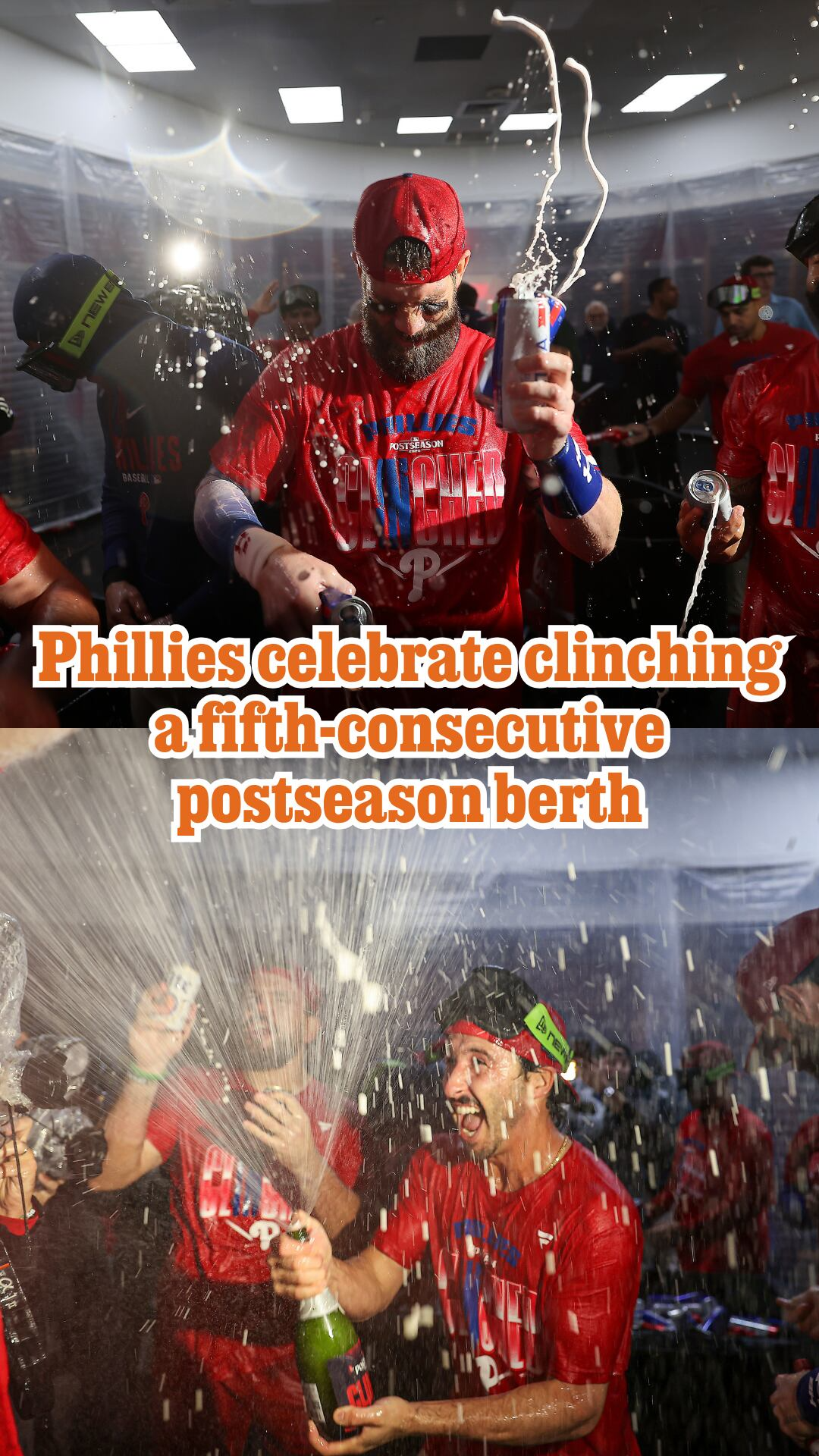
Video: Phillies celebrate clinching a fifth-consecutive postseason berth
Luzardo had a four-run cushion as he jogged out to the mound. Mattingly had said pregame that while the lefty’s recent bullpen session had gone well, there was still a question of how he would look in a real game.
It turned out, quite strong. Luzardo needed just four pitches — all fastballs — to retire the side with three straight groundouts.
Then, he passed the baton in the ninth to closer Jhoan Duran, who struck out Cedric Mullins and Nick Fortes to send the Phillies to the playoffs for the fifth straight year.
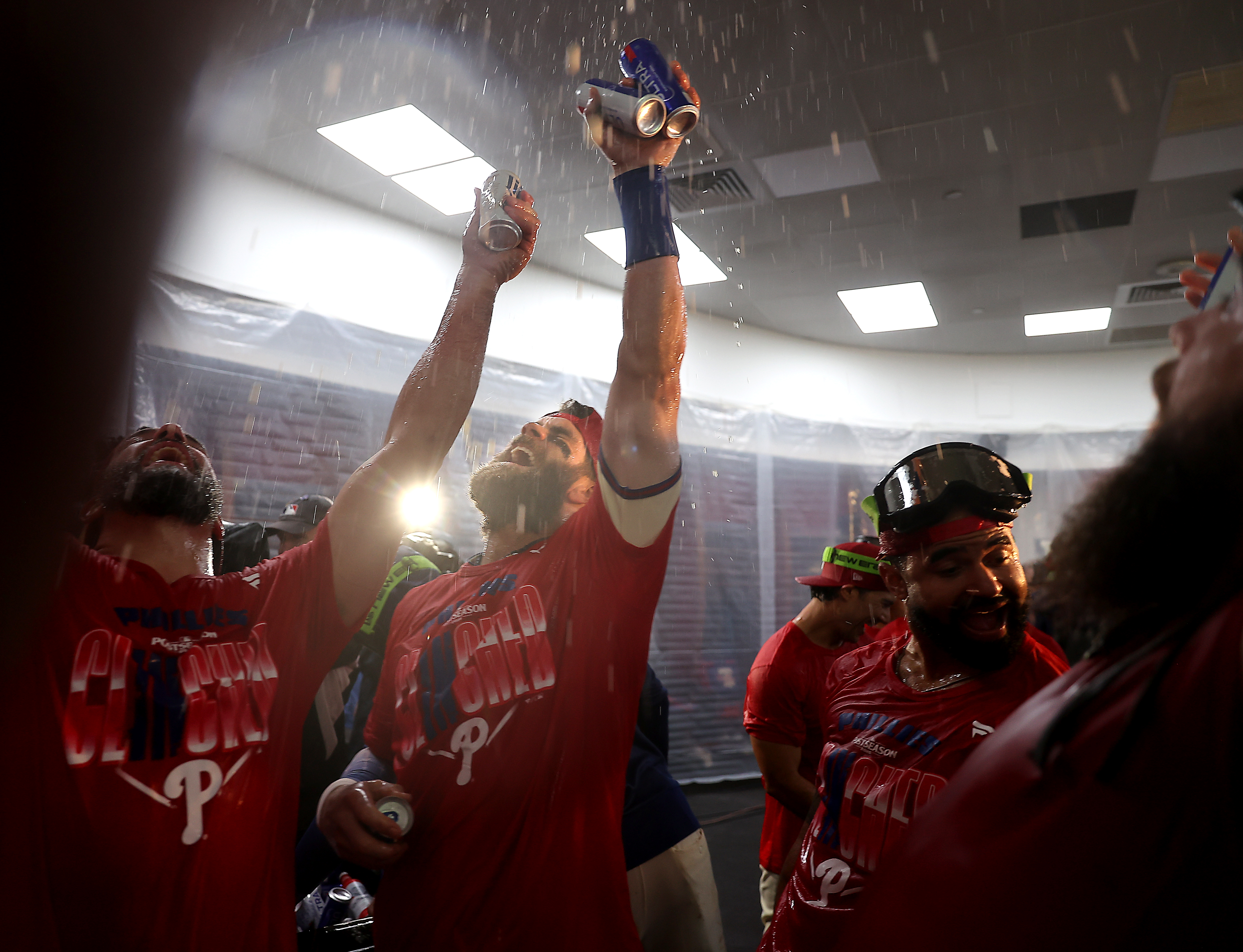
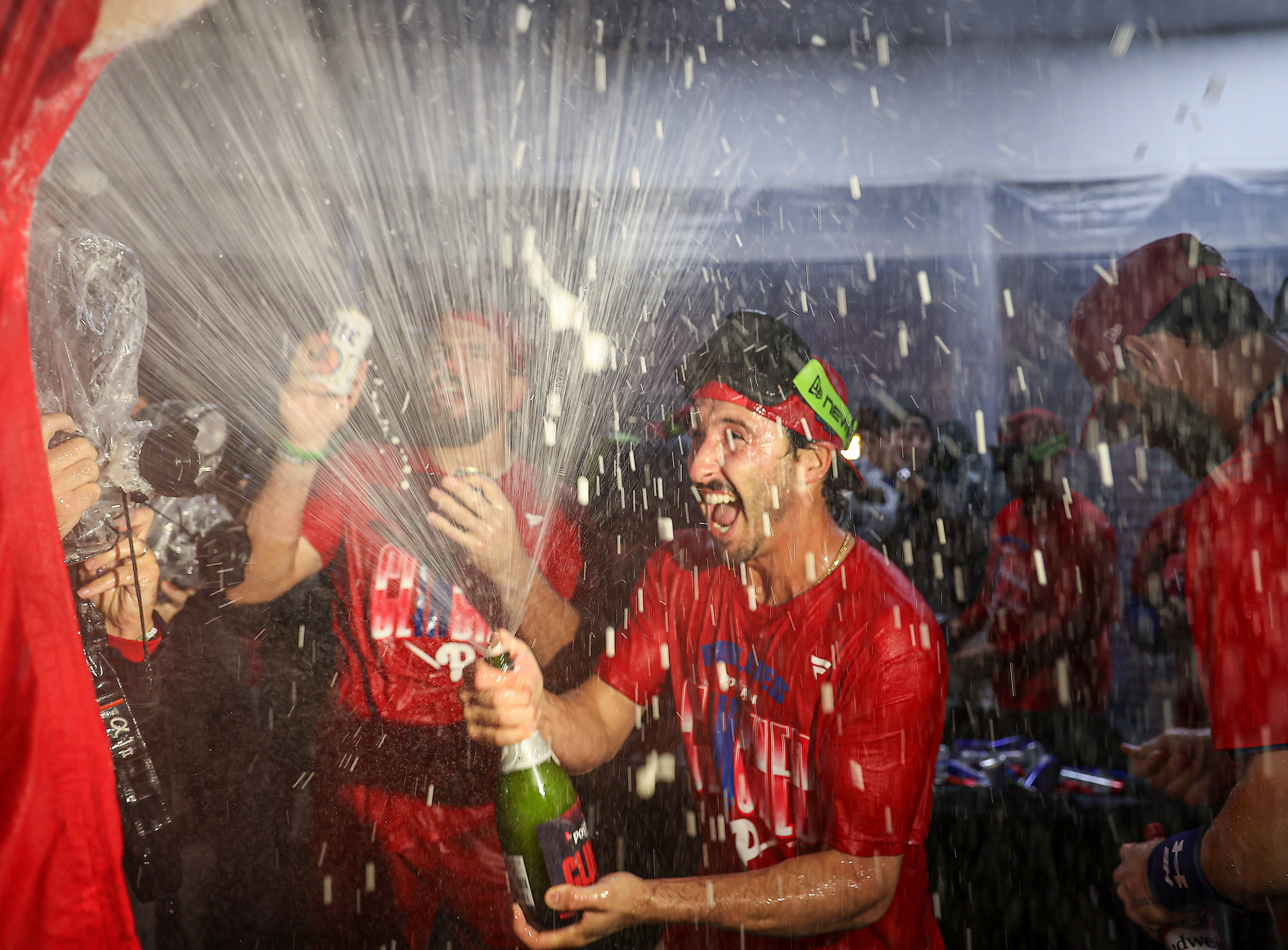
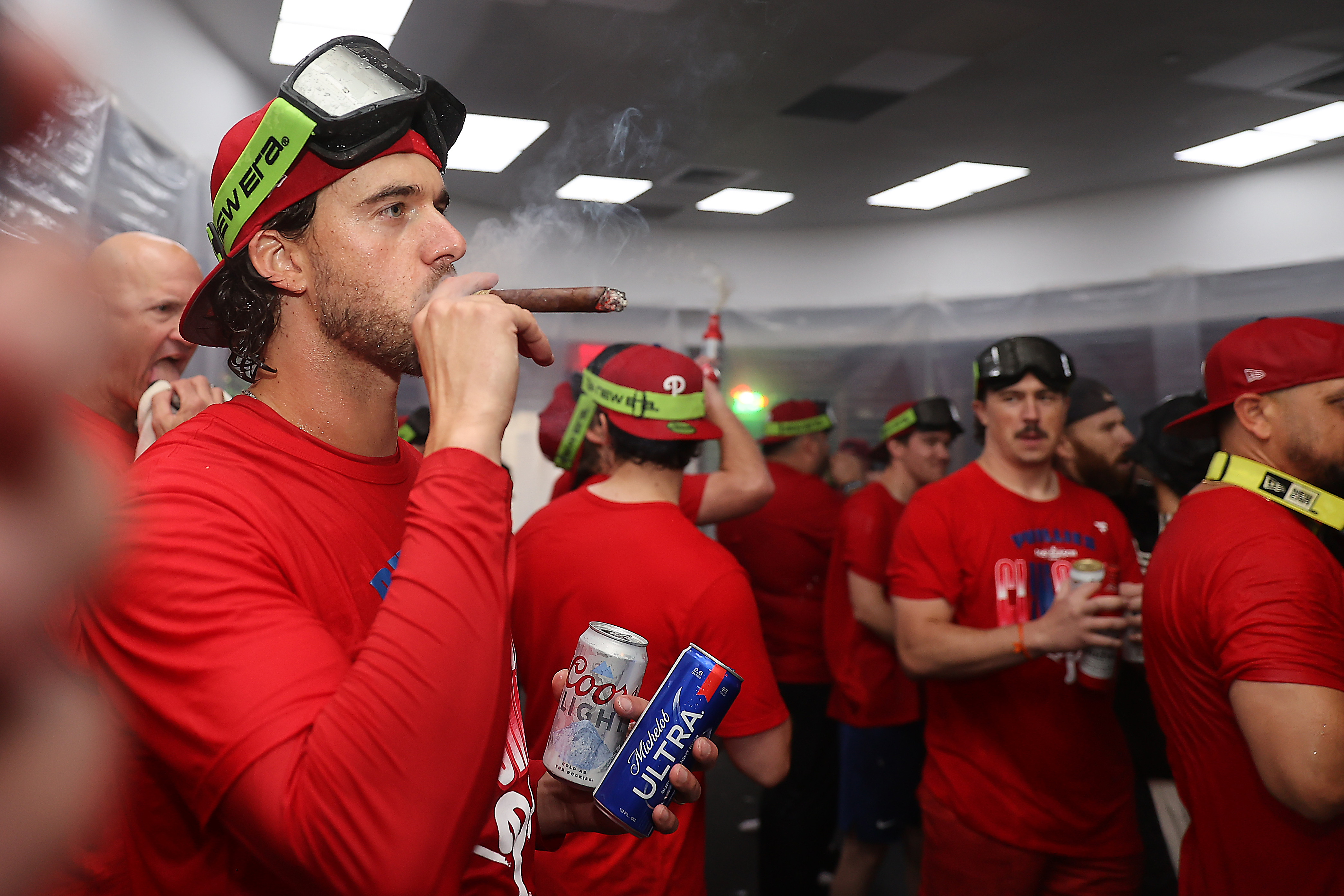
This week wasn’t pretty. But it still ended in a jubilant clubhouse, with that protective plastic finally unfurled, cans of beer strewn about and cigar smoke in the air. The Phillies are viewing this, and what awaits Tuesday, as an opportunity to wipe the slate clean.
“I think all of us feel like we can play better. I know I can play better,” Turner said. “At this point in the year, really for the last month or two, it’s just about winning. That’s all that matters. I don’t care if I play well, Bryce, Kyle, the bullpen, the starters. It doesn’t matter who plays well. It matters if you win or lose. And I think that’s how we’re all looking at it.”
Let’s play a game of Name That Hitter, using statistical hints of batting average/on-base percentage/slugging and other relevant numbers through Thursday.
Hitter A is Bo Bichette, object of the Phillies’ desire in January when they offered the free-agent infielder a seven-year, $200 million contract. Bichette took the Mets’ bid of fewer years (three) but higher salary ($42 million annually, $126 million total), plus opt-outs after this season and next.
If they’d landed Bichette, the Phillies planned to trade Alec Bohm, according to multiple sources at the time. And Bohm happens to be Hitter B, with eerily similar production at a fraction of the salary ($10.2 million).
Sometimes, the best moves are ones that aren’t made.
This isn’t meant to suggest that Bohm had a particularly good season. The Phillies dropped him from the cleanup spot after two weeks and benched him for two games in early May. He had a .593 OPS through June 3. At the All-Star break, he was hitting .215 with a .278 on-base percentage and .632 OPS.
After a rough first half of the season, Phillies first baseman Alec Bohm has had more to smile about since the All-Star break.Elizabeth Robertson / Staff Photographer
(It was even worse for Bohm off the field. In March, he sued his parents, alleging multimillion dollar mismanagement of his finances. They reached a settlement three weeks ago.)
But Bohm found salvation in the second half. Entering the weekend, he was batting .312 since the break, ninth in the majors, with an .824 OPS that was tied for 33rd.
“I was in a pretty deep hole early on, and I think I just chipped away,” said Bohm, who also moved from third base to first when the Phillies rearranged their infield after the deadline trade for Luis Arraez. “For me, it was kind of focusing less on, ‘What’s my batting average today?’ and more on, ‘All right, let’s go out and try to win a game today.’
“Just one of those things you can always look back on and never get too low or panic too much throughout a season. Right?”
It’s a mature perspective from a 30-year-old whose maturity has been questioned over the last six seasons. But it may also reflect the realization that these are likely his last days with the Phillies.
Bohm will be a free agent. And after the Phillies talked about trading him two offseasons ago and were poised to replace him with Bichette last winter, it would be a surprise if they didn’t let him walk out the door now.
It also makes Bohm the symbol of changes that may be coming to an organization that has been marked by extreme continuity since 2022. Barring a deep run through October, several longstanding players — as well as interim manager Don Mattingly — face a cloudy future at the corner of 11th and Pattison.
Since the start of the 2023 season, Phillies infielder Alec Bohm has driven in 341 runs, 18th-most in baseball.Yong Kim / Staff Photographer
Third degree
Bohm tends to get judged on things he doesn’t do well, notably his defense and a lack of home-run power for a mountain of a 6-foot-4, 218-pound man.
Yet as one scout said when Dave Dombrowski convened his top lieutenants at the trade deadline, “When you see a player every day, you have a tendency to look at their downside. But if you compare his numbers, how many guys have more RBIs than he does?”
Try 17 since 2023, including only one who plays for the Phillies (Kyle Schwarber). Entering the weekend, Bohm needed two RBIs to reach 90 for the third time in four seasons.
In a sense, then, Bohm represents an organizational success story. Drafted third overall out of college in 2018, developed through the farm system, and brought to the majors in 2020, he has averaged 564 plate appearances per year while batting .274, including a .315 mark with runners in scoring position. He was even an All-Star in 2024.
Along the way, Bohm got demoted to triple A in 2021 and nearly punched a ticket out of town early the next season. After committing three errors in three innings and getting roundly booed, he got caught on camera saying, “I (bleeping) hate this place.” He was contrite after the game and largely forgiven by the fan base.
If anything, the Phillies miscast Bohm as cleanup-hitting protection for Bryce Harper and overvalued him at his peak. But replacing him isn’t straightforward.
Aidan Miller once appeared poised to inherit third base from Bohm. But a back condition sidelined the 23-year-old top prospect until September and limited him to 34 plate appearances, including the postseason with double-A Reading.
Phillies top prospect Aidan Miller missed almost all of the season with a back condition.David Maialetti / Staff Photographer
The Phillies have scouted 27-year-old third baseman Teruaki Sato, who mashed 36 homers this season and 40 last year in Japan’s Nippon Professional Baseball. But he bats from the left side, like Harper and Schwarber (and Bryson Stott and Brandon Marsh), and some major-league evaluators wonder if he’s better suited for first base.
Oh, and there’s always Bichette, who could opt-out of his Mets deal and reenter the market. But will he really walk away from that $42 million annual salary after a down year? And would the Phillies chase after him again after feeling spurned last winter?
Meanwhile, Bohm is playing out what’s left of his Phillies career back in the middle of the order as the hottest hitter down the stretch in an overall chilly month for the offense. He entered the weekend with a .319 average and .869 OPS in September; as a team, the Phillies were batting .225 with a .655 OPS this month.
“The numbers are what the numbers are,” Bohm said of turning his brutally slow start into a respectable finish. “Can’t really do much about it at this point. So, let’s try to go help the team win and contribute in some way. Getting lost in that for a while, they’ve found their way back to, I guess, more of the norm for myself.”
Phillies lefty reliever José Alvarado has had an inconsistent season.Jose F. Moreno / Staff Photographer
Seeking relief
Just when the Phillies thought they could depend again on José Alvarado, he entered a 1-1 game in the eighth inning Thursday night and walked the leadoff batter before giving up a stolen base, an RBI single up the middle, and another single to left field.
How’s that for a snapshot of his tenure here?
Dombrowski became the Phillies’ president of baseball operations in December 2020. His first move was the three-way trade that brought Alvarado from the Rays. The big lefty has been dominant at times, injury-prone at others. He gave up the World Series-clinching homer to Houston’s Yordan Alvarez in 2022 and got suspended for 80 games last season for failing a drug test. But he also has unleashed the fifth-most pitches at 98 mph or more since 2021.
In all, Alvarado has a 3.86 ERA and 378 strikeouts and 152 walks in 293⅔ innings with the Phillies. Opponents have hit .227 against him; lefties have hit .219.
This season, lefties are batting .333 with an .865 OPS against Alvarado. Maybe he needs to come inside more to lefties. Maybe hitters are sitting on his signature sinker. Maybe he needs to throw more cutters.
In any case, as Mattingly decides whether he can trust Alvarado in the postseason, the Phillies face a longer-term decision about whether to bring him back (again) in free agency.
Orion Kerkering can’t be a free agent until after the 2029 season. But the righty is eligible for salary arbitration for the first time. And after posting a 9.43 ERA since the All-Star break, including a 10.66 mark since the middle of August, he became “unusable,” in Mattingly’s words.
The Phillies demoted Kerkering to triple A last weekend, prompting a larger question: Would a change of scenery be best for everyone involved?
Phillies reliever Orion Kerkering got demoted to triple A last week.Yong Kim / Staff Photographer
Let’s come back to that.
The Phillies drafted Kerkering in 2022 and brought him to the majors 14 months later after he climbed four levels of the farm system in one season. Thrust into high-leverage situations in October, he faltered in the 2023 NL Championship Series against Arizona.
Even so, Kerkering dominated for stretches in each of the last three seasons, looking at times like a closer-in-waiting. But he was complicit in the bullpen meltdown in the 2024 divisional round against the Mets and made the ill-fated throwing error that ended last season in Game 4 at Dodger Stadium.
So, about that change of scenery. It’ll surely be a topic during the Phillies’ organizational meetings after the season.
For now, they sent Kerkering to Allentown to continue pitching at their “stay ready” camp, although he’s ineligible for a call-up until Oct. 6 unless there’s an injury.
“It looks like he needs a break to get away from here,” Dombrowski said. “Sometimes you need to step away.”
The Phillies haven’t removed the “interim” label from manager Don Mattingly’s title.Elizabeth Robertson / Staff Photographer
About the manager
Earlier this week, the Mets and Red Sox removed the interim label from managers Andy Green and Chad Tracy, respectively, with each receiving a three-year contract to stay at the wheel of those clubs.
Has there been more thought to Mattingly’s future in the dugout beyond this season?
“No, there has not been,” Dombrowski said in a text message. “[We] have felt it is better to wait until our season is complete.”
That has been the Phillies’ stance since April 28, when they elevated Mattingly from bench coach after firing Rob Thomson. But the lack of commitment to Mattingly has only fueled speculation throughout the sport that the managerial seat is being held for Alex Cora.
Dombrowski hired Cora with the Red Sox, and they won the World Series in their first season together in 2018. They remain close friends, with Dombrowski calling Cora “one of the finest managers in the game of baseball” and comparing him favorably to Hall of Fame managers Jim Leyland and Tony La Russa.
The Red Sox fired Cora on April 25 amid a 10-17 start. Dombrowski offered him the Phillies’ job the next day, even though he had not yet let Thomson go. Cora, who will be paid by the Red Sox through the end of the next season, opted to take time with his family.
How’s that for palace intrigue?
Video: John Middleton on what led to Rob Thomson’s dismissal
Mattingly, 65, is under contract with the Phillies for another year and has expressed interest in staying on as the manager. His son, Preston, is the general manager under Dombrowski.
In 2022, the Phillies took the interim tag off Thomson and gave him a two-year contract after winning the wild-card miniseries. How many rounds would the team need to win for Mattingly to receive similar treatment?