Tag: Delaware County

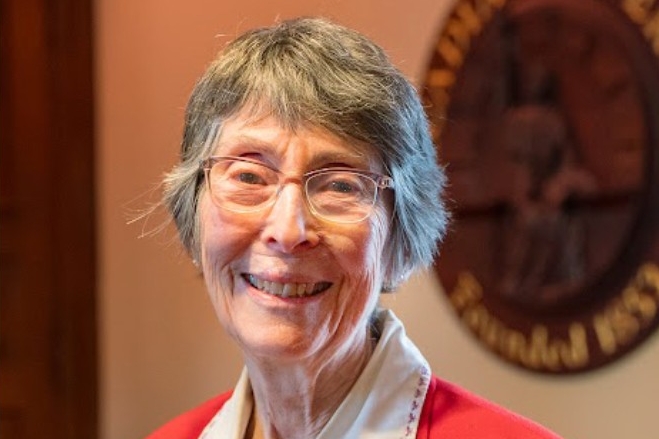
  • Phyllis Taylor, pioneering hospice nurse, celebrated prison chaplain, and renowned world peace activist, has died at 84

    Phyllis Taylor, pioneering hospice nurse, celebrated prison chaplain, and renowned world peace activist, has died at 84

    As a young nurse in Philadelphia, Phyllis Taylor met dying people desperate for hospice care. So she did it.

    She met people in prison desperate for a healthcare advocate and an empathetic chaplain. So she did that, too.

    In 1963, she met Sarah Baker and her family as they struggled to live as the first Black family in Folcroft, Delaware County. The Bakers were desperate for fearless allies to help fend off months of racism and violence. She also did that.

    For nearly her whole life, Phyllis Taylor championed peace, justice, and human rights, and helped people who were desperate. She got arrested for civil disobedience, cofounded and directed several nonprofit social service programs, and, with her husband, Richard, helped establish Witness for Peace in Nicaragua, and the Movement for a New Society in Philadelphia.

    She fed the hungry at St. Vincent de Paul Church, befriended immigrants and refugees with the New Sanctuary Movement, and comforted children and families at St. Christopher’s Hospital for Children. “Her entire life was about giving,” her son Dan said. “She refused to be someone who watched injustice and did nothing.”

    On Thursday, June 4, Phyllis Taylor died of endometrial cancer at KeystoneCare Hospice in Wyndmoor. She was 84.
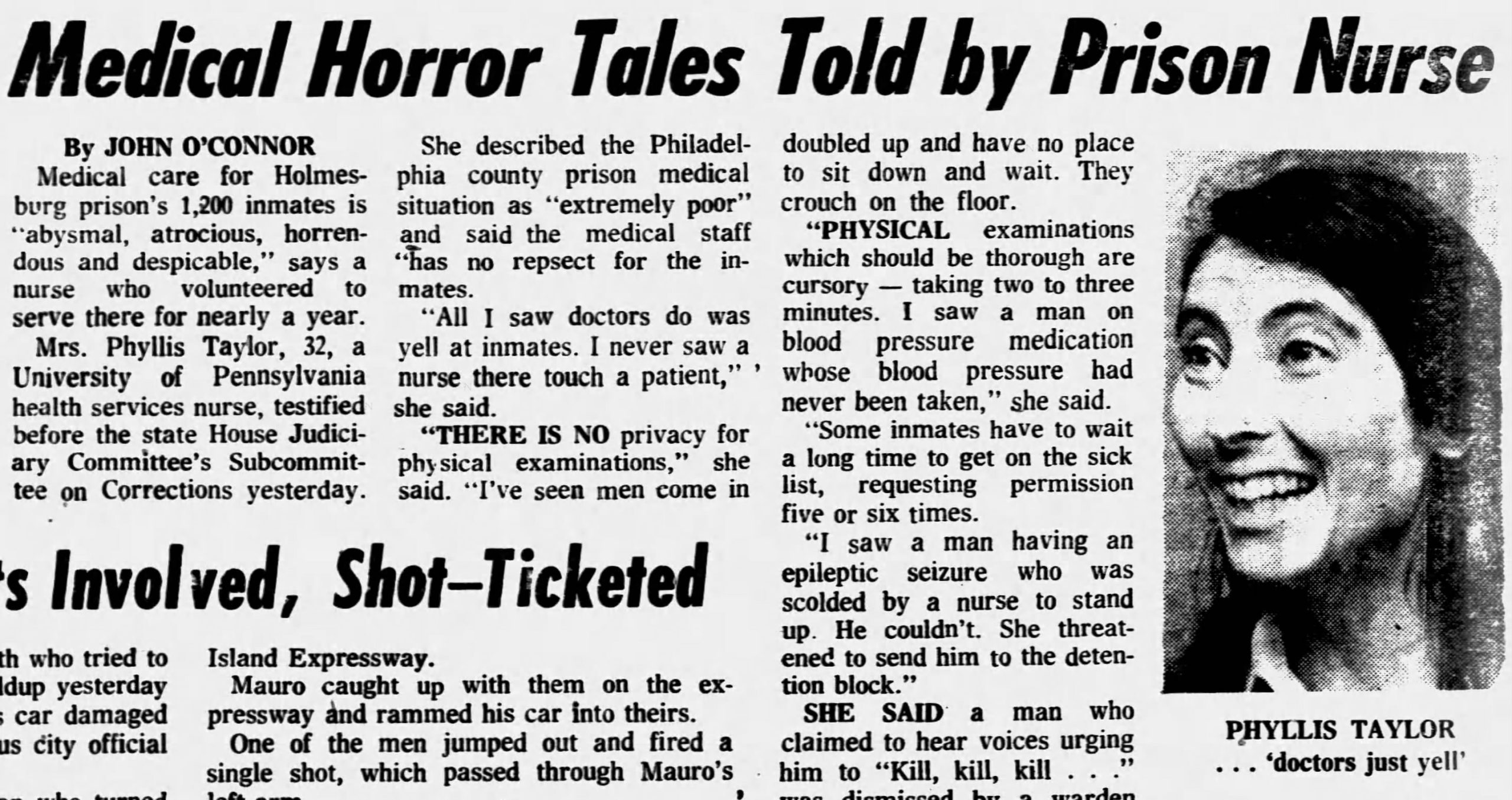
    The Daily News published this story about Mrs. Taylor in 1973.Newspapers.com

    “I really love what I do,” Mrs. Taylor told the Pennsylvania Prison Society in 2025. “I get the satisfaction of being able to journey with somebody, to let them know that they are not abandoned and alone.”

    Born in Brooklyn, N.Y., Mrs. Taylor earned a bachelor’s degree at what is now Arcadia University in 1963. After nursing school, she became a volunteer nurse and then a consultant for the University of Pennsylvania health services at Holmesburg Prison and elsewhere.

    She became senior counselor of hospice service for the new Death and Dying Program at Albert Einstein Medical Center’s Northern Division in 1978, and taught classes about death and grief, counseled parents whose babies had died, and comforted patients with terminal illnesses.
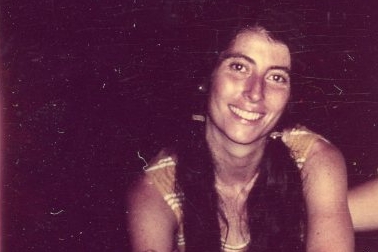
    Mrs. Taylor graduated from what was then known as Beaver College in 1963. It is Arcadia University now. Courtesy of the family

    She was featured in a 1980 story in the Sunday Inquirer called “The Gift of a Good Death” and said that her own health scares motivated her to embrace nursing. The horrors of the Holocaust, she said, compelled her to human rights activism, and the deaths of a friend, her brother, and her father moved her to hospice work.

    “It makes me happy to give someone the gift of a good death,” she told The Inquirer.

    Mrs. Taylor was also an enterostomal therapy nurse, head of the AIDS committee at the Philadelphia College of Osteopathic Medicine medical center, and director of education at the old Hospice of Delaware Valley. She wrote research articles for journals and letters to the editor, appeared on local TV and radio shows, and lectured often at conferences and seminars about death, grief, and medical and financial ethics. She never retired.
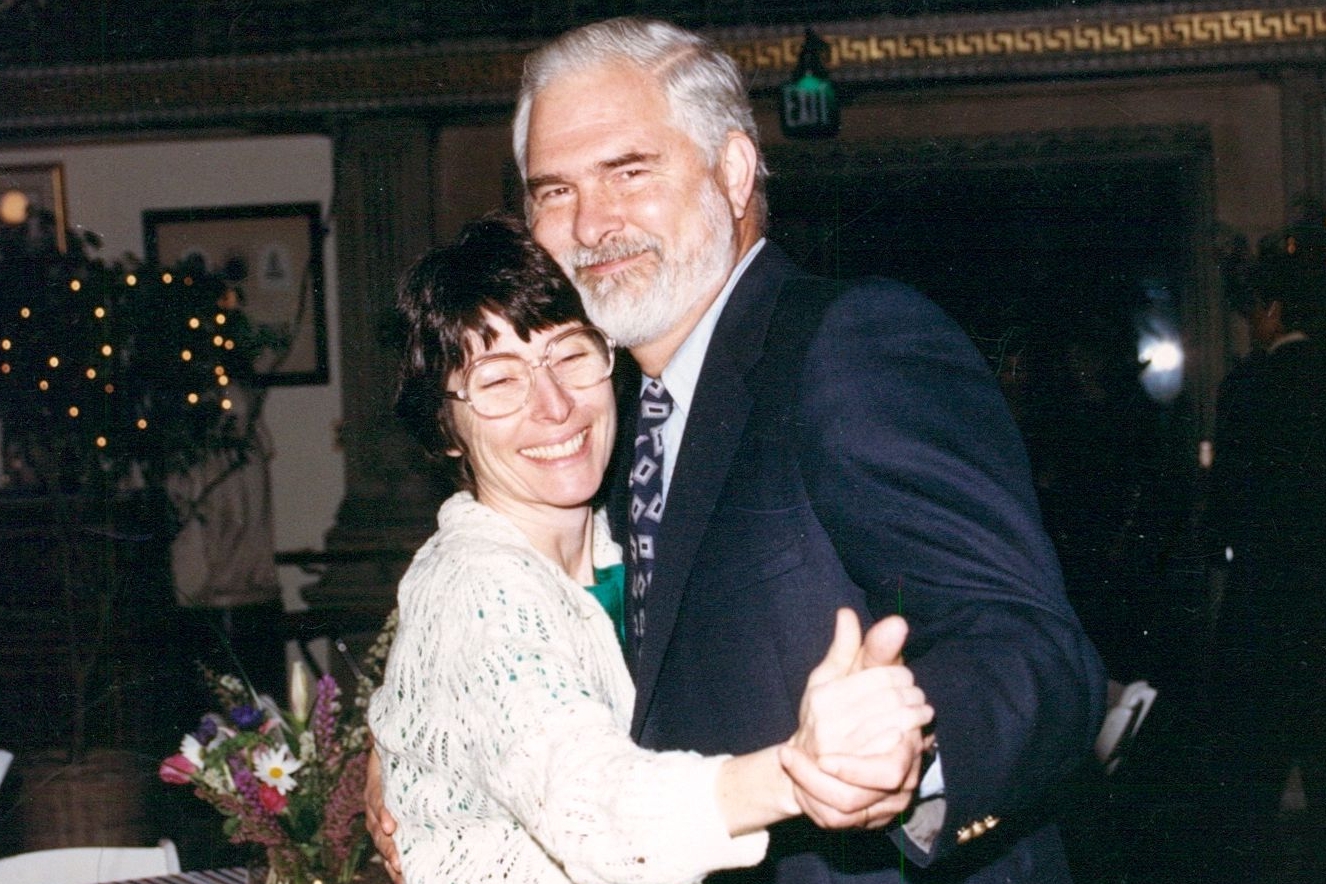
    Mrs. Taylor and her husband, Richard, traveled the world together fighting for peace, justice, and human rights. Courtesy of the family

    She went on Freedom Rides to integrate buses in the South and moved in temporarily with the Bakers as they sought to integrate Folcroft in the 1960s. In the 1970s, she demonstrated against the Vietnam War and America’s involvement in Iran and elsewhere.

    In the 1980s, she taught civil disobedience classes and protested violence at the border between Nicaragua and Honduras. In the 1990s and beyond, she volunteered to protect Muslims and Arabs from reprisals after the Sept. 11 attacks, traveled the world to decry pollution and unfair housing practices, and volunteered with Amnesty International and Planned Parenthood.

    She earned credentials as a chaplain and volunteered for decades with the Pennsylvania Prison Society to counsel and advocate for crime victims and prisoner rights. She was featured in the 2016 documentary Blockade, named the Prison Society’s Volunteer of the Year in 2022, and honored at Arcadia’s 2025 Women Who Lead Forum.
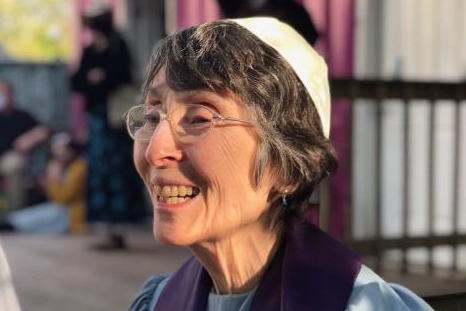
    As a chaplain, Mrs. Taylor officiated at weddings and funerals, and advocated for prison reform.Courtesy of the family

    “She felt a deep unwavering need to dedicate all her waking time to marginalized populations,” her son said. “Someone called her a merging of Ruth Bader Ginsburg and Mother Teresa.”

    Phyllis Claire Brody was born Aug. 10, 1941. She grew up Jewish in Lawrence, N.Y., and joined a Quaker meeting after she moved to Philadelphia.

    She met fellow peace activist Richard Taylor at a civil rights event in 1962, and they married in 1963 and lived in Germantown, Mount Airy, and West Philadelphia. They reared their son, Dan, and daughter, Deborah, and welcomed Blessing Mtshali and other children and families into their home for extended stays. Her husband died in 2024.

    Mrs. Taylor and her husband liked to hike and canoe. She lived with lupus and mailed handmade birthday cards to family and friends year after year.

    “What a life well lived,” her son said.

    In addition to her children, Mrs. Taylor is survived by her sisters, Margaret Noonan and Audrey Randolph, many grandchildren and great-grandchildren, and other relatives. A brother died earlier.
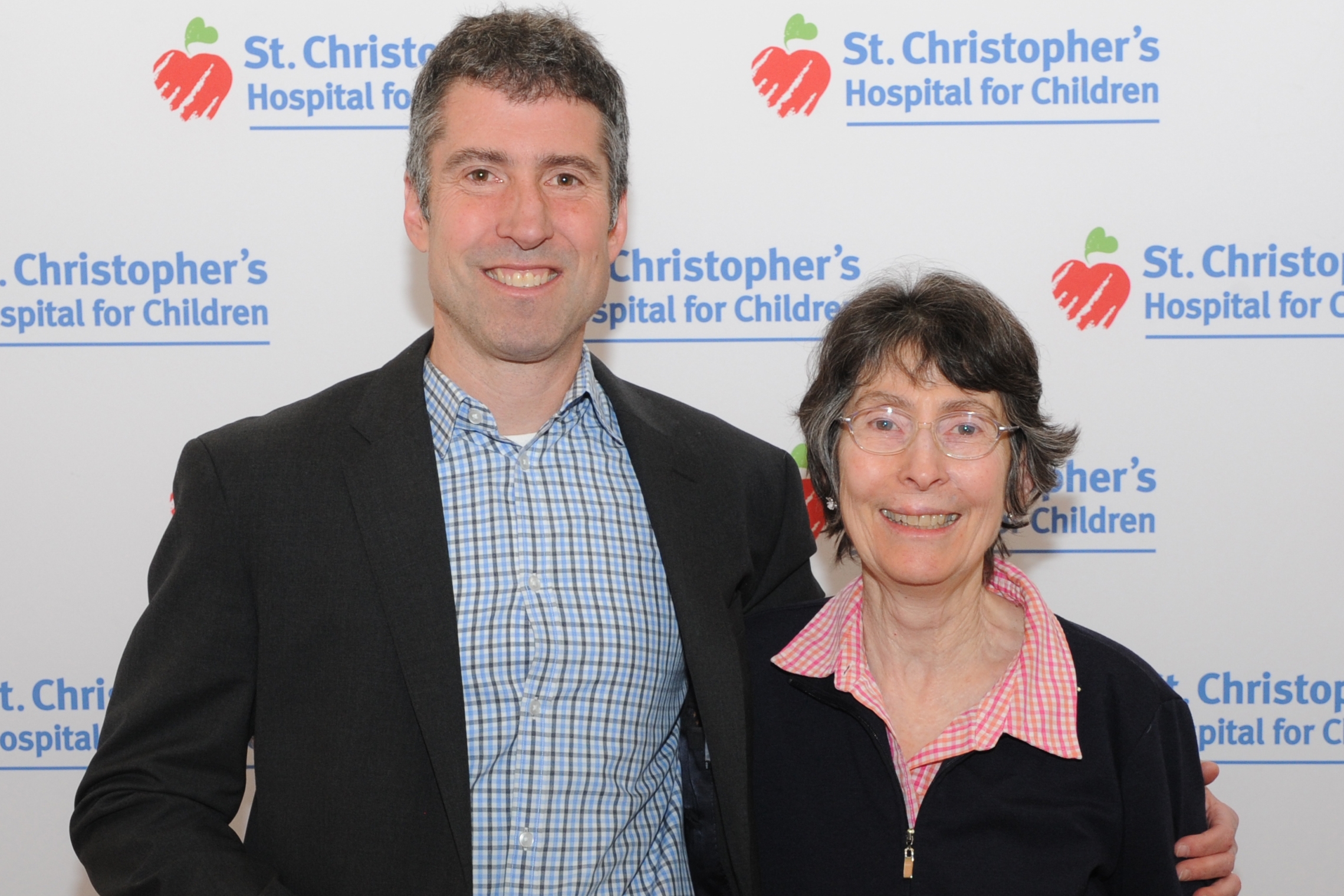
    Mrs. Taylor stands with her son Dan in 2017.Handout

    A celebration of her life is to be held at 2 p.m. Sunday, Sept. 20, at Germantown Monthly Meeting, 47 W. Coulter St., Philadelphia, Pa. 19144.

    Donations in her name may be made to the New Sanctuary Movement of Philadelphia, Box 46242, Philadelphia, Pa. 19160; and Face to Face, 123 E. Price St., Philadelphia, Pa. 19144.
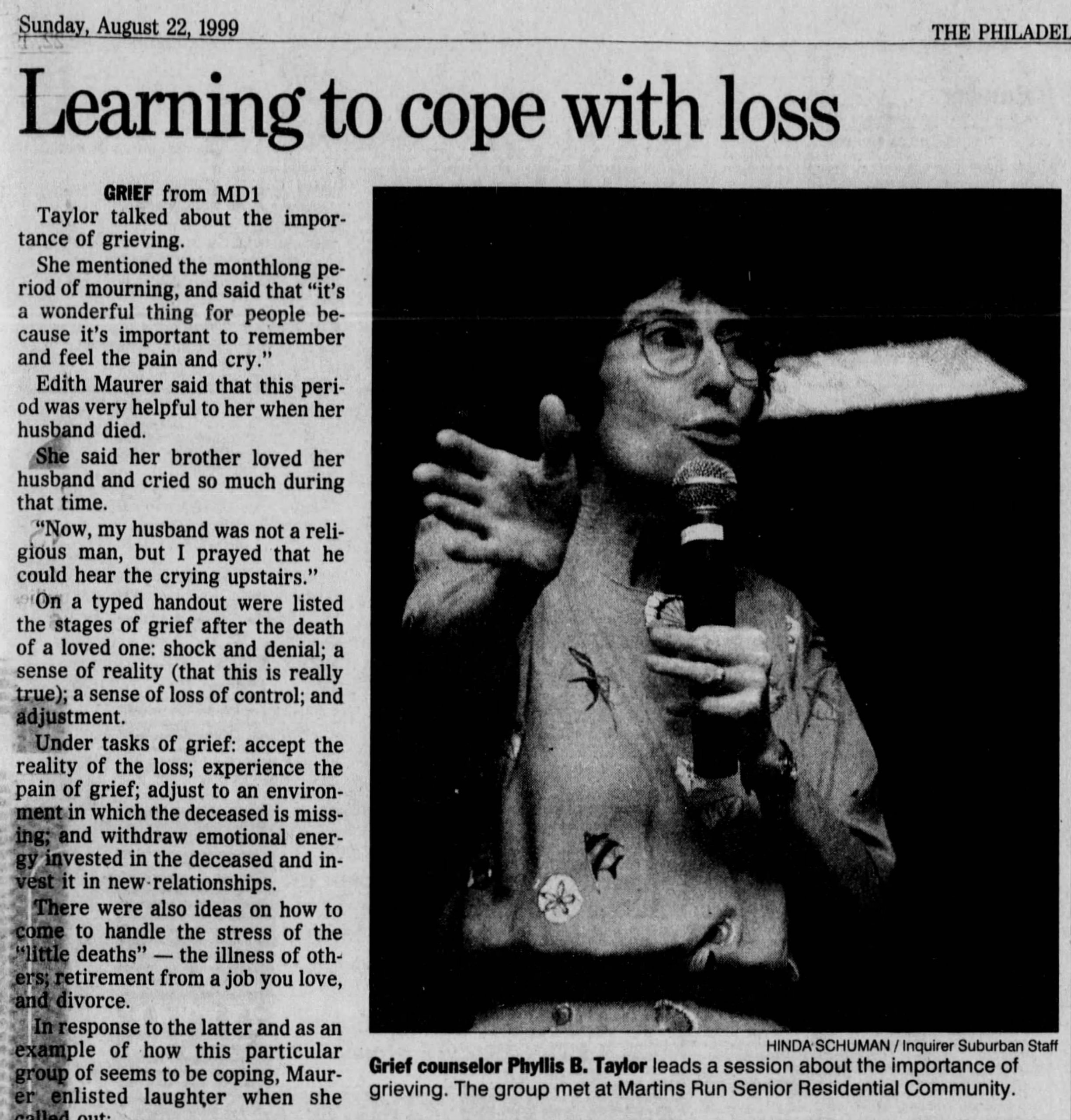
    Mrs. Taylor was featured in The Inquirer in 1999.Newspapers.com
  • TMI owner says Pa. nuclear plant is on track to reopen next year

    TMI owner says Pa. nuclear plant is on track to reopen next year

    Constellation Energy crews have been laboring since 2024 to reopen Three Mile Island’s Unit 1 nuclear plant to meet spiking electricity demand. Planned data centers and other new demands have materialized since 2019, when the plant was shut because generating power there was too expensive to compete with cheap natural gas.

    Now Constellation has moved up its own deadlines and says it’s approaching its goal to load uranium next spring and add electricity to the grid later in 2027.

    That’s despite naysayers such as Neil Chatterjee, President Donald Trump’s former Federal Energy Regulatory Commission chair.

    “It will never work” because of TMI’s aging technology and the complex U.S. and Pennsylvania energy bureaucracies, Chatterjee wrote in January in The Hill, which neglected to note Chatterjee had become a solar-power lobbyist.

    In testimony submitted to regulators, environmental groups, including Eric Epstein’s TMI Alert, called the utility’s plans rushed and incomplete. Montgomery County-based PJM, which oversees power distribution for 13 states and the District of Columbia, warned it could be 2031 before the plant could connect to the power grid, Constellation chief executive Joe Dominguez told analysts and investors in March.

    But Dominguez minimized that warning. “Normally, they start off with a pretty long timeline and shorten that up,“ he told investors in a conference call May 11, adding that he would work with states to speed connections.

    Dominguez has moved up the original 2028 target date to next year, in part because of supporters like President Donald Trump and Pennsylvania Gov. Josh Shapiro, and because Microsoft has promised to buy as much power as the plant produces to run a growing array of data centers.

    So Constellation is paying an army of builders, lawyers, and plant operators to prepare the plant.

    Earlier this month, PJM agreed to speed up its process for connecting new power plants in states where regulators agree to approve sites faster.

    Here’s an update on what’s happening at TMI:

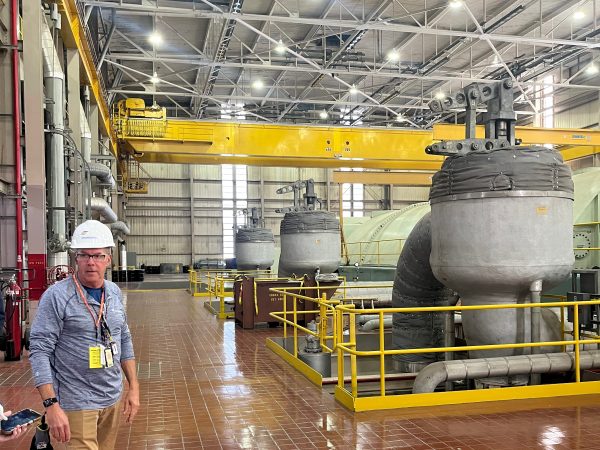
    At Constellation’s nuclear power plant on Three Mile Island near Middletown, Pa., in June 2025. Ted Shaffrey

    New equipment

    Constellation bought three building-sized replacement transformers from manufacturer Hyundai in South Korea, to be delivered later this month, after reinforcing the bridge to the island to bear their weight. Two will be installed “later this year,” one kept as a spare, said spokesperson Paul M. Adams.

    The company says crews are repairing the partly dismantled Bravo cooling tower and inspecting the reactor building and diesel motors on the site. They are restoring controls — originally analog systems made by manufacturers in Reading and other Pennsylvania cities.

    The company has scheduled enriched-uranium fuel assembly deliveries from its supplier Framatome in Richland, Wash., later this year, so fuel can be loaded into the reactor core next spring. The uranium is sourced from U.S. and foreign mines.

    The deal with Microsoft

    Microsoft has promised to buy power equal to the plant’s entire production at prices above today’s levels for 20 years.

    But that doesn’t mean the software and data-center giant is going to run wires to new, power-burning facilities in the neighborhood.

    The Microsoft deal supports Constellation’s regulatory and investor arguments in favor of reopening. It confirms this major data-center operator will need more power in years to come.

    Jobs for construction and plant workers

    Constellation says more than 3,000 construction workers will help bring the plant, which it now calls the Crane Clean Energy Center, into service.

    The company also has hired hundreds of permanent workers for the plant, named after the late Exelon Corp. CEO who spun off Constellation and championed nuclear power. More than 550 full-time employees are on site, including the current class of 80 operators being trained in federal Nuclear Regulatory Commission procedures.

    About 145 of those employees are “boomerang” staff who worked at Three Mile Island before its 2019 shutdown, according to Constellation.

    More than 400 hires live within 25 miles of the plant. They include about a dozen recent graduates of the Penn State Harrisburg campus nearby.

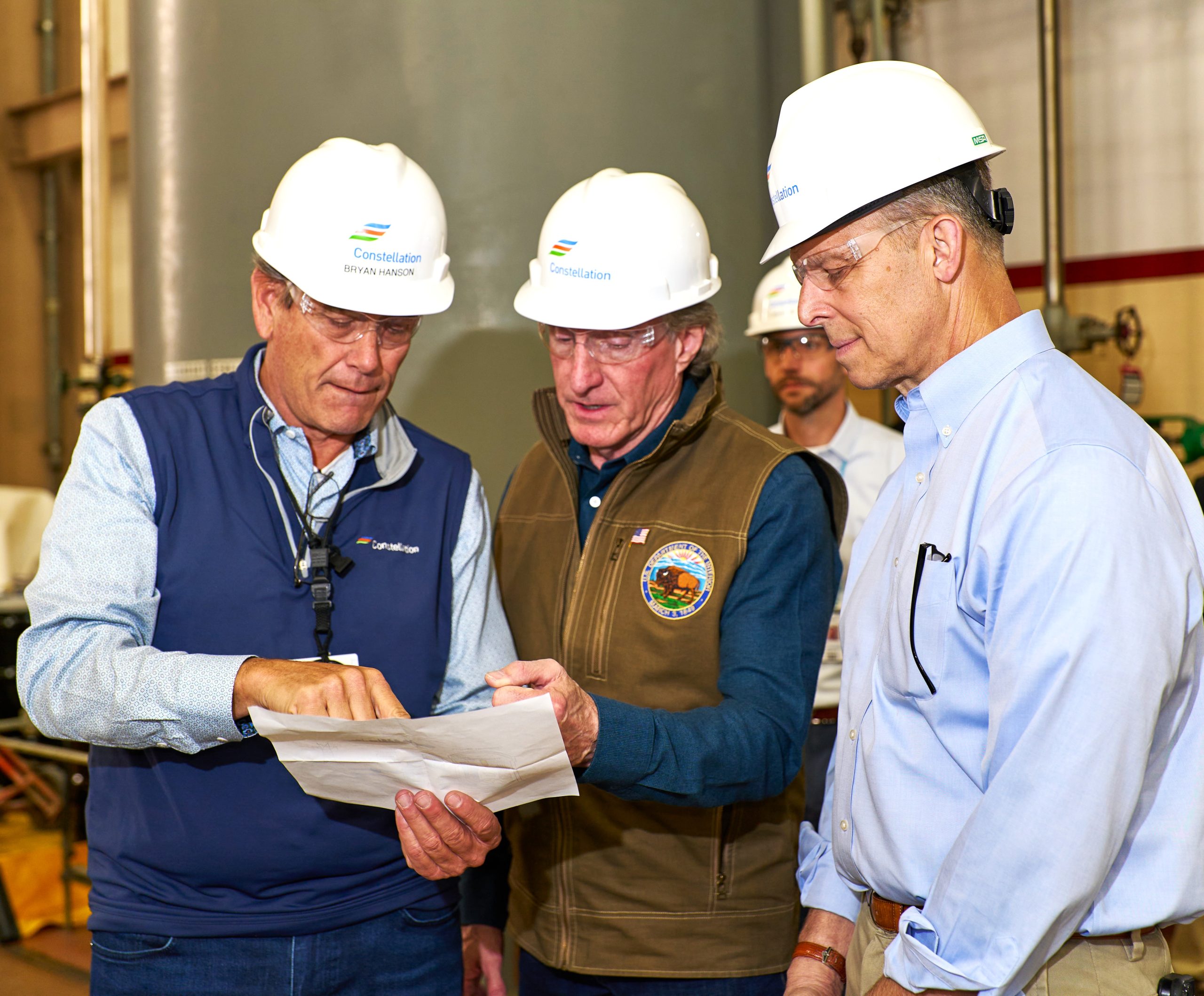
    U.S. Secretary of Energy Doug Burgum (center) with Constellation Energy staff on May 1 at the Three Mile Island nuclear power complex Unit 1, which Constellation Energy plans to reopen as the Crane Clean Energy Center uranium-powered electric plant in 2027.Constellation

    Financing for the advance work

    In November, the U.S. Department of Energy Loan Programs Office approved a $1 billion low-interest government loan to help Constellation reopen the Three Mile Island plant.

    Supporters of nuclear loan and subsidy programs say federal money ensures long-term operation at reasonable financing costs. Critics such as the Cato Institute, which generally opposes subsidies, say the government shouldn’t help pay for power that would otherwise be unprofitable.

    Supporters of the TMI reopening

    Shapiro, U.S. Energy Secretary Chris Wright, U.S. Interior Secretary Doug Burgum, U.S. Sen. Dave McCormick (R., Pa.), U.S. Rep. Scott Perry (R., Pa.), state legislators, and local officials have toured the plant to tout job and energy creation.

    With permit applications pending before the NRC and other agencies, Constellation says it is “on track” to restart the plant next spring and deliver energy into the grid by summer or fall.

    U.S. Sen. Dave McCormick with Tori VanderMeersch, senior manager, operations support for the Crane Clean Energy Center, in the control room at Three Mile Island Unit 1 nuclear power plant in early 2026.Constellation Energy

    A workaround for PJM’s warning on connecting to the grid

    In early June, the Federal Energy Regulatory Commission agreed to an unusual switch: It will let Constellation transfer “Capacity Interconnection Rights” from its diesel- and natural gas-burning electric power plants at Eddystone, Delaware County, to Three Mile Island, to speed the process of bringing the nuclear plant back online.

    Constellation says it can do this without having to shut the Eddystone complex because the Trump administration gave the company special permission to keep Eddystone open, along with other fossil-fuel plants that were earlier scheduled for closing under a long-term program to reduce carbon-burning. It no longer needs the rights at Eddystone and can apply them at Three Mile Island.

    An agreement on using water from the Susquehanna River

    The Susquehanna River Basin Commission in early June approved Constellation’s plan for using river water at the restarted Three Mile Island nuclear plant.

    Constellation plans to pull 73 million gallons per day from the river to control temperatures at the plant. That’s about one-third of 1% of the river’s average flow; an equivalent volume of water will be released and won’t, on average, cause “significant adverse impact to the ecosystem and other users,” notes commission spokesperson Stacey Hanrahan.

    “Of course, we do not review a project based on average daily flow,” but on days the river is low, for example during a drought, she added. If the river gets too low for too long, Constellation could be ordered to stop using it.

  • Urban League of Greater Philadelphia is opening a free clinic in West Philadelphia

    Urban League of Greater Philadelphia is opening a free clinic in West Philadelphia

    The Urban League of Greater Philadelphia is opening a free clinic in West Philadelphia for people without health insurance. The $8 million Center for Well-Being will also offer workforce development, housing, and other services, Urban League officials announced Friday.

    The project at 5616 Chestnut St. sits in a neighborhood where three-quarters of the residents have low- or moderate-incomes and chronic conditions like diabetes, obesity, and high blood pressure are widespread.

    The clinic will be open to all Philadelphia residents and expects to serve residents of eastern Delaware County as well, Urban League president Darrin W. Anderson Sr. said at Friday’s kickoff event.

    “Across Philadelphia, too many residents continue to face barriers to good health, economic mobility, stable housing, quality jobs, and the resources needed to thrive. These challenges are deeply interconnected and require more than isolated solutions. They require a comprehensive community center approach,” Anderson said.

    The Urban League acquired the building in March for $1.6 million — attracted by the proximity to the Market-Frankford El and its parking lot, both of which make the building accessible to people outside the immediate neighborhood. With internal demolition about half finished, the center is expected to open in the first quarter of next year.

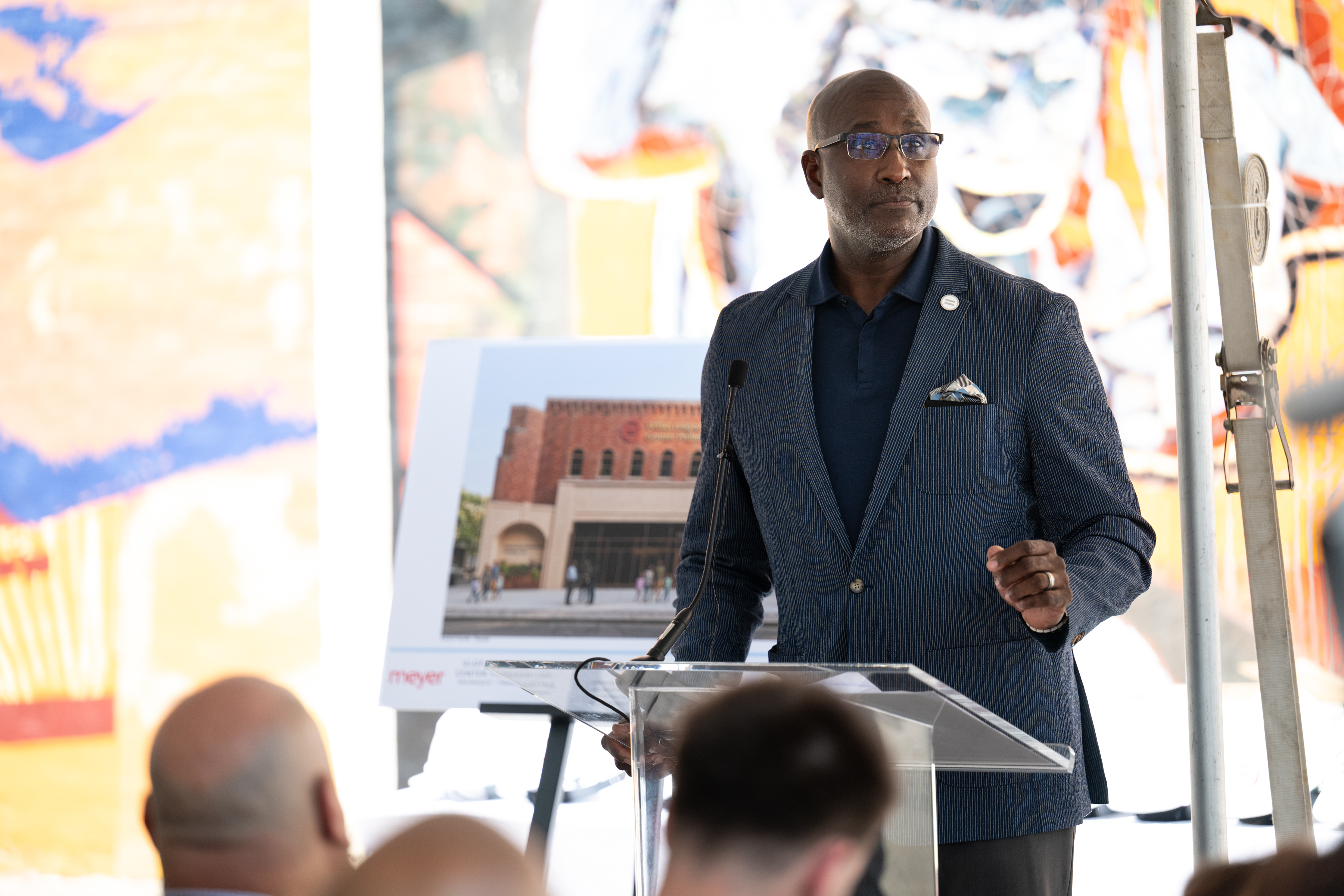
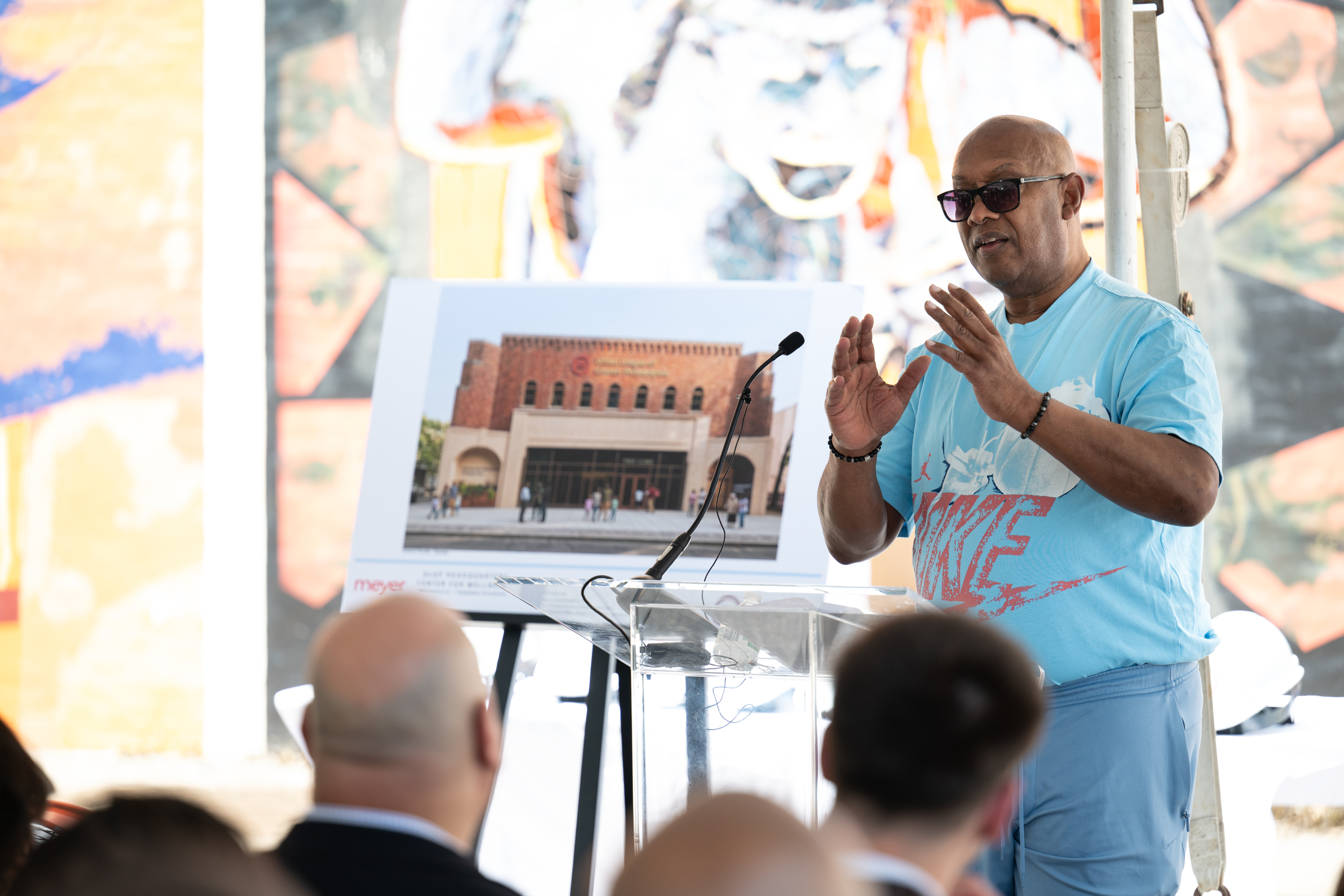
    U.S. Rep. Dwight Evans secured $1.2 million in seed money for the Urban League of Philadelphia’s Center for Well-Being in West Philadelphia. He spoke Friday at an event announcing the project.Erin Blewett / For The Inquirer

    The center — in a former Mercy Hospital of Philadelphia building — will employ around 30 people when it is fully operational, said Chetan Panda, vice president of community and economic impact for the Urban League.

    The hires for the 4,500-square-foot clinic with eight exam rooms will include a medical director this fall, he said.

    The project’s funding comes from a federal tax credit program designed to encourage private investment in economically distressed neighborhoods.

    Finanta, a nonprofit Community Development Financial Institution and credit union in Philadelphia, arranged the financing.

    Three years ago, U.S. Rep. Dwight Evans, a Philadelphia Democrat retiring at the end of his current term, secured $1.2 million in seed money for the project.

    The role of free clinics

    The Urban League modeled its free clinic on those in Cherry Hill, Phoenixville, and West Chester. The city’s numerous free primary care clinics are only open periodically, as opposed to being open daily.

    Philadelphia has 110,000 people without insurance, according to Panda. Many of them earn too much to qualify for Medicaid, yet don’t have access to insurance through their jobs. Their jobs pay too poorly for them to afford insurance on the state’s Affordable Care Act exchange, Panda said in an interview Thursday.

    The number of uninsured people is expected to grow next year when new requirements for federal insurance program take effect.

    The clinic will refer people who have Medicaid, Medicare, or private insurance to the federal health clinic closest to them. In West Philadelphia, that could be Spectrum or PHMC at the former Mercy Hospital of Philadelphia.

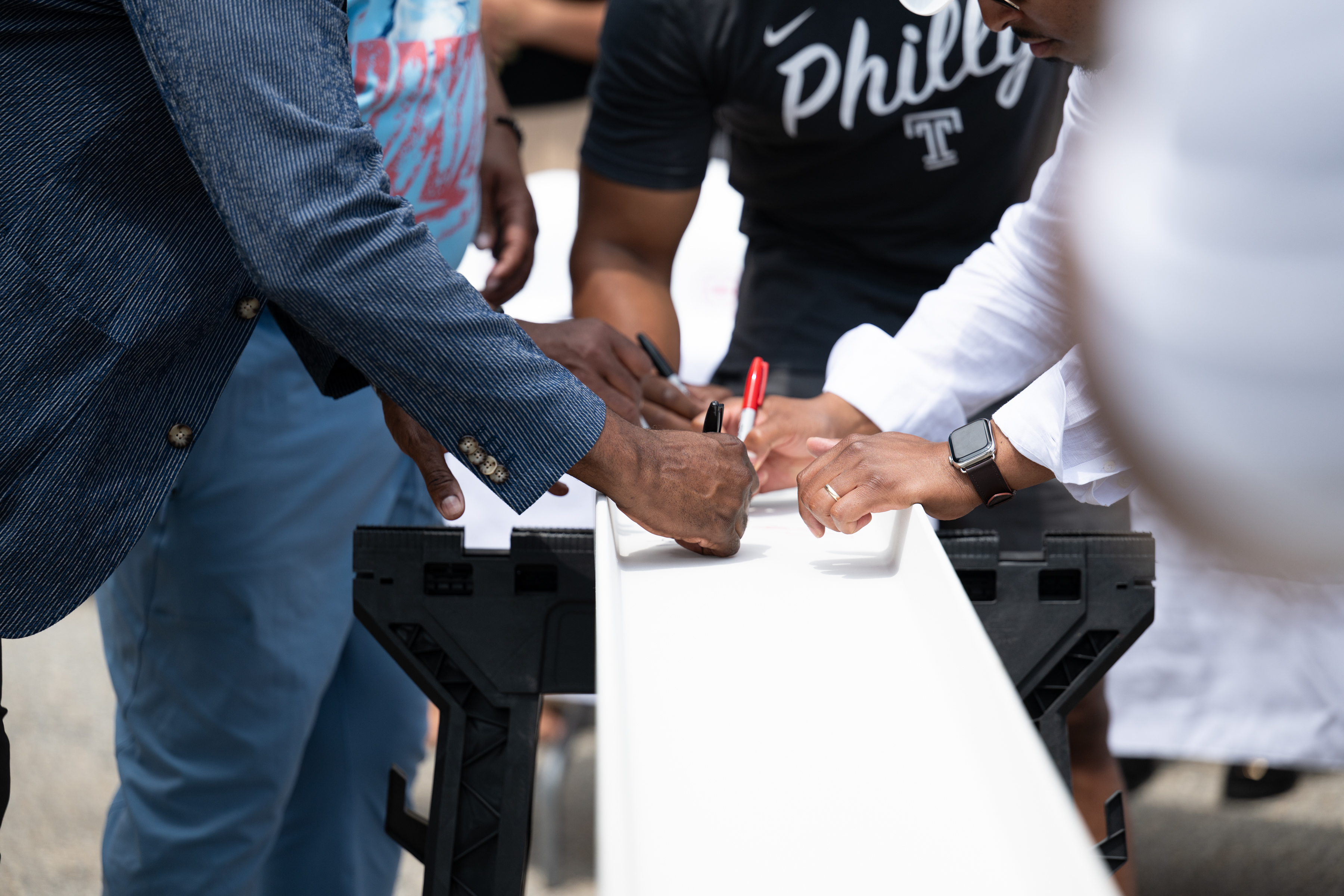
    Urban League of Greater Philadelphia officials, politicians, and other supporters sign a beam that will be used in the the refurbishing of the the Urban League’s planned Center for Well-Being.Erin Blewett / For The Inquirer

    Federal clinics, known as federally qualified heath centers, have a sliding payment scale for people who don’t have insurance. “We see that a lot of uninsured people forgo care at the FQHCs because they don’t want to pay the sliding scale. That’s a cost burden,” Panda said

    When they need care, they often seek it in high-cost emergency departments, he said.

    Free clinics rely on nearby hospitals for some of their staff and for donated services, such as X-rays and other diagnostic tests. Penn Medicine will support the new clinic in West Philadelphia, just as it does existing federal health centers, said Richard Wender, Penn’s chair of family medicine, who was at Friday’s event.

    Penn also supports Community Volunteers in Medicine in Chester County through its Chester County Hospital.

    Correction: This story has been updated to correct Chetan Panda’s title to vice president, and with the correct name of Community Volunteers in Medicine in Chester County.

  • A Chester man who opened fire at his workplace, killing two people, is on trial for murder

    A Chester man who opened fire at his workplace, killing two people, is on trial for murder

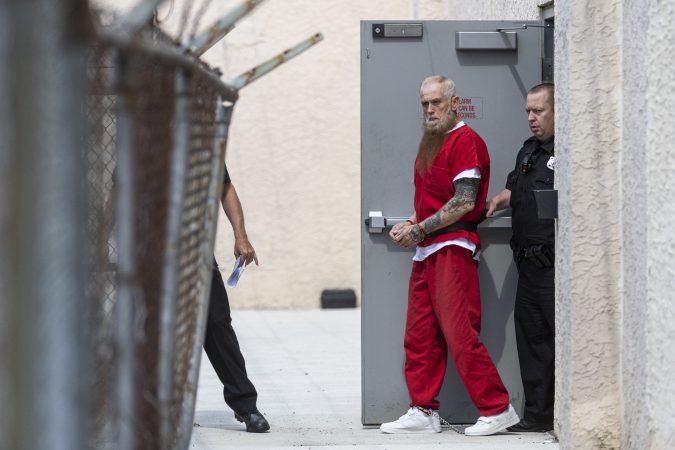
    Two years after a Chester man stormed into his workplace with a gun and opened fire in a shooting that left two people dead, he is on trial for murder before a Delaware County judge.

    Wilbert Rosado-Ruiz screamed he was “tired of people f— with” him as he fired shots at nearly 50 of his coworkers at Delaware County Linen, injuring five of them, according to the affidavit of probable cause for his arrest.

    Rosado-Ruiz, 63, is charged with two counts of murder for killing brothers Leovanny Peña Peña, 30, and Giguenson Peña Peña, 26, after reporting for his early-morning shift at the industrial-laundry business.

    Three other people were shot during what prosecutors described as a rampage.

    Rosado-Ruiz’s attorney, Kevin O’Neill, has said his client fired the shots after feeling threatened during a confrontation with a group of his coworkers. His actions that day, O’Neill said, did not constitute murder.

    But Assistant District Attorney Sophia Polites said Rosado-Ruiz went to work that day with the specific intent to kill.

    Polites rested her case Thursday, but the trial is not over: O’Neill will present his defense in July. The delay, he said Thursday, was to accommodate members of Rosado-Ruiz’s family, who need to travel to Delaware County from Puerto Rico to testify on his behalf.

    Prosecutors have said Rosado-Ruiz intended to kill more people on the day of the shooting, and would have done so had the 9mm Remington R51 handgun he was carrying not jammed. Investigators recovered the weapon and traced it to Rosado-Ruiz after his DNA was found on it, according to testimony this week.

    Rosado-Ruiz’s coworkers told investigators he had a history of abusive, bullying behavior, including threatening people with his gun, in the 10 years he worked at Delaware County Linen before the shooting, according to court filings.

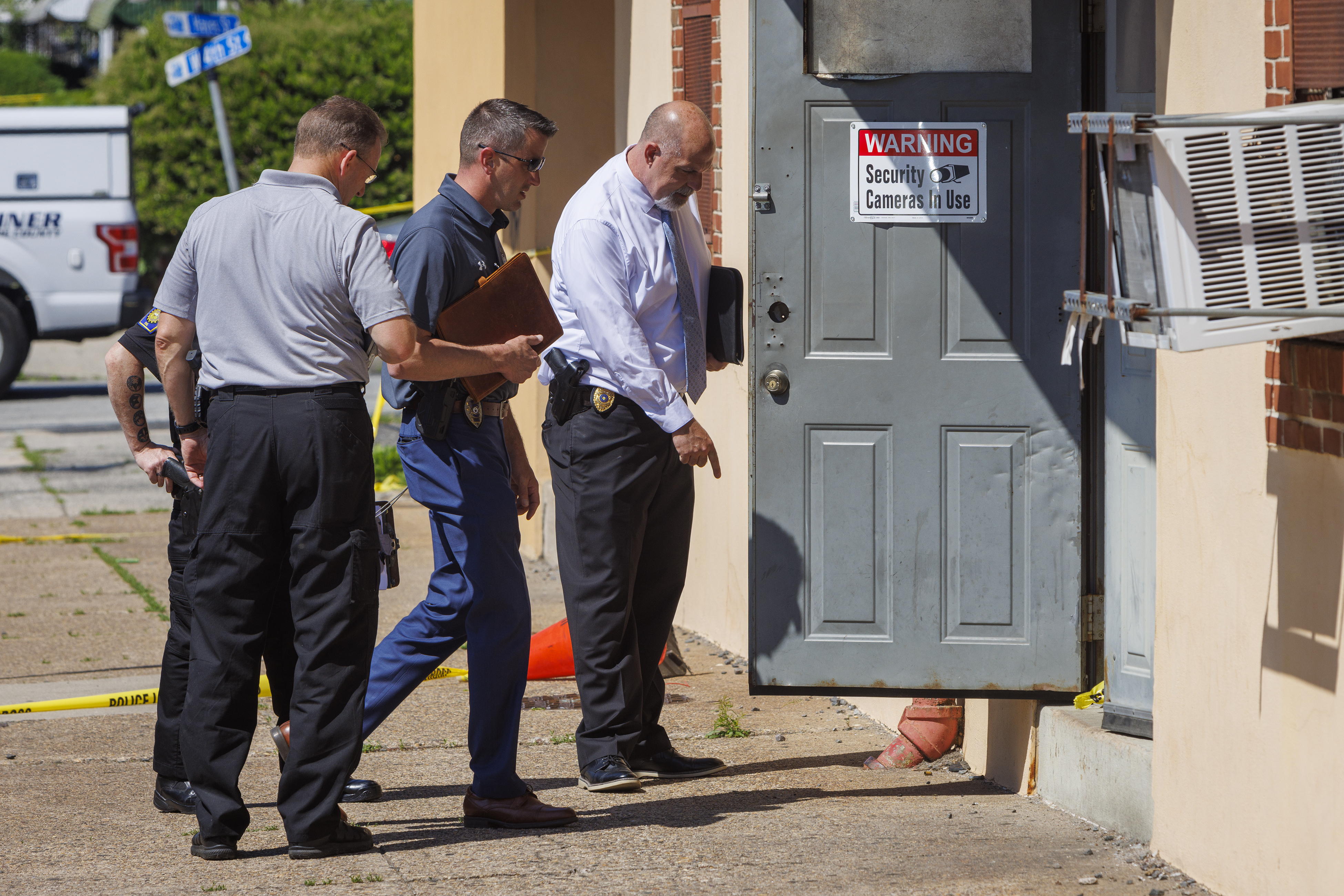
    Chester Police search for evidence after a shooting Delaware County Linen on May 22, 2024. Five people were shot in the incident, two of them fatally, according to prosecutors. Alejandro A. Alvarez / Staff Photographer

    On the day of the shooting, Rosado-Ruiz got into a verbal dispute with a coworker, Nilamarie Valdivieso.

    Valdivieso testified that Rosado-Ruiz “looked very mad” when he arrived at work, and exploded at her when she asked him what was bothering him.

    Later, after Valdivieso returned with two supervisors, along with Leovanny Peña Peña, she said, the conversation escalated, and Rosado-Ruiz pulled the 9mm handgun from his waistband.

    He shot Valdivieso once in the chest before chasing down and firing at the other victims as they ran and dived for cover, she said. The Peña Peña brothers were both shot multiple times trying to flee Rosado Ruiz, and were pronounced dead at the scene by medics.

    Another victim, Charles Doyle, testified that he was fixing an industrial washing machine when he heard several shots ring out in quick succession.

    He said he saw Rosado-Ruiz pull a second magazine from his pocket and reload his handgun. Doyle said he yelled out to distract the gunman so that his father, who also worked there, had time to flee.

    When Doyle turned to leave, he said, Rosado-Ruiz shot him three times in the back, shattering his right arm and causing severe internal damage to his organs.

    Doyle said he is unable to work because of nerve damage in his arms — he said moving his hands feels similar to trying to wiggle his ears.

    He testified that he did not see or hear anyone threatening Rosado-Ruiz before the gunfire rang out.

    Rosado-Ruiz fled after the shooting, which led police from surrounding departments to lock down streets around the business.

    He was taken into custody by an officer from Trainer, pulled over on the edge of Chester as he attempted to drive home. Inside the car, investigators found a backpack with a smaller bag containing additional 9mm bullets, authorities said.

  • ‘Swarthmore 9’ protesters urge Delco DA to drop trespassing case tied to pro-Palestinian encampment

    ‘Swarthmore 9’ protesters urge Delco DA to drop trespassing case tied to pro-Palestinian encampment

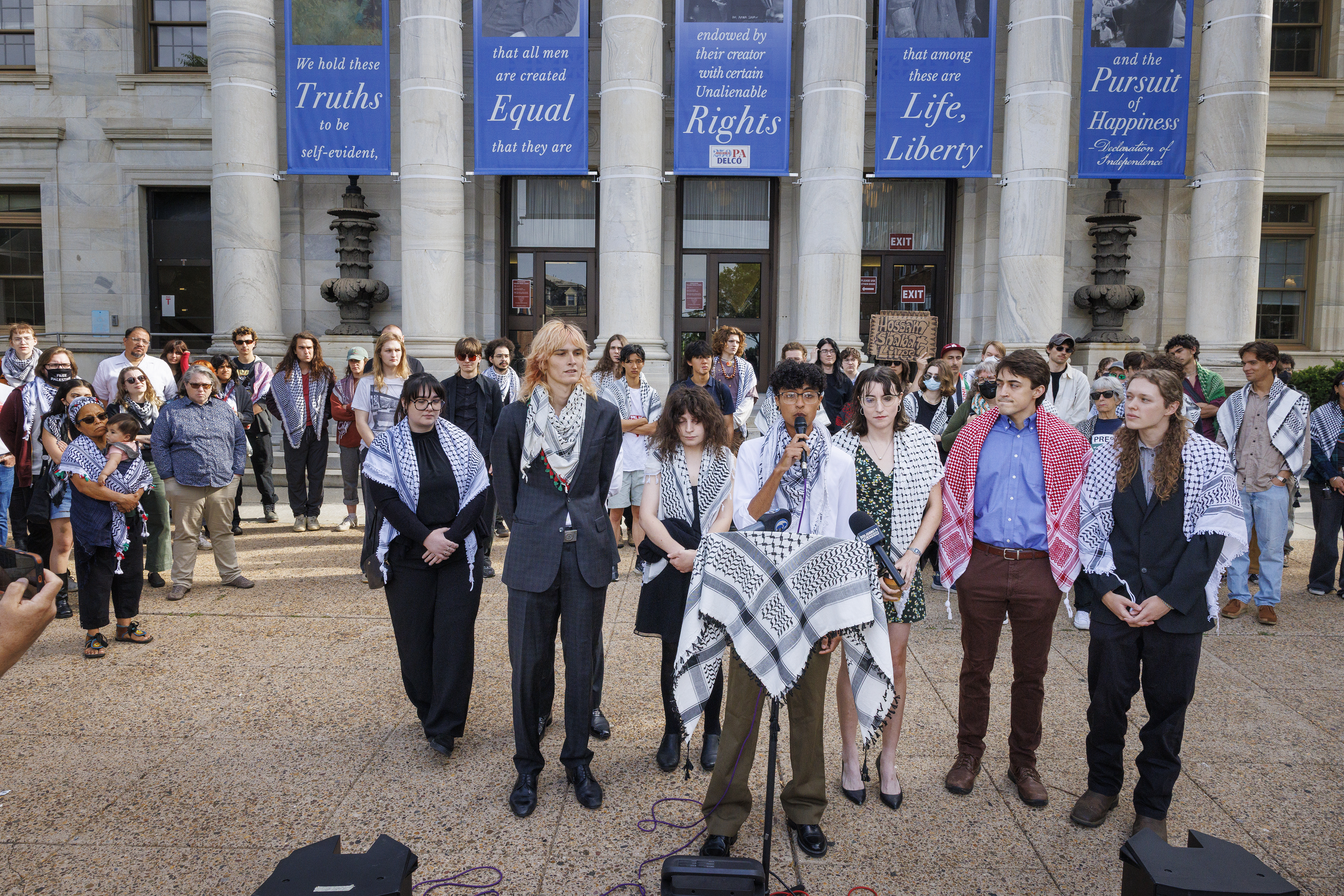
    Nine protesters arrested last year at a pro-Palestinian encampment at Swarthmore College said Tuesday that they had done nothing wrong and have no intention of pleading guilty to the trespassing charges they face.

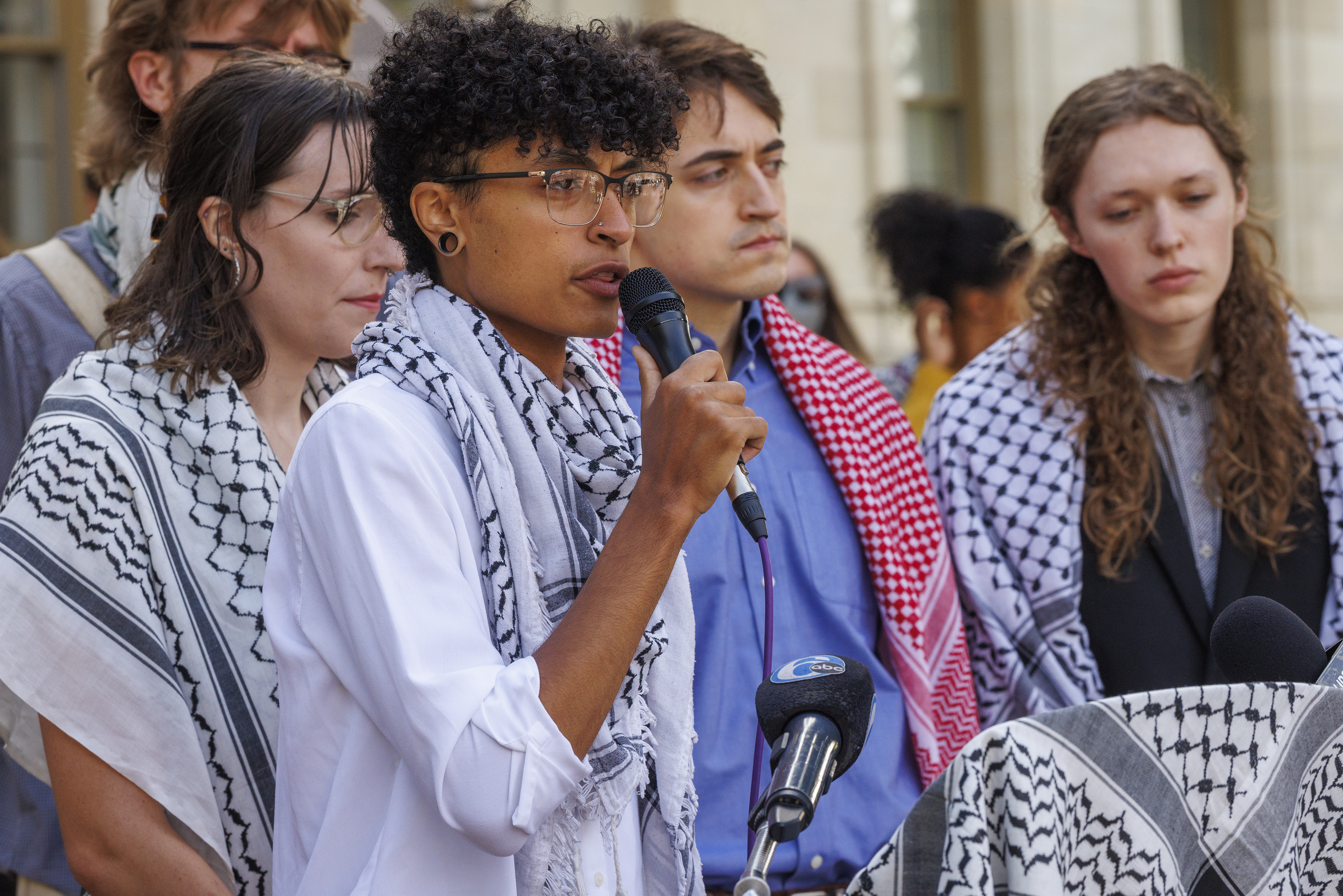
    “We affirm that we are guilty of nothing because it is always right to rebel against genocide,” Jace Boland, a junior at the college, said at a news conference on the steps of the Delaware County Courthouse.

    Boland was joined by his eight codefendants and a small crowd of supporters in urging prosecutors to drop what they described as “absurd criminal charges.”

    The so-called Swarthmore 9 were arrested and briefly detained on the college’s campus in May 2025 when officers from surrounding police departments dismantled their encampment protesting the war in Gaza and Swarthmore’s contract with a company that does business with the Israeli government.

    Of the nine people arrested, only Boland is a student at the college. Another, Brendan Cook, is a former student who was suspended for participating in an earlier protest in 2024, but the rest are not affiliated with Swarthmore, according to school officials.

    Members of the group — Boland, Cook, Jonathan Britt, Mara Helen Cahill, Daria C. Dressler, Thomas Falcone, Colin Buckley Malcarney, Riley J. McManus, and Andrew Thomas — have all been charged with trespassing, a third-degree misdemeanor.

    Their attorney, Marni Jo Snyder, has filed a motion to dismiss the case that will be argued before Delaware County Court Judge Dominic Pileggi on June 22, a week before the group’s scheduled trial.

    District Attorney Tanner Rouse said Tuesday that prosecutors had offered the group the chance to plead to a lesser, summary offense, which Rouse described as “akin to an ‘open container’ or noise violation ticket.”

    “That they want to proceed to trial as charged is absolutely their right, but so is it the commonwealth’s right to protect the interests of private citizens and institutions that do not have to abide every random person who has an issue parking on their front lawn,” Rouse said. “Private property owners have a right to say ‘please leave’ when the time comes.

    “If their concern is a criminal charge or exposure to judicial punishment, there is and always has been an easy off-ramp available to them,” he added. “They have chosen not to take it.”

    Jace Boland said Tuesday that he and his co-defendants “are guilty of nothing because it is always right to rebel against genocide.”Alejandro A. Alvarez / Staff Photographer

    At Tuesday’s news conference, Swarthmore professor Mark Wallace said he supports the protesters and believes the college betrayed the ideals on which it was founded by having them arrested.

    “How can students who live and work on a campus be charged with trespassing there while applying what they’re learning in the real world?” he asked. “Colleges should be places where large, uncomfortable questions are asked and struggled over.”

    A spokesperson for Swarthmore did not immediately respond to a request for comment Tuesday.

    Previously, the college, in a statement, echoed what Rouse said Tuesday — that county prosecutors had offered to reduce the charges in the case to a summary offense if the defendants pleaded guilty, but they declined.

    Boland said he and the others charged would not plead guilty, fearful that doing so would discourage future activism.

    “If the college can deploy state violence to protect its interests without consequence, there is no telling what levels of repression future generations of student activists will face,” Boland said. “Swarthmore College cannot continue to benefit from its reputation as a liberal arts institution that encourages activism while simultaneously crushing dissent.”

    Swarthmore Borough police arrested the group in May 2025 after issuing multiple warnings to members of an encampment that had formed outside Swarthmore’s Trotter Hall.

    The encampment, which protesters referred to as the Hossam Shabat Liberation Zone in honor of a journalist killed in an Israeli drone strike, was formed to demanded that Swarthmore end its IT support contract with Cisco, which also holds contracts with the Israeli government.

    Swarthmore College professor Mark Wallace spoke at Tuesday’s news conference in support of the nine protesters arrested at the school last year.Alejandro A. Alvarez / Staff Photographer

    Swarthmore College president Valerie Smith wrote in a letter last year that members of the Liberation Zone created their enclosure using campus property and had vandalized other parts of campus with incendiary graffiti.

    Smith wrote that she “unequivocally condemn[ed]” the group’s actions and said that law enforcement officials, including the FBI, told her to dismantle the encampment as soon as possible.

    “I urge these protesters to pursue a less divisive approach to expressing their views — one that aligns with not just the College’s policies, but with the mutual respect, compassion, and care that all in our community deserve,” Smith wrote in the letter.

    Days before the protesters were arrested, campus police forcibly took back some of the items they had taken to build the encampment, and issued disbandment orders to people they found within it.

    On the day police came to clear out the encampment, they gave protesters a 10-minute warning to vacate the property.

    The protesters refused to leave, sitting with their arms interlocked, according to video of the arrests posted by the Swarthmore chapter of Students for Justice in Palestine.

    All nine of the protesters charged in the case were detained briefly and released on unsecured bail.

  • Longtime Philly State Sen. Anthony Williams is running for the last time — and won’t commit to fulfilling his full term

    Longtime Philly State Sen. Anthony Williams is running for the last time — and won’t commit to fulfilling his full term

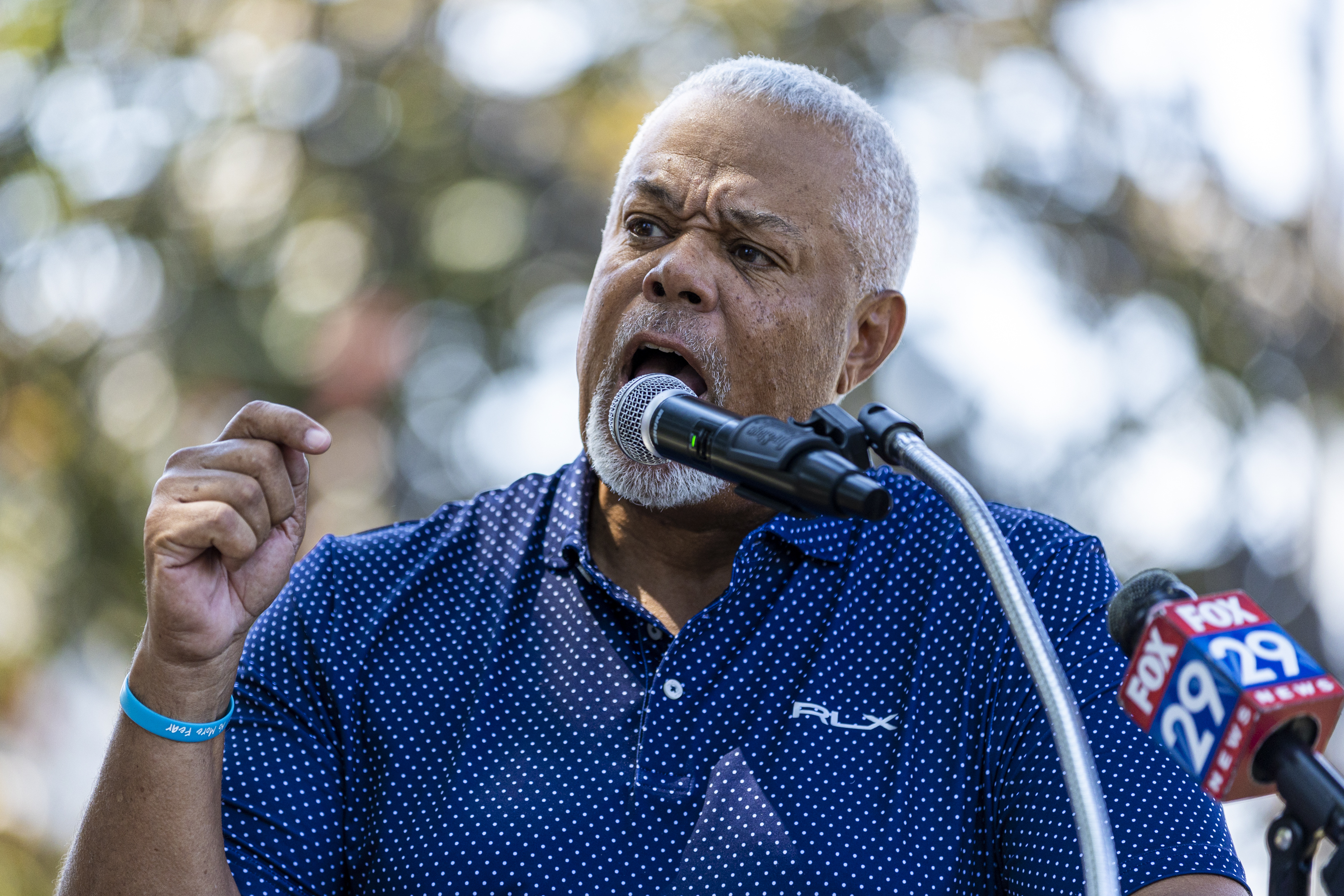
    State Sen. Anthony H. Williams, a veteran state senator from Philadelphia known for his advocacy on school choice and who has led one of the city’s most muscular political factions for decades, says November will be his last time running for reelection.

    But first, he has more work to do for the advancement of Black Philadelphians and the Democratic Party before he retires, he added in an interview this week.

    Williams, 69, did not commit to completing another four-year term, opening up the possibility that he could handpick his successor if he decides to retire early.

    “I’m thinking about getting reelected and serving, that’s all I’m thinking about,” he said. “I’m here, I’m gonna run to November, and we’ll see what happens after that.”

    Williams ran unopposed in 1998 for the seat after his father, the late Hardy Williams, decided within hours of the filing deadline he would not run for reelection. At the time, the move was was widely seen as an intentional play by the late Williams to hold the seat for his son. Now, Anthony H. Williams says that recollection excluded a key piece of information as to why his father retired so suddenly: He had been diagnosed with dementia just before he decided not to run.

    “We didn’t have a plan for me to take over,” the younger Williams said, noting that former State Rep. James Roebuck Jr. had filed to run, too, but ultimately withdrew from the race due issues with his petitions. “It wasn’t like I got a free pass.”

    When a state legislator resigns before the end of his or her term, a special election is called to fill the vacancy. The ward leaders in that district then get to choose who should take over the seat, dodging a competitive primary and largely deciding the outcome in closed-door meetings.

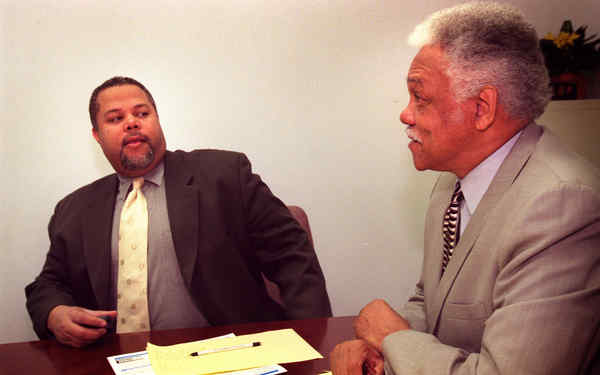
    Anthony Hardy Williams (left), seen here in 1998, when he was a state representative and his father (right) was a state senator.File photo

    Williams —who has been in state government, both as a representative and senator, for nearly four decades — is seeking his sixth term to represent parts of Southwest Philadelphia and Delaware County in Harrisburg. He recently won his primary election over Democratic challenger David Goldsmith Jr. and will not face a Republican challenge in November.

    Williams has had a far-reaching — and at times, turbulent — legacy in Harrisburg and the city, running twice unsuccessfully for Philadelphia mayor in 2015 and 2019 and once unsuccessfully for governor in 2010.

    Over 37 years in Harrisburg, Williams has mentored numerous young Philadelphians who started as aides in his Senate office, who have gone on to become top legislative leaders. That list includes: House Speaker Joanna McClinton, Philadelphia City Council President Kenyatta Johnson, House Appropriations Chair Jordan Harris, Superior Court Judge Timika Lane and more.

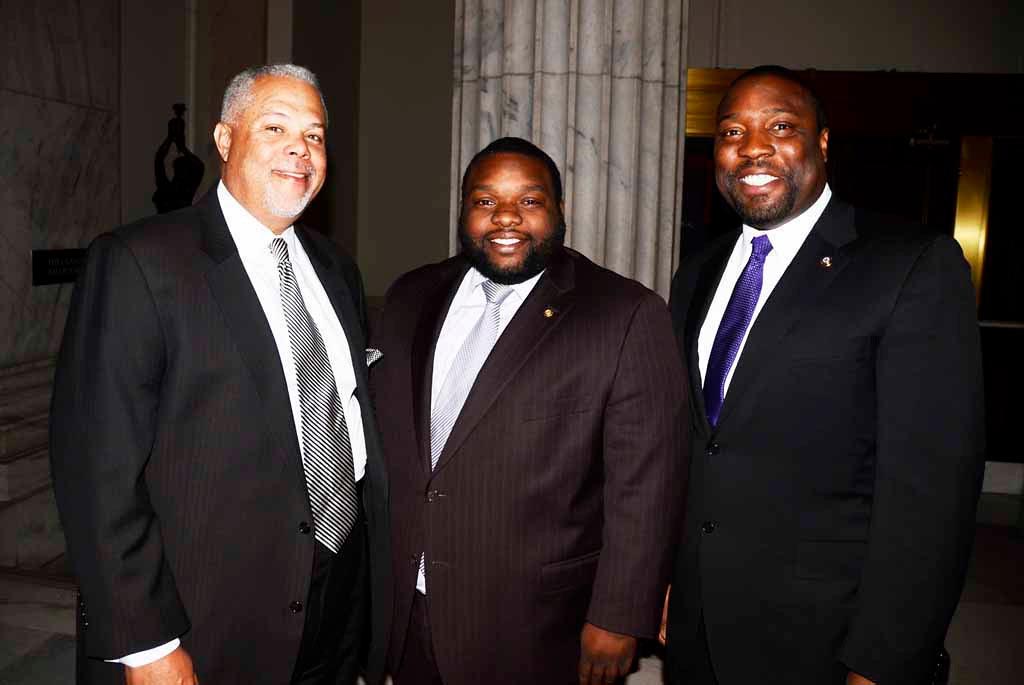
    State Sen. Anthony H. Williams, State Rep. Jordan Harris and Councilman Kenyatta Johnson at the Inaugural Dorys Erving Fit Youth Foundation Celebration at the Ritz-Carlton on Friday, November 15, 2013. (HughE Dillon/Philly.com)

    “It’s a testament to his dedication and his commitment to seeing Black independent politics grow and mentoring young people to get into office — not to just be there, but to do something,” Harris said Friday.

    Looking at Williams’ list of mentees who now outrank him in office shows his legacy and humility, Harris added. And Williams is willing to have spirited disagreements with his mentees, Harris said.

    “He’s mentored people who vehemently disagree with him on certain issues, but the endgame of upward mobility for underrepresented people is all the same,” Harris said.

    Johnson, in a statement, credited Williams for playing a formative role in his political climb, and for always being willing to “share his wisdom, offer candid advice, and invest in the next generation of leaders.”

    “Philadelphia is a better city because of [Williams’] service, and I am proud to call him both a colleague and a friend,” Johnson added.

    In an interview, Williams said that he’s seen Harrisburg change tremendously since he first was elected to as a state representative in 1989. Today, Democrats control the state House after flipping the chamber in 2022 for the first time in 12 years, a Black woman from Philadelphia leads the House, and a democratic socialist leads Philadelphia’s delegation to Harrisburg in the Senate. Democratic lawmakers successfully fought to change how Pennsylvania’s public education system is funded, and they’ve advanced gun reforms.

    And, he said, it’s no longer a place for career politicians like him.

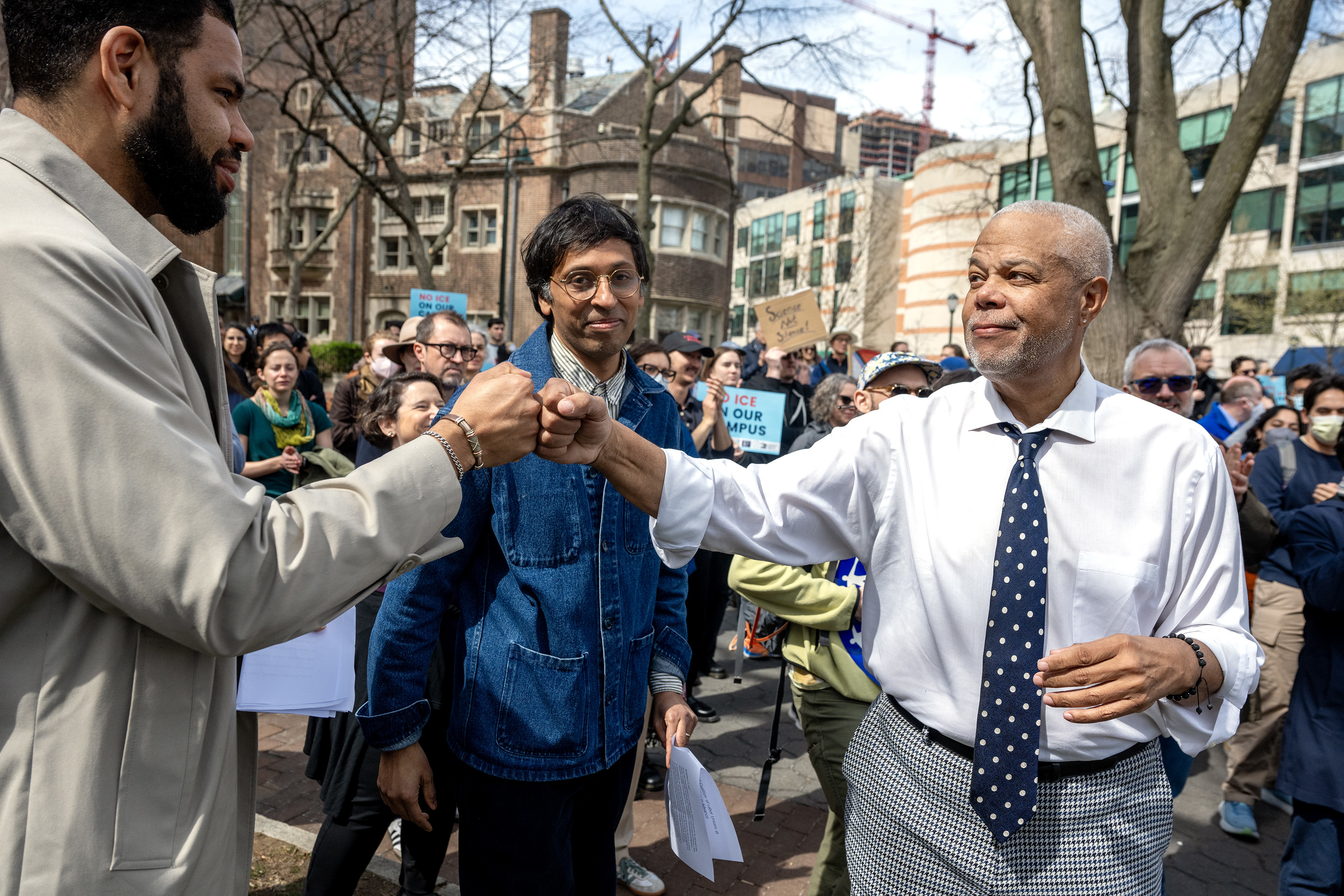
    Philadelphia elected officials State Rep. Rick Krajewski (from left), State Sen. Nikil Saval, and State Sen. Anthony Williams attend a rally at the University of Pennsylvania Mar. 20, 2025.Tom Gralish / Staff Photographer

    But Williams said there are still critical issues of policy and politics that he wants to address with his time left in office.

    First, he wants to be a bridge between generations of Democratic leaders — though he dislikes how Democrats currently label themselves as “progressive” or “moderate” to differentiate their views. He said he’s been speaking frequently with progressive leaders since State Rep. Chris Rabb, a democratic socialist, won the party’s nomination to represent Pennsylvania’s 3rd Congressional District in Congress.

    “The Democratic Party as it’s currently constituted is something that’s not current, and not visionary about moving forward,” Williams said.

    “I want to spend time working with those folks who are in that progressive community who will identify with the fact we have common ground on a lot of these areas. We have a different rhythm, or as they say, a different vibe,” he added.

    Throughout his time in office, he said he’s had his ideas stolen and boasted by white leaders, including a successful illegal gun task force. He’s cut deals with top Republicans for impactful programs that still exist today, such as an apprenticeship program that helped increase diversity in the building trades. He’s been an outcast at times as one of few Democrats to advocate for school choice options, a label that he knows follows him.

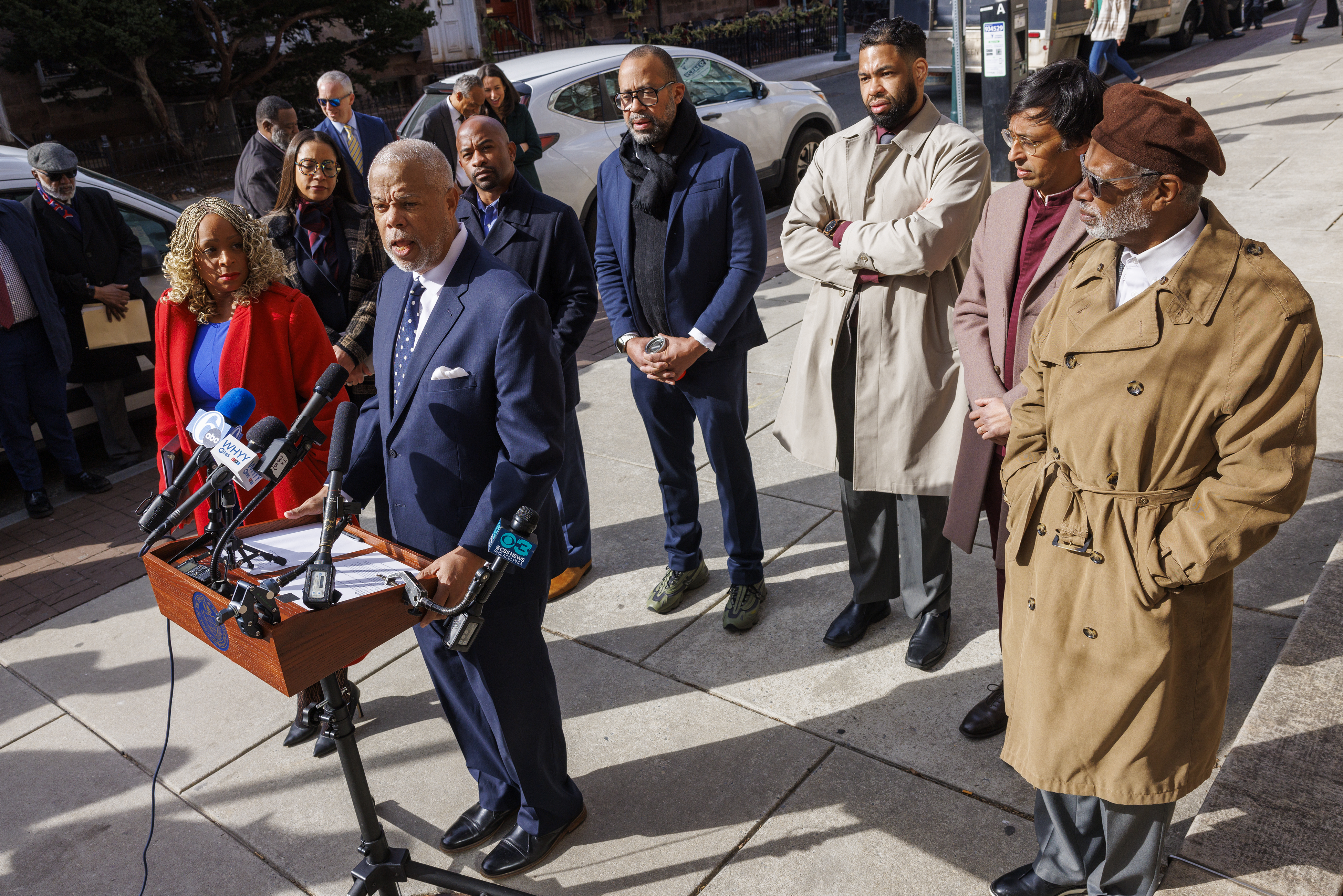
    News conference hosted by Pennsylvania State Senator Anthony H. Williams (podium) outside the Penn Carey Law School, Tuesday, Feb. 25, 2025. At rear from left are Councilmember Jamie Gauthier, law professor Stacy Hawkins, State Rep. Napoleon Nelson, Rev. Marshall Mitchell, Penn Trustee Board, State Rep. Rick Krajewski, State Sens. Nikil Saval and Art Haywood.Alejandro A. Alvarez / Staff Photographer

    Now, he wants the buy-in of state legislators and the private sector to address economic inequities among Black Philadelphians. Black residents make up the largest racial or ethnic groups in Philadelphia, but have one of the highest poverty rates in the city with 22.3% of Black residents living in poverty in 2024, according to a Pew Charitable Trusts survey released this year. Instead, Black residents should be driving the economy, Williams said.

    “Fundamentally, we have to take hold of the economy in the city,” he said. “We collectively have the power to do something about it. Not individually, collectively.”

    He sees more school choice options — and reimagining the whole public school system if necessary — as part of this solution. He’s faced criticism throughout his career for his support of school choice efforts, citing his big-dollar support from Pennsylvania’s richest man Jeffrey Yass, who solely supports candidates willing to send state money to private schools.

    Yass, who usually supports Republican candidates, was among the sole funders of Williams’ failed bids for governor and mayor. Williams has been criticized for taking money from a top GOP supporter who wants to divert money away from Pennsylvania’s public school system.

    “People think I’m a one-hit wonder,” Williams said of his support for using public dollars to send some students to private schools. “We have to be honest about what we’re doing and not doing and have honest, hard conversations about how we’re gonna change how we do this.”

  • Main Line Health, UnitedHealthcare contract dispute could leave 32,000 patients out of network later this month

    Main Line Health, UnitedHealthcare contract dispute could leave 32,000 patients out of network later this month

    Chris Feaster sees Main Line Health clinicians for mammograms, breast MRIs, and other preventive screenings required due to her high risk of breast cancer.

    The 61-year-old Montgomery County resident has been panicked in recent weeks after Main Line sent patients a letter warning that the nonprofit health system’s contract with her insurer, UnitedHealthcare, may end later this month.

    Main Line is a leading provider of care across Philadelphia’s western suburbs, where it has four hospitals. Feaster has relied on its facilities for care for 40 years.

    “They know me,” she said of her Main Line providers in an interview. “I have been getting monitored there since the time I was in my early 30s.”

    Feaster, who lives in Trooper, has already experienced a healthcare disruption caused by another insurance dispute. Two years ago, Axia Women’s Health and United failed to reach adeal. That forced Feaster to find a new gynecologist after 40 years.

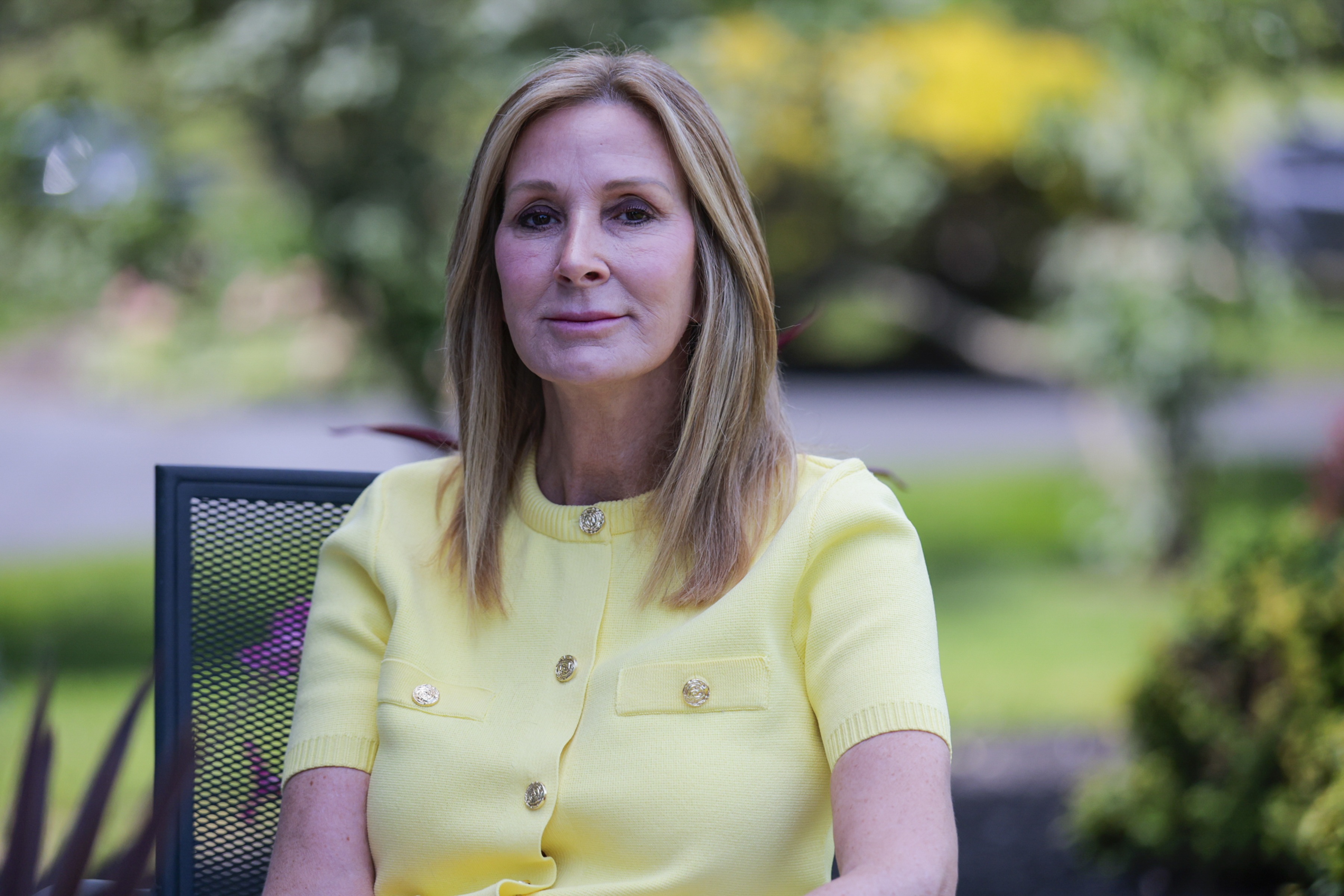
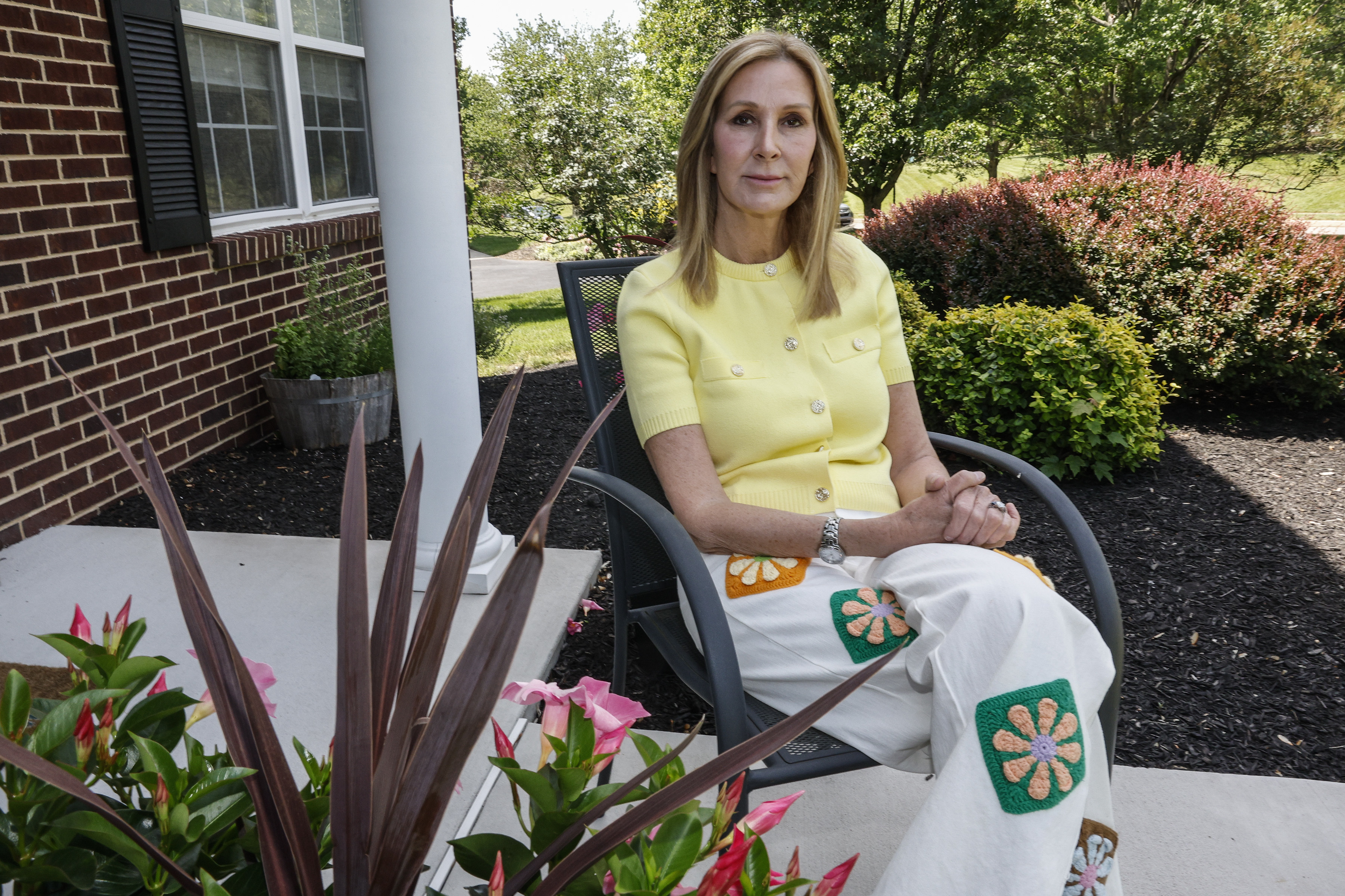
    Chris Feaster is among thousands of Main Line Health patients worried about the prospect of Main Line Health going out of network with UnitedHealthcare at the end of this month.Steven M. Falk / For The Inquirer

    If no deal is reached by June 30, Feaster could be facing a repeat. She is among 32,000 affected Main Line patients who have United insurance through Medicare Advantage plans and commercial insurance from employers.

    It’s not unusual for health systems and insurers to go down to the wire when negotiating contracts, but Axia’s failure to reach a deal — and the decision by Jefferson Health’s Lehigh Valley Health Network to go out of network with United — has people on edge.

    Main Line Health said that United had been engaging more meaningfully in negotiations in recent weeks. “We are hopeful that momentum continues. We remain committed to reaching a resolution before June 30,” its statement said.

    For Main Line, which is far less profitable than it was before the pandemic, the dispute is not just about rate increases. The nonprofit health system also wants to reduce claim denials, prior authorization delays, and excessive audits.

    UnitedHealthcare focused on prices in a statement, and the impact high costs have on employers who pay for health benefits.

    “Main Line Health is seeking price hikes that would significantly increase costs for families and employers,” UnitedHealthcare said.

    United added that self-insured companies would absorb the biggest hit ”impacting the money they have to grow their business and compensate their employees.”

    Worries about maternity care

    Jessica Geida, a Newtown Square resident and an ob/gyn who is not currently practicing, is particularly worried about access to maternity care in Delaware County, given that Axia is already out of network with United.

    Main Line operates the only practice that delivers babies at Riddle Hospital for people with UnitedHealthcare (UHC), said Gaida, who has worked at Axia and Main Line. “If they drop UHC, there would be no access to care in the Delaware County,” she said.

    Maternity care has been under pressure in Delaware County since the maternity unit closed at Delaware County Memorial Hospital in early 2022, followed by the shutdown of Crozer-Chester Medical Center a year ago as part of the Prospect Medical Holdings bankruptcy.

    Mercy Fitzgerald Hospital in Darby closed its labor and delivery unit more than 20 years ago.

    If Main Line and United fail to reach a deal, UnitedHealthcare patients might have to go to Penn Medicine’s Chester County Hospital in West Chester, which is already busy.

    Patients who get into Penn’s ob/gyn practice at Penn Medicine Radnor deliver babies at the Hospital of the University of Pennsylvania in Philadelphia, according to that group’s web site.

    A disappointing call

    Feaster said a call from UnitedHealthcare Friday left her feeling very uncertain about her care.

    Feaster grew up in Wayne and kept seeing Main Line doctors when she moved to Trooper, which is north of King of Prussia.

    Feaster would have to specially request a continuation of care to keep seeing each of her Main Line doctors at in-network prices, the UnitedHealthcare representative told her.

    The temporary stopgap is designed to help people who have significant needs — including cancer patients in the middle of treatment — avoid gaps in care while they switch to doctors who accept their insurance.

    Feaster would have to fill out part of the form, and her doctors would have to complete another part. She’d also have to take the same steps for Main Line providers of her regular mammograms, breast MRIs, and DEXA bone density scans.

    UnitedHealthcare would then review each request to determine whether to approve.

    “I’m really worried,” she said.

  • Chester City agrees to five-year emergency medical services contract with VMSC

    Chester City agrees to five-year emergency medical services contract with VMSC

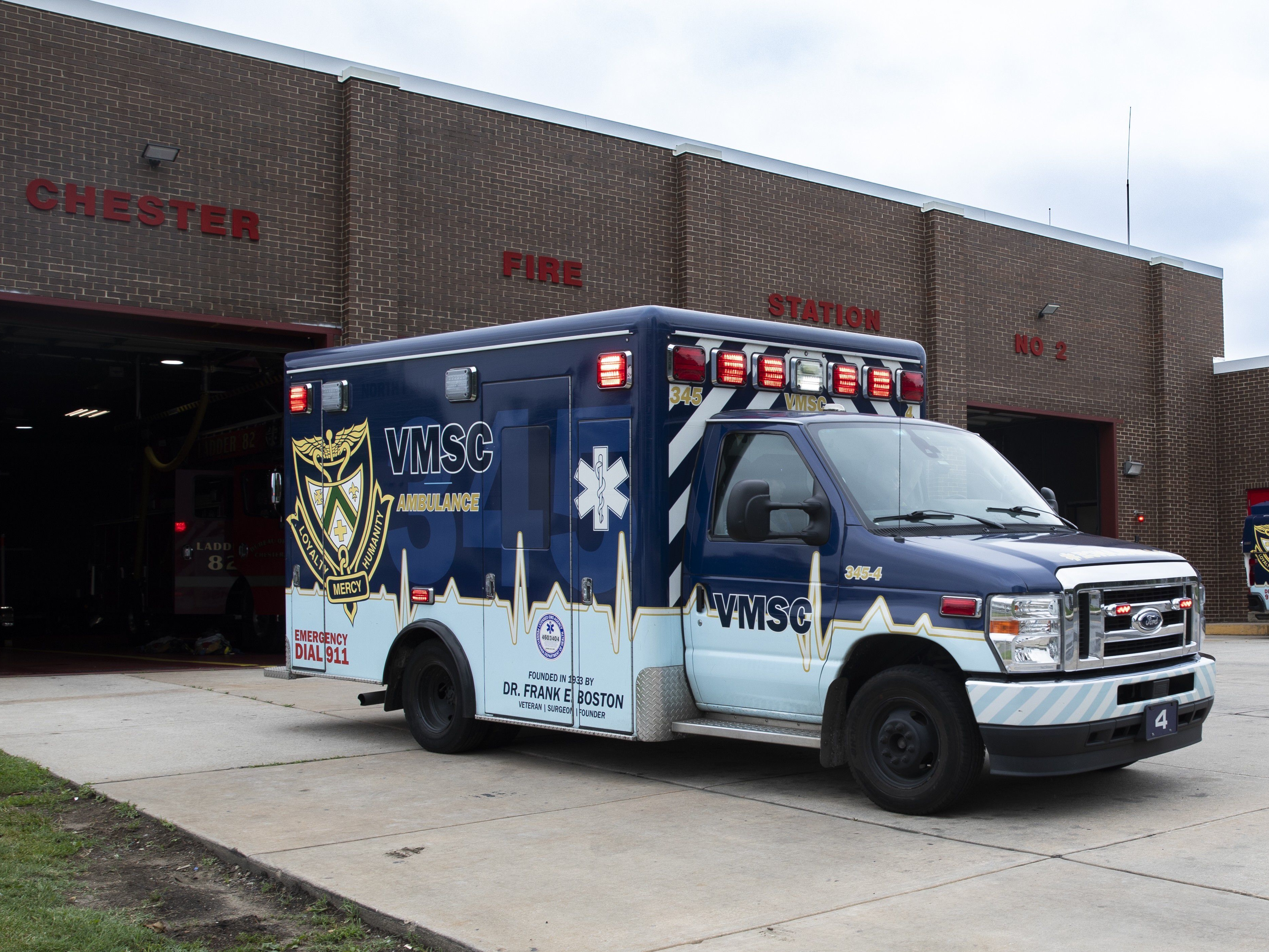
    Chester City agreed to a five-year, $2.8 million contract with VMSC Emergency Medical Services, a nonprofit that started providing ambulance services in the community after the closure of bankrupt Crozer Heath a year ago, the city and VMSC announced Monday.

    During VMSC’s first year in Chester, the Lansdale organization had a $470,000 shortfall, chief executive Shane Wheeler said. The $2.8 million is expected to support operation of the services — including the cost of serving uninsured patients — and pay for equipment needs.

    The ambulance company has responded to 8,324 calls since May 2, but 35% did not require transport to a hospital, Wheeler said. In many cases, the ambulance crew fulfills the function of primary care for residents.

    “We’re assessing blood pressure or helping someone with their medication, helping people get up” from a fall, Wheeler said.

    VMSC’s accomplishments in the first year reducing ambulance response time to about 5½ minutes from more than 12 minutes, according to Wheeler.

    The contract requires VMSC to assign at least three basic ambulances to serve Chester and its direct neighbors, with two staffed 24 hours a day. The organization also must provide at least one commander with training in more advanced treatment.

    “This agreement is about stability, reliability, and protecting the health and safety of our residents,” Chester Mayor Stefan Roots said in Monday’s announcement of the contract. “This is a critical investment in public safety and in the overall well-being of our city.”

  • After a man shot his girlfriend, officers shot him, Chester police say

    After a man shot his girlfriend, officers shot him, Chester police say

    A man who shot his girlfriend twice in the back on a quiet Chester street on Wednesday night later turned his gun on responding police officers, prompting them to shoot him, authorities said.

    The man and the woman — whom authorities did not identify — were in critical condition at an area hospital, Delaware County District Attorney Tanner Rouse said.

    Authorities said the man shot the woman shortly before 9 p.m. near the intersection of East Ninth and Walnut Streets. Then, Rouse said, the man opened fire on passing vehicles.

    No drivers were struck.

    When officers arrived at the scene, the man turned his weapon toward them, authorities said, and at least one officer shot him.

    Helicopter footage of the scene shows more than two dozen bullet casings littering the streets and what appears to be a parked power-washing truck riddled with bullet holes.

    A Chester Police Department spokesperson did not return a request for additional information on Thursday.

    Rouse said his office was reviewing camera footage of the incident and would “make sure we have every angle that depicts the events that transpired.” When its investigation is complete, he said, charges will be filed against the man.

    Meanwhile, he praised law enforcement for its response to the shooting.

    “I can tell you with confidence that the actions of the Chester Police Department were nothing short of lifesaving and the defendant in this case had every intention to kill anyone he could,” Rouse said.

  • How realistic is new owner’s ‘aspirational’ plan for Crozer-Chester Medical Center campus?

    How realistic is new owner’s ‘aspirational’ plan for Crozer-Chester Medical Center campus?

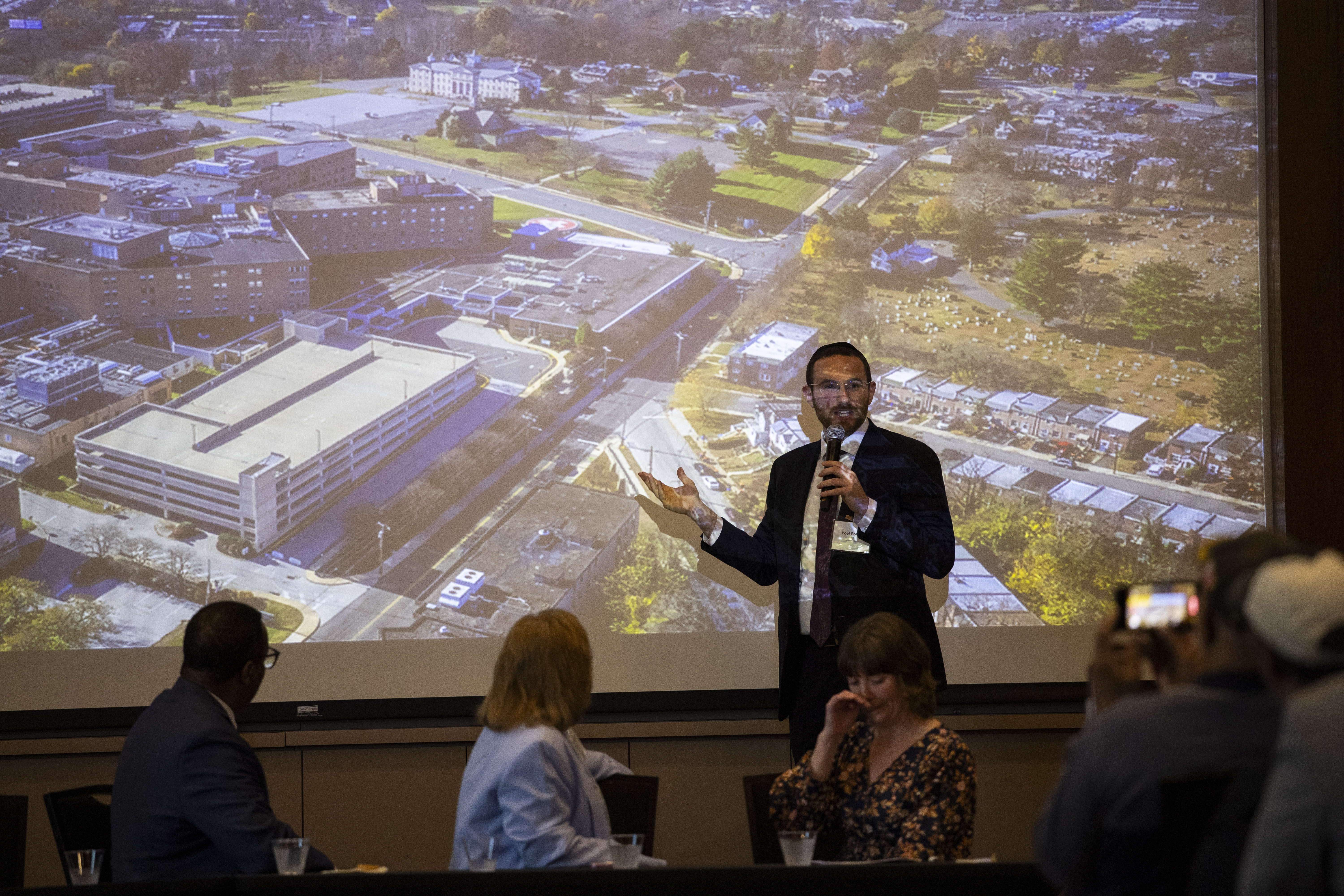
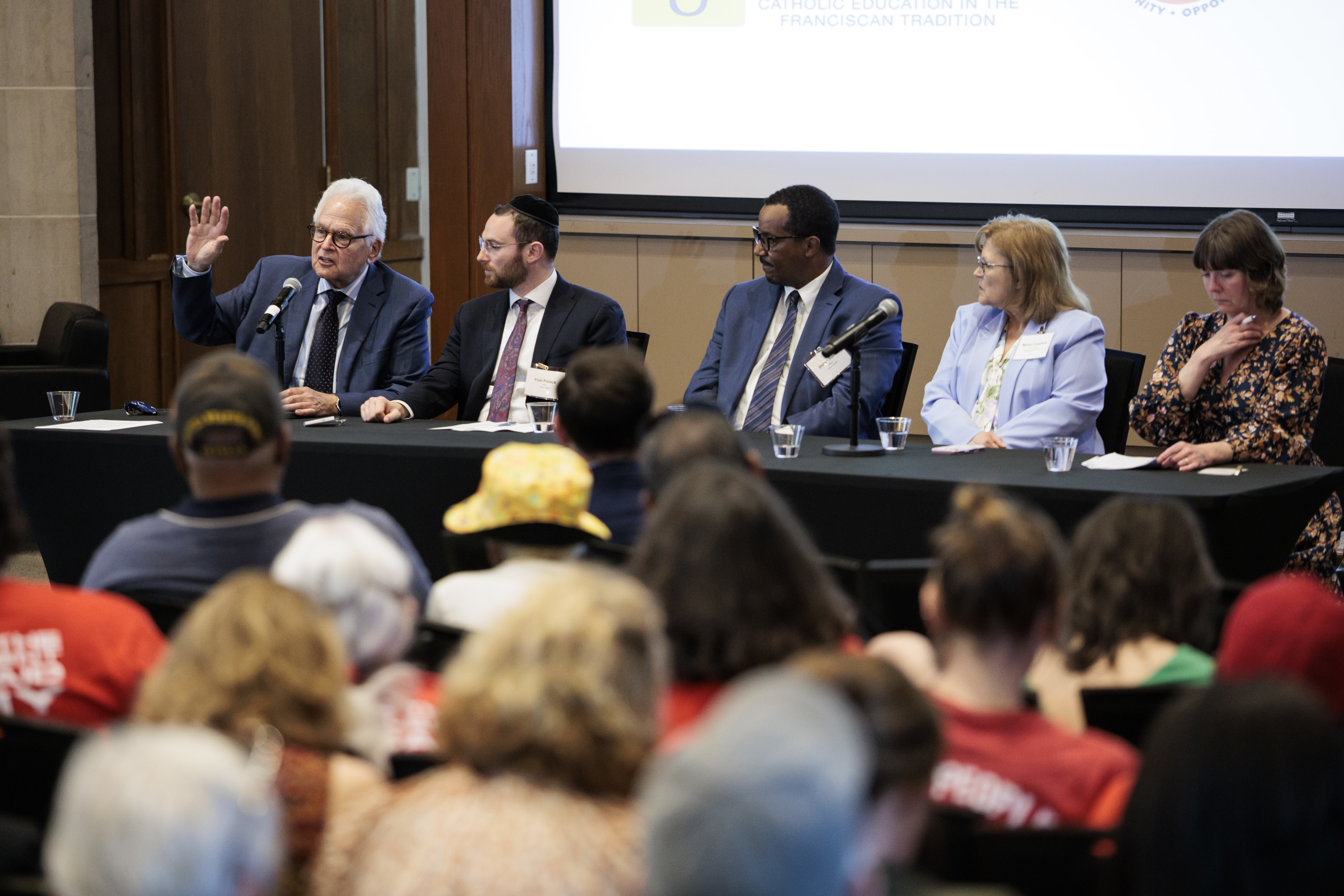
    The new owner of the shuttered Crozer-Chester Medical Center in Delaware County shared what he called an “aspirational” plan to restore healthcare services to the Upland facility at a town hall meeting Tuesday in Chester.

    The vision includes reopening of the emergency department, creating a small hospital above the ED, and developing outpatient services — all operated by one or more local nonprofit health systems, Yoel Polack told a standing-room-only crowd of more than 200 at Widener University.

    Polack is CEO of Chariot Allaire, the for-profit partnership that paid $10 million for Crozer in January. His group has been talking to all the regional health systems for months and expects soon to begin “a study process with two and hopefully three of the major academic medical centers in the region,” he said.

    That is expected to last up to 90 days, he said, “and hopefully at the end of that period, we’re going to be having some outline of partnership with the system.” Polack described his anticipated partner as an institution “you know and trust.”

    The entire process could take two or three years after a partnership is formed, he said Polack, whose company is registered in Lakewood, N.J.

    He provided no details on how much Chariot Allaire would be willing to invest to attract a health system to the site, where state-led efforts previously failed to save a major safety-net provider for Delaware County that closed last May amid the bankruptcy of its California-based owner, Prospect Medical Holdings Inc.

    Chariot Allaire paid relatively little for the 64-acre campus, which gives the company a low cost basis for owning the site. But that doesn’t mean it will be easy to attract a partner at a time of thin to nonexistent profit margins for the region’s health systems.

    “It does not seem like there’s an easy and obvious candidate,” said Dan Grauman, managing director at VMG Health, a national healthcare consulting firm.

    “There’s no question there’s need for care and for services, said Grauman, who has decades of familiarity with the Philadelphia region’s healthcare market.

    A welcome public meeting

    During an hourlong question and answer session, residents expressed gratitude for the meeting with Polack and his senior medical adviser, Arthur Klein, a pediatric cardiologist who spent decades as an executive at nonprofit health systems in New York.

    A town hall meeting Tuesday in Chester about plans for the former Crozer-Chester Medical Center drew a large crowd.Monica Herndon / Staff Photographer

    “Many times things happen in our community, and we are the last to know, so you started off very, very well,” said Zulene Mayfield, chairperson of Chester Residents Concerned for Quality Living, a community group known for the fight to close a large trash incinerator in the city.

    Some residents pushed back against Polack and Klein’s plans for a much smaller hospital than the more than 400 beds Crozer-Chester Medical Center had at its peak. During a March interview with The Inquirer, Klein suggested the new hospital could have 80 beds.

    “You don’t want a hospital of the 1990s,” Klein said Tuesday.

    The current hospital structure encompasses 750,000 square feet — now completely empty. Crozer’s shuttered ED took up 30,000 of the square feet. Chariot Allaire contemplates opening a hospital a tenth of the size of the old hospital.

    Operating that hospital cost way too much, Polack said. ”It also doesn’t meet the way medical care is done today, which is mainly on the outpatient side,” said Polack, who has worked in healthcare real estate development in New York.

    Simone Development Cos., where Polack worked before striking out on his own, often collaborated on real estate deals with Montefiore, a health system in the Bronx that serves many patients with Medicaid insurance, Grauman said.

    That experience is relevant to the effort here, he said, given that Crozer also served large numbers of people with Medicaid, which pays significantly lower rates than private insurers.

    The role of local health systems

    Before Prospect’s bankruptcy filing in January 2025, a few local health systems explored establishing a new nonprofit to take over Crozer-Chester Medical Center. Those talks continued during the bankruptcy, but failed to produce a solution.

    The University of Pennsylvania Health System said it remains at the table.

    “We continue to work with committed partners to restore crucial healthcare services for Delaware County residents,” Penn said in a statement. “It’s important that any new models for the former Crozer-Chester site are built to be sustainable amid a rapidly changing healthcare landscape and persistent financial challenges.”

    ChristianaCare, which plans to open a micro-hospital in Aston in June, is not in discussions with Chariot Allaire, it said, but supports “their efforts to expand access to quality heath care in Delaware County.”

    Arthur Klein, senior medical adviser (left), and Yoel Polack, CEO of Chariot Allaire, greet attendees during a town hall in Chester on Tuesday.Monica Herndon / Staff Photographer

    While Chariot Allaire is wooing health systems, the new owners of two other closed Crozer Health hospitals, Taylor and Springfield, are doing the same thing. Local investors paid $1 million each for those hospitals. Those low prices could allow the owners to offer below market rate leases to attract tenants.

    Polack noted that if no local systems want to bring services to the Crozer site, he would look farther afield.

    “We don’t control hospital systems and operators, but we are doing everything that we can to put the pieces together to illustrate the opportunity that we see here to those hospital systems,” he said.