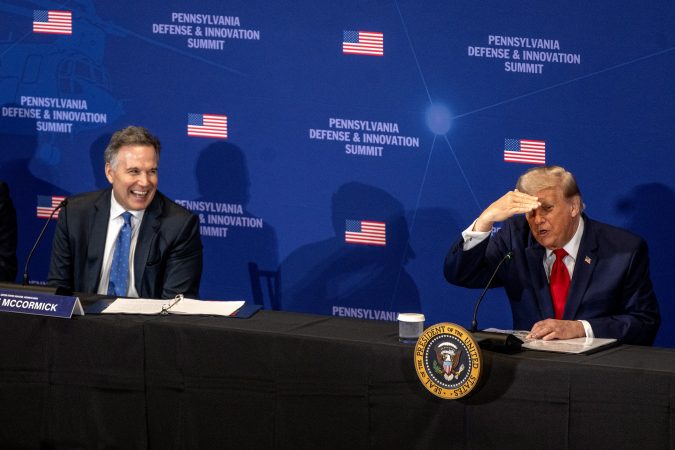
Tag: Dave McCormick

  • Donald Trump hits Josh Shapiro, promotes defense investments in Pa. during industry summit hosted by Dave McCormick

    Donald Trump hits Josh Shapiro, promotes defense investments in Pa. during industry summit hosted by Dave McCormick

    CARLISLE, Pa. — President Donald Trump — as fighting resumes in Iran and his administration’s request for $1.5 trillion in defense funding stalls in Washington — used a Wednesday appearance at a defense industry summit in central Pennsylvania mostly to boast about his perceived foreign and domestic achievements, from the oil business in Venezuela to the National Guard’s security work during Mardi Gras.

    In a 53-minute speech that was set up as a roundtable conversation, Trump occasionally applauded the latest investments in Pennsylvania’s defense manufacturing and research, which was the focus of the two-day Pennsylvania Defense and Innovation Summit organized by U.S. Sen. Dave McCormick (R., Pa.).

    He also acknowledged the setbacks in Iran and the widely recognized need for the country to more quickly build items like submarines and munitions.

    But in his second stop in three weeks in Pennsylvania — and specifically in a Republican-held U.S. House district that is critical to his party keeping control in the midterm elections — Trump also weaved through a wide range of topics.

    That included the prospect that Democratic Gov. Josh Shapiro would defeat his preferred candidate in this year’s Pennsylvania governor’s race, Republican Treasurer Stacy Garrity.

    “This guy Shapiro is totally overrated. I watched him the other night doing a speech, and he does not have what it takes,” Trump said in Carlisle. “Maybe he’ll win, and he’s expected to win, but I hear things about Stacy, and I’m hearing some poll numbers that are very good. But Shapiro is — he doesn’t have what it takes.”

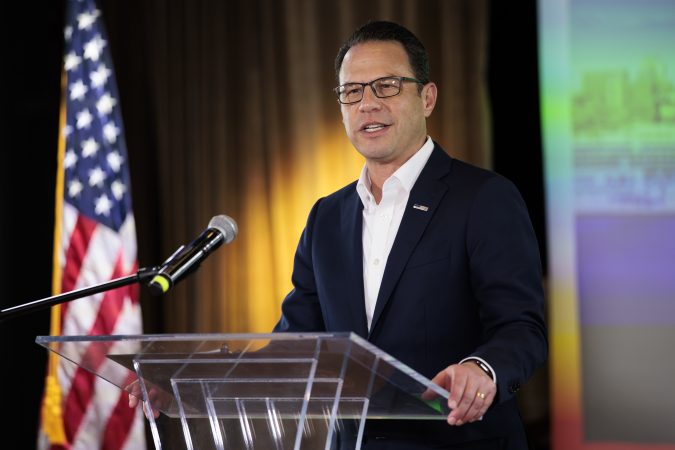
    Shapiro, who also attended the summit, held back from pointedly criticizing Trump’s foreign aggression during his panel, and he left the summit before the president’s appearance.

    While most panelists and convention-goers praised the federal government’s focus on military investment, there was little discussion about specific developments abroad or controversies around Trump’s use of the armed forces.

    Just this week, fighting in Iran resumed after a tentative ceasefire was reached and then fell apart. The U.S. Senate, which had previously voted — in a mostly symbolic gesture — to restrict Trump’s actions in Iran, has meanwhile stalled the president’s defense budget as Democrats attempt to exert more leverage to wind down the conflict.

    “This war continues to be a costly blunder that has only made us worse off than before,” U.S. Sen. Andy Kim, a New Jersey Democrat who served as a diplomat before entering Congress, said on social media this week as Trump continued the war effort.

    The bombing campaign that began in late February has been both unpopular — a Fox News poll in June found 58% think the U.S. made the wrong decision by starting it — and costly, as gas prices have remained elevated and the nation’s arsenal of Tomahawk cruise missiles has depleted. It will take years to replenish the stockpile, according to an analysis by the Center for Strategic and International Studies.

    McCormick, who has supported Trump’s efforts in Iran, said in opening the summit on Tuesday that the gathering came “in a moment as consequential as any moment in American history, and maybe in human history.”

    “President Trump’s vision of peace through strength demands new players and new ways of doing business,” McCormick said. “Such radical new thinking has never been more needed in America’s history, in the history of our military. China, Iran, Russia, North Korea: They all share one objective — a weakened United States. And they’re actively working together toward that end.”

    But Shapiro said he believed the administration’s antagonistic relationship with longtime allies is a risk to national security, though he did not specifically frame his comments around the wars in Iran or Ukraine.

    “Candidly, I get a little bit concerned when our administration pokes their finger in the eye of our allies,” Shapiro said. “That undermines our ability to innovate, and it undermines our ability to be stronger with our national defense and to have a deterrence that is going to protect the American people and protect our interests abroad.”

    McCormick, a U.S. Army veteran and former hedge fund CEO, organized the 1,300-person gathering to bring defense contractors and other companies together with government officials, military leaders, and research institutions.

    As at a similar energy- and technology-focused event last year, McCormick used the event to highlight what he described as about $10 billion worth of investments in the state.

    The list featured several ongoing Philadelphia efforts — including new ship orders at the Hanwha Philly Shipyard that McCormick valued at $1.5 billion, and a 10-year, $2.5 billion agreement to support submarine construction by Rhoads Industries and General Dynamics.

    Day & Zimmermann, a Philadelphia-based and family-owned conglomerate that is one of the Army’s largest ammunition suppliers, also won a $2.3 billion contract to update, operate, and run the Hawthorne Army Depot in Nevada, according to McCormick.

    JPMorgan Chase & Co. chief executive Jamie Dimon, who visited the Navy Yard on Wednesday ahead of the conference, also appeared in Carlisle to discuss $13 million in financing his company is providing to Rhoads’ ongoing project.

    Not all of the announcements are new or immediate — such as a recent $84 million order of heavy dump trucks from Mack Defense, which is part of a five-year, $221.8 million contract signed last year and that Trump touted in Macungie last month.

    Trump called the announcements “a colossal victory for this commonwealth and for the entire nation.”

    “Pennsylvania workers will build the ships, submarines, trucks, weapons and industries that will ensure America remains the strongest and the most powerful nation in the history of the world,” Trump said.

    In between diversions about the 2024 election, COVID-19, and claiming — as he has before during rallies in Pennsylvania — that affordability concerns are “fake,” Trump also addressed the focus of the gathering by stressing the need for a faster buildup of military equipment.

    “We used to make a ship a day, and now we’re a laggard in that department,” he said while asking the submarine construction workers in Philadelphia to pick up the pace. “We do lots of great things, but we’re a laggard there.”

    Like his rally in Lehigh County in June, Trump’s speech on Wednesday was located in a congressional district with one of the most competitive races — both in Pennsylvania and nationally — this year.

    U.S. Rep. Scott Perry, a York County Republican, is seeking an eighth term in the 10th Congressional District, which covers all of Dauphin County and parts of York and Cumberland Counties. Perry narrowly fended off a challenge from former local television anchor Janelle Stelson in 2024 and is facing her again as Democrats invest more into the race.

    As polls show Democrats have some broad momentum in the midterms, a new Pennsylvania poll released Wednesday found 39% of voters in the state approve and 58% disapprove of the president’s job performance.

    The same poll from Quinnipiac University found 40% approve of McCormick’s job performance, 33% disapprove, and 28% had no opinion.

    The event Wednesday and the energy-focused summit in Pittsburgh last July have spotlighted McCormick in rare, high-profile ways for a freshman senator. The former CEO of Bridgewater Associates, one of the world’s largest hedge funds, has also developed a close alliance with Trump in ways that have elevated his political stature.

    “Hopefully we’ll fix some of these societal problems,” Dimon, one of the country’s most powerful executives, said when McCormick asked him onstage what the next decade would look like. “And Secretary of Treasury Dimon will be happy to report to you, will be happy to report to President McCormick.”

    McCormick has not publicly expressed an interest in running for president — though at least one widely expected 2028 contender was in attendance Wednesday at his invitation.

    “Defense is critical to the future growth of this commonwealth,” Shapiro said, while praising McCormick in a bipartisan showing.

    Shapiro spoke emphatically about bolstering the state’s role in the defense industrial base and said he is doing what he can to have the state benefit from defense-related jobs and a federal focus on national security.

    Shapiro also appeared at the conference at the U.S. Army War College in Carlisle earlier in the day. In a panel conversation there, he did not criticize Trump by name as he fully endorsed the summit’s goal of supercharging the defense industry and placing Pennsylvania at the center of the expansion.
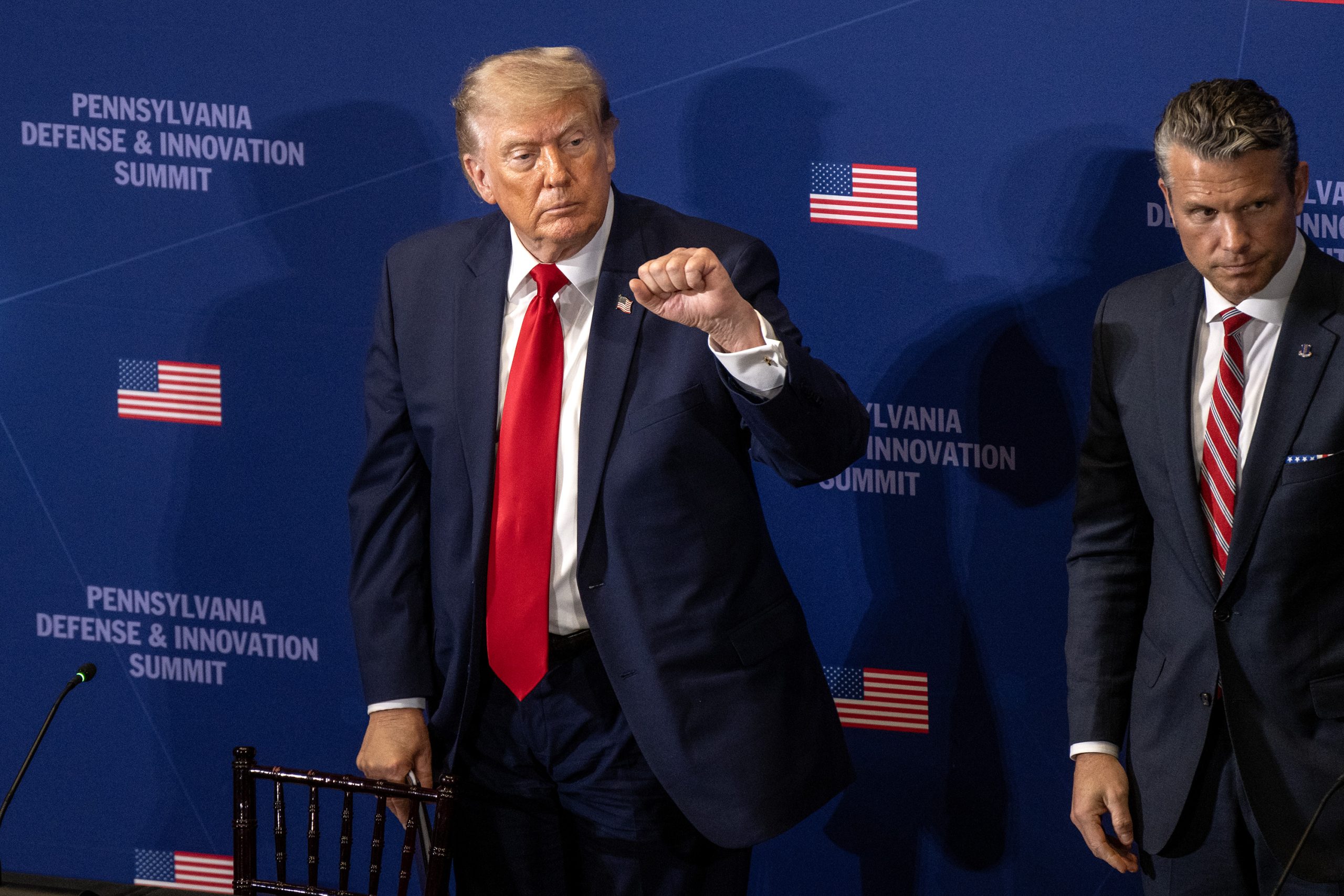
    President Donald Trump and Secretary of Defense Pete Hegseth (right) are on stage at a Defense and Innovation Summit hosted by U.S. Sen. Dave McCormick at the US Army War College in Carlisle Wednesday, July 15, 2026.Tom Gralish / Staff Photographer

    Those jobs include about 2,200 at General Dynamics, a global corporation whose Pennsylvania employees work on everything from sonar and artificial intelligence to submarine defensive systems and electronic warfare, the company’s president, Danny Deep, said while sitting alongside Shapiro.

    Deep referenced the governor’s 2024 visit to the General Dynamics munitions manufacturing plant in Scranton, when Shapiro and Ukrainian President Volodymyr Zelensky signed both empty artillery shells and agreements to work together. Because of the demand during Ukraine’s war with Russia, the company has ramped up its monthly munitions production from 14,000 to 50,000 — a move that Deep said was possible only with help from the state.

    “That’s because of this public-private partnership, and that’s what makes Pennsylvania so special,” he said.
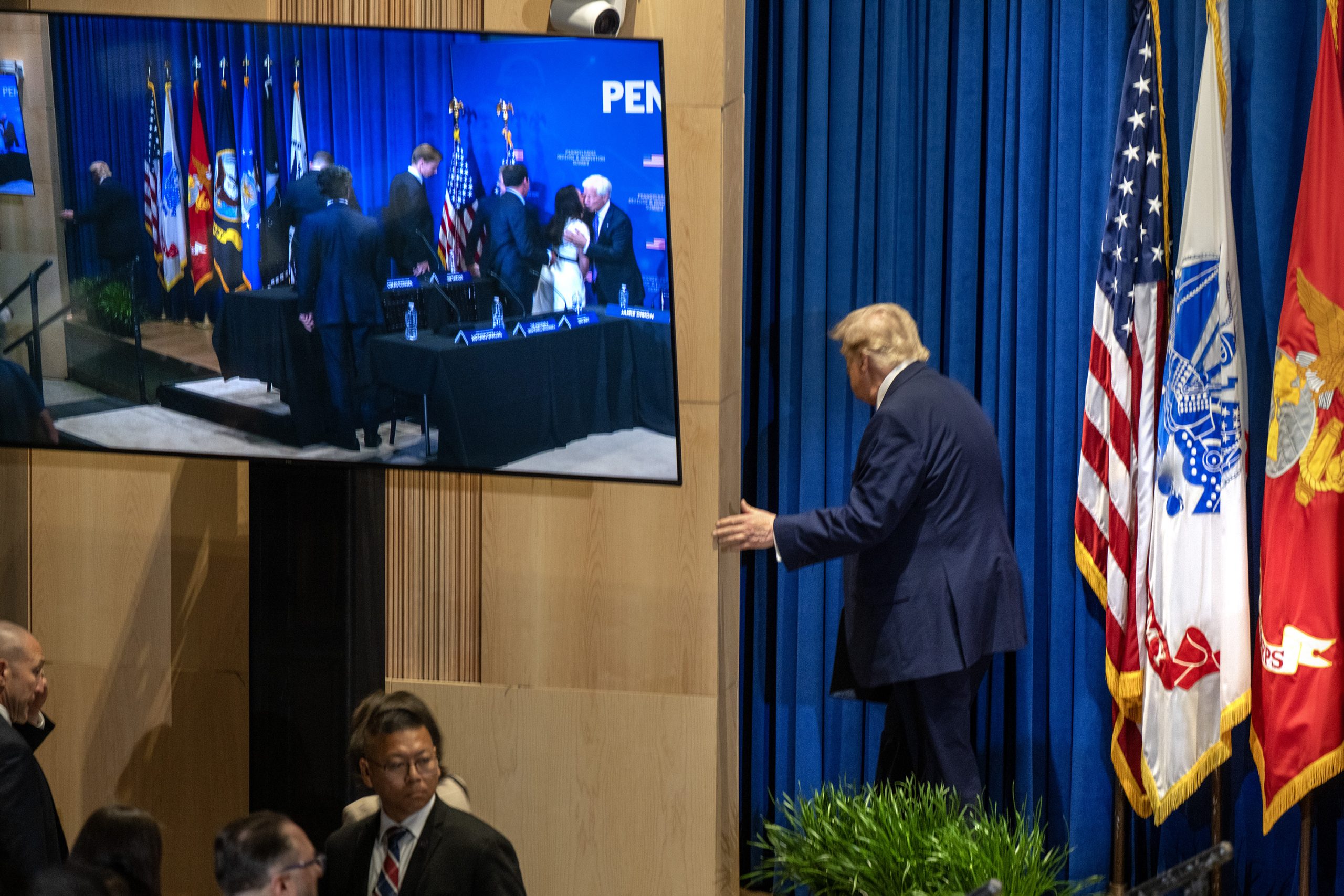
    President Donald Trump leaves the stage at the end of a Defense and Innovation Summit hosted by U.S. Sen. Dave McCormick at the US Army War College in Carlisle Wednesday, July 15, 2026.Tom Gralish / Staff Photographer

    Michael Coulter, president and CEO of Hanwha Defense USA, likewise said on the panel that the cross-party and cross-government support is essential in the company’s continued expansion at the Navy Yard in Philadelphia. The investments announced by McCormick on Wednesday included a federal government order of new ships that was valued at $1.5 billion and supporting more than 2,000 jobs in Philadelphia.

    “We are foot-on-the-throttle to make shipbuilding great again,” Coulter said. “And Pennsylvania’s the heart of that.”

    Staff writer Joseph N. DiStefano contributed to this article.
  • Can child wealth-building programs disrupt cycles of poverty in Philly?

    Can child wealth-building programs disrupt cycles of poverty in Philly?

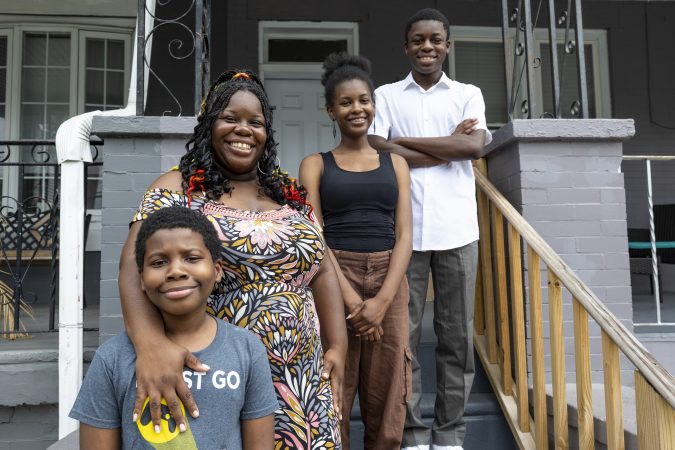
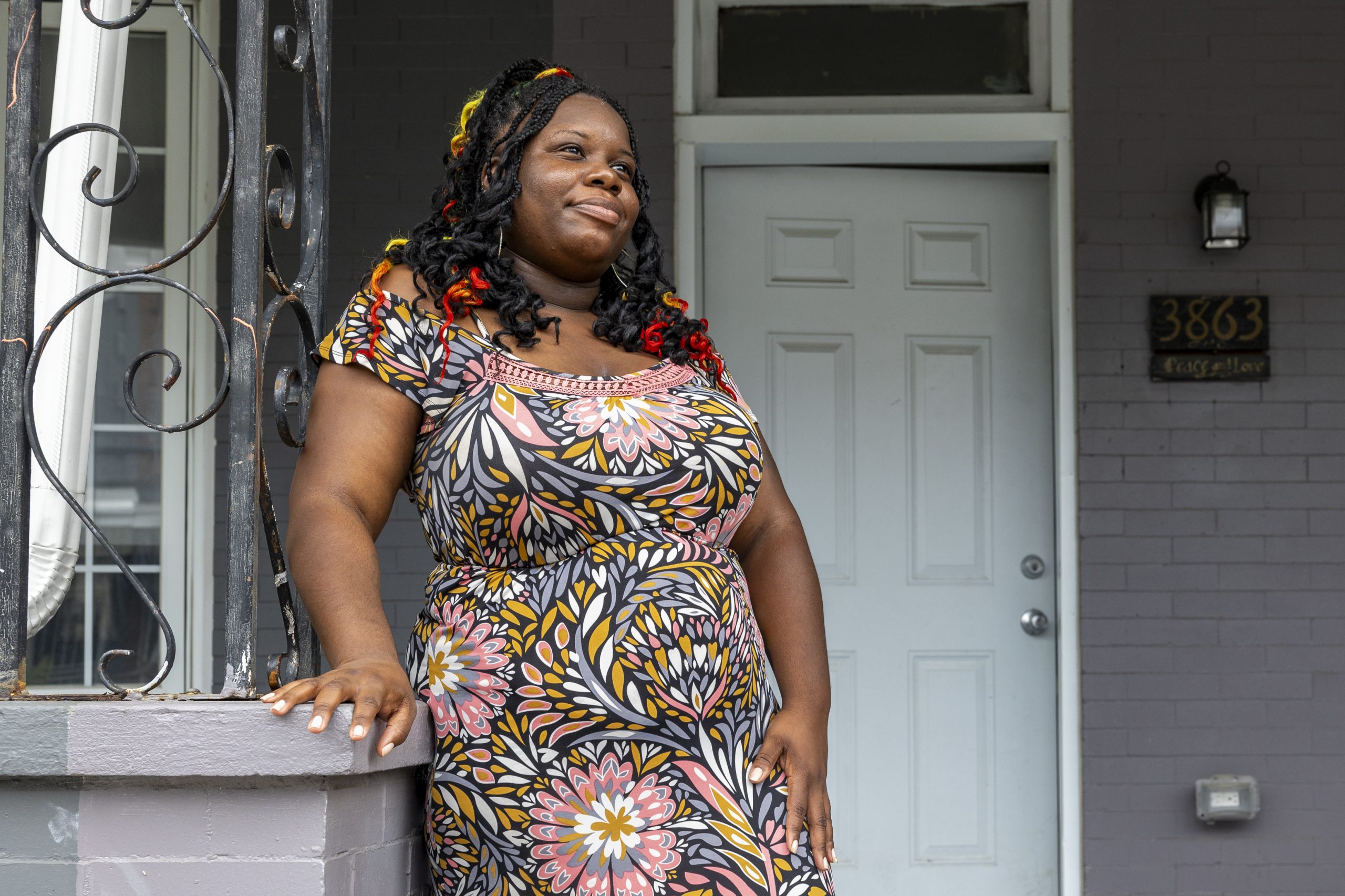
    Michelle “MiMi” Gravley changed addresses frequently during her childhood in the 1990s, but rarely with a moving truck.

    With her belongings in boxes and plastic bags, she would often find herself lodging at others’ houses in rooms her single mother could afford to rent. So it meant the world to Gravley, herself a single mother, last fall when she bought her first house, a rowhouse in North Philadelphia.

    Gravley, 38, is no longer battling housing instability. But she has spent much of her adult life poor, including nearly two decades straight of government assistance, and wants a different fate for her three children. So she’s looking at wealth — specifically her house and her high-yield savings accounts — as something that can help her children avoid poverty as adults.

    “I just want them to be OK,” Gravley told me, referring to her daughter, Buttons, 17, and her sons, Chippy, 14, and Boots, 11. “And when they have their kids, their kids is OK. And just, just breaking up generational curses.”

    Gravley is one of the parents I spoke with recently in the Philadelphia area who wants to help their children build wealth to break the cycle of poverty in their families. Their goal is to bequeath something — whether it be modest savings or a piece of real estate — to help counter the pull of intergenerational poverty.

    They face long odds: Only 16% of children who spend at least half their childhood poor go on to be economically successful, one study found. But there are emerging ideas and policies designed for children that some believe could improve those odds.

    I’ve been a business reporter for more than a decade, with a keen interest in how wealth is built and deployed. I’ve had conversations with people from across the economic spectrum, from workers earning minimum wage to C-suite executives and billionaires. I closely follow developments about wealth and personal finance. And lately, I’ve been noticing growing momentum and innovation around wealth-building policies for children — some of which could impact the children or grandchildren of people like Gravley.

    In my reporting, two relatively new wealth-building programs stand out. The first is baby bonds, which are government-run trust funds designed to benefit poor children. The other program is Trump Accounts, which are private investment accounts available to all children that allow nonprofits, philanthropic groups, and other entities to target contributions at low-income zip codes. Each has its pros and cons.

    Because the creation of baby bonds and Trump Accounts are relatively recent developments (Connecticut approved the first statewide baby bond program in 2021; Trump Accounts were launched this year), there aren’t yet any long-term studies that directly assess their impact on poor populations. But advocates of early wealth accounts, as they are often called, point to supporting evidence from similar initiatives, including Education Savings Accounts. They also argue that structural changes in the economy necessitate a new kind of social contract with America’s young people.

    Of her children’s financial future, MiMi Gravley says, “I just want them to be OK.”Aidan T. Gallo / Staff Photographer

    “Younger generations face economic headwinds that older generations have not — student loans, unaffordability of housing, starting a family, probably declining Social Security benefits,” said Ray Boshara, a senior policy adviser with the Aspen Institute and Washington University in St. Louis who helped design the framing for Trump Accounts and a similar precursor plan by former Sen. Bob Casey, 401Kids.

    He added: “They face a transformed economy. So part of the real purpose of Trump Accounts, I think, is … to give them start-up capital at age 18 to counter these economic headwinds.”

    Gaining steam

    Across the country, efforts rooted in baby bonds or Trump Accounts are either active, forthcoming, or undergoing serious consideration.

    Twenty-two states and the District of Columbia have enacted or are considering some kind of legislation related to baby bonds. Only three jurisdictions have passed them (Connecticut, California, and Washington, D.C.). There are even private-sector baby bonds pilot programs underway.

    The framework for baby bonds was proposed in a 2010 paper by Darrick Hamilton, founding director of the Institute of Race, Power and the Political Economy at the New School, and William Darity Jr., an economist and social scientist at Howard University and Duke University.

    Connecticut launched its CT Baby Bonds program in 2023. It automatically enrolls children whose births are covered by Medicaid. The idea is straightforward enough: When participants turn 18 and complete a financial literacy course, they can claim at least a five-figure sum that can only be used for specified wealth-building activities, such as buying a home or starting a business.

    Trump Accounts, also known as 530A accounts, were signed into law last year and took effect this month. Children who are enrolled in the program by their parents could potentially receive $1,000 from the U.S. government. When the enrollee turns 18, the account becomes a traditional IRA and can be used for a variety of purposes, though the tax consequences are lower if used for postsecondary education, a first home, or retirement.

    Unlike baby bonds, Trump Accounts were not specifically designed for poor children. And one criticism is that wealthier families will likely contribute more than poor families, which would worsen wealth inequality. But what’s notable about them is that they allow third parties such as employers or philanthropists to contribute cash or stock directly to children in low-income neighborhoods.

    For instance, the Dell family pledged funds for every American child in specific zip codes, while the Dalio family and financier Brad Gerstner pledged funds to children in Connecticut and in Indiana, respectively.

    Attention in the Keystone State

    It’s still early, but for now, the idea of helping poor children build a foundation of capital for the future appears to be drawing bipartisan interest. And in Pennsylvania, policymakers have started paying attention.

    “Baby bonds have been a topic of a lot of focus because we all want to make sure that we are creating long-term economic mobility and really breaking the cycles of financial insecurity early,” said State Rep. Morgan Cephas, a Democrat whose district covers West Philadelphia. “So these are some models that we’ve been looking at … and are absolutely looking to do more.”

    State Rep. Martina White, a Republican whose district covers Northeast Philadelphia, said Trump Accounts can be a “great tool for working families” and planned to look further into the concept of baby bonds.

    Her initial preference, she said, would be to model baby bonds like a college endowment, in which the funding source for the program would come from interest or investment earnings, as opposed to directly from taxpayer dollars.

    “I think that the fact that more legislative bodies and governments are looking into ways that we can provide the tools for working families to build their wealth — I think that’s phenomenal, and we should be doing more of that,” White said. “But also helping make sure that government is getting out of the way, too.”

    Democratic State Rep. Morgan Cephas said baby bonds have been a focal point for her party “because we all want to make sure that we are creating long-term economic mobility.”Tom Gralish / Staff Photographer

    Although baby bonds haven’t been proposed in Pennsylvania’s legislature, the state does have an early wealth initiative through its Keystone Scholars program, which puts $100 into an account that Pennsylvania students can use toward their education costs.

    Pennsylvania also passed a law, effective next school year, requiring high school students to take a personal finance course.

    In Philadelphia, there aren’t any initiatives specifically targeting wealth building for children. But there are programs that aim to advance overall wealth access and accumulation. One of the latest is Philly Saves, which, upon implementation, would give workers a way to save for retirement if their current jobs don’t offer retirement plans.

    Last month, Sens. John Fetterman and Dave McCormick made a joint appearance in Nicetown, where they urged parents to sign up for Trump Accounts. Fetterman seemed to anticipate that some listeners might be dubious about the program and presume it is politically partisan because of its name.

    “Do not fall into that political trap,” Fetterman said. “This isn’t some radical thing. … Do this for your child.”

    Even if early wealth initiatives arrive soon in Pennsylvania, it may be too late to have a big impact on older children because the accounts need time to grow.

    For Gravley, that means early wealth policies could impact her children but will likely yield larger sums for her future grandchildren. Gravley said she welcomes them as long as there’s some kind of financial literacy involved.

    “If you give these children … $10,000 with no instructions, good luck with that,” she said. “It has to be instructions with it, but I think it could be a big stepping stone.”

    The case for early wealth building

    Darity, the social scientist who helped conceive the idea for baby bonds, said early wealth accounts will have different maximum outcomes based on their design, even if they each grew at 1% above the inflation rate.

    For instance, the baby bonds plan he coauthored would turn $60,000 into $72,000 over 18 years at that growth rate (no annual contributions allowed). A federal baby bonds plan proposed by New Jersey Sen. Cory Booker ($1,000 deposit; maximum yearly government contributions of $2,000) would grow to about $41,000 at those terms. For Trump Accounts, a $1,000 deposit and maximum yearly private contributions of $5,000 would grow to $100,000 in 18 years.

    While Trump Accounts have the highest growth potential, low-income families who don’t have thousands to contribute annually won’t have “a transformative sum of money at the end of the 18 years,” Darity said.

    Because both programs are still so new, we’re decades away from seeing the results of any long-term studies on the efficacy of baby bonds or Trump Accounts once participants reach adulthood. But research into other programs suggests that external interventions in wealth building can have positive outcomes.

    For instance, a long-term study of Oklahoma’s SEED OK program found that newborns who randomly received $1,000 in state funds had, by age 14, higher educational expectations, greater social-emotional development, and more family-contributed savings for college compared with those who didn’t.

    A 2015 global study of roughly 10,000 households found that asset interventions — like giving impoverished families an income-producing asset, cash assistance, and skills training — had positive economic outcomes well after the program stopped.

    Those findings are part of a growing body of evidence from other asset-building experiments that “already points in a consistent direction,” said William Elliott, founding director of the Center on Assets, Education, and Inclusion at the University of Michigan.

    That direction, Elliott said, indicates that early wealth accounts should be a pillar of a new social contract with Americans — especially in an age when higher education debt can stall wealth creation.

    “The current policy setup strongly favors those who already have wealth,” Elliott said. “And so you don’t have meritocracy happening. To get there, you can’t just give [people] a job anymore, because there’s a gap between wages and productivity. You also have to give them some wealth to make their effort and ability pay off.”

    During an appearance in Nicetown with Sen. Dave McCormick, Sen. John Fetterman urged parents to sign up for child wealth-building accounts.Tom Gralish / Staff Photographer

    The landscape in Philadelphia

    There are more than 300,000 Philadelphians living below the poverty line, according to Pew Charitable Trusts — that translates to about $33,000 annually for a family of four. While the poverty rate here has declined to 19.7% from 26% over the past decade, Philadelphia still has the second-highest poverty rate among large U.S. cities.

    Other figures show the prevalence of low-income households in our city.

    About 44% of full-time workers in the Philadelphia region earned enough for a living wage for their family size in 2025, down from nearly 55% in 2021. The living wage for a single adult with no children in Philadelphia is $23.34 per hour, or about $48,500 a year, according to the Living Wage Institute.

    Gravley, the only worker in her household of four, makes about $40,000 annually.

    Raising Pennsylvania’s minimum wage above $7.25 may help workers locally; all of the commonwealth’s neighboring states have higher wage floors. But it could also be untenable for some small businesses.

    For Gravley, her home is an asset that could help her family long term, but there’s little it can do to improve her economic prospects today. Despite holding three degrees — an associate in culinary arts, an associate in early childhood education, and a bachelor’s degree in leadership and organizational change — she still regularly grapples with the challenge of making ends meet.

    As a program coordinator at Strawberry Mansion High School, Gravley said her expenses are usually about $2,200 per month, which means she typically has about $100 per month for the high-yield savings accounts she manages for herself and her children.

    At one point she invested in the stock market but pulled out because she didn’t understand it.

    It’s been this way for more than a decade for Gravley. As a recipient of Supplemental Nutrition Assistance Program and Medicaid benefits, she is making enough to cover needs, but financial security and financial growth for her family appear largely out of reach.

    “[Welfare] helps, but it’s nothing programmed to get me out of the food stamp thing. Because you tell me to get the degrees and get the better job, and I’m trying to do that, or I did that, and it’s still not enough money. So where is the money?”

    Jared Council is a business journalist based in Philadelphia. He was part of a team at the Wall Street Journal recognized as a finalist for the 2022 Pulitzer Prize in explanatory reporting for a series about the 1921 Tulsa Massacre. He is currently a program manager at Every Voice, Every Vote, a civic information and engagement program at the Lenfest Institute for Journalism.

    The Inquirer is one of two dozen news organizations powering the Philadelphia Journalism Collaborative. Follow us at @PHLJournoCollab. This article is part of a national initiative exploring how geography, policy, and local conditions influence access to opportunity. Find more stories at economicopportunitylab.com.

  • Democrat John Fetterman launches cross-aisle fundraising committee with Republican Dave McCormick

    Democrat John Fetterman launches cross-aisle fundraising committee with Republican Dave McCormick

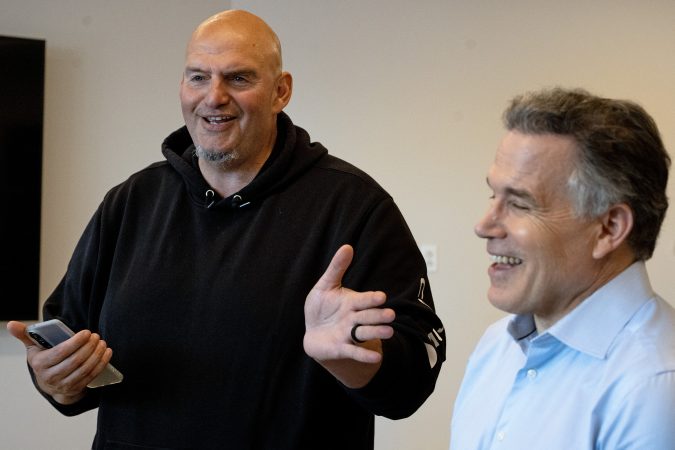
    In a rare move, Pennsylvania’s two senators have created a joint fundraising committee that would allow them to split money from donors who want to give to both of their campaigns, despite being members of different parties.

    Democratic Sen. John Fetterman’s decision to join Republican Sen. Dave McCormick in the fundraising collaboration comes as he has repeatedly dismissed speculation that he could switch parties after siding with Republicans on several key votes.

    As polls have shown him losing support among Democratic voters, he has also reported raising significantly fewer campaign funds on his own and has not said if he will run for a second term in 2028.

    Common Ground PA, which filed paperwork with the Federal Election Commission Monday, lists four beneficiaries for the joint fund: Fetterman for PA; Friends of Dave McCormick; Every Vote PAC, which lists Fetterman as the PAC sponsor; and Pennsylvania Honor, which lists McCormick as the leadership PAC sponsor.

    A joint fundraising committee, first enabled by the FEC in 1977, allows two or more candidates, PACs, or party committees to coordinate fundraising efforts to share donations and expenses.

    A donor can abide by federal contribution limits while still giving one check that can be allocated to multiple campaigns. But since these groups typically involve party committees, it is rare for these joint ventures to be bipartisan.

    Katie Terry, who is listed as the treasurer for Team McCormick, is also the treasurer for Common Ground PA. She did not respond to a request from The Inquirer for comment.

    Mike DeVanney, a spokesperson for McCormick’s campaign, called the PAC a donor-driven effort.

    “This group of donors value the collaboration exhibited by Senators McCormick and Fetterman for Pennsylvania and want to support both of them,” he said in a statement.

    The joint fundraising committee was first reported by Politico.

    The two senators have spoken often about their cross-aisle friendship since McCormick took office in 2025, and they have repeatedly teamed up in recent months.

    They appeared alongside each other last week in Philadelphia to promote Trump Accounts, the new federally backed savings accounts for kids that became law with President Donald Trump’s signature One Big Beautiful Bill Act.

    And they joined forces to fill Pennsylvania’s empty spot at the Great American State Fair in Washington after Gov. Josh Shapiro said state officials could not find a Pennsylvania business to sponsor the state’s booth.

    Fetterman has routinely criticized his own party, feuding with progressives on a range of issues, including Israel and immigration enforcement.

    In a fundraising email sent in May, McCormick referred to Fetterman as one of his “closest working partners,” a realization that he said surprised even him.

    In that drive, which asked donors to support his efforts to “work across the aisle to get results for the people of Pennsylvania,” McCormick praised his Democratic colleague.

    “Senator John Fetterman and I couldn’t look more different. We don’t agree on everything. But we both grew up in Pennsylvania. We both know what it means to fight for working families who feel like Washington forgot them. And we both refuse to let politics get in the way of getting things done,” he wrote.

    McCormick told reporters in May his friendship with Fetterman is the most frequent topic of conversation he hears, and he gets positive feedback from it.

    “We look for ways to work together. I think people want that,” he said.

    Individuals could donate to Fetterman or McCormick separately. But joint fundraising committees, which are used widely by both parties, pull in large checks from donors and split the money across multiple committees using a formula that adheres to federal contribution limits, according to an analysis from the watchdog group OpenSecrets.

    Typically, though, campaigns jointly fundraise with their party.

    Common Ground PA is among the few coordinated efforts across the aisle. A former PAC, the Problem Solvers Patriots, raised funds for members of both parties in previous election cycles.

    Fetterman, who polls poorly with Pennsylvania Democrats, is likely to face a primary challenge if he runs for another term.

    Former U.S. Rep. Conor Lamb, who lost the Senate primary to Fetterman in 2022 and has not ruled out a run in 2028, blasted the move online as “Another betrayal from Fetterman.”

    U.S. Rep. Chris Deluzio, a Western Pennsylvania Democrat who says he has received “a lot of encouragement” to run for Fetterman’s seat, also questioned the creation of the PAC.

    “Helping the Republicans raise money to spend against Democrats is bad, right?” Deluzio said on X.

    However, Fetterman has been notching strong approval from Republicans, and Pennsylvania Republicans along with Trump himself said he could receive GOP support if he switched parties.

    Fetterman’s Republican support has also been growing at the bank with contributions from prominent GOP donors, particularly through his other joint fundraising committee and leadership PAC. At the same time, his fundraising has plummeted overall, raising less than half his previous annual totals in 2025.

    Staff writers Gillian McGoldrick and Sam Janesch contributed to this article.

  • I visited the Great American State Fair on the National Mall in D.C. It wasn’t great.

    WASHINGTON — It was blisteringly hot when I showed up at President Donald Trump’s much-ballyhooed Great American State Fair on the National Mall in honor of the nation’s 250th birthday.

    As I headed off to check in as a member of the media, a friend who’d accompanied me decided to wait at a lemonade stand.

    At first, I was a little concerned, wondering how I was ever going to find her. A lemonade stand on the National Mall in Washington, D.C., was bound to be mobbed on a scorcher of a day like the one we had on Monday.

    I needn’t have worried. It wasn’t that kind of party. Crowds were so thin that I quickly spotted her standing alone and eating a snow cone that cost a whopping $8. “Even on a hot day, there was no line at the lemonade stand,” pointed out my friend, Pamela Thomas of Pathfinders Travel, who had taken the train from Philadelphia with me.

    That should give you a pretty good idea of how it was at the so-called Great American State Fair, brought to us by Freedom 250, an organization created by President Donald Trump.

    Low crowds.

    High food prices.

    Lots of walking.

    The Great American State Fair was downright boring.

    Oh, there was an 110-foot Ferris wheel borrowed from the Smithsonian Institution. I watched people stand unsheltered under the blazing sun as they waited for their turn. But that’s the only carnival ride I saw.

    This wasn’t like any state fair I’d ever attended. Where was the merry-go-round? Where was the roller coaster? The cotton candy? The local beauty queens? The fair could use a quilting demonstration and band performances. I saw only one cornhole game.

    The so-called Great American State Fair needs a whole lot more fun and a whole lot less Trump.

    There wasn’t much for children to do besides have souvenir replicas of their new Trump passports stamped.

    I managed to find some shade while sitting on a folding chair inside an area called David’s Tent. As I cooled off, I listened to a woman onstage sing religious songs. Behind me was an aboveground swimming pool set up, ostensibly, for on-the-spot baptisms. In the spirit of inclusivity, there was also a candle-filled menorah positioned in the front of the tent.

    At one point, we made our way over to the Hawaii booth. Inside, all we saw was a large mural of the Aloha State that included a picture of former President Barack Obama that someone had defaced.

    A smiling woman offered to stamp our “passports.” There was nothing else going on in that booth. Not a flowered lei or macadamia nut in sight. No hula dance demonstration. No ukulele performance.

    Same thing with the neighboring Alaska booth.

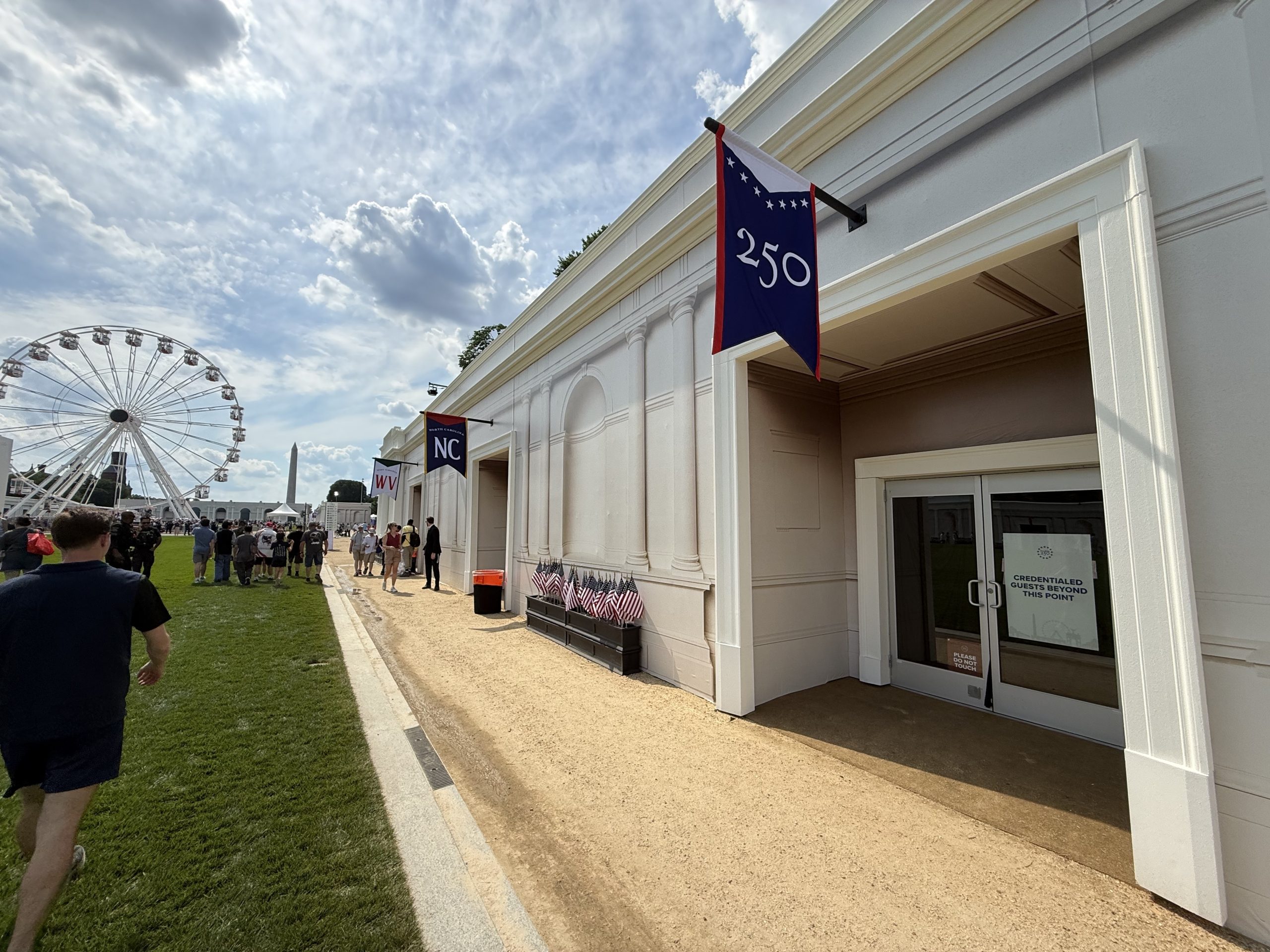
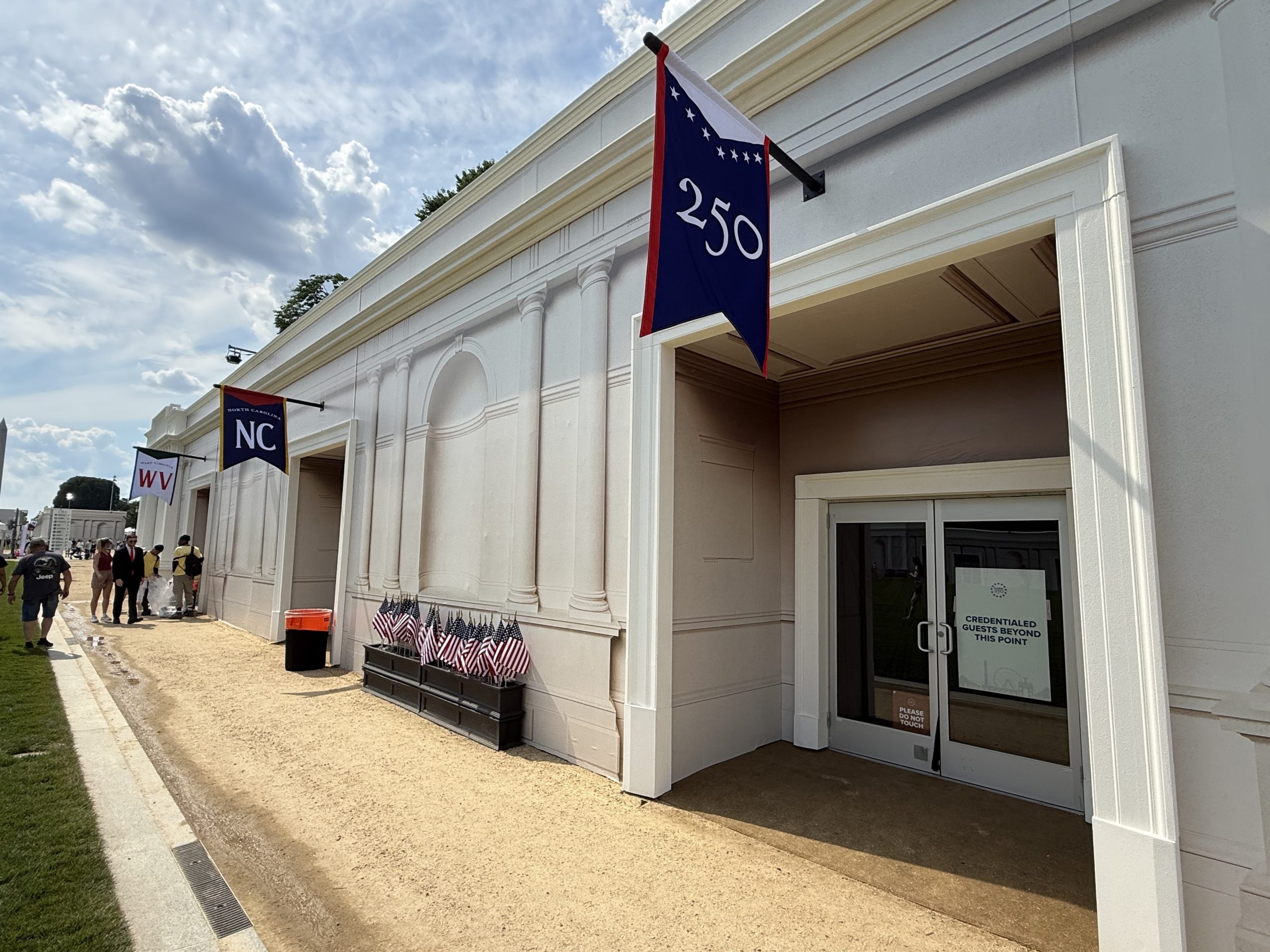
    I made a point of checking out the North Carolina booth, which had been criticized for having images of Confederate flags on display on TV monitors. This one was a bit more inviting, with its colorful NASCAR displays. I didn’t see anything resembling a rebel flag — but I did see a bale of cotton just sitting on the floor, which can be seen as offensive because of its slavery connotations. The setup had been organized by private donors. One company, Mt. Olive Pickles, has since pulled out of the fair.

    The D.C. booth had some upbeat music playing, a fake cherry blossom tree, and a giant map of the mall that attendees stuck pins into to represent where they lived. “No go-go music?” I asked an attendant, who assured me that some was in the playlist.

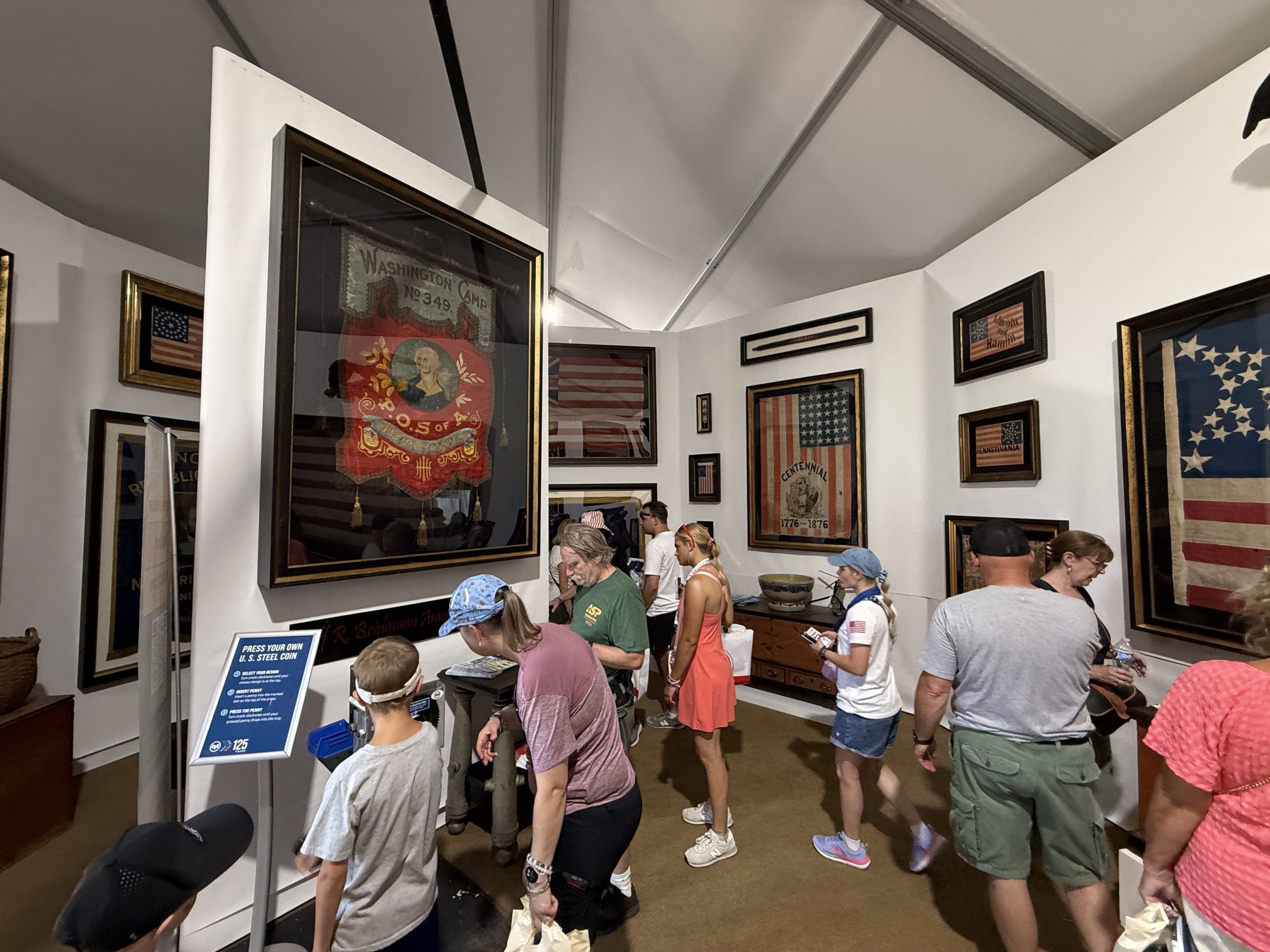
    Pennsylvania’s pavilion showcases state history and memorabilia at the Great American State Fair on June 30 in Washington, D.C.Sam Janesch / Staff

    Pennsylvania had initially opted out of participating, but its booth opened the day after I was there, funded by private sponsors and pulled together by U.S. Sens. Dave McCormick (R., Pa.) and John Fetterman (D., Pa.) after Gov. Josh Shapiro passed on participating.

    Cape May County, a Republican stronghold, sponsored the New Jersey booth and brought in an impressive-looking eight-foot sand castle. But I noticed one small red plastic bucket of saltwater taffy that a kid was rummaging through. For an area as rich and diverse as the Garden State, the display felt incomplete.

    Soon, I had had enough.

    We stopped by the media table again on our way out and asked about what was on the schedule for later. The answer? A rodeo demonstration at 7 p.m. That was it.

    I was stunned. America deserved more and better for its 250th birthday celebration.

    So, if you decide to go experience the Great American State Fair before it is dismantled on July 10, don’t say I didn’t warn you.

  • As Congress comes to Philadelphia, Josh Shapiro takes center stage in America 250 celebrations

    As Congress comes to Philadelphia, Josh Shapiro takes center stage in America 250 celebrations

    Pennsylvania Gov. Josh Shapiro has a message for members of Congress when they convene at Independence Hall in Philadelphia on Thursday:

    This is the birthplace of democracy, and with it, comes the responsibilities that America’s founders left behind.

    “The founders made clear that we have a real responsibility to do the work to constantly perfect our union,” Shapiro said in an interview this week, ahead of his speech before the ceremonial meeting of Congress, marking 250 years since the Declaration of Independence was signed in that same building. “And that the Congress of the United States has a unique responsibility in that to be a check on the executive branch.”

    Those words come at a critical inflection point in America’s history, amid a tumultuous presidency, and as Shapiro is rumored to have aspirations of a White House bid in 2028. The first-term Democratic governor will appear before approximately 40 bipartisan members of Congress in Old City at the event convened by U.S. Rep. Brendan Boyle (D., Pa.), speaking to the lawmakers from across the country about their collective duty to the public. Shapiro will attend numerous other 250th celebrations across Philadelphia in the coming days, during which he said he plans to share his optimism for America’s future and deep concerns that President Donald Trump has led the nation astray from its founders’ design.

    “I don’t think patriotism belongs to one party. I don’t think it should ever be partisan,” Shapiro said. “Unfortunately, Donald Trump routinely divides us, routinely injects partisanship into his definition of patriotism, and his actions, in many ways, are the opposite of patriotism.”

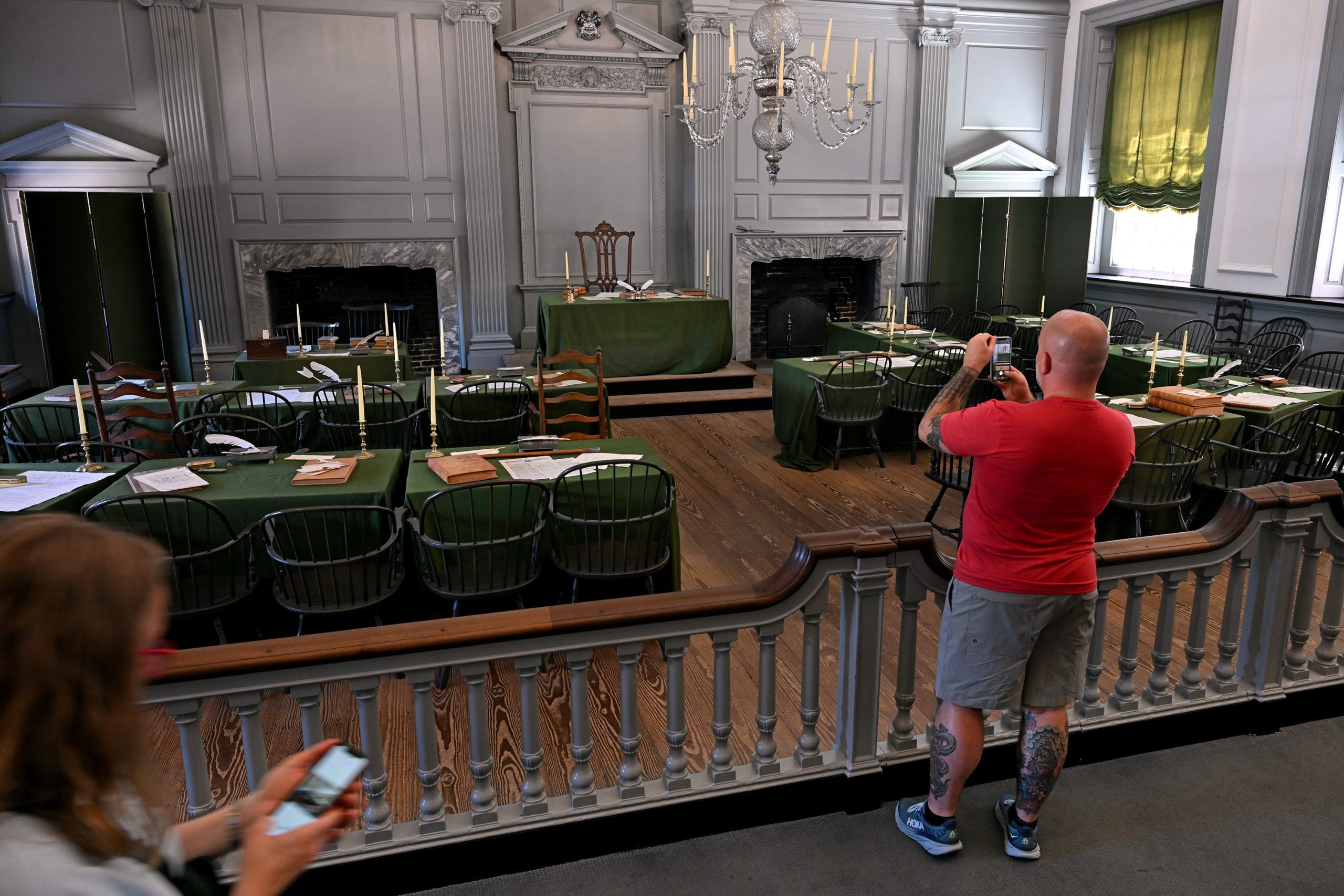
    Assembly Room in Independence Hall (Pennsylvania State House) Monday, June 15, 2026. This is the exact space where the Second Continental Congress met and the Declaration of Independence was adopted.Tom Gralish / Staff Photographer

    As Trump plans to spend America’s 250th birthday hosting a political rally on the National Mall — with no plans to visit Philadelphia, the city where the nation was founded — Shapiro sees his own role as a unifier, and in direct contrast to Trump. As attention shifts to Philadelphia this weekend, he’ll appear on the national stage from sunup to sundown at events and on frequent TV hits — all with a home-turf advantage for his 2028 presidential prospects, as the governor of the nation’s quintessential swing state and also most important to the country’s founding.

    “[Celebrating the 250th] allow the spotlight to shine on Shapiro, even though it’s not entirely about him,” said Alison Dagnes, a political-science professor at Shippensburg University. “Do I think that helps his ambitions? Sure.”

    ‘Direct contrast’

    Sitting with Shapiro in his Harrisburg office earlier this week, it’s undeniable that he’s a history nerd — another reason why he was built for the moment.

    He casually quotes segments of The Federalist Papers, and references his favorite story about Benjamin Franklin‘s fixation on a half-sun on the back of George Washington’s chair during the 1787 Constitutional Convention, which Franklin remarked during the U.S. Constitution signing that “it is a rising and not setting sun.” Without having to look for its location, he points to his right to a portrait of Franklin, one of his predecessors as governor of Pennsylvania, hanging on his office wall. He notes lesser-known Pennsylvanians who played an important role in the nation’s founding whom he plans to highlight over the coming days.

    “You know, I hate to quote a guy not from Pennsylvania,” Shapiro said, returning to The Federalist Papers to recite James Madison’s concerns about giving an executive too much power.

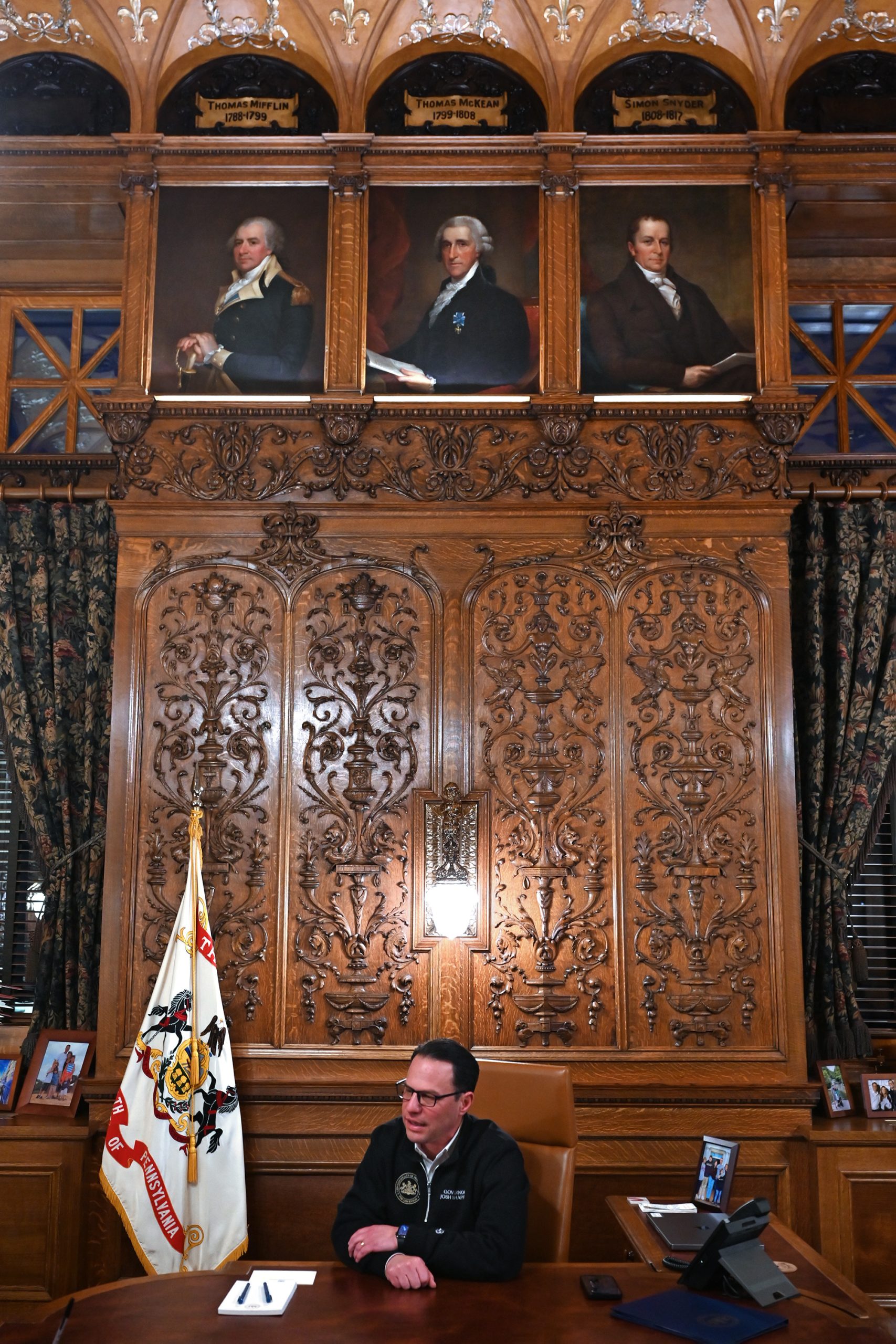
    Gov. Josh Shapiro in the Capitol in Harrisburg Feb. 21, 2023.Tom Gralish / Staff Photographer

    “If Madison were here today, he’d be really concerned about how one man has accumulated so much power and is wielding it in really dangerous ways, and I hope that at this 250-year mark we find our way back to that balance and back to the constraints on the people who lead our government,” he said.

    Shapiro sees his leadership style as a “direct contrast” to Trump’s, especially at this moment.

    “[Trump] restricts peoples’ freedom and liberties,” the governor added. “He whitewashes our history. That doesn’t further a sense of community, that doesn’t further patriotism. All that does is divide us, and I refuse to participate in that.”

    But for the next few days, Shapiro said his approach to the 250th celebrations is to: “Celebrate America, find ways to bring people together, and to have some fun in the process.”

    Fair games

    Despite his overtures of political unity, Shapiro has faced accusations from Republicans in recent days for playing partisan games over Pennsylvania’s participation in Trump’s 16-day Great American State Fair. Shapiro, in addition to several other Democratic governors last week, announced that Pennsylvania would not take part in the fair due to his administration being unable to secure any state businesses to sponsor the exhibit. Staffing and sponsoring the exhibit on the state’s dime would have cost $700,000 that would be better spent on in-state 250th events, he said this week.

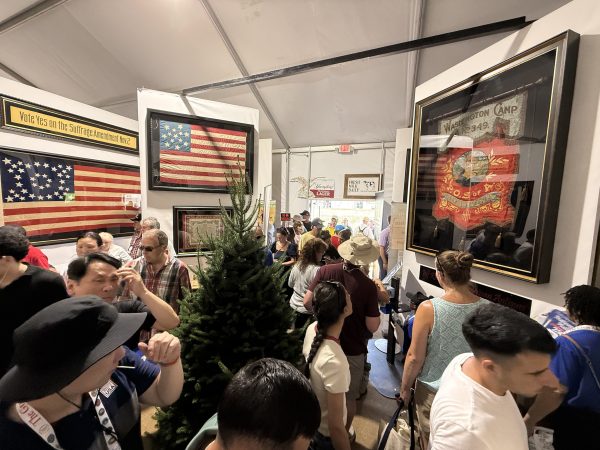
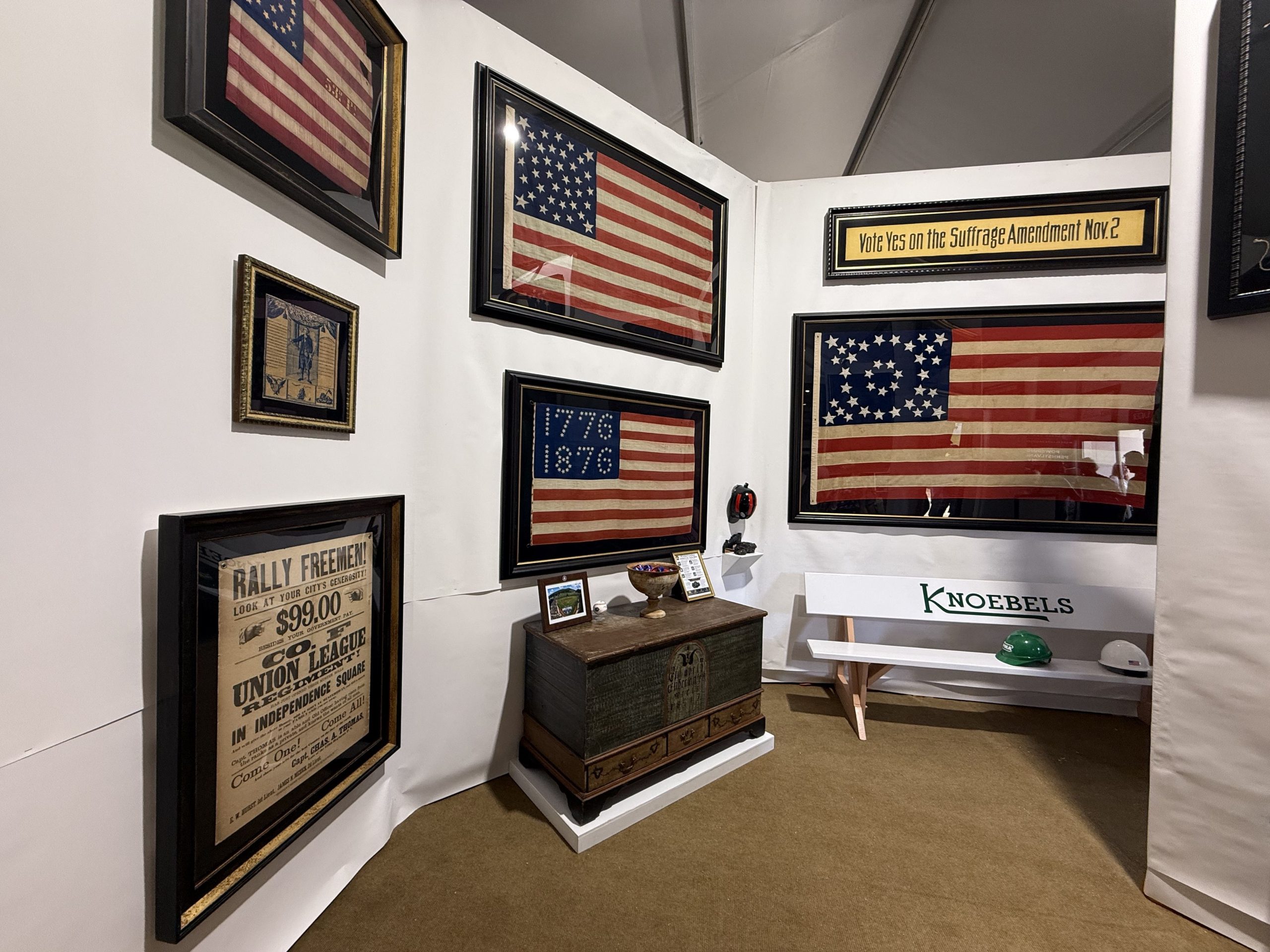
    In the weekend that followed, Pennsylvania’s U.S. senators, Republican Dave McCormick and Democrat John Fetterman, made a push to fill the state’s empty exhibit. By Tuesday, it was filled with antique flags lent by a York County man, bags of potato chips from Snyder County, and a Christmas tree display from Fayette County, among other Pennsylvania-centric items.

    Pennsylvania’s pavilion showcases state history and memorabilia at the Great American State Fair on June 30, 2026, in Washington, D.C.Sam Janesch / Staff

    Some of the businesses originally told Shapiro’s office they didn’t have enough time to participate. But when McCormick and Fetterman approached them with the idea to fill the empty pavilion, they joined in.

    “They obviously had a change of heart at the last minute. That’s fine,” Shapiro said about the revived Pennsylvania pavilion.

    State Treasurer Stacy Garrity — Shapiro’s Republican challenger for governor, who has aligned herself with Trump — in a statement called Shapiro the “only career politician who has politicized America 250.”

    “Josh Shapiro put his political ambitions above his commonwealth and his nation when he pulled Pennsylvania out of the national celebration of our 250th birthday in a pitiful attempt to score cheap political points with the liberal wing of his party,” Garrity said.

    Beyond the 250th

    Shapiro’s strength as a politician has always been his ability to appear “harmonizing” and bringing people together, dating back to his days as a Montgomery County commissioner, Dagnes said.

    A careful politician, Shapiro is known to stick to his message and has faced criticism from some fellow Democrats for his well-rehearsed statements.

    When Shapiro delivers his messages of unity and freedom to a broader audience in the coming days, voters are likely to view them as authentic — one of the most important qualities to any presidential hopeful, she added.

    “If [California Gov.] Gavin Newsom is the guy who’s gonna punch Trump in the face, then Shapiro is going to be the guy who’s like, ‘No, let me offer you an alternative,’” Dagnes said.

    “It’s what he should be doing right now, because this is what America is about,” she added.

  • Chips, a Christmas tree, and the Liberty Bell: Here’s what’s inside Pennsylvania’s new showcase at the Great American State Fair

    Chips, a Christmas tree, and the Liberty Bell: Here’s what’s inside Pennsylvania’s new showcase at the Great American State Fair

    WASHINGTON — A replica Liberty Bell, a Knoebels amusement park bench, hundreds of bags of potato chips, and dozens of sweating tourists packed into Pennsylvania’s location at President Donald Trump’s Great American State Fair on Tuesday — a stark turnaround from when the signature 250th anniversary event opened in Washington last week without a Keystone State presence.

    Pennsylvania was one of the few Democratic-led states that — describing the two-week fair as too partisan — had either decided not to participate or failed to find another host to showcase local history and memorabilia.

    The interest, Gov. Josh Shapiro said at the time, was just not there.

    But after a weekend-long sprint initiated by U.S. Sens. Dave McCormick (R., Pa.) and John Fetterman (D., Pa.) to dredge up that interest, Pennsylvania’s pavilion opened Tuesday with nearly every inch of the space filled.

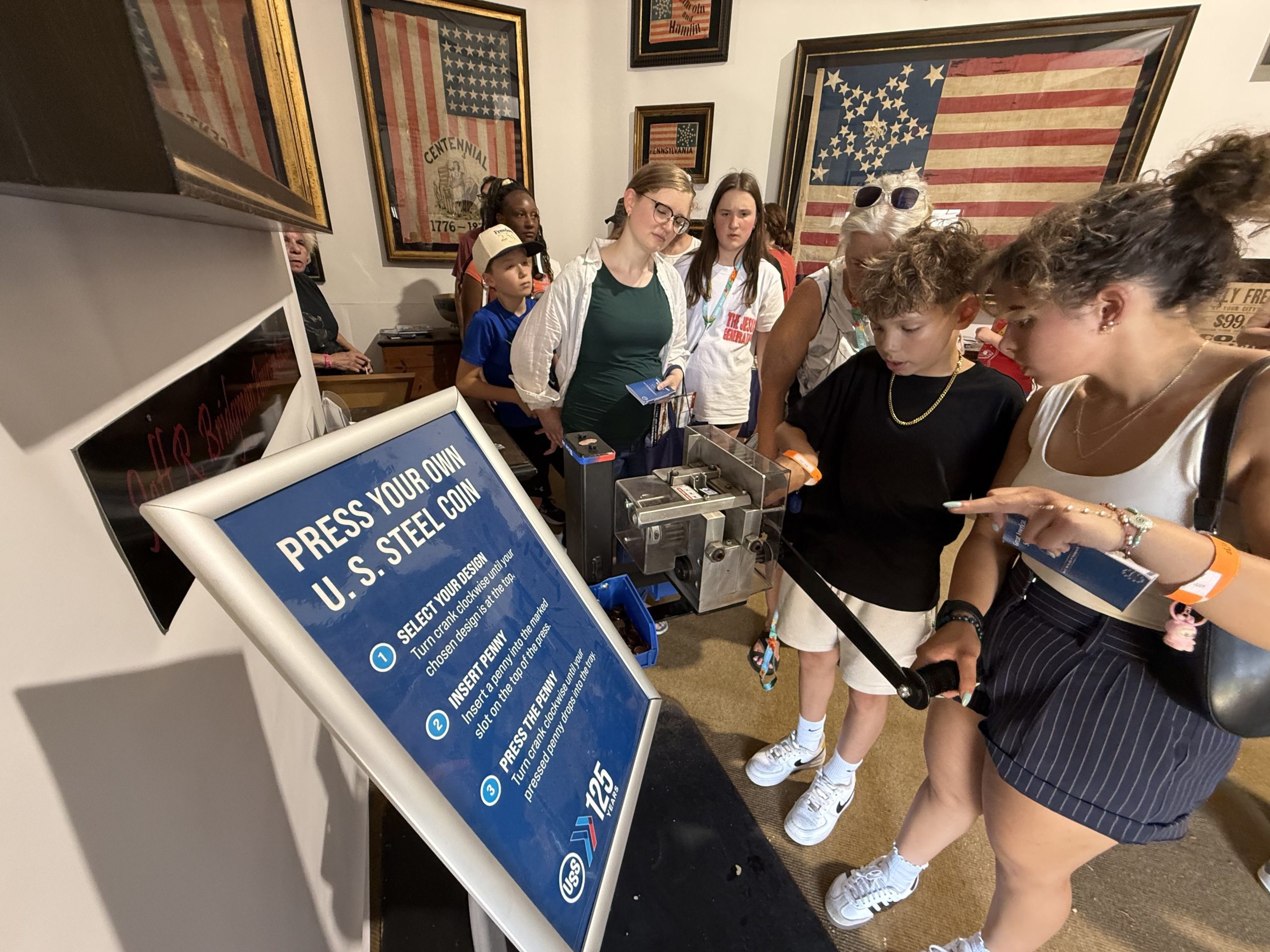
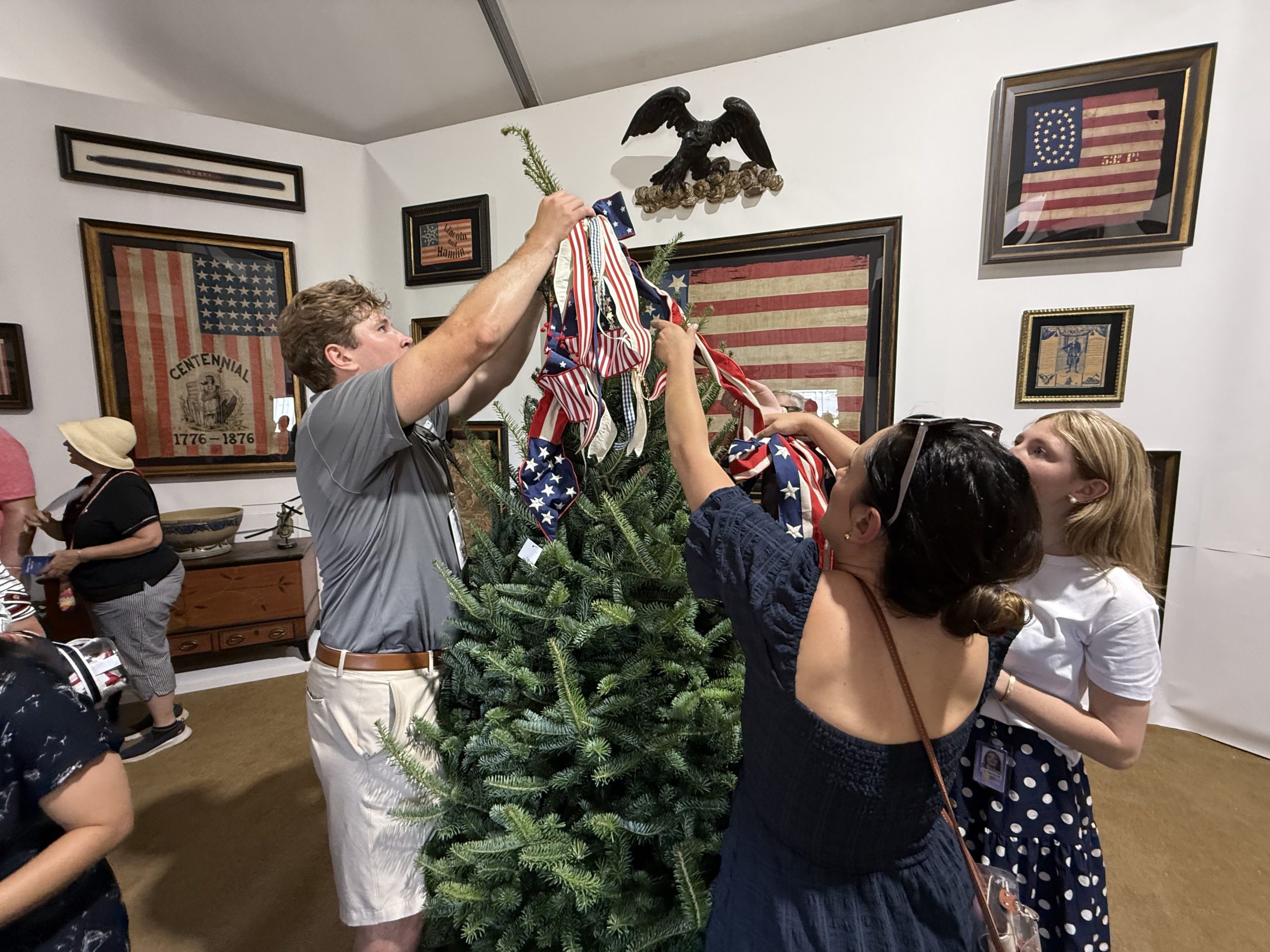
    The walls were covered by antique flags and signs lent by York County’s Jeff R. Bridgman Antiques. Children stood in line for a U.S. Steel penny-press machine, grabbed bags of Middleswarth chips made in Snyder County, and Crayola crayons from Easton. (Additional chip donations from Utz and Martin’s will be arriving soon.)

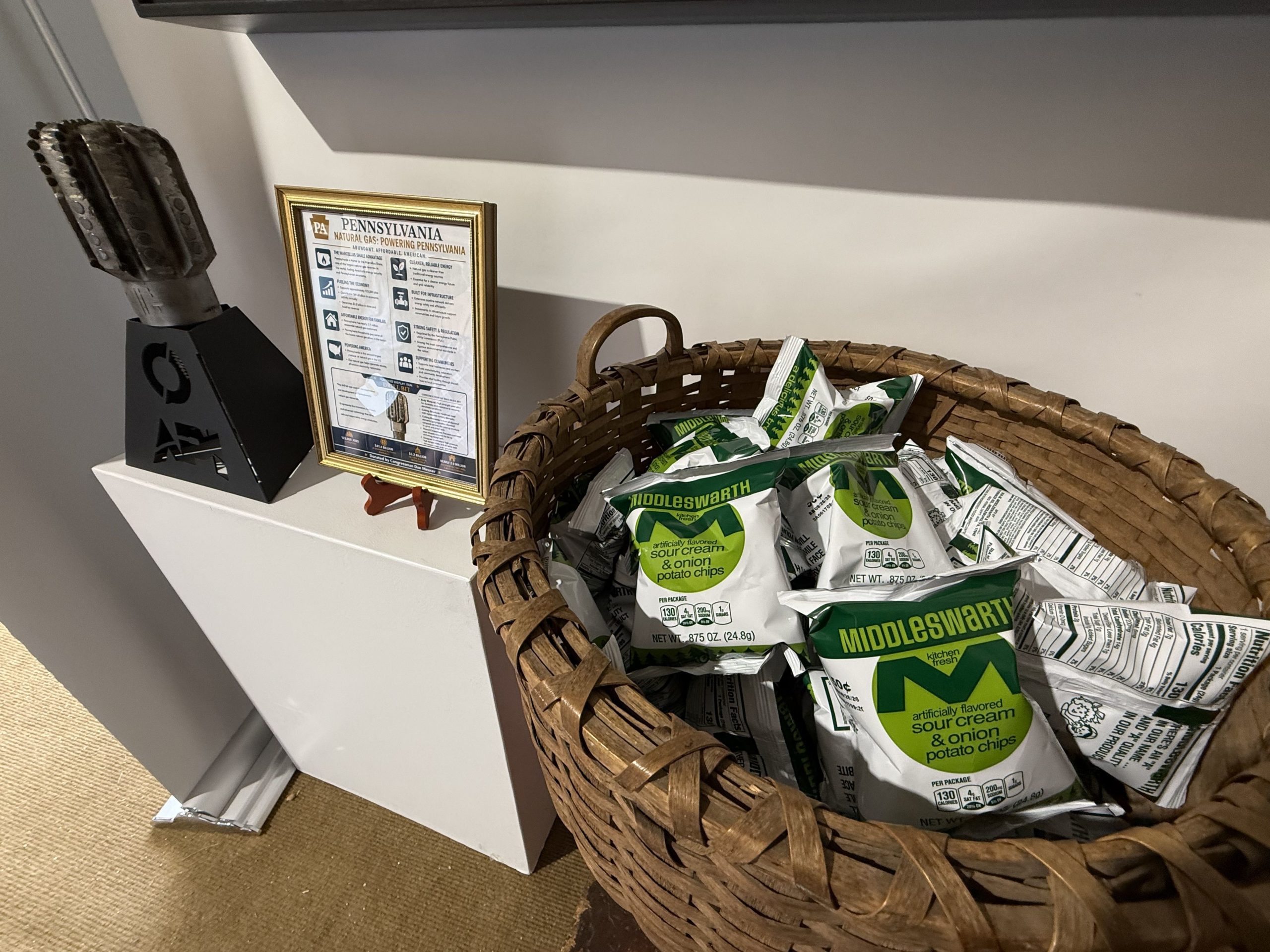
    Tourists collected pamphlets about Gettysburg and the Pennsylvania Farm Bureau. They took pictures of anthracite coal and a drill bit used for fracking, both of which were on loan from U.S. Rep. Dan Meuser (R., Luzerne).

    Pennsylvania’s pavilion showcases a natural gas drill bit and Middleswarth chips at the Great American State Fair on June 30, 2026, in Washington, D.C.Sam Janesch / Staff

    “I always look for an opportunity to highlight our industry,” Beth Ann Bossio, a Christmas tree farmer from Fayette County, said after driving three and a half hours to drop off a tree to display in the center of the space.

    Pennsylvania is one of the largest producers of Christmas trees, and Bossio said it was important to her that both the state and its farmers were represented at the fair.

    Beth Ann Bossio (front center), a Christmas tree farmer from Fayette County, helps staff from U.S. Sen. Dave McCormick’s office set up a tree she brought for Pennsylvania’s pavilion at the Great American State Fair on June 30, 2026, in Washington, D.C.Sam Janesch / Staff

    “That was my vision to come here, to make sure that Pa. is being reflected of what we are, and what we represent,” she said before tying an American flag-themed bow on the tree. “Farmers are very proud of that. We’re patriotic. We take pride in our land and how we steward it.”

    The packed room on the National Mall came together in a rush in recent days, after Shapiro joined Democratic governors from other states in declining to use state resources to create and staff a pavilion, which his office said would have run a tab of “hundreds of thousands of taxpayer dollars.”

    He also said his administration’s search for another Pennsylvania host came up short. No companies or other kinds of groups were interested, he said, even as businesses and local governments stepped up to fill the spaces in other states.

    While Shapiro last week blamed the lack of interest on the president’s polarizing impact on the 250th celebrations, he said in an interview Tuesday with The Inquirer that it “was never a political exercise. This was an exercise in practicality.”

    Shapiro said Pennsylvania’s pavilion would have cost the state $700,000, all of which was money he saw better spent on the major events happening in Pennsylvania this year, including the NFL Draft, PGA Championship, MLB All-Star Game, the ongoing World Cup games, and a number of events across the state for the nation’s 250th birthday.

    “My focus is on spending the taxpayer dollars here,” he said.

    His administration spent two or three weeks reaching out to businesses and to the Pennsylvania Chamber asking them if they wanted to participate. None of them did, Shapiro said.

    “They obviously had a change of heart at the last minute. That’s fine,” Shapiro said about the revived Pennsylvania pavilion.

    Organizing the booth in Shapiro’s place were the state’s two senators, a bipartisan duo who have often worked together.

    McCormick and Fetterman withheld any direct criticisms of Shapiro while talking about their effort, though Fetterman has clashed with the governor in the past and has also repeatedly broken Democratic ranks to support Republican-led efforts.

    McCormick said he understood Shapiro’s desire not to spend taxpayer money, but when he found out there would be nothing to represent the state that is “the center of America’s history,” he sprang into action.

    The freshman Republican said he and Fetterman spoke Saturday morning and quickly made calls to the Pennsylvania Chamber of Business and Industry, the Pennsylvania Farm Bureau, and individual businesses to donate time and resources.

    “It’s just inconceivable that we wouldn’t have a booth that would represent all that Pennsylvania had to offer,” said McCormick, whose staff greeted guests at the pavilion all day Tuesday.

    Fetterman, who has said Pennsylvania’s role as a purple state means he should consistently work across the aisle, said he was proud to work with McCormick on the effort.

    “America’s turning 250 years old,” Fetterman said alongside McCormick during an appearance in Philadelphia on Monday. “Can’t we all just celebrate that and not just find new ways to fight about the politics and the dynamic right now?”

    McCormick’s office listed 23 companies or groups that signed up to help, though only a few corporate sponsors were front and center in the space.

    Two large signs showcase the Marcellus Shale Coalition, a natural gas advocacy group that has a significant lobbying presence in Harrisburg. And U.S. Steel, the Pittsburgh-based company that benefited from a Trump-approved takeover by a Japanese-owned company last year, offered the penny press and colorful wristbands reading “forging the future.” Hats and signage commemorating Yuengling and Mack Trucks were lent from the Pennsylvania Manufacturers’ Association.

    Tourists use a U.S. Steel penny-press machine on display at Pennsylvania’s pavilion at the Great American State Fair on June 30, 2026, in Washington, D.C.Sam Janesch / Staff
    Pennsylvania’s pavilion showcases state history and memorabilia at the Great American State Fair on June 30, 2026, in Washington, D.C.Sam Janesch / Staff

    Some organizations have acknowledged earlier conversations with Shapiro’s office to participate that didn’t go anywhere.

    A report from The New Republic that Pennsylvania would not be participating in the affair “caught us off guard because that was not our experience at all, nor was it what we had communicated to the [the governor’s] office,” said Jon Anzur, the senior vice president of public affairs for the Pennsylvania Chamber of Business and Industry. “It’s unfortunate that it occurred that way.”

    He said the governor’s office approached the chamber less than two weeks out from the start of the fair to help get companies involved.

    “It just seems odd that we were approached at the eleventh hour and now it sounds like the governor’s office is trying to point fingers when there was ample time to get ducks in a row,” he said.

    The Hershey Co. is among the Pennsylvania-based companies that declined to participate.

    “We were asked by Gov. Shapiro’s office in mid June and then again over the weekend by Sen. McCormick’s office,” said Todd Scott, a spokesperson for the chocolate business.

    Both were told that the size of the ask and the limited amount of time to make it happen was not possible.

    “We were asked so late in the game that logistically we couldn’t make that happen. We just cannot provide on a moment’s notice that amount of product that they would have been asking for,” he said.

    But the summer weather was also a factor.

    “There’s no refrigeration on the mall, and with extreme heat, chocolate doesn’t do well in 100-degree temperatures,” he said. “We always want to make sure that people have the best experience with our products that they can.”

    But another candy company, Asher’s Chocolate Co. in Souderton, decided to join.

    “Asher’s was asked to participate by the Chamber of Commerce [Monday] and agreed to donate prepackaged bite-size pieces of fudge, which were on hand,” said David Neff, who represents Asher’s. “Asher’s is deeply committed to America and celebrating America’s 250.”

    Bob Asher, a longtime influential GOP leader in Southeastern Pennsylvania from Montgomery County, was previously involved with the company but he has no remaining financial interests, Neff said. Asher donated thousands of dollars to Treasurer Stacy Garrity, Shapiro’s Republican opponent for governor, and is her honorary campaign chair.

    Other Philadelphia-area companies are also financially supporting Trump’s effort.

    SAP, the German business-software giant whose U.S. headquarters and 2,000 staff are in Newtown Square, Delaware County, donated $5.6 million to Trump’s Freedom 250 initiative.

    “SAP is committed to the communities where our customers, employees, and partners live and work. SAP’s support of America’s 250th anniversary celebrations reflects our long‑standing commitment to supporting innovation, economic strength, and workforce development,“ SAP spokesperson Bridget Carroll said in a statement.

    SAP software is used by the U.S. military and its NATO allies to track troop deployments, military supply chains, and equipment maintenance.

    The military aircraft producer Lockheed Martin, which has engineering centers in King of Prussia and in Moorestown, N.J., is the top donor to Trump’s initiative, giving nearly $20 million.

    This story has been updated to clarify Bob Asher’s role in Asher’s Chocolate Co.

    Staff writer Joseph N. DiStefano contributed to this article.
    This story was updated to clarify that Bob Asher is no longer involved in Asher’s Chocolate Co.

  • John Fetterman says he will open Trump Accounts for his kids, urges others to do the same during rare Philadelphia appearance

    John Fetterman says he will open Trump Accounts for his kids, urges others to do the same during rare Philadelphia appearance

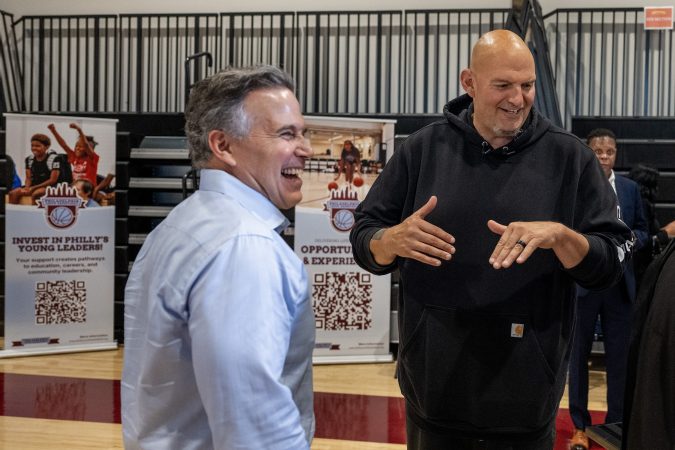
    In a rare public appearance in Philadelphia, Democratic U.S. Sen. John Fetterman joined Republican U.S. Sen. Dave McCormick at a youth basketball camp in Nicetown on Monday to promote Trump Accounts, the new federally backed savings accounts for kids that became law with the president’s signature One Big Beautiful Bill Act.

    Fetterman — who did not vote for the GOP-led initiative last year but has more frequently supported President Donald Trump’s policies since then — said he was urging families in deeply Democratic Philadelphia to look past Trump’s name on the program.

    “Do not fall into that political trap,” Fetterman said. “This isn’t some radical thing. … Do this for your child.”

    The accounts, which launch on July 4, are available to children under 18 — with children born between Jan. 1, 2025 and Dec. 31, 2028 receiving $1,000 in seed money.

    All accounts will also receive $250 because of a $6.25 billion donation from tech CEO Michael Dell and wife Susan Dell. Families, businesses, and nonprofits can add up to $5,000 annually. A portion of the funds may be accessed when the child turns 18, with the rest transferred into an IRA retirement account.

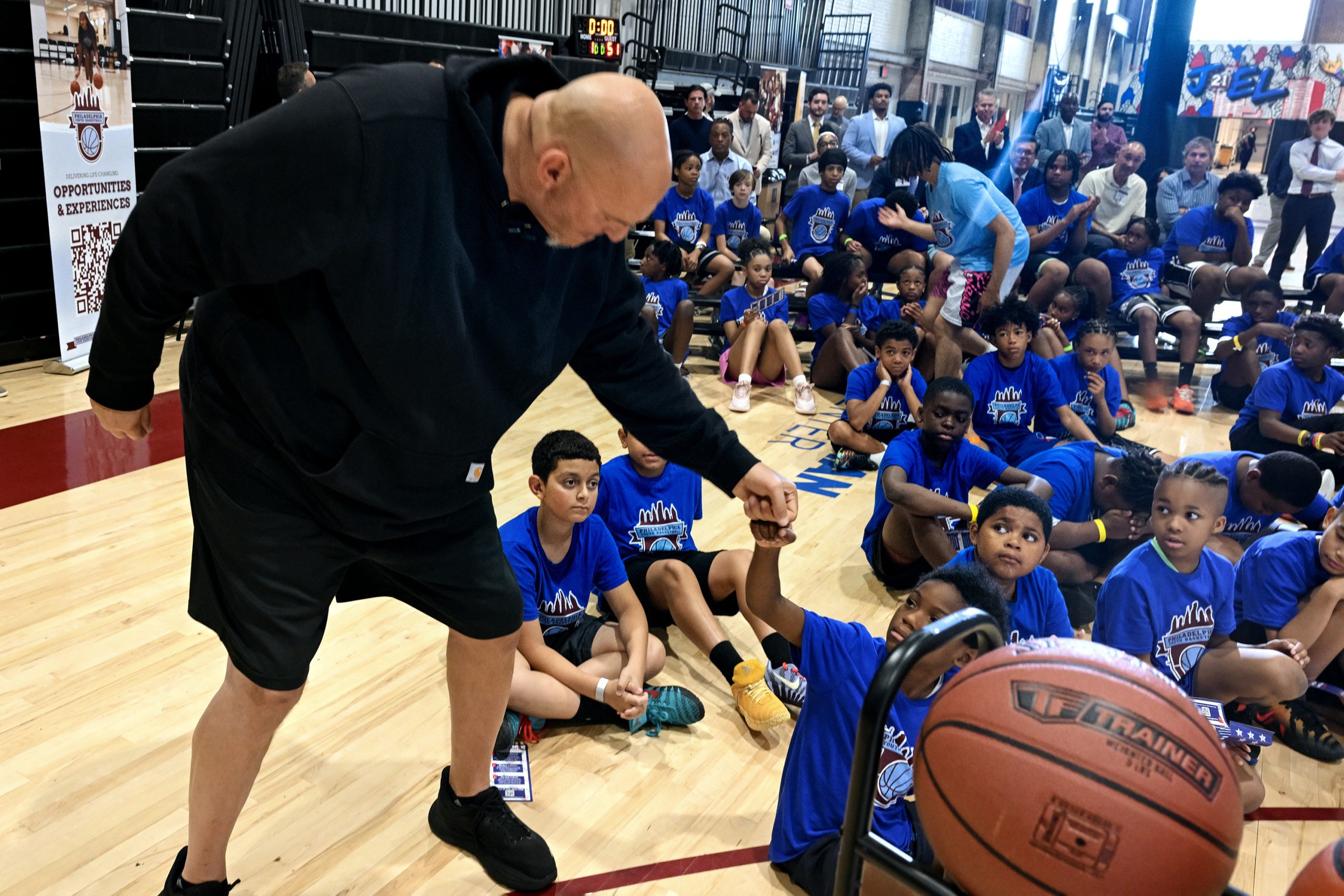
    “Who is excited about getting $200? Put your hands up,” McCormick asked more than 100 kids gathered on one of the indoor courts at Philadelphia Youth Basketball’s summer camp, at the Alan Horwitz “Sixth Man” Center in Nicetown.

    Both McCormick and Fetterman appealed directly to the children during speeches between basketball camp drills.

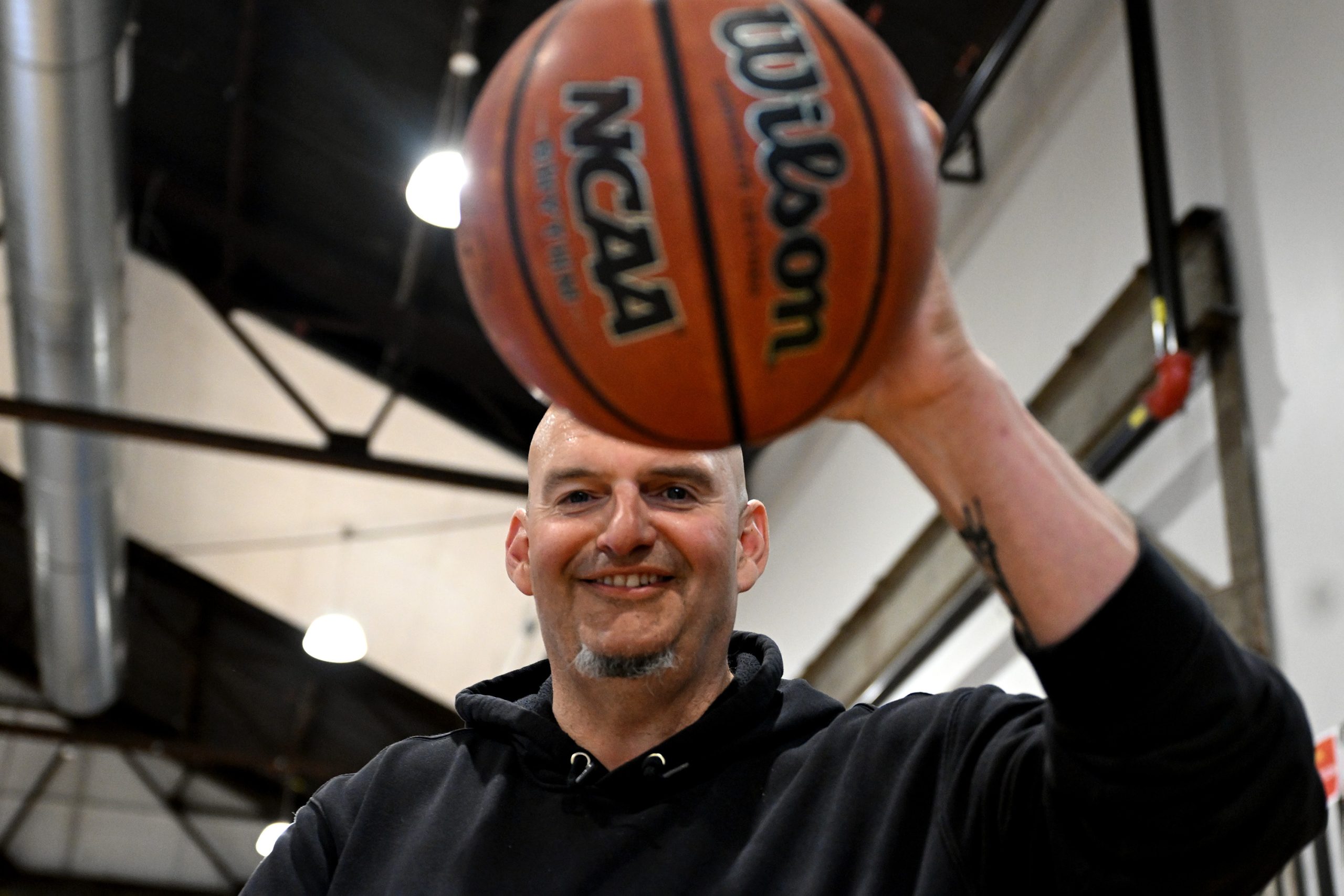
    Despite being 6-foot-8 and palming a basketball as he posed for pictures, Fetterman said his basketball skills weren’t “worth much.” But he told the kids that he was there because he wanted them all to be millionaires someday. And the Trump accounts — which he said he and his wife, Gisele, would open for all three of their children — were a step in that direction.

    U.S. Senator John Fetterman palms a basketball Monday, June 29, 2026 as he appears with fellow Pennsylvania Sen. Dave McCormick to promote the savings accounts for kids that were a signature piece of President Trump’s Big Beautiful Bill. Tom Gralish / Staff Photographer

    “I am begging your parents to get involved in this,” Fetterman said. “It’s about all of your futures.”

    In a joint interview after the event, the senators described the initiative as a groundbreaking effort to build long-term wealth for individuals who don’t typically have access to it.

    “This is one of many things that we need to do to think about how we address a fundamental problem — which is, we have a growing concentration of wealth in our country,” said McCormick, a former investment firm CEO and millionaire many times over.

    “He was talking almost like a Democrat … a concentration of wealth,” Fetterman quipped, prompting McCormick to laugh.

    The accounts were established as part of Trump’s most significant legislation of his second term, which narrowly passed Congress last year.

    Fetterman, at the time, joined other Democrats by calling the bill a “disaster” for its cuts to Medicaid spending and other programs like the Supplemental Nutrition Assistance Program, or SNAP.

    After voting against the law — or voting “hell no,” as he said at the time — Fetterman has broken with his party to support Trump and Republicans in a number of high-profile moments, and in ways that have deeply frustrated Democratic voters. His appearances at public events in Philadelphia and around Pennsylvania have been extremely rare, and many political observers question whether he will seek re-election in 2028.

    At the same time, Fetterman has developed a close working relationship with McCormick, a Republican elected in 2024. The pair frequently partner on issues in Washington and stress the need for bipartisanship, particularly in a purple state like Pennsylvania.

    “He and I are in this together,” McCormick, who has stopped in Philadelphia frequently, including for meals with Democratic Mayor Cherelle L. Parker, told the crowd Monday.

    Philadelphia Youth Basketball CEO Kenny Holdsman said he had worked with both senators and credited a conversation he had with Fetterman for helping push the organization to keep its doors open for longer hours as safe haven for the 2,400 young people in its programs.

    Holdsman said the Trump Accounts would “really help young people and their families in a big way” — from the financial security that comes with a compounding investment account, to the educational and financial literacy aspect that will come with kids having access to their savings.

    Invest America founder Brad Gerstner, who had pushed for the idea behind Trump Accounts for years and now leads the nonprofit that manages the initiative, showed the children a screenshot of the app that will display the contents of each account.

    “We want kids across the country, when they’re in middle school, to be able to open up this on their phone, so it’s not some abstract notion that I have money. This is the way the teachers in public schools are going to be able to teach them about ownership, compounding, financial literacy, et cetera,” Gerstner said. “It’s hard to teach kids about money when they don’t have any money.”

    Bipartisan groups have said the Trump Accounts do not have the same kind of tax-advantaged structure as other investment accounts, such as 529 plans that are specifically used for education. Cato Institute, a conservative think tank, has also criticized the $1,000 contributions for children born in the years around the program’s founding and called the overall plan “a government welfare program rather than a tax-neutral investment vehicle.”

    Fetterman said he supported 529s but the Trump Accounts were a “much more versatile vehicle” for investing in children’s futures. McCormick said the program’s ability to accept philanthropic donations made it particularly appealing as other individuals and corporations can buoy the accounts on top of families’ investments. Both also stressed convenience.

    “You’re going to share in the prosperity of America,” McCormick said. “It’s easy. You don’t have to overthink it.”

    Sen. Fetterman pauses to fist bump a youngster on his way to the more than 100 children attending a summer basketball day camp at the Alan Horwitz “Sixth Man” Center.Tom Gralish / Staff Photographer
  • Partisanship, divisive Trump presidency hang over 250th celebrations in Philadelphia and Washington

    WASHINGTON — Fifty years ago this week, President Gerald Ford’s helicopter arrived at Valley Forge in a dense fog.

    After a speech to 15,000 people, he designated the Revolutionary War landmark as a national park before heading to Philadelphia, where an estimated crowd of 1 million gathered outside Independence Hall. Ford spoke soberly, recounting the story of a nation that, on its 200th birthday, should find confidence in its ability to both celebrate its founding ideals and ask “hard questions” in the pursuit of something better.

    “The American adventure,” Ford said on July 4, 1976, “is a continuing process.”

    Philadelphia’s 250th anniversary celebrations this week are set to feature no appearances from the president. No reflections on self-improvement from the commander-in-chief at the birthplace of American democracy, no luncheons with the Philadelphia mayor near City Hall, as Ford also did after his speech.

    President Donald Trump has said he will instead use the occasion to throw “the most spectacular TRUMP RALLY” on the National Mall — one of several ways the president’s critics have said he has injected partisanship and self-serving events into what should be a unifying moment.

    Trump’s stamp on “America 250” has been clear.

    A UFC fight on the White House lawn branded as “Freedom 250” overlapped with the president’s 80th birthday and featured adulations directed at him. The Great American State Fair, which some Democratic-led states declined to participate in, opened last week with a campaign-style speech in which the president railed against DEI and transgender athletes. It also featured the U.S. Marine Band playing the Village People’s “Y.M.C.A.,” a Trump campaign rally staple. Transportation Secretary Sean Duffy, using an offensive term that combines liberal with a slur for people with intellectual disabilities, said the band was better than the “libtards” who canceled their performances because of concerns over Trump’s partisan behavior.

    “This is really, more than anything else, an opportunity to attempt to bring us all together as Americans. That’s what past celebrations have done,” said U.S. Rep. Brendan Boyle, a Democrat whose district includes Independence Hall. “It’s just so tragic that for this anniversary, the president we have is Donald Trump, someone who is completely not capable of doing any sort of national unity-type event.”

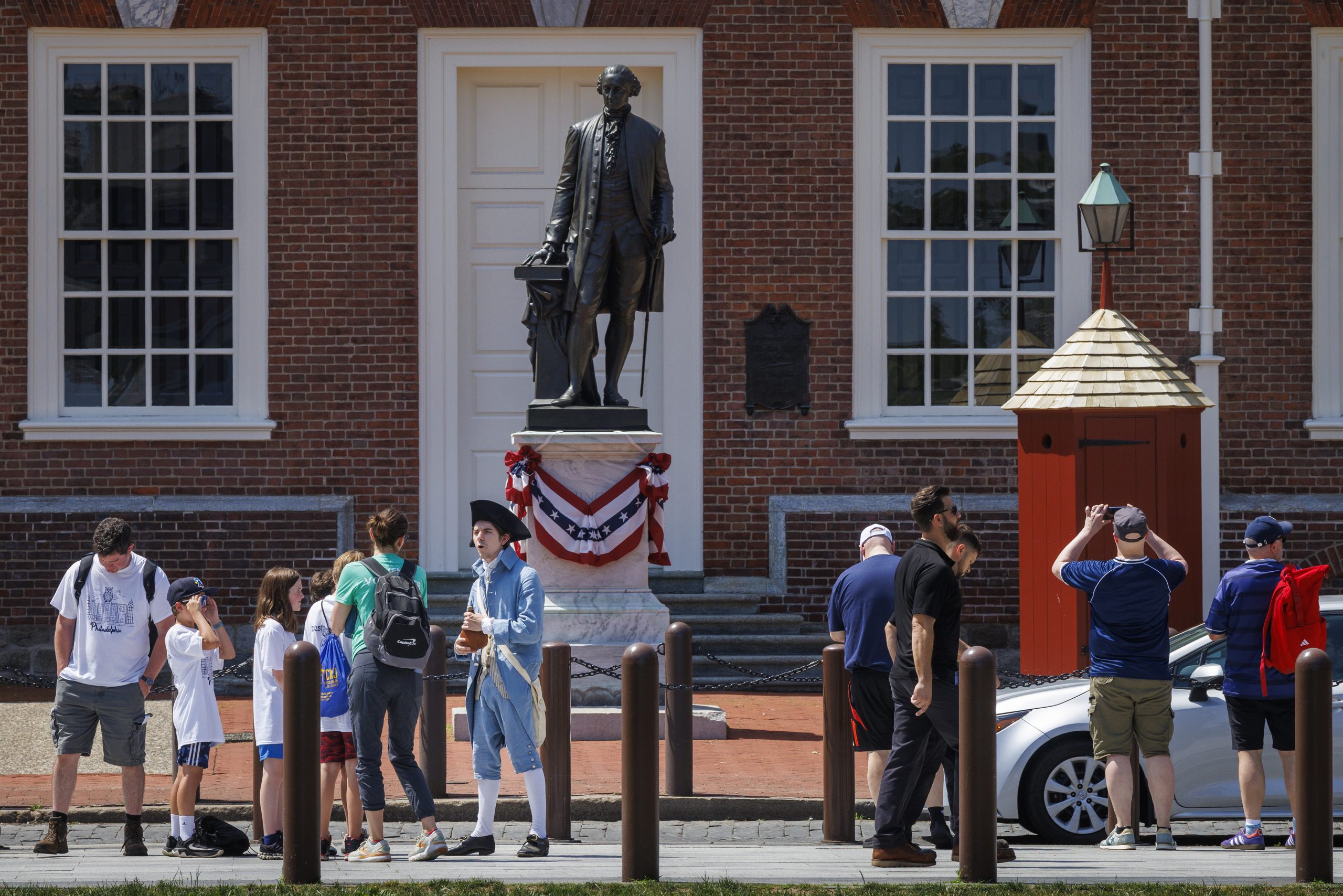
    Historic Interpreter, Lane Norris, as Alexander Hamilton, speaks with tourists outside Independence Hall in Philadelphia. Alejandro A. Alvarez / Staff Photographer

    Boyle worked for years to arrange a ceremonial gathering of Congress at Independence Hall for the 250th, which is set for Thursday. Though not officially a joint session outside of Washington — which has only occurred two other times since the capital relocated from Philadelphia — the event will mark the moment on July 2, 1776, when the Second Continental Congress voted to adopt a resolution for independence.

    The commemorative moment “just gives me chills to think about it,” said U.S. Rep. Mary Gay Scanlon, a Delaware County Democrat who represents part of Philadelphia and plans to attend Thursday. Scanlon said she was hopeful the event will be bipartisan at a time when the president’s divisiveness was “taking an edge off the celebratory aspect” of the 250th.

    Both Scanlon and Boyle described the president’s lack of plans to mark the moment in Philadelphia as disappointing. The White House did not respond to questions for this article, including whether it made any attempts to plan an event with the president in the city.

    “I always just kind of assumed that the president of the United States would, at some point in the days leading up to the Fourth of July or even on Fourth of July itself, be in Philadelphia,” Boyle said. “But obviously this president has different priorities.”

    Injecting polarization into apolitical events

    Matthew Levendusky, a University of Pennsylvania political science professor who has studied how July Fourth celebrations affect sentiments about national identity and polarization, said previous presidents participated in “patriotic, but not political,” events like concerts, fireworks, and parades.

    Trump has taken a distinctly different path since his first term, Levendusky said, noting the military parade in 2019 and a speech at Mount Rushmore in 2020 when, after the murder of George Floyd in Minneapolis, he used the moment to criticize the removal of monuments that symbolized racial oppression.

    The 250th events are an example of how Trump, a “conflict entrepreneur,” makes such events more political at a time when American society has already become more partisan, Levendusky said.

    “There’s more debate over the meaning of American identity than there was a decade or 15 years ago — in part because there’s been more polarization,” said Levendusky, the director of Penn’s Institutions of Democracy at the Annenberg Public Policy Center. “But he’s also done things that inject polarization into that process.”

    Those actions appear to have affected how voters feel about America’s democracy 250 years in — at least among Philadelphia’s largely Democratic electorate.

    According to a new Suffolk University/Philadelphia Inquirer poll that surveyed 500 city residents, 70% of Philadelphians believe Trump’s presidency has made them feel less confident in the country’s democracy. The answers were strongly correlated to political party, with more Republicans than Democrats saying that Trump’s presidency made them feel more confident in democracy or that it made no difference.

    Tourists flocking to the city have reflected those ideological divides but also a bipartisan desire to set politics aside for a historic milestone.

    “We’re all Americans, I don’t care who the president is,” said Greg Sage, 55, a Republican from Michigan who voted for Trump and toured the city’s historic sites this month. “I try not to politicize it, you know? But I believe we’ve been around 250 years. Maybe we’ll make another 250.”

    Phyllis Ahnberg, 68, a Democrat from California, said that it was “empowering” to visit Philadelphia’s sites and that she would not let one person or administration change how she celebrated a moment for unity. Still, it was hard to ignore Trump’s impact during a recent trip to Washington.

    “We were up at [the] Washington Monument, and we were looking, and it was disgusting to see the White House and this, like, fight thing,” Ahnberg said, referencing the towering structure built to host the UFC fight on June 14. “And to see the East Wing torn down … I mean, it was disgusting. Nobody hired this man to do that.”

    U.S. Sen. Dave McCormick, Pennsylvania’s highest-ranking Republican and a close Trump ally, attended the fight and posted on social media that it was an “incredible evening” that honored “the strength, resilience and spirit of the American people.” His office did not grant a request for an interview for this article.

    Pennsylvania’s empty booth at the Great American State Fair on Thursday in Washington. On Saturday, Sens. David McCormick (R., Pa.) and John Fetterman (D., Pa.) announced that they had secured private-industry sponsors for the booth at no cost to taxpayers.Sam Janesch / Staff

    A debate over past and future America

    Other Republicans on Capitol Hill have defended Trump’s role in the anniversary while using the moment to say they believe left-leaning Democrats are the primary threat to America’s democracy.

    “We are in a fight right now to save the republic, and every American needs to take this seriously. You need to wake up,” an animated House Speaker Mike Johnson (R., La.) said at a news conference last week after three insurgent candidates backed by New York Mayor Zohran Mamdani, a democratic socialist, won competitive congressional primaries.

    “Are we going to maintain our status as a constitutional republic on our 250th anniversary?” Johnson continued. “Or are we going to make a new choice and go down some road toward a communist utopia?”

    Chris Rabb, who won Philadelphia’s competitive primary in May to succeed retiring U.S. Rep. Dwight Evans (D., Philadelphia) next year, endorsed two of the candidates Johnson criticized and is likely to join them in the most progressive bloc in Congress next year.

    A democratic socialist and state legislator, Rabb has been adamant about what he sees as a need for “radical” change. After speaking at an event titled “The Next American Revolution: Breaking Oligarchy and Making a New Democracy” in Washington last week, he said in an interview that Trump’s presidency has in some ways been a “valuable distraction.”

    Instead of celebrating the anniversary in traditional — or what Rabb called “milquetoast” — ways, Trump is creating an opportunity for more critical, nuanced discussions about American identity and history, he said.

    It is a particularly meaningful opportunity for him personally. A longtime family genealogist, Rabb has spoken often about his heritage as the descendant of both a signer of the Declaration of Independence — the slave-owning Philip Livingston — and Black abolitionists.

    “I am an embodiment of the hypocrisy and the complexity of choices and systems that have never really been addressed … [and] that are very similar to what we had 250 years ago,” Rabb said. “Unless and until we have a real public, ongoing, and substantive conversation, it will be more of the same.”

    Staff writer Andrea Padilla contributed to this article.
  • McCormick and Fetterman are stepping in to fill Pennsylvania’s empty booth at Trump’s Great American State Fair

    In the latest twist over Pennsylvania’s participation in President Donald Trump’s Great American State Fair, U.S. Sens. Dave McCormick and John Fetterman announced Saturday that the state where America was founded will be represented after all.

    Pennsylvania Gov. Josh Shapiro initially signaled the intention for the state to participate in Trump’s 16-day fair on the National Mall. But this week, he said state officials could not find a Pennsylvania business to sponsor the state’s booth.

    On the fair’s opening day, Pennsylvania had no official presence, and the booth reserved for the commonwealth remained empty, except for a flag that read “250” in Pennsylvania’s space.

    After that news, McCormick (R., Pa.) and Fetterman (D., Pa.) said in a joint news release Saturday that they secured private-industry sponsors for the booth at no cost to taxpayers. Sponsors include the Pennsylvania Chamber of Business and Industry, the Pennsylvania Farm Bureau, and other organizations.

    “Pennsylvania is where America’s story began, and there was no way we were going to let the Commonwealth go unrepresented during our Nation’s 250th birthday celebration,” McCormick said in the release.

    “Celebrating America’s 250th birthday and Pennsylvania’s special role in our country is important and bipartisan,” Fetterman said. “We discovered our commonwealth wasn’t participating in the Great American State Fair on the National Mall, and we should be.”

    A ferris wheel is on the National Mall as part of the Great American State Fair, one of the celebratory events organized by the Trump administration commemorating the 250th anniversary of the United States in Washington, D.C., June 25, 2026. At the kickoff to the Great American State Fair, exhibits celebrating the nation were on display. So were conservative themes. (Alex Kent/The New York Times)ALEX KENT

    Shapiro told the New Republic earlier this week that when his administration approached major Pennsylvania companies to participate, “none were interested.”

    “It reflects this sad state of affairs that we find ourselves in — that the president has politicized this to a degree that businesses don’t want to participate,” he told the New Republic.

    However, sources who worked on the sponsor search confirmed for The Inquirer that at least two major Pennsylvania companies agreed to provide products and other donations to give away at Pennsylvania’s fair booth but were unable to initially do so due to short notice. The sources asked The Inquirer to not name them because they were not authorized to speak on the search.

    In a statement Saturday after the senators announced their plans, a Shapiro spokesperson said the administration was “unwilling to spend hundreds of thousands of taxpayer dollars to fund the Great American State Fair amid the historic slate of events across Pennsylvania in 2026.”

    Before McCormick and Fetterman’s intervention, Shapiro administration officials were told that Freedom250, the organization planning the fair, would be “handling the booth” in the absence of formal state participation, said Rosie Lapowsky, Shapiro’s press secretary.

    Pennsylvania’s Department of Agriculture also sent state literature that began appearing in the booth on Saturday, according to Freedom250.

    The Great American State Fair Thursday, June 25, 2026, in Washington, D.C. This pavilion would have belonged to Pennsylvania if the state had participated in President Donald Trump’s 250th anniversary event on the National Mall.Sam Janesch / Staff

    But Pennsylvania’s search for business sponsors was brief, according to a source close to the search.

    The Pennsylvania Chamber of Business and Industry, which was charged with finding sponsors, said Shapiro’s office called the organization less than two weeks before the fair began. Other states, the chamber said, had been working on their displays since January.

    “The Governor’s team asked us for assistance with business outreach for the Great American State Fair just two weeks before the event. While there was interest, the short time frame made it difficult for many businesses to fully commit,” said Jon Anzur, the chamber’s senior vice president of public affairs. “We are now reengaging those and other companies as we partner with Sens. McCormick and Fetterman.”

    In the absence of official Pennsylvania representatives and sponsors, McCormick and Fetterman were suddenly on Saturday able to secure private groups to staff the booth and help coordinate sponsors for the remainder of the fair.

    According to a source briefed on the conversation, Shapiro and McCormick spoke Saturday about the senators’ plans to fill the booth, and Shapiro offered to send additional state literature. The Inquirer is not naming the source because they were not authorized to speak on the conversation.

    Crayola is among the sponsors that will send along crayons, markers, and coloring books for a coloring station, which should be operational as early as Sunday. Other sponsors have signed on as well, though they were not immediately identified and their contributions were not disclosed.

    Pennsylvania is among a list of at least 10 states, some Democratic-led, that have officially dropped out of the Great American State Fair, including Connecticut, Illinois, Maine, Massachusetts, North Carolina, Oregon, Rhode Island, Vermont, and Washington.

    During the fair’s opening days, nearly every other state was represented, with most sending government staff or tourism officials to host educational or interactive exhibits.

    New Jersey also officially declined to participate, but Cape May County, a Republican stronghold, stepped in to represent the state. Its exhibit features an 8-ton sand sculpture created by a Wildwood artist over the course of more than four days.

    Delaware highlighted Founding Father Caesar Rodney’s ride to cast the decisive vote for independence in Philadelphia.

    Sam Janesch and Andrea Padilla contributed to this article.
  • A new bipartisan housing law was on track to bring Pennsylvania’s home-repair program nationwide. Then Trump refused to sign the bill.

    A new bipartisan housing law was on track to bring Pennsylvania’s home-repair program nationwide. Then Trump refused to sign the bill.

    WASHINGTON — A Pennsylvania program that assists homeowners and small landlords by financing repairs was on track Wednesday to expand nationwide, after Congress this week passed a bill that both Republicans and Democrats are celebrating as the first major federal housing law in decades.

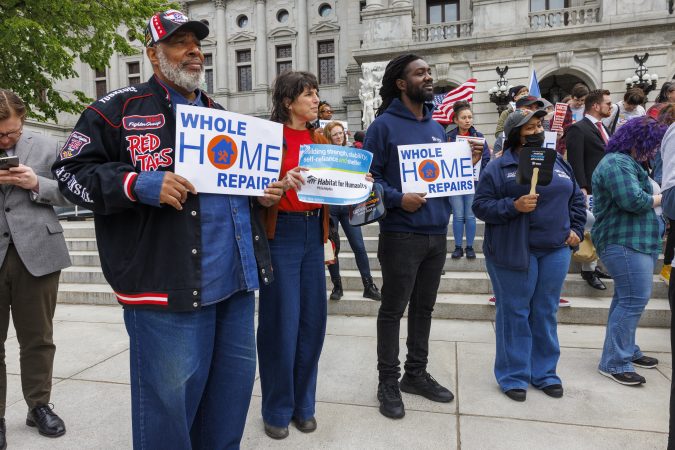
    Tucked into the 374-page omnibus legislation is a pilot version of a federally backed Whole-Home Repairs program — an idea that was originally sponsored by State Sen. Nikil Saval (D., Philadelphia) and passed in Pennsylvania in 2022.

    The program offers grants or loans to address safety, habitability, and efficiency concerns.

    But despite wide bipartisan support for the program and dozens of other housing reforms in the larger bill, final approval was derailed on Wednesday when President Donald Trump canceled the bill-signing ceremony in an attempt to force Congress to first pass more restrictive voter-ID laws.

    Democrats and some Republicans quickly rebuked the president, who still made a rare appearance on Capitol Hill to meet with Senate Republicans. The intraparty meeting turned contentious, according to multiple reports, while Democrats noted they had enough votes to overturn Trump’s veto if he holds out long enough.

    “It’s a mess,” said U.S. Sen. Andy Kim (D., N.J.). “Finally, we’re doing something that the American people want. We got bipartisanship. We worked on it forever. … Then he just parachutes in and just blows it all up here at the end.”

    The 21st Century ROAD to Housing Act aims to incentivize housing construction, restrict large institutional investors from buying single-family homes, improve financial literacy, and more.

    More than a year in the making, it includes a separate stand-alone Whole-Home Repairs Act that U.S. Sen. John Fetterman (D., Pa.) had introduced in each of the last two sessions of Congress. Fetterman’s bill merged last year into the larger bill while keeping many of the same provisions as the Pennsylvania-level program.

    Households that earn less than 80% of the area median income are eligible for grants, while small landlords with affordable units can access loans, including forgivable loans.

    Funded with more than $120 million in COVID-era federal stimulus money, the program has been limited amid high demand, with as many as 18,000 homes on the waiting list.

    Saval said he expects the national version to also reflect that level of “immense demand” — particularly as the program starts small and as homeowners across the country face higher costs to maintain their residences.

    “This is a huge issue. There are some 200,000 homes in Pennsylvania alone that have moderate to severe deficiencies,” Saval said. “Everyone is dealing with rising energy costs. Everyone’s dealing with the cost of materials and labor and the inability to pay for all that.”

    Addressing those kinds of affordability concerns, which have become a top-of-mind political issue during this year’s high-stakes midterm elections, is a rare bipartisan effort to emerge from the U.S. Capitol.

    Philadelphia-area lawmakers on both sides of the aisle had spent months advocating for the bill.

    U.S. Sens. Dave McCormick (R., Pa.) and Lisa Blunt Rochester (D., Del.) — members of the Senate committee that advanced the legislation — both celebrated the final passage by talking about its impacts on affordability and “cutting red tape.” Kim called it a “historic” move to bring costs down.

    “This package comes at a critical moment,” Blunt Rochester said in a statement, noting a nationwide housing shortage of as many as 7 million units. Five bills she separately sponsored — to accelerate building, increase investment in community development projects, develop zoning and land-use policies, and more — were featured in the final law.

    The Whole-Home Repairs provision of the legislation was not a guarantee as negotiations developed over the last year. House Republicans were generally skeptical of creating a new government program, and specifically critical of the policy’s tenant protections, according to a source familiar with the negotiations. But their counterparts in the Senate, and Democrats in both chambers, helped keep it in the larger bill.

    Fetterman said in a statement that Whole-Home Repairs “ensures families can stay in their homes” and that passing it had been a priority since he entered the Senate in 2023.

    “I’ve consistently maintained that our housing crisis needs real solutions that help address the problems at the center,” Fetterman said.

    Saval, who said he made multiple trips to Capitol Hill to work with sponsors and lobby for Whole-Home Repairs, said he was “thrilled” by the inclusion of a program that he and the coalition of advocates who helped push the idea had always envisioned as a model that could be replicated.

    He said he expects the pilot program to prove successful in “a few states” where it is able to launch. Unlike previous version of the federal bill that would have allocated $30 million to the pilot, there is no specific funding number for Whole-Home Repairs in the 21st Century ROAD to Housing Act.

    The legislation calls for the secretary of the U.S. Department of Housing and Urban Development to identify between two and 10 “implementing organizations” every year during the pilot, which is set to run through October 2031. The organizations will be local or state governments that administer the programs.

    Saval said that no matter how much funding is allocated, it “will undoubtedly fall short of the need,” but that its effectiveness will spur further investment.

    “It repays itself,” Saval said. “It repays itself in stabilized communities. It repays itself in stabilized property values, in people remaining in their homes rather than in unsafe or unhealthy homes, or rather than abandoning them.”

    Staff writer Jake Blumgart contributed to this article.