Tag: Cumberland County

  • What’s it like living in the shadow of an AI data center? These Vineland residents know.

    What’s it like living in the shadow of an AI data center? These Vineland residents know.

    When Amber Ayrer bought her Vineland home 25 years ago, she envisioned growing old there, enjoying lazy afternoons with the windows open and a view of farmland from her front door.

    After her adult daughter, Ally, suffered a traumatic brain injury, Amber made the rancher accessible, installing a ramp that aides use to push Ally’s wheelchair outside for her daily walks.

    The place had all the makings of a forever home, Amber Ayrer said — until a massive AI data center moved in across the street.

    Now, the 71-year-old looks out her front windows at the hulking DataOne facility, a windowless compound surrounded by walls and metal fences.

    In recent months, Ayrer said, the 2.4-million-square-foot complex has emitted a near-constant hum. She struggles to sleep, she said, and has suffered from headaches. She turns the TV on to mask the sound.

    Residents who live farther away have also complained about the noise, including in a recent lawsuit that was thrown out due to procedural issues. In the suit, residents said the Cumberland County Department of Health measured the hum as higher than 50 decibels a mile away in the middle of the night. A sound higher than 50 decibels is equal to a running refrigerator and is 10 times louder than a typical suburban area at night.

    Ayrer, who was not involved in the lawsuit, said she doesn’t want to move, even as she sees neighbors sell their homes to the data center developers.

    “In order to get another home, I’d have to get one built” to be accessible, Ayrer said, standing in her entryway. She shrugged, adding, “I need to be here for my daughter.”

    The noise had quieted, she noted, since around Sept. 22. That’s when the New Jersey DEP ordered the data center to pay a $1 million fine for running 62 gas generators without the required permits. She isn’t sure why the hum stopped, or whether it was related to the fine.

    By late Wednesday, the sound had returned, she said, and she worried it would be even louder when the center is fully operational.

    The Ayrers are some of the first Philly-area residents to live in the shadow of a massive AI data center. Only a handful of homeowners live within eyesight of DataOne’s South Lincoln Avenue complex in Vineland.

    They used to have more neighbors. But since 2025, DataOne Vineland and LJR Real Estate — which is registered to the address of Northeast Precast, a local company that has partnered with DataOne — have purchased at least five surrounding homes for a combined $3 million, according to online property records.

    DataOne and Northeast Precast did not respond to requests for comment about the acquisitions. Several former Vineland residents who sold their homes to these companies could not be reached or declined to comment.

    Asked about residents’ concerns, DataOne spokesperson Naomi Rice shared a previous statement, which said in part that the facility was “transitioning to low-emission, quiet fuel cells.” These generate energy through an electrochemical reaction rather than combustion, pistons, or rotating machinery.

    Nebius Group, which is operating the center’s internal AI infrastructure, says the fuel cells from Bloom Energy — a company expanding locally — and enhanced sound mitigation will make for a quieter environment than what residents experienced during construction, according to spokesperson Ava Iuliucci.

    Charles-Antoine Beyney, DataOne’s founder and chief executive officer, previously said the Vineland center would use “breakthrough” technology to reduce its environmental impact. He said the complex would be a good neighbor, promising a vertical farm — which uses technology to grow crops indoors — to help feed Vineland residents in need.

    “Most of the data centers that are being built today suck, big time,” Beyney said in January.

    “No freaking way am I going to do what the entire industry is doing … just killing our communities and killing our lungs to make money.”

    What it looks like near a South Jersey data center

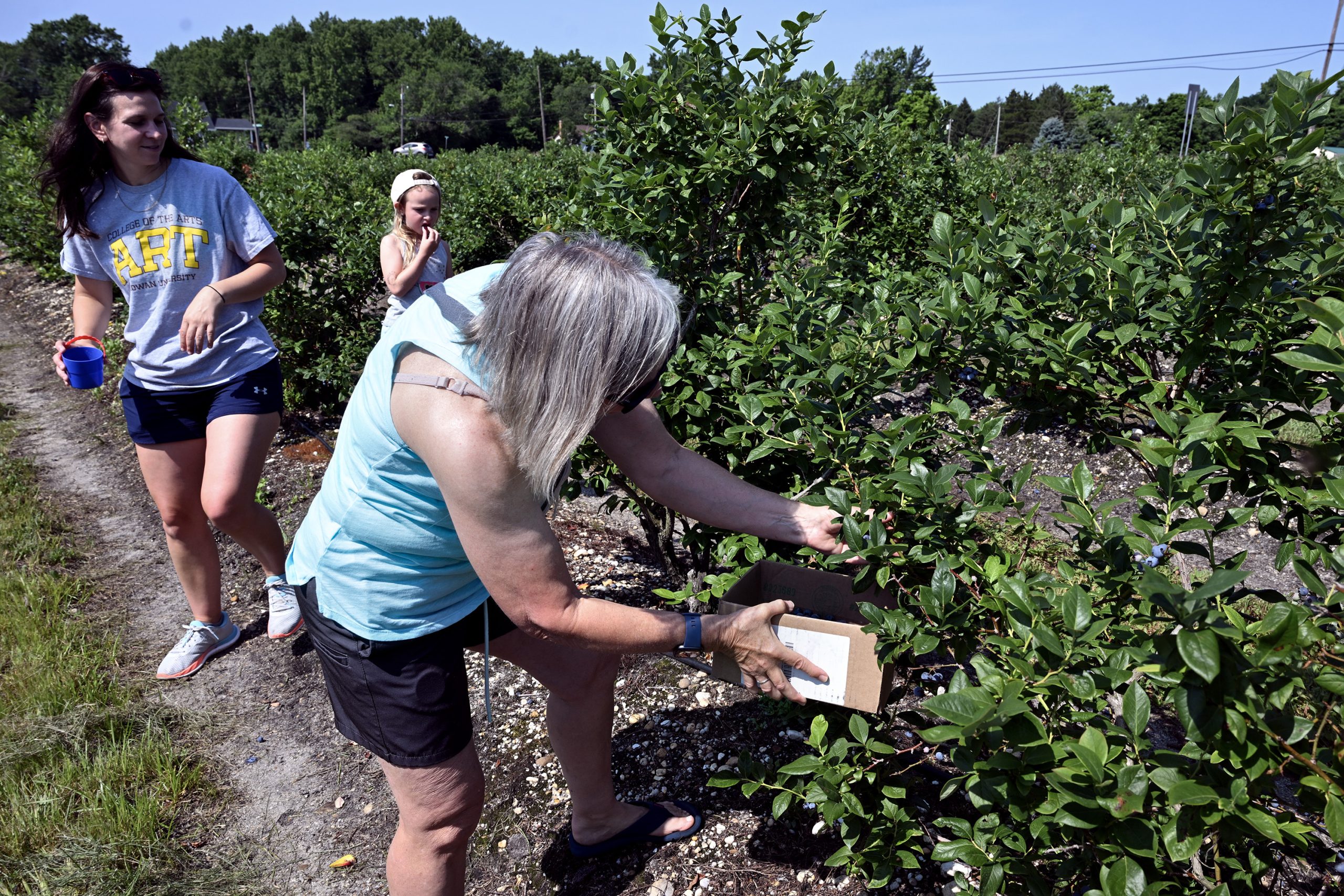
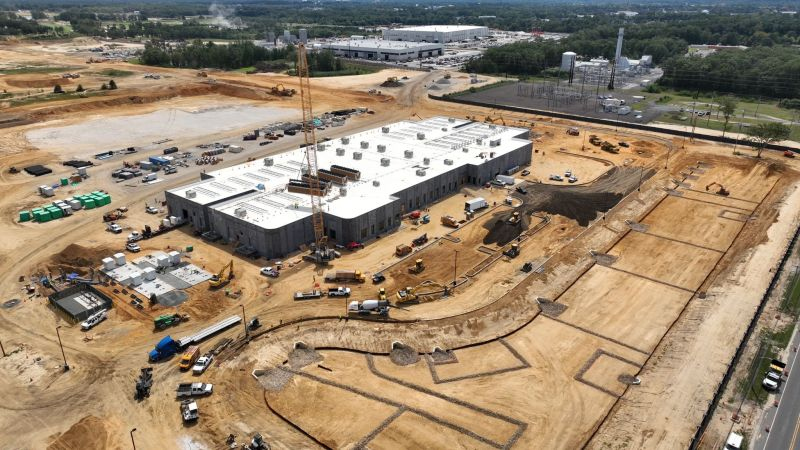
    The Vineland DataOne center, as seen in June, could be finished by the end of the year, developers have said. Tom Gralish / Staff Photographer

    The dark exterior of DataOne abuts busy South Lincoln Avenue, towering above homes and farms on the outskirts of Vineland City. In spots, rows of crops extend to the data center’s walls.

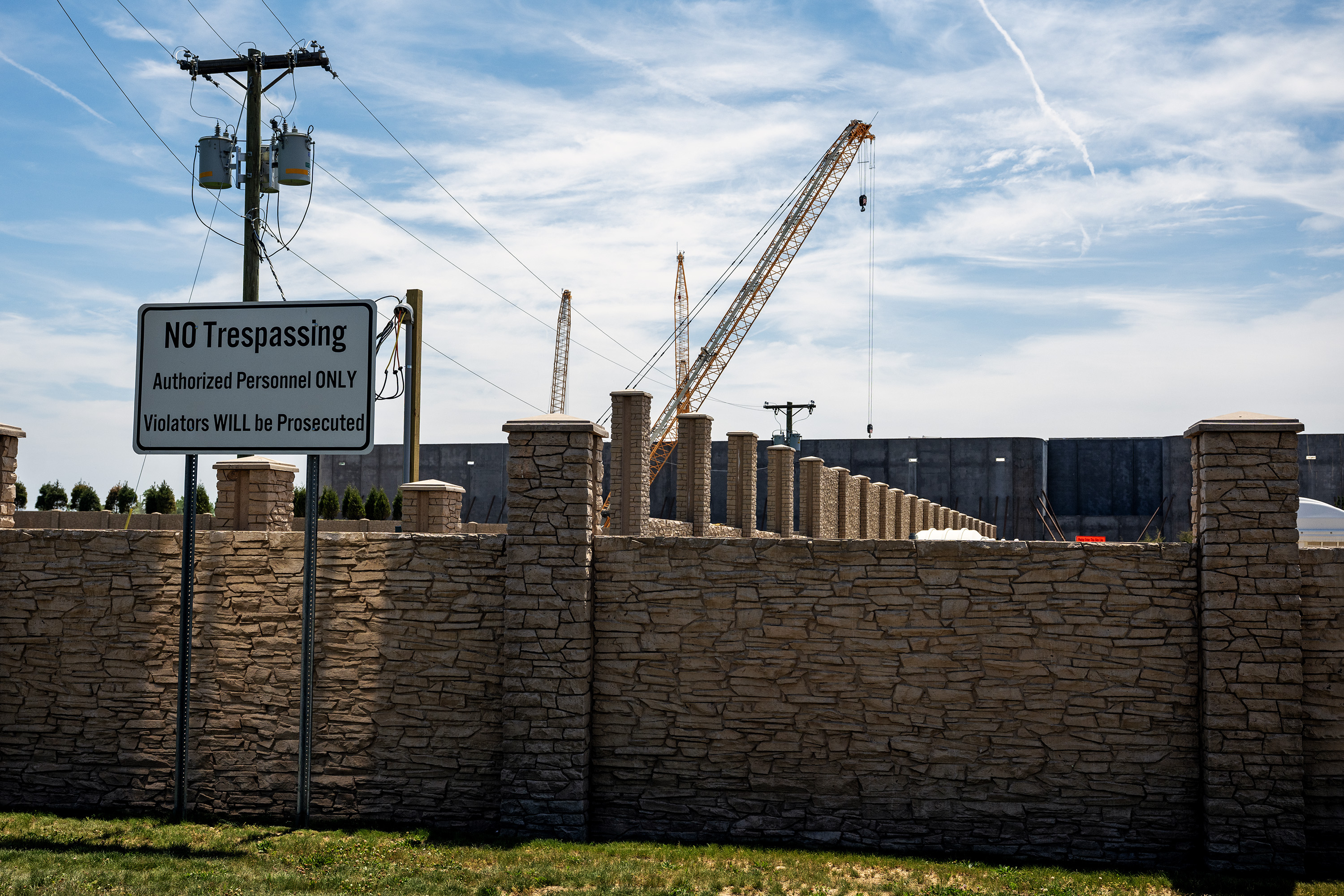
    On a recent day, the data center appeared abuzz with activity, although residents said it was relatively quiet, as cars and yellow school buses drove in and out of its gated-off parking lot. Giant “no trespassing” signs are prominently displayed.

    While the front portion of the data center appeared complete, cranes farther back reached into the sky.

    Meanwhile, several large homes across from the entrance — purchased by the data center developers and associates — appeared abandoned, with recycling cans askew in the driveways, indoor and outdoor lights on in the middle of the day, and swing sets sitting empty in the backyards. No one answered the doors.

    At another home, a woman shook her head, saying she’d lived there forever and would never speak publicly about the development across the street.

    Who is behind the Vineland data center?

    Data centers like this one handle the cloud-storage and computing needs of increasingly sophisticated AI tools.

    DataOne, a French company that manages advanced data centers, is the owner, operator, and builder of the Vineland data center. Its client, Nebius Group, an Amsterdam-based AI-infrastructure company, operates the center’s internal technology, which fuels Microsoft’s AI tools.

    As demand for these facilities has surged, so has the controversy surrounding them. Across the country, proposed complexes have received fierce pushback from nearby residents concerned about environmental, noise, quality-of-life, and property-value impacts.

    The debate has intensified in recent weeks as some top AI executives urge a slowdown of the technology amid fears that it may eventually wipe out humanity.

    Several of these facilities have been proposed in the Philadelphia region, from King of Prussia to Limerick. But few plans have been approved.

    DataOne Vineland could become the region’s first hyperscale AI data center. The developers have said the complex is partially operational, and they expect it to be complete by the end of the year.
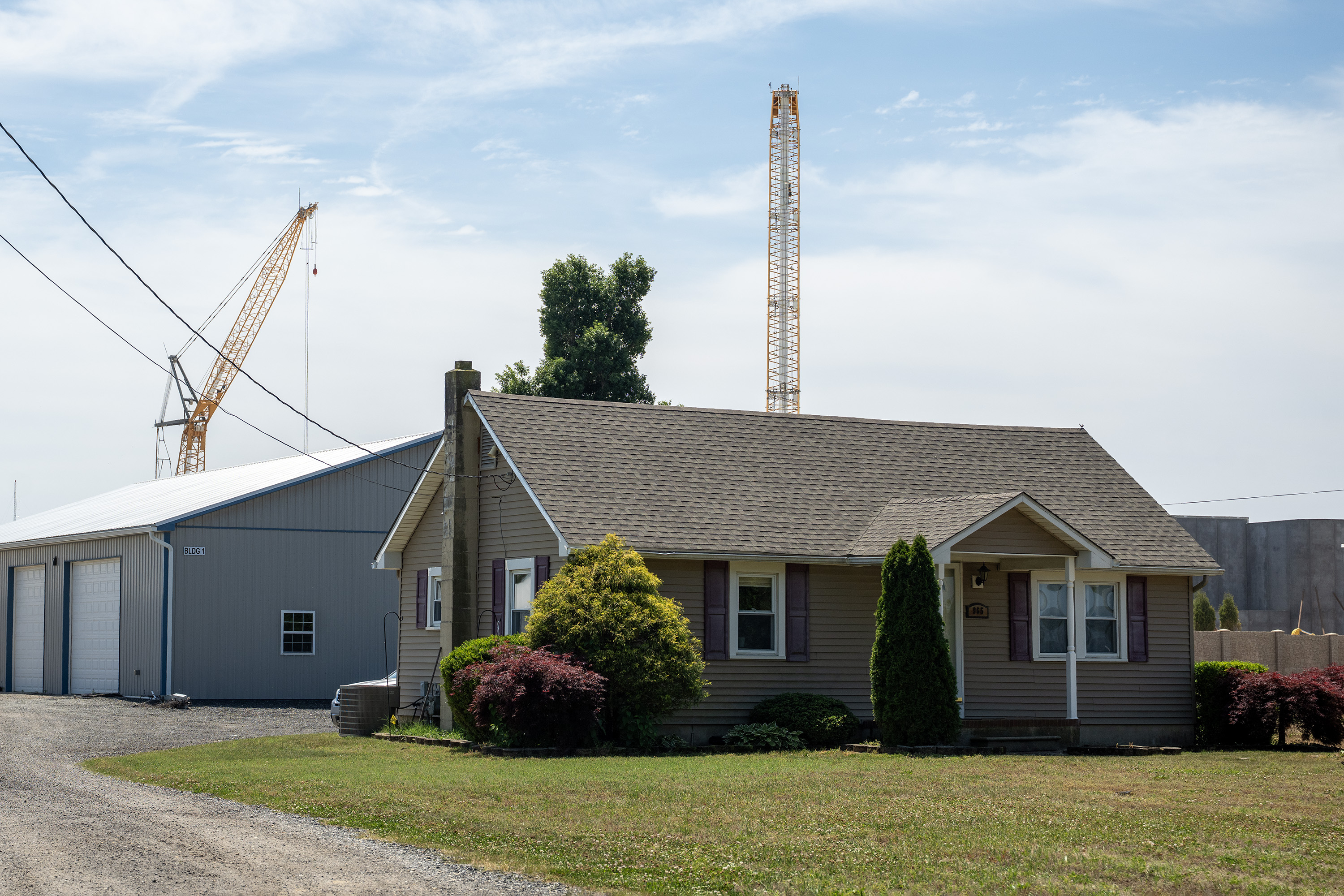
    Construction continued on the DataOne center as seen from a nearby home in June.Tom Gralish / Staff Photographer

    Theresa Lewis, who has owned her home for 47 years, said living by the data center has gotten worse in recent months.

    Stepping outside and seeing the building, “I think of a prison, and I’m the prisoner with the noise,” said Lewis, 74, who compares the sound to a tractor trailer idling outside her home all day and night.

    “You get up in the morning and you’re in a foul mood,” Lewis said.

    Both she and Ayrer said they have called the Cumberland County Department of Health to report excessive noise in the middle of the night, but doing so comes at a cost. They said they then have to get up, get dressed, turn the lights on, and wait for an official to come take a decibel reading, making for another sleepless night.

    Data centers are being built in different communities
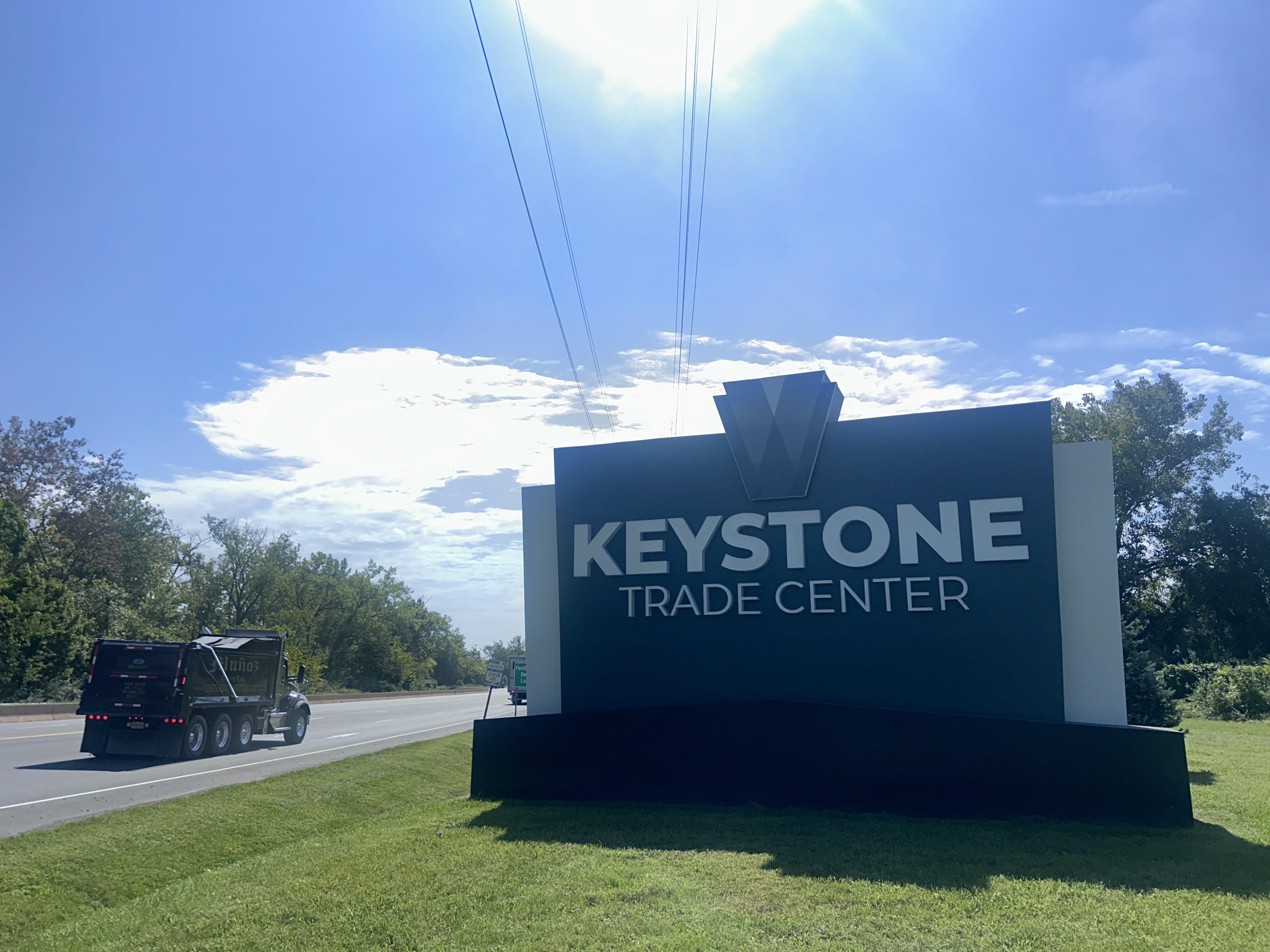
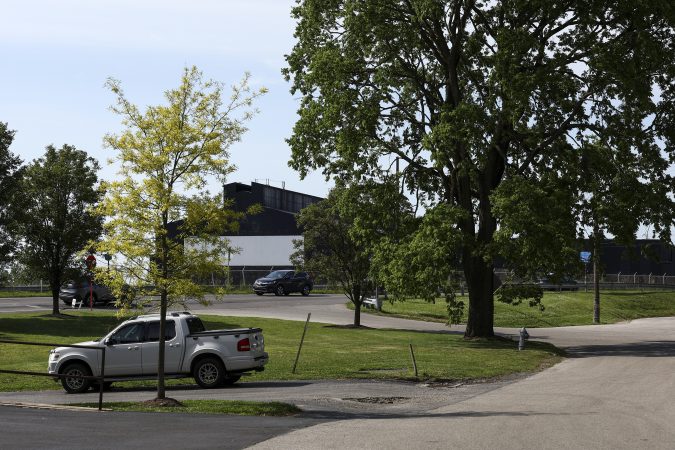
    The view outside the Keystone Trade Center in Falls Township. Amazon is building a data center inside the private complex.Erin McCarthy/Staff

    The scene in Vineland is vastly different from the one outside Amazon’s 2-million-square-foot data center campus in Falls Township, Bucks County, the Philadelphia region’s other facility nearing completion.

    That data center sits deep inside the Keystone Trade Center, an industrial hub surrounded by water, with no homes in sight. On a recent day, tractor trailers whizzed by Keystone’s main entrance. Only the transmission wires overhead hinted at what may be inside the private property.

    Still, neighbors have pushed back against the complex, with more than 5,000 people signing a petition in favor of a data center moratorium in Falls Township.

    Elsewhere, data center plans proposed by developer Brian O’Neill have faced fierce opposition in King of Prussia and on the outskirts of Conshohocken. So have projects in East Whiteland, where data center construction recently began, and in East Vincent, where a center was proposed for the site of the former Pennhurst State School and Hospital.

    In Vineland, Lewis said she wishes she and her neighbors had a chance to push back against the data center before it was built. Residents were first asked to provide input about the project at a contentious town hall in January, more than a year after the project was approved by city council and months after construction started.

    “I don’t want to move — and who is going to pay what the house is worth with that right there?” Lewis said, motioning to the data center across the street. “But I wake up angry.”

    She added: “I can’t imagine living next to this for the rest of my life.”

    Editor’s Note: This story has been updated to reflect that the noise from the data center returned Wednesday, according to Ayrer.
  • Vineland AI data center hit with a $1 million fine

    Vineland AI data center hit with a $1 million fine

    New Jersey has fined the developers of a data center in Vineland more than $1 million for violating clean-air laws.

    State officials say DataOne, a French company that is building the Cumberland County facility, installed and operated 62 large natural-gas power generators without the required DEP permits.

    “This enforcement action — by far the largest ever taken against a data center in New Jersey and possibly one of the largest such actions in the nation — sends a clear message that these facilities will not be constructed or operated with impunity in this state,” New Jersey DEP Commissioner Ed Potosnak said in a statement.

    During a site inspection July 29, state DEP officials saw the generators, which had not been there during a December visit, according to the enforcement document. Operating such machines — which emit carbon dioxide, nitrogen oxides, carbon monoxide, and other pollutants — without the required permits violates the New Jersey Air Pollution Control Act.

    The state’s announcement comes weeks after an investigation by Floodlight and the Guardian, in which the news outlets used thermal drone footage to show the Vineland data center was operating at least 45 of its generators without permits.

    DataOne spokesperson Naomi Race said company executives “disagree with the temporary generator determination” but will apply for the needed permits. Race did not respond when asked whether the company planned to pay the fine.

    DataOne may request a hearing on the matter within 20 calendar days, according to the state’s enforcement document.

    The Vineland data center is shown during an earlier stage of construction. It sits on a former industrial park.Courtesy of DataOne

    As for the facility’s permanent power source, the company is “transitioning to low-emission, quiet fuel cells,” for which they “have the necessary approvals in place,” according to Race. Fuel cells generate energy through an electrochemical reaction rather than combustion, pistons, or rotating machinery.

    The 2.4 million-square-foot complex is set to be South Jersey’s first hyperscale AI data center. While DataOne is the owner, operator, and builder, the Amsterdam-based Nebius Group will operate the center’s internal equipment, which will fuel Microsoft’s AI tools.

    Data centers handle the cloud-storage and computing needs of the companies behind increasingly sophisticated AI tools.

    The Vineland facility is on South Lincoln Avenue, off State Route 55, on the site of a former industrial park. The property was sold to DataOne in a private transaction, the details of which Charles-Antoine Beyney, DataOne’s founder and chief executive officer, previously declined to disclose.

    He also has not disclosed a price, saying only that the project would be privately funded. Beyney said he turned down a nearly $6.2 million loan from the city due to community pushback.

    Some Vineland residents have voiced concerns about the environmental, financial, and quality-of-life impacts of having a data center in their neighborhood. Opponents also took issue with the fact that DataOne did not seek their input until the facility was already under construction.

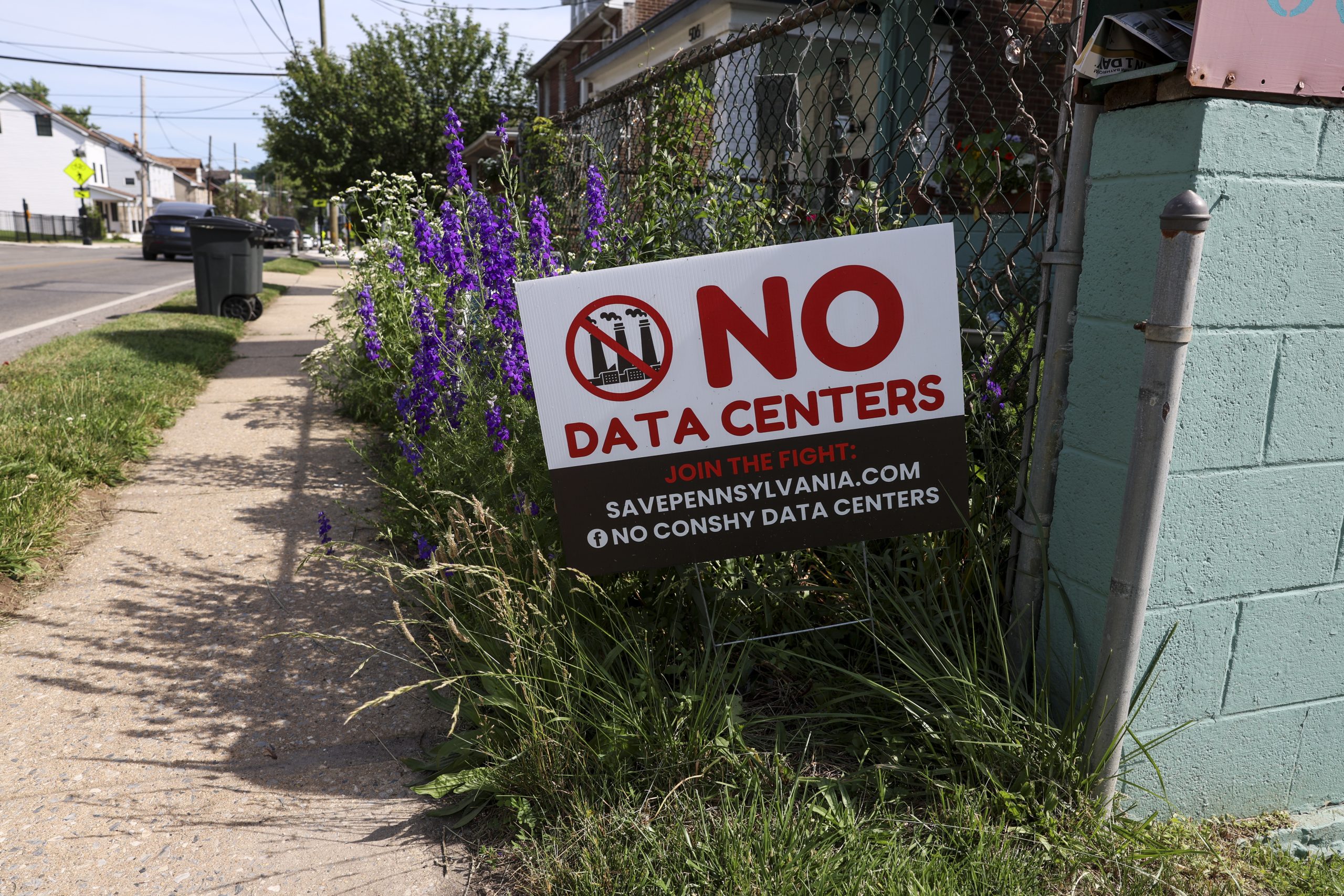
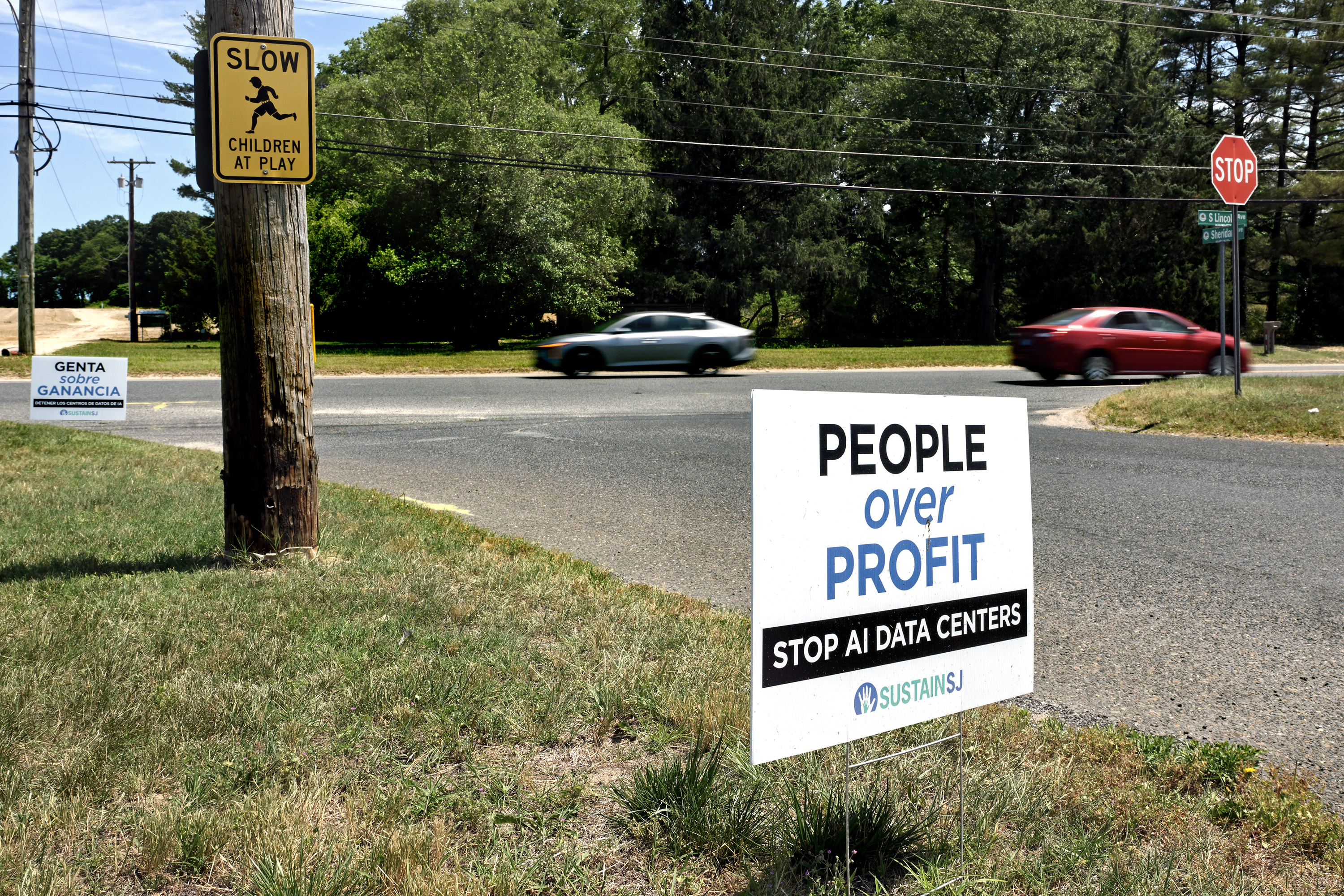
    Some Vineland residents have put up signs like this one opposing the AI data center under construction nearby. Tom Gralish / Staff Photographer

    At a contentious town hall in January, Beyney tried to assuage these concerns, telling residents they had nothing to worry about because his center would use “breakthrough” technology.

    “Most of the data centers that are being built today suck, big time,” Beyney said at the meeting. “No freaking way am I am going to do what the entire industry is doing … just killing our communities and killing our lungs to make money.”

    The Vineland facility has been under construction for more than a year. In January, DataOne executives said they expected the project to be complete by November.

    Amid the global boom in data center demand, several hyperscale facilities have been proposed in the Philadelphia region, from King of Prussia to Limerick. But few have been approved and begun construction.

    The Vineland site is one of them. Once fully operational, it could be the region’s first hyperscale AI data center.

    The only other local facility nearing completion is Amazon’s 2 million-square-foot data center campus in Falls Township, Bucks County. As of last month, Amazon was awaiting a decision from the Pennsylvania DEP on permit applications for hundreds of proposed backup natural gas generators.

    Pennsylvania Gov. Josh Shapiro shifted his stance on data centers last month and instituted new restrictions, which included the removal of Amazon from the state’s fast-track permitting process.

    Shapiro joined New Jersey Gov. Mikie Sherrill, who in May unveiled a four-prong plan to “hold data centers accountable.” She also has signed legislation requiring data centers to provide their own clean energy and report their energy and water use to the state twice a year.

    Neither governor has issued a statewide moratorium, a move for which some data-center opponents are advocating.

    In recent weeks, the debate over AI has reached a fever pitch, with executives at some of the country’s largest AI companies urging a slowdown amid fears that the technology may eventually destroy humanity.

  • This quaint Pa. borough is a ‘speed trap’ nabbing immigrants for ICE

    This quaint Pa. borough is a ‘speed trap’ nabbing immigrants for ICE

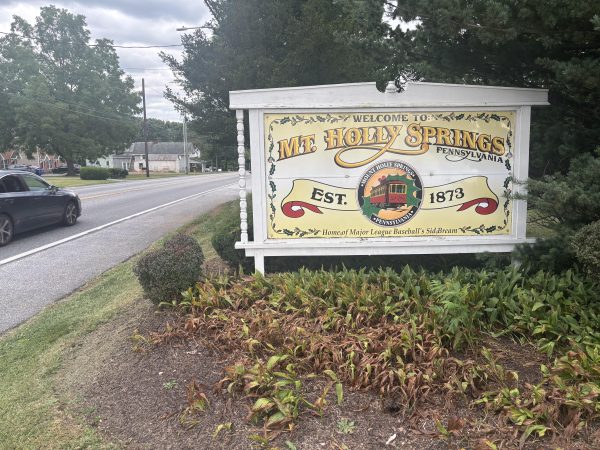
    MOUNT HOLLY SPRINGS, Pa. — Still hailed for its trout fishing, this bucolic Central Pennsylvania borough in the shadow of South Mountain was a big draw for tourists at the turn of the 20th century who flocked here to cool off in its mineral-spring waters.

    In 2026, this tiny municipality about 25 miles southwest of Harrisburg is developing a much less welcoming reputation. The new notoriety began with an agreement between borough police and U.S. Immigration and Customs Enforcement that has turned Mount Holly Springs into a kind of “speed trap” for unsuspecting immigrants — one with life-altering consequences.

    What had been a simmering small-town controversy since the start of the year boiled over into an international incident on July 15 when a prominent Chinese dissident and U.S. asylum seeker named Wu Shaoping was pulled over by a borough officer who claimed Wu had blown through a stop sign. The Amazon delivery driver was then taken into custody by ICE agents who had been running an operation just down the road.

    But the outcry over the arrest and detention of Wu — taken to ICE’s Moshannon Valley Processing Center and crammed into a room with 60 other detainees for 10 days before winning his release on bail — also exposed an even darker story.

    In March, Mount Holly Springs became the only municipality in Cumberland County and one of a handful across Pennsylvania to execute a formal cooperation agreement with ICE under a controversial program known as 287(g). The program gives local cops expanded powers to arrest suspected undocumented immigrants, while offering training and financial incentives in return.

    In just four months, the borough’s four police officers have pulled over and checked the status of dozens of motorists — mainly commercial truck drivers — and turned over 32 arrestees to ICE, the Mount Holly Springs Police Chief Tom Day told me on Wednesday.

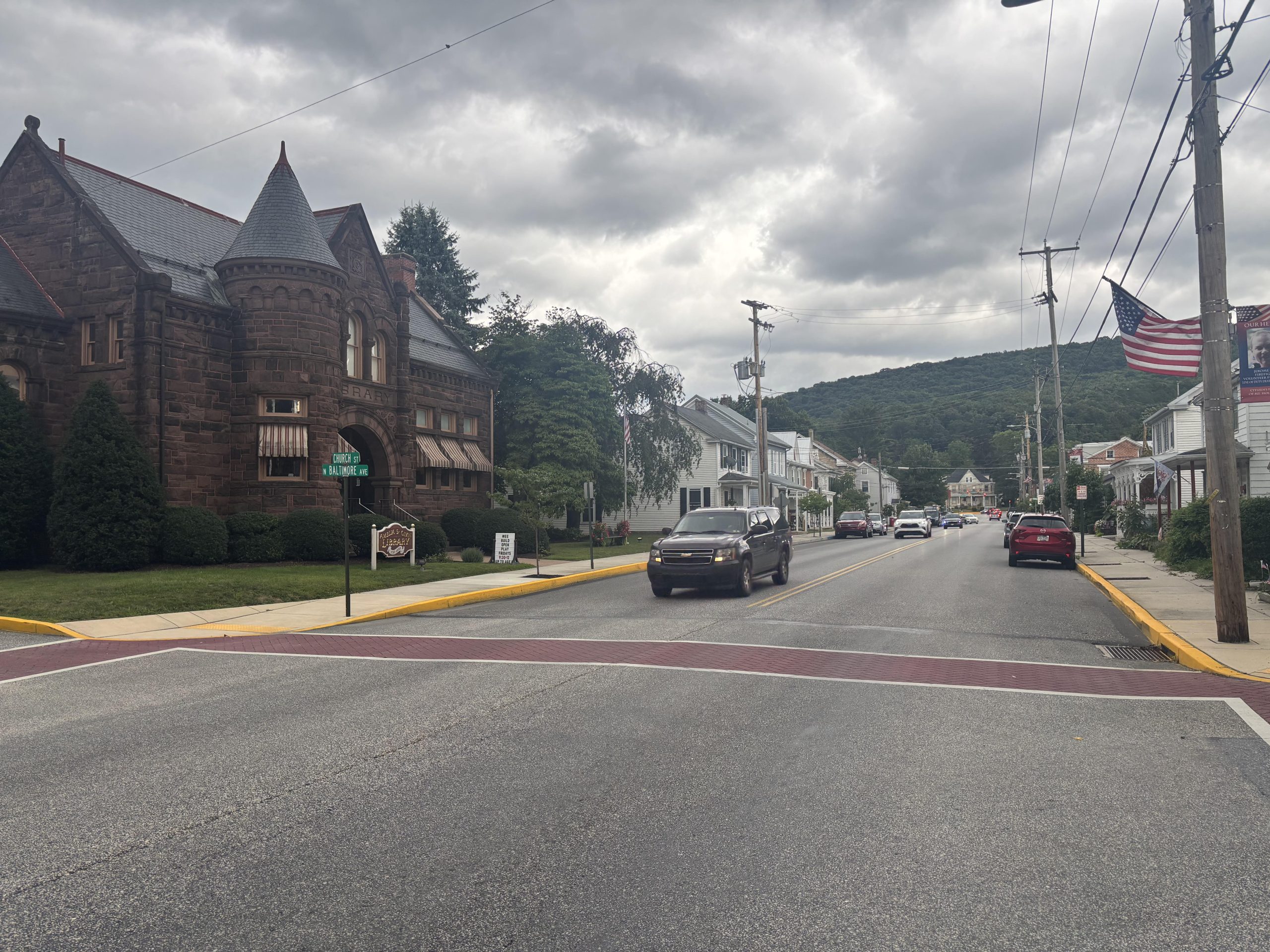
    The main drag in Mount Holly Springs, a small borough in Cumberland County, Pa., on Wednesday. The community has seen controversy over local police cooperation with federal immigration authorities.Will Bunch

    Day, a gruff ex-Marine in a Nittany Lions cap and blue jeans who doubles as borough manager, insisted to me that the traffic stops and ICE cooperation have nothing to do with racial profiling and everything to do with road safety in a borough with aging bridges and narrow streets.

    “There’s no racial profiling of or ethnic profiling of drivers,” the police chief maintained. “We have no clue until we step up on the side of that truck who we’re even dealing with.” Day also said “it’s not that we don’t have a heart” — that he believes in the American dream and understands why refugees want to come here, but when immigrants show up without permission “actions have consequences, you know.”

    Minutes later, I met with a gaggle of local residents and business owners who told a very different story — that the wave of immigrant arrests has created a climate of fear that permeates Mount Holly Springs. The growing uproar has riven their once-placid borough into a distrustful cauldron of angry Facebook comments, muttered asides, and occasional threats — a kind of modern civil war just 25 miles north of Gettysburg.

    “What I’m hearing from my customers, our people are afraid,” said Rachel Bear, the co-owner of a popular local boutique. “Immigrants are afraid. It’s out there.” She said she’s decided to speak out against the borough’s relationship with ICE because some neighbors are intimidated. “I think they’re just scared.”

    Andrew Dapkins, the owner of The “Bird Guy” Tours of local wildlife, told me he’s stopped bringing his excursions into Mount Holly Springs since the deal with ICE was signed. “If I was to bring someone of color, or they were not heterosexual male, I would feel like I was bringing them into a potential hostile environment,” he explained. “So I can’t do that.”

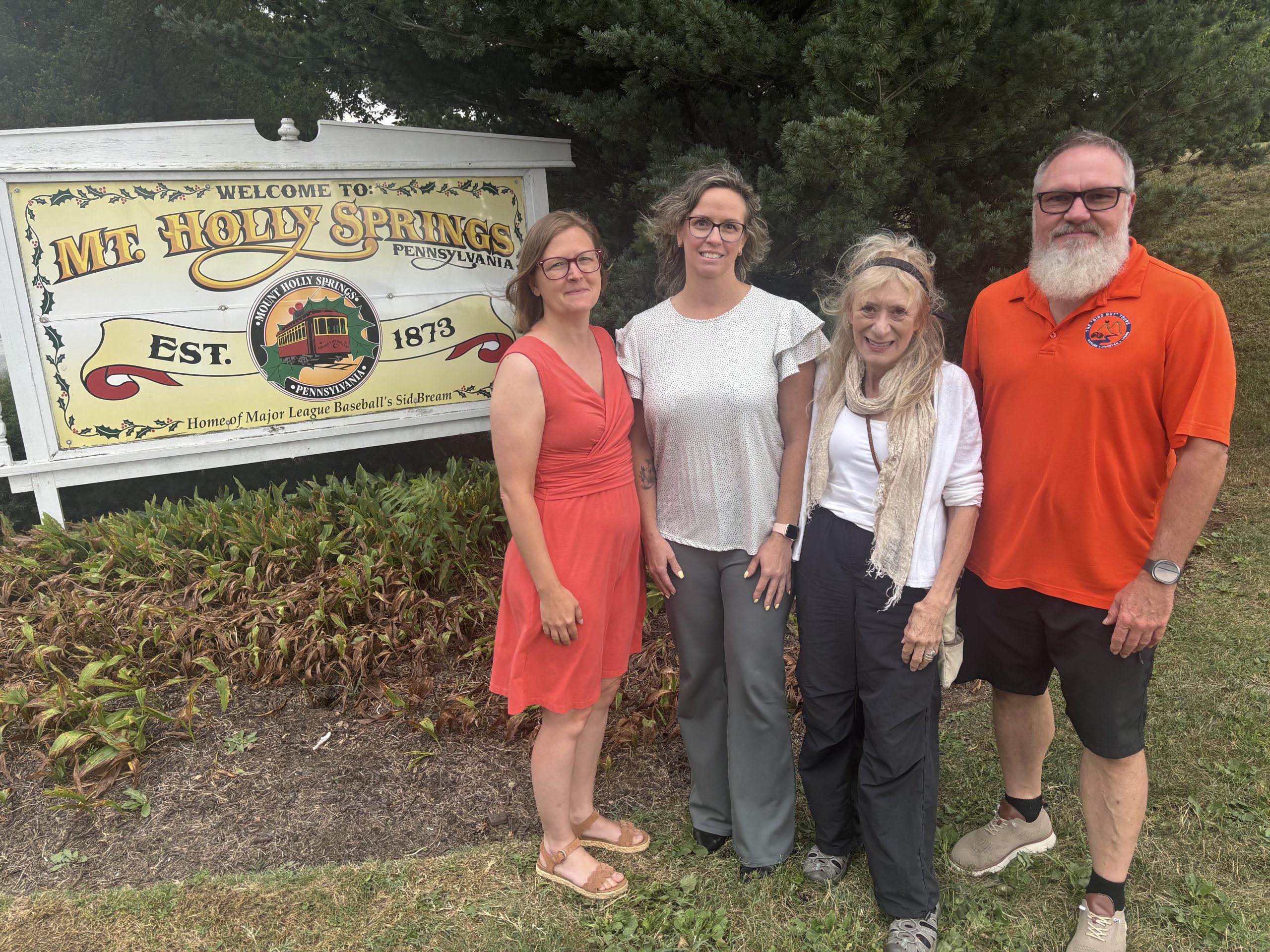
    Some local residents who oppose Mount Holly Springs’ police federal immigration arrests include (left to right) Democratic legislative candidate Jessica St. Clair, precinct leader Mandy Taylor, borough council member Pamela Still, and business owner Andrew Dapkin.Will Bunch

    What’s happened in Mount Holly Springs since the ICE program began this winter feels in many ways like a microcosm of Donald Trump’s America. It’s the rage, distrust, and paranoia that only metastasizes as the demagogue’s fiery campaign tirades get translated into harsh reality at a small-town stop sign.

    But it’s also exactly the chaos that some immigration policy experts warned about when the Trump regime dramatically expanded the 287(g) program, named for a section of 1996 federal immigration law that grants broader immigration enforcement powers to trained state or local police.

    Despite warnings about the potential for racial profiling and seeding distrust in immigrant communities, the number of 287(g) agreements has exploded from a few dozen when Trump first became president in 2017 to more than 2,000 today, with at least 88 on the books now across Pennsylvania.

    Still, the immigration arrest total in tiny Mount Holly Springs, which covers just 1.4 square miles and has a population of fewer than 2,500 residents, seems staggering. As recently as February, there were only 67 monthly immigration arrests by local police across the entire state. But now this one borough is on a pace for nearly 100 arrests in just one year.

    “This is an agenda that’s being driven by numbers for numbers’ sake,” Nayna Gupta, policy director at the American Immigration Council, told me Thursday. “There is an arrest quota that the White House is pushing, and they’re leaning on local police departments to do that work for them” — even as that work paralyzes local immigrants when they learn of increased traffic stops.

    “Communities become afraid to go to the grocery store, to go to work every day, to use public transit, even,” Gupta said.

    There have been festering recriminations in Mount Holly Springs since January, when residents first learned that Day — seen as a local power broker because of his dual role and his close allies on borough council — had signed the paperwork with ICE to become a 287(g) department. A handful of angry residents denounced the plan — revealed at the same time as two ICE-related killings in Minneapolis sparked national outrage. But the lone Democrat on the seven-member board, Pamela Still, failed to get a second on her push to rescind the deal.

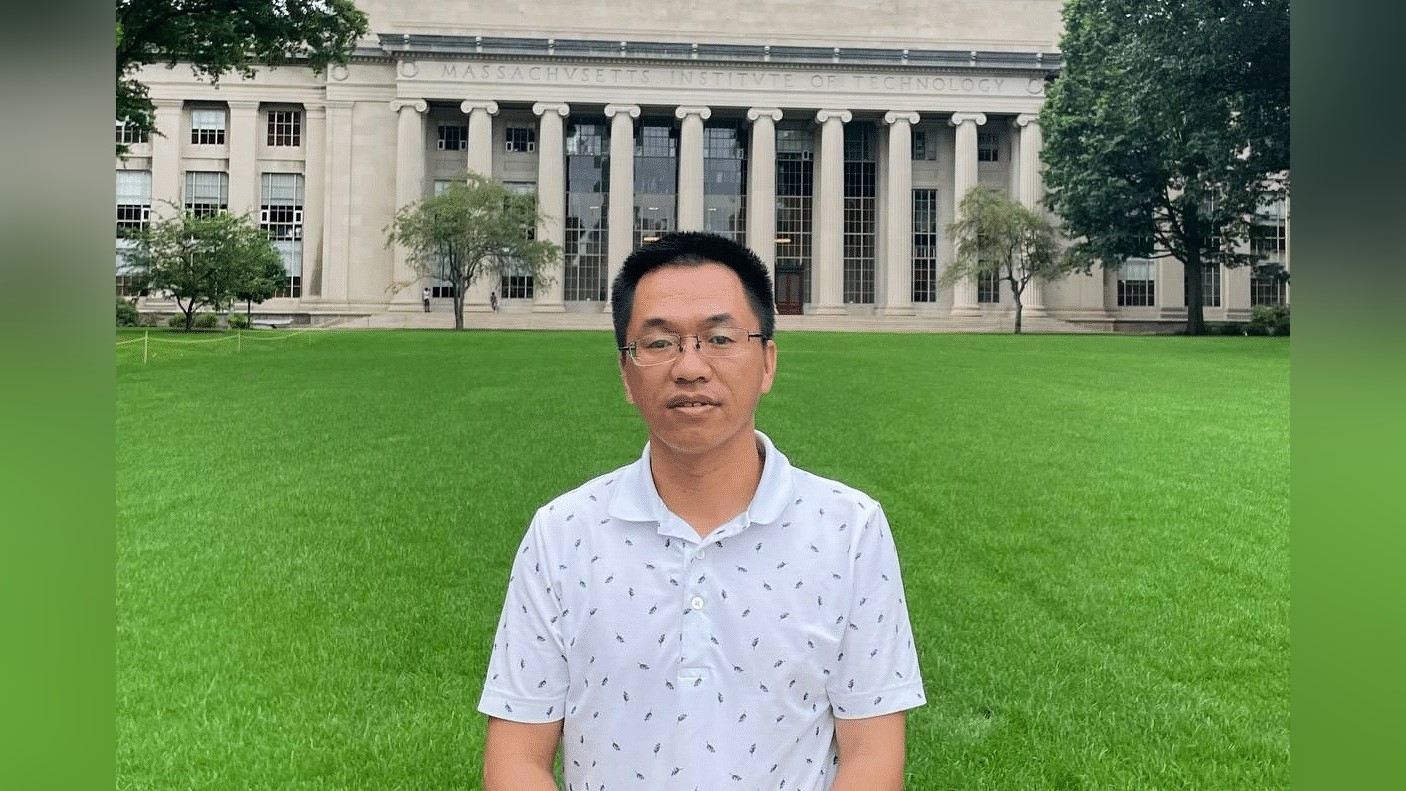
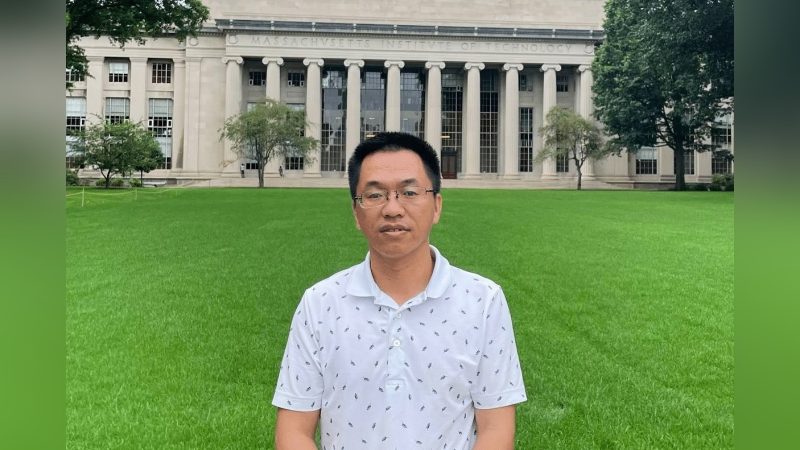
    Human rights attorney Wu Shaoping, on the campus of the Massachusetts Institute of Technology in Cambridge, Mass., in an undated photo, was arrested on July 15 and taken into custody by U.S. Immigration and Customs Enforcement.Handout art

    Trump received just over 62% of the vote in Mount Holly Springs in the 2024 election, although local residents said there are now growing numbers of Latinos and refugees from Nepal who’ve flocked to Central Pennsylvania living in the borough that census data had reported as more than 95% white.

    There is clearly considerable local support — often voiced in angry Facebook comments about “illegals” — for Day and his department’s work with ICE. “You guys are doing the right thing; don’t listen to the childless cat ladies,” borough resident Derek Scheuren told a contentious council meeting in February, as reported by PennLive. He also called undocumented truck drivers “illegal invaders” and offered to buy a beer for any officer responsible for detaining one.

    That would be nearly a half-dozen six-packs, based on Day’s updated tally. We don’t know if Scheuren has made good on that, but then there’s a lot that local officials and residents don’t know. There’s been little to no information about the multiple arrests since March, and while ICE is bringing the detainees about two hours north to Moshannon Valley, next to nothing is known about their fates.

    Locals like council critic Still have also pressed for answers on the carrot of federal dollars that state and local supporters of these 287(g) programs cite as a key benefit. Day only volunteered to me that in addition to federal training of all four borough officers, he has so far put in for just $1,100 in reimbursement for officers’ time on 287(g) stops. But in an email he also sent to local leaders Wednesday, which was shared with me, Day further acknowledged that Mount Holly Springs has received some $130,000 for vehicles and equipment.

    The July 15 arrest of Wu, which drew the attention of the New York Times, the Guardian, and other outlets, has so far brought more questions than answers about what’s really happening with immigration arrests in Mount Holly Springs.

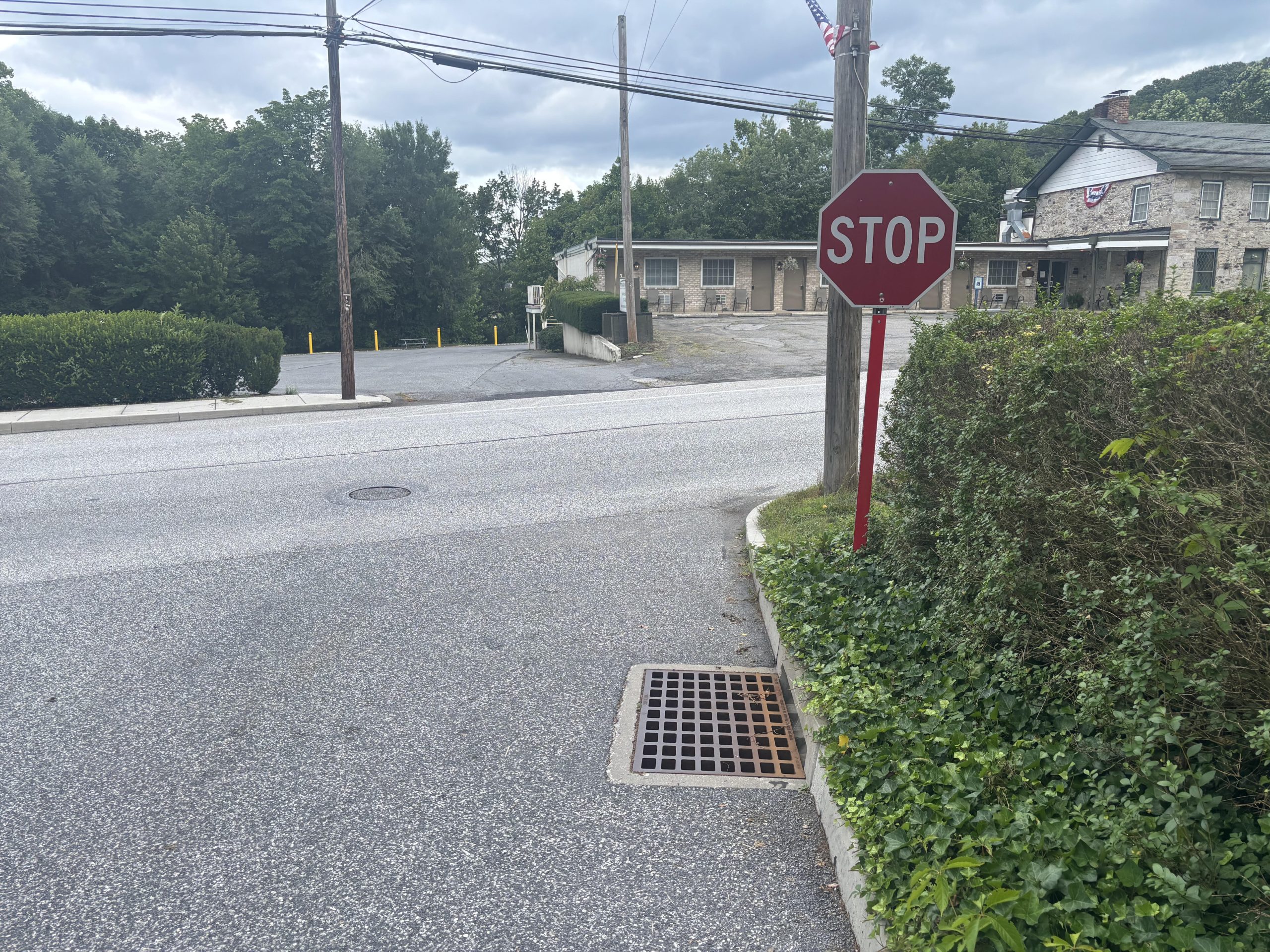
    The stop sign at Hill Street and State Route 34 in Mount Holly Springs, Pa., where Chinese dissident and asylum seeker Wu Shaoping was stopped by a local police officer on July 15. Wu’s arrest sparked controversy over the borough’s relationship with federal immigration.Will Bunch

    Day insists that Wu, making Amazon deliveries in his Toyota Camry, ran the stop sign at the bottom of steep Hill Street and nearly collided with his officer who happened to be patrolling the main drag, State Route 34. The chief said Wu exacerbated the situation by refusing to roll down the window and instead calling his lawyer — causing a commotion that attracted attention from ICE agents who happened to be in Mount Holly Springs doing truck inspections almost right across the street.

    Wu disputed that account to Lancaster Online, insisting that he did stop at the intersection, then rolled a bit forward because of its poor visibility. ICE later said Wu was sent to Moshannon Valley because he’s overstayed his 2020 tourist visa, even though he has an active asylum application and a work permit. He was released on bail after two members of Congress formally complained about his detention.

    Still, Wu’s arrest — along with the high number of other detentions in Mount Holly Springs — has only fueled suspicion among the program’s critics that cops are racially profiling drivers. Day has repeatedly insisted in past comments and in the Wednesday interview that undocumented truck drivers who can’t read English and don’t follow signs about restricted streets and bridges are a danger to the community.

    “I don’t want to sound mean over it, you know, or that I’m not sympathetic,” Day told me. “But they can’t be driving 18,000-pound vehicles and not understand our roadway signs.”

    But local critics say cops working so closely with ICE isn’t making Mount Holly Springs safer — not when immigrants are afraid to shop, landscaping crews that largely employ Latinos have seemed to vanish, and a quaint rural town that seeks outside tourists for trout fishing or bird watching starts getting a bad reputation.

    “A lot of times, it is this overweight thing — going over the bridge on the Pine Street extension or something is what they get pulled over for, and you know it’s like don’t ruin somebody’s life because their truck was packed or because their GPS didn’t tell them,” said longtime local resident Jen Dieter.

    The arrest surge in Mount Holly Springs seems to confirm the fears of immigration experts who’ve found in earlier iterations of the program that immigrants were less likely to call 911 for emergencies or report other crimes. Critics also believe that cops will ignore their public-safety duties to focus instead on immigration arrests, especially as the carrot of federal dollars is dangled before small departments.

    “There’s plenty of evidence and data to show that 287(g) agreements undermine trust in the communities where these agreements exist and are used extensively, because the community becomes less likely to report crimes, or to report instances of domestic violence, out of fear that doing so could translate to detention and deportation,” Gupta said.

    Experts also say what’s happening in Mount Holly Springs may be the future of mass deportation under the Trump regime. While high-profile, publicity-seeking operations like the ones that targeted Minnesota or Chicago are out, ICE is increasingly relying on its 287(g) partners to make arrests without attracting as much public outcry. The wave of arrests in the Pennsylvania borough came as ICE is nationally reporting as many as 1,400 immigration arrests in a day, an all-time record.

    Some longtime residents of Mount Holly Springs are worried that things will never be the same.

    Bear, the shop owner, spoke about moving here 25 years ago and slowly building a community around her business. “This is a small community,” she said. “We all know each other. You know these people that we’re talking about, [that] I’ve done business with. You know, hopefully we’ll do it again. But who knows?”

    “But more than it being about business, it’s about community. And I think this isn’t how I would treat my neighbors.”

  • In Montco data center fight, local officials say a developer has ‘bullied’ them. He says that’s a ‘bold-faced lie.’

    In Montco data center fight, local officials say a developer has ‘bullied’ them. He says that’s a ‘bold-faced lie.’

    The debate over a proposed 2 million-square-foot AI data center in Plymouth Township near Conshohocken has become acrimonious, with local officials and the developer trading accusations of mistreatment.

    Plymouth Township Council Chair Lynne Viscio said Monday that the project’s developer, Brian O’Neill, had “bullied” and “intimidated” township officials in an attempt to gain approval to build the facility on the site of the shuttered Cleveland-Cliffs steel mill.

    O’Neill’s recent efforts have included a legal challenge to the township’s zoning ordinance. Viscio said it was filed after O’Neill “rejected” the township’s concerns and its proposed data-center “safeguards.”

    “This is a blatant attempt by the applicant to demand approval by throwing a tantrum,” Viscio said in a statement, which she delivered during a live streamed appearance by council members, later posted to the township’s website. “The township is not interested in entertaining such theatrics.”

    Reached by phone, O’Neill called the accusations “a bold-faced lie” that were part of a “misinformation campaign” against his planned data center. He said he had been “negotiating in good faith” with township attorneys for months and had agreed to “the majority” of the township’s conditions.

    “We are sympathetic to the fact that they are under tremendous political scrutiny from people outside the township, as well as residents inside the township, and that makes giving a landowner their property rights … challenging,” said O’Neill, a longtime developer in Conshohocken and on the Main Line.

    “However, I am a landowner, and I do have rights,” he added, “and it is their job to be impartial and fair in their analysis and response.”

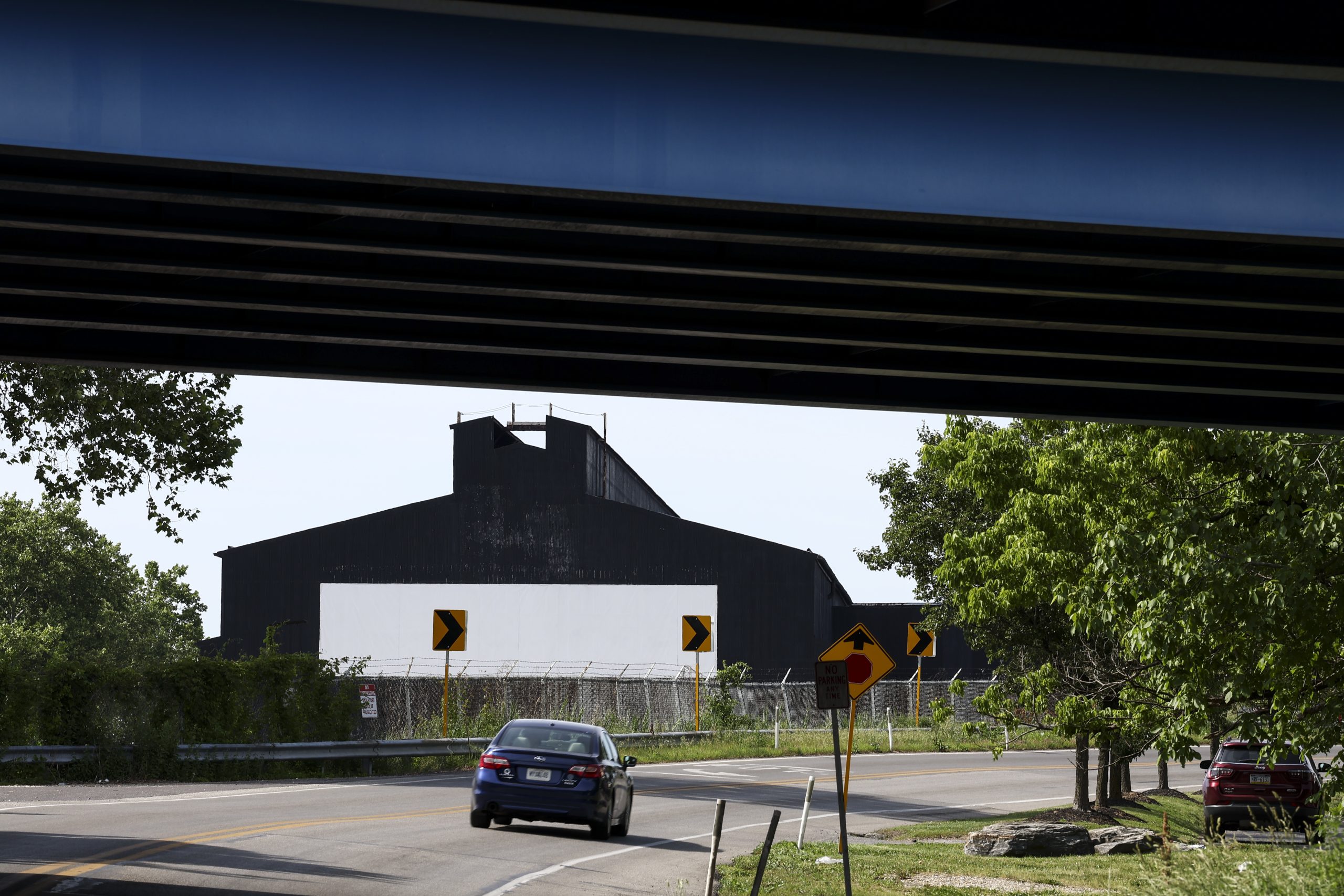
    The closed Cleveland-Cliffs steel mill is seen last month outside Conshohocken.Monica Herndon / Staff Photographer

    Hyperscale data centers, such as the one O’Neill is proposing, house the energy-hungry technology that powers ChatGPT and other artificial intelligence tools.

    Several such facilities have been proposed in the Philadelphia region amid surging AI demand and a global boom in data-center development. Two are under construction — an Amazon data center in Falls Township, Bucks County, and a facility in Vineland, Cumberland County, that is set to power Microsoft’s AI tools.

    On the outskirts of Conshohocken, O’Neill and his team have spent nearly a year trying to get the green light for a data center at the 66-acre property along the Schuylkill. Last fall, they abruptly withdrew their original proposal due to legal issues. In May, they resubmitted the plans for a center that would span 10 existing buildings.

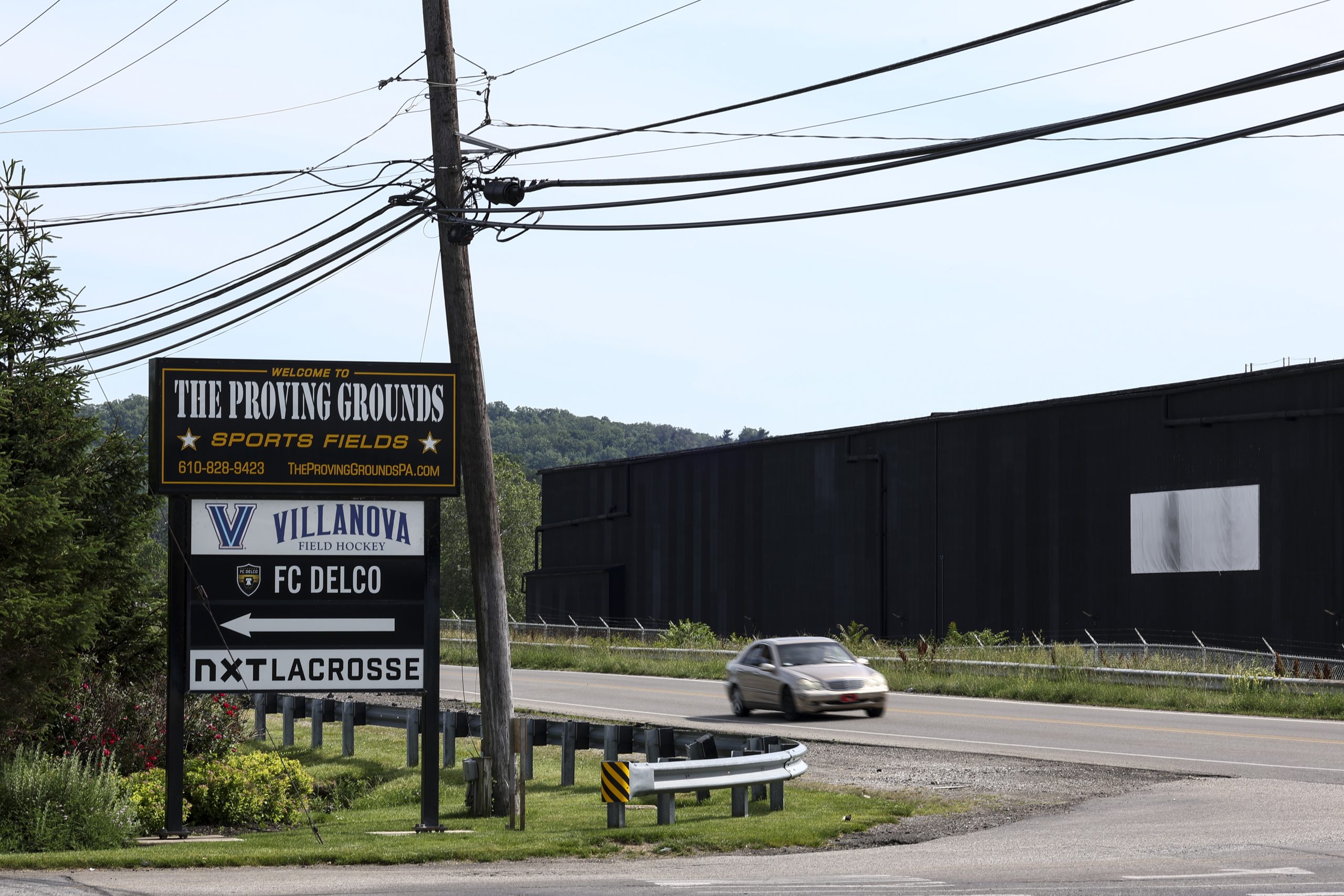
    The Plymouth Township site is less than a mile from downtown Conshohocken, near the Proving Grounds sports complex, Tee’s Golf Center, and dozens of homes in the township’s Connaughtown section.

    The closed Cleveland-Cliffs steel mill where Brian O’Neill wants to build a data center is shown in June.Monica Herndon / Staff Photographer

    O’Neill has not said who would operate the center but has indicated it would be a tenant related to the life sciences.

    An initial zoning hearing board meeting on the resurrected Plymouth Township project was held last month. As of Monday, a more substantive hearing was scheduled for Aug. 6 and was set to include the presentation of evidence and testimony.

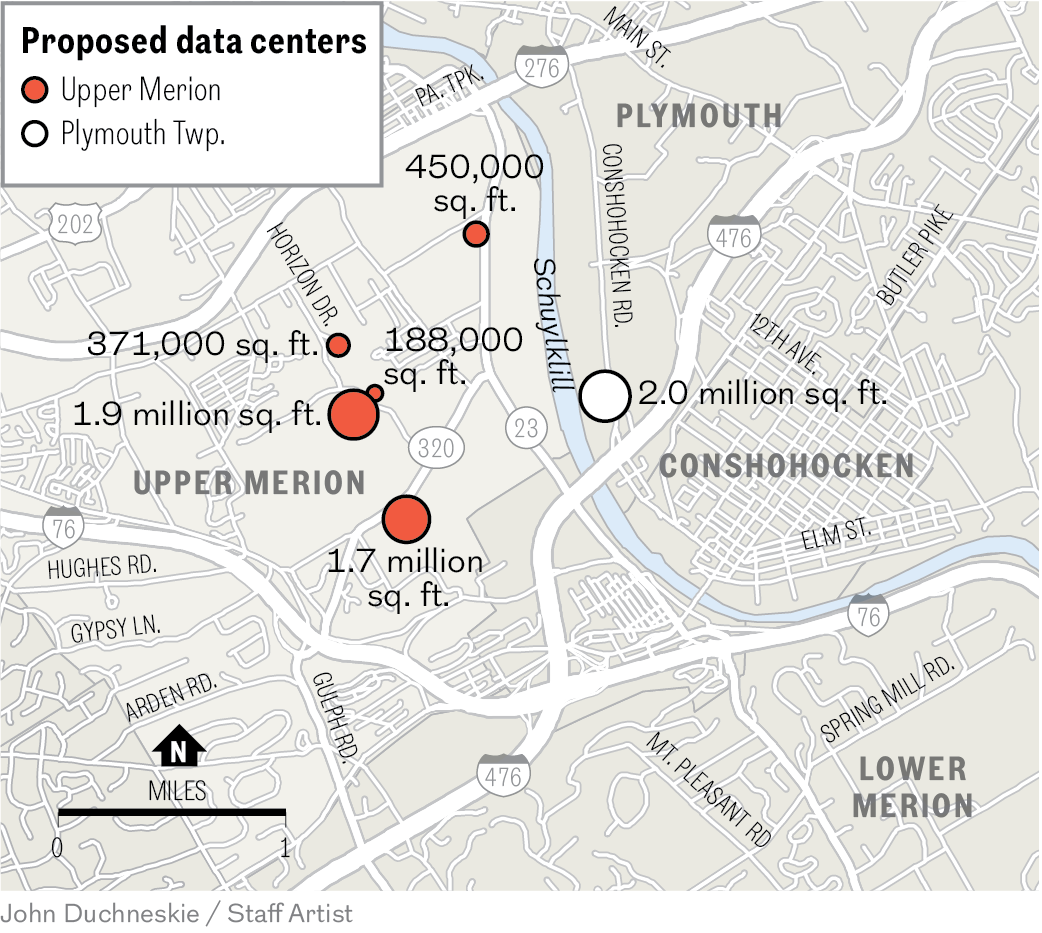
    The Plymouth Township project is one of six data centers that O’Neill is proposing in the area. Across the river in Upper Merion Township, where O’Neill’s MLP Ventures already has offices and labs, the developer has proposed a 4.6 million-square-foot data center campus spanning five properties.

    The proposed data centers in Upper Merion and Plymouth TownshipsJohn Duchneskie

    After a tense Upper Merion Township Planning Commission meeting last week, officials there voted not to recommend approval of three of O’Neill’s five plans. A hearing on the other two Upper Merion plans is set for Aug. 12.

    After the planning commission reviews all the applications, the Upper Merion Township Board of Supervisors will ultimately decide whether to approve the projects.

    In both Upper Merion and Plymouth Townships, some residents have rallied against the plans, packing township meetings, signing online petitions, putting anti-data-center signs on their lawns, and organizing on social media. They have cited concerns about light, noise, and air pollution; water usage; and electricity costs.

    A yard sign protests the proposed Plymouth Township data center.Monica Herndon / Staff Photographer

    On Monday, O’Neill reiterated that his Plymouth Township data center would make little noise, emit no light pollution, and operate on a closed-loop system that does not require outside water. He said it would generate its own power, not taxing the grid, and generate “billions of dollars in employment and economic development.”

    “I am shocked that [the township council] can in good conscience not promote my plan, let alone publicly oppose it,” given office vacancies in the area, O’Neill said. In the past, “our developments have helped to create the vibrant community that Conshohocken and Plymouth are today.”

    Viscio, the Plymouth Township Council chair, said that local officials wanted to ensure that O’Neill’s proposed data center improved residents’ quality of life — and that O’Neill’s efforts could prevent them from doing so.

    “We will not allow ourselves to be bullied or intimidated by any developer,” Viscio said. “We will not dismiss legitimate concerns raised by our residents.”

    She said the council would continue to oppose O’Neill’s application and his challenge to the zoning ordinance.

    On Monday afternoon, O’Neill called back a reporter with an additional message for Plymouth Township officials: “We’re always willing to make a deal if they want to sit down and talk.”

  • A coffee shop hidden inside a Vineland library creates opportunity for adults with disabilities

    A coffee shop hidden inside a Vineland library creates opportunity for adults with disabilities

    It wasn’t until Noel Perez vented on Facebook that he was able to help his son, Victor Perez, find a job in South Jersey.

    Noel Perez, 42, of Vineland, Cumberland County, said local employers expected Victor Perez, 19, to donate his time rather than get paid. Because his son is a student with autism in the Salem County Special Services School District, Noel Perez said people wanted him to just be a volunteer.

    But his social media post led to the suggestion that Victor Perez apply for a role at Inclusion Cafe — a new nonprofit coffee shop tucked away in Vineland Public Library employing adults with disabilities.

    “I love it so far,” Victor Perez said. “I go in and clock in, get my apron. … I like the caramel hot coffee.”

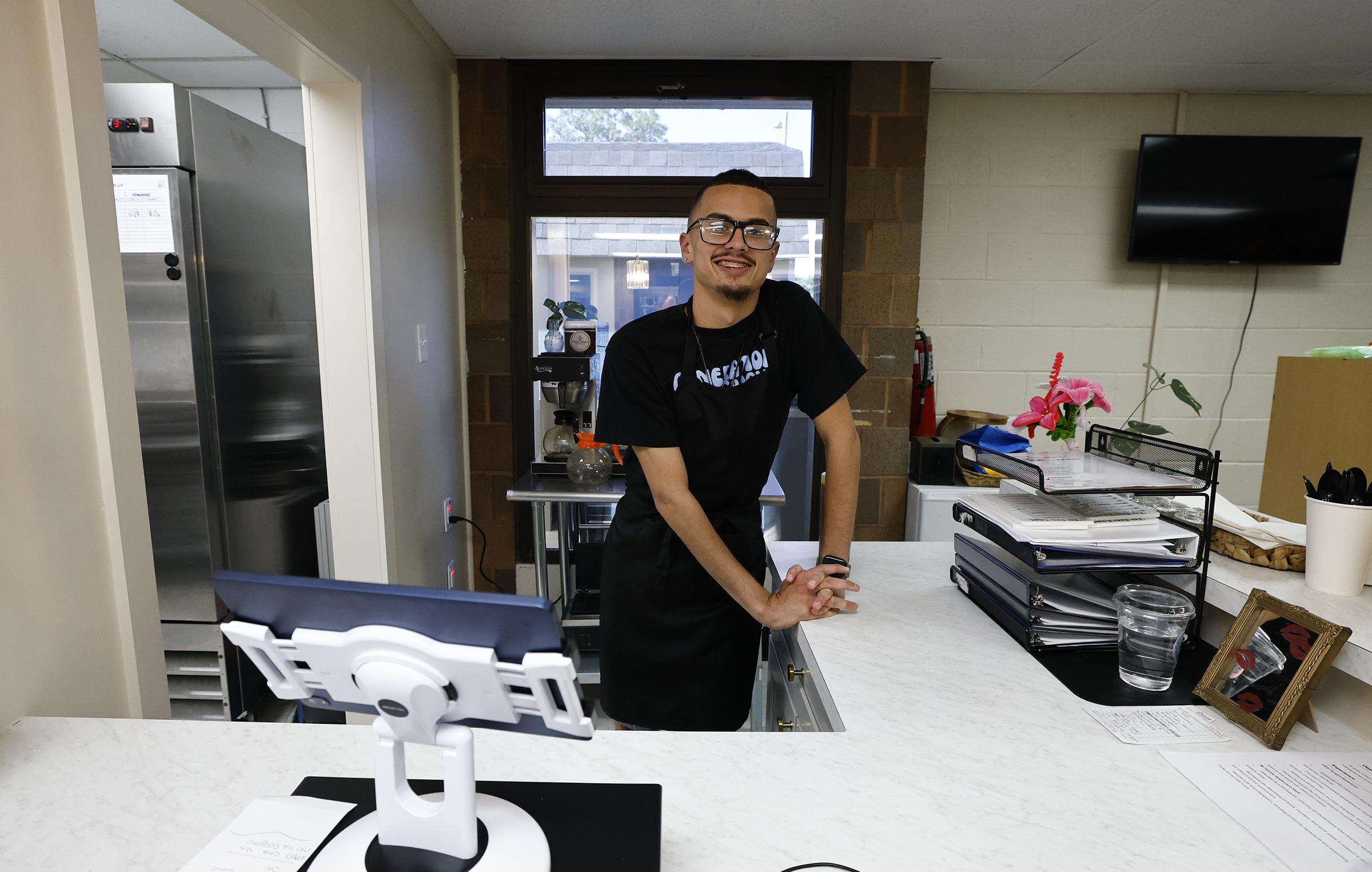
    Barista Victor Perez,19, at the Inclusion Cafe inside the Vineland Public Library in Cumberland County, N.J. on Thursday, July 23, 2026. The cafe seeks to create jobs for adults with disabilities in a supportive environment.Yong Kim / Staff Photographer

    Inclusion Cafe at 1058 E. Landis Ave., which opened in early May, is an offshoot of Inclusion Coffee Shop in Elmer, Salem County, which opened in 2022.

    The cafes were founded by Amanda Vellon, 38, who grew up in Vineland and now lives in Elmer. Both focus on career development for adults with disabilities, and Vellon said the coffee shops have hired 15 staff members with disabilities and seven without. Vellon said employees make $16 an hour, plus tips.

    Victor Perez said he’s made five friends on the job since he started in May and works about two-and-a-half days per week. He said he likes when the nonprofit features him in TikTok videos.

    “It’s inviting for people like Victor,” Noel Perez said. “It gives him opportunity and chances for people to interact with him and for him to interact with people.”

    In 2021, after a surprise pregnancy, Vellon found out her son had a heart defect during an ultrasound appointment, and later Down syndrome at 32 weeks. Vellon said the diagnosis brought on “a roller coaster of emotions,” and she wanted to find a way to spread joy and keep people from feeling scared about their children’s futures.

    “My husband said, ‘We want to own a restaurant. Why don’t we try a coffee shop?’” Vellon said. “After some thought, I said, ‘Let’s do it, but let’s do it with a purpose.’”

    Vellon’s son, Rome, is 5 years old now. The Elmer location, a business at 119 S. Main St., has kept on, and after registering Inclusion Cafe as a community and economic development nonprofit in 2025, Vellon moved to work with Vineland Mayor Anthony Fanucci and other officials to incorporate the coffee shop there.

    “The Inclusion Cafe is about creating opportunities and making sure everyone in our community feels welcome and valued,” Fanucci said in an emailed statement. “The Vineland Public Library has always been a place where people come together to learn, connect, and access important resources, so it was a natural fit for a program that promotes inclusion and independence.”

    Luis Amberths, business manager at Vineland Public Library, said the library serves about 600 people every day. As a community hub for Vineland’s 60,000 residents, staff have been seeking ways to expand its services, including in the form of an esports room. The new cafe was a mutually beneficial way to expand upon those offerings, Amberths said.

    Despite the cafe leasing a nontraditional space toward the back of the library, Amberths said customers are still finding their way there and checking out books, too.

    “In spite of all that, it’s being found. … We were pretty busy already because of what we offer and the programming we have, but it’s been tenfold because of what [the cafe] has done,” Amberths said.

    The coffee shop offers coffee flights, specialty lattes, homemade syrups, and breakfast items, influenced by what Vellon’s own children like. Rome’s favorite, a plain bagel with cream cheese, made the cut. Staples from her two other kids, including a bacon, sausage, egg, and cheese on a strawberry bagel with strawberry jam, are featured, too.

    “I was very anxious before opening. … It’s not a storefront. We don’t necessarily have foot traffic. It’s not very visible to the road,” Vellon said. “I had a lot of reservations, but none of that has stopped the community from coming to support us.”

  • Wu Shaoping escaped China’s repression, only to get busted by ICE in Pa.

    Wu Shaoping escaped China’s repression, only to get busted by ICE in Pa.

    Seven years ago, the walls were closing in on Wu Shaoping in his native China.

    Like a firefighter who rushes into a burning building, attorney Wu had watched China’s repressive Communist Party arrest scores of human rights lawyers under a crackdown that began in 2015, and responded by joining their dangerous cause, representing practitioners of Christianity or the Falun Gong sect.

    “It is simply a duty of my profession, part of my responsibility, to uphold the legal right of every person,” Wu said in a 2023 video urging his fellow Chinese to quit the Communist Party, or CCP. “It’s one of the things we should do as lawyers.”

    In late 2019, China’s totalitarian government began arresting human rights advocates who’d attended a secretive conference in the southern city of Xiamen and charging them with subversion of state power. Wu was at that confab, and — fearing he’d be next — he fled with his wife and young daughter to a place that had offered a safe haven to so many Chinese dissidents: the United States.

    Wu’s family traveled to New York on a tourist visa, and before that expired, the attorney applied for political asylum. As his case lagged in the clogged U.S. immigration courts, Wu built a life in his new country.

    In 2023, the family moved to a more affordable town just outside Lancaster and joined a local Chinese Christian church, while Wu’s daughter enrolled in Hempfield High School. Wu supported them by driving for Uber, delivering packages for Amazon, and trying his hand at construction work. But he also built up his connections with the diaspora of Chinese dissidents while using his newfound free speech to speak out against the CCP.

    It took just one traffic stop in Donald Trump’s America to turn everything upside down.

    On July 15, Wu was making Amazon deliveries in Cumberland County, Pa., when a local police officer pulled him over and later placed him in the custody of U.S. Immigration and Customs Enforcement. Despite having a work permit and an active application for asylum — which should have shielded him from deportation — Wu was quickly sent to ICE’s notorious Moshannon Valley Processing Center in Northwestern Pennsylvania, which has been criticized for squalid conditions.

    Wu’s arrest and detention have stunned and demoralized the close community of Chinese political refugees on U.S. soil, who for years have faced harassment here from agents and allies of Xi Jinping’s dictatorship. Now they find themselves fighting on a second front as the reality sets in that the U.S. government they saw as their protector is no longer a reliable ally.

    “The CCP is the ultimate source of fear, whereas the threat of being detained by ICE like this is more kind of imminent, immediate,” Zhou Fengsuo, who’d been jailed as a student leader of the 1989 Tiananmen Square uprising and gained asylum and U.S. citizenship after fleeing here in 1995, told me on Wednesday.

    But Wu’s arrest is also a powerful symbol of an inhumane mass deportation policy that has become a mindless and lawless machine of evil banality. It is sweeping up all kinds of refugees to fill its gulag detention quota, without any thought to why its victims have come to America or preserving the U.S. legacy as a safe place for the world’s stateless dissidents, which is getting permanently destroyed by this meat grinder.

    How can anyone possibly make sense of the twisted logic of the Trump regime, which in arresting Wu has targeted an outspoken critic of communism and the Chinese government — the same government the president has just accused (with no evidence) of attacking our elections.

    But locking up an asylum-seeking Chinese dissident is no less illogical than the Minnesota ICE raids against the Hmong people who came here after aiding the CIA in Laos in the 1960s and ‘70s, or the detention of Afghan nationals who worked with U.S. troops after 2001, or so many others who thought America offered them safety. Instead, there is terror — not just for the detained and their families, but for those who fear they could be next.

    “I came here not only for my freedom, but for the freedom of other Chinese people,” Wu said this week in a conference call from the Moshannon Valley lockup that was translated into English by a dissident friend and reported by Lancaster Online. He added that he shouldn’t have been arrested because “America is a country built on the rule of the law.”

    Well, it was supposed to be.

    Wu’s passion for fighting injustice has burned since he was a teenager and took a year off from his studies in 1997 to leave his rural home and earn some money by working in bustling Shanghai. The cramped, filthy back alleys where factory workers lived looked nothing like the thriving communist state he’d learned about in school. He started tracking down banned books, where he learned the truth of the 1989 Tiananmen Square massacre that the government had lied about when he was in third grade.

    “It was upside down,” Wu said, as translated in the 2023 video. “They lied to the world and praised themselves, making the butcher the sweetest person in the world.” He said his dissatisfaction with China’s regime only grew after he became an attorney and witnessed rampant bribery, or saw residents whose homes were getting demolished for new projects get beaten by police when they tried to complain.

    The turning point was a date that’s little known to most Americans but holds great significance in the Chinese dissident community: July 9, 2015. More than 300 human rights lawyers and activists were detained in a government crackdown that launched that day, while others lost their law license and have been subjected to harassment.

    That’s also when Wu stepped up his legal representation of clients targeted by the regime — especially those facing persecution for their religious beliefs in the officially atheist nation. That’s how he came to be one of roughly 20 pro-democracy activists who attended the private December 2019 meeting in Xiamen, and why he fled when two prominent attendees were arrested, and others felt they were in the crosshairs.

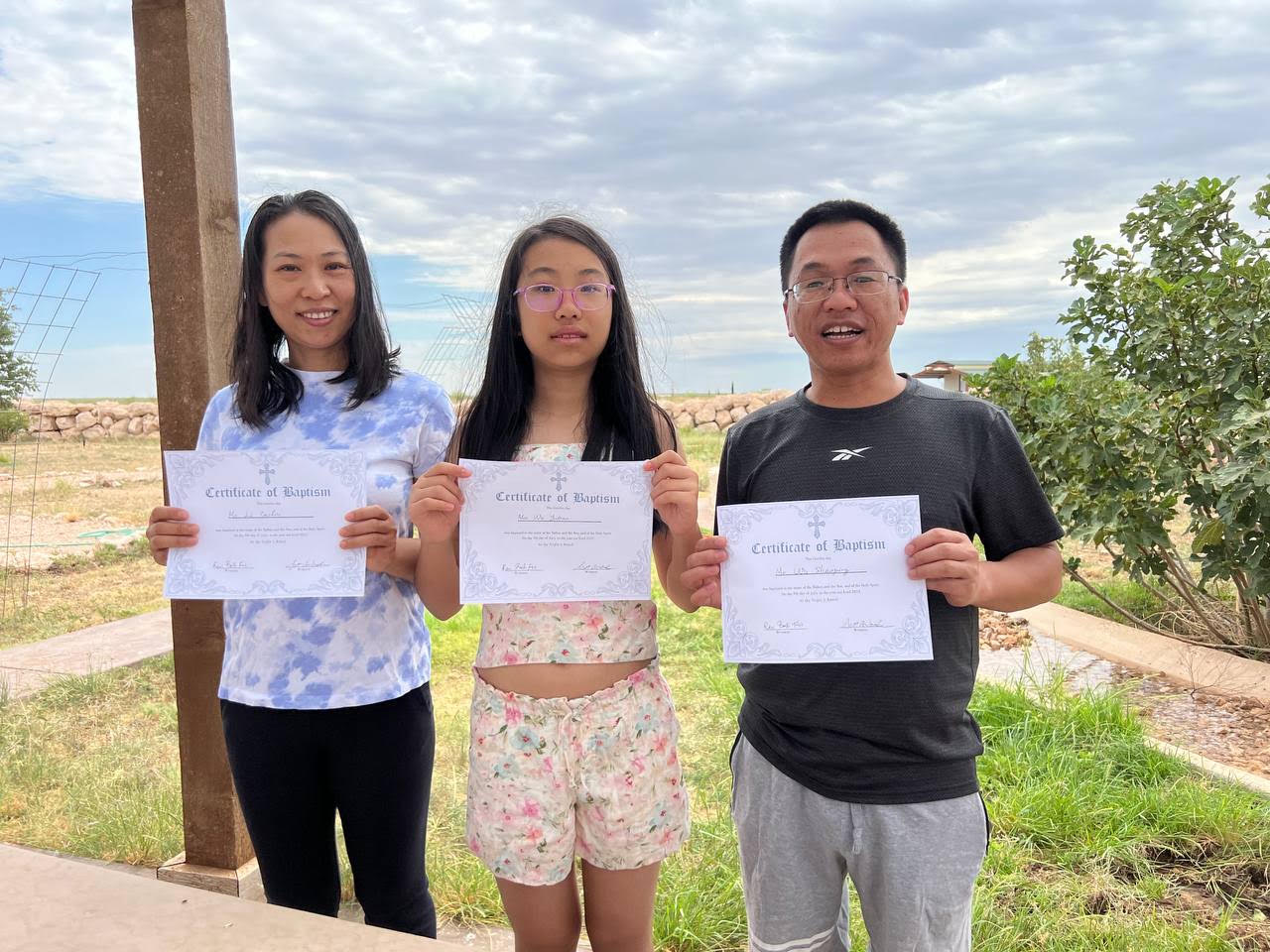
    Wu Shaoping (right), his wife Li Caoliu, and their daughter after their 2022 baptism in Texas. Handout art

    Wu’s life in America with his wife, Li Caoliu, and their daughter, now 17 and entering her senior year at the Lancaster County high school, has been divided between his quest for a normal family life and his tireless political activism. He helped found the Overseas Chinese Human Rights Lawyer Alliance — refugee attorneys who continue to advocate for the rule of law in their homeland.

    The family converted to Christianity in 2022, and joined the Chinese Bible Church of Lancaster after moving to Pennsylvania. The pastor there, the Rev. Daniel Luo, described his congregant Wu as a busy man who nonetheless would drop everything to drive cancer-stricken Chinese children from New York City airports to a hospital in Hershey.

    “He was so inspired by these persecuted Christians that he represented, and he felt a conviction to follow Christ,” said Wu’s close friend, the Rev. Bob Fu, the leader of the Christian diaspora group China Aid, who baptized the entire family during a 2022 retreat.

    Big changes were happening for Wu — except for his asylum case, which stalled as the surge at the southern border in the early 2020s slowed immigration courts to a crawl.

    The details of what happened when Wu was stopped by police earlier this month remain somewhat murky. Wu’s attorney in Montgomery County, John C. Visher, didn’t return calls or emails, but he’d previously told the New York Times that Wu was pulled over by police in Mount Holly Springs, Pa., while making his Amazon deliveries, and informed the officer of his work permit and his pending asylum application. But the officer called in ICE, whose agents detained Woo and eventually shipped him to Moshannon Valley.

    An ICE spokesperson claimed last weekend that Wu lacks legal status and had overstayed his visa by six years. Advocates find the arrest baffling and are hopeful the case can be resolved in Wu’s favor in a scheduled hearing before an immigration judge on Monday.

    His plight has gained support from two members of Congress — Republican Chris Smith of New Jersey and Democrat James McGovern of Massachusetts, who said in a letter to Homeland Security Secretary Markwayne Mullin and Secretary of State Marco Rubio that Wu “would face a severe risk of persecution — including detention and harsh punishment — if returned to China.”

    Fu said that on this week’s call from Moshannon Valley, his friend was grateful for the support, but “he’s very, very nervous, very concerned about the possible deportation.” His friends and allies agree that returning Wu to China would ensure the arrest he thought he’d avoided when seeking asylum in the United States.

    But he’s already been arrested, in a nation where the beacon of democracy has nearly died out.

    This man who has done absolutely nothing wrong is behind barbed wire walls in his adopted homeland, in a detention center where others have complained of rotten food and medical neglect. The irony is painful: Trump’s increasingly senseless human rights nightmare has totally lost the plot.

  • A real estate developer has sued a South Jersey township for $300 million over its data center ban

    A real estate developer has sued a South Jersey township for $300 million over its data center ban

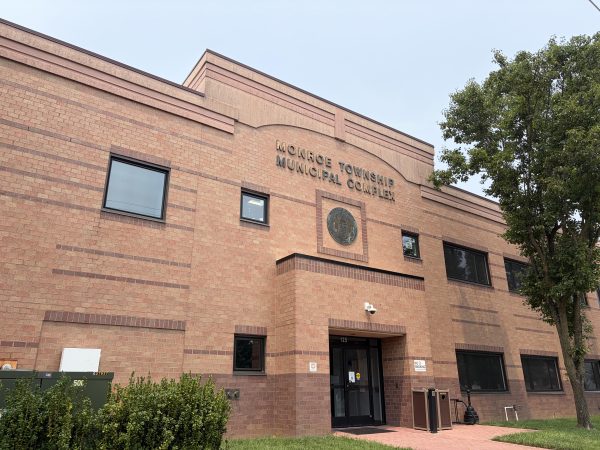
    A real estate developer sued local officials in Monroe Township for $300 million shortly after the Gloucester County municipality banned data centers. Now, the case has moved to federal court.

    Hexa Builders, a Princeton-based real estate developer, has long sought to develop a property at 3043 Black Horse Pike. Hexa filed a lawsuit on June 5 in New Jersey Superior Court after Monroe officials denied its application to build a 1 million-square-foot data center and a warehouse on the property.

    The ban, put in place by two ordinances approved by the township on April 22, followed months of public outcry against Hexa’s potential project. Even after the ban was passed and officially took effect on May 13, Monroe Township residents packed the room when Hexa presented its application that still included a data center at a rowdy Special Planning Board meeting on May 22.

    In the filing against Monroe’s mayor, township, and planning board, Hexa claimed the application rejection and data center ban are arbitrary, violate freedom of speech rights and the 14th Amendment, and more. The Woodbury Warbler, a local news site, reported on the filing last month.

    Jim Maley, Hexa’s lawyer and a partner at Maley Givens in Collingswood, said he expects the ban to be overthrown, since he believes the ban in Monroe stems from trending public disdain for data centers.

    “Nobody is giving any testimonial, any scientific reasons for the good of the community. Everybody’s doing it,” Maley said. “It’s just a thing.”

    Debate around data centers, which opponents claim will lead to environmental problems and noise, are not new in South Jersey. A massive data center in Vineland is set for completion by the end of the year, while Medford Township passed an ordinance banning data centers in June. Millville in Cumberland County banned large-scale data centers in May after promotions for a new 66-acre “Millville Energy & Data Center Campus” circulated online. Cherry Hill‘s council scheduled a public hearing for July 27 to potentially adopt a ban across the township.

    For now, Maley said Hexa is at a standstill. But the company still wants to complete the project, even with the public’s pushback and what could be a lengthy court process.

    On July 6, the township moved for the case to be pushed to federal court, closing the Superior Court case, and no federal proceedings are on the docket yet.

    “The Township is committed to vigorously and zealously defending this lawsuit while remaining steadfast in its commitment to protecting the interests of the Township, its residents, and its taxpayers,” said Sandra Graise, solicitor for Monroe Township, in an email.

    Graise declined to further comment on the case or the data center ban, but the township wrote in a Facebook post last month that the lawsuit wasn’t a surprise.

    How the ban came to be

    Hexa, led by CEO Dipal Patel, officially obtained the property in a $5 million transfer of about 170 acres of farmland back in 2022. The township has included that land in a resolution for commercial redevelopment since 2019.

    The site was previously approved for the construction of hundreds of homes when Hexa bought it, Maley said, but the township ended up moving in a different direction. In 2022, the township approved a redevelopment plan that set the grounds for Hexa to build warehouse, storage, and distribution facilities on Black Horse Pike, but not data centers.

    That changed in early 2025, when the township passed an ordinance amending the redevelopment plan to allow data centers.

    It didn’t take long for residents to speak out about the impact a data center could have on water quality, pollution, and noise in their neighborhoods, even before Hexa officially added a data center to their plan.

    A planning board meeting in January 2026 dragged on for more than four hours because of resident objections, but the township still voted to approve a preliminary site plan for Hexa to move forward with its warehouse and distribution center project. The proposal didn’t include a data center at the time, though the lawsuit filed in June claims that Hexa had already expressed interest in developing one, and residents made it clear they weren’t fans of the possibility.

    The township drafted an ordinance in March to set standards for data centers, including noise restrictions and a closed loop cooling system to avoid groundwater withdrawal, but that ordinance was tabled and never moved forward.

    Instead, in April, Monroe passed two ordinances: one banning data centers altogether, and another repealing the 2025 ordinance that allowed data centers on Hexa’s property.

    “At the end of the day, this Township has now banned any data center use from ever coming to Monroe Township. I thank those residents who attended the many meetings and expressed their concerns. The process worked,” Mayor Greg Wolfe wrote in a May township newsletter.

    Two weeks before the ban was adopted, though, Hexa’s legal complaint claimed it submitted an amended application to the township to turn one of its proposed warehouses into a data center.

    Maley said the amendment was driven by “interest from the marketplace that began before Township passed the ordinance” that allowed data centers at 3043 Black Horse Pike last year.

    When Hexa sought approval for the new application on May 12, the township deemed the company’s application incomplete, prompting Hexa’s lawsuit.

    The lawsuit

    The $300 million sought by Hexa Builders accounts for financial losses related to the stunted data center project, Maley said.

    “The damages all come from real, actual commercial realities here. … It’s the loss of the value of the project,” Maley said.

    In its 102-page complaint, initially filed in Gloucester County court on June 5, Hexa claimed that Monroe violated the 14th Amendment by treating Hexa’s plan differently from similarly sized projects, like warehouses and other high water usage facilities, that it claims would have similar environmental and aesthetic impacts.

    Hexa also claimed that banning data centers violates the First Amendment and free speech rights, since the facilities could support artificial intelligence and social media communications in the area.

    Maley said the data center ban will have “an adverse effect on communications,” and the argument is an effort to adapt constitutional law to today’s tech.

    “Data centers are a medium of expression and banning data centers would impose a significant burden on the free speech rights of all citizens in the United States,” the complaint reads.

    Those are just some of the 20 counts alleged by Hexa, including that the township didn’t give the company ample notice of its ban as it prepared data center plans. Monroe Township officials have publicly shared their intention to keep mostly silent on the litigation as the case moves forward.

    Some residents have continued to speak out at meetings and ask questions about potential loopholes in Monroe’s ordinances to ensure their neighborhoods remain data center-free.

    At the township’s planning board session on July 9, Williamstown resident John Romano asked who allowed Hexa’s application to get so far in the first place, and whether Monroe will be able to hold a case against Hexa in court. He said the data center would be right in his backyard.

    “I’d like to sit out in my backyard and enjoy a stogie and a cold one and not hear noise and pollution and this and that,” Romano said. “I would like to be able to stay in Monroe Township, live out my golden years here, which was the plan. This has got my wife and I really concerned.”

  • What are South Jersey farmers doing to remedy lost crops? GoFundMes, bigger pumpkin patches, and higher prices

    What are South Jersey farmers doing to remedy lost crops? GoFundMes, bigger pumpkin patches, and higher prices

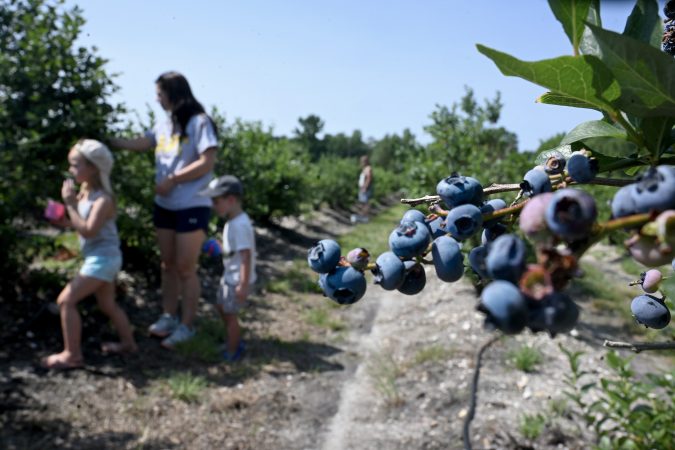
    Cynthia Martini of Mantua Township visits Mood’s Farm Market every year to pick blueberries. During a typical summer, she collects 40 pounds of them. She used to bring her kids, but now that they’re older, she goes solo.

    Her routine on June 30 didn’t look much different from the last 25 years. On a hot morning, she picked two Tupperware containers of blueberries in paint-streaked shorts.

    “In an hour I picked 10 pounds,” Martini said. “So not bad.”

    But rather than harvesting in the farm’s designated pick-your-own area, Martini kept to to an area typically reserved for staff.

    Mood’s, a 180-acre fruit farm in Elk Township, Gloucester County, opened the off-limits fields as one strategy to survive the summer after a spring crop freeze destroyed about two-thirds of its blueberries and all its cherries, plums, nectarines, pears, and peaches. The farm will likely have only a handful of healthy apples come fall. That means no apple hayrides, even though pick-your-own operations are one of its primary revenue streams. A skeleton crew is working the land rather than a full staff, and it’s taking workers longer to pick fruit since there’s less on the bush.

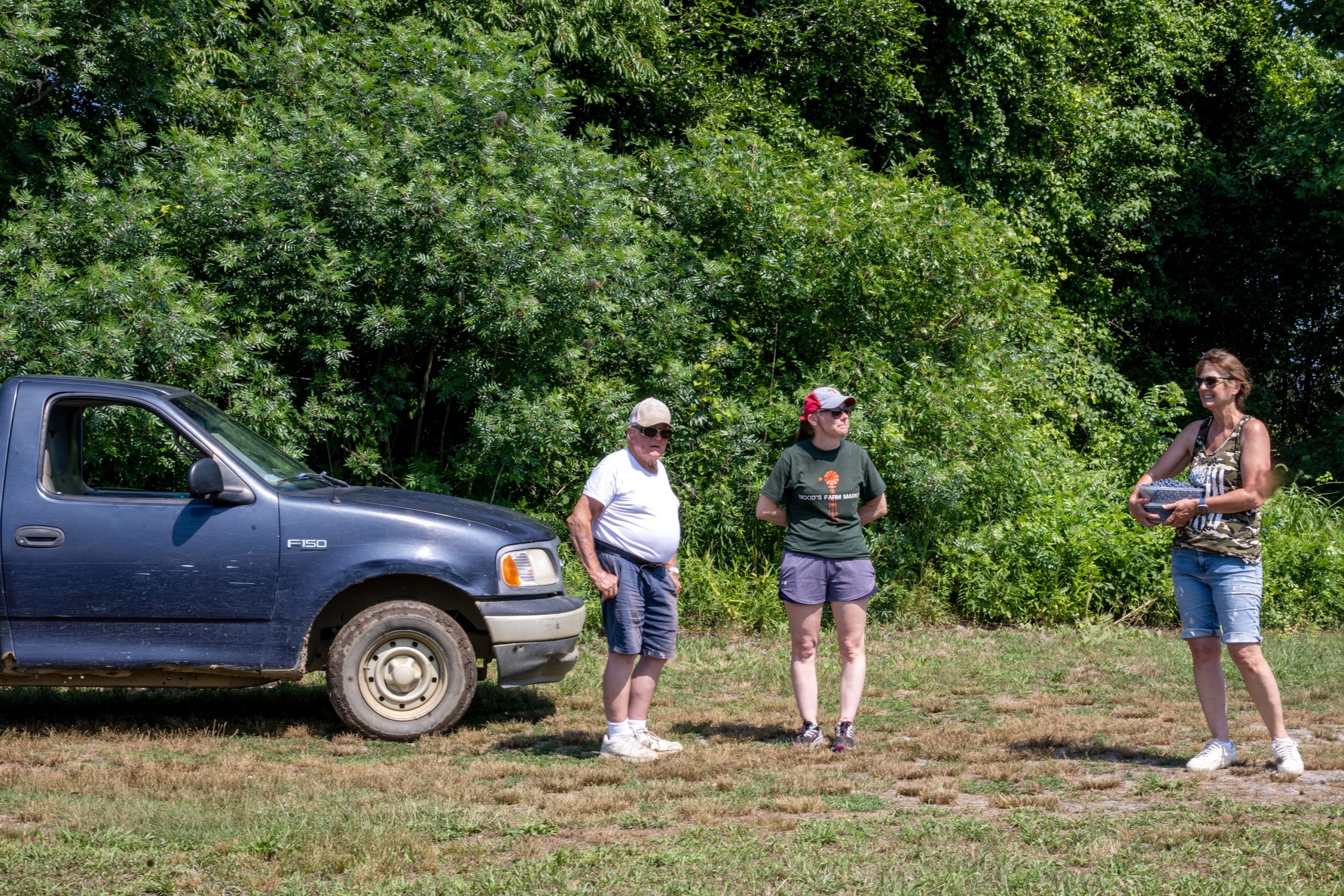
    After picking her own blueberries, Cynthia Martini (right) of Mantua talks with owners Richard Mood and daughter Patti Mood at Mood’s Farm in Gloucester County on June 30. Tom Gralish / Staff Photographer

    The Elk farm isn’t alone. The freeze destroyed large swaths of fruit crops across the Northeast after temperatures rapidly dropped and spiked again in April. In May, New Jersey officials estimated losses of at least $300 million. A month later, the Garden State, which has nearly 450,000 acres of cropland, secured a disaster declaration that made farmers in all 21 counties eligible for emergency federal loans.

    But South Jersey farms like Mood’s are getting creative to survive a summer with depleted income and damaged crops. From promoting frozen fruit to temporary closures to raising prices, here’s how farms are keeping on.

    Spend less and plant more

    Rowand’s Farm, a 20-acre sweet and sour cherry orchard in Glassboro, Gloucester County, is going through unprecedented circumstances.

    Stephen Rowand, the farm’s third-generation owner, said he’s usually excited when a spring frost arrives, since the cold weather thins out the fruit and produces larger cherries.

    “This season is unique for us as a first with NO CROP at all,” Rowand said via Facebook Messenger. “No income.”

    Rowand decided to close the farm, but that hasn’t meant time off. To ensure the orchard blooms next season, the farm still needs mowing, irrigation, fertilizer, and trimming, and without the ability to hire farmworkers. Rowand, 60, is doing all that work himself through extreme heat. He said he’s currently living off his retirement savings and might have to get a job in the offseason next fall. He’s trying to stay frugal by avoiding vacations and eating out.

    But Rowand has managed to find some solutions to survive.

    To make sure they stay fed, his family planted a bigger garden of tomatoes, string beans, eggplants, cucumbers, greens, and herbs for their personal diets after figuring out the freeze had eliminated their income. He said he will likely apply for a loan from the USDA’s Farm Service Agency to pay bills, and a GoFundMe, which has raised $25,000 so far, has helped pay for some of Rowand’s farm expenses.

    “It’s really helping keep the farm from going into debt,” Rowand said, “which is usually what puts a farm out of business in the end.”

    Duffield’s Farm Market in Sewell, Gloucester County, like Mood’s, won’t have peach picking this summer and is still considering whether it’ll apply for loans. Since the freeze halved their apple crop, the farm won’t offer apple picking trips for local schools this fall, either. To ensure people have enough to pick in the fall, owner Tracy Duffield said, farmers planted a field of pumpkins early.

    As for labor, without peaches to pit, Duffield said there’s less to do, which means reducing hours for the farm’s migrant workers from Puerto Rico.

    “It’s not just us. Everybody is kind of in the same boat,” Duffield said. “Just support your local farm. We’ll recover.”

    ‘A silver lining’

    South Jersey farmers say the natural laws of supply and demand mean fruit prices will rise this year. Mood said their farm’s blueberry prices have doubled, while Duffield’s increased the cost about 50 cents per pound.

    “We still have a business to run, and we have to support the families involved with the business,” Duffield said. “They just have to understand for this year, anyway, that things are going to be a bit higher.”

    Blueberries for sale at the farm stand at Mood’s Farm in Gloucester County.Tom Gralish / Staff Photographer

    Anthony DiMeo owns DiMeo Farms and Blueberry Plants Nursery, which has a large pick-your-own blueberry operation in Hammonton, Atlantic County. With significant damage to his crop, DiMeo said, he anticipates the season to end a couple of weeks early.

    “But there’s a silver lining to this, and that is the price is very high,” DiMeo said. “Even for blueberries that might not be the biggest or might not be the best, the price is exceptional.”

    DiMeo, though, said he decided not to significantly raise prices this year, keeping blueberries at $2.50 per pint, a cheaper price than most grocery stores and farm markets. The choice to eat the losses was influenced by the price consumers are already paying to get through life right now.

    “They’re spending enough as it is with gas and tolls and everything else,” DiMeo said.

    ‘Just luck’

    Bob Fralinger of Fralinger Orchards, a fifth-generation peach and nectarine farm in Bridgeton, Cumberland County, said it was “just luck” that some of his peaches survived the freeze.

    His farm sits along the Cohansey River, and the heat emitting from the water kept the temperature a couple of degrees warmer for the crops. Fralinger said he still lost about half his peaches, but since nearby South Jersey farmers weren’t quite as lucky, nearly 100 farm markets, some hours away, have come to him for fruit. Duffield’s and Mood’s are on that list.

    The increased interest has meant Fralinger has to make sure he has enough peaches for everyone, including his typical wholesalers. And even though Fralinger is having no problem selling, the reduced harvest means he worries that the revenue won’t be enough to pay next year’s bills.

    “Your margins are so close that you can’t survive from one year to the next unless you do things just right, and that’s the problem,” Fralinger said.

    Like Fralinger, Robson’s Farm in Wrightstown, Burlington County, also managed to salvage some peaches from the harvest this year, but not nearly enough to meet the summer demand.

    Customers travel from out of state for Robson’s peaches, fourth-generation farmer Rose Robson said, and many will be disappointed to arrive to find no peaches in sight.

    But once she overcame her initial grief over the lost crops, Robson said, she quickly hatched a plan to adapt to a potentially peachless summer on the farm.

    “Just because the farm is really sad and not great in one way doesn’t mean the whole summer has to be,” Robson said. “This could be a really fun opportunity to be creative and to bring some new people to the farm and still have a really great summer.”

    Robson had already started developing ways to boost business during the farm’s offseason in the fall, like a walking club on the farm, she said. The spring freeze just forced her to consider starting sooner and making it active year-round.

    Plus, Robson’s is focusing on what they can still offer customers.

    “We doubled up on our U-pick cut flowers,” Robson said, “which has been growing over the years anyway, so that’s kind of fun.”

    But more than anything, Robson said her priority has remained the same: “making the farm as grand an experience as we can possibly make it,” she said.

    Sandy Trifiletti (front) of Glassboro and her daughter Hope Welch and granddaughter Rosie, 6, of Pitman, pick their own blueberries June 30 at Mood’s Farm in Gloucester County.Tom Gralish / Staff Photographer

    As farms scramble to adapt, South Jersey residents, whether they’re in the market for fresh fruit or flowers, continue to support their local markets.

    Back at Mood’s Farm, Hope Welch of Pitman picked blueberries with her two children and her mother, Sandy Trifiletti. The Welches have visited Mood’s for years.

    Hope Welch, whose son spoke some of his first words during an annual Apple Festival, asked Mood about the fate of this year’s event. Mood said one would still happen, but it probably wouldn’t revolve around apples, since they won’t have very many.

    “That hurts my heart,” Welch said. “We’ll be back for the fall festival. Whatever it’s called.”

  • In Philly, the 250th birthday of a fragile nation was celebrated with pomp and sweat. Then came the storm.

    In Philly, the 250th birthday of a fragile nation was celebrated with pomp and sweat. Then came the storm.

    An unscheduled and dramatic light and sound show — this one produced by nature — interrupted Philadelphia’s July Fourth extravaganza Saturday night, forcing crowds to evacuate the Parkway three hours before the man-made fireworks show was scheduled to start.

    People were told to leave the area and seek shelter midway through the One Philly: Unity Concert for America. But city officials were not quite ready to call it a Semiquncentennial — a year in the planning — and two hours later the city announced the event would resume with a shortened schedule and the fireworks finale. This time, the manmade kind.

    Forecasters had been warning for the last two days that potent thunderstorms were possible Saturday night, as so often happens when a heat wave begins to break down.

    July Fourth marked the third consecutive day that the temperature had reached 100 in Philly, tying a record set in 1963 and 2011, and the atmosphere on Saturday, congested with water vapor, was exhibiting clear evidence that it was about to pop. A severe-storm watch covered the entire region.

    Earlier, declaring a measure of independence from steaminess that made the atmosphere feel like sweat itself, hundreds of thousands in the region celebrated the day 250 years ago when rebellious colonists gathering in Philadelphia announced to the world they had formed a fragile new nation.

    From a ceremonial burial to a patriotic pet parade, for a day at least, anxieties over divisiveness, a national identity crisis, historical controversies, AI, or the state of the economy and the world yielded to an air of celebration robust enough to compete with the heat.

    About the only serious clouds during the day were the ominous storm forecasts, but the day belonged to the sun, albeit a hot one.

    It was a day to savor the fact that the nation has been able to withstand a Civil War; two World Wars; a Great Depression; and a Cold War nuclear stare down with the Soviet Union, whose life span it has exceeded by about 180 years.

    And as the festivities got underway, a ceremony on Independence Mall, where the Declaration of Independence was read on July 4, 1776, suggested the United States plans to stick around for a while. That would be the burial of the national time capsule, to be opened in 2276.

    “I know that we’re here for a burial,” said Mayor Cherelle L. Parker, but “this one is about hope … about believing that the generations who come after us will build a stronger nation.”

    One piece of evidence that people were ready to make a patriotic day of it was the fact that by 11 a.m., the wait to visit Independence Hall was seven hours; two hours just to enter Independence Square. Maps became impromptu fans for people waiting to see the Liberty Bell. Yet the crowds were enduring it all with a remarkable equanimity on a day when people evidently were primed to savor a remarkable occasion.

    The daytime events included the Celebration of Freedom event and the must-see Betsy Ross House Patriotic Pet Parade.

    Josh Martin plays historic person Joseph Plumb, during a reading of the Declaration of Independence behind Independence Hall.Jessica Griffin / Staff Photographer

    City officials were aware that the Unity Concert For America and fireworks might interrupted by a natural light show but they were determined to proceed come thunder or high water. Fireworks had been scheduled for 11:45 p.m.

    The sun ruled through the afternoon, and the triple-digit heat indexes appeared powerless to mute the enthusiasm of the crowds.

    They certainly weren’t factors in the time capsule event, where onlookers showed up adorned in red, white, and blue, along with Indy, a bald eagle. Tucked into the capsule were items from the three branches of government, all the territories, and all the states, including a whale bone from Maine and poems from Alabama.

    “A time capsule is more than a collection of artifacts,” Parker said. “It’s a message from one generation to the next about who we were, what we valued, and what we believed was worth preserving.”

    Mayor Cherelle L. Parker speaking at the Constitution Center.Jessica Griffin / Staff Photographer

    What some people were on Saturday, even those enjoying themselves and not complaining, was certifiably hot.

    (We will eschew saying hotter than a firecracker, but note that this publication used that phrase to describe the record July Fourth heat in 1966.)

    British pop-rock vocalist Seal, who was the opening act at 5:45 p.m., did complain: “I know it’s hot, but it’s not hot enough.” Wearing a banana-yellow blazers, Seal, of Nigerian and Brazilian descent, proclaimed, “It’s only 105. I want it to be 110.”

    Actually, it got only 101, and that was indeed hot enough for most folks.

    Adorned in red, white, and blue, people gathered in the shade at the Independence Beer Garden across Sixth Street from Independence Mall, escaping some of the heat to sip beer with the World Cup displayed on a big screen.

    Sandra Rahn, from Jacksonville, Fla., was among the escapees. She was taking a break from the sun to watch the game. Her Yorkie pup, Matilda, was cooling off alongside her, following the Patriotic Pet Show at the Betsy Ross House.

    Rahn, her husband, and Matilda, arrived Wednesday to celebrate the country’s 250th, attending as many outdoor events as they could so Matilda could be part of the festivities.

    “Everybody’s excited and outside; it’s been great,” Rahn said.

    On Monday, they are to head home to Florida, where they hope to “cool off.”

    For the record, at 3 p.m. the heat index in Philly was 103; in Jacksonville, 98.

    And hidden in plain sight among those braving the serpentine line to visit Independence Hall were numerous time travelers from the Revolutionary era.

    Aaron Patrick journeyed — like many Revolutionary War soldiers once had done — from Carlisle, Cumberland County, and donned a wool waistcoat and a black tricorn hat as he made his way through the line. Temperature check: about 93 degrees Fahrenheit.

    “Everyone’s hot,” Patrick said. ”I’m just a little warmer than most.”

    The outfits start with a linen shift for women or a linen shirt for men, said Abby Harting, a historical clothing expert. “It’s naturally cool, wicks sweat away — it’s perfect for a muggy, hot day, because the fabric does the same thing it did 250 years ago,” Harting said.

    On top of the linen, the boys and men in the group wore a light wool waistcoat, while the girls and women wore a “stay,” which serves the same purpose as a bra, and another layer. Harting noted the women’s layers were designed to last for years and adapt to a person’s changing body.

    She said their decision to dress up was a bit of “experiential archaeology,” and a great way to imagine what those in 1776 were experiencing — both mentally and physically — as they adopted the Declaration of Independence.

    For Washington, D.C.-area couple Katelyn and Zachary Damm, their historical hobby started with the tricorn hat given to Zachary by his father-in-law. From there, they turned to Amazon to order their clothes.

    The buffs prepared for their trip by reading about the era and studying the Declaration of Independence, Zachary Damm said.

    “All of our freedoms date back to this day,” Katelyn Damm said. “That makes it special.”

    Period dressers were not to be outdone by Bruno, a canine star at the Betsy Ross House.

    The 18-year-old yellow Labrador retriever, sporting big blacked-out goggles and using a baby-dog stroller to move around, immediately stole the show at the Patriotic Pet Show. With his long fluffy blond hair waving in the breeze, Bruno’s confident smile told the crowd everything they needed to know: This veteran was here to bring home gold.

    Not all the activities were of a festive nature. Striking Peco workers picketed outside the power company’s headquarters.

    Outside the Liberty Bell, about 200 folks gathered in the yard next door at the President’s House to honor the nine people enslaved by George and Martha Washington in the 1790s. This year, attendees said the annual independence gathering, with its focus on freedom, truth, and remembrance, felt different.

    On Friday, a federal appeals court gave the legal go-ahead for President Donald Trump’s administration to install the panels it wants to replace the original slavery exhibit.

    “Over the last six months, since the president issued an executive order, they have tried to whitewash and bend history in a way that doesn’t tell the whole story of the country,” said Dawn Chavous, spokesperson for Avenging the Ancestors Coalition. “We are here because it’s important to not only remember, but protect and defend the history of America, which includes Black and African American history.”

    Primarily, however, people went about the business of celebrating across the region.

    In Doylestown, Gov. Josh Shapiro joined the Fourth of July parade, and, of course, people gathered for holiday block parties.

    Danny Torres, who runs the barbecue business The Latin Grill, prepares Puerto Rican and Jerk seasoned chicken wings in a grill at a block party in the Ludlow section of Philly.Aidan T. Gallo / Staff Photographer

    In Philly’s Ludlow section, Johanna Rodriguez and Michael Cunningham mixed fresh lemonade as they watched their daughter and son splash around in the swimming pool in the middle of their Jefferson Street block.

    Rodriguez said the block takes Fourth of July seriously because it’s one of the only times everyone comes outside to enjoy the festivities and see each other in person.

    “Obviously, having a block party with all the neighbors coming together is always the best,” Rodriguez said. ”Just hanging out and talking about the old days. It brings back the classic vibes.”

    No one appeared to be complaining about the heat from the grill or the sun.

    For the record, according to Thomas Jefferson, on the afternoon of July 4, 1776, at what is now Independence Mall the temperature was a pleasant 76 degrees.

    Staff writers Maggie Prosser, Isabel Maney, and Michelle Myers contributed to this article.

  • Gov. Mikie Sherrill proposed an 80% cut to a program that provides job training and support to Hispanic women. The budget is due in days.

    Gov. Mikie Sherrill proposed an 80% cut to a program that provides job training and support to Hispanic women. The budget is due in days.

    Consensa Francisca Silva Silva moved to Camden from Costa Rica more than two years ago knowing nobody. She lived on the street for two months, she said, and then was bouncing from house to house when a young man in the neighborhood told her to check out the Hispanic Women’s Resource Center in Camden, one of several such centers in the state.

    She went. With help from the program, Silva received food, obtained a work permit, made a down payment for a studio apartment, and started a job at McDonald’s.

    That statewide initiative is now facing detrimental cuts under Democratic Gov. Mikie Sherrill’s budget proposal. The governor has proposed cutting nearly 80% of its funding, and Silva worries that other immigrant women looking to improve their circumstances will not get the help she received.

    “It was very hard to come here without knowing anyone, and it was really hard because at first I couldn’t find any work,” Silva, who is Nicaraguan, said in Spanish, translated by Jesselly De La Cruz, the executive director of the Latino Action Network Foundation, which funds the centers.

    The initiative is one of numerous South Jersey programs at risk under Sherrill’s proposal, including the Rowan University veterinary school and a program that provides mental healthcare to abused children. But the cuts are not a done deal.

    Sherrill and legislative leaders announced Tuesday they had come to an “agreement” on a budget totaling $60.7 billion, the same price tag Sherrill proposed in March. But it has not been made public and it is unclear how far into the details they have gotten. They have until Tuesday to figure it out.

    And the process is still underway. State Sen. Nilsa Cruz-Perez, a Camden Democrat who sits on the Senate Budget and Appropriations Committee, has been a supporter of the centers. She was unable to speak Wednesday afternoon because she was in a committee budget hearing.

    Client Consensa Francisca Silva Silva (right) participates in a workshop at the Hispanic Women’s Resource Center in Camden Thursday, June 11, 2026.Tom Gralish / Staff Photographer

    On a recent Thursday, Silva participated in a healthy life skills workshop in Spanish at the Camden center, where she learned about taking care of herself as summer temperatures get hotter in the city. About 20 adults clapped for one another with big smiles on their faces, and they received goody bags with sunscreen, lip balm, a towel to keep cool, and a little fan. A young girl played with magnetic tiles and a baby was kept calm, passed between women.

    The governor proposed cutting funding for the center’s programs to $535,000, down from more than $2.5 million this year and more than $3 million in 2025. Murphy had proposed a similar cut last year, but the funding was restored during budget negotiations.

    Hispanic Women’s Resource Centers were established through 1991 legislation to address the wage gap for Latinas. New Jersey is one of the states with the biggest wage gap for Latina workers, according to the National Women’s Law Center.

    Staff members observe from back of the room during a workshop at the Hispanic Women’s Resource Center in Camden Thursday, June 11, 2026. Tom Gralish / Staff Photographer

    The Latino Action Network Foundation funds these resource centers in partnership with six nonprofits across 14 sites, including five in South Jersey. The Camden center is located at the nonprofit Healthy Families and Communities, and there are centers in Vineland in Cumberland County, Hammonton in Atlantic County, Pennsville in Salem County, and Rio Grande in Cape May County.

    Sherrill’s proposal would “drastically cut” the number of resource centers, and sites in Hammonton and in Lakewood, in Ocean County, would likely be on the chopping block, De La Cruz said, adding that services would need to be cut in eight of 11 counties.

    Martha Infante, 38, who lives in Pennsauken, said she was disoriented when she moved to South Jersey from the Dominican Republic. But through the Camden center, she found out how to apply for work online and learned basic English. She obtained coats for her daughters’ first U.S. winter, and a staffer accompanied her to a New Jersey Department of Motor Vehicles center to get her driver’s license.

    “I came here and my mind was all over the place, I didn’t know where things were,” she said in Spanish.

    She now works as a home health aide, thanks to training she got through the center, and even participated in a program where she learned about advocating for her community in Trenton.

    “Don’t cut these funds, Gov. Sherrill,” she pleaded. “Don’t cut the funds! This is like a family. It’s like a home for the community.”

    Client Martha Infante (left) talks with staff member Chailienisse Vega (right) after participating in a workshop at the Hispanic Women’s Resource Center in Camden Thursday, June 11, 2026. Tom Gralish / Staff Photographer

    Some of the women in the program are fleeing domestic violence and seeking financial independence. Others are struggling to get a work permit, or may have lost a family member who helped pay the bills to deportation. A lot of former “Dreamers” — undocumented immigrants who came to the U.S. as children — utilize the center as well, De La Cruz said.

    The need for the centers has only escalated under President Donald Trump’s second administration, she said.

    The social worker-turned-executive said she was surprised by the severity of Sherrill’s proposed cut, especially because of the governor’s efforts to push back against Trump’s immigration policies.

    A 2023 Rutgers study funded by the Latino Action Network Foundation found that the most popular services at these resource centers were English-language classes and employment services, such as job referrals, assistance filling out applications, resume writing, and interview preparation.

    Staff member Andreina Pardo pauses to stretch with participants as she leads a workshop at the Hispanic Women’s Resource Center in Camden Thursday, June 11, 2026. Tom Gralish / Staff Photographer

    “Aside from helping them with the technical aspects of job hunting, the assistance from the Centers seemed to provide a boost of confidence for many of the women, giving them an additional push to apply for positions even if they felt hesitant to do so at first,” the study said.

    Gladys, 48, who declined to give her last name due to concerns over her safety, said in Spanish that the free English courses made her feel like she could “come up for air and breathe” after not being able to communicate.

    The Camden resident had been an ecologist in Nicaragua and has gotten involved in the center’s community garden. She said she would love to pursue a career teaching children about the environment, but her plans are on hold because her work visa was canceled.

    In the meantime, Gladys said, activities at the center like art classes have made her feel less alone. She has been able to connect with women in the same situation as her, and those who migrated to the U.S. earlier who can give her advice from their experiences.

    “Maybe my circumstances don’t change, but my emotional well-being changes because I’m able to connect with others,” she said in Spanish.