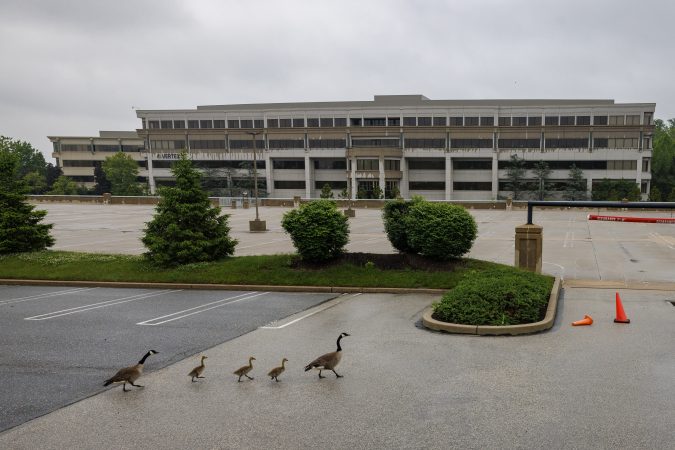
When Amber Ayrer bought her Vineland home 25 years ago, she envisioned growing old there, enjoying lazy afternoons with the windows open and a view of farmland from her front door.
After her adult daughter, Ally, suffered a traumatic brain injury, Amber made the rancher accessible, installing a ramp that aides use to push Ally’s wheelchair outside for her daily walks.
The place had all the makings of a forever home, Amber Ayrer said — until a massive AI data center moved in across the street.
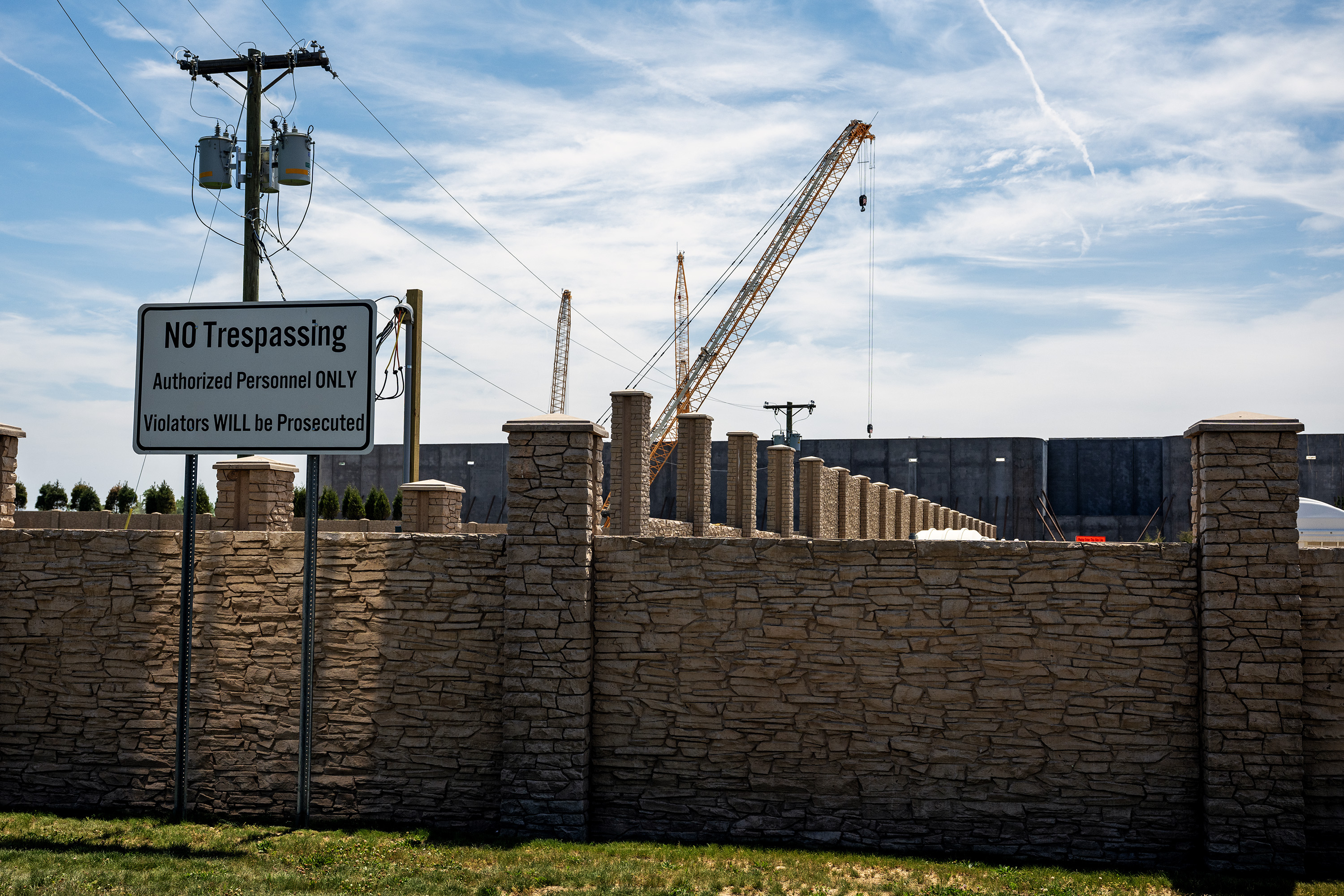
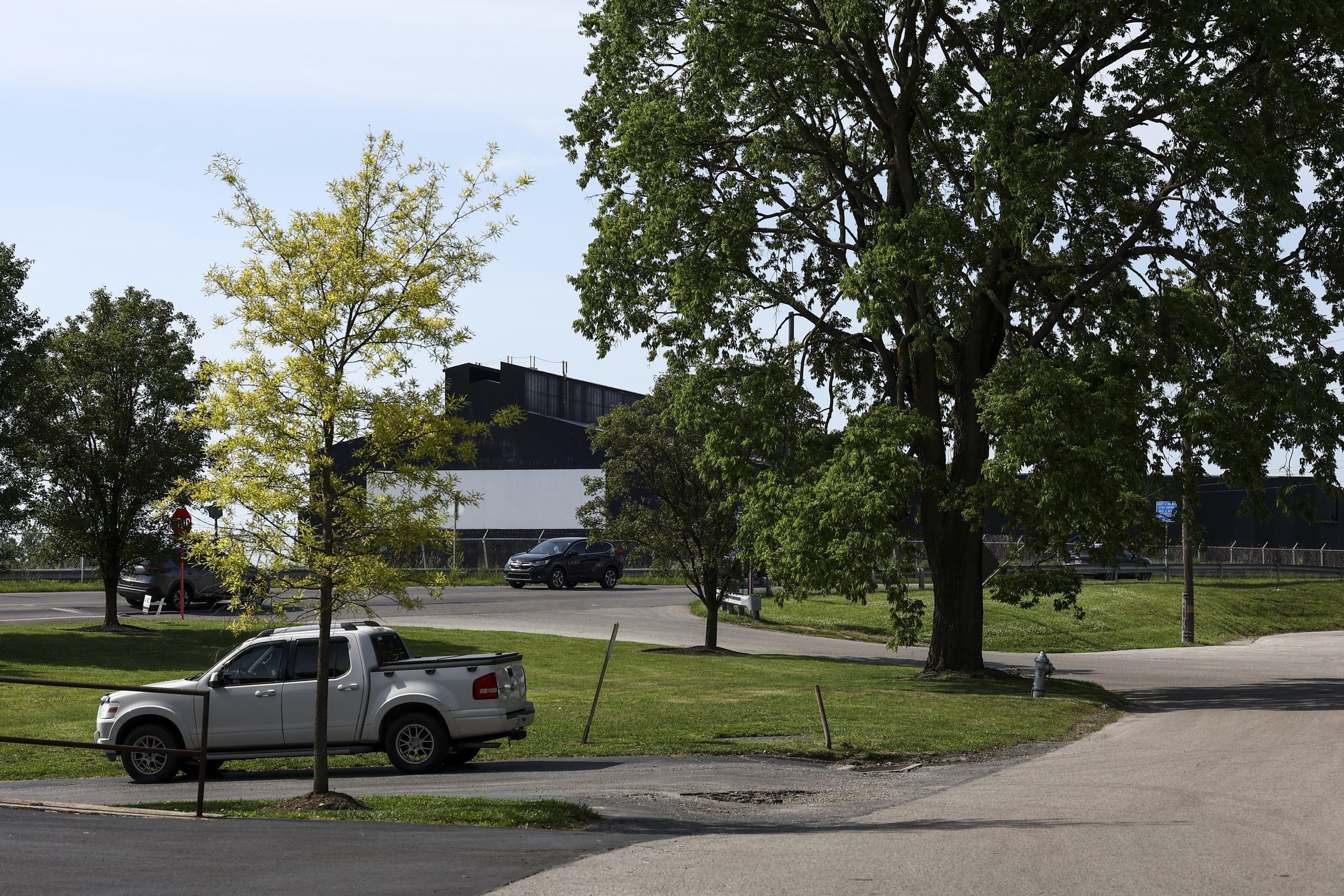
Now, the 71-year-old looks out her front windows at the hulking DataOne facility, a windowless compound surrounded by walls and metal fences.
In recent months, Ayrer said, the 2.4-million-square-foot complex has emitted a near-constant hum. She struggles to sleep, she said, and has suffered from headaches. She turns the TV on to mask the sound.
Residents who live farther away have also complained about the noise, including in a recent lawsuit that was thrown out due to procedural issues. In the suit, residents said the Cumberland County Department of Health measured the hum as higher than 50 decibels a mile away in the middle of the night. A sound higher than 50 decibels is equal to a running refrigerator and is 10 times louder than a typical suburban area at night.
Ayrer, who was not involved in the lawsuit, said she doesn’t want to move, even as she sees neighbors sell their homes to the data center developers.
“In order to get another home, I’d have to get one built” to be accessible, Ayrer said, standing in her entryway. She shrugged, adding, “I need to be here for my daughter.”
The noise had quieted, she noted, since around Sept. 22. That’s when the New Jersey DEP ordered the data center to pay a $1 million fine for running 62 gas generators without the required permits. She isn’t sure why the hum stopped, or whether it was related to the fine.
By late Wednesday, the sound had returned, she said, and she worried it would be even louder when the center is fully operational.
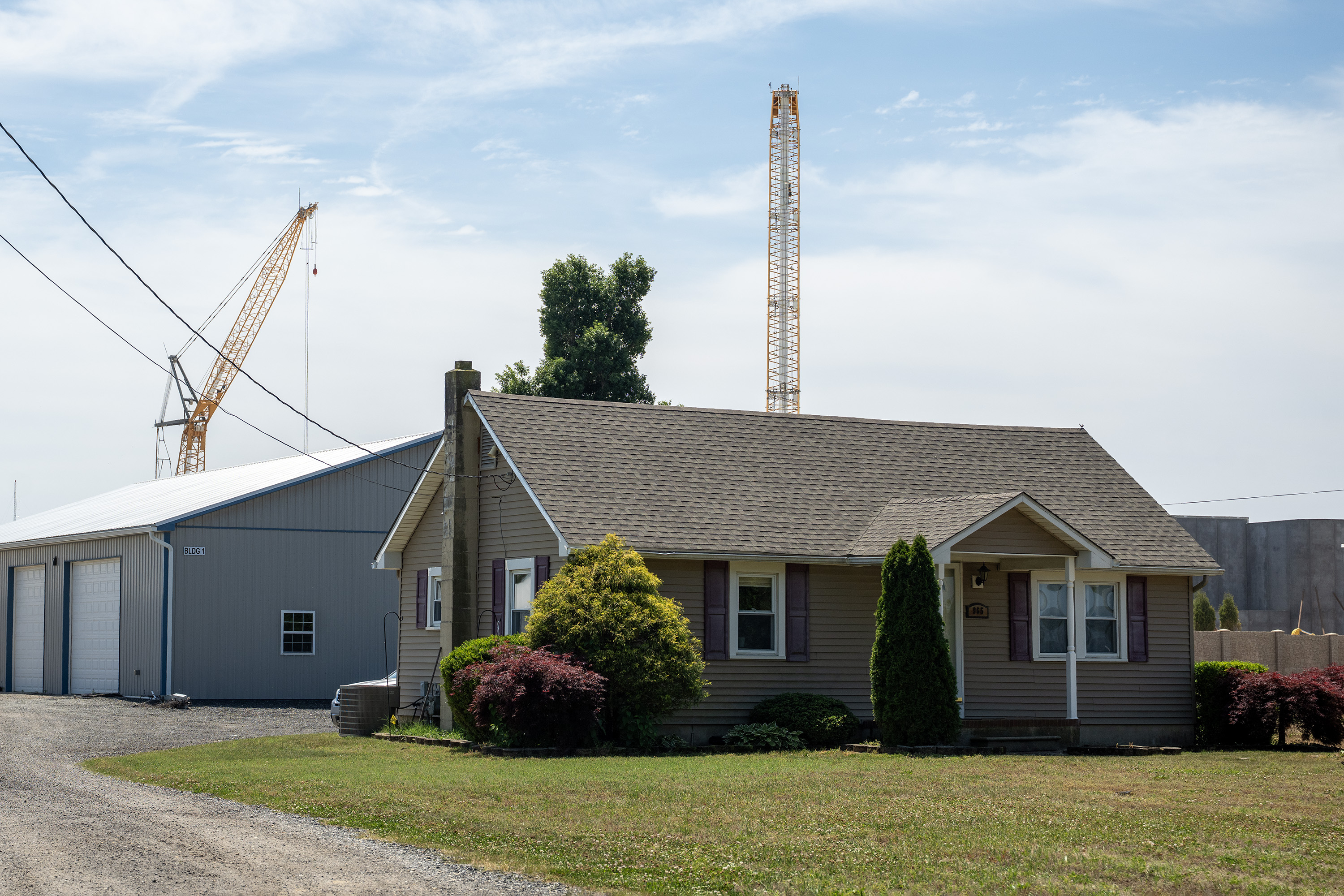
The Ayrers are some of the first Philly-area residents to live in the shadow of a massive AI data center. Only a handful of homeowners live within eyesight of DataOne’s South Lincoln Avenue complex in Vineland.
They used to have more neighbors. But since 2025, DataOne Vineland and LJR Real Estate — which is registered to the address of Northeast Precast, a local company that has partnered with DataOne — have purchased at least five surrounding homes for a combined $3 million, according to online property records.
DataOne and Northeast Precast did not respond to requests for comment about the acquisitions. Several former Vineland residents who sold their homes to these companies could not be reached or declined to comment.
Asked about residents’ concerns, DataOne spokesperson Naomi Rice shared a previous statement, which said in part that the facility was “transitioning to low-emission, quiet fuel cells.” These generate energy through an electrochemical reaction rather than combustion, pistons, or rotating machinery.
Nebius Group, which is operating the center’s internal AI infrastructure, says the fuel cells from Bloom Energy — a company expanding locally — and enhanced sound mitigation will make for a quieter environment than what residents experienced during construction, according to spokesperson Ava Iuliucci.
Charles-Antoine Beyney, DataOne’s founder and chief executive officer, previously said the Vineland center would use “breakthrough” technology to reduce its environmental impact. He said the complex would be a good neighbor, promising a vertical farm — which uses technology to grow crops indoors — to help feed Vineland residents in need.
“Most of the data centers that are being built today suck, big time,” Beyney said in January.
“No freaking way am I going to do what the entire industry is doing … just killing our communities and killing our lungs to make money.”
What it looks like near a South Jersey data center
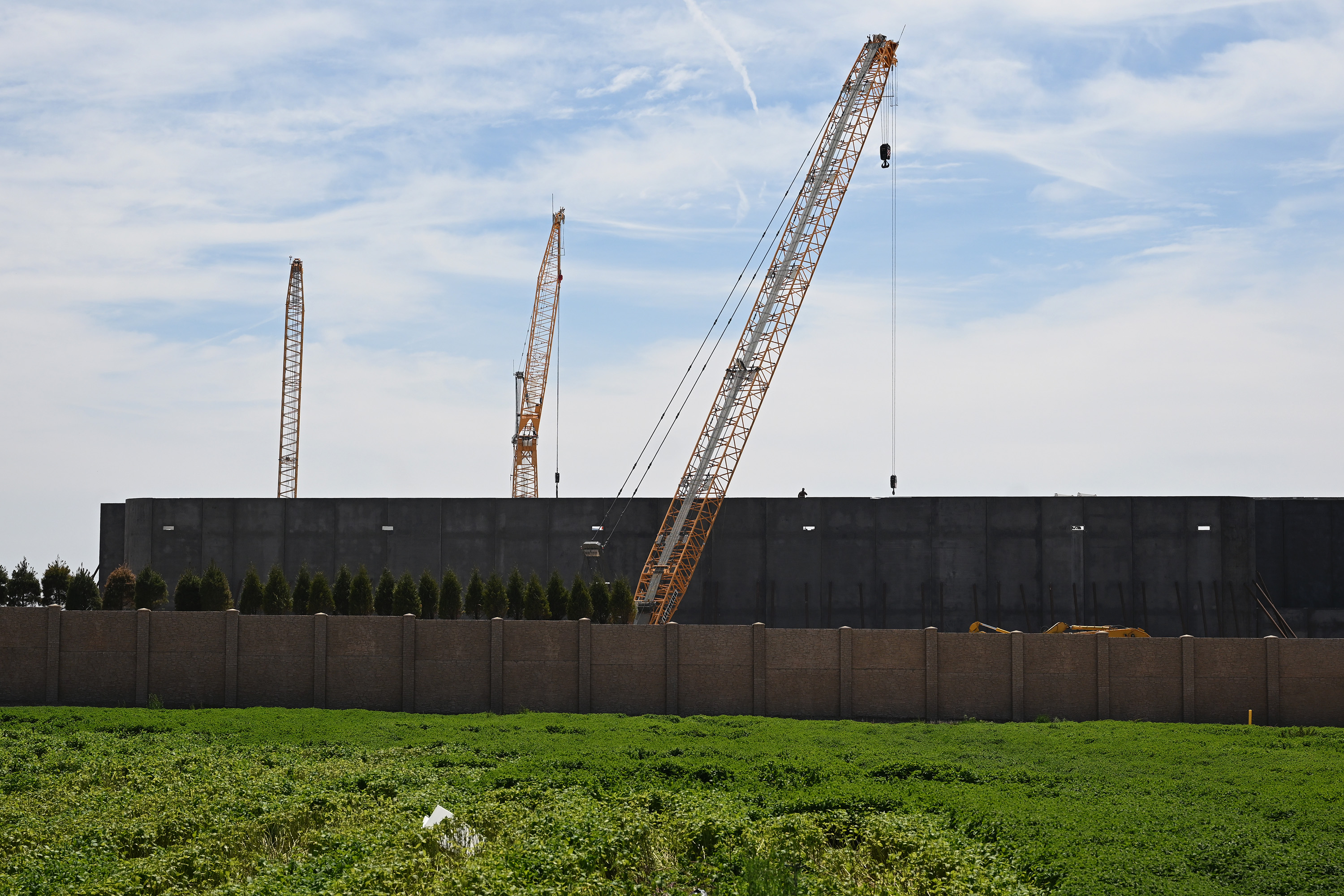
The Vineland DataOne center, as seen in June, could be finished by the end of the year, developers have said. Tom Gralish / Staff Photographer
The dark exterior of DataOne abuts busy South Lincoln Avenue, towering above homes and farms on the outskirts of Vineland City. In spots, rows of crops extend to the data center’s walls.
On a recent day, the data center appeared abuzz with activity, although residents said it was relatively quiet, as cars and yellow school buses drove in and out of its gated-off parking lot. Giant “no trespassing” signs are prominently displayed.
While the front portion of the data center appeared complete, cranes farther back reached into the sky.
Meanwhile, several large homes across from the entrance — purchased by the data center developers and associates — appeared abandoned, with recycling cans askew in the driveways, indoor and outdoor lights on in the middle of the day, and swing sets sitting empty in the backyards. No one answered the doors.
At another home, a woman shook her head, saying she’d lived there forever and would never speak publicly about the development across the street.
DataOne, a French company that manages advanced data centers, is the owner, operator, and builder of the Vineland data center. Its client, Nebius Group, an Amsterdam-based AI-infrastructure company, operates the center’s internal technology, which fuels Microsoft’s AI tools.
As demand for these facilities has surged, so has the controversy surrounding them. Across the country, proposed complexes have received fierce pushback from nearby residents concerned about environmental, noise, quality-of-life, and property-value impacts.
Several of these facilities have been proposed in the Philadelphia region, from King of Prussia to Limerick. But few plans have been approved.
DataOne Vineland could become the region’s first hyperscale AI data center. The developers have said the complex is partially operational, and they expect it to be complete by the end of the year.
Construction continued on the DataOne center as seen from a nearby home in June.Tom Gralish / Staff Photographer
Theresa Lewis, who has owned her home for 47 years, said living by the data center has gotten worse in recent months.
Stepping outside and seeing the building, “I think of a prison, and I’m the prisoner with the noise,” said Lewis, 74, who compares the sound to a tractor trailer idling outside her home all day and night.
“You get up in the morning and you’re in a foul mood,” Lewis said.
Both she and Ayrer said they have called the Cumberland County Department of Health to report excessive noise in the middle of the night, but doing so comes at a cost. They said they then have to get up, get dressed, turn the lights on, and wait for an official to come take a decibel reading, making for another sleepless night.
Data centers are being built in different communities
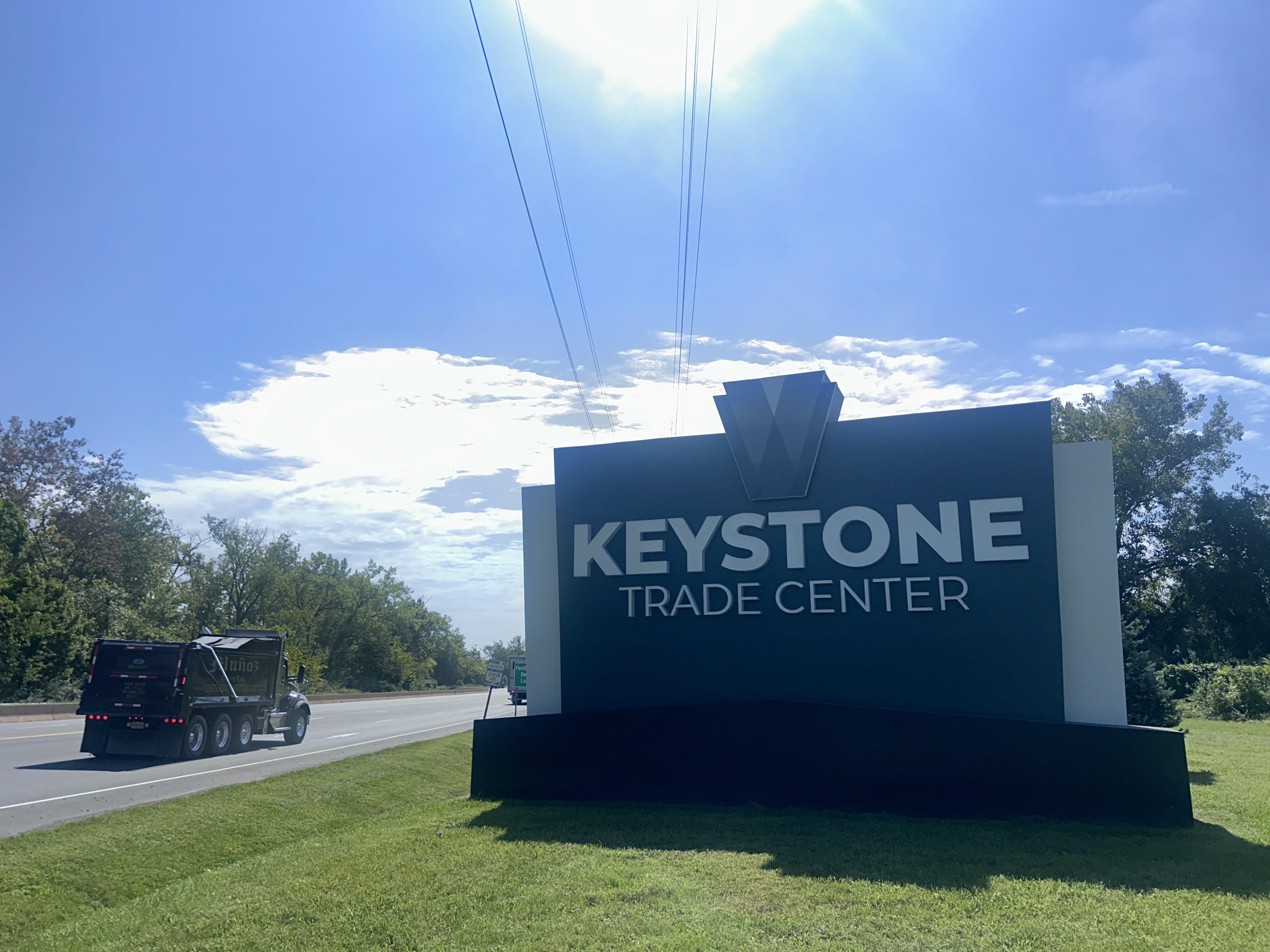
The view outside the Keystone Trade Center in Falls Township. Amazon is building a data center inside the private complex.Erin McCarthy/Staff
The scene in Vineland is vastly different from the one outside Amazon’s 2-million-square-foot data center campus in Falls Township, Bucks County, the Philadelphia region’s other facility nearing completion.
That data center sits deep inside the Keystone Trade Center, an industrial hub surrounded by water, with no homes in sight. On a recent day, tractor trailers whizzed by Keystone’s main entrance. Only the transmission wires overhead hinted at what may be inside the private property.
In Vineland, Lewis said she wishes she and her neighbors had a chance to push back against the data center before it was built. Residents were first asked to provide input about the project at a contentious town hall in January, more than a year after the project was approved by city council and months after construction started.
“I don’t want to move — and who is going to pay what the house is worth with that right there?” Lewis said, motioning to the data center across the street. “But I wake up angry.”
She added: “I can’t imagine living next to this for the rest of my life.”
Editor’s Note: This story has been updated to reflect that the noise from the data center returned Wednesday, according to Ayrer.
What often gets called cobblestones on old Philadelphia streets are actually Belgian blocks. But no, the neat rectangles cut so they can fit tightly together did not come from Belgium. They came from nearby quarries, often from the New Hope area.
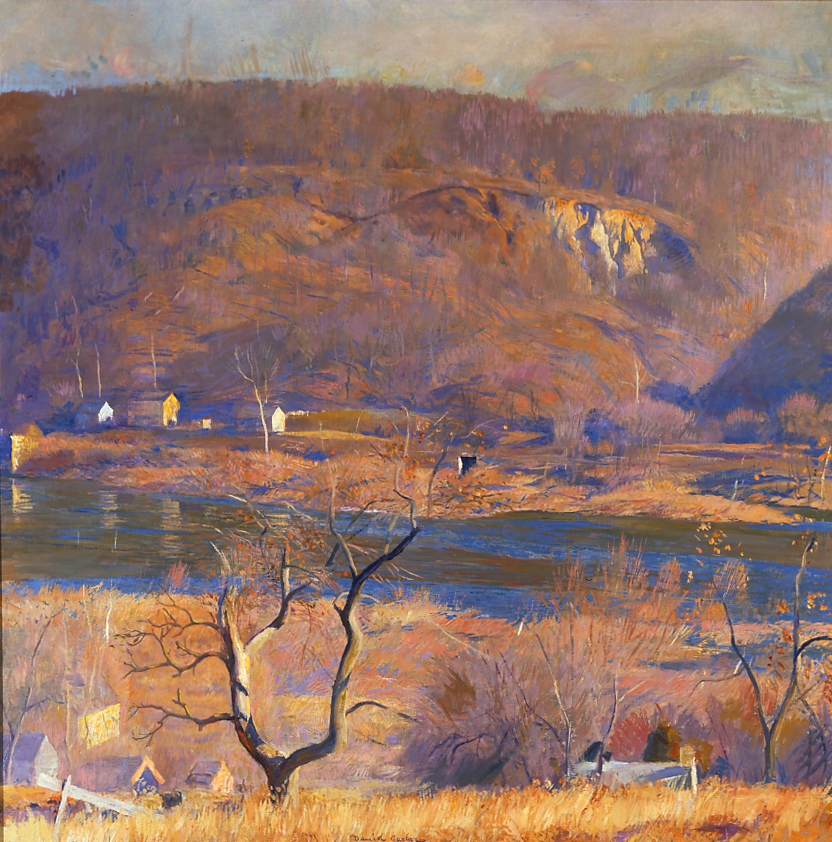
Apart from the city’s architecture, Bucks County’s stones have also shaped the Pennsylvania Impressionism movement that flourished in the first half of the 20th century. New Hope, with its location on the Pennsylvania-New Jersey border, right by the Delaware River, was home to several artists who could afford to buy homes in the area, commute easily to Philadelphia to teach in art schools like the Pennsylvania Academy of the Fine Arts, and easily get to New York for shows and other networking opportunities.
“The land was pretty cheap at the time, and artists could move into an old industrial mill or buy a property for not a lot of money. They could also escape urban life and get out into the country. It was just a really beautiful landscape, so people wanted to live in that area,” said Laura Igoe, chief curator at Doylestown’s Michener Museum and curator of the museum’s ongoing “Abstractions of Nature: Quarries and Industry in Pennsylvania Impressionism” show.
The artists Edward Redfield and William Lathrop, Igoe said, were the first artists to settle in the area around 1900. Their works are a part of the show. Daniel Garber, who studied and taught at PAFA, soon followed them into the area and became one of the foremost artists living in New Hope. Then his students started moving to the area.
“It was kind of like this self-perpetuating colony in a way,” said Igoe, “There was a very active artistic community there at the time, and also a lot of quarries.”
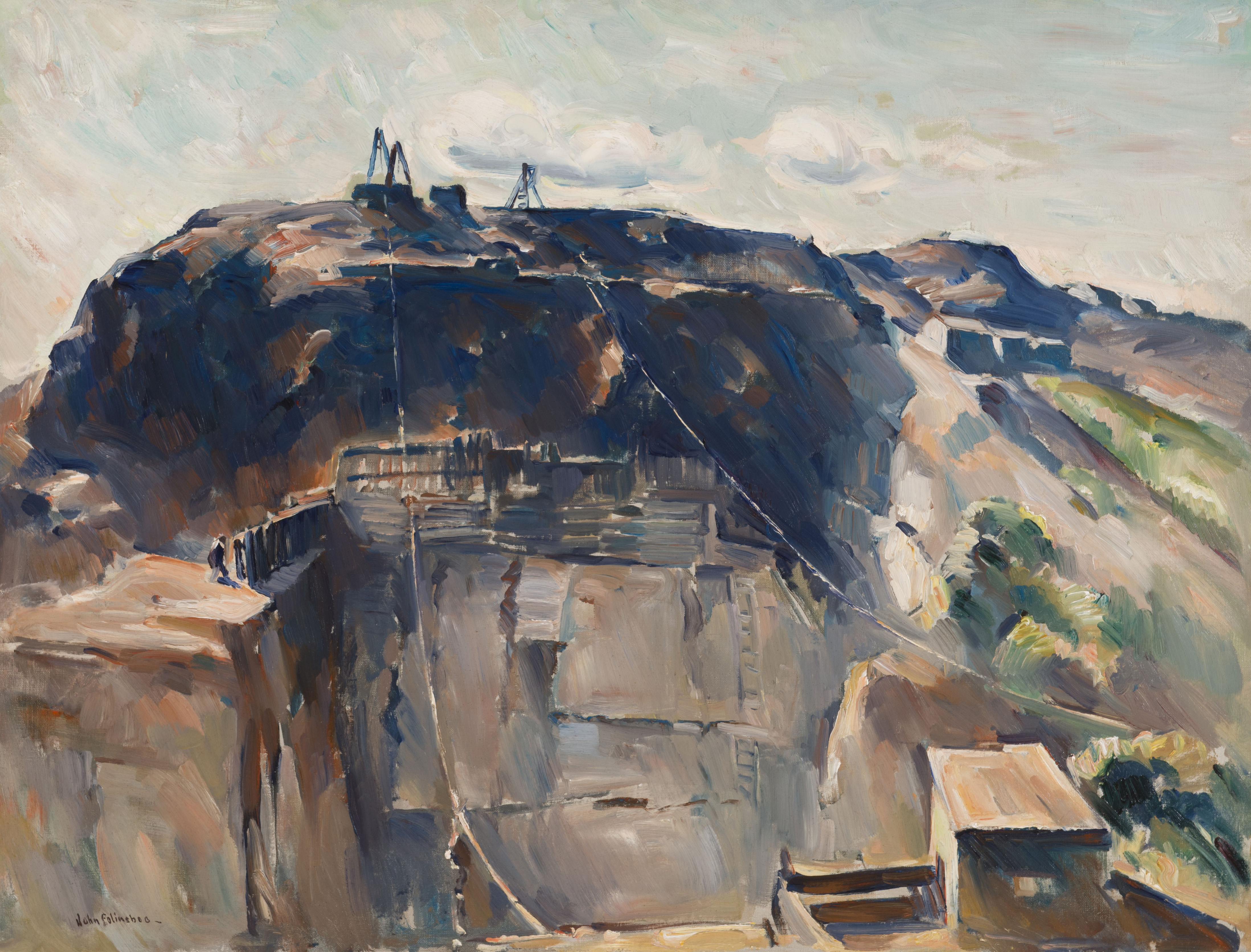
John Folinsbee (1892-1972), “Slate Quarry, Bangor,” 1929. Oil on canvas, 32 x 40 inches. Courtesy of the Woodmere: Gift of the John F. Folinsbee Art TrustCourtesy of the Michener Art Museum
Pennsylvania Impressionism by way of Europe
At the time, there was a new interest in abstraction and Postimpressionism coming from Europe. Cezanne, particularly, was a big influence on some of the New Hope artists who often traveled to Europe and painted in the style of Impressionists like Monet. The Philadelphia art collector Albert Barnes even collected Cezanne paintings where the artist paints abandoned quarries, including Bibémus Quarry (Carrière de Bibémus) (1895).
Like most Impressionists, the New Hope artists painted landscapes en plein air — outdoors, amid nature, directly drawing from subject matter. Naturally, the quarries that were a part of the landscape made it into the paintings and now form the focus of the exhibition.
“But while in Europe Impressionism was a much more avant-garde style, it became kind of the style of the academies in the United States,” said Igoe, “so this was what was taught at places like PAFA.”
“They emphasized capturing effects of light and atmosphere,” said Igoe, “really quick brushwork, quick application of paint.” Many of the artists, she said, were painting landscapes early in the morning or in the evening, painting sunrises and sunsets. “There’s frequently this shimmering sense of light in a lot of these Pennsylvania Impressionist paintings,” she said, “It is this really beautiful reflection of light off the stone that they’re trying to capture.”
Igoe considers 1900 to the 1930s as the peak of Pennsylvania Impressionism, with the 1915 Panama Pacific Exposition in San Francisco being a highlight. Many of the New Hope Impressionists exhibited their work in the show.
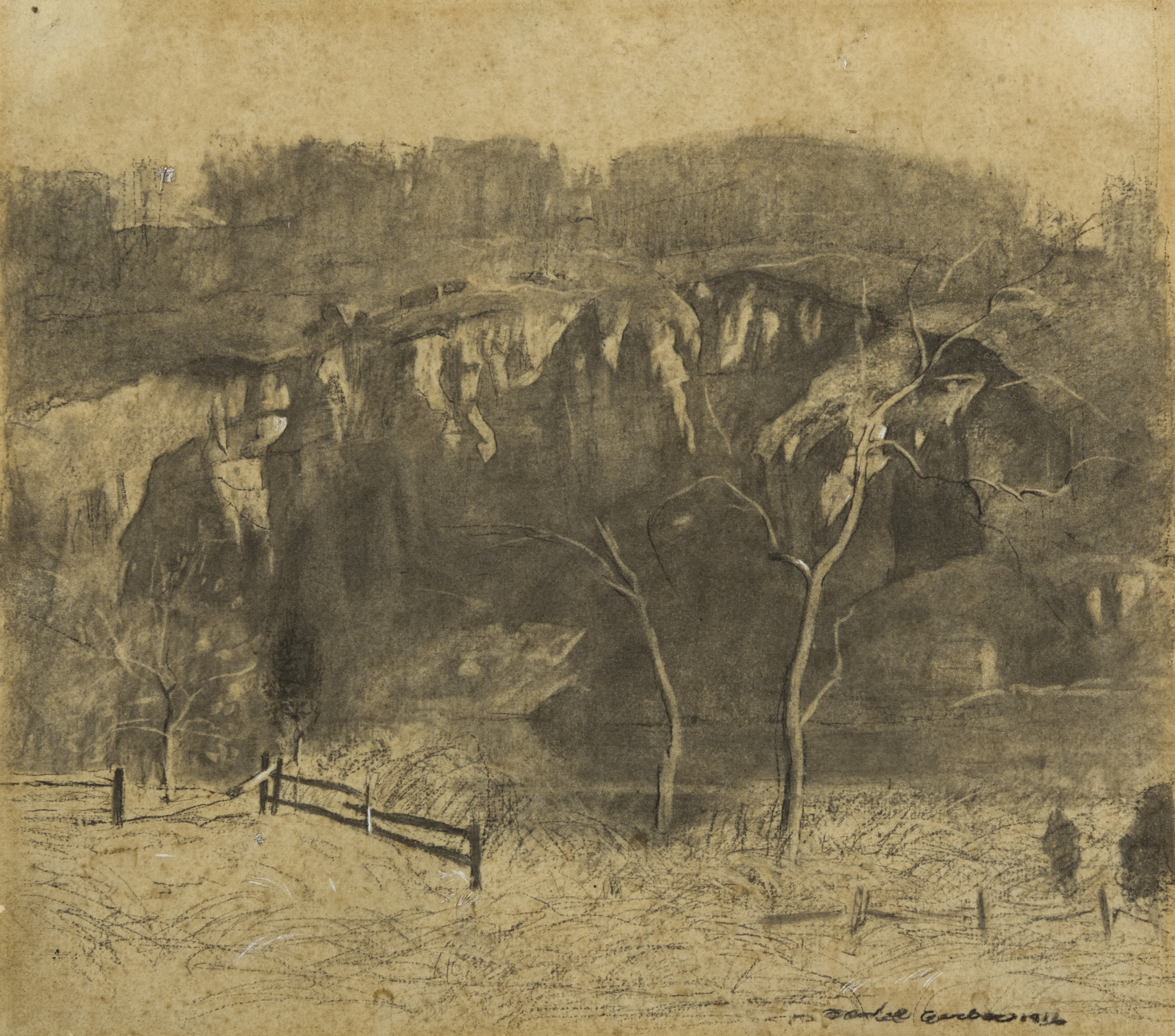
Daniel Garber (1880-1958), “Abandoned Quarry,” 1916. Charcoal on paper, 10 ¼ x 12 1/8 inches. James A. Michener Art Museum. Michener Art Endowment Challenge Gift of Mr. Herbert WardCourtesy of the Michener Art Museum
Redfield, notably, had a full room dedicated to his art; “which was an honor that was bestowed upon the likes of John Singer Sargent and Childe Hassam,” said Igoe. Many of the artists won medals at the show “and it led to them being proclaimed by some critics as the most American school of painting at the time,” said Igoe.
“They painted the landscape of the New Hope area, and they painted in this, what was considered at the time, bold … in this very masculine style. We might not think of Impressionism that way today, but it was considered a very national style for the United States.”
The artists continued to exhibit under the name of the New Hope Group, and their work was collected by museums across the country. Several women artists were members of the group. Together, they founded the Phillips Mill Community Association in 1929, which remains active as an exhibition venue.
“The Michener Art Museum was really founded to preserve the legacy of those artists. Especially in Bucks County, those artists have always been well known. But Michener was founded so more people could learn about these artists and preserve their legacy and collect their work,” Igoe said.
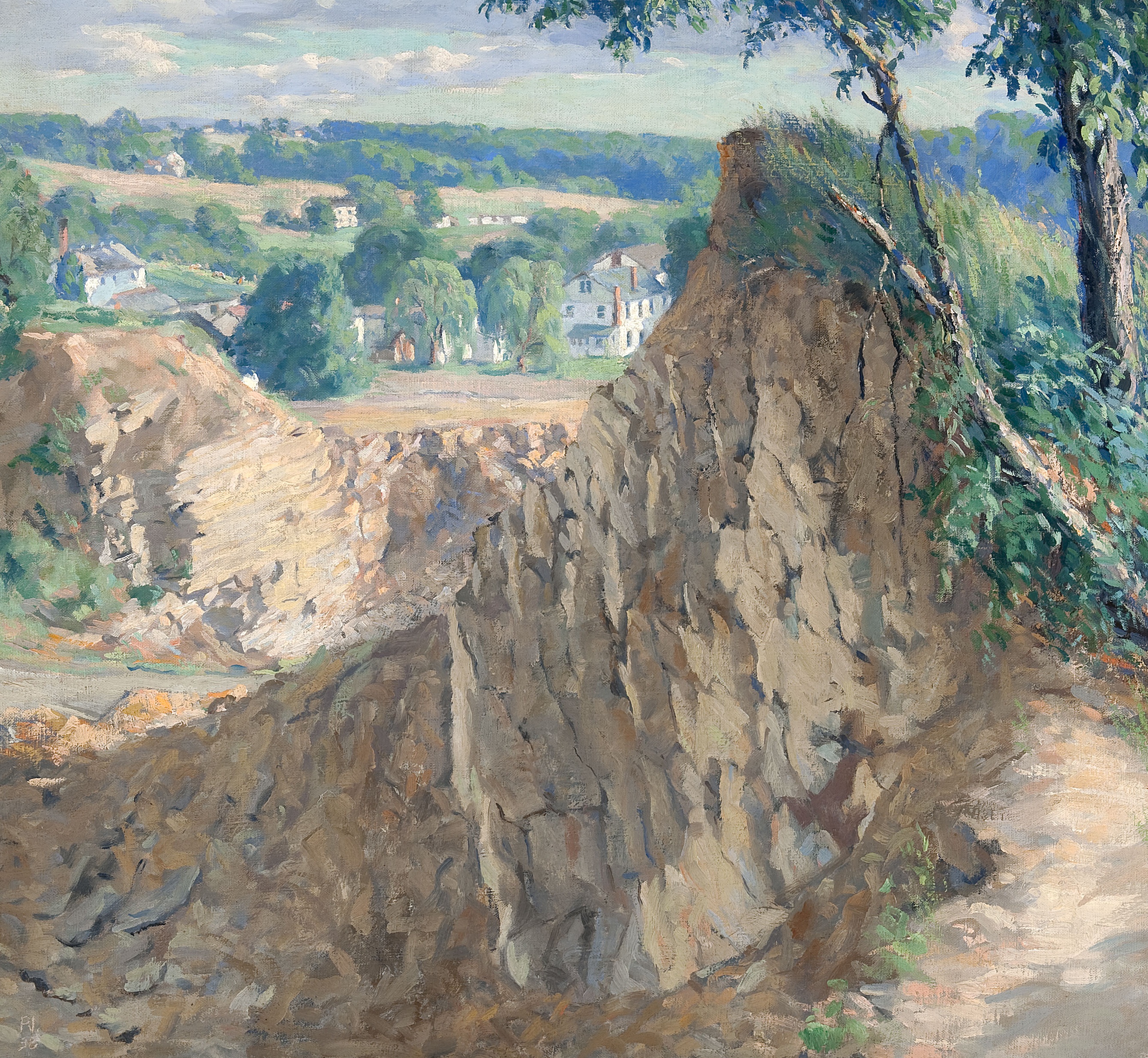
Roy C. Nuse (1885-1975), “The Quarry at Rushland,” 1938. Oil on canvas, 22 x 24 inches. Courtesy of the Woodmere: Museum purchase, 2012Courtesy of the Michener Art Museum
Why paint quarries?
The artists, Igoe said, weren’t always painting exact reproductions of the nature around them, so they had the option of omitting the quarries from their art. “But they frequently chose to include these quarries,” she said, “and that led me to this exhibition where I wanted to look a little more closely at these paintings and think about why artists were so drawn to this subject.”
Firstly, she thinks, the quarries added a drama to the landscape of New Hope that was attractive to the artists. Comparing quarries to the Grand Canyon, Garber said in an interview that they were “on a scale commensurate with the canvas,” said Igoe.
“So you can include these dramatic rock faces, but it doesn’t overpower the canvas in the way the Grand Canyon can. You can’t get the Grand Canyon on a canvas, but you can get a quarry,” said Igoe.
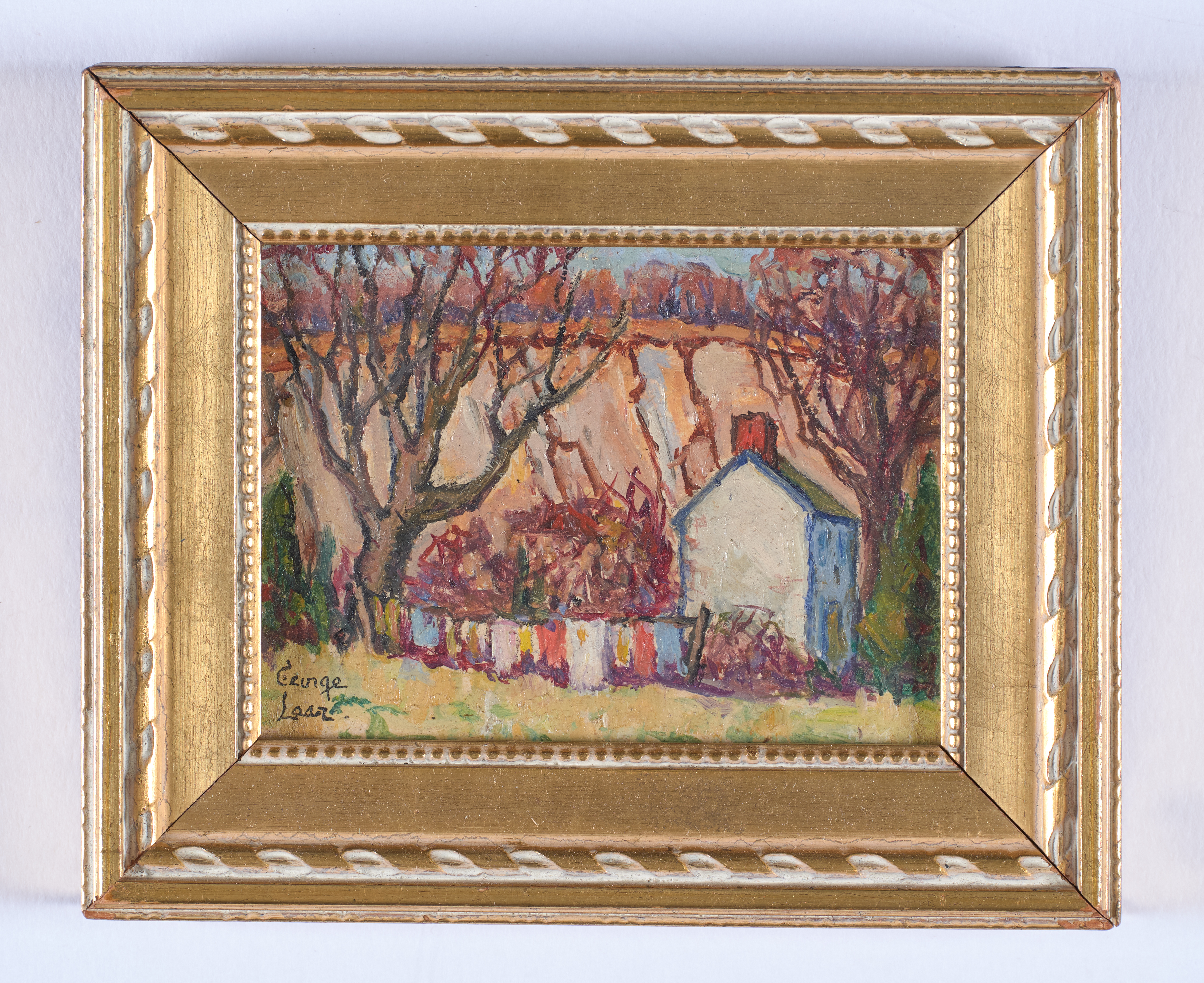
George Lear (1897-1956), “Quarryman’s House,” ca. 1930-1950. Oil on board, 2 5/8 x 3 ¾ inches. James A. Michener Art Museum. Gift of Drs. Irwin and M. Susan RichmanCourtesy of Michener Art Museum
The way the light at different times of the day and year reflected off the stones also inspired the artists, as did the geometric forms of the rock face that often inspired the artists to play with abstraction.
“They were also interested in this human impact on the natural world, the way humans could excavate these rocks, from the landscape, I think was appealing to them,” said Igoe.
Show highlights
Many works in the show portray factories, smoke, and industrialization without much critical commentary, but Garber’s Harmonville (1925) shows a landscape near Conshohocken. To Igoe, it is “one of the artworks in the show that is the most critical of industry.” A sickly tree in the foreground of the print, she said, is perhaps Garber’s way of saying “that this industry can be really destructive to nature too.”
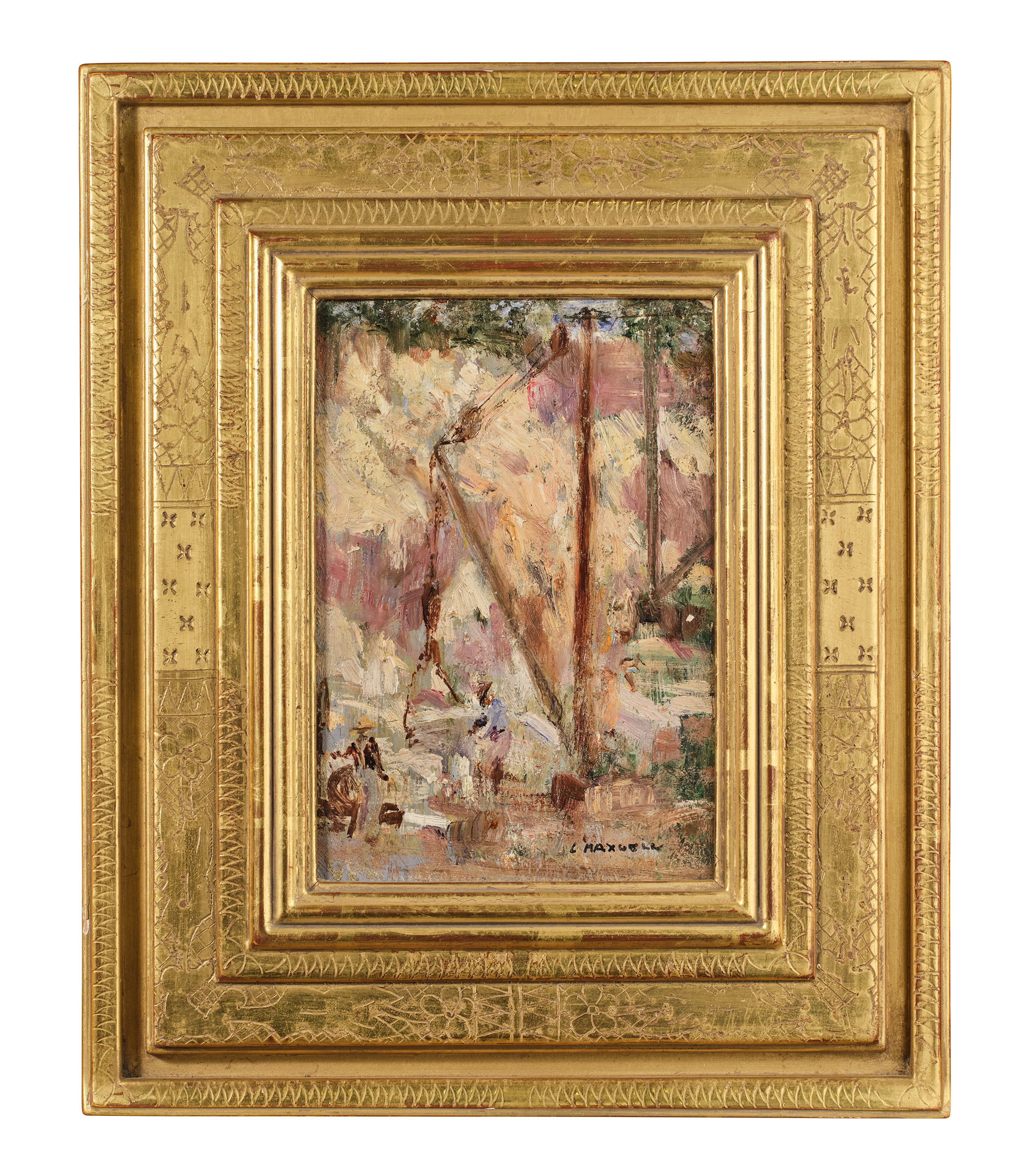
Other artists in the show include Letitia Maxwell Ely, the lone woman artist in the mix, who was one of Garber’s students. “I just wasn’t finding a lot of paintings of quarries by women artists. I am not sure if it’s because it’s perceived as a more masculine subject,” said Igoe. But Maxwell Ely’s work, she said, stands out in the way the artist paints in proximity to the quarries. Masters like Garber, Igoe said, took a distant view of the quarries, not usually engaging with the human labor at the quarries.
Letitia Maxwell Ely (1886-1967), “Quarry,” 1914. Oil on board, 8 x 5 inches. James A. Michener Art Museum. Gift of David B. Long.Courtesy of the Michener Art Museum
But Maxwell Ely, whose work was much smaller in scale, “brings you right into the quarries themselves in those little paintings, and she is more interested in the labor.” In works like Quarry (1914), there are no sweeping vistas, but a more zoomed-in perspective at life of those working in the quarries.
“There’s not a lot of work known by her that’s still available. She’s an artist that I wish we knew a little bit more about, but she didn’t leave a very large body of work behind,” said Igoe.
Among the other highlights of the show, according to Igoe, is a postcard-sized painting The Quarryman’s House by the artist George Lear. Another artist is Roy Nuse who lived by the Rushland quarry and painted that quarry many times throughout his life. “Nuse has this reputation as being somewhat of a homebody, he painted things close to his home,” said Igoe. “I just found it interesting that there was a quarry close to his home, and he painted it in all different seasons, in the winter and spring. And I think he really enjoyed the shapes that the quarry provided as well.”
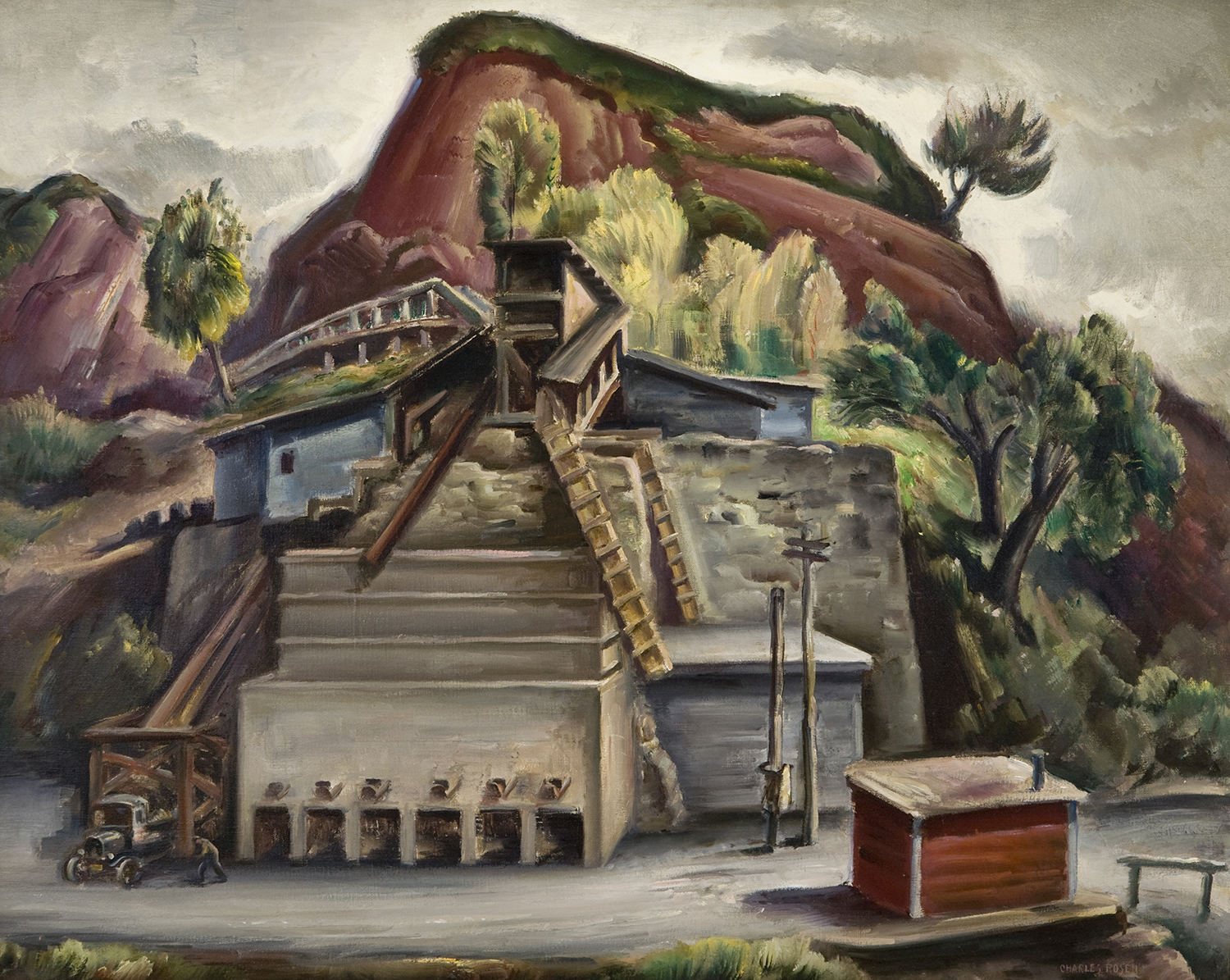
Charles Rosen (1878-1950), “Quarry and Crusher,” early 1930s. Oil on canvas, 32 x 40 inches. James A. Michener Art Museum. Museum purchase funded by George C. Benson in honor of his friend, John Horton.Courtesy of the Michener Art Museum
Charles Rosen, another artist in the show, started his career being an Impressionist but moved onto more avant-garde European styles after moving to Woodstock, N.Y.
Pennsylvania Impressionism eventually dwindled as a movement around the 1940s as public interest shifted to more modern, abstract art forms. Some of the quarries depicted in the show remain active, some are overgrown, and some are part of protected land along the Delaware River.
Igoe’s colleagues have even picked up some rocks from nearby quarries that, with the art, will also be a part of the show.
So visitors can touch and feel the stones that they have walked over thousands of times. Stones that, with their jagged faces and smoothened ends, have witnessed artists’ curiosities and have gone on to outlive the hands that painted them.
“Abstractions of Nature: Quarries and Industry in Pennsylvania Impressionism” runs through Feb. 28, 2027. Michener Art Museum, 138 S. Pine Street, Doylestown, Pa. 18901. michenerartmuseum.org
Tiny Bridgeport, tucked off Route 202 between King of Prussia and Norristown, has long had its food landmarks. Since 1955, it’s been the home of Suzy-Jo Donuts and Franzone’s Pizzeria.
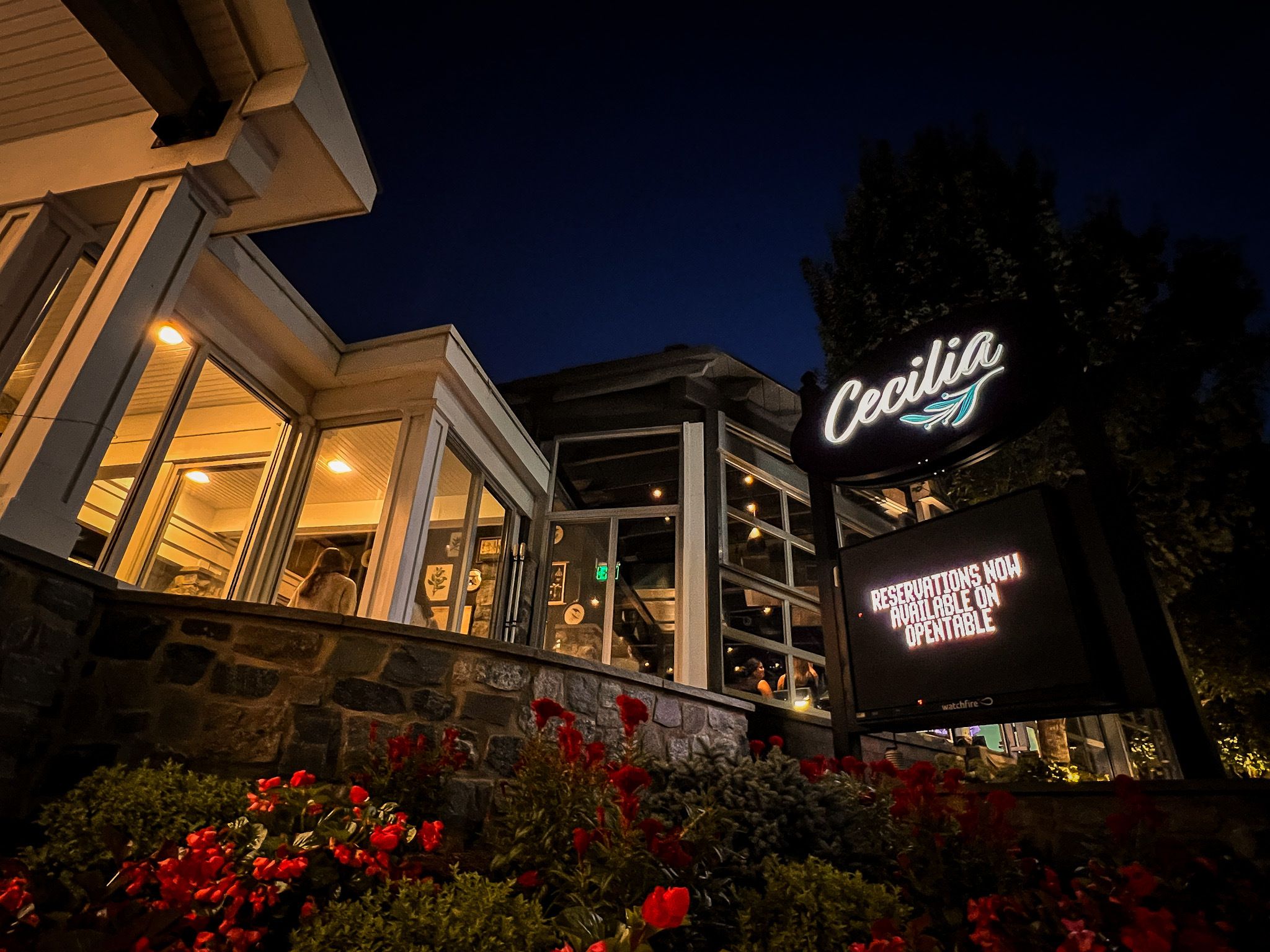
Now comes the polished Cecilia, which opened Monday in the former Taphouse 23, following an extensive renovation by Scott Dougherty and Bruce Goodman, whose holdings include Copper Crow in Horsham and the Blue Bell Inn in Blue Bell (featured in The Inquirer’s 2024 edition of The 76).
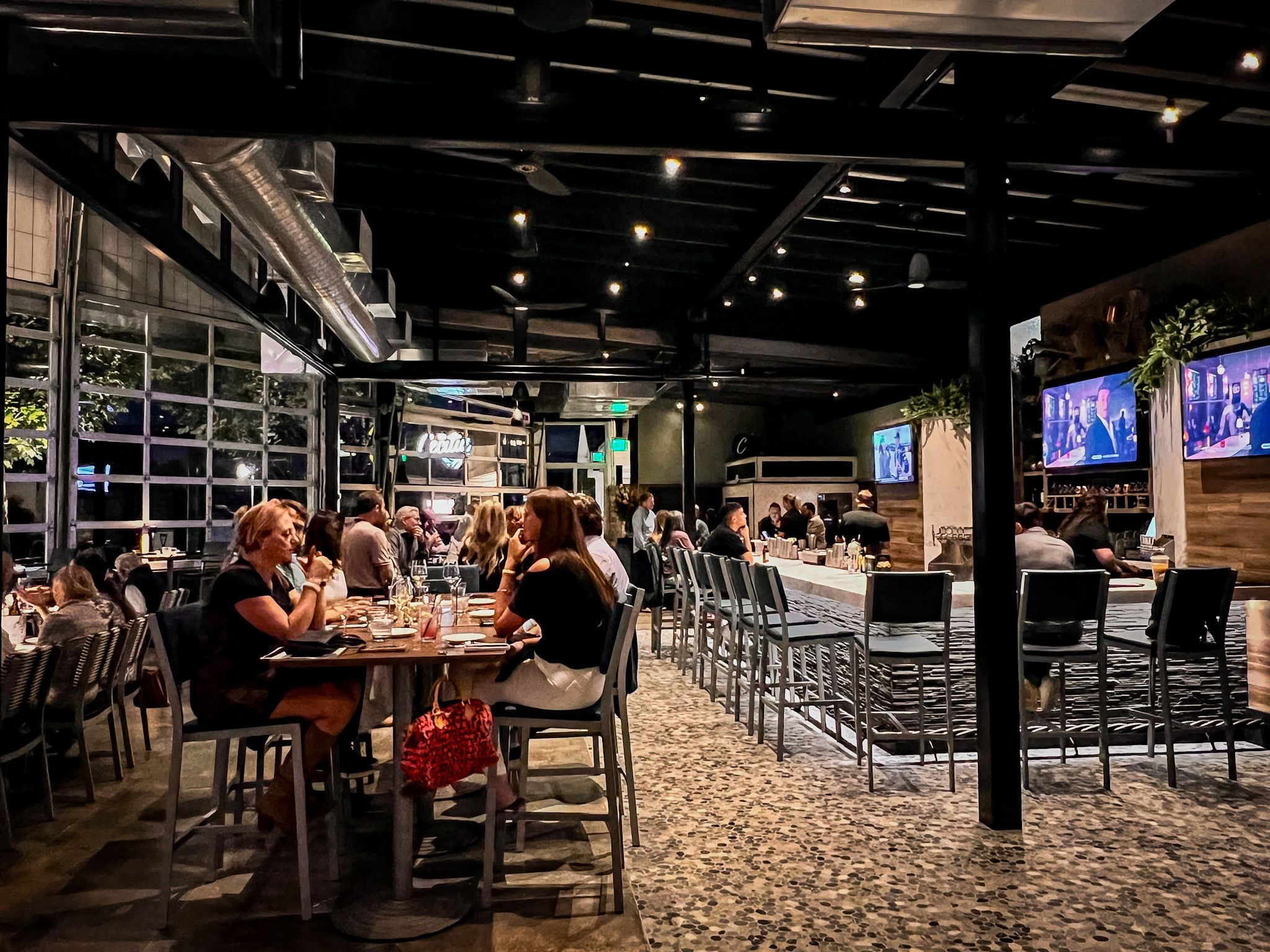
Lounge at Cecilia, 266 E. Fourth St., Bridgeport.Michael Klein / Staff
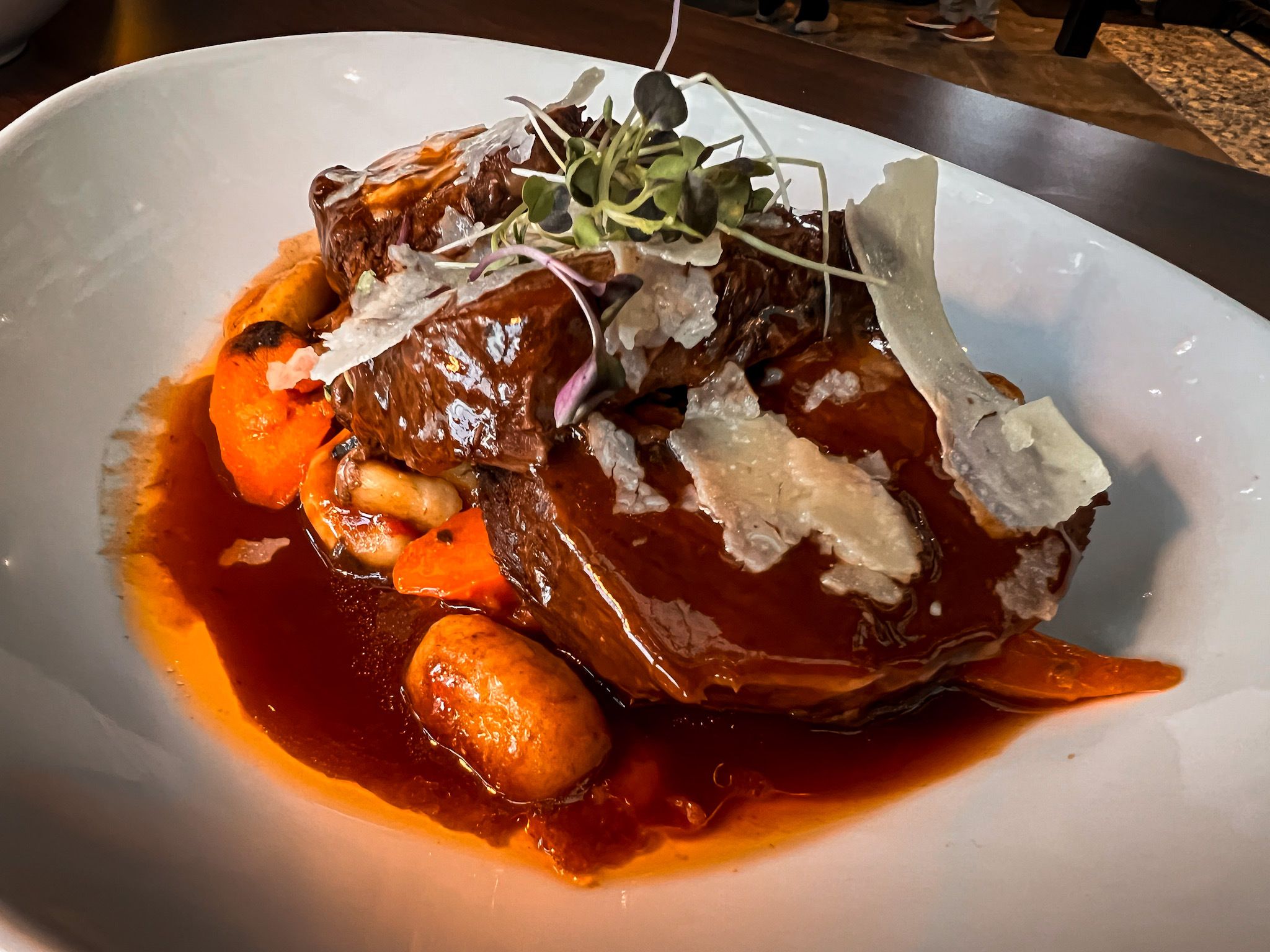
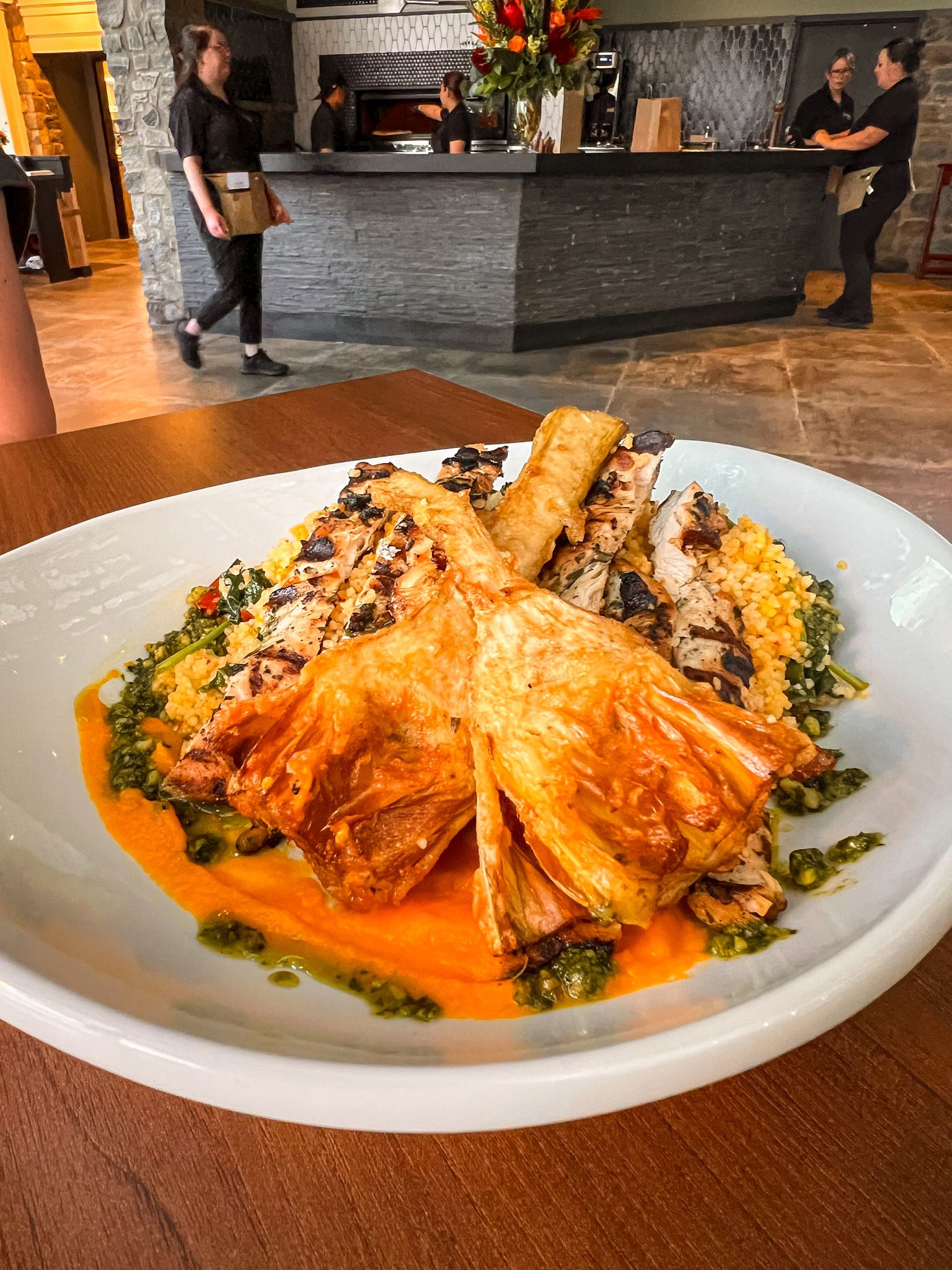
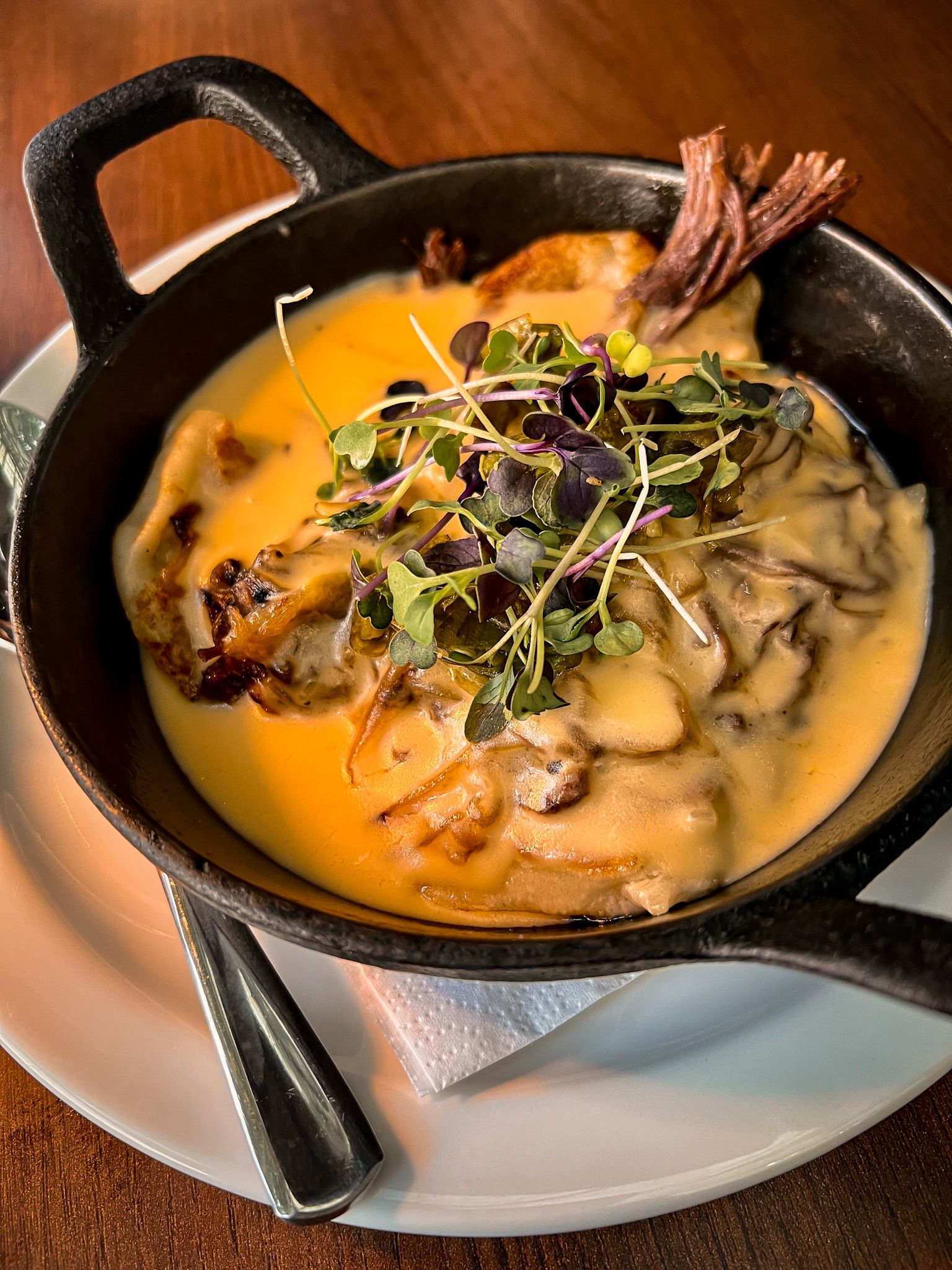
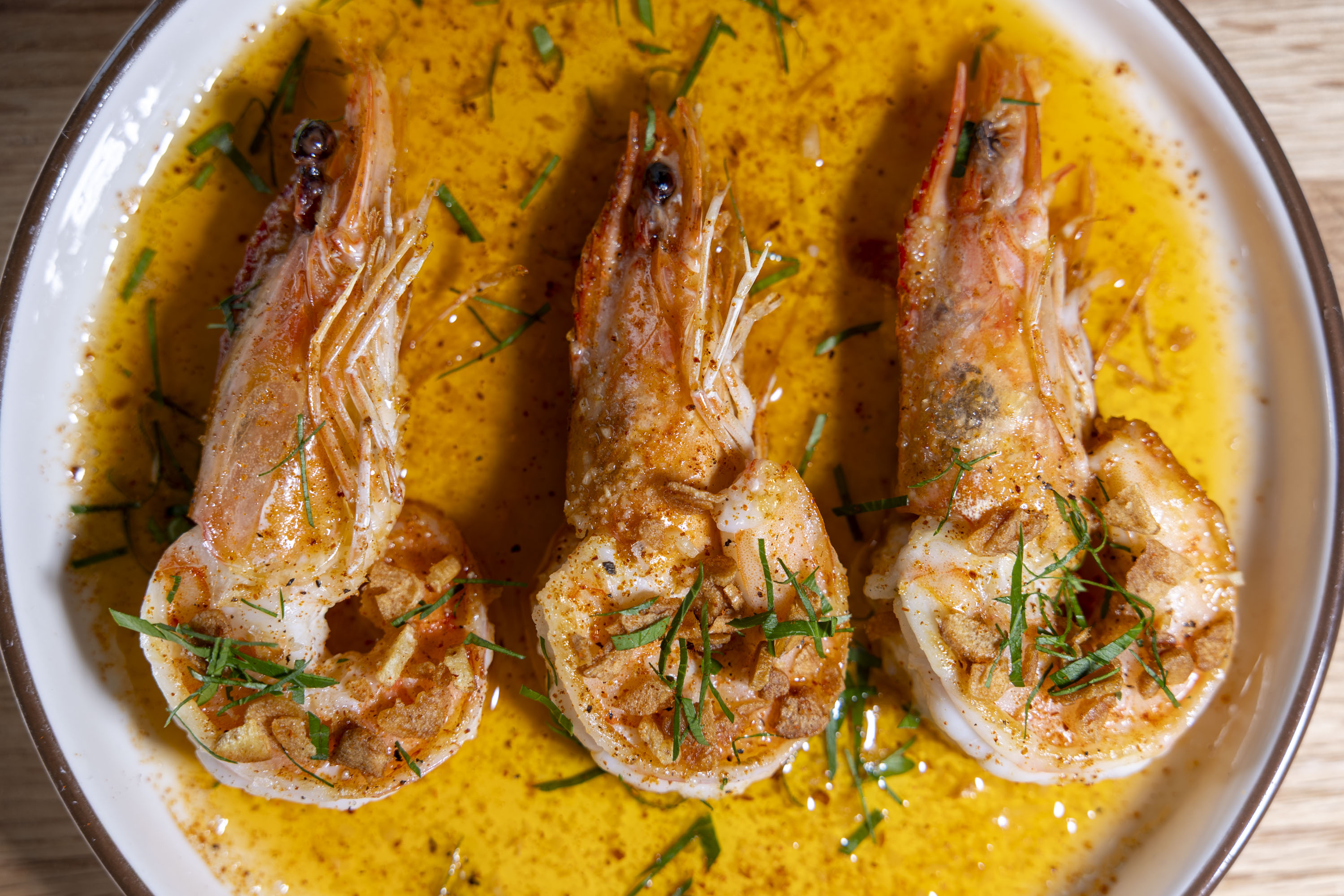
Chef Peter Sherba, the Blue Bell Inn veteran who oversees the group’s kitchens, created Cecilia’s contemporary American menu. Early favorites during weekend previews included a wagyu French dip sandwich; a tuna tataki appetizer, whose seared rare ahi slices are topped with avocado, ponzu, Fresno chilies, and compressed pineapple; pierogies from Ambler’s Pierogie Kitchen napped in braised short rib, Cooper Sharp sauce, caramelized onions, and roasted long hots; and two hearty, autumnal entrees: a beef bourguignon-style short rib called “Meat and Potato” (the potato here is gnocchi), as well as a 12-ounce apple cider-glazed pork chop over Yukon Gold mashed potatoes. There’s brick-oven pizza, too. Prices range from the high teens for appetizers to just over $30 for mains.
The roughly 300-seat restaurant represents a substantial makeover of Taphouse 23, which closed last year. Judi Goodman, who designs the restaurant group’s interiors, shrank the main bar by about 40%, making room for banquettes and lower dining tables. The partners also installed new lighting, wall coverings, furniture, artwork, TVs, and sound equipment.
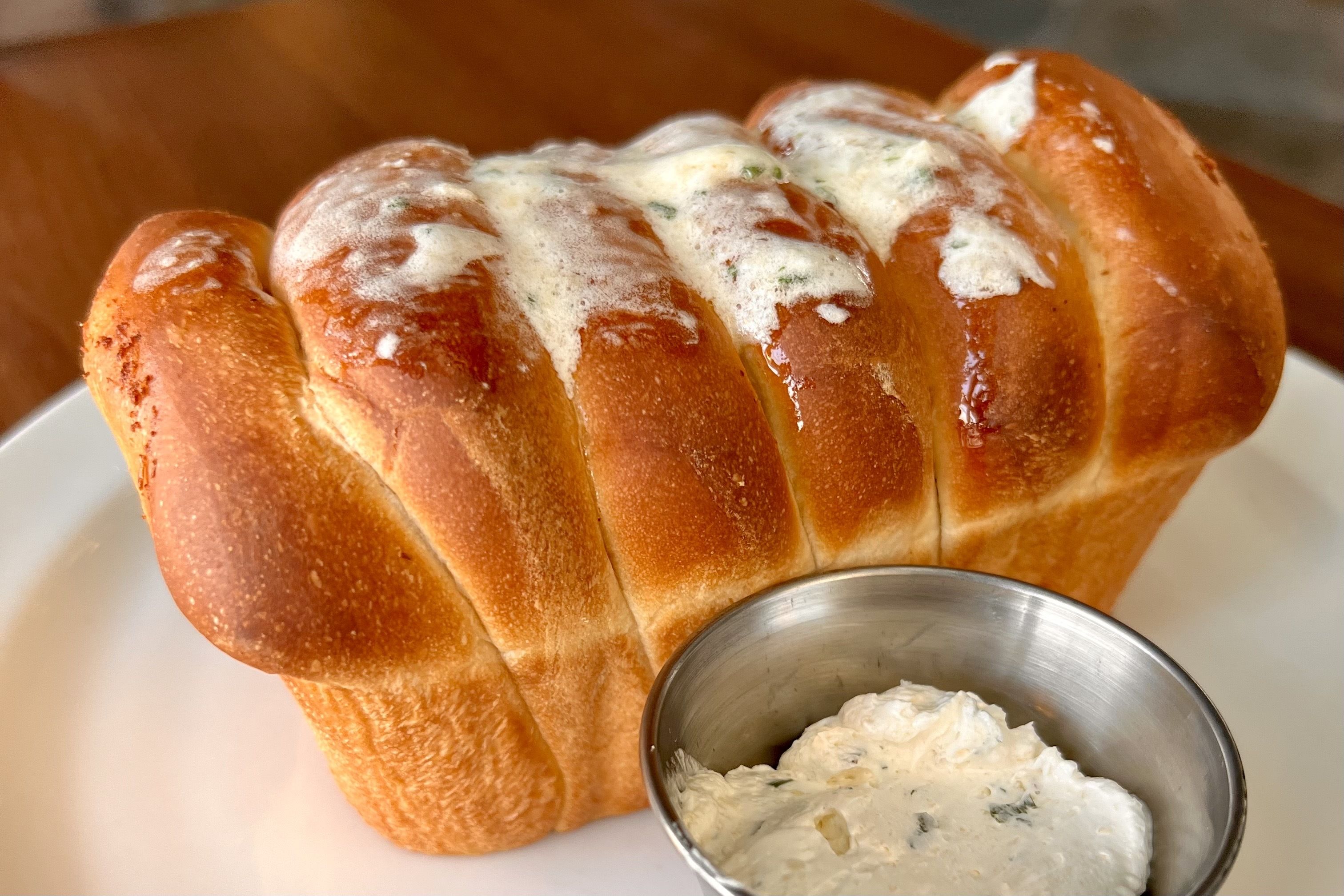
Cecilia, 266 E. Fourth St., Bridgeport, on Sept. 16, 2026.Michael Klein / StaffLounge at Cecilia, 266 E. Fourth St., Bridgeport, on Sept. 16, 2026.Michael Klein / StaffCouscous at Cecilia, 266 E. Fourth St., Bridgeport, on Sept. 16, 2026.Michael Klein / StaffGarlic and herb bread loaf with warm goat cheese pesto spread at Cecilia, 266 E. Fourth St., Bridgeport, on Sept. 16, 2026.Michael Klein / StaffPierogies with braised short rib and Cooper Sharp sauce at Cecilia, 266 E. Fourth St., Bridgeport, on Sept. 16, 2026.Michael Klein / Staff
An adjoining space has been transformed into what the owners call the Greenhouse, with garage doors that can open in warmer weather. The parking lots and landscaping also were redone.
Taphouse 23 opened in 2014 under Bridgeport businessman Gary Johnson — Judi Goodman’s brother — replacing a joint called the Point. After Johnson died in 2021, his family decided to ease out of the restaurant business, Dougherty said. Cecilia is named in tribute to the Johnson children’s mother.
Dougherty said Cecilia will aim to reach beyond Bridgeport to build its customer base, drawing from Blue Bell, King of Prussia, and Conshohocken — all 10 to 20 minutes away.
Cecilia, 266 E. Fourth St., Bridgeport. Hours: 11:30 a.m. to 9 p.m. Sunday to Thursday, 11:30 a.m. to 10 p.m. Friday and Saturday.
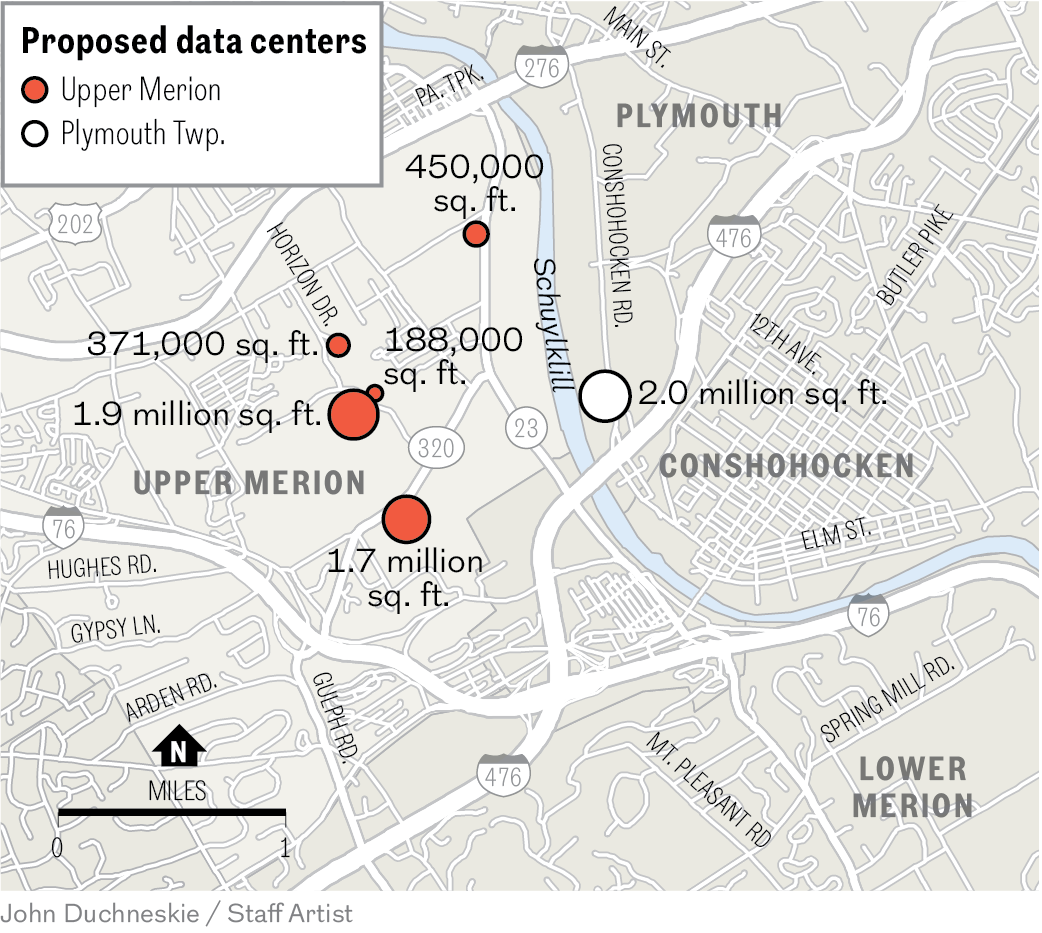
Developer Brian O’Neill has sued the Upper Merion Township Board of Supervisors over its rejection last month of his proposed 4.6 million-square-foot data center campus.
In lawsuits filed Wednesday in Montgomery County Court of Common Pleas, O’Neill said Upper Merion officials have stated in recent years that data centers — which house the equipment that powers AI — qualify as warehouses and are therefore permitted under its zoning code. They changed their tune, according to O’Neill’s team, only after residents pushed back against the plans.
“The township issued a zoning officer’s determination letter that the proposed use was a permitted use, and then when the people started to bombard them, they did a 180,” said Marc Kaplin, an attorney representing O’Neill. “This is what happens when there is public pressure.”
Brian O’Neill has proposed five data centers in Upper Merion Township and one across the river in Plymouth Township.John Duchneskie
Township Manager Anthony Hamaday said Thursday that Upper Merion officials had been informed of O’Neill’s land-use appeals but that the documents had yet to be delivered to them. They declined to comment, pending a full review of the filings.
O’Neill is asking a judge to reverse the supervisors’ denial, give his plans preliminary approval, and appoint an independent third-party “referee” to conduct an evidentiary hearing and oversee the rest of the process. In the lawsuit, O’Neill says the board acted in bad faith and denied his plans over “minor technical items.”
At a contentious Aug. 13 meeting, the supervisors unanimously rejected O’Neill’s five data center plans on the grounds that the proposals lacked specificity, including on fire-safety-related issues, and did not meet zoning requirements. They said O’Neill’s team failed to address their many questions and concerns during the review process.
O’Neill had said his team needed more time to respond and requested an extension until Sept. 30, a request township officials denied.
A day before the supervisors’ vote, the developer sued the township, its planning commission, and its board of supervisors, saying they violated his legal right to an extension. In response, Montgomery County Court Judge Garrett D. Page ordered a pause on township proceedings and decisions related to the data centers. That decision was vacated the next day, just hours before the supervisors’ vote on Aug. 13.
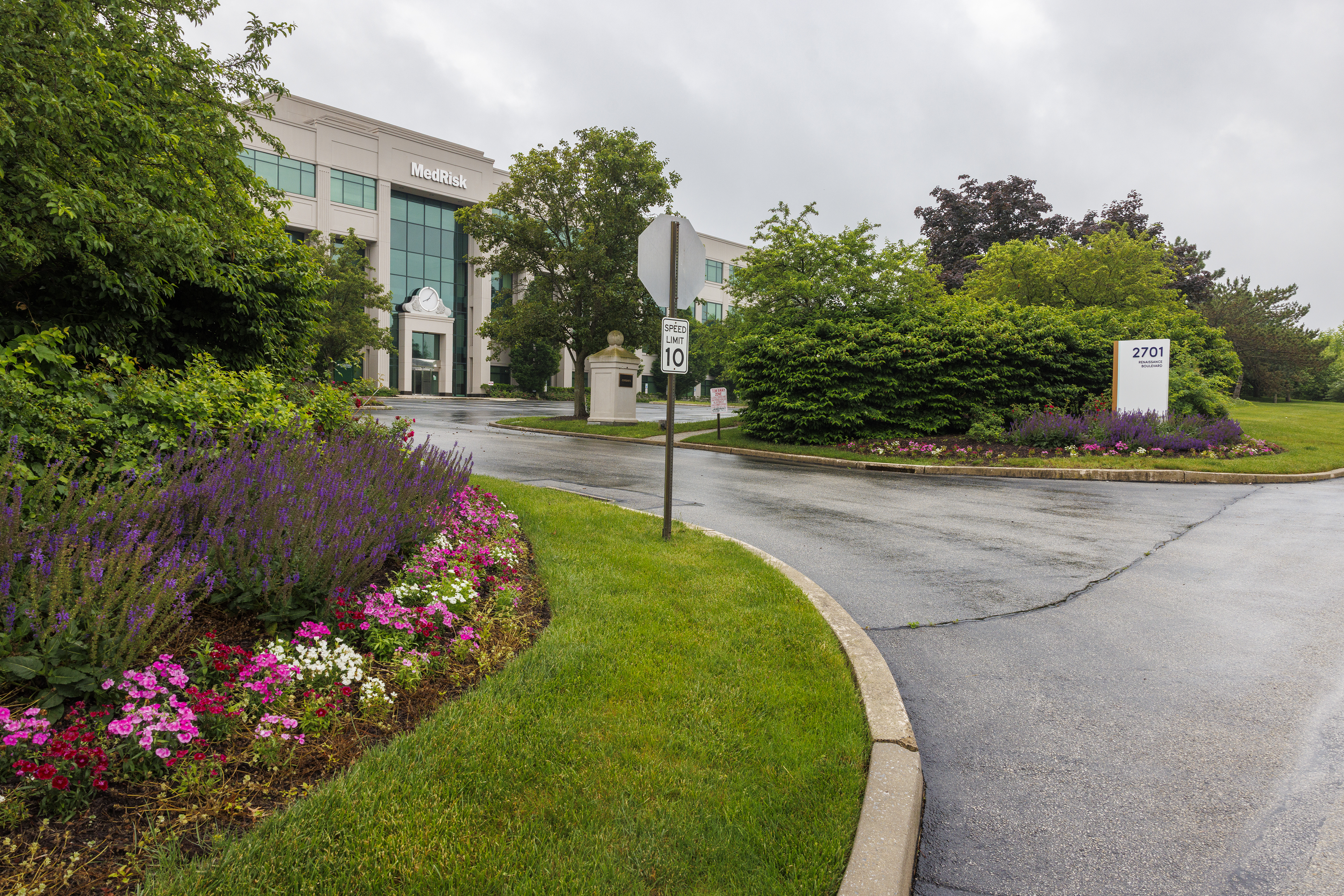
A building at 2701 Renaissance Blvd., as seen in May, is one of the sites that Brian O’Neill wants to turn into a data center in Upper Merion Township.Alejandro A. Alvarez / Staff Photographer
O’Neill has said the centers would emit little light and noise, operate on a closed-loop system that requires no outside water, and provide their own power. They would also be an economic engine for Montgomery County, according to O’Neill, who released an economic impact study saying the project would result in more than 10,000 jobs during construction, more than 700 permanent jobs, and more than $55 million a year in local tax revenue.
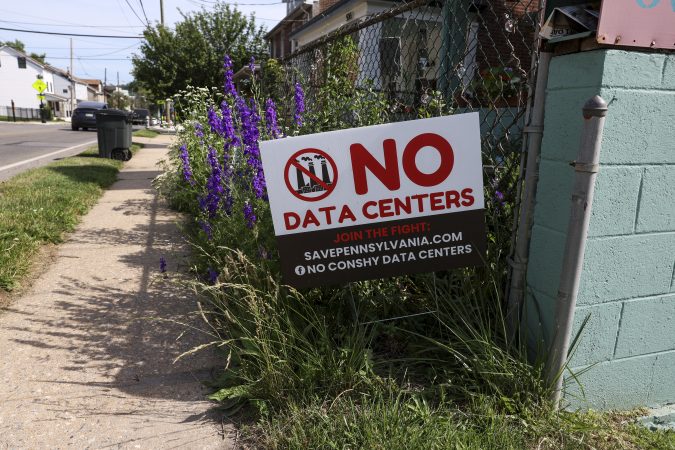
Neighborhood groups have rallied against O’Neill’s plans, organizing on social media, packing township meetings, and displaying bright orange lawn signs opposing the project. About 18,000 people had signed a Change.org petition against the Upper Merion data centers as of Friday. Opponents have expressed concerns about pollution, light, noise, electricity prices, property values, and quality of life.
The pushback in Upper Merion mirrors the opposition seen across the Schuylkill River in Plymouth Township, where O’Neill has spent a year trying to get the OK to build another 2 million-square-foot data center on a shuttered steel mill outside Conshohocken. The project was set to be the subject of a Plymouth Township Zoning Hearing Board meeting on Thursday, but the meeting was canceled due to what the township called “an administrative oversight.”
The closed Cleveland-Cliffs steel mill in Plymouth Township, outside Conshohocken, that Brian O’Neill wants to turn into a 2-million-square-foot data center. Monica Herndon / Staff Photographer
Plymouth Township officials failed to post the meeting agenda 24 hours in advance, in violation of the Sunshine Act.
“Out of an abundance of caution and in the interest of legal compliance and public transparency, the board will not convene as scheduled,” Plymouth Township officials said Thursday in a statement, adding that the meeting will be rescheduled.
O’Neill has also faced off with Plymouth Township officials in recent months. In July, he filed a legal challenge to the Plymouth Township zoning ordinance, which prompted township leaders to accuse O’Neill of “throwing a tantrum” in an attempt to bully and intimidate them. O’Neill called their statements “a bald-faced lie.”
Despite pushback, O’Neill’s team remains bullish on data centers.
“Everybody is against data centers but everybody wants their Amazon order delivered instantaneously,” Kaplin said. “We want all these things that are powered by data centers, so you can’t have it both ways.”
Two decades ago, Kaplin said he worked for a developer trying to get several of the region’s Walmarts approved. At the time, there was great public opposition, he said, but now “everybody is like, ‘Walmart is part of the community.’”
“This too shall pass,” Kaplin said. “We have to have this computing power to compete in the world.”
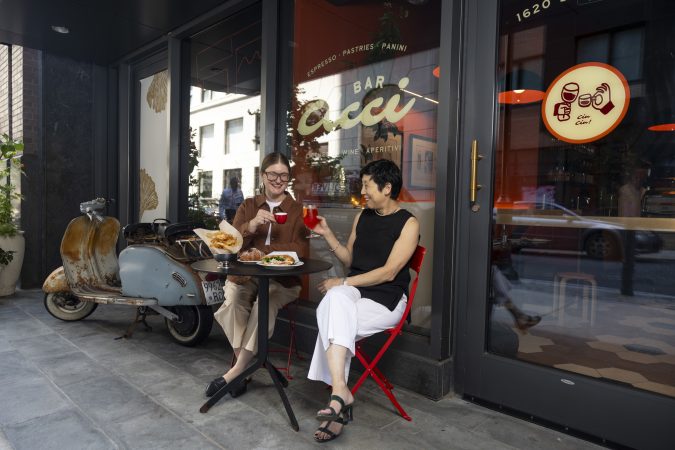
This fall’s restaurant openings reflect an industry hedging its bets: established operators expanding into the suburbs and repurposing familiar spaces, and newcomers pursuing narrowly drawn concepts built around omakase, caviar, Korean barbecue, cocktails, and live-fire cooking.
I count about five dozen restaurants in the region’s pipeline, with Italian concepts (no surprise), all-day service, and experience-driven dining recurring throughout the list. In addition to 60 restaurants opening between now and late December, two other restaurants are expanding: Lovat Square in Chestnut Hill is adding dinners and Palm Vintage across from City Hall is adding nighttime sushi service.
By comparison, last year’s fall roundup covered 53 restaurants. All of those opened except for three that are now a full year behind schedule: Adda in Fishtown is shooting for October, Ayat near Rittenhouse Square is aiming for November, and Brunch Bulls in Point Breeze is targeted for December. (Although this year has seen its share of closings, especially among longstanding restaurants, each of last fall’s restaurants is still open.)
Brand new and notable
Aogami (4343 Main St.): Underground sushi is coming to Manayunk as chef Tom LoMonte joins chef Moon Krapukthong to offer a 16-course omakase in a 20-seat BYOB setting beneath Krapukthong’s Yanako and neighboring Chabaa Thai Bistro, starting Sept. 25. LoMonte — a veteran of Zama, Izakaya by Yanaga, Pod, and Yanaga Kappo Izakaya — will lead the omakases at 6 p.m. Fridays and Saturdays; reserved sushi-bar seatings will run Wednesdays, Thursdays, and Sundays alongside hand rolls and à la carte service. LoMonte describes the atmosphere as energetic and less formal than typical omakase counters. Upstairs, Yanako will continue serving rolls, sushi platters, udon, tempura, and yakitori.
The Buttery (1099 Germantown Ave.): Malvern-based bakery and cafe the Buttery is preparing a Philadelphia location at Piazza Alta in Northern Liberties, near Scusi and Terra Grill. It recently opened a Bryn Mawr location and expanded its original Malvern operation into dinner service with Neapolitan pizza and shareable plates. An opening date has not yet been shared.
Nick & Nora’s Oyster Dive (560 Stokes Rd., Medford): Michael and Jeniphur Pasquarello (La Chinesca, Piccolina) are bringing a raw bar and American kitchen to a corner space with a large deck at Ironstone Village. The broader menu will include steak frites, burgers, fish, vegetables, and small plates, says Michael Pasquarello, who hopes to open in 60 to 90 days.
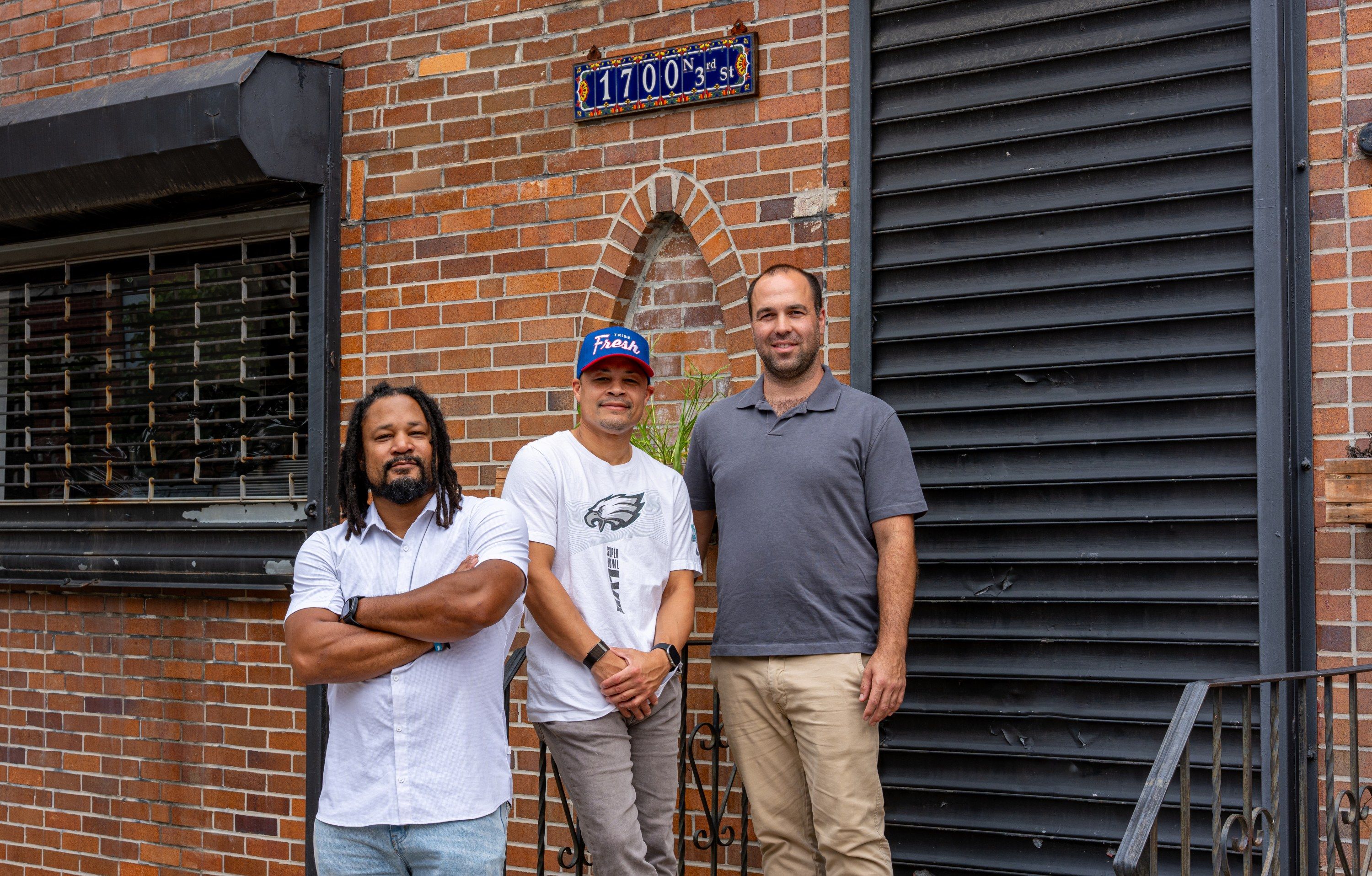
Chef Chaz Brown (left) is partnered with his brother Clifford Brown (center) and John Skeele in Rumblefish, 1700 N. Third St.Mike Prince
Rumblefish(1700 N. Third St.): Chef Chaz Brown is targeting November for this 900-square-foot, fast-casual Caribbean fish-fry restaurant at Third Street and Cecil B. Moore Avenue. Brown — a Trinidadian American chef whose resumé includes Nobu, Le Bec-Fin, Fatty Crab, and television’s Top Chef — will focus on invasive species such as lionfish, snakehead, green crab, and Chesapeake Bay blue catfish when available. (The catfish turned heads at the recent Oxtail Exchange at Forman Arts Initiative.) Brown uses gluten-free corn flour with Trinidadian spice blends and serves the fish on po’boy-style rolls baked by Angelo’s Bakery in Conshohocken. The mostly takeout operation will have counter seating, a 25-seat covered patio, slaws, fries, sea-moss drinks, and Solo Kola Champagne.
Pennsylvania suburbs
Alessandro’s Enoteca (915 W. Lancaster Ave., Bryn Mawr): Alex Fiorello’s third restaurant will bring a bar-focused Italian concept to the former Enoteca Tredici space in Bryn Mawr Village in mid-to-late October. Fiorello and culinary director Matt Arcomone, whose resumé includes Osteria, Vetri, and Palladino’s, are planning house-made pastas, wood-fired pizzas, live-fire cooking, and dry-aged meats. It’s intended to have a stronger evening and bar scene than Fiorello’s Wayne restaurants.
Bruzi (281 Montgomery Ave., Bala Cynwyd): Two couples with Calabrian roots plan to open this Southern Italian restaurant in the former Aldar Bistro in late fall. Expect house-made pastas and Calabrian dishes such as fusilli with slow-cooked meat sauce, baked lamb, and grilled tuna, plus cocktails and an opening list of about 100 Italian wines.
Capperini (137 S. Easton Rd., Glenside): Eastern Montco will get an upscale Italian-Mediterranean destination with a liquor license from Ilya Vorobey and partners including members of the team behind Capri in Queen Village. Vorobey is aiming for October or November.
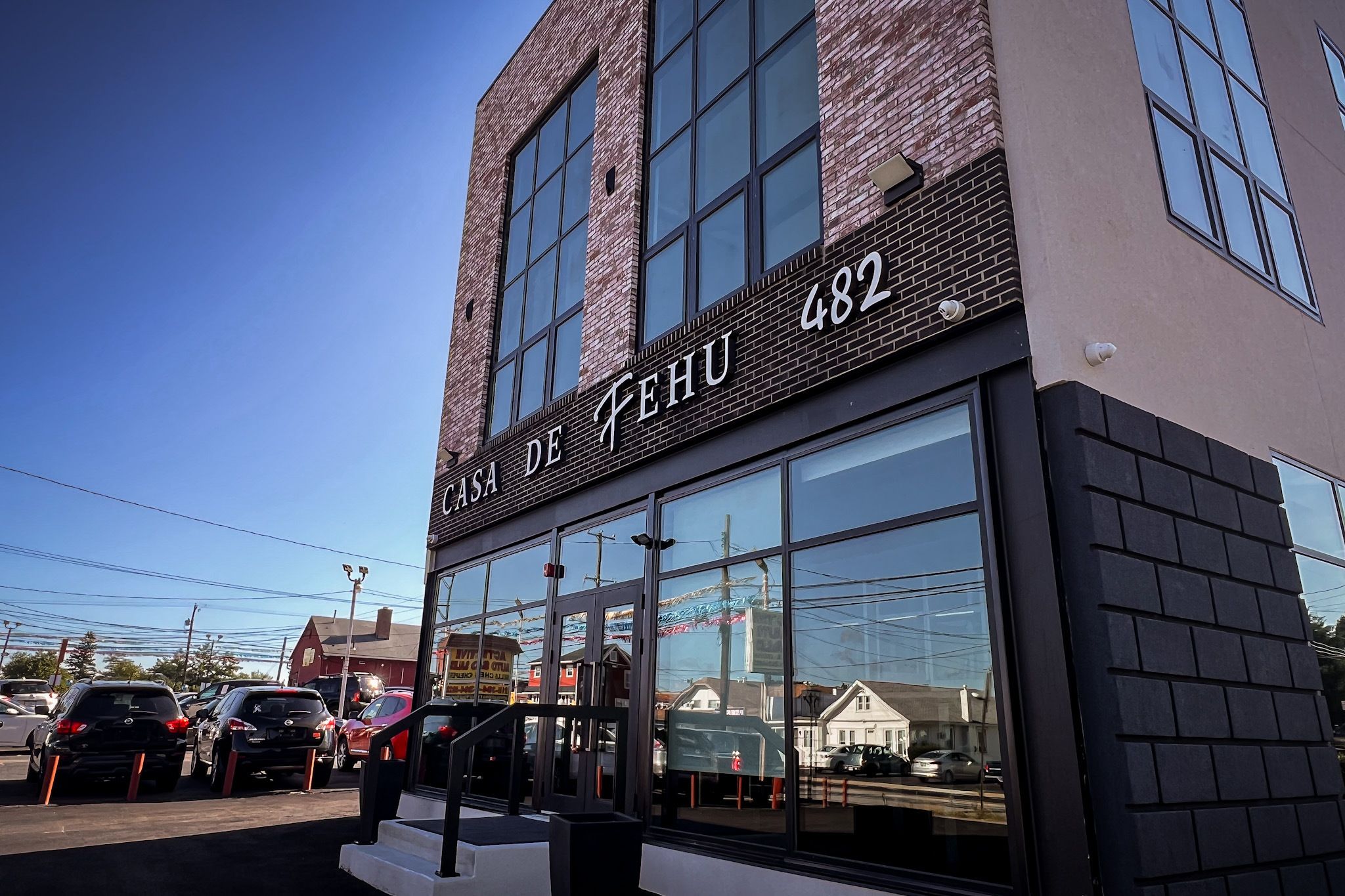
Casa de Fehu, 482 Jacksonville Rd., Hatboro.Michael Klein / Staff
Casa de Fehu (482 Jacksonville Rd., Hatboro): Hatboro couple Anthony Shalamov and Anastasia De Roy are developing this polished restaurant with European-inspired cooking and an upscale atmosphere, possibly with a tie-in to a local brewery that would allow alcoholic drinks. Shalamov is targeting an October soft opening.
Cecilia (266 E. Fourth St., Bridgeport): The team behind Blue Bell Inn and the Copper Crow is just about ready to open this contemporary American bar-restaurant in the extensively renovated former Taphouse 23. The roomy property includes a large patio and a wood-burning oven. The menu emphasizes familiar American dishes, positioning this as an all-purpose neighborhood destination.
Donatelli’s (1 Washington Ave., Newtown): Restaurateur Habib Troudi, who owns Panache and Ristorante Castelloin Blue Bell, is behind a top-to-bottom overhaul of the former Rocco’s at the Brick in downtown Newtown. He said he is hoping to open the Italian steakhouse in October.
Rendering of the Garden by Pieri Winery, 127 E. Elm St., in Conshohocken.Courtesy of Christina Pieri
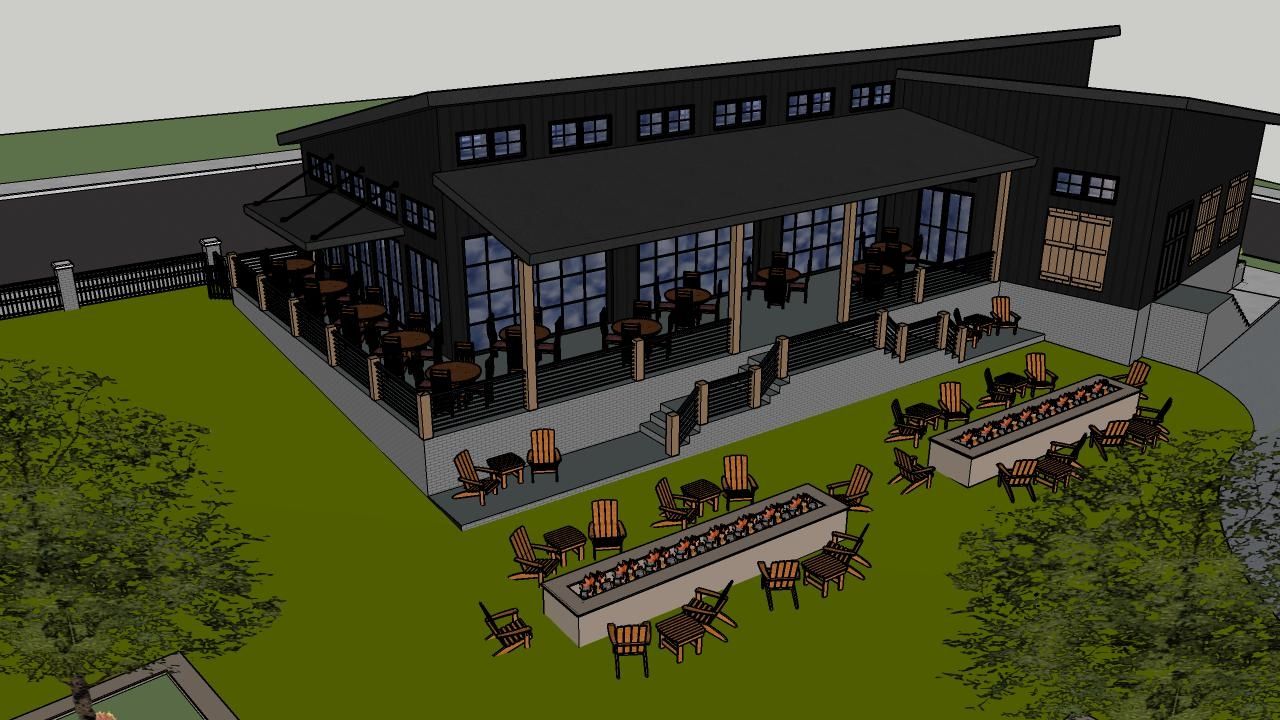
The Garden by Pieri Winery (127 E. Elm St., Conshohocken): Winery owner Christina Pieri and restaurateur Brian Pieri (StoneRose, Bar Lucca, Cerdo) are targeting a mid-October opening of their year-round indoor-outdoor restaurant beside the Schuylkill River Trail, an offshoot of Christina’s Coopersburg winery. A wood-fired kitchen will serve seasonal American food, including brick-oven pizzas, focaccia sandwiches, salads, steaks, and fish, at lunch and dinner Tuesday through Sunday. The property will include a covered patio, fire tables, a turf area, and pickleball and bocce courts.
The Hungry Hub (11 S. Orange St., Media): Media native Cassidy Moretti and her mother, Glenda, are taking over the former Rivalry Cafe with a family-run breakfast and lunch operation. The Hungry Hub also plans later hours and a late-night menu, broadening its role beyond that of a conventional daytime cafe. An Oct. 1 opening has been announced.
The Iron Oven (58 S. York Rd., Hatboro): Alex Nalbandian’s Southampton bar-restaurant — known for an expansive American menu, cocktails, craft beer, brunch, and dishes ranging from wings and burgers to flatbreads and entrees — is adding a second location in eastern Montco: the former Ross & Co. He’s aiming at November.
Lazy Dog(160 N. Gulph Rd., King of Prussia): The California-based bar, known for Rocky Mountain lodge imagery and a broad American menu, is targeting late 2026 at the King of Prussia Mall.
Luna (129 E. Butler Ave., Ambler): FineLine Hospitality, which recently opened Academy Grill in Fort Washington, is behind a stylish revamp of Dettera in downtown Ambler. Chef Marie Lavizzo-Mourey will base her menu on the 20-plus countries bordering the Mediterranean. The project is on track for fall.
Martini & Roz(523 W. Lancaster Ave., Wayne): Fearless Restaurants is turning Wayne’s former Bertucci’s into an ambitious, 300-seat Southern Italian restaurant named for founder Marty Grims’ parents, Martin and Roslyn. Menu will include crudo, oysters, steaks and chops, wood-fired pizzas, house-made pastas, and charcuterie. It will feature two open kitchens, a cheese cave, a tasting counter, and extensive outdoor seating.
Maru (2922 Conestoga Rd., Glenmoore): David Backhus and the team behind the former Oori restaurants are in the early days of a fast-casual Korean-inspired restaurant at their former Collective Coffee & Bakery. Think Korean fried chicken sandwiches, wings, and tenders, supplemented by mochi doughnuts and specialty Collective coffee.
Nudy’s Cafe (122 Park Ave., Willow Grove): Prolific suburban breakfast-and-lunch operator Ray Nudy hopes for late September for his latest diner, across from Marshalls in Willow Grove.
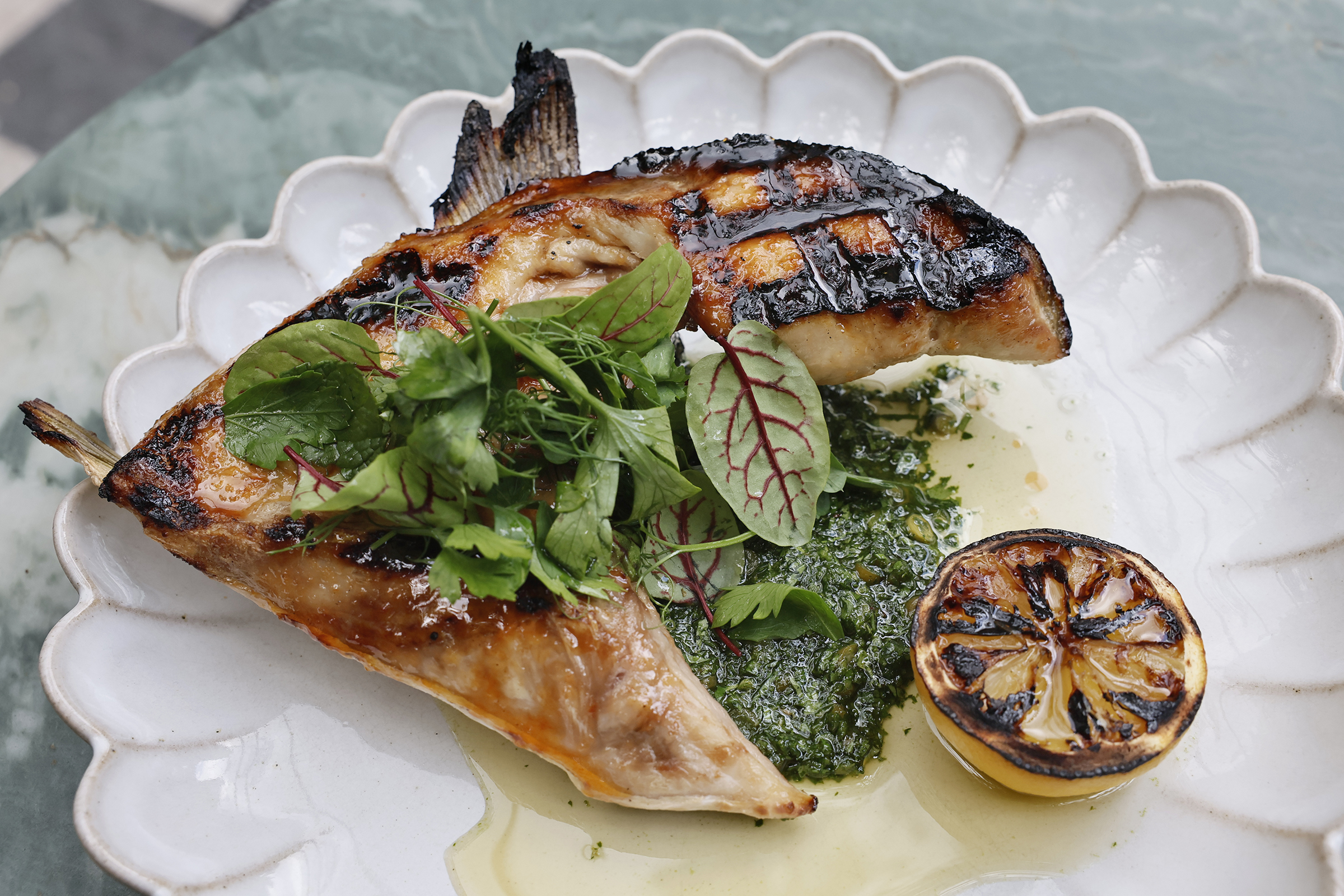
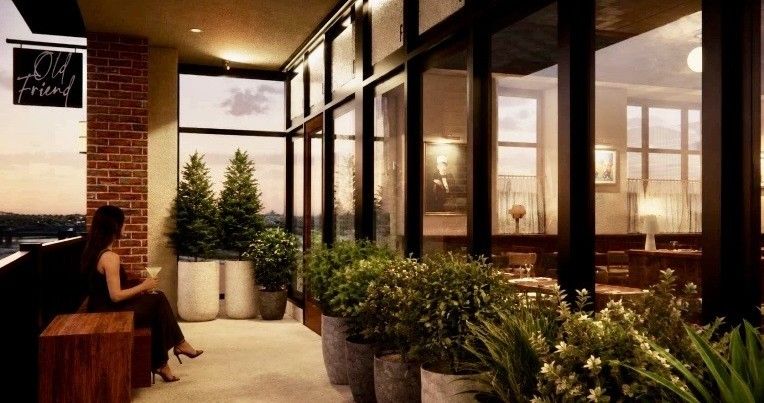
Old Friend (166 E. Lancaster Ave., Wayne): Childhood friends Larry Kagan and Chas McFeely are behind this contemporary American grill, with former Fork executive chef Sam Henzy leading the kitchen. The 86-seat restaurant will center on live-fire cooking in a Josper oven, with dry-aged fish, poultry, and larger proteins intended for sharing. Its compact wine list will be closely tied to the food. A late-fall opening is planned in the Apartments at Wayne Station.
Opus (201 Birch St., Kennett Square): Square Roots Collective will open this 125-seat New American restaurant Sept. 11 in the former temporary home of Hank’s Place, next to the Artelo hotel. Executive chef Matthew Anderson, formerly of Longwood Gardens and Winterthur, plans seasonal dishes, such as Kennett Square mushroom bisque, butternut squash agnolotti, herb gnocchi, and dayboat scallops. The two-story space includes a cocktail lounge, terraces, and work by local artists. Profits will support community projects and nonprofits.
Salt (840 W. Lancaster Ave., Devon): Rich Kim of North Wales’ acclaimed Salt predicts late December for his redevelopment of Devon’s former La Jonquille and Shiraz property into a second Korean barbecue concept, followed in 2027 by Yugo, a carousel sushi restaurant, upstairs.
The Still on State (18 W. State St., Doylestown): Only days open at the Doylestown Inn, this Irish pub-inspired bar/restaurant fills the former Hattery Stove & Still space; it’s paired with an on-site microdistillery called the Tilted Brim.
Taco Heart (120 Coulter Ave., Ardmore): Nano Wheedan is bringing his South Philadelphia breakfast-taco shop to the Ardmore Farmers Market, its first expansion beyond its East Passyunk-area home. Expect Austin-style flour tortillas and breakfast tacos built around eggs, potatoes, beans, bacon, brisket, and house salsas. Opening is set for Oct. 5.
Top Dog Cocktails (110 E. State St., Kennett Square, and 2012 Frankford Ave., Fishtown): Ken Smuckler’s cocktail company plans two vinyl listening rooms this fall inspired by Japanese jazz kissas. Kennett Square’s 750-square-foot space partners with local music venue Kennett Flash, while Fishtown’s 350-square-foot flagship — arguably the neighborhood’s smallest bar — will feature a 15-seat bar, two-turntable DJ station, and retail.
Tusk (50 N. Main St., Doylestown): Mike and Joy Grafenstine, owners of Roberts Block in Glenside and Bonnet Lane Family Restaurant in Abington, are taking over the former Water’s Edge wine bar, combining the martini-and-wine-bar airs of Roberts Block with approachable upscale American comfort food. Target is October.
Vintner’s Table (24 Cricket Ave., Ardmore): Andrea and Marco Folino, behind Kutztown’s Folino Estate Winery, are opening a third location of their Italian-inspired wine bar, salumeria, and lifestyle boutique in downtown Ardmore in October.
New Jersey suburbs
Akira 70 Omakase (249 Marlton Pike, Cherry Hill): Ming “Frank” Zheng is expanding his Japanese holdings — he owns Akira Sushi in Voorhees and Moorestown — with an omakase experience in a former fur salon.
Banjara Indian Bistro (687-689 Berlin-Cross Keys Rd., Sicklerville): Vaneet Chopra, whose family operates Cross Culture in Haddonfield and previously ran Banjara in Chestnut Hill, is bringing the Banjara name to Sicklerville; its dine-in starts Thursday.
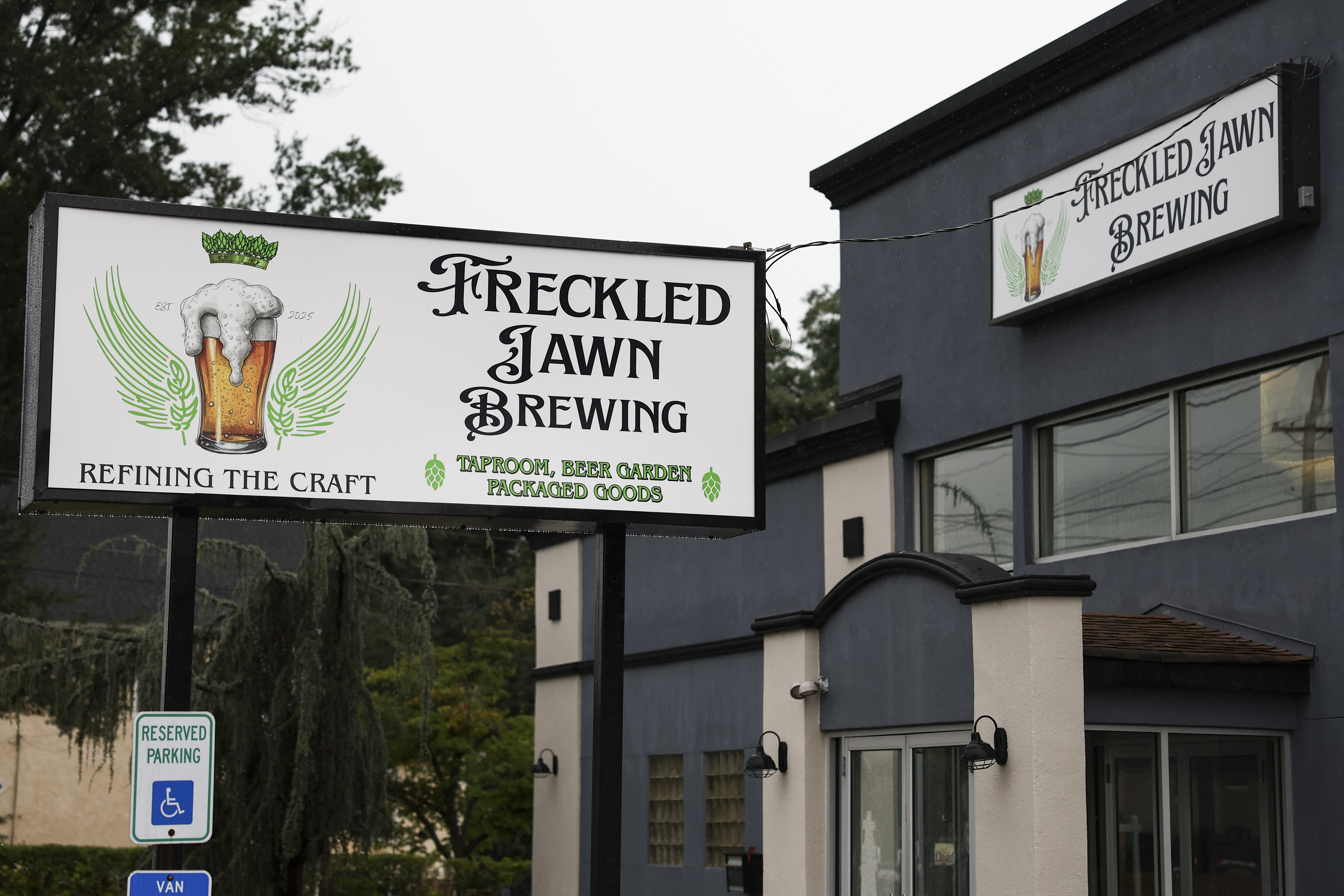
Freckled Jawn Brewing(1003 N. Evergreen Ave., Woodbury): Woodbury residents John Wagner and Colleen Gibson are taking over the former Eight & Sand Beer Co., which closed in June after 10 years. Targeting the first week of October, the brewery will introduce new branding and a fresh lineup of approachable beers, emphasizing natural and locally sourced ingredients when possible.
Irishtown Steaks (155 S. Burlington St., Gloucester City): Donkey’s Placealumnus Dave Murphy is targeting Halloween for his steak shop, joining recent Gloucester City entries Lillo’s and Pudge’s Pub. Murphy will use rolls from Boaggio’s, which has a bakery in town.
Penny’s Bagels (212 Kings Highway East, Haddonfield): Chris Fetfatzes and the Happy Monday Hospitality Group (Wine Dive, Grace & Proper) are developing this long-delayed bagel shop in downtown Haddonfield, now with an October target.
Pizzeria Cusumano (872 Haddon Ave., Collingswood): Announced back in September 2021, this passion project from South Jersey’s Sal Cusumano is finally about to start offering his Roman-inspired squares and neo-New York rounds, but “I don’t want to box myself into a certain style.” Cusumano, a third-generation pizzaiolo, is planning a small shop with limited seating. This week, he said it will open in October for sure.
Philadelphia
Adda (1700 Frankford Ave.): New York’s Unapologetic Foods — behind Dhamaka, Semma, and the original Adda — is bringing its energetic Indian cooking to Fishtown, across from the 19125 post office. Expect regional dishes in an informal setting, continuing the restaurant group’s practice of pushing beyond familiar Indian American standards. Originally expected in fall 2025, the Philadelphia location is now targeting an October opening.
Ayat (2021 Sansom St.): Abdul Elenani’s New York-based Palestinian restaurant — first announced in spring 2024 — is looking at a November opening in the former Roxy Theater near Rittenhouse Square. Ayat is known for generous portions of mansaf, maklouba, mezze, grilled meats, and other homestyle Palestinian dishes.
The bar at Bar Caviar, 256 S. 16th St.Kenneth Schutz
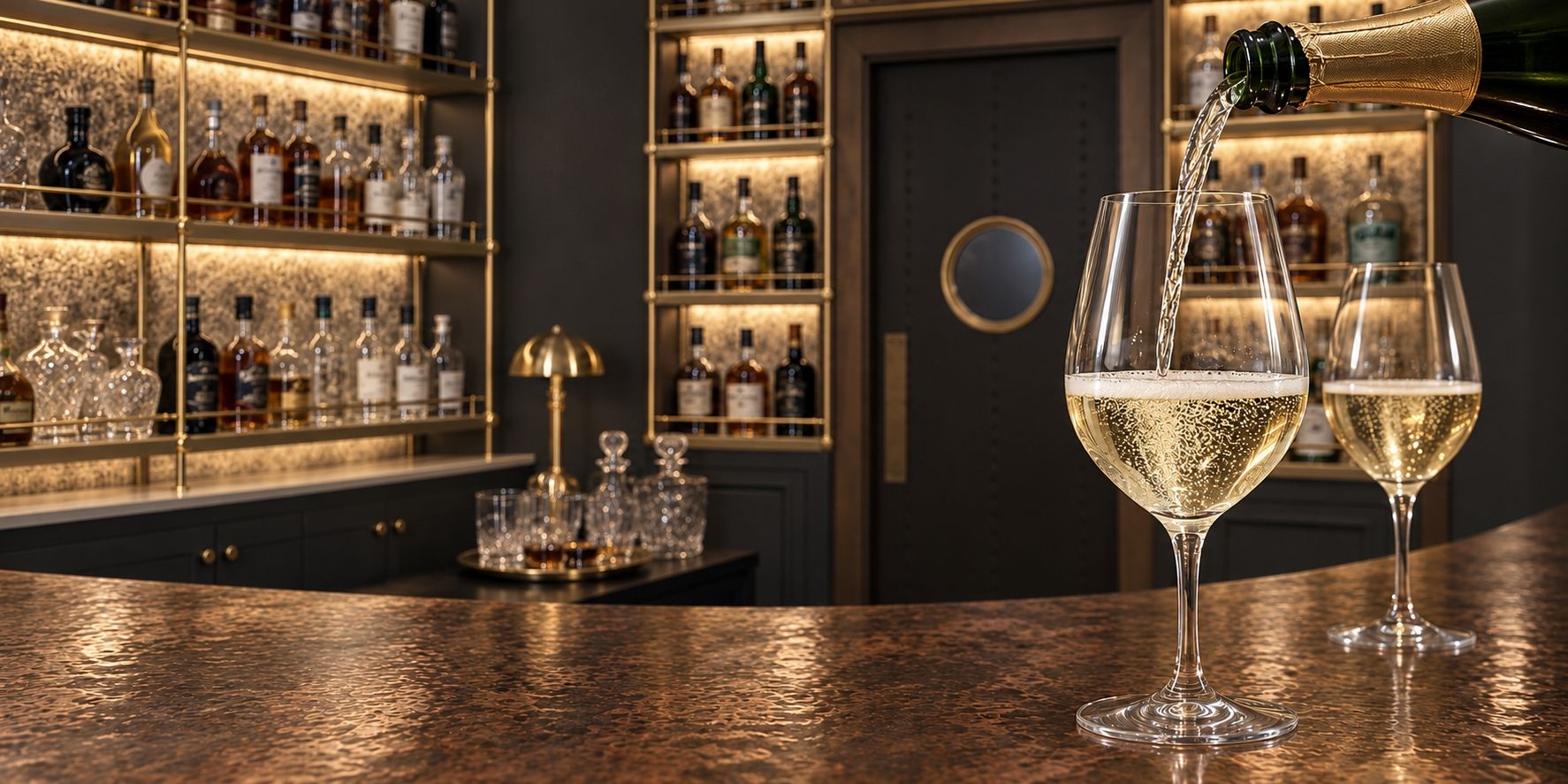
Bar Caviar (256 S. 16th St.): Opening in early October in the Dwight D Hotel in Rittenhouse, this bar will pair caviar and seafood with 50 varieties of Champagne and a full wine program in a setting that’s more neighborhood than hushed luxury lounge. Executive chef Greg Vassos’ contemporary American menu, informed by classical French technique and Japanese precision, will feature raw-bar selections, caviar-focused dishes, and seasonal small plates. The restaurant also will operate Parallel, a caviar program emphasizing careful sourcing and extended maturation. In 2027, Vassos plans to follow with Fall Line, a Mid-Atlantic-focused tasting-menu restaurant.
Brunch Bulls (1638 W. Passyunk Ave.): Brothers Derrick “Dee” Long and Jarrick “Jakk” Long are behind this all-day brunch/dinner/dessert restaurant in Point Breeze. They say they’ll be open by December.
Call Your Mother (262 S. 19th St., 1500 Frankford Ave., 12th and Sansom Streets): The lively, Washington-based “Jew-ish” bagel chain is making a three-location push into Philadelphia, starting this week with its Fishtown debut. Menu includes bagel sandwiches, schmears, latkes, coffee, and deli-inspired specials.
Carolyn’s Modern Vietnamese (2015 Walnut St.): This week, chef Carolyn Nguyen opens her deeply personal successor to Revolution Taco, which she co-owned in the space for a decade. Her menu brings together her family’s Vietnamese cooking, the seafood boils and Southern food of her Louisiana childhood, French culinary technique, and the freewheeling flavor combinations that defined her earlier ventures. The 33-seat restaurant serves dinner, and alcohol, in a spare, contemporary dining room.
Corte (1175 Ludlow St.):Corio partners Ryan Mulholland, chef David Feola, and James Smith are taking over the former Mulherin’s Pizzeria at East Market, between Iron Hill Brewery and Mi Vida. Feola will lead a menu built around house-made pastas plus proteins, vegetables, and small plates cooked in the large Mugnaini wood-burning oven. Mulholland will oversee daily operations and oversee an Old World-leaning wine list and cocktails inspired partly by forgotten recipes from century-old books. The dark-wood, earth-toned restaurant is targeting a fall opening.
DiDi (3748 Lancaster Ave.): DanDan owners Kevin and Catherina “Cat” Huang say they are “within a month or two” of opening their fast-casual pan-Asian concept at the Triad apartment building in Powelton Village. DiDi will join Kabobeesh, Karak Cha House, Shibam Coffee, Two Locals Brewing, and other businesses in the growing complex at 38th and Lancaster.
Divers Club (733 S. Fourth St.): Queen Village is in line to get a neighborhood wine bar from Susan Freeman, Chris Fetfatzes, and Heather Annechiarico (Grace & Proper, Wine Dive) in a former hair salon that sits on the same stretch as Famous 4th Street, Southwark, Ambra, and Fitz on 4th. Fetfatzes describes the mood as “dark, scrappy, and European — somewhere between a Paris backstreet wine bar and a graffitied Berlin hangout.”
Eggcetera Haus (625 S. Sixth St.): Husband-and-wife team Rey Tamaka and Vina Kencana soon will turn the former Redcrest Kitchen into an all-day bar-restaurant. Tamaka, previously the chef at an Old City brunch restaurant, plans breakfast, lunch, and dinner, moving from specialty coffee and morning dishes into pastas, steaks, cocktails, and comfort food at night. The couple expects daily service, giving the Queen Village-Bella Vista border another full-day neighborhood option.
Field Day (923 N. Second St.): James Beard Award-winning bartender and author Danny Childs and his wife, Katie, have a fall opening targeted for their casual regional cocktail bar in Northern Liberties, next to Cescaphe Ballroom. Childs’ drinks will use locally farmed, foraged, and fermented ingredients. Executive chef Melissa McGrath, known for her work at the idled Sweet Amalia Market & Kitchen, will offer Pennsylvania Dutch-inspired snacks, sandwiches, and tomato pies. Highballs, house-made sodas, boozy gelati, and walk-in seating will help keep the mood informal.
Habibi Supper Club (1515 E. Passyunk Ave.): Miled Finianos is giving his itinerant Lebanese dinner series a permanent home on East Passyunk — possibly by the end of year — serving late breakfast and lunch before he offers ticketed, multicourse suppers.
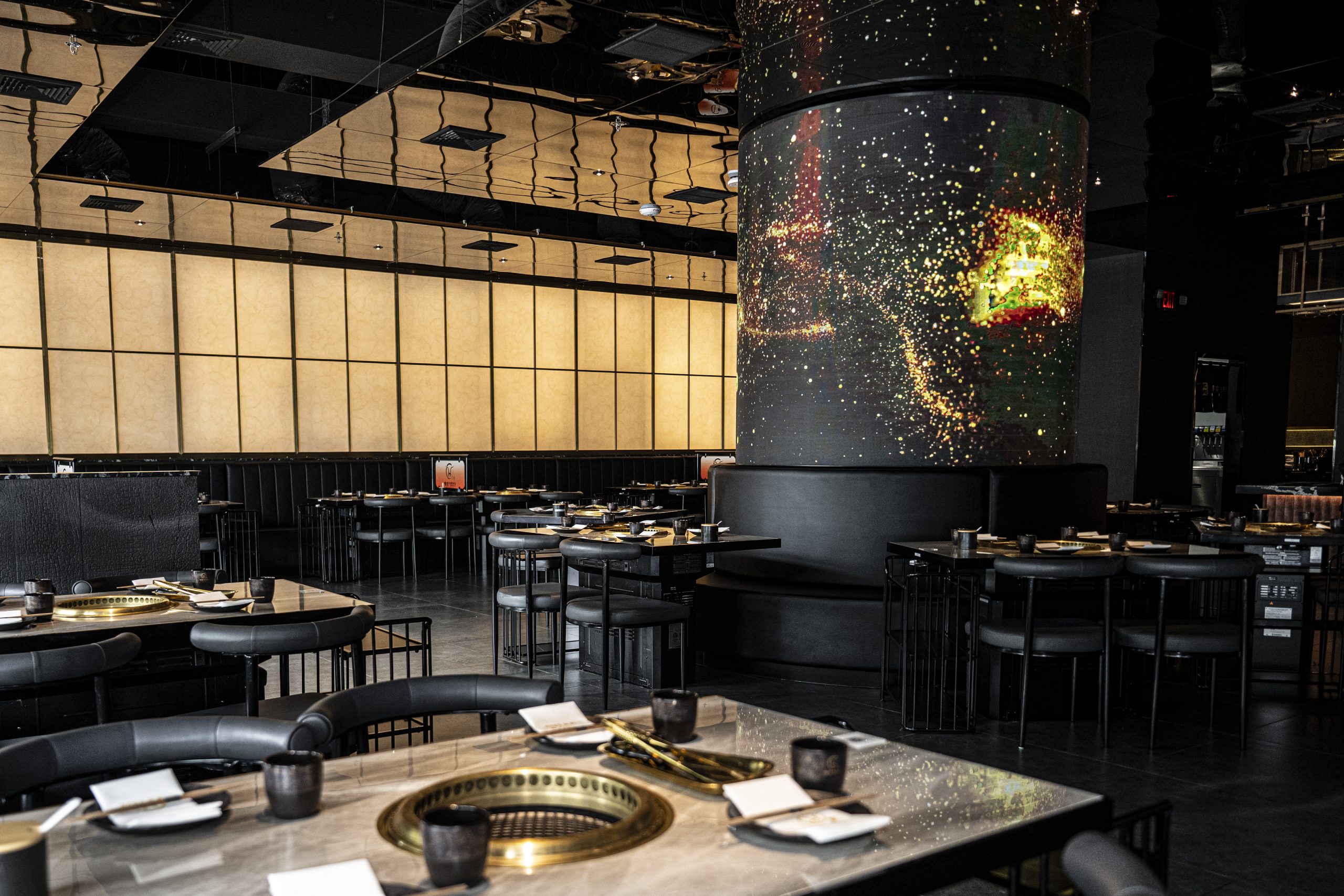
HYO (1222 Walnut St.): Nightlife veteran Justin Jordan plans an October opening for this Korean tabletop barbecue restaurant behind Hearsay, his indoor-outdoor sidewalk bar and listening lounge. Guests will enter HYO through a phone booth inside Hearsay. The restaurant is part of Jordan’s multilevel entertainment complex, which also includes Celine and the forthcoming Chancellor Room event space and karaoke lounge.
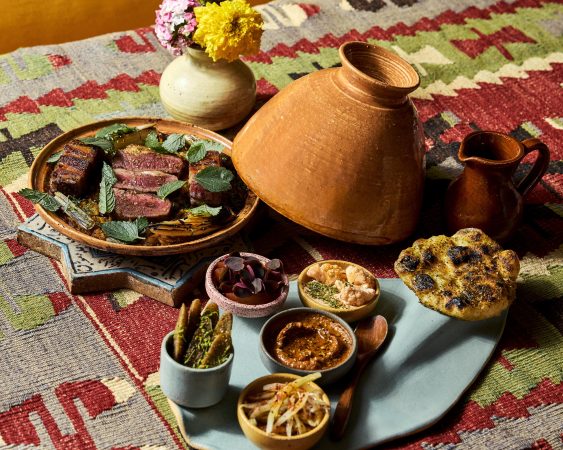
Jean (161 W. Girard Ave.): Emmett chef Evan Snyder and partner Julian van der Tak are going upstairs with a 15-seat tasting menu restaurant opening this fall. Snyder and chef de cuisine Antonio Pizzo will prepare a 12-course menu centered on a 7-foot wood-burning hearth, drawing on Algeria, Tunisia, coastal Morocco, and the southern Mediterranean for culinary influences. A tagine will roast throughout dinner before being served family-style.
Kato (1832 Frankford Ave.): Mei Meichef-owner Jay Ho is taking over the former Izakaya Fishtown space for a restaurant inspired by his Taiwanese father and the food Ho grew up eating. Influences from Korean, Thai, and Vietnamese cooking will broaden the menu. Ho, who hopes to open in late fall, plans to retain the front bar while replacing the rear sushi counter with additional seating that can double as a private dining area.
Lovat Square(184 E. Evergreen Ave.): Former Four Seasons sommelier Damien Graef and journalist Robyn Semien opened this Chestnut Hill wine shop and tasting room in February, offering small-production bottles, wines by the glass, and light fare. The couple, who also own Brooklyn’s Bibber & Bell wine shop, will debut a full dinner menu by the end of September.
Macaluso’s (3101 S. 13th St.): Realtor Joel Gruenke and restaurateur Mark D’Andrea, long-ago roommates at Valley Forge Military Academy, are looking at an early October opening of this white-tablecloth Italian restaurant at 13th Street and Packer Avenue, near the sports complex. D’Andrea’s family owns RoadHouse in Staten Island, N.Y. Gruenke says the moderately priced menu will stick to traditional Italian cooking and offer a full bar. Parking will be available across the street.
Mylar Bar (1636-38 S. Ninth St.): Hospitality veterans Liv Arterbridge and Gina Piccari are turning the former Dino’s Party Center into a festive neighborhood bar inspired by the building’s history. They promise something nostalgic, playful, and deliberately unserious. Drinks will include martinis, punches, classics, and draft beer. Chef Colin White, formerly of Sally and Emmett, will oversee shareable “party snacks,” larger plates, and desserts available late.
Nippy’s on South (1312 South St.): Nurse and first-time restaurateur Nikia Peterson has purchased the former Ms. Tootsie’s building for an ambitious restaurant and bar. Peterson plans a polished setting with seafood towers, steaks, Asian and Caribbean influences, a substantial happy hour, and weekend brunch. The project will revive a prominent South Street property that had remained closed since restaurateur KeVen Parker’s death in 2021.
O’Morrey’s (1720 Sansom St.): Chefs Biff Gottehrer and Kenjiro Omori are developing a cocktail bar on the former site of Genji, the Japanese restaurant created by Omori’s father. The name is a cheeky rendering of the Omori family name. Plans call for a comfortable neighborhood bar in the spirit of the Ripplewood, where both chefs work, with cocktails and a serious food component. Their second joint project, Tako Taco, is months away at the former Bing Bing Dim Sum in South Philadelphia.
Palm Vintage (1414 S. Penn Square): Houston Yang and Mike Beja, who opened this day-to-night cafe and cocktail bar across from City Hall in the Residences at the Ritz-Carlton, are close to expanding into a nighttime scene with cocktails, sushi, oysters, caviar, and light food in a lush, tropical-inspired room meant to offer an escape from Center City.
Panco (2300 S. Croskey St.): Chef Ryo Igarashi, whose background includes Tokio Global and Maru Global (noted for its takoyaki balls), is behind a corner shop in West Passyunk whose menu will focus on Japanese cutlets. He says it’s opening soon.
Philly Curio (2240 Frankford Ave.): Tattoo Arts Convention founder Troy Timpel is creating an intimate Kensington restaurant-bar around his private collection of curiosities (think tribal masks, skeletal displays, taxidermy, and glass-topped tables containing preserved animals). Inspired partly by Savannah’s Alligator Soul, Timpel has discussed a Cajun-Creole menu with small plates and unconventional proteins such as rattlesnake. Drinks are expected to include cocktails, wine, bottled beer, and limited drafts. Target is November.
Philly Po’Boy (102 W. Berks St.): Brothers Chris and Greg Lynch are bringing a taste of New Orleans to the storefront beneath the Berks station of the Market-Frankford Line. Chris spent years cooking in New Orleans, while Greg’s Philadelphia background includes Starr Restaurants and LMNO. Plans call for classic powdered-sugar-dusted beignets, gumbo, and a mix of classic and specialty po’boys like fried shrimp, oysters and roast beef “debris,” plus fries, Creole potato salad, and café au lait from coffee roasted by Applied Arts in New Orleans.
Santé Social(1546 E. Passyunk Ave.): Sommelier Daniel Solway is giving his roving dinner series a permanent home across from the Singing Fountain. The approximately 30-seat space will function less like a conventional restaurant than a flexible hospitality venue, hosting wine dinners, tastings, classes, collaborations, private events, and some walk-in service. Cocktails are being developed with Danny Childs of Slow Drinks and Field Day, while changing chefs and collaborators may shape the food programming.
Somedays Bakery (1601 Walnut St.): Hand-laminated croissants are the foundation of this Queens-rooted bakery, which deals in sandwiches, salads, soft serve, and coffee. It’s targeting the end of the month.
Thalassa (918 N. 28th St.): Matt Maltepes is looking at late October or early November for his Greek-inspired cafe in Fairmount that will serve baklava, croissants, and house-made ice cream in flavors that change weekly. Savory offerings will include small plates such as feta grilled cheese with honey, avocado toast, and bagels with cream cheese. The drinks menu will feature European-style coffee preparations, including frappes and Freddo espresso.
Looking ahead
Two major projects are now on the docket for January, as the owners don’t want to compete with the holiday-season madness:the Pelican Club, Stephen Starr’s flashy Greek-themed restaurant taking shape in the former Devon Seafood Grill on Rittenhouse Square, and the yet-to-be-named “punk French” restaurantthat chefs Justin Bogle and Arthur Cavaliere are creating at the former Winnie’s Manayunk.
The long-closed Mermaid Bar in Mount Airy will retain its name under the new ownership of pizzaiolo Dan Gutter and business partner Alex Carbonell of Circles & Squares and Pizza Plus. The project, announced earlier this year, is aiming at a summer 2027 rollout.
In our quest to keep you up to date on the restaurant scene, here are 12 spots that opened in the last few months. One example is Ogyu (shown above), which took over Ardmore’s former Iron Hill Brewing. It’s a grill-it-yourself Japanese steakhouse from the owner of the nearby Osushi.
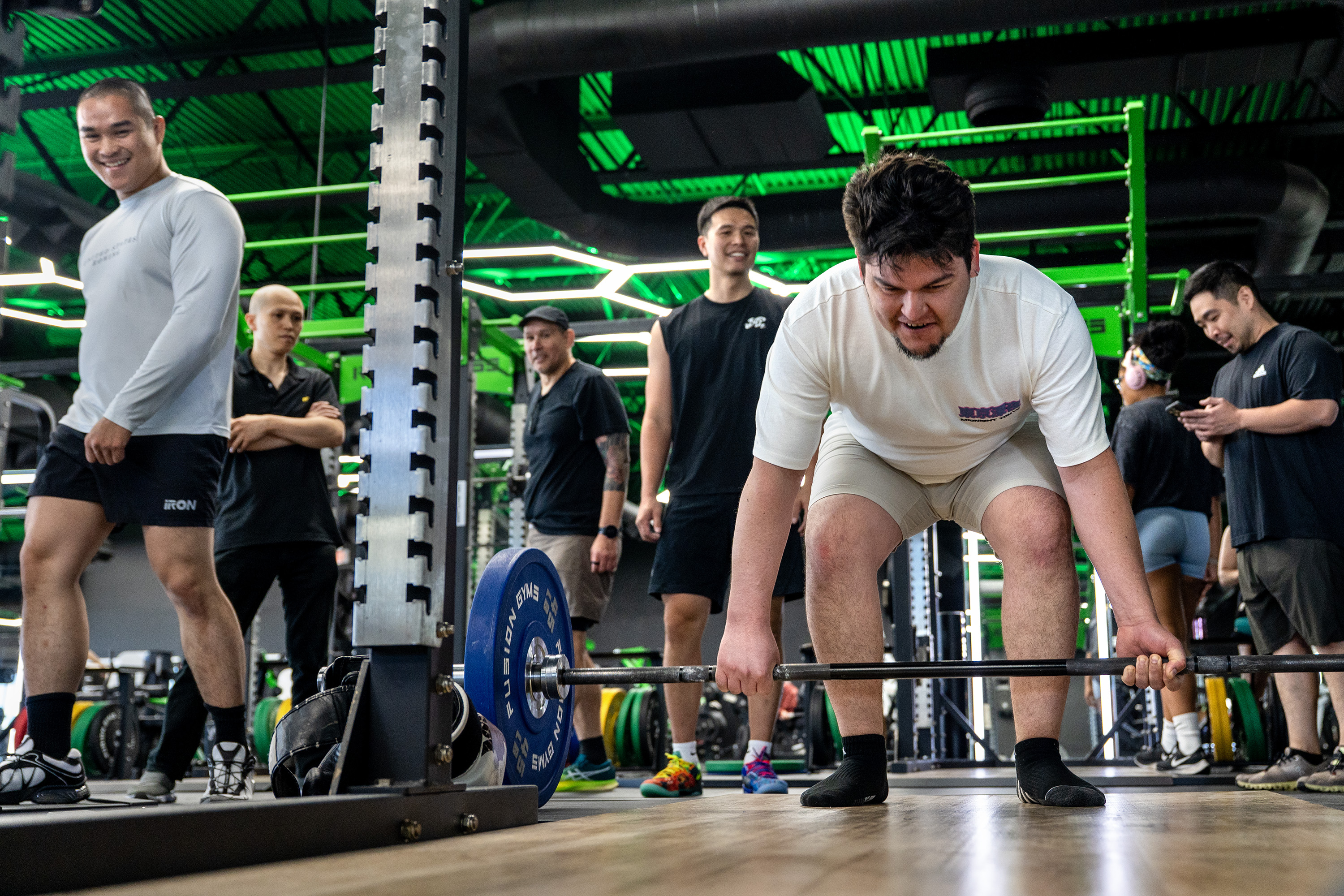
You have to be in shape to lug around 100-pound salmon and tuna. Kiki Aranita found a group of sushi chefs who routinely lift weights. As they say in the maki game: no pain, no grain.
A couple didn’t want their local drinking spot to shut down for good. Sarah Nicell writes that they found a solution: They bought it.
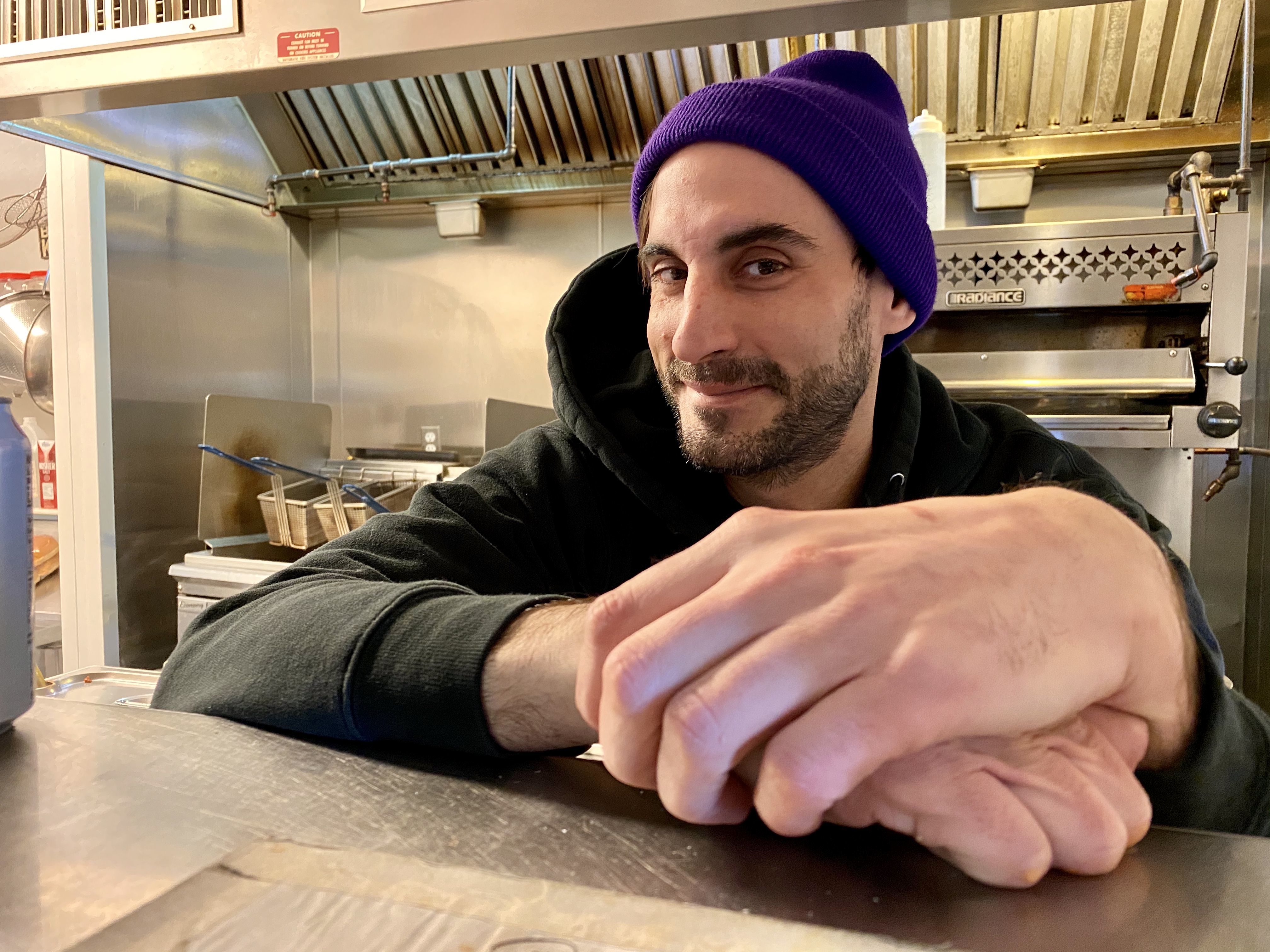
The lines are long, and the branding is adorable. Kiki Aranita visits Kyo Matcha in Chinatown.
Pinot grigio is wildly popular for a good reason, and wine writer Marnie Old explains where the best ones come from.
Poe is expanding
Sandwichmeister N.A. Poe will expand the hours of his kitchen operation at Poison Heart next week while preparing to open a new Poe’s Sandwich Joint location by the end of the year.
Starting Tuesday, Poe’s will operate seven days a week out of Poison Heart, 931 Spring Garden St., where he’s run the cocktail bar’s kitchen since last September. Daytime service will be pickup, takeout, and delivery only; Poison Heart itself will not open for daytime bar or dine-in service.
Poe, the nom de plume of Richard Tamaccio Jr., is not disclosing the new joint’s location or opening date. “We look forward to the freedom to do things our way without interference or apologies,” he said.
The move follows Poe’s split with Human Robot Brewing Co., where he had operated since 2019. His last day at Human Robot’s Kensington location is Thursday. Cantina La Martina will take over Human Robot’s kitchens at both Kensington and Brewerytown. Poe also parted company with the Monto, a new Old City bar.
At Poison Heart, Poe’s will operate from 11 a.m. to 9 p.m. Sunday through Tuesday and 11 a.m. to 6 p.m. Wednesday through Saturday. Poison Heart’s regular Wednesday-through-Saturday evening service will continue, with Poe’s classics and specials added to the menu.
Two tasty bright spots of a staycation for Emily Bloch and her boyfriend included hamachi collar and poolside swordfish skewers. In other words: There’s great fish to be had in Fishtown.
Scoops
Old Friend, an upscale restaurant with a wood-fired grill and a chef with a Center City pedigree, is coming to the Main Line later this year.
Corte, on its way to the former East Market home of Mulherin’s Pizza, will have an Italian backbone, focusing on handmade pasta and cooking from the wood-fired oven. If that sounds like University City’s Corio, that’s because the same crew is behind it.
Big Charlie’s Saloon, the nationally known Kansas City Chiefs-theme bar in South Philadelphia that closed with the owner’s death last December, is under agreement of sale. The buyers’ plans don’t include NFL memorabilia.
Restaurant report
We’re in a New York state of mind:
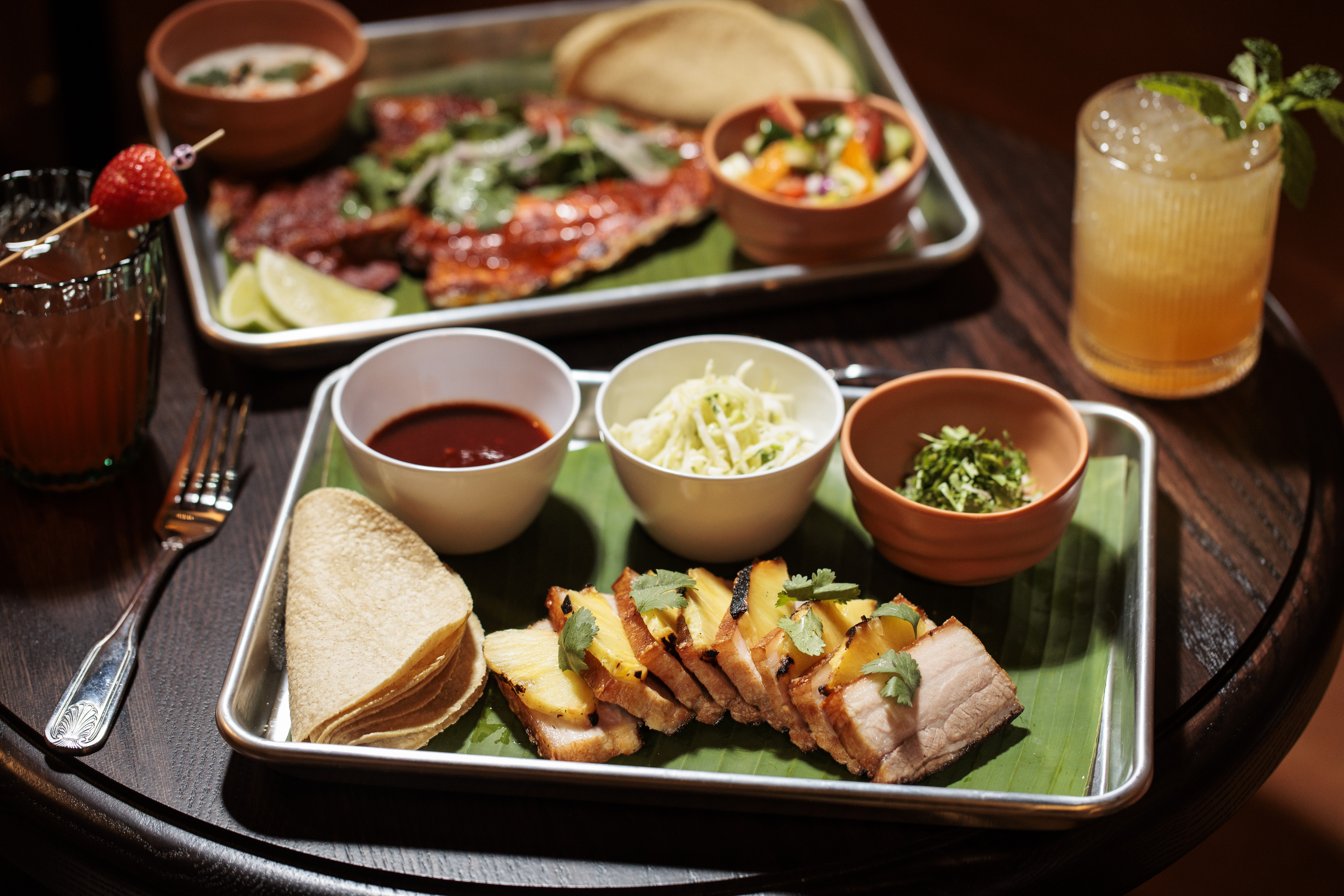
Dorade asado and pork belly al pastor (shown above) are two dishes offered at the new Mixteca, the Kensington offshoot of a Manhattan agave-focused coctelería from two James Beard Award-winning bartenders. Beatrice Forman heads to the former Martha for a look around.
Smash burgers and fries are the hook at 7th Street Burger, a fast-growing Manhattan-based burger chain that just opened the first of four Philadelphia-area locations in Fishtown. Kiki Aranita takes a bite.
Briefly noted
Jose Pistola’s 19-year run in Center City has ended. Its related bars in Fishtown and South Philadelphia are unaffected.
Mount Masala Himalayan Cuisine (300 White Horse Rd., Voorhees) will host a Nepal disaster-relief fundraiser on Thursday, Sept. 10 from 5 p.m. to closing under the auspices of South Jersey Food Scene. It’s a $25 buffet of Nepali-Himalayan dishes for dine-in or takeout, with all sales donated to the Nepalese government for flood relief.
🥂 New Jersey has permanently allowed the sale and delivery of to-go alcoholic beverages in towns that permit it.
Ask Mike anything
Did Philip Korshak ever open his store, Korshak Picnic Provisions? — Joan M.
Back in February, Phil Korshak, the poet-baker who left town in 2023 after closing his cult-favorite Korshak Bagels, thought he’d open his quirky corner store at 13th and Reed Streets by May. However, “you have no idea how many contractors, electricians, and plumbers go to Europe and Japan in the summertime,” he told me in June. This week, Korshak said the store — now called Korshak Parkside Provisions — is in the health department inspections queue and he’s expecting equipment deliveries. “Let’s call it October,” he told me.
📮 Have a question about food in Philly? Email your questions to me at mklein@inquirer.com for a chance to be featured in my newsletter.
By submitting your written, visual, and/or audio contributions, you agree to The Inquirer’s Terms of Use, including the grant of rights in Section 10.
When Richard Sperry’s right shoulder began to ache, the pharmaceutical executive thought he was overdoing it at the gym.
“I was doing CrossFit at the time,” Sperry said. “I thought it was from doing things that I shouldn’t be doing in my mid-40s.”
Then, almost overnight, the entire right side of his body was weak. He could not pick up a coffee mug, grasp a pen, or shave his face with his right hand. His wife had to help him button his dress shirts each morning.
An orthopedic doctor sent him to a Philadelphia neurologist in late 2019. After a battery of tests, the neurologist diagnosed Sperry, then 45, with amyotrophic lateral sclerosis (ALS), or Lou Gehrig’s disease, a fatal nervous system disorder. The neurologist said he would die within three to five years. He went for another opinion, and a second neurologist concurred.
In early 2020, Sperry traveled to the Mayo Clinic in Minnesota for a third opinion.
“‘I’m gonna cut to the chase — I don’t think you have ALS,’” Sperry recounted the Mayo doctor saying, as his sister erupted in tears.
Sperry actually had a rare autoimmune disease called multifocal motor neuropathy, or MMN. The doctor prescribed intravenous immunoglobulin therapy, a treatment made from the blood plasma of healthy donors. Immunoglobulin is an antibody found in plasma, the straw-colored liquid in blood.
Once back home in Princeton, Sperry got infusions for five straight days, sitting about four hours each time. A few days after treatment ended, Sperry awoke and discovered he could move his right hand for the first time in more than a year, he said.
“My wife and I were in bed bawling,” Sperry said. “It was like a wonder drug.”
Demand for plasma is growing as the global population ages, more people like Sperry are being diagnosed with chronic diseases, and new medical treatments that require plasma are discovered, research shows.
The value of a liter of plasma rose from about $181 in March to $192 in June, likely because of increased demand, according to Georgetown University professor Peter Jaworski, who studies the global economics and ethics of the plasma industry.
No cure existsfor all three conditions, butsymptoms are alleviated with regular infusions of plasma-based therapies.
“It is life-changing for patients with rare and chronic diseases,” said Anita Brikman, president and chief executive of the Plasma Protein Therapeutics Association, a trade organization that represents donation centers in North America and Europe.
Doctors are not exactly sure how it works on patients like Sperry, said Sami Khella, a Penn Medicine neurologist and clinical neurology professor at the University of Pennsylvania Perelman School of Medicine.
But if Sperry does not get his medicine on time, he will “develop weakness almost right away,” said Khella, who sees Sperry as a patient.
Sperry’s condition causes his immune system to attack his nerves. The immunoglobulin in plasma quells the attack, Khella explained.
Every four weeks, Sperry receives 35 grams of immunoglobulin through infusions over two days. It takes hundreds of donors to make 35 grams, Khella said.
Sperry, who is back doing CrossFit, said it feels “scary” to be dependent on plasma donations. When he sees people going in and out of donation centers, he said, he is enormously grateful.
“It’s not like the drug manufacturer can just build another plant and make more pills,” Sperry said.
A shuttered bridal shop in downtown Conshohocken will soon become the home of another family-run business with local roots.
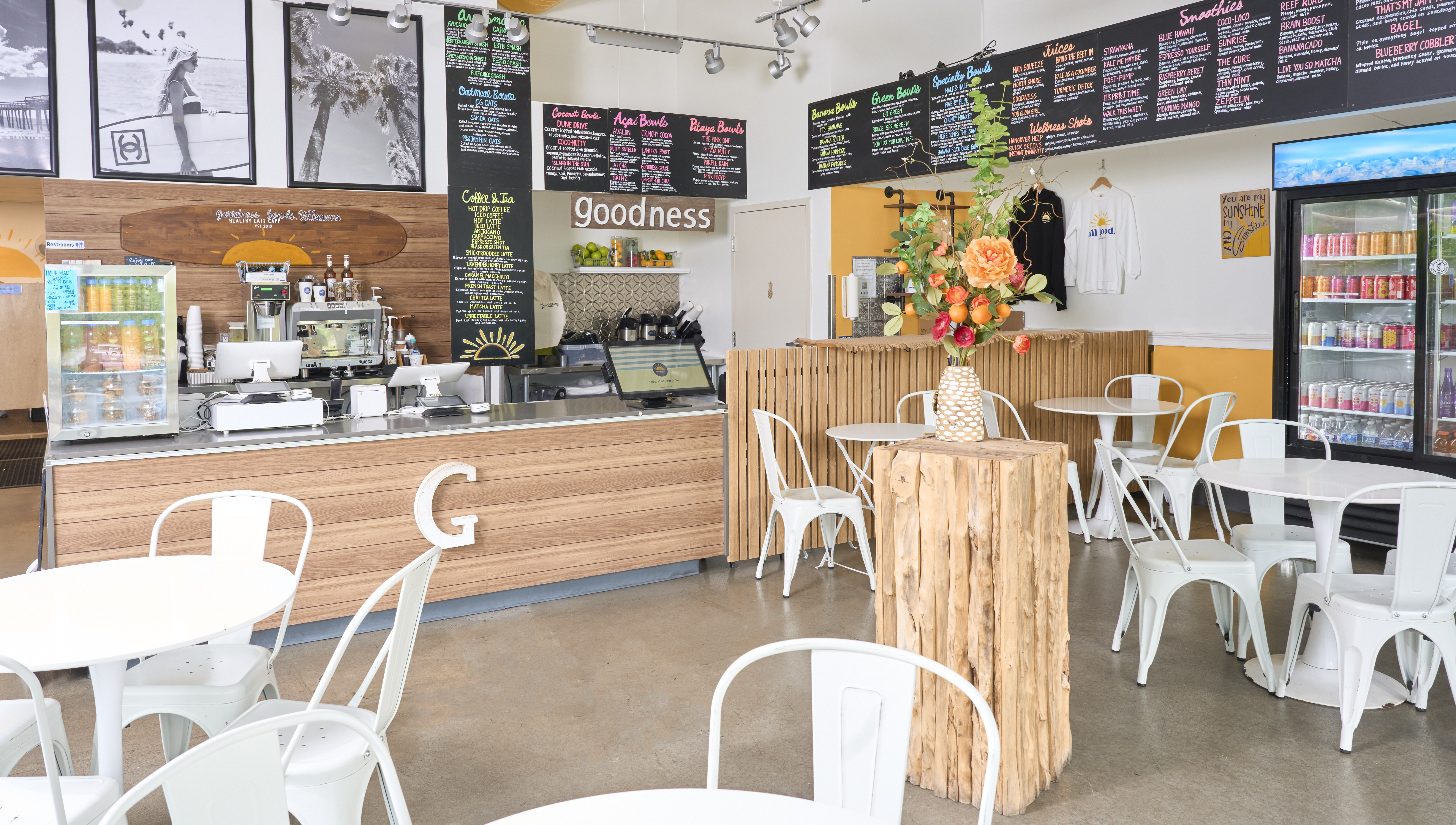
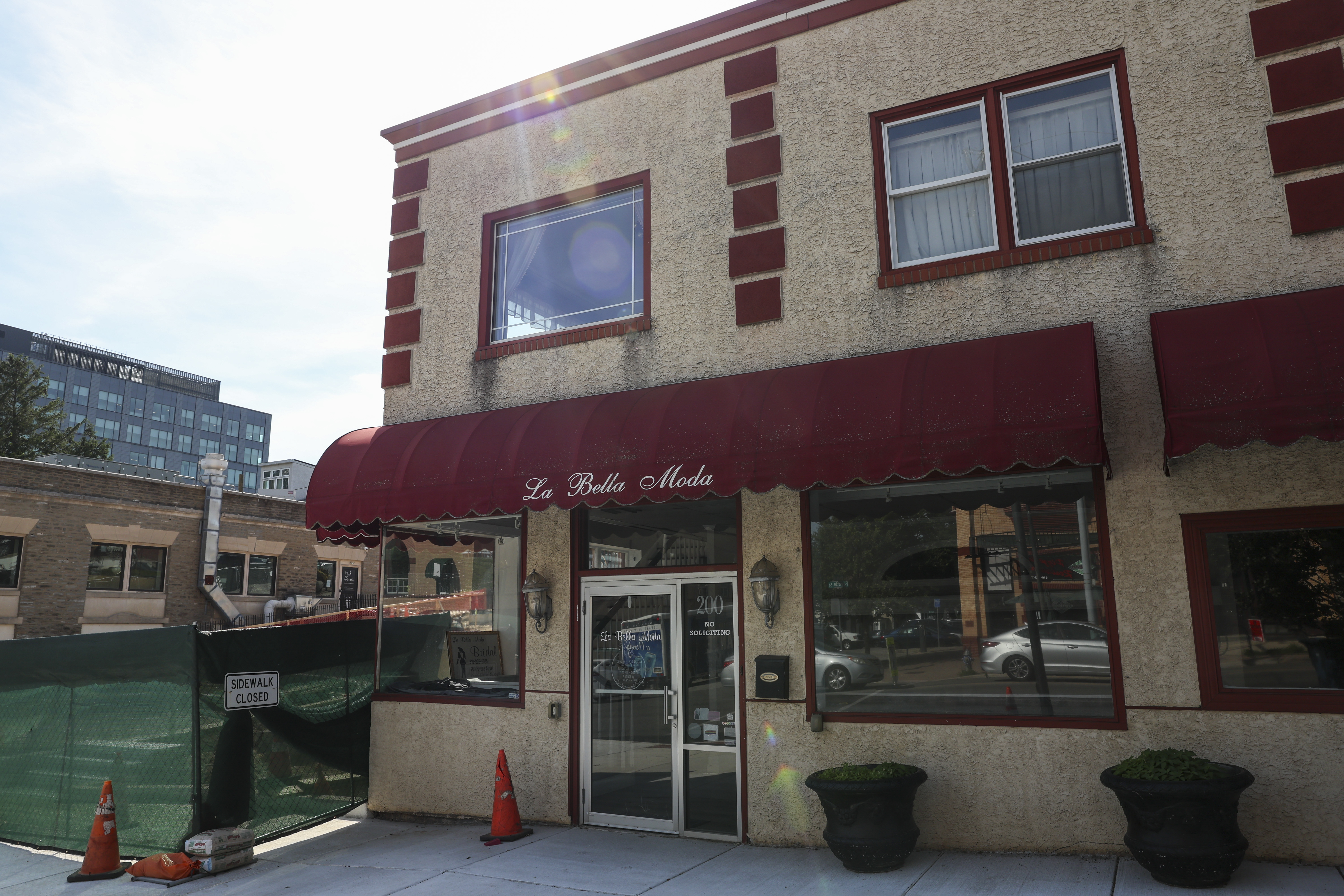
Goodness Bowls, a “healthy-eats cafe” chain run by Montgomery County residents, has signed a lease for the former La Bella Moda bridal shop at 200 Fayette St., with the goal of opening a corporate headquarters there by early 2027. La Bella Moda closed in May after 45 years in business.
“I always looked at La Bella Moda, and I thought, ‘God, that would be the perfect corner,’” said Susan Persichetti, Goodness Bowls’ cofounder and CEO. “ But I never thought they would close their doors.”
In the coming months, the Goodness Bowl team plans to open a 1,500-square-foot restaurant on the first floor, according to company executives, and use 2,000 square feet upstairs for additional seating and its corporate offices. They declined to share the terms of the lease.
The Conshohocken restaurant will be Goodness Bowls’ 10th location and its third corporate outpost. The rest of its cafes are franchised.
The closed La Bella Moda, as seen in June.Monica Herndon / Staff Photographer
The chain’s expansion comes as acai bowls — smoothie bowls loaded with toppings like fruit, granola, and peanut butter — and other more nutritious fast food have surged in popularity.
Shops selling these bowls seem to be popping up everywhere. Over the past decade, Belmar, N.J.-based Playa Bowls has grown to more than 100 locations in 20 states, including more than a dozen spots in the Philly area. And the Juice Pod, founded in Avalon and now headquartered in Bryn Mawr, has expanded to more than two dozen cafes, most of which are in the region.
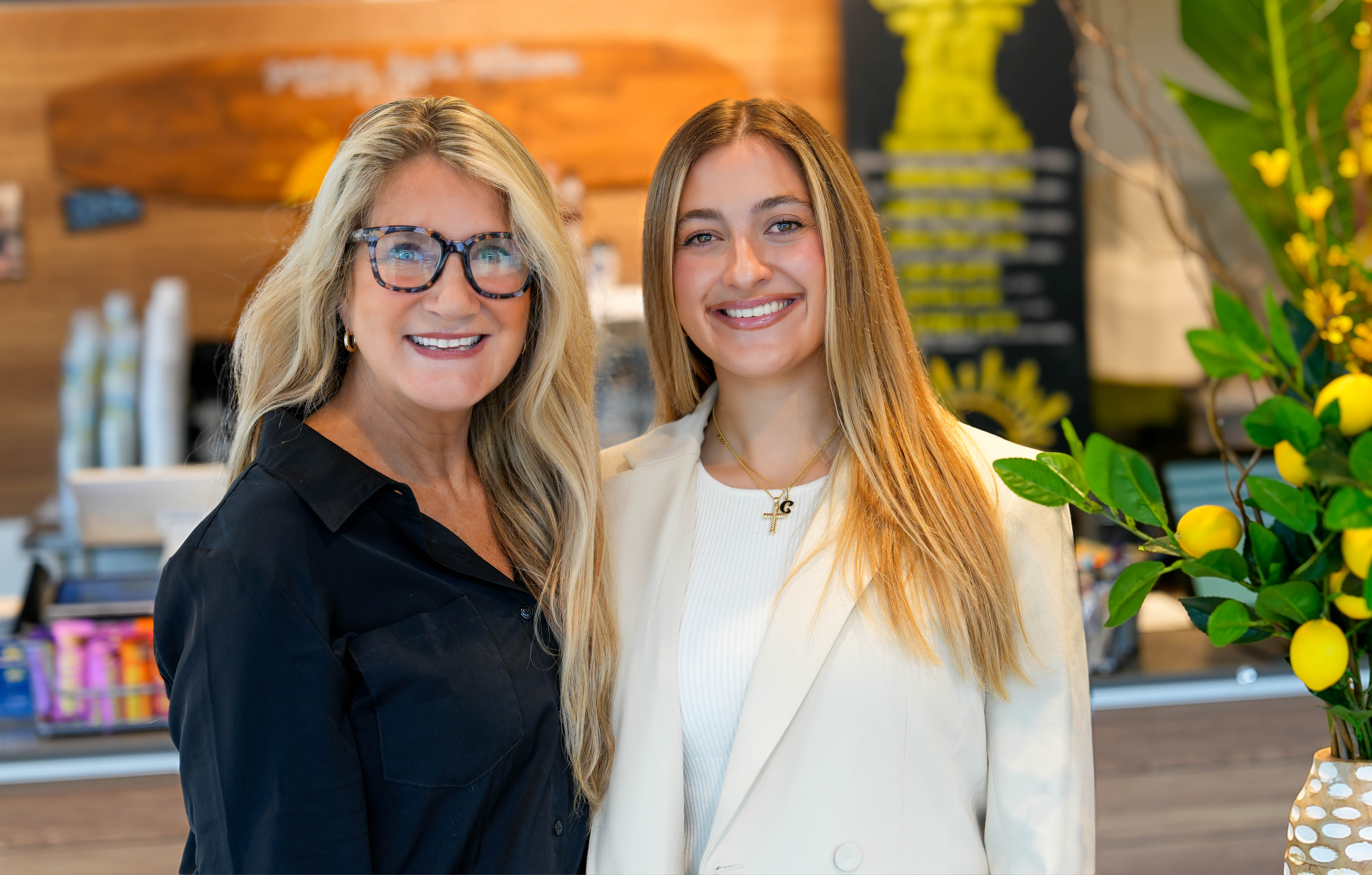
A mother-daughter duo, Susan and Corinne Persichetti, opened the first Goodness Bowls in Avalon in 2019. Susan said her daughter Corinne — a former Division I field hockey player at Fairfield University and a health enthusiast — was the driving force behind the business.
Susan Persichetti, cofounder and CEO of Goodness Bowls, with her daughter Corinne Persichetti, cofounder and chief operating officer.Courtesy Goodness Bowl
Corinne created the cafe’s menu, which includes acai bowls, salads, wraps, and smoothies, and came up with its slogan, “Eat Good. Feel Good. Do Good.” Susan, meanwhile, crafted the shop’s coastal aesthetic and branding.
For a couple years, Susan and Corinne ran the Avalon location in the summertime while working corporate jobs. In 2022, they opened a second location in Villanova, where they quickly found success. They realized there was demand for the Shore-inspired business in the Philadelphia suburbs, Susan said, and started franchising.
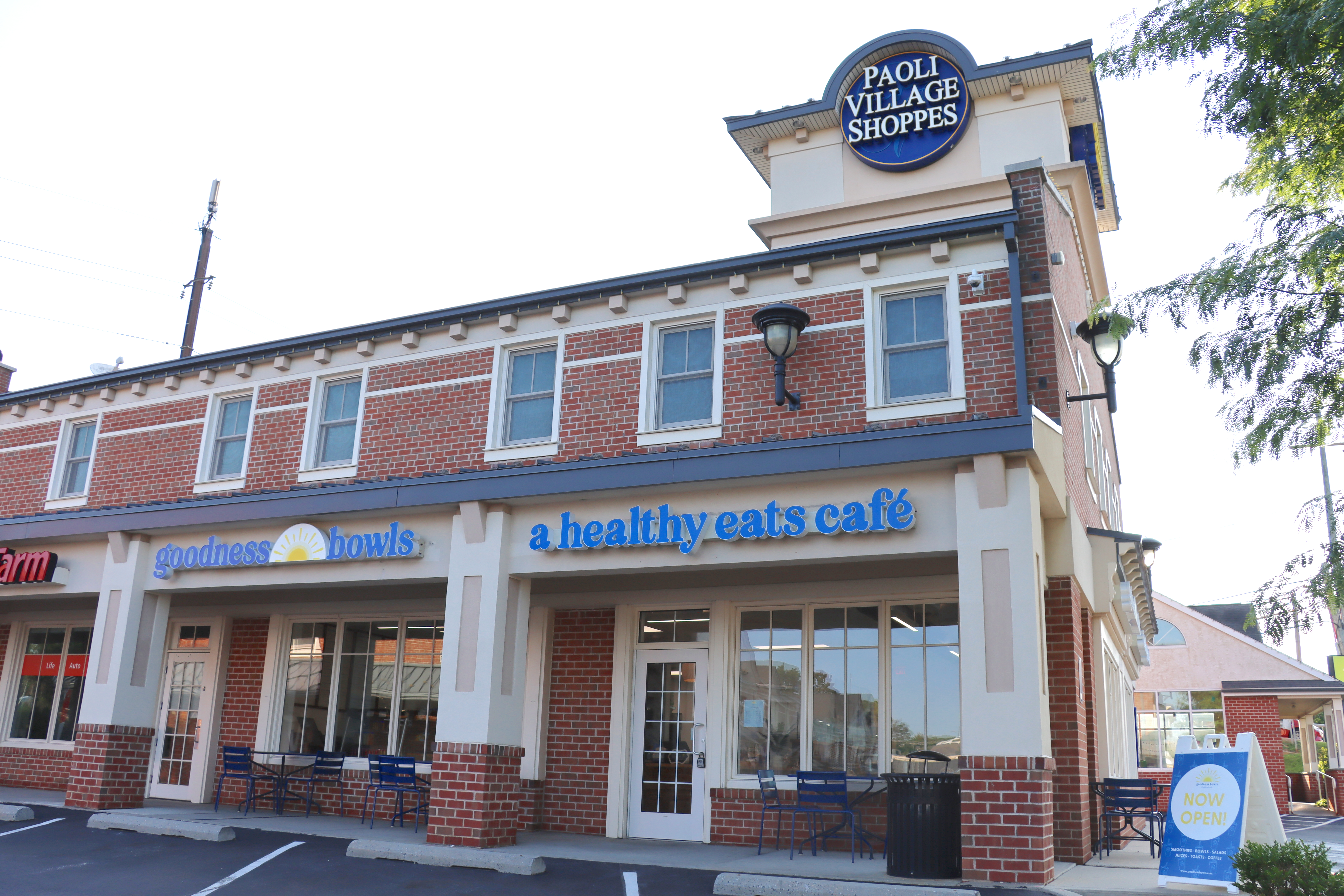
Goodness Bowls currently has franchise locations in Narberth, Paoli, Collegeville, Spring House, Haddon Township, Sea Isle, and Scranton.
The new Paoli location of Goodness Bowls.Courtesy Goodness Bowls
In recent years, Goodness Bowls has also expanded their team, including by hiring a company president, Finn Loftus, who also lives in Montgomery County.
“People really are craving healthy options,” she said. “And they really want food that they’re able to get quickly.”
Customers also say they are drawn to the bright cafes and friendly service, according to Susan.
Goodness Bowls executives look at their move to Conshohocken as a homecoming, and are excited to be back in the borough where Susan raised Corinne and her other children.
“We want to add to the community,” Susan said, by “keeping a small, family-owned business there on a really great corner that’s built such great traditions.”
WASHINGTON — A new federal proposal to enact protections for communities opposed to the proliferation of data centers has drawn inspiration from both the Philadelphia suburbs and Western Pennsylvania fracking country.
The Data Center Bill of Rights is one of several national efforts to address a growing dissatisfaction with data centers, which have so far faced few restrictions at either the federal or state level in Pennsylvania.
U.S. Rep. Ro Khanna, a California Democrat and Bucks County native considering running for president in 2028, said his home state should be doing more.
He introduced thefederal legislation after a recent tour across Pennsylvania that he said was designed to hear from communities that have lost manufacturing jobs and other economic opportunities.
Data center concerns came up more than any other issue, he said — leading him to incorporate new ideas into the bill healready had in the works, and to call for a pause on data center development in Pennsylvania until further protections and local controls are enacted.
A statewide pause would be more than what Gov. Josh Shapiro — another potential 2028 Democratic contender — has proposed as he seeks to enact data center guidelines. It would also be less than other Democrats, both in Pennsylvania and nationally, who have called for more robust moratoriums. Shapiro’s Republican challenger this year, Treasurer Stacy Garrity, has also called for a pause but not for an extended moratorium.
“I was surprised by the anger about it in Pennsylvania,” Khanna said in an interview after his 15-county tour. “In other states, people are sometimes opposed in local communities, local pockets. But not this widespread anger.”
Khanna, a Council Rock High School graduate who has represented Silicon Valley in Congress since 2017, spoke about the Data Center Bill of Rights during his tour but said afterward that it was “partly inspired” by the concerns he heard in the communities similar to the ones where he grew up.
“As a kid, I used to go to Conshohocken and the King of Prussia Mall. I’m familiar with that area,” Khanna said. “You can’t ride roughshod over what Delaware County wants or when Montgomery County wants.”
The legislation would declare that communities have the right to reject data centers through a “transparent community process” or allow them with specific protections. That includes demanding that data centers don’t lead to higher electricity rates, that they use renewable energy sources and disclose their water consumption, and “pay their fair share of state and local taxes.”
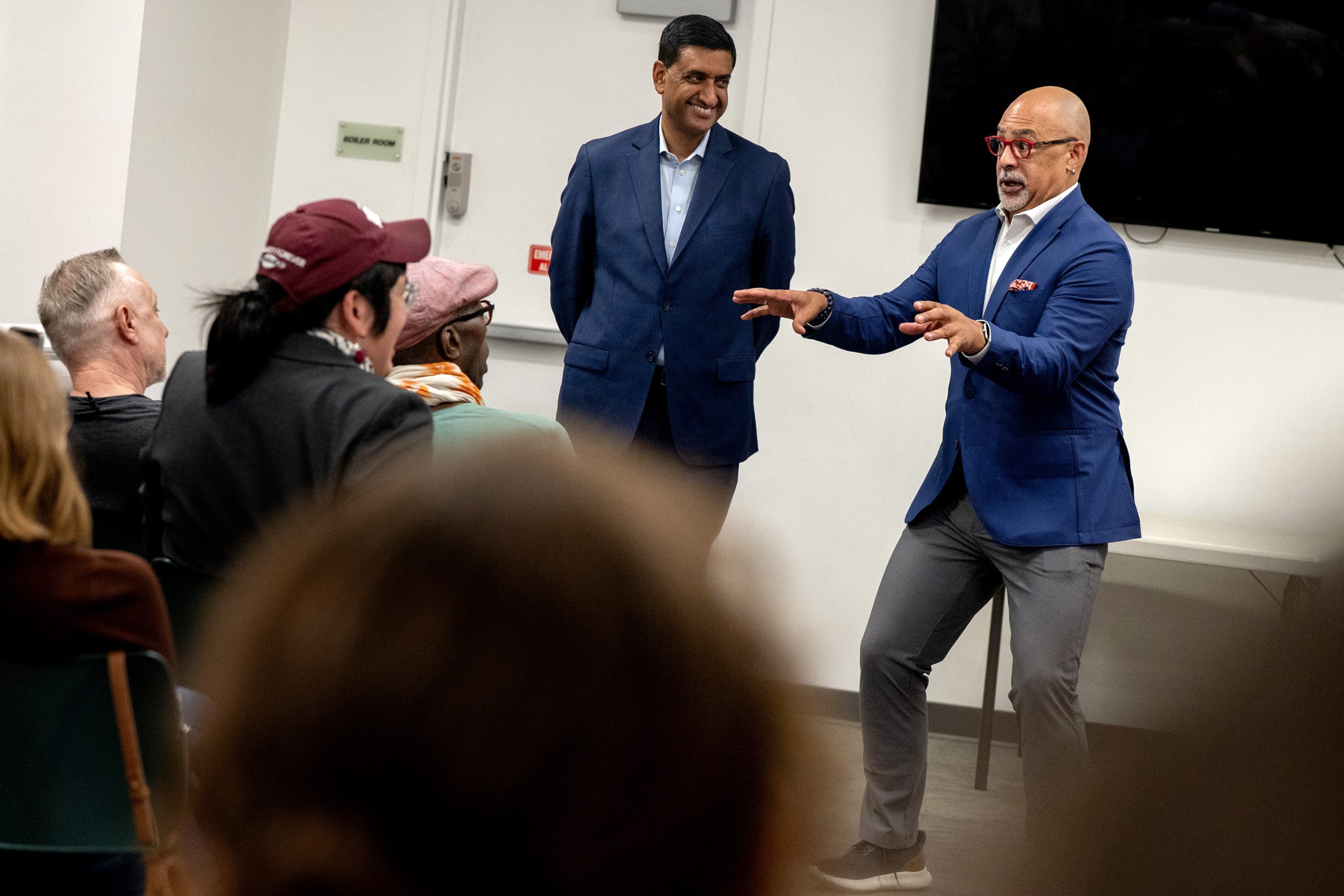
State Rep. Chris Rabb (right) joins U.S. Rep. Ro Khanna (left) Tuesday, July 28, 2026, as he stops on his “Made in PA: New Economic Patriotism Tour” at the City Institute Library on Rittenhouse Square.Tom Gralish / Staff Photographer
One specific provision, Khanna said, was informed by his visit in Washington County with individuals who are paid to host natural gas wells on their properties. It was there that he said he learned of community demands for oil and gas well sites to be at least 2,500 feet from residences. That buffer was a recommendation from a 2020 grand jury report released by Shapiro when he was serving as attorney general and that outlined health and safety issues caused by fracking in the Marcellus Shale region.
The recommendation was not followed, and advocates are continuing to push for extending the buffer from the current distance of 500 feet, according to Inside Climate News.
Khanna’s bill of rights would call for data centers to be built no closer than 2,500 feet from residences, schools, childcare facilities, hospitals or nursing homes. He said the environmental and health hazards for data centers aren’t the same as fracking but they should be kept at a distance from communities that don’t want to live directly next to them.
“At least they were offering royalty checks in the cases of fracking,” Khanna said. “[Data center developers are] not even giving the communities checks. It’s just kind of like, ‘OK, we’re going to build.’ What does the community get out of it? I literally don’t understand it.”
Data center advocates have argued their development is critical in winning an artificial intelligence war with China, and that they will bring construction and some skilled jobs to communities that need them.
Even the staunchest advocates, though, have acknowledged the public blowback.
“I do think that data centers in Pennsylvania have raised legitimate concerns,” U.S. Sen. Dave McCormick (R., Pa.) said during a recent telephone town hall as he continued to promote them in the competition with China and their creation of “thousands of jobs.”
When developers are making their pitch, McCormick said they should come with commitments to protect energy costs and overuse of water, use local labor, invest in the community and pay taxes.
“That should be part of the deal up front,” McCormick said during the telephone town hall in late July. “With all those facts, then the local community can decide whether they want the data center or not. And if they choose not to, that’s their choice.”
Khanna said he’s hoping for bipartisan support as he introduces the bill of rights idea. He’ll also be competing with other proposals — like one from fellow progressives U.S. Rep. Alexandria Ocasio-Cortez (D., N.Y.) and U.S. Sen. Bernie Sanders (I., Vt.) called the AI Data Center Moratorium Act. The bill would enact an immediate federal moratorium on data center construction until other safeguards are passed into law, including some of the ideas Khanna and McCormick have proposed, like around utility costs.
Several Pennsylvania state-level laws have been proposed, though the legislature did not address them during its busy budget season earlier this spring and summer. Lawmakers also left Harrisburg without ending tax breaks aimed at incentivizing data center construction even though the idea had garnered widespread support.
“They shouldn’t be getting these tax breaks to build,” Khanna said. “That’s absurd when you’ve got hyperscalers that are making trillions of dollars.”
The fact that many of those ultra-wealthy corporations are based in his district made the issue a politically dicey situation for him, but also one that the possible presidential hopeful said he was willing to take on.
“We’ve got to pause it in states like Pennsylvania,” Khanna said. “Some of my own constituents aren’t going to like that.”
The Phillies tell me they sell more than 40 brands of beer, priced from $6.99 for a 12-ounce can of nonalcoholic beer to $17.69 for a 24-ounce premium can. Beer is everywhere at Citizens Bank Park, including at a humongous walk-through cooler on the main level.
I recently strolled into that cooler and found a lager — at $38.48 for two 19-ounce cans — that paired nicely with chicken fingers and the Fightin’ Phils. OK, so 64 ounces of the exact same beer costs $11.99 at Acme, but you can’t watch the Phils live from Acme, can you?
“Sometimes, things become clichés because they’re true: A cool beer on a warm summer day at the ballpark is among the great joys of fandom,” says the avuncular Glen Macnow, the former Inquirer reporter (and colleague) and sports talk-show host whose What’s Brewing PA beer show appears on the NBC Sports Philadelphia networks.
Macnow — who is, full disclosure, also the part-owner of Conshohocken Brewing Co., which vends two of its brands at the ballpark — adds: “I’ve spent many an afternoon (or evening) with a beer in one hand, a hot dog in the other, juggling both so I can fill out the scorecard balanced on my knees.
“Those are simple and eternal pleasures. Baseball isn’t designed for trendy cocktails in a can; it’s designed for the tradition of leisurely enjoying a cold brew over several innings as you try to convince the guy in the next seat that the manager (whoever he is) is the dumbest one in Phillies history.”
OK, but just in case you don’t care for a brewski, the Phillies also sell about a dozen different trendy cocktails in cans, with prices running from $14.55 to $23.99. These are no bargains, either, but consider the alternative: The Phillies used to not sell booze at all.
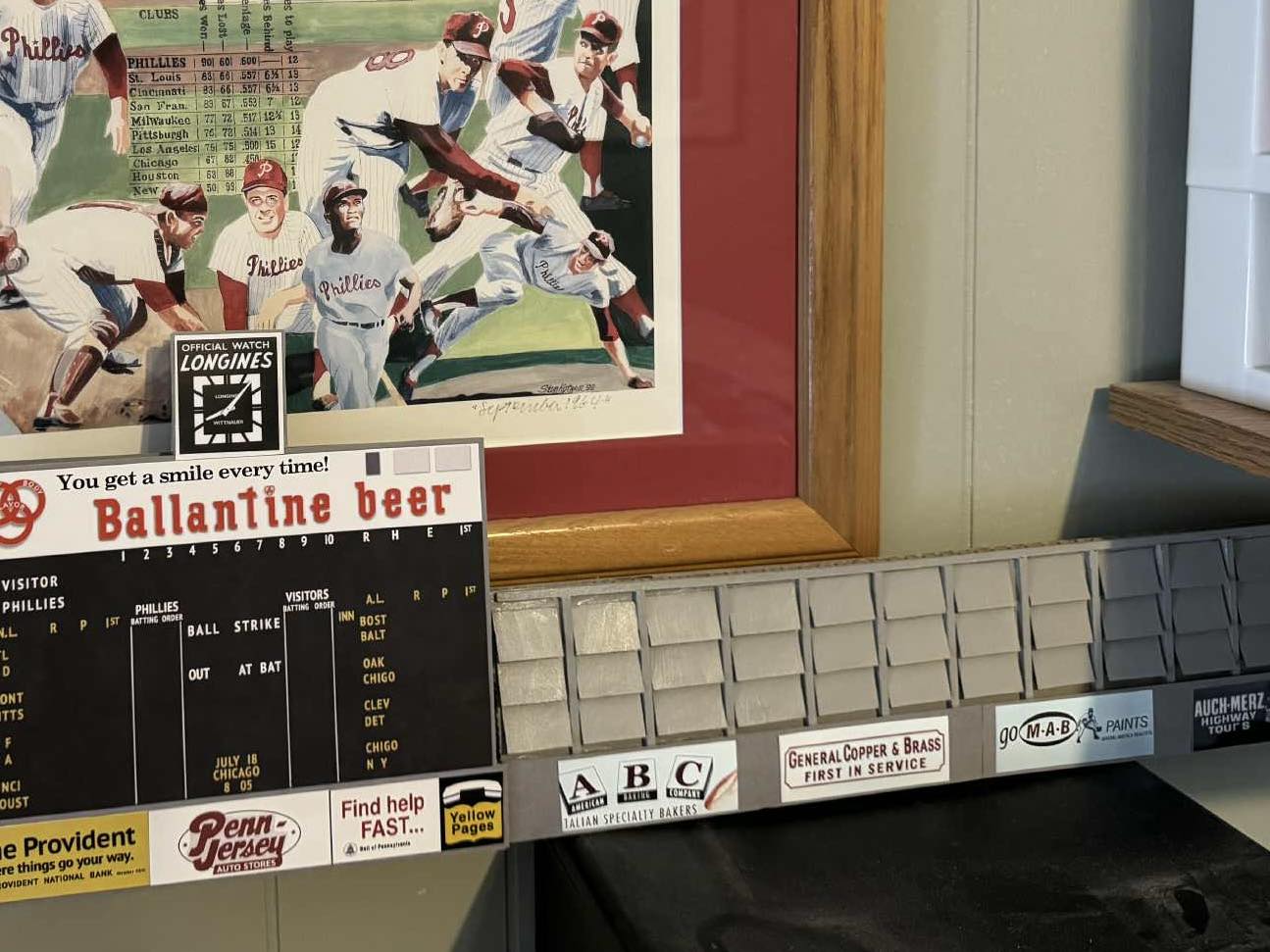
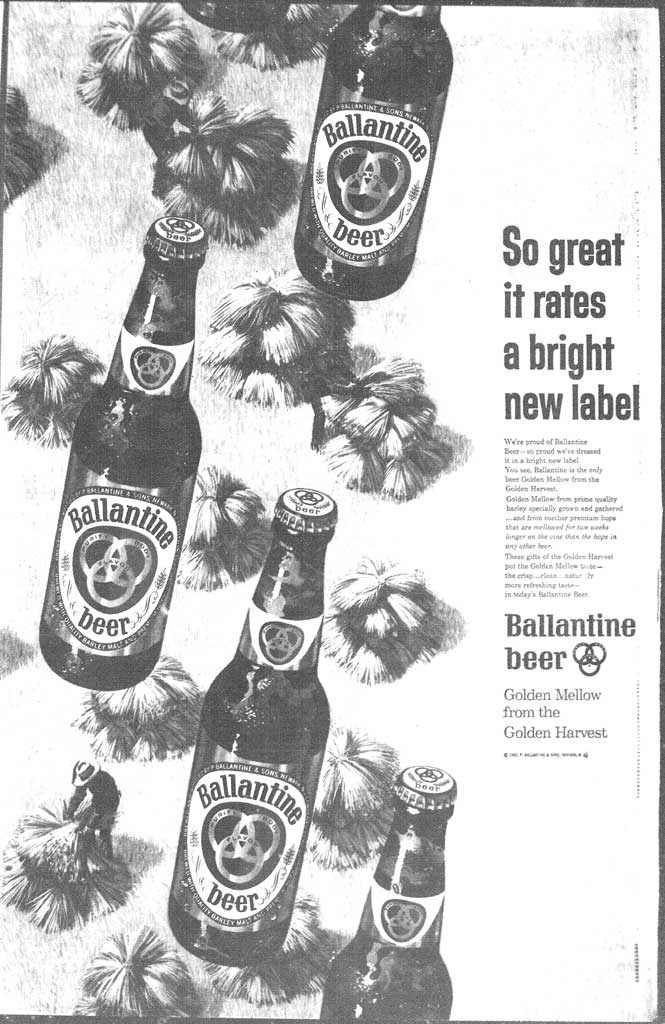
Baby boomers like me vividly remember the towering, then-state-of-the-art right field scoreboard at Connie Mack Stadium, topped by a gigantic advertisement for Ballantine Beer (and its three-ring logo, for Purity, Body, and Flavor).
A handmade model of the iconic Ballantine Beer scoreboard at Connie Mack Stadium by Phillies fan Bernie Valente.Courtesy of Bernie Valente
Well, that scoreboard was erected in 1956, five years before beer was sold there.
The Phillies first legally sold beer inside Connie Mack Stadium, their musty old park in North Philadelphia, on Aug. 7, 1961, when they put seven local brands of bottled beer on sale for 35 cents, first poured into a paper cup by eight vendors working the aisles.
The paper cup was a vital part of the transaction, because, prior to legal sales, Phillies fans used to sneak in cans of beer, often sold in “cold packs” at nearby bars like Charlie Quinn’s Deep Right Field Cafe at 20th and Lehigh.
Beer cans were heavier in those days, so they tended to become missiles when the umpires missed a call, or if the Phillies stank, which was quite often.
The low point probably came on June 12, 1959, when a twi-night doubleheader against San Francisco was halted after five innings because of rain. The Phillies were no-hit — but even worse, fans were denied rain checks to both games because the first game was official.
As Frank Fitzpatrick, the now-retired Inquirer reporter who attended the game as a 9-year-old, recalled in the paper in 2016: “Suddenly, one empty can fluttered toward the field. A second followed quickly. Soon, it was a dangerous deluge. So many were tossed that cans obscured the tarp, from the mound to the batter’s box.”
That was not good news for Robert R.M. Carpenter, the Phillies owner, who dearly wanted a new ballpark for his team. Plans had been drafted for a 45,000-seat, $8 million stadium in the Torresdale section of Philadelphia, with an adjoining theme park, yacht basin, and bird refuge park adjacent to I-95. Beer sales would bring in some cash for that amazing project.
On June 20, 1961, the Pennsylvania Senate passed a previously approved bill by the state House that would permit the sale of beer every day but Sunday at sporting events at stadiums in the state that seated more than 25,000. (The Pittsburgh Pirates also happened to be looking for a new ballpark.)
But they faced stout foes. After voting against the bill earlier in 1961 that would have enabled the Phillies to sell beer, a Democratic state assemblyman from Philadelphia, Charles Heavey, predicted that the sale of beer would actually “contaminate” youngsters.
So … first the beer had to be poured into a paper cup before drinking, preventing another beer can pileup on the field like the one in 1959. And there would be more than one starting pitcher: Schmidt’s, Esslinger, Old Dutch, Horlacher, Neuwiler and, yep, Ballantine were all included in the original sudsy rotation.
A 1962 newspaper advertisement for Ballantine beer.
Larry Merchant provided statistics in his Daily News column the next day: A total of 3,739 beers were served to 5,586 who attended that Aug. 7 game, a 3-1 Pittsburgh victory on a Monday, which was also the Phillies’ 10th straight loss. No bottles or cans were thrown on the field, he reported, but fans did pop the cups and try to throw those onto the field — often in vain.
“For serious drinkers, it was about a four-beer game, just two and a half hours long,” Merchant joked. “For serious Phillies fans, it was a six-beer job. They look better that way.”
Merchant made note of signs at the entrances that read, “Bringing in of canned beer or bottled beverages will be a cause for ejection from the park.” Nonetheless, he reported, seven would-be beer smugglers were caught at the gate, their brews returned when they left the park.
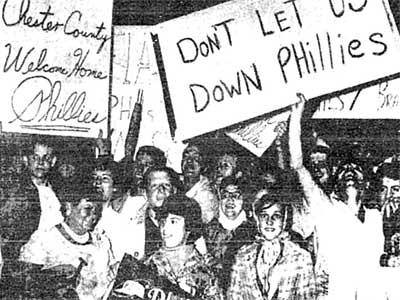
Those 1961 Phillies were so lousy that their losing streak grew to 23 games, still a modern record. After the Phillies beat Milwaukee, 7-4, on Aug. 20 in the second game of a doubleheader, their flight home was welcomed by 500 fans at 1 a.m. the next day at the airport.
About 500 Phillies fans welcomed the team home at the airport like conquering heroes after the club broke a 23-game losing streak in August 1961.
“They are selling rocks at $1.50 a pail,” Phillies pitcher Frank Sullivan, looking out of the plane, joked to his teammates.
He then wisecracked: “Leave the plane at five-minute intervals. That way, they can’t get us all with one burst.”
In truth, the beer ploy sales did not seem to provide much of a boost to the 1961 Phillies, who lost 107 games and finished last in the National League in home attendance in 1961, averaging only about 7,600 per home game. But a door, or many brewskis, had been cracked.
Beer would not be sold at Sunday home Phillies games until 1972, after the Phillies moved to Veterans Stadium, following the amendment of the ancient Pennsylvania Blue Laws, intended to curtail activities on Sundays (including Phillies and A’s home games until 1934).
“My parents didn’t drink, so I always associated the public consumption of alcohol as something dark and troubling,” Fitzpatrick told me recently. “That feeling was confirmed in spades at that 1959 game.
“By 1966, the summer I worked at the ballpark, I felt differently. I was a soda vendor, and beer suddenly was a precious commodity. Now I envied the beer sellers, because they made the most money and had the least amount of walking. Occasionally, rowdy fans would harass young vendors like me, hurling popcorn containers or wadded-up cups at us, [but] it definitely was comforting to know you wouldn’t have to dodge metal cans. On the other hand, in ’66 the smell of spilled beer now permeated the place. I don’t remember that same aroma when fans brought their own.”
Carpenter never did get his Torresdale stadium. After a one-year delay because of construction, however, the Vet opened in 1971 in South Philadelphia. A few fans grumbled about paying 75 cents for a 12-ounce beer served there by a vendor, perhaps because those same items were 40 cents and 60 cents, respectively, at Yankee and Shea Stadiums in New York.
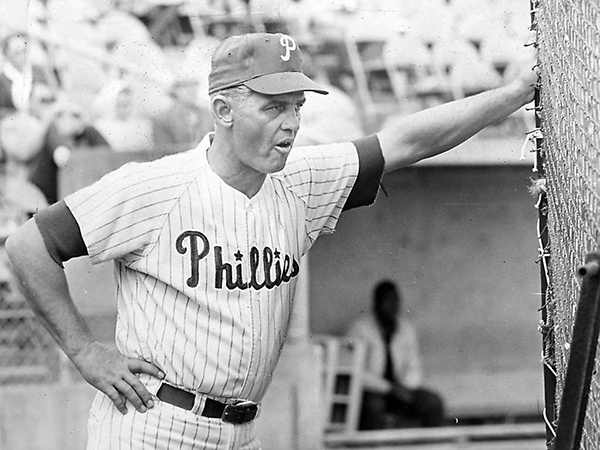
Gene Mauch managed the Phillies during their historic 107-loss season in 1961. That team dropped 23 straight contests.
The pricing was actually meant to be sort of a deterrent. Bud Vye, the Connie Mack stadium manager, told The Inquirer, “At these prices, they’ve got to bring a bankroll just to get bombed out.”
But beer stuck around. A 1998 Daily News exposé into how Ogden Entertainment, then the vendor at the Vet, was caught skimming a half million dollars in annual beer sales led to a price reduction. Local brands, kicked to the side by the national brews, were sold again when the Phillies moved to Citizens Bank Park in 2004. (Large premium drafts then sold for $6.)
Cups were eventually discontinued, and most beer at the ballpark is sold in much lighter cans (which, it should be noted, are opened by the cashier, lest someone try to hurl a full can on the field). Dozens of different brands of beer can be spotted at any Phillies game.
“A big part of this is marketing,” Macnow tells me. “Beer at the ballpark is no longer poured into paper cups, so there’s a long-term benefit to seeing people walking around the park holding cans of your beer. Labeling becomes important. Naming beers becomes important.”
And so is the vessel itself. The Phillies continue to sell “beverage bats,” large hollow plastic souvenir baseball bats that can be filled with any beverage. Those are not cheap, either. Phillies fans may be held captive by the prices, but beer and baseball are inseparable.
Dave Caldwell lives in Manayunk and covered sports for The Inquirer from 1986 to 1995.