Tag: Chinatown

  • At tiny Lau Kee, Chinatown’s most experienced duck chef delivers reliable excellence

    At tiny Lau Kee, Chinatown’s most experienced duck chef delivers reliable excellence

    Chinatown’s Wizard of Ducks did not come from poultry royalty. Chuien Liu was born to a long line of Fujianese fishermen on a rural island beside the East China Sea.

    “Going out every day to catch fish, shrimp, and crabs? That was a necessity,” says his son, Kenneth Liu, translating for his father. “But making duck was his passion, mostly because he liked to eat it.”

    In that respect, Chuien Liu scored big-time when he came to Philadelphia in the mid-1990s, following a wave of immigration from Fujian Province, on China’s southeastern coast, to the United States. He landed a spot beside the roasting oven at Chinatown’s iconic Sang Kee Peking Duck House, and he remained there as the master of ducks, soy sauce chicken, and crispy pig for 25 years.

    And then we, the voracious duck eaters of Philadelphia, became the lucky ones. Liu and his family went independent in 2019 to claim their own little slice of Chinatown at Lau Kee, a cozy 20-seater with no decorations on the walls, but an absolute masterpiece display of Cantonese-style roasted meats hanging in the spotless front window.

    Lacquered brown ducks dangle temptingly from hooks beside paper-wrapped bundles of whole chickens, pink-edged hunks of sweet char siu pork shoulder, and tawny sheets of pork belly, whose slow-rendered layers of pale meat, pearly fat, and cracker-crisp skin are simultaneously so moist, tender, and shatteringly crunchy, taking merely one bite is not an option.
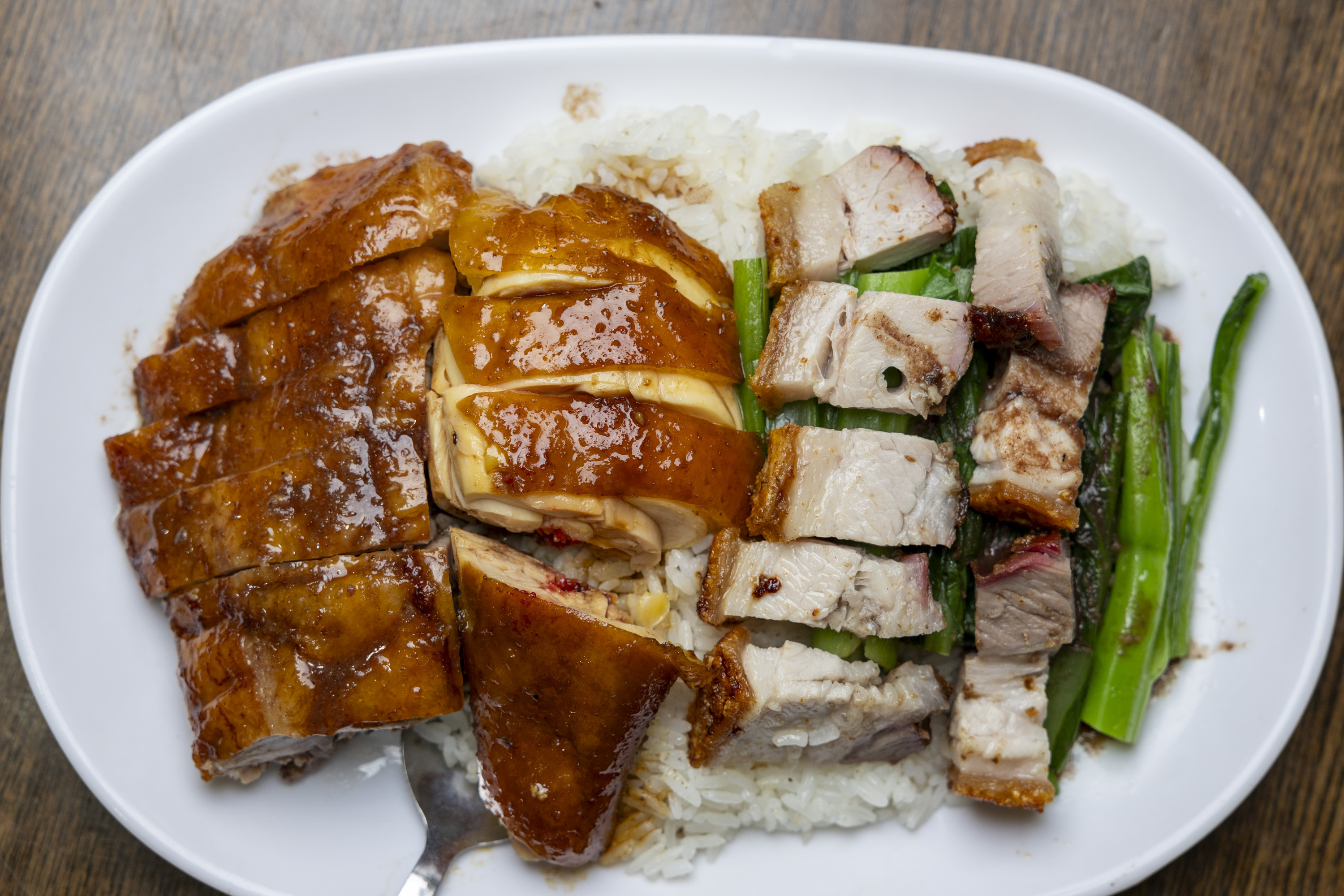
    The three meat platter over rice at Lau Kee, in Philadelphia, Pa., on Friday, Aug. 7, 2026.Tyger Williams / Staff Photographer
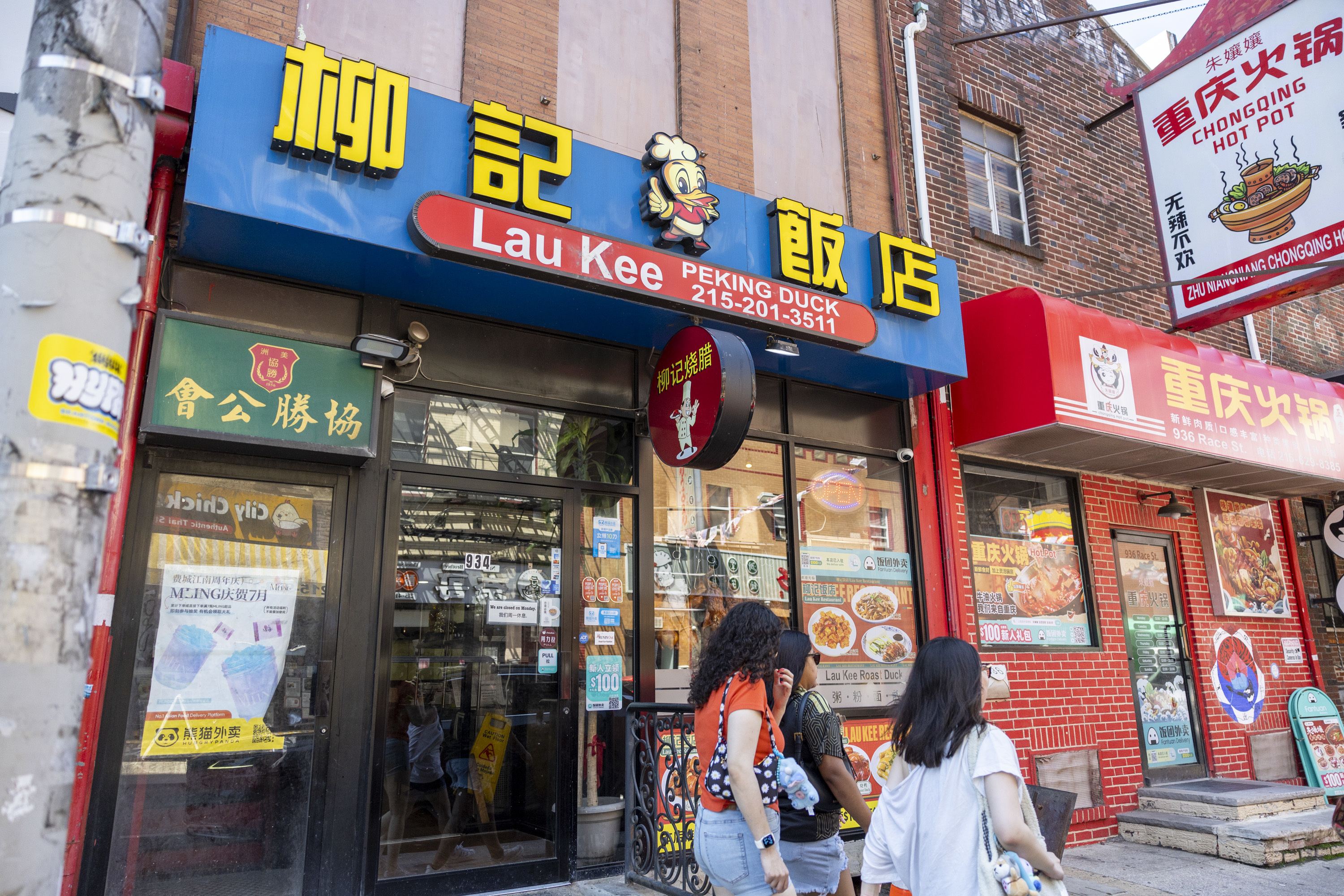
    Outside street view of Lau Kee, in Philadelphia, Pa., on Friday, Aug. 7, 2026.Tyger Williams / Staff Photographer

    There are other, larger, better-known duck houses in Chinatown with long-established and devoted patrons, from Ting Wong to M Kee, takeout-only Siu Kee, and, of course, Liu’s alma mater, Sang Kee.

    But with more than 31 years of experience and nearly half a million birds beneath his cleaver, Liu, now 55, is currently Chinatown’s longest-tenured duck chef — and also my vote for Philly’s best. As one of the very few chef-owners in the neighborhood, there is also an exceptional consistency in his insistence on doing things right.

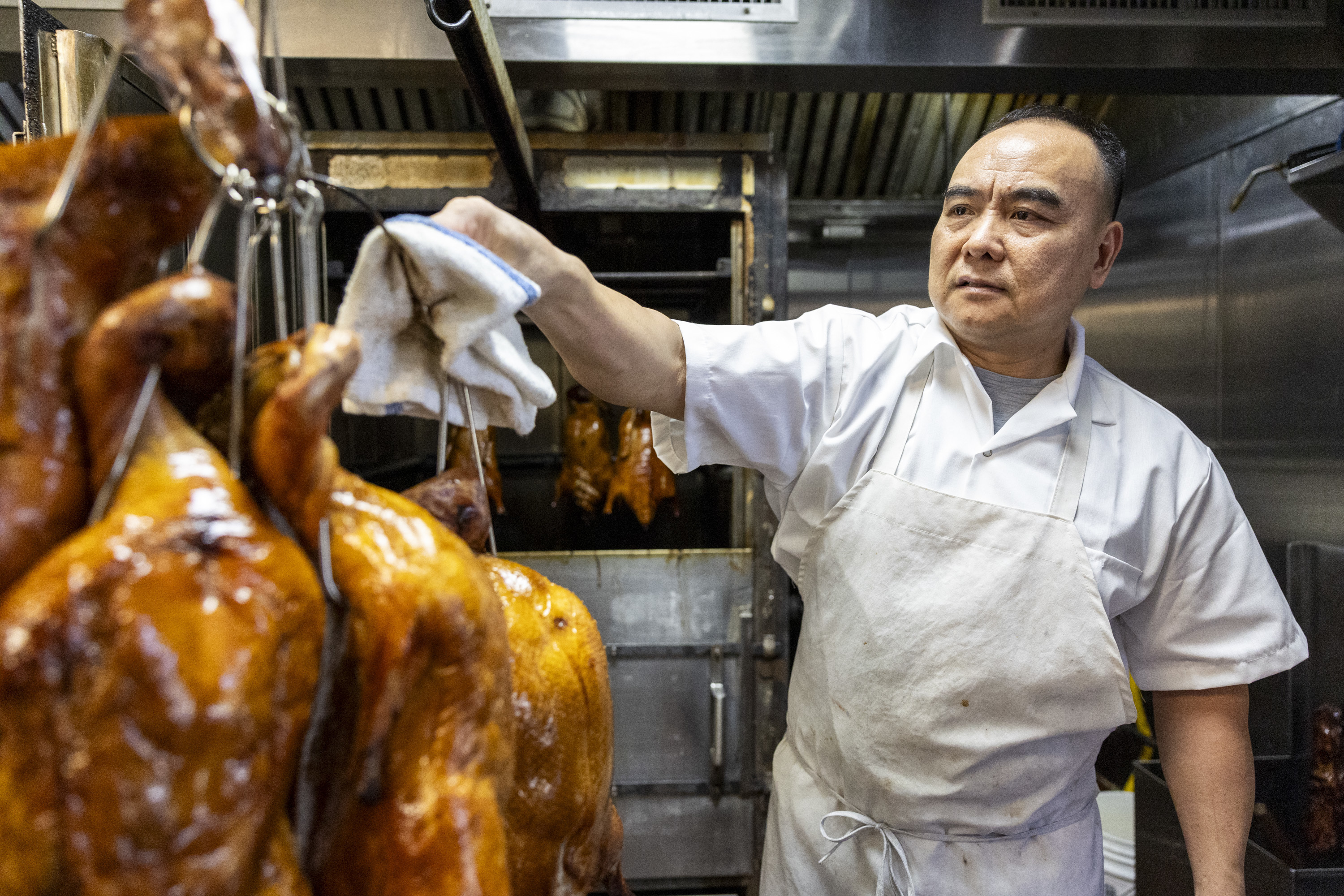
    Just preparing the ducks is a laborious, dayslong process, beginning with inflating them with air to separate the meat from the skin. A gingery marinade with chee hou sauce (a fermented bean paste that’s less sweet than hoisin) comes next, followed by a hot water bath to open the skin’s pores, then a dunk in a vinegar-sugar glaze that dries overnight. The following day, the ducks are hung in a vertical oven over an open flame to roast low and slow as juices collect below for a final basting. And that’s just for the Hong Kong-style roasted duck, which always comes chopped on the bone.
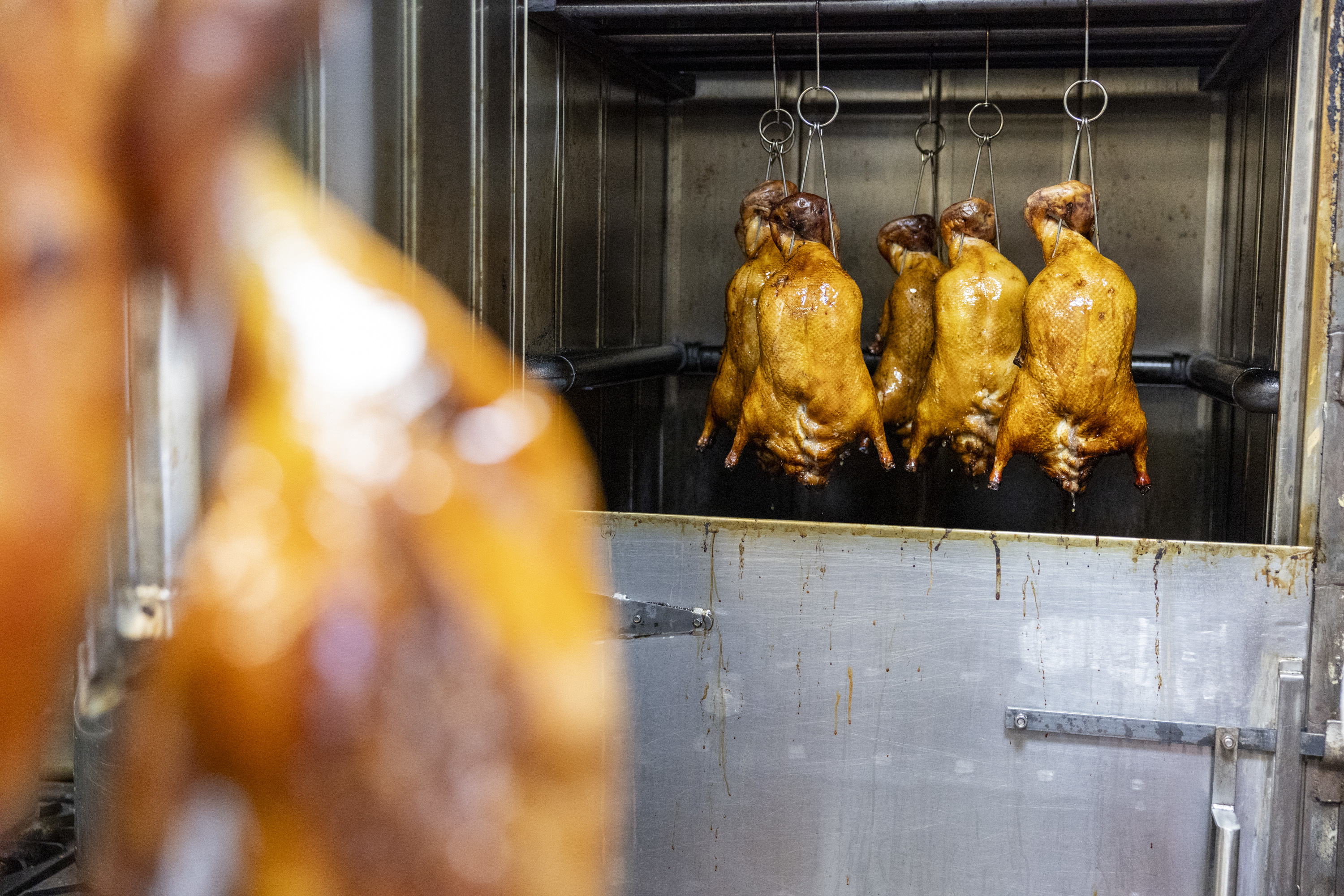
    Chuien Liu, Owner of Lau Kee, is taking out the cooked ducks from the oven in Philadelphia, Pa., on Friday, Aug. 7, 2026.Tyger Williams / Staff Photographer
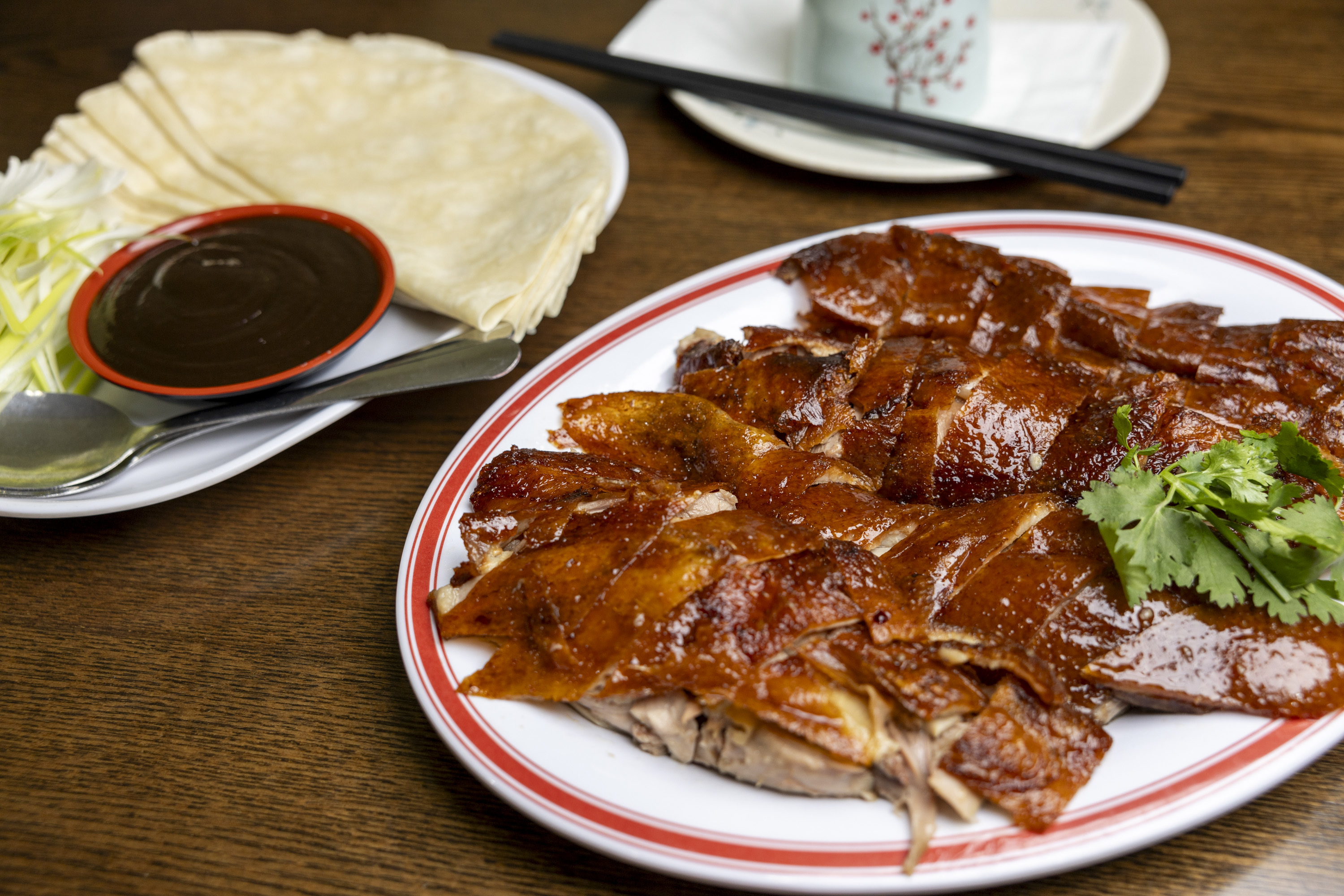
    A platter of Peking duck at Lau Kee, in Philadelphia, Pa., on Friday, Aug. 7, 2026.Tyger Williams / Staff Photographer

    The Peking-style duck is yet another process, involving a slightly sweeter marinade with a more pronounced five-spice savor plus a longer roast time to give that skin a delicate snap. At $30 for a half duck or $47 a whole bird, the sliced meat, served boneless alongside pancakes and scallions, is a delicious centerpiece for a sharing meal.

    If that’s too much of a commitment, Lau Kee makes appetizer-size duck rolls out of its copious duck trim — the perfect balance of tender meat, crunchy scallions, and dark hoisin — folded inside a soft pancake. A generous helping of shredded duck also stars in a stir-fry of snappy green beans tossed with ground pork and XO sauce. The earthiness of sliced duck and the roasted flavor of its skin also fully infuse the bowls of congee, whose rice porridge is regularly beaten to a snowy white mist and refreshed throughout the day so its texture remains airy and light. (“It’s almost fluffy,” opined my Inquirer colleague, Kiki Aranita, a noted congee scholar.)
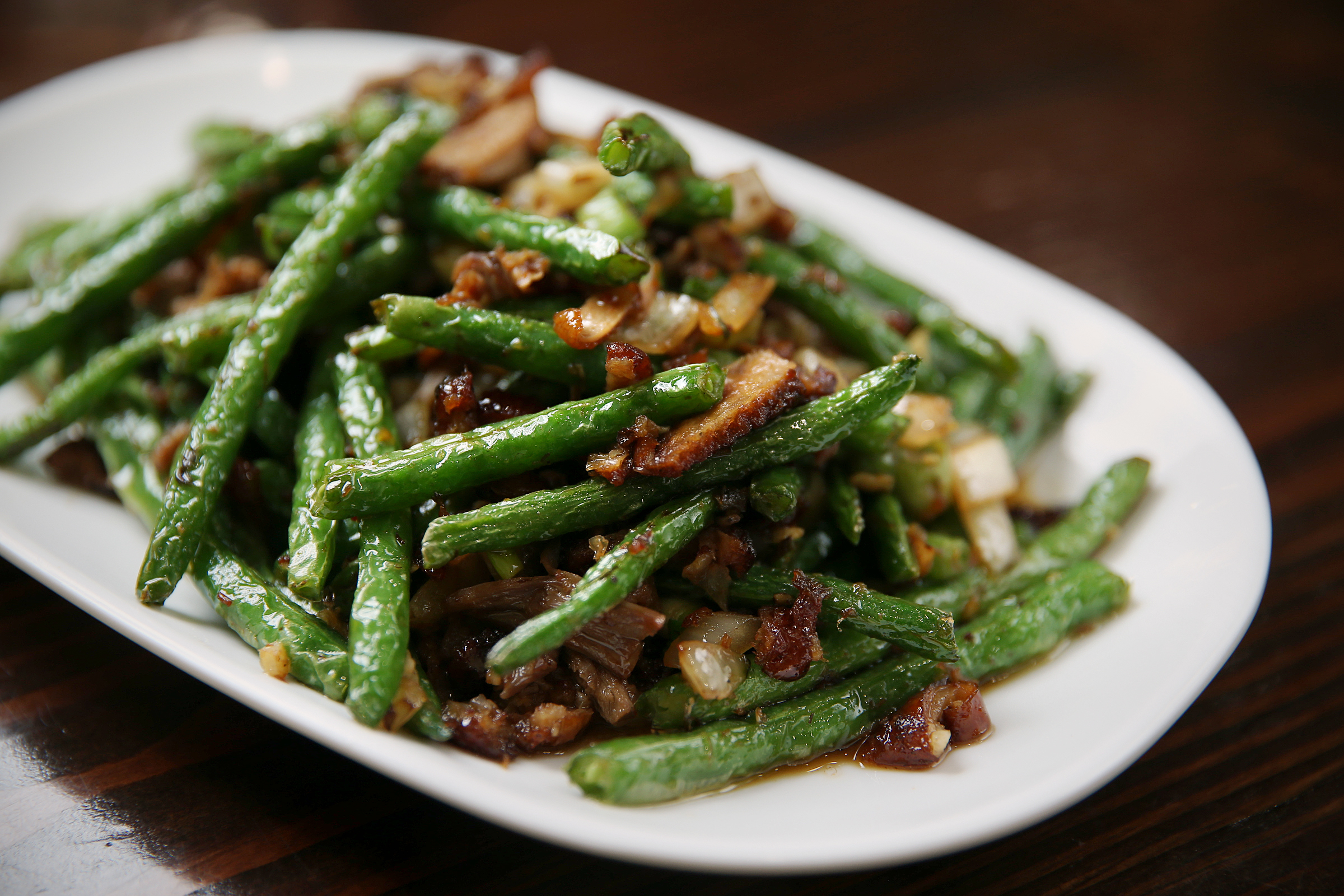
    The shredded duck with string beans is pictured at Lau Kee in Philadelphia’s Chinatown on Thursday, April 1, 2021.TIM TAI / Staff Photographer
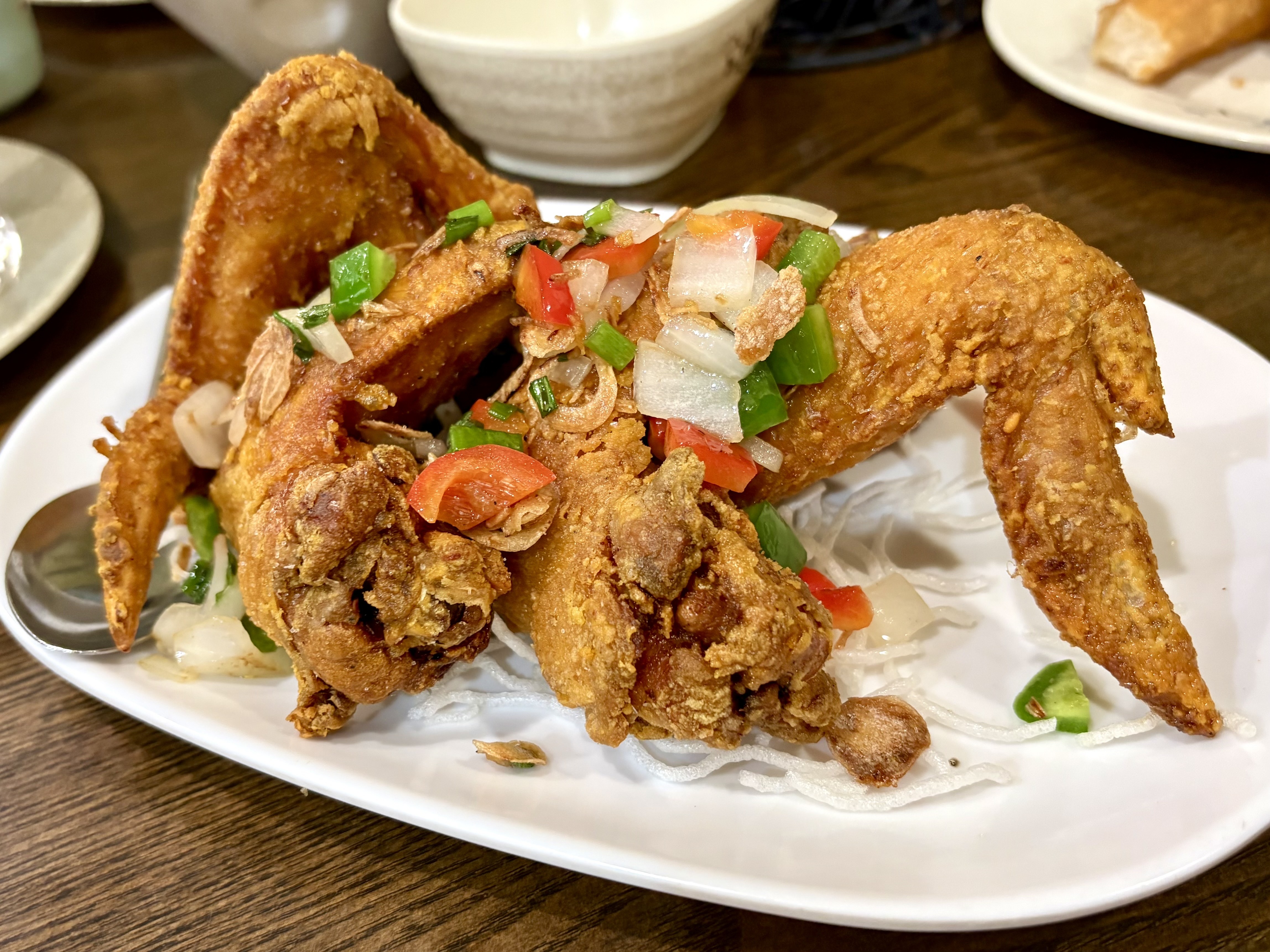
    The salt-baked chicken wings at Lau Kee are juicy, crisp and crackling with spice.Craig LaBan / Staff

    Other popular congee combinations contain thousand-year egg and pork, or sliced flounder mingled with ginger threads and scallion — options that are standard at a dozen other Cantonese kitchens across Chinatown.

    But it’s the subtle details of execution that make the difference in Lau Kee’s various soups, dumplings, stir-fries, and crispy delights. The battered crust on its salt-and-pepper shrimp in five-spice flavor might look heavy, but it’s as airy and crisp as tempura. Lau Kee’s juicy “salt-baked” chicken wings — which are actually perfectly fried — crackle with the spice of a crust infused with turmeric, cooking wine, and chili oil and easily rank among the city’s best.

    The broth in Lau Kee’s wonton noodle soup is crystalline gold yet complex, drawing subtle smoky depth from a lightly charred salt fish that steeps for five hours with chicken bones. The poached yu choy greens that bolster the soup are snappy yet toothsome, and Lau Kee’s wontons, made by Liu’s wife, Fannie Qiu, are special. The addition of mushroom adds tenderness to a shrimp-and-pork stuffing that elsewhere can become overly bouncy. Top the soup with any of the meats, but char siu is my favorite, the star anise sweetness of the pork’s glaze adding even more layers to the brew.
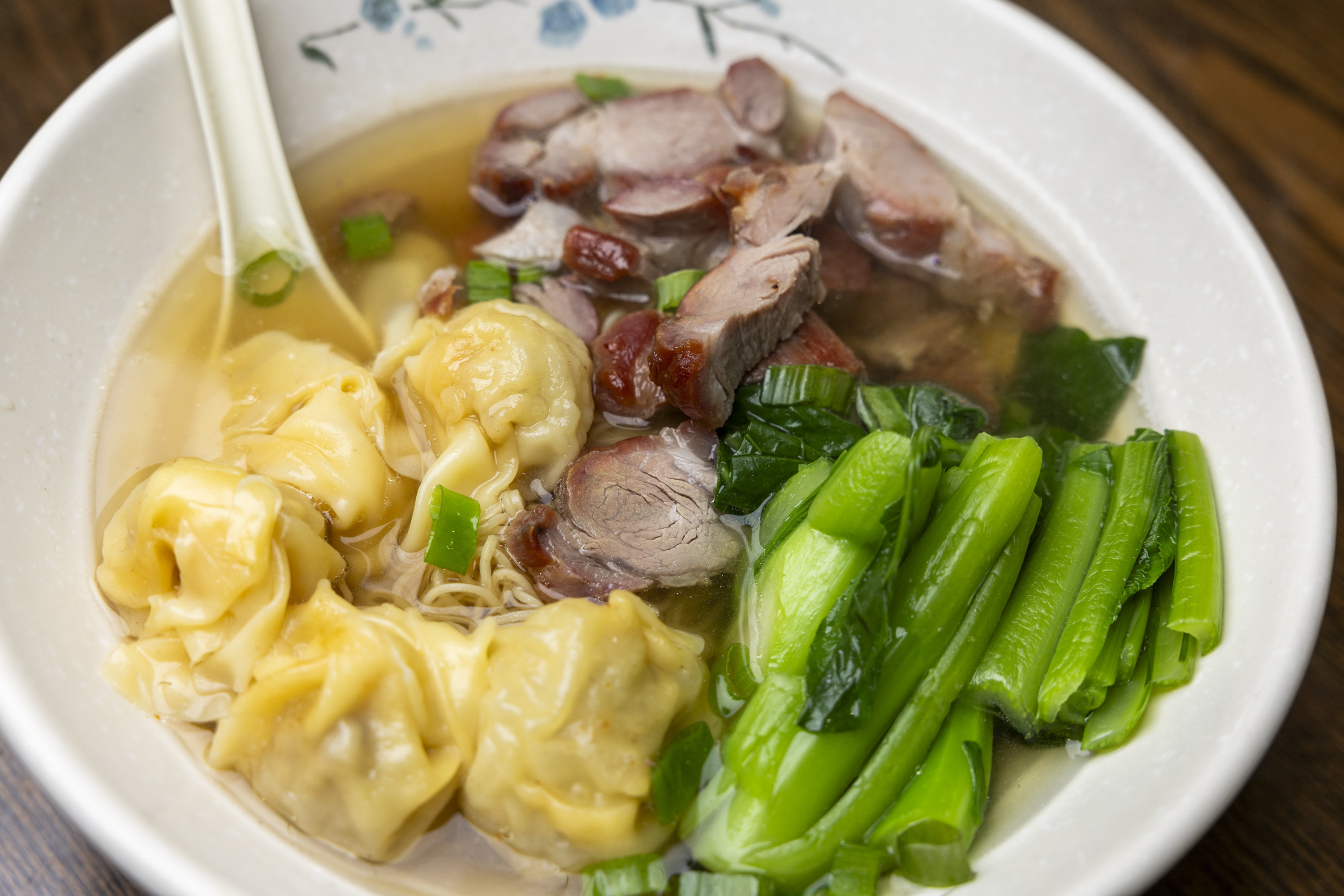
    Wonton soup with greens and roast pork at Lau Kee.Tyger Williams / Staff Photographer

    Those wontons are also perfect splashed with the vibrant orange house chili oil, defined more by its fragrance of dried chilies than numbing Szechuan peppercorns.

    Lau Kee’s shrimp dumplings are memorable, reminiscent of Sang Kee’s but softer, thanks to the addition of bamboo, and more fragrant from a pinch of curry. The West Lake beef soup is also one of my favorites, its hearty pairing of ground beef and silky tofu batons bobbing in broth sparkling with white pepper, delicate egg drop ribbons, and crunchy cilantro greens.

    Lau Kee’s dry noodle dishes are solid, though less exciting. The minimalist scallion noodles, bright with shredded fresh ginger, is one of my two picks. The sesame oil-laced crispy noodle basket topped with morsels of flounder is another, notable for its delicacy and dual-textured noodles, both crunchy around the edges and soft in the middle from a velvety white gravy. Other noodle standbys were fine but forgettable: a serviceable Singapore noodles, and a beef chow fun that lacked the smoky singe of wok hei.
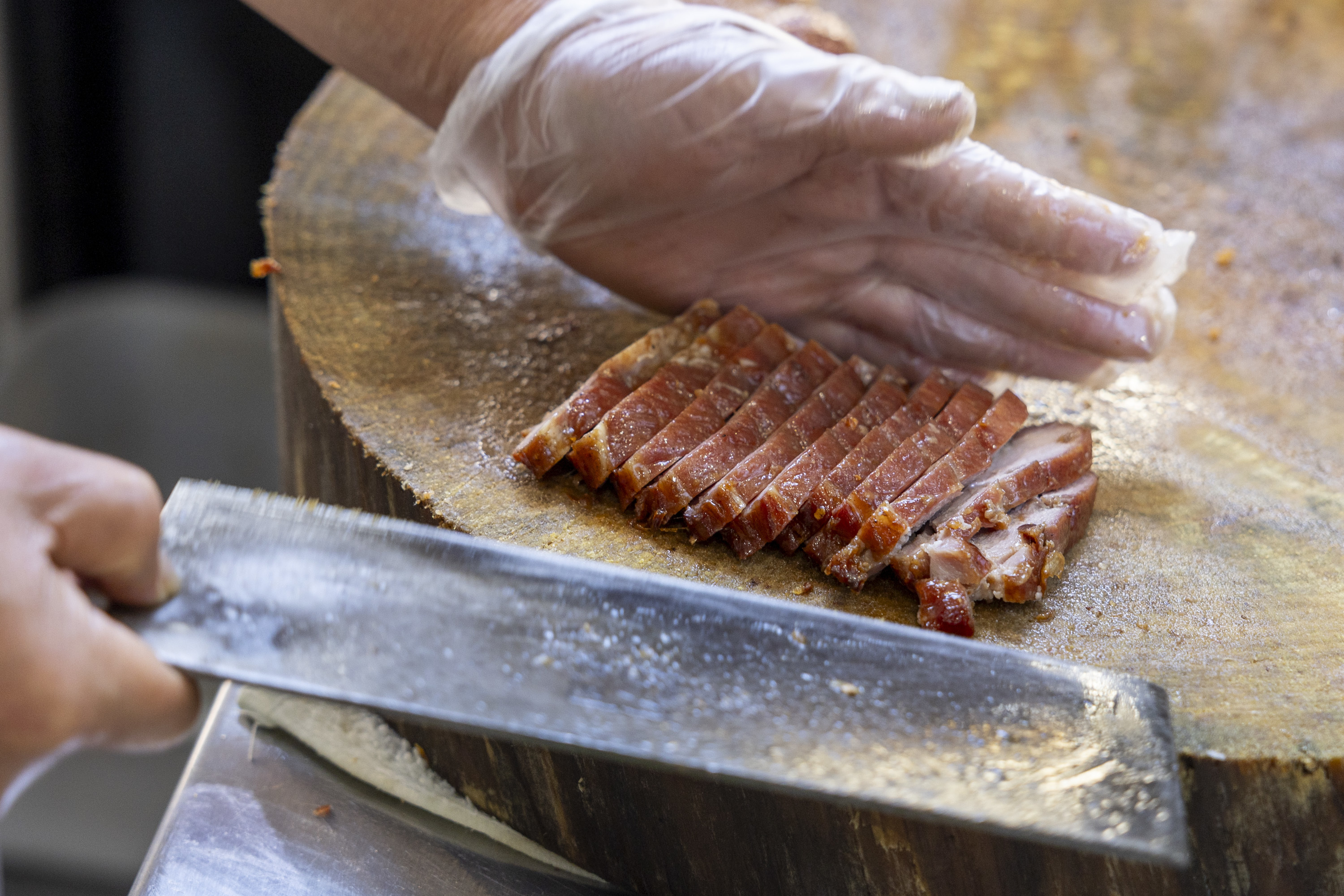
    Fresh cut char siu pork shoulder at Lau Kee, in Philadelphia, Pa., on Friday, Aug. 7, 2026.Tyger Williams / Staff Photographer
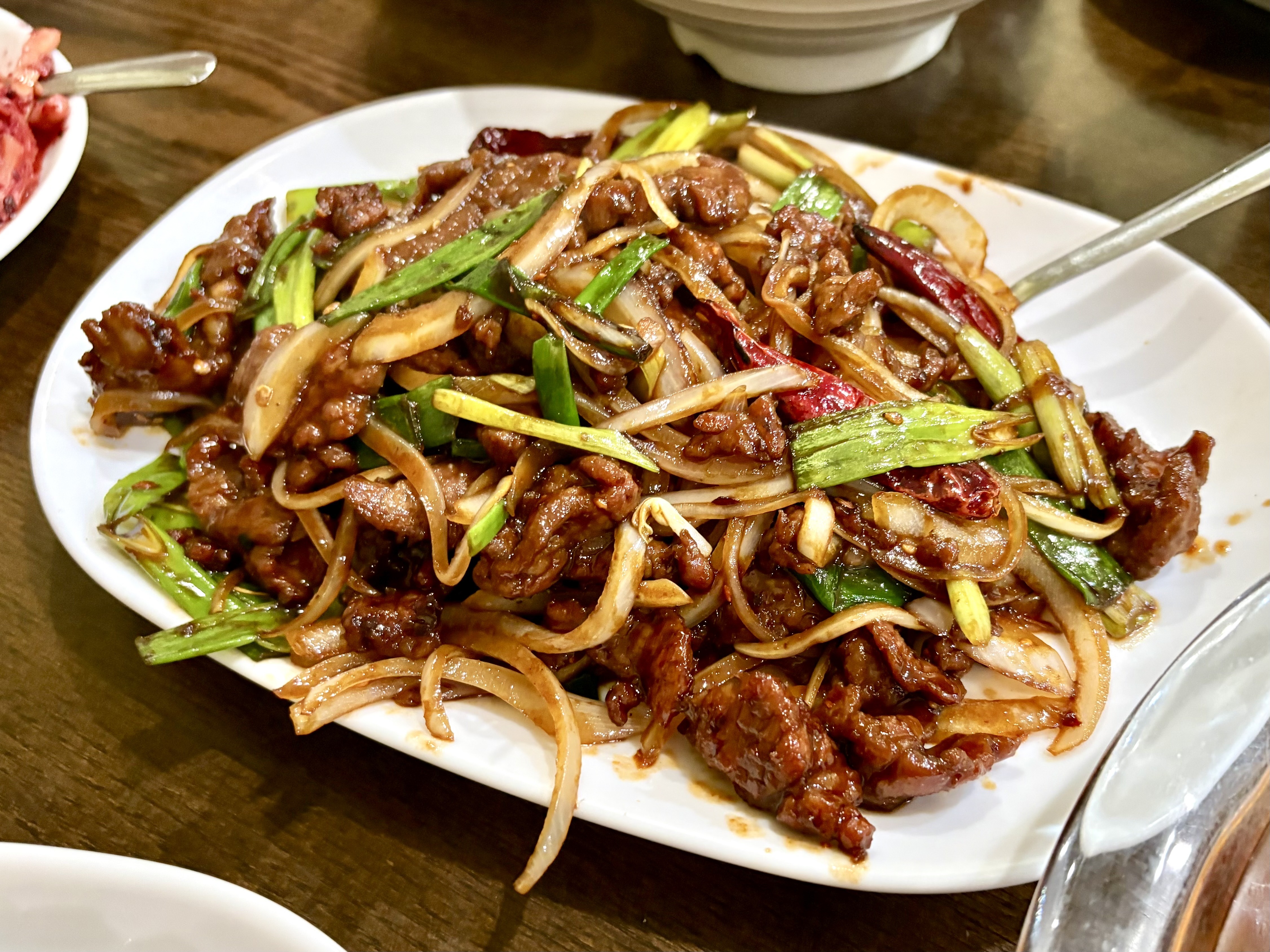
    The Mongolian beef from Lau Kee in Chinatown.Craig LaBan / Staff

    That whiff of caramelized char was absolutely present on the Mongolian beef, whose frizzled onion laces and dried chile heat added umami and sneaky spice to the sweet hoisin. It’s a specialty that traveled well by takeout, along with some good Americanized classics, including General Tso’s chicken, whose tender nuggets were glazed in a sweet sauce that also flickered with chili oil.

    As a small business that needs every order (beyond the 250 ducks Chuien Liu sells each week), Lau Kee caters to the demands of a broad audience, and, to my mind, does many familiar dishes better than most.

    But there’s an uncommon specialty on this vast menu that points to a niche of Fujianese specialties I wish Lau Kee would embrace more fully. Liu’s wife has mastered the Fujianese art of fermenting Qinghong, a wine made from sticky rice laced with red rice yeast.
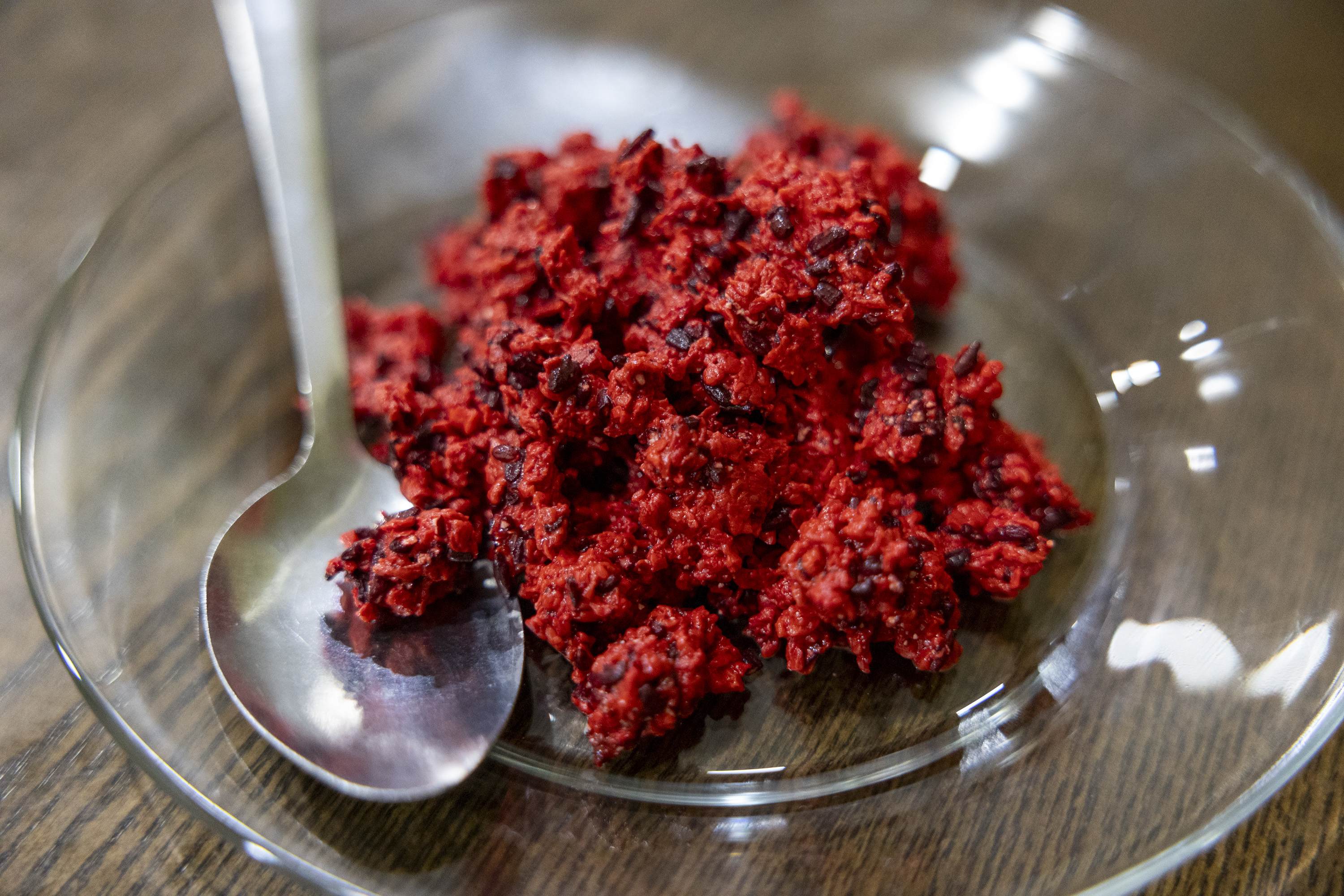
    The red vinasse before processing to turn it into sauce at Lau Kee, in Philadelphia, Pa., on Friday, Aug. 7, 2026.Tyger Williams / Staff Photographer

    As Kenneth Liu notes only half-jokingly, “My dad does not share his wine.” But the leftover lees, a crimson paste noted on the menu as “red vinasse,” is a valuable condiment that carries a fruity, fermented note and yeasty tang. It’s a transformative addition to Lau Kee’s stir-fry of chopped pig stomach with bamboo shoots. (The squeamish can order it instead with shredded pork meat.) There’s a toothy-yet-tender snap to the offal and an earthy undertone that harmonizes with the lightly boozy lees for a far more rewarding dish.
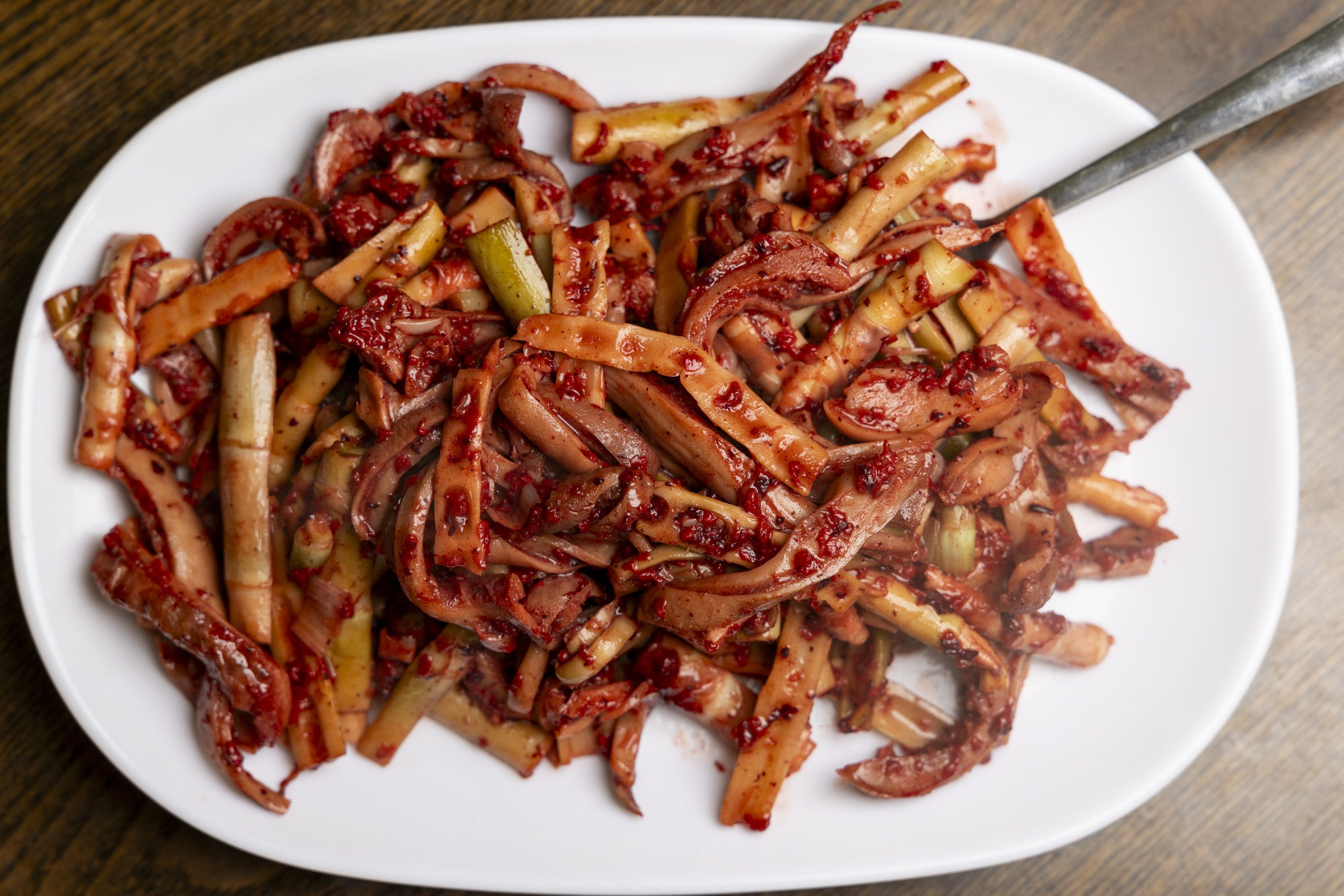
    The pig stomach with red vinasse at Lau Kee, in Philadelphia, Pa., on Friday, Aug. 7, 2026.Tyger Williams / Staff Photographer

    Considering the sizable community of Fujianese entrepreneurs who’ve moved to this region over the past two decades and opened everything from Americanized Chinese takeout windows to sushi restaurants and, yes, excellent Cantonese duck houses, there are precious few places showcasing traditional Fujianese food, an underrated regional cuisine. Since the closure of both Ming River Side Walk House and my other longtime 10th Street favorite, simply called “Chinese Restaurant” (aka Tai Jiang), I can no longer find delicate noodles in peanut sauce, fried taro cakes studded with pork, wok-fried baby oyster omelets, and Fujianese wonton soup with tiny dumplings no larger than a penny.

    Lau Kee doesn’t make them either, sadly, and even recently dropped another Fujianese specialty, drunken ribs, when Qiu’s brother retired from their kitchen. “[Fujianese cuisine] is not the fanciest food, and not everyone is willing to try,” says Kenneth Liu.
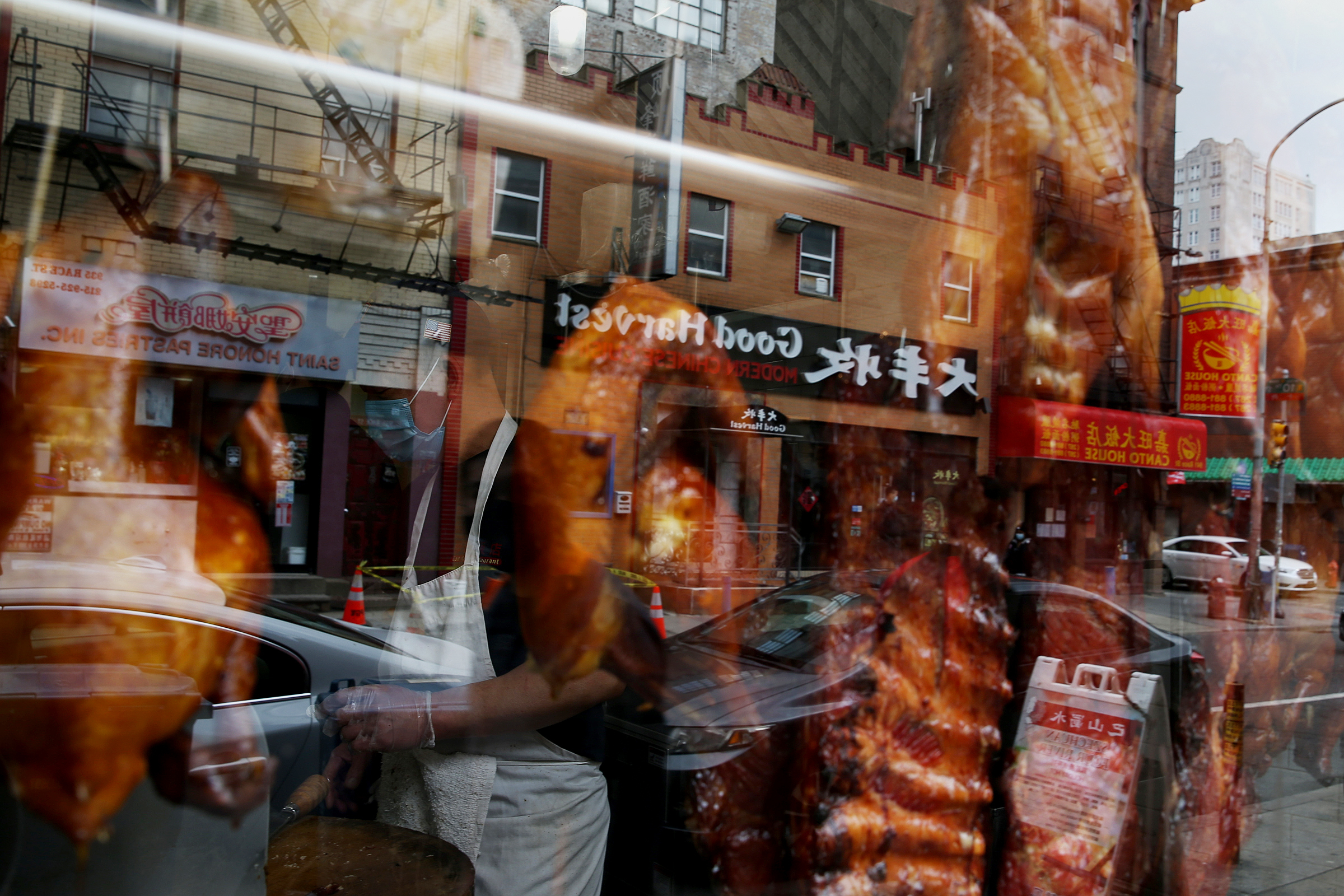
    Businesses are reflected in a window in front of roasted ducks at Lau Kee in Philadelphia’s Chinatown on Thursday, April 1, 2021.Tim Tai / Staff Photographer

    And yet, perhaps Philly’s diners would try if only they knew more of Lau Kee’s abilities to so beautifully represent their home region? My own enthusiasm was at least genuine enough to convince chef Liu to share a sample of his Qinghong wine stash.

    “Don’t drink it all at once — it’s strong!” he warned, showing me the small bowl from which he sips a chilled cup of Qinghong daily.

    I took a sniff. It was tart like crushed red berries. I took a taste: a fruity tang but also dry and pleasantly funky, not unlike a refreshing sherry. I took another sip, and one more. And I understood. No matter what Lau Kee’s menu says, or how many perfect ducks Chuien Liu roasts for his adopted hometown of Philadelphia, this descendant of Fujianese fishermen will never forget the taste of home.
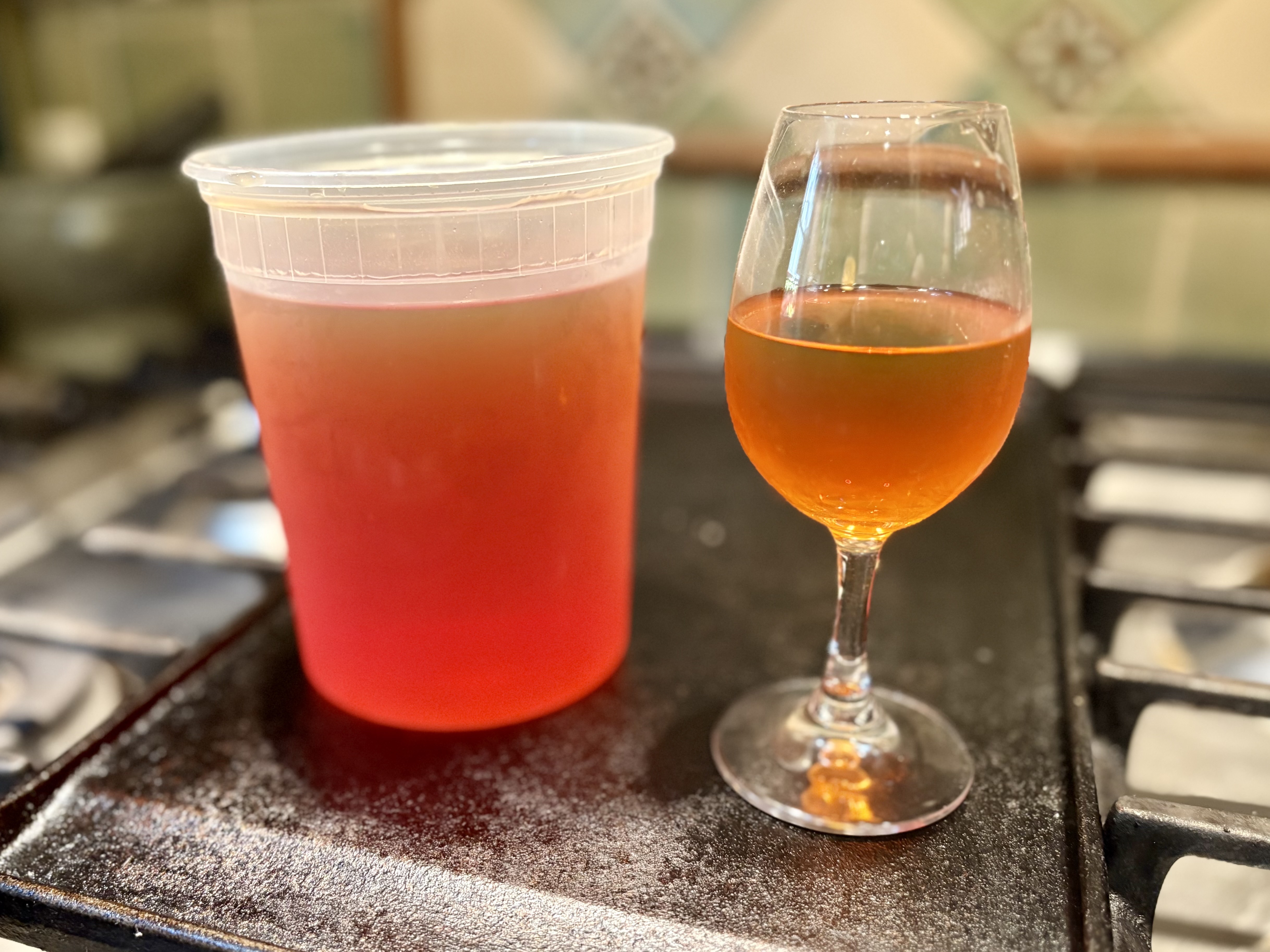
    Qinghong, a Chinese wine made from fermented red rice, is made by Fannie Qiu for her husband, Chuien Liu, the chef-owner of Lau Kee in Chinatown, who used the leftover solids from the process to make Fujianese-style stir-fries.Craig LaBan / Staff

    Lau Kee

    934 Race St., 215-201-3511. Menu is posted on delivery apps.

    Open 9 a.m. to 8 p.m. Tuesday through Sunday for dine-in; until 9 p.m. for takeout.

    Wheelchair accessible via a small portable ramp.

    Not ideal for gluten-free diners. A small portion of the menu can be made gluten-free, but none of the roasted meats.

    BYOB

    Menu highlights: Roasted meats: Hong Kong-style roast duck, (boneless) Peking duck, char siu pork, crispy pig, soy sauce chicken; Peking duck rolls; sliced beef in scallion pancake roll; wonton noodle soup with roast pork; shrimp dumpling noodle soup; West Lake beef soup; congee with roast duck; ginger-scallion noodles; shredded duck with string beans and XO sauce; Mongolian beef; pig stomach with red vinasse; salt-baked chicken wings.
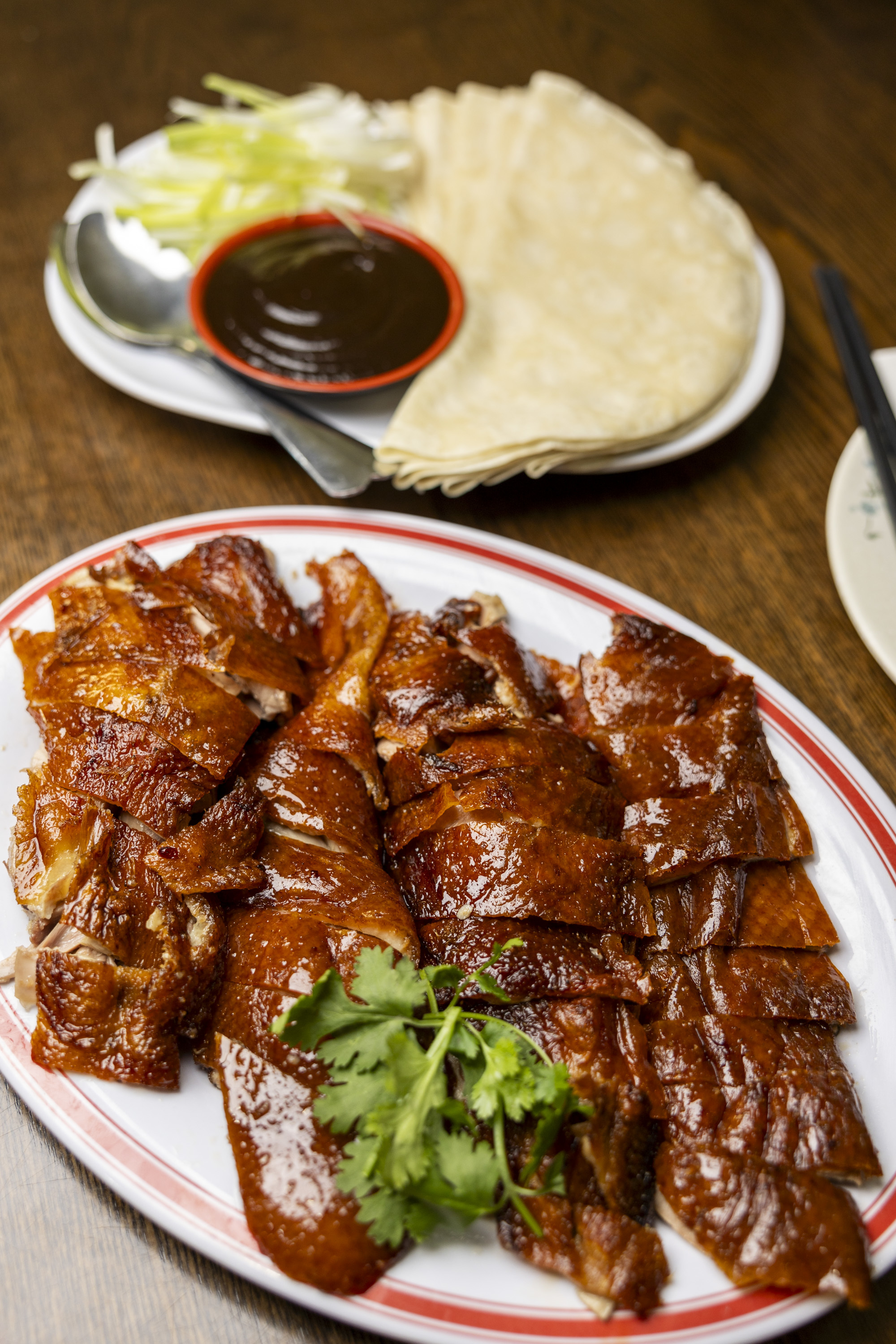
    The platter of Peking duck at Lau Kee, in Philadelphia, Pa., on Friday, Aug. 7, 2026.Tyger Williams / Staff Photographer
  • New LeBron James mural in Chinatown — featuring Billy Penn as Dwyane Wade — is about more than celebrating the Sixers star

    New LeBron James mural in Chinatown — featuring Billy Penn as Dwyane Wade — is about more than celebrating the Sixers star

    When it was announced that LeBron James was heading to Philly, artist Chenlin Cai immediately told social media he knew what his next project would be.

    On Wednesday, just two and a half weeks later, Cai was putting the finishing touches on his mural, which has already created a scene at 10th and Arch Streets in Chinatown, with residents and tourists alike stopping to take pictures and chat with the artist.

    The purpose of the mural, Cai says, isn’t just to celebrate the Sixers’ big signing, it’s also to bring people to his community.

    “I know this mural can bring positive interest to Chinatown,” Cai said. “There’s a lot of controversy about Chinatown, a lot, so I wanted to show some of the Asian elements in the art and bring business to this area, to this community — my community.”

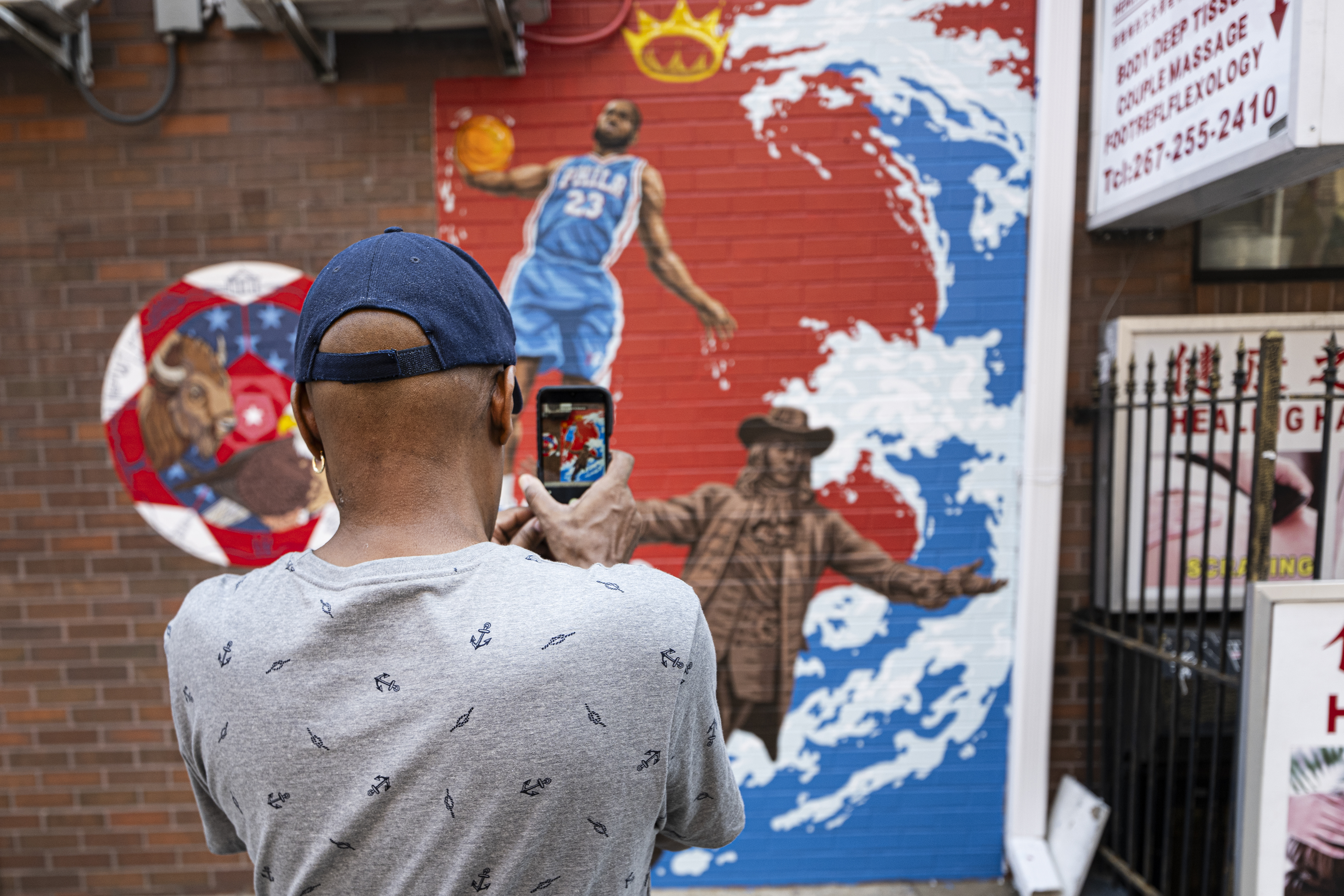
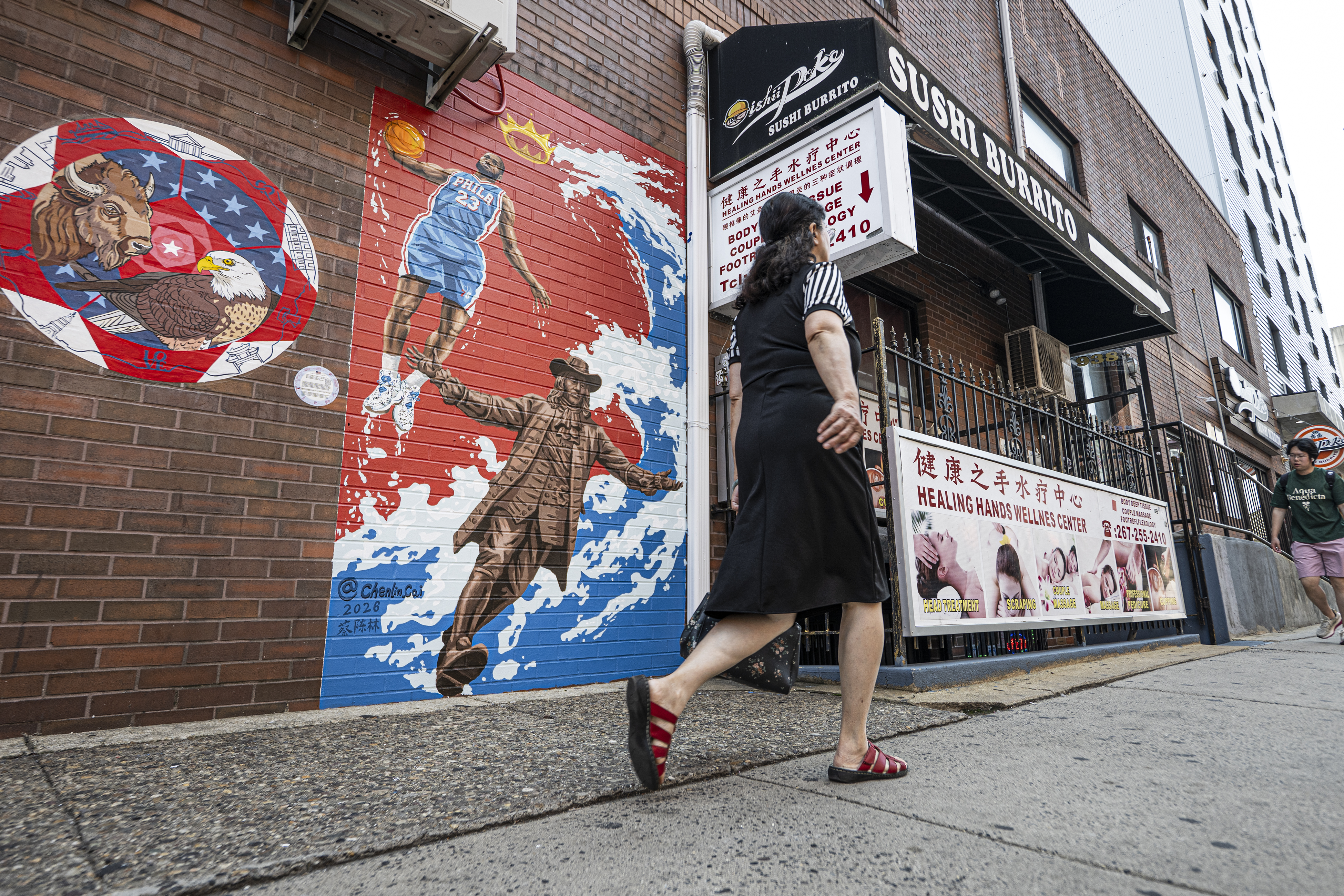
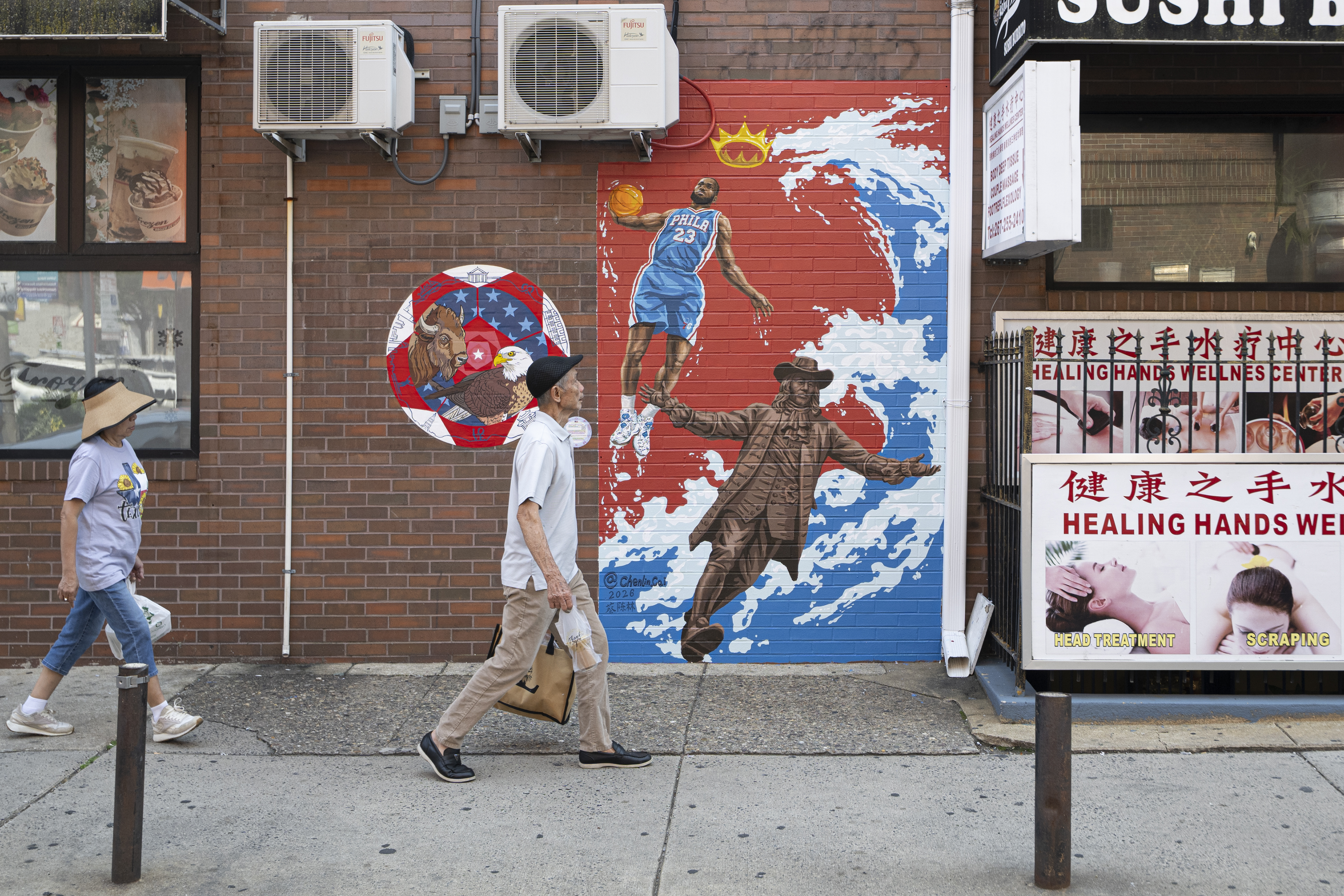
    When sketching out his plan for the mural, which is painted on the side of a Vietnamese restaurant across from the Chinatown Friendship Gate, the famous photo of James and Dwyane Wade combining for an alley-oop in Miami immediately came to mind. From there, Cai (蔡陈林) — who asked that we print his Chinese name so his mom, who can’t read English, could see her son’s name in print — was inspired by Philadelphia and his heritage to make it his own.

    James Smith captures a photo with his phone of the LeBron James mural at 10th and Arch Streets.Jose F. Moreno / Staff Photographer

    He replaced Wade with a bronze William Penn, a nod to Penn’s statue atop City Hall, and included a wave reminiscent of The Great Wave off Kanagawa, a famous piece of Asian art, that crests into a dragon image. Cai explained that the dragon represents an ancient Chinese legend known as the “Dragon’s Gate,” which symbolizes hard work, bravery, and good fortune.

    “Just as in the legend, where a fish that leaps over the Dragon’s Gate transforms into a dragon, LeBron’s arrival in Philadelphia portends that his career will reach new peaks. As LeBron soared through the air, the waves rose up and transformed into a dragon,” Cai wrote in the description of his mural.

    No detail was too small. He even matched LeBron’s sneakers to his own favorite pair, which was a Christmas gift from his wife, Xingzi: the Nike LeBron Soldier 14 EP “Sisterhood.”

    “Philadelphia is The City of Brotherly Love, and I wanted to include it for everybody, and because these shoes are called the ‘Sisterhood,’ the whole city is welcoming him,” Cai said, beaming as he took pictures with fans.

    Pedestrians walk past a LeBron James mural at 10th and Arch Streets on Wednesday. Jose F. Moreno / Staff Photographer

    This is not Cai’s first Chinatown mural. He painted the crane mural that went up in 2022 and, more recently, a collection of 20 different World Cup murals celebrating some of the countries that played in the tournament. The U.S. installment is located right next to his LeBron mural.

    Among all his works, this one is extra special for Cai, who isn’t just a lifelong 76ers fan — he’s also been a LeBron fan since before he entered the league.

    “We are the same age. He is like my bro,” Cai said. “I watched him when he was in high school, even in 2002, when he was called ‘The Chosen One.’”

    As people passed by and fist bumped Cai on Wednesday, some stopped to chat about their shared love for the game and excitement over the upcoming season, while others hit the Wade pose for a meme of their own. Each time someone took a picture, Cai encouraged them to post on social media and continue to spread his message.

    “I am just so happy with the attention this has been getting,” Cai said. “It means so much for me and my family, and this is the true purpose of my art, to bring more traffic to Chinatown and help the small businesses here.”

  • We’re going bananas | Let’s Eat

    We’re going bananas | Let’s Eat

    Pumpkin spice is passé. Read on to see why banana is the flavor we now savor.

    Also in this edition:

    • Fare ball: You would not believe what foods Phillies fans are taking to games.
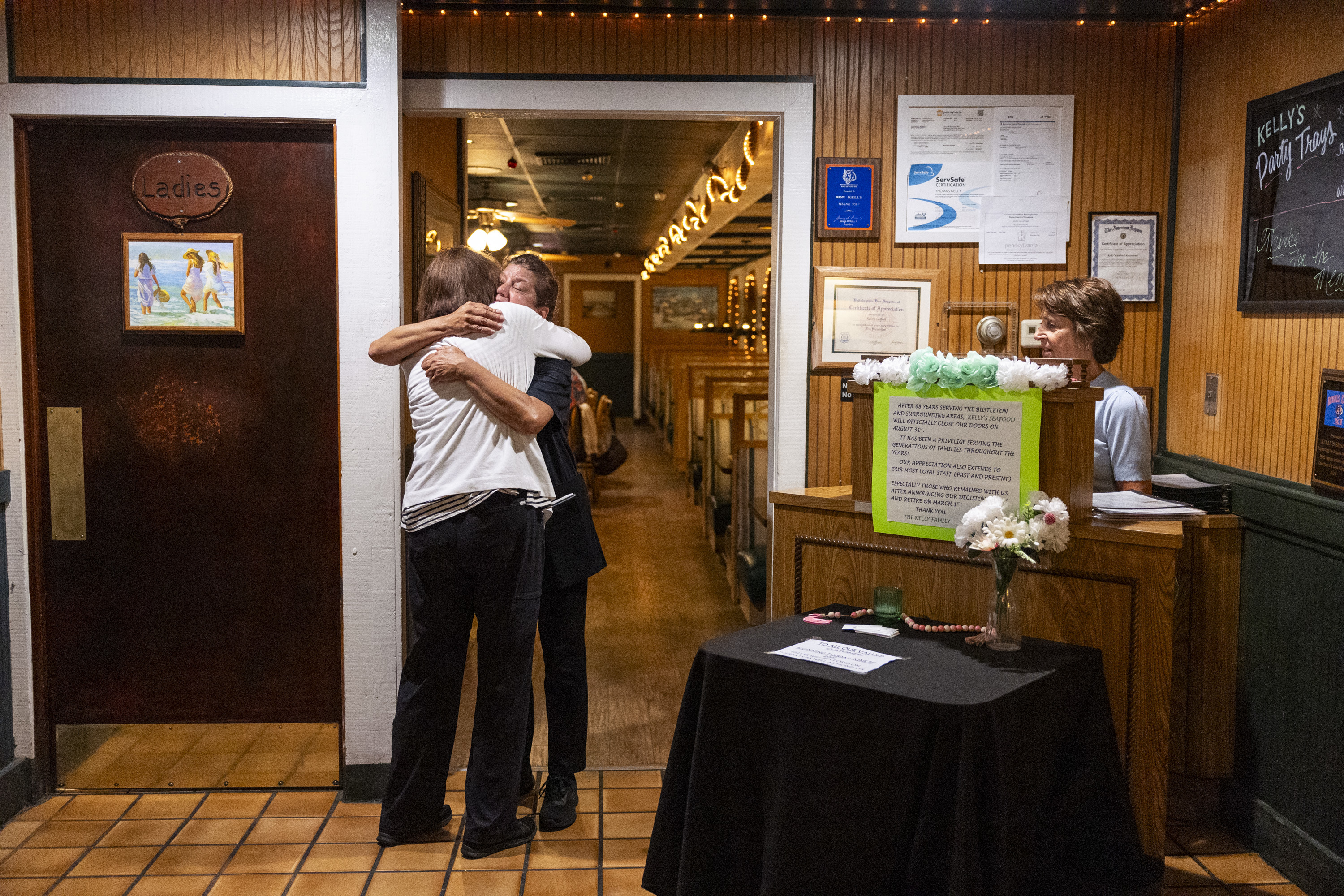
    • End of the line: A Northeast Philadelphia seafood landmark prepares to close.
    • News: Read on for word of a new Vietnamese bar-restaurant, news about this year’s Michelin Awards, and a sale offering for the Pub.

    — Mike Klein

    If someone forwarded you this email, sign up for free here.

    Why bananas are appealing in Philly

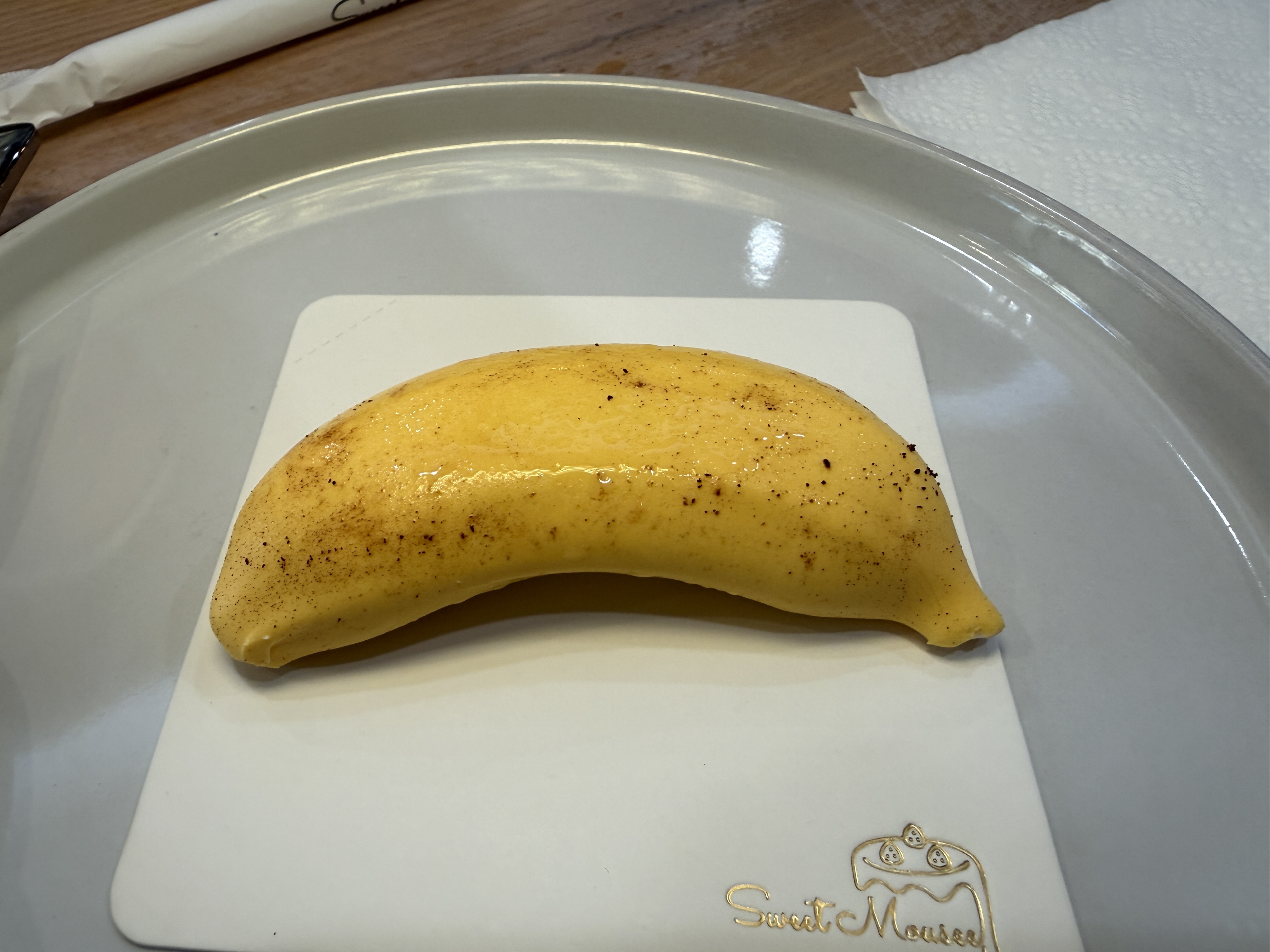
    Bananas are trending everywhere, but especially at cocktail bars and cafes, which use fresh bananas, banana liqueur, banana extract, and even banana peel. Kiki Aranita isn’t alone in suggesting it might be “the next pumpkin spice.”

    Phillies fans have cracked the food game

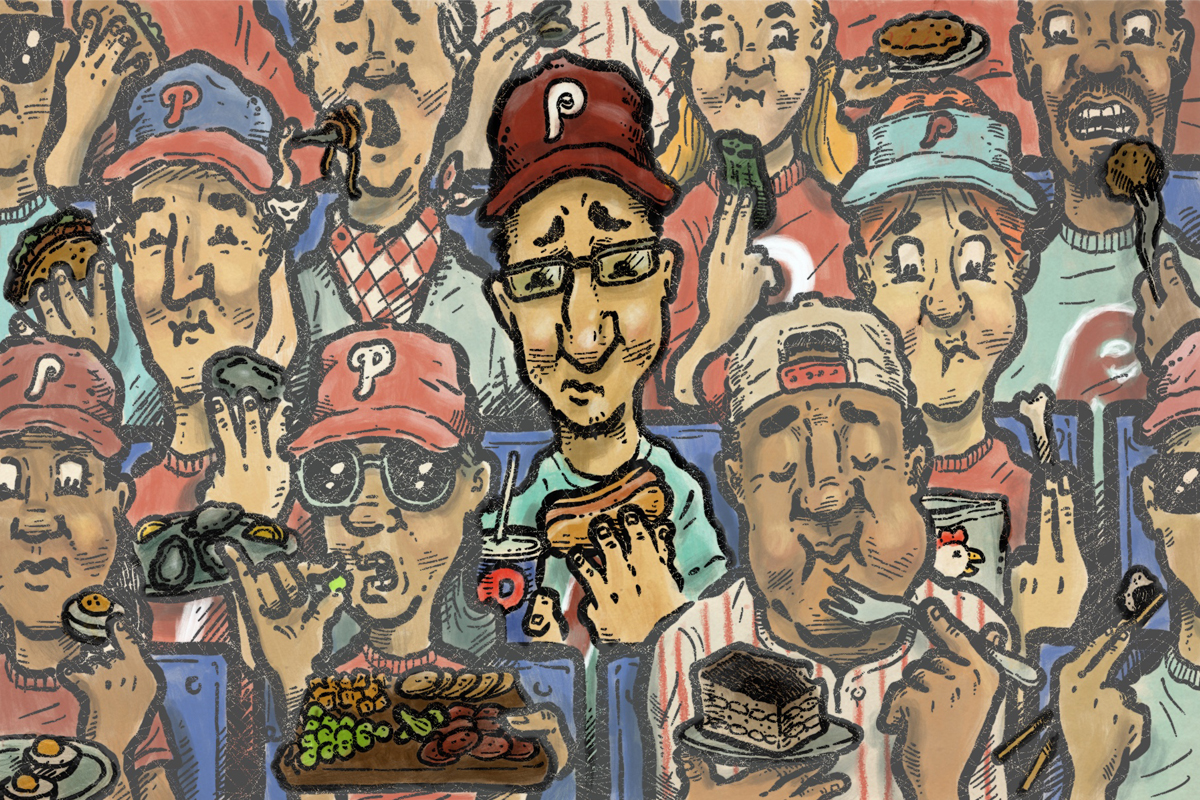
    Phillies fans are bringing way more than hoagies and cheesesteaks into Citizens Bank Park. Beatrice Forman winds up and delivers a fun read about the BYO eats you’ll find in the stands. Curried tuna salad, anyone?

    Last call for Kelly’s Seafood

    Kelly’s Seafood has been a Northeast Philly fixture, serving generations of families — and plenty of snapper soup. Now, as the family prepares to close, longtime customers are returning for one last meal, stocking their freezers, and saying goodbye.

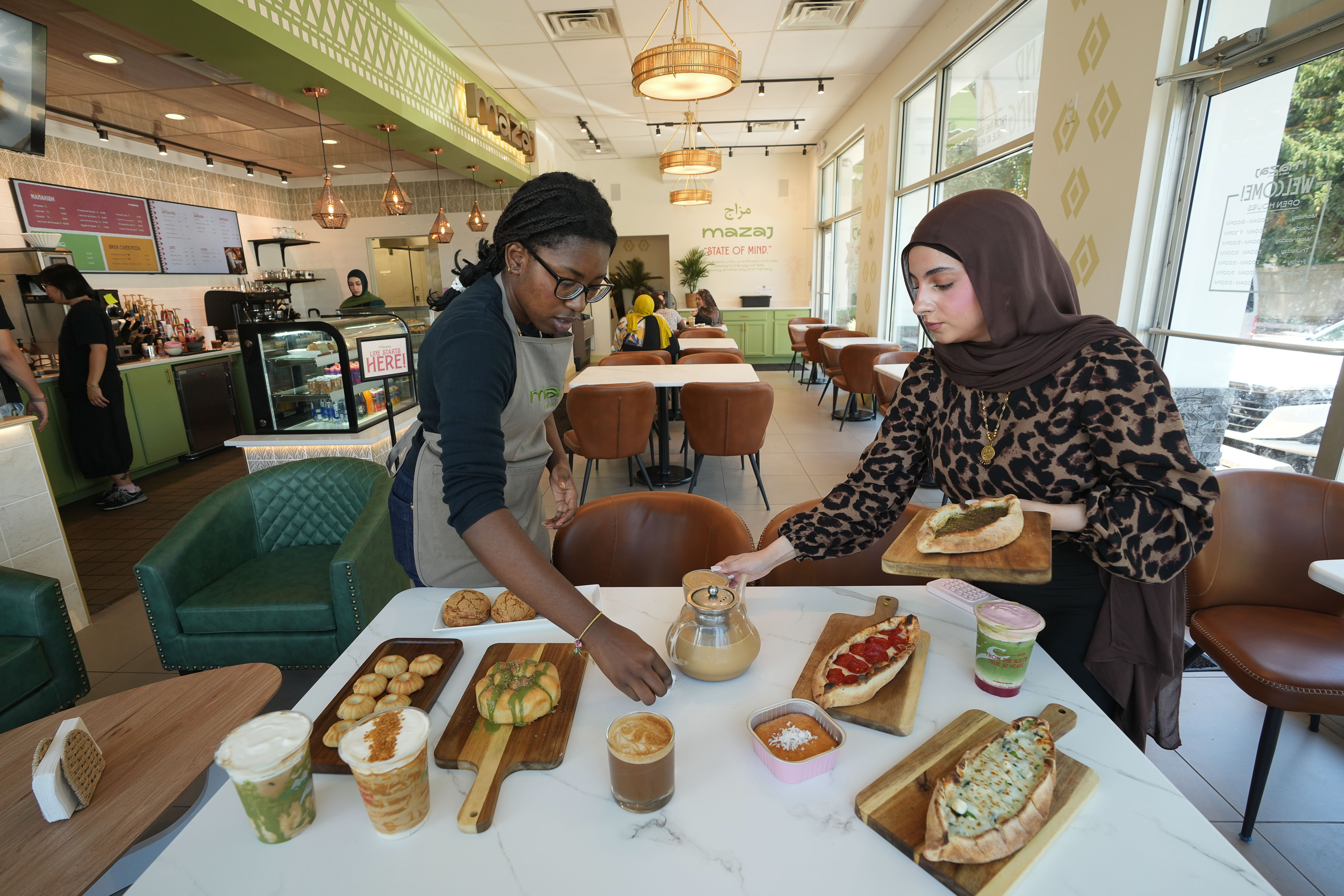
    A bakery cafe with comfy seating — and a drive-through

    Mazaj, an offshoot of the twin Malooga restaurants, has landed in Willow Grove with Yemeni coffee, Middle Eastern pastries, a drive-through, and a plan to expand.

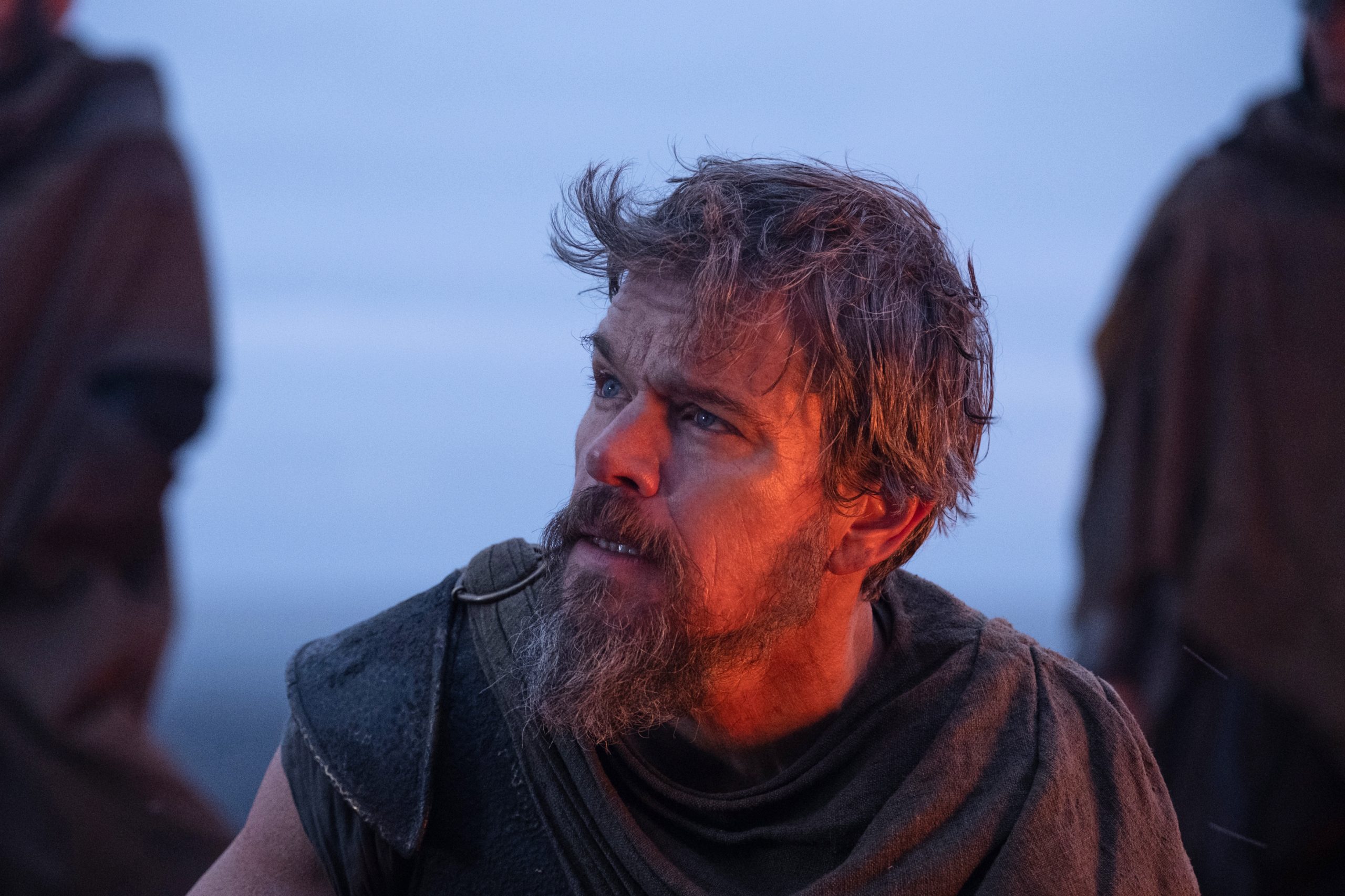
    Eat, pray, sail: ‘Odyssey’ makes us hungry

    The Odyssey by Christopher Nolan has plenty of monsters, mayhem, and spectacle — but where’s the feast? Kiki Aranita, a classics scholar in her past life, explains what Homer’s heroes would have eaten, and where to embark on your own culinary odyssey around Philly.

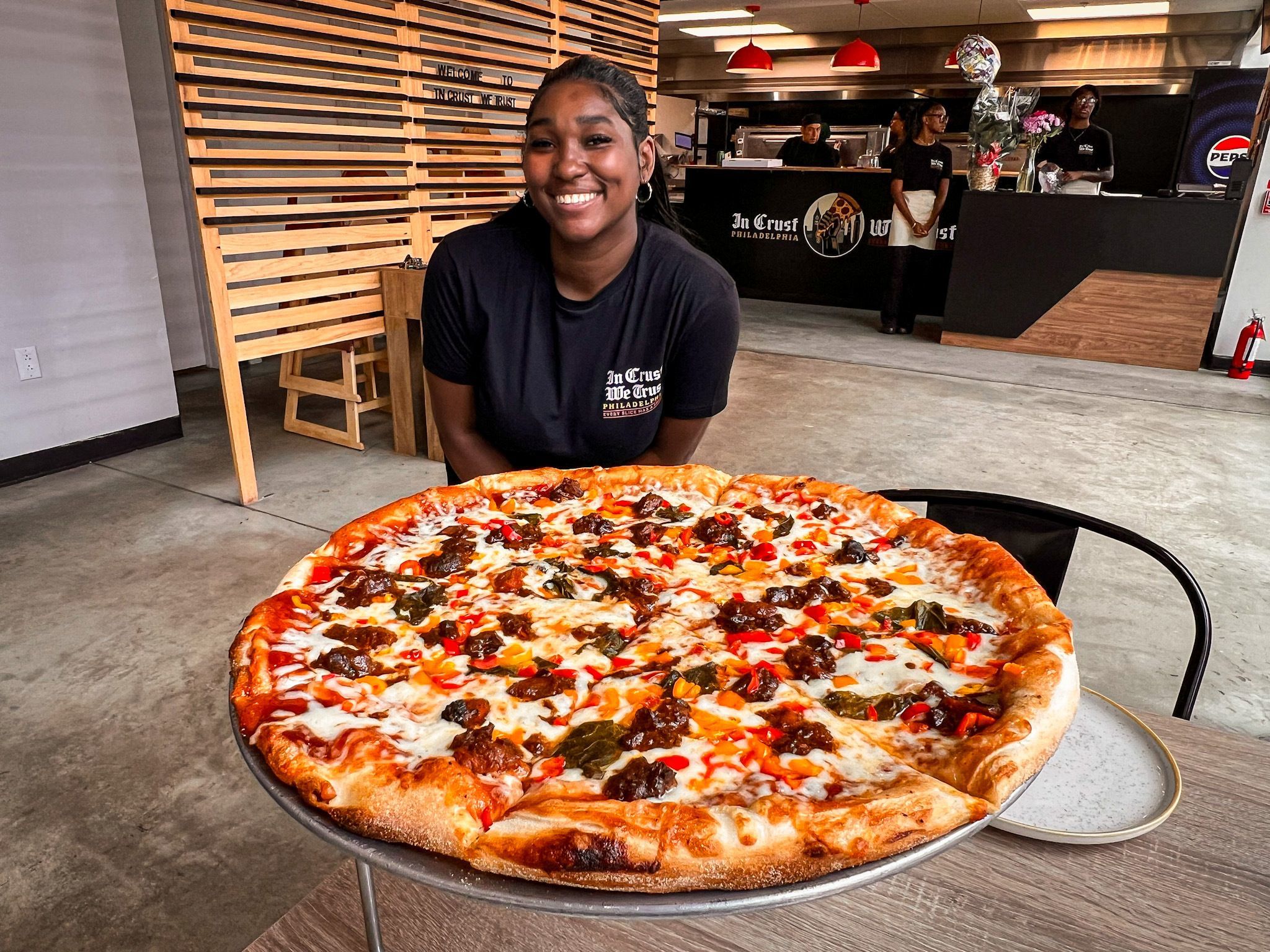
    A pizzeria celebrating Black culture

    In Crust We Trust has joined the pizza boom now underway in Fishtown. Anyae Wilson-Worley’s pizzeria is offering something none of the others are: a taste of Philly-style Black culture.

    In other pizza news: Dave Portnoy, the Barstool Sports founder, visited the Philadelphia area last week to shoot a handful of “One Bite Pizza Reviews,” whose scores in previous years have transformed the fortunes of a neighborhood pizzeria.

    The best thing Hira Qureshi ate last week

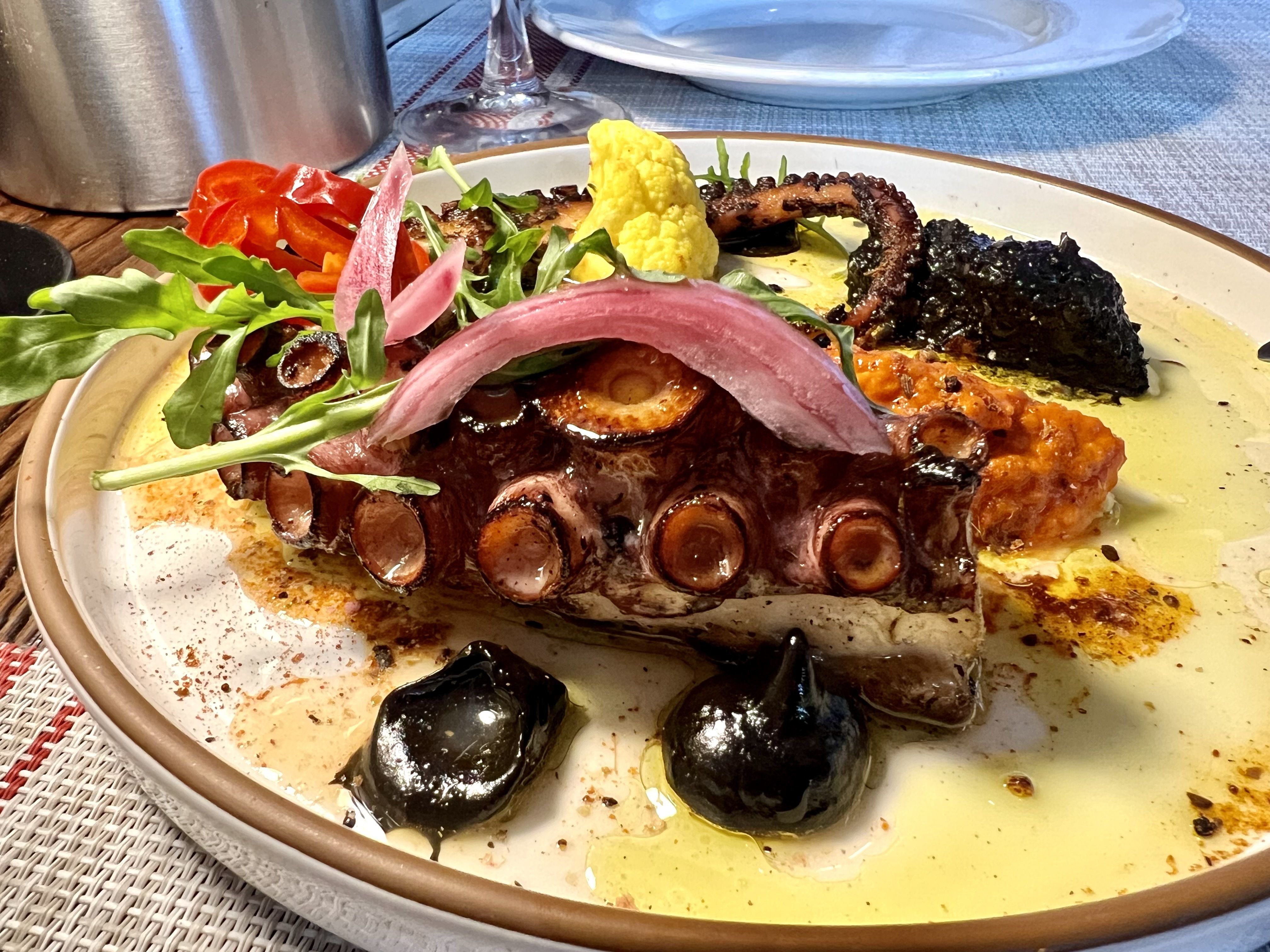
    What a joy: Dunking chunks of octopus into the almond romesco and black garlic purée at Stina in West Passyunk. For another treat, writes Hira Qureshi, don’t miss the spanakopita.

    Scoop

    The Pub in Pennsauken, which sits on 6 acres, is being offered for sale for the first time in 26 years. The steakhouse institution is closed now for summer break, but the owner insists that it will reopen next month — unless a deal is magically struck.

    Restaurant report

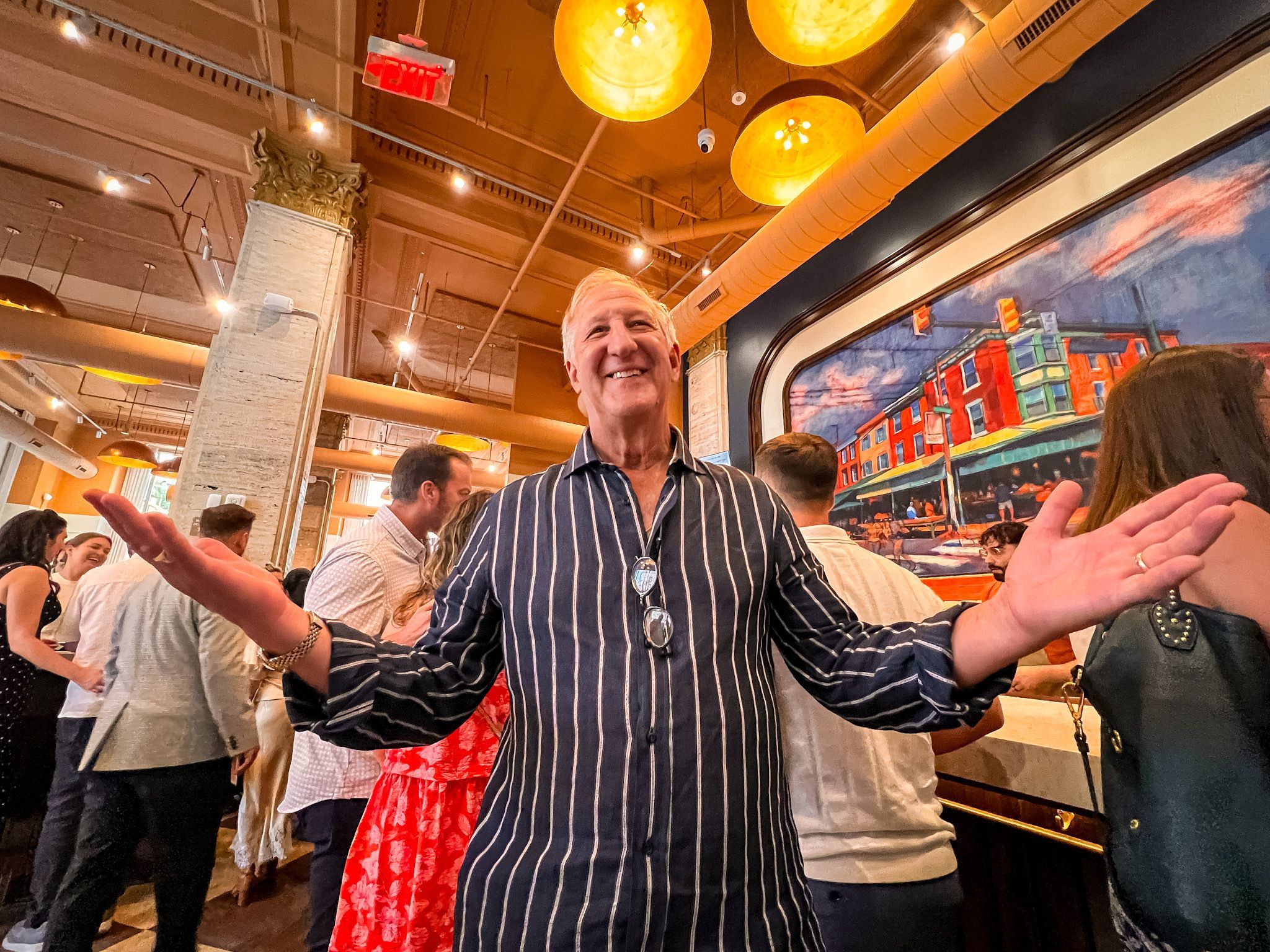
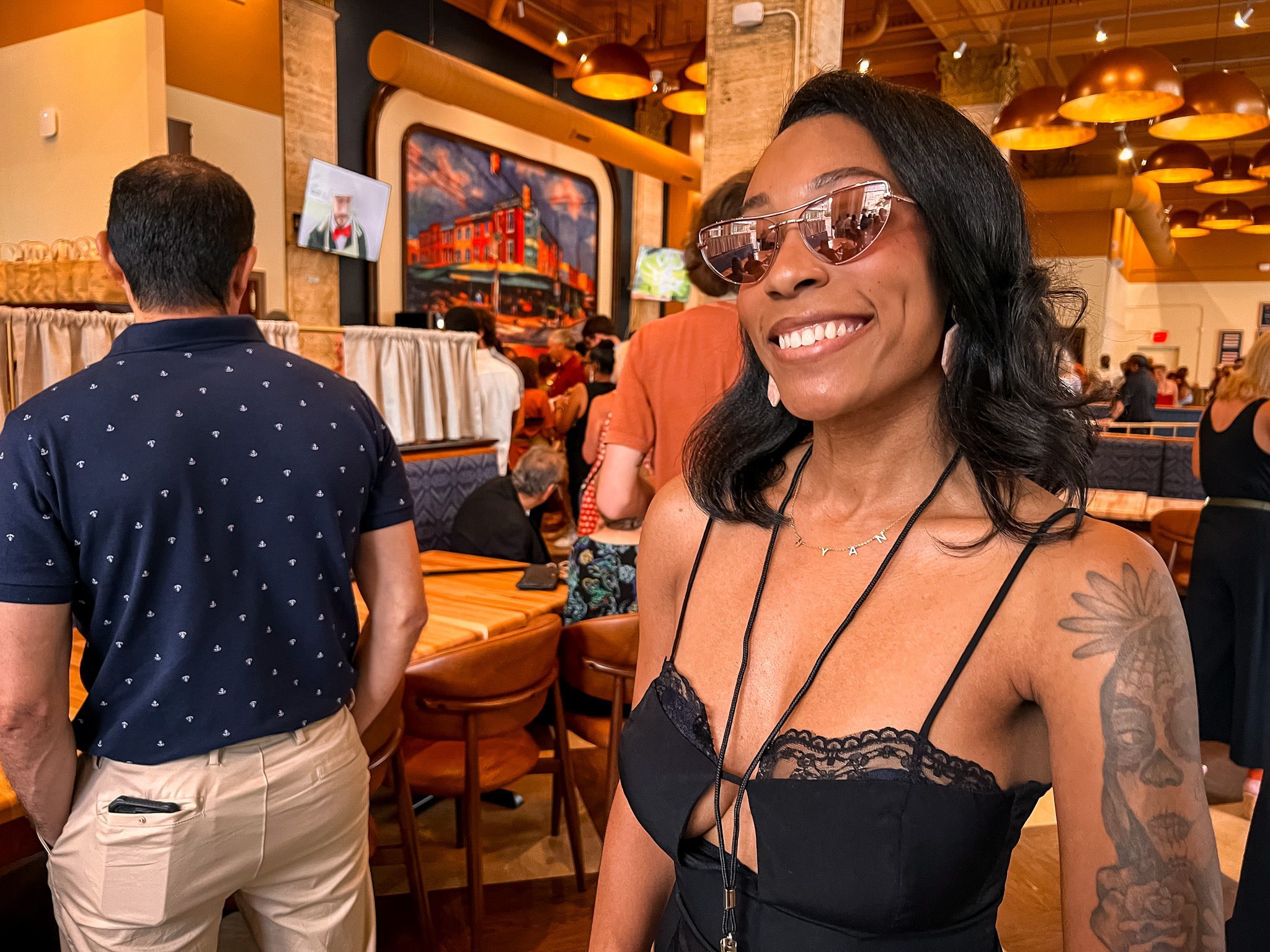
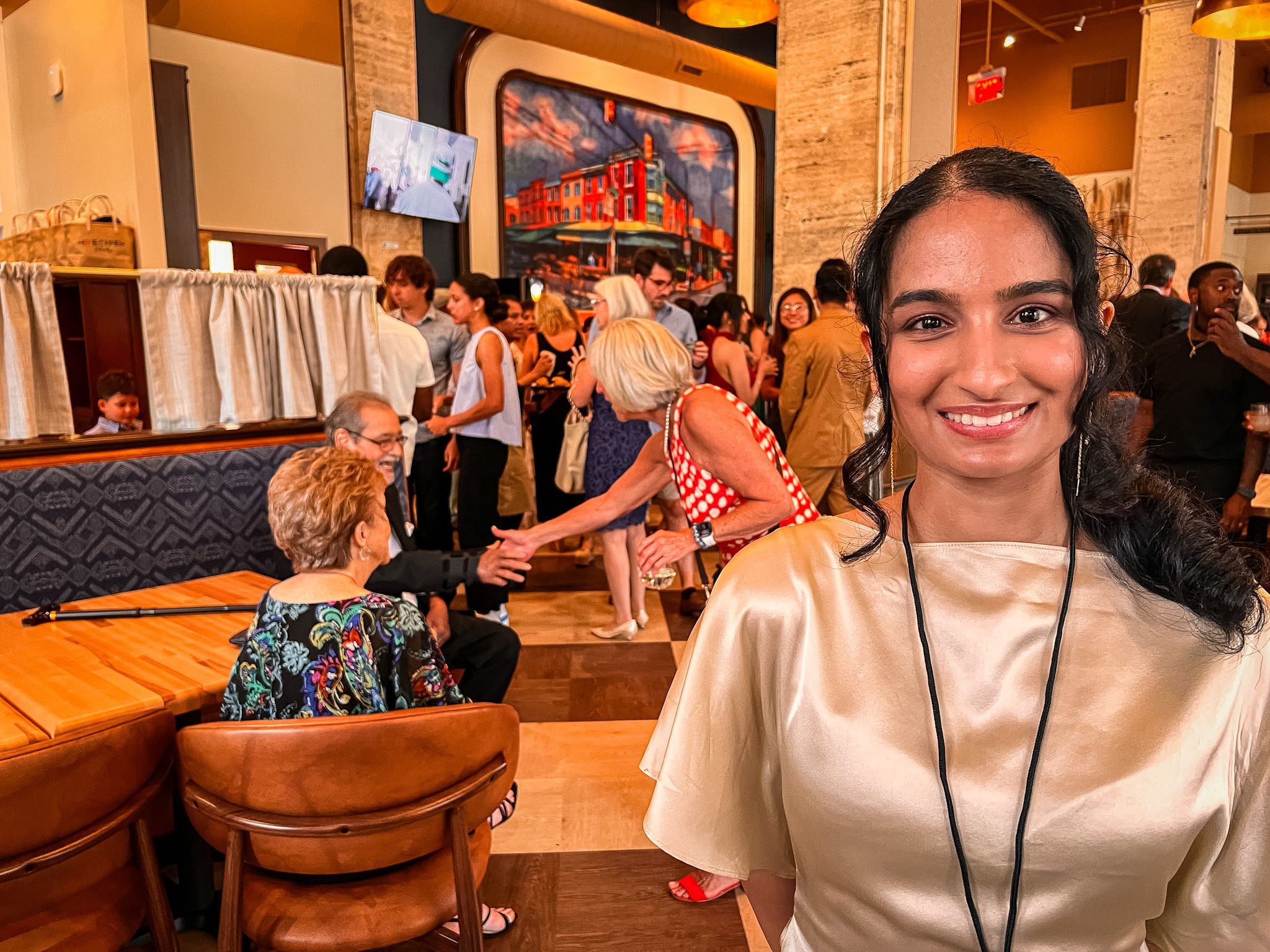
    Recipe Philly, whose menu is built around recipes submitted by local home cooks, opens Monday at 1401 Arch St., a splashy, 175-seat redo of the long-ago McDonald’s at Broad and Arch. Funded by retired business executive Ed Baumstein (above), the restaurant will serve lunch and dinner, featuring dishes from 31 cooks who also will appear in a reality TV series now being shopped around.

    Among them:

    Germantown data analyst Chyan Adams Bentley (above), 30, drew inspiration for her honey-chipotle shrimp tostadas from a rooftop cooking class she took in Guatemala.

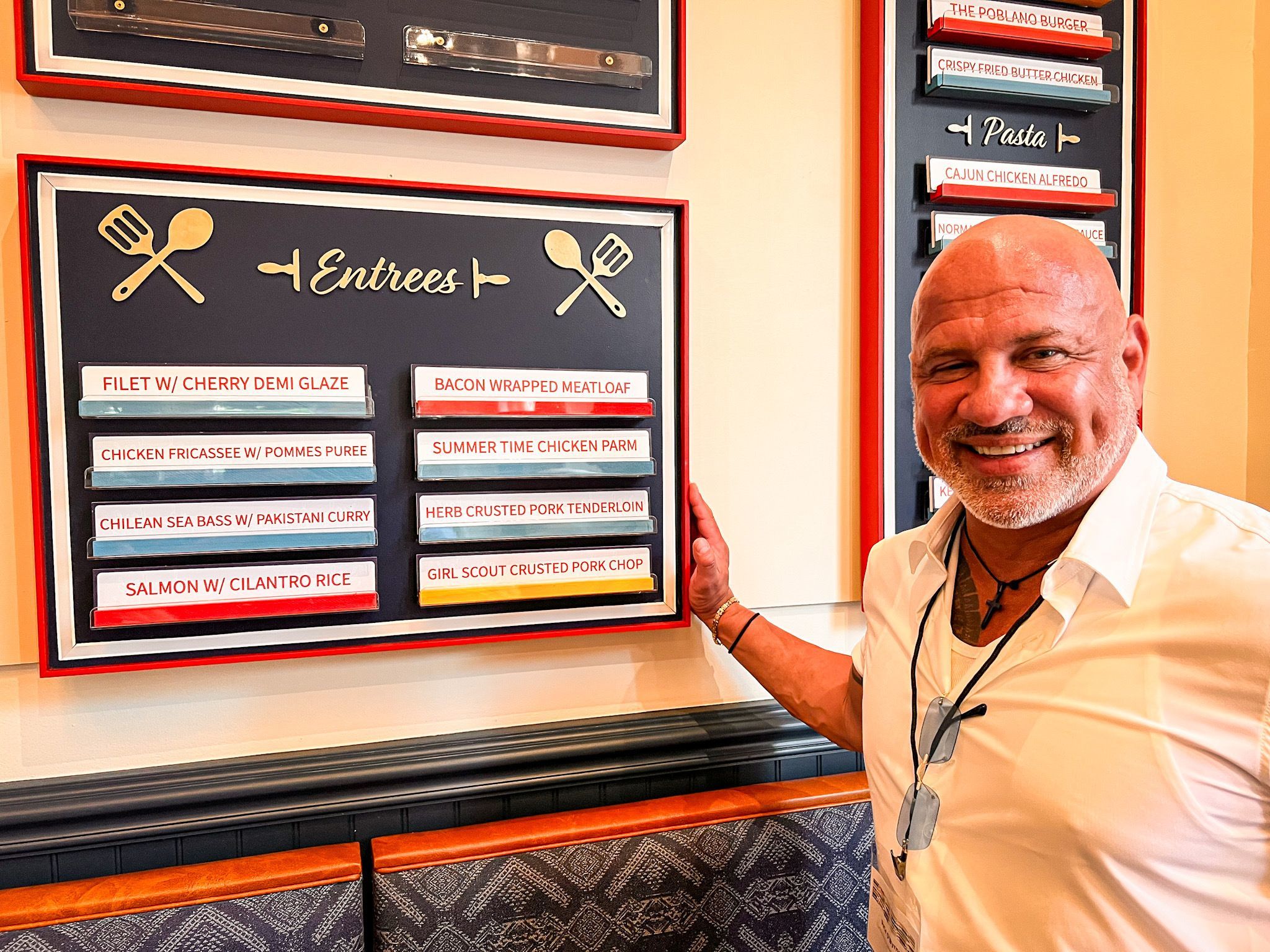
    Pete O’Byrne (above), 60, of Jeffersonville, contributed a pork chop crusted with Pecorino Romano, panko, and shortbread Girl Scout cookies. “The Girl Scouts are one of my customers,” said O’Byrne, who sells production printers and software. “I know when the truck comes in.”

    Nayha Hussain (above), 24, a Spring Garden software engineer who has cooked since age 12, elevated a home-style Pakistani coconut curry with Chilean sea bass. Since Recipe is a 15-minute walk from her place, “it’s my local neighborhood restaurant that has my dish on it,” she said.

    Read up on Recipe Philly here and here.


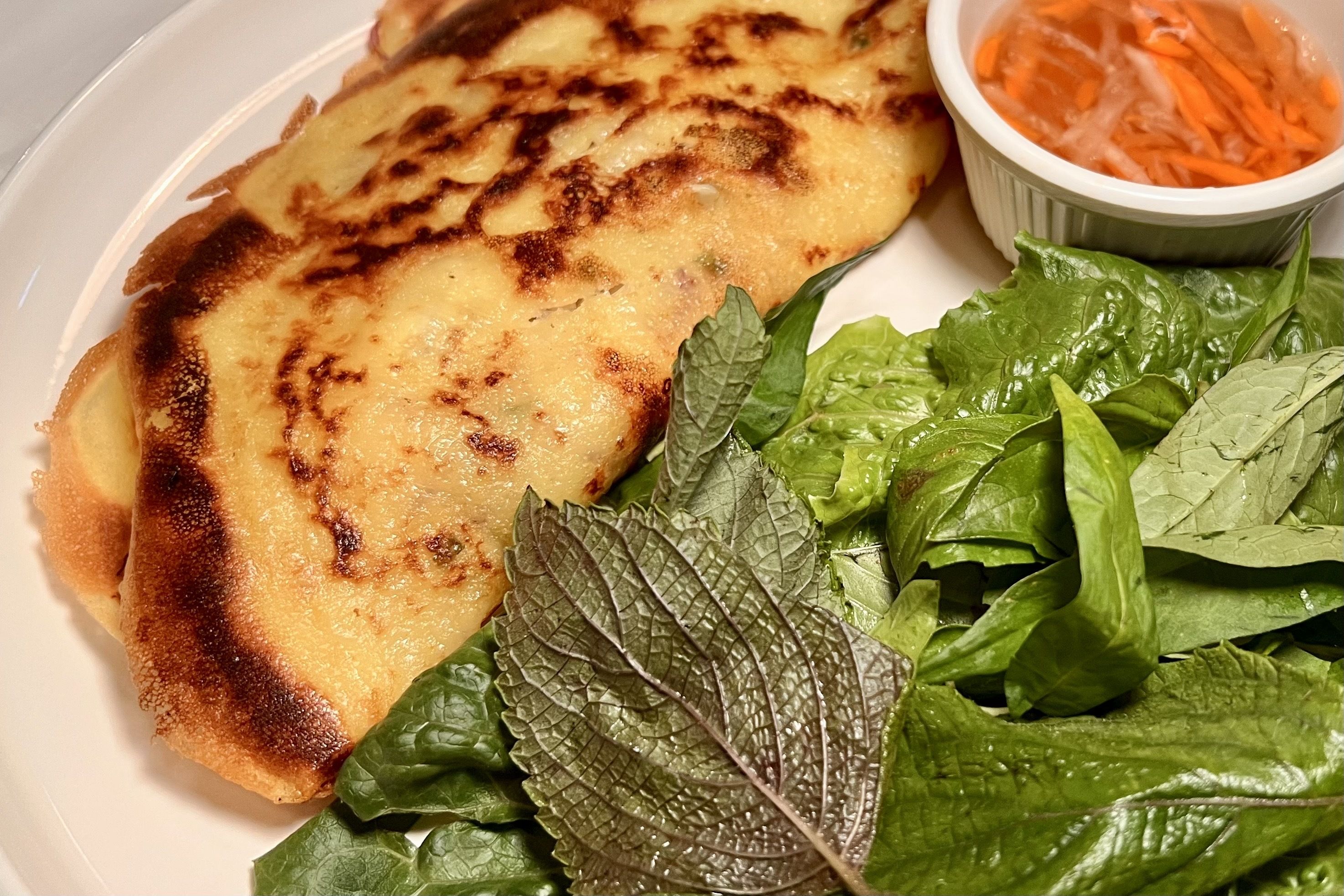
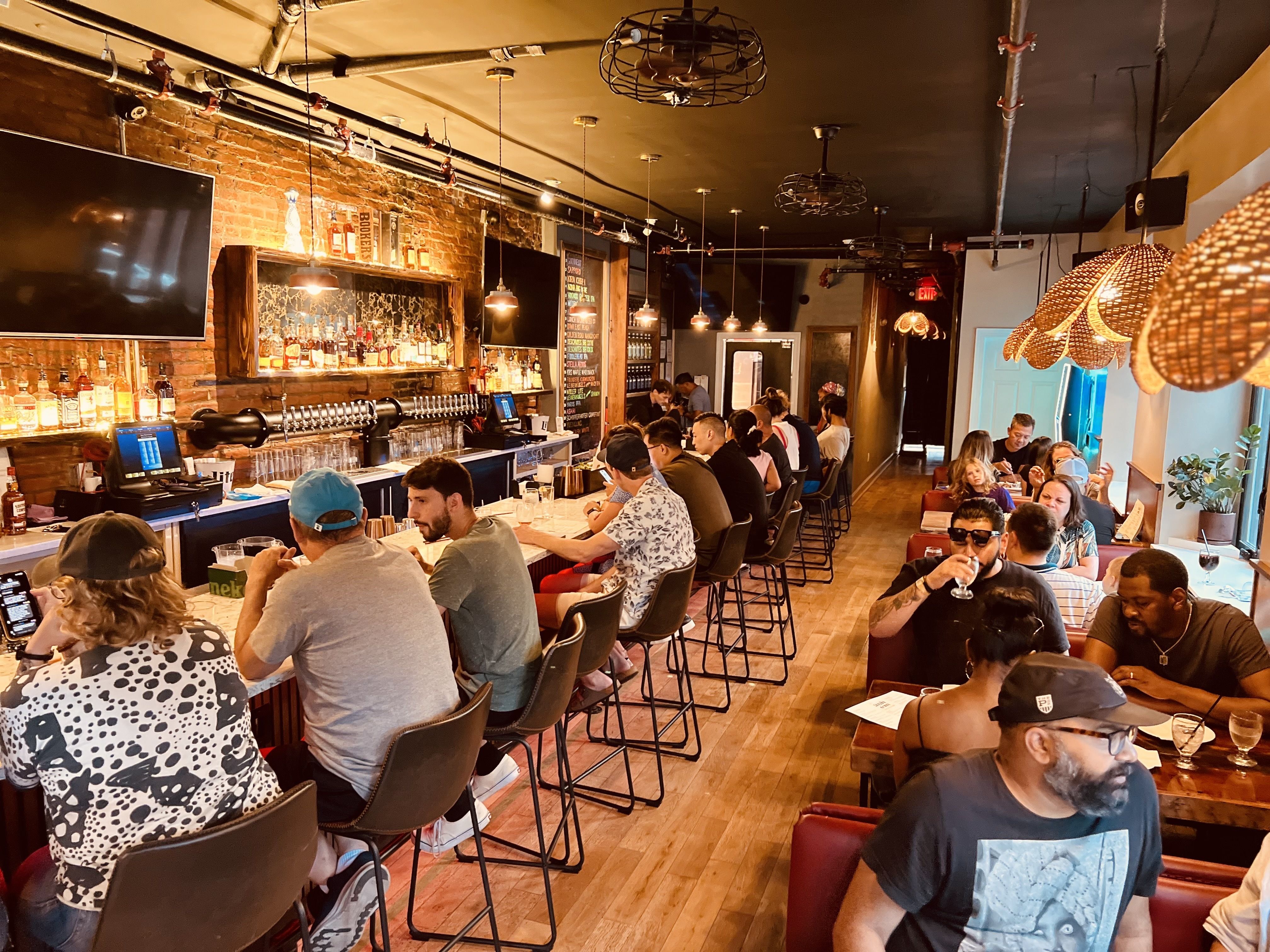
    You’ll be hearing a lot about Anh Em, which soft-opened last weekend at 21st and Titan Streets in Point Breeze. Anna Huynh and husband Victor Nguyen are behind the 50-or-so-seater specializing in Vietnamese comfort food, mixing classics with home-style dishes (like crispy bánh xèo, above, and the beef carpaccio dish known as bò tái chanh), inspired by what the couple grew up eating. Chef is Nguyen, who managed Tango and once co-owned a Chinatown bubble-tea shop; he oversees a 20-seat bar pouring local beers from 24 taps, plus cocktails. The couple retained the former Madeira Indian Grill’s exposed brick while adding burgundy booths, light-blue accents, lanterns, and shelving built by Nguyen and their son. Here’s the soft-opening menu.

    Anh Em, 1252 S. 21st St. Hours: 4 p.m.-2 a.m. Wednesday-Monday. Closed Tuesday.

    Briefly noted

    The 2026 Michelin Awards will return to New York City for its ceremony. Reminder that its inspectors are scouring Philadelphia in advance of the December announcements.

    Heytea, the expanding Chinese tea shop, enters the Philadelphia market Friday at 1001 Arch St. in Chinatown. Drinks will be buy-one/get-one from Friday-Sunday.

    With Ember & Ash still closed after a June 24 fire, chef Scott Calhoun will cook at Cartesian Brewing (1326 E. Passyunk Ave.) from 4-8 p.m. Saturday. Using yakitori grills in the courtyard, Calhoun will serve dishes including octopus “dogs,” a Filet-O-Fish-inspired skate sandwich, ’nduja-stuffed piquillo peppers, and sourdough with romesco, along with Cartesian’s beverages.

    Javelin (1811 Fairmount Ave.) will host chef Carlos Wills of Ogawa Sushi & Kappo for a maguro kaitai, or tuna-cutting ceremony, Aug. 18. Starting at 5 p.m., Wills will break down a 250- to 300-pound bluefin tuna for a multicourse tasting ($170 plus tax/tip) including sashimi, nigiri, hand rolls, and tuna marrow with uni and caviar. Richie Tray will serve Cambodian-inspired appetizers and cocktails. Reserve via Toast.

    Libertee Grounds (1600 W. Girard Ave.) will host a Cooper DeJean look-alike contest on Aug. 27. Doors/registration at 5 p.m., contest at 6:30 p.m. Signup via Instagram.

    ❓Pop quiz

    Why can red Côtes-du-Rhône wines such as Ogier Artésis remain relatively affordable?

    A) Rhône producers are prohibited from aging their wines in pricey oak barrels.

    B) Grenache can produce large crops of flavorful grapes even in dry conditions.

    C) French law limits the markup on Côtes-du-Rhône wines.

    D) The wines are made primarily from surplus Syrah grapes, and this is the source of the expression “Qué Syrah Syrah.”

    Find out if you know the answer.

    Ask Mike anything

    What do you know about the sale of Ardana in Bucks County? — Cindy S.

    The Cristou family announced last week that they’ve sold their Ardana Food & Drink location in Newtown, Bucks County, to Rob LaScala after 3½ years. LaScala tells me that the Ardana name and Cypriot-inspired menu will remain for about two months before he transitions to LaScala’s Fire, his semicasual Italian concept. LaScala, who also owns Chicken or the Egg in Marlton and Beach Haven, is on fire with Fire, as there are nearly a dozen locations now, plus New Jersey expansion plans for Freehold, Bridgewater, and Cherry Hill. The Cristous still retain their Ardana and KC Prime Steakhouse, both in Warrington.

    📮 Have a question about food in Philly? Email your questions to me at mklein@inquirer.com for a chance to be featured in my newsletter.

    By submitting your written, visual, and/or audio contributions, you agree to The Inquirer’s Terms of Use, including the grant of rights in Section 10.

  • This pizzeria has Craig LaBan’s stamp of approval | Let’s Eat

    This pizzeria has Craig LaBan’s stamp of approval | Let’s Eat

    Craig LaBan has found a pizzeria he can take his whole family to.

    Also in this edition:

    — Mike Klein

    If someone forwarded you this email, sign up for free here.

    This pizzeria has Craig LaBan’s stamp of approval

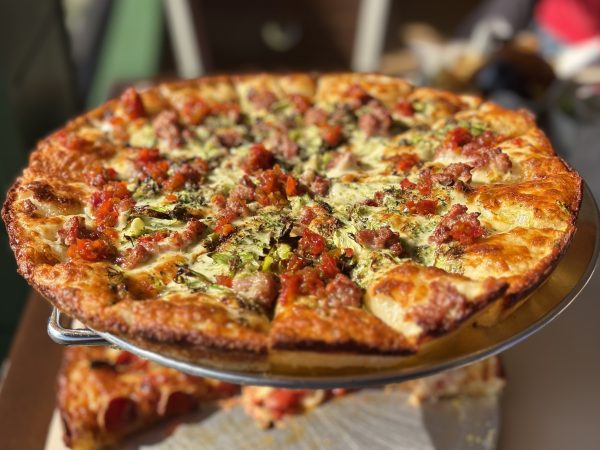
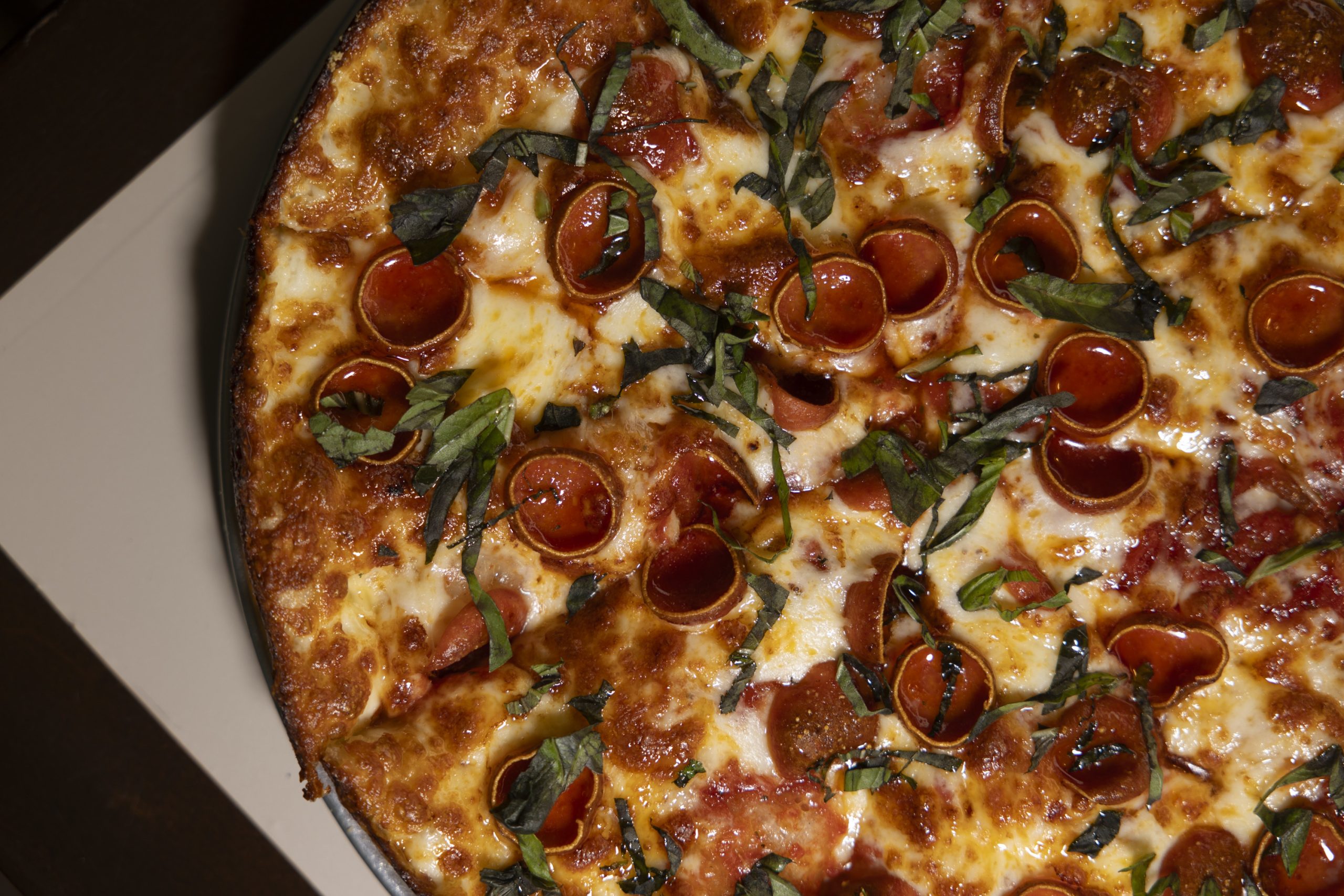
    Gluten-free pizzas are generally less than exciting, as Craig LaBan notes, with textures ranging between pressboard and Styrofoam. At Barclay Pies, it’s not like that at all. Even the mozz sticks and their conventional pizzas are well worth a stop.

    The bakery beat

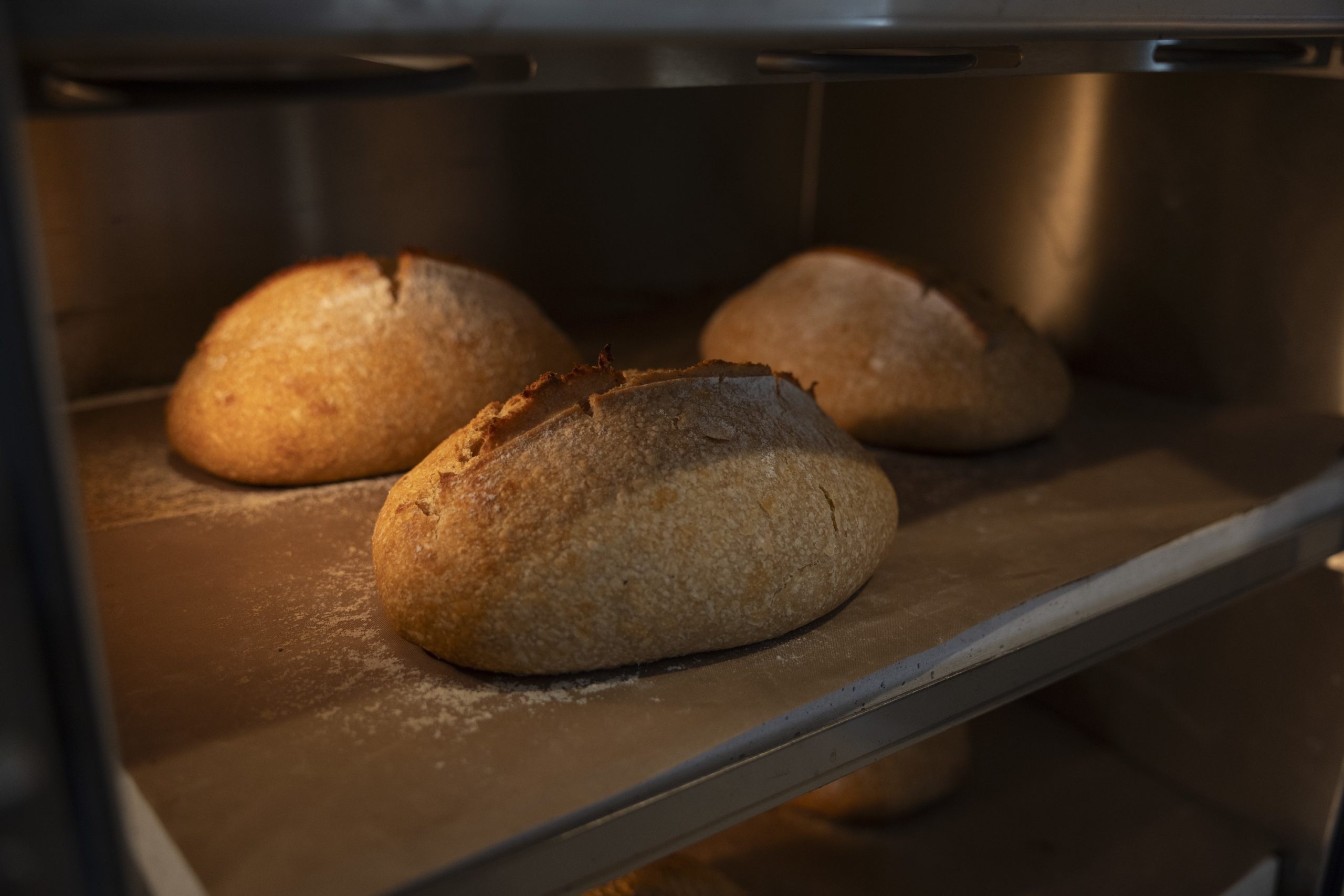
    Wild Yeast Bakehouse, Wayne’s new sourdough bakery, has a living room vibe, writes Jenn Ladd. That makes sense, because the founder started baking out of his living room.

    Saif Manna started baking during the pandemic in his Temple dorm room. He’s opening a brick-and-mortar home for his Levantine and Palestinian pastries, and tomorrow is the first day.

    Ba Le Bakery in South Philly is practically synonymous with the city’s bánh mì scene. Now, writes Kiki Aranita, a third generation is expanding the business dramatically.

    Two Sweet Boutique has had an interesting problem in its new location in Washington Township, writes Sarah Nicell. It’s selling out. Want that banana pudding? Get there early.

    Memories: The Frog Commissary Cookbook

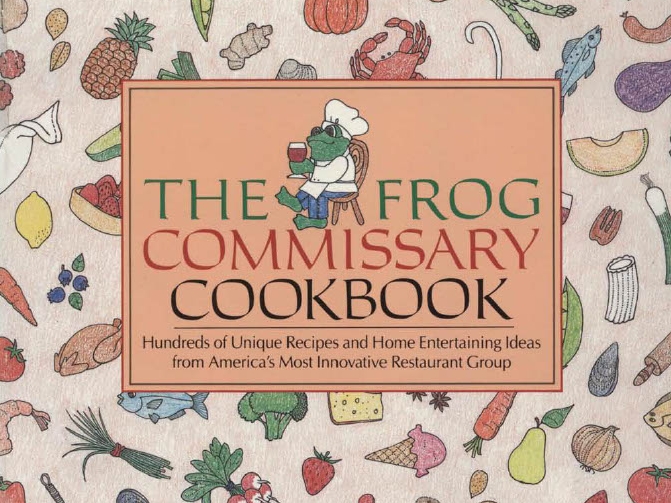
    After four decades, The Frog Commissary Cookbook remains a Philadelphia icon — “our book,” says one acolyte. Contributor Devra Ferst takes a stroll down memory lane and winds up at the Commissary’s original location, where the current restaurant occupant bakes its carrot cake.

    Omakase on a budget at Oroshi

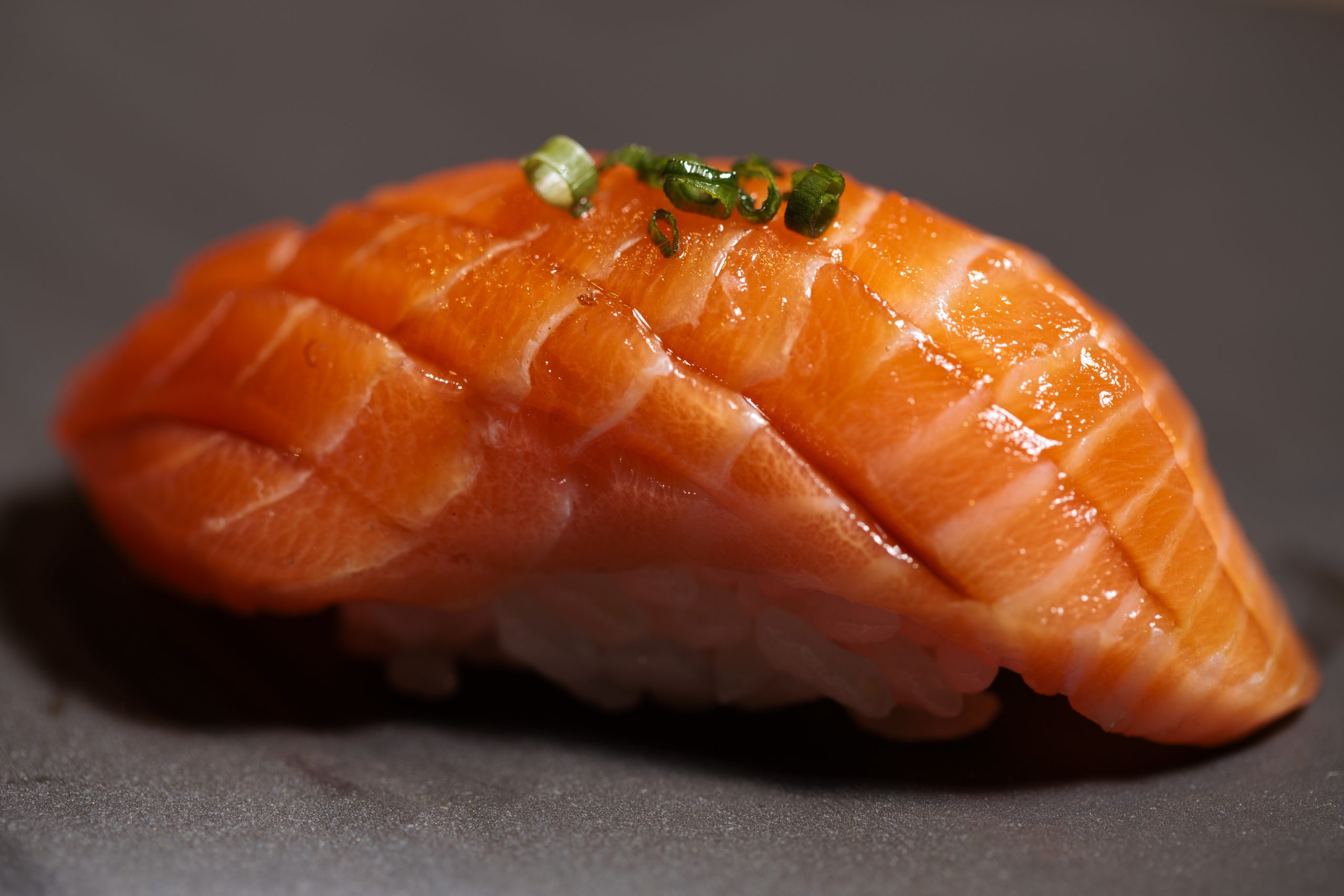
    Oroshi, a new omakase restaurant at Broad and Lombard Streets, is part of a minitrend of faster, less expensive omakase experiences. The lights are bright and the decor is spare, but Kiki Aranita walked away happy after 90 minutes.

    Getting with the GLP-1 program

    Here’s a twist: Local food brands such as Philly Pretzel Factory are working to accommodate consumers who are eating less and “protein-maxxing,” Olivia Prusky writes.

    The best thing Craig ate last week

    Craig visited an old fave — Porcini in Rittenhouse — and found the pastas have not lost a beat even after three decades. And yes, it’s still a BYOB.

    Scoops

    Chef Nic Macri and restaurant-ops specialist Suzanne O’Brien are proving you’re never too old experienced to open your first restaurant. They’re partnering with Stephen Simons on a spot just off 13th and Sansom in Washington Square West, and Macri describes the menu as “Philadelphia cooking with an Italian accent.”

    Anh Em, a Vietnamese bar-restaurant and bar from husband-and-wife team Victor Nguyen and Anna Huynh, is aiming for an Aug. 8 grand opening at 1252 S. 21st St. in Point Breeze, the former Madira. Nguyen, a longtime Philadelphia hospitality veteran who bartended at Mad Mex in the late 1990s, co-owned a Chinatown bubble tea shop in the early 2000s and later spent 15 years managing Tango, is realizing a longtime goal of opening his own place. The roughly 45-seater will pair Vietnamese comfort food (pho and bánh xèo alongside home-style dishes) with a 20-seat bar pouring 24 local drafts and a small cocktail list.

    Andorra Kitchen & Tap will join Andorra Shopping Center’s $32 million glow-up by Federal Realty, possibly in the fourth quarter. Spanning 6,900 square feet in the former Applebee’s, the restaurant is positioning as an all-day neighborhood gathering place serving breakfast/brunch, lunch, and dinner, with a full bar and dedicated coffee area for the morning. Owner Emmanouil Lagoudakis says he was drawn to Andorra-Roxborough for its “wonderful energy.”

    Restaurant report

    333 Belrose, one of the Main Line’s old-guard restaurants, has reopened after a dramatic renovation that flipped the bar with a dining room, opening up the layout. The menu is still “nothing too cerebral, nothing too crazy,” as chef Ross Essner told me, adding that there’s one dish he will never take off the menu.

    Toll Man Joe’s, whose South Philly run was abbreviated by the pandemic, will resurface at the former Mixto on Pine Street near 12th. The owners hope to get the sports bar open in just a few weeks.

    Pomelo Rooftop Terrace, atop the new Brandywine hotel in Radnor and counterpoint to Merrick’s Tavern off the lobby, will grand-open Aug. 8. It’ll be open year-round with indoor-outdoor seating. Weekend brunch begins Aug. 22.

    The region’s last Brio Italian Grille, in Cherry Hill’s Towne Place at Garden State Park, closed abruptly Monday, two months after its Marlton location shuttered. The site 42Freeway joined the Facebook account A View From Evesham in first reporting that steakhouse Fogo de Chao will occupy the Cherry Hill location, citing township permits. A rep from Fogo declined my request for comment.

    Briefly noted

    Flash back to 2023, when chef Dionicio Jiménez and Mariangeli Alicea Saez of Cantina la Martina, La Baja, and the Cantina on the Go locations went to Mexico with Inquirer critic Craig LaBan and photographer Jessica Griffin for articles that won a James Beard Award in 2024. The restaurateurs are using part of that trip as inspiration for a five-day excursion to Oaxaca they’re planning for Oct. 30–Nov. 4. (LaBan and Griffin, who also met with Tequilas’ David Suro for a lesson in mezcal and tequila production during that 2023 trip, will sit this one out.) Limited to eight guests, the experience will feature family celebrations, cultural traditions, home-cooked meals, a private mezcal tasting, artisan visits, and special dinners, including one from Jiménez himself. It’s $2,000pp plus airfare. Details via cantina@cantinaonthego.com.

    Nine Philadelphia bartenders will throw down Patrón Tequila-based cocktails in the Dirty Rocks Cocktail Competition from 3-7:30 p.m. Sunday at Fringe Bar (140 N. Columbus Blvd.). Attendees will determine the winner among Matt Welch (R&D), Kari Rosenfeld (Bourbon & Branch), Kevin Castro (Soufiane at the Morris), Roland Bui (Com.Unity Consulting), Damian Langarcia (Drams by Damian), Chris Harrop (Known Associates), Tony Jimenez (Static), Jackie Miller (Fringe Bar), and defending champion Jessica Stark (Trestle Inn). Also: a DJ, pizza truck, food and drink specials. Admission ($20) includes three tasting votes; VIP tickets are $45 and include a welcome cocktail, gift bag, and 10 votes. Cocktails: $5-$12. Tickets via DirtyRocks.com.

    2nd Street Festival returns to Northern Liberties from noon-10 p.m. Sunday, transforming the stretch from Spring Garden to Girard Avenue into a festival with more than more than 50 restaurants and food trucks, 10 beer and cocktail gardens, two live music stages, and family activities.

    ❓Pop quiz

    Name the brand that Wawa has partnered with on a hot-selling tote bag.

    A) Vera Bradley

    B) Coach

    C) Lands’ End

    D) Louis Vuitton

    Find out if you know the answer.

    Ask Mike anything

    Any news on New York Bagels? — John C.

    Owner Rayyan Kayyali sounded discouraged but not defeated when we caught up yesterday, more than two months after a gas explosion destroyed his Overbrook Park bagel bakery on the very morning of its reopening following another blast in March. He said he is waiting for a new burner pipe for the oven, and “so far, I haven’t seen a dime” from the insurance company. Meanwhile, lords Jeffrey Gladstone and Andy Rubin of Herbert Yentis & Co. say they have not charged him rent since the first explosion. Kayyali vows to rebuild and reopen.

    📮 Have a question about food in Philly? Email your questions to me at mklein@inquirer.com for a chance to be featured in my newsletter.

    By submitting your written, visual, and/or audio contributions, you agree to The Inquirer’s Terms of Use, including the grant of rights in Section 10.

  • Three Philly City Council districts emerge as key battlegrounds in the 2027 election

    Three Philly City Council districts emerge as key battlegrounds in the 2027 election

    Philadelphia City Council is already looking to 2027. And with all 17 seats on the ballot next spring, the elections are shaping up to be a pivotal test of whether the city’s established politicians can withstand a rising tide of frustration with the party among Democratic voters.

    All of the incumbents have said they intend to run for reelection, and several are likely to face serious challenges from new candidates focused on grassroots organizing and progressive groups — hoping to seize the opportunity presented by a nationwide leftward shift amid President Donald Trump’s second term.

    Three districts have emerged as key battlegrounds.

    In the North Philadelphia-based 5th District, at least four people are considering challenging Councilmember Jeffery Young Jr., a freshman lawmaker who has championed controversial legislation and at times publicly clashed with constituents.

    And the city’s progressive organizations, emboldened by a series of wins locally and nationally, are targeting two other districts: the 1st, which stretches from South Philadelphia to Fishtown and is represented by Councilmember Mark Squilla, and the 8th, which includes parts of North and Northwest Philadelphia and is represented by Councilmember Cindy Bass.

    “We’re definitely feeling confident,” said Robert Saleem Holbrook, executive director of the progressive advocacy group Straight Ahead. “Anyone who is going to be running under a progressive banner or a progressive movement is going to have to be running against the establishment, not toward it.”

    A competitive race also appears to be taking shape for the seven Council seats that represent the city at-large.

    Five of those seats are all but certain to be won by Democrats, making the May 2027 primary the key election in deep-blue Philadelphia.

    The other two at-large seats — set aside for Council members outside the majority party under the city’s Home Rule Charter — will be decided in the November 2027 general election. Currently, the two minority party seats are held by Councilmembers Kendra Brooks and Nicolas O’Rourke of the left-leaning Working Families Party.

    Several insiders said one bold-faced name is considering a run for a Democratic seat: Jane Golden, the well-known founder and executive director of Mural Arts Philadelphia, who is stepping down from her full-time role later this month.

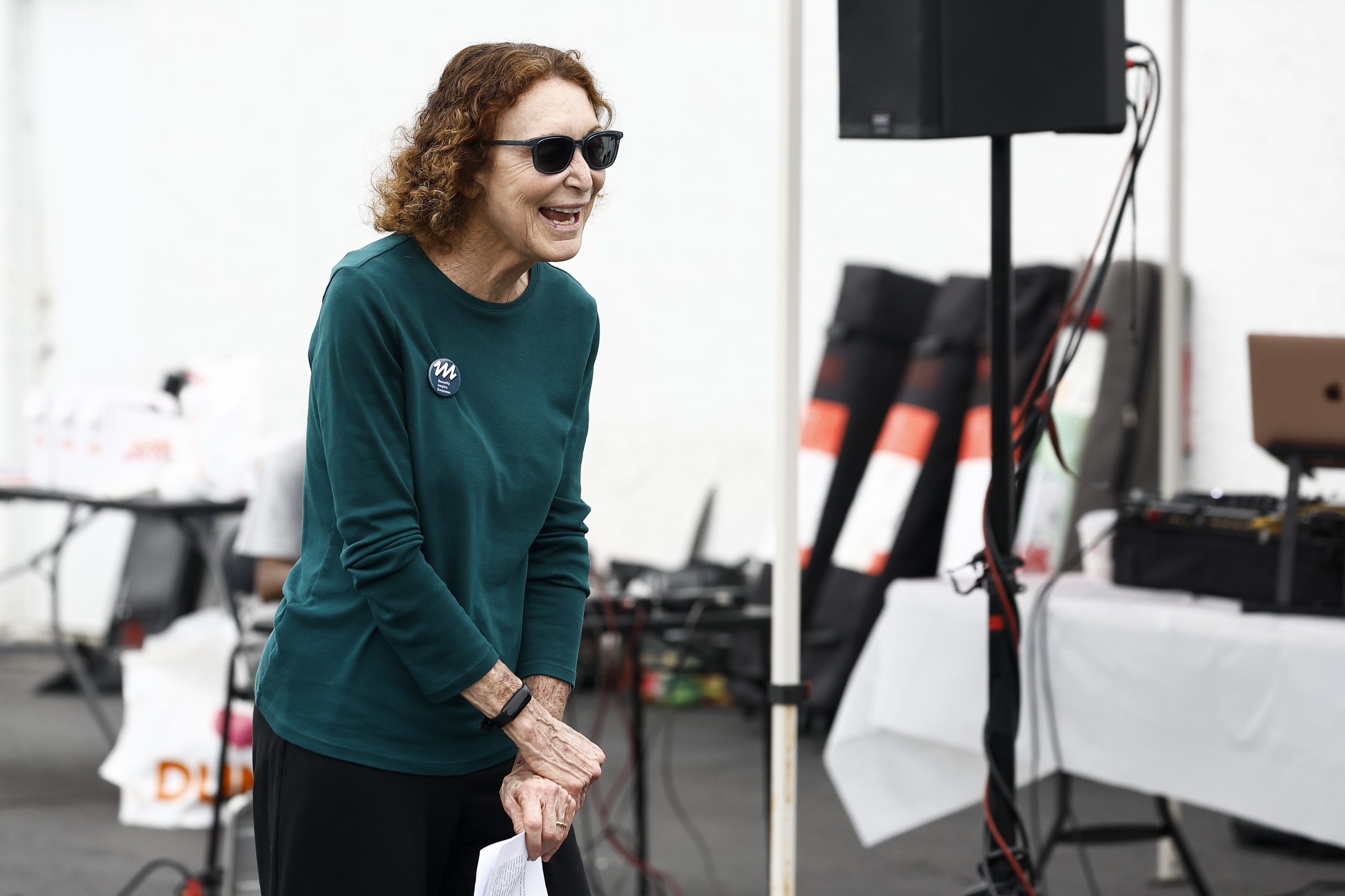
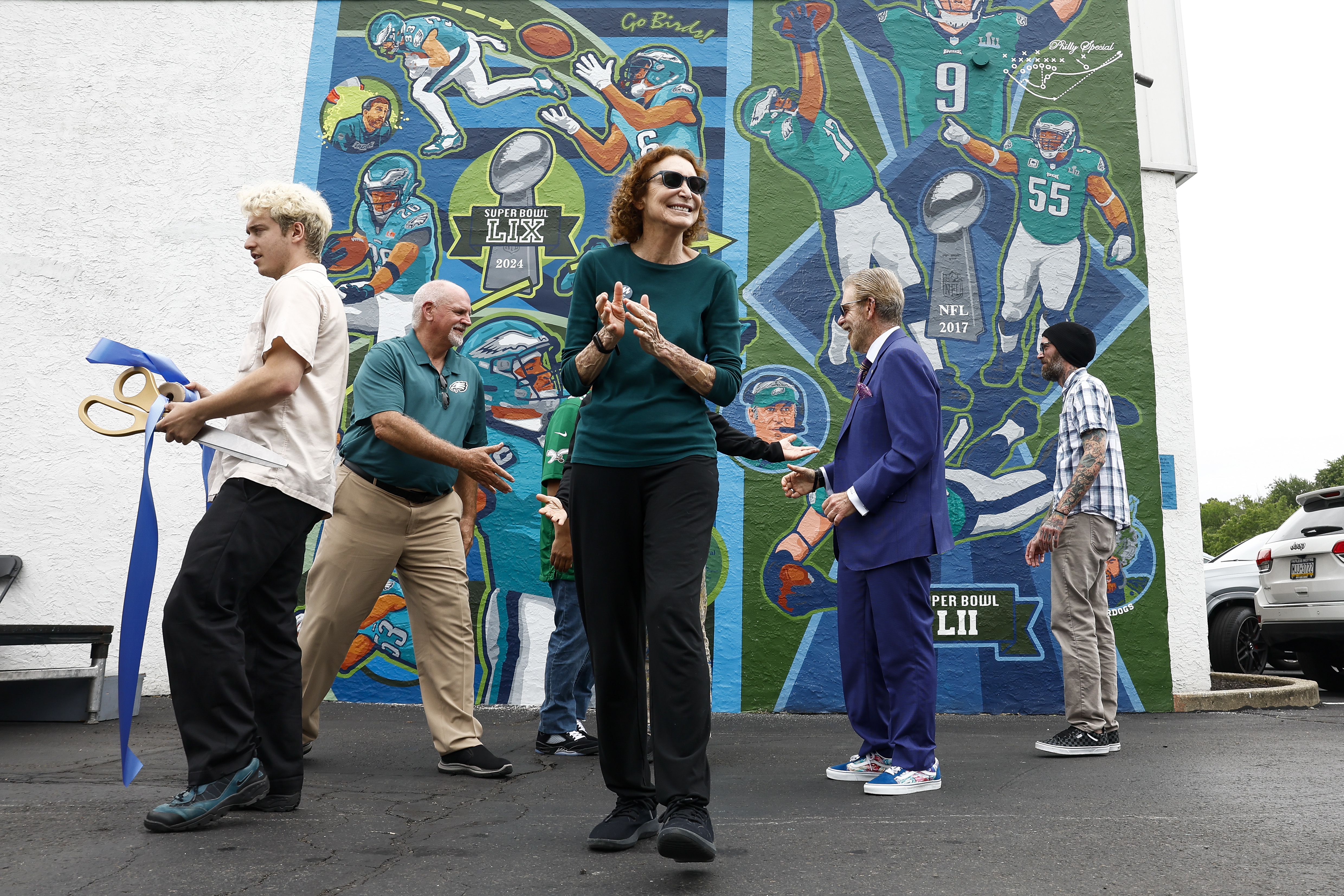
    Jane Golden, founder and executive director of Mural Arts Philadelphia, takes the stage during the dedication of the Super Bowl LIX mural at Spike’s Trophies on June 17, 2025 in Philadelphia.Monica Herndon / Staff Photographer

    Golden, 73, said last week that she is not currently running for Council, but acknowledged she has thought about it for years.

    “It’s always something that is tempting to me, because I just love the city so much,” she said. “I feel honored that people even think of me.”

    Progressives eye Bass’ North Philly seat

    Philadelphia’s progressive activists this year see two key opportunities to expand the loosely organized left-leaning bloc on Council, which currently consists of four members. Winning additional seats could also grow their influence by enticing more moderate members to vote alongside them if they believe primary voters are moving left.

    Progressives have in the last year authored some of the most high-profile legislation to come out of Council, including one package of bills by Brooks and Councilmember Rue Landau meant to set limits on federal immigration enforcement in the city and another by O’Rourke that codified new rights for renters.

    Leftists have notched high-profile wins in Democratic primaries across the country this year, including in Philadelphia, where democratic socialist State Rep. Chris Rabb (D., Philadelphia) bested more moderate candidates for a seat in Congress representing about half of the city. The district is one of the most Democratic in the nation.

    Next on progressives’ wish list: ousting Bass and Squilla, two more centrist Democrats who have both been on Council since 2012.

    In Bass’ 8th District, longtime labor organizer Seth Anderson-Oberman may challenge Bass for a second time after losing to her in 2023 by just 423 votes.

    Anderson-Oberman, 55, the executive director of the progressive group Reclaim Philadelphia, said last week that he is “leaning” toward taking another swing.

    “We’re in a moment in this country and this city where people have had enough,” he said. “People are looking for new answers. … Cindy represents the old way of doing things.”

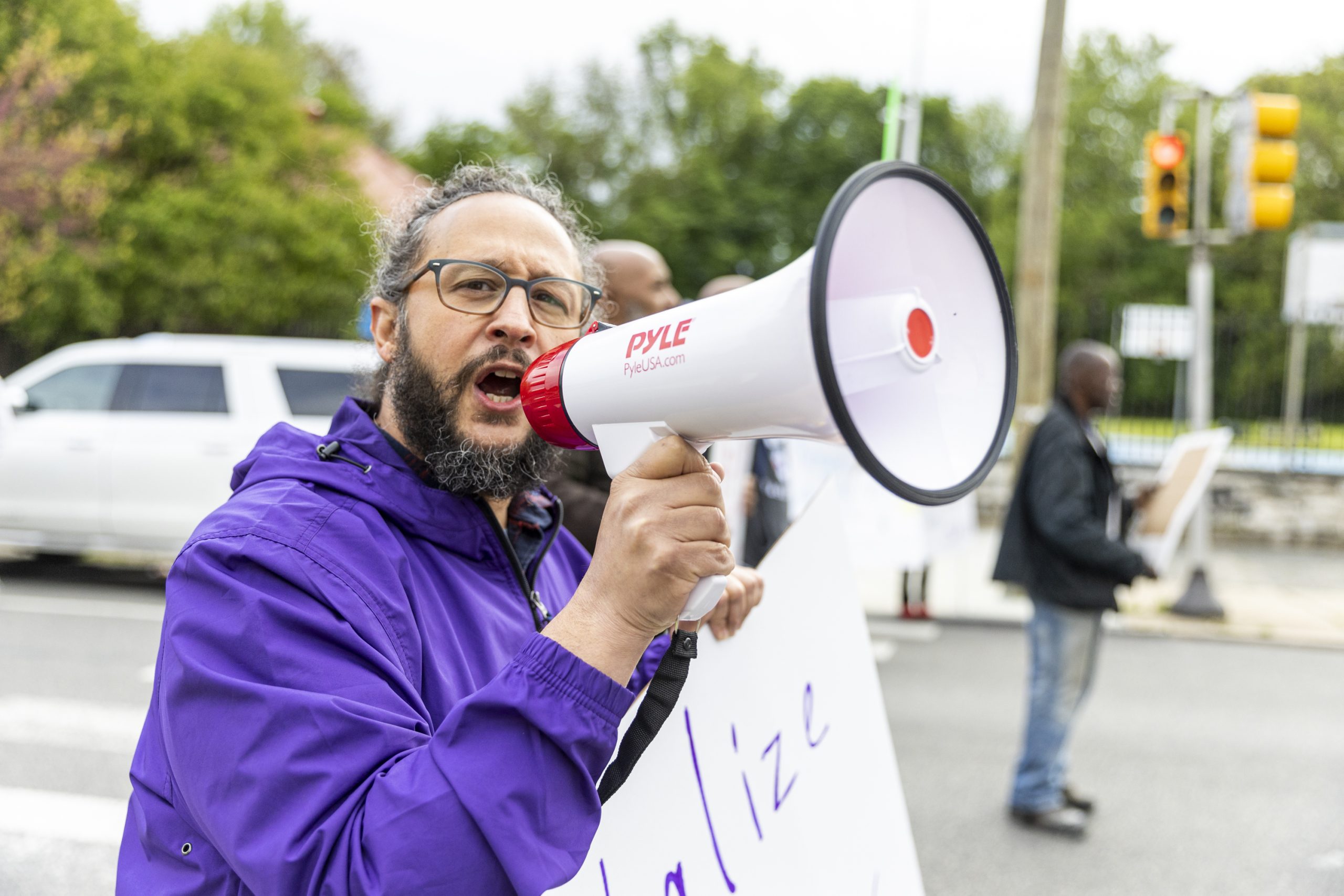
    Union organizer Seth Anderson-Oberman, running for 8th District City Council, joins in a small rally with community and Happy Hollow Advisory Board members along Wayne Avenue at Happy Hollow Playground in Philadelphia on April 2, 2023.Tyger Williams / Staff Photographer

    Another Council run by Anderson-Oberman may test how far progressive momentum can go in Philadelphia. He was a member of the Communist Party USA in his 20s, and has said he is proud of that experience.

    Bass, 58, said she is ready for the race no matter who her opponent is.

    In June, she survived a contentious fight for another four-year term as Democratic leader of Mount Airy’s 22nd Ward. She was criticized for her handling of the process, and the party ordered a redo of the election.

    She and her progressive opponent, Octavius Price, tied, then struck a power-sharing agreement. Through it all, Bass said, longtime residents stuck by her — and she is confident voters will do the same next year.

    “My voters are people who are based in this community, committed to this community, intend to stay in the communities that they are in,” she said.

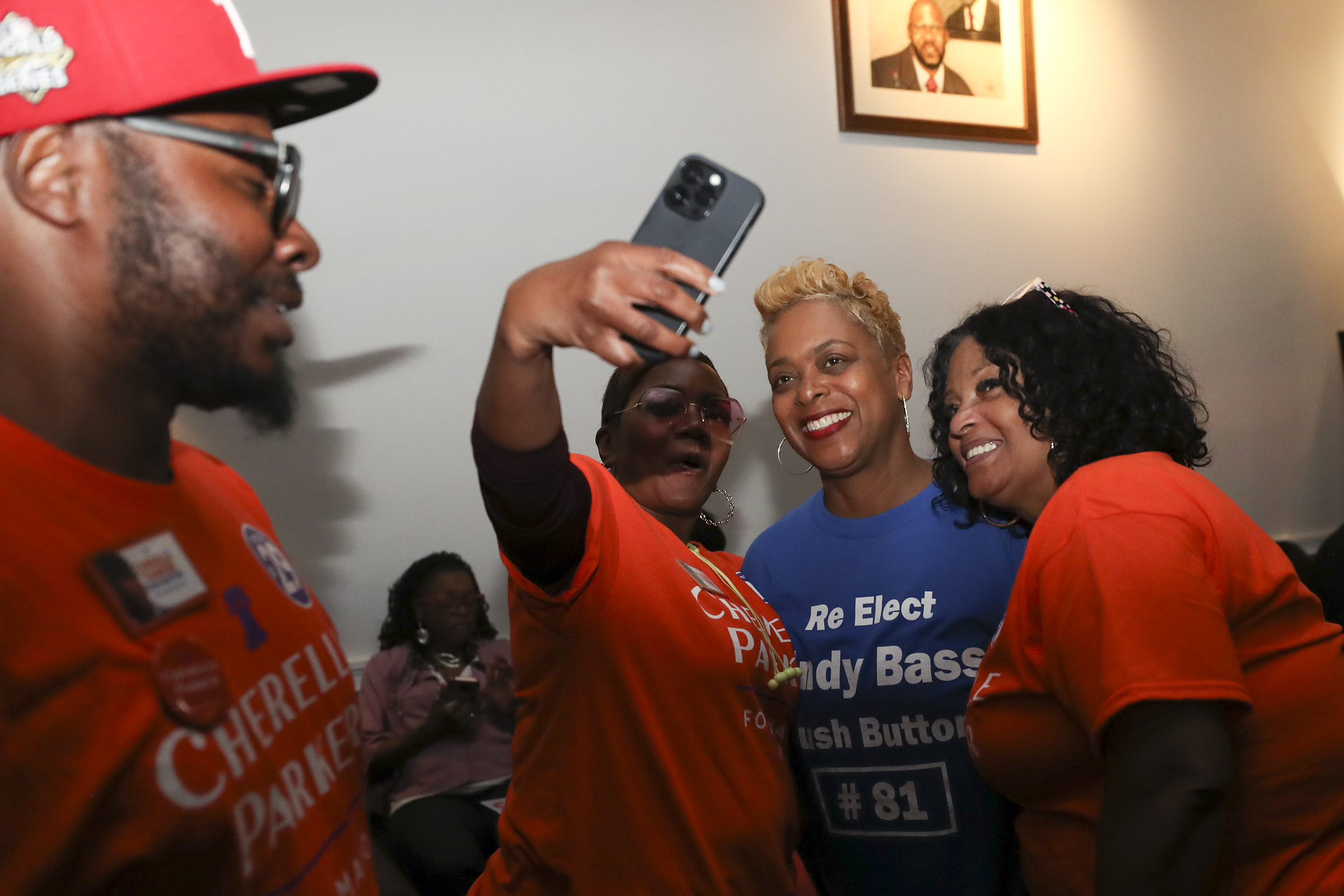
    City Councilmember Cindy Bass (center) attends the watch party for Democratic candidate for mayor Cherelle L. Parker at Laborers 332 in Philadelphia on May 16, 2023.Heather Khalifa / Staff Photographer

    Jeff Jones, a community leader and social justice advocate from Germantown, has also said he intends to run in the 8th District.

    “I want to bring that new vision and a new voice to the 8th District, where residents and children and families can know that their voice matters, their concerns will be heard, and their challenges will be met,” said Jones, 61, a first-time political candidate.

    Squilla could see a lefty challenger

    Leftists are also eying Squilla’s seat, which represents the area along the Delaware River from Pennsport to Kensington. Since Squilla took office in 2012, the district has transformed from a bastion of working-class white voters to one of the most progressive swaths of the city.

    Squilla, 63, who has strong labor ties and is one of the most pro-development district Council members, said being a centrist has likely put a target on his back in the 2027 election.

    Another contributing factor may be Squilla’s support for controversial legislation in 2024 to approve the 76ers’ since-abandoned plan to build a new arena in Center City. The project, which would have been in Squilla’s 1st District, was opposed by advocates for Chinatown, which the arena would have bordered.

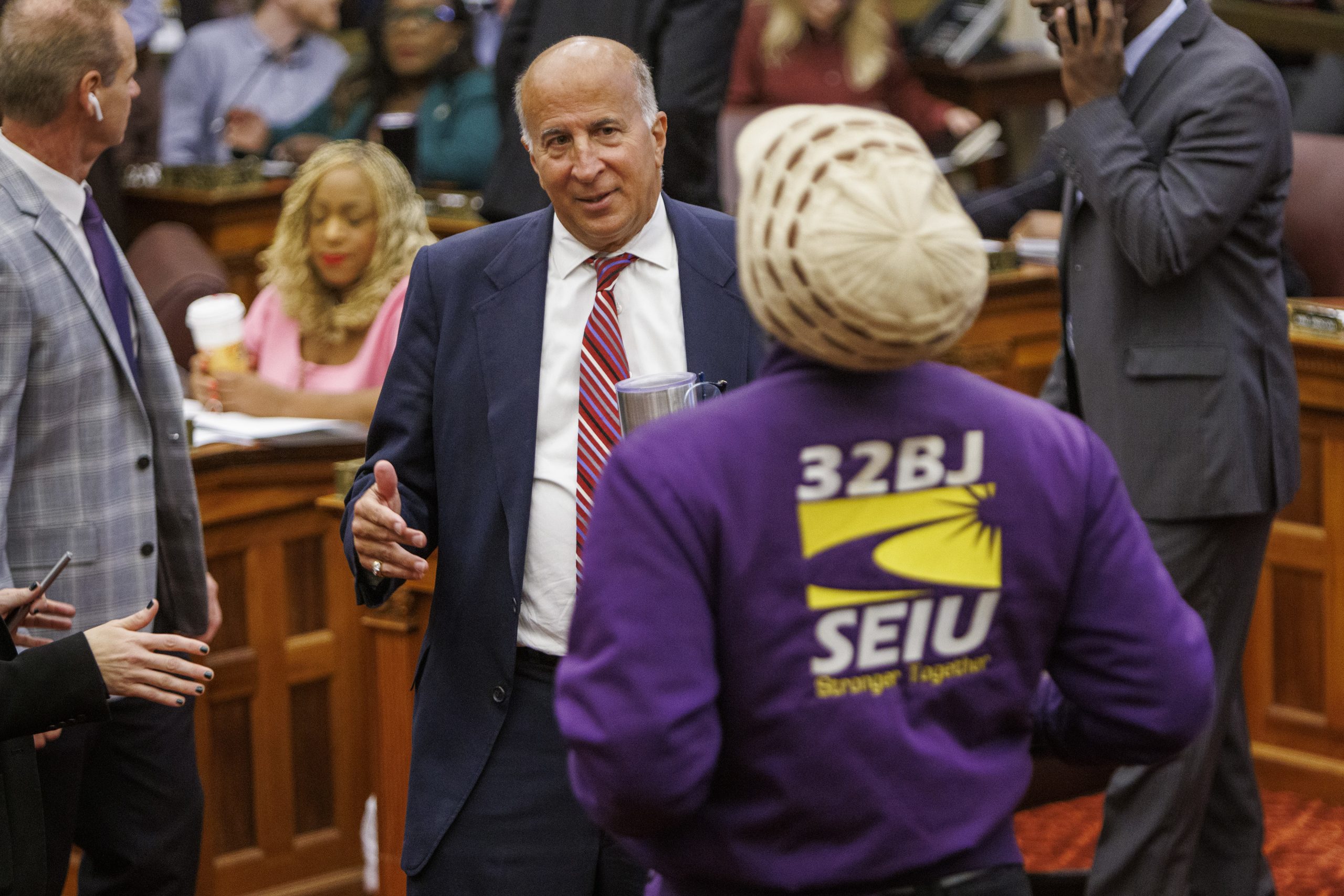
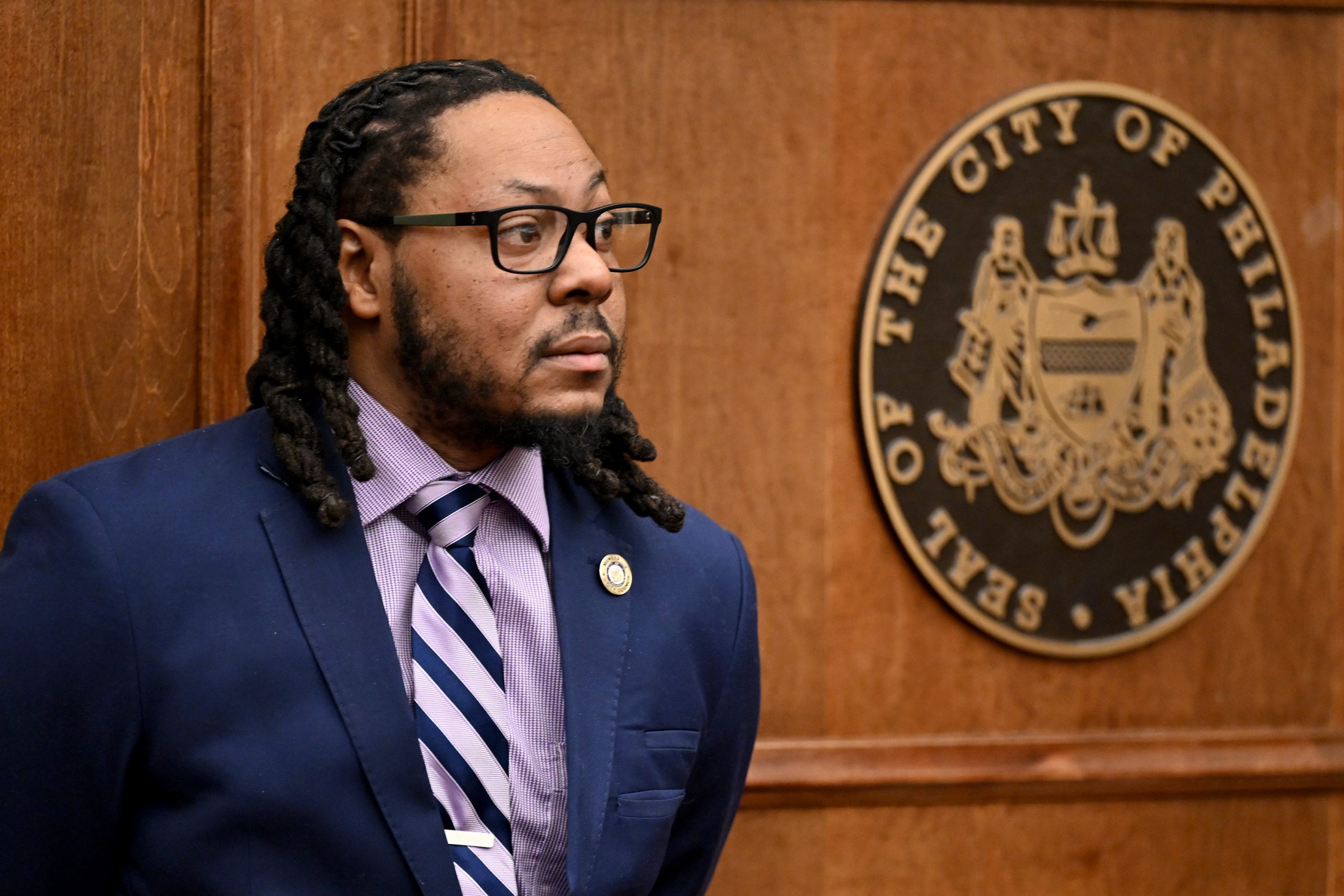
    Councilmember Mark Squilla arrives in Council chambers on Nov. 12, 2024, before the start of a public hearing on a proposed Sixers arena.Alejandro A. Alvarez / Staff Photographer

    Despite the fierce objections, Council approved the project with Mayor Cherelle L. Parker’s support in December 2024. Weeks later, the basketball team announced it was abandoning its Center City plan and would instead build its next arena in South Philly.

    Squilla said he is prepared to defend his actions, noting that he worked to ensure any arena deal would benefit his district and that many of those promises are moving forward despite the 76ers withdrawing their proposal.

    “The goal as an elected official, and also as a leader, is not always to make the popular decision,” he said. “The goal is to have a process to make the decision that would be best for the people around it.”

    One prominent opponent of the Center City arena plan was Will Gross, the owner of Ox Coffee in Queen Village and a progressive who is the Democratic leader of the 2nd Ward. He is seen by political insiders and progressive organizations as the most likely candidate to take on Squilla.

    Gross declined to comment.

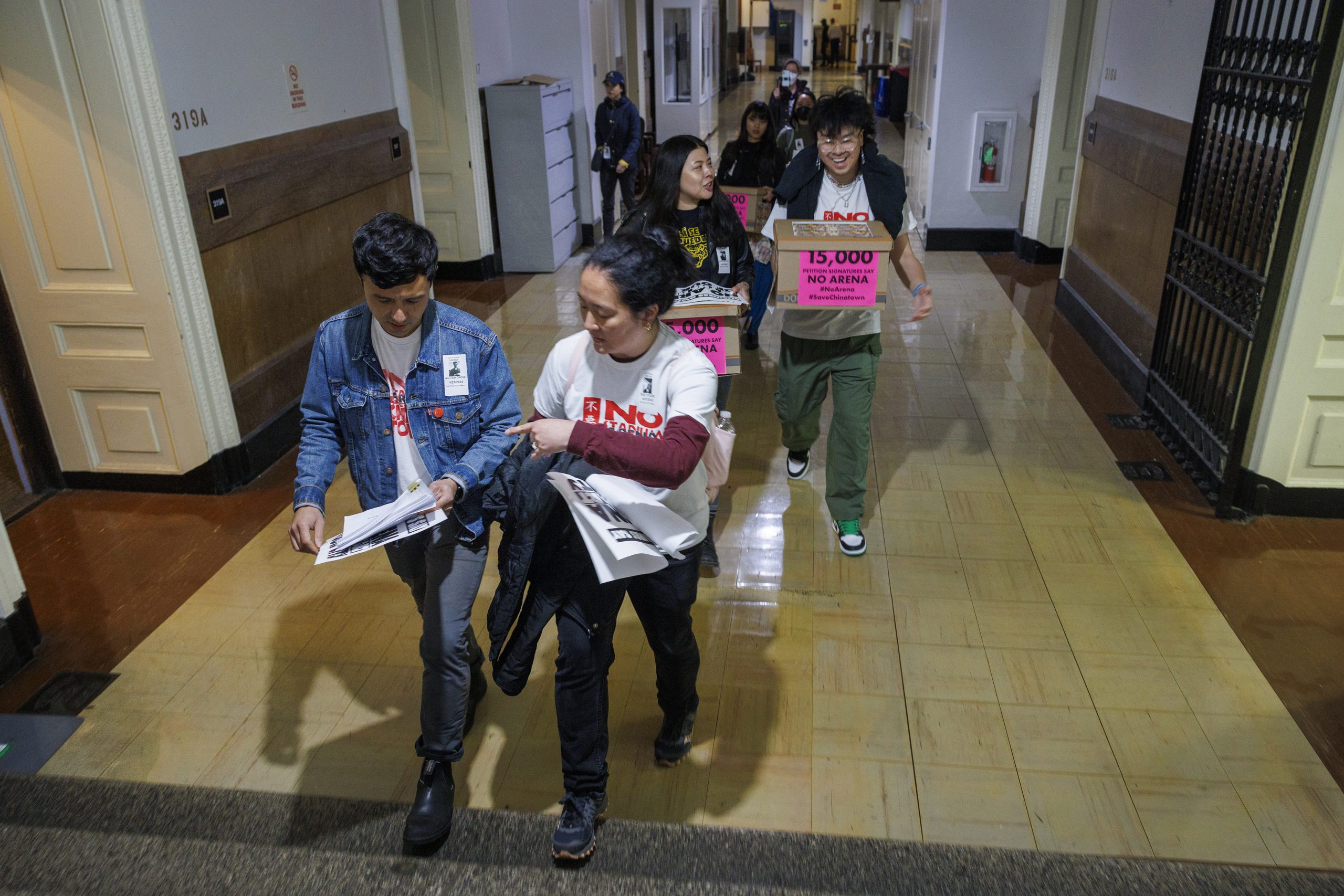
    In this 2023 file photo, Will Gross and Kay Yoon, of the No Arena in Chinatown group, deliver petitions to Councilmember Mark Squilla. Alejandro A. Alvarez / Staff Photographer

    A progressive challenger may also emerge in the North Philly and Kensington-based 7th District, which is represented by Councilmember Quetcy Lozada.

    In 2023, Lozada, Council’s only Latina member, won decisively over social worker Andres Celin, who argued for a more social services-driven response to address longstanding issues in the beleaguered district.

    Some insiders have speculated that Celin may run again. He declined to comment.

    Lozada, 55, said she “can’t focus” on potential challengers.

    “If I spend my time listening to the buzz about who is running,” she said, “we won’t get any work done.”

    A battle takes shape in the 5th District

    In the 5th District, a seat that represents parts of North Philadelphia and Center City, a handful of Democratic challengers are lining up to take on Young, 40, who is seen as one of Council’s most vulnerable members.

    That is in part because of the unusual way in which he was elected in 2023. He ended up being the only Democrat on the ballot after several others, including party officials’ preferred candidates, were removed amid legal challenges.

    Councilmember Jeffery Young Jr. in chambers as City Council meets Dec. 11, 2025.Tom Gralish / Staff Photographer

    One of those candidates was Curtis Wilkerson, who was chief of staff to former City Council President Darrell L. Clarke. Two sources, who spoke on condition of anonymity because they were not authorized to discuss the campaign dynamics, said Wilkerson is considering running for the seat again next year. He did not respond to a request for comment.

    Also likely to run is Jalon Alexander, an attorney who unsuccessfully ran for an at-large seat on Council in 2023. Alexander, 33, formed an exploratory committee last year and is expected to formally declare his candidacy later this summer.

    Two others are also considering running.

    Dustin Dove, a lawyer and the president of the Fairmount Civic Association, said neighbors and community leaders have encouraged him to get in the Council race, and he is “taking the possibility of running seriously.”

    “I think our city government should work for everyone by keeping our neighborhoods safe and streets walkable, making housing affordable, and ensuring fairness and access in public services,” Dove, 38, said last week.

    Jalon Alexander, an attorney and community advocate, speaks to attendees at a meeting about potential SEPTA budget cuts hosted at Garden of Prayer Church in Strawberry Mansion on June 9, 2025.Erin Blewett / For The Inquirer

    And Max Tuttleman, 37, a philanthropist who unsuccessfully ran for an at-large seat in 2023, said he “cares deeply about the 5th District and would never close the door to serving Philadelphia.”

    He added that “Center City and the neighborhoods around it should be growing faster than they are.”

    That was a subtle dig at Young, who critics say has been too hostile to development in his district by opposing some residential projects.

    Young said in an interview last week that he intends to run for reelection, but that challengers are not his focus.

    “I‘m focused on serving my constituency, serving my community,” he said. “The work that we’ve been doing will hopefully earn the support of the residents of the 5th District.”

    A smaller, but competitive, at-large field

    Over the last several election cycles, dozens of candidates lined up to run for at-large seats during a time of immense turnover in Council.

    But with seven incumbents all looking toward reelection in 2027, there may be fewer challengers who line up to take them on. So far, only Golden and a handful of others have emerged as possible contenders.

    David Alexander Jenkins, a cultural strategist known for delivering impassioned speeches during Council’s public comment section, said he is considering a run, encouraged by fellow community members.

    “When the community that is around you constantly pushes you to intercede on their behalf, then it’s because they have trusted you to do what it is that you do best,” Jenkins, 39, said. “I think it would be incredibly unwise to ignore that.”

    And Jude Husein, 28, a Palestinian-born community activist who was raised in North Philly, has already launched her campaign. If her bid is successful, Husein, a former staffer for State Sen. Art Haywood, would be the first member of Gen Z on Council.

    In this 2023 file photo, Jude Husein, of North Philadelphia, speaks at a rally for a Day of Solidarity event at the Art Museum steps.Tyger Williams / Staff Photographer

    Leaders of progressive organizations said they are closely watching her candidacy. However, Husein is not exactly running as a leftist. She said that her policy positions are varied and that she will seek endorsements from any institution that is “values-aligned.”

    “I’m running because I think government should work for the people who pay for it, and should make neighborhoods affordable and safer,” she said.

    Also in the running for Council at-large seats are Billy McCann, 46, a former teacher who lives in Port Richmond, and Isaiah T. Martin, 26, who lives in West Philly and leads a community development nonprofit. The pair, who both said they are progressive, have established something of a slate with Jones, who is challenging Bass in the 8th District.

    They said they would prioritize public education, affordability, housing assistance, and government accountability, and they argued that establishment Democrats are failing to connect with voters.

    “A new day is coming,” said Martin, another member of Gen Z who would make history on Council if elected. “It’s time we get people who are going to do the actual work and not just sit here and talk about it.”

  • The best things we ate this week

    The best things we ate this week

    Hand-rolled ceppe at Le Virtú

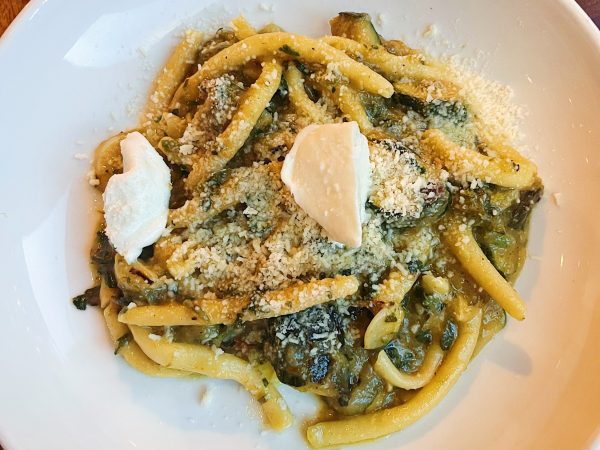
    There’s something special about a thick, hand-rolled noodle. As part of its summer menu, Le Virtù’s ceppe — a chewy Abruzzese pasta shape that resembles a short and stout bucatini noodle — are made by hand and tossed in a bright squash blossom pesto. I later learned that ceppe gets its name from the wooden sticks or rods they mimic, a nice bit of pasta trivia I will stow away for quizzo. The hearty plate is topped with zucchini ragu, with a generous amount of the plant mixed throughout the dish, and mozzarella di bufala. It’s best enjoyed with a glass of wine on the restaurant’s beloved patio. Le Virtú, 1927 Passyunk Ave., 215-271-5626, levirtu.com

    — Emily Bloch

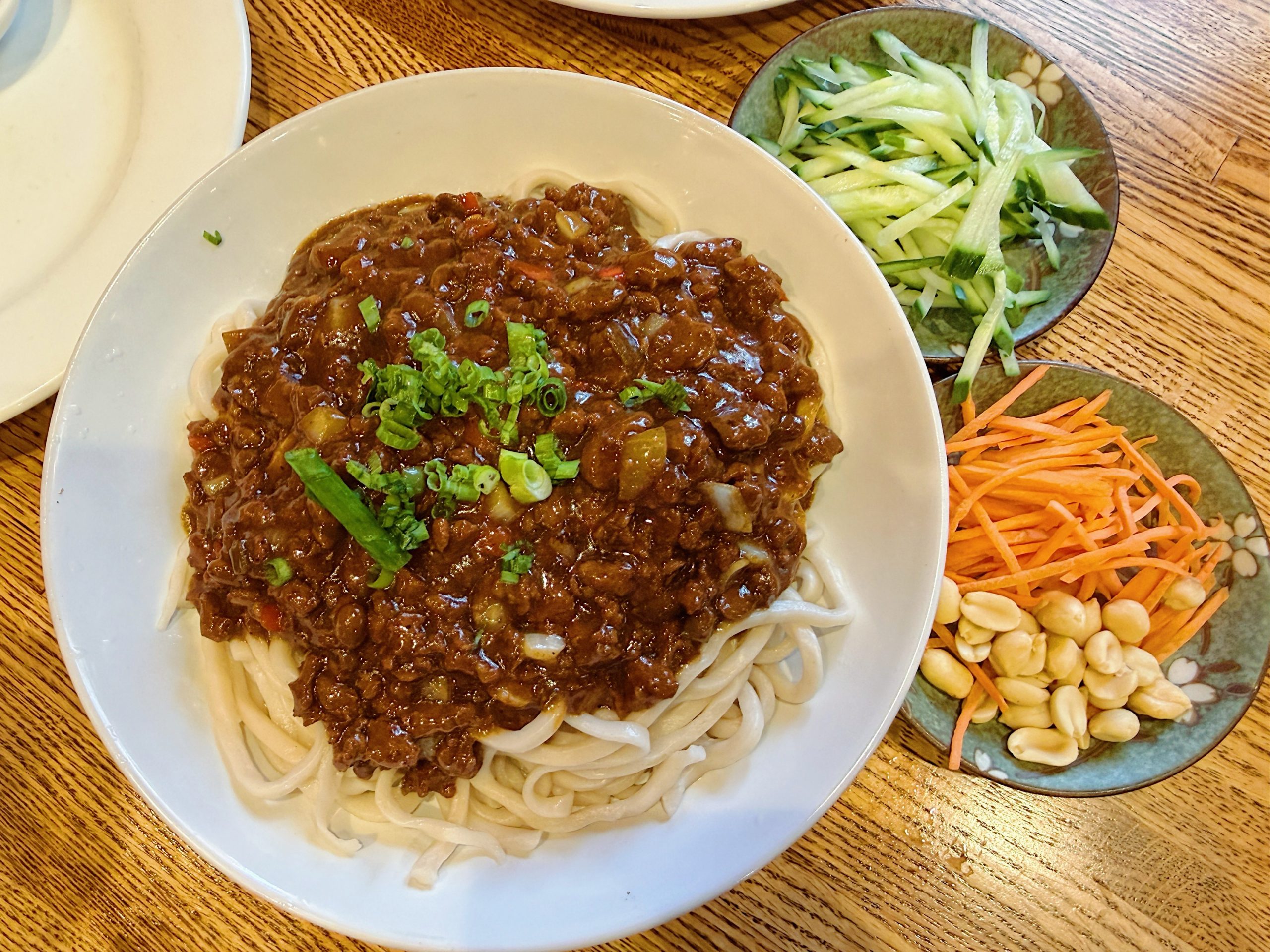
    Zhajiang Mian at Opera House, 112 N. Ninth St.Kiki Aranita / Staff

    Zhajiang Mian at Opera House

    It has taken me far too long to get to Opera House, which opened about a year ago in the former Rangoon space. Rangoon had been my favorite restaurant in Philly for years, and I was admittedly bitter about them no longer occupying that storefront on Ninth Street. Now, I’m very pleased to report that my bitterness has now been assuaged.

    Opera House is bright, beautiful, sparkling clean, a visual ode to Chinese opera that specializes in Northern Chinese food. They do have some Cantonese items on the menu (that are just fine), but the real star of the show is their $14.95 zhajiang mian. Saucy, with lean ground pork and lots of slow-cooked onions, these noodles are a true celebration of handmade textures. They’re intentionally a little wonky from being hand-stretched — some parts are thinner than others — so they sop up the super umami-rich fermented soy sauce in interesting ways. Served with sides of cucumber and carrot matchsticks and roasted peanuts, it’s likely the best version of the dish I’ve had in Chinatown, and such a beautiful play on varying textures and temperatures. Opera House, 112 N. Ninth St., 267-639-2376, operahousephilly.com

    — Kiki Aranita

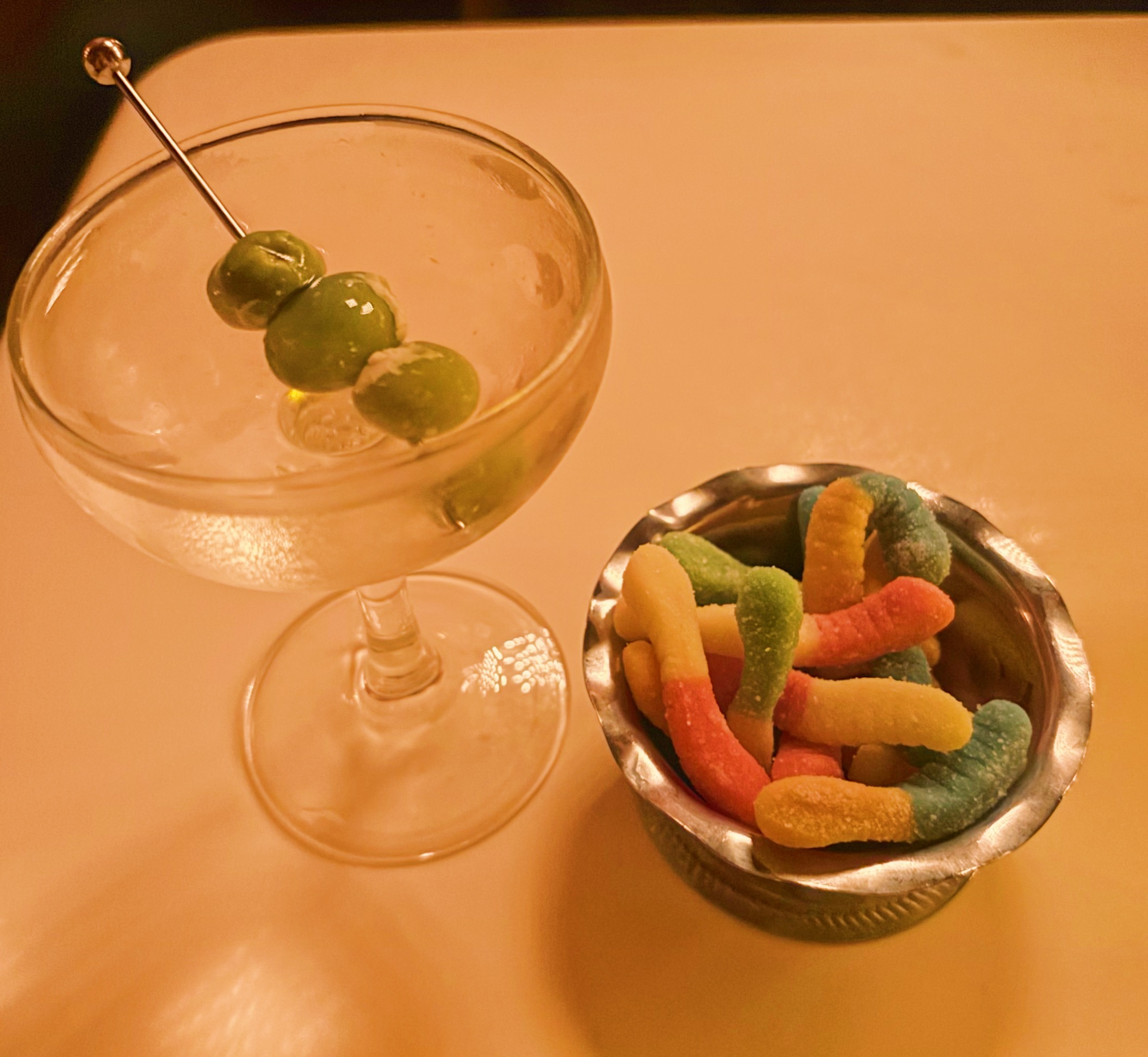
    The Girl Dinner cocktail, a clarified gin martini with a sidecar of gummy worms, at Angeloni’s Club Madrid in Atlantic City, N.J.Margaret Eby / Staff

    Girl Dinner at Angeloni’s Club Madrid

    Atlantic City is a weird and magical place, particularly for those of us who tend to visit in 24-hour increments. I made such a journey last weekend, and the highlight was finally getting to try Angeloni’s Club Madrid, the retro-styled Italian spot that opened in 2024 from the owner’s of the beloved Tony’s Baltimore Grill. Angeloni’s was everything I hoped it would be — part cozy dining experience, part lounge party. Case in point: a DJ somehow seamlessly incorporated Norah Jones into a dance-y set.

    The menu included one of the best versions of cacio e pepe I’ve had in a long time. But the star of the show is the cocktail menu, which has interesting interpretations of classic cocktails, executed with both fidelity to the drink and total whimsy. My favorite was the Girl Dinner, a perfect dirty gin martini served with a blue-cheese stuffed olive and a sidecar of gummy worms. It shouldn’t work — blue cheese and gummy worms? — but it does. It has that kind of slightly off-kilter energy that a really fun party does, where things are always threatening to fly off the hinges but somehow stay just contained enough for a memorably good time. Angeloni’s Club Madrid, 2400 Arctic Ave., Atlantic City, N.J., clubmadridac.com

    — Margaret Eby

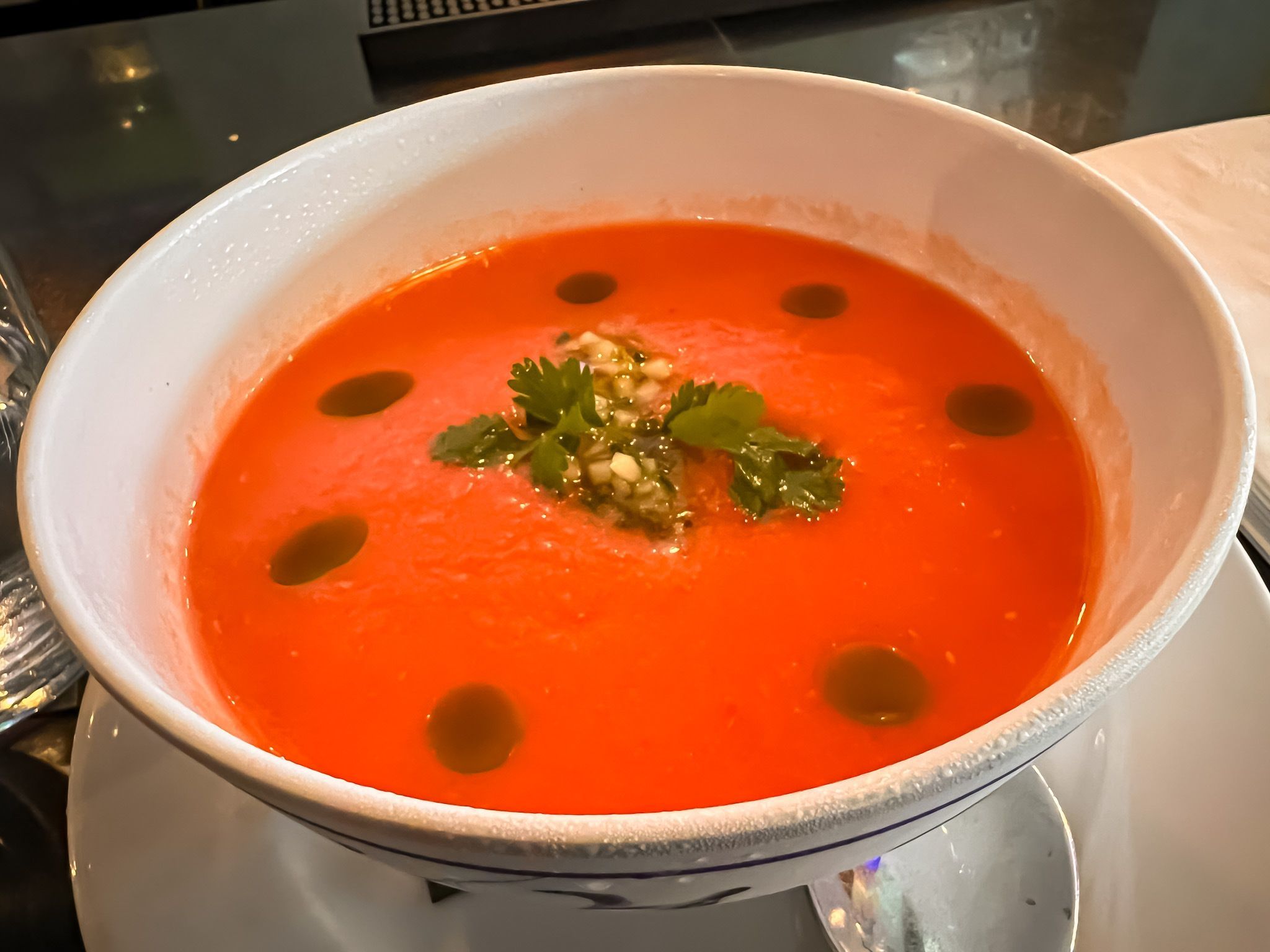
    Watermelon gazpacho at Cantina Feliz, Ambler.Michael Klein / Staff

    Watermelon gazpacho at Cantina Feliz

    I always look to July 4 as the unofficial start of watermelon season. This year, that feels especially fitting: Forecasters are calling for one of the hottest Independence Days Philadelphia has seen in nearly a quarter-century, making cold watermelon all the more appealing. That spirit comes through in this watermelon gazpacho from Cantina Feliz in Ambler, which leans savory rather than sweet. Cucumber amplifies the freshness, while finely diced red onion and chives add bite without overwhelming the fruit. A drizzle of verdant herb oil lends richness, and the accompanying shot of sherry gives it a nutty, tangy depth. It’s a refreshing summer starter that becomes more layered with every spoonful. Cantina Feliz, 111 E. Butler Ave., Ambler, 215-646-1320, cantinafeliz.com

    — Michael Klein

  • Would you try this cheesesteak-flavored olive oil? We did.

    Would you try this cheesesteak-flavored olive oil? We did.

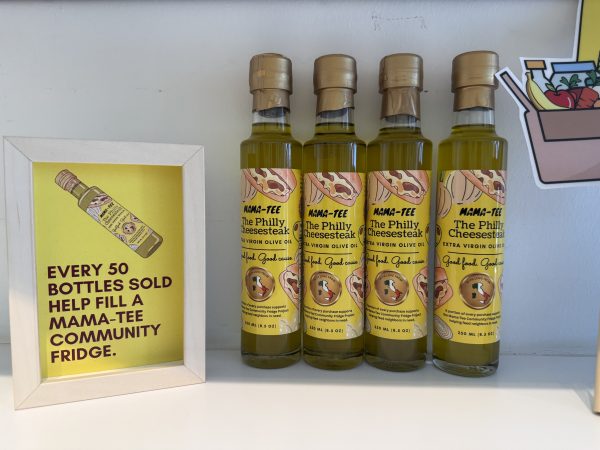
    “It tastes like oil from a real cheesesteak wrapper,” proclaims the slogan of Mama-Tee’s Philly cheesesteak-flavored extra virgin olive oil.

    Mama-Tees are community fridges, notable for their bright yellow paint jobs, that are scattered around Philadelphia. The cheesesteak oil ($19) is part of a fundraiser to combat food insecurity locally, along with three other flavored oils: Basil Bliss, Truffle Love, and Pepper Pleaser. Proceeds go to helping fill the fridges with food. So if the oil prompts cheesesteak-flavored burps, it would do so in the name of a noble cause.

    We at The Inquirer had to do a taste test.

    Is this merely a novelty or could it have legitimate culinary applications?

    The ingredients of the Philly cheesesteak-flavored oil intriguingly are only “extra virgin olive oil” and “onion flavor.” How could these two ingredients, neither of which involves cheese nor steak, encompass the nuanced experience of consuming an actual cheesesteak? The Inquirer sought to get to the bottom of these questions.

    The first round of cheesesteak experts was summoned.

    “It smells like a deli case,” said food editor Margaret Eby. “There is a cheesiness to it. It’s like that cheese oil that gets trapped in a charred, upturned pepperoni cup on your pizza.”

    “I think it should be called ‘hoagie oil,’” said food reporter Beatrice Forman.

    “It is like unwrapping a hoagie,” agreed critic Craig LaBan. “When you get the vinaigrette soaking through the wrapper. And it tastes like French’s fried onions, but burnt.”

    “I don’t know what it could be used for,” said food reporter Michael Klein.

    “It tastes like old fryer oil,” grimaced reporter Ryan Briggs. “It’s gravitating toward capturing that cheesesteak shop smell when they’re frying all the onions.”

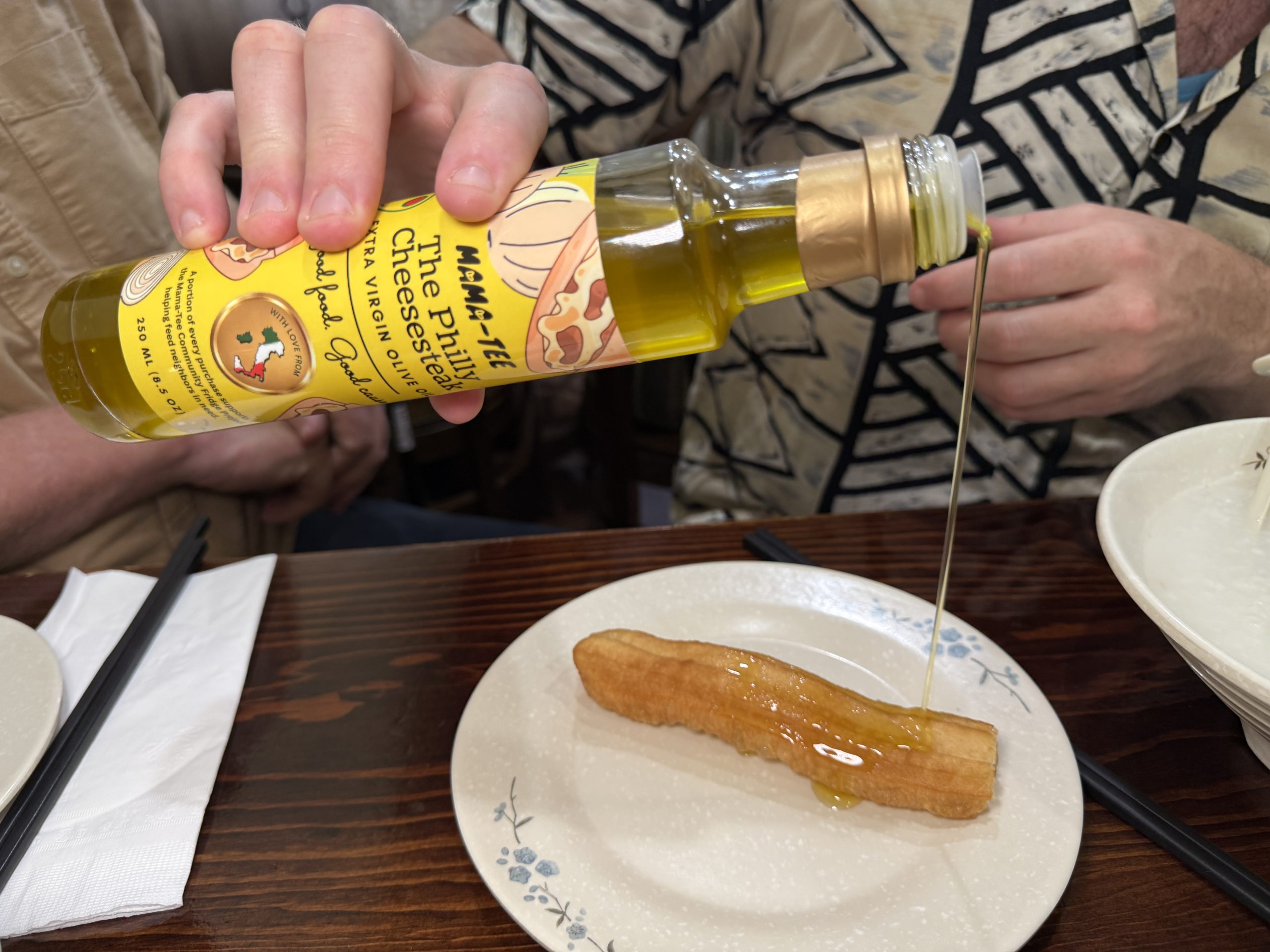
    Reporter Max Marin poured the oil over his youtiao, a savory Chinese cruller, while at lunch at Lau Kee in Chinatown. “It’s got a chemical taste that makes me think there’s a number in one of its ingredients.” But does it make the youtiao taste like a cheesesteak? “It does not.”

    Inquirer reporter Max Marin pours Mama-Tee’s Philly cheesesteak-flavored oil on his youtiao at Lau Kee.Kiki Aranita

    Various Philly chefs were more open-minded in the cheesesteak oil’s applications.

    “I think the flavor is great,” said Juan De Ocampo, sous chef at Fairmount’s Manong, as he poured the oil onto a pile of fried shrimp chips.

    “I kind of like the cheesesteak oil,” said dancerobot’s Justin Bacharach. “It’s pungent and although I don’t cook with olive oil, I would use it to add a little funk and fat to a dish, like to dress an antipasto with South Philly vibes like sharp provolone and soppressata, and in the Japanese canon, I think it would be fun drizzled on top of a gyudon (beef and onions over rice) where you’d normally use mayu (a Japanese scorched black garlic oil).”

    “It feels really heavy,” said Melissa Fernando, the chef behind long-running pop-up Sri’s Company. “In Sri Lankan food, we mostly use coconut oil to cook, but I suppose I’d use this to sauté onions and garlic.”

    That perceived “heaviness” is easily addressed, according to 637 Sushi Club’s Kevin Yanaga, no stranger to unusual pairings. “I just need a lemon or something acidic with it. I could then use it on a fluke crudo. It’s rough and funky on its own, but salt and acid would help.”
    After careful consideration of these diverse opinions, the Mama-Tee cheesesteak oil had only one test remaining to undergo: a side-by-side comparison between it and the oil from an actual cheesesteak wrapper.

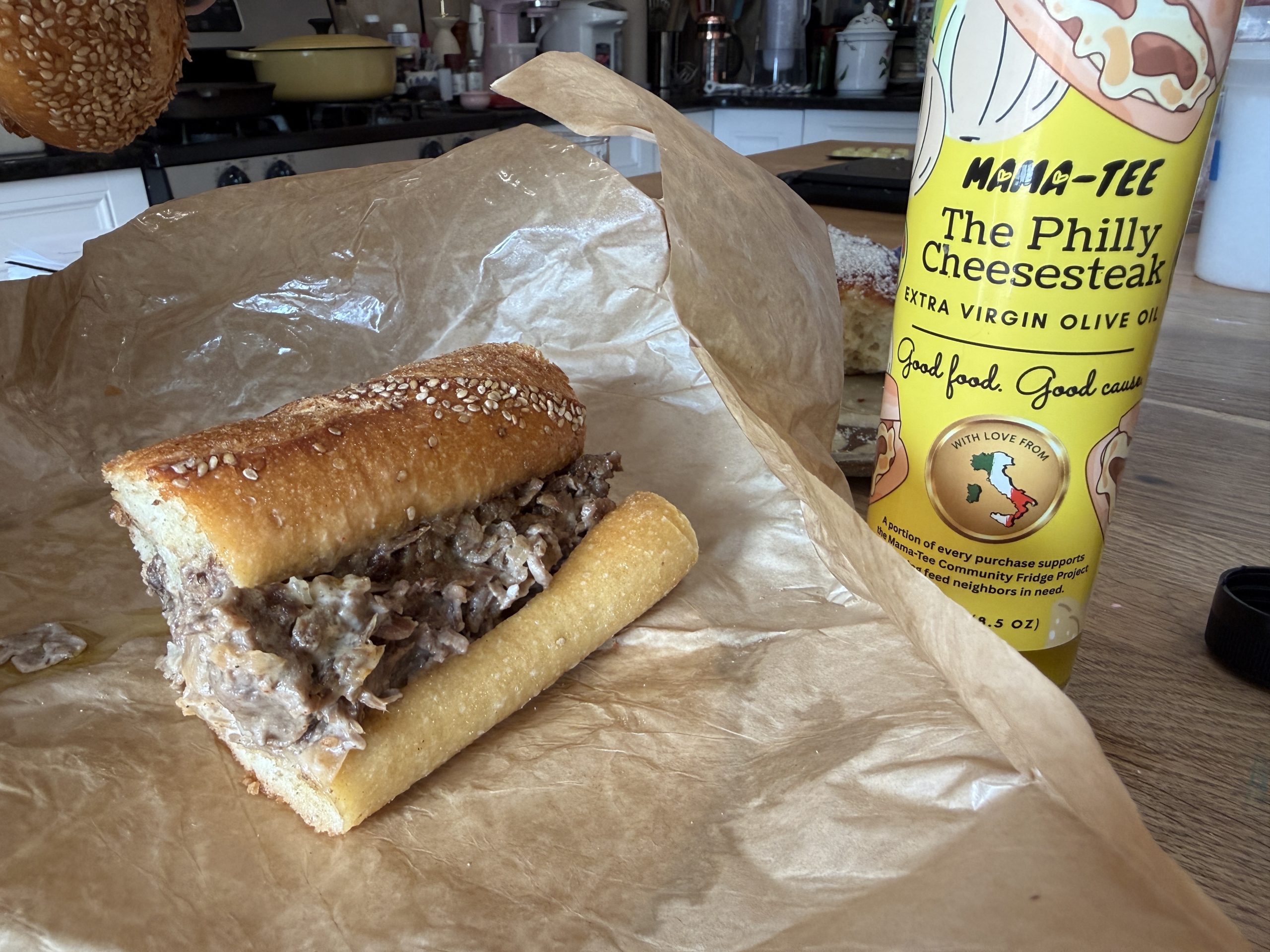
    A Del Rossi’s cheesesteak (wit onions, of course) was summoned. A wrapper was licked. A shot of cheesesteak oil was taken. The wrapper had the distinct advantage of beefiness. When applied directly to the cheesesteak, the oil oddly enhanced the cheesesteak’s flavor. And another thing the oil had in common with a real cheesesteak? Real cheesy, oniony burps after consumption.
    A Del Rossi’s cheesesteak and Mama-Tee’s cheesesteak oil, consumed in unison.Kiki Aranita

    Mama-Tee’s Philly cheesesteak oil ($19) can be purchased at Wegmans in King of Prussia, though more locations may be added soon.

  • How to have a perfect Philly day, according to Mural Arts founder Jane Golden

    How to have a perfect Philly day, according to Mural Arts founder Jane Golden

    For Jane Golden, founder and executive director of Mural Arts Philadelphia, city life is like a large quilt.

    The fabric of Philadelphia, she said, is pieced together by the people and communities that make up the region, and public art is the thread that best illuminates its beauty.

    Every time Golden steps outside her home in Spring Garden, she’s reminded of its impact and grandeur. “I pay attention to all the stories our city has to tell, and the way art can help us see each other differently,” she said.

    Jane Golden, Mural Arts Philadelphia, speaks at the Bells Across PA event in celebration of America’s 250th Birthday in Philadelphia, Pa., on Friday, Jan. 16, 2026.Tyger Williams / Staff Photographer

    Next month, Golden will be moving into less familiar terrain.

    After 30 years building Mural Arts into an international arts organization, the Fairmount resident is stepping down as executive director. The search for her successor is already underway.

    For now, Golden is focused on rolling out Mural Arts’ Semiquincentennial plans, and is still carving out time to hunt for new walls in need of a makeover.

    “I can’t help myself,” she joked.

    In a perfect Philly day, Golden visits iconic murals, grabs dinner in Chinatown, and checks out new exhibitions sprawled throughout the city.

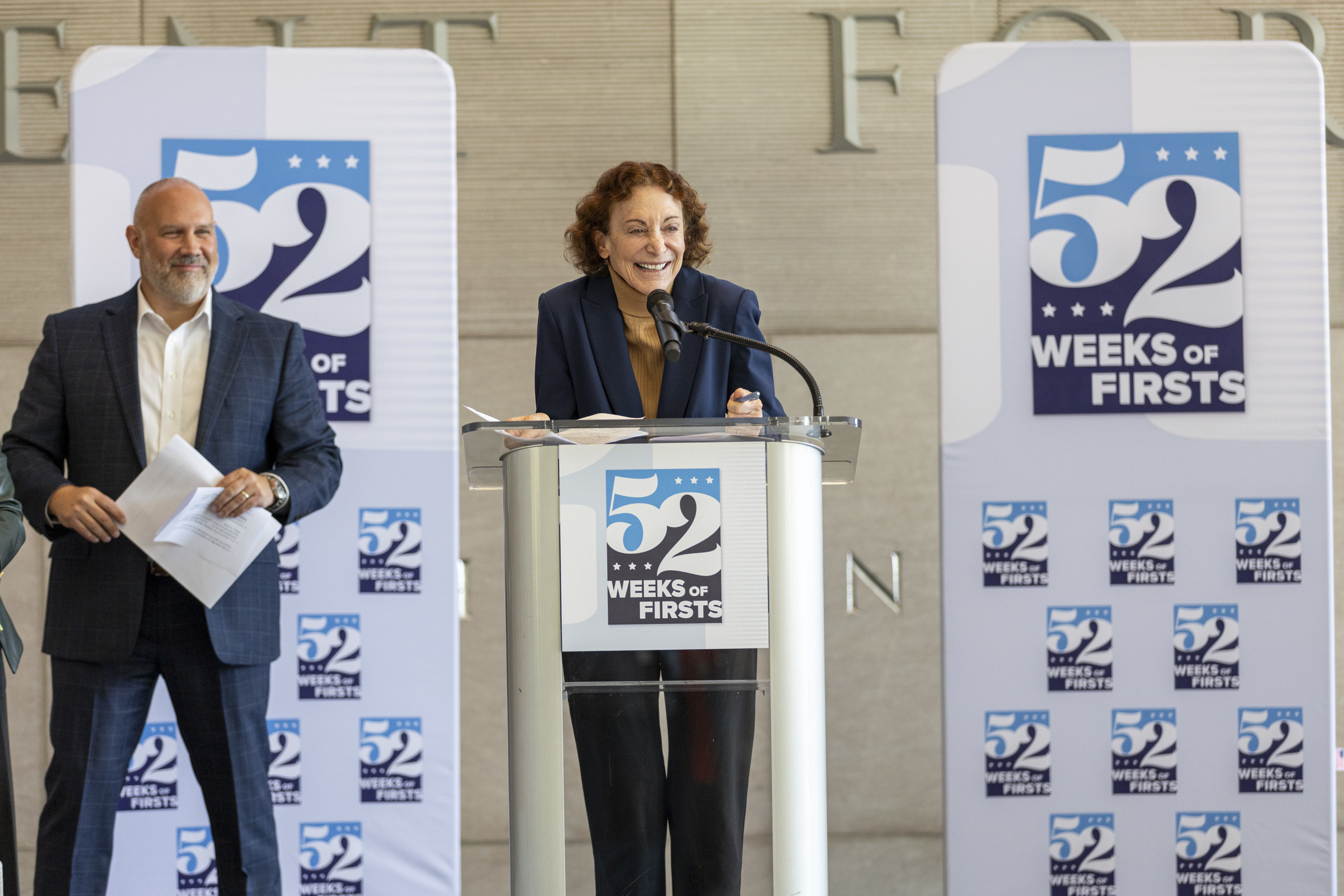
    Jane Golden, Executive Director for Mural Arts Philadelphia, speaks at the announcement for the 52 Weeks of Firsts at the National Constitution Center in Philadelphia, on Thursday, Oct. 23, 2025.Tyger Williams / Staff Photographer

    6 a.m.

    I’m always an early riser, so I wake up at 5 a.m. and walk my dog, Cleo.

    Sometimes I sleep until 7 a.m., but that’s a luxury. My cat Bella is one of the reasons I get up so early. She will take her paw, and go up and down on the blinds in my bedroom to get me up, or purr really loudly by my head. That’s better than an alarm.

    8 a.m.

    I walk from my place to the Philadelphia Museum of Art. I like to push myself, so I walk up the Rocky Steps and around the museum because I think it’s really pretty. Then I come back down by the Rodin Museum, and then we go to Twisted Grounds for coffee and a pastry because I have a sweet tooth.

    If me and my husband Tony are really feeling energetic, we walk up to Lemon Hill.

    10 a.m.

    Tony and I go to Bartram’s Garden and walk around. I go to where FloatLab is at 56th Street, and if anybody is standing around, I tell them it’s there. And if we are energized, we will kayak. I’m always a little bit like the caboose, but he’s a good kayaker.

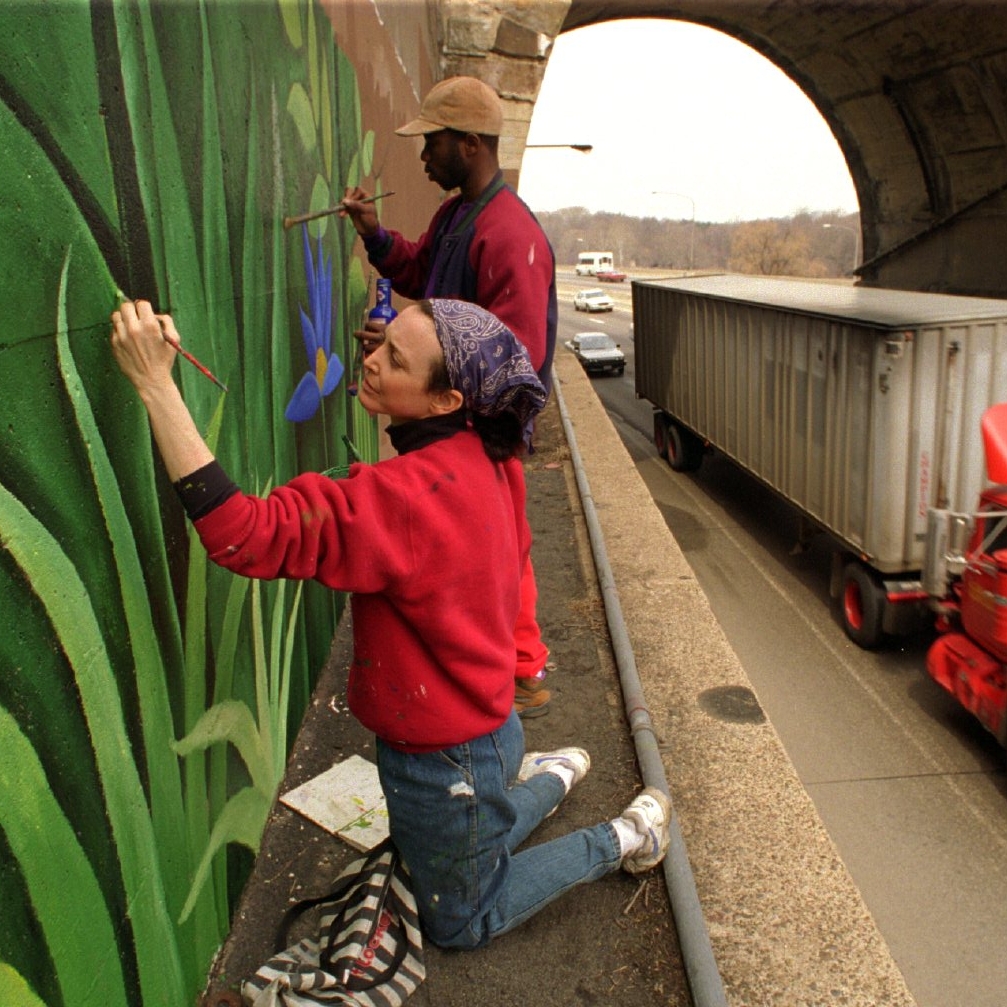
    Jane Golden, artistic director of the Anti-Graffiti Network, works on a four-story mural with the help of Haisonn Shadding high above the Schuylkill Expressway near the zoo exit. Photo from March 25, 1994Andrea Mihalik

    Noon

    For lunch, I go to Frieda in Old City. I like Frieda because there are artists’ events there, and there’s always really interesting art on display. It’s good food, but also a delightful environment.

    1:30 p.m.

    Then I walk through Old City because wherever I am, I always like to check out great walls, murals, or murals in process.

    There’s a new mural going up right next to Elfreth’s Alley by an artist named Sean Martorana. And I can’t help but visit Paradigm Gallery + Studio. I love the artists they show like Nazeer Sabree, Eustace Mamba, and there was even a Cornbread exhibition.

    3 p.m.

    At around 3 p.m., I’m going to Fishtown. There’s a new mural I have to see by Miriam Singer on the side of Mural City Cellars. They are great partners of Mural Arts. Then I’m going to walk over to 25 Oxford St. to see the new Matthew Henning mural because that’s fantastic. It’s joyful and captures the spirit of Fishtown.

    Then I go to Cake Life Bake Shop. It has delicious sweets, and then I’m going to look at the mural there that’s a tribute to the trans community called We Are Universal by Kah Yangni.

    3:30 p.m.

    Next, I’m going back to PMA to see Paul Farber’s “Rising Up: Rocky and the Making of Monuments” exhibition. I will zip through it because I’ve seen it a few times, but I want to see it a few more times before it goes away.

    Then I’ll go to the painting created by the artists at the State Correctional Institution – Phoenix. There used to be a three-story mural of Bernard Hopkins at SCI Graterford. But after SCI Graterford closed, we weren’t able to recreate it at SCI Phoenix because it’s a very different prison. So, we had the men recreate it, and now it’s on display at PMA with all their names listed, which is great. I look at that and get really inspired.

    4 p.m.

    I walk down the Parkway, and walk around the Swann Memorial Fountain. It’s just lovely. Then, I’ll slow up to look at the wall of the Sheraton, where we’re going to have a mural there soon. It’s a good wall.

    Then, I’m going by the Free Library of Philadelphia to look at the big banners.

    Jane Golden, founder and executive director of Mural Arts Philadelphia, takes the stage during the dedication of the Super Bowl LIX mural at Spike’s Trophies on Tuesday, June 17, 2025 in Philadelphia. The mural is an addition to the existing City of Champions mural series by David McShane.Monica Herndon / Staff Photographer

    5 p.m.

    I cut through the City Hall courtyard to go to the Fabric Workshop and Museum. I think it’s a gem in our city. I’m going to see the exhibit “Elegy Quilts” by Jesse Krimes, and then I’ll go see other exhibits, too.

    I may not buy anything, but I’m going to go in their gift shop because I love it.

    6:30 p.m.

    After the gift shop, I’m going to meet with some friends for dinner at EMei in Chinatown. It’s really lovely food there.

    7:30 p.m.

    In the evening, I’m going to the Ministry of Awe to see Meg Saligman, who’s been a longtime colleague. I’m really proud of her for transforming an old bank building into an immersive art experience.

    I always cheer people on who give work and opportunity to artists, and she commissioned like 100 artists to do work at [Ministry of Awe]. I just love the fact that I’ve seen her career grow and thrive, and now she’s running an institution.

    8:30 p.m.

    Oh, and because I still like sweets, I’m going over to Franklin Fountain for ice cream.

    9 p.m.

    At around 9 p.m., I’ll go home to watch British mystery movies and series like Karen Pirie and Broadchurch with my husband.


    The conversation has been edited for clarity and brevity.

  • The U.S. welcomed this child of the Vietnam War. Why did he die in ICE custody?

    The U.S. welcomed this child of the Vietnam War. Why did he die in ICE custody?

    Tuan Van Bui’s bad luck arguably started the day he was born in 1970 in the city then known as Saigon — the child of a Vietnamese woman and one of the thousands of U.S. soldiers who fought in Southeast Asia for nearly two decades.

    Van Bui never knew his dad, but he quickly learned what it was like to grow up in a hostile homeland that called the estimated 25,000 to 50,000 Amerasian kids like him “children of the dust.” The communist government that won the war in 1975 denied him any education past grade school.

    In 1990, Van Bui caught a break — of sorts. In the late 1980s, a U.S. Congress struggling to come to grips with the mess America had left behind passed the Amerasian Homecoming Act. That allowed Van Bui to legally immigrate to America and settle in Philadelphia’s Kensington neighborhood, but with no real safety net.

    His first two decades on U.S. soil were rough, marked by occasional run-ins with the law. But in middle age, Van Bui had settled into a more comfortable American life. He married a fellow Amerasian immigrant in 2017, earned some money from construction and other odd jobs, and indulged his quirky hobbies like stamp collecting. He was paying back his fines from the bad years and — although threatened with a removal order — he religiously showed up for check-ins with U.S. immigration officials.

    His family says Van Bui was doing everything the right way.

    Still, it was with much trepidation that Van Bui showed up with his wife at the Philadelphia immigration office on Aug. 18, as the reelected Donald Trump and his team pushed for a massive increase in arrests and deportations. What happened next, as his wife related to family members, was even worse than they had feared.

    Tuan Van Bui in an undated family photo. Van Bui, 55, died in immigration custody at the Miami Correctional Facility in Bunker Hill, Ind., on April 1.Handout art

    Van Bui’s stepdaughter, Ly Wang, told me this week that U.S. Immigration and Customs Enforcement officers were waiting. “Before he could even really check in, they saw him, they spotted him,” she said. “The ICE agents ambushed him, and they shoved my mom out of the way. They tackled my stepdad … shoving him into a wall because he’s a big dude.” Wang said the ICE agents threw Van Bui’s paperwork in the trash and warned her mom, “You need to leave before we make it a problem for you, too.”

    Van Bui’s arrest that August day was the start of a seven and a half month Kafkaesque journey through the rancid food and 4 a.m. wake-ups of ICE detention sites, first in upstate Pennsylvania, and then nearly 700 miles away in rural Indiana.

    It ended on April 1. That morning, Van Bui had made his usual phone call to his wife and, despite the routine complaints, sounded fine. The next call came that night, but from the chaplain at Indiana’s Miami Correctional Facility. Van Bui had suddenly collapsed and died. He was just 55.

    It took more than two months for Wang and her mom — who herself had suffered a debilitating stroke in the days right after watching Van Bui’s violent arrest — to deal with Indiana authorities, obtain some additional testing, bring his body back home, and secure a spot for him in the Fernwood Cemetery in suburban Lansdowne, where he was buried on June 5.

    But his family’s many questions have not been laid to rest.

    Why was Van Bui’s ICE detention dragged out for so many months when — given the wretchedness of life behind barbed wire — he and his family would have preferred deportation to Vietnam, even if he hadn’t been there for 36 years? Why wasn’t Van Bui given more medical attention, as doctors noted his swollen knees and other signs of worsening health? And why is ICE’s account of Van Bui’s death so different from what other detainees told the family — that staff did nothing at first while they, the detainees, attempted CPR until paramedics finally arrived a full hour after the collapse, too late to do anything but declare him dead?

    And a bigger question hangs over all of this: Why did a redemption-seeking United States government invite Van Bui to come here from the other side of the world, only to leave him to fend for himself before brutally arresting him, dumping him in a hellhole prison, and allegedly watching him die from chronic and then acute neglect?

    “I think he fully considered America to be his home, and he was very comfortable here despite even all the challenges against [Amerasians],” Wang said. What happened to Tuan Van Bui is in many ways mystifying, but he is also not unique.

    Even as the Trump regime’s deportation raids have sometimes dominated the headlines, much of the attention has focused on the targeting by masked ICE and Border Patrol agents of brown and Black neighborhoods, such as Latinos in Los Angeles and Chicago or the Somali community in Minneapolis. The government’s stepped-up arrests of Asian Americans have largely flown under the radar.

    “There’s just a severe sense of fear in the community,” Nancy Nguyen, the executive director of Philadelphia-based VietLead, told me, adding that the message “for the Asian communities is that they are not wanted here under Trump.”

    A painful irony is that the hardest hit have been refugees for whom the United States opened its doors in the latter years of the 20th century — a belated acknowledgment that their plight was often the result of America’s violent and unpopular war in Southeast Asia. This winter in Minnesota, masked immigration raiders frequently targeted the Hmong people from Laos who’d once been welcomed for their role in helping American troops and the CIA over there.

    Nguyen said that nationally, more than 1,000 Vietnamese immigrants and more than 500 Laotians were deported in 2025 — compared with fewer than 100 a year before the second coming of Trump. A few have been sent to remote African nations like Eswatini, where they don’t know any people or the language. Many more have been languishing, as Van Bui did, in the cruel limbo of ICE detention — sometimes with lethal consequences. Nguyen said that of the 50 or so ICE detainees who’ve died under the Trump regime, nearly a third were of Asian descent.

    Van Bui was actually the second Asian American to die at the Miami Correctional Facility — run by the state of Indiana, which contracts with ICE — since February. Lorth Sim, 59, who came to America in 1983 as a refugee from the brutal dictatorship of Cambodia’s Pol Pot, also collapsed at the facility, where officials also blamed heart disease.

    What’s more, Van Bui is the third member of Pennsylvania’s Asian community to die in immigration custody in less than a year. In January, 46-year-old Cambodian American Parady La was arrested outside his Upper Darby home and died three days later at Philadelphia’s federal detention center, reportedly while undergoing narcotics withdrawal. Last August, 32-year-old Chinese immigrant Chaofeng Ge died at the upstate Moshannon Valley Processing Center five days after his arrest near Harrisburg; family members and advocates have challenged ICE’s assertion that his death was a suicide by hanging.

    In Van Bui’s case, ICE issued a fairly detailed statement that insisted the Amerasian detainee — who’d suffered a serious stroke on Christmas Eve 2023 and used a cane for mobility, among other preexisting health problems — was properly monitored and treated amid clear signs his condition was deteriorating, with a decreased platelet count and then swollen knees indicating “obstructive pulmonary disease.” It also claimed — disputed in the accounts other detainees have offered Van Bui’s family — that staff at the Indiana facility responded quickly to his April 1 collapse with CPR and a defibrillator before he was pronounced dead at 6 p.m.

    Whether ICE and Indiana corrections officers offered Van Bui adequate medical care is still up for debate, but what the government definitely did not offer was empathy. As with other ICE custody deaths, grieving relatives were slammed with an official press release that denied Van Bui’s humanity.

    “Criminal illegal alien from Vietnam passes away at Miami Correctional Center” was the headline on ICE’s press release, which stressed Van Bui’s encounters with law enforcement when he was a younger man.

    His stepdaughter Wang told me the litany of criminal charges in the release includes some arrests for which he was not charged or convicted, and that he was diligently repaying fines for other past violations. But what hurts more is the regime’s cruel characterization of a human being whom Wang described as a soft-spoken, gentle giant who never turned down a request for help from his Kensington neighbors and — “a nerd in a way” — loved to scour flea markets for cuckoo clocks or rare coins or stamps.

    Chaofeng Ge, 32, died in August at the Moshannon Valley Processing Center while detained by ICE.Courtesy of David Rankin

    She said he’d told her little about the first 20 years of his life in Saigon (renamed Ho Chi Minh City after the war), but did admit that the abandonment of his American GI father weighed on him.

    “Something that he did tell me and just confided in me was that he never felt like he grew up feeling wanted, you know? Starting with his dad not being around, and his mother being very busy and being a single parent,” she said. “So he had kind of a rough start.”

    Amerasian kids were treated cruelly in Vietnam — as reminders of the hated Americans who’d invaded their country — and typically denied any education beyond grade school, which apparently was the case for Van Bui. The United States seemed to acknowledge that harsh reality when Congress and the Reagan administration enacted the special AM-1 visa that allowed Van Bui to come here in 1990. But the new arrivals didn’t always adapt easily to a home where they were reminders of a war that most Americans wanted to forget as much as the Vietnamese.

    “My impression that he got into kind of the wrong mix of crowds,” said Wang, who first met her future stepfather when she was a teenager. “I see him as someone who, because he didn’t have that much of an education … that you could manipulate, unfortunately.”

    Like many others, Van Bui faced an immigration judge’s removal order from the 2000s because of his legal problems, yet was allowed to remain as long as he continued his regular check-ins — which he did until his violent arrest last August.

    Van Bui was initially sent to the large Moshannon Valley site in Clearfield County, Pa., then transferred in December hundreds of miles west to the lockup in tiny Bunker Hill, Ind., where, since last year, ICE has promised the state of Indiana $291 a day — four times the normal rate — to house some of its rising numbers of detainees.

    In just a short period of time, complaints from detainees, advocates, and Indiana Democratic Rep. André Carson — who visited the site just days after Van Bui died — that conditions at Miami Correctional Facility are cruel and inhumane have mounted. Carson said two detainees he met described “heartbreaking” conditions, and that a lack of functioning intercoms may have played a role in Van Bui’s death. The American Civil Liberties Union of Indiana settled multiple suits from state inmates — predating the 2025 deal with ICE — alleging pitch-black conditions from windows covered with steel plates, and frequent episodes of cells flooded with wastewater.

    Wang said it took weeks to even learn Van Bui had been moved to Indiana, and when they did reconnect, he complained of freezing-cold winter conditions and horrible food, even as they were awakened by guards for breakfast at 4 a.m. Things were so bad that Van Bui actually wanted to be deported back to Vietnam, but despite finally seeing a judge in February, the government continued to hold him in these gulag-like conditions.

    Until he died.

    During the agonizing weeks Van Bui’s wife and stepdaughter worked to bring home his remains — an effort which included this still active GoFundMe page — they heard from other detainees, most of them also Asian Americans. One Vietnamese native from Philadelphia who successfully won his release in a habeas corpus case tracked down Van Bui’s wife for a surprise visit, to tell the family his version of what really happened on April 1.

    “What we’ve heard from the cellmates is that he collapsed, and they immediately called for help, and no one came,” Wang recounted. “So the cellmates themselves, they did the CPR. None of the staff did CPR. The cellmates did the CPR. They … did CPR and chest compressions relentlessly, with somebody else pressed up against the gate of the jail cell just yelling, ‘Help! Help!’”

    They allege there was no help, not right away.

    “From their view, what they saw was the correction officer sitting there staring at the video and not moving at all,” Wang continued. “It’s reported that [the corrections officers] waited at least around 15 to 20 minutes before they got up, locked down all the cells, and then finally went over to see what happened. Once they came over, they bought a defibrillator, except they did not know how to use it, so they had to call the paramedics. By the time the paramedics showed up, they declared him dead, which was about an hour later than he actually collapsed.”

    I asked a spokesperson for the Indiana Department of Correction about what really happened on April 1, but was referred to ICE. And ICE, as with past columns, has not responded to my request for more information. All we have is ICE’s official report, which insists that detention center staff were the ones who performed CPR, that the defibrillator was used — and which offers no timeline for how long it really took for the paramedics to arrive.

    Those explanations aren’t satisfactory to Van Bui’s family, or to immigration advocates here in Philadelphia or the ACLU back in Indiana, who continue to press for answers while they explore possible legal action.

    But there are questions that are bigger than any courtroom. Why are Asian communities that, in those post-Vietnam War years, drove the comeback of America’s cities and older suburbs now targeted by a terror campaign from the U.S. government? Why did the United States abuse innocent people from Southeast Asia — and especially the Amerasians — twice, first in a pointless war and now in a gulag archipelago on American soil?

    What did Tuan Van Bui do to deserve neglect and death in a dark, dank cell hundreds of miles from the people who loved him?

    When his family finally held his services at a Chinatown funeral home, it wasn’t known if his wife would be healthy enough to attend. She did show up briefly at his wake, just long enough to utter these anguished words that Ly Wang posted on their GoFundMe page.

    “You said you would come home! Why didn’t you come home?”

  • A new local improvement district may be needed to care for the Chinatown Stitch cap over I-676

    A new local improvement district may be needed to care for the Chinatown Stitch cap over I-676

    City officials and residents of the Callowhill neighborhood on Monday night discussed design options for a park atop the Chinatown Stitch, a planned cap over part of the Vine Street Expressway.

    The Philadelphia Office of Transportation and Infrastructure Systems is thinking about the day the project is complete, with preliminary exploration of a possible improvement district in the area to finance operations and maintenance.

    “We’ve come to the conclusion that there’s not really a city department or even nonprofit entity that’s ideally placed to take over that maintenance responsibility,” said Christopher Puchalsky, director of policy and strategic initiatives at OTIS.

    The meeting of the Callowhill Neighborhood Association was held at the Folk-Arts Cultural Treasures Charter School.

    In March, the Pennsylvania Department of Transportation moved $10 million in regional highway funds that, along with a $2.5 million match from the city, will pay for final design of the Chinatown Stitch.

    The Trump administration canceled $150 million in construction money, imperiling the project to rejoin two sections of Chinatown severed for decades by I-676.

    Republicans’ “big beautiful” domestic policy and spending bill last July killed most of the Neighborhood Access and Equity grant program in the U.S. Department of Transportation.

    The original grant was $159 million, but the city already had spent $8.4 million on preliminary engineering and design work. The rest was rescinded.

    Using either a Neighborhood Improvement District or a Business Improvement District would give the neighborhood control over the maintenance of the park and its planned connection to the Rail Park along the Reading viaduct, Puchalsky said.

    City money would be subject to a yearly appropriation, and the Stitch would be “not just competing against all the other parks that need to be maintained,” he said. “The Chinatown Stitch would be competing against firefighters and social workers and pothole crews and go down the list.”

    People expressed strong support throughout several rounds of community engagement for keeping a completed project safe, clean, and in good repair, Puchalsky said.

    He presented three possible annual maintenance and security budgets for a hypothetical improvement district: $1.3 million; $2.2 million; and $3.8 million. A budget would depend on the size of the district and the level of services involved.

    The largest budget could likely finance 24-7 security, robust maintenance, and some social service programs, while the smallest budget would provide much less.

    Improvement district assessments range from 1% to 7% in Philadelphia, which would be on top of property taxes. Based on rough back-of-the-envelope math, Puchalsky said, the owner of a $500,000 property would pay $140 a year on top of a $7,000 property tax bill at the lowest end of the range and $300 yearly at the highest end.

    He stressed that there is no formal proposal for an improvement district or firm estimate for assessments.

    “It is a goal to try to get some kind of a neighborhood consensus about what you would like to do,” Puchalsky said. “I’m not hearing anyone jumping up and down, either angrily or cheeringly” — just reasonable questions.