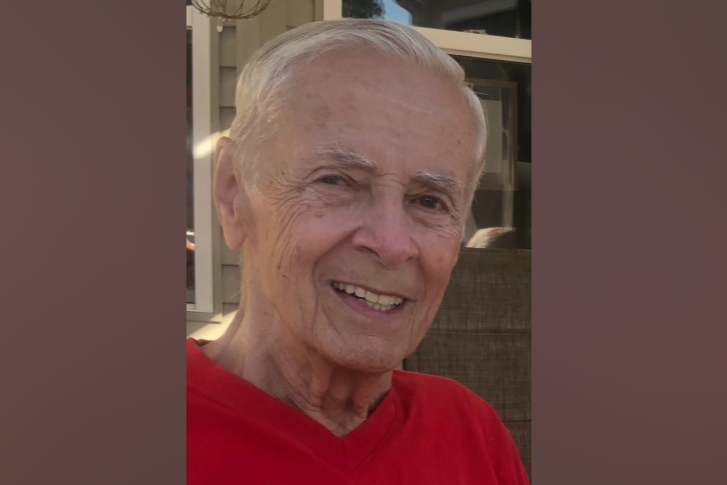
Jim Purcell, 92, formerly of Glenolden, Delaware County, retired teacher, high school principal, star basketball player, and Hall of Fame boys’ basketball coach at Cardinal O’Hara and St. Thomas More High Schools, died Sunday, Nov. 15, of age-associated decline at the Bellingham at West Chester senior living community.
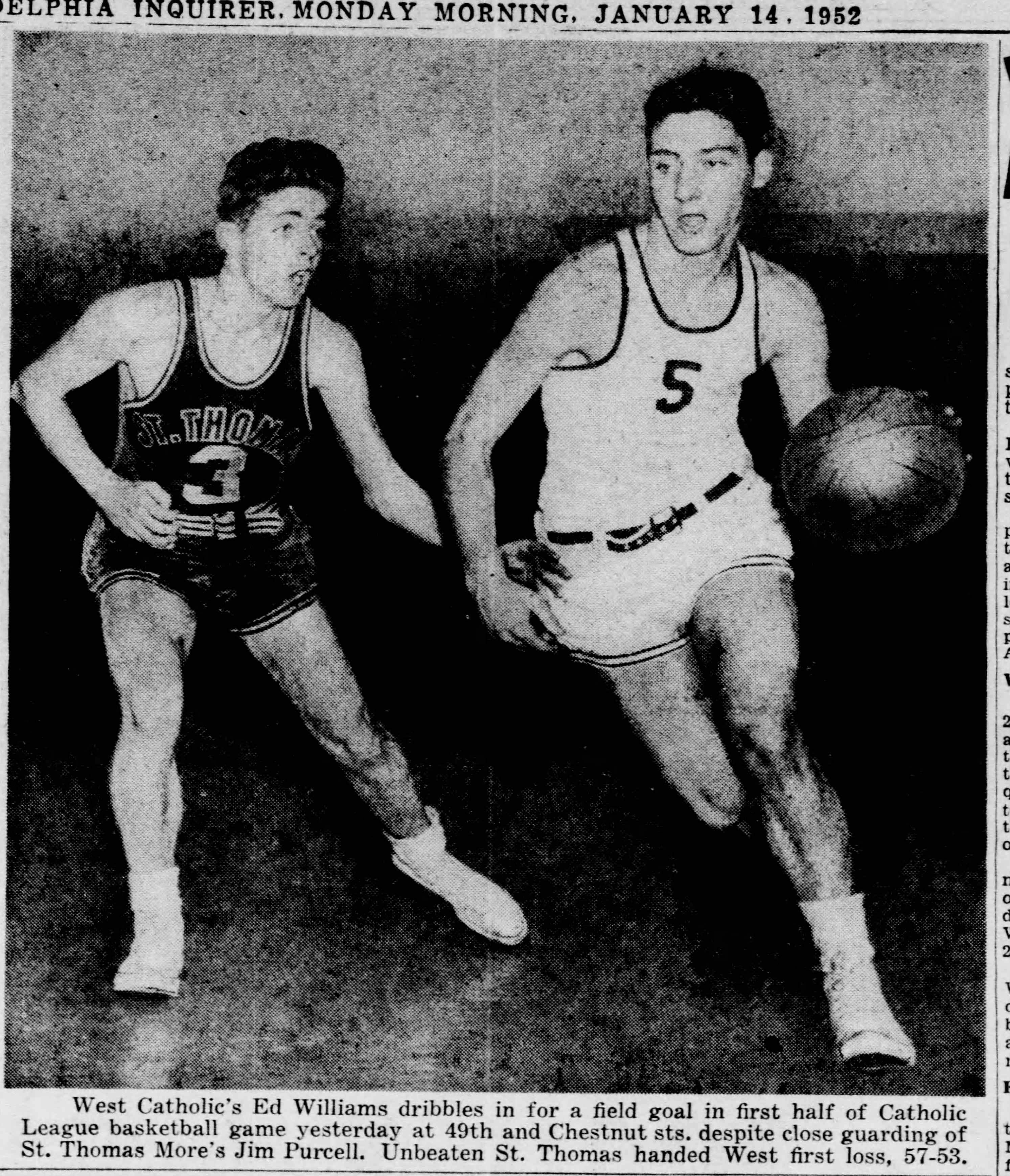
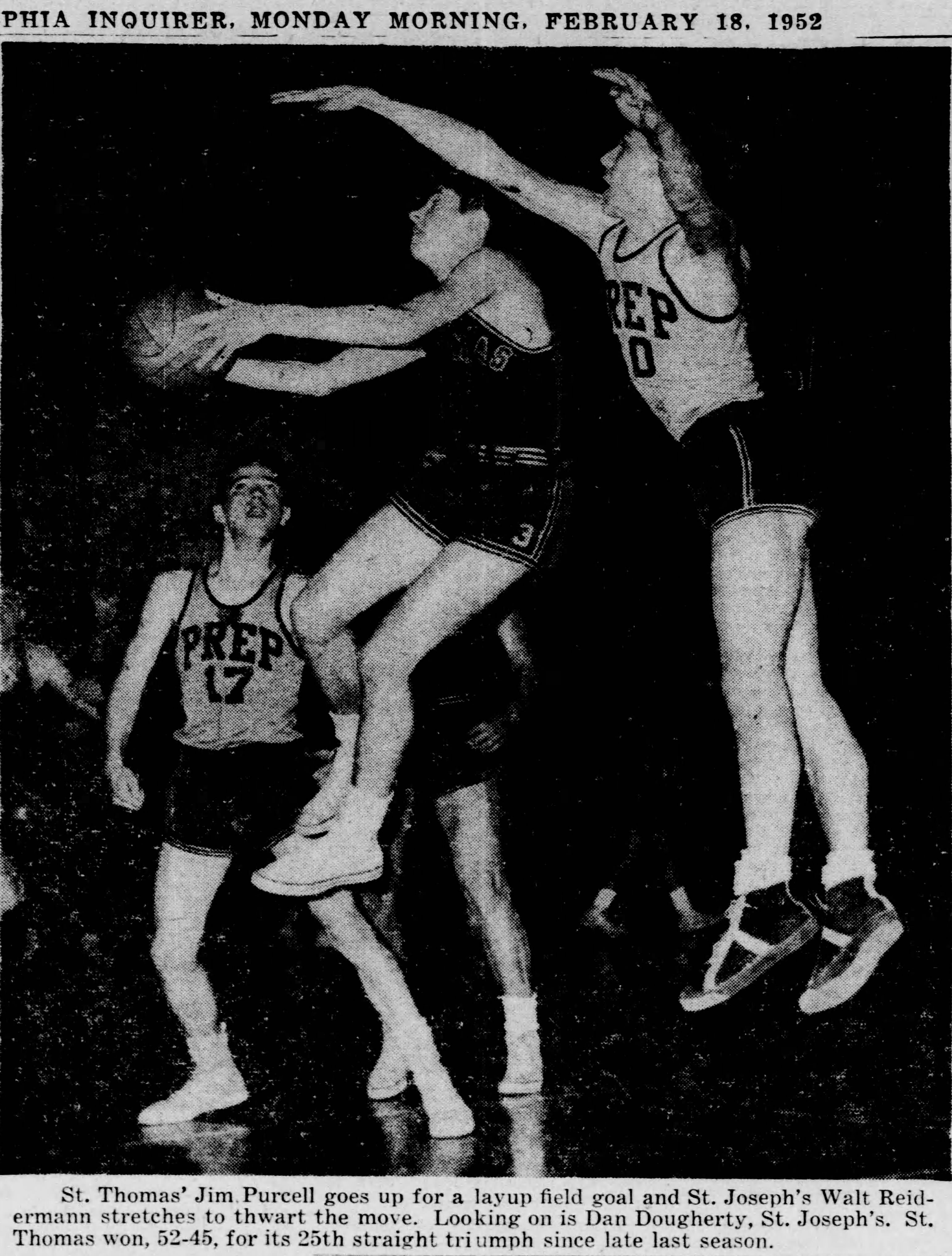
Known as “Coach” and “Delaware County royalty” to many former players, colleagues, and basketball fans in and around Philadelphia, Mr. Purcell was a star basketball player at the old St. Thomas More High School and what is now St. Joseph’s University. Inquirer sportswriter Hal Freeman called him “an efficient, swift, and heady playmaker” in a 1952 article, and Mr. Purcell helped St. Thomas More win its first Philadelphia Catholic League boys’ basketball championship in 1951.
He graduated in 1952, returned to the high school in 1958 as a teacher and basketball coach, and, in 1961, became the first person to win the Catholic League boys’ basketball championship as a player and a coach. He left More in 1963 to teach and coach basketball at Cardinal O’Hara, won the Catholic League championship there in 1968, and became the first coach to win Catholic League titles at two schools.
His teams at O’Hara made the Catholic League playoffs in seven of his eight seasons, and he finished, according to the Daily News, with a career record of 126-68 at O’Hara and 82-51 in six seasons at More. He was inducted into both the Cardinal O’Hara Hall of Fame and the St. Thomas More Hall of Fame.
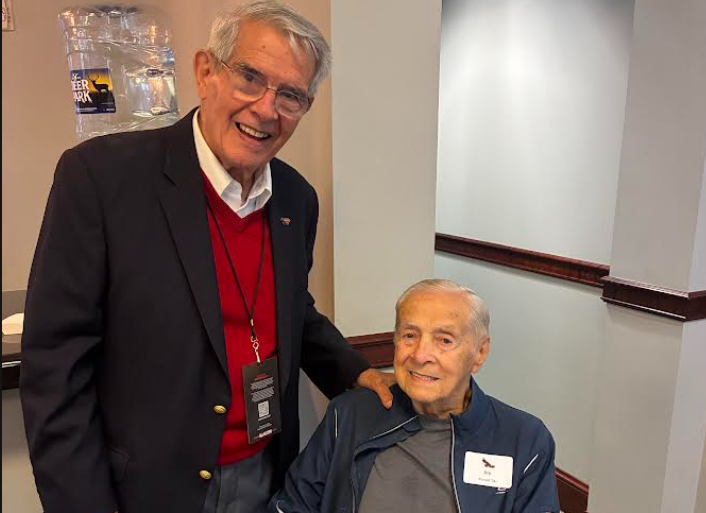
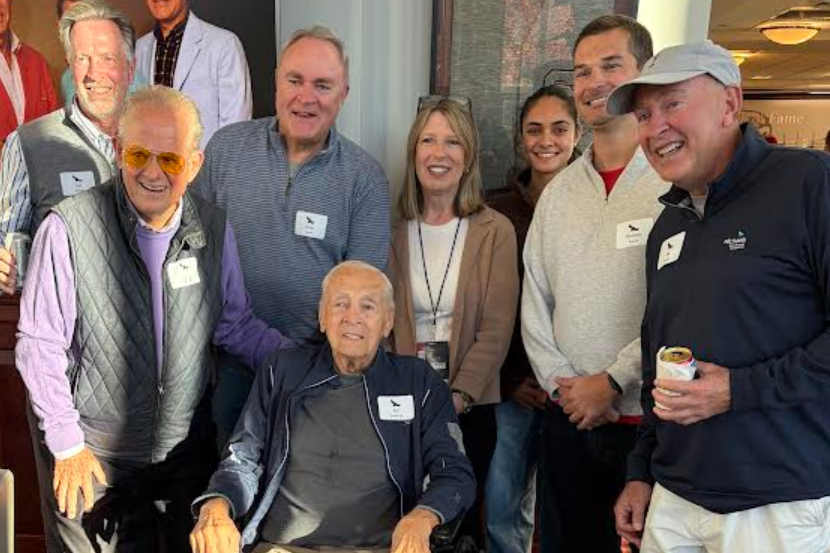
Above, Mr. Purcell (right) was close with his former Cardinal O’Hara player Tom Ingelsby. Below, he (right) poses with St. Joseph’s longtime administrator Don DiJulia. Courtesy of the family
Mr. Purcell’s 1967-68 championship team at O’Hara featured star players Tom Ingelsby and Joe Hazinsky, and finished 13-1 in the Catholic League. His 1971-72 team featured Mike Arizin, finished 13-3 in the league, and lost a heartbreaker to More in the division semifinals.
“The team I coached in 1968 was one of the best,” Mr. Purcell told The Inquirer in January 1972. “But this [1971-72] team is potentially one of the greatest.”
Ingelsby said: “Coach Purcell insisted his players to be fundamentally sound, very team-oriented, and very competitive.” Arizin said: “He was the best coach I ever had. He quietly but firmly taught us all how to play and that basketball was a team sport. I respected him immensely and listened to him. He made me better.”
At St. Joseph’s, he played in 64 games over three seasons, averaged 5.1 points per game, and helped the Hawks win the inaugural Big Five college men’s basketball championship in 1956. “Jim was an outstanding player and a loyal teammate,” former St. Joe’s player Ray Radziszewski said in an online tribute, “soft-spoken, quiet leader both on and off the court.”
Mr. Purcell taught Spanish and business math at More and O’Hara. He served as dean of students and vice principal at O’Hara for six years, and, in 1977, was named principal at Archbishop Kennedy High School. He retired from Kennedy in 1983 and worked for years as a construction contractor.
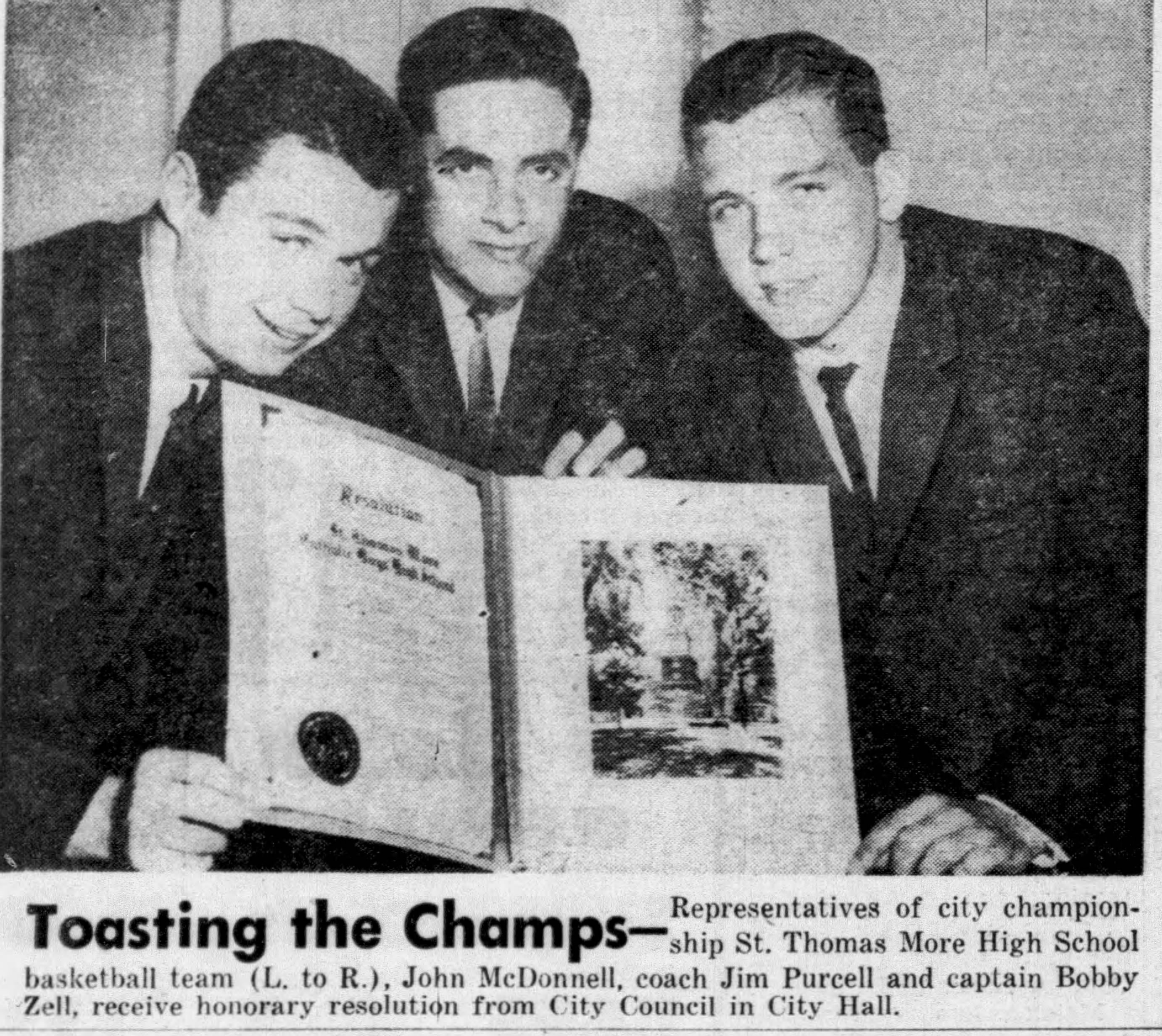
These photos of Mr. Purcell, left above and center below, appeared in The Inquirer in 1952. Newspapers.com
In a tribute, his family said: “Jim’s passion for basketball and his former students and players lasted a lifetime.”
James A. Purcell was born April 1, 1934, in Philadelphia. The youngest of six children, his mother died when he was young, and his older sister became his primary caretaker.
He played basketball all the time as a boy.Mr. Purcell earned a bachelor’s degree in political science in 1956 and a master’s degree in education in 1963 at St. Joseph’s. He married Dolores Doheny, and they had a son James, and lived in Aldan, Delaware County. They divorced later, and he lived in Glenolden, Collingdale, and Upper Darby.
“He was humble and low-key,” his nephew Steve Purcell said. “He was a bright guy who would talk to both the janitor and the CEO. We knew him as Delaware County royalty.”
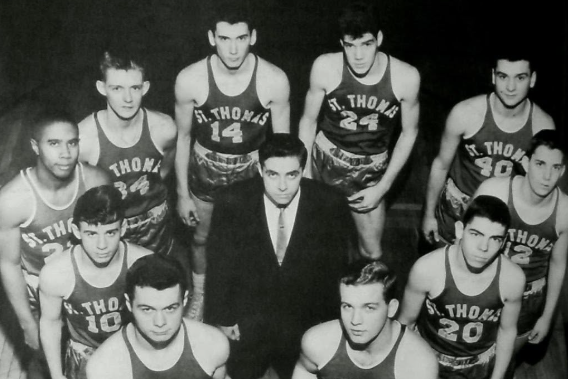
Mr. Purcell, center above and below, coached his St. Thomas More basketball team to the 1961 Philadelphia Catholic League championship.St. Thomas More High School
In addition to his son, former wife, and nephew, Mr. Purcell is survived by three grandchildren and other relatives. Four brothers and his sister died earlier.
Visitation with the family is to be from 9 to 10:15 a.m. Tuesday, Nov. 24, at St. Dorothy Catholic Church, 4910 Township Line Rd., Drexel Hill, Pa. 19026. A service is to follow at 10:30.
Donations in his name may be made to Cardinal O’Hara High School, 1701 S. Sproul Rd., Springfield, Pa. 19064.
Above, Mr. Purcell (left) in class. Below, he is surrounded by friends and colleagues at St. Joseph’s University. Courtesy of the family
You’ve probably been hearing a lot about data centers.
It can be hard to keep track of all the news and controversy surrounding the facilities, which handle the cloud-storage and computing needs of increasingly sophisticated AI tools. Some of this is taking place in the Philly area and might impact your neighborhood.
While many data center plans have been discussed and proposed in municipalities across the region, there are currently three hyperscale AI data centers — larger than 1 million square feet — under construction near Philadelphia. Seven more that size or larger have been proposed.
These 10 projects would add up to nearly 20 million square feet of data centers in the Philly region if all come to fruition.
Data centers have seen growing opposition in recent years, with residents banding together against the proposed developments in towns nationwide. They express concerns about pollution, noise, power and water use, and the potential impact on their electric bills and home values.
To give you a better sense of the scope of proposals in the Philly area, we’ve mapped out the hyperscale AI data centers that have been officially proposed or approved as of mid-November.
Note that this is not an exhaustive list of all data center proposals in the region. Older versions of these facilities have operated for decades, some run by telecom companies like Comcast. And developers are floating plans for new AI data centers all the time.
Falls Township
3.7 million square feet | Amazon Data Services Inc.
Operator/tenant: Amazon
Gov. Josh Shapiro in 2025 announces a $20 billion investment by Amazon in Pennsylvania data centers in Salem Township and Falls Township.Commonwealth Media Services
Amazon is developing a 250-acre campus within the Keystone Trade Center in Falls Township, on a site formerly occupied by U.S. Steel, for cloud computing and AI. The project has both local and state approvals for the first of two expected phases of the project’s build-out. To date, Amazon has been approved for five environmental air and water discharge permits. That includes approval last year for 72 diesel-fired emergency engines. However, it has also applied to install 280 natural gas-fired “critical backup generator engines” at 4,287 horsepower each. It also wants to install three more diesel backup generators. Those permits are under review by the DEP.
Status: Under construction
Limerick Township
2.8 million square feet | MCD 7 LLC
Operator/tenant: Not identified
MCD 7 is proposing a revised plan, known as Project Laurel, to develop a data center campus consisting of eight, two-story data center buildings, three associated substations, and 80,000 square feet of support buildings across 191 acres. The site is located between the Philadelphia Premium Outlets and the Limerick Clean Energy Center in an industrial zone. The developer proposes to relocate portions of two roads and a gas main. The site would use public water and sewer. The township has been holding conditional use hearings on the proposal. The project would be built over two phases. Peco has applied for a 67-megawatt, one-mile-long electrical distribution line that would cross the Schuylkill from Limerick Township to East Coventry Township for the data center.
Status: Before the township for a conditional use approval
Limerick Township
1.8 million square feet | Limerick Town Center LLC
Operator/tenant: Not identified
State Game Lands 234 in Limerick Township, where Limerick Town Center LLC agreed to give the state 614 acres in return for 55 acres of the game land that joins an industrial tract the developer already owns. The state recently said that swap is off.Steven M. Falk / For The Inquirer
Limerick Town Center is proposing to build a data center campus with eight two-story, 65-foot-high buildings with backup generators and water and wastewater treatment facilities, as well as an electrical switchyard and substation. The 191-acre site is off Main Street on the peninsula in Linfield, just off the Schuylkill, on the site of the former Publicker Industries property. Residents were outraged in January when the state Game Commission approved the developer’s proposal to swap land with the state in Limerick Township and beyond. On Friday, commission spokesperson John Buffone said the state is no longer “moving forward with the exchange.” Plans call for public water and public sewer and a closed loop cooling system fed by on-site wells or from the river. If an open loop system is used, wastewater would be treated on site.
Status: Before the township for a conditional use approval
East Vincent Township
1.9 million square feet | Penn Hurst Holdings DE LLC
Operator/tenant: Not identified
The grounds of Pennhurst State School and Hospital are shown in October 2025.Frank Kummer
The developer is proposing to build a data center on the 124-acre site of the former Pennhurst State School and Hospital, once a center for people with developmental disabilities that has operated as a popular haunted Halloween attraction in recent years. Revised plans held by the county called for increasing the square footage from 1.3 million to 1.9 million, with a power generation and battery storage area, and a power supply substation. The data center would be served by public water and public sewer facilities. The township Board of Supervisors voted to deny the conditional use application in May. Penn Hurst Holdings filed an appeal in June and the matter is before the Chester County Court of Common Pleas.
Status: Rejected by Board of Supervisors, pending appeal by developer
Plymouth Township
2 million square feet | Brian O’Neill’s MLP Ventures
Operator/tenant: Not identified
The closed Cleveland-Cliffs steel mill is shown in June.Monica Herndon / Staff Photographer
O’Neill and his team have spent more than a year trying to get the green light for a data center at the 66-acre former Cleveland-Cliffs steel mill along the Schuylkill River. Last fall, they abruptly withdrew their original proposal due to legal issues. In April, they resubmitted the plans, which are being scrutinized in a series of zoning hearing board meetings. O’Neill has also filed a legal challenge to the township’s zoning ordinance, a move Plymouth Township Council Chair Lynne Viscio equated to “throwing a tantrum.” O’Neill has denied township officials’ accusations.
Status: In front of Plymouth Township zoning hearing board
Upper Merion Township
4.6 million square feet | Brian O’Neill’s MLP Ventures
Operator/tenant: Not identified
The parking lot of a property on Renaissance Boulevard in King of Prussia, where Brian O’Neill has proposed building a data center campus.Alejandro A. Alvarez / Staff Photographer
Across the river from the Plymouth Township site, O’Neill wants to build a nearly 5-million-square-foot AI data-center campus on five sites that he owns in a small section of Upper Merion Township between Bridgeport and West Conshohocken. After months of contention, the Upper Merion Township Board of Supervisors unanimously rejected O’Neill’s plans in August. O’Neill and his team appealed the decision, asking a judge to reverse the supervisors’ denial, grant his proposal preliminary approval, and appoint a third-party “referee” to oversee the rest of the process. In a separate lawsuit, the developer is also seeking unspecified monetary damages.
Status: Rejected by Upper Merion Township Board of Supervisors, pending appeals
West Conshohocken
1 million square feet | Brian O’Neill’s MLP Ventures
Operator/tenant: Not identified
In September, O’Neill submitted a conditional use application to West Conshohocken Borough for a three-story data center on a vacant 60-acre property along Front Street. The property, which borders Upper Merion Township and I-476, is owned by O’Neill, and previously operated as a quarry, cement plant, and solid-waste disposal site. West Conshohocken Borough permits data centers in its heavy industrial zone, where the site is located, under certain conditions. Borough Manager Doug Borgerson said the project is in the “early stages” of the review process.
Status: Conditional use application submitted
East Whiteland Township
1.5 million square feet | Sentinel Green Fig LLC
Operator/tenant: Not identified
An open land site is shown in East and West Whiteland Townships in Chester County in 2023.Jose F. Moreno / Staff Photographer
Sentinel Green Fig has started construction for the data center on the 79-acre Cyprus Foote Mineral Co. property, a Superfund site at the border of East and West Whiteland Townships and near the popular Chester Valley Trail. Residents have questioned how safe it is to build on a site still listed on the National Priorities List for Superfund sites. A data center was originally approved by the township as far back as 2018. But residents gathered to fight it this past year. In May, a Chester County Court of Common Pleas judge denied an appeal that challenged the township zoning hearing board’s original decision and the board of supervisors’ 2024 approval of plans for the site. Undeterred, residents in October notified officials that they planned to sue, arguing there were violations of township ordinances in approving the plan.
Status: Under construction
Monroe Township
1 million square feet | Hexa Builders
Operator/tenant: Not identified
For years, Hexa Builders, a Princeton-based real estate developer, has wanted to build a data center on a wooded, undeveloped property on South Black Horse Pike. After the Monroe Township planning board unanimously denied its application and banned data centers in the Gloucester County municipality, Hexa sued township officials for $300 million, saying the ban and rejection violate its constitutional rights. The case was recently moved to federal court.
Status: Rejected, pending lawsuit
Vineland
2.4 million square feet | DataOne
Operator/tenant: Nebius Group, powering Microsoft’s AI tools
Cranes working on Nebius Group’s AI data center site in Vineland can be seen behind nearby homes in June.Tom Gralish / Staff Photographer
The DataOne center is already partially operational on the outskirts of Vineland, Cumberland County, where some nearby residents said the dark, windowless compound has emitted a near-constant hum that keeps them awake at night. Its developers have said they expect the facility to be complete as soon as the end of the year. New Jersey recently fined DataOne $1 million for violating clean-air laws by installing and operating 62 large natural-gas power generators without the required DEP permits. DataOne executives “disagree with the temporary generator determination,” according to a spokesperson, but will apply for the needed permits.
Status: Under construction
story continues after advertisement
Staff Contributors
Reporting: Erin McCarthy and Frank Kummer
Editing: Lizzy McLellan Ravitch and Cindy Henry
Graphics: John Duchneskie
Digital Editing: Lizzy McLellan Ravitch
Copy Editing: Lidija Dorjkhand
Subscribe to The Philadelphia Inquirer
Our reporting is directly supported by reader subscriptions. If you want more journalism like this story, please subscribe today
QVC Group made money in its first quarter since emerging from bankruptcy, but top executives say customers should expect more changes ahead.
The West Chester-based company’s top boss said its two shopping networks, QVC and HSN, will become “more integrated” as the business stabilizes.
“QVC and HSN will operate as sister networks, sharing brands and guests when it makes sense for the customer experience, leveraging marketing to cross-promote both networks, and over time evolving to a shared technology platform and a common digital experience,” interim CEO Mike George said on Friday’s earnings call.
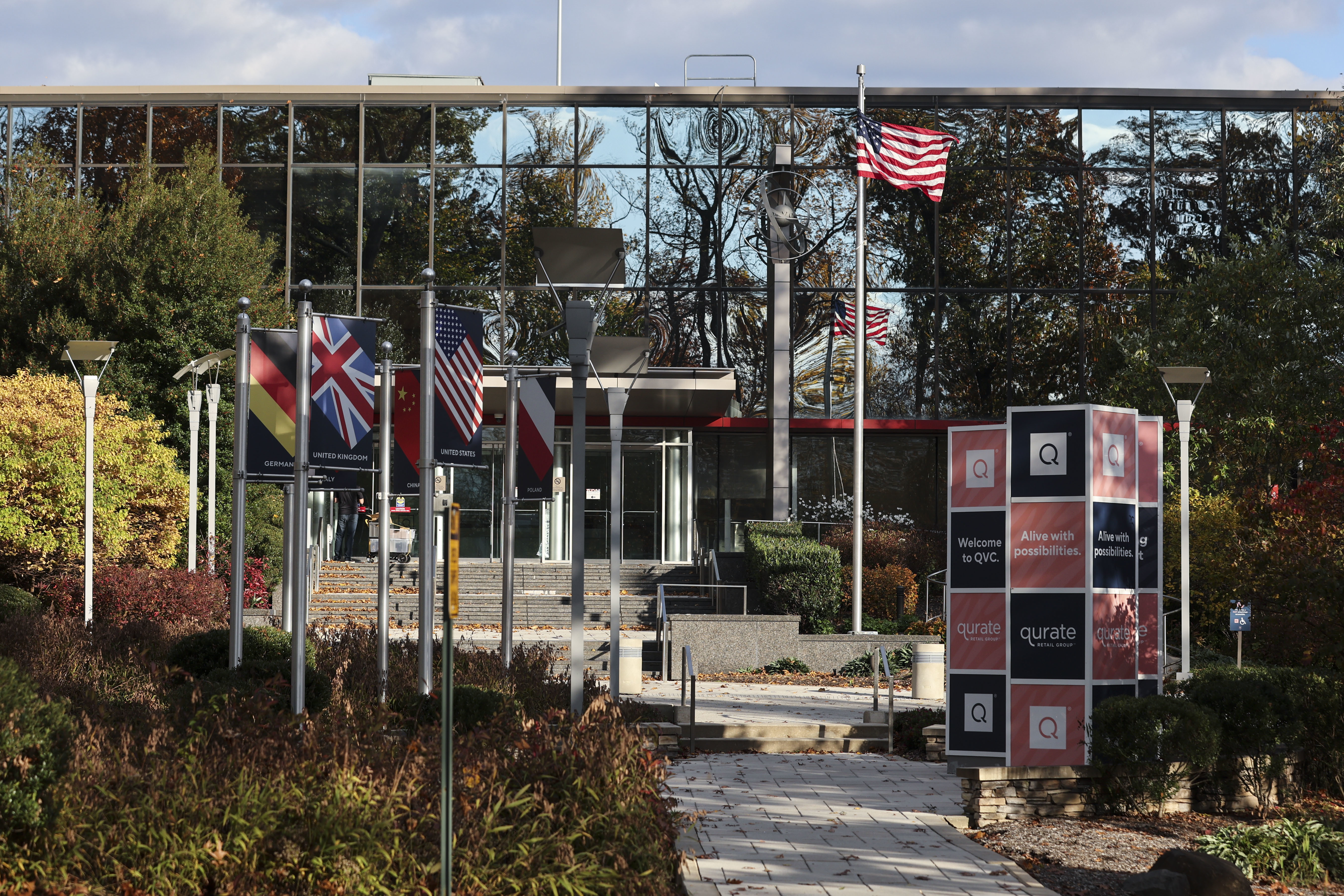
The exterior of QVC Studio Park in West Chester, as seen in 2023. QVC and HSN now both use the space after HSN’s Florida studios closed last year.Monica Herndon / Staff Photographer
In the three months since, the company earned $92 million, marking its first profitable quarter in years and a marked turnaround from the $9 million loss it reported for the same period last year, according to earnings reports.
During that time, every major merchandise category from jewelry to electronics saw double-digit declines in revenue, according to the report, and they have lost both new and existing customers over the past year.
QVC’s diehard customers spend on average about $1,500 a year on 30 items, according to company data. But George said it’s become harder to retain some of those loyalists.
He pointed to increased competition from other retailers, and fewer people watching live TV, the platform on which the home shopping networks were built. In recent months, he said, customers were distracted by negative publicity around the bankruptcy, which also affected the networks’ ability to get products.
As QVC Group has emerged from bankruptcy, George said it has been able to reestablish a pipeline of new and unique products, but it will take several months for customers to see them on the networks.
“The heart of our business will remain compelling, must-have products, products that can’t easily be found elsewhere,” George said.
The company also plans to expand its streaming service, refine the digital shopping experience, and offer faster shipping, he said. The company is looking at incorporating AI into its customer service department, reserving human agents for “higher-value calls,” George said.
“The restructuring has given us a much stronger balance sheet and the liquidity to manage the business over the long term,” the interim CEO said. But “our operating results need to improve ahead of bigger transformation initiatives,” which are set to be unveiled next year.
“Shop small!” seems to be a popular sentiment as we head into the holiday season — perhaps to the benefit of local Main Streets.
Despite economic and affordability challenges, Visa predicts that holiday sales will grow at their fastest pace since 2021. And a new study from American Express is pointing to “strong momentum” for small businesses this year, with more than 88% of those surveyed saying they are likely to “shop small” this holiday season.
Small Business Saturday on Nov. 28 kicks things off. Most small businesses I know will be offering special deals, discounts, gift bags, and other incentives that day. But for some owners, Small Business Saturday goes beyond sales.
This year’s Small Business Saturday will be bittersweet at the Boro Vintage in Yardley, owner Adam Hiner said. The store recently announced plans to close its physical storefront in February to prioritize family. The company will still be selling online.
“We’re planning to offer even greater discounts as we begin winding down our time on Main Street,” Hiner said. “The day will allow us to give our customers an opportunity to take home some wonderful treasures while celebrating everything we’ve built together.”
Adam’s wife, Nicole, owns the Boro Piercing Studio, a needle-only piercing studio and boutique next door to the Boro Vintage. Small Business Saturday is one of her favorite days on Main Street.
“We get to catch up with people who’ve been coming to us for years and meet neighbors who’ve walked past the shop a dozen times and finally have a chance to come in,” she said. “I love that a family can make an afternoon of it, stop in to see us, grab something to eat and discover another shop down the block.”
Small Business Saturday reminds people that where they choose to spend their money truly matters, said Dianna DeStefano who owns West Chester shop Pine + Quill.
“More money stays local so I can reinvest in my community through creating local jobs, [and hiring] vendors and other services,” she said. “It supports real people and families because every purchase helps me be able to cover expenses and continue to employ people as well as continue to do what I love and bring something truly unique to a small town.
Small businesses are what keeps towns like West Chester vibrant, DeStefano says.
“Empty storefronts don’t do that,” she said. “We must have a good season so we can keep our doors open the following year.”
Occasionette’s three Philadelphia-area shops will not only be offering discounts but collecting and matching donations for charities.
“Small Business Saturday is an important celebration of what makes each neighborhood special,” Occasionette founder Sara Villari said. “It’s a time to expect the unexpected and to do your best to think about how you can make this time of year as seamless and memorable for your customers” as possible.
Occasionette owner Sara Villari is shown in her Passyunk store in 2022.Steven M. Falk / Staff Photographer
Tropical Juice Bar, the New Jersey-based chain with 11 locations, is preparing for Small Business Saturday with special discounts and training to ensure that their locations are ready for increased customer traffic. Their goal is to not only make it easy for a first-timer to walk in but also take care of their regulars. “A good day can turn into a bad review fast if the line moves slow,” CEO Carlos Lopez noted.
“Our stores are neighborhood stores,” Lopez said. “Small Business Saturday is when our regulars bring in friends and family, and it is a good reminder that money spent locally stays local.”
KAFX Body founder Skip Chapman said Small Business Saturday is a great way to emphasize the importance of family businesses to the economy. The family-owned operation in Manasquan manufactures and sells a natural body deodorant and has seen fast growth thanks to its social media activities.
Chapman says they are preparing for the holiday season by increasing manufacturing, making sure they are well staffed, increasing their online live-show schedule, and putting together gift bundles, gifts with orders, and seasonal exclusive scents.
“We want to show that there is a real family making the products, packing orders, and going live on social media to talk about them,” he said.
Joe Waroquier, who owns a full-service interior design-build firm and curated retail boutique in Bryn Mawr and Washington, D.C., doesn’t plan on offering any discounts for Small Business Saturday. But he plans to make sure his boutique is “looking its best.”
For him, Small Business Saturday isn’t so much about offering deals as it is about reminding people to support local businesses and showing off your business to a new group of prospective customers.
“Shopping small means supporting local entrepreneurs, employees, and the unique businesses that give a community its character,” he said. His advice: “Make people feel welcome, show them what makes your business special, and remember that building long-term relationships is far more valuable than a single day’s sales.”
When Ashlee Hollis leased a cavernous Fishtown warehouse in 2022 and named it the Story Factory, the founder of Helm Creative Studio dreamed of turning it into a state-of-the-art space for her firm’s clients to create content.
And she did.
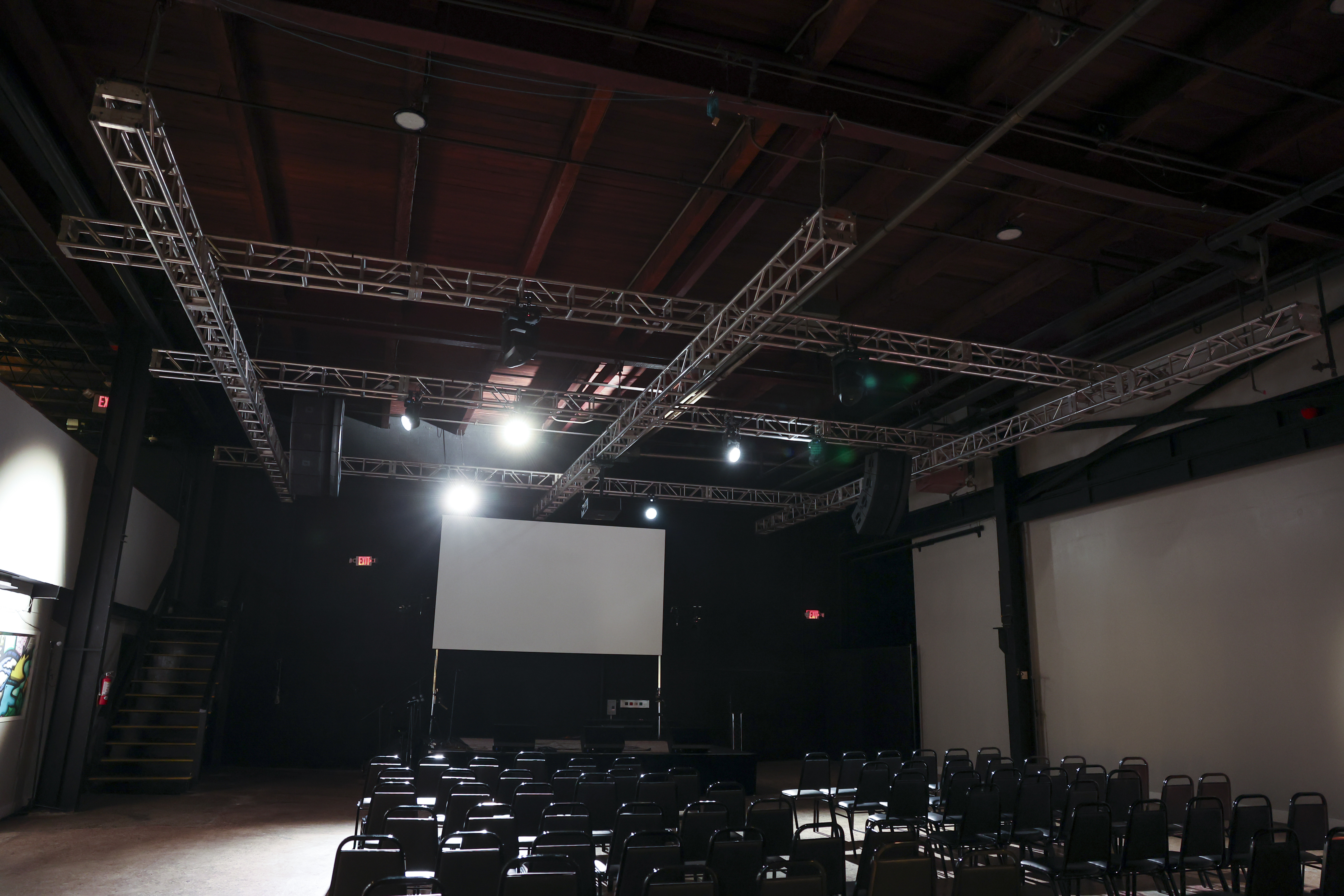
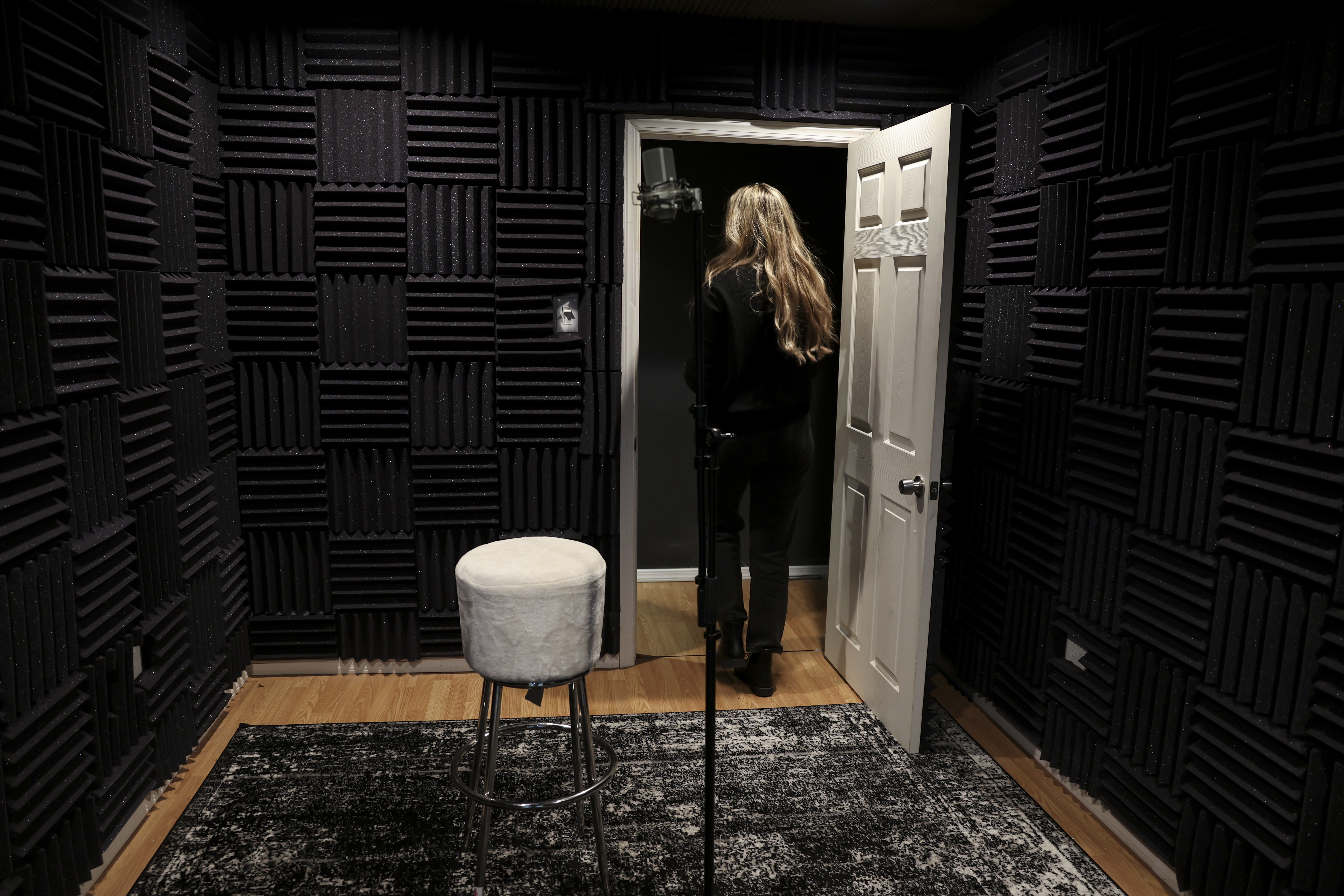
She built a soundstage for speakers to give Ted Talk-style talks in front of live audiences, and she built two soundproof podcast studios. She installed Instagram-friendly backdrops dripping with faux ivy and neon lights. There is an island across from the soundstage where folks can give cooking demonstrations, perfect in a town full of food content creators.
The main space at the Story Factory.Monica Herndon / Staff Photographer
For nearly four years, Hollis worked with 296 nonprofit and small business clients — which include the Philadelphia Orchestra, the Philadelphia Ballet, Live Nation, and the Eagles — filming video, producing podcasts, and staging photo shoots.
Hollis was content with the content.
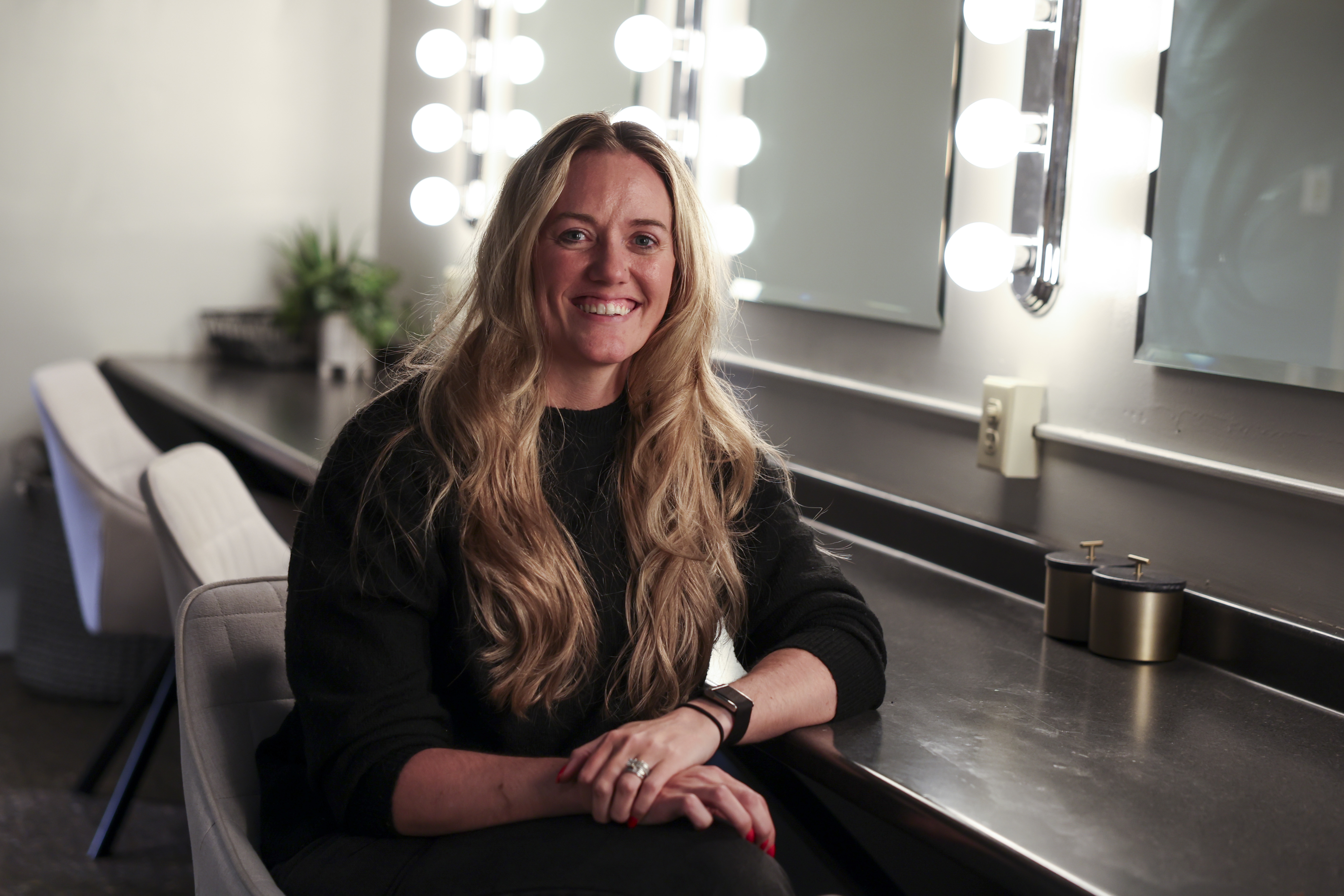
“We were happy and thriving,” she said one recent autumn afternoon dressed in head-to-toe black. She glided through the Story Factory in ballet flats like a modern-day princess.
Today, the Story Factory is on the verge of going Hollywood.
The Pennsylvania Film Office designated it as a qualified production facility in March, meaning any independent or major motion picture studio that uses the Story Factory for a project could be eligible for a tax credit from the state. With that credit, the state pays up to 30% of a production’s total cost, saving hundreds of thousands of dollars.
In early November, the state film office also approved the Story Factory as a qualified postproduction facility. So now, studios that use the Story Factory for postproduction that includes recording sound, editing visual effects, and mixing soundtracks can be reimbursed for up to 30% of their costs, too.
“It’s a huge deal for us,” Hollis said, beaming.
The Story Factory is the only qualified production facility in Philadelphia. There are five qualified postproduction facilities in the city, but the Story Factory is the only one the state has approved to be used for both production and postproduction.
“We are a place where a film can be shot from start to finish,” Hollis said. “That amazes me.”
‘Massive for Philly’s creative economy’
In a city billing itself as a movie making mecca, the Story Factory’s come-up is major, explained Nicole Shiner, co-executive director of the Greater Philadelphia Film Office.
During the fiscal year ending June 2026, Philadelphia hosted 272 film and TV productions ranging from episodes of Abbott Elementary to commercials, documentaries, and feature films. These projects generated $106.8 million in direct local spend with an economic impact of $223.3 million, according to Shiner.
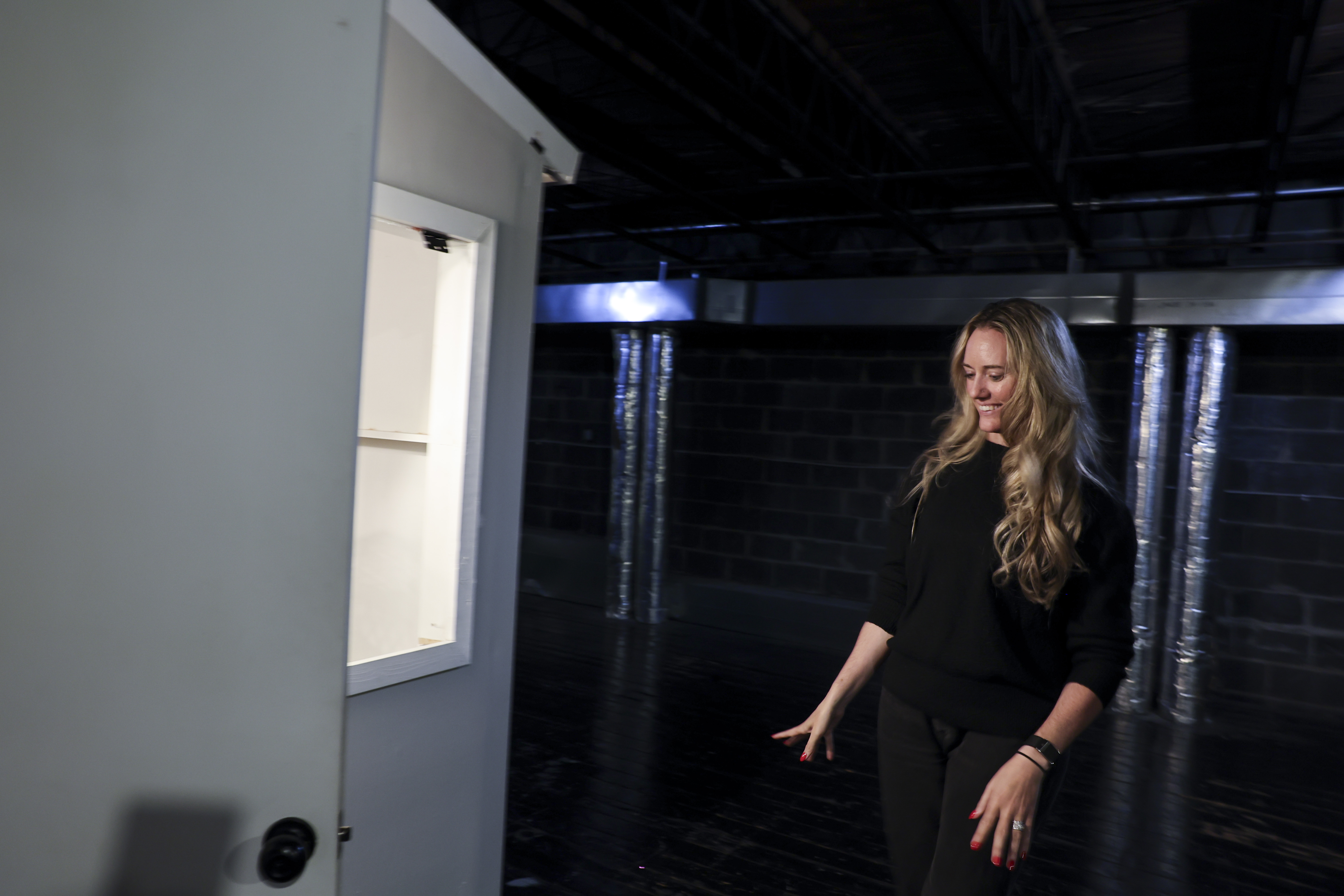
Ashlee Hollis walks through a recording studio at the Story Factory.Monica Herndon / Staff Photographer
Pennsylvania’s tax credit program — which allots $100 million each fiscal year to incentivize production companies to bring their film projects to the Keystone state — is the driving force behind those numbers.
Of those 272 projects, 29 received tax credits, meaning at least 60% of their total qualified expenses were spent in Pennsylvania. Qualified expenses include everything from set design, hair and makeup, and food for the crew. If the projects used a qualified production facility, or a qualified postproduction facility, the state raised the ante and paid 30% of the projects’ total cost.
Tax credit eligible projects were just 10% of the Philadelphia region’s total film projects, Shiner said, “but they drove 90% of the direct spend, accounting for $93.3 million spent in our region and generating $202.4 million in economic impact to Southeastern PA.”
The Story Factory can mean even more money for the city’s bottom line, Shiner said. While recent projects like the Sylvester Stallone biopic I Play Rocky utilized Philadelphia strictly for on-location shoots, having a dedicated local facility allows future productions to also book in-town stage space for interiors, costume changes, and hair and makeup.
“The Story Factory is a massive win to the Philly creative economy,” Shiner said. “We love hosting big productions for location days, and our goal is to bring as much of their full schedule to the region as possible.”
A growing trend
In order to be a qualified production facility, a movie house must meet certain qualifications by the state, including a soundstage with an unobstructed floor space, a sliding roll-up access door a minimum of 14 feet tall (think a loading dock), an HVAC system with 50 tons of cooling capacity, and 24-hour security with badge access.
There are 12 qualified production facilities in Pennsylvania, including QVC’s Studio Park in West Chester. (The Home Shopping Network received its QPF status in 2013.) Two more QPFs will open by the end of 2026, bringing the state’s total to 14, Pennsylvania Film Commissioner Gino Pesi wrote in an email.
Most of these facilities are tens of thousands of square feet and are situated on acres of wooded land like SunCenter in Aston, where HBO’s Task and Apple TV’s Dope Thief were filmed.
A photo and video studio at the Story Factory.Monica Herndon / Staff Photographer
However, Pesi wrote, smaller facilities are popping up across the state, like Triode Studios in Lancaster that is just 10,000 square feet, and the Story Factory, which is just over 12,000 square feet.
Shiner said smaller facilities like the Story Factory are becoming common as both streaming outlets and network television experiment with more series with fewer episodes. Shooting is quicker and budgets are tighter.
And many, like Story Factory, are growing hubs for independent creators, Pesi said.
We can thank the pervasiveness of social media reels for that.
“My small business and nonprofit clients need the same quality of equipment and studio time titans in the movie industry need,” Hollis said. “Short documentaries, web series, even film festival entrants.”
Church videos to creative hub
Hollis, 39, moved from Kansas City to Kennett Square in 2008 with husband Elijah Hollis, who was then a youth pastor at the Power Place Church in Kennett Square.
Around 2012, the couple made a video promoting the mission of the nondenominational Christian church and soon after, members began asking them to make videos for their secular businesses.
In 2015, Hollis — now a mother of a boy and a girl — formed Helm. Her vision was to help small businesses tell stories with compassion, empathy, and zest. She landed the Robert Irvine Foundation as her first major client in 2016, and Helm grew one inspirational video at a time.
Hollis watched as social media continued to impact how her clients reached their audiences.
In 2021, she started looking for a one-stop shop where she could help clients make reel-ready videos and record podcasts in addition to designing and printing clients’ merch, posters, and brochures.
Ashlee Hollis talks about the production offices at the Story Factory.Monica Herndon / Staff Photographer
“We were becoming a niche creative studio,” Hollis said.
In 2022, Hollis stumbled upon the block-long studio along the border of Kensington, Fishtown, and Northern Liberties on Fifth Street. The building was the former home of Thomas Ashley’s Invincible Pictures’ Philadelphia Sound Stage. For a time, it operated as a QPF. A bit of the production for the 2012 Oscar-winning film Silver Linings Playbook was completed there. Philadelphia Sound Stage’s QPF status expired in 2016.
Hollis started leasing the building from Oxford Properties. In 2025, she had a chance meeting with Shiner, who suggested she apply for QPF status.
“I knew it would be the cherry on top of what they already created,” Shiner said.
The minimum investment for a QPF is $10,000. Hollis invested a total of $500,000 in the Story Factory. She redid the floors, installed a new kitchen, added rolling walls, upgraded the lighting, and made the podcast rooms soundproof, among other things.
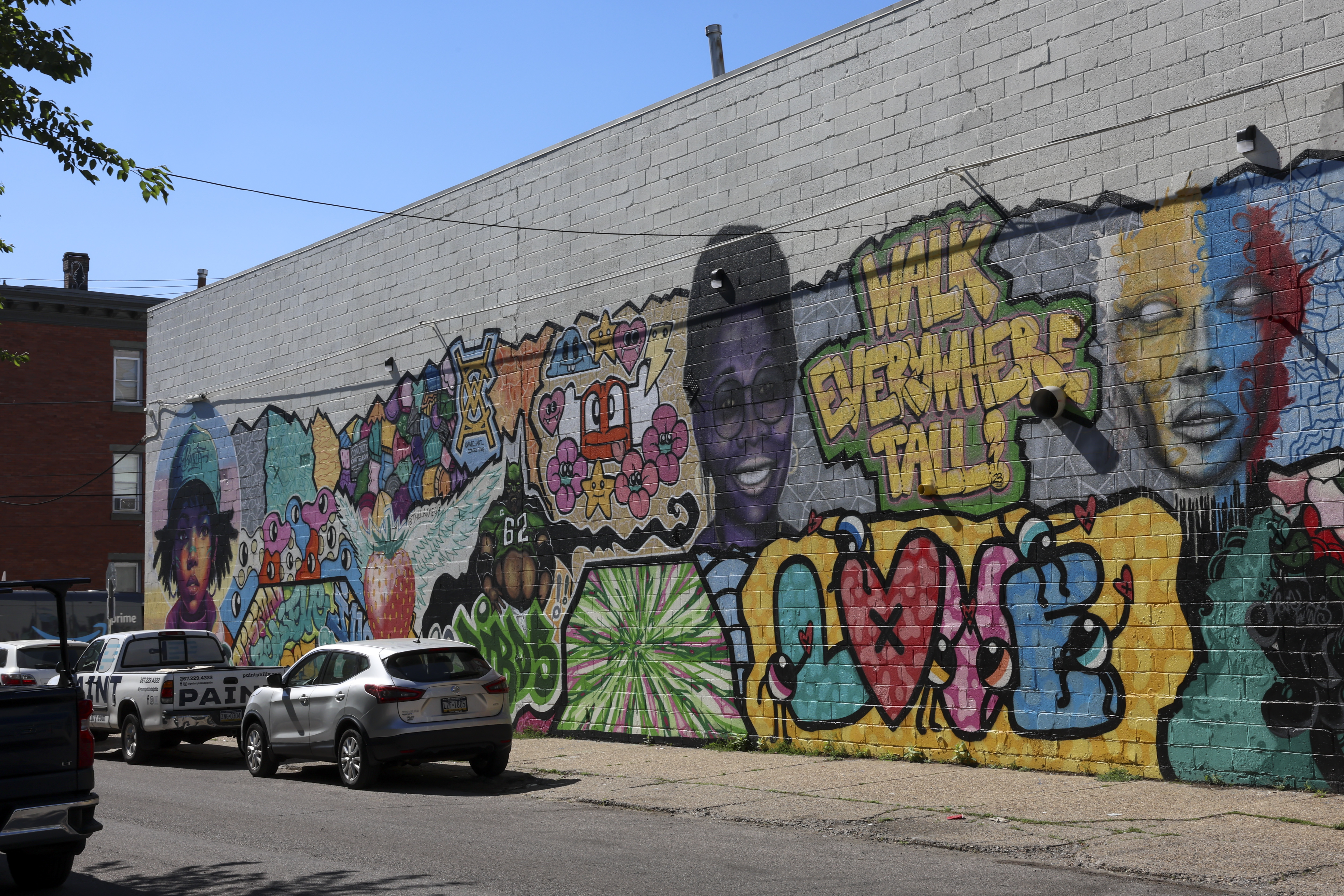
A technicolor mural popping with bold graffiti and inspirational quotes by artist Alloyius McIlwaine wraps around the colossal stone building.
The exterior of the Story Factory. A technicolor mural popping with bold graffiti and inspirational quotes by artist Alloyius McIlwaine wraps around the colossal stone building.Monica Herndon / Staff Photographer
On weekends, the Story Factory is the virtual home for Elijah Hollis’ Change Church. (Ashlee Hollis isn’t just a storytelling princess, she’s a first lady of a church.)
The rest of the time, the Story Factory is churning out, well, stories.
On a recent Wednesday afternoon, Blocs CEO Robert Delany and former Republican State Rep. George T. Kenney chopped it up during a recording of the inaugural episode of Blocs’ Mission Moments podcast.
“Helm has helped us evolve into a new place of modern-day storytelling,” Delany said. “They are helping us keep pace.”
Blocs CEO Robert Delany and former Republican State Rep. George T. Kenney record the inaugural episode of Blocs’ “Mission Moments” podcast.The Story Factory
Blocs, the nonprofit scholarship organization, has worked with Helm for nearly eight years.
Only now, there’s a bigger chance that one day, as Delany is walking out of the Story Factory, Stallone, Tina Fey, or perhaps even Will Smith will be walking in.
Except in wars or great storms, the federal Jones Act of 1920 requires that U.S. cargoes shipped betweenU.S.ports on the Delaware River and other waterways must travel in U.S.-built ships worked by U.S. crews.
But since March, amid the war with Iran that stalled Middle East energy shipments, the U.S. has been in one of those exception periods, with President Donald Trump authorizing waivers allowing ships built in Korea, China, and other shipbuilding nations to haul cargoes between American ports.
Trump on Friday extended the waivers, which had been due to expire Sunday, for another 90 days, the longest exception since the law was passed, Reuters first reported.
The waivers have been cheered by energy lobbies representing refineries such as Delta Air Lines’ Monroe Energy in Trainer, Delaware County, and PBF Energy’s in Paulsboro, Gloucester County, and Delaware City, Del. And they’ve been lamented by reps for U.S. shipbuilders such as Hanwha Philly Shipyard in Philadelphia and American tugboat and barge owners, merchant marine officers, and the Seafarers union.
By contrast,Jones Act supporters warn the waivers risk shifting cargoes to foreign carriers and eroding support for U.S. flag vessels, American mariners, and domestic shipbuilding, as well as the Jones Act goal of preserving a U.S. shipping fleet, Merlie said.
An Inquirer review of federal cargo reports and other records showed more than 30 tanker loads of U.S. crude oil and locally refined fuels worth over $1 billion have traveled between Delaware River ports and other U.S. ports on waivers since March, in ships built mostly in Korea, China, and Japan.
That level of trade “suggests the waivers have been commercially meaningful in this market,” Merlie said.
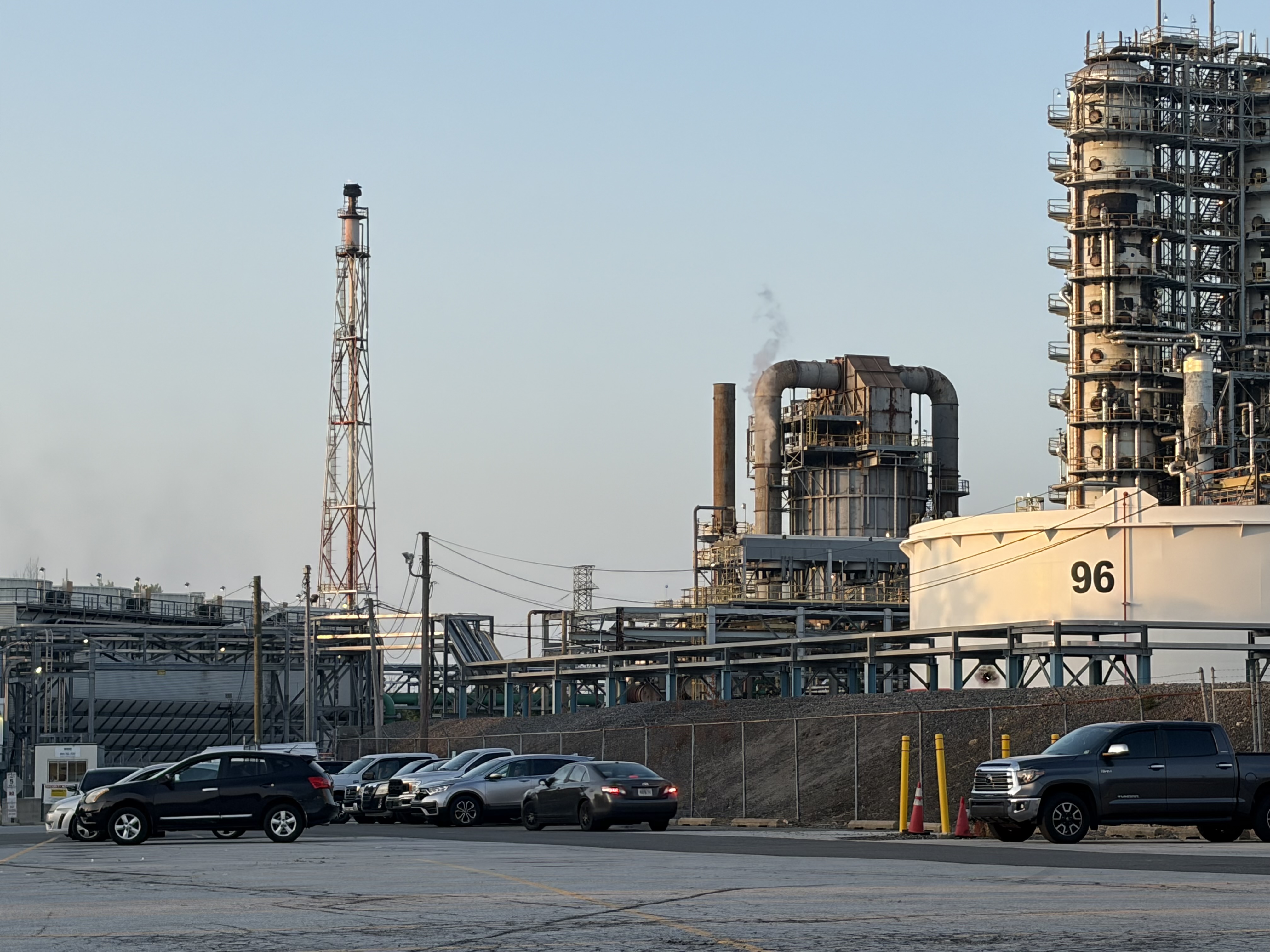
Delta Air Lines’ Monroe Energy refinery in Trainer, Delaware County, is among the U.S. energy facilities that have been able to collect crude oil and ship out finished fuel on foreign ships in 2026 thanks to President Donald Trump’s Jones Act waivers.Joseph N. DiStefano
Around 25tankers visit ports on the river each month, according to data posted by the Maritime Exchange for the Delaware River and Bay, an industry group.
The rush of foreign ships to carry U.S. cargoes between U.S. ports has changed trading patterns.
Crude oil from the Bakken fields in North Dakota and Eagle Ford fields in Texas, moved by pipeline to Gulf Coast ports, have been shipped north to the Philadelphia area in European-owned, Asian-built tankers. It’s used to make jet fuel at Delta’s Delco refinery and gasoline at PBF.
The waivers make it easier to ship crude between U.S. ports instead of exporting it and leaving U.S. refineries to use imported crude.
Propane from Energy Transfer’s Marcus Hook Industrial Complex, collected from the Marcellus and Utica gas fields in western Pennsylvania, has similarly traveled on foreign tankers to Puerto Rico. The island relied more on gas from West Africa and Latin America before the waivers.
A smaller stream of oil products from area refineries has been sent on foreign ships to specialized chemical facilities in Louisiana and Mississippi. A shipload of asphalt made in Paulsboro was carried by a Chinese government-affiliated tanker to Baltimore in July.
The foreign ships are “displacing imports, not U.S. ships,” because there aren’t enough U.S.-built ships to meet demand, said Colin Grabow, a trade scholar at the pro-free trade Cato Institute in Washington. That means more U.S. demand for energy produced in Pennsylvania, Texas, and other gas and oil states, and less pressure to export it, he said. That should lead to cheaper energy.
But the increased use of foreign ships “is counterproductive to the [Trump] administration’s own goal of revitalizing American shipbuilding,” said Jennifer Carpenter, president of the American Maritime Partnership of U.S. shipbuilders and workers, and American Waterways Operators, which represents tugboat and barge firms.
Without Jones Act protections, investors won’t buy and update U.S. commercial ships, leaving America farther behind China, the world’s leading shipbuilder, she said.
“Without the Jones Act, there is no U.S. maritime industry” or future jobs for U.S. seafarers, ship officers, and shipbuilders, Rear Adm. Michael Fossum, superintendent of Texas A&M University Merchant Marine Academy, told a crowd of senior U.S. officials in July, who gatheredat the christening of the Philadelphia-built TS Lone Star State.
Plus, Jones Act advocate Carpenter noted, fuel prices haven’t been dropping, as waiver advocates hoped.
Much of the cost of more expensive jet fuel has been passed along to consumers, with U.S. airfares up 25% over last year.
Ship brokers on the Delaware River and in other East Coast ports say there has lately been little cost difference between shipping on U.S. and foreign ships with the ships now available, but also noted prices are volatile.
Rear Adm. Michael Fossum (center) with David Kim (left), head of Hanwha Philly Shipyard, and Jeff Dixon (right) CEO of TOTE Services, construction manager overseeing TS Lone Star State, at its christening, in July. Joseph N. DiStefano
Permanent waive?
The South Philadelphia shipyard, now operated by Hanwha Defense USA, built a majority of the “Jones Act ships” to carry cargoes between U.S. ports that have been constructed since 2000.
But U.S. ships now comprise less than 1% of the world fleet and new ship production. That shows the Jones Act has been ineffective for shipbuilders while boosting costs for U.S. manufacturers, refiners, and other shippers, Grabowsaid.
Last month, with the Jones Act waivers still in force, Hanwha said its civilian shipbuilding arm was transferring control of the Philly yard to Hanwha Defense USA, which builds warships. Hanwha also named a new president to head the Philly yard, Hyuk Kim, a veteran naval and commercial shipbuilder from the company’s much-larger Korean shipyards, succeeding David Kim.
The two contracts Hanwha announced this year are for U.S. government missile-tracking and Navy landing craft, The company is seeking other Navy contracts.
“We are continuing to pursue commercial work,” said Hanwha spokesperson James Hewitt.
Editor’s note: This story has been updatedto make clear that 25 tanker ships carrying crude oil and refined petroleum products call on Delaware River ports each month.
A year ago, Troy Brock had convinced himself his lifelong dream of working in law enforcement would remain just a dream.
He said he still thinks back to those days in disbelief as he puts on his Chester County Sheriff’s Office uniform.
“It’s very emotional because I thank God for this every single day that I get up,” Brock said. “I know a lot of people say, ‘Oh, it’s just a sheriff’s position.’
“It’s not, and they have no idea the journey that I’ve been through to get here.”
In June, Brock, 57, was one of the oldest deputies to be sworn in by the Chester County Sheriff’s Office. Brock,aKing of Prussia resident, said his journey to joining the office was far from direct.
The son of a Wilmington police officer, Brock said he always sought to follow his father’s example.
But nearly 20 years ago, a major injury sidelined him days before he was set to enter the Delaware State Police Academy. In the intervening years, he worked as a security officer at the University of Delaware, St. Joseph’s University, and Children’s Hospital of Philadelphia before landing a role with the Chester County Department of Emergency Services.
His induction into the department came at a time when the office was reevaluating how it recruits people to serve the county and protect its courthouse, according to Chief Deputy Sheriff Jason Suydam.
“We want people that live in the community to be part of this law enforcement organization and reflect the variety of people that live and work here,” Suydam said in a recent interview.
Deputy Troy Brock works at a community event in Downingtown this summer. Brock said he was initially unsure if he would join the Chester County Sheriff’s Office, believing he was past his prime.Courtesy Chester County Sheriff's Office
Suydam first met Brock at the emergency services department, while he wasworking as the department’s deputy director of law enforcement. And when Suydam moved over to the sheriff’s office, he extended Brock an opportunity to join his team. Brocksaid it allseemed too good to be true.
“I had to chuckle a little bit because I felt like I’ve already buried that skeleton, and I wasn’t going to pursue it, because it was pretty heartbreaking,” Brock said. “But he saw something in me, and I knew I couldn’t let him down.”
Brock spent months on an intense workout schedule that got him into recruit shape, and he joined the police academy in January.
Suydam said he knew all along that Brock would succeed.
“Throughout the time that I’ve known him, I just thought he is the type of person that we need in this profession,” he said. “I remember when we sat down, him saying, ‘I’m too old.’
“But I don’t subscribe to being too old or too young to do something if your mindset is you want to accomplish it.”
Brock said in the last five months he has become something of a mentor to his fellow new recruits, most young enough to be his children.
“The most important aspect that I teach to them is it’s not about chasing a dollar or a position; it’s about having integrity,” he said. “That’s the backbone of law enforcement — being honest and having integrity.”
Chester’s fiscal condition has improved markedly since it entered receivership two yearsbefore the bankruptcy, as the state has spent $19.3 million in assorted administrative and legal fees.
But with an all-time logjam of litigation making the sale of valuable water assets more and more contentious, the city has marked another bankruptcy anniversary with no end imminent.
And legal experts advise that given the paucity of precedents, the outcome for the erstwhile industrial powerhouse is about as certain as the average seasonal weather forecast.
An analysis presented at a bankruptcy committee meeting Tuesday — coincidentally the fourth anniversary of the bankruptcy filing — concluded it would take $45.7 million to cover ”funding needs” in 2027. About 90% of that would be used for continued coverage of pension deficits. The police fund, for example, while far from fully funded, now has enough money to make payments for the next five years.
And given projected costs and the current state of revenue sources, even if it erased the pension shortfalls, the city would continue to run ever-increasing annual budget deficits that would grow to $36.8 million in the next decade, according to the analysis presented by Gordon Mann, managing director of Public Financial Management Group Consulting. About 20% of the town’s revenues come from a casino and an incinerator, and Chester’s 3.75% earned-income tax is Pennsylvania’s highest.
“This is the gap the city must address to exit bankruptcy,” Mann said.
Now, with those calculations, Chester is “ready to begin discussions with stakeholders,” including creditors and pensioners, said state-appointed receiver Vijay Kapoor.
As for when the bankruptcy might end, Kapoor said, “I am moving with due speed to get things wrapped up as quickly as possible. … I don’t have a deadline in mind.”
Regarding potential money sources, it is at least possible the blue wave that gave Democrats control of the Pennsylvania legislature may work in Chester’s favor by making more funding available, said John Caskey, a Swarthmore College economics professor who is on the board of directors of the Chester Community Improvement Project. Michigan kicked in money to get Detroit out of bankruptcy,he noted.
“I think there’s a social justice argument for that,” he said. Chester, a predominantly Black city, hosts more subsidized-housing units than the rest of Delaware County combined.
Said Kapoor: “I am open to any solution, other than the privatization of the water assets.”
Liquid assets and the future of Chester
Kapoor’s comment was the session’s first and only reference to what has been an acrimonious dispute between the city and the Chester Water Authority over the control of water assets that are projected to generate more than $60 million in revenue next year. At one time, Aqua Pennsylvania had offered Chester $410 million for the authority.
The receiver’s office contends the city lost control of the authority, which it had created in 1939,by a legislative sleight-of-hand, which it has challenged in court.
The receiver’s office has said repeatedly it wants to sell the authority to a “public entity” that would not be beholden to investors.
“Back in my world, that is what we call magical thinking,” said Noel Brandon, chair of the water authority board.
He said the receiver wants the water authority’s 45,000 customers, most of whom are located outside Chester, to subsidize the fiscal problems of a city that has been in a state-designated distressed status for 31 years.
“You can’t loot an entity that had nothing to do with it,” Brandon said.
“Chester is not unique,” Caskey has said. “It’s just more extreme.”
The city entered distressed status in 1995 and receivership in 2020. The pension deficits mutated into a crisis.
The situation was so ominous, Mann said, that at one point the police fund had only two months’ worth of payments available and the city feared some checks might bounce.
The receiver took the city into the rare Chapter 9 bankruptcy in 2022.
“Chapter 9 is used so little, there’s a lot of uncertainty that comes along with it,” said Laura Coordes, an Arizona State University law professor who specializes in municipal bankruptcy. She said Chester’s choice was exceptional, in that most towns “would rather not go through the expense of a process where the results are hard to determine.”
The future of Chester
Barring resolution of the water-asset dispute or intervention by state government, reductions in pensions and retiree health benefits are likely.
Gov. Josh Shapiro sees “a long road ahead” for Chester’s bankruptcy, said spokesperson Rosie Lapowsky, but he “has confidence in Chester’s recovery.”
A fundamental issue in Chester is the need for more taxable real estate, Caskey said,but “I don’t think big taxable businesses are seeking to locate in Chester,“ nor are average incomes likely to increase in the near future.
Chester could use another entity to generate generous host fees, “a new version of the casino, or something like that,” he said.
On the plus side, the market value of city real estate has increased about 45%, adjusted for inflation in the last 20 years, according to state figures.
And one asset the city has is the mayor, Stefan Roots, along with a fiscally responsible administration,Caskey said.
Roots said bankruptcy overall has yielded benefits to the city.
“Four years ago, people talked about Chester problems,” he said. “Today, people are talking about Chester possibilities. Four years ago, the question was whether Chester could survive. Today, the question is how far Chester can go.”
But its economy would experience a meteoric decline, ultimately leading to bankruptcy. Here is a brief timeline:
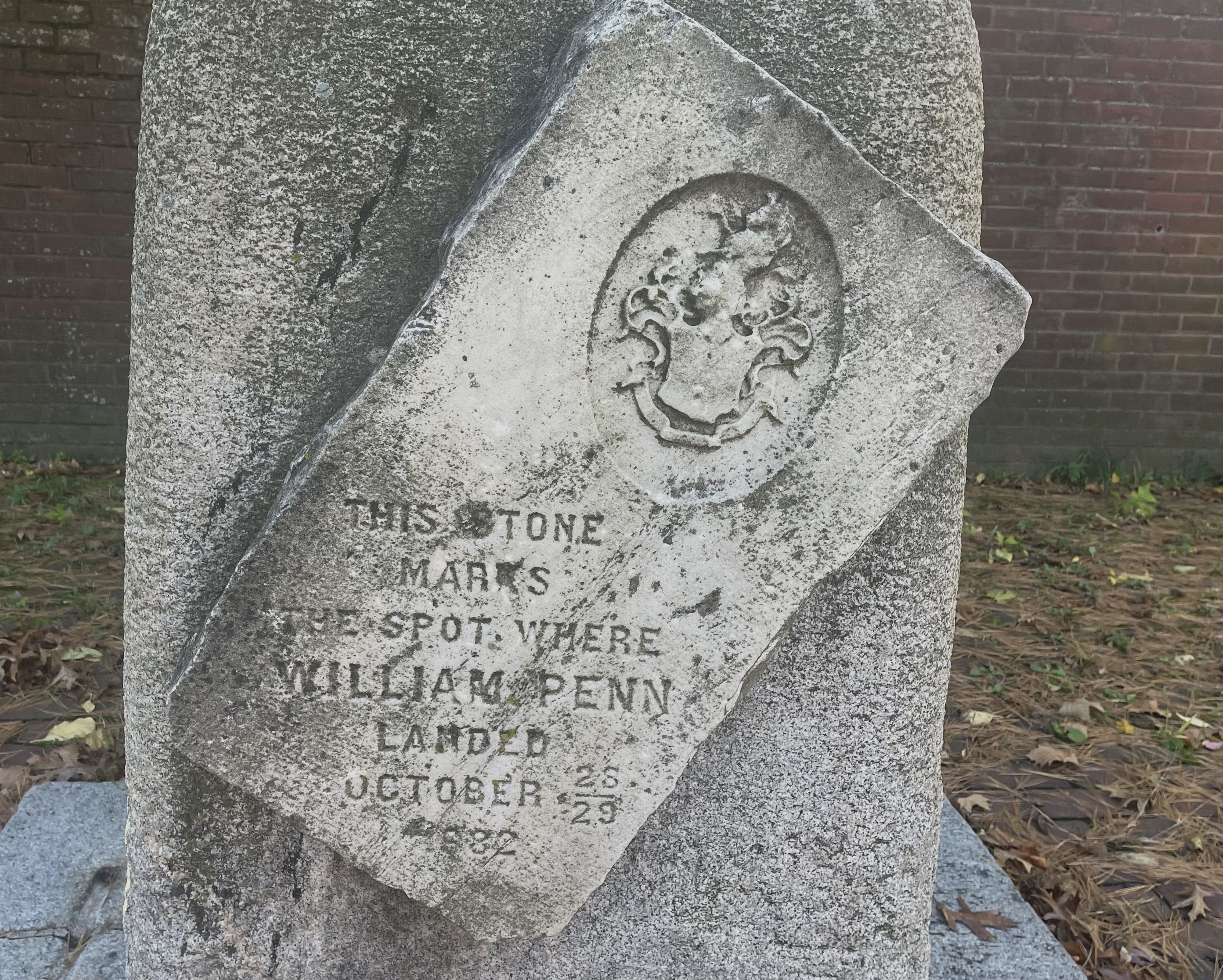
The inscription on the monument marking William Penn’s landing in Chester in 1682. Anthony R. Wood/Staff photo
1682: William Penn’s ship, the Welcome, docked in Chester. Penn wanted to make Chester his capital but, after a failed land deal, moved upriver to Philadelphia.
1850: Chester lost its county-seat status, but a mill boom revived the city’s economy.
1871: On the Chester riverfront, John Roach opened what becomes the nation’s largest shipyard.
1879: Scott Paper Co. was founded and would become one of the nation’s largest toilet-tissue and paper-towel producers.
1917: Sun Shipbuilding & Dry Dock Co. launched its first ship and would become an important international shipbuilding center.
1940s: At the height of World War II, the shipyard employed more than 35,000 people.
1960s-70s: After peaking at 70,000 residents, the population dropped dramatically as the industrial base eroded.
1980: Sun Ship launched its last ship before the company was sold.
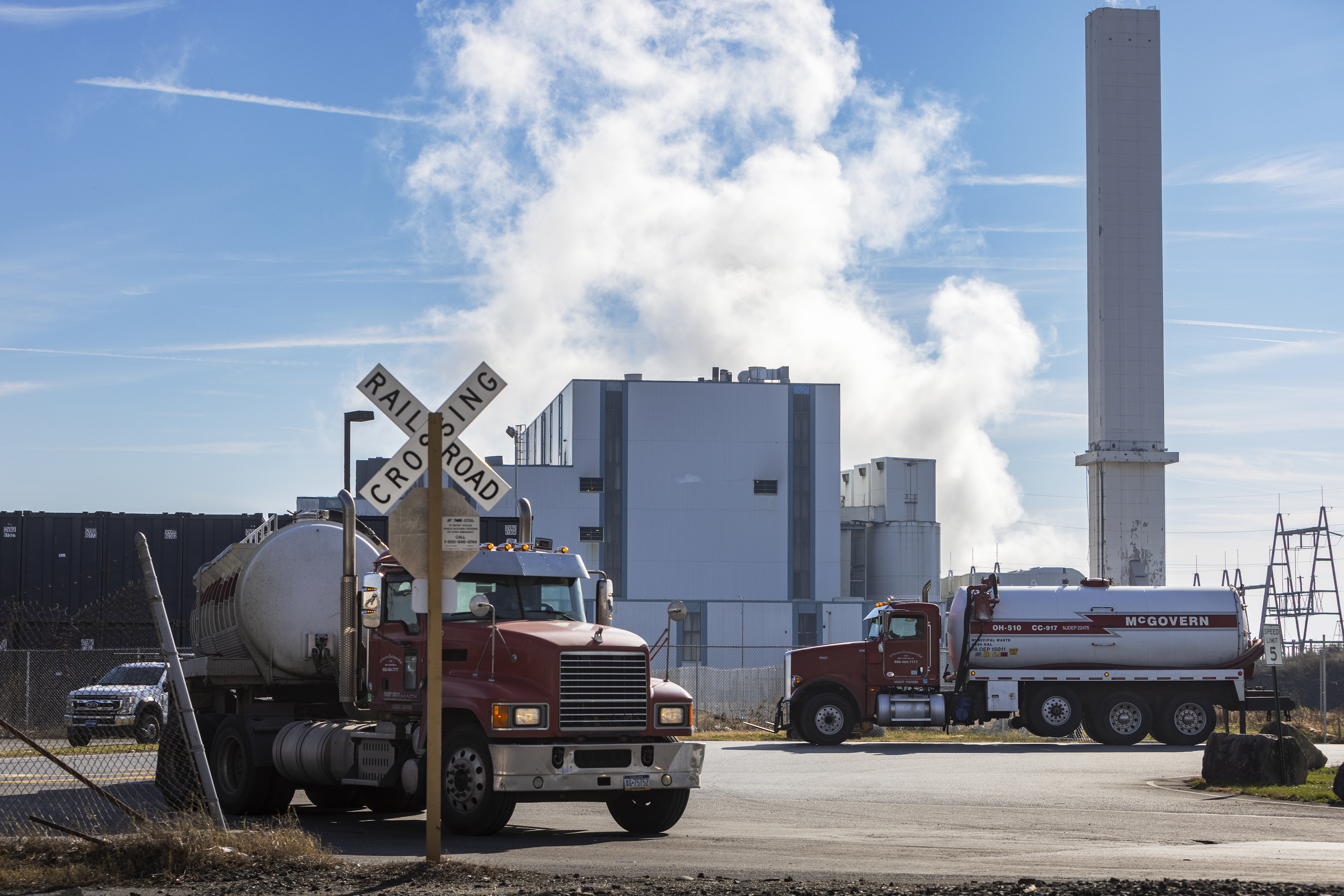
1991: A controversial incinerator began operation in the city’s West End, becoming a major contributor to the city’s treasury and a bane to the neighborhood.
A view of the incinerator. Alejandro A. Alvarez / Staff Photographer
1995: Chester was designated a “distressed city” by the state.
2007: What would become Harrah’s Philadelphia Casino & Racetrack opened at the former shipyard site.
Harness racers pass the finish line at Harrah’s Casino & Racetrack Monday, Sept. 11, 2006, a day after the track opened at the former site of Sun Shipbuilding & Dry Dock Co.Associated Press /
2008: Subaru Park, home of the Philadelphia Union, broke ground.
2020: A fiscal emergency was declared, and the state appointed a “receiver” to oversee city finances.
2022: Chester filed for bankruptcy, a rarity among the nation’s 35,000 municipalities.
A seventh death tied to Pennsylvania’s measles outbreak, the nation’s worst in decades, was confirmed on Friday by Pennsylvania health officials. The death involved an unvaccinated person in Montour County.
The individual had tested positive for measles, and the death was reported to the Centers for Disease Control and Prevention, the Pennsylvania Department of Health said in a news release. Officials did not provide any additional information on the death, citing state privacy laws.
The CDC, under leadership of Health and Human Services Secretary Robert F. Kennedy Jr., a longtime anti-vaccine activist, has been slow to log measles deaths.
As of Friday, it had acknowledged only six deaths on its measles data dashboard, which does not specify where in the country they occurred.Outside of Pennsylvania, state officials in New York have reported one measles-associated death and Wisconsin has reported two, all in children.
(function(){function e(){window.addEventListener(`message`,function(e){if(e.data[`datawrapper-height`]!==void 0){var t=document.querySelectorAll(`iframe`);for(var n in e.data[`datawrapper-height`])for(var r=0,i;i=t[r];r++)if(i.contentWindow===e.source){var a=e.data[`datawrapper-height`][n]+`px`;i.style.height=a}}})}e()})();
In Pennsylvania, state officials have largely declined to provide information on measles deaths beyond the patient’s county of residence and vaccination status; all other information has come from local coroners and right-to-know records requests.
The Montour County Coroner’s Office did not immediately respond to a request for comment.
The Central Pennsylvania county, located about 75 miles north of Harrisburg, has reported four measles cases this year out of the 1,542 cases reported statewide.
State health officials on Friday reported 61 new cases in the past seven days, continuing a trend of slowing spread in recent weeks.
Bucks County reported its first case of the year earlier this week, in an individual who had traveled to a part of Central Pennsylvania where measles is circulating.
Elsewhere in the Philadelphia region, Chester County has reported 96 cases as measles spread along its western border with Lancaster County, which has reported about one-third of the state’s total cases. State officials and health experts believe the reported cases significantly undercount the full toll of the outbreak.
(function(){function e(){window.addEventListener(`message`,function(e){if(e.data[`datawrapper-height`]!==void 0){var t=document.querySelectorAll(`iframe`);for(var n in e.data[`datawrapper-height`])for(var r=0,i;i=t[r];r++)if(i.contentWindow===e.source){var a=e.data[`datawrapper-height`][n]+`px`;i.style.height=a}}})}e()})();
Measles cases have been rising nationally due to declining vaccination rates, putting the United States at risk of losing its measles elimination status from the World Health Organization. A regional division reviewed evidence from recent outbreaks around the nation this week and is expected to announce its findings early next week.
Losing the symbolic status would indicate that measles — considered eradicated in the U.S. since 2000 — is once again endemic, meaning it is spreading locally from one community to the next.
There have been 5,412 confirmed measles cases nationally as of Thursday, more than double the case count in all of 2025, according to the CDC’s measles dashboard.
Although New Jersey has not seen an outbreak this year, health officials on Friday alerted residents about a potential measles exposure at a convention and several other locations in the northern part of the state over the last week.
An out-of-state resident infected with measles had visited LegionsCon, a convention for fans of the action figure company Four Horsemen Studios. The convention took place at the Hanover Marriott in Whippany, N.J., last weekend, health officials said.
The person also visited a Sonesta Simply Suites in Morris Plains, a Walgreens in Morristown, and the Atlantic Health Morristown Medical Center’s emergency department.
In a statement posted on their Instagram page, Four Horsemen Studios wrote that the person did not know they had been exposed to measles before attending the convention, and had no signs of sickness beforehand. “Please know that NO attendees were admitted showing signs of any sickness,” the company wrote.
After the convention, the company said, the person learned that a family member had tested positive for measles — and then tested positive themselves.
New Jersey has reported two cases of measles this year, in April and October.
After seeing no measles cases for a decade, Delaware has reported 25 cases this year, all in Kent County, the central portion of the state.