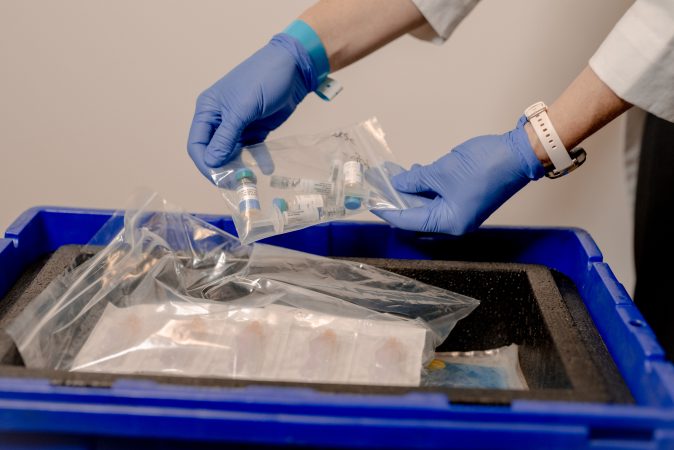
Nineteen people have been hospitalized for measles since April in Pennsylvania, state health officials reported in a new online data dashboard launched this week to track the spread of the highly contagious disease.
Since April, an outbreak centered in Lancaster County has sickened 98 people — about a third of whom were under 18.
The virus is also circulating in western Chester County, on the border between the Philadelphia area’s suburbs and Lancaster in central Pennsylvania. The county reported two additional cases this week, bringing its total to six since the outbreak began.
The state has seen 110 cases this year, nearly seven times the caseload in 2025 and the largest case count in three decades. None of the patients sickened this year were fully vaccinated against the disease, state health officials said.
On the new dashboard, officials also highlighted ongoing vaccination efforts in affected counties, noting that this year state health workers have given out more than 600 doses of measles, mumps, and rubella vaccine in Lancaster County alone — more than three times the doses administered there in all of 2025.
Secretary of Health Debra Bogen said in a statement that the measles dashboard launched as part of ongoing efforts to “boost public access to information and provide transparency in our work to protect public health.”
After The Inquirer and the Pittsburgh Post-Gazette earlier this year published analyses on school-level vaccination data that were not readily available to the public, the state committed to publishing that information on its website. The data will be available by August, officials said.
New cases near Philadelphia
Lancaster County has been a particular hot spot for measles, with 59 cases reported since April.
Last month, Chester County became the first in the Philadelphia region to identify measles cases since the current outbreak began.
As of Thursday, six people in the county had been diagnosed, county officials said. A seventh case was reported earlier this year during a separate outbreak.
All of the cases in Chester County were identified after patients sought medical care, but none have been hospitalized, said Nancy Sullivan, supervisor of the county’s disease investigation and surveillance program.
Most of the patients in Chester County contracted measles — which can infect up to 90% of unvaccinated people exposed to the disease — because they lived with another measles patient, Sullivan said.
“Individuals in the household are incredibly high risk; it’s not surprising to me that most [cases] are household contacts,” Sullivan said.
The county has not identified cases contracted through “community transmission,” when a person in a public place like a library or supermarket exposes others to the disease.
Still, physicians working in Lancaster have said they believe the true number of measles cases in Pennsylvania is higher than reported.
With cases circulating in the western part of Chester County, on the border with Lancaster County, Sullivan also suspects more cases are going unreported.
“We’re looking for community transmission and trying to stop that as quickly as possible,” she said.
County officials have encouraged residents to ensure they are up-to-date on measles vaccinations, directing locals to clinics hosted by the state health department.
If they are not able to attend those, Sullivan said, health workers will point them to Chester County’s own vaccination clinic, or even drive to residents’ homes to vaccinate them.
The county is also in daily communication with Philadelphia regional health officials, who have been closely monitoring infectious diseases amid a full slate of high-profile summer events in the area.
How did Sylvester Stallone make and star in Rocky? Well, he had to put up a fight.
The trailer for the forthcoming biopic I Play Rocky has officially been released by Amazon MGM Studios. The film follows a young Sylvester Stallone, played by Anthony Ippolito, on his harrowing journey pitching and filming his Oscar-winning movie.
Scenes from the trailer show the many hardships that went into making the movie, including Stallone convincing the producers to breaking his hand while filming the meat-punching scenes.
Filming took place from October to December 2025, in Los Angeles, New Jersey, and Philadelphia, according to USA Production News. The filmmakers created their own version of the iconic run up the museum steps, filmed at the Philadelphia Museum of Art, and filming was also seen taking place in Kensington.
Ippolito is best known for portraying Al Pacino in the Paramount+ miniseries The Offer,another biographical production about the making of a film — in this case, The Godfather. The I Play Rocky trailer shows the rising actor looking nearly identical to Stallone, with the thick, deep voice to match.
Other main roles include AnnaSophia Robb as Stallone’s wife, Sasha Czack; Matt Dillon as Stallone’s father, Frank Stallone Sr.; and Stephan James as Carl Weathers, who played Apollo Creed in the Rocky franchise.
Peter Farrelly, born in Phoenixville, Chester County, directed the film. He is best known for directing and cowriting the 2018 comedy-drama film Green Book, which won the Oscar for Best Picture.
The real-life Sylvester Stallone is not involved in the production.
I Play Rocky is set to have a select theaters release on Nov. 6, according to Deadline. This will gear up the movie to be eligible for awards season.
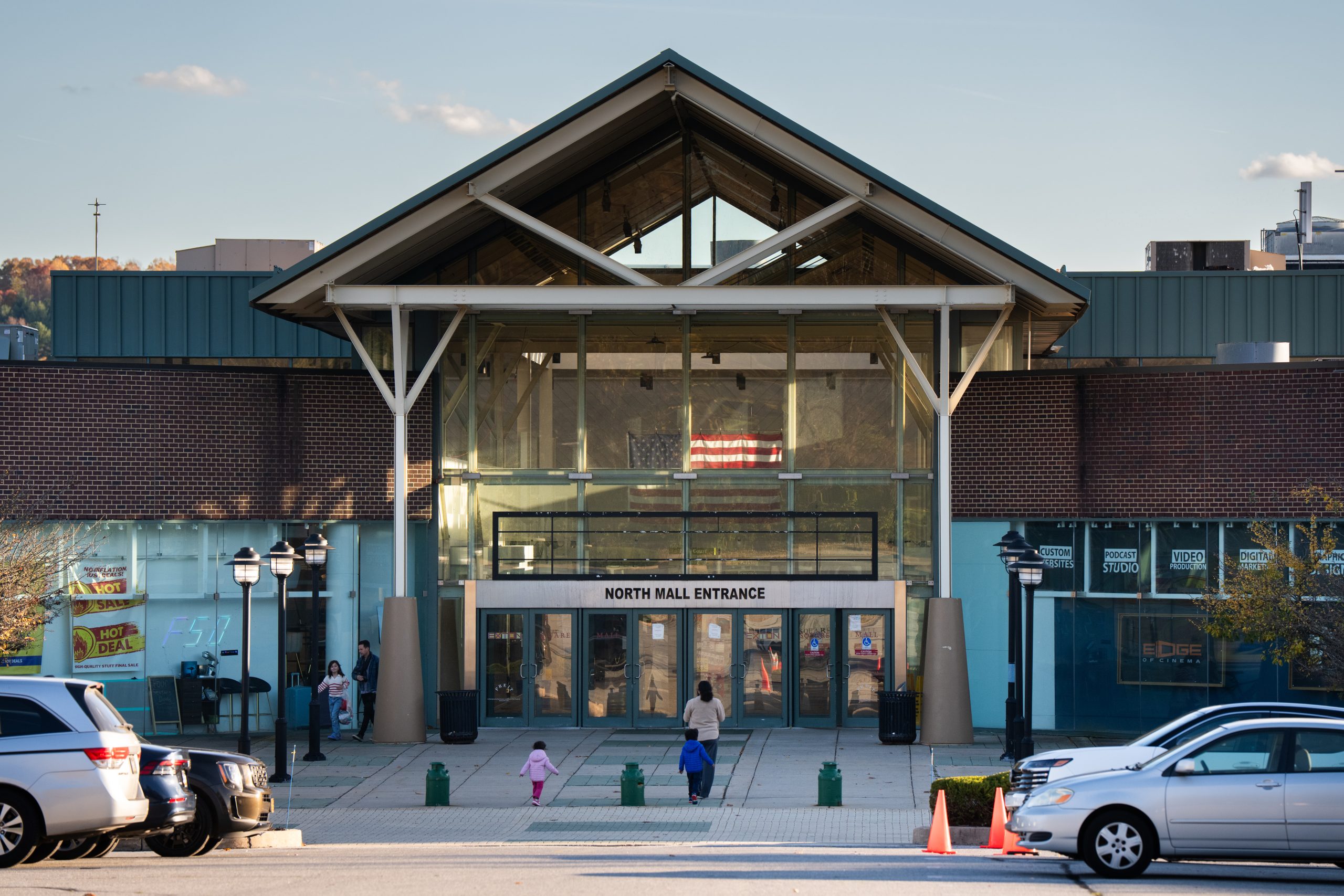
Developers want to convert the defunct Exton Square Mall into a mixed-use town center. Jessica Griffin / Staff Photographer
Real estate lawyer Marc Kaplin is feeling “pretty optimistic” about the future of Exton Square Mall, which shuttered at the end of June.
He’s currently representing the developers looking to transform the largely defunct space into a mixed-used town center, waging a legal battle to get the project going.
Unlike other similar redevelopments in the region, this one has received pushback, including West Whiteland supervisors’ denial, something he sees as an anomaly given the tax drain vacant sites like this can have.
The county announced last month that it had reached “functional zero” for homelessness. One local family, the McNeils, has gone above and beyond for decades to help, becoming an example of thecross-sector collaboration that officials say resulted in the achievement.
The affordability crisis is a personal one for U.S. Rep. Chrissy Houlahan, one of the centrist House Democrats helping craft a detailed “affordability agenda.” The Devon resident’s household, where both her adult child and her parents currently reside, has become a part of the so-called sandwich generation. The Inquirer’s Sam Janesch explores how her personal life informs her legislative goals.
Mariel Kornblith-Martin, who served as campaign manager for Mark Pinsley’s 2024 auditor general campaign and was later accused of paying college students to sign petitions with forged signatures, including those of multiple elected officials, agreed to a guilty-plea deal in Chester County last week.
In case you missed it, Westtown Township’s supervisors are looking to remove members of the historical commission as the two groups butt heads over the future of the Darlington Inn. The Inquirer’s Brooke Schultz has the details.
Kevin Krebs, the Malvern man who brought guns to a West Chester No Kings protest last year, and was later discovered to have homemade pipe bombs at his house, has been sentenced to over three years in prison.
More potential amendments to a proposed 1.5 million-square-foot data center struck a nerve with some East Whiteland Township residents when the developer presented them last week. Here’s what to know.
Family members are mourning Sean O’Connor, the 29-year-old who died during storms that swept through the region when he was at Downingtown’s Marsh Creek State Park on July 4. He was “the sweetest man you could ever meet,” his wife, Lucy Troutman, recalled, while O’Connor’s father remembered his kindness and willingness to go out of the way to help others.
Students at West Chester University will see tuition go up 4.3% after a Pennsylvania State System of Higher Education board of governors vote last week.
Fans of Berwyn native Brad Ingelsby’s hit HBO shows Task (which just got six Emmy nods) and Mare of Easttown will finally see their two worlds collide in a crossover. Here’s what we know.
Downingtown’s borough manager, Jeffrey A. Smith, recently stepped down, but will continue to consult on borough matters. He’s being replaced on an interim basis by Corinne Badman.
The Nest, a new holistic health community and retreat space, has opened in Lincoln University.
🏫 Schools Briefing
Two Downingtown high school students admitted to drinking alcohol while supervising a football camp at Downingtown East High School last month. Here’s what to know about the incident.
🍽️ On our Plate
A mother-and-son-owned juice joint is opening in Kennett Square. Located at 148 W. State St., Lupita’s Juice Bar will host a grand opening on Sunday. It will serve fresh-squeezed and blended juices, as well as smoothies, yogurt parfaits, overnight oats, and salads.
A new ice cream shop soft launched over the weekend at 503 E. Gay St. in West Chester. Urban Scoop serves up an array of flavors in cups and bubble waffle cones.
🎳 Things to Do
🎵 Chill on the Hill: This month’s edition of the East Whiteland concert series features bluegrass artist East Nash Grass, as well as Americana singer/songwriter Jack Blocker. ⏰ Wednesday, July 15, 6:30-8:30 p.m. 💵 Free 📍 Valley Creek Park, Malvern
🎹 Tredyffrin Township Summer Concert Series: Rick’s Office Band, which plays cover tunes, headlines this week’s show. ⏰ Thursday, July 16, 7 p.m. 💵 Free 📍 Wilson Farm Park, Wayne
🇺🇸 Charles Towne Market: Charlestown Township is celebrating the nation’s 250th anniversary with a history-inspired market, complete with period dress, quill writing, and a flag dedication. There will also be food trucks and vendors. ⏰ Saturday, July 18, 10 a.m.-4 p.m. 💵 Pay as you go 📍 Brightside Farm, Malvern
🍦 Ice Cream Social: This family-friendly event includes ice cream, crafts, a photo booth, face painting and more. ⏰ Sunday, July 19, 2-5 p.m. 💵 Free 📍 Springton Manor Farm, Glenmoore
🎡 Kimberton Community Fair: Now in its 97th year, the fair features carnival rides, livestock shows, a beer garden, and more throughout the six-day event. ⏰ Monday, July 20-Sunday, July 25, times vary 💵 Pay as you go 📍 Kimberton Fair Grounds, Phoenixville
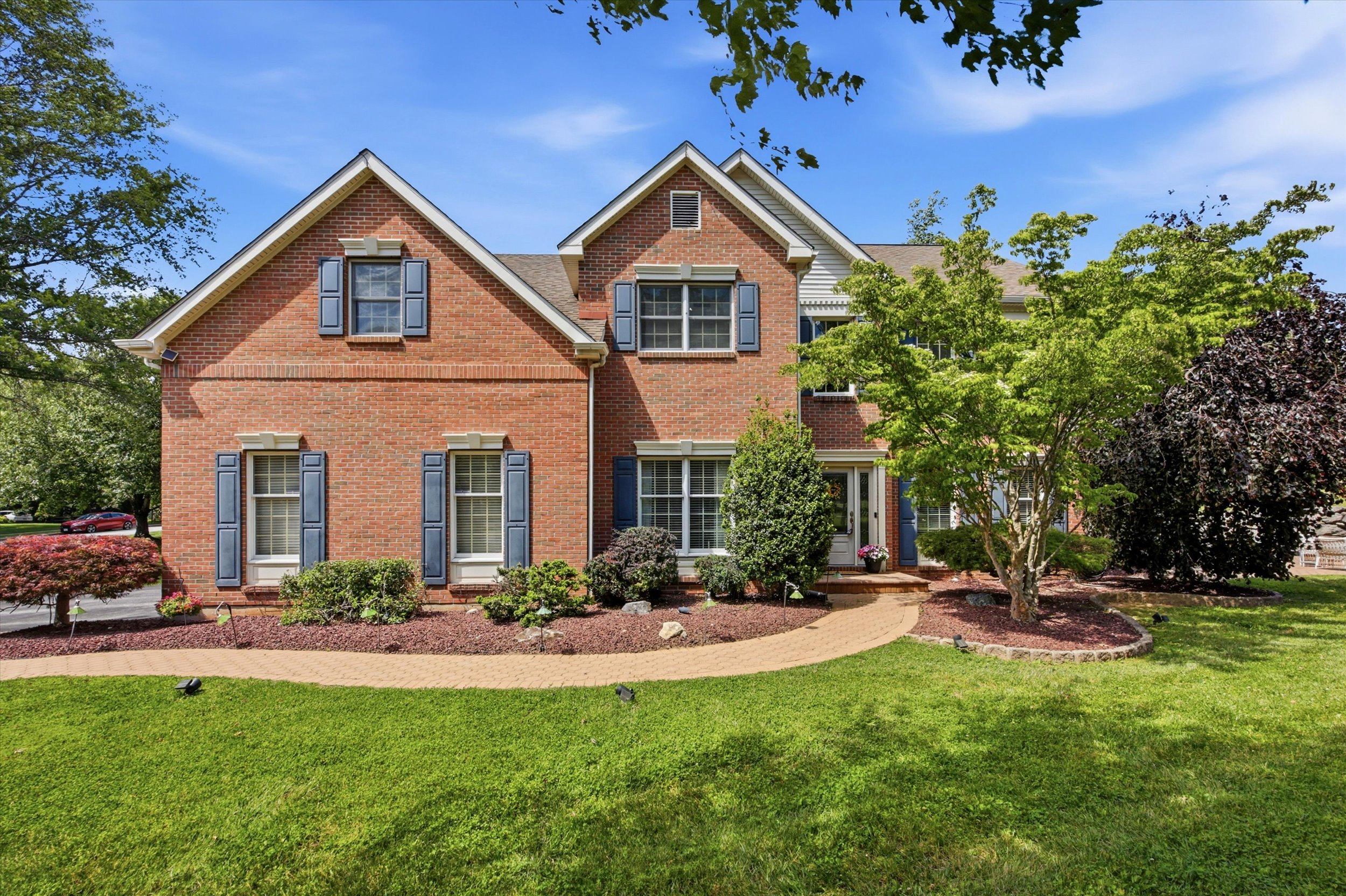
The home has a brick front and sits on a corner lot.Alcove Media | Courtesy of Cory McDonald/Holloway Real Estate Group
With easy access to the Uwchlan and Struble Trails, this four-bedroom Downingtown home blends the indoors and outdoors. That’s evident in a sun room addition that opens onto a patio and the backyard. Other features include a kitchen with granite countertops and an island, an office, dining and living rooms, and a family room with vaulted ceilings, a skylight, and a fireplace. The primary suite also has its own sitting area and a double vanity. There are open houses Friday from 4 to 6 p.m. and Sunday from 11 a.m. to 1 p.m.
By submitting your written, visual, and/or audio contributions, you agree to The Inquirer’s Terms of Use, including the grant of rights in Section 10.
This suburban content is produced with support from the Leslie Miller and Richard Worley Foundation and The Lenfest Institute for Journalism. Editorial content is created independently of the project donors. Gifts to support The Inquirer’s high-impact journalism can be made at inquirer.com/donate. A list of Lenfest Institute donors can be found at lenfestinstitute.org/supporters.
Marc Kaplin takes “pit bull” as a compliment when it’s used to describe him. The longtime real estate lawyer who has championed property rights for developers in the region takes it to mean “aggressive, prepared, knowledgeable.”
He’s using that tenacity right now in court, battling over whether his client’s plan to redevelop the recently shuttered Exton SquareMall into a mixed-use town center can go forward despite the town supervisors’ denial.
For decades, Kaplin, 82, has been behind dozens of regional development projects, with clientele spanning the Delaware Valley, into the Lehigh Valley, the Poconos, Delaware, and New Jersey.
Kaplin’s interest in real estate law kicked into high gear when his family moved to Blue Bell in 1978, near Wings Airways. It was still “a prairie” with little development, he recalls. The airway owners wanted to expand the runway, challenging the township’s ordinance. He was hired by a group of neighbors to oppose it.
Marc Kaplin, a real estate powerhouse, talked to The Inquirer about the Exton mall redevelopment project and more.Courtesy of Marc Kaplin
That led to his role as township solicitor for Whitpain Township in Montgomery County in the early 1980s. Eventually, he moved into development: First working for his landlord, Bud Hansen of Hansen Properties, which becameone of the biggest developers in Montgomery and Chester Counties.
When Toll Brothers started, Kaplin was there. He’s represented the home construction company for more than 40 years. Other clients, like retail developers Wolfson Group, have also spent decades alongside Kaplin.
This conversation has been edited for clarity and brevity.
You’ve worked in the city and the suburbs. Where is it easier to get projects done?
They’re both extremely difficult and getting more and more difficult for different reasons.
Philadelphia, if you don’t have a by-right project, you’ve got to go to the neighborhoods, the RCOs [registered community organizations]. You got to spend a lot of time, and it’s more political and satisfying people, than it is complying with every small [thing].
Not only do you have to make sure that all the I’s are dotted and T’s are crossed in the suburbs, you got to know what to look for.
There’s often community pushback in development projects. What are you hearing now when communities oppose a project?
Just seems like everybody is against almost everything for a variety of reasons. Everybody complains about traffic. That’s the biggest thing. It’s ‘We’re here, we live here, we don’t need any more stores. We don’t need any more of this or that.’ But a lot of times you get a mixed bag.
Now the Exton mall, we got very good reception to the Exton mall. It’s only a small group of people who are against the redevelopment of the Exton mall.
Does the pushback to Exton Square Mall feel representative of larger trends in the region?
It’s an anomaly for a project like that. When you look at the malls that are in really bad shape, townships are reaching out and want them redeveloped. Montgomery Mall. Plymouth Meeting Mall. Some over in New Jersey. I’m working on the Berkshire Mall up in the Reading/Wyomissing area, and we’re getting tremendous cooperation.
These malls are 1,500-pound gorillas. They killed tax base, millions and millions of dollars that were coming in before. … I can’t give you a logical reason why two supervisors in West Whiteland are putting up this fight. I’m waiting for a judge to make a decision.
We’re pretty optimistic that we’ll be able to go ahead, but it ain’t over until it’s over.
You’ve been quoted as saying ‘indoor malls don’t work,’ but we are seeing some success in King of Prussia and Cherry Hill. What do you think sets them apart from places like Exton mall?
They are the super regional malls, and they do work, and Simon controls many, many of them. They work, but the Plymouth Meeting Mall doesn’t work, the Exton mall doesn’t work, the Willow Grove mall doesn’t work, and many, many more.
There’s a whole long history of why that’s so. There were, in the ’60s and ’70s, department stores we no longer have: Wanamakers, Strawbridge’s, Snellenburg’s, and on and on. … And then you had J.C. Penney and Sears, and it was much easier way back then to get three large anchors. Then the Kmarts came along, and the Walmarts, the big boxes that didn’t have all of the infrastructure. The common operating expensesare much less, because you have all interior halls — heating, air-conditioning, and all that.
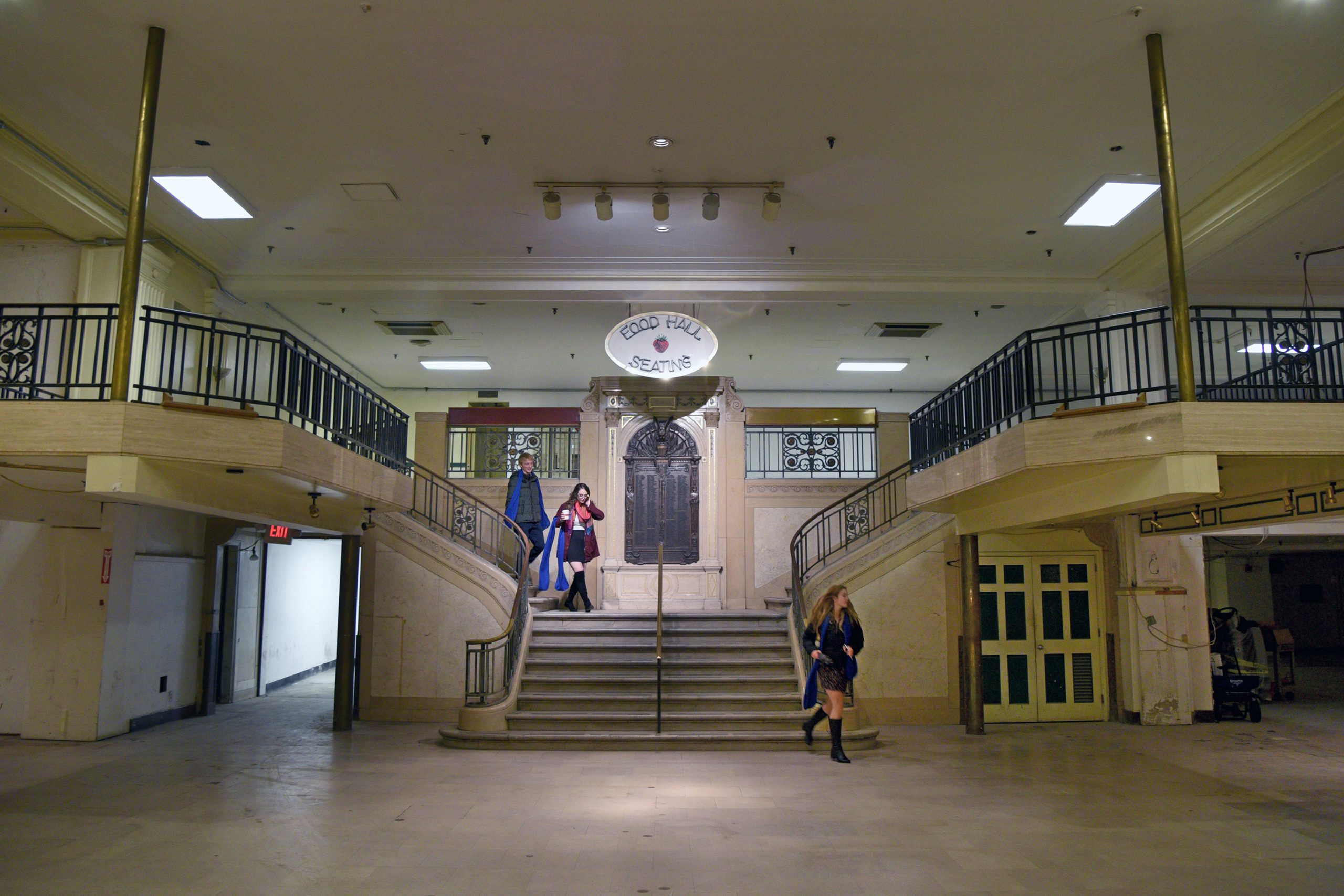
Members of the Strawbridge family explore the old Food Hall on the first floor of the former Strawbridge & Clothier department store site on the north side of the 800 block of Market Street Dec. 17, 2019.Tom Gralish / Staff Photographer
Because it’s run by the best operator around.That’s my client, Steve Wolfson. It’s had a[n] … anchor for now over 20 years.
In Exton, there was about a 10-year period when there were two supervisors who were against everything. So you didn’t see a great deal more development, but the Main Street at Exton used the new urbanist approach 22, 23 years ago and made huge improvements to the roads. There are great roads there, and it was right in the path of development.
Are there any cases or projects that have shaped Chester County as we know it today?
Exton has always been called the crossroads of Chester County. You’ve also got the Hankin Group that has done all the development in Chester County. … You had very big companies come in — Vanguard — and you had good school systems and relatively decent roads. I think it’s just the continued outward development from Philadelphia.
Many suburbs are facing affordable housing crises. How do you predict municipalities will overcome NIMBYism when it comes to those projects?
It’s a very, very, very difficult problem. There are very few places in the entire country where it’s been solved. New Jersey has the most extensive program in the country to cause the development of affordable housing … that’s really the Mount Laurel doctrine, and where the townships are required not only to make affordable housing available, but also to make it happen.
The market cannot create affordable housing without governmental help. Just can’t be done. It’s not enough land. Regulations are enormous, expensive.
It’s a societal problem that can’t be solved just by municipalities and homebuilders and homebuyers.
Do you think all of the proposed data centers will actually get built?
I’m involved in a couple of data centers. … At first the communities were dead set against more warehouses, particularly up in the Lehigh Valley, and then when this particular community heard ‘data center,’ they were ecstatic — for a whole variety reasons: very little traffic, very few people in schools, high-paying jobs, and now there’s this national swell attacking data centers.
The data centers we’re seeing now, in one fashion or another, are creating their own energy. So my own particular opinion is that it’s just blown up, overblown, over-exaggerated, and we’re going to need all this computing power as we move into the next technology age.
A schism between Westtown Township’s elected officials and its historical commission reached a boiling point this week, with the municipality’s supervisors planning to remove the commission over what several members say is a disagreement regarding a historic building that residents have fought for years to preserve.
An email sent to each of the six volunteer commission members Monday alerted them that Westtown’s three supervisors planned to take a vote at their meeting next week to remove them.
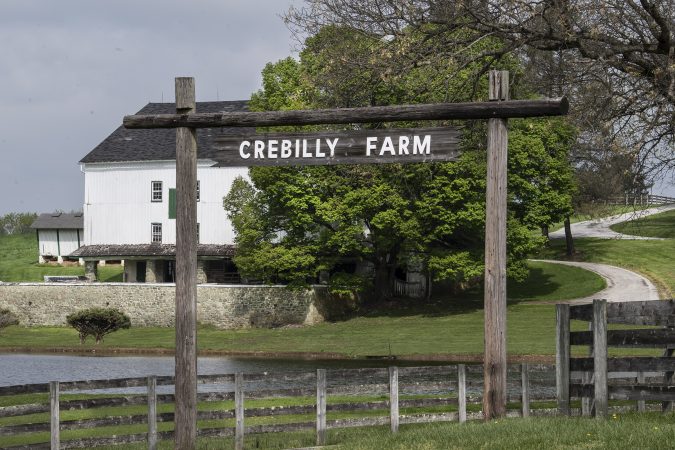
At the center of the conflict is the historic Darlington Inn, a 19th-century building that sits on a two-acre parcel at the corner of State Routes 202 and 926. The inn was acquired in 2024 as part of a larger battle, led by the community, to preserve the 206-acre Crebilly Farm and fend off plans for residential redevelopment of the land.
But the township has regarded the inn, which is along the farm tract, as a temporary purchase that it would eventually auction or sell off to recoup the $200,000 in taxpayer funds used to buy it. That has put the officials at odds with its own historical commission, whose members have adamantly fought to preserve the inn.
“It’s really disheartening,” said Pamela Boulos, who has served on the commission for roughly a decade. “It’s really disheartening to know that this is the level that they’re willing to go to.”
In an email, shared with The Inquirer, that included the subject line “Courtesy notice,” Township Manager Mila Carter said she was providing “advance notice, as a courtesy,” that the board’s agenda for Monday’s meeting “will include an item regarding your appointment to the Historical Commission.”
“The Board will be considering a motion to remove your appointment from the Commission,” she wrote. “No action has been taken at this time, and the matter will be discussed and considered during the public meeting.”
She also notified members that the commission’s planned Tuesday meeting had been canceled.
Members said they were told separately they could reapply.
The township did not immediately respond to a message seeking comment.
The board’s decision comes as tensions have been increasing between the commission and the elected officials. Commission members say the relationship has grown more hostile recently, particularly as it pertains to the Darlington Inn.
Commission members felt that the community had largely believed that the inn was to be preserved alongside Crebilly Farm when the township purchased it in 2024. When it became clear the intention was to offload the inn as a separate parcel, the commission began to raise awareness among residents about the possible loss of the building. Members said they wanted to see if there was appetite from private donors to purchase and maintain the property.
“My belief is that some of the supervisors felt that this was untenable, this was an annoyance, this was interfering with what they wanted to accomplish,” said Stephen Wahrhaftig, who has been on the commission for four years. “A few of the people on the commission were viewed as the troublemakers, and to get rid of only one or two people probably would have been bad optics … so the easy thing to do, as other townships have done, is just dissolve the whole thing, just get rid of it.”
At its July 6 meeting, Patrick McDonough, chair of the historical commission, asked the township to consider easements on the land, to preserve the facade of the structure. The commission wanted to guard against “Wawa popping up there, or CVS,” he said separately.
The board of supervisors declined to put any restrictions on the property. Jodi Nawrocki, chair of the board, said at the meeting nothing precluded the township from adding such easements in the future.
“I think the way to use the building to the best use is through changing the zoning,” she told McDonough.
McDonough said he felt that, in the process of the commission arguing its point, the board “thought that we were overstepping our bounds as a historic commission.”
“My own township is willing to just auction this building off with no protection, no easements, and allow it to basically fall into the hands of what everybody else wants to do with it,” McDonough said. “I never thought that my own township would be the one I’d be fighting against the hardest.”
The commission, formed in 2013, was created to help develop community appreciation of the township’s history and to preserve that history. The commission has created Westtown Day, an annual community day; has published a history book about the township; and hosts a litany of lectures. The volunteer-run body is appointed by the supervisors for three-year terms, and serves as an advisory committee to the board.
“You would think, being a municipality in one of the oldest counties in America, that historic preservation, especially here in our year of America 250 … would be top of mind and not something swept aside,” Wahrhaftig said. “But I guess right now that’s not the case.”
This suburban content is produced with support from the Leslie Miller and Richard Worley Foundation and The Lenfest Institute for Journalism. Editorial content is created independently of the project donors. Gifts to support The Inquirer’s high-impact journalism can be made at inquirer.com/donate. A list of Lenfest Institute donors can be found at lenfestinstitute.org/supporters.
A Malvern man was sentenced Tuesday to more than three years in prison for having a collection of homemade bombs at his house — a discovery police made after he was arrested for bringing guns to a “No Kings” protest in West Chester last year.
Kevin Krebs, 32, apologized for his actions, saying he had let his family down and adding: “I really screwed up, and I regret everything that I did.”
His family said in court that Krebs — who was adopted from a Lithuanian orphanage as a toddler — had suffered from lifelong developmental disabilities, including autism. And they believed his interest in bombs and firearms was part of an obsessive nature that he also displayed in other, non-threatening technical areas, such as electrical work, which he performed professionally.
Krebs told U.S. District Judge Mary Kay Costello that he had built the bombs only to blow up pumpkins in the Poconos, calling his pursuit “purely recreational.”
Costello said she was not sure that was true. And in any case, she said, his possession and interest in building such devices was a threat to himself and others.
“Just having these bombs in your home posed a grave danger to other people,” Costello said.
In addition to imposing a 37-month prison sentence, Costello ordered Krebs to serve three years of supervised release. He had pleaded guilty in December to a charge of possessing unregistered devices.
A firearms case remains pending in Chester County, with a trial scheduled to begin next week, according to court records.
The events that led to Krebs’ arrest began last June, when attendees at a “No Kings” protest in West Chester told officers they thought Krebs had been carrying a gun.
Police who stopped Krebs found him carrying a loaded handgun, extra rounds of ammunition, and other weapons including a knife and bayonet, prosecutors said. He also had an AR-15 rifle in his car.
He did not have a concealed carry permit, and Chester County prosecutors charged him with illegal gun possession.
Two days later, police searched his home on Conestoga Road and found 13 homemade pipe bombs, prosecutors said, some of which contained nails or screws, which can make the devices more violent when they detonate. Investigators also found components used to make detonators and tactical vests, which prosecutors said demonstrated that he was not simply experimenting with explosives — he was building an “arsenal” of dangerous weapons.
County prosecutors charged Krebs with new crimes including possessing weapons of mass destruction and causing a catastrophe, and federal prosecutors went on to adopt the portions of the case that related to explosives.
Krebs’ case attracted attention in part due to its connection to the No Kings demonstration, one in a series of recurring events at which protesters across the country rally against President Donald Trump. But prosecutors said Krebs’ beliefs and potential motives were not particularly clear.
Krebs was a registered Democrat but had previously been registered as a Republican and said online that he had voted for Trump. Writing online, Krebs later said he came to regret that vote, and before the No Kings event, he had been posting violent rhetoric about Trump and police.
Krebs said in court Tuesday that he attended the protest “in support of the rally” but did not elaborate.
Krebs’ parents told Costello, the judge, that they harbored deep remorse and shame for failing to recognize their son’s drift toward dangerous habits.
But Costello said they had done everything they could to provide their son a better life — welcoming him into a safe home, providing him structure and support, and seeking to connect him with therapy and medications throughout his life.
“This is not your fault,” Costello said. “This was Mr. Krebs’ doing, and he’s going to have to face the consequences of that.”
In the back of a classroom where she had just read to 20 attentive preschool kids, U.S. Rep. Chrissy Houlahan was concerned about what the staff of the West Chester YMCA was telling her.
Nearly a third of the families who rely on the facility’s childcare programs — in the richest county in Pennsylvania, and one of the wealthiest in the country — receive financial assistance to cover the $1,900 monthly cost, the staffers said.
Houlahan, a Democrat who is soft-spoken when she is not grilling President Donald Trump’s cabinet secretaries or House Speaker Mike Johnson (R., La.) on Capitol Hill, asked about the income qualifications for financial aid. At a certain point, the YMCA staff told her, some parents have a disincentive to earn more, lest they become disqualified and then stuck with a higher bill.
“It’s terrible, no matter how you do the math,” Houlahan said a few hours later at a Malvern restaurant, relaying the story to her daughter, Molly Rosa Houlahan, and daughter-in-law, Kristen Rosa Houlahan.
The YMCA’s fee was about the same amount the couple were paying for their 18-month-old, Lucy. With another child due in September, it is also an amount they still are unsure how to afford twice over.
“We’re very fortunate in our jobs, and we’re both trying to get promotions in order to be able to afford a second daycare,” said Molly Rosa Houlahan, 33, a local theater director and producer. “But we are not in that position yet. I don’t totally know what will happen when this second child arrives.”
From childcare to healthcare, groceries to gas prices, affordability concerns have remained top of mind for Americans this year — dominating discussions on Capitol Hill ahead of the high-stakes midterm elections.
Republicans, who control Congress and the White House, say they have made real progress in raising wages and lowering costs. They marked the first anniversary of Trump’s One Big Beautiful Bill Act — since rebranded by Republicans as the Working Families Tax Cut Act — this month by celebrating the law’s more generous tax refunds and other benefits, like new investment savings accounts for children under 18.
Democrats have pointed to the bill’s simultaneous cuts to Medicaid spending and food assistance for low-income families. They say Trump signaled he has no interest in lowering costs when he refused to sign a bipartisan housing bill and said he doesn’t “think about Americans’ financial situation” when handling the war in Iran.
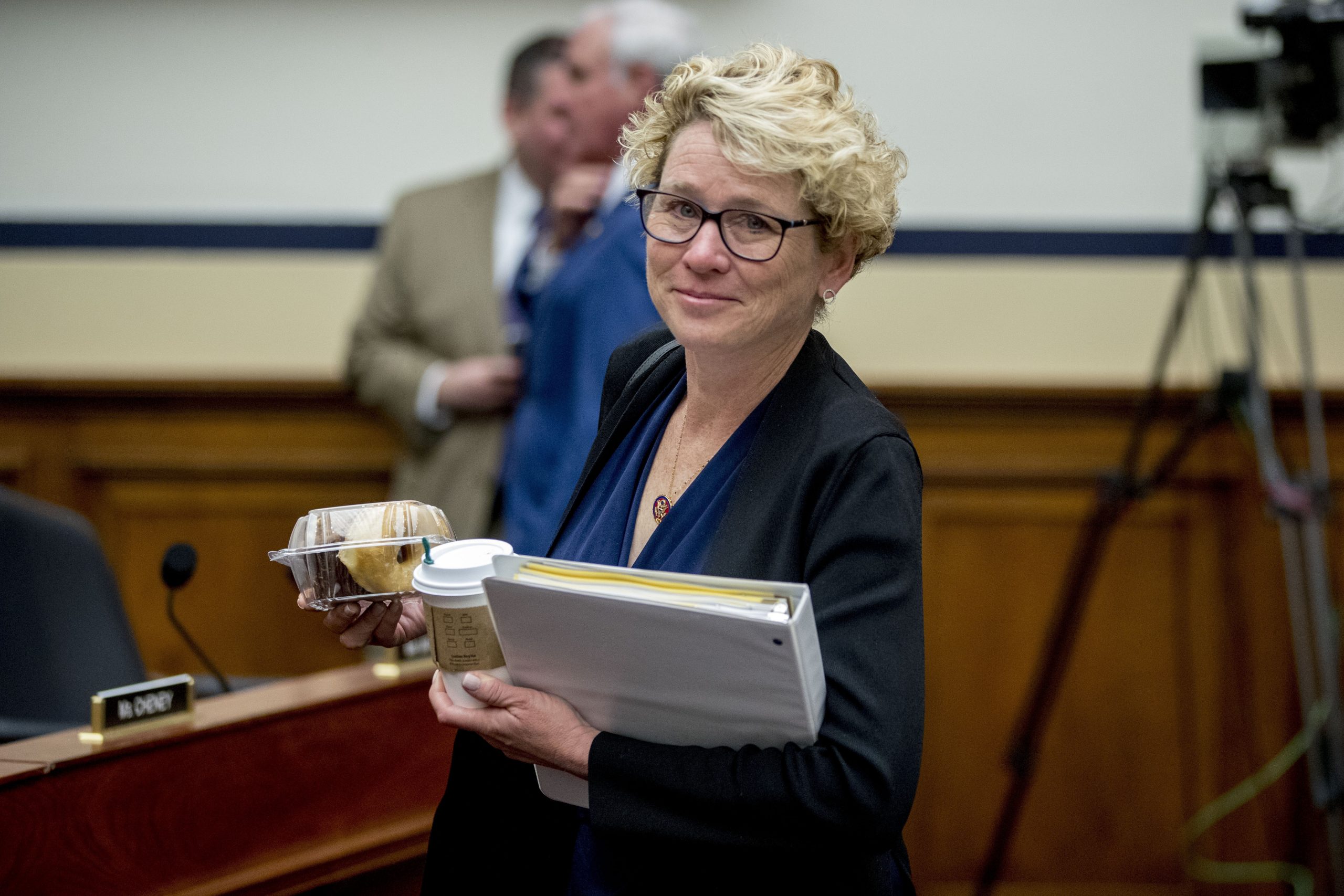
In this 2019 file photo, U.S. Rep. Chrissy Houlahan (D., Pa.) arrives for a House Armed Services Committee budget hearing for the Departments of the Army and Air Force on Capitol Hill in Washington.Andrew Harnik
Houlahan, who has represented most of Chester and Berks Counties since 2019, routinely highlights the broader scope of cost-of-living issues alongside her colleagues. She has taken a leading role among centrist House Democrats to help craft a detailed “affordability agenda.”
Whether her party can advance any of those policies in Washington, even if it wins control of one or both chambers of Congress in November, remains an open question as Trump remains in office and the International Monetary Fund warns of a worsening global economy.
But as the fight drags out, it has also become increasingly personal for Houlahan and her family.
In addition to occasionally helping fill the gaps in their granddaughter’s care, Houlahan and her husband’s own home in Devon, Chester County, has transformed into a version of a so-called sandwich generation household within the last year. The couple’s other adult daughter, her husband, and both of Houlahan’s parents, who are 80 and 84, have all moved in.
The underlying circumstances for the multigenerational home, as they would be for any family, are various and personal. And Houlahan emphasized across multiple interviews that she is fortunate to have the means to welcome her family under her roof. (Houlahan is an Air Force veteran and a former executive at the athletic apparel company AND1. Her husband, Bart, is a partner at an investment research firm.)
But the larger realities — like skyrocketing costs for childcare and senior living — have also now played a role in her own life.Her mother has a Parkinson’s diagnosis, and her parents were unable to find a one-floor living space that was affordable and fit their other needs as they looked to move closer to their family.
“We’re having these conversations, and you know people all over our community are having these conversations,” she said. “It’s an acute issue for families in our area: How do you balance all of this?”
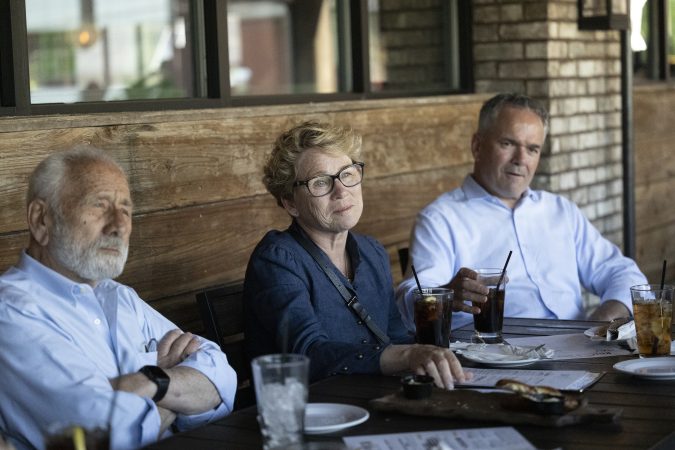
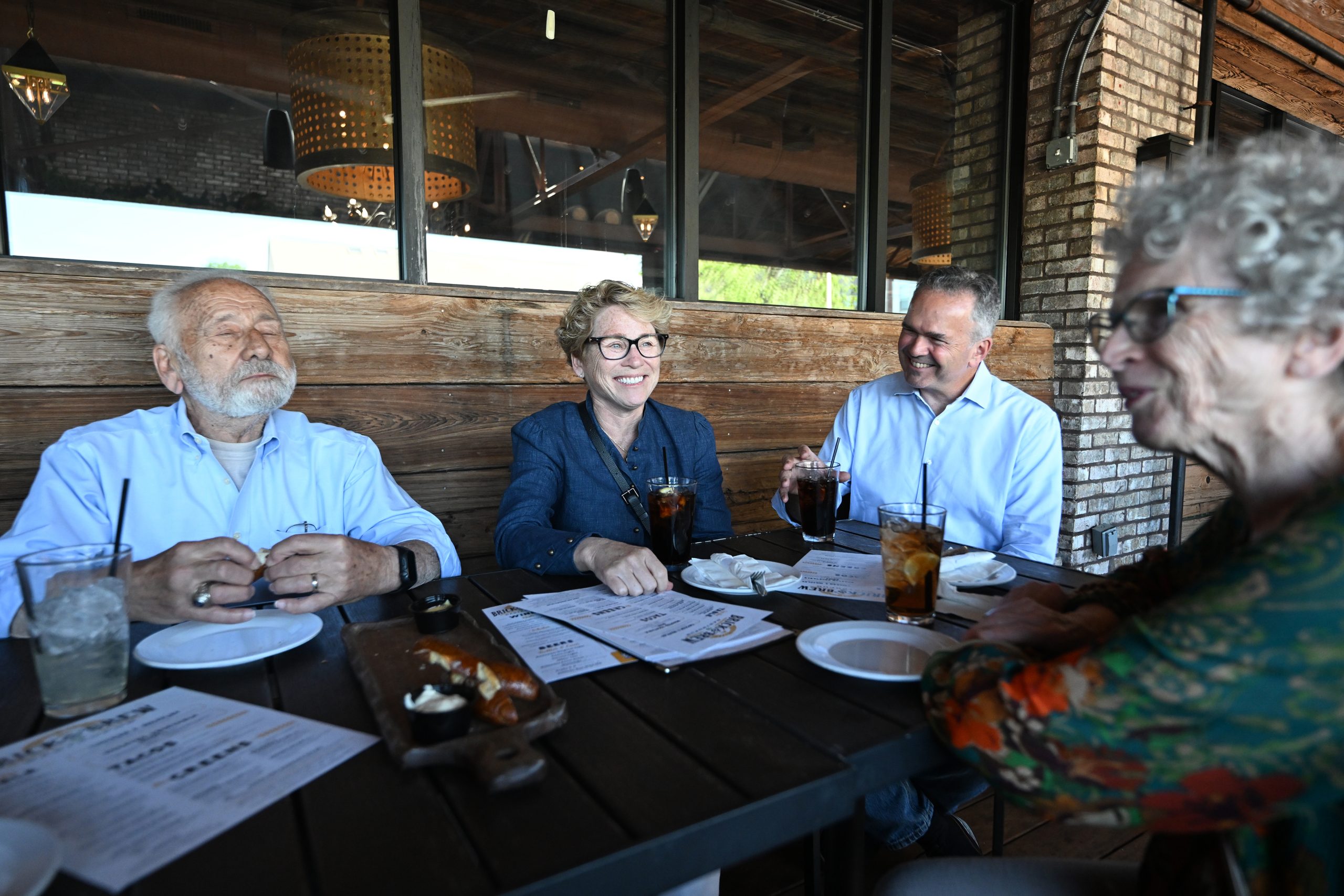
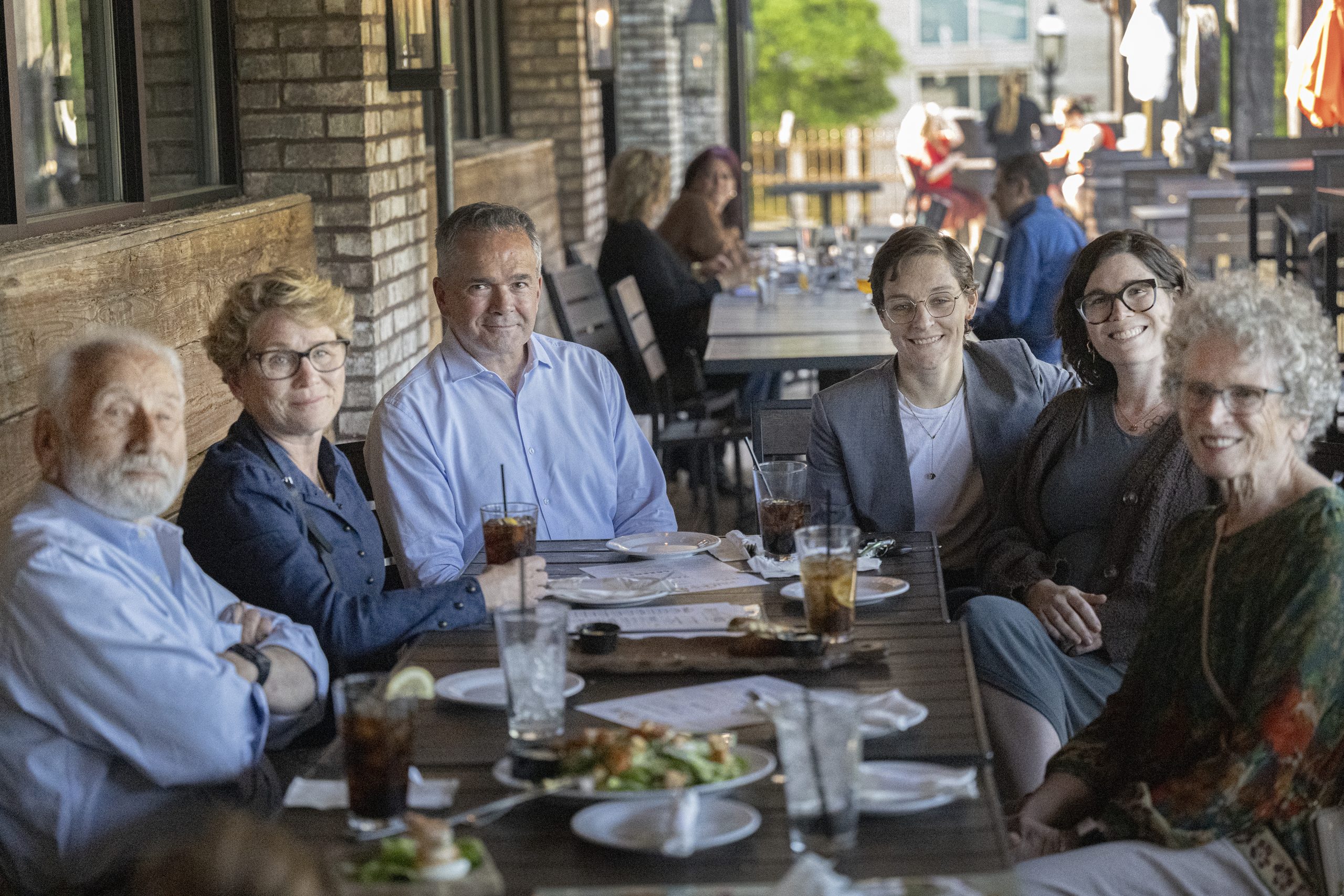
U.S. Rep. Chrissy Houlahan (center) has dinner with her family at Brick & Brew in Malvern, including her father, Andy Jampoler (left), her husband, Bart Houlahan, and her mother, Suzy Jampoler.Jose F. Moreno / Staff Photographer
‘A big balancing act’
Houlahan has shared parts of her family’s story as she has traveled her district this year — prioritizing events and meetings that aim for a deeper understanding of an affordability crisis that has not spared her home county, where the median household income is about $131,000, or 40% more than the statewide average.
On back-to-back days this spring, that meant a focus on the kinds of childcare and senior-care issues she has become familiar with.
“We call it ‘from zero to Edna,’” Laura Schoefield-Pierson, executive director of the YMCA of Greater Brandywine, said of the facility’s programs aimed at all ages, from infants to seniors.
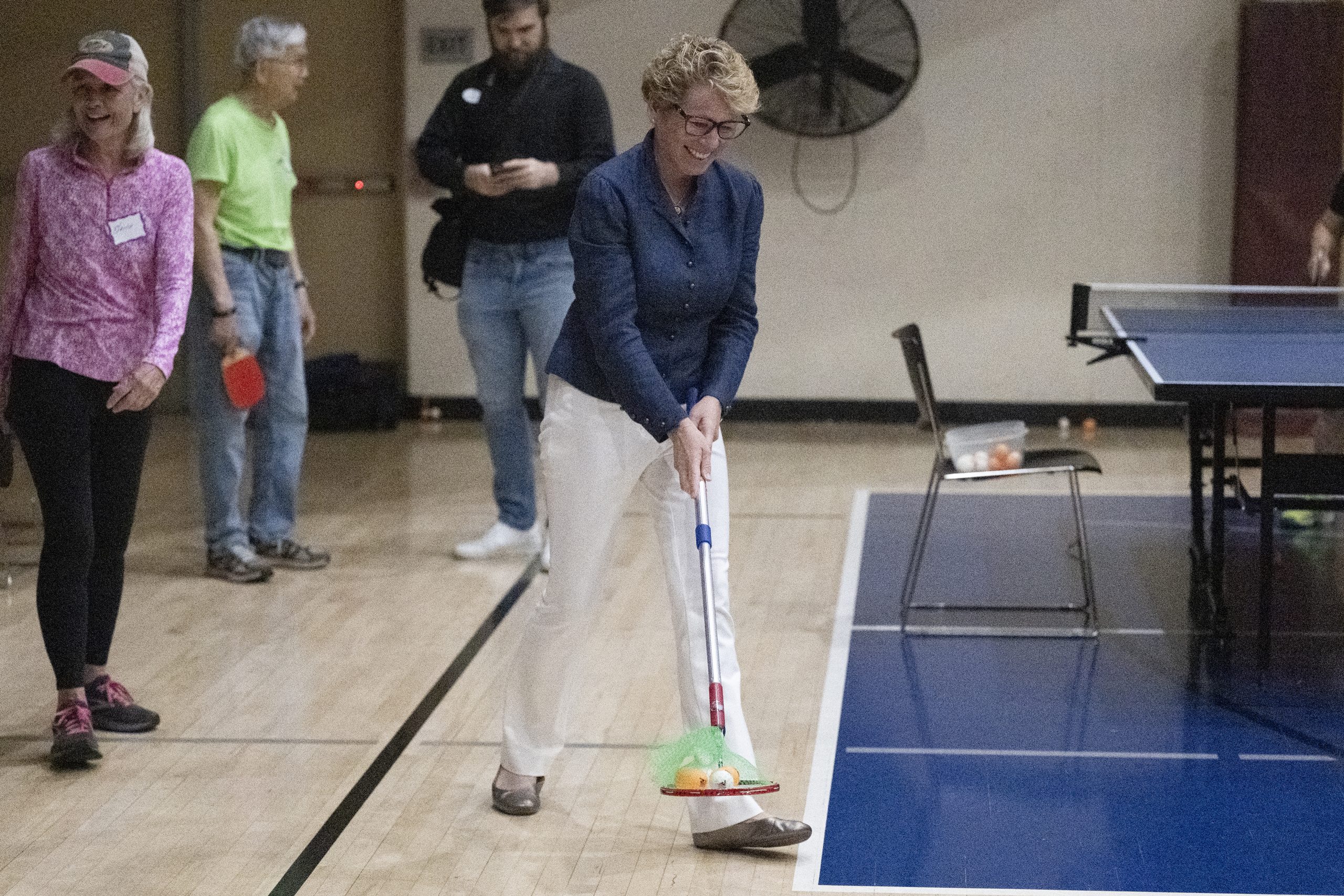
Walking Houlahan through the pre-K classes and a gym with a dozen seniors playing table tennis, Schoefield-Pierson spoke about the organization’s exercise programs aimed at offsetting symptoms of Alzheimer’s or Parkinson’s, and about the complexities of providing assistance for families with young children.
In addition to the “many children” whose care is subsidized through the state’s Child Care Works program — set for families earning 200% or less of the federal poverty level, or $66,000 for a family of four — others receive aid through the YMCA, Schoefield-Pierson said. The facility’s fundraising goal this year is $237,000, she said. On the day of Houlahan’s visit, Schoefield-Pierson said “the kiddos” were writing thank-you notes to donors.
U.S. Rep. Chrissy Houlahan (D., Pa.) interacts with teachers and children at a childcare center at the YMCA in West Chester.Jose F. Moreno / Staff Photographer
Though the U.S. Department of Health and Human Services recommends childcare should not exceed 7% of household income, Houlahan said she was surprised to learn a family would have to earn $327,000 to meet that benchmark at the YMCA for one child.
Nationally, the average annual cost of childcare in 2024 was $13,128, an increase of 29% over the previous five years and far exceeding the national recommendation for the average household’s budget.
“It’s crazy how much healthcare and childcare plays into your family planning,” said Helena Cordoba, a 35-year-old mother of two who said at a roundtable hosted by Houlahan that she had been hoping to grow her family.
A Colombian immigrant who owns Café Com Leite in Phoenixville, Cordoba said she thought she had been living the American dream. But a recent miscarriage and the rising costs of both childcare and healthcare, which she does not currently have, have made her rethink her family’s plans.
“I never thought I was going to say, ‘Maybe the miscarriage is a blessing.’ That thought on its own is very saddening,” Cordoba said. “I don’t know if we were going to be able to afford another baby. Our life would have been completely turned upside down.”
Others voiced similar struggles while Houlahan sympathized and shared her daughter’s own experience with a $2,000 monthly daycare bill.
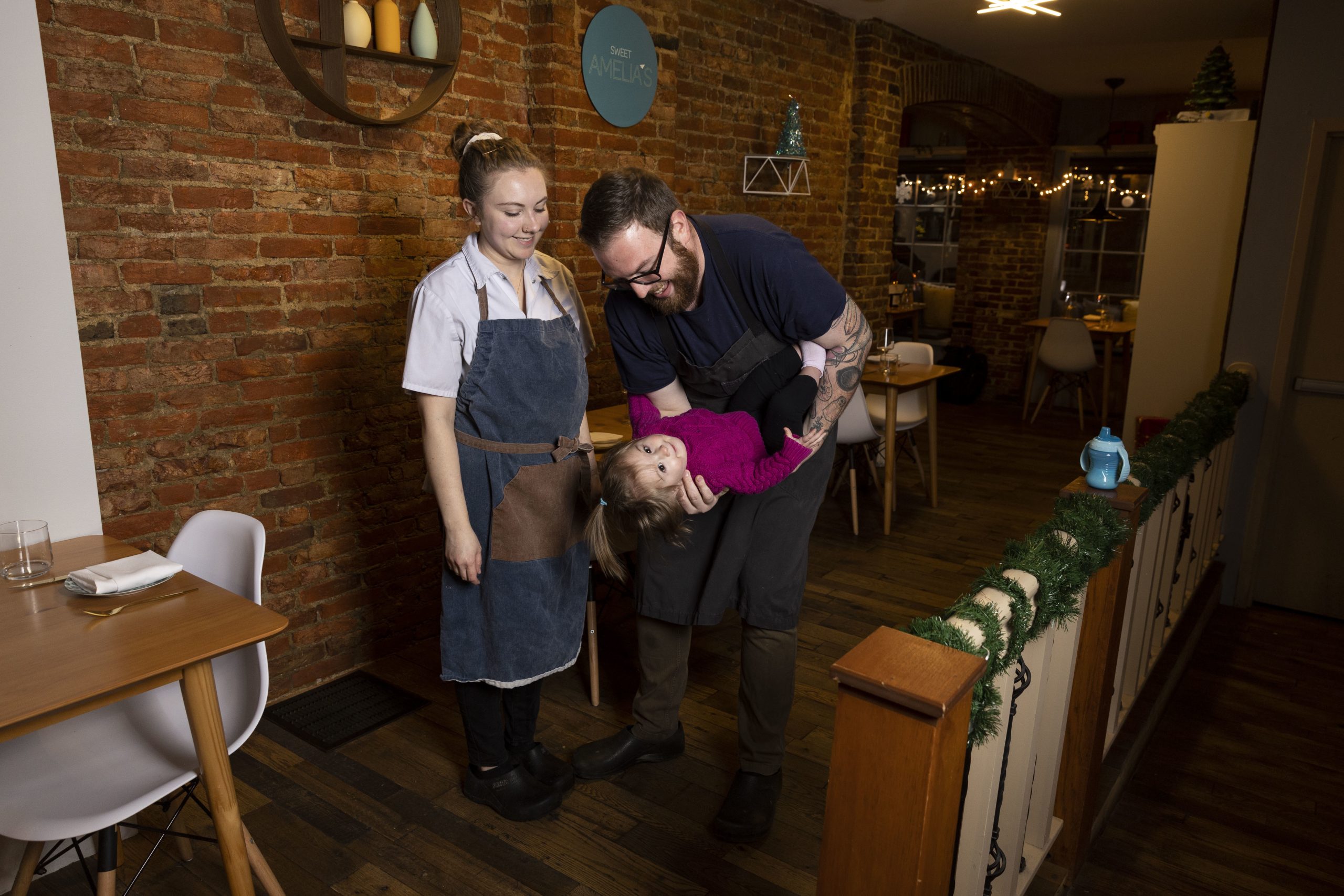
Karessa, Amelia, and Zack Hathaway, pictured here in 2023, at Sweet Amelia’s in Kennett Square.Monica Herndon / Staff Photographer
Zack Hathaway, who owns the restaurant Sweet Amelia’s in Kennett Square with his wife, Karessa, said their business “makes just enough” to cover the $700 to $800 weekly cost for their babysitter amid a demanding restaurant schedule. Thomas Smith, who works at the Cleveland-Cliffs steel plate production facility in Coatesville, said he makes too much to qualify for subsidies for his grandchildren but still struggles to cover the cost.
“It’s like a big balancing act to be able to put your kids in a place that you want to feel comfortable with them being and with being able to afford it,” said Amarte Grove, another Cleveland-Cliffs employee and a father of five daughters.
In another tour focused on the other end of the agespectrum, Houlahan peppered staffers at Brandywine Valley Active Aging in Downingtown about their work to offer free meals, housing services, and activities to about 120 seniors daily.
According to the organization, Chester County’s homeless population has decreased in recent years — from 916 in 2023 to 747 in 2025. But the percentage of that population that is over 60 has increased from 9% in 2023 to 14% in 2026. About 45 older adults in the county were homeless as of early May, according to the organization, which works alongside other independent and government groups to connect seniors with stable housing.
“It is really difficult to live in Chester County,” said Jen Manthey, BVAA’s director of information and assistance. “It takes a long time for them to get out of homelessness, partly because it takes a long time for us to build the trust with them and get that rapport — that they trust what we’re saying, and there aren’t $400 room rentals out there that we’re just hiding from you.”
U.S. Rep. Chrissy Houlahan (D. Pa.) visits with senior citizens at the YMCA in West Chester. She shares the burden of the “sandwich generation” caring for her elderly parents, opening her home to her adult daughter and son-in-law, and helping to care for her other daughter’s toddler.Jose F. Moreno / Staff Photographer
Nick Popov, BVAA’s chief operating officer, said demand remains high for the 5,000 free lunches the organization provides every month to individuals age 60 and older. The cost for those meals is reimbursed through the Pennsylvania Department of Aging, though the organization raises most of its funding in total, he said.
“The services are out there. We’re doing everything we can to provide them,” Popov said. “But it’s always a struggle to kind of balance the bottom line between our goals and what we can actually affordably accomplish.”
Houlahan’s parents said they had never expected to move in with their daughter. Even as they looked to move closer to their family and could not find a spot that fit their financial and physical needs, it took some convincing, mostly from their son-in-law, Bart Houlahan.
“It was an inspiration that permits us to enter old age — serious old age, not just the kid stuff right now — with greater confidence that our health will be sustained,” said Andy Jampoler,Houlahan’s father, a Holocaust survivor born in German-occupied Poland in 1942.
U.S. Rep. Chrissy Houlahan poses at a family during dinner at Brick & Brew in Malvern, including her father, Andy Jampoler (left), her husband, Bart Houlahan, daughter Molly Rosa Houlahan, daughter-in-law Kristen Rosa Houlahan, and Houlahan’s mother, Suzy Jampoler.Jose F. Moreno / Staff Photographer
Turning experience into policy
In May, Houlahan introduced legislation that would require the federal government to collect data on the sandwich generation, a step she said is critical to creating better policies for an “undervalued role in the nation’s economy.”
It would require at least one federal survey to ask whether individuals provide unpaid care to both children and older adults. U.S. Sen. Andy Kim (D., N.J.), who has two young sons and cares for his father with Alzheimer’s, sponsored a companion bill in the Senate.
Sen. Andy Kim (D., N.J.) poses with his family and Vice President Kamala Harris after taking the ceremonial oath of office in the old Senate chamber on Jan. 3, 2025, in Washington.Steven M. Falk / Staff Photographer
Houlahan is also the chair of an “economic growth and cost of living” working group within the New Democrat Coalition, a group of self-described centrist Democrats that includes about half of the entire caucus. The group rolled out an “affordability agenda” earlier this year that is considered a framework for how Democrats would tackle housing, healthcare, energy, paid family leave, and much more if they win control of the House.
U.S. Rep. Brad Schneider (D., Ill.), chair of the New Democrat Coalition, credited Houlahan for her leadership with the agenda, describing her as having a “quiet wisdom that focuses on the core of a problem” while bringing her own life experience to the work.
“Everyone’s experience is unique, but her experience shares many of the aspects of what people across the country are facing,” Schneider said. “The sandwich generation, taking care of kids and parents, for whatever circumstance, while at the same time seeing the cost of just everyday living … is putting a burden on families.”
The legislation aims to incentivize housing construction, restrict large investors from buying single-family homes, help families with home repairs, and more. The president reiterated Friday that he would not sign it, allowing the bill to become law without his signature.
In her Capitol Hill office about an hour after Trump canceled that bill signing late last month, Houlahan described the president as “so obtuse that he can’t see in front of him that this is something that the people want.” After spending much of the last year calling out Johnson, the House speaker, for not standing up to Trump, she said there should be “counterinsurgents” and an “uprising” in the Republican Party.
At the same time, she expressed some hope. The housing bill may have been a rare moment of bipartisanship, but it was also a sign that Congress can still act on affordability even before the end of the year, she said.
“We don’t have time, for all of this stuff, to wait until somebody else is in charge,” Houlahan said. “We can do this ourselves.”
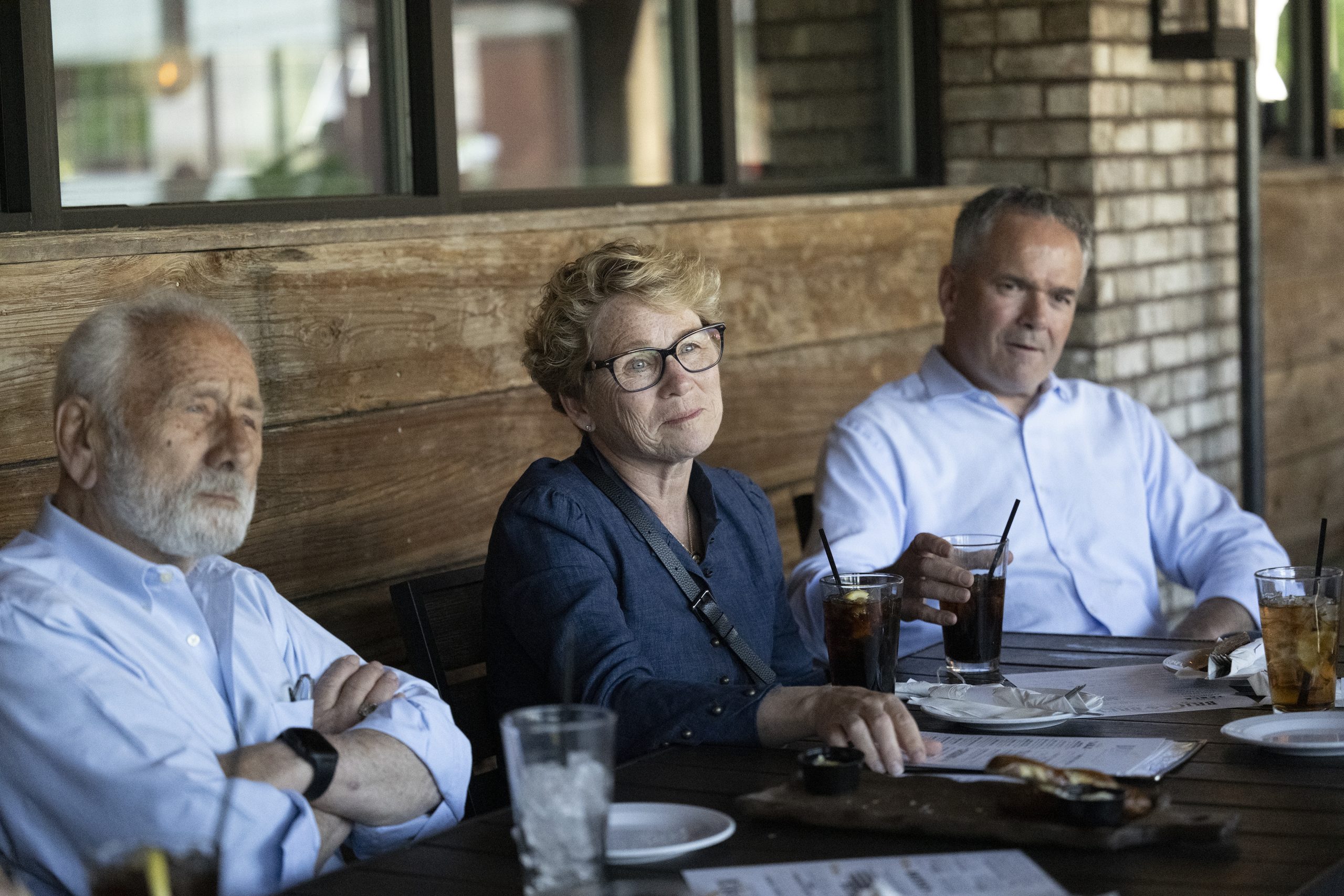
U.S. Rep. Chrissy Houlahan (D., Pa.) sits between her father, Andy Jampoler, and her husband, Bart Houlahan, at Brick & Brew in Malvern. Houlahan’s parents recently moved in with her. Jose F. Moreno / Staff Photographer
It’s possible that nobody knows the stretch of Brandywine River that meanders through the heart of Wilmington better than Missy Morrissey.
Since her sister Susan’s battered body was discovered there nearly seven years ago, the West Chester native regularly returns to its banks, mulling a question:
How exactly did the 50-year-old Delaware County schoolteacher arrive in the shallows more than three miles downriver from where her car was found abandoned early on a July morning in 2019 in what authorities said was a homicide?
And how, she wonders, has the crime gone unsolved for all these years?
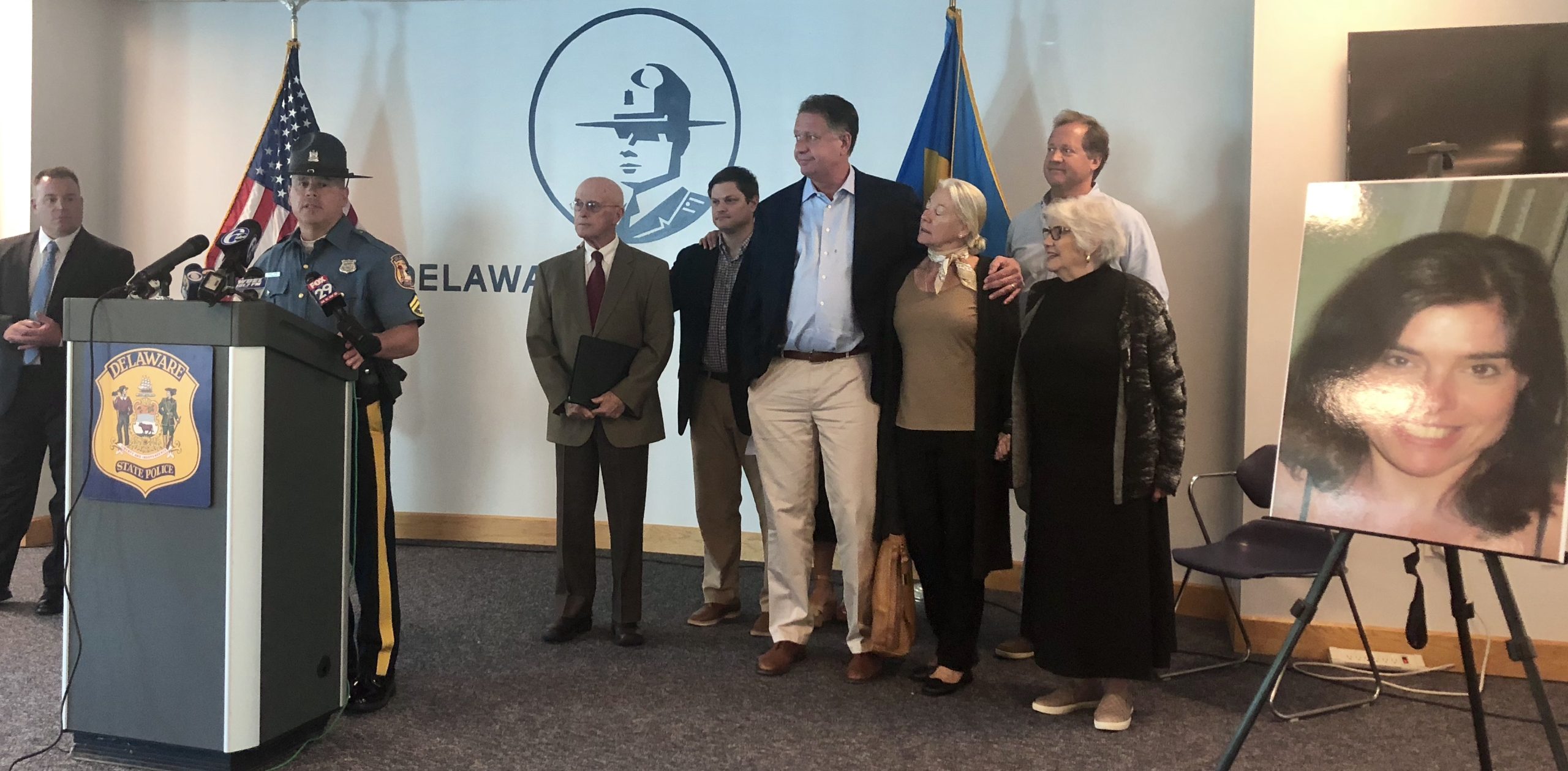
Susan Morrissey, who had been sipping wine and texting with friends into the early morning hours, left her Wilmington home just after 3 a.m. for reasons unknown, authorities said, and turned up dead in the river hours later.
Surveillance cameras captured Morrissey’s black Honda Civic as it left her home and headed to the gates of a nearby office building, where it was parked haphazardly and left unlocked with her cell phone and purse inside.
It was not until about four hours later that a construction worker discovered Morrissey’s body floating in the water miles away near the Northeast Boulevard bridge. She had died from blunt force trauma and drowning, the medical examiner found.
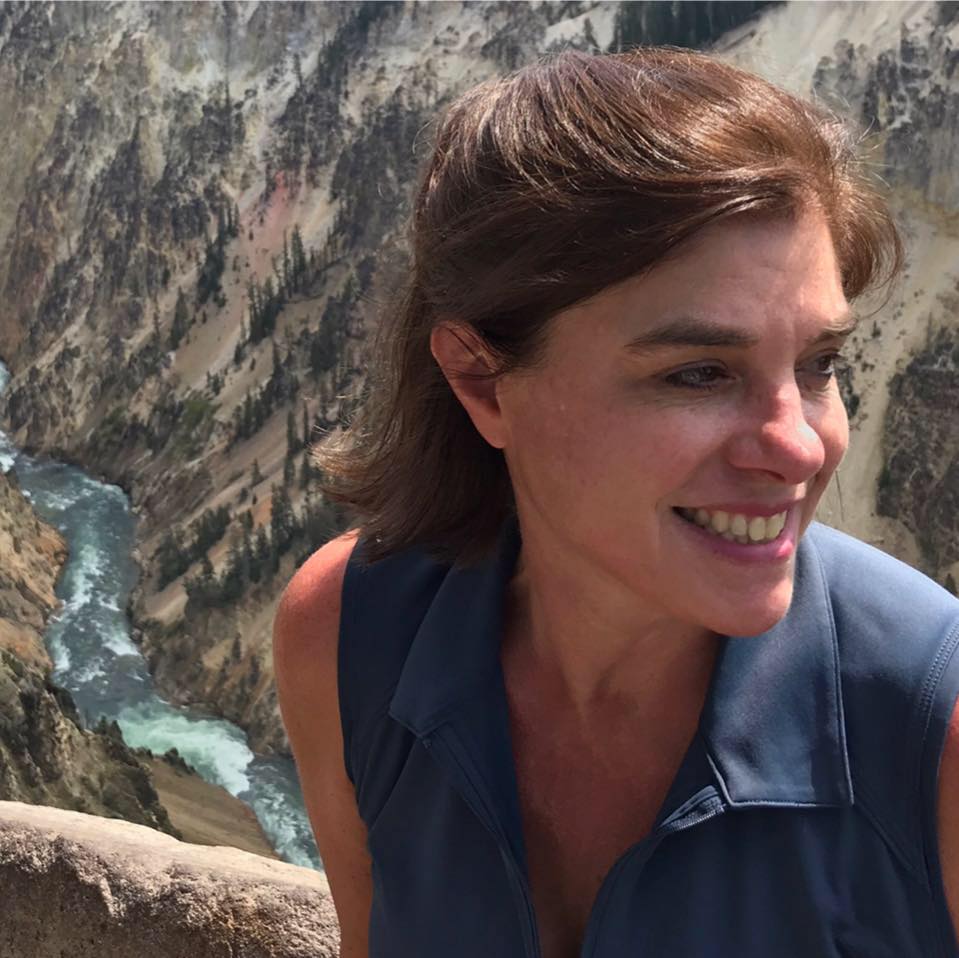
A photo of Susan Morrissey.Missy Morrissey
Investigators can’t say for sure how Morrissey’s body made it to the opposite side of town, though they believe she was alive when she entered the river and that she did not do so near where her car was parked.
“A friend refers to it as ‘the magic carpet ride,’” Missy Morrissey said of the distance between her sister’s car and where her body was discovered. “We just can’t figure anything out.”
It’s a puzzle that brings Missy Morrissey, the oldest of four siblings, back to the Brandywine each year, where she lays a bouquet of roses to honor her sister’s memory.
But this year, as yet another anniversary of Morrissey’s July 23 death nears, her family has begun to wonder whether after years of efforts to uncover the truth, her killer may never be found.
“On the first anniversary in 2020, I couldn’t have imagined that we would be sitting here in 2026 talking about this,” said Meg Morrissey Heinicke, the second-youngest of Susan’s siblings. “I would say time doesn’t heal all wounds. It is just as painful this year as the first year, the second year, the third year.”
Homicide detectives with the Delaware State Police say the investigation continues, but they have no suspects or motive, and there are no new developments in a crime that has divided the Wilmington and Chester County communities and drawn attention from true-crime podcasts and amateur sleuths across the country.
Missy Morrissey appreciates that people have taken an interest in her sister’s death long after it faded from the headlines.
Still, she and her family just want the crime solved.
A sister with flair
Susan Morrissey did just about everything with flair, her siblings said.
She grew up around West Chester and Wilmington and attended the city’s prestigious Tatnall School before heading to Georgetown University and later to San Francisco State, where she earned a master’s degree and began her career as an educator at a public school in a low-income Bay Area neighborhood.
Morrissey volunteered often, her siblings said, working with young people at a juvenile detention facility and devoting hours to an animal rescue, where she combed frigid Northern California beaches for stranded sea lions.
She was the first to read up on far-flung conflicts and the world’s injustices, and she loved sitting with a book on the beach in Stone Harbor.
It was she who recommended Noam Chomsky tomes and George Carlin stand-up specials to her less-enlightened siblings, they said. Everything from her CD collection to her handwriting oozed taste and personality.
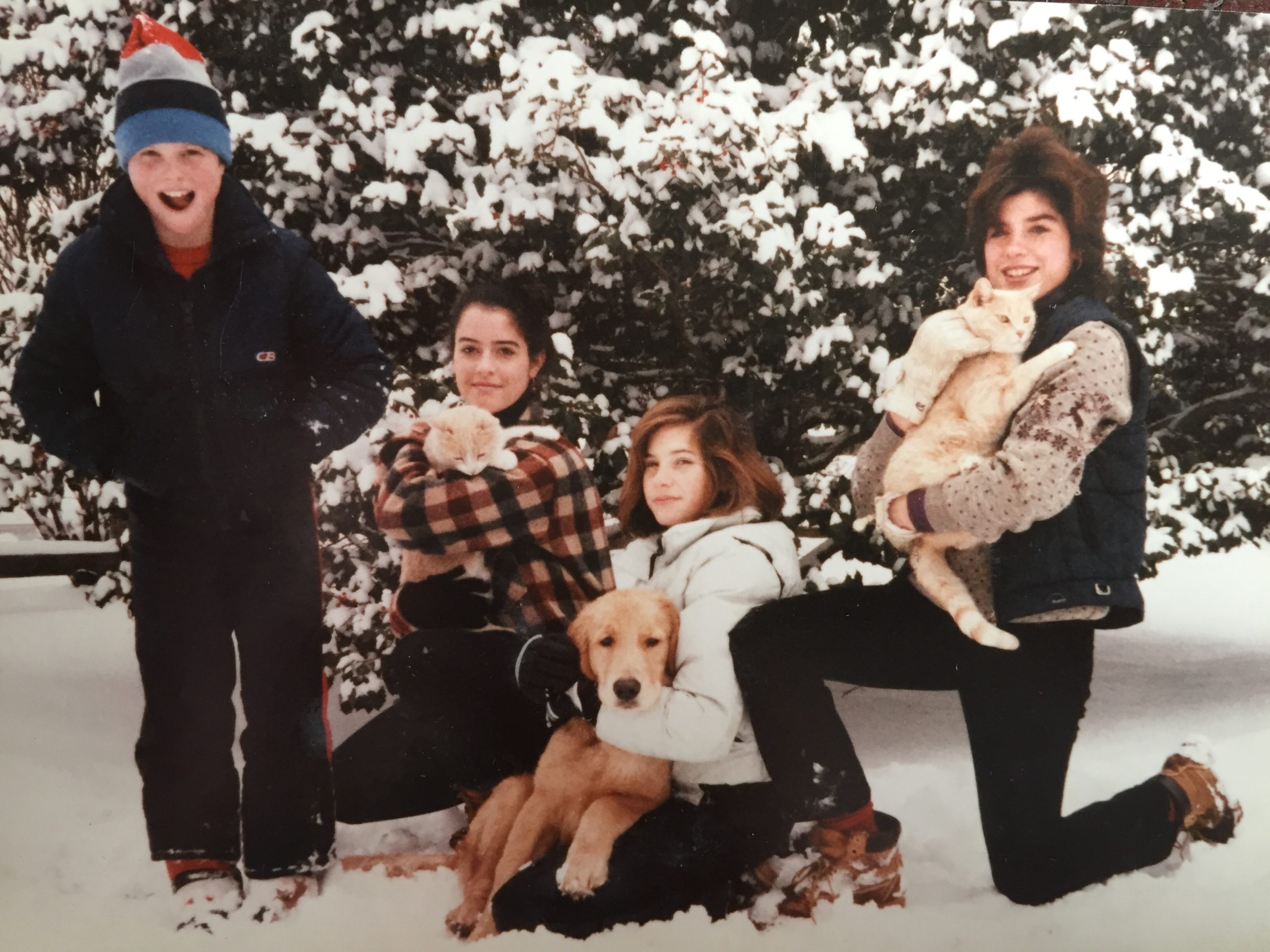
The Morrissey siblings (from left: John, Meg, Missy, Susan).Missy Morrissey
“I don’t know how many people feel this way, but I kind of felt like the coolest person in the world happened to be in my family,” said John Morrissey Jr., the youngest of the siblings.
Morrissey eventually returned east and, after a disappointing stint of online dating in her 40s, reconnected with a former schoolmate, Ben Ledyard, an investment consultant and a regular on the Wilmington social scene.
The two soon wed, and each weekday morning, Morrissey drove to Pennsylvania to teach English at Academy Park High School in Sharon Hill, Delaware County, where she worked for 13 years until her death on July 23, 2019.
Her brother now lives in Virginia but regularly returns home to the Brandywine Valley, where visits have begun to trouble him.
With each crossing of a bridge, each riverside drive, he said, a reminder of his sister’s killing lurks beneath the river’s surface.
“Susan liked true crime,” he said, “especially local crime.”
The mystery of her death, he said, is “exactly the kind of case that Susan would have been interested in.”
A body in the water
Even after all these years, Missy Morrissey still has the texts saved to her phone.
It was 12:29 a.m., she said, and the sisters casually exchanged messages while Susan Morrissey relaxed with a glass of wine on the back porch of her Riverview Avenue home.
She was a night owl, her sister said, and often stayed up late chatting with family or friends, especially during her summer break from school. Morrissey, she said, had been looking forward to attending a Rolling Stones concert with her husband at Lincoln Financial Field the next evening.
Phone records showed that Morrissey texted with friends and updated her storefront on Poshmark, an e-commerce site for secondhand fashion, until 2:45 a.m.
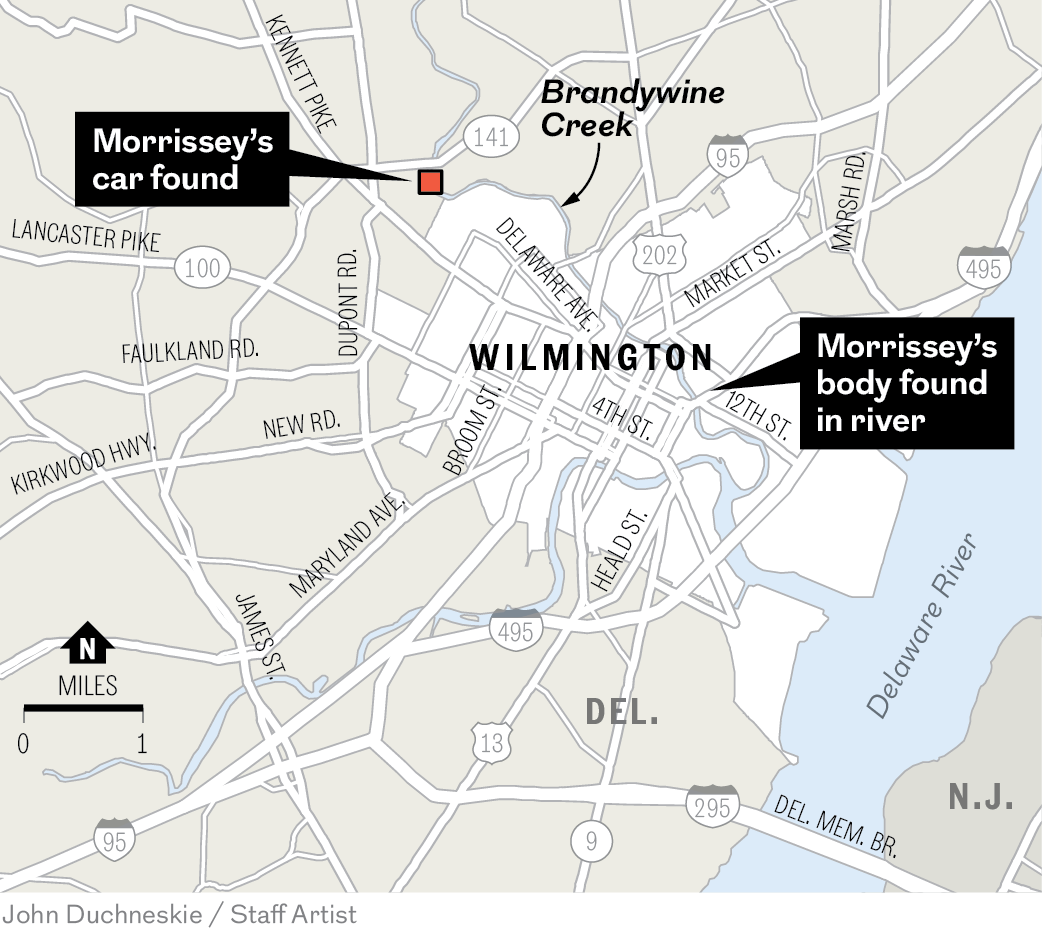
Then at 3:02 a.m., a nearby security camera captured Morrissey’s car leaving her driveway, according to Delaware State Police. It traveled around a mile through Wilmington to Walker’s Mill, a historic riverside property that had been converted into offices.
In the dark of night, however, detectives who later reviewed the footage could not determine who drove the vehicle to Walker’s Mill or see who left the car after it was parked.
Map of Wilmington, Del., showing locations in the death of Susan Morrissey, whose death seven years ago remains unsolved.John Duchneskie
What happened in the nearly five hours between the car’s arrival at Walker’s Mill and the discovery of Morrissey’s body downriver remains a mystery. Investigators say they have not determined why Morrissey would have entered the water that morning.
“She got her injuries close in time to when she died, and she died close in time to when her body was found” at 7:39 a.m., said Detective Daniel Grassi of the Delaware State Police.
He believes she may have entered the river anywhere from the Brandywine Zoo to the 16th Street Bridge, more than two miles downriver from her vehicle.
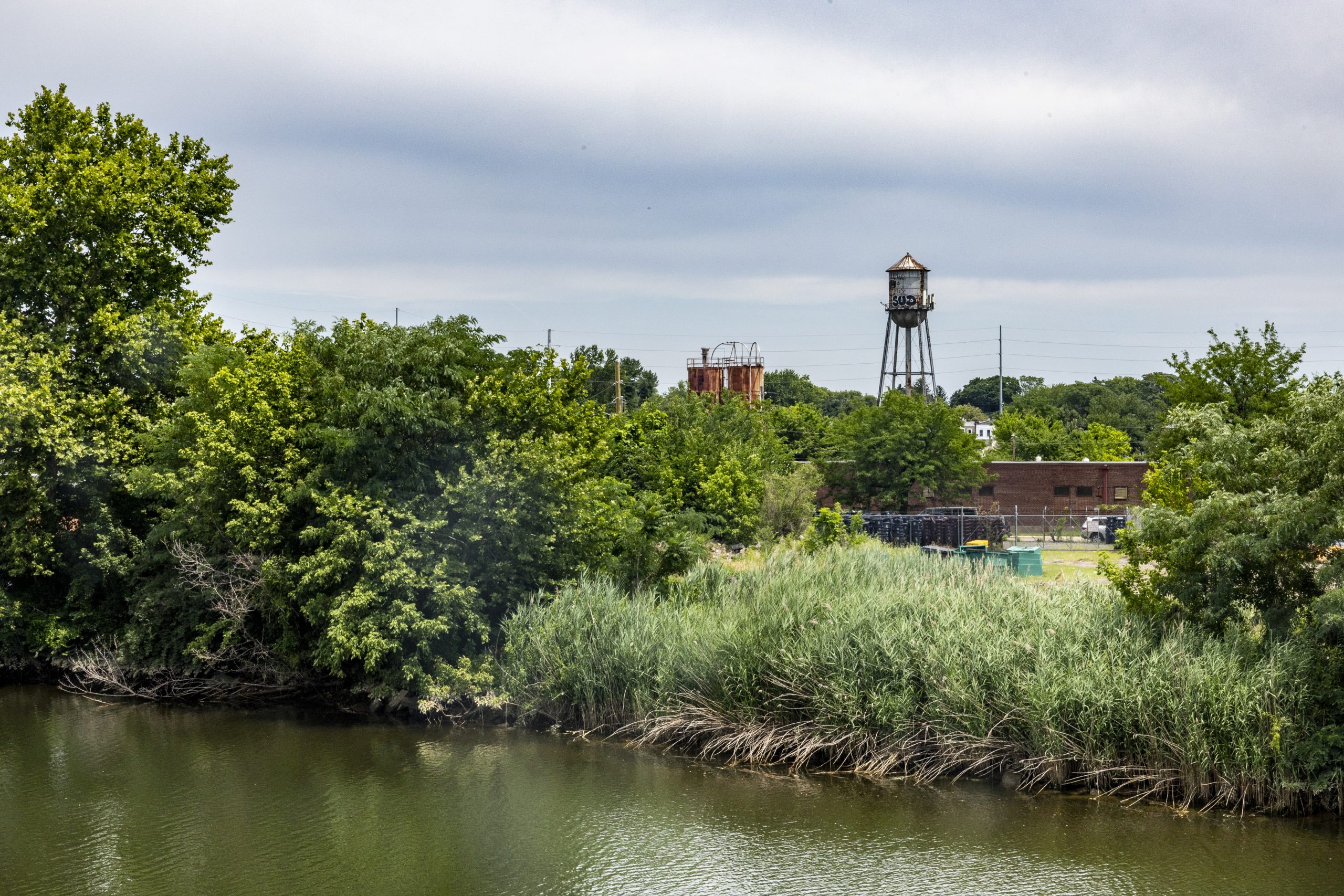
A water tower is seen from the top of the Northeast Boulevard Bridge in Wilmington, Del., on Friday, June 26, 2026. Susan Morrissey, a schoolteacher in Delaware County, was killed in Wilmington, Del., seven years ago this summer. Her body was found in the Brandywine River near the Northeast Boulevard Bridge.Aidan T. Gallo / Staff Photographer
Using data from Morrissey’s Fitbit device, investigators have pieced together the barest of timelines from that morning.
The tracker did not record Morrissey’s GPS location, so investigators cannot trace her movements, but they know she walked about a mile within an hour of her vehicle arriving at Walker’s Mill.
And at 7 a.m., the device stopped recording her heartbeat.
“I don’t know why she left the house at 3 a.m., and I don’t know what she was doing between 3 and 7,” Grassi said. “That four-and-a-half hour gap is a major issue with the investigation.”
What happened to Susan?
At her West Chester home, Missy Morrissey, 58, keeps hundreds of pages of notes and documents related to her sister’s case, making her something of an in-house historian of the family’s tragedy.
Since 2019, she has studied the river’s edge between Walker’s Mill and the Northeast Boulevard Bridge, poring over maps, interviewing store owners and strangers, and posting flyers seeking information about the killing near where Susan Morrissey may have been.
It is not only the lack of a suspect that vexes her. Police have not detailed the cause or extent of Morrissey’s injuries, beyond saying that they were traumatic.
Morrissey had been home alone that evening while her husband attended a screening of a documentary about the jam band Phish along with a friend. When he came home, Ledyard told investigators, he and Morrissey sharedhalf a bottle of wine before he took a sleep aid and went to bed around 11 p.m.
Delaware State Police Master Cpl. Michael Austin speaks in 2019 to brief reporters about updates in the death of Susan Morrissey Ledyard. With him were her brother, John (second to left), and husband, Ben (third from left).Katie Park/Staff
He said he had no idea what happened to his wife — a woman he told reporters was “the love of my life, my best friend” — until police came to the house around 9:30 the next morning to tell him she was dead.
Ledyard could not be reached for comment.
Two years after Morrissey’s death, Ledyard remarried, and in 2023 he was charged with assault for attacking his wife with a marble figurine and smashing her head into the floor after she asked him to turn down loud music on New Year’s Day.
He pleaded guilty to second-degree assault and was sentenced to two years in prison.
The charges brought fresh attention to the Morrissey case and fueled internet speculation that he could have harmed his former wife.
But police say he is not a suspect in the homicide and has cooperated fully with law enforcement.
‘A hope you desperately cling to’
Morrissey’s parents, Serena and John, died last year at 89 and 91 — without learning what happened to their daughter and without seeing anyone brought to justice for the crime.
John Morrissey’s death from advanced dementia came just two days after the anniversary of his daughter’s death.
“It’s been a tough year for our family,” said Meg Morrissey Heinicke, who lives in San Francisco. “This year’s anniversary feels particularly sad and painful.”
Yet there remains “a hope that you desperately cling to” that the case will be solved, she said.
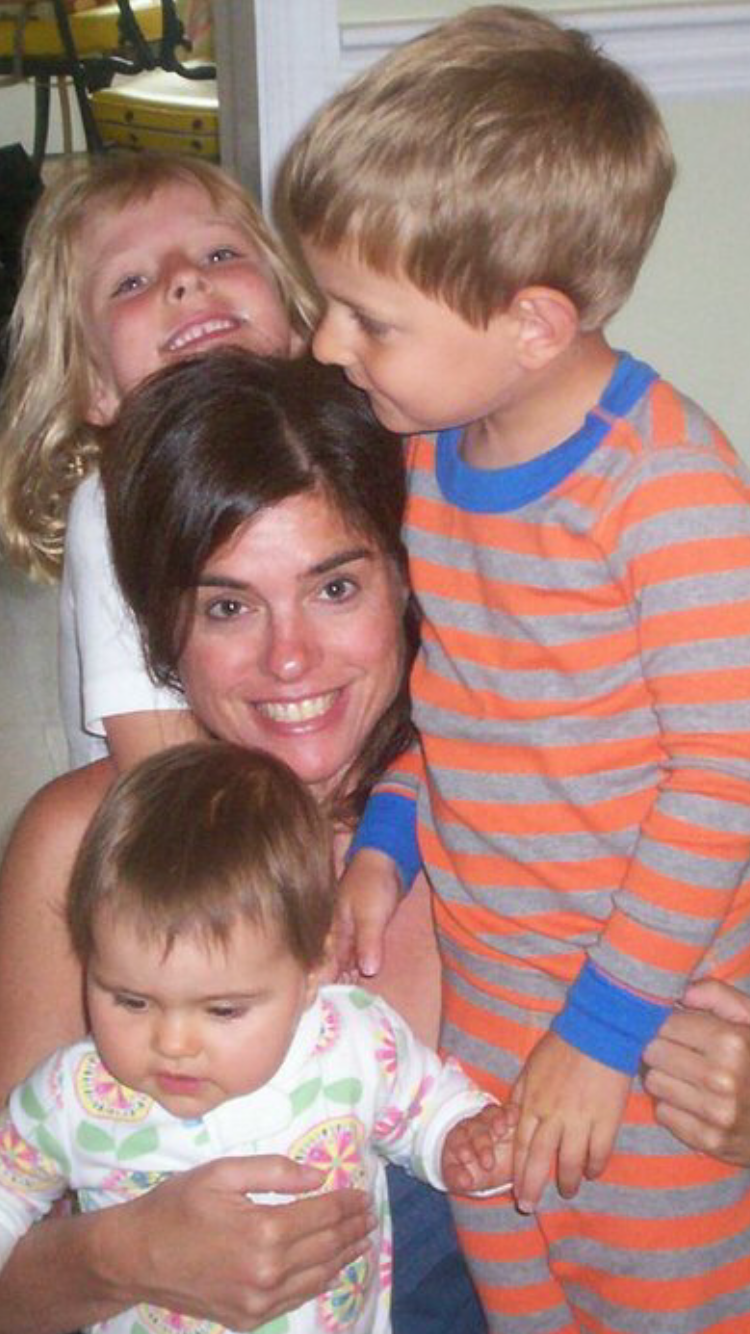
Susan Morrissey with her nieces and nephew. Missy Morrissey
In honor of their sister, the siblings started the Susan Morrissey Foundation, which awards an annual scholarship to an Academy Park student for excellence in English, a small way of keeping her memory and love of the written word alive.
In their quest for answers, the family has promised a $50,000 reward for information leading to an arrest.
“I just want us to have some answers,” Missy Morrissey said of the family’s ongoing grief. “I don’t think that any of us can really process, or go on, without knowing.”
Anyone with information about the case is encouraged to call detectives with the Delaware State Police at 302-365-8441 or email daniel.grassi@delaware.gov.
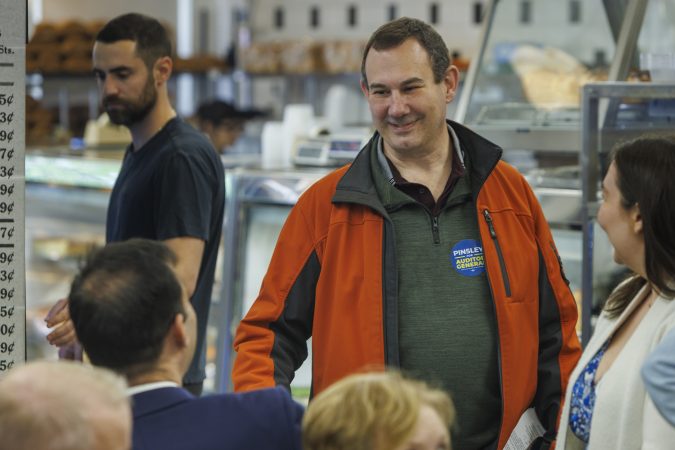
A Democratic campaign manager for Mark Pinsley’s 2024 campaign for auditor general agreed to a guilty-plea deal in Chester County over fraudulent petitions in that race last week.
Mariel Kornblith-Martin, 41, of Philadelphia, was charged earlier this year by the Chester County District Attorney’s Office with filing fraudulent nomination petitions while working for Pinsley, the Lehigh County controller, during his unsuccessful 2024 primary campaign against State Rep. Malcolm Kenyatta (D., Philadelphia). Kenyatta went on to lose in the general election to the Republican incumbent, Timothy DeFoor.
Kornblith-Martin was accused of paying college students to sign off on campaign petitions with forged signatures on them. Those signatures included the names of multiple elected officials, including a Chester County judge.
She pleaded guilty to one charge of criminal solicitation, specifically unsworn falsification to authorities. She had been charged with 50 crimes: 40 counts of criminal solicitation and 10 counts of breaking election law.
The political operativewas sentenced Tuesday to two years’ probation and ordered to pay a $1,000 fine plus costs associated with the case.
Pinsley is now the Democratic nominee for akeystate Senate seat that includes parts of Bucks and Lehigh Counties.
The Inquirer reported in 2024 that his petitions for the auditor general race contained the names of multiple elected officials who said they had never signed them, including Coatesville City Council members Carmen Green and Khadija Al-Amin, and West Goshen Township Supervisor Nate Wolman.
Perhaps most striking was a fraudulent signature for Chester County Court Judge Alita Rovito. Rovito, a Democrat, told The Inquirer in 2024 that she had reported the forgeryto the district attorney’s office. She said at the time that “the use of my name and signature is concerning to me due [to] the potential implications on my role as a member of the independent judiciary.”
Ironically, Rovito initially had been assigned to Kornblith-Martin’s case in May. She recused herself and Judge Sarah Black took over the case.
Kornblith-Martin had given three college students “stacks of pages containing signatures of supporters” and asked them to sign the required sworn declaration at the bottom of each page in exchange for money, according to the district attorney’s complaint. The Inquirer previously identified these young people as Temple University students.
Al-Amin, one of the local elected officials and a member of the county’s Democratic committee, said in an interview Friday she was satisfied that the campaign manager was “held accountable for her actions.”
“I’ve sat on many campaigns in different positions: consultant, chair, manager,” she said. “I would never even think about doing something like that. If you can’t win an election honestly, then the position is not for you.”
But she questioned what she sees as a failure in oversight on Pinsley’s part. In his current role, he is responsible for overseeing audits in Lehigh County.
“As her boss, I think he should have known what she was doing. … She ran his campaign,” she said. “He should have had regular contact with her.”
Gary Masino, Pinsley’s current campaign manager, said in a statement Friday that “Mark believes the justice system worked effectively and fairly in this case.”
“He was disheartened to learn about Mariel’s crime, but respects that she took responsibility by pleading guilty and that the matter is resolved,” he said.
Pinsley previously told The Inquirer that his campaign had reviewed the signature issue after concerns were raised but lacked “enough verified information” to reach a conclusion.
The petitions had glaring red flags, Al-Amin noted, such as the town of Downingtown being written as “Downtown.” She pointed out at the time that the geographic routes on the petitions did not make sense. And petitions had dates on them prior to the petitioning period, names written oddly, and signatures in strikingly similar handwriting.
“You could look at the pages and you could tell that there was really something wrong,” she said Friday.
Back in 2024, Martin had told The Inquirer that the campaign was doing an internal investigation and declined to comment further. She has not responded to requests for comment since a text message in February of that year in which she said: “We are still doing an investigation internally. I have no further statement until our investigation is over.”
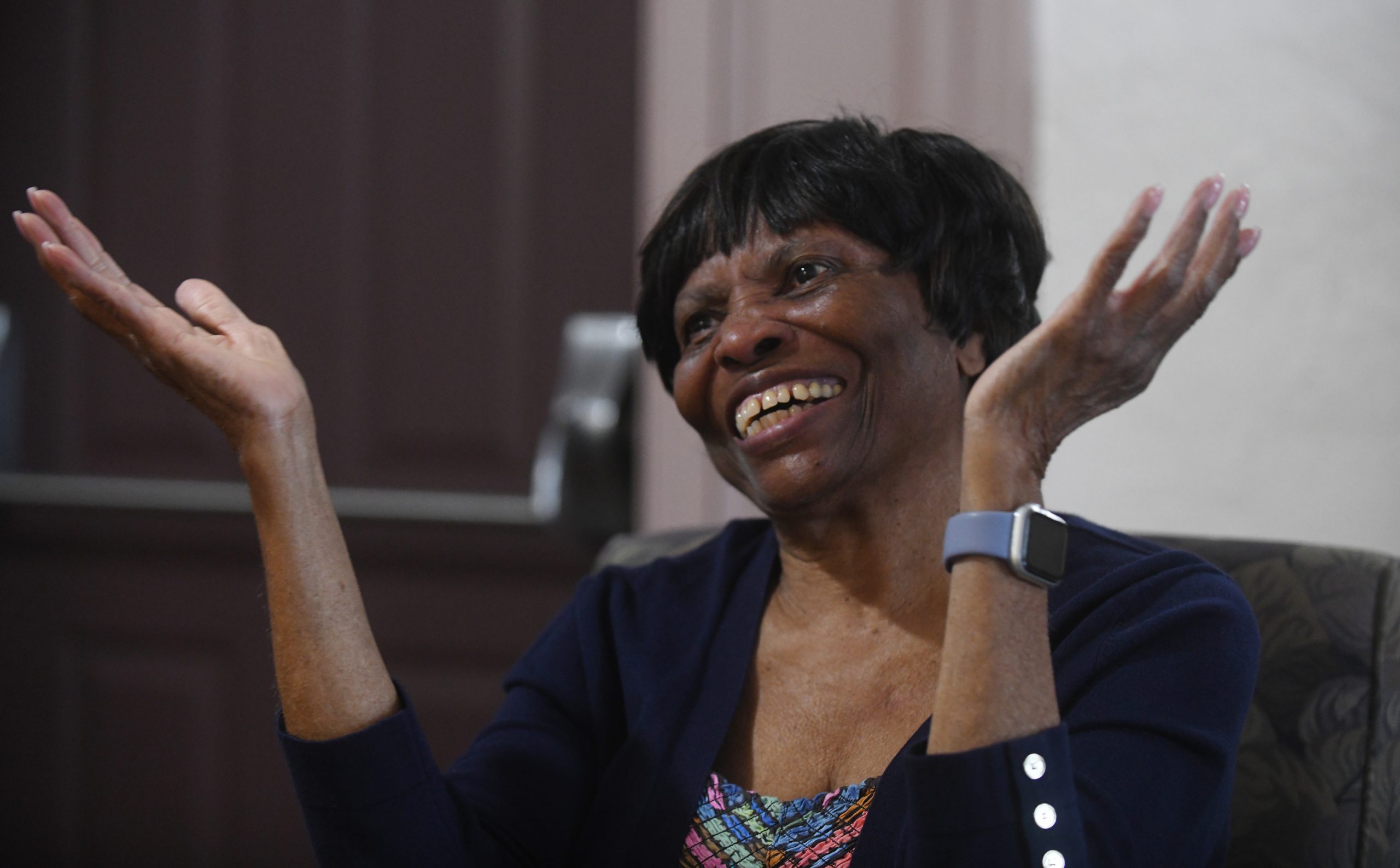
Minnie McNeil and her family still think about a challenge issued by her pastor more than 40 years ago: What could their city benefit from, and how could they address it?
The answer then, and now, was homelessness.
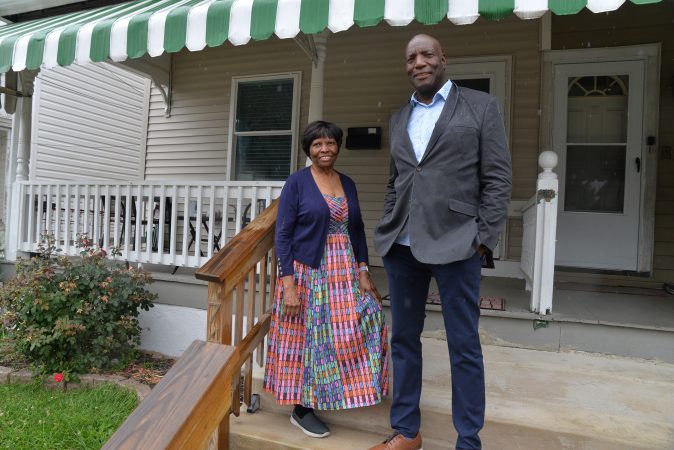
In the decades since, McNeil, 85, and three generations of her family have devotedly worked to support unhoused men in Coatesville. Their work, alongside countywide cross-sector collaboration, culminated in Chester County in June announcing it had reached “functional zero” for chronic homelessness.
Though it’s a milestone for the county, it doesn’t mean their work has stopped. They’ve evolved.
Using federal grant dollars, the W.C. Atkinson Memorial Community Service Center, founded by McNeil and her late husband more than 30 years ago, recently acquired its eighth transitional home in Coatesville, which it will remodel to offer affordable and supportive housing to shelter residents. And the shelter plans to expand its scope — helping catch young adults aging out of foster care before they become unhoused, a story they’ve heard over decades of helping thousands of men.
And separately, Minnie’s son Andrew McNeil, 58, and grandson, Derrick McNeil, 27, have begun an effort to remodel homes in the city, selling them below market to help revitalize Coatesville and support first-time home buyers at a time when housing prices in the county are soaring.
“The dollars of the ’70s and ’80s, the jobs that were available, [and] the housing stock available during that time is not, in our view, as easily accessible, and so the needs, in our view, are greater as a result,” McNeil said.
Minnie McNeil and the McNeil family have helped the homeless in Coatesville since the early 1980s.Bob Williams / For The Inquirer
It started with the shelter
In Minnie’s estimate, the need for support services still exists. The county in June announced it had reached “functional zero” for chronic homelessness, meaning that long-lasting or recurring homelessness had been reduced to “a rare, manageable level,” the county said in a news release last month.
It was an example of cross-sector collaboration, officials said.
Minnie and her late husband, Andrew McNeil Sr., have been a part of that diverse ecosystem since they founded and opened the W.C. Atkinson Memorial Community Service Center at the former Atkinson hospital in 1992. It has always been intrinsically linked to their eldest son, Andrew; it opened on his birthday that year — Jan. 7.
There are few people willing to do what McNeil and her family have done, and fewer who do it so exceptionally, County Commissioner Chairman Josh Maxwell said. He has watched her shelter take on just about every possible man — those whom others would have turned away, he said.
Maxwell knows her magnetism personally: On the biggest day of his political career, his election as chairman, McNeil asked him to stop by a house they were renovating to help. Maxwell was in the attic alongside contractors, ripping out insulation and tearing down walls.
“I don’t think anyone else can do what she does,” he said. “I think those people wouldn’t be helped. I think we’d have dozens, if not hundreds, of more homeless people in the county if she wasn’t the one taking them in.”
For Minnie, her children were a guiding light: Could they sleep here? Eat the food? It has kept humanity at the heart, she said.
“Housing is not just a roof over your head, but we’d like to create homes where people live healthy and happy and their very best lives, they reach their full potential,” she said. “A place that, yes, has some outside influence and support, but builds within that home a nucleus where [there’s] love and compassion.”
Michael Weber, 55, called the McNeils a “blessing.” He came to the Atkinson after living in a hotel room, unable to find permanent housing. He happily took up odd jobs at the shelter to support it. He thinks that’s why the McNeils asked if he would want to move into one of the support housing sites, where he could pay below-market rent.
“I didn’t even know it could be this good,” he said.
Andrew and his two brothers were helping hands as children, working shifts at the shelter overnight and preparing meals. Though he never anticipated he’d return to it, Andrew began to learn the ropes from his father when he came back to the county after 12 years in Maryland. (“I never saw that coming,” his mother noted.)
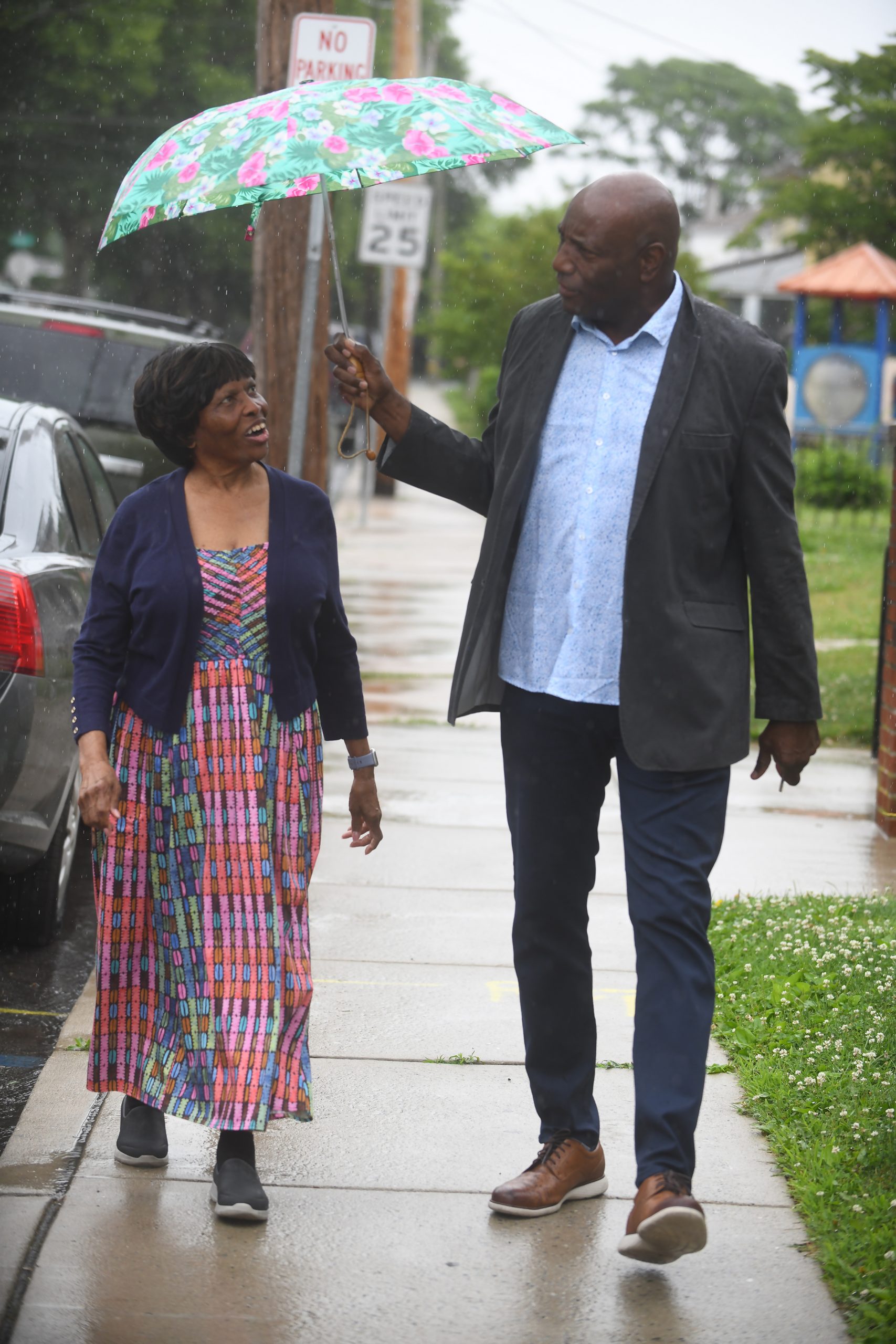
Minnie McNeil and her son Andrew McNeil walk down East Chestnut Street in Coatesville.Bob Williams / For The Inquirer
And those lessons didn’t stop at the shelter doors. Derrick, his son, has volunteered at the shelter and found it inspiring. Then Derrick caught the real estate bug, something Andrew knew plenty about.
Their shared interest is a new chapter that felt like an extension of what Atkinson had been doing, Andrew said.
“When they move out of the shelter, into the housing, what happens is they have a sense of pride because we’re not putting them into just anything,” he said. “I think that that matters [for] what we’re doing for families as well what we’re also doing with the men.”
He had watched men move from the shelter into the supportive housing, and saw the sense of pride at the homes they were living in. They wanted to bring that feeling more broadly.
Affordability in Chester County
Andrew and Derrick purchased their first project house together in May 2025 for $190,000 as Chester County has seen a diminishing housing stock and rising costs. The county saw some of the highest population growth in Pennsylvania between 2020 and 2024, but the housing market wasn’t keeping pace. Fewer single-family detached homes were built in 2024 than in the last several years, according to the county’s planning commission, and fewer new units were being constructed this decade compared with last.
In 2024, the median sales price hit $525,000 — the highest in the county’s history. That year, only 331 homes sold for under $250,000, a decrease of 5.9% from 462 units in 2023.
In Coatesville, like the Atkinson shelter had done with seven transitional houses, Andrew and Derrick took their first project house down to the studs. For 10 months, they remodeled it to a high standard, Andrew said. It went from a three-bedroom, one-bath to a four-bedroom, three-full-bath home. The house sold to a family about a year after they first purchased it, for $290,000 — under an appraiser’s valuation of $330,000, Andrew said.
“It was a nice experience, just knowing that the end goal was to provide housing and provide opportunities for someone that was maybe purchasing their first property, just trying to provide the best product and the best opportunity for someone at a pretty decent price for what they’re getting,” Derrick said.
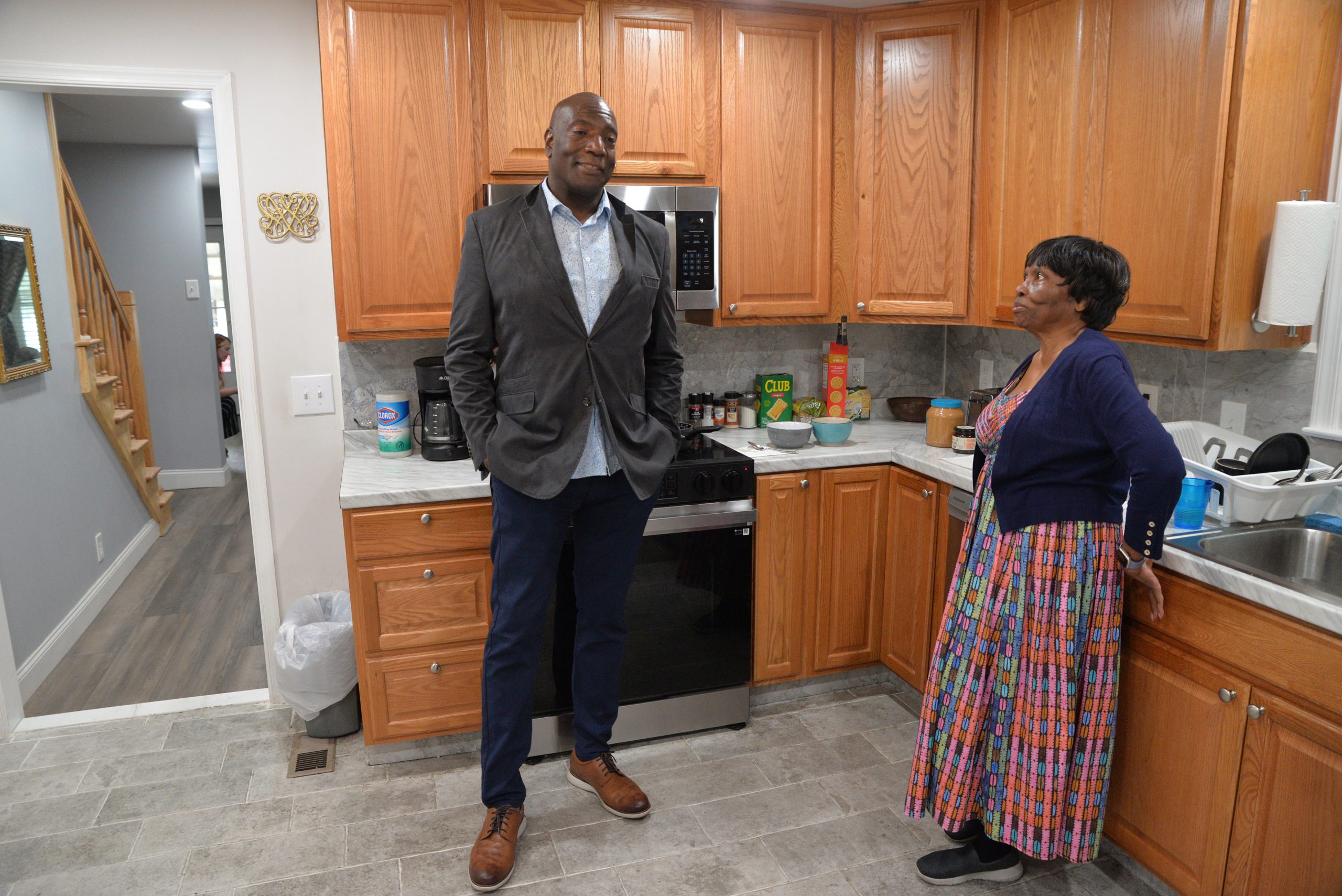
Andrew McNeil and his mom, Minnie McNeil, in the kitchen area of the house they rehabilitated on Merchant Street in Coatesville. Bob Williams / For The Inquirer
That care and thoroughness was a lesson both Andrew and Derrick learned from Andrew Sr., as the shelter had taken homes with “no lipstick” and modernized them.
“One of my father’s sayings was always ‘We get brick and mortar money once,’ so we have to put the quality into the house, because it’s up to us to maintain it after that,” Andrew said. “So we don’t cut any corners when it comes to rehabbing these houses, and so my son and I adopt that same principle when we remodel houses for the community.”
After the success of their inaugural endeavor, Derrick said they’re looking toward future opportunities like this one, or other options — like lease-to-purchase.
When Andrew reflects on the legacy of the shelter — opened in a historic property that was owned by Whittier C. Atkinson, the first Black physician to open a practice in Coatesville — he thinks of them continuing Atkinson’s holistic approach to medicine in the 1920s, how he would take gifts from the garden as payment for his work. It’s that essence they’re trying to continue, he said.
“I’m still taking lessons from my parents,” he said. “It’s always mission first; I observed that at a young age, and their mission, we’re continuing that … by trying to stay ahead of the curve. What’s the latest need in our community, and how can we address it in our focus?”
This suburban content is produced with support from the Leslie Miller and Richard Worley Foundation and The Lenfest Institute for Journalism. Editorial content is created independently of the project donors. Gifts to support The Inquirer’s high-impact journalism can be made at inquirer.com/donate. A list of Lenfest Institute donors can be found at lenfestinstitute.org/supporters.