Tag: Cape May

  • Gov. Mikie Sherrill said she’s calling in support for Zack Mullock, the Democrat challenging South Jersey’s Jeff Van Drew

    Gov. Mikie Sherrill said she’s calling in support for Zack Mullock, the Democrat challenging South Jersey’s Jeff Van Drew

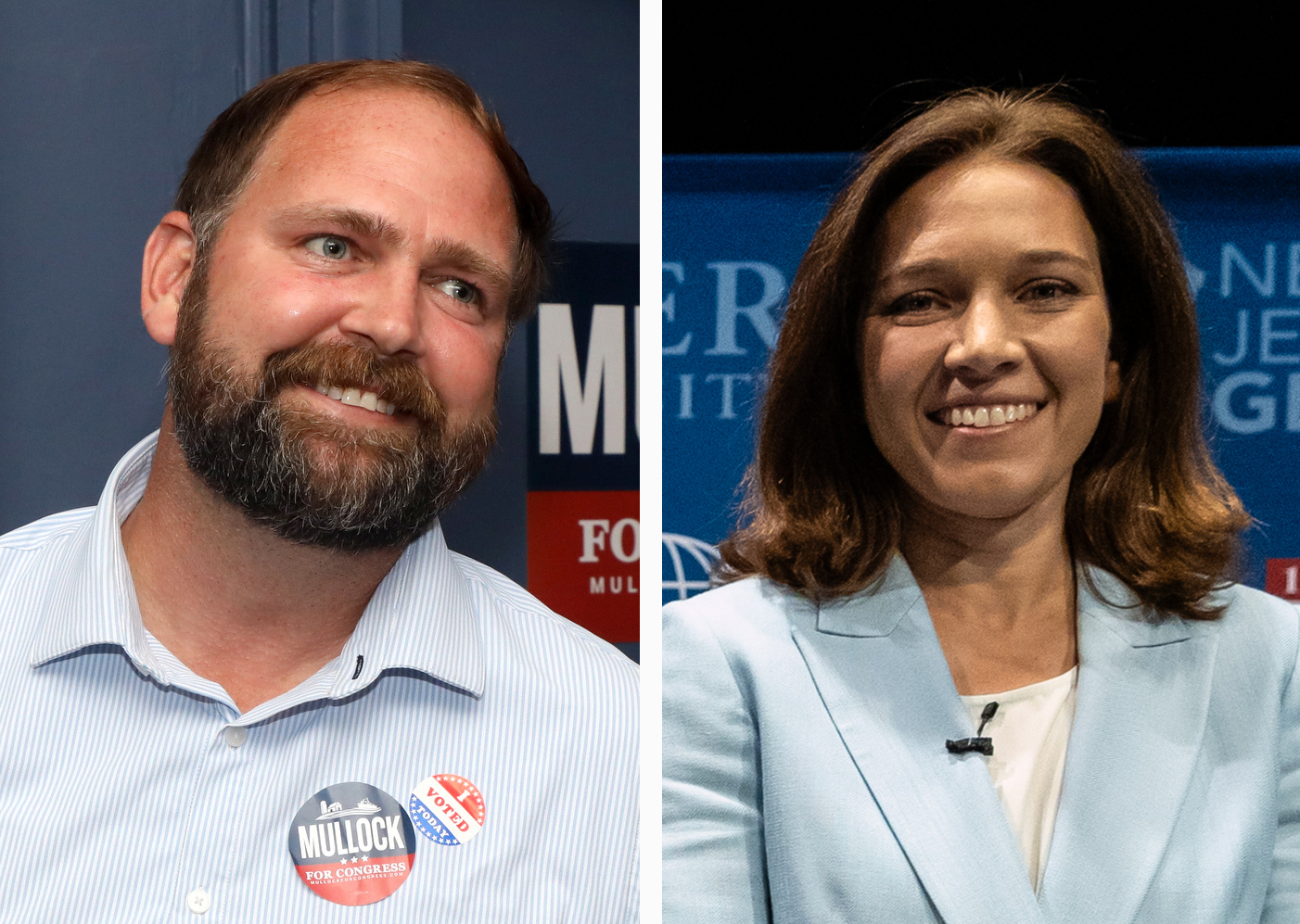
    Gov. Mikie Sherrill rallied with Democratic Cape May Mayor Zack Mullock on Saturday in their first appearance together for his campaign against Republican U.S. Rep. Jeff Van Drew, just days before the election.

    “I gotta tell you guys, this is a tough race,” Sherrill said Saturday in front of a crowd of roughly 100 people gathered in the backyard of Cape May County NAACP president Quanette Vasser-McNea’s Whitesboro home. “It’s not easy flipping a red seat. But if ever there’s a year to do it, this is the year.”

    The Democratic governor emphasized Mullock’s family’s connections to the region and Van Drew’s support for President Donald Trump.

    “He just wants to make life work better,” she said of Mullock, standing on a hill surrounded by sun-soaked fall foliage. “He comes from a family that you know.”

    “And you know what? He’s not going to take a loyalty oath to the president, no matter who that person is,” she added.

    Van Drew was elected to Congress as a Democrat in 2018 after years in the state legislature and local office. He became a Republican in 2019 and vowed his “undying support” to Trump. In 2020, Democrat Amy Kennedy came within 6 percentage points of him, but he won by double digits in 2022 and 2024. The sprawling 2nd Congressional District spans from Gloucester County to the Jersey Shore.

    Gov. Mikie Sherrill speaks with Emily Dempsey and and Eugene Dempsey at a campaign event for Cape May Mayor Zack Mullock, a candidate for Congress, in Whitesboro on Saturday.Aliya Schneider / Staff

    The race largely flew under the radar this year as national Democrats focused on more competitive districts. But with increasing anticipation of a blue wave, the party began taking the race more seriously in recent weeks, attracting more spending for Mullock. Early voting numbers have also shown enthusiasm among Democrats in the region.

    National political analysts have shifted their ratings for the district from “safe Republican” to “likely Republican” in recent days, favoring a Van Drew win, but less confidently than before.

    Saturday was the first time Sherrill appeared at an event to campaign with Mullock, and it came three days before the election.

    At the get-out-the-vote event, Mullock told a crowd of supporters that the governor’s team had reached out to him about a week ago asking where he wanted to do an event together in Cape May County. He said he wanted to meet in Whitesboro, an unincorporated community with a rich African American history, “because this is a town that has been skipped over far too long.”

    Mullock criticized Trump for “selling bitcoins and Bibles” while the middle class struggles.

    “When we get elected and we get into office, there’s a few things that are going to happen right away. We’re going to restore the cuts to Medicare and Medicaid,” he said, Sherrill clapping behind him with a big smile.

    “We’re going to vote to end the war in Iran. We’re going to vote to end the tariffs. But then we’ve got to roll up our sleeves and really get to work,” he added. He said Congress also needs to address the cost-of-living crisis and make homeownership more attainable.

    Aside from being the mayor of Cape May, Mullock, a contractor, worked with his family to create the Harriet Tubman Museum and the Cape May Point Arts and Science Center. His family members also own the Chalfonte Hotel and the Cape May National Golf Club, where he works as vice president.

    Eric Morey (left), a candidate for Cape May County Board of Commissioners, takes a photo with Gov. Mikie Sherrill and Cape May Mayor Zack Mullock at an event in Whitesboro on Saturday.Aliya Schneider / Staff

    Eric Morey, a Democrat running for commissioner in Cape May County, said in an interview at the event that Mullock is well-known across the county, which “carries a lot, especially in a conservative area like Cape May County.”

    “He’s shown that he’s someone that cares about South Jersey in general,” Morey said. “People connect with that.”

    Despite her lack of presence on the campaign trail, Sherrill said in an interview after the event that the race has been on her radar and that she is “feeling really good about it.” She pointed out how Democratic Sens. Andy Kim and Cory Booker have campaigned with Mullock and said she has been calling for support.

    “I was just on the phone with [House Democratic leader] Hakeem Jeffries last week saying like, ‘Guys, no time like the present here,’ and I think he heard me,” Sherrill said. “He said, ‘Yeah, I’m excited about that race.’”

    As for why Van Drew has maintained his seat for so long, Sherrill said: “That’s always been a little bit of a puzzle.”

    “I think people maybe don’t realize how he has just given up, sort of, focusing on the people he serves, and just has done whatever, you know, Trump tells him to,” she said.

    “I think people see that that pathway is not working for them; it’s driving up their costs, and they want somebody like Zack Mullock in Congress who is going to both hold Donald Trump accountable and always focus on serving them,” she added.
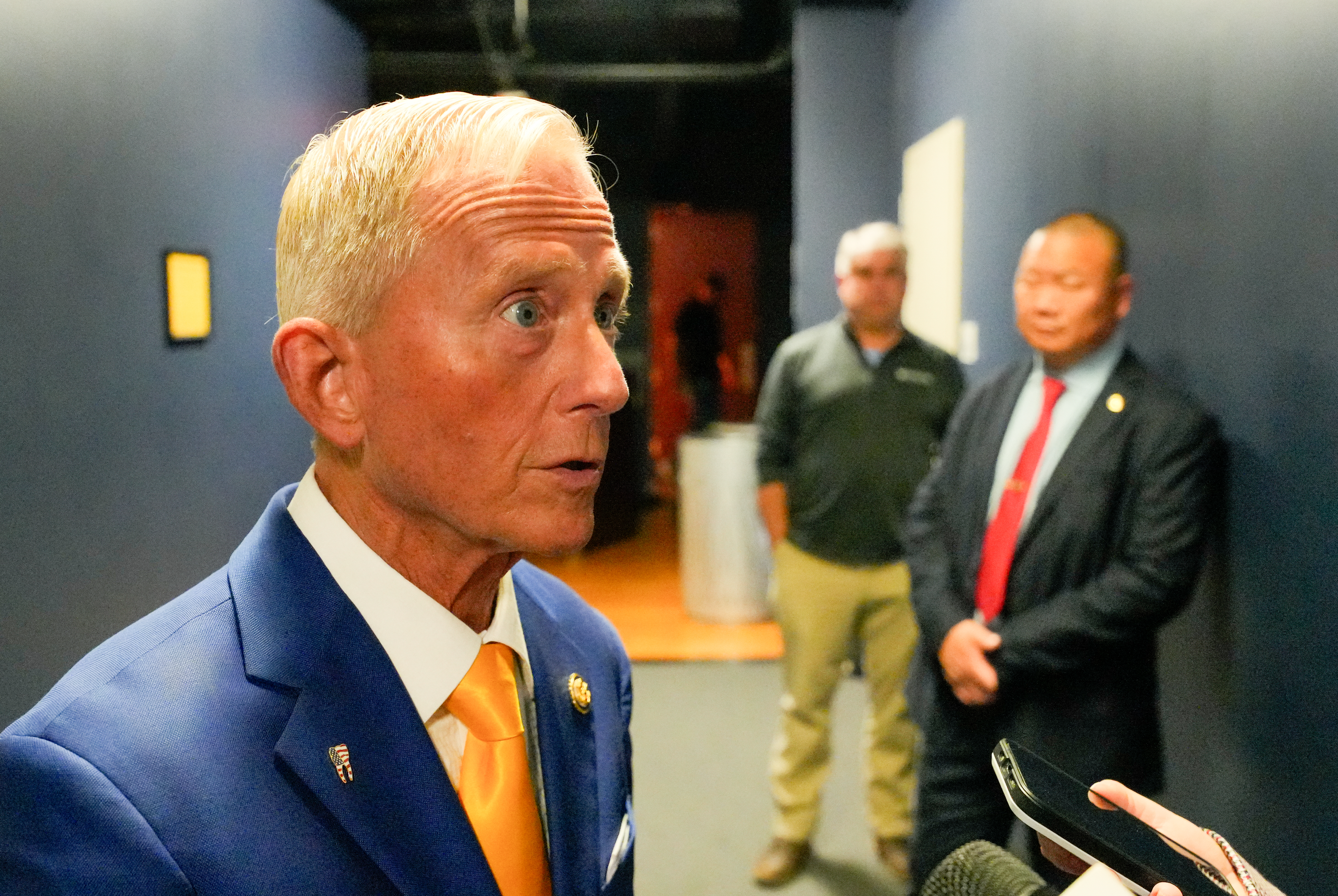
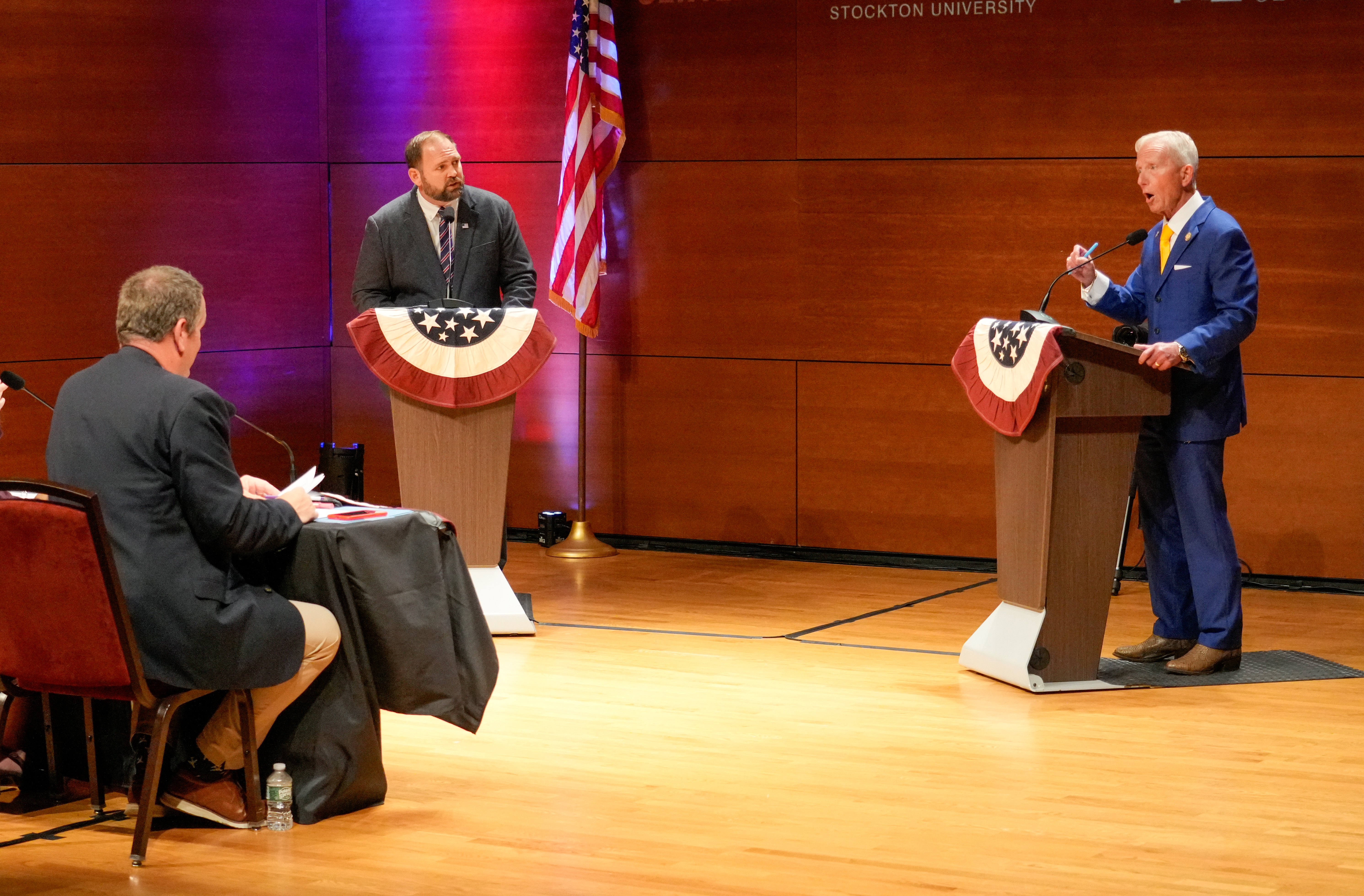
    U.S. Rep. Jeff Van Drew exits speaks to reporters after a debate with Democrat Zack Mullock, at the Campus Center Theatre at Stockton University on Thursday, Oct. 22.Tim Hawk / For The Inquirer

    The high cost of living and dissatisfaction with Trump have presented challenges to Republican incumbents.

    Van Drew, of Dennis Township, acknowledged in a phone interview Saturday that it is a hard year for Republicans given the national landscape, but he still feels good about his seat.

    “I’m not sure whether we keep the [House] majority or not,” he said. “I realistically understand what’s going on.”

    But he said that his district knows him well and that newer elected officials who had closer races than his in 2024 are more at risk.

    “I’ve always had a real connection … and a relationship with my constituents, and I think that always keeps me in good stead,” he said. “So I’ve always relied on it before. I rely on it now. I work super hard all the time, and I think that even in a tougher year like this, we’ll be fine.”

    His final pitch to voters is twofold. One is that he has delivered a slew of projects for South Jersey, and the other is more philosophical, he said.

    “I do believe in American exceptionalism,” he said. “I do believe it’s the greatest nation that ever existed on the face of the earth.”

  • Man who worked as South Jersey prekindergarten aide charged again with sex assault, making child porn

    A man who worked as a prekindergarten teacher’s aide has been charged again with aggravated sexual assault and manufacturing child pornography, Cape May Prosecutor Jeffrey H. Sutherland announced Friday.

    Shaun M. Stebbins, 44, of Somers Point, had already been charged earlier this year by the Atlantic County Prosecutor’s Office with sexually assaulting young children and making child sexual abuse material.

    That case covers four alleged victims who are siblings, a family member of the victims who asked not to be identified said in April. The alleged abuse started with one child who was 5 years old at the time. The siblings are now in their teens and early 20s.

    On Friday, Sutherland said his office had been notified by Atlantic County authorities that they found evidence that crimes also occurred in Cape May County.

    “The search of Shaun Stebbins’ devices revealed numerous images and videos of students from the Woodbine Elementary School in Cape May County. Shaun Stebbins was employed at Woodbine Elementary School as a teacher’s aide from February of 2022 to the date of his arrest in Atlantic County on March 29, 2026,” Sutherland’s office said.

    On Friday, Stebbins was charged in the new case with 29 counts of manufacturing pornography, five counts of aggravated sexual assault, and related offenses. He remained in custody at the Atlantic County Correctional Facility.

    A spokesperson for the Woodbine School District could not be reached for comment.

    NJ.com reported in April that Adrienne Breitinger, the superintendent of the Woodbine School District, sent a letter to parents confirming that Stebbins was employed through a staffing company that provides workers for the district.

    Breitinger said the district immediately requested a replacement after learning about Stebbins’ first arrest.

    “The safety and well-being of our students remain our highest priority,” Breitinger said in the letter.

    “Children are among our most vulnerable population and we have a responsibility to protect their safety and well-being. Anyone who harms a child will be held accountable through our justice system,” Sutherland said in a statement.

    Anyone with information about the case can contact the Cape May County Prosecutor’s Office Special Victims Unit at 609-465-1135 or provide an anonymous tip on the Cape May County Prosecutor’s Office website at cmcpo.tips.

    <iframe src="https://www.facebook.com/plugins/post.php?href=https%3A%2F%2Fwww.facebook.com%2FCMCProsecutorsOffice%2Fposts%2Fpfbid0ZhXoCQqRz77NvjPwsabDGEVKefTSdNmjrZjV5Ekn3TePB4eAQbuox4UoZY67Xeozl&show_text=true&width=500" width="500" height="591" style="border:none;overflow:hidden" scrolling="no" frameborder="0" allowfullscreen="true" allow="autoplay; clipboard-write; encrypted-media; picture-in-picture; web-share"></iframe>
  • It’s time to bite your nails | PA 2026 Newsletter

    It’s time to bite your nails | PA 2026 Newsletter

    📅 There are 4 days until Election Day.

    Brace yourselves.

    Election Day is Tuesday and some of the Pennsylvania races we’ve been watching play out for months — and in some cases more than a year — are exceptionally close.

    🎤 I’m Sam Janesch, The Inquirer’s national political reporter. The four nationally watched U.S. House seats in the state, which could help decide control of the chamber, are all within the margin of error. The state Senate (and a possible trifecta for Democratic Gov. Josh Shapiro) remains very much up in the air.

    Will a blue wave hit the Keystone State? Or will GOP incumbents fend off challenges in arguably their worst political environment of the Trump era (or maybe any era)?

    The consequences will be enormous, and Democrats had momentum heading into the final weekend. But it wouldn’t be a Pennsylvania election if it wasn’t all coming down to the wire.

    In this edition:

    🗳️ Rockin’ in the suburbs: Democrat Bob Harvie holds a narrow advantage over incumbent Republican Brian Fitzpatrick in Bucks County’s hotly contested U.S. House race.

    🗳️ Dynamic duo?: Democrats Bob Brooks and Paige Cognetti lead the GOP incumbents in the 7th and 8th Congressional Districts, the two seats Republicans flipped just two years ago.

    🗳️ Neck and neck: In the increasingly bitter Harrisburg-area rematch race, Republican Rep. Scott Perry and Democrat Janelle Stelson are in a dead heat.

    – Sam Janesch, Fallon Roth, Michelle Baruchman and Gillian McGoldrick (pa2026@inquirer.com)

    If someone forwarded you this email, sign up for free here.

    The latest

    Data dive

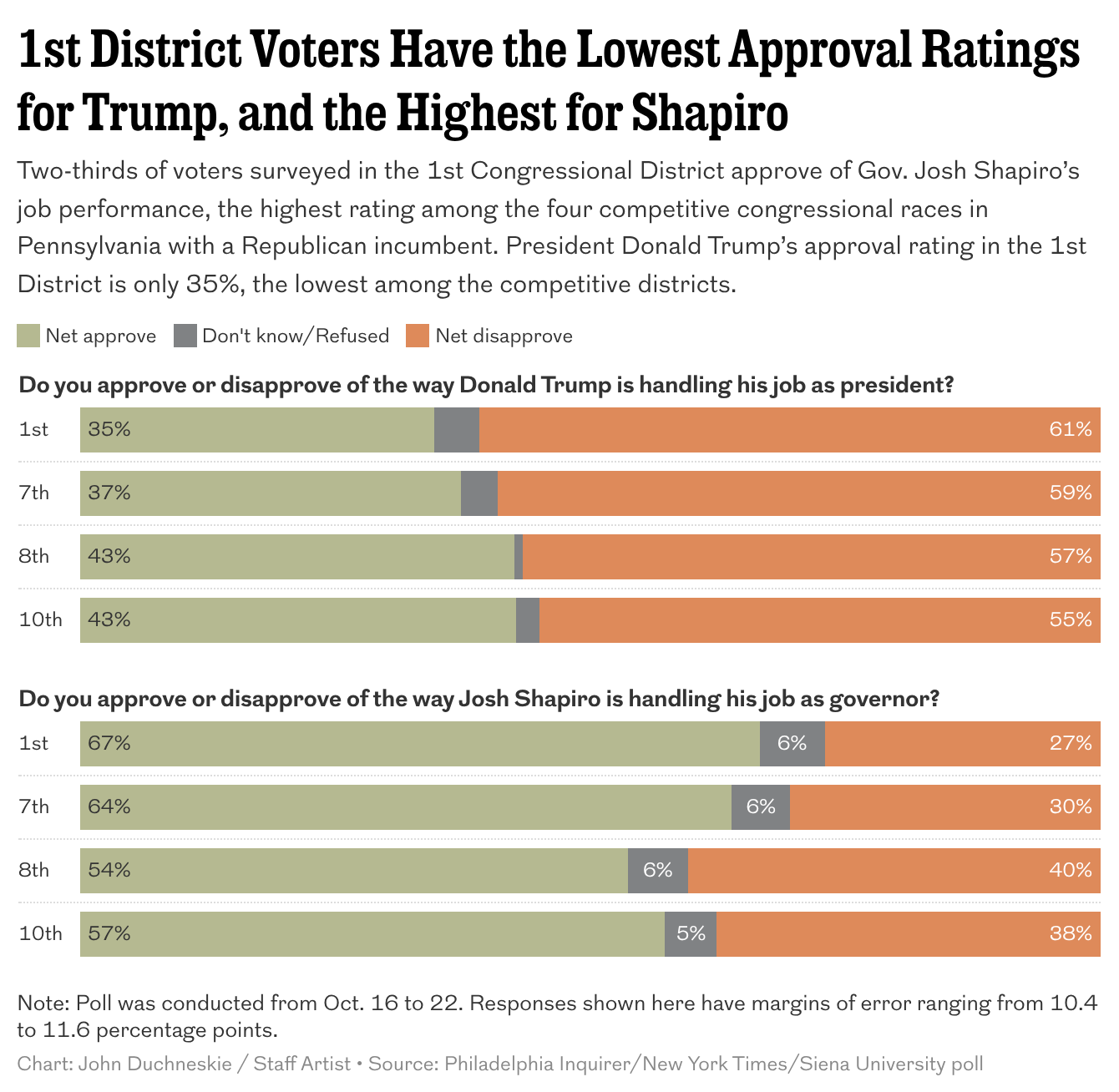
    📊 President Donald Trump and Gov. Josh Shapiro are on totally opposite sides of the popularity spectrum in Bucks County’s 1st Congressional District.

    Out of the state’s four swing districts, Trump has his worst approval rating in the 1st (35% approve compared to 61% disapprove) and Shapiro has his best (67% approve while 27% disapprove), a new Inquirer/New York Times/Siena University poll found.

    Results from a Philadelphia Inquirer/New York Times/Siena University poll showing approval ratings for President Donald Trump and Gov. Josh Shapiro among 1st Congressional District voters.John Duchneskie

    So what does that mean for the closely-watched matchup between Democrat Bob Harvie who is narrowly leading Republican U.S. Rep. Brian Fitzpatrick 48% to 46% in the poll?

    In many ways, it creates the political environment Democrats have been hoping for since Fitzpatrick first won the seat in 2016 — disdain for Trump driving voters to the polls, and Shapiro’s popularity while he’s on Tuesday’s ballot pulling Harvie and other downballot Democrats across the finish line.

    But Fitzpatrick, a five-term incumbent, has survived blue waves and Shapiro’s big margins at the top of the ticket before. And the Republican has spent much of his campaign separating himself from Trump and the GOP as Democrats try to tie them together.

    We’ll see which strategy pays off on Tuesday.

    Campaign scrapple

    Democrats seem to have given up on retaining the 36th Senatorial District seat in Lancaster County, where incumbent James Malone won in an upset in a 2025 special election in the +15 Trump district.

    According to media tracker AdImpact, Democrats have spent more than $2 million in the race so far, but it’s nearly stopped entirely since Oct. 13. Just prior to the spending freeze, Malone faced several attacks from Republicans over his past blog posts, including a 2023 Tumblr fan fiction about lesbian Dungeons and Dragons characters.

    Shapiro also made ads in support of other state Senate candidates who Democrats are trying to boost — and notably did not make one in support of Malone, whom he previously endorsed.

    📸 Behind the scenes snapshot

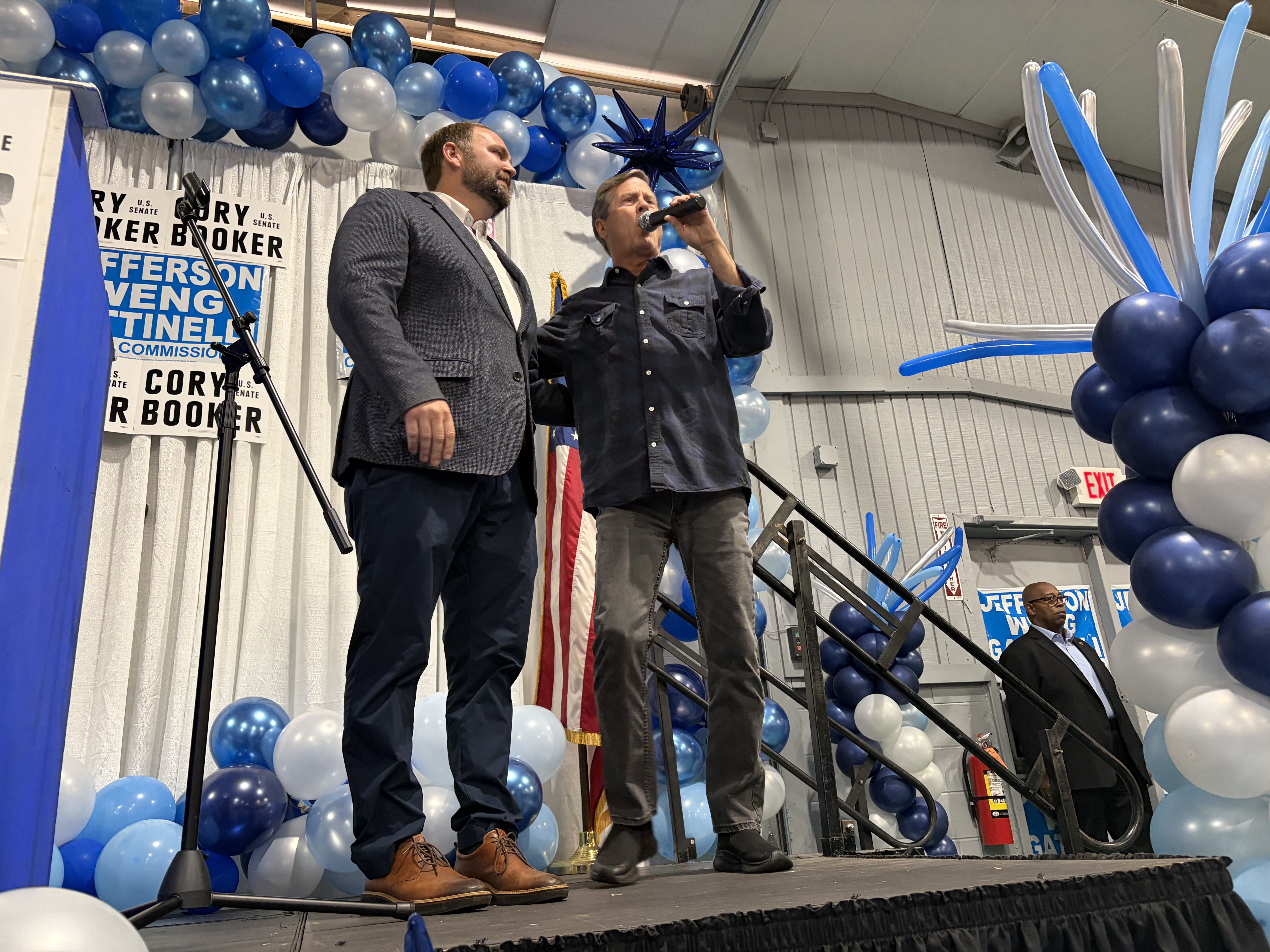
    U.S. Rep. Donald Norcross on stage at a get out the vote rally organized by the Gloucester County Democratic Committee on Oct. 24.Aliya Schneider / Staff

    Over in Jersey, Democratic U.S. Rep. Donald Norcross dropped to his knees as he mocked U.S. Rep. Jeff Van Drew’s fealty to Trump as he sought boost the campaign of Van Drew’s Democratic challenger, Cape May Mayor Zack Mullock.

    Norcross also compared Van Drew to Hitler, our colleague Aliya Schneider reported. The Democratic lawmaker called Van Drew to apologize for his remarks after being contacted by The Inquirer.

    👀 What we’re watching

    🚨 Philly and its suburbs will be the statewide focus in the final days before the election as the candidates at the top of the ticket look for every last vote with a string of events:

    • Gov. Josh Shapiro, on his statewide bus tour, is hitting all four of the collar counties over as many days. Sunday is devoted to Philadelphia (including an Eagles watch party in the Northeast) and he’ll finish out Monday in Montgomery County, where the governor grew up and still resides.
    • Republican nominee Stacy Garrity will also be making a stop in purple Bucks County on the eve of the election. Our poll showed her trailing by a wide margin in the Bucks-based 1st District.
    • Speaking of Bucks… Democrat Bob Harvie will campaign with Shapiro there on Saturday, but he’ll spend election eve with another potential presidential contender: former Chicago Mayor Rahm Emanuel.

    📫 People voting by mail have until 8 p.m. on Election Day to return their ballots. Democrats are outpacing Republicans in total requests and returns. Here’s more from the state data:

    • Democrats have requested 841,155 mail ballots, and returned 75% of them, as of Thursday. That’s 629,099 Democratic ballots already cast 4 days out from the election.
    • Republicans have requested 325,188 mail ballots, and returned 75% of them, for a total of 243,338 GOP mail ballots already cast.
    • Another 147,669 mail ballots have been requested by unaffiliated and third-party voters, who have returned 63% of them so far, or 93,400 mail ballots cast.

    Quote of the week

    🫩 All of us political junkies feel it at the end of every campaign cycle. One candidate said it out loud.

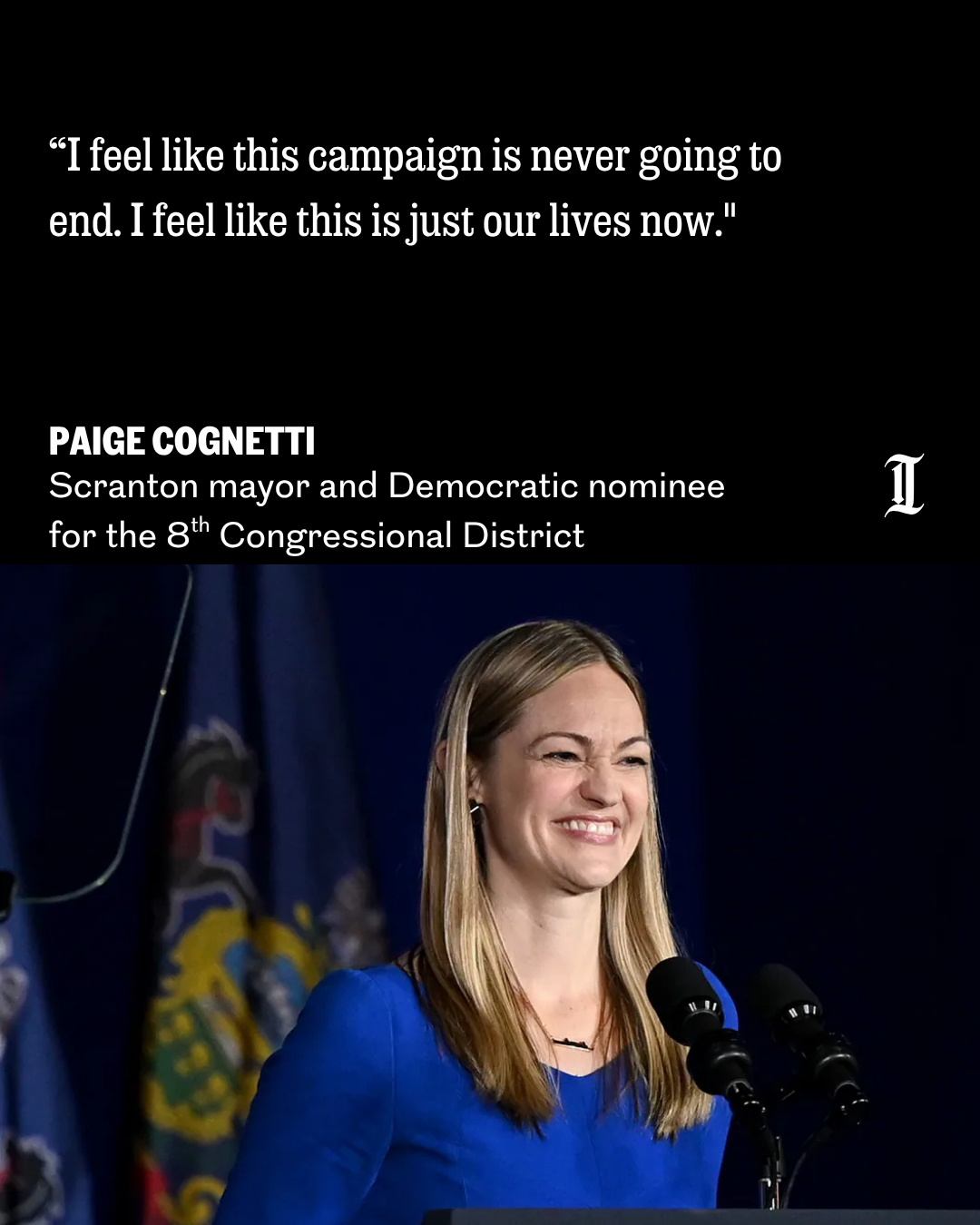
    Scranton Mayor Paige Cognetti, the Democratic nominee against Republican U.S. Rep. Rob Bresnahan in the 8th Congressional District, opened a local candidate forum last week by addressing the elephant in most similar rooms across the country right now — she and other candidates are everywhere right now. And it can feel like a lot.

    “I think it’s 11 days,” Cognetti said at the Oct. 23 forum. “You won’t have to see my face on your screen and your television screen every single day.”

    The Democrat launched her campaign nearly 14 months ago and — like many others in her position — have been at a near-sprint since.

    Is this “just our lives now?” We’ll find out soon.

    👋 We hope you have a spooky Halloween weekend filled with sweet treats ahead of next week’s frights: waiting for the election results. 👻 We’ll see you next Friday with our final edition to break it all down.

  • Some N.J. voters are rethinking their support for Gov. Mikie Sherrill, new poll shows

    Some N.J. voters are rethinking their support for Gov. Mikie Sherrill, new poll shows

    Ten months into her term, New Jersey Gov. Mikie Sherrill’s approval rating has dropped, especially among Democrats, who say they don’t know enough to judge her performance yet, a poll released Wednesday said.

    But there is nothing ambiguous about how New Jersey voters feel about President Donald Trump, according to a new Fairleigh Dickinson University poll of 805 voters this month.

    The poll found 66% voters disapprove of the president, 29% approve, and 5% said they did not know or declined to answer.

    Sherrill’s approval ratings declined 10 percentage points in October, to 48%, compared with the last time Fairleigh Dickinson surveyed voters, in March, when it was 58%. Yet her disapproval rating of 32% remained the same in both polls, said Dan Cassino, a professor of government and politics and the executive director of the FDU poll.

    The difference is the 12-point spike in the number of people who said they “didn’t know,” “weren’t sure,” or declined to answer the question, according to the poll.

    “Normally, you’d expect attitudes toward the governor to become more, rather than less, certain over time,” Cassino said. “But for whatever reason, Democrats are not as happy with the governor as they were when she took over.”

    Steve Sigmund, Sherrill’s spokesperson, said the poll demonstrates the public’s continued support of her goals.

    “Gov. Sherrill’s relentless focus on affordability and rejecting politics as usual in 2025 gave Democrats a playbook to win this cycle,” Sigmund said. “New Jerseyans’ strong approval of her job leading the state shows that they recognize she is delivering on these commitments.”

    The poll did not ask why some voters did not approve of Sherrill’s performance. But she has faced some controversies since the last poll.

    She asked for and received the resignation of Lt. Gov. Dale Caldwell after an independent investigation concluded he had sexually harassed a woman on his staff and made other ethical lapses, which he denies. She was also criticized by some progressives for bringing in the state police to quell protests outside the Delaney Hall ICE detention center in Newark. They claimed the state police treated them no better than Immigration and Customs Enforcement officers by showing up in riot gear on horseback and assaulting them.

    Cassino said he suspects the uncertainty rose because the Democratic brand remains unpopular nationally and the number of people who identify as progressive or liberal is growing.

    In March, 88% of Democrats said they approved of the job Sherrill was doing, compared with 71% in the October survey, which was conducted by text-to web surveys from Oct. 16 through 22 by Braun Research of Princeton on behalf of the university.

    “It’s not clear what Sherrill has done to cause voters who should be among her most loyal supporters to distance themselves,” Cassino said. “But whatever it is, this is a blinking yellow light for the administration.”

    Among Republican voters statewide, the president holds a 95% approval rating among self-identified MAGA voters, 68% among conservatives, and 21% among moderates, the poll said.

    “Trump isn’t running for reelection, but he has made himself the face of the Republican Party,” Cassino said. “The fact that he’s this unpopular means that he’s dragging down Republican candidates in a way that a less visible president might not be.”

    The Nov. 3 midterm elections will decide whether Republicans maintain control of the U.S. Senate and House of Representatives.

    Polls widely indicate the Democrats are most likely to flip the House, with two-term Republican Rep. Tom Kean Jr. in New Jersey’s 7th District in central and north Jersey considered to be among the most vulnerable GOP incumbents. Democratic newcomer and former U.S. Navy pilot Rebecca Bennett is favored to win.

    South Jersey Republican Rep. Jeff Van Drew is likely on more solid ground in the 2nd District, but his Democratic challenger, Cape May Mayor Zack Mullock, is gaining more attention as pundits predict a “blue wave.”

  • Donald Norcross compared Jeff Van Drew to Hitler at a Gloucester County rally and later apologized

    Donald Norcross compared Jeff Van Drew to Hitler at a Gloucester County rally and later apologized

    U.S. Rep. Donald Norcross (D., N.J.) compared his South Jersey Republican colleague U.S. Rep. Jeff Van Drew to Adolf Hitler while mocking him during a Saturday get-out-the-vote rally in Gloucester County.

    After being reached by The Inquirer, Norcross apologized to Van Drew and said he went “too far” earlier that day.

    “Donald, my undying, I pledge to you!” Norcross cried out after getting down on his knees in front of a crowd of roughly 200 Democratic supporters at the Deptford Eventure Center in Westville, referencing Van Drew’s support for President Donald Trump.

    Snapping out of character, he said: “Jesus Christ! Oh my God! You remember that bulls—? A guy from Jersey on his knee? That’s disgusting.”

    Norcross — whose district includes all of Camden County, much of Gloucester County, and parts of Burlington County — is facing a long shot challenge from Republican Damon Galdo, a West Deptford podcaster who works in construction. But he focused his attention Saturday more on Van Drew, who represents a sprawling neighboring South Jersey district that spans from parts of Gloucester County down to Cape May.

    U.S. Rep. Donald Norcross got on his knees to mock U.S. Rep. Jeff Van Drew’s support for President Donald Trump at a Gloucester County rally on Saturday.Aliya Schneider / Staff

    Norcross was joined by fellow Democrats U.S. Sen. Cory Booker and Cape May Mayor Zack Mullock, who is challenging Van Drew, for a rally to energize supporters 10 days ahead of the midterms.

    Mullock did not comment on Norcross’ speech Saturday.

    Three Gloucester County Democratic commissioners who are running for reelection — Jim Jefferson, Joann Gattinelli, and Matthew Weng — and U.S. Sen. Angela Alsobrooks, a Democrat representing Maryland, also made appearances.

    Democrats are particularly sour on Van Drew, who served in local and state positions for years and was elected to Congress as a Democrat in 2018 before switching to the Republican Party and vowing his “undying support” to Trump a year later. Van Drew has warded off challengers ever since, but the race has attracted increasing national attention in recent weeks as Democrats anticipate a blue wave.

    Norcross said onstage he knew Van Drew leaned conservative even before they got to Congress.

    “He called himself a Democrat,” Norcross said. He bemoaned Van Drew’s opposition to raising the state’s minimum wage while they served in the state legislature together.

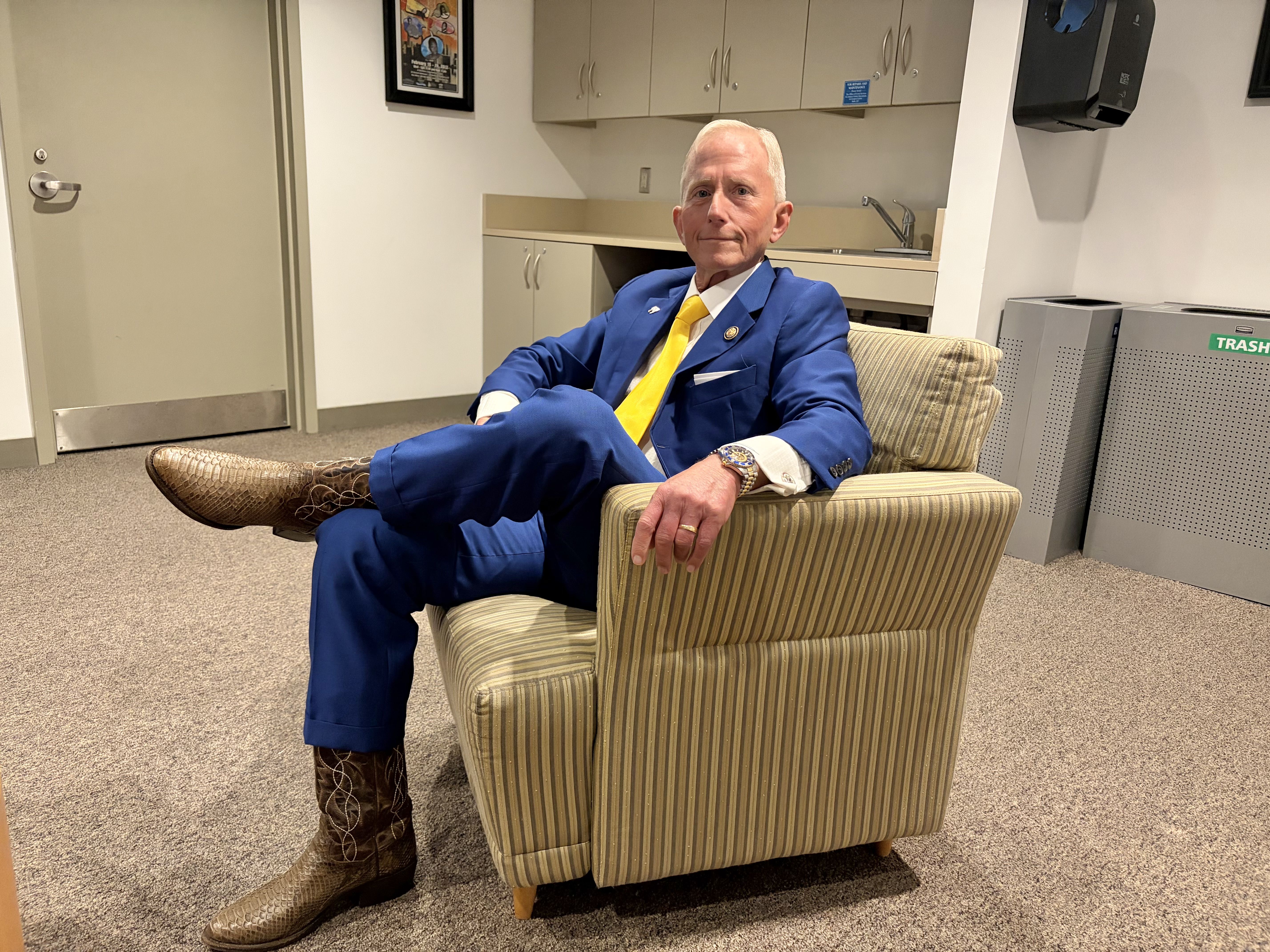
    Norcross also made fun of Van Drew’s shoes, saying “now he wears them pointy boots that you can’t kill cockroaches on ‘em. Ah, the guy’s losing!” before commenting on his hair. Norcross also referred to a white handkerchief that Van Drew used to wear in his jacket pockets, which was folded to show a series of peaks.

    U.S. Rep. Jeff Van Drew sits backstage after his debate with his Democratic challenger Cape May Mayor Zack Mullock at Stockton University on Thursday.Aliya Schneider / Staff

    “That haircut: If it was darker, that’s Hitler’s haircut. That tells you who he really is. And those things he used to wear in his pocket, those three things. … The Klan hats he used to wear there, remember that? This is the real Jeff Van Drew.”

    Norcross called Van Drew to apologize after The Inquirer asked about the remarks.

    “Whatever implications there were from my comments, I did not mean them that way. I went too far,” Norcross said through a spokesperson.

    After Norcross apologized to him, Van Drew said on the phone that he was “profoundly disappointed” by his colleague’s remarks, which he called “rough and inappropriate for a congressman.”

    “I think he agrees,” Van Drew added. “I think he knows it now. I guess he got caught up in the moment.”

    Van Drew said he accepted Norcross’ apology, he’s glad he called, and that it’s time to move on.

    “Hopefully he has learned a lesson from it,” the Republican added.

    When asked for comment on Norcross’ remarks before the apology, Van Drew’s spokesperson Ron Filan said the Republican lawmaker is praying for his Democratic colleague.

    “When Congressman Norcross was in the hospital last year, Congressman Van Drew reached out to see how he was doing and prayed for him,” Filan said. “He will continue to pray for him especially considering what he has just said and done. That tells you everything you need to know about who Jeff Van Drew really is.”

    At the rally, Norcross, all fired up, also used a swear word when talking about high gas prices amid Trump’s war in Iran, and was met with cheers.

    “I’m not going to say anything today that we didn’t say with that one second to go in the Eagles game. … So forgive me, I’m an electrician,” he joked onstage.

    Steve Sweeney, the former longtime state senator who now works as the Gloucester County administrator and chairs the county’s Democratic committee, also referenced Van Drew’s decision to support Trump with a graphic metaphor at the rally.

    “You saw when Jeff got down on his knee and kissed Donald Trump’s ass in front of the whole world. We’re gonna get rid of him real soon,” Sweeney said, which he later said he stood by “1,000%.”

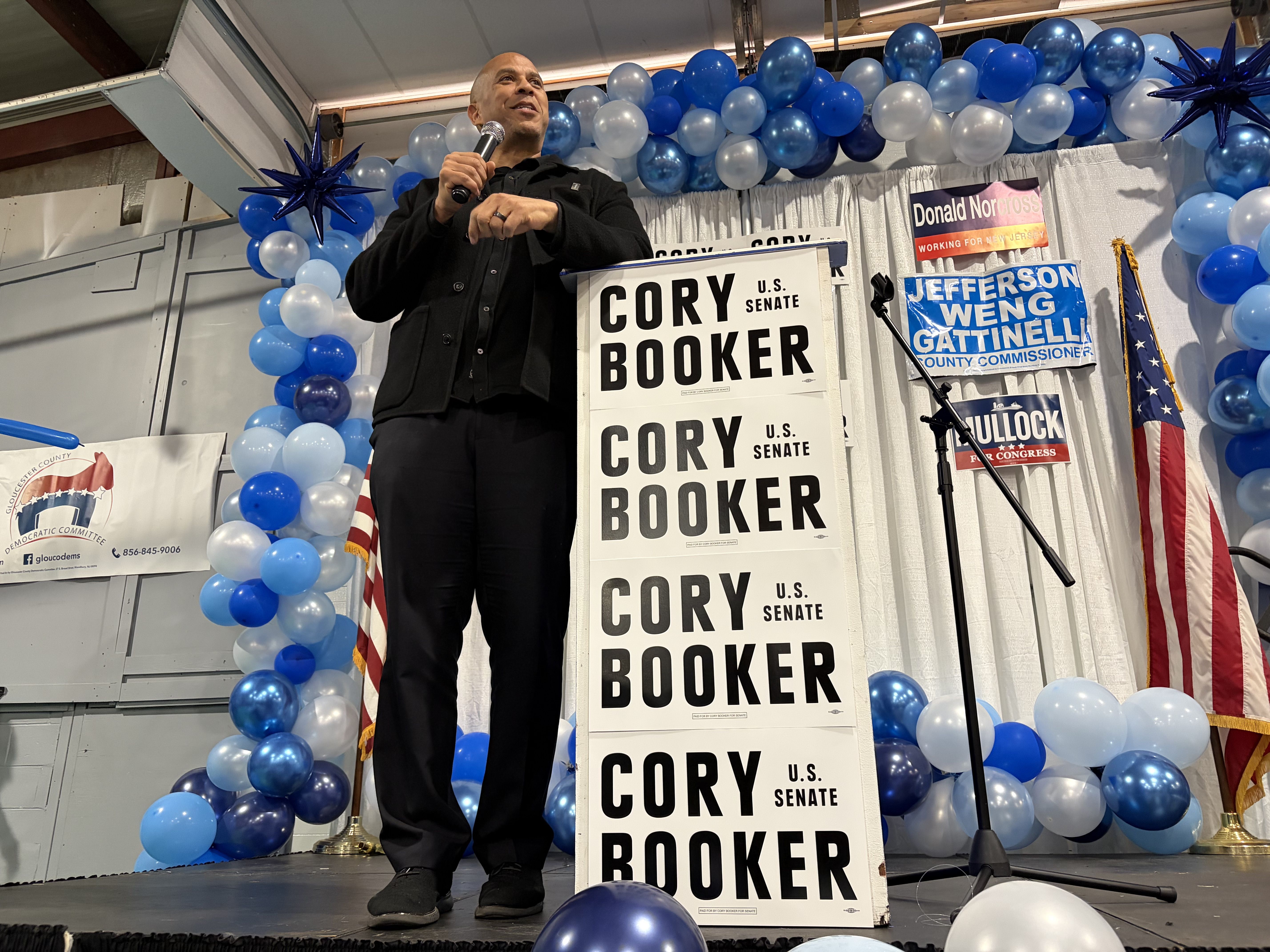
    Sen. Cory Booker at a campaign rally hosted by the Gloucester County Democratic Committee on Saturday.Aliya Schneider / Staff

    Sweeney, a longtime friend of Norcross, said before Norcross’ apology that he is “not going to criticize Donald for his opinion” when asked if the lawmaker’s comparisons went too far. He expressed that he also isn’t a fan of Van Drew’s hairstyle — or policies.

    At the rally, Norcross introduced Mullock as the “Jeff Van Drew slayer.” The Jersey Shore mayor’s voice was strained, completely shot from his many speeches on the campaign trail — and likely his tense debate with Van Drew two days earlier.

    Mullock criticized Van Drew’s vote for the One Big Beautiful Bill Act, which made cuts to federal healthcare programs, and noted, “I know I sound like I’m a person who really needs some good healthcare right now.”

    Booker joked that Mullock “may have a weak voice” but “has a strong heart.”

    “When we elect him to the House of Representatives, you can turn off the TV, because you know we will have taken back the House,” the senator said. “You can turn off the TV because you know that that is going to shock the nation. That even the president of the United States will get the message. And any of the remaining Republicans in Congress, we’re going to say, ‘I’m not going to hitch my wagon to that guy.’ We have so much power in this county.”

  • ‘Daddy Trump,’ data centers and the Iran war: Here are the highlights from Jeff Van Drew’s debate with Zack Mullock

    ‘Daddy Trump,’ data centers and the Iran war: Here are the highlights from Jeff Van Drew’s debate with Zack Mullock

    U.S. Rep. Jeff Van Drew and Democratic challenger Zack Mullock fought over a slew of local and national issues impacting South Jerseyans in a tense debate Thursday night as their once sleepy race sees increasing national attention and spending in the final days before the midterm.

    Despite a ramped-up focus on the race, the two candidates squared off in a mostly empty theater at Stockton University with the debate only open to journalists and the sound of cameras shuttering the only noise heard in the absence of an audience. Mullock, the mayor of Cape May, said he wanted a live audience, but Van Drew wouldn’t agree.

    In an interview with The Inquirer after the debate, the incumbent Republican said it was a safety concern — the same reason he doesn’t hold open in-person town halls, which Mullock criticized.

    Throughout the debate, Mullock interrupted Van Drew and accused him of telling falsehoods. Van Drew, meanwhile, derided his challenger as “Mr. Pinocchio.”

    The sprawling 2nd Congressional District stretches from Gloucester County to the Jersey Shore. National Democrats added the district to a growing list of target races earlier this month, but it’s less likely to flip than some other seats in New Jersey and Pennsylvania.

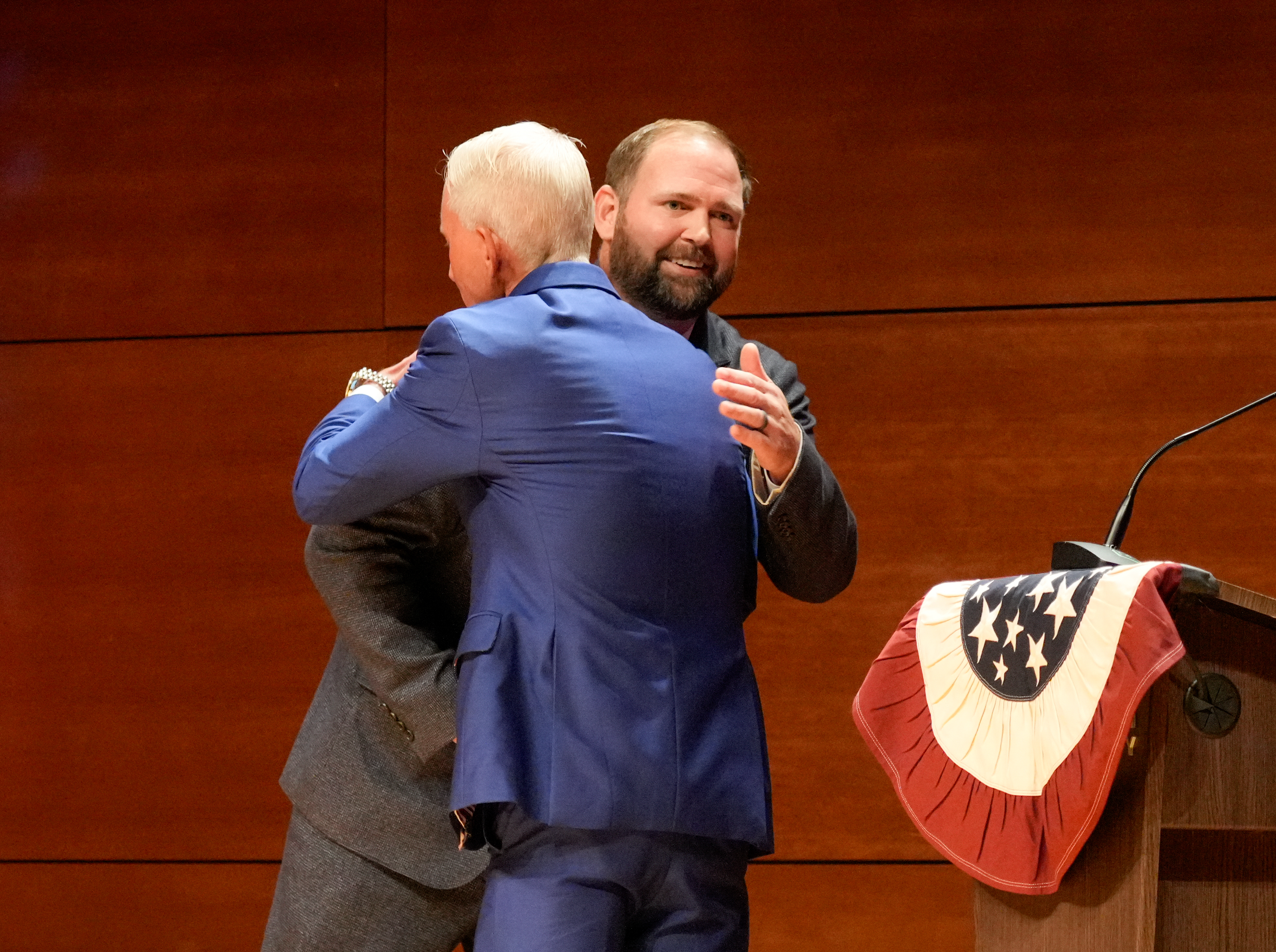
    U.S. Rep. Jeff Van Drew, right, and Democrat Zack Mullock exchanger a quick hug after a tense debate in the Campus Center Theatre at Stockton University, Thursday, Oct. 22, 2026.Tim Hawk / For The Inquirer

    Here are the highlights from the debate:

    Where Van Drew disagrees with Trump, and Mullock disagrees with Democrats

    Van Drew, 73, won the seat in 2018 as a Democrat before switching parties to become a Republican a year later and vowing his “undying support” to Trump.

    Mullock, 41, said Thursday that Van Drew “looks up to the president like a child” and follows his “daddy Trump.”

    When asked what issues he disagrees with his party on, Van Drew said he believed Republicans should have extended Obamacare subsidies — though he opposed a Democratic-led effort to extend the subsidies for three years.

    He also said he opposed Secretary of Defense Pete Hegseth’s plan to livestream the firing–squad execution of an Army officer convicted in a 2009 mass shooting at Fort Hood.

    As for Trump, Van Drew said he opposed the president’s past desire for offshore oil leases in New Jersey and his resistance to releasing the Epstein files.

    Mullock pointed out that Van Drew was not among the Republicans who tried to force a floor vote on the files.

    “He knew that some girls as young as 14 had been sexually assaulted, and he refused to sign the discharge petition. … When the victims needed him, he didn’t vote for it,” Mullock said.

    Van Drew said he didn’t want to send the bill to the floor without going through the committee process and that he was a sponsor of a bill calling for the files’ release before Trump expressed his approval upon realizing he lacked support within his own party to keep the files under wraps.

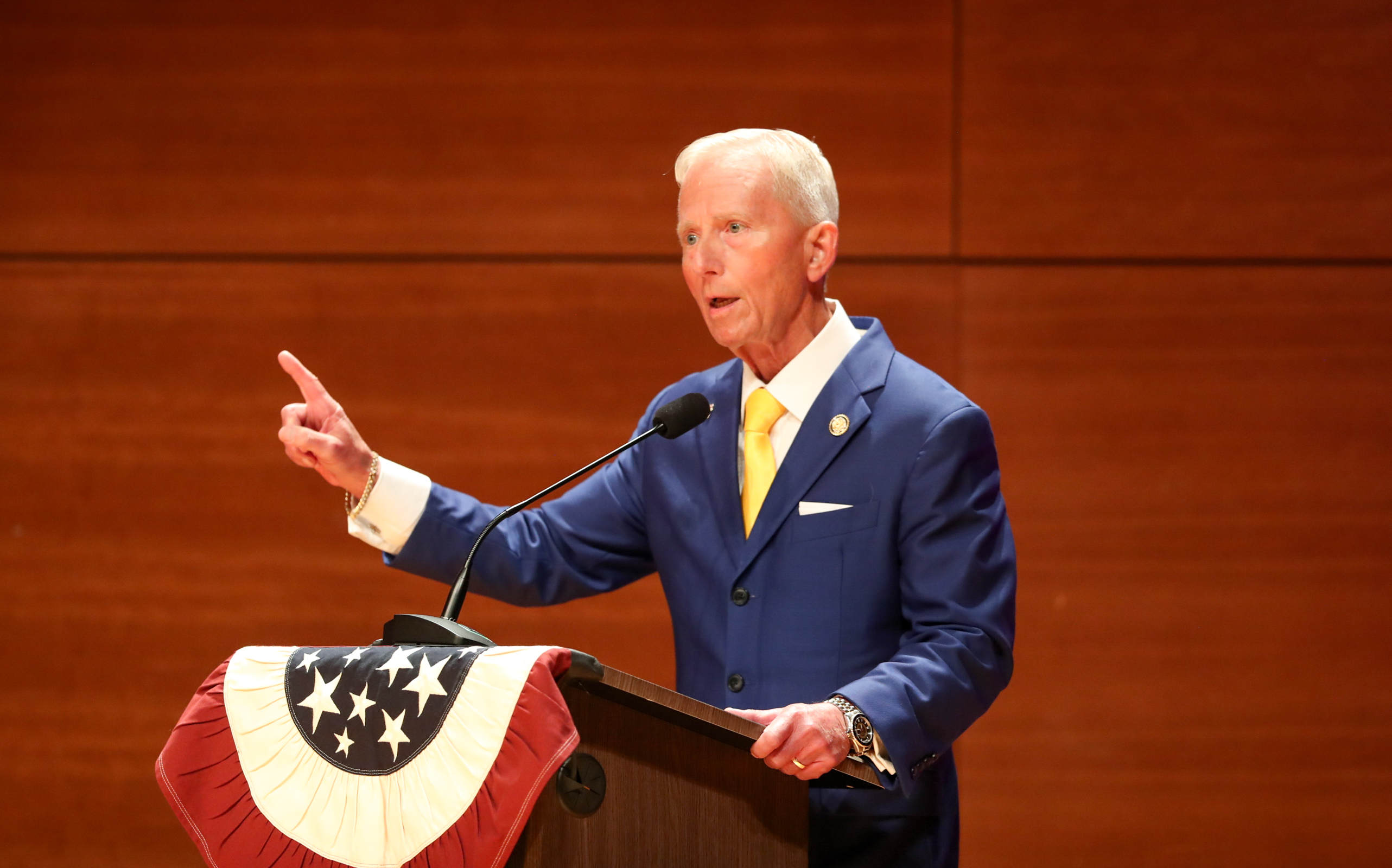
    U.S. Rep. Jeff Van Drew answers a question during a debate with Cape May Mayor Zack Mullock, in the Campus Center Theatre at Stockton University, Thursday, Oct. 22, 2026.Tim Hawk / For The Inquirer

    Mullock said he has plenty of experience working across the aisle in his nonpartisan local government and said he’s hired Republican city managers. He also said he thought Democrats “did a bad job on the border.”

    At another point in the debate, Mullock said farms and restaurants in the district rely on immigrants who haven’t broken the law and deserve a path to citizenship. He said he supports having “a strong border” and getting “rid of violent criminals” but that ICE sweeps under Trump are “terrorizing communities and scaring school children.”

    Van Drew criticized Democratic policies in the state that limit local law enforcement’s cooperation with ICE as well as a legal-defense fund for undocumented immigrants.

    He also called Mullock a “democratic socialist.” When asked about the label after the debate, Van Drew said Mullock supported the 2016 presidential campaign of Sen. Bernie Sanders of Vermont, who has long used the label.

    The Cape May mayor, who donated $3 to Sanders’ 2016 presidential run, said he supported some of Sanders’ economic policies but does not identify with that term.

    War in Iran

    Mullock accused Van Drew of voting for the war in Iran six times, in reference to House resolutions seeking to restrict Trump’s power to continue the war without congressional approval. Trump launched the war in coordination with Israel in February and went past the deadline for approval in May.

    Van Drew disputed Mullock’s characterization. “There was never a vote for the war in Iran,” Van Drew said.

    “I did vote not to end hostilities absolutely immediately because it would have endangered our troops,” he added.

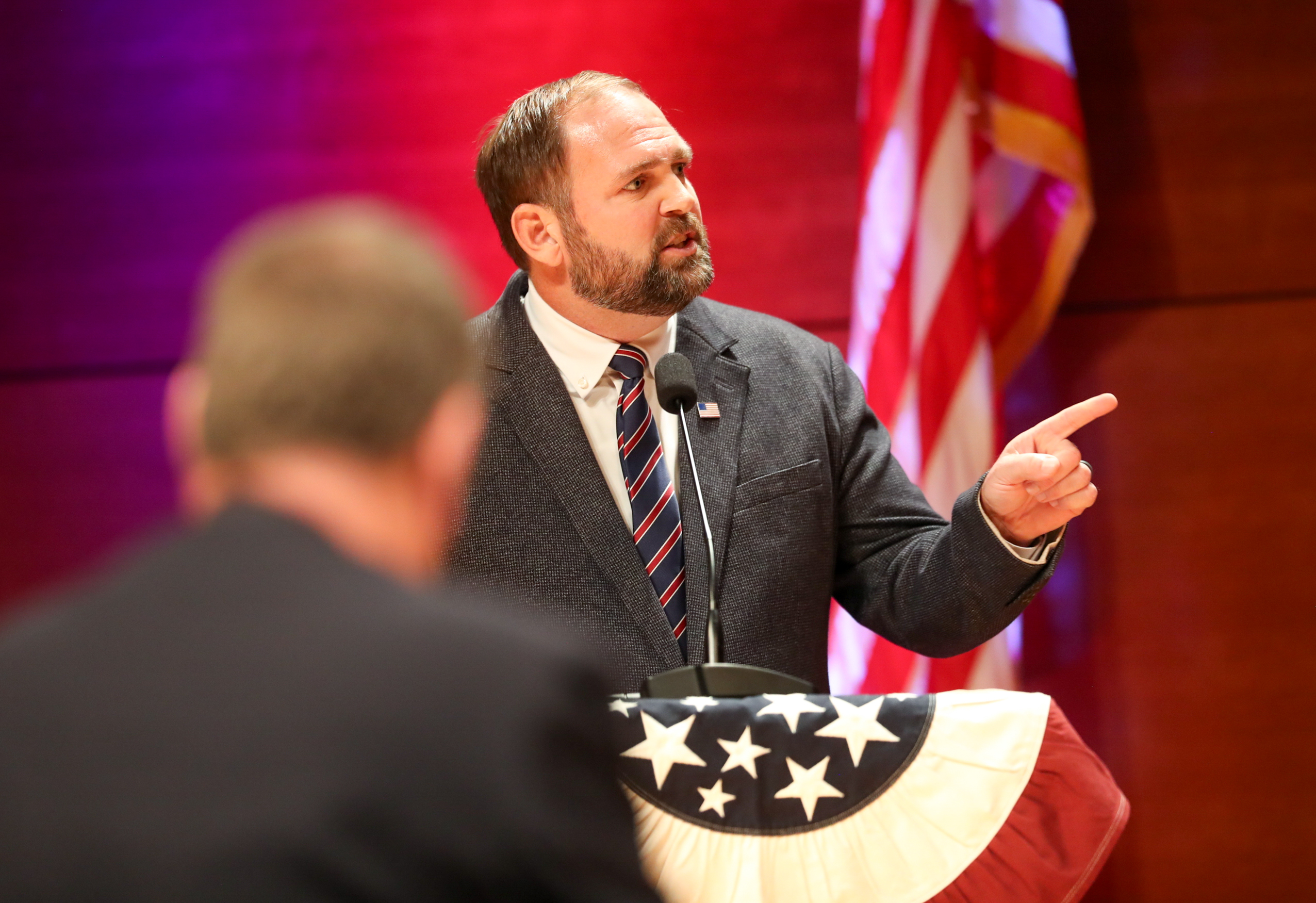
    Democrat Zack Mullock points to U.S. Rep. Jeff Van Drew during a debate in the Campus Center Theatre at Stockton University, Thursday, Oct. 22, 2026.Tim Hawk / For The Inquirer

    Mullock called it a “war of stupidity” and questioned what the war has done to help South Jerseyans, pointing to the high price of gas at the pump and diesel for farmers since the war stressed the global oil supply chain.

    “Ronald Reagan is rolling in his grave right now,” Mullock said, contending the Republican who oversaw the late stages of the Cold War would disapprove of Trump’s deal to purchase fuel from Russia to control costs.

    “You had a chance to stop it, and you didn’t,” Mullock said to Van Drew.

    After the debate, Van Drew said in an interview that he believes there will be an opportunity to leave Iran “soon.”

    “I think this next Congress, regardless of whoever has control, is going to say, ‘OK, what’s the end game here?’” He said he supported Trump’s decision to start the war to go after nuclear enrichment and long-range ballistic missiles, but that it “does need to end” with a safe exit strategy.

    Construction at the Data One data center in Vineland, N.J. in June. Tom Gralish / Staff Photographer

    Data centers

    Mullock said Van Drew’s campaign is “sponsored by data centers,” in reference to campaign donations from John Ruga, who leads a concrete company that helped develop the controversial Vineland data center. Ruga has said that Van Drew’s support for the project was “critical.”

    Mullock also pointed to Van Drew’s vote for the One Big Beautiful Bill Act, which he said gave money to data centers while cutting Medicaid. According to Politifact, the law let companies with data centers write off equipment costs quicker than before.

    “It is no coincidence that the poorest county in the state is being taken advantage of right now, and you’re letting it happen,” Mullock said in reference to the massive Cumberland County data center, which was recently hit with a $1 million fine from the state.

    Van Drew said he’s known the concrete contractor, who has worked on various projects in the area, for years. He pointed to a bipartisan bill he supported last month that seeks to put guardrails on energy costs caused by data centers.

    “I never met the data center people,” Van Drew said. “I don’t know who they are.”

  • Zack Mullock in N.J. 2nd Congressional District and Rebecca Bennett in N.J. 7th Congressional District | Endorsement

    Zack Mullock in N.J. 2nd Congressional District and Rebecca Bennett in N.J. 7th Congressional District | Endorsement

    Since he returned to the White House, Donald Trump’s policies have worsened inflation, pushed up energy costs, cut healthcare for millions, and pushed the deficit to its highest levels since the pandemic — $2 trillion and counting.

    The president is not on the ballot in November, but two of his Republican enablers — Jeff Van Drew and Thomas Kean Jr. — are up for reelection and New Jersey voters should hold them accountable.

    Fortunately, the incumbents face challengers who are ready to meet the moment and help restore Congress’ role in the nation’s system of checks and balances.

    In New Jersey’s 2nd Congressional District, The Inquirer endorses Democrat Zack Mullock.

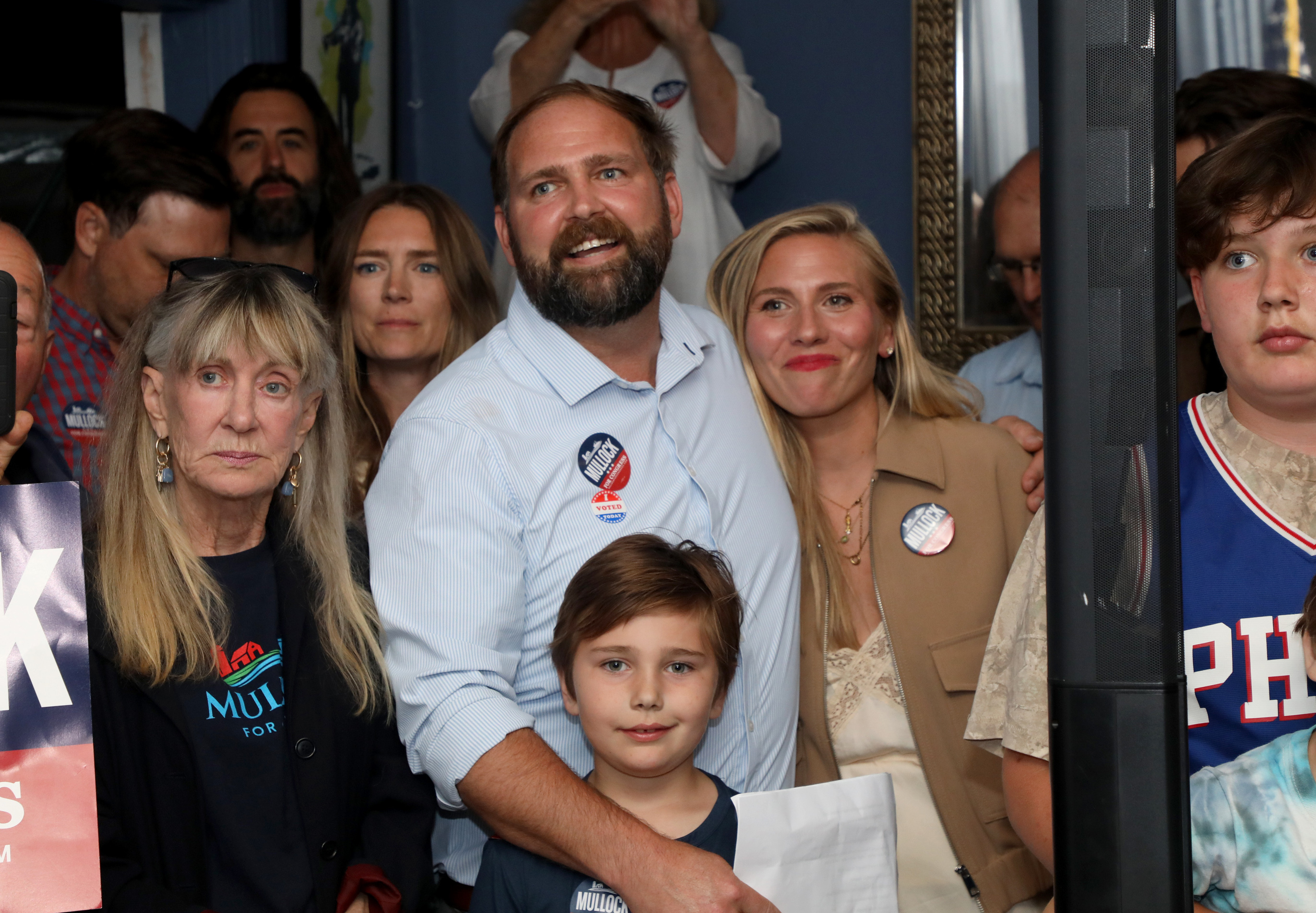
    Zack Mullock, with his wife, Justine, and their family, prepares to speak at the Chalfonte Hotel in Cape May after winning the 2nd Congressional District Democratic primary in June.Vernon Ogrodnek / For The Inquirer

    The Cape May mayor is a pragmatist who is willing to work across ideological differences for the benefit of his constituents in the mostly working-class South Jersey district that includes Vineland, Atlantic City, and Cape May.

    Mullock told the Editorial Board he has seen people’s economic struggles and his opponent’s hand in making things worse by voting for the Big Beautiful Bill Act. The district includes three of the state’s four poorest counties and a middle class that increasingly finds it harder to make ends meet as the cost of living continues to rise.

    As Van Drew’s “undying support” for Trump has left his constituents with moribund pocketbooks, Mullock said he will fight for good-paying jobs, lowering energy costs, and building affordable homes.

    Mullock believes there must be major changes to the healthcare system to improve affordability. He said he supports U.S. Sen. Andy Kim’s MediKids legislation, which would guarantee health coverage for children and young adults as an intermediate step toward Medicare for All.

    The Democrat said data centers, and Big Tech in general, should face federal oversight and regulation. On immigration, he told the Editorial Board that having a strong border is important but so is comprehensive immigration reform. As is stopping the administration’s assault on the immigrant community.

    “The fact that we have people being terrorized in our streets here in South Jersey is outrageous and frankly disgusting,” he said. “We need to become, again, that country of dignity and respect.”

    Incumbent Van Drew declined to meet with the Editorial Board.

    Also running is Ramon Mora Jr., who in his interview with this board laid out a series of progressive policy answers for the issues facing the district. Mora’s compelling life story, public service ethos, and firsthand experience with the challenges many Americans face — including homelessness and rising healthcare costs — make the underdog independent a candidate to watch.

    However, in this race, Zack Mullock is the best choice for voters and has earned the Editorial Board’s endorsement.

    In New Jersey’s 7th Congressional District, The Inquirer endorses Democrat Rebecca Bennett.

    Rebecca Bennett, Democratic candidate for New Jersey’s 7th Congressional District, hugs an attendee during a primary election night watch party after winning the Democratic nomination in JuneRyan Murphy

    The former Navy helicopter pilot and health technology executive told the Editorial Board she felt called to run for office for the same reason she joined the military, which is her love for America and the opportunity it stands for.

    “I really consider my life the story of the American Dream because I was able to go to college on an ROTC scholarship. I used the GI Bill for an MBA, and my husband and I bought our house with a VA loan,” she said. “I am where I am today because of programs like that. And that American Dream just feels so far out of reach for so many people right now.”

    To put that opportunity back in people’s grasp, Bennett wants to rollback Trump’s tax cuts to the wealthiest Americans and help make healthcare, housing, energy, and childcare more affordable — including capping families’ childcare costs at 7% of household income. She believes there should be federal guardrails for artificial intelligence development and strong community input on data center development.

    Bennett’s district — which sits north of Trenton and includes Hunterdon and Warren Counties and parts of Morris, Somerset, Sussex, and Union — has been represented since 2023 by Thomas Kean Jr.

    The incumbent — the son and namesake of the former New Jersey governor and the scion of a family that traces its political lineage to the Revolution — was a traditional conservative stalwart during his almost two decades in the General Assembly. Under Trump, he has abandoned some of those values, including backing the president’s tariffs, which have raised prices at home and hurt America’s standing abroad. Kean also supports the president’s war of choice in Iran, which continues to roil world energy prices and has led to increasing pain at the pump.

    Earlier this year, Kean disappeared without explanation for nearly four months. When he reemerged, he said he had been in treatment for depression. As this board has expressed, Kean deserves praise for going public with his diagnosis, but he is still an elected official with duties to his constituents. His monthslong lack of transparency remains troubling.

    Kean did not respond to multiple invitations to meet with the Editorial Board.

    As for Bennett, she described herself as a commonsense candidate who is interested in solving problems. She said that she is ready to work across the aisle — and with partnership-minded people across the country — to move the Garden State forward.

    “That’s how it was in the military. We were just there as Americans to get the job done. And that’s the mindset that I’m going to bring to office,” she said.

    Washington could use some of that can-do spirit. That is why The Inquirer endorses Rebecca Bennett.

  • Jeff Van Drew, House GOP leaders subpoena Mikie Sherrill’s administration over N.J. noncitizen voter records

    Jeff Van Drew, House GOP leaders subpoena Mikie Sherrill’s administration over N.J. noncitizen voter records

    South Jersey Republican Rep. Jeff Van Drew Wednesday announced a congressional subpoena of New Jersey Gov. Mikie Sherrill’s administration, demanding it produce records he requested three months ago that may explain how 6,600 noncitizens were added to the voter rolls in violation of federal law.

    Sherrill, a first-term Democrat, revealed in July that approximately 6,600 people who identified themselves as noncitizens were registered to vote in New Jersey between June 2023 and June 2024 through the Motor Vehicle Commission, though fewer than 400 actually cast ballots.

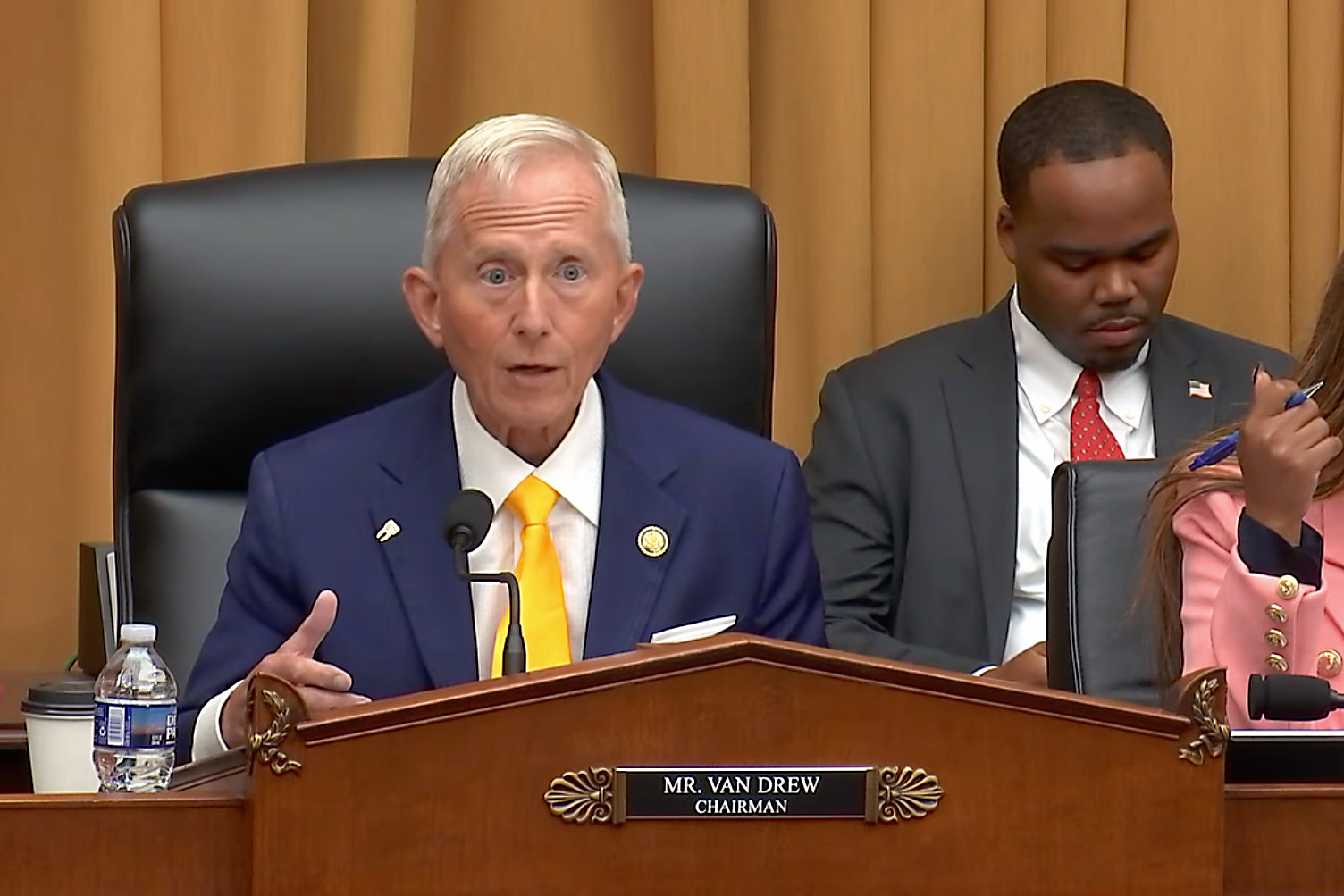
    Van Drew, the Cape May Republican who chairs House Judiciary Committee’s subcommittee on Oversight, first requested the documents Aug. 7 as part of the subcommittee’s investigation. To date, the state has produced just 12 documents that shed no light on how this happened, Van Drew and other Republican congressional leaders wrote in a letter accompanying the subpoena from the Judiciary Committee and the House Administration Committee.

    Her administration’s response has been “inadequate,” and “an impediment” to their investigation, the letter said.

    “None of the documents offered any substantive insight into how the noncitizen voter registration issue was discovered or why New Jersey did not conduct any remediation efforts until 2026,” said the letter Van Drew co-authored.

    “These ineligible voter registrations raise concerns about the application of federal law in New Jersey as it pertains to accurate voter registration, as well as the effect that New Jersey’s failure to identify and remove noncitizens from its voter rolls has on the civil liberties of American voters and their ability to elect representatives,” according to the letter.

    Sherrill has blamed former Gov. Phil Murphy’s team, as well as software vendor IDEMIA, for the registration of people who had answered they weren’t citizens and therefore ineligible to vote. Both have denied responsibility.

    Murphy spokesperson Mahen Gunaratna on Wednesday pointed to his one statement on the matter from July in which he said Murphy “had no knowledge” of the issue and “applauds” Sherrill for looking into it.

    In addition to removing thousands of people from the rolls, Sherrill sent about 2,000 registrants to county election officials for verification to make sure they didn’t accidentally disenfranchise citizens.

    Sherrill also referred the matter the law firm of former Republican Attorney General Jeffrey S. Chiesa for an independent investigation, which is ongoing, Sherrill noted Wednesday.

    “I promised that when we discover a problem, we communicate the facts and fix it — and I meant it,” Sherrill’s statement said. “From the moment we discovered the Motor Vehicle Commission registration issue from 2023, we took action immediately, went above and beyond in making agencywide reforms, and have been transparent every step of the way. We did this so that New Jerseyans can feel confident that we are running the strongest and fairest election in our country.”

    Sherrill dismissed the subpoena as “political theater,” and derided Van Drew and House Judiciary Chair Jim Jordan (R., Ohio) as “enablers” of President Donald Trump, whose administration has pushed for more power over state-run elections.

    Van Drew defended IDEMIA, the vendor Sherrill has blamed, at the hearing on the matter last month but no one from New Jersey’s government or the voter registration system participated. Van Drew repeatedly accused the state of knowing about the noncitizen registration issue since 2024 and called it a “cover-up.”

    Van Drew spokesperson Paxton Antonucci told The Inquirer after the hearing that documents showed the state contacted IDEMIA in June 2024 after noticing registered voters whose files were missing their age and party affiliation. Those questions were only asked of people who identified themselves as citizens wanting to vote, but the system still allowed people who said they aren’t citizens to register.

    “This information was missing due to the fact that the software, for some reason, was failing to flag that this group of individuals had selected the ‘No’ option when asked if they were a U.S. citizen but were still allowed to be registered to vote,” Antonucci said last month.

  • Zack Mullock says Van Drew made harmful cuts to Medicaid and Medicare. The South Jersey Republican begs to differ.

    Zack Mullock says Van Drew made harmful cuts to Medicaid and Medicare. The South Jersey Republican begs to differ.

    Susan Coll-Guedes was baffled when she saw a photo of U.S. Rep. Jeff Van Drew, a Cape May County Republican, smiling with scissors at a ribbon-cutting ceremony for a group home provider agency.

    “He cut Medicaid, which is the funding for group homes for people with disabilities,” said Coll-Guedes, whose adult son has Down syndrome and is on Medicaid.

    The Galloway resident is a self-proclaimed “Mom for Mullock,” who supports Democrat Zack Mullock, the Cape May mayor who is challenging Van Drew in the Nov. 3 midterm election. She wasn’t interested in politics until President Donald Trump’s One Big Beautiful Bill Act made major changes to Medicaid eligibility and decreased federal funding for the program.

    While the cuts don’t directly target her son, she’s concerned the changes will have a domino effect on the program as a whole, she said in interviews this month.

    Back in August, behind the red barn of Independent Spirits Distillery, a small business along farmland in Gloucester County’s Woolwich, Mullock told an audience of about 75 people that he gets “daily reminders” from South Jersey residents who are scared about the law’s cuts to social programs like Medicaid, which provides health coverage for low-income people and people with disabilities, including tens of thousands of people in the district.

    Cape May Mayor Zack Mullock speaks to an audience at Independent Spirits Distillery in Woolwich on Aug. 11.Aliya Schneider / Staff

    Mullock is among the many Democrats across the country attacking Republican incumbents for slashing social safety net funding to help pay for Trump’s policy priorities — including tax breaks for the wealthy — while still adding $3.4 trillion to the national deficit.

    “I cannot fathom cutting for the very poorest to give to the very wealthiest,” Mullock said to the receptive audience brought together by the Woolwich Democrats. “It’s absolutely insane, and that’s exactly what Jeff Van Drew did when he voted for the Big Beautiful Bill. It was passed by one vote. One vote. And that tells you just how important these elections are.”

    “If I was in his shoes, that bill would not have passed,” he added.

    Local Democrats see Mullock as their best shot yet at ousting Van Drew, but the race flew under the national radar until earlier this month when the Democratic Congressional Campaign Committee added it to its list of “districts in play,” which Van Drew mocks as a “wish list.”

    Van Drew was first elected as a Democrat in 2018 before changing parties and vowing his loyalty to Trump one year later. He’s been reelected three times since then with his closest challenger still falling nearly 6 points behind him in 2020.

    On Tuesday, the University of Virginia’s Center for Politics’ Sabato’s Crystal Ball shifted the district’s rating from “safe Republican” to “likely Republican,” meaning Van Drew remains favored to win but less comfortably than before.

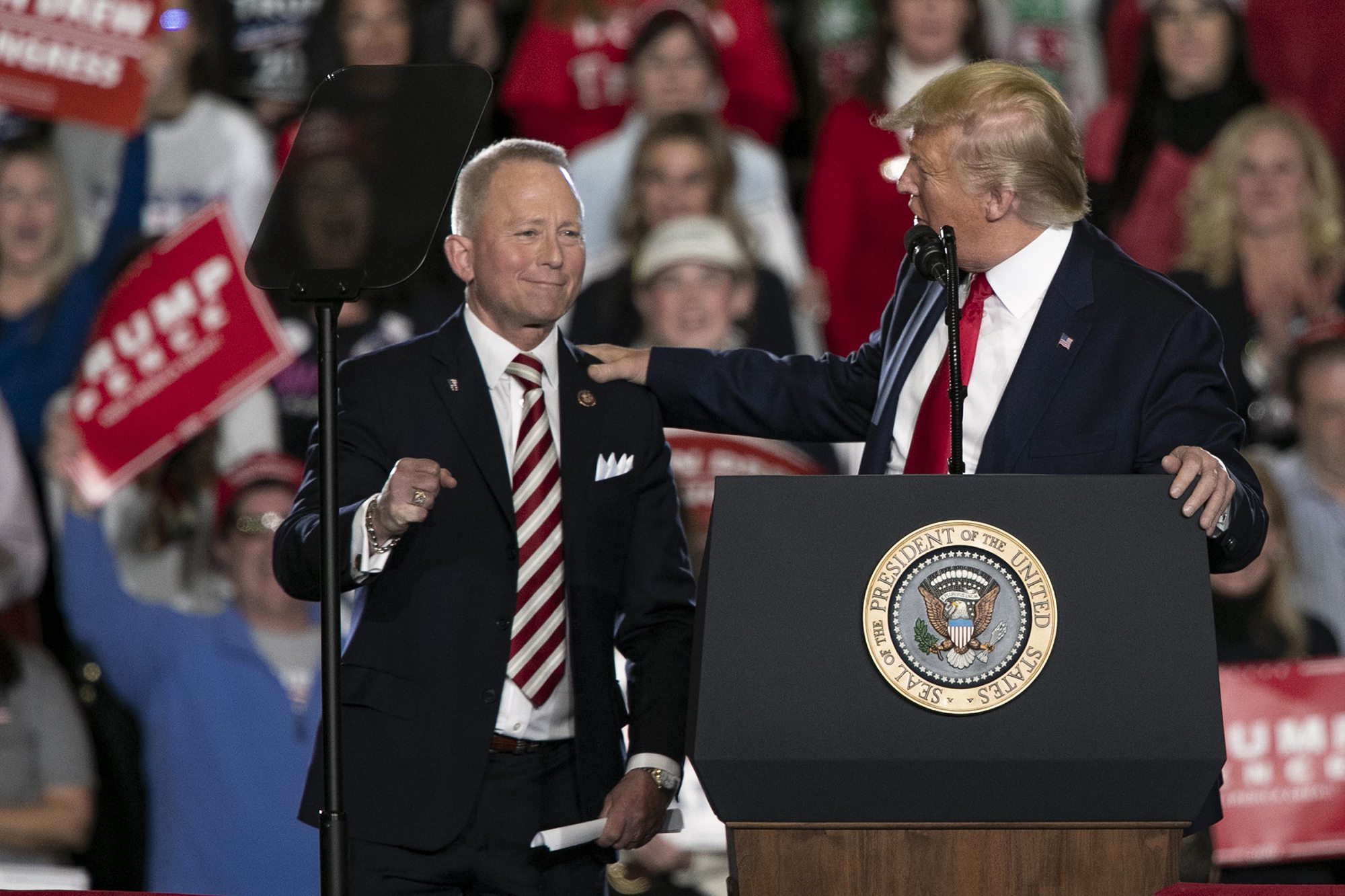
    U.S. Rep. Jeff Van Drew with President Donald Trump at a campaign rally in Wildwood in 2021.Heather Khalifa / MCT

    Mullock is hoping dissatisfaction with the impacts of Trump’s policies will help him pull off an upset in the district, which stretches from Gloucester County to the Jersey Shore.

    How Trump’s law will impact Medicaid

    Prior to his vote for Trump’s law last year, Van Drew was adamant that he would not vote for legislation that impacts Medicaid or Medicare unless the cuts are “specifically aimed at reducing waste, fraud, or abuse.”

    That’s exactly how the Trump administration has framed the new changes, along with saying that the cuts will help preserve the programs in the long term.

    “I was on the forefront of saying that we shouldn’t hurt seniors, we shouldn’t hurt children, we shouldn’t hurt the disabled, that we shouldn’t be harming those folks,” Van Drew said at a recent candidate forum held by the Gloucester County Chamber of Commerce after Mullock criticized his vote at the same event.

    Cuts to SNAP have already taken effect but Medicaid cuts won’t be fully implemented until after the midterms in January 2027. Democrats are pledging to reverse them if they take control of Congress.

    Van Drew defended the changes, particularly a new requirement for Medicaid recipients ages 19 to 64 to file paperwork every six months to show they work, volunteer, or take academic classes 20 hours a week to qualify for the program, unless they meet exemptions carved out for people with disabilities.

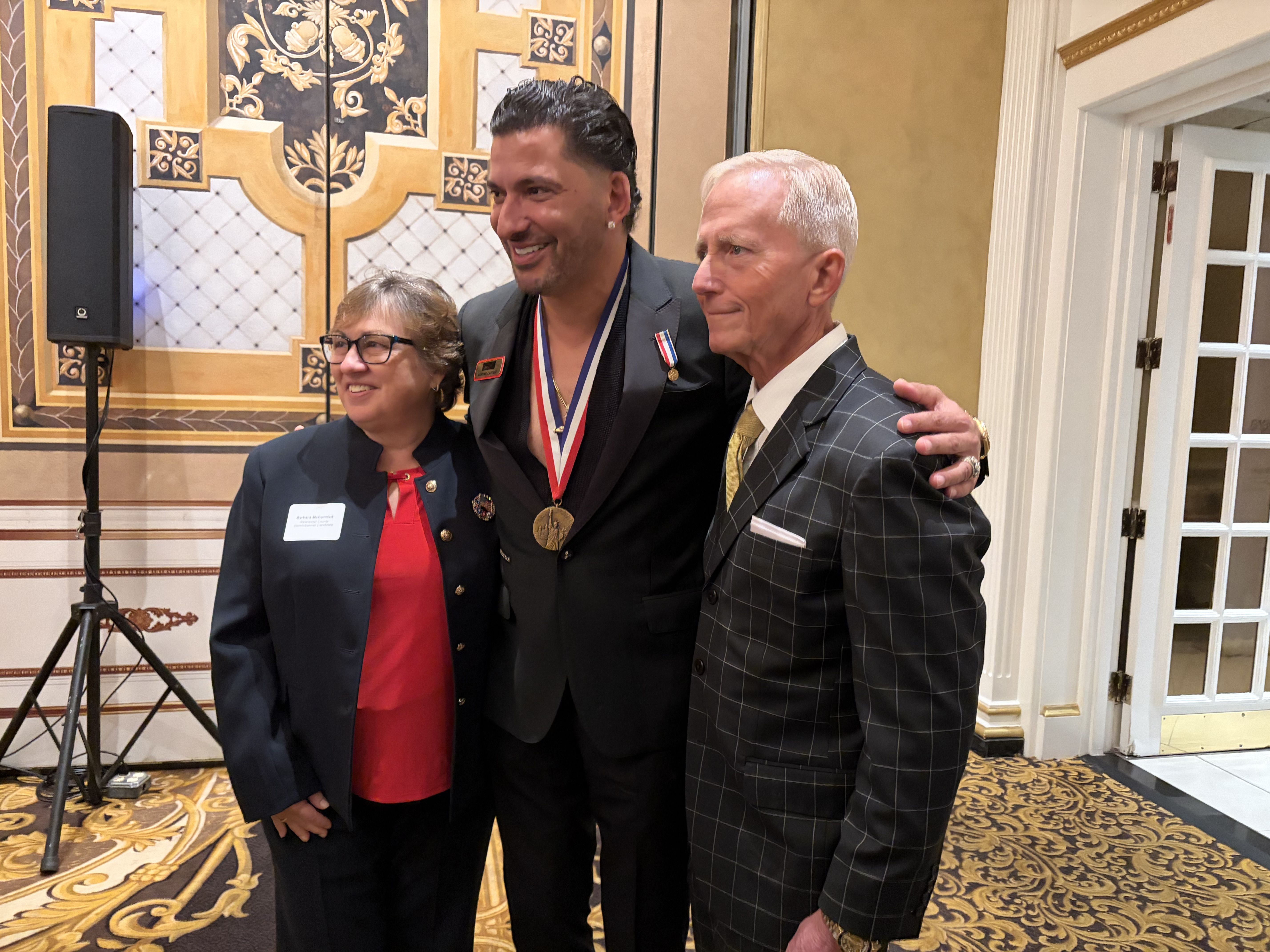
    U.S. Rep. Jeff Van Drew (right) poses for a photo at a Gloucester County Chamber of Commerce candidate forum with Barbara McCormick and Martino Cartier, Republican candidates for Gloucester County Commission, on Oct. 7.Aliya Schneider / Staff

    “If you are able-bodied and you don’t have children, and aren’t planning on it, and aren’t a senior citizen, and don’t want to work … you could pet dogs at the Humane Society, help senior citizens, or you could go and learn a trade, or you could even go back to college. You still would get your Medicaid,” Van Drew said at the forum.

    “But if you’re healthy and you are young and you don’t want to work at all and you’re not willing to do any of those things … you’re not going to get it,” he said to claps from his supporters.

    The law is slated to cut Medicaid spending over 10 years by approximately $911 billion, including approximately $29 billion in New Jersey, according to a KFF analysis using data from the nonpartisan Congressional Budget Office.

    The changes to Medicaid are expected to lead to 7.5 million people becoming uninsured by 2034, including approximately 240,000 people in New Jersey.

    Opponents of the requirement argue that since most adults receiving Medicaid already work, the extra paperwork will cause people who qualify to lose coverage anyway.

    The 2nd Congressional District includes all of Atlantic, Cape May, Cumberland, and Salem Counties, and parts of Ocean and Gloucester Counties. These counties all together have 365,666 people enrolled in Medicaid as of August.

    Mullock made the case at the forum that the cuts will have a disproportionate impact on the district because Cumberland, Atlantic, and Salem Counties are among those with the lowest incomes and highest poverty rates in the state.

    “When you are driving all around and meeting with people and seeing the real poverty that exists here in CD-2, if your heart doesn’t break, you’re not a human,” Mullock said in an interview.

    Another provision will also boot immigrants off the program who have legal status but aren’t permanent residents, such as refugees of war, asylum seekers fleeing persecution, and victims of sex trafficking and domestic violence. New Jersey’s Department of Human Services estimated that between 15,000 and 25,000 immigrants with legal status will lose coverage.

    Van Drew introduced a “No Medicaid for Illegals Act” last year and said the program should only benefit American citizens.

    Does the One Big Beautiful Bill touch Medicare?

    While the law takes primary aim at Medicaid, Mullock has spoken about the cuts in tandem with Medicare, the federal healthcare program for people ages 65 and older. His campaign website says he supports Medicare for All funded by “fairer corporate taxes and a fair tax on the top 5%.”

    And at the Gloucester County forum, Mullock claimed that the law cut $1.5 trillion in Medicare and Medicaid.

    To get to that figure, Mullock said he was combining the nearly $1 trillion in Medicaid with a $491 billion figure that the Congressional Budget Office said could hit Medicare from 2027—2034 if Congress doesn’t act. That figure comes from the Pay‑As‑You‑Go Act of 2010, which forces cuts to prevent federal deficit increases. But legislators can override that obligation, and that’s exactly what they did as part of the November 2025 law that reopened the government after a record-breaking 43-day shutdown.

    Meanwhile, Van Drew retorted during his own remarks that Medicare “never came up for a vote.”

    “There wasn’t even a vote on Medicare,” he added. “Not one dollar has been cut from Medicare.”

    While most of the law’s healthcare provisions affect Medicaid, the law does make some changes to Medicare.

    Changes to eligibility for groups of legally present immigrants will leave 100,000 more people without health insurance and decrease federal Medicare spending by $5.1 billion by 2034, according to Congressional Budget Office data.

    Another provision of the law blocks a policy enacted under former President Joe Biden that tried to make it easier for low-income Medicare recipients to access Medicaid financial assistance. The Congressional Budget Office projected this change will decrease dual enrollees by 800,000 people and decrease spending by $66 billion by 2034. While these people aren’t expected to stop getting Medicare, higher out of pocket costs would likely cause them to seek less care, the budget office predicted.

    The six counties the district touches had a total of 378,833 people enrolled in Medicare in 2025.

  • Birding booms in Philly, as Gen Z and millennials flock to the pastime

    Birding booms in Philly, as Gen Z and millennials flock to the pastime

    Victoria Sindlinger led a six-member flock from the Quackers Bird Club across the University of Pennsylvania campus, peering into hundreds of trees and shrubs along the way.

    Binoculars dangling, the crew navigated past Franklin Field, traversed a steel bridge, skirted past tennis courts, and ducked into a pocket park.

    For two hours on a recent walk they tracked a northern mockingbird tucked into a willow oak, caught a yellow warbler mid-hunt, pinpointed a monarch butterfly resting on goldenrod, and observed other flora and fauna, including a giant hornet nest.

    Sindlinger, a 22-year-old senior environmental science major from West Philadelphia, launched the club during her freshman year, pitching it to a small group chat of classmates. The group has grown to 120 members and is an official university organization.

    The Quackers are part of an expanding wave of young, city-dwelling birders reshaping the hobby with a distinct urban tilt. While regional sanctuaries like Cape May and Berks County’s Hawk Mountain draw international recognition, the popularity of urban birding across Philadelphia and its dense suburbs is soaring, according to some of the region’s most enthusiastic bird-watchers.

    “I think there’s been more interest in birds and more research and more activity around birds here in the Philly area than any other place in the Western Hemisphere,” said Keith Russell, program manager for urban conservation at Audubon Mid-Atlantic.

    Victoria Sindlinger, founder of the Quackers Bird Club at the University of Pennsylvania, leads a birding walk across campus.Tyger Williams / Staff Photographer
    A northern mockingbird spotted in a tree next to Franklin Field during a Quackers Bird Club outing at the University of Pennsylvania.Tyger Williams / Staff Photographer

    The convergence of COVID-19 isolation and modern nature applications helped trigger a surge in urban birding. Campus clubs are multiplying, groups of like-minded people are gathering, and loose local networks are banding together through informal meetups.

    “The really nice thing about birding in general — and running a bird club — is that it’s actually pretty easy to do,” Sindlinger said. Her club takes excursions by SEPTA, via rented car, or even by foot.

    “The birds are out there. Especially on Penn’s campus, which is so beautifully green.”

    <iframe title="The number of eBird users in Pennsylvania, New Jersey grew by nearly 50% after 2020" aria-label="Line chart" id="datawrapper-chart-1KZr7" src="https://datawrapper.dwcdn.net/1KZr7/1/" scrolling="no" frameborder="0" style="width: 0; min-width: 100% !important; border: none;" height="498" data-external="1"></iframe><script type="text/javascript">(function(){function e(){window.addEventListener(`message`,function(e){if(e.data[`datawrapper-height`]!==void 0){var t=document.querySelectorAll(`iframe`);for(var n in e.data[`datawrapper-height`])for(var r=0,i;i=t[r];r++)if(i.contentWindow===e.source){var a=e.data[`datawrapper-height`][n]+`px`;i.style.height=a}}})}e()})();</script>

    Indeed, the growth of birding in the region, and particularly Philadelphia, has been extraordinary, according to data from eBird, a citizen-science project by Cornell University’s Lab of Ornithology that allows birders to log the species they see and the locations.

    Consider:

    • In 2020, Pennsylvania had 9,559 eBird users. In 2025, it had 15,830, a 66% increase.
    • New Jersey had 6,098 users in 2020. It had 11,082 by the end of last year, an 82% increase.
    • And Philadelphia went from 1,035 eBird users in 2020 to 2,754 last year — a 166% increase.

    Add to that, the growth of Philly Birding Weekend, which celebrated its fifth year on Oct. 10 and 11. About 140 people registered for 10 trips. Birders spotted 36 species during one of those outings at the Discovery Center in Fairmount Park.

    Birding finds a new flock of enthusiasts in Philadelphia
    Video: Birding finds a new flock of enthusiasts in PhiladelphiaTyger Williams

    A tech-fueled birding boom

    For Russell, of Audubon Mid-Atlantic, urban birding should rarely require a personal vehicle, trips to remote coastal reserves, or thousands of dollars in camera gear.

    “When I was a kid here in Philly, I couldn’t drive. I had to walk, so I had to just go in my neighborhood,” Russell said.

    He champions unheralded urban pockets, like a stormwater retention pond off 51st Street near Bartram’s Garden, accessible by public transit. That single basin routinely attracts rare shorebirds, including red knots, phalaropes, and Baird’s sandpipers.

    “Studies show that people who observe birds become healthier, happier, and more content,” Russell said. “We live in a very stressful time and a very stressful world.”

    The Delaware Valley Ornithological Club, founded in 1890, helps link birding groups in the region through its jam-packed calendar of walks and events.

    Services like eBird lower the entry bar, opening direct channels to the natural world. eBird, launched in 2002, lets users tap a global database.

    Merlin, an app also developed by the Cornell ornithology lab, helps users identify birds. Merlin introduced photo identification in 2014 and audio identification in 2021.

    Pennsylvanians logged 32,000 checklists — digital records of birds spotted during field trips — into eBird in August alone, said Kathi Borgmann, a spokesperson for the Cornell lab.

    “We are seeing month-over-month growth of 10% to 20%,” Borgmann said of the service.

    Though Cornell does not officially track user demographics, Borgmann added, “We see all these young people on social media talking about eBird and Merlin.”

    House sparrows on the University of Pennsylvania campus during a Quackers Bird Club outing.Tyger Williams / Staff Photographer

    Driven by curiosity

    For Katrina Clark, a 47-year-old literacy specialist from Cobbs Creek, eBird helped draw her to the urban birding scene.

    She first picked up binoculars during the 2020 lockdowns. Strolling through her neighborhood, a friend pointed out a gray catbird, a species Clark assumed belonged in a zoo, not a neighborhood of concrete.

    Driven by curiosity, she checked eBird, studied local maps, and eventually joined the board of the In Color Birding Club, a group founded in 2020 to cultivate a safe, inclusive environment for Black birders.

    “I did not think about birds except that they were far away, not connected to the city,” Clark said.

    While large sanctuaries like the John Heinz National Wildlife Refuge offer massive species tallies, Clark finds equal satisfaction watching a downy woodpecker work a solitary tree along Cobbs Creek while city trolleys rattle past.

    A house sparrow nestled in a tree on the University of Pennsylvania campus during a Quackers Bird Club outing.Tyger Williams / Staff Photographer

    Finding community

    Elise Greenberg, 35, founded Philly Queer Birders in 2021 to merge her background in biology with a desire for community during the pandemic.

    “I wanted to get outside, I wanted to be around other people, and I was missing the queer community and missing birding,” Greenberg said.

    What began as a small outing quickly exploded. Today, her informal walks draw up to 100 people, backed by an Instagram community of over 7,000 followers. Her group draws an intergenerational mix that leans heavily toward young adults and young families.

    Greenberg focuses the itinerary on transit-accessible locations like the Woodlands and the Discovery Center, with occasional trips out to Chanticleer Garden or Tyler Arboretum.

    Unusual sightings often spark massive interest. When a rare tundra bean goose landed near Fairmount Park along the Schuylkill in 2021, birders from across the region flooded the riverbanks.

    “The joy they found seeing it provided a spark,” Greenberg recalled.

    It is a sentiment shared by other bird-watchers.

    Manchi Wang, of Shanghai, China, on the lookout during a Quackers Bird Club outing on the University of Pennsylvania campus.Tyger Williams / Staff Photographer

    ‘Outlets that bring us together’

    Jonah Perelman, a 22-year-old biophysics major at Penn, moved from suburban New Jersey to Philadelphia, assuming his passion for birding would be put on hold. But a poster hung by Sindlinger in a dining hall pointed him toward the Quackers.

    Now he helps coordinate the group’s outings to locations such as Cape May, Middle Creek Wildlife Management Area in Lancaster County, and an owl-banding site in Chester County.

    Yet their core routine includes one distinctly local stop: the campus Biopond at James G. Kaskey Memorial Park.

    For a generation raised on screens, Perelman views birding as a vital offline sanctuary.

    “We are now really one of the first generations who grew up with iPhones and iPads,” Perelman said. “A lot of us realize we don’t want to be so technologically plugged in. We want outlets that bring us together and offer new ways to connect with the world.”

    Data editor Stephen Stirling contributed to this article.

    <style>
    h6.font-inquirer-headline {
        max-width: 500px;
        margin-left: auto;
        margin-right: auto;
    }
    
    .inq-p--has-dropcap::first-letter {
        font-weight: 400 !important;
    }
    </style>